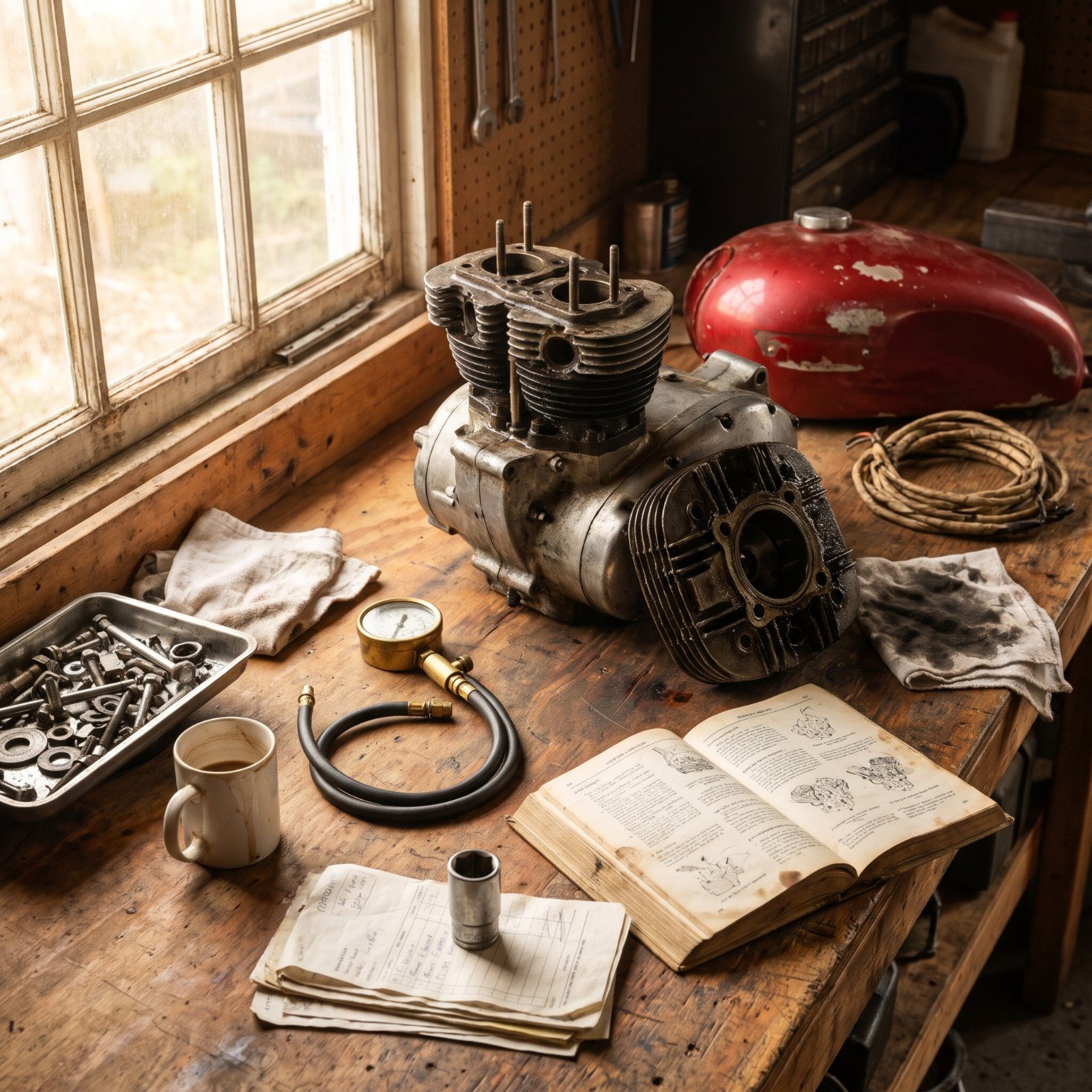
A barn-find Triumph with a seized engine and a title in a shoebox will teach you more about human nature than any self-help book on the shelf. First comes the optimism when you push it into the light, then the denial when one problem quietly becomes six, and finally the stubborn refusal to walk away because of everything you’ve already poured in. Anyone who has knelt on a cold garage floor at midnight, service manual soaked in solvent, wondering what they got themselves into, already knows the feeling. We rebuild old bikes the same way we rebuild old love: too much hope at the start, not enough honesty in the middle, and a surprising amount of grace at the end. Here is where the two keep rhyming.
Please note that some of the images in this article were created with the assistance of AI.
14. You Buy the Barn Find for What It Could Be

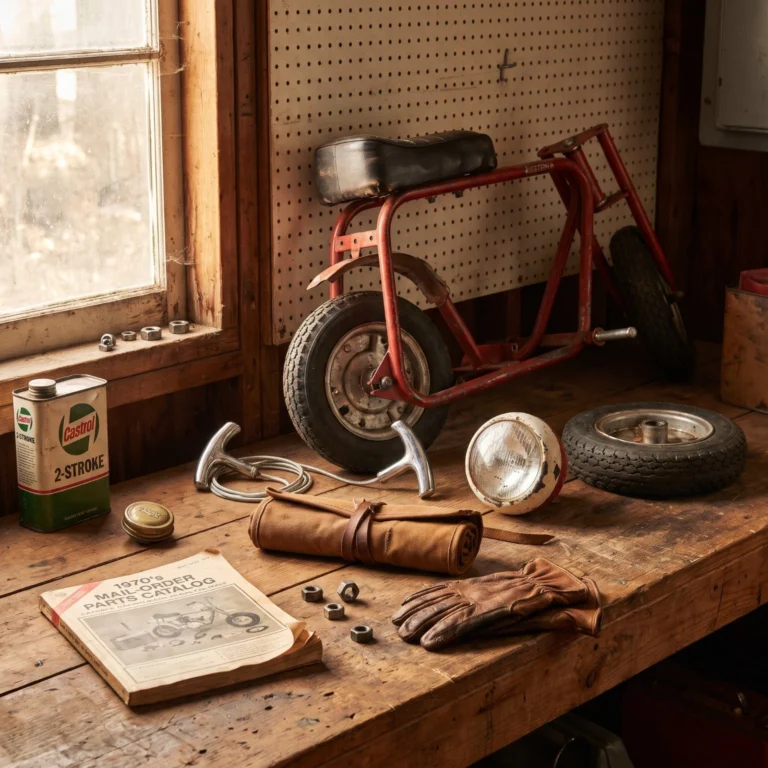
You don’t see the flat tires and the fogged chrome. You see the bike it was in 1968, or the bike it’ll be after you’re done. The photos in your head are already glossy, while the one in front of you is covered in mouse droppings and someone else’s bad decisions.
It’s the same trick the heart plays at the start of anything worth keeping. We fall for potential, not for the thing itself. Psychologists call it idealization, and it’s less a flaw than a feature: nobody would ever take on something this hard if they saw it clearly on day one. The dust is the point. It lets you project.
The danger comes later, when the potential and the reality refuse to meet in the middle, and you feel cheated by a machine that never promised you anything. It just sat in a barn being exactly what it was.
13. Fresh Paint Distracts You From Terrible Compression
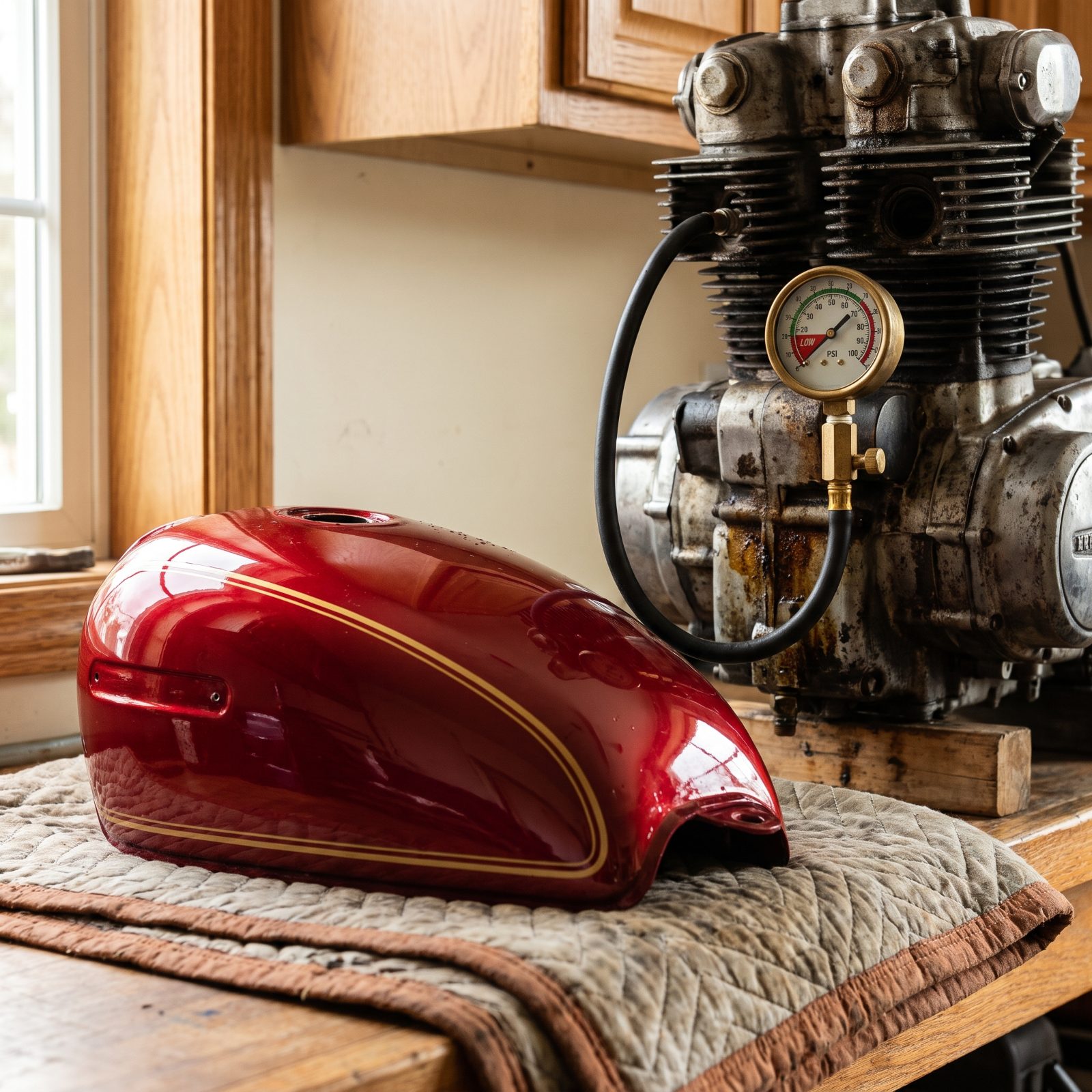
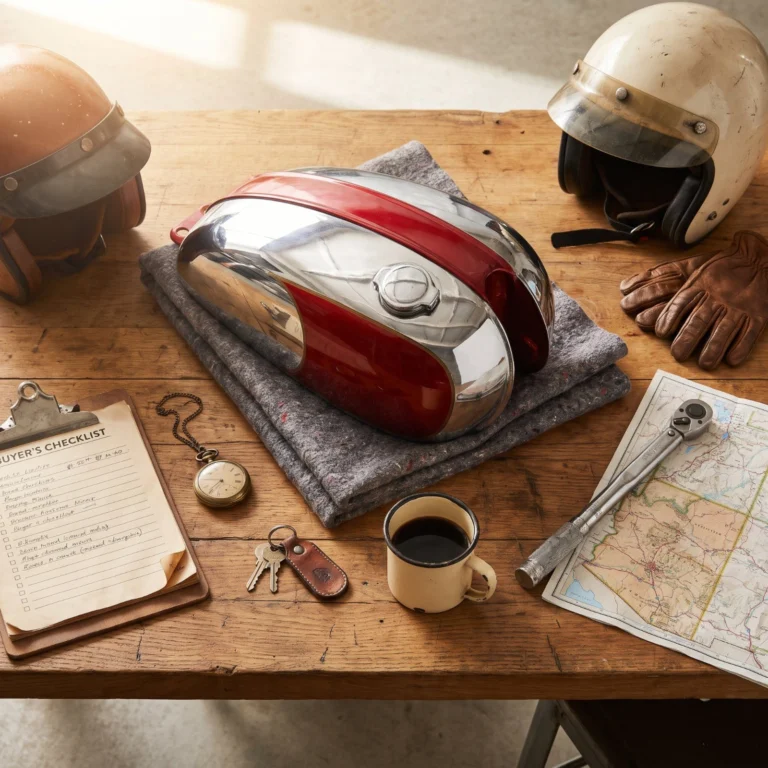
A fresh coat of paint on the tank feels like progress. It photographs beautifully, people stop and say it looks new, and the whole time the compression gauge is reading barely half of what that cylinder should make.
We do this with relationships too. The surface gets the attention because the surface is easy and it earns applause — a nice dinner out, a weekend away, a new haircut. Meanwhile the thing that actually keeps the engine running, the pressure that makes everything fire, nobody checks, because checking it is grim work and might tell you something you don’t want to hear.
Plenty of us have been guilty of this on more than one project, spending a whole Saturday polishing fasteners while the bottom end was knocking. It felt productive. It was avoidance with a buffing wheel.
12. You Assume the Carburetors Are the Only Problem
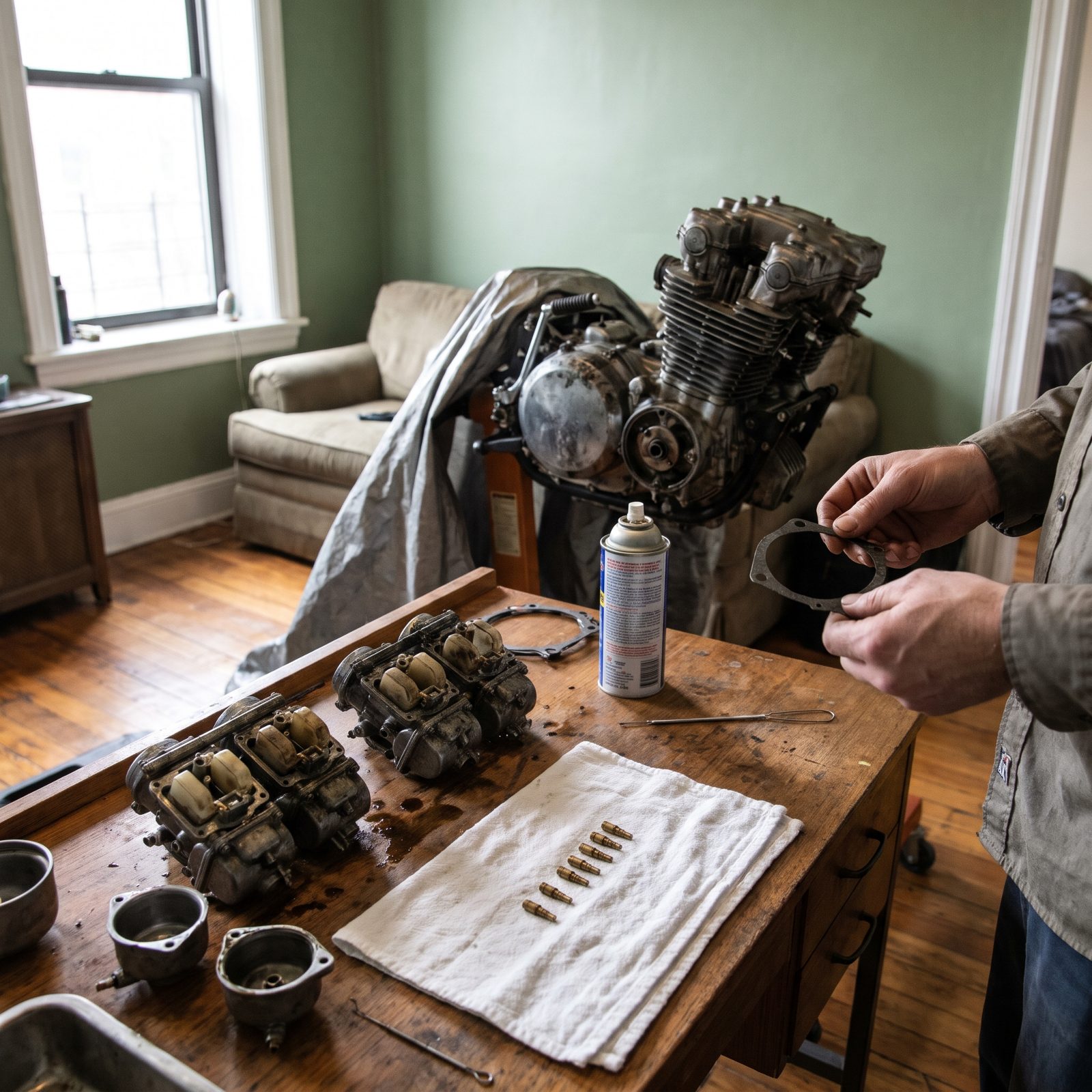
It runs rough, so it must be the carbs. You clean the jets, set the floats, balance the slides, and for a glorious hour you’re a genius. Then the miss comes back, and it was never the carbs at all. Ignition timing, maybe. A vacuum leak. Valves that haven’t been adjusted since Carter was president.
When things sour between two people, we love a single villain. The in-laws. The job. That one fight in March. Pin it on one thing and the problem becomes solvable, which is comforting, which is exactly why we do it.
Real trouble is almost never one thing. It’s a system that’s drifted out of tune in a dozen small ways at once, and each small thing makes the others worse. Clean the obvious part, sure. Just don’t be shocked when the miss comes back.
We love a single villain because a single villain is fixable in a weekend. Systems aren’t.
11. Every Removed Panel Reveals Another Old Repair
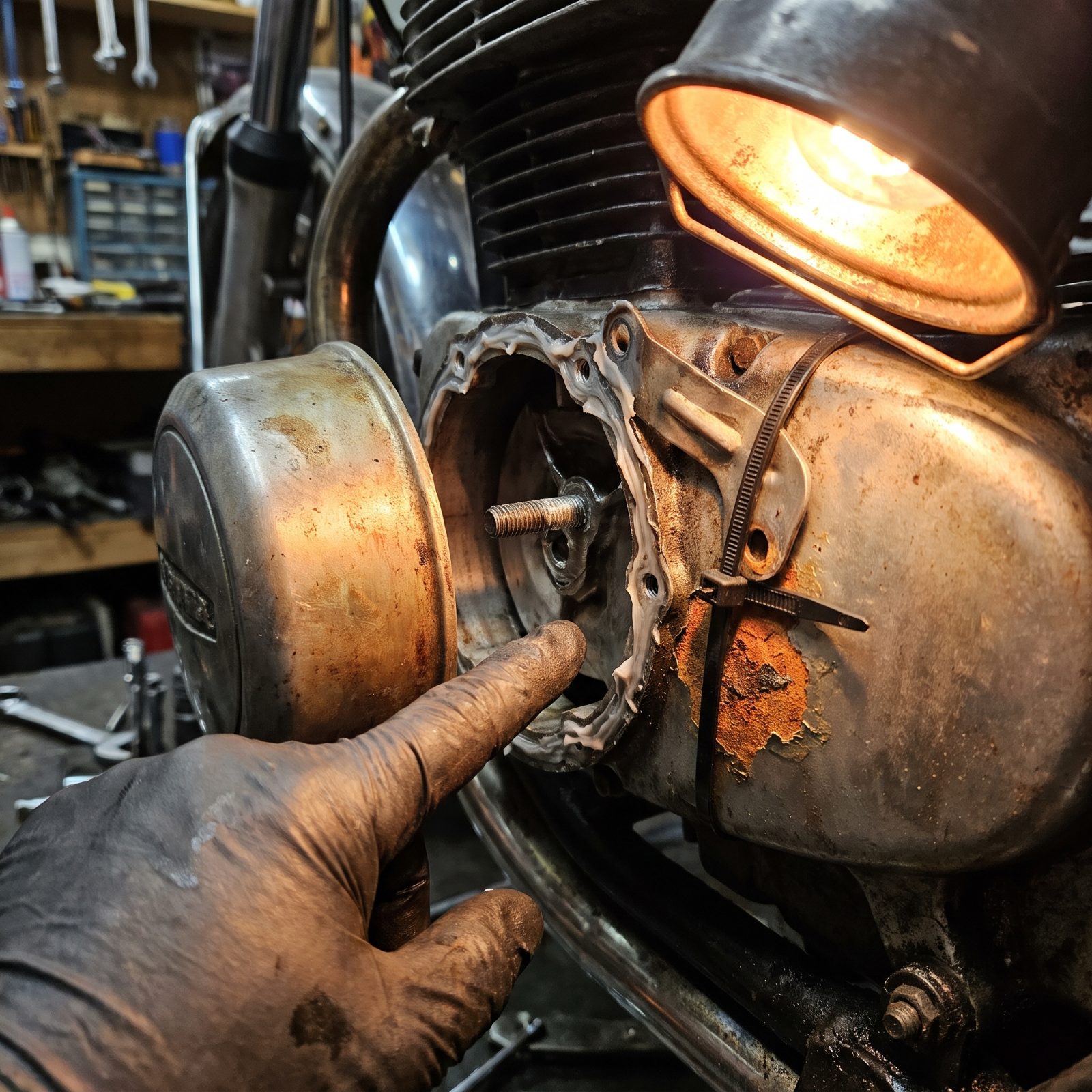
You pull one cover expecting to find the problem and instead you find someone else’s problem, hidden under a smear of silicone and a zip tie. Fix that, pull the next panel, find another. The deeper you go, the more you understand this bike was never maintained. It was managed. Patched just enough to sell.
Long partnerships accumulate the same buried repairs — old arguments sealed over instead of solved, resentments tucked behind a polite surface and held together with workarounds that held until they didn’t. Nobody dealt with the root cause. Everybody just kept it running long enough to get to the next thing.
Peeling that back is uncomfortable because each discovery rewrites the story you told yourself about how solid this thing was.
10. The Previous Owner’s Wiring Keeps Starting New Arguments
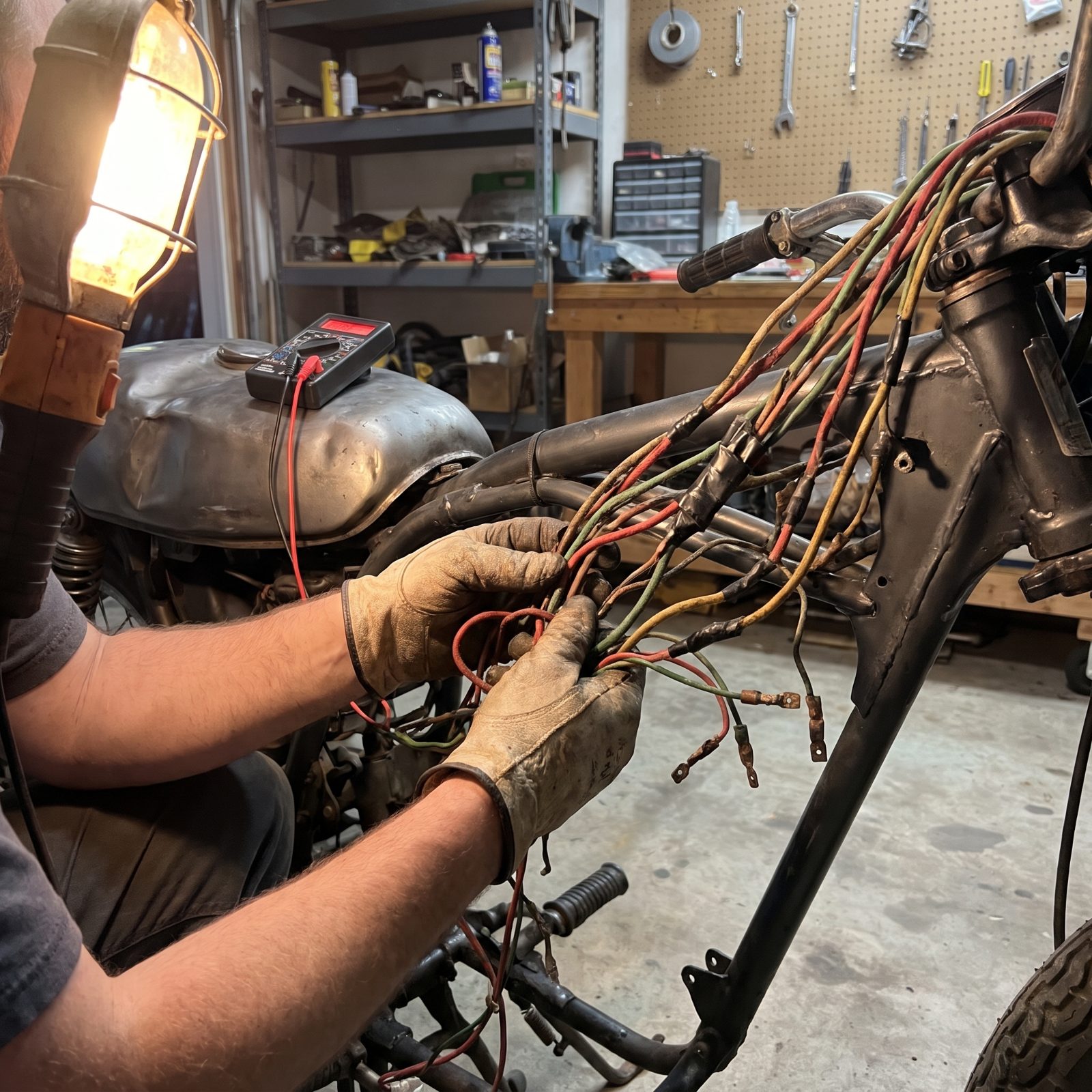
Whoever owned this before you rewired it with whatever was in the drawer. Household wire here, a scotch-lock there, grounds run to nowhere. Chase one dead circuit and three others go dark. You’re not just fixing a fault, you’re untangling the logic of a stranger who’s long gone and left no notes.
Every relationship inherits wiring too — the habits and reactions each person learned somewhere else, long before you ever met. A raised voice that means something different in your house than it did in theirs. A silence that reads as peace to one and abandonment to the other. You keep tripping the same breaker and neither of you installed it.
Tracing that back to its source takes patience most of us don’t have at eleven at night with a multimeter in one hand. But you can’t fix a harness you refuse to understand.
9. Replacement Parts Never Fit Exactly Like You Imagined
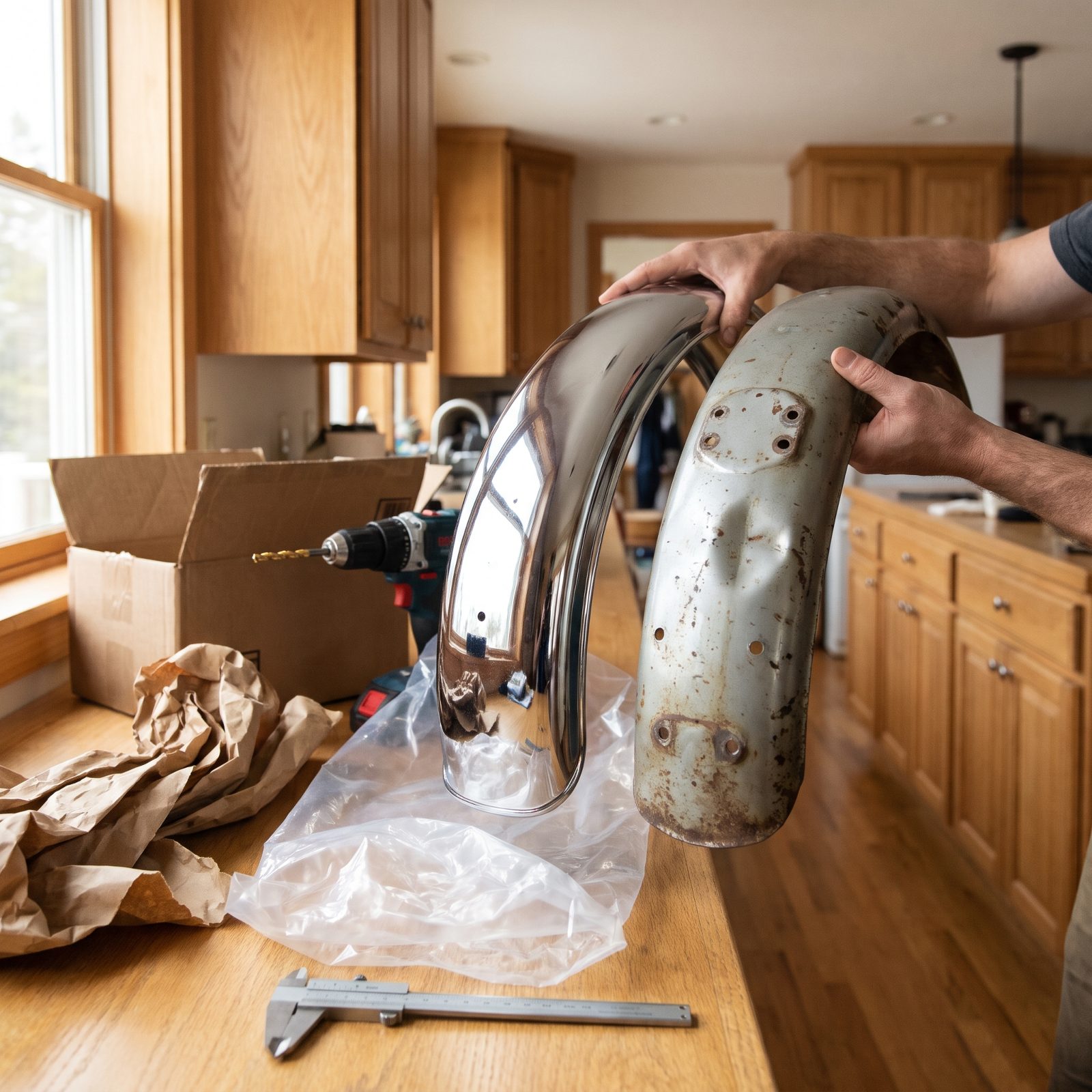
The reproduction part arrives and it’s close. Close enough to be maddening. The holes sit a hair off, the chrome’s a shade brighter than the rest of the bike, the gasket needs trimming. It’ll work after you fight it. It just won’t drop in the way the catalog photo promised.
People show up in our lives the same way. The new approach, the compromise, the fresh start you both agreed to try — on paper it fits. In practice there’s always a gap that needs filing down, a little force, a little patience while the edges wear in. Nothing bolts on clean.
The folks who stay the course aren’t the ones who found perfect parts. They’re the ones who stopped expecting to, and got comfortable with a drill and a file.
8. You Expect One Weekend to Undo Twenty Years
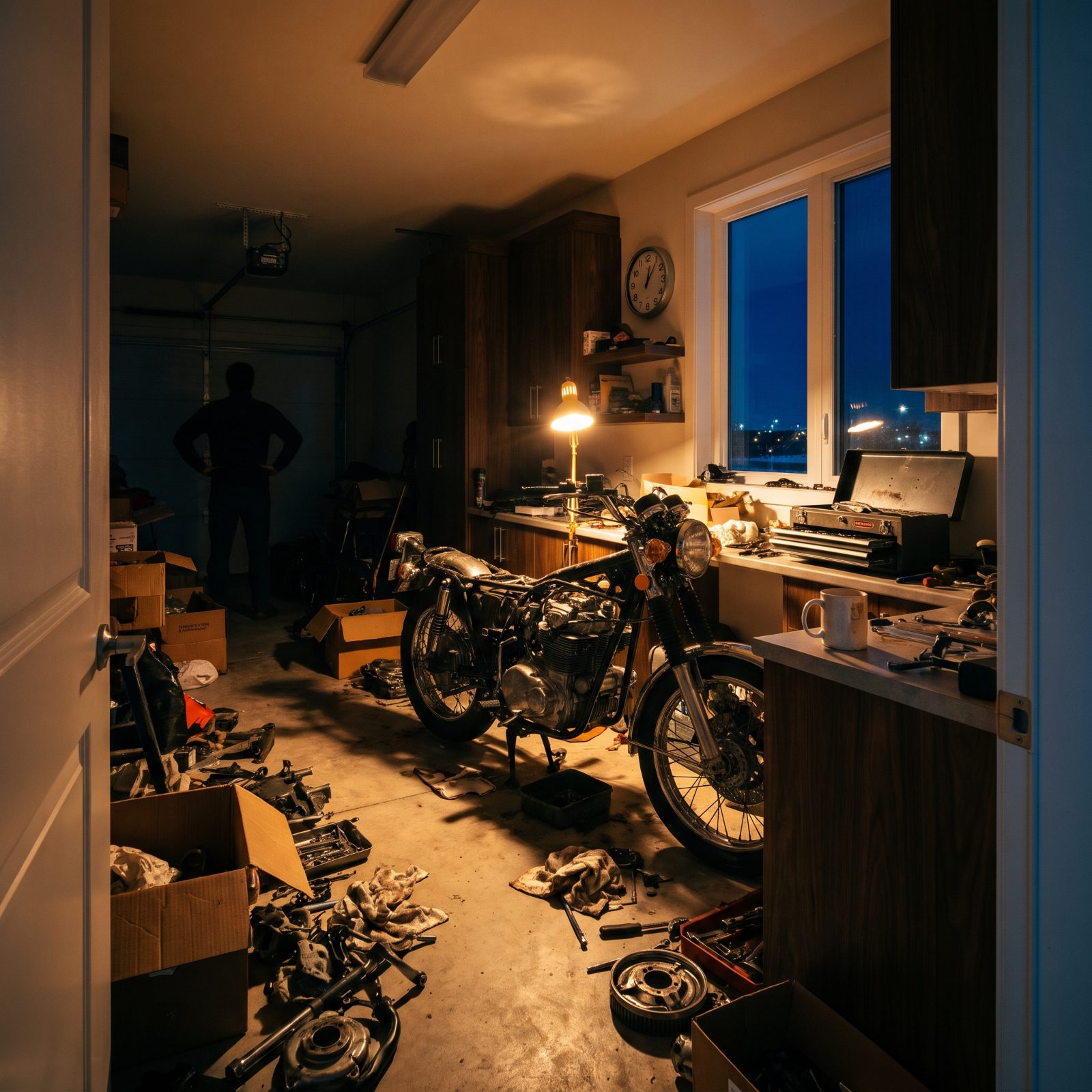
You block off a Saturday. Maybe a long weekend if it’s bad. You genuinely believe you’ll have it running by Sunday night, and then Sunday night comes and you’ve got one carburetor apart and a growing list of parts you didn’t know you needed. The bike sat neglected for twenty years. You gave it two days and got annoyed it wasn’t grateful.
This is the planning fallacy, and it runs deep in all of us. We chronically underestimate how long hard things take, especially the things we want to be over. Repair work on anything that’s been breaking down for decades doesn’t follow a weekend schedule. It follows the schedule of the damage.
Patience here isn’t a virtue so much as a correction. The timeline was always wrong. You just hadn’t met it yet.
7. You Fix Small Leaks While Ignoring the Cracked Frame
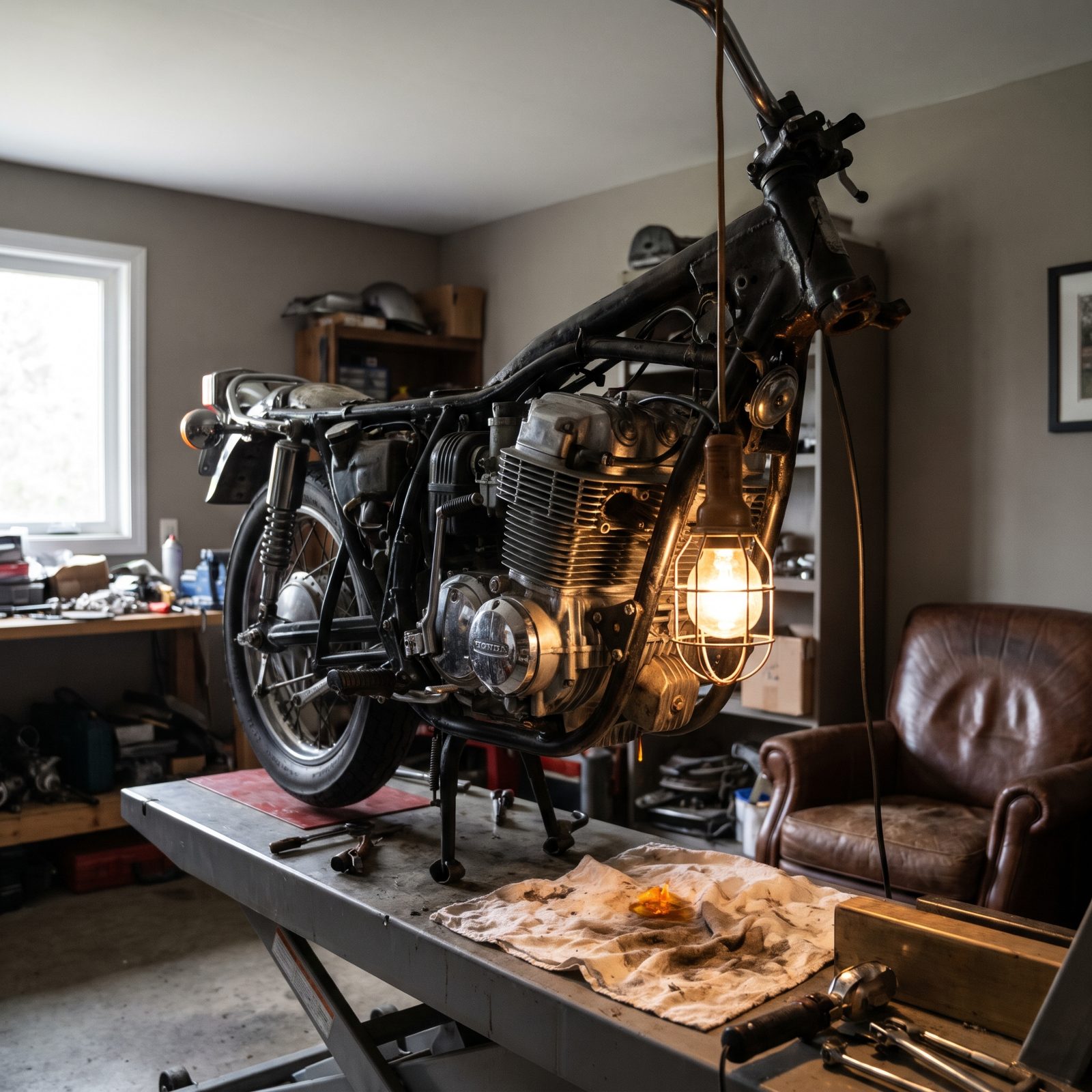
There’s a small oil weep at the valve cover and you chase it for a week. New gasket, torque the bolts, wipe it down, watch it. Meanwhile there’s a hairline crack by the headstock that could drop the front end on the highway, and you keep not looking at it. The small leak is annoying. The crack is terrifying. So you fix the one you can face.
We triage pain backward all the time. The little irritations get all the energy because they’re bounded and solvable. The structural stuff, the thing that could actually end it, stays in the dark because naming it out loud makes it real.
Here’s the uncomfortable truth, and I’ll say it flat: the leaks don’t matter if the frame fails. You can have the cleanest valve covers in the county on a bike that isn’t safe to ride.
6. You Keep Spending Because You’ve Already Spent So Much
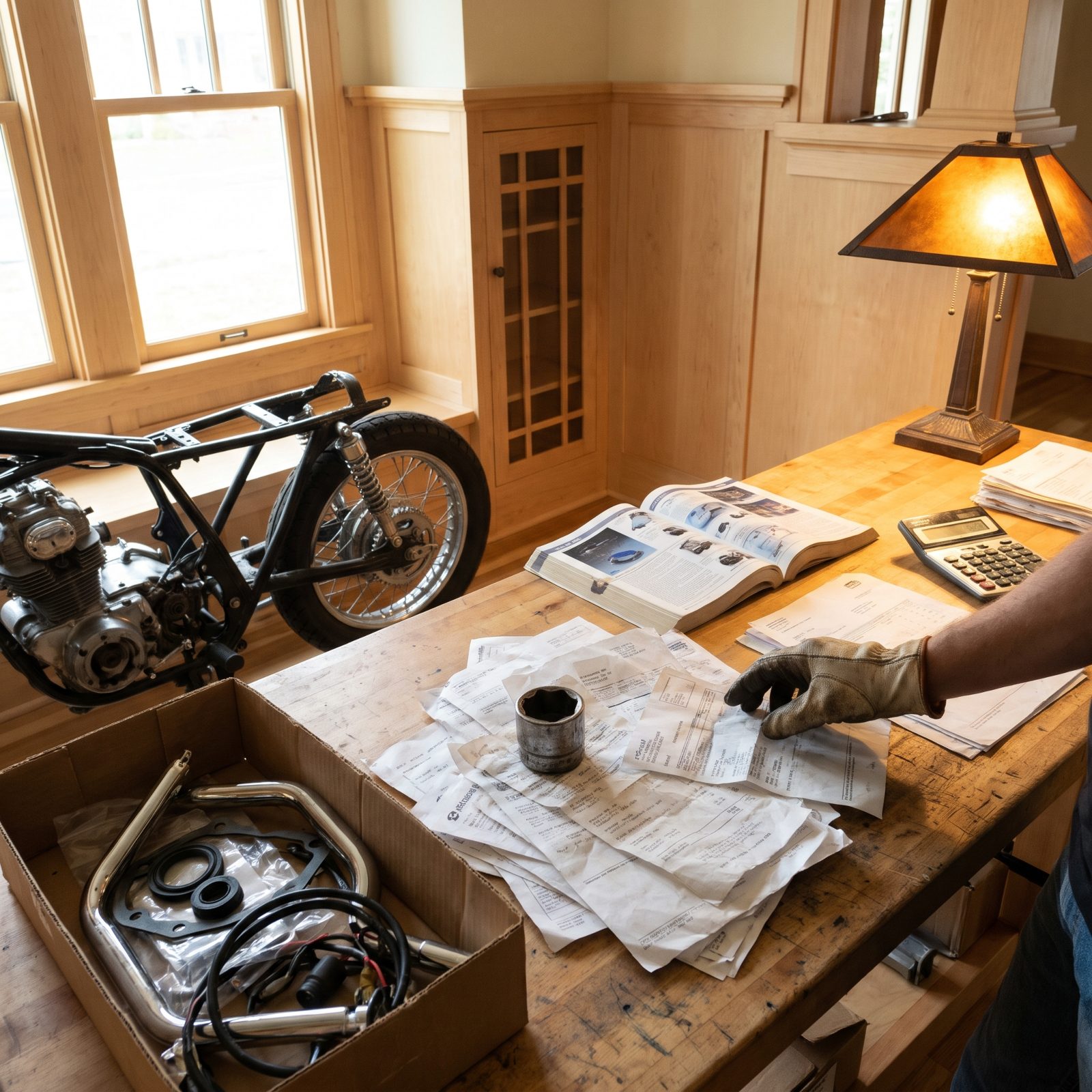
You’ve got a shoebox of receipts now. New pistons, a rebore, a wiring harness, chrome work. Walk away and all of that is gone, so you keep going — not because the next thousand dollars makes any sense, but because the money already spent would feel wasted if you stopped. The past is making the decision for you.
That’s the sunk-cost fallacy, and it’s one of the most expensive bugs in the human operating system. The cash is gone either way. It can’t be recovered by spending more. But our brains hate the idea of loss so badly that we’ll pour good resources after bad just to avoid admitting the earlier ones are gone.
It keeps marriages going and it keeps restorations going, sometimes long past the point where either should. The question is never what you’ve already put in. It’s only ever what it’s worth from right here, today, looking forward.
5. One Successful Startup Makes Everything Feel Fixable Again

It catches. After months of swearing and skinned knuckles, the engine coughs, then settles into a lumpy idle, and a puff of blue smoke drifts into the morning light. Every frustration evaporates in that one moment. You forget the botched wiring and the parts that didn’t fit. One good startup and suddenly the whole thing feels worth it again.
Breakthroughs do this for people too. After a long cold stretch, one real conversation, one night that goes right, and hope rushes back in like it never left. That rush is real and it matters. It’s the fuel that gets you through the next rough patch.
It’s also not the finish line, and it helps to know that going in. The idle’s still lumpy. There’s tuning left to do. But a running engine is a different problem than a dead one, and anyone who’s knelt on that cold floor long enough to hear it fire knows there’s nothing quite like the sound of something you almost gave up on, coming back.
4. You Stop Trusting Gauges That Have Lied Before
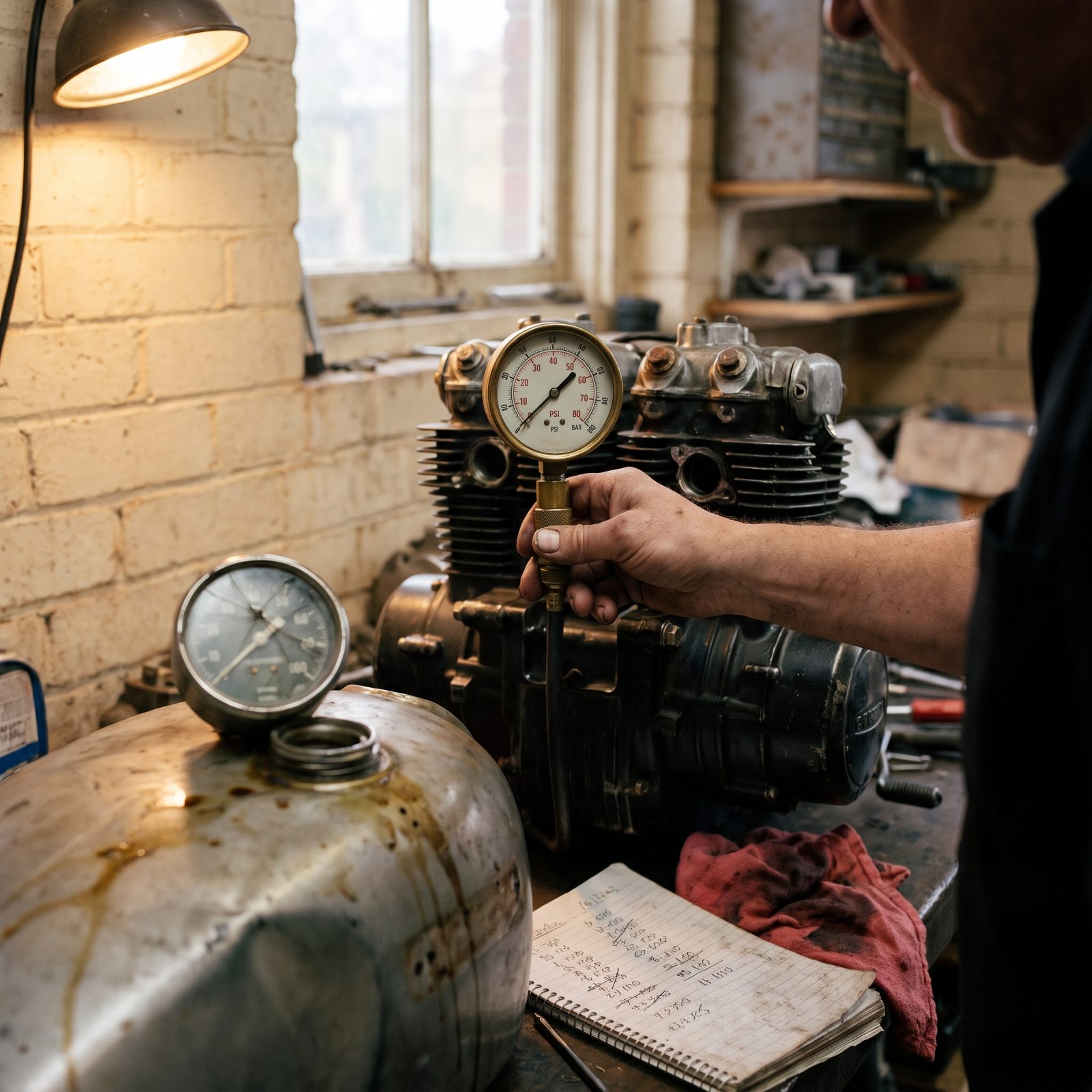
The tach reads fine and the oil light stays dark, but you still lean down to sniff the exhaust and lay a bare palm on the cases — because that gauge told you everything was healthy three breakdowns ago. Once a dial lies to you on the shoulder of a highway at dusk, you never read it the same way again. You trust it a little, then verify with your own hands.
That’s the exact move a struggling marriage makes. Someone says “I’m fine.” The words are right, the needle’s in the green. But you’ve been burned by “I’m fine” before, so you watch the body language, the tone, the dishes left stacked in a particular way.
Psychologists call it the erosion of epistemic trust — the moment you quit taking someone’s self-report at face value. Once a source has been wrong when it mattered, the brain downgrades it for good. You’re not paranoid. You’re calibrated. And here’s the cruel part: a working gauge and an honest “I’m fine” both get doubted anyway, because the lying ones poisoned the whole instrument panel.
3. Every Test Ride Exposes Problems the Garage Hid
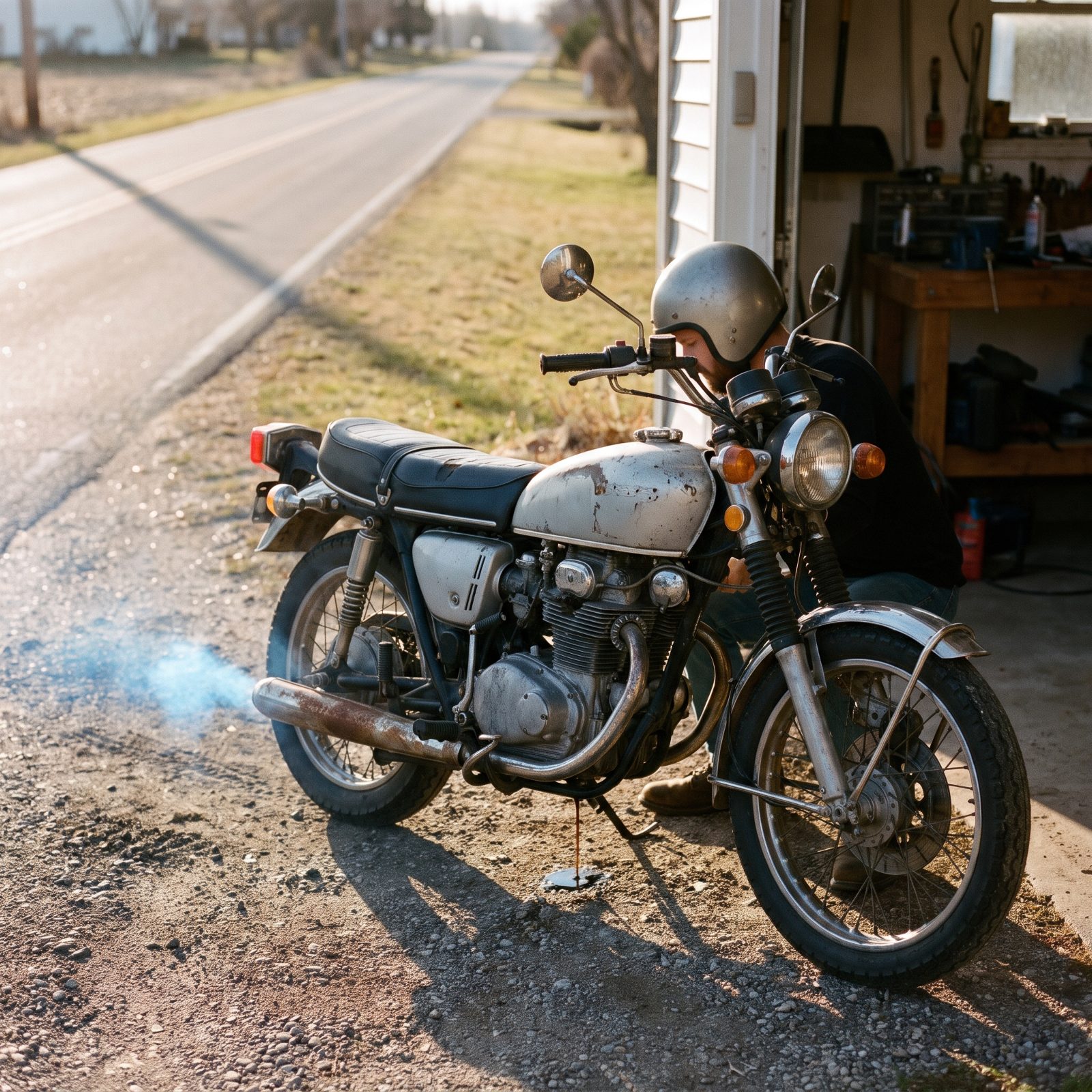
Everything bolts up clean on the bench. Compression’s back, the carbs are sync’d, it idles like a sewing machine in the stall. Then you take it out past the end of the street, put a load on it, hit third gear and a bump at the same time — and there’s the misfire you swore you fixed. The garage is a controlled lie. The road tells the truth.
Same with a marriage that’s been patched in calm weather. You talk it out over coffee, you both nod, you feel good. Then real life leans on it — a sick kid, a money scare, the in-laws — and the old fault reappears right where you thought you’d welded it shut.
Stress is a diagnostic tool, not an interruption. Problems hide under easy conditions and surface under strain, which is why the bench and the kitchen table both flatter you. The only honest test is the one with weight on it.
Idle is where things pretend. The road is where they confess.
We once chased a “fixed” problem for a whole season because we kept testing it in the driveway. The bike knew. It was just waiting for the highway to tell on us.
2. Your Friends Know When the Project Has Gone Too Far
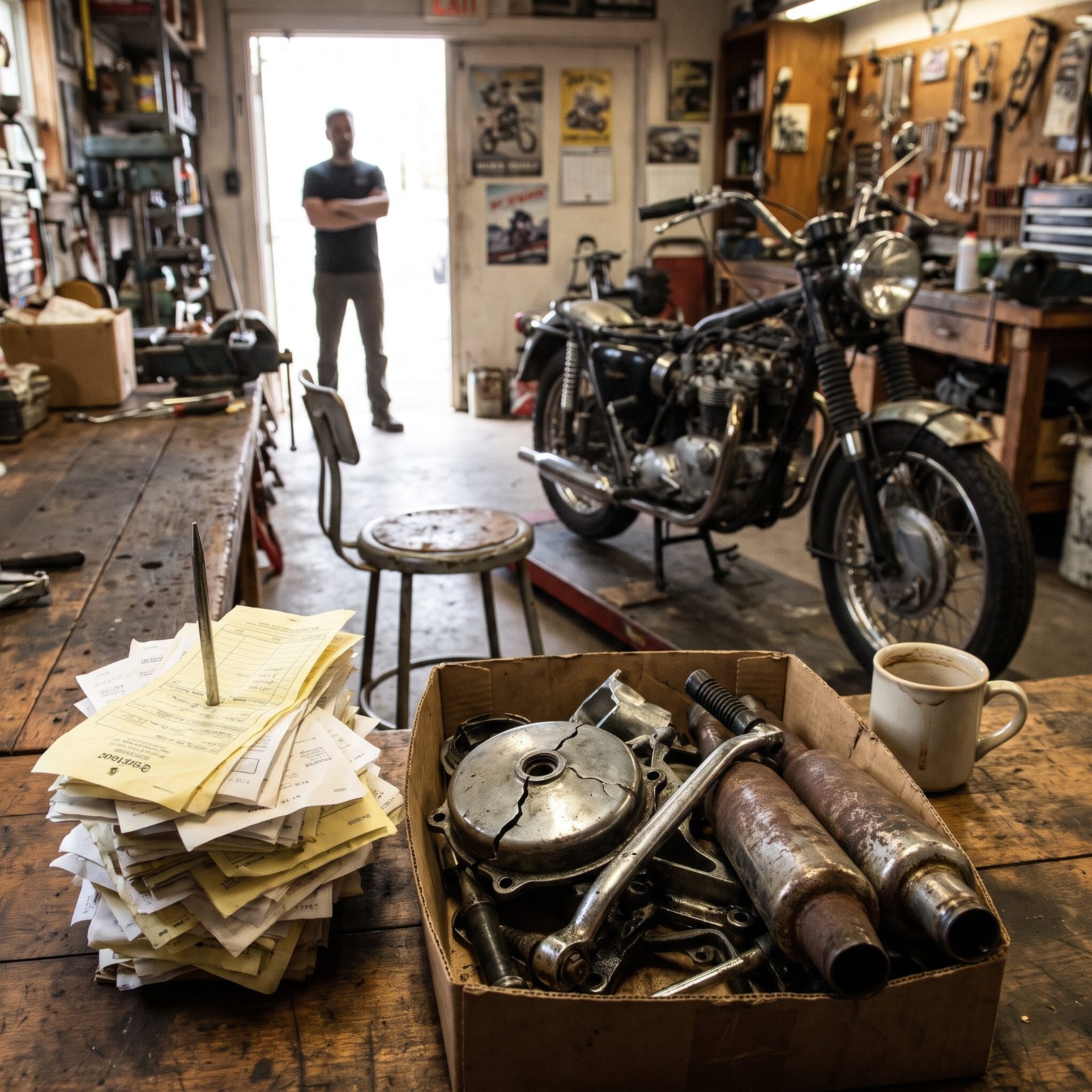
There’s a point in every rough project where your buddy stops asking “how’s it coming?” and starts asking “how much have you got in it now?” He’s seen the receipt spike grow, watched you buy the same part twice. And he says the thing you won’t: “You could’ve bought a running one for less.”
You already know. You just can’t hear it from inside the garage, because you’re the one who’s bled on it.
A marriage in deep repair has the same outside chorus. The friends who love you both can see what you can’t from inside it: that the money and years already sunk are doing your math for you, keeping you in it less because it’s right and more because you’ve spent so much.
1. You Need Outside Help for the Jobs Beyond You
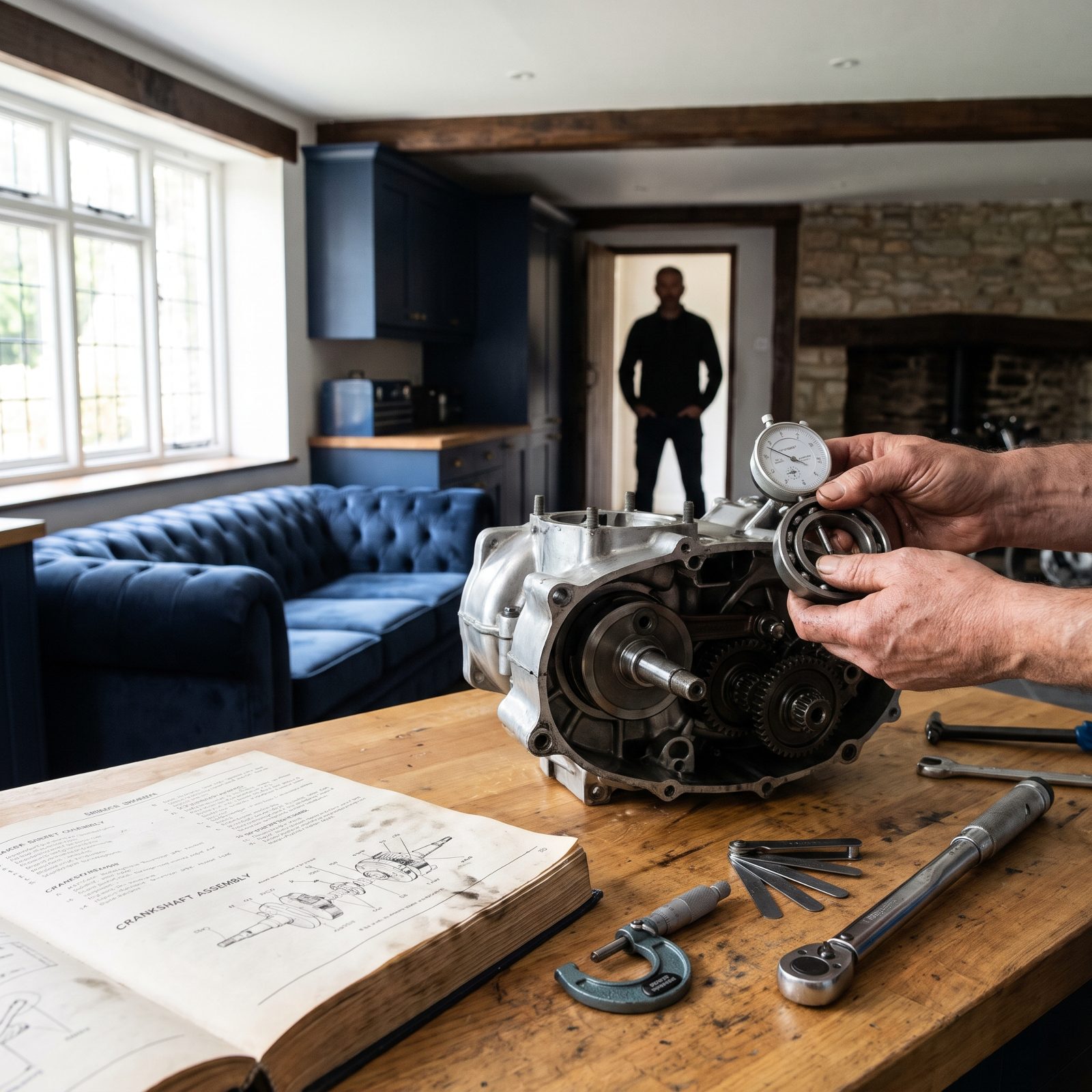
Some jobs you don’t learn on YouTube. Pressing a crank. Line-boring a case. Setting up a gearbox you’ve never seen apart. Pride tells you to try it and ruin a good part, while experience tells you to box it up and drive it to the one old guy three towns over who’s done hundreds of them.
Admitting a job is beyond your bench is the hardest bolt to break loose. It feels like failure. It’s the opposite.
A marriage reaches the same place. There are knots neither person inside the thing can untie, because they’re too close, too tired, too tangled up in being right. Bringing in a neutral, skilled outsider isn’t surrender — it’s recognizing that some repairs need a tool you don’t own and a hand that isn’t shaking.
The psychology is plain. We over-value self-reliance and read asking for help as weakness, when the real weakness is grinding a salvageable thing into scrap to protect your ego. Every good mechanic I know keeps a shortlist of people smarter than him on one specific thing.