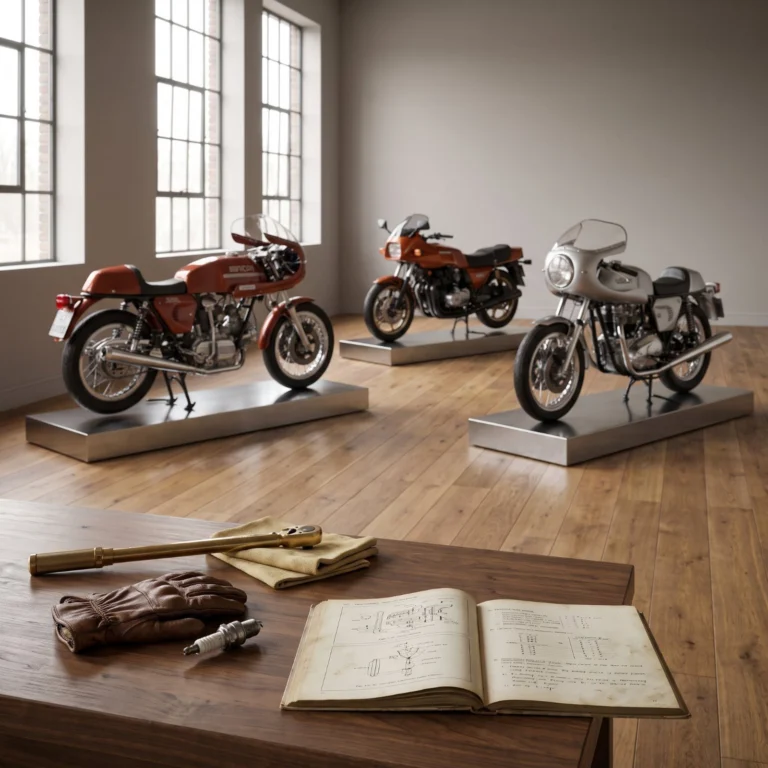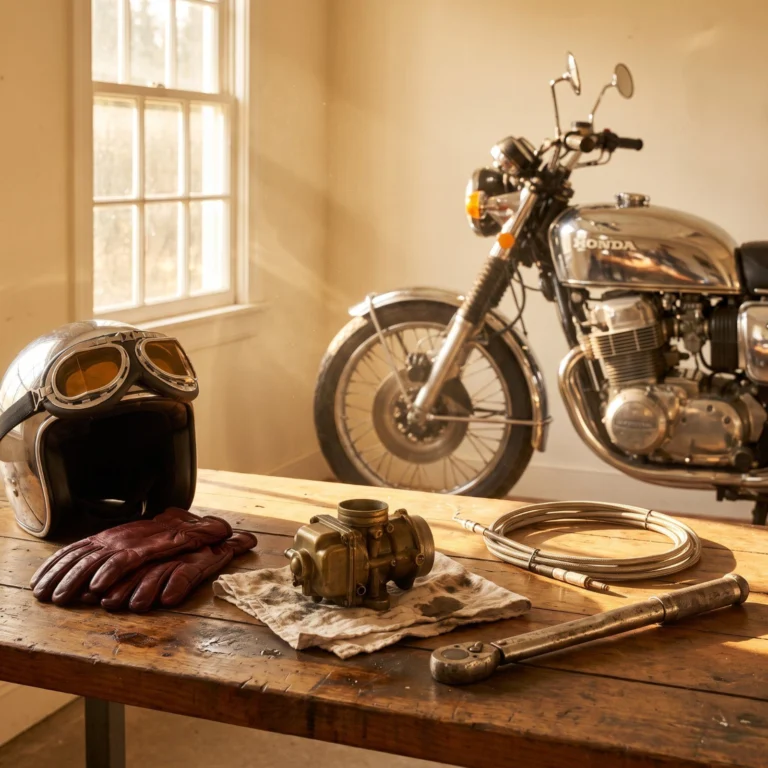
The browser history gives it away. Three in the morning, twelve tabs deep comparing torque figures on bikes you have no business owning, and you tell yourself this is research. It isn’t. It’s the same wiring that makes a man buy a boat he’ll use twice, or sign up for surfing lessons at fifty-two.
Please note that some of the images in this article were created with the assistance of AI.
Shopping for a motorcycle after a certain age is one of the most honest things a person does, because every click is a small confession. You’re not buying horsepower. You’re buying back a version of yourself you think you misplaced somewhere between the second kid and the third promotion. Good news, though: you’re not broken, and you’re not alone. The human brain does predictable things when it senses the clock speeding up. Here’s where the garage and the midlife crisis turn out to be the same room.
18. You Start Browsing Bikes Right After a Big Birthday
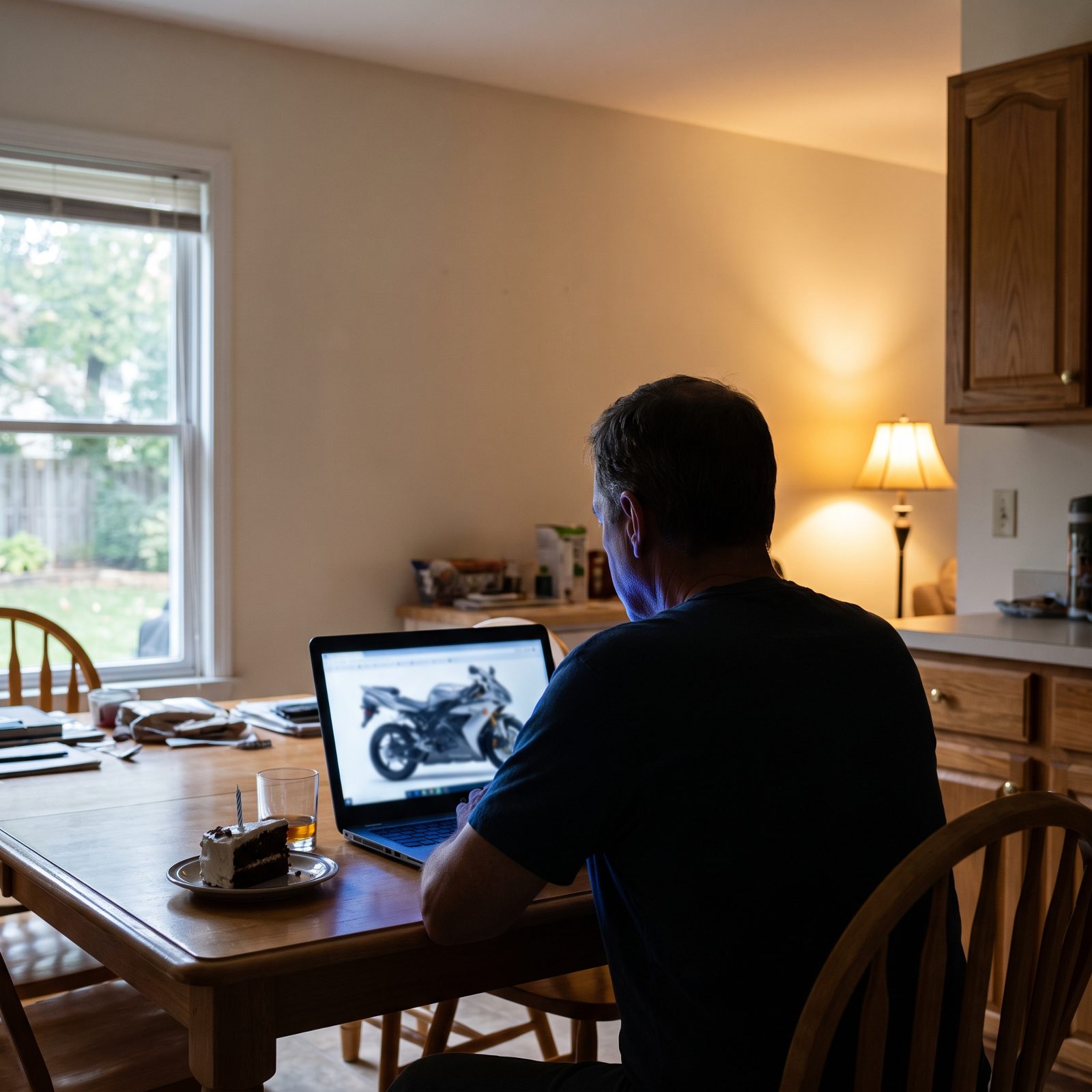
The cake gets cut, the candles get counted, and somewhere between the paper plates and the forced smiles a number lands differently than it used to. That night you open a laptop and start looking at motorcycles.
No coincidence there. Birthdays ending in zero are what psychologists call temporal landmarks, moments the brain uses to take stock, and research on these round-number milestones finds people suddenly more likely to run a marathon, have an affair, or make a dramatic purchase. The milestone forces a quiet audit. Am I the person I meant to be?
The bike becomes the answer you can buy, a vote for the self you still want to be, placed with a credit card instead of a therapist’s hour. Nothing wrong with that. Just know the clock started the shopping, not the horsepower.
17. The Bike You Wanted at Twenty Suddenly Looks Essential
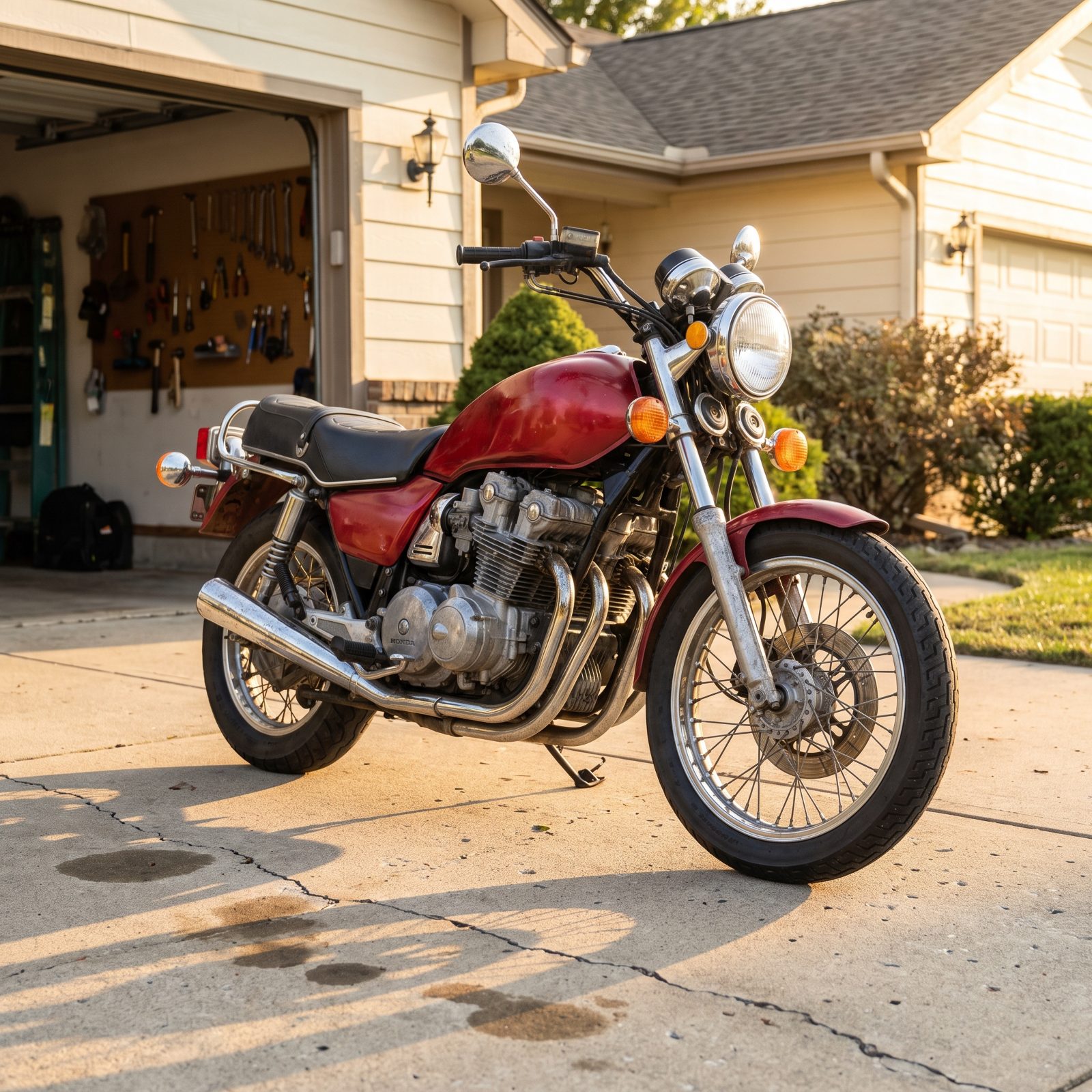
There was a poster, or a magazine spread, or a bike your older cousin rode that you were told you couldn’t have. Thirty years on, that exact machine appears in your search results and something in your chest tightens.
Nostalgia isn’t soft. It’s a powerful motivator, and marketers know it cold. The bike you lusted after at twenty isn’t just a bike now. It’s a time machine with handlebars, and buying it closes a loop that’s been open half your life.
Here’s the catch. You’re not really buying the motorcycle, you’re buying the feeling of being twenty with your whole life ahead of you. That feeling is real and worth something. Just don’t be shocked when the bike arrives and you still have a mortgage and a bad knee.
16. The Family Car Proves You’ve Been Too Responsible
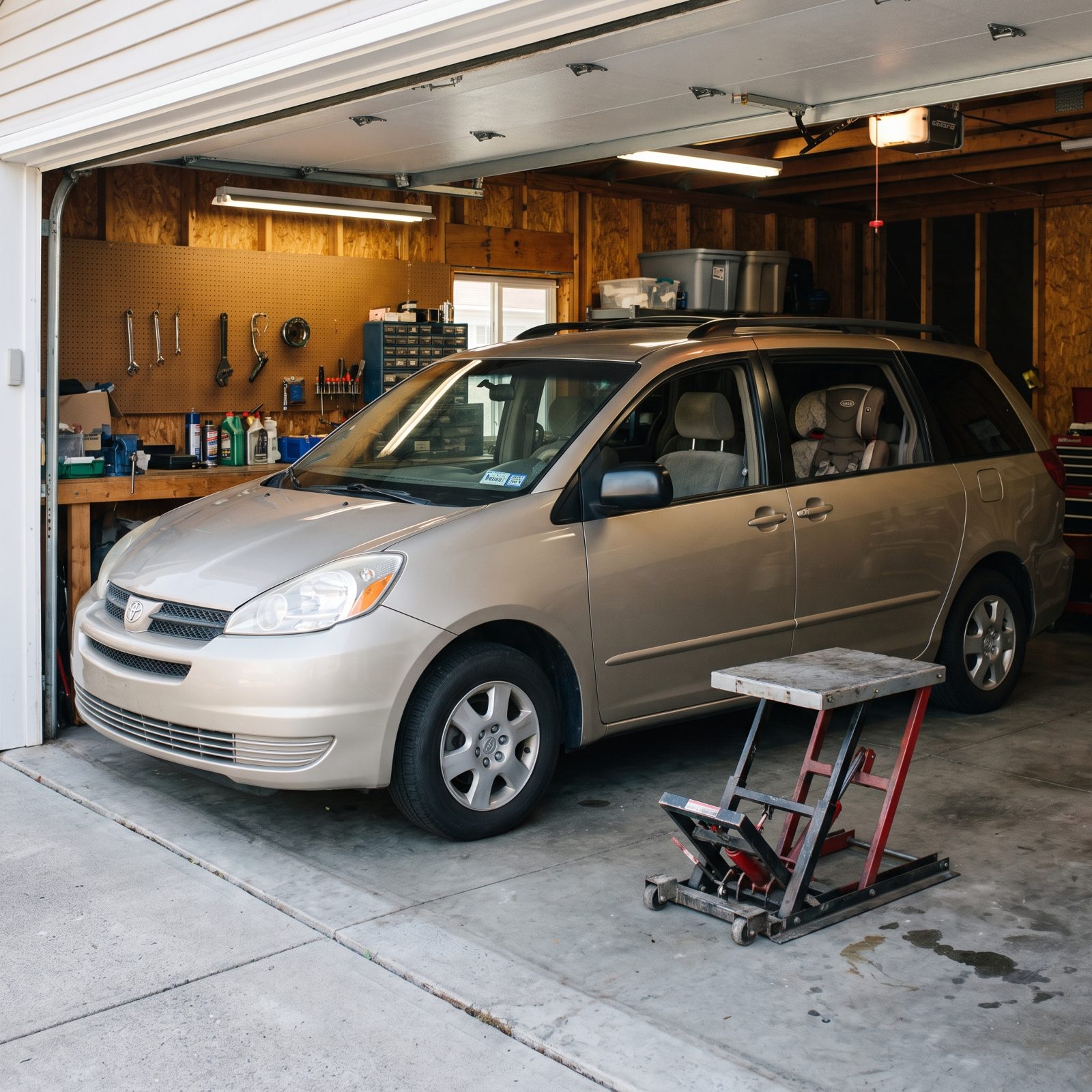
You open the garage and there it sits, the sensible car. Three rows, cup holders engineered by a team of specialists, a safety rating that could stop an asteroid. Twenty years of responsible driving, and the reward is beige.
Somewhere in your head a voice says: look how good you’ve been. The motorcycle becomes the counterweight, the self-permission slip, the thing that proves you didn’t give all of yourself to carpools and conference calls.
Behavioral folks call this moral licensing. A long record of good behavior makes us feel entitled to a splurge, the way a week of salads justifies the cheeseburger. The years of responsibility aren’t the problem. They’re the very thing the brain uses to greenlight the indulgence.
You weren’t buying a bike. You were cashing in two decades of being the dependable one.
15. You Compare Bikes Instead of Addressing Your Actual Burnout
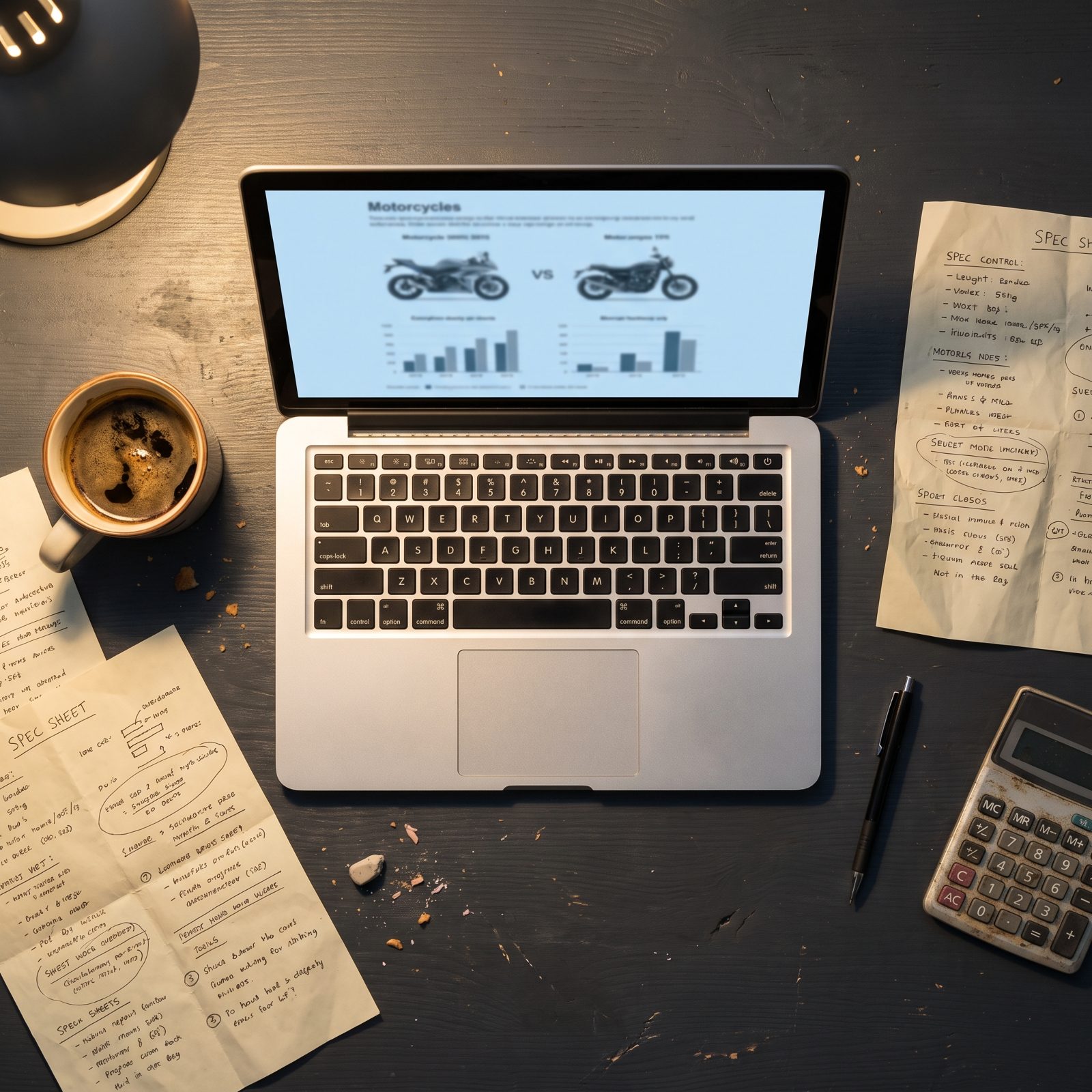
You can recite torque curves from memory now. You know which bike has a slipper clutch and which rivals it on service intervals. You’ve built a spreadsheet, color-coded and everything. What you have not done is think about why you dread Monday morning.
Comparing motorcycles is a solvable problem. Burnout is not. So the mind quietly swaps the hard question for the easy one, the way you’ll reorganize a drawer to avoid a difficult phone call. It feels like progress because it produces activity.
Psychologists call this attribute substitution. When a question is too big or too painful, we answer a nearby smaller one and feel the relief as if we’d solved the real thing. Nobody ever fixed their life by picking between two exhaust systems. It sure passes the time, though.
14. A Salesperson Says “Lifestyle,” and You Picture a New Self
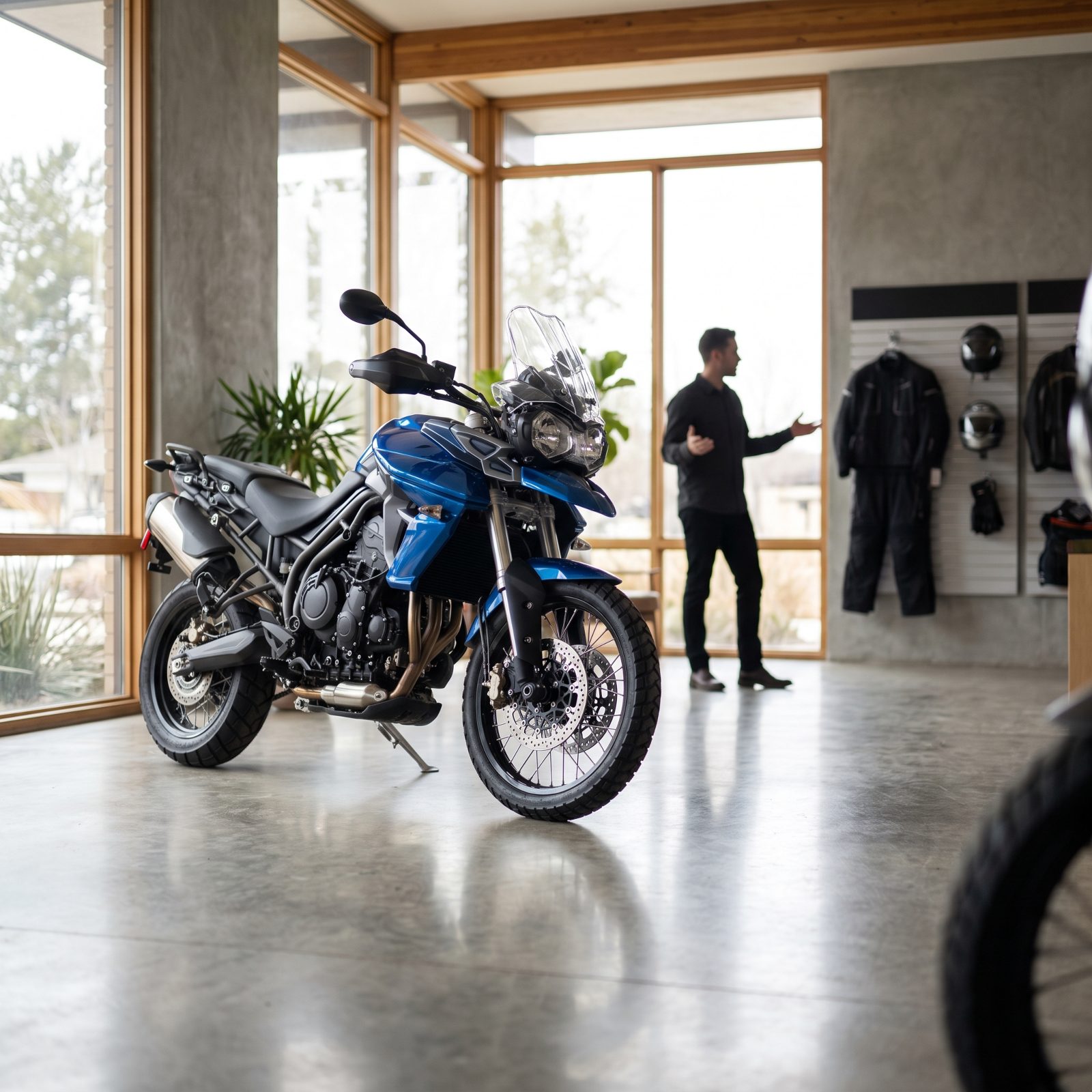
Watch what happens the moment someone on the floor uses the word lifestyle. They’ve stopped talking about the motorcycle. They’re selling a montage now, and you’re the star of it: coastal roads, a cabin, a leaner version of yourself squinting into the sunrise.
This works because of identity signaling, the deep human habit of buying things that say who we are, or who we’d like to be. The bike is the prop. The lifestyle is the story, and the story is about you becoming someone freer.
Good salespeople sell the destination, not the machine. They let you fill in the fantasy with your own unspent longing, which beats any brochure cold. The horsepower is real. The new self is a feeling you’ll have to build yourself, one ride at a time.
13. You Buy the Leather Jacket Before Choosing the Motorcycle
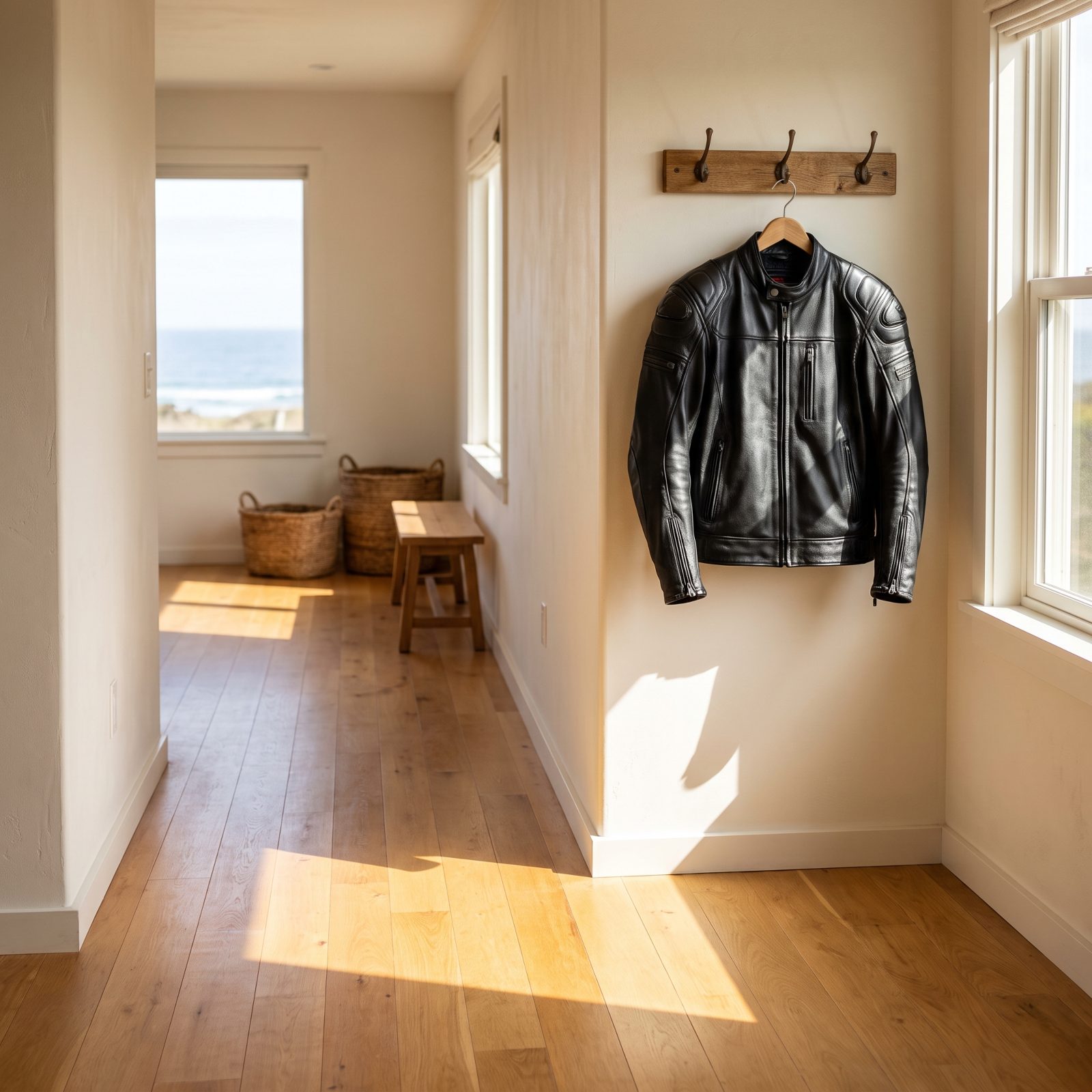
No bike yet. But the jacket? Already in the closet, armor in the shoulders, zippers cold to the touch, smelling of a tannery you’ll never visit. You bought the costume before casting the role.
Backwards as it looks, there’s logic to it. The jacket costs less, commits you to less, and lets you try on the identity without the five-figure plunge. Behavioral economists would call it a foot in the door, a little yes that makes the big yes feel inevitable.
There’s also the simpler truth that the gear is the part you can wear around the house and feel the fantasy right now. The bike is a decision. The jacket is a dress rehearsal.
12. You Join the Owners’ Group Before Taking Delivery
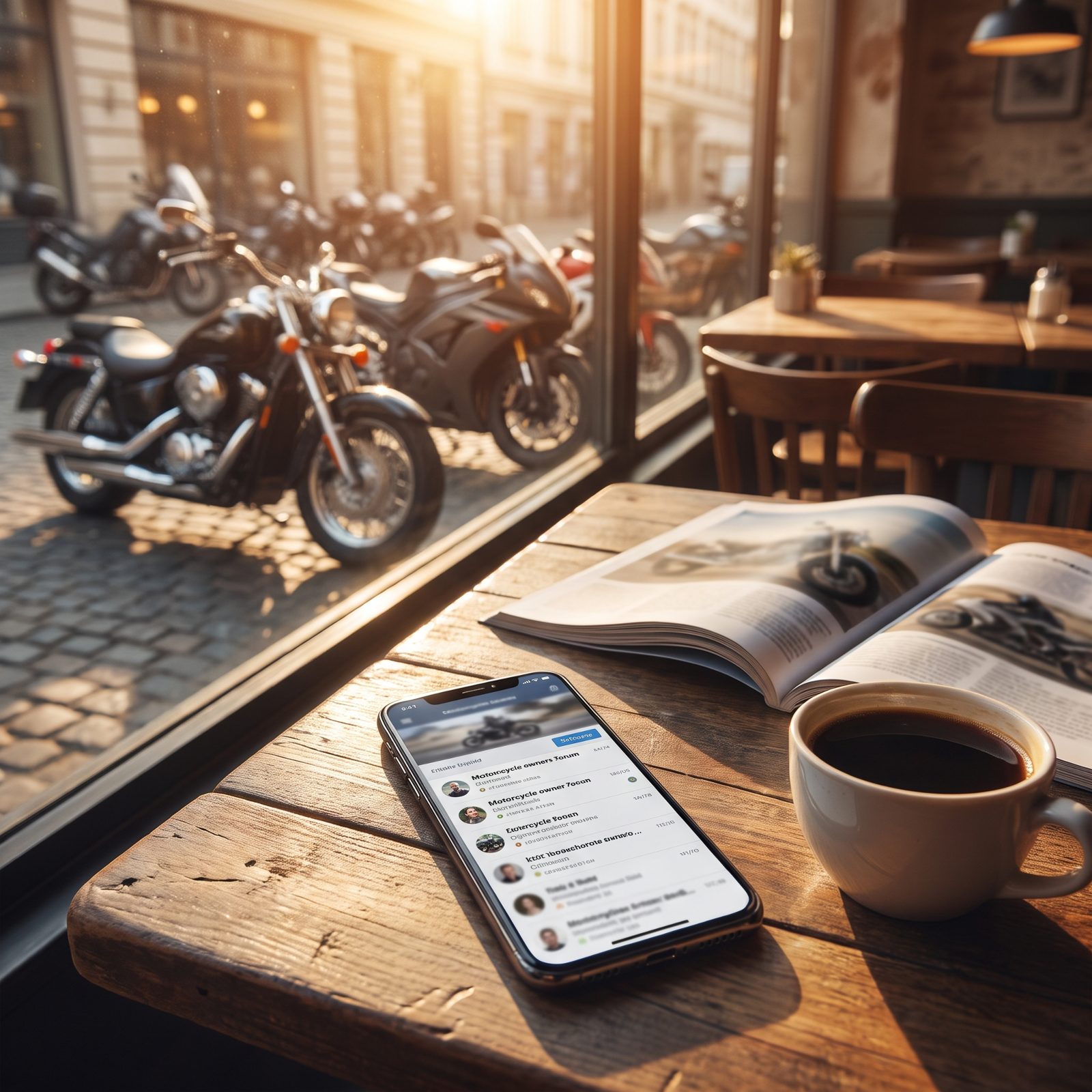
The bike isn’t built yet. You haven’t swung a leg over it. But you’re already three days deep in the owners’ forum, lurking the threads, learning the lingo, nodding along to debates about tire pressure like you’ve been riding for years.
Call it social proof running in reverse. Normally we buy what the group has. Here you join the group first, borrowing a sense of belonging before you’ve earned it, which makes the eventual purchase feel less like a splurge and more like coming home to your people.
Belonging is one of the oldest human hungers, and midlife has a way of thinning out the tribes we used to run with. Kids grow up. Friends scatter. Work stops being a social world. A bike community offers a ready-made one, with its own language and its own weekend plans.
11. You Keep the Browser Tabs Hidden Like a Secret Life
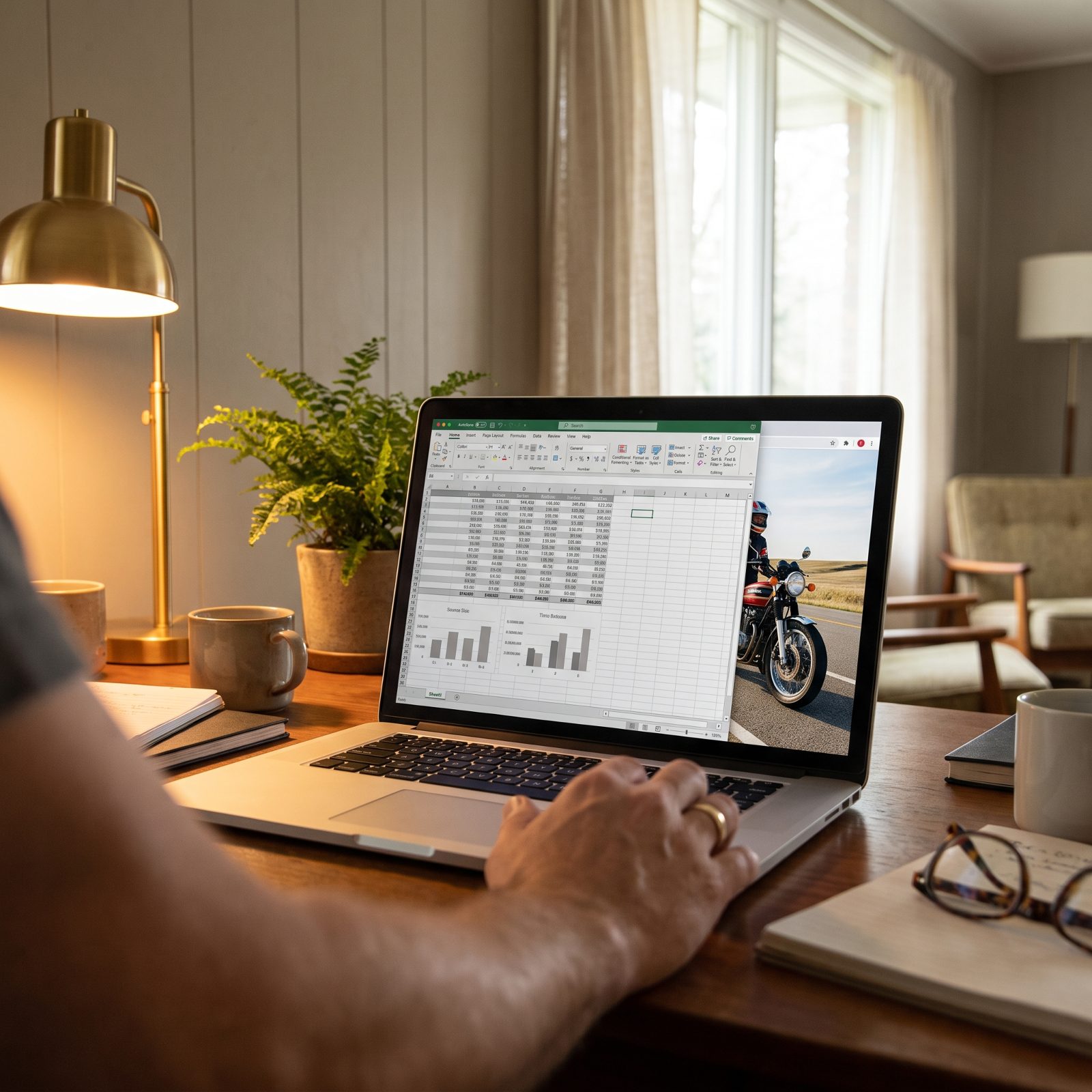
Footsteps in the hall, and your thumb finds command-W before you’ve even decided to. The spreadsheet snaps to the front. The motorcycle tab vanishes, filed away with the other things you’re not quite ready to say out loud.
Why the secrecy? Because the bike isn’t really about transportation, and some part of you knows it. It represents a want that feels indulgent, maybe even a little selfish, and we hide the wants we can’t yet justify. The hiding is a tell.
The desire itself is harmless. But concealment turns a motorcycle into a symbol of everything you’ve stopped asking for, and that’s a heavier load than any bike should carry. The honest move is usually to just say the sentence out loud: I think I want this. Remarkable how much smaller it gets once it’s out in the open air.
10. Your Partner’s Veto Makes the Motorcycle Twice as Appealing
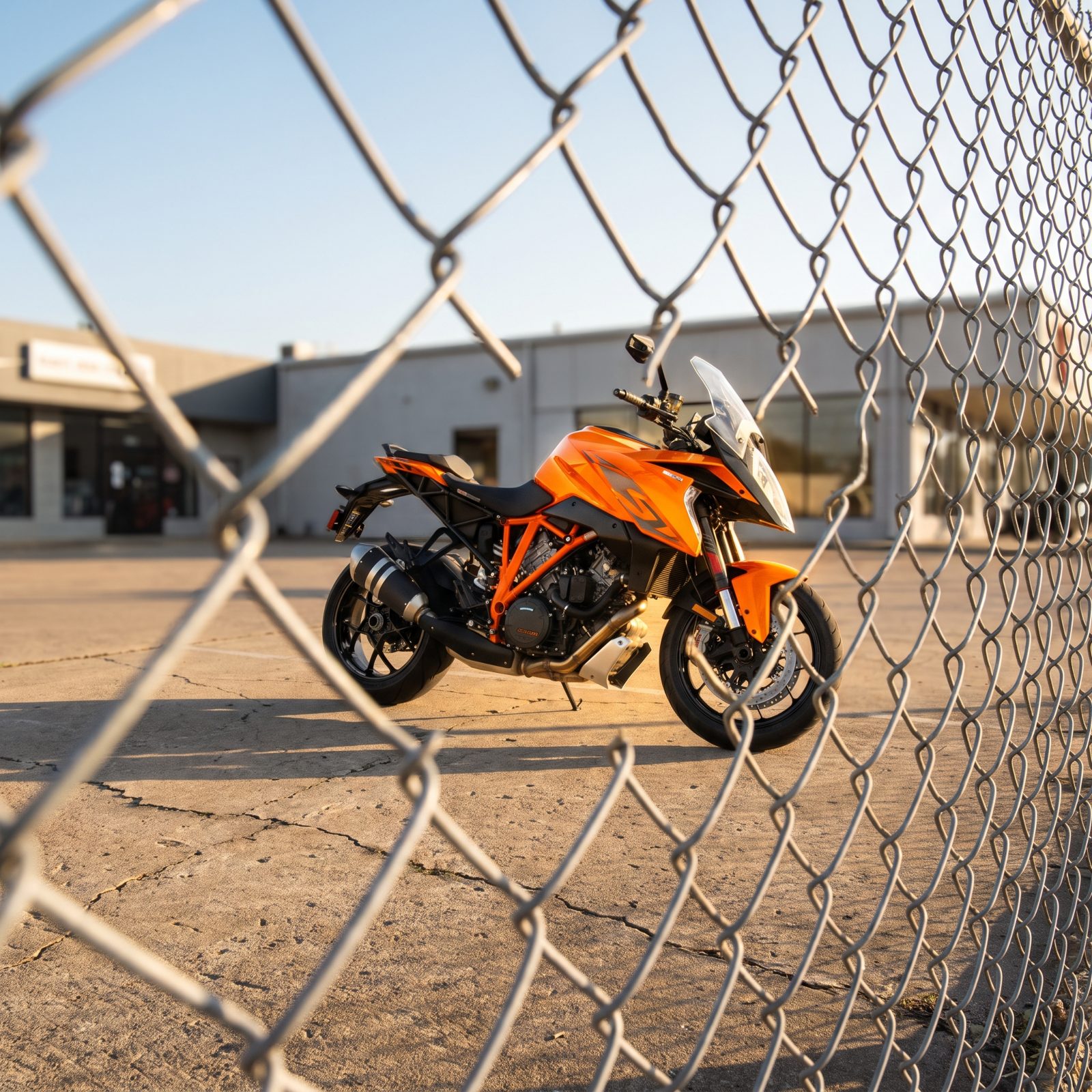
Mention it at dinner, get a flat no, and watch what happens inside you. The bike you were half-serious about an hour ago becomes the only thing you can think about. More beautiful, more necessary, more yours, precisely because someone said you can’t have it.
This is reactance, the mind’s reflexive push against any threat to its freedom. Tell a person they can’t, and the forbidden thing gains a glow it never had on its own merit. Retailers have milked it for a century with limited editions and velvet ropes.
The irony is that the veto rarely has anything to do with the motorcycle. Usually it’s about money, or fear, or feeling left out of the fantasy. But reactance doesn’t care about nuance. It just wants the thing it was told it couldn’t have, which is a lousy reason to spend five figures.
9. You Call a 120-Horsepower Naked Bike “Practical Transportation”
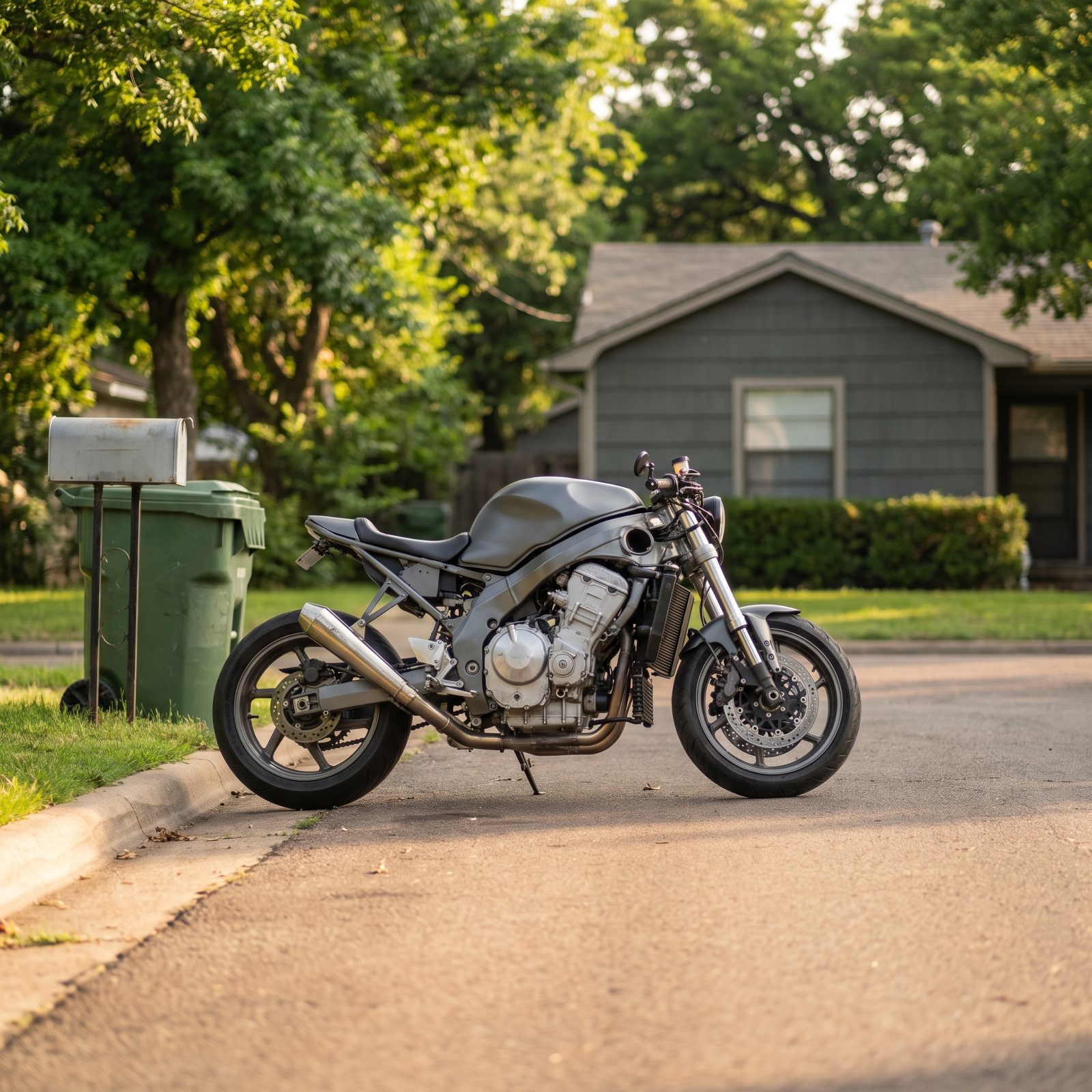
And then there’s the act you perform with a straight face: you explain to anyone who’ll listen that the 120-horsepower naked bike is actually the responsible choice. Great on fuel. Easy to park. Practical, really, when you think about it.
Nobody needs that much power to pick up milk. But the brain hates the discomfort of wanting something purely for pleasure, so it manufactures reasons that sound grown-up. This is post-hoc rationalization, the emotional decision arriving first, the logic rushing in afterward to make it respectable.
The giveaway is always that word, practical, which has never once been used honestly about a bike that wheelies in the first three gears. And that’s fine. You’re allowed to want fun for its own sake. You just don’t have to dress it up in a sensible cardigan to deserve it.
8. “Now or Never” Makes the Loan Payment Seem Reasonable
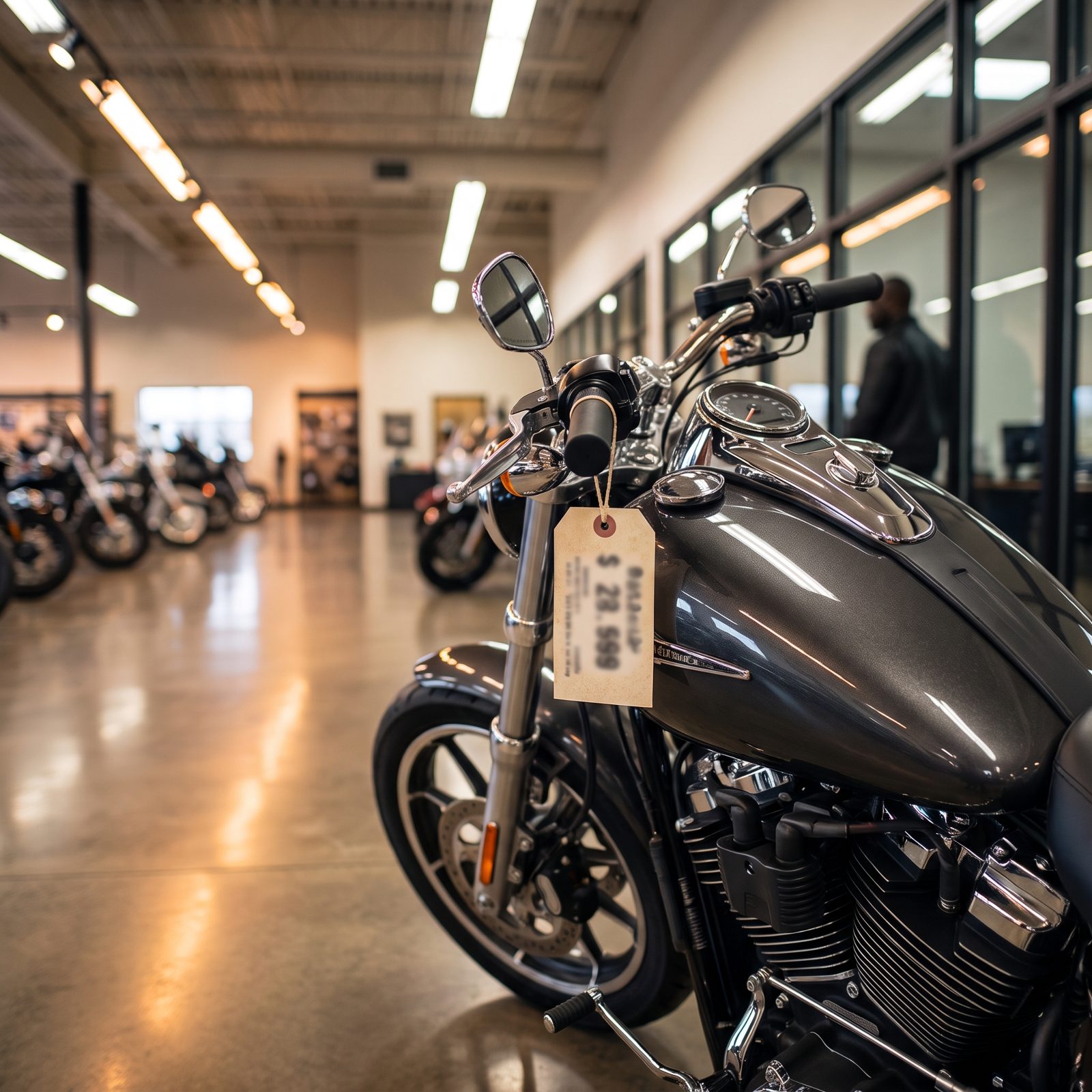
The sentence arrives on schedule. If I don’t do it now, I never will. And just like that, a sixty-month note on a machine you’ll ride eight weekends a year starts sounding like financial common sense.
This is the midlife version of a countdown clock. You’re not buying horsepower. You’re buying against time, and the brain treats a window it thinks is closing very differently from one it thinks will stay open. So the monthly payment gets quietly reframed from cost into rescue. People run the same math on a second home, a convertible, a sabbatical. The urgency was never about the bike. It’s about the calendar.
7. Your Sensible Commuter Search Ends on a Red Superbike
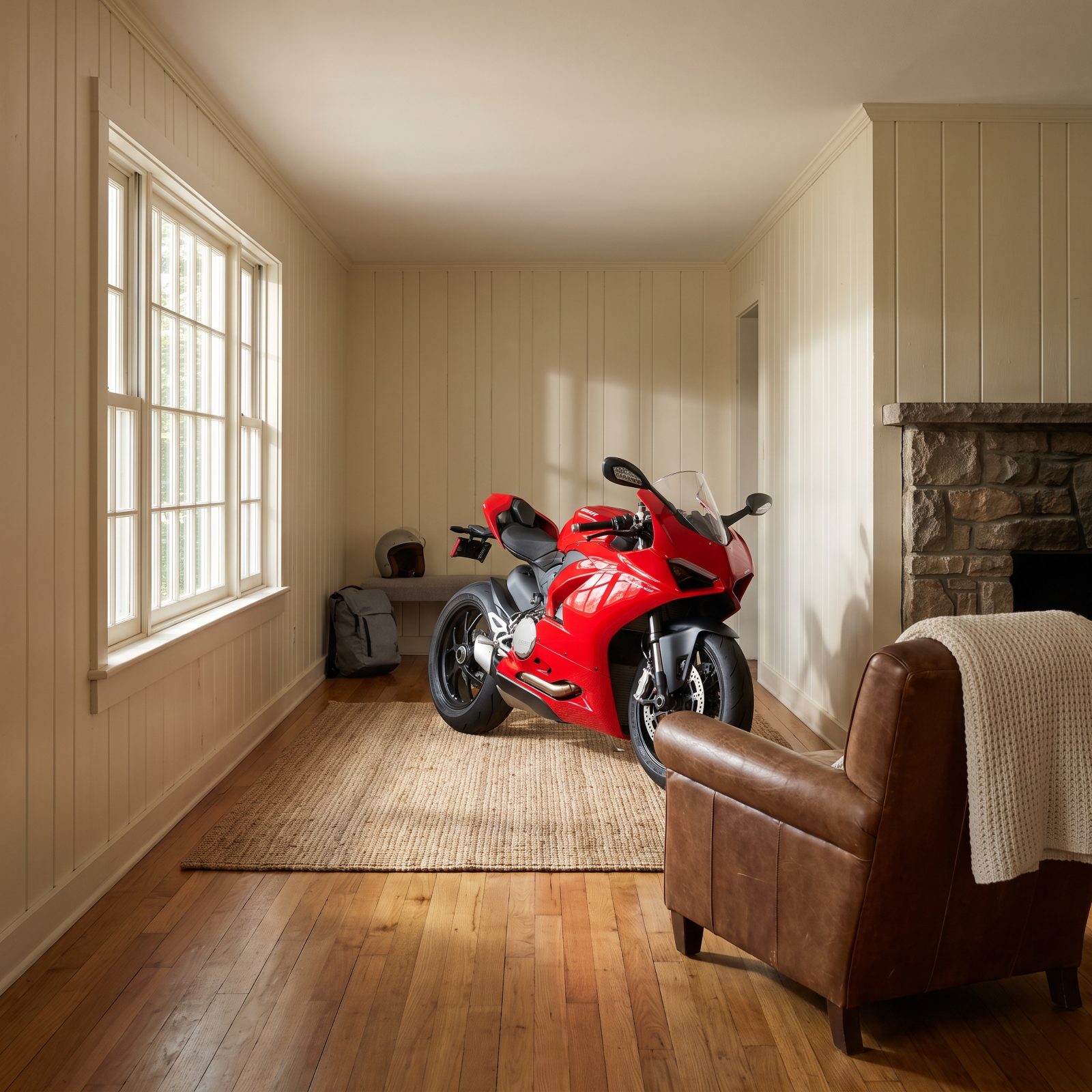
You started this with a spreadsheet. Fuel economy, insurance tiers, resale value, something with a top case for groceries. Forty minutes later you’re straddling a red superbike with a seat angled like it wants you to apologize to your spine, and the commuter you came for has gone invisible.
The red one isn’t the practical choice. It’s the aspirational self showing up in sheet metal. We don’t shop for who we are. We shop for who we’d be on a good day, and the brain happily swaps the two the moment something shiny makes the trade. Same thing happens in guitar stores, kitchen showrooms, running-shoe aisles. The fantasy version always has better taste and worse judgment than the version writing the check.
6. You Plan Cross-Country Rides Before Booking the License Course
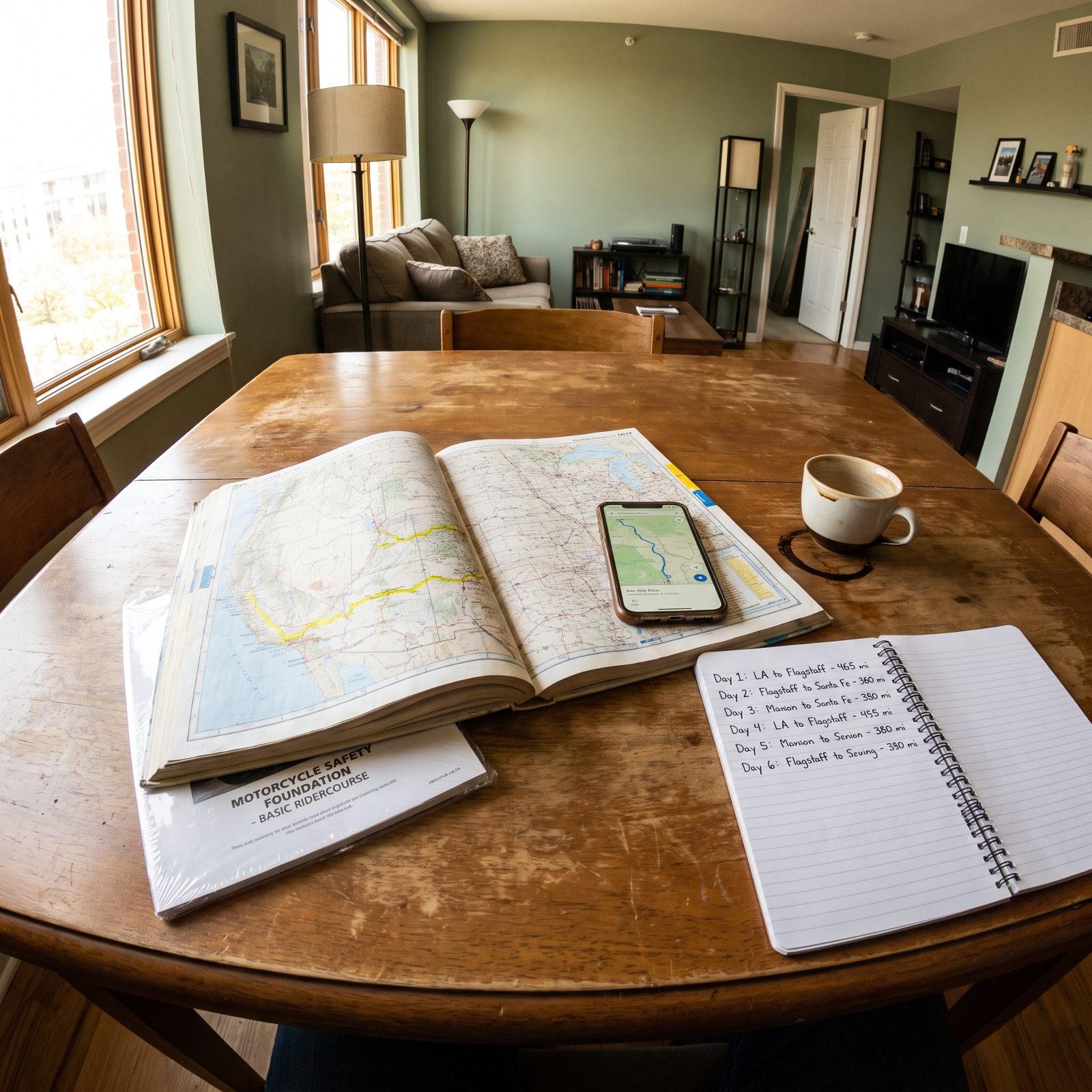
The route gets planned first. LA to Flagstaff, on to Santa Fe, then maybe the whole loop back west come September. You’ve got the campsites bookmarked and the mileage mapped. What you don’t have is the license, or any evidence you can hold a bike upright at a four-way stop.
Dreaming runs so far ahead of competence that the boring part just gets skipped. The road trip is the real purchase. The motorcycle is the excuse to go, same as the folks who buy the RV before they’ve reversed a trailer or the sailboat before a single lesson.
5. You Count the Payment but Forget Helmets, Boots, and Insurance
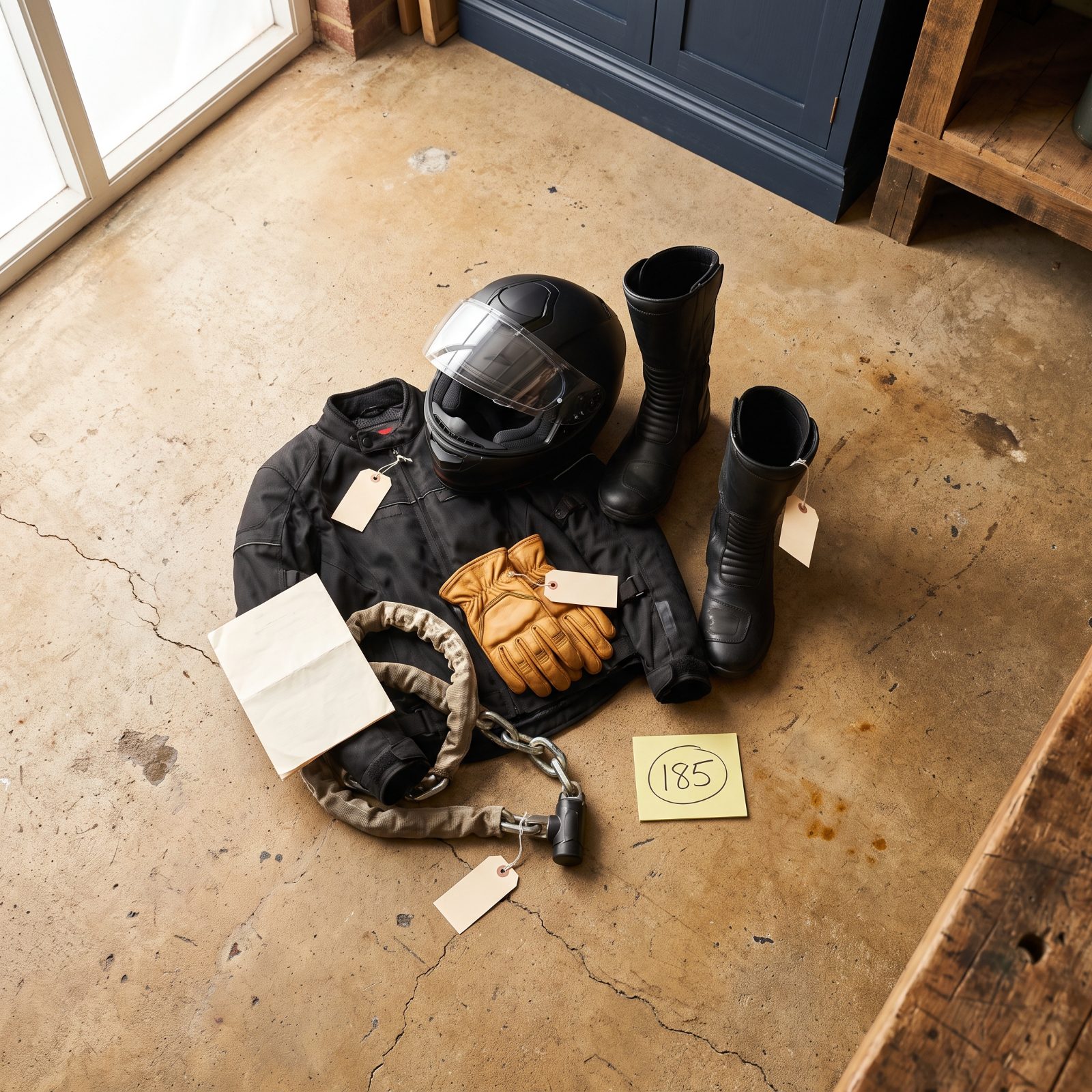
You memorized the monthly figure before the salesperson finished saying it. Clean number, feels doable, fits the budget. Then the gear counter happens. A helmet worth protecting your skull costs real money, and so does an armored jacket, boots that won’t shred, gloves, a lock, and insurance that quietly doubles the whole thing.
The payment was the anchor, and everything after it felt like a footnote. That’s how we buy almost anything with a sticker price. We lock onto the headline number and treat the extras as surprises, even when they were always coming. Freedom tends to reveal its real cost at the register, one footnote at a time.
4. You Price the Exhaust Before Checking Whether Your Knees Fit
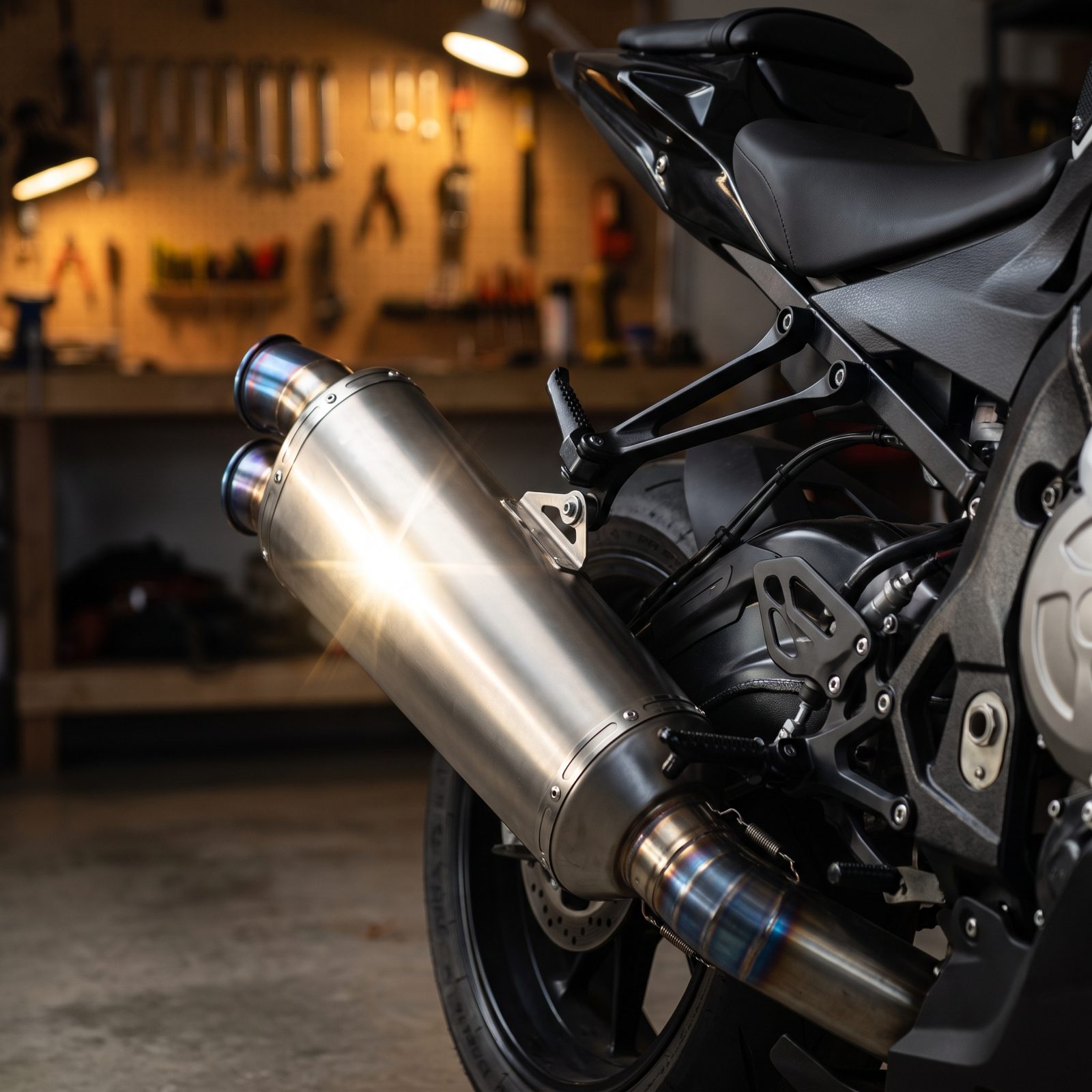
The bike isn’t even yours yet. Already you’ve got a browser tab open on a titanium slip-on exhaust and another on carbon mirrors, while the thing has a seating position that folds a grown man into a pretzel and nobody’s tested whether your forty-nine-year-old knees survive twenty minutes on those rear-sets.
Upgrades are the fun part, so attention runs there first. Fit is the unglamorous part, so it waits. We decorate the fantasy long before checking whether we can live inside it, exactly how people gut-renovate a kitchen they can’t afford to cook in. The sound is tempting. The real question is whether you can still walk to the fridge afterward.
3. A Five-Minute Test Ride Proves You’ve Still Got It
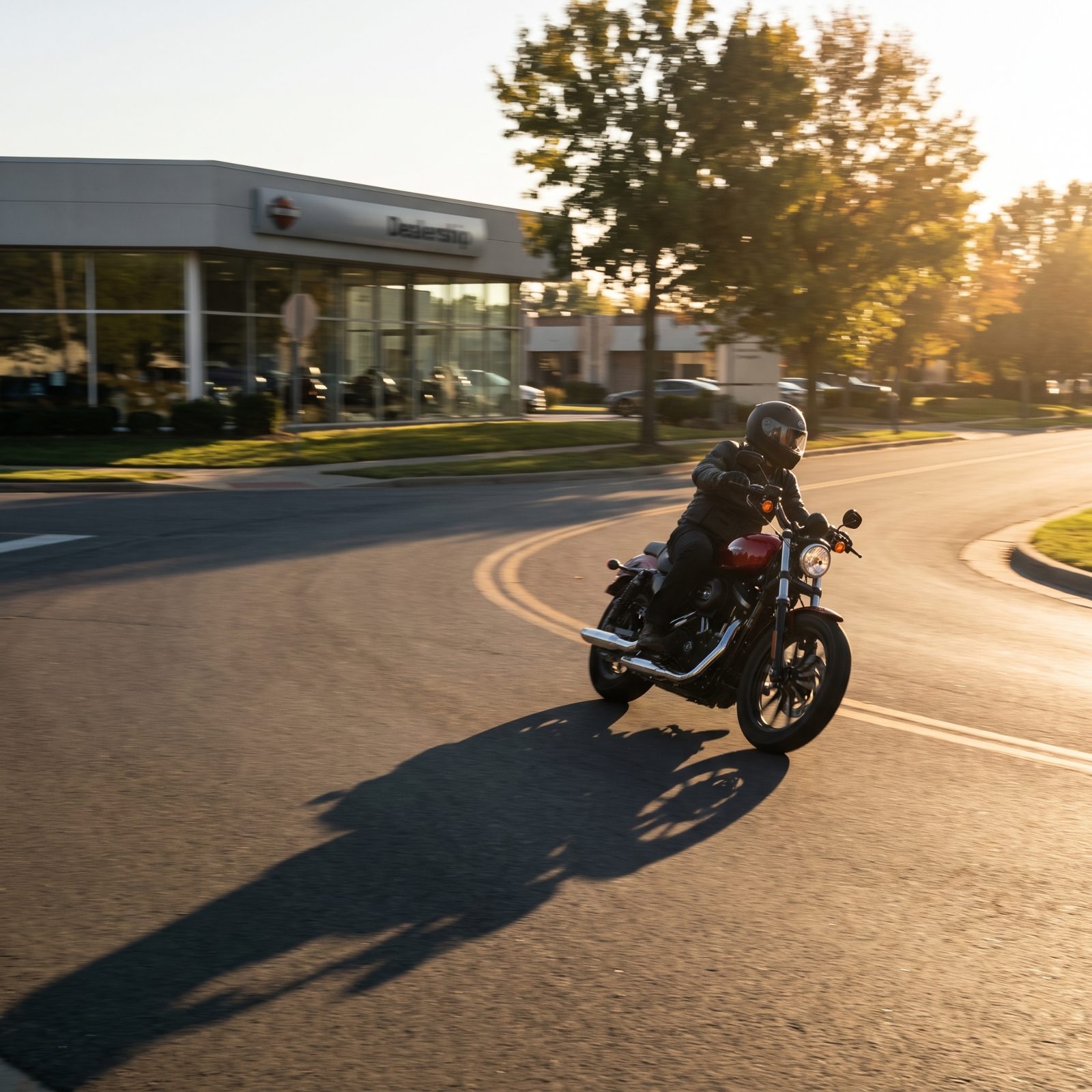
Five minutes around the block and the verdict is in. You’ve still got it. The throttle responds, the lean feels natural, the wind does what wind does, and twenty years of careful adulthood evaporate at the first stoplight.
One short ride on quiet roads under ideal conditions becomes proof of a whole life you can lead. It isn’t. It’s a taste engineered to feel like a promise, and the brain loves a single vivid data point enough to ignore how little it actually tested. Rush hour. Rain. A long interstate slog. None of that was on the loop. Those five minutes felt like freedom because somebody designed them to.
A test ride proves you can ride a test ride. It proves nothing about the Tuesday commute in a downpour.
2. Loud Pipes Start Sounding Suspiciously Like Being Noticed
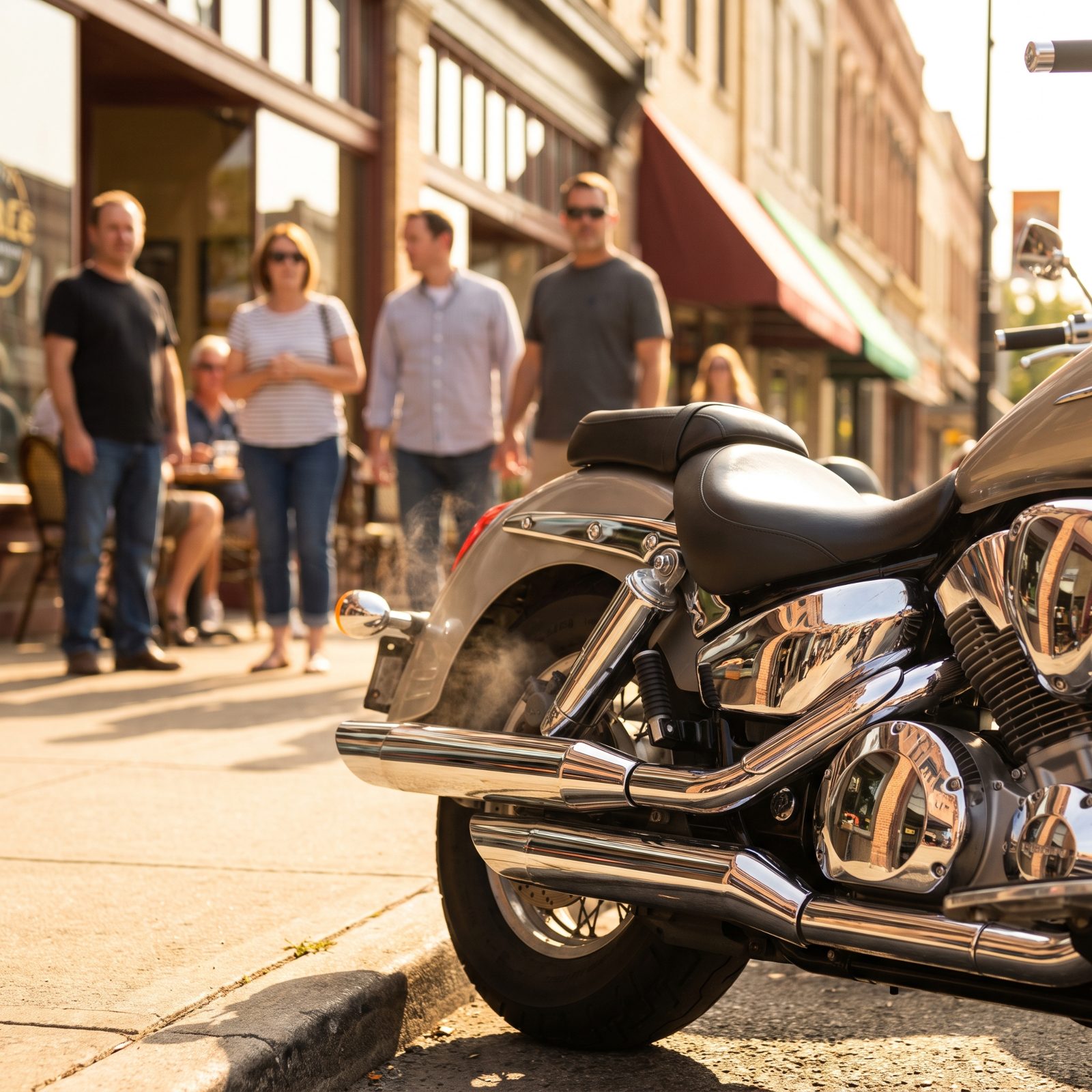
The sales pitch says loud pipes save lives, better to be heard than hit. True enough. But somewhere around the third conversation about decibels, a different truth leaks out. You don’t just want to be heard by cars. You want to be heard, period.
There’s an honest hunger under all of it. After years of being the dependable one who merges quietly and never makes a scene, the rumble is a way of announcing you’re still here. Being noticed feels a lot like being alive. It’s the same itch behind the bold new haircut or the car with no muffler. Safety is the alibi. Getting seen is the point.
1. The Insurance Quote Reminds You Bodies Have Consequences
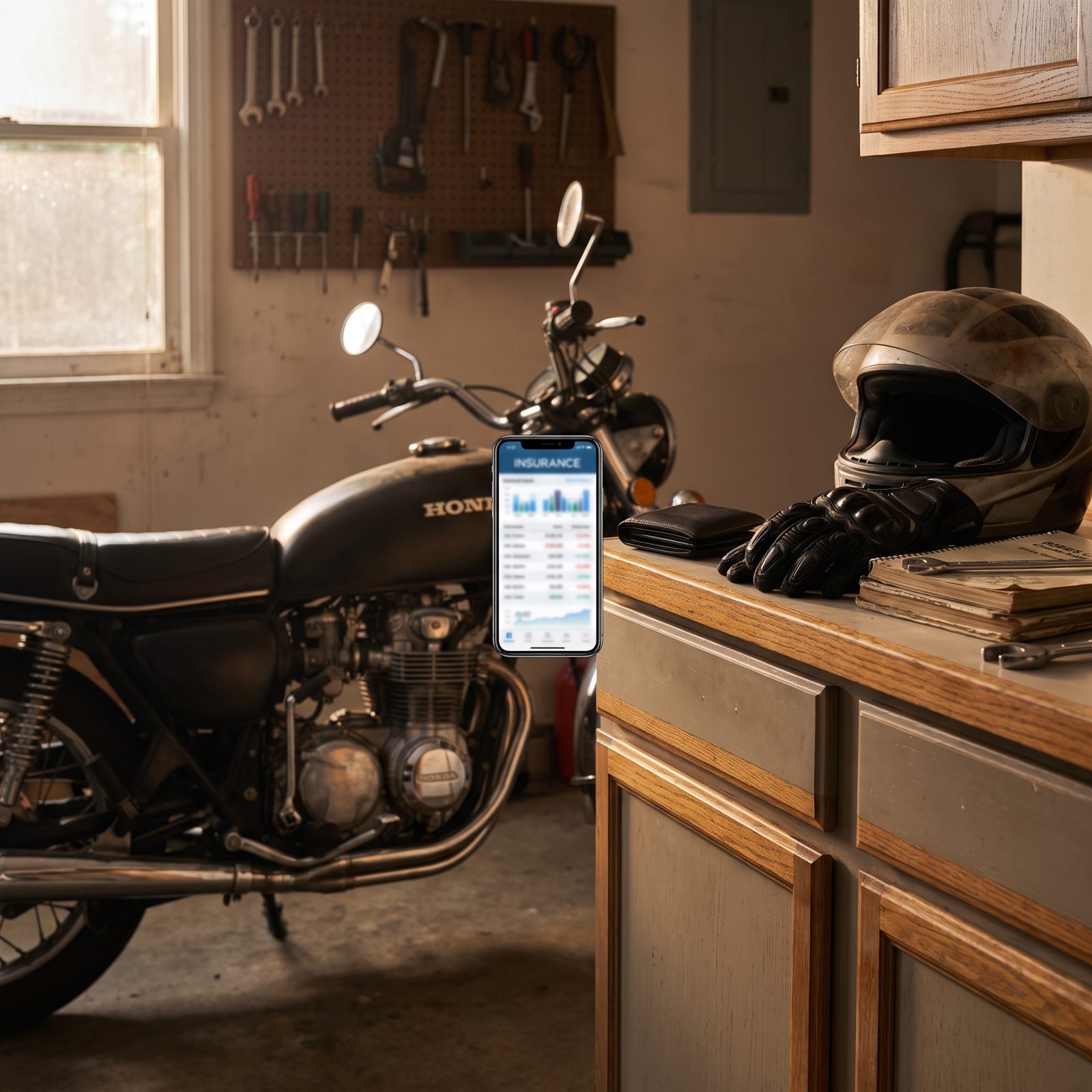
Everything stays up in the clouds until the insurance quote lands. Then the numbers do something the test ride never did. They name the risk out loud. Full coverage on a high-powered bike for a returning rider costs what it costs because someone did the actuarial math on how often this story ends badly.
The quote is the one voice in the whole process with no stake in your fantasy. Cold, specific, correct. For most of the buying frenzy the body is an afterthought, an abstraction, and then the premium drags it back into the room to remind you this machine moves a person who bruises, breaks, and heals slower than he used to.
None of that means don’t buy the bike. Plenty of people ride for decades and love every mile of it. It just means the fun runs on the same track as the consequences, and midlife, if it teaches anything, teaches you to look at both before you twist the throttle.