Many of these bikes never saw a showroom floor. They came out of garages, race shops and small factories, built by men who cared more about the engineering than the ledger. A rotary Dutch tourer. A Grand Prix twin assembled by hand in Milan. A boat-engine racer that somehow beat the Japanese. The survivors — the ones with paperwork and the right story — now change hands for figures that would buy a loaded pickup and leave money over. What follows are machines where rarity, provenance and genuine competition history stack up into real collector value. Not hype. History you can hear when it fires up.
Please note that some of the images in this article were created with the assistance of AI.
1978 Van Veen OCR 1000: The Dutch Wankel That Almost Nobody Finished
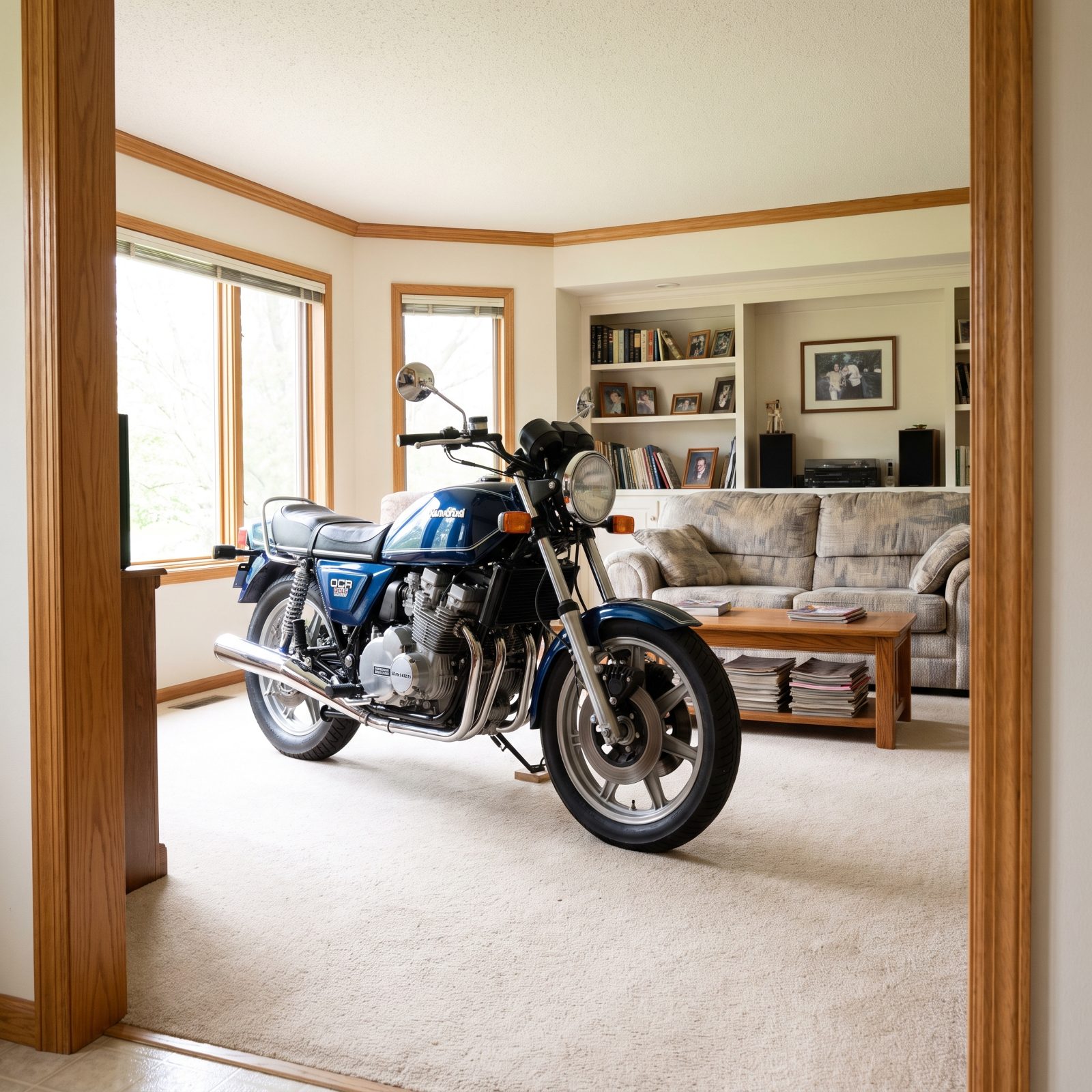
The Van Veen is the motorcycle most people have never heard of that gets the most knowing nods among collectors. A Dutch outfit took a twin-rotor Wankel rotary engine and dropped it into a big shaft-drive tourer. Fewer than 40 complete examples left the workshop before the money ran out.
That’s the appeal and the problem in one breath. Parts are nearly impossible. A running, documented OCR 1000 trades well into six figures when one surfaces, which is almost never.
1973 Münch Mammut TTS-E: A Car Engine in a Motorcycle Frame
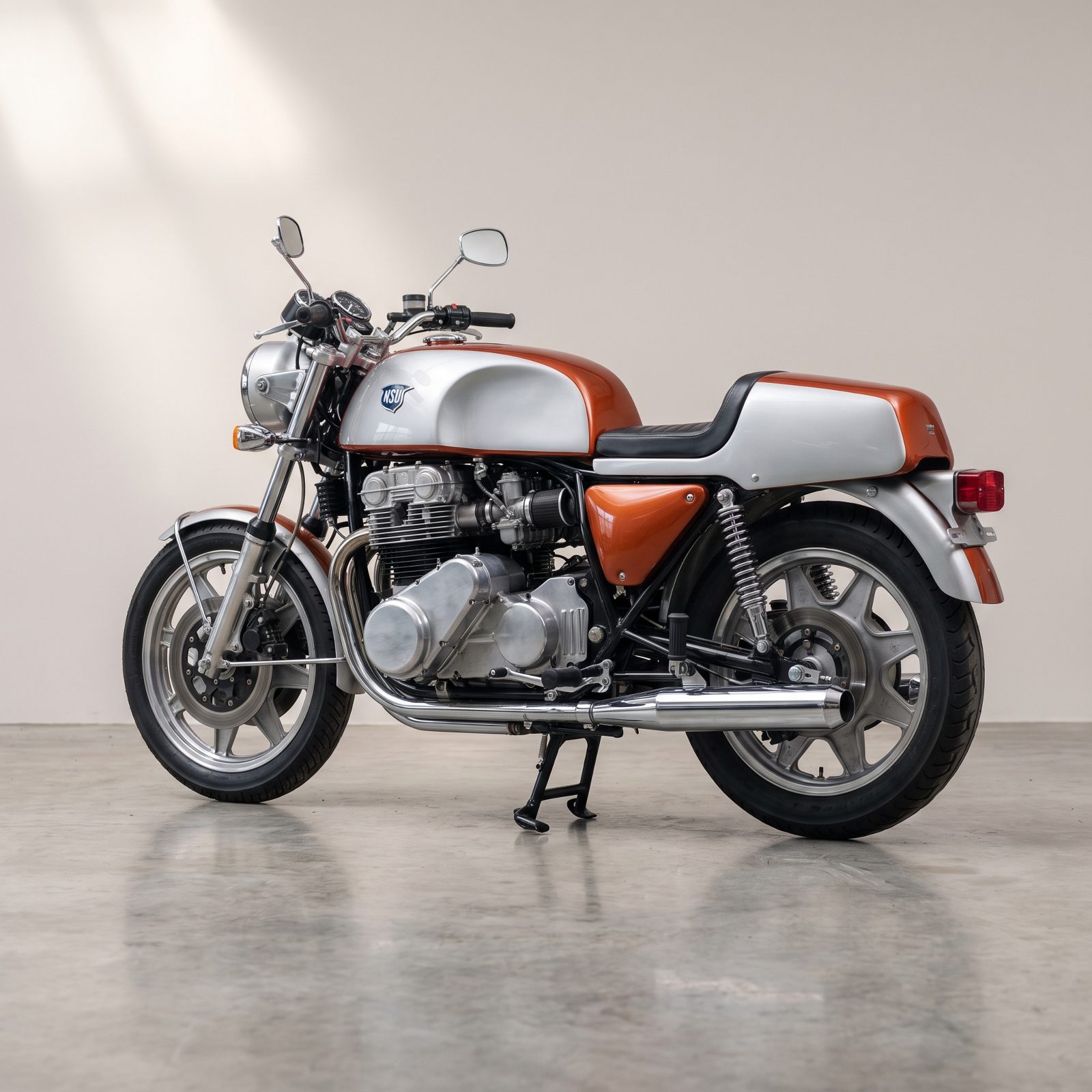
Friedel Münch built the Mammut by dropping an NSU four-cylinder car engine into a hand-fabricated frame, then charging whatever he felt like. Each one was essentially bespoke, assembled in small numbers by a man who signed his work.
That famous wide cast rear wheel? Münch’s own casting, made because nothing on the market could cope with the torque. Documented TTS-E examples with factory paperwork clear well past the price of a new luxury car, and the fuel-injected TTS-E carries a premium over earlier carbureted Mammuts.
1975 Bimota HB1: The Honda-Powered Bike That Started a Legend
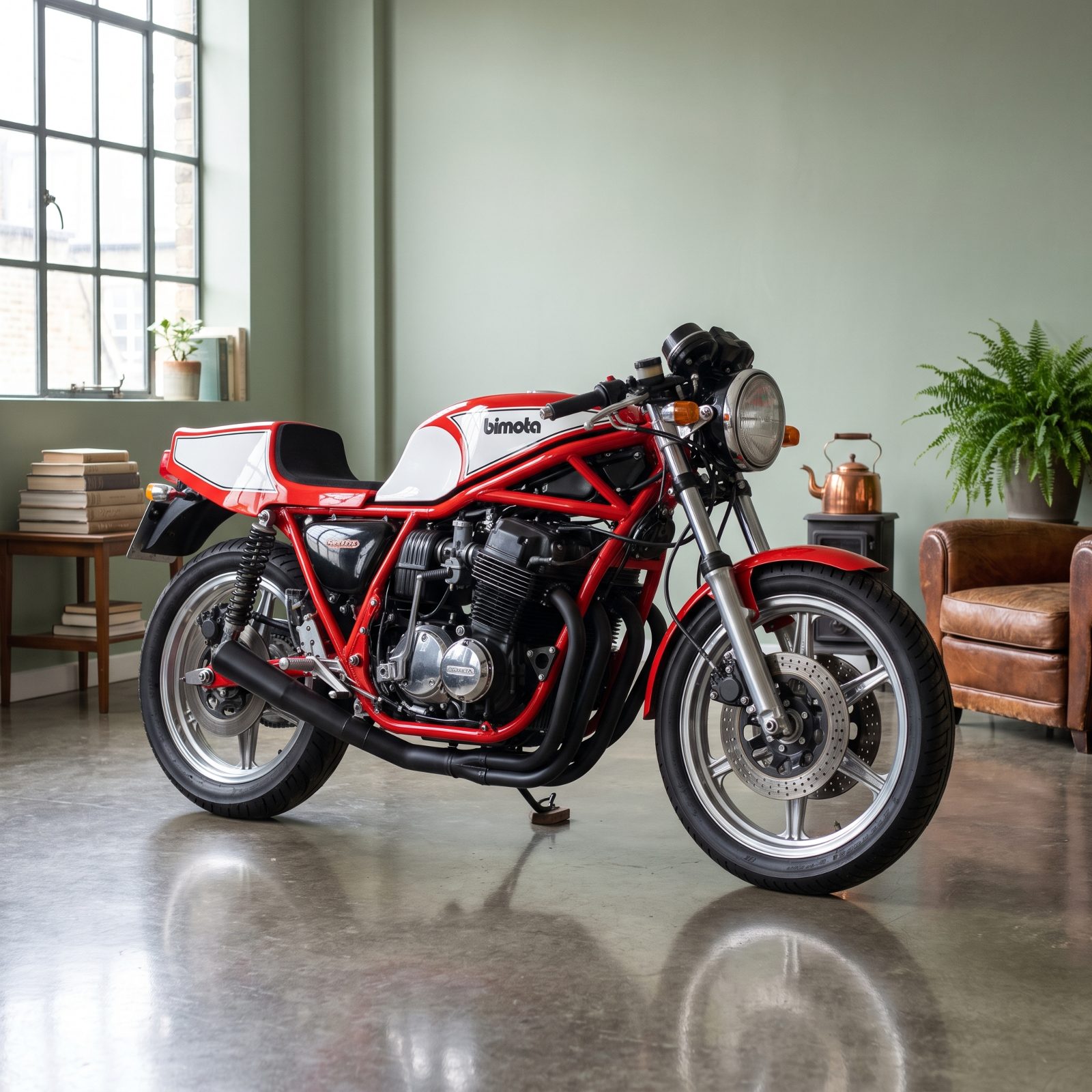
This is where Bimota began. Before the company became shorthand for exotic chassis engineering, it was a heating and air-conditioning firm with a side obsession. The HB1 wrapped a Honda CB750 engine in a purpose-built frame that made the Honda handle like the race bike it never was.
Only a handful were built — somewhere around ten, by most accounts. Finding a real one is the hard part. Replicas and tributes outnumber genuine HB1s by a wide margin, so documented originals command serious money precisely because the fakes are convincing.
1977 MV Agusta 850SS Monza: The Rarest of the Road-Going Fours
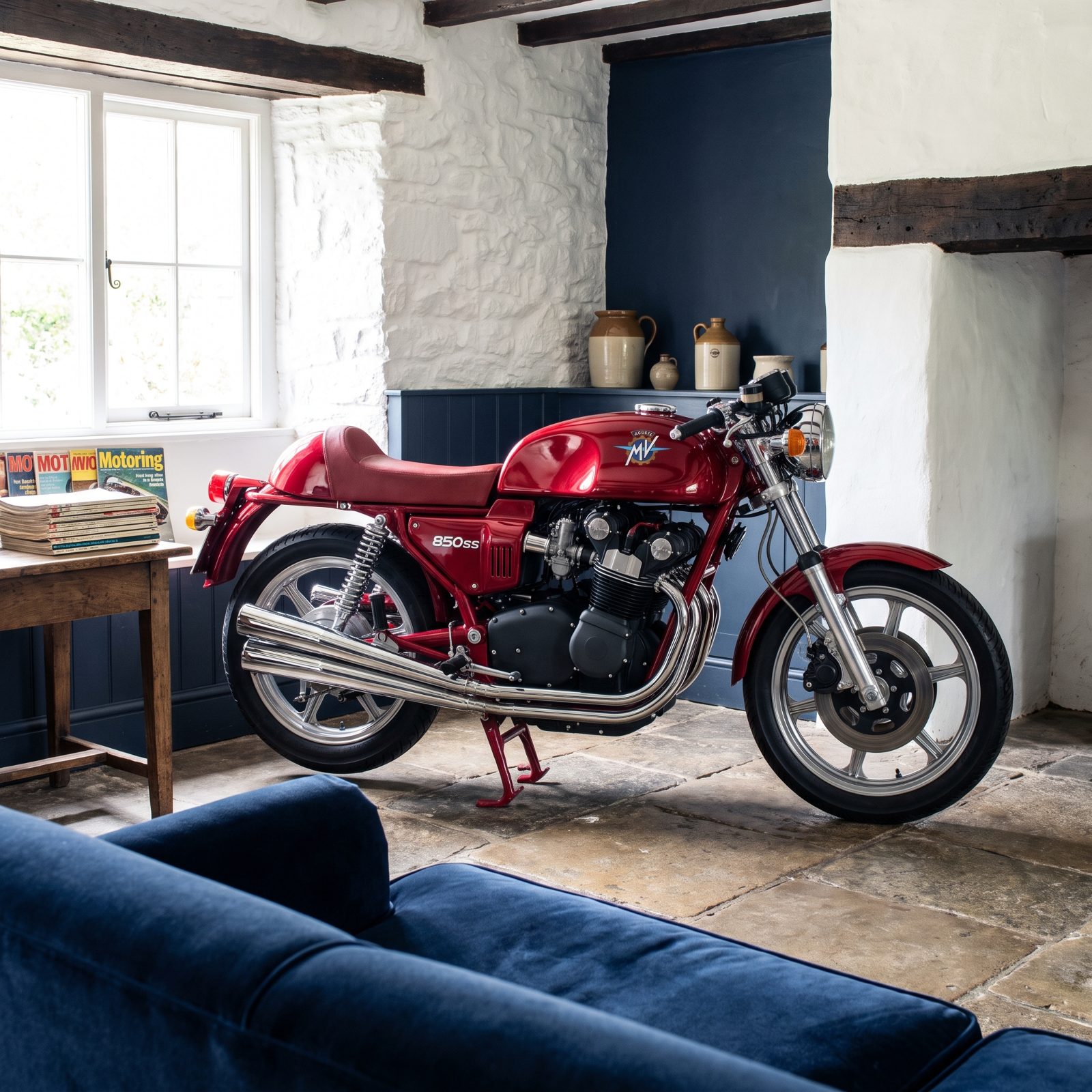
MV Agusta won everything in Grand Prix racing, then charged a fortune for the privilege of owning something that carried the name. The 850SS Monza was among the last and rarest of the road fours, built in small numbers as the company’s racing fire was already dying down.
What you’re buying here is the sound and the heritage — a four-cylinder engine, shaft drive, Italian red, and a kind of mechanical theater nothing else quite offers. Good Monza examples routinely sit above the price of a well-equipped new SUV. Condition and originality separate the serious bikes from the merely nice.
1969 Linto 500 GP: Two Aermacchi Singles Made Into One Twin
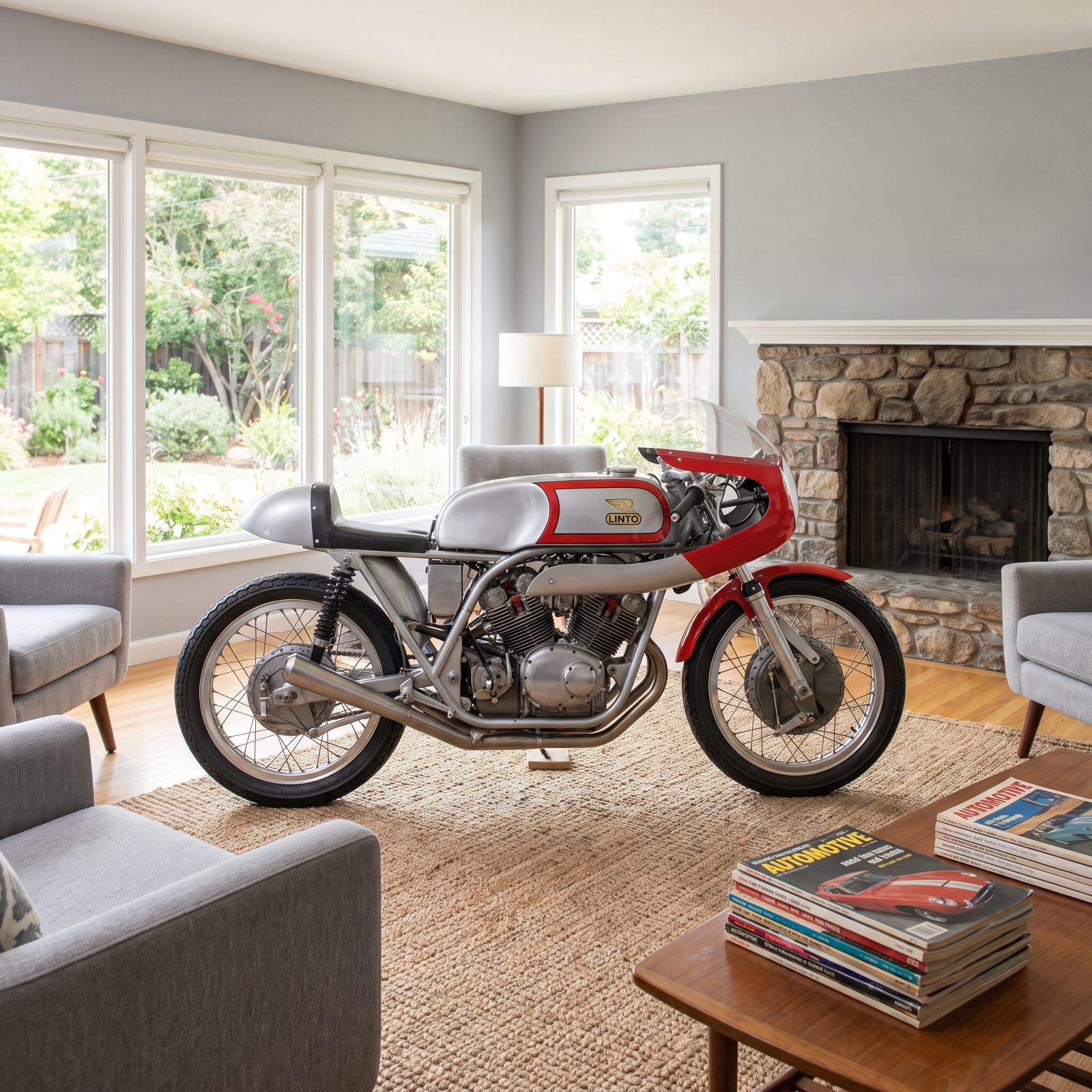
Lino Tonti built the Linto 500 by effectively joining two Aermacchi singles into a parallel twin — a clever answer for privateers who couldn’t afford a factory MV or Honda. It gave the small racers a fighting chance in the 500 class when the field was thin.
These were competition machines in the truest sense, built in tiny numbers and raced hard. Survivors with documented period history turn up at specialist auctions and quietly outperform the estimates. The value lives in the story, the races it ran, and how little of it was ever made.
1974 König 500 GP: The Boat Engine That Chased World Titles
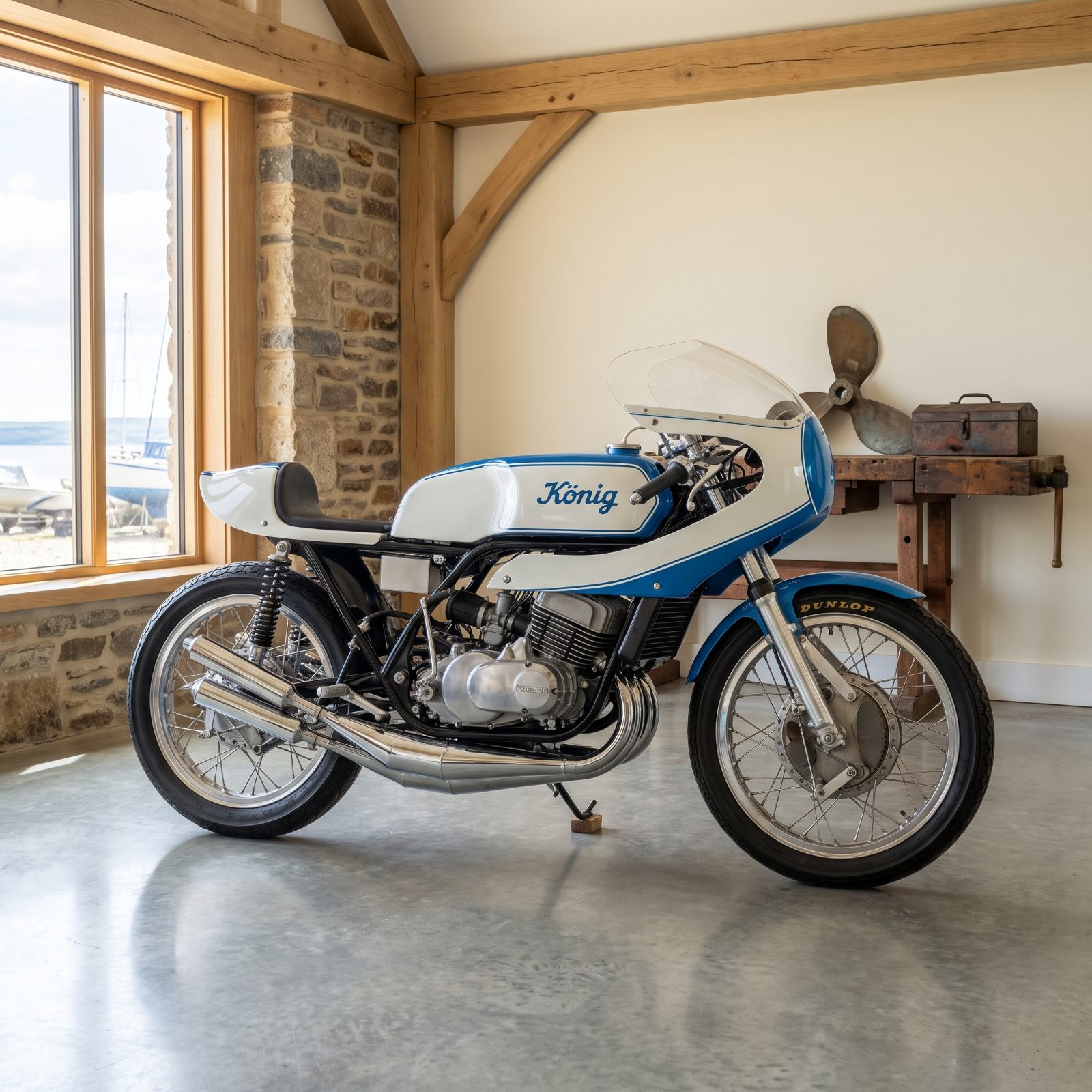
The König started life as a boat racing engine — a water-cooled flat-four two-stroke that a German firm adapted for motorcycle Grand Prix duty. It had no business being competitive. And yet it was, finishing high in the 500 World Championship in the hands of serious riders.
That odd origin is exactly what makes it collectible. Nothing else looks or sounds like it, and almost none were built. A genuine König with race history is a museum piece, and the rare private sale lands well beyond new-car territory.
1973 Paton 500 GP: Milan’s Hand-Built Answer to the Factories
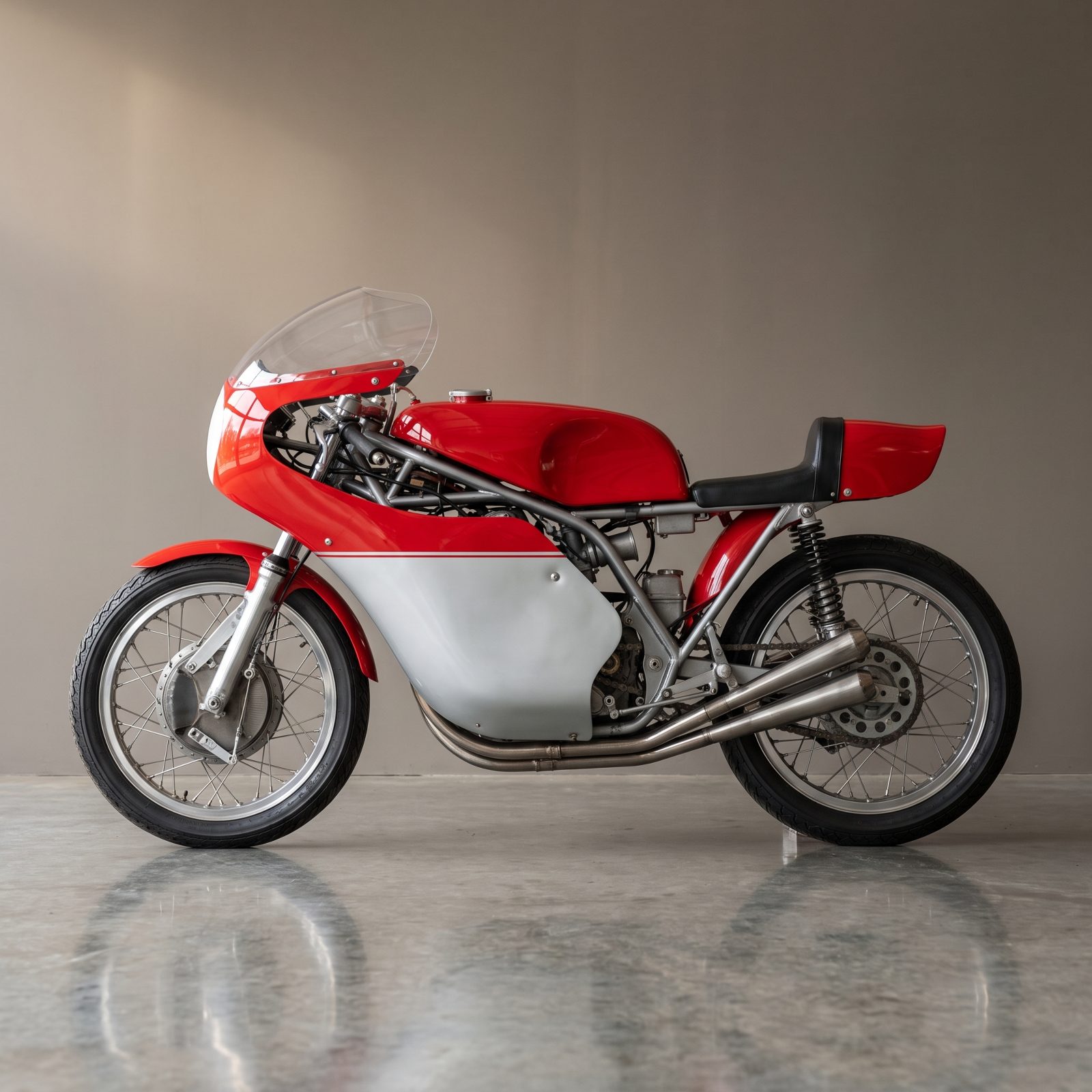
Paton was a garage against the world, plain and simple. Founded by two former Mondial engineers in Milan, the company hand-built Grand Prix twins in numbers you could count without taking your boots off. Every bike was essentially made by the people who designed it.
The appeal is the romance of the privateer who refused to quit, backed by real race results. A documented Paton 500 is a rolling piece of Italian racing history, and prices reflect the fact that you can’t simply go find another one. When one appears, the right buyers already know exactly what it is.
1977 Morbidelli 125 GP: A Tiny World Champion
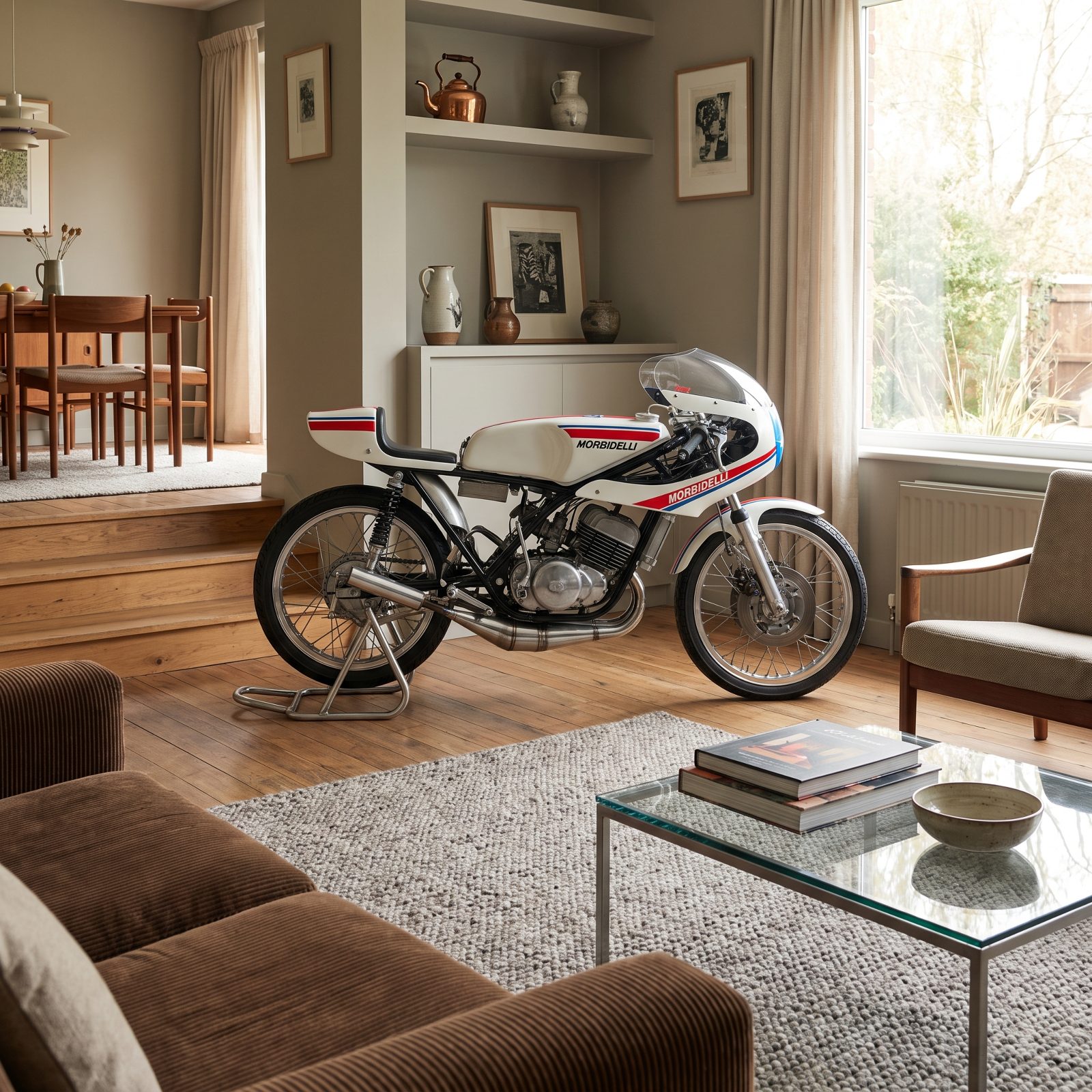
Small displacement, enormous significance. Morbidelli came out of the furniture machinery business and built two-stroke racers that dominated the 125 and 250 classes, winning world titles outright against far larger budgets.
Collectors prize the 125 because it’s giant-killing history in a compact, jewel-like package. These were genuine works bikes, not road machines, so originality and race documentation drive the value hard. A proven championship-era Morbidelli is worth far more than its tiny engine would ever suggest. The size is the surprise. The provenance is the price.
1970 Egli-Vincent: A Vincent Twin in a Spine Frame
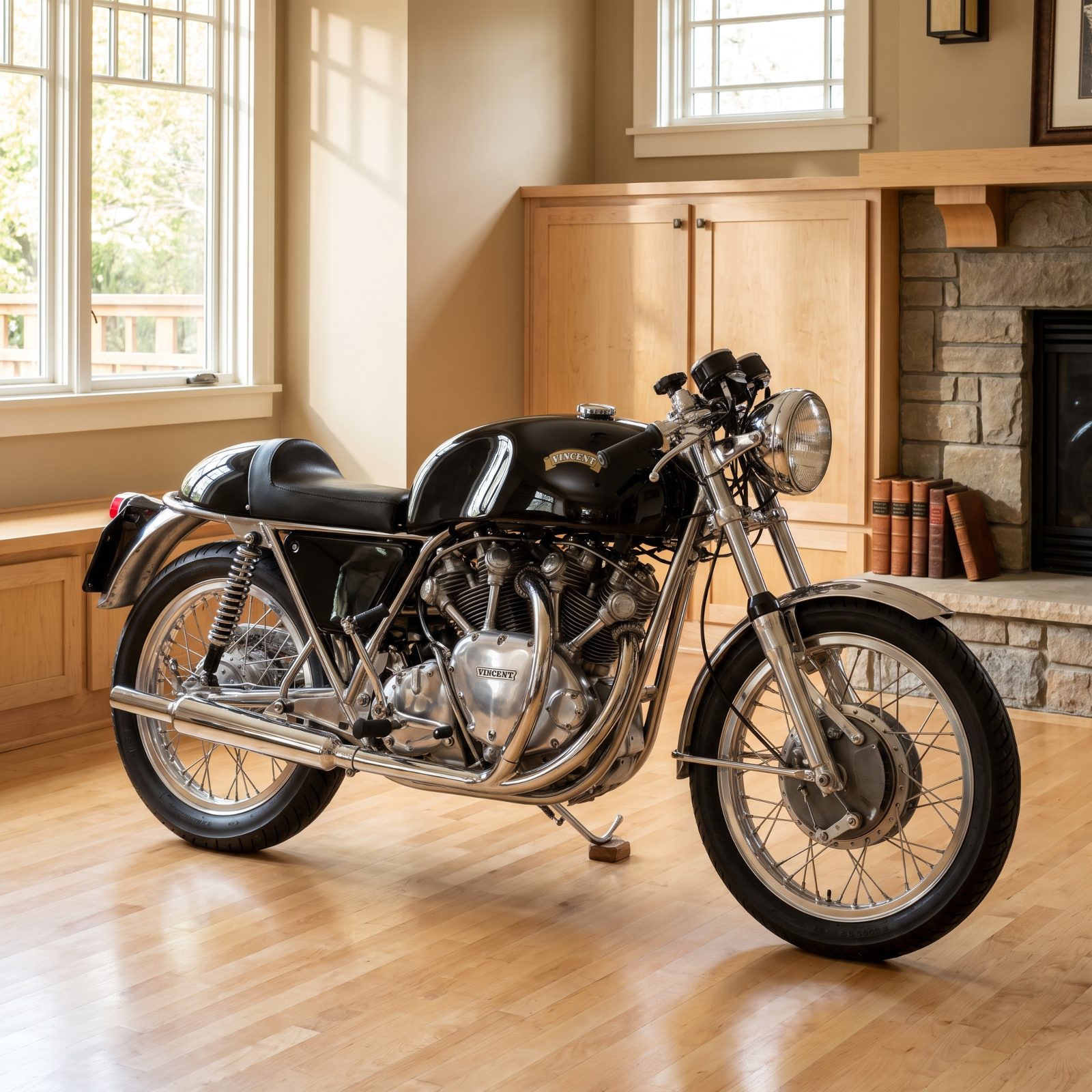
A Vincent engine deserves a better frame, and Fritz Egli built it. The Swiss engineer took the famous V-twin and hung it from a large-diameter backbone frame, creating a motorcycle that handled as well as it hammered.
Here’s the nuance. Egli-Vincents exist on a spectrum, from fully period-correct Egli-built machines to later tributes cobbled together from the right parts. The gap between the two can swallow a new car’s worth of money. A documented early Egli with a genuine Vincent engine and verified frame origin sits at the top — which is why the paperwork matters more than the polish.
1978 Ducati 900 NCR: The Bevel Twin Built to Win
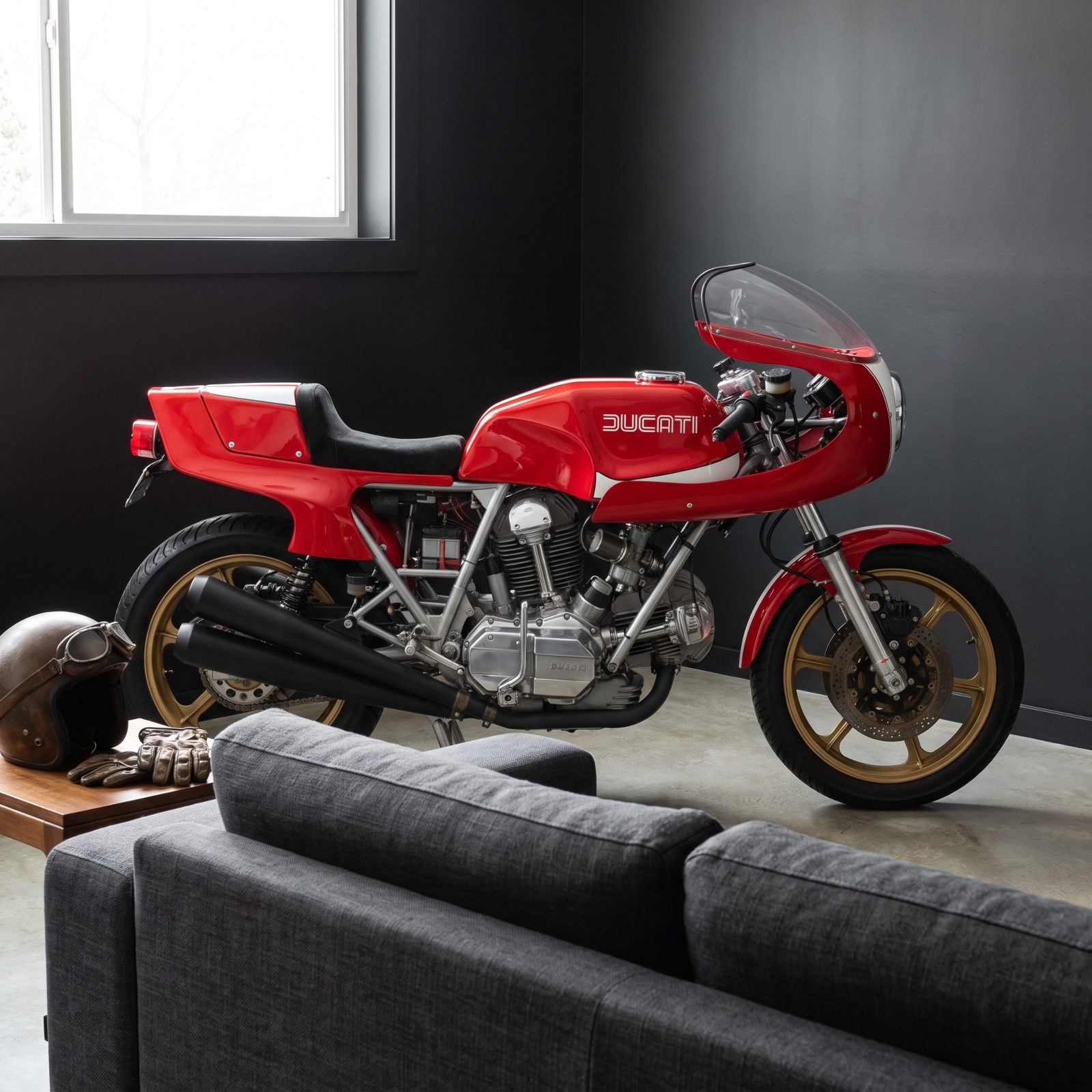
NCR was the Bologna race shop that turned Ducati’s bevel-drive L-twins into winners, most famously at the Isle of Man and Imola. A genuine 900 NCR is the holy grail of the air-cooled bevel world — built light, built to race, and built in numbers that barely registered.
The trouble, as always, is authenticity. The bevel Ducati scene is thick with tribute bikes wearing NCR parts, and the value difference between a real one and a convincing copy is staggering. Documented NCR provenance pushes these into territory where they comfortably outvalue almost any new motorcycle on sale today. Buy the history. The bike comes with it.
1975 Harley-Davidson RR250, A Two-Stroke Grand Prix Racer From the Aermacchi Era
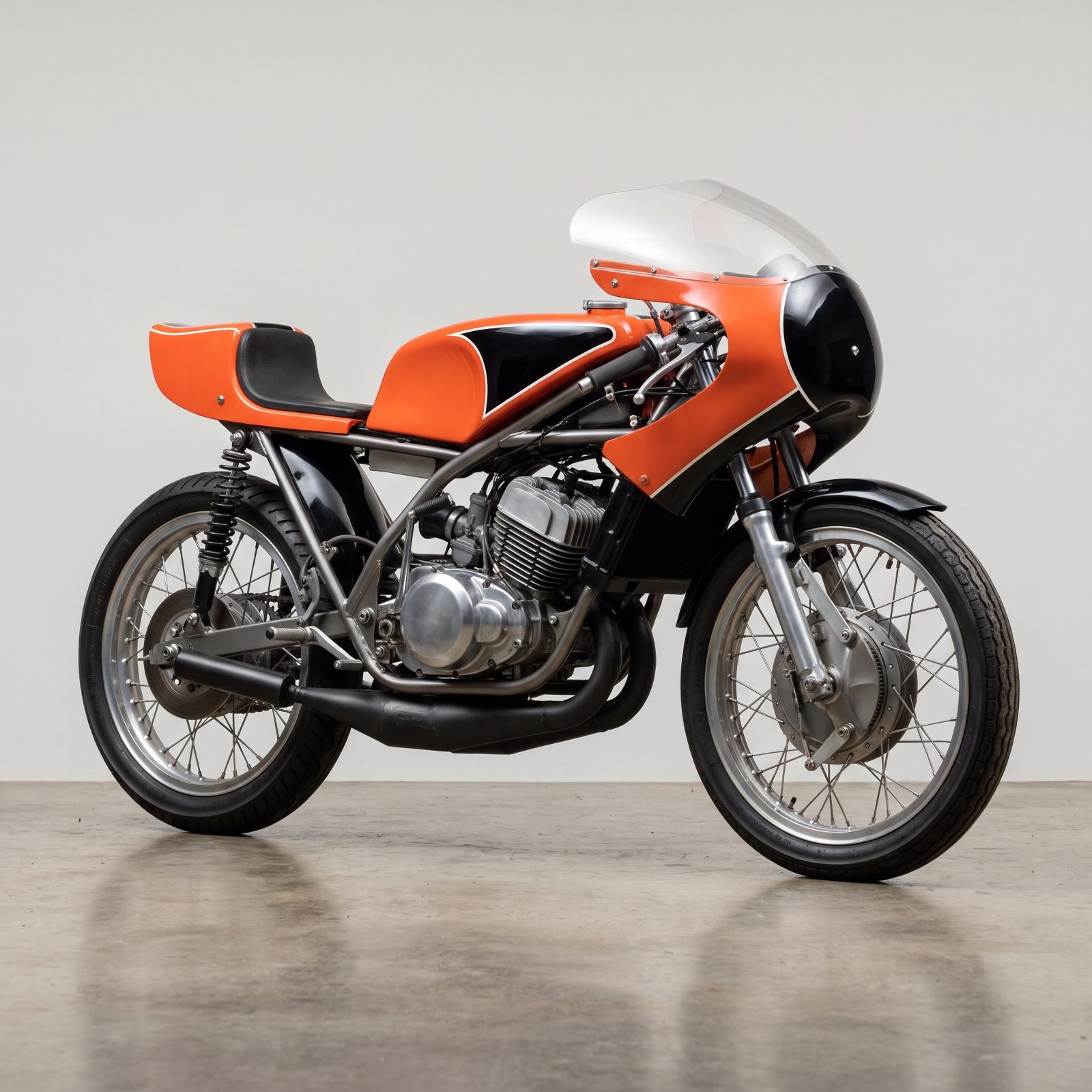
Before the Italian partnership faded, Harley’s name sat on the fuel tank of one of the fastest small-displacement racers of its day. The RR250 won world championships in the quarter-liter class with an air-cooled two-stroke twin built in Varese, not Milwaukee. That contradiction is exactly why collectors chase it.
Most American riders have never heard of it, and fewer still know the bike carried the bar-and-shield into Continental road racing while the factory back home stuck to pushrod V-twins. Documented, race-winning examples with known histories trade for sums that embarrass a new pickup.
1962 Honda CR93, A Jewel-Like 125cc Production Road Racer
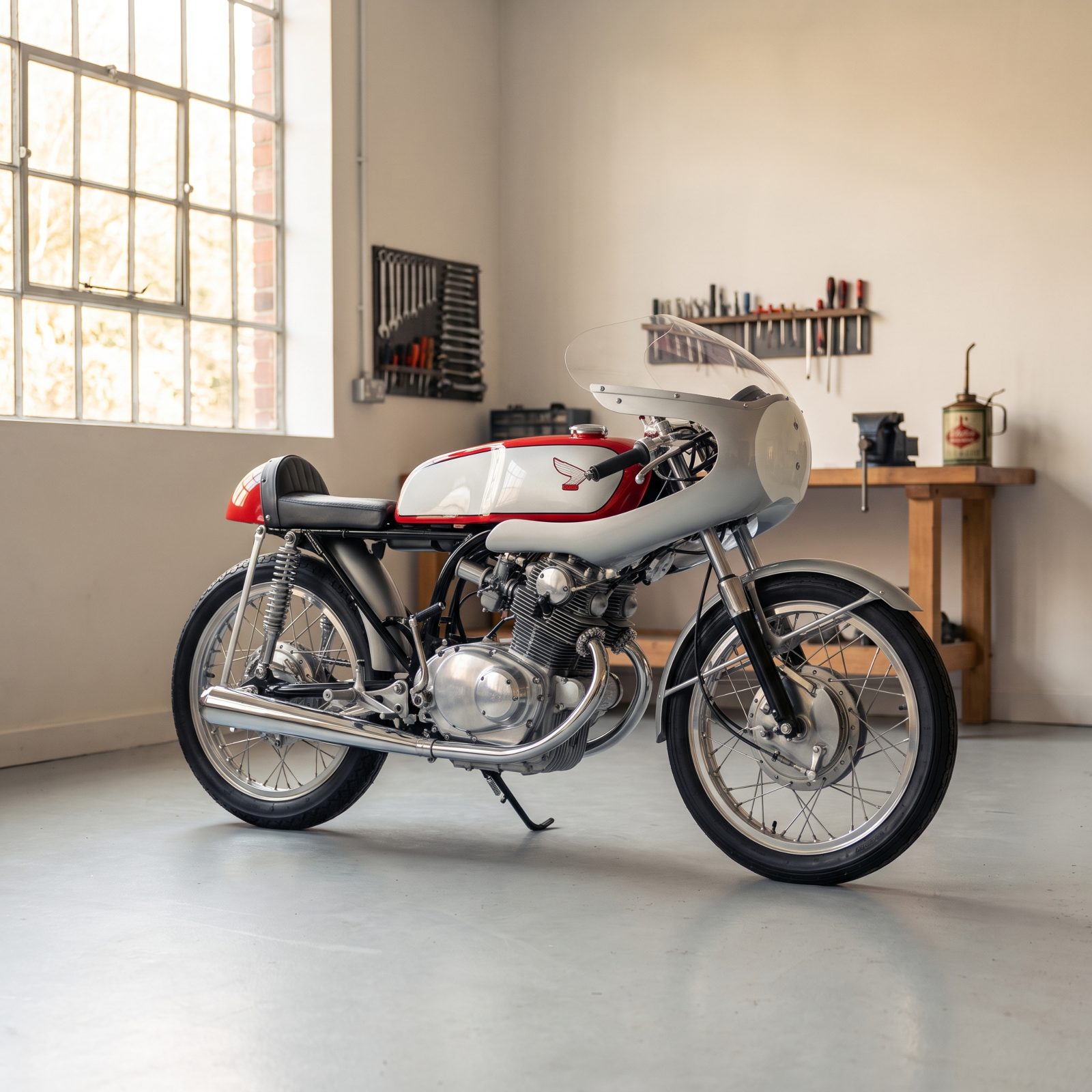
Pick one up and the first surprise is the weight. Almost nothing. The CR93 is a 125cc twin with a dual-overhead-cam head and the fit and finish of a wristwatch, built in tiny numbers for privateers who wanted to beat the Europeans on home ground.
Here’s the detail nobody mentions: this was a customer bike you could actually buy, not a pure works prototype, which is why genuine ones with verifiable chassis numbers surface at all. They surface rarely. When a documented example does, the number it brings would buy a loaded mid-size sedan and leave change for the trailer to haul it.
1968 Seeley-Matchless G50, Grand Prix Power in a Seeley Racing Frame
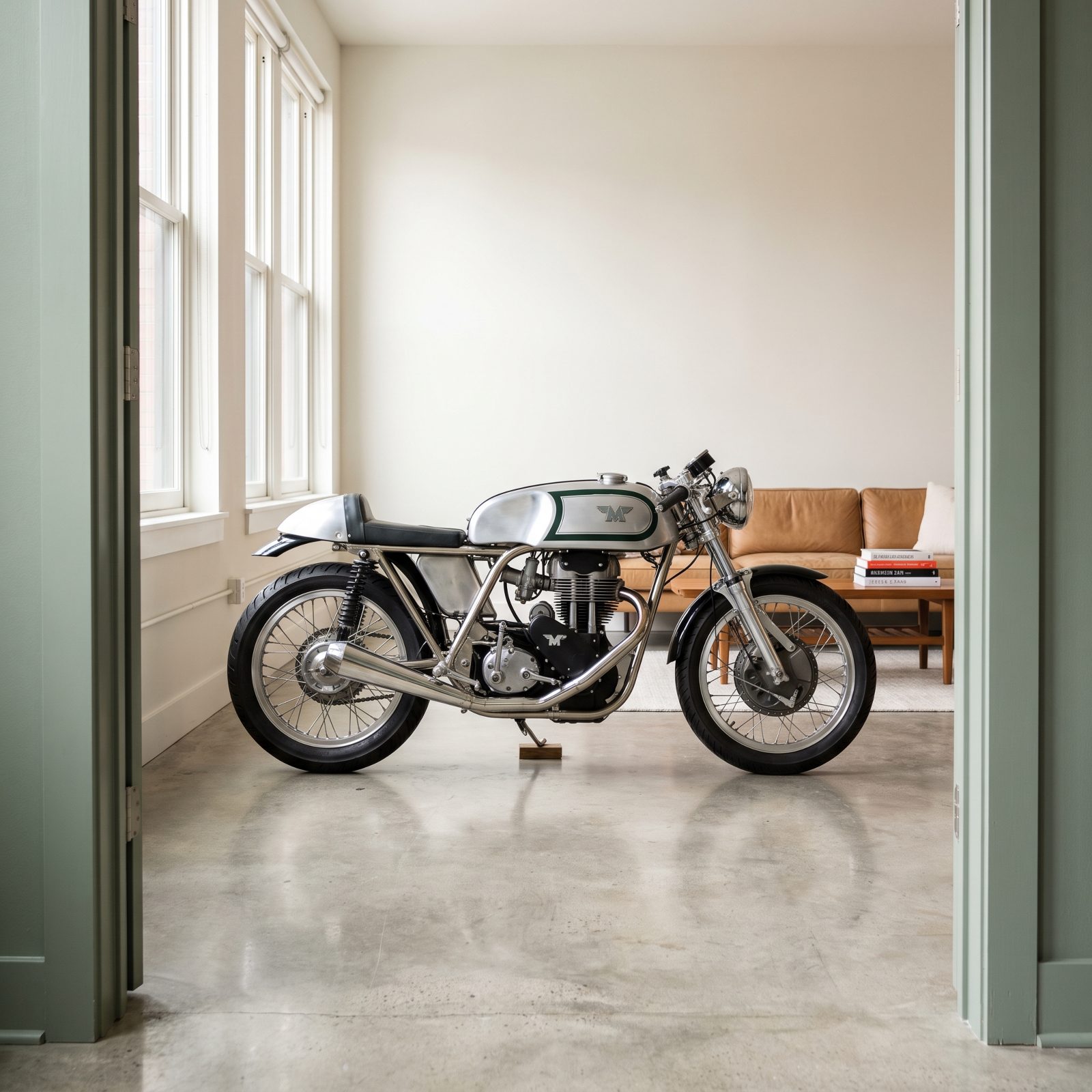
Colin Seeley bought the rights to the AMC racing engines when the factory quit, then built a better frame to carry them. That’s the whole story of this bike, and it’s why the Seeley name adds real money to an already valuable Matchless racer.
The Seeley chassis handled sharper and weighed less than the stock lump it replaced. A G50 engine in a genuine Seeley frame, with paperwork tying both together, is about as desirable as British racers get. Reproductions exist. The documented originals are what push past new-car territory.
1960 Matchless G50, A Coveted Privateer Grand Prix Single
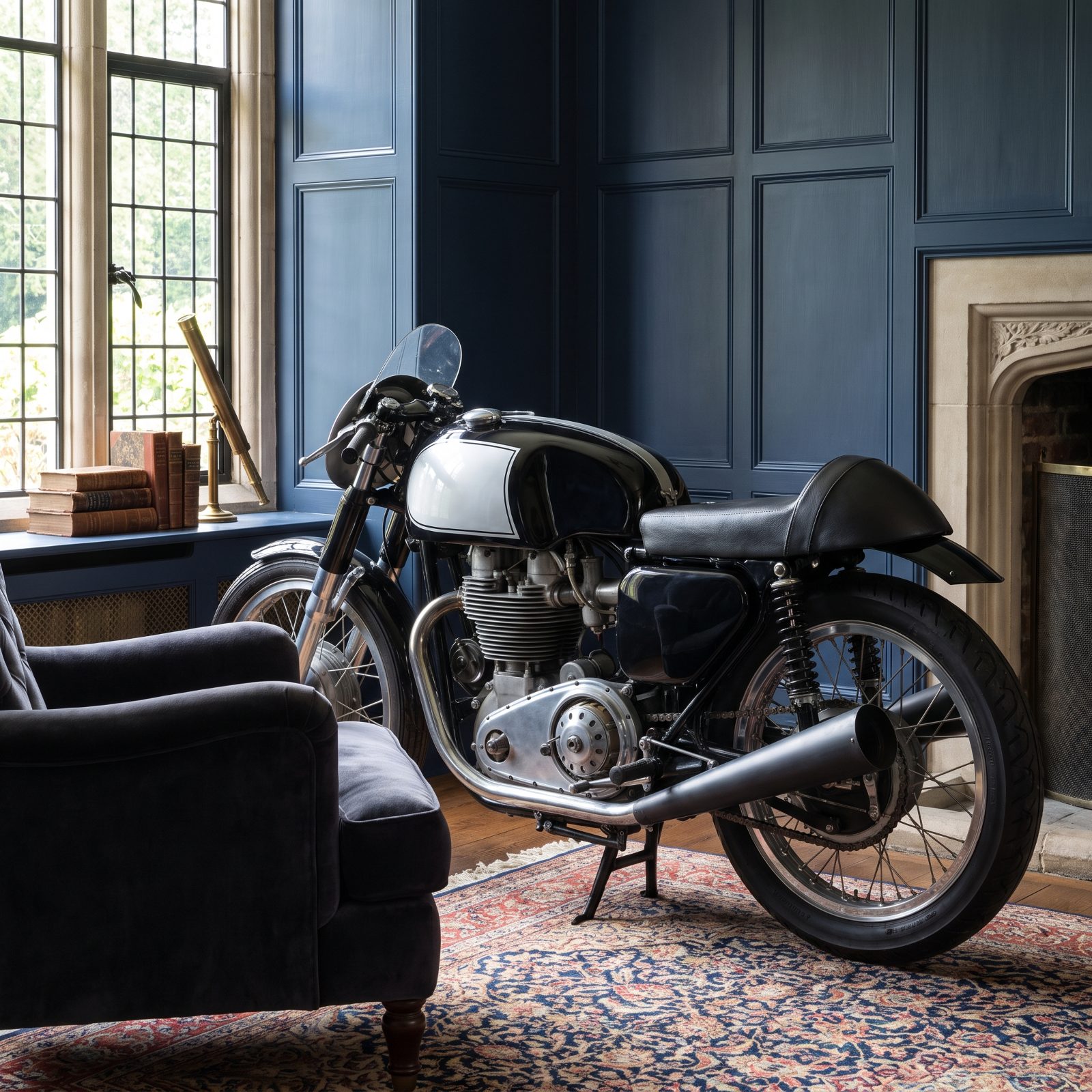
The G50 was the privateer’s weapon through the final years of the big four-stroke singles. Five hundred cubic centimeters, one cylinder, a frame that worked, and a price ordinary racers could just about afford when new.
Scarcity did the rest. Matchless built few of them, the factory stopped, and every survivor has been fought over by vintage racers and collectors ever since. A clean, correctly numbered G50 with continuous history is a seven-figure conversation starter in some sales and comfortably more than a new car in most.
1960 AJS 7R, The Famous Boy Racer in Late-Production Form
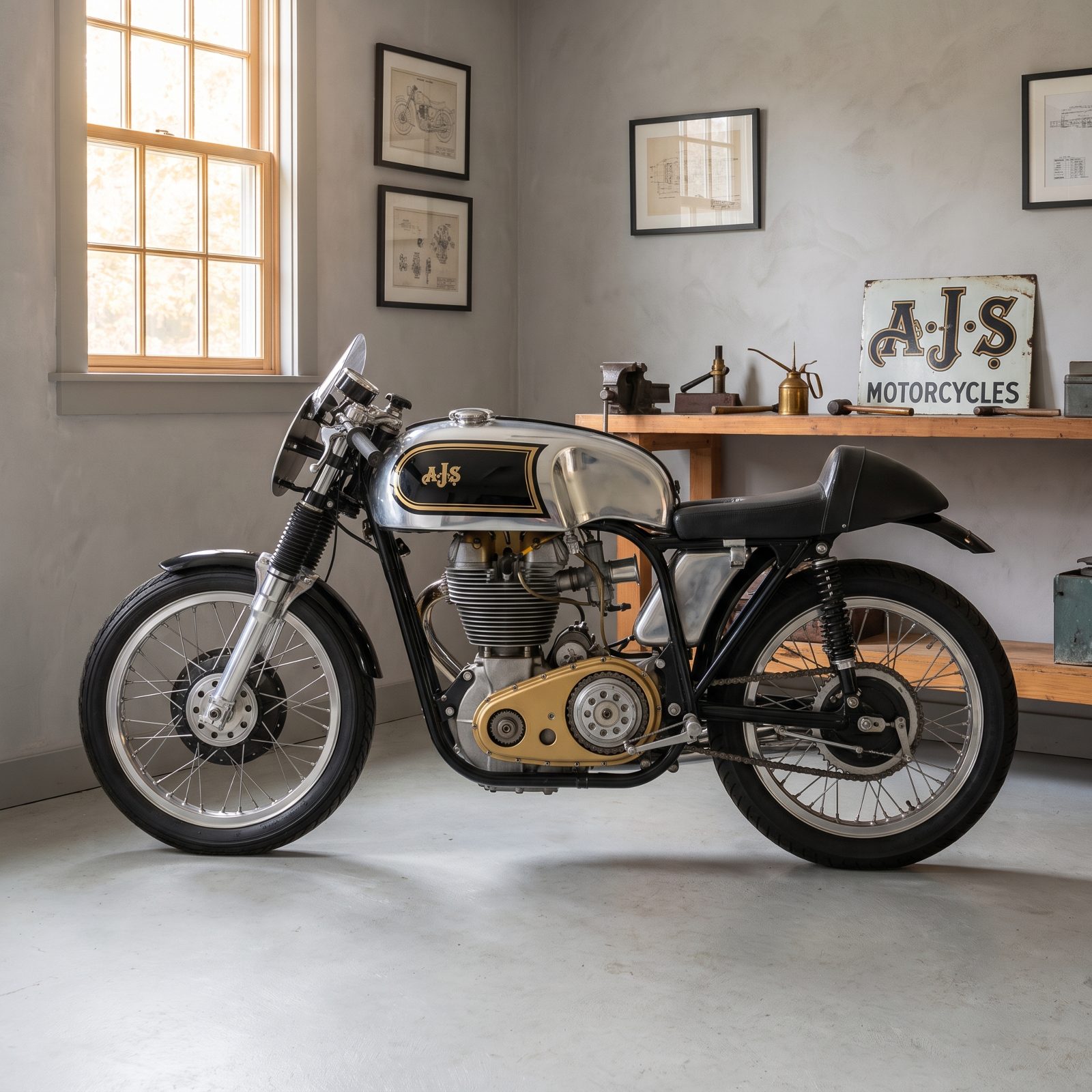
They called it the Boy Racer, and the nickname stuck for forty years. The 7R was AJS’s 350cc chain-cam single, recognizable from across a paddock by the gold-painted cam cover on the timing side.
What makes a late 1960 example desirable? The sorted, final-development engine paired with the same clean lines racers loved from the start. These were production racers sold to privateers, so genuine survivors exist, each one worn by decades of use. A properly restored 7R with honest provenance clears the cost of a new family crossover without much drama at a specialist auction.
1961 Norton Manx 30M, A Final-Era 500cc Featherbed Racer
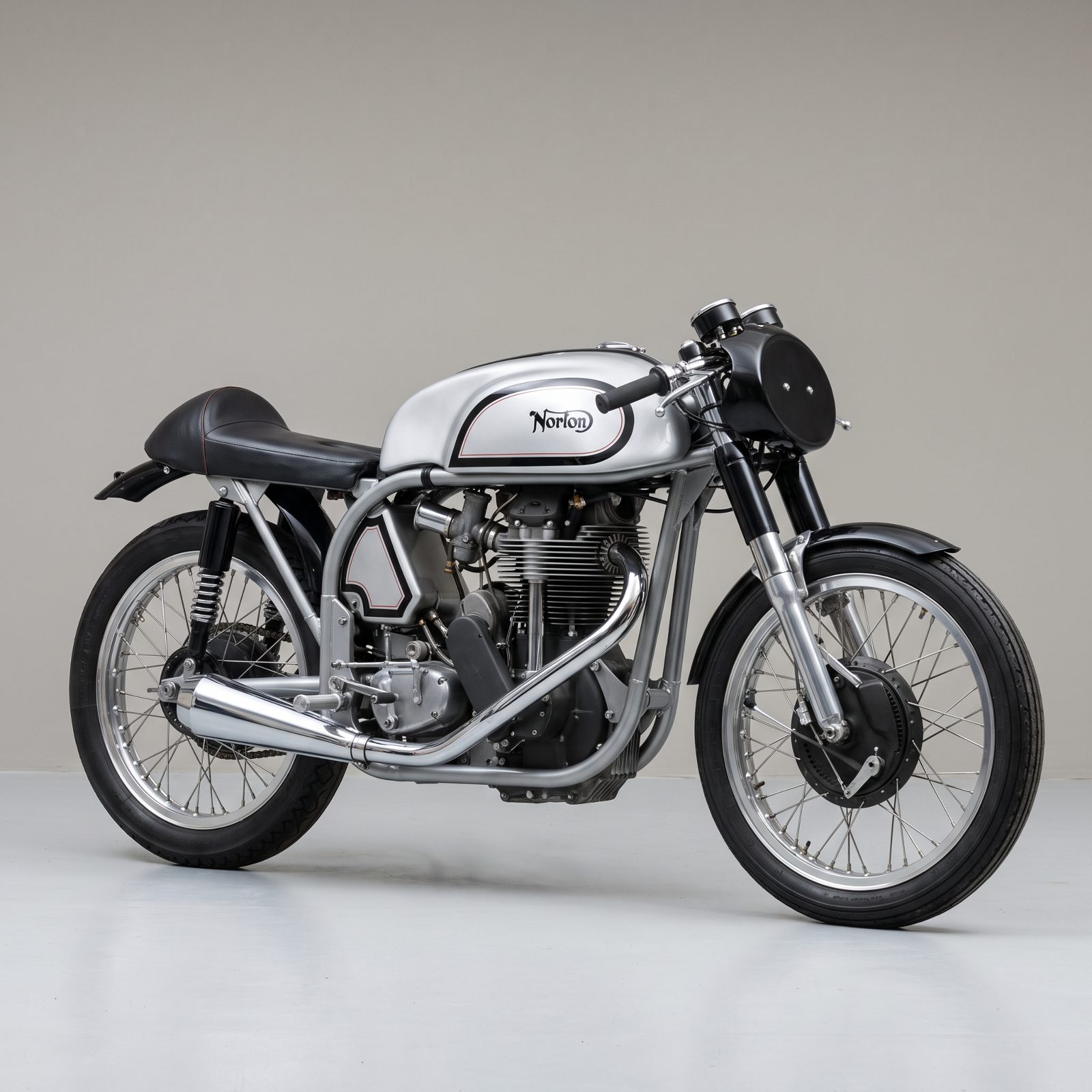
Ask any classic racer to name the frame that changed everything and you’ll hear Featherbed. The Manx 30M wrapped a dual-overhead-cam 500cc single inside it, and the handling set a standard the rest of the field spent a decade trying to match.
By 1961 the factory was winding down Manx production, which makes the final-era bikes a sweet spot: fully developed, genuinely raced, and finite in number. Values track condition and paperwork closely. The best-documented 30M examples sit well above the price of a new car, and the very best go a great deal higher.
1972 Harley-Davidson XRTT, The Road-Racing Counterpart to the XR-750
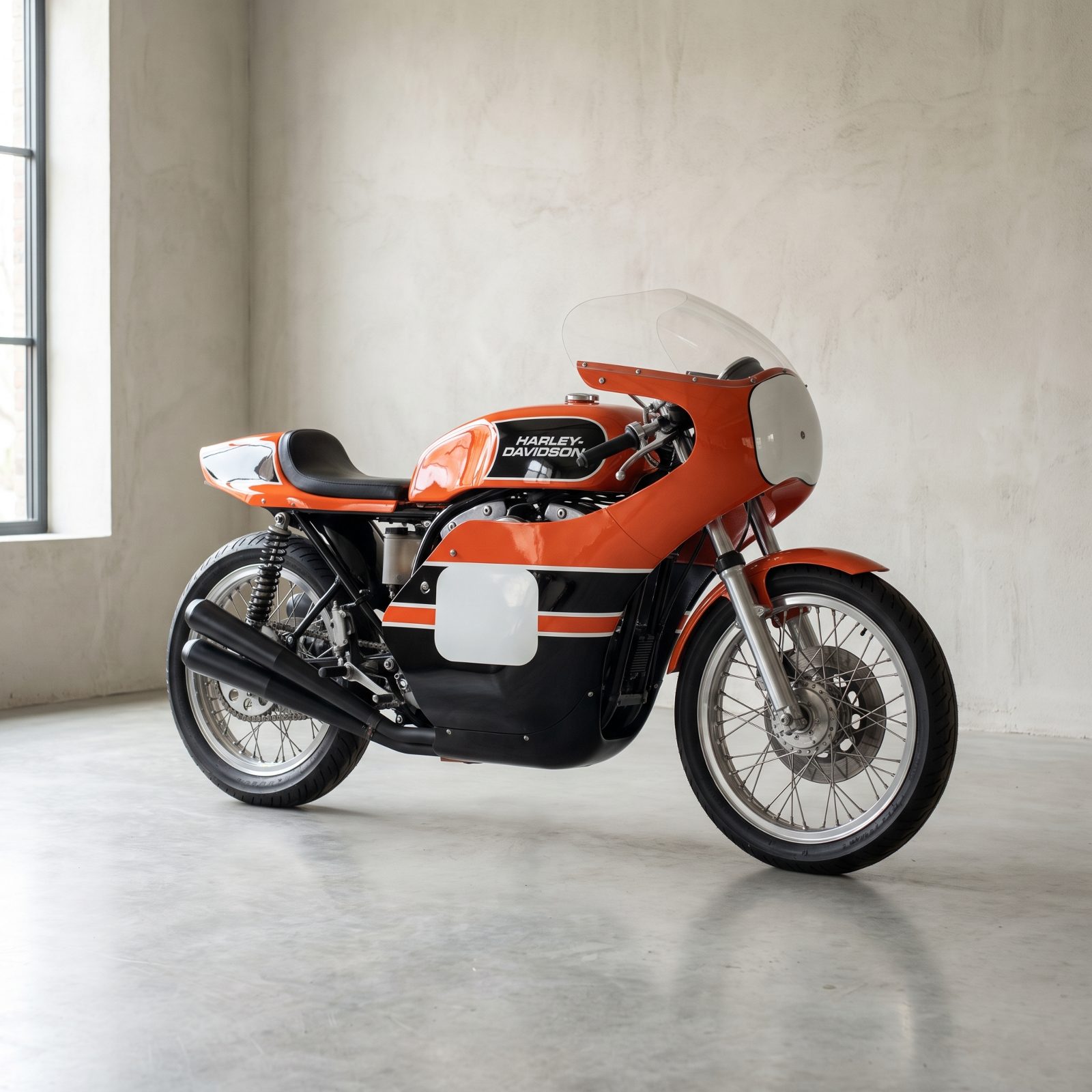
Everyone knows the XR-750 flat-tracker. Far fewer know its road-racing brother, the XRTT, which took the same V-twin, wrapped it in a full fairing, and sent it to the tarmac circuits.
Harley built it in small numbers for a form of racing the company never really dominated, and that’s half the charm. An orange-and-black oddity, a V-twin fighting two-strokes on road courses — the underdog character pulls hard on American collectors. Documented factory examples, especially ones with race history, change hands for figures that would cover a new truck and then some.
1975 Yamaha TZ750, The Four-Cylinder Two-Stroke Production Racer
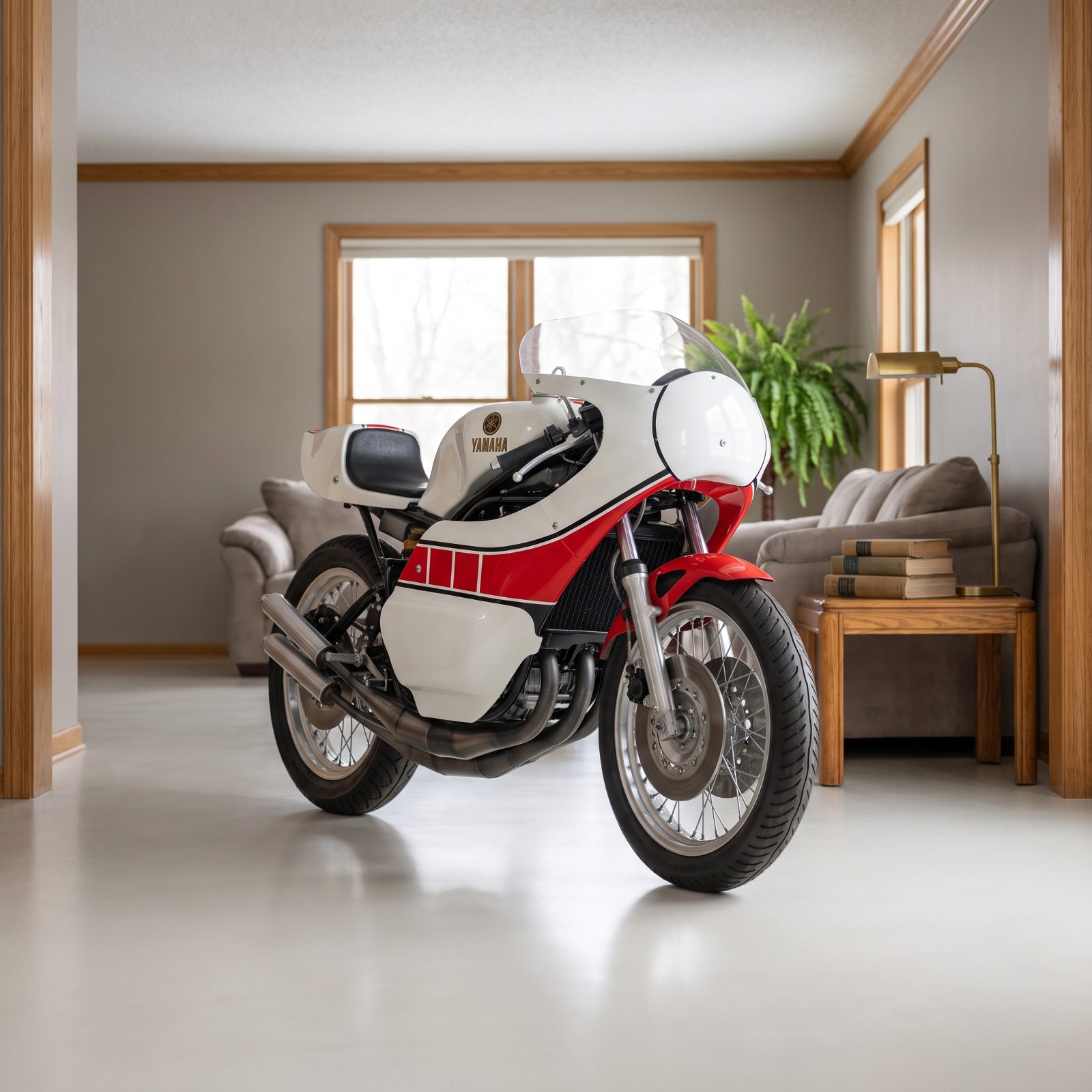
Four cylinders, four header pipes swept into twin stacked silencers, and a reputation for frightening the brave. Yamaha sold the TZ750 to privateers, so any rider with the money and the nerve could line up against the factory stars. The power arrived all at once, and the chassis of the day struggled to hold it down.
That ferocity is exactly what makes it a legend. The TZ750 ruled the 750 class for years and defined an era of open-class two-stroke racing. Genuine, matching-number examples with race provenance trade for more than a well-optioned new car, and the famous ones go far beyond that.
1972 Kawasaki H2R, A Factory-Built 750cc Two-Stroke Road Racer
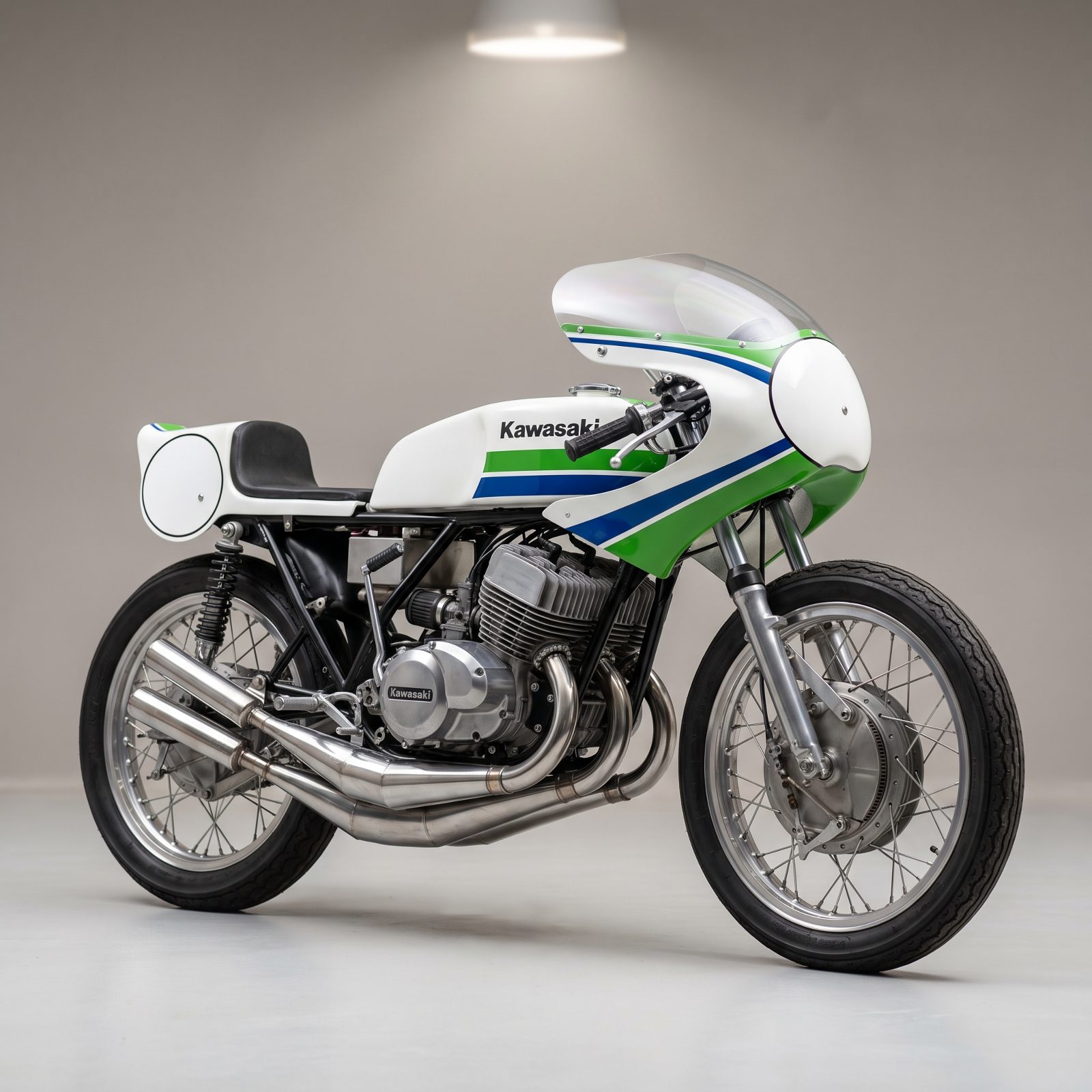
The street H2 Mach IV earned a wild reputation for pointing skyward at the first hint of throttle. The H2R was its racing sibling, built in very small numbers by the factory for the road circuits, carrying the same screaming air-cooled triple.
Collectors love that raw character and the bike’s spot at the front of Kawasaki’s two-stroke mythology. The H2R is rare enough that provenance drives everything. A verified factory example, with the history to back it, commands sums that leave new-car money looking modest.
1974 Suzuki TR750, The Water-Cooled Three-Cylinder Production Racer
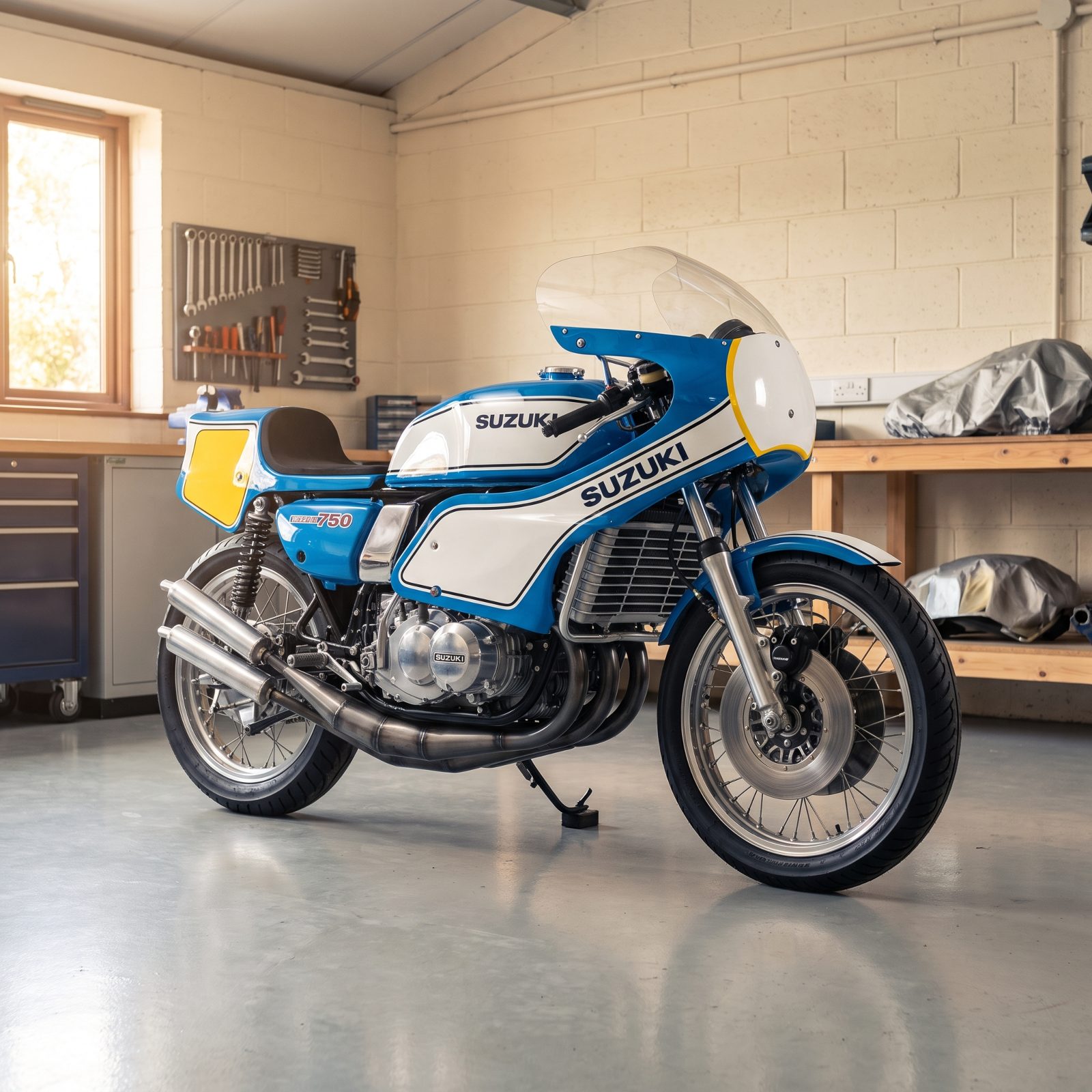
Some called it the Water Buffalo for its liquid-cooled engine. The TR750 was Suzuki’s answer in the brutal open-class wars of the early 1970s: big power, a front radiator, and a chassis asked to tame all of it.
It raced hard against Yamaha’s fours and Kawasaki’s triples, and surviving factory and production examples are scarce. Riders used them up. That’s precisely why clean, complete, documented ones are the exception rather than the rule. When one surfaces with real history, the hammer falls well past the cost of a new car — a reflection of how few remain and how much that era still matters.
1970 Honda CR750, Honda’s Factory Racing Answer to Its Own CB750
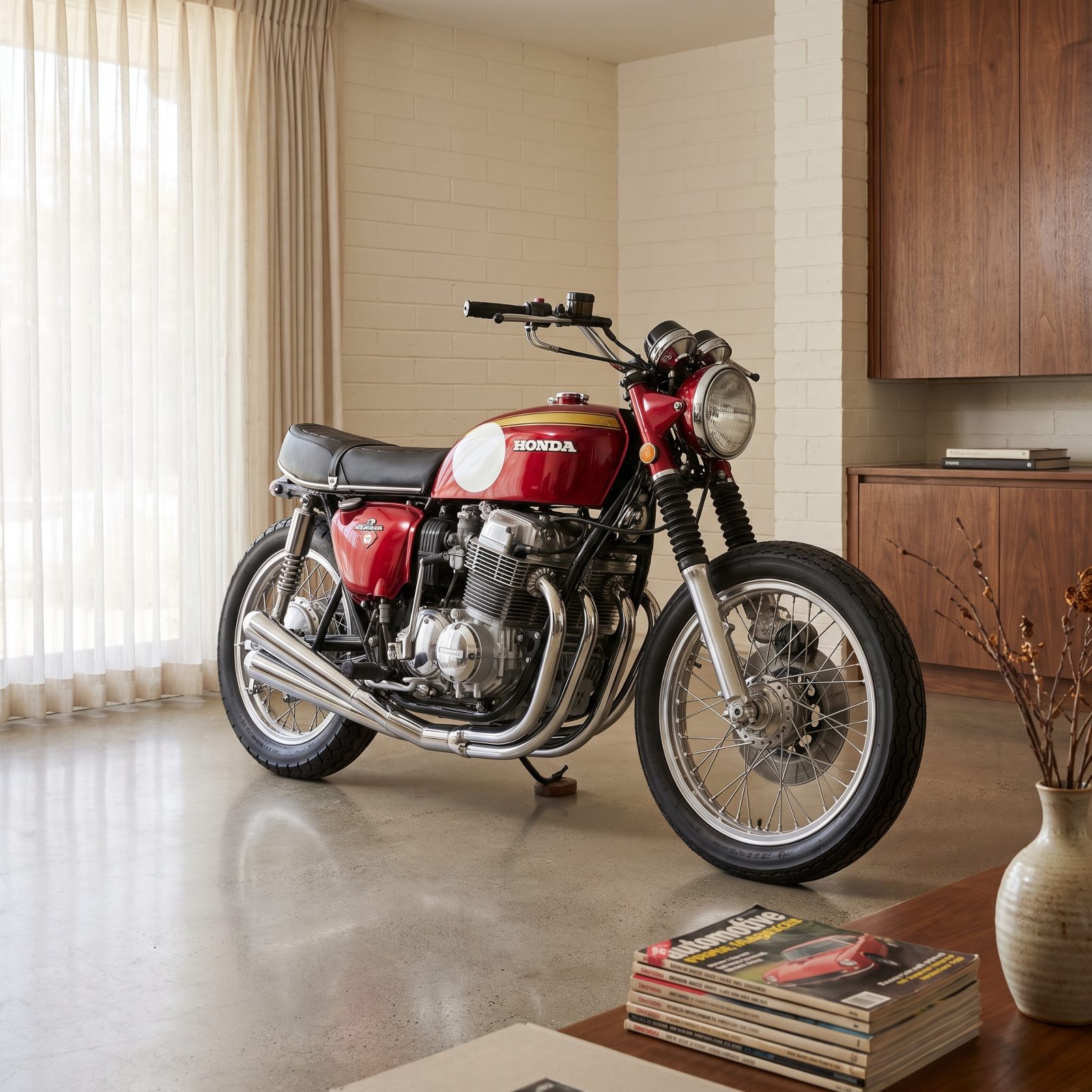
Honda built a tiny number of CR750s to turn the humble CB750 into a track weapon. The CR750 kit and the handful of genuine factory bikes ran at Daytona in 1970 and handed the big Japanese four instant credibility against the European establishment.
Provenance is everything here. Plenty of lookalikes exist, assembled from catalog parts and optimism. A documented, race-history example? Different animal entirely, and that’s where values climb past the price of a new car in a hurry.
1970 Kawasaki H1R, The Race-Only Triple Behind the Mach III
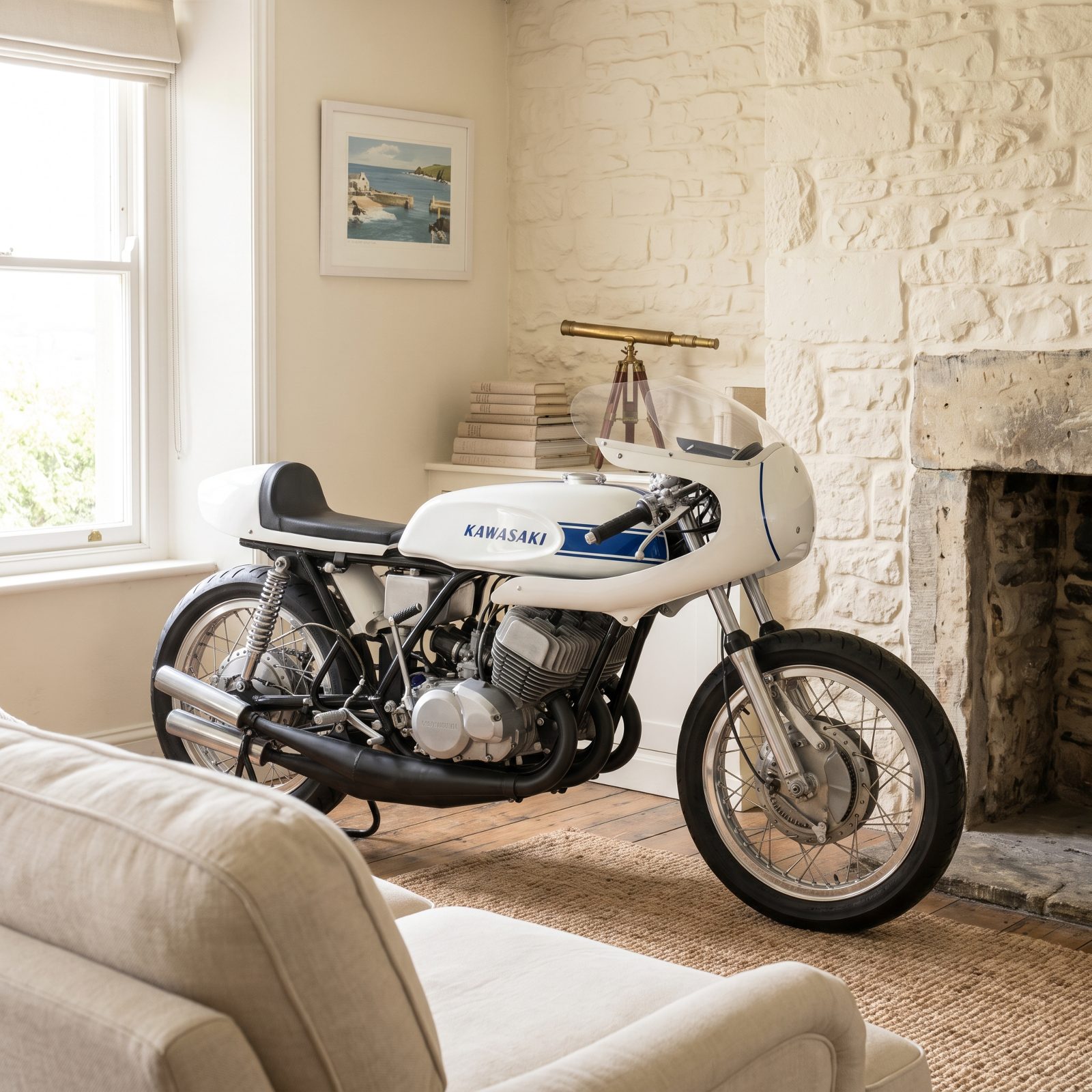
The street Mach III was already borderline feral. The H1R stripped it down to a pure racing two-stroke triple, built in small numbers for privateers who wanted to win without a factory contract bankrolling the effort.
What makes them collectible now is simple math. Few were made, two-strokes get ridden hard, and survivors with honest paperwork rarely surface. And the sound? Three pipes screaming through a 180-degree corner is reason enough to chase one.
1977 Bimota SB2, Rimini Chassis Craft Around a Suzuki Four
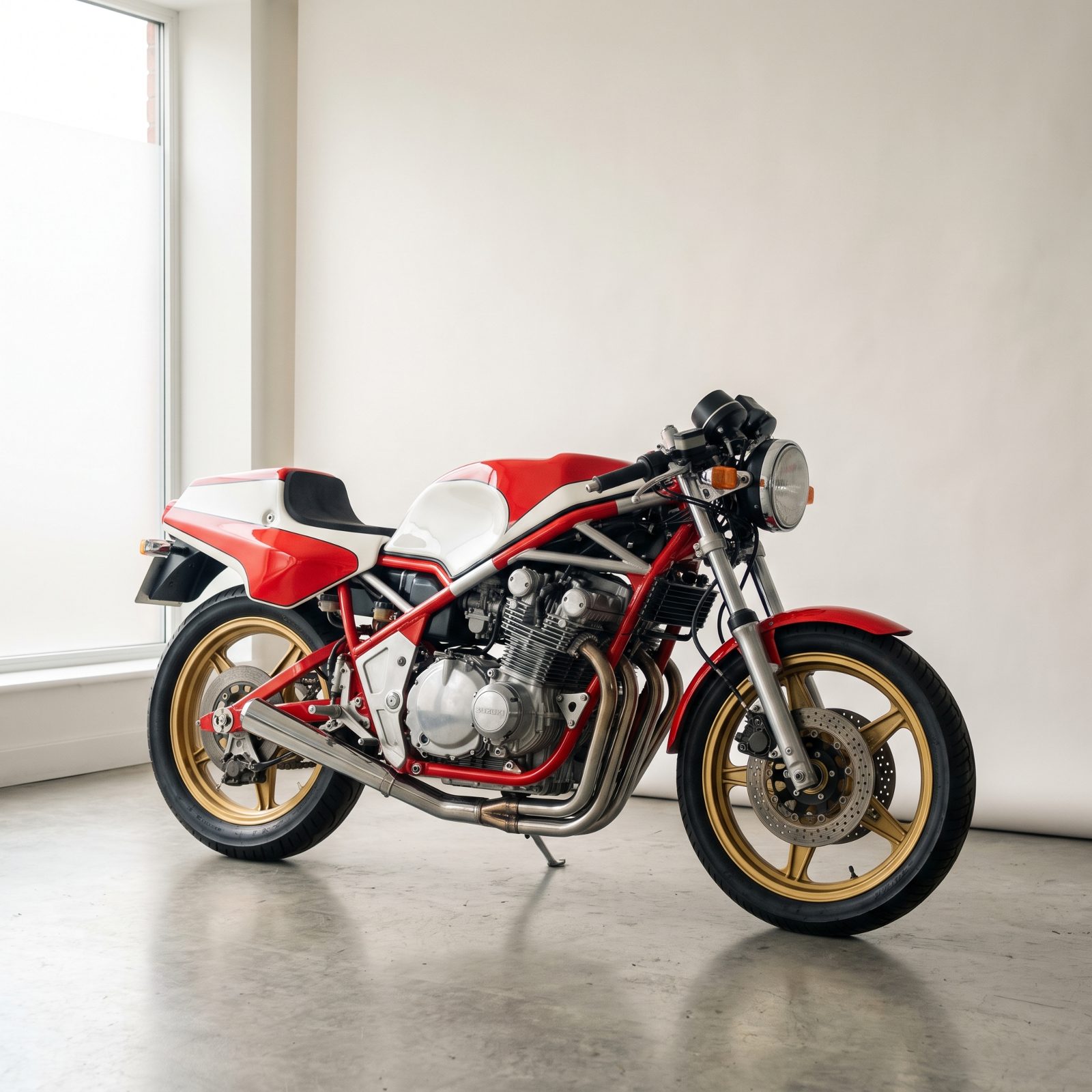
Bimota’s genius was never the engine. It was the frame. The SB2 took a Suzuki GS750 motor and wrapped it in a chassis that handled like nothing coming out of Japan, with a one-piece tank-seat unit that looked a decade ahead of everything around it.
A couple hundred, give or take. That rarity, paired with the kind of engineering you’d normally find on a racing prototype, is why a documented SB2 trades for serious money today.
1978 Bimota KB1, A Lightweight Frame Fed by Kawasaki Power
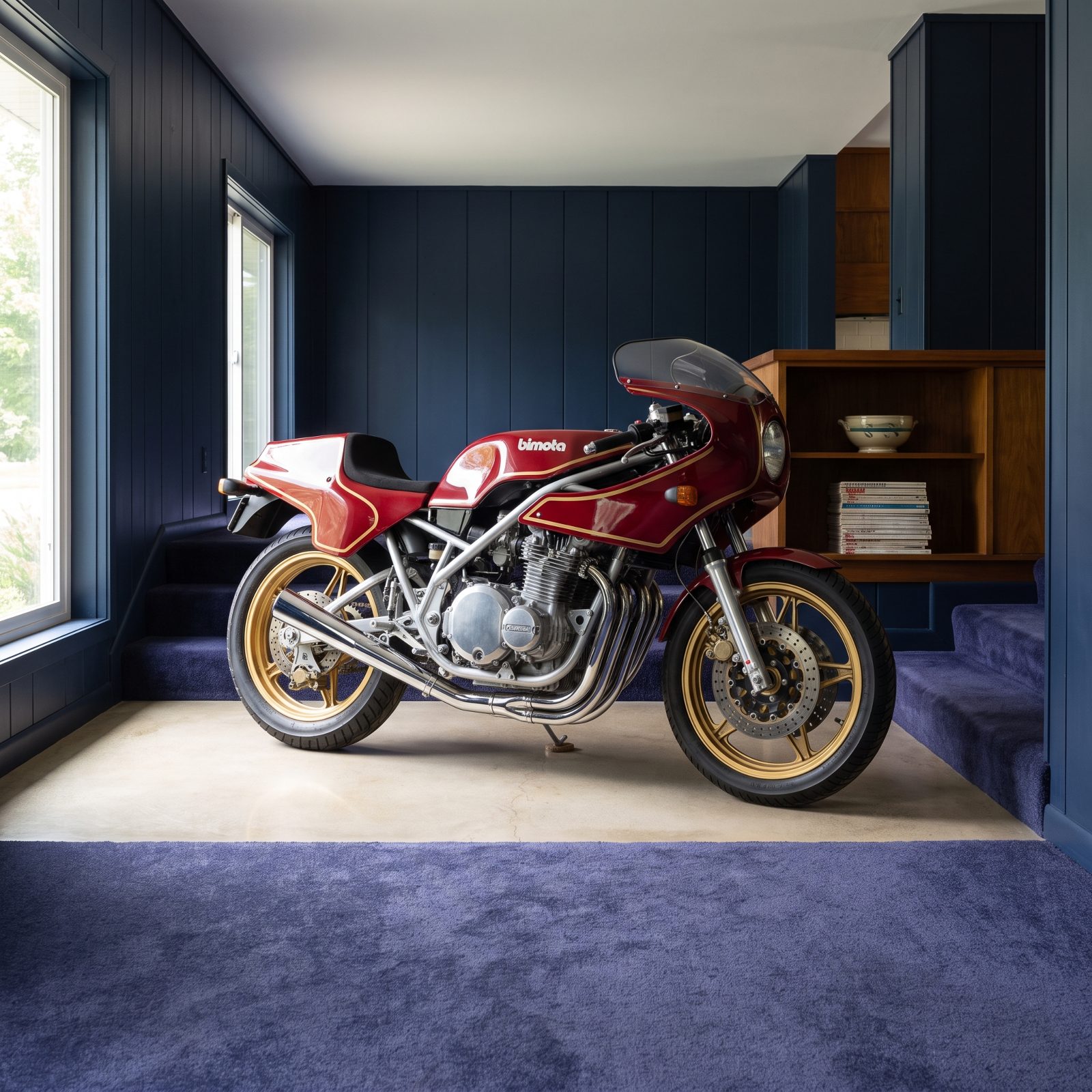
Where the SB2 leaned on Suzuki, the KB1 took Kawasaki’s muscular Z-series four and dropped it into a frame that weighed almost nothing. Suddenly a heavyweight superbike engine could actually change direction when you asked it to.
Rare, beautifully made, and getting harder to find in honest condition every year. Collectors who know the difference between a frame-up restoration and a quick repaint pay accordingly.
1967 MV Agusta 600 4C, The Odd Four That Came Before the 750S
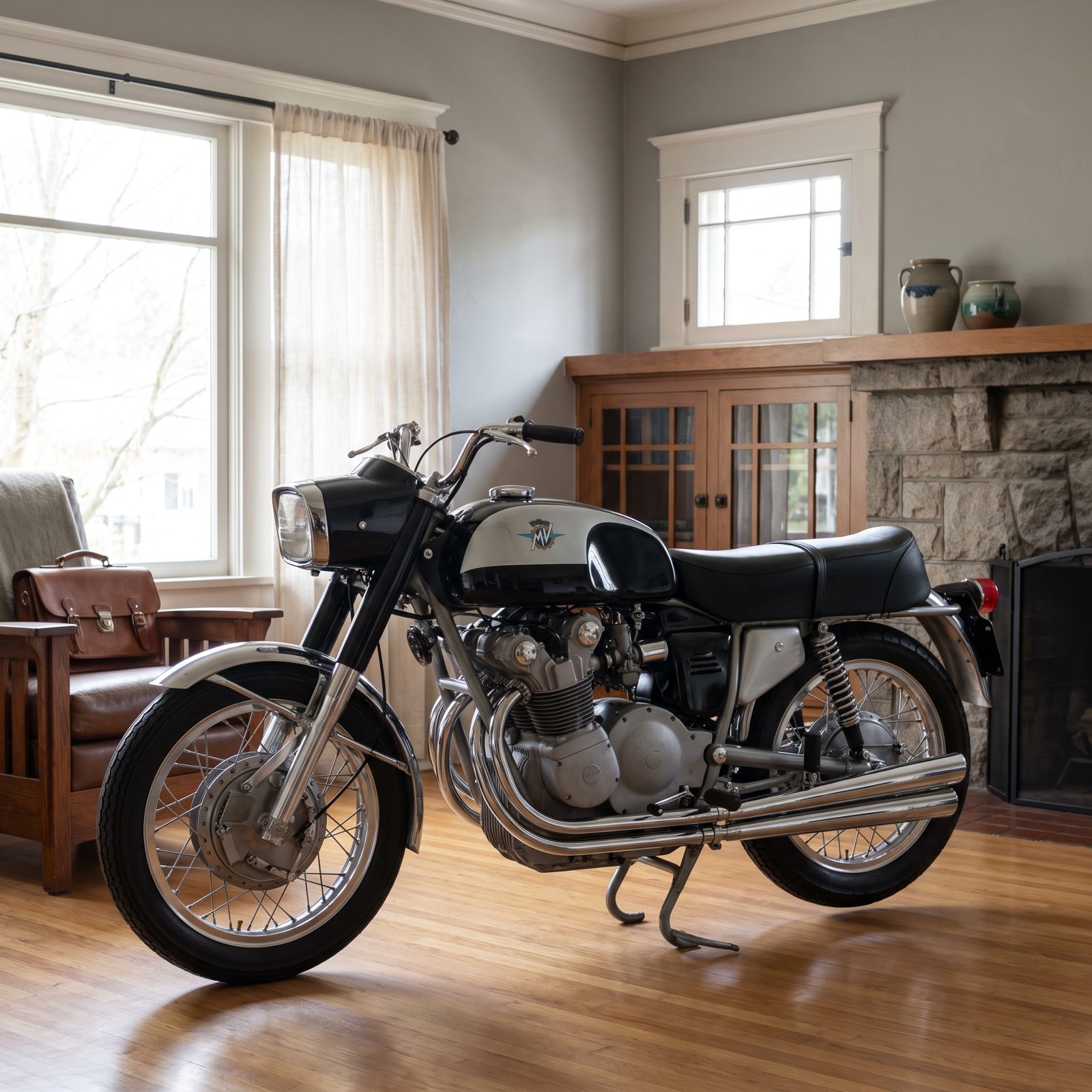
Now the strange one. The 600 4C was MV’s stab at a roadgoing four for touring riders, and by most accounts it was heavy, awkwardly styled, and a tough sell when new. Very few ever left the factory.
That commercial flop is exactly why it’s prized now. A couple hundred built, maybe fewer, and as the ancestor of the legendary 750S it carries genuine historical weight. Funny how scarcity rewrites a bike’s reputation.
1970 MV Agusta 750S, The Hand-Built Shaft-Drive Four
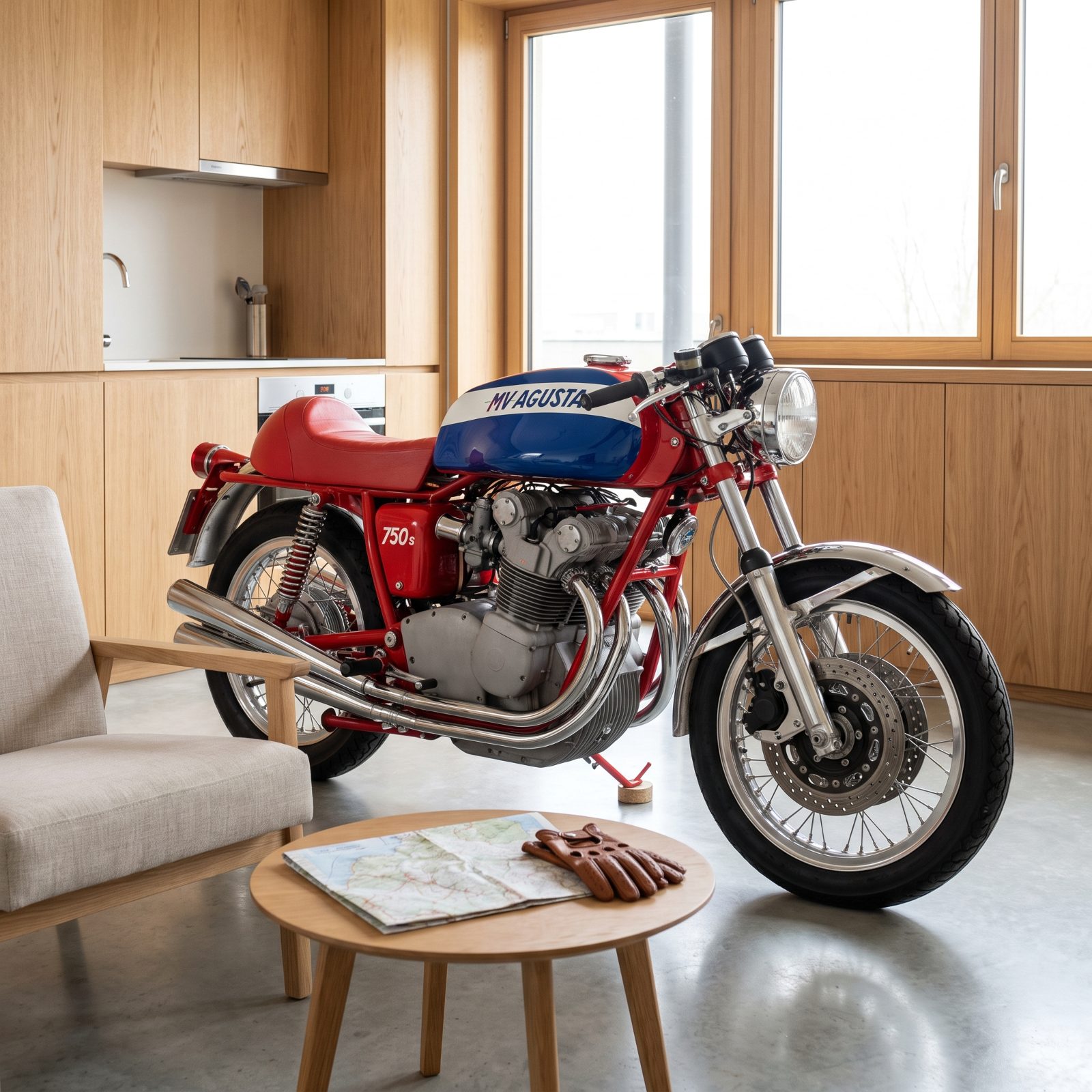
This is the bike people picture when someone says expensive MV. The 750S was essentially a racing engine built for the road, assembled slowly by hand, with shaft drive and that unmistakable four-pipe profile.
Production ran into the hundreds, no further. A well-documented, matching-numbers 750S sits comfortably in the price bracket of a nicely equipped new car, and the best examples sail well past that. The sound and the heritage handle most of the convincing.
1971 Laverda 750 SFC, The Orange Endurance Racer You Could Buy
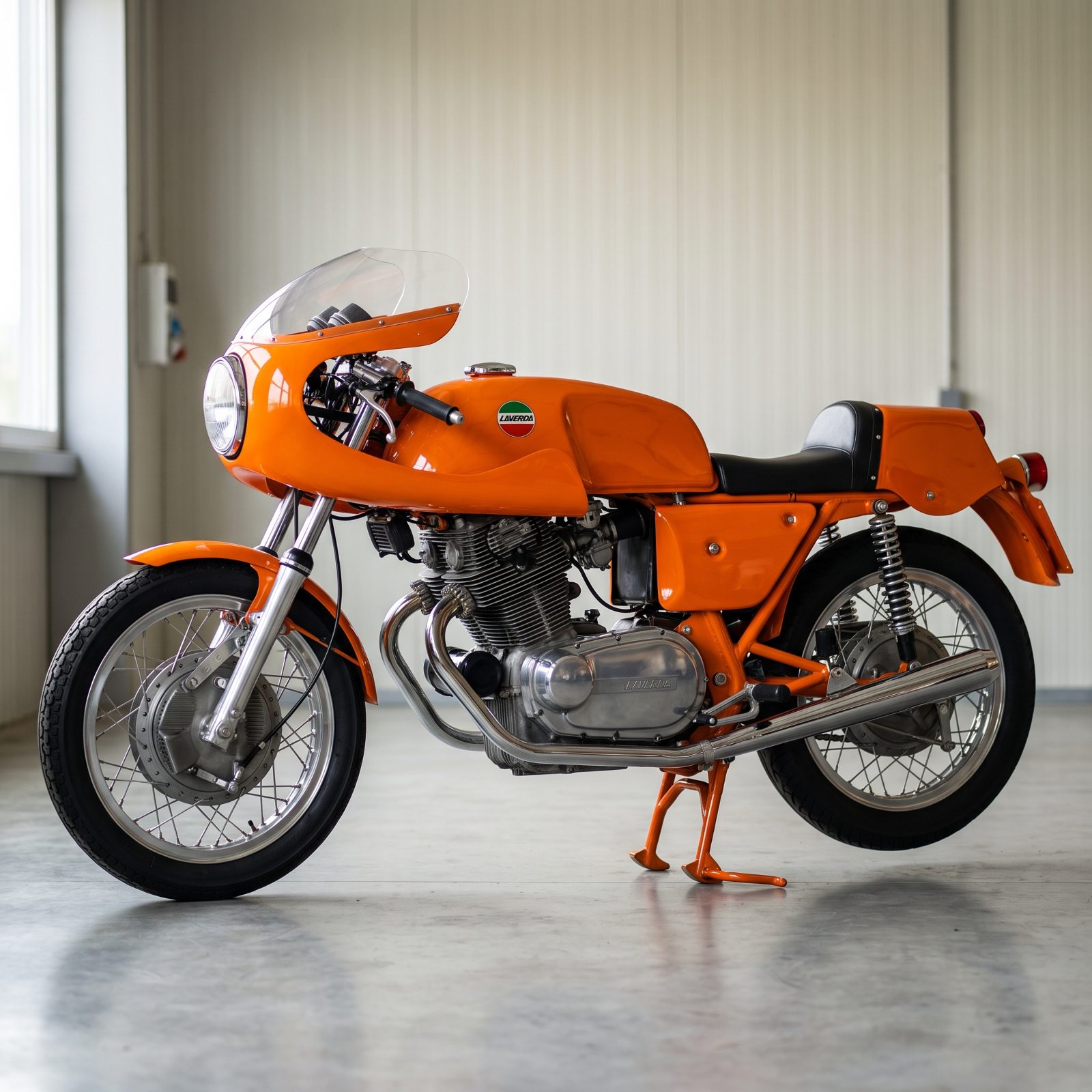
Orange was a statement. The SFC (Super Freni Competizione) was Laverda’s endurance racer sold straight to privateers, built tough enough to survive the long haul of events like the Bol d’Or and the Oss 24-hour races.
Few were made across the run, and the early versions are the ones collectors genuinely scrap over. These weren’t garage queens when new. They were raced, crashed, and rebuilt, so tracking down one with genuine endurance history and original bodywork is where the real hunt lies.
1971 Moto Guzzi V7 Sport Telaio Rosso, The Red-Frame Rarity
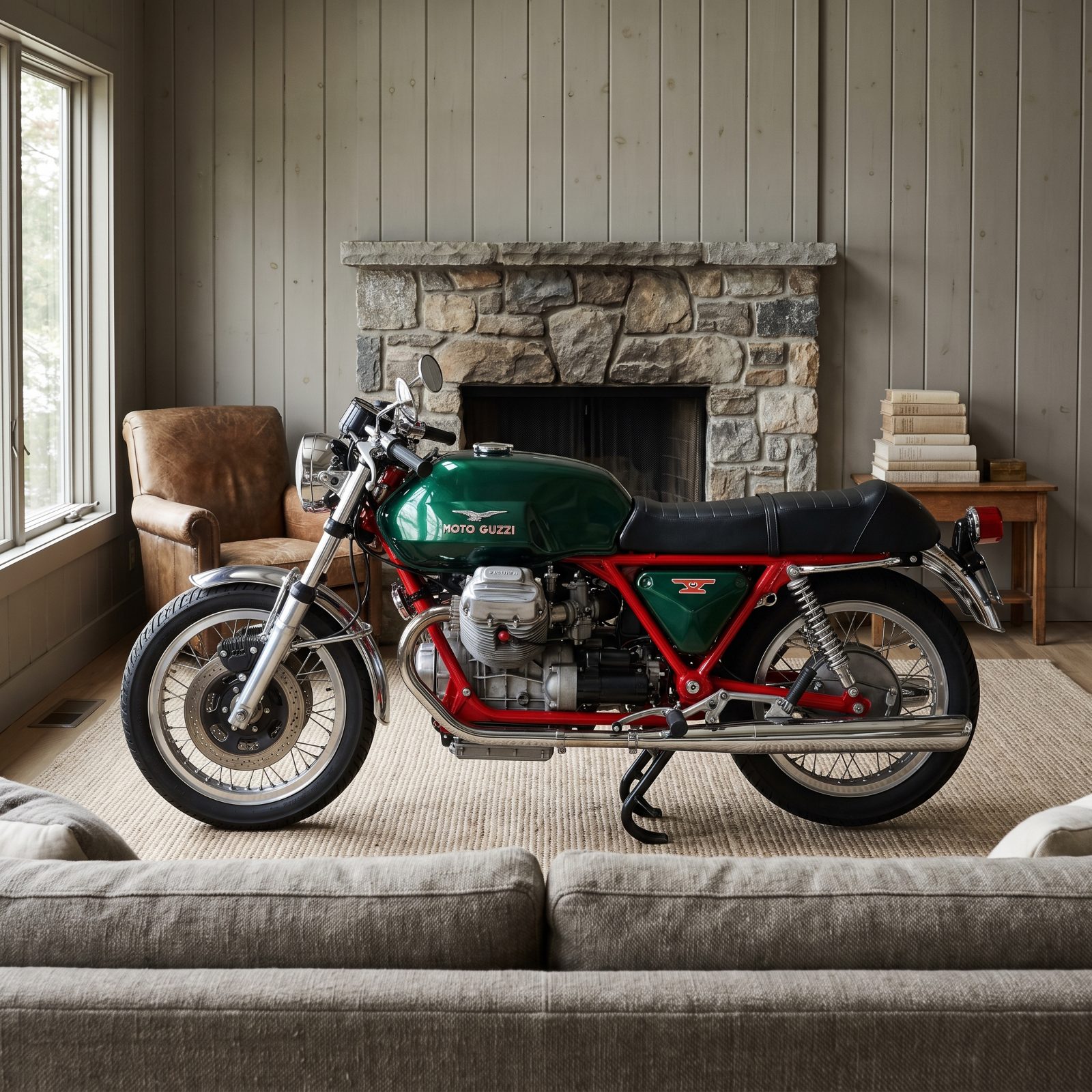
The detail that drives the value is literally the frame color. The earliest V7 Sports left Mandello wearing a red frame, built in tiny numbers before series production kicked off, and collectors call them Telaio Rosso for exactly that reason.
These red-frame bikes rank among the most coveted Guzzis ever made. Sure, the transverse V-twin and shaft drive became the brand’s signature, but it’s the frame number and that red paint that separate a merely desirable bike from a six-figure one.
1974 Ducati 750 Super Sport, The Green-Frame Desmo V-Twin
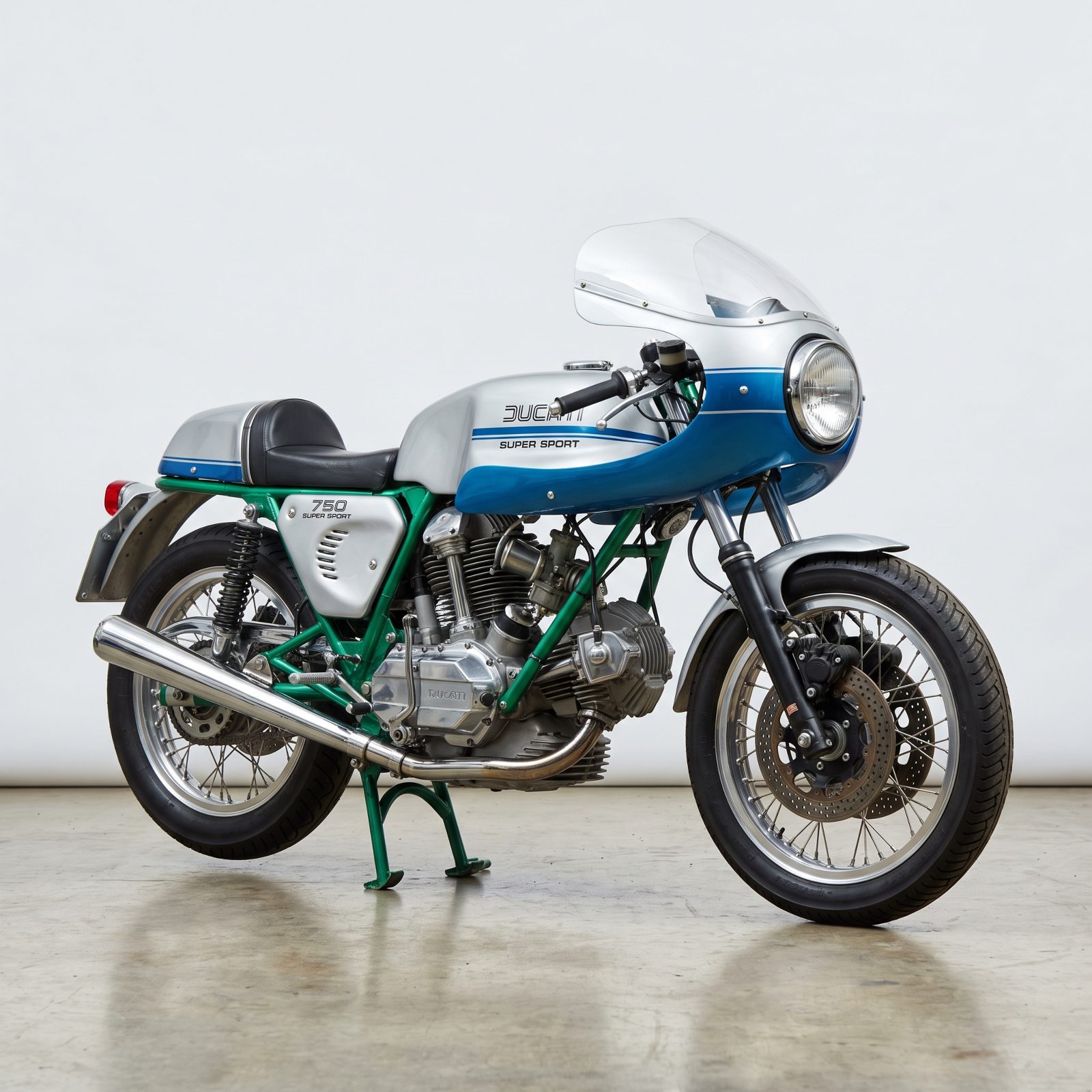
One of the most valuable production Ducatis ever built, and the story starts at Imola in 1972, when the bevel-drive twins beat the world. The 1974 green-frame 750 SS was the roadgoing celebration of that win.
Only a few hundred made. The green frame, the desmodromic valve gear, the Conti pipes, every detail gets checked and re-checked at sale, because a genuine green-frame 750 SS now trades at prices that make a new car look like pocket change.
1977 Ducati 900 Super Sport, The Bevel-Drive Desmo Icon
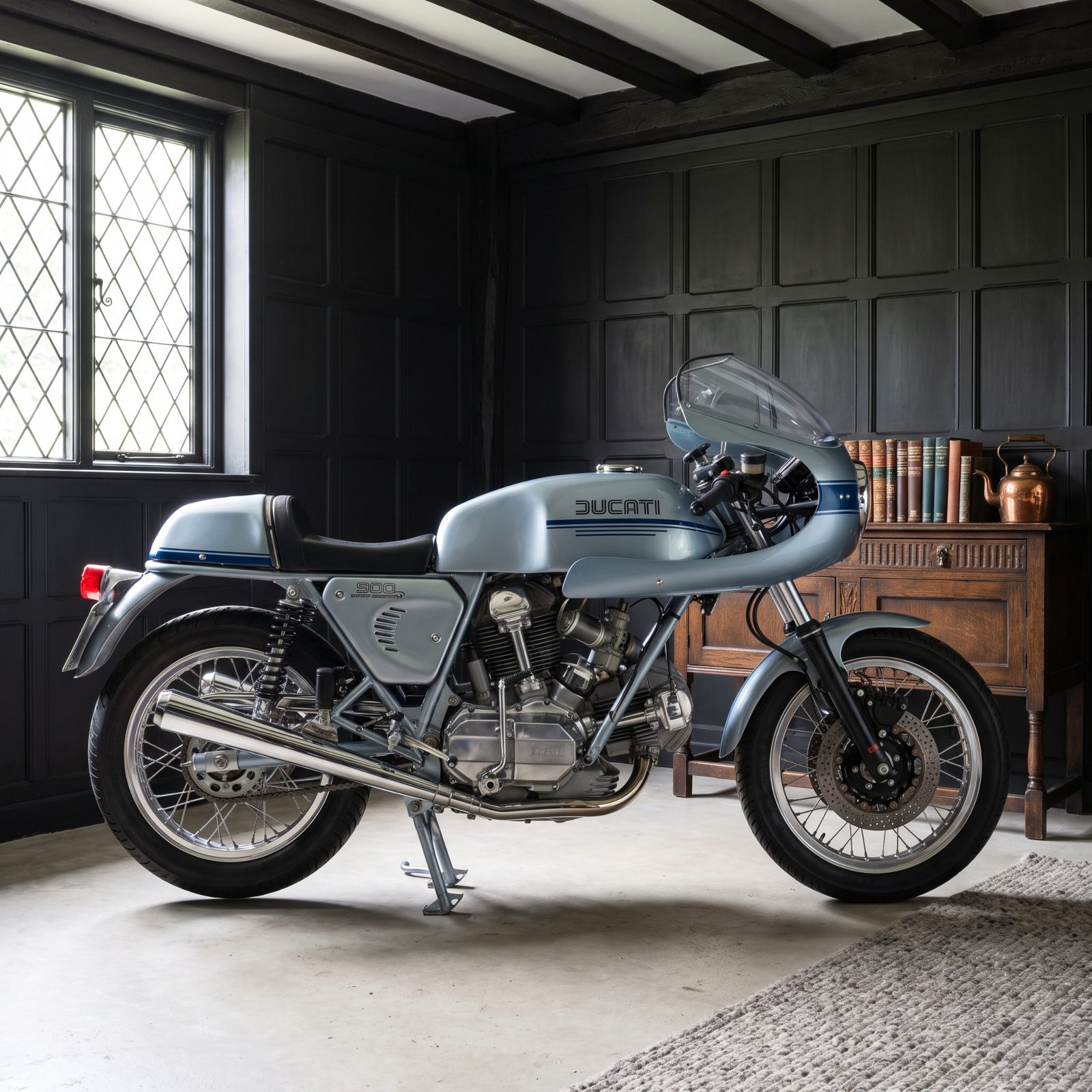
If one bike defines 1970s Ducati in the public mind, it’s this. The 900 SS took the bevel-drive desmo formula, gave it more displacement, more presence, and a profile that still stops people in parking lots nearly fifty years on.
Values for honest, original examples have climbed steadily. More accessible than the green-frame 750, granted, but a documented early 900 SS in proper trim still lives in new-car territory and keeps drifting north. The engineering earned every dollar.
1973 Egli-Honda CB750, Japanese Four-Cylinder Power in an Egli Chassis
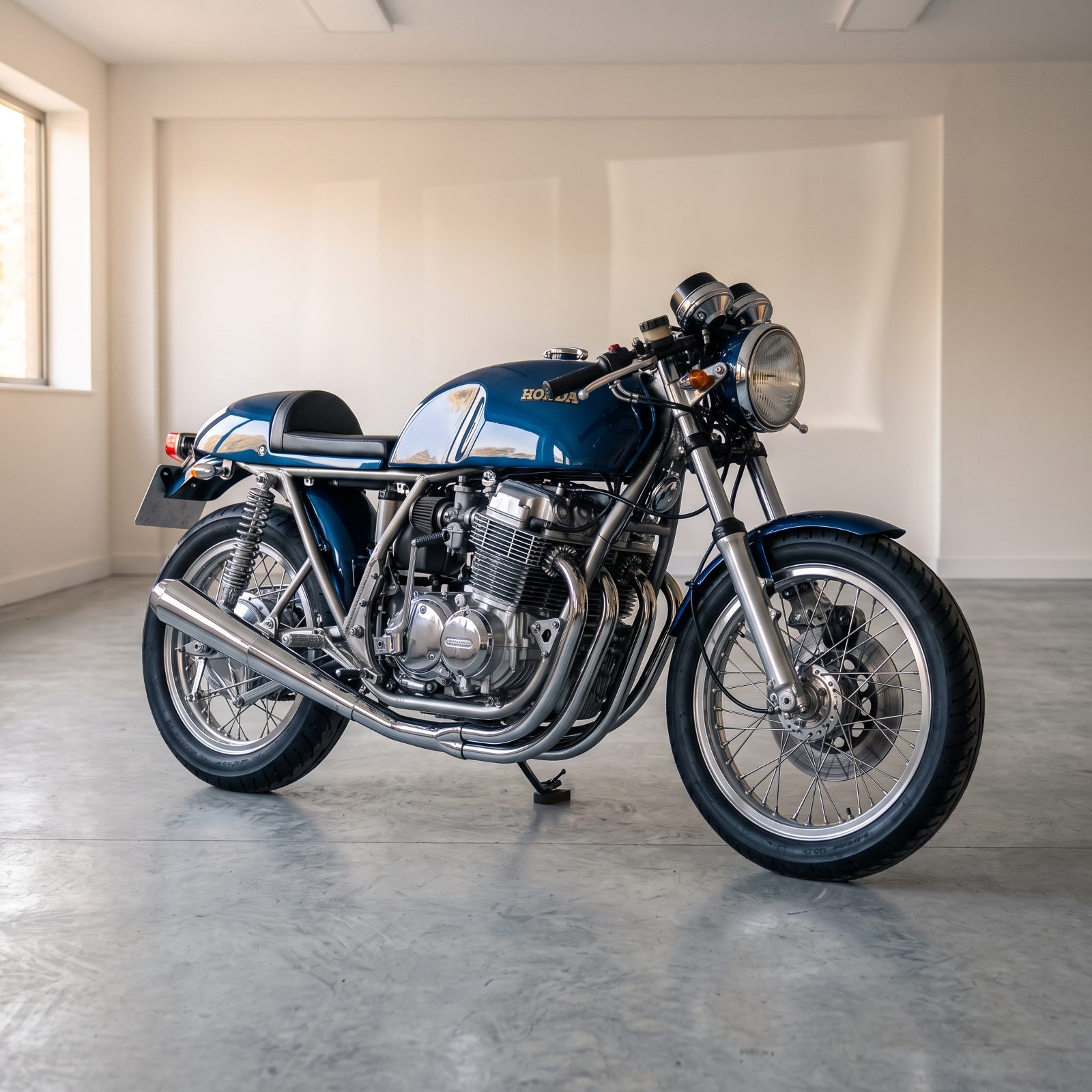
Fritz Egli built a backbone frame stiff enough to make a Vincent corner, and before long people were hanging Honda fours in it. This is that combination: a CB750 four hung in Egli’s stiff backbone chassis.
The appeal is honest. Honda handed you a reliable, torquey inline-four that fired up every time, and Egli’s frame gives it the handling and stance to match. Together they make a machine that still feels sorted on a modern road, which almost nothing from 1973 can claim.
Provenance is everything here. Genuine Egli-framed bikes with paperwork sit far above stock-framed café builds, however clean. Know the difference before you write the check.
1973 Rickman Kawasaki CR900, A Hand-Built Alternative to the Kawasaki Z1
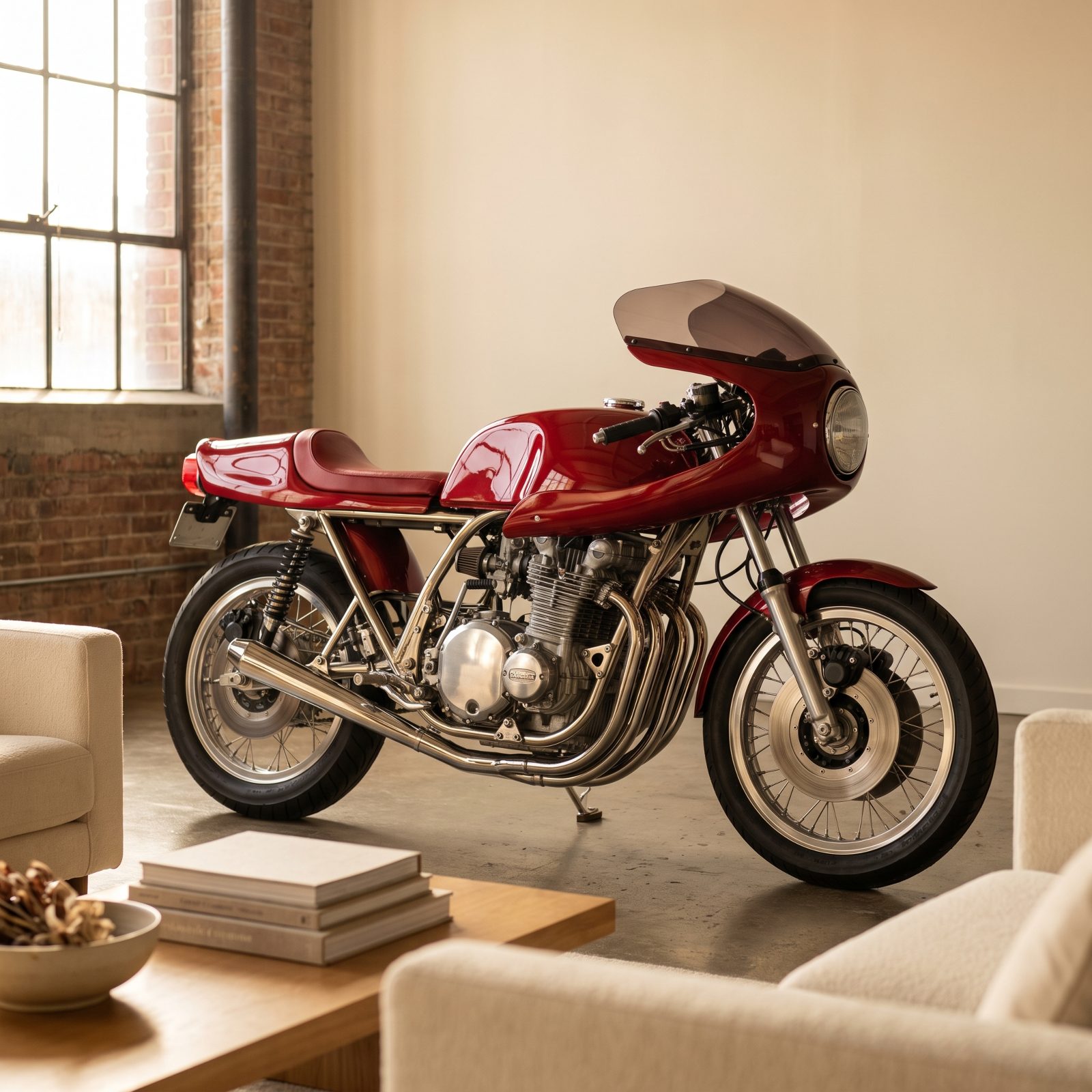
Kawasaki’s Z1 had an engine that embarrassed its own frame. The brothers Rickman, who had made their name building better chassis than the factories managed, saw an opening.
Their nickel-plated frame wrapped around the 900cc four, turning a fast but slightly nervous superbike into something you could trust in a corner. Add the clean Rickman fiberglass and twin discs and you had a hand-built machine sold in tiny numbers.
That scarcity is the whole story now. Few were made, fewer survive with the correct frame and bodywork, and the ones that do bring prices well past a sensible new commuter. The nickel plating is the giveaway and the heartbreak. Done right it glows. Done wrong, or left to age, it pits — and a proper re-plate is neither cheap nor quick.
1970 Norton Commando Production Racer, The Yellow Homologation Special
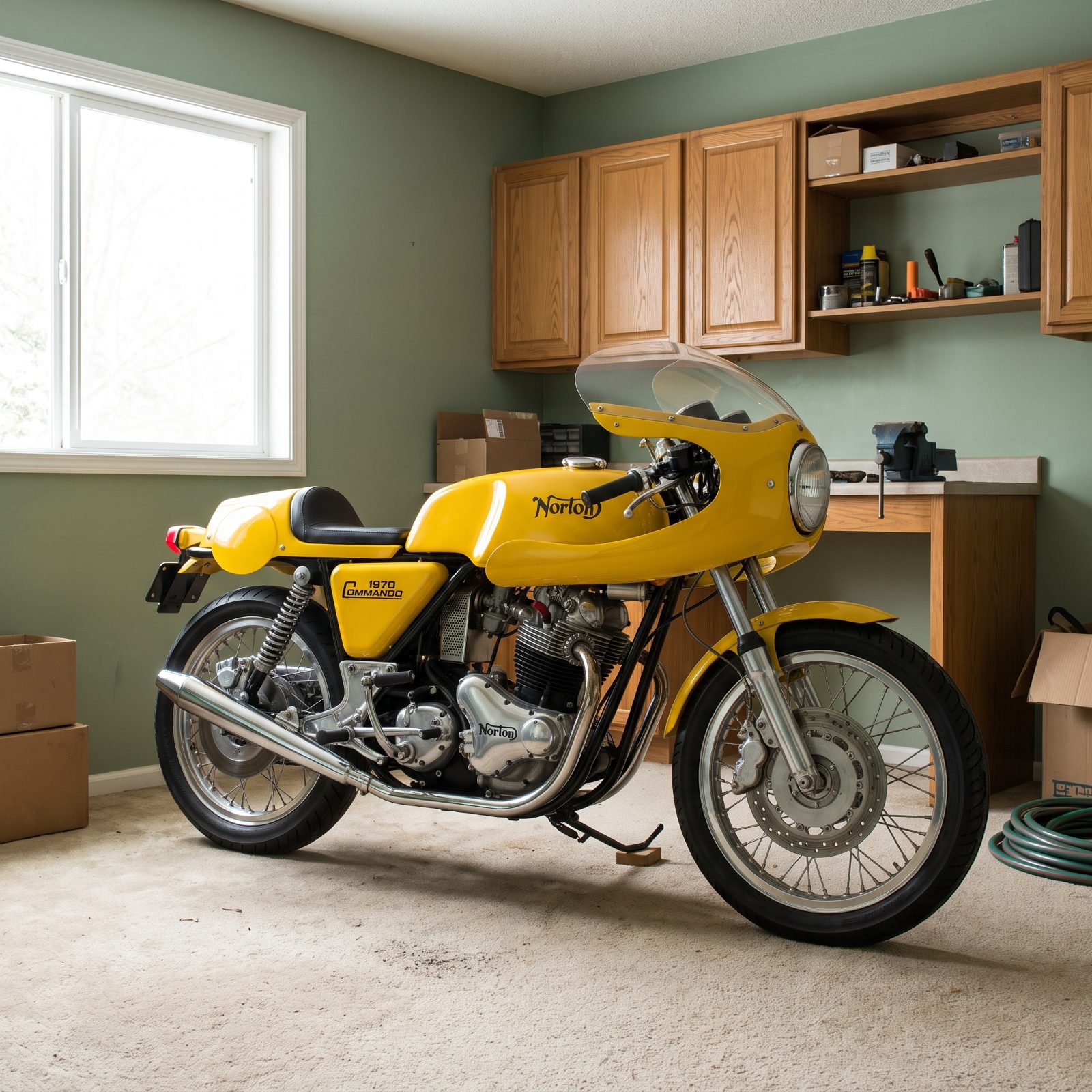
Everyone calls it the Yellow Peril, and the name stuck for a reason.
Norton built the Production Racer to homologate the Commando for production racing, and they did not make many. Bright yellow bodywork, a tuned 745cc twin, rear-sets, clip-ons and a single seat — a racer you could buy over the counter, which was exactly the point.
Documented, correct examples rank among the most sought-after Nortons there are. The yellow paint picks it out across a paddock, but the value lives in the engine numbers, the frame and a continuous history that proves the bike is what the seller claims.
1968 Dunstall Norton Atlas, A Period Café Racer Sold as a Complete Motorcycle
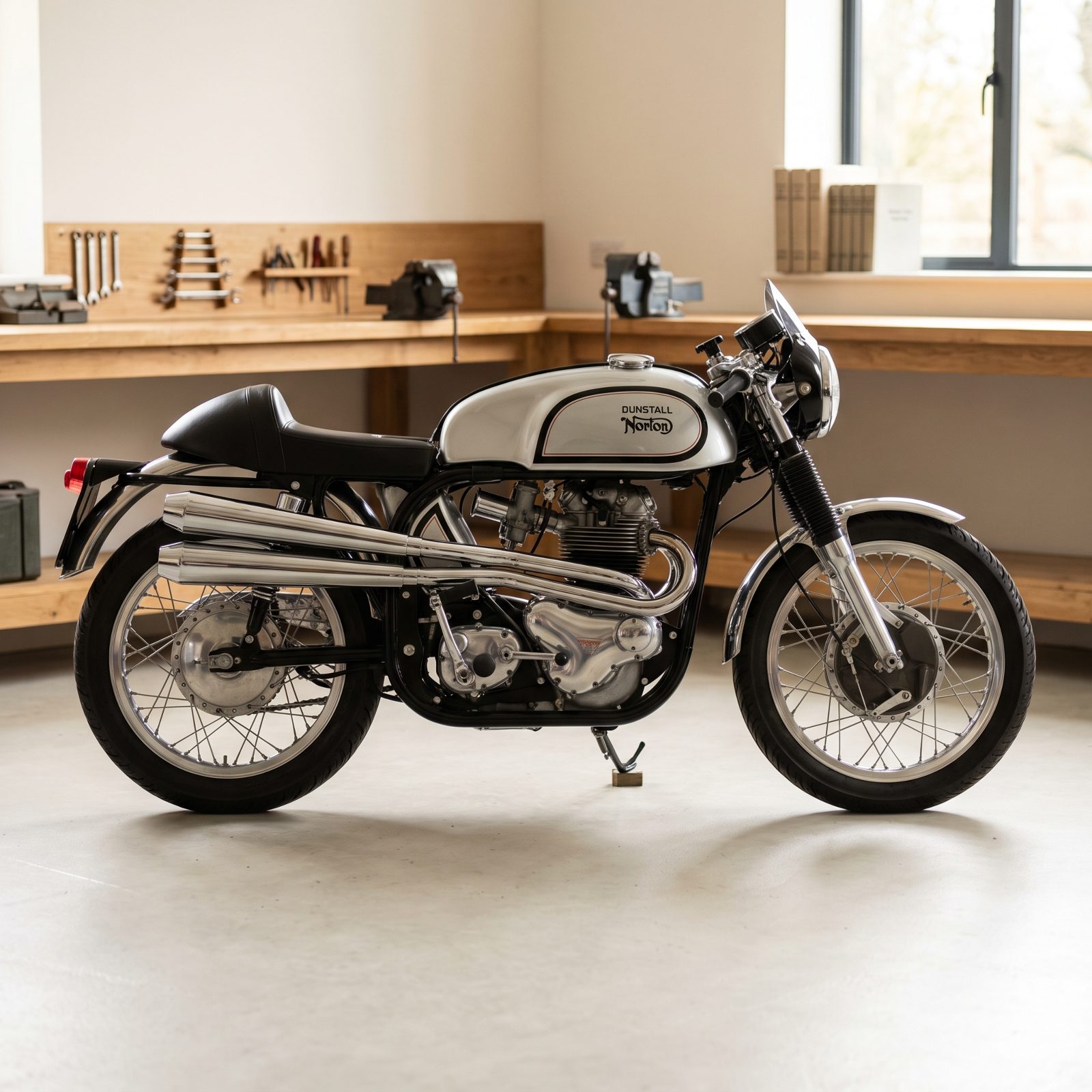
Paul Dunstall did something clever. Rather than sell you a box of go-faster parts and wish you luck, he sold the finished bike — tuned engine, his own exhaust, café bodywork, the lot, assembled and ready to ride.
The Dunstall Norton Atlas carried genuine performance credibility rather than showroom styling, and you could ride it home the same afternoon. That matters to collectors because the Dunstall name was a real tuning business, not a sticker.
The catch, as always, is authenticity. Plenty of plain Atlases have been dressed up in later Dunstall-style parts. A period-correct, documented Dunstall is a different animal from a tribute, and the market knows it.
1966 Rickman Métisse Triumph, A Nickel-Plated Competition Chassis With Triumph Power
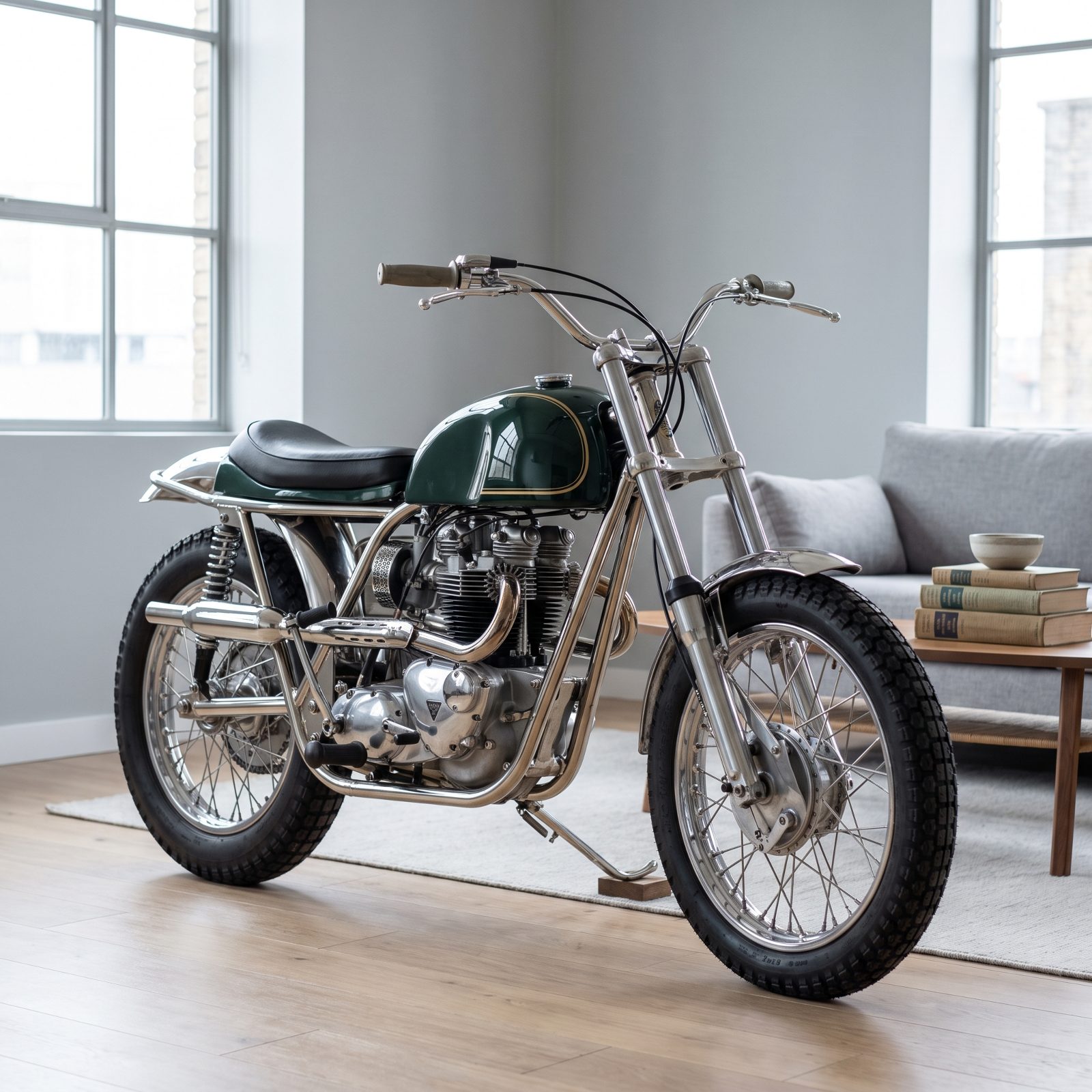
The Rickman brothers started building Métisse frames because the production scramblers of the day flexed and cracked, and they were sick of losing races on them. Métisse means mongrel in French. The joke was deliberate.
Their nickel-plated chassis with Triumph twin power became a benchmark for off-road and scrambles competition. The frame was the achievement. The engine was borrowed, and that was always part of the plan.
Today that nickel frame is both the identity and the maintenance headache — when it is right, it looks like jewelry. Correct, documented Métisse builds with the proper frame and period components sit well above the sum of their borrowed parts.
1967 Velocette Venom Thruxton, The Ultimate Factory Development of the Venom
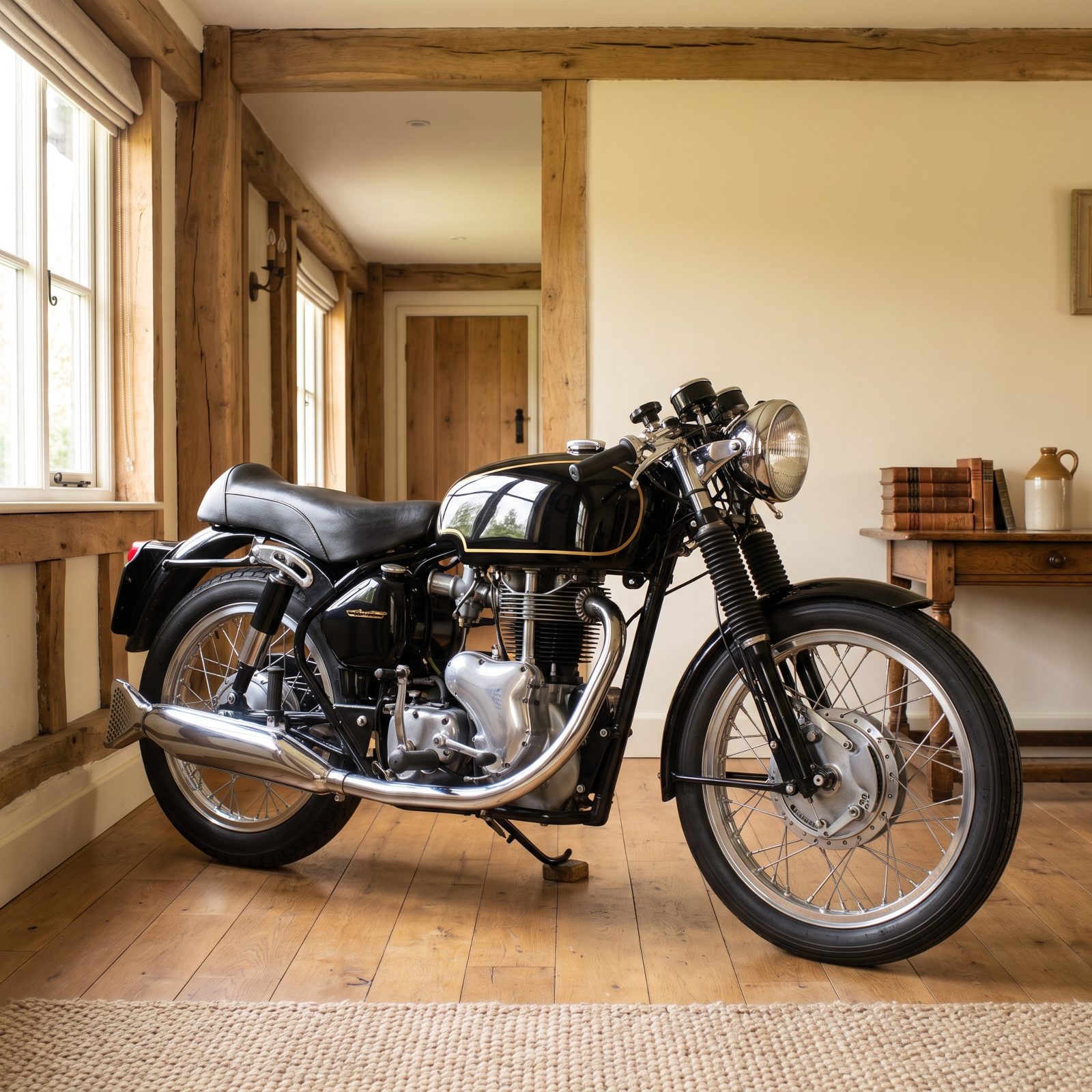
A 500cc single that could crack a lap record is a rare and lovely thing.
The Venom Thruxton was Velocette’s final, most developed version of the Venom, named after the circuit where its reputation was made. Big valve head, special carburetion, clip-ons, rear-sets — a road bike with genuine race breeding.
Collectors chase it because it marks the high-water mark of the British sporting single, from a firm that refused to chase the four-cylinder future and did one thing superbly instead.
Starting one is a skill, not a formula. Velocette singles reward a precise drill and punish a casual boot. Learn the technique before you buy, or you will spend your first week kicking and cursing in the driveway.
1960 BSA Gold Star DBD34, A Late Clubman-Specification Gold Star
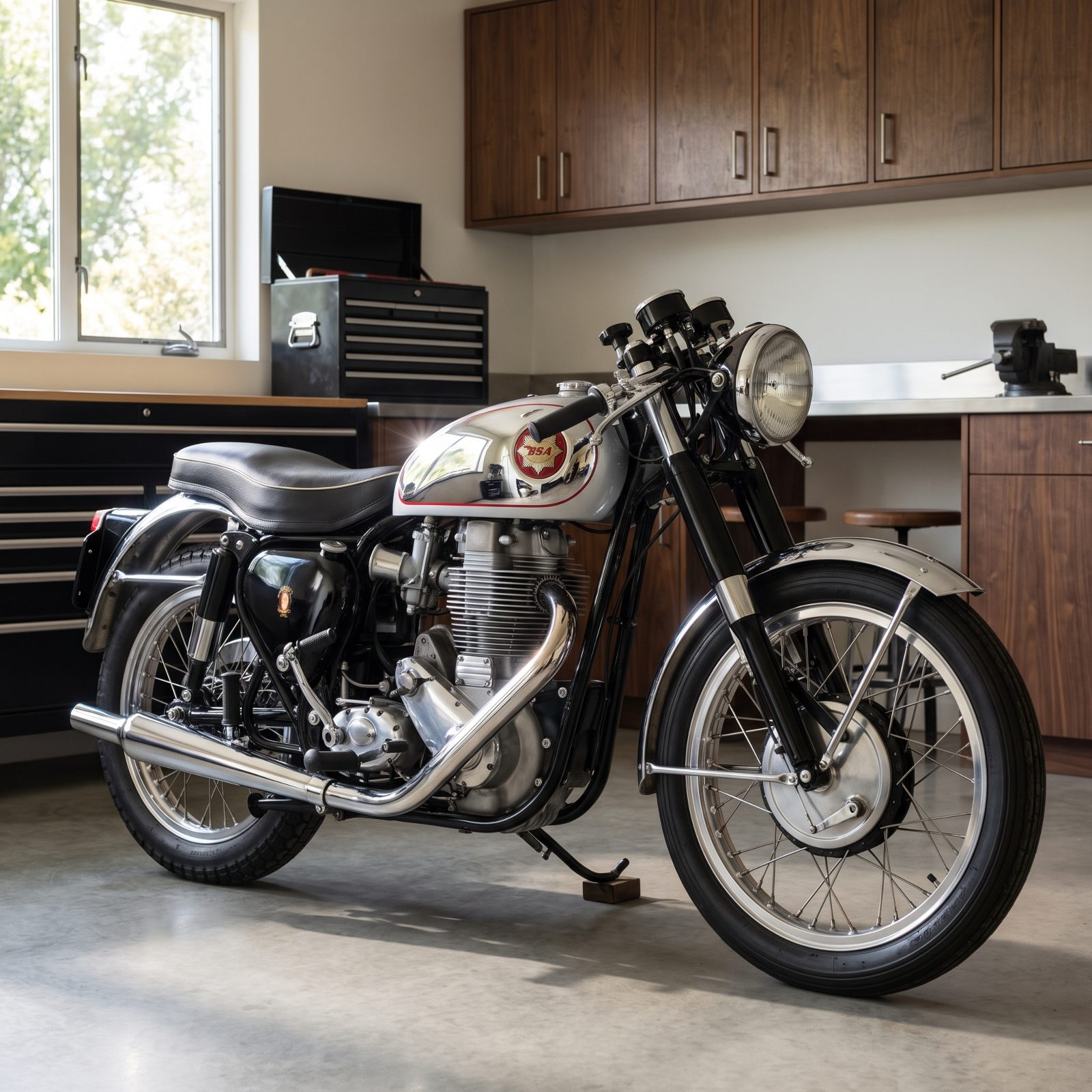
The DBD34 is the Gold Star everyone pictures. Clubman spec, big Amal GP carburetor, conventional raised handlebars, that straight tubular silencer barking at idle and howling once you open it up.
These were competition-ready singles sold to privateers who raced them on weekends and rode them to work in between, and that dual nature is exactly what makes them so collectible now.
The GP carburetor is the personality and the problem. It does not idle politely, it sulks in traffic, and it is tuned for wide-open running rather than creeping through town. People who expect modern manners get frustrated fast.
1960 Harley-Davidson KR, A Flathead Competition Motorcycle With Racing Pedigree
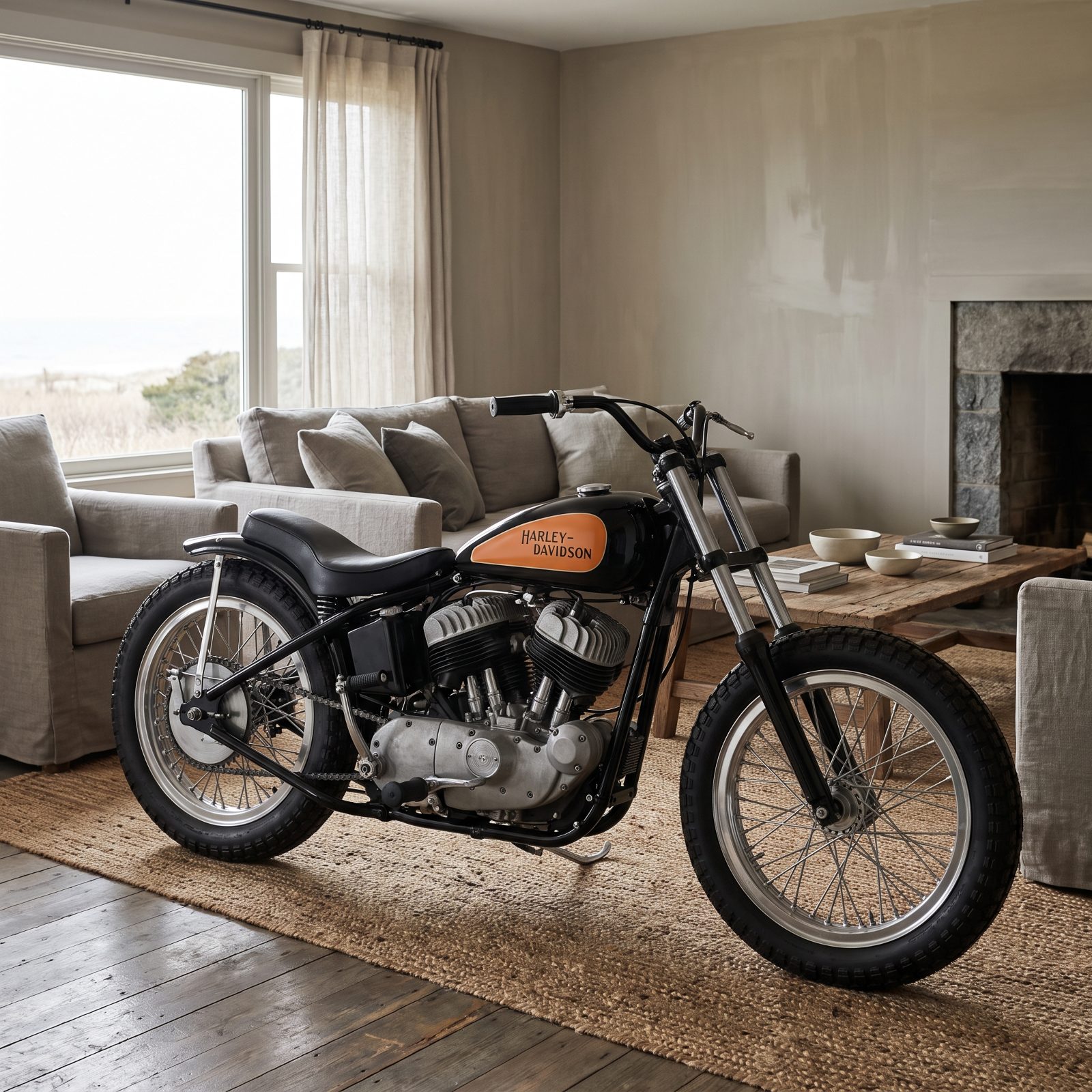
The KR is proof that old technology, developed long enough, beats newer technology that stopped evolving. A side-valve flathead V-twin should have been obsolete by 1960. Instead it owned American dirt tracks for years.
Harley kept refining the KR because the racing rules favored its displacement class, and the factory found horsepower in a design everyone else had abandoned. That stubbornness built a legend.
Genuine KRs with real racing history are hard to find and easy to fake, because the parts are valuable and the stories are seductive. Documented provenance separates the museum pieces from the bitsa builds, and the gap between the two is wide.
1968 Harley-Davidson XLR, A Factory Competition Sportster
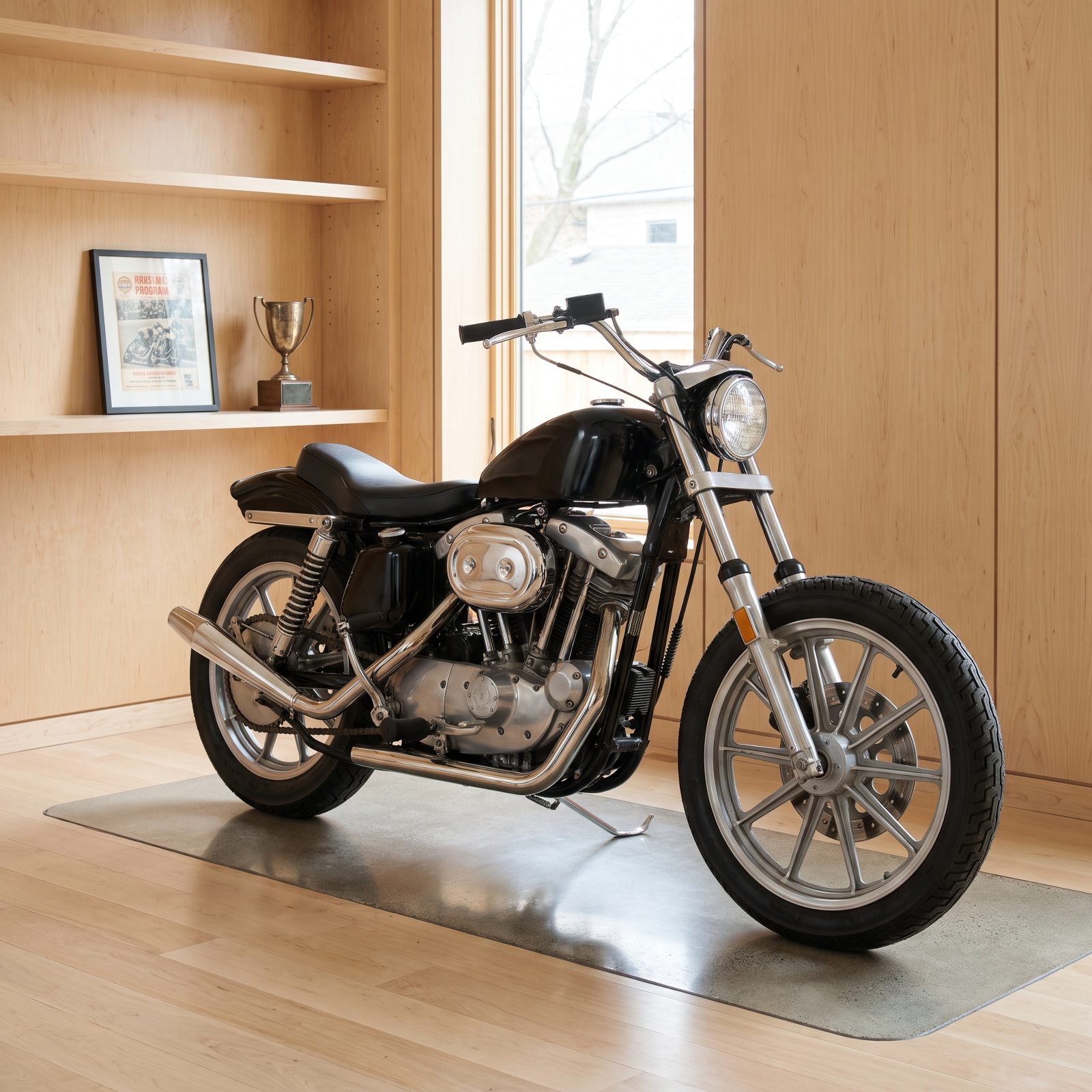
The XLR took the Sportster’s overhead-valve engine and turned it into a competition tool. Magneto ignition, hotter cams, lightweight parts, no concessions to street use. That was Harley racing hardware wearing a familiar name.
Collectors value it as the bridge between the old flathead racers and the alloy-head era that followed. Less famous than the bikes on either side of it — which is exactly why clued-up buyers pay attention.
Because so few were built and so many parts interchange with ordinary Sportsters, authentication is the whole game. A real XLR with the correct components and a traceable history is a genuinely rare object, and priced like one.
1972 Harley-Davidson XR-750, The Alloy-Head Racing Legend Collectors Chase
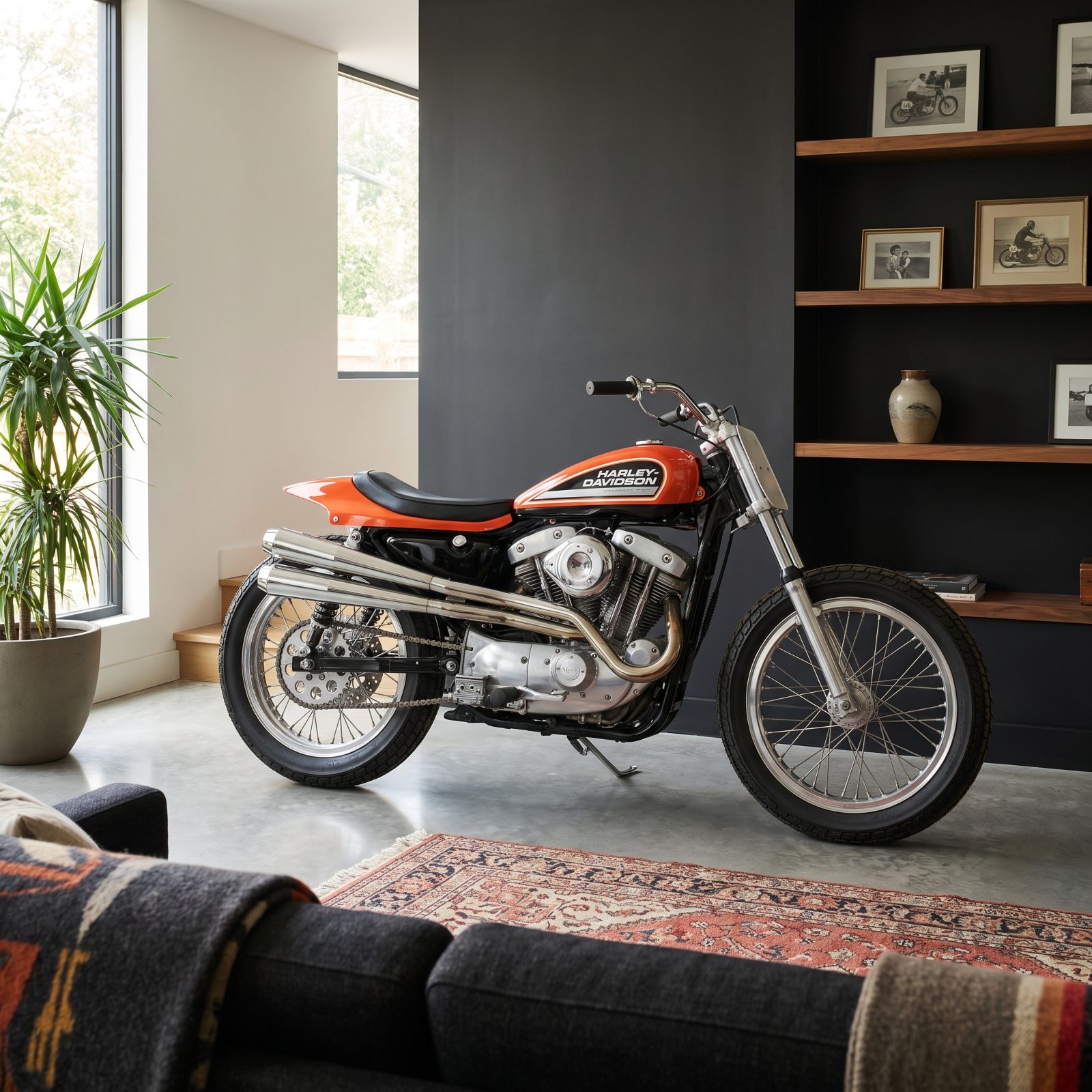
No American competition motorcycle is more recognizable than the XR-750.
The first iron-head version ran too hot and too slow. Harley went back, gave it alloy heads, and the 1972 XR-750 that emerged went on to dominate American flat-track for decades. The most successful race bike the company ever built.
That orange, black and white livery with twin pipes up the right side is burned into the memory of anyone who has watched a mile oval. The image alone drives the demand.
Period-correct 1972 alloy-head examples with documented racing history are the ones buyers chase hardest. Later XR-750s are plentiful and valued differently. The early alloy bikes, with real history, sit in a class of their own and command prices well past a new car.
1969 Honda CB750 Sandcast: The Early Four Known by Its Rough Engine Cases
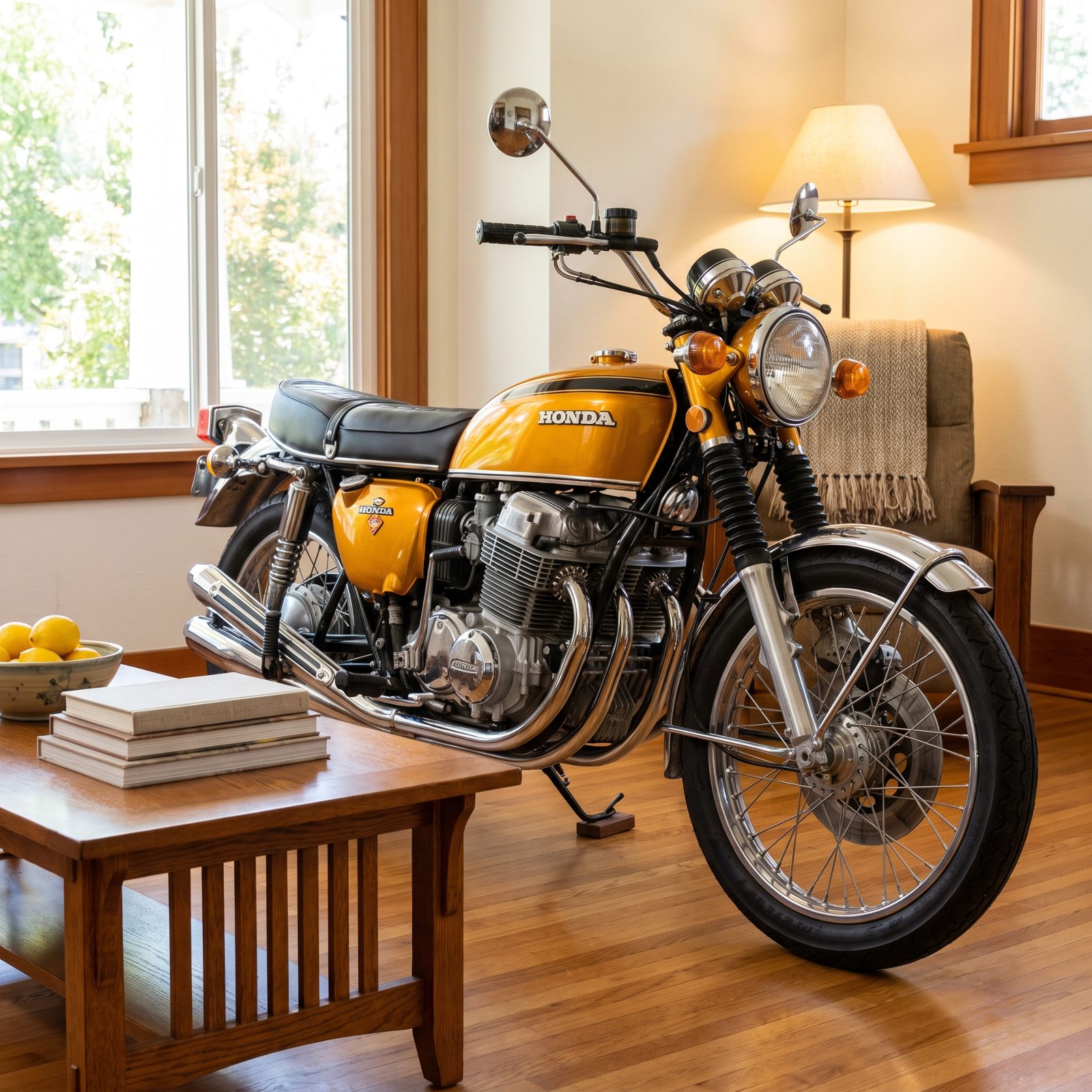
The one that started the superbike. Honda built the first run of CB750 engines using sand-cast molds before switching to die-cast production, and that early batch is the holy grail. Look for the pebbly, slightly rough texture on the crankcases — later bikes got a smooth finish, so the surface itself tells you what you’re holding.
Numbers are murky. Honda made a limited run of sandcast examples before the changeover, and survivors with original paint, correct early carbs and matching numbers are the ones that climb hardest at auction. Restore one to the wrong spec and the value falls off a cliff.
1978 Kawasaki Z1R-TC: The Turbocharged Z1R Sold Straight From Dealers
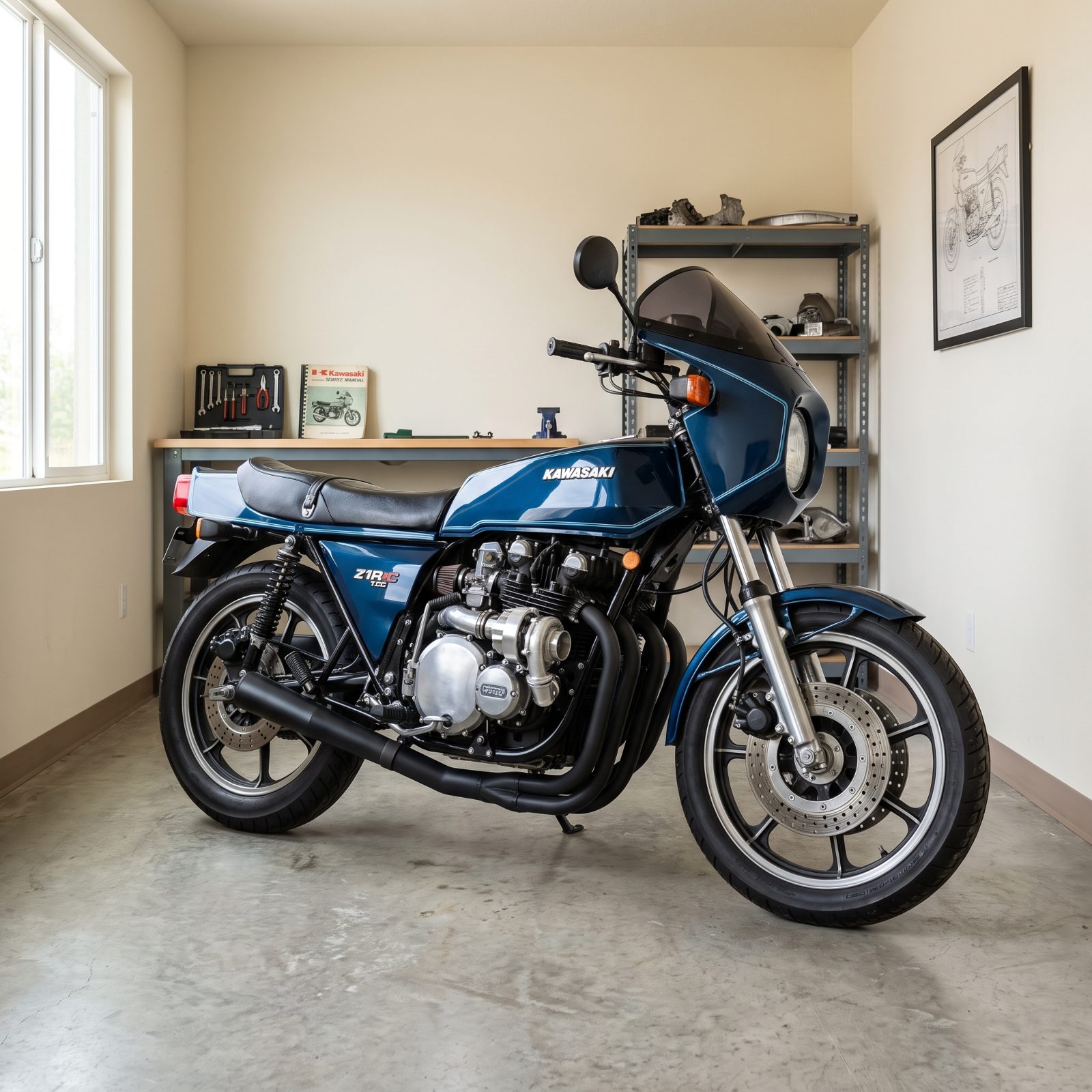
A factory-adjacent oddity that collectors chase precisely because it should never have existed. Turbo Cycle Corporation, a U.S. distributor, bolted turbochargers onto the sharp-edged Z1R and sold them through Kawasaki dealers. Not a backyard job. A dealer-floor turbo bike in 1978.
The engineering was crude by later standards, and these things had a reputation for being a genuine handful — which is exactly why clean documented survivors are scarce. Most got thrashed or blown up. Find one with its original turbo hardware intact and the provenance paperwork, and the bidding gets serious fast.
1969 Yamaha TD2: The Air-Cooled 250 Built to Race Out of the Crate
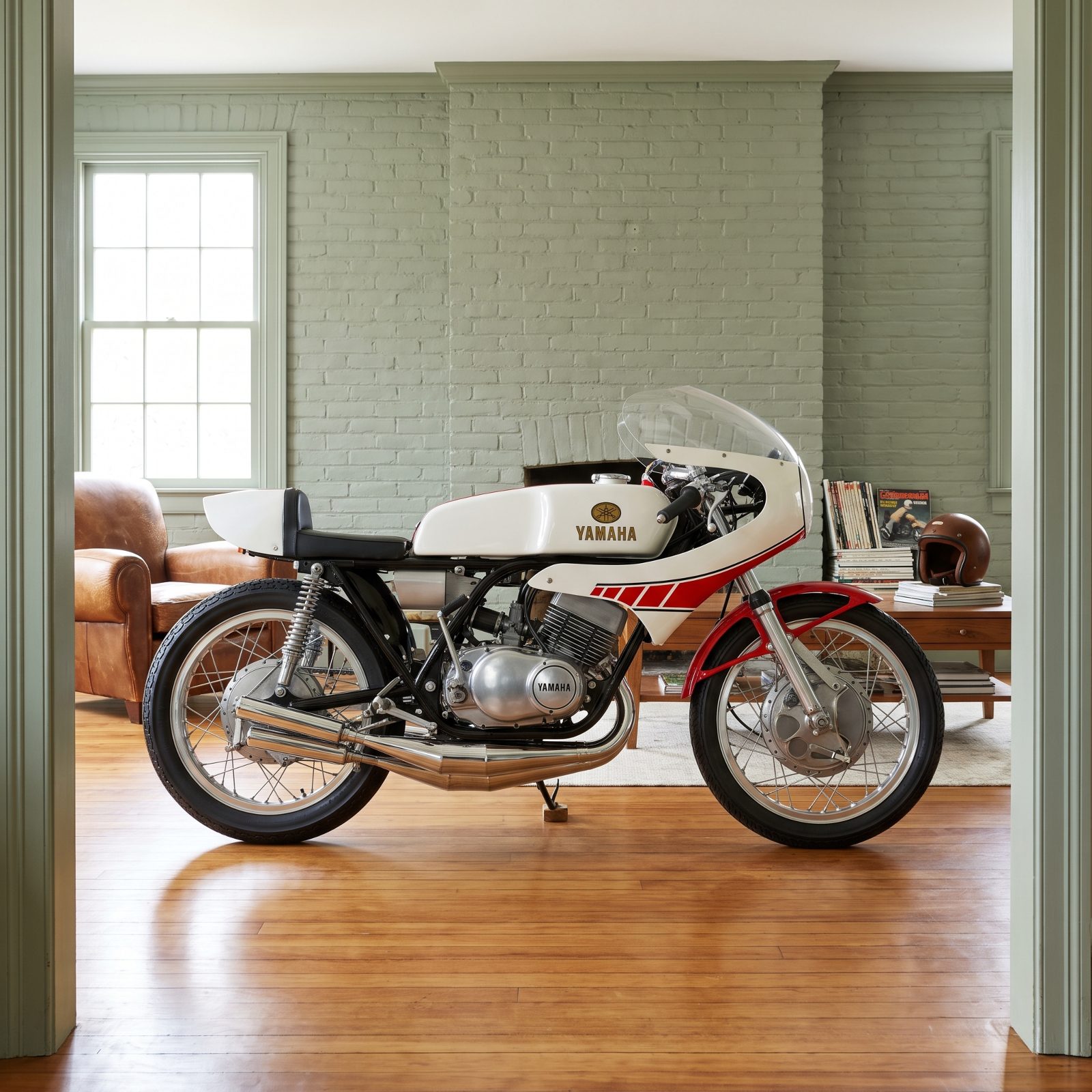
Privateer racing ran on Yamaha’s TD2, a genuine production road racer sold ready to campaign that put competitive machinery under riders who could never have afforded a works bike. That democratic racing streak is a big part of why it matters.
Twin-cylinder two-stroke, air-cooled, built for the 250 class, and quick enough to embarrass bigger four-strokes on the right track. Period race history lifts the value considerably. A TD2 with documented club or national results and its original tin fetches far more than a tidy but anonymous example.
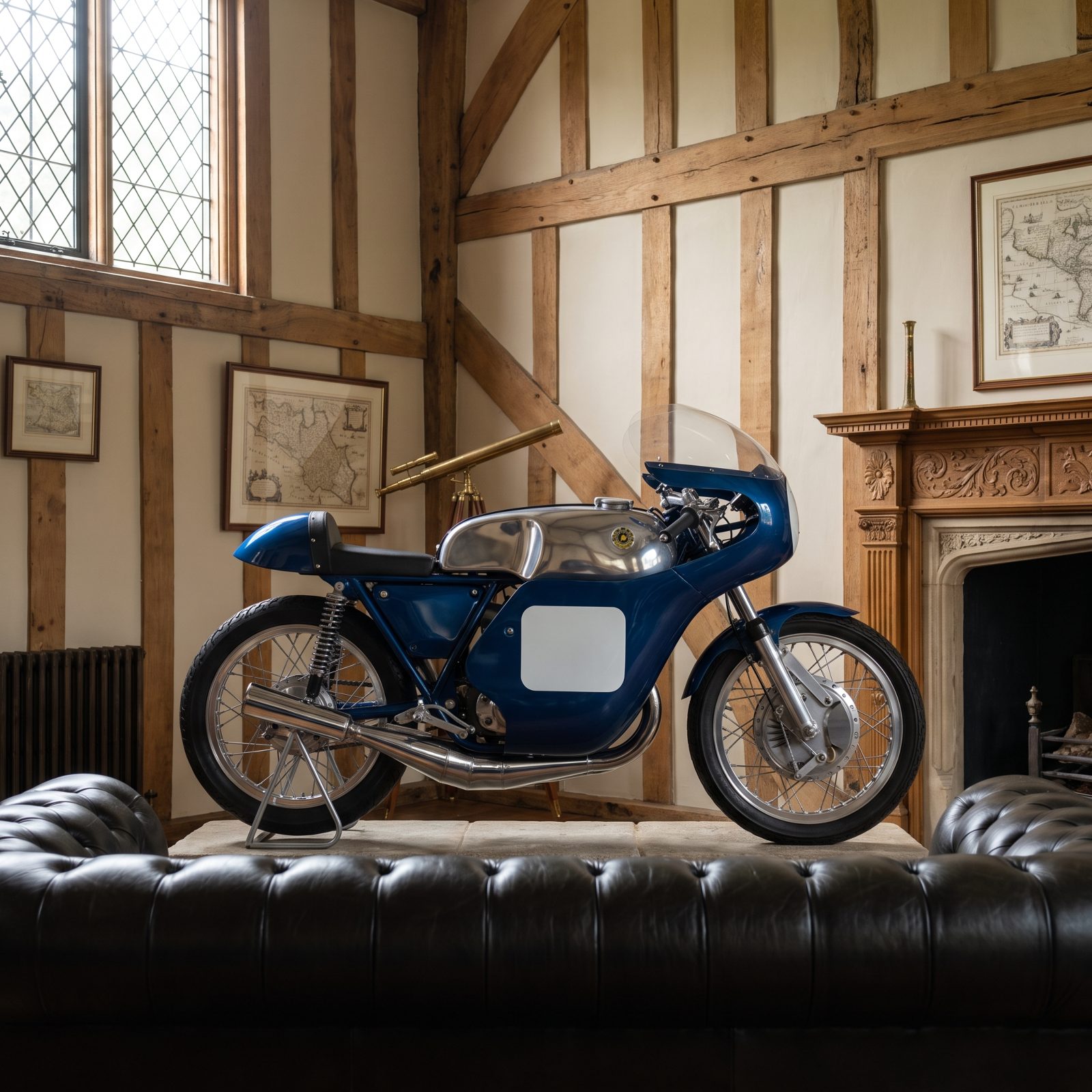
1970 Aermacchi Ala d’Oro 350: The Italian Single That Raced on Four Strokes
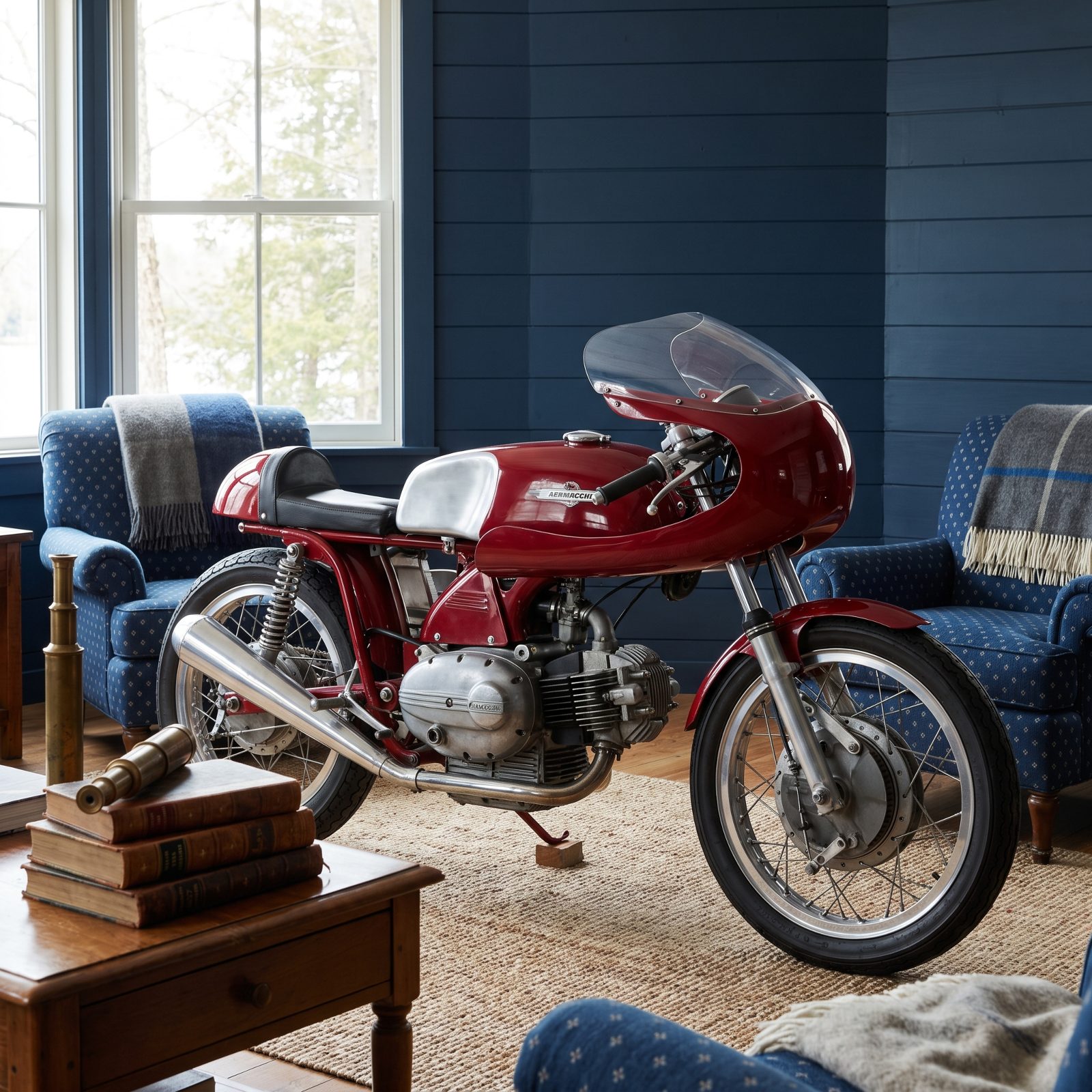
While everyone else chased two-stroke power, Aermacchi kept faith with a horizontal four-stroke single and made it sing. The Ala d’Oro — “golden wing” — is shown here in pure racing trim, with a clear windscreen over a blank-nosed fairing and an unlit tail hump, around an engine that lay almost flat in the frame, a layout that still looks right decades on.
Fewer were made than the Japanese production racers, and Italian provenance carries real weight with collectors of competition bikes. A long chrome silencer, a period fairing with windscreen, honest racing fittings and believable provenance. Those are the things that separate a well-sorted racer from a lookalike bolted together out of parts.
1973 Triumph X-75 Hurricane: The Fiberglass Triple Styled for America
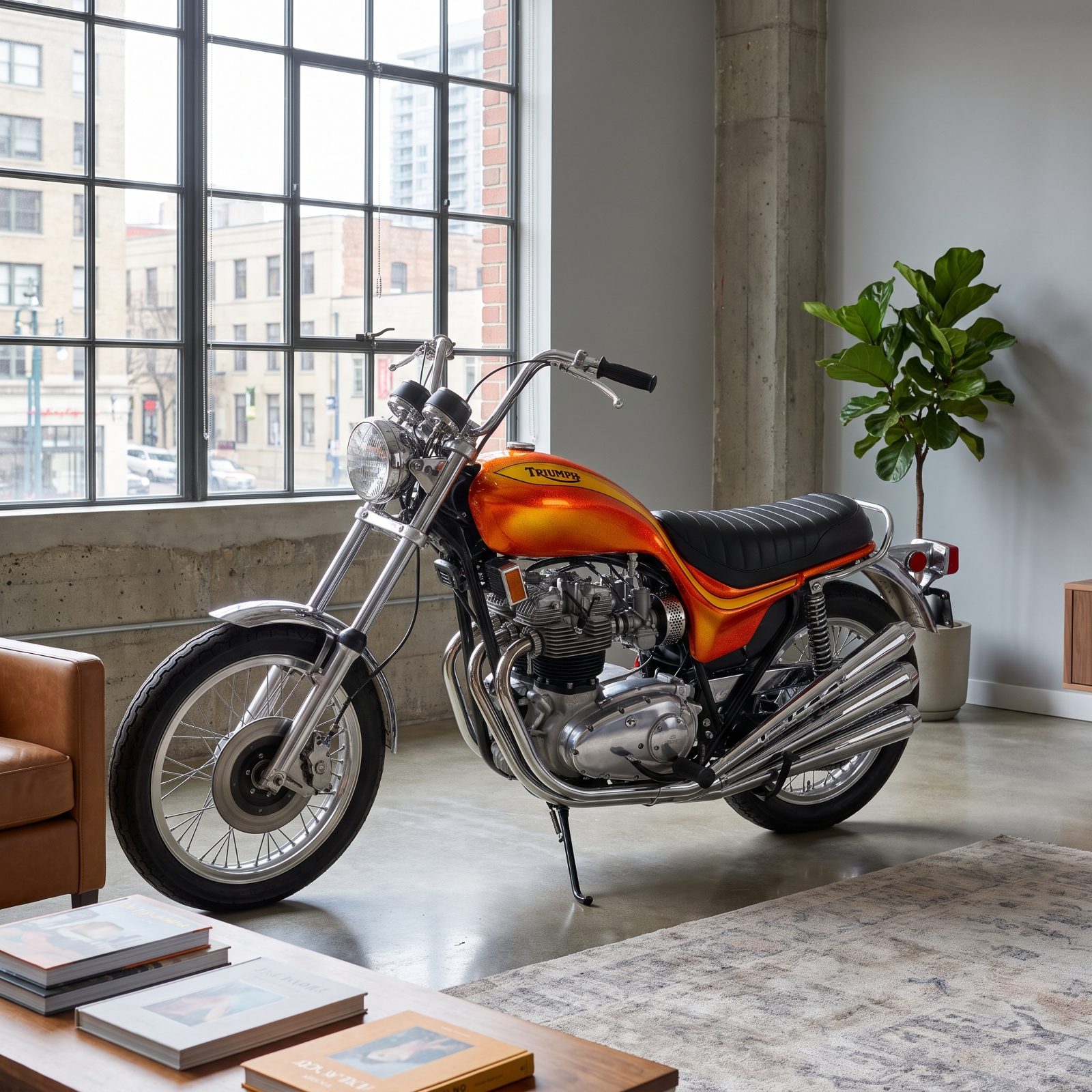
A factory bike that looked like a custom. The Hurricane came out of an American design brief, with a sweeping one-piece fiberglass tank-seat unit and that fan of chrome megaphones sitting low beside the rear wheel. Nothing out of Britain looked remotely like it.
Built in limited numbers over a short window, it sits right where production motorcycle meets rolling sculpture. Collectors want the original fiberglass uncracked and the metalflake paint unmolested, both of them tough to find — people rode these, and the gel-coat crazes with age no matter how gentle the owner.
It was a production motorcycle built to look like something a custom shop would charge double for.
1969 Bultaco TSS 250: The Spanish Production Racer With a Giant Heart
Spain punched well above its weight in small-capacity road racing, and the Bultaco TSS is the proof. A proper production racer with a thumping two-stroke single, it gave privateers in the quarter-liter classes a real shot against factories many times their size.
These stay less familiar to casual buyers than the Yamahas, which keeps a lid on prices until a documented example surfaces. Period race results, the original expansion chamber, the correct fairing — all of it drives the number. The best ones now change hands for what a new commuter car costs.
1969 Husqvarna 400 Cross: The Big-Bore Swedish Motocrosser
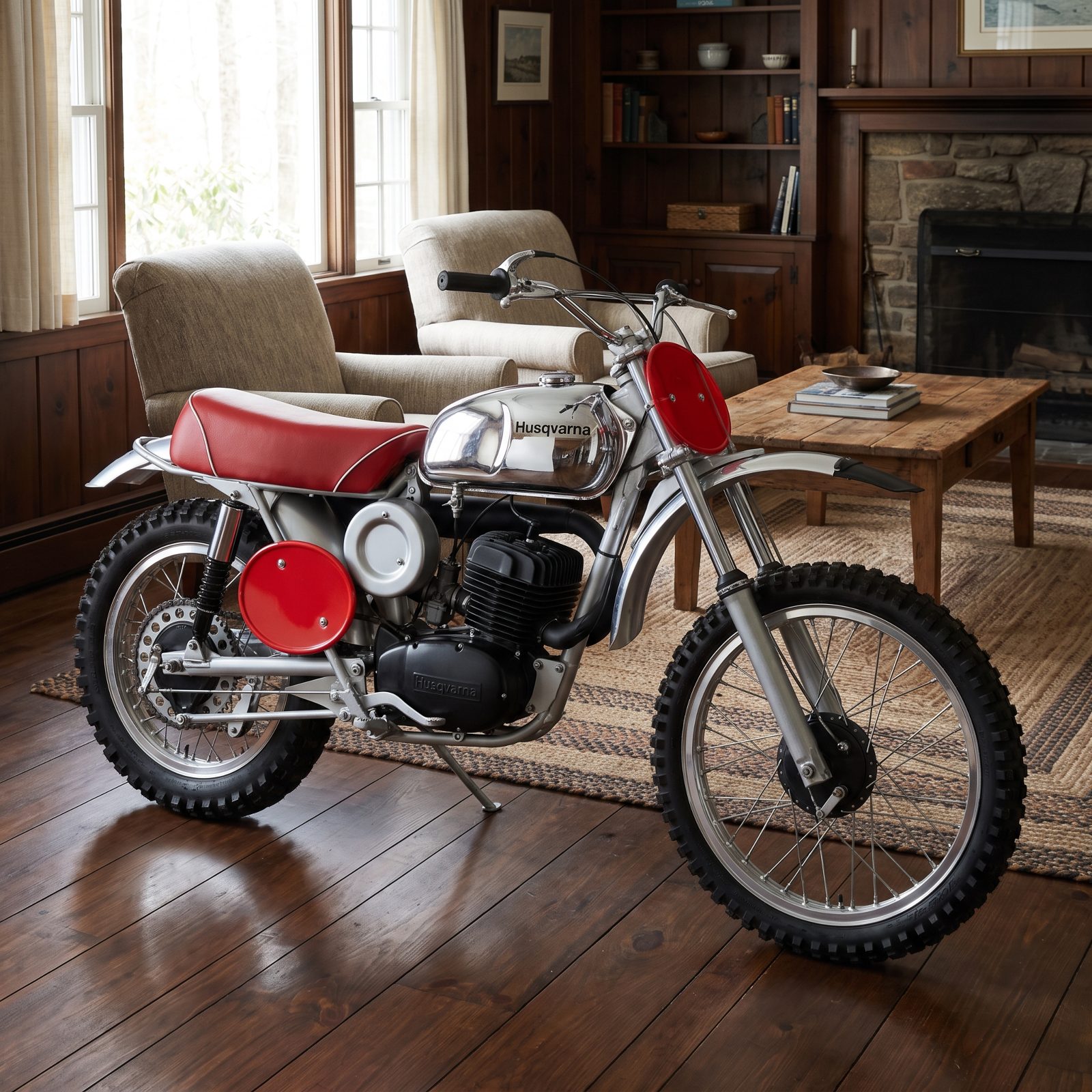
Light, strong, and years ahead on the dirt. The Husqvarna 400 Cross helped break the heavy British motocrossers and tip the whole sport toward nimble two-strokes. It mattered because it won, and because it set the template everyone else promptly copied.
Original examples with the chrome tank, correct forks and an unbutchered frame are the prize. So many were raced hard, crashed, re-welded and parted out that an honest survivor is genuinely rare. Documented competition history multiplies the value.
1971 Maico 501: The Huge Two-Stroke With a Fearsome Reputation
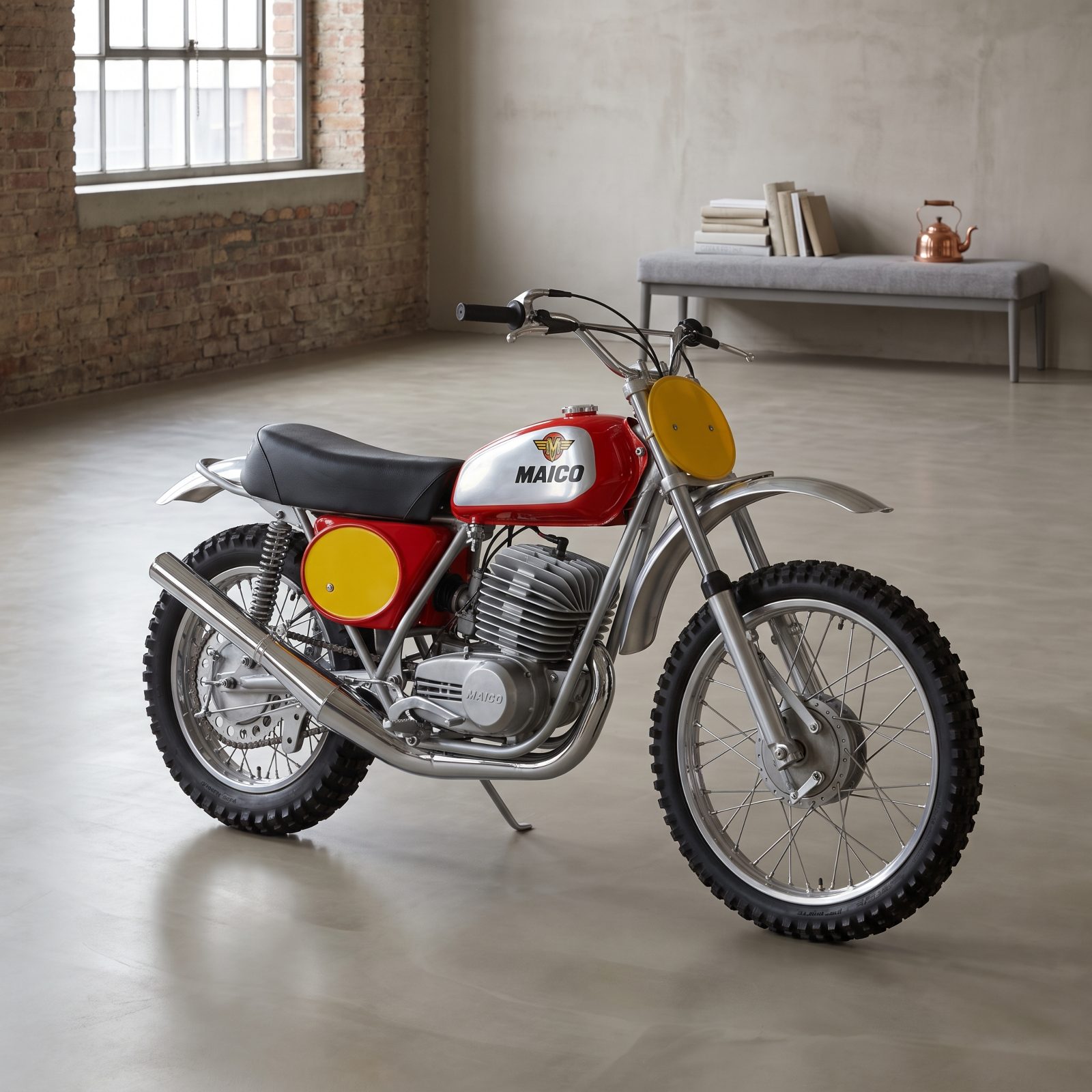
Roughly half a liter stuffed into one big-finned cylinder, with a bundle of chrome header pipes looping under the engine, on a dirt bike. The Maico 501 is remembered as much for its reputation as its results — a machine with a thumping powerband that demanded respect from whoever twisted the grip.
German build, big-bore punch, and a loyal cult following all these decades later. Collectors chase the ones with the big-finned barrel intact, the right forks and an honest frame, because so many of these engines got grenaded and swapped out. A documented, numbers-right 501 now sits firmly in new-car money.