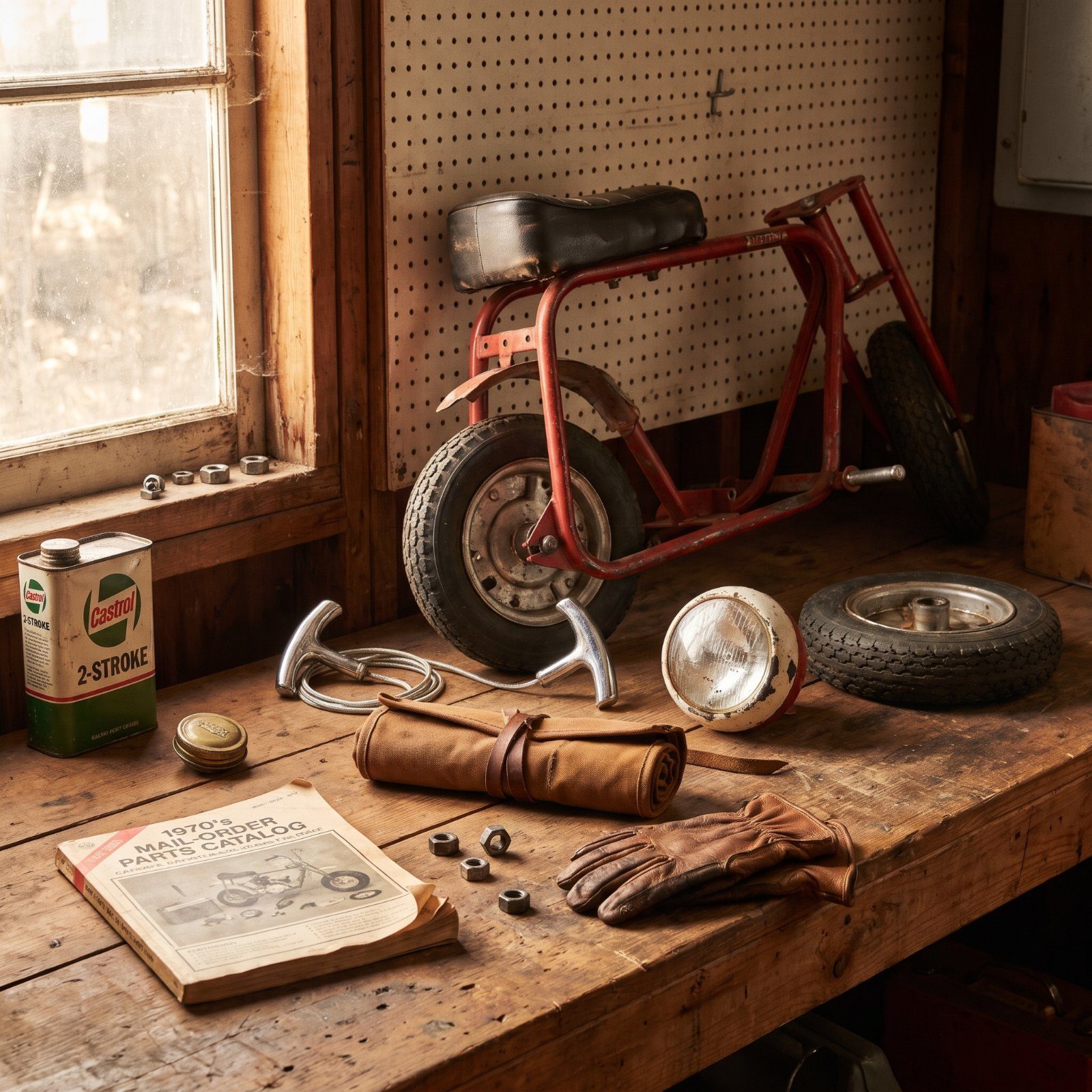
The pull-cord snapped back three times before the little engine caught, then coughed blue smoke across the gravel and the whole afternoon changed. Before anyone had a license or a curfew, there was a machine small enough to hide in a garage and loud enough to annoy the neighbors. Some folded into a suitcase. Some came boxed as a kit, and some rode home from the Sears counter on a catalog order form. These were the first things with wheels that belonged to kids and not to parents — the ones that taught a generation what throttle felt like. Here are the ones worth remembering.
Please note that some of the images in this article were created with the assistance of AI.
49. Fuji Go-Devil: The Suitcase-Sized Folding Minibike
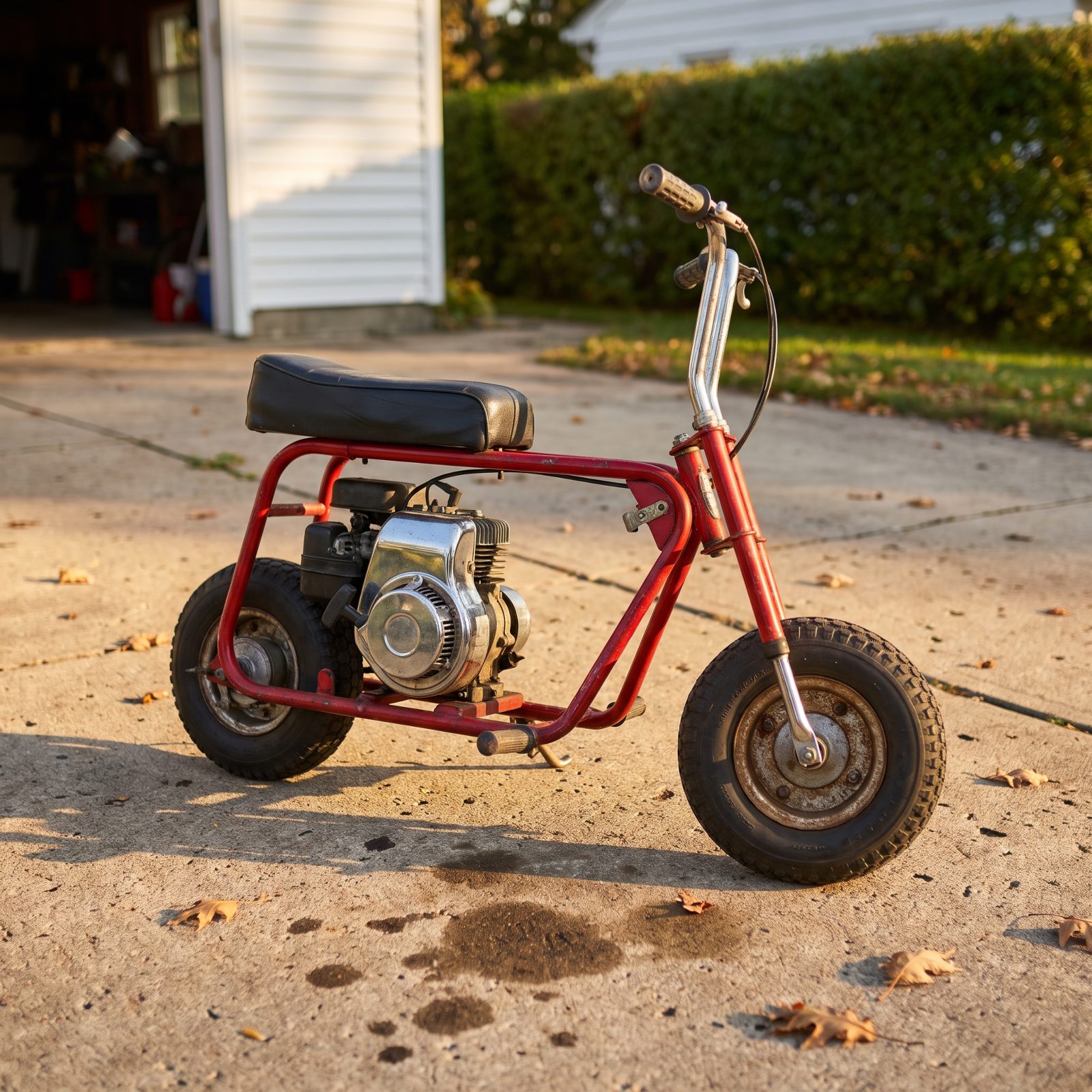
The Go-Devil folded down small enough to ride in a car trunk or get stowed on a boat, which was the whole pitch. Postwar surplus engineering met the booming American appetite for backyard fun, and the result was a minibike you could carry with one hand.
It wasn’t fast, it wasn’t comfortable, and the tiny wheels found every rut. But for a kid in the late 1950s, a machine that folded up and hid under a workbench felt like contraband you were allowed to own.
48. Indian Papoose: The Folding Scooter With Military Roots
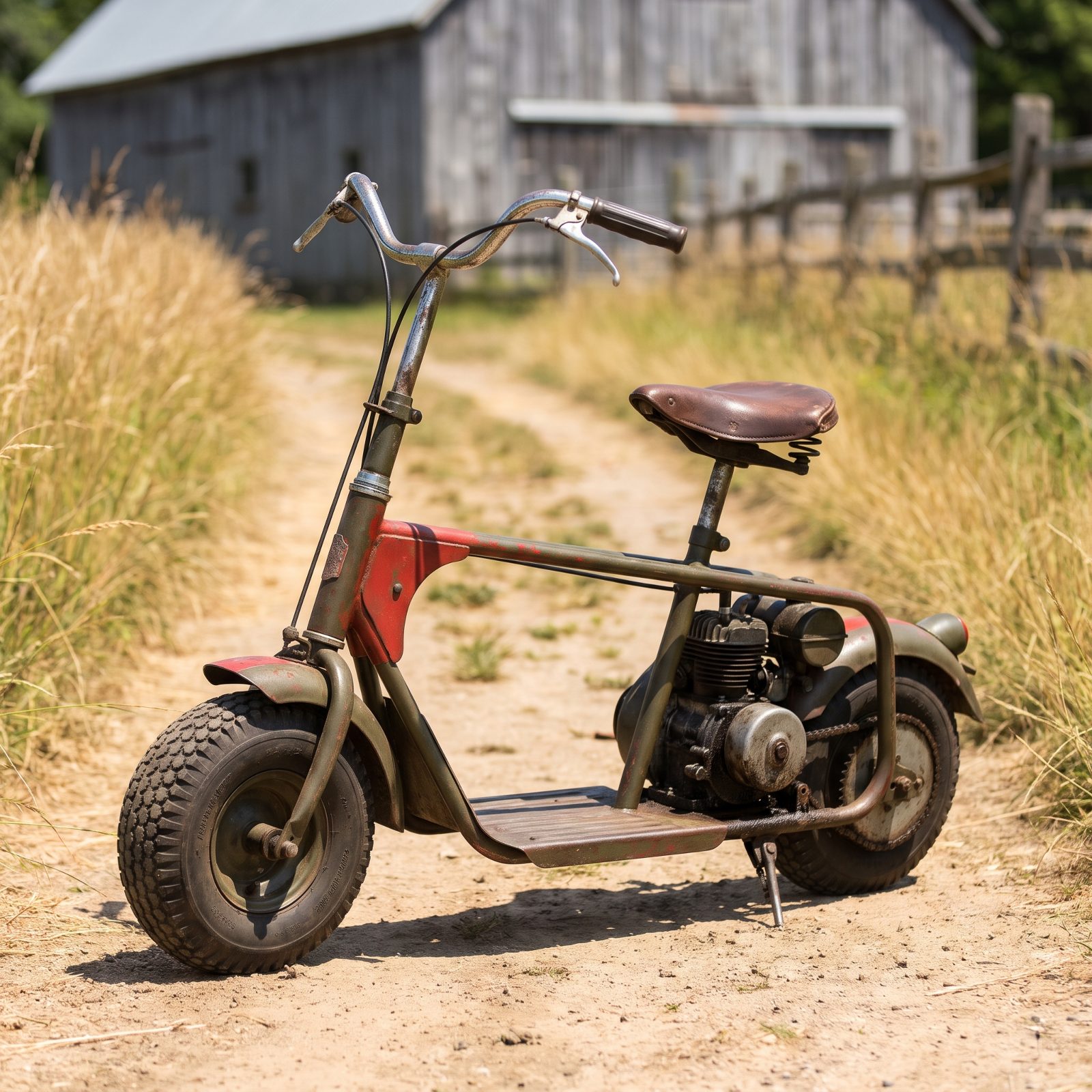
Indian is remembered for big twins and Daytona wins, so the Papoose confuses people. It was a tiny folding scooter, derived from wartime airborne designs, badged with one of the proudest names in American motorcycling.
Part of the charm is the mismatch. You expected thunder from an Indian tank, and instead you got a putt-putt that packed into a crate. It became a backyard fixture precisely because it was the opposite of intimidating — small enough that a parent could say yes.
47. Heathkit Boonie Bike: The Minibike Families Assembled at Home
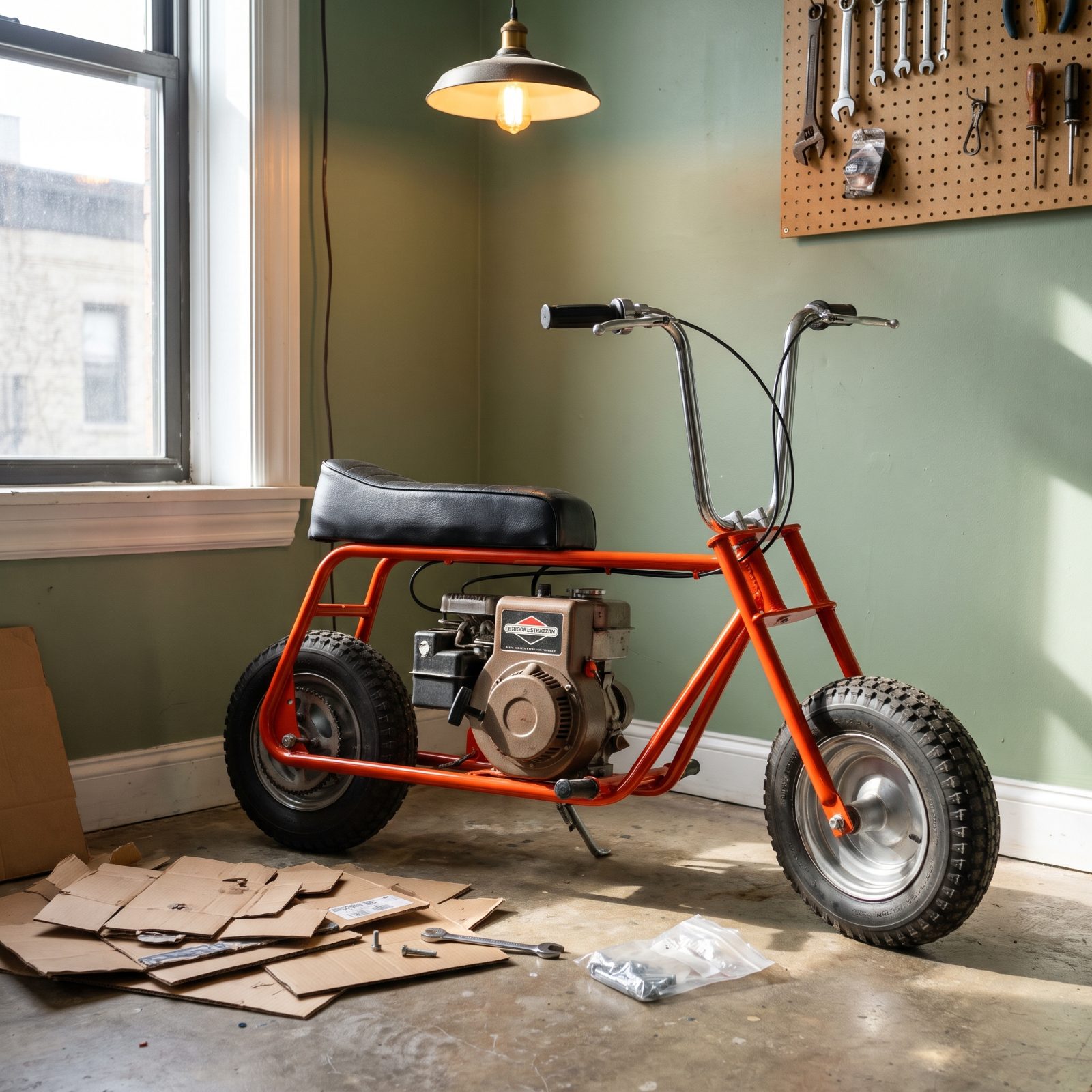
Heathkit sold electronics you soldered together. Then it sold a minibike you bolted together.
The Boonie Bike arrived as a box of parts and a manual, and for a certain kind of dad, that was the appeal. You and the kid built it on the garage floor over a weekend, torquing the engine mount, routing the throttle cable, arguing about which bolt went where.
What made it a childhood fixture wasn’t just the riding. It was the building. By the time it ran, you’d memorized every part on it, which meant you could fix it when it broke. And it broke.
46. Honda Motocompo: The Scooter Built to Fit in a Car Trunk
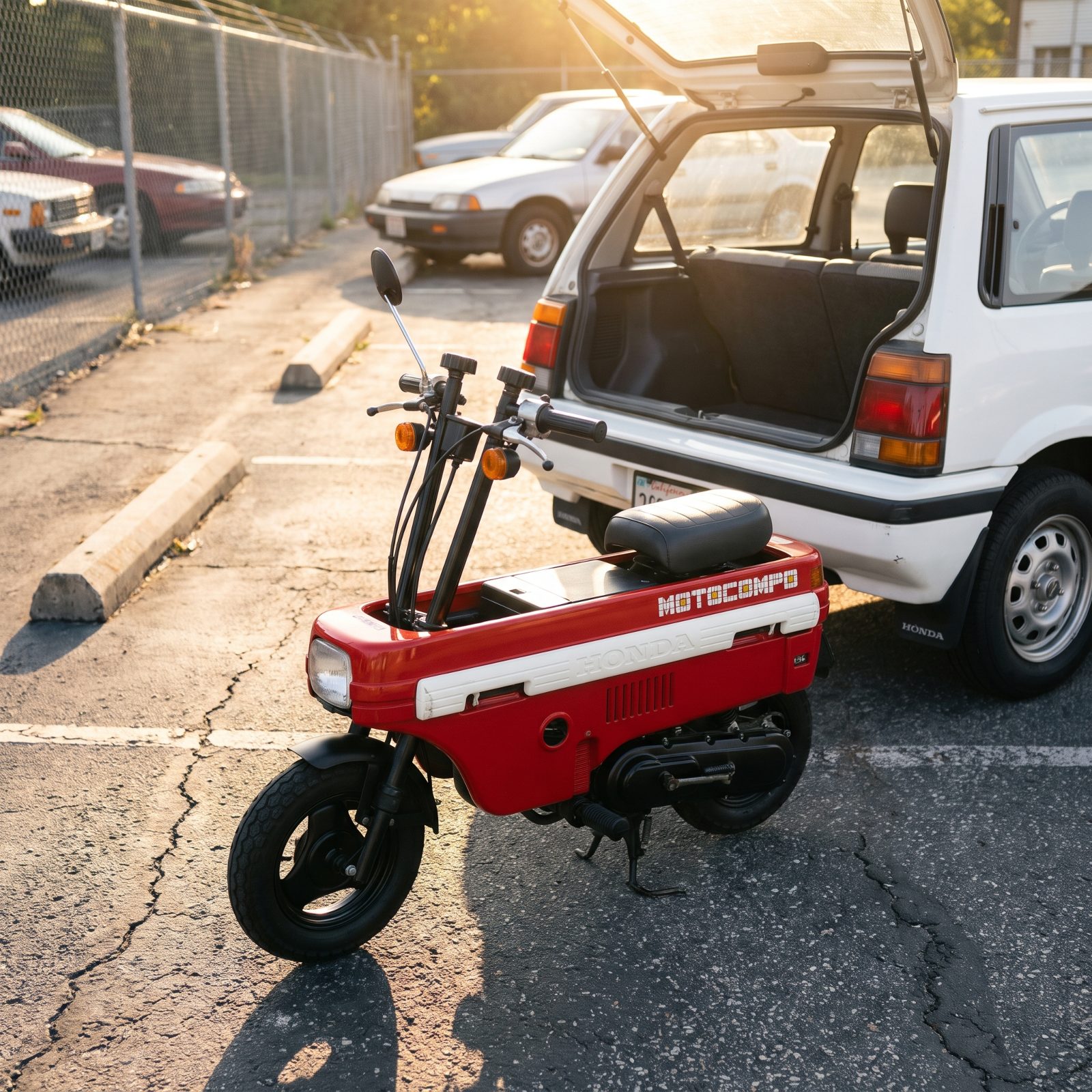
Honda engineered the Motocompo around a single question: how small can a motorbike fold? The answer was a red plastic box with a 49cc engine, handlebars and seat that tucked away, and dimensions picked to slot into the cargo area of a small car, like the open white hatchback it’s parked behind here.
Park the car, pull out the scooter, ride the last mile. That was the idea, decades before anyone said “last-mile mobility.” It’s a cult object now, and clean survivors go for real money among collectors who appreciate how far ahead of its time the thing was.
45. Arctic Cat Screamer: The Snowmobile Brand’s Wild Minibike
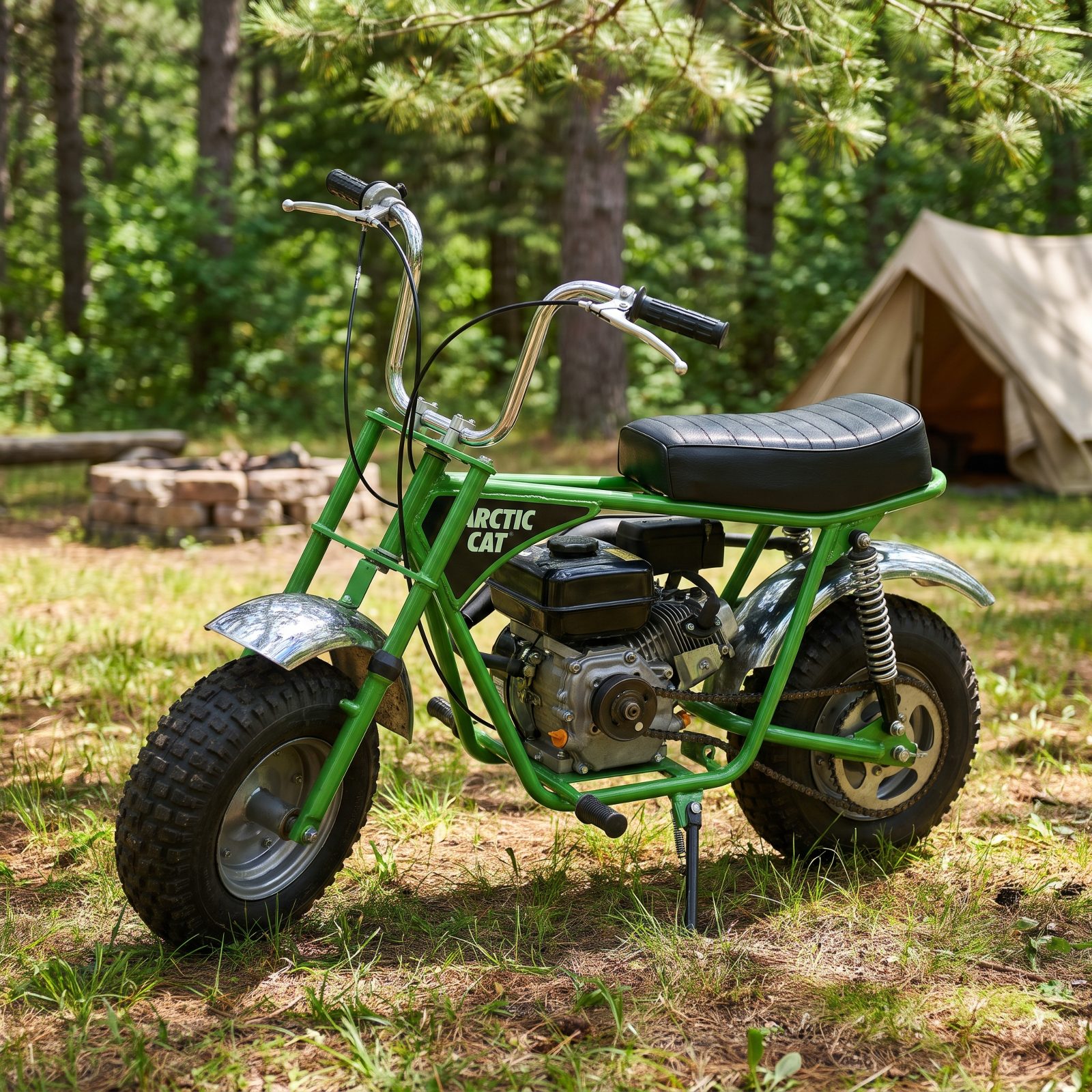
A snowmobile company making a summer minibike makes perfect sense once you think about it. Snow belt kids had nothing to ride for half the year, and Arctic Cat already knew how to build rugged little machines for rough ground.
These had an off-road attitude the catalog bikes lacked, built by people who designed for ice and drifts. For a lot of northern families, the Arctic Cat minibike was the bridge that kept the winter sled brand loyalty alive straight through July.
44. Harley-Davidson X-90 Shortster: The Italian-Built Mini Harley
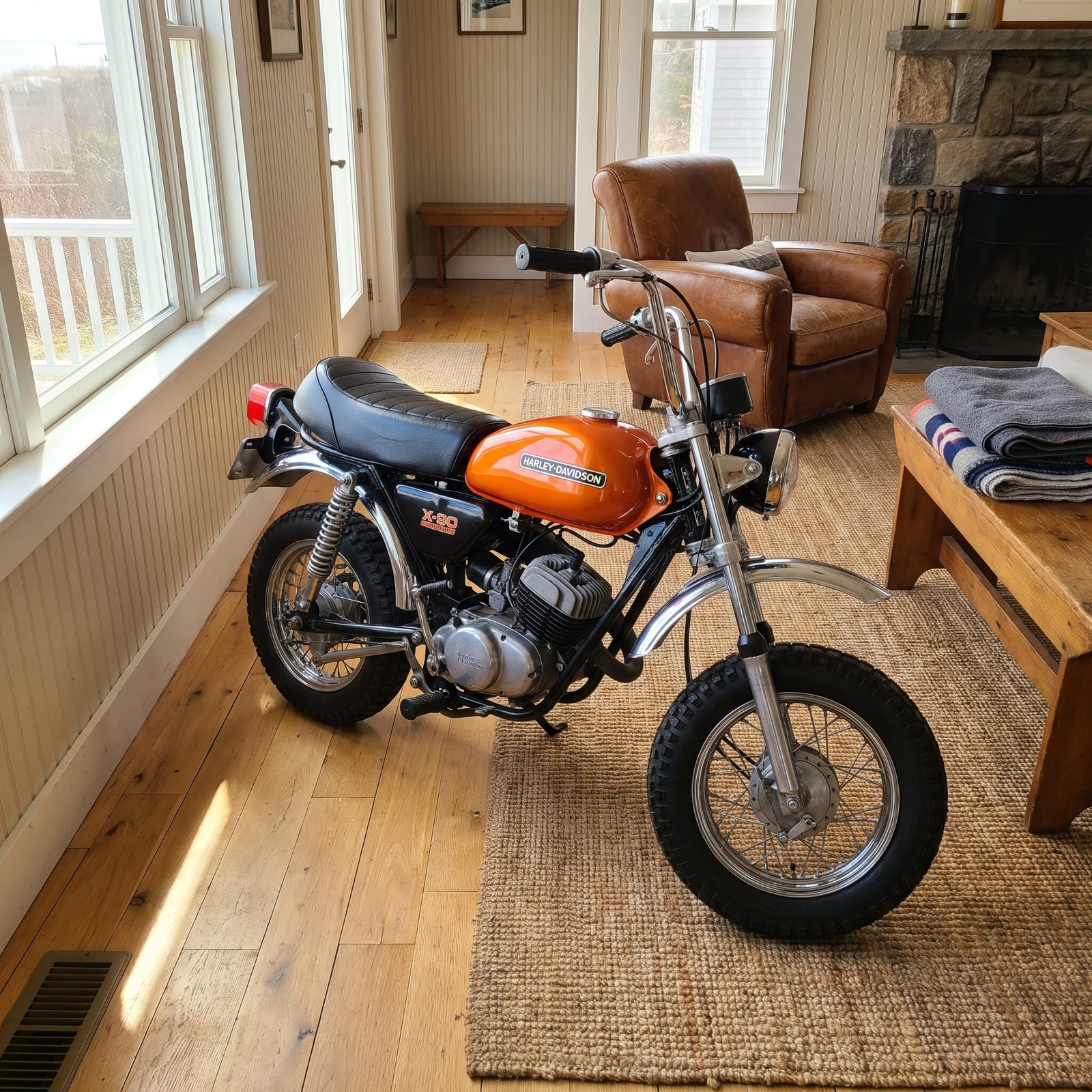
The orange tank said Harley-Davidson. The engine inside did not sound like one.
During Harley’s Aero/Aermacchi era, the little X-90 Shortster came out of the Italian side of the operation, a two-stroke mini-motorcycle aimed squarely at kids who wanted the badge without the Electra Glide. For a youngster, a bike that wore the same eagle as the big machines in the dealer window was pure status on the sidewalk.
Purists groused about where it was built. The kids riding them could not have cared less.
43. Sears Roper Minibike: The Catalog Machine Delivered to the Door
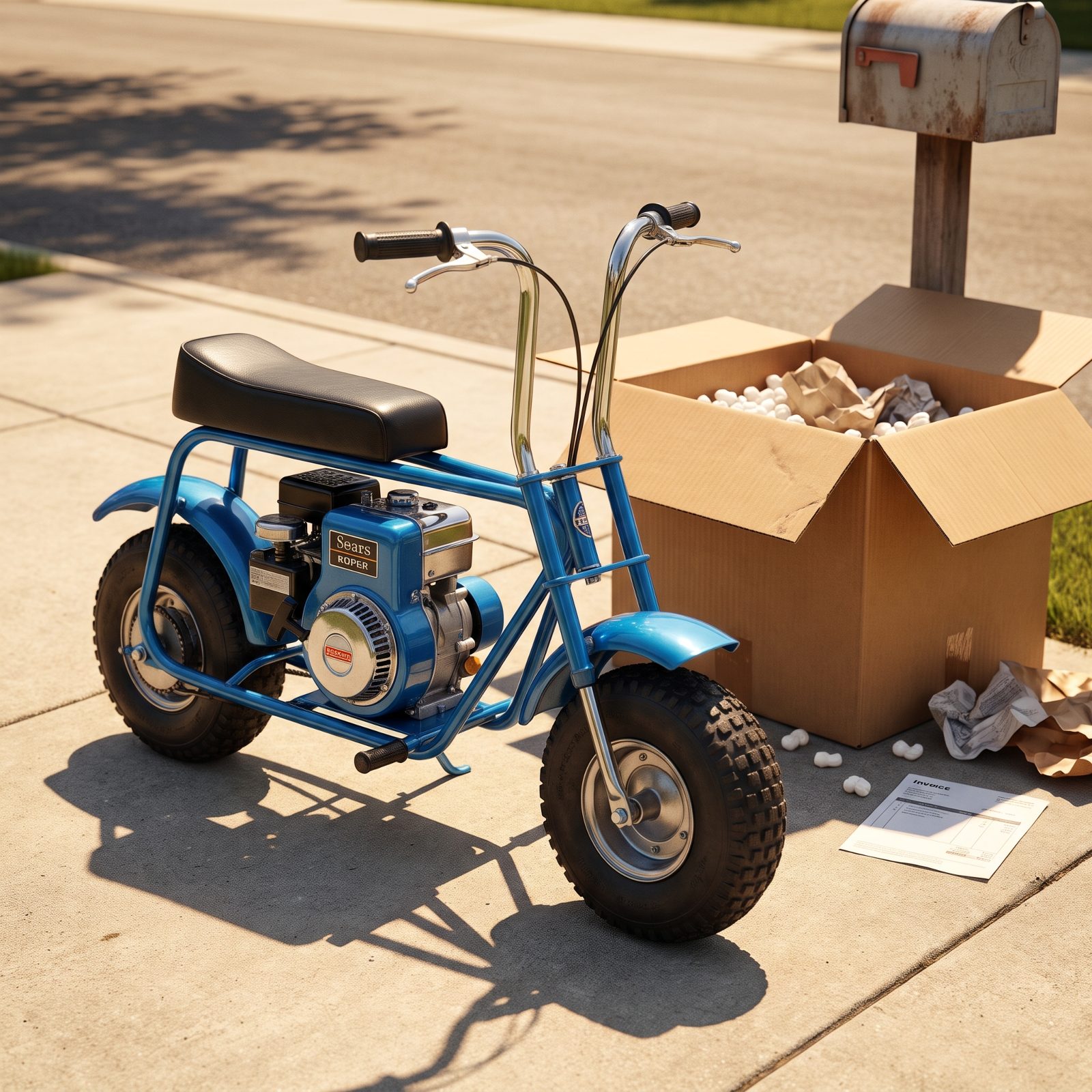
You didn’t go to a dealer. You ordered it off a page in the Sears catalog, and weeks later a crate showed up at the curb.
Roper built minibikes that Sears sold under its own name, and for countless families that catalog order was the entire origin story of a kid’s first machine. No showroom, no salesman — just a listing between the lawnmowers and the chainsaws, then a box on the porch holding something that ran.
42. Harley-Davidson Topper: The Fiberglass-Bodied Scooter From Milwaukee
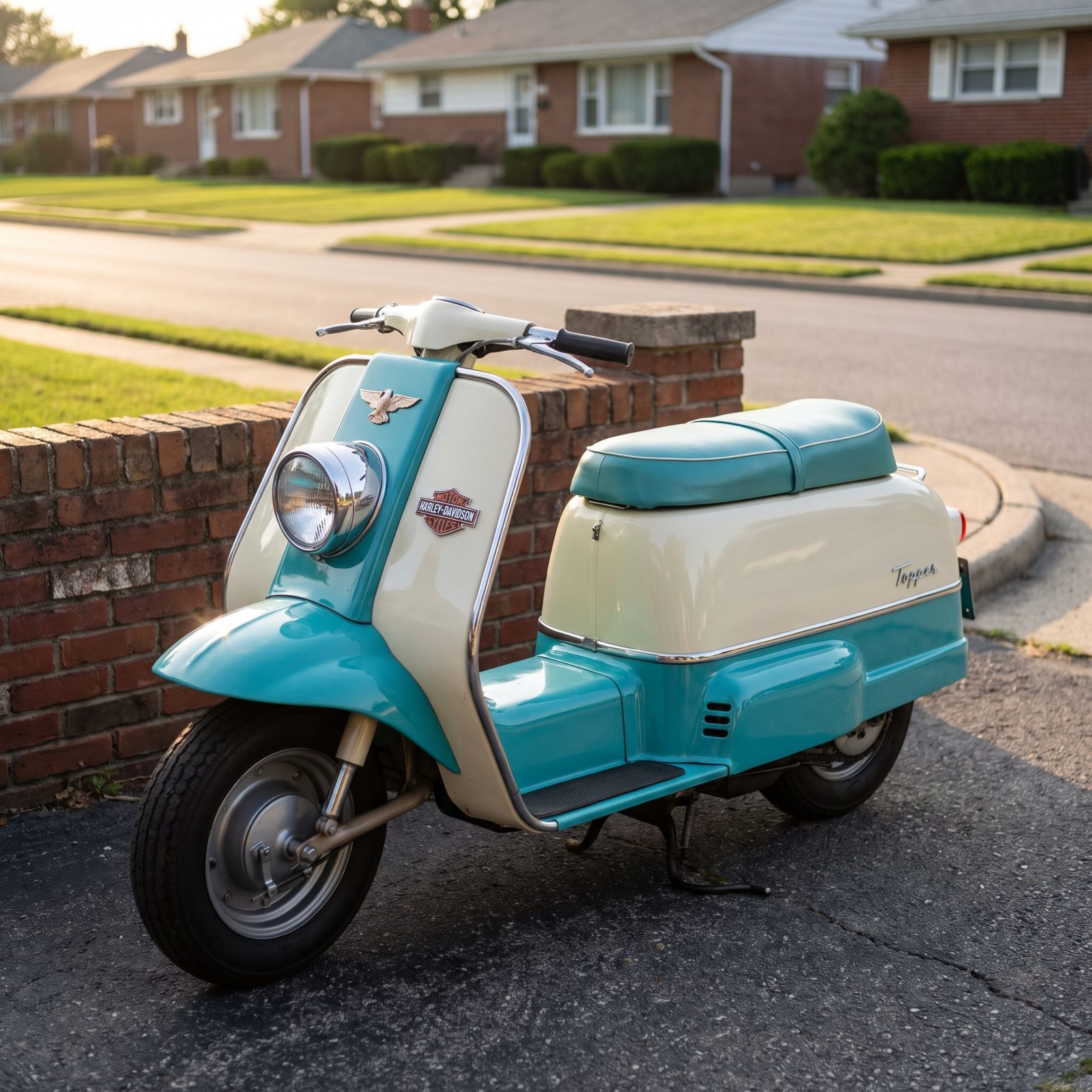
Harley-Davidson built a scooter once, and almost nobody believes it until they see the Topper. Produced in the early 1960s, it had a fiberglass body, a two-stroke engine, and a pull-cord start like a lawnmower.
It never sold the way Milwaukee hoped, which is exactly why it’s a collector curiosity now. The thing proves that even the most hardcore American brand took a swing at the scooter market back when scooters looked like the future.
A fiberglass scooter with a lawnmower pull-start and an eagle on the tank. Only the early 1960s could have produced that.
41. Sears Allstate Cruisaire: The Vespa Sold Through the Sears Catalog
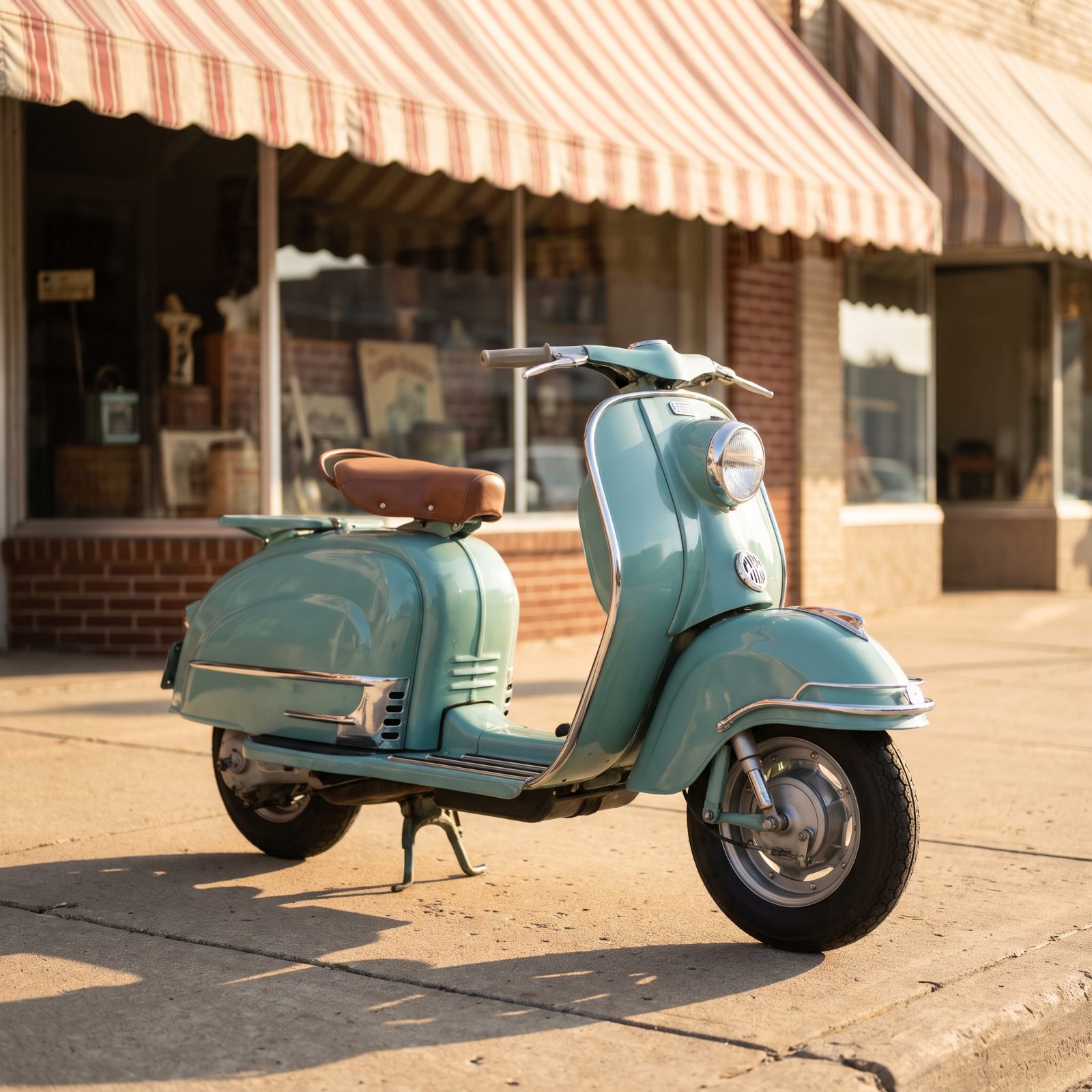
Plenty of Americans rode a Vespa without ever knowing it. Sears imported Italian-built scooters and sold them under its Allstate label as the Cruisaire, so the European design showed up in the same catalog as refrigerators and tires.
The scooter underneath was the real thing. The badge on the front just said Allstate. For a generation, that rebadging was the gateway to European two-wheel style, bought on credit terms right alongside the washing machine.
40. Fuji Rabbit Superflow: The Japanese Scooter With Space-Age Bodywork
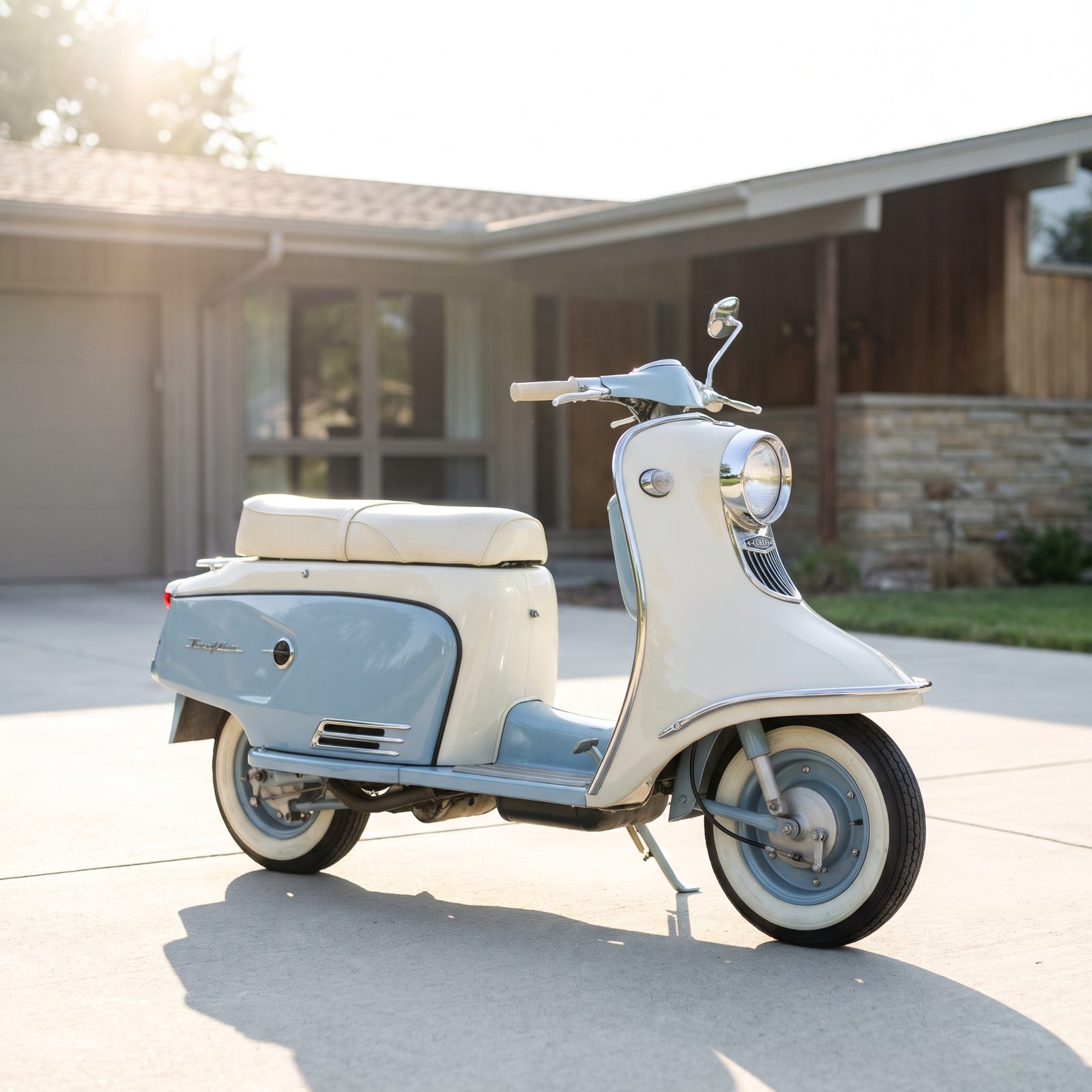
Fuji Heavy Industries — the aircraft outfit that later became Subaru — built scooters with a designer’s confidence. The Rabbit Superflow wore flowing, aerodynamic bodywork that looked like it belonged on a 1950s dream-car concept, not a commuter.
It carried genuine innovation too, including advanced transmission ideas ahead of its moment. More than most machines on this list, the Superflow shows what happens when aircraft engineers get bored and point their talent at two wheels.
Find a clean one today and the lines still stop people. Atomic-age optimism, pressed into steel, built to be ridden to the store.
39. Yamaha Passol, The Lightweight Step-Through That Called Its Shot
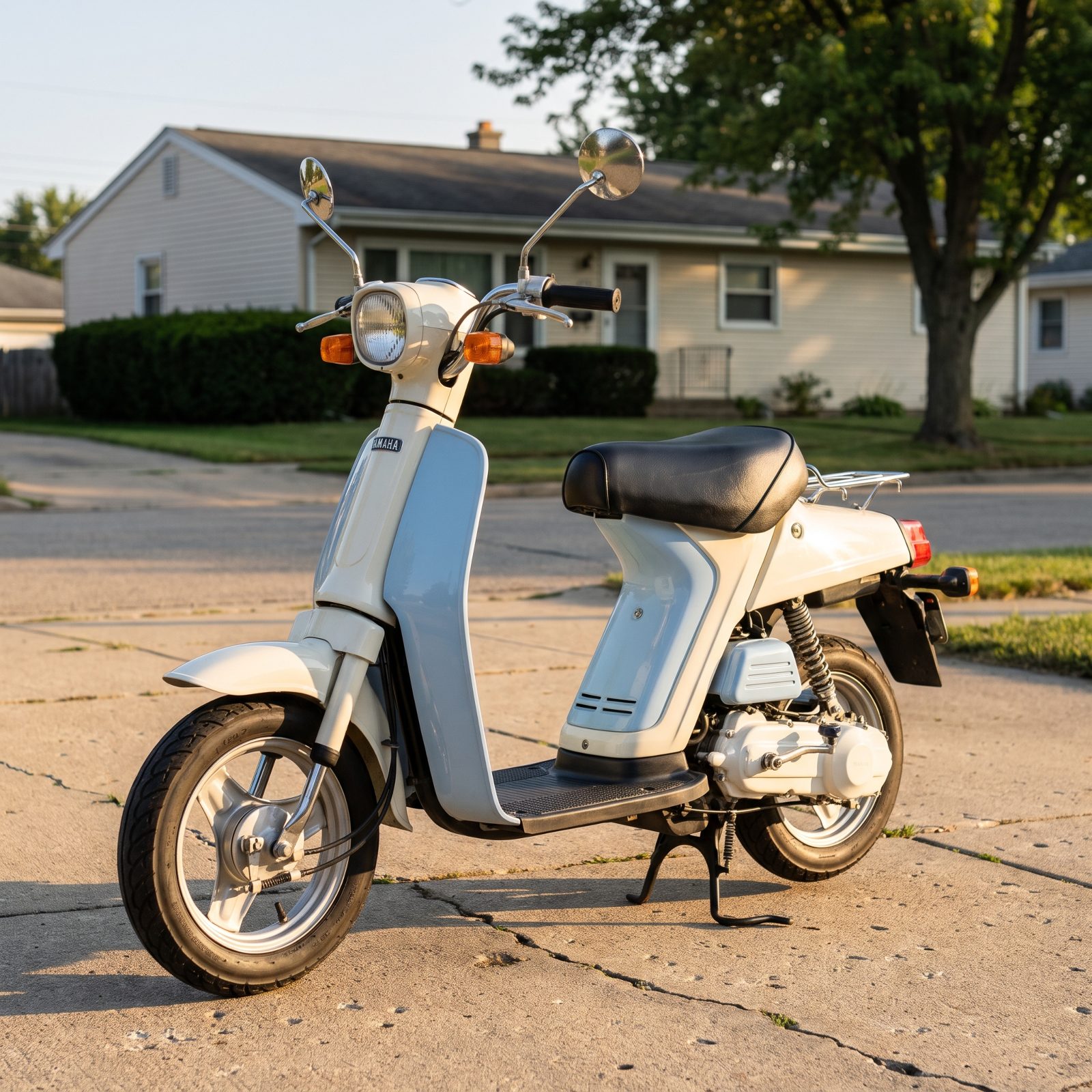
Before the modern scooter boom, the Passol showed up wearing the whole idea on its sleeve: a flat step-through floor, a tiny two-stroke tucked under the seat, and a curb weight light enough to walk around a garage with one hand.
Yamaha pitched it in Japan as a machine anyone could ride to the market and park without a fight, and that friendliness is exactly what made it a fixture for families who wanted wheels without the heft of a full motorcycle.
38. Cat Eliminator, The Minibike That Borrowed a Dragster’s Name
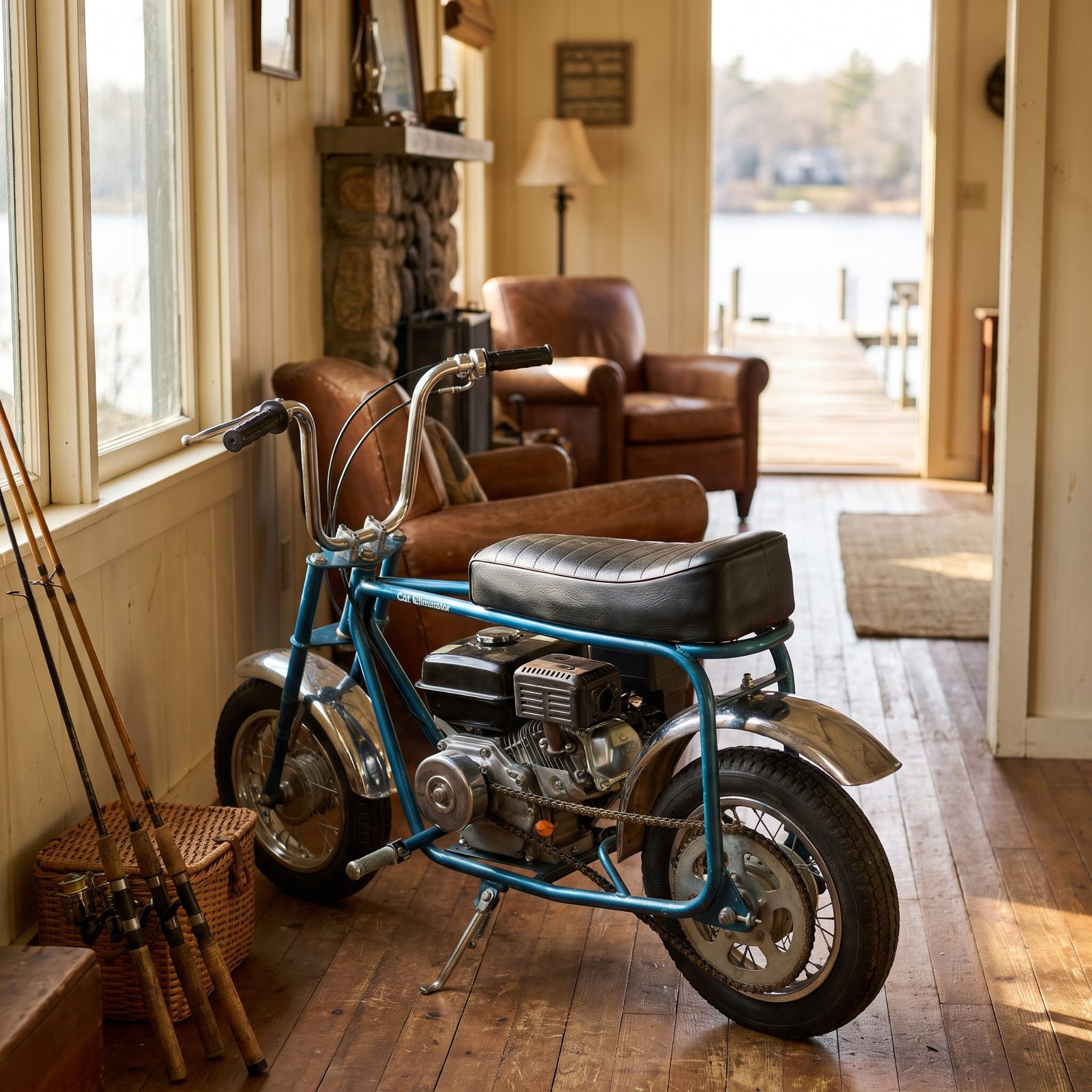
Some names oversell. This one leaned in on purpose. The Cat Eliminator carried a dragster-strip name on a frame built for the end of a cul-de-sac, and kids loved it precisely for that mismatch.
What mattered to a ten-year-old was the stance, the low seat and the fat little tires, and a motor that made enough racket to feel serious. It never pretended to be subtle, and nobody wanted it to be.
37. Lil Indian Sabre, The Michigan-Built Backyard Legend
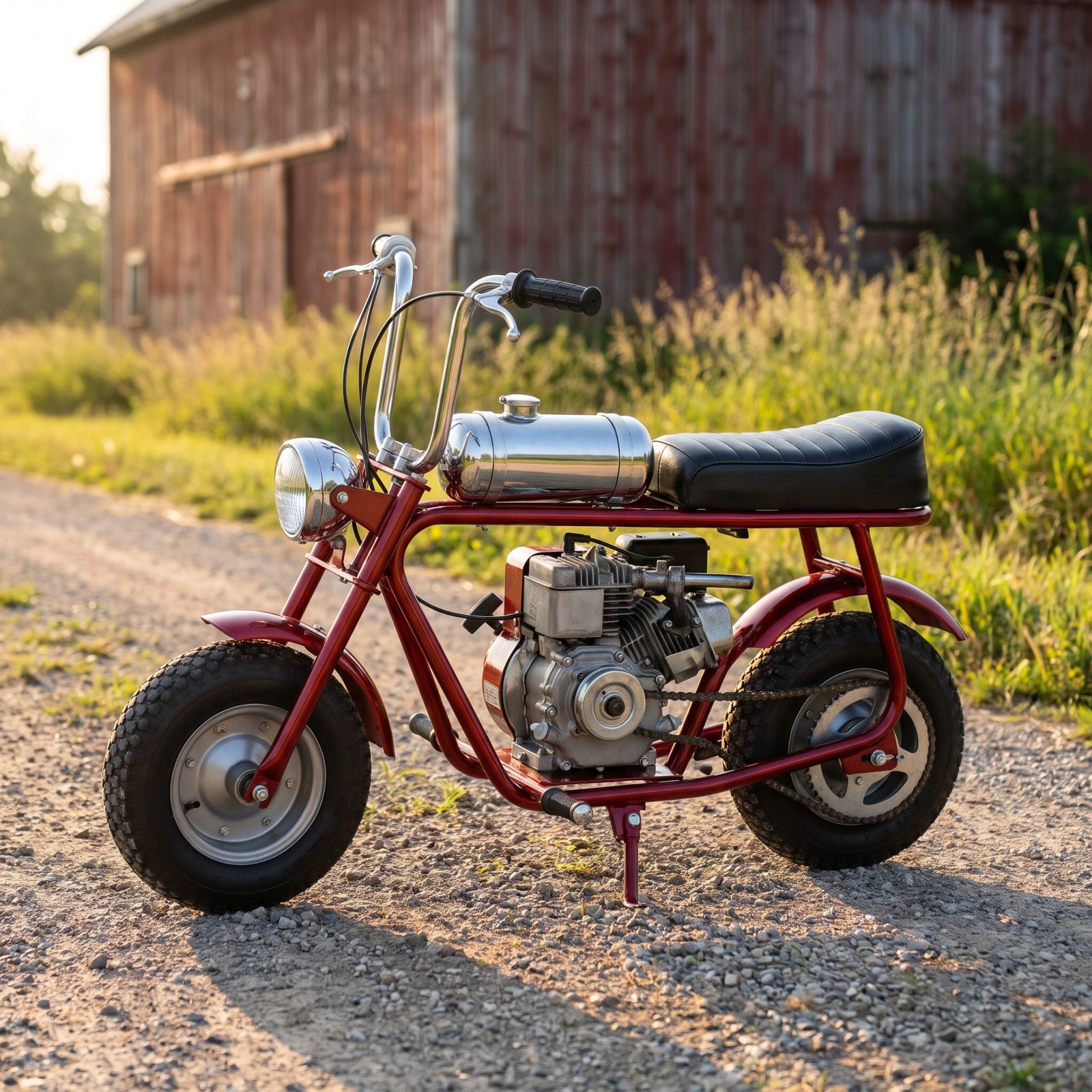
Built in Michigan, ridden everywhere. Lil Indian spent years turning out minibikes that families treated like a rite of passage, and the Sabre is the one that stuck in a lot of memories.
The frame tubing looped in a way the boxier competition never bothered with, and the build was tough enough that plenty survived decades of hard backyard abuse. Hunt around collector forums now and you’ll find people restoring the exact one they rode as a kid.
36. Bonanza BC1300SH, The Chopper-Styled Minibike Every Kid Coveted
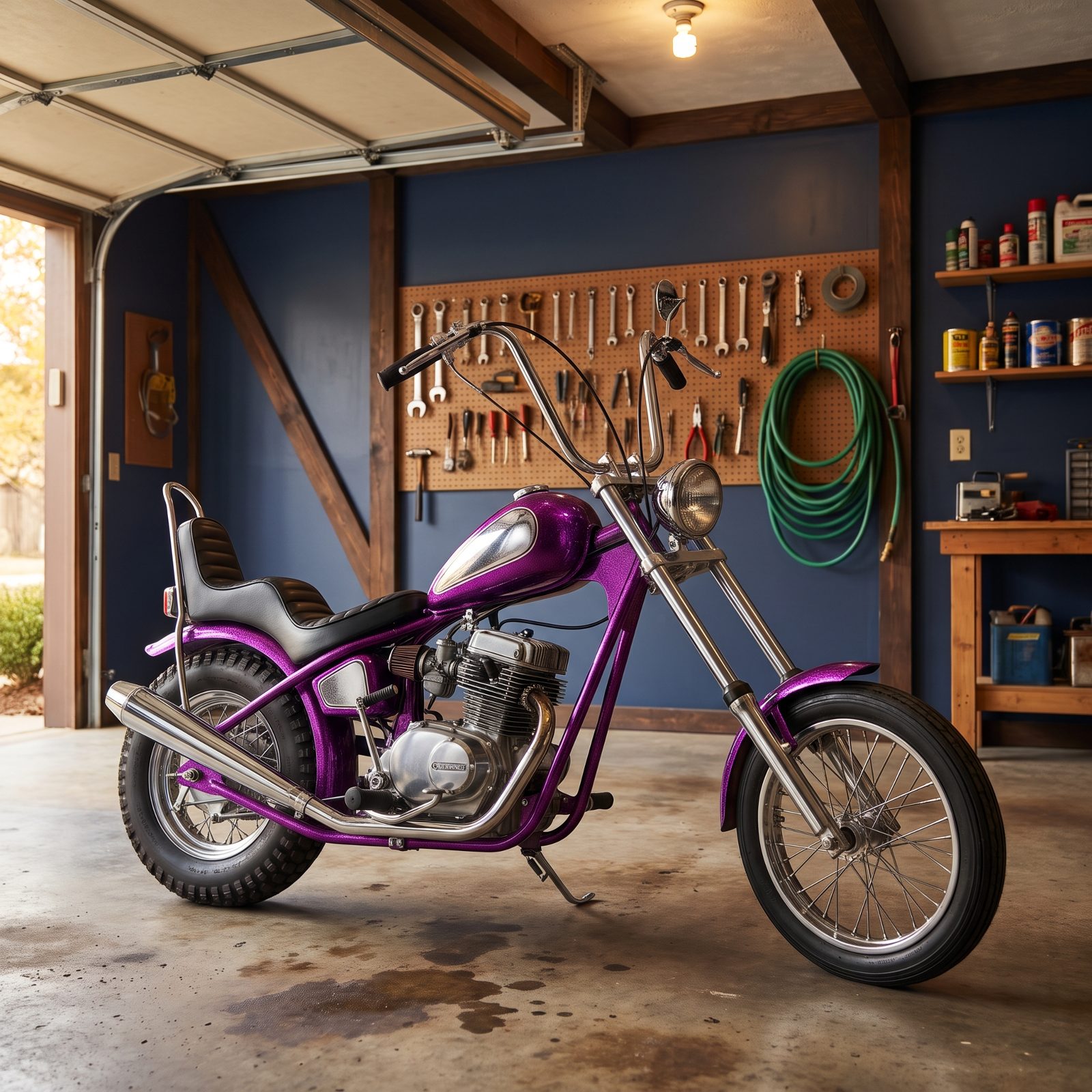
The chopper look didn’t stay on big motorcycles for long. Bonanza shrank it down, stretched the front forks, and handed kids a machine that looked like it belonged in a custom show.
That styling was the whole pitch. A kid rolling up on raked forks and a teardrop tank felt ten feet tall, and the BC1300SH delivered the feeling at a size that fit the driveway. Clean originals have become genuinely collectible.
35. Taco 22, The California Minibike With a Cult Following
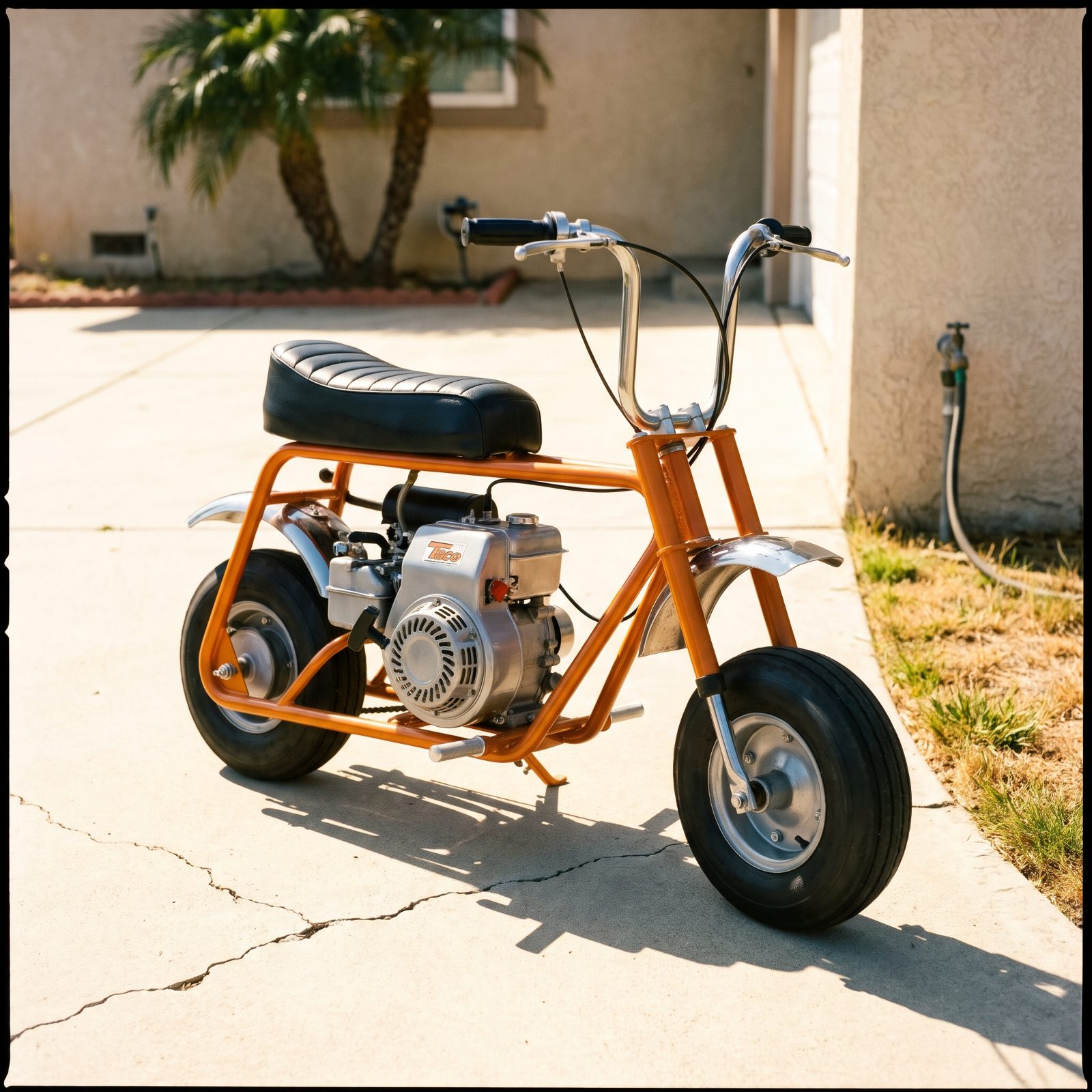
Simple frame. Loyal following. The Taco 22 came out of California and earned a reputation that outlasted the company by decades.
Collectors love the clean lines and the way it rode, and restored examples now change hands for money that would stun anyone who bought one new off a classified ad. Proof that a minibike doesn’t need gimmicks to become a cult object: build it right and people remember.
34. Rupp Roadster 2, The Minibike That Dressed Like a Real Motorcycle
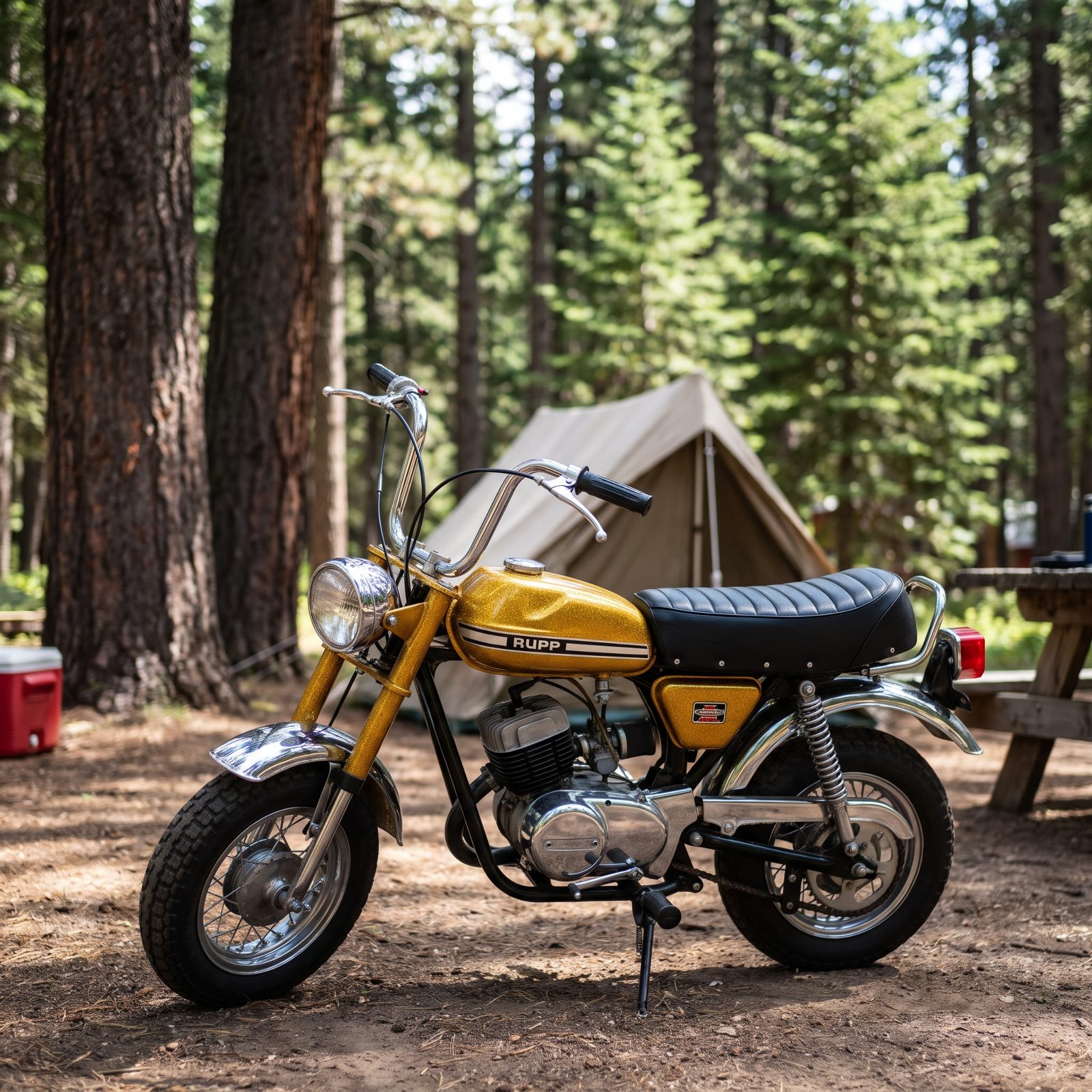
Rupp understood that kids didn’t want a toy. They wanted a motorcycle that happened to be their size. The Roadster 2 gave them fenders, a headlight, and styling that mimicked the full-size machines sitting in the driveway.
That obsession with looking the part is why Rupp became one of the most recognized names in the minibike world, and why the brand still commands respect at every vintage gathering.
33. Manco Thunderbird, The Red Minibike Parked in Countless Garages
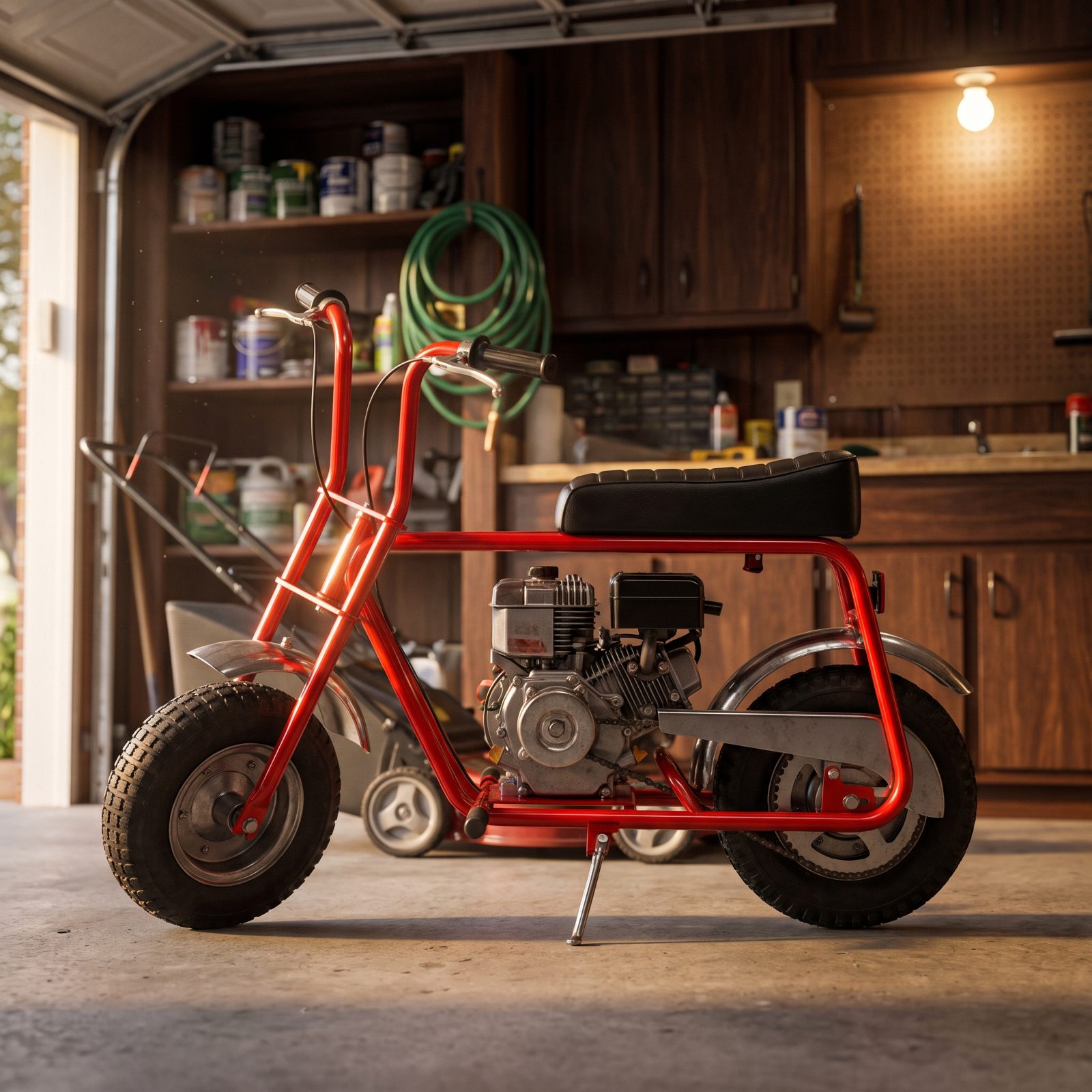
If a minibike lived in your neighborhood, odds are good it was red and said Manco somewhere on it. The Thunderbird was everywhere, which is exactly why it matters.
Manco built dependable, affordable machines that showed up under Christmas trees and in the backs of station wagons across the country. Not the flashiest name on this list. Just the one the most kids actually got to ride.
32. Kawasaki KV75, The Chunky-Tired Follow-Up to the MT1
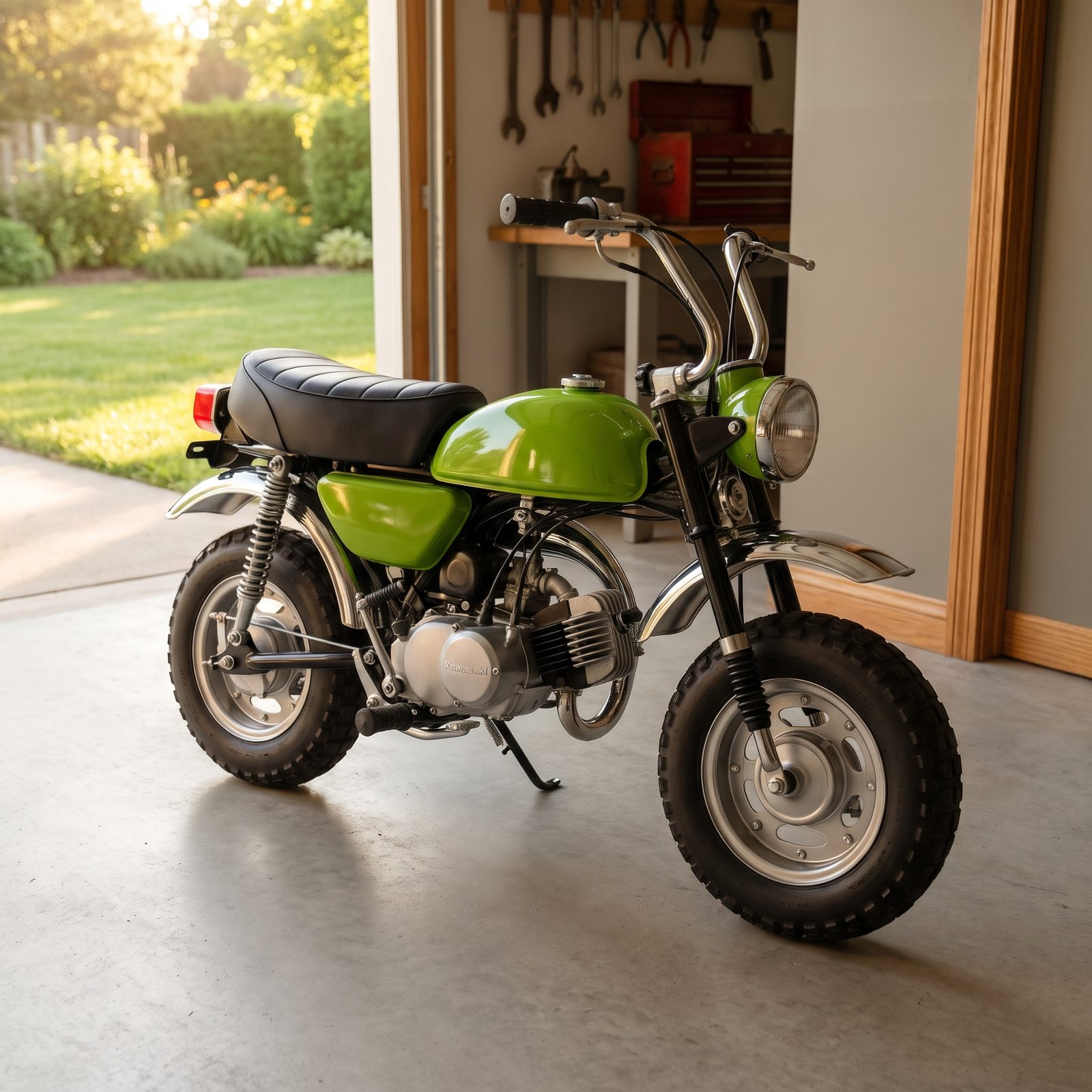
The KV75 picked up where the MT1 left off. It kept the fold-up, stash-it-anywhere charm but added chunkier tires that handled dirt and lawns with more confidence.
This was the kind of bike a family could fold down and toss in the camper, then unfold at the campsite. Small enough to feel manageable, capable enough to actually go somewhere. That combination kept it popular long after production ended, and good examples still draw a crowd at vintage shows.
31. Suzuki MT50 Trailhopper, The Pint-Sized Trail Bike Built to Wander
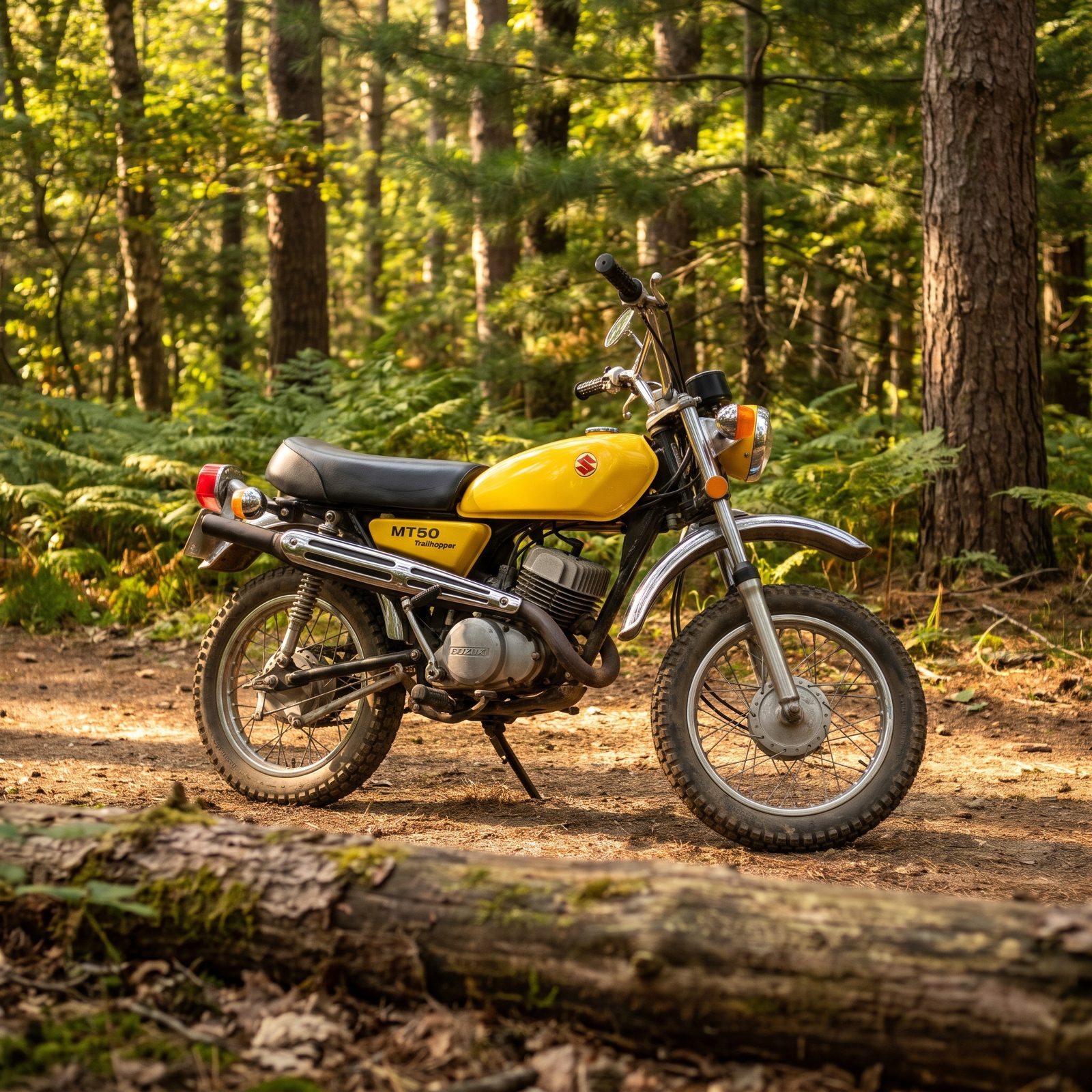
Small bike, big territory. The MT50 Trailhopper was built to let a young rider actually explore, not just circle the driveway.
Suzuki gave it knobby tires, a folding setup for easy hauling, and enough trail ability to tackle a campground loop or a stretch of two-track. For a lot of kids, this was the machine that first opened up the woods behind the house.
30. Suzuki RV90, The Fat-Tire VanVan That Looked Ready for the Dunes
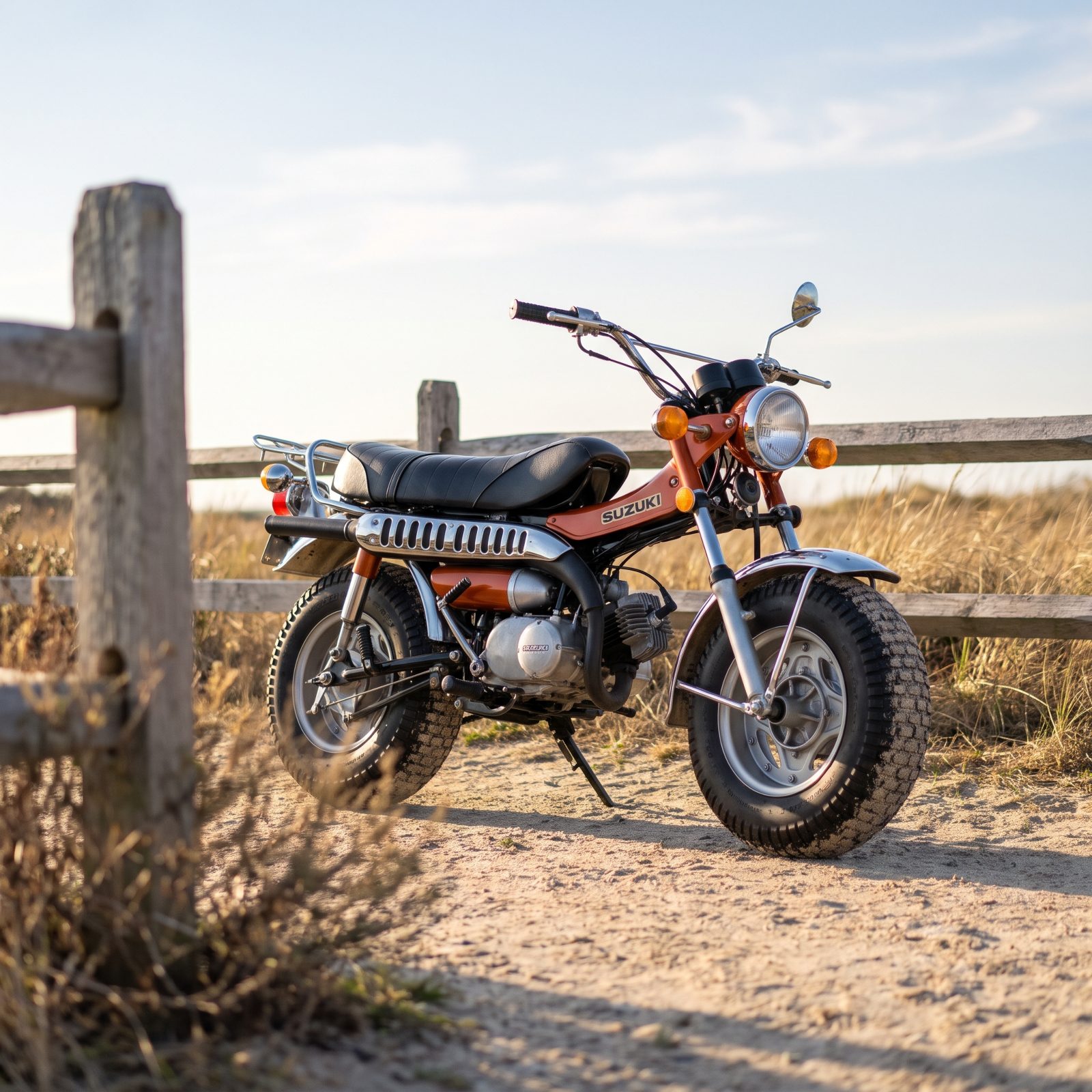
Those tires did all the talking. The RV90 wore fat balloon rubber that made it look like it could float over sand, and that look was the entire personality.
Suzuki aimed it at loose terrain, beaches and trails where skinny tires sink, and it stood out in any lineup because of it. The VanVan name eventually came back on a modern revival, which tells you how much affection the original earned. People remember the stance.
29. Yamaha JT1 Mini Enduro, The Scaled-Down Dirt Bike Kids Dreamed About
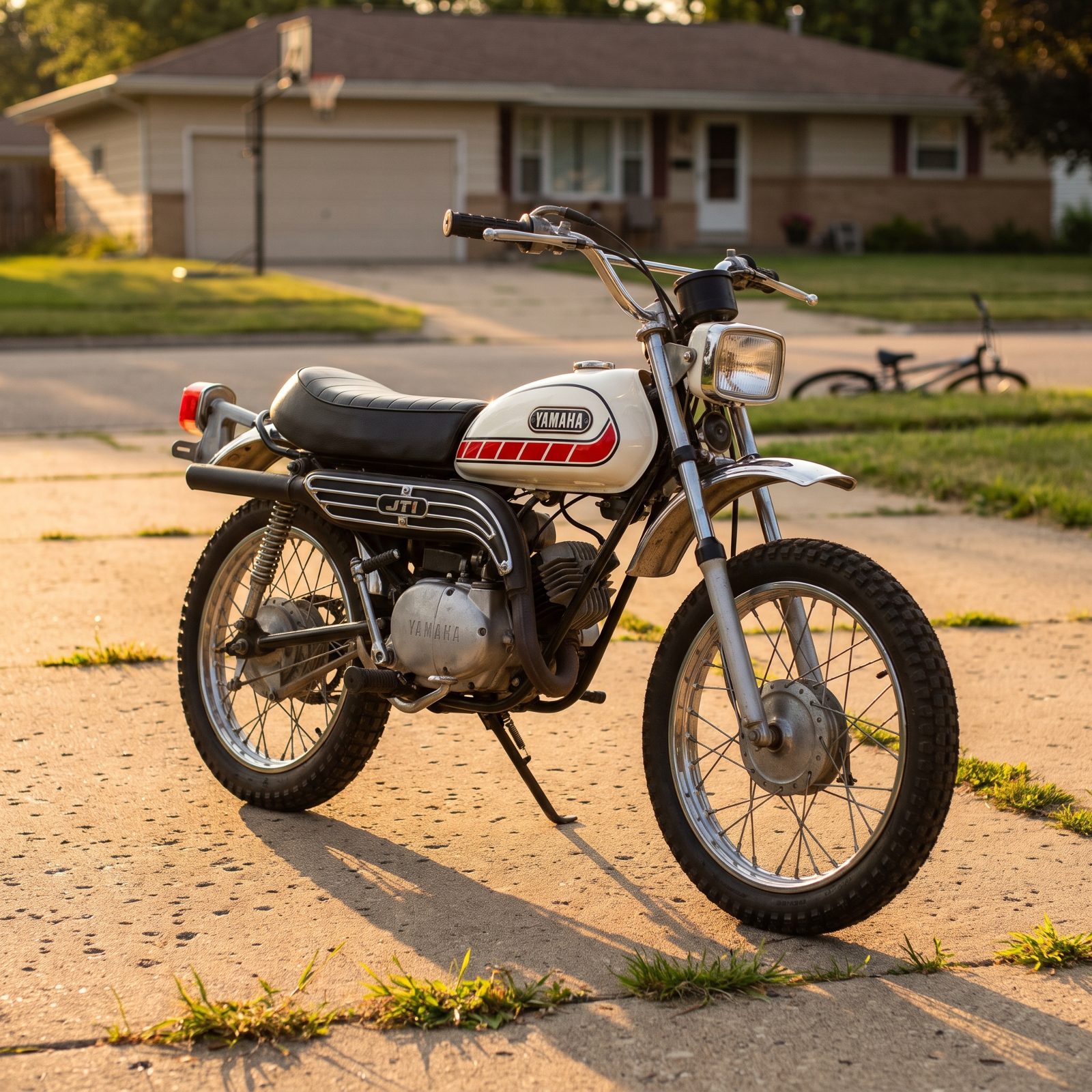
Most kids in 1971 wanted a full-size dirt bike and got a bicycle instead. The JT1 was the middle ground that actually showed up in the driveway — a 60cc two-stroke small enough for a ten-year-old to flat-foot, built to look exactly like the big Enduros splashed across the magazines.
Yamaha nailed the scale. Lights, a horn, turn signals on the later ones, so you could title it for the road where that was allowed. And that white tank with the red speedblocks? It turned into shorthand for a certain brand of suburban freedom.
28. Honda QA50, The Two-Speed Minibike With a Sloped Fuel Tank
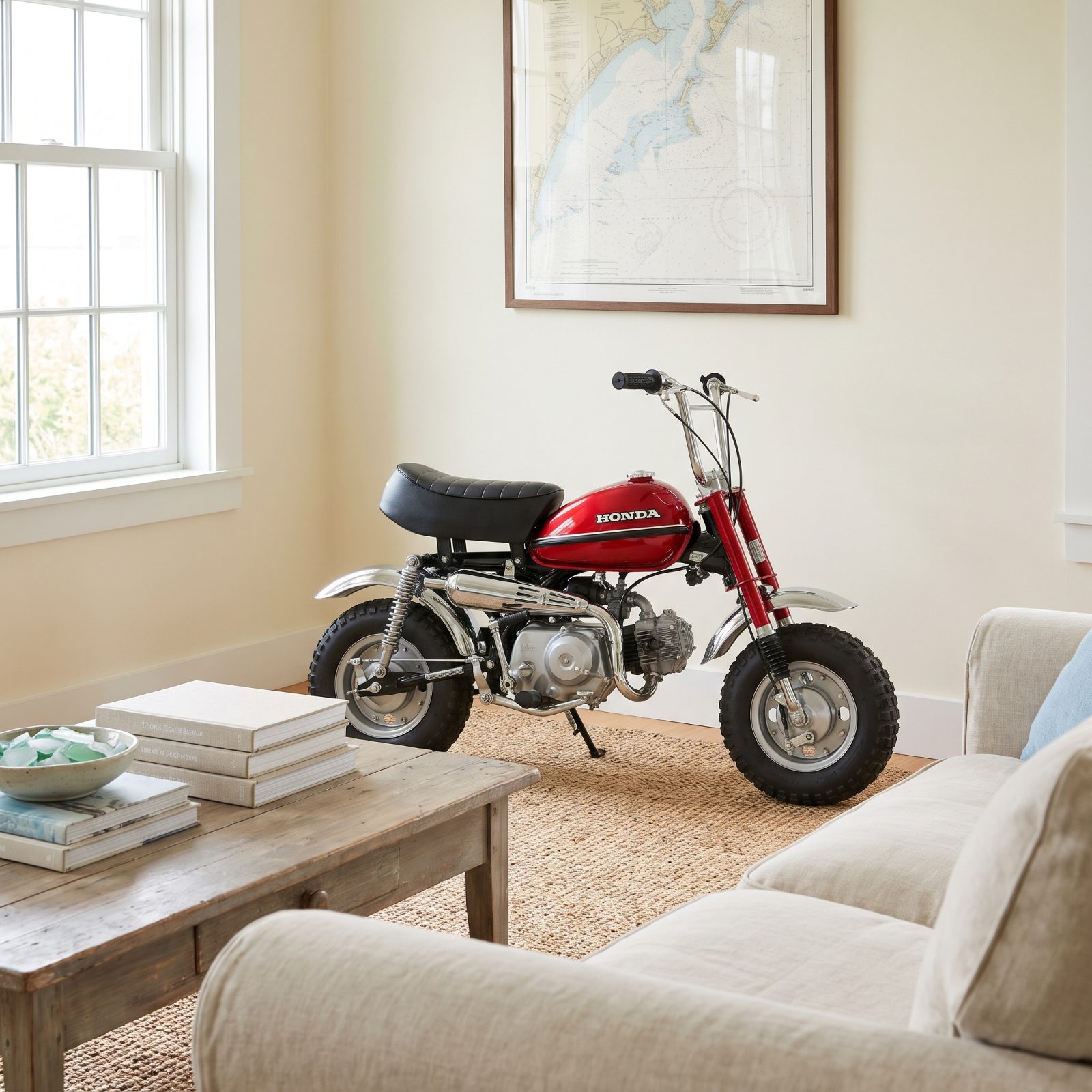
Tiny even by minibike standards. Fifty cubic centimeters, a two-speed automatic, and that sloped tank nobody could mistake for anything else. Honda sold it as a first bike, which is precisely what it became for countless kids stepping up from a pedal setup.
No clutch to fumble — twist and go, tap the shifter when the engine asked for it. That four-stroke ran forever if you kept oil in the thing, and loads of them still fire up today after decades parked in a shed. For plenty of grown adults now, this was the machine that first taught them a throttle is a serious proposition.
27. Honda MR50 Elsinore, The Junior Dirt Bike Wearing Racing Colors
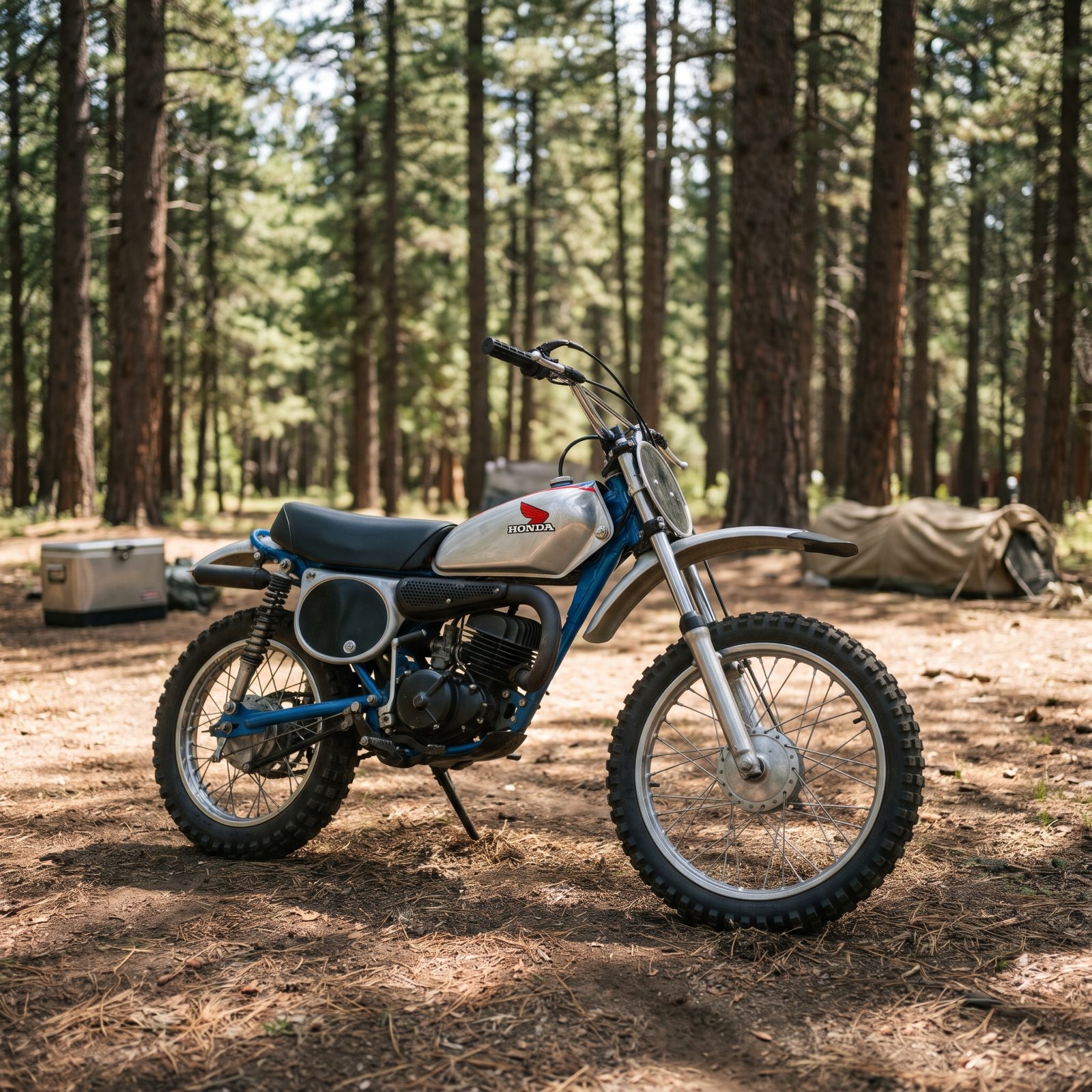
Honda borrowed a name that carried weight. The Elsinore badge came off their serious motocross machines, and the MR50 wore it proudly even while running a 49cc two-stroke built for kids.
And that was the whole pitch. A young rider got the look of a race bike — the long forks, the silver tank, the graphics — without enough power to land in real trouble. Parents could squint and call it reasonable. Kids knew they were straddling something that looked exactly like the real thing parked back in the pits.
26. Doodle Bug DB30, The Pocket Minibike From Big-Box Stores
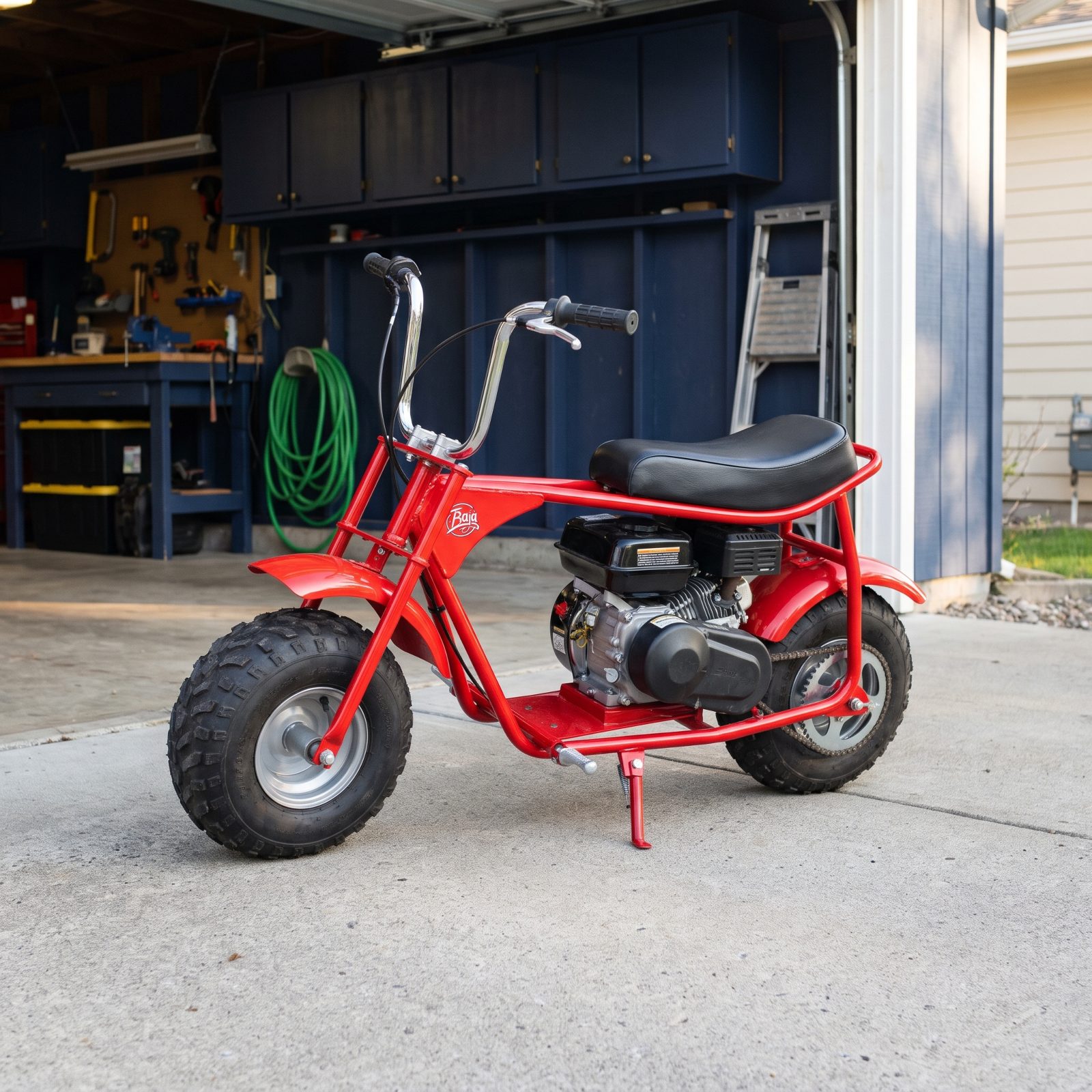
Newest machine on the list, and it earns its spot anyway. It became a fixture the same way the old bikes did — cheap, simple, and sitting right there next to the shopping carts.
A small four-stroke, a centrifugal clutch, and a frame so low a kid could tip over and barely register it. It moved through big-box stores for a couple hundred bucks, which put a genuine minibike within reach of families who were never going to set foot in a motorcycle dealership. The design barely changed over the years. Why would it? Nothing about it needed fixing.
25. Jawa Babetta 207, The Simple Moped Recognized Across Eastern Europe
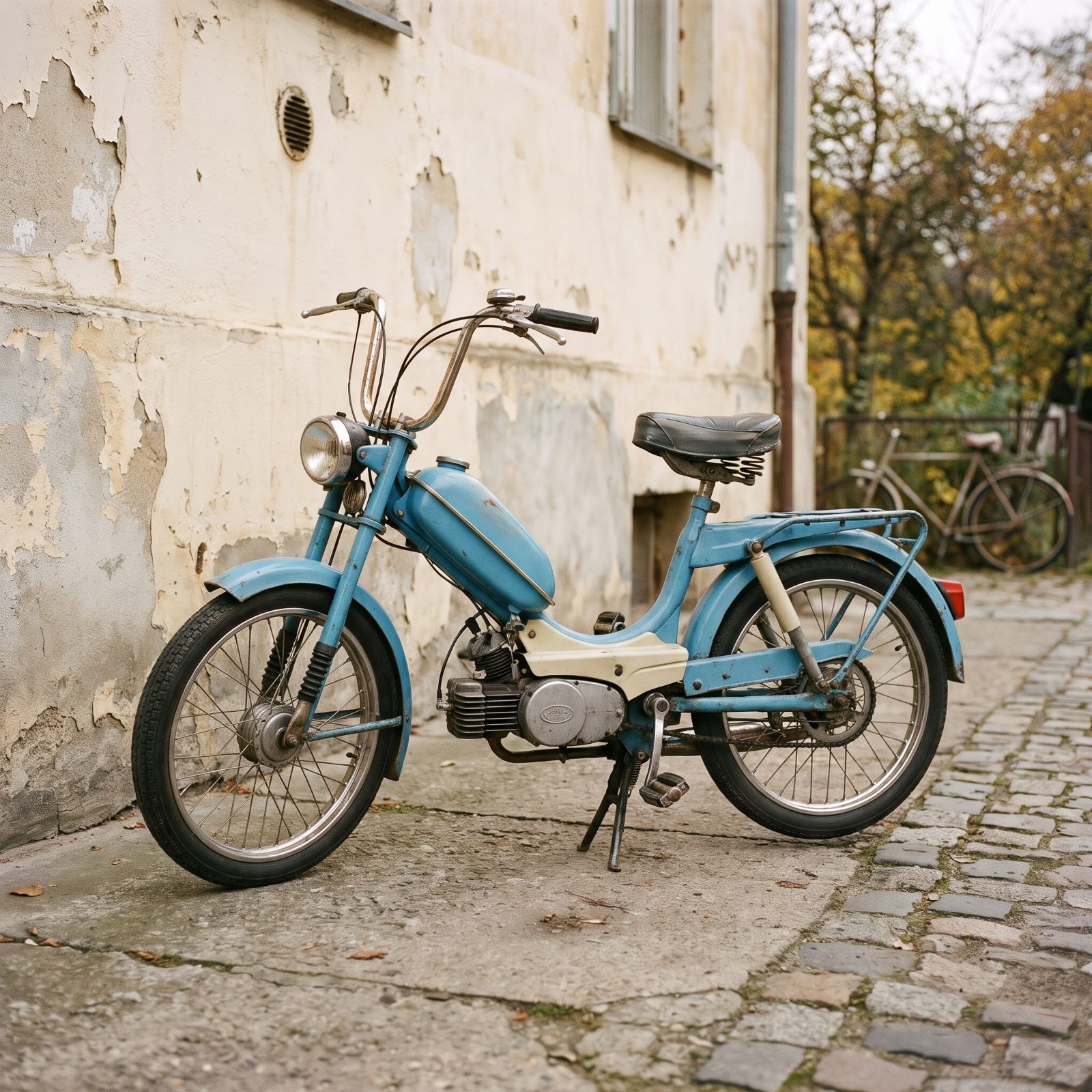
Across a huge swath of Central and Eastern Europe, the Babetta was the first thing you ever drove. Made in Czechoslovakia, fitted with pedals, dead simple, and built to a price a family could actually stomach.
It had pedals because the law and the engine both demanded them. You pedaled to start it. You pedaled to help it up the hills. That rattling two-stroke buzz is a sound that still yanks people straight back to being fifteen with somewhere to be.
24. Derbi Variant, The Spanish Moped With a Step-Through Frame
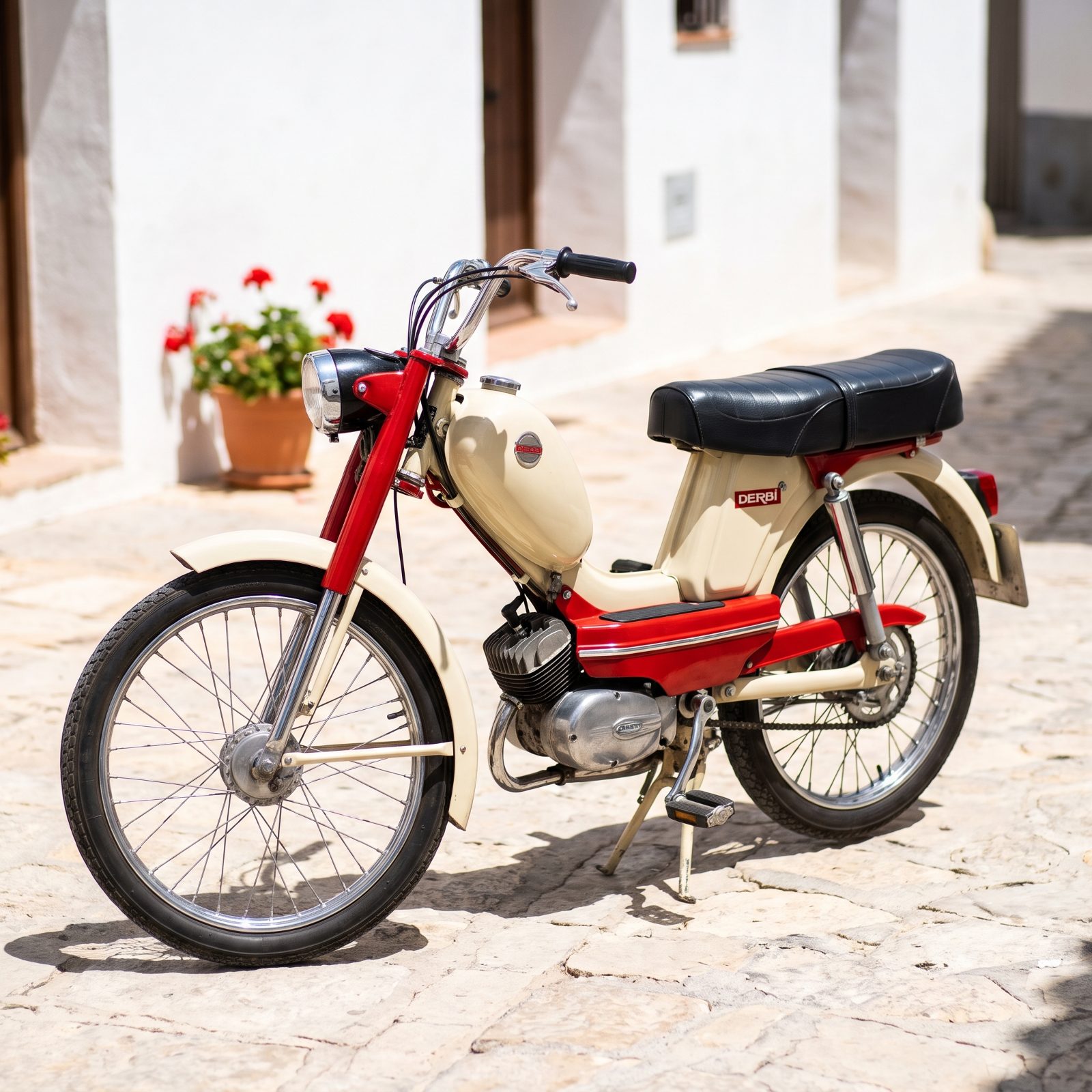
Spain built its postwar mobility on small bikes, and Derbi sat dead center of it. The Variant took the step-through moped and bolted on a variator — an automatic transmission that let the engine sort out its own gearing.
Which made it dead approachable. No shifting. Just pedal to fire it and go. In Spain it did everything: commuting, hauling kids to school, running errands, carrying an entire generation through ordinary daily life. Owners remember them with a warmth that’s genuinely rare for something that started life as plain practical wheels.
23. Batavus Starflite, The Dutch Moped Familiar to American Teenagers
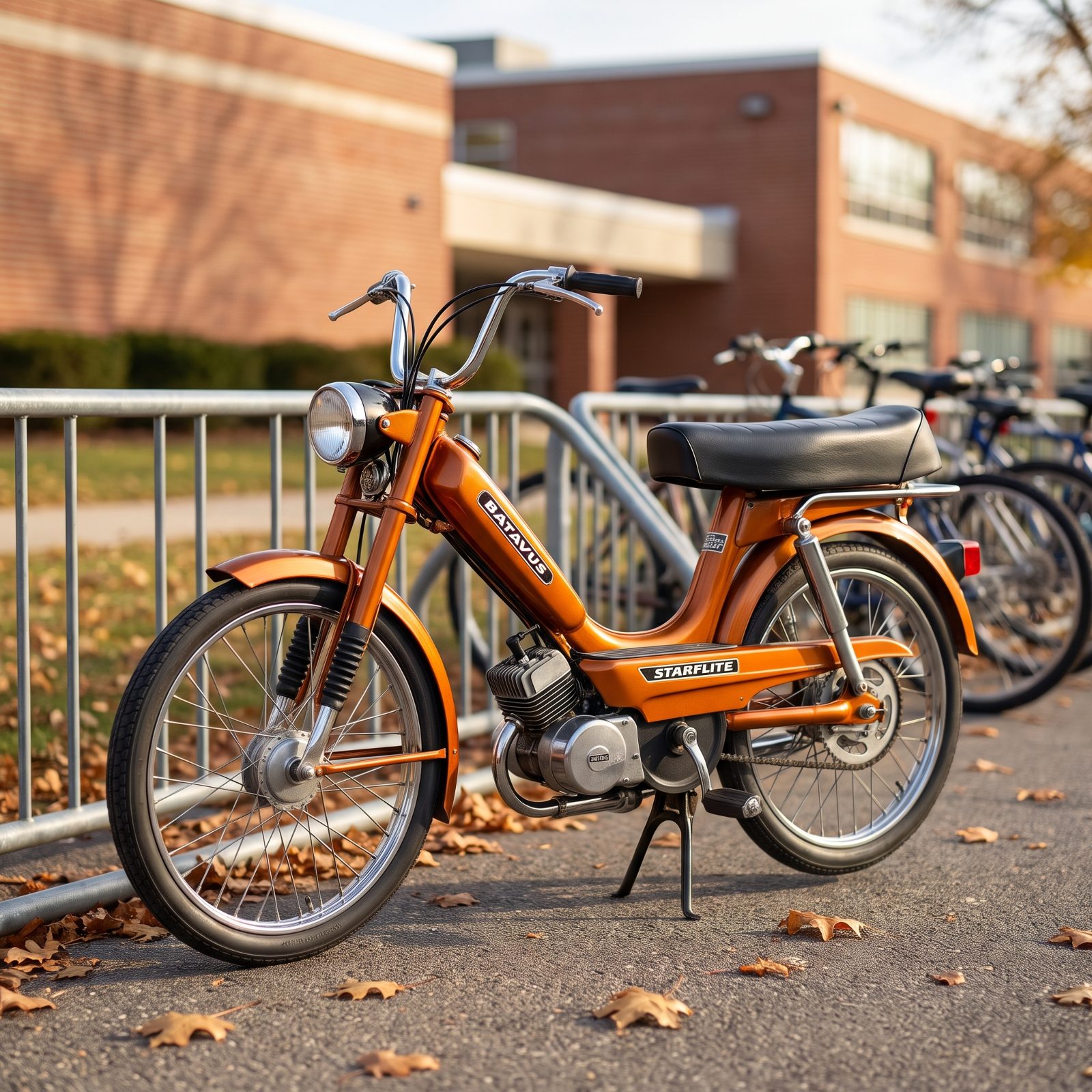
The late 1970s moped boom dragged a lot of Dutch iron onto American driveways. Batavus was one of the names that stuck around, and the Starflite is the model teenagers still bring up.
A moped made all the sense in the world in a country juggling a gas crisis and a drinking-and-driving reckoning at the same time. Great mileage. No motorcycle endorsement required in a lot of states. A sixteen-year-old could legally buzz off on one. The Starflite leaned hard into that window and became a parking-lot regular right up until the boom fizzled.
22. Sachs Hercules Prima, The German Moped With a Long Production Run
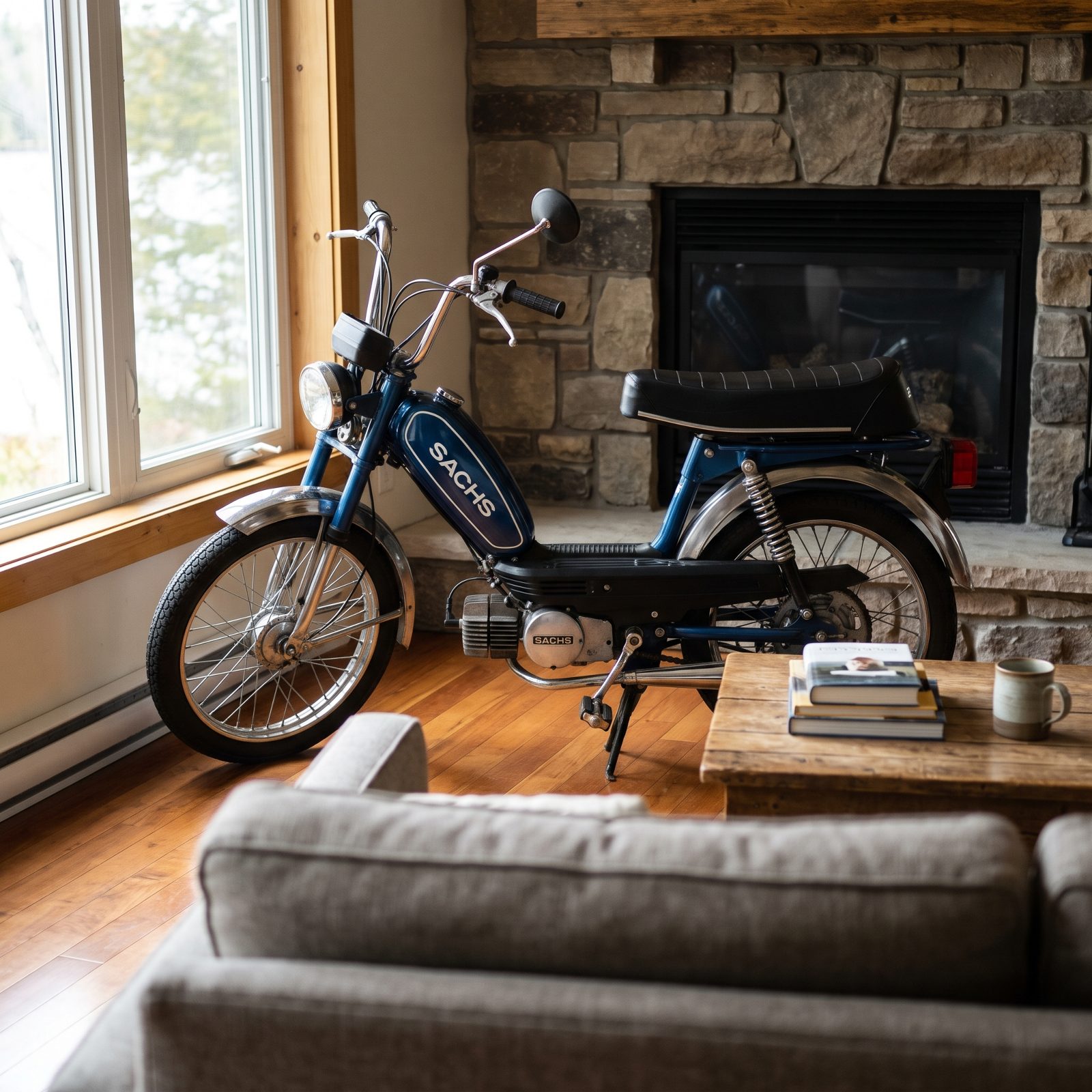
Germans build mopeds about how you’d guess. The Hercules Prima ran a Sachs engine with a reputation for just running, full stop, and the model stayed in production for years because nobody could come up with a decent reason to stop building it.
Pedal-start, two-stroke, assembled from parts you could actually get your hands on. These are the mopeds enthusiasts still restore, because they hold up to the work. A Prima that’s sat untouched for twenty years usually wants a cleaning more than a rebuild — which tells you plenty about how it was screwed together in the first place.
21. Puch Newport, The Chrome-Tanked Moped Sold in American Showrooms
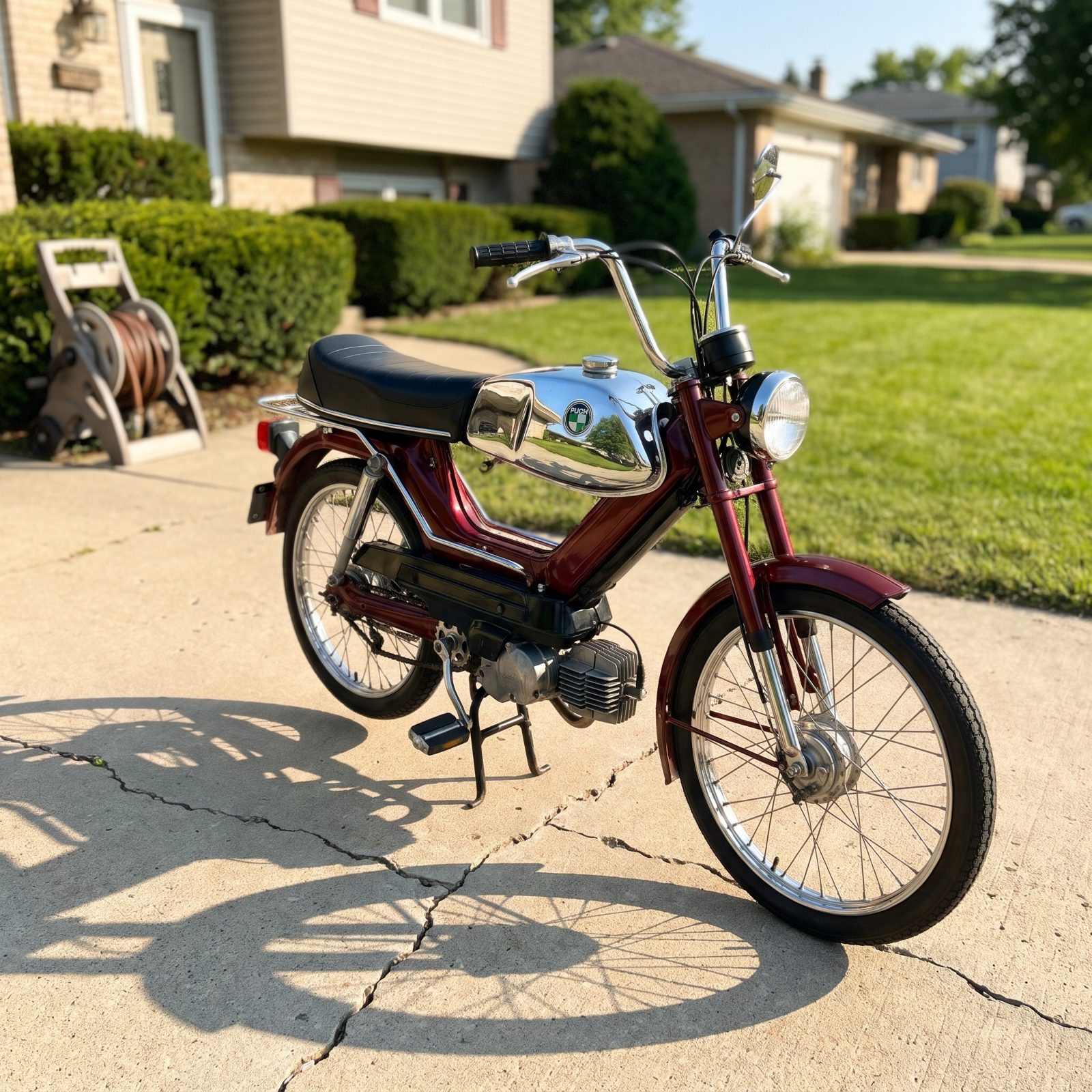
The Puch Newport won its following partly on looks alone. That polished chrome tank grabbed the sun in a way the painted competition never could, and Puch moved a ton of them through American dealers during the moped years.
Austrian-built, automatic clutch, a two-stroke that pulled harder than most of what it parked next to. People tuned them. People raced them in unofficial ways nobody should ever repeat. The Newport turned into a cult object among the moped crowd, and clean original examples now trade hands for real money.
20. Sears Free Spirit Moped, The Mail-Order Moped Parked in Suburban Garages
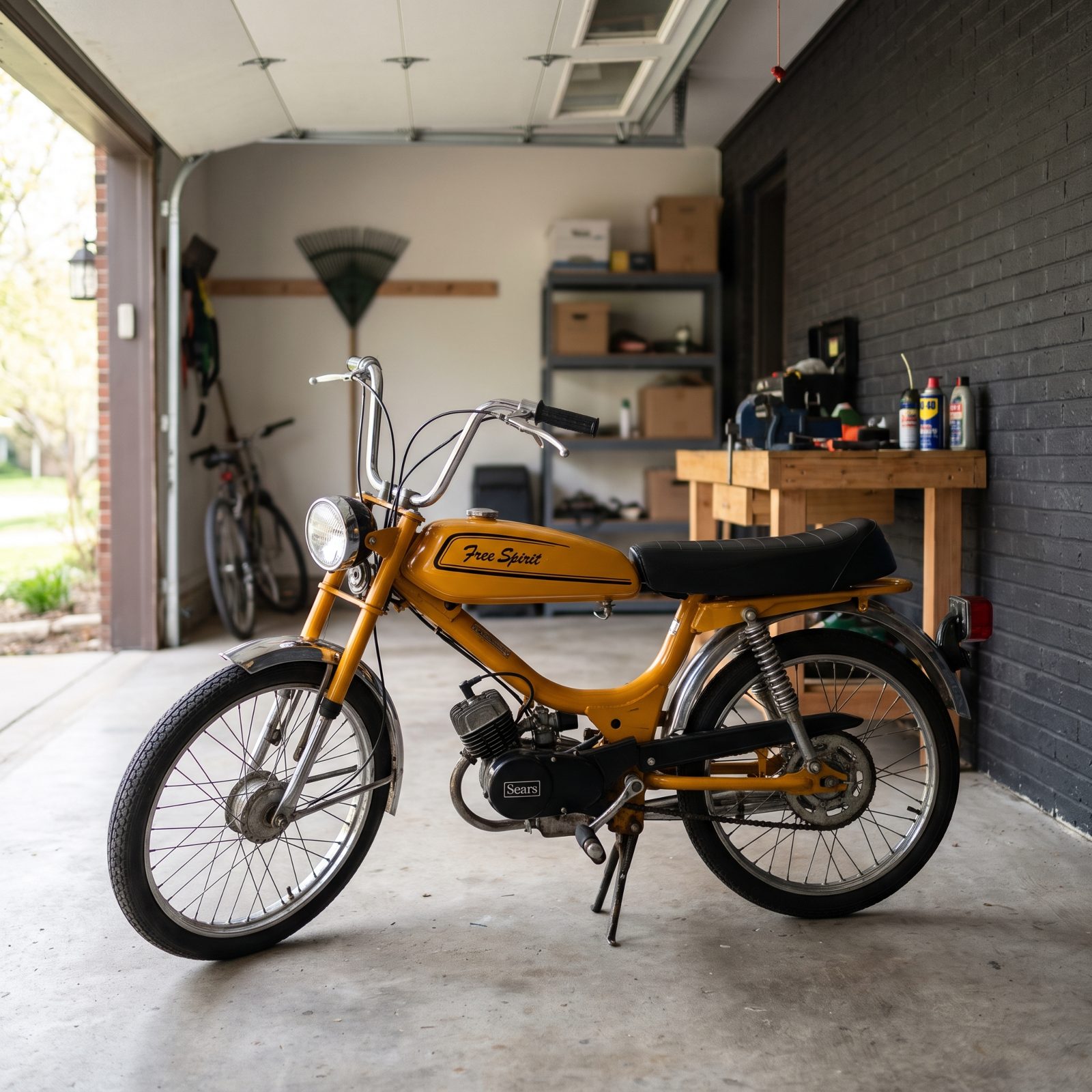
You could buy a moped the same way you bought a washing machine. Sears sold the Free Spirit through its catalog and its stores — a rebadged machine actually built by one of the European makers and dropped into a comfortable American name.
And there’s the trick. A family already trusted the catalog, and here sat personal transportation nestled between the lawnmowers and the socket sets. Thousands of these wound up in suburban garages, bought on a whim or a layaway plan, and plenty of adults today learned to balance on two powered wheels on exactly one of them.
19. Tomos Targa LX, The Top-Tank Moped With Motorcycle Looks
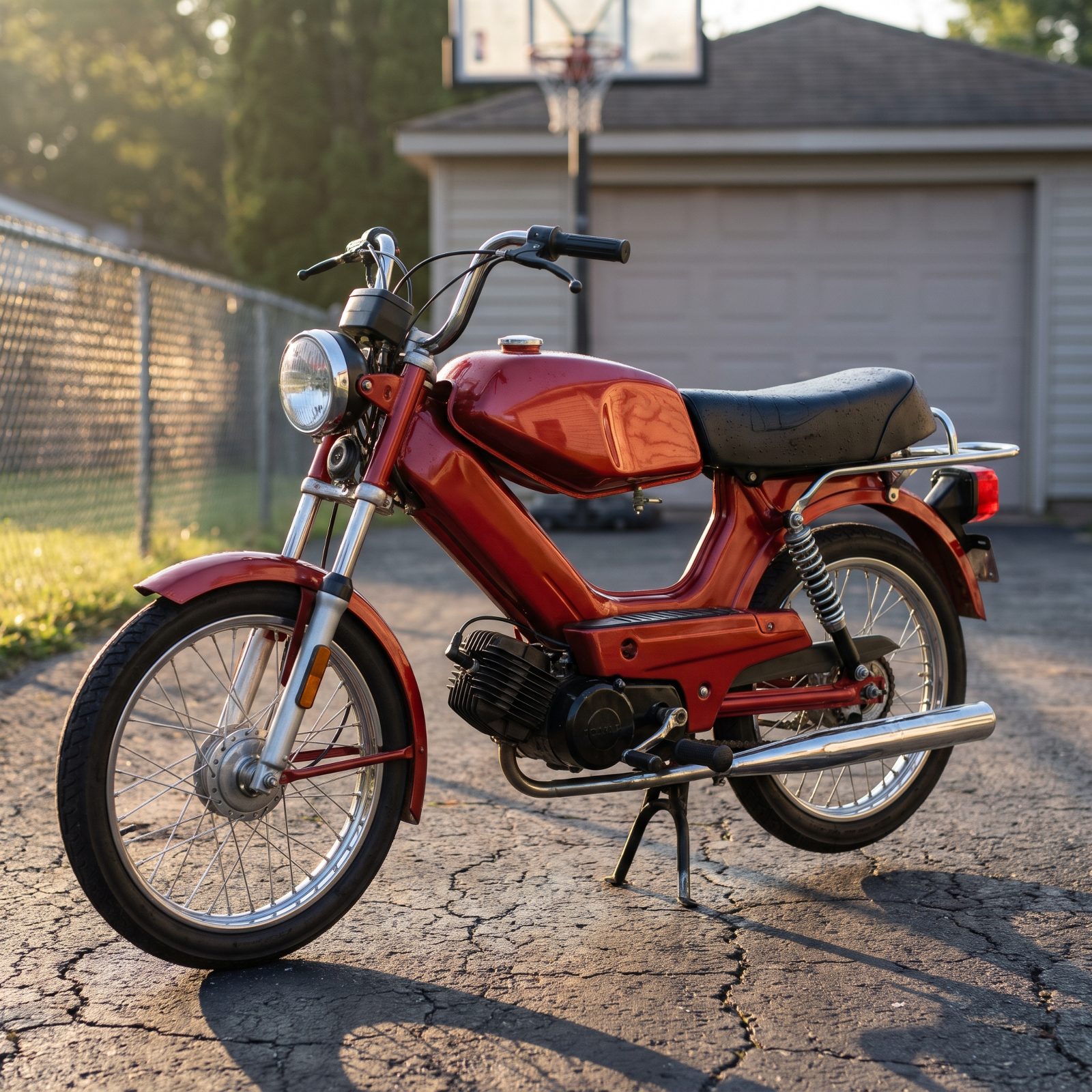
The top tank was the whole trick. Most mopeds hid their fuel under the seat, so they ended up looking like bicycles that swallowed a lawnmower engine. The Targa LX put the tank up high, between your knees, right where a real motorcycle keeps it. For a kid who wanted a Harley and got a moped instead, that one choice changed everything.
Tomos built these in Slovenia and shipped them over through the 1980s and into the ’90s. The LX trim added sportier bodywork and the lean, grown-up silhouette teenagers actually wanted to be seen on.
18. Honda PA50 Hobbit, The Moped With the Friendly Storybook Nickname
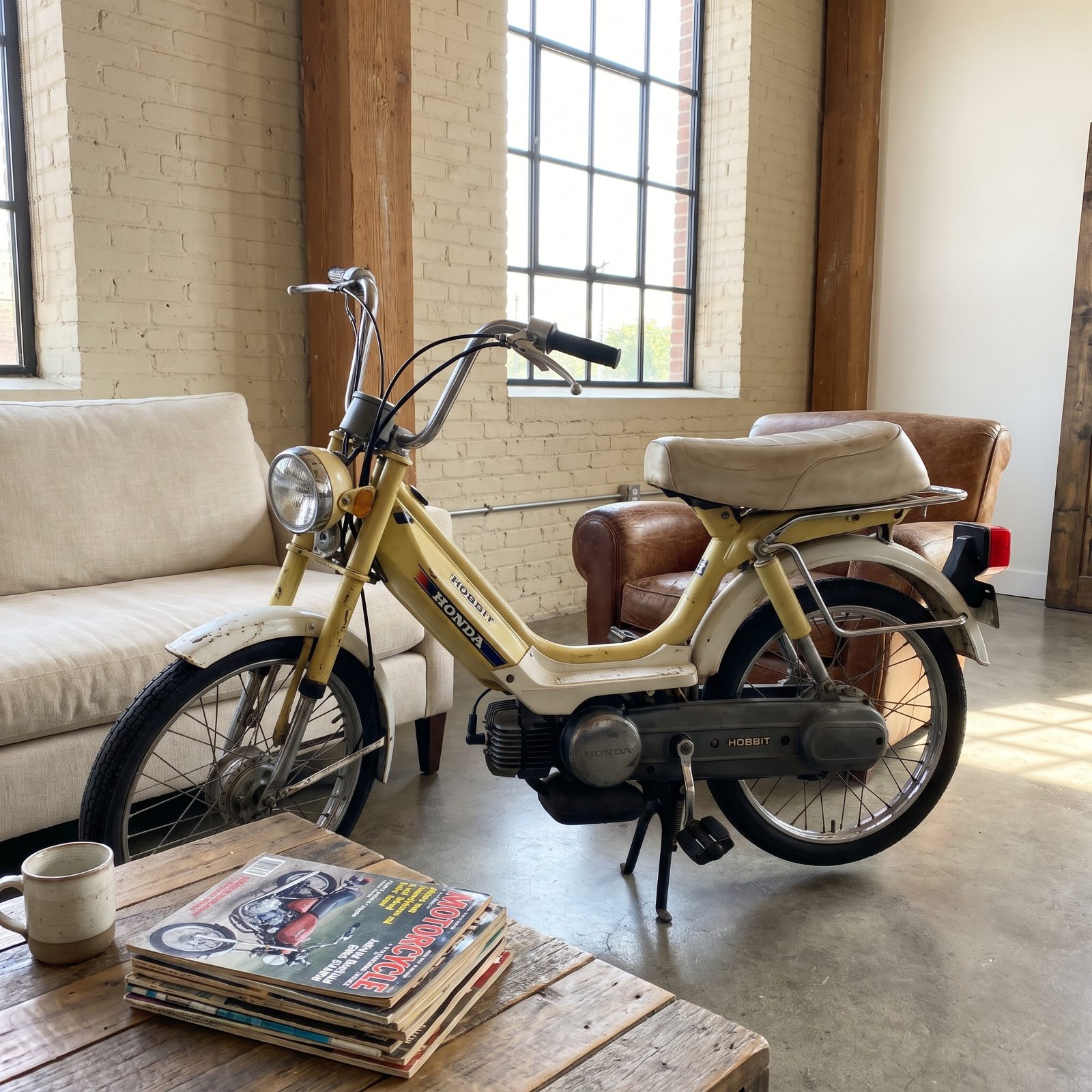
Somebody at Honda — or maybe just the kids who rode them — hung the name Hobbit on the PA50, and it stuck. Small, round-shouldered, unthreatening. The nickname fit the machine better than any model number ever could.
Under the friendly looks sat something genuinely clever: a variable-ratio belt drive that let the little 49cc engine change its own gearing on the fly, no transmission required. You twisted the throttle and it just figured things out. Nothing to shift, no clutch, nothing to stall at the worst possible moment.
For a first machine, that forgiveness mattered more than top speed ever did.
17. Honda Express NC50, The No-Pedal Runabout That Simplified Moped Life
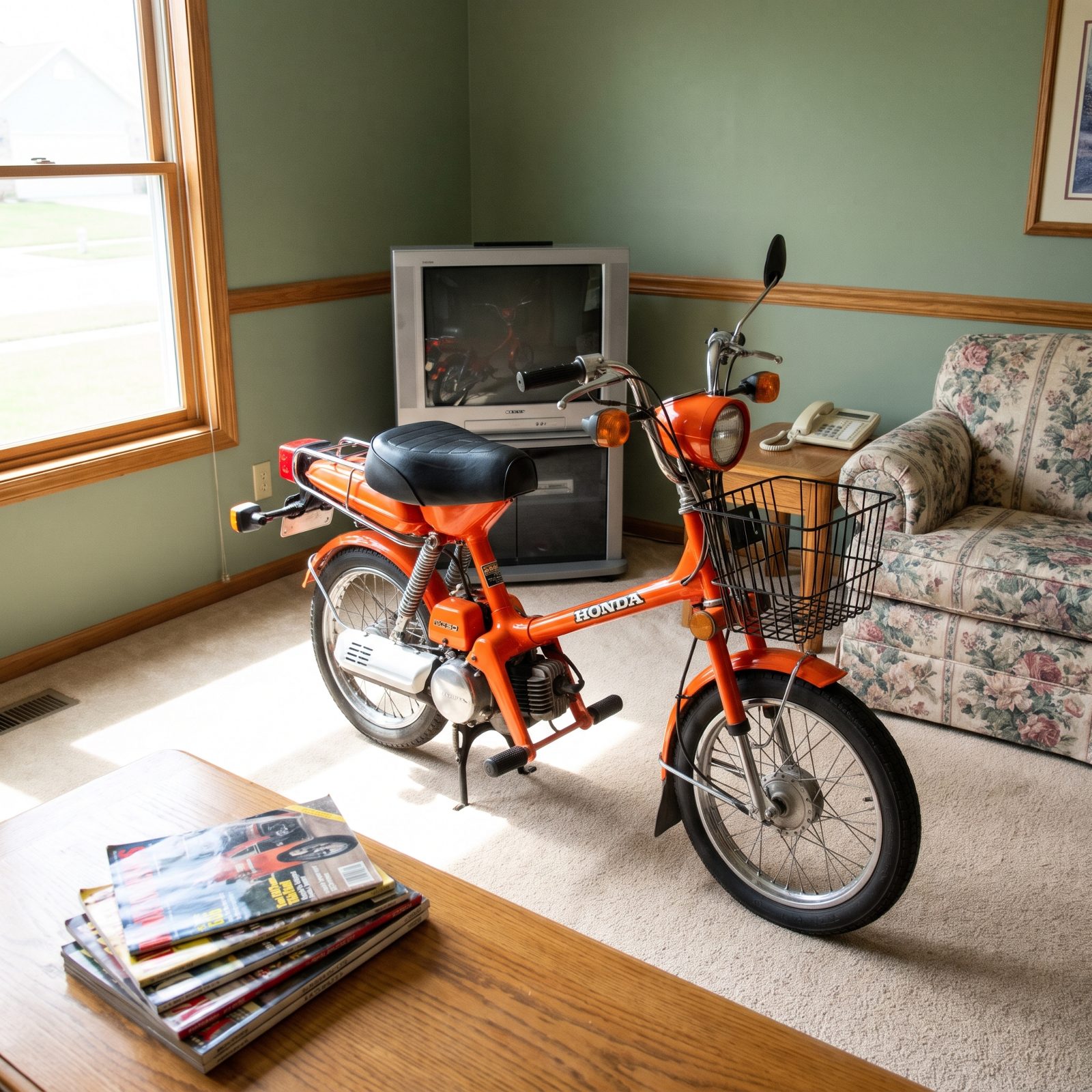
The Express did away with the thing people hated most: the pedals. Honda bet riders wanted a tiny motorcycle, not a bicycle with an engine, so the NC50 got proper footpegs and a kick-starter. No frantic pedaling to get rolling, no wobbling off from a dead stop.
That one decision made it feel grown-up. It also meant that in states where pedals legally defined a moped, owners occasionally had to argue the point. Check your local rules before you assume any of these old machines slots neatly into the moped category today — some don’t.
16. Yamaha QT50 Yamahopper, The Shaft-Drive Moped With a Memorable Name
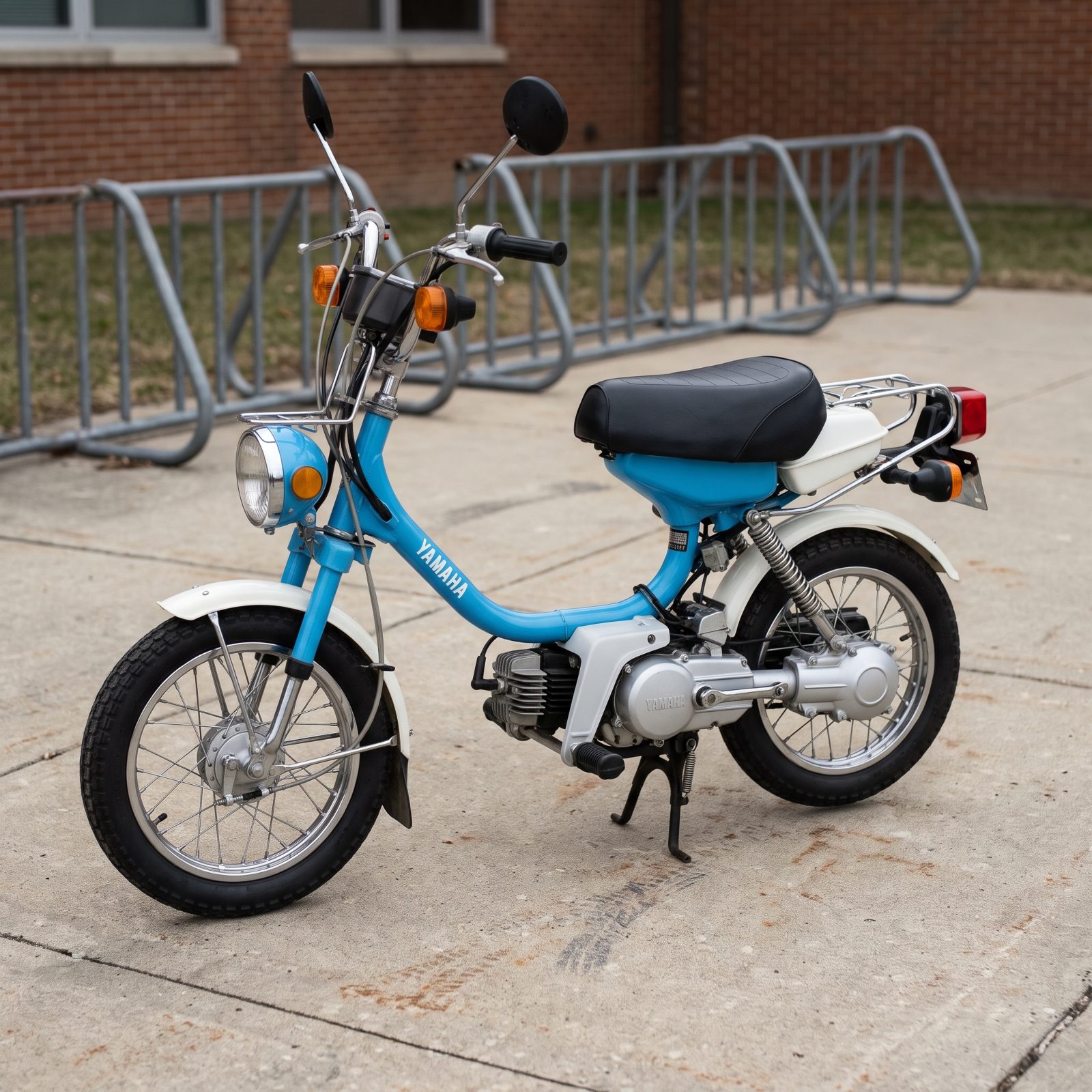
The name alone earned it a spot in memory. Yamahopper. It sounded like a toy, and with those skinny spoked wheels and the hop-on height, it practically was one.
The real surprise hid on the left side. Instead of a chain, the QT50 ran a shaft drive — the same clean, low-maintenance setup you’d find on a big touring bike. Nothing to oil, nothing to throw, no greasy pant leg. On a tiny runabout meant for kids and campground duty, that was almost comically over-built. Nobody who owned one complained.
15. Suzuki FA50 Shuttle, The Compact Runabout With Cast Wheels
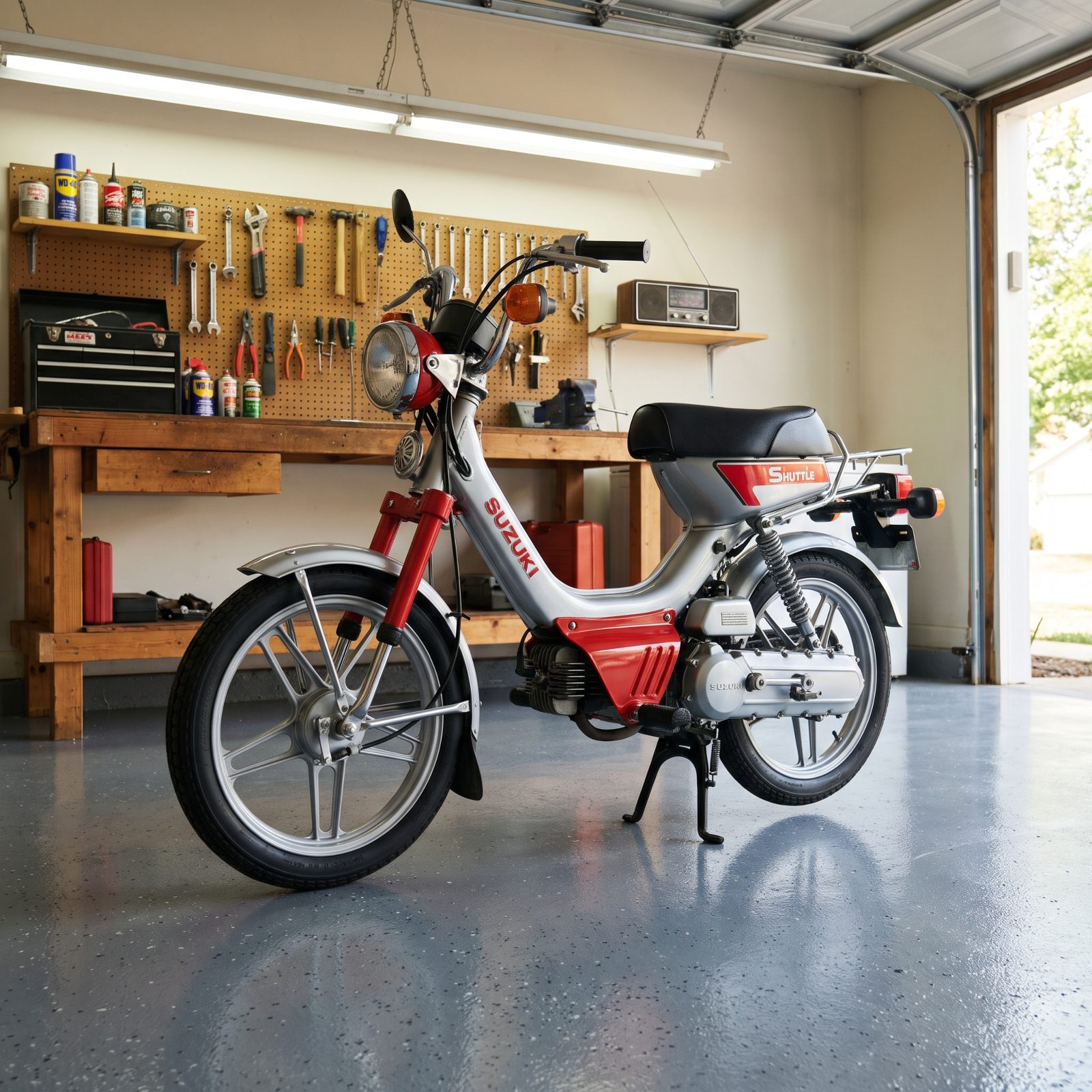
Cast wheels on a moped read as a small luxury back then. Most of these machines rolled on spoked bicycle-style rims that needed truing and collected grime in every last spoke. The FA50 Shuttle wore solid cast wheels — easier to wipe down, sturdier for a machine that spent its life banging over curbs and gravel.
Suzuki aimed it squarely at tight storage and short errands. Compact enough to slide into the back of a hatchback, and simple enough that most owners never once cracked open the engine case.
14. Piaggio Si, The Italian Moped With Bicycle-Like Simplicity
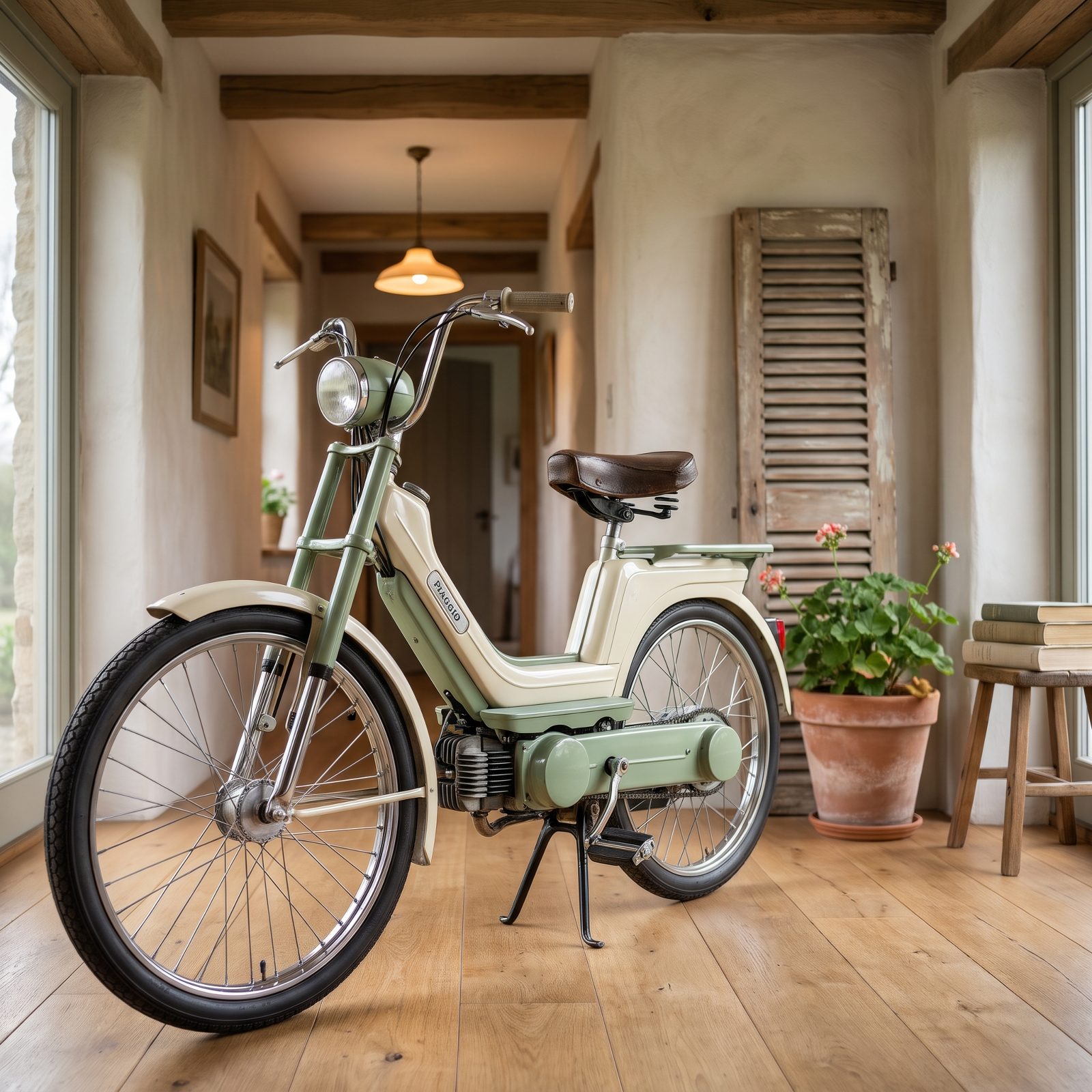
Piaggio built the Vespa, so the Si gets overlooked. Shame, that. The Si was the smarter buy for anyone who just wanted to get somewhere cheaply.
Thin frame, big wheels, exposed pedals, almost nothing to go wrong. It rode like a bicycle that happened to have a motor — which is exactly what a moped was supposed to be before the whole category started chasing motorcycle looks.
13. Tomos A3, The Slovenian Moped Found in Garages Across America
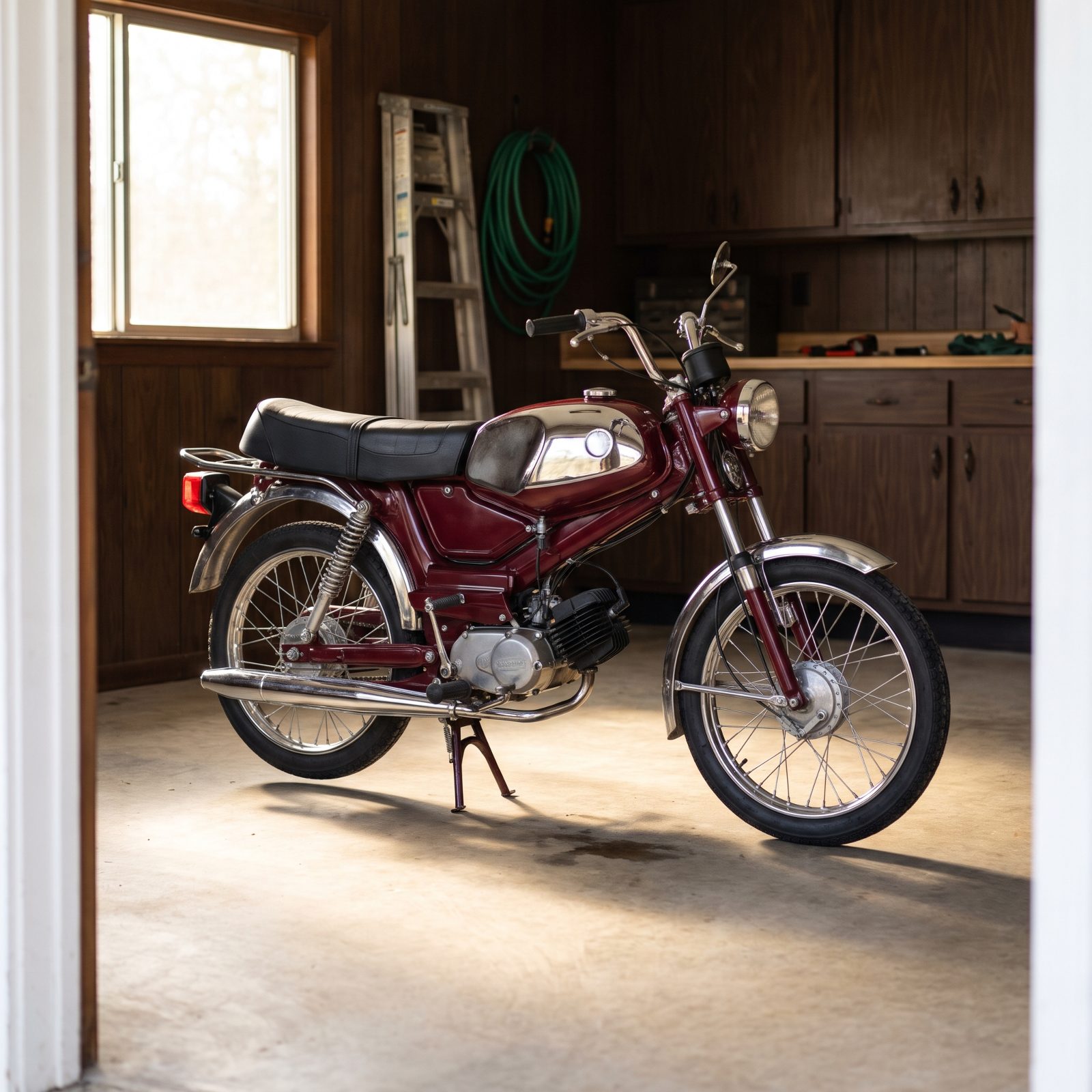
Ever pulled a tarp off something in a relative’s garage and found a dusty moped? Odds are decent it was a Tomos A3. These Slovenian-built machines sold in real numbers across the United States, and they had a habit of outliving the enthusiasm of the people who bought them.
The engine was the draw for tinkerers. Simple two-stroke, easy to understand, parts still floating around the aftermarket. Plenty of these came back to life decades later after nothing more than a carburetor clean and fresh fuel, which tells you how little there was to break in the first place.
Honest machine. No pretense.
12. Vespa Ciao, The Slim Piaggio Moped With Large Wheels
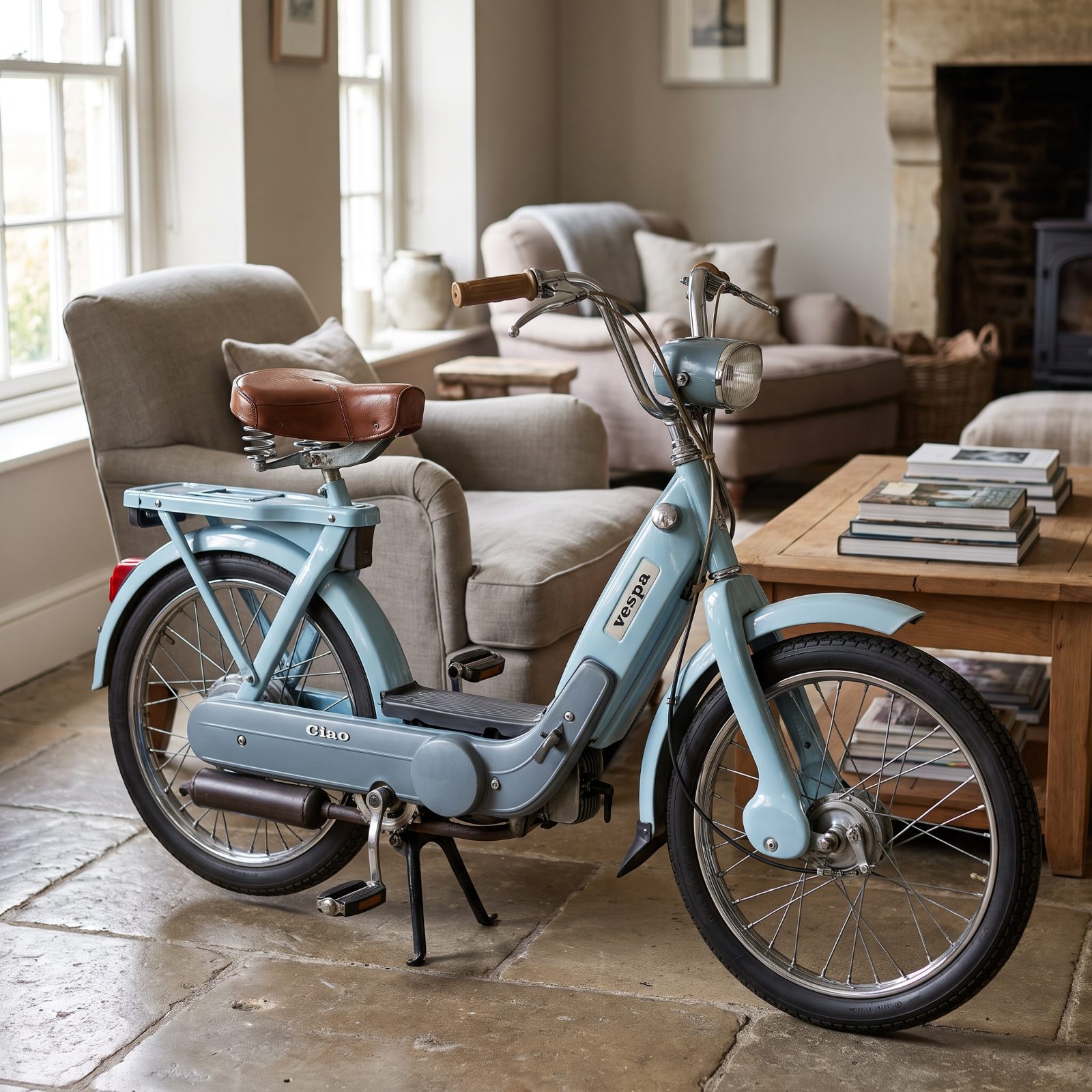
The Ciao wore the Vespa name but shared almost nothing with the famous scooter. No fat bodywork, none of that swooping shell. Just a slim frame, a small ribbed footboard, two big wheels, and a sprung saddle.
That skinniness was the point. The Ciao threaded through traffic and parked in gaps a scooter couldn’t touch, and those large wheels soaked up rough European streets without beating the rider to death. Over here in the States it picked up a cult following among people who wanted the Italian badge without the Italian bulk.
11. Motobecane Mobylette 50V, The French Commuter That Reached Millions
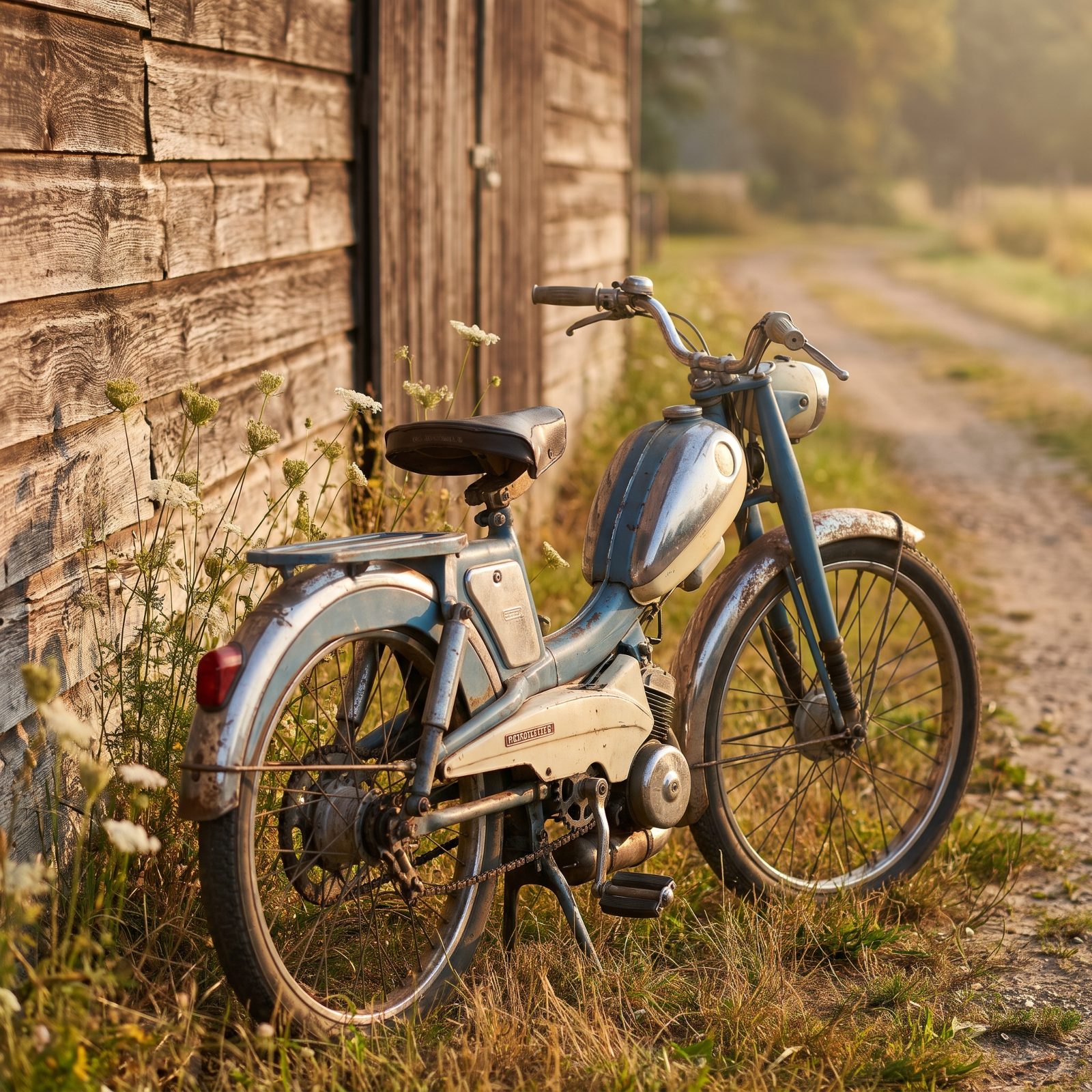
Few machines of any kind sold the way the Mobylette did. Motobecane moved them by the millions over decades, and for much of the world the word moped and the word Mobylette meant the same thing. This was transportation for people who couldn’t afford a car and didn’t need one.
The engineering reflected that mission. Rugged pressed-steel frame, a simple automatic clutch, an engine built to run forever on bad fuel with next to no attention.
10. Peugeot 103, The French Moped With an Instantly Recognizable Frame
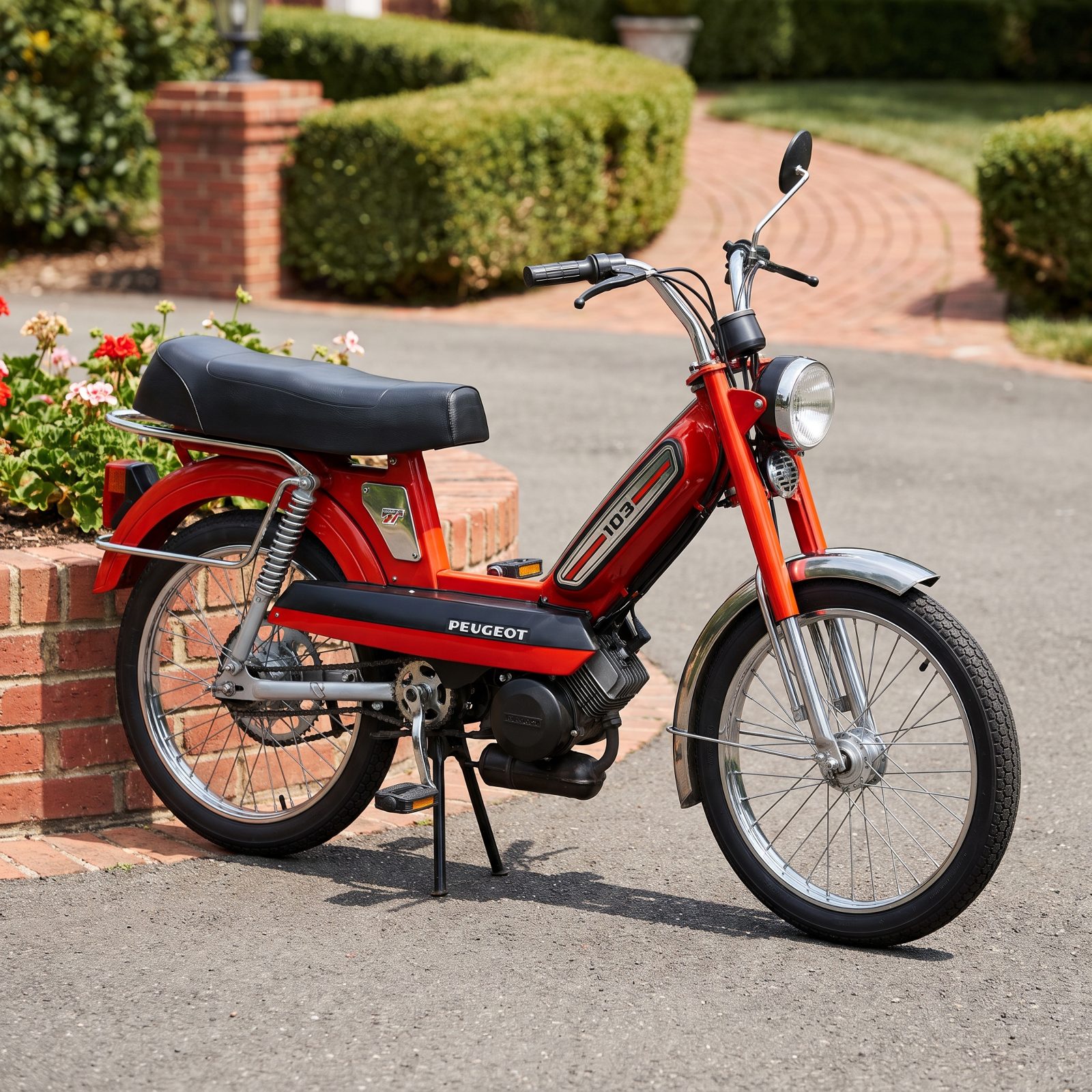
You could spot a Peugeot 103 by its frame from clear across a parking lot. That pressed-steel spine, with the engine slung underneath and the fuel tank built into the backbone, gave it a shape nobody else quite copied.
Peugeot kept the 103 in production an astonishingly long time, and the reason was the engine — tough, tunable, and surrounded by an aftermarket that let owners chase more speed than a stock moped had any business making.
One word of caution. Restraint matters more than horsepower on a 40-year-old machine with its original brakes. Sort the brakes and tires before you so much as look at the engine.
9. Puch Maxi, The Pedal Moped That Defined an Era
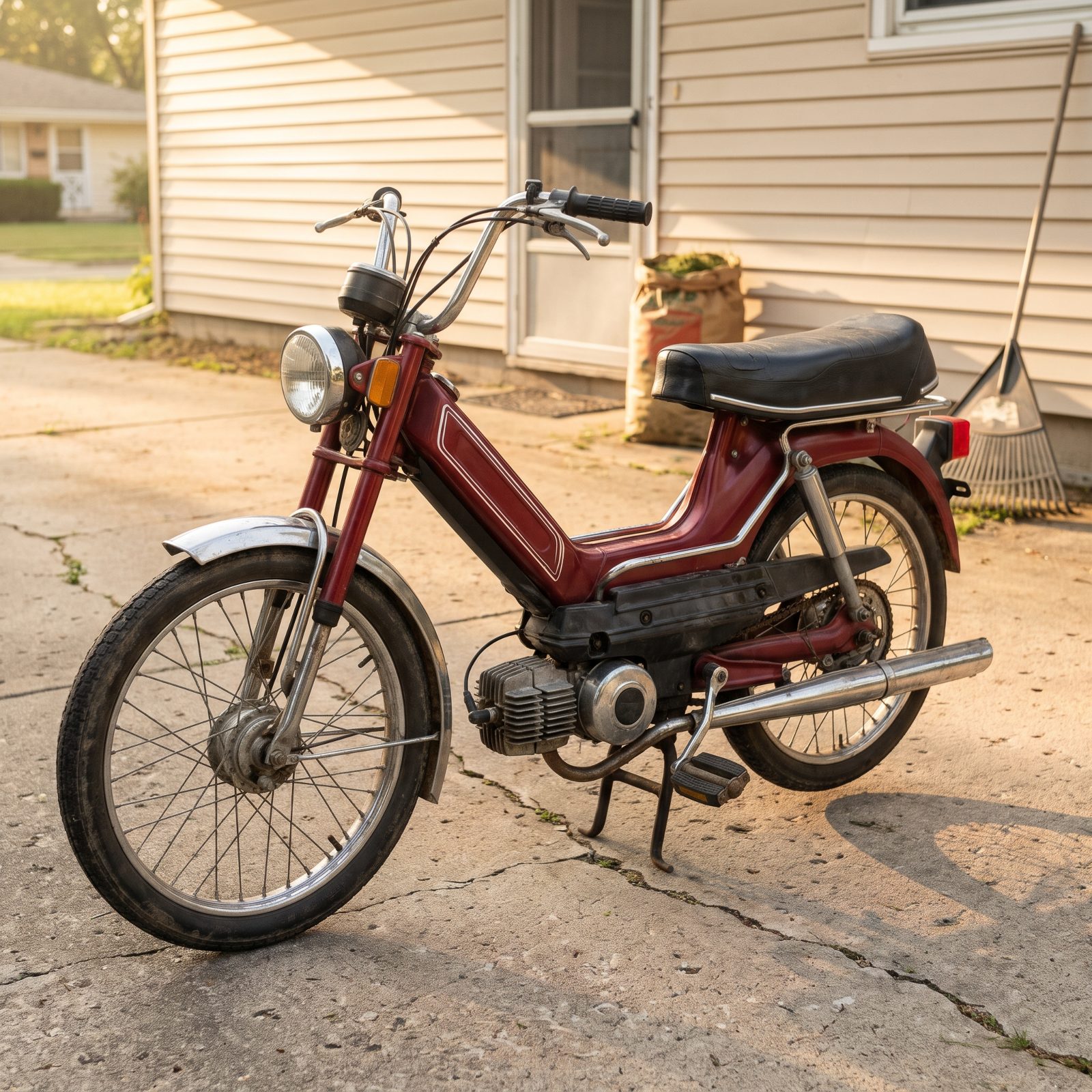
Pedals and a motor on the same frame. That combination confused as many people as it saved. The Puch Maxi came out of Austria and landed in American driveways because of a regulatory loophole: in most states, if it had working pedals and stayed under a certain displacement, you could ride it without a motorcycle endorsement, sometimes without plates.
So teenagers everywhere learned the ritual. You pedaled, popped the clutch, and the little engine coughed to life. The pedals weren’t decoration — they got you home when the engine quit, which it did often enough that every Maxi owner became a part-time mechanic whether they liked it or not.
8. Cushman Eagle, The Scooter Styled Like a Miniature Motorcycle
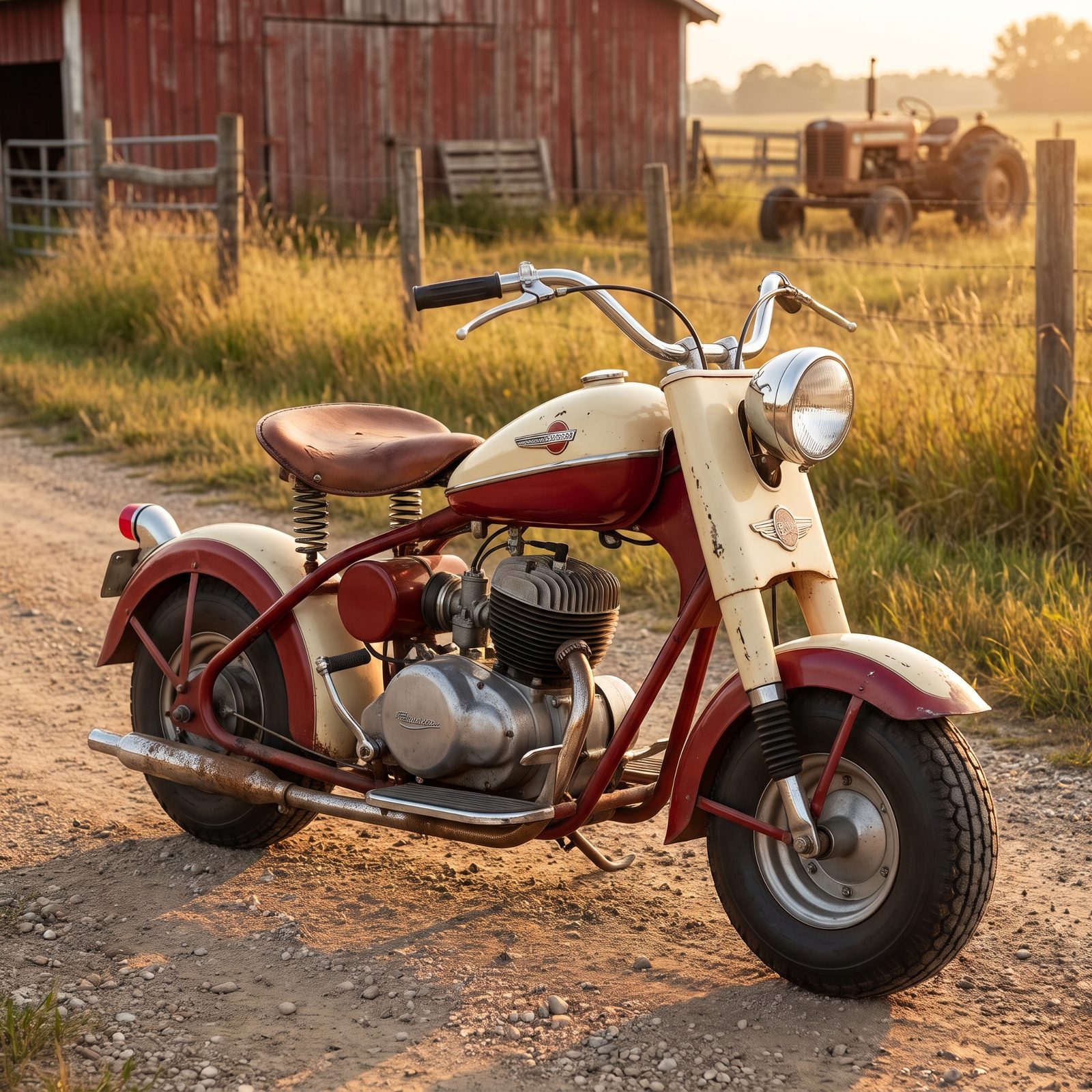
Most scooters tried to hide their machinery. The Cushman Eagle put it on display. Built in Lincoln, Nebraska, the Eagle wore a fuel tank up high between its legs and a sprung solo saddle, so it read like a shrunken motorcycle rather than some commuter runabout.
That styling choice mattered to a specific kid — the one who wanted a Harley and got a Cushman instead. Close enough to brag about, small enough to actually afford. Cushman had cranked out utility scooters for golf courses and factory floors for years, but the Eagle was the one people wanted to be seen on.
7. Honda Gyro, The Three-Wheeled Scooter That Leaned Through Turns
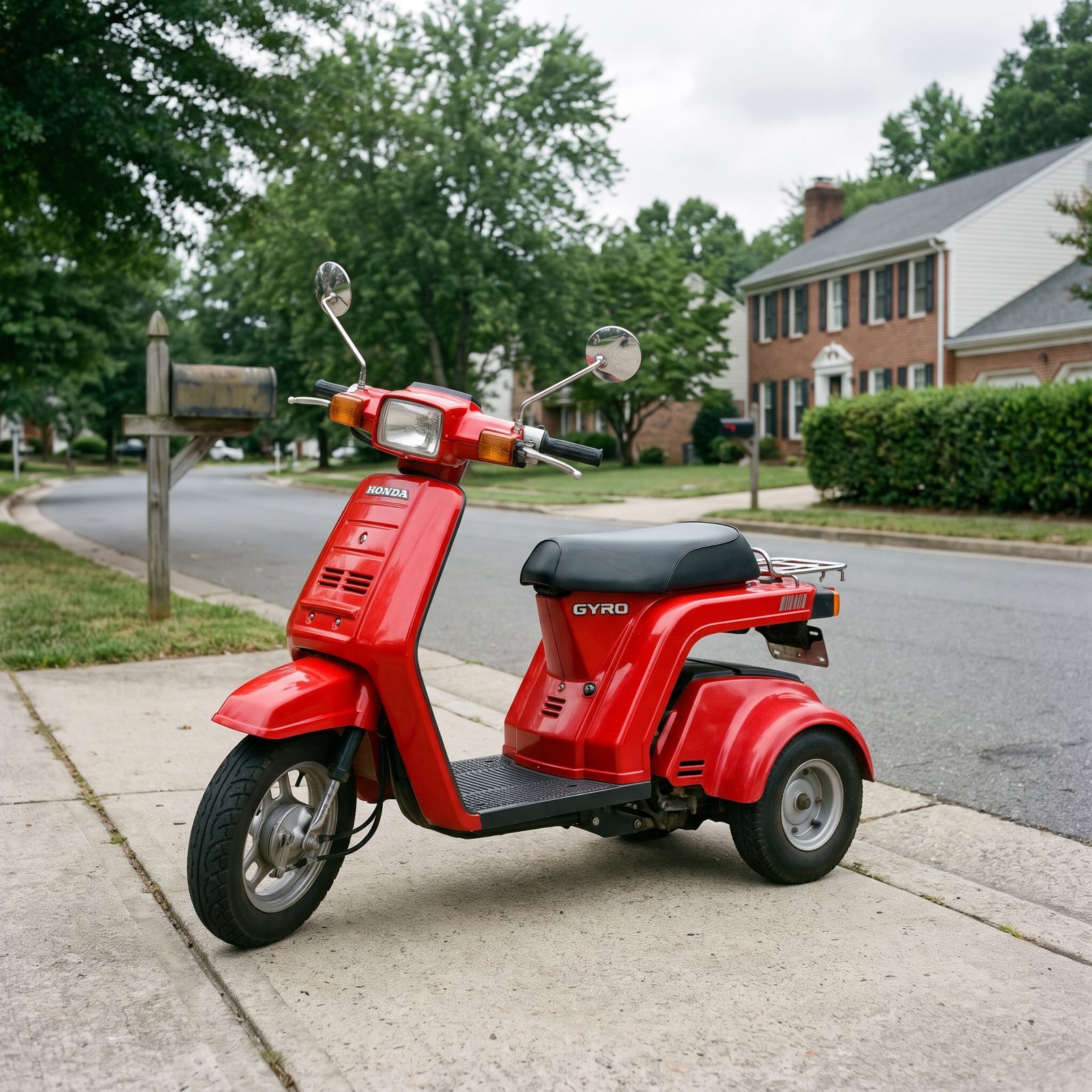
Three wheels, and it still leaned into corners. That’s the trick nobody expects from the Honda Gyro.
Honda split the machine in two. The front end, where the rider sat, tilted like a normal motorcycle, while the rear axle with its pair of wheels stayed planted flat on the ground. So you got the lean-and-carve feel of a two-wheeler with the stability and cargo capacity of a trike. Delivery riders loved them. Pizza shops and newspaper routes ran whole fleets of the things.
6. Honda Aero 50, The Rounded Scooter With Bold Two-Tone Graphics
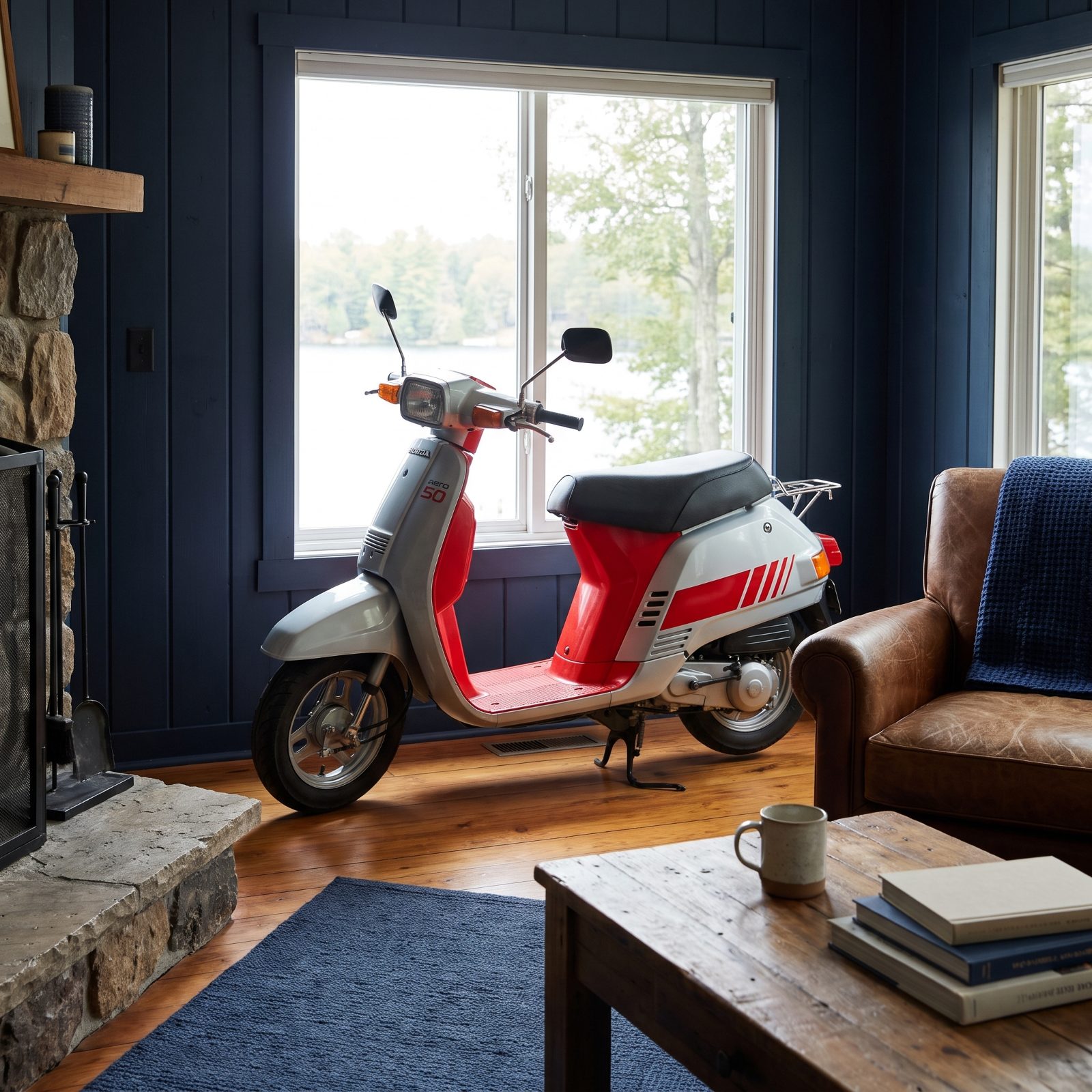
The 1980s loved a racing stripe, and the Honda Aero 50 wore them proudly. Where older scooters went for restraint, the Aero leaned into rounded, aerodynamic plastic bodywork splashed with two-tone graphics that looked fast even parked.
It was a small-displacement machine built for short hops — to school, to a friend’s house, to the ice cream stand two miles off. Part of the appeal was the look. The rest was the ease: twist and go, no shifting, no fuss. A whole cohort of riders who never touched a clutch lever started here and never once felt they’d missed anything.
5. Lambretta Li 150, The Sharp-Lined Rival to Vespa
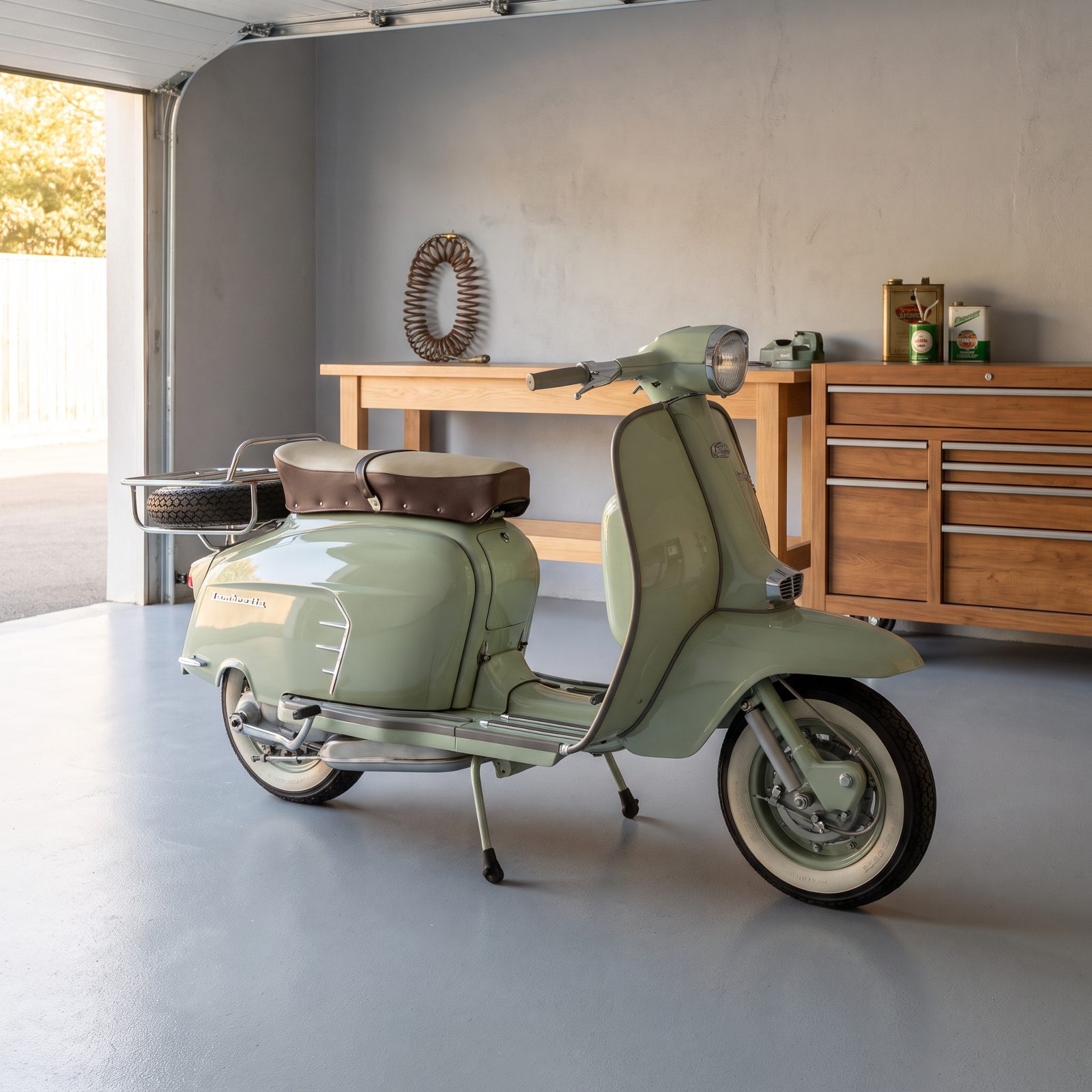
Vespa curved. Lambretta cut. That’s the quickest way to tell the two Italian rivals apart from across a parking lot.
The Lambretta Li 150 built its body around a tubular frame with separate, removable side panels, which gave it sharper, more mechanical lines than the smooth pressed-steel monocoque of a Vespa. Devotees swore by the straighter stance and the easy engine access. The two brands split the scooter world into camps, and plenty of riders picked a side and stayed loyal for life.
Ask a Lambretta owner about Vespa and settle in. The rivalry outlasted both factories’ original runs.
4. Vespa 50 Special, The Smallframe Scooter With a Rectangular Headlamp
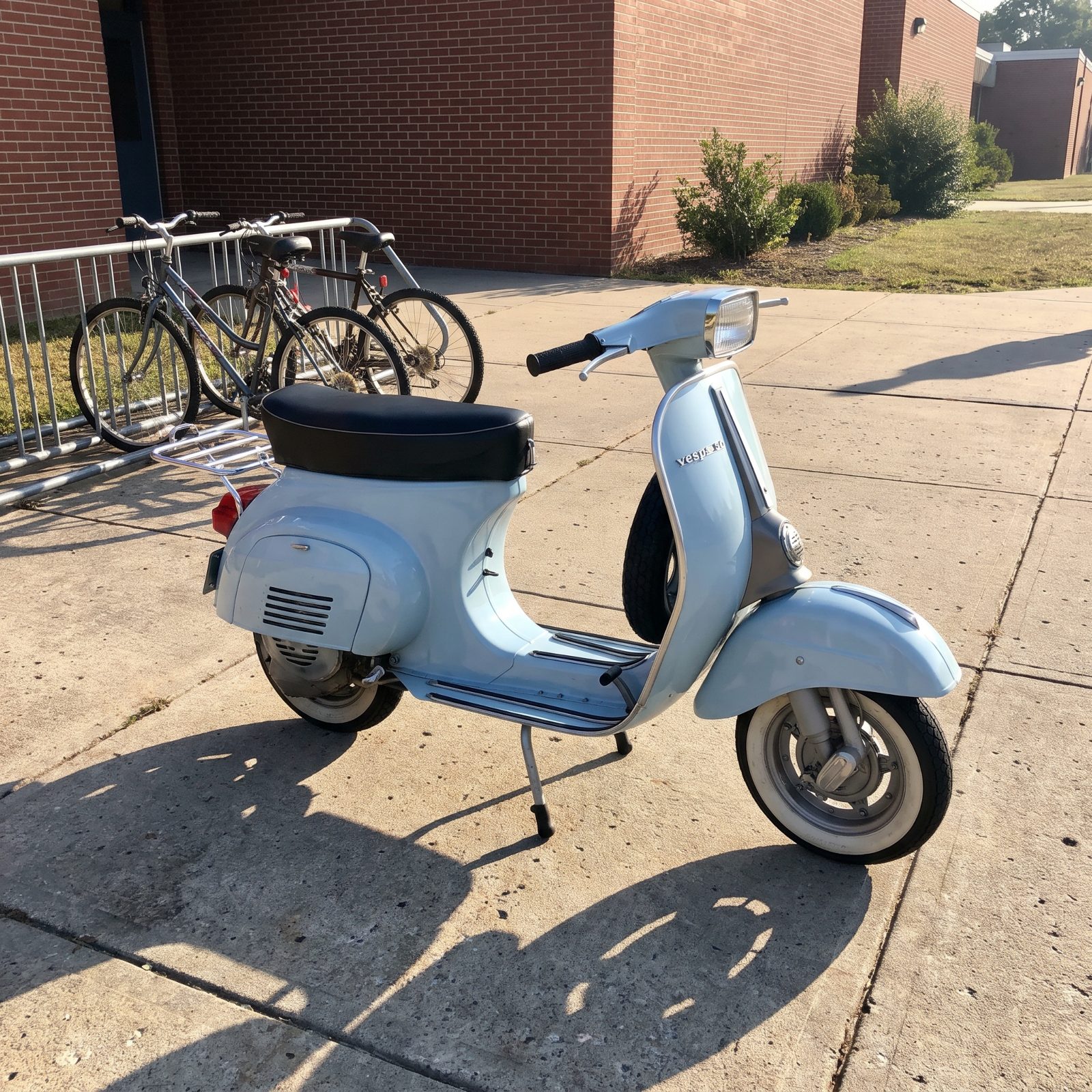
The rectangular headlamp is the tell. On the smallframe Vespa 50 Special, that squared-off light sat where earlier models wore a round one, and it marked the machine as its own thing.
This was Vespa’s answer to younger, lighter regulations across Europe — a 50cc smallframe teenagers could legally ride before they were old enough for anything bigger. It became a rite of passage. Compact, nimble, easy to park anywhere, and small enough that two friends could push-start it together when the battery sulked.
3. Vespa Primavera, The Youthful Smallframe That Became a Style Icon
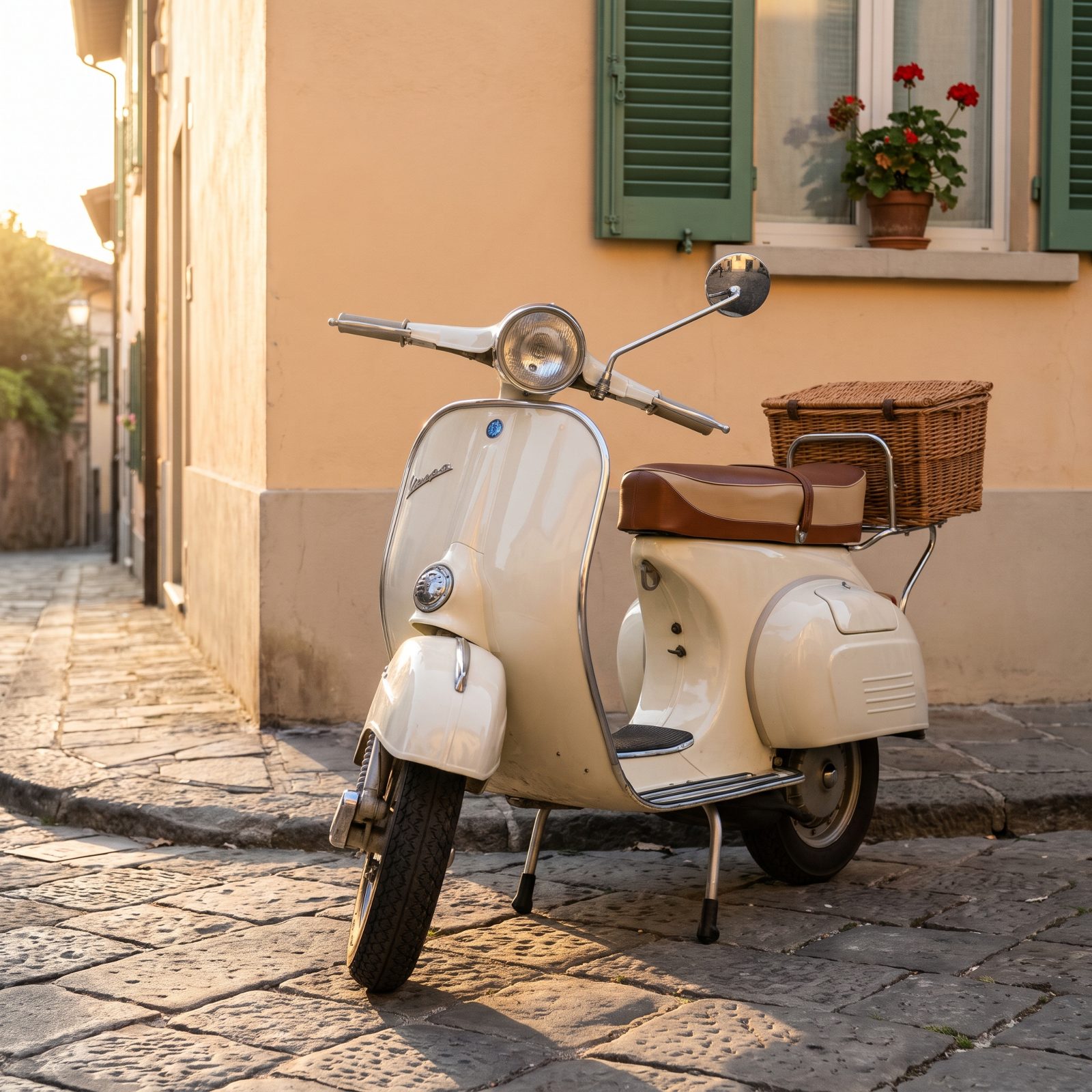
Some scooters are transportation. The Vespa Primavera was always a little bit about the look.
Lighter and more refined than its stablemates, the Primavera became the smallframe people put in photos, in films, in daydreams about European streets. It carried a reputation for being easy to live with and easier to love — the scooter a first-time rider kept long after they could afford something bigger. Years of production and a loyal following turned it into one of the most recognized shapes on two small wheels.
2. Honda Elite 80, The Boxy Commuter Scooter That Defined the 1980s
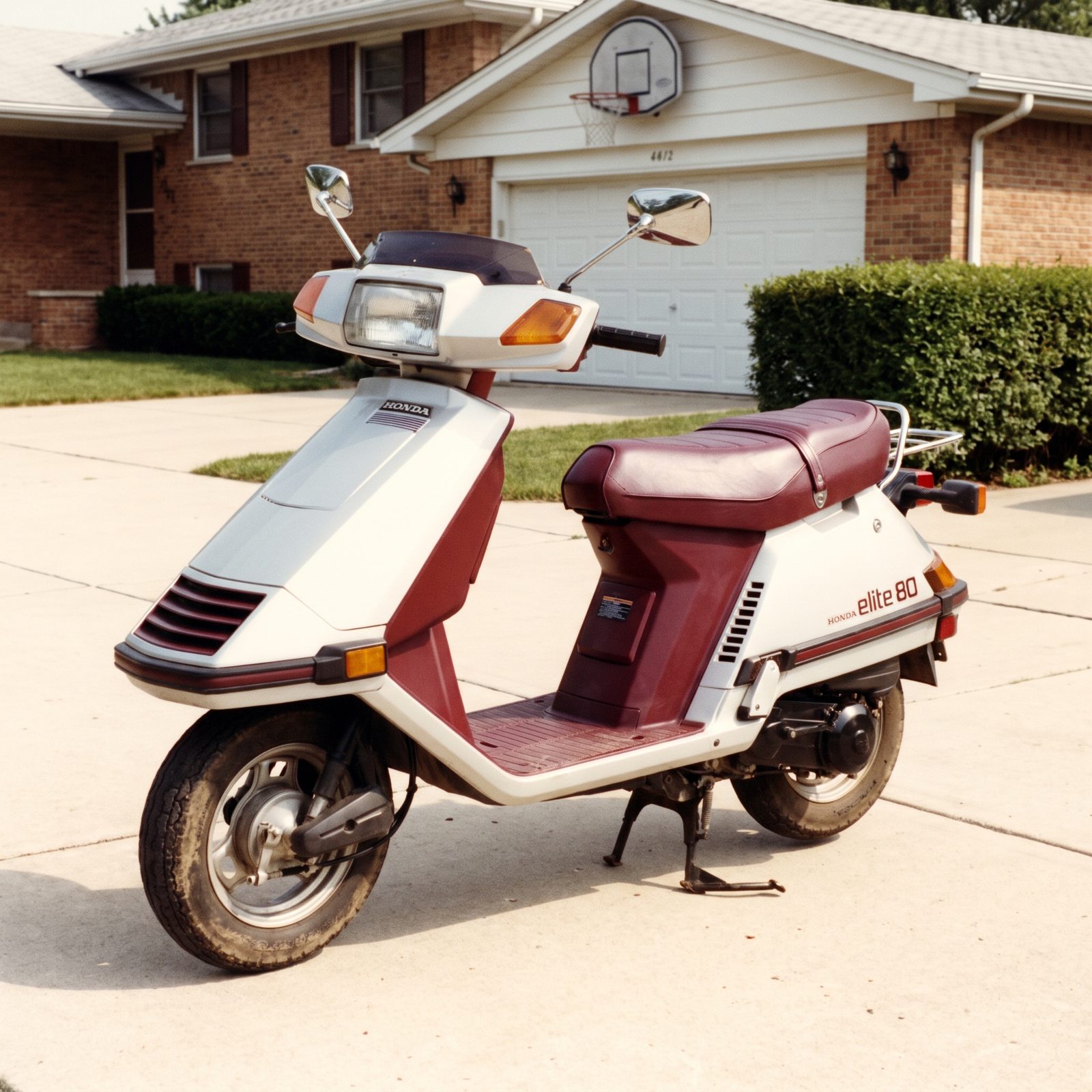
The Elite 80 looked like it was drawn with a ruler. Honda went full angular for the 1980s, trading curves for crisp boxy panels and clean straight lines, and it fit the decade perfectly.
What sold it was plain competence. Automatic transmission, electric start, a step-through layout anyone could manage, and enough underseat and rear storage to haul groceries or a backpack. It wasn’t exciting. It was reliable in a way that made it invisible, which is the highest compliment a commuter machine can earn. Plenty are still running today on original engines.
1. Honda Spree, The Plastic-Bodied 1980s Scooter Seen Around Every Neighborhood
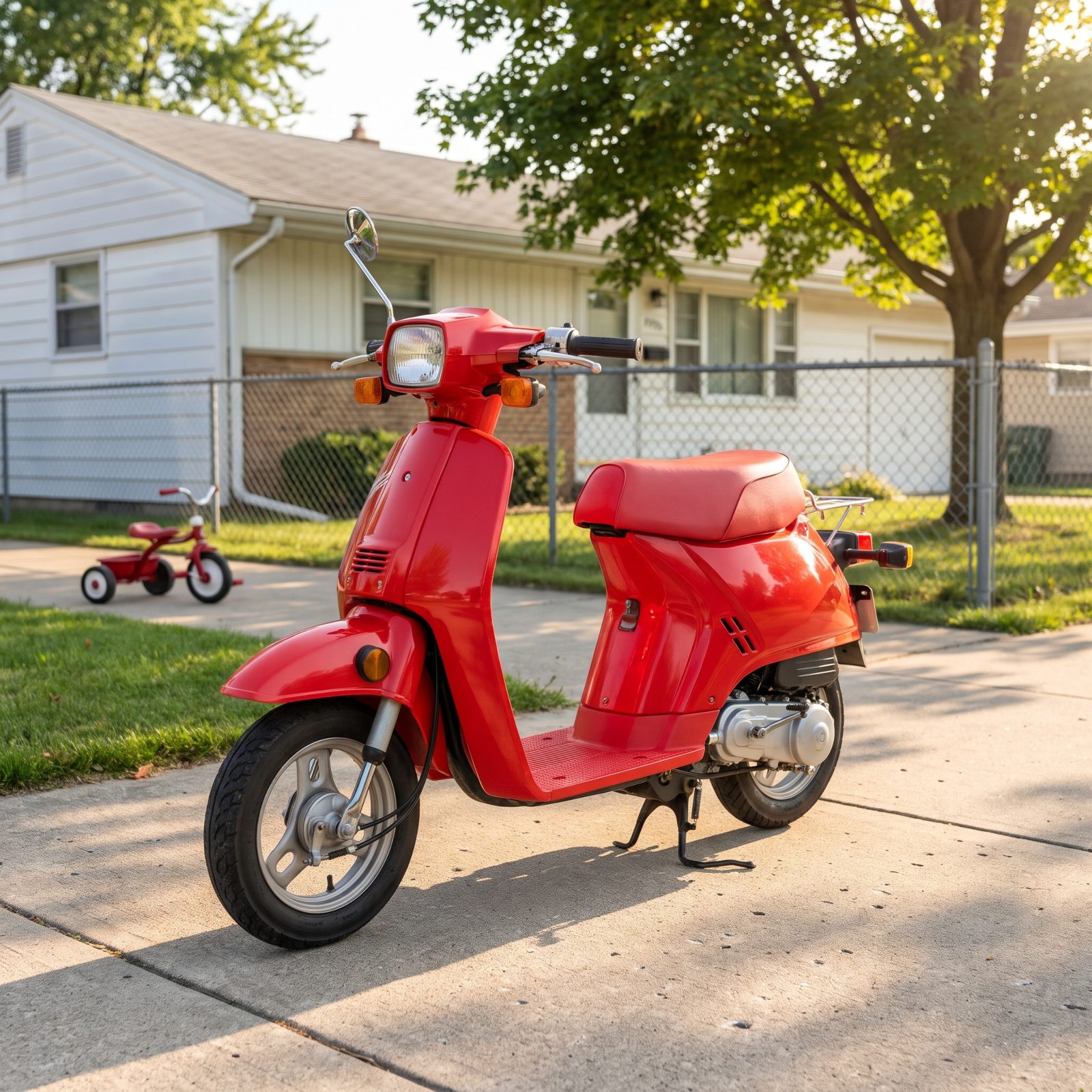
You saw them everywhere, and almost nobody treated them as anything special. That was exactly the appeal of the Honda Spree.
Tiny, cheap, and bodied almost entirely in plastic, the Spree was the gateway scooter of the mid-1980s. Twist the throttle and go. No gears, no complication, barely any weight at all. It got first-time riders on the road for less money than a decent used bicycle costs now, and it did it with a cheerful, almost disposable charm.
Underpowered on a hill? Absolutely. Nobody cared. It got you to your friend’s house and back, and for a few summers that was the whole measure of freedom.