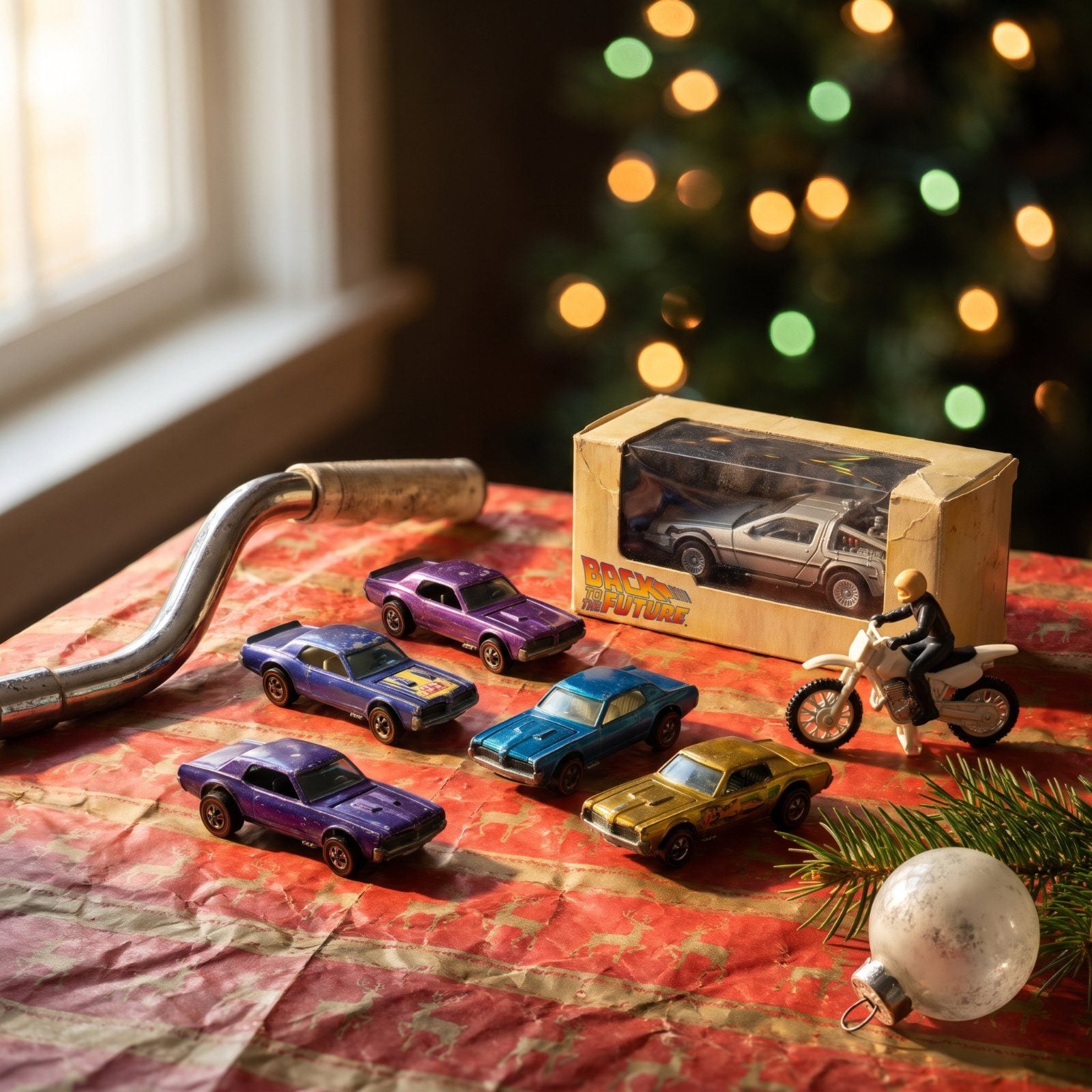
Somewhere out there, a dad threw out a shoebox full of early Hot Wheels because the garage needed the shelf. That shoebox is worth more than the car parked under it. The redline cars, the muscle bikes, the die-cast movie machines that landed under the tree on cold mornings in the 1960s and 1970s — a good number of them now trade for the price of a used motorcycle. Condition is everything. A loose, played-with example and a sealed, never-rolled one can sit three zeros apart, and that gap is the whole game. These are the ones collectors chase, what makes them rare, and what separates a $40 toy from a five-figure one.
Please note that some of the images in this article were created with the assistance of AI.
1969 Hot Wheels Pink Rear-Loading Volkswagen Beach Bomb
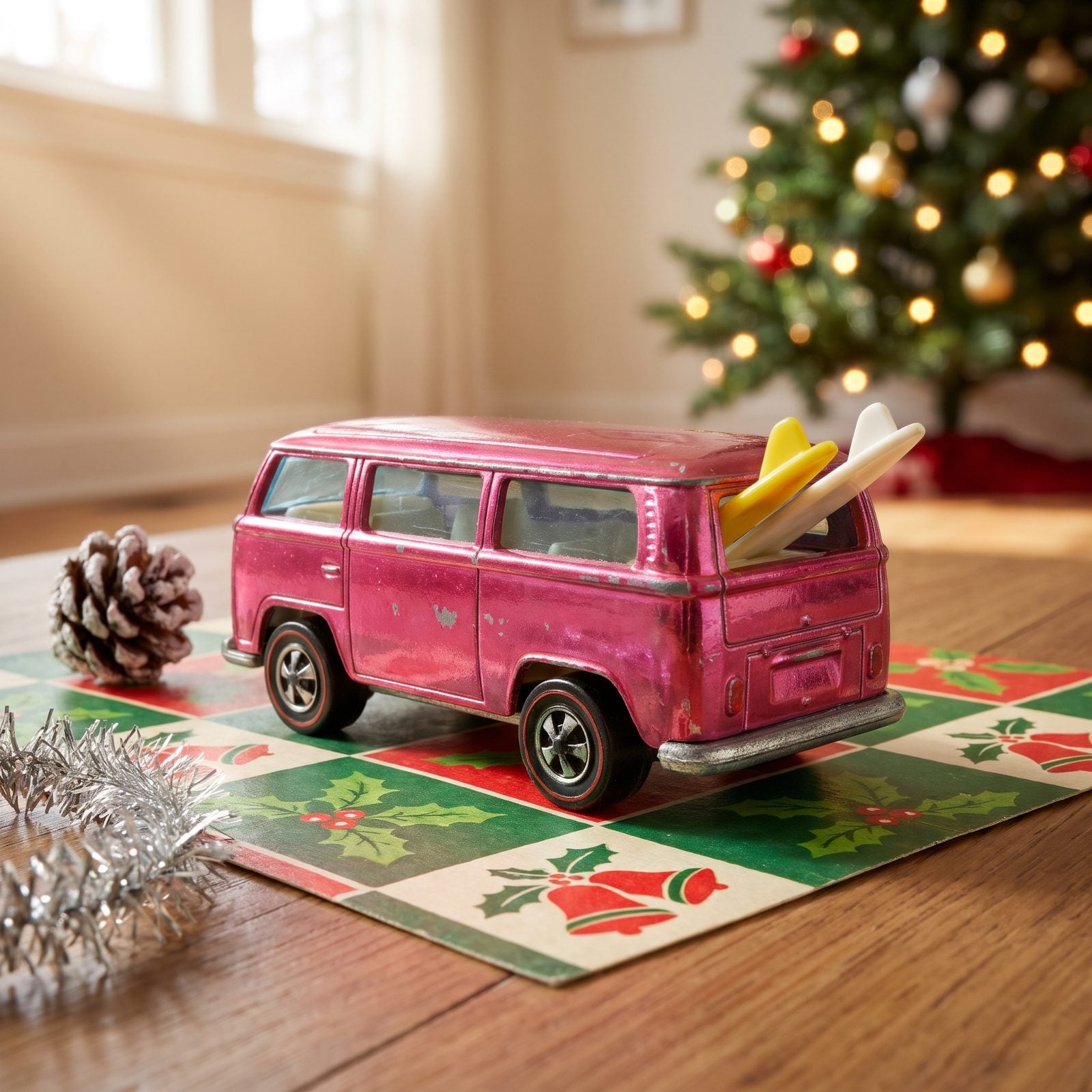
This is the one. The grail. Mattel designed the first Beach Bomb with surfboards sticking out the back window, found the car too narrow to run on the track, and widened it into the side-loading version everybody actually got. A handful of the original rear-loaders survived as prototypes.
The pink one is the legend. Pink sold badly to boys, so few were made in any car, and this configuration barely left the building. A pink rear-loading Beach Bomb in top shape has changed hands for roughly the price of a nice house in some markets — six figures, give or take. Even a common-color rear-loader is a serious find.
1968 Schwinn Sting-Ray Orange Krate
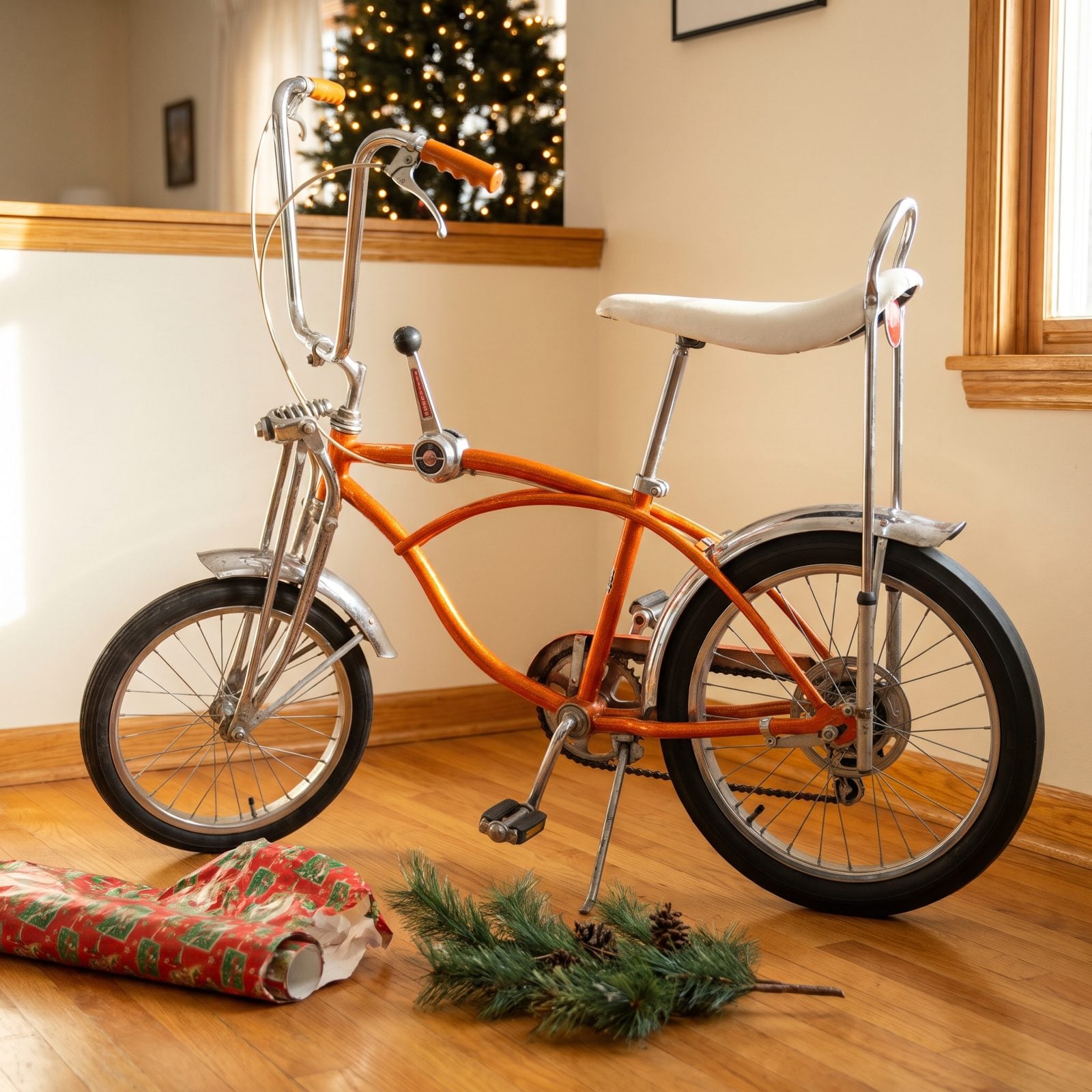
Not every collectible on this list is pocket-sized. The Orange Krate was the bike kids begged for — Stik-Shift on the frame, springer fork, fat rear slick, and that sparkly Kool Orange paint that caught every bit of winter light.
Original unrestored examples with the correct decals, seat, and shifter run into the thousands. A clean survivor can clear a few grand, and museum-grade ones push higher. Repops exist, so collectors obsess over date-coded parts down to the stamping.
Here is the honest part: ride it as a kid and you wore it out, which is exactly why intact ones are scarce. That shifter mounted right on the top tube? A knee bruise waiting to happen, and every parent knew it.
1968 Hot Wheels Over-Chrome Chevrolet Camaro
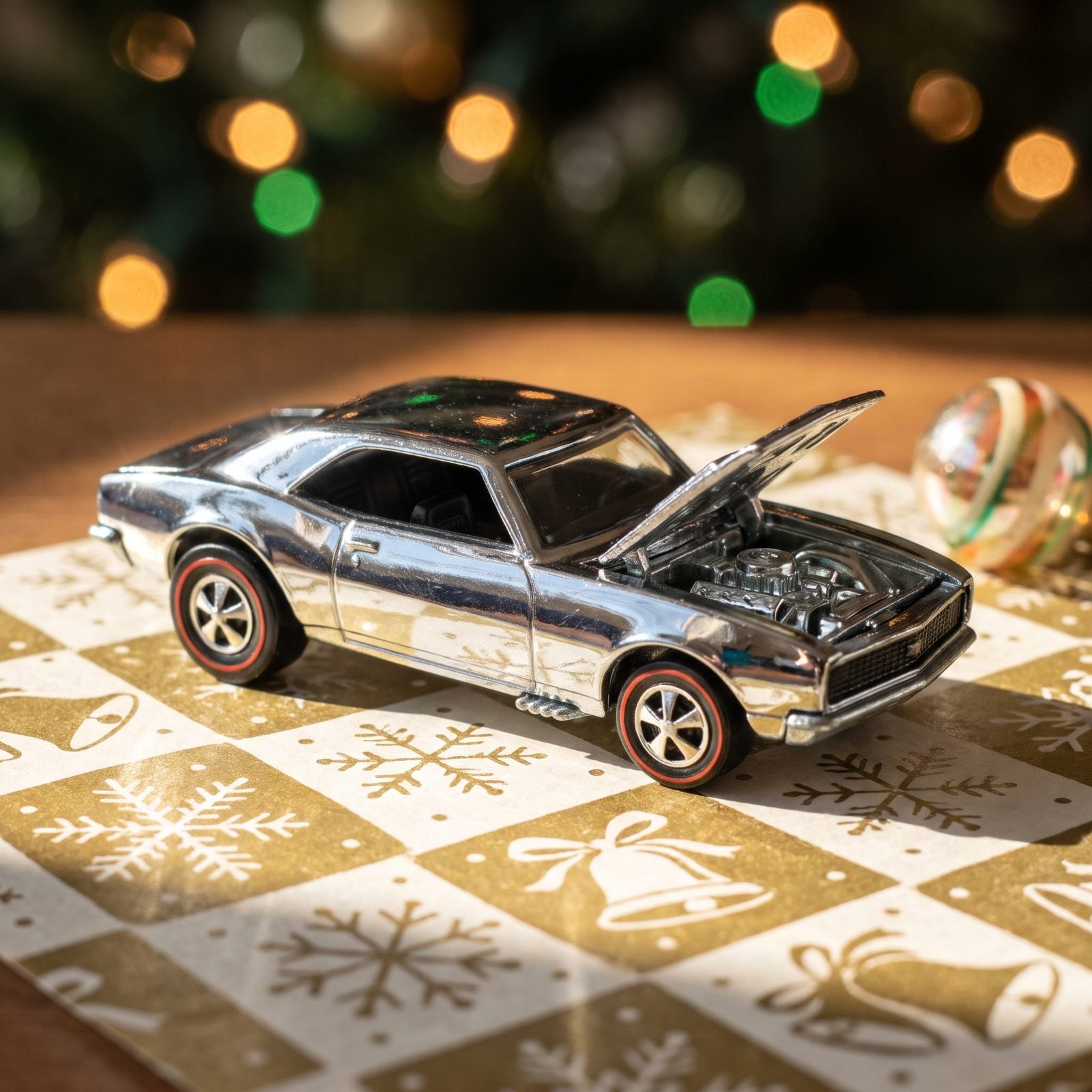
The over-chrome cars were essentially factory experiments — a handful of bodies plated in mirror chrome instead of the usual Spectraflame colors. The Camaro sits near the top of that want list.
Because so few left Mattel, verified examples are rare enough that pricing gets strange. A confirmed over-chrome Camaro in strong condition can bring well into five figures. The catch is authentication. Plenty of ordinary cars have been re-plated by hobbyists over the decades, so serious buyers want provenance and an expert’s eyes before a dime changes hands.
1965 Corgi James Bond Aston Martin DB5
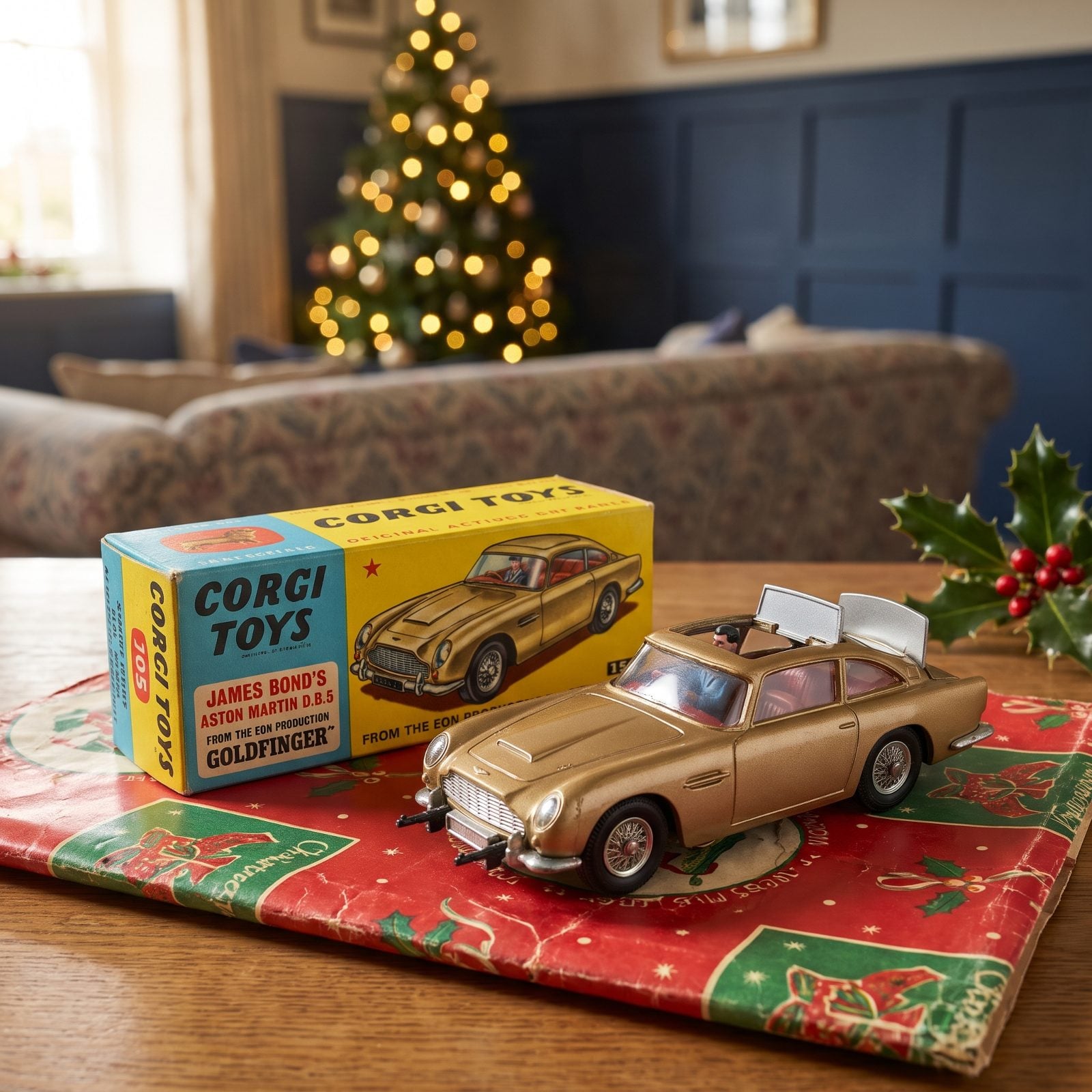
You pressed the lever and the passenger shot through the roof. That ejector seat sold a whole generation on the idea that a toy car could be a gadget. Corgi’s gold DB5 rode the Goldfinger wave straight to the top of British toy sales the year it landed.
Loose, it is affordable and common. Boxed and complete — with the ejector figure, the inner packing, and that original card insert — the value climbs fast. A pristine boxed example can run anywhere from several hundred dollars up past a thousand, depending on the variant and country of issue.
The ejector figure is almost always the missing piece. Half of them launched into a heating vent in 1966 and were never seen again.
1969 Hot Wheels Ed Shaver Custom AMX
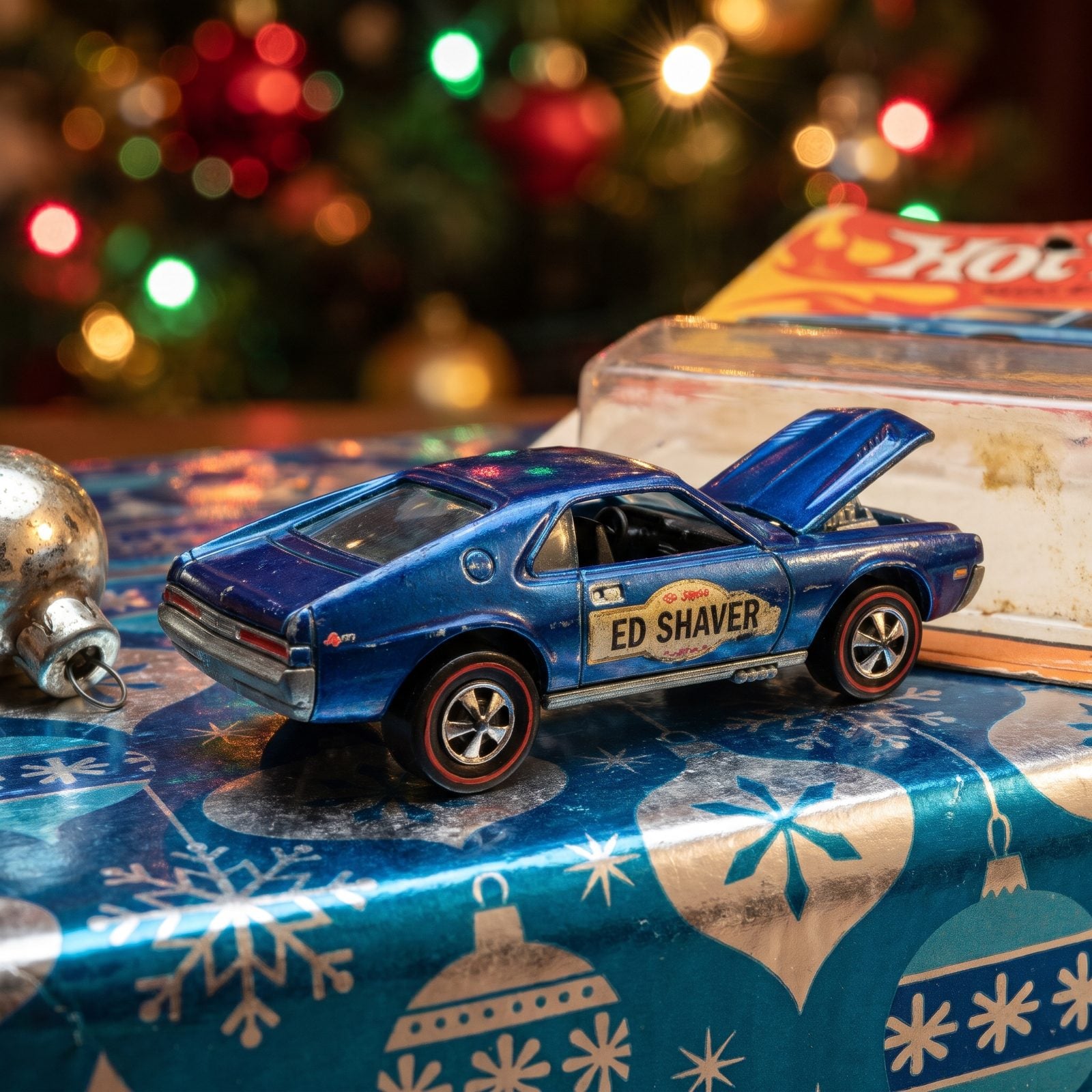
A UK promotional oddity. Ed Shaver was a British drag racer, and Hot Wheels put out an AMX wearing his sponsor decals as a tie-in sold mainly across the Atlantic. Americans never really got it — which is exactly why it is rare now.
The decals are the whole game. A car with sharp, complete, unpeeled Ed Shaver stickers commands far more than a bare AMX, reaching well into the hundreds for clean examples. The original carded version is the real prize.
1973 Ideal Evel Knievel Stunt Cycle
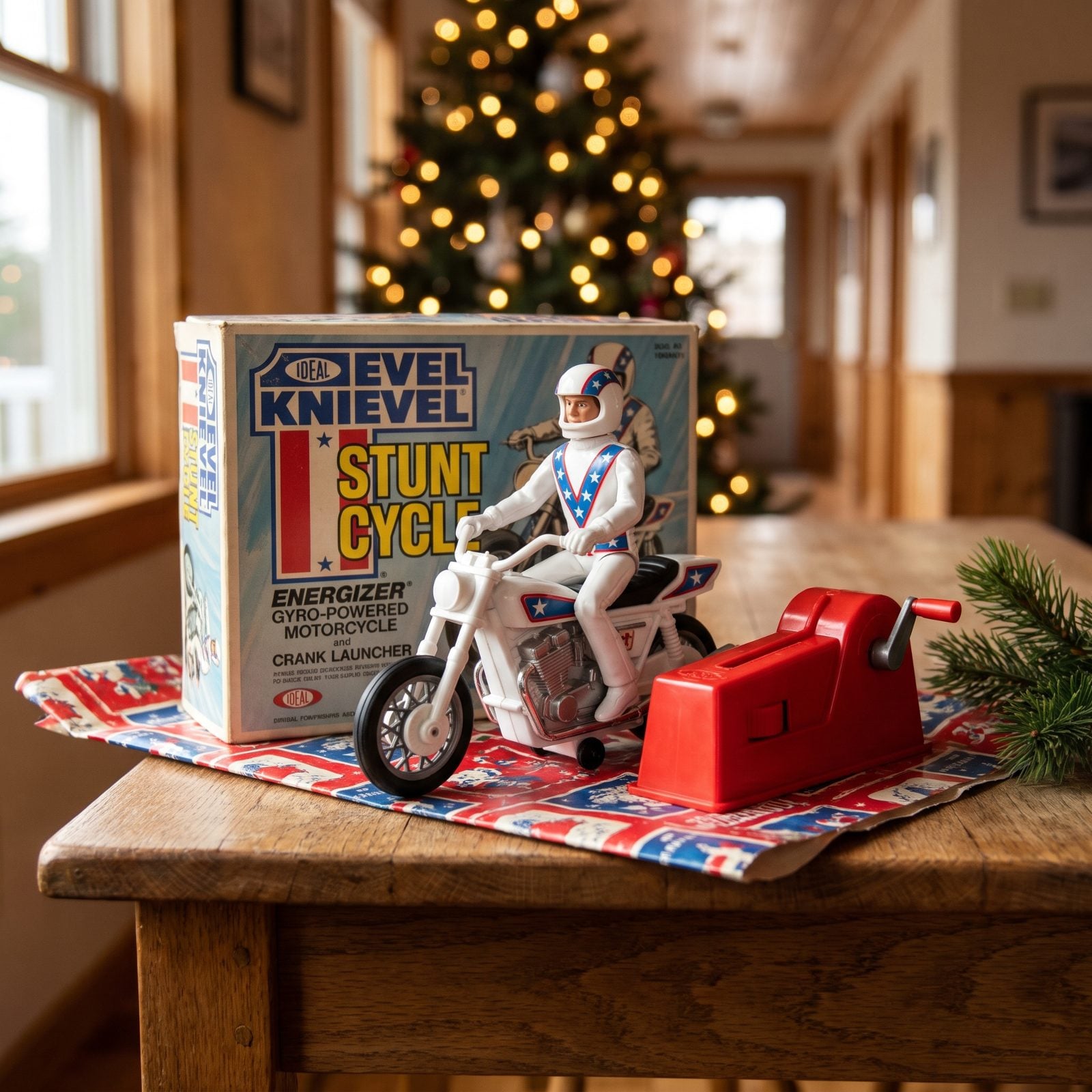
You cranked the red gyro launcher until your arm ached, then let him rip across the kitchen floor at the cat. The Evel Knievel Stunt Cycle was the action toy of the mid-seventies, moving millions off the back of the man himself.
Because it sold so well, a beat-up loose one is cheap. The money is in completeness. You want the bendable figure with the suit intact, the energizer crank, the original box, and no cracked plastic.
A sealed or near-mint boxed set, figure and launcher included, can bring several hundred dollars. Those rubbery arms almost always tore at the elbow, so an unbroken Evel is worth hunting.
1971 Hot Wheels Olds 442 in Purple
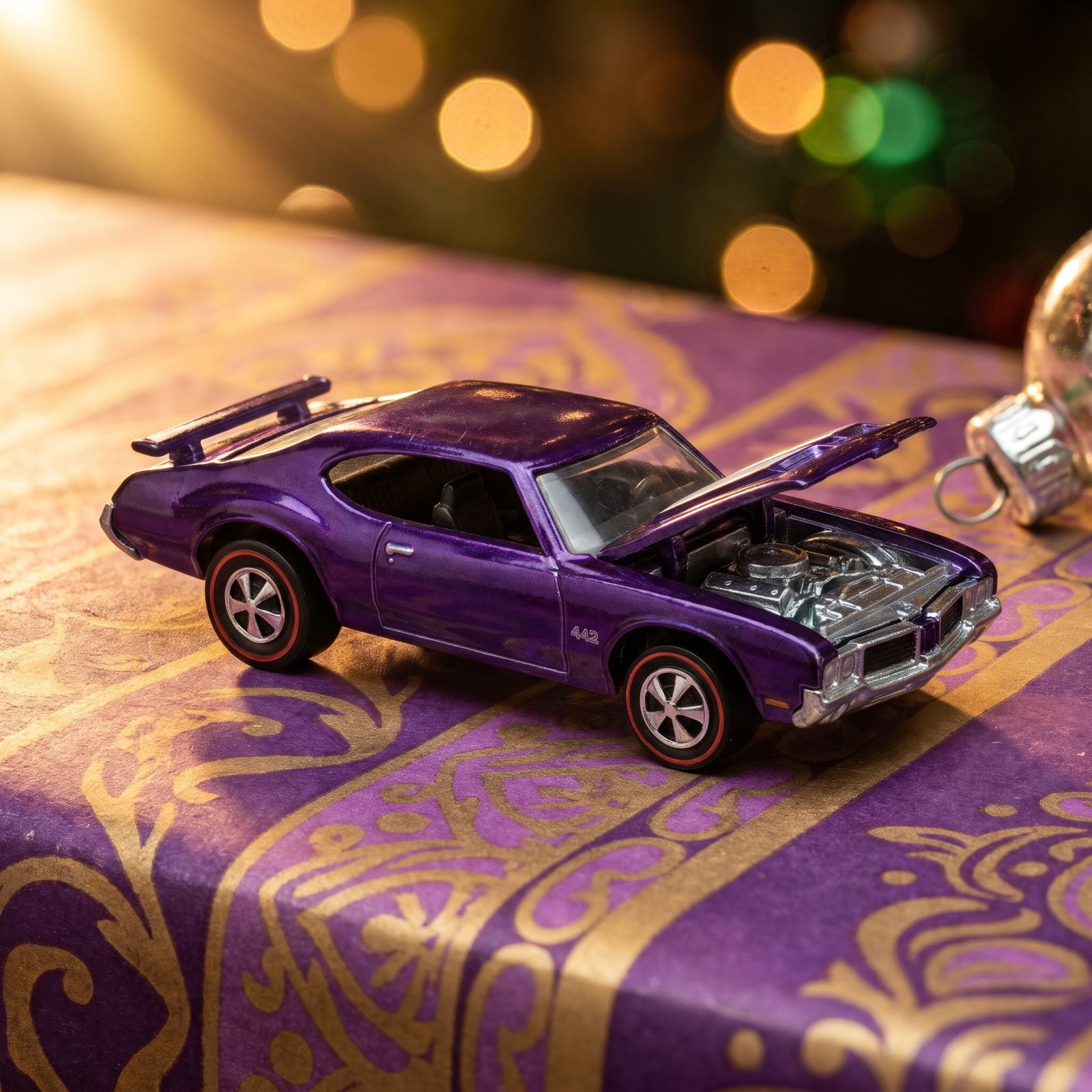
Color is king with redlines, and the Olds 442 in purple shows exactly how one shade turns an ordinary casting into a trophy. The 442 is a desirable muscle casting on its own. In scarce purple Spectraflame, with the rear wing intact, it jumps a whole tier.
Clean purple examples reach into the high hundreds and more. That fragile wing matters as much as the paint — snap it off and you cut the value hard.
1968 Hot Wheels Custom Volkswagen Without a Sunroof
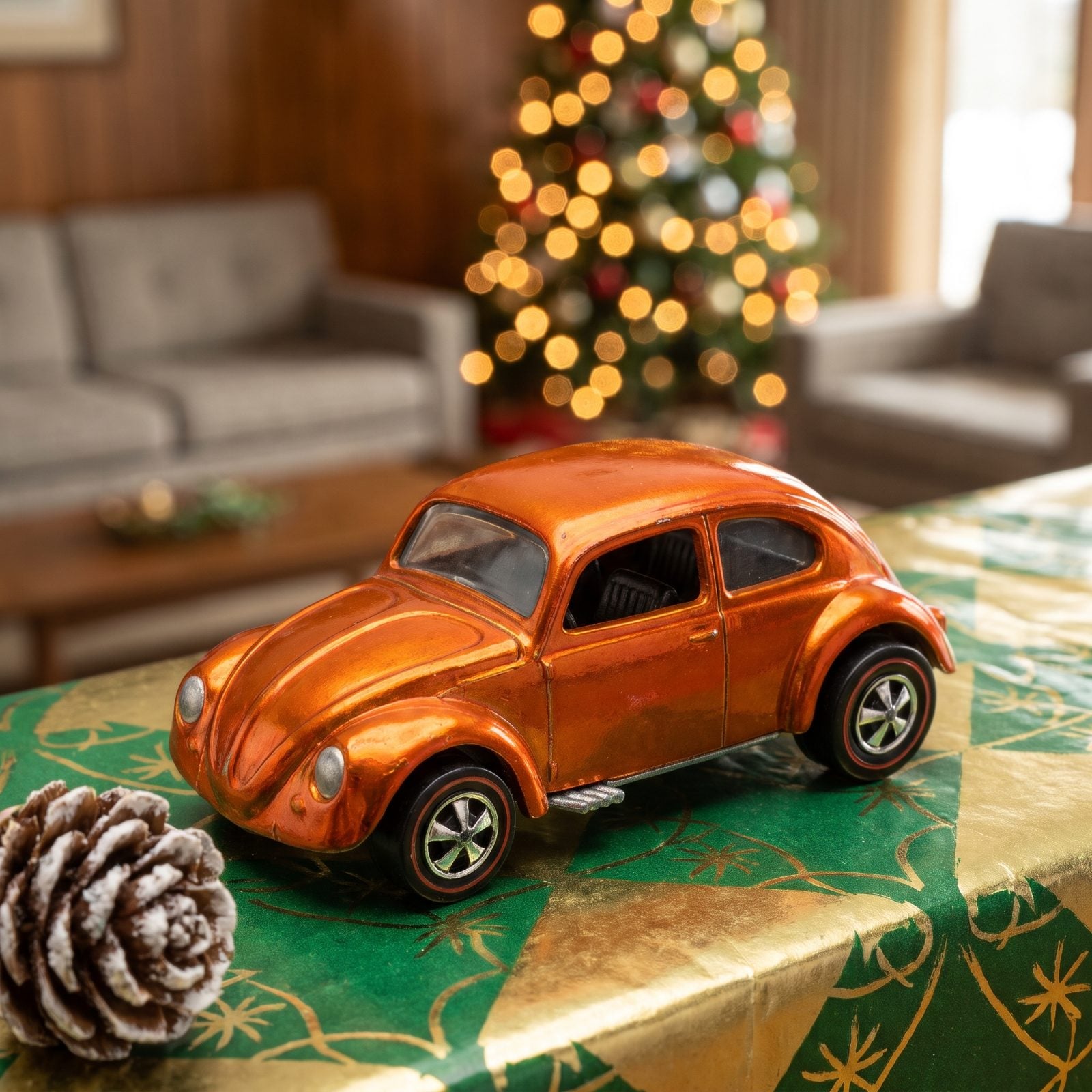
A variation only a collector loves. The standard Custom Volkswagen has a cut-out sunroof. A few early ones came out of the factory with a solid roof, no sunroof at all, and that quiet difference is the whole story.
Spotting it takes a trained eye, and honestly that is the fun of it. The no-sunroof version commands a strong premium over the common Beetle — often several hundred dollars in good shape, more in top colors. Proof that in this hobby, a missing feature can outvalue a flashy one.
1967 Corgi Chitty Chitty Bang Bang With Figures
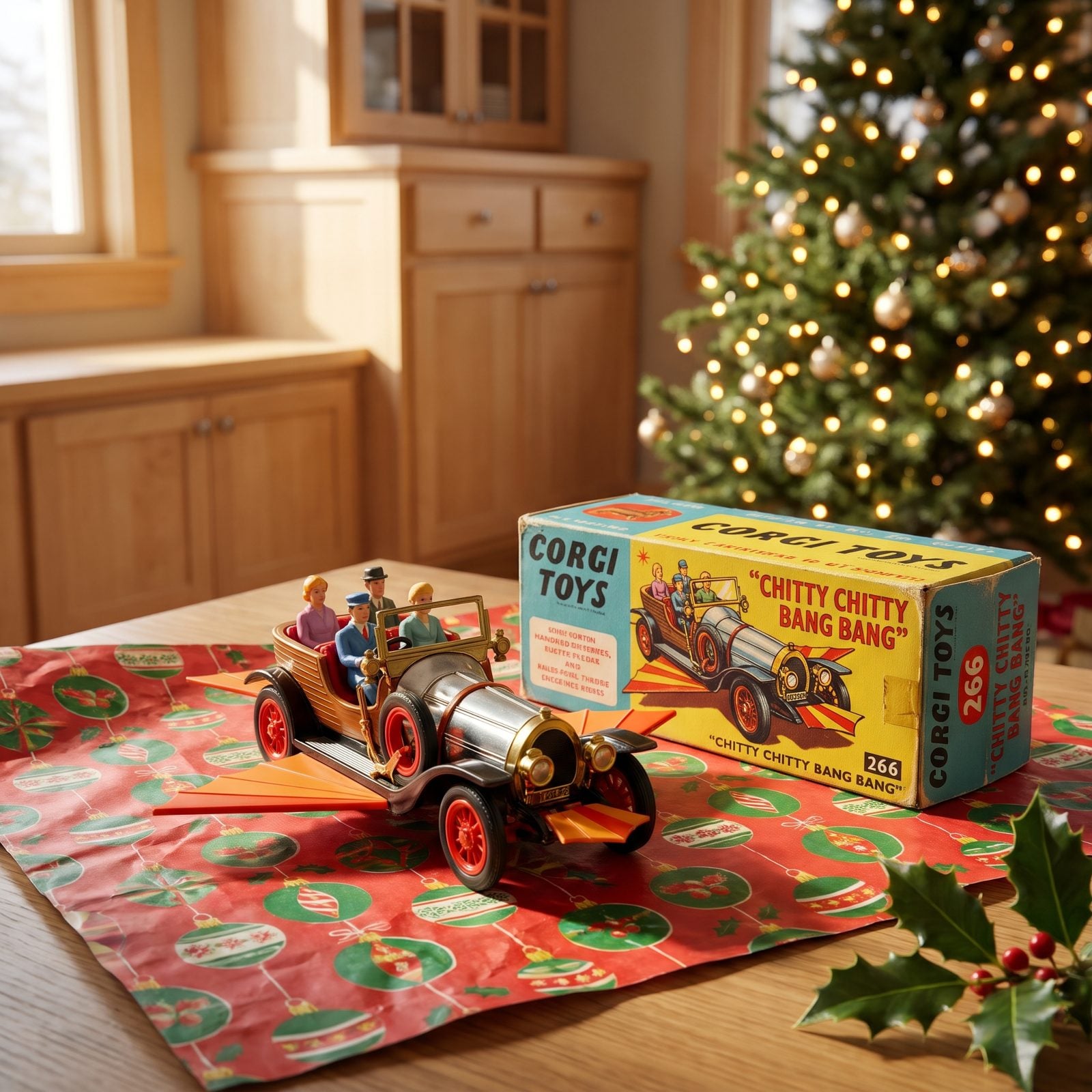
Corgi turned the flying movie car into one of its most elaborate die-casts, complete with extending wings and four little family figures riding along. Nothing else on the shelf looked like it — all brass trim and copper tones.
Loose and worn, it is reasonable. Complete with all four figures and the correct box, it becomes a proper collectible. The figures are tiny and the first to vanish, so a full set boxed can bring several hundred dollars. And the box art alone is worth framing.
1968 Hot Wheels Python With a Cheetah Base
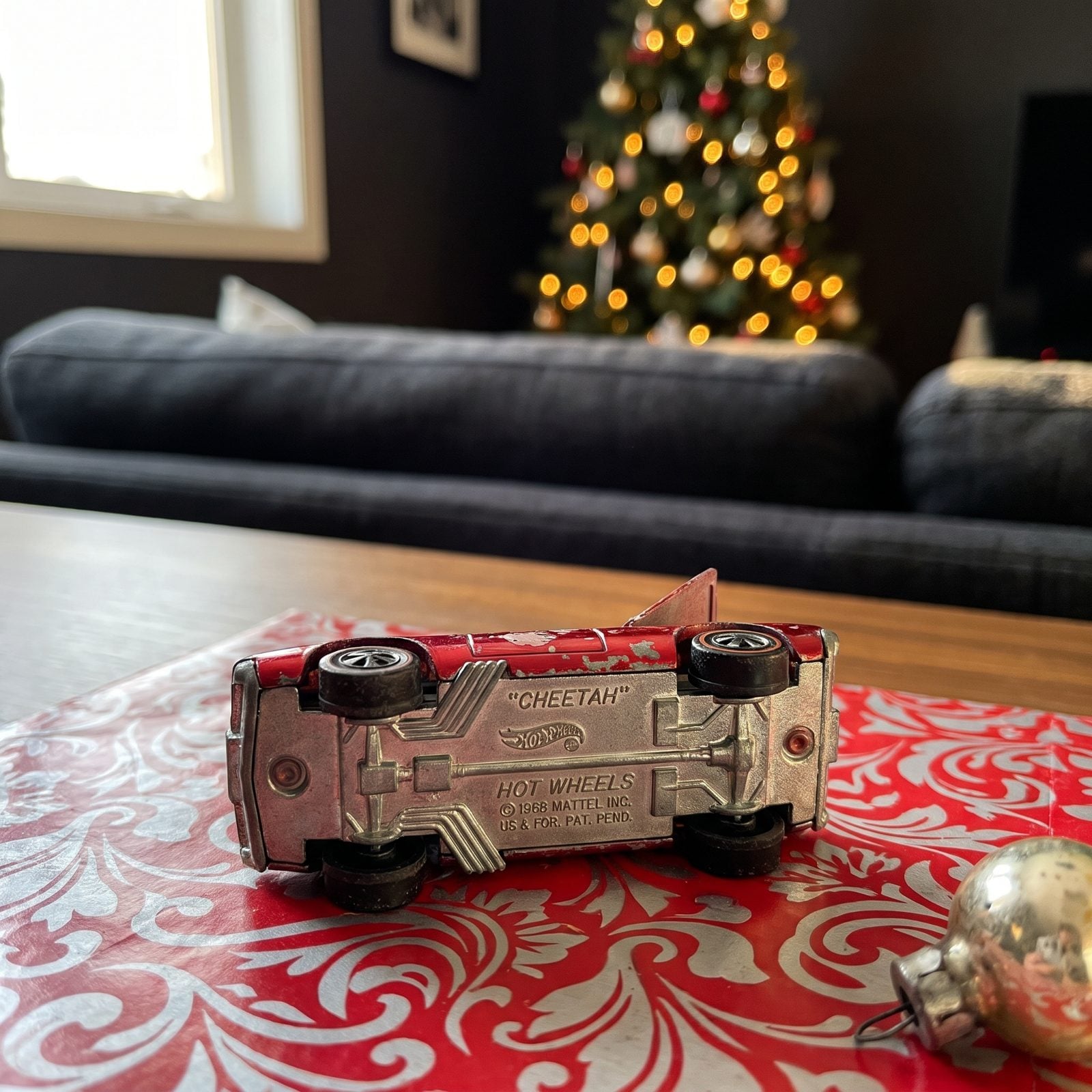
Here is a naming headache that turned into treasure. The car was designed as the Cheetah, got renamed Python before release, and a run of early cars went out with the body marked one way and the base stamped the other.
The value lives on the underside. Flip the car and read the base. A Python body on a Cheetah-stamped base is the variant collectors chase, and in strong condition it climbs well past the common version, often into the mid hundreds and beyond.
It is the kind of detail that makes people at estate sales quietly flip every red car over. Go ahead and be that person. The underside rewards the ones who bother to look.
1969 Raleigh Chopper Mk1
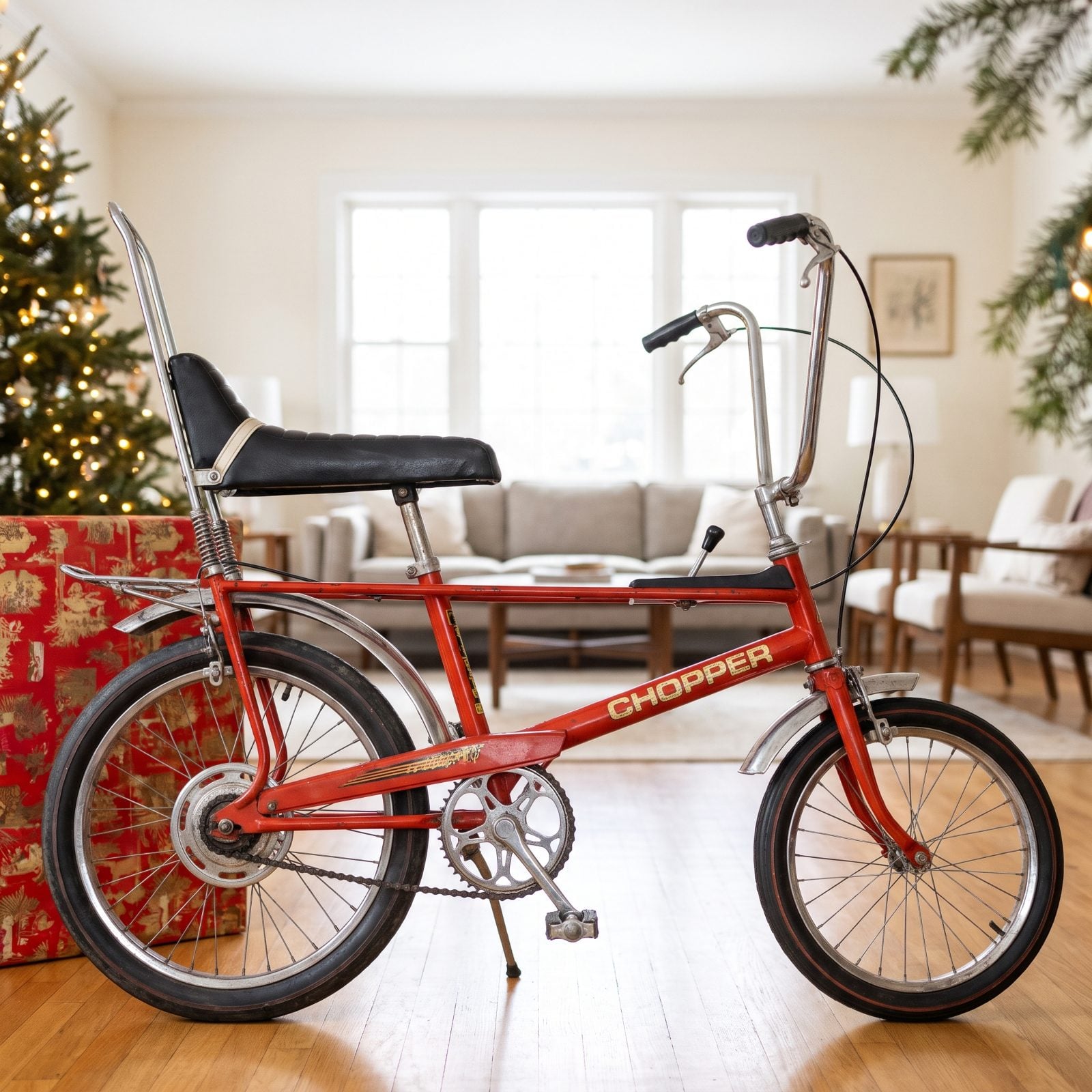
Every kid on the street wanted one. The Chopper landed in British living rooms like a two-wheeled motorcycle fantasy, all ape-hangers and that padded bucket seat with its high backrest and sissy bar. It wasn’t meant to be sat in like an armchair. Everyone did anyway.
Collectors chase the Mk1. Its gear shifter sits right on the crossbar, the exact spot safety types later moved, so an original Mk1 with that knob-topped lever on its crossbar pad is the real article. Find one in Infra Red with intact decals and unbent forks and you’re looking at serious money, often four figures in good order, more for an unrestored survivor.
1970 Hot Wheels Red Baron With White Interior
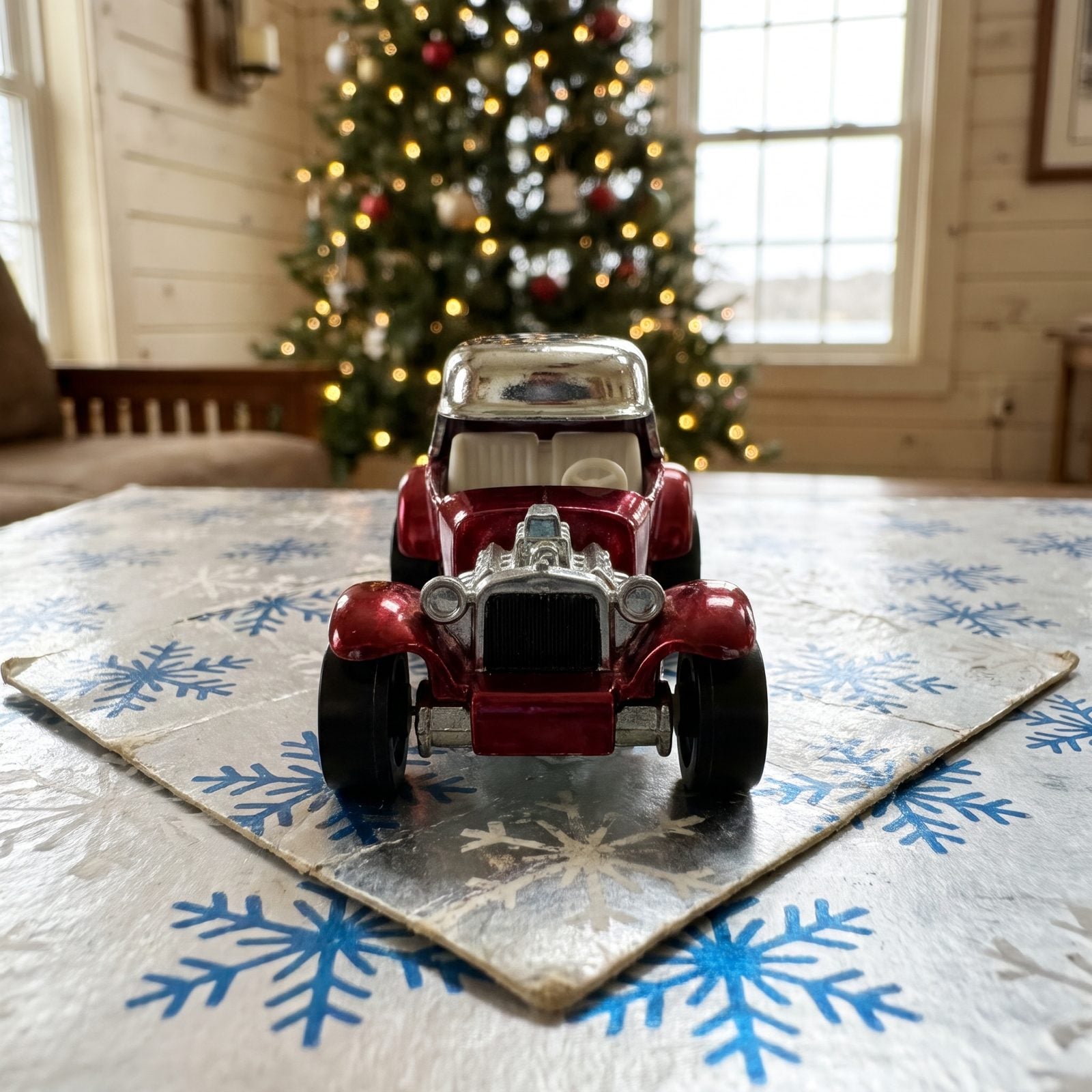
The Red Baron is a Hot Wheels icon, and this little hot rod coupe wears the famous spiked Pickelhaube helmet for a roof. Most left the factory with a red interior. A small run came in white instead, and that one detail changes everything.
A standard Spectraflame Red Baron is a nice vintage casting worth a modest sum. The white-interior variant jumps into collector territory fast, especially with bright paint, sharp chrome and the right wheels. So flip it over and check the tub. That’s where the value hides, not in the roof everyone stares at.
1971 Dinky Toys UFO Interceptor
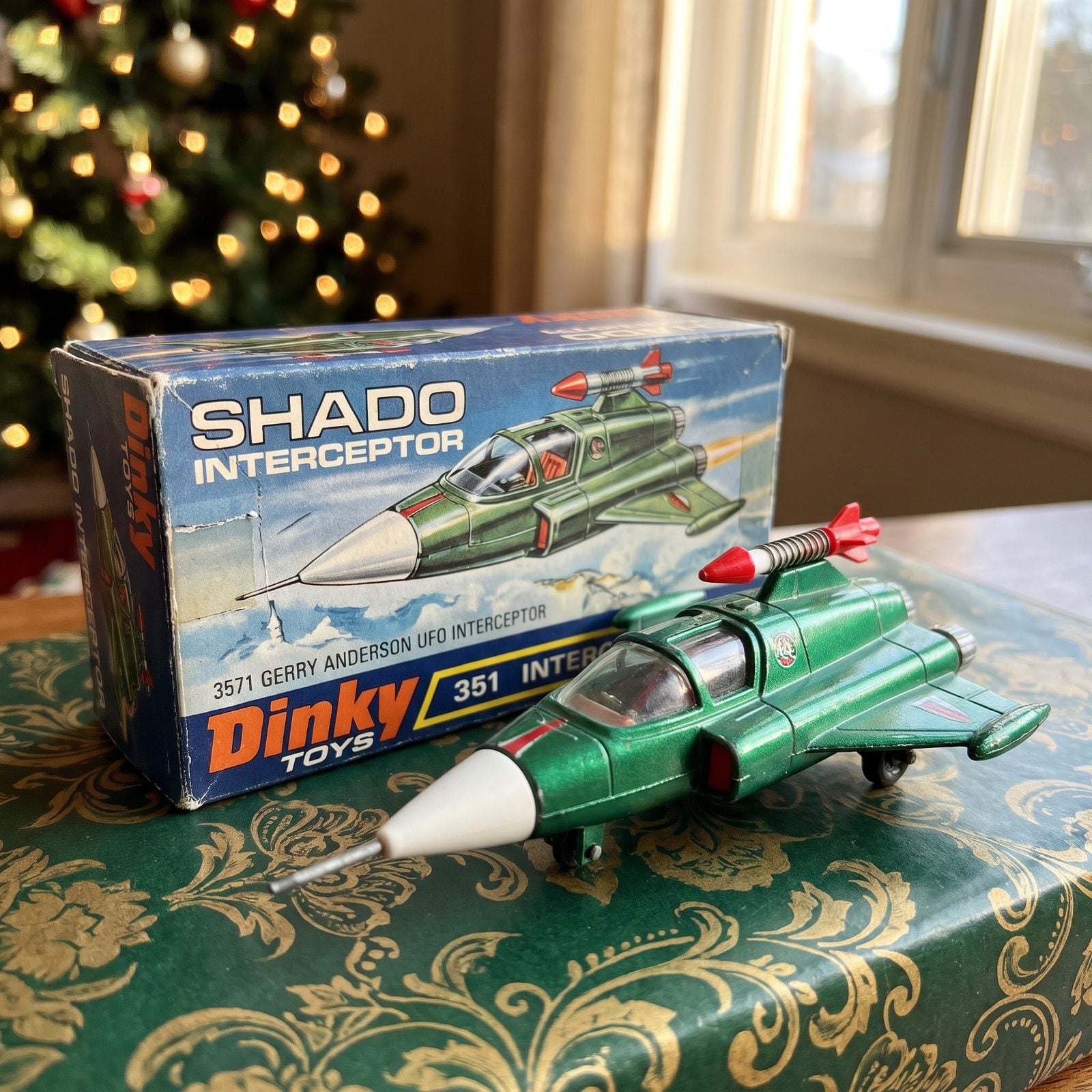
Pull from the Gerry Anderson universe and prices climb. The UFO Interceptor fired a spring-loaded missile from a post on its back, and that missile is the heartbreak of every collector who ever owned one.
Kids fired them at the dog, the fish tank, the back of the sofa. They vanished into the carpet of history. A boxed Interceptor with the original missile still present pulls strong money, and without it the whole thing sheds a big slice of value. The box matters too, that illustrated card with the SHADO artwork, because packaging is half the story on these Anderson models.
1967 Corgi The Monkees Monkeemobile
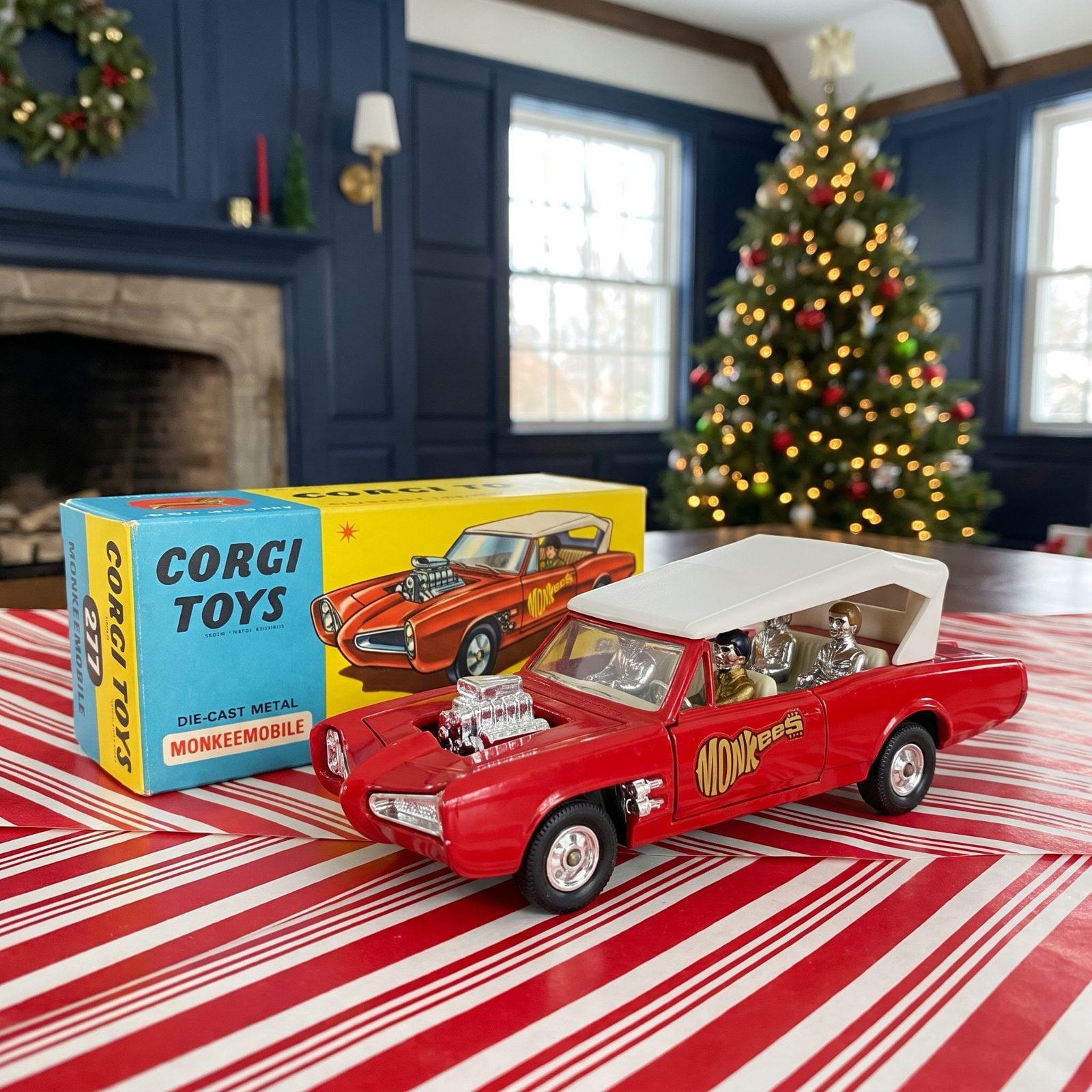
Red, wild and crammed with four tiny band members, the Monkeemobile rode the back of a TV show that owned 1967. The real car was a hacked-up Pontiac GTO. Corgi’s version keeps the absurd proportions and the gold lettering, and that’s exactly why people want it.
Condition decides the whole game here. The chrome tarnishes, the little figures go missing, the roof scoop snaps off. A boxed one with all four Monkees still aboard and sharp paint commands a premium that would make the toy’s original shilling price look like a rounding error.
1974 Hot Wheels Blue Rodger Dodger
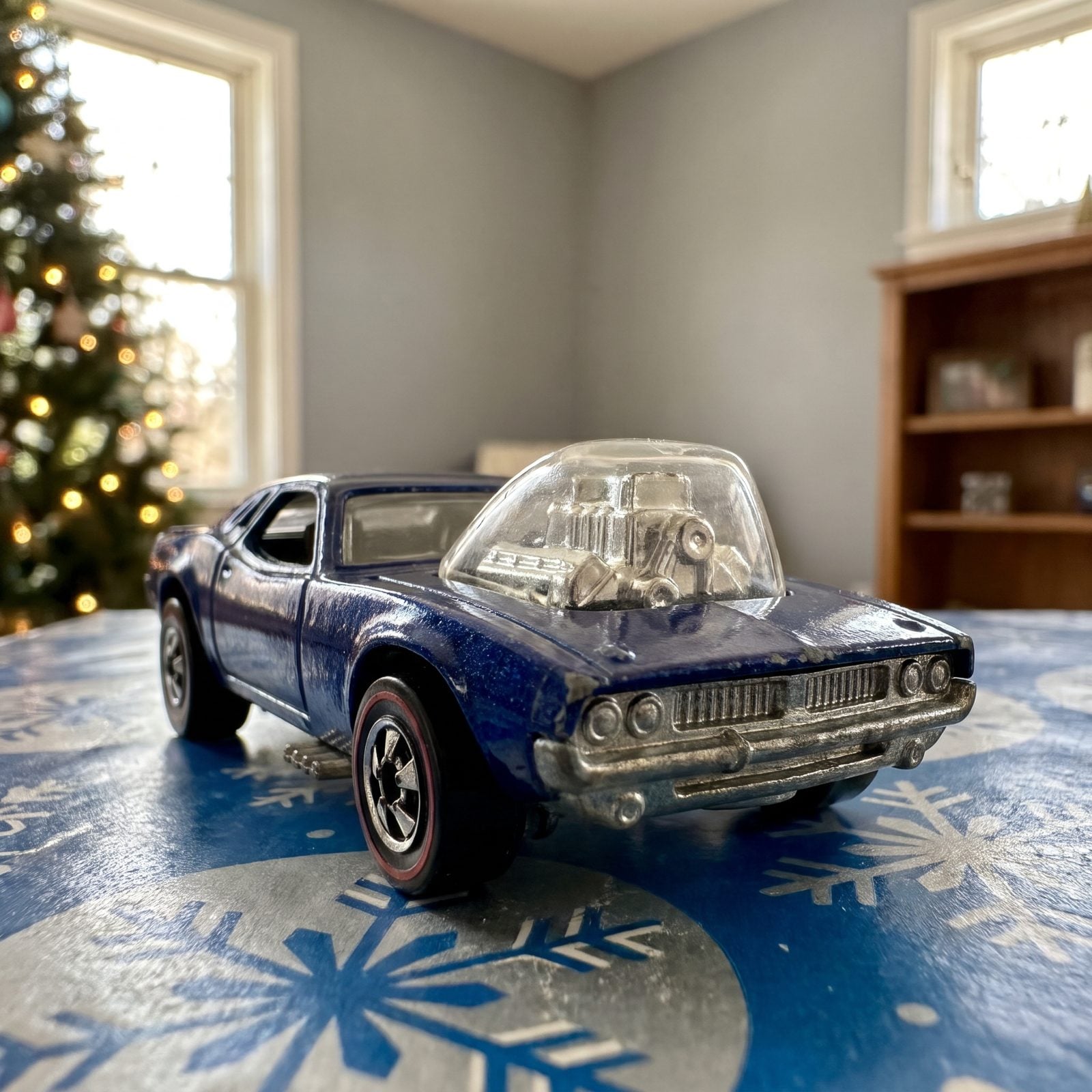
The Rodger Dodger came in several colors, but blue is the one that pays. By 1974 Hot Wheels had drifted toward enamel paints, which makes the Spectraflame blue runs harder to pin down and more prized for it.
Watch the plastic engine bubble. It yellows, cracks, falls out. A clean blue example with an intact clear bubble, bright paint and good redlines is a genuine find. Squat, mean, and it photographs beautifully too, which never hurts the price.
1969 Corgi Rockets James Bond On Her Majesty’s Secret Service Set
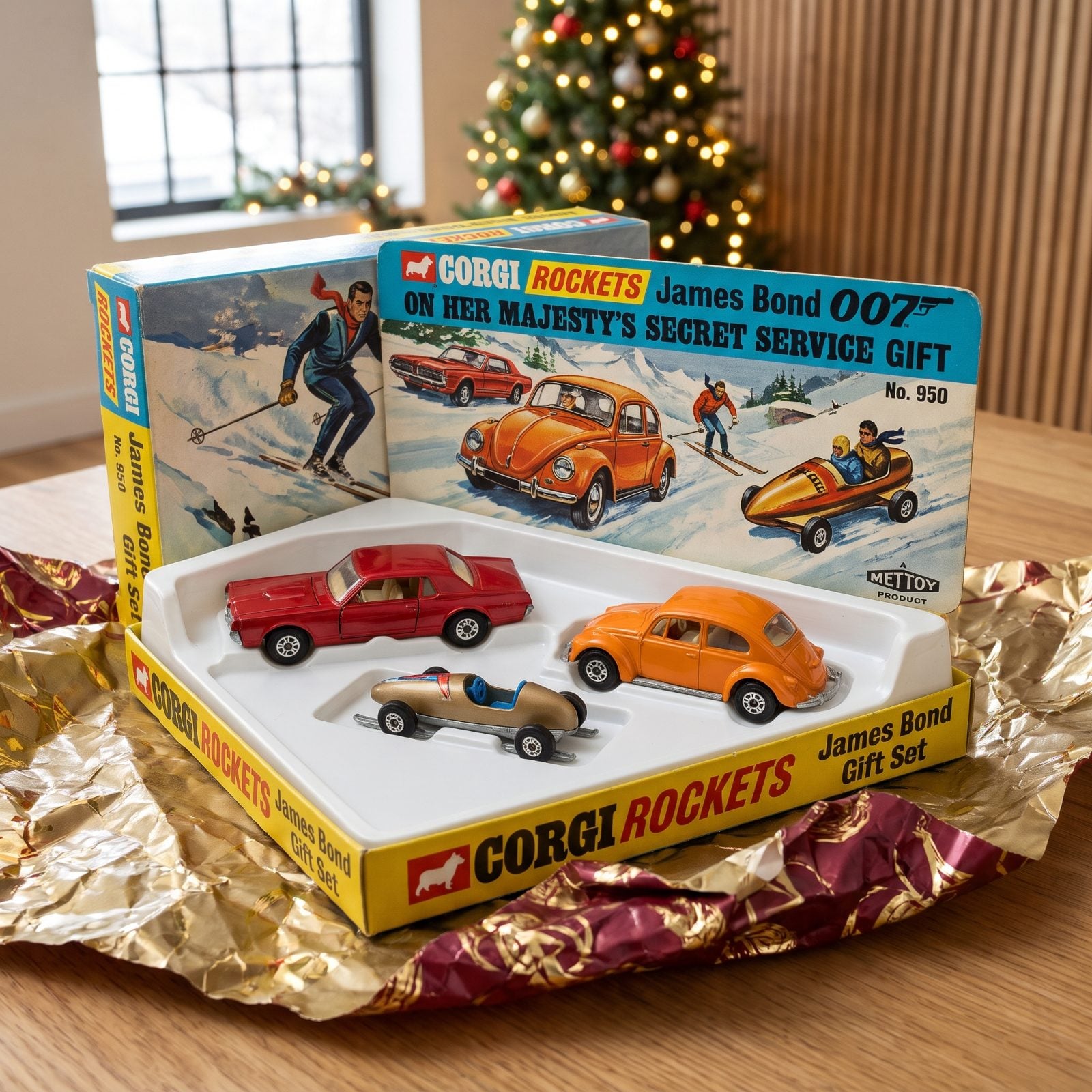
This is where the serious collector money lives. The OHMSS gift set ranks among the rarest Corgi Rockets releases, tied to a Bond film that itself got a mixed reception back in 1969.
It used Corgi’s Rockets system, the low-friction fast-wheel line, and it sold poorly at the time. Which is precisely why survivors are scarce now. A complete boxed example with the Mercury Cougar, the VW and the bobsleigh all present, plus the original tray and tin-key, is a grail piece. These have changed hands for thousands.
1966 Dinky Toys Lady Penelope’s FAB 1
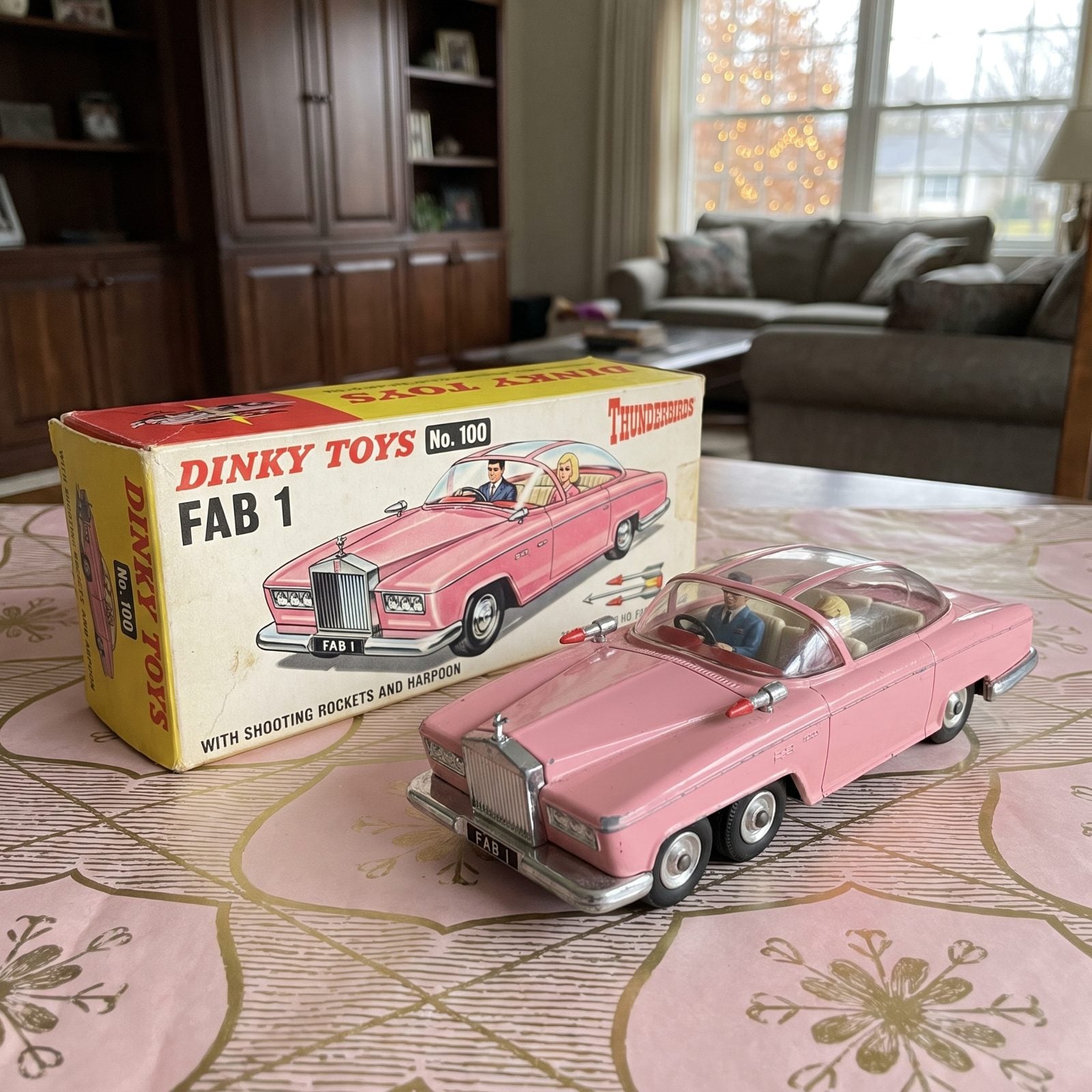
Pink, long and absurdly six-wheeled, FAB 1 is the Dinky that fans fight over. Lady Penelope’s Rolls from Thunderbirds came with two figures under a clear bubble canopy and little firing mechanisms front and back.
And every bit of that is a liability. The canopy cracks, the figures walk off, the harpoon fires into oblivion. A boxed FAB 1 with the canopy clear, both figures aboard and the pink paint unfaded is worth hunting down. Early examples even came with a working flywheel or firing gimmicks that later got simplified, so the earliest castings carry the most weight.
1968 Dinky Toys Captain Scarlet Spectrum Patrol Car
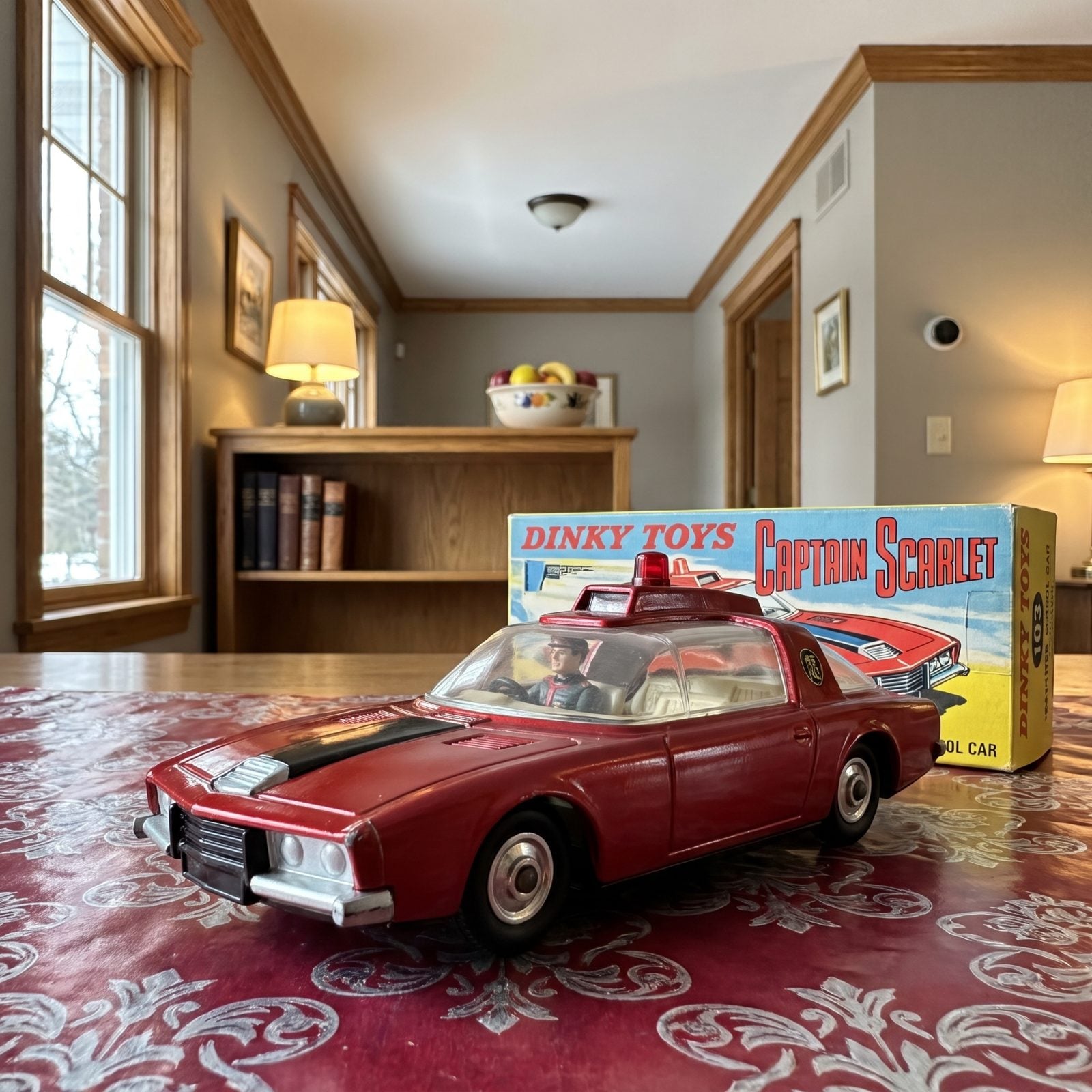
Metallic red and low-slung, the Spectrum Patrol Car had a battery-powered flashing roof light that drained its cells in an afternoon and fired a child’s imagination for years.
That electrical feature is the catch. The battery compartment corrodes, the bulb dies, the mechanism seizes solid. A working example is rare, and boxed, with the figure present and the light still flashing, it sits near the top of the Dinky Anderson values. Open any you find and check that compartment first, because a leaked battery can quietly ruin the whole underside.
1967 Dinky Toys Joe 90 Sam’s Car
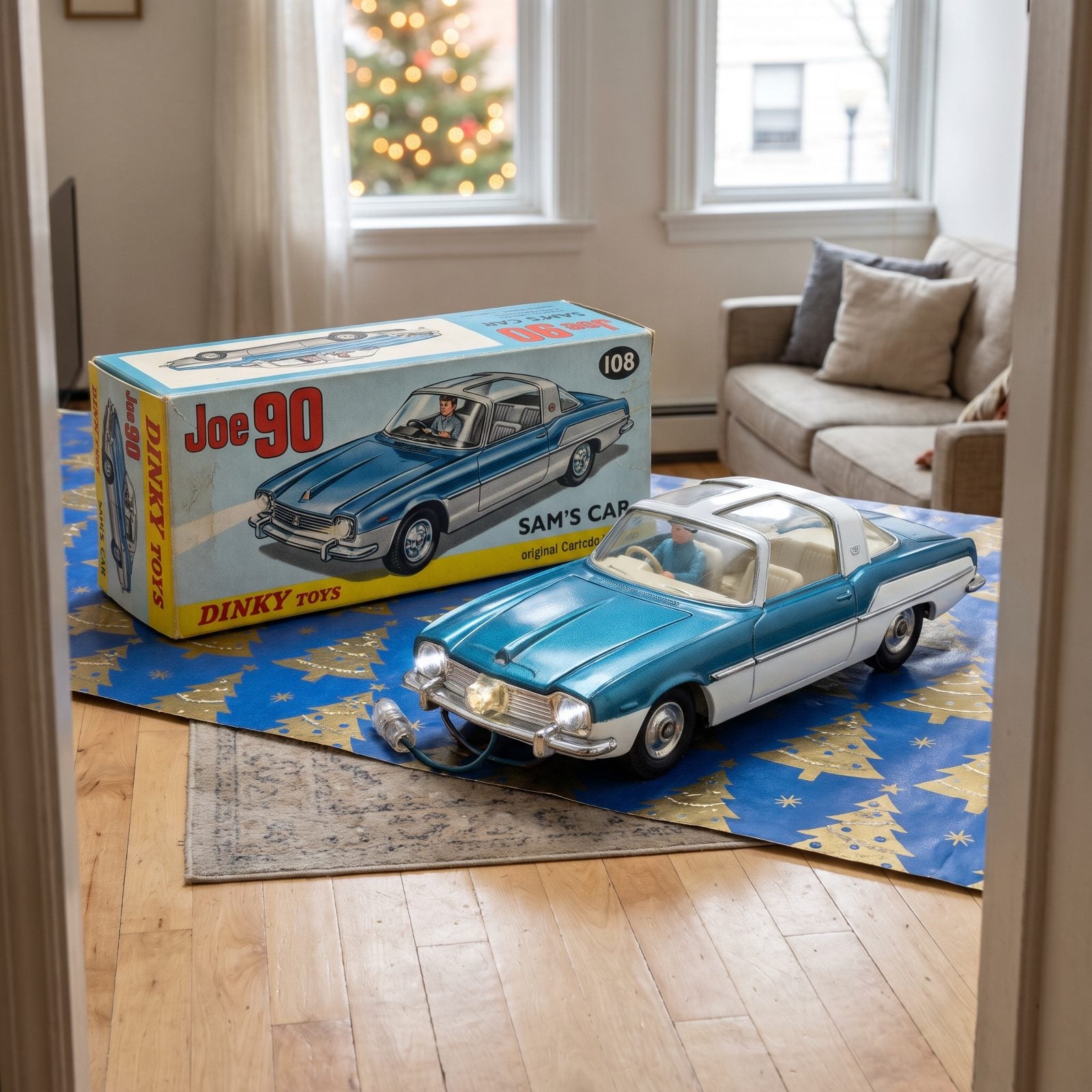
Joe 90 never hit the heights of Thunderbirds, which is good news for anyone holding Sam’s Car. Lower show popularity meant a smaller production run, and smaller runs age into scarcity.
The two-tone blue-and-white Dinky came with a battery feature and a figure, both usually long gone by now. A boxed survivor in clean paint is genuinely hard to find. Call it the sleeper of the Anderson Dinky lineup, forever overlooked next to FAB 1, and that’s exactly why a patient collector can still land one before the market fully catches up.
1960s Matchbox BP Dodge Wrecker With Rare Reverse Color Scheme
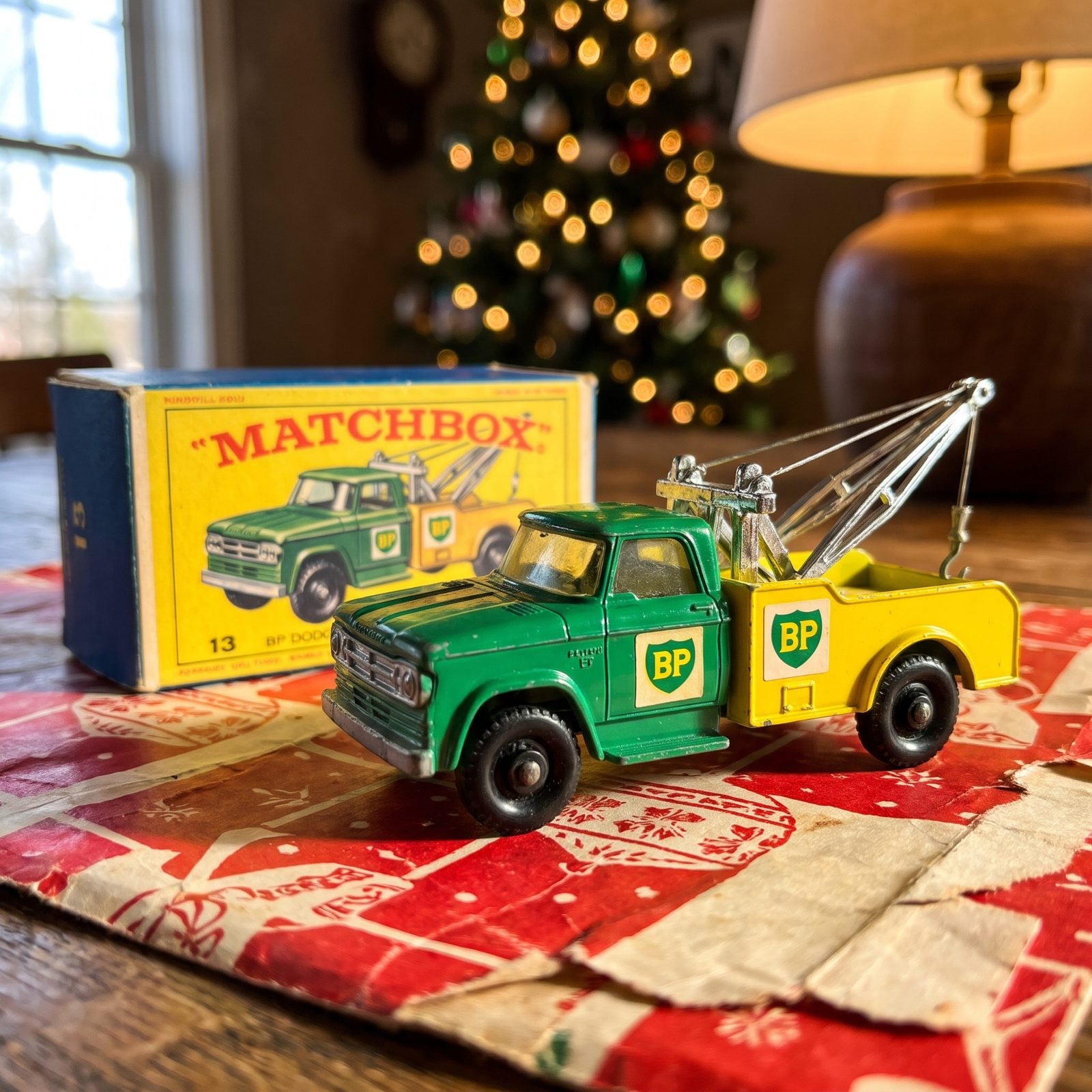
Here’s one where a tiny factory slip-up made a small fortune. The Matchbox No. 13 BP Dodge Wrecker normally wore a green cab over a yellow rear body. A rare variation flipped it: yellow cab, green body.
To a casual eye it’s the same little tow truck. To a Matchbox collector it’s a different animal entirely, and the reverse scheme pulls prices that dwarf the standard version. Boxed and bright, even the standard green-and-yellow version is the kind of regular-series piece that turns a pocket-money toy into a cabinet trophy. A correct, clean box adds real money on top.
1960s Matchbox Opel Diplomat in Sea Green
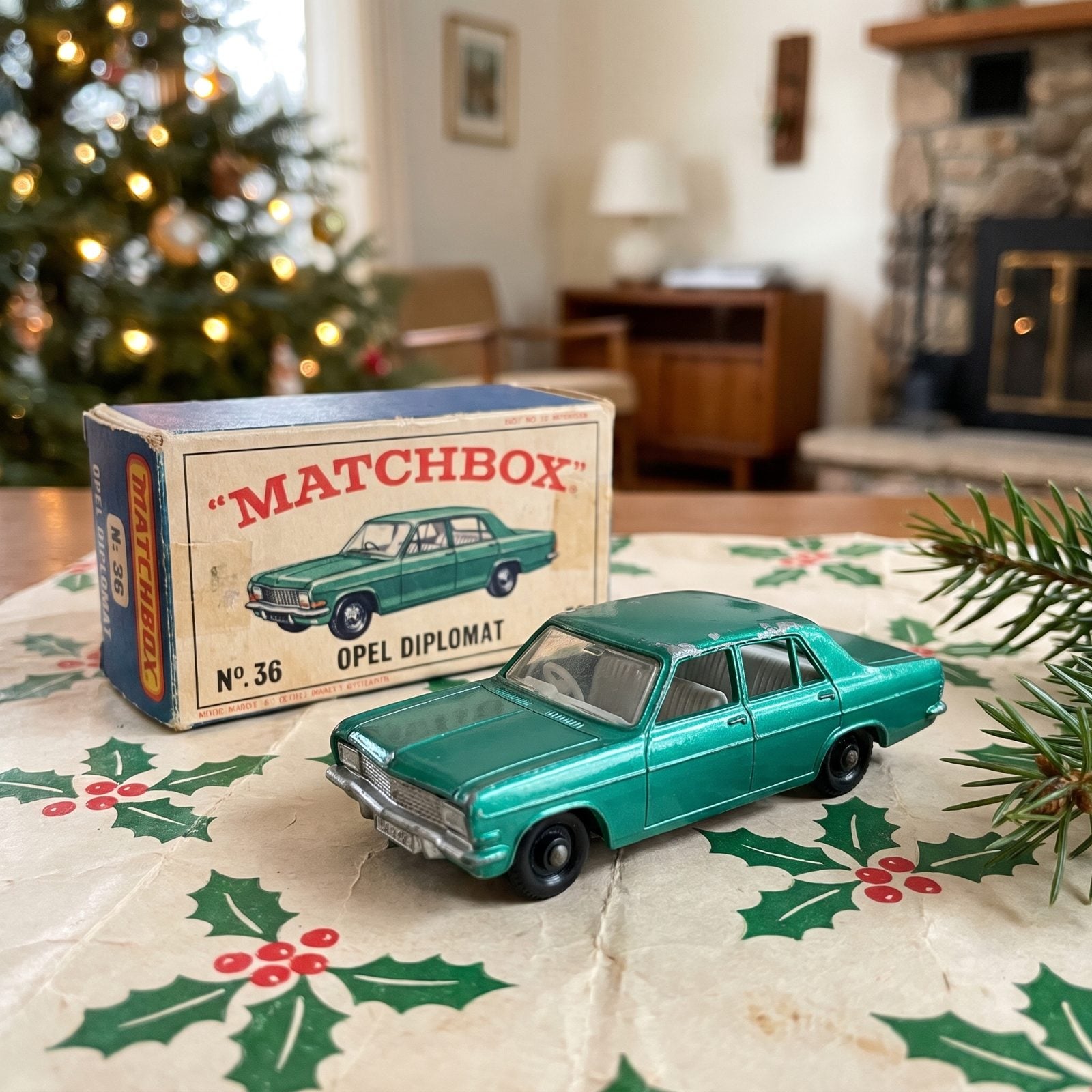
Matchbox made these by the millions, so you’d think they’d be worthless. Most are. The sea green Opel Diplomat is the catch, though — the common color turns up at every swap meet for pocket change, but the rarer paint variations with the right interior and an unsplit box run into the hundreds for serious Matchbox people.
What separates a cheap car from an expensive one is almost invisible to the rest of us. Wheel type. Interior color. A box style that only sold one year. Collectors carry loupes for a reason, and after an afternoon squinting at wheel hubs you start to understand why.
1970 Tomica Black Box Nissan Fairlady Z 432
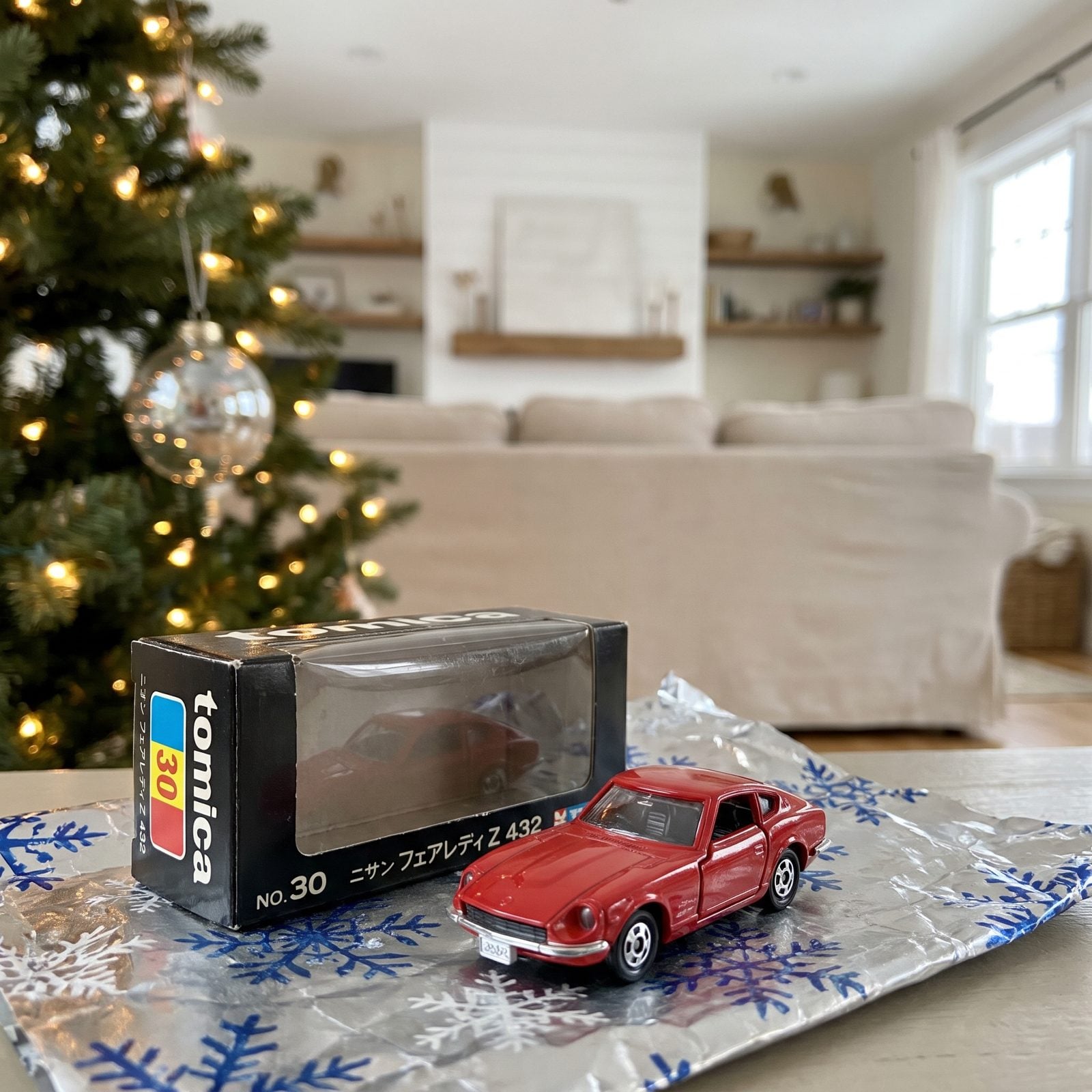
Early Tomica cars came in a black box, and that phrase alone makes collectors sit up. The first Japanese-market releases, from 1970 and the few years after, are the ones people chase. The Fairlady Z 432 — modeled on the real S30 with the twin-cam engine — is a favorite because the car itself is a legend.
Loose, these are affordable. Boxed and mint, the earliest black-box examples climb hard, especially outside Japan where the packaging rarely survived the trip home.
1970s Tomica Black Box Toyota 2000GT
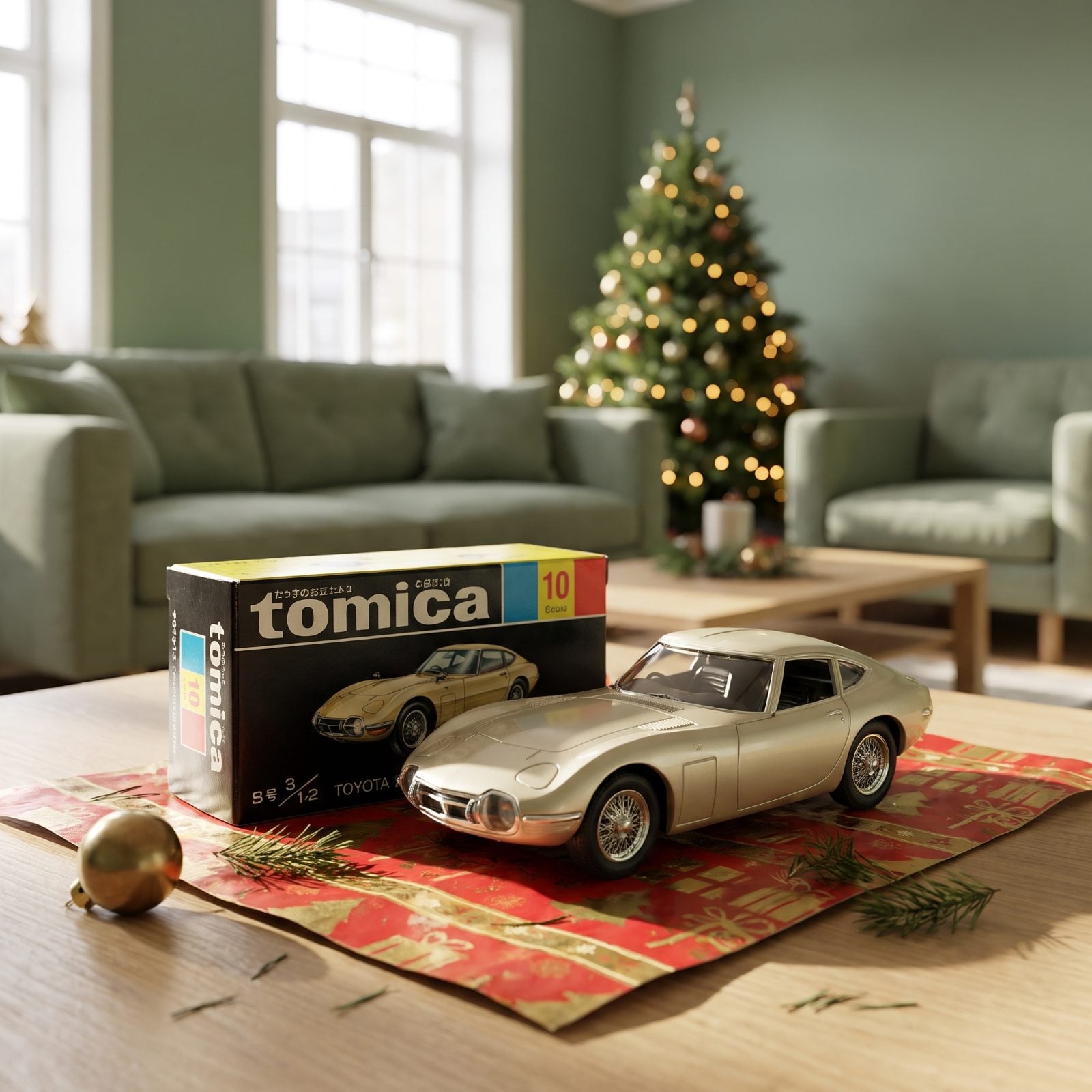
The real Toyota 2000GT is a seven-figure car. A diecast model is the only one most of us will ever park on a coffee table, and that’s part of why the car has a following all its own in miniature.
The long low fastback translated beautifully to diecast, and the black-box era examples carry the premium. Good condition is brutal to find because kids loved them — which is exactly why a crisp boxed one stands out.
1960s Yonezawa Battery-Operated Cadillac Tin Toy Car
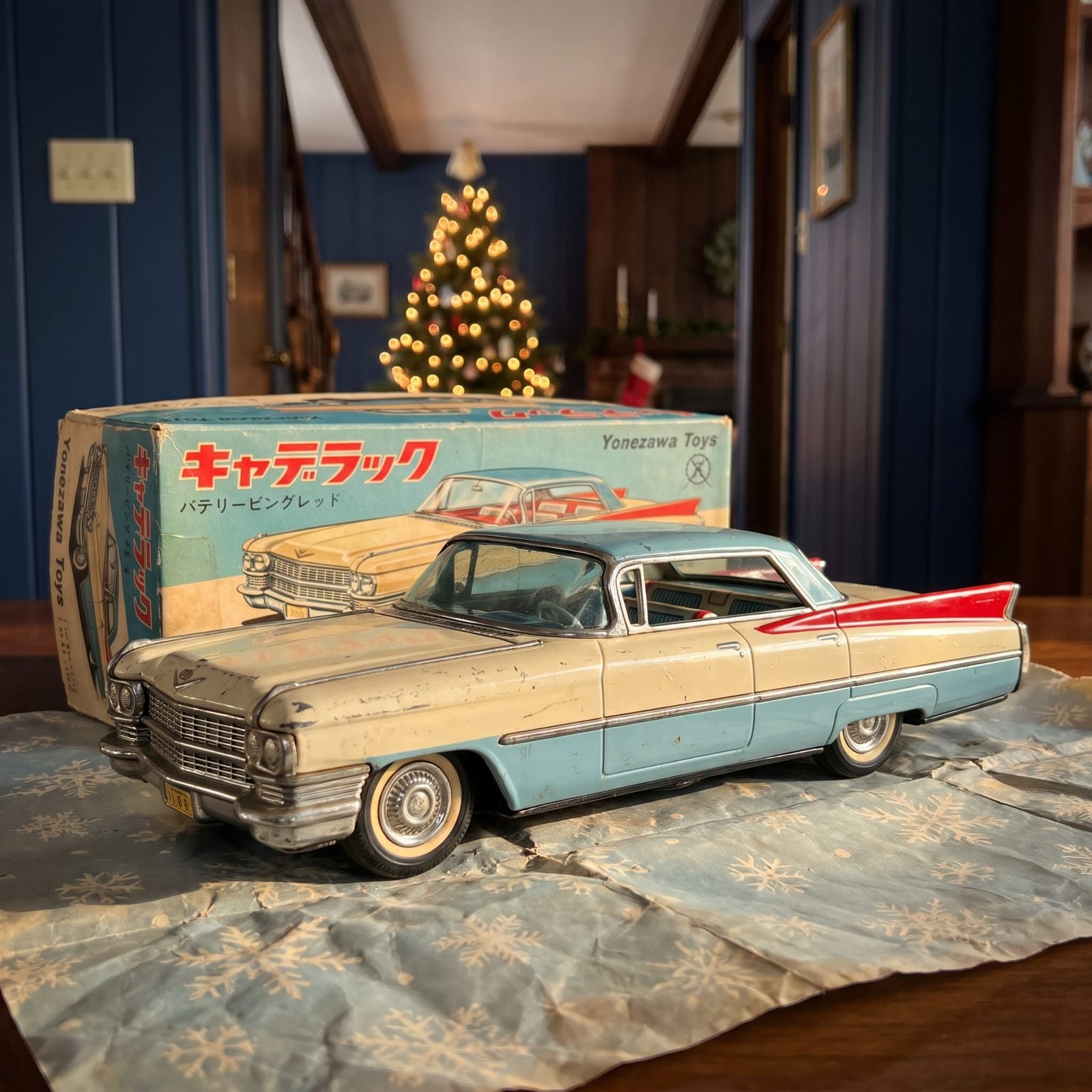
Japanese tin toys were the souvenir America brought home from the postwar years, and makers like Yonezawa were among the best at it. Big battery-operated Cadillacs like this one are the showpieces — lithographed bodies long as a shoebox, tin fins, little lights that still blink if you’re lucky and the battery contacts haven’t corroded.
These are fragile in the way tin is fragile. A dented fin or a flaked lithograph drops the value fast. A clean example with a working motor and the original illustrated box can run well into the thousands at the right sale.
1960s Bandai Battery-Operated Ford Mustang Tin Car
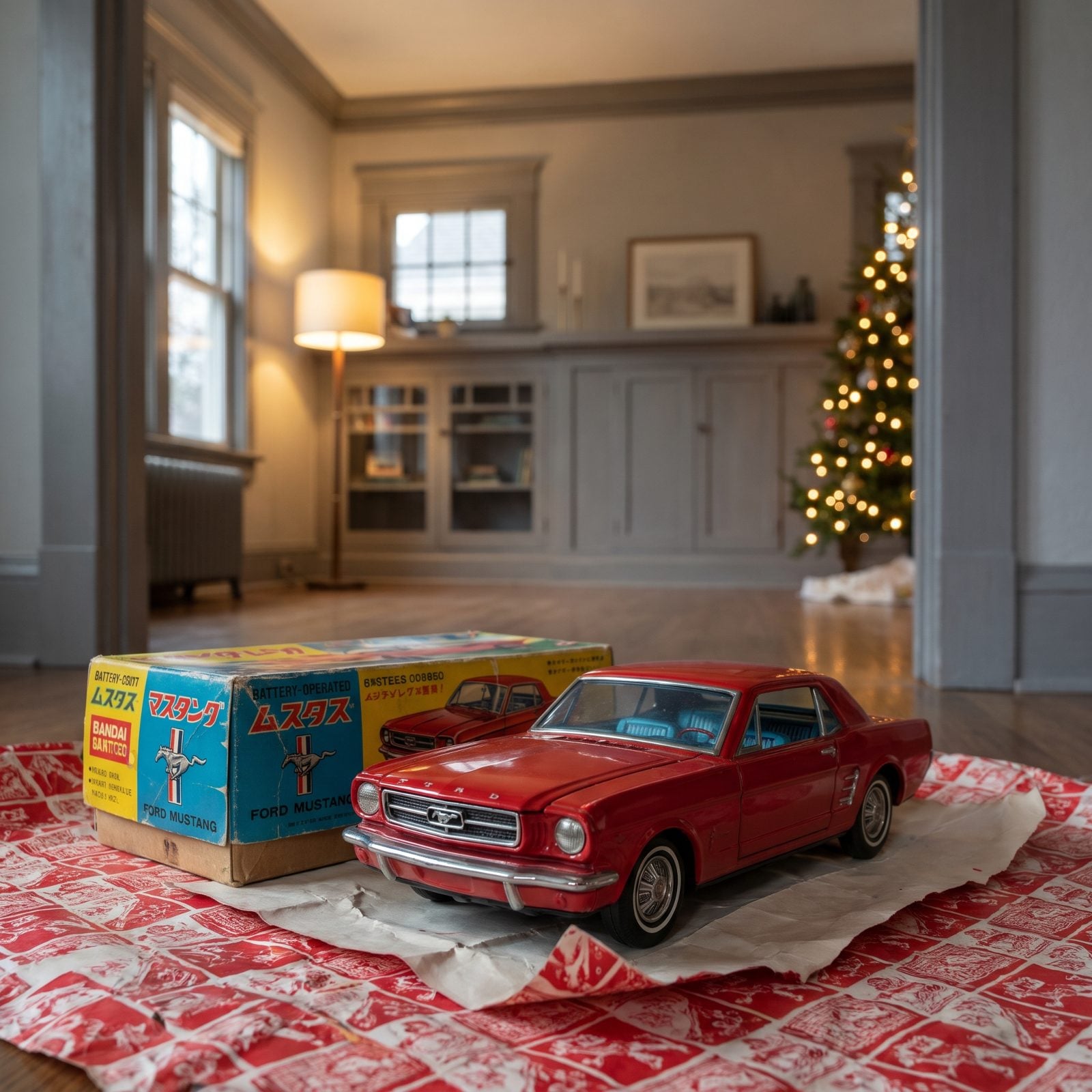
Bandai built tin Mustangs while the real Mustang was still new news, and that timing is the whole draw. The toy captured the car at the exact moment it became a cultural object, and collectors who love the 1965 fastback want the toy to match.
Red ones photograph best and tend to lead the bidding. Watch for repro boxes — they’re everywhere now. An original box with honest shelf wear beats a suspiciously perfect reproduction every time.
1960s Ichiko Tinplate Highway Patrol Car
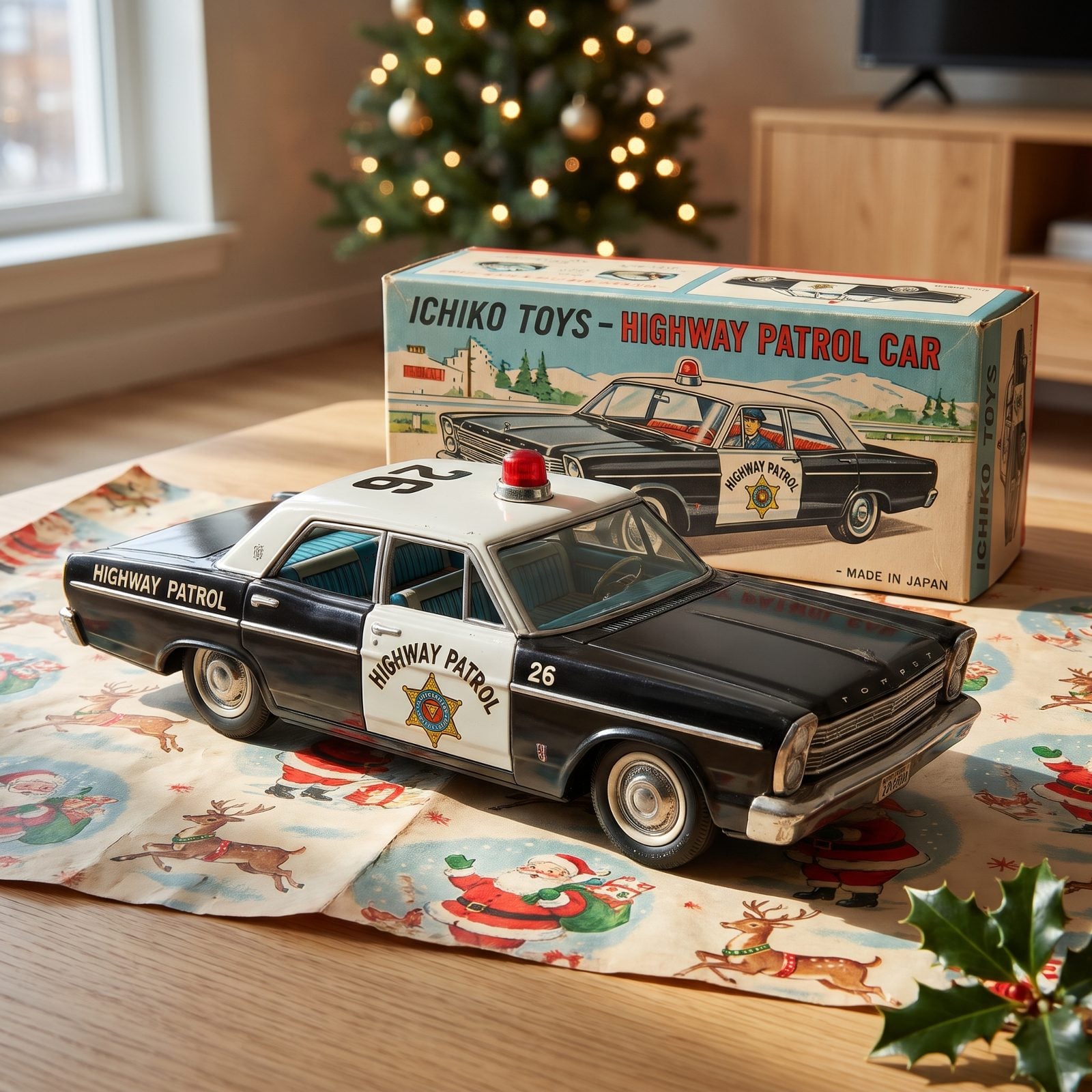
Ichiko specialized in big tin cars, and the Highway Patrol sedans are the ones people hunt. Black and white, lithographed door numbers, a little red roof light that sold the whole fantasy to every kid who got one.
Size is part of the value here. These were generous toys, nearly a foot long in some versions, and that scale is what makes a clean survivor feel like a genuine piece rather than a trinket. Chipped lithograph on the roof is the common flaw — check there first.
1960s Masudaya Modern Toys Radicon Bus
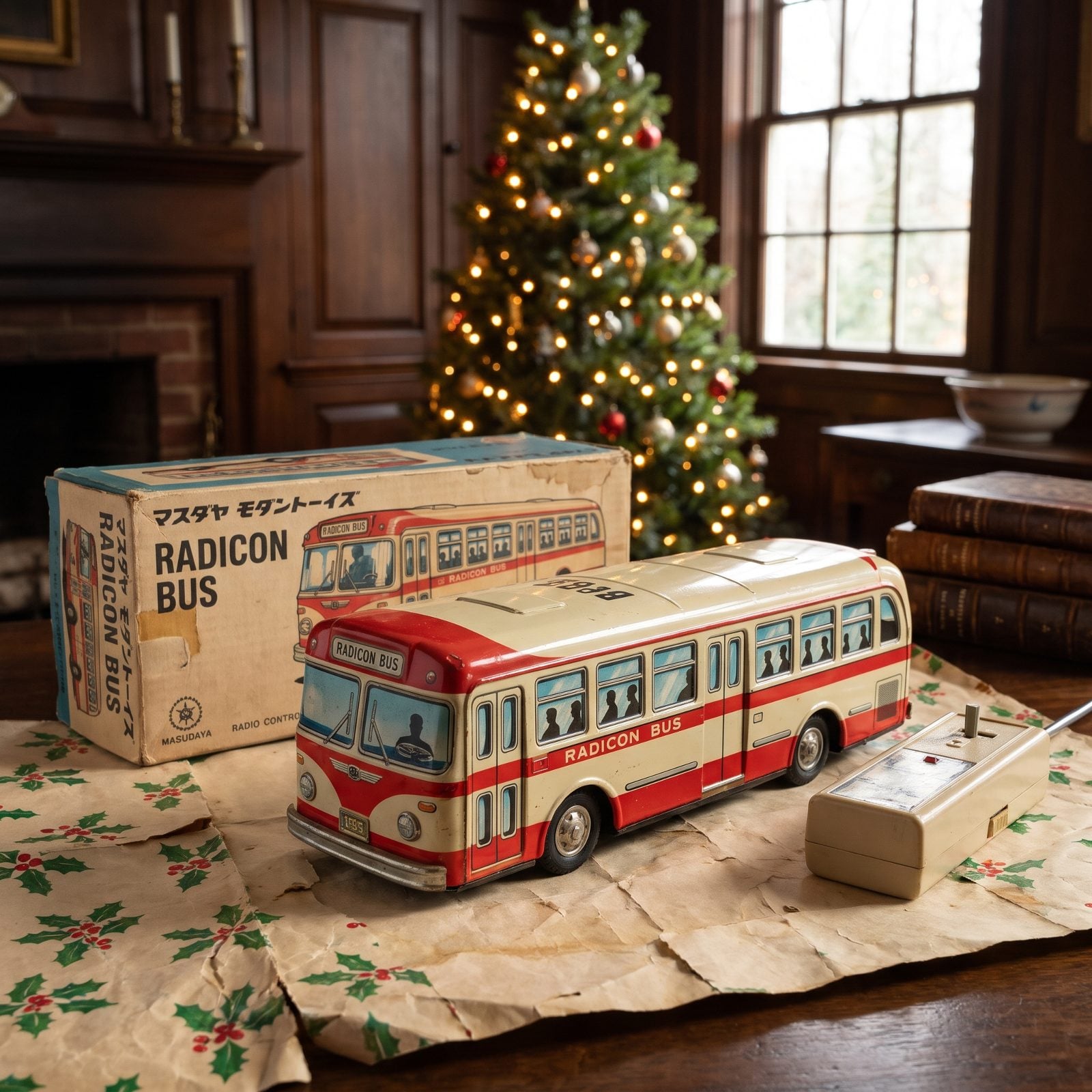
The Radicon toys were ahead of their time — radio-controlled when most toys were a wind-up key and a prayer. Masudaya’s Radicon Bus is the one that gets the grail talk, a long lithographed tin city bus you steered from a separate control box.
Complete is the key word. The bus, the controller, the box, all working. Break up that set and the value collapses. Find all three together and you’re looking at one of the most coveted Japanese tin toys ever made, routinely a four-figure piece and climbing for pristine examples.
1969 Iverson Drag Stripper Bicycle
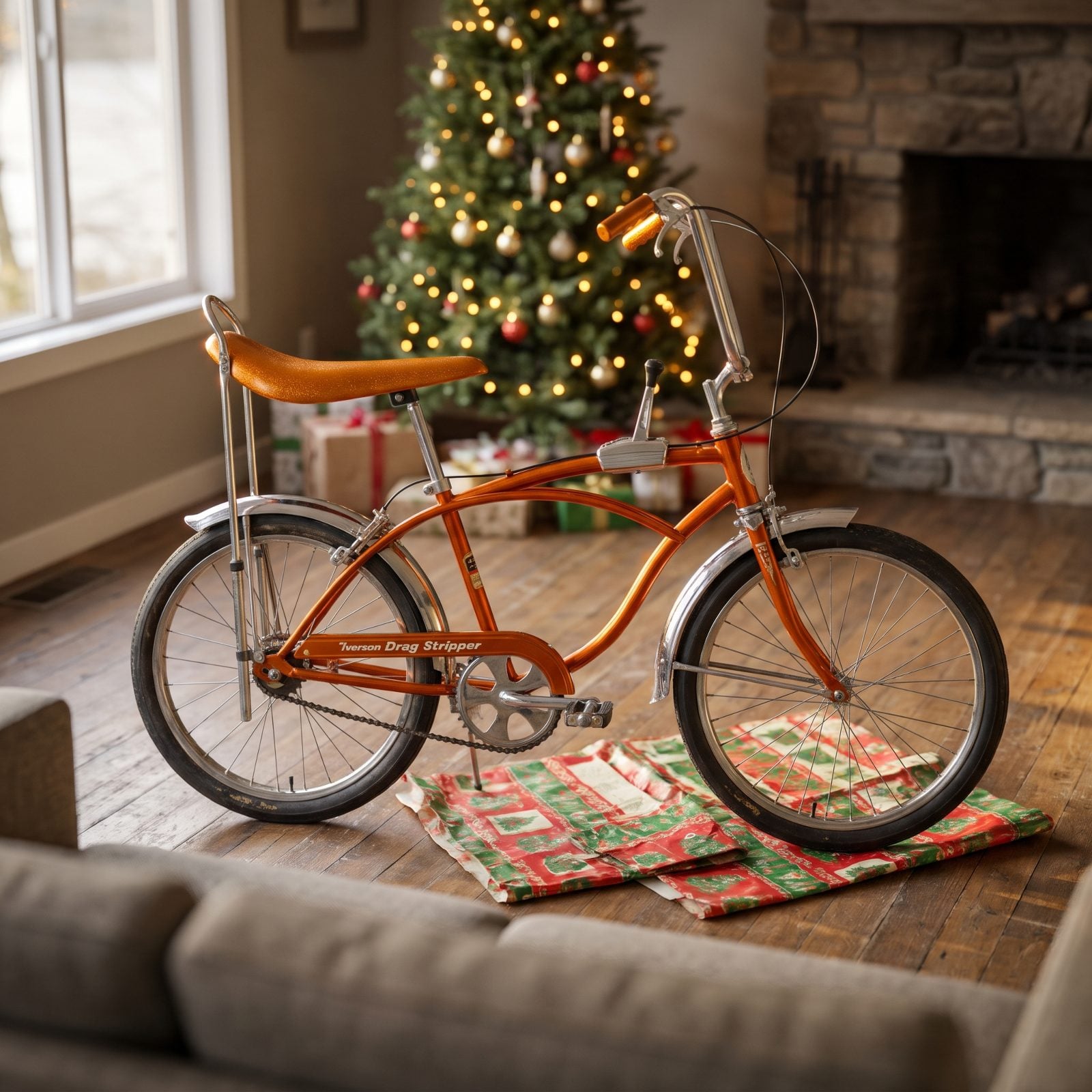
Before BMX there were muscle bikes, and the Iverson Drag Stripper went full dragster. Long sparkle banana seat, a tall chrome riser bar with sparkle grips, a stick shifter bolted to the frame, matching spoked wheels front and back. It was a kid’s idea of a hot rod, which is pretty much what it was.
These are wildly collectible now because so few survived intact. The shifters broke, the sparkle seats cracked, the chrome pitted. An all-original Drag Stripper with its decals and a working shifter is a genuine find, and the pricing follows.
1974 Yamaha Moto-Bike BMX Bicycle
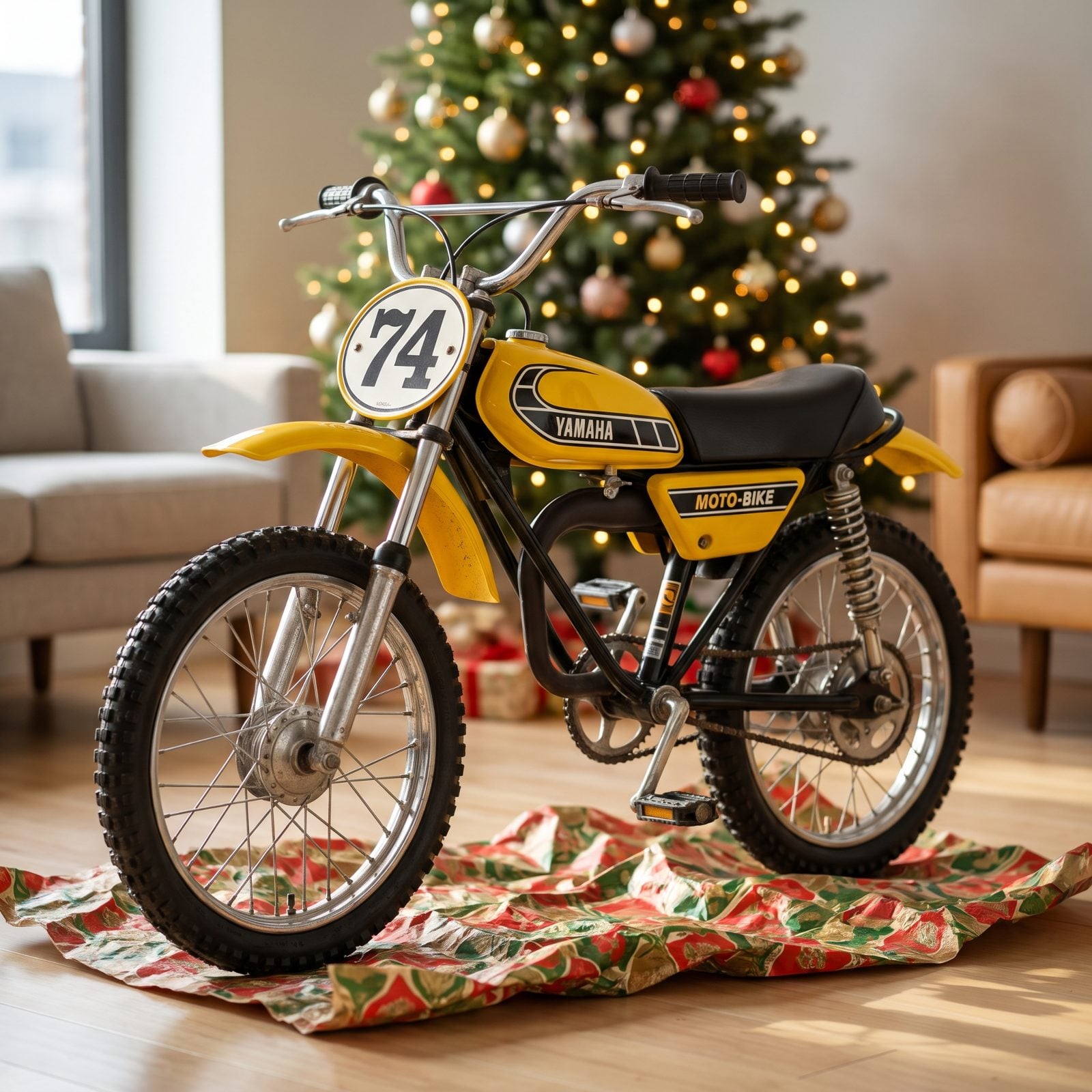
Yamaha put a motocross look on a kid’s bike and timed it right as BMX was catching fire in California. The Moto-Bike mimicked a real dirt machine down to the faux tank and the handlebar number plate, and kids who couldn’t have a real motorcycle wanted one badly. Who could blame them?
Early BMX history is thin on survivors, which is what drives the prices. Period-correct examples with original graphics are what the serious vintage BMX crowd pays for, and reproduction parts can gut the value if a collector spots them.
1975 Mongoose Motomag BMX Bike
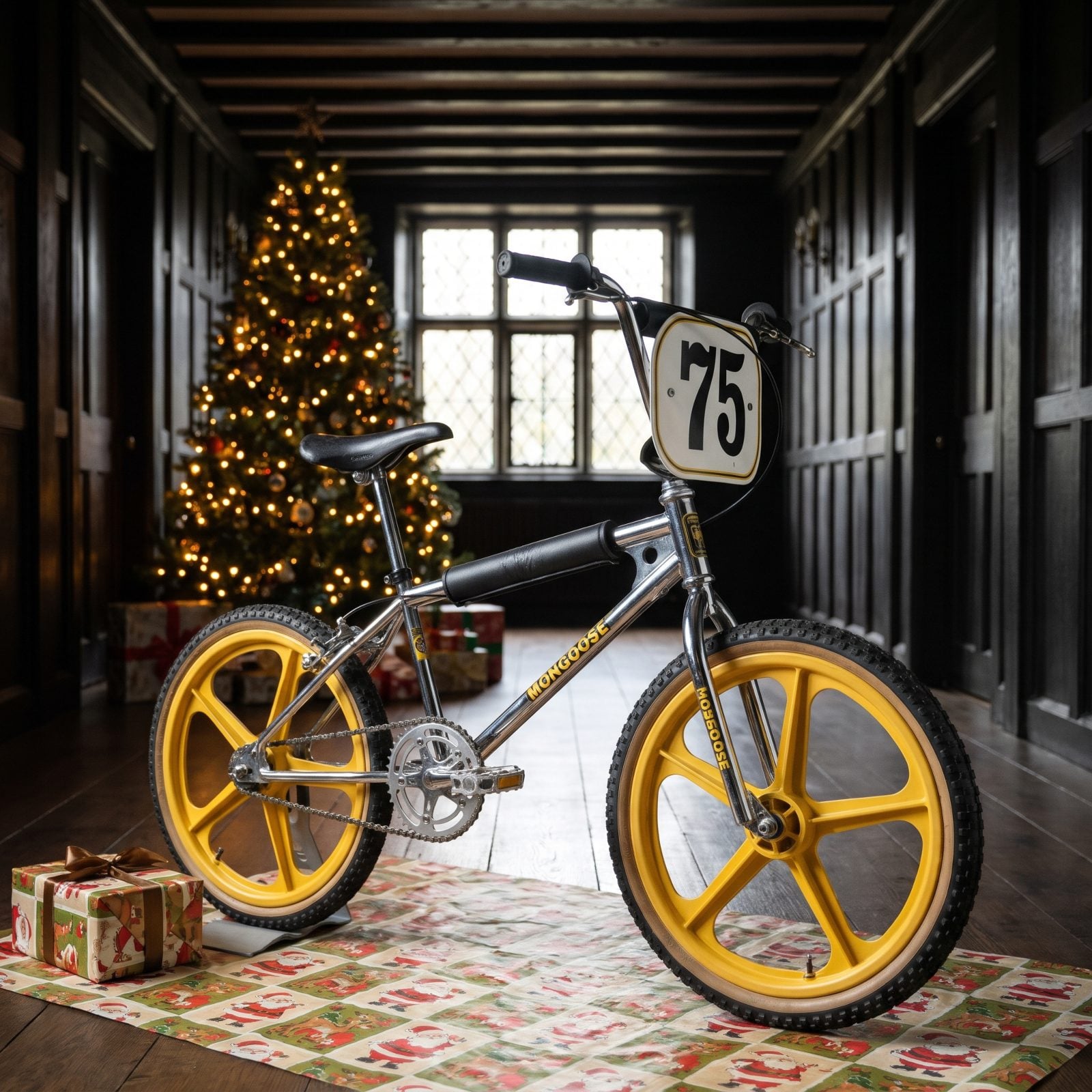
The Mongoose Motomag is holy ground for vintage BMX people. Those cast five-spoke mag wheels were the mid-70s BMX look, full stop, and the Mongoose frame earned a reputation that still sells bikes under the name today.
Here’s the catch that trips up newcomers: the early-era parts matter more than the frame alone. Original Motomag wheels, correct components, honest patina. A real 1975 build with the right pieces is a museum item in the BMX world. A frame bolted together from later parts? Just a bike.
1974 Redline Squareback BMX Bike
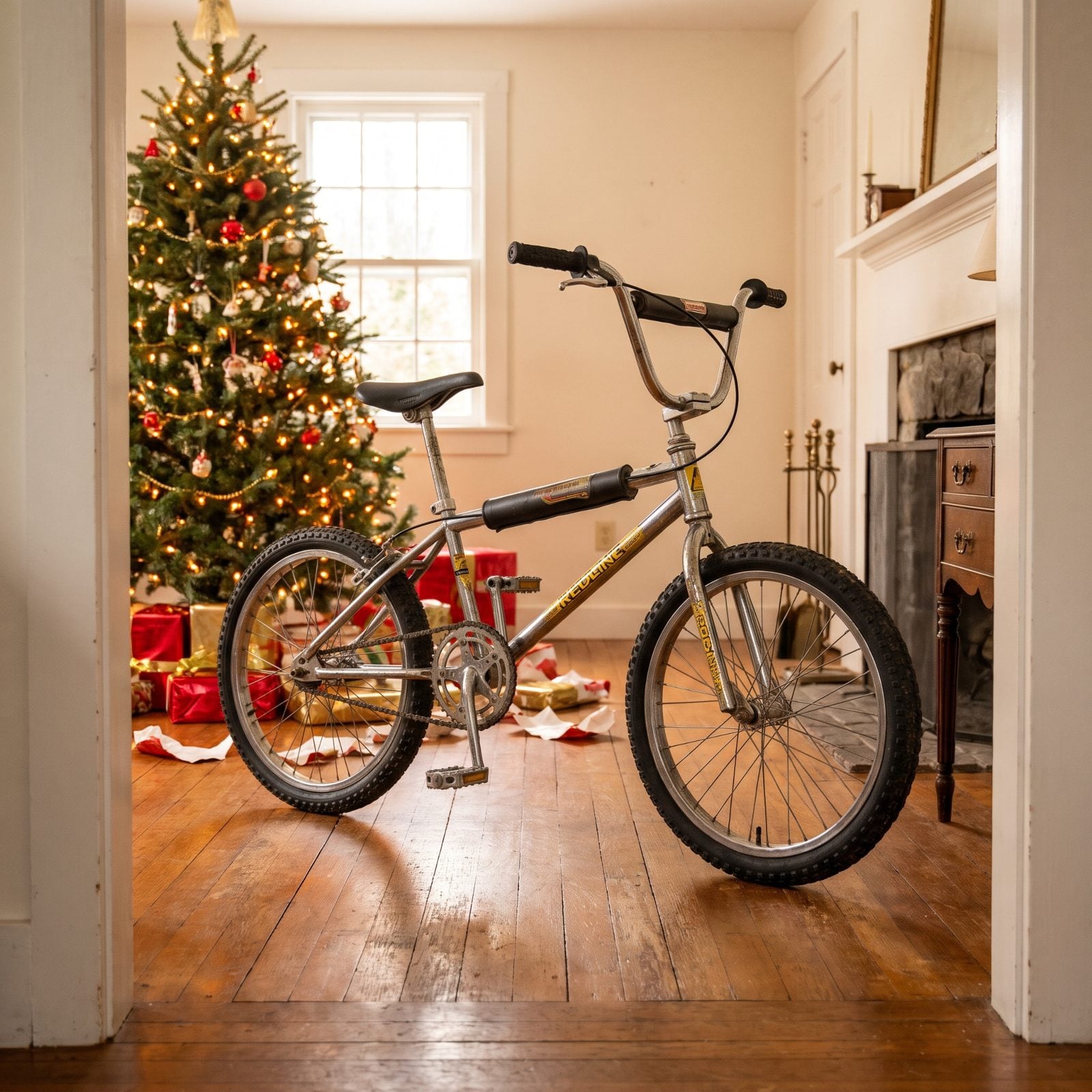
Redline built the Squareback for kids who landed hard and came back for more. That chrome round-tube frame was built to take the abuse, and it’s why collectors chase these decades later.
Find one with original chrome and uncut decals and you’re looking at serious money. Here’s the part nobody mentions: most got repainted, re-welded, or picked apart for spares in the early eighties, which is why an untouched survivor turns up so rarely. Chrome that’s pitted but original beats a shiny respray every time. Buyers want honest wear, not somebody else’s restoration.
1978 Cook Bros. Racing BMX Bike
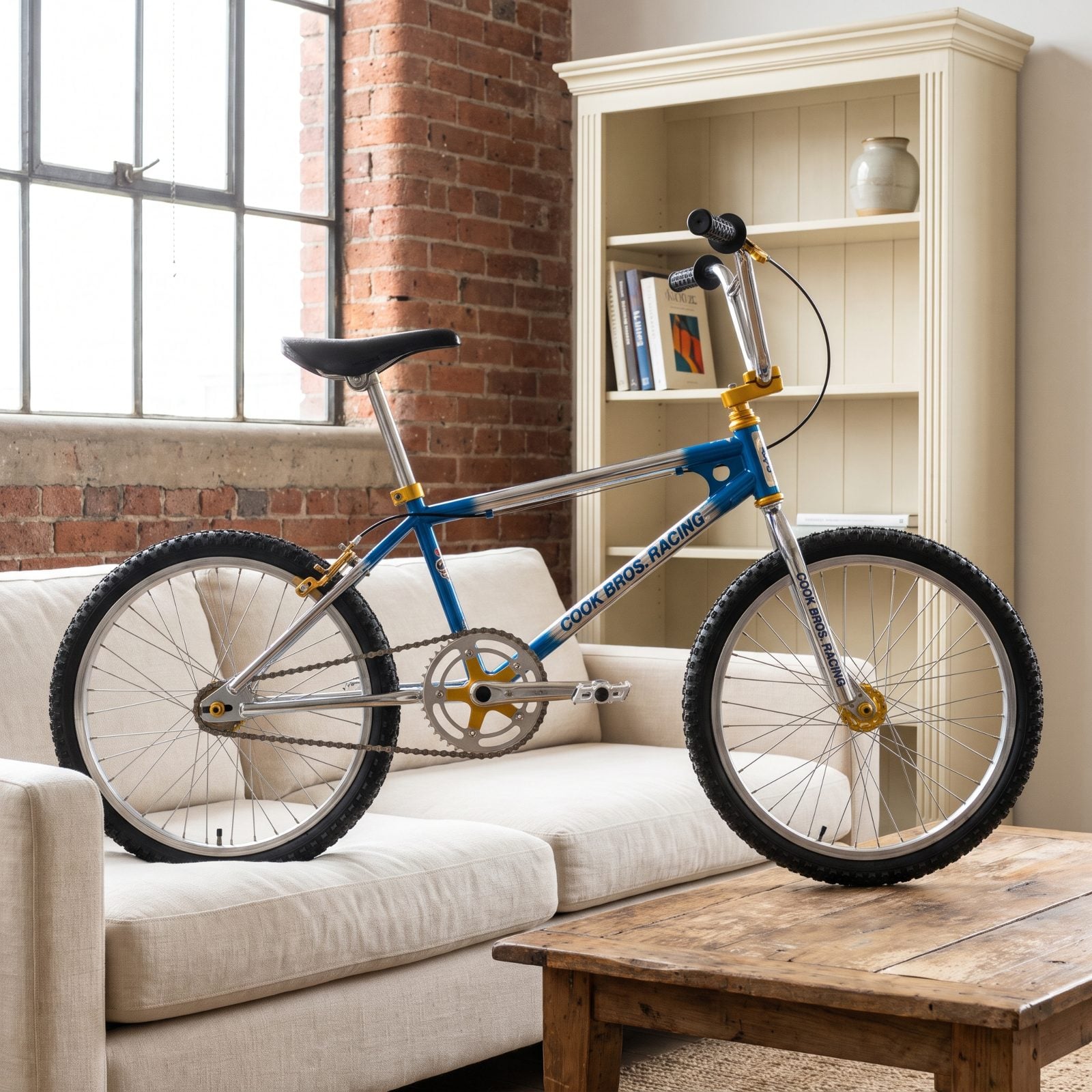
Cook Bros. didn’t mass-produce. They machined parts by hand in California, and that’s exactly what collectors obsess over now.
The anodized components, the drilled dropouts, the whole look of a bike built by people who actually raced. A complete original example trades in a range that would make a 1978 buyer choke on his eggnog. Anodizing is the tell. Once it fades or gets polished off, the value walks out the door, and the frames that held onto their factory finish are the ones that command real attention when the gavel drops.
1979 SE Racing PK Ripper
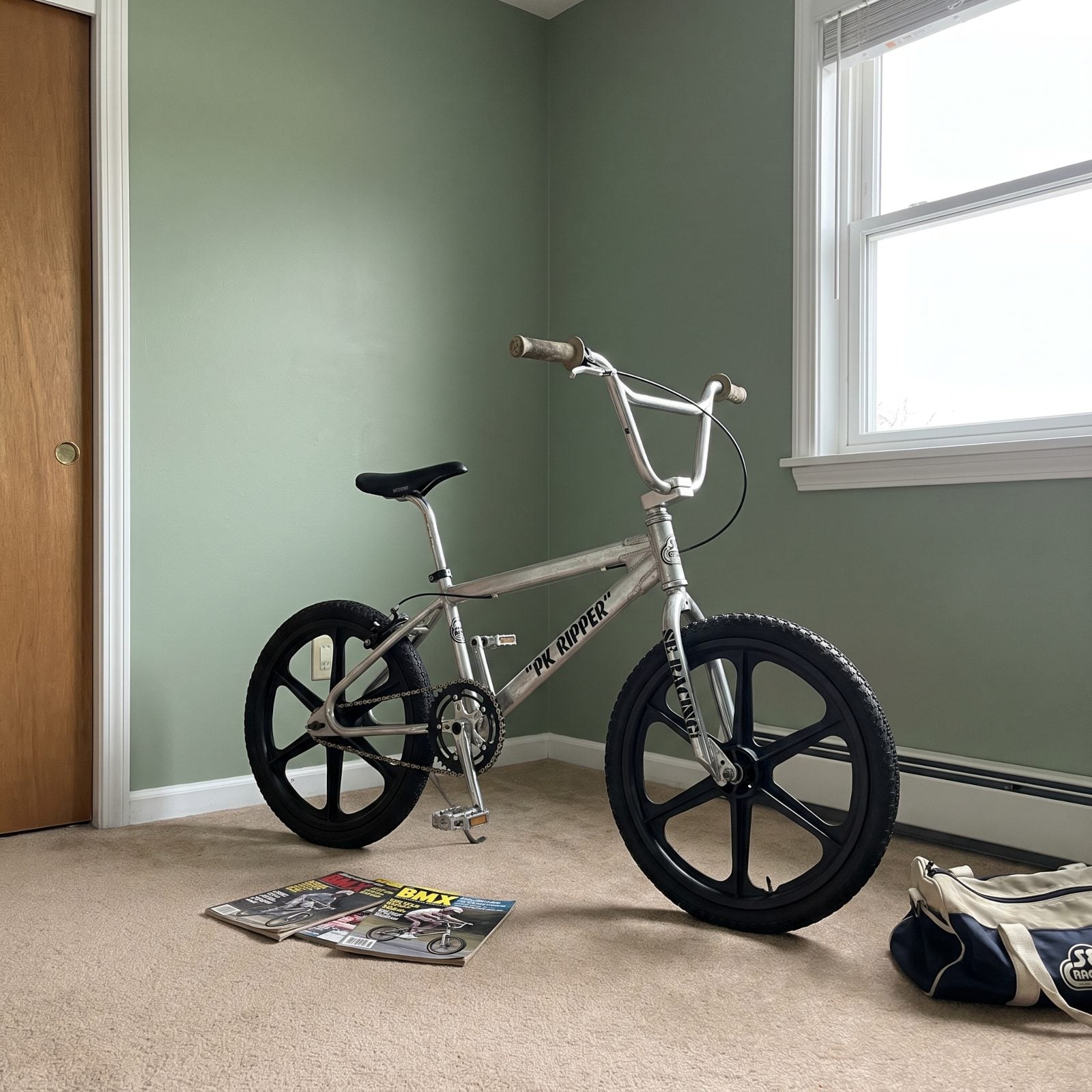
The looptail PK Ripper is BMX royalty.
Light, chromoly, built to race, and still made in modern form, which is a big part of why the originals carry such weight. First-year examples with the correct forks and mag wheels are the grails. Watch for reproduction parts bolted onto a real frame. The market has gotten sharp about matching the serial to the year, and a frame wearing the wrong decals or later mags loses a chunk of its number fast.
1969 Marx Original Big Wheel
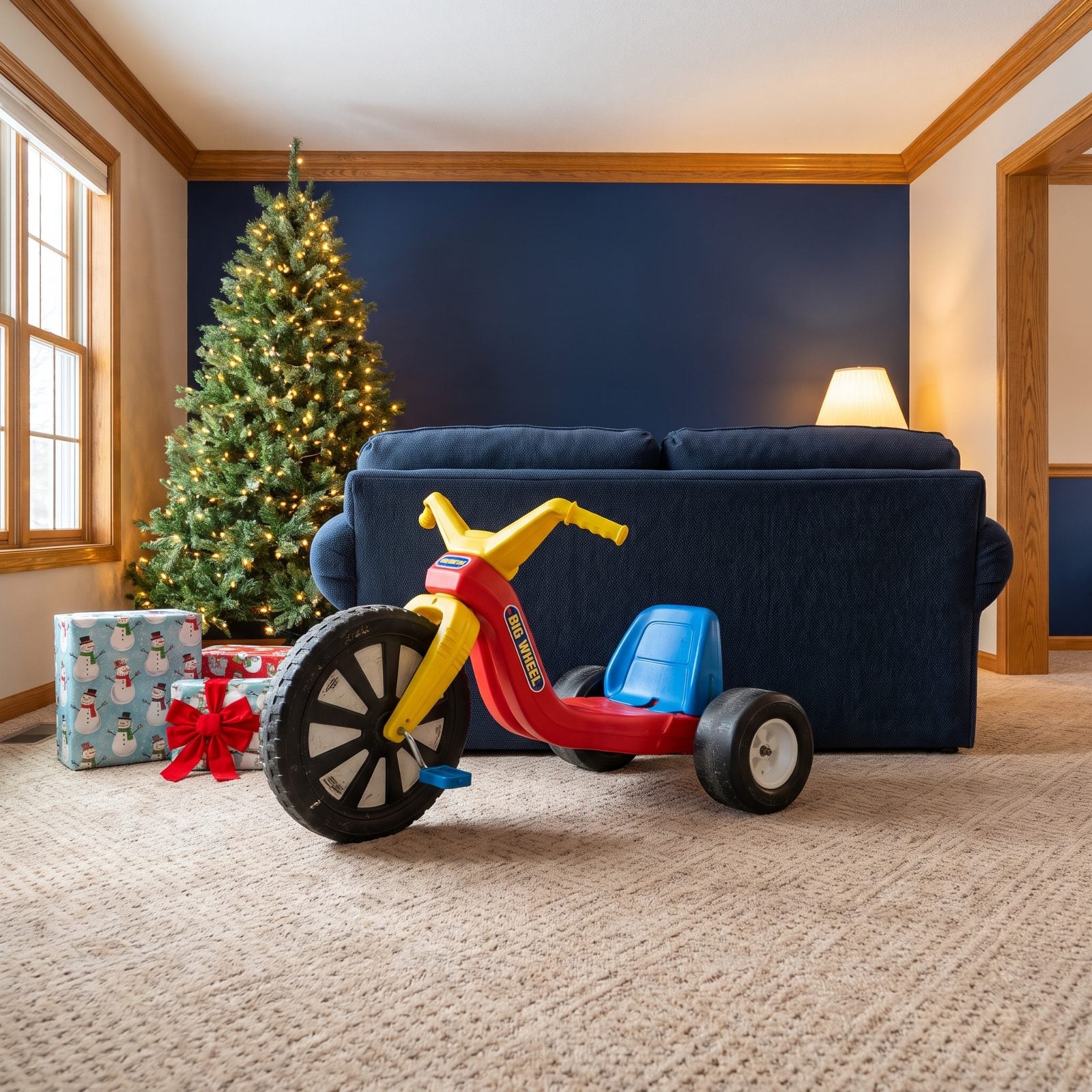
Every kid who grew up in the seventies heard that plastic front wheel scraping down the driveway. The Marx Big Wheel defined low-slung, pedal-powered mayhem.
Early 1969 examples in original paint, with the decals intact and the seat uncracked, pull strong prices now. Trouble is, plastic doesn’t age gracefully. Sun turns it brittle, and the big front tire wears flat from years of hard cornering. Find a complete one with readable graphics and a wheel that still holds tread and you’ve found something genuinely scarce.
1975 Marx Green Machine
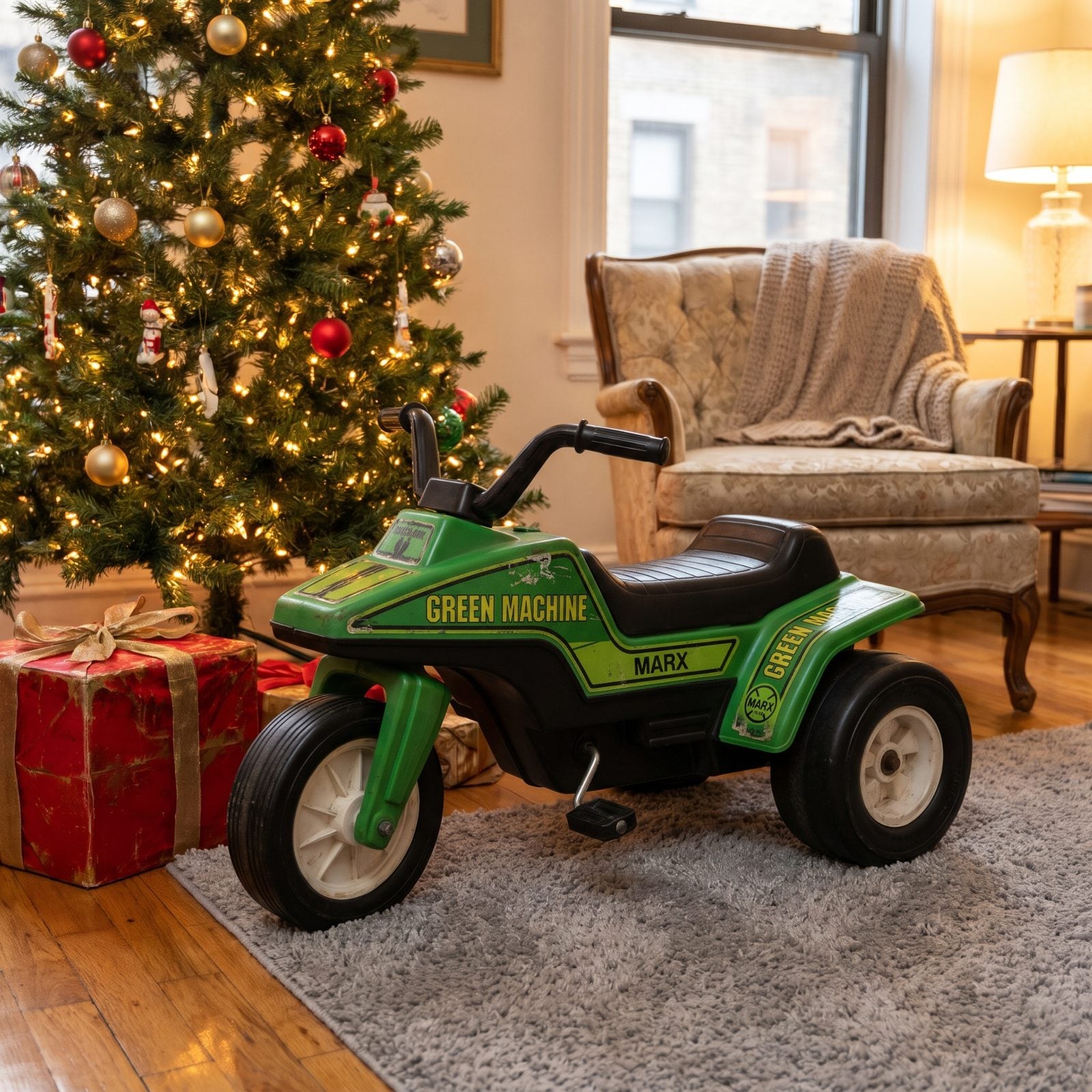
The Green Machine skipped the Big Wheel’s giant front wheel for a low three-wheel trike stance, with fat rear tires and a forked front wheel about the same size, and made it meaner. Twin steering levers at your sides, crank them hard and you spun it like a tank.
Collectors love them because they’re less common than the Big Wheel and the styling still looks aggressive. The steering levers are the weak point, though. They snap, the grips go missing, and a Green Machine without working levers is just a green shell gathering dust. Complete and functional is the whole ask here.
1974 Honda Kick ’N Go Scooter
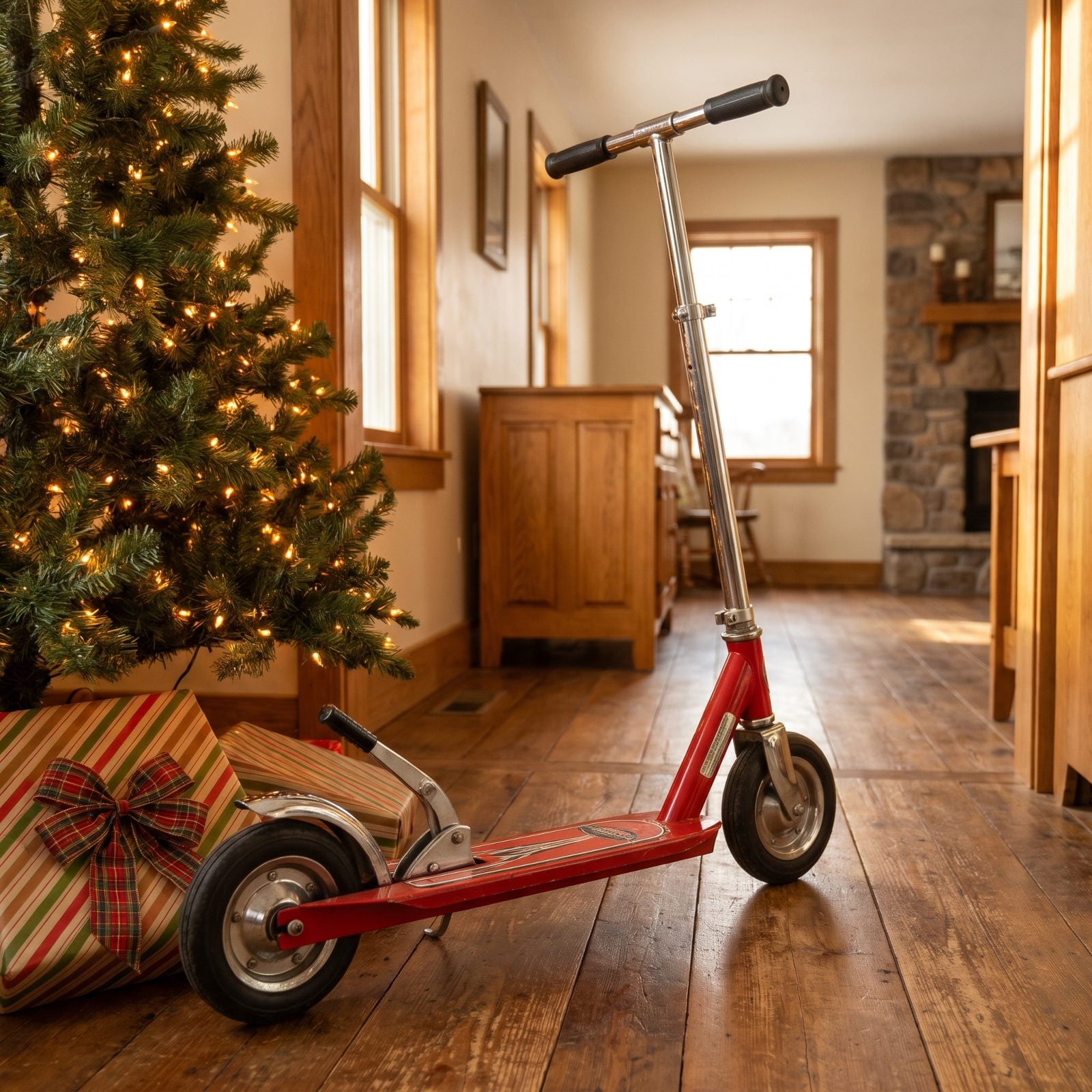
No pedals, no battery, just a foot lever on the rear deck that launched you forward.
The Honda Kick ‘N Go was odd enough to be memorable and clever enough to still work decades later. The driving mechanism makes or breaks it. If the lever and ratchet still engage, you’ve got a runner; if it’s seized or stripped, you’ve got a wall hanger. Original chrome and the period deck graphics push good examples well above what you’d guess for a kick scooter. Boxed ones? A different tier entirely.
1960s Murray Fire Truck Pedal Car
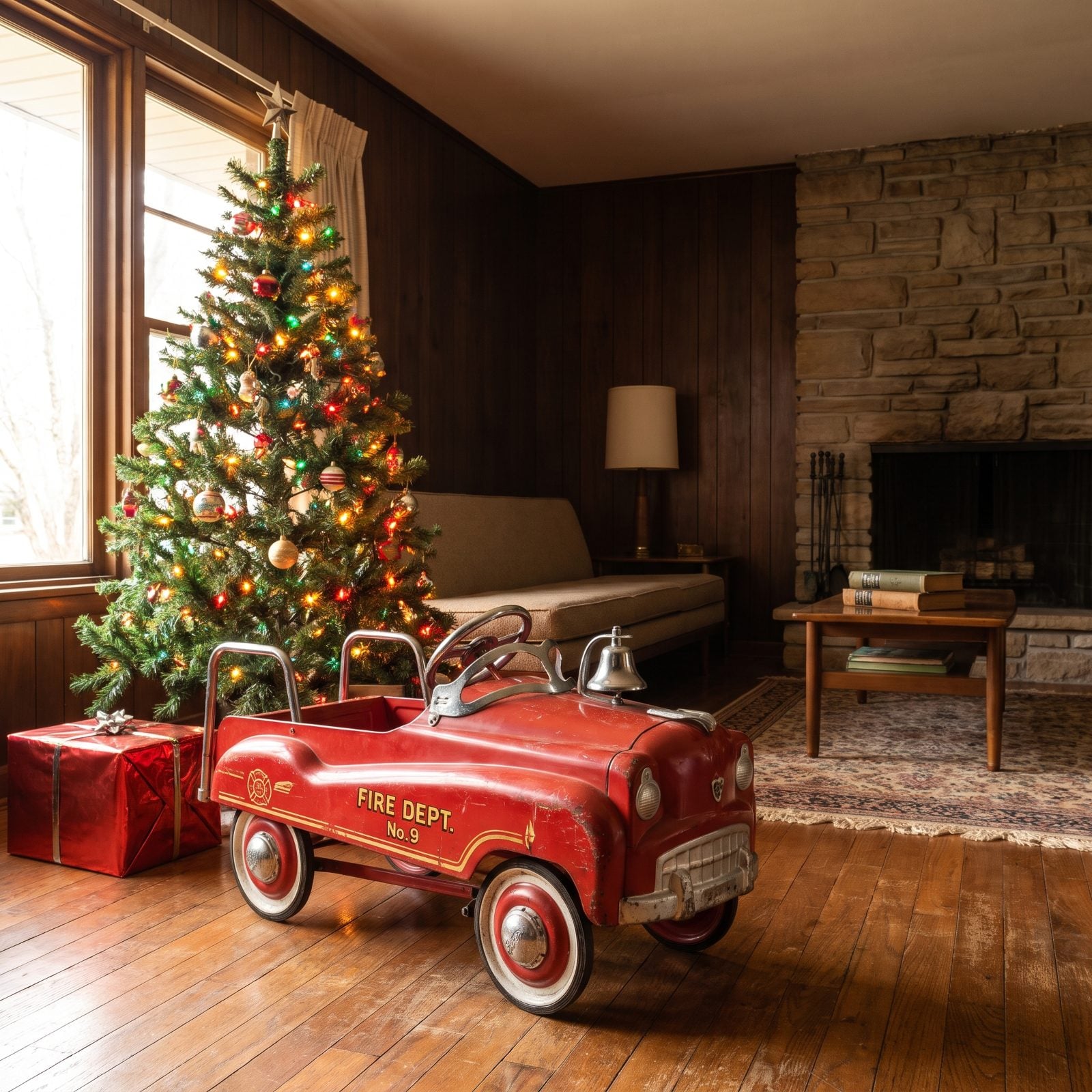
Pressed steel, real chrome, a working bell, and a ladder rack: Murray built pedal cars to survive the kids who drove them. Most didn’t survive anyway.
Value comes down to one thing. Original paint matters more than a glossy restoration, and the little accessories — the bell, the ladder, the hood ornament — go missing first. A complete Fire Truck with factory decals and its ladders still attached sits at the top of the pedal-car market. Rust-free originals are the ones worth chasing.
1960s Garton Tin Lizzie Pedal Car
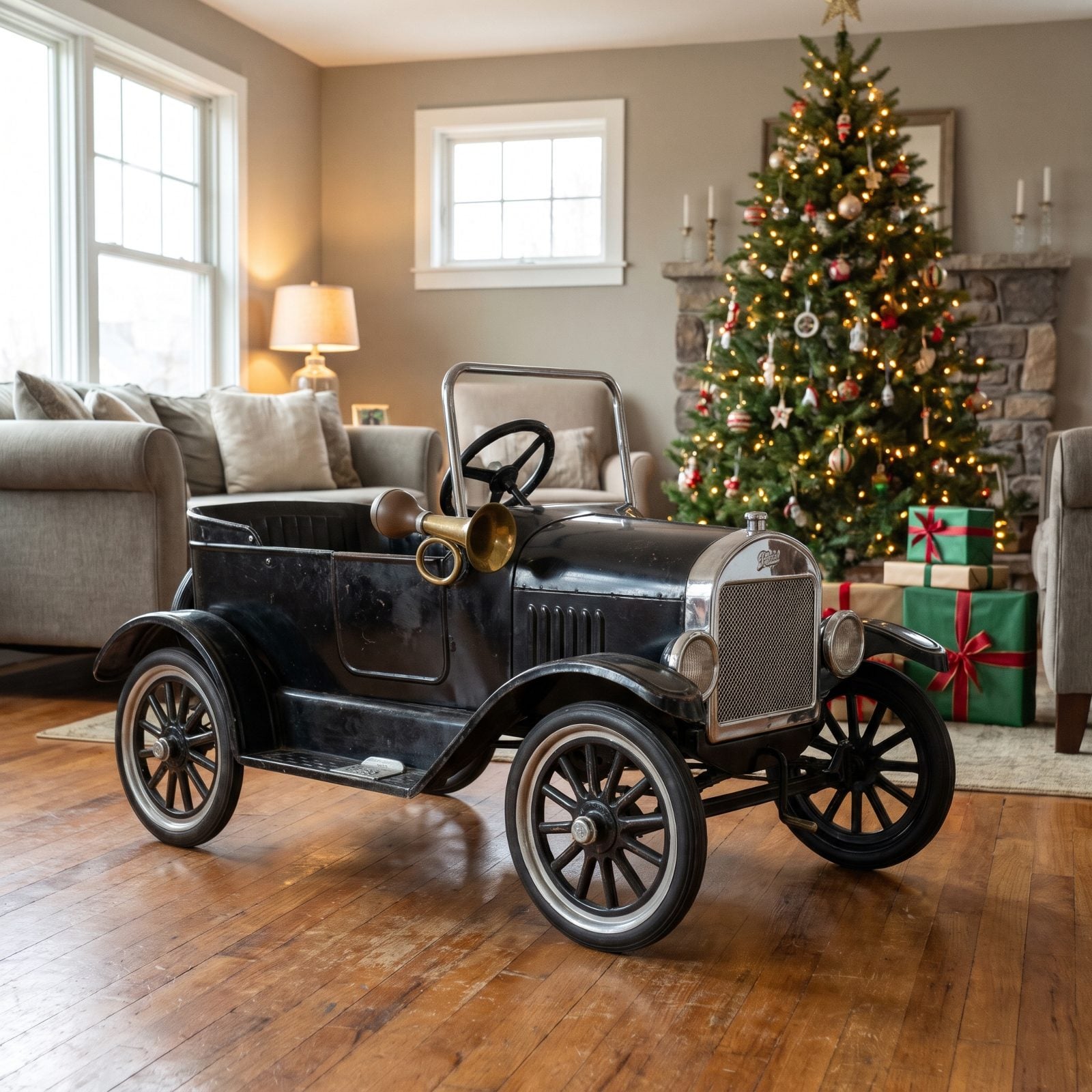
Garton styled the Tin Lizzie after an old Model T, right down to the tall grille and the brass trumpet horn. It was nostalgic even when it was new.
That old-timey look is exactly what makes it collectible now. Buyers check the brass horn, the chrome grille, and the chrome hubcaps first, because those are the parts that vanish. A Tin Lizzie with its horn still in place and its grille intact is worth real money. Repainted bodies drag the value down more than honest age ever will.
1963 Ideal Motorific Torture Track Set
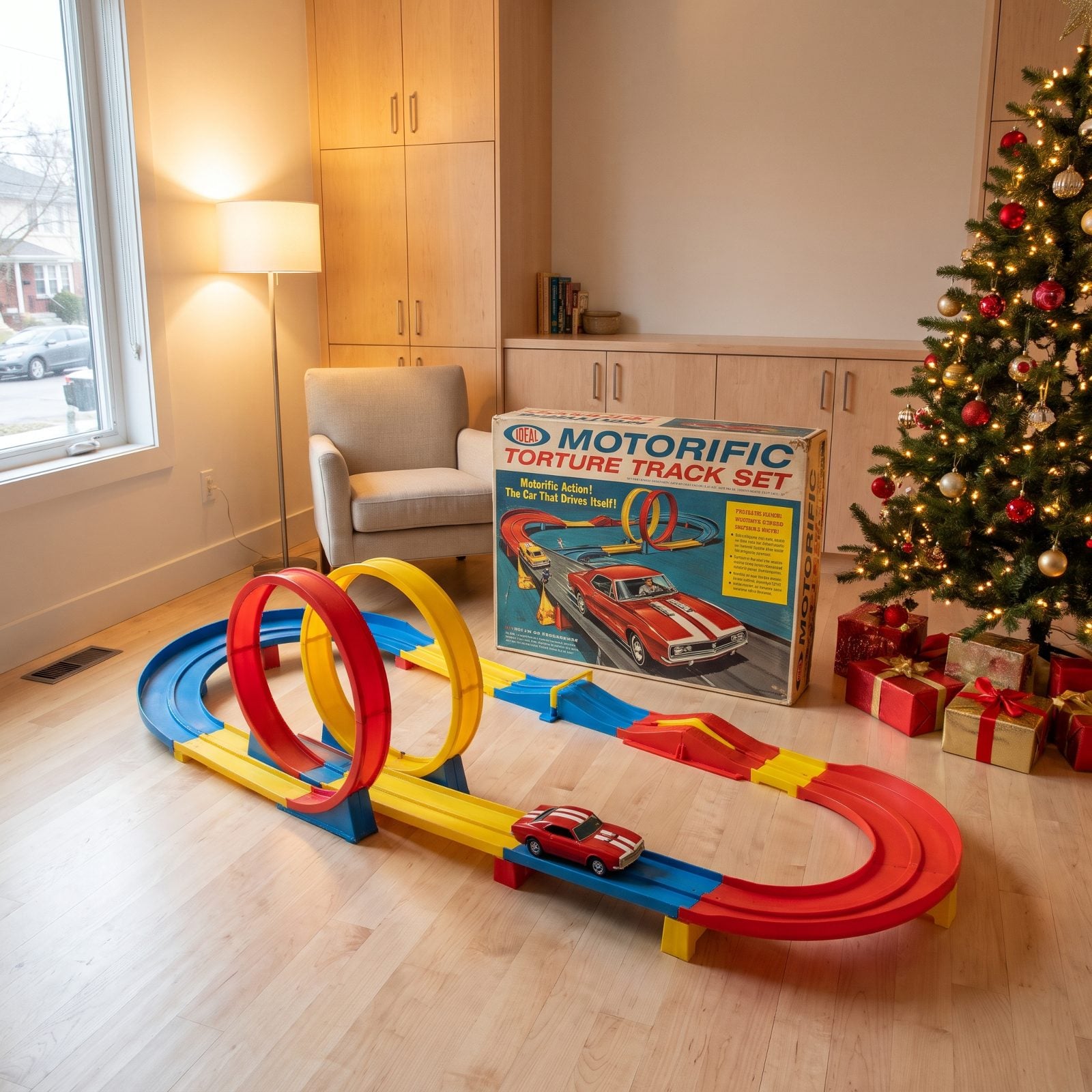
The Motorific cars ran on a motor pack and D-cells, and the Torture Track was built to punish them.
Ramps, banked curves, obstacles — all of it existed so you could watch a little car fight to survive the course. With this one, the box is half the value. That illustrated packaging, with its striped red muscle car, is what collectors want, and a complete set with all the track pieces, a running car, and a clean box sits far above a loose pile of plastic.
Loose track turns up cheap all day. The boxed, complete sets are where the money hides.
1960s Scalextric James Bond 007 Slot Car Set
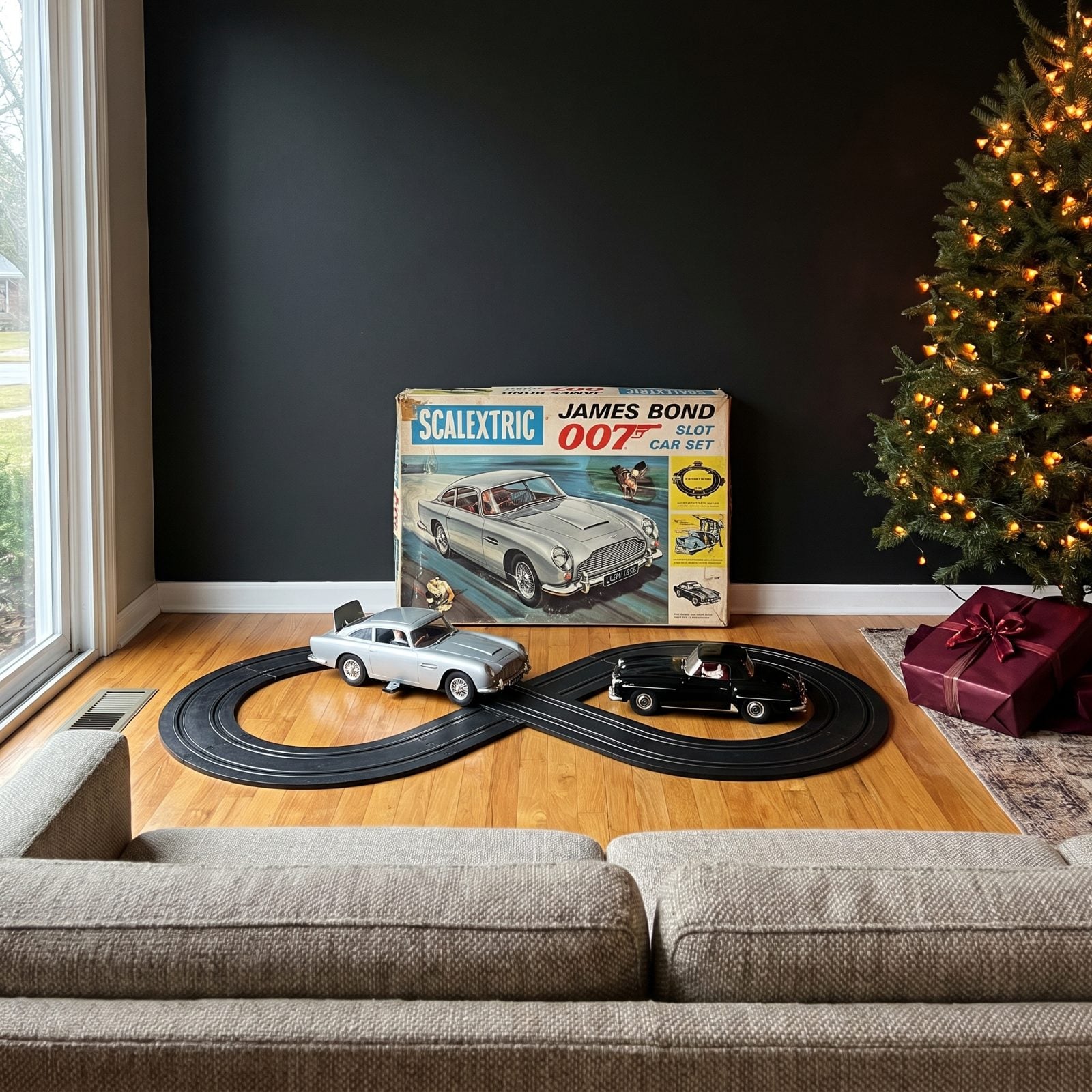
Scalextric put the Aston Martin DB5 on a slot track, complete with an ejector seat that flipped a tiny figure out of the roof. For a kid in 1965, nothing under the tree beat this.
Which is exactly why it’s pricey now. The DB5 with a working ejector, the rival car, the complete track, and the original 007 box together make a grail set. The silver DB5 almost never survives with its paint clean and its gadget intact. Boxed, complete, and functional is a rare combination, and the market pays for it.
1976 Tamiya Porsche 934 Turbo RSR Radio-Controlled Car
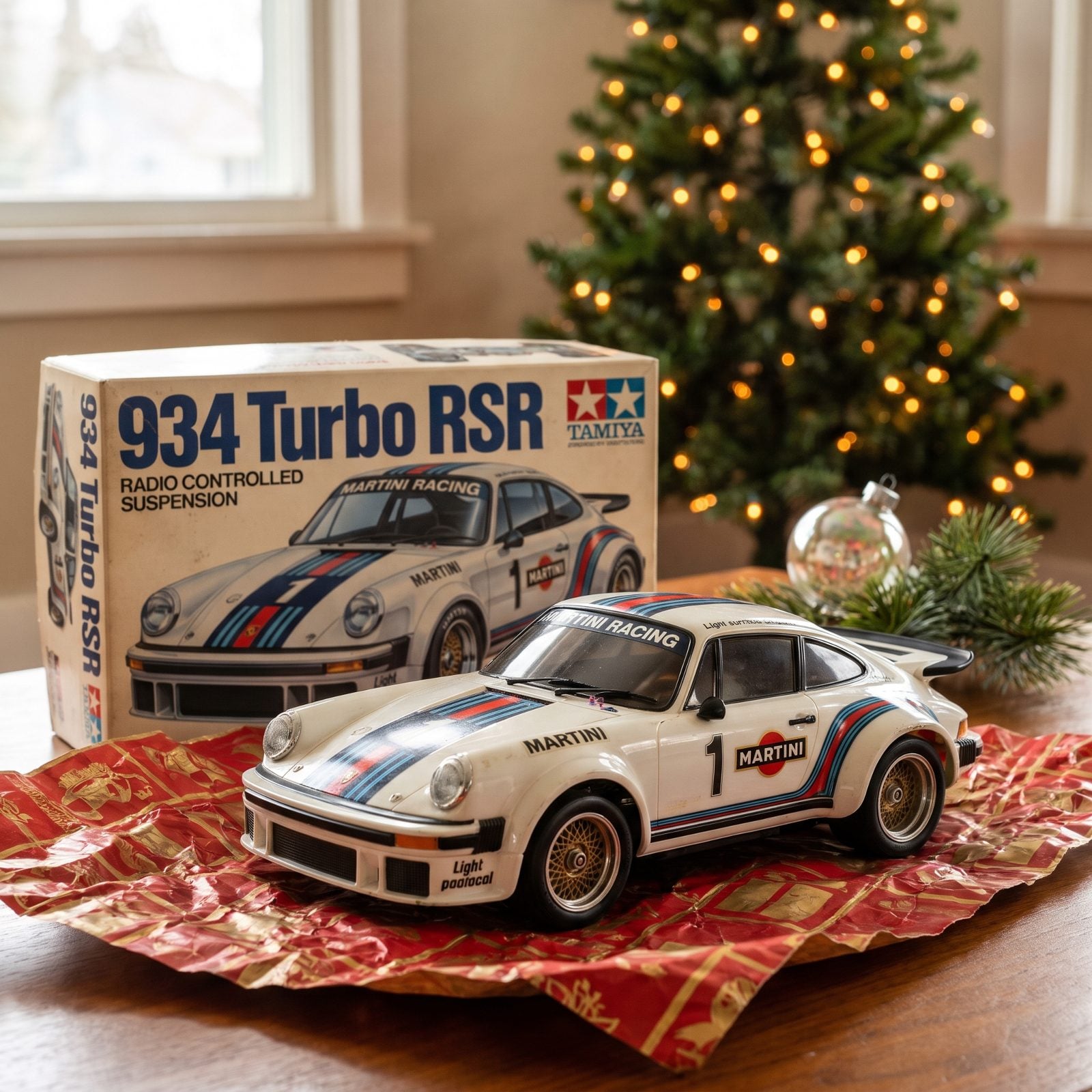
The one that started the obsession for a whole generation of basement racers. Tamiya’s 934 wasn’t the fastest thing on the block, but it looked like a real endurance Porsche shrunk down — right down to the moulded exhaust and the wide rear haunches.
Boxed, unbuilt examples with intact decals and the original instruction sheet are the grail. A runner with scuffs and a few battle scars still has real value, but condition swings the number hard. Mint and sealed sits in serious collector territory. A yellowed built car with cracked plastic? A fraction of that.
1979 Tamiya Sand Scorcher Radio-Controlled Buggy
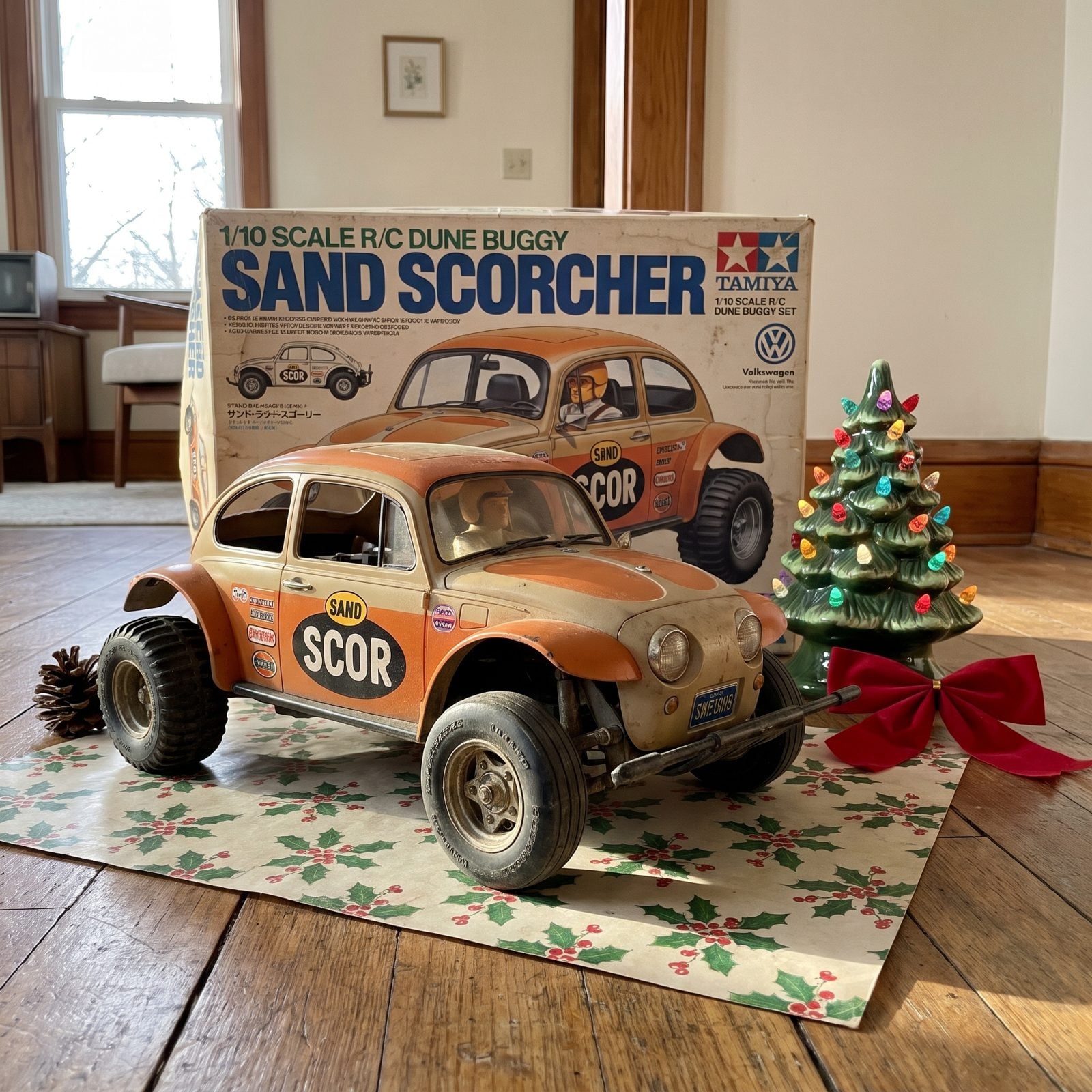
Ask any vintage R/C crowd what the holy grail is and the Sand Scorcher comes up fast. It drove like a real off-roader, kicked up actual rooster tails, and wore a VW-based shell that looked properly tough on the shelf.
Here’s the catch almost nobody warns you about. The original gearbox cases go brittle with age and crack, which makes a complete, uncracked drivetrain rarer than the body itself. So when one shows up advertised, forget the paint. The real question is whether the box is split.
1970 Kyosho Dash 1 Radio-Controlled Car
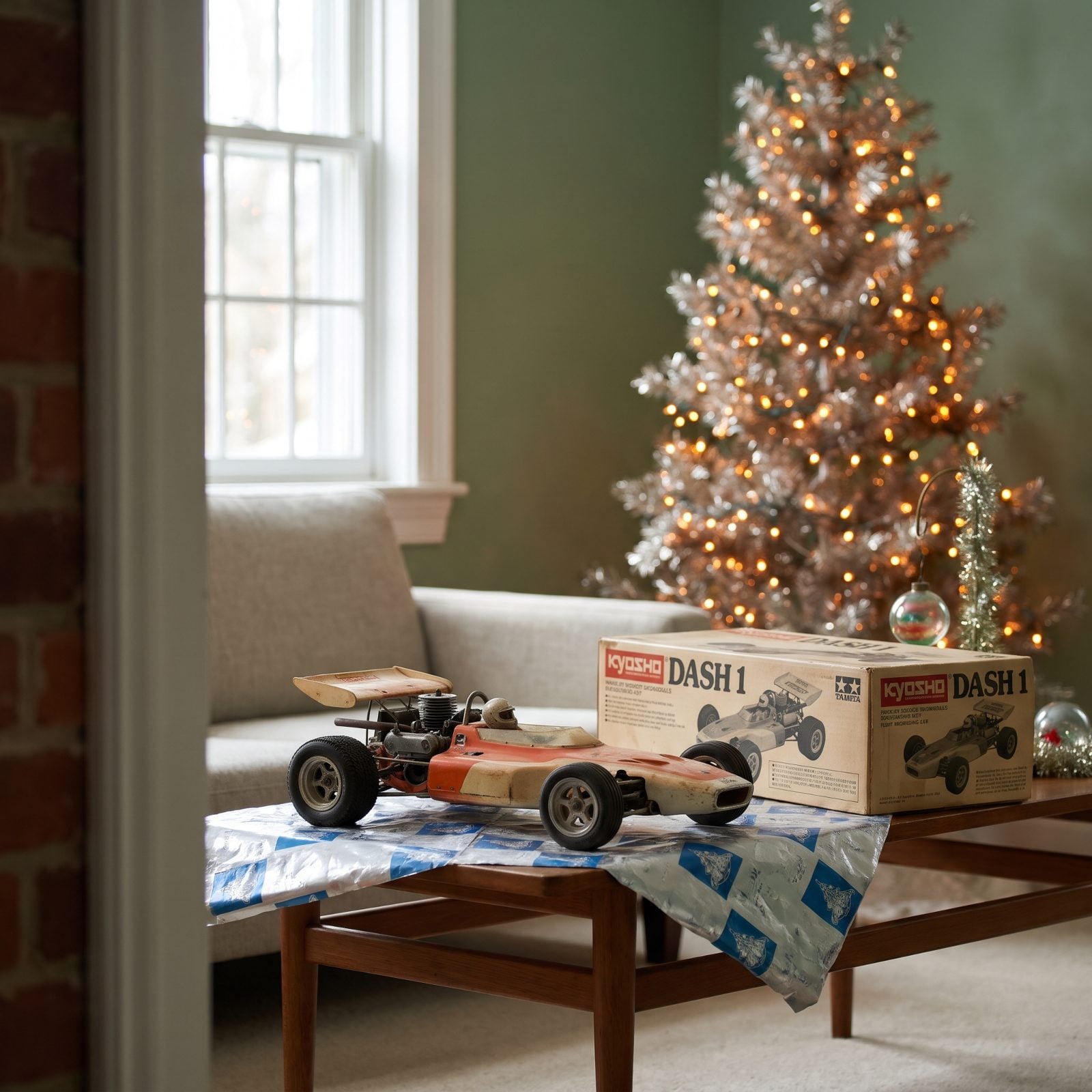
This is the deep-cut collectors chase. Early Kyosho hardware from this window is scarce because so little survived intact. Nobody kept these in a glass case — they got raced hard by kids who had no idea what they’d one day be worth.
Documentation matters more here than on almost anything else on this list. An original Dash 1 with period paperwork, an uncut body, and the correct hardware can command real money from Japanese and American vintage buyers. Strip away the box and the papers and you’re just guessing — and so is the seller.
1960s Makaha Phil Edwards Skateboard
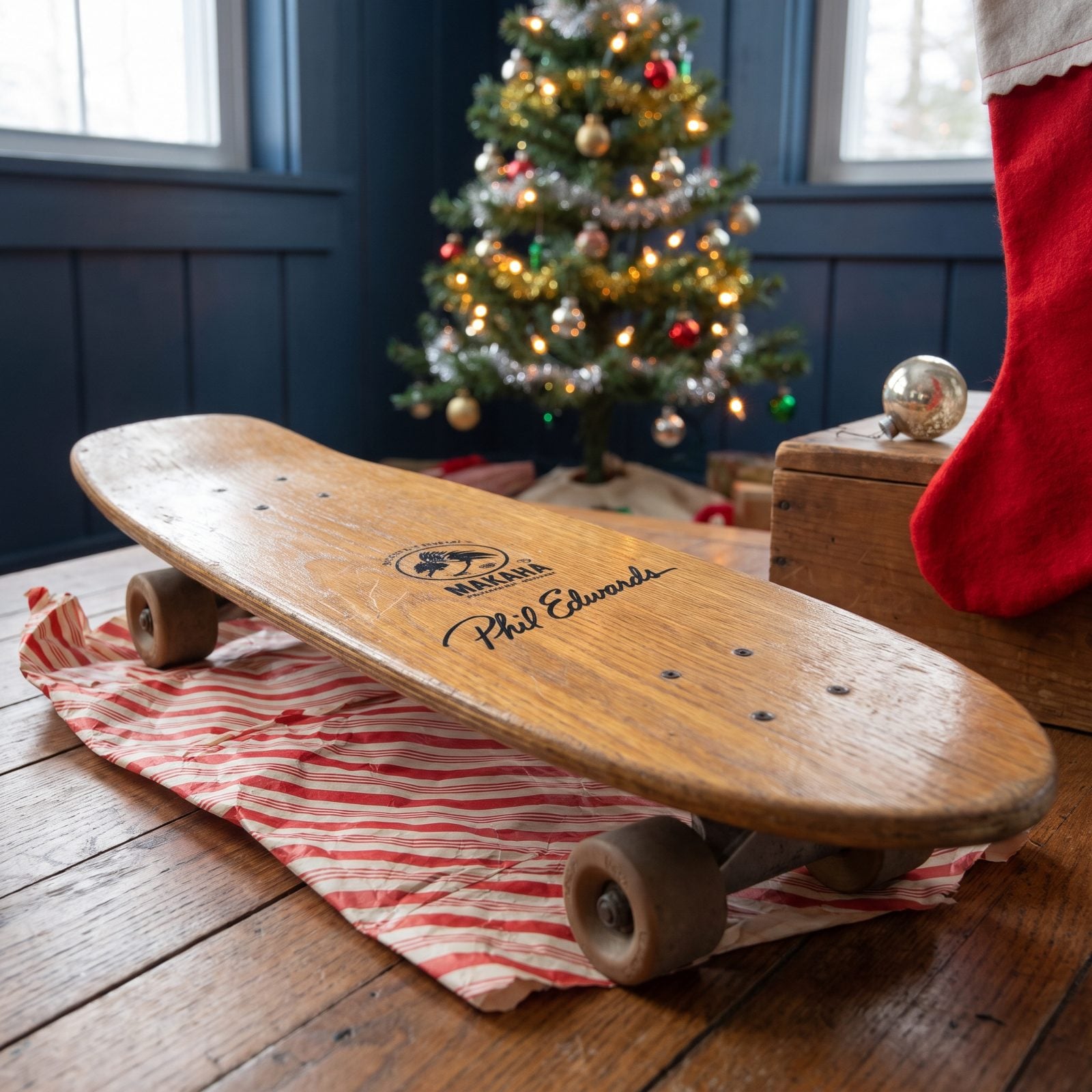
Before anybody dreamed of urethane, there was clay. The Makaha Phil Edwards board carried a surf legend’s name onto a wooden deck that rode like a plank over gravel and felt magical anyway.
Value lives almost entirely in the graphic and the wheels. A clean, legible Phil Edwards signature on the deck, original clay wheels, steel trucks — that’s the package serious surf-and-skate collectors chase. Faded graphics and replacement hardware knock the number down fast. These boards are history, and history that still rolls is worth more than the kind that just sits.
1970s Sims Lonnie Toft Eight-Wheeler Skateboard
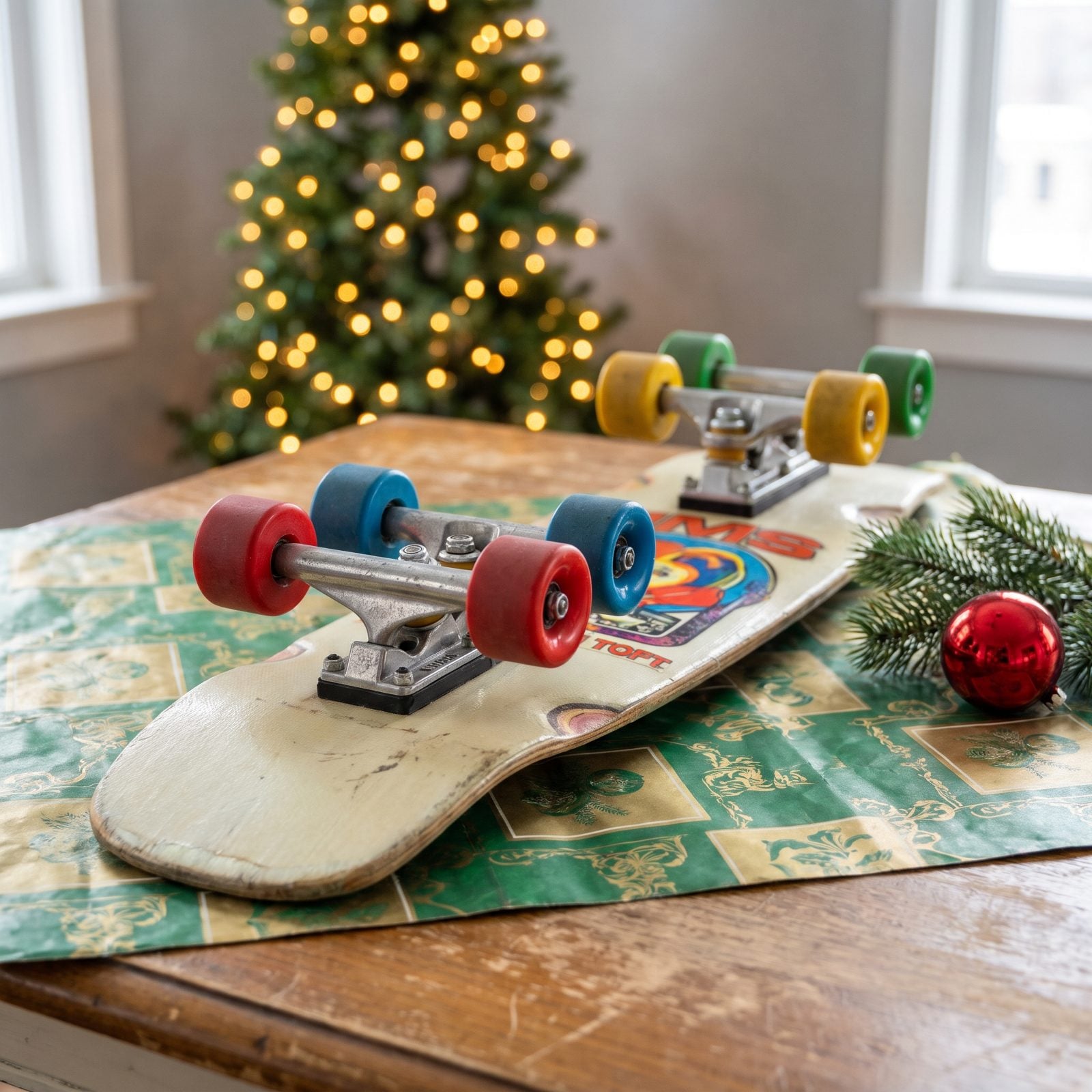
Eight wheels. Who thought that up? Lonnie Toft did, and Sims slapped his name on one of the wildest skateboards of the decade. The double-truck, eight-wheel setup was half genius, half beautiful mistake — which is exactly why collectors want it now.
The oddball design is the whole draw. Complete examples with all eight original wheels, both truck setups, and intact graphics pull the premium bids. Lose a wheel or a truck and the weirdness falls apart, literally and value-wise.
1970s Z-Flex Jay Adams Skateboard
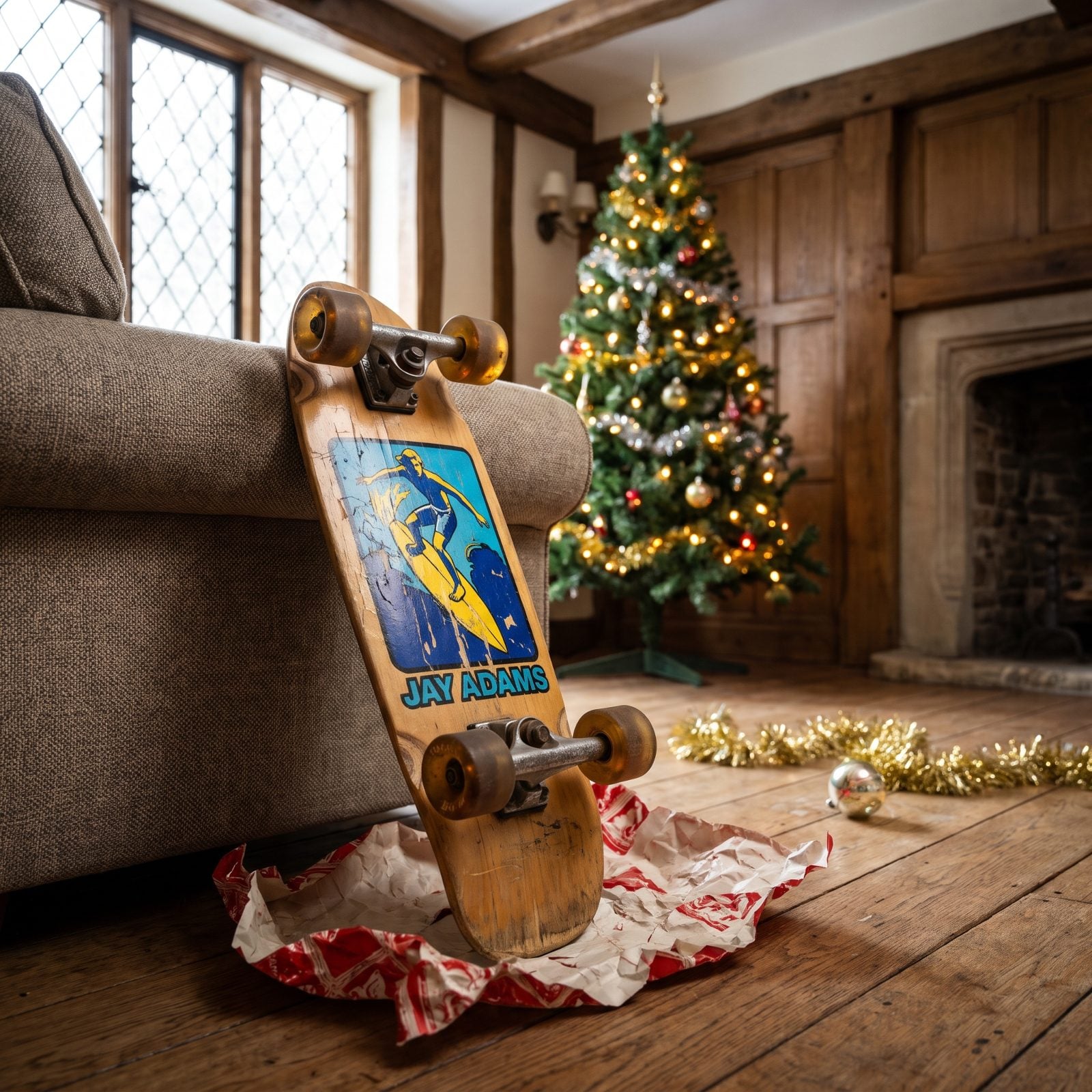
Z-Flex and the Z-Boys dragged skating up from a toy into an attitude, and a Jay Adams signature deck sits dead center of that story. The name on this board is the name serious skate-history buyers care about most.
Provenance is everything here. Repros and reissues exist, so an original 1970s deck with period-correct graphics, trucks, and wheels is the real find. The paperwork trail — and knowing exactly what you’re looking at — is what separates a few hundred dollars from a few thousand.
1966 Corgi Toys Batmobile With Batboat and Trailer
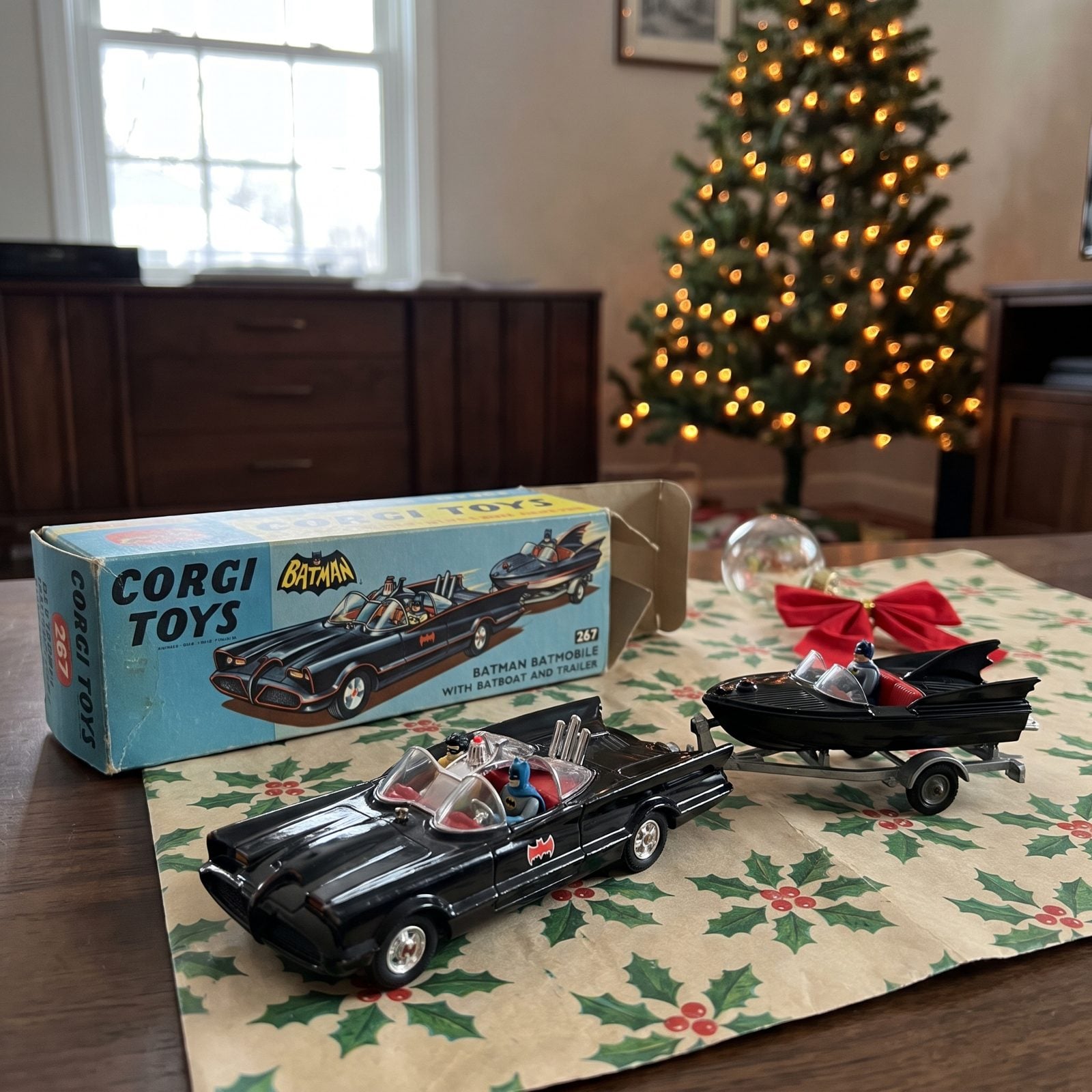
The die-cast king of the whole era. Corgi’s Batmobile hauling the Batboat on its little trailer was the toy every kid circled in the catalog, and a complete boxed set still makes grown adults go quiet at auction.
Completeness is brutal here. The set needs the boat, the trailer, the firing missiles that kids immediately lost, the figures, and the inner packaging. An unboxed, missile-less Batmobile is common and cheap. A complete boxed set with all the tiny accessories still present? A different animal entirely.
1976 FMF Team Replica BMX Bike
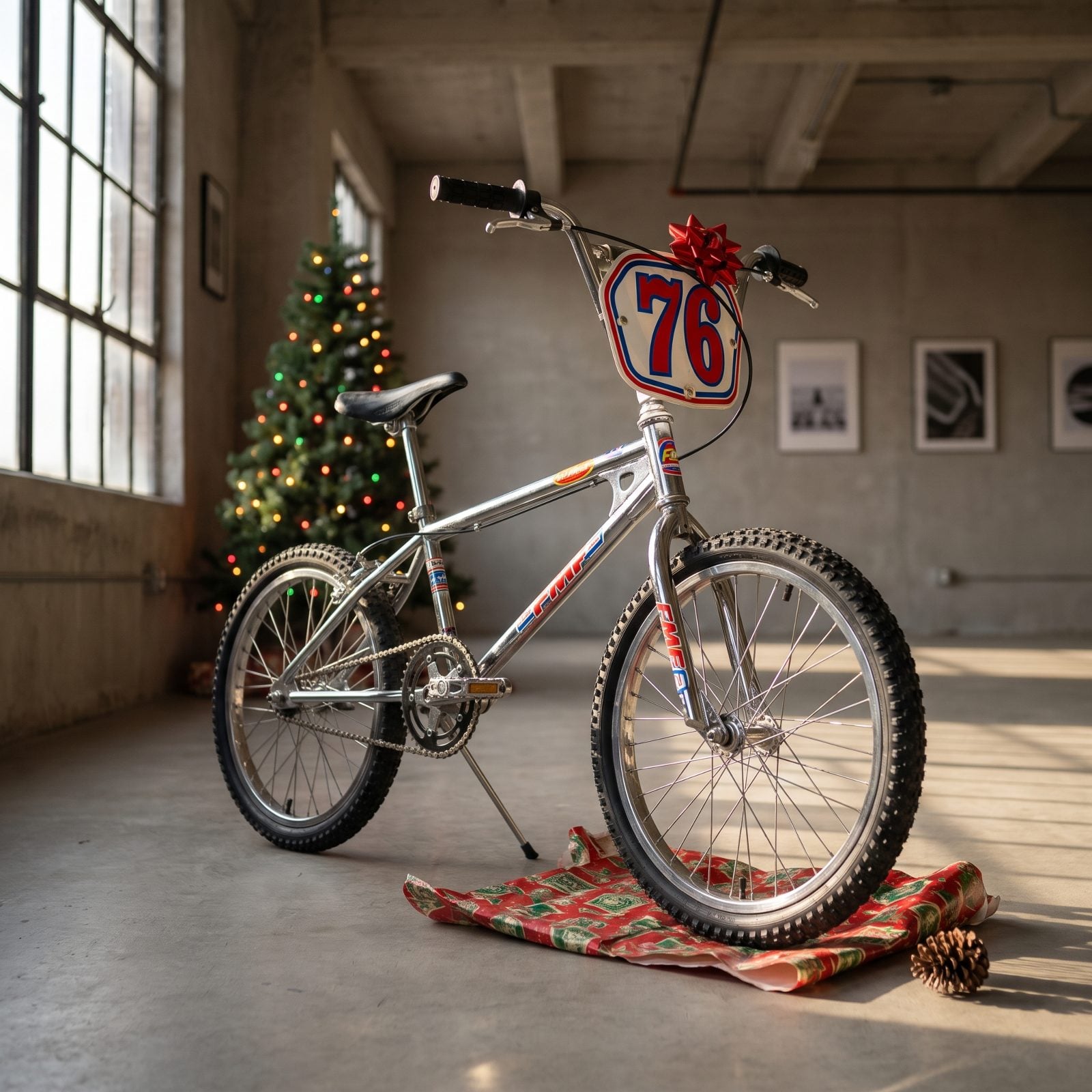
Not a toy exactly, but every bit a Christmas-morning dream for a certain kid in the mid-’70s. An FMF team-replica BMX was the bike you begged for — the one that looked like the pros were riding it at the dirt track down the road.
Vintage BMX has quietly become a serious collector market, and original survivors with period-correct parts bring strong money. Trouble is, these got ridden into the ground, repainted, then parted out. A genuine, unmolested FMF with its original decals and components is rare because almost nobody treated it like an investment back then. They treated it like a bike. It was one.