Somewhere in a Michigan warehouse sits a drive system that crammed a working engine inside a motorcycle’s front wheel back in 1920. Almost nobody remembers it. That is the pattern. The engineers who leaped furthest ahead usually went broke doing it, and their best ideas sat on shelves for decades waiting for materials, money, or nerve to catch up. These machines ran on weird wheels, spun their own flywheels, and hung from rails that already existed. Most failed commercially. All of them were right about something. Here are the oddballs that saw around the corner.
Please note that some of the images in this article were created with the assistance of AI.
39. The Marmon-Herrington Rhino Rolled on Four Hemispherical Wheels
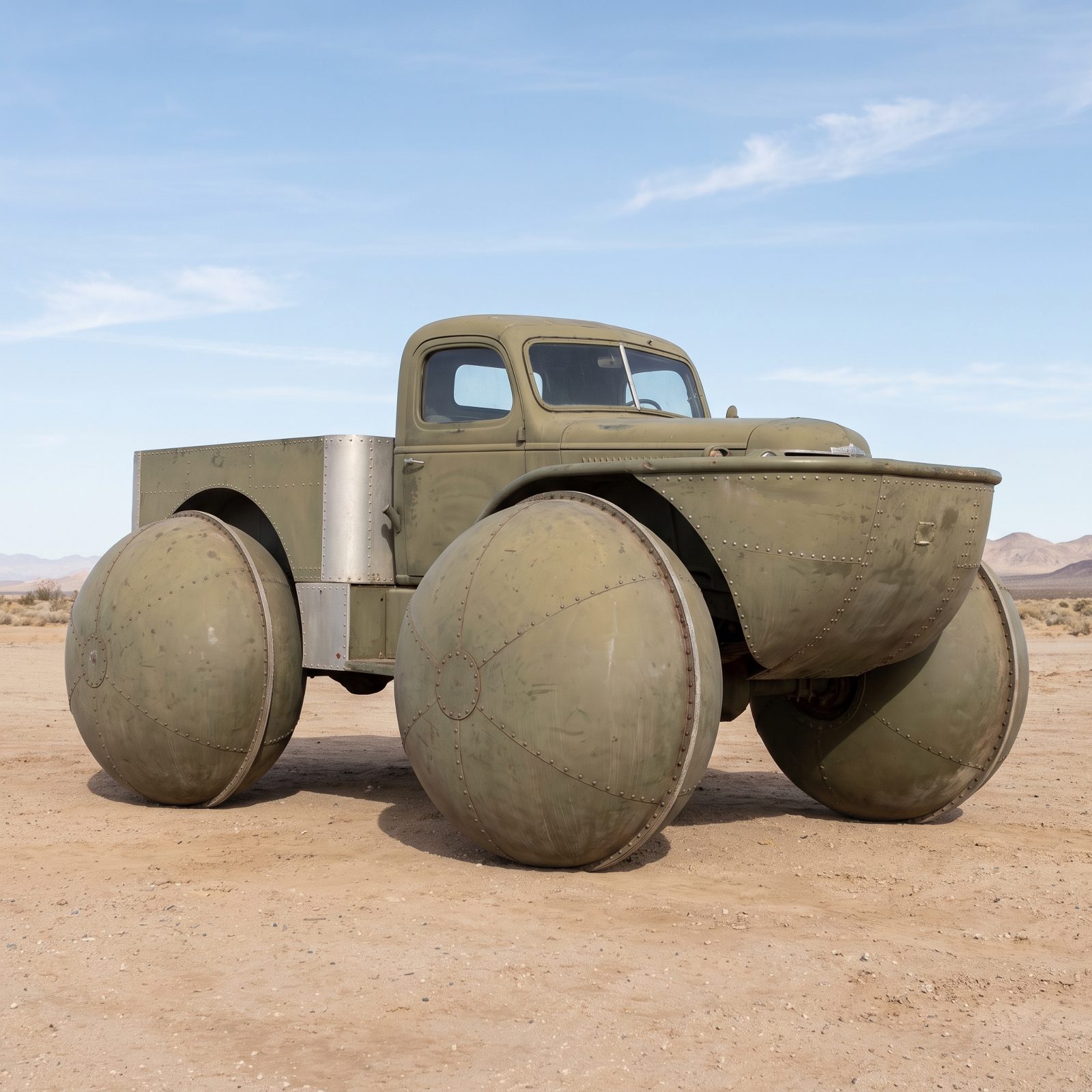
Round wheels seem obvious until you try to float a truck. The Rhino handled two jobs with one strange shape: each wheel was a hollow half-sphere of riveted steel plates, so it gripped mud and sand on land and acted like a pontoon in water. Spin them, and the thing crawled over terrain that swallowed ordinary tires whole.
It never reached any real production numbers. The ride was brutal and steering those giant domes took real muscle. But the core notion of a wheel that doubles as a buoyancy chamber keeps resurfacing in amphibious and planetary rover concepts engineers still sketch today.
38. The Megola Motorcycle Put a Five-Cylinder Engine Inside Its Front Wheel
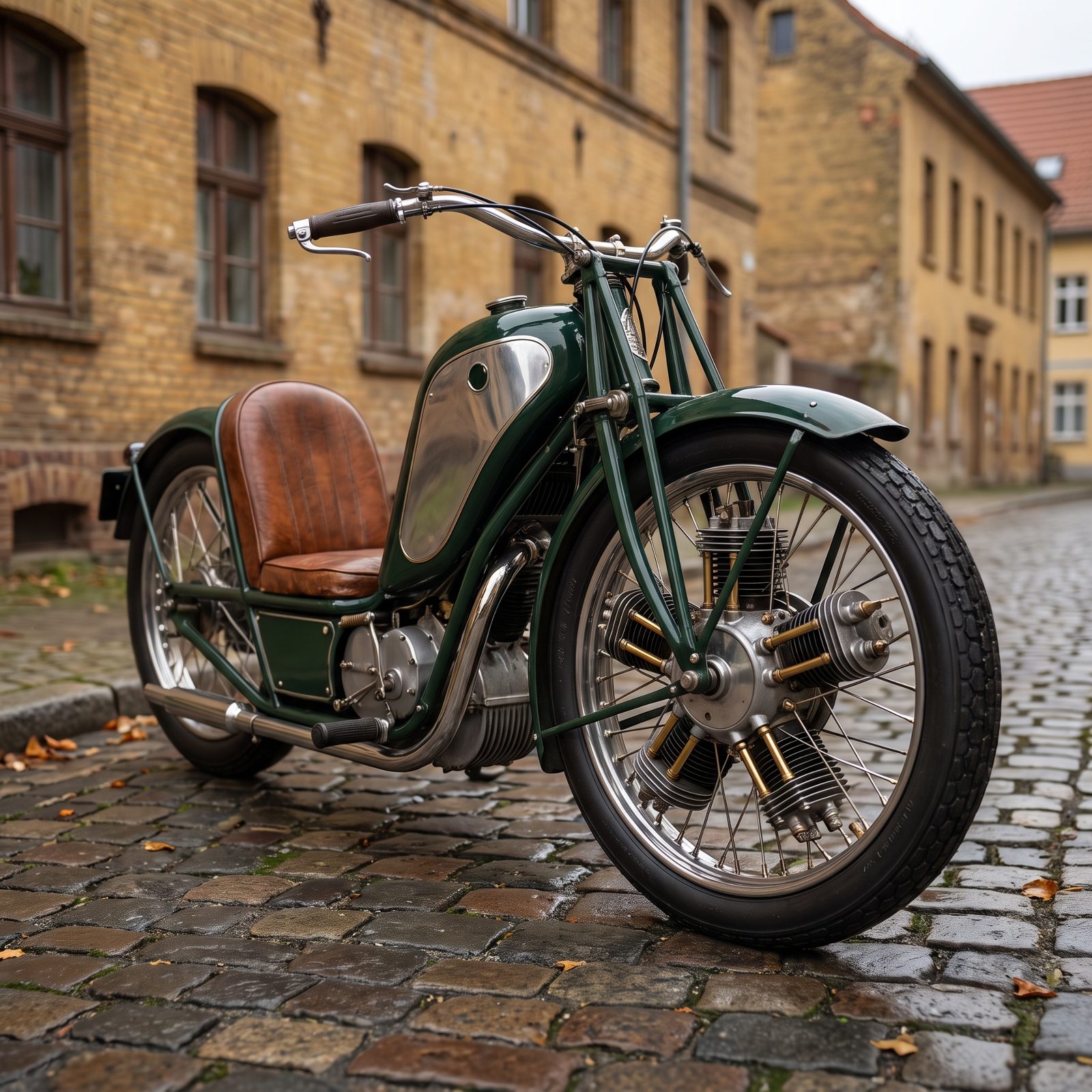
Imagine twisting the throttle and watching the engine itself spin along with the front wheel. That is the Megola. Five cylinders arranged in a star, bolted inside the front rim, turning as the wheel turned. No clutch, no gearbox, no chain. You push-started it or rolled it off a stand, and heaven help you at a red light.
A couple thousand were built in the early 1920s, and the racing versions actually won. Riders learned to protect their momentum, because stalling meant a whole lot of shoving.
37. The 1932 Dynasphere Put Its Driver Inside One Giant Wheel
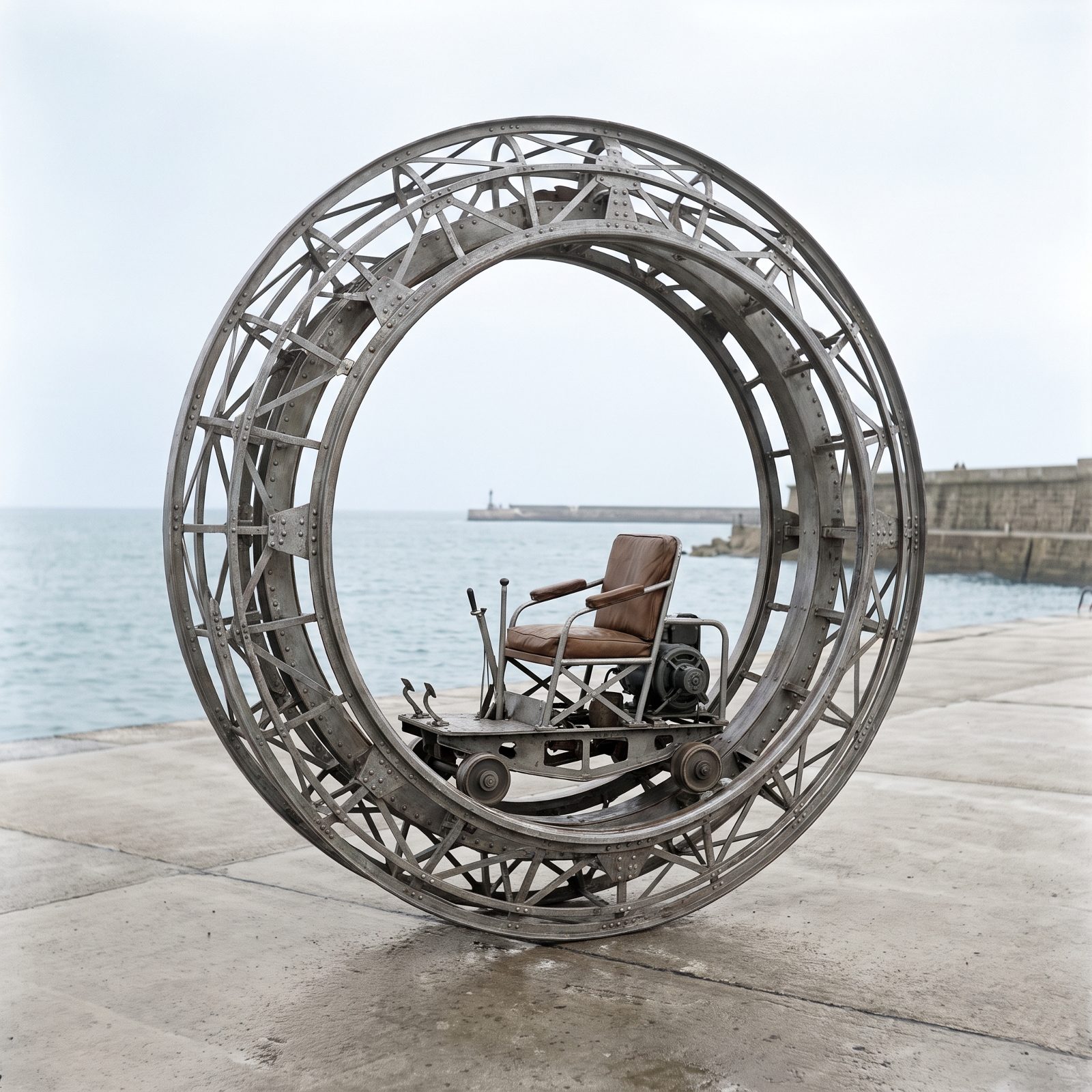
One wheel. You sit inside it. The whole contraption rolls forward while your seat stays level on an inner track, roughly ten feet of open steel lattice that looked like a gyroscope had escaped from a physics lab.
Steering meant working a pair of upright levers and two small foot pedals, which worked about as well as you’d expect from a single tilting hoop. Brake hard and the driver’s carriage would fling itself up the inside of the wheel in a stomach-dropping arc the inventors cheerfully called gerbiling. As transportation it was a dead end. As proof that a vehicle needs far fewer parts than we assume, it still hooks minimalist engineers.
36. The Antarctic Snow Cruiser Had Retractable Wheels and Onboard Aircraft Storage
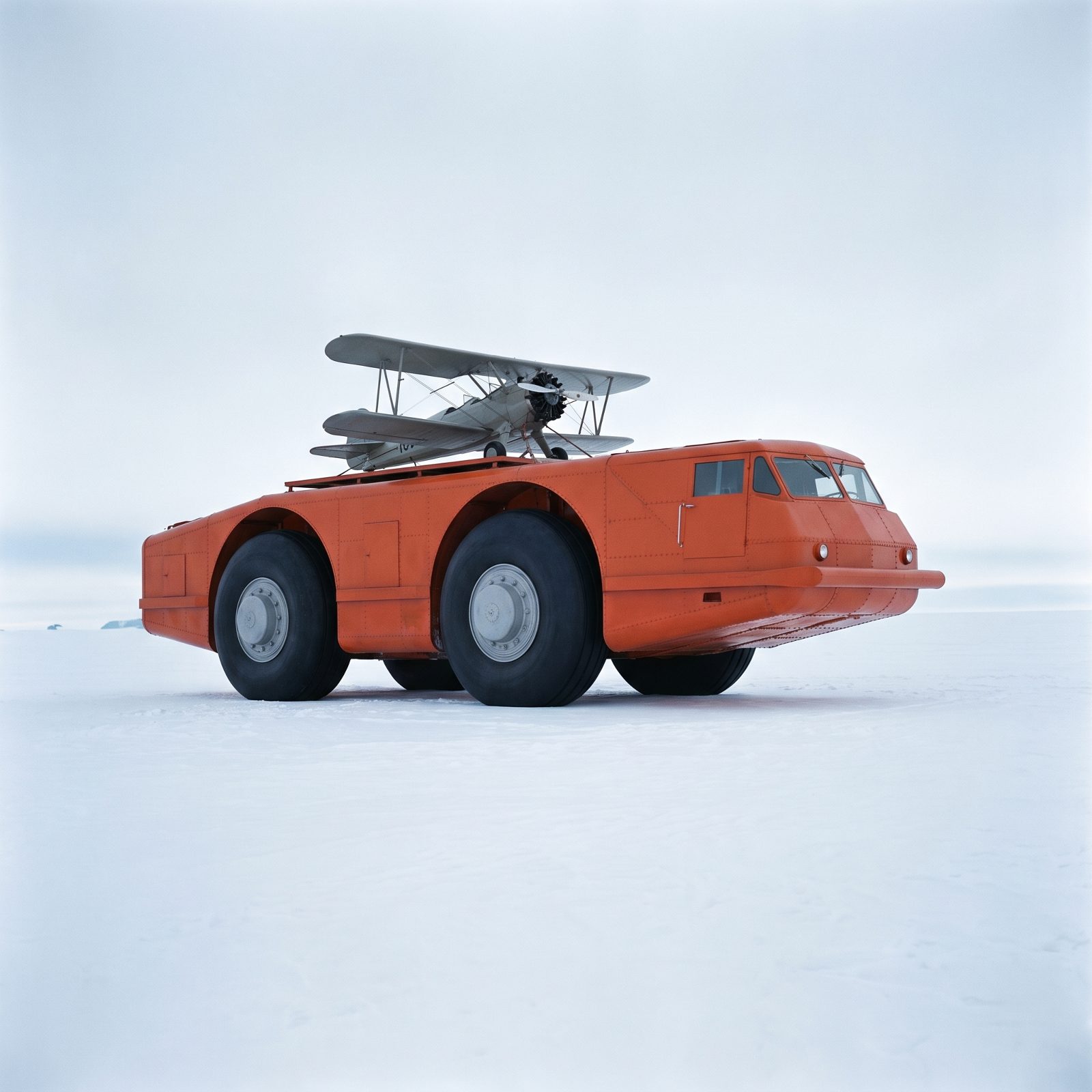
A rolling base station the size of a bus, carrying its own airplane on the roof. The Snow Cruiser shipped to Antarctica in 1939 with a crew cabin, a lab, a machine shop, and a little aircraft parked on top for scouting. Its tires were enormous and treadless, and they tucked up into the body when you wanted them gone.
It also barely moved. Those smooth tires spun uselessly in the snow and the machine mostly sat frozen where it stopped. A famous flop. Yet the design logic — a self-contained mobile expedition platform with its own air support — reads like a blueprint for modern polar missions, and arguably for lunar ones too.
35. The Bennie Railplane Suspended a Streamlined Car Above Existing Tracks
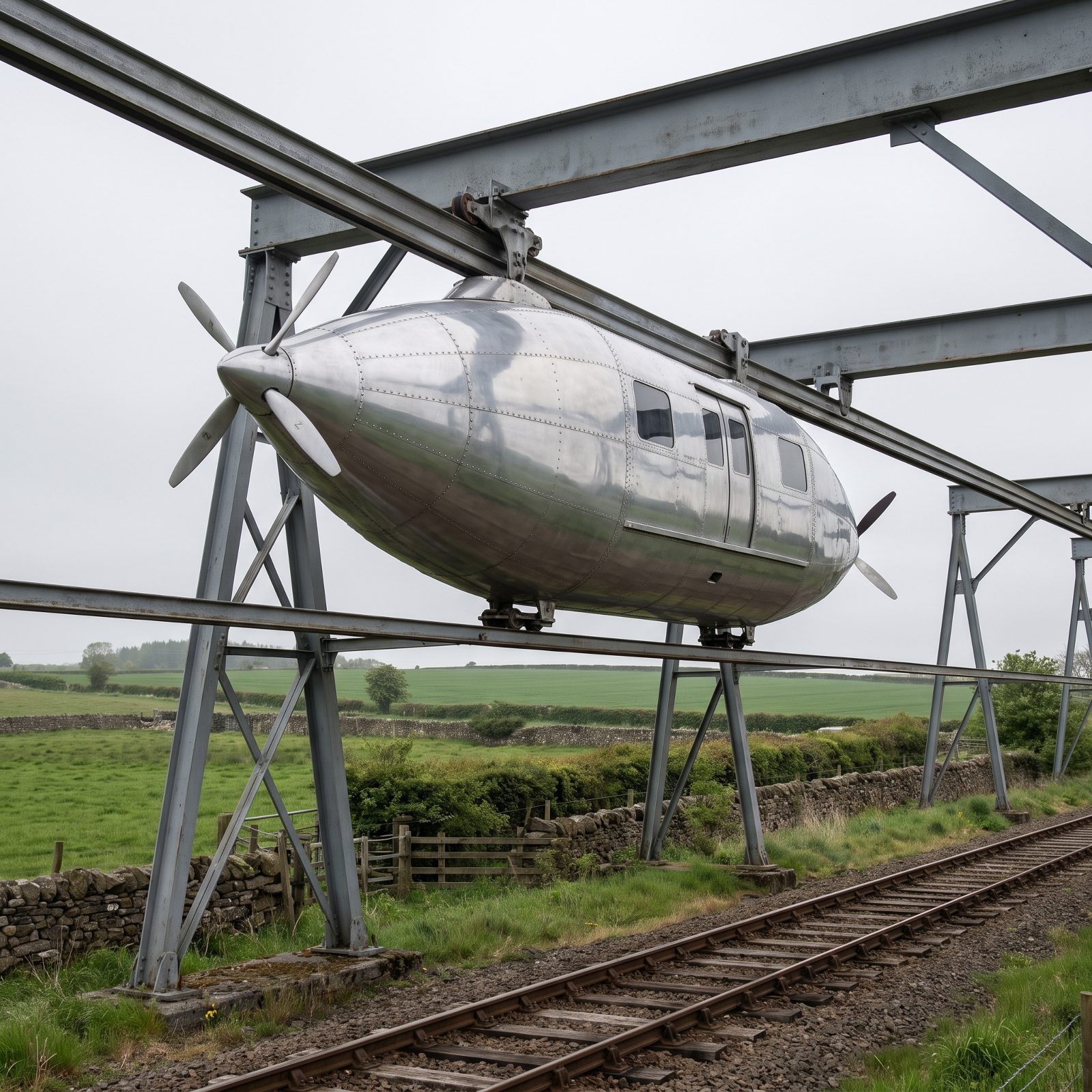
Picture a small aircraft fuselage hanging from an overhead rail, driven by propellers at each end, cruising above a regular railway line. That was George Bennie’s Railplane, demonstrated near Glasgow in 1930. The pitch was clever — run fast passenger pods on a top rail above the slow freight trains already plodding along the ground track.
No investors bit. The test gantry rusted, and eventually somebody scrapped it. The underlying idea of separating fast light traffic onto suspended rails above existing infrastructure shows up in every elevated-monorail sketch since.
34. The Adams-Farwell Car Used a Spinning Radial Engine as Its Flywheel
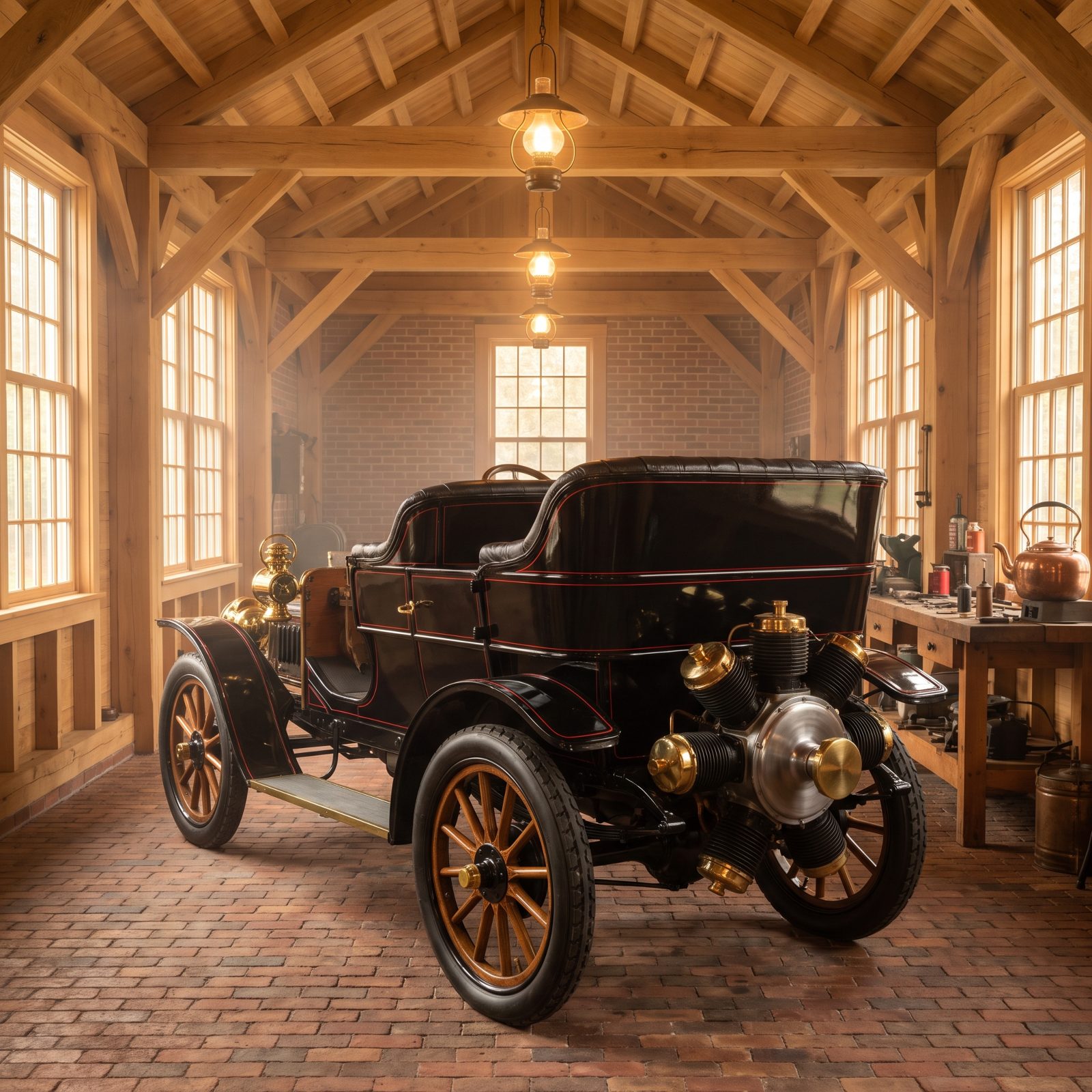
Most engines bolt the cylinders down and spin the crank. The Adams-Farwell flipped it. The crankshaft, its hub jutting out the back like an aircraft propeller mount, stayed put while the whole star of cylinders whirled around it, which made the engine its own flywheel and cooled itself as it spun.
Built in Iowa in the early 1900s, it ran so smoothly that drivers couldn’t tell it was idling. That same self-cooling rotary layout would soon dominate early aircraft. Finding it in a road car first, years ahead of the planes, is exactly the kind of detail that makes old engineering catalogs worth the dust on them.
33. The Diplock Pedrail Wheel Used Moving Feet Instead of a Conventional Tire
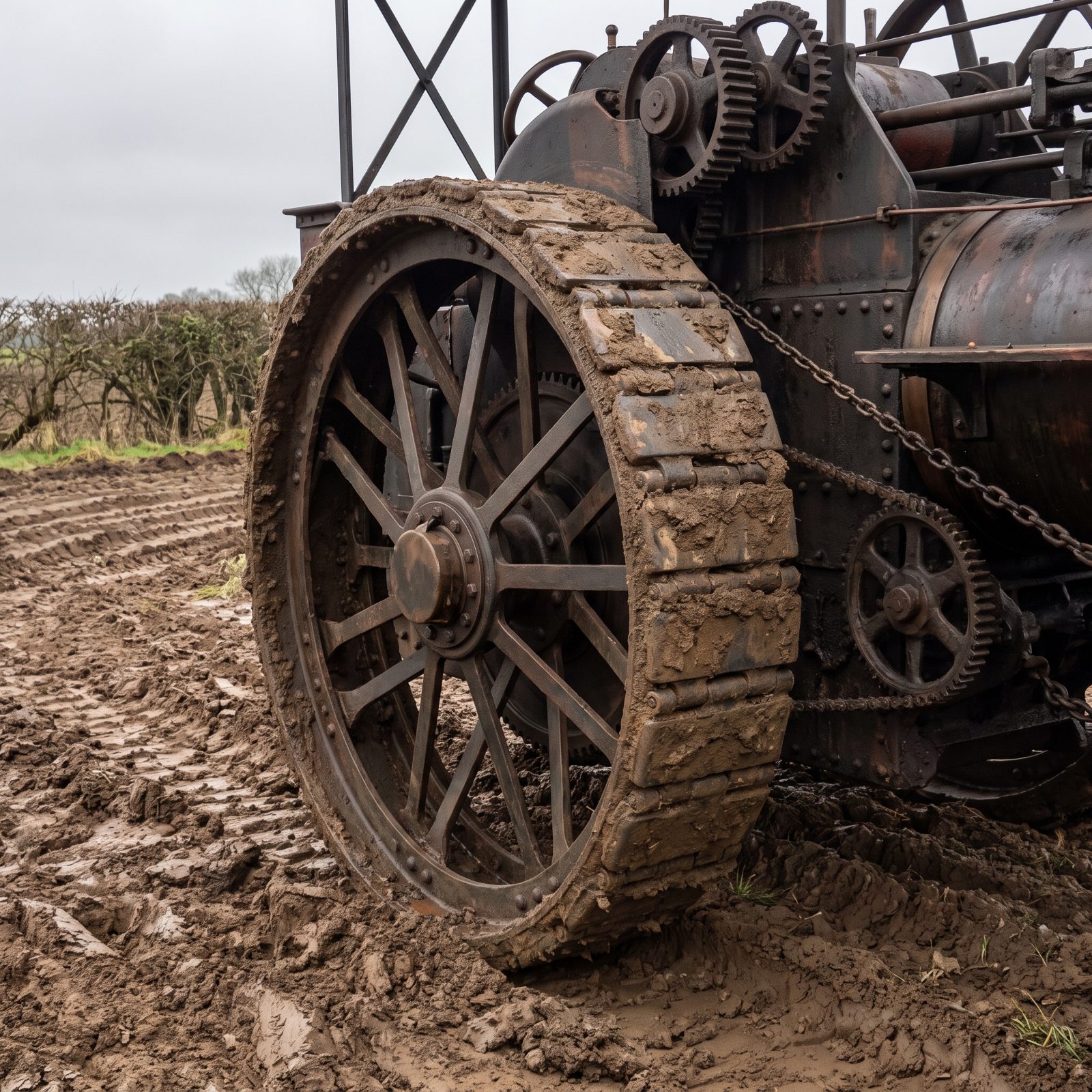
Bramah Diplock watched a plain wheel sink into mud and decided the wheel ought to walk instead. His Pedrail ringed the rim with pivoting feet, each one planting flat on the ground, spreading the load, then lifting away for the next step.
Patented around the turn of the 20th century, it let heavy traction engines cross soft ground that would normally swallow them. Fiddly, heavy, awkward — all true. But the principle of a flexible track of ground-contact plates rather than a single hard surface fed directly into the thinking that gave us the caterpillar track and, eventually, the tank.
32. The Brennan Gyroscopic Monorail Leaned Into Curves
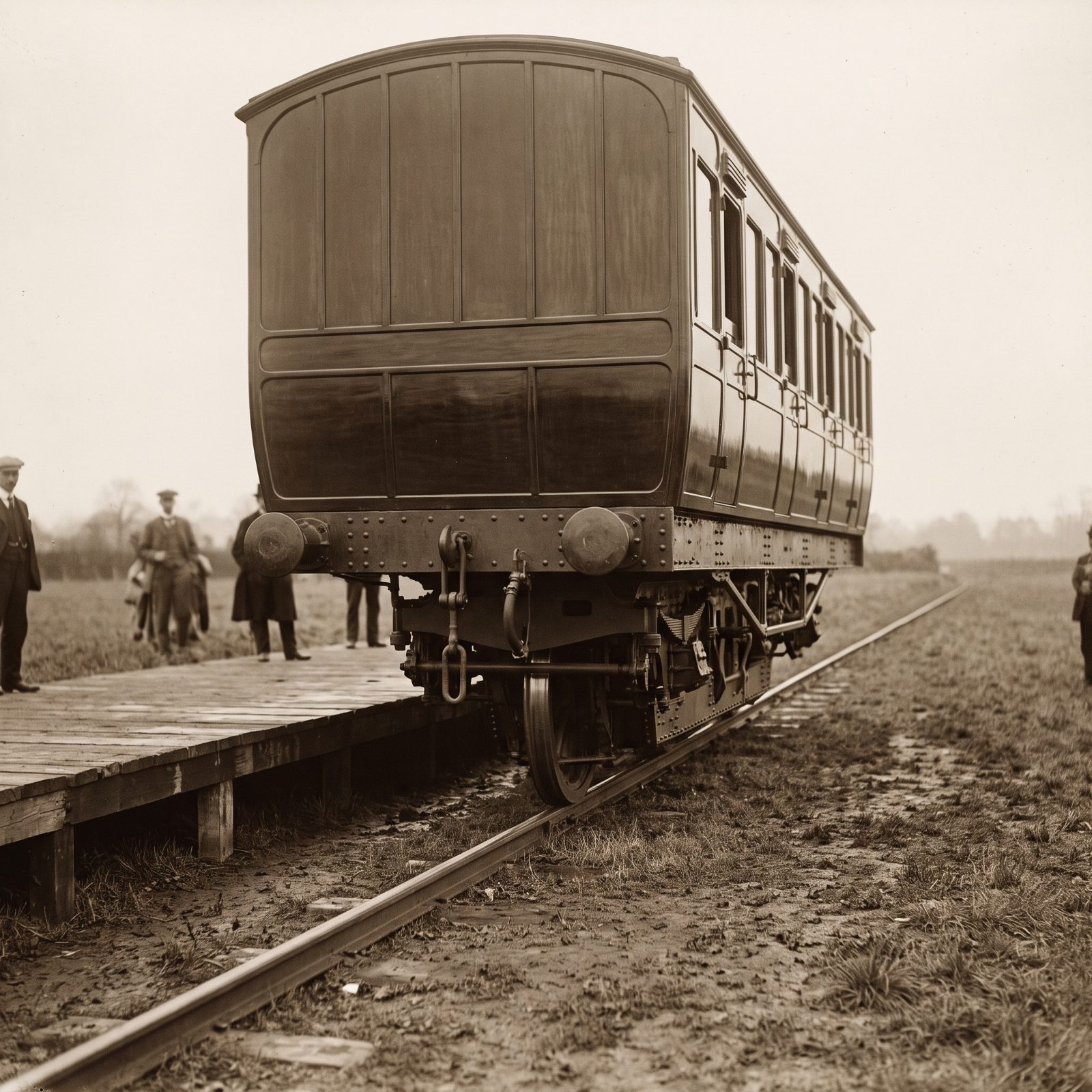
A full passenger car balanced on a single rail, standing upright with nothing visibly holding it there. Louis Brennan hid spinning gyroscopes inside the carriage. They kept it level at a stop and, cleverly, made it lean inward through curves the way a motorcyclist does instead of fighting the turn.
Demonstrated around 1910, it carried real passengers and floored the crowds. Single-rail construction promised huge savings over double track. Then came the catch anyone could see once they stopped applauding: if the gyros ever quit, the whole thing simply fell over. Nobody wanted to stake a railway on that. The active-balance thinking behind it, though, runs straight through to today’s self-balancing vehicles.
31. Rolligon Tires Carried Heavy Vehicles Across Fragile Terrain
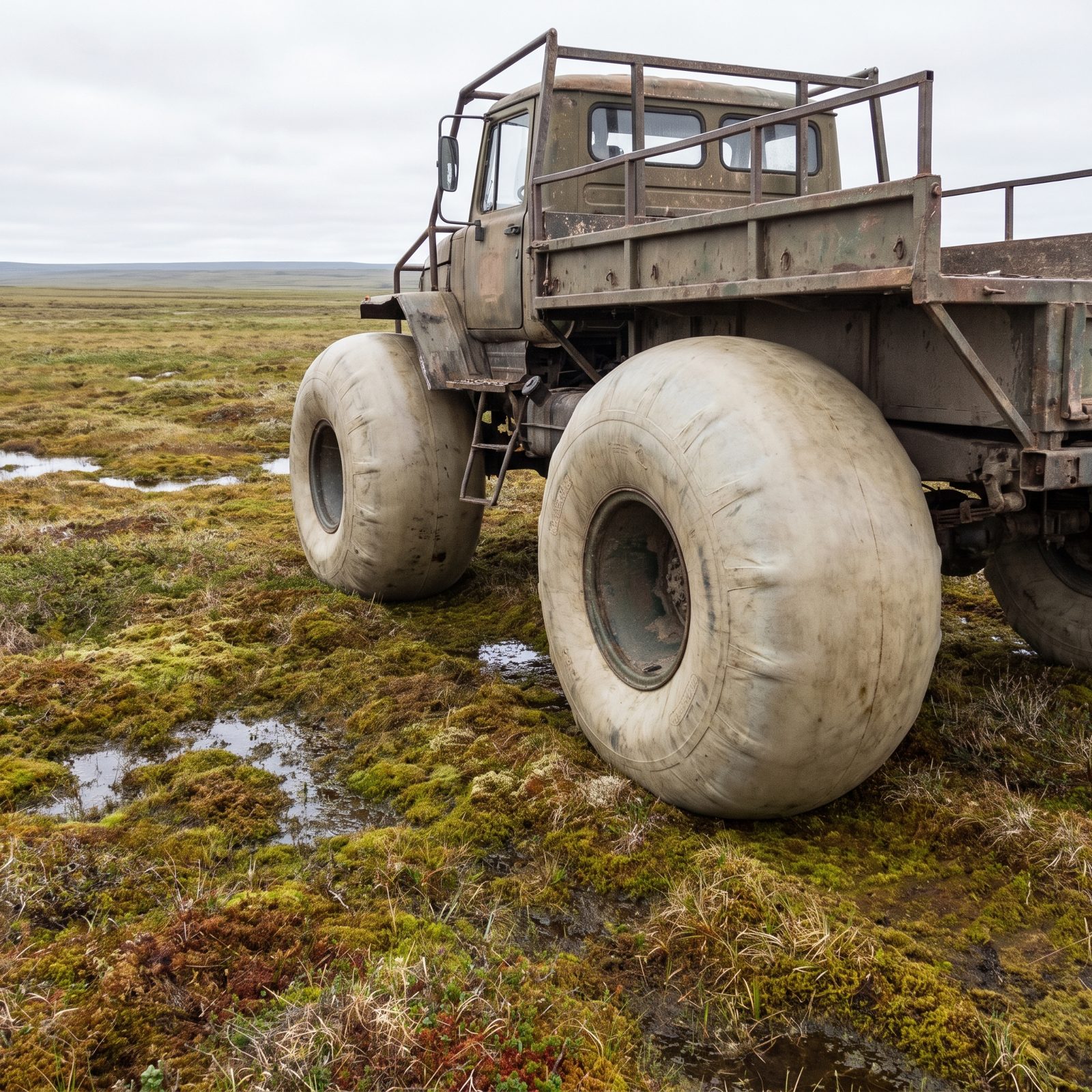
Drop the tire pressure far enough and a heavy truck stops crushing the ground and starts floating over it. That is the whole trick behind Rolligon tires — enormous, soft, low-pressure balloons that smear a vehicle’s weight across a huge footprint.
The design let oil and exploration crews roll across Arctic tundra and beach sand without tearing them up, and it is still working today wherever ground pressure matters more than speed. A rare entry on this list that actually caught on. Being right about soft ground never went out of fashion.
30. The Killinger and Freund Motorcycle Wrapped Front-Wheel Drive in Streamlining

German engineers took the Megola’s wheel-hub engine and refined everything around it hard. The Killinger and Freund, shown in 1938, mounted a multi-cylinder radial engine right inside the front wheel hub, ran the exhaust back along the side, then wrapped the whole machine in smooth aluminum streamlining decades before most bikes gave a damn about aerodynamics.
Only a handful were ever built, and the war killed the project. What survives looks startlingly modern: a bike with its finned radial cylinders spinning inside the front wheel, ahead of the aluminum fairing, and a body shaped by wind instead of habit. It is the cleanest take on an idea almost nobody has managed to make practical since. Go find a photo of one. It does not look like 1938.
29. Beach Pneumatic Transit Pushed a Wheeled Car Through a Tunnel on Nothing But Air
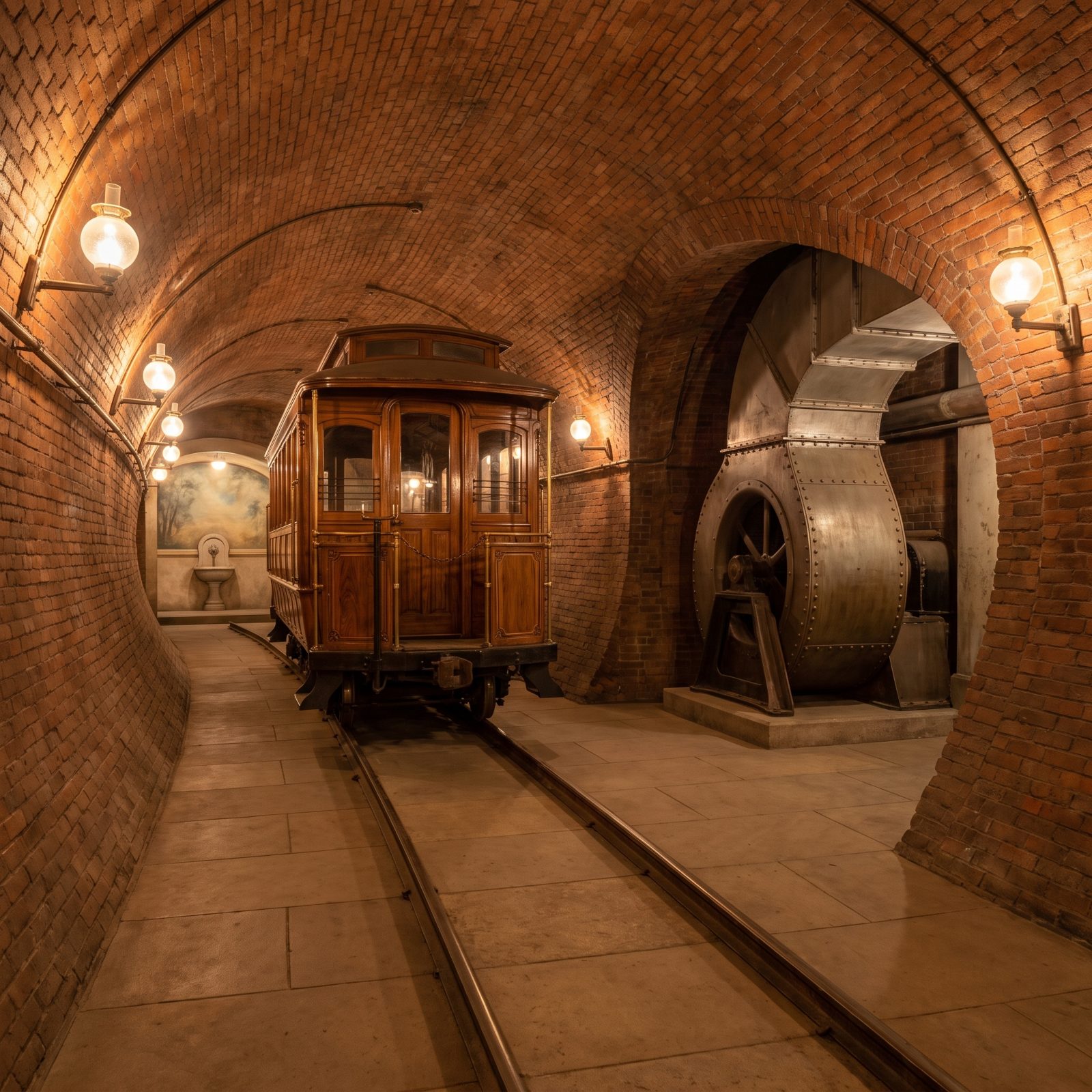
Alfred Ely Beach built a subway under Broadway in 1870, and nobody was supposed to know. He told the city he was running pneumatic mail tubes, then dug a 300-foot tunnel instead and rolled a passenger car through it on rails.
A giant steam-driven fan at one end of the tunnel blew the car along like a sail, then reversed to pull it back. No rail motor, no overhead wire, no electricity at all — just moving air and a car rolling down a snug brick tunnel.
It ran for a few years as a curiosity, carried thousands of paying riders, and then died politically. A wheeled car that traveled without an onboard engine was a century ahead of anything practical. The tunnel got sealed and partly rediscovered during later subway digs.
28. The 1939 Schlörwagen Chased an Aerodynamic Number Modern Cars Still Respect
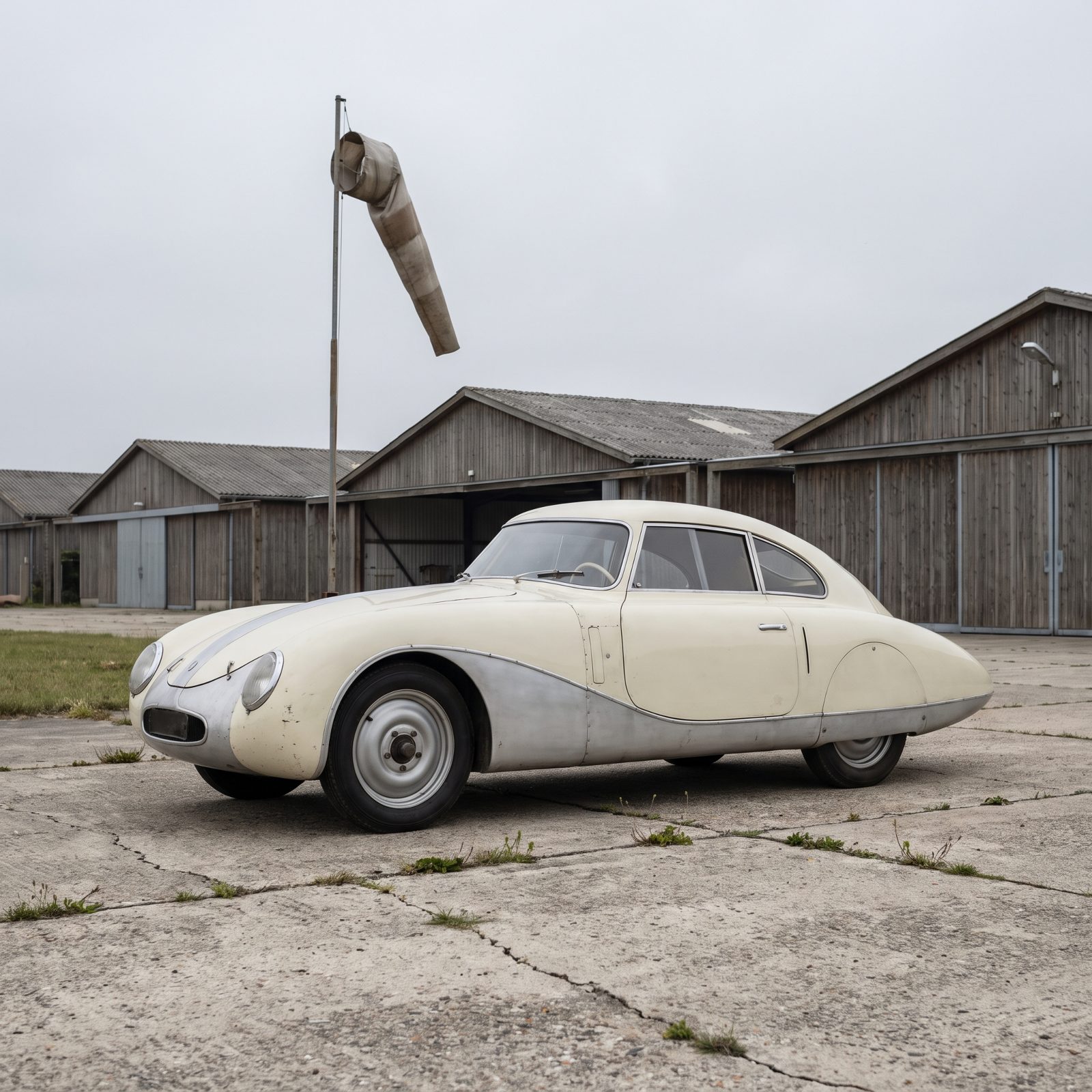
Built on a Mercedes-Benz 170H chassis at a German aerodynamics institute, the Schlörwagen looked like a river pebble that learned to drive. The whole body was a teardrop, rear wheels tucked behind a smooth skirt, front wheels sheltered in deep arches, very little sticking out to grab the air.
Its claimed drag coefficient landed around 0.186. A slick modern EV fights to hit 0.20. This thing did it before the war, with hand-formed sheet metal and slide rules.
Twitchy in crosswinds, and only one was ever built. The car itself vanished after the war. What it proved still holds up: the data was embarrassingly good.
27. The Sir Vival Split the Driver and Engine Into Two Separate Halves
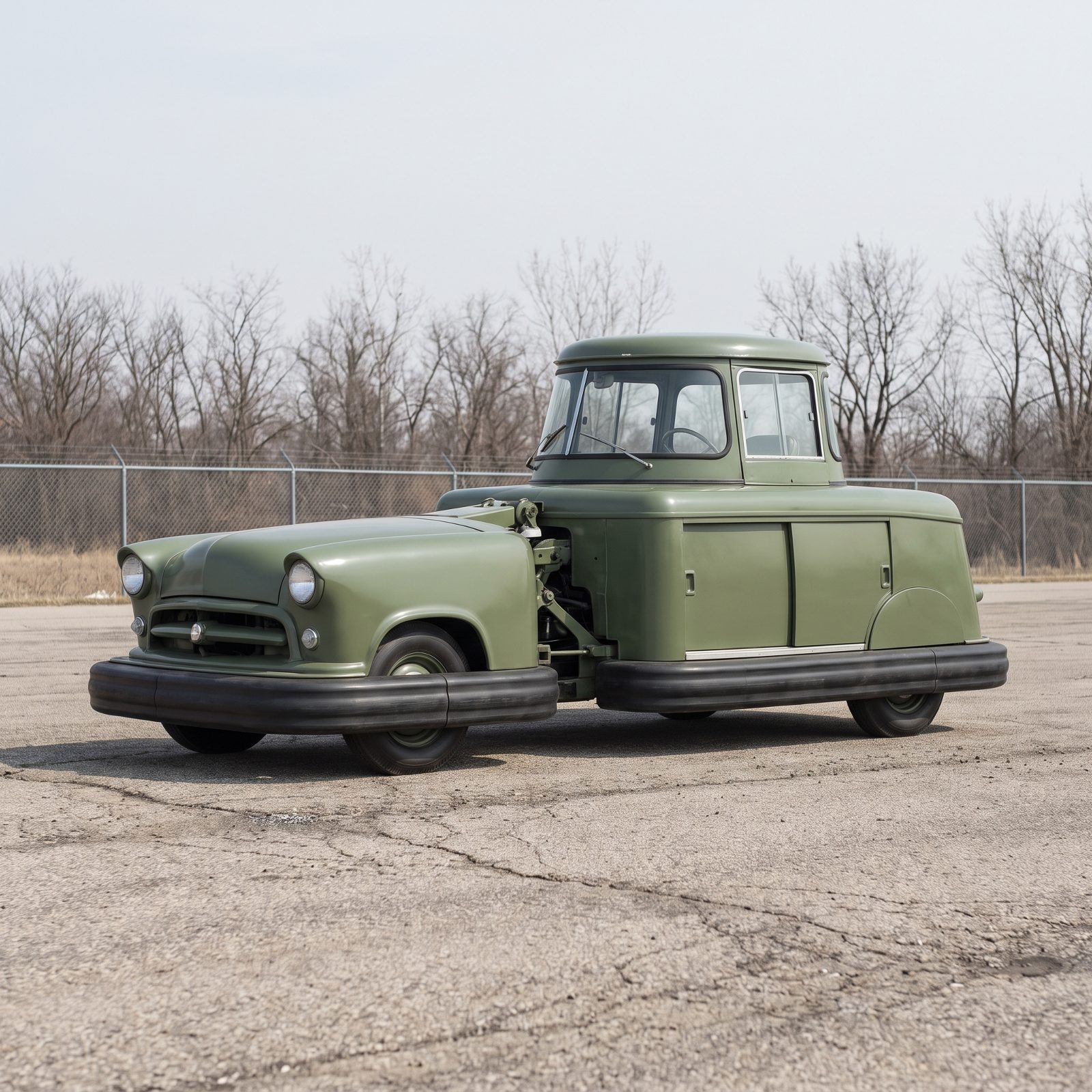
A Massachusetts man was convinced the engine was the thing that killed people in crashes, so in 1958 he built a car that shoved the engine as far from the driver as it would go.
The Sir Vival rode in two pieces. The front section carried the motor and absorbed the hit. The rear section held the passengers in an elevated glass turret with wraparound vision and a thick rubber bumper ringing the entire body.
Crumple zones, a protected safety cell, 360-degree visibility — every one of those ideas is standard engineering now. Back then it looked like a joke, got one terrible pun of a name, and went nowhere.
26. The 1896 Armstrong Phaeton Ran a Hybrid Drivetrain Before Cars Had Doors
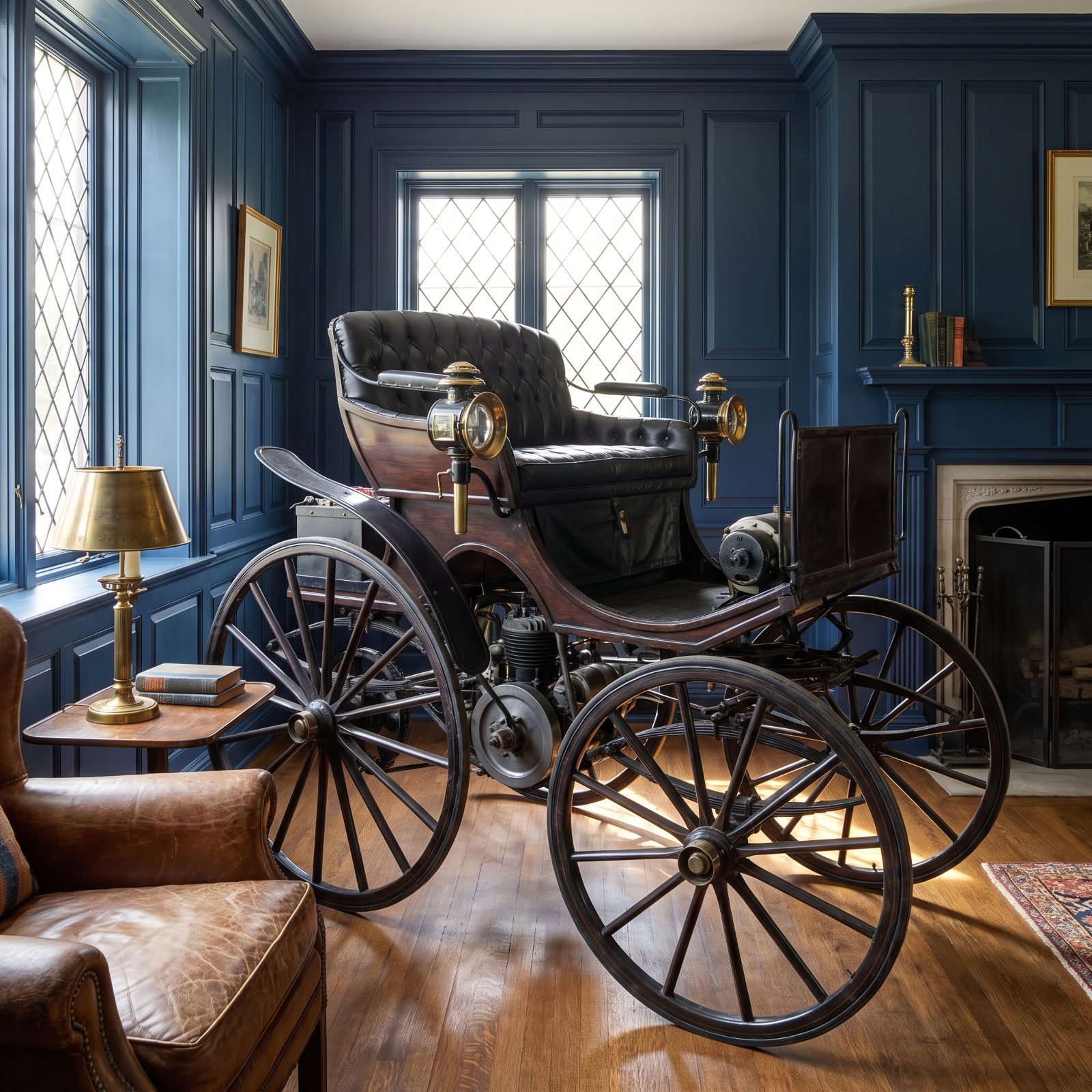
Most people file hybrids under the last twenty years. The Armstrong Phaeton was doing it in 1896, when plenty of cars still had a literal buggy whip holder.
It paired a gasoline engine with a battery and a dynamo. The system could use electric assist, and it fed energy back into the battery under braking. That’s regenerative braking, patented before most of America had ever watched an automobile move under its own power.
It also used a flywheel to smooth power delivery and had a semi-automatic transmission concept. One was built. The patents are the proof, and they read like a spec sheet handed back from the future.
25. The Owen Magnetic Threw Out the Gearbox for an Electromagnetic Drive
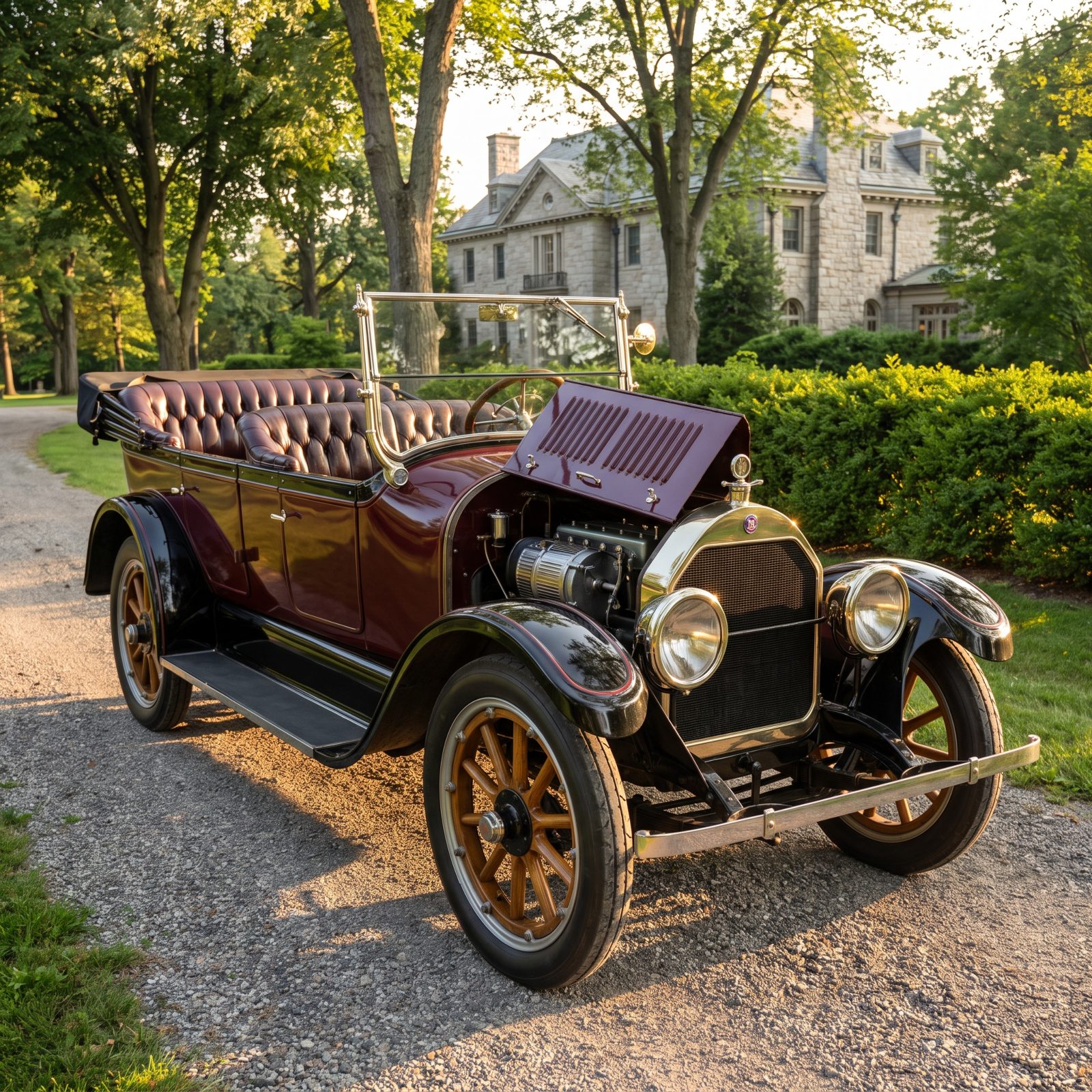
No clutch. No gearshift. In 1915.
The Owen Magnetic bolted a generator to the gas engine, and that current drove the wheels through an electromagnetic field instead of gears. Move a lever on the steering column and the magnetic coupling changed the effective ratio — smooth as syrup, and famously the car for people who hated the violence of early manual transmissions.
Opera singers and the very rich loved it. The drivetrain was essentially a series-hybrid idea, the same principle running inside a modern diesel-electric locomotive and plenty of hybrid cars today. Heavy, thirsty, expensive, and the company folded. The engineering outlived the business by a century.
24. The 1967 Gyro-X Balanced an Entire Car on Two Wheels
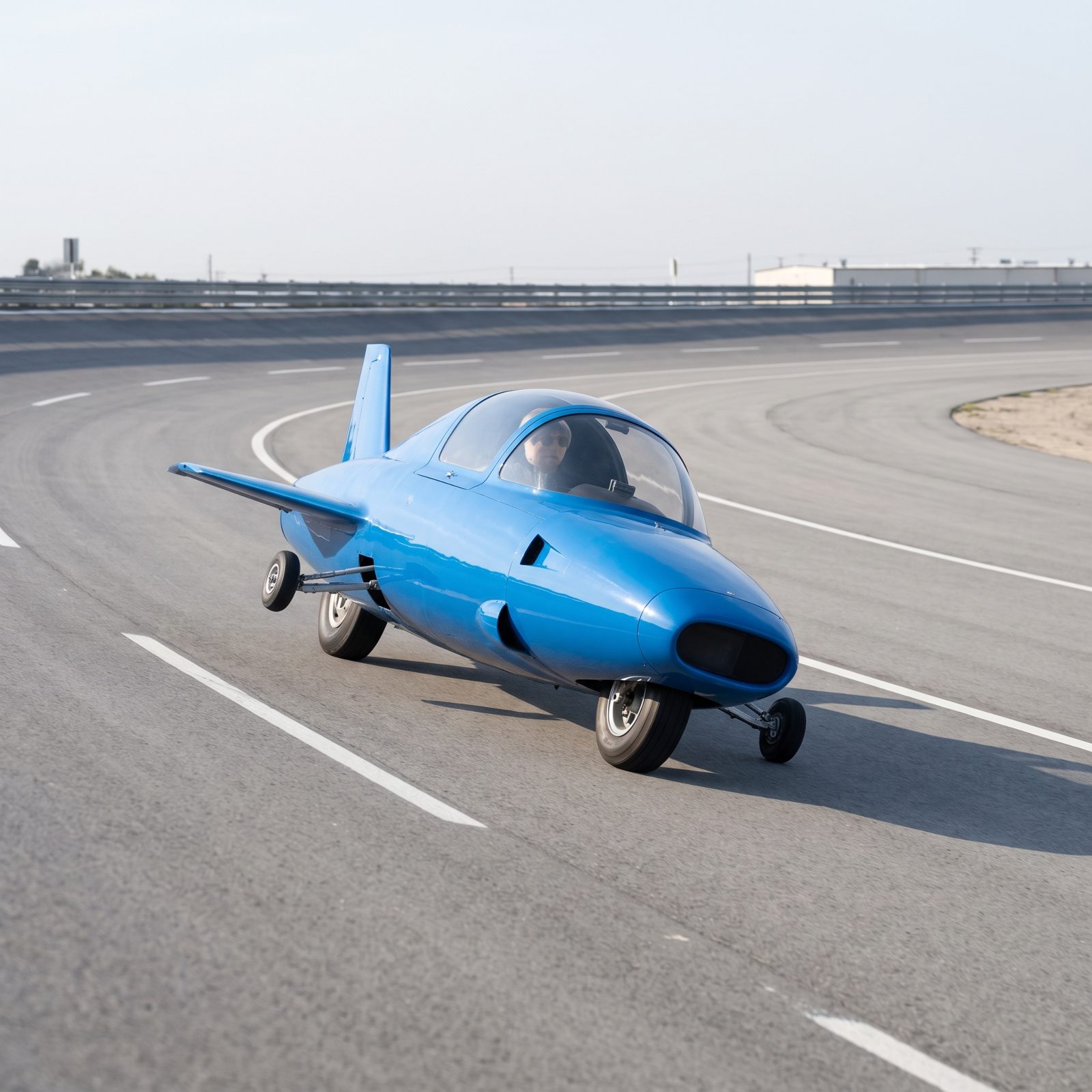
Two wheels, inline, like a motorcycle. But a full enclosed car body with a steering wheel. The trick was a gyroscope spinning in the belly of the thing, with small outrigger wheels that dropped down only when it stopped.
Designed by a team that included a famous industrial designer, the Gyro-X could balance on a dime and tilt through turns like a bike. A narrow single-track car means less frontal area, less drag, less road taken up, and engineers are still chasing that promise with tilting commuter concepts.
The money ran out, the company collapsed, and the one prototype got abused and nearly lost before a museum restored it. The gyroscope spins again. The dream of a narrow car that corners like a motorcycle never did catch on.
23. The LeTourneau TC-497 Land Train Put a Motor in Every Wheel
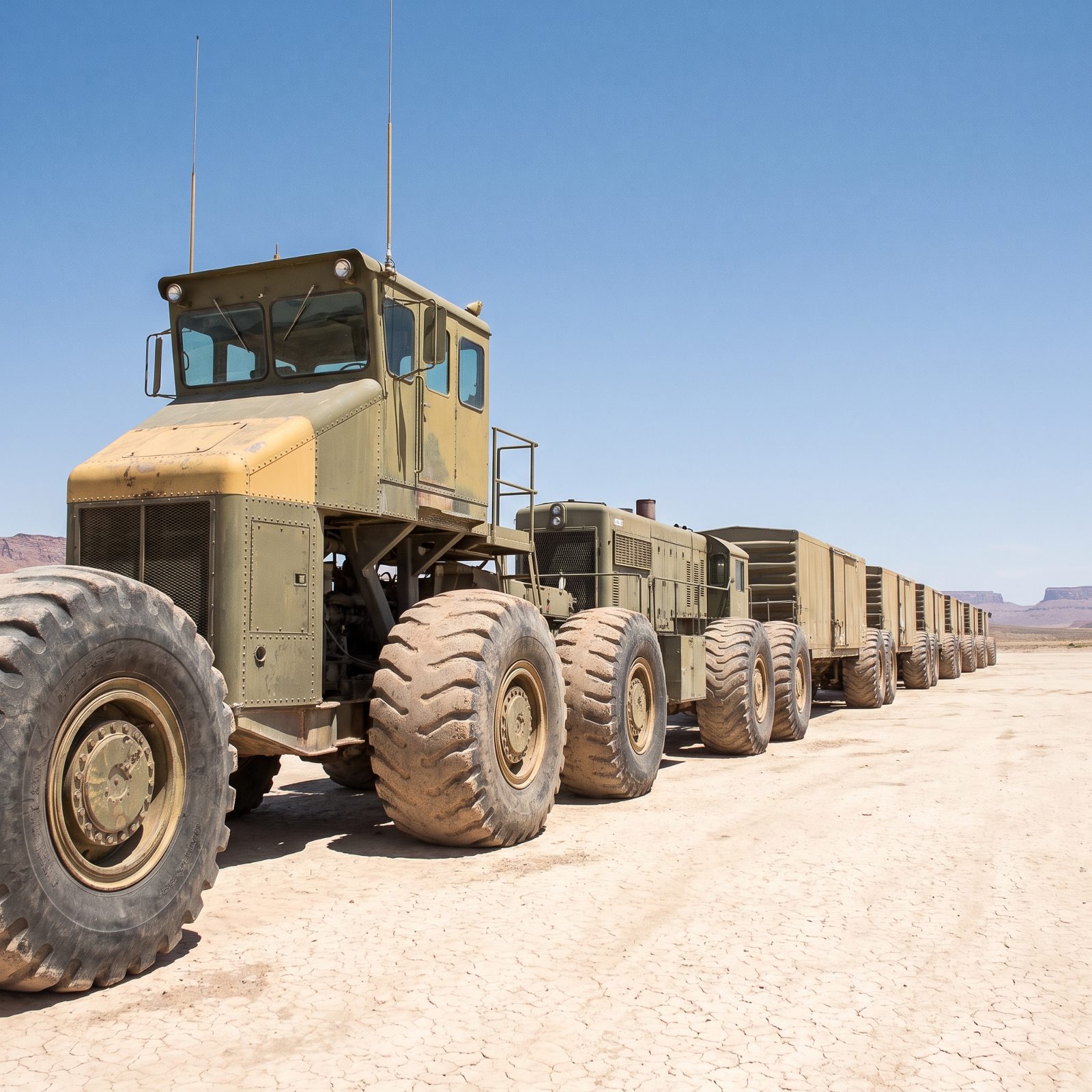
The US Army wanted to haul cargo across roadless Arctic and desert ground without rails or paved roads. The answer was a train that drove itself across open dirt on rubber tires.
The TC-497 Overland Train stretched longer than a football field once fully linked. The breakthrough was in the wheels: a central gas-turbine generator fed electric motors mounted at each one, so every single wheel drove itself.
Wheel-hub electric drive — the exact architecture now showing up on serious electric trucks and off-road machines. LeTourneau was building it in the late 1950s because gears and driveshafts simply couldn’t push power across a vehicle that long. The whole monster got scrapped, but the principle is back in showrooms.
Put the motor at the wheel and you never fight a driveshaft again. Sixty years later, truck engineers finally agreed.
22. The Leyat Hélica Dropped the Driven Wheels and Bolted On a Propeller
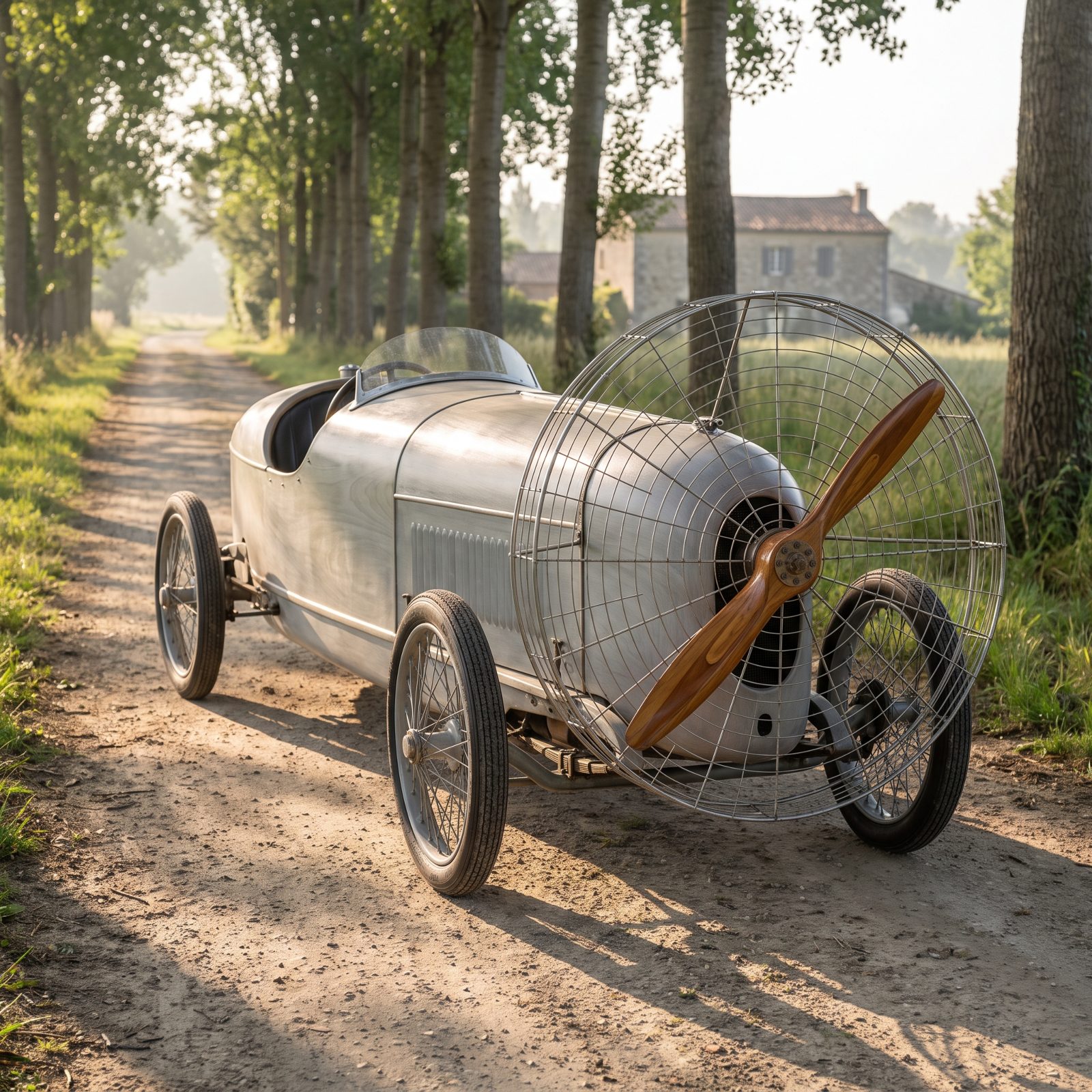
Marcel Leyat hated the weight and complexity of transmissions, differentials, and driven axles, so he deleted all of it and strapped an aircraft propeller to the front.
The Hélica was pushed through the air like a plane. No gearbox, no driveshaft, no driven wheels at all. Light, slippery, genuinely quick for 1921, and built from plywood like an airframe — the lightweight monocoque idea was years ahead.
The problems are obvious once you say them out loud. A spinning blade at bumper height is a bad idea on a public street, and steering by the back wheels felt wrong to everyone who tried it. A couple dozen were built. It remains the purest example of an engineer solving one problem while cheerfully ignoring every other one.
21. The Reeves Octoauto Added Four Extra Wheels Chasing a Softer Ride
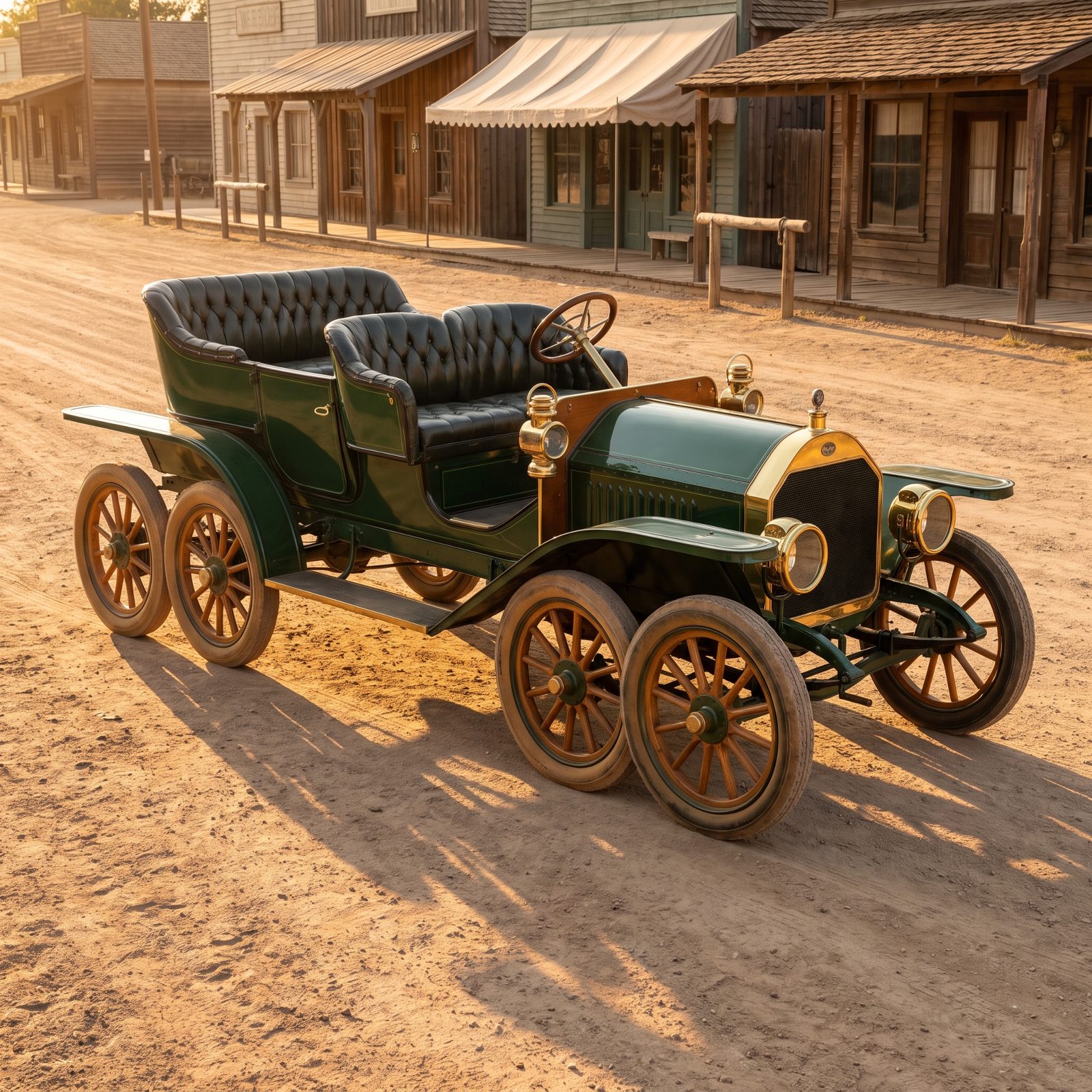
Milton Reeves looked at a rough dirt road, looked at four wheels, and figured more wheels meant a smoother ride. He wasn’t entirely wrong.
The Octoauto had eight wheels, two extra axles spreading the car’s weight and soaking up the ruts of early American roads. Spread the load across more contact points and the ride does smooth out — heavy off-road haulers and some land vehicles lean on exactly that logic today.
Nobody bought one. Expensive, hard to steer, and frankly it looked absurd. Reeves tried again with a six-wheeled Sextoauto, and that failed too. The man grasped a real principle of load distribution and ride quality. He just picked the worst possible car to prove it on.
20. The Monotrace Sealed Two-Wheel Travel Inside a Streamlined Shell
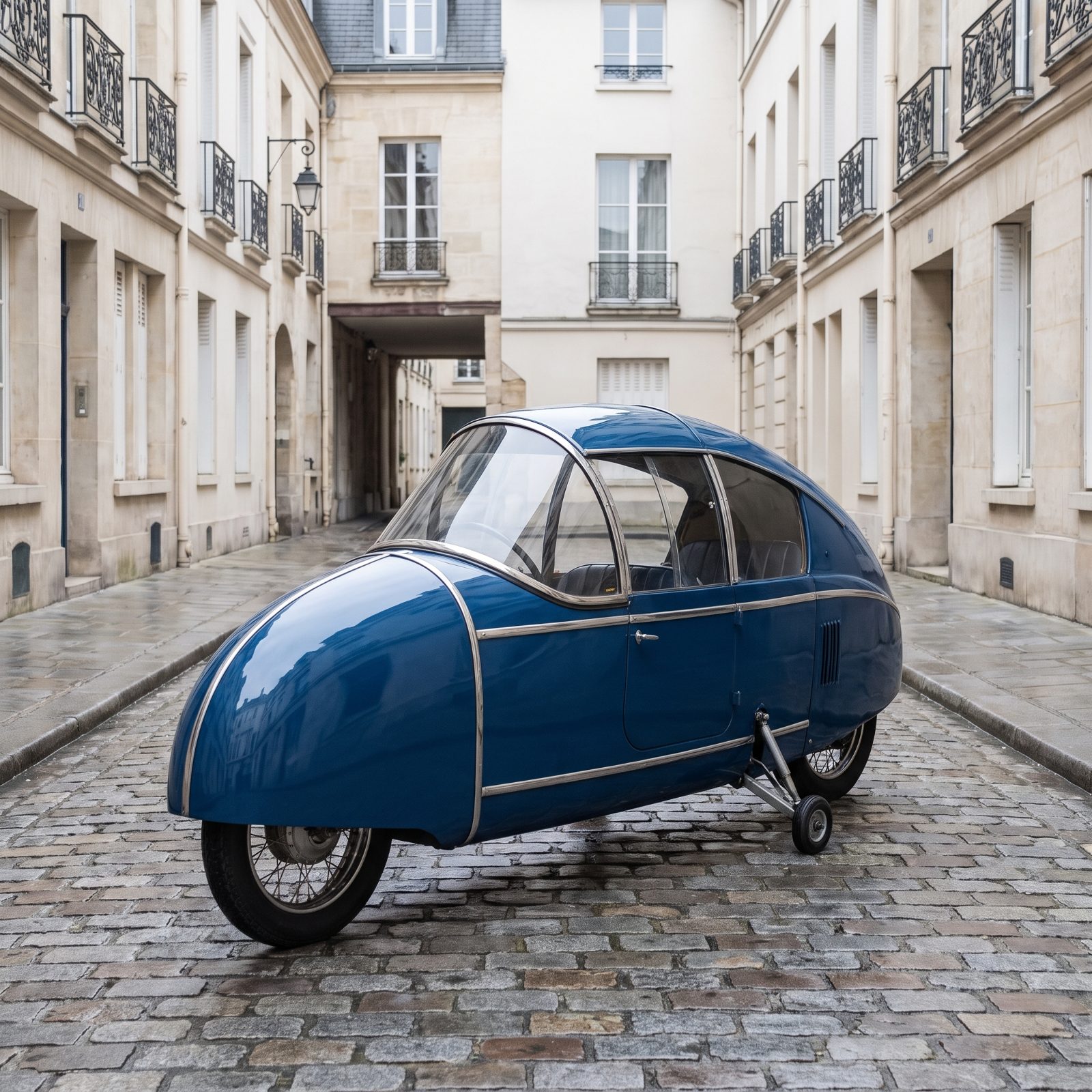
The French Monotrace took a motorcycle’s footprint and wrapped it in a car’s body. Two wheels inline, enclosed shell, weather kept outside, with little retractable outrigger wheels that dropped down at low speed to hold it steady.
You got motorcycle efficiency and narrowness with car-like comfort and protection — the exact pitch behind every enclosed-commuter and tilting-pod concept that keeps appearing at auto shows and then quietly disappearing.
It sold in modest numbers through the late 1920s before fading. The problem was never the concept. Buyers wanted either a real car or a real motorcycle, and the thing in between kept getting orphaned. Still does.
19. The Lohner-Porsche Mixte Put Electric Motors Inside Its Wheel Hubs
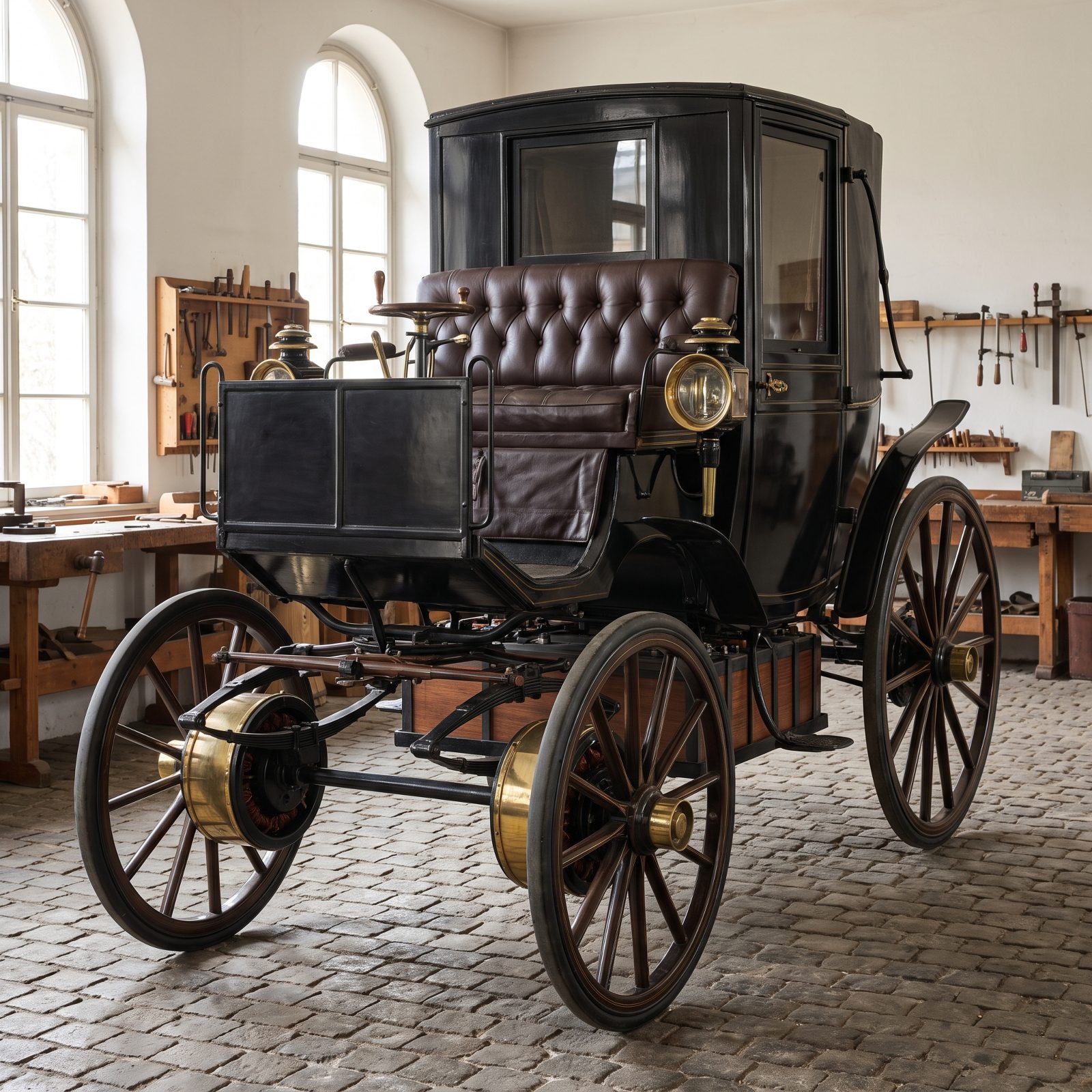
Hub motors feel like a 2020s e-bike idea. The oldest surviving version is over a century old.
Built in 1900 for Vienna coachmaker Ludwig Lohner, this machine carried electric motors bolted straight into the front wheel hubs. No driveshaft, no chains, no transmission bleeding away power between engine and road. The wheels were the motor. And the kid who drew it up, a young engineer named Ferdinand Porsche, had a name that meant nothing yet.
Later versions bolted on a gasoline engine to keep the batteries charged, which made this one of the first gas-electric hybrids anywhere on earth. Then the weight killed it. All that lead-acid turned the thing into a rolling anchor, and the idea gathered dust for the better part of a century.
18. The Doble Steam Car Could Raise Steam in About a Minute
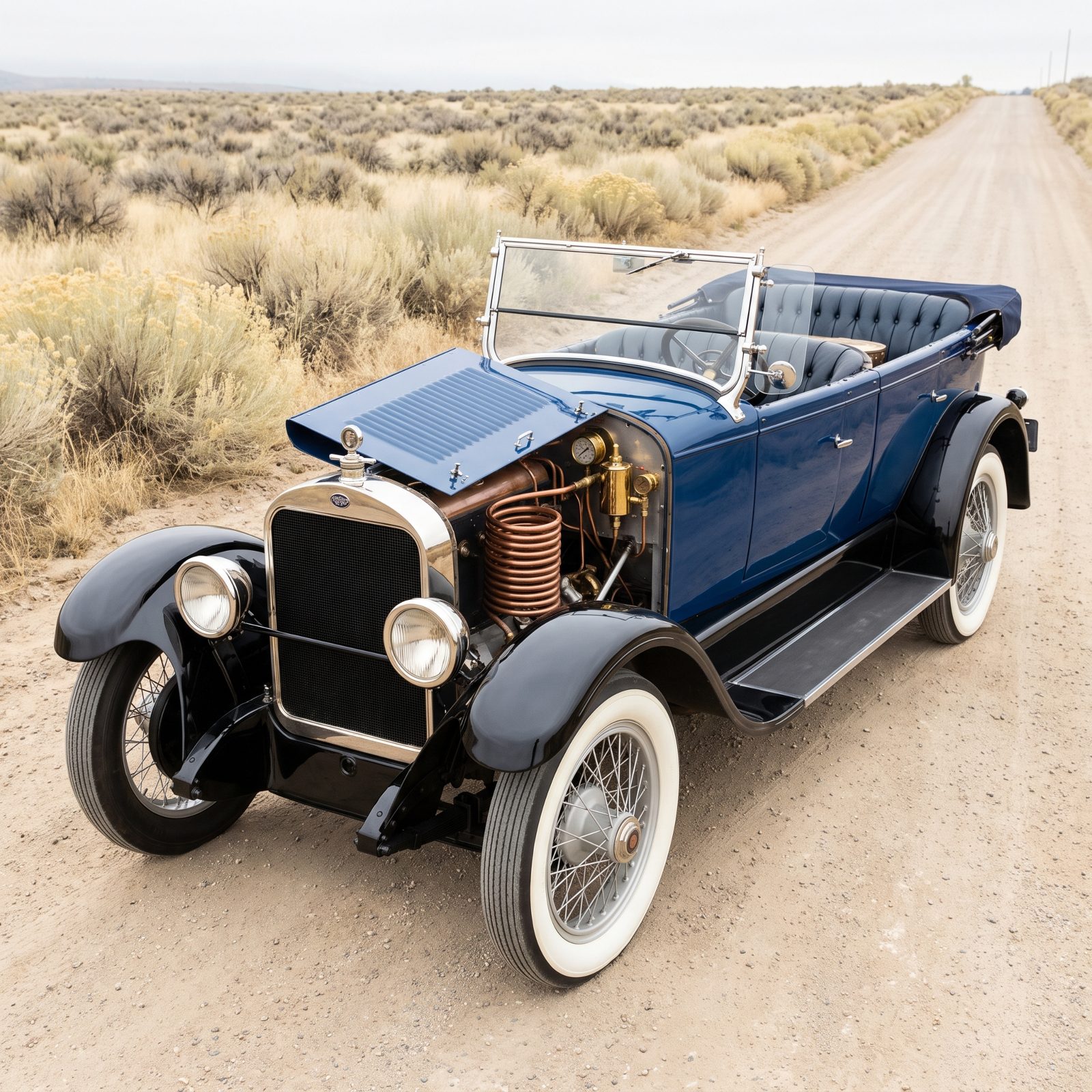
Steam cars had one fatal flaw everyone knew about: you waited. Early Stanleys needed twenty minutes to build pressure before you could go anywhere. Then the Doble brothers fixed it.
Their flash boiler ran thin coiled tubing instead of a big tank. Flip a switch and the Model E was ready in roughly a minute, often less once it had warmed. Push a button, no crank, no gears. It idled dead silent and ran so smoothly that a glass of water set on the hood barely rippled.
A 1920s Doble could outrun most gasoline cars of its day and reportedly touch 90 mph. The price killed it. These cost as much as a house, and then the Depression came along and finished the company off.
17. The Rumpler Tropfenwagen Put Streamlining and Independent Suspension on the Road
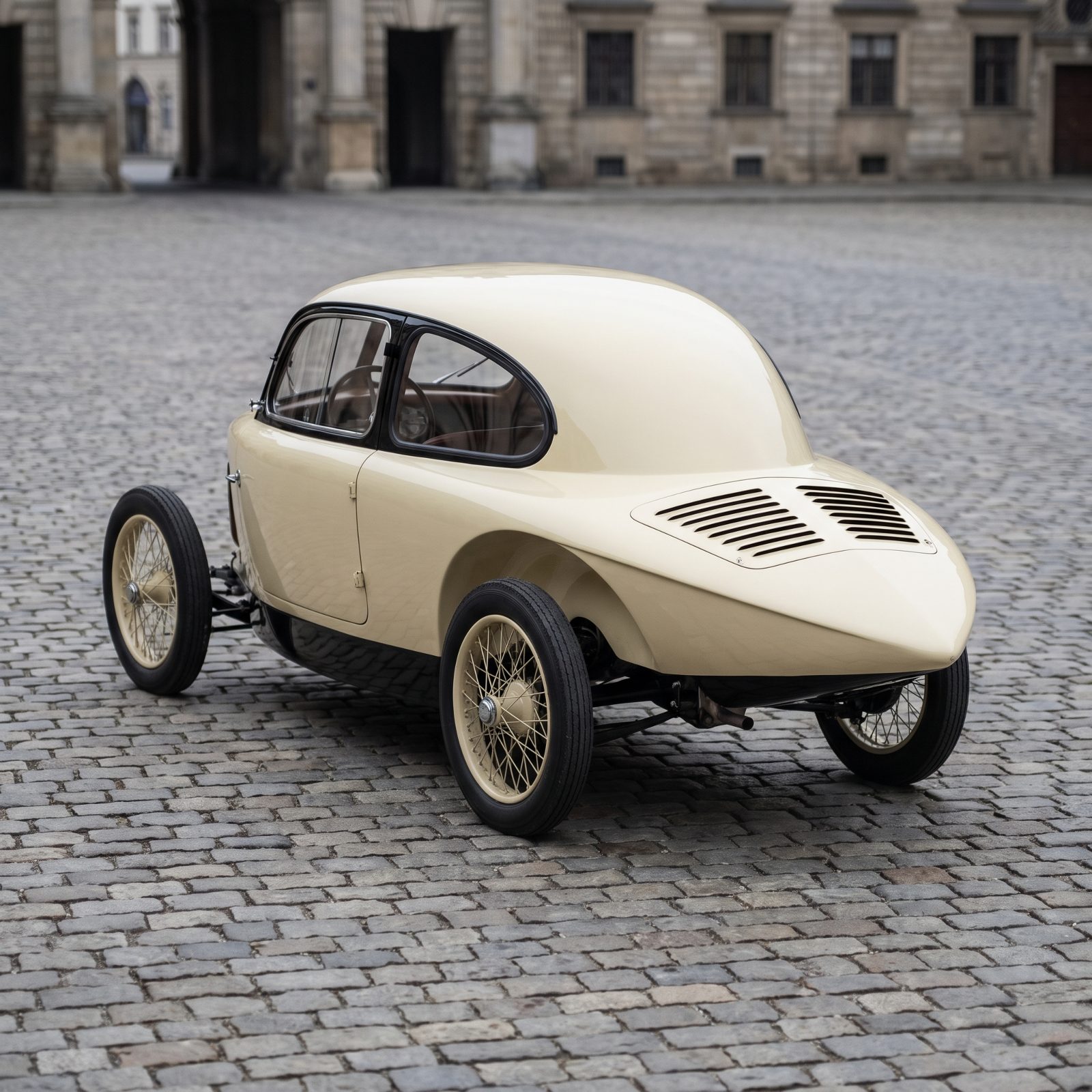
Drag coefficient is a term most people first heard in a Prius ad. A German engineer was chasing it back in 1921.
Edmund Rumpler came out of aircraft design, and boy does it show. His Tropfenwagen, German for “teardrop car,” wrapped its passengers in a smooth aerodynamic shell when every other car on the street still looked like a horse carriage with the horse removed. Decades later, wind tunnel tests clocked its drag coefficient near 0.28. Plenty of modern cars still can’t beat that.
It ran a mid-mounted engine and independent swing-axle suspension too, both ideas the rest of the industry took fifty years to catch up to. Buyers thought it looked weird and griped that it was a pain to service. Fewer than a hundred sold.
16. The Dymaxion Car Used Three Wheels and Rear-Wheel Steering
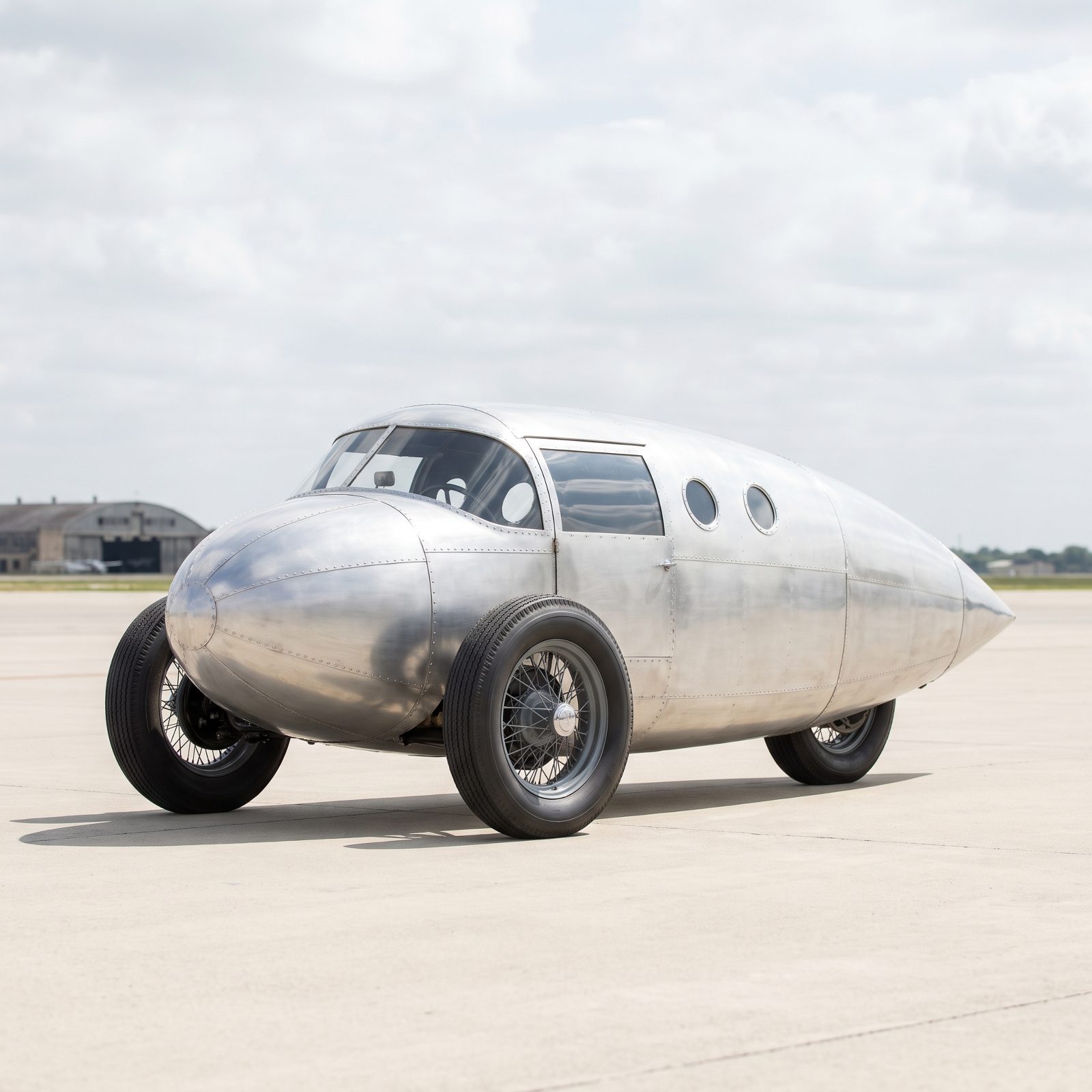
Three wheels, and the steering came from the back. On paper that sounds like a bad idea, and in some ways it was.
Designed in 1933 by a visionary architect better known for geodesic domes, the Dymaxion was a rolling thought experiment. It carried eleven people, stretched nearly 20 feet, got decent mileage for its size, and reportedly hit 90 mph. That single rear wheel steered, which let it turn in its own length and nose straight into a curb.
Same rear wheel also made it twitchy as hell in a crosswind. A fatal crash at the 1933 World’s Fair spooked the backers, and only three were ever built. People kept poring over its aerodynamics for decades anyway.
15. The Stout Scarab Anticipated the Modern Minivan
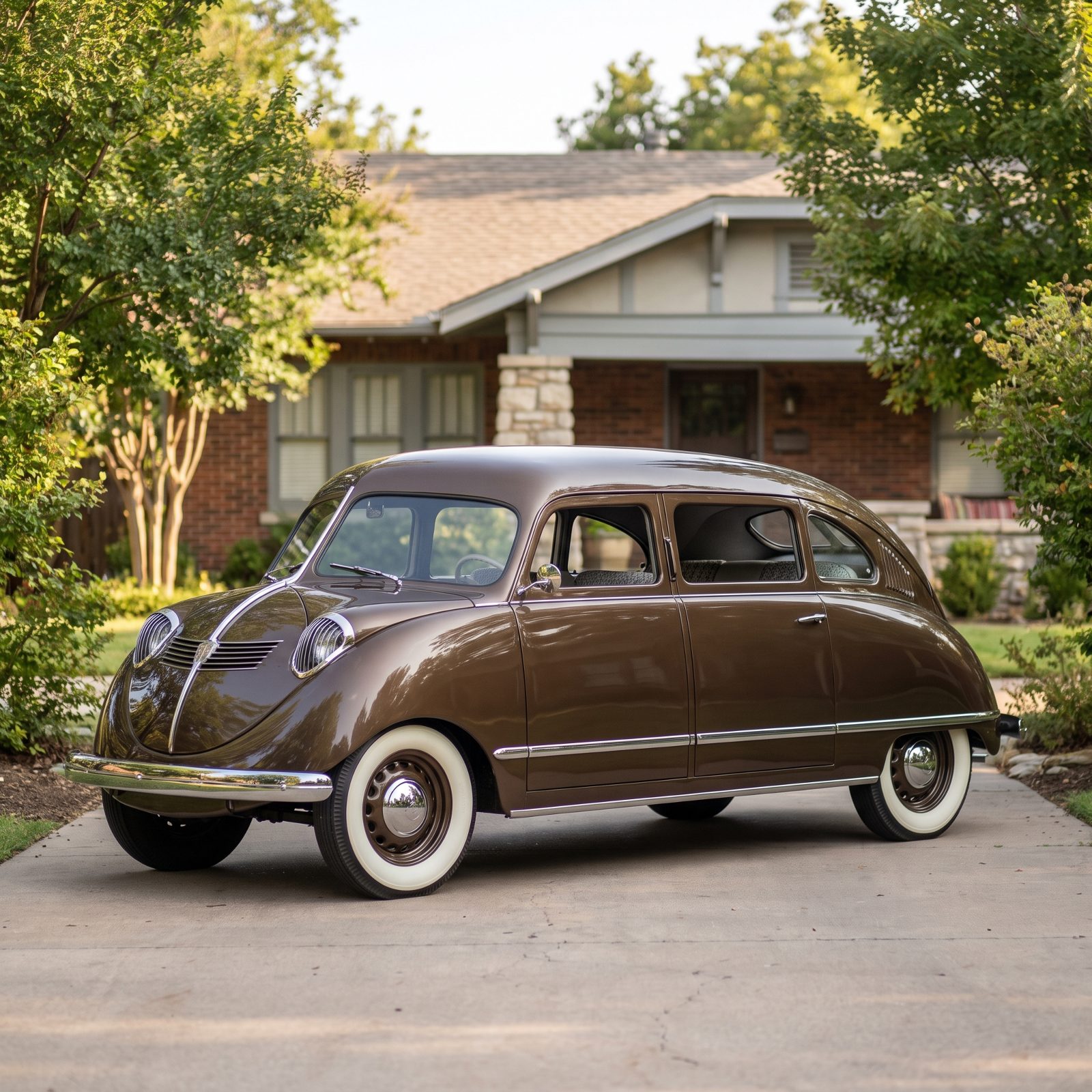
The minivan has a founding father, and no, it isn’t Chrysler.
William Stout built aircraft before he built cars, and the Scarab wears that pedigree. In 1936 he kept a short sloping nose up front, shoved the engine to the rear, and turned the freed-up space into a roomy cabin. A forward-facing bench sat up front, with another behind it. Passengers could stretch out in a way few sedans of the day allowed while the thing rolled down the road.
That roomy, passenger-first cabin is the whole premise behind every people-mover on a dealer lot today. Stout managed only a handful, each priced like a Cadillac, so almost nobody ever laid eyes on one. The industry rediscovered the layout about fifty years later and strutted around like it had invented fire.
14. The Mochet Velocar Made Recumbent Cycling Practical in the 1930s
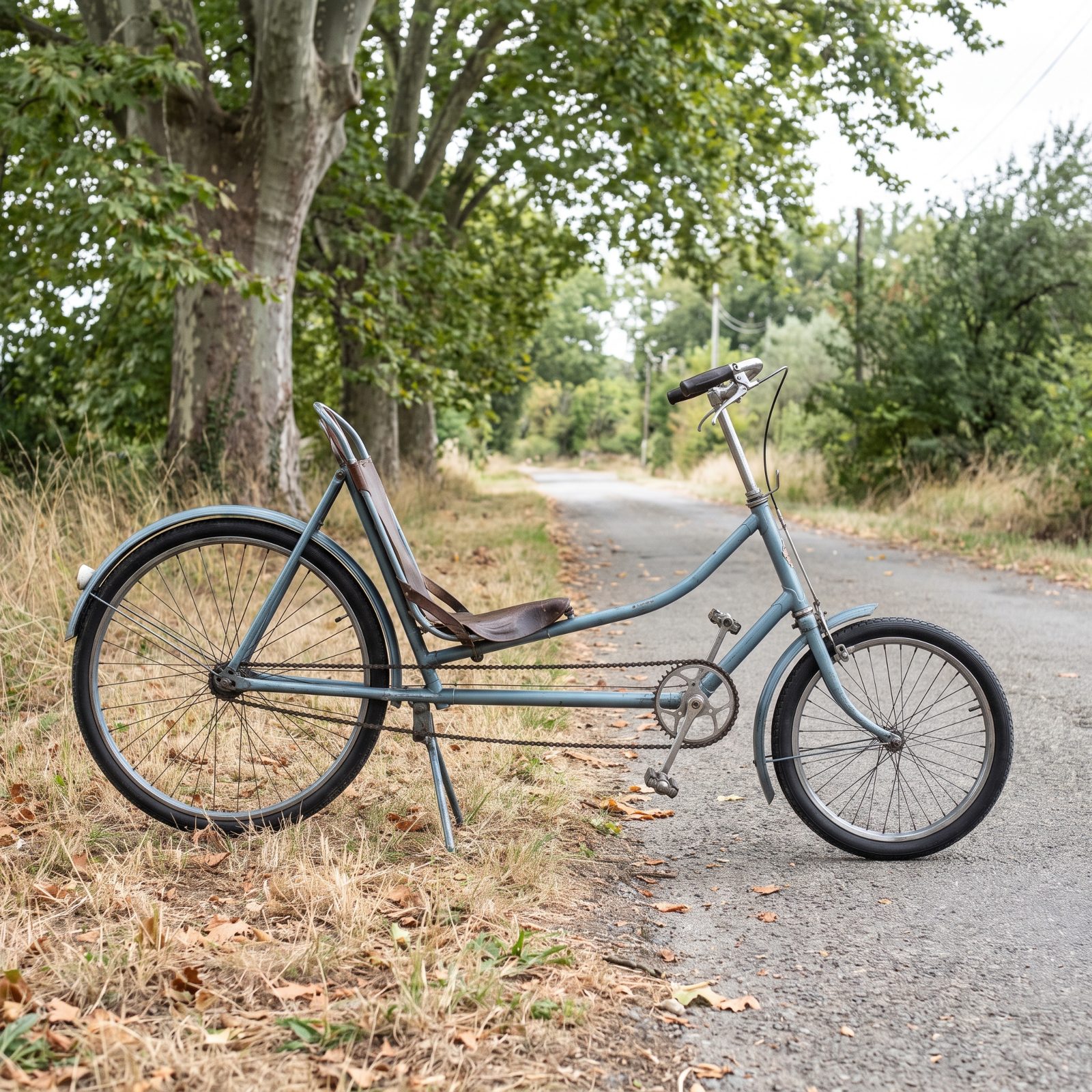
A recumbent bike was fast enough to get banned. That tells you how good the idea was.
Charles Mochet built low, laid-back pedal machines in France all through the 1930s, and they worked for a simple reason: the rider sits back against a seat with the feet out front, cutting a much smaller hole in the air. Less wind resistance, more speed for the same effort.
In 1933 a Mochet recumbent set an hour record that flat-out embarrassed the upright racing crowd. Their response? Not to copy the design. They banned it from sanctioned competition in 1934, and that ruling stuck for decades, keeping recumbents off to the side and out of the mainstream.
13. The Hirondelle Retro-Direct Gave Riders Two Gears Without a Derailleur
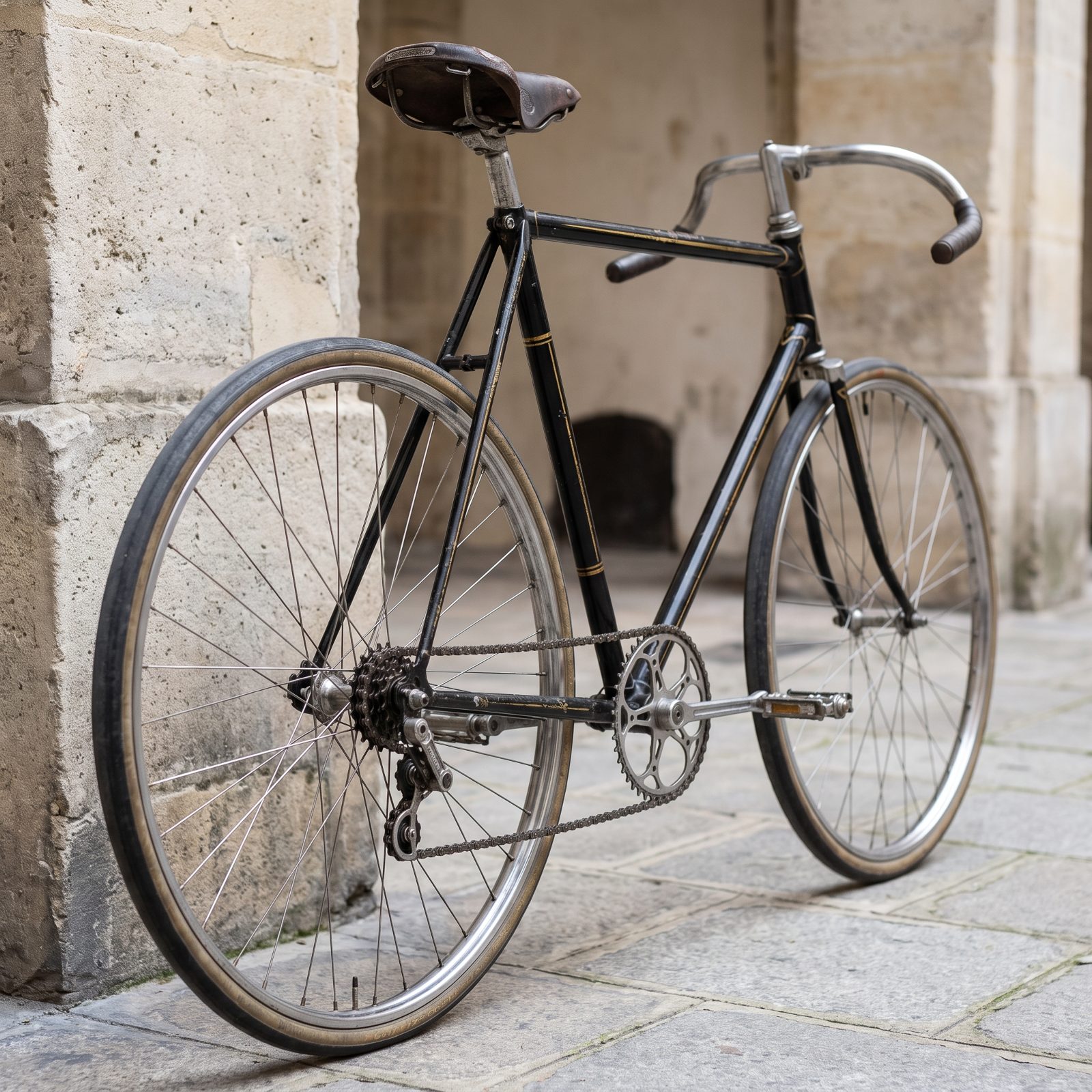
Picture getting a second gear by pedaling backward. No shifter, no cable, no derailleur to knock out of whack.
That’s the retro-direct, and the French Hirondelle brand sold a version of it in the early 1900s. The chain loops through a pair of pulleys to two sprockets of different sizes. Pedal forward for the tall gear on flat ground. Spin the pedals backward and the chain grabs the easier gear for climbing, and you still roll ahead the whole time.
Riders had to retrain their legs for it, and the system chewed through chains. But it was clever, dead simple, and a small cult of tinkerers still builds retro-direct bikes today just to feel how strange the thing is under your feet.
12. The American Star Put the Small Wheel in Front to Reduce Header Falls
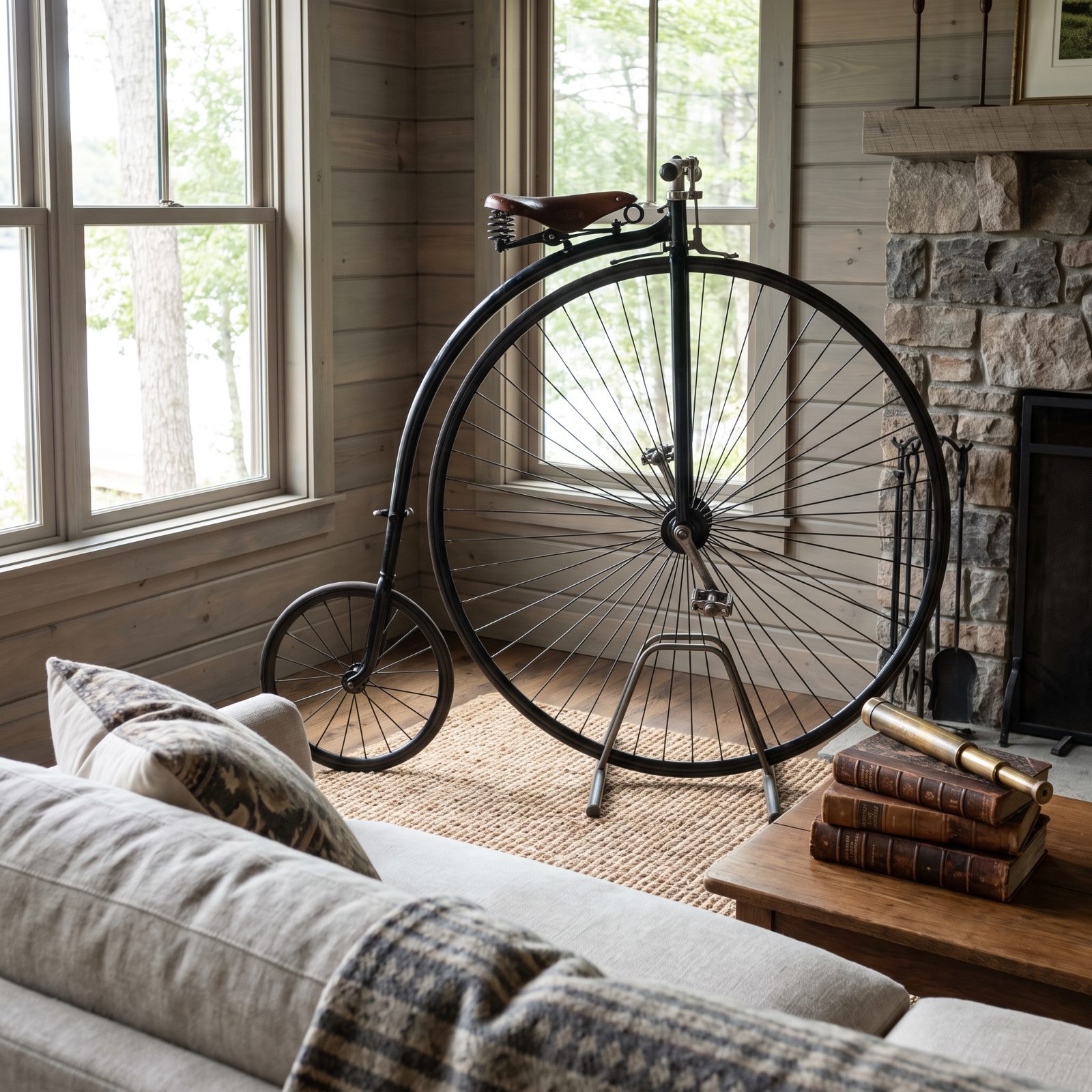
The penny-farthing had a party trick nobody wanted: it pitched you over the handlebars head-first. They called it a header, and it broke wrists and necks.
The American Star, patented in 1880, solved that by flipping the whole thing around. Big wheel in back, small one up front, and suddenly a bump can’t catapult the rider over the top. It also ditched rotating cranks for a pair of independent treadle levers, so it pedaled unlike any other high-wheeler.
Never did beat the standard high-wheeler on sales, and the safety bicycle with two equal wheels soon made both of them obsolete. As a piece of problem-solving, though, it was ahead of its moment.
11. The Bowden Spacelander Wrapped a Bicycle in Molded Fiberglass
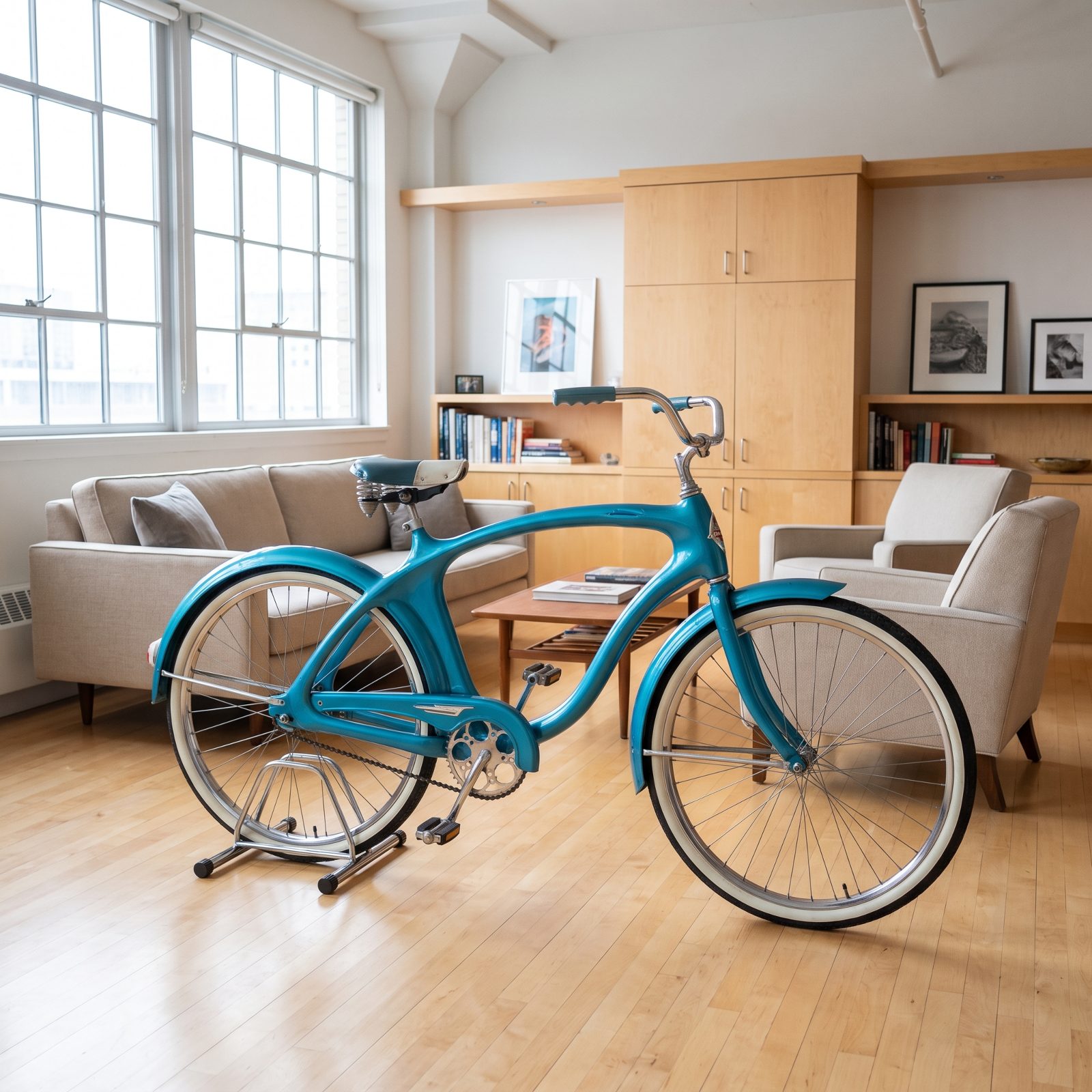
Most bicycles are a triangle of steel tubes. The Spacelander is a sculpture.
Designer Benjamin Bowden sketched a flowing fiberglass-bodied bike back in the 1940s, then finally wrestled it into production in 1960. The entire frame is a molded shell, nothing but swooping curves and a small badge at the head tube, looking like it rolled straight out of a sci-fi comic. Composite frames are everywhere now. This one showed up half a century early.
And it flopped. Hard. The fiberglass cracked, the price was steep, and only a few hundred sold before the whole run shut down inside a year.
10. The 1915 Autoped Folded a Gasoline Engine Into a Standing Scooter
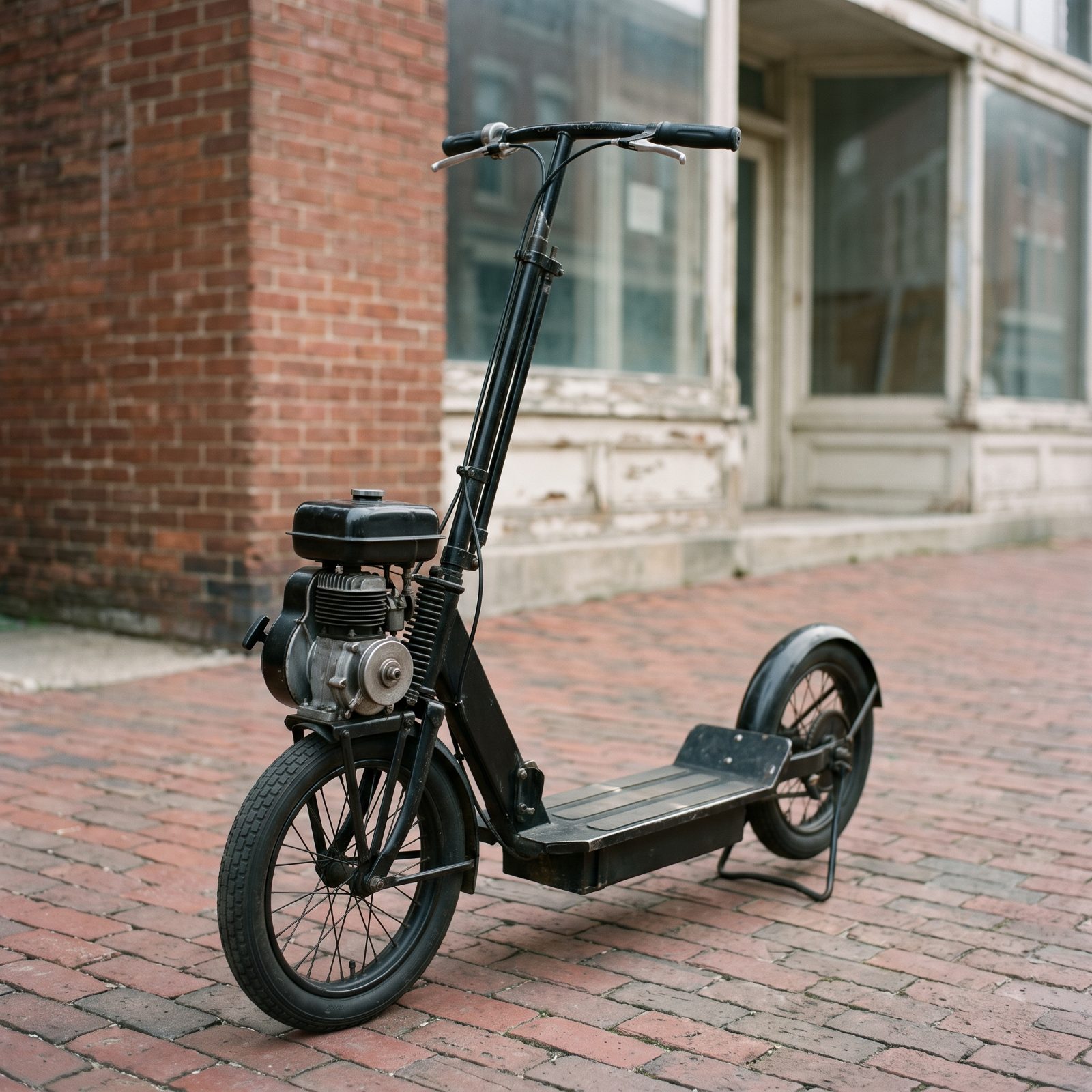
The e-scooters cluttering city sidewalks have a great-grandfather, and it ran on gasoline.
The Autoped went on sale around 1915. A small engine sat over the front wheel, you stood on a flat deck, and the steering column folded flat so you could haul it onto a train or stash it in a closet. Push the column forward to engage the clutch, pull it back to coast. No seat, no pedals. Stand and go.
Commuters rode them. So did city messengers dodging traffic. It faded out by the early 1920s once cheap cars and motorcycles took over, and then the whole concept came roaring back a century later, a folding stand-up ride for the last mile, with not one fundamentally new idea in it.
9. The Ner-A-Car Used Hub-Center Steering and a Step-Through Chassis
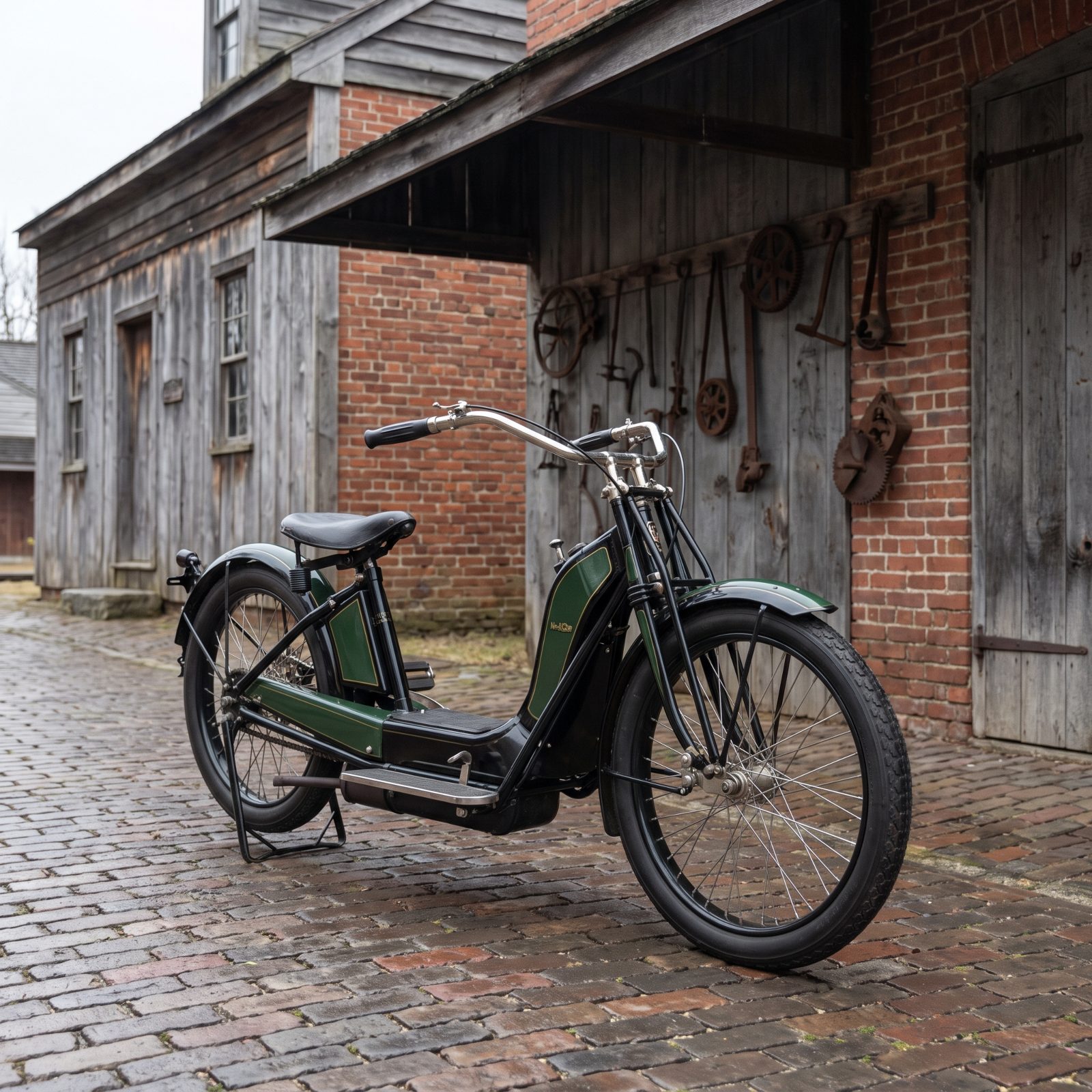
Most riders have never heard of it, which is a shame, because the Ner-A-Car solved problems the industry kept running from for the next eighty years. Instead of a telescopic fork, it steered through the wheel hub itself, separating braking forces from steering forces. Builders chase that same trick on exotic machines today and charge a fortune for the privilege.
The frame sat low, like a car’s, so you climbed aboard rather than swung a leg over. Stable, planted, nearly impossible to tip. Close to ten thousand were built on both sides of the Atlantic before it quietly disappeared.
8. The Rokon Trail-Breaker Drove Both Wheels Across Difficult Terrain
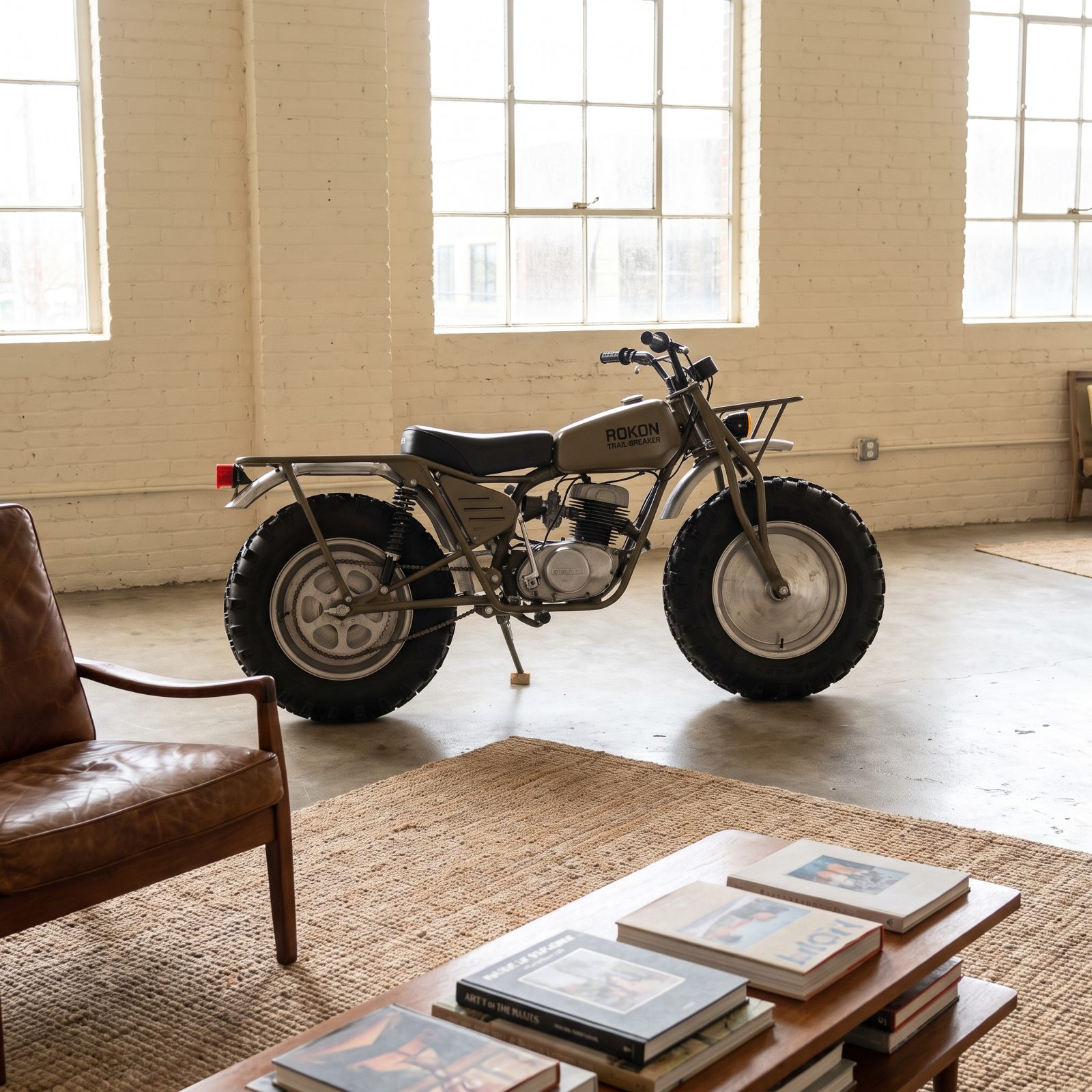
Two-wheel drive on a motorcycle sounds like a solution looking for a problem until you watch one claw straight up a wet clay bank. Rokon has powered both wheels since the late 1950s, and that front drive lets the thing crawl over obstacles that stop a conventional dirt bike dead.
Then there are the wheels. Hollow drums, so you can fill them with water, fuel, or gear, or empty them to float the bike across a stream. Ranchers, hunters and surveyors buy them for the one job nothing else will do: going absolutely anywhere, slowly, without a word of complaint.
7. The Kégresse System Turned Cars Into Flexible Half-Tracks
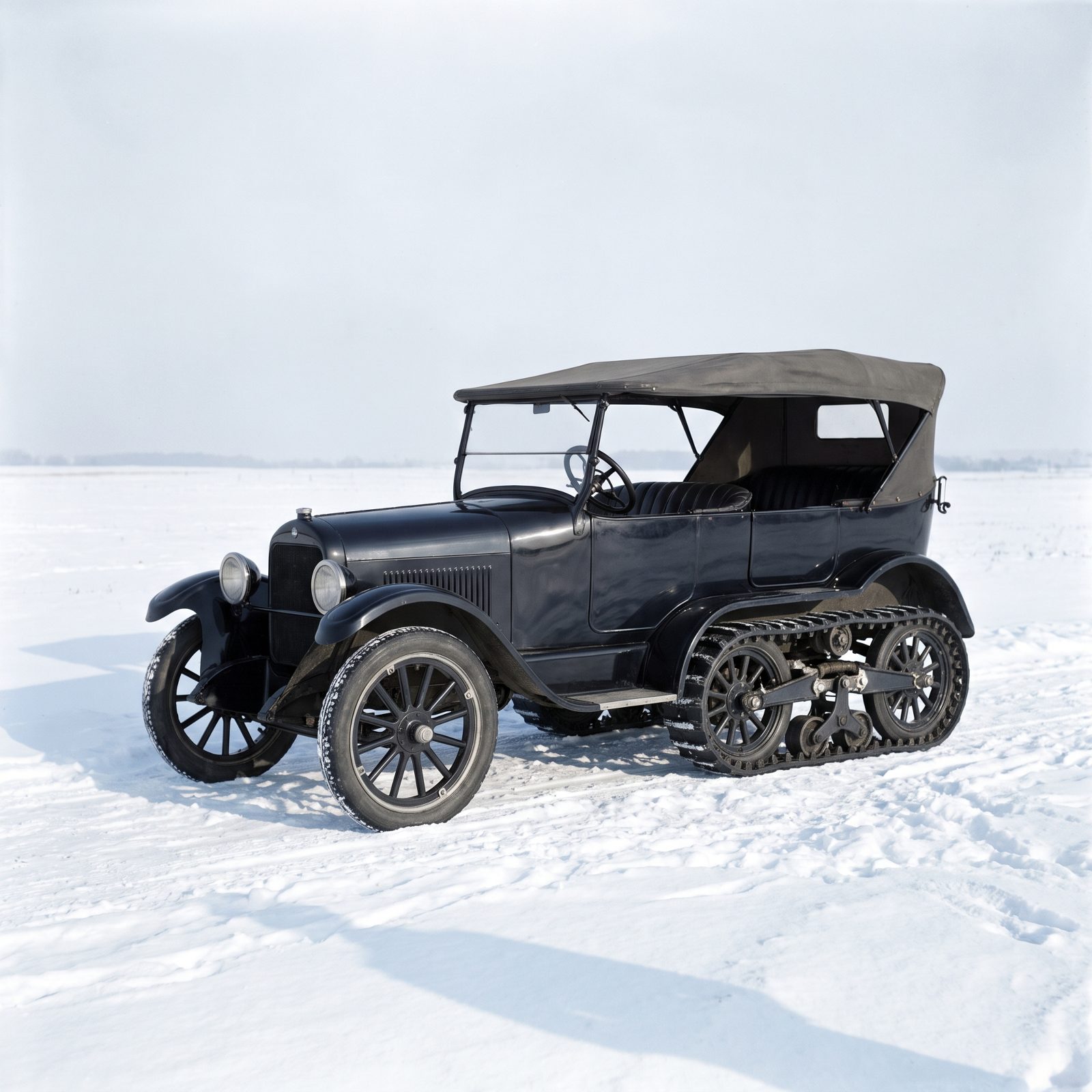
Adolphe Kégresse ran the garage for the Russian Imperial court, and he faced one practical nightmare over and over: deep snow and bottomless spring mud swallowed ordinary cars whole. His fix was to leave the front wheels alone for steering and swap the rear axle for a flexible rubber track riding over small bogie wheels.
That spread the car’s weight and let it float over surfaces that trapped everything else. Citroën later bolted Kégresse tracks onto the cars it sent across the Sahara and central Asia on those famous expeditions. The core idea — a soft continuous track instead of rigid steel links — still shapes snow machines and light military vehicles.
6. The Pavesi P4 Used an Articulated Chassis to Cross Rough Ground
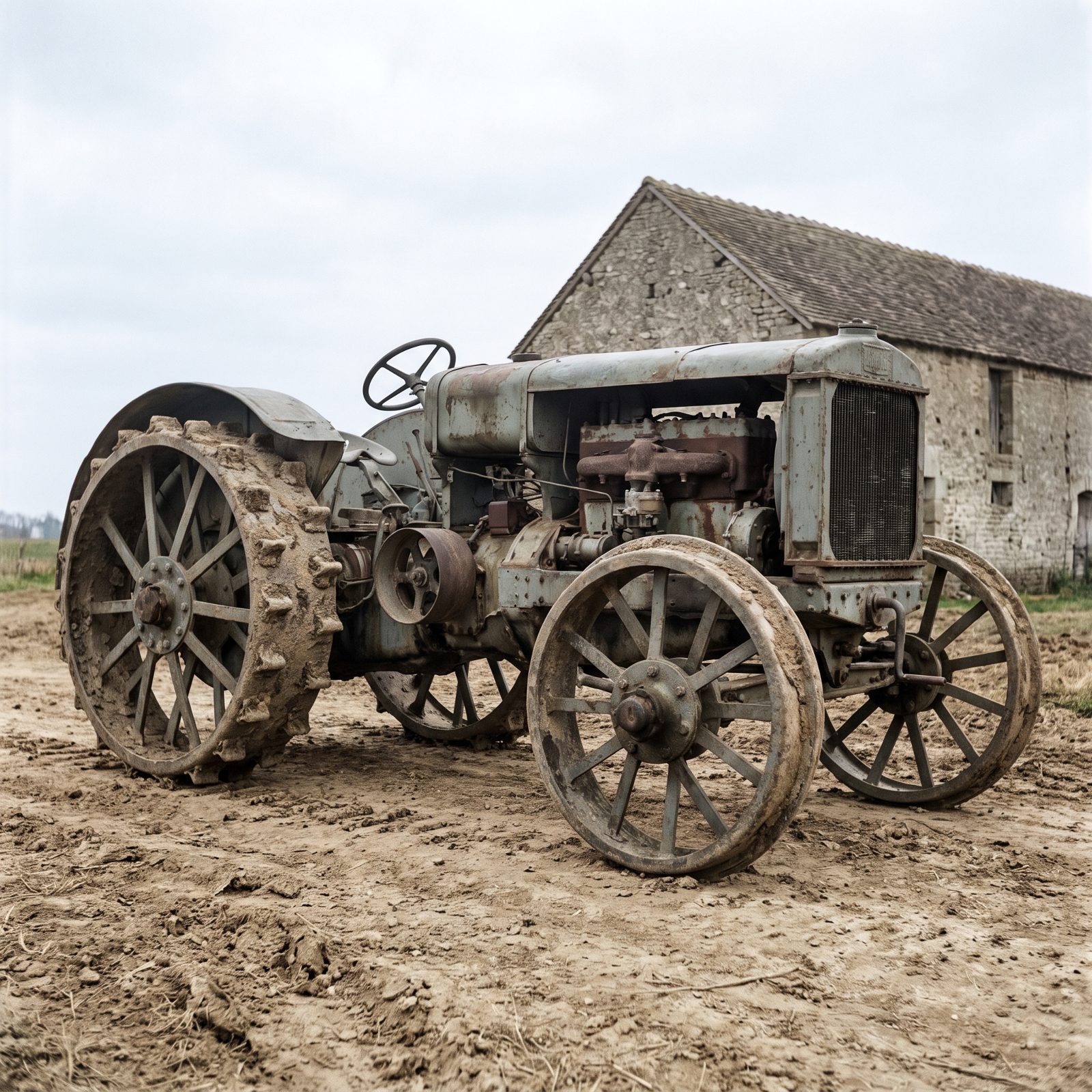
Watch a modern tractor claw its way across a muddy field. This articulated tractor was doing much the same in the early 1920s, its chassis pivoting in the middle so its big lugged steel wheels kept biting into ground that twisted and heaved underneath them.
Those spade-like lugs gave it traction that smooth-wheeled machines of the day simply couldn’t match. Farmers used it to haul ploughs across terrain that would have buried a conventional cart axle-deep.
5. The Lombard Steam Log Hauler Introduced a Practical Tracked Vehicle
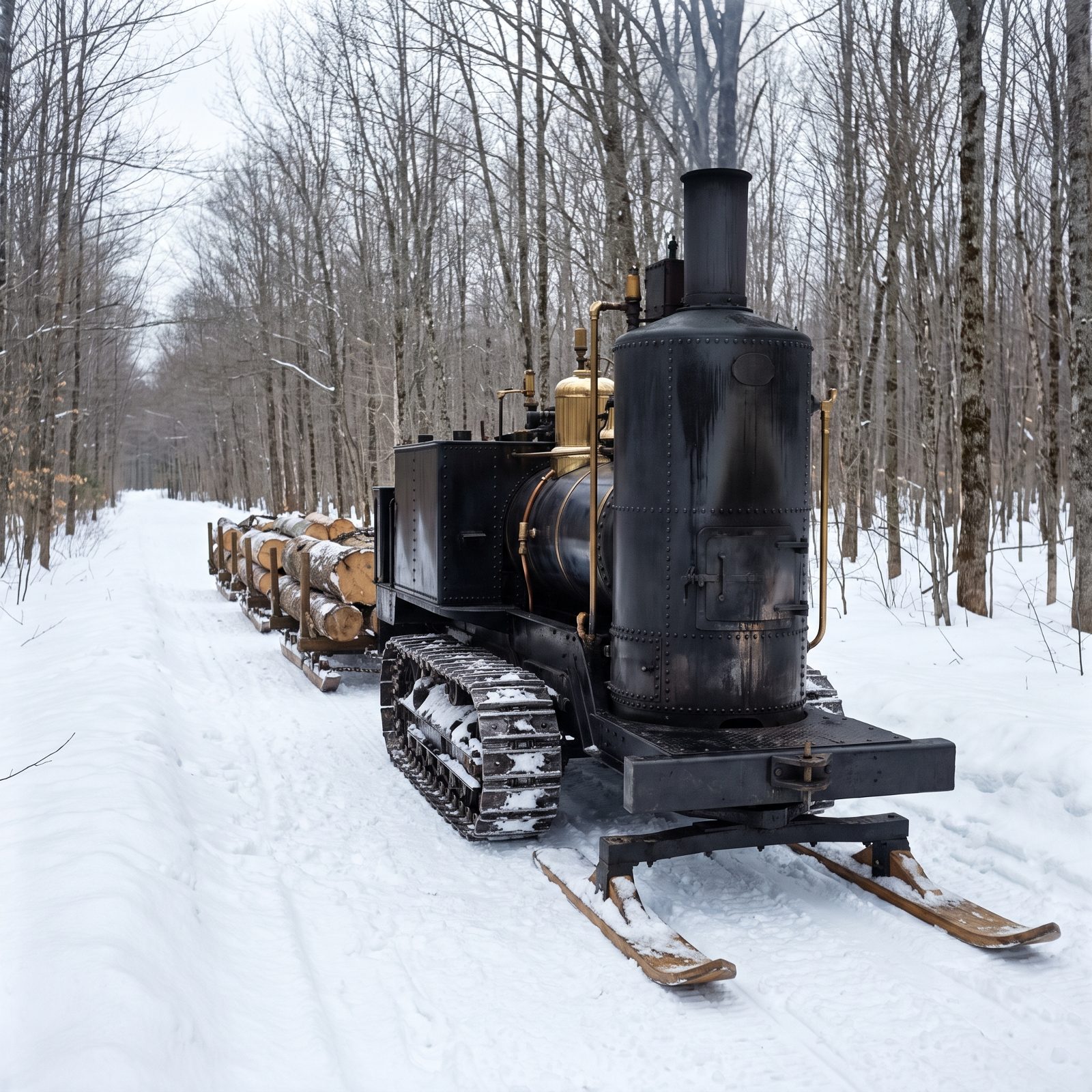
Before the tank, before the farm crawler, a Maine logging machine was already running on continuous steel tracks. The Lombard Steam Log Hauler showed up around 1900 to drag enormous trains of timber sleds out of the north woods through deep snow.
It looked like someone had bolted a locomotive onto a pair of tank treads — which is more or less what it was. Crawler tracks at the rear, beneath a riveted iron box, gripped the snow, while a pair of steering skis up front, beneath the boiler, led the way for the log sleds trailing behind. Historians rank it among the first genuinely practical tracked vehicles, and the patents that followed fed straight into everything that came after.
4. The Electromote Demonstrated Trolleybus Travel in 1882
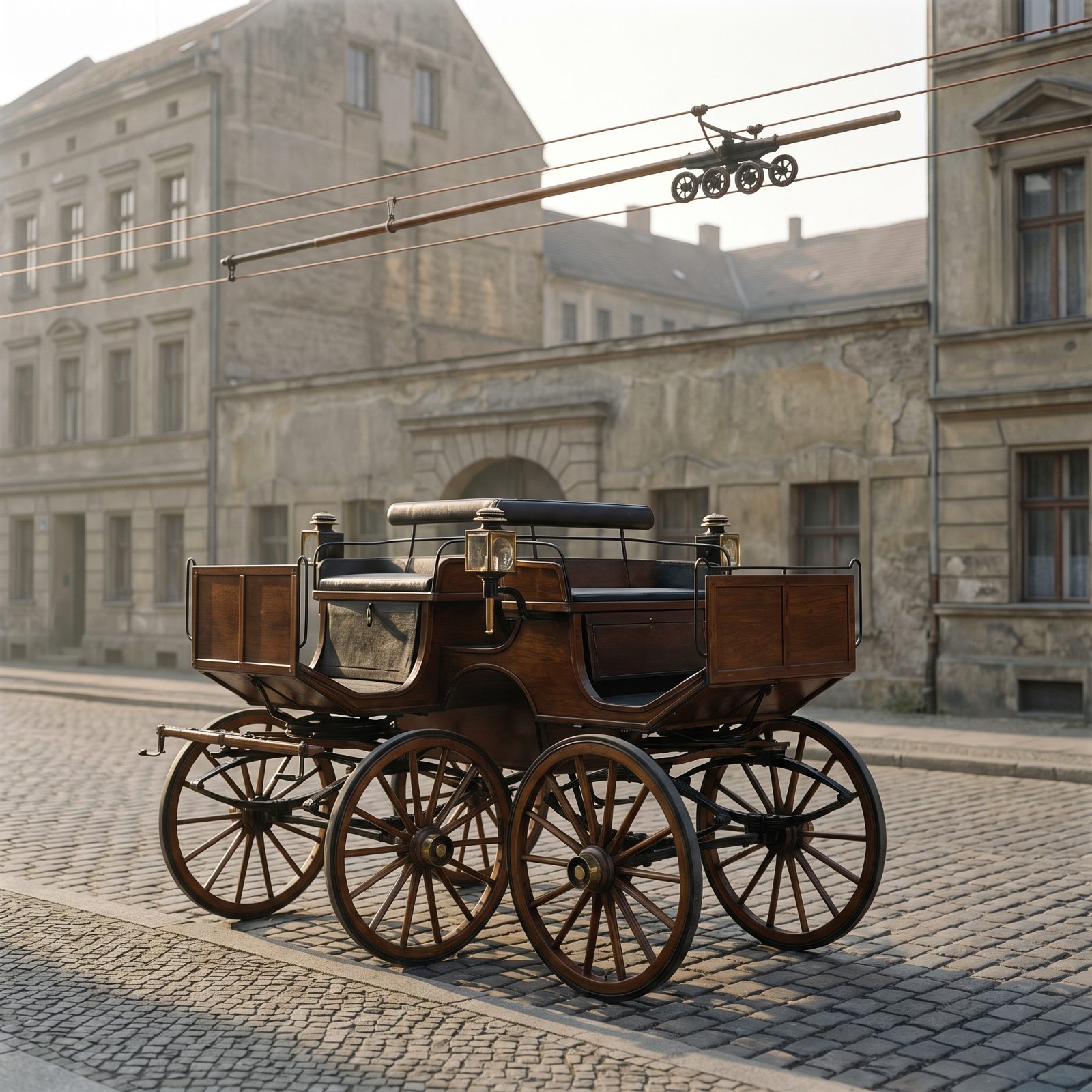
No rails. No onboard fuel. Just a carriage pulling electricity down from a wire overhead. In 1882, outside Berlin, Werner von Siemens ran the Electromote and proved the whole trolleybus idea decades before most cities had any electric transit at all.
Power came down from a set of parallel overhead wires, where a small multi-wheeled cart rolled along up top, fixed to a long rod suspended among the lines, all feeding a motor where a horse used to be. The run was short and the gear was raw, yet the concept outlived nearly everything around it. Trolleybuses still hum through hilly cities from Seattle to San Francisco on the same simple logic worked out that afternoon.
3. The Fell Mountain Railway Used Horizontal Wheels on a Center Rail
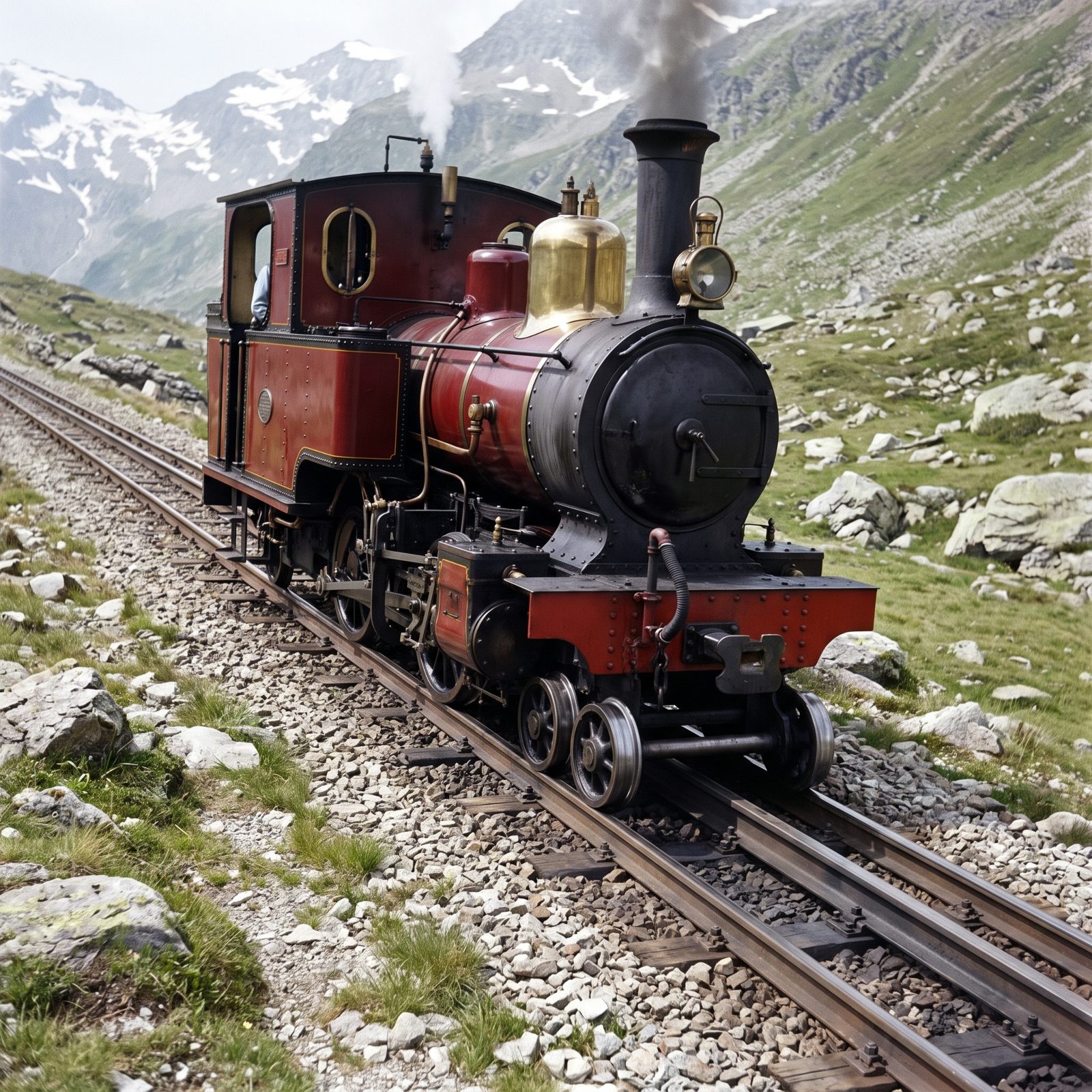
Ordinary trains slip on steep grades because they lean entirely on the weight of the driving wheels pressing down on two smooth rails. John Barraclough Fell patented a smarter answer in the 1860s: a raised center rail and a pair of powered horizontal wheels that squeezed it from both sides.
That sideways grip handed the locomotive extra bite for climbing and extra braking on the way back down. It carried traffic over the Mont Cenis pass before the tunnel opened, and a Fell center rail still serves for braking today on the Isle of Man’s Snaefell Mountain Railway.
2. The Michelin Micheline Put Pneumatic Rubber Tires on a Railcar
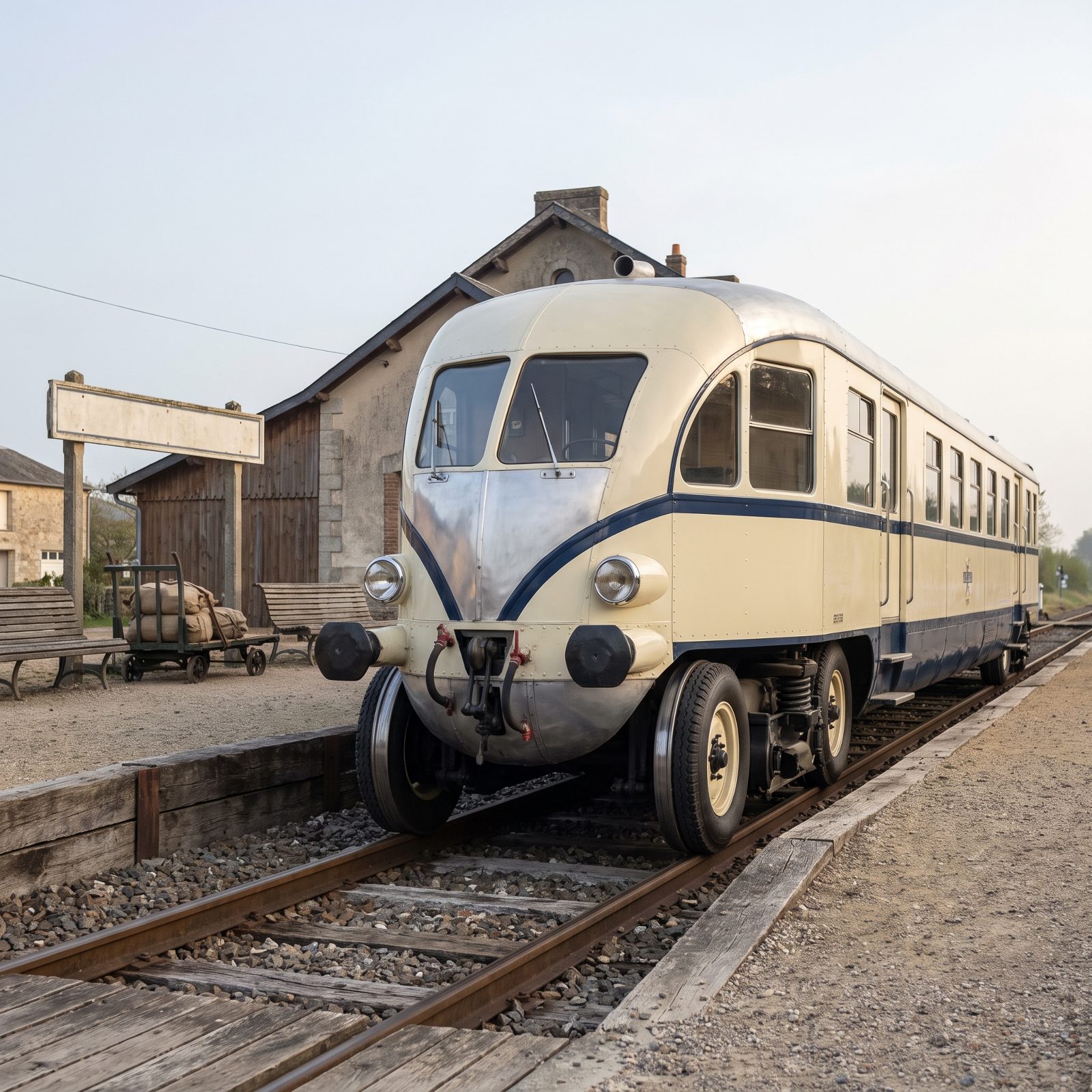
A tire company deciding trains ought to ride on rubber instead of steel sounds like pure marketing. It wasn’t. In the early 1930s Michelin built the Micheline, a railcar running on pneumatic tires fitted with steel guide flanges to keep them on the rails.
The payoff was a ride so smooth that passengers swore a full glass of water wouldn’t spill. Steel-on-steel is efficient but noisy and jarring, and the rubber soaked up all that clatter. It never displaced conventional wheels for heavy freight — too much load, too little grip — but the idea lives on under the rubber-tired metro systems in Paris, Montreal and Mexico City.
1. La Jamais Contente Became the First Road Vehicle to Exceed 100 km/h
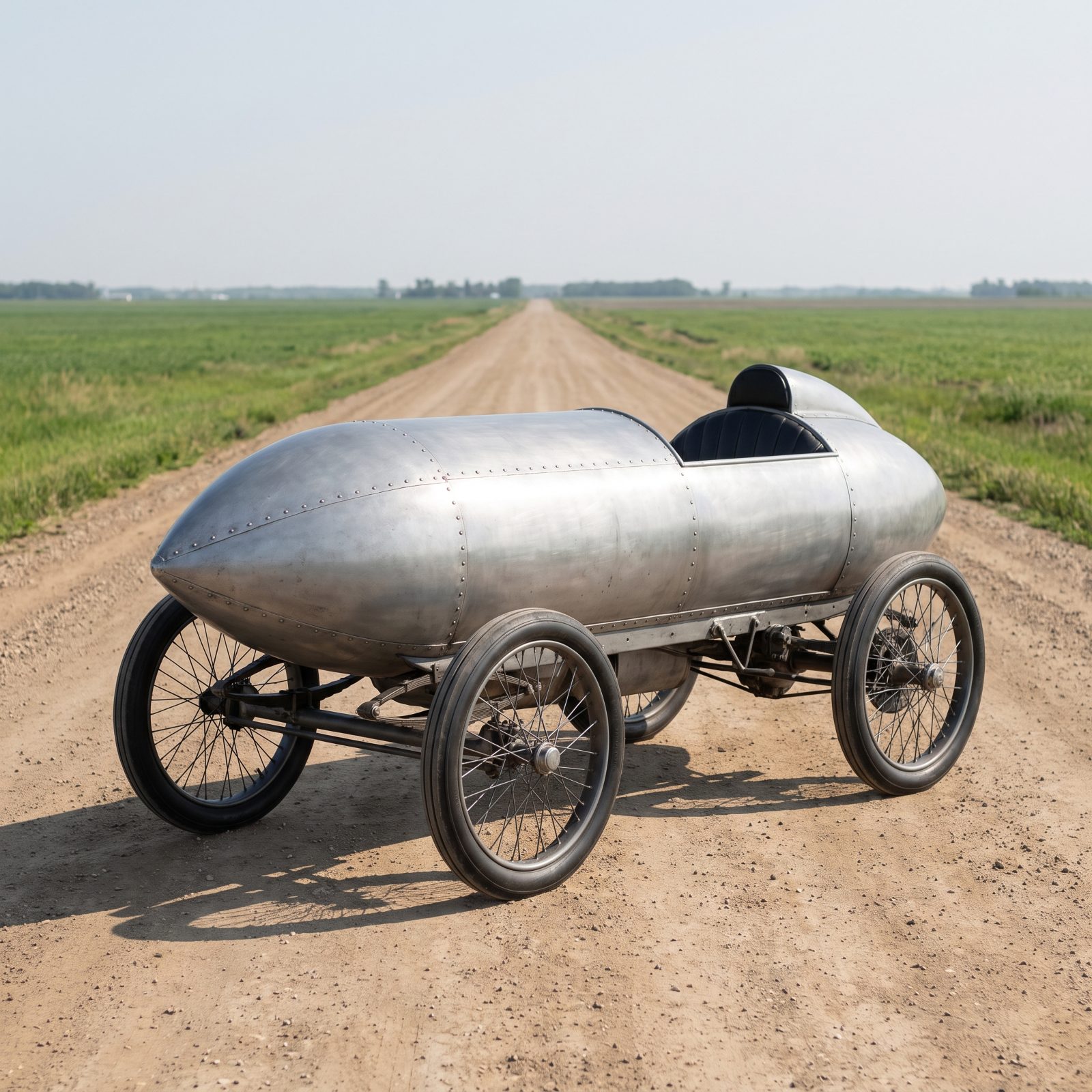
The first vehicle to break 100 km/h on a road wasn’t powered by gasoline. It was electric. In 1899, La Jamais Contente — a cigar-shaped aluminum-alloy bullet — hit roughly 105 km/h with Belgian racer Camille Jenatzy hunched over the controls.
The body was shaped to slice air back when almost nobody gave aerodynamics a second thought, and two electric motors drove the rear wheels directly. The name translates to “the never satisfied,” which tells you plenty about the mindset behind it.
A full century before electric cars went mainstream, battery power already held the outright speed record. Worth remembering the next time someone calls the EV a brand-new idea.