A yellow glow on the dash. A small puddle under the car that you step over on the way to work. A noise you crank the radio to drown out. None of it kills you today, and that’s the trap. The same wiring that lets a good engine seize lets a good relationship rot, and it plays out the same way every time: the small problem is cheap to ignore and expensive to fix, so we ignore it until the choice gets made for us. We’ve all done it to a car. Most of us have done it to something that breathes. What follows are the habits that quietly cost people transmissions and partners alike — and why your brain keeps picking the slow disaster over the quick repair.
Please note that some of the images in this article were created with the assistance of AI.
17. You Decide the Check-Engine Light Is Probably Nothing

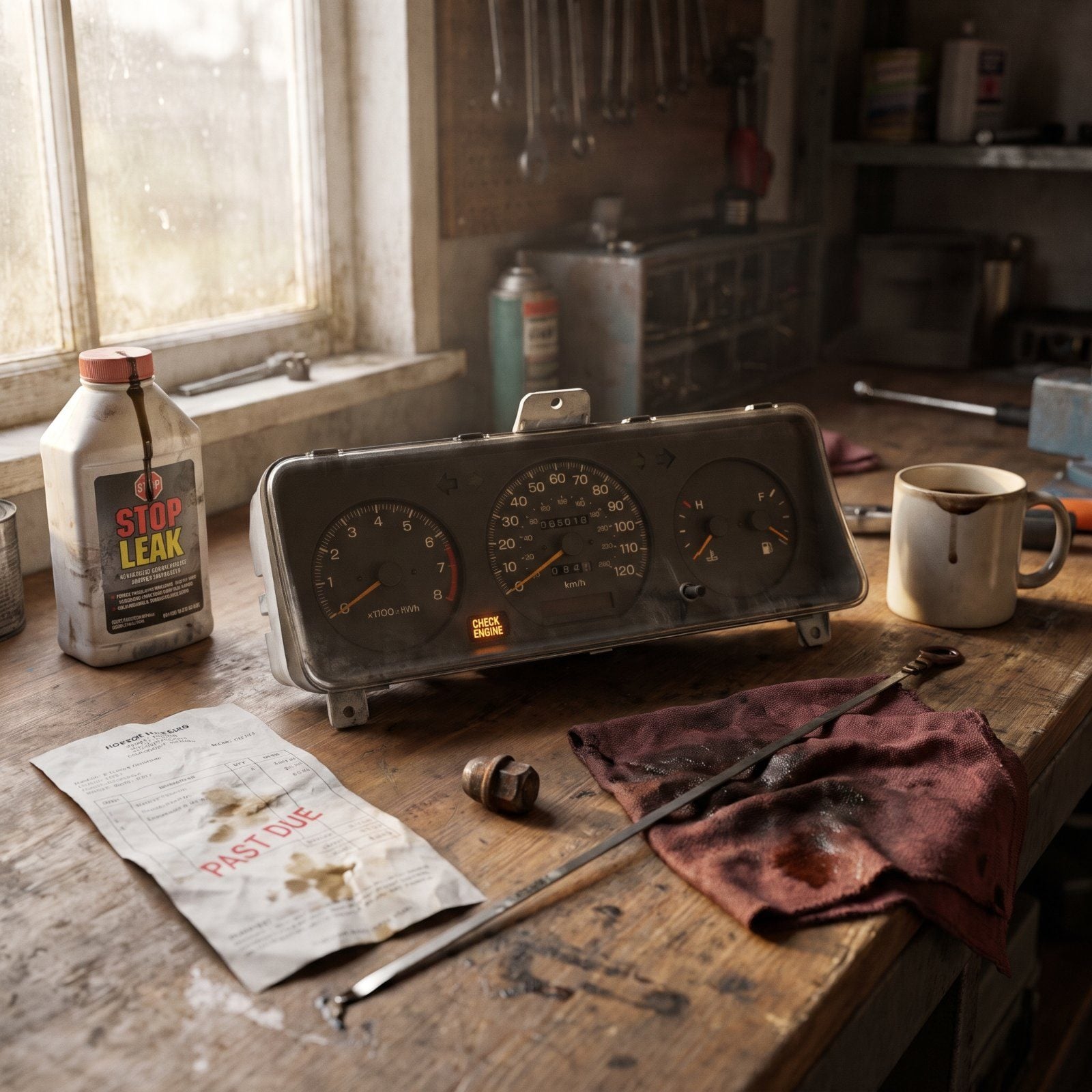
The light comes on. Steady, amber, patient. You lean in, decide it’s probably a loose gas cap, and go about your month while the car still drives fine — which is the whole problem. It drives fine for a long time while something upstream burns slowly through your catalytic converter.
Now think of the thing a partner says once, lightly, and then never says again. A small signal the system flagged. You drive fine for months. Nothing’s on fire. Then one day the repair isn’t a sensor, it’s the whole assembly.
Psychologists call it the ostrich effect: when information might be bad, we actively avoid looking at it. Not-knowing feels safer than knowing, even though the clock runs either way. The light isn’t the problem. It’s the cheapest warning you’ll ever get, and dodging it just means paying the expensive one later.
16. You Pour In Stop-Leak Rather Than Fix the Actual Leak
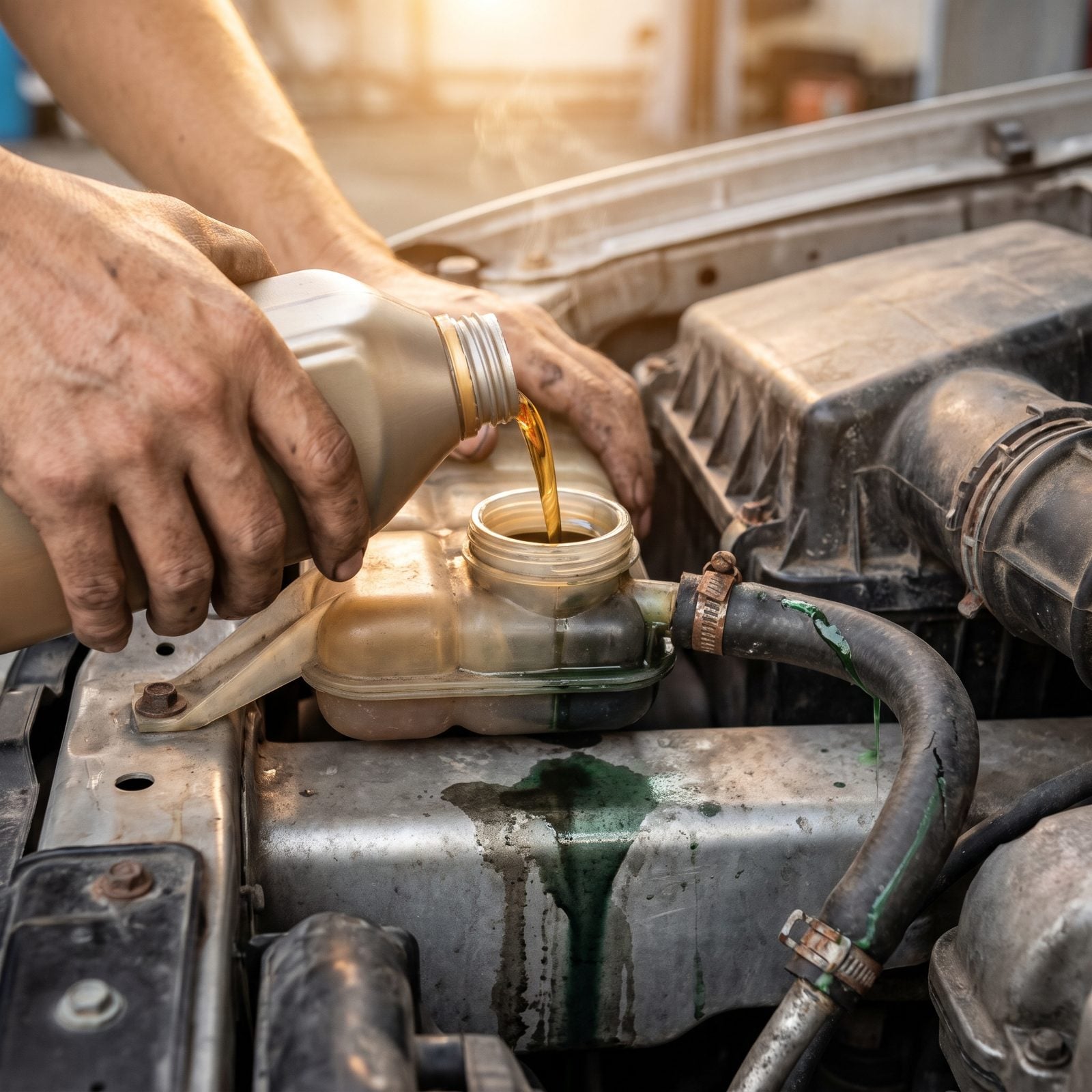
There’s a seep at a hose joint. The real fix is a clamp, a hose, an hour, maybe a cold soda afterward. Instead you buy the miracle bottle, pour it in, and watch the drip stop for a while. The stuff is literally built to clog the hole, and it clogs a few others you’ll meet next winter.
You know the relationship version. The argument that keeps surfacing, patched each time with a quick apology and a nice dinner. The symptom quiets. The crack is still there, now with sealant smeared over it.
Therapists call it a band-aid over a bullet wound, and we reach for it because patching feels like action, and action feels like progress. It isn’t. A patch buys silence, not repair. The leak didn’t go anywhere. It just stopped being loud enough to force your hand.
15. You Postpone the Oil Change Until Something Sounds Expensive
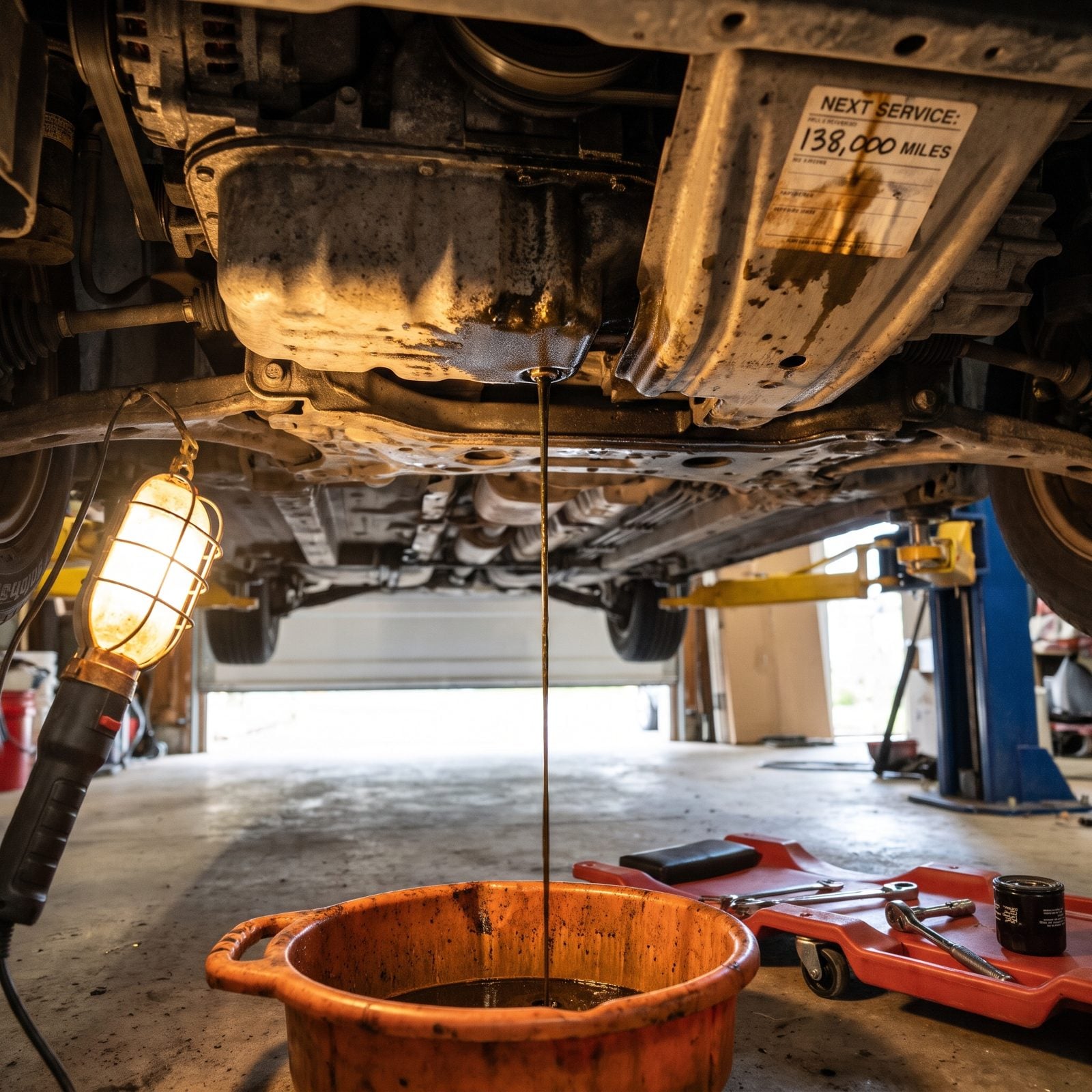
Three thousand miles turn into eight. The oil goes from honey to coffee to tar. You tell yourself the car feels fine, and it does, right up until there’s a tick from the top of the engine that costs a fortune to translate.
Here’s the uncomfortable part. Nothing dramatic happens to warn you — the decline is invisible and gradual, which is exactly why we let it ride. Our brains are terrible at pricing slow damage. A cost that shows up next year barely registers against the fifty bucks and the hassle today.
Same math people run on themselves and the people they love. Skip the hard conversation now, skip it again, and by the time there’s a noise, the cheap maintenance window closed a long way back. We don’t neglect because we don’t care. We neglect because the bill is always somewhere over the horizon, and the horizon never seems to arrive. Until it does.
14. You Treat the Service Schedule Like an Attack on Freedom
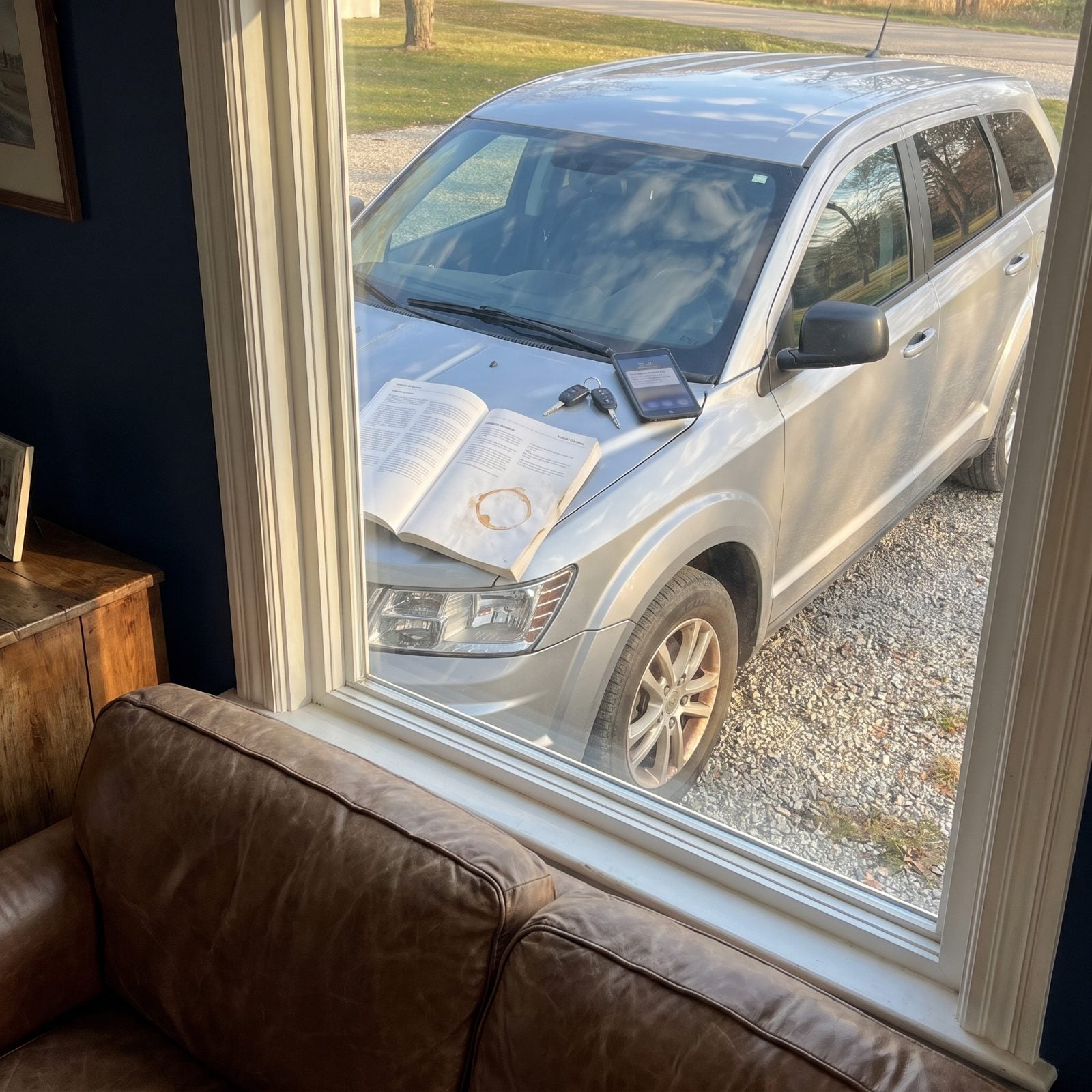
The dealer hands you the little booklet with the mileage intervals and you feel it immediately: resistance. Who are they to tell you when to spend money on fluid you can’t even see? So the schedule becomes a suggestion, then a joke, then a thing you’ve forgotten exists.
We do the identical thing to anything that feels like an outside hand on our choices. Call it reactance — the reflex that turns a reasonable request into a leash the second it’s phrased as a rule. People blow off the exact advice they’d happily give a friend, purely because somebody told them to follow it.
The schedule isn’t the enemy of freedom. It’s the thing that keeps the car free to go where you point it.
The maintenance interval isn’t your boss. It’s a stack of other people’s expensive mistakes, boiled down to numbers so you don’t have to repeat them. Reading it as control says more about us than about the booklet.
13. You Floor a Cold Engine Because You’re Already Late
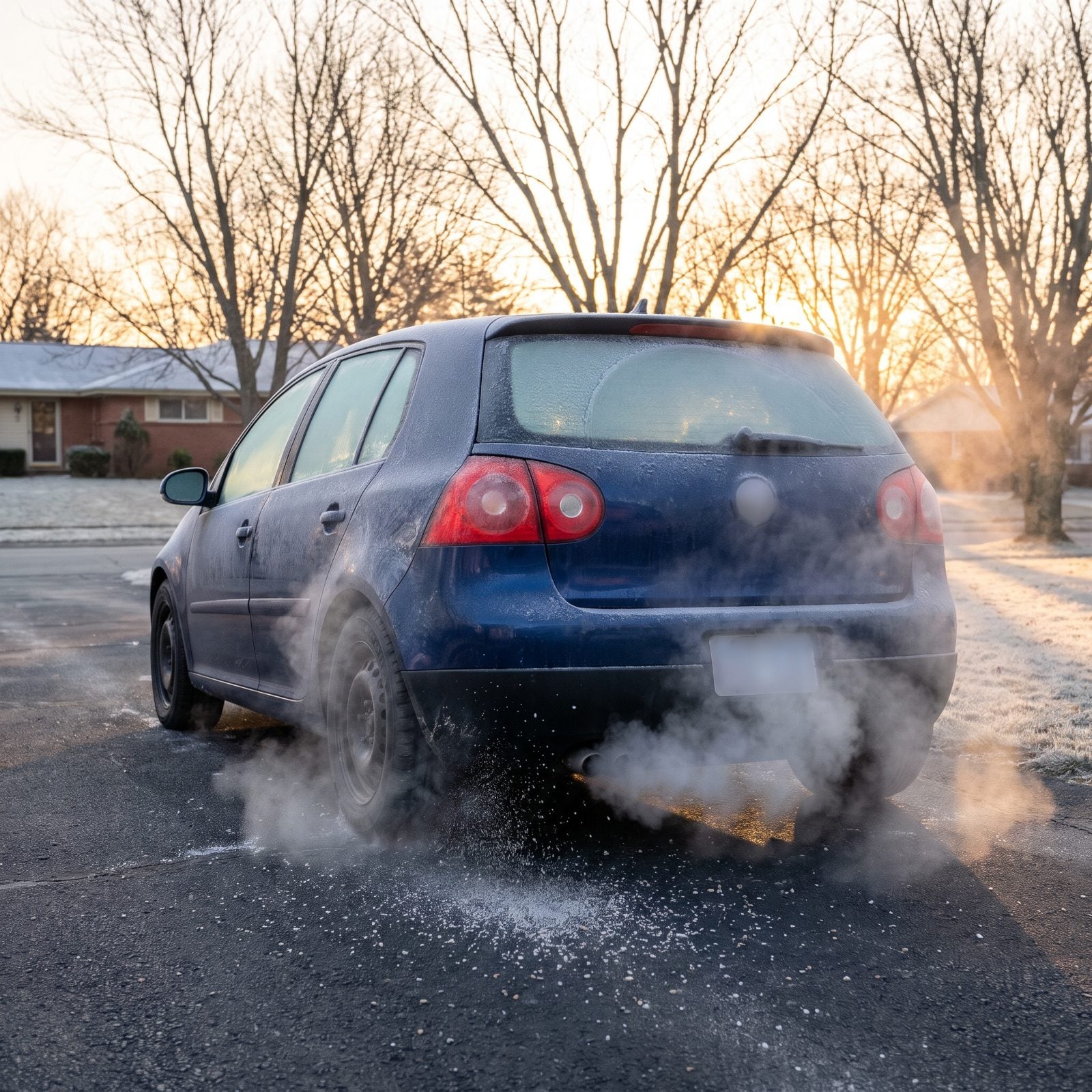
Twelve minutes behind. You crank it, barely let the needle lift off cold, and bury your foot. Oil’s still thick as syrup, clearances still tight, and you’re asking the whole thing to perform at full tilt before it’s awake. Do it enough and you wear out bearings that would’ve lasted the life of the car.
People demand the same instant full output from each other. Someone walks in the door, hasn’t set down the bag yet, and catches a loaded question. Cold start, full throttle.
It’s present bias, plain and simple. The urgency in front of us feels real and the long-term cost feels theoretical, so we spend the expensive thing to save the cheap minute. A warm-up isn’t weakness in an engine or a person. It’s the difference between a system that lasts and one you’re always rebuilding.
12. You Make the Transmission Pay for Another Driver’s Rudeness
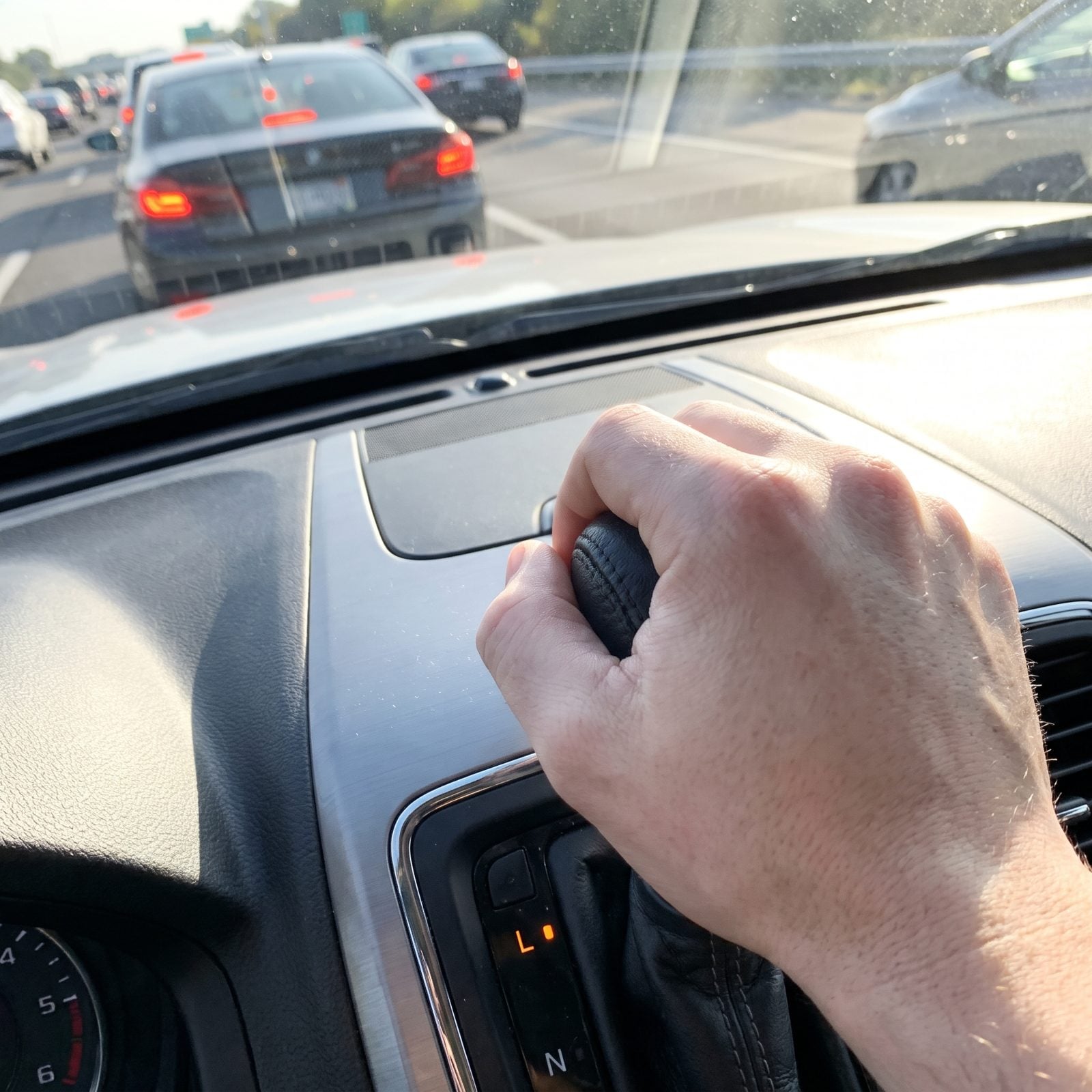
Someone cuts you off. You punch it to catch them, slam from drive into a hard downshift, ride the tach to make a point nobody receives. The other driver is already three cars ahead and will never know. Your transmission knows. It filed the receipt in burnt clutch material.
We do this constantly with the people closest to us. Boss was a jerk, traffic was a nightmare, so the snap lands on whoever’s standing in the kitchen. The target isn’t the cause. The target is just available.
This is displaced aggression, one of the oldest wiring faults we’ve got. The frustration has to go somewhere, and it flows toward the easiest surface, not the right one. The driver who wronged you pays nothing. Everything you punish is your own. True of the gearbox, true of the dinner table.
11. You Hit Redline Because Someone Else Is Watching

Empty road, you drive sensibly. Add an audience — a buddy in the passenger seat, a crowd at the light — and suddenly the revs climb for no engineering reason at all. You’re not going faster to get anywhere. You’re performing capability for people who’ll forget the moment by dinner.
Same engine, same gears, and now you’re redlining it to feel seen. We overspend, overshare, overpromise under exactly this pressure, buying a stranger’s passing approval with something that costs us for keeps.
Social scientists call it the spotlight effect: we wildly overestimate how much others are noticing and remembering us. You think they’re clocking your performance. They’re mostly thinking about their own. The valves you float chasing their attention will still be floated long after they’ve driven home and moved on to something else entirely.
10. You Hand the Keys to Friends You Cannot Refuse

A friend asks to borrow the car, or to drive it, and you know in your gut he’s hard on machinery. You’ve seen how he treats his own. But saying no feels like an insult, so you drop the keys into a palm you don’t trust and spend the whole time flinching at every distant gear change.
We lend out far more than cars this way. Time, money, trust, access to the things we’d otherwise protect — all handed over because the discomfort of a no outweighs, in the moment, the cost of a yes we’ll regret.
That’s the real mechanism: we’re loss-averse about relationships. The small, certain sting of disappointing someone looms larger than the bigger, probable damage down the road. A clutch is replaceable. So, eventually, is a friendship that only survived because you kept saying yes. Learning to protect your keys is learning to protect the word no.
9. You Ride the Brakes Downhill to Feel More in Control
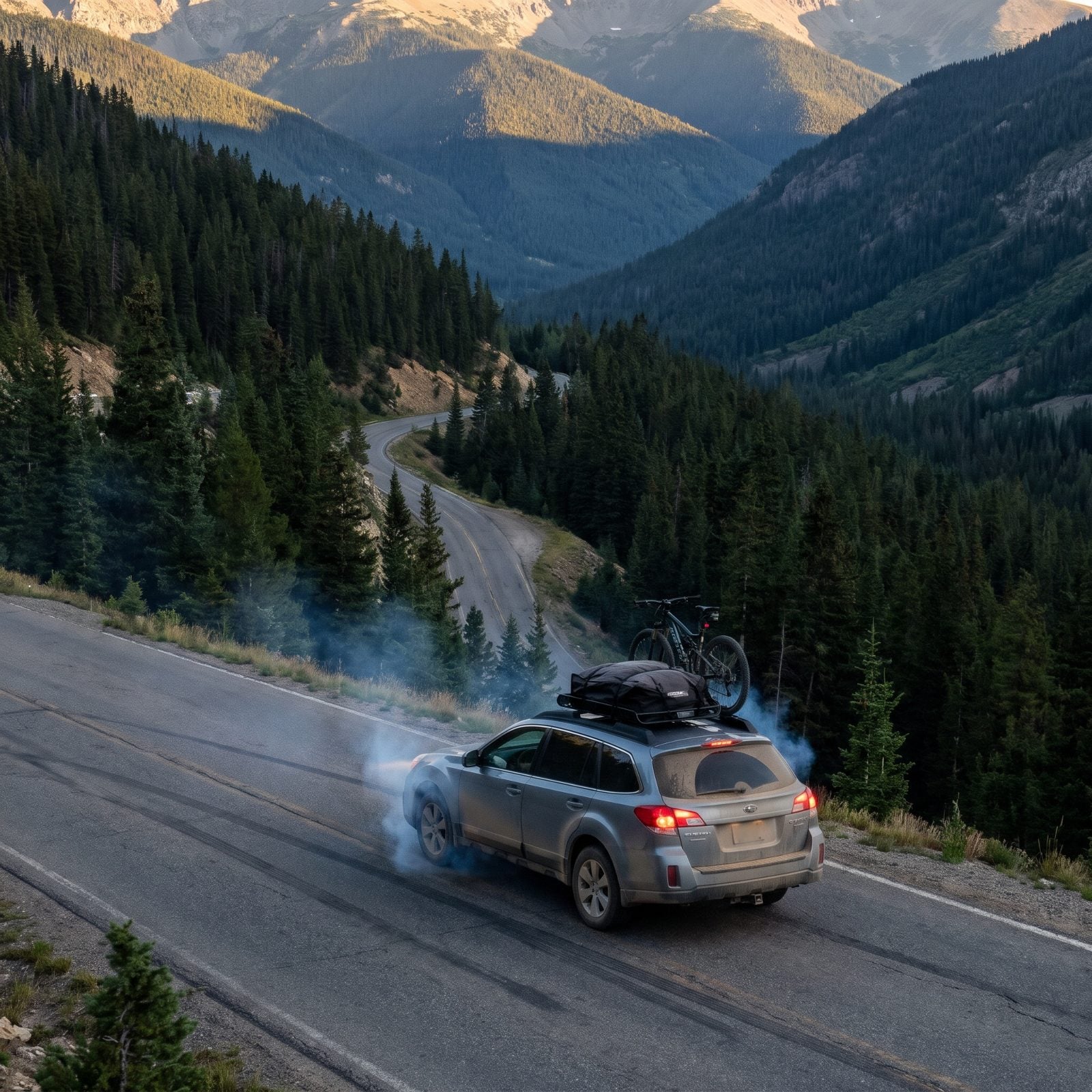
Long grade, white knuckles, foot planted on the brake the whole way down because letting off feels like letting go. By the bottom the pedal’s gone soft and the rotors smell like a campfire. You wanted control. You spent your actual braking power to buy a feeling of it, and now you have less of both.
Watch people do this with the folks they love. Constant checking in, constant managing, gripping tighter at the first sign of speed, mistaking vigilance for safety. The hold feels like care. It’s really just fear with a steering wheel.
This is the illusion of control — our habit of overusing a lever that gives us a sense of command while quietly wrecking the thing we’re trying to protect. The smart move downhill is to gear down and let off, to trust the machine to carry some of the load. Same on the road and off it. Sometimes the most in-control thing you can do is loosen your grip before you burn through everything that was supposed to hold.
8. You Attempt the Brake Job Your Confidence Cannot Handle
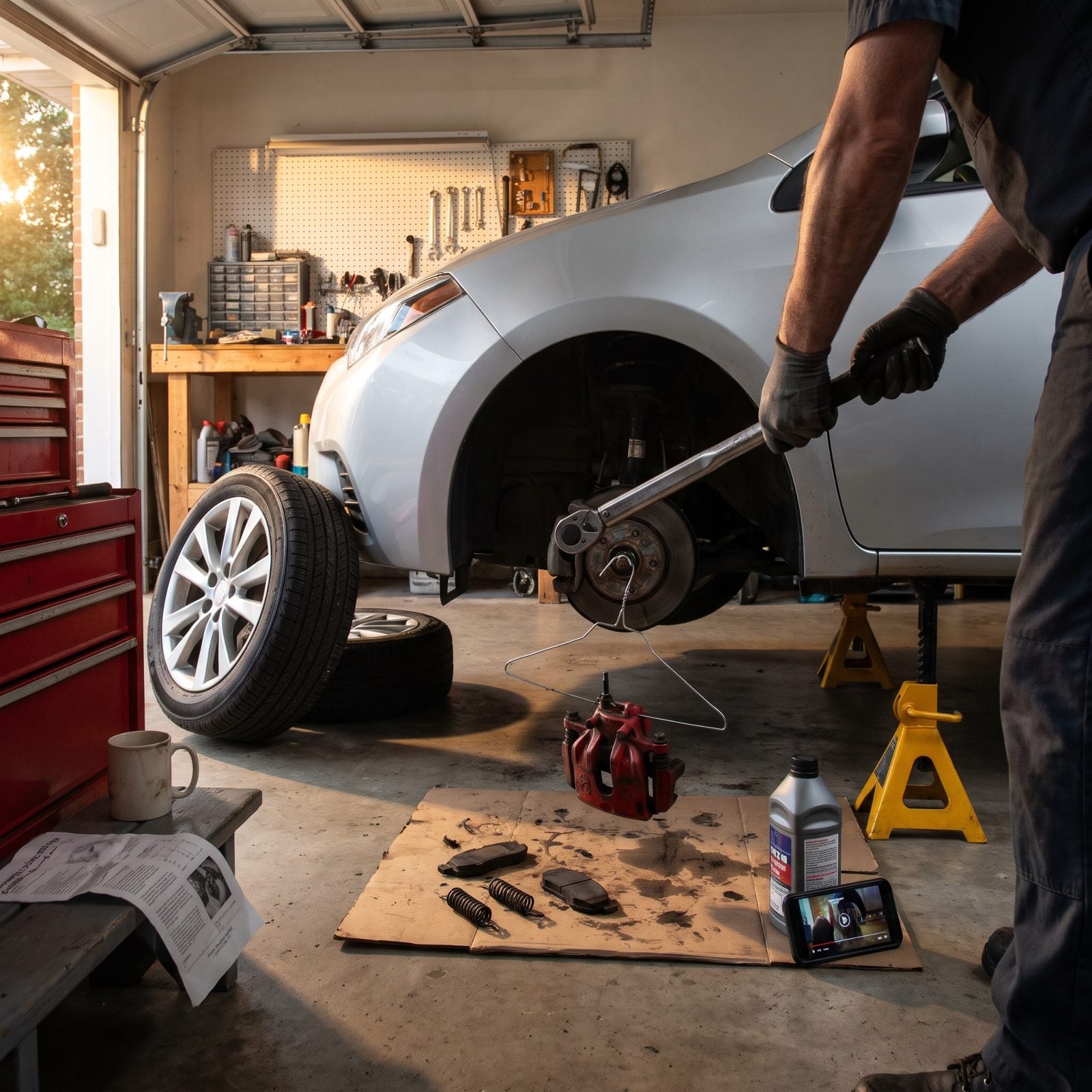
Four videos in, you felt ready. Now the caliper is dangling, the bleeder screw is rounded off, and the pedal drops to the floor like a trapdoor. Brakes are the one job where overconfidence has a body count. Somewhere around the second stripped bolt you realize this was always above your pay grade.
It’s the same wiring that makes someone promise a partner they can change: fully meant, badly estimated. Psychologists call it the planning fallacy — our habit of imagining the smooth version of a task and pricing in none of the stripped threads. We judge ourselves by our intentions, then act surprised when reality mails the invoice.
The fix for both is the same, and nobody likes it. Know the line between what you can honestly do and what you only wish you could.
7. You Buy Shiny Wheels Before Replacing the Bald Tires
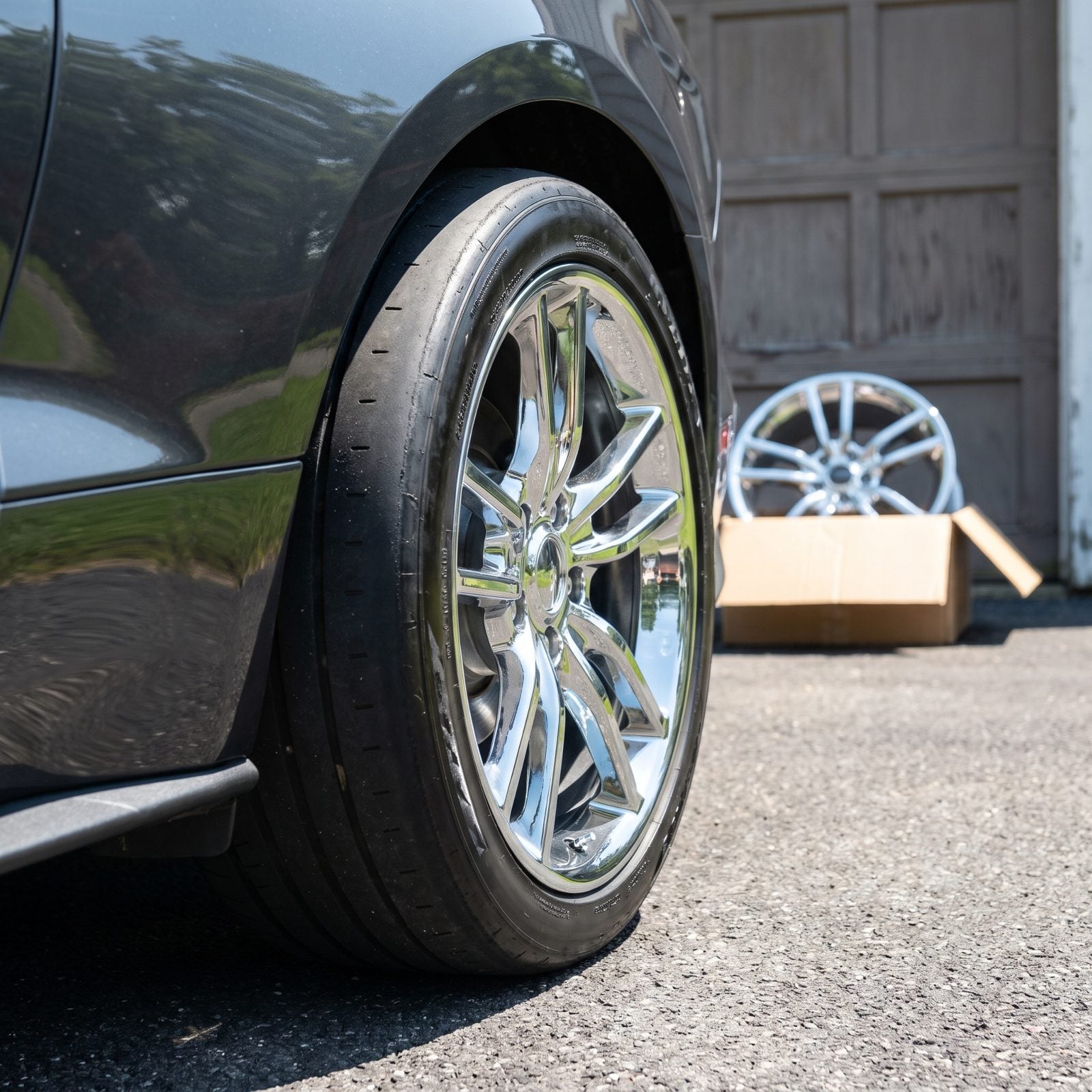
The rims came first. Obviously. They’re the part everyone sees in the parking lot, the part that earns a nod from a stranger at a red light, while the tires underneath are slick as river stones with the wear bars grinning and one wet off-ramp standing between you and a very bad afternoon.
We do this everywhere, not just with cars — spend on the visible and starve the structural. The status signal versus the foundation. The new jacket worn over a problem nobody can see. What gets admired gets the budget, and the thing that keeps you alive waits in line.
The lesson travels. Looking good and being good are different jobs, and the one you can’t post a photo of is usually the one holding everything up.
6. You Stack Performance Mods That Were Never Meant to Cooperate
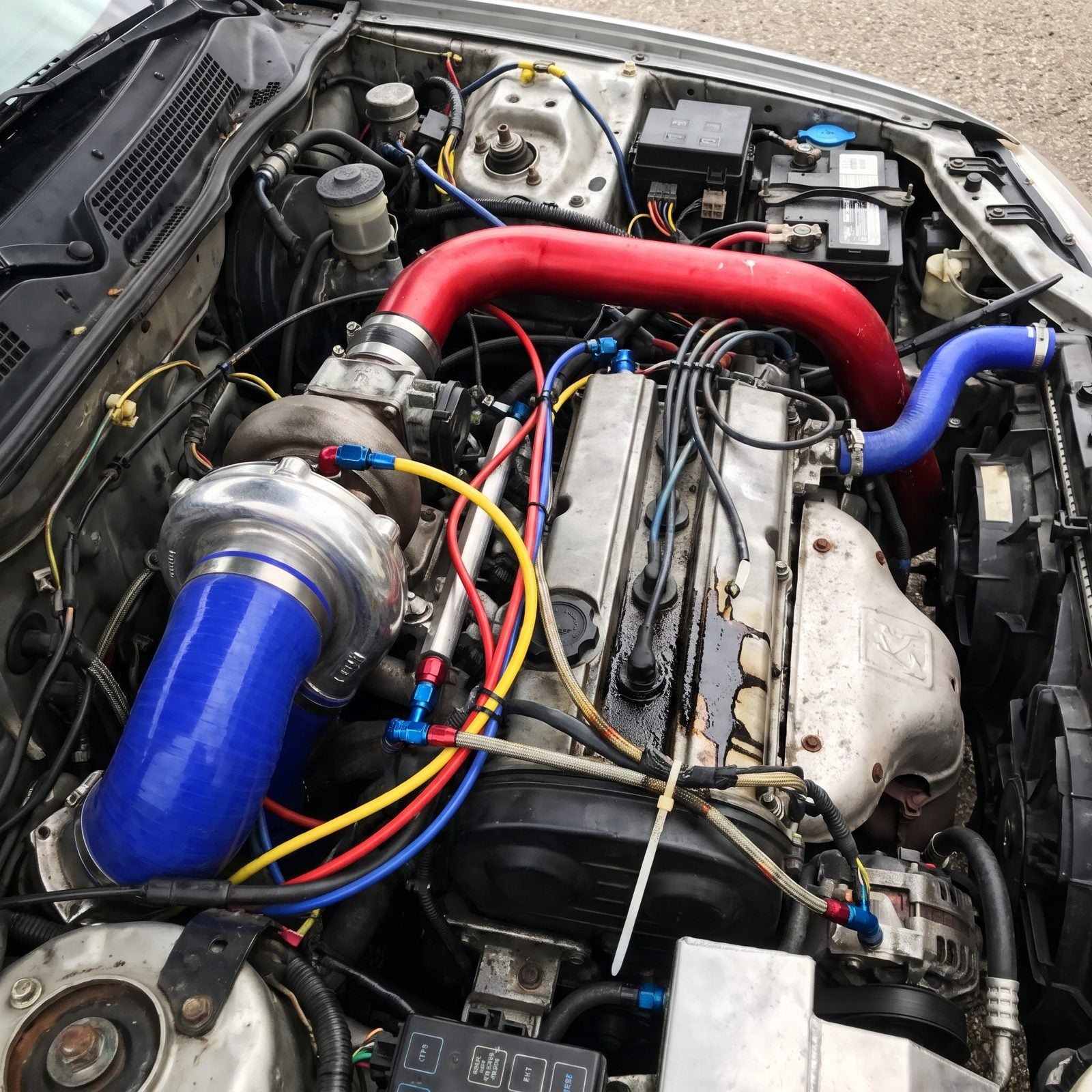
Big turbo from one forum. Cam from another. A tune downloaded off some stranger’s thread. Each part was brilliant on its own. Bolted together they fight like relatives at a reunion, and the car now idles like it’s gargling gravel and makes less power than bone stock.
People do this with their lives. They assemble a self from a dozen separate ideals — the gym body, the demanding career, the packed social calendar, the perfect partner — never once asking whether those pieces can run in the same engine. Each one looked great in isolation.
Compatibility beats specs. Always has. The strongest single part can wreck the whole machine if nothing else was built to meet it.
The mind loves a highlight reel of impressive components and skips the boring question of how they fit. Tuners call it chasing numbers. Call it whatever you want anywhere people collect upgrades with no plan for how they’ll work together.
5. You Buy a Diesel for a Life of Short Errands
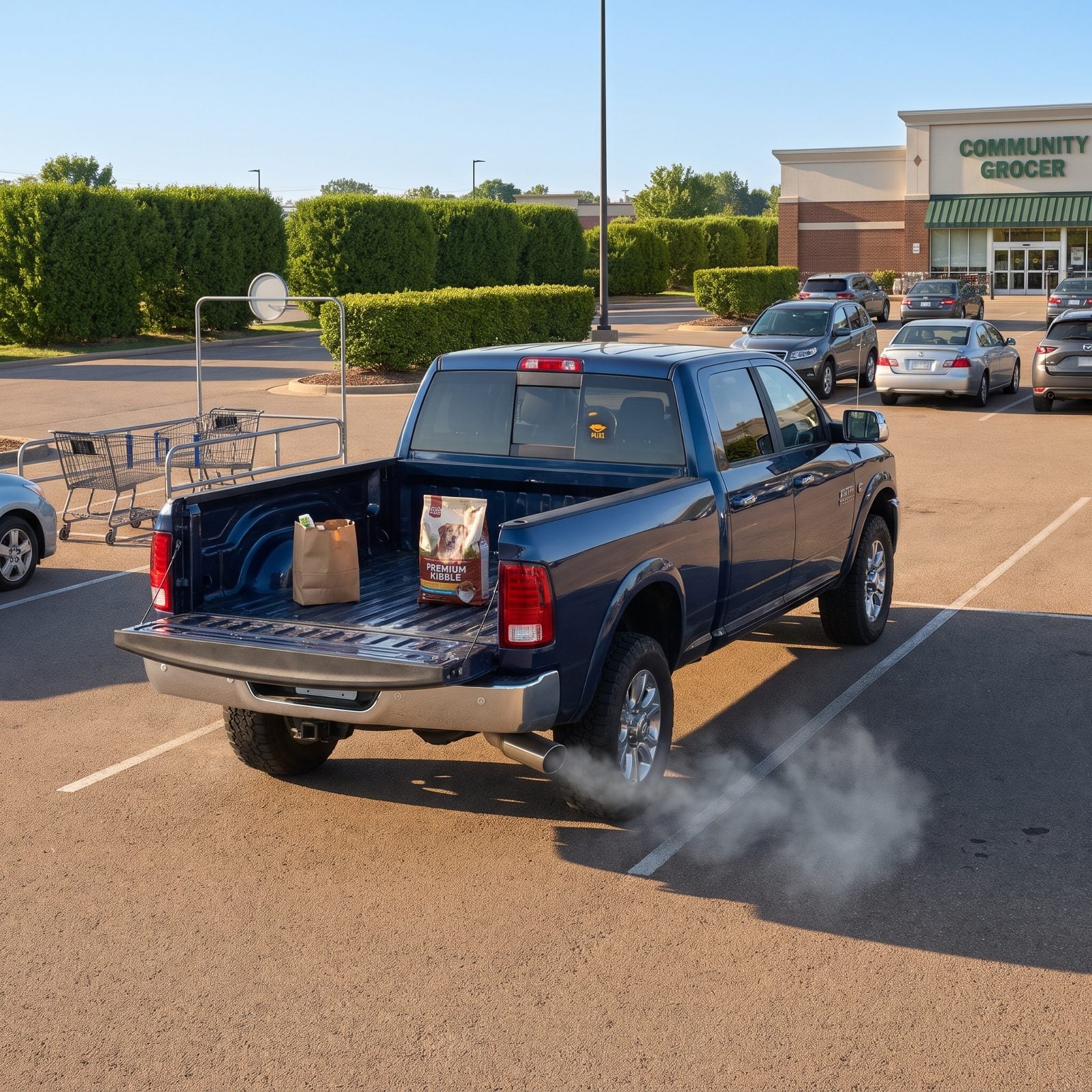
You bought it for the towing you’d do someday, and the capability felt like insurance against a bigger life. Then the big life turned out to be the pharmacy, the grocery run, and soccer practice — three miles at a time, never long enough to burn off the soot. Now the emissions system clogs, the regen light nags, and the engine never gets to be what it was built to be.
We buy for the fantasy version of ourselves, then live the real schedule. Call it the gap between aspirational identity and daily reality. The home gym that becomes a coat rack. The kayak that lives on the garage ceiling. Each purchase promised a person we meant to become.
Buy for the life you actually live, not the brochure. The engine knows the difference even when you don’t.
4. You Learn to Steer Around an Alignment Problem

The car pulls right. Has for months. You don’t even notice anymore, because your hands made a small permanent correction — a little constant tug to the left that’s become invisible to you. The tires are wearing to the cords on one edge, but the drive feels normal. You adapted to the defect instead of fixing it.
This is the most human move on the list. We quietly reshape ourselves around a problem until the workaround becomes the baseline. Walking on eggshells. The topic nobody raises. The small daily accommodation to something that was never addressed, repeated until it feels like just how things are.
An alignment is cheap. The tires you’ll replace from ignoring it are not. Neither are the things in life you’ve been steering around for years.
3. You Abandon the Project Car When the Excitement Fades
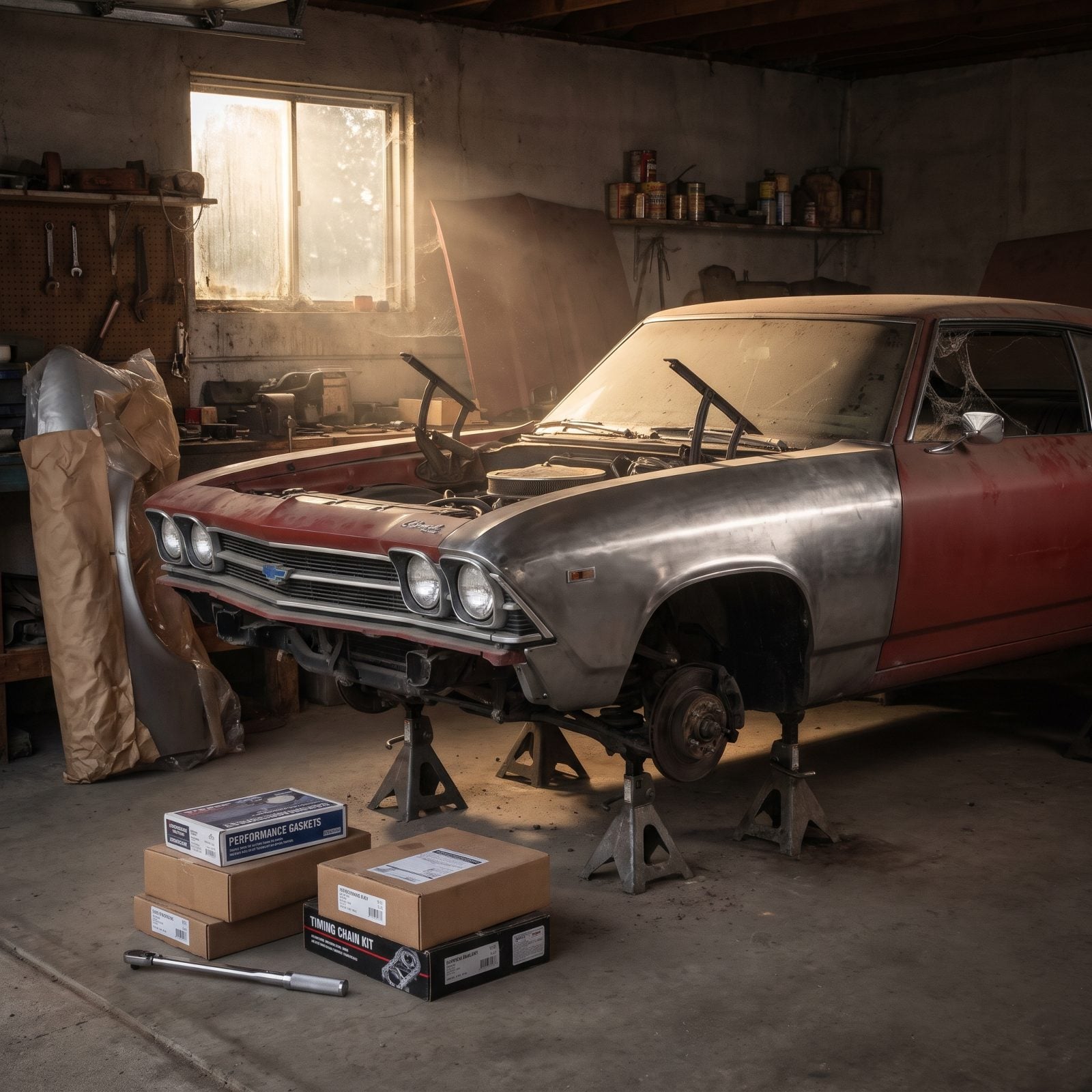
That first weekend was electric. Tearing it down, dreaming the finished car, posting every bit of progress. Then came the part nobody films — the rusted bolt that won’t move, the wiring you don’t understand, the quote for machine work that made you go quiet. The thrill of the beginning is long gone, and now it’s a dusty car on jack stands, cobwebs in the window, beside a stack of parts boxes you walk past without opening.
Beginnings are chemical. The novelty of a fresh start floods us with motivation that feels like love but behaves like a sugar high. When it burns off, we mistake the ordinary hard middle for proof we never should have started, then go hunting for a new beginning instead of finishing this one.
The people and projects that make it through learned one thing: the dull, frustrating middle is not a sign of a mistake. It’s just the middle. Everything worth having has one, and it never feels as good as the start.
2. You Keep Returning to the Mechanic Who Never Fixes It
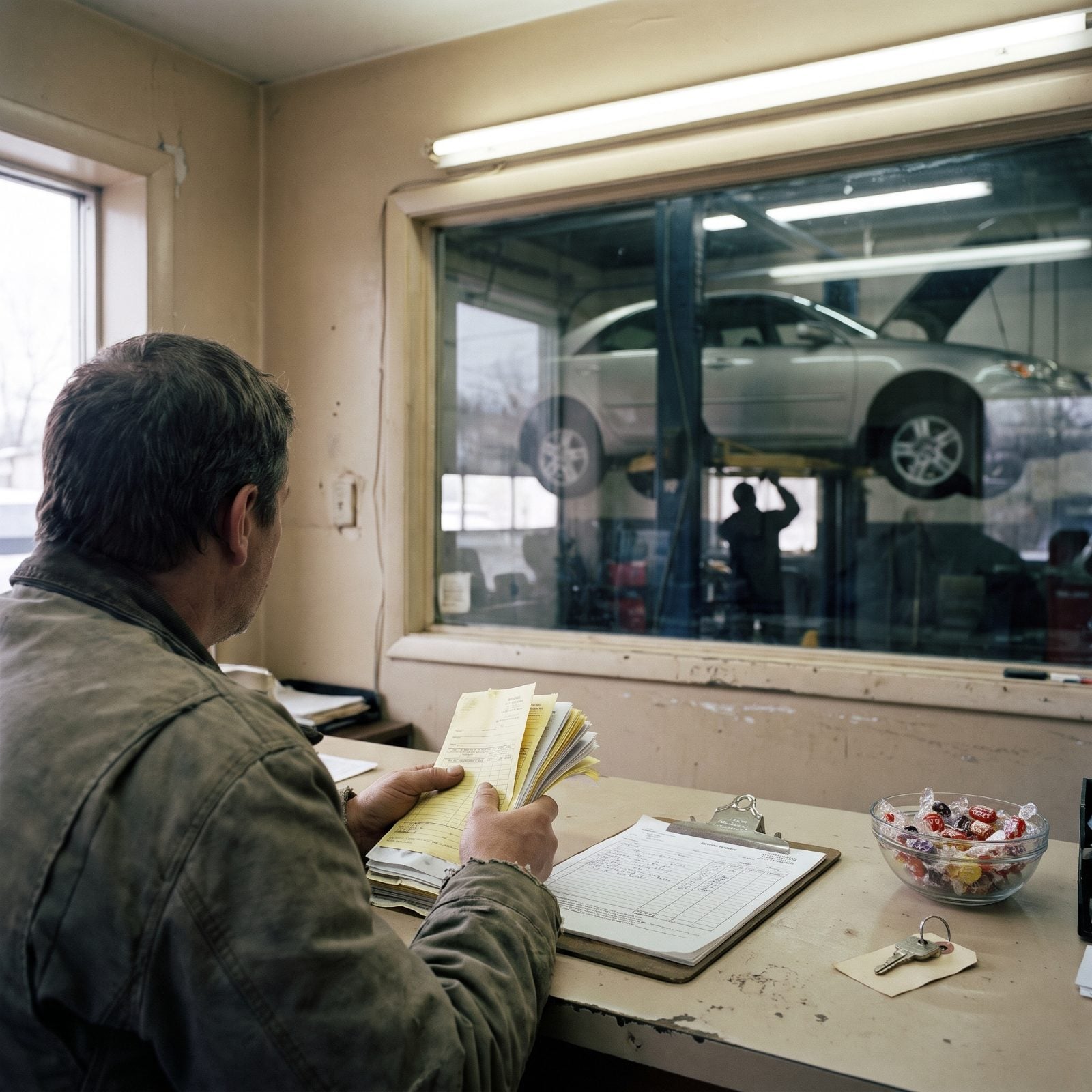
Same noise. Same shop. Same hundred-dollar “we think we found it this time.” You’ve got a drawer of receipts for one problem that has never once stayed fixed, and yet you book the appointment again — because they know the car, because starting fresh somewhere new feels like more work than just hoping.
Familiar failure beats unfamiliar uncertainty, at least to the part of the brain that fears the unknown more than the known disappointment. We stay in the arrangement that keeps letting us down because we’ve already learned its particular shape of letting us down. The devil you know gets a strange loyalty it never earned.
A second opinion costs a diagnostic fee. Staying costs the rest of the engine — and a whole lot more than money everywhere else this pattern shows up.
1. You Keep Fixing the Car Because You’ve Already Spent Thousands
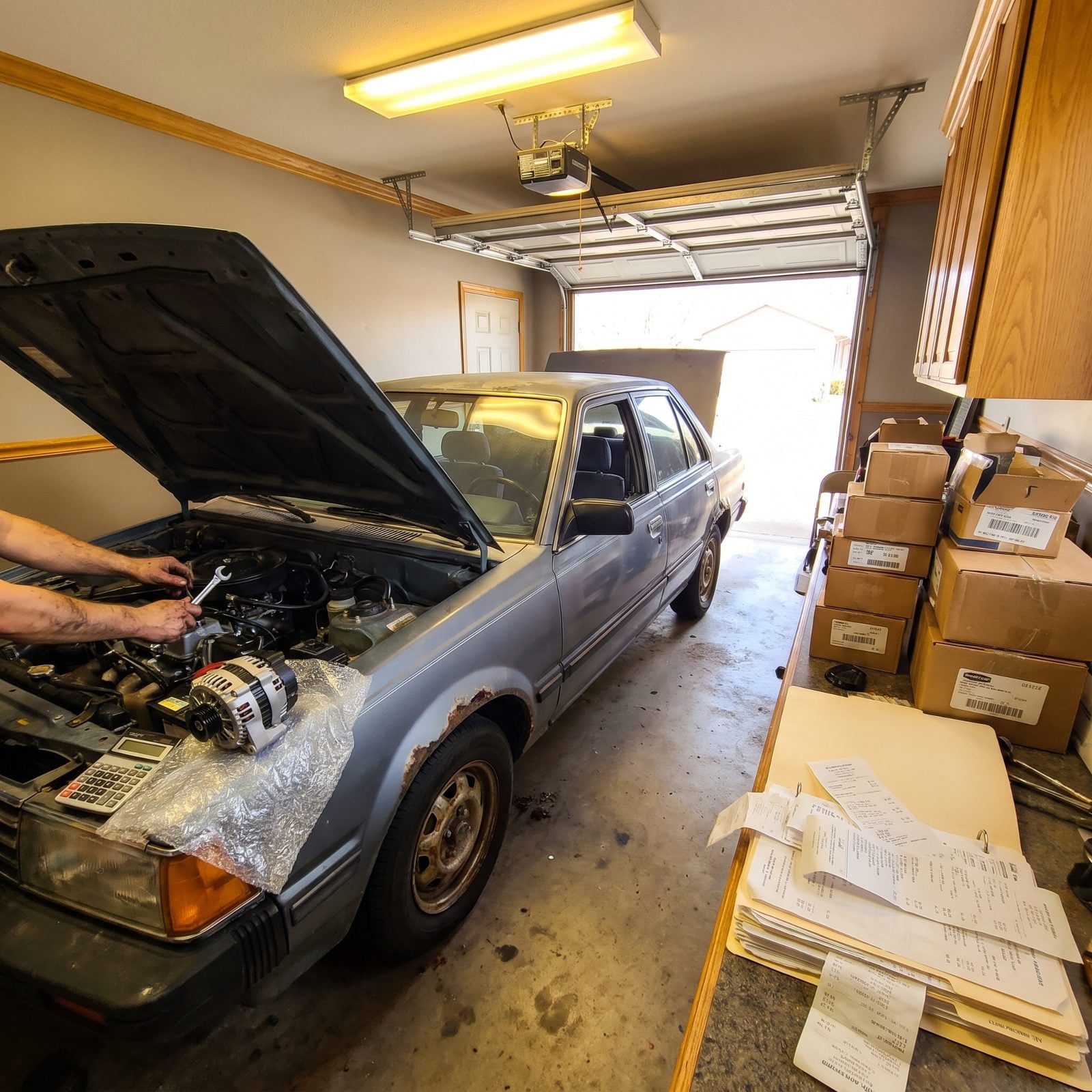
The transmission last spring. The head gasket before that. Now the alternator — and you’ve said yes before the counter guy even finishes his sentence, because walking away would mean admitting all that earlier money is gone for nothing. So you pour more in to protect what you already spent.
This is the sunk-cost fallacy wearing coveralls. The thousands behind you are gone no matter what you do next, but your gut treats them like chips still on the table. The rational question is only this: starting from today, is another repair worth it? Your gut asks something else entirely — how much you’d be “wasting” by stopping.
Money already spent should never buy you more of the same. It can’t be rescued. It can only be joined.
Same math keeps people in situations long past their expiration, counting years invested instead of years remaining. The past is paid. The only honest question is whether the future’s worth it, and that one has nothing to do with the receipts in the drawer.