An 80,000-pound truck can’t do the things your car does. It can’t stop on a dime, dart out of trouble, or see you when you tuck into the wrong spot alongside it. Most drivers learn this the hard way — a honk, a jolt of adrenaline, a very close call. Here’s the good news. Sharing a highway with a semi comes down to a handful of small moves done at the right moment: dip a light, leave a gap, read what an empty trailer is about to do. Do them well and the road calms down for everybody.
Please note that some of the images in this article were created with the assistance of AI.
36. Signal a Passing Truck Is Clear With a Brief Headlight Dip, Not Your High Beams

Truckers used to flash their trailer lights to say thanks for a clean merge. The courtesy from your side is a quick flick of the low beams off and back on, once the trailer clears your hood. It reads as a nod, not an interrogation.
What you never want is high beams. A driver sitting seven feet up has mirrors angled right into your blast, and blinding the person steering the biggest thing on the road is a lousy trade for a thank-you. Low beams. One soft dip. Done.
35. Give a Bobtail Tractor Extra Room, Its Rear Grip Is Lower Than It Looks
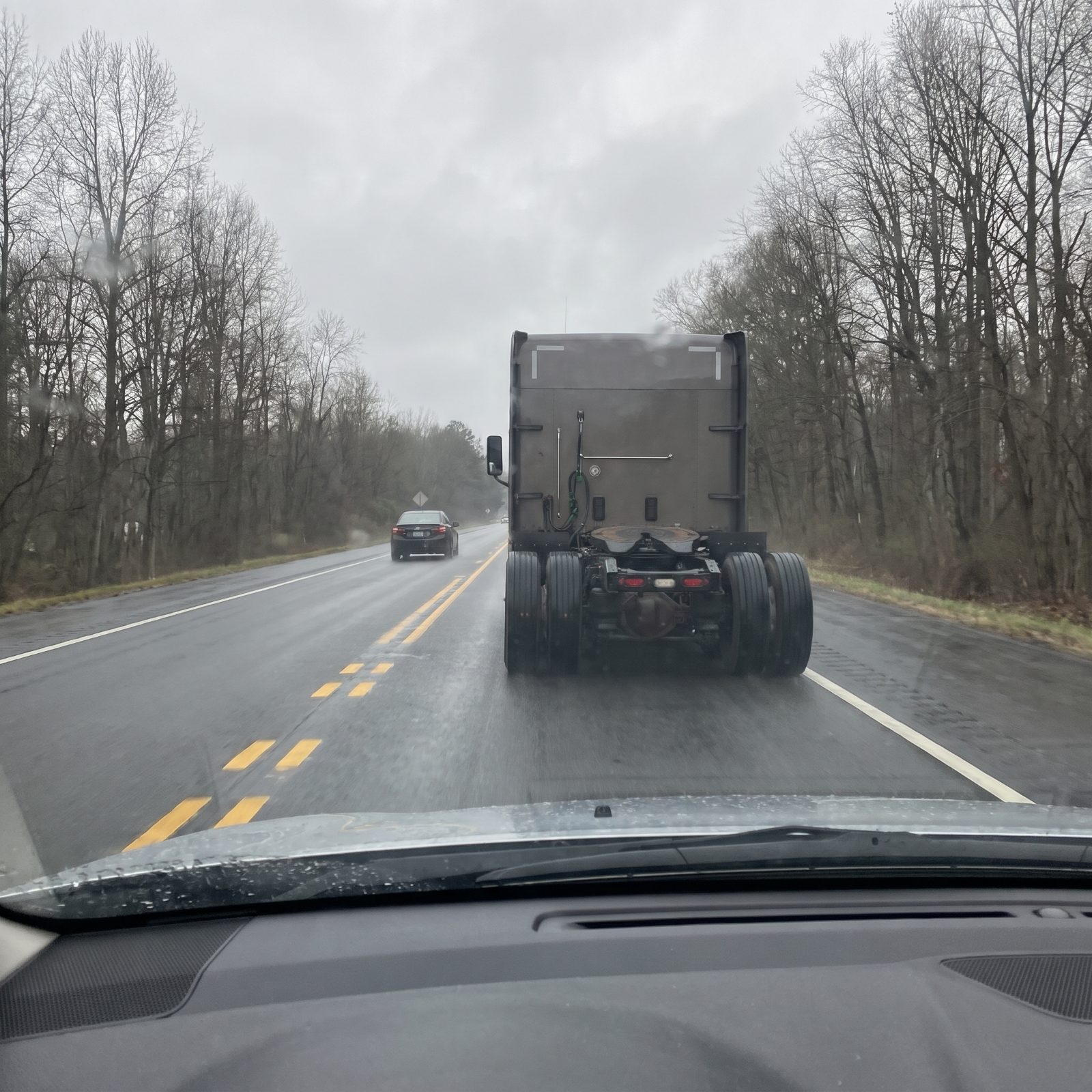
A tractor running without a trailer looks nimble and quick. It isn’t — not the way you’d guess. Those rear drive axles were built to be pressed down by a loaded trailer, and take the trailer away and there’s far less weight pinning the back tires to the road.
In the rain, a bobtail can get squirrelly under hard braking because the lightened rear end breaks loose easier. Give one a longer following gap and don’t crowd it toward a sudden stop. It’s carrying nothing, which is exactly the problem.
34. Expect an Empty Trailer to Dance in a Strong Crosswind
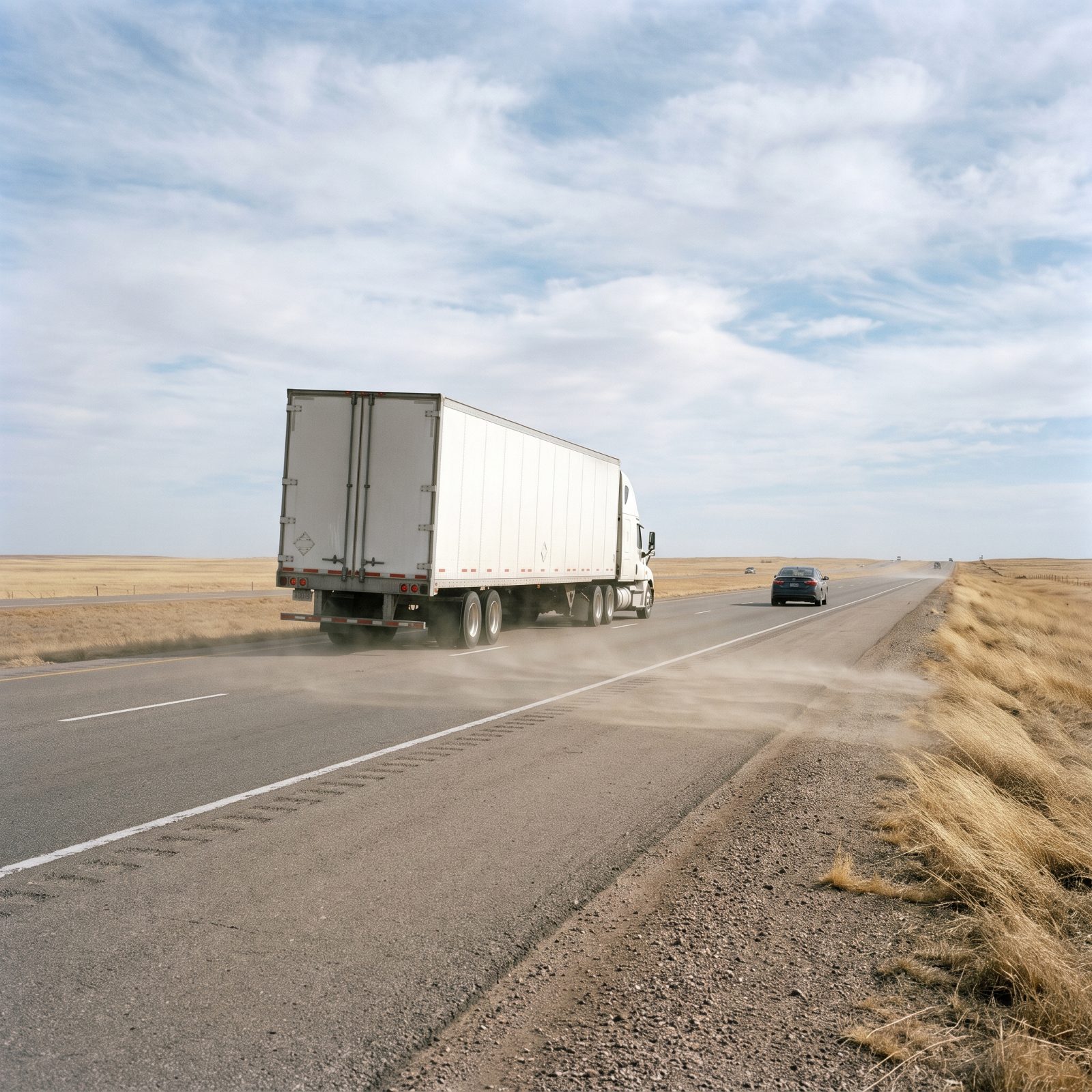
A loaded trailer plows through wind like it isn’t there. An empty one is a 53-foot sail.
Out on the exposed stuff — bridges, river crossings, open high plains — a hard gust can shove an empty box trailer a foot or two inside its own lane. The driver is working to hold the line. Your job is to not be parked in the spot that line might wander into. So when you see trees leaning, flags snapping, and a light-riding trailer up ahead, pass with purpose and get past it. Don’t dawdle alongside.
33. Never Pull Into a Runaway-Truck Ramp or Block Its Approach
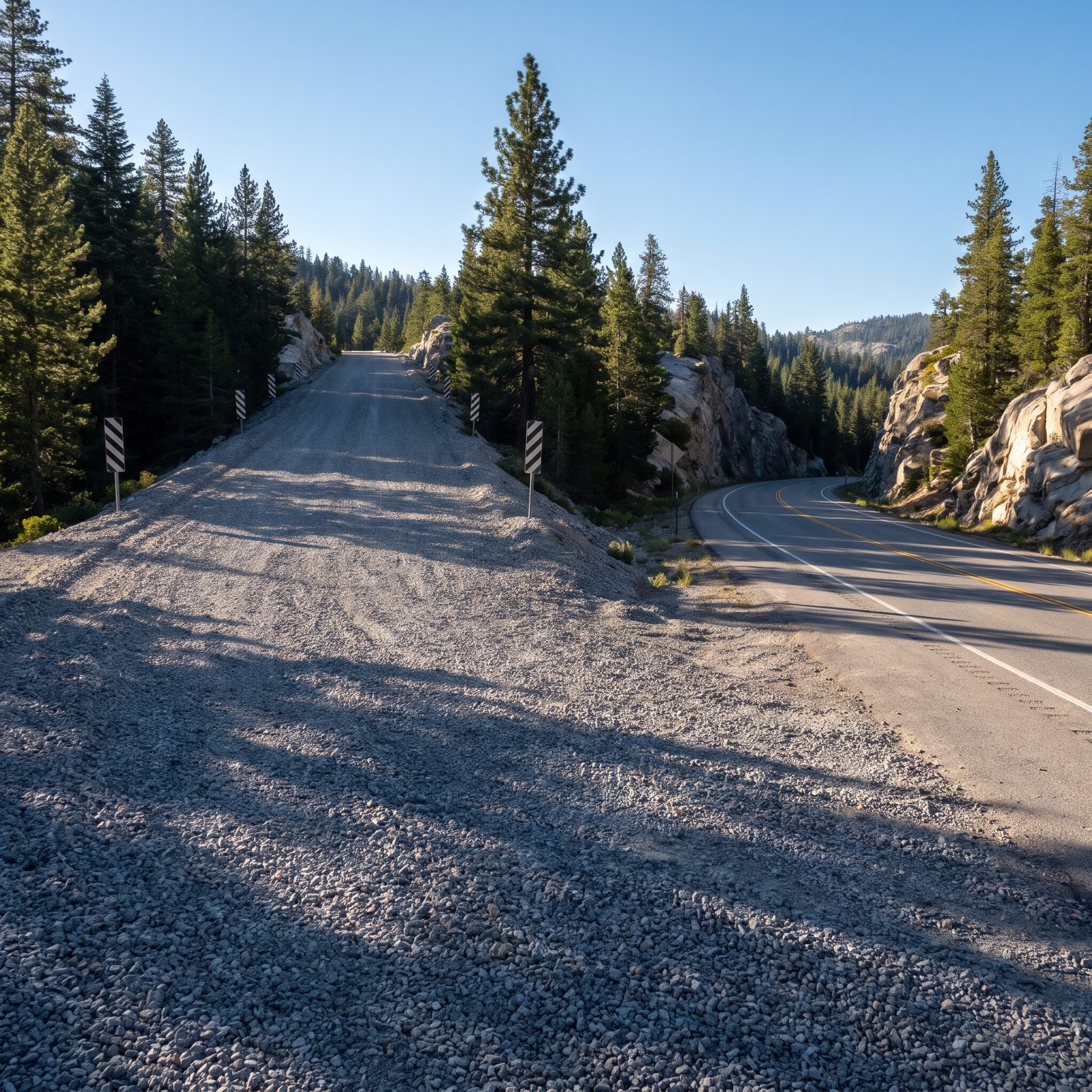
That long gravel bed climbing uphill off a steep grade is not a scenic pullout. It’s a last resort for a truck whose brakes have cooked and quit, and a driver aiming for it is bracing for a hard, violent stop in deep gravel.
Don’t park there to check a map. Don’t ease across its mouth to make an exit. If a truck ever needs that ramp, it needs the whole thing at full speed — and anything in the way turns a controlled disaster into a worse one. Treat the approach like a runway nobody gets to taxi on.
32. Keep the Gap in Front of a Truck Open on a Steep Descent
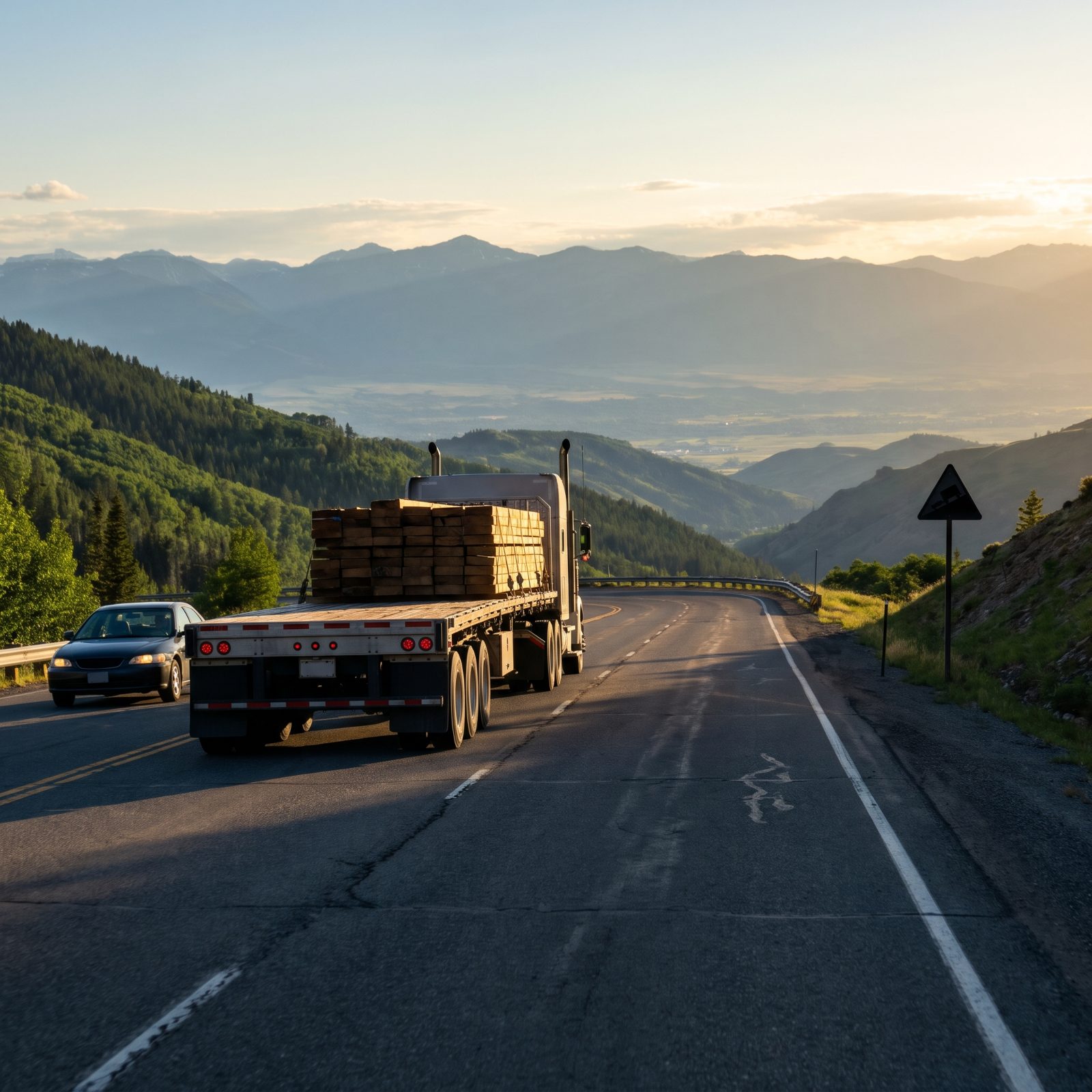
On a long downhill, that empty stretch of road in front of a semi looks like a free lane. It’s a brake zone the driver set up on purpose.
A truck heading down a grade holds its speed with engine braking and a careful plan, and the space out front is the room it needs if things tighten up. Dive into that gap and then tap your brakes, and you’ve just handed 40 tons the job of stopping short on a hill. Nobody wins that math. Find another lane, or wait your turn.
31. Expect a Truck to Bleed Speed Uphill and Pick It Back Up Going Down
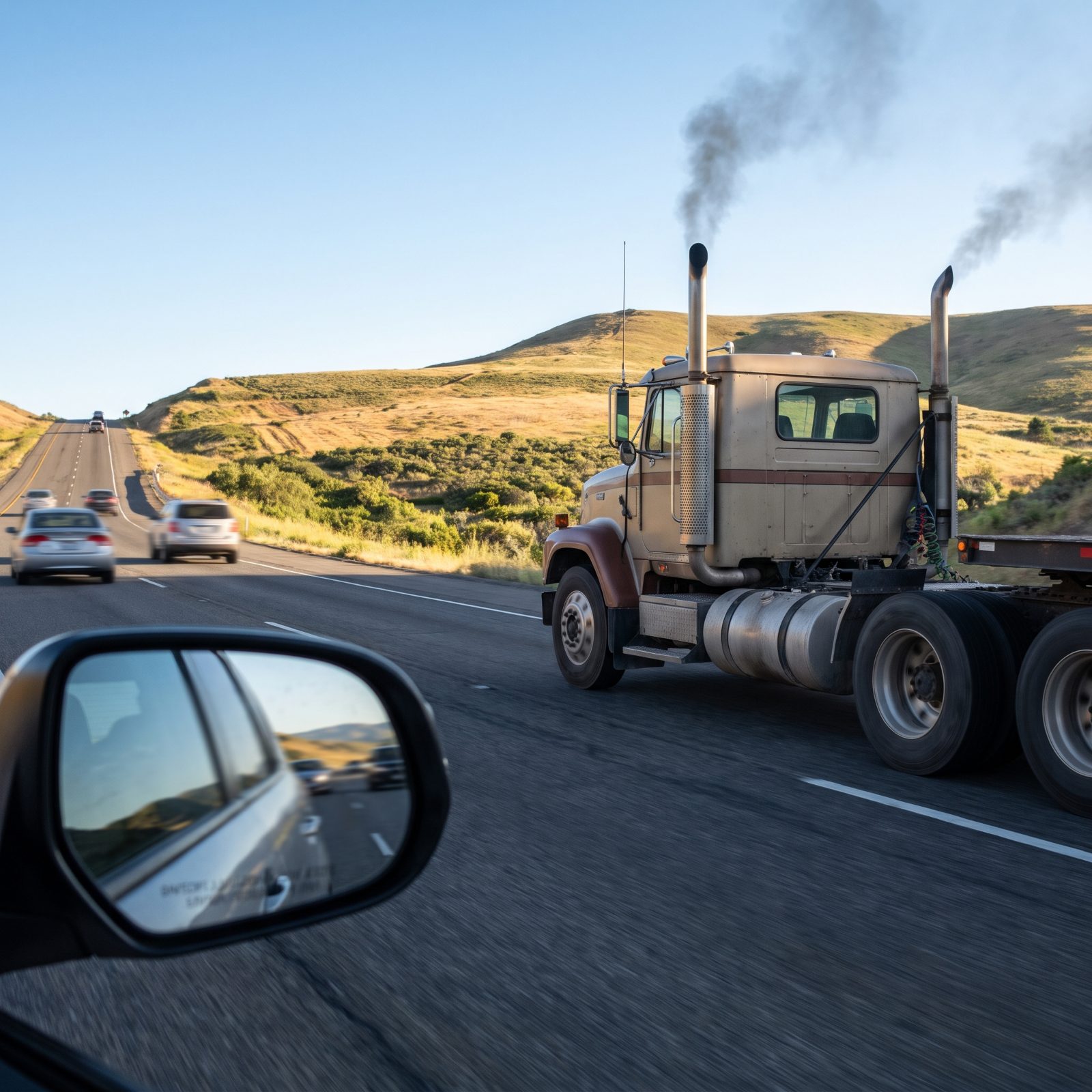
Watch a loaded truck hit a long climb and you’ll see it melt from highway speed down to a crawl. It can’t help it — all that tonnage is fighting gravity, and the engine trades away speed just to keep moving.
Then the road tips downhill and the same truck gathers every bit of it back. Pass one on the way up and you’ll want to be well clear before the grade flips, because now it’s bearing down on you with momentum you simply can’t match. Read the terrain. Only commit to the pass when there’s clearly room to finish it.
30. Remember a Trailer Tracks Inside the Tractor’s Path Through a Turn
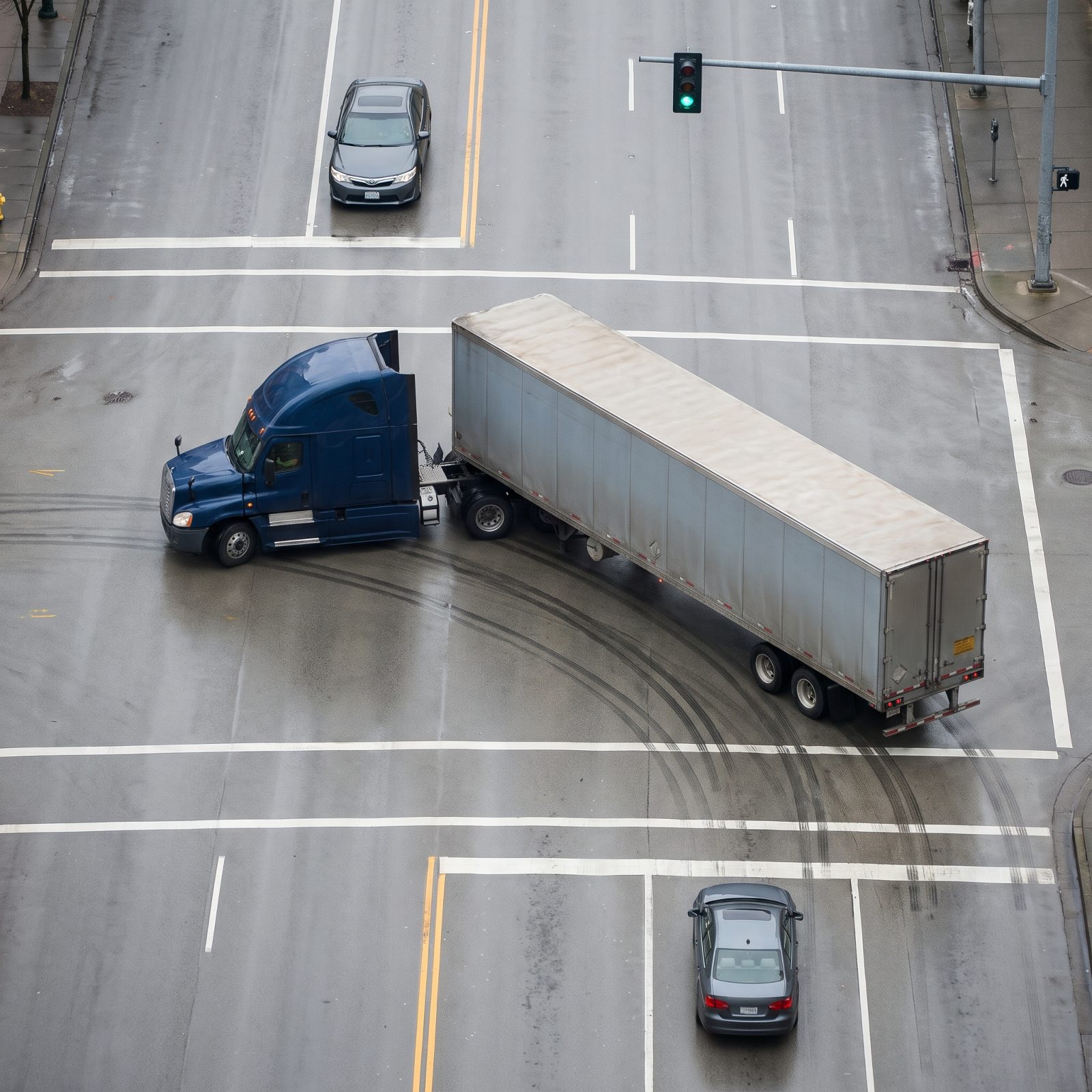
The cab and the trailer don’t drive the same line. When a truck turns, the trailer’s rear wheels cut inside the arc the cab is carving — truckers call it off-tracking, and it’s why a semi turning right will sometimes swing wide left first.
Squeeze up on the inside of a turning truck and that’s precisely where the trailer is headed. The space that looked open closes fast as the back end sweeps through it. Stay off the corner and let the whole rig finish the turn before you move.
29. Stay Clear of the Trailer’s Rear Swing When a Truck Starts Turning
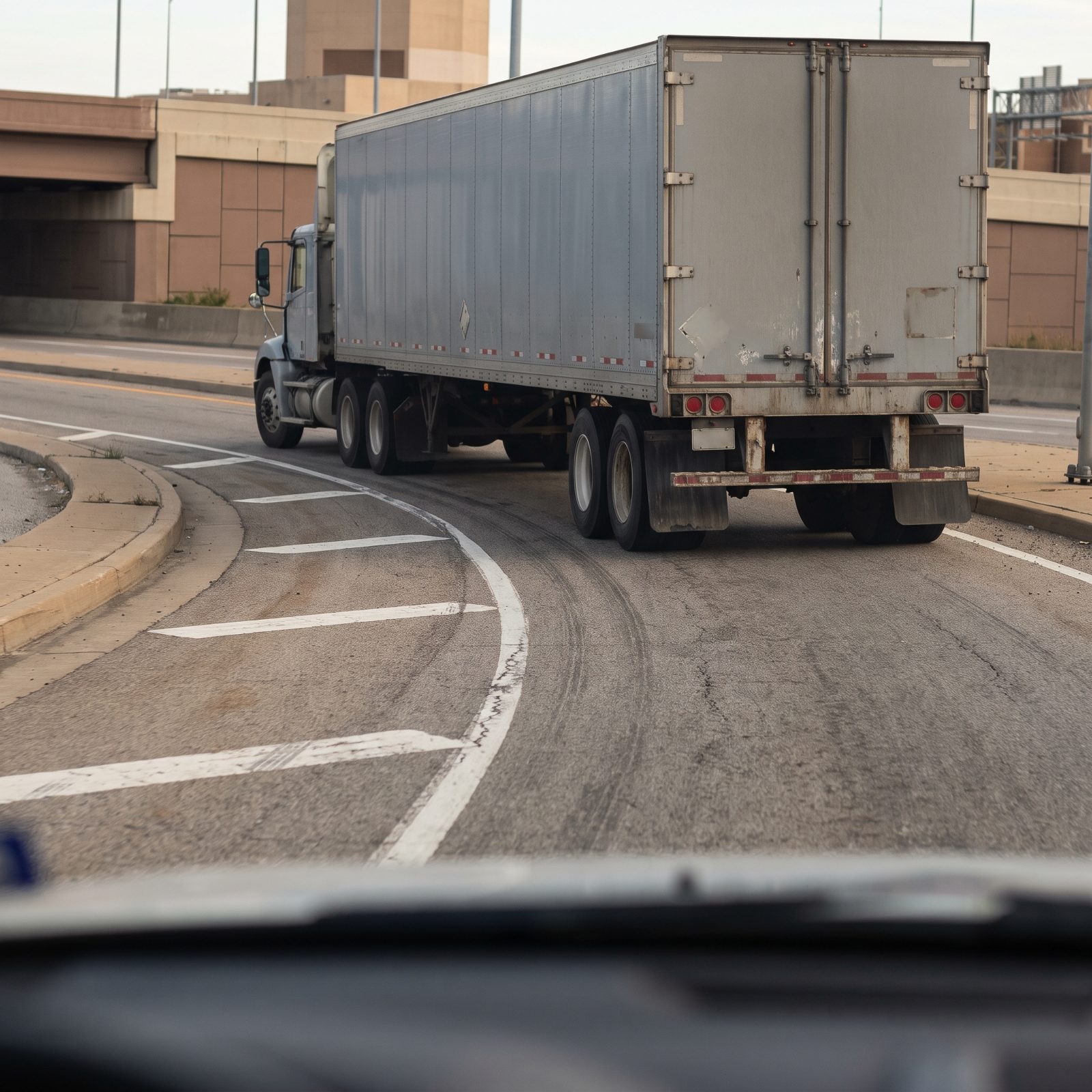
While the front cuts inside, the tail does the opposite. As a truck cranks into a sharp turn, the rear corner of the trailer swings out and away, reaching into whatever lane sits beside it.
Pull up tight alongside a trailer that’s starting to turn and that rear corner can sweep right over your hood. Different hazard than off-tracking, and it catches drivers who figured they were safely off to the side. See a truck setting up for a tight turn? Hang back. Give the back end room to carve its arc.
28. Give Tankers Extra Space Because the Liquid Inside Keeps Moving
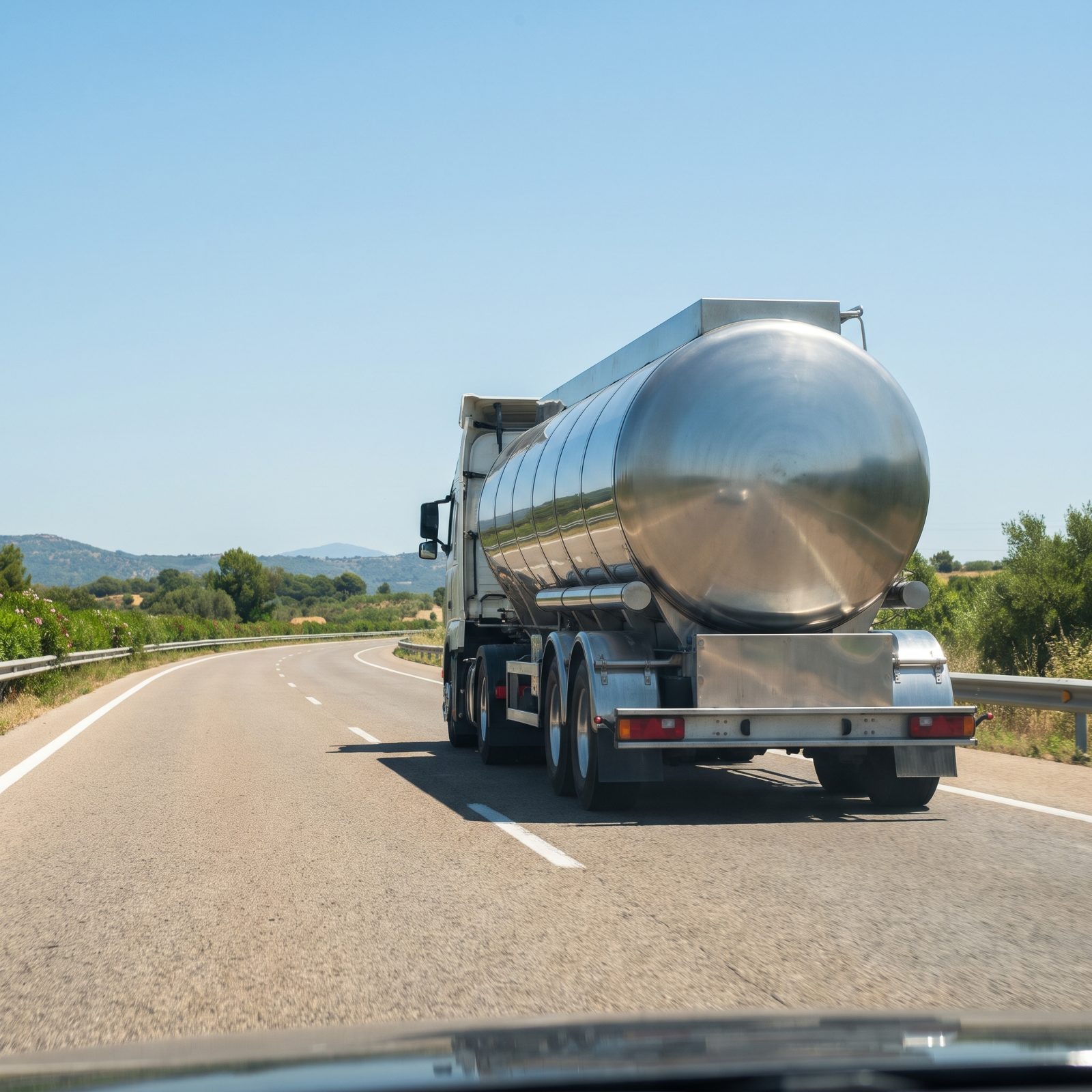
A tanker hauling liquid is never fully still inside. Fuel, milk, chemicals, water — it all sloshes. Hit the brakes and the load surges forward and shoves the rig; take a corner and the liquid piles to one side and tries to tip the whole thing over.
That surge means a tanker needs more distance to stop, and it answers to curves in a way a solid load never would. Partial loads are the worst offenders, because a half-full tank gives the liquid the most room to slam around. Give these trucks a wider cushion and don’t force sudden moves on them.
27. Leave Extra Room When a Truck Crawls Over a Raised Railroad Crossing
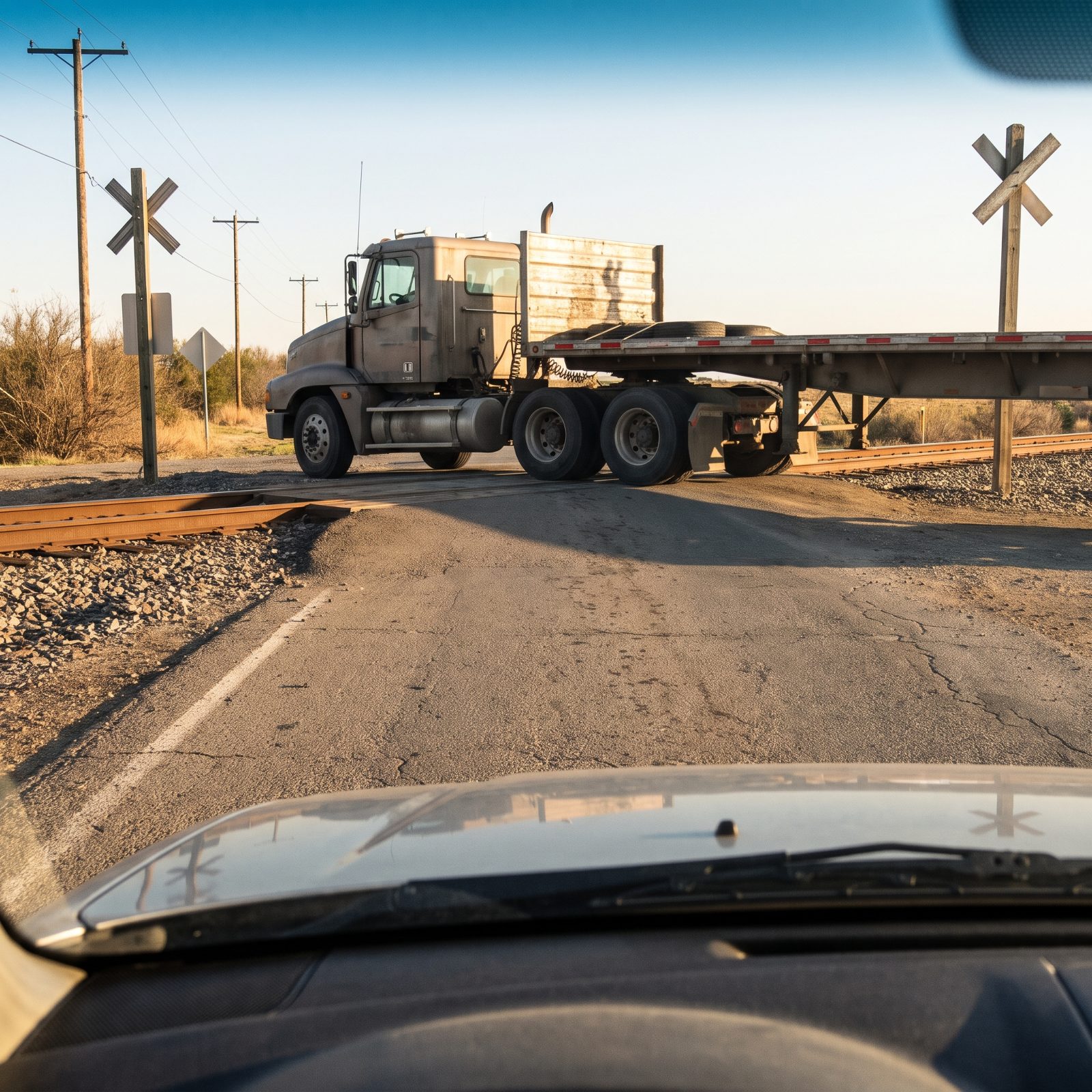
Watch a long trailer creep over a humped crossing and the caution makes sense. Where tracks sit higher than the road, a low truck can scrape its belly or briefly hang up, and some rigs are legally required to stop, look, and roll through slow.
So don’t tailgate a truck onto a crossing. Hang back until it’s fully clear and rolling on the far side, then go. The last place you want to end up is boxed between a dropping gate and a truck inching across live rails. Patience is the whole game here.
26. Expect a Pressure Wave When Passing a Truck in Strong Wind
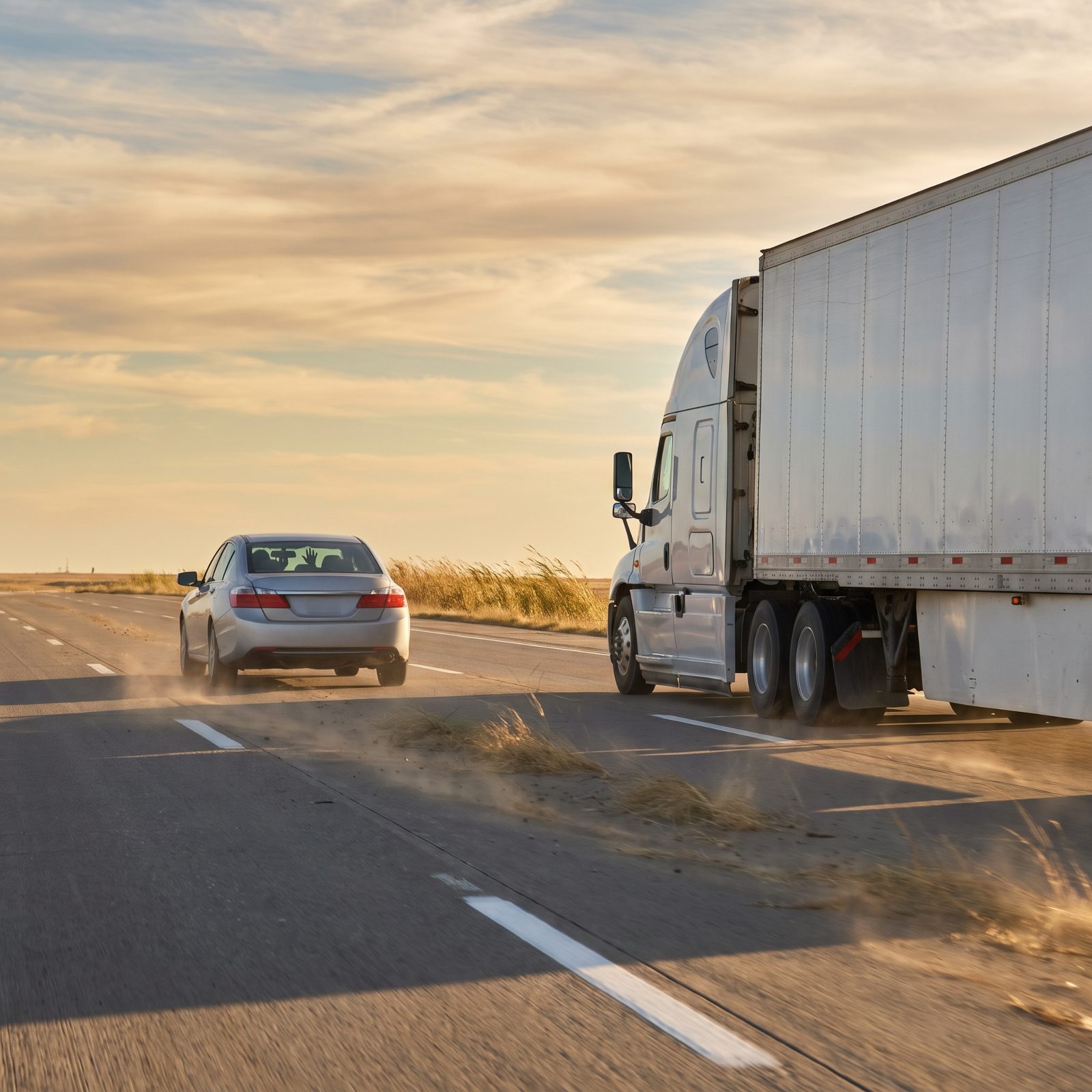
Nobody warns you about this until you’re already white-knuckling the wheel. A loaded trailer pushes a wall of air as it moves, and a crosswind stacks right on top. Pass one on a gusty day and you feel it twice: a shove toward the truck as you draw alongside, then a snap the other way as you clear the nose.
Good news is, both shoves are predictable. Firm hands, steady throttle, and a plan to pass with purpose beat drifting alongside for half a mile. Linger in the pocket beside those tires and the air gets more time to toy with your car.
25. Give Snow-Covered Trucks More Space in Case Ice Sheds From the Trailer
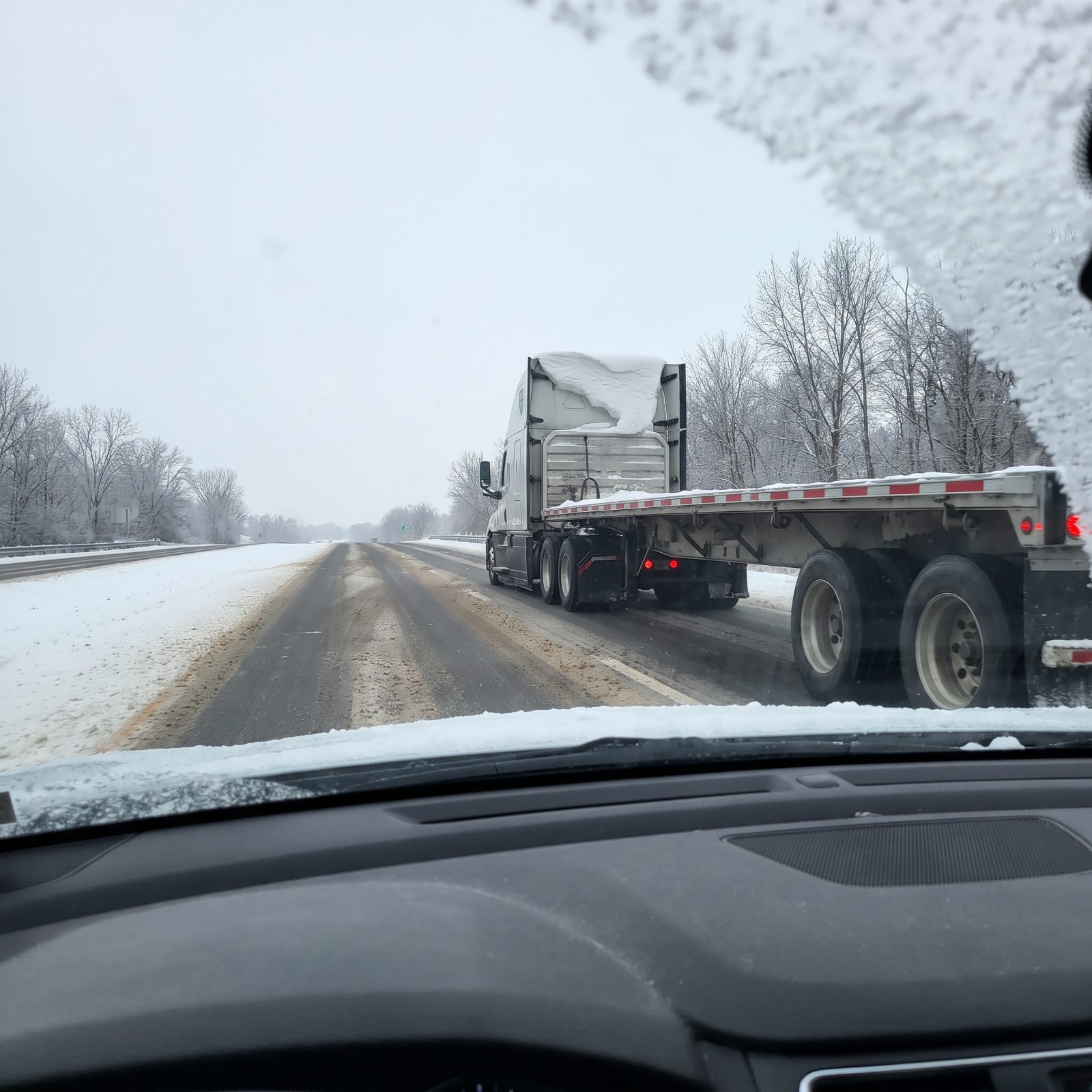
That innocent white cap on a trailer roof is a problem waiting for the right pothole. A sheet of refrozen snow can peel off a moving truck and sail back at highway speed, and anyone tailgating becomes the catch.
Drop back further than feels necessary in winter. Ice doesn’t flutter down gently when it releases from a trailer. It flies. A car-length cushion in July isn’t a January cushion.
24. Treat Flying Tire Debris From a Truck as an Immediate Hazard
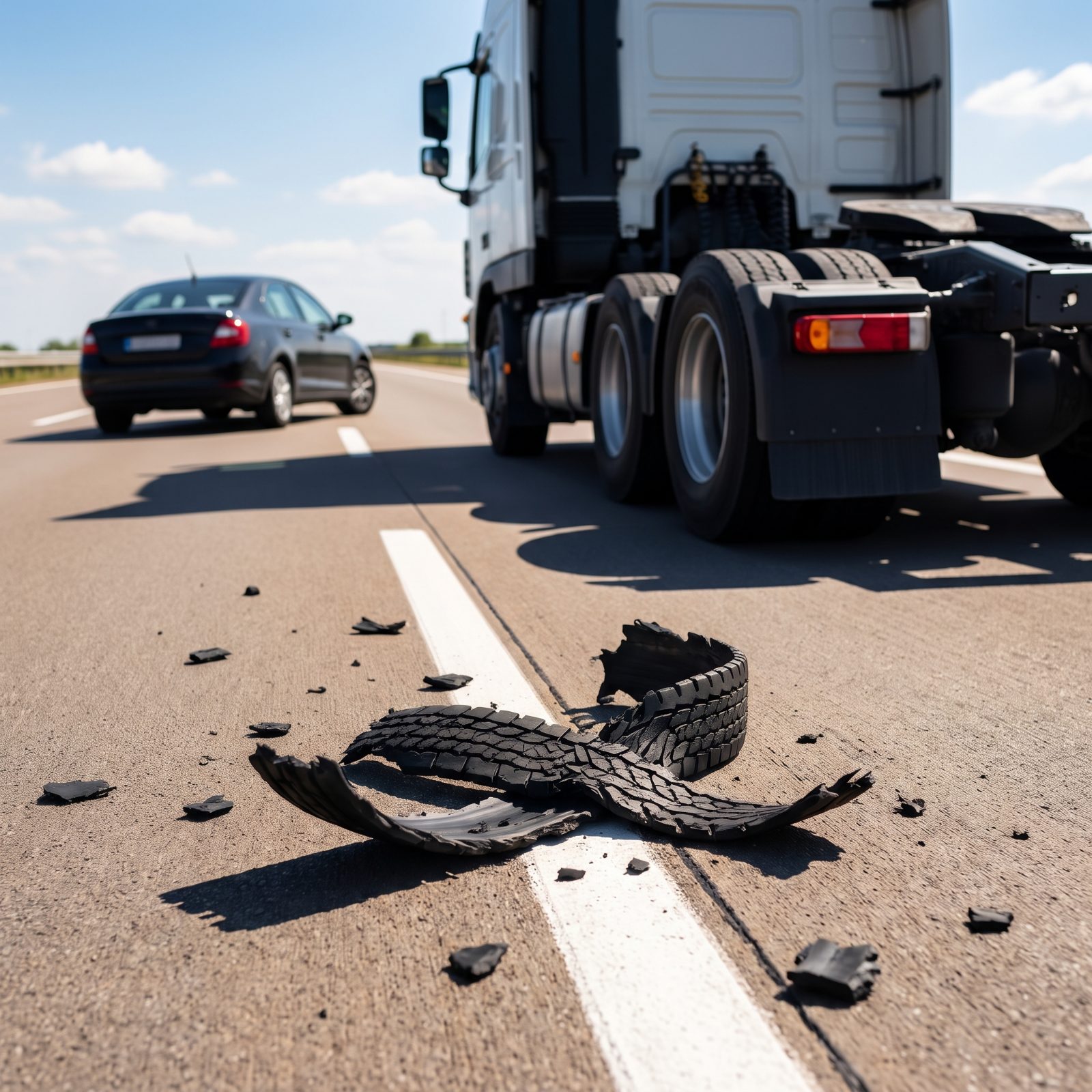
Those black strips littering the shoulder have a nickname: road gators. They come off failed truck tires, and a fresh one can still be bouncing when you reach it.
Your gut says swerve. Don’t, at speed anyway — a sudden yank at the wheel next to a 40-ton vehicle is worse than the tread itself. Scan ahead, pick a clear line early, brake smoothly if there’s room. A chunk of rubber under the car is survivable. A panic lane-change into traffic often isn’t.
23. Never Cut Between Trucks Traveling as an Escorted Oversize-Load Convoy
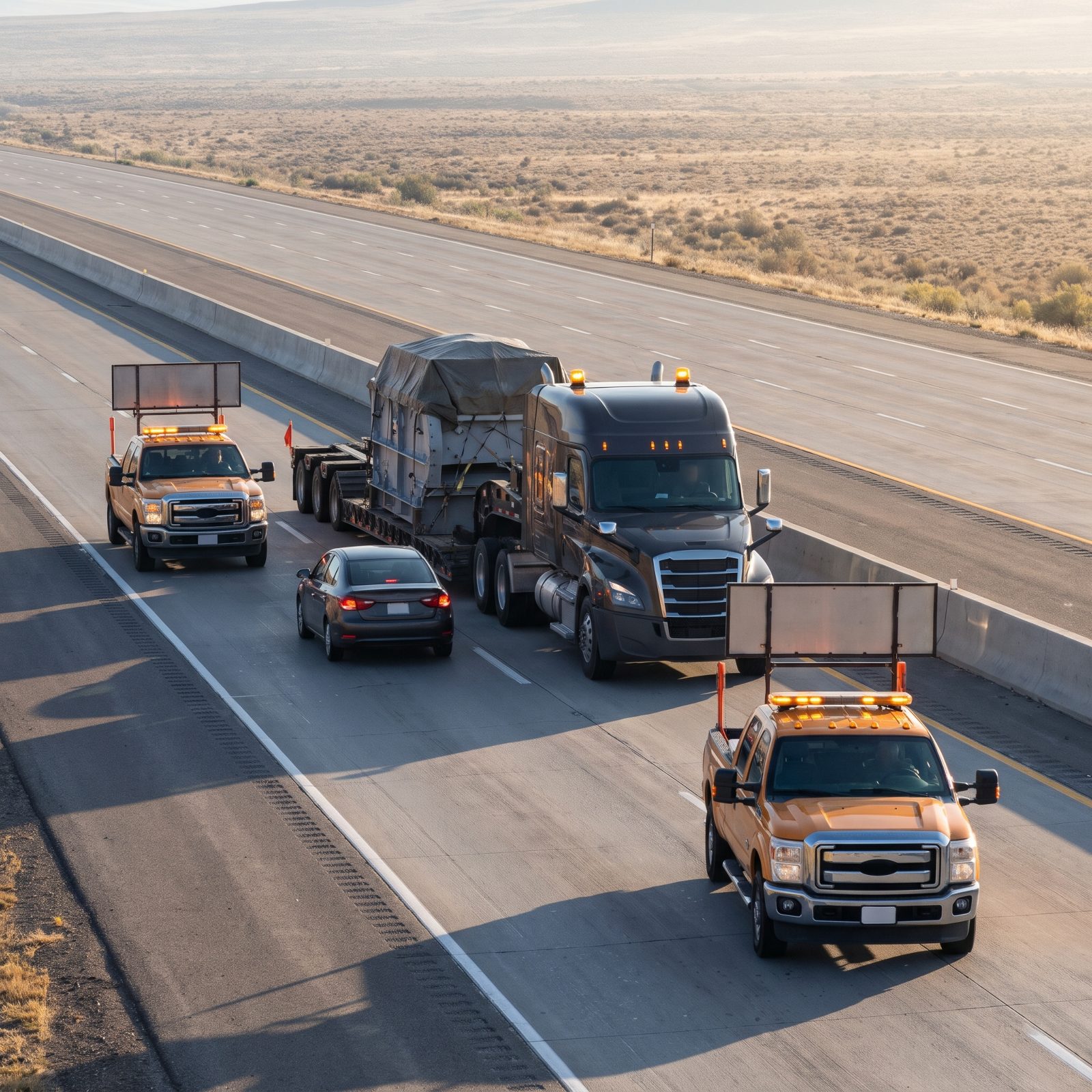
Pilot cars with amber lights front and back aren’t decoration. They’re bracketing a load too wide, tall, or heavy to behave like normal traffic, and the whole package moves as one unit for a reason.
Squeeze into the gap between the escort and the load and you’ve parked yourself in the one spot where nobody can react. Oversize loads often need the full width of two lanes to swing through a curve. That space between the vehicles? Working space, not an open lane.
Hang back. Wait for the convoy to clear, or pass the entire group at once where it’s legal and safe.
22. Hold a Steady Speed and Never Accelerate While a Governed Truck Passes
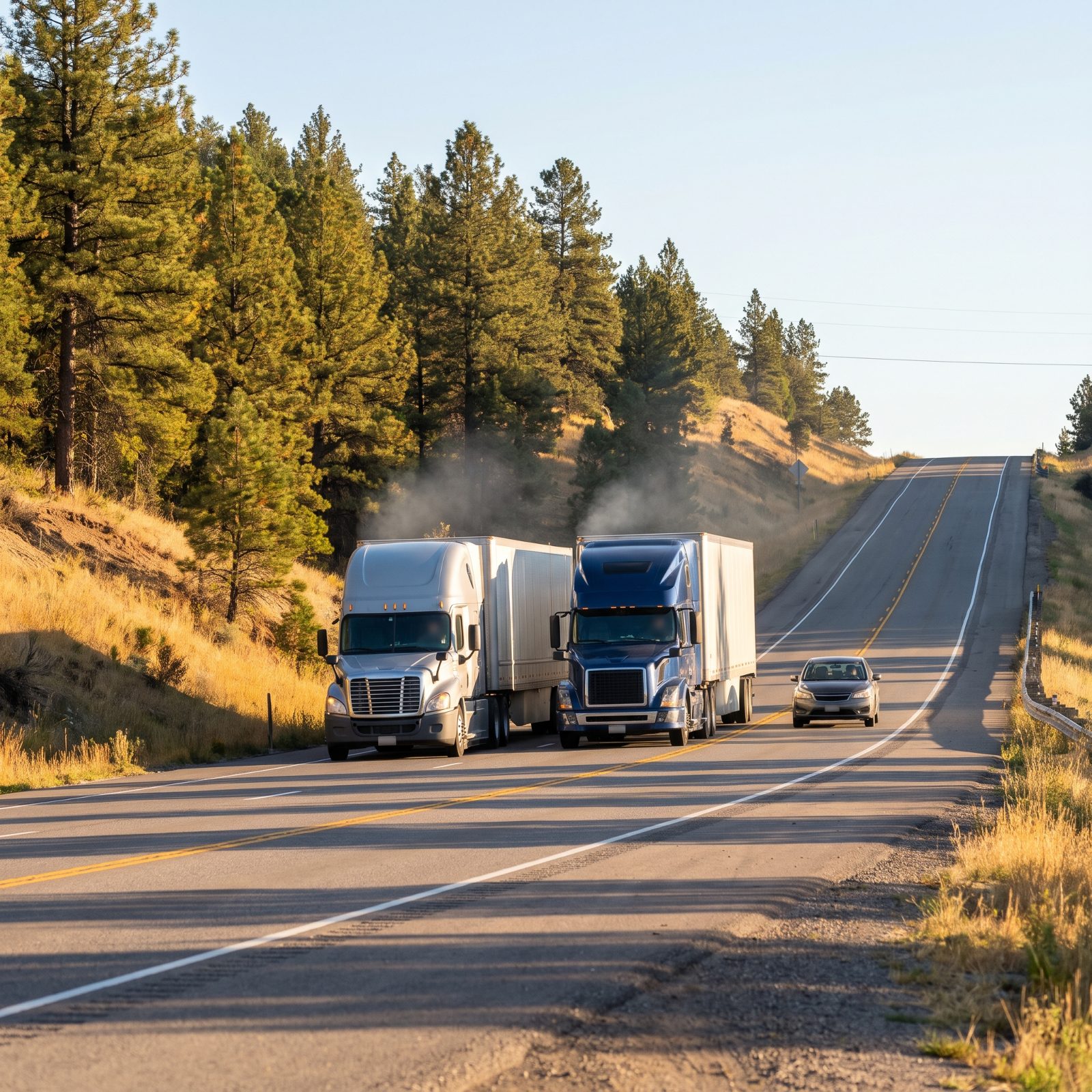
You’ve seen it and probably cursed it: one truck pulls out to pass another and the whole operation takes an age. Both trucks are electronically speed-limited, often within a mile or two per hour of each other, so the pass crawls.
For a car sharing the road with the trucks, the worst move is speeding up when the passing truck tries to merge back in. That driver committed to the pass expecting steady traffic around it. Nudge the throttle and you strand a 70,000-pound vehicle straddling a lane with nowhere to go.
Hold your speed. Let the pass finish. The ten seconds you “save” by racing the gap aren’t worth the mess.
21. Give a Passing Truck Room to Reenter Before Its Lane Ends

A truck that’s been inching past you needs somewhere to land. When its lane is about to end or merge, do the thing that helps everyone: ease off and open a hole ahead of the cab.
Trucks can’t tuck in quickly. That driver is juggling length, weight, and blind spots, and a shrinking lane raises the stakes fast. A slight lift of your foot beats any gesture or horn blast.
20. Move Away From a Stopped Truck’s Reflective Triangles and Keep Its Rear Buffer Clear

Three reflective triangles fanned out behind a stopped rig mean one thing: trouble, and probably a person near the road. Those markers sit at set distances specifically to buy reaction time, so when the first one appears, start setting up early.
Move over a lane if you safely can. Can’t? Slow down and leave the rear of that trailer a wide berth. Breakdowns pull people out onto the shoulder to check straps, change a tire, work a jack. The space behind a dark trailer at night is exactly where you don’t want to drift.
19. Leave Truck Parking Spaces for Drivers Facing Mandatory Rest Limits
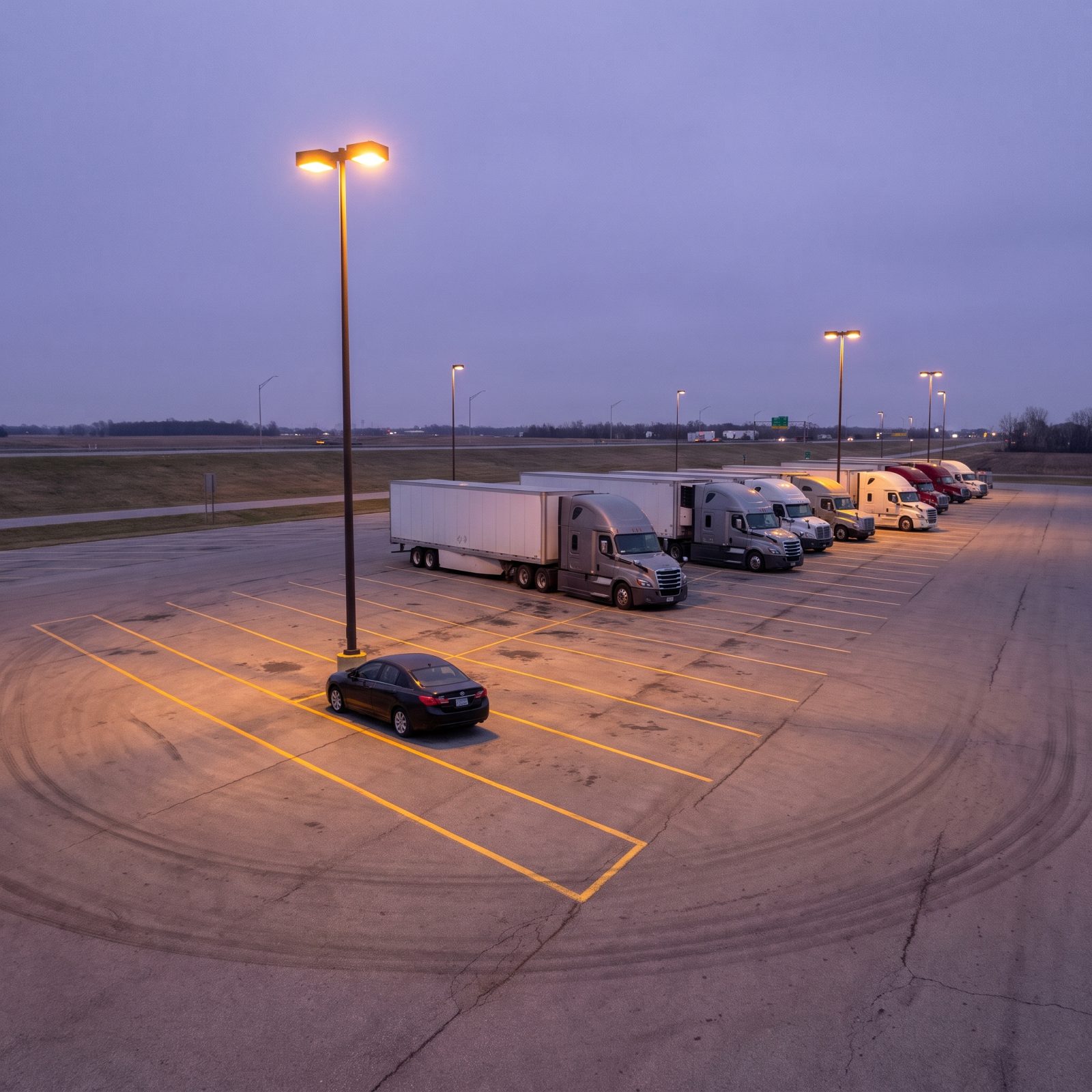
That giant diagonal stall isn’t a bonus-size car spot. It’s the only legal place a driver can shut down when the clock runs out.
Federal hours-of-service rules force truckers to stop whether or not parking exists, and finding a spot after dark is genuinely hard. Pull a sedan into a truck stall at a crowded rest area and you may have just sent someone back onto the highway tired, hunting for the next opening.
Park in the car section. Thirty-second walk, and it keeps a professional off the road when the law says they have to sleep.
18. Clear the Fuel Island After Fueling Instead of Using the Lane as Parking
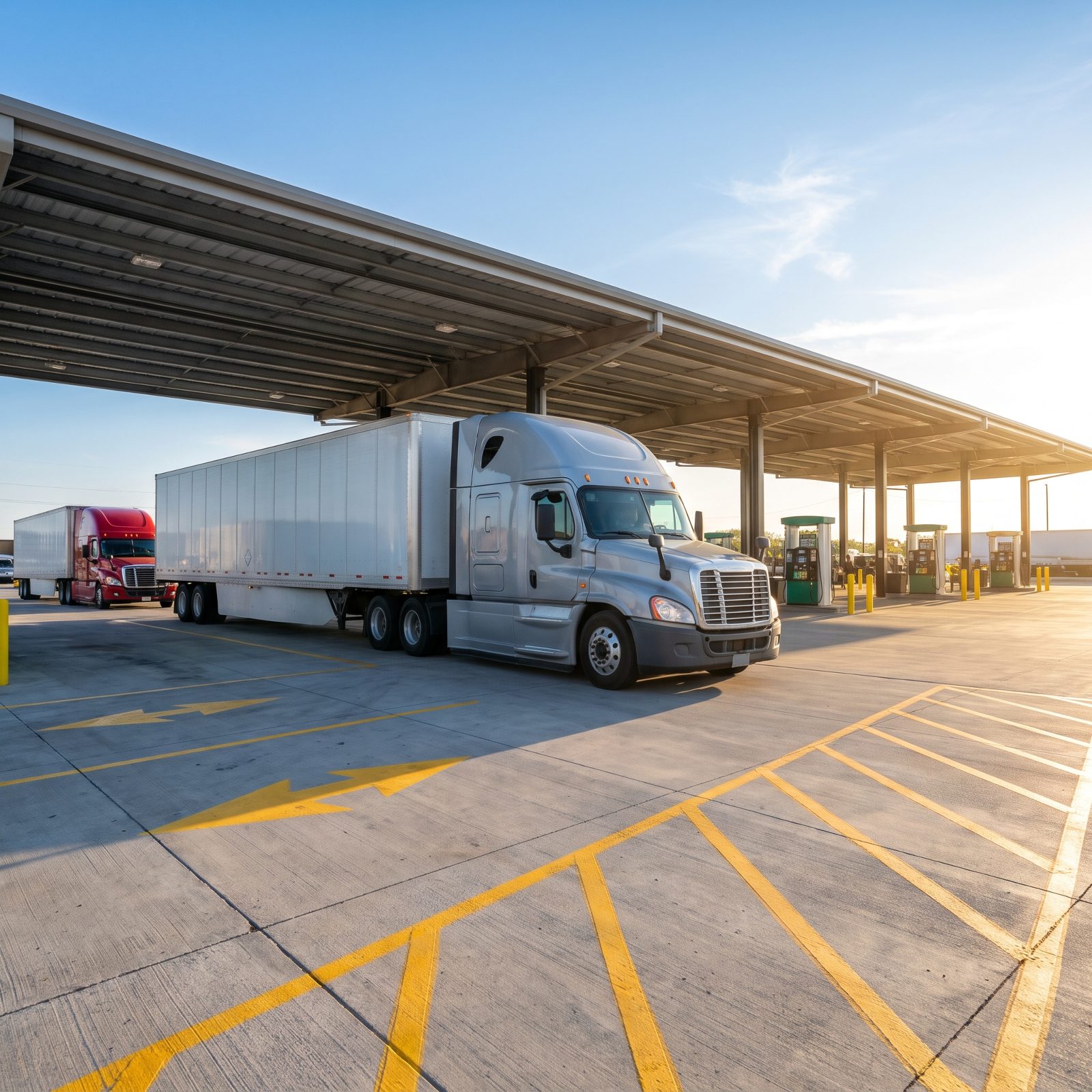
Diesel islands run like an assembly line. A truck fuels, then pulls forward to a striped lane to do paperwork, buy coffee, or grab food, leaving the pump open for the next rig.
Park a car at a high-flow diesel pump to run inside and you jam the whole line. Those lanes exist for continuous flow, not errands. Need diesel? Fill up, pay, and pull clear.
17. Do Not Block a Truck’s Access to a Weigh Station Entrance
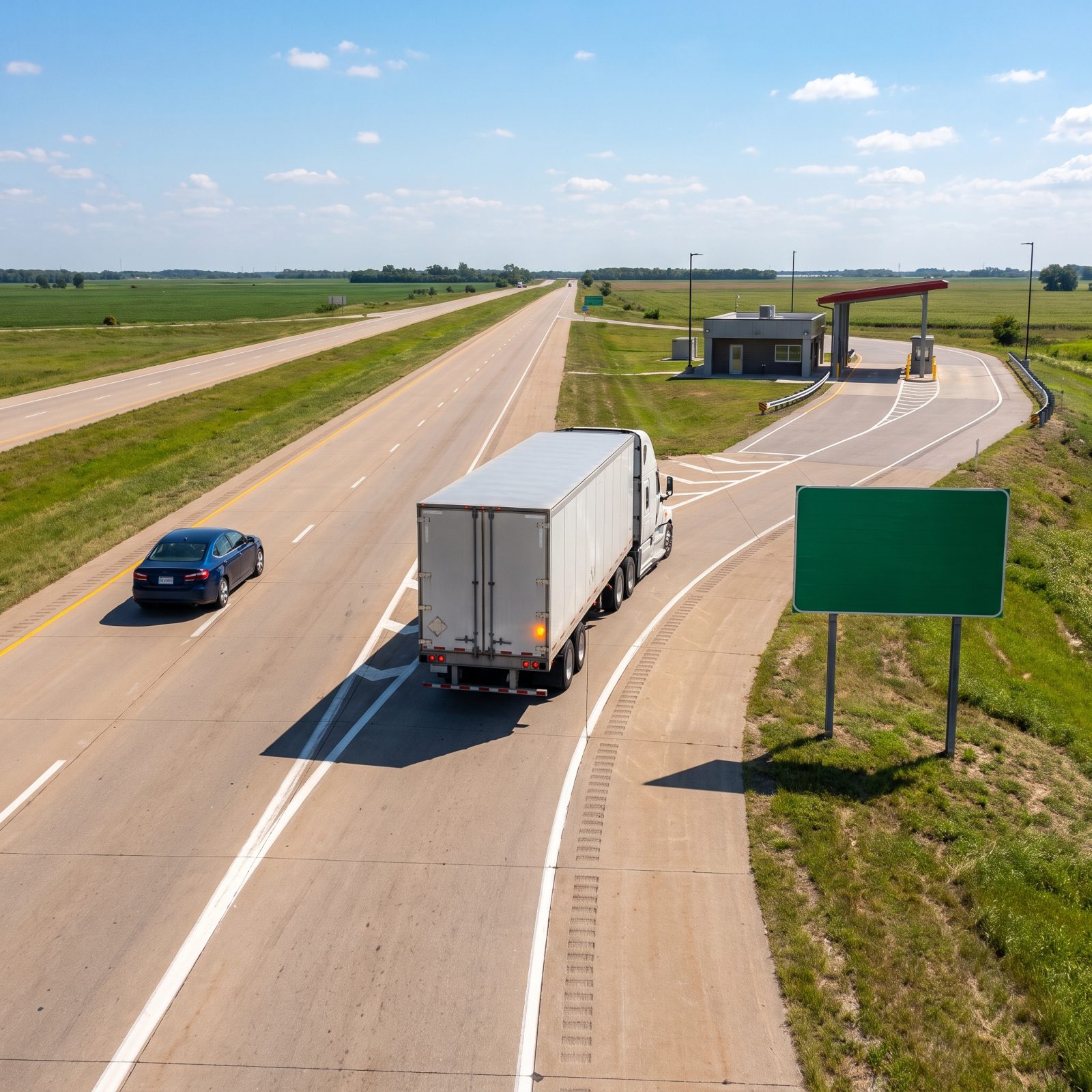
Weigh stations have dedicated ramps and merge points, and when a scale is open, trucks are legally required to pull in. A loaded rig signaling toward that exit lane has to commit early, because it can’t dart across traffic.
Don’t sit alongside the ramp mouth or block the entrance while fighting to merge over at the last second. Give trucks a clean path to peel off, and the same courtesy coming back onto the highway when the scale spits them out at low speed.
16. Never Use a Truck-Only Chain Installation Area as a Scenic Pullout
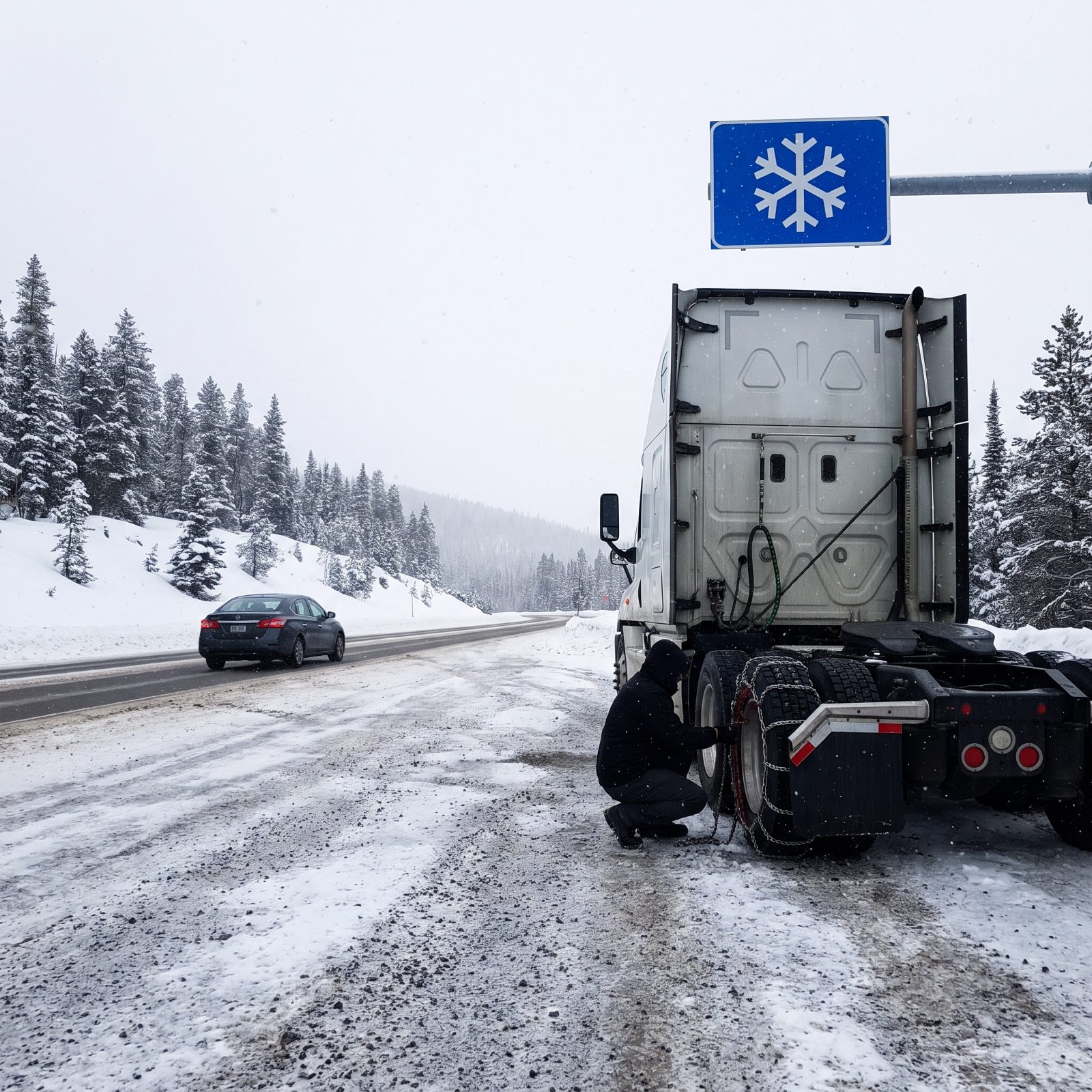
That wide gravel apron carved into the shoulder of a pass is not a photo stop. It’s a chain-up area, and in winter it’s the only place a trucker can safely stop to fit chains before the grade turns nasty.
Park there to shoot the valley and you’ve done two things at once. You’ve grabbed a slot a 40-ton rig now has to idle on the live lane waiting for, and you’ve forced that rig to stop and restart on ice. A loaded truck clawing its way back up to speed on a snowy grade is exactly what nobody wants to see in their mirror.
15. Let a Truck Finish Reversing and Never Pass Behind Its Trailer
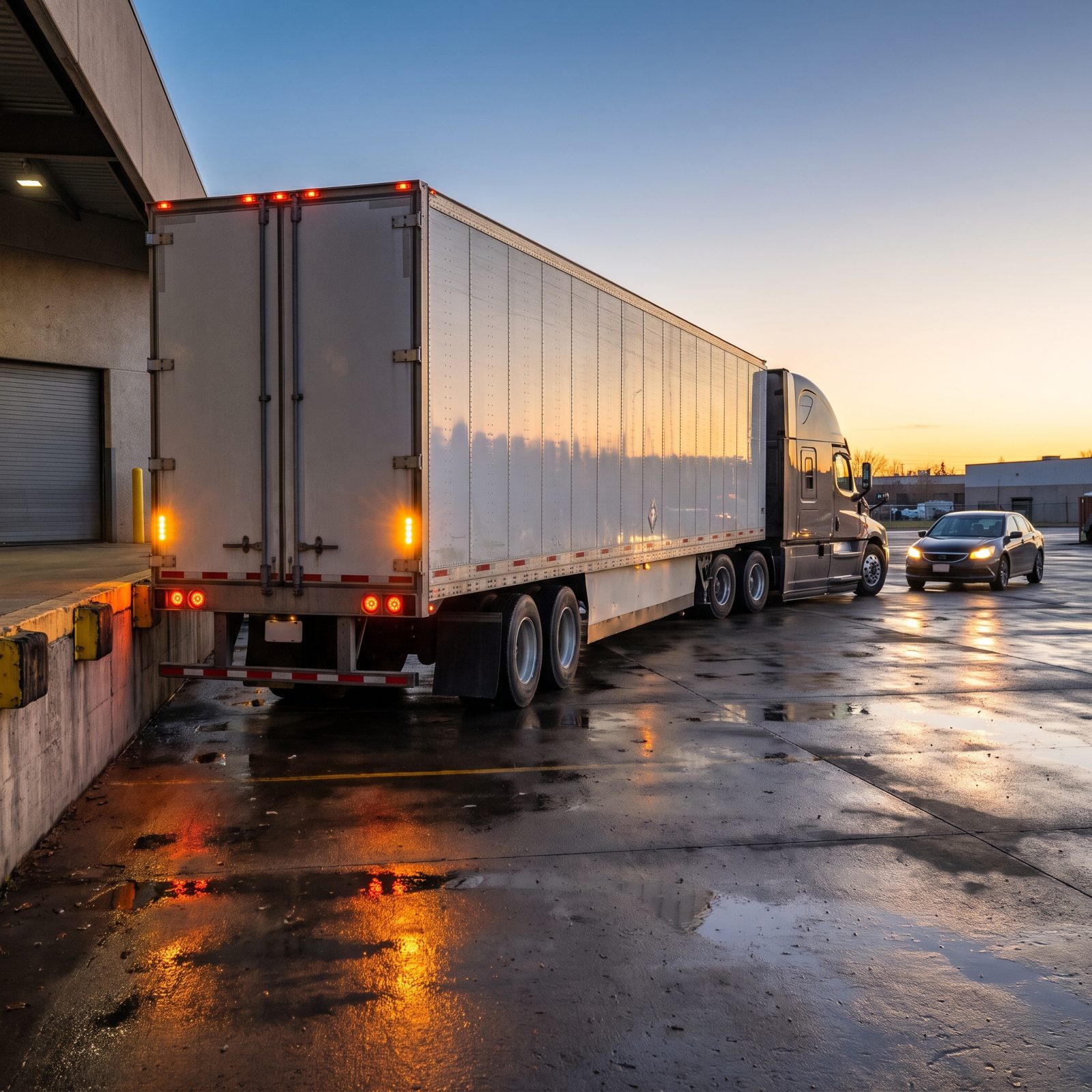
A reversing trailer sweeps through an arc most drivers never picture right. The cab goes one way, the back end goes the other, and the mirrors show the driver maybe half of what matters.
Behind a backing trailer is the worst place on the road to be. The driver can’t see you there. Not in the mirrors, not on a camera, not at all. So wait. Thirty seconds of patience costs you nothing, and darting through the gap to save that half minute is how you put your roof under a trailer floor.
14. Stop Behind the Marked Line Where Trucks Need Turning Space
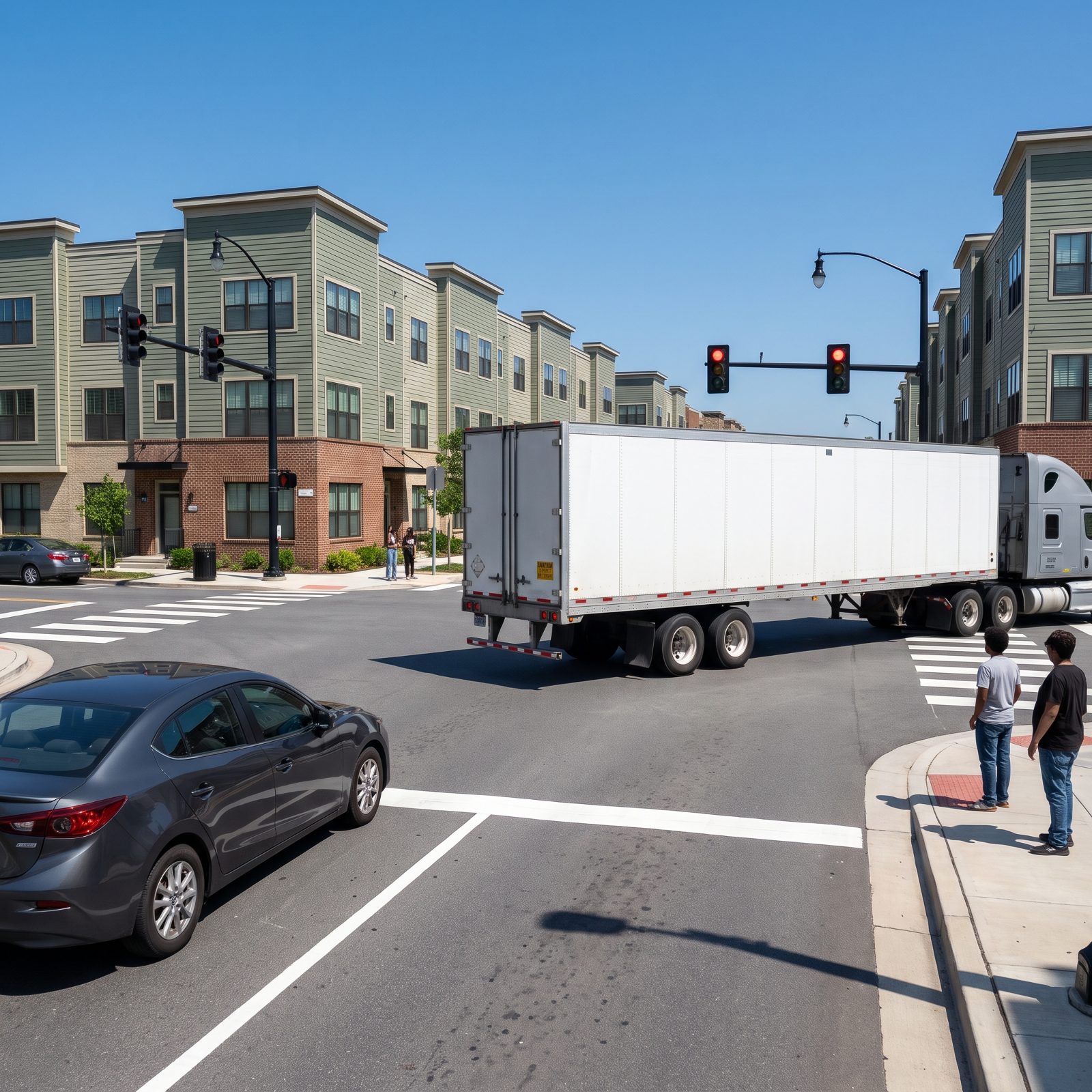
Those stop lines set weirdly far back from the intersection aren’t an accident of lazy paint crews. They give turning trucks the swing room their trailers demand.
Creep past that line to shave a moment off the light and you’ve planted your front bumper in the exact space a trailer needs to sweep through. The driver sees you, sure. But now they’re stuck, holding traffic in three directions while you realize your mistake and discover there’s nowhere to reverse.
13. Expect a Right-Turning Truck to Move Left, and Never Squeeze Alongside It
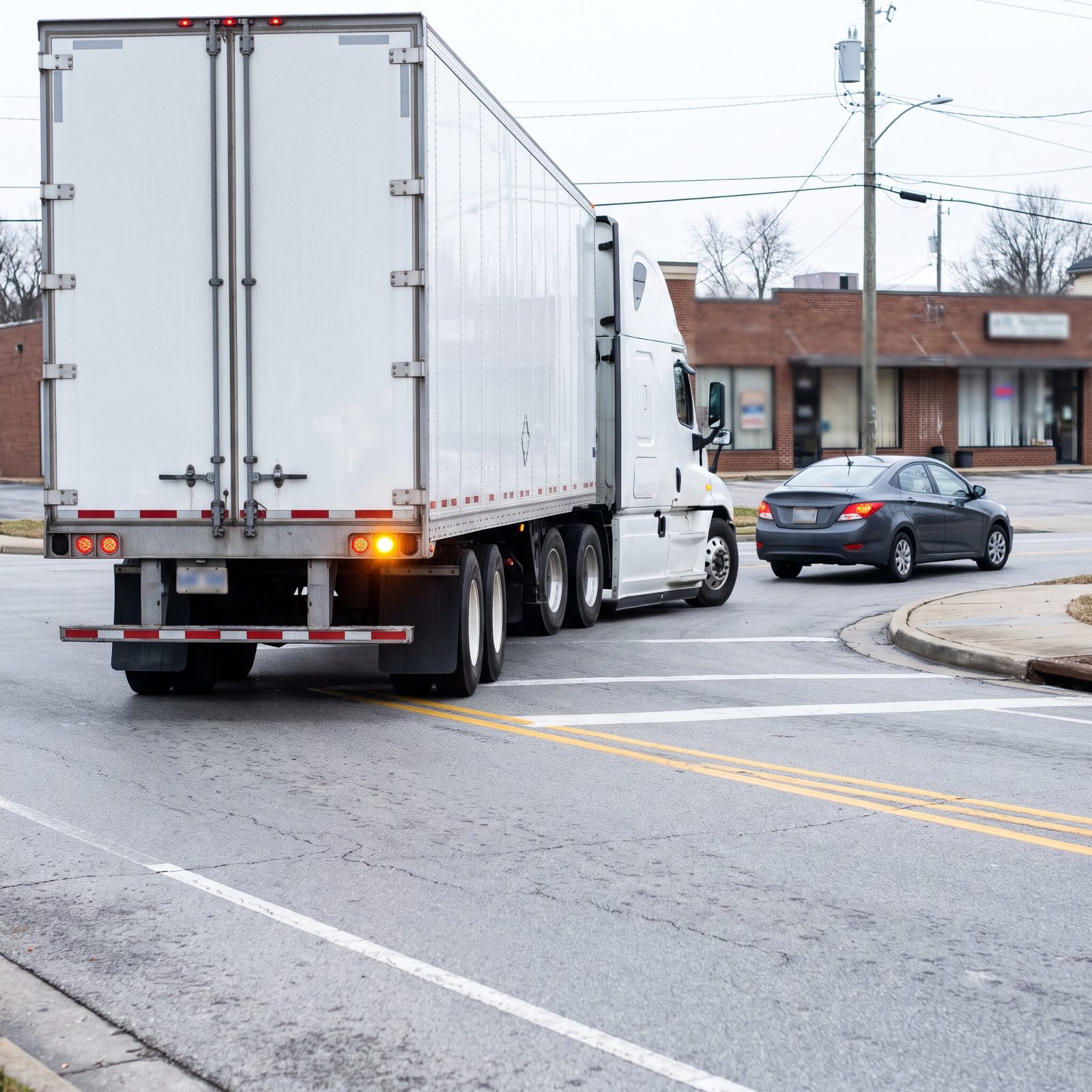
A truck swinging left just before a right turn looks like it’s changing lanes or making space for you. It isn’t. The driver is setting up so the trailer can clear the corner without climbing the curb.
The gap that opens on the truck’s right is a trap. Slide into it and the trailer comes across as the rig turns, pinning your car against the curb or worse. Hang back and watch the signal, not the open space. That driver is working geometry you can’t see from down there.
12. Give Long Trailers the Full Width They Need in Roundabouts
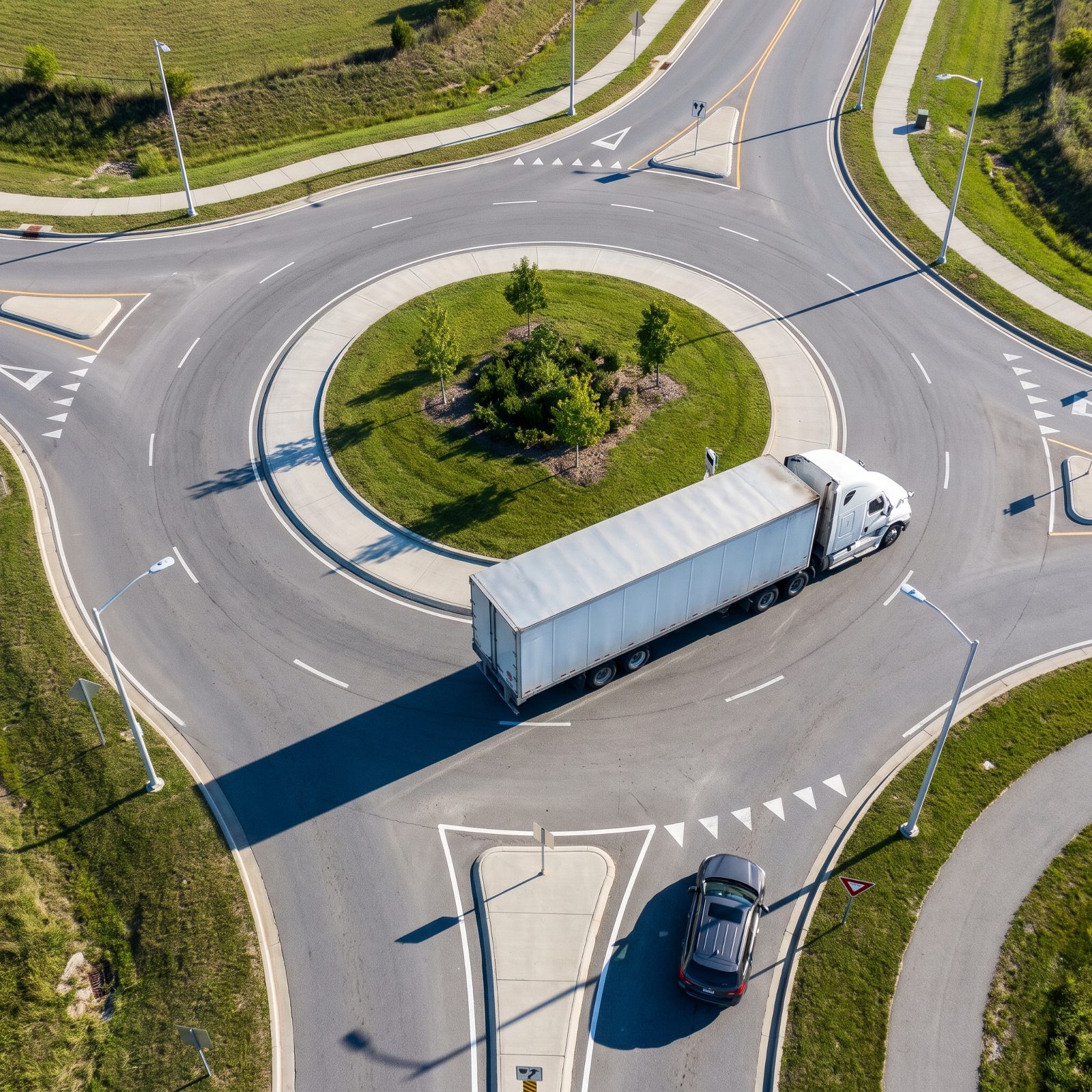
Roundabouts and long trailers make an awkward pair. The truck has to use both lanes, sometimes the mountable center apron too, just to get its back end around the circle without clipping the island.
So a truck in a roundabout will straddle lanes. It’s supposed to. Pull up on its inside to grab the shorter path and you’ve parked yourself in the trailer’s track. Give it the room, enter behind it, and the whole thing sorts itself out in seconds.
11. Keep Out of the Blind Spot Beside the Tractor’s Passenger Door
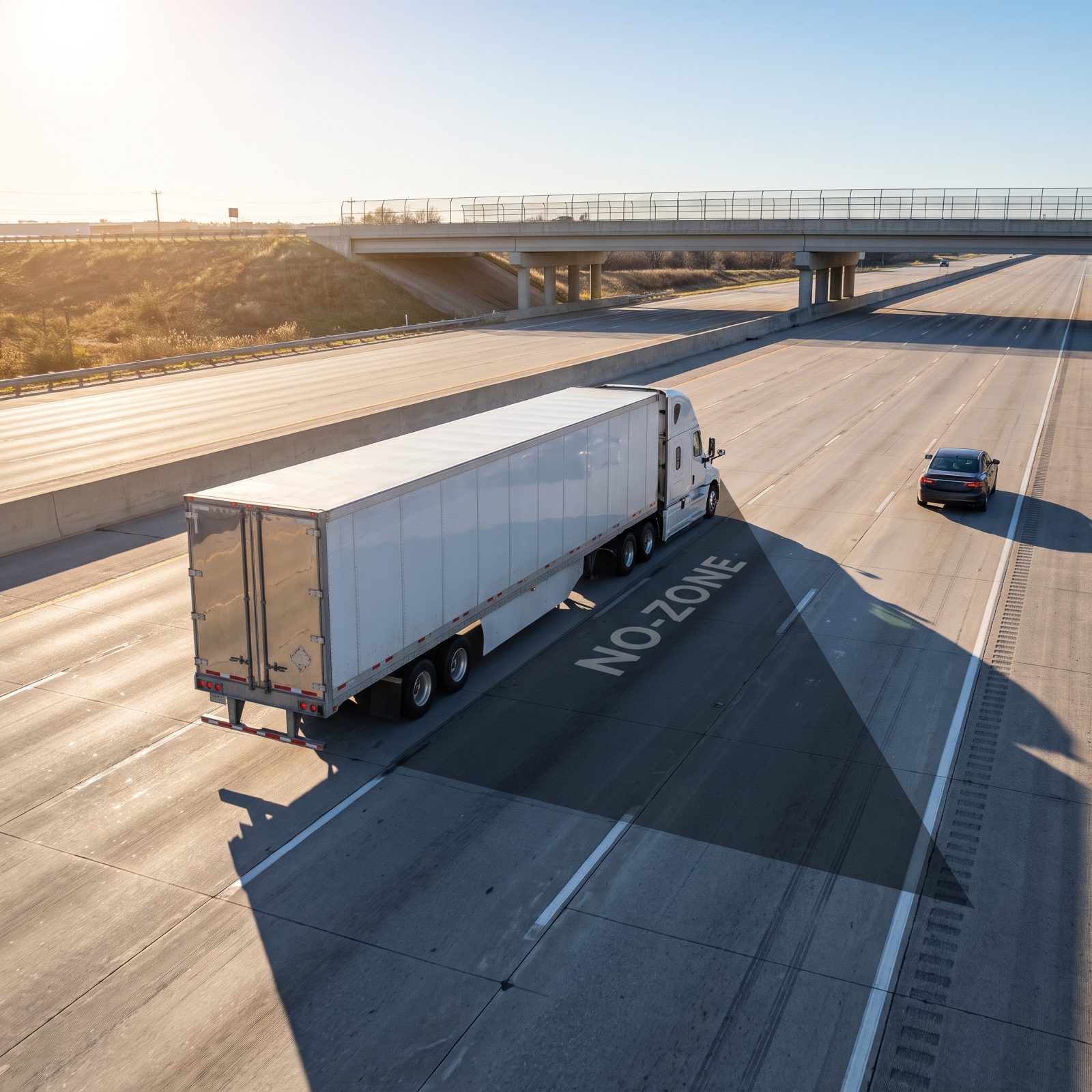
The biggest blind spot on any semi runs along the right side of the tractor, under and beside the passenger door. A trucker sits on the left, which means the whole right flank is a guess backed by mirrors.
Linger there and you’re invisible. Not hard to see. Invisible. If the truck needs to move right for a merge, a lane change, a chunk of tire tread in the road, you’re the thing it can’t account for.
The fix is dull and it works: get past it or drop back. A spot where you can see both of the truck’s mirrors is a spot where the driver can see you.
10. Do Not Hide a Small Car Directly in Front of a Truck’s Hood
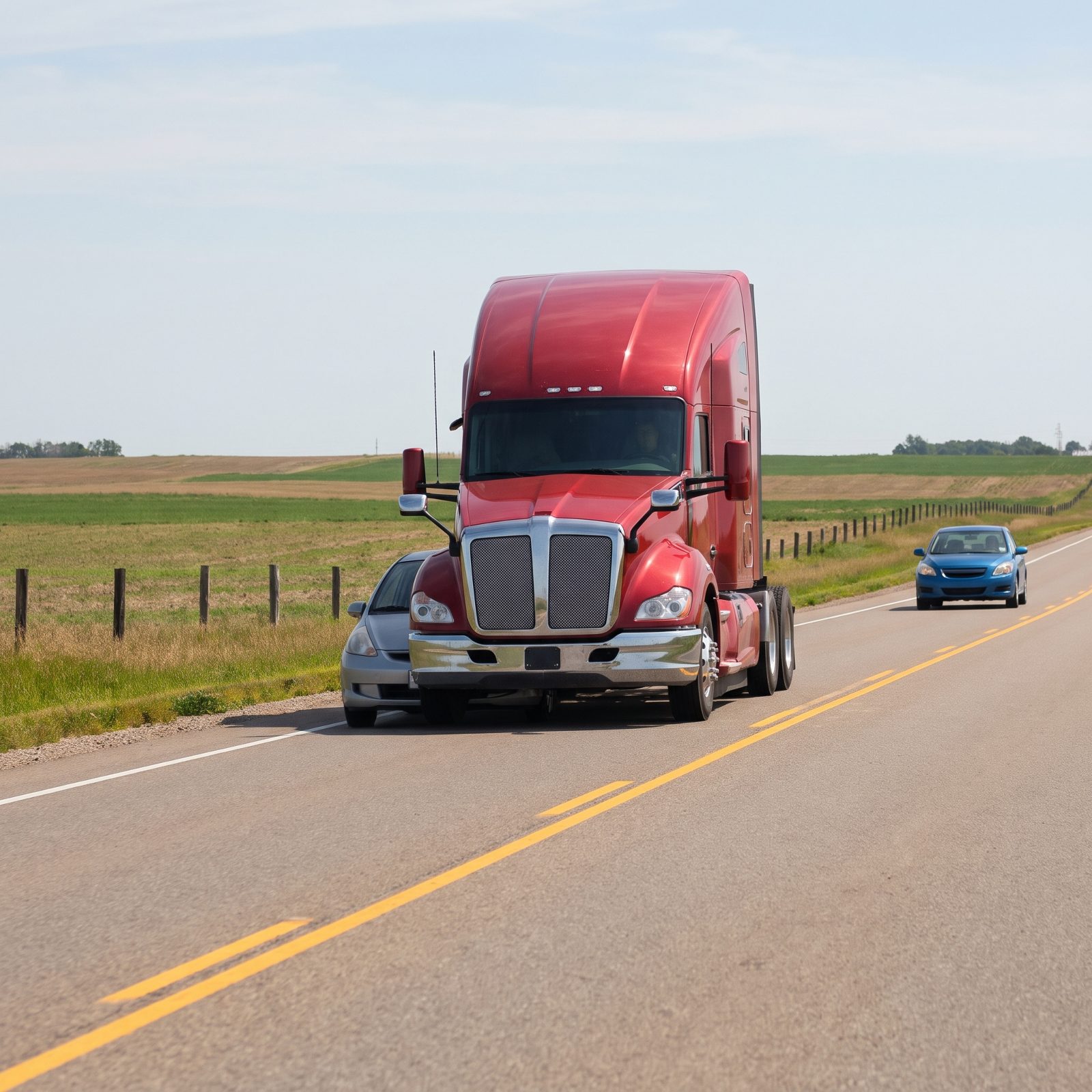
There’s a dead zone right in front of a truck’s hood where a low small car simply disappears. The driver sits high, the hood runs long, and if you tuck in too close you drop clean out of the sightline.
When the traffic ahead stops hard, a loaded rig needs real distance to haul itself down. Sitting right on its grille removes the one thing that keeps you both safe: room. Leave enough space to catch the truck’s windshield in your mirror. See the driver and the driver sees you.
9. Pass Decisively Instead of Lingering Beside the Trailer

Running alongside a trailer at matched speed is the slowest safe way to pass and the most dangerous one. You’re parked in the longest blind spot on the road, right where a gust of crosswind and a drifting lane line can shove a trailer sideways.
Commit to the pass. Pick your moment, get through it, and clear the front of the cab so the driver watches you reappear. A decisive overtake spends a handful of seconds in the danger zone. A timid one drags it out for a mile.
8. Never Brake-Check a Truck, Even After a Disagreement
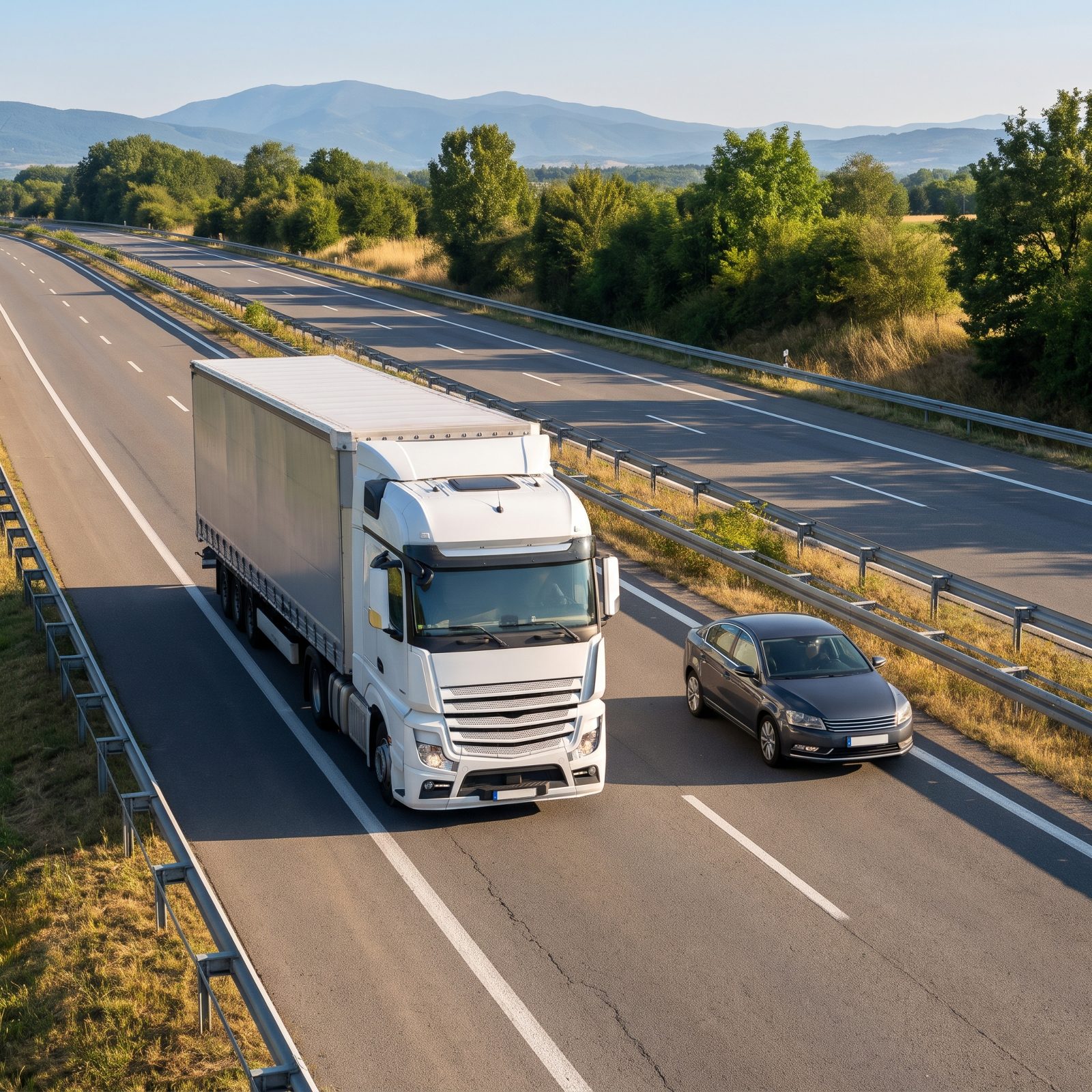
Whatever the other driver did, standing on the brakes in front of a loaded truck is the one response with no winners. A fully loaded rig can weigh many times what your car does, and its stopping distance runs out past the length of a football field.
Tap the brakes to make a point and you’re betting your life that the driver behind reacts perfectly, instantly, with brakes that physically can’t stop in time. No point is worth that.
Let it go. Change lanes, ease off, give it room. The road quietly rewards the driver who de-escalates and lives to grumble about it later.
7. Signal Your Lane Changes Early Enough for the Truck to React
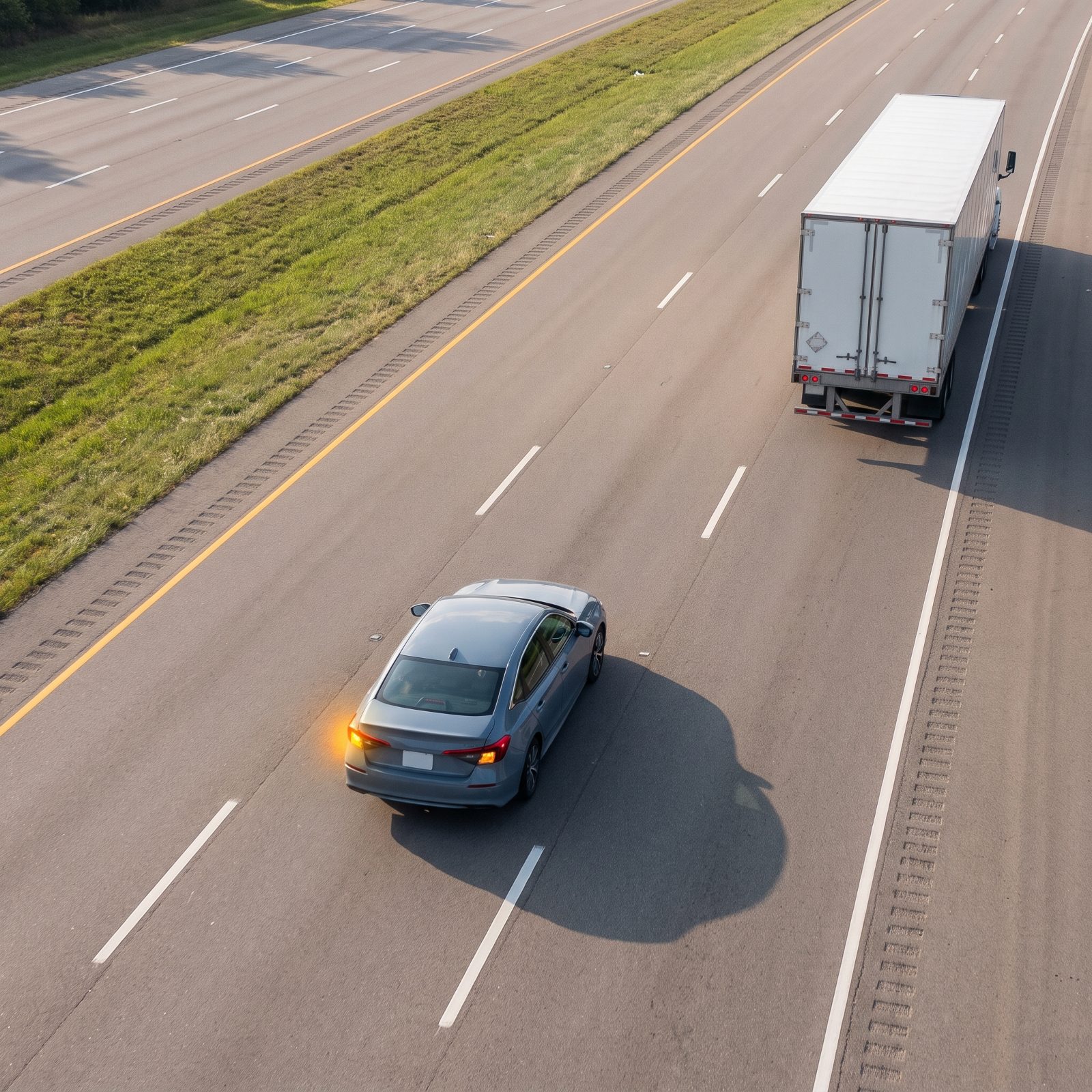
A loaded tractor-trailer is a lot of weight to get moving or stopping, and it doesn’t change speed or direction on a whim. The driver up in that cab is reading the road a hundred yards ahead of where you think.
Flick your blinker a few seconds before you move, not as you’re already crossing the line. Signal before you drift out to pass so traffic behind knows what’s coming, and keep that habit when you pull back in ahead of the truck: a few seconds’ warning lets the trucker ease off the throttle or drift a little, giving you room instead of scrambling. A signal that comes on mid-maneuver tells him nothing he can use.
6. Merge at Highway Speed Instead of Expecting a Truck to Stop

This is the mistake that causes real trouble. You creep down the on-ramp at 40 while traffic runs 65, then stop dead at the end of the lane because the gap closed on you.
A truck can’t just stand on the brakes to bail you out. Its stopping distance runs longer than a football field at speed, and a panic stop risks a jackknife that lays a trailer across three lanes. Use the whole ramp to build speed, find your slot, and slide in moving. That ramp is there to get you up to pace — every foot of it.
5. Wait Until You See the Whole Truck in Your Mirror Before Pulling Back In
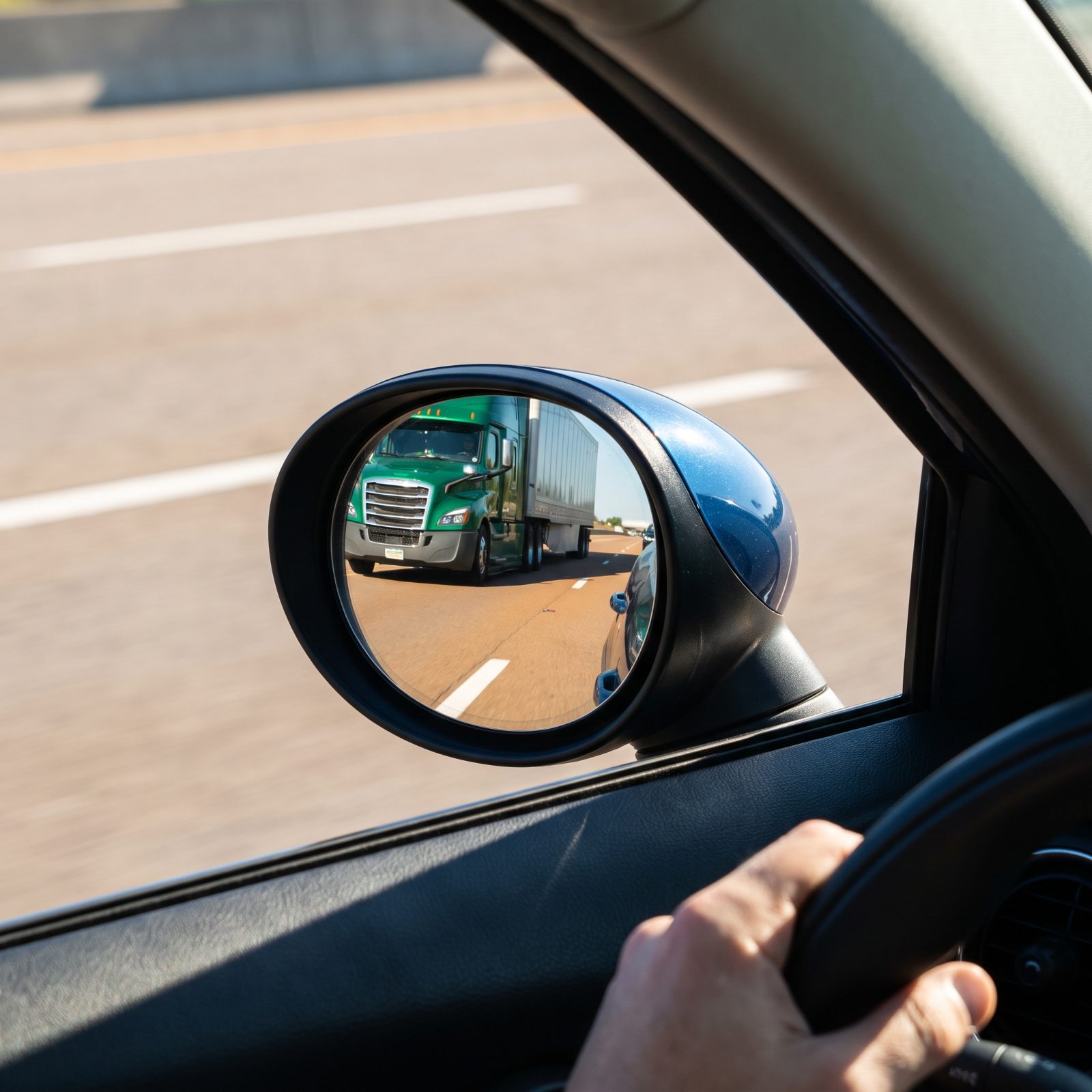
Cutting back over too soon is how a lot of near-misses start. You pass the cab, feel clear, and swing in while the trailer is still sitting right beside you.
Drivers learn the rule early: don’t move back until you can see the truck’s headlights or the full front of the rig in your rearview. That’s your proof you’ve cleared the whole length. A 53-foot trailer is longer than it feels from behind your own wheel, and the driver up top can’t see a thing hugging his front bumper.
4. Skip the Fuel-Saving Draft Behind a Trailer
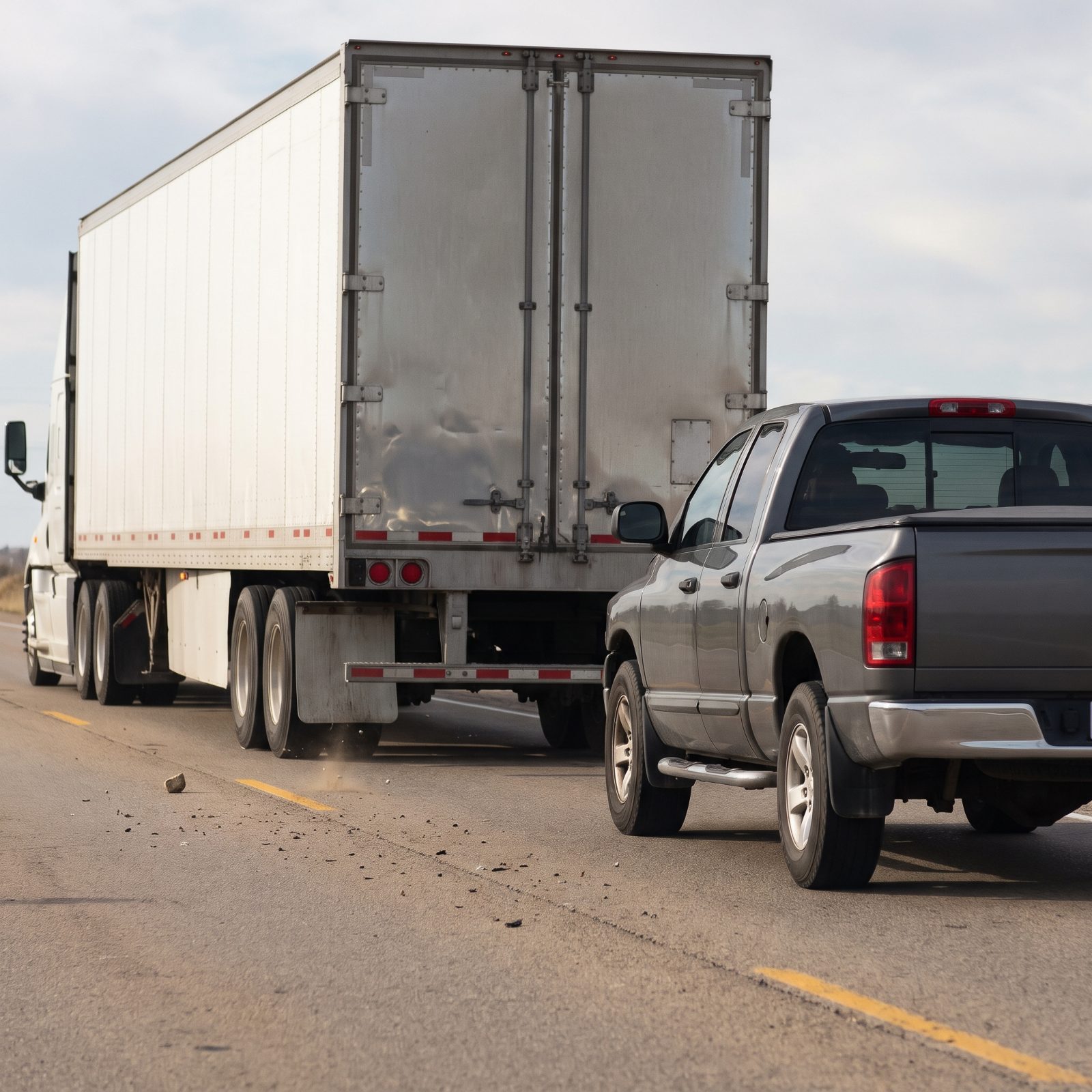
Riding tight off a trailer’s rear corner to cut your drag might shave a little gas money. It also puts you in the worst seat in the house.
Hang alongside those back doors and the trailer walls off your view of everything ahead. If the truck drifts over or a retread lets go, you’ve got no room and no warning. And you’re invisible — parked in his right-side blind zone. Whatever fuel you save wouldn’t cover the deductible when it goes wrong. Hang back far enough to see around the rig and still read the road.
3. Stretch Your Following Distance When Road Spray Swallows the Lane
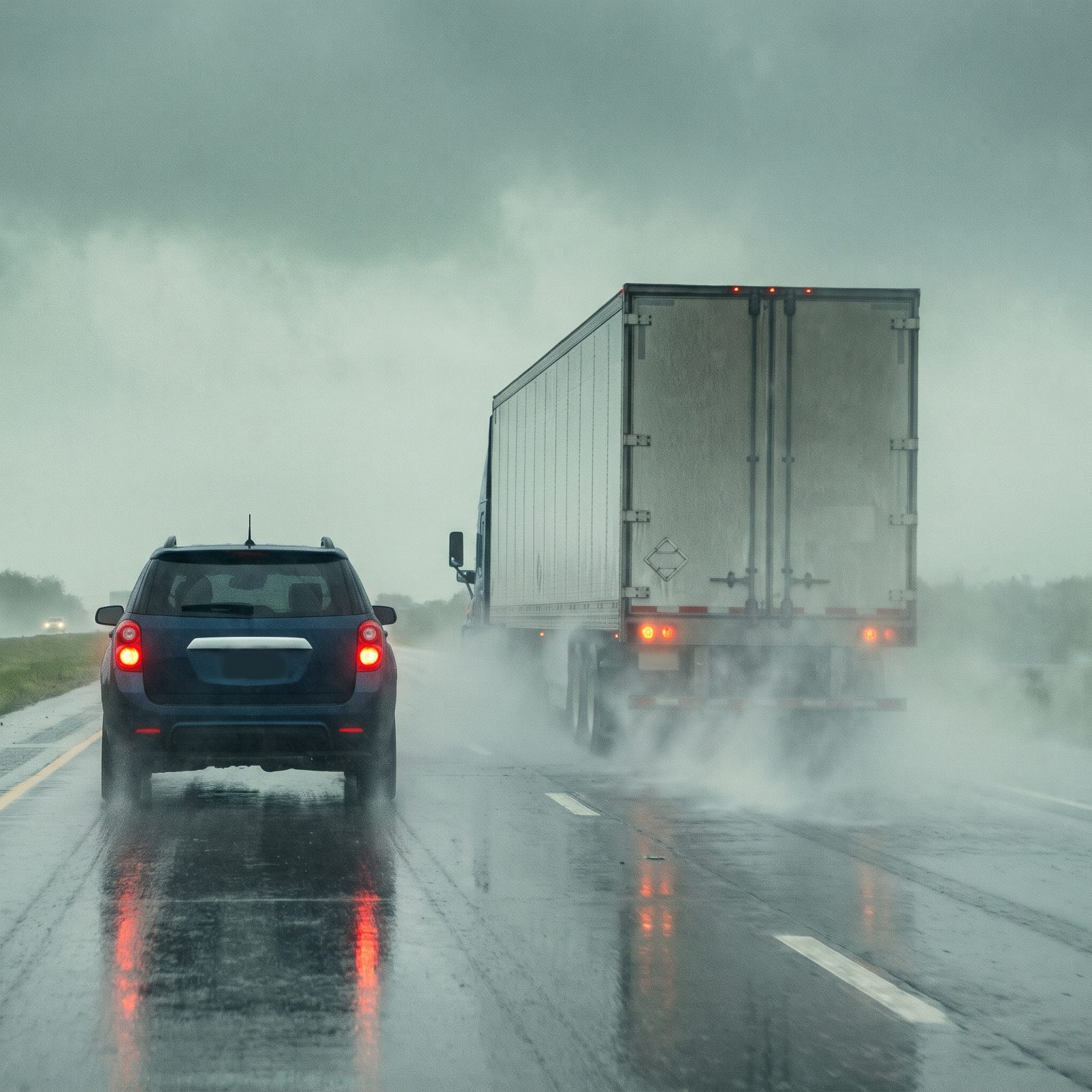
Rain changes the math. A truck throws up a wall of spray off eighteen tires, and for a few seconds you’re driving into a grey curtain with no idea what’s waiting on the other side.
Back off. Give yourself room to see past it. In a real downpour, plenty of drivers double the usual gap to something like six or eight seconds of following distance, and that’s not overcautious. Stopping takes longer on a slick road regardless, so the extra space earns its keep twice over. If the spray is thick enough that you can’t read the lane markings, you’re already too close.
2. Drop to Low Beams Behind a Truck So Glare Doesn’t Blind the Driver
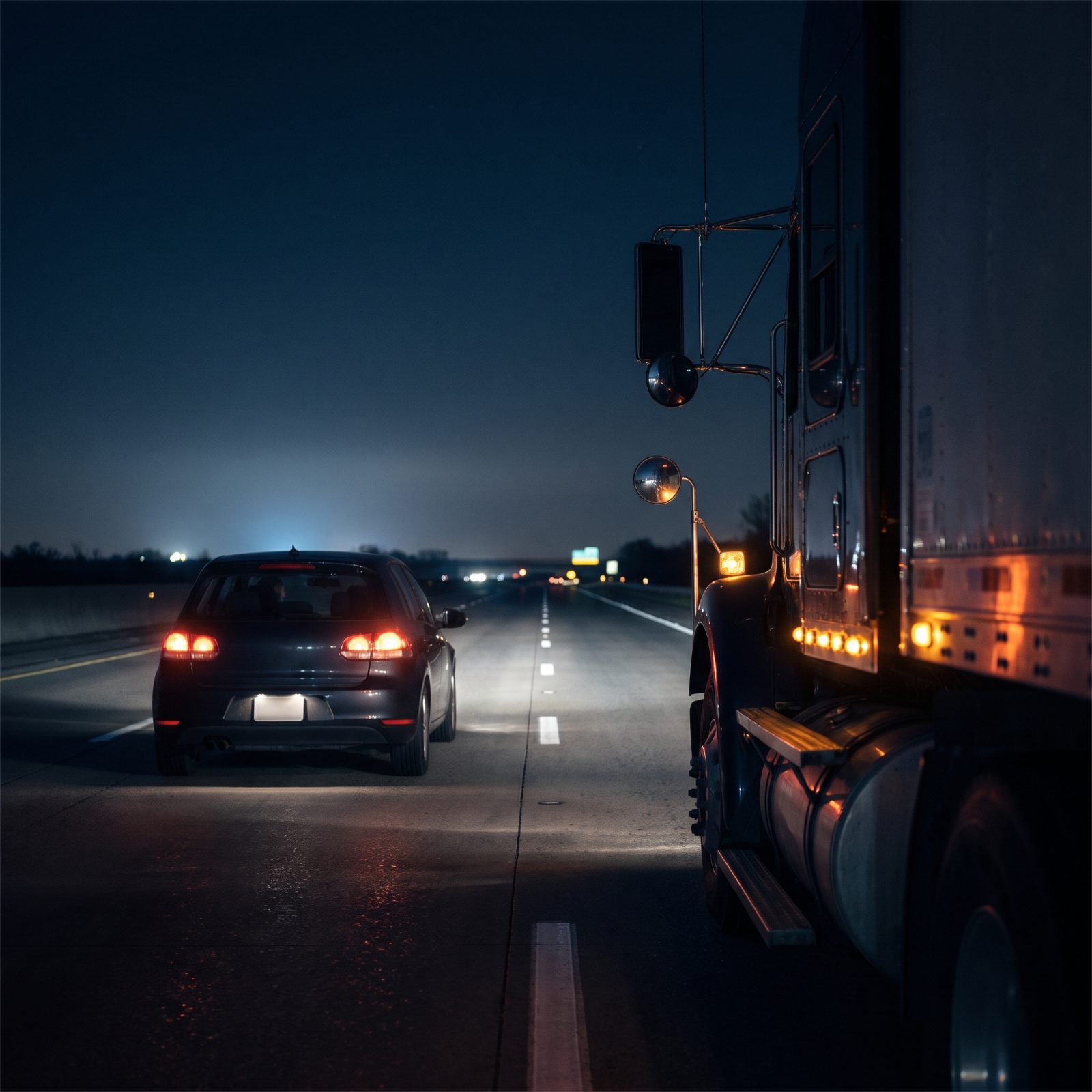
Truck mirrors are big for a reason, and after dark they catch everything around the rig, including the lane beside it.
Pull up alongside the cab with your high beams blazing and that light bounces straight back into the driver’s eyes through two slabs of glass. For a moment he’s running nearly blind with a loaded trailer under him. So dip to low beams any time you’re running beside or passing a truck at night. It’s a small courtesy that keeps the person hauling forty tons able to see where he’s going.
1. Don’t Overtake a Truck as It Moves Over for a Roadside Emergency
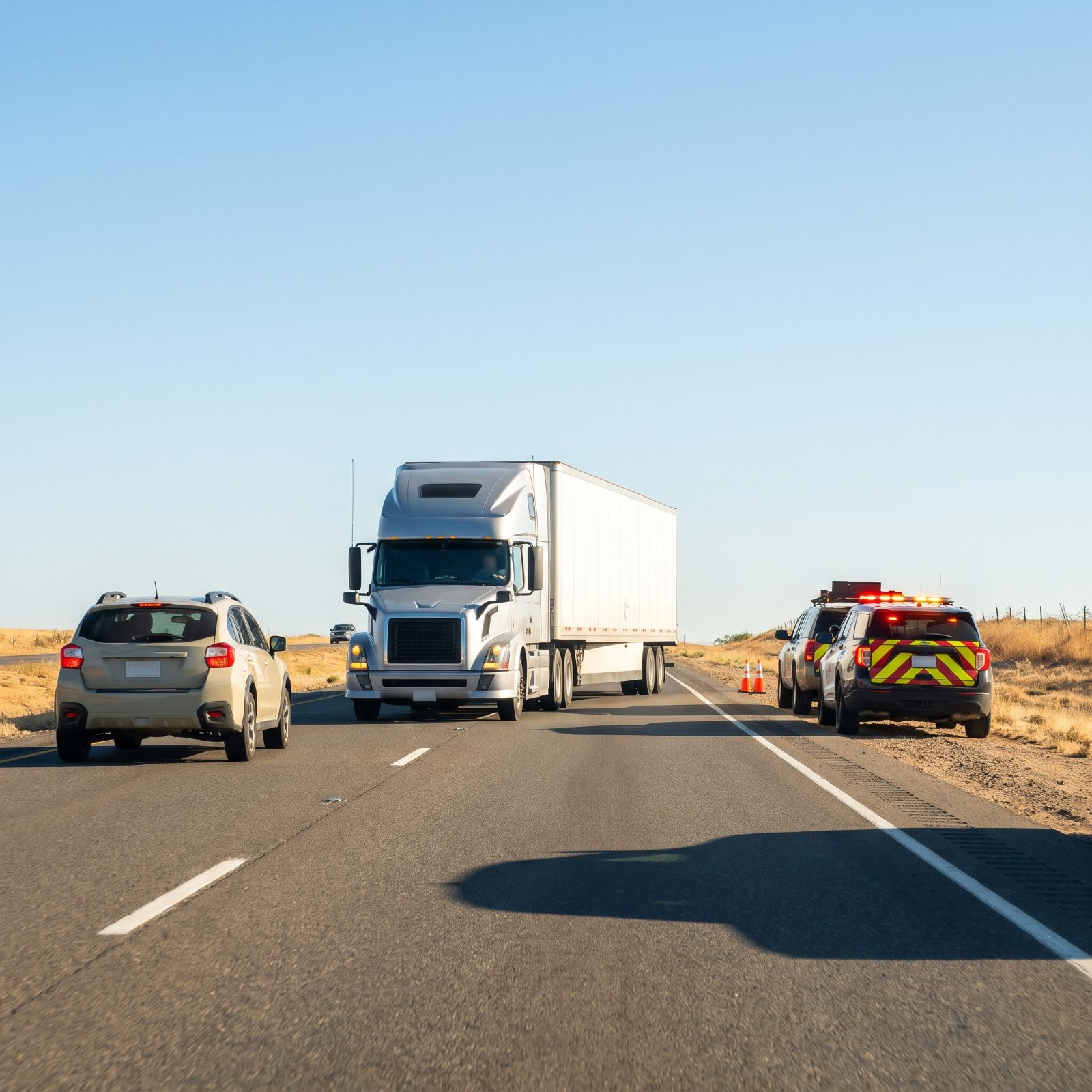
You spot flashing lights and cones on the shoulder ahead. When a truck ahead of you in your direction signals and starts easing left to give a scene like this room, that’s your cue to ease off too — not to dart up the inside.
Every state has move-over laws, and a trucker moving over is doing precisely what they ask. Slip past him mid-maneuver and you force the issue: either he cuts the move short and leaves a tow operator or a trooper hanging out in traffic, or he drifts into you. Hold your position. Let the rig finish the shift, and give the whole scene a wide berth.