The scar on your shin has a story, and it probably involves a machine nobody tested for anything. The decade ran on balloon tires, hinged frames, and the firm belief that a gas tank made a fine place to park a kid. Helmets were optional and seatbelts were a suggestion. Half the fun came from the parts of the ride that could hurt you, and everybody knew it. Here are the bikes, trikes, playground contraptions and improvised passenger spots that filled driveways, campgrounds and schoolyards back then, and why most of them have no modern equivalent.
Please note that some of the images in this article were created with the assistance of AI.
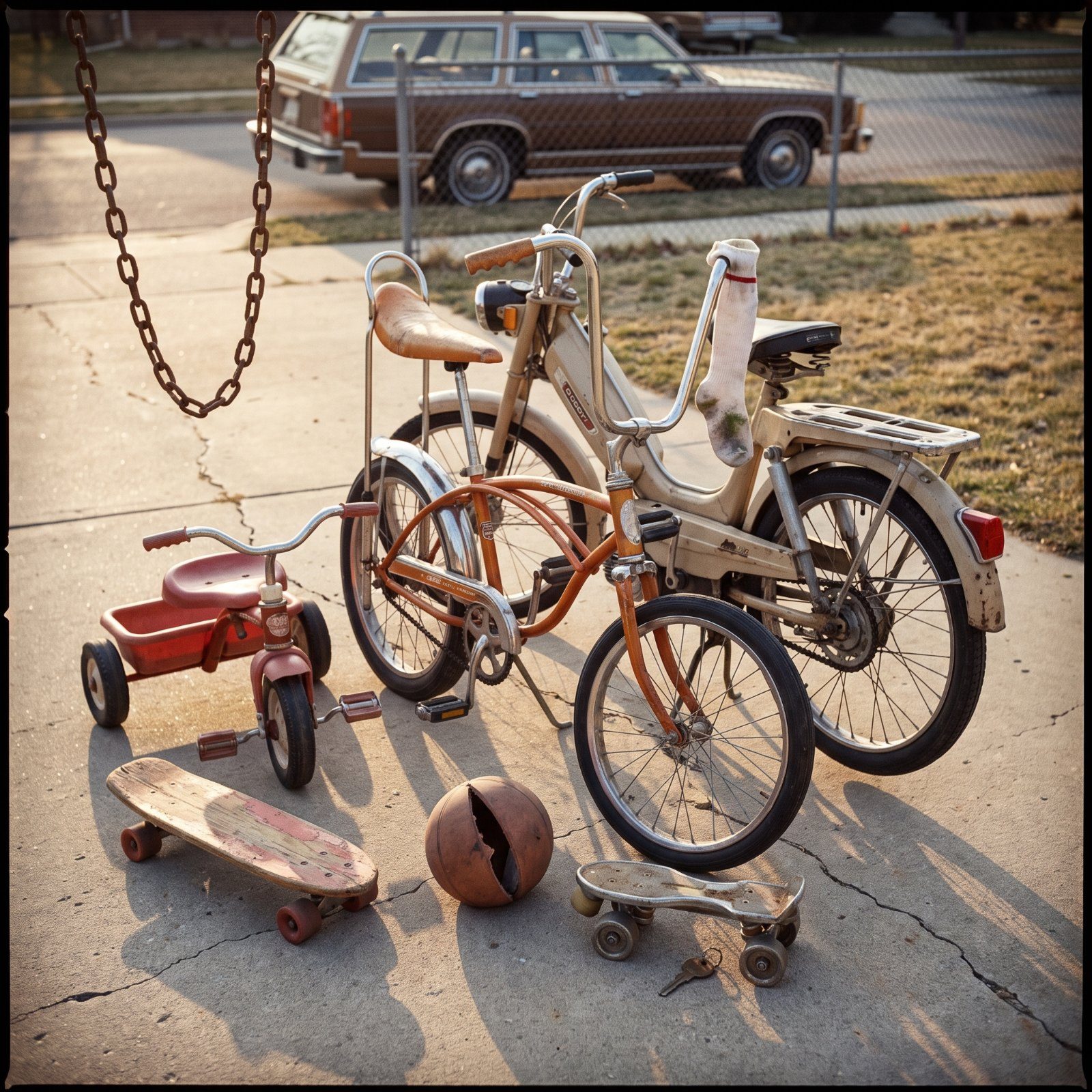
48. Giant Stride Poles That Swung Riders in Circles
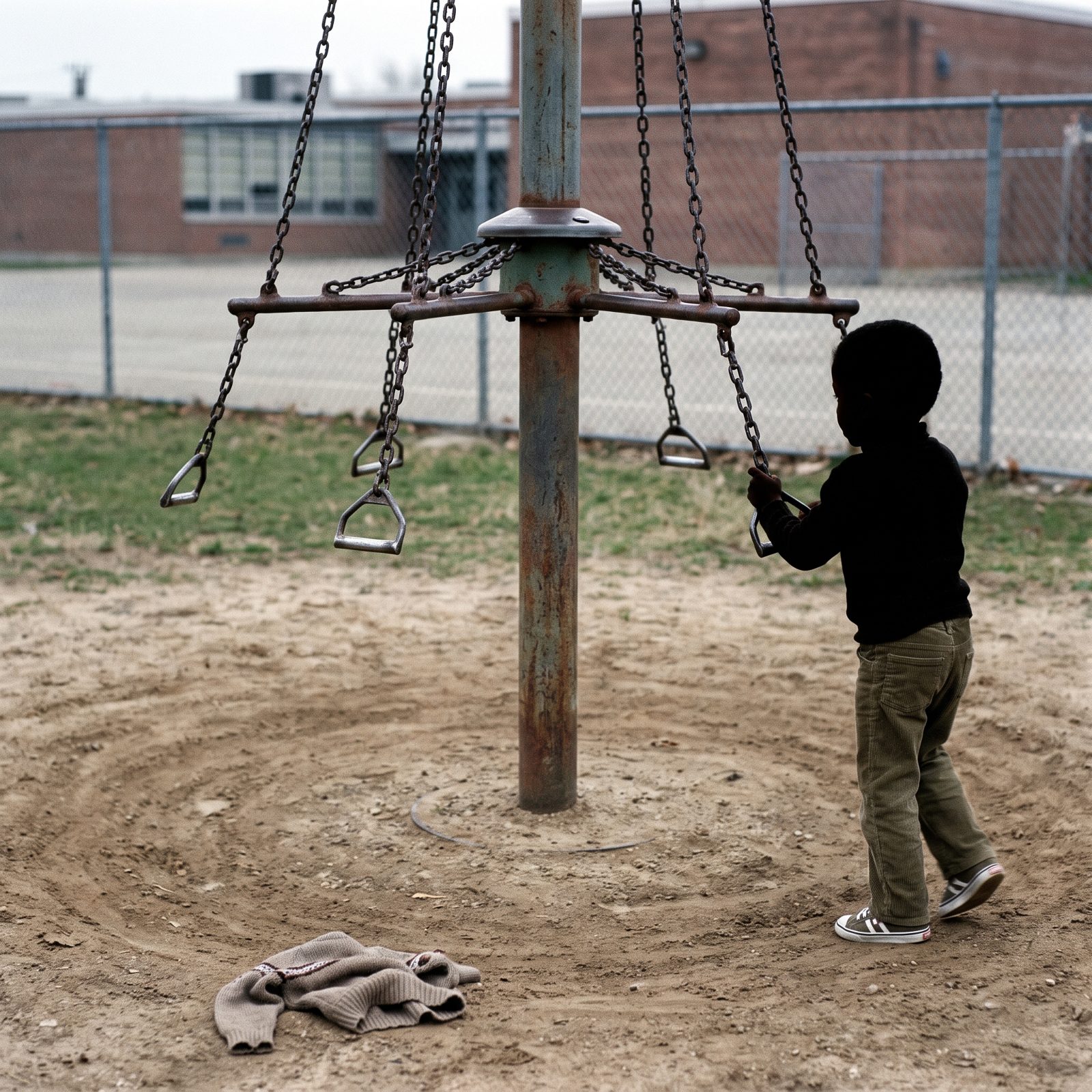
The premise was simple and the physics were not. A central steel pole spun free at the top, chains and handles hanging off it, and you grabbed a handle, ran, and the rotation lifted you off the ground in long flying strides. Centrifugal force did the rest.
Letting go meant launching sideways. So did the kid on the next chain slowing down while you sped up. Playgrounds eventually tore these out after too many broken arms and knocked-out teeth, and good luck finding one standing today.
47. Articulated Swing Bikes With Hinged Frames
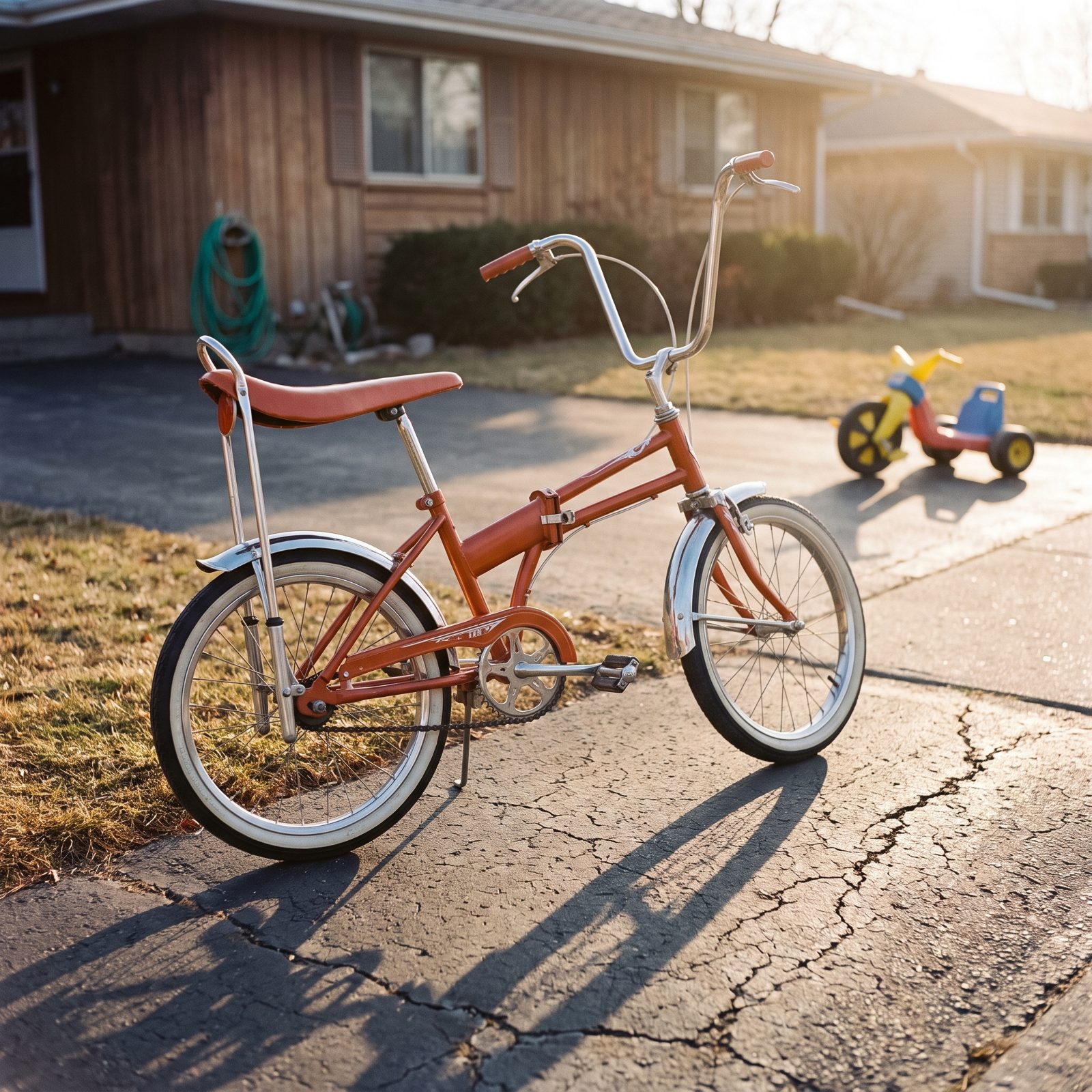
The frame literally bent in the middle. A hinge between the front and rear sections let the two halves pivot independently, so you could steer the back wheel and the front wheel in different directions at once.
Done right, it carved wild S-curves no normal bike could touch. Done wrong, it folded under you with no warning, and the learning curve involved a lot of pavement meeting elbow. Kids loved them precisely because they were unpredictable. Which is also exactly why parents hated them.
46. Motorcycle Fuel Tanks Used as Children’s Seats
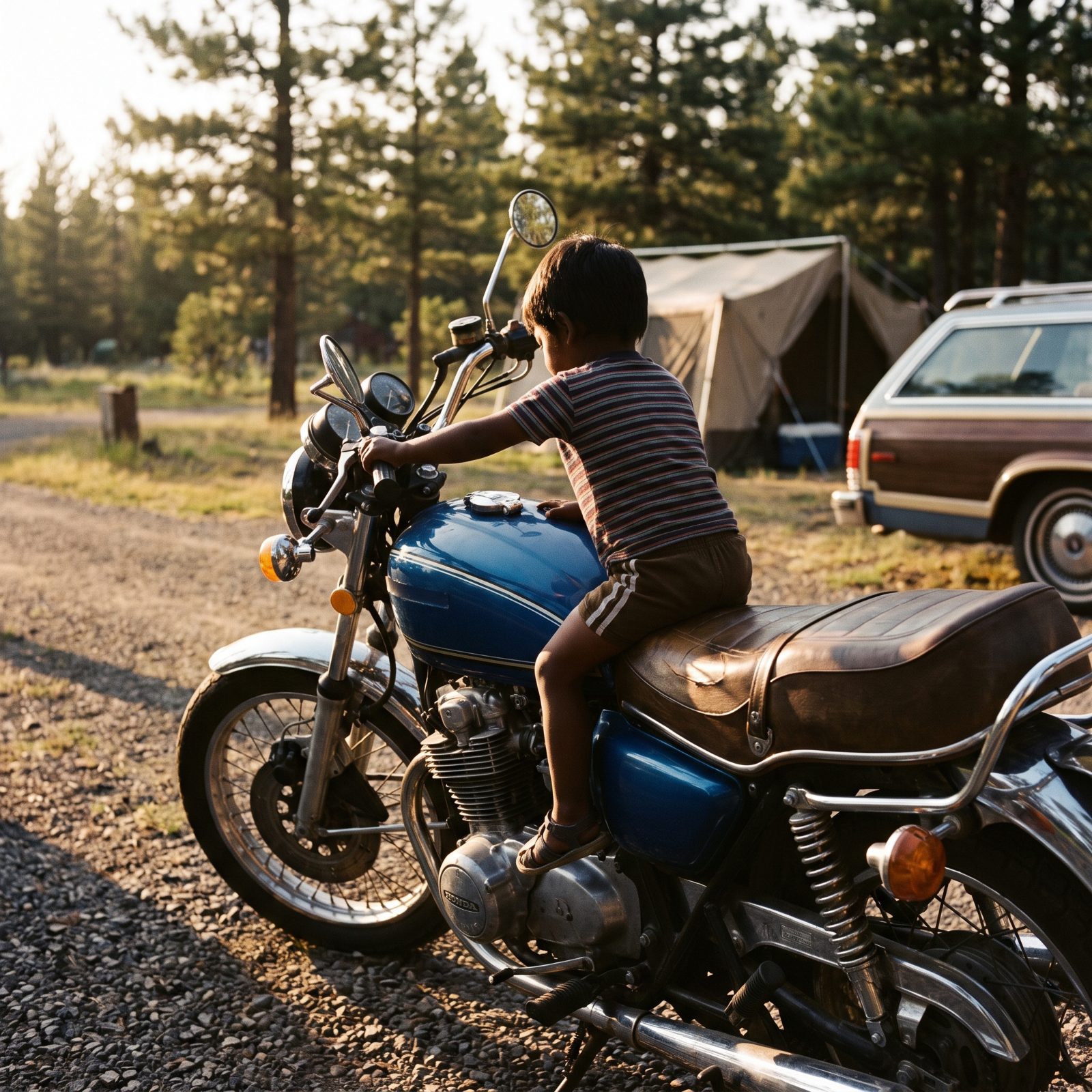
To a small kid, the fuel tank was a seat. A small child would scoot up to the front of the seat, knees against the gas tank, little hands on the bars of a bike parked on its stand, no grown-up in sight, practicing for the day they’d ride up on the tank for real.
It felt like flying. It was also a child perched on a reservoir of gasoline, directly in front of the steering, with nothing between them and the road. Riding up there for a slow loop around the campground felt perfectly normal at the time. Nobody does this now, and for once the nostalgia doesn’t ache to bring it back.
45. Trailer Beds and Camper Bunks Occupied While Rolling
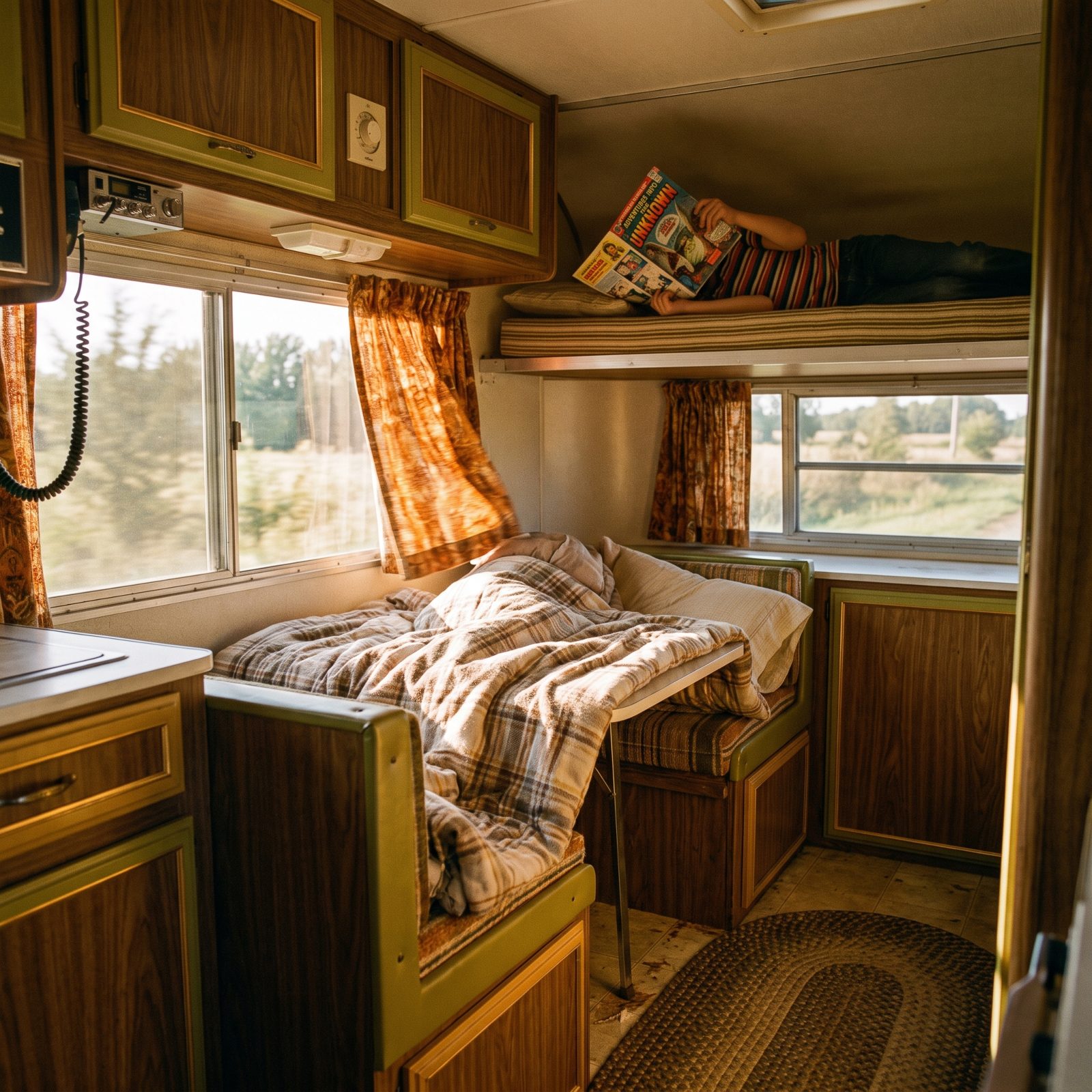
The whole point of the RV was that life continued at 60 miles an hour. Kids climbed into the overhead bunk, sprawled across the fold-down dinette bed, and played cards on the floor while the rig rolled down the interstate.
No restraints existed back there. A hard stop turned a sleeping kid into a projectile and the cabinets into a problem. Families knew it on some level and did it anyway, because the alternative was a child asking how much longer for 400 miles.
Modern RVs still have beds that double as seats, but the rules around riding in a moving trailer vary by state and lean strongly toward don’t.
44. Concrete Alpine Slides Steered by a Hand Lever
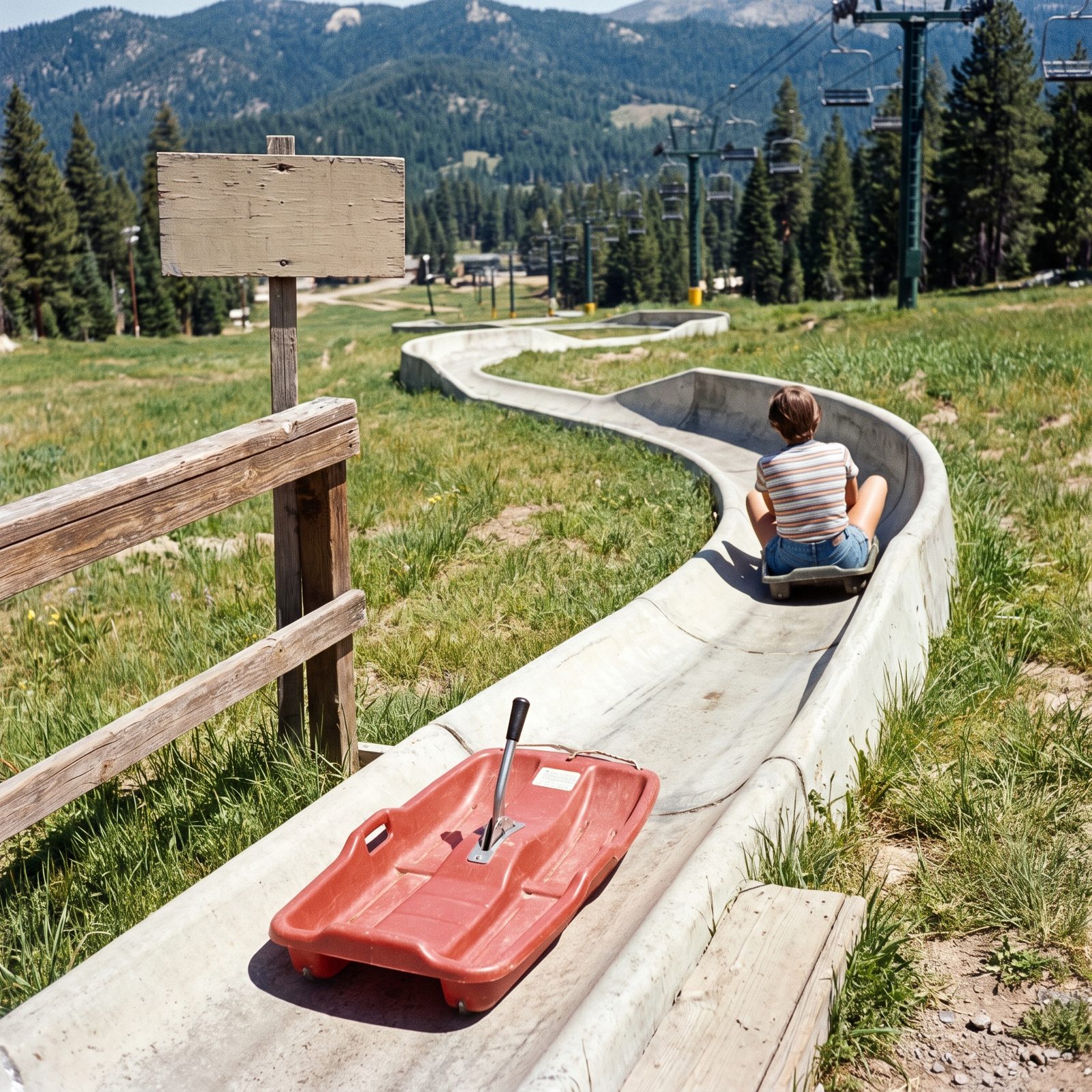
You sat on a little sled with a single lever between your knees. Push forward to go, pull back to brake. The track was a hard concrete or fiberglass trough snaking down a ski mountain in summer.
And the catch? The only thing between you and the next rider was your own willingness to actually use that brake. Plenty of kids didn’t, convinced the whole thing was a race, and scraped knees, elbows and the occasional launch over the wall were the toll. Some of these still operate, and they’re a riot, but the originals had less forgiving surfaces than you’d want today.
43. Clay-Wheel Skateboards That Stopped Dead on a Pebble
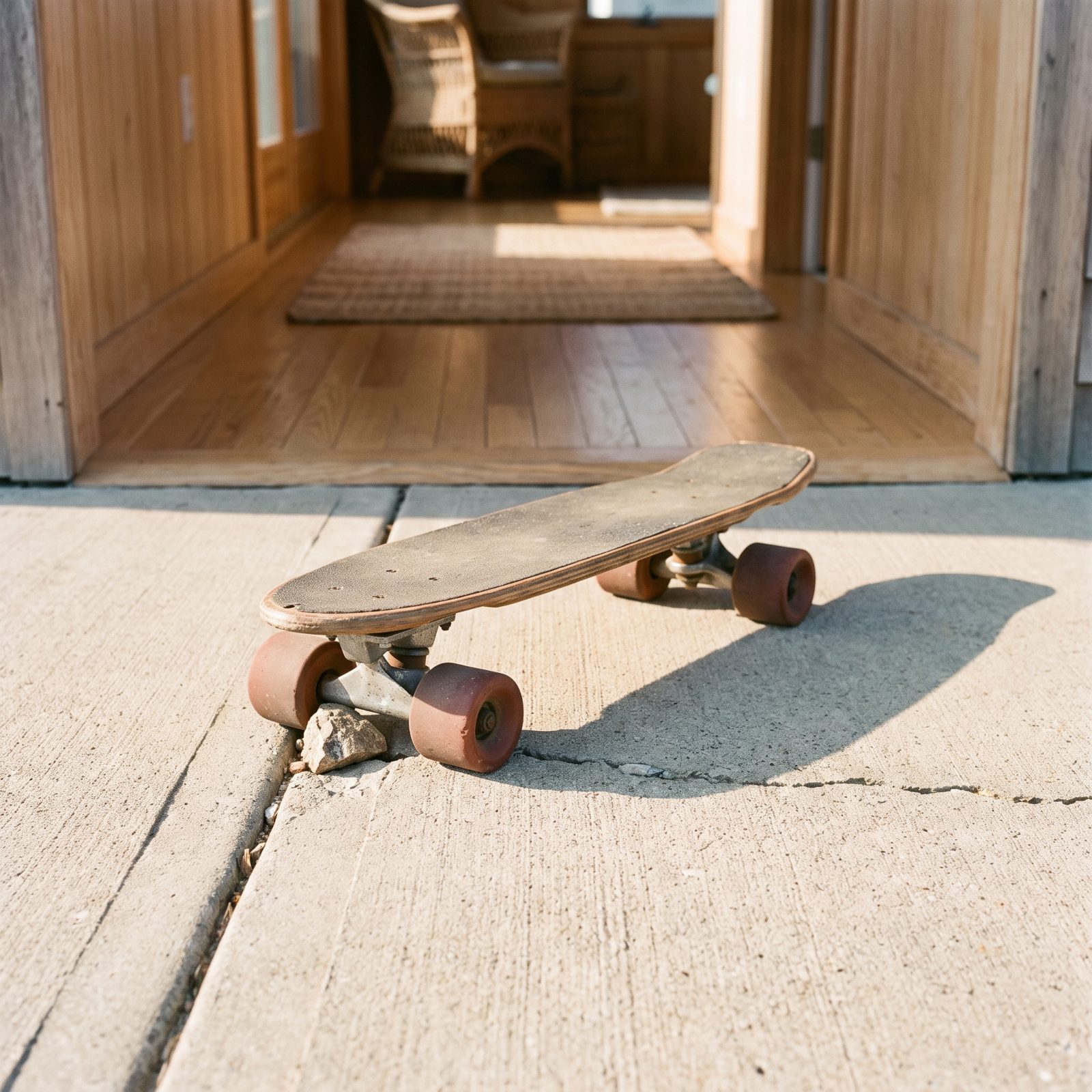
Clay wheels had no give and no grip. Cheap, hard, basically a disc of pressed material that skidded on anything slick and stopped cold on anything that wasn’t.
Hit a pebble, a twig, or a crack in the sidewalk and the wheel locked instantly. The board stopped. You did not. When urethane wheels showed up early in the decade it was a genuine leap forward, and anyone who rode clay first remembers the exact difference in their palms.
42. Balloon-Tire Three-Wheel ATVs With Nothing Up Top
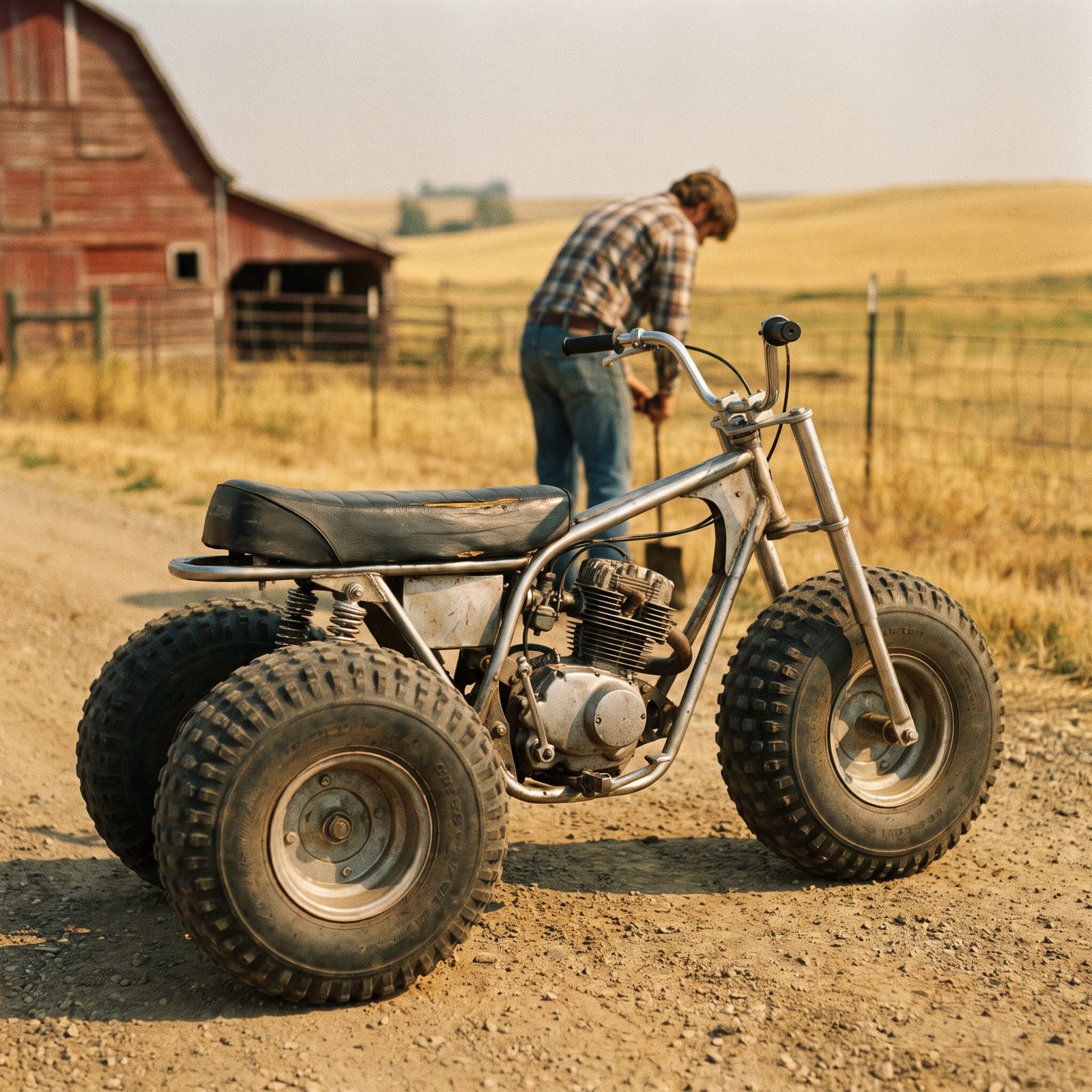
Three fat low-pressure tires, a willing engine, and a tall center of gravity. The three-wheeler was the farm and trail machine of the era, and kids rode them constantly.
The trouble was geometry. Turn too sharp or hit a hill wrong and the whole thing rolled, with no bar, no cage, and often no helmet to help. Safety concerns piled up through the following decade until three-wheelers got pushed off the market in favor of four-wheel quads. The ones that survive are collector curiosities now, ridden carefully by people who know exactly what they’ll do.
41. Green Machine Trikes Steered by Twin Rear Levers
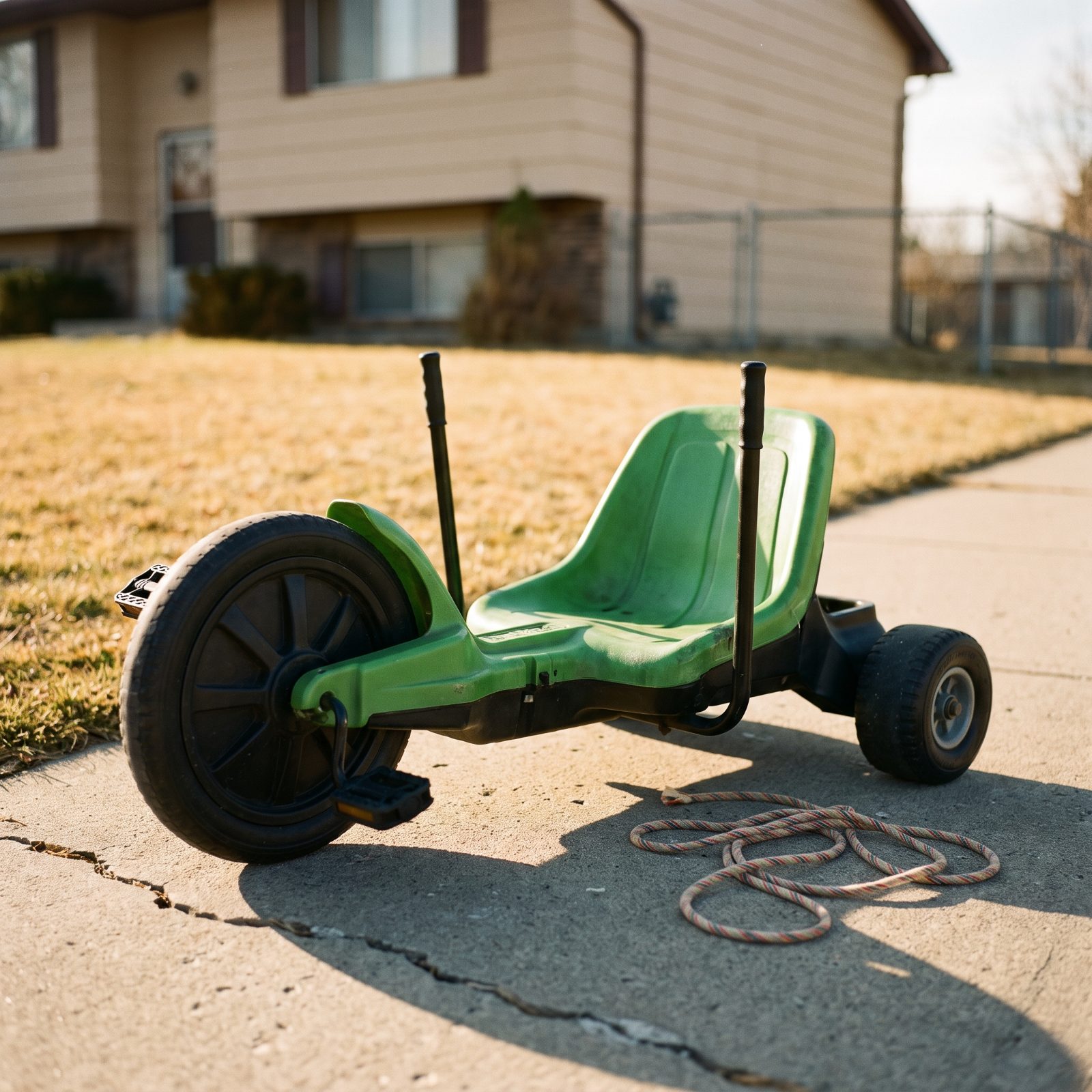
No handlebars at all. You steered with two upright levers beside your hips, pushing one forward and pulling the other back to swing the rear end around, and pulling both the same way spun the thing in a circle.
Mastering it felt like piloting something. Mastering it also meant a lot of unintended 180s into the curb while you learned which lever did what. Low to the ground, fast downhill, and nearly invisible to a car backing out of a driveway. A blast, in other words, and that was both the draw and the danger.
40. Tractor and Riding-Mower Fenders Used as Passenger Perches
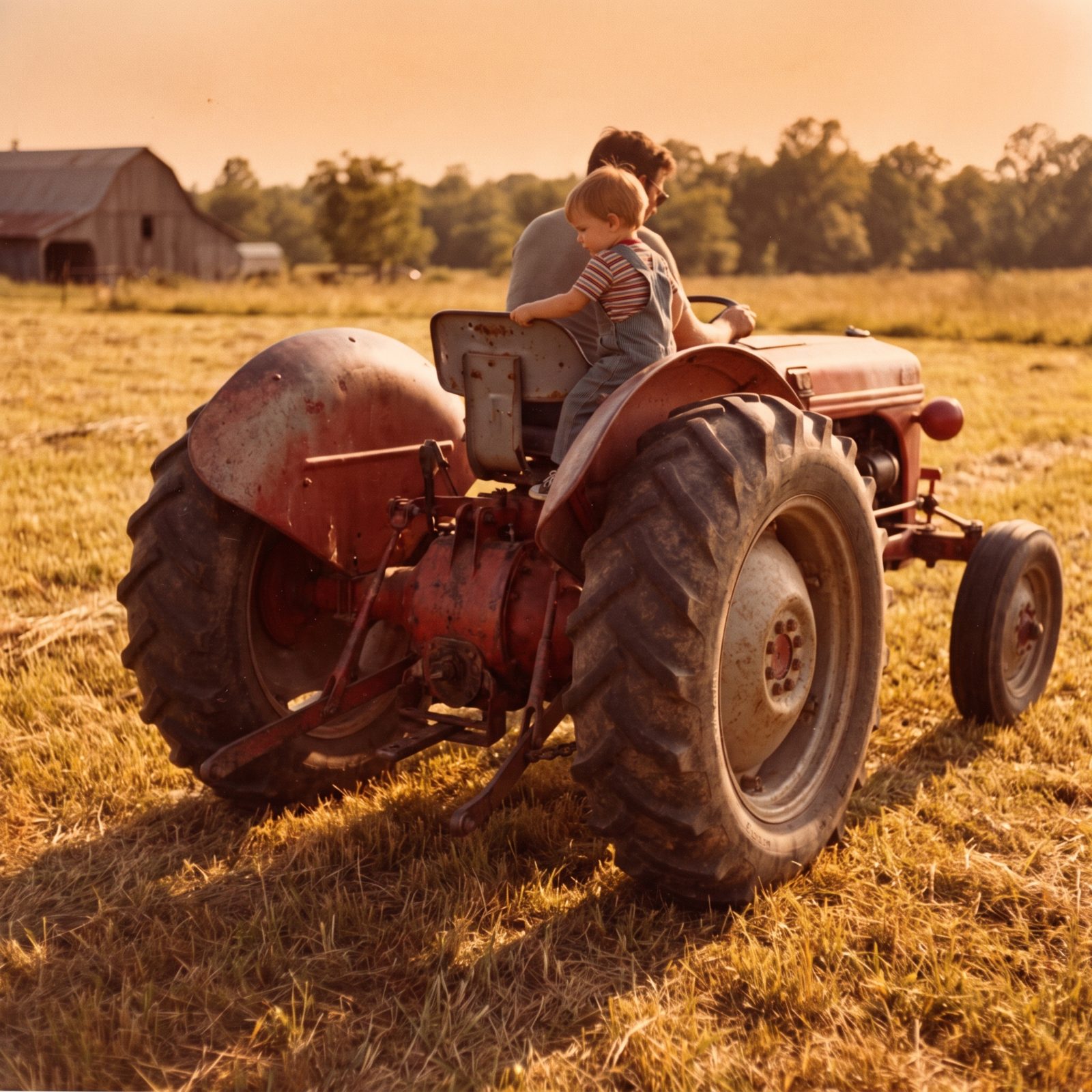
Mowing the lawn turned into a two-person job the moment a kid asked to come along. The rear fender over the big drive wheel made a natural perch, so they sat up there, hanging onto the seat back, riding shotgun on a machine with spinning blades underneath.
One slip meant going off the side near the wheel or the deck. Got passed down as a Saturday ritual rather than a hazard. Manufacturers now plaster no-rider warnings on every riding mower, which tells you how routine the fender ride once was.
39. Moped Luggage Racks Pressed Into Service as a Second Seat
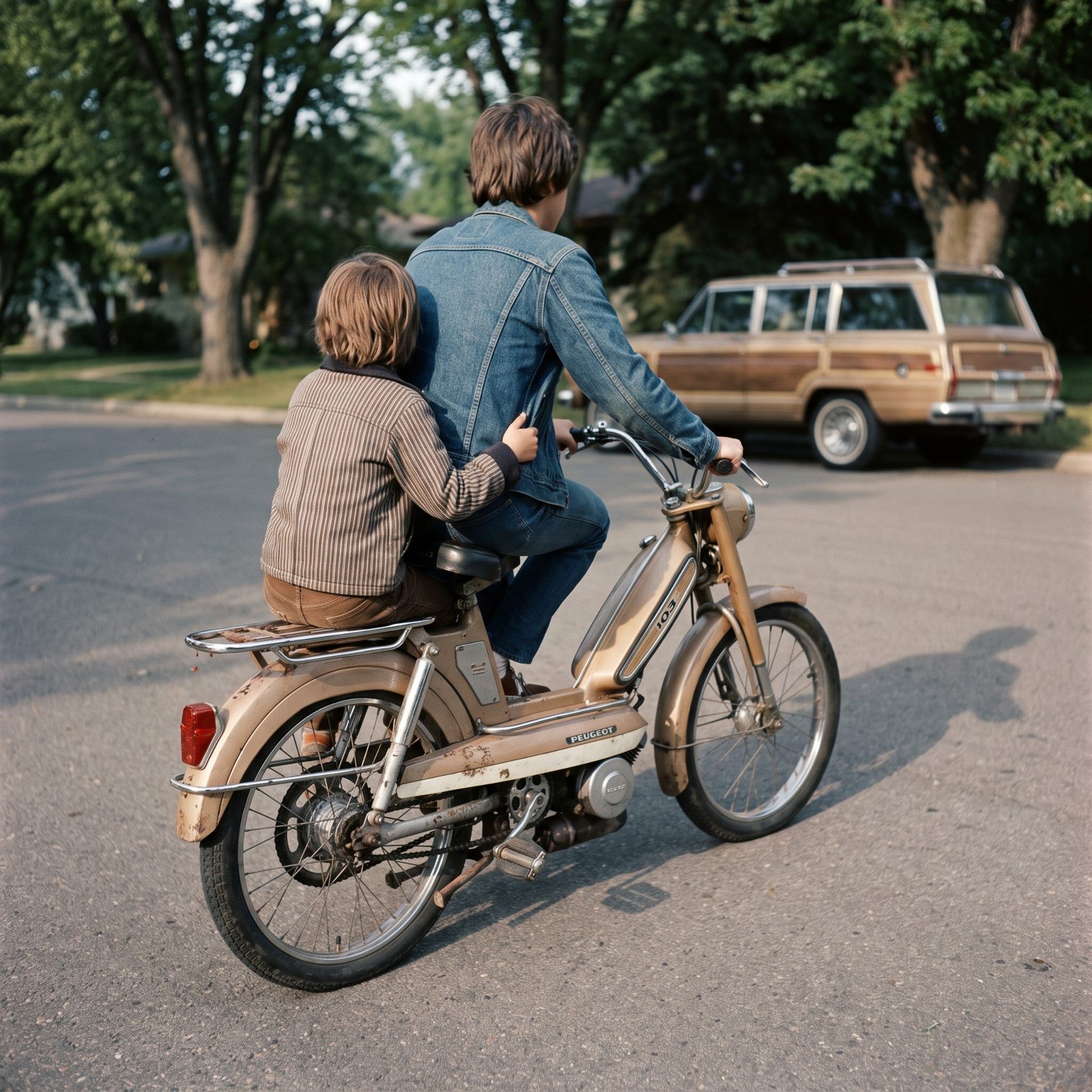
Mopeds were built for one. That never stopped anybody. The chrome rack over the rear wheel, meant for groceries or a book bag, became the second seat the instant a friend needed a lift.
No footpegs back there, so feet dangled near the spokes, the rider clung to the waist in front, and the little engine wheezed along hauling double its intended load. This was the teenage carpool of a lot of neighborhoods. The rack was never rated for a person, which everyone understood and nobody cared about — the whole decade in one chrome bar.
38. Homemade Bicycle Sidecars Built From Scrap Lumber
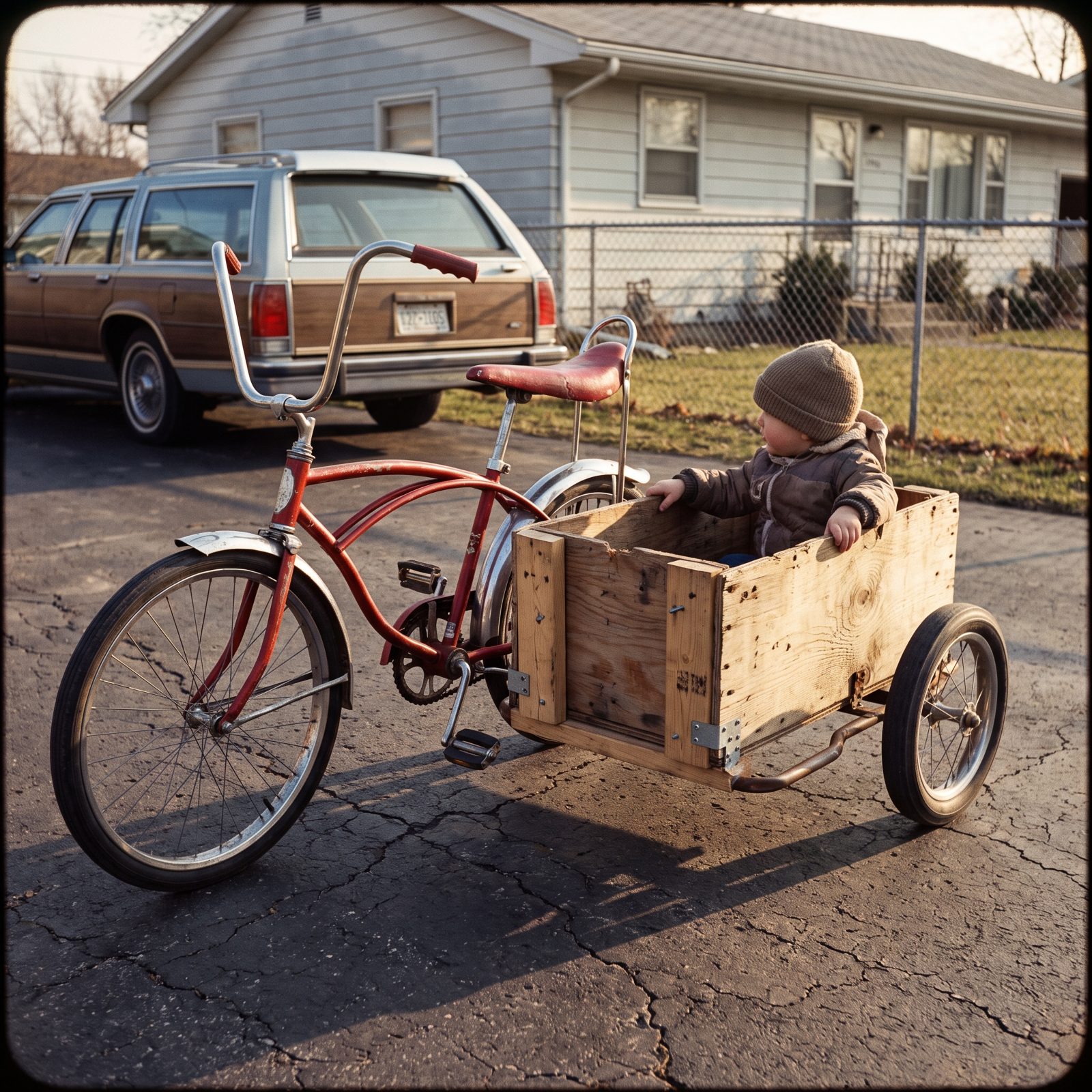
Somebody’s dad had a Saturday, a circular saw, and more confidence than caution. That’s the only explanation for the plywood sidecar.
These rolled on a third wheel scavenged from a dead tricycle, bolted to a frame of raw two-by-fours nobody bothered to sand. No seatbelt, no roof, nothing. The passenger sat level with the rear wheel with his knuckles an inch from the spokes, trusting a handful of lag bolts to hold a wooden box onto a bike that was never meant to carry one.
The physics were brutal. Lean to turn, and the rigid sidecar fought back — which meant a sharp corner could lift the whole contraption onto two wheels before anyone understood why.
37. Bicycle Handlebars, Top Tubes, and Rear Racks Used as Passenger Seats
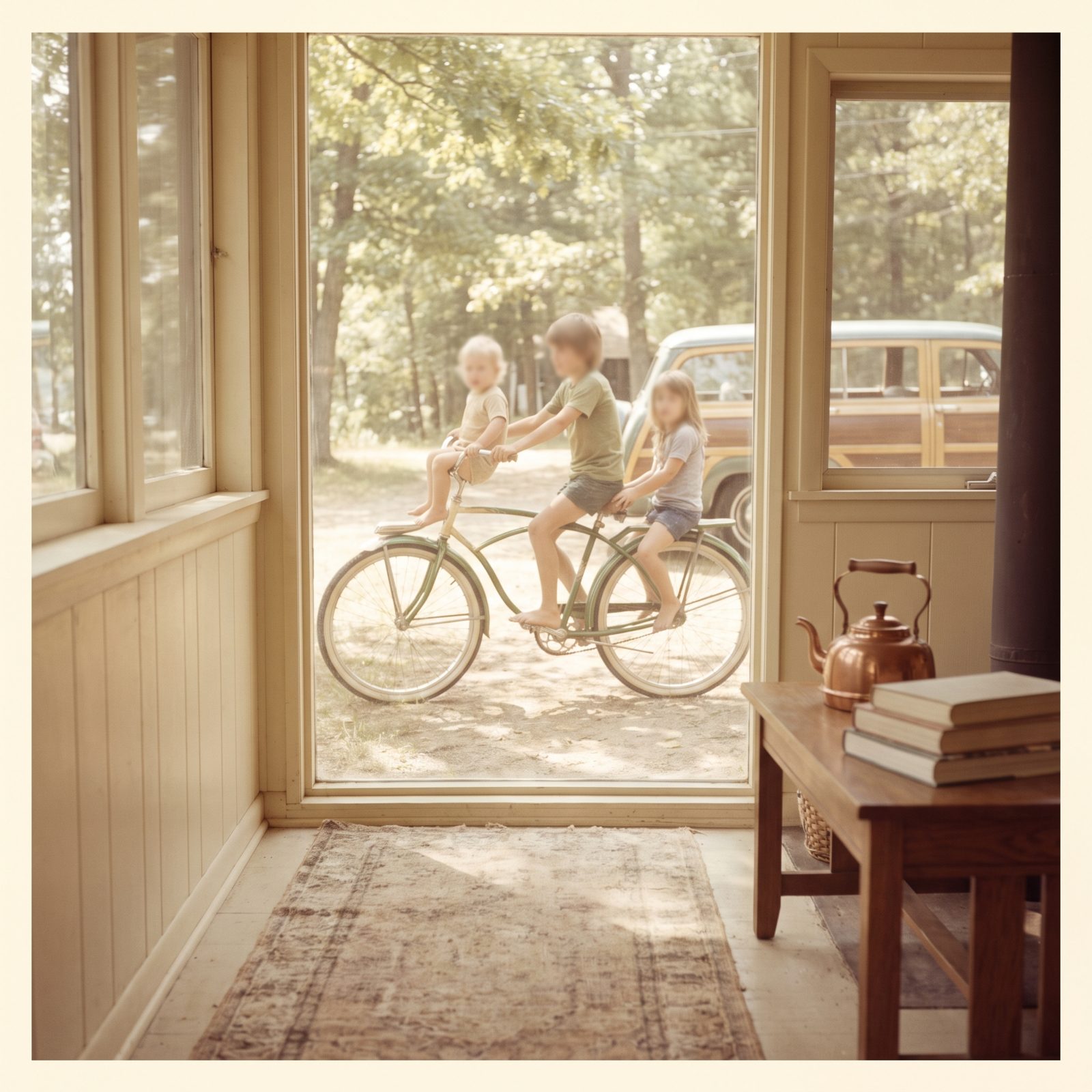
One bike. Three kids. Standard logistics on any block where only one kid had wheels.
The smallest rode the handlebars, feet hovering over the front tire like an involuntary hood ornament. A second straddled the top tube wedged between the pedaler’s arms, and a third balanced on the rear rack — that little steel platform built for a bag of groceries, now hauling a human being out over the back fender.
Nobody could brake well with that much weight aboard, and nobody steered straight either. Didn’t help that the handlebar passenger blocked the rider’s view of the road entirely.
36. Early Kneeboards Secured With Simple Straps
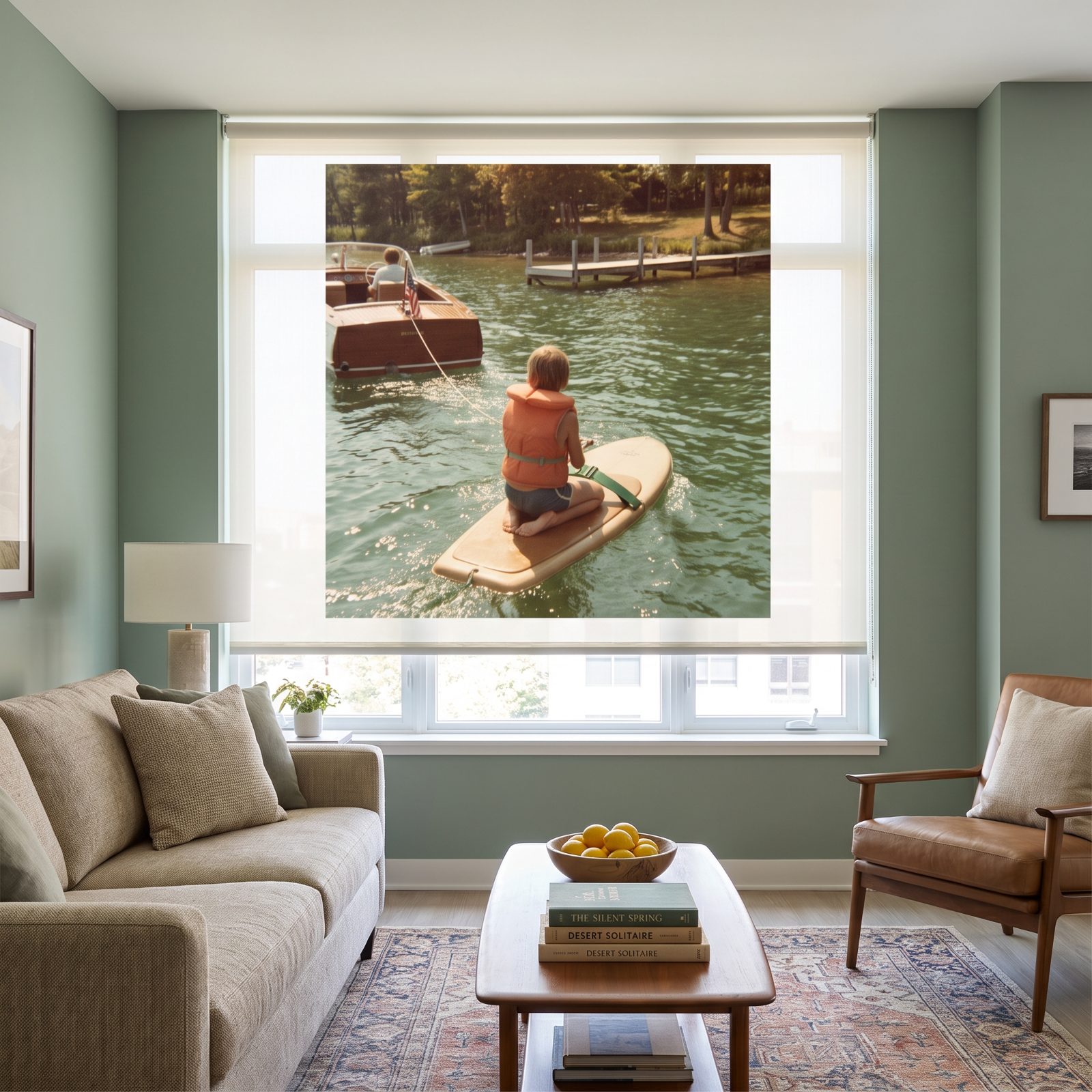
The modern kneeboard has molded thigh cups, quick-release buckles, and a shape that actually holds you in. The first ones were a slab of fiberglass with a strip of foam and one flimsy strap cinched across your thighs.
That single strap was the whole safety system. Catch an edge at speed and you either came free clean or you didn’t — and if you didn’t, the board came up with you.
Half the kids let go of the strap at the first wobble, since it never held you on anyway. Still beat waiting your turn to try water skis you could never get up on.
35. Ski-Hill Rope Tows That Pulled Children by Their Hands
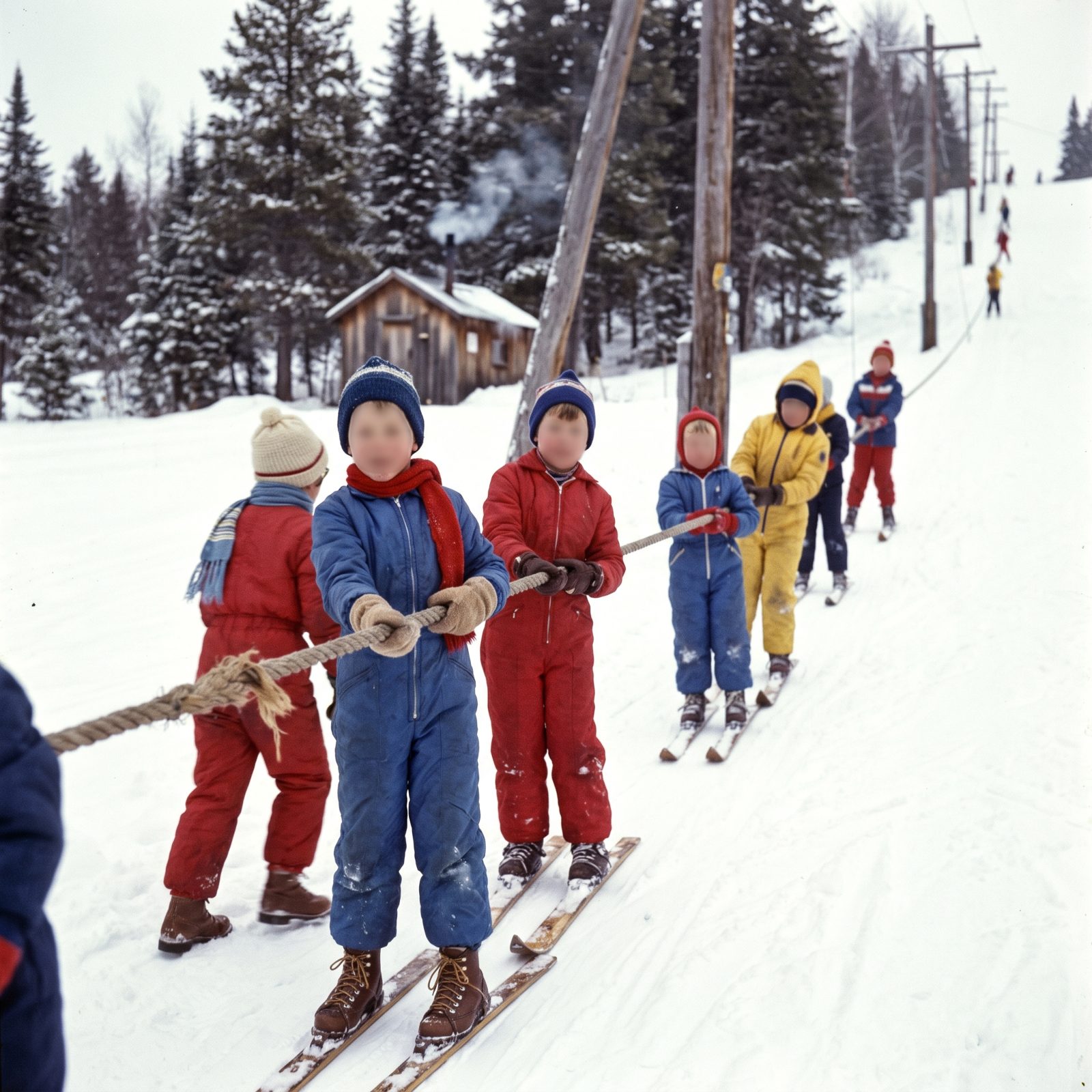
Your mittens were the safety mechanism, and they weren’t up to the job.
A rope tow was exactly what it sounds like. A steel-cored rope ran up the hill on a continuous loop at a steady clip, and you grabbed on with your hands. No chair. No bar across your waist. Just grip strength and a frayed rope that ran hot enough to melt straight through a cheap mitten.
Let go too early and you slid into the kid next to you in line; hold on too long and it dragged you right past the top. Little kids got yanked clean off their skis constantly, which is exactly why half the fun was watching somebody wipe out at the loading end.
34. Chairlifts With Open Seats and Minimal Restraints
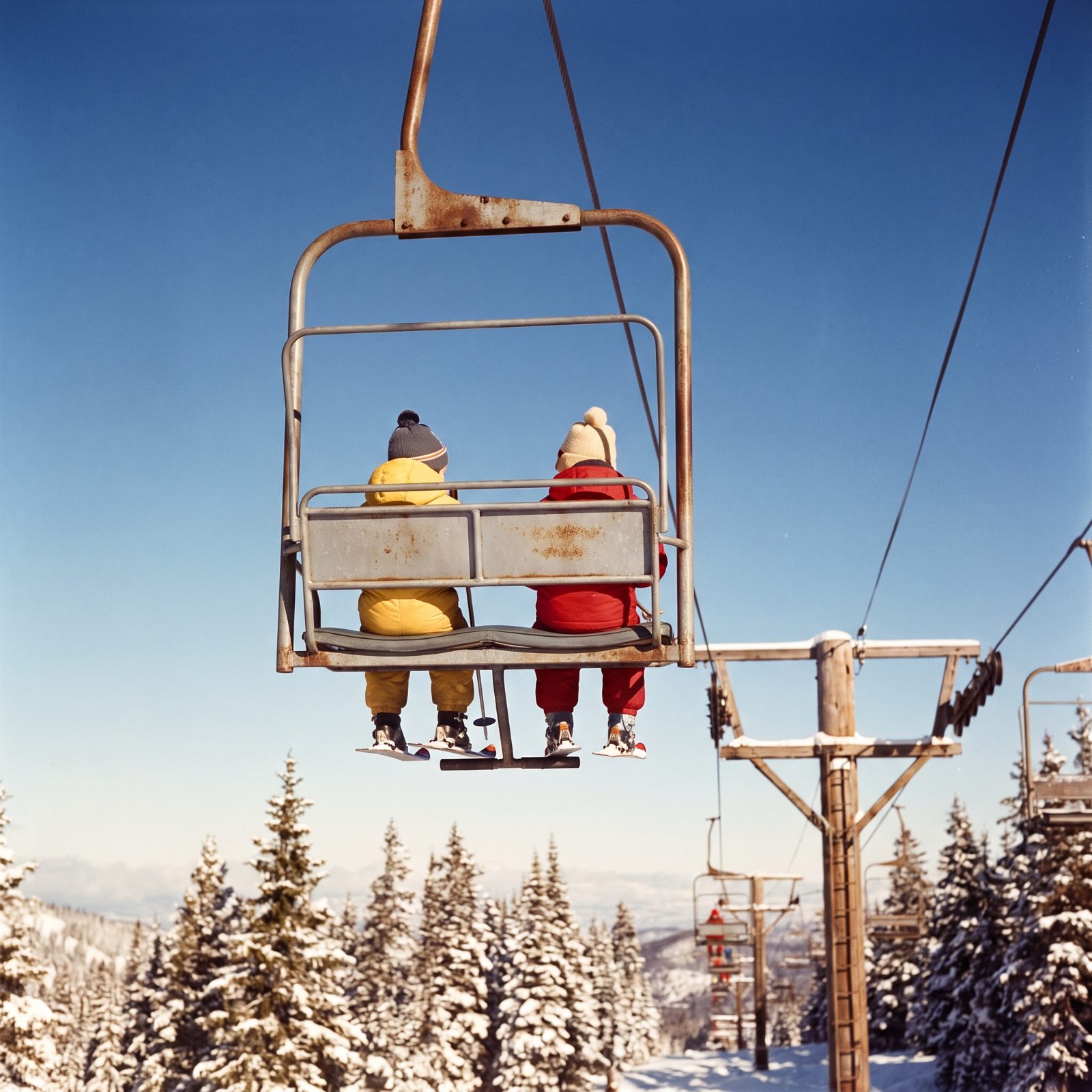
Many old fixed-grip chairlifts had a restraint bar. Plenty of riders never bothered to pull it down, and plenty of lifts predated bars entirely.
Picture a small kid on a double chair built for adults. The seat is deep, the footrest hangs where a grown-up’s boots would reach, and a child’s skis swing in open air thirty or forty feet up. The only thing keeping them on the chair is the common sense to sit still.
33. Bicycles Towing Children in Ordinary Wagons
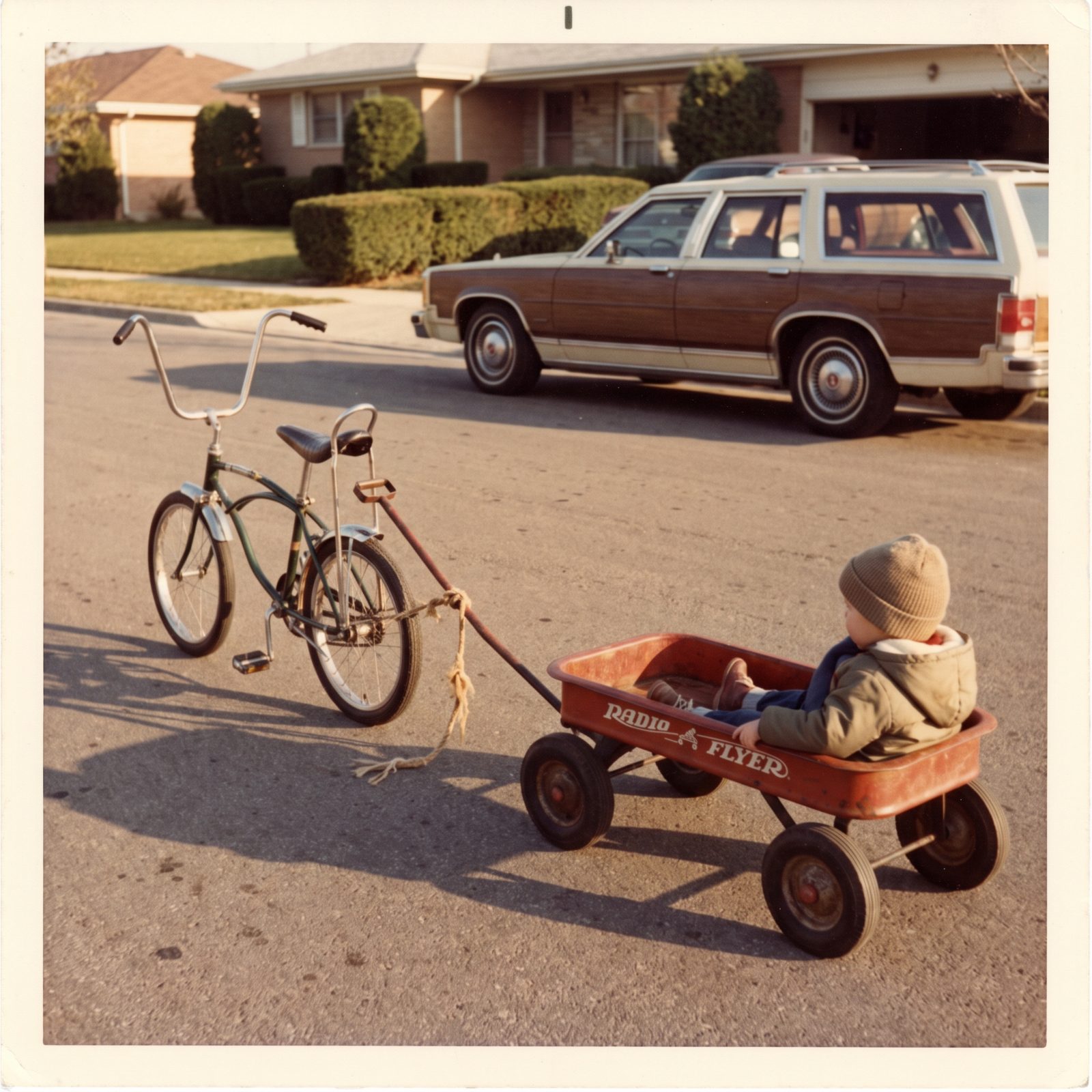
A red steel wagon has no brakes, no steering, and a hitch point that was never supposed to exist.
Kids fixed that last part by clamping the wagon’s pull handle into a bracket on the bike’s sissy bar at seat height, with a frayed rope knotted around the handle and run to the bike’s frame near the rear wheel for backup. Now the wagon went wherever momentum sent it, which on a downhill meant it tried to pass the bike it was tied to.
The passenger’s job was to hold the sides and hope. When the rope snapped, the wagon kept its speed and the kid inside became a live physics demonstration. Still — on a flat street at low speed, it was the closest thing to a chauffeur a seven-year-old would ever get.
32. Homemade Minibikes With Exposed Engines and Chains
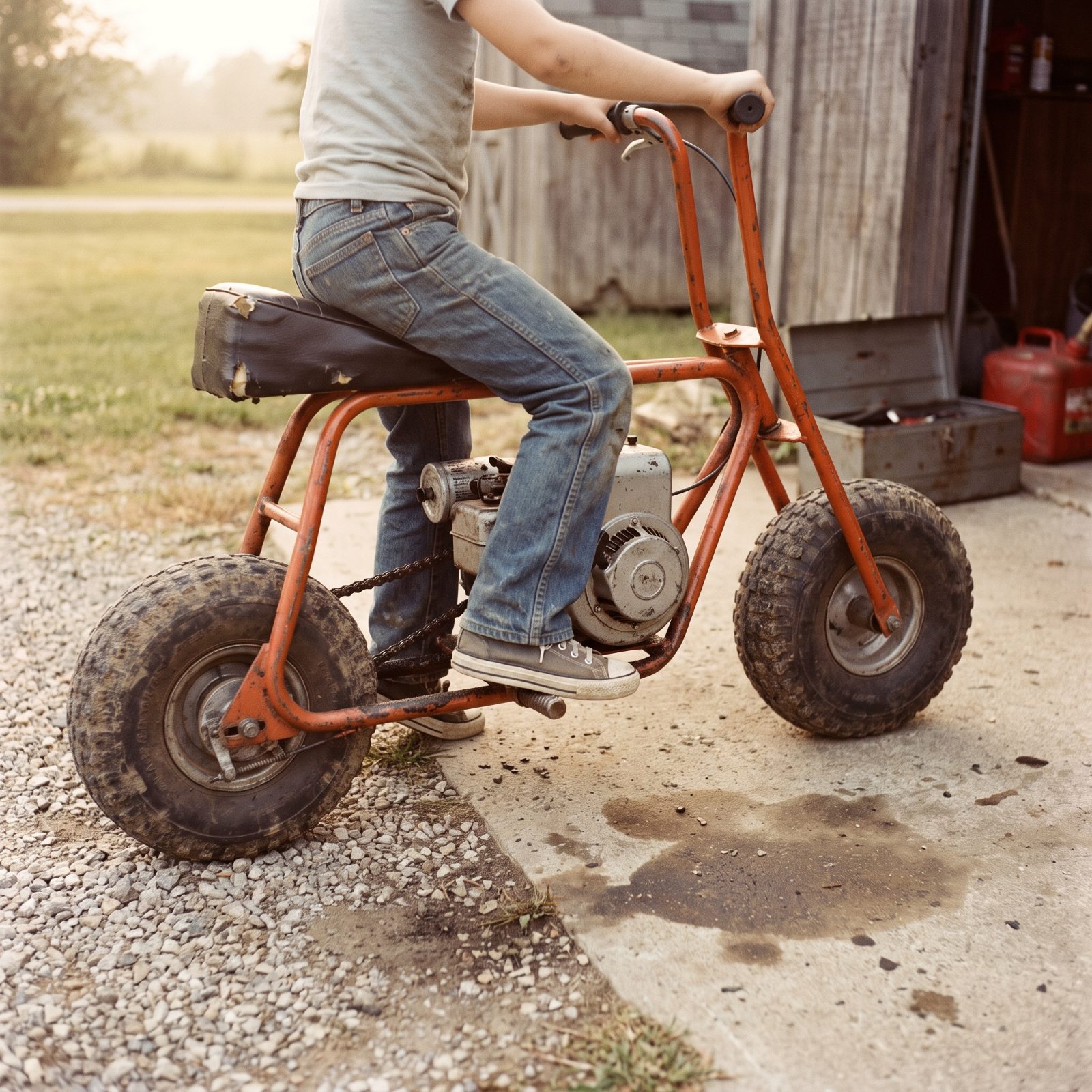
Someone’s older brother had a lawnmower engine and a welder, and that’s how these got born.
A homemade minibike was a steel frame, fat little tires, and a horizontal-shaft engine pulled off a mower or a tiller. The drive chain ran out in the open, inches from a bare ankle, because a chain guard was weight nobody wanted to bother cutting.
Top speed depended on the sprocket. Brakes depended on whether anyone finished building them. Plenty of these rolled with a throttle and a prayer, stopping handled by dragging a sneaker or finding a hedge.
31. Banana-Seat Muscle Bikes With Towering Sissy Bars
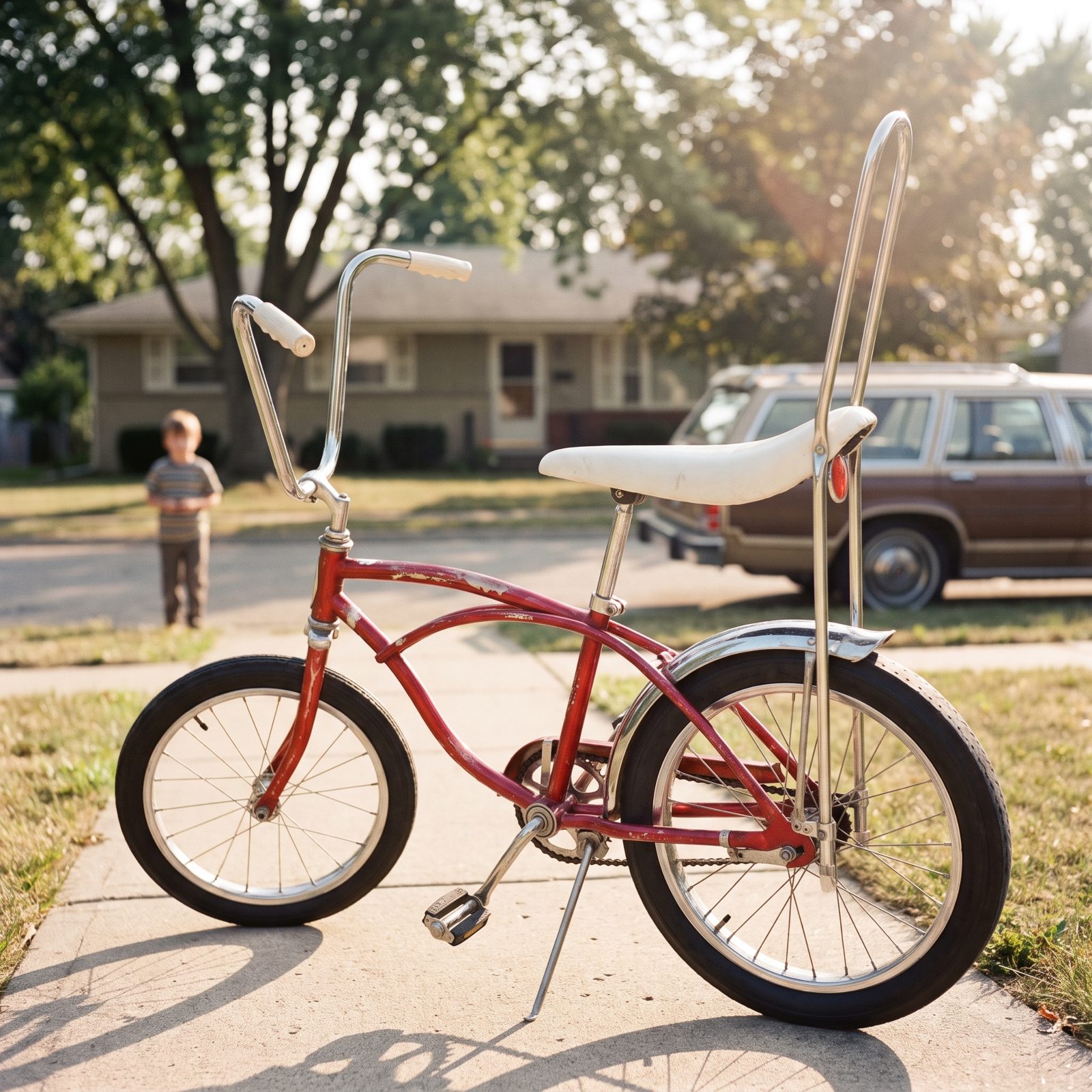
The sissy bar was the whole point and the whole problem.
That tall chrome loop behind the banana seat was styling lifted straight off a chopper, and it pulled double duty: it looked incredible, and it gave a second kid something to grip while riding on the long seat behind the pedaler. The banana seat was practically an invitation to double up.
Short wheelbase, slick rear tire, ape-hanger bars that kept the front end light. Pop a wheelie with a passenger clinging to the sissy bar and the whole rig could loop out backward on you.
No bike since has made a ten-year-old feel more like the coolest person in the county.
30. Homemade Soapbox Racers With Little or No Braking
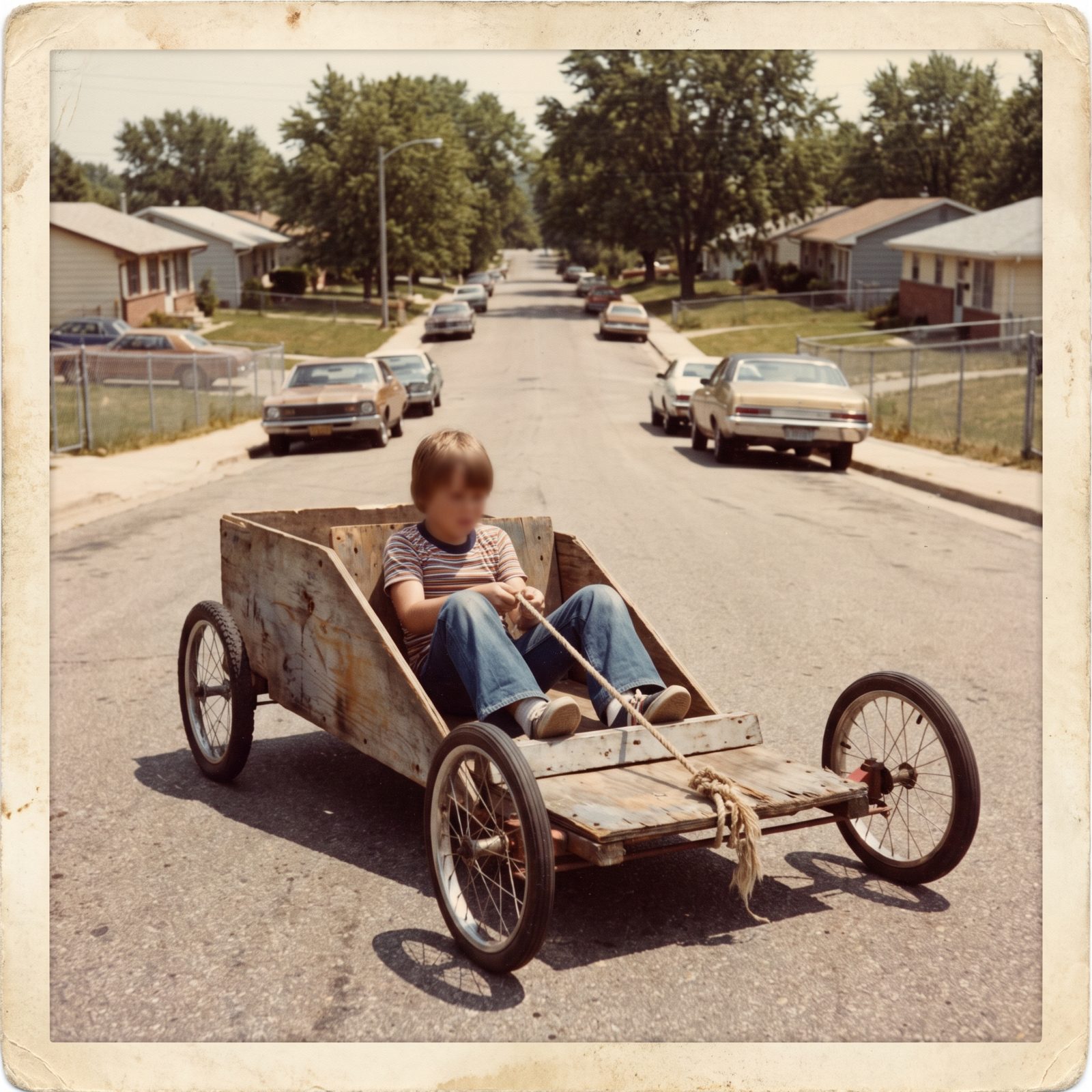
Gravity was the engine. Stopping was somebody else’s problem — usually the kid in the seat.
A soapbox racer was plywood, two-by-fours, and four wheels pried off wagons, strollers, or an old mower. Steering was a rope lashed to the front axle that you hauled left or right with both hands. A real brake meant a hinged board you jammed against a rear tire, assuming the builder cared enough to bother. Most didn’t.
So the braking system came down to a flat street with a long runout, a patch of grass, or pure optimism. The faster the hill, the better the ride — and the worse the odds that it ended anywhere you’d planned.
29. Clamp-On Steel-Wheel Roller Skates
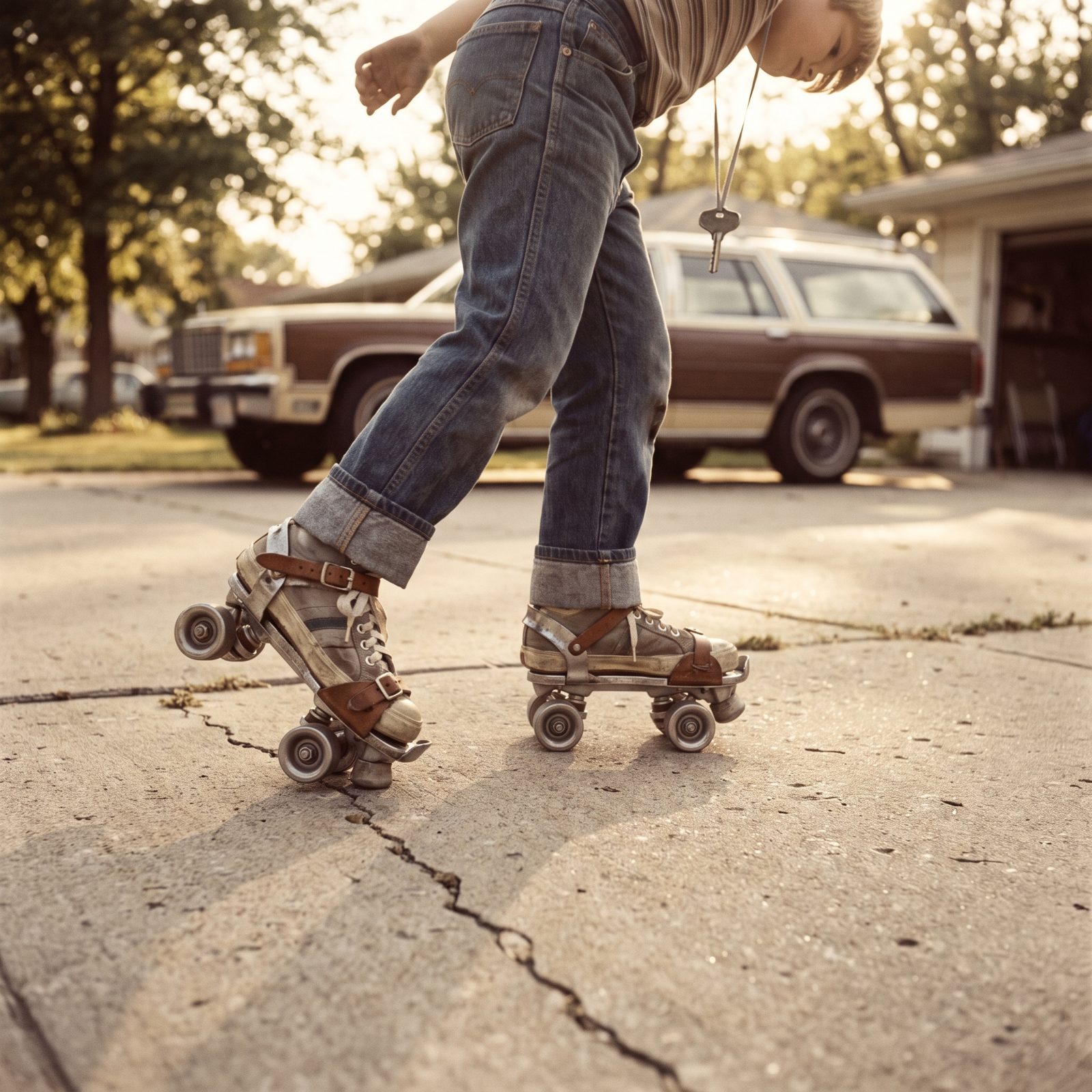
Before boot skates, there were the clamp-ons — and a skate key you wore around your neck like dog tags.
These were metal plates with four hard steel wheels that clamped onto the soles of your regular shoes. You tightened the clamps with the key, cinched a leather strap over the toe, and prayed the whole rig held.
It rarely did. A clamp would pop loose mid-glide and leave one skate behind while the other kept going. The steel wheels had no grip and no give, so every pebble was a trip hazard and every sidewalk crack was an ambush waiting on you.
28. Steel Kick Scooters With Hard, Narrow Wheels
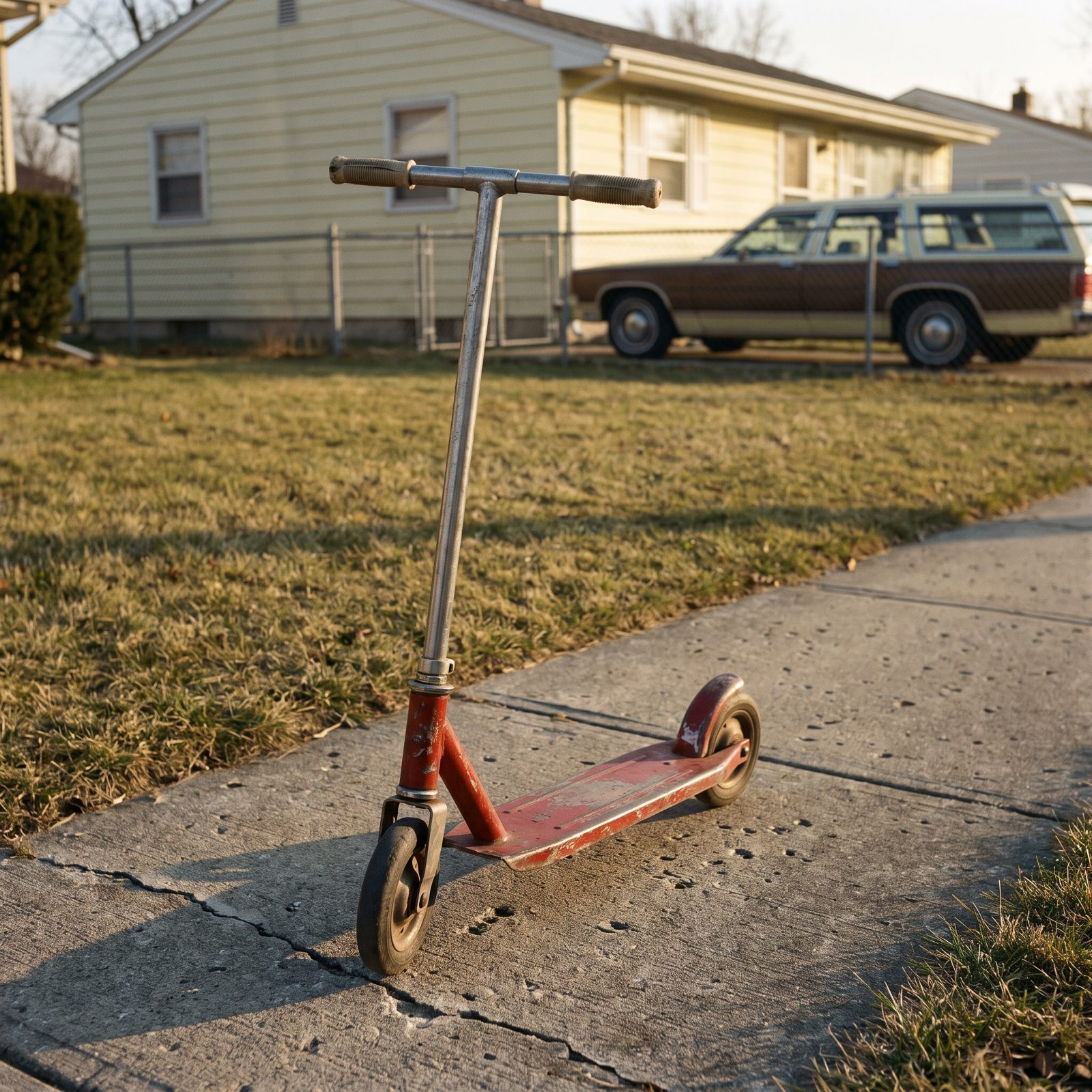
Those first steel scooters were a plank bolted to two wheels the size of hockey pucks. Loud, teeth-rattling, unforgiving of the smallest sidewalk crack.
Hard narrow wheels have almost no grip and zero give. Hit a raised slab seam at speed and the front wheel stops dead while you keep going — a physics lesson delivered straight onto concrete.
27. Low-Slung Big Wheel Trikes Ridden Into the Street
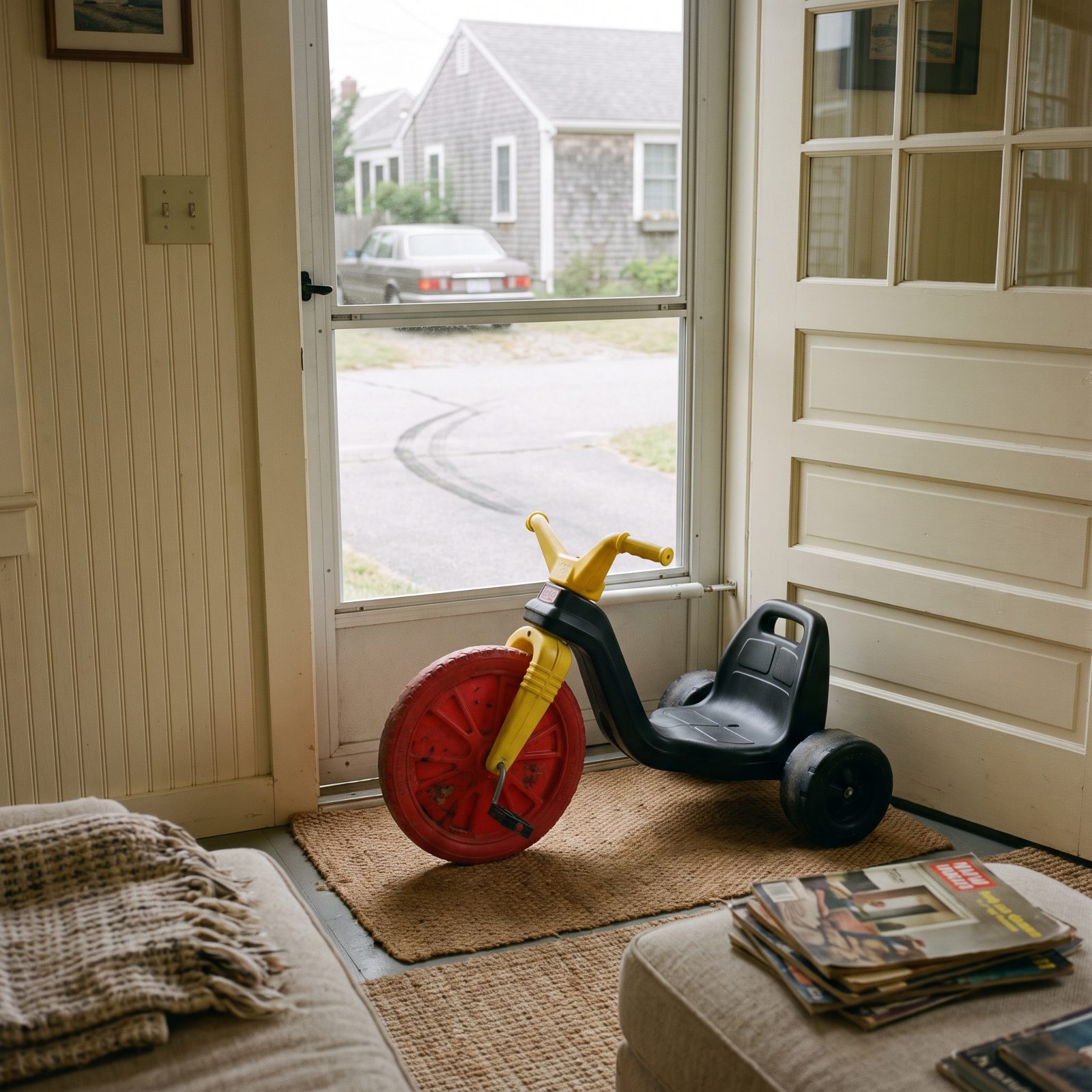
The genius of the Big Wheel was also the danger: you sat about four inches off the ground. Great fun for power slides on a driveway, and terrible visibility for anyone backing a Buick out of a garage.
That low seat parked a child well below the sightline of nearly every driver. Kids loved it because it felt fast and close to the pavement, and the street looked like an extension of the driveway. Plenty of riders treated it exactly that way.
26. Inflatable Space Hoppers Bounced Down Slopes
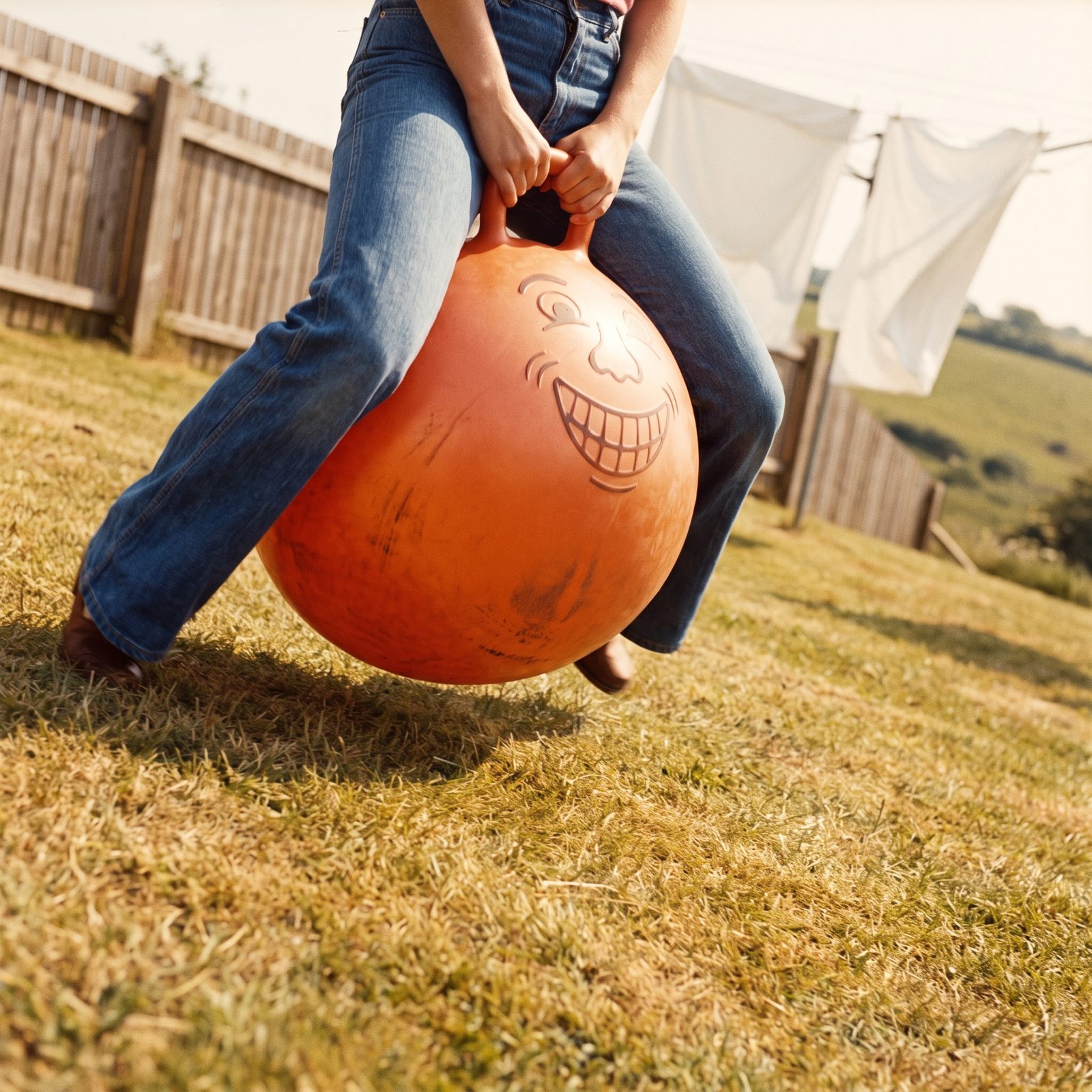
On flat ground a space hopper was goofy fun. Pointing one downhill turned it into a bouncing cannonball with no brakes and exactly one skill: hang on.
You steered by leaning and prayer. Two rubber horns were all you had to grip, and once gravity took over on a slope, the thing went wherever it pleased. Most kids figured out that the landing was negotiable only up to a point.
25. Metal Pogo Sticks Used on Concrete
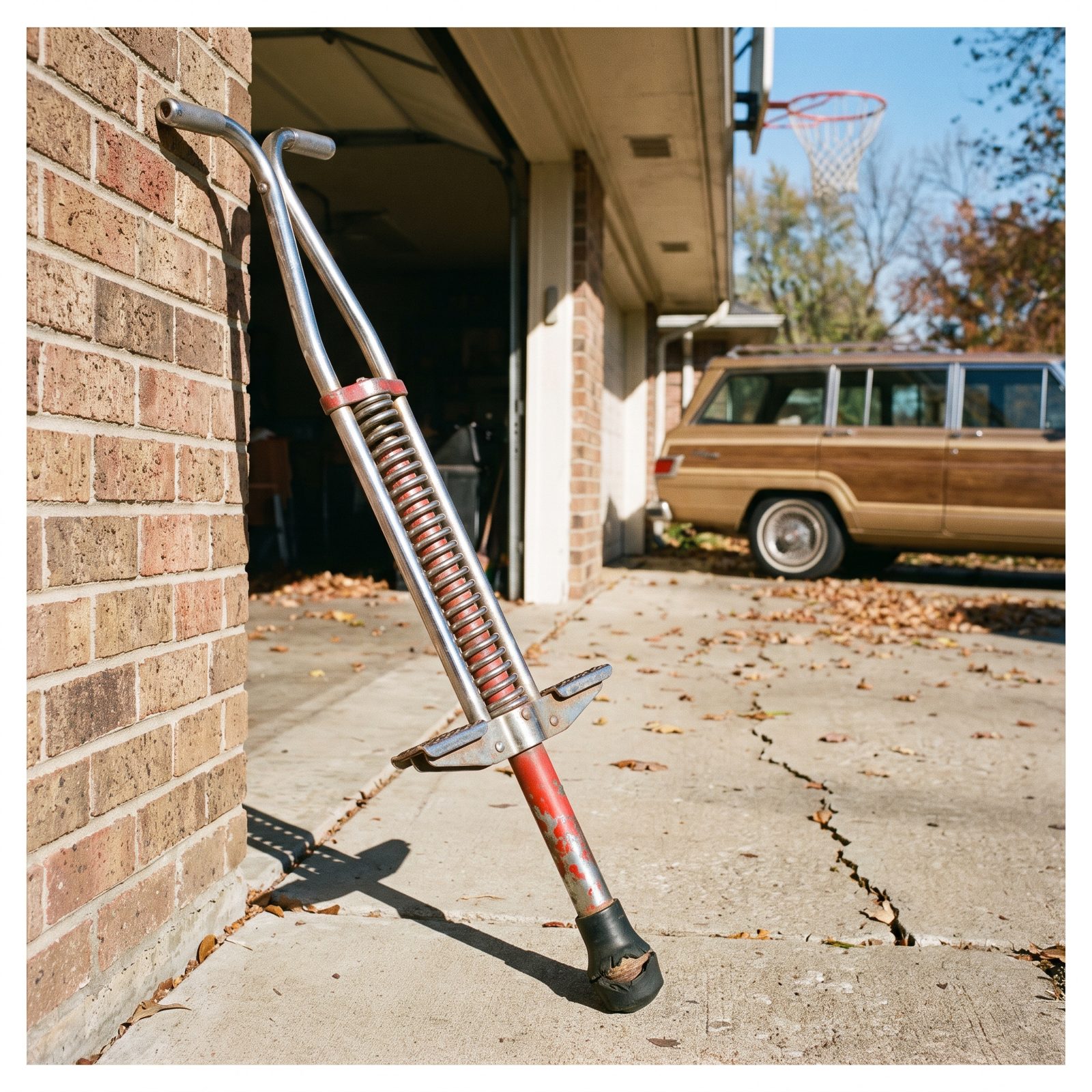
A metal pogo stick was a coil spring, two foot pegs, and your sense of balance against a slab of concrete. Nothing soft anywhere in the equation.
Driveways and patios were the arena of choice, because the harder the surface the better the bounce. Slip off a peg and the stick went one way while you went the other, onto the only landing surface available. The count-the-bounces competitions were brutal and glorious.
24. Rigid BMX Bikes Raced on Homemade Dirt Tracks
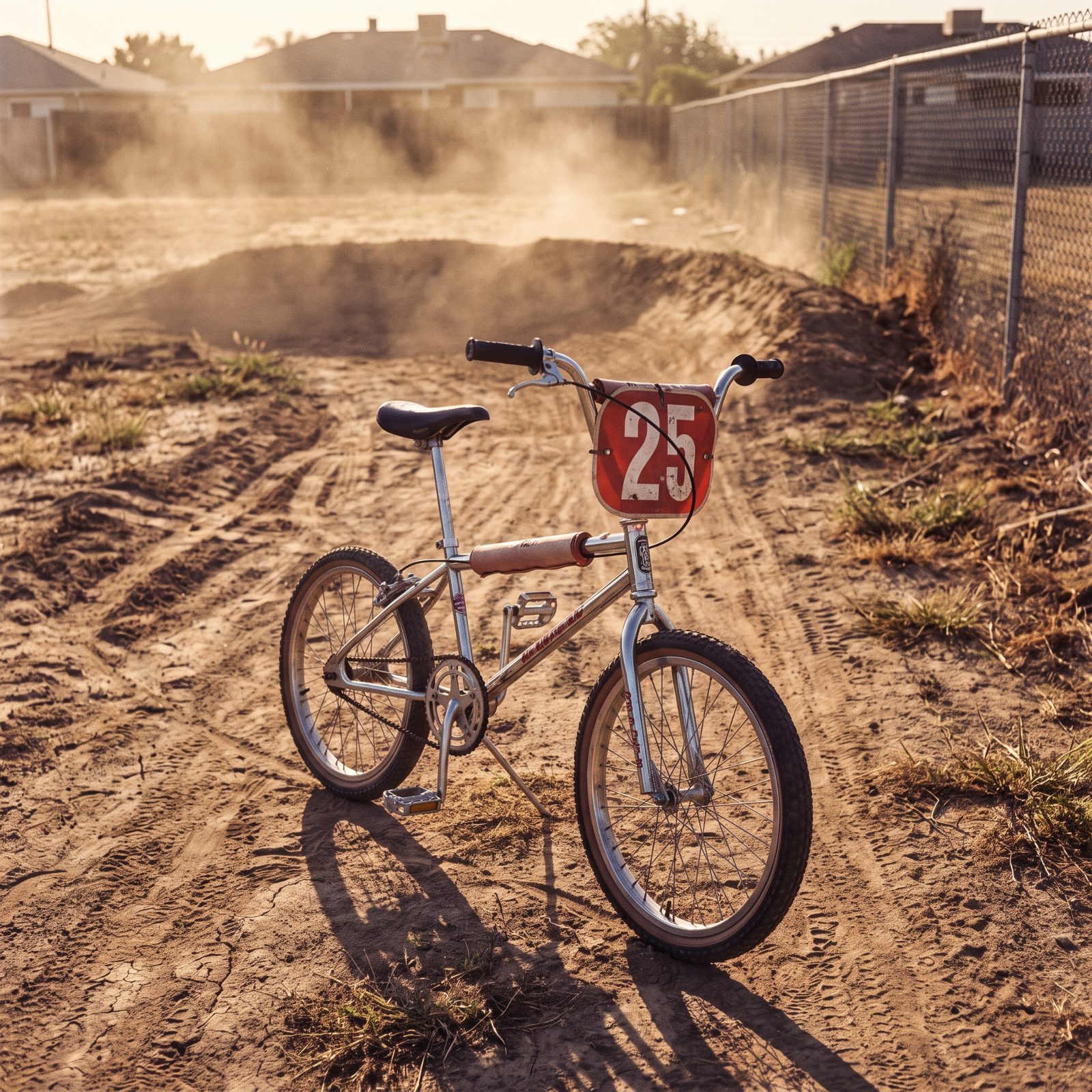
Before BMX had a sanctioning body or a single shock absorber, kids were digging tracks in vacant lots and racing whatever bike they had. The frames were rigid steel, so every bump went straight up through the pedals and into the spine.
No suspension meant you took the whole track with your knees and elbows. The berms were shoveled by hand, watered down, and guarded like private property. A real sport in the making, run entirely on dirt and ambition.
23. Bicycles Launched From Plywood-and-Cinder-Block Ramps
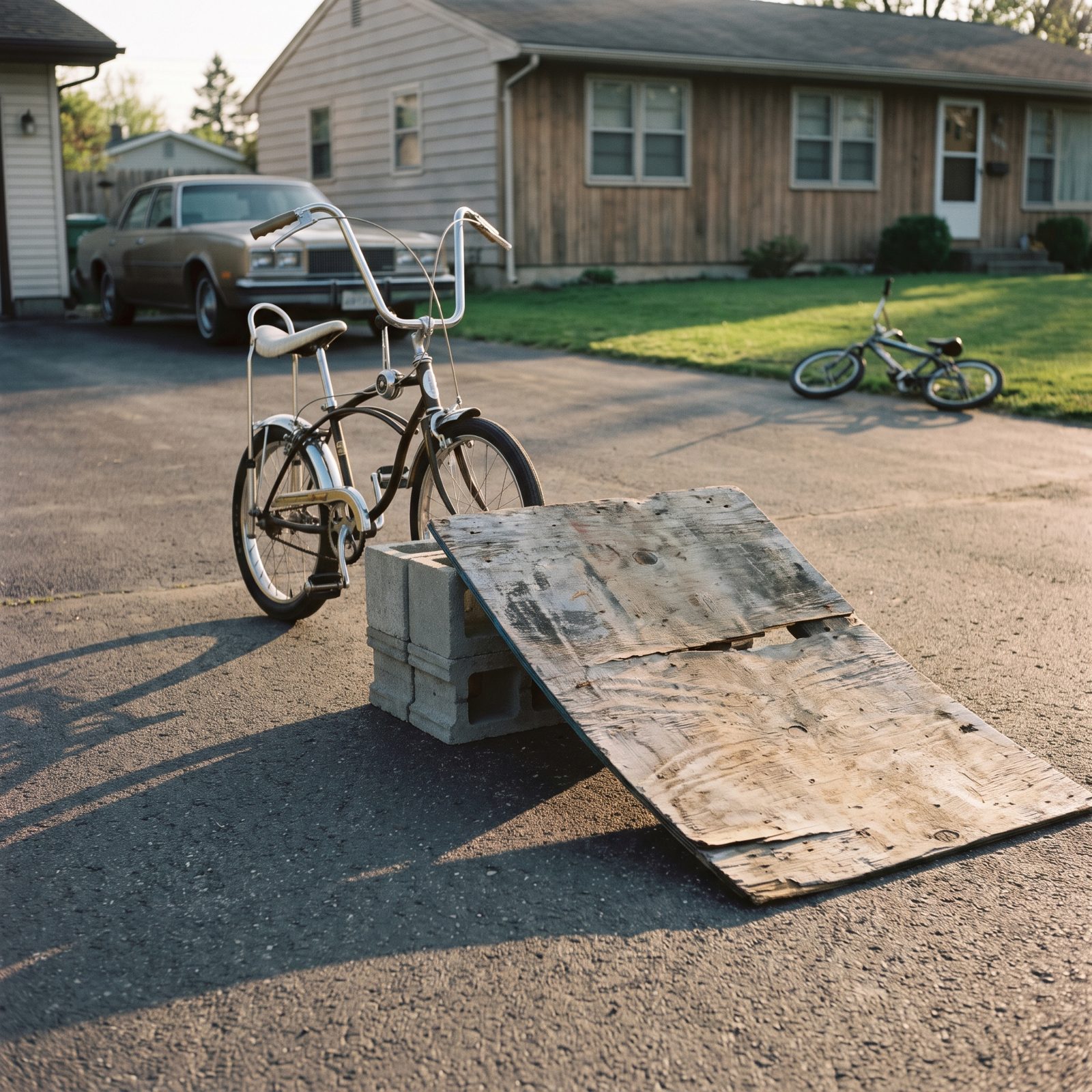
Every neighborhood had the ramp. A sheet of plywood, a stack of cinder blocks, and a rough argument about how many blocks was too many.
The plywood always bowed under weight and the blocks skated around on asphalt, so no two launches ever matched. And the landing? No ramp at all — just whatever the street happened to offer. A few seconds of air, plus the bragging rights that came with clearing it. That was enough.
22. Metal Pedal Cars Driven Down Sloping Sidewalks
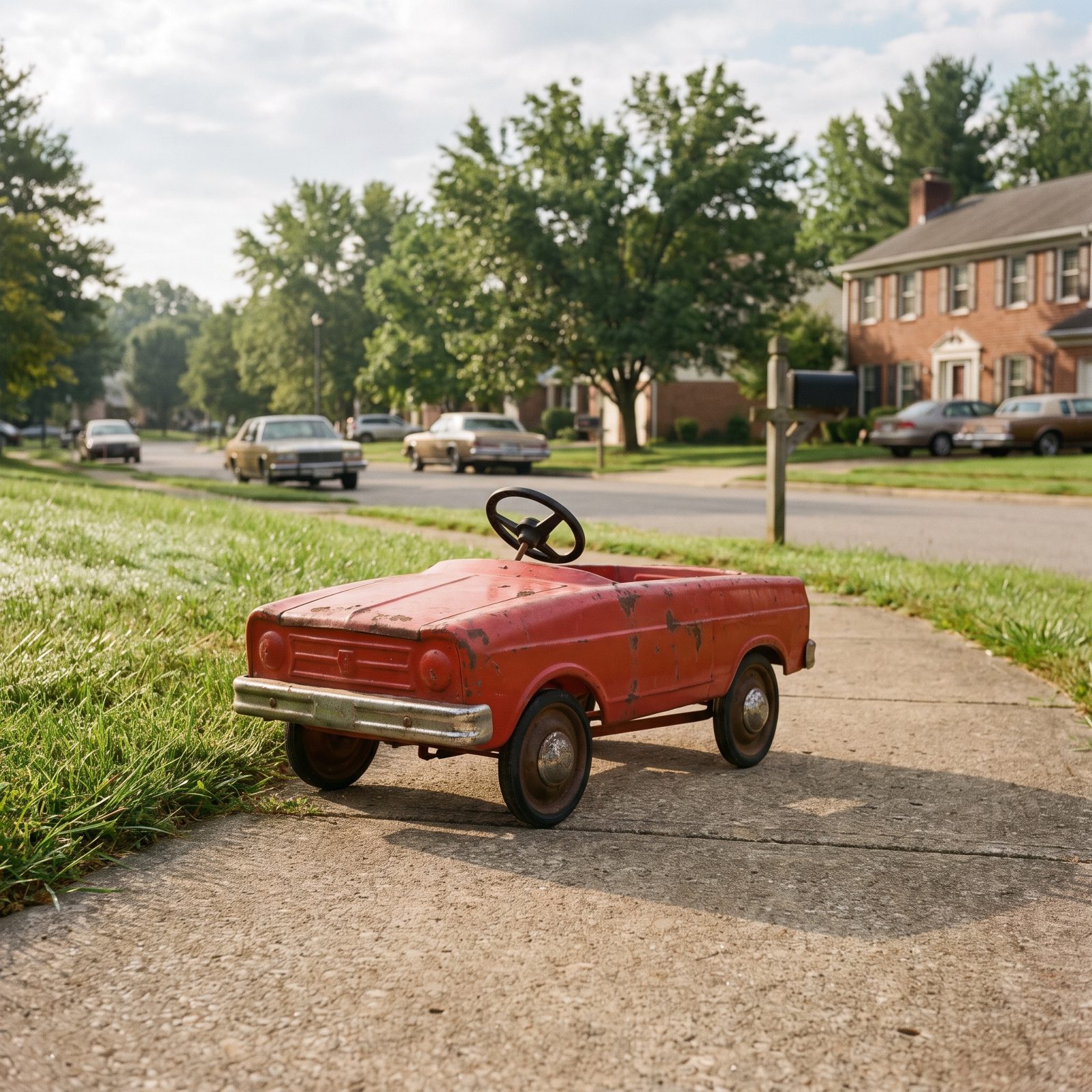
Pressed-steel pedal cars were built like actual automobiles in miniature — heavy, solid, and missing anything that resembled a brake. You stopped with your shoes or you didn’t stop.
On flat ground a kid powered them by pedaling. Aim one down a sloping sidewalk and gravity took the pedals faster than little legs could follow. The same steel body that made them feel like the real thing also made them a genuine projectile.
21. Gas-Powered Go-Karts With Exposed Engines and Minimal Barriers
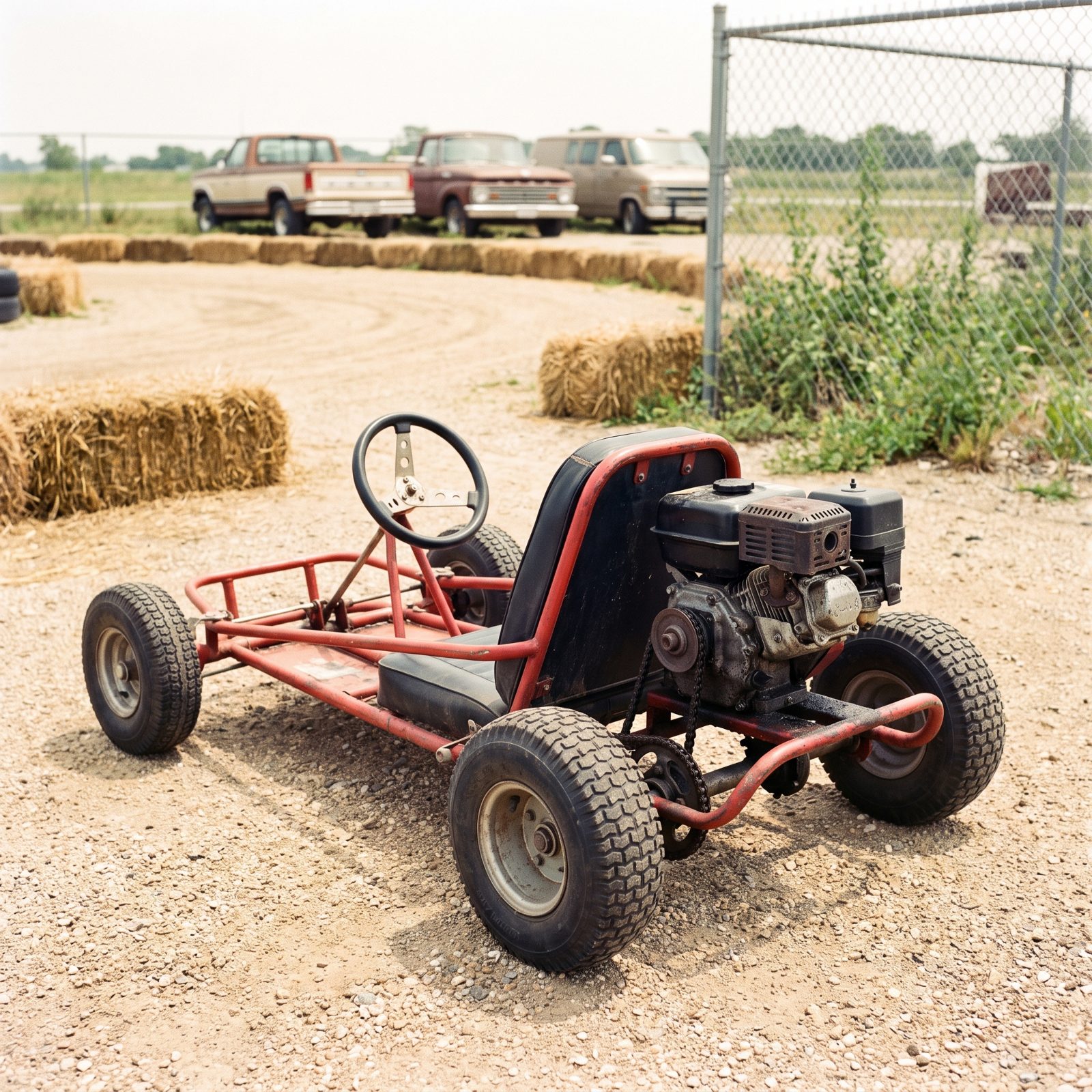
The step up from gravity was a lawn-mower engine bolted to a tube frame. Real speed arrived — and so did a spinning chain and a hot exhaust pipe sitting inches from bare legs.
These karts ran the engine right out in the open, usually with no roll bar, and the track barriers amounted to a few stacked hay bales. You went from coasting downhill to pulling a throttle, and the protection barely moved an inch.
20. Steel Wagons Ridden Down Steep Streets
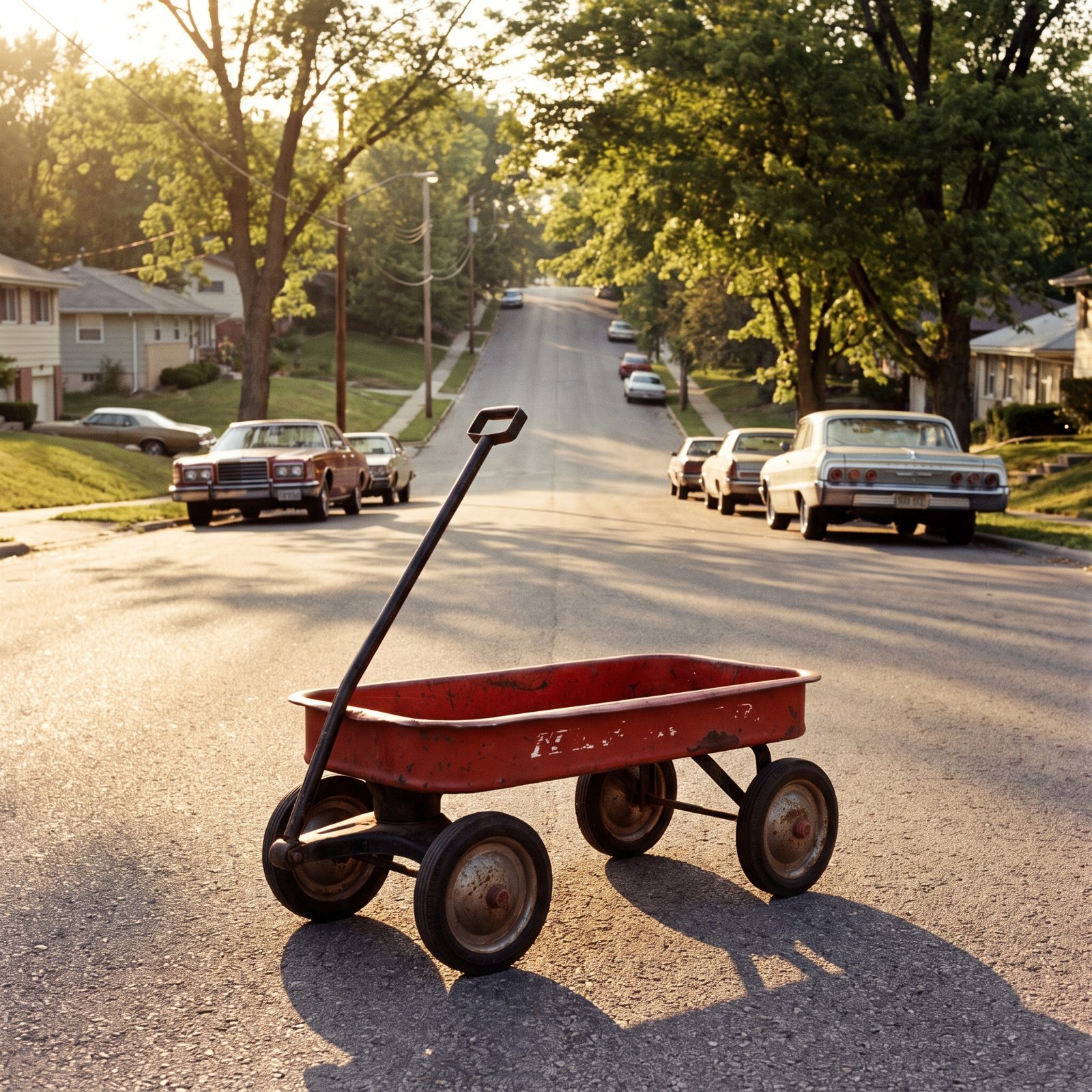
The wagon was built to haul firewood and little siblings. Kids had other ideas. Turn the handle inward, climb in, point it downhill, and steer by yanking that handle while the small steel wheels found every pebble on the road.
No seat, no brake, and nothing to grab except the handle you were also steering with. The sides sat too shallow to keep you aboard through a sharp turn. For a thing designed to be pulled at a walking pace, it covered a steep street alarmingly fast.
19. Shopping Carts Taken on Uncontrolled Downhill Runs
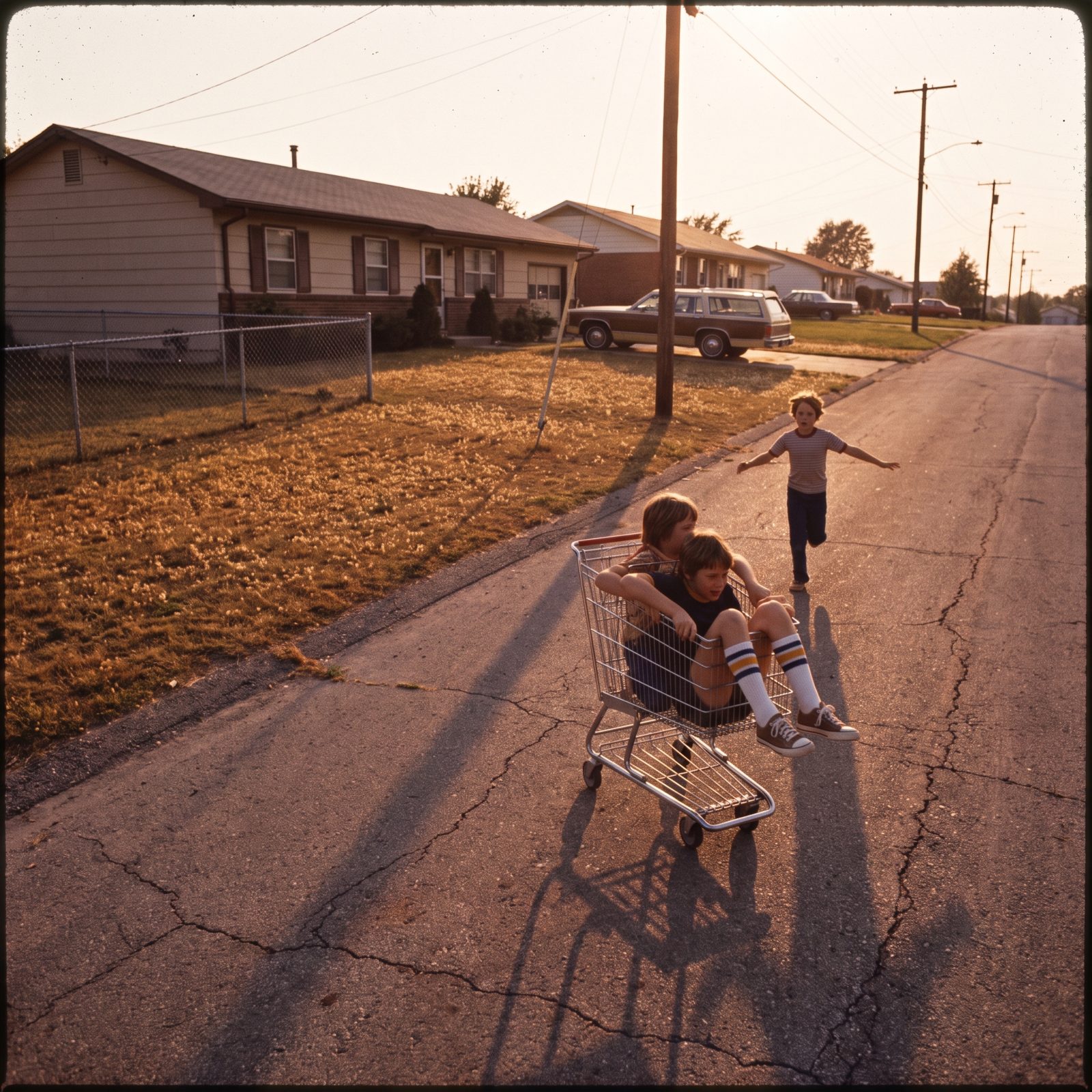
Every neighborhood had the hill, and every neighborhood had the cart somebody had wheeled home from the A&P and never bothered to return. Four small casters, no brakes, and a steering system that amounted to leaning and hoping. The kid crouched down in the basket was trusting one friend and gravity to agree on an outcome, which they rarely did.
What made it dangerous was the physics nobody thought about. The center of gravity sat high and the wheels pivoted on their own, so a single pebble could jackknife the whole rig at speed. Fast, free, and always out of road before it was out of hill.
18. Open Hay Wagons Without Rails or Seat Belts
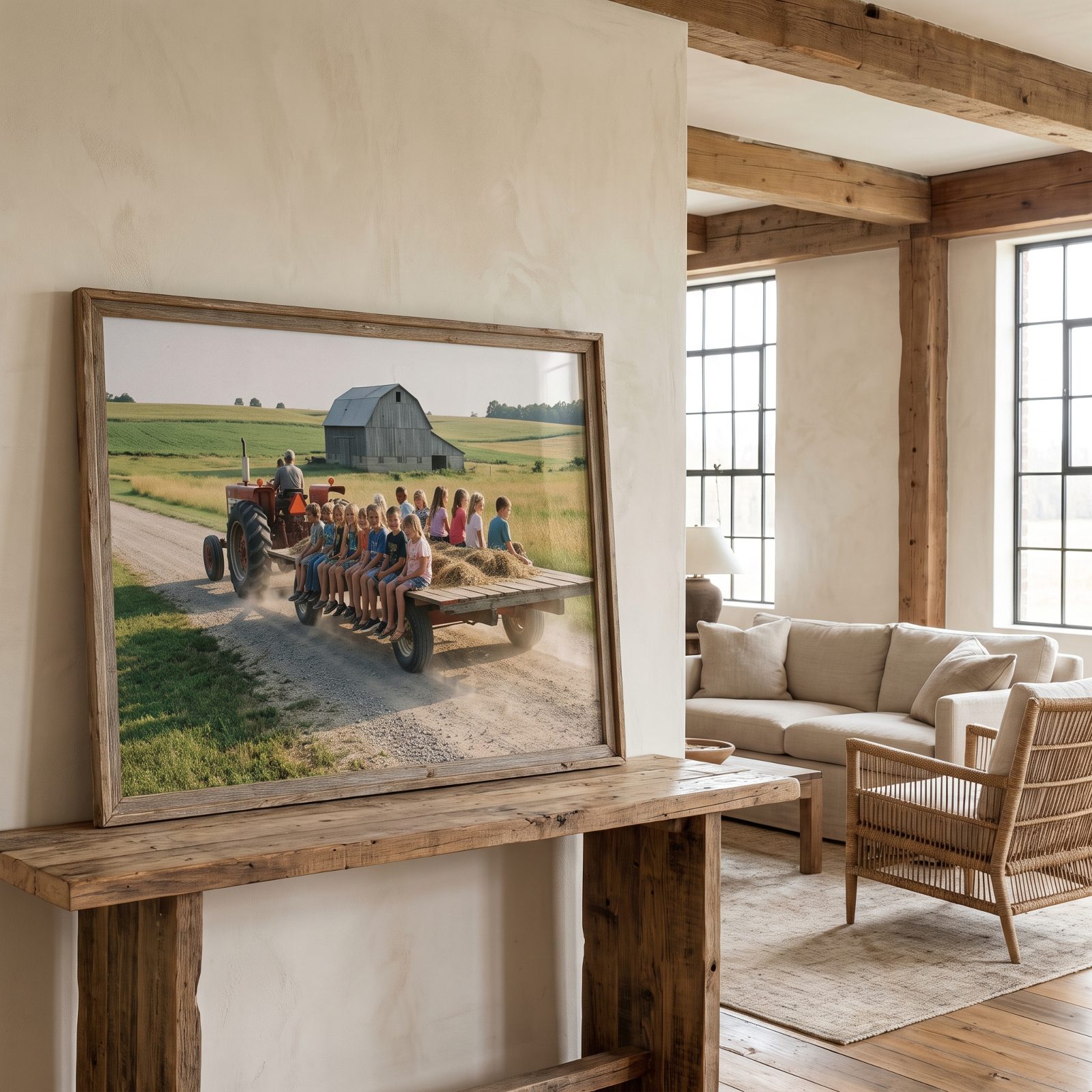
The hay ride was the social event of the fall. The safety plan was that everyone held on. Kids lined the open edges of a flatbed with their legs swinging over the gravel, maybe a bale or two to lean against, and nothing between a sudden stop and the ground.
Tractors don’t have smooth brakes. One pothole, or a dog in the lane, and somebody slid clean off the edge. Most of the time it worked out — and “most of the time” is the phrase that ran the whole decade.
17. Pickup Beds Filled With Unrestrained Children
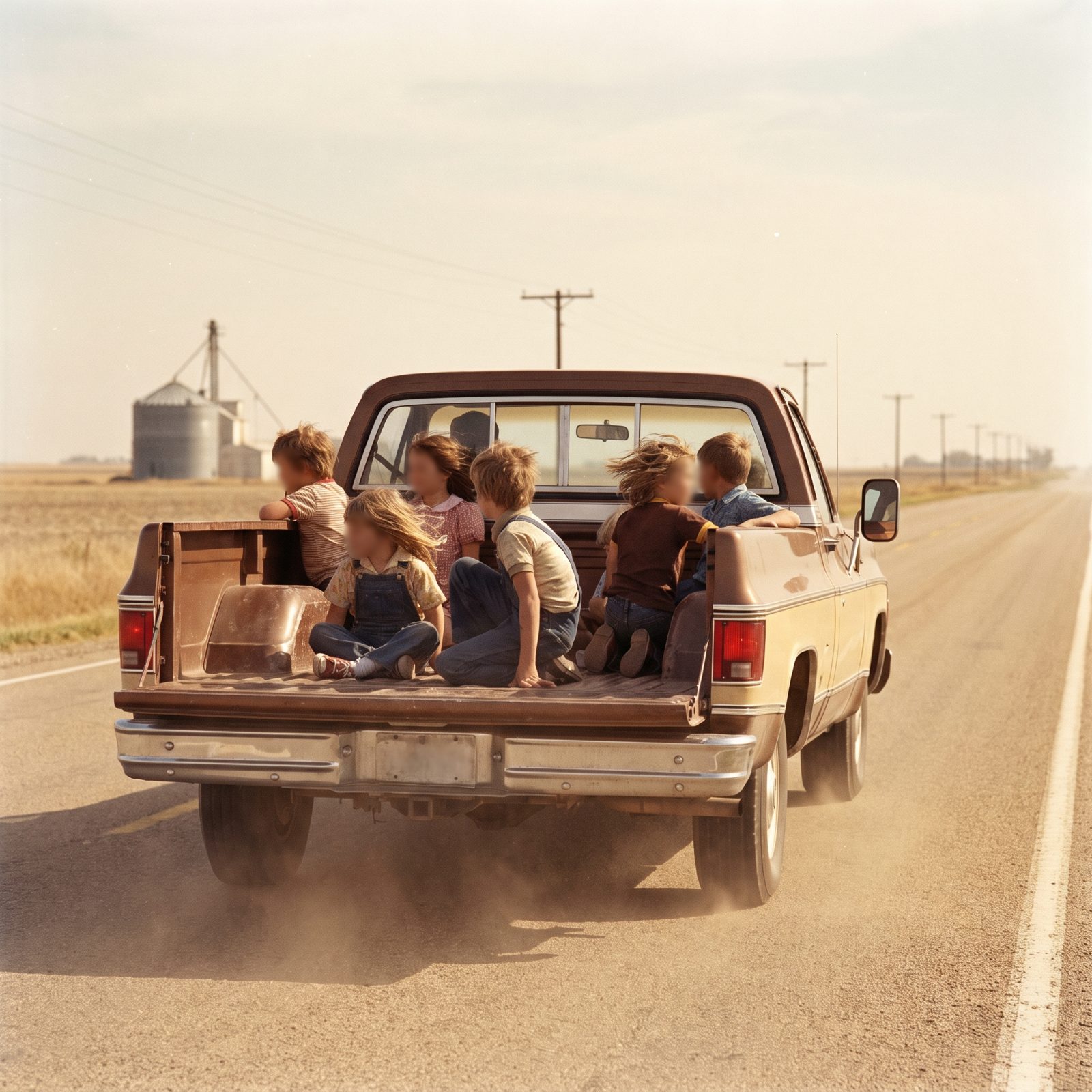
Riding in the back of the truck was a privilege, not a hazard. Wind in your face, the whole landscape sliding past, tailgate down and your arms hooked over the side of the bed. Nobody buckled anything because there was nothing to buckle to.
The danger was never complicated. Hard brake, sharp turn, loose cargo — and a body in an open bed had nothing to stop it. Plenty of states have since restricted or banned kids riding in pickup beds, though the rules still vary a lot from one state line to the next.
16. Station Wagon Cargo Floors Used as Play Areas
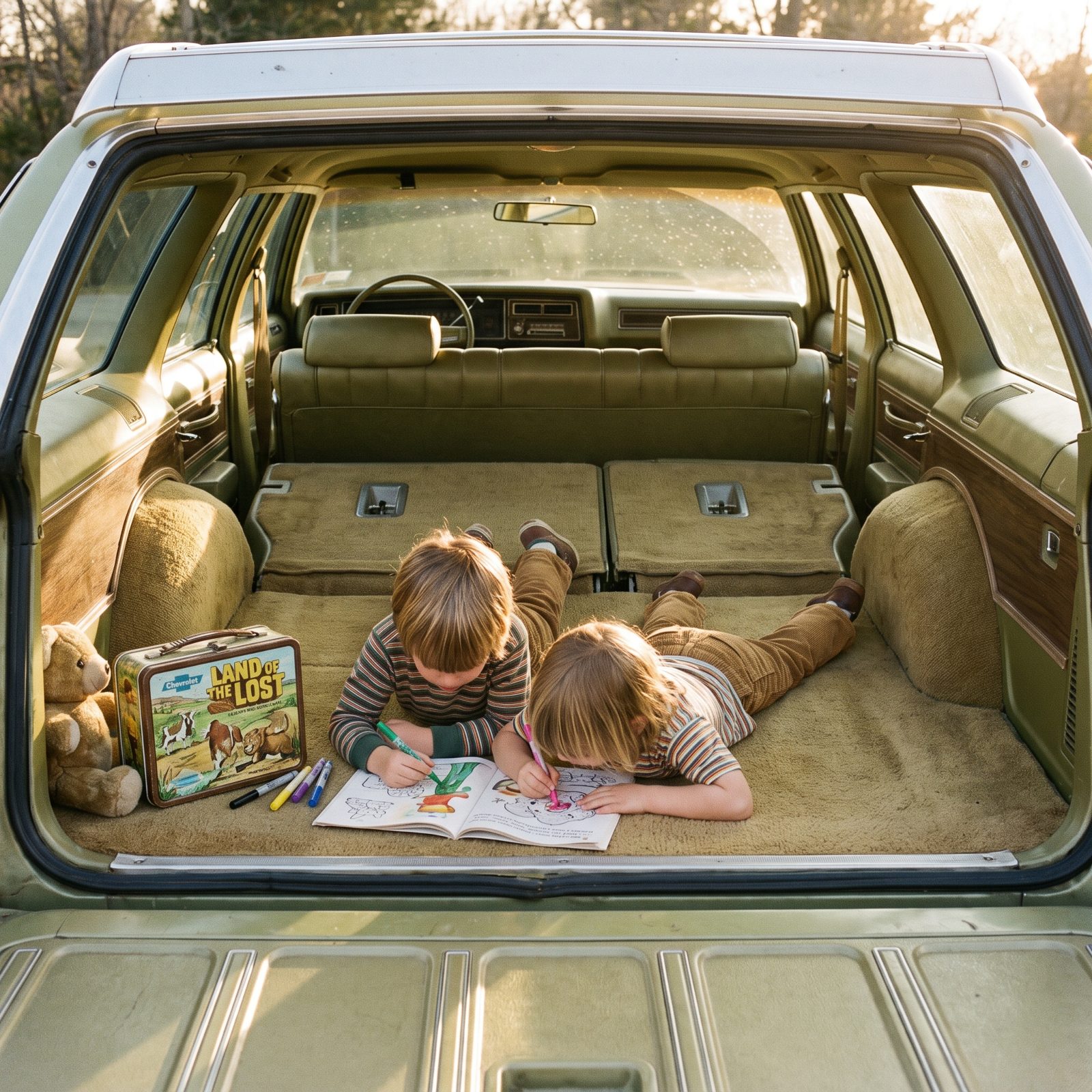
Fold the rear seat flat and a wagon’s cargo floor turned into a rolling living room. Kids laid out blankets, played cards, and slept across the carpet on long drives while the interstate hummed underneath them. Roomiest, happiest part of the car. Also the least protected.
Nobody up front could reach you, and nothing held you in place. One hard stop and the whole back became a single open box with small bodies loose inside. The memory stays warm even now, but nothing about the setup was working in anyone’s favor.
15. Rear-Facing Station Wagon Jump Seats
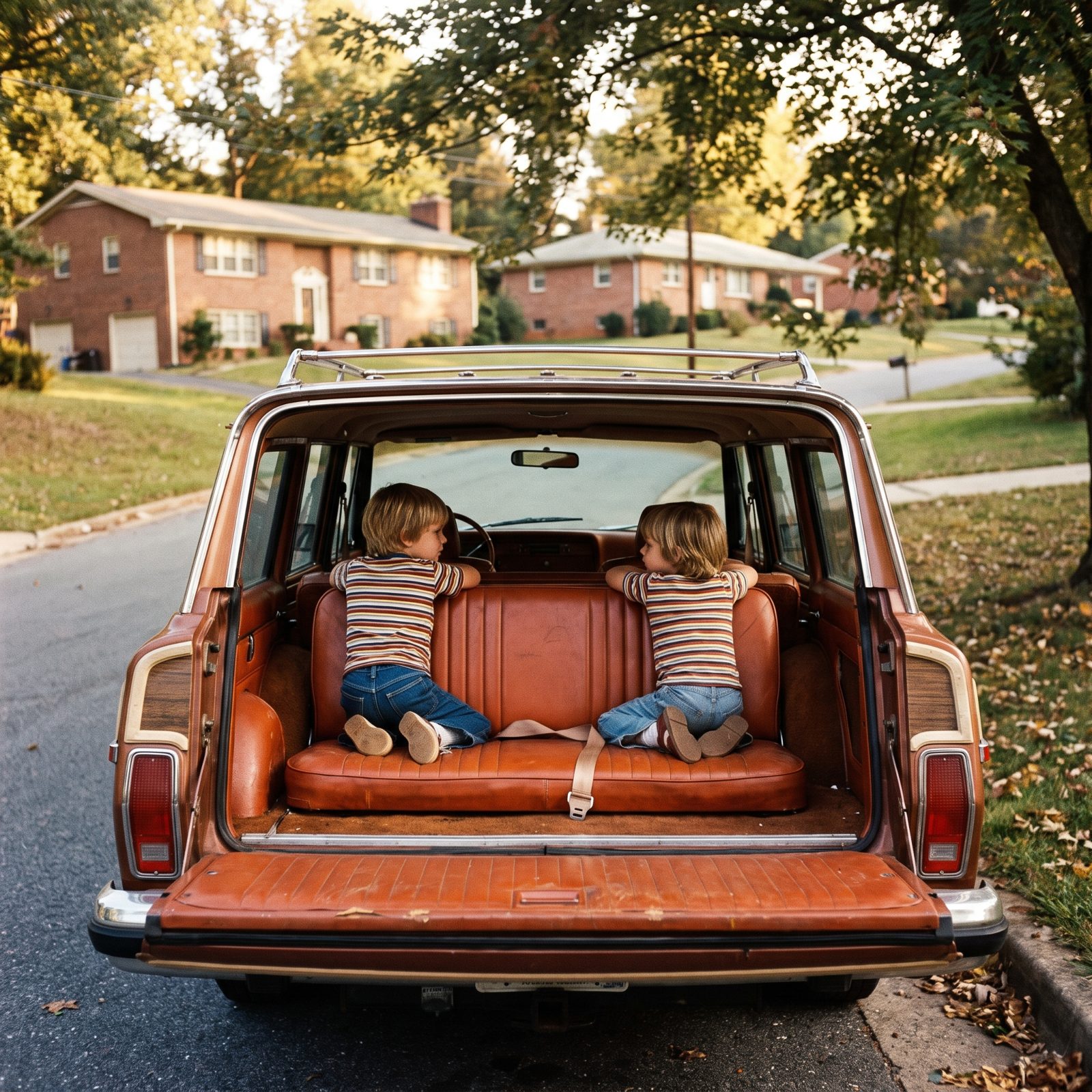
The way-back seat faced the wrong direction on purpose, and that was the whole draw. You watched the road unspool behind you, waved at the drivers you were annoying, and parked yourself at the exact spot most likely to get hit first.
Many models came with lap belts back there. Whether anyone actually buckled them is another question entirely. Carmakers phased these seats out as crash standards tightened, and the third row quietly became a safer forward-facing or fold-flat arrangement.
14. Mini Trail Bikes and Dirt Bikes Ridden Without Helmets or Protective Gear
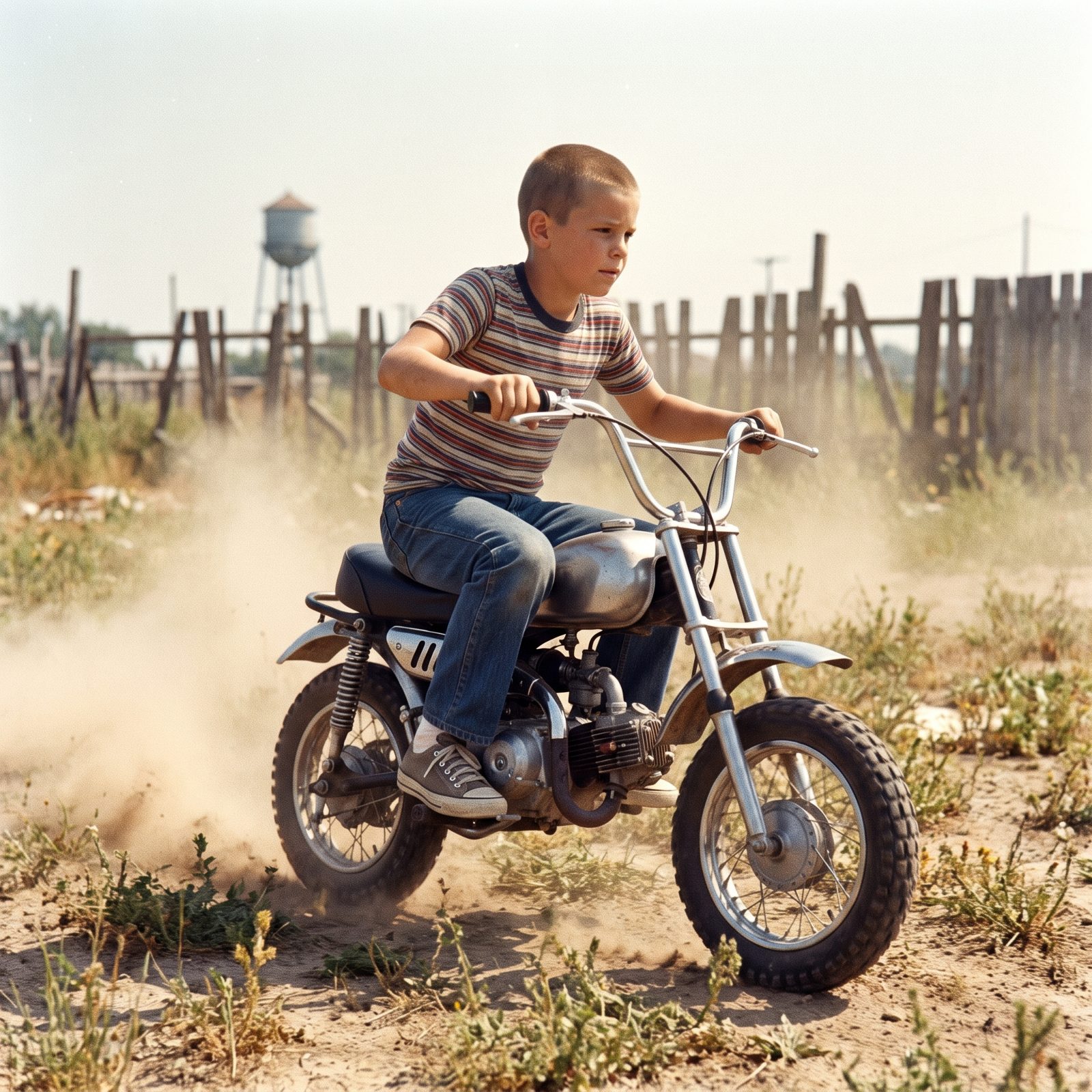
The minibike and the backyard dirt bike turned every empty lot into a motocross track. A little two-stroke, knobby tires, and a kid in a cotton T-shirt who had never once heard the words “protective gear.” The engine note alone could clear a neighborhood of parents.
Head, hands, ankles — all of it out in the open. These were real motorcycles in miniature, with real speed and a real exhaust pipe sitting inches from a bare calf. Helmets existed. Wearing one just marked you as the cautious kid.
13. Snowmobiles Towing Ropes, Sleds, and Toboggans
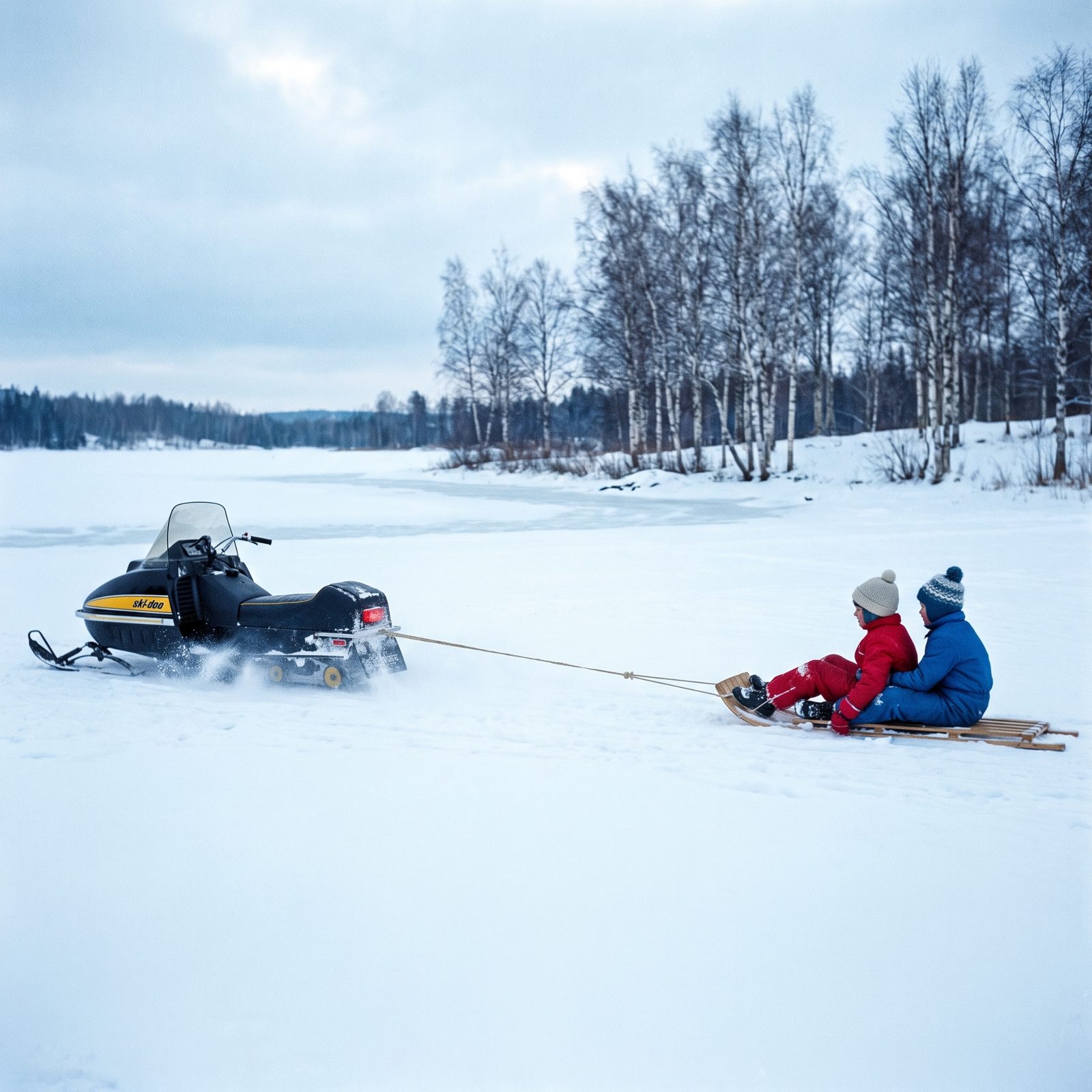
Tie a rope to the back of a sled and you had instant speed with zero control. The toboggan whipped side to side behind the machine, caught air on every drift, and the kids aboard had no brakes, no steering, and no way to make the machine up front ease off.
The rope was the real villain. It had slack, and then all at once it didn’t. A tight snap at the wrong moment could pitch a rider sideways into whatever the field was hiding under the snow — a fence post, a stump, a rock the drifts had swallowed.
12. Steel-Runner Sleds Steered Into Streets
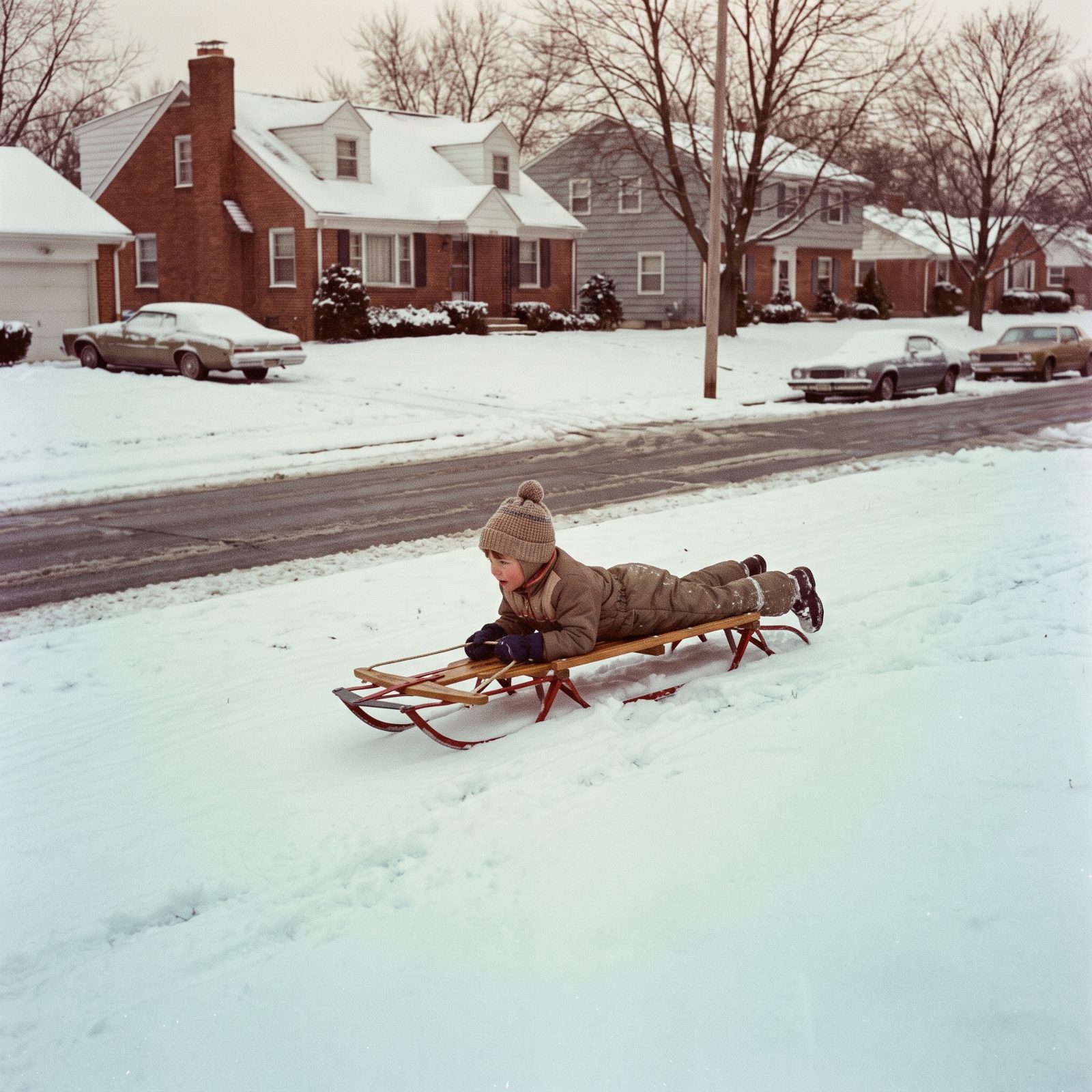
The classic runner sled could actually steer, which is exactly what got people in trouble. Because you could point it, the best hills were the ones that bottomed out at a street. A run only counted if it carried you clear past the curb.
Steel runners on packed snow move fast and stop poorly. A plowed road at the bottom meant the finish line and the oncoming traffic shared the same twenty feet. Same hill, same thrill, same risk.
11. Long Wooden Toboggans Without Brakes or Steering
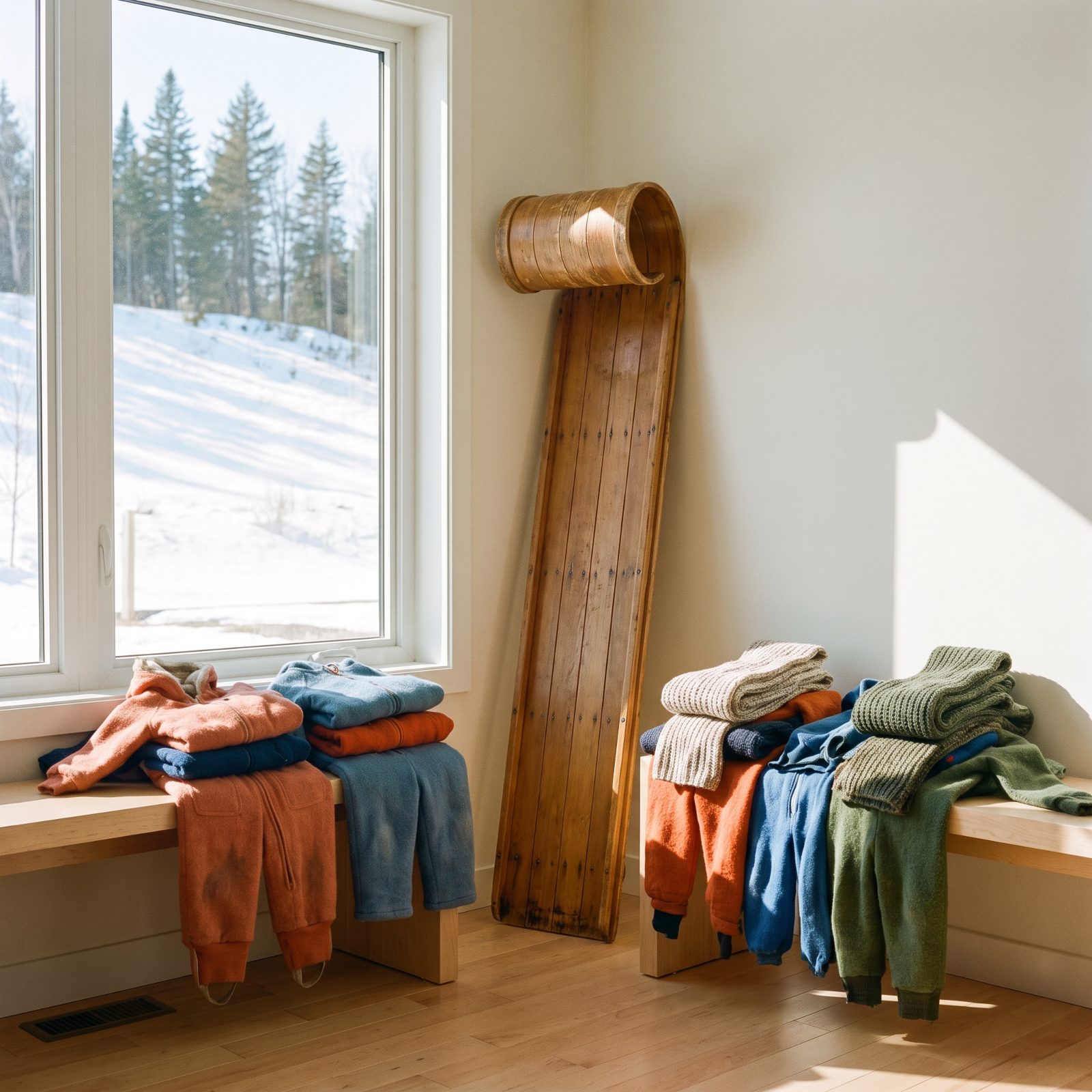
A long toboggan was a group commitment. Four kids in a row — the one up front deciding nothing, because toboggans don’t steer, and the one in back just holding on and praying the pile stayed together. No runners to carve a line, no bar to drag for a stop.
You rode it out. Whatever the hill decided, the whole load went with it, and when it tipped it tipped as a unit. That’s how one bad bump turned into four kids scattered across the snow at once.
10. Truck Inner Tubes Used as High-Speed Snow Sleds
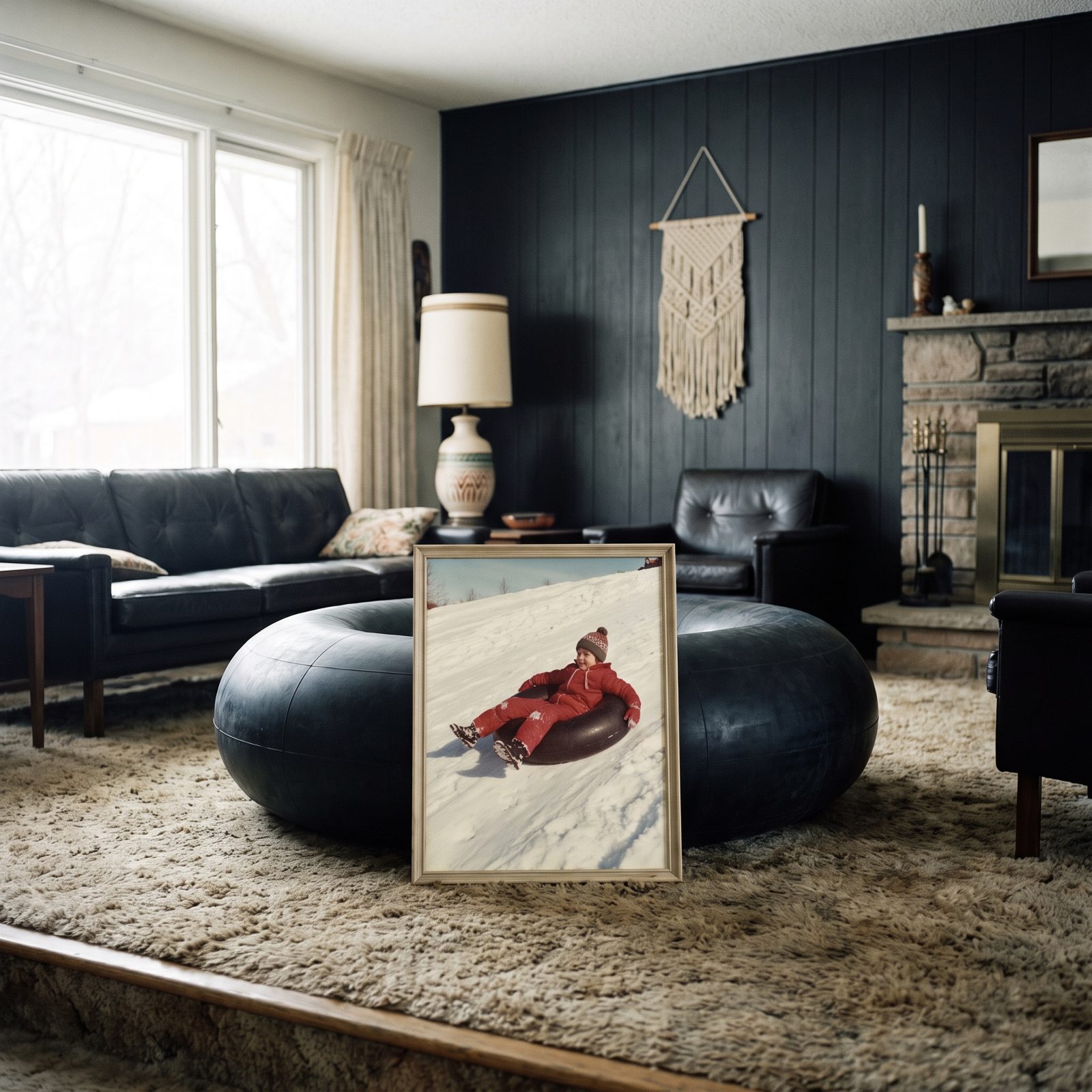
The inner tube was the fastest and least predictable thing on the hill. Pumped up hard, it spun freely, so you faced forward, then sideways, then backward, with no say in any of it. Nothing to grip but the valve stem and your own nerve.
People forget how much faster rubber runs than wood. The tube had almost no friction and bounced off every bump instead of soaking it up, so it hit the bottom carrying speed a sled would have bled off halfway down.
9. Canoes Paddled Without a Single Life Jacket Aboard
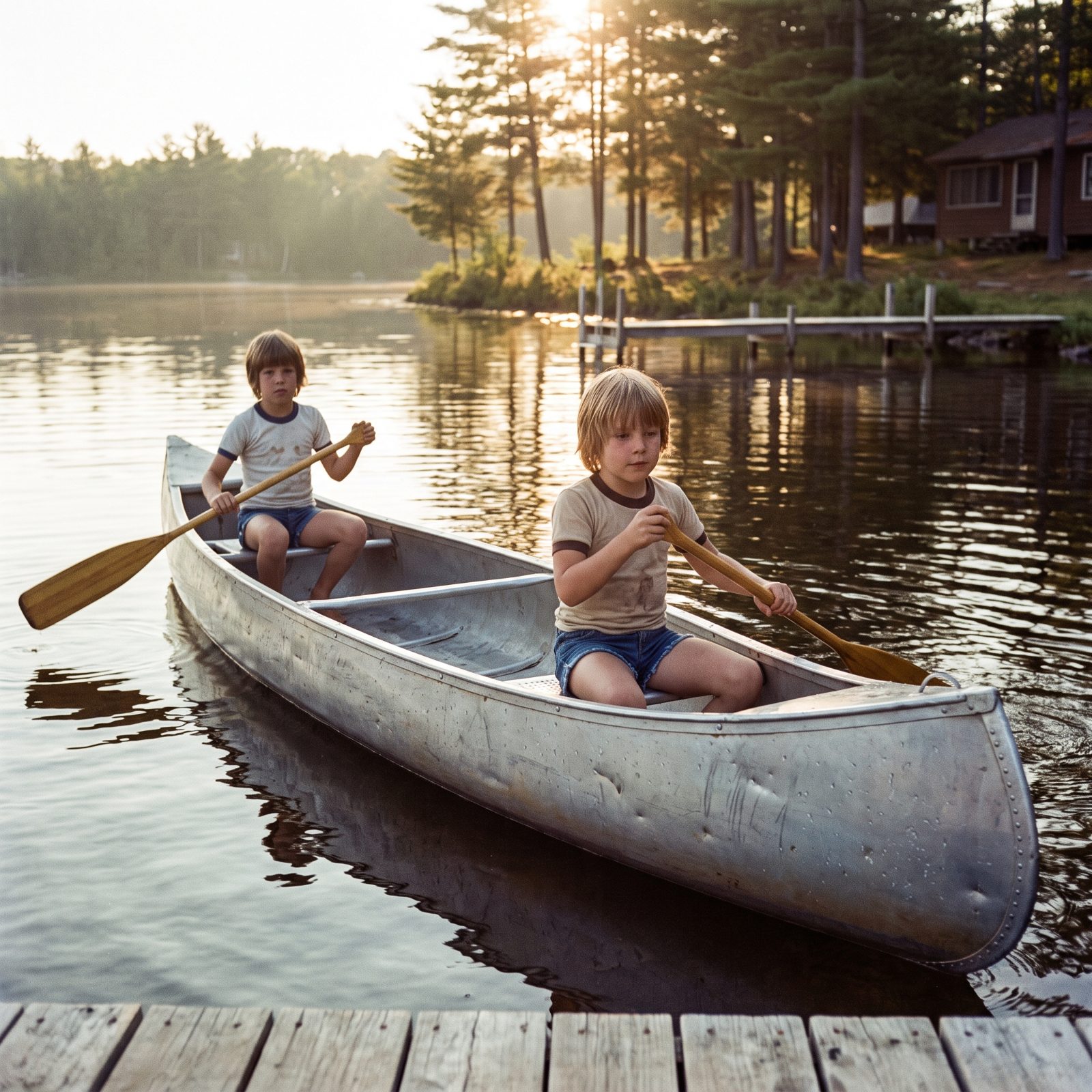
The classic rental canoe held three kids, a cooler, and zero flotation, and nobody checked. The orange horse-collar vests of the era were stiff and hot, so they got shoved under the dock bench where they stayed all summer.
Aluminum canoes tip faster than people expect, especially when a kid stands up to point at a turtle. Cold water a few feet from shore has drowned strong swimmers who panicked. The deep middle was never the real risk. It was standing up where the water looked shallow and friendly.
8. Riding the Bow of a Moving Motorboat Like a Front-Row Seat
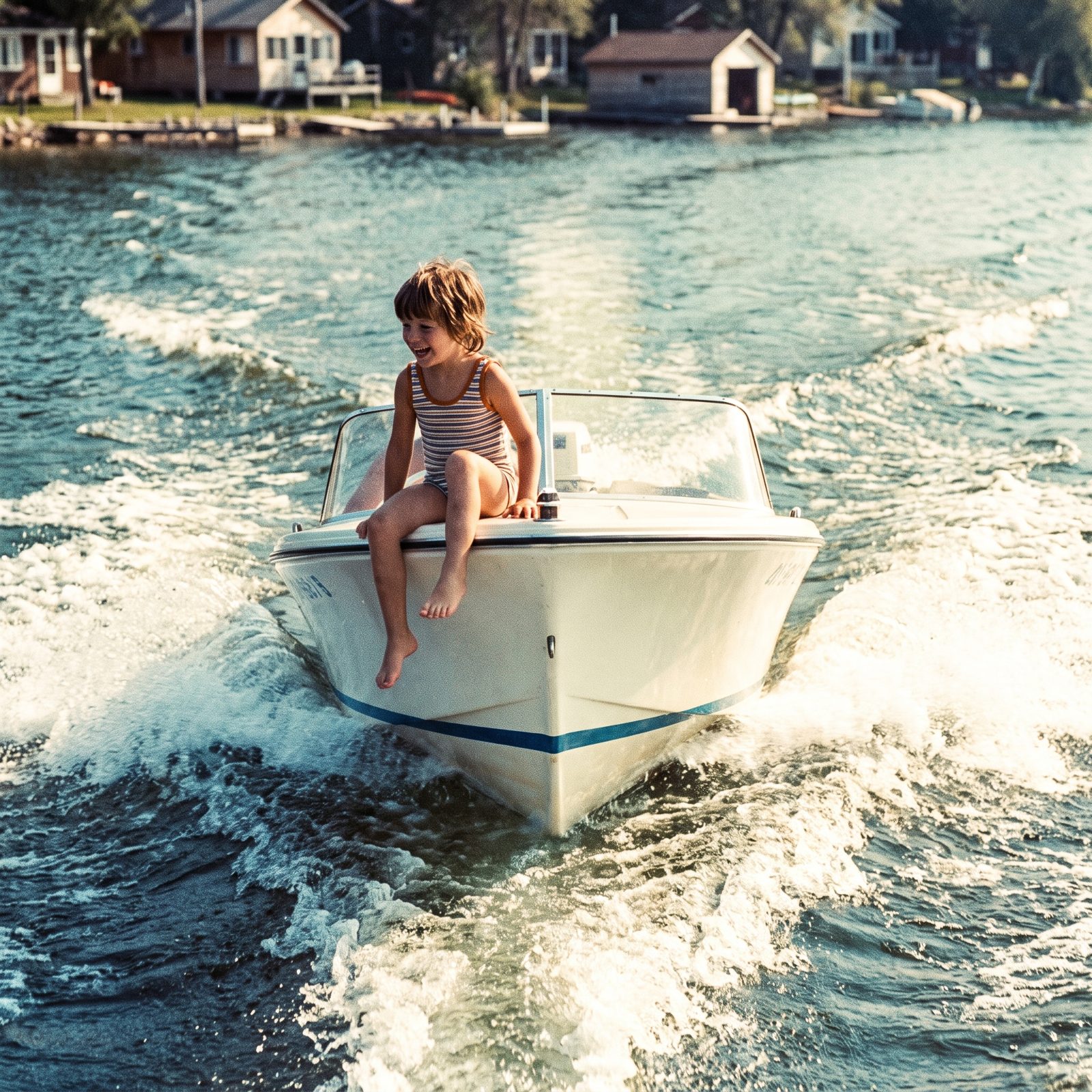
The bow was the best seat going: open air, spray in your face, nothing between the kid and the water but momentum. It was also the most dangerous place to sit.
Hit a wake wrong and the bow pitches down hard, and a passenger up front gets launched forward — toward the prop, toward the hull, toward the surface at speed. Bow riding and perching on the gunwales while underway are illegal in many states now for exactly this reason. In the 1970s it was simply where the little kids rode, because the adults wanted the padded seats in back.
7. Getting Yanked Up on Water Skis in a Swimsuit and Nothing Else
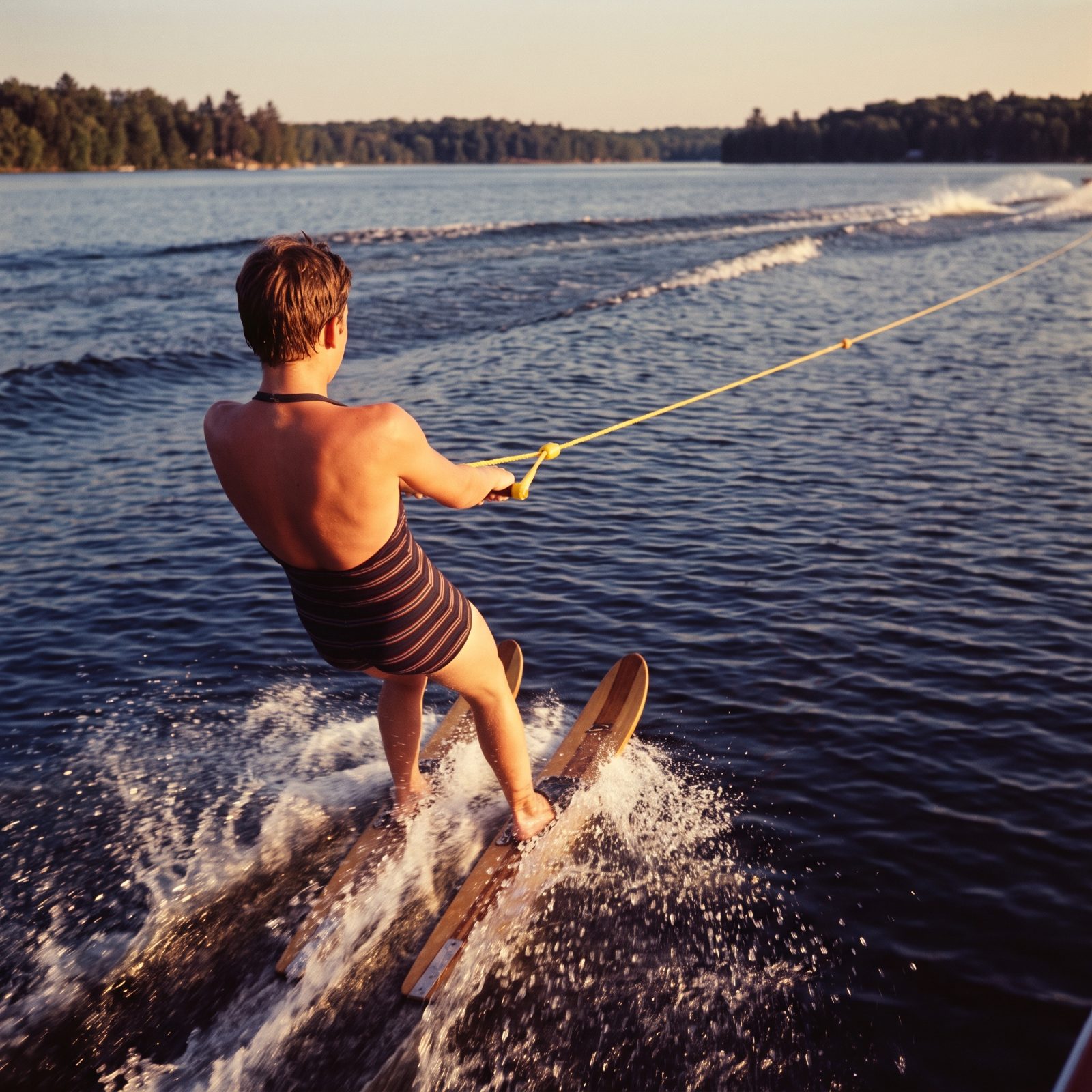
Wooden skis, a frayed tow rope, a plastic handle, and a thumbs-up. That was the whole kit.
A face-first fall at highway speed drives water into places water should not go, and a rope wrap around a wrist or ankle at full tension does real damage. The flotation vest, where one existed, was the thin ski-belt kind that rode up around your ears on a hard tumble. Impact-rated anything? Didn’t exist out there. The deal was simple: hold on, let go when you fall, and hope the boat circled back before you drifted too far.
6. Longboards Surfed With No Leash Tethering the Board
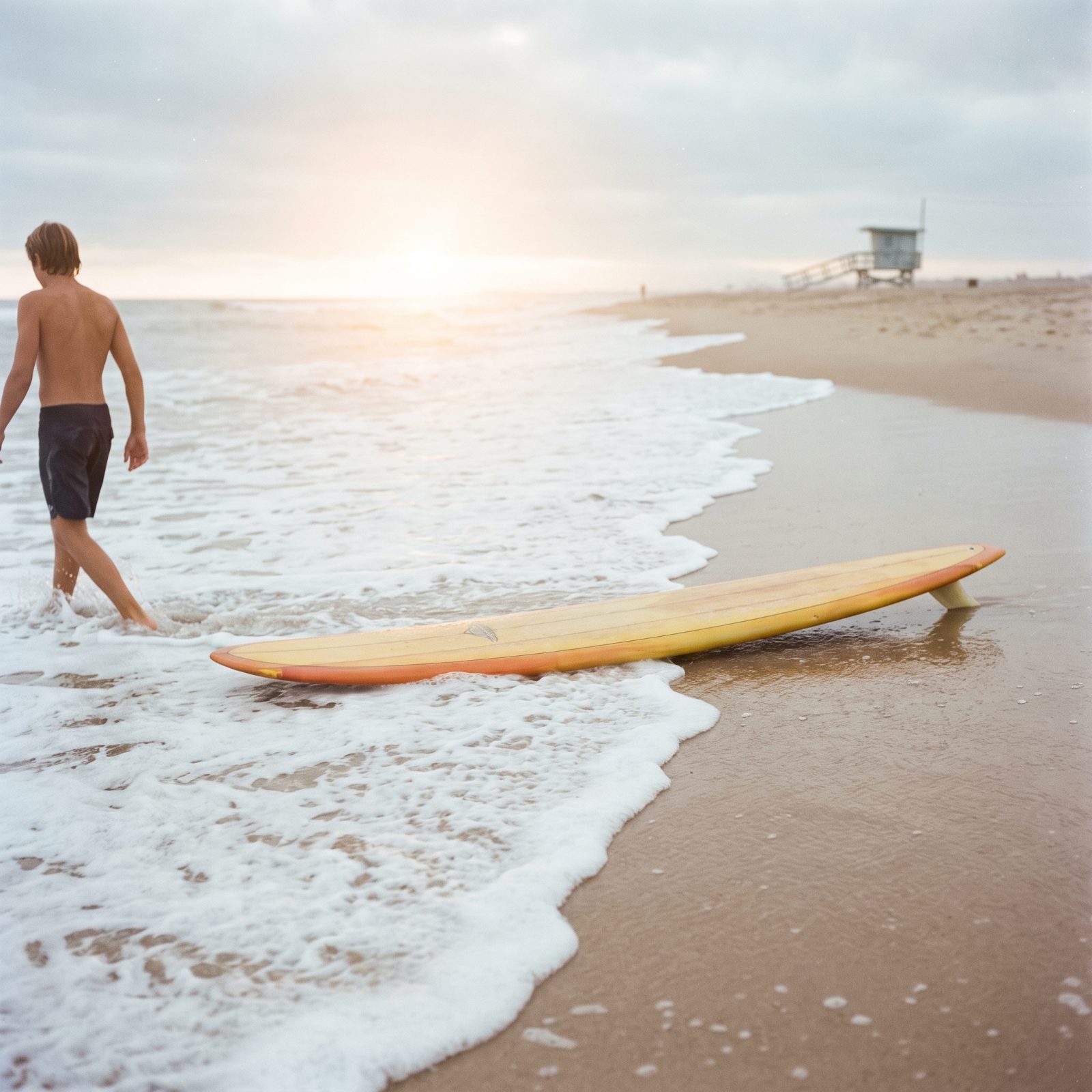
The surf leash didn’t catch on with most riders until the mid-to-late 1970s, and plenty of beaches went years before it was standard. Until then, a wipeout turned your board into a runaway.
A loose nine-foot longboard riding a wave straight at the lineup is a heavy, pointed object with a fin on the bottom. Kids learned to swim after it, dive under incoming sets, and keep their heads up in the whitewater, because a board that hit a swimmer hit hard. Lose it and you had a long swim to the beach to collect it — usually just as a good set rolled through.
5. The Knotted Rope Swing Over the Swimming Hole
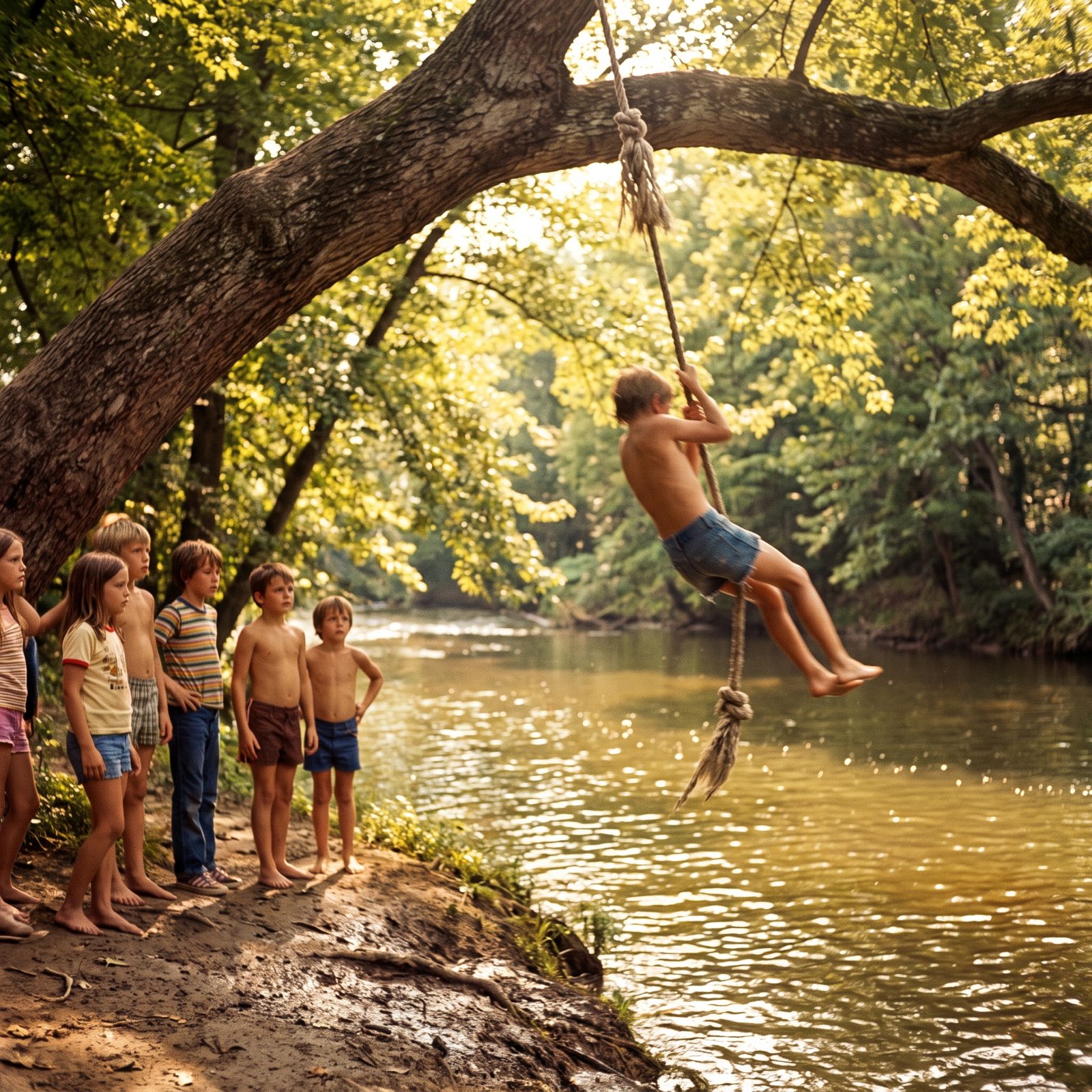
Every creek town had one. A fat rope, a fatter knot, a worn dirt runway where a hundred kids had launched before you.
The rope was never the danger. What waited under the water was: a sunken log, a shopping cart, a sandbar that shifted after every spring flood. Nobody surveyed the depth. You let go at the top of the arc and trusted that last summer’s safe spot was still safe. Most of the time it was. The times it wasn’t are the stories older folks still tell carefully.
4. The Steel Merry-Go-Round Spun Until Someone Flew Off
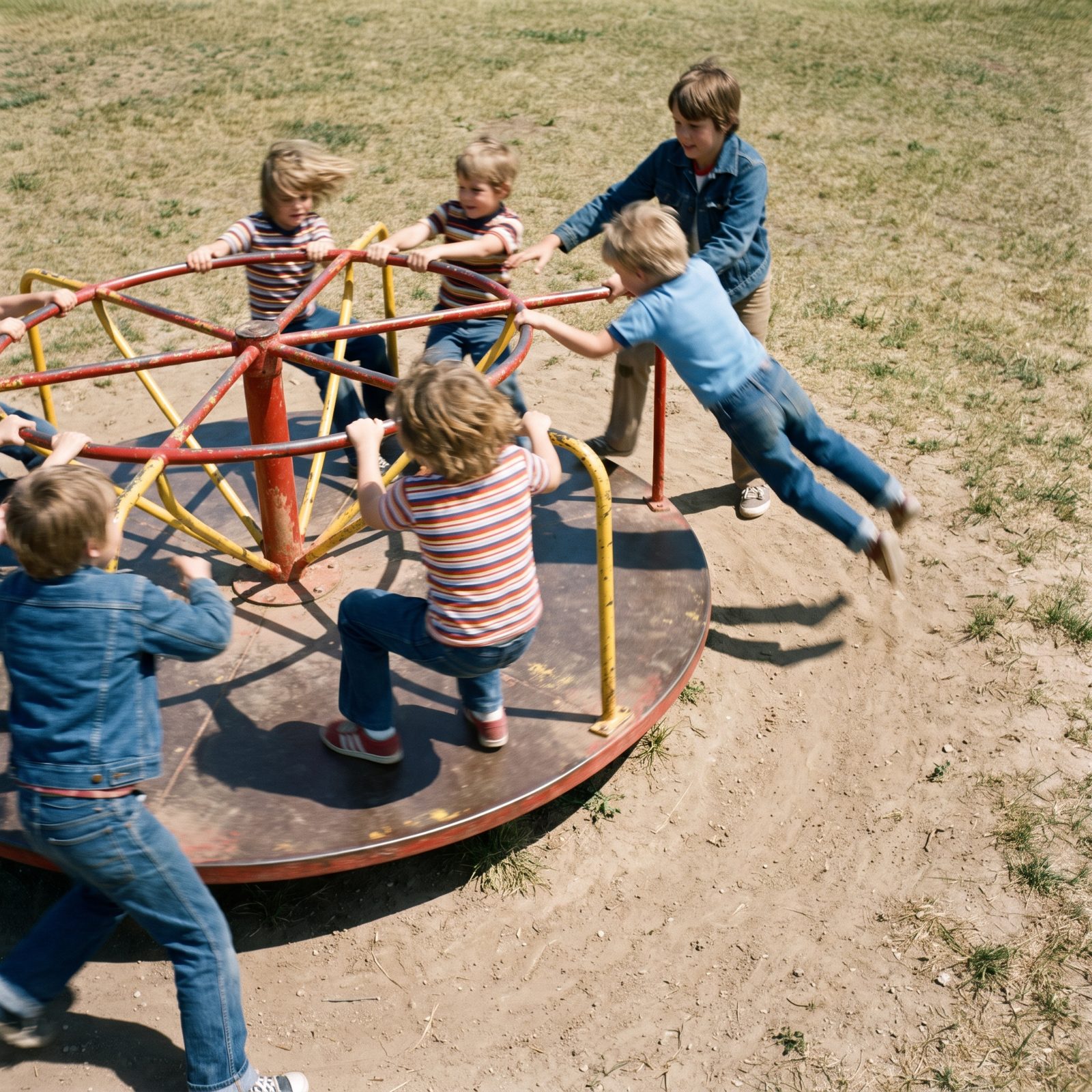
The whole game was spinning it faster than the last kid could hold on.
A big kid grabbed the bars, ran it up to a speed no small kid should’ve been on, then jumped aboard and let physics finish the job. The ground around every one of these was packed bare dirt, asphalt or gravel, not the soft fall surfacing playgrounds require now. Fingers got pinched where the platform met the frame. Kids got flung. That hard surface underneath is exactly why modern standards all but retired the fast free-spinning version.
3. The Backyard Zip Line Built From Clothesline Cable and a Broom Handle
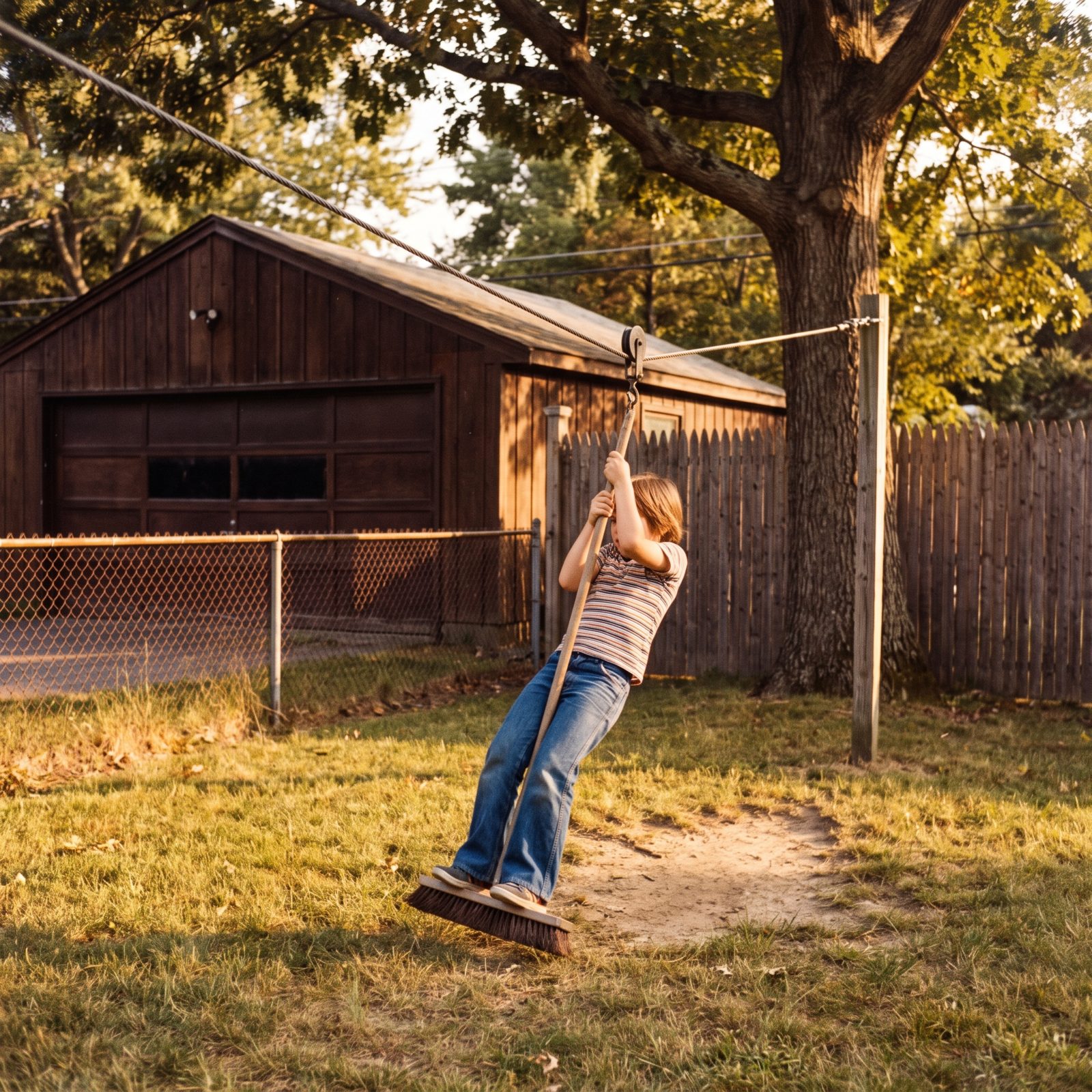
Dad’s garage produced the finest unregulated ride in the neighborhood. A length of aircraft cable or heavy clothesline, a hardware-store pulley, and a seat that was whatever happened to be lying around — a chunk of two-by-four, a broom handle, a loop of rope you gripped with both hands.
The anchors and the stop were where it all fell apart. A cable tied to a branch that couldn’t take the load, and a landing that turned out to be a fence, a swing set leg, or the ground arriving faster than expected. No brake. You dragged your feet or you took the impact. And half the fun was nobody knew if the thing would hold.
2. The Tall Wooden Seesaw That Slammed You Into the Dirt
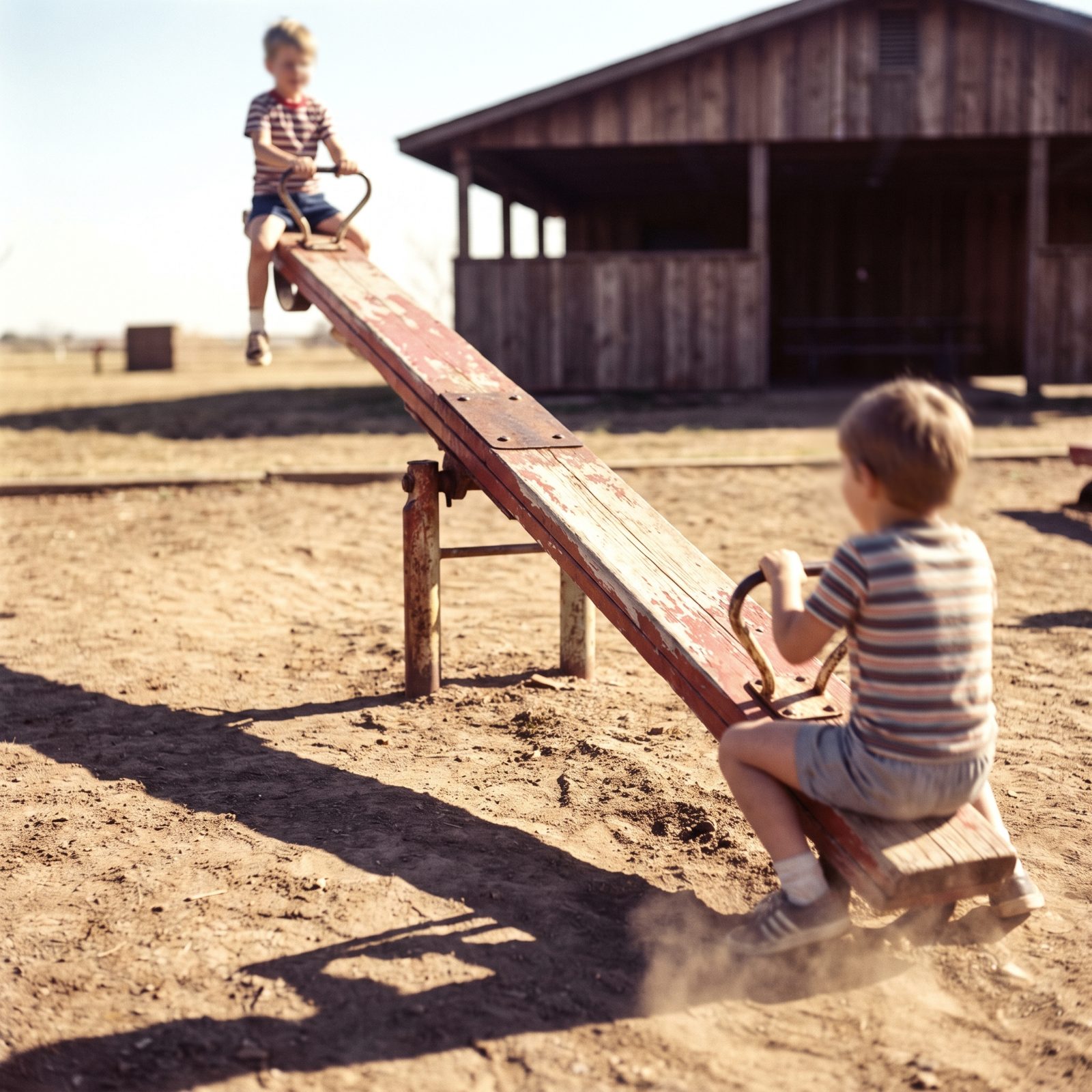
The cruelest trick on the playground was simple: wait until your friend is at the top, then step off.
The high end crashed down, the kid up top dropped, and the bottom end drove straight into a tailbone. No springs. No rubber bumpers. No shock stops under the ends — just a wooden plank on a steel pivot and a hard dirt rut hammered flat by thousands of landings. Pinched fingers under the seat came standard. Modern seesaws use spring mechanisms and bumpers specifically to end the slam-and-bail game every 1970s kid knew by heart.
1. The Metal Slide That Cooked in the Afternoon Sun
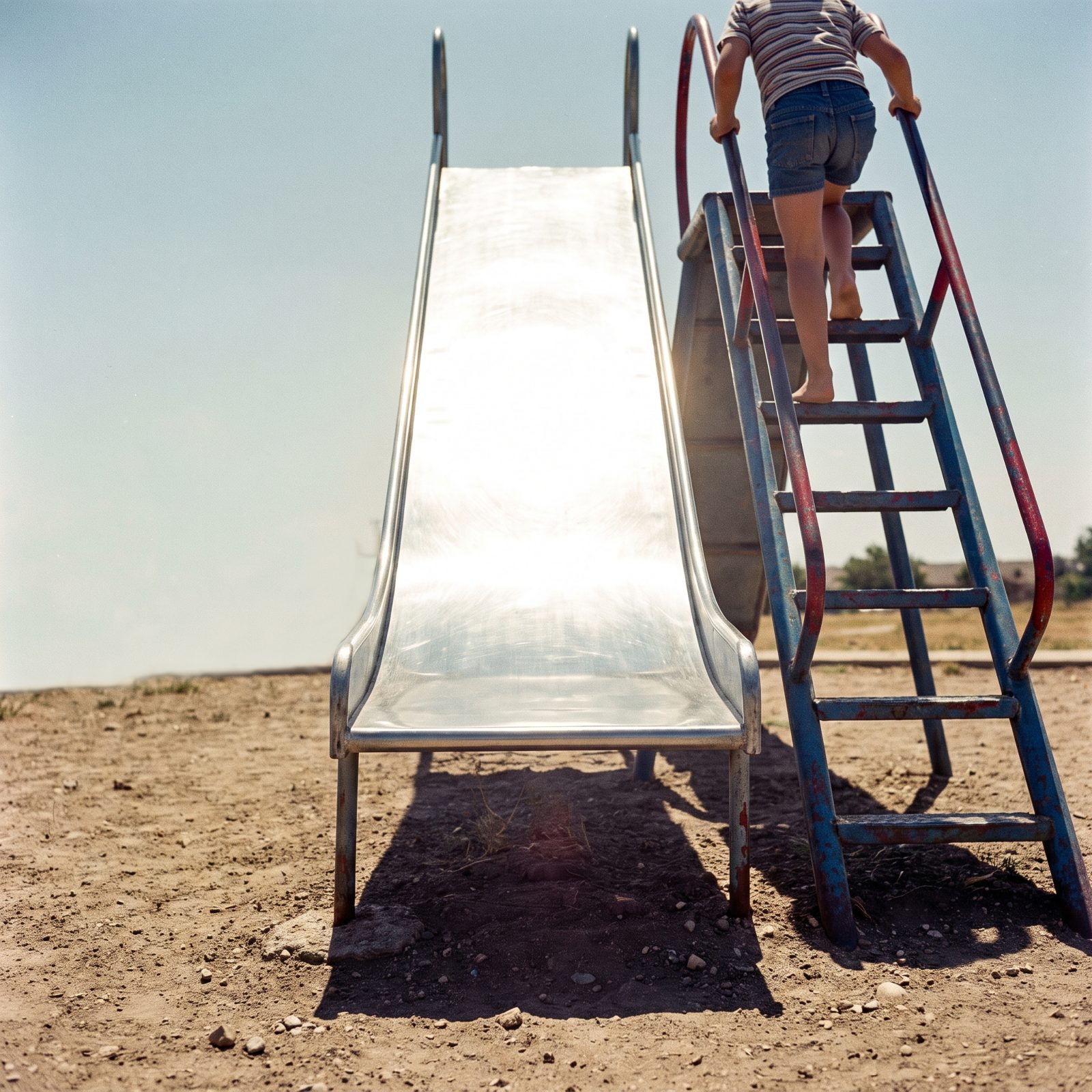
Galvanized steel in direct July sun turns into a griddle. Every kid learned the hard way, usually on the backs of bare thighs in shorts.
The burns were real, sometimes blistering, and the metal didn’t care how fast you went. Tall versions with open sides piled a fall hazard on top of the heat. Smart kids tested the surface with a hand first, rode down on a towel, or waited for shade. The rest took the burn and remembered it forever.