The ride always falls apart twelve miles from the car. A spoke pings loose. A derailleur snaps on a shard of glass nobody saw coming. That’s where the gap shows up between riders who pack the obvious stuff and riders who pack the clever stuff, because a multi-tool and a spare tube cover maybe half of what actually ends a day out. The rest of the failures laugh at a tube. What follows are the accessories seasoned mechanics and long-haul riders tuck away and never mention until somebody’s stranded. Small, strange, and worth more than their weight in cold roadside hope.
Please note that some of the images in this article were created with the assistance of AI.
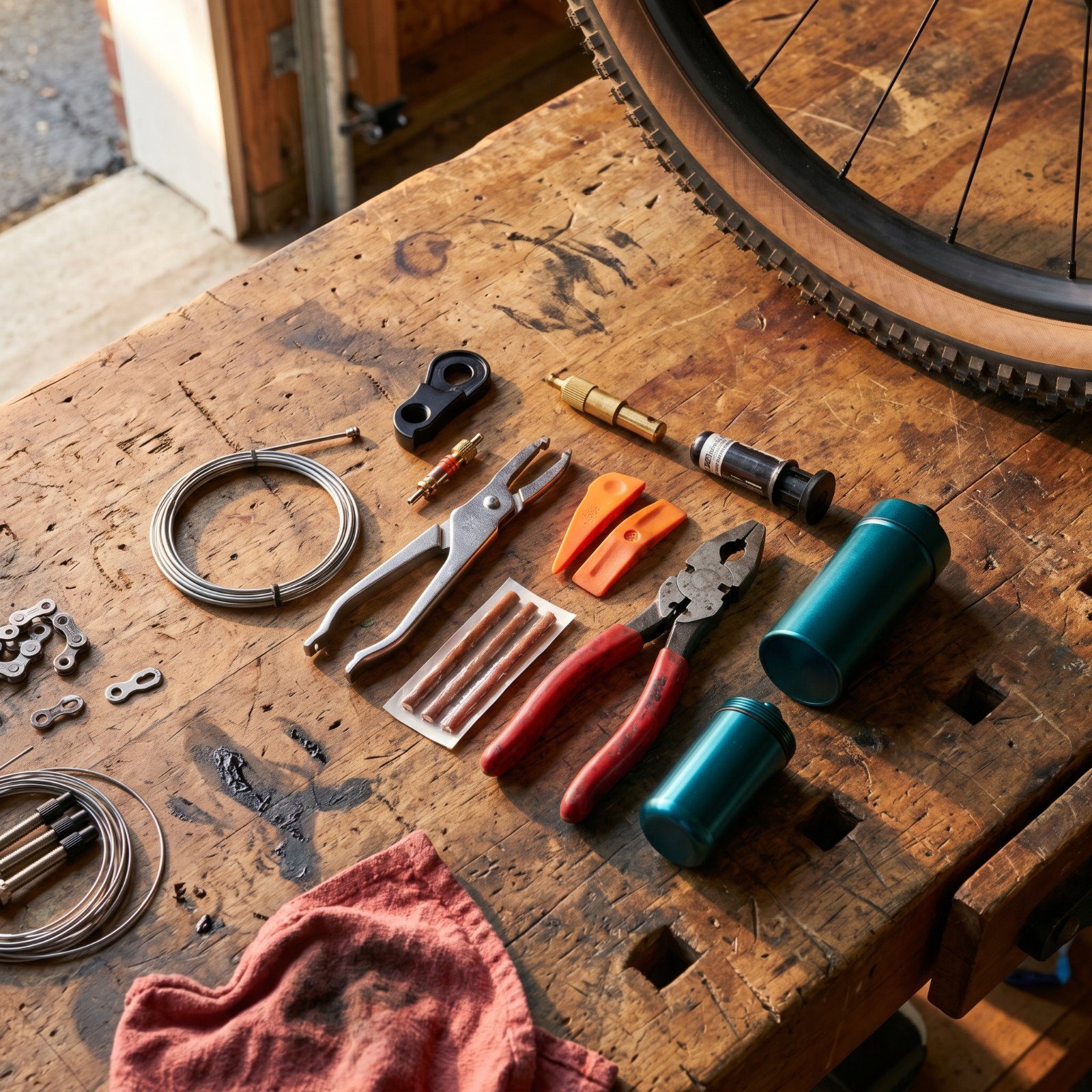
43. Emergency Replacement Spokes That Coil Inside a Saddlebag
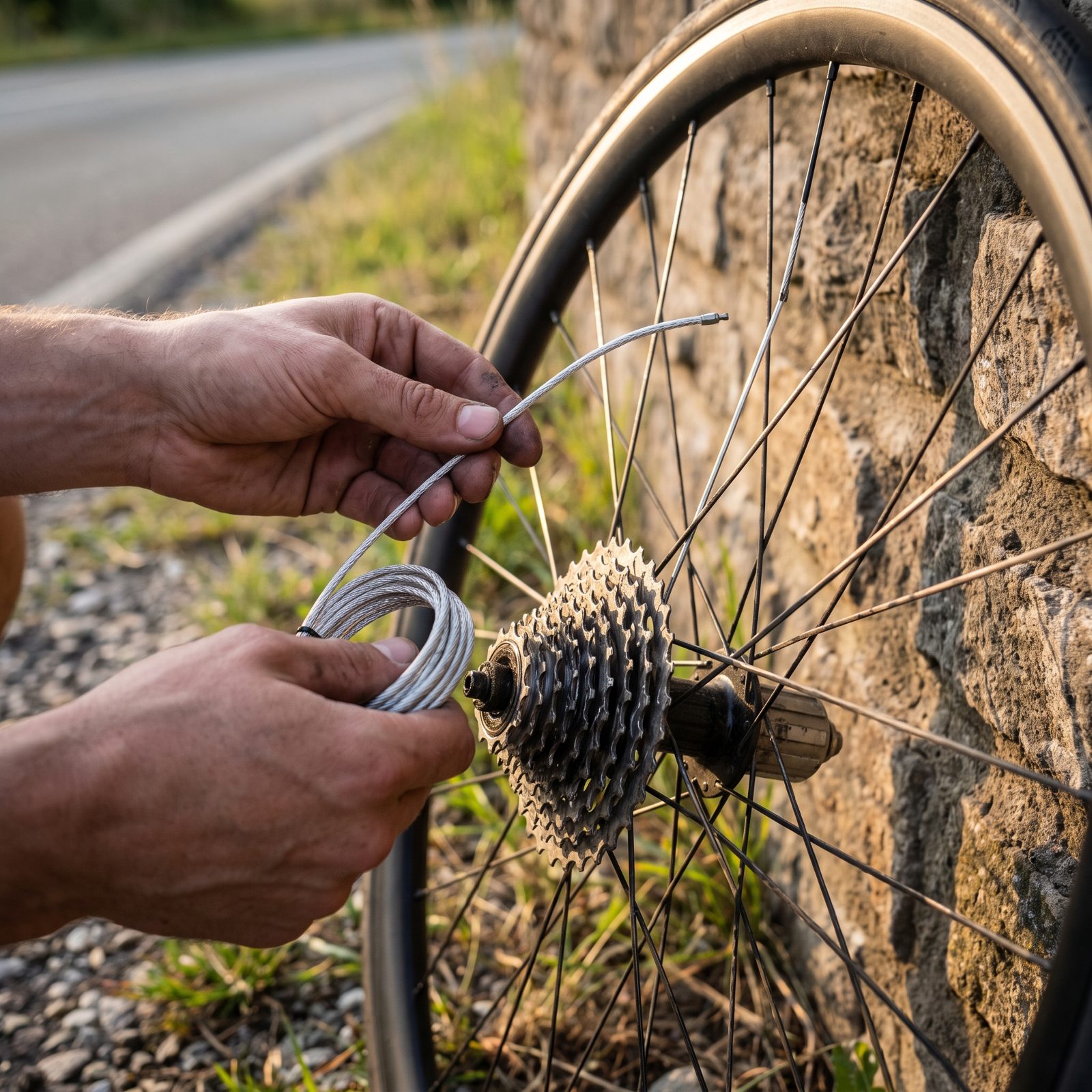
A broken rear drive-side spoke used to mean a walk. Now it means two minutes. These braided-steel cable spokes coil into a loose loop about the size of your hand and live flat against the wall of a saddlebag, forgotten until the day a spoke lets go on the cassette side.
Here’s the clever part: you don’t have to pull the cassette. Just uncoil the flexible cable right there beside the hub, feed it into place, and it gets you rolling true enough to finish. Permanent? No, and nobody’s pretending it is. But it’s the difference between riding home and calling someone who’s annoyed to hear from you.
42. Universal Emergency Derailleur Hangers That Can Save the Ride Home
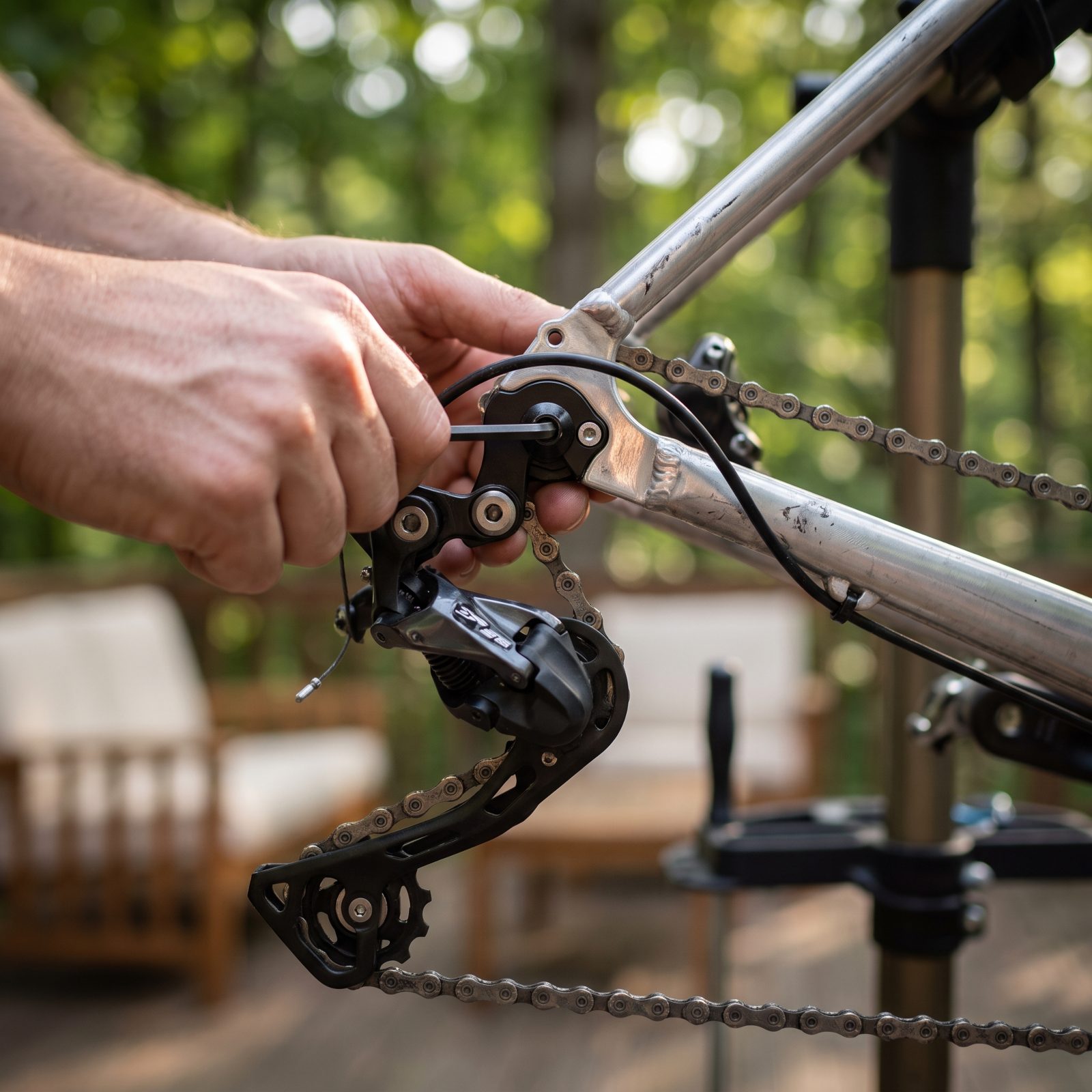
Bend a hanger hard enough and the derailleur folds into the spokes. That’s a day-ender, and every brand uses a slightly different hanger, so the right replacement is never in your pack.
Universal versions get around that with an adjustable, clamp-style design that mounts to almost any standard dropout. Shifting won’t be as crisp as the factory piece. Doesn’t matter. It holds the derailleur in a usable line long enough to limp home without feeding a two-hundred-dollar mech into the wheel, and riders who’ve snapped one on a remote gravel loop tend to carry one forever after.
41. Valve-Cap Core Removers That Put a Tiny Tool on Every Wheel
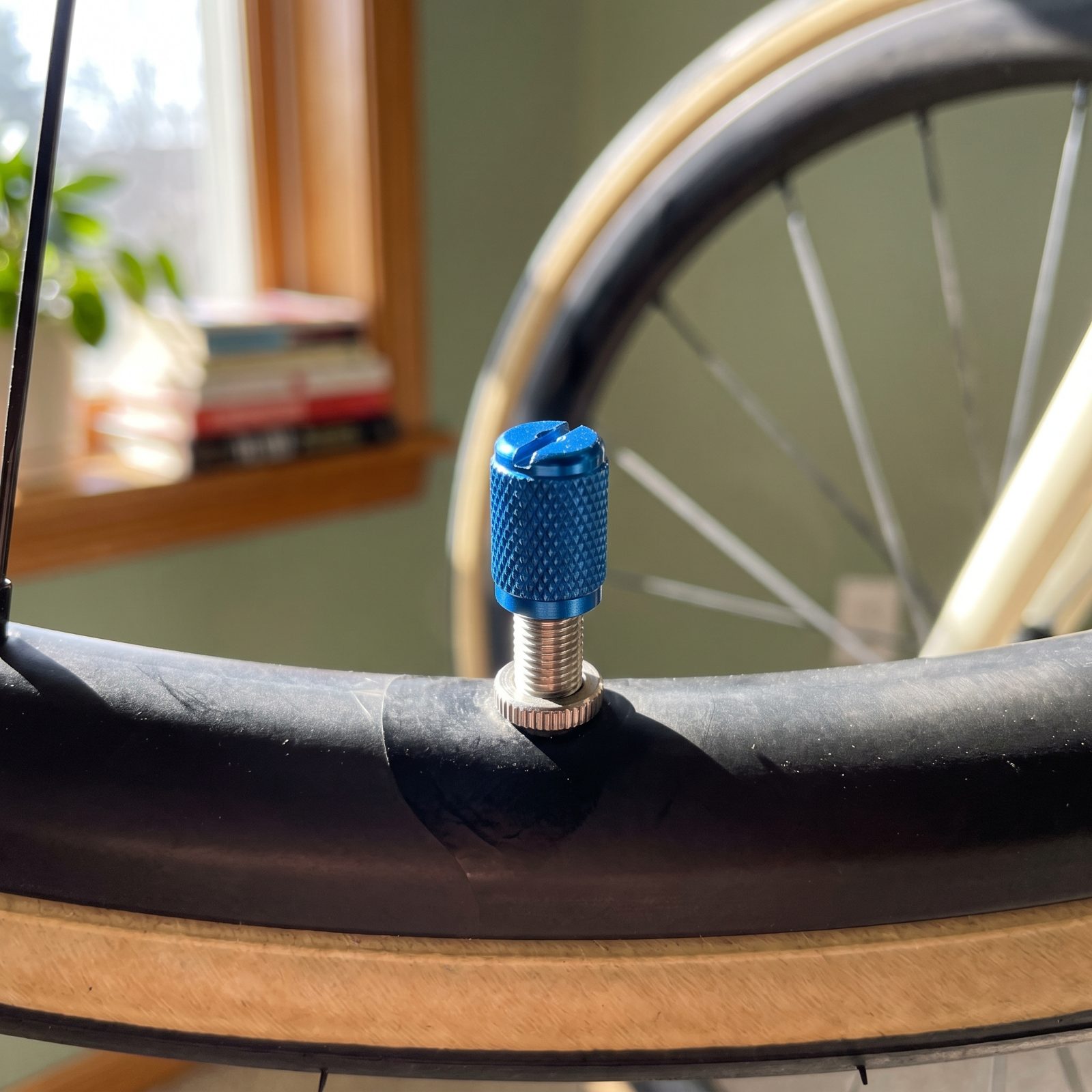
Most riders never think about a valve core until it’s loose and hissing, or stuck and refusing to let sealant in. Normally that means hunting for a dedicated tool you left at home.
These caps hide the removal tool in plain sight. The slotted end threads over the core, and a half-turn tightens a weeping valve or pulls a core to top up tubeless sealant. One sits on each wheel, weighs nothing, and replaces the plastic cap that wasn’t doing a thing anyway.
40. Pocket Rotor-Truing Forks That Straighten a Rubbing Brake Disc
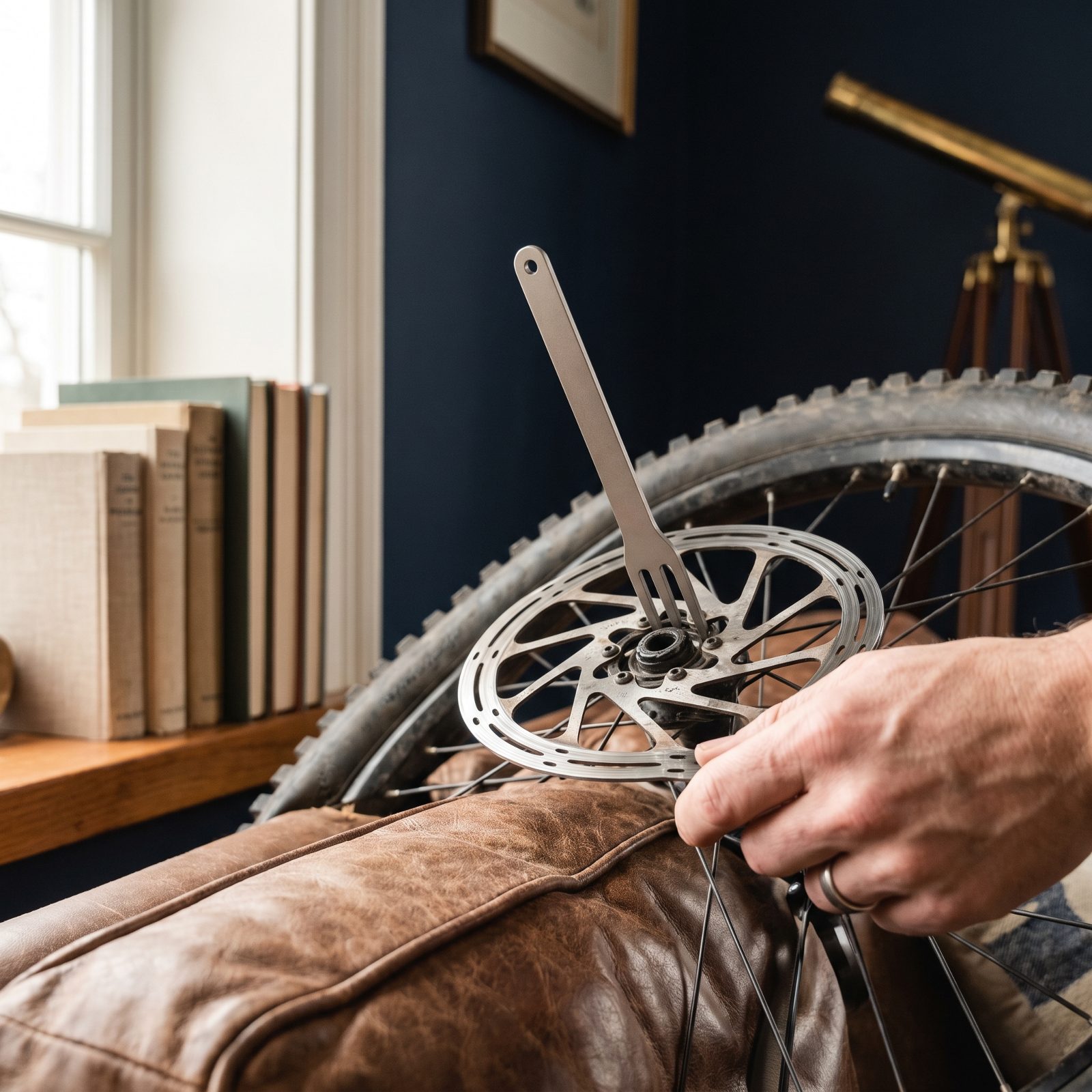
That faint tick-tick-tick on every rotation is a rotor kissing a brake pad, and it’ll grind at your patience for the whole ride. The fix is embarrassingly small: a three-tined steel fork that hooks into the rotor’s spider right next to the hub and lets you lever it a hair at a time.
Fits in a jersey pocket. Costs little. Turns a maddening rub into a thirty-second job at the trailhead. Go easy, though — nudge the rotor, spin the wheel, check, nudge again. Most warps are tiny and only need a gentle persuasion rather than a full reshape.
39. Brake-Pad Spreader Wedges That Make Wheel Reinstallation Easier
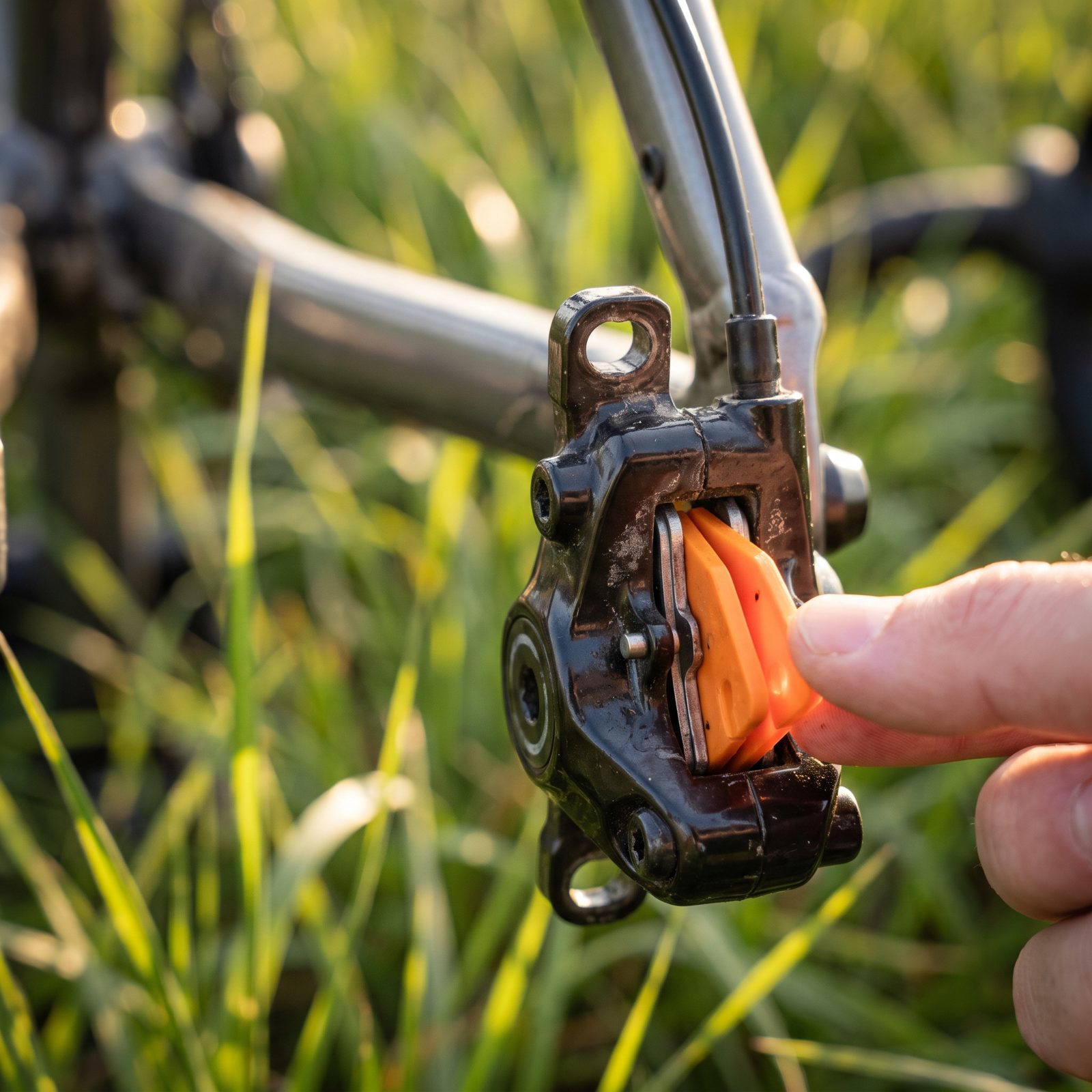
Pull a wheel out of a hydraulic disc bike, pump the lever by accident, and the pistons creep closed. Now the rotor won’t slide back between the pads without a fight, and you’re prying at a brake with a screwdriver you’ll regret using.
Slot a wedge between the orange pads while the wheel is out and it holds the gap open, so reinstalling becomes a drop-in instead of a wrestling match. Cheap, easy to spot so you don’t forget to pull it, and genuinely one of those tools you resent not owning sooner.
38. Adhesive Tire Boots That Rescue a Slashed Casing
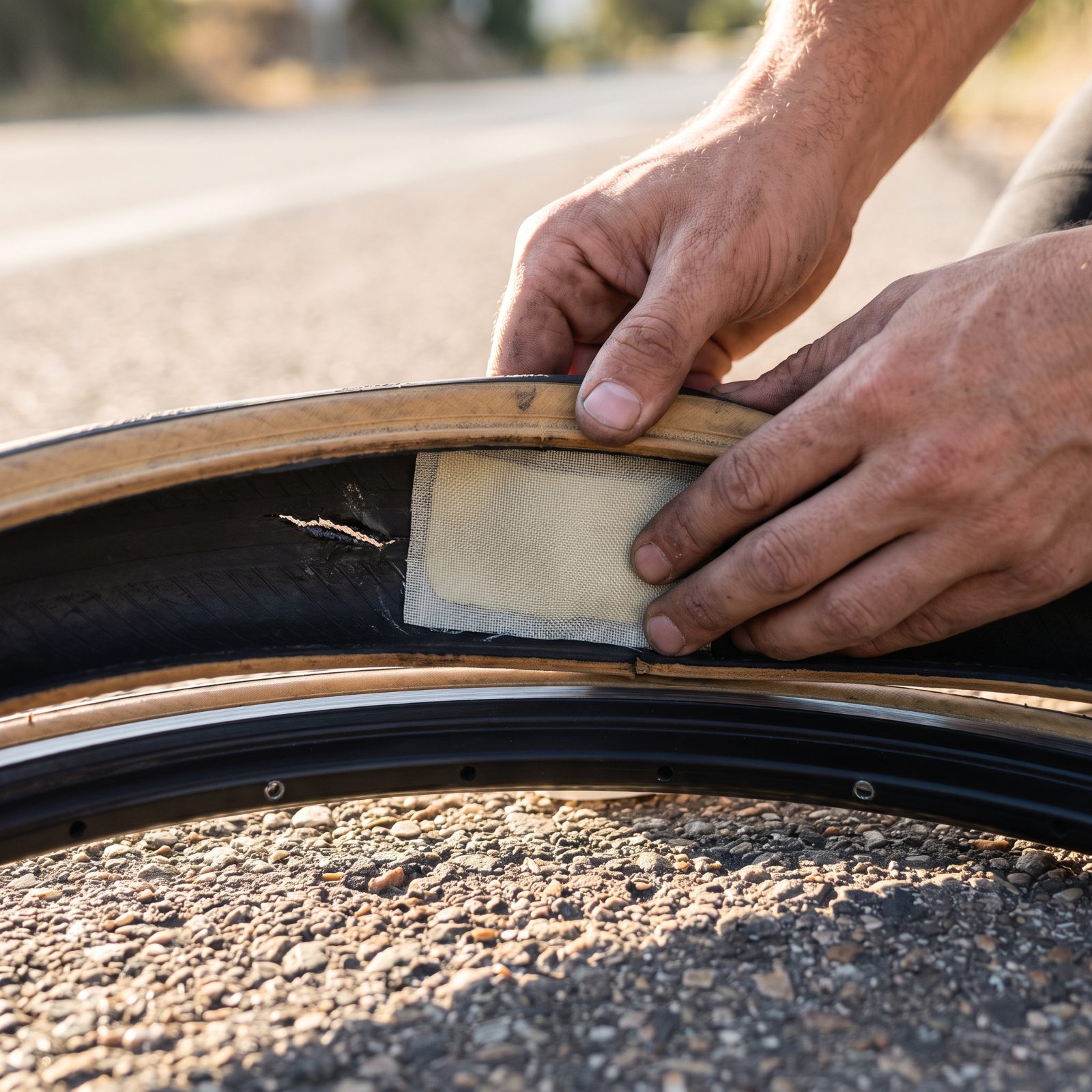
A torn, frayed casing is the flat a spare tube can’t save. Pump the tube and it bulges straight through the shredded fabric like a wad of gum, then blows again within a mile.
An adhesive tire boot is a stiff, sticky-backed fabric patch that sticks to the inside of the casing. It needs to sit squarely over the frayed, shredded section so the tube can’t balloon through. Peel, stick, remount, inflate. It’ll outlast the ride and often several more. Folded flat it takes up no room, and it covers the exact failure that leaves otherwise-prepared riders standing by the road holding a useless pump.
37. Master-Link Pliers That Double as Tire Levers
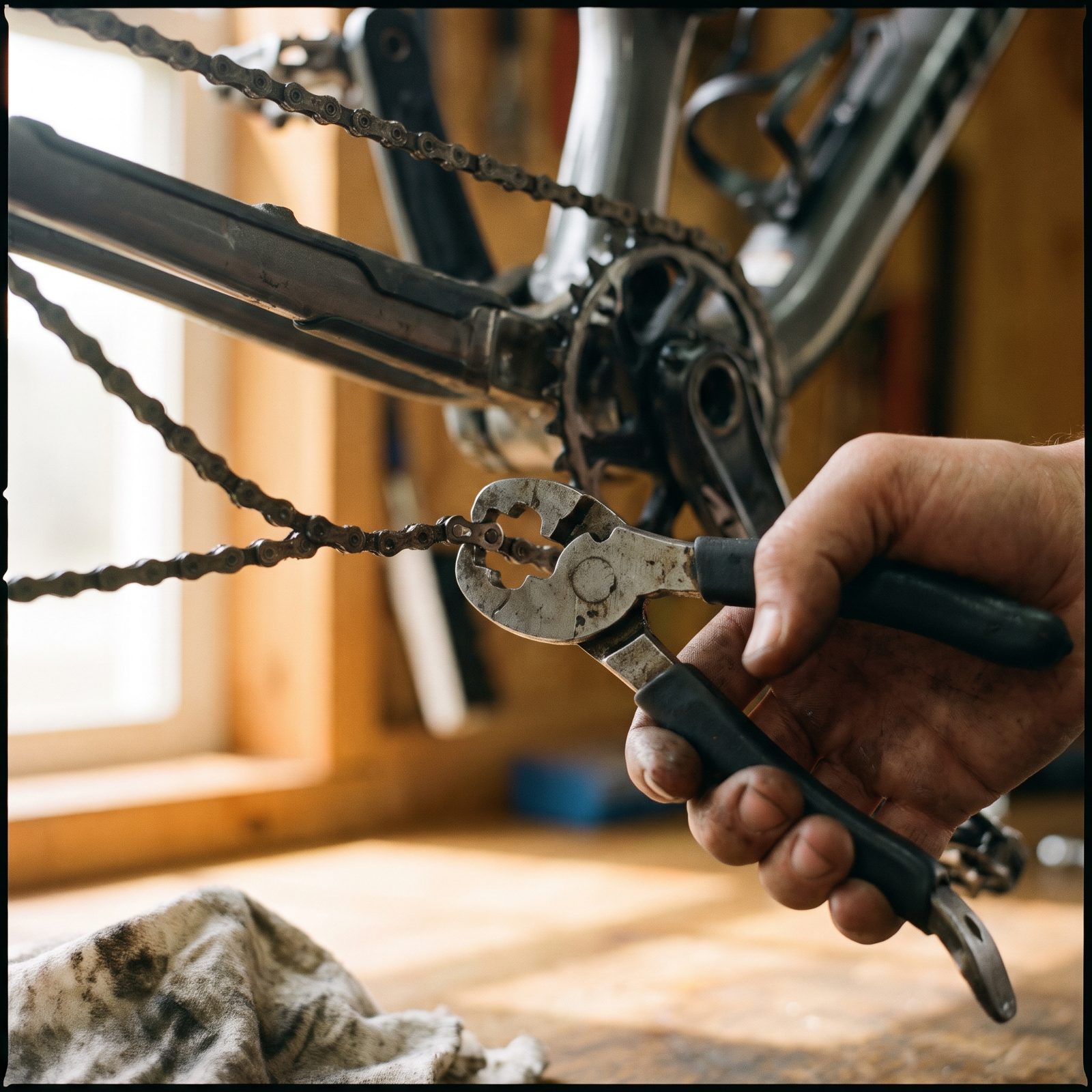
Quick-links are a gift until you try to open one with bare fingers on a cold day, and the chain fights back. These pliers grip and compress the link in one squeeze, closing or opening it without the usual swearing.
The dual-purpose versions earn their spot by shaping a handle end into a tire lever, so a single tool handles both the chain and a flat. Less clutter in the bag. One fewer thing to drop in the gravel. More pack tools should follow that logic.
36. Bar-End Tubeless Plug Kits That Hide Inside the Handlebar
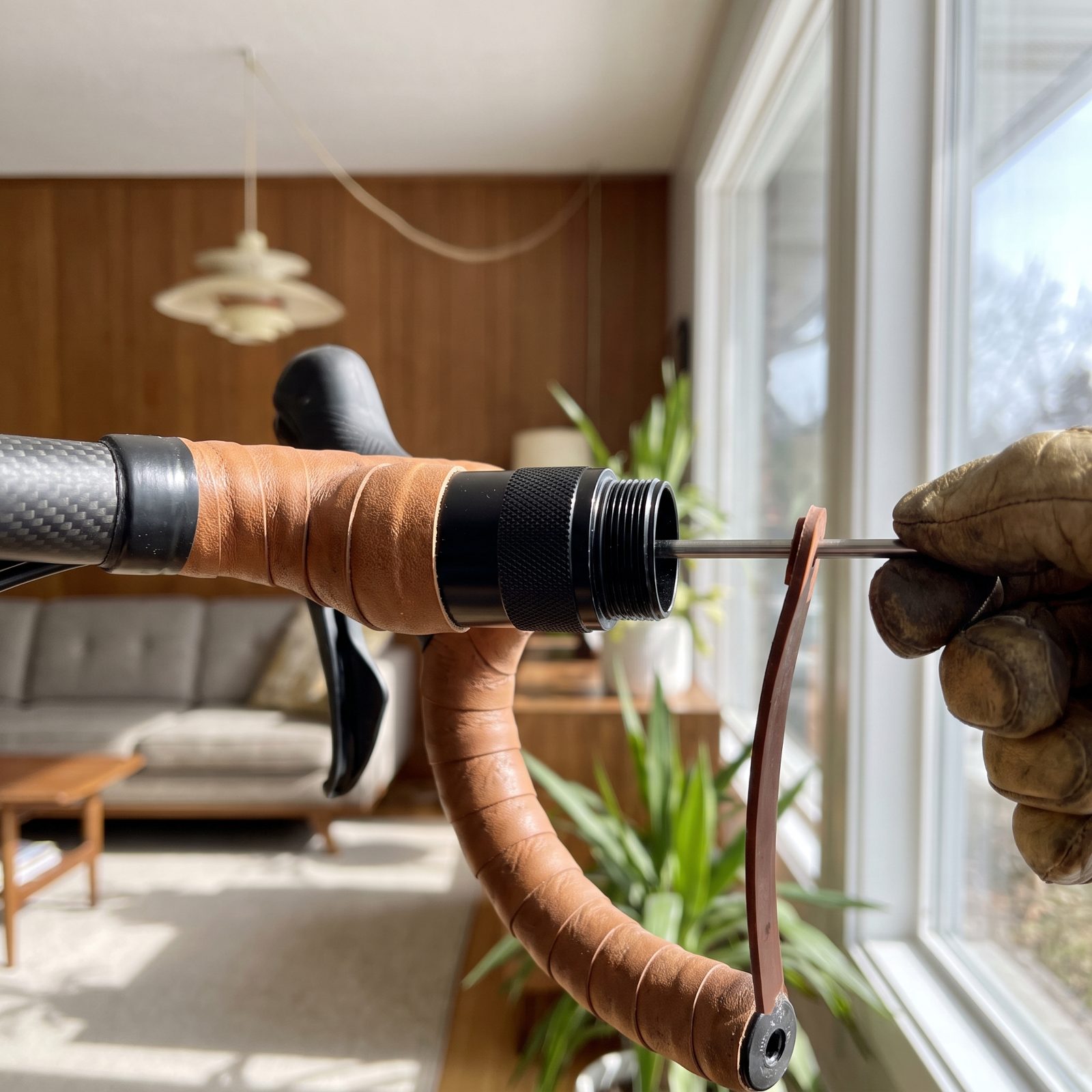
Tubeless plugs end most trail punctures in seconds, but the kit always sinks to the bottom of the pack right when sealant is spraying out of the tire and the clock is running.
The bar-end versions solve that access problem by stashing the plug tool and strips inside the handlebar itself. Pop the cap, pull the inserter, ram the plug home, keep riding. No seatbag dig, no fumbling. The storage is already on the bike you’re holding, which is exactly where you want it when the hole is still hissing.
35. Handlebar Plugs That Store a Spare Master Link
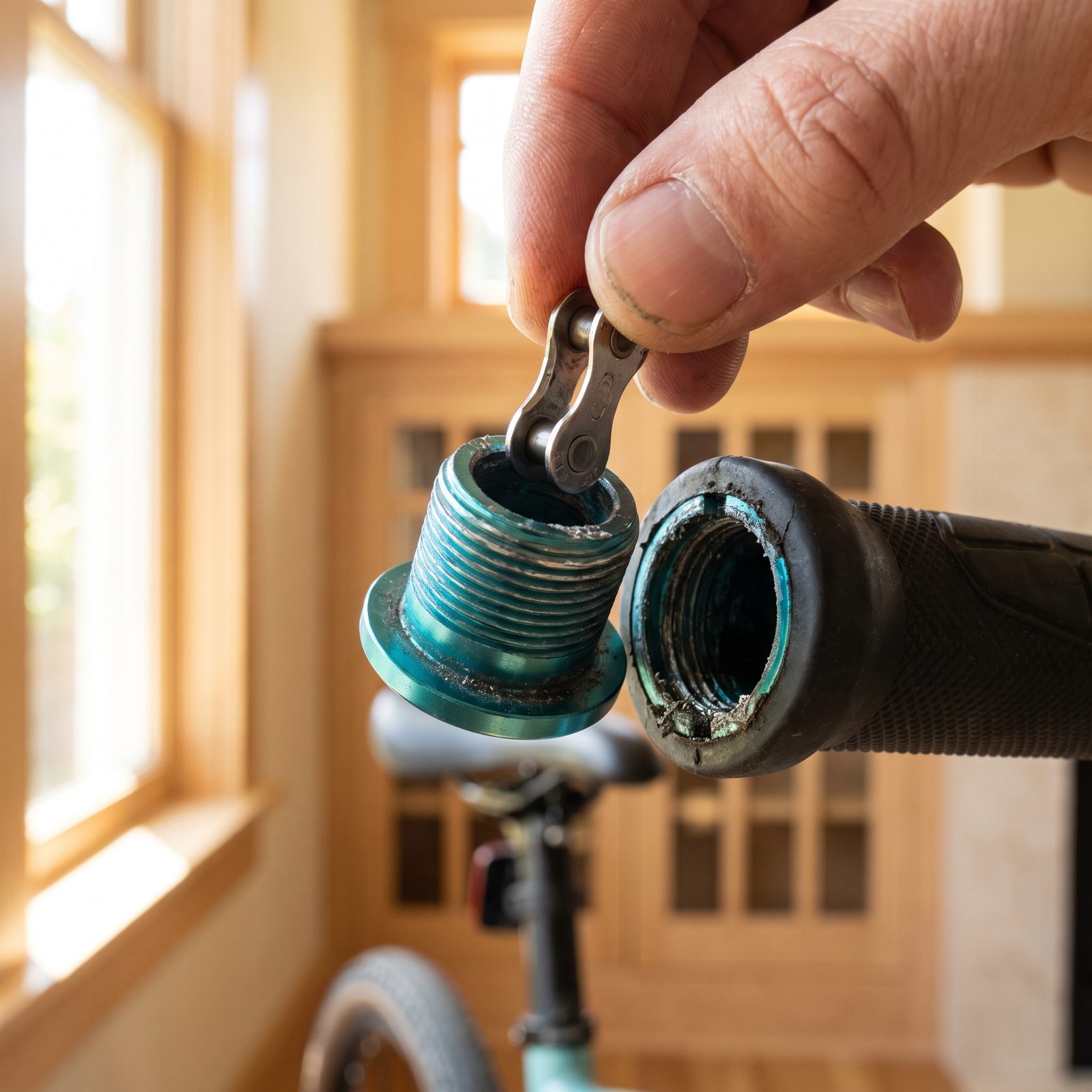
A spare master link is the smallest, most useful part you’ll ever carry, which is exactly why it vanishes. Loose in a bag, it finds the one seam it can escape through.
These bar-end plugs are hollow, threaded sleeves, and the link simply drops into the open bore before the plug screws back into the bar. That little link turns a snapped chain from a long walk into a five-minute fix, and storing it on the bike means it’s there every single ride — not sitting on the workbench where you last cleaned the bag.
34. Steerer-Tube Storage Capsules That Turn Empty Space Into a Tool Compartment
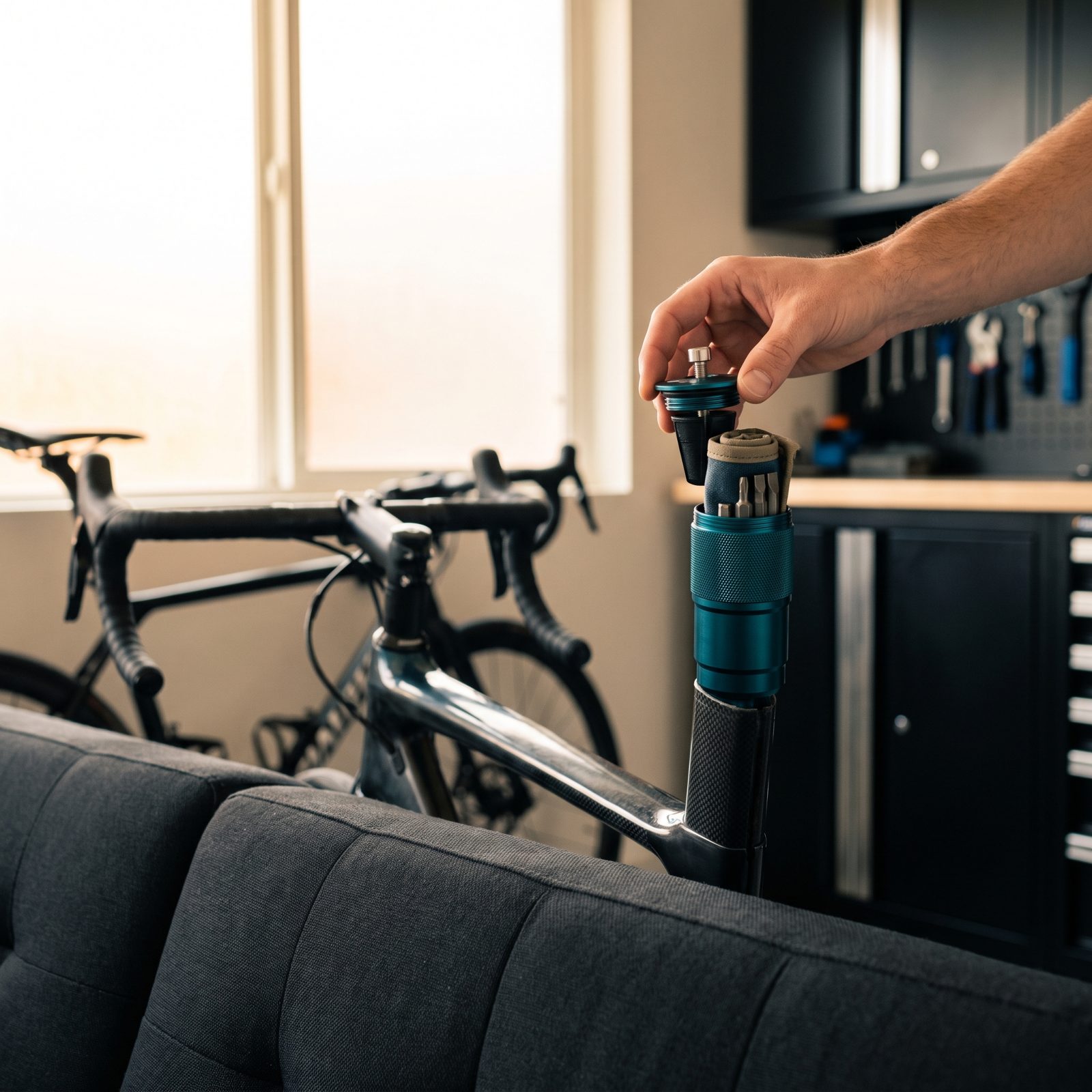
The hollow steerer tube under your stem cap is dead space on nearly every modern bike. A storage capsule turns it into a sealed compartment, with a folding multi-tool riding in its base.
Roll a tube, a tiny multi-tool, a CO2 head, or cash and a spare link inside, cap it off, and the bike carries its own repair kit with nothing hanging off the frame. No seatbag flapping. No bulging jersey pocket. The ride that ends well is the one you planned for before you clipped in.
33. Tubeless Sealant Injectors That Refill Tires Without Unseating the Bead
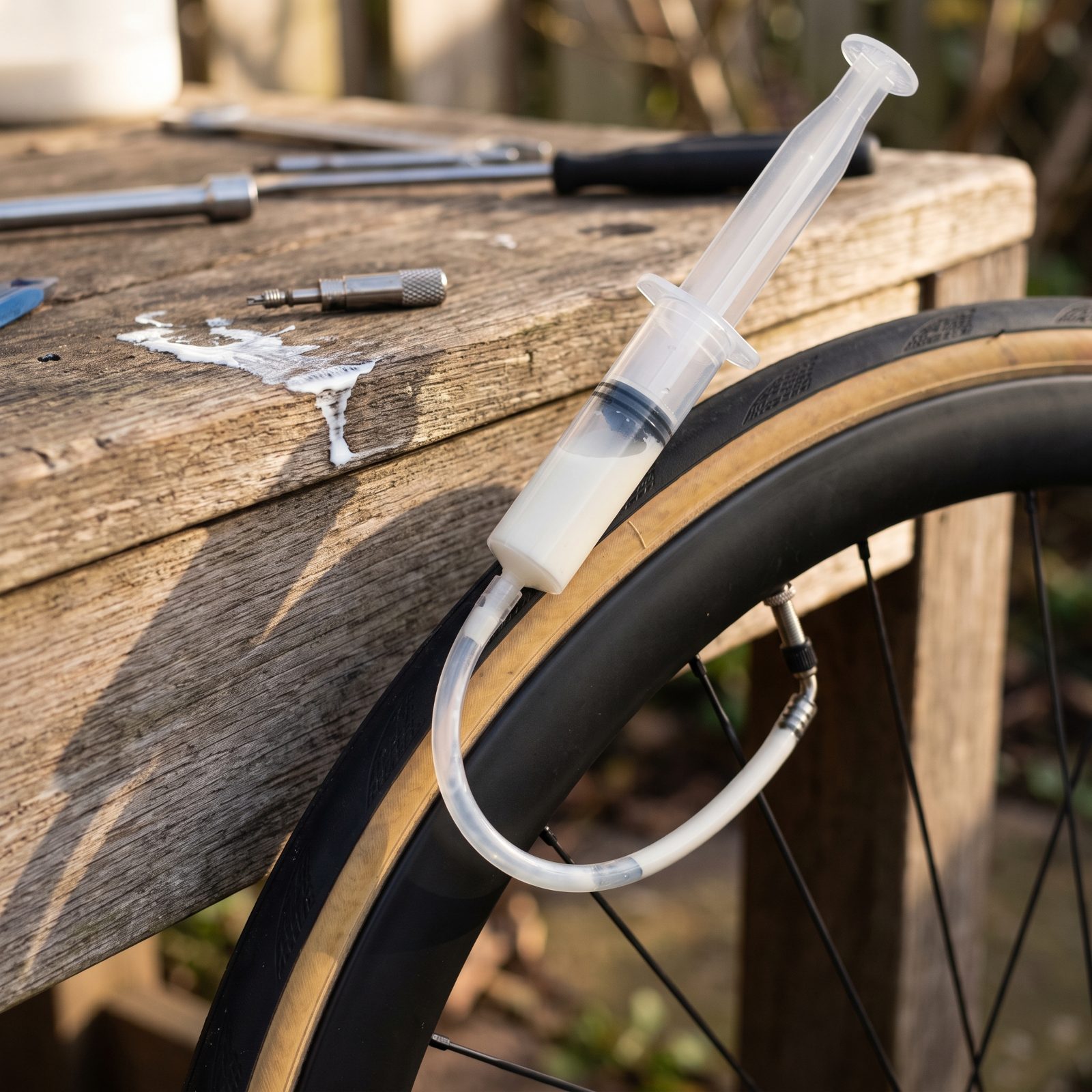
Most riders learn tubeless the hard way. A tire goes soft, they wrench the whole thing off the rim, slop sealant across the garage floor, then spend twenty sweaty minutes fighting the bead back into its seat. The injector skips every bit of that mess.
It threads onto the valve stem once you’ve pulled the core, and you push fresh sealant straight in through the syringe. Bead never breaks, tire stays seated, done. Topping off every few months takes about as long as lacing a shoe and keeps the latex from curing into a useless rubber pancake inside the casing.
32. Control-Valve CO2 Inflators That Prevent an All-or-Nothing Discharge
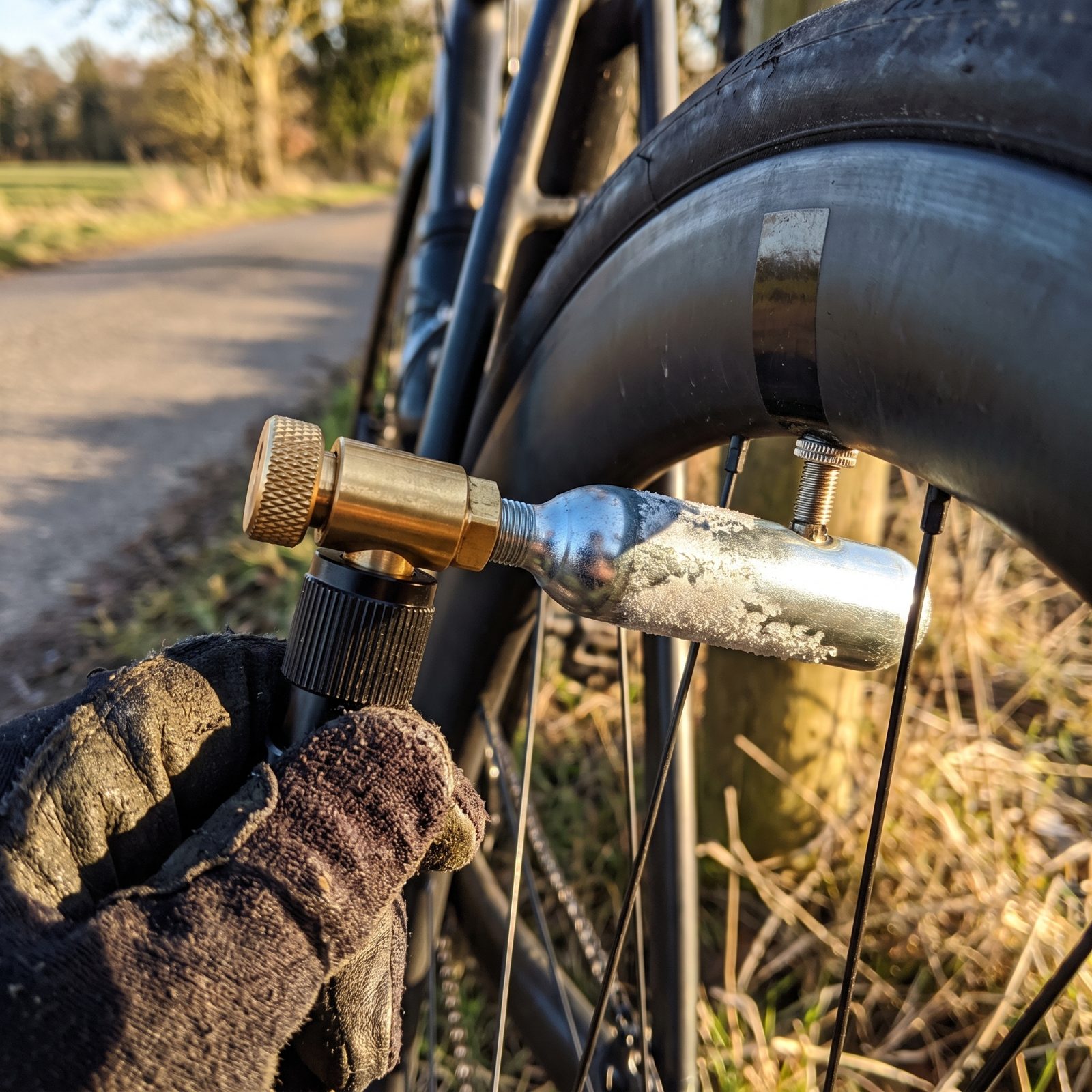
A bare CO2 cartridge is a gamble, plain and simple. You stab it and the whole charge roars out in one shot. If your angle is even slightly off, half the gas hisses into the air and the rest overshoots the tire. Game over, and of course you only packed the one cartridge.
The control-valve head puts a dial between cartridge and valve. Once it’s threaded onto the valve, you meter the gas in, pinch the tire to check pressure, add a little more if it’s soft. A single 16-gram can air up a road tire with a bit left in reserve, and that reserve matters enormously when the car is thirty miles behind you.
31. Presta-to-Schrader Adapters That Make Gas-Station Pumps Usable
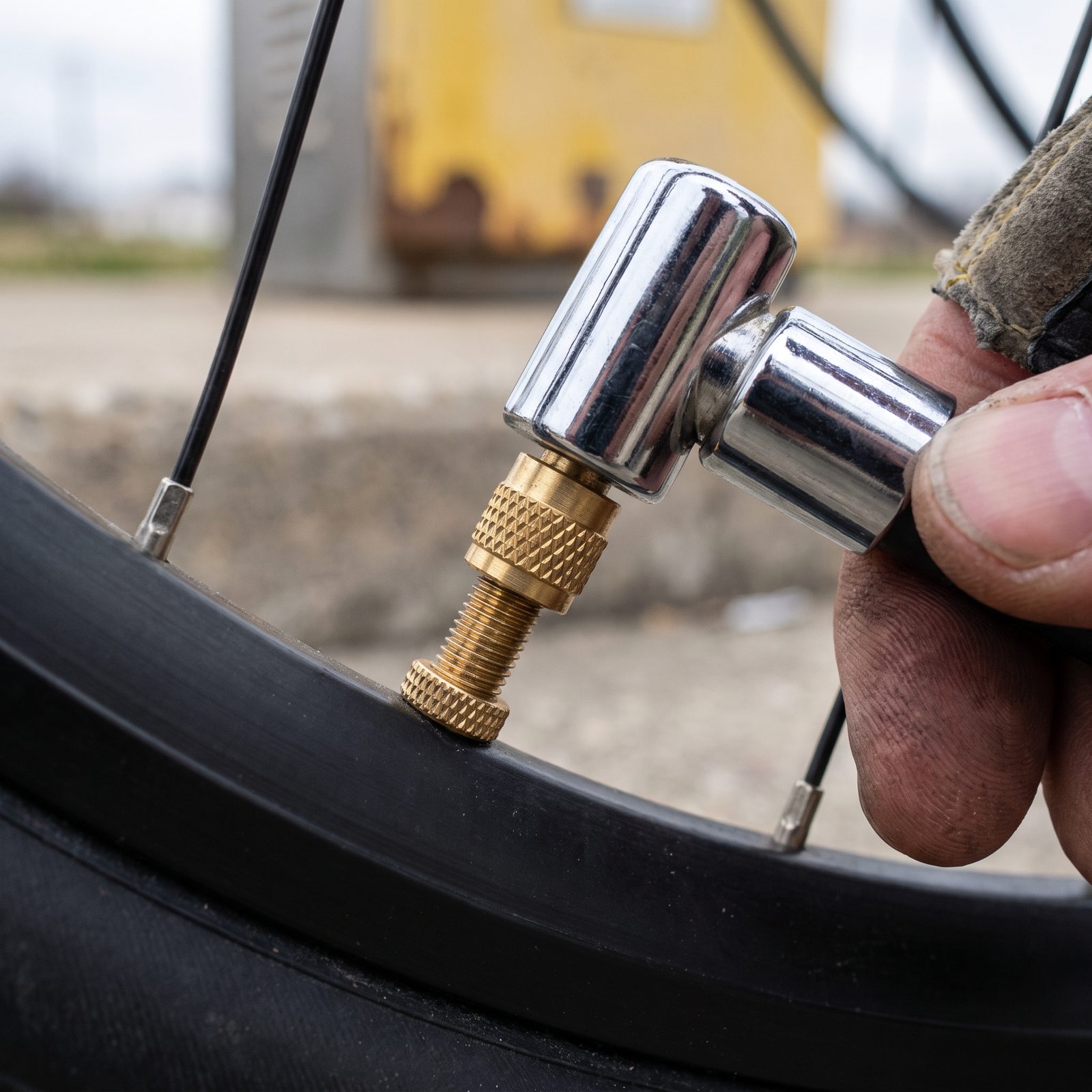
Picture the scenario every rider dreads: flat tire, no pump, a gas station a block away, and a skinny Presta valve the air machine flatly refuses to touch. That slim valve on your road or hybrid bike just won’t mate with a standard Schrader chuck.
A brass adapter about the size of a pencil eraser fixes the whole thing for pocket change. Thread it onto the open Presta valve and the gas-station hose grabs on like it’s airing up a pickup. One lives permanently in a saddlebag, forgotten for years until the afternoon it saves your ride home.
30. Steering Stabilizer Springs That Keep a Loaded Front Wheel From Flopping
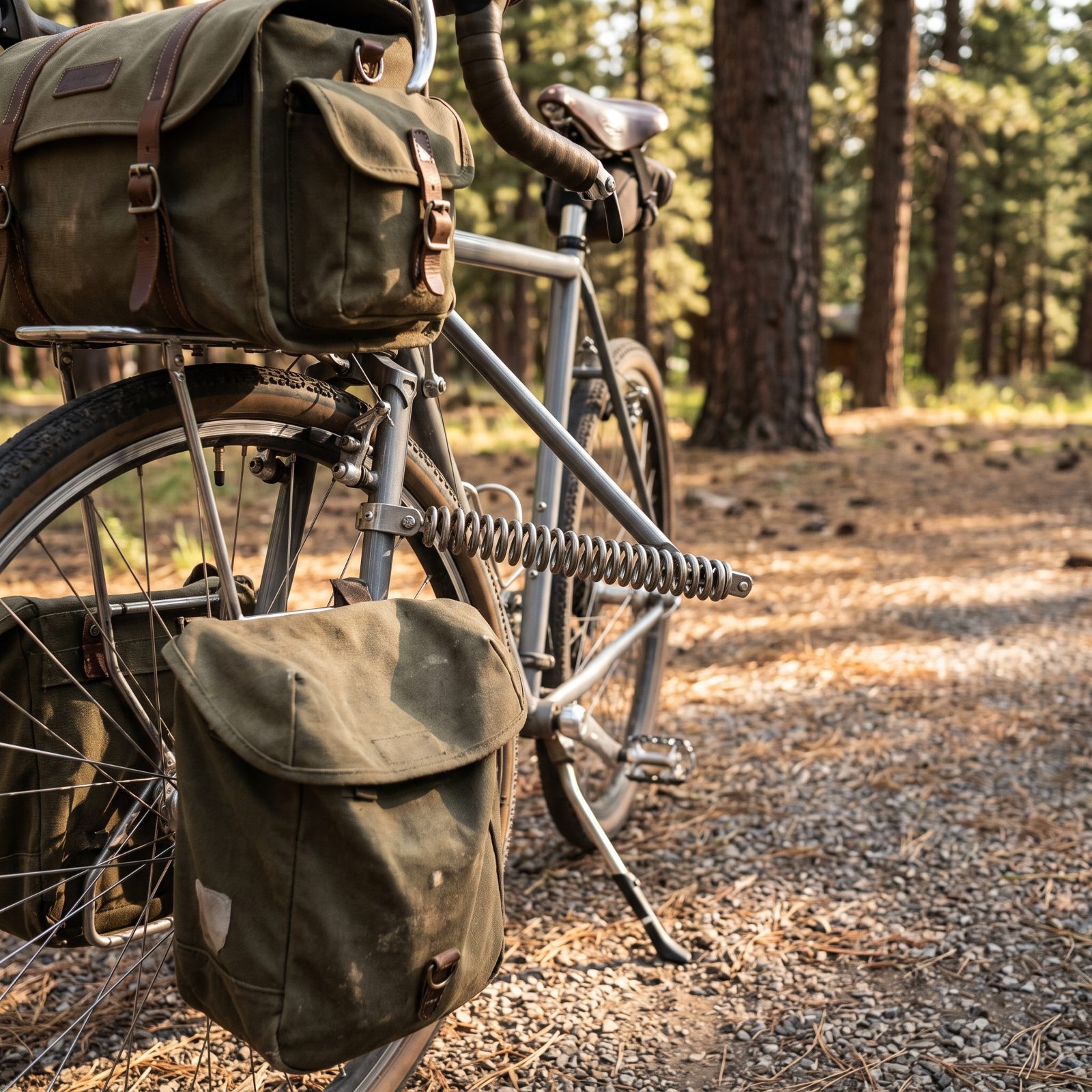
Load a front rack with panniers and lean the bike against a wall, then watch the wheel swing hard to one side and drag the whole rig down with it. That flop is the weight of the bags turning your fork into a lever.
A steering stabilizer spring centers the fork and fights the swing. Parking gets easier. Walking the bike beside you gets easier. And at low speed, where a heavy front end goes twitchy, everything steadies down. Touring riders who’ve chased a tipping bike across a parking lot bolt one on and never look back.
29. Brake-Lever Parking Bands That Hold a Loaded Bike in Place
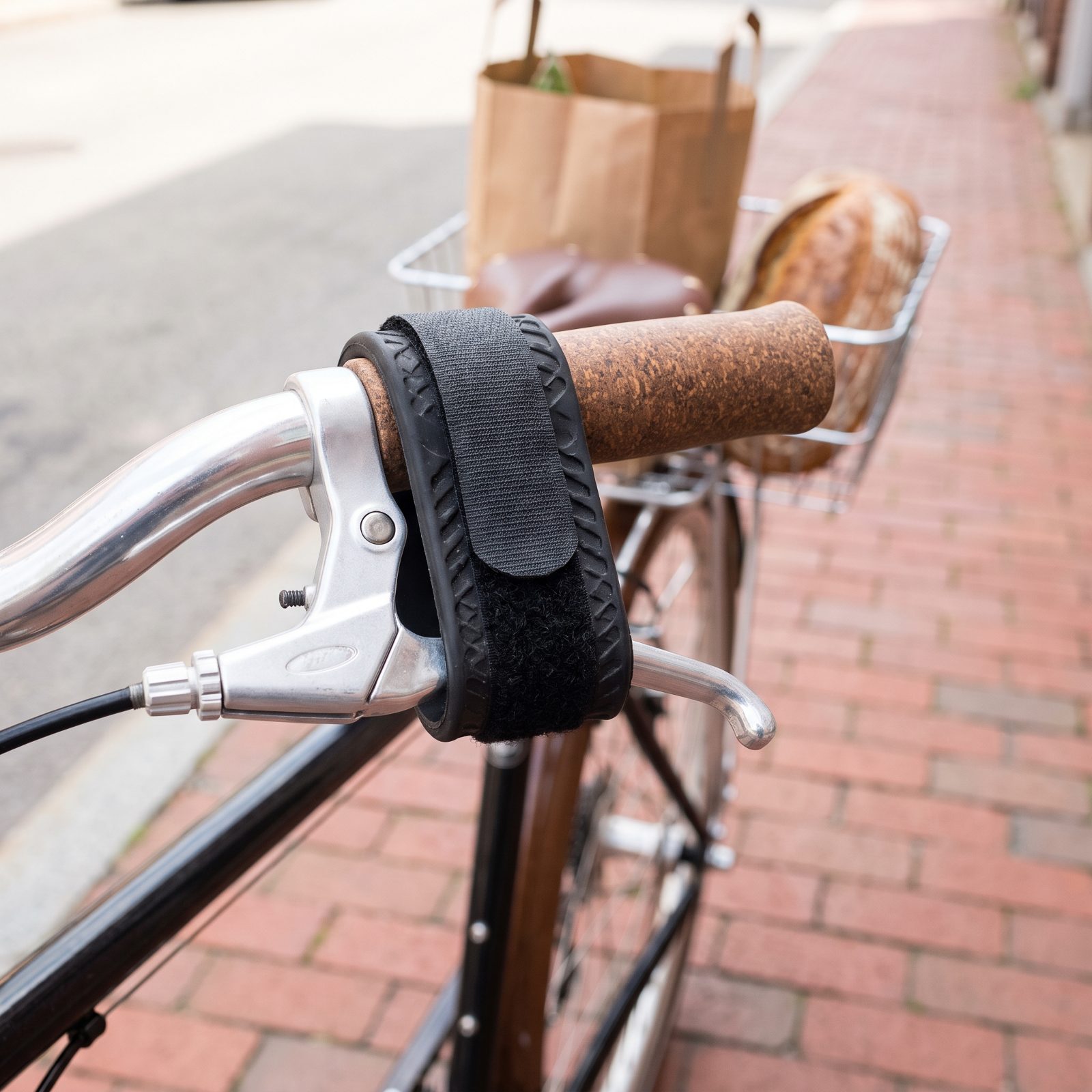
A loaded bike on a slope rolls the second you turn your back. Kickstands keep it upright, not still.
A parking band is just a velcro or rubber strap that pulls the brake lever tight to the grip and holds it there, so the wheel locks and the bike stays put. You can load groceries or duck into a shop without one hand permanently welded to the brake. Costs a few bucks, weighs nothing, and cargo-bike riders treat it like a seatbelt once they’ve used one.
28. Saddlebag Anti-Sway Brackets That Stop Luggage From Wagging
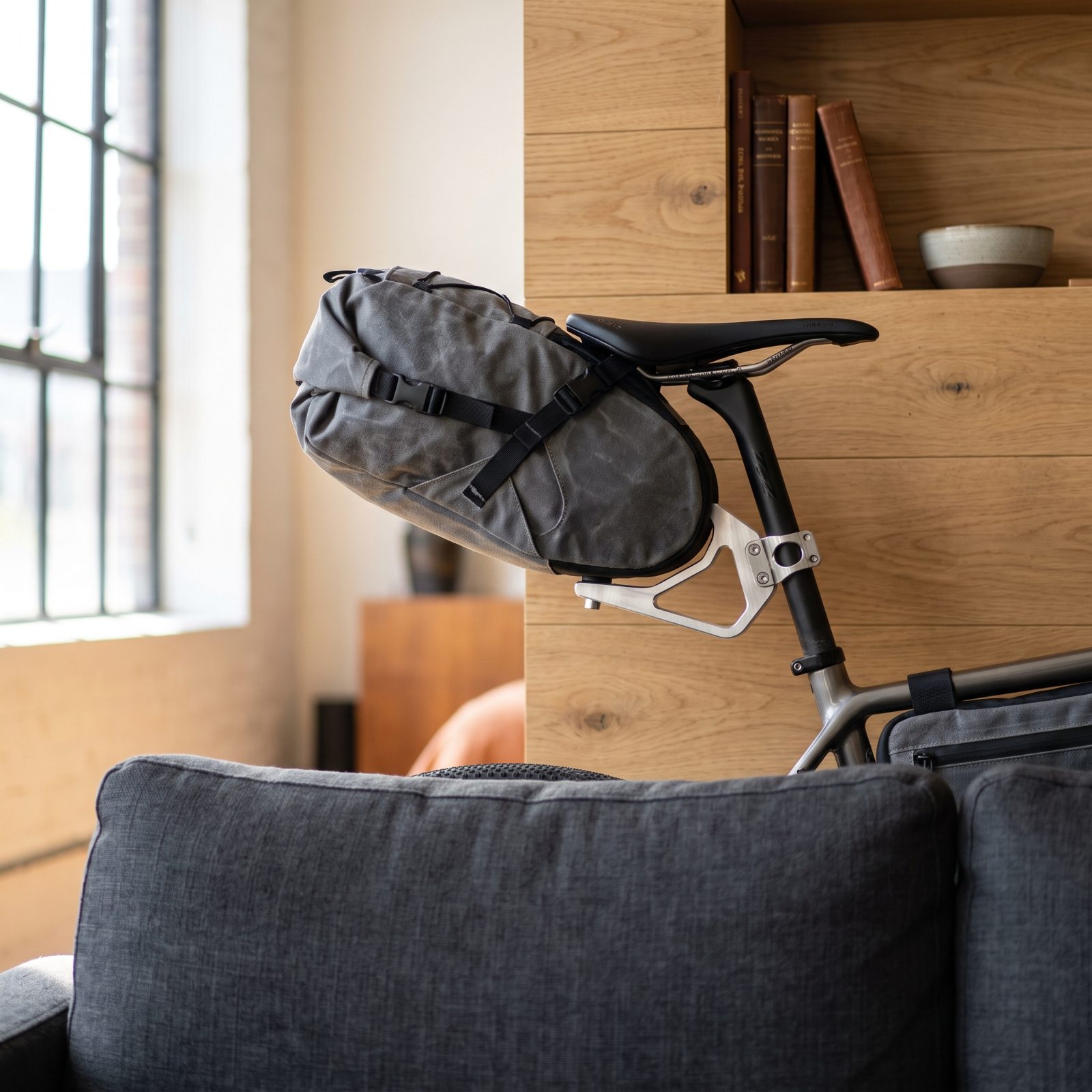
A big saddle pack full of gear becomes a metronome on rough ground. Swings left, swings right, and all that motion bleeds straight into the handling. On a fast descent it’s genuinely unsettling, the kind of wobble that makes you grab the brakes.
An anti-sway bracket gives the bag a rigid spine instead of leaving it to dangle off the saddle rails. The pack holds its line, the bike tracks true, and that creepy sense of something steering from behind just vanishes. Anybody who’s fought a wagging seat pack across washboard gravel knows exactly why this one earns its keep.
27. Suspension Stems That Take the Sting Out of Broken Pavement
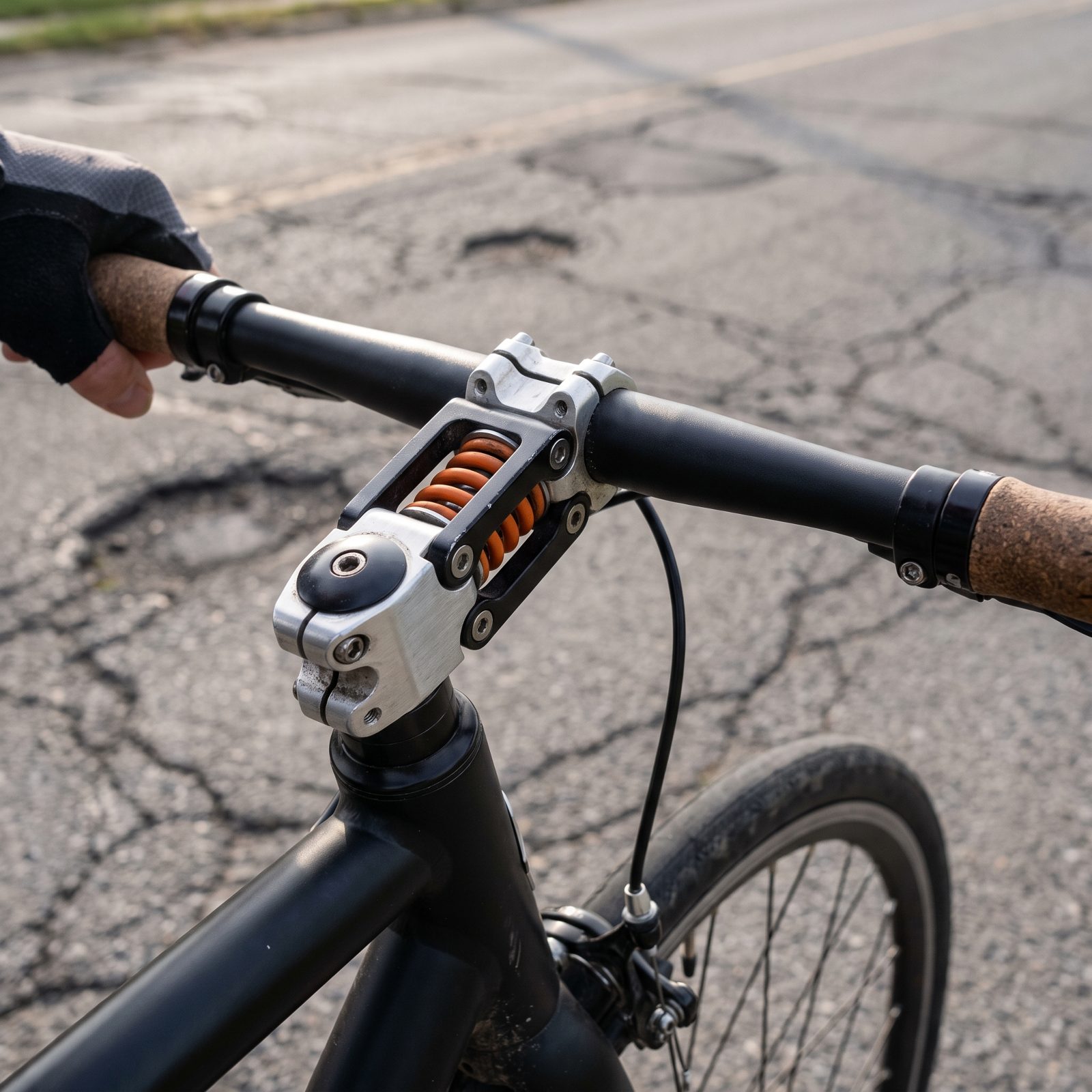
Not every bike can fit a suspension fork, and plenty of riders don’t want the extra weight or the upkeep anyway. A suspension stem is the shortcut.
It sits between fork and handlebar on a little pivoting linkage with an elastomer or spring tucked inside, soaking up the jolts that would otherwise march straight into your palms, wrists, and elbows. Chip-seal, old brick, a road patched more times than it’s ever been paved — the stem knocks the edge off without touching anything else on the bike. For older riders wrestling with hand numbness or wrist pain, it’s a far cheaper answer than a whole new front end.
26. Inner Bar Ends That Add a Wrist-Saving Hand Position
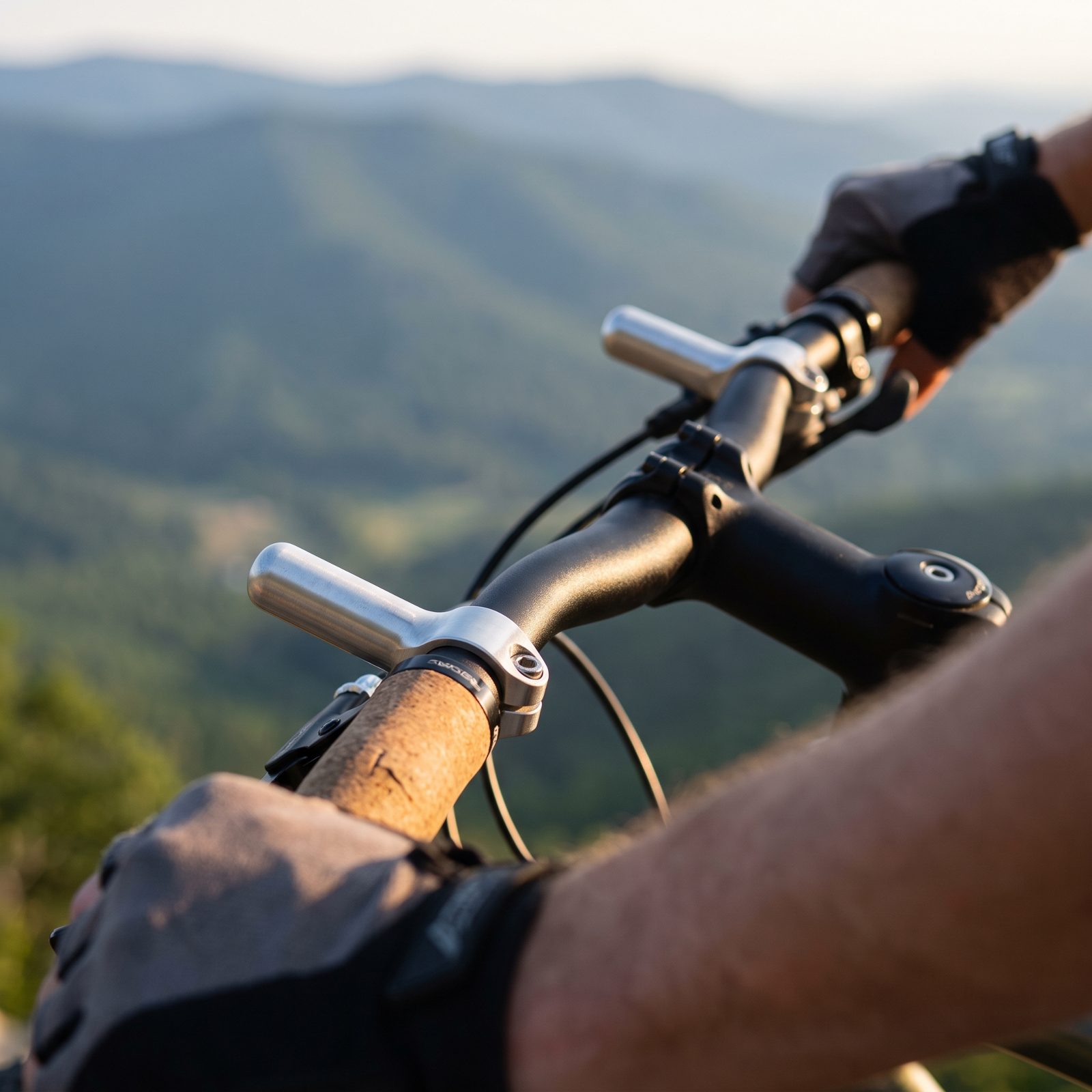
A flat handlebar gives your hands exactly one position. Ride long enough and that single spot turns into a vise on your wrists and a dead zone in your fingers.
Inner bar ends mount inboard near the stem and open up a narrower, more upright grip that rolls your wrists into a natural handshake angle. On a long day you drift between positions the way you shift your feet standing in a slow line, and the numbness that normally creeps in around hour three never shows up. The short stubby ones add the option without snagging on anything in traffic.
25. Pedal Extenders That Create Extra Heel and Ankle Clearance
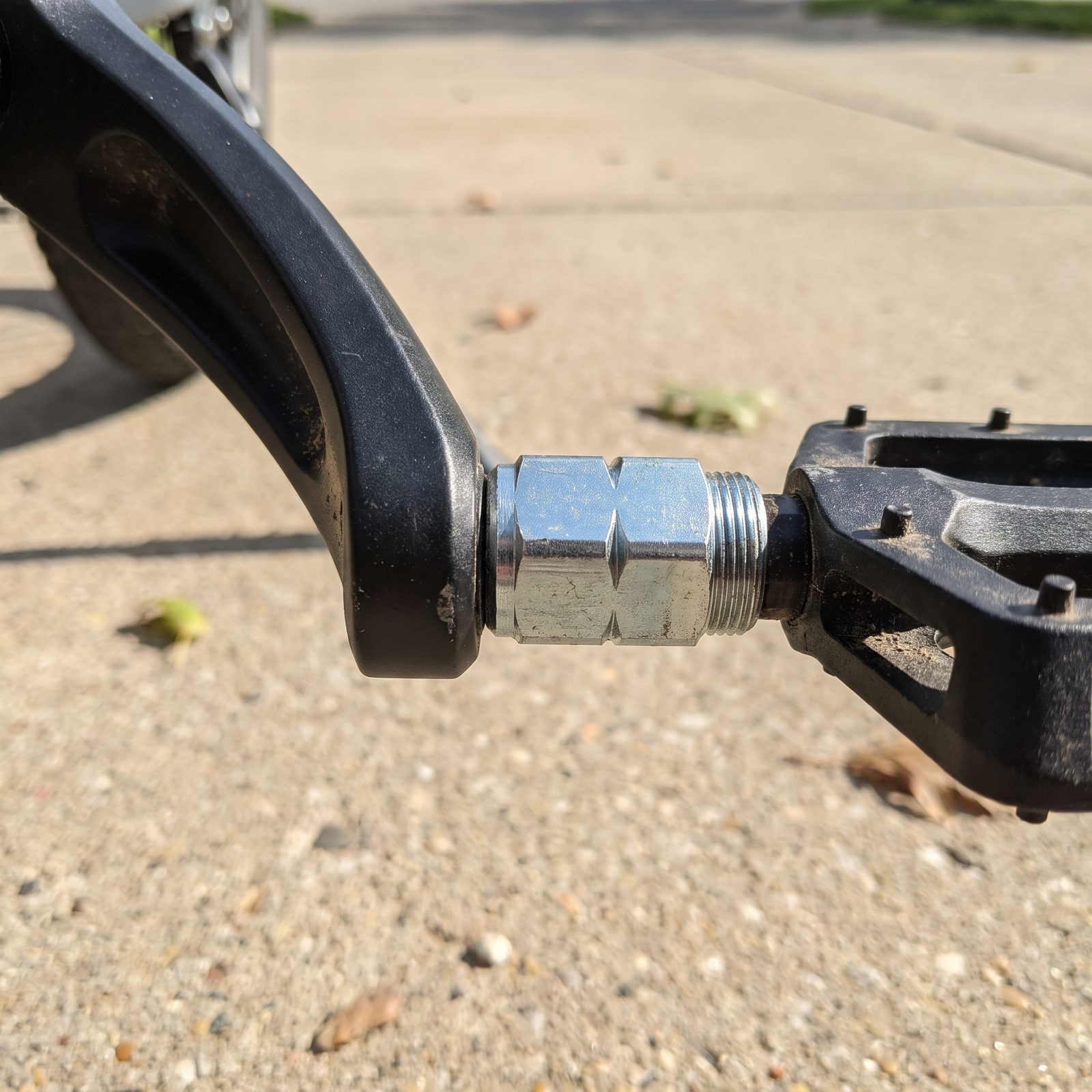
Some riders clip a heel on the crank arm every single stroke. Others have hips or knees that just want the feet set wider than a standard crank will ever allow.
A pedal extender threads in between crank and pedal, shoving the foot outward by half an inch or so. That extra width clears the heel, eases the knee tracking that comes from too narrow a stance, and quietly fixes a fit problem no fancy new saddle will ever solve.
24. Gel Bar Pads That Hide Pressure Relief Beneath the Tape
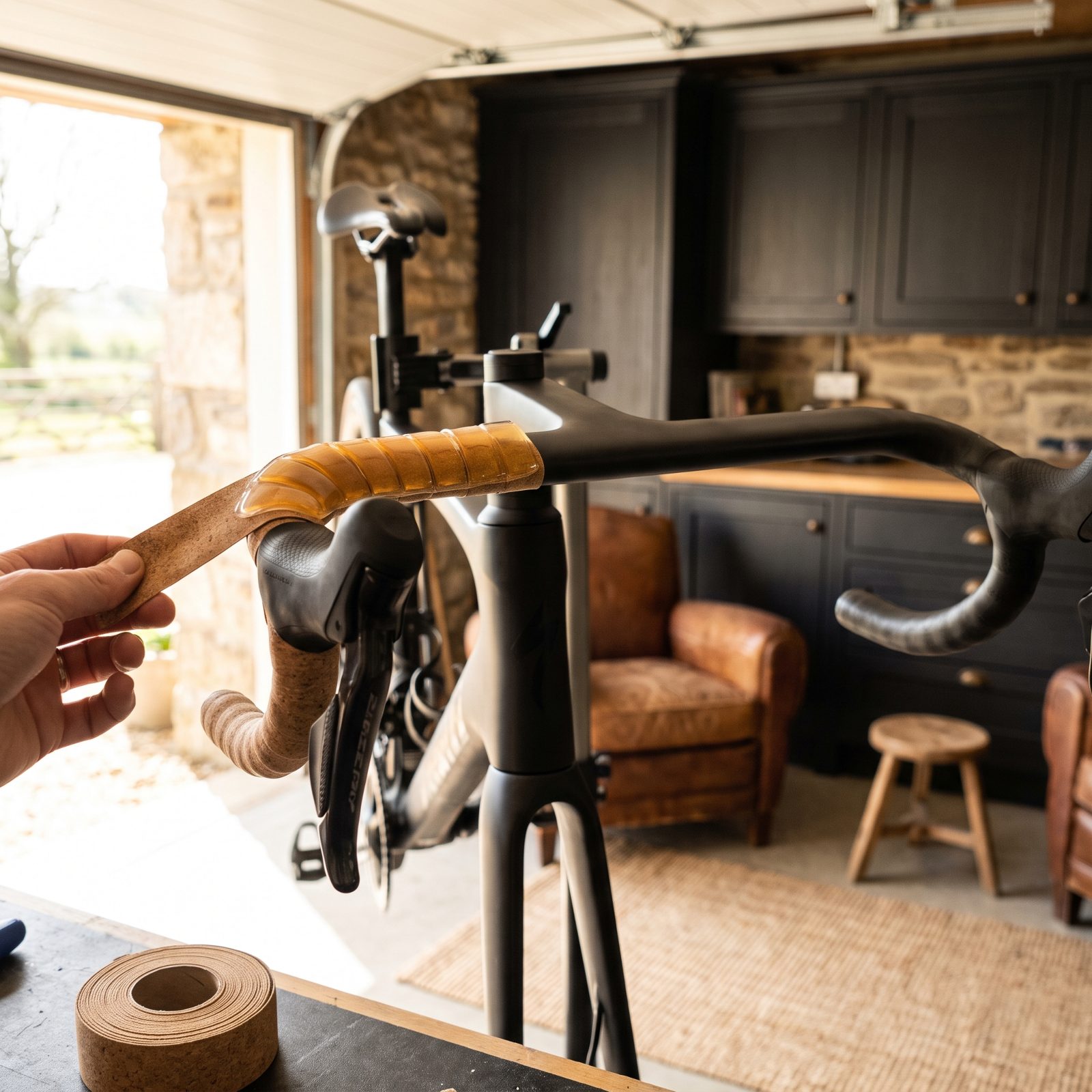
Everyone knows gel pads exist. Far fewer know the clever way to run them — wrapped right around the bar tops like a translucent layer of tape, not stuck on as loose pads that slide around.
Wrap a gel strip around the tops, run your cork tape right over it, and you’ve added cushioning right where your hands actually live. The tape hides the gel completely, so it passes for stock. Under your palms, though, it’s quietly eating the buzz that leaves your fingers tingling after a rough stretch. Cheap, simple, and honestly the best upgrade going for hands that keep falling asleep on long rides.
23. Headset-Spacer Bells That Reclaim Your Handlebar Real Estate
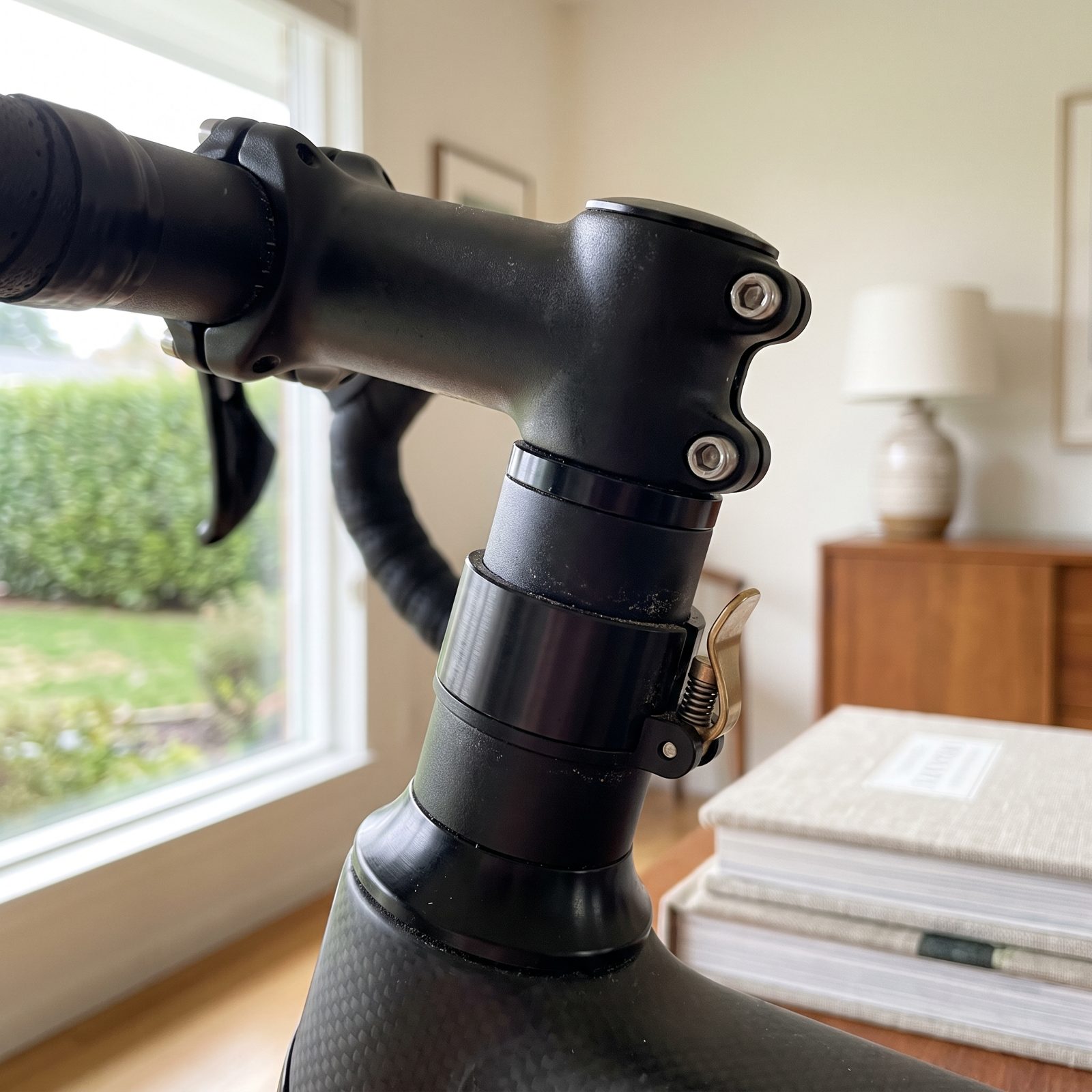
Most bar space gets eaten alive. Shifters, a computer mount, a light, maybe a phone holder, and suddenly there’s nowhere left for the bell a lot of cities legally require you to carry.
The fix hides in a part you already own. A spacer bell swaps out one of the plastic rings stacked under your stem and drops a thumb striker right where your hand already rests. No clamp biting into your grip, no cheap plastic ring working itself loose over every pothole.
People see it and ask about it, because it looks like it came with the bike instead of something bolted on as an afterthought.
22. Fork-Mounted Headlights That Rake Shadows Across Road Damage
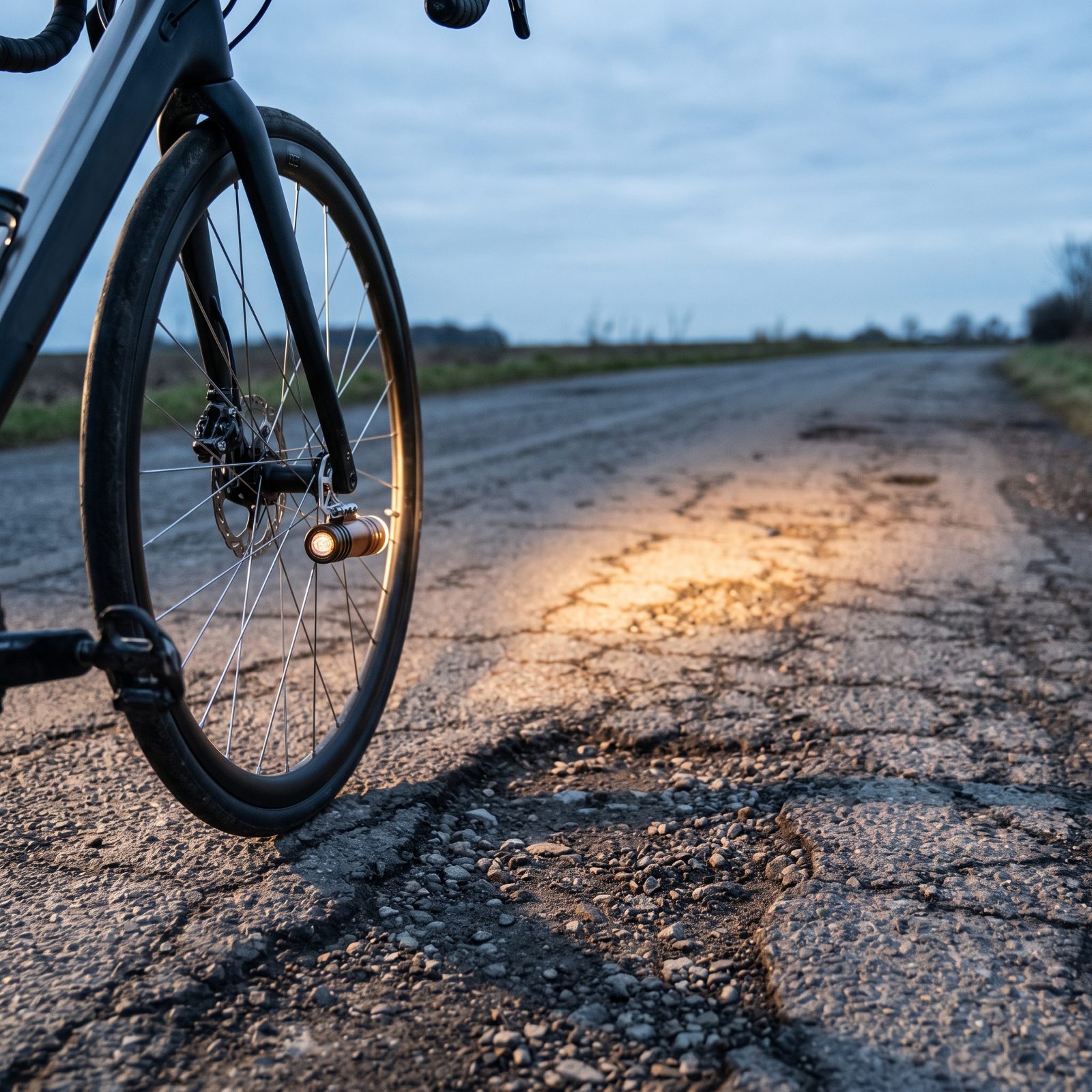
A handlebar light sits high and flat. It floods the road but flattens it — every hole, every seam, every lip of broken pavement vanishes into one even wash, and you ride straight into the one you never saw.
Drop that light to the fork and the whole picture shifts. A beam coming in low rakes across the surface and throws a shadow out of every flaw. Potholes get a dark crescent. Gravel ridges catch a hard edge. Suddenly the road has texture you can read at speed.
Same trick the low winter sun plays across a plowed field. Angle does the work, not wattage.
21. Helmet-Buckle Whistles That Carry a Signal You’ll Never Lose
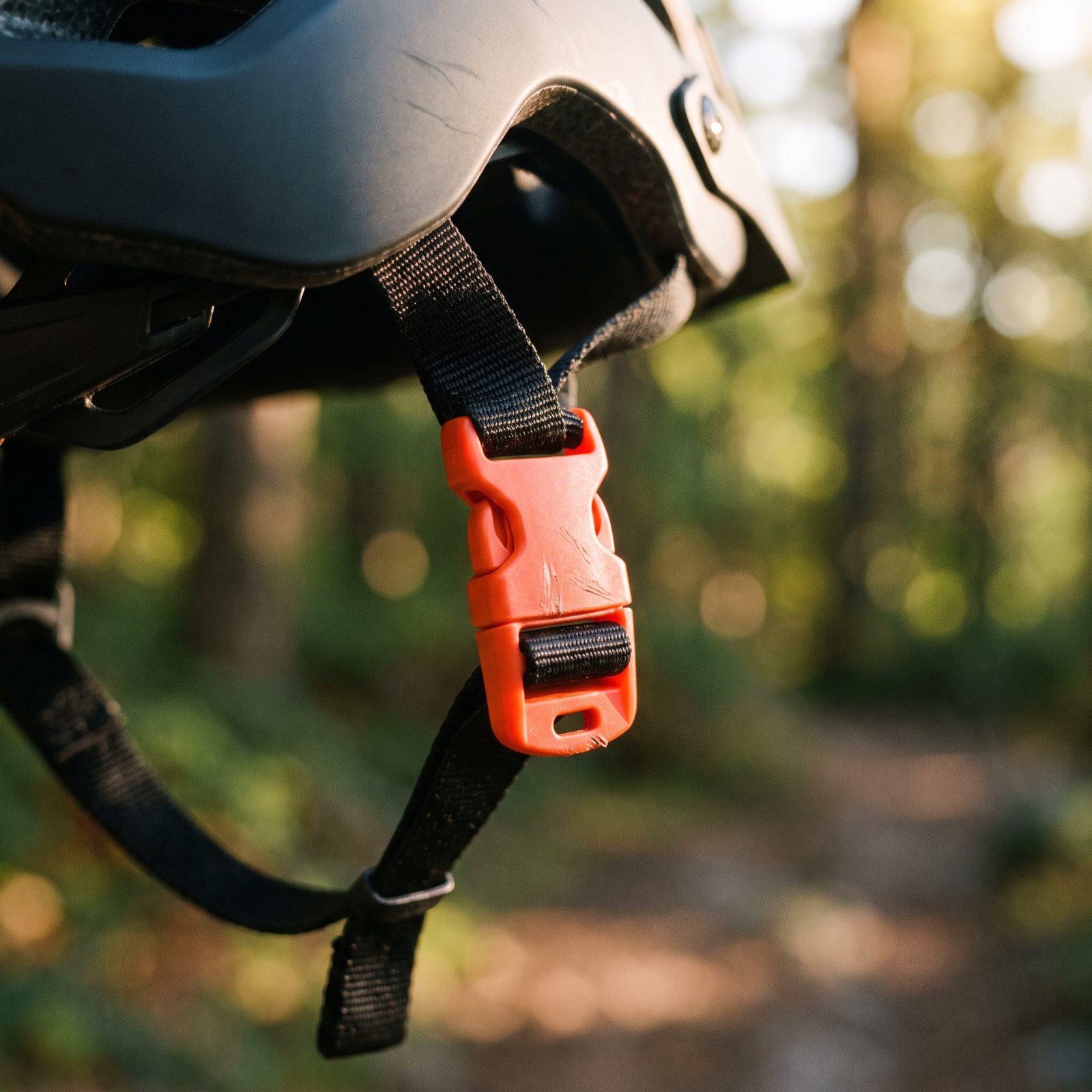
A whistle beats a shout every time. A tired voice carries maybe a hundred feet before it cracks, but a whistle punches through wind, traffic, and distance with almost no effort — and that matters when you’re down in a ditch and a passing driver is your only shot at being found.
The clever move is swapping a plain side-release chin-strap buckle, like this bright orange one, for a version with the whistle molded right in. Nothing extra to clip on, nothing left on the kitchen table, nothing to dig for when your hands are shaking. It rides with you every time because the buckle rides with you every time.
20. NFC Emergency ID Tags That Speak When You Can’t
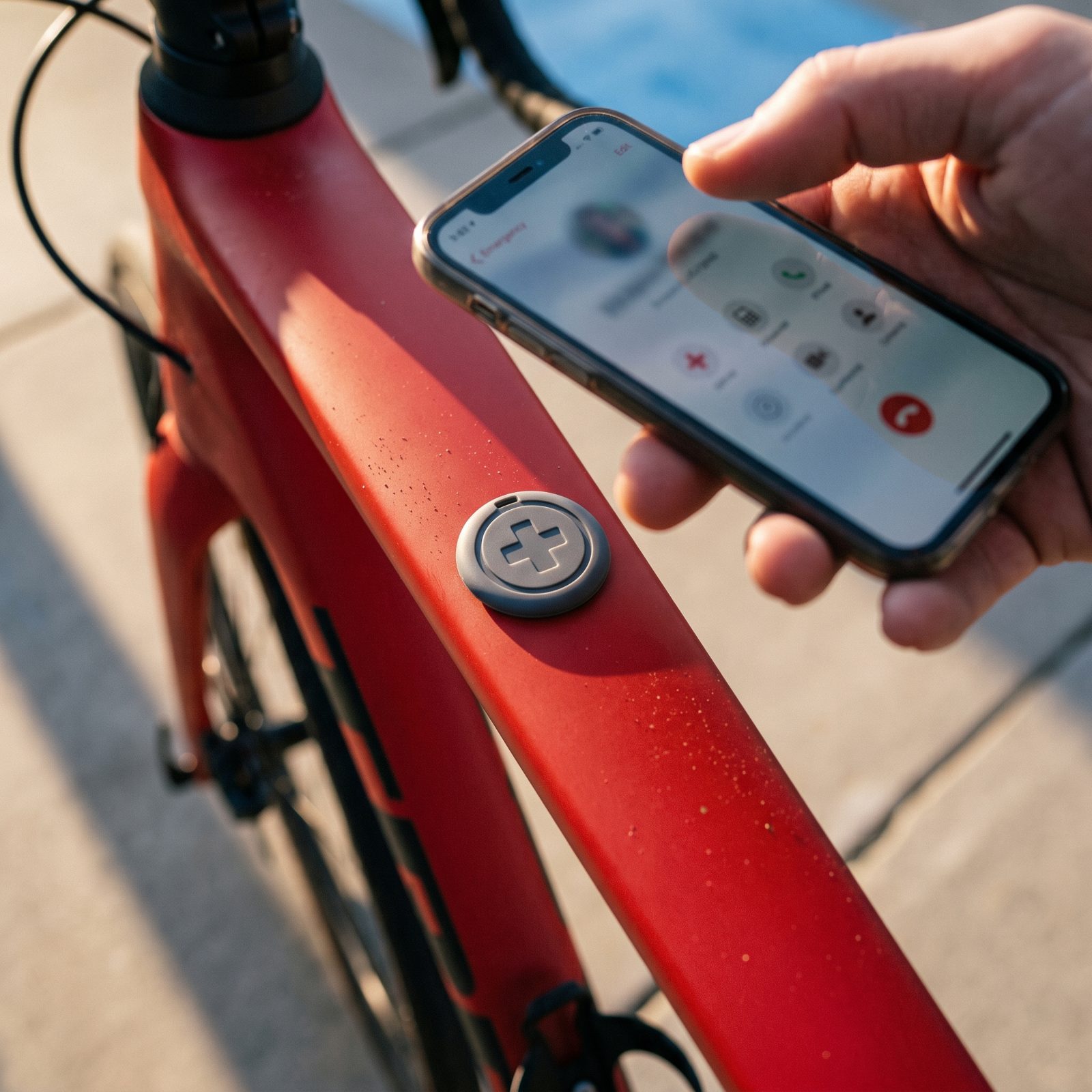
Picture a crash on a quiet road. You’re conscious but foggy, or not conscious at all, and a good samaritan stops. They want to help, and they have no clue who you are, what you’re allergic to, or who to call.
An NFC tag on the top tube answers all of that with one phone tap. No app to download, no account for the rescuer to log into — they tap, and your emergency contact is a single press away on their screen, ready to call.
People assume a laminated card in a jersey pocket does the same job. It doesn’t. Nobody’s going to rifle through a stranger’s clothing. The tag sits right there, in plain sight, on the bike.
19. Security Hex Inserts That Stop the Grab-and-Go Component Thief
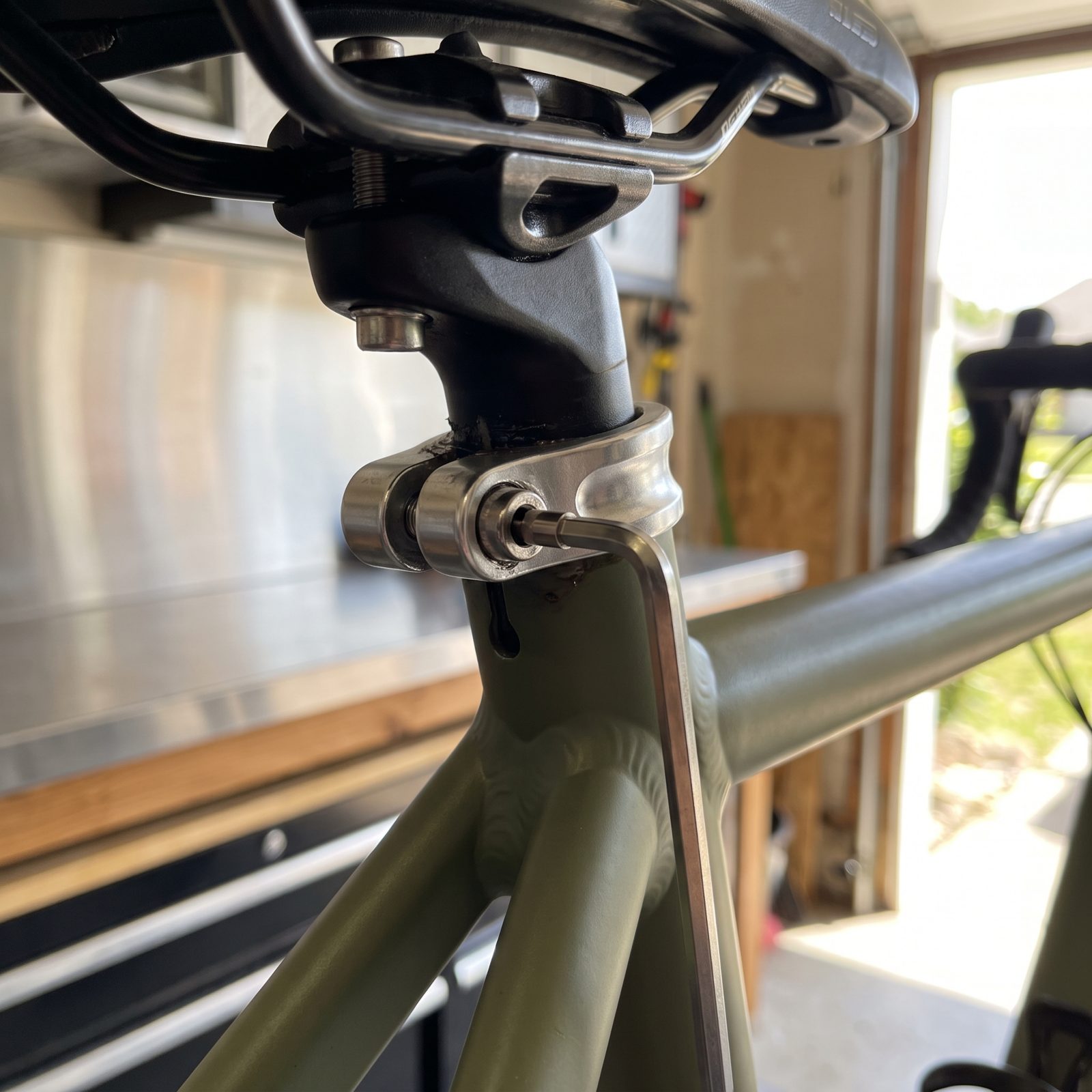
The expensive stuff walks off while the frame stays chained up. A saddle and post. A pair of wheels. A dropper. Half a minute with a multi-tool and someone’s rolling away with parts worth more than the lock you trusted.
A plain seatpost clamp bolt like this one takes any standard allen key, which seats right in and turns it. Security hex inserts drop a coded pin into the center of the bolt, so that same key can’t get a grip. Only your matching key bites. They cost next to nothing and install in minutes on exactly the parts most likely to vanish.
Here’s what nobody mentions: the real win is deterrence. A thief scanning a rack full of bikes grabs the one they can strip fastest. Make yours a pain and they move down the line.
18. Plug-In Chains That Give a Frame Lock Real Reach
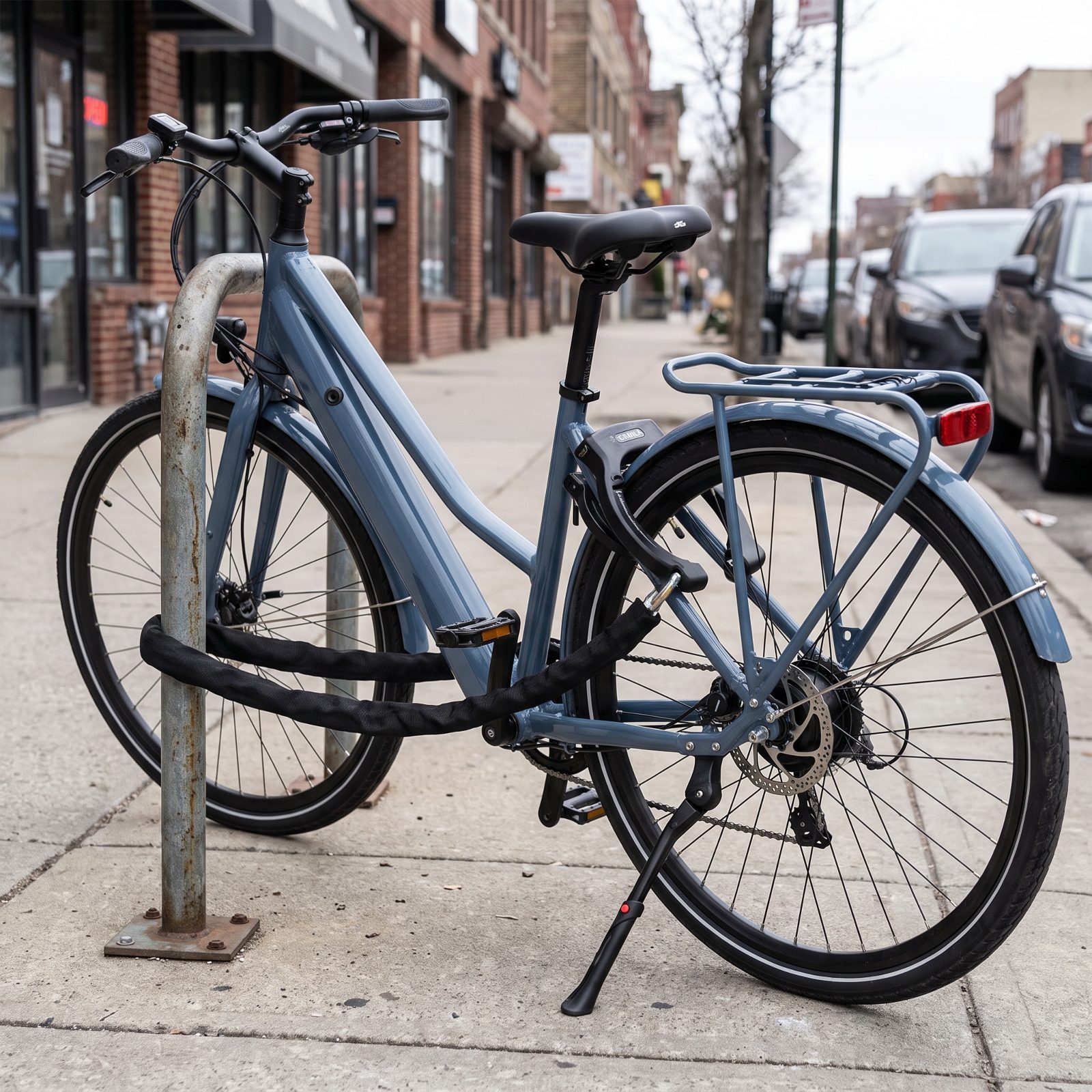
A frame lock might be the most underrated security hardware going. It lives on the bike, bolted right to the seat tube, and never rides in your bag. But the catch hits you the first time you use one — on its own it only secures the bike to itself. Nothing ties the bike to anything solid.
A plug-in chain fixes that without doubling your load. It slots straight into the frame lock’s body, so one key turn handles both jobs, and the chain reaches a rack, a post, or your front wheel. Leave it home when you don’t need it and the bike’s still locked.
17. Hidden Tracker Mounts That Bury a Location Tag Out of Sight
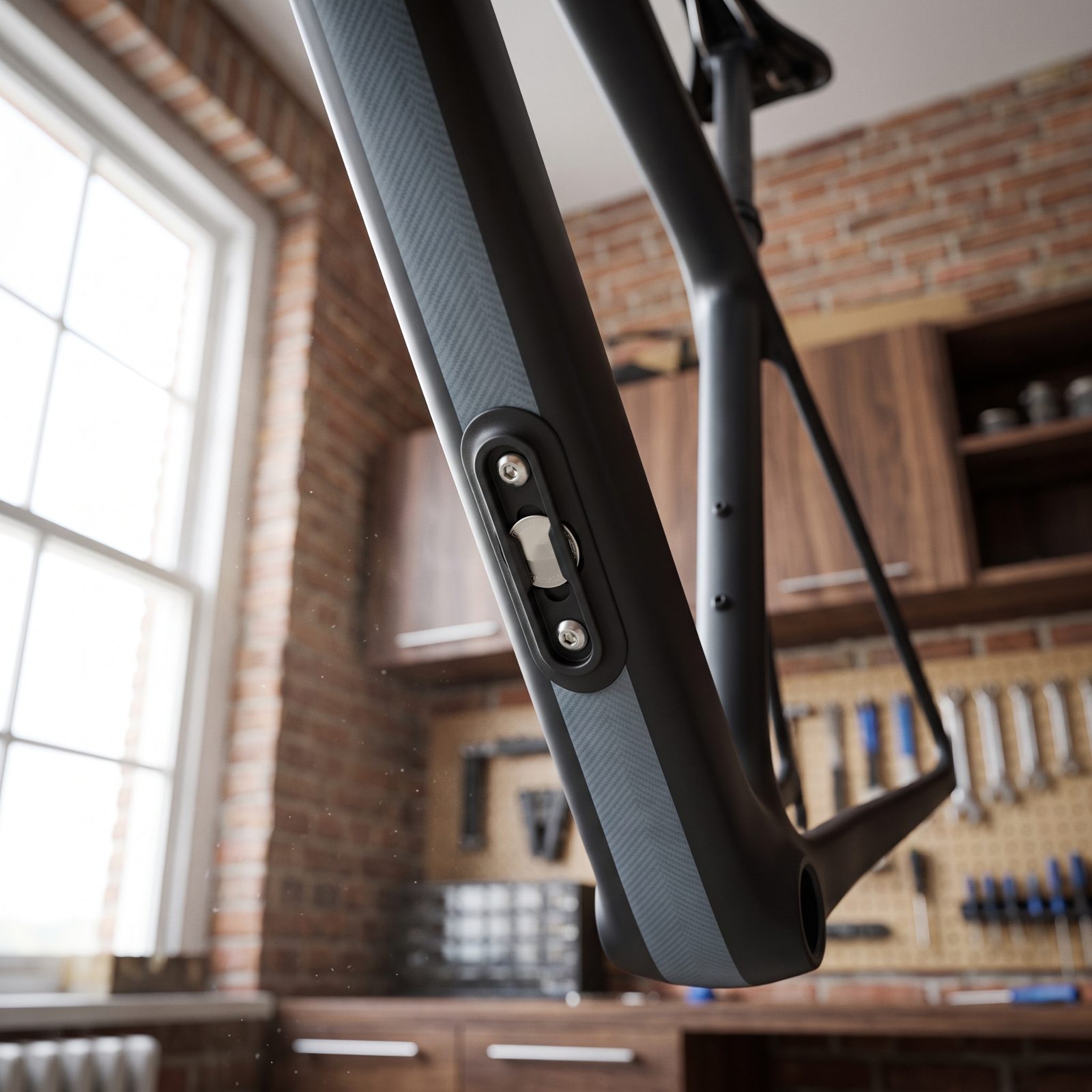
A tracker only works if the thief doesn’t find it first. Stick a tag under the saddle and it’s in the gutter the second they notice it. The whole value lives in the hiding.
Purpose-built mounts tuck a location tag inside a bottle-cage bolt hole, a steerer tube, a fake reflector, or a hollow section of the frame. At a glance, it passes for ordinary bike hardware. The bike gets stolen, the dot keeps pinging, and recovery becomes a real possibility instead of a prayer.
One honest caveat. A tag is for recovery, not prevention — it won’t stop the theft. It just means the odds of getting the bike back stop being zero.
16. Motion-Sensing Vibration Alarms for the Two-Minute Coffee Stop
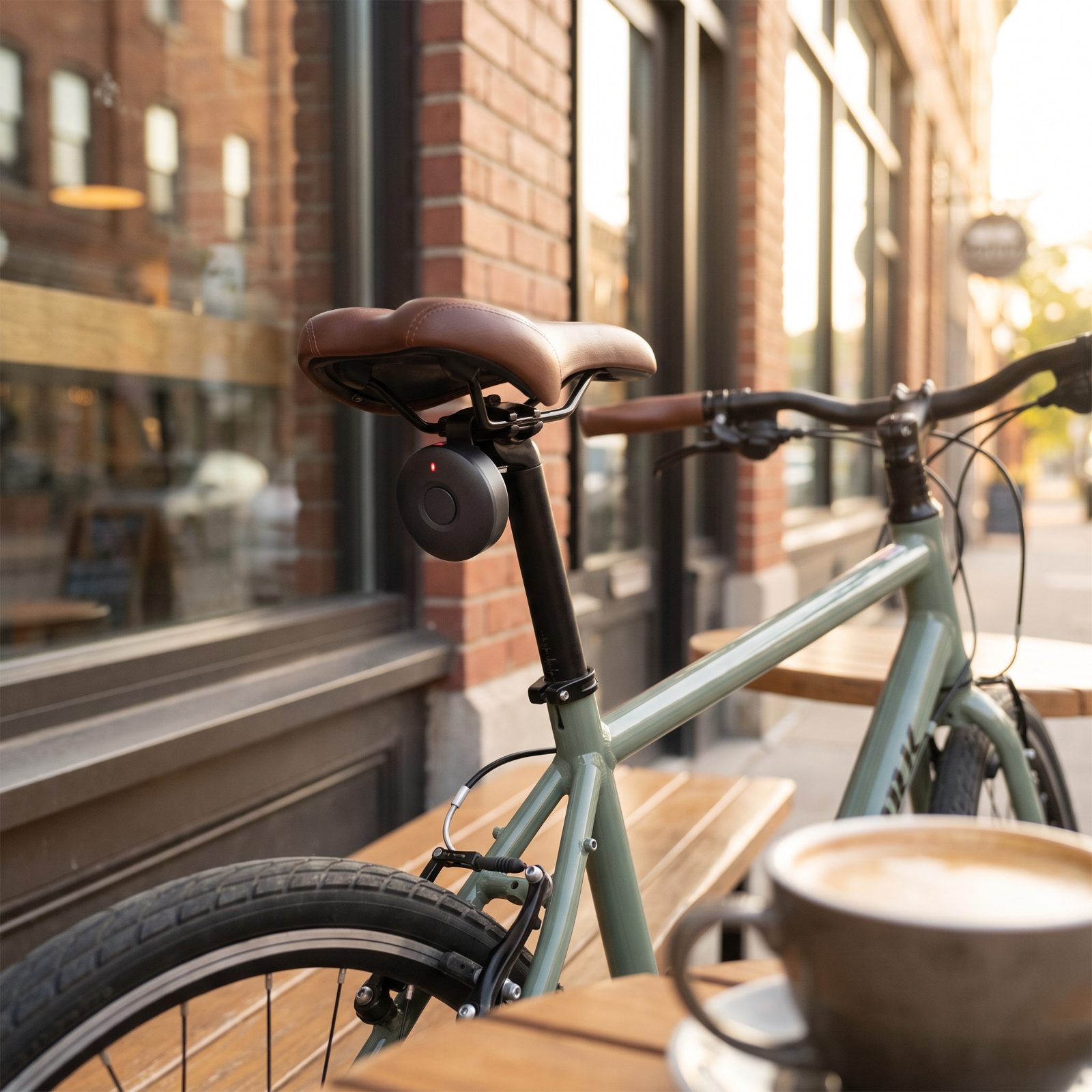
You’ve done it. Ducked into a shop for sixty seconds, bike propped against the window, telling yourself you can see it the whole time. You can’t, not really, and that’s exactly the window a thief waits for.
A vibration alarm covers that gap. Arm it with the remote or your phone, and the second someone jostles the bike it fires off a shriek loud enough to turn every head on the block. Most are tiny, hide under the saddle, and run for months on a charge.
This isn’t your overnight-parking lock. It’s for the short unattended stop, where a chain feels like overkill but leaving the bike naked feels reckless.
15. Bottle-Cage Offset Rails That Free Up a Crowded Front Triangle
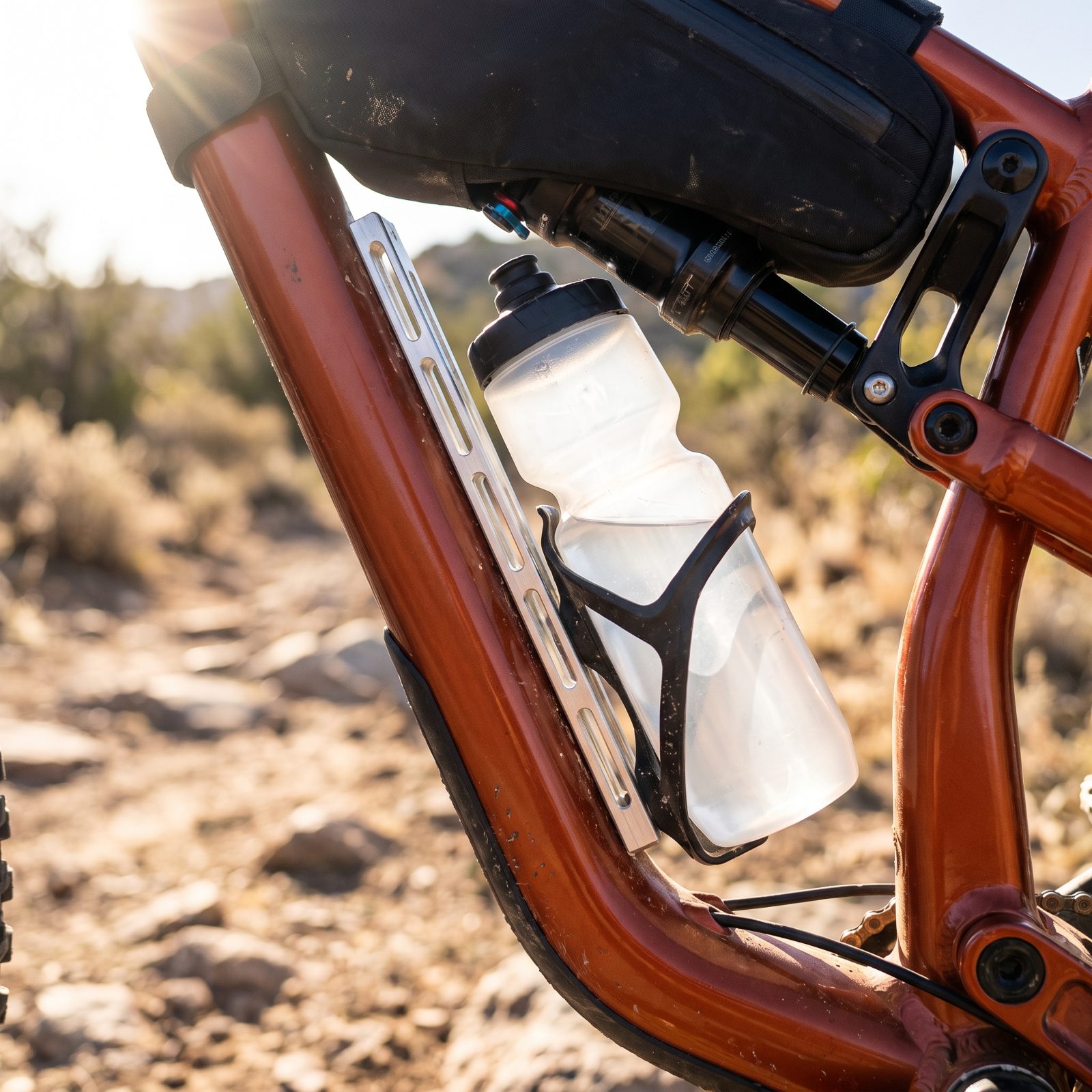
Small frames and full-suspension bikes share the same curse: no room. The shock eats the main triangle, a frame bag wants the rest, and the one bottle you can squeeze in has to be a stubby half-size thing that runs dry in ten miles.
Offset rails buy the space back. The adapter slides the cage up, down, or sideways along a slotted track, so a full-size bottle clears the shock and the bag instead of fighting them. A couple inches of adjustment is the difference between carrying real water and carrying a token.
Simple part. Fixes a problem that otherwise shoves you into a hydration pack you never wanted to wear.
14. Magnetic Hydration-Hose Clips That Snap the Bite Valve Back Every Time
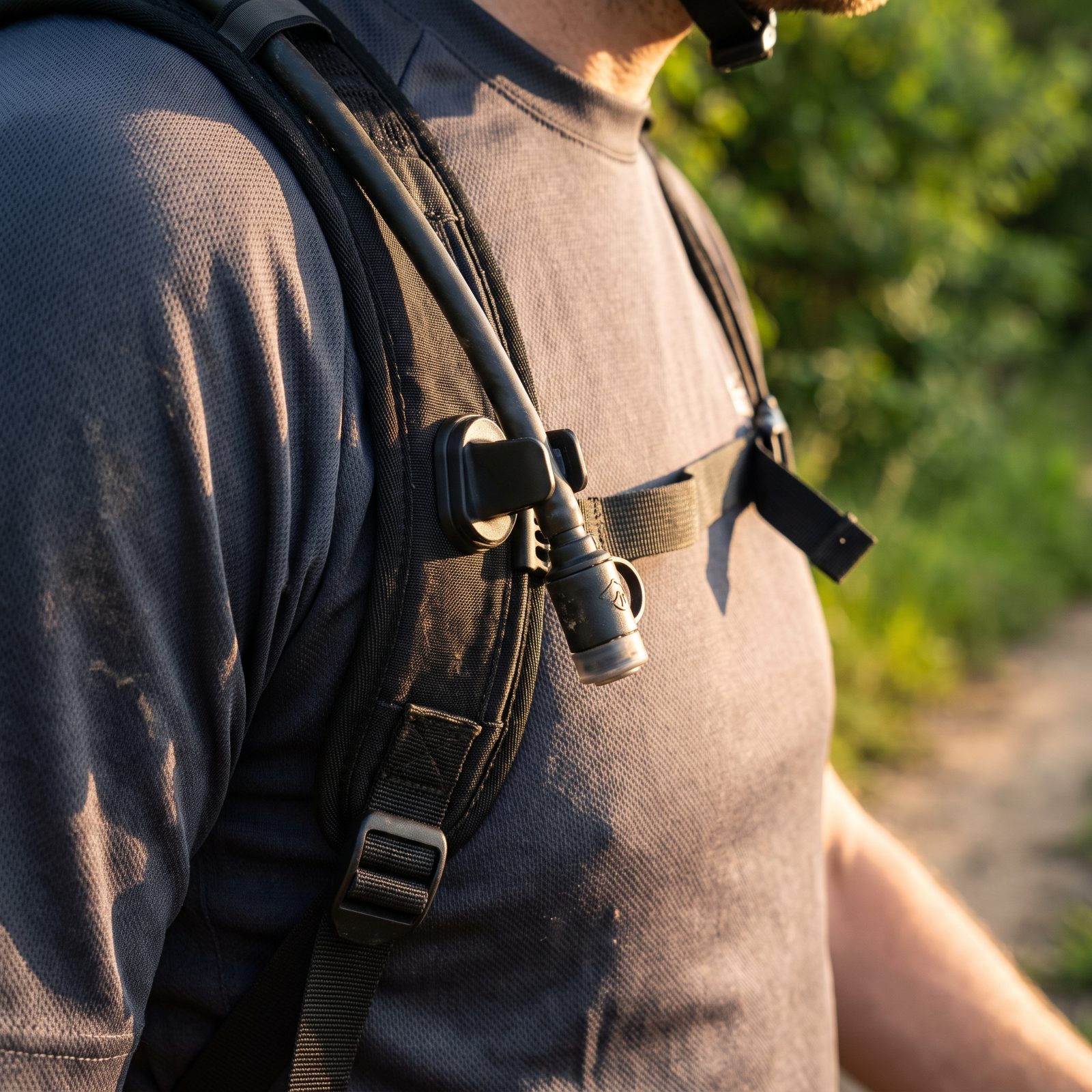
The hose always ends up somewhere wrong — swinging into your knee, dragging through mud, flapping loose until you’re fishing blind for the bite valve on a rough descent, right when both eyes need to stay on the trail.
A magnetic clip gives the valve a home. One magnet on the hose, one on your chest strap or shoulder, and it snaps back to the same spot every time you let go. No fumbling, no looking down, no hose slapping around.
Tiny thing. Also the kind of tiny thing you notice the instant you ride without it and grab for a valve that isn’t where it should be.
13. Filter Bottles That Turn Sketchy Backcountry Water Into Something You’ll Actually Drink
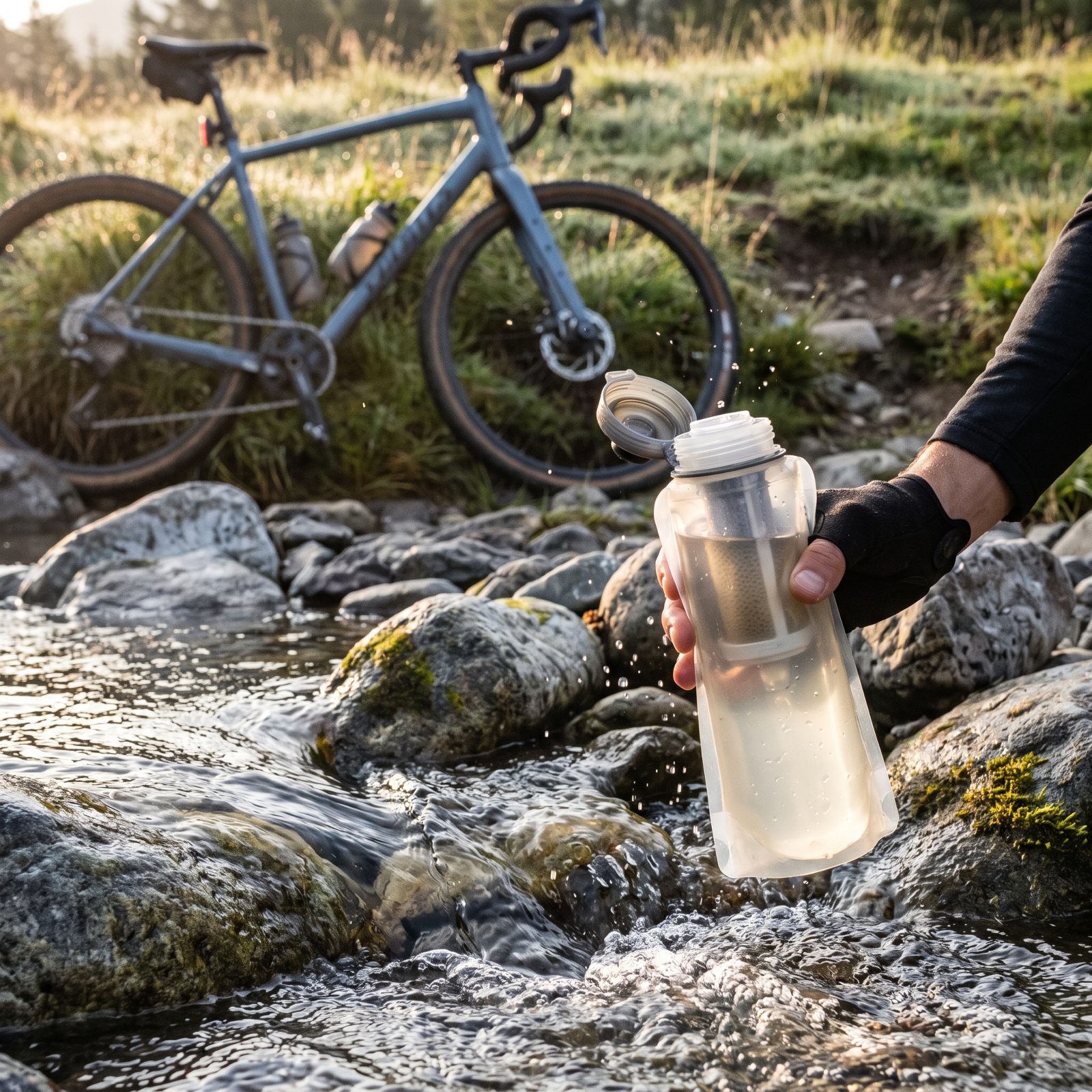
Most riders grab an extra bottle at a gas station and call that a hydration strategy. On a backcountry route it’s just dead weight and a resupply headache waiting to happen. A filter bottle flips the whole equation: you quit hauling water around and start making it on the spot.
The good ones strain out protozoa and bacteria while you squeeze or sip. A creek, a spring, a questionable cattle trough in a real pinch — all of it becomes a refill. Lighter loads on long gravel days, and far fewer detours into town just to top off.
12. Bottle-Cage Tool Kegs That Keep Your Repair Kit Dry and Rattle-Free
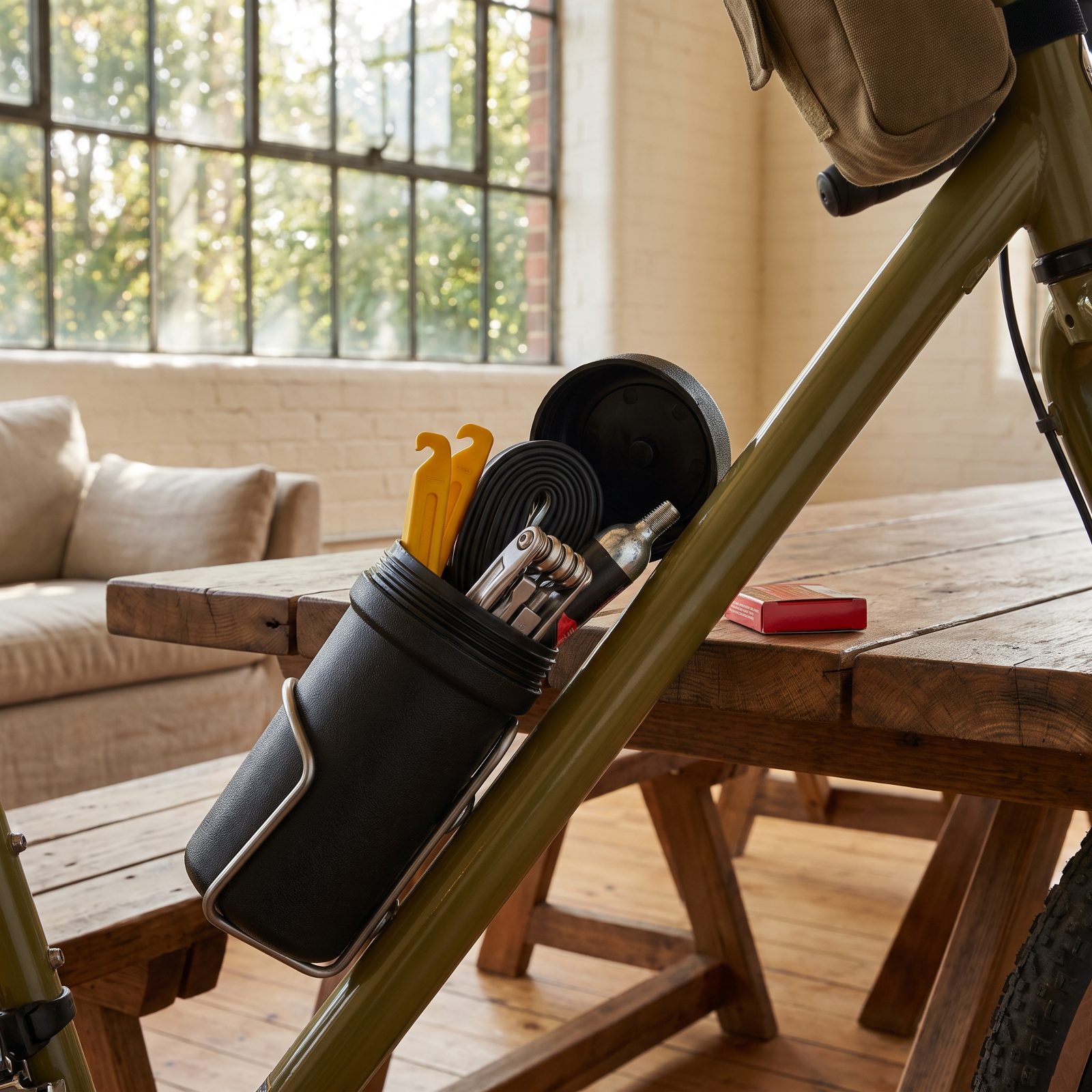
You know the sound. That loose jangle of tools knocking around a saddlebag on every pothole, the one that’s half driven you mad by mile ten. A tool keg kills it dead. It’s a sealed cylinder that drops into a spare bottle cage and swallows your whole repair kit in one tidy bundle.
Tube, levers, multitool, patches, a cartridge — all packed tight and bone dry even when the sky opens up on you. Flat a tire and you pull one thing instead of fishing through a soaked seat bag. Bonus: your frame bag and jersey pockets stay free for snacks.
11. Pannier-to-Backpack Converters That Save You From Carrying Groceries Like a Bag of Sand
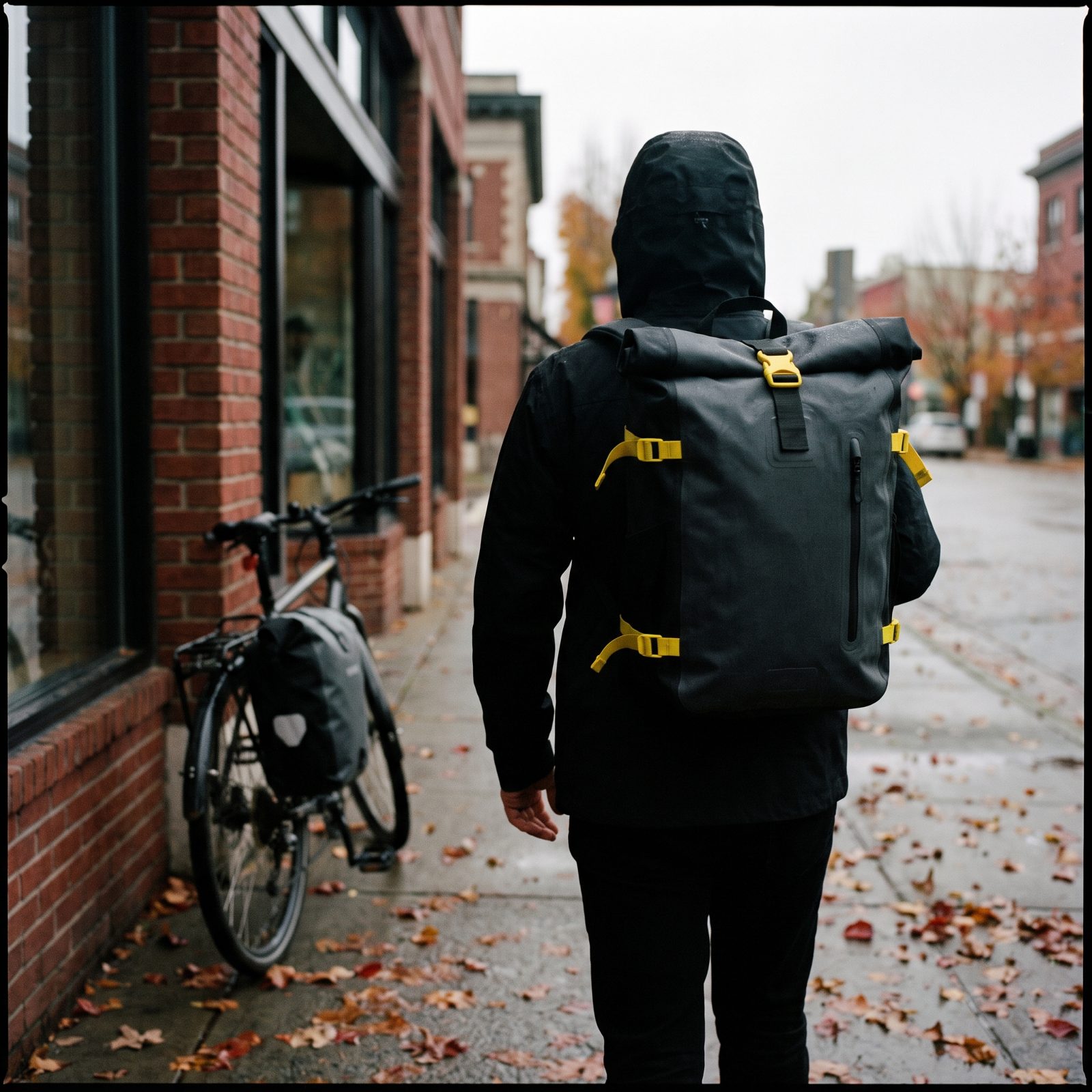
The worst part of commuting by bike was never the ride. It was the parking-lot shuffle afterward — hauling a rigid pannier by its awkward top handle while the thing cracked your shin the whole walk in.
Convertible panniers fix that with hidden shoulder straps that deploy in seconds. Off the rack, onto your back, into the office or the grocery store. One bag doing two jobs means you stop buying a separate backpack and stop playing pack mule with something that was never built to be carried far.
10. Quick-Release Basket Adapters That Let You Lift the Whole Load Off in One Motion
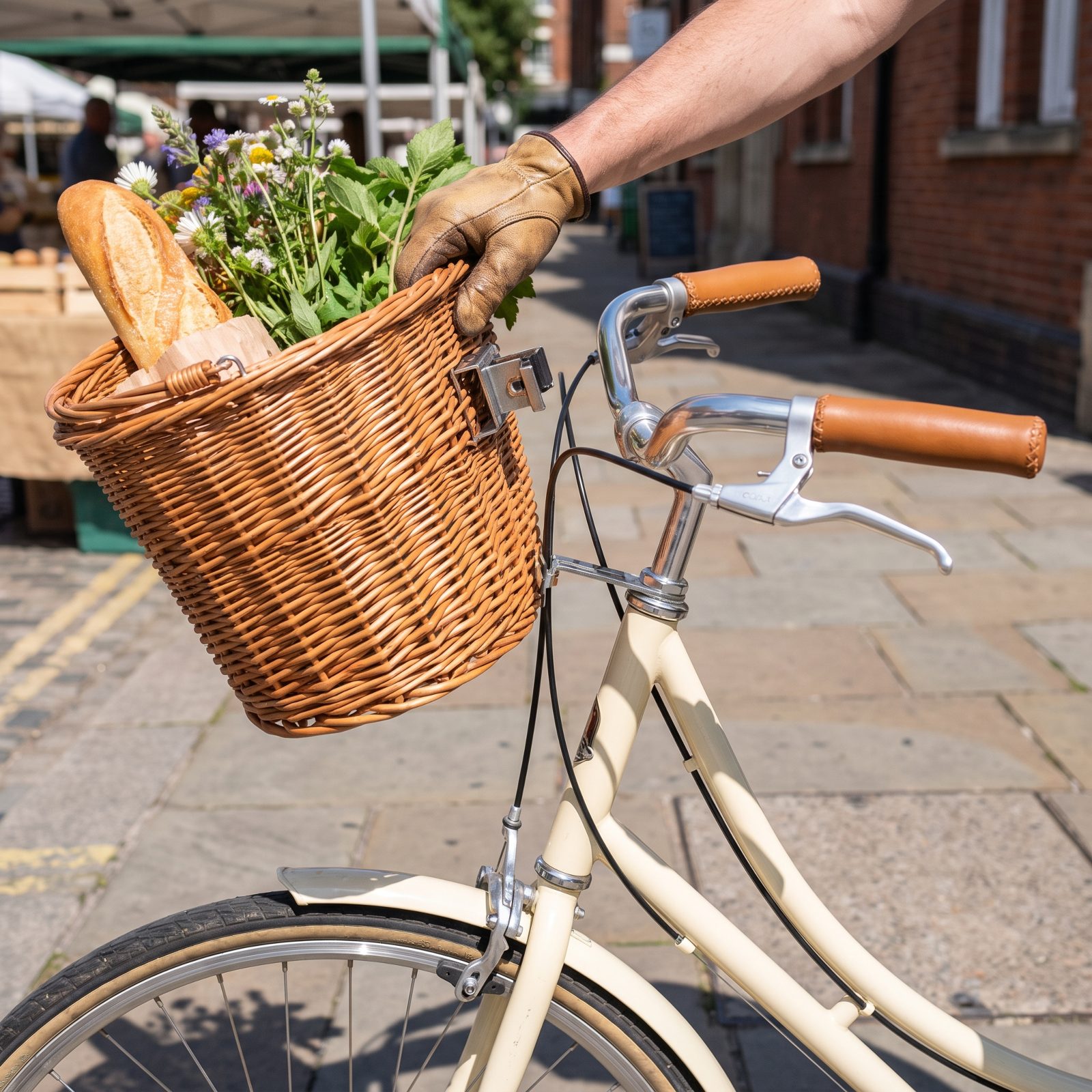
A basket bolted to your bars is a basket you’ll leave empty. Nobody wants to juggle an armful of loose groceries while they’re also trying to lock the bike.
Quick-release adapters put a click clamp on the back of the basket. One pull, the whole thing lifts off, handle and all, and comes with you into the shop or the house — no unpacking at the rack. Run the bars bare on fast days and clip the basket back when you actually need it, so your commuter doesn’t look like a cargo bike every single time you ride it.
9. Frame-Triangle Carry Handles That Make Hauling a Bike Up Stairs Bearable
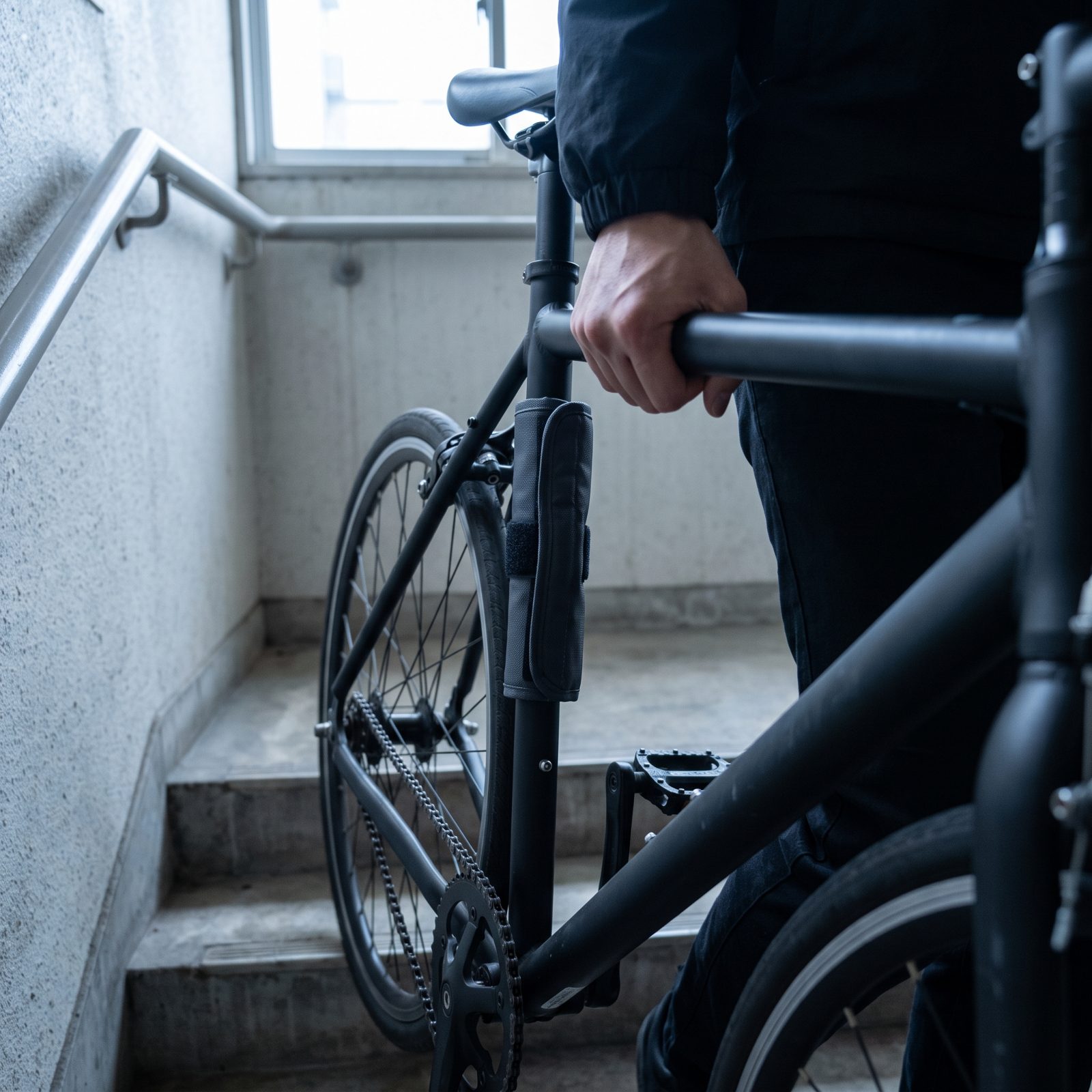
Anyone who’s lugged a bike up to a third-floor apartment knows that ache. You grab the bare frame, the bike tips, and your knuckles find the chainring. There’s a better way to hold it, and most people never use it.
A small padded handle straps into the frame triangle where the top tube meets the seat tube. Grab it right at the frame’s balance point and the whole bike swings up dead level, chain and grease nowhere near your clothes. Up stairs, over curbs, onto a train — what used to be an unbalanced bear hug becomes a clean one-hand lift. Costs next to nothing and weighs less than a candy bar.
8. Front Mudflap Extenders That Keep Grit Off Your Shoes and Out of Your Drivetrain
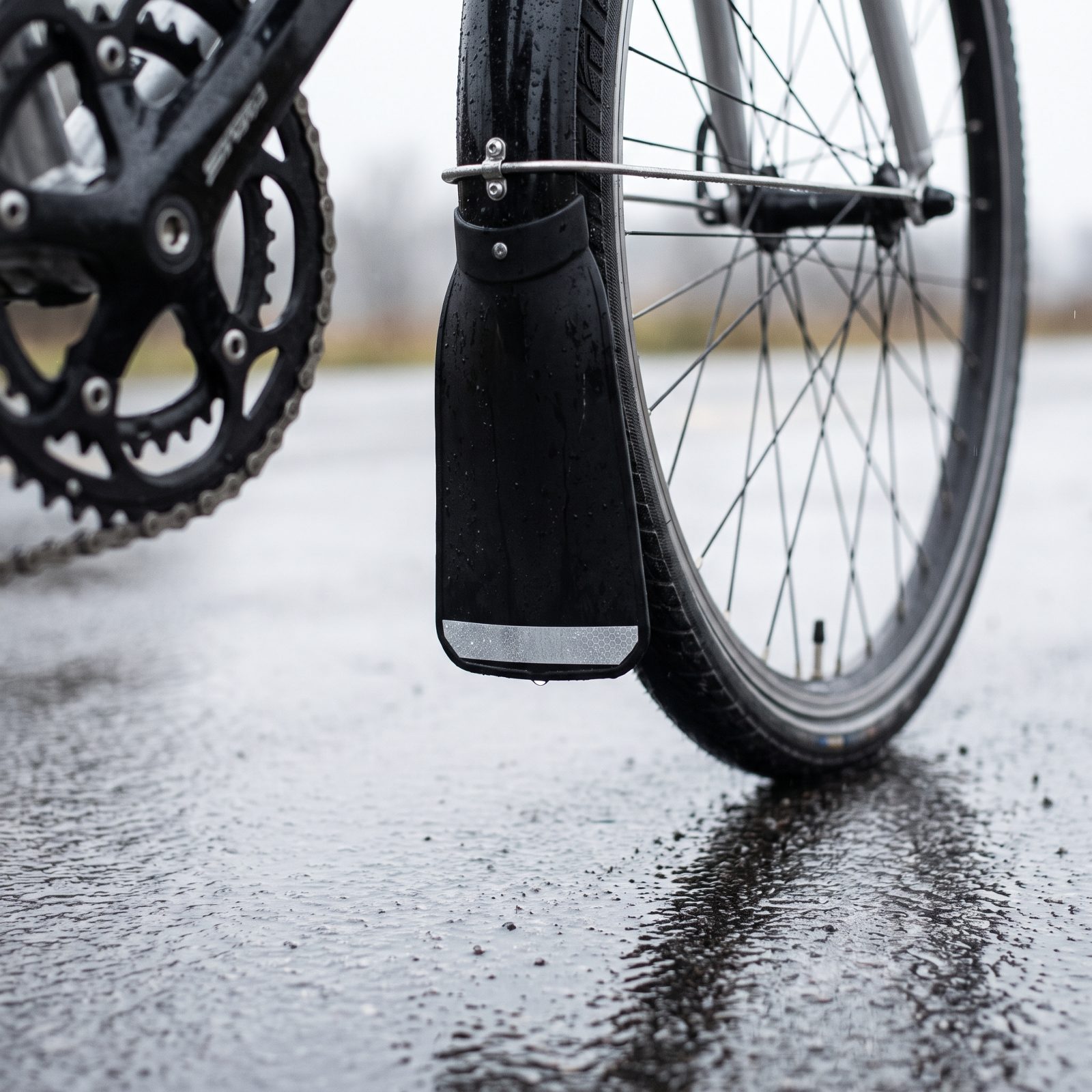
Your fender stops at the fork crown and calls it a day — which is exactly where the real spray starts. The front wheel flings a rooster tail of road slurry straight back onto your shoes, your crank, and the chain you just spent twenty minutes cleaning.
A mudflap extender drops that fender down to within inches of the pavement and cuts the spray at the source. Your feet stay dry. More to the point, the gritty grime that chews through chains and cassettes never gets launched up into the drivetrain to begin with. A few bucks of rubber that saves real money in wear.
7. Pocket Saddle Covers That Keep You From Sitting in a Cold Puddle
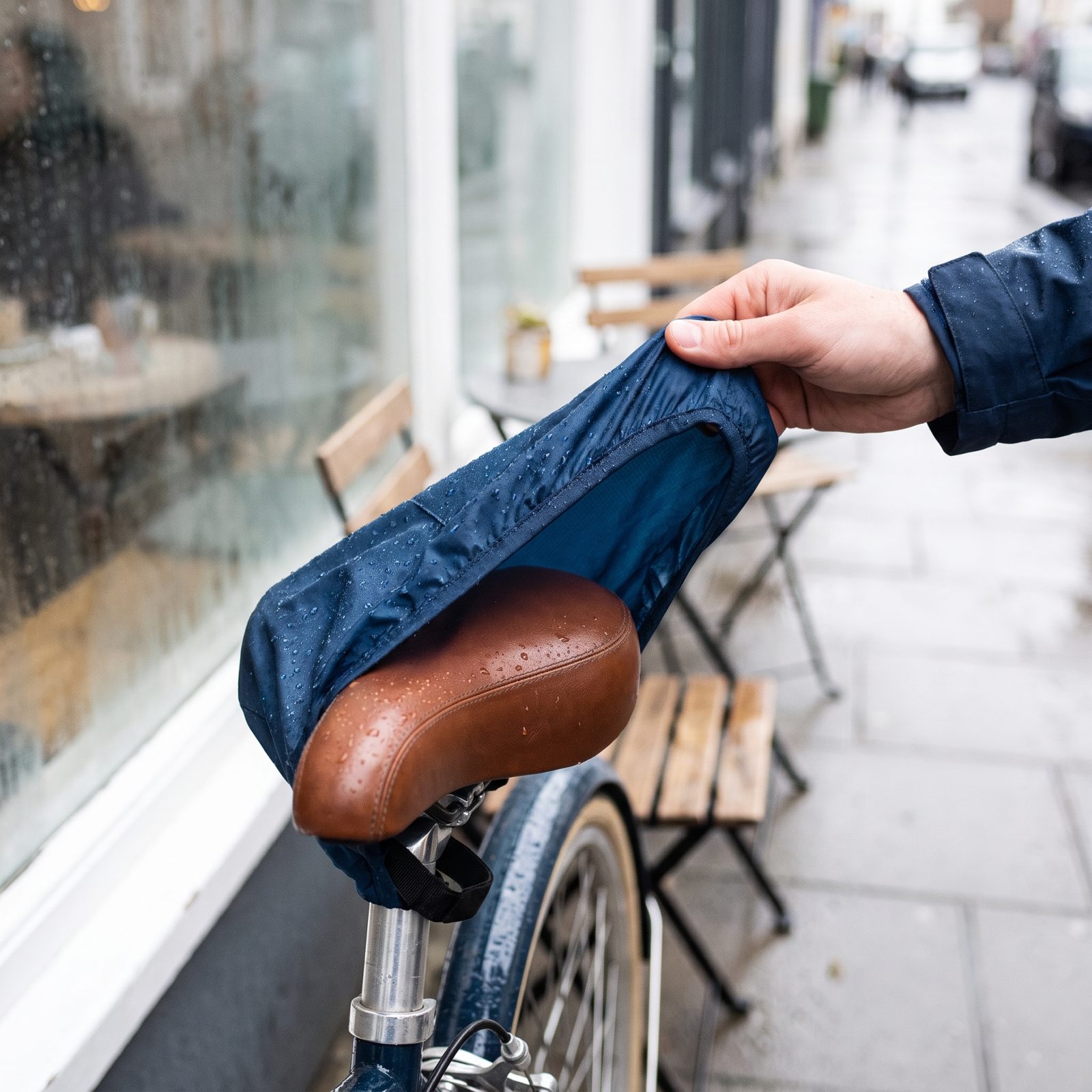
Rain while you ride is one thing. The surprise comes later — you park for coffee under clear skies and come back to a soaked saddle that soaks you the second you sit down.
A pocket saddle cover folds down smaller than a pair of socks and lives in a jersey pocket for exactly this moment. Stretch it over the seat at any stop and the sponge of a saddle stays dry. Some come in a loud color so you can pick your bike out of a crowded rack, too. Cheap, dead simple, and it keeps the longest two miles home from also being the wettest.
6. Handlebar Pogies That Warm Your Hands Without Turning You Into the Michelin Man
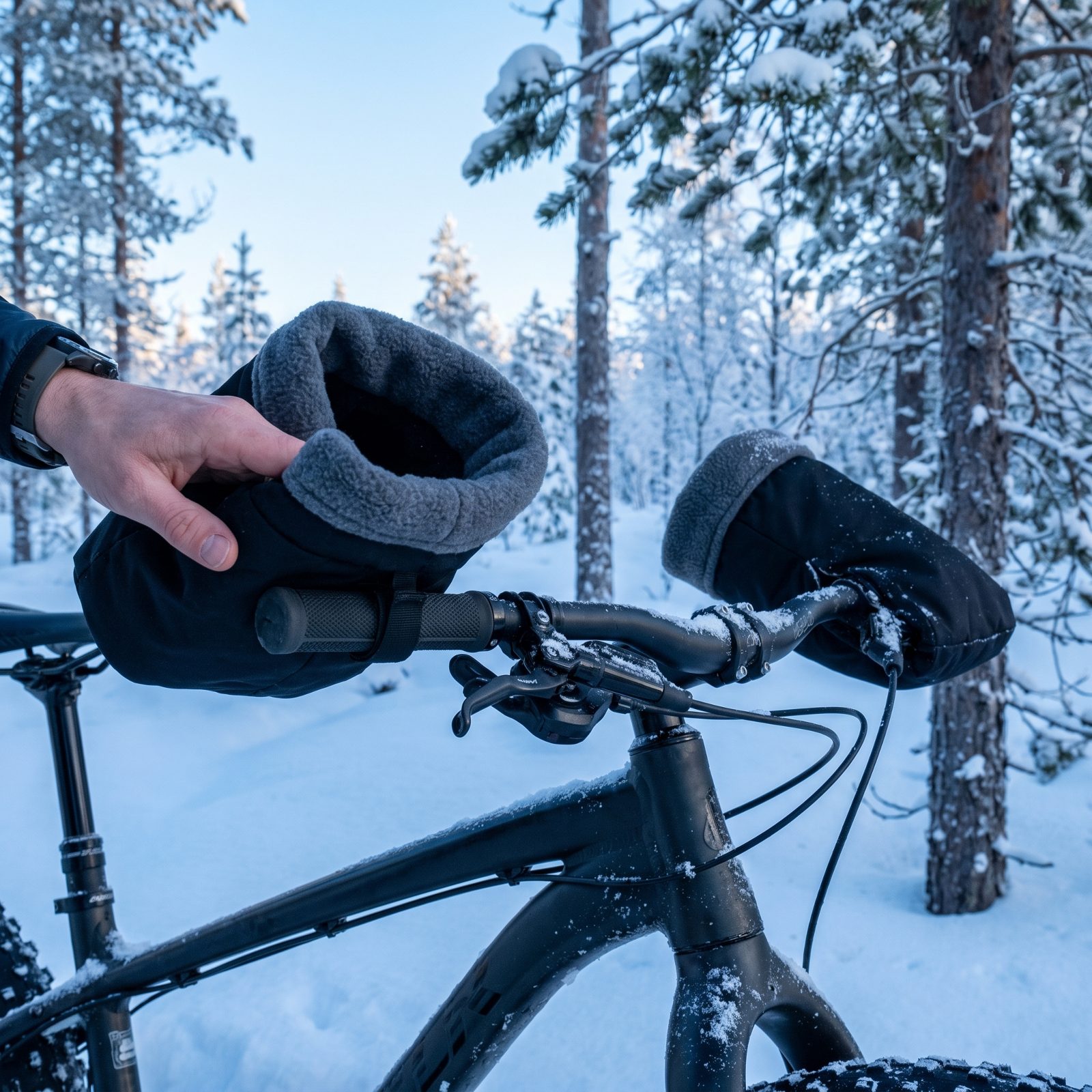
Cold-weather riders keep buying thicker gloves and keep losing feel on the brakes and shifters. There’s a hard limit to how much insulation your fingers can wear before they stop acting like fingers at all.
Pogies go the other way. They’re insulated shells that strap onto the handlebar, with the grip end left poking out, so your hands slip into a warm pocket wearing a thin liner — or nothing at all. Full dexterity, full warmth, and you can duck your fingers out in a second at a light. Winter commuters and fat-bikers swear by them, and for good reason.
5. Oversized Kickstand Feet That Stop Your Parked Bike Sinking Into Soft Ground
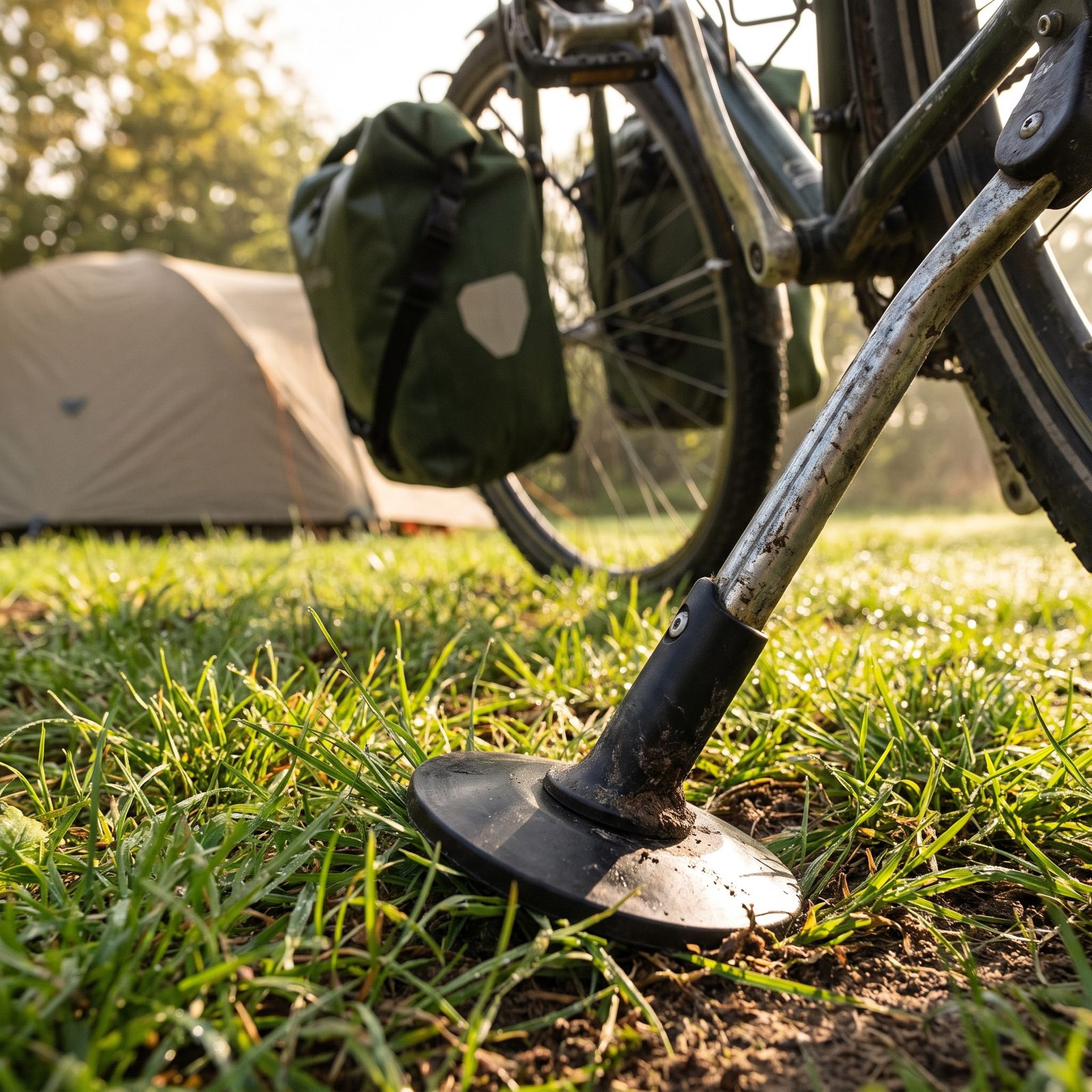
You park a loaded touring bike on grass, walk ten feet to grab your phone, and hear the slow crunch of it going over as the kickstand point sinks into the dirt.
An oversized kickstand foot is a wide disc that clips or screws onto the end of a standard kickstand, spreading the weight across a much bigger footprint. On grass, sand, gravel, or hot soft asphalt, the bike holds instead of auguring itself into the ground. Campers and cargo-bike riders hauling heavy loads clock the difference right away. It’s the kind of fix you swear you don’t need — until the third time you’re picking the bike up off the dirt.
4. Rubber Crank Boots That Save Carbon Arm Ends From Rock-Strike Damage
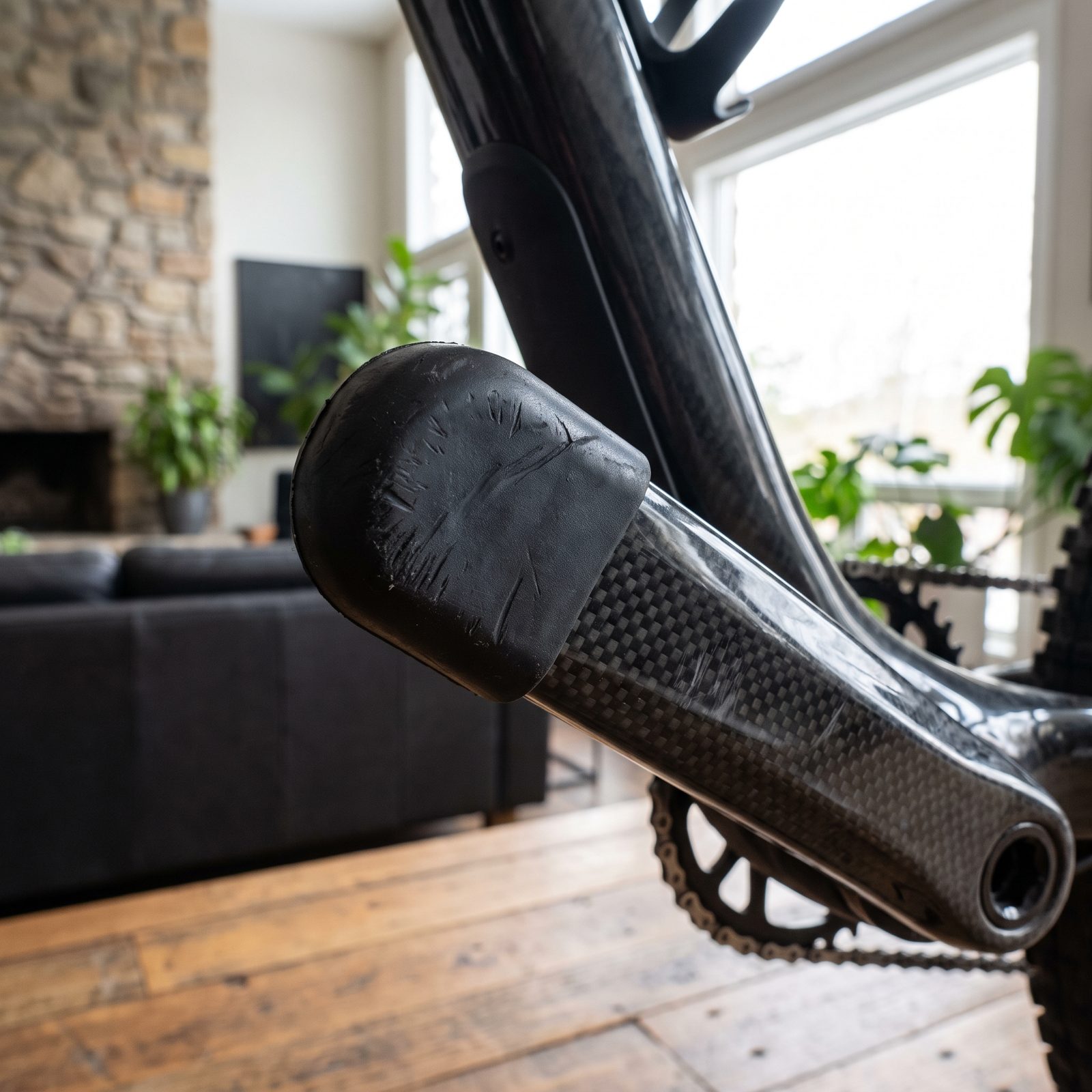
Carbon cranks are light, stiff, and terrifyingly easy to wreck. One pedal strike on a rock ledge, one tip-over against a curb, and the arm end picks up a gouge that can compromise the whole piece.
Crank boots are slip-on rubber caps that fit over the arm end around the pedal axle. Trail riders who’ve already dropped real money on a carbon crankset fit them as cheap insurance against an ugly replacement bill. They add a bit of grip too, so the capped arm end shrugs off the scrapes that would otherwise peel the lacquer and start a crack. A few bucks guarding a few hundred.
3. Helmet Mirrors That Show Approaching Traffic With a Small Head Turn
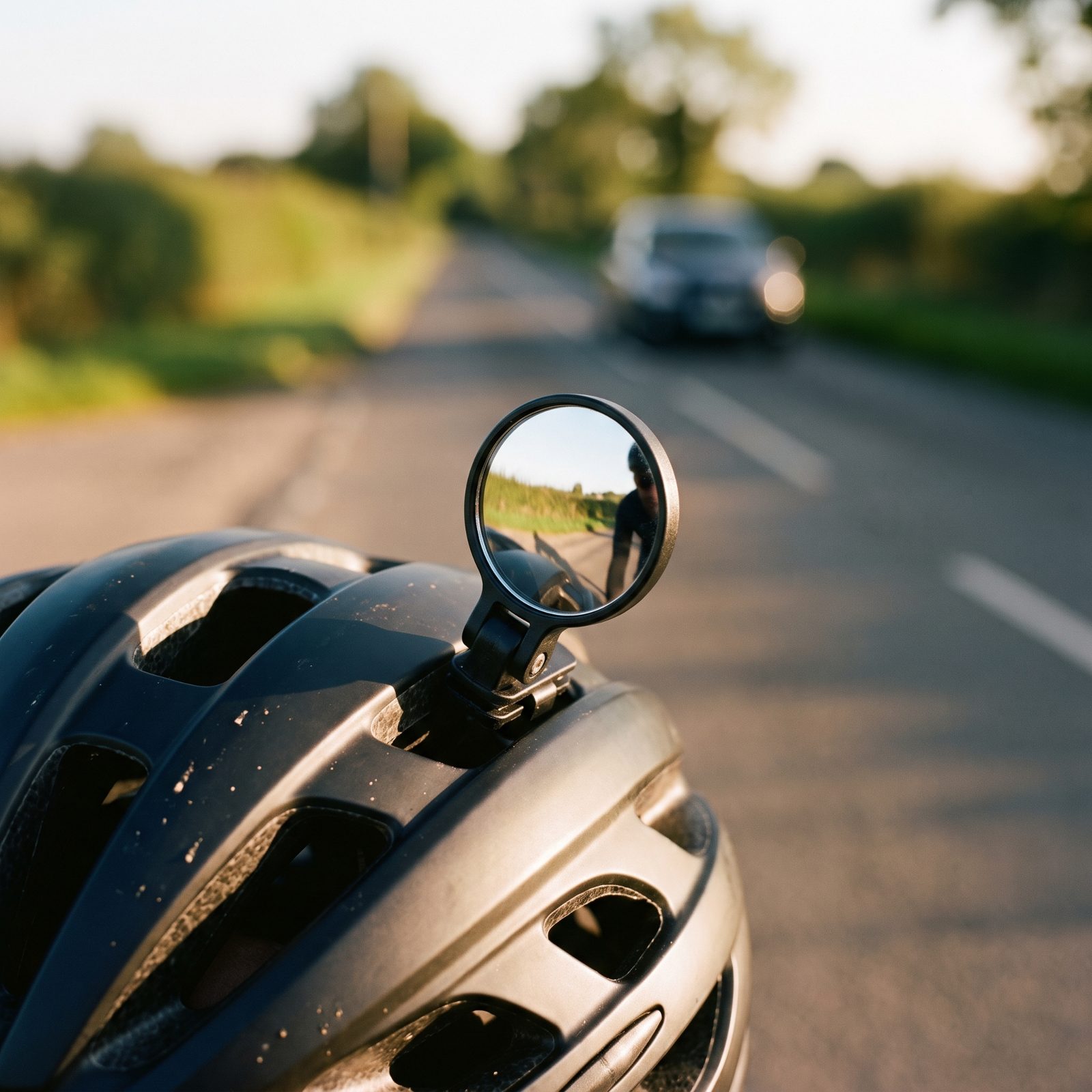
Most riders never see the car until they hear it. A helmet mirror changes that math. Clip one to the side of your helmet’s shell and a flick of the chin — maybe ten degrees — puts the road behind you in frame, no reaching for a bar mirror that vibrates into a useless gray smear on rough pavement.
The odd part is how fast it stops feeling odd. Give it a week and your eyes start checking it the way you glance at your car mirrors without thinking. Good ones run twenty or thirty-odd bucks and weigh almost nothing. The cheap ones wobble loose and drive you nuts. Pay for the ball joint that actually holds its angle.
2. Radar Tail Lights That Detect Vehicles Closing From Behind
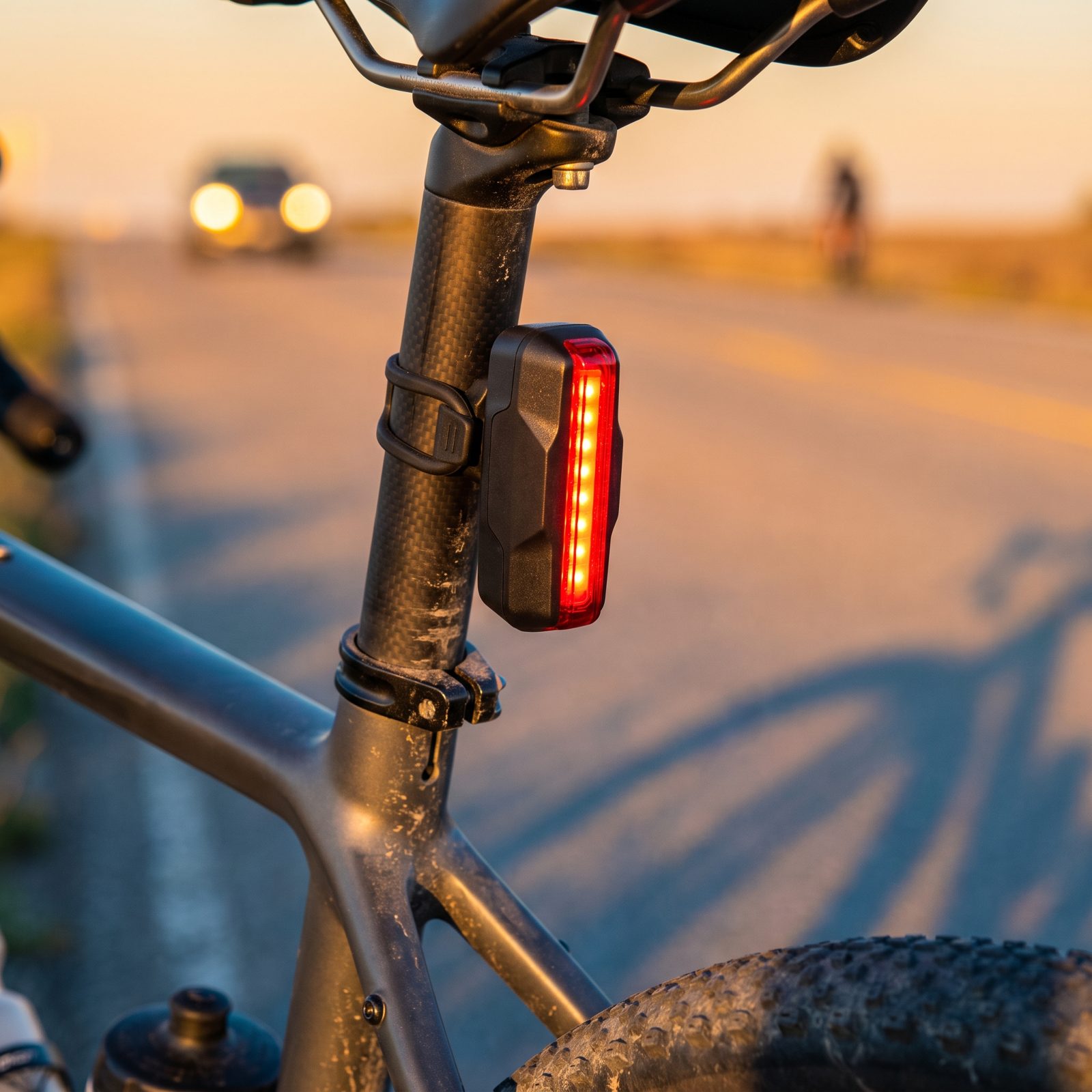
A rearview radar sounds like gear for gadget people. It isn’t. It’s a small unit on your seatpost that pings vehicles coming up behind you and flashes a warning on your bike computer or phone — usually a beep plus a dot climbing a bar as the car closes.
What surprises people is the calm it brings on a nervous road. You stop neck-craning every twenty seconds. The radar does the watching, which frees you to watch the pavement, the shoulder, the pothole you’d otherwise have hit square on. Most units pull double duty as a daytime tail light, and daytime running lights are about the single biggest visibility upgrade a rider can make.
Figure on well over a hundred bucks, maybe north of two. That’s real money for a light, no argument. But ride one stretch of busy county highway at dusk and the price argument ends itself.
1. Dynamo USB Chargers That Turn Wheel Rotation Into Navigation Power
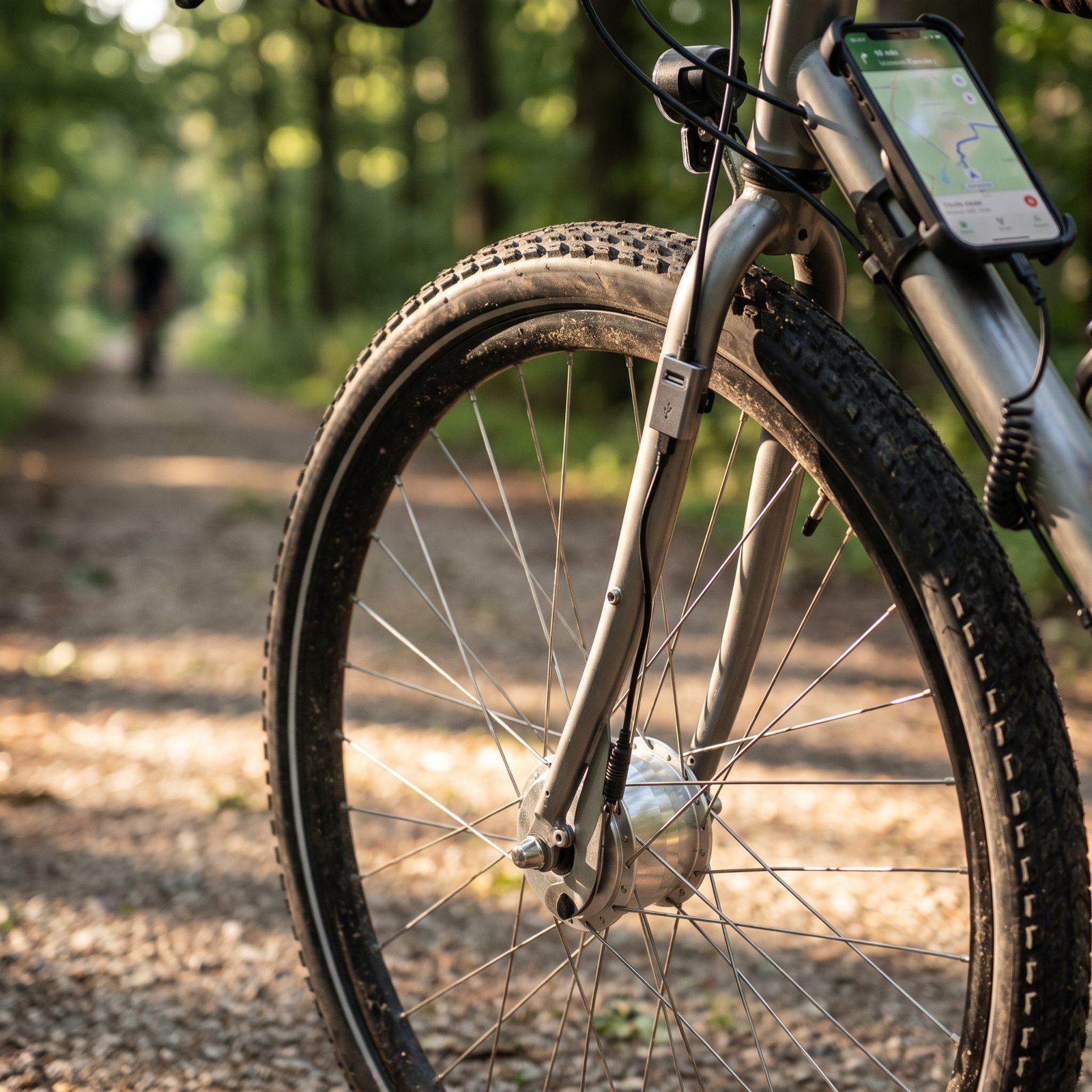
The battery dies forty miles from anywhere, and so does the map. A dynamo hub fixes that the old-fashioned way — it makes the wheel do the work. A generator built into the front hub turns your pedaling into a trickle of power. Add a small USB converter to route it to a phone or GPS while you ride.
It’s not fast. Call it a drip, not a hose: enough to keep a navigation device alive over a long day, not enough to revive a dead phone in minutes. Where it earns its keep is on multi-day tours and bikepacking routes where wall outlets are a fantasy. Build the hub into a wheel — a couple hundred bucks and up, depending on the parts you pick — and you never think about charging a light or a map again. Honestly, that peace of mind is half the point.