

The best garage gift isn’t the shiny one. It’s the one still earning its keep three winters later, long after the novelty mug cracked and the socks wore through. Anybody who spends real time under a hood or next to a bike lift knows a gadget from a tool — one collects dust on a shelf while the other gets reached for every Saturday. These are the gifts that actually move a workspace forward: better light to spot the bolt you dropped, a bench that doesn’t wobble when you lean on it, storage that ends the hour-long hunt for a 10mm. Useful beats cute. Every time.
Please note that some of the images in this article were created with the assistance of AI.
39. A Full-Extension Rolling Tool Chest
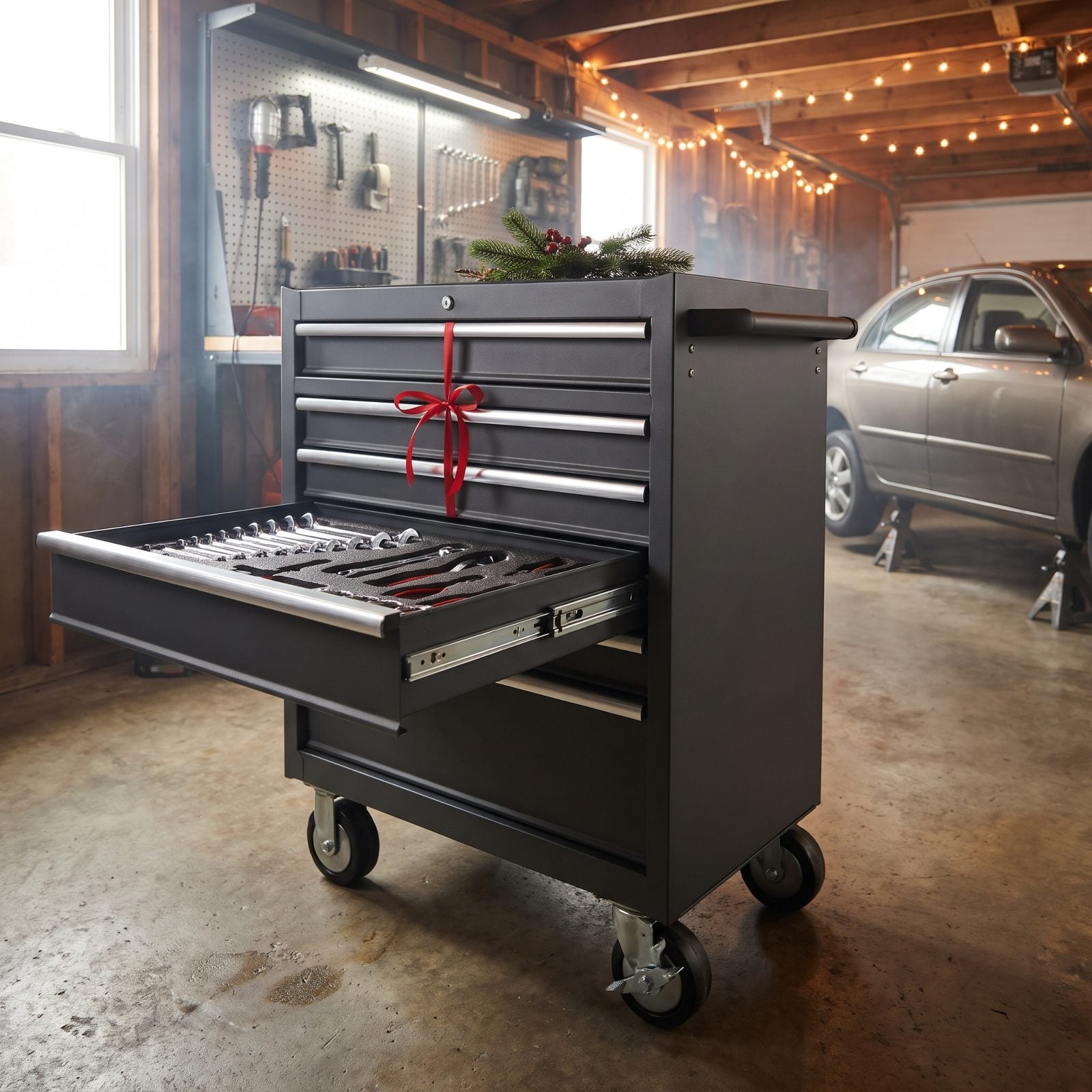
The drawer that only pulls out two-thirds of the way is always the one hiding the tool you need, wedged at the very back. Full-extension slides fix that for good — every socket and screwdriver sits in plain sight when the drawer’s open all the way.
Look for ball-bearing slides rated to hold real weight, not friction slides that sag by year two. A good chest runs a few hundred dollars and lasts decades. The cheap one? It rusts at the welds and the casters give out first.
38. A Solid Hardwood Workbench

A workbench that moves when you torque a bolt isn’t a workbench. It’s a table that lies to you. Solid hardwood tops — maple or beech — soak up hammer blows and shrug off dropped wrenches without denting the way particleboard does.
Weight is the whole point. A heavy bench stays put when you lean into a stubborn fastener, and bolting a vise to one end gives you the anchor every other project in the garage runs through. This is the gift someone uses daily and never thinks to buy for themselves.
37. A Brushless Cordless Impact Wrench
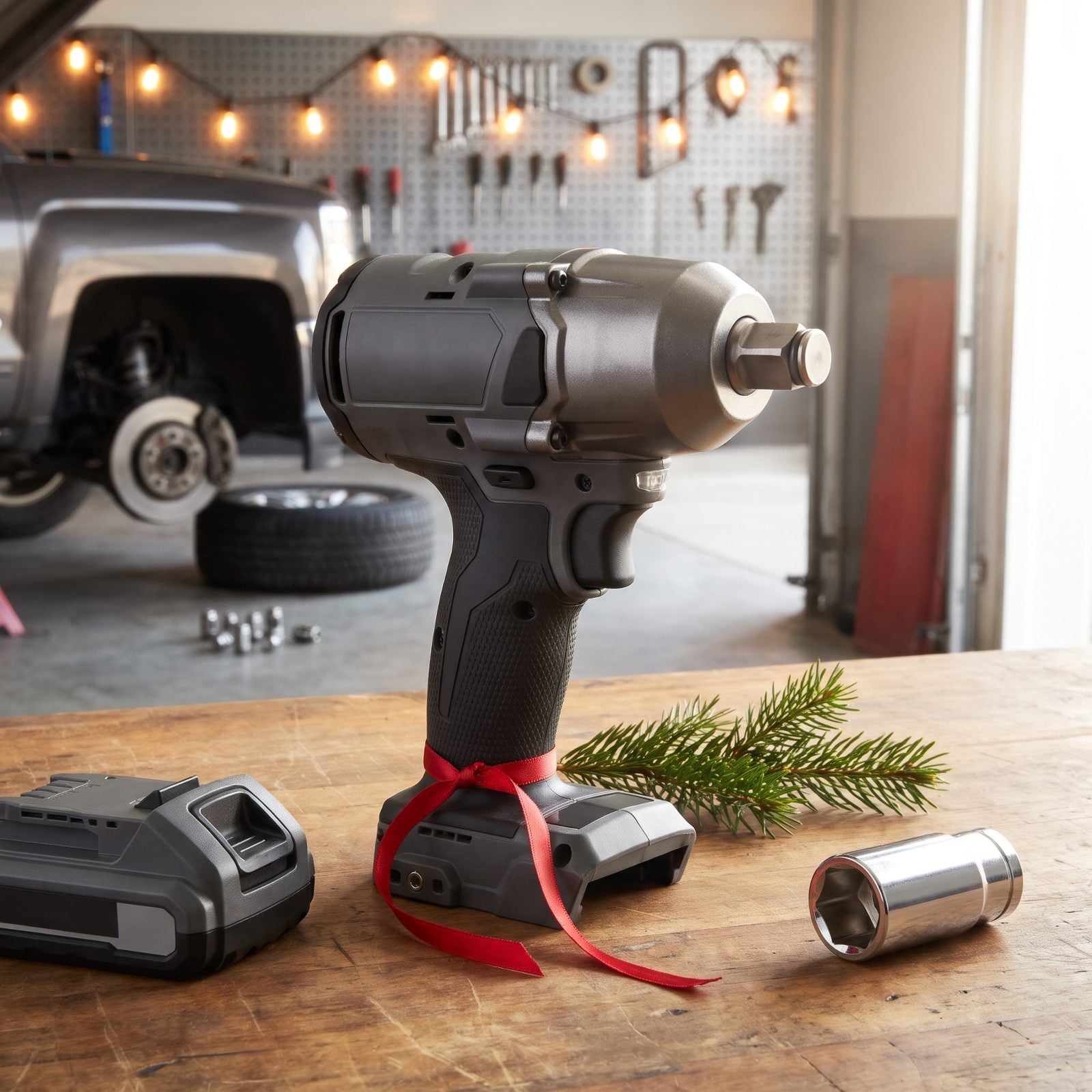
Breaking a seized lug nut by hand is a workout nobody signed up for. A brushless impact wrench ends the fight in two seconds flat.
Brushless matters more than the badge suggests — the motor runs cooler, lasts longer, and squeezes more work out of every charge than the old brushed units. Torque numbers get tossed around a lot, so trust the real-world test instead: does it break loose what you need and tighten without stripping threads? Pick a brand that shares a battery platform with other tools and the gift keeps paying off for years.
36. A Quiet Oil-Free Air Compressor
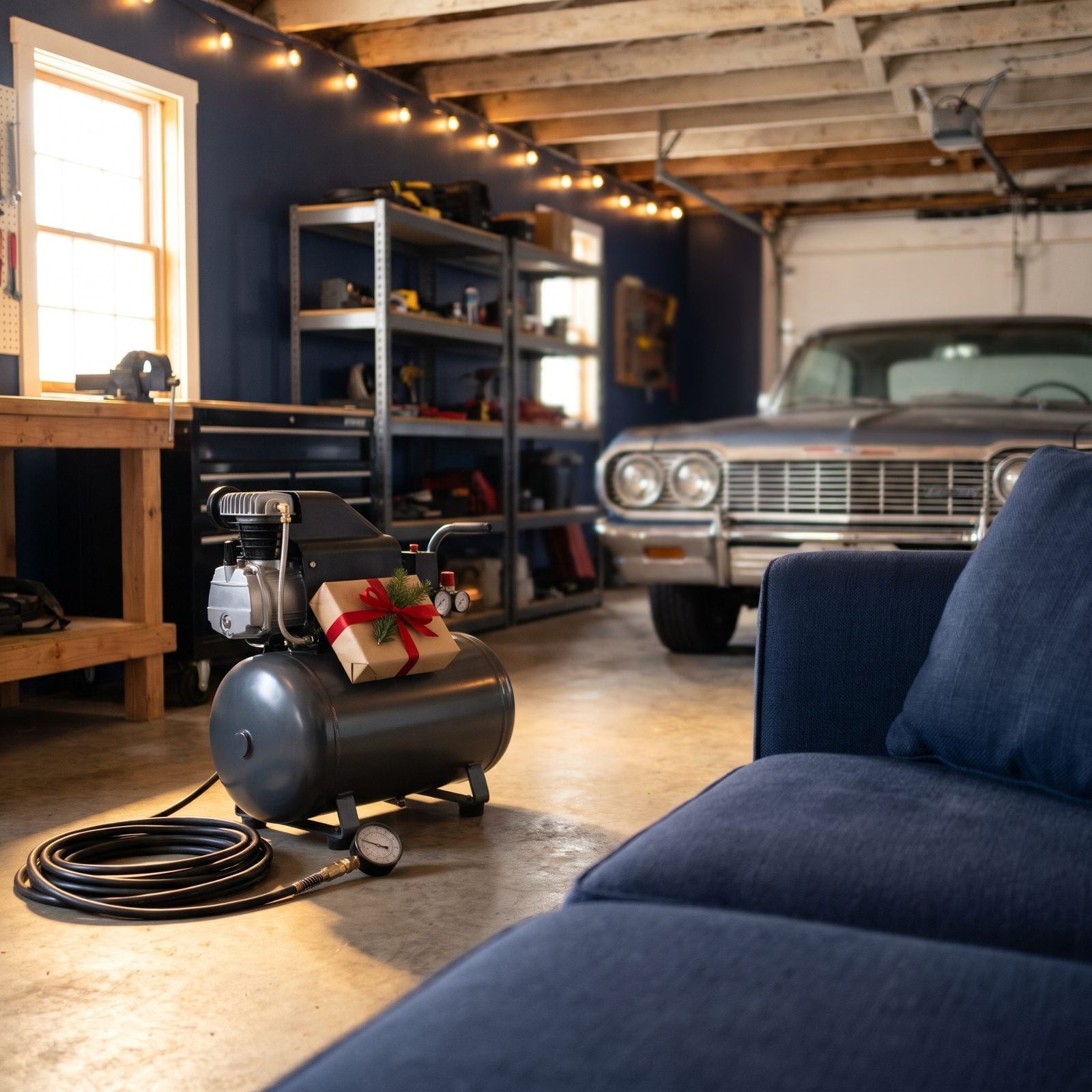
Old compressors sound like a jet taxiing through the garage. The quiet oil-free models changed that. You can run one while holding a conversation, which turns air tools from an occasional nuisance into something you reach for all the time.
Oil-free means no checking levels, no messy changes, no worrying about contaminated air if you ever spray a finish. The tradeoff? A slightly shorter lifespan under heavy daily commercial use. For a home garage running impact tools, a nailer, and tire inflation, it’s the right call — and your neighbors will thank you.
35. Linkable LED Shop Lights

The dropped bolt you can’t find is usually a lighting problem, not a you problem.
Linkable LED shop lights plug into each other and daisy-chain down a ceiling from a single outlet. No electrician, no junction boxes. Clip one up, run the connector to the next, and suddenly the whole bay reads like noon.
Aim for high lumen output and a color temperature around 5000K — close to daylight, which makes paint and wiring colors true. Dim yellow light hides problems. Bright white finds them.
34. A Complete Mechanics Socket Set
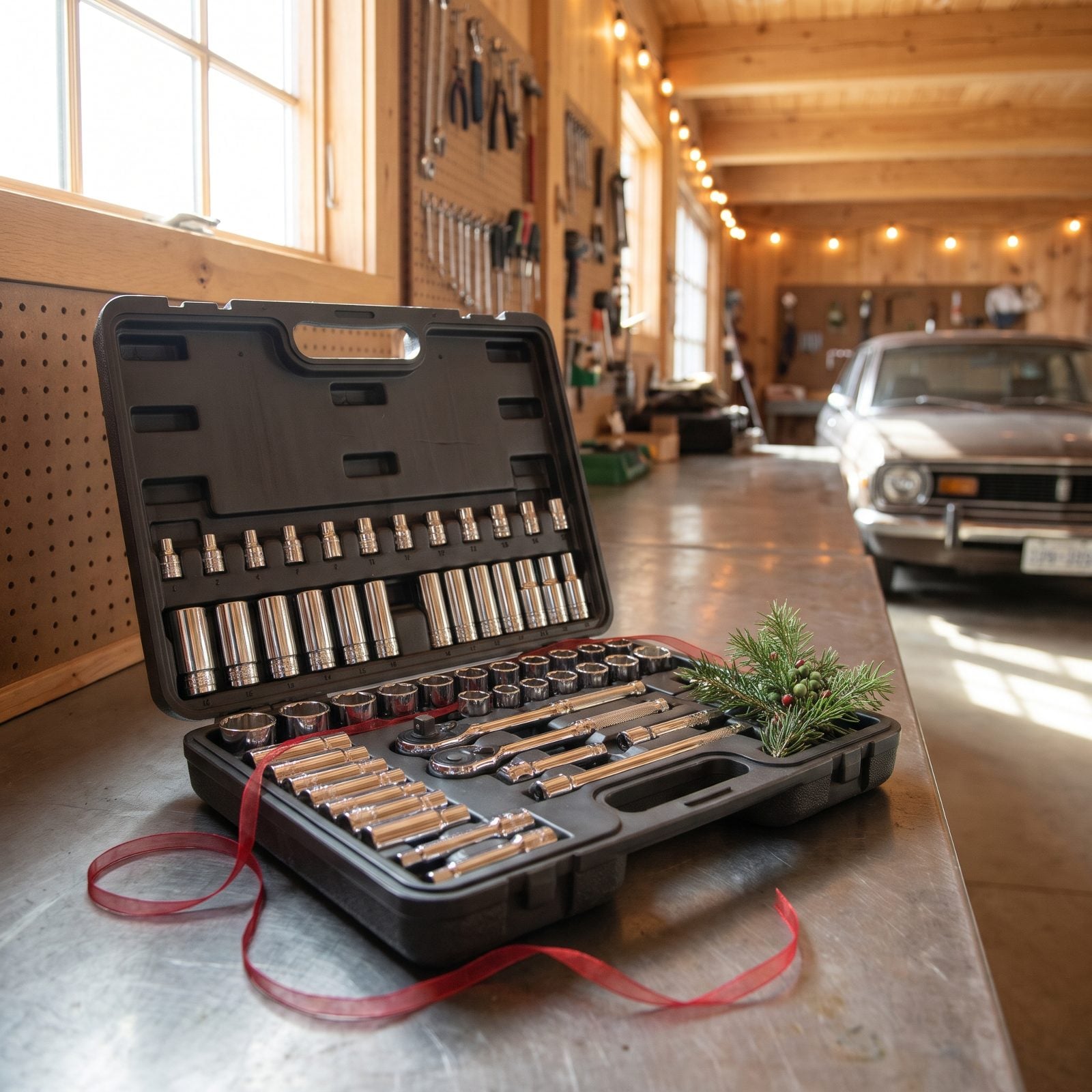
A real mechanics set covers the gaps that sink a Saturday project. Metric and SAE both. Shallow and deep sockets. Quarter-inch, three-eighths, and half-inch drives, so you’ve got the finesse for small electronics and the muscle for suspension bolts.
Chrome vanadium steel is what to look for. It resists rounding off and stands up to serious torque. The cheap sets look identical in the box, then split a socket on the first stuck bolt. A quality set with a lifetime warranty costs more up front and never needs replacing. That’s the whole math.
33. A Heavy-Duty Wet/Dry Vacuum
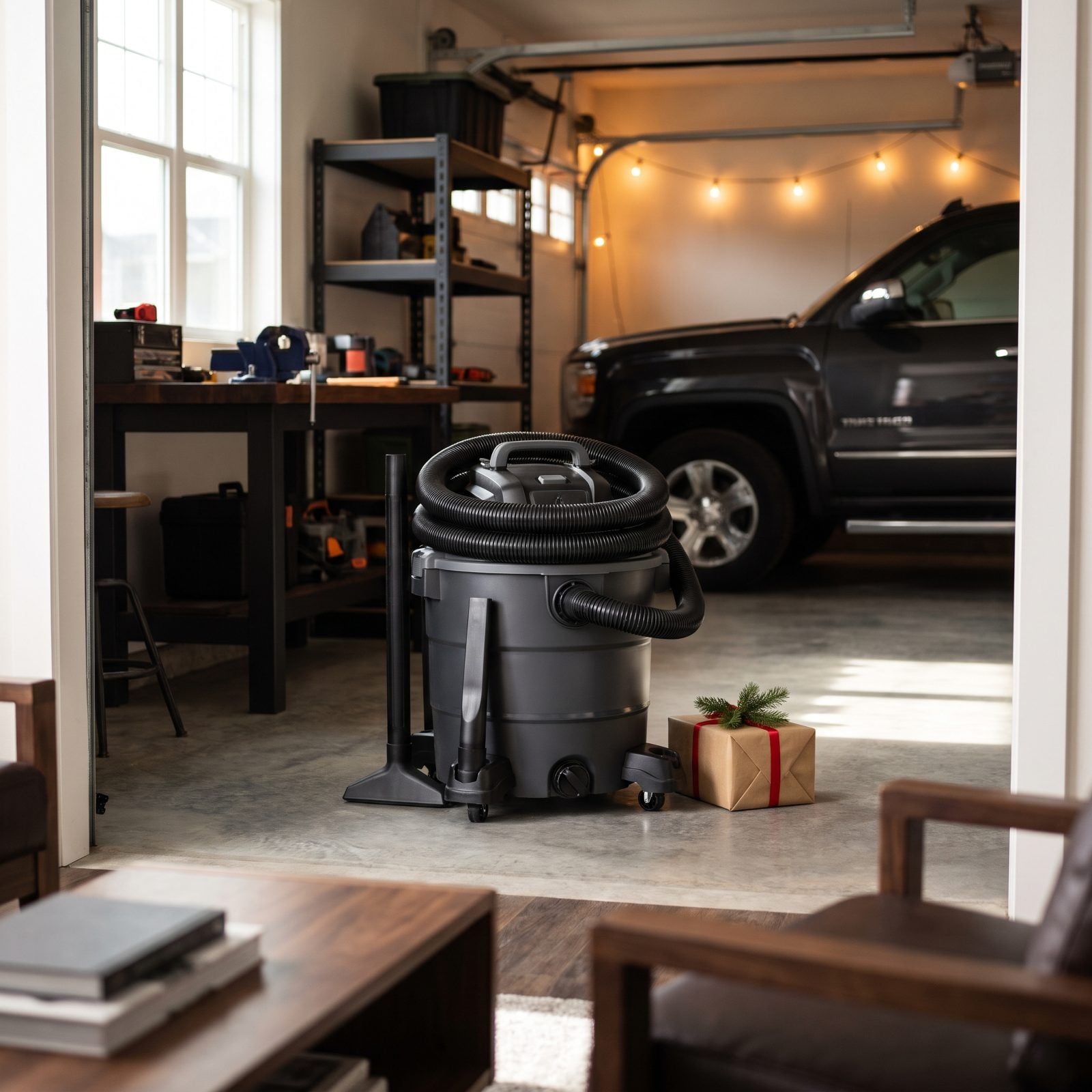
Sawdust, antifreeze spills, the gravel that rides in on tires. A heavy-duty wet/dry vac eats all of it, and that’s why it earns a corner in nearly every working garage.
The spec that matters most isn’t the horsepower splashed on the label — it’s airflow and the quality of the filter. A good one picks up fine drywall dust without spitting it back, then switches over to sucking a flooded coolant catch pan dry five minutes later. Get one with a blower port, too. That same motor clears leaves off the driveway come October.
32. An Adjustable Overhead Storage Rack
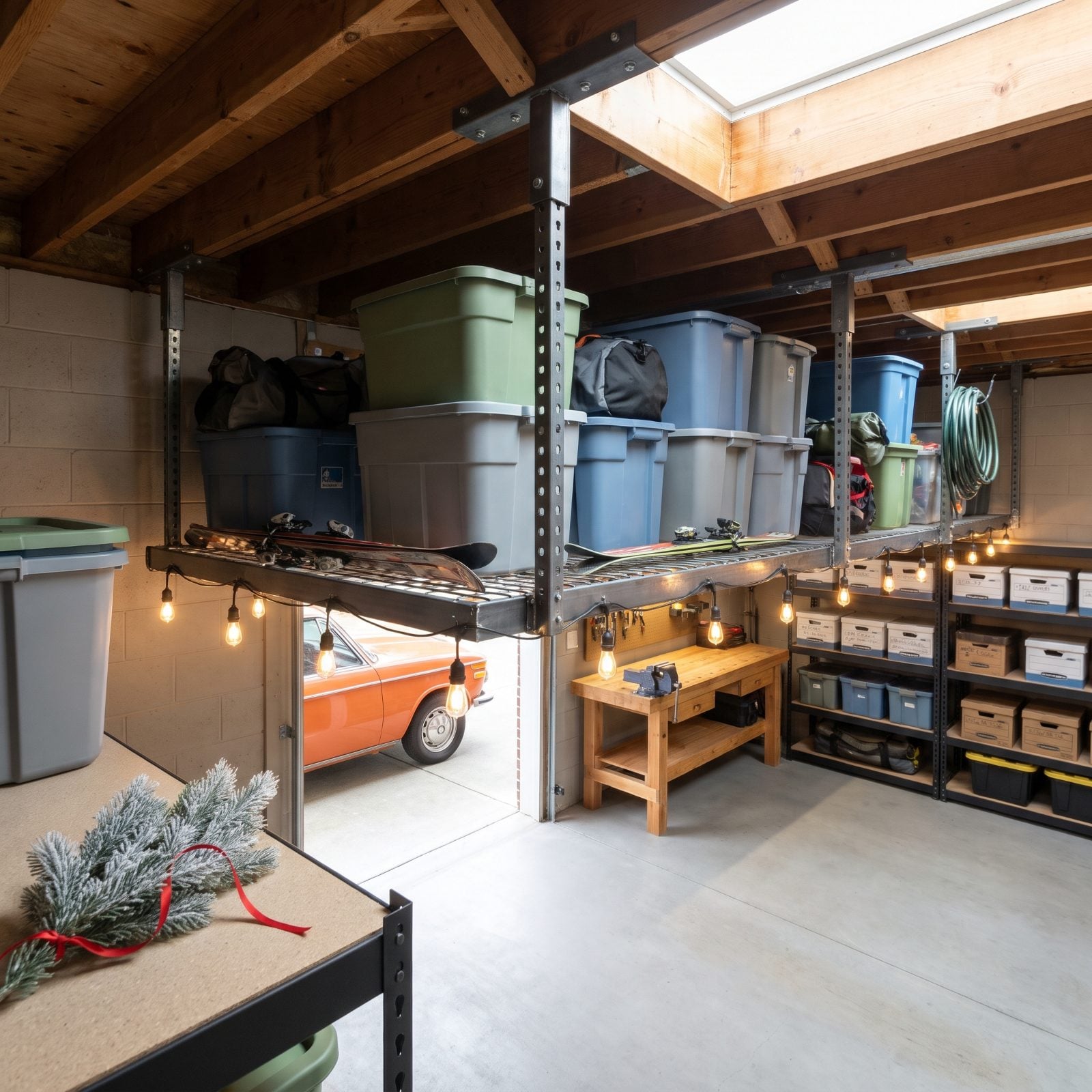
The ceiling is the most wasted real estate in any garage. An adjustable overhead rack claims it back.
Bolt it into the joists, set the drop height to clear your tallest vehicle, and the holiday bins and camping gear move overhead instead of eating a corner of the floor. The adjustable arms earn their keep because every garage ceiling is a different height and every pile of stuff is a different shape.
31. A Modular Steel Pegboard System
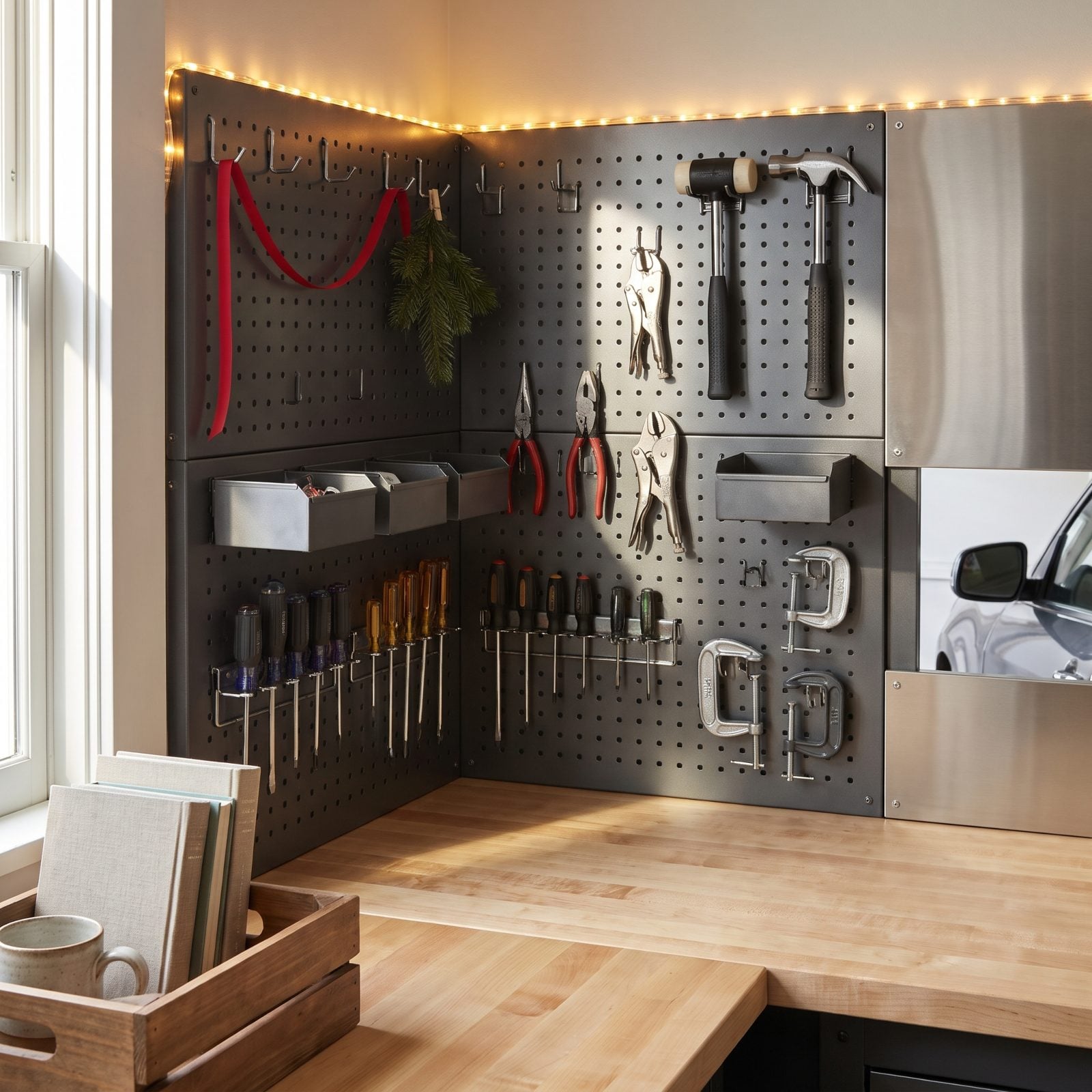
Old hardboard pegboard works fine until a heavy wrench rips a hook straight through the crumbling hole. Steel pegboard doesn’t flinch. The hooks lock in, the panels bolt together in whatever shape your wall needs, and the whole thing takes real weight without sagging an inch.
Here’s the quiet magic: trace each tool’s outline on the board, and an empty spot screams at you the second something’s missing. Half the battle in a garage is knowing a tool walked off before you need it. A good pegboard turns the wall into a map of everything you own.
30. A Universal Cordless-Tool Charging Station
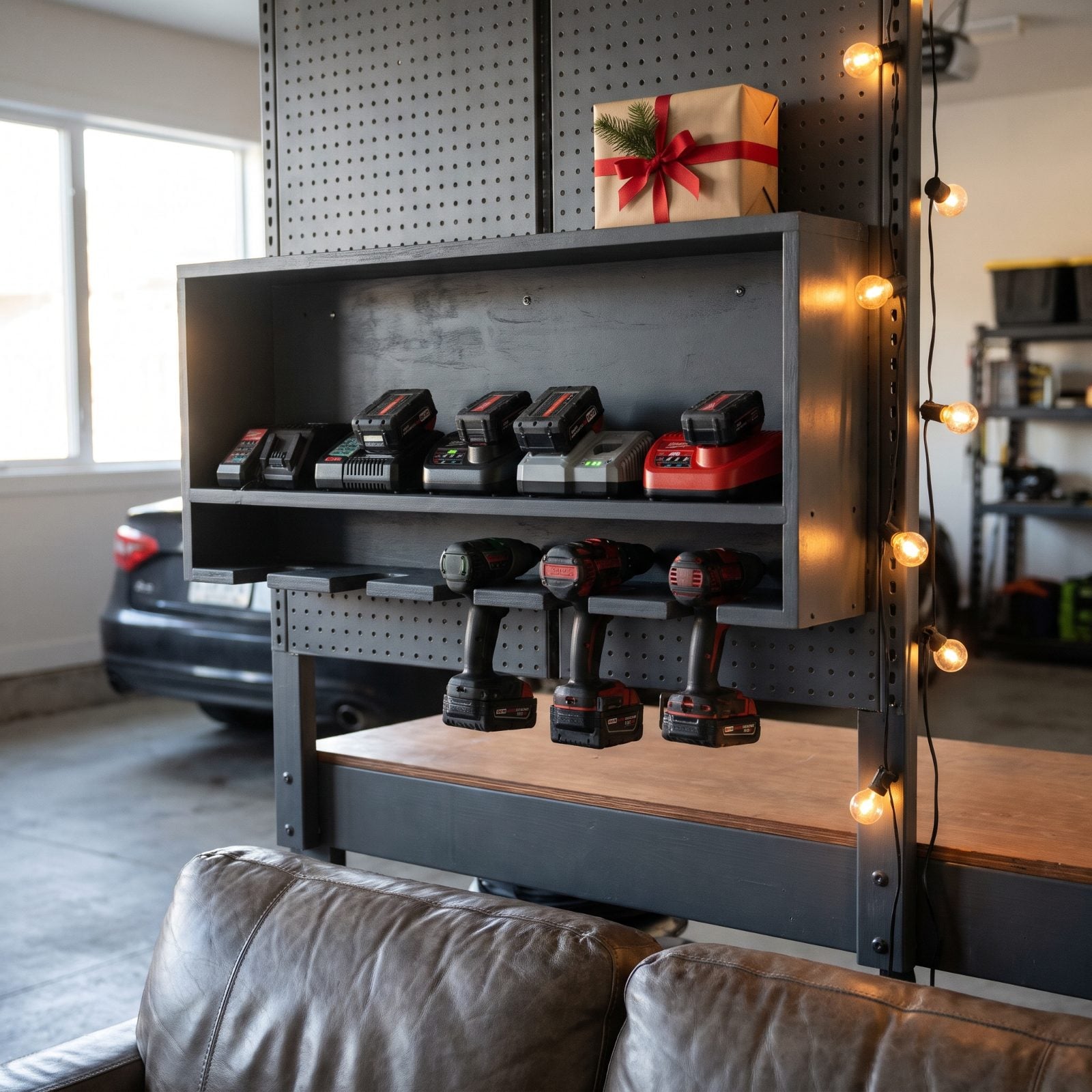
Dead batteries are the silent project-killer. You grab the drill, the light blinks red, and now you’re waiting forty minutes with the bolt half-out.
A charging station mounts to the wall and gives every battery, tool, and charger a home. Everything stays plugged in and topped off, so the drill is always ready when you grab it. Better models manage the power draw, too, so you’re not tripping a breaker with six chargers hanging off one circuit.
29. A Retractable Extension Cord Reel That Ends the Tangle
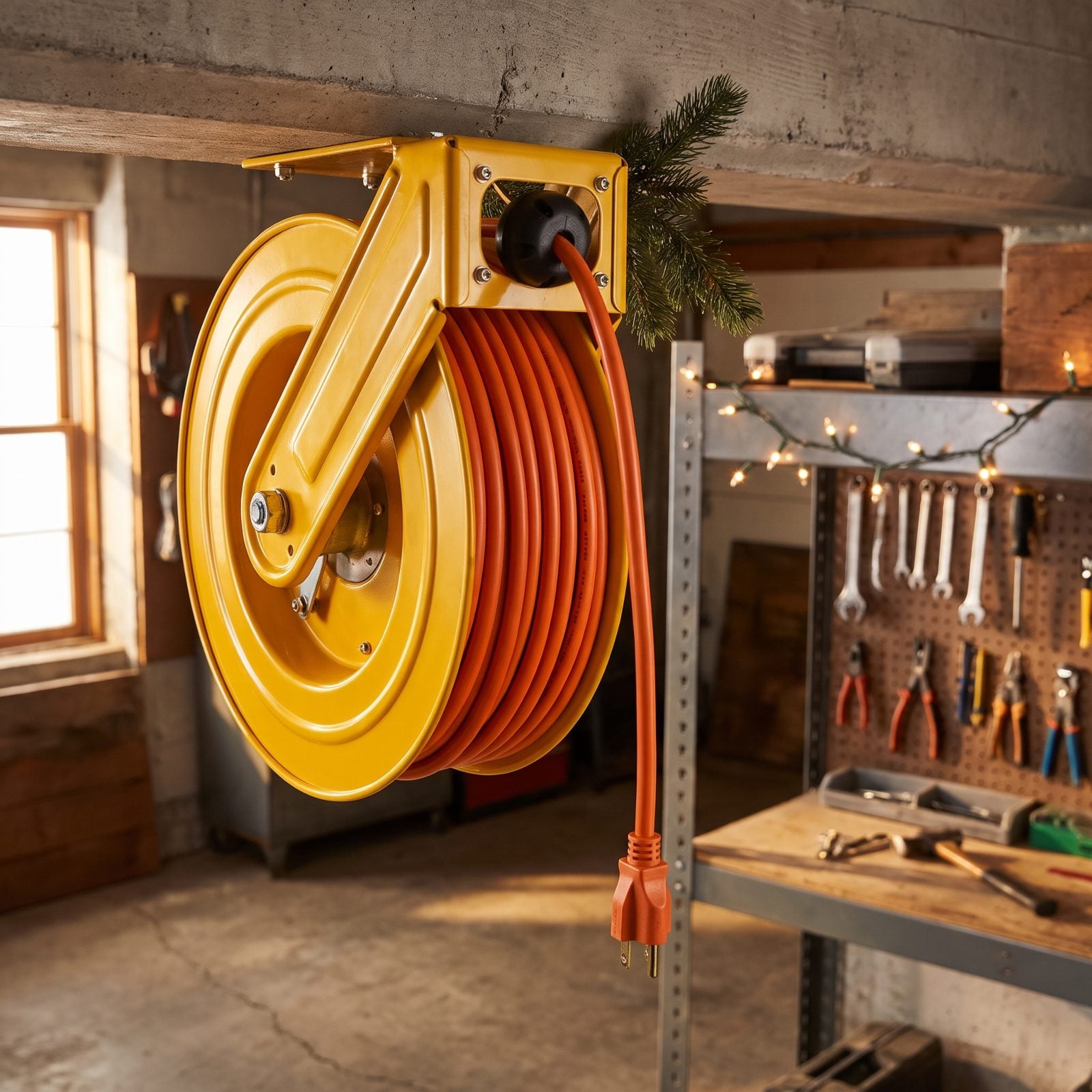
You know the drill. You drag the cord across the floor, trip over it twice, then spend a small eternity coiling it back by hand like you’re wrestling a garden hose that fights back. A ceiling-mounted reel tames most of that. Even with a few loose loops draped over the drum, the cord hangs up off the floor instead of snaking across it, and you can pull down as much line as you need.
Look for a solid amp rating and a cord thick enough to run a compressor or a heat gun without the jacket getting warm. The cheap ones? Thin gauge wire that sags and overheats. Spend a little more here.
28. A Rechargeable Under-Hood Work Light That Hangs Where You Need It
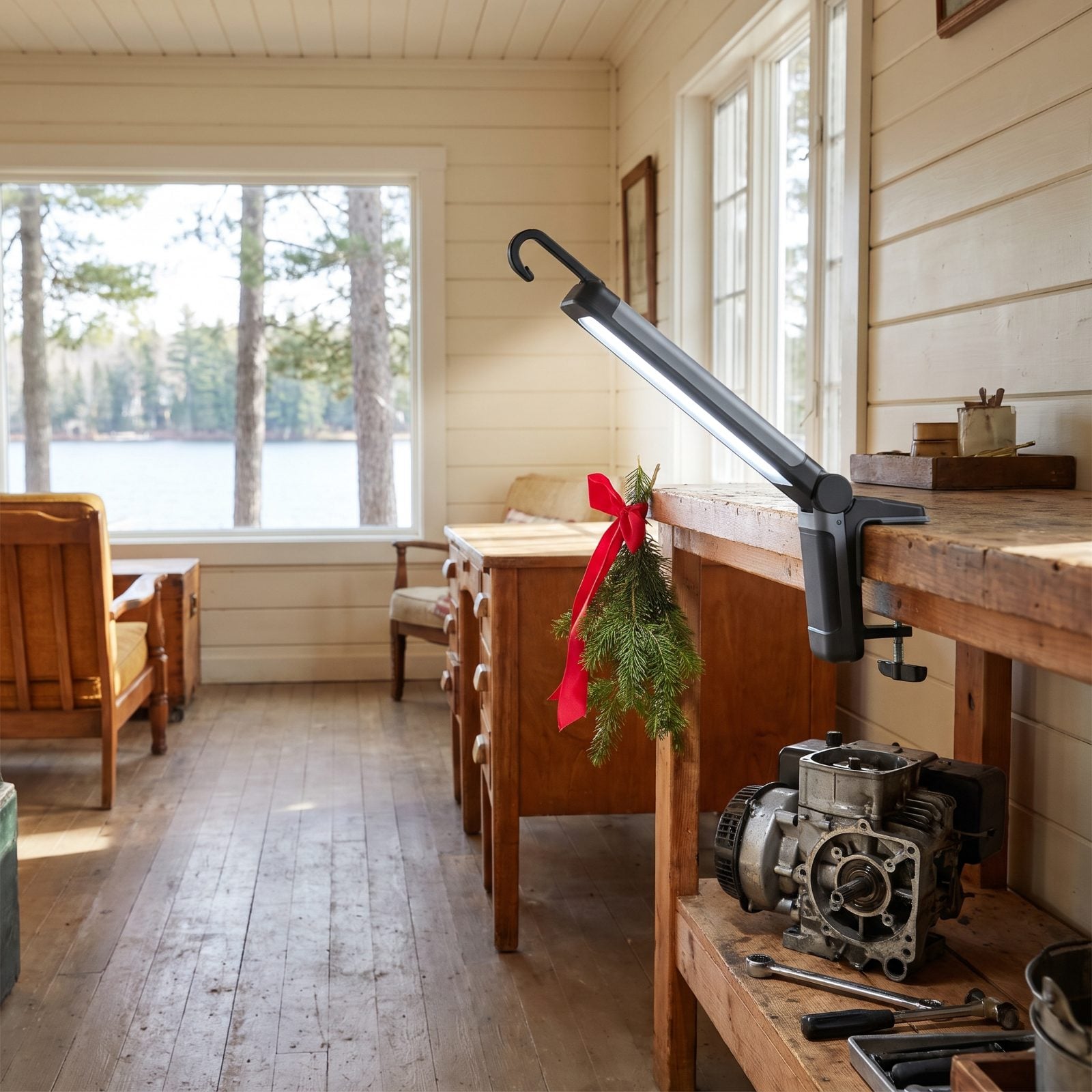
A flashlight clamped in your teeth is a garage tradition nobody should keep. An under-hood light hangs from the hood lip or clamps to a bracket and floods the whole engine bay with even light, so both hands stay on the job where they belong.
The good ones run most of an afternoon on a charge and top up over USB-C. Magnetic bases are handy, sure, but the folding hooks matter more because not every surface near the work is steel. We kept buying little pocket lights for years before we finally admitted the thing we actually needed was a bar of light we could set and forget.
27. A High-Lumen Mechanic’s Headlamp for Hands-Free Dark Corners
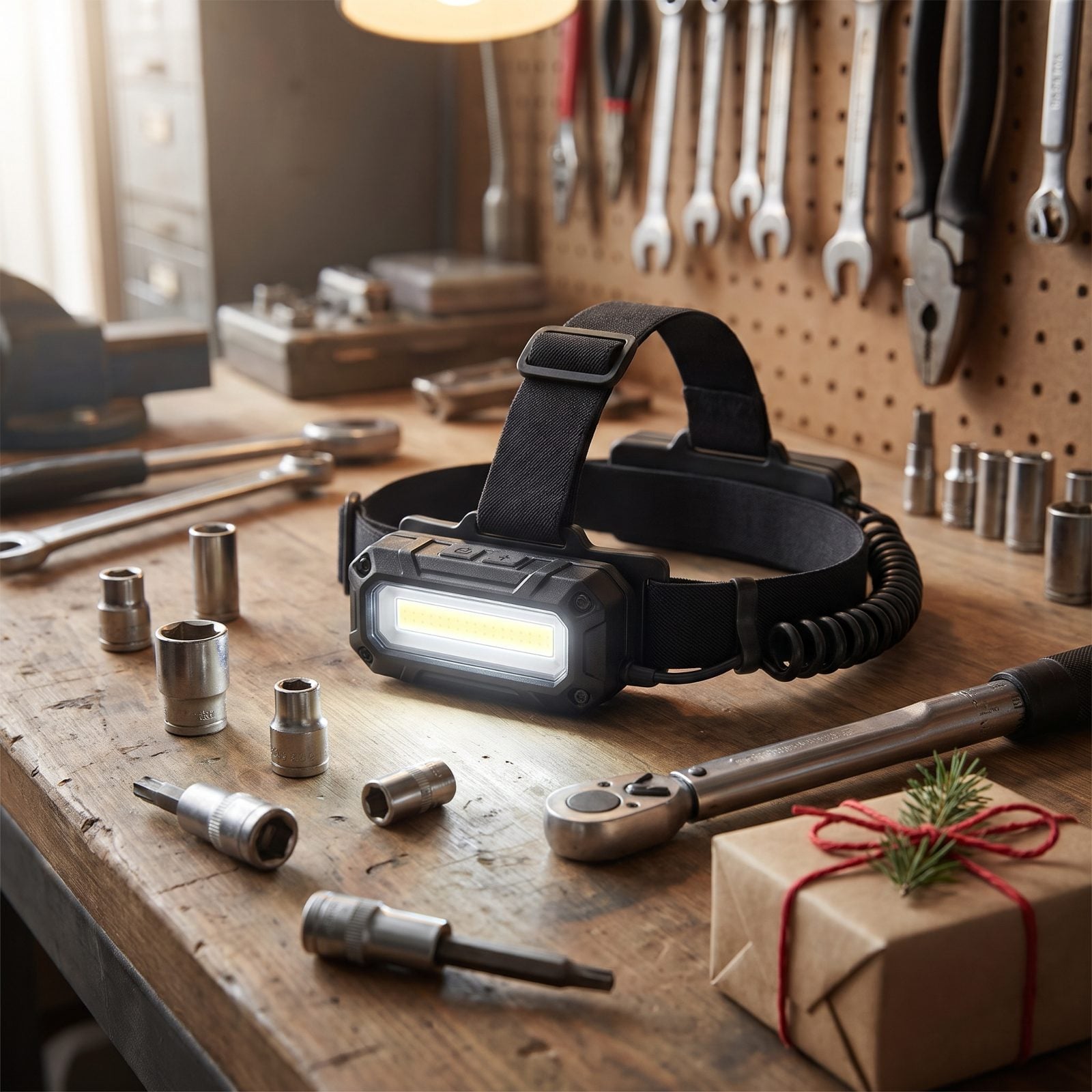
Crawling under a dash or reaching behind an exhaust manifold, the light always points the wrong way. A headlamp fixes the oldest problem in the shop: the dark is wherever your head happens to be looking.
Modern ones push plenty of real lumens, with a wide flood for close work and a spot for distance. Get one with a motion sensor. Then you can wave it on with a greasy hand instead of smearing grease all over the switch.
26. A Cordless Digital Tire Inflator You’ll Actually Keep Charged
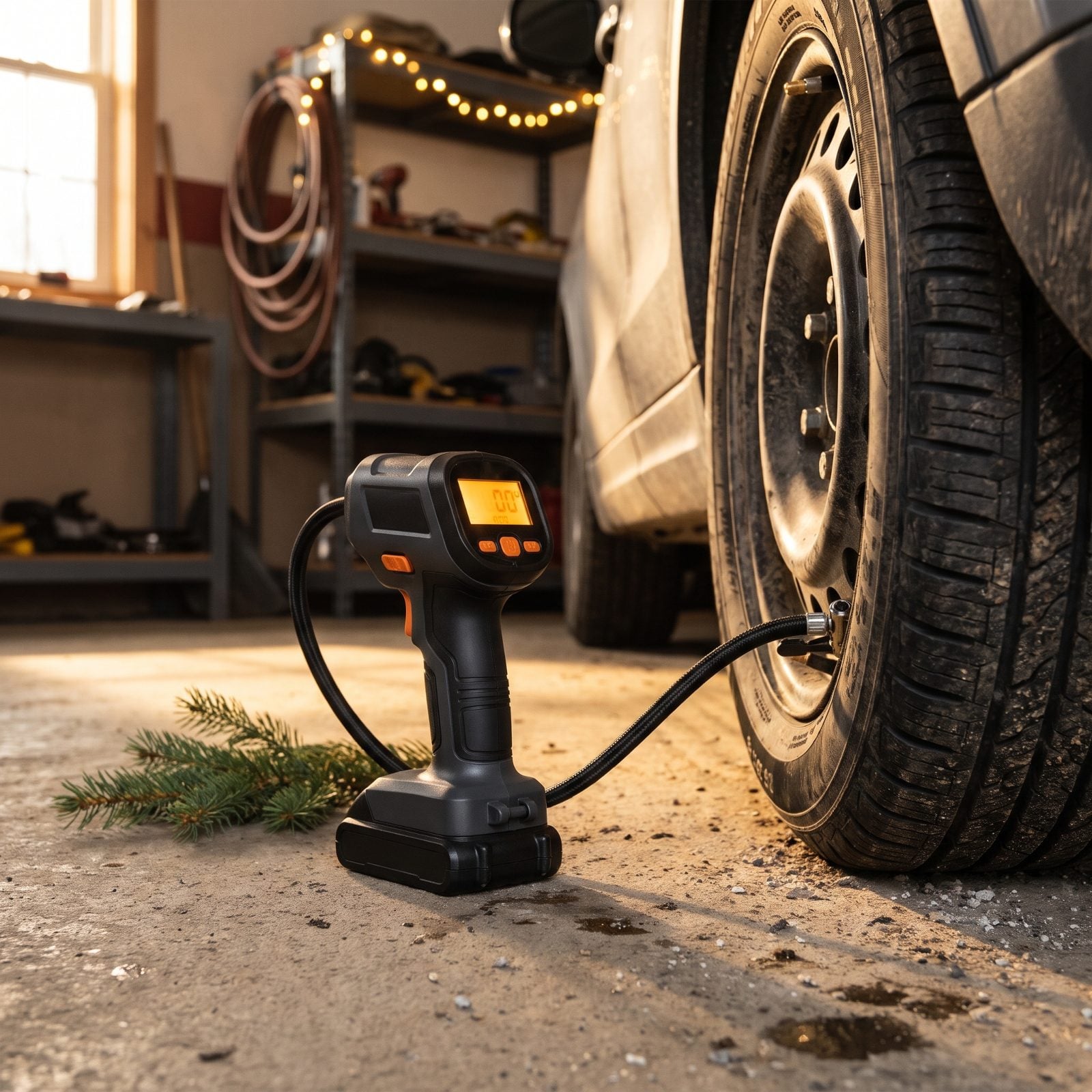
Set the pressure, press start, walk away. The pump shuts itself off at the number you dialed in. That’s the whole pitch, and it’s a good one.
A cordless inflator handles car tires, a flat on the mower, a basketball, and the air mattress for whoever’s crashing in the guest room. Battery models from the big cordless tool lines share packs with your drill, which is the smart buy if you already own one of those. The standalone ones work fine too. Just remember to top the charge once a month so it’s ready the morning you find a soft tire sitting in the cold.
25. A Compact Electric Pressure Washer That Fits on a Shelf
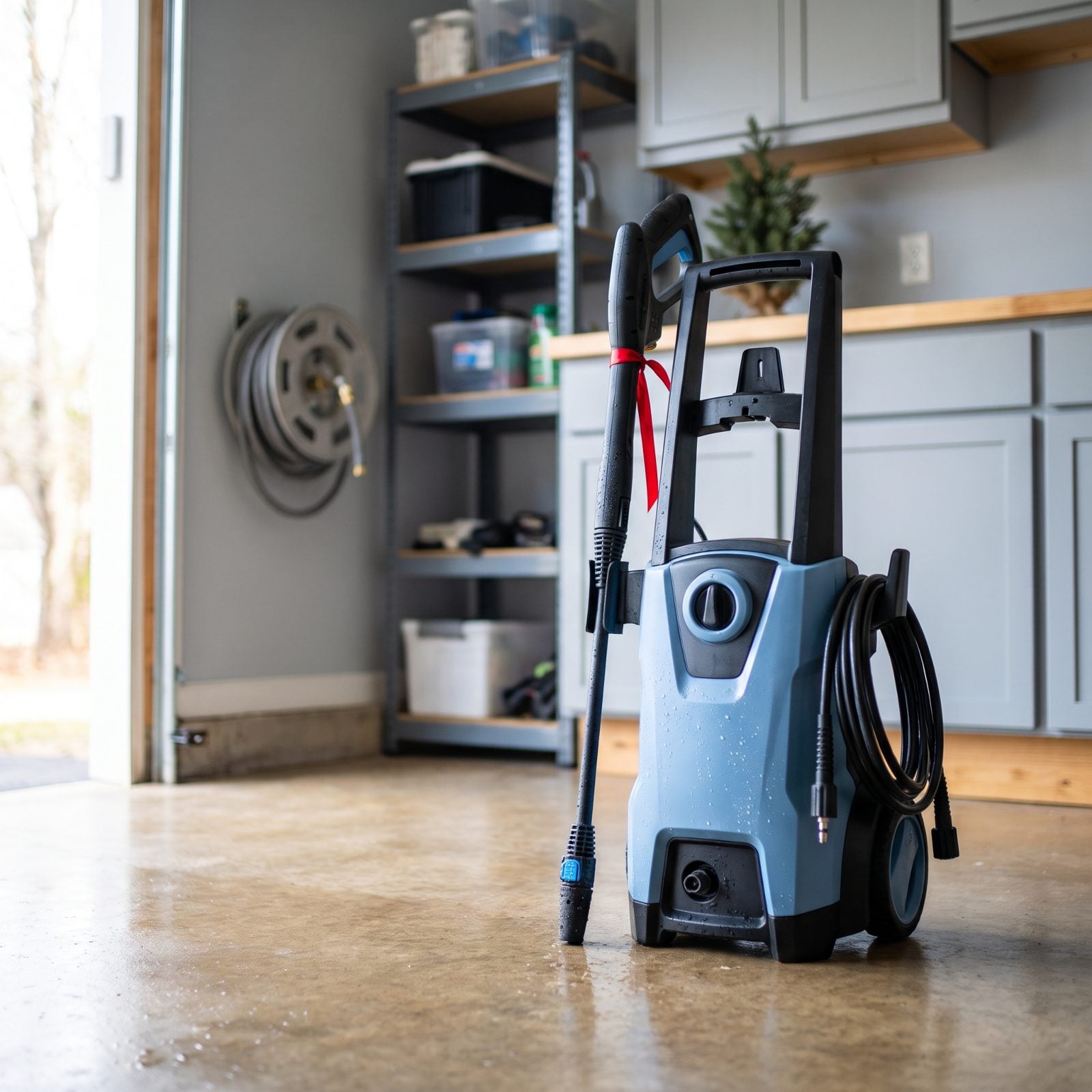
You don’t need a gas monster to wash a car and a driveway. A compact electric unit in the mid-pressure range cleans wheels, siding, patio furniture, and a muddy quad without waking the neighbors or storing fuel in the corner.
Here’s what nobody mentions: the included quick-connect tips do most of the work. The 40-degree white tip is for cars and glass, the 25-degree for general grime. The red zero-degree tip that comes in the box will strip paint and etch concrete, so leave it in the drawer unless you truly mean business.
24. A Complete Car Detailing Kit That Replaces the Junk Under the Sink

Picture the cabinet now. A half-empty jug of all-purpose cleaner, three mismatched rags, a sponge the dog chewed, and a bottle of tire shine old enough to vote. A proper kit clears all of that out and hands you one box where everything actually matches.
The microfiber towels matter most. Cheap towels drag grit across your clear coat and leave swirl marks you’ll catch every sunny day for a year. A good kit comes with plush, high-GSM towels sorted by job: wash, dry, glass, interior. Keep them separate. And never wash them with regular laundry, because fabric softener ruins their grip for good.
23. An Adjustable Infrared Garage Heater for January Projects
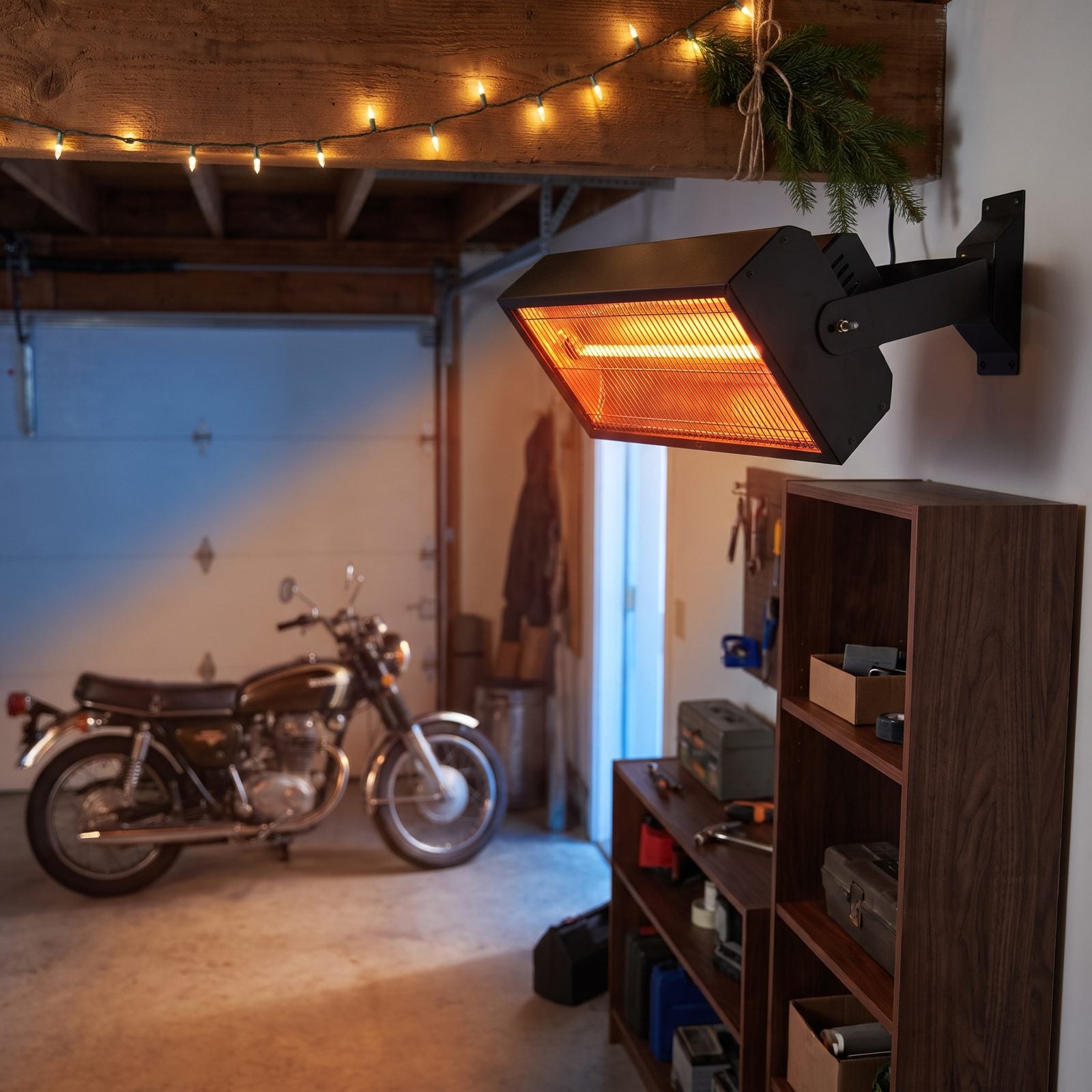
Infrared heats you, not the whole room. That’s the trick. Instead of burning energy trying to warm a cavernous box while the door drafts cold air in, an infrared panel throws heat straight onto your body and the surface you’re working on.
You feel it the instant it points your way, like stepping into a patch of winter sun. Mount it on the wall and angle it at your bench, or grab a standing unit you can wheel to the project. For a sealed single-bay garage, a 1,500-watt panel on a standard outlet keeps a working man warm clear through an oil change.
22. A Thick Anti-Fatigue Work Mat Your Knees Will Thank You For
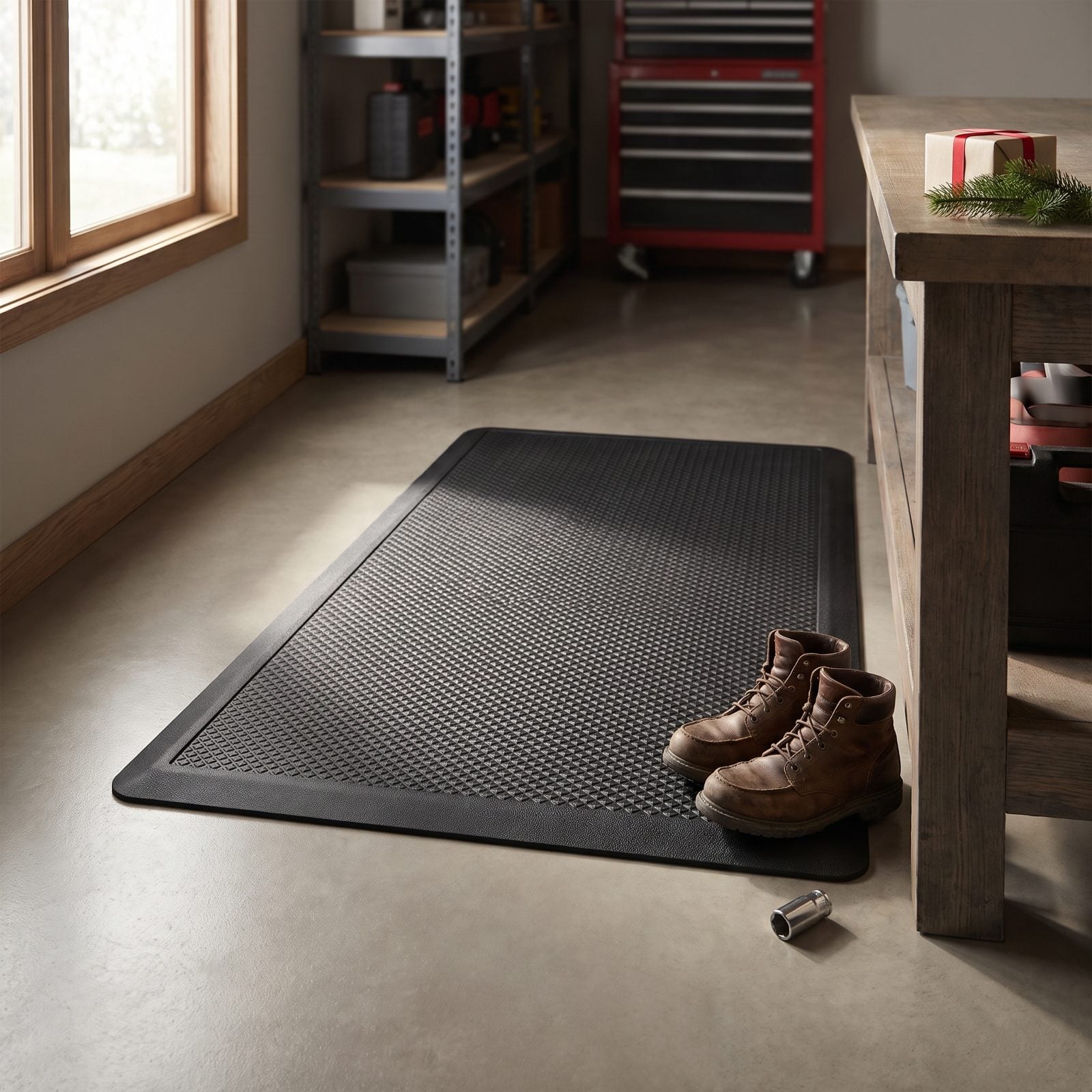
Concrete is merciless. Stand on it for an hour at the bench and your lower back files its complaint by dinner. A thick anti-fatigue mat, three-quarters of an inch of dense foam underfoot, keeps your joints off the slab and makes the long jobs bearable instead of brutal.
Get one with beveled edges so you don’t catch a toe, and a surface you can wipe clean when the oil inevitably finds it. There’s a kneeling-pad version too, the perfect companion gift for anyone who spends real time down at wheel height.
21. A Padded Rolling Mechanic’s Stool That Saves the Crouch
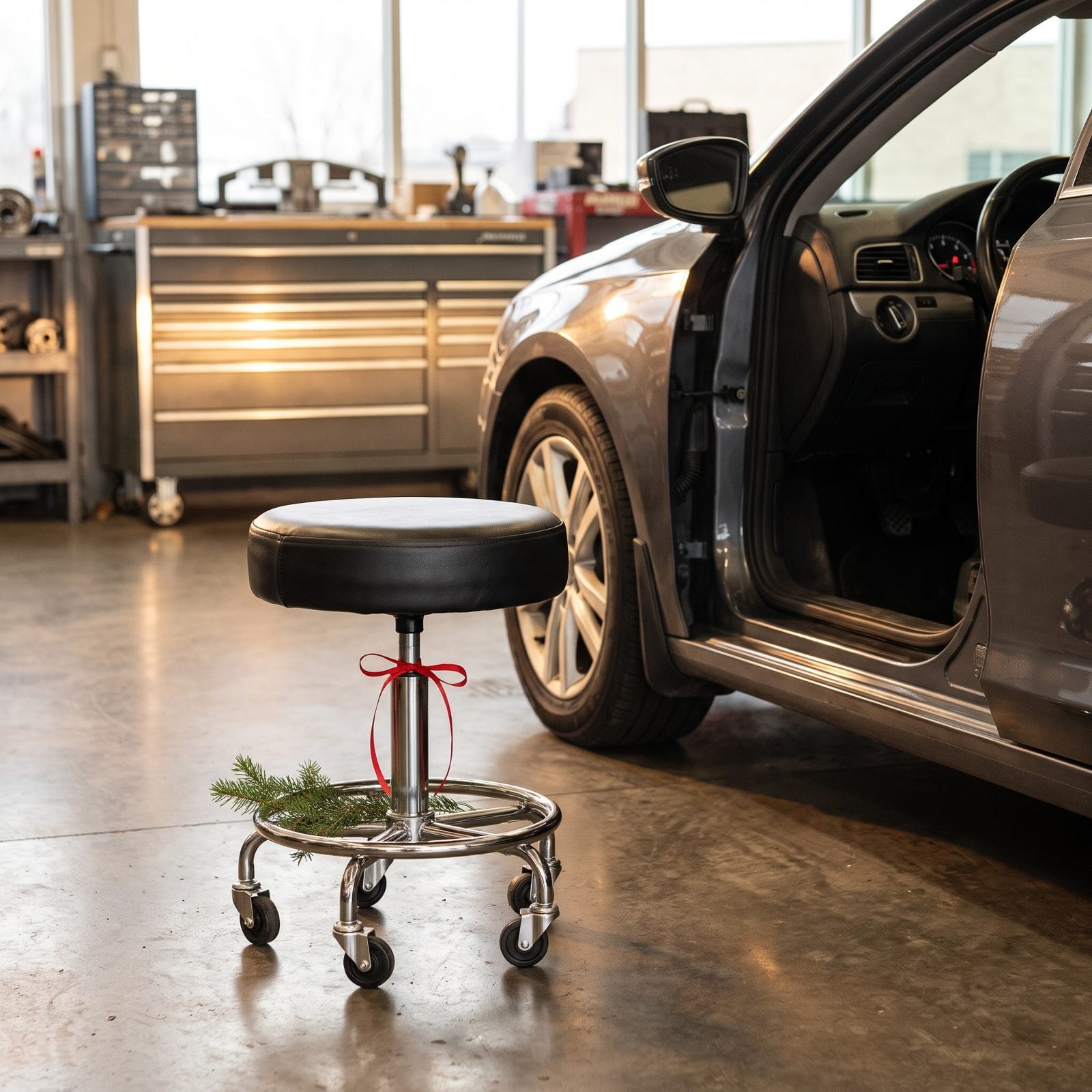
The crouch, the waddle, the slow stand with one hand braced on the fender. Every garage task at knee height turns into a workout you never signed up for. A low rolling stool lets you glide down the length of a car instead of duck-walking the whole thing.
The ones worth having carry a tool tray underneath and a seat that adjusts a few inches up or down. Check the caster quality, because cheap wheels seize up the first time they roll through brake dust and grit. Smooth casters are the whole difference between a stool you reach for daily and one you shove in the corner and forget.
20. A Swiveling Bench Vise That Anchors Every Job
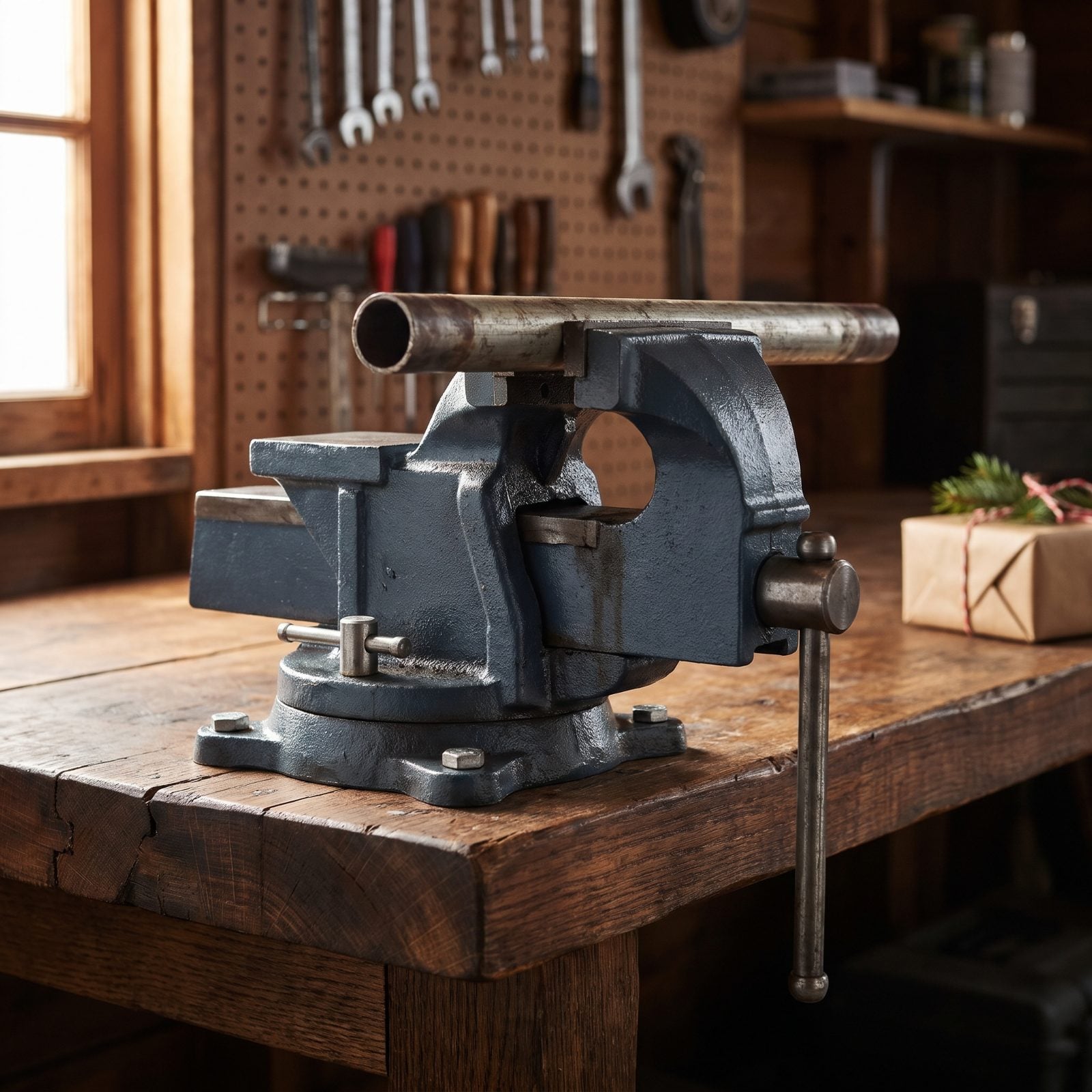
Every real workbench has one. The benches that don’t are just tables. A good vise is that third hand you’ve wished for every single time you tried to hacksaw a pipe or file a bolt while it skated clean across the bench.
Buy by weight and jaw width. A 5-inch cast-iron vise with a swivel base handles most home jobs, with a broad top where stock like a length of pipe can rest between cuts, and rotating to meet the work instead of making you contort around it. Avoid the thin die-cast ones; they crack under real pressure. This is a tool you bolt down once and hand to your grandkids. Spend accordingly.
19. A Benchtop Drill Press That Ends the Hand-Drill Wobble
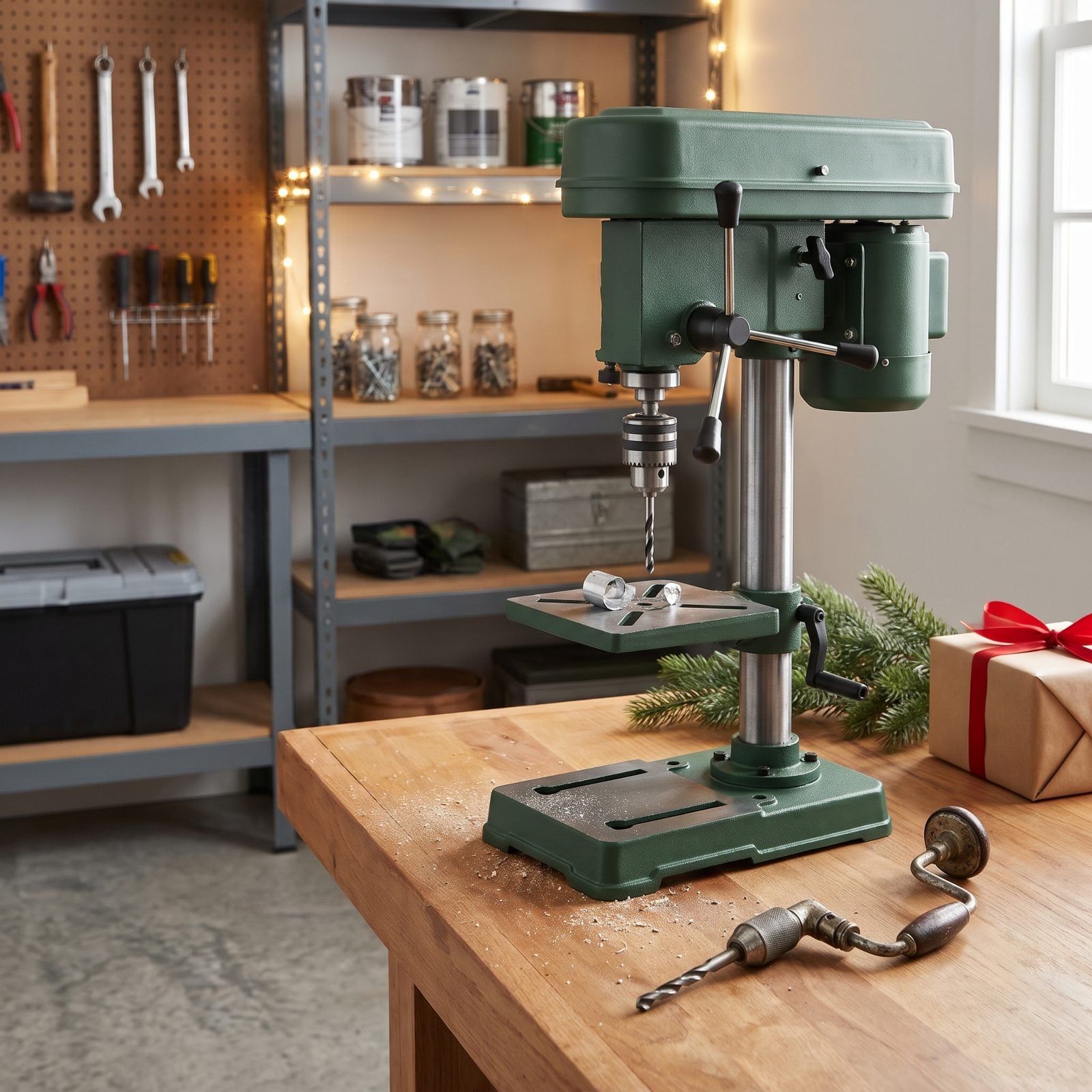
Try drilling a straight hole through a bracket by hand and you’ll understand why this earns a spot on the bench. A handheld drill wanders — it walks across the metal, angles off, and leaves you with a hole that’s close but never clean.
A benchtop model fixes the bit at a dead-square angle and lets you feed it down with a lever, so you get steady pressure and repeatable depth with no wobble. Good ones run roughly $150 to $350 and bolt straight to a workbench, so floor space isn’t an issue.
18. A Click-Type Torque Wrench for Bolts That Actually Hold
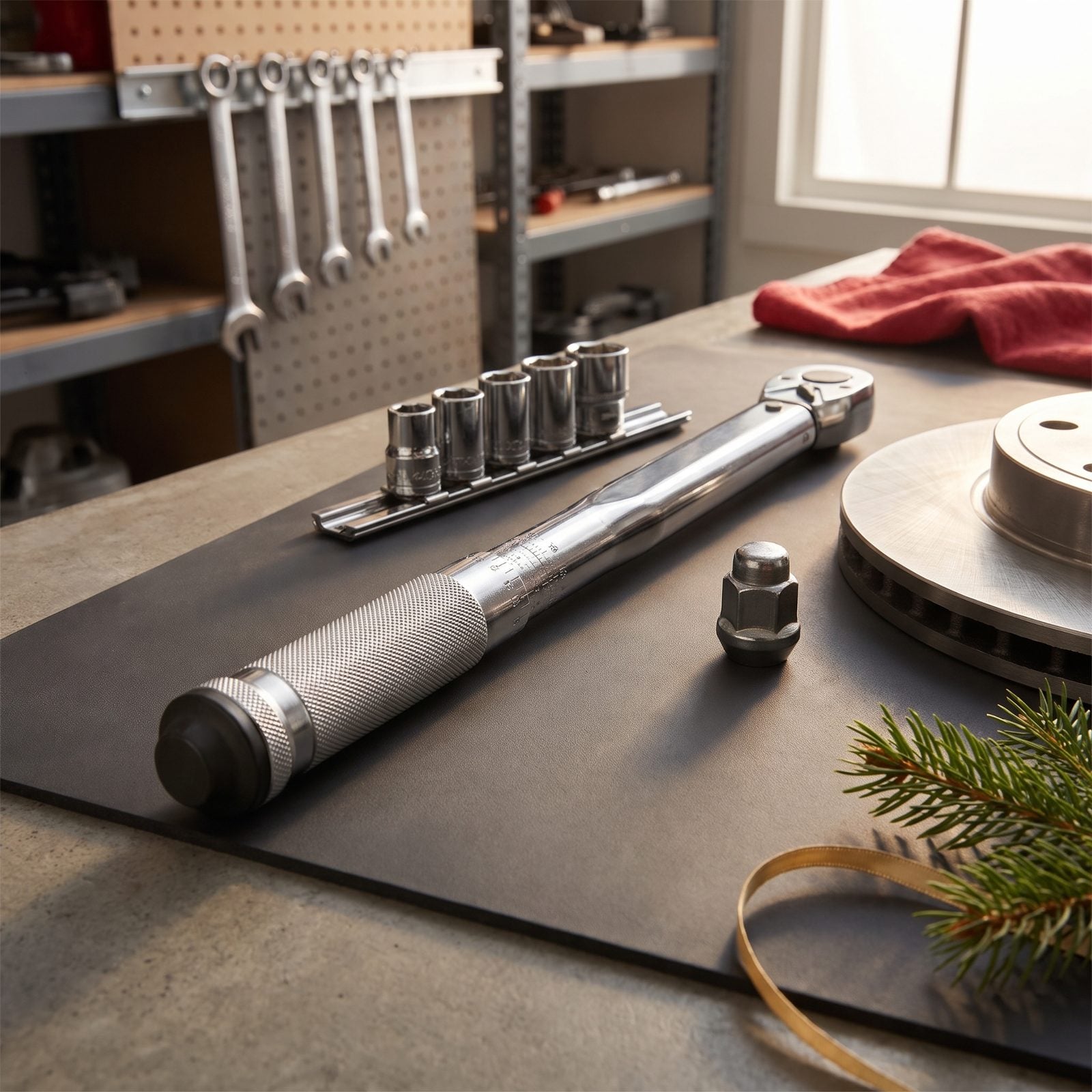
Over-tighten a lug nut and you warp the rotor. Under-tighten it and the wheel works loose on the highway. There’s a right number, and a torque wrench is how you hit it.
The click type is what most home garages want. You dial in the spec, pull until it clicks, and stop. Simple. Expect to spend $40 to $120 for one that holds calibration.
Here’s a habit nobody mentions at the register: dial the setting back to its lowest mark when you’re done. Leaving the spring compressed for months drifts the calibration. Treat it like a tool, not a breaker bar, and it’ll stay honest for years.
17. A True-RMS Digital Multimeter for Chasing Gremlins
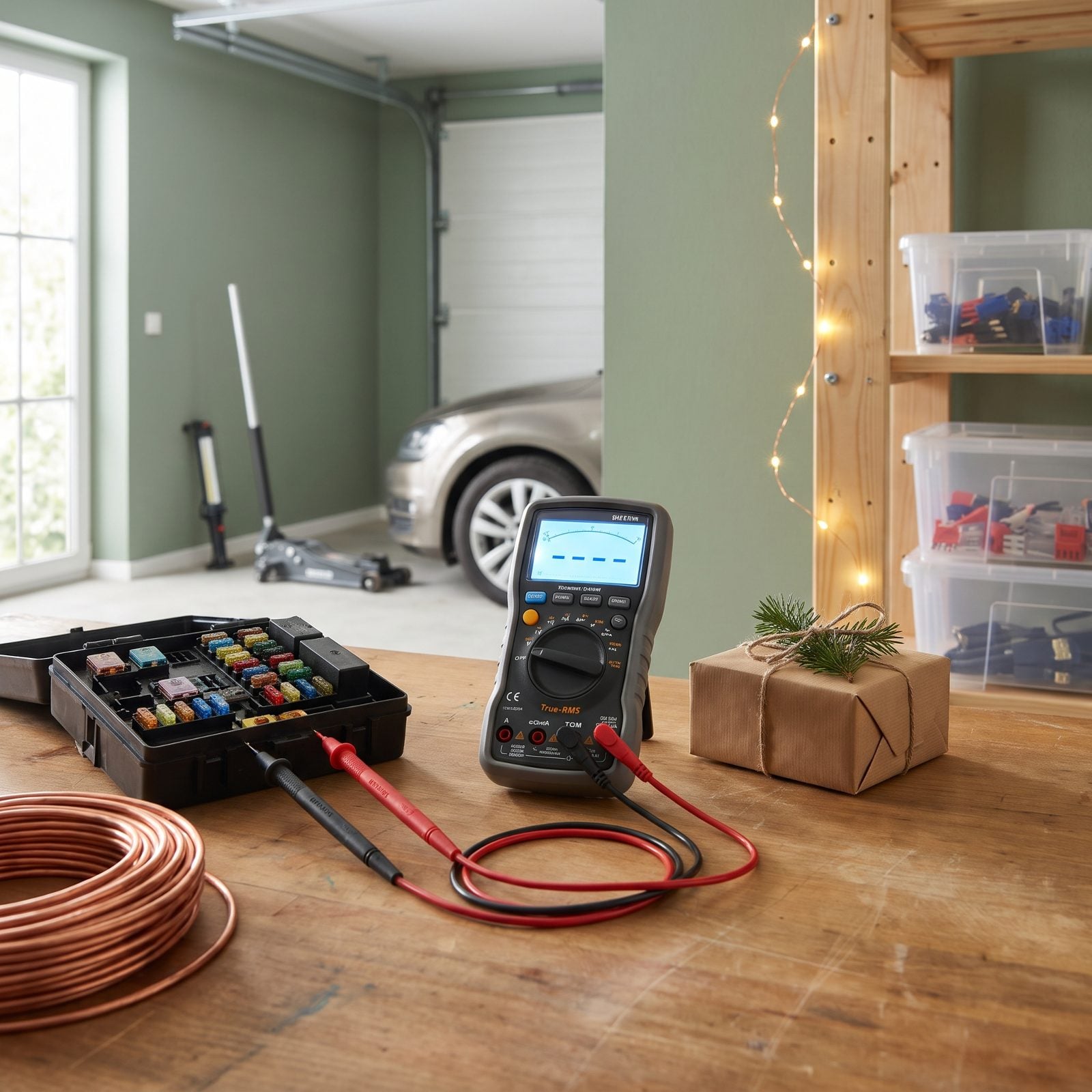
Electrical problems are the ones that break grown adults. A dead accessory. A parasitic drain that kills the battery overnight. A sensor throwing a code you can’t make sense of. You can’t see electricity, so you measure it.
A True-RMS meter reads modern signals accurately where a cheap averaging meter lies to you. That matters the moment you’re testing anything with electronics in the loop — which, these days, is everything.
Solid ones land around $40 to $100. Get one with a backlight and leads that don’t crack in the cold. We bought the bargain one first, chased a phantom reading for an hour, then bought the right one. Learn from that.
16. A Flexible Inspection Camera That Sees Behind the Engine
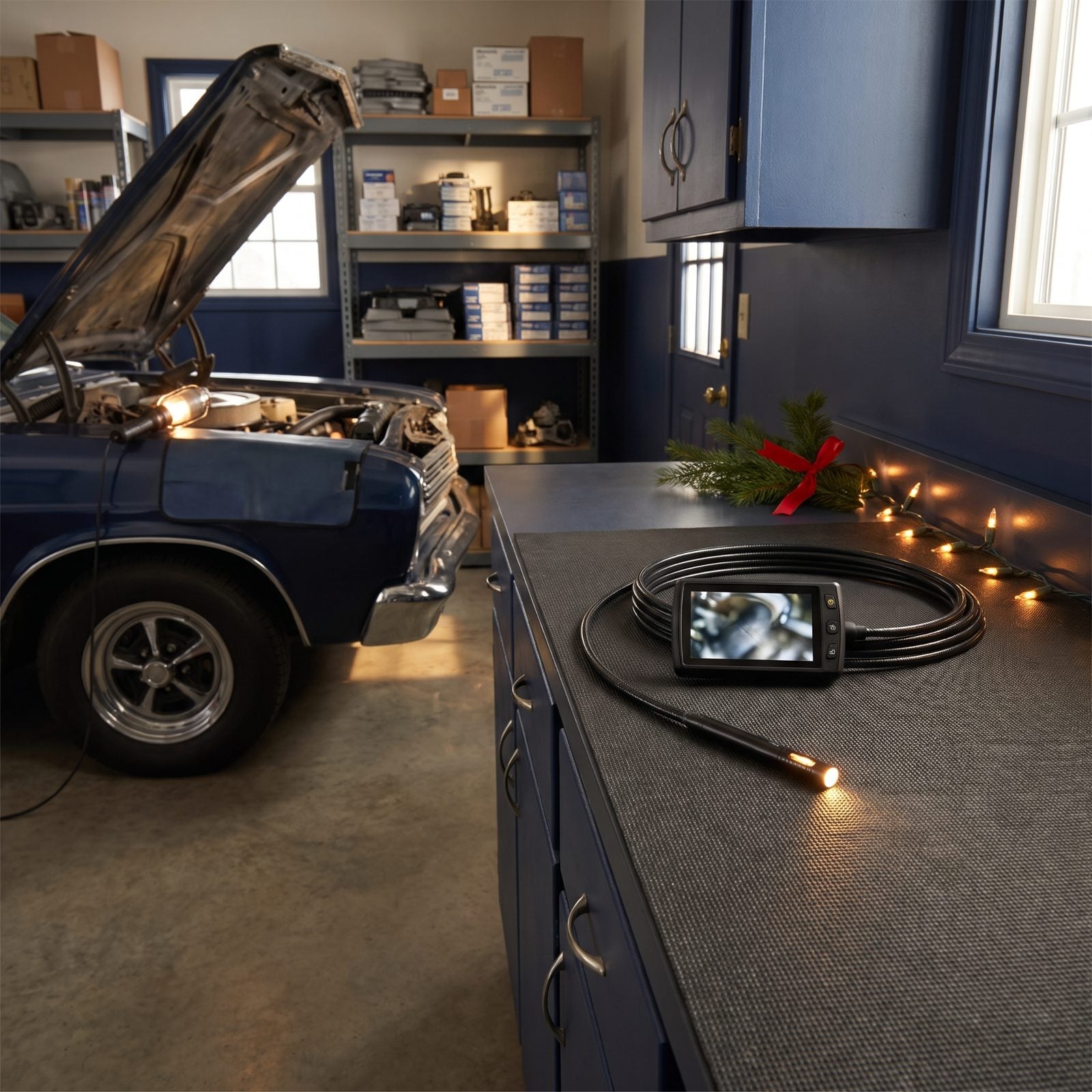
Some bolts live in places your eyes will never reach — behind the intake, under the dash, down the cylinder bore. A borescope snakes a lit camera into the gap and puts the picture on a little screen.
You find the dropped socket, catch the oil weep before it becomes a flood, check a cylinder wall without pulling the head. For something that saves an hour of blind fumbling, $30 to $80 buys a decent one.
The long semi-rigid cable is the feature that matters. Those flimsy short ones flop over and show you the inside of the fender well instead of what you aimed at.
15. A Lithium Jump Starter That Fits in the Glovebox
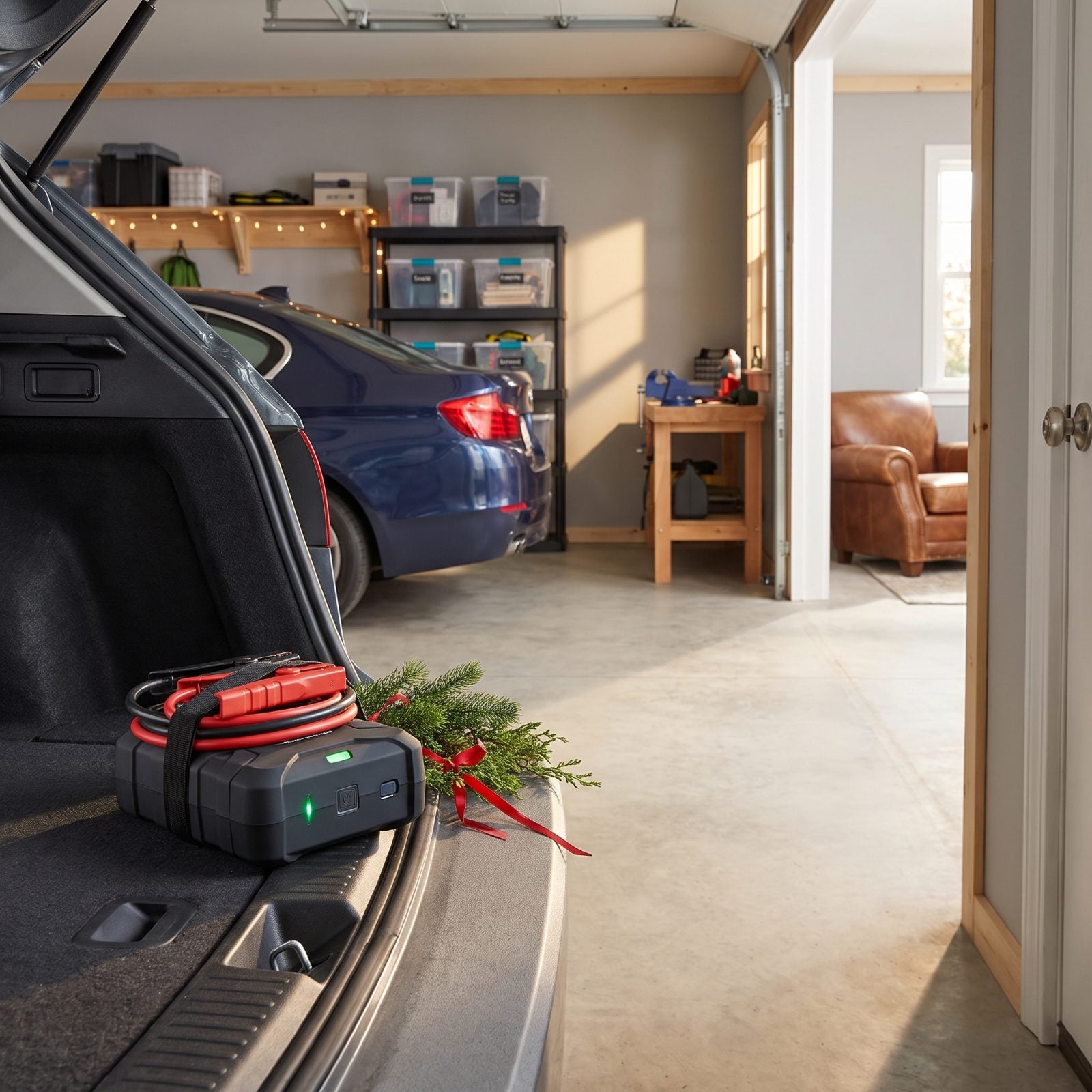
Remember needing a second car and a willing stranger just to start your own? That’s over. A lithium pack the size of a paperback cranks a dead battery on its own.
These things hold a charge for months, jump a V8 several times on a full pack, and double as a power bank and flashlight. Figure $70 to $150 for one with enough peak amps to turn a cold diesel over on a rough morning.
The best roadside tool is the one already in the car before you need it.
Charge it twice a year and toss it under the seat. A flat jump starter helps nobody.
14. A Bidirectional Scan Tool for Talking to the Car
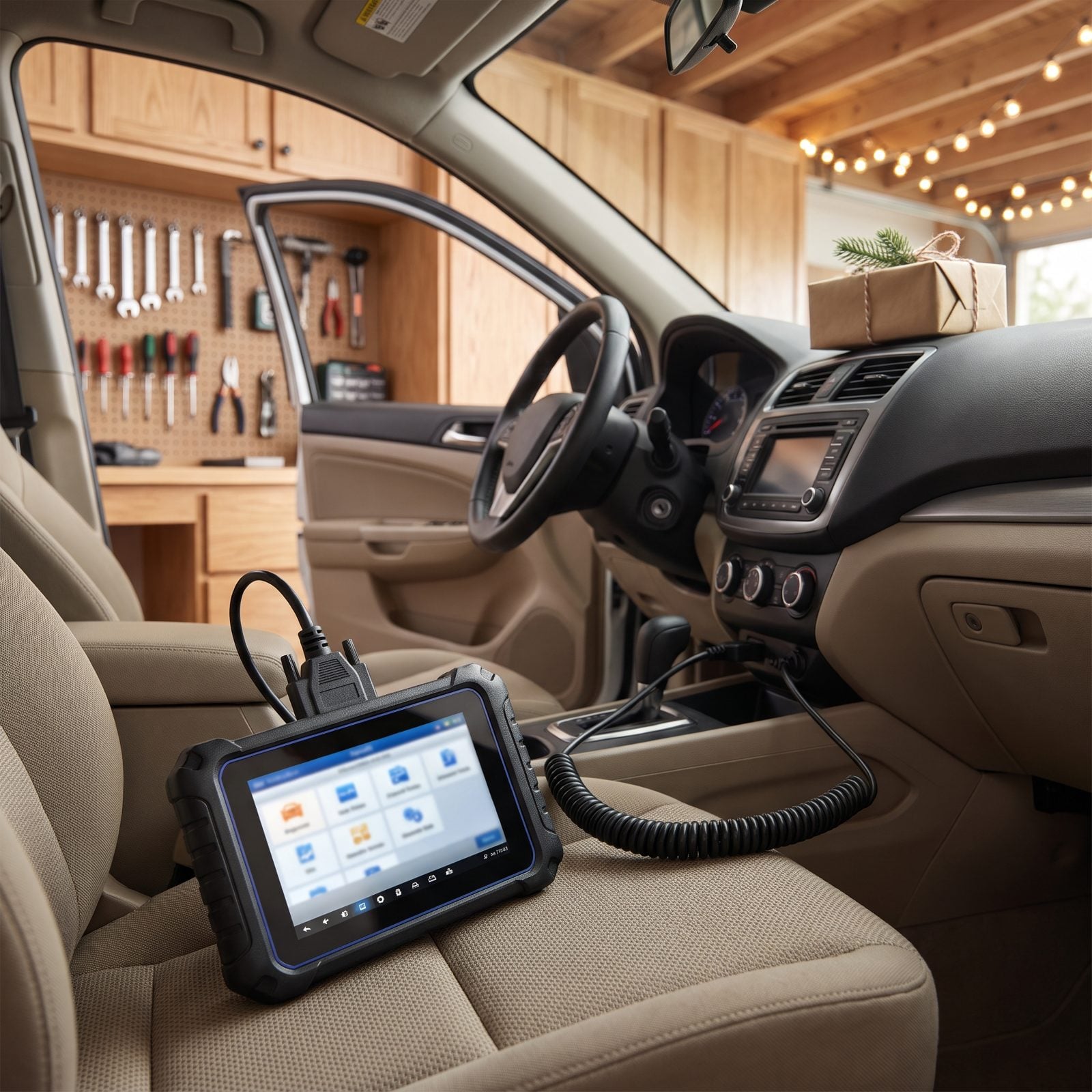
A basic code reader tells you what’s wrong. A bidirectional tool lets you talk back — cycle the ABS pump, command the cooling fans, bleed the brakes electronically, reset the service light after an oil change.
That two-way conversation is what separates a $25 dongle from a real diagnostic tool. For anyone who works on their own stuff past a tune-up, it pays for itself the first time it saves a shop visit.
Capable units run from roughly $150 up past $600 depending on coverage. Check that it supports the makes in the driveway before you buy. A tool that reads everyone else’s car and not yours is a gift that goes back.
13. A Low-Profile Floor Jack for Cars That Sit Low
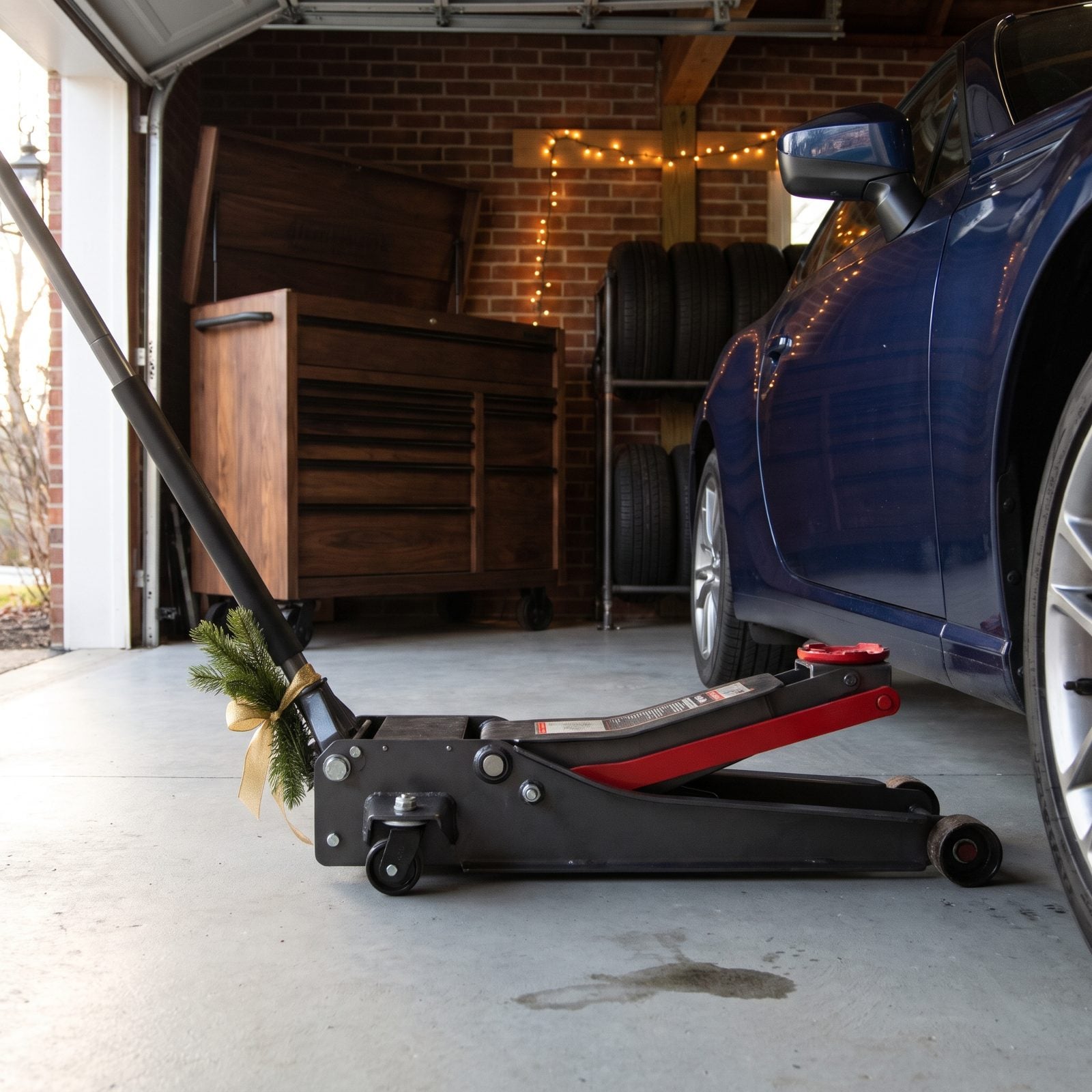
The jack that came with the car is for a roadside flat, nothing more. For real work you want a proper floor jack, and if anything in the garage sits low, you want the low-profile kind.
The slim saddle slides under a lowered sports car or a loaded truck where a tall jack simply won’t fit. Aluminum versions are light enough to drag out without a second thought, while steel ones cost less and lift heavier. Budget $100 to $250.
A floor jack lifts. It does not hold. Which is exactly why the next item exists.
12. Pin-Locking Jack Stands You Can Actually Trust
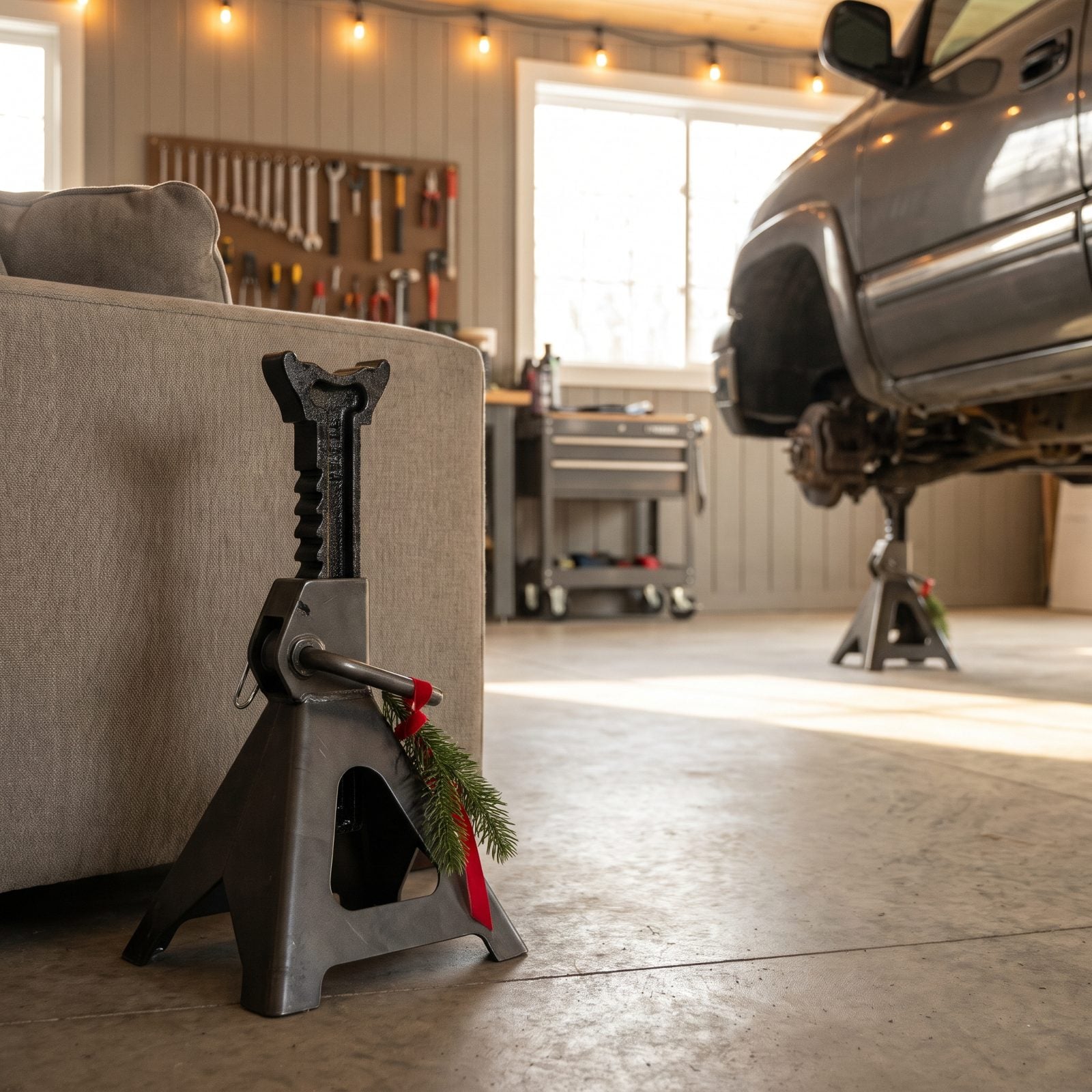
This is the one item nobody should cheap out on. The jack gets you up. Jack stands are what keep you alive while you’re under there.
The pin-locking design drives a solid steel pin through the column instead of trusting a ratchet pawl alone — one less thing to fail. Buy them in pairs, rated well above the weight you plan to lift, and set them on the frame, never on sheet metal.
11. A Sealed Rolling Oil Drain Pan That Ends the Mess
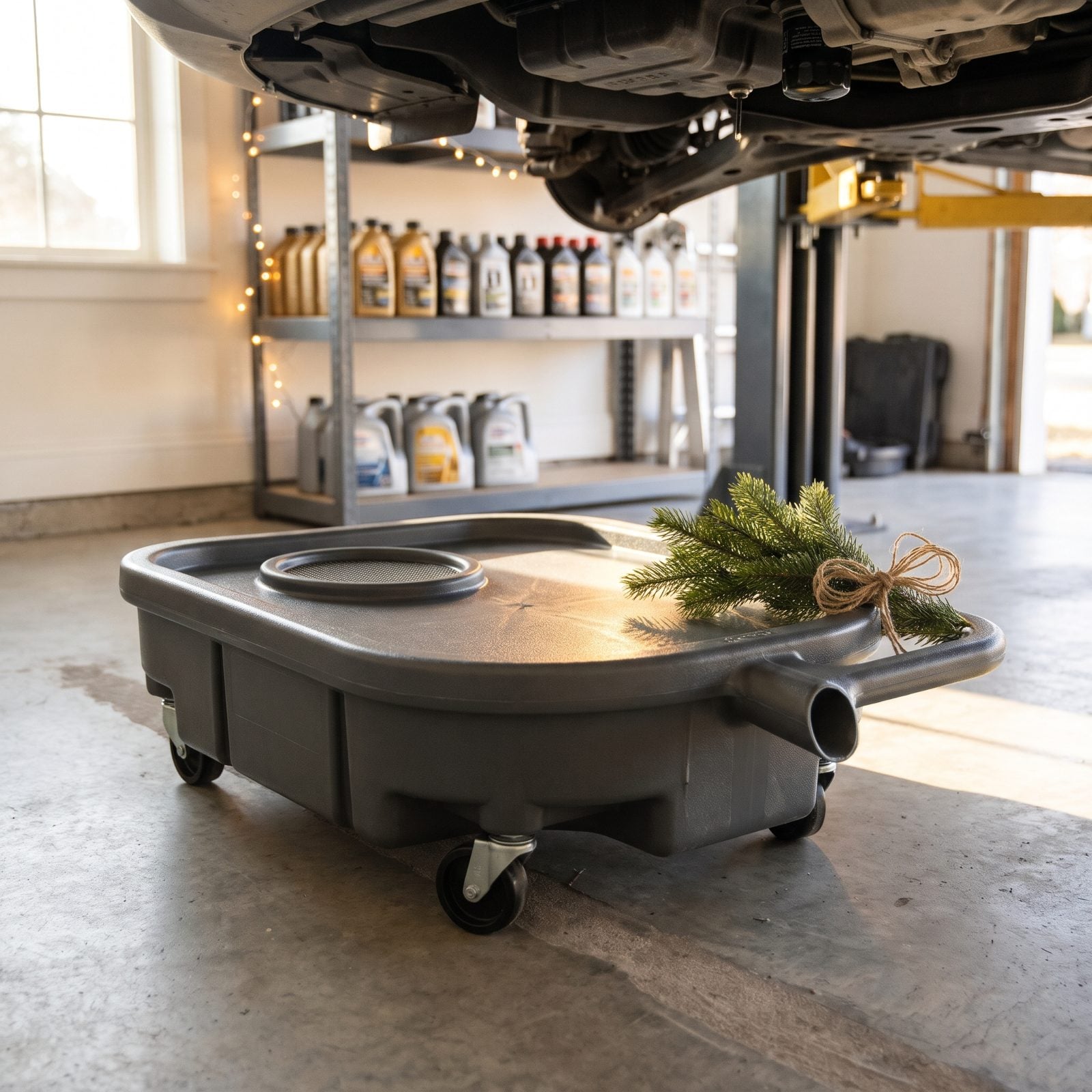
Everyone who’s changed their own oil has knelt in a spreading black puddle, cursing, with a flimsy pan sliding away under the drip. The sealed rolling version ends that.
Drain into it, pop the funnel closed, roll it over, and pour the used oil straight into a jug for recycling. No open pan sloshing across the floor, no oil-slick handprint on the concrete. For $25 to $50, it’s the least glamorous gift here and one of the most appreciated.
The low-profile shape matters, too — it has to clear the ground beneath the drain plug on a low car.
10. A Workshop Label Maker for the Guy Who Loses Nothing
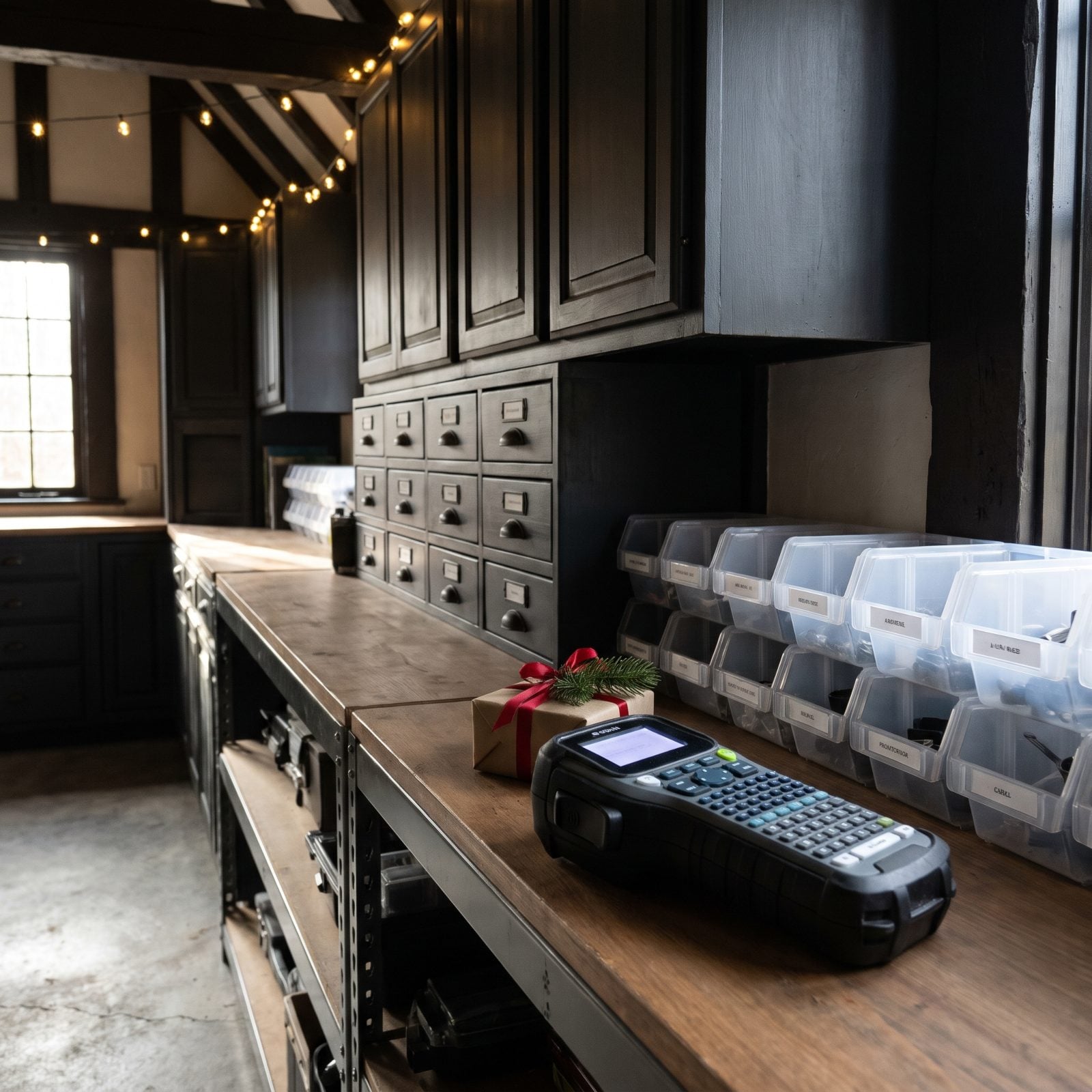
Unglamorous. Cheap. And it quietly changes how a garage runs.
A label maker turns a wall of identical drawers and bins into something with a printed tag on every drawer front and bin face, so each one has a name and a place. You stop opening four drawers to find one fitting.
Thirty to fifty bucks buys a rugged handheld unit with laminated tape that shrugs off oil and solvent. The person who gets one tends to go a little overboard the first weekend, labeling everything that holds still. Let them. That’s the sign it landed.
9. A Waxed-Canvas Workshop Apron That Outlives the Project

Shop aprons get dismissed as decoration until the day battery acid or chain lube finds a favorite shirt. Then they make sense fast.
Waxed canvas beats the cheap poly ones every time — it shrugs off solvents, takes a spark without melting, and breaks in like a good pair of boots. The leather crossback straps matter more than they sound. A neck-strap apron digs in after an hour, but crossback spreads the weight until you forget you’re wearing the thing.
8. A Fully Stocked Garage First-Aid Kit, Not the Glovebox Toy
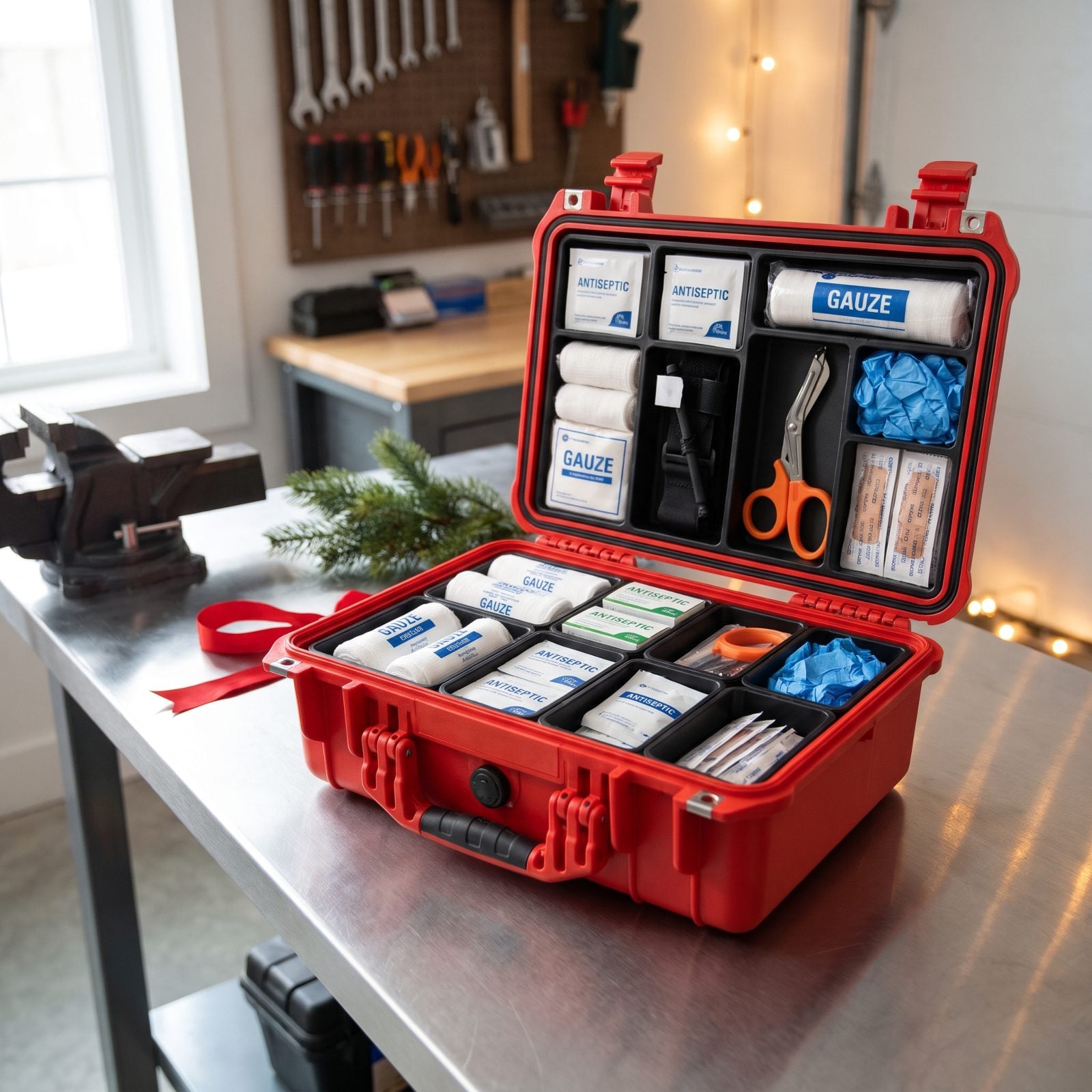
The tin box with four bandages and a safety pin does not count. Garage injuries run bigger than paper cuts — pinched fingers, bench-grinder nicks, the odd burn off a hot header.
A proper kit has nitrile gloves, real gauze, trauma shears that cut through a jacket sleeve, and ideally a tourniquet nobody hopes to use. Mount it on the wall where it’s visible, not buried in a drawer. When someone’s bleeding, you don’t want to be hunting.
7. An Automotive-Rated Fire Extinguisher You’ll Hopefully Never Use
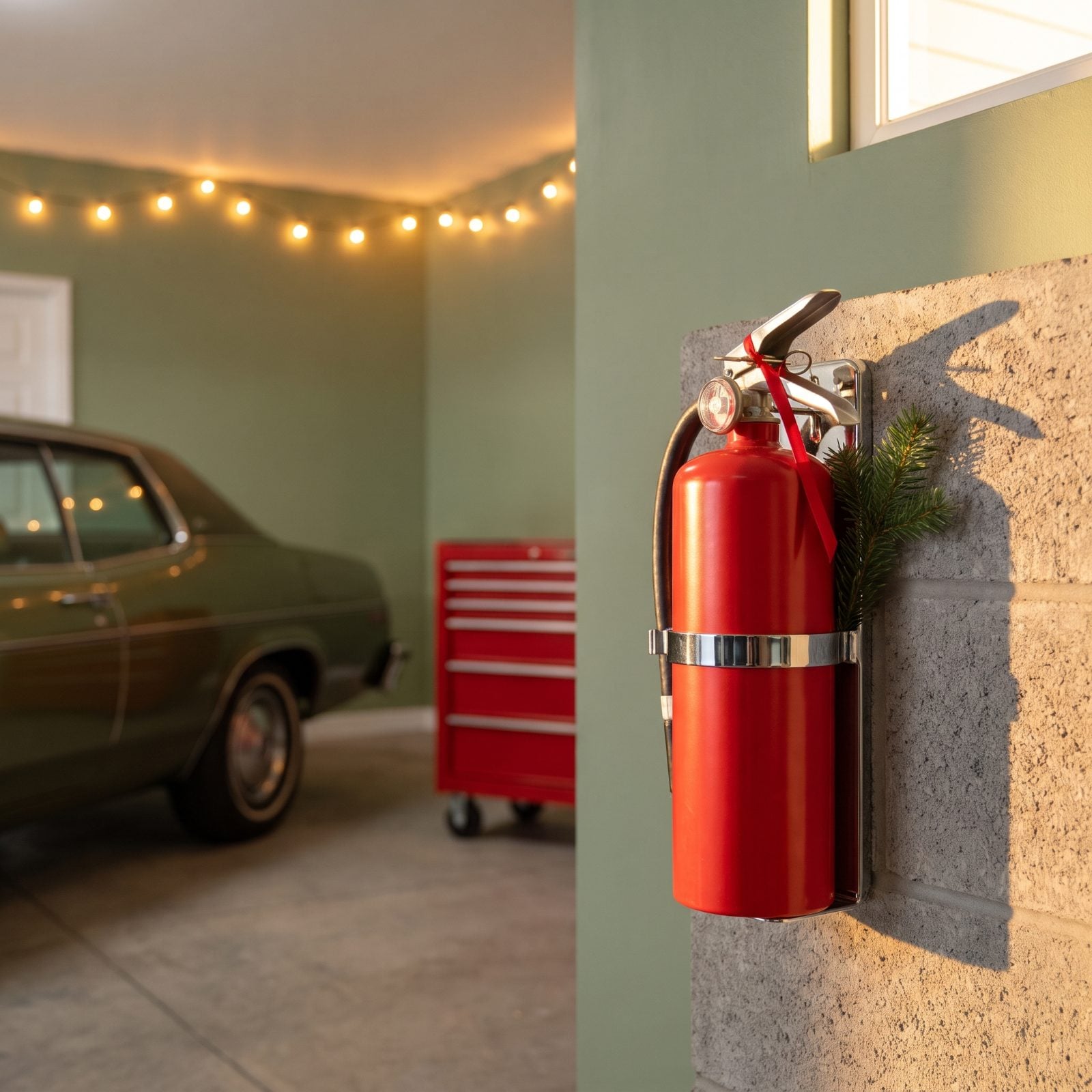
Gasoline, oil, and wiring all live in the same room, and all three burn differently. A kitchen extinguisher won’t cut it. You want a dry-chemical unit rated for Class B and C fires — the flammable-liquid and live-electrical kind.
Size matters here. The tiny ones empty in a few seconds and leave you watching, while a 5-pound unit buys real time. Mount it near the garage door, not deep inside, so you’re moving toward the exit as you grab it.
6. A Wi-Fi Garage Door Controller That Ends the “Did I Close It?” Spiral
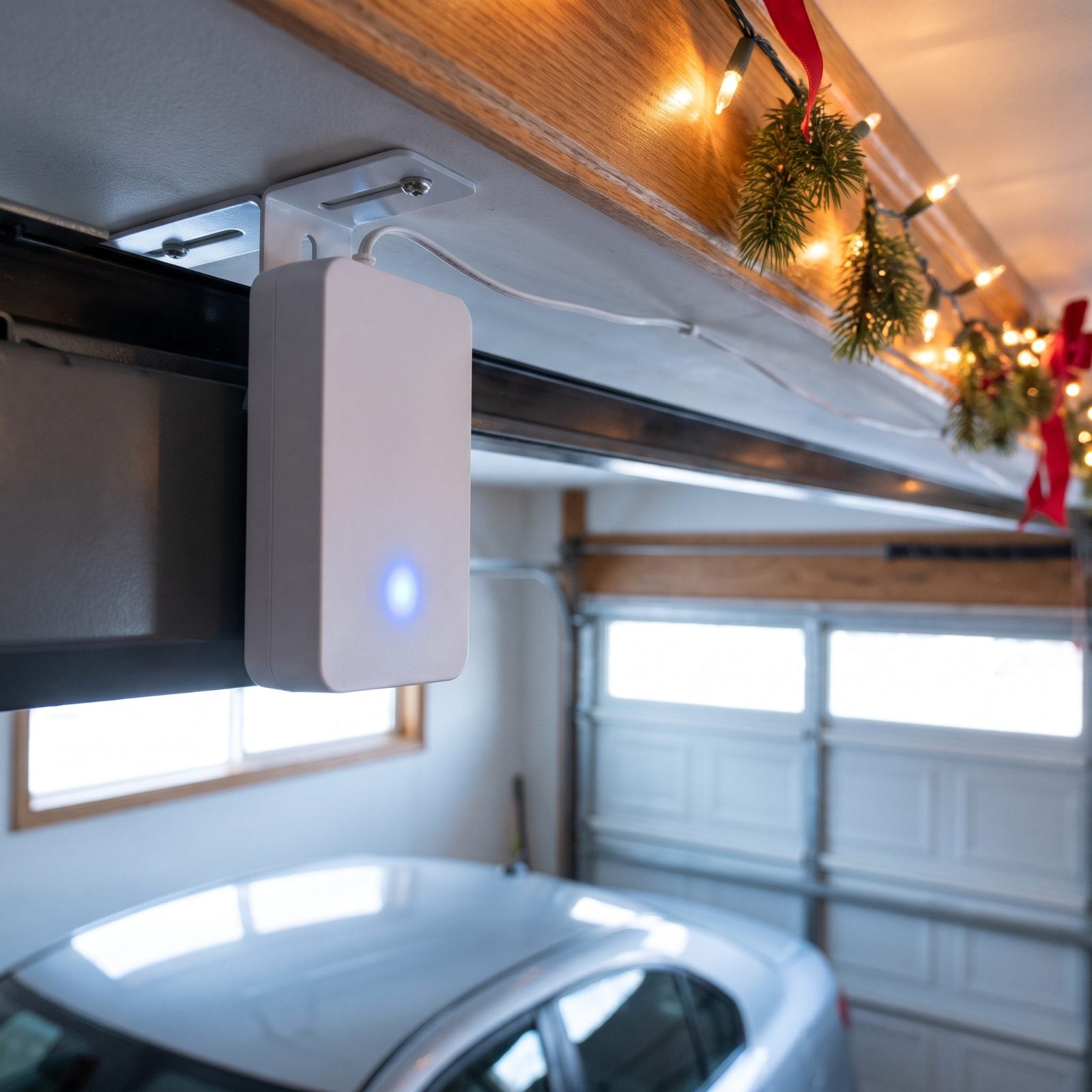
Everyone has pulled onto the highway and felt that cold flash of doubt. Did the door actually close, or is the house wide open for the next ten hours?
These controllers wire into the existing opener, most of them in under half an hour, and let you check and close the door from your phone. The better ones ping you if the door’s been open past a set time. For folks who travel or forget things — all of us — it’s the kind of gift that gets used every single day without a second thought.
5. A Weatherproof Security Camera That Watches the Bay
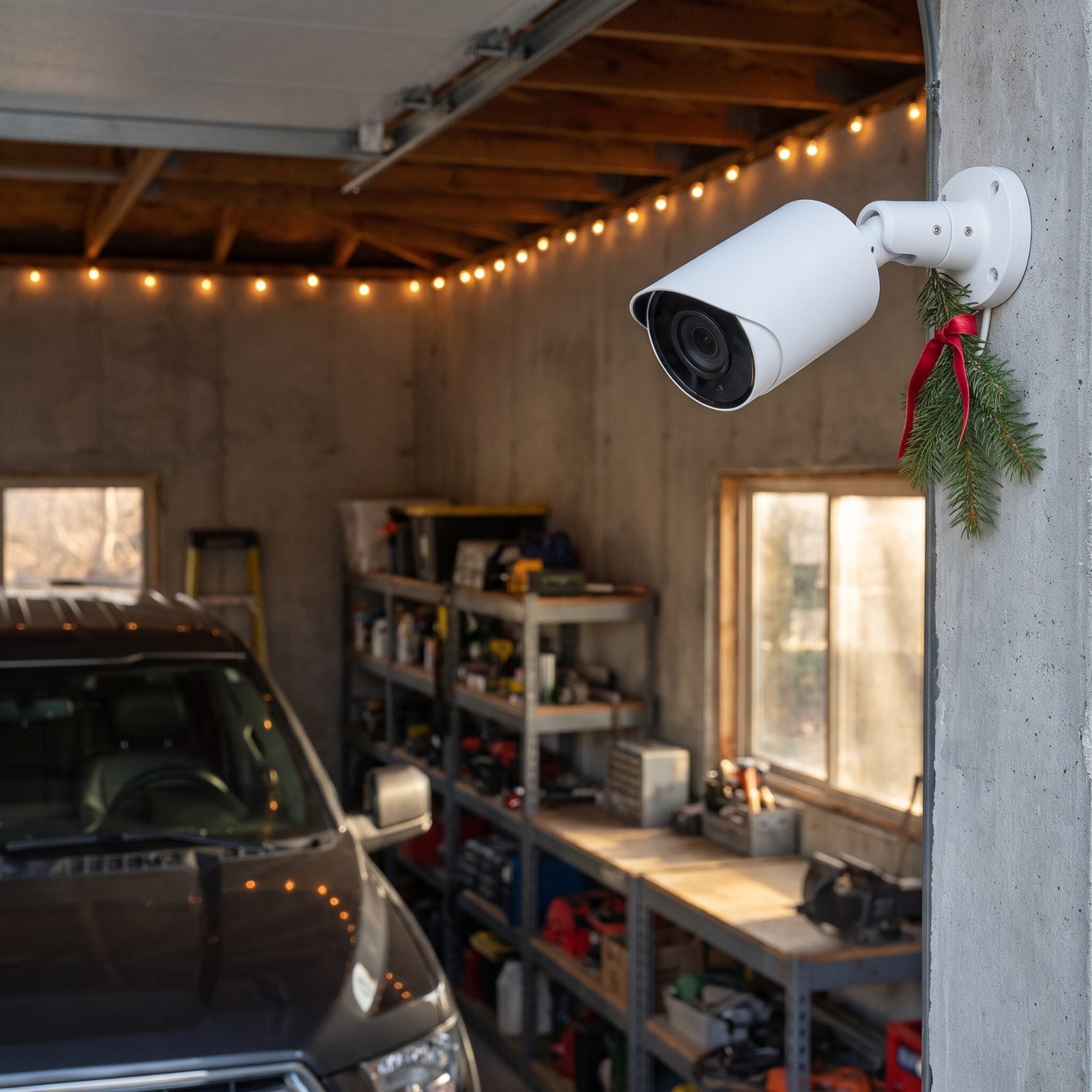
The tools in a garage are often worth more than the car parked next to them. A good camera is cheap insurance, and the footage is worth having if a project goes sideways or a package walks off the driveway.
Look for real weatherproofing if the garage runs hot and cold, plus night vision and local storage so you’re not hostage to a monthly cloud fee. Point it at the door and the bench. Those are the two spots that matter.
4. A Ceiling Laser That Parks the Car in the Same Spot Every Time
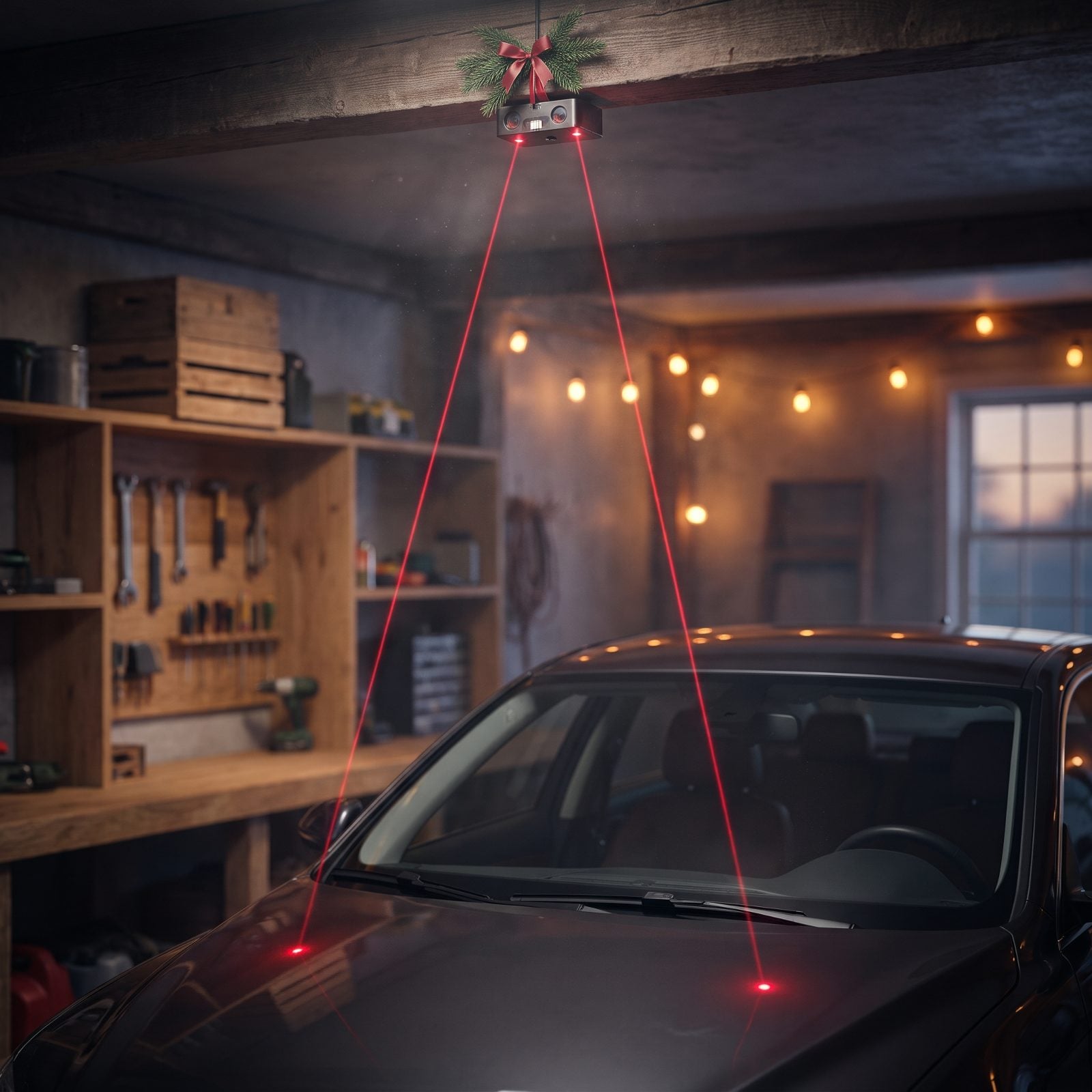
Sounds like a gag gift until you’ve got a tight two-car garage and six inches of clearance between the mirror and the shelving.
The laser clips to the ceiling and drops a dot onto the hood. Pull forward until the dot hits the mark, stop, done. No more guessing, no more quiet crunch of a bumper meeting a stack of paint cans. For anyone who’s ever dinged a door opening it into the wall, this kills a daily annoyance for the price of a nice lunch.
3. A Compact Mini Fridge That Keeps the Bench Stocked

Every long project has the same interruption: the walk back to the kitchen, which turns into a sidetrack, which turns into losing twenty minutes and your train of thought.
A small fridge in the garage kills that trip. Cold drinks in summer, a place to stash the overflow from a holiday party, somewhere to keep the bait before a fishing trip. Get one with a reversible door so it fits whatever corner the shop allows, and skip the glass front if dust is a problem.
2. A Dust-Resistant Bluetooth Speaker Built for the Shop
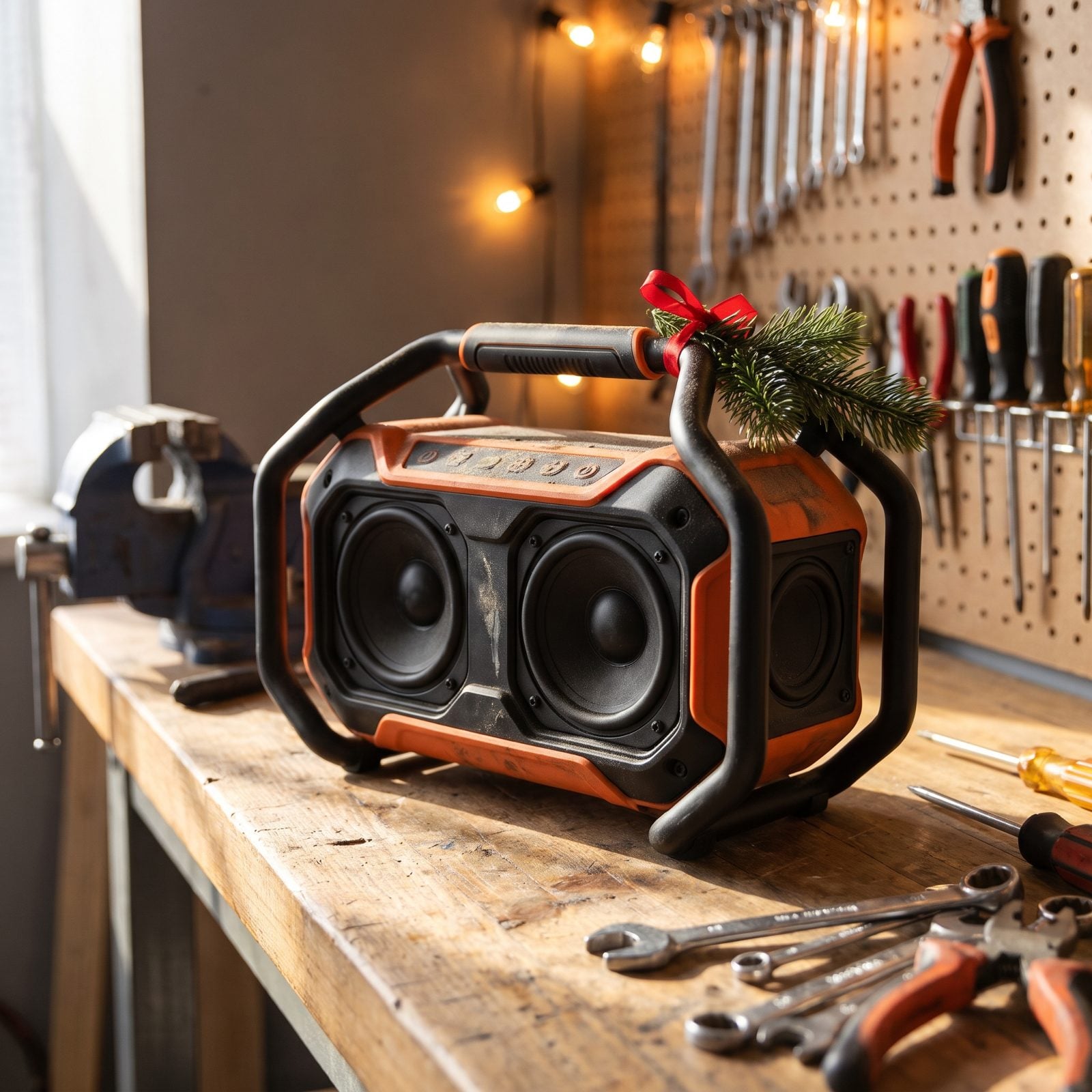
A nice home speaker in a garage is a short-lived idea. Sawdust, metal shavings, and a knocked-over can of something sticky end it quick.
Shop speakers are built different. Rubber housing, a cage over the drivers, IP ratings that mean they survive dust and the occasional splash. The good ones run loud enough to beat an air compressor and hold a charge through a full Saturday. Pick one with a replaceable or long-life battery, because the whole thing dies the day it won’t hold a charge anymore.
1. A Portable Power Station for the Projects That Wander Off
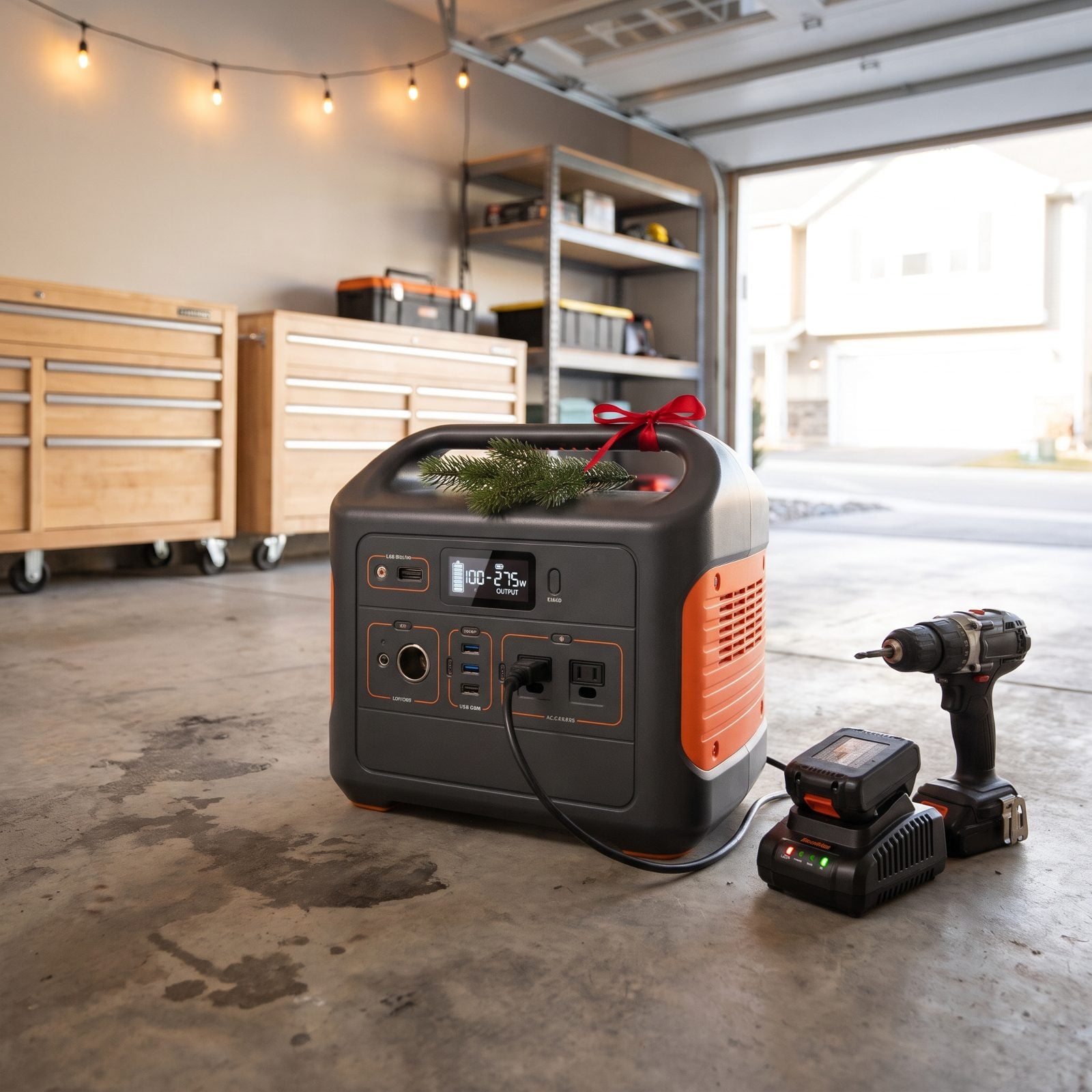
Not every job stays near an outlet. The trailer in the driveway, the project bike wheeled out onto the pad, the camping trip, the power outage that leaves the garage door useless.
A portable power station runs sanders, inflates tires, charges tool batteries, and keeps the lights on when the grid blinks. Watch two numbers. Watt-hours tell you how long it lasts; the surge rating tells you whether it can actually start a tool with a motor in it. A small one handles phones and lights. A bigger one runs real gear for hours. Match the size to what they actually do and it becomes the thing they reach for constantly.