
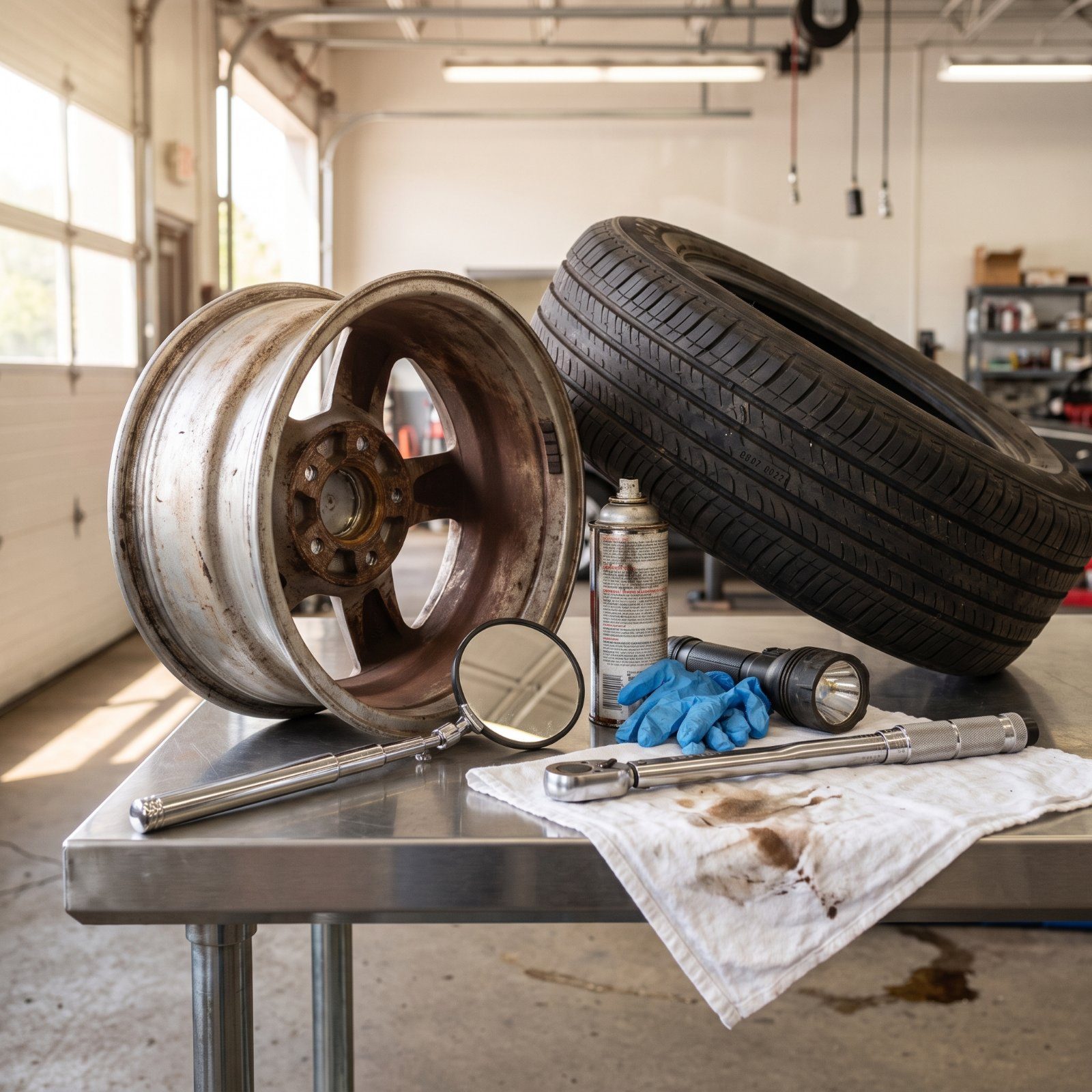
A seasoned tech can call a car’s history from the parking lot. Before the keys change hands, before the owner opens with “it just started doing this,” the vehicle has already confessed. Brake dust tells one story. A wiped-clean patch of frame tells another, and the two don’t always agree. None of this is magic or showroom patter — it’s the small physical breadcrumbs that pile up over a hundred thousand miles of driving, neglect, panic repairs and plain honest wear. Learn to read them and a used car stops being a gamble, because you start seeing what the paperwork leaves out and the seller is quietly hoping you’ll miss.
Please note that some of the images in this article were created with the assistance of AI.
33. Uneven Brake Dust Across One Axle
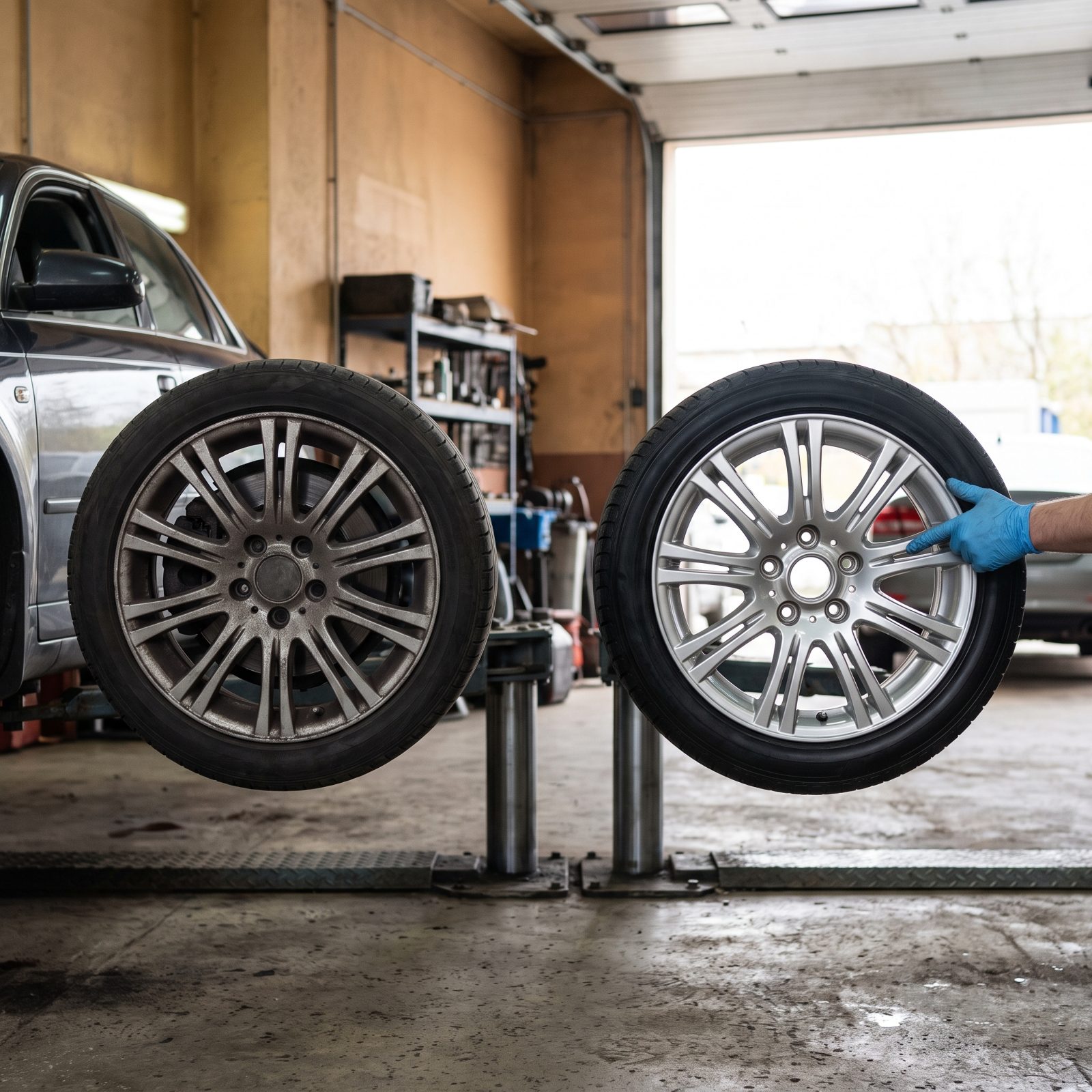
Brake dust should land roughly even on both wheels of the same axle. The pads grip, the dust flies, both sides get grimy. When one wheel looks freshly rinsed while the other is caked in black grit, something’s off.
A sticking caliper that won’t release keeps dragging the pad, scrubbing it clean and throwing far more dust while the opposite wheel barely bites. That imbalance pulls under braking and cooks one rotor faster than the other.
32. A Suspiciously Clean Patch Underneath
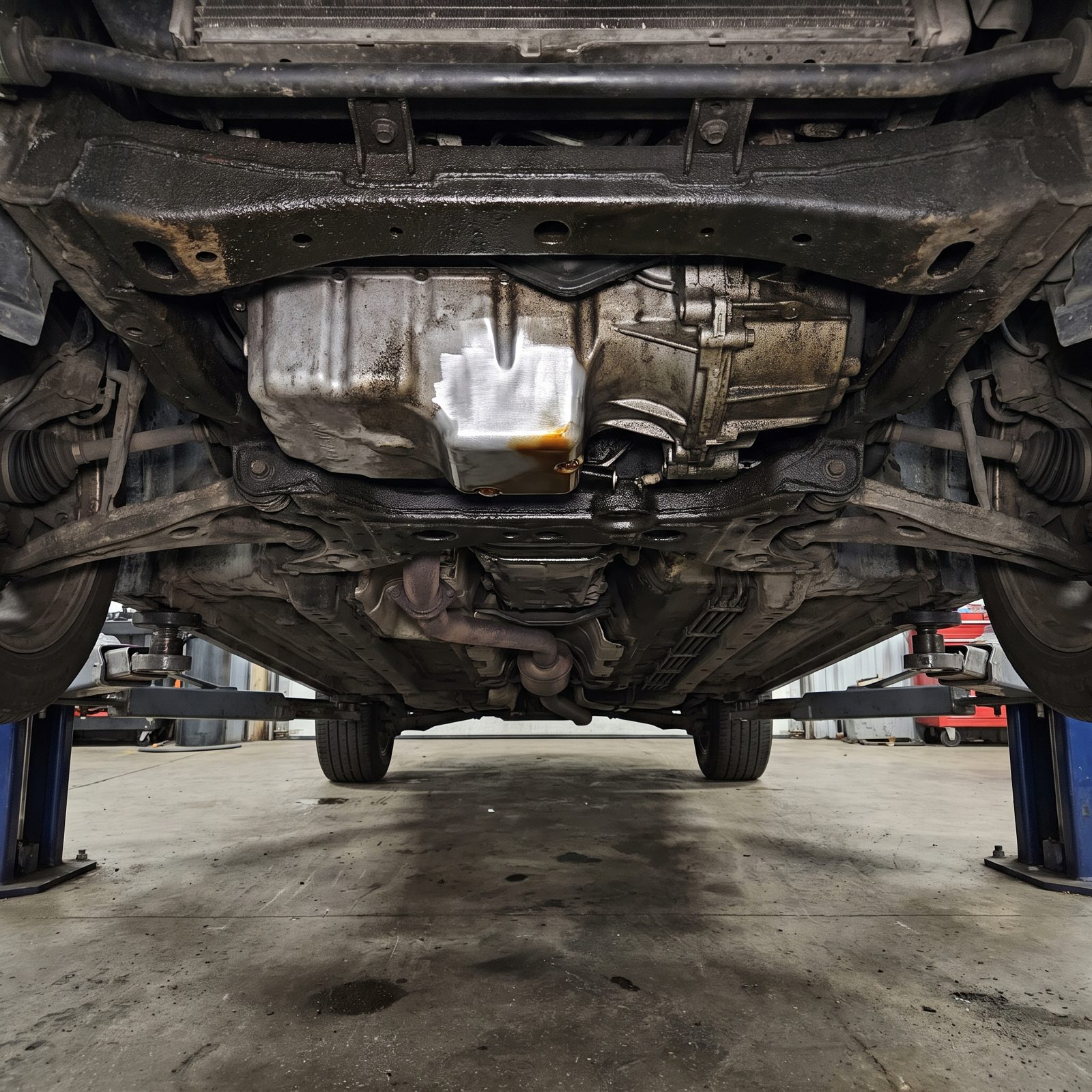
Grime is honest. It settles everywhere down there, even and uniform, like dust on a shelf nobody touches. So when one rectangle of the undercarriage gleams against all that filth, ask why.
Somebody wiped it, and people don’t wipe clean metal for fun — they wipe the spot where fluid keeps showing up, right before a sale or an inspection. Come back a day later and the leak has usually crept back to prove the point.
31. An Engine Warmed Before Drop-Off

A seller who swears “it’s never given me a bit of trouble starting” and then hands over a car that’s already warm has just told two different stories. The mouth said one thing. The block said another.
Cold-start faults are the loudest ones a car makes — rough idle, misfires, a check-engine light, the little puff of smoke a tired engine coughs out before it clears its throat. Warm the thing up first and all of it goes quiet for the test drive, conveniently.
30. Wheel Weights Clustered on One Rim
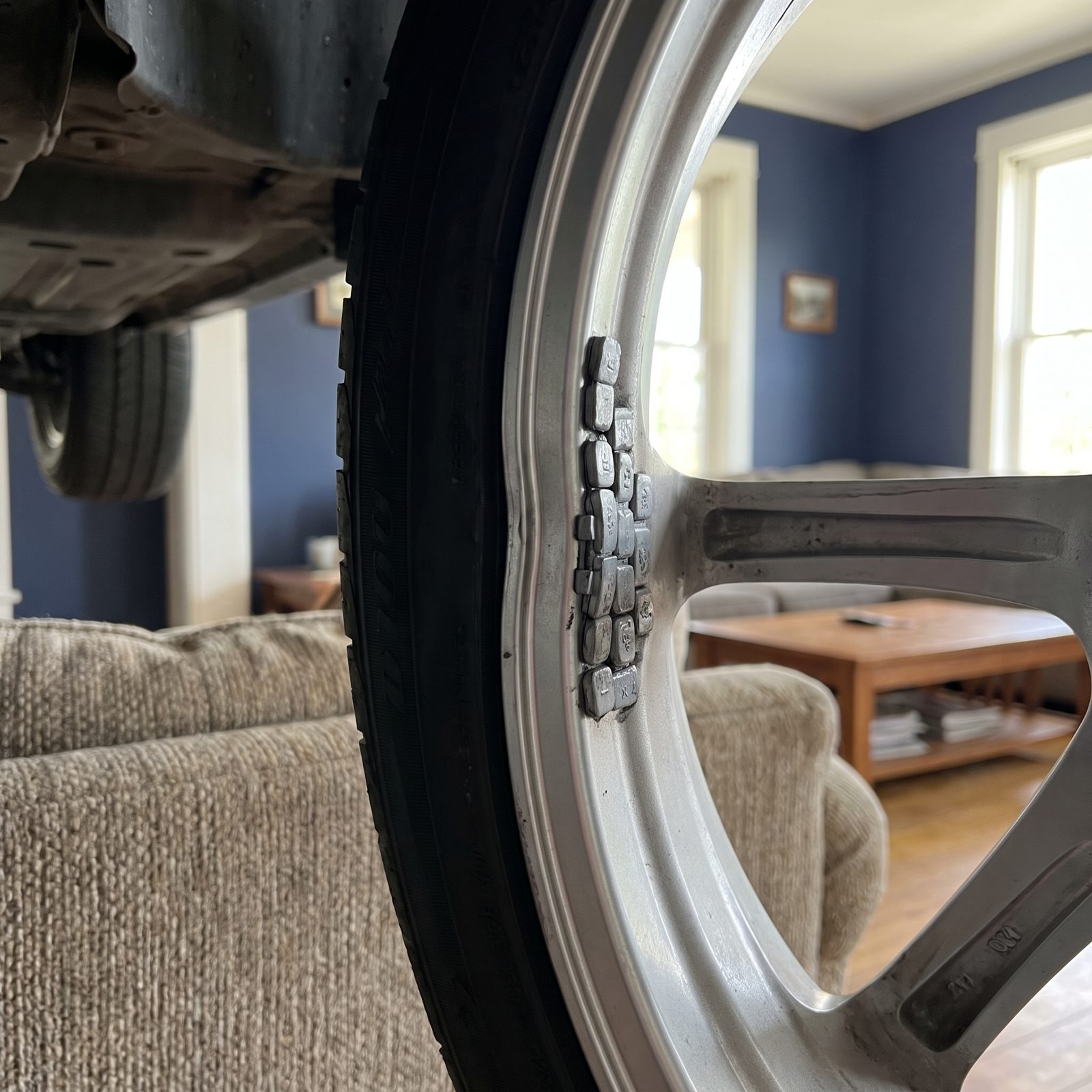
A balanced wheel usually needs a small weight or two, tucked here and there. Normal. Boring. Fine.
Now picture a rim with a dense little colony of weights all stacked in one spot. A balancer only piles correction like that when it’s fighting something — a bent rim, a tire that won’t seat round, a stiff spot in the carcass. The machine passed the wheel, sure, but it passed it the hard way, and all those weights are just papering over the real problem.
29. A Headlamp With a Different Date Code
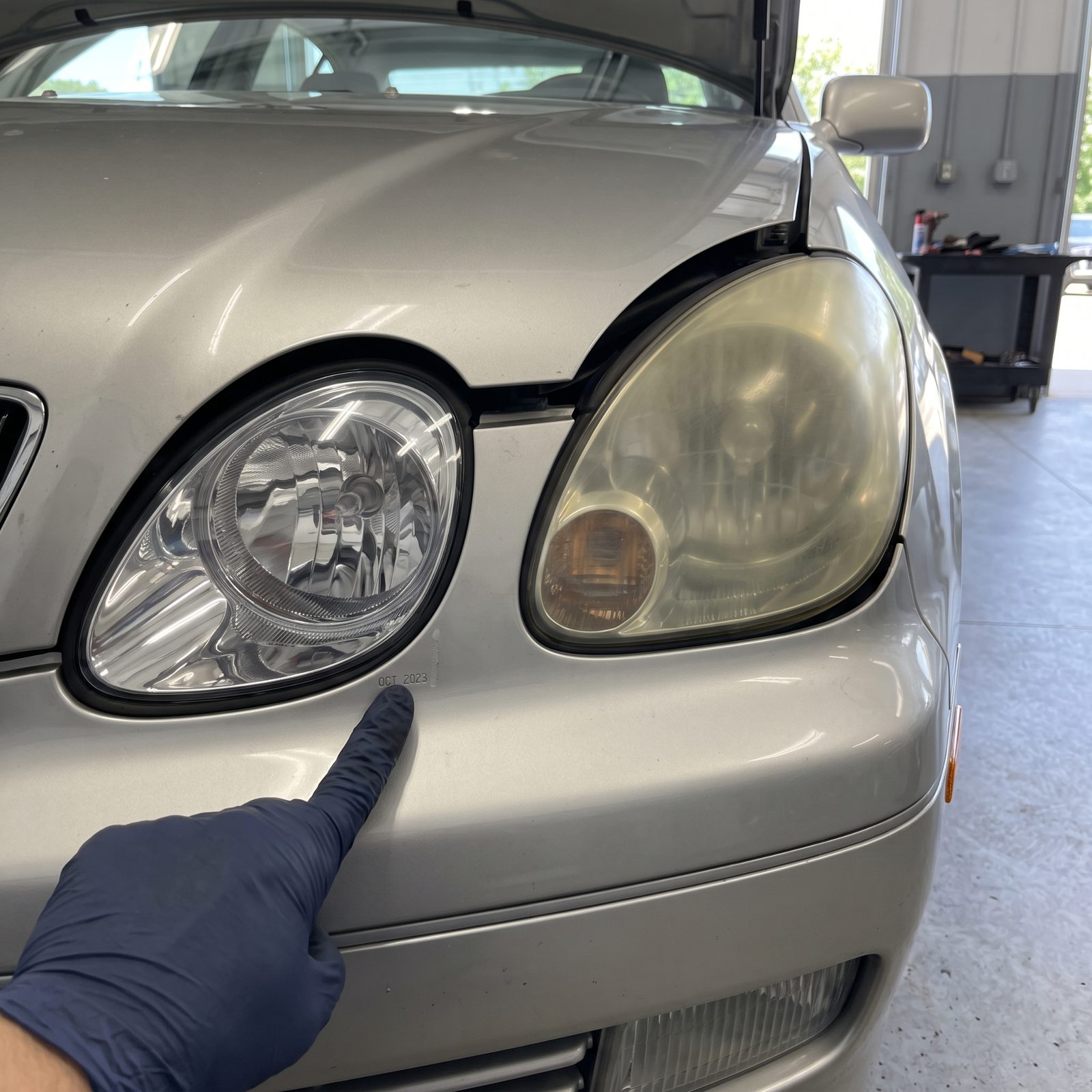
Headlamps age together — same sun, same miles, same slow yellowing of the plastic. A matched pair should look like siblings.
One lamp that’s crystal clear next to one that’s gone foggy is a flag. New headlamps get fitted after a collision, not after a long weekend. A fresh lamp riding beside an original is a receipt for front-end damage the Carfax forgot to mention.
28. Tiny Paint Lines Broken on Bolts
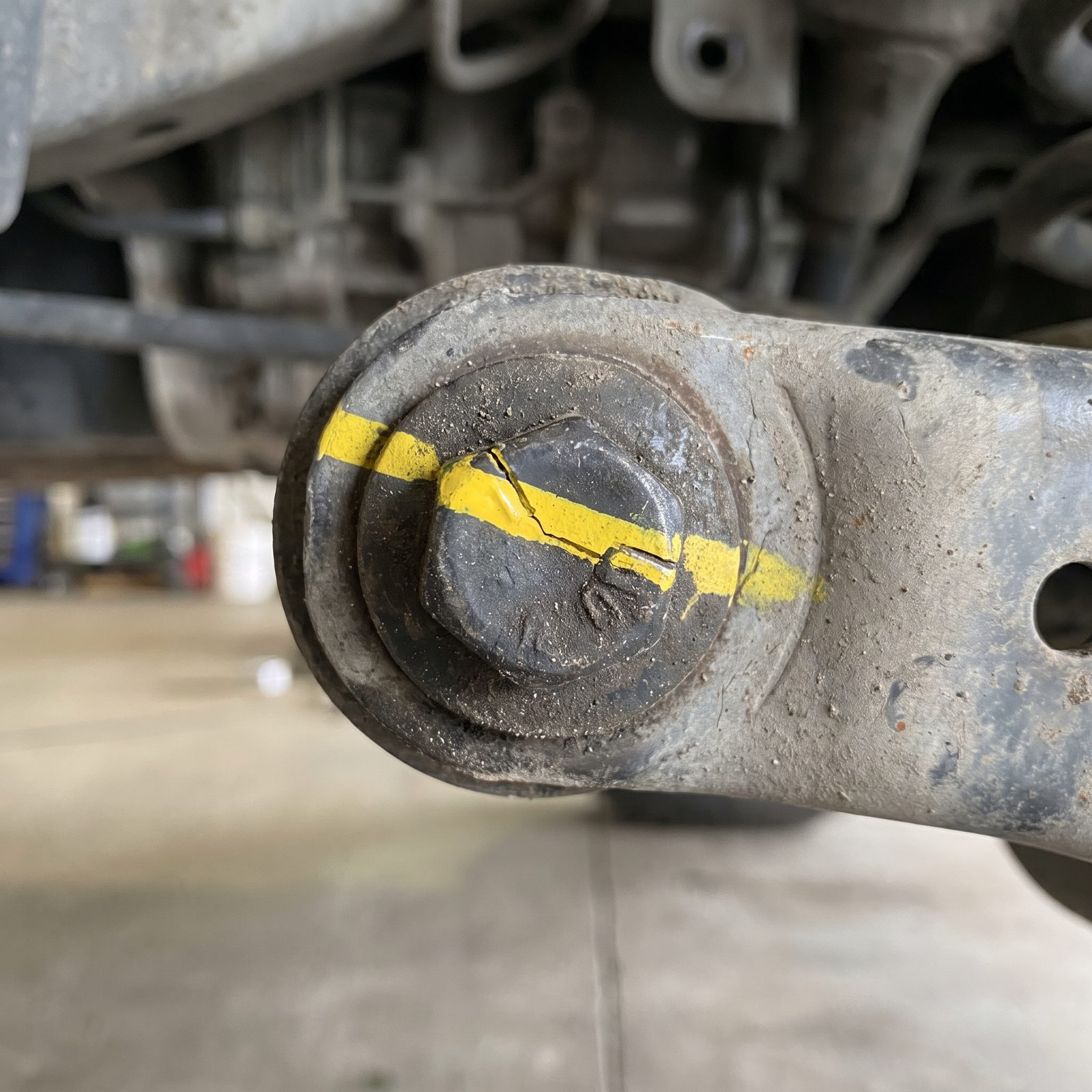
Factories dab paint across bolt heads after torquing them. Call it a witness mark. The stripe bridges the bolt and the part beside it, a tiny seal proving nobody’s touched it since the line.
Crack that line, nudge it out of register, and you know a wrench has been in there. One disturbed mark on a suspension arm or subframe means someone went deep enough to pull a component — which raises the question nobody wants to answer. Why?
27. Fresh Undercoating in One Small Area
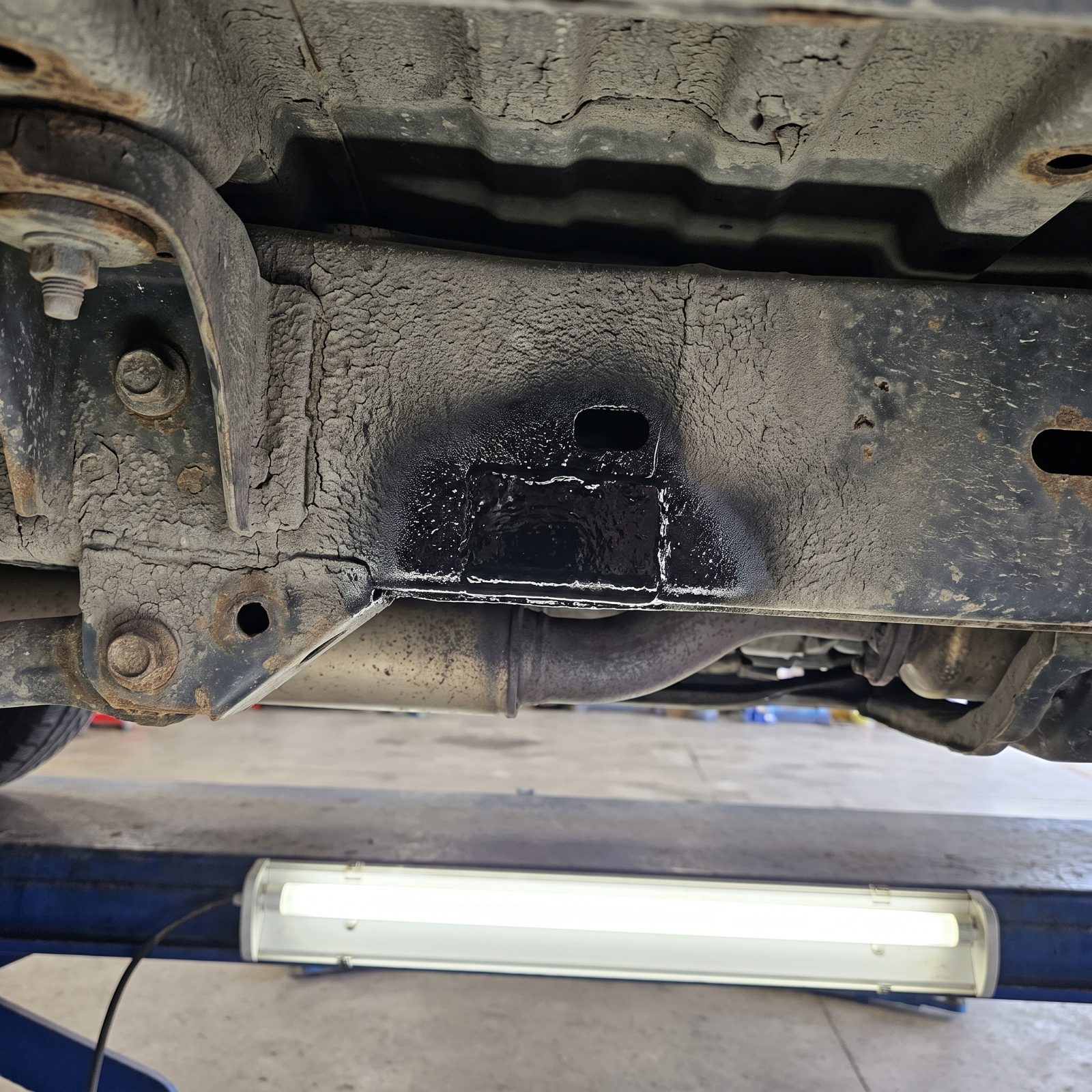
Undercoating sprayed fresh on an old car is rarely generosity. A single shiny black patch on a frame otherwise caked in years of grime is a bandage, and bandages cover wounds.
Under that fresh spray you’ll often find rust sealed in rather than cleaned out, a welded repair being hidden, or a weep the coating is meant to mask. Poke the edges. Coating that flakes off wet or crumbling metal underneath tells you the whole story in one soft spot.
26. Door-Striker Wear
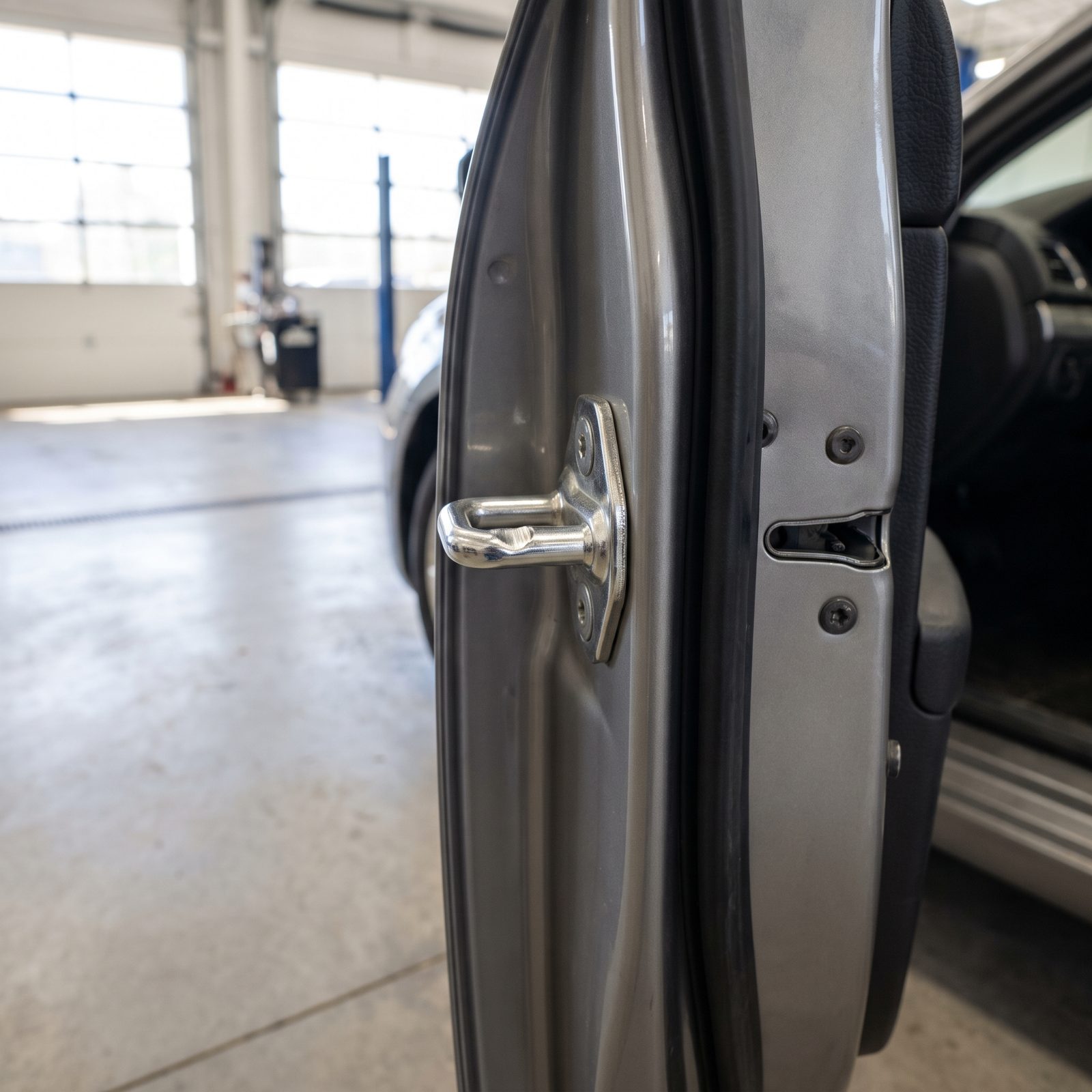
Open a door and look at the striker, that little steel post the latch grabs. It should show a clean, even wear line, right where it’s always caught.
A fresh bright scrape riding above or below the normal groove says the door has shifted. Doors sag on worn hinges, or they get bent and realigned after a side impact. Either way the latch is now hunting for a target that moved, and the scraped metal is the record of where it’s been searching.
25. A Shiny, Heavily Used Tow Ball
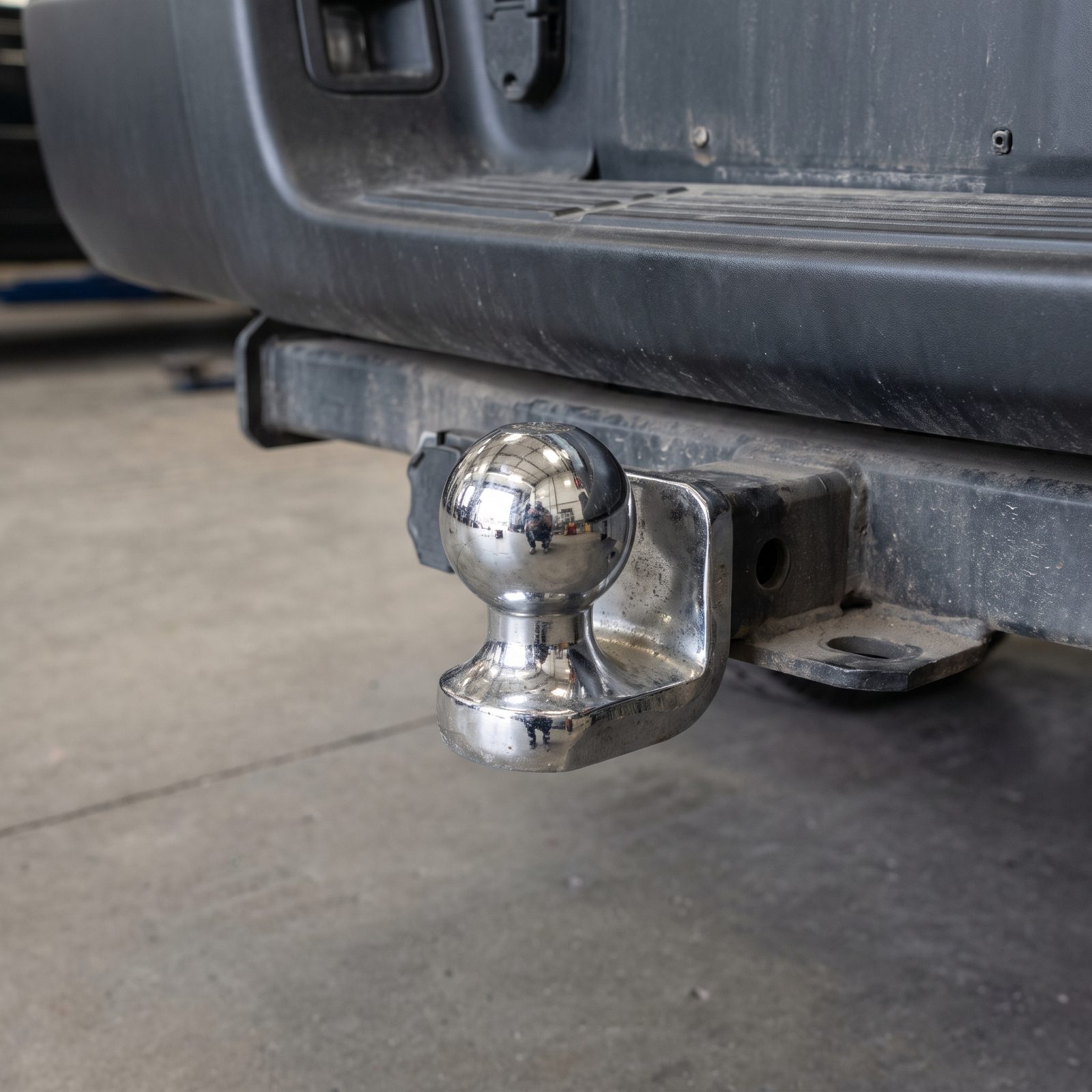
A tow ball polished to a mirror didn’t get that way sitting in a driveway. That shine is a trailer coupler grinding against it, thousands of miles’ worth, buffing the chrome down to bare gleaming steel.
The owner can swear the hitch has “barely been used,” and the dusty receiver might even back them up. But the ball keeps the real log. Heavy towing works a drivetrain hard, cooks transmission fluid, and loads the rear suspension — so that gleam quietly reframes everything else you find underneath.
24. Different Tire Date Codes

Matching tread depth feels reassuring. Four tires worn the same, surely a tidy owner who rotated on schedule.
Not always. Every tire wears a four-digit date code on the sidewall — week and year of manufacture. A set that measures even but was built years apart means mixed-age rubber, and old rubber hardens and cracks no matter how much tread survives. One tire pushing a decade old is a replacement waiting to happen, even if it still measures fine on the gauge.
23. One Corner Sitting Lower: Uneven Ride Height That Gives Away a Tired Spring or an Air-Suspension Leak
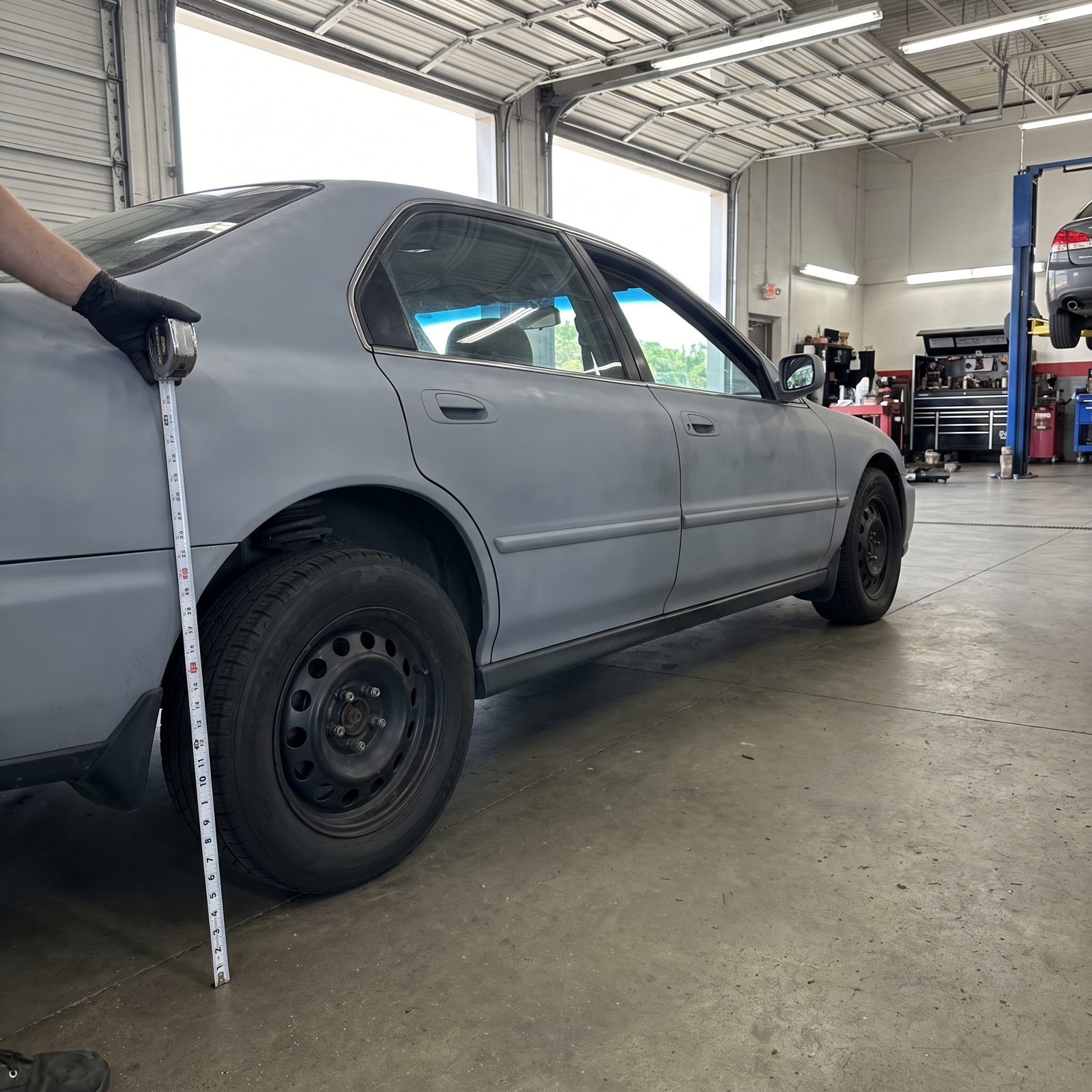
Park a car on a flat floor and walk the four corners. If one sits lower than the rest, the car is telling you something before anyone opens their mouth.
On a coil setup that sag usually means a cracked or settled spring, and a cracked spring usually means the ride got rough a while back and nobody cared. Air suspension reads differently. A corner that drops overnight and pumps itself back up at key-on is pointing at a leaking bag or a tired compressor working overtime, and that bill climbs fast.
Either way, a lopsided stance is wear nobody bothered with. Which tells you plenty about how the whole car got treated.
22. Pedal Rubber That Argues With the Odometer: Worn Pedals on a Supposedly Low-Mileage Car
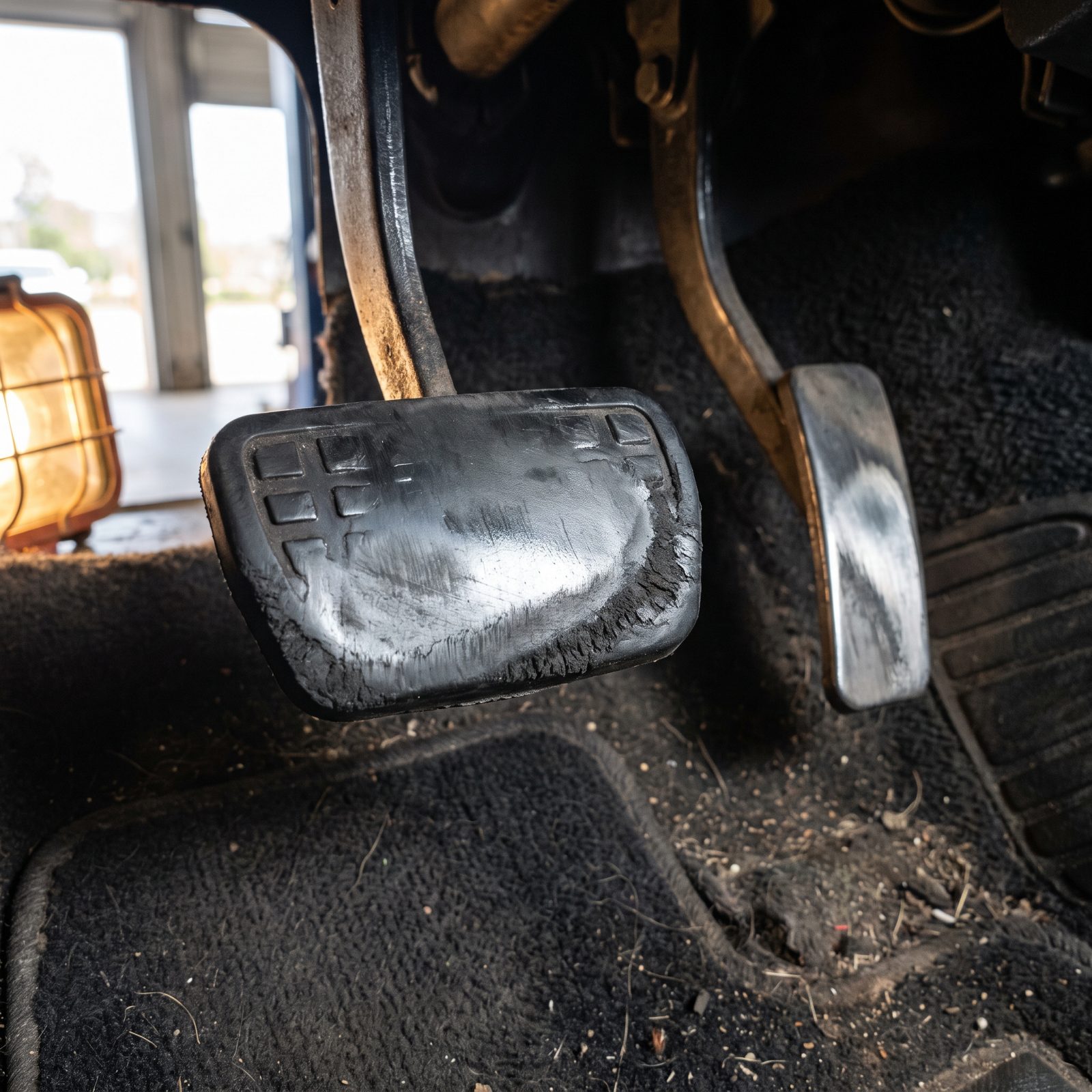
Rubber doesn’t lie about miles the way an odometer can.
A brake pedal pad on a car that reads thirty thousand should still carry its molded grip pattern. When the nubs are smoothed flat and the edges rounded off, the foot that worked that pedal did a lot more than thirty thousand miles. Add a shiny gas pedal and carpet worn under the heel, and suddenly the story on the dash and the story on the floor don’t agree.
None of this proves fraud by itself. A smooth pedal on a “low-mileage” car is simply a good reason to pull the service records and check inspection history before you trust the number.
21. Warning Lights That Stay Dark at Key-On: A Missing Self-Test That Hints at Pulled Bulbs

Turn the key to run, before you crank it, and every warning light should flash on for its self-test. That little light show is the car proving its bulbs and circuits still work.
One stays dark? That bulb is burned out, pulled, or the circuit’s been tampered with. Airbag and check-engine are the usual suspects. Killing the check-engine lamp at key-on is a classic dodge to hide a fault from a casual buyer or an inspection station.
A dark airbag light is worse. It can mean the restraint system is disabled or has already fired. So watch the whole sweep. The icon that doesn’t light is the one worth chasing.
20. Soot Painted Outside the Tailpipe: A Smudge Pattern That Points to a Leak or Bad Burn
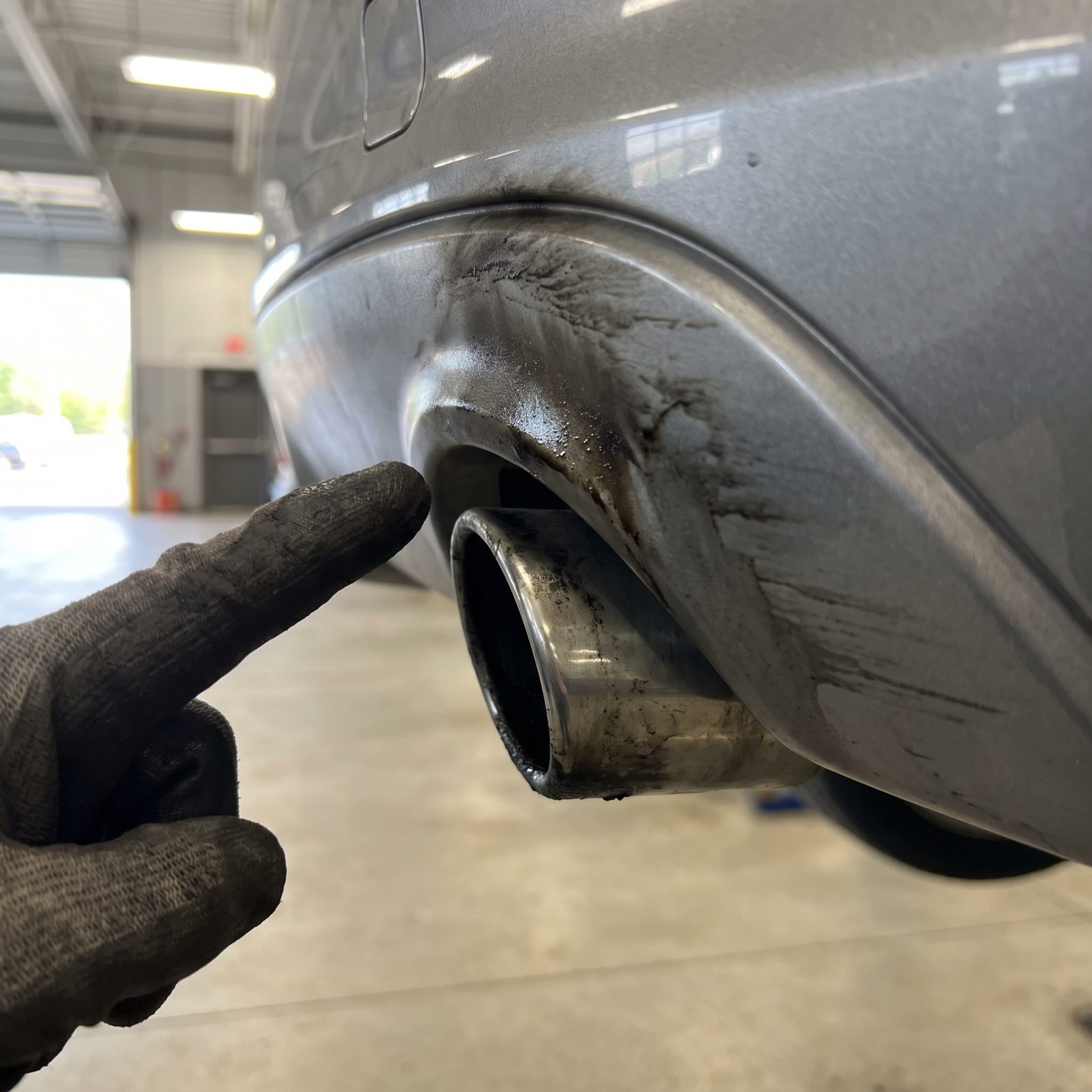
Soot belongs inside the pipe. When it fans across the bumper or streaks off to one side of the outlet, exhaust is escaping somewhere it shouldn’t.
A sooty smear above the tip can mean a leaking joint upstream pushing deposits out early. Oily black that smudges greasy on a finger leans toward burning oil, while dry dusty grey-black is closer to a rich fuel mix.
Diesel folks read this in their sleep. It works on gas engines too. The shape and the spot of that stain sketch out a combustion or leak story long before anybody hooks up a gauge.
19. A Waterline Ringed in the Spare-Wheel Well: Hidden Staining From a Chronic Leak or Past Flood
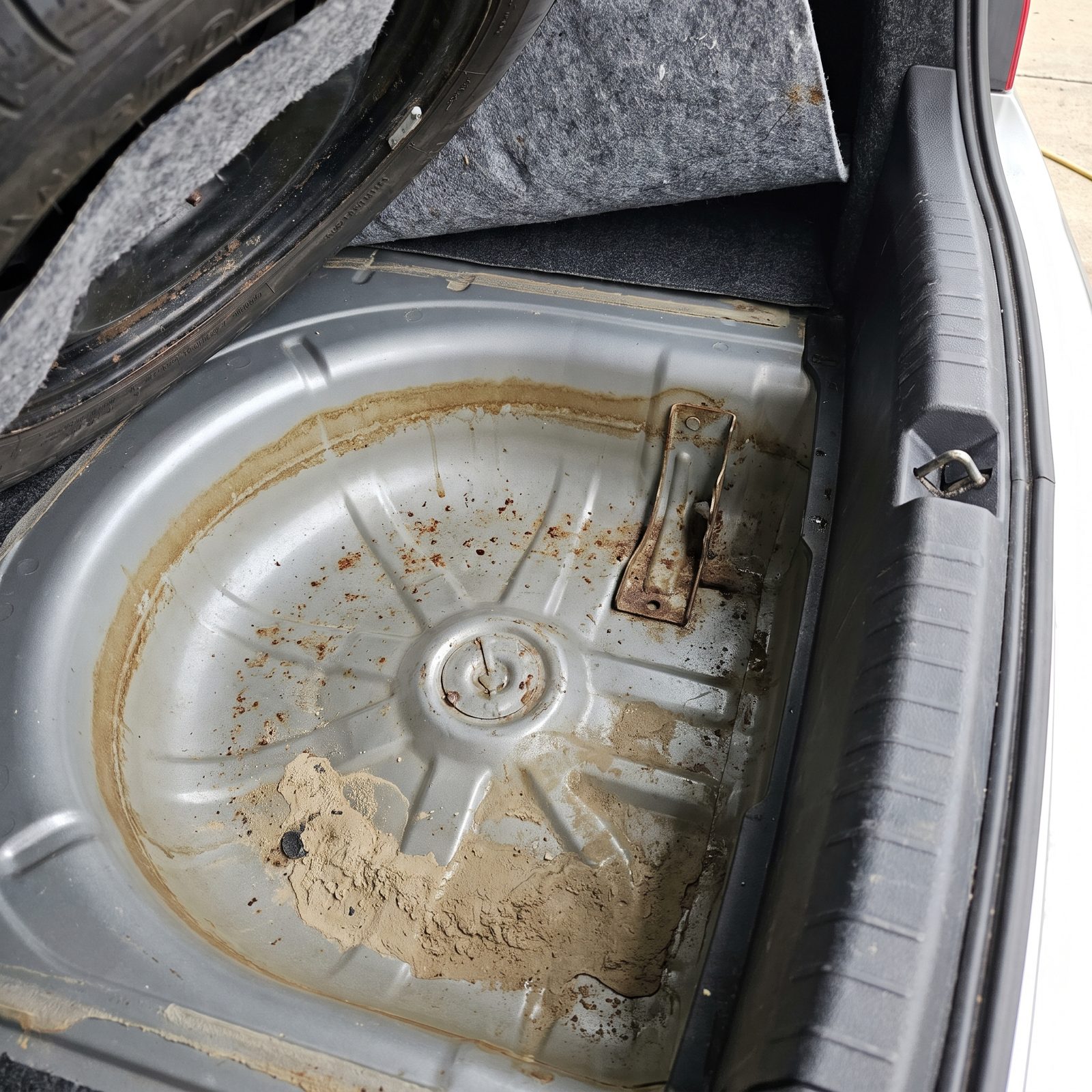
Lift the trunk carpet and pull the spare. The lowest point in the body is where water goes to confess.
A faint tide line around the spare well, silt in the bottom, rust creeping up the jack bracket — that’s standing water that sat long enough to leave its mark. Maybe it’s a clogged drain or a failed taillight seal letting rain in for months. Maybe it’s worse, and the whole car spent time underwater.
A flood car dries out, looks fine on the surface, then starts eating its own electronics a year down the road. That stain ring is the earliest honest clue you’ll ever get.
18. A Battery Terminal Gone Dark and Melted: Heat Scars That Reveal a Loose, High-Resistance Connection
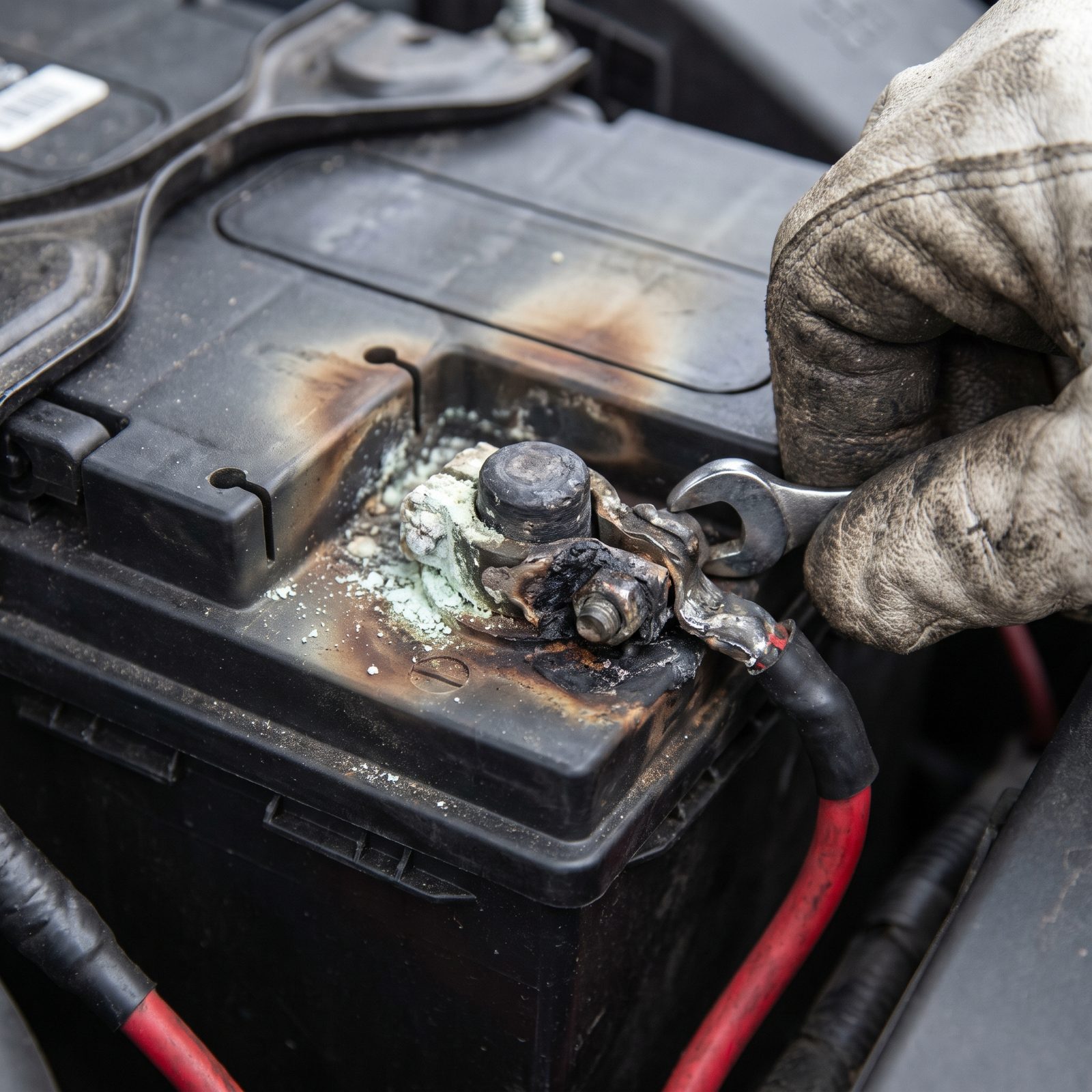
A clean battery connection stays bright metal. Darkened, discolored, or faintly melted terminal metal is a fingerprint of heat, and heat at a terminal means resistance.
A loose clamp or a corroded post forces current to fight across a bad contact, and that fight throws off warmth. Enough of it over enough starts, and the lead actually deforms. You’ll often spot scorched plastic on the battery top right next to it.
What makes this one matter is what it signals downstream: hard starts, a charging system straining, connections that pick the worst possible cold morning in a parking lot to quit entirely. The melt is the symptom. The loose, lazy connection is the disease.
17. Fuses That Do Not Match the Diagram: An Oversized Amp Rating That Someone Used to Dodge a Problem
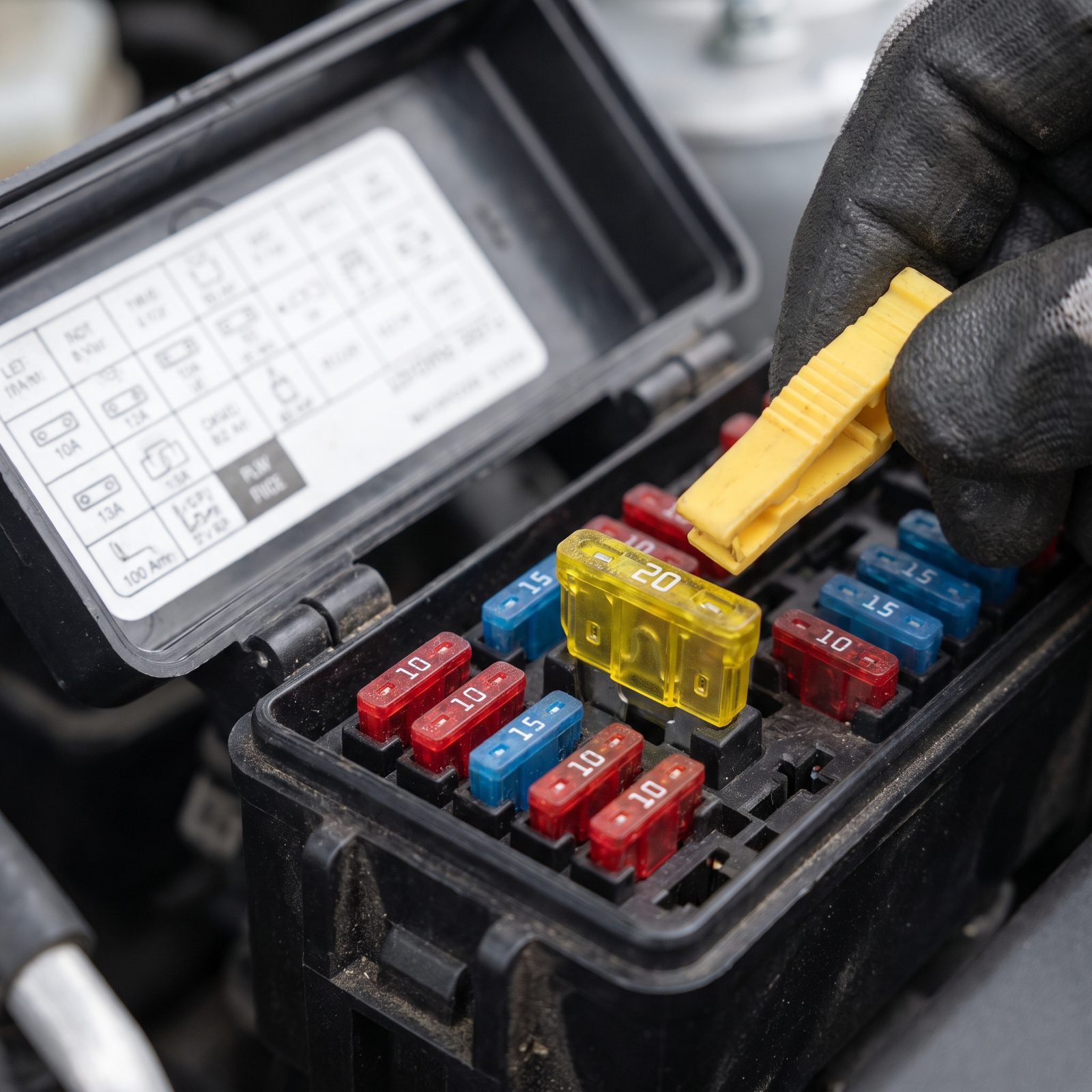
Fuse colors are a code, and the color tells you the amp rating at a glance. The box lid prints what belongs in each slot.
So when a slot meant for a small fuse has a fat high-amp one jammed in, somebody got sick of a fuse blowing and decided to make it stop. That fuse wasn’t failing. It was doing its job — protecting a circuit that keeps pulling too much current.
Override it and the wire itself becomes the fuse. That’s how harnesses melt and, at the far end of things, how cars catch fire. An oversized fuse is never a repair. It’s a problem somebody buried.
16. Household Wire Nuts in the Harness: Twist Connectors and Bad Crimps That Flag an Improvised Repair
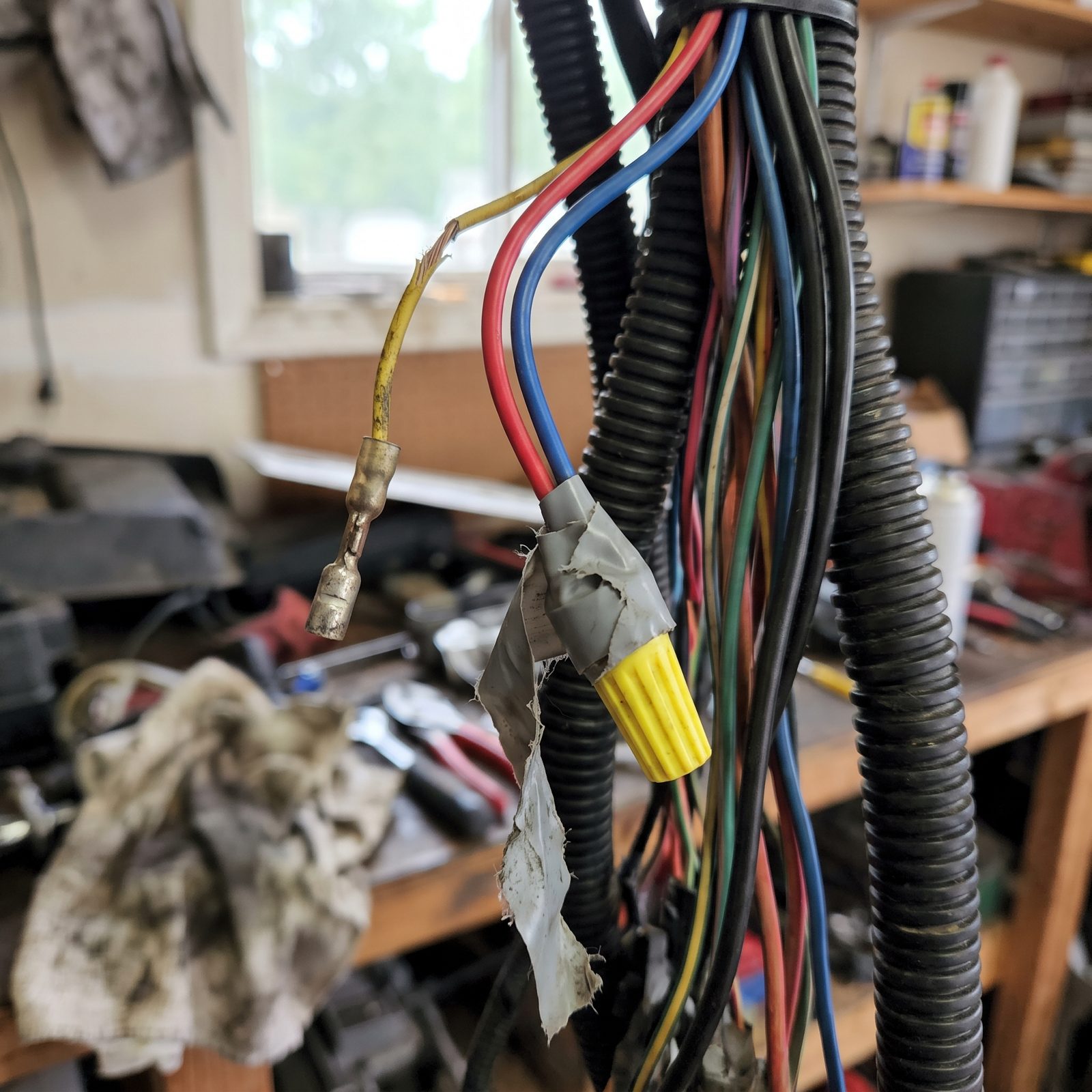
A wire nut under the dash tells you exactly what kind of help this car has had.
Those twist-on connectors belong in a wall junction box, not in a vibrating, heat-cycling, moisture-soaked engine bay or cabin. Same goes for loose uninsulated crimps and electrical tape doing structural work. Car wiring wants soldered and sealed, or properly crimped weatherproof connectors, because the thing shakes itself apart a little with every mile.
Find one improvised splice and assume there are more. A household fix in a car harness means the previous owner chased electrical gremlins on the cheap. And the gremlins almost always come back.
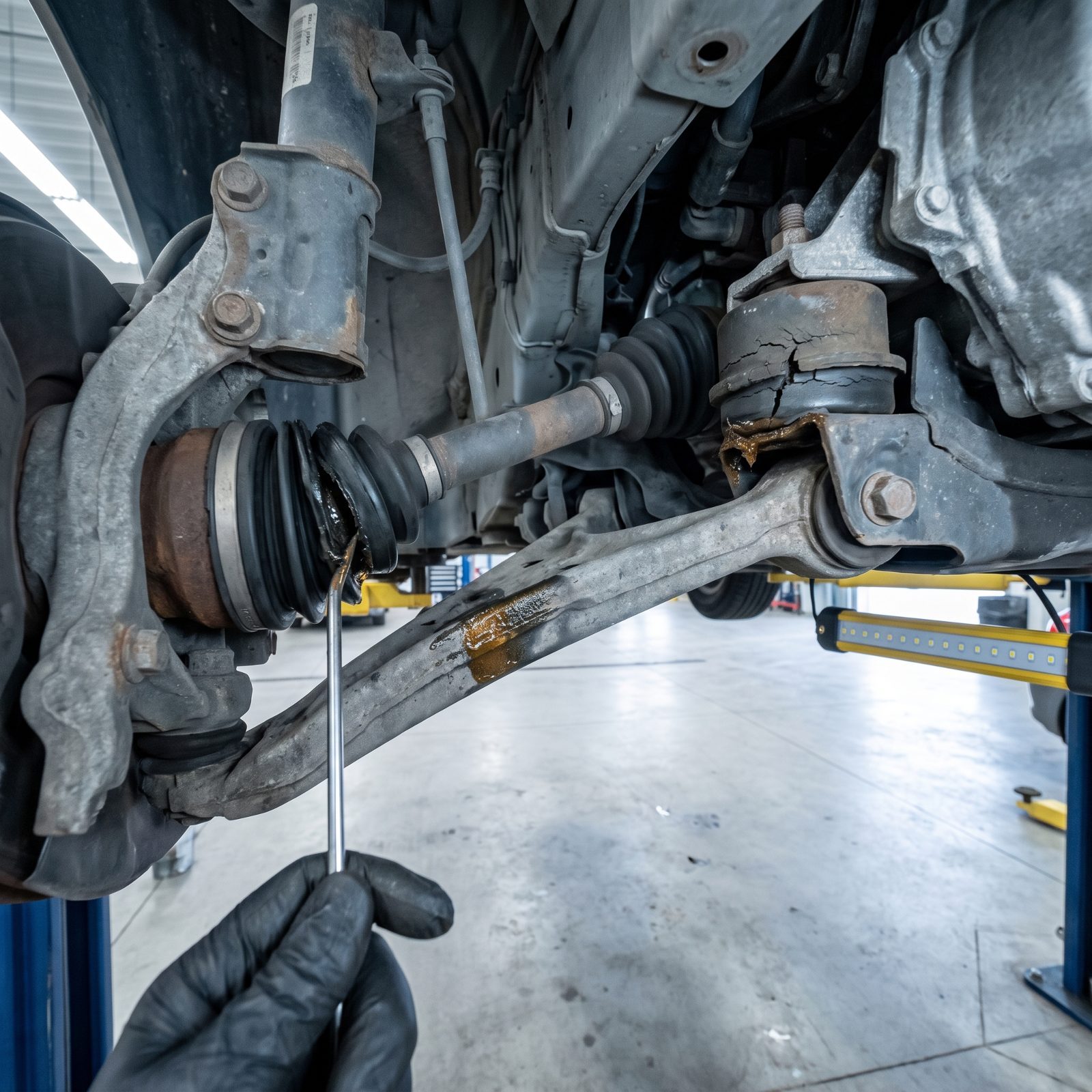
15. Fresh Grease Slung Around the Wheel Well: The Radial Spray That Names a Split CV Boot
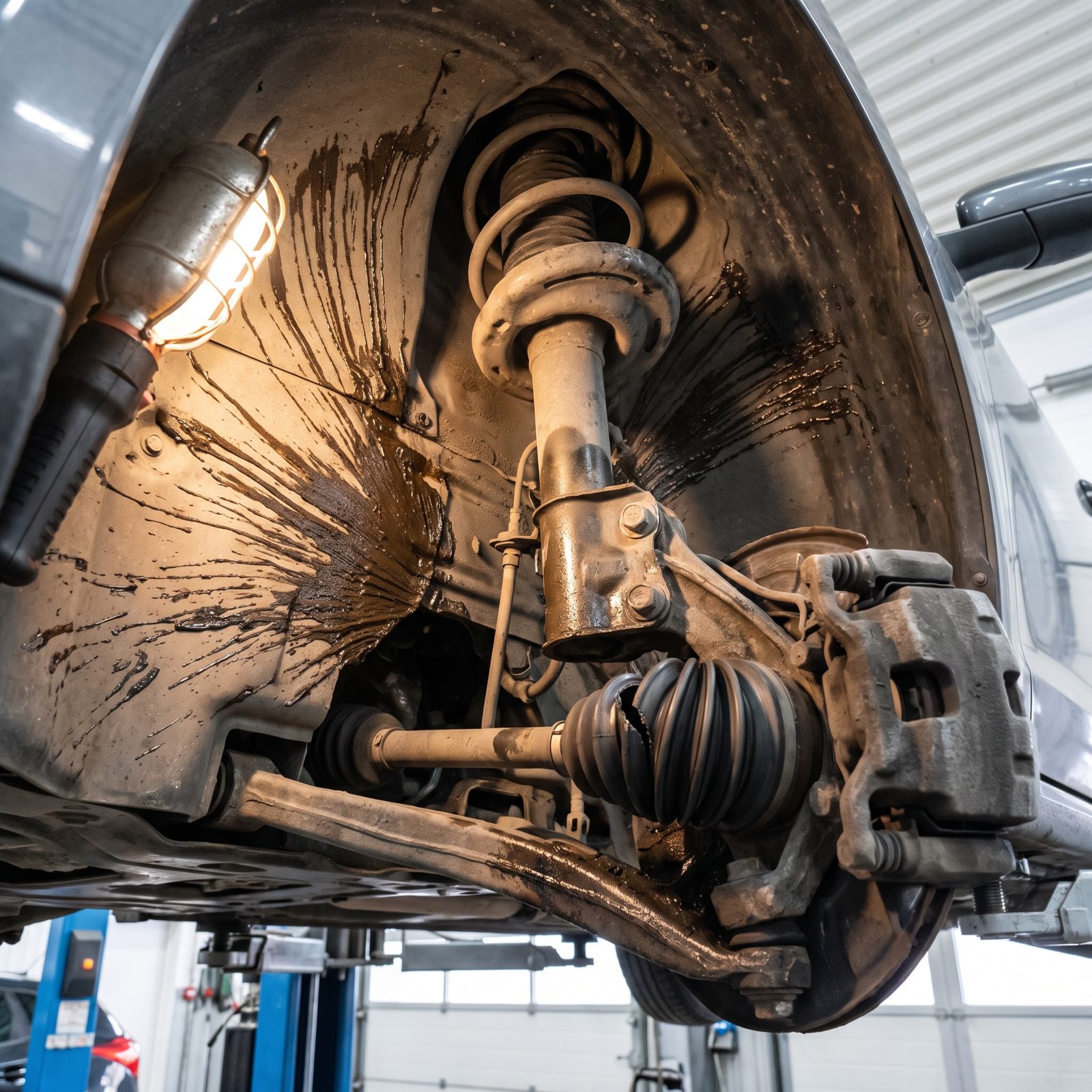
Grease doesn’t throw itself around a wheel well for no reason. See fans of dark streaks sprayed across the inner fender beside and around the strut, and you look down below them for the cause.
That cause is almost always a cracked CV boot. The rubber accordion sealing the drive joint splits open, and the spinning axle slings its grease up onto the fender, where it lands in those telltale radial fans.
Catch it early and it’s a boot and a repack — cheap. Let it run dry, grit works in, the joint starts clicking on tight turns, and now you’re buying a whole axle. The spray tells you how long that split has been throwing.
14. A Tire Feathered Across the Tread: Sharp One-Direction Edges That Point Straight at Toe Misalignment

Run a hand across the tread, inside to outside. If it feels smooth one way and catches like a saw blade the other, that tire is feathered.
On a feathered tire, each block wears with one sharp edge and one ramped edge, a saw-tooth your fingers catch long before your eyes do. The pattern comes from the tire getting dragged slightly sideways as it rolls — which is exactly what a toe-alignment problem does, mile after mile.
It usually means a steering or suspension part has shifted, worn, or was never set right after a repair. So a feathered tire does double duty: it’s a wear clue and a red flag that something underneath moved out of spec.
13. Pink or White Crust Trailing the Cooling System
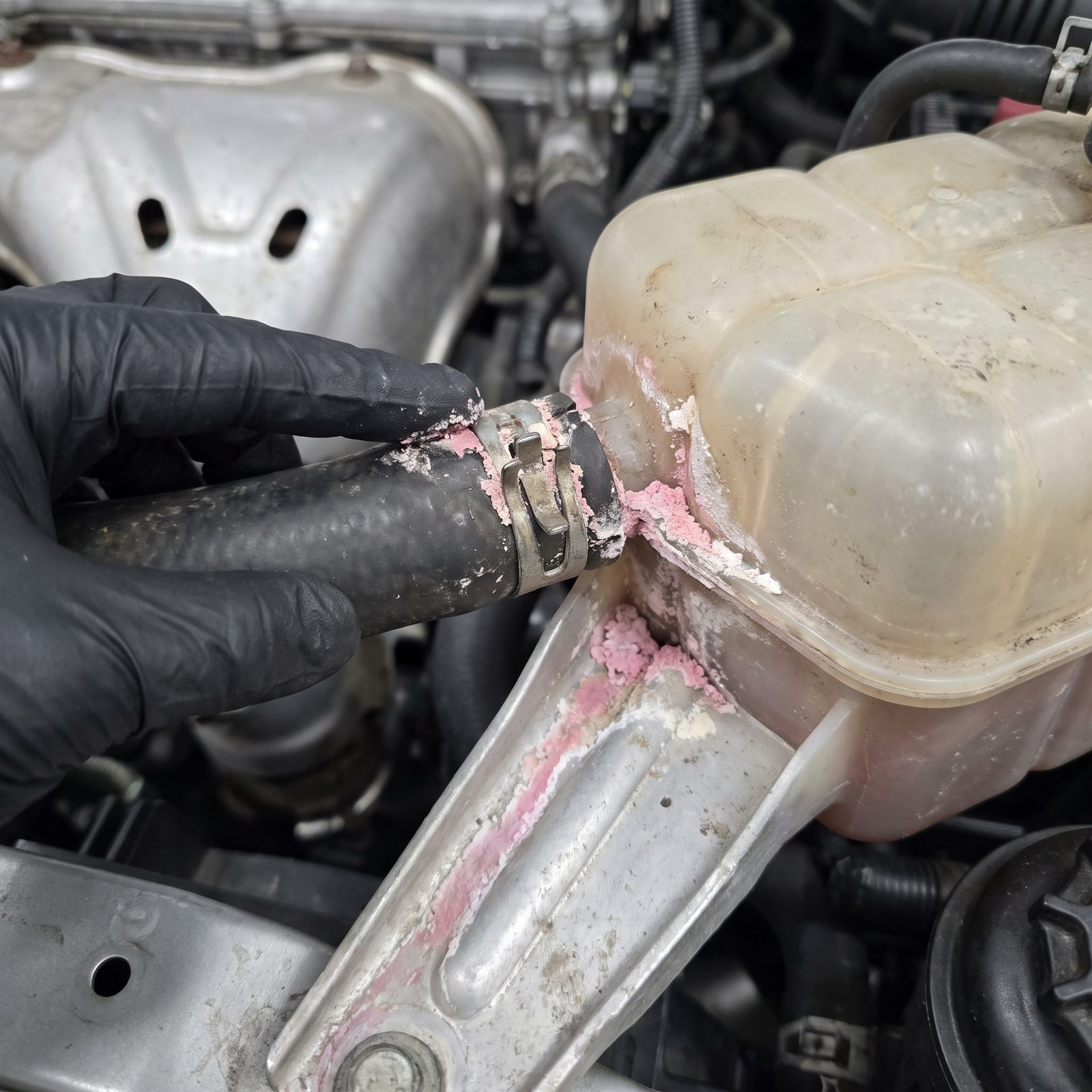
Coolant doesn’t just vanish. When it weeps past a hose clamp or a cracked plastic neck, the water evaporates and the additives dry into a crust — orange-pink on the newer long-life stuff, chalky green or white on the older formulas.
That crust is a map. Follow the trail uphill and it points straight at the leak, even when the engine sits bone dry and cold on a lift. A mechanic reads that residue the way an old-timer reads a dry creek bed: the water’s long gone, but the evidence stayed put.
12. Fine Black Belt Dust Dusting a Pulley
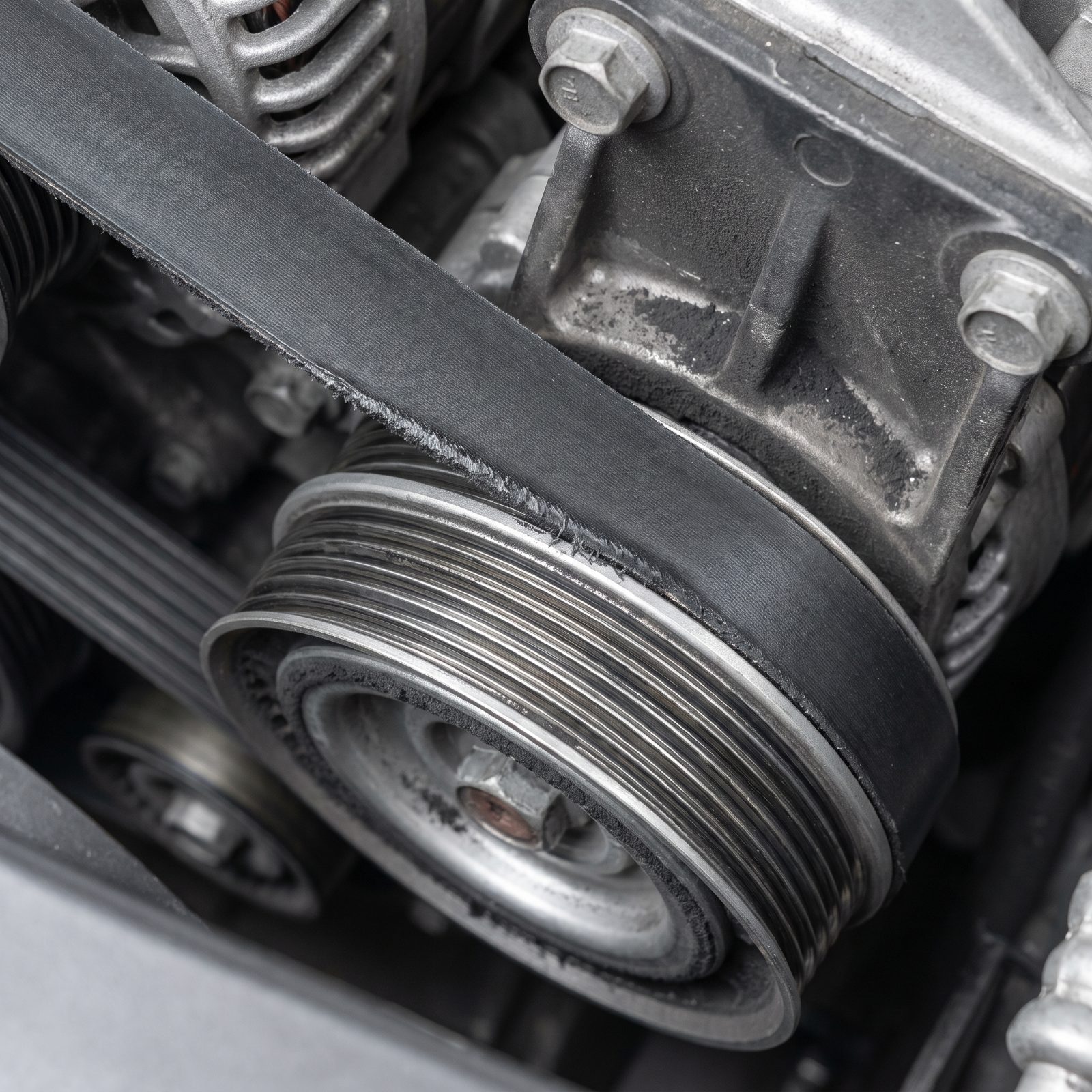
Run a finger along a pulley bracket, and if it comes back sooty, the belt is talking. Fine black powder is rubber being ground off, and rubber doesn’t shed itself for no reason.
It means slippage, a pulley that’s out of line, or a tensioner that’s lost its spring and quit holding pressure. Leave it, and that squeal you hear on a cold start becomes a belt that lets go on the interstate — taking your alternator, water pump, and power steering with it in one quiet, miserable moment on the shoulder.
11. Nesting Material and Seed Shells Under the Hood
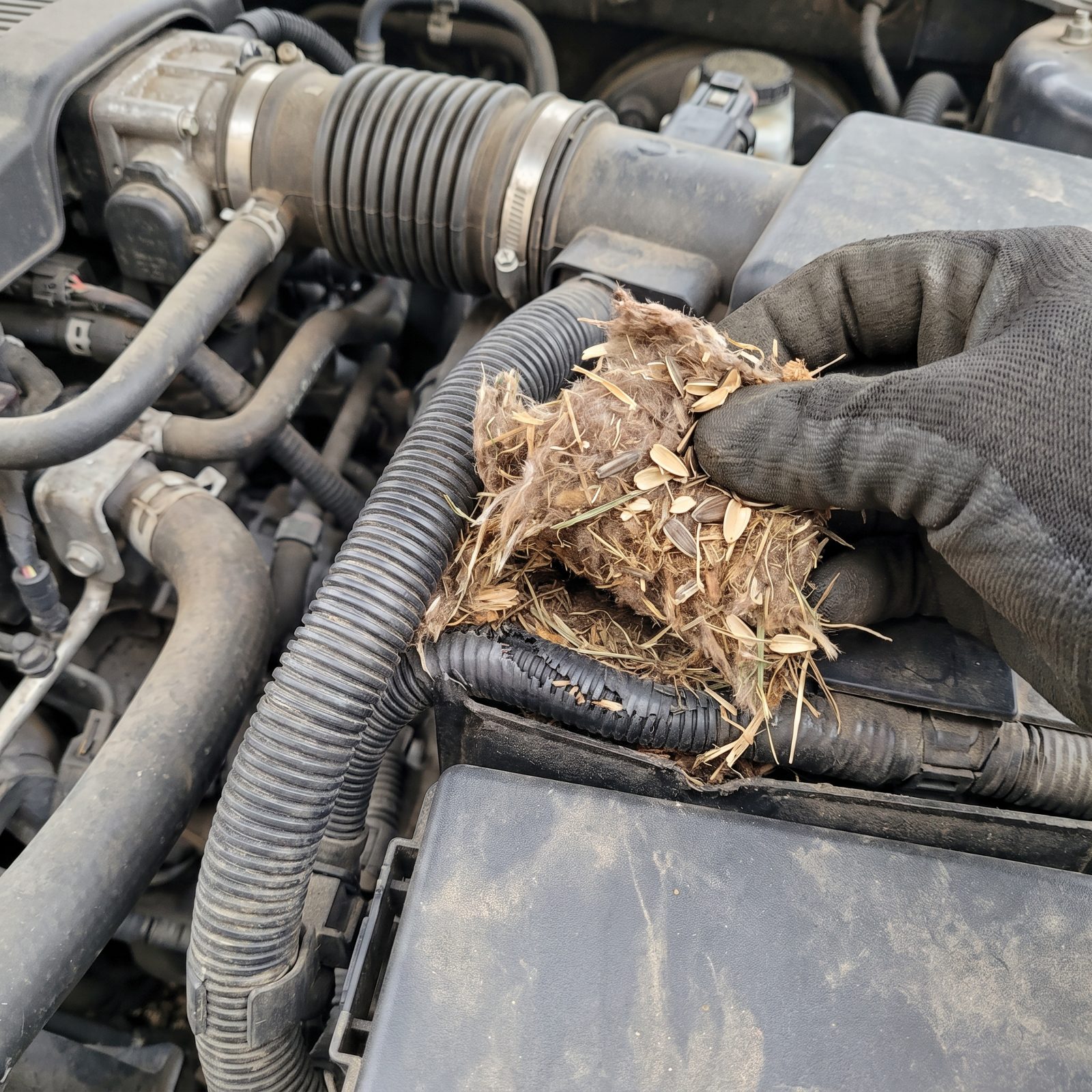
Shredded insulation packed around the battery tray. Sunflower shells in the air box. A faint acorn smell nobody wants to name. Mice treat a parked car like a heated cabin, and they chew.
A tech who spots the nest already knows to trace the harness for bare copper and tooth marks, because chewed wiring throws gremlins no code reader fully explains — a flickering light here, a sensor dropout there. Cars that sit through winter, farm trucks, that weekend RV parked at the back of the lot since October: they all collect tenants, and the debris tells on the critter long before a single fuse blows.
10. Fresh Seams on a Cut-and-Welded Catalytic Converter
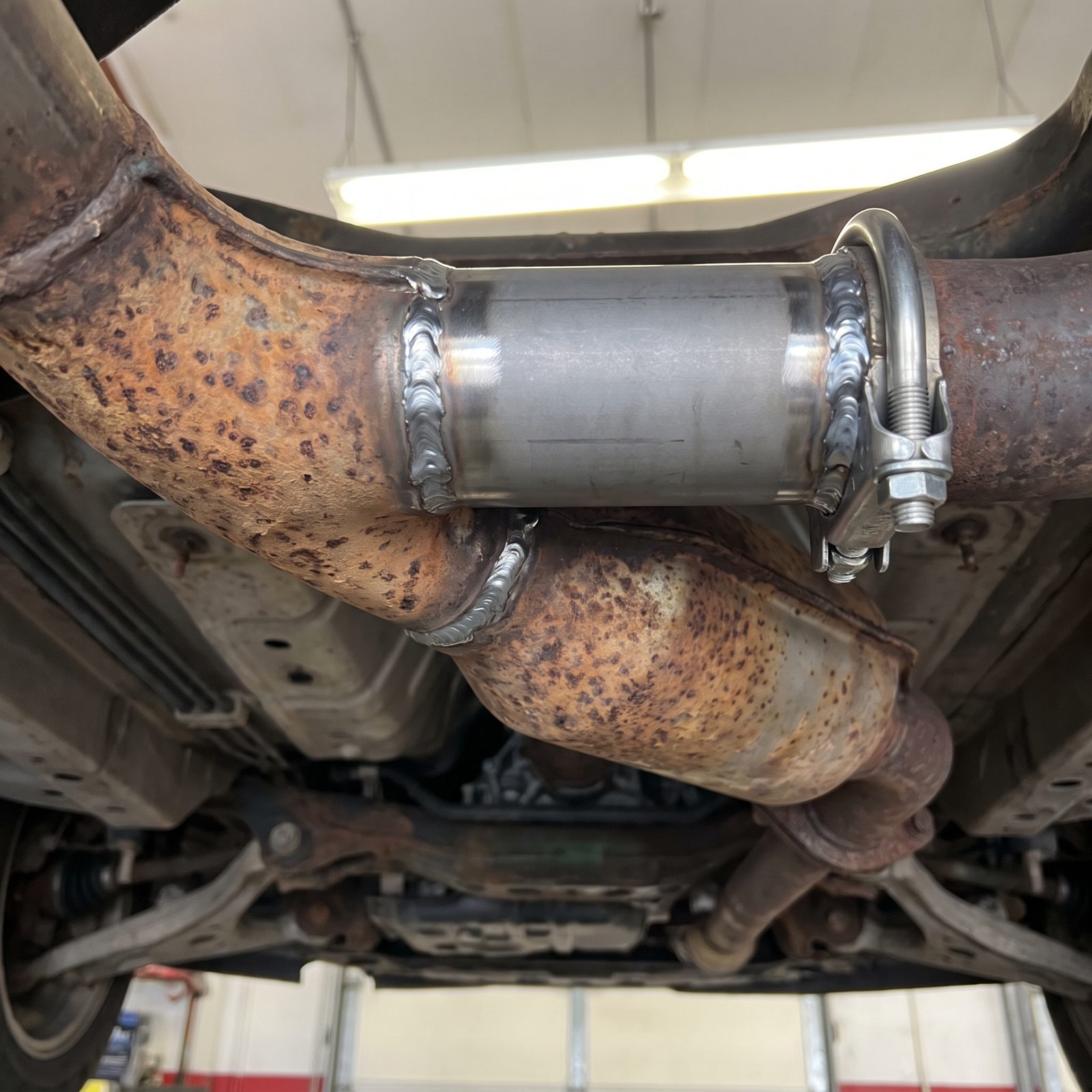
Slide under a car and a bright new weld on an old rusty exhaust shouts its history. Converters get sawed off in parking lots for the precious metals inside, and the repair almost always looks like exactly what it is: a universal cat clamped or welded between two sections that don’t match.
A fresh seam on an otherwise weathered pipe tells a mechanic the car was probably a theft victim — or somebody gutted the original to dodge a replacement bill. Either way, it reframes the whole inspection. Check the mounting scars, look for pry marks on the heat shields, and brace for emissions questions.
9. An Oily Film Weeping Down a Shock Body
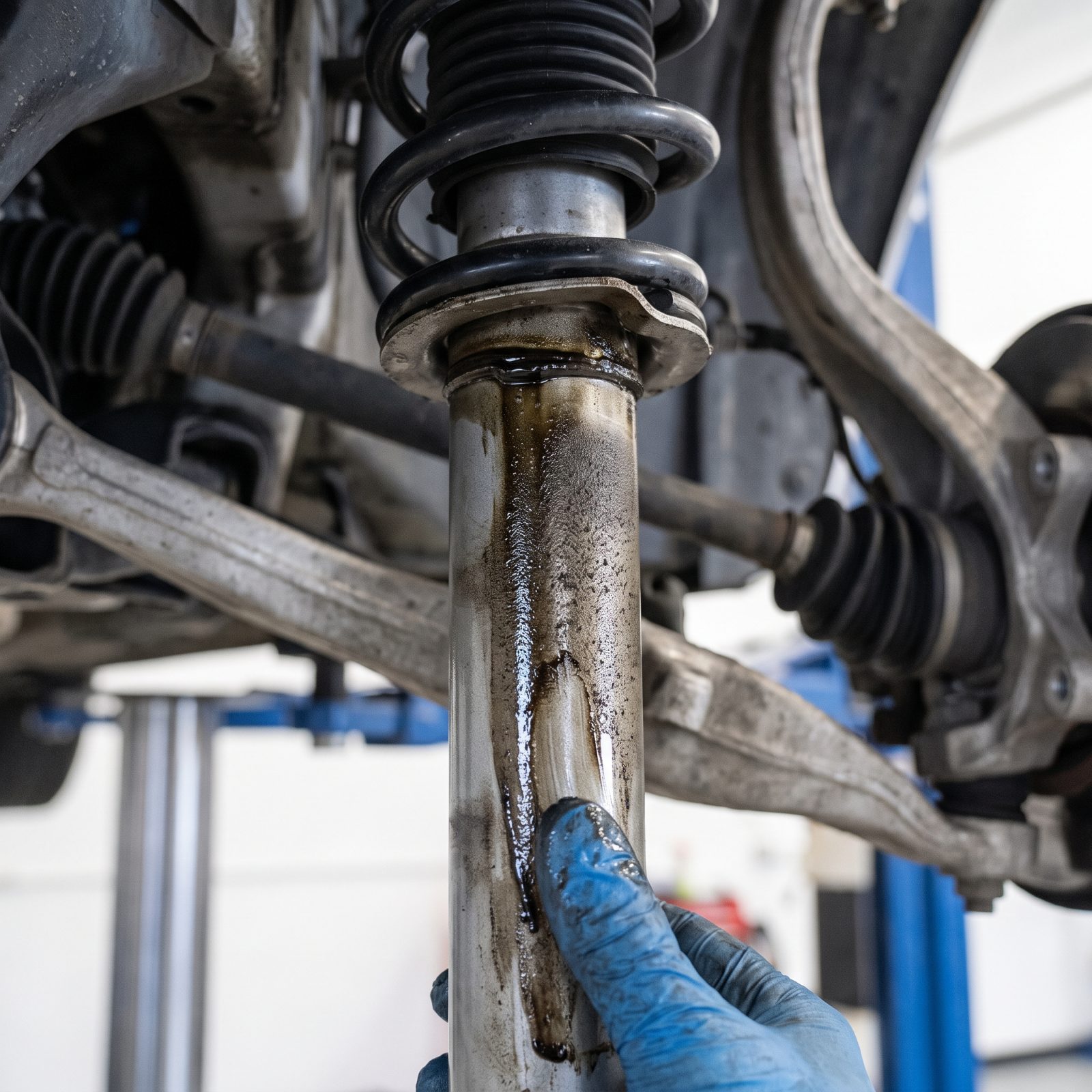
A damp stripe down a shock or strut isn’t always a leak. But a wet, grimy film below the seal usually is. Dampers are sealed hydraulic units, and once that seal weeps, the oil inside is on its way out.
A tech runs a thumb down the body — wet and dirty means the shock is losing its grip on the spring, and you feel it as float over bumps and a nose that keeps bobbing after a dip. It rarely dies all at once. It just quietly stops doing its job while you blame the road.
8. Wet, Grease-Caked Boots on the Steering Rack
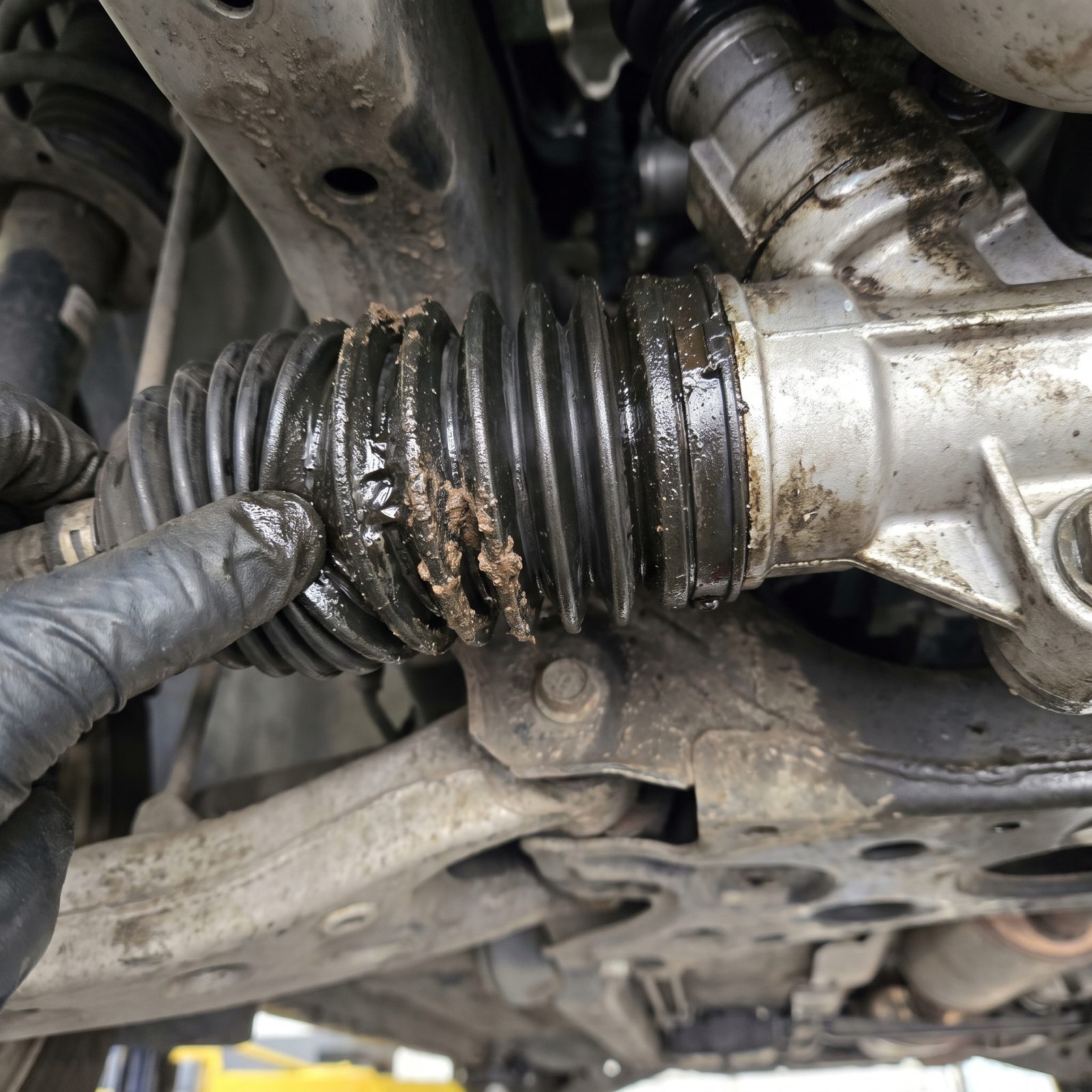
The accordion boots on a steering rack are supposed to be dry and supple. Find one wet, swollen, and heavy with fluid, and the rack is leaking internally — hiding the evidence inside its own rubber sleeve.
Power steering fluid has to go somewhere when a seal gives up, and the boot catches it. A mechanic squeezes that pleated rubber, and if it’s sloppy with oil, a full rack is on the horizon rather than a cheap patch. This is the kind of thing that stays invisible from the driver’s seat until the morning the steering goes stiff on you in a parking lot.
7. Crushed and Torn Pinch-Weld Jacking Points
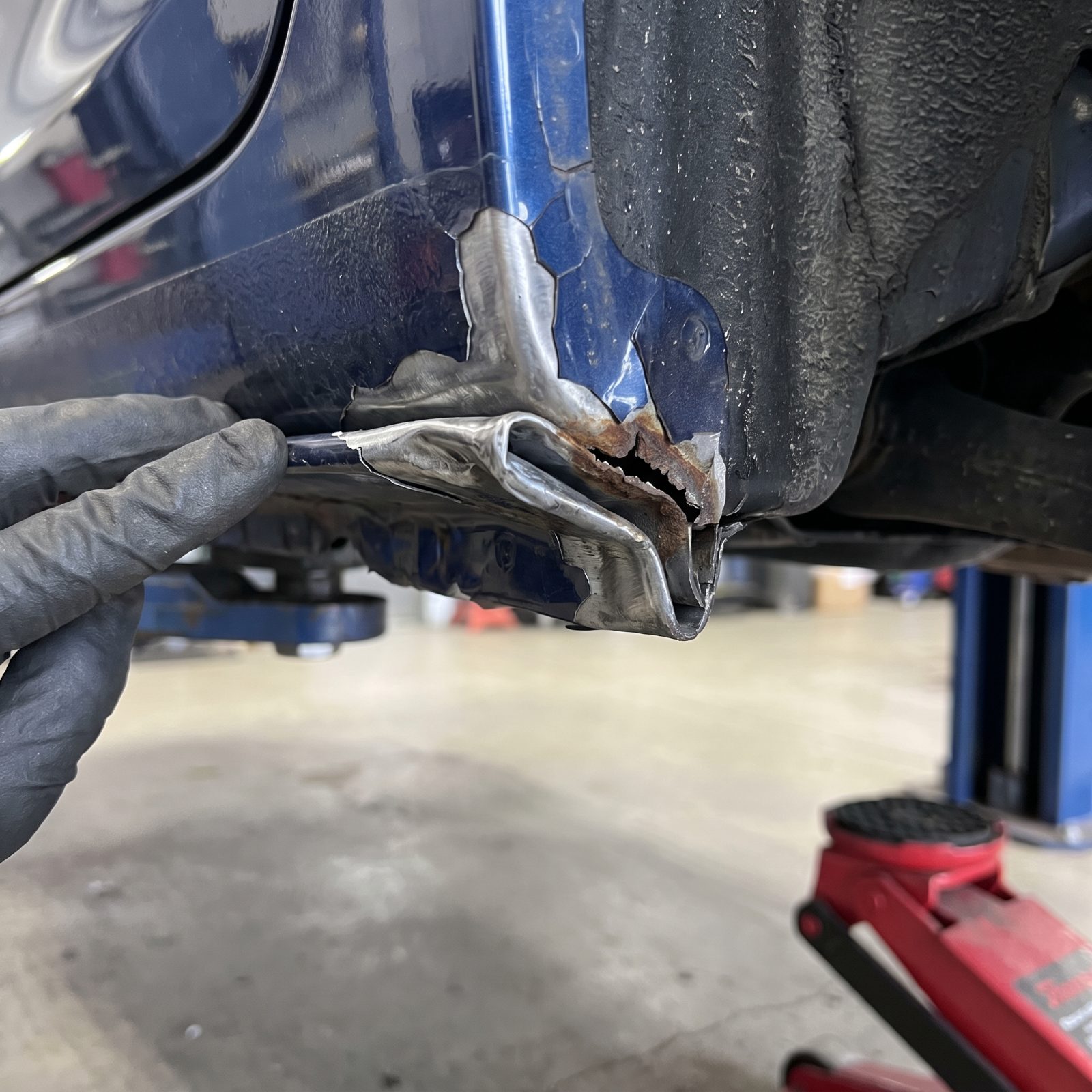
The pinch welds along the rocker are the designated lift points, and they remember abuse. A flattened, folded, or torn seam means somebody jacked the car on the wrong spot or shoved a lift arm where it didn’t belong.
To a mechanic this is a tell about who’s been under the car. Crushed welds point to driveway jobs done in a hurry, a rushed tire shop, or a prior owner who learned the hard way. And here’s the part that actually costs you: a folded seam near the floor pan traps moisture and starts rust where you’ll never spot it until the structure is already compromised.
6. A Drain Plug Rounded Off at the Corners
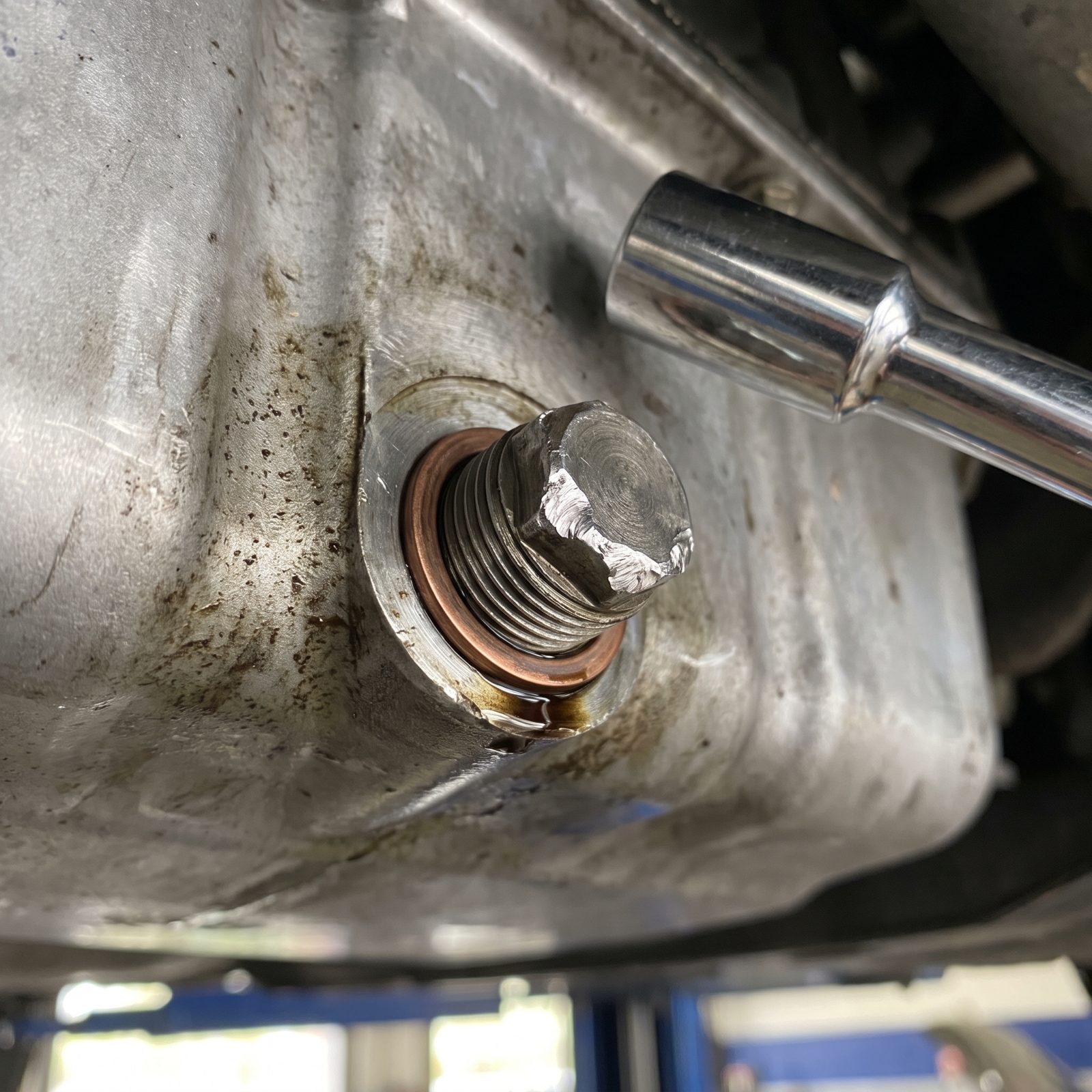
Look at a drain plug and the corners tell the story. Rounded, chewed flats mean a wrong-size tool or a gorilla with an impact gun has been here, and every one of those marks belongs to somebody who overtightened or stripped it.
A tech sees a mangled plug and immediately starts worrying about the threads in the oil pan itself, because a rounded plug usually rides along with one cranked down far too hard. Strip the threads on an aluminum pan and you’re into an insert kit or a whole new pan — all because some quick-lube bay never owned a torque wrench.
5. Milky Emulsion Clinging to the Oil Cap
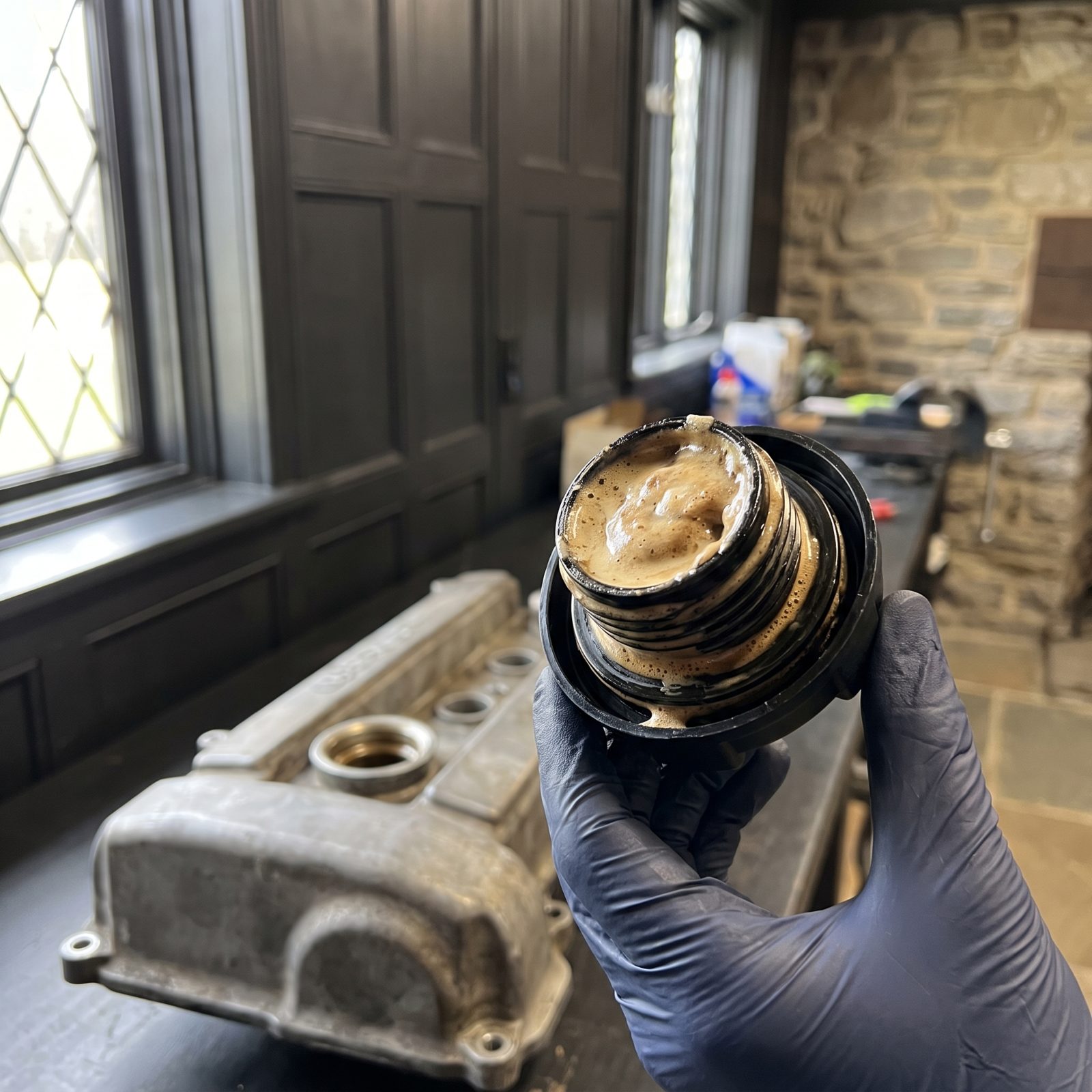
Twist off the oil cap and a smear of pale, frothy gunk underneath makes a mechanic pause. That mayonnaise look is oil and water whipped together, and water in your oil is never something to shrug off.
The innocent version: a car that only ever does short, cold trips, so moisture condenses and never burns away. The expensive version: coolant sneaking in past a failing head gasket. A seasoned tech reads the amount, the color, and the rest of the engine before calling it — because panic over a little cap film has sent plenty of perfectly good engines to unnecessary teardowns.
4. A Slow, Labored First Crank That Points Straight at the Battery, Cables or Starter
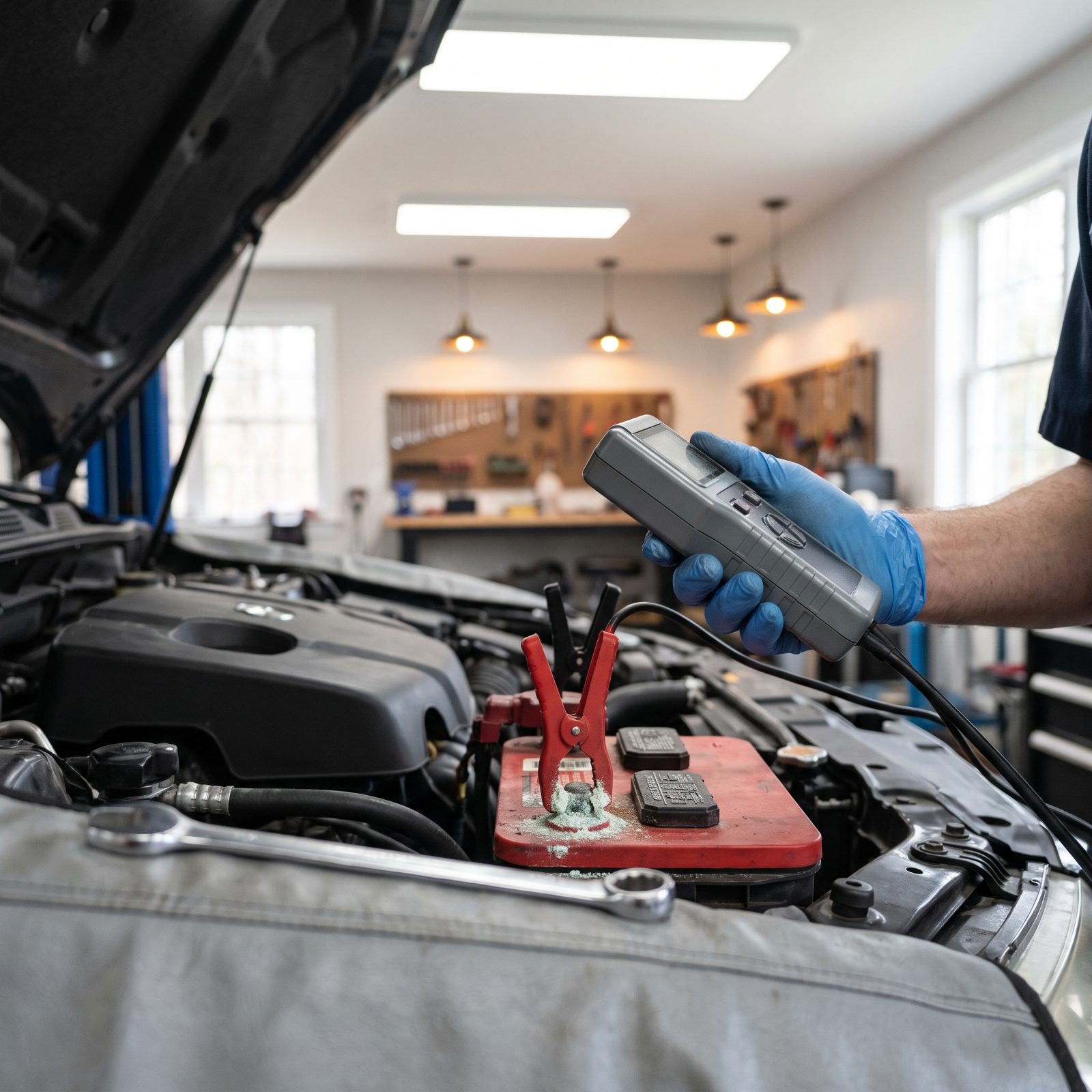
The first half-second of a crank tells a mechanic more than most owners manage in five minutes of explaining. A slow, syrupy rur… rur… rur that drags before it catches almost always lands on three suspects: the battery, the cables, or the starter itself.
Voltage drop gives it away. A healthy battery holds around 12.6 volts at rest and shouldn’t sag much during crank, so when it nosedives, either the battery is tired or a cable is choking on corrosion you can’t see under the clamp. Loosen the terminal and there it is — a green crust doing all the damage.
A dying starter cranks fine cold, then slows down once it heats up. That heat-soak pattern narrows things fast.
3. A Clunk When Drive or Reverse Engages That Exposes Worn Mounts, Joints or a Differential
Shift into drive, then reverse. That single clunk as the drivetrain takes up slack is a whole paragraph of information.
What you’re hearing is driveline lash — the tiny bit of free play built into every geared system. A crisp, sharp clunk you feel in the seat usually means worn motor or transmission mounts letting the engine lurch before the car moves. A dull thud from out back points to a differential or a tired universal joint. A repeating click under power through a turn? That’s a torn CV joint announcing itself, and it won’t get quieter.
Timing matters too. A clunk only on the first engagement of the day reads very differently than one on every single shift.
2. A Sweet Smell Near the Front That Reveals a Coolant Leak Too Small to Puddle
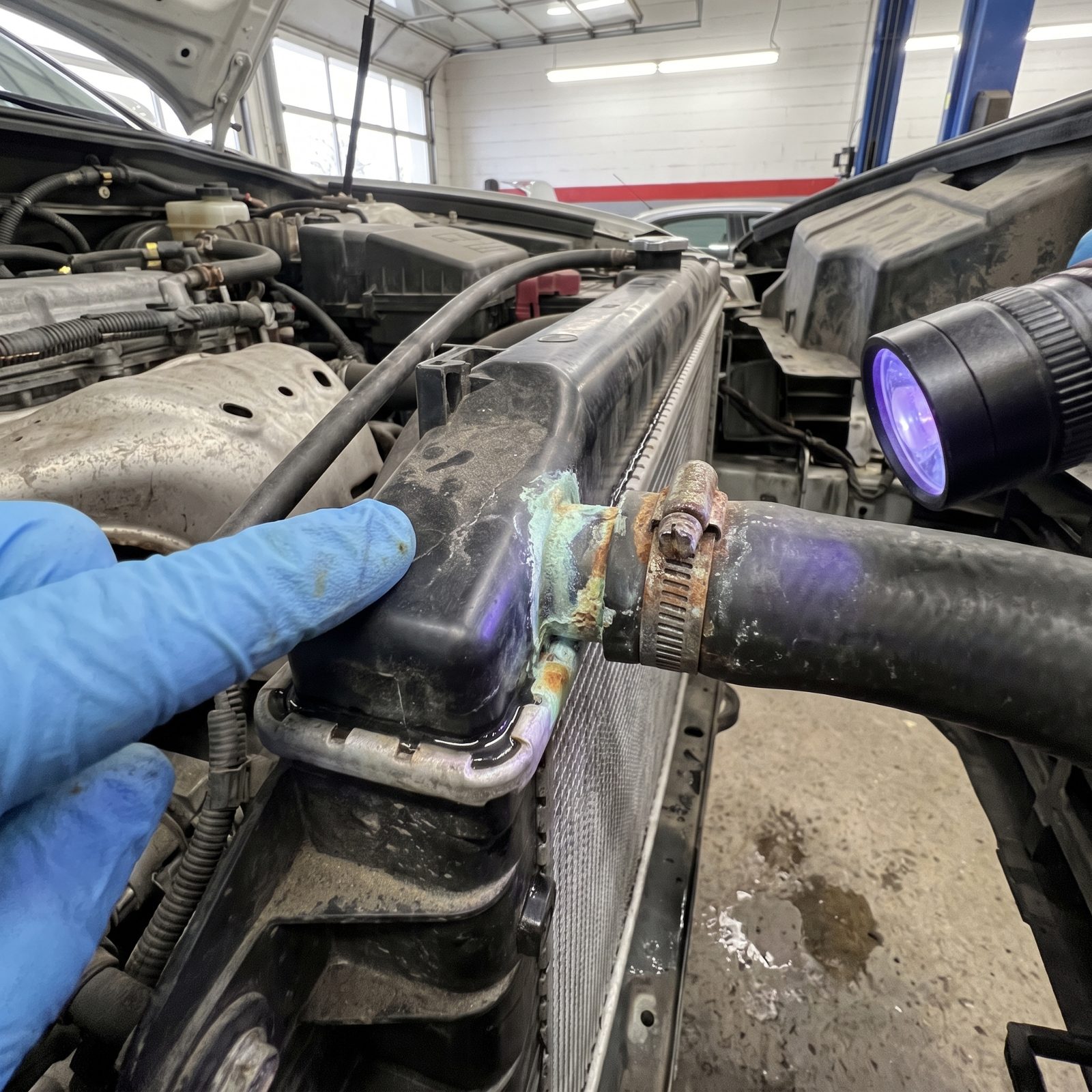
You catch it before you see it. A warm, faintly maple-syrup sweetness drifting off the front of a car is coolant, and the nose finds it long before any drip hits the floor.
Small leaks evaporate off hot metal instead of pooling, which is how an owner can swear the car never loses a drop while the overflow tank keeps creeping lower. The smell survives a heat-cycle the puddle never gets to make.
Follow it and you’ll usually land on a weeping hose clamp, a radiator end tank seam, or a water pump weep hole leaving chalky green or orange crust behind. That dried residue is the fingerprint — it marks where the leak lives even after the engine cools and the smell fades out.
1. Smoke Color at Startup That Each Sends You Down a Different Diagnostic Path
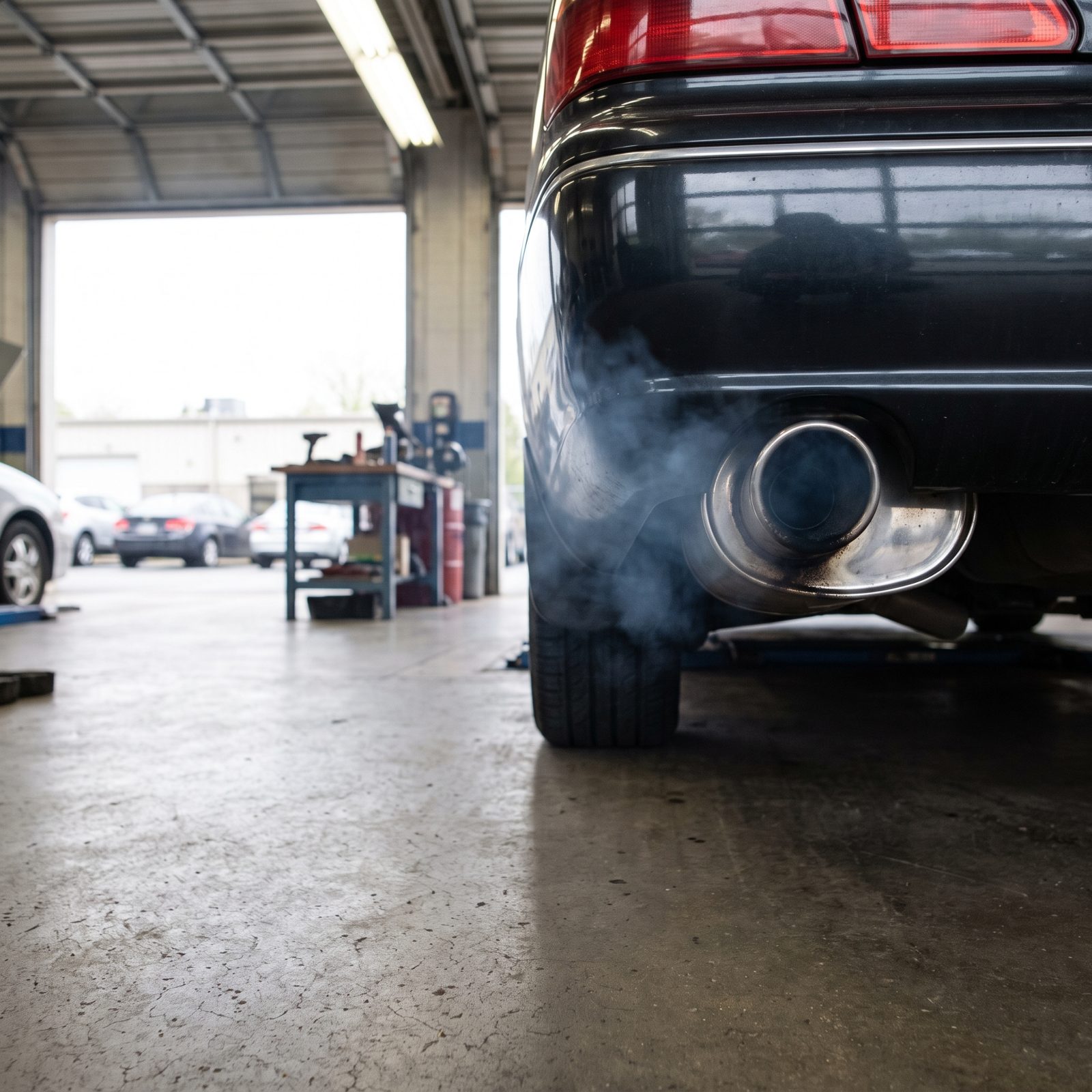
Startup smoke color is a diagnostic all on its own, and a sharp mechanic reads it in the first few seconds before it clears.
- Blue smoke means oil is burning. On a cold start that fades quickly, it usually points to worn valve seals letting oil seep past overnight. Constant blue under load leans toward rings or guides instead.
- Dense white smoke that lingers and smells sweet is coolant finding its way into the combustion chamber — the kind of news that gets a head gasket mentioned. Thin white that disappears is just condensation on a cold morning. No drama there.
- Black smoke is unburned fuel, a rich mixture from a bad sensor, injector or airflow fault.
Same puff of exhaust, three completely different repair conversations.