
The bidding goes quiet when a big polished pumper rolls across the block. Then someone in the third row raises a paddle, and it never stops. Old fire apparatus does something strange to grown adults who should know better. These machines were built to outlast their crews — overbuilt in brass and cast iron, painted the kind of red that still stops traffic. Most got scrapped or rotted behind a station. The survivors show up at collector sales looking like they just finished a parade in 1931. Here are the ones that empty wallets and start arguments in the parking lot afterward.
Please note that some of the images in this article were created with the assistance of AI.
1931 Ahrens-Fox N-S-4 Piston Pumper, the One With the Chrome Ball Up Front
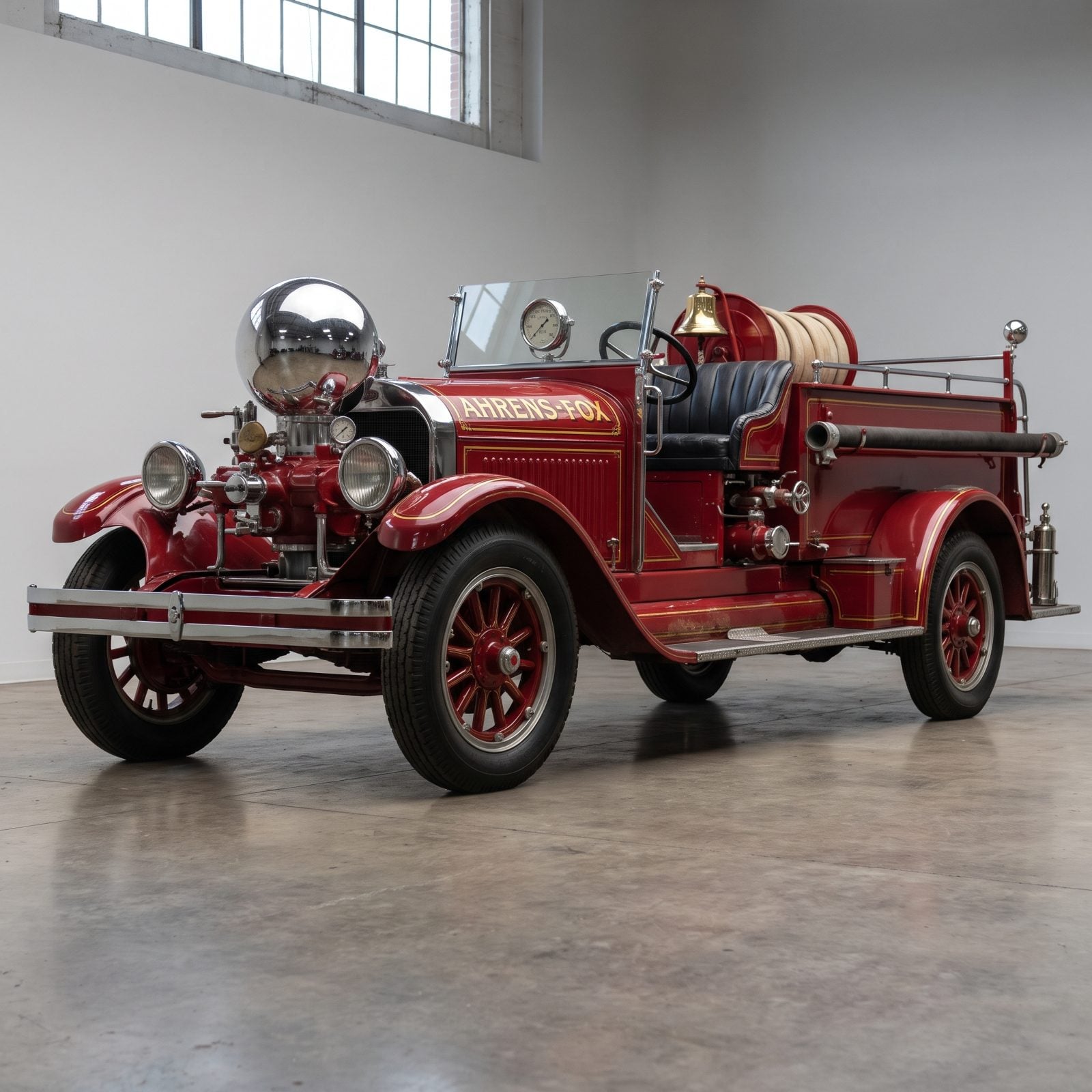
That chrome sphere on the nose is not decoration. It’s a spherical air chamber that smoothed out the pulses from the piston pump, and no other builder bolted one front and center like a hood ornament from another planet. Collectors know it on sight — you could spot one across a crowded showground.
Ahrens-Fox was the Rolls-Royce of fire apparatus, hand-built in Cincinnati and priced accordingly. Few departments could afford them, and fewer survive. A properly restored N-S-4 clears six figures on a good day, and the ones with original gold-leaf lettering intact pull even harder.
Describing its own 1927 Ahrens-Fox piston pumper, a volunteer apparatus preservation group explains that “The large air chamber, on the "discharge" side of the pump, is designed to reduce this effect by equalizing the pressure, thereby smoothing out the water streams.”
1939 American LaFrance 400 Series Streamlined Fire Engine
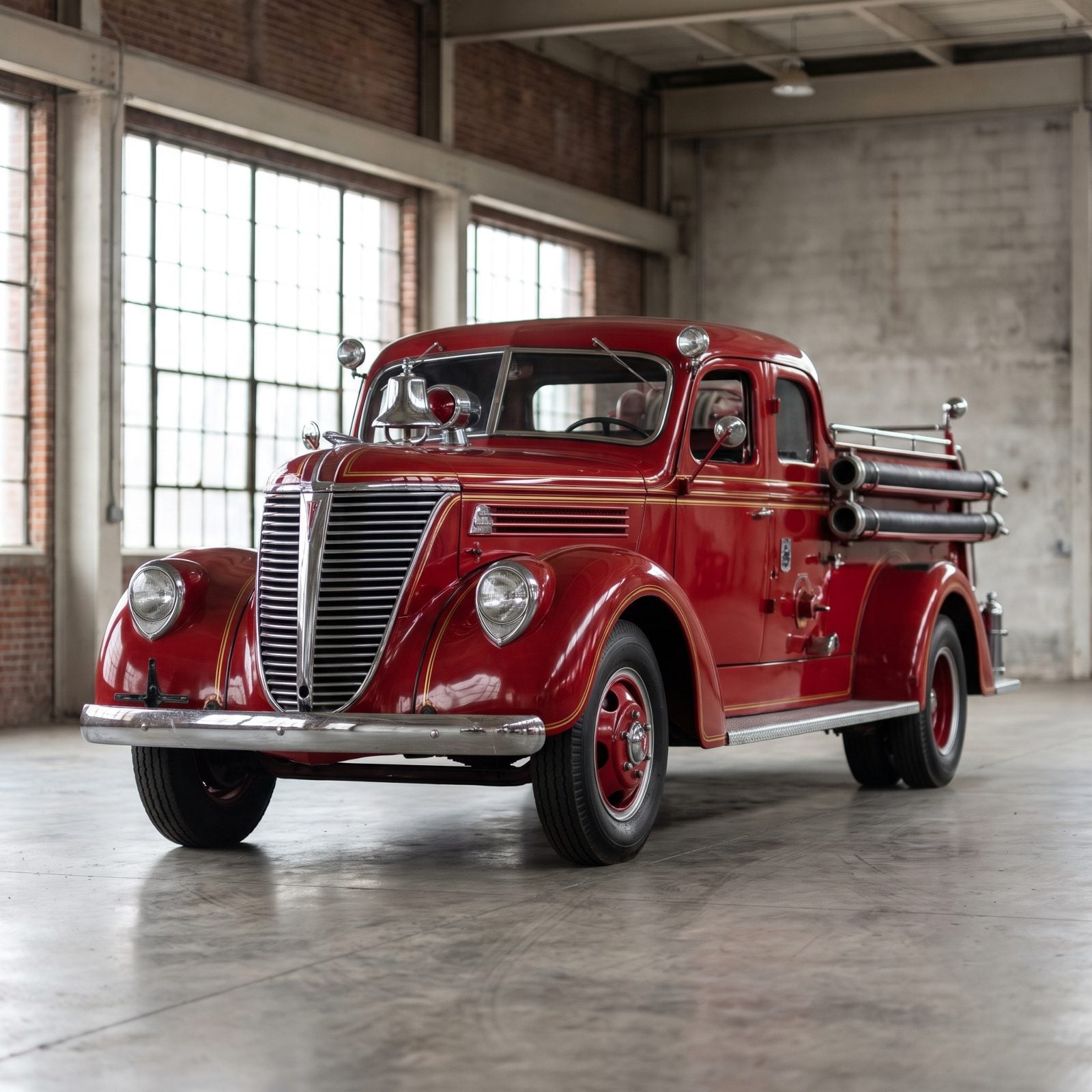
This is the one that looks like it drove straight off a 1939 World’s Fair poster. This late-1930s American LaFrance caught the streamline-moderne fever that swept everything from trains to toasters, and it wears it head to toe: rounded fenders, a V-grille leaning into the wind, chrome-ringed headlamps faired into the front of the fenders.
Most fire trucks are built to be seen and get out of the way. This one was built to be beautiful. Deco-era apparatus is scarce because the look fell out of fashion fast, and the survivors go to collectors who care as much about design history as about pumps and hose.
1954 American LaFrance 700 Series Cab-Forward Pumper
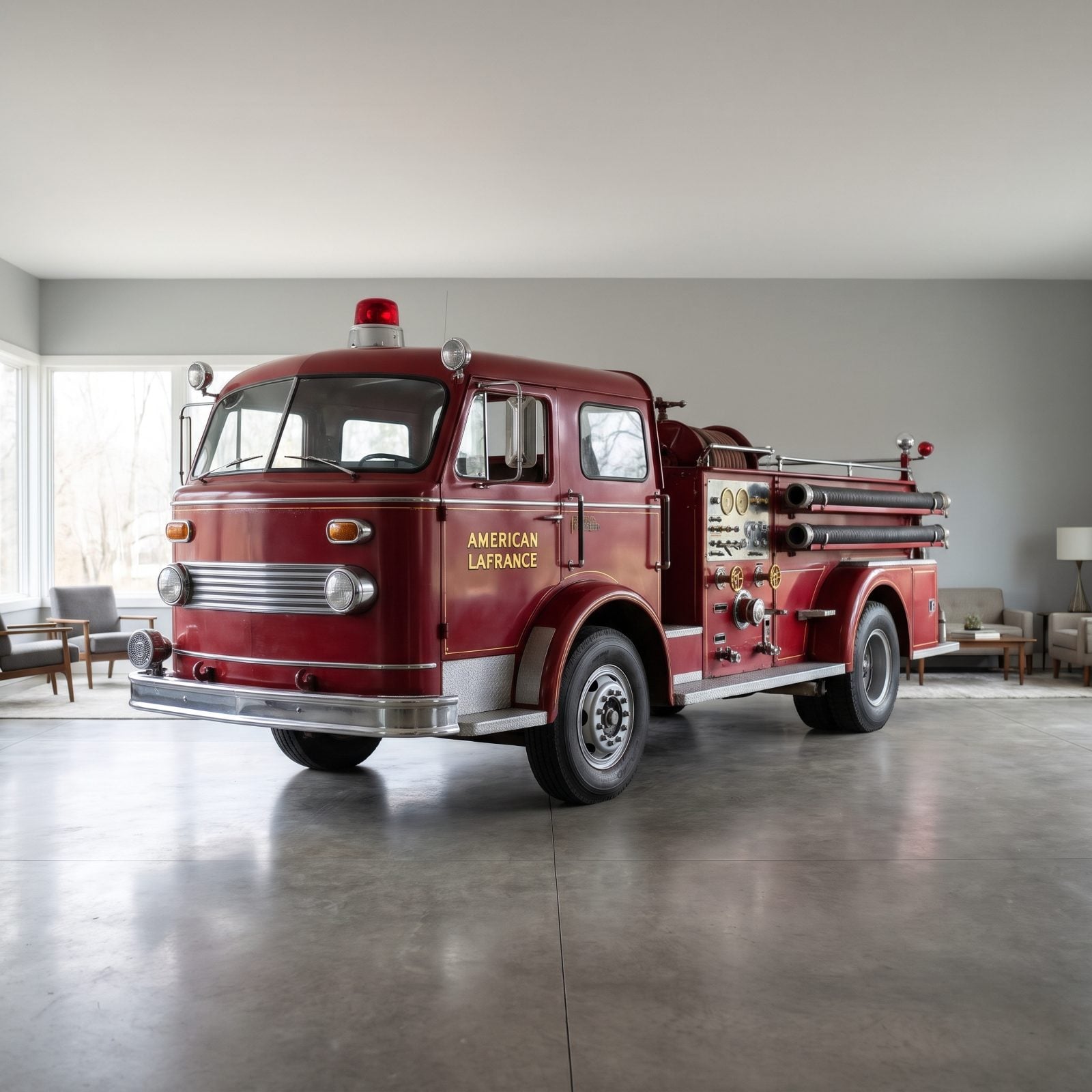
The 700 Series changed the shape of the American fire truck. By moving the cab ahead of the engine, American LaFrance gave crews better sightlines and shoved the whole look into the modern era. If your mental picture of a fire engine has the firefighters sitting way out front over the wheels, this is where it came from.
They built a lot of these and ran them hard for decades, so plenty survived — but few in honest condition. A clean, unmolested 700 with original lettering is worth chasing. The ridden-hard ones make great project trucks, assuming you have a big enough barn and patient enough in-laws.
1950 Mack L-Series Open-Cab Pumper, the Classic Everybody Pictures
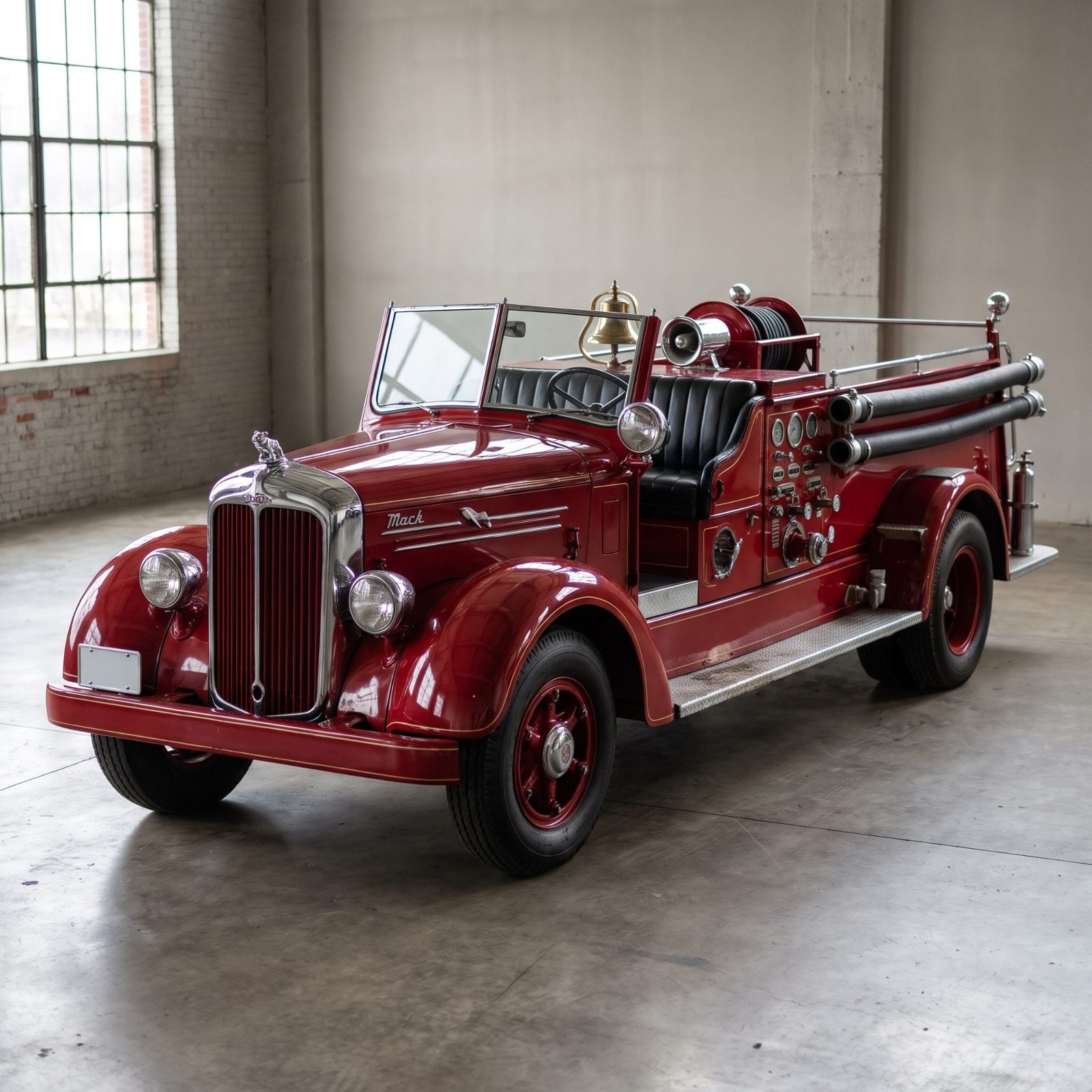
Ask anyone over forty to draw a fire truck and they’ll draw something close to a Mack L-Series. Long tapered hood, open cab, that chrome bulldog standing on the nose. It’s the one burned into the collective memory from childhood parades and metal toy trucks.
The open cab is the catch and the charm. Great in a parade, miserable in January — which is exactly why crews loved the covered cabs that followed. For a collector, though, it’s pure romance. Nothing between you, the bulldog, and the road.
1947 Seagrave V-12 Safety Sedan Pumper, the Firefighters-Inside Oddity
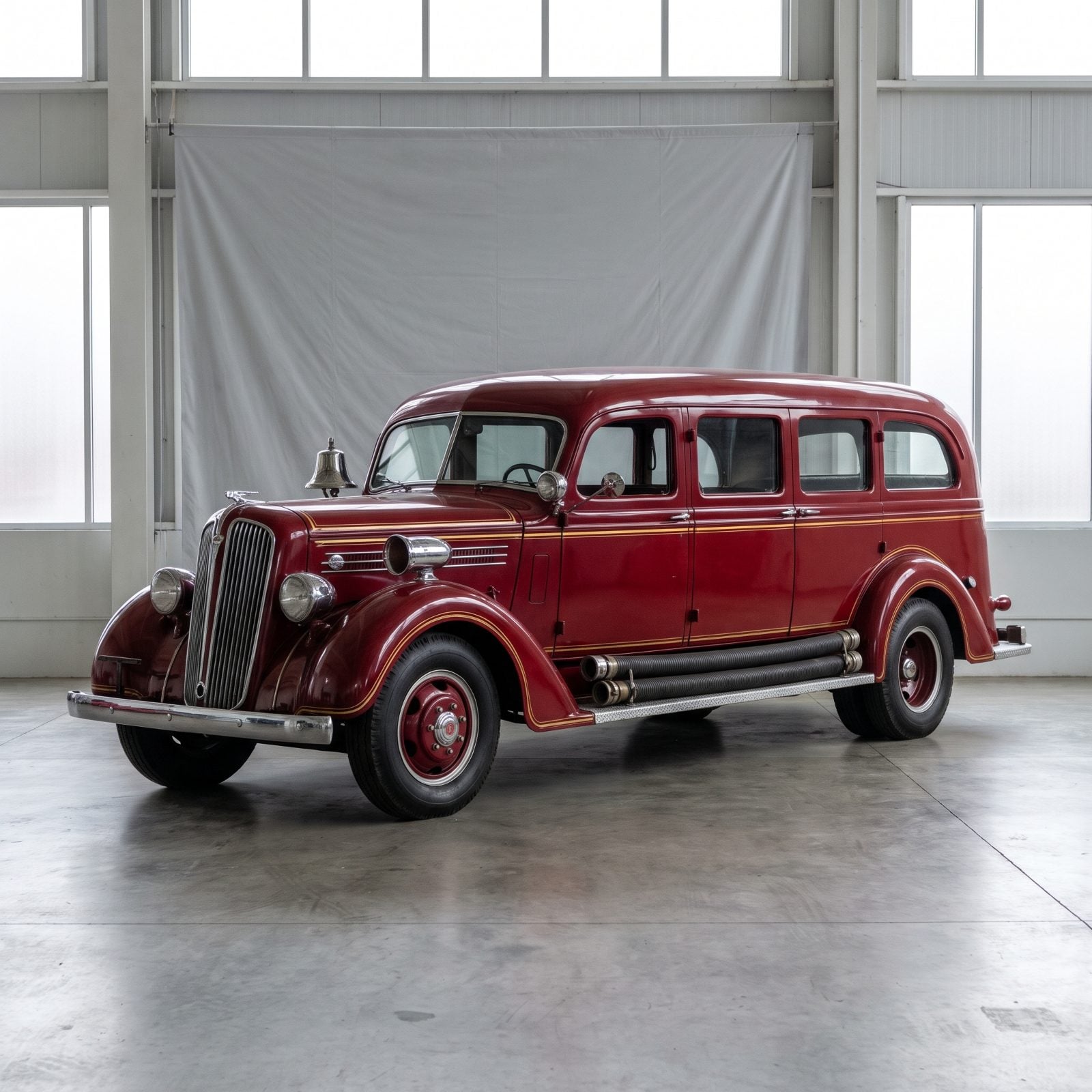
Seagrave built these to solve a grim problem. Firefighters kept falling off the back of open rigs and getting killed, so the Safety Sedan tucked the whole crew inside a fully enclosed body that looks more like a suburban carryall — or a panel wagon — than a pumper.
Collectors love weird, and this is gorgeously weird. The V-12 engine under that short hood doesn’t hurt either. Few departments bought them, far fewer kept them, so when one surfaces at auction the whole room sits up. Then you don’t see another for years.
1931 Seagrave 70th Anniversary Series Fire Engine
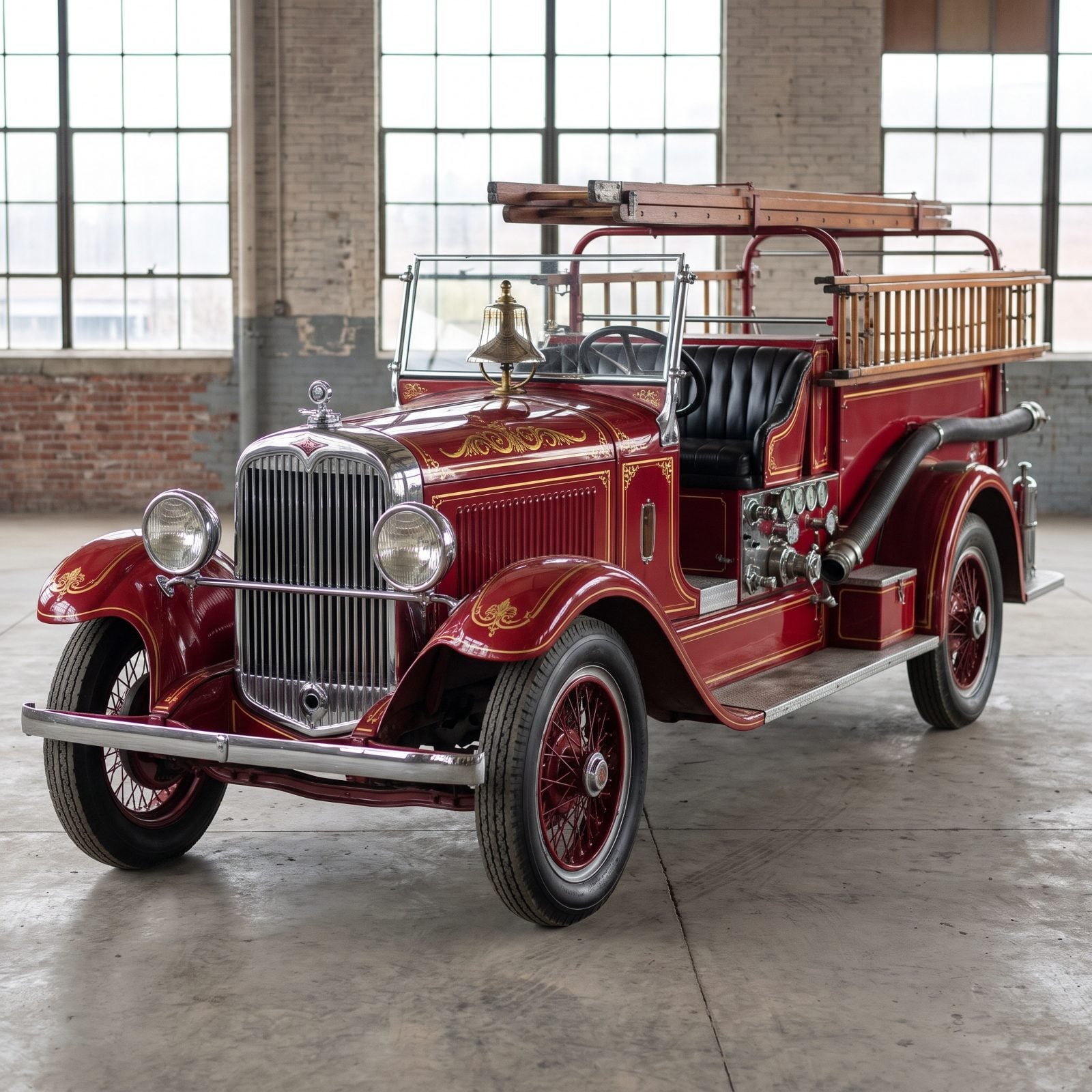
Early-1950s open-cab rigs like this one were built around passenger-car-style grilles and bodies, and nobody phoned it in. These trucks carried heavy chrome, careful gold-leaf work, and the kind of hand-finishing that reminds you these were coachbuilt, not stamped out.
The gold-leaf lettering and the era make it catnip for the detail obsessives. Ever watch a concours judge go over pinstriping with a loupe? It happens here. Buy one with original paint and lettering and you’ve got a documented piece of early fire-service history, not just another red truck.
Warning about rigs sold as fully restored when they aren’t, a retired firefighter and restorer says “They painted it the wrong color, the gold leaf is not gold leaf — it’s gold paint or some kind of sticker, all the equipment is missing, etc.”
1935 Maxim Model S Open-Cab Pumper, New England’s Quiet Workhorse
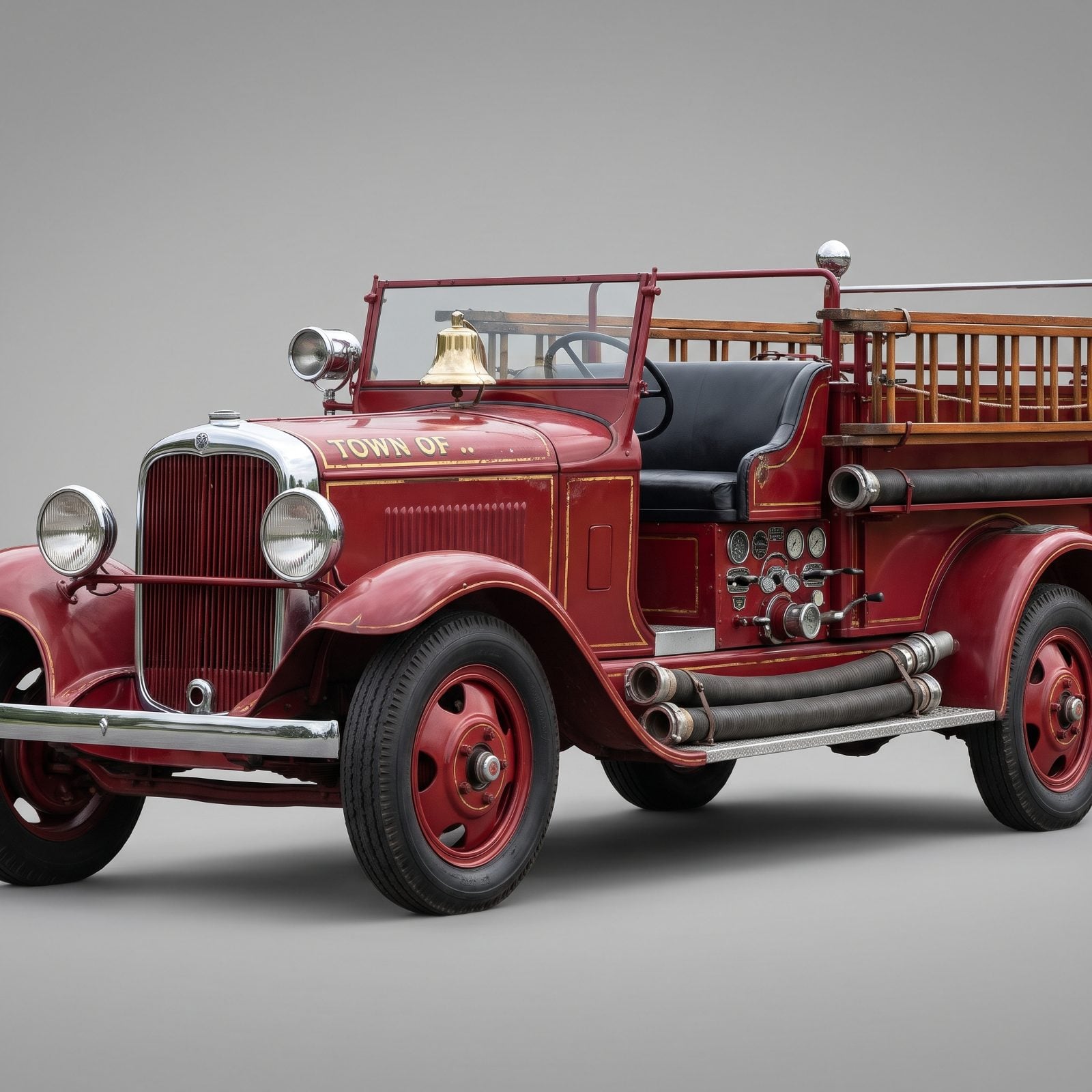
Maxim built fire apparatus in Middleboro, Massachusetts, and sold most of it to small New England towns that wanted something tough and no-nonsense. The Model S is that philosophy on wheels. No streamline frills, just a chrome ball on the post behind the seat and a solid pumper built to serve a volunteer department for forty years.
Because they were regional, Maxims are scarce outside the Northeast, and that scarcity gives them a cult following. A documented town-truck Model S, “TOWN OF” lettering still on the hood, carries history that a mass-market engine can’t touch.
1942 Ward LaFrance M1A1 Military Fire Truck, Olive Drab and All Business
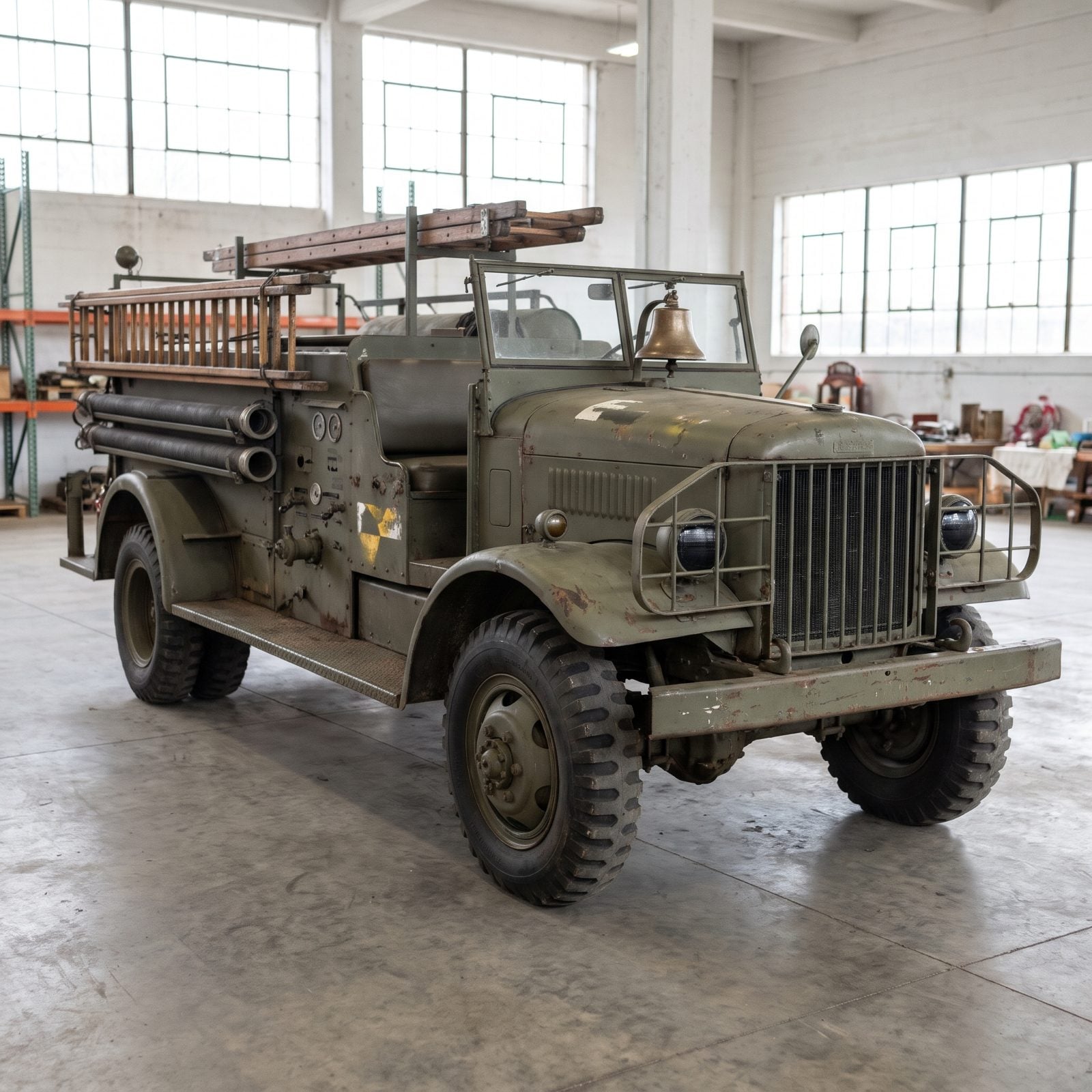
Here’s the outlier. Not red, not chrome, not civic. The M1A1 was Ward LaFrance’s wartime crash truck, painted flat olive drab and built to protect airfields and bases where airplanes caught fire and people needed to move fast.
Military-vehicle collectors and fire-apparatus collectors both want these, which is a recipe for competitive bidding. That crossover is the whole story. A documented wartime Ward LaFrance with its original stencils and blackout lamps drags two crowds to the same lot — and that’s when a quiet morning auction gets loud.
The red trucks pull the heartstrings. The olive-drab one pulls two wallets from two different hobbies at once.
Pirsch Custom-Bodied Streamlined Fire Engine
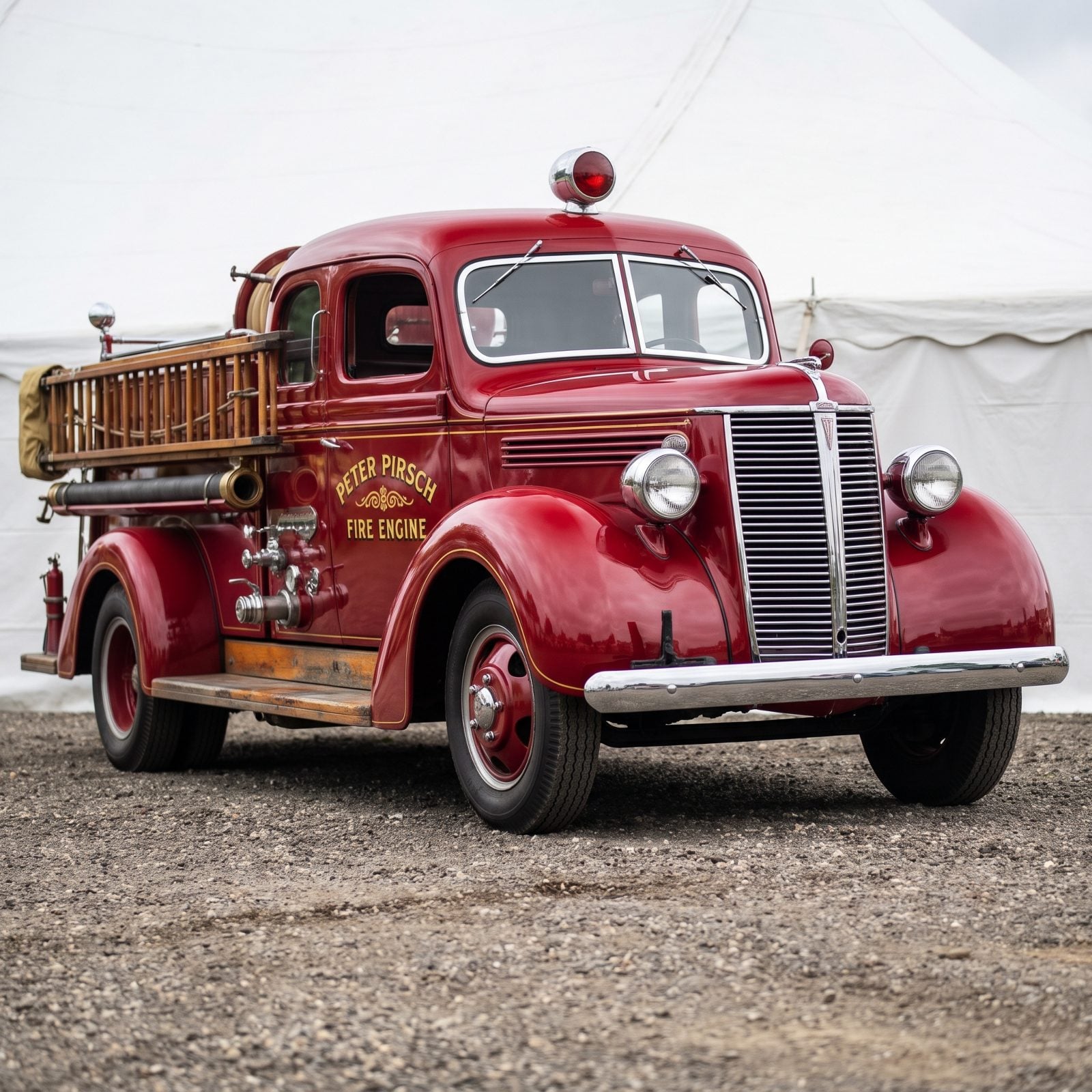
Pirsch didn’t just build fire apparatus. They built rolling sculpture, and the streamlined engines that came out of their Kenosha, Wisconsin shop in the late 1930s and 1940s wore rounded fenders and swept bodywork that looked more like a locomotive than a pumper.
Collectors go quiet when one rolls across the block. Pirsch bodied everything in-house, so no two trucks from a given department look quite alike, and that custom coachwork is the whole draw. Gold-leaf lettering usually separates a restored survivor from a repaint, but read it closely. Check it under raking light before you bid.
FWD Model B Fire Truck
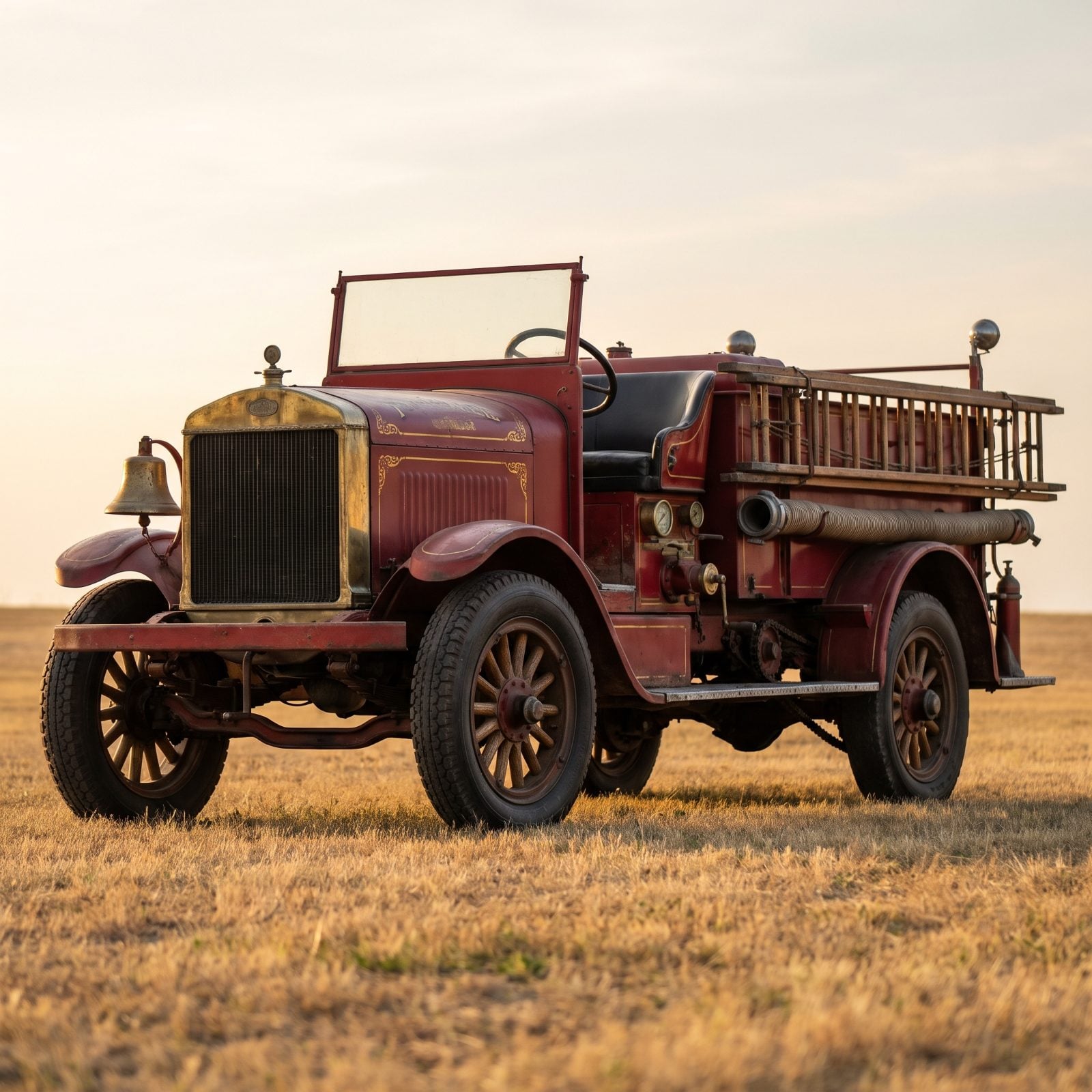
The FWD Model B earned its keep where other engines got stuck. Four-wheel drive in a fire truck sounds ordinary now, but in the 1910s and 1920s it was close to witchcraft, and the Clintonville, Wisconsin company built a reputation hauling apparatus up grades and through mud that stopped everything else.
What survives today tends to be a working survivor, not a trailer queen. Buyers want the brass radiator, the big front bell, and the shaft-drive four-wheel-drive running gear intact. Parts are the catch. You’re not ordering a Model B water pump seal off a shelf, so budget for a machinist and a patient winter in the garage.
REO Speed Wagon Fire Engine
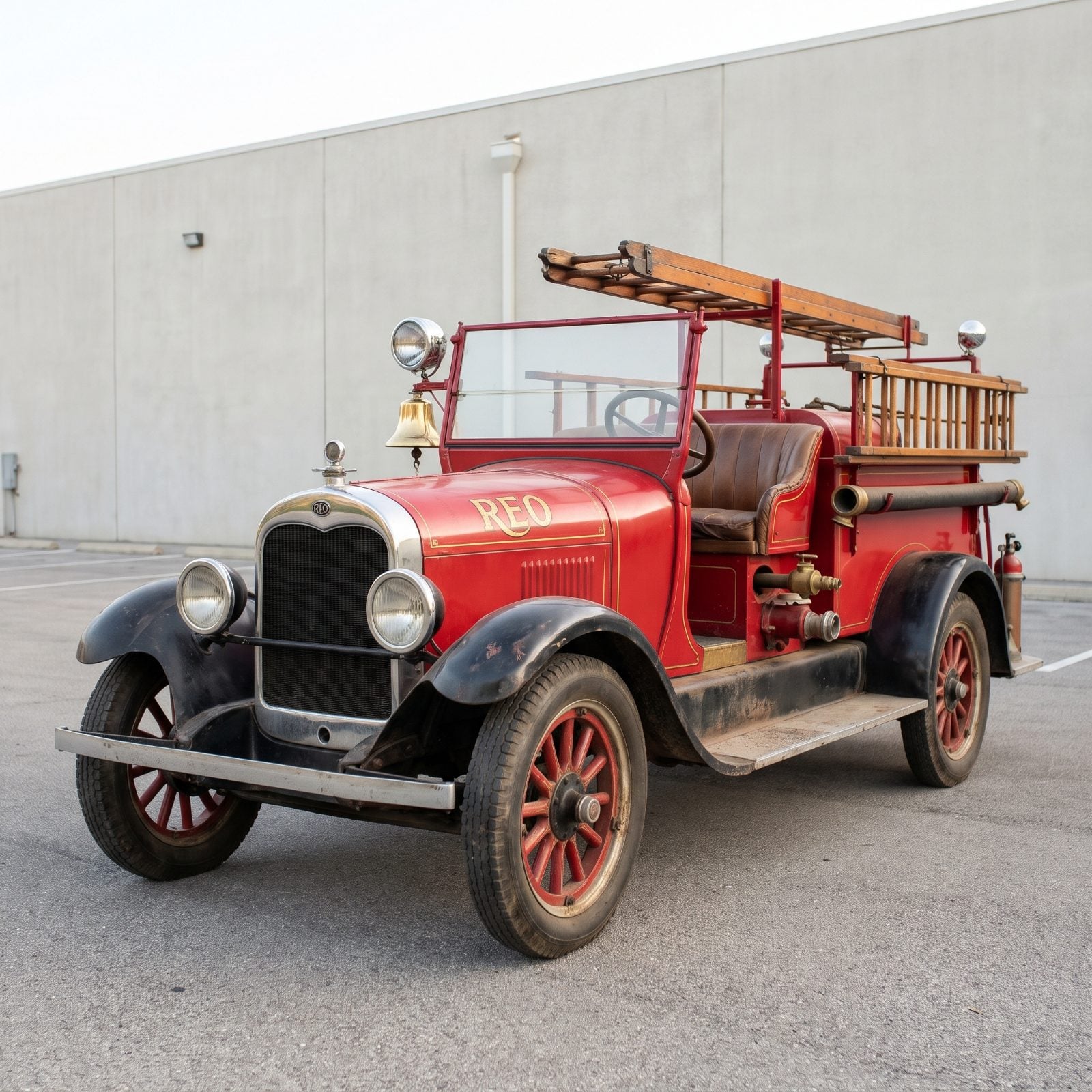
Yes, that REO. The one the rock band borrowed its name from, though the band spelled it their own way. This was one of the first purpose-built light trucks in America, and departments loved it as a nimble pumper for towns that didn’t need a full-size rig.
At auction, the appeal is scale and honesty. These are small, approachable trucks that a home collector can actually store and move. Originality matters more than shine. A Speed Wagon with its correct brasswork and uncut body beats a glossy restoration with reproduction fittings every time.
Chevrolet Art Deco Pumper
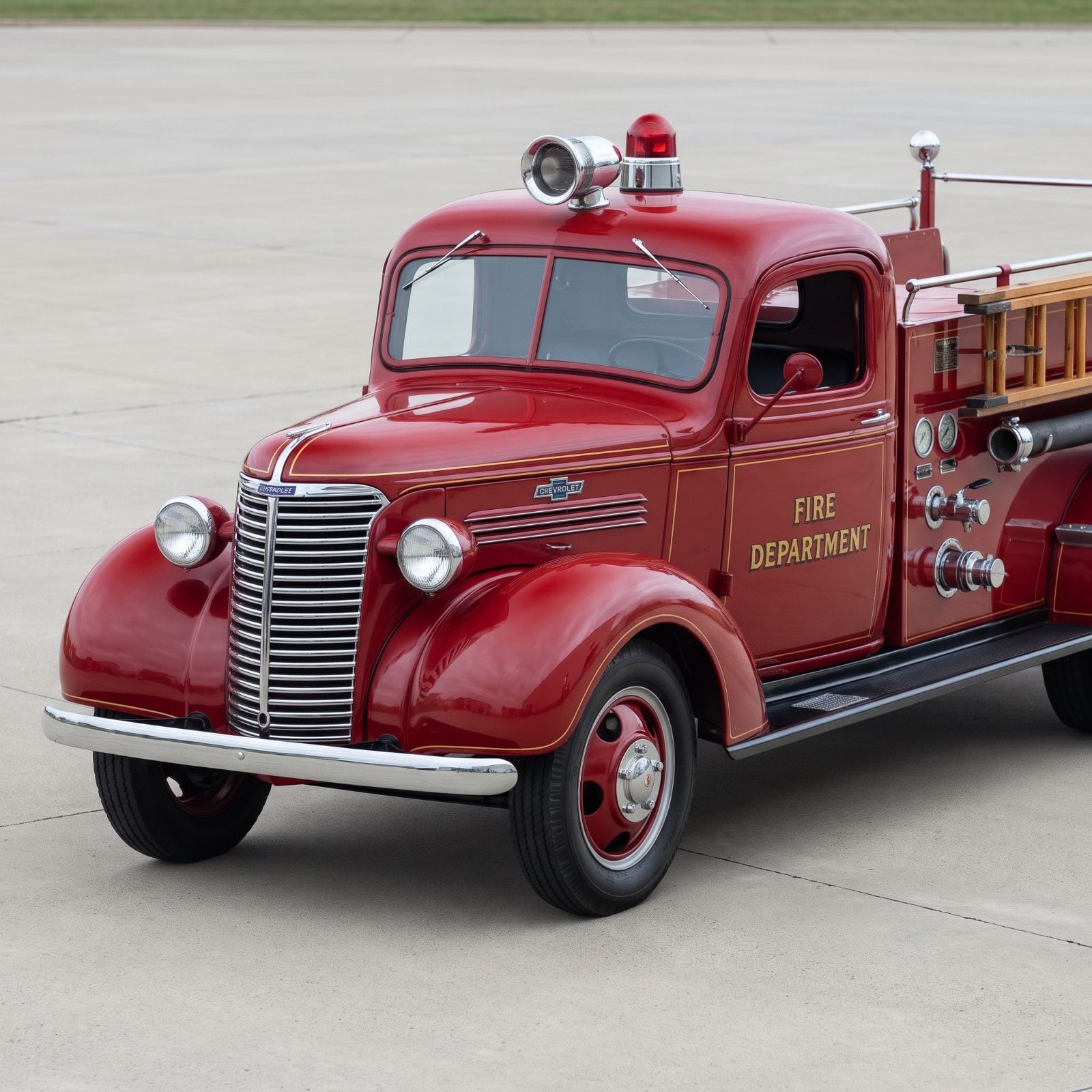
Detroit’s styling department reached the firehouse too. Chevrolet’s pumpers of the late 1930s took the division’s art-deco grille work and curved fenders straight into municipal service, so a small-town engine suddenly looked like it belonged in a World’s Fair display.
That grille is the money detail. Horizontal chrome bars, sealed-beam headlamps, a chrome siren and a red rotating beacon on the cab roof. Collectors chase these because they bridge two worlds, civilian car styling and working fire apparatus, in one body.
Dennis N-Type Fire Engine
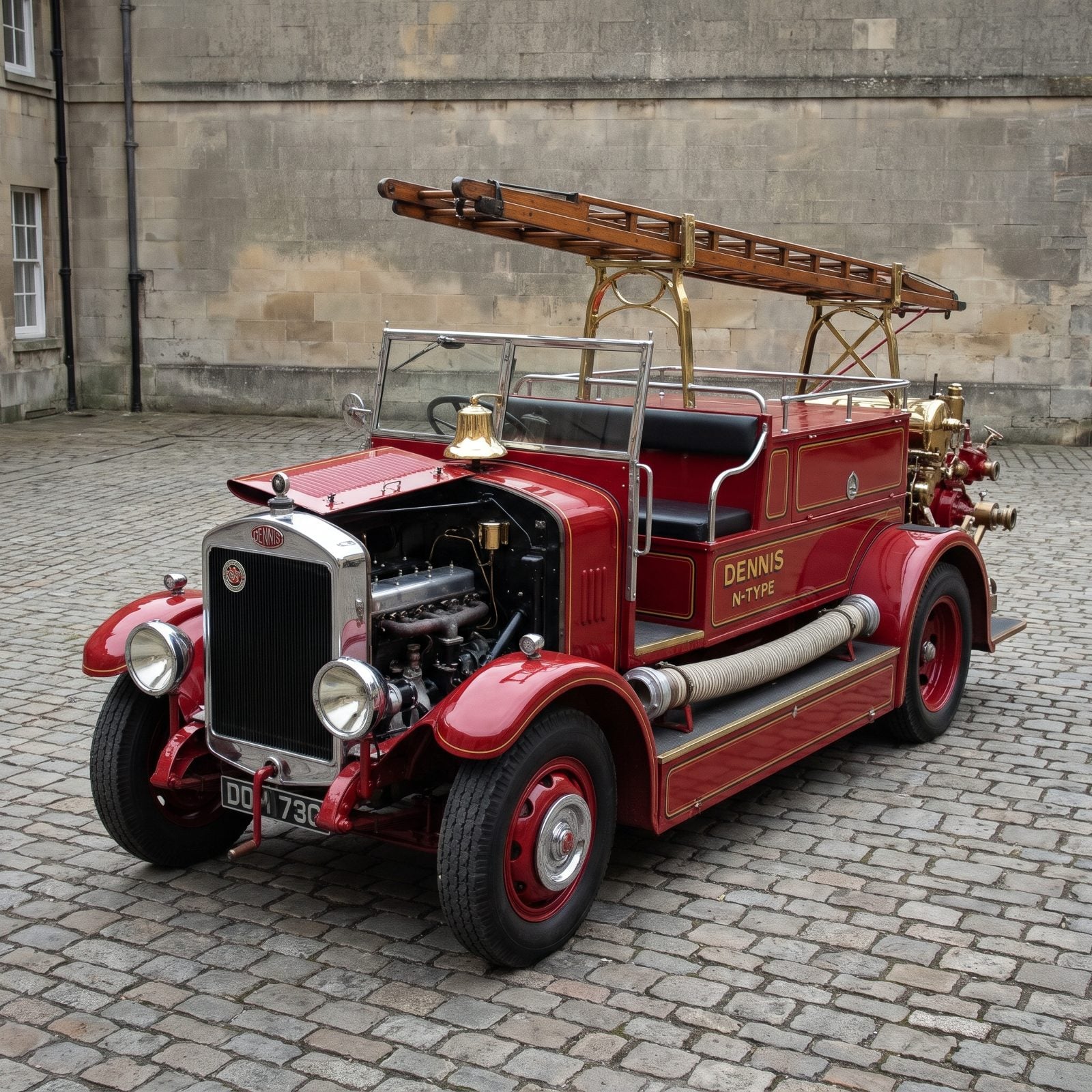
Across the Atlantic, Dennis of Guildford built the engines that defined the British firehouse. The N-Type of the 1930s carried an open body, a brass-fitted rear pump, and enough polished metal to blind you on a sunny day, which was rare enough in England that nobody worried.
Importing one to the States is the real story. Right-hand drive, Whitworth fittings, and brass that demands weekly attention. Collectors who take it on want the full open-body experience, bench seats exposed to the weather. Confirm the Dennis pump turns freely. A seized one is the kind of repair that eats a budget whole.
Bedford RL Green Goddess Fire Engine
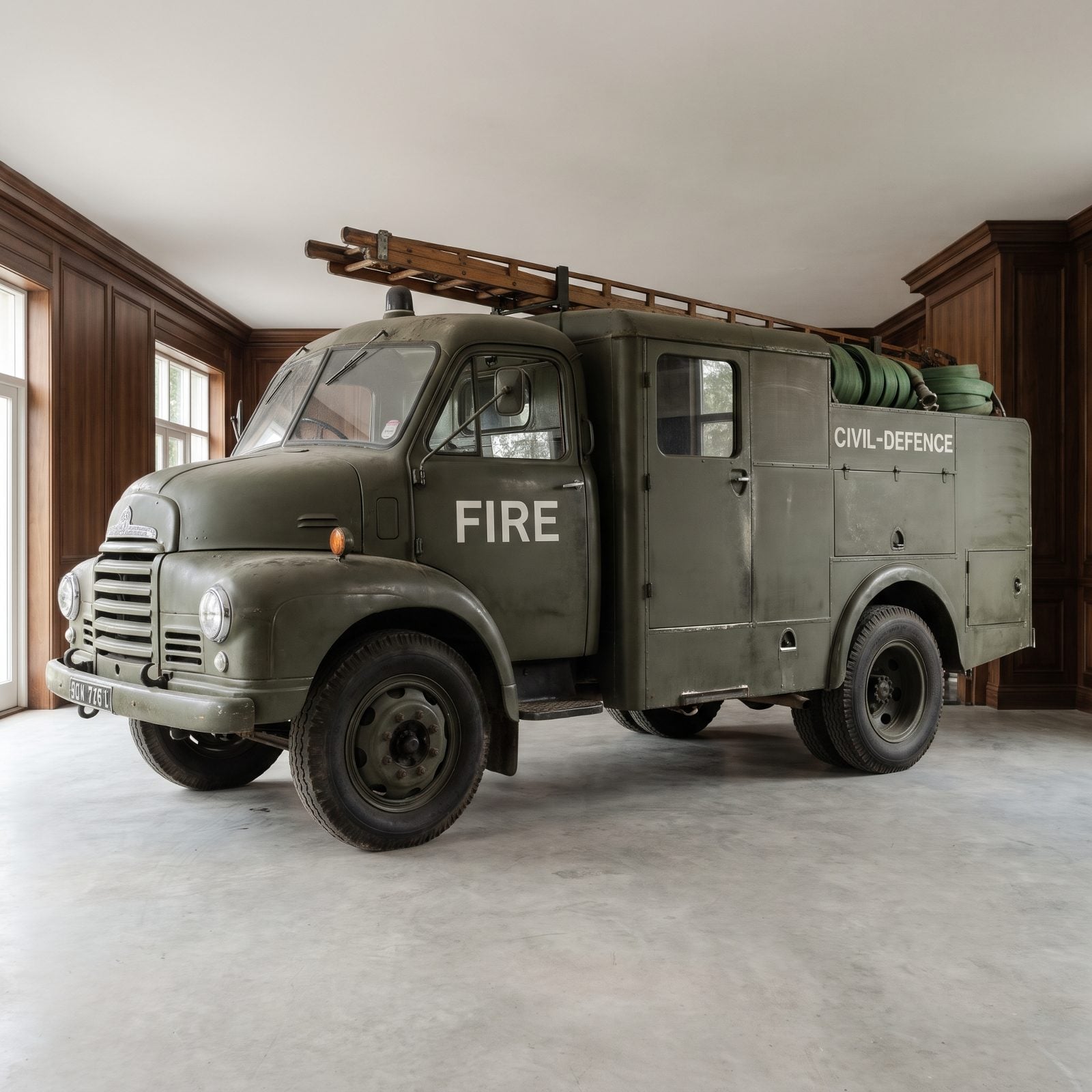
Another one that isn’t red. The Bedford RL Green Goddess was Britain’s Cold War civil-defence fire engine, painted military olive and built by the thousands in the 1950s to stand ready for national emergencies. Many sat in sealed government storage for decades.
And that’s the collector hook. You can still find a Green Goddess with astonishingly low mileage because it genuinely never fought a fire. The green paint, the slab-sided body, the self-contained pump all mark it as something other than a municipal rig.
Austin K4 Merryweather Turntable-Ladder Truck
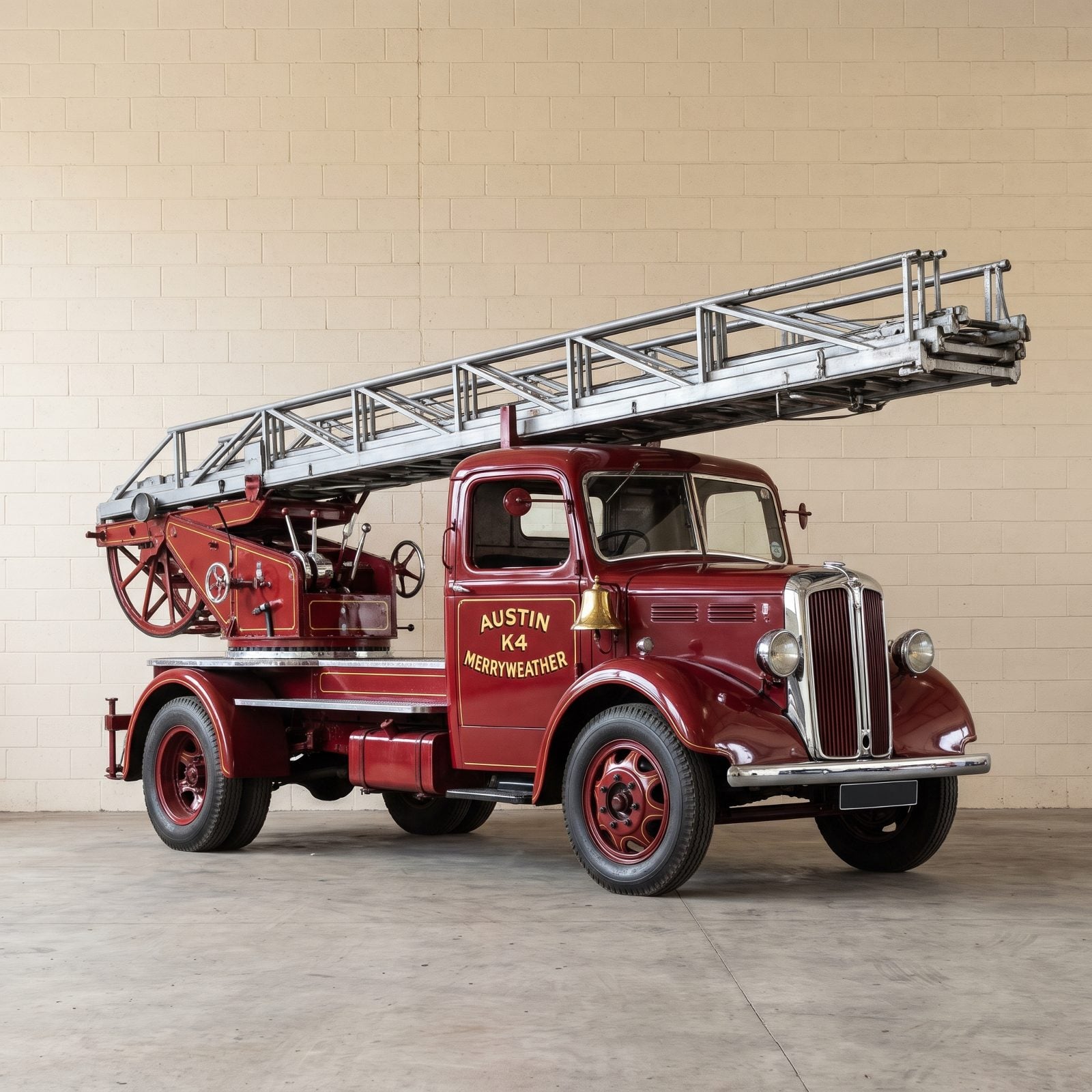
Height is the whole point. The Austin K4 wearing a Merryweather turntable ladder gave 1940s British brigades a rotating steel escape that could reach the upper floors of city buildings, and the engineering on that ladder platform is what draws a crowd at preview.
Watch the mechanism, not just the paint. The turntable gears, the extension controls, the manual hand-wheels. A ladder that rotates and raises smoothly is a serious find. One that’s seized or missing sections turns the truck into a static display with a very long shopping list.
The ladder is either the best reason to buy it or the most expensive thing you’ll ever fail to fix.
Magirus-Deutz Mercur Round-Nose Fire Engine
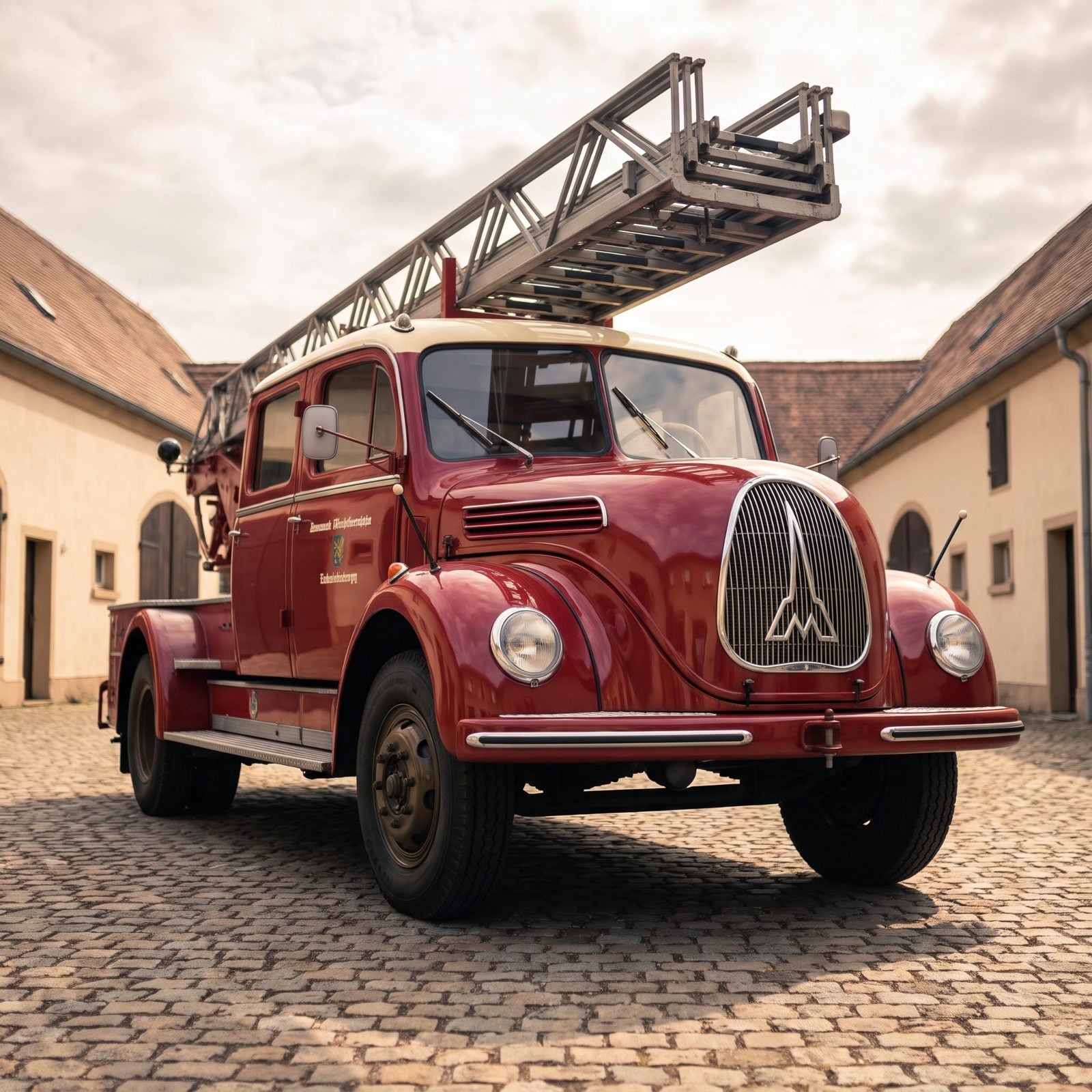
The round nose gives it away instantly. The Magirus-Deutz Mercur of the late 1950s wrapped an air-cooled Deutz diesel in a bulbous, almost cartoonish cab that looks like nothing else on an auction field. German engineering with a sense of humor.
Magirus built some of the finest turntable ladders anywhere, and many Mercurs carried them. The air-cooled engine is the technical conversation piece. No radiator to leak, no coolant to boil, and a distinctive mechanical clatter that collectors either love or tolerate. Finding Deutz parts in America takes patience and a network.
Mercedes-Benz Unimog 404 Fire Truck
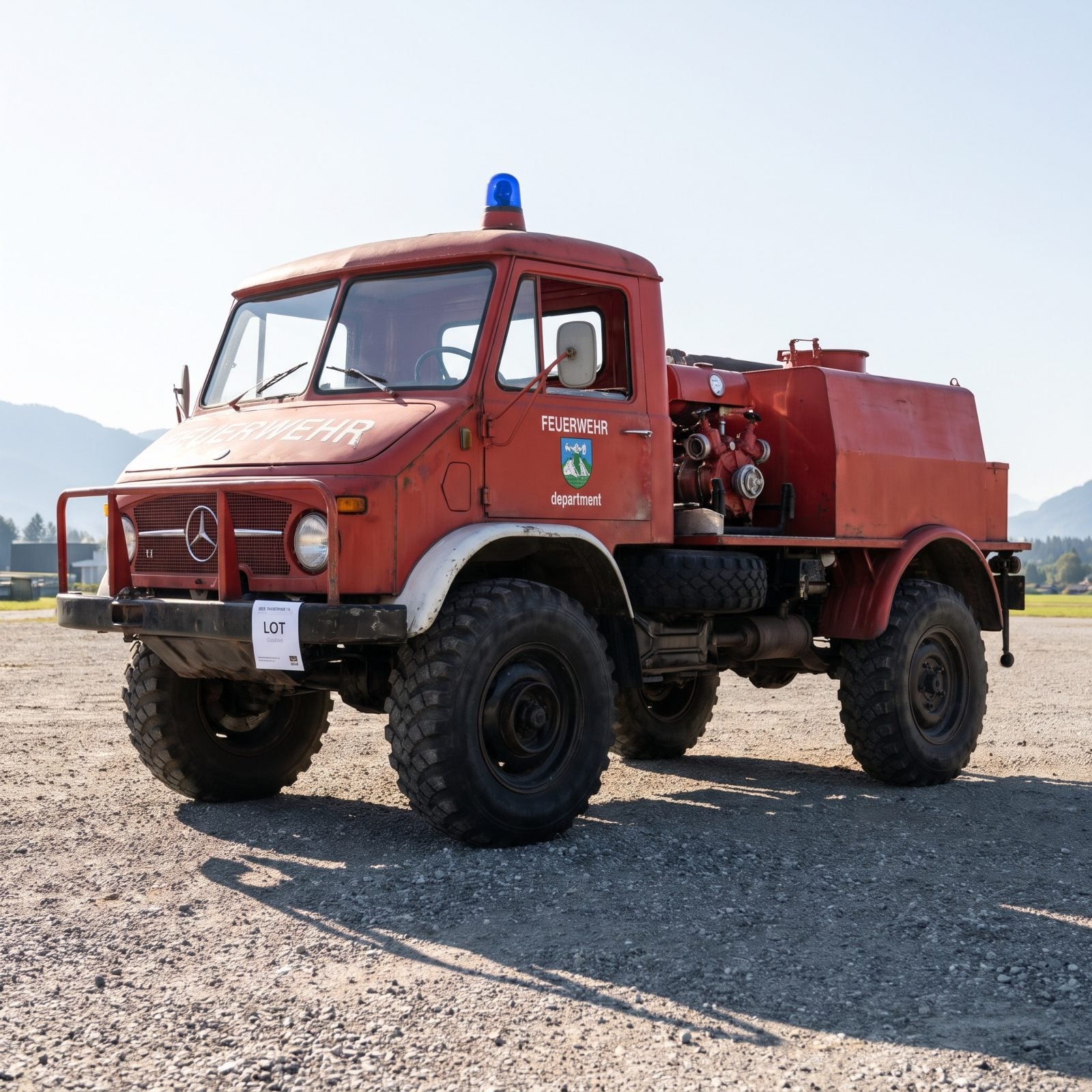
When the fire is up a mountain, you send a Unimog. The Mercedes-Benz 404 rode on portal axles that gave it absurd ground clearance, and alpine and forestry departments across Europe built it into a go-anywhere firefighting machine.
American buyers love these for the obvious reason. A fire-service Unimog is a capable overlander with a story, and the portal-axle stance stops people cold in parking lots. The catch is the same one that haunts every import here. Metric everything, right-hand or left-hand drive depending on origin, and parts that ship from Germany.
Land Rover Series I Fire Tender (1948, 1958)
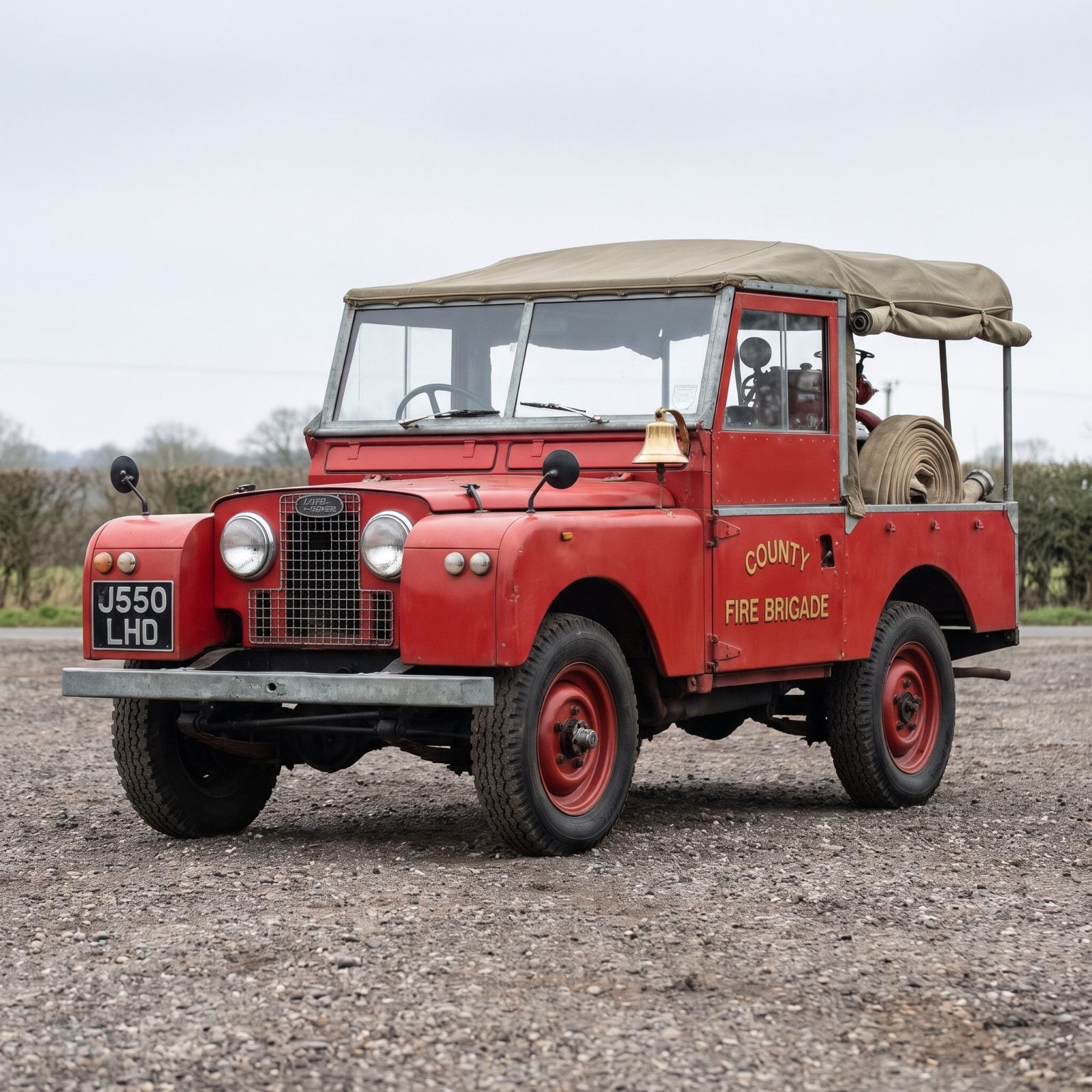
Land Rover never set out to build a fire engine, but the Series I turned out to be exactly what airfields, country estates, factories and rural brigades needed. It was small enough for farm tracks, tough enough for a muddy field, and capable of hauling a pump, hose and a crew of volunteers to places a full-size appliance couldn’t reach. Fit a pump, some lockers and a coat of red paint, and you had a first-response tender.
Series I values are already strong across the board, so a genuine fire tender carries a real premium. Start with the chassis, not the body. The aluminium panels shrug off rust, but the steel frame underneath doesn’t, and a rotten chassis gets expensive fast. Original pump gear, period bell or siren, and any paperwork tying the truck to a named brigade or works fire service are what separate a real tender from a red-painted farm Land Rover.
Volkswagen Type 2 T1 Fire Bus (Feuerwehr Split-Window)
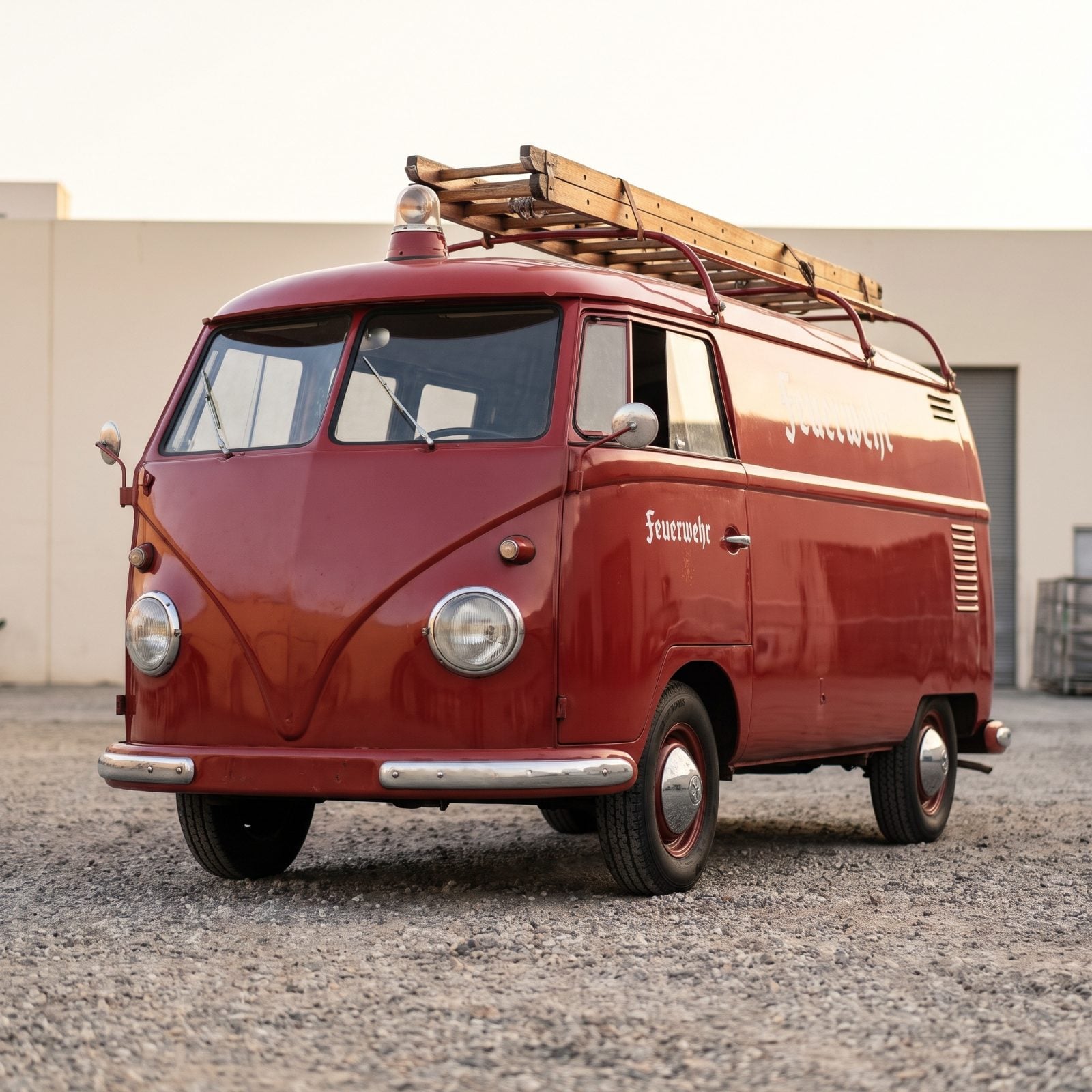
German volunteer fire brigades put the split-window Volkswagen bus to work as a light fire vehicle, loading it with a crew, hose and a portable pump that slid out the back. It made sense for villages that couldn’t justify a full-size engine but still needed something fast and reliable on the road. The result is the cheerful little red bus that turns heads every time it shows up in a sale catalog.
Split-window buses command serious money already, and the Feuerwehr versions stack fire collectors on top of the VW crowd at the same auction. That’s a lot of paddles. Check for the original portable pump, blue lamp, two-tone horn and brigade lettering, then crawl underneath. Rusted floors, sills and wheel arches are common, and plenty of plain buses have been painted red and called fire trucks. Documentation is your friend here.
Buick-Flxible Art Deco Ambulance (Late 1930s)
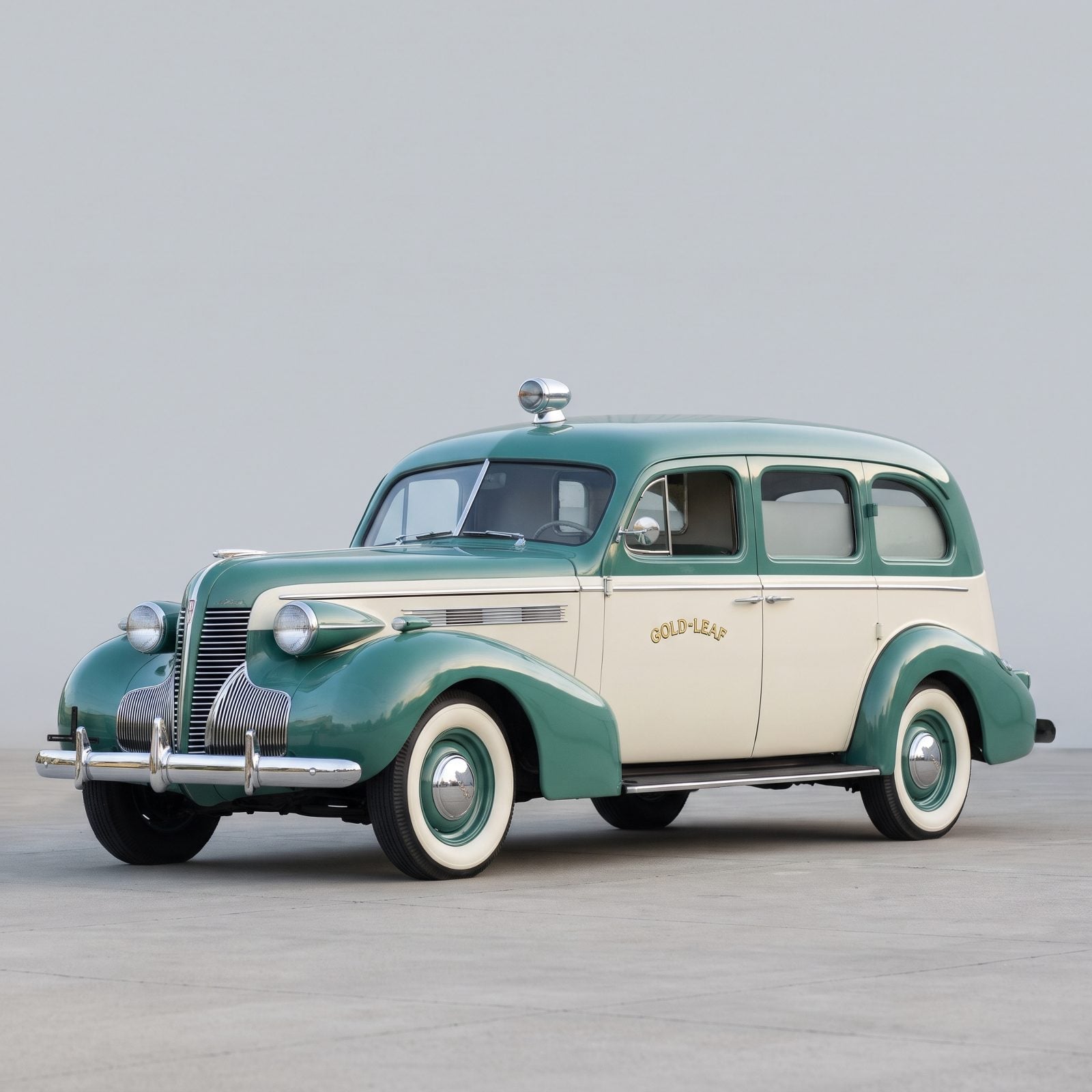
Late-1930s Buick ambulances built by Flxible look like they rolled straight out of an Art Deco movie set. Long hood, sweeping fenders, a big Buick straight-eight up front, and a coachbuilt rear body stretched out to carry a patient in style. The Ohio coachbuilder worked on Buick chassis for years, and the combination produced some of the most elegant professional cars of the decade.
Survivors are scarce because these were working vehicles that got used up and replaced. The coachwork is the tricky part. Mechanical Buick parts can be tracked down, but the bespoke body trim, rear glass and interior fittings were specific to the builder and may need to be fabricated. A complete car with its original cot hardware and lights is the one worth getting excited about.
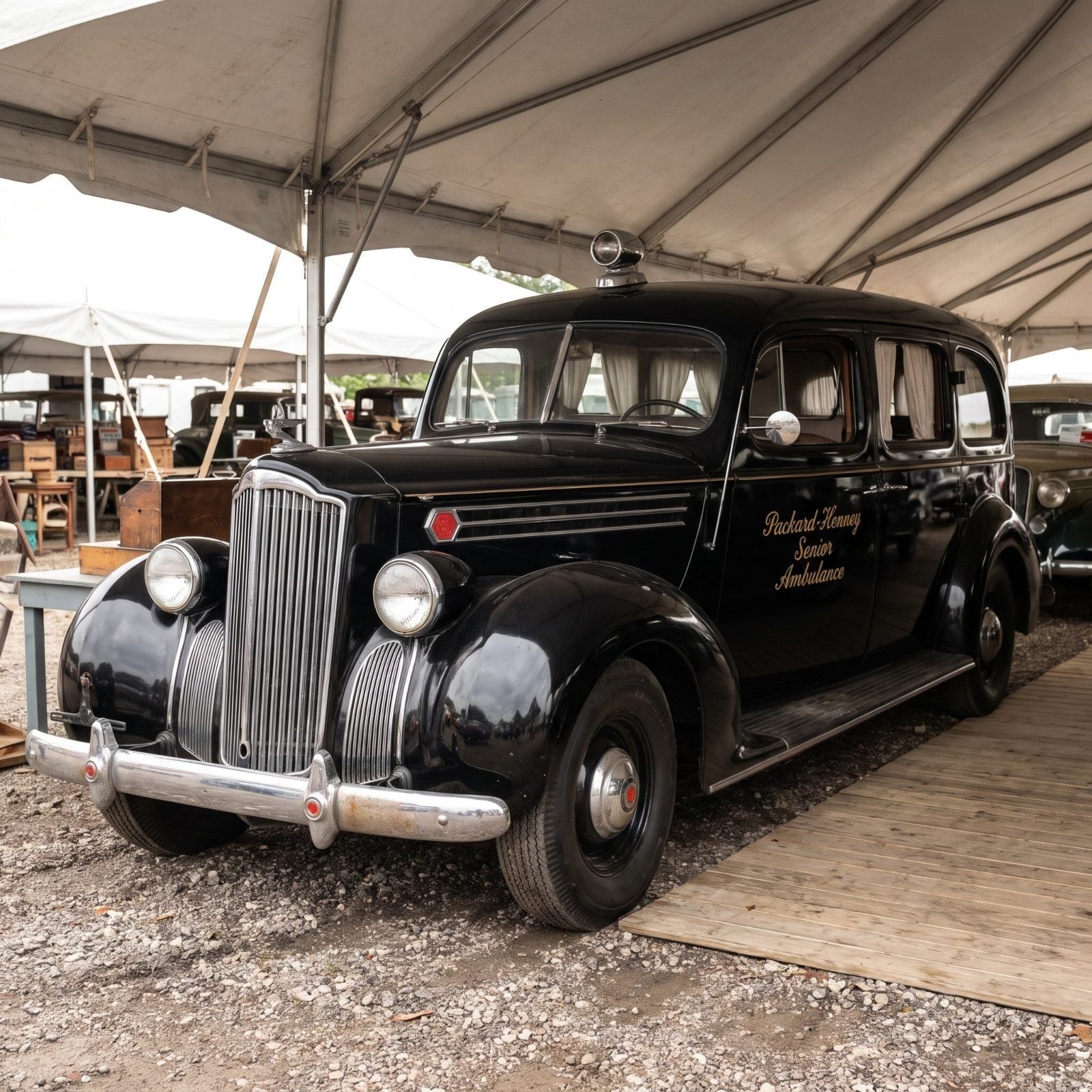
Packard-Henney Senior Ambulance (1940s)
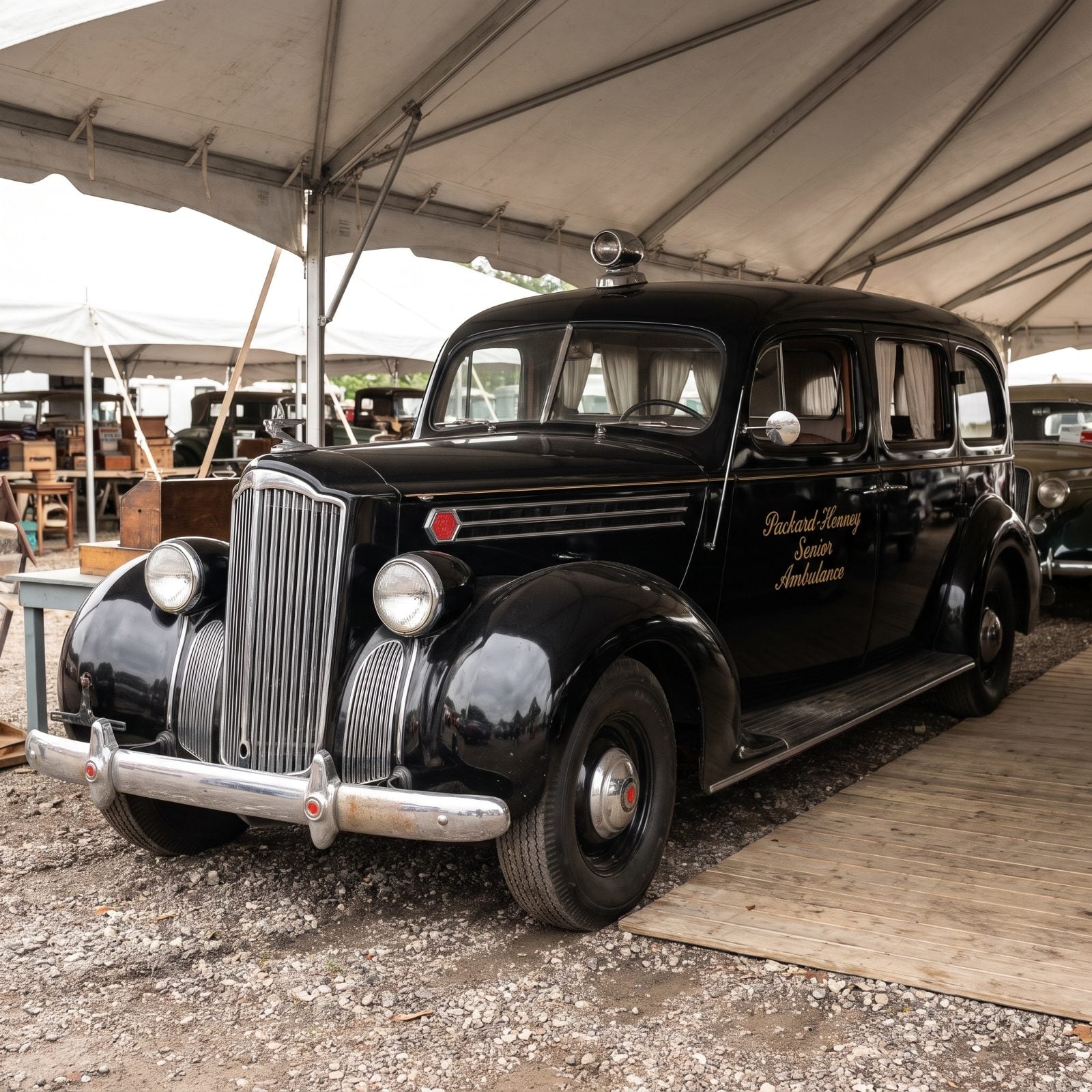
Henney of Freeport, Illinois, built professional cars on Packard chassis, and the 1940s Henney-Packard ambulances are some of the most dignified rescue vehicles ever put on the road. Packard’s senior line gave Henney a long, stately platform with a smooth straight-eight, and the postwar cars picked up the rounded Clipper-era styling that still looks expensive today.
The Packard name pulls in collectors who’d never otherwise look at an ambulance, and that crossover helps values. The catch is the coachwork. Body-specific glass, roof lights, interior cabinetry and cot fittings are hard to replace, so a complete car beats a cheap project every time. Look for a Henney body tag and original equipment before you get carried away by the chrome.
1959 Cadillac Miller-Meteor Lifeliner Ambulance
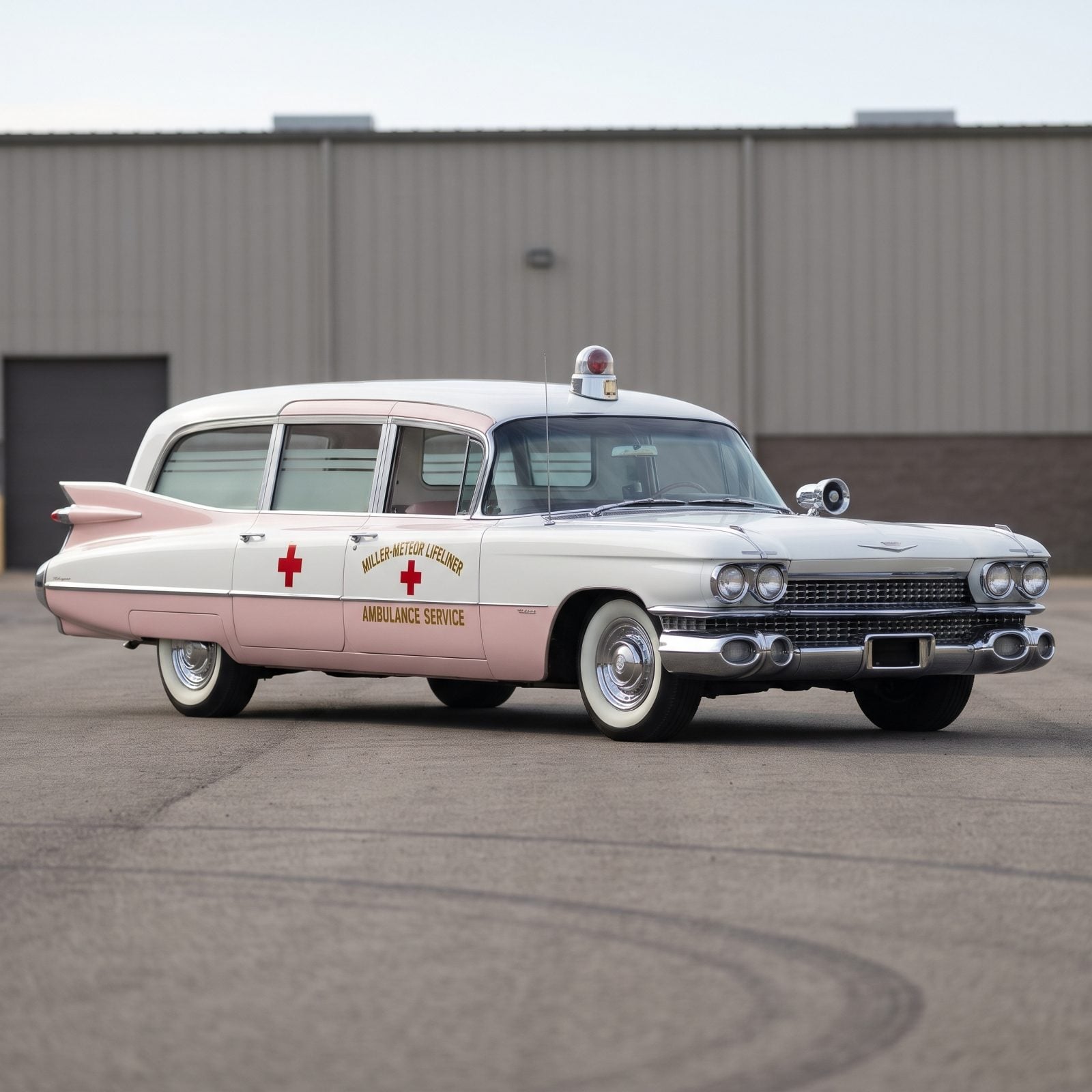
Take the most outrageous tailfins Cadillac ever built, then stretch the car into an ambulance. That’s the 1959 Miller-Meteor, and it is pure late-fifties excess with red lights on the roof. The twin bullet taillights, the long glassy body, the sheer size of the thing. Nothing else from the era says “emergency” with quite so much chrome.
Movie fans already know this shape, since the Ghostbusters Ecto-1 was a 1959 Cadillac Miller-Meteor, and that connection keeps demand hot. Many of these cars served funeral homes, which ran local ambulance services in plenty of towns, so some were built as hearse-ambulance combinations. Check what you’re actually buying, then check the coachwork trim and glass. Those parts are model-specific and painful to source.
1960s Chevrolet Suburban Ambulance Conversion
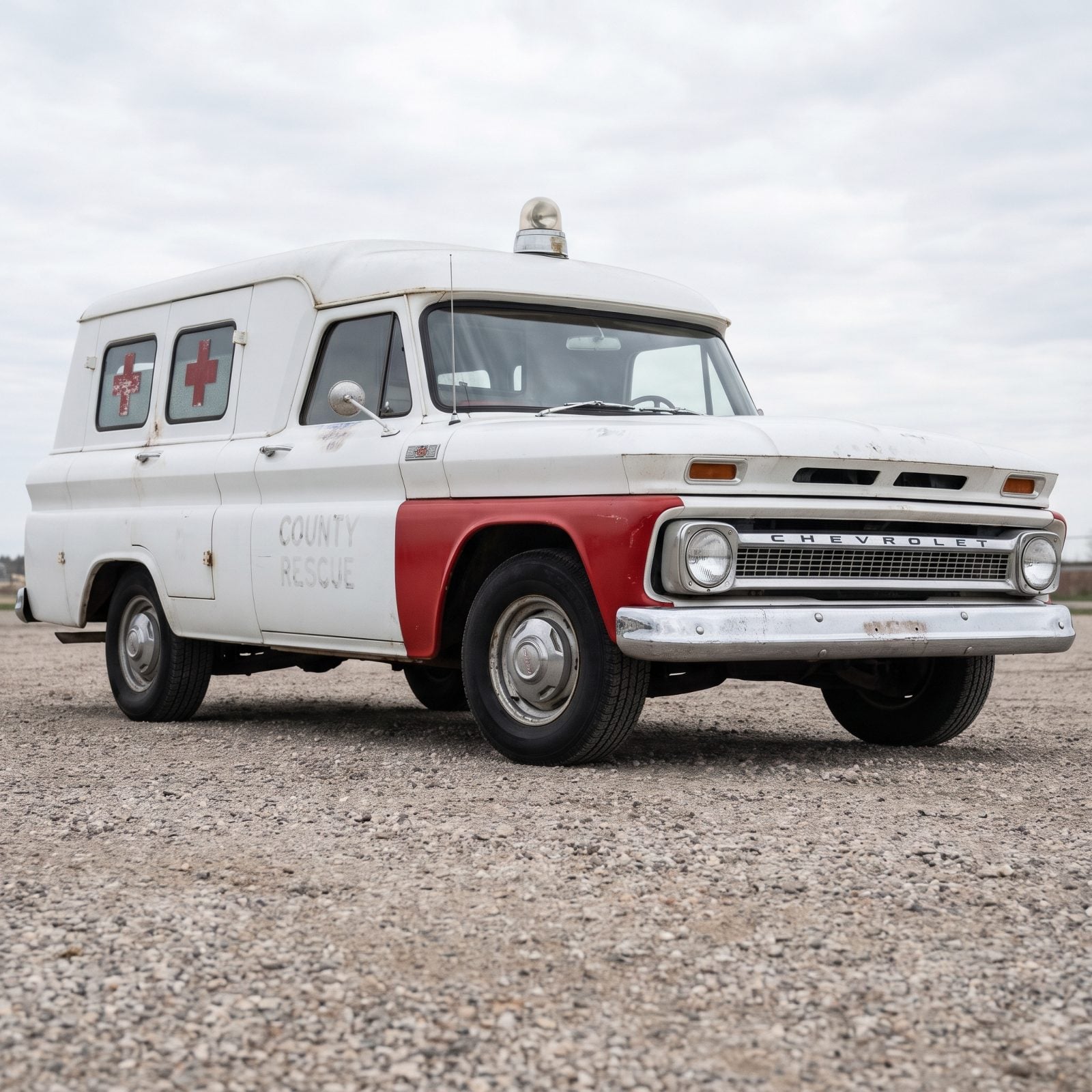
Not every town could afford a Cadillac. For a lot of volunteer squads and small services in the 1960s, a Chevrolet Suburban with an ambulance conversion did the job just fine. It had room for a cot, it could handle rough roads and bad weather, and it was built from parts any local garage already understood.
That practicality is exactly why they’re appealing now. Mechanical parts are easy to find, and a Suburban ambulance costs far less to own than a coachbuilt Cadillac. Look for evidence of the real conversion: cot mounts, roof light housings, interior cabinets, siren wiring. Many were stripped back to plain wagons, and some plain wagons have been dressed up as ambulances. Then check the rockers and floors, because rust always wins eventually.
International Harvester Travelall Ambulance (1960s)
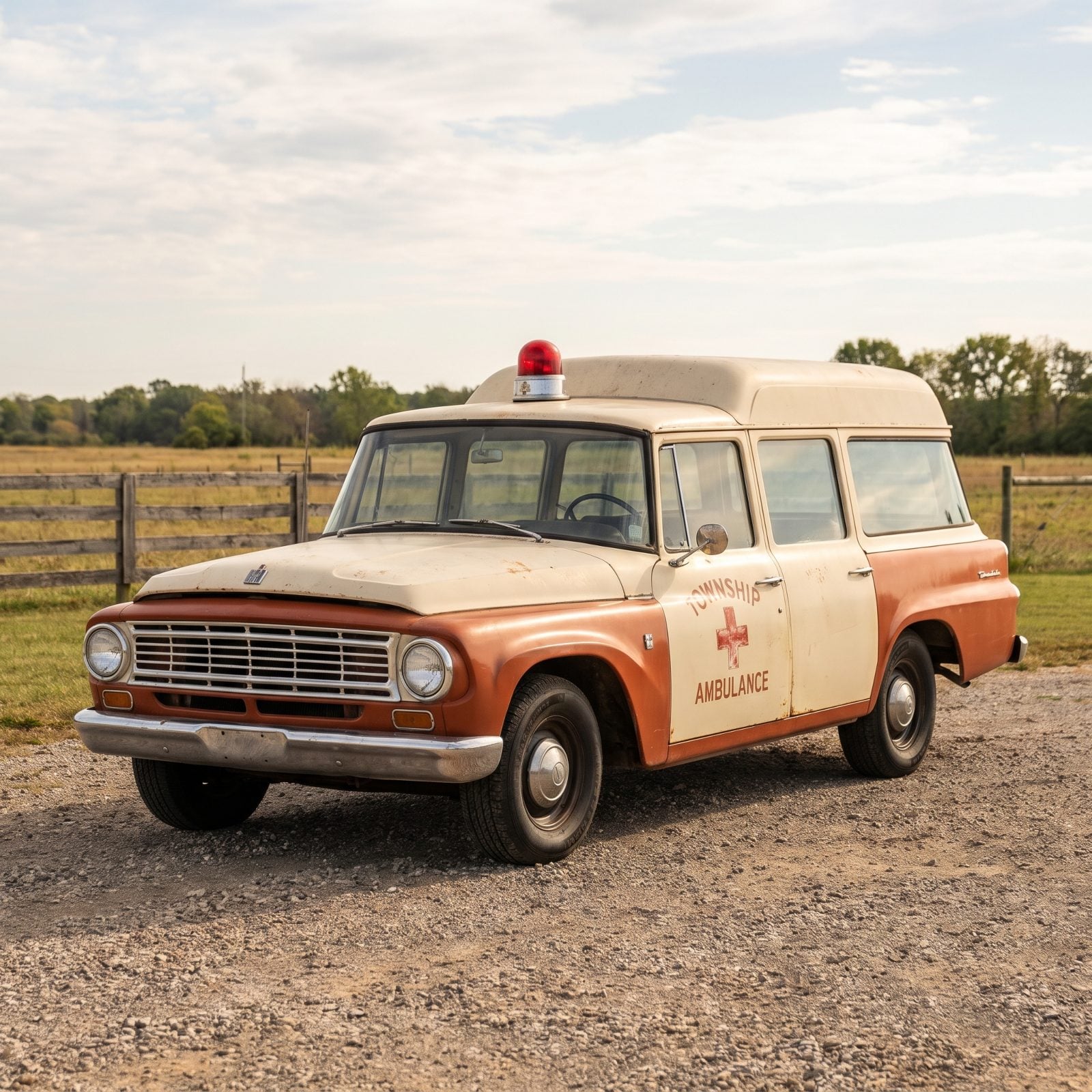
The Travelall was International Harvester’s answer to the Suburban, a big, square, truck-based wagon built like farm equipment. Turn one into an ambulance and you get a rugged rescue rig that fit right in with rural services and industrial sites where a long-hood Cadillac would have looked ridiculous on a gravel road.
IH fans are a devoted crowd, and a Travelall ambulance ticks every box for them. They’re also scarce, since most Travelalls were worked hard and left to rust. Body panels and trim are harder to find than Chevy or Ford parts, so a solid shell matters more than a running engine. Original ambulance equipment and lettering push one from interesting to a serious buy.
Dodge WC-54 Military Ambulance (WWII)
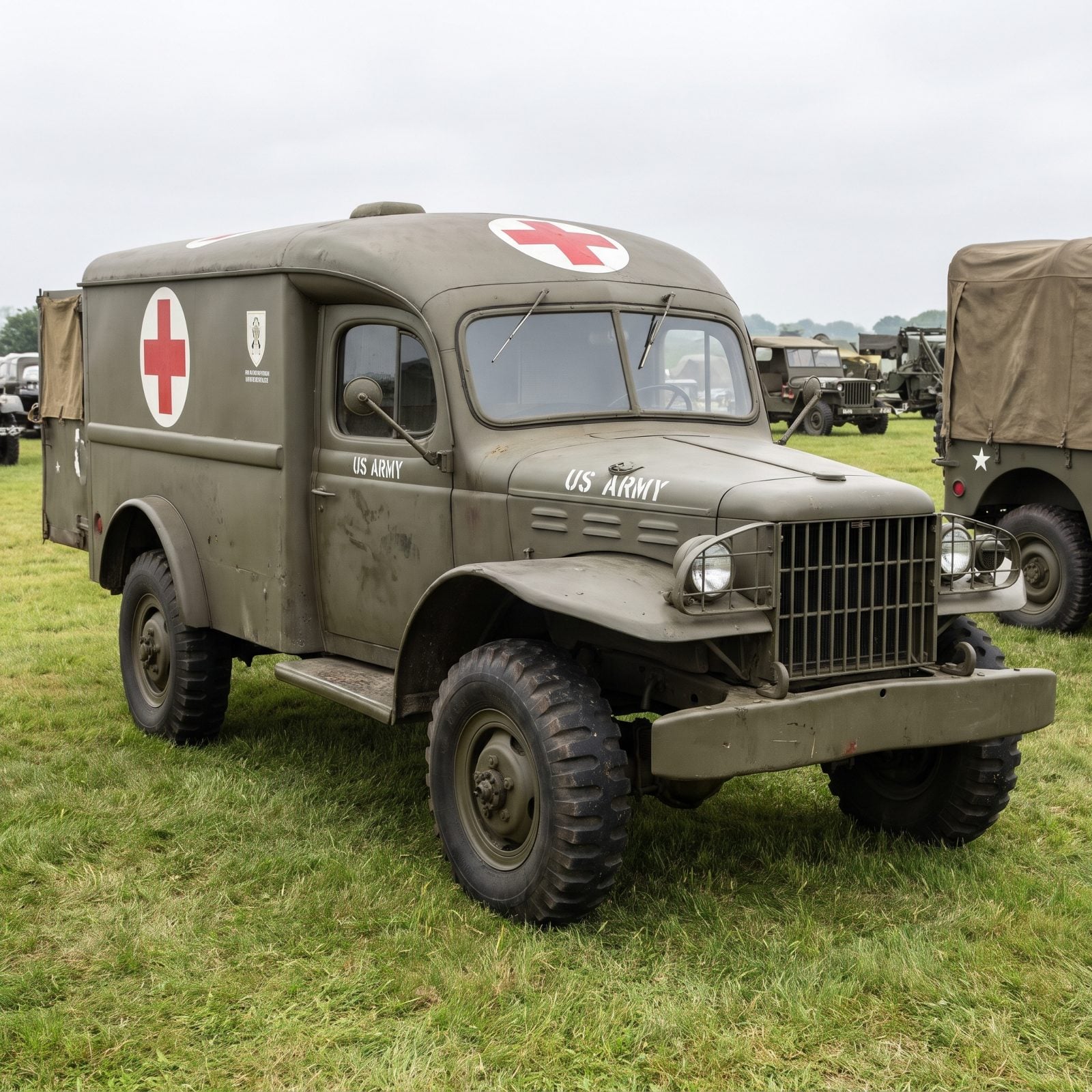
The WC-54 was the U.S. Army’s standard field ambulance in World War II, a 3/4-ton Dodge with four-wheel drive and a tall, boxy enclosed body marked with red crosses. It hauled wounded soldiers from the front lines in every theater, over terrain that would have stopped a civilian ambulance cold.
Dodge built these in large numbers, and plenty came home to serve as civilian ambulances or utility trucks. That means survivors exist, but correct ones take work. Military vehicle collectors are sticklers. Original data plates, correct markings, period interior fittings and the right Dodge flathead six all count. A properly restored WC-54 is a showstopper at any military vehicle rally.
Austin K2/Y Military Ambulance (British WWII)
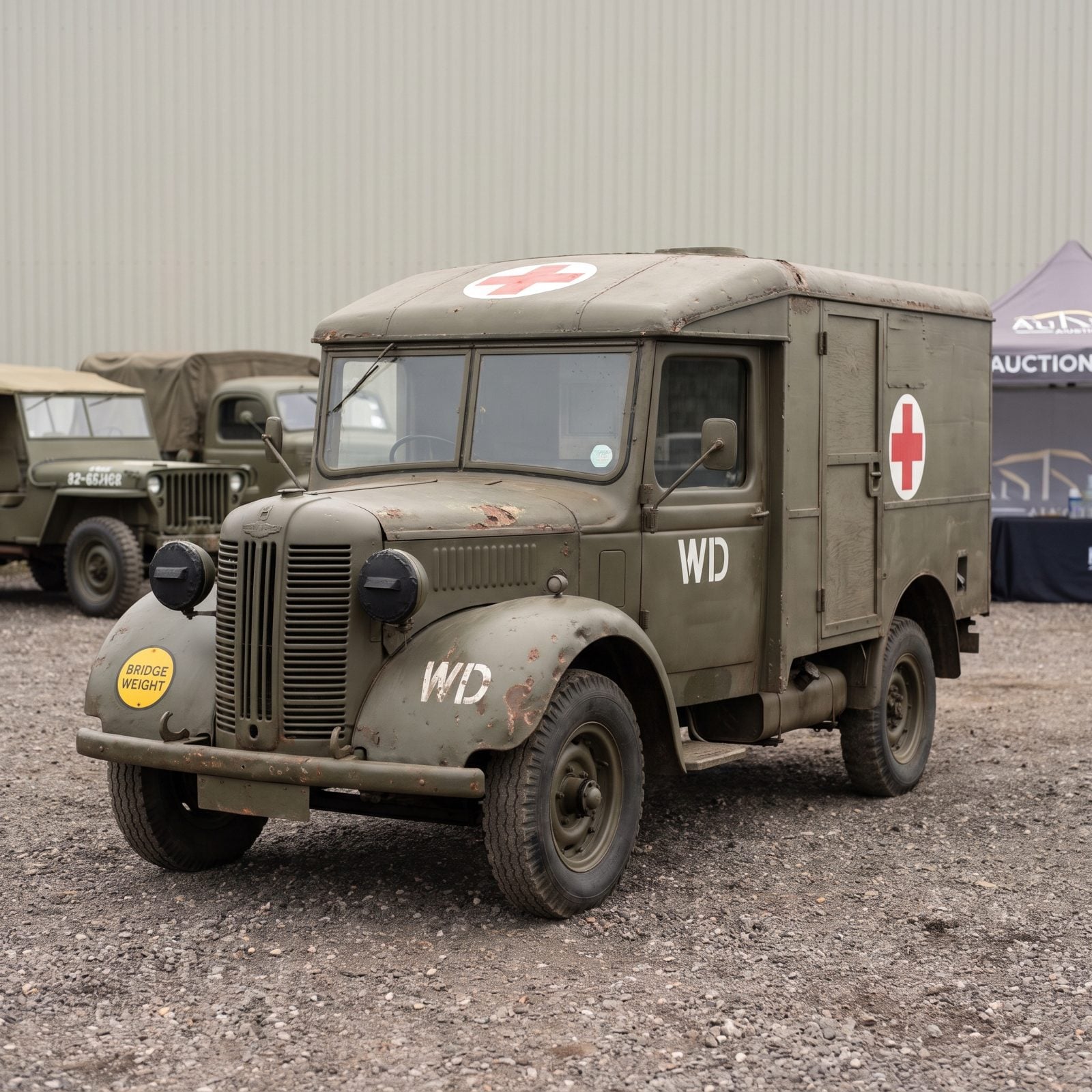
The British troops called it “Katy.” The Austin K2/Y was the workhorse ambulance of Britain’s war effort, a tall, square-bodied truck that served the Army and RAF at home and overseas. It could carry four stretcher cases, and it did that work everywhere from bombed-out British cities to the North African desert.
Survivors are scarce, especially outside the UK, and the ones still around draw a crowd of military and commercial vehicle collectors. Condition of the wooden-framed rear body is critical. Rot is common and repairs aren’t cheap. A Katy with original stretcher gear, correct markings and documented service history is a piece of wartime history you can drive.
Land Rover Series IIA Field Ambulance (1960s)
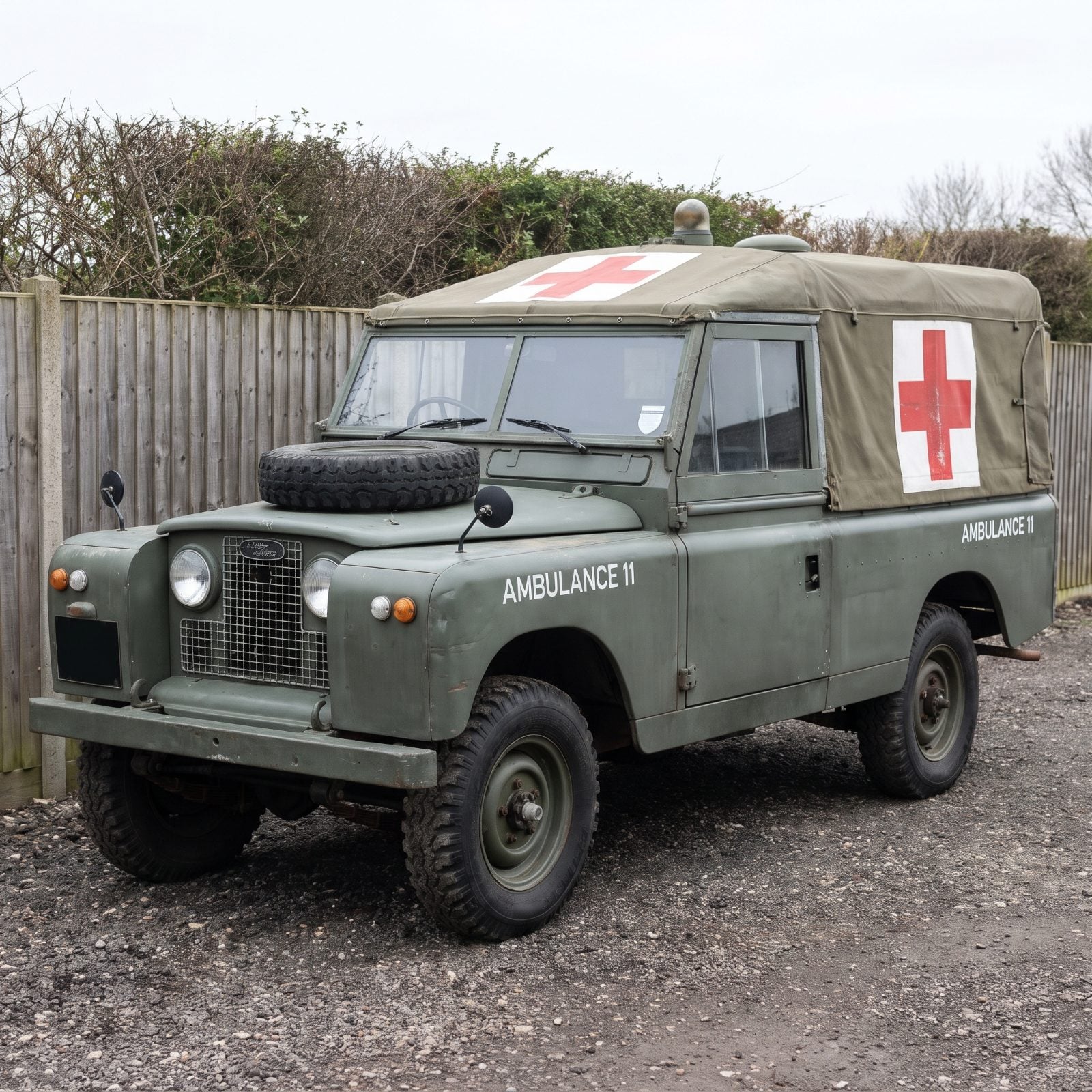
Maybe the humblest of the bunch — which is exactly why collectors warm to it. A Series IIA field ambulance is a Land Rover first and a rescue vehicle second, so parts turn up everywhere and the drivetrain shrugs off neglect like it was born to. The canvas-topped rear is where things get interesting. Originals that still carry their stretcher runners and period red cross panels pull a premium, and good luck finding one that hasn’t been messed with.
Budget somewhere from the low teens into the mid-twenties, depending on honesty and whether it actually runs. Military provenance paperwork adds real money. One warning, though: the canvas and timber body rot quietly, out of sight, and putting them right properly costs more than the truck ever did.
1961 Mercedes-Benz W110 Binz Ambulance
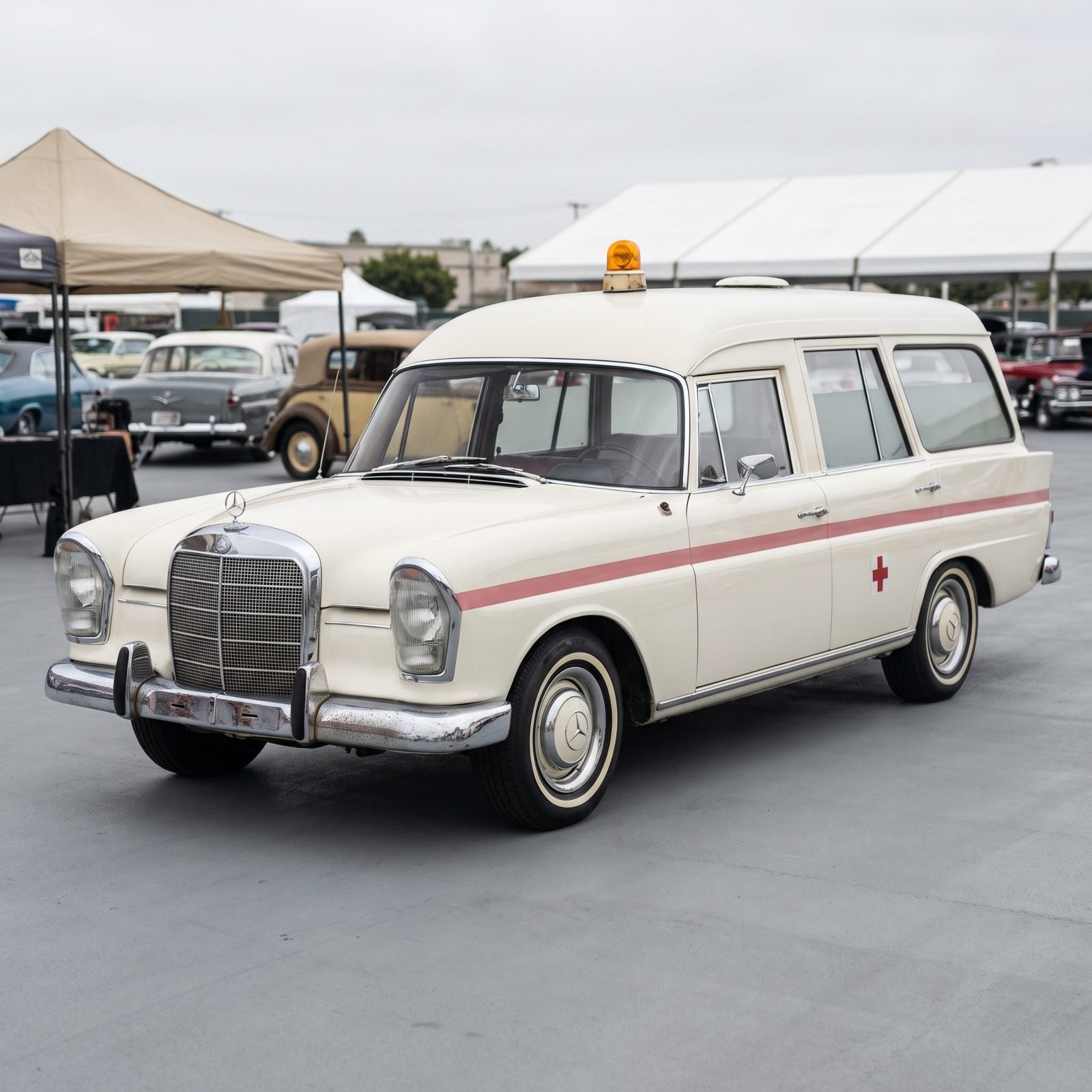
The W110 started life as a sedan, so Binz took that body, raised the roof behind the front doors, and grafted on an ambulance tail. That high-roof conversion is what collectors chase. A plain Fintail sedan is affordable, but a Binz ambulance version is rare because most got worked to death and scrapped.
What people miss: the Binz coachwork numbers matter as much as the chassis plate. A documented, matching conversion sells for real money. An orphaned body on a swapped chassis? Good luck.
1968 Citroën DS Ambulance
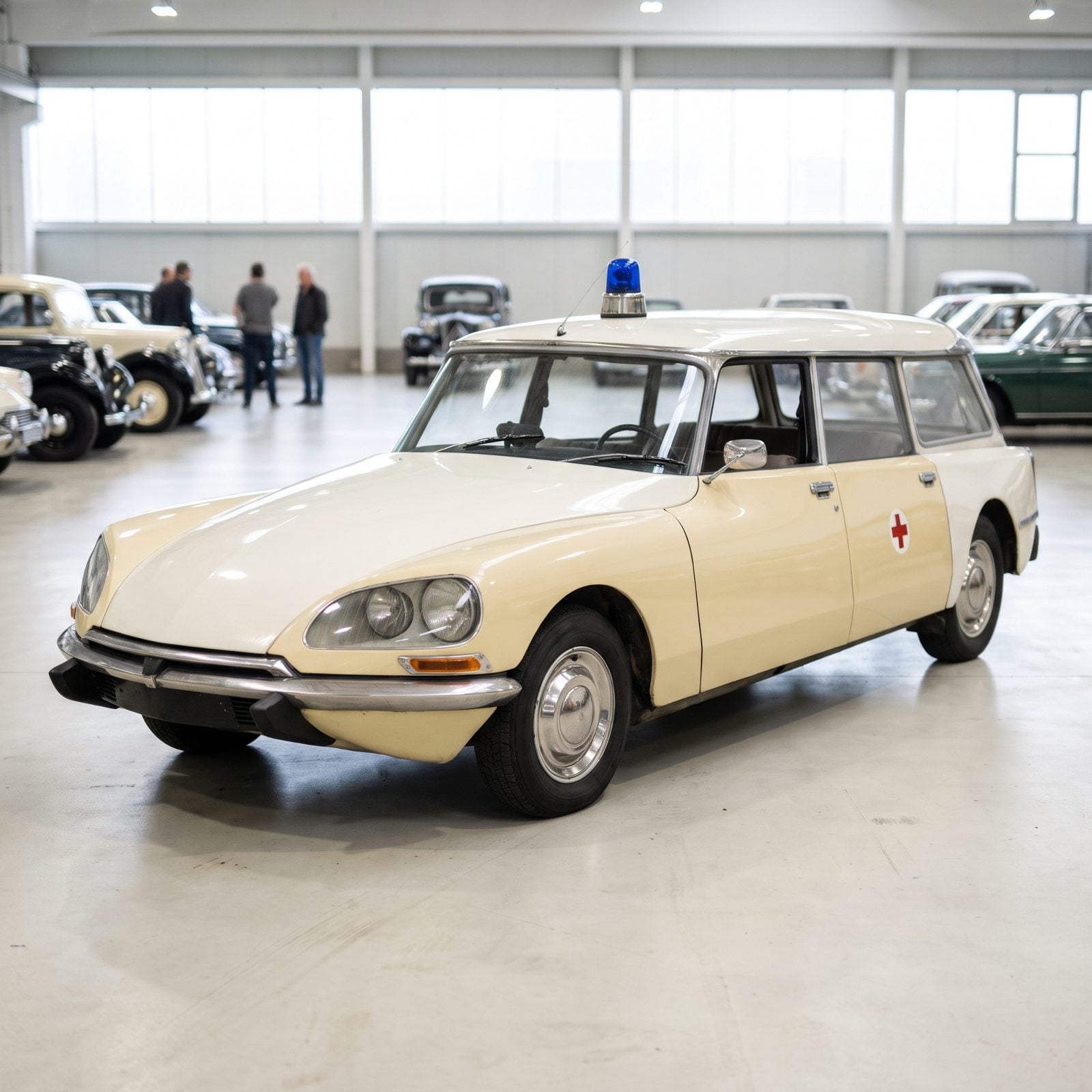
Nothing else carrying a stretcher ever looked like this. The DS rode on hydropneumatic suspension, a self-leveling platform that kept the patient stable over rutted French backroads. For an ambulance that was genuinely clever engineering, and for a collector it’s the whole draw.
The catch is those same hydraulics. A neglected DS turns into a parts puzzle, and the ambulance conversions pile on length and weight the system has to manage. Buy one that runs and levels correctly. Buy one that sits on its belly and you’ve signed up for a very expensive education.
1972 Volkswagen Type 2 T2 Krankenwagen
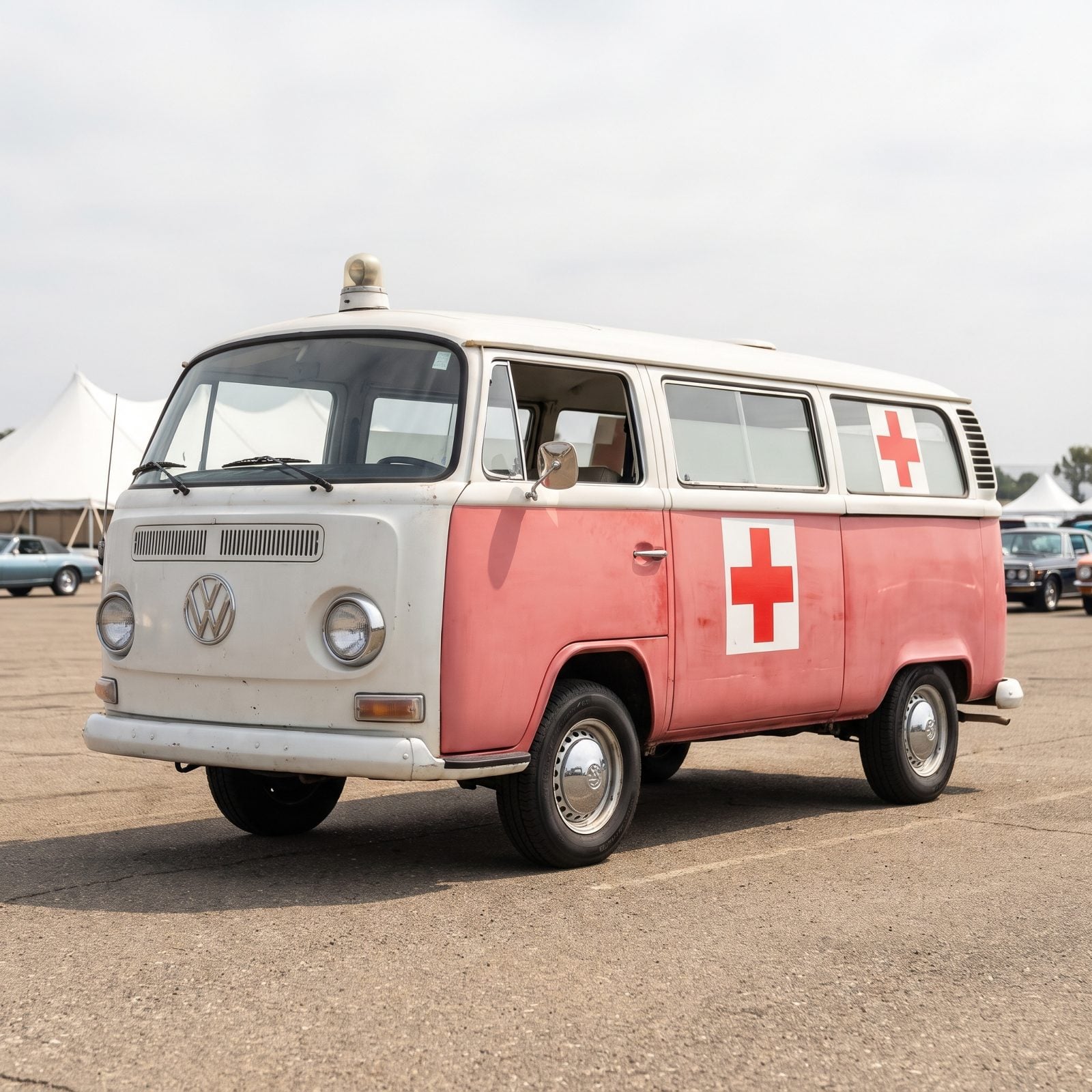
The friendliest-faced ambulance ever built.
Everybody knows the Bay Window bus as a camper. Far fewer know that VW and outfitters like Westfalia built proper medical versions, with a raised interior, cot rails, and on some conversions that tall roof. They’re rarer than campers and cheaper to run than almost anything else here.
Nobody tells you the real price, though: rust. The T2 floor, the battery tray, the sills around that sliding door — all of it rots out from under you. A clean body beats a strong engine every time. Engines you can rebuild on a kitchen table. Floors you can’t.
1965 Saab 95 Ambulance
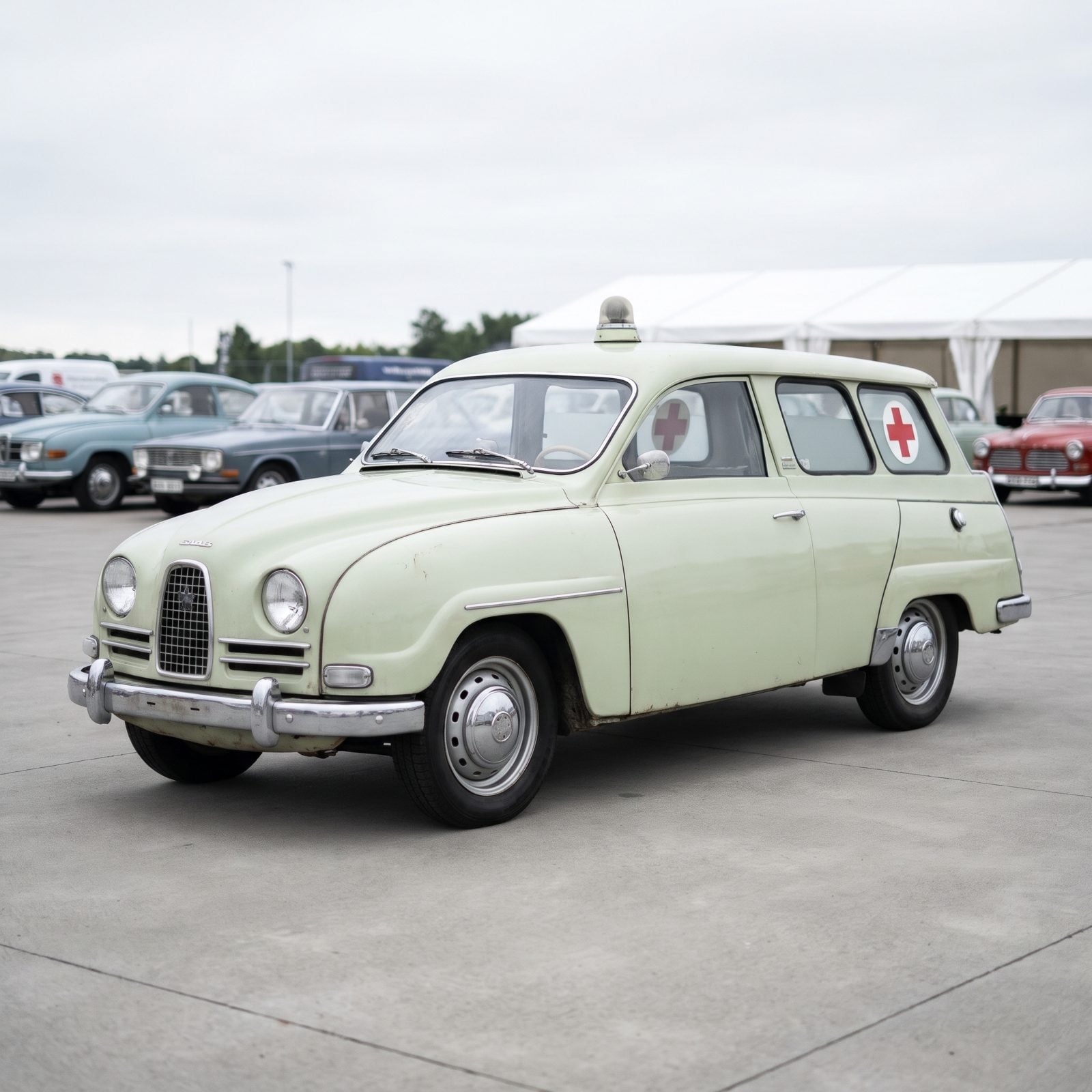
A two-stroke ambulance sounds like a punchline until you remember Saab built the 95 for Swedish winters and rough rural call-outs, where it did the job. Rare outside Scandinavia and genuinely odd — and that oddness is exactly what pulls a certain kind of collector to the block.
The early cars ran the three-cylinder two-stroke, which burns oil on purpose and smells like a lawnmower having the time of its life. Later ones got the Ford V4. Know which engine you’re buying. The two-stroke crowd and the V4 crowd want very different things, and they pay accordingly.
1974 Toyota Crown Ambulance
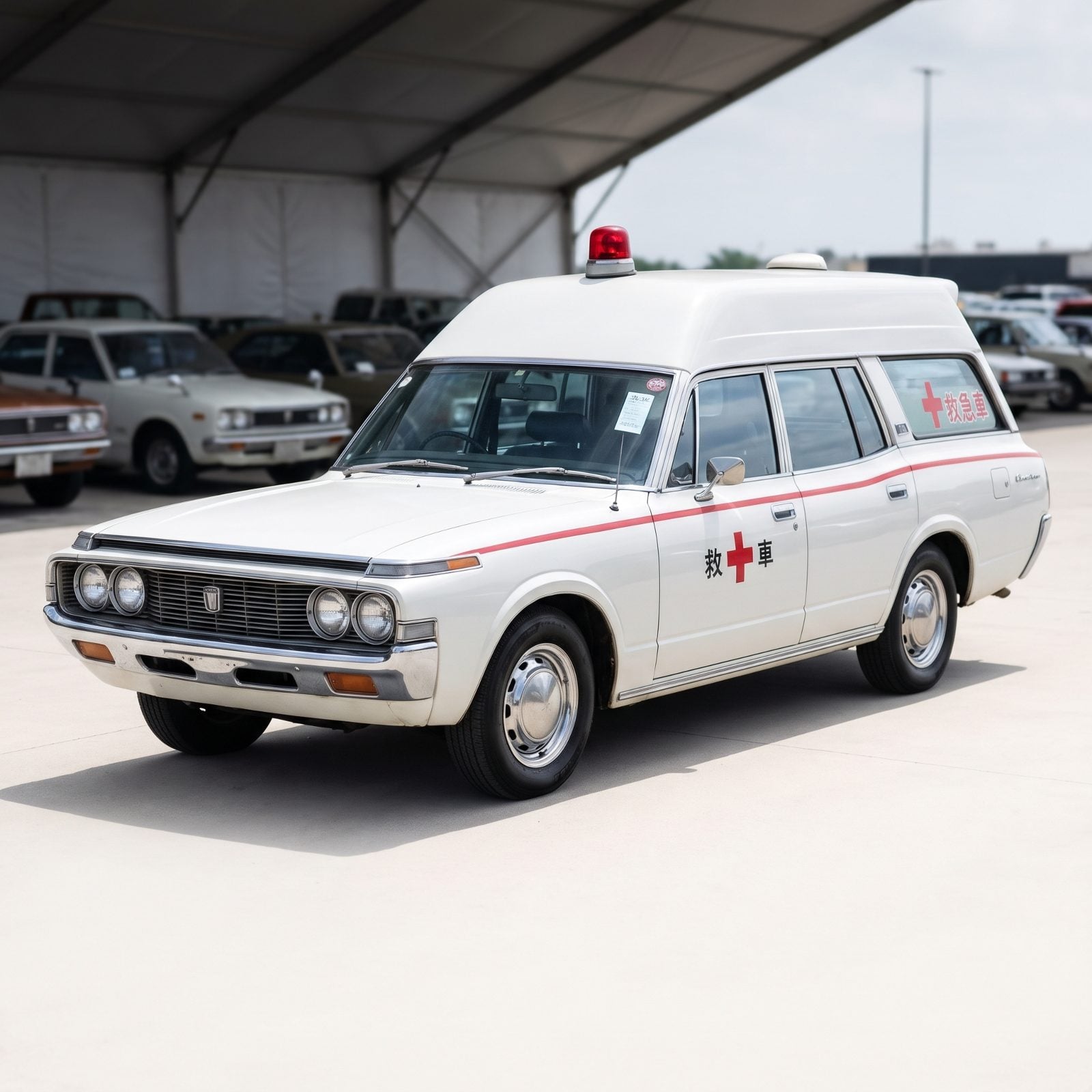
JDM collecting has gone deep enough that purpose-built Crown ambulances now cross the block, and the import clock explains why. Once a vehicle hits 25 years old, US rules make it legal to bring in, and that single date swings prices harder than condition does on a lot of these cars.
What you’re paying for is the high-roof coachwork and the right-hand-drive oddity, bolted to one of Toyota’s bulletproof inline engines. Parts are the hurdle. Body trim and the ambulance-specific interior fittings are nearly impossible to source stateside, so condition at purchase is everything.
Buy the straightest one you can find. You’re not fixing a dented ambulance roof with a trip to the parts store.