
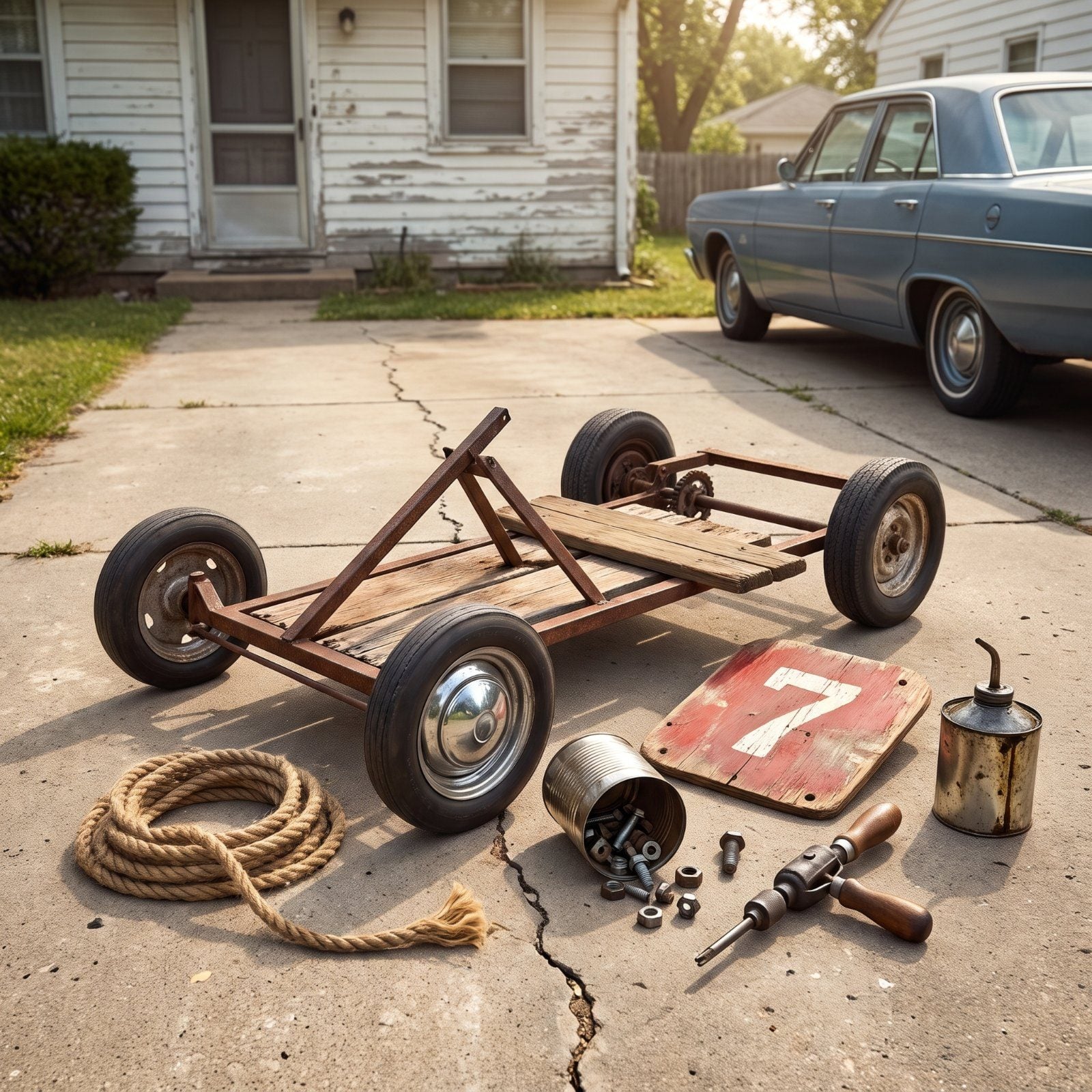
No helmet. Just a plywood seat, a hill, and a kid who believed physics owed him a favor. Back when American driveways doubled as machine shops, the decade cranked out some of the most inventive and frankly terrifying contraptions ever bolted together by hand — lawnmower engines, salvaged wheels, rope for steering, and not one thing you’d now call a brake. We pulled together a gallery of the homemade machines that once came screaming down suburban streets, each a small monument to nerve, ingenuity, and a father who was busy inside. Look close. Count the missing guards.
Please note that some of the images in this article were created with the assistance of AI.
33. The Propeller-Driven Kart With an Unprotected Blade
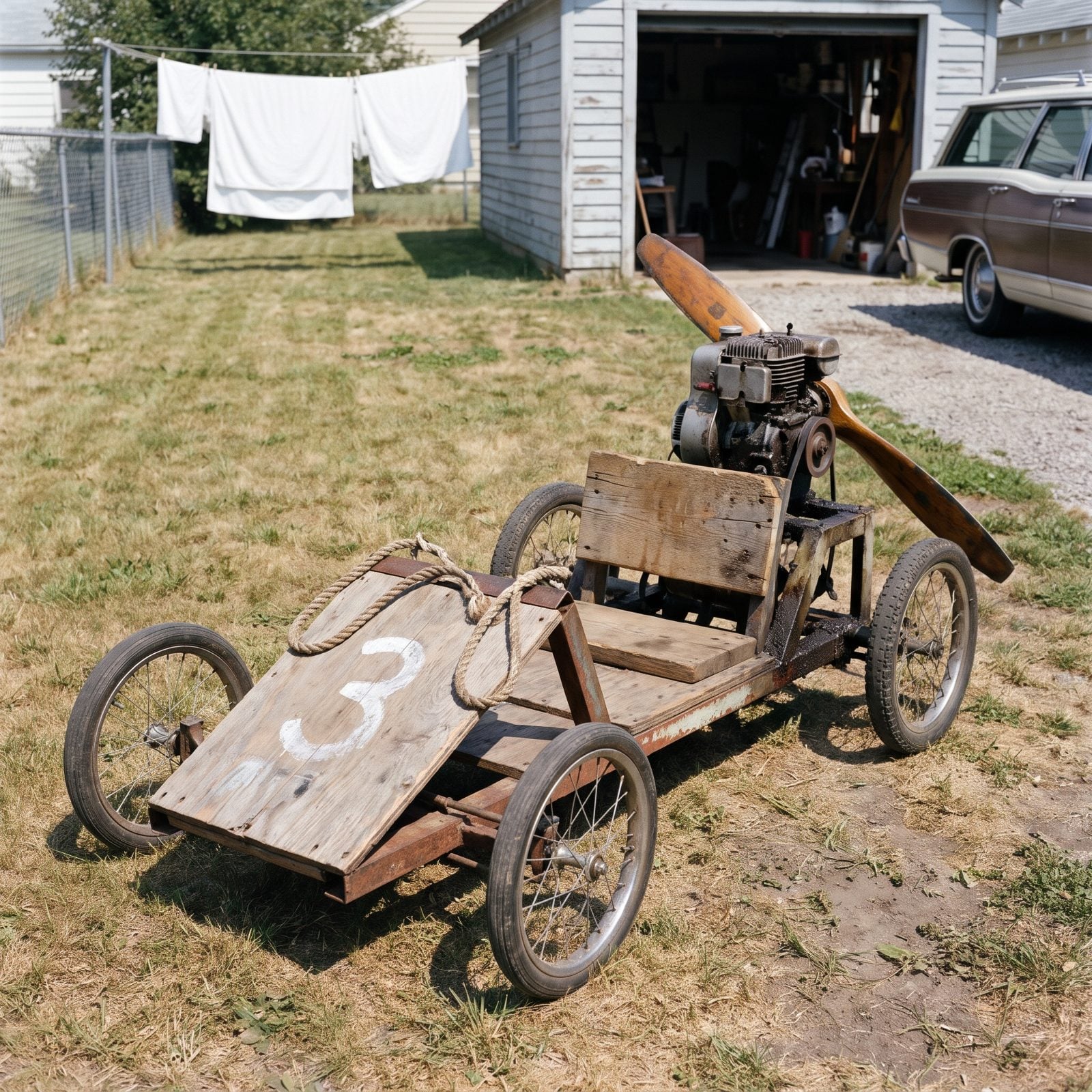
Somebody looked at an airplane and thought: I can do that with a lawnmower engine and a whittled hunk of pine. The propeller kart was ambition with the brakes removed, literally. A spinning blade sat at head height behind the driver — no cage, no guard, nothing between a loose sleeve and a very bad afternoon.
These rarely worked well, because propellers push air, and air is a terrible way to move a 90-pound kid down a flat suburban street. But when they caught the wind, they screamed. The genius was real. The judgment was not.
32. The Motorized Shopping-Cart-Basket Kart
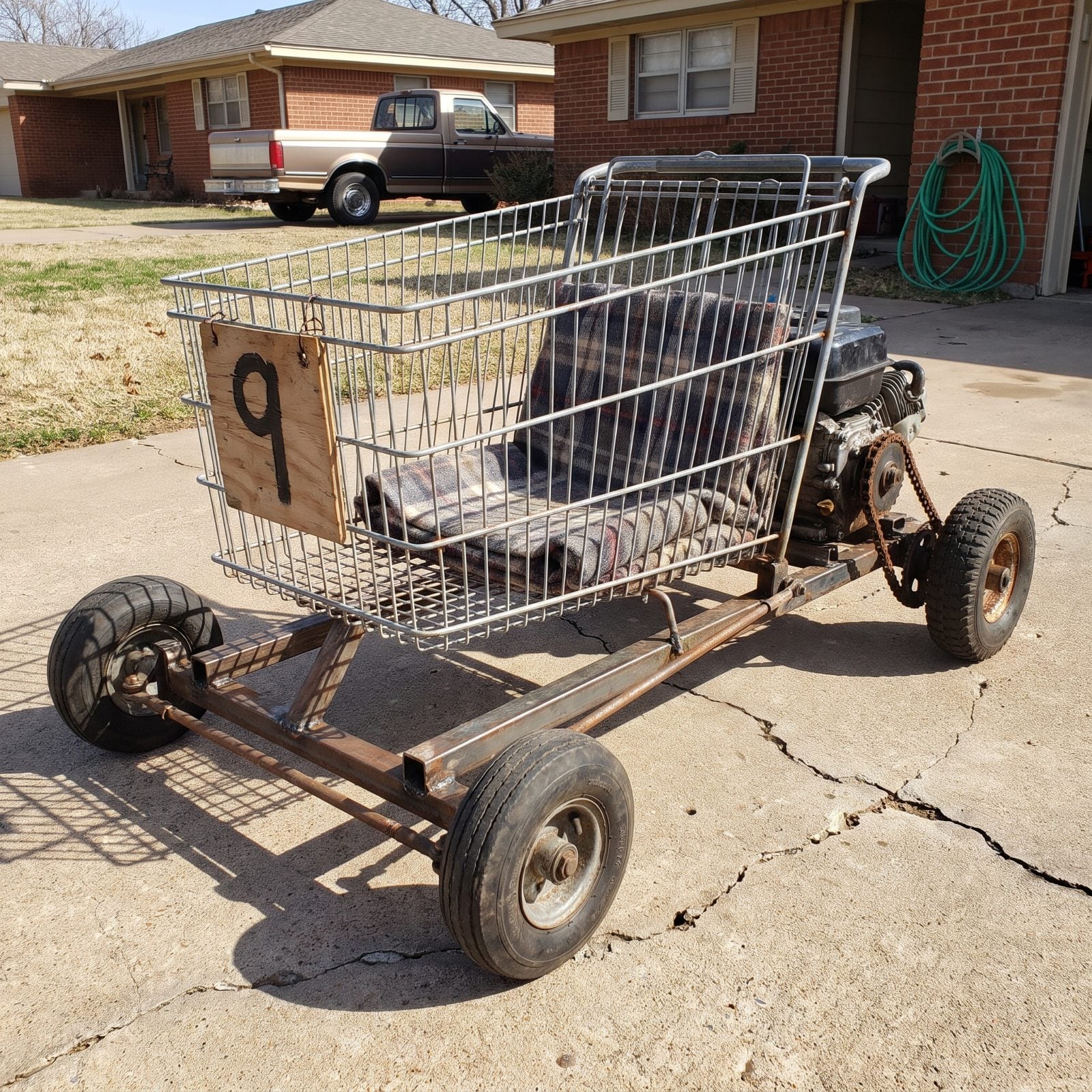
A grocery basket makes a surprisingly rigid passenger compartment. It also makes a cheese grater out of anyone who tips it. This was resourcefulness in its purest form — a cart liberated from behind some store and welded onto a frame, the shopper now riding where the groceries used to.
You sat inside it like a kettle on a trolley, every bump coming up through the wire mesh and into your spine. No padding to speak of. A folded blanket if you were lucky.
31. The Coffin-Shaped Downhill Racer
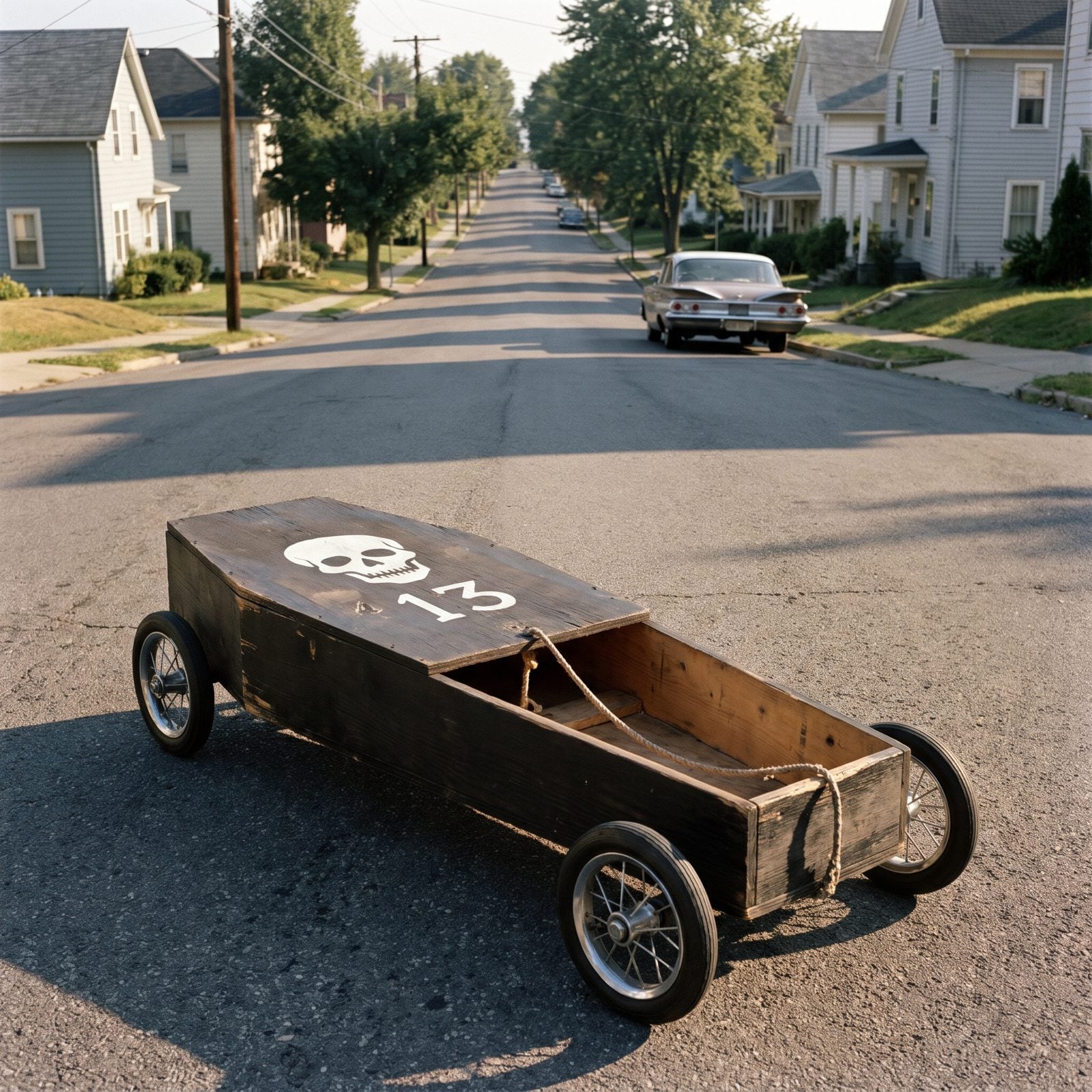
Gallows humor on wheels. Some neighborhood builder leaned fully into the joke and shaped his gravity racer like a pine box, complete with a painted skull and the number 13. Nothing says confidence in your brakes like naming the vehicle after where it might send you.
No engine here. Just a hill, gravity, and whatever the front wheels decided to do. Rope steering and faith. These coffin racers were usually the fastest things on the street precisely because nothing extra was bolted on to slow them down — including anything resembling a stopping mechanism.
You steered with rope and stopped with your sneakers. That was the whole safety system.
30. The Chainsaw-Powered Kart With a Pull-Cord Starter
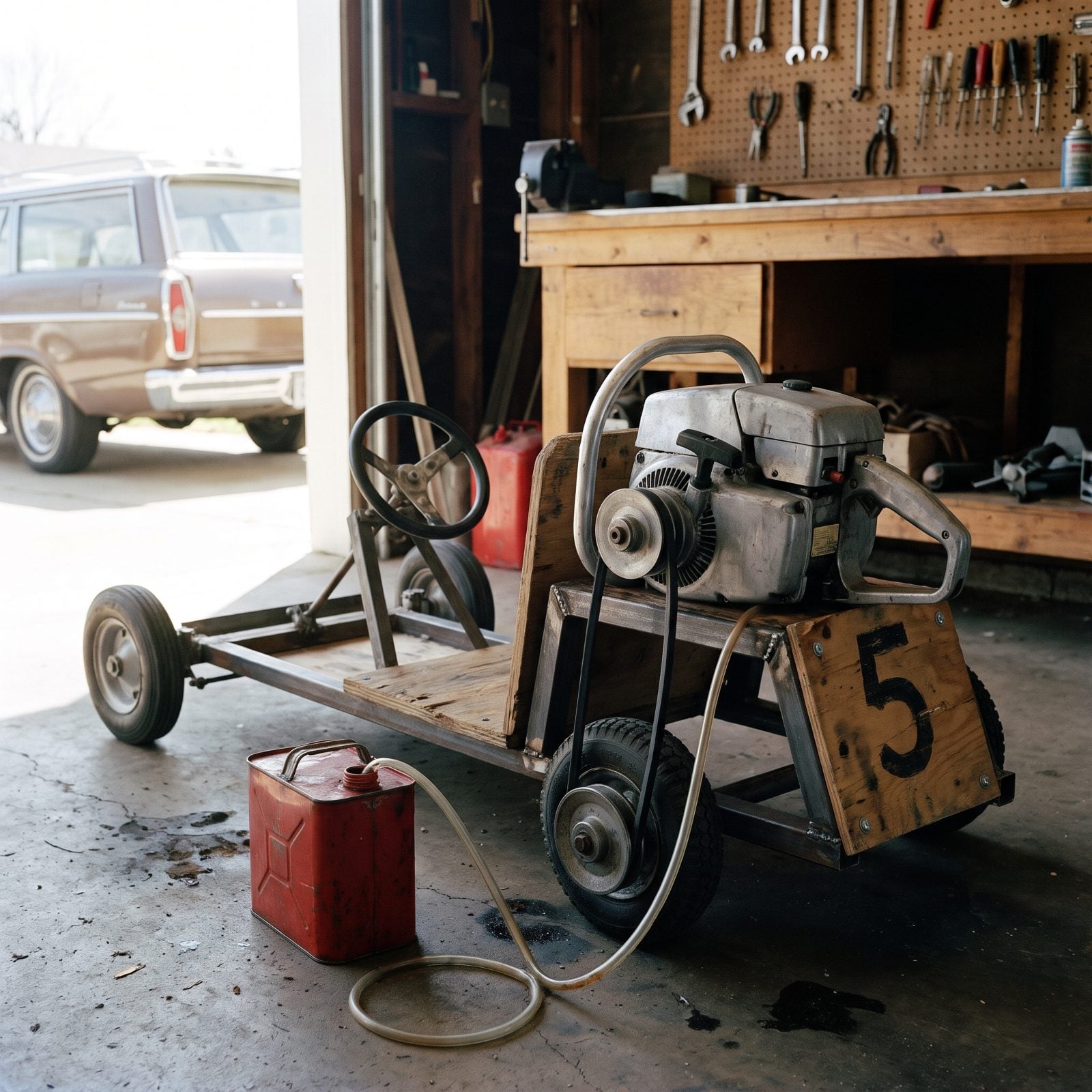
Chainsaws spin fast and scream like a banshee, which makes them a tempting little engine if you ignore everything that makes them a chainsaw. Builders stripped the bar and chain, kept the powerhead, and ran a belt off the drive sprocket.
The starting ritual was the fun part. You’d yank the pull cord, over and over, while perched on a bare plank six inches from a loose fuel line — high-revving two-stroke, no muffler to speak of, and a sound that brought every dog on the block to the fence.
29. The Surplus Drop-Tank Kart Resembling a Land-Speed Racer
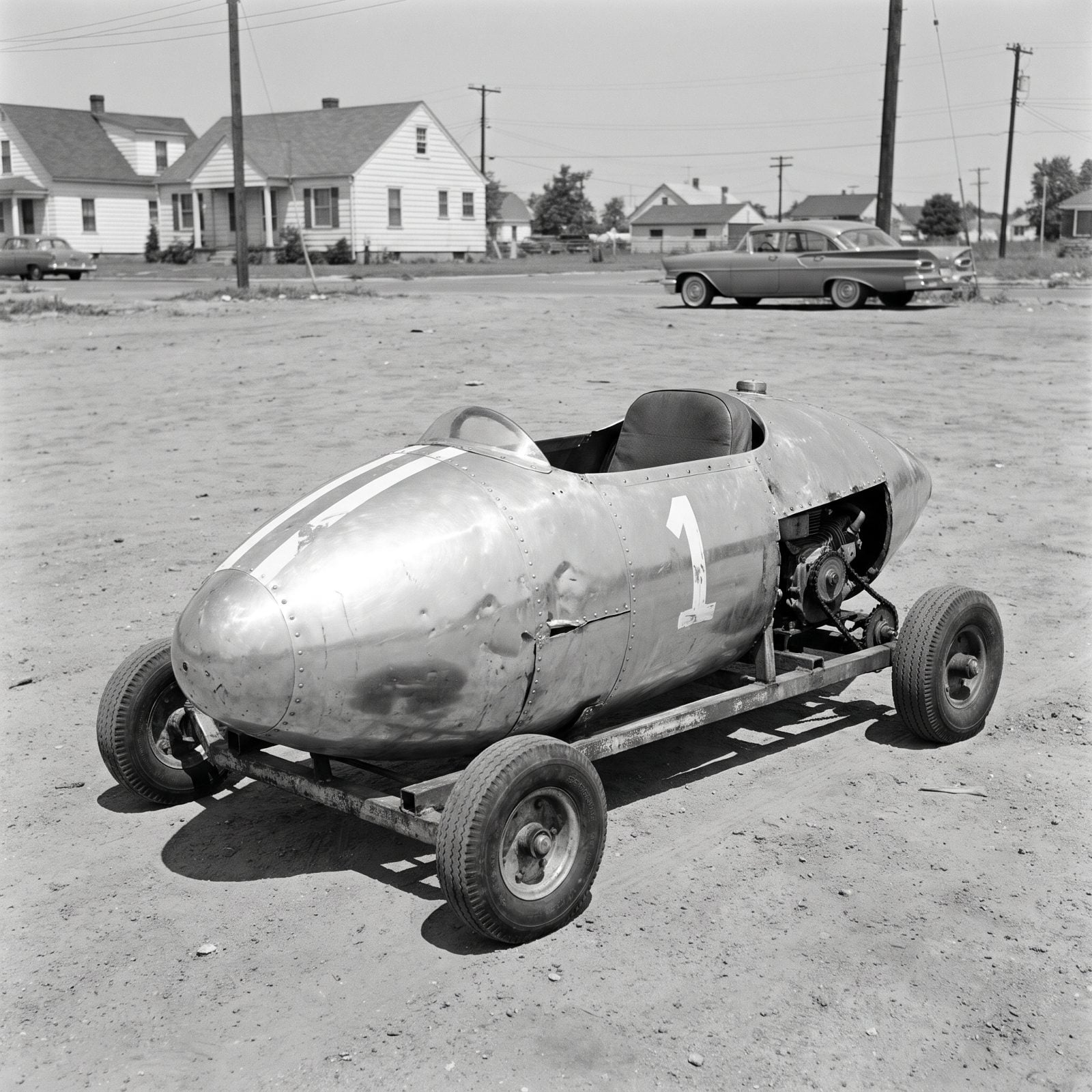
Here’s where backyard building got beautiful. A military drop tank — the kind that hung under fighter jets — had exactly the right teardrop shape to look fast standing still. War surplus flooded hardware stores and junkyards for pennies, and some sharp-eyed builder saw a land-speed racer in a fuel can.
The aluminum body genuinely looked the part. It also offered all the crash protection of a soda can, because that’s essentially what it was. You dropped down inside the fuselage, head poking out the top, steering a machine that promised Bonneville and delivered a parking lot.
28. The School-Desk Kart With an Inkwell Dashboard
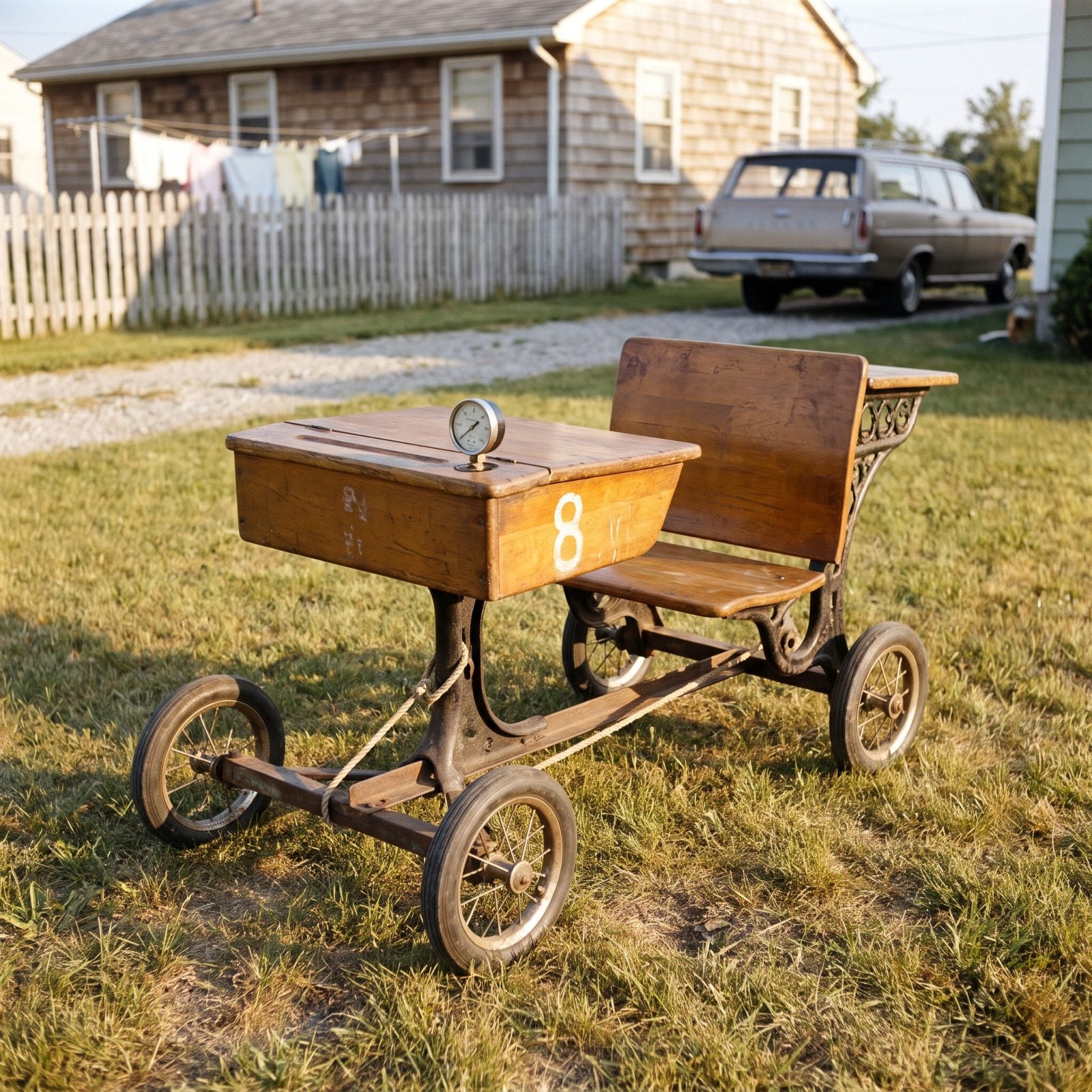
A cast-off school desk already had a seat, a frame, and a little round hole that once held an inkwell. Somebody saw a dashboard. The inkwell became a gauge that measured nothing, which is honest at least.
Charming? Absolutely. Comfortable? Not remotely. Those desks were built to keep kids upright and miserable, and bolting one onto wheels did nothing for the ergonomics. But it rolled, it steered, and the wooden lid flipped up to store a baloney sandwich. Function from junk — the whole spirit of the thing.
27. The Bed-Frame-Rail Kart With a Bare Metal Seat
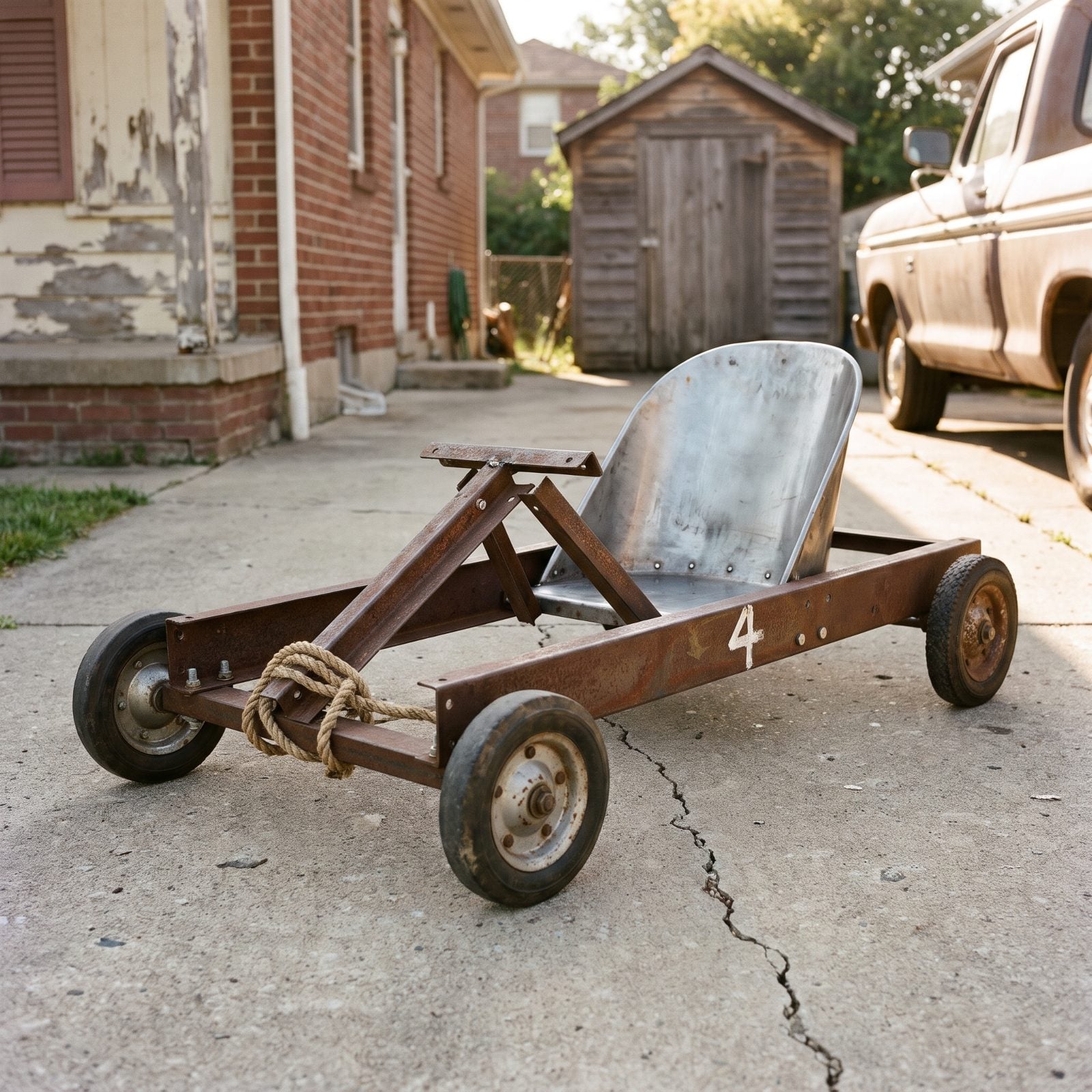
Old iron bed frames were the rebar of the backyard builder: strong, straight, free, and already drilled with holes. Bolt four corners together and you had a chassis that could survive the hill and probably the kid.
Then came the seat, where things got spartan. A curved sheet of bare metal, riveted straight to the rails, no cushion, no give. One warm summer afternoon on that thing taught you everything you needed to know about why cars have upholstery. Every bump went straight up your tailbone like a telegram.
26. The Washing-Machine-Motor Kart With an Exposed V-Belt
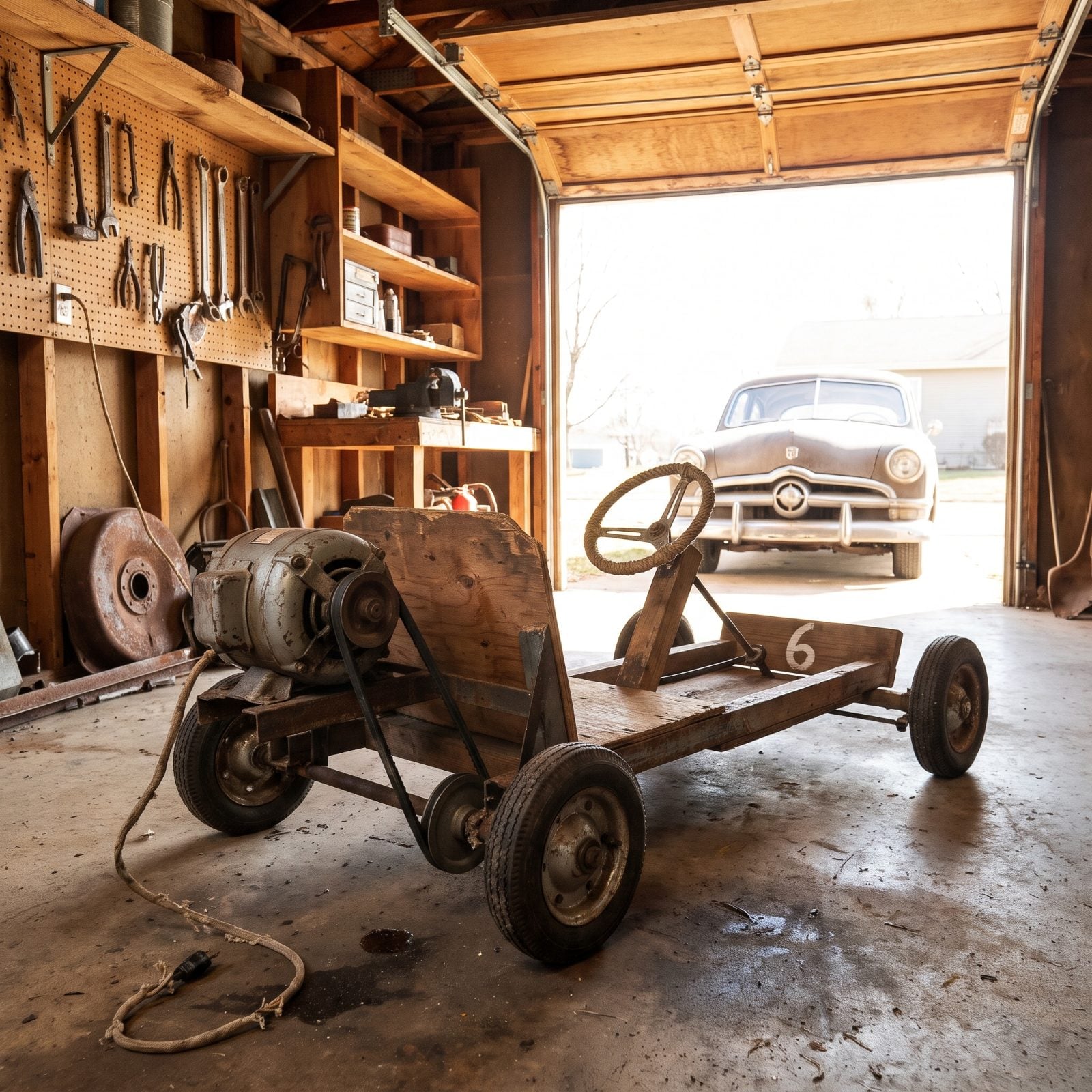
When the family washer died, the motor lived on. Electric, torquey at low speed, and completely unsuited to outdoor use, it got bolted to a kart frame and fed by an extension cord running out the garage.
The real hazard was that V-belt — a long rubber loop spinning fast with zero guard, right where a shoelace or a pant cuff could find it. Add a frayed cord dragging across a wet driveway and you had a machine that could hurt you three different ways before it even moved.
25. The Baby-Carriage-Chassis Hill Racer
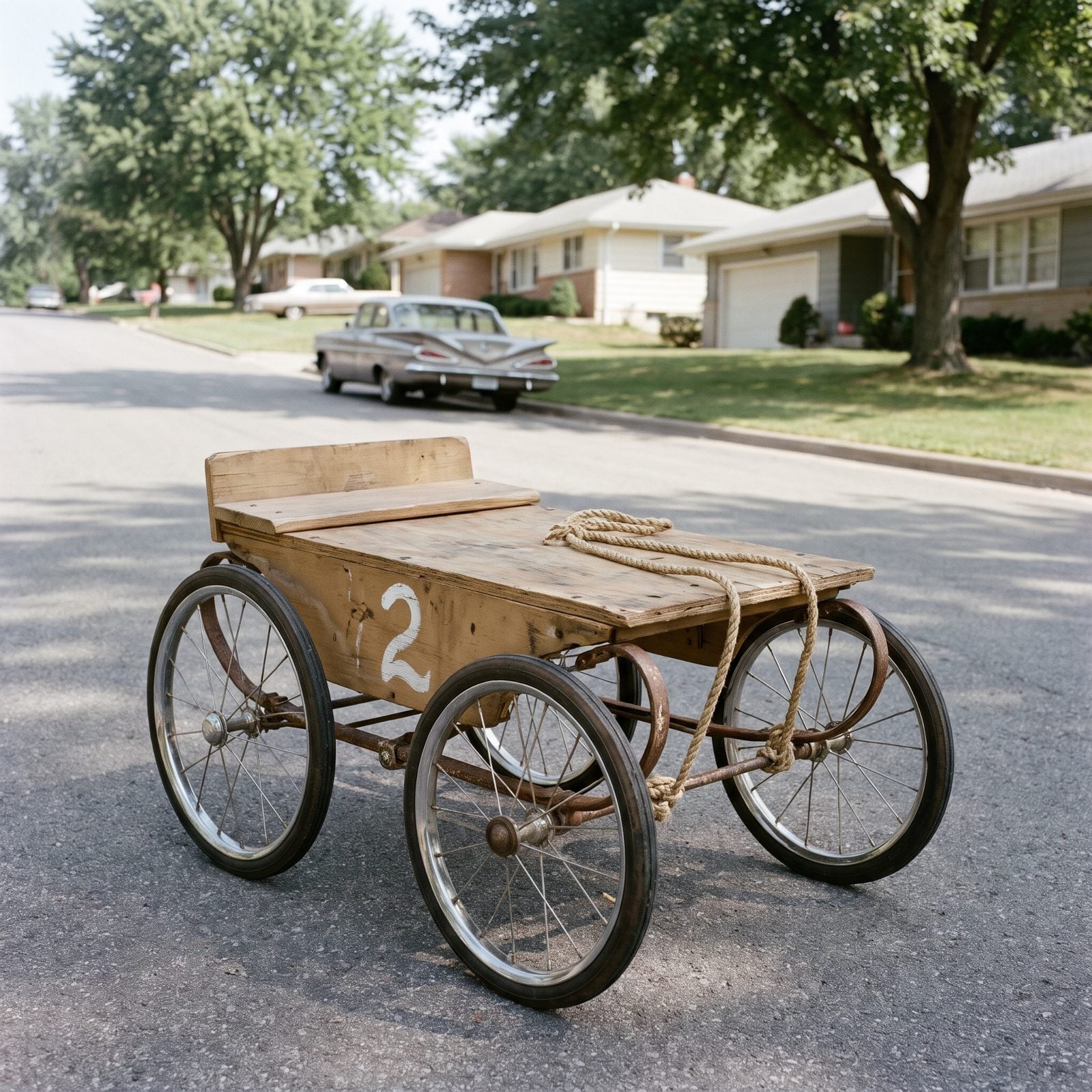
Big spoked carriage wheels rolled smooth and fast, which is precisely the problem. Tall and narrow, they loved speed and hated corners. A baby buggy chassis gave you an instant rolling frame, so builders slapped a plywood deck on top and pointed it downhill.
Physics was working against you from the start — high center of gravity, skinny wheels, rope steering, and a slope. These racers were quick and twitchy, the kind that rewarded nerve and punished the slightest wobble. Gravity does not negotiate.
24. The Motorcycle-Engine Kart With an Open Chain
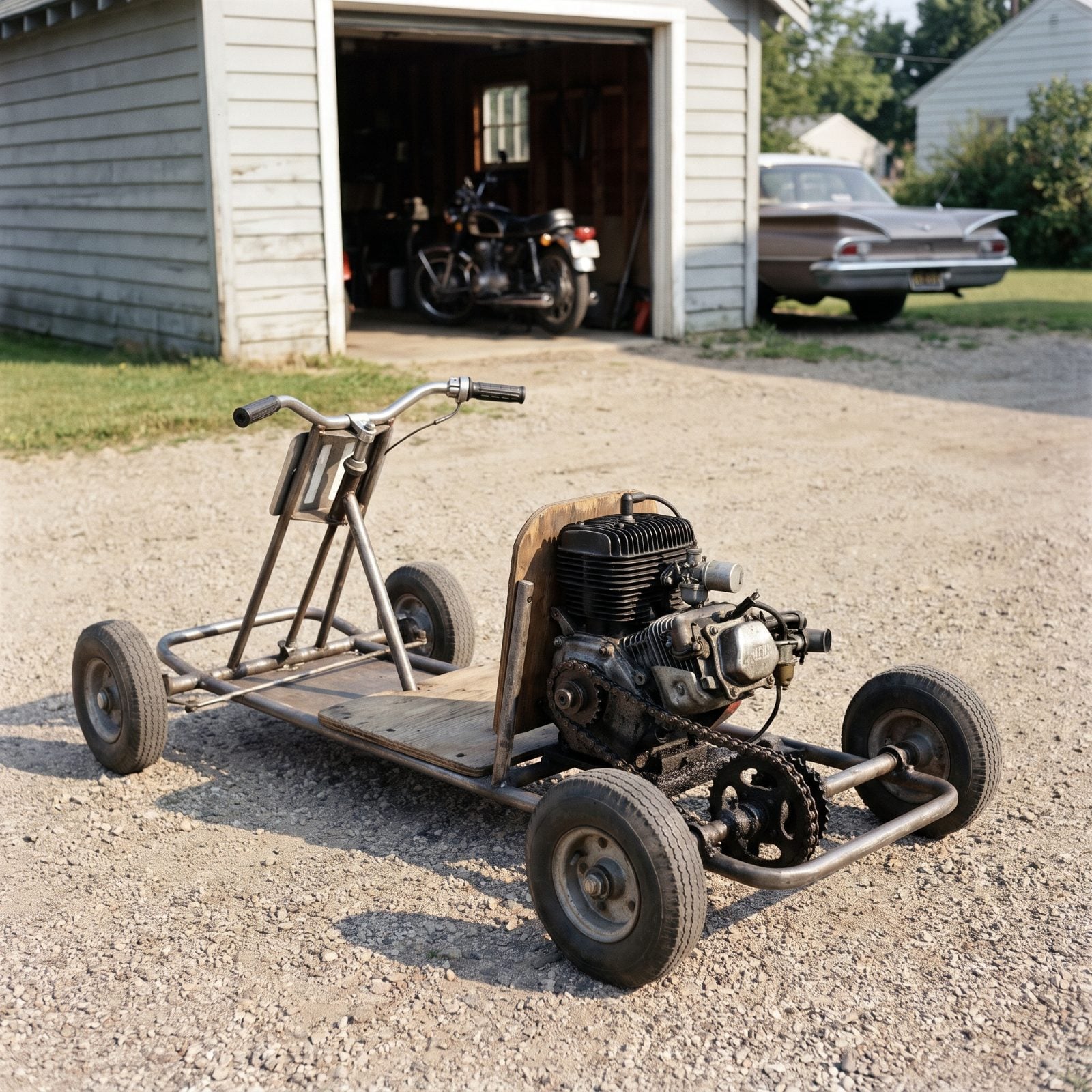
This was the varsity build. A full motorcycle engine on a kart frame meant real power, real speed, and a drive chain thick enough to take a finger clean off — running right there, uncovered, inches from the seat.
Of everything in this gallery, the motorcycle kart was the one that could genuinely hurt you at speed rather than just embarrass you. Builders who got this far were serious. The welding was better, the frame was square, the throttle was a real twist grip.
They just never got around to the chain guard. Or the brakes. Those were next weekend’s job, and next weekend never quite came.
After a snapped drive chain went through his daughter’s kart seat, one kart racer says “I’ve been slapped by a broken chain myself, and I’ll be the first to tell you that there’s a lot of energy in one.”
23. The Oil-Drum Kart With a Hand-Cut Cockpit
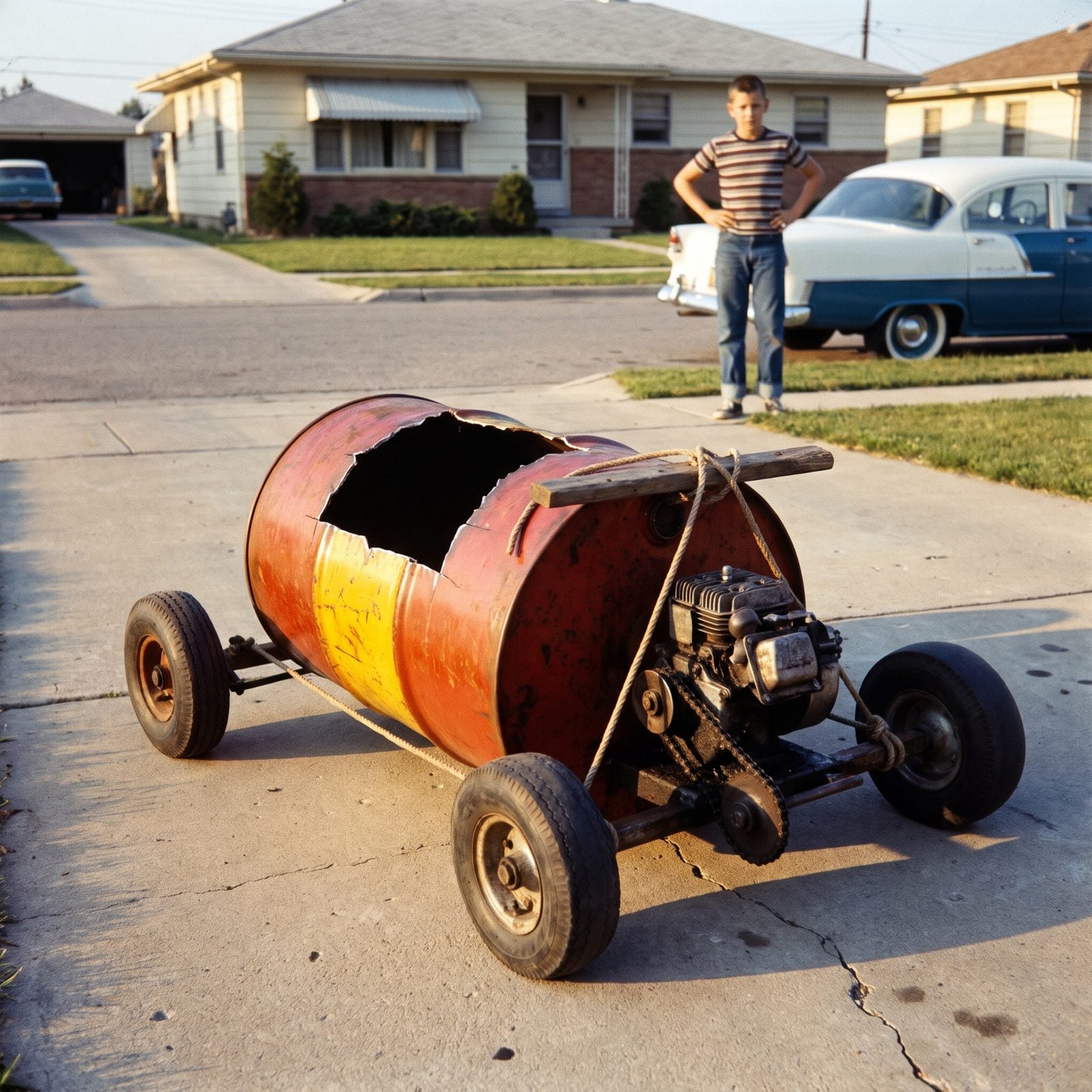
Start with a drum that held motor oil, lay it on its side, cut a hole where a kid sits, and you’re done. The edges came out of tin snips, so the rim of that cockpit was a row of little steel teeth about hip height.
Nobody filed them. You just learned where not to put your hands. The drum kept its shape under load — the one genuinely smart thing here — and it also kept the smell of whatever it used to hold on hot days.
22. The Four-Wheel-Steering Kart That Pivoted at Both Ends
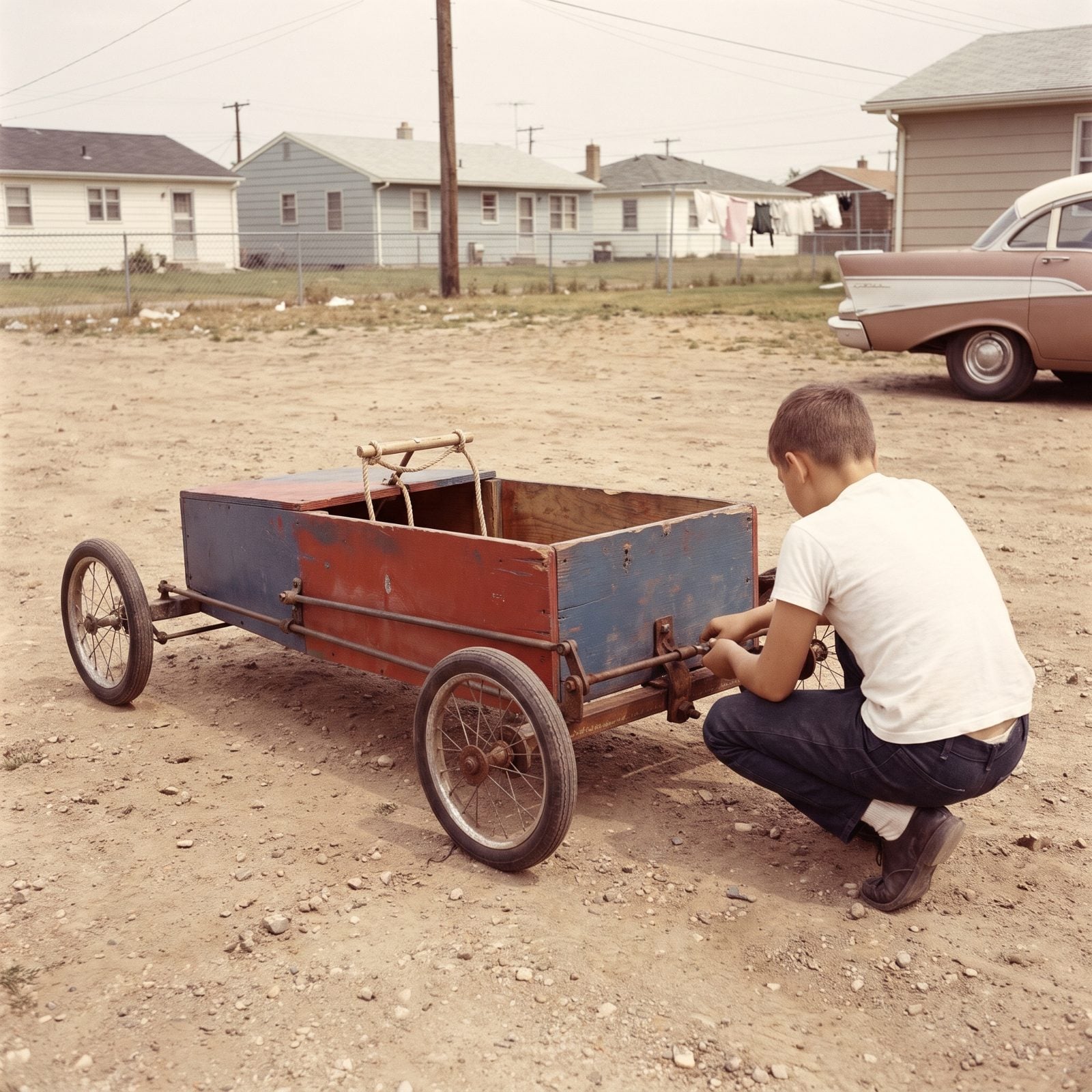
Steering both ends at once feels clever until the kart swaps which way it wants to go at speed. With the back axle hinged on a bolt and no stops to limit how far it swung, this thing could crab, spin, or fold itself depending on how hard you leaned on the rope.
Real four-wheel-steer on modern trucks earns its keep, but it took computers and careful geometry to make it behave. Here it was two pivot bolts and optimism. Impressive to dream up. Terrifying on a hill.
21. The Twin-Engine Kart With Two Throttles
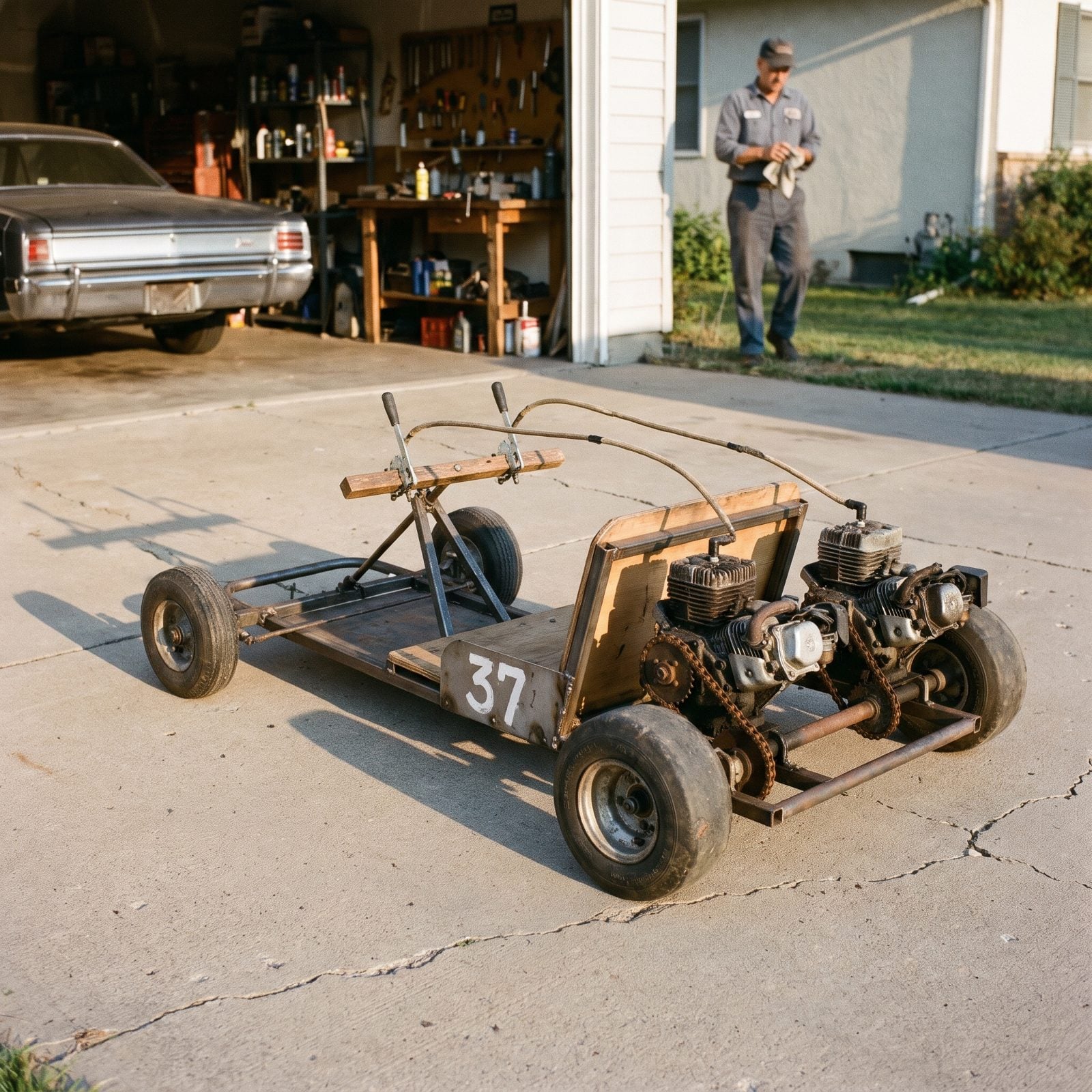
Two engines, two chains, two throttle levers, one seat with a tall plywood back. The driver worked both throttles by hand and tried to keep the engines pulling together, because the moment one grabbed harder than the other, the kart yawed toward the lazy side.
Double the power on a frame that was already optimistic at single power. No brakes worth the name on most of these. You slowed down by running out of driveway.
20. The Wheelbarrow-Bodied Backyard Kart
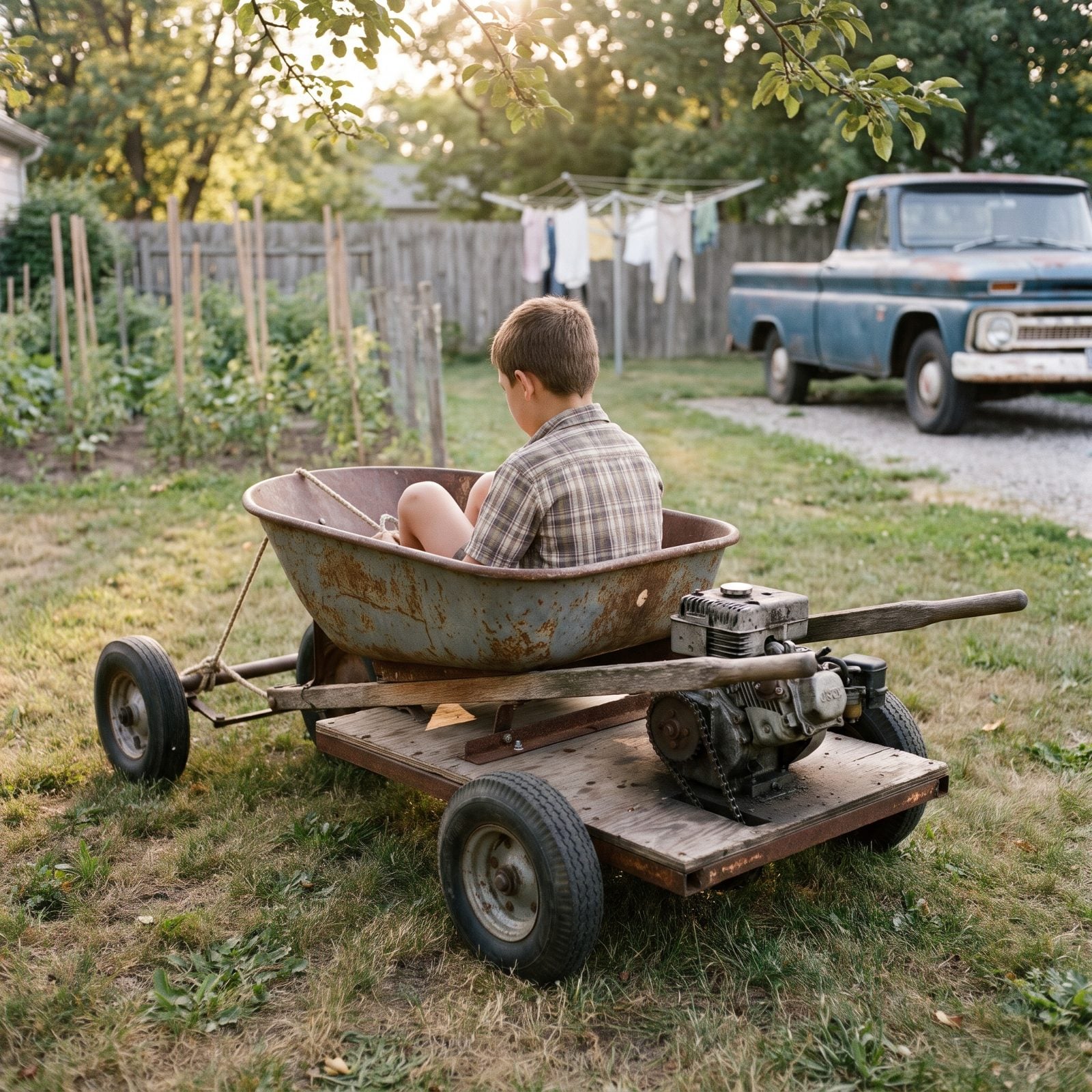
Somebody looked at the garden wheelbarrow and saw a cockpit. The tub was already a seat-shaped bowl of steel, so in it went, handles and all, bolted to a wood frame with an engine hung off the back.
And sitting inside a steel pan means nothing stands between you and the bottom of it. Every seam in the driveway came straight up through your spine. The handles out back? Closest thing to a crumple zone, which is to say none at all.
19. The Canoe-Bodied Kart Built for the Street
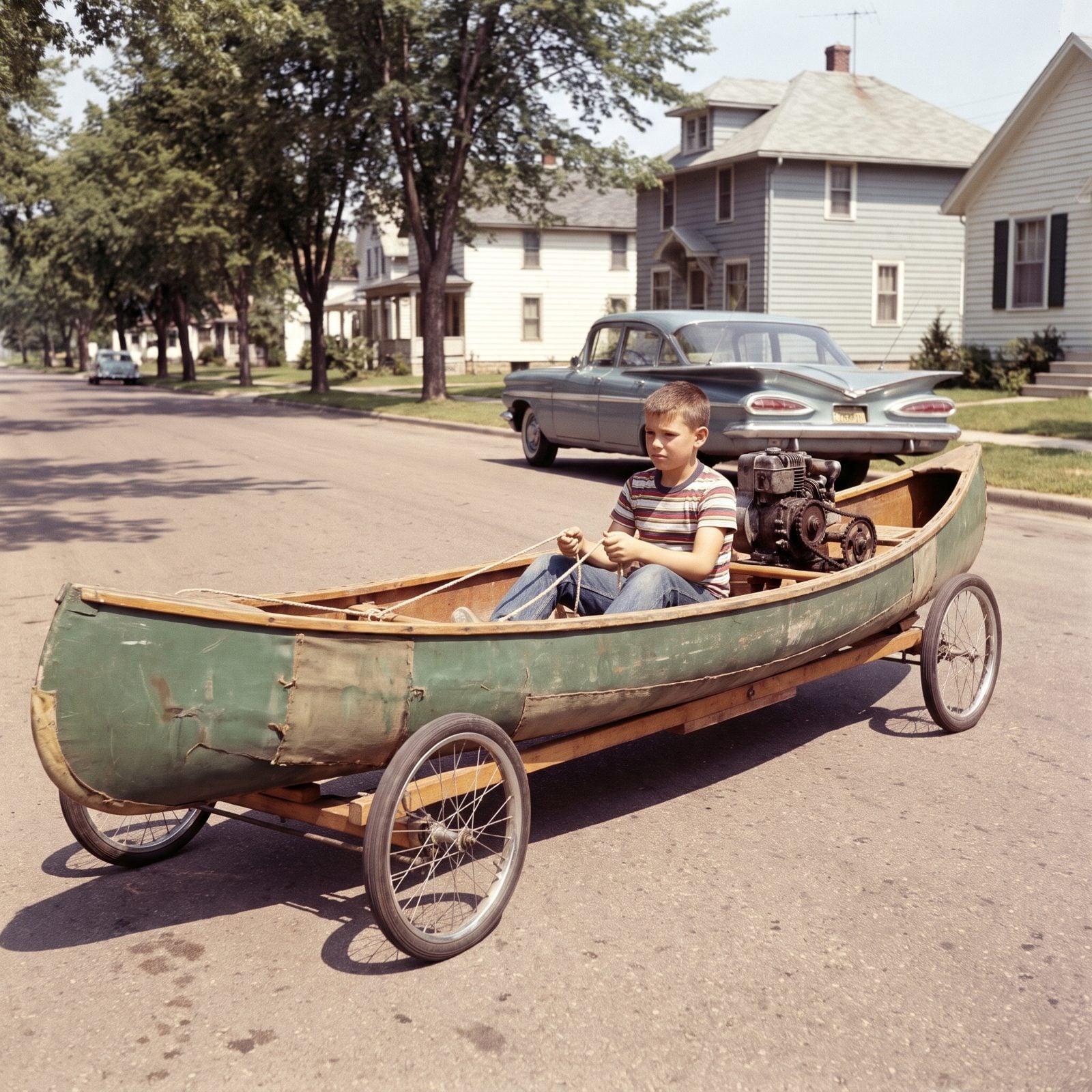
A canoe is built to be light and to split water. It is not built to take a corner on asphalt with an engine shoving it. But the hull made a seat the full length of a body, so onto wheels it went.
The perch looked tall and felt taller. Sit up on a wooden frame over big spoked bicycle wheels and every crack in the road rocks the whole hull. And a canoe has no sides worth the name once it’s riding up there above the street.
18. The Tractor-Seat Kart With Almost No Chassis
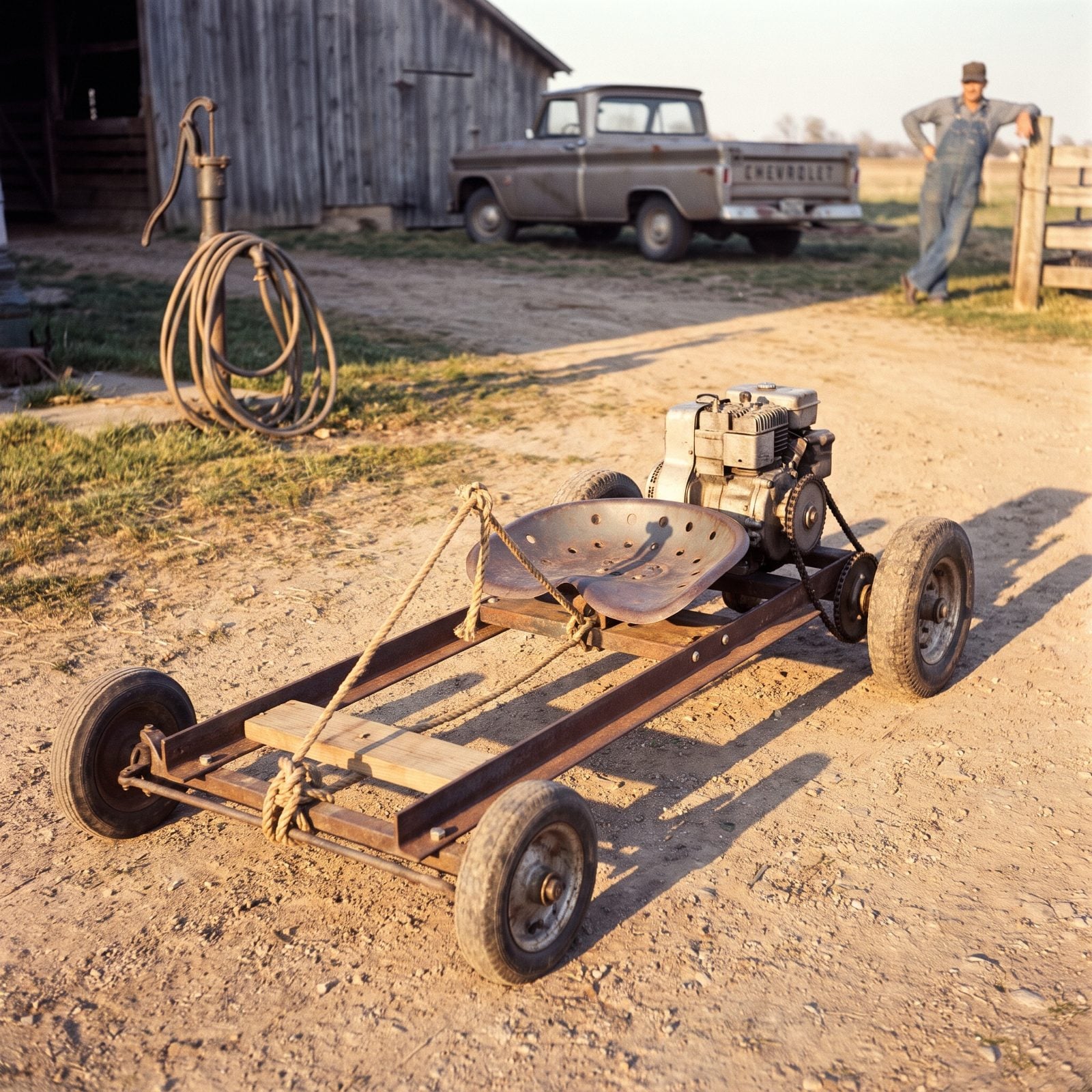
Strip a kart down to the bone and this is what you get: a pressed-steel tractor seat on two rails, an engine behind it, and the driver completely in the open. No body. No floor pan to speak of. Feet hanging out front on a bare bar.
The appeal was weight — less kart, more go. The cost was that every moving part sat right there next to you, the chain turning a hand’s width behind the small of your back.
17. The Orange-Crate Soapbox Racer
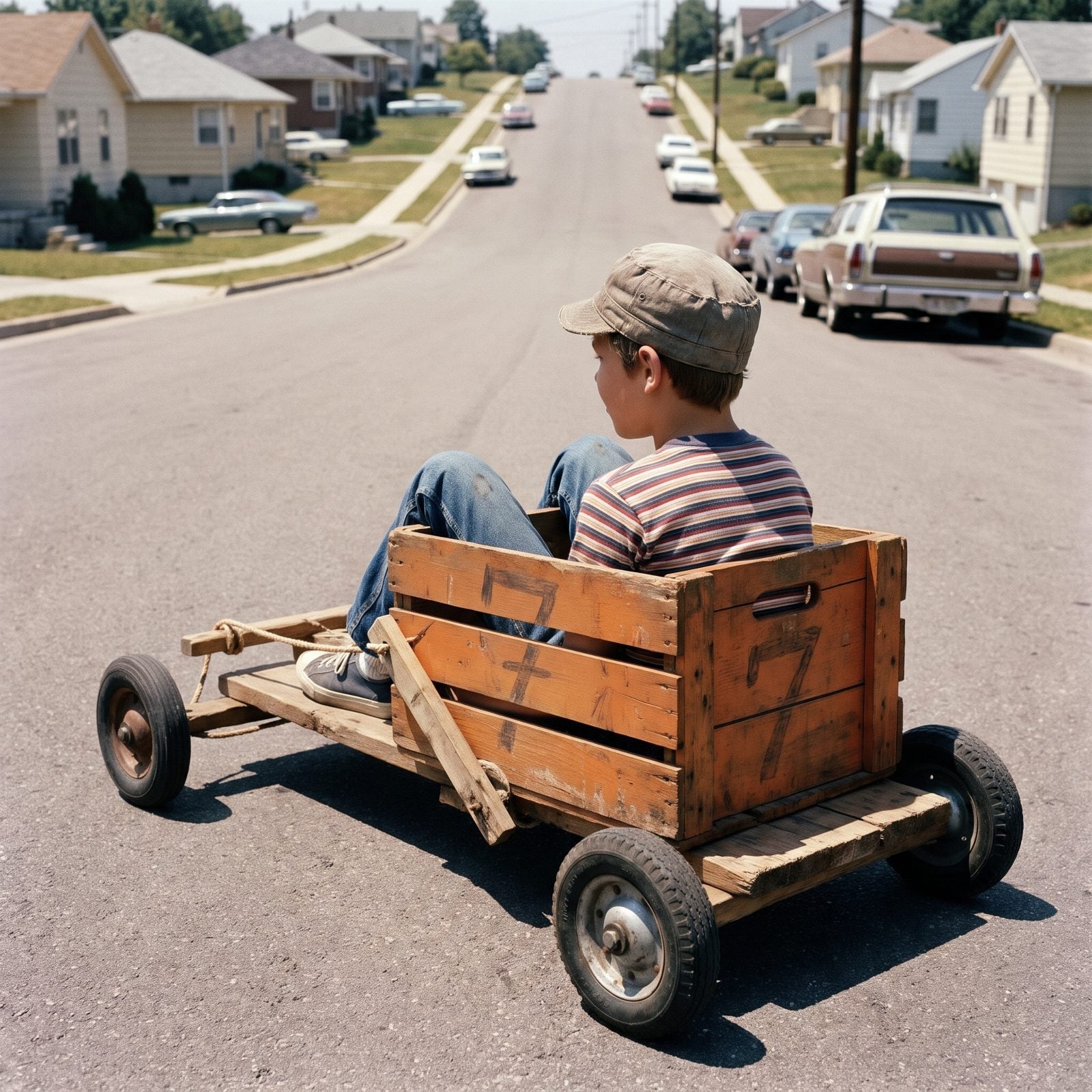
Fruit came in wooden crates then, and a crate is a box, and a box is a body. Slat sides, a plank floor, four wheels and a rope to the front axle. The whole thing cost nothing but a Saturday and some borrowed nails.
No engine, so no throttle problem. The problem was stopping — a wooden lever you dragged against a tire, or your shoes. On a steep street that’s a long way to scrub off with the heel of a sneaker.
In a collection note, a local history museum writer explains that early soapbox derby cars were often built from soap or orange crates, sheet tin and baby-buggy wheels.
16. The Roller-Skate-Wheel Soapbox Racer
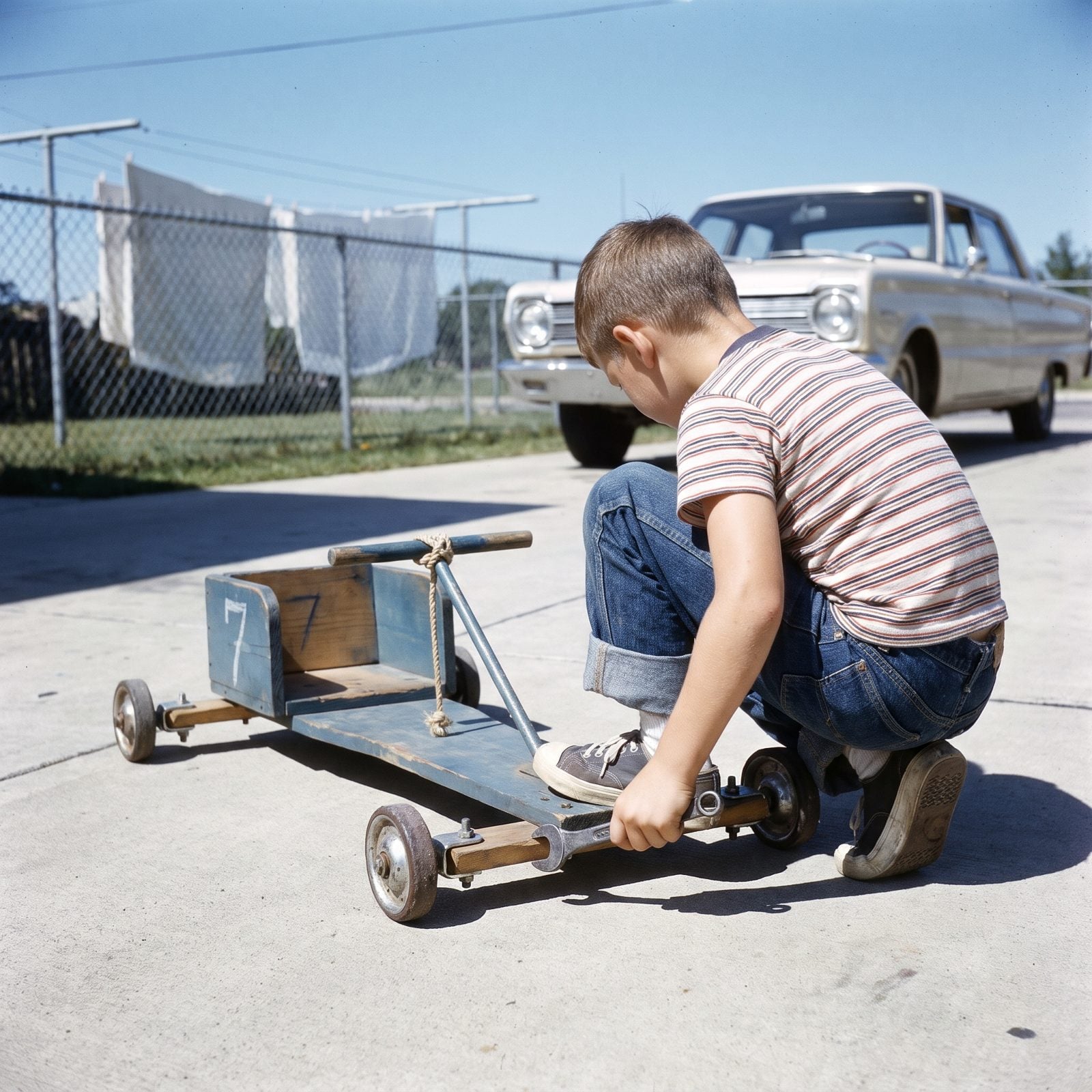
When there were no wheels in the shed, you scrounged some from wherever you could. Two big rubber-tired wheels with metal hubs bolted onto a wooden axle under a plank and off you went, low and rumbling over every pebble.
Big wheels mean more of everything — more ground clearance, more tolerance for a stick in the road, more patience for a crack in the concrete. Hit something and the wheel rolled up and over it instead of stopping dead.
15. The High-Riding Soapbox Car on Bicycle Wheels
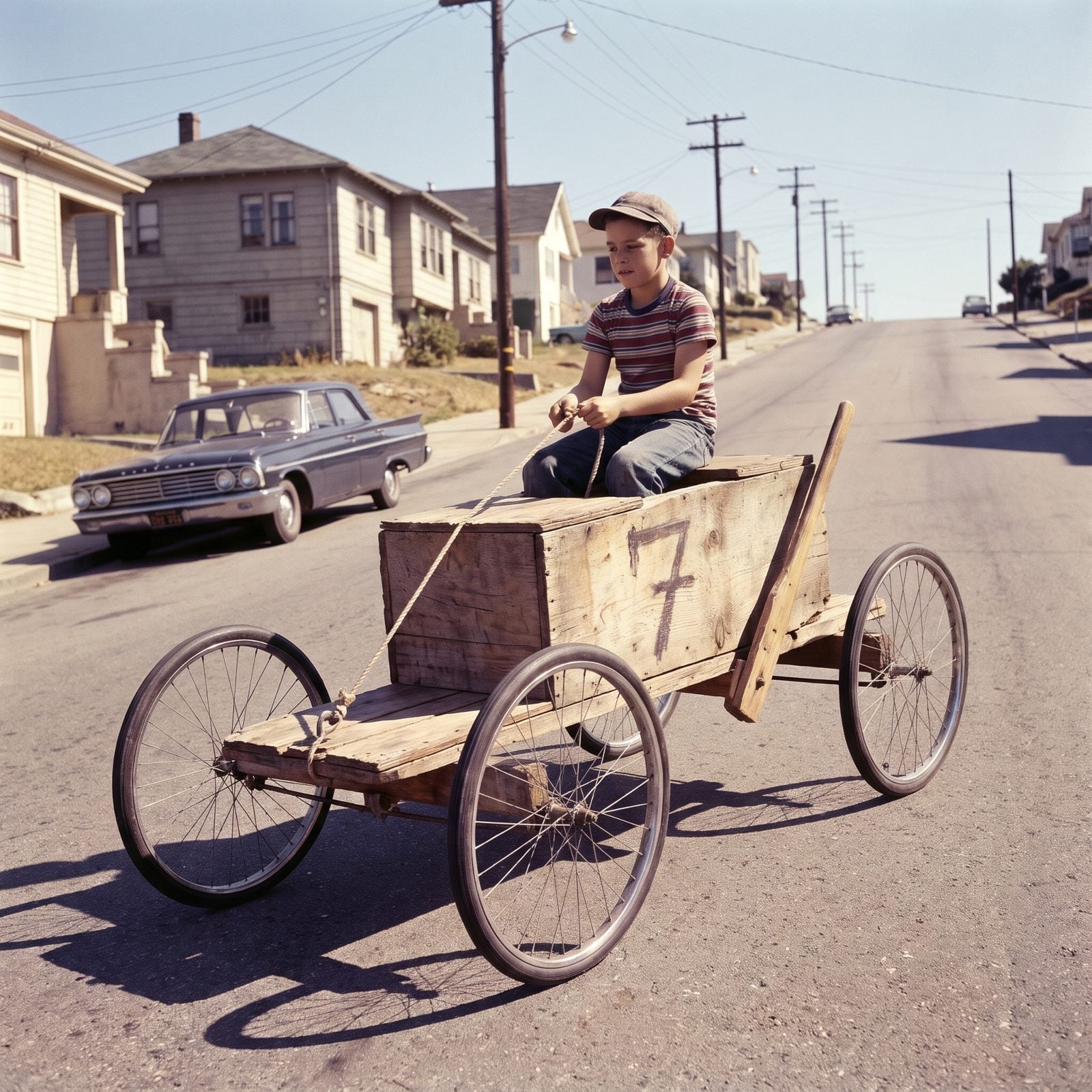
Bicycle wheels were the ones kids actually had, so plenty of racers rode on full-size spoked rims. The result sat tall, the driver perched a real drop above the road, the center of gravity up where it had no business being on something that cornered by leaning on a rope.
Big wheels roll over cracks that would stop a skate-wheel car dead, and that was the honest advantage. But high and tippy on a steep hill is a bad combination, and these had no roll cage, no seatbelt, nothing you’d now call a brake.
They flew, though. Everyone who built one will tell you that part.
14. The Backyard Rocket Ship Racer
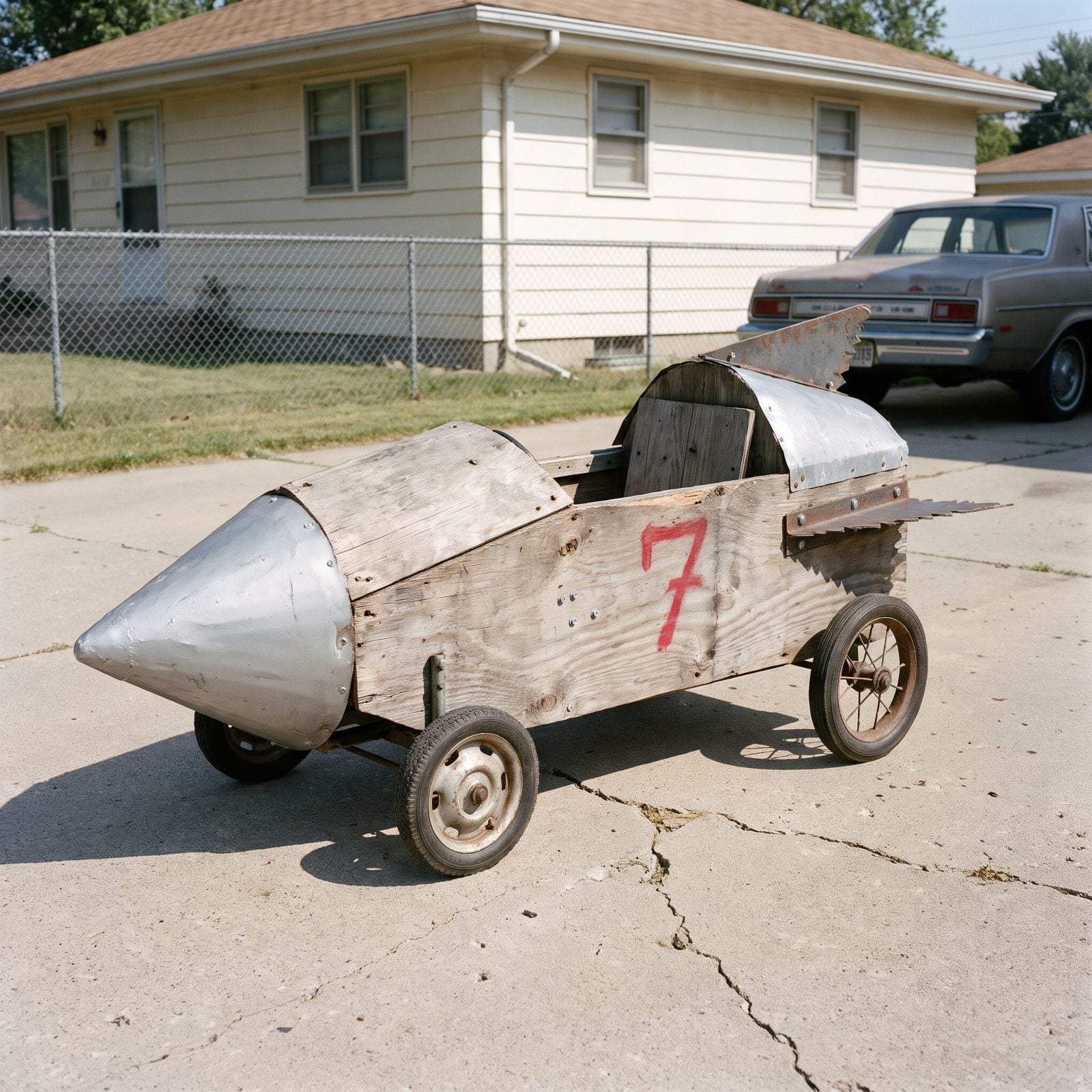
Somebody saw the launch coverage on a black-and-white set and decided gravity was close enough to physics. The nose cone is sheet metal riveted to a point, the fins are rusty serrated sheet steel that would do real damage in a tumble, and the whole thing rolls on wheels that never agreed to be the same diameter.
What it lacks is everything that matters. No belt, no helmet in sight, just a bare plank for a seat and a driveway that drops toward a street with actual traffic on it. The rocket paint job was the last thing on anyone’s mind, and it shows.
13. The Long-Nose Rail-Dragster Racer
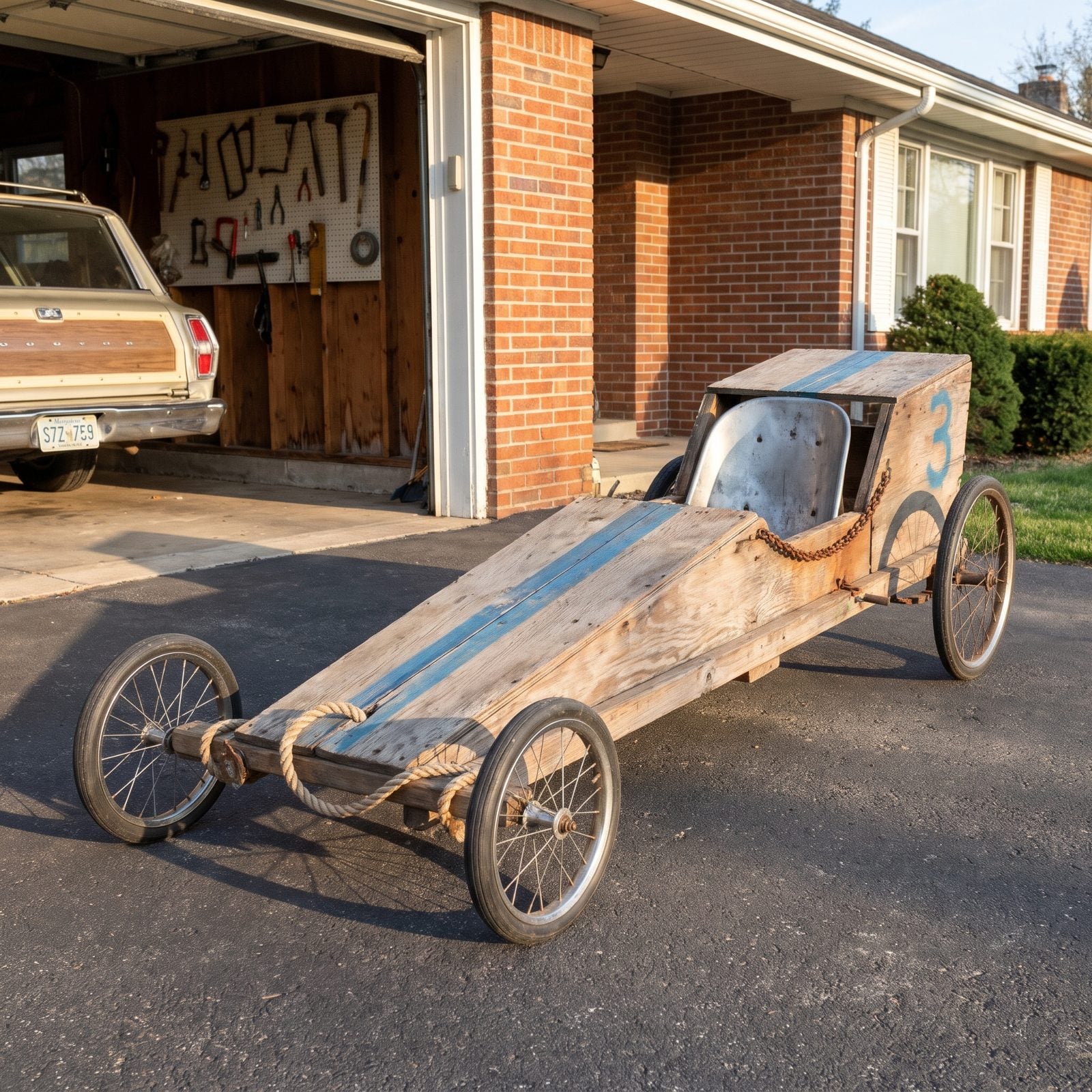
The length was the whole idea. Someone looked at a real drag car, understood none of how it worked, and copied the one thing they could: a nose that goes on forever.
It steers with rope. You pull left, the front axle swings left, and you pray the loops don’t slip. That long plywood snout puts the front wheels so far out that the slightest wobble becomes a pendulum — great for looking fast while standing still, terrible for not plowing into the neighbor’s hedge at the bottom of the hill.
12. The Roman-Chariot Racer With Standing Controls
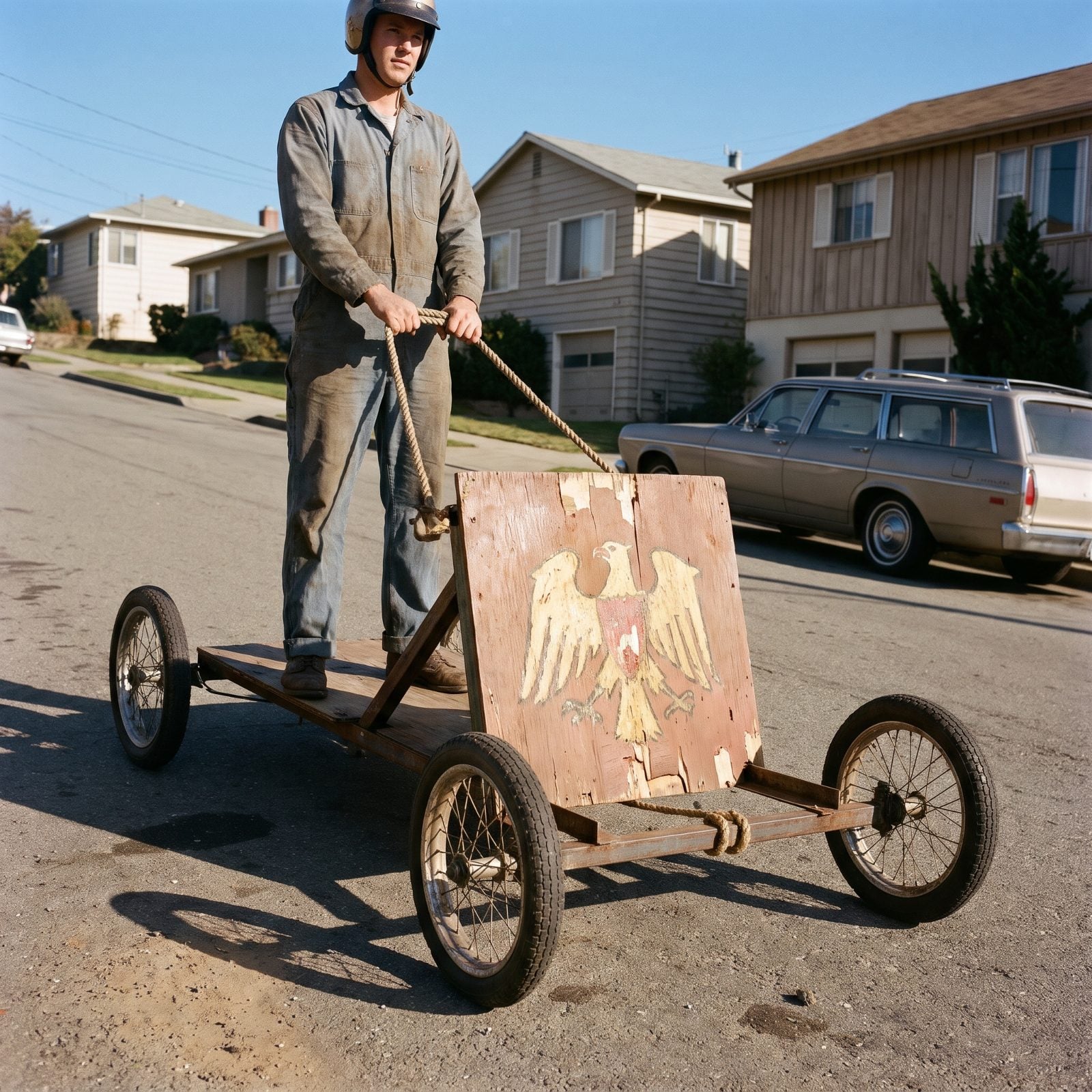
You stand up. On a rolling platform. Down a hill. That sentence should end the discussion, and in 1962 it ended nothing.
The chariot racer traded a seat for a grip rail and a pair of rope reins, which meant the only thing between the rider and the pavement was grip strength and optimism. The crude eagle painted on the front panel was a nice touch. Nobody stopped to think about what a standing body does when it meets a sudden stop. We’ll say the quiet part out loud: this is the one that scares us most.
11. The Torpedo-Shaped Racer With a Tiny Viewport
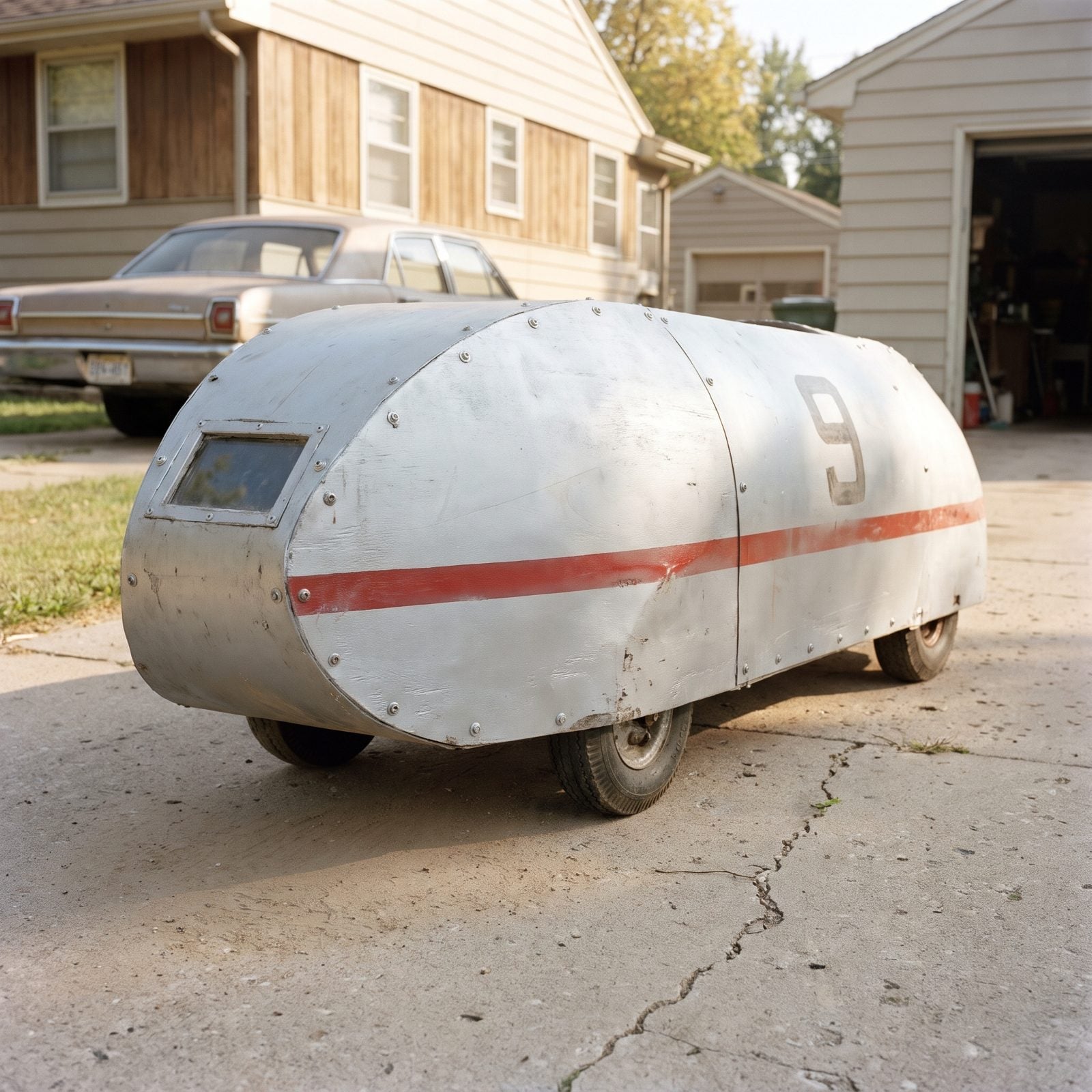
Enclosing the driver seemed aerodynamic. Nobody asked how the driver would see from way back there.
So you’ve got a kid wrapped in a plywood shell with a rectangular window stuck way out at the tip of a long nose. Streamlined, sure. But the sightline is a joke, the rider sits down in an open hole near the tail, boxed in by bolted seams, and a tip-over leaves them wedged in a narrow cockpit with the shell pinning them down.
10. The Headfirst Prone Racer With Chin-Level Steering
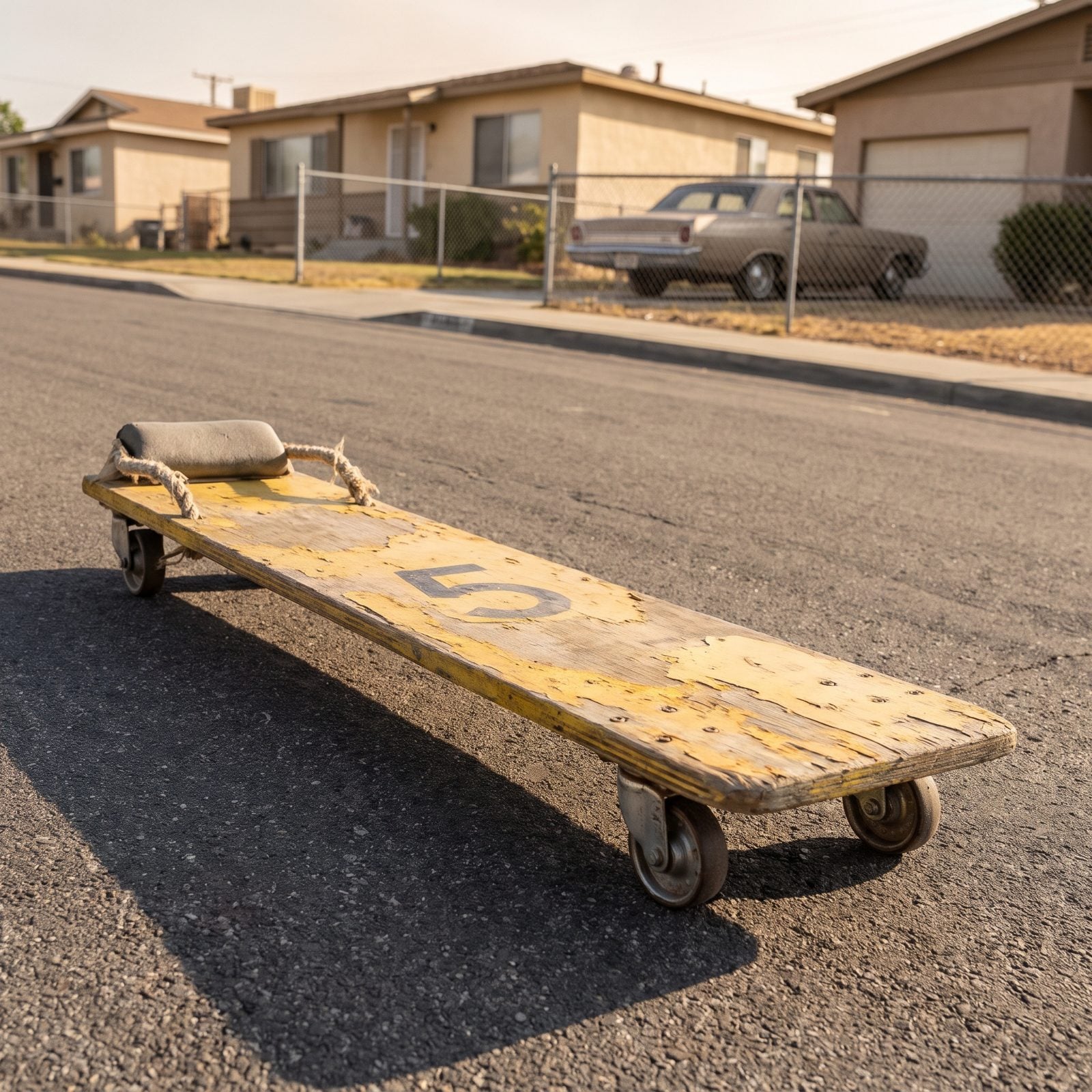
Lie down. Face first. Head at the front. Steer with your chin a hand’s width off the asphalt.
The prone racer was fast because it was low, and it was low because the rider’s skull was leading the charge. There’s no front crumple zone on a human head. When this one meets a parked car or a curb, the first point of contact is the part you’d most like to protect. Of everything in this gallery, this is the design that makes a grown adult wince involuntarily.
9. The Articulated Two-Piece Racer With a Hinged Middle
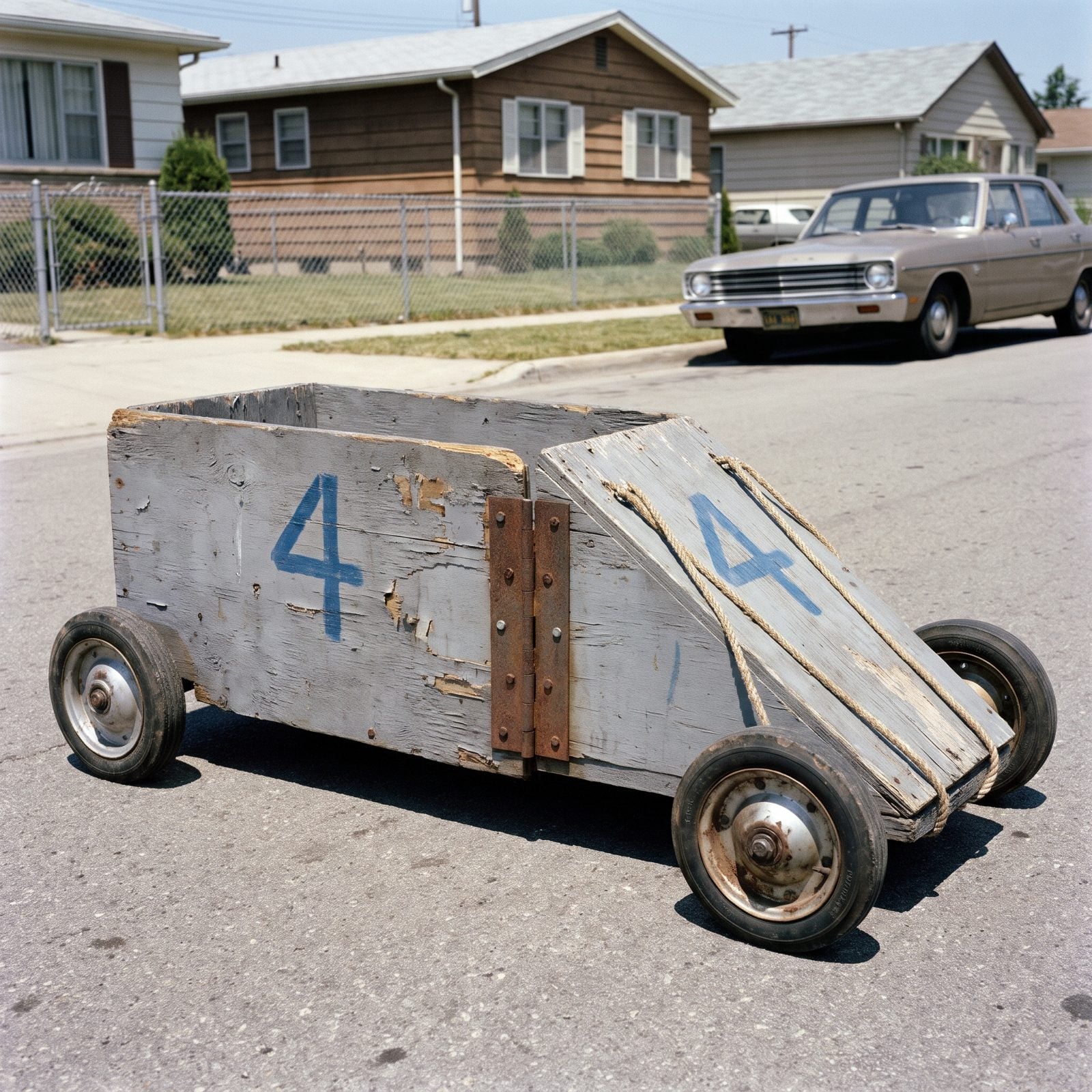
Someone got ambitious and built a cart that bends in the middle, figuring a hinge would steer it like a train or a fire truck.
What they built instead was a folding knife on wheels. The articulated racer jackknifes under the lightest provocation — too much steering input and the two halves try to meet, pitching the rider sideways. The hinge is a strap of metal and a few bolts, and bolts loosen on every run down the hill.
8. The Racer Stopped by a Garden-Shovel Drag Brake
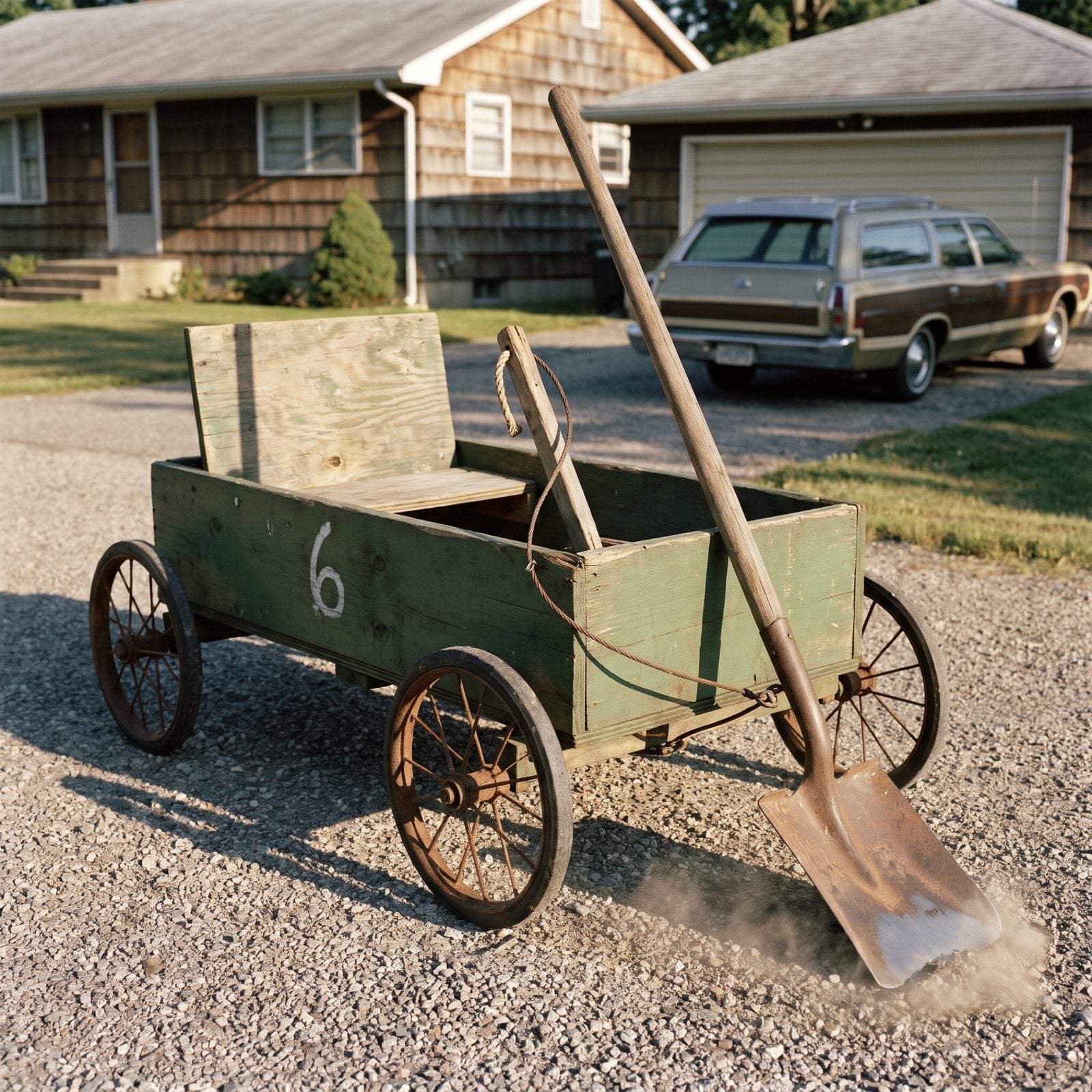
The brake is a garden shovel. You drop the blade, it scrapes the gravel, you slow down. In theory.
In practice, a steel blade biting loose gravel at speed either skips uselessly or catches hard and tries to flip the back of the cart up. No modulation, no feel, just a lever and a prayer. When the shovel works too well, the sudden grab is almost as dangerous as no brake at all. Someone sharpened that blade, too, which tells you everything about where the worry was focused.
7. The Open-Floor Racer With Shoe-Sole Brakes
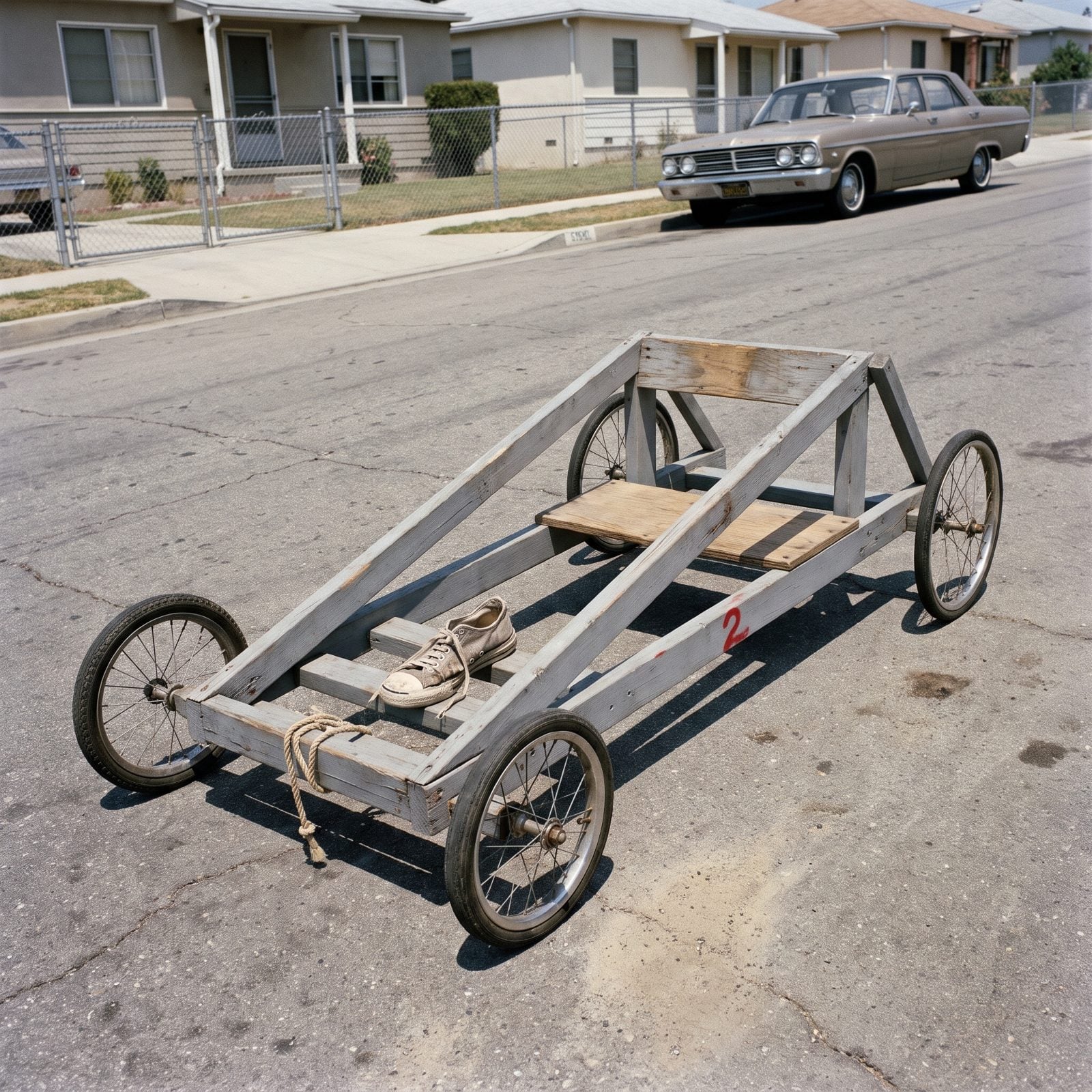
No floor, no brake pedal, no mystery about how it stops. You jam your shoes down onto the road and hope the heels hold out longer than the hill does.
Every kid who ran one went home with the soles worn clean off a good pair of shoes and a lecture waiting at the door. The frame is open underneath, so your feet dangle over moving pavement the entire ride down. It’s the simplest design here and, in its own way, the most honest: gravity makes it go, and you stop it.
6. The Multi-Car Coaster-Wagon Train
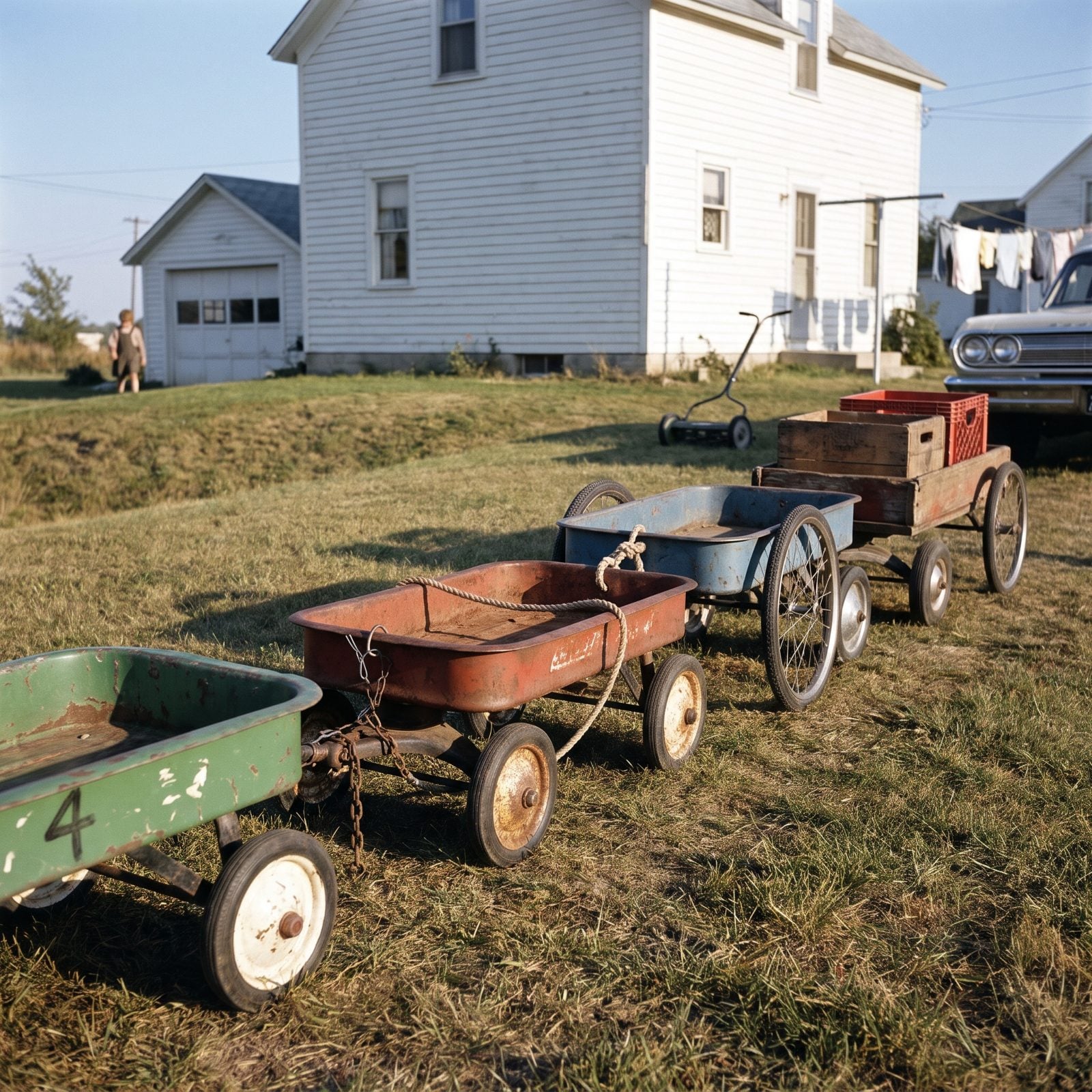
One wagon was never enough once the neighborhood figured out couplers. Bent coat hangers, rope, a chain link pulled off a swing set — hook them nose to tail and you had a train nobody could stop and nobody could steer.
Here’s what the builders never worked out. A single wagon weighs maybe twenty pounds, but three of them loaded with kids, wooden crates and milk crates runs a few hundred, and on a slope that mass doesn’t care about your clothesline tiller. The lead car gets the view. The back car gets the whiplash.
5. The Backyard Wagon Camper With a Canvas Cabin
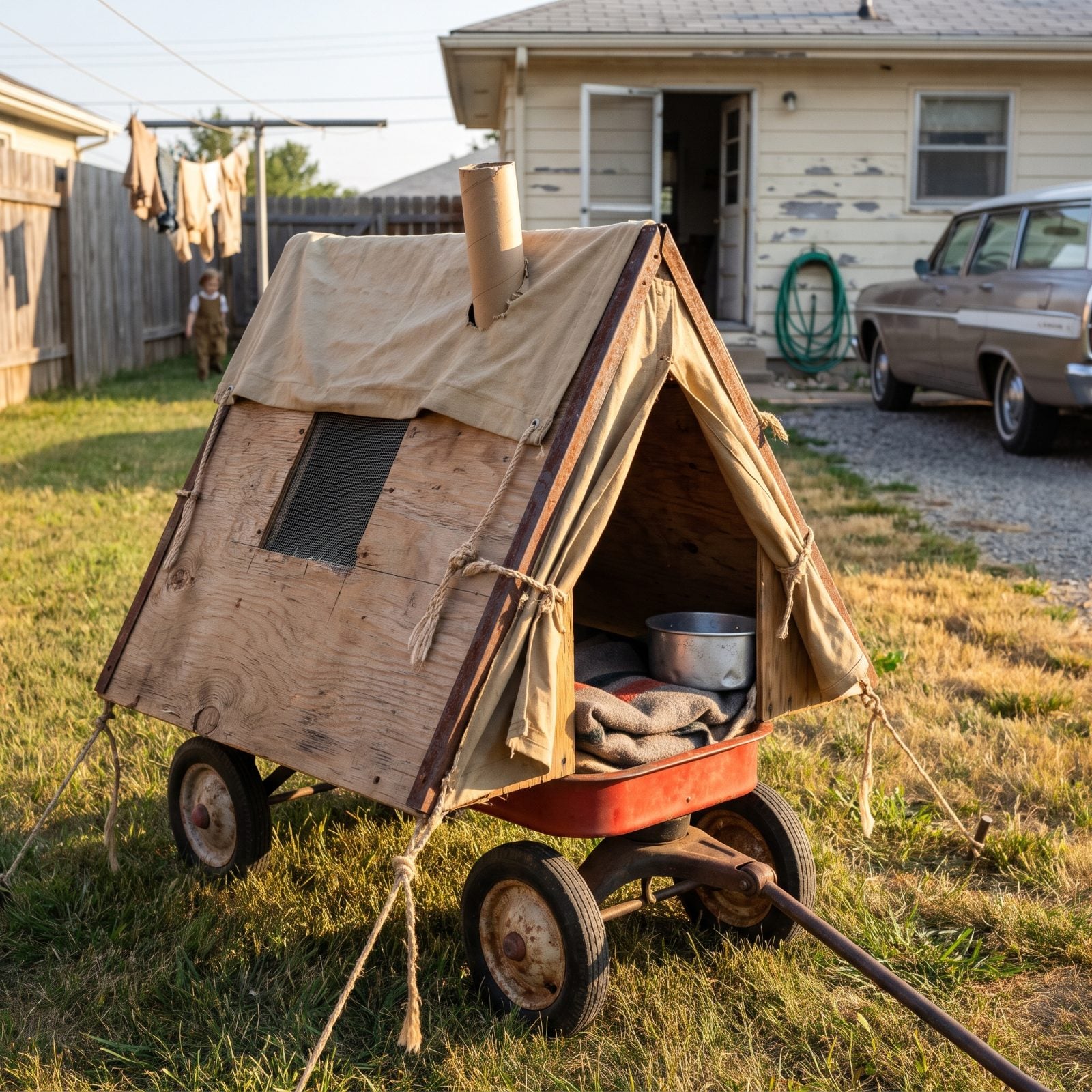
Every kid who ever saw a real travel trailer wanted one that fit in the yard. The answer: a wagon with a plywood A-frame nailed over it and a canvas tarp doing the work of walls, roof and dignity all at once.
At least the cardboard chimney never vented anything, which is the one mercy in the whole design. You pulled this camper across the lawn by hand and slept in it exactly once, until the dew got through the tarp. The charm is real. So is the splinter risk from raw plywood, and the fact that a loaded wagon cabin tips the moment one wheel finds a gopher hole.
4. The Wagon Fire Truck Carrying a Full-Length Ladder
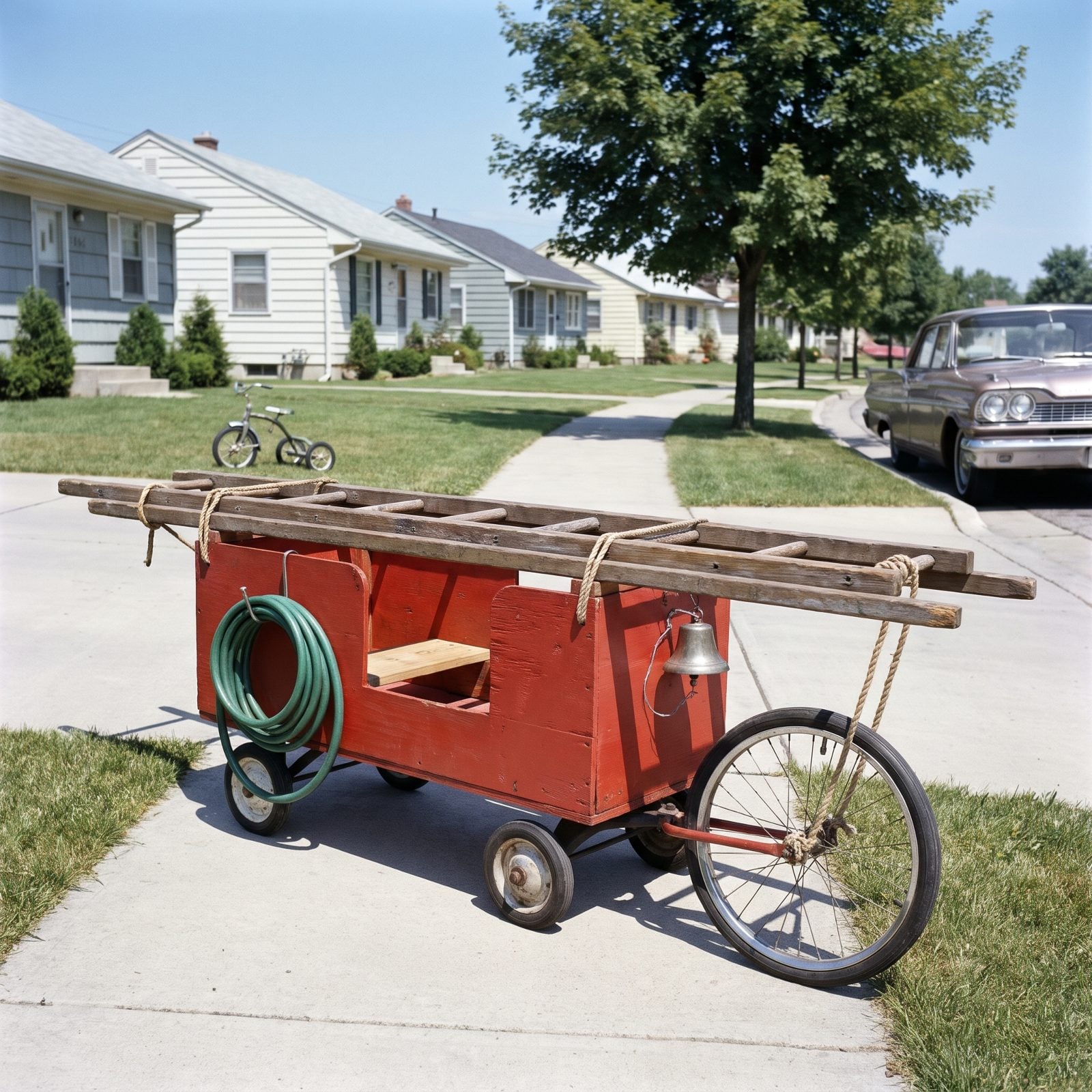
The ladder gives this one away. A real wooden extension ladder, lashed to a wagon, hanging off both ends by a good three feet in either direction.
Steering around a corner meant swinging a battering ram through the air at head height for anyone on the sidewalk. The garden-hose coil and the wired-on hand bell were pure theater — and the bell, honestly, was the safest thing on the whole rig. Everything else was a lesson in why fire departments buy vehicles longer than the gear they haul.
3. The Plywood Army-Tank Wagon With a Rotating Turret
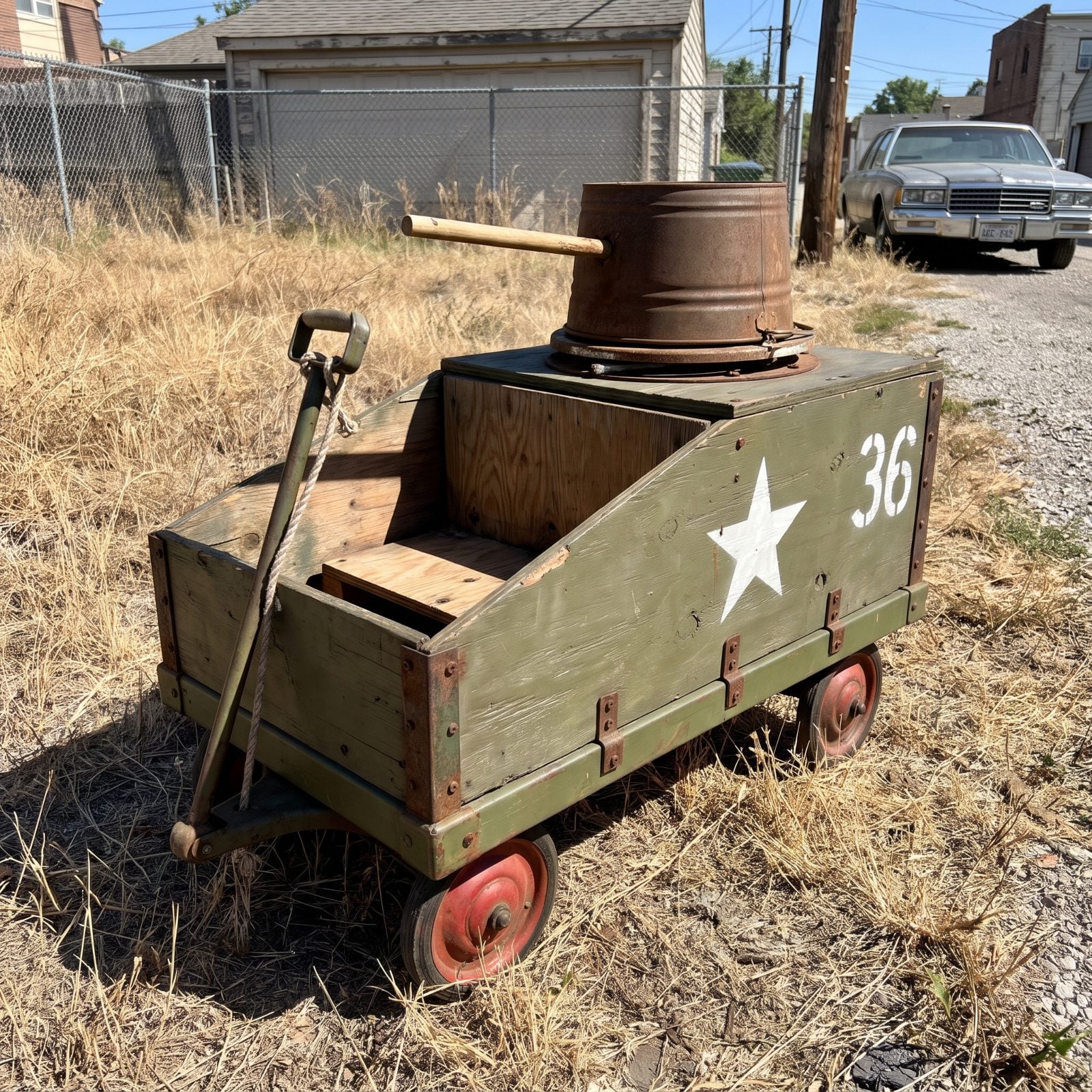
Olive drab paint, a broomstick cannon, and a turret made from a nail keg spinning on a scrap lazy-Susan. This was the backyard arms race, and nobody was conceding.
The trouble hiding under the paint is all that weight up high. A rotating turret and a plywood hull put the center of gravity exactly where you don’t want it on a two-foot-wide chassis. Point it downhill and it handled like an actual tank — went where momentum said and ignored the driver entirely. Loved the ambition. Feared the corners.
2. The Rolling Picnic-Table Wagon With Bench Seats
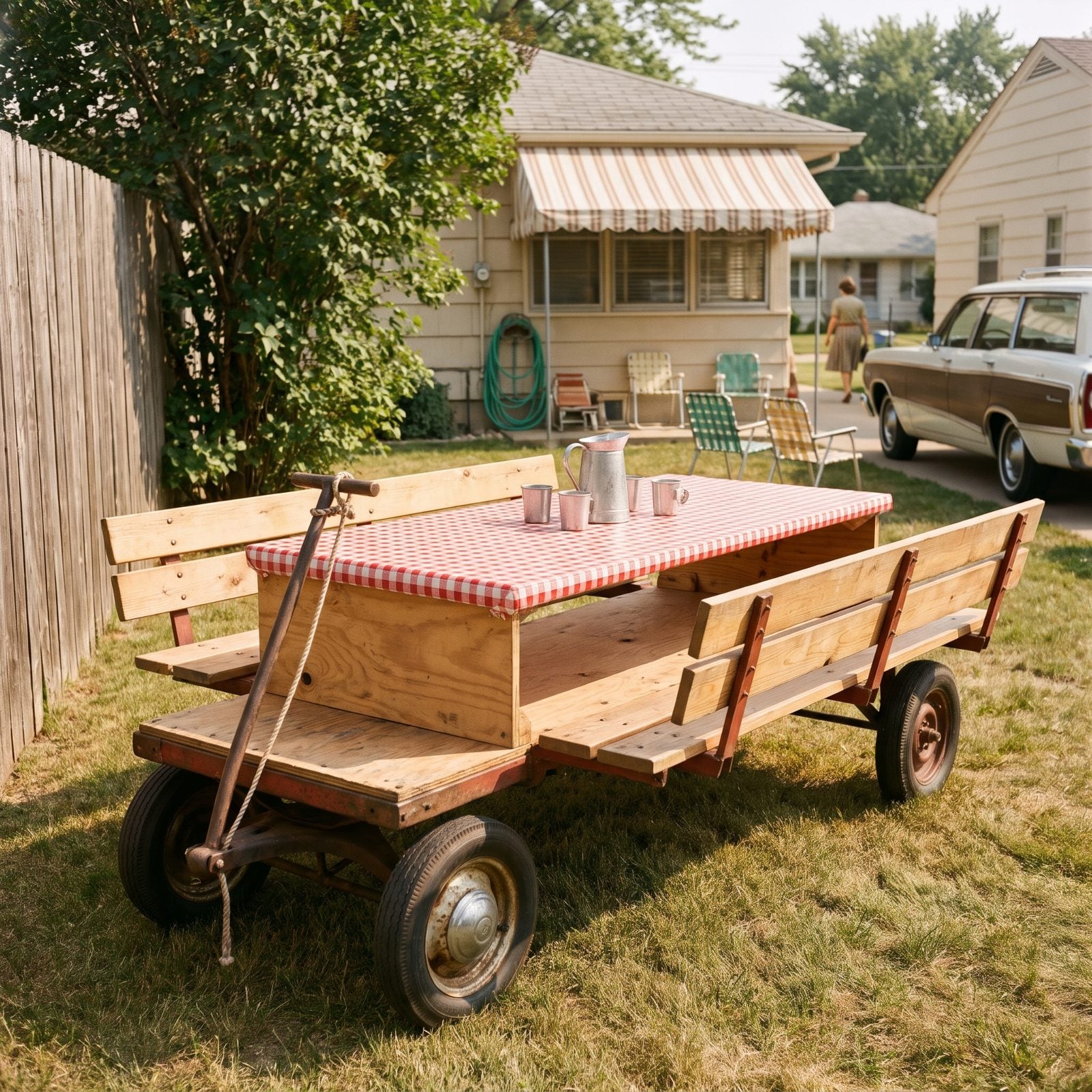
Face-to-face bench seats with a plywood table between them, rolling on four mismatched wheels. The most sociable thing on this list, and the most confused about what it wanted to be.
You can’t eat and steer at once, and you certainly can’t do either facing backward. The checkered cloth and tin cups were optimism made physical. But of everything here, this one fails the gentlest — too long and too awkward to ever get going fast. Slow and ridiculous beats quick and lethal every day of the week.
1. The Bathtub Kart With a Rear-Mounted Engine
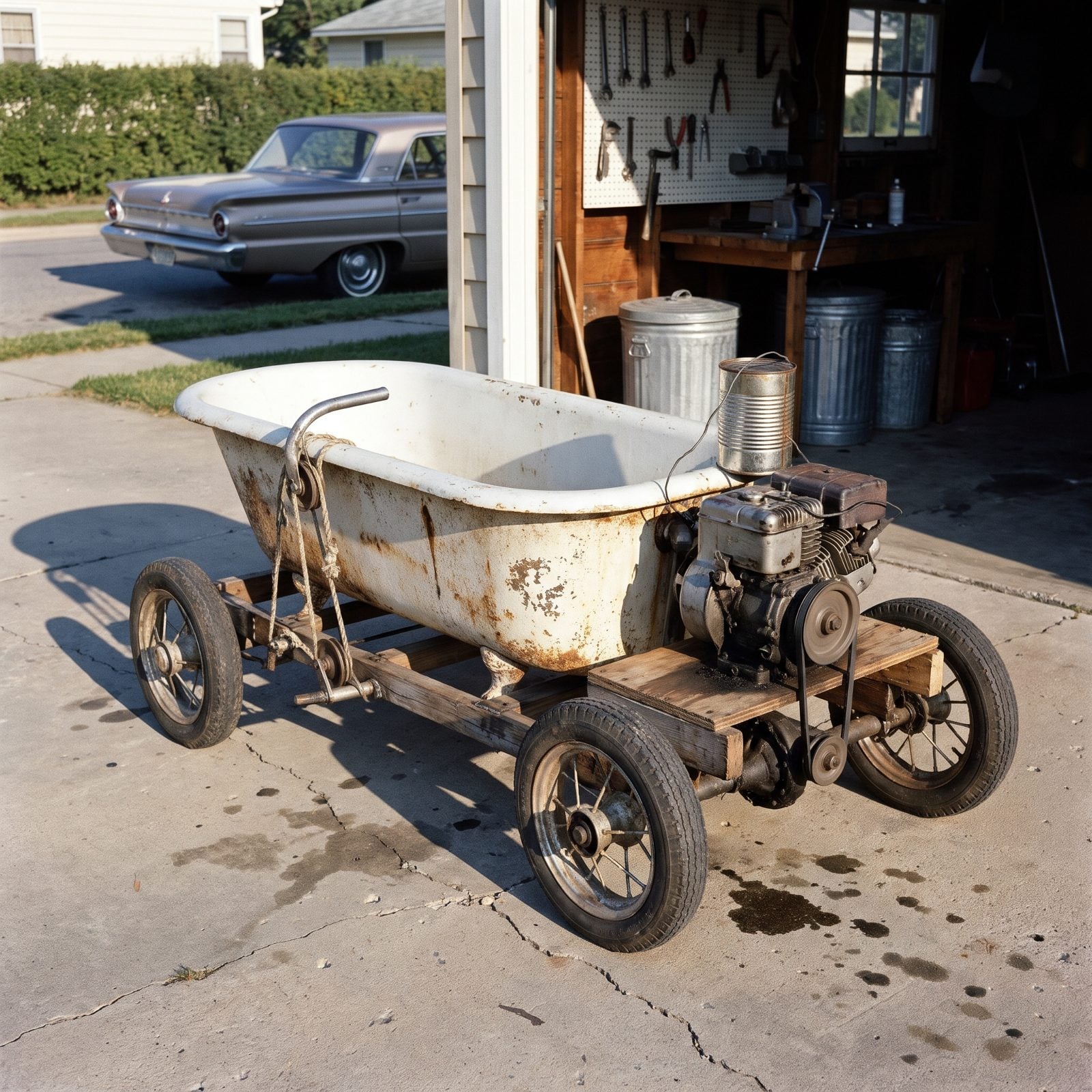
A claw-foot tub, a lawn-mower engine, and the unshakable belief that a bathtub is basically a car seat waiting for wheels.
Cast iron is heavy, which helps it hold a line and hurts in every other way. No belt guard, no padding, no restraint, and enamel over iron has exactly zero give when you meet a curb. The bent-pipe hand lever and rope-pulley steering are the sort of improvisation you have to respect even as you back slowly away from it.
Of all the backyard builds, the engine-in-a-bathtub is the one that most plainly says the goal was speed first and survival second. Beautiful nerve. Terrible brakes.