
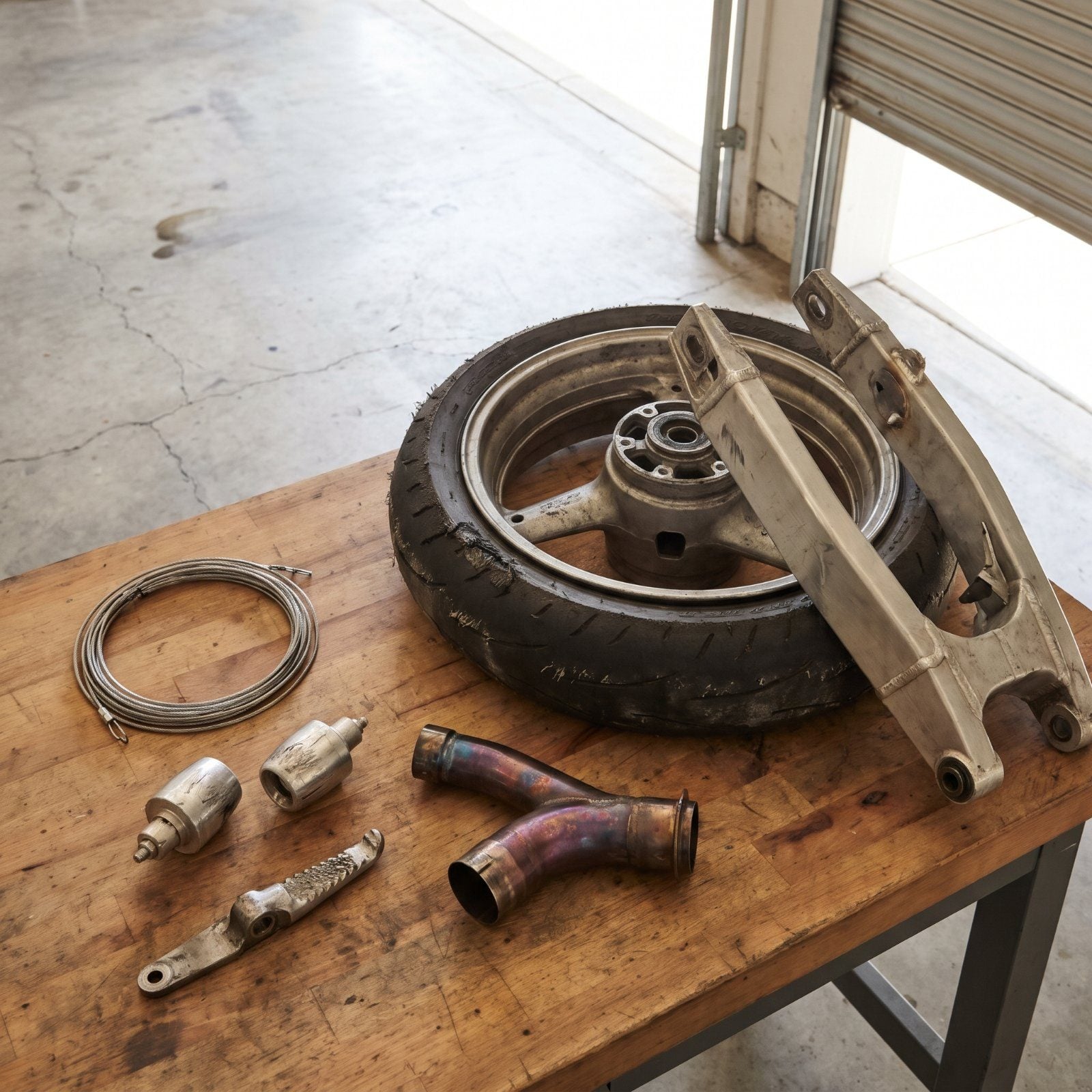
A clean tank and a fresh wash hide a lot. What they can’t hide is how a bike was ridden, because the machine keeps a record whether the seller wants it to or not. Metal remembers heat, rubber remembers wheelspin, and the footpegs remember the exact lean angle where somebody got brave. You don’t need a lift and a torque wrench to read any of it — you need to know where to look and what the clues actually mean. These are the marks that separate a commuter from a bike that spent its weekends getting thrashed, and they show up long before the engine ever lies to you.
Please note that some of the images in this article were created with the assistance of AI.
37. Drilled Fasteners and Leftover Safety Wire
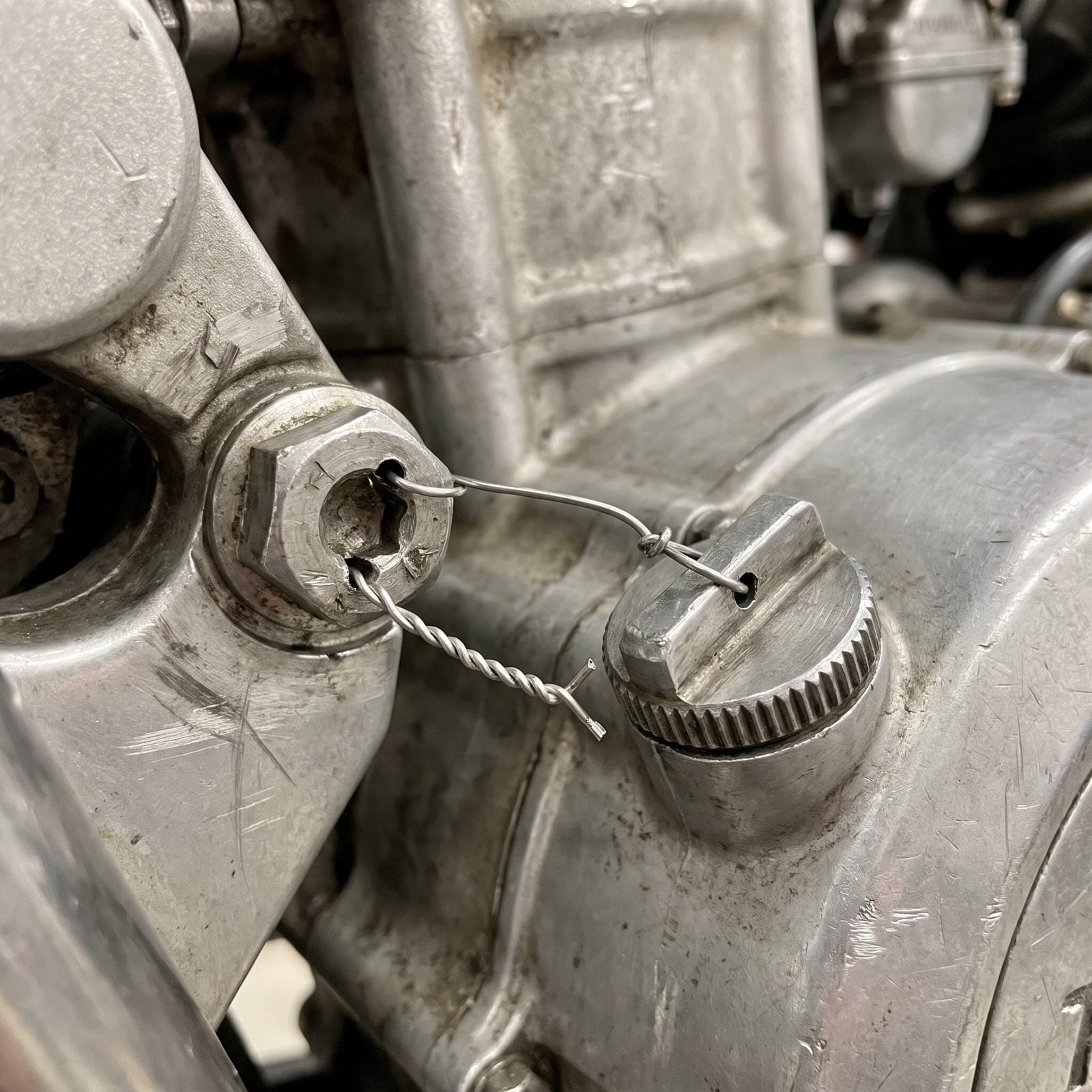
Safety wire is the single most honest clue on a used bike. Street riders don’t drill their bolt heads or loop twisted stainless wire around their plugs and caps. Track organizations require it, because it keeps a drain plug or filler cap from backing out and dumping oil onto someone’s front tire at 120.
Even with the wire pulled, the holes stay forever. Check the oil drain plug, filler cap, caliper bolts, and axle nuts. Little holes through the heads mean this bike saw tech inspection and a starting grid — which means it also saw the kind of riding a tech inspection exists to survive.
36. Rubber Marbles Trapped Under the Bodywork
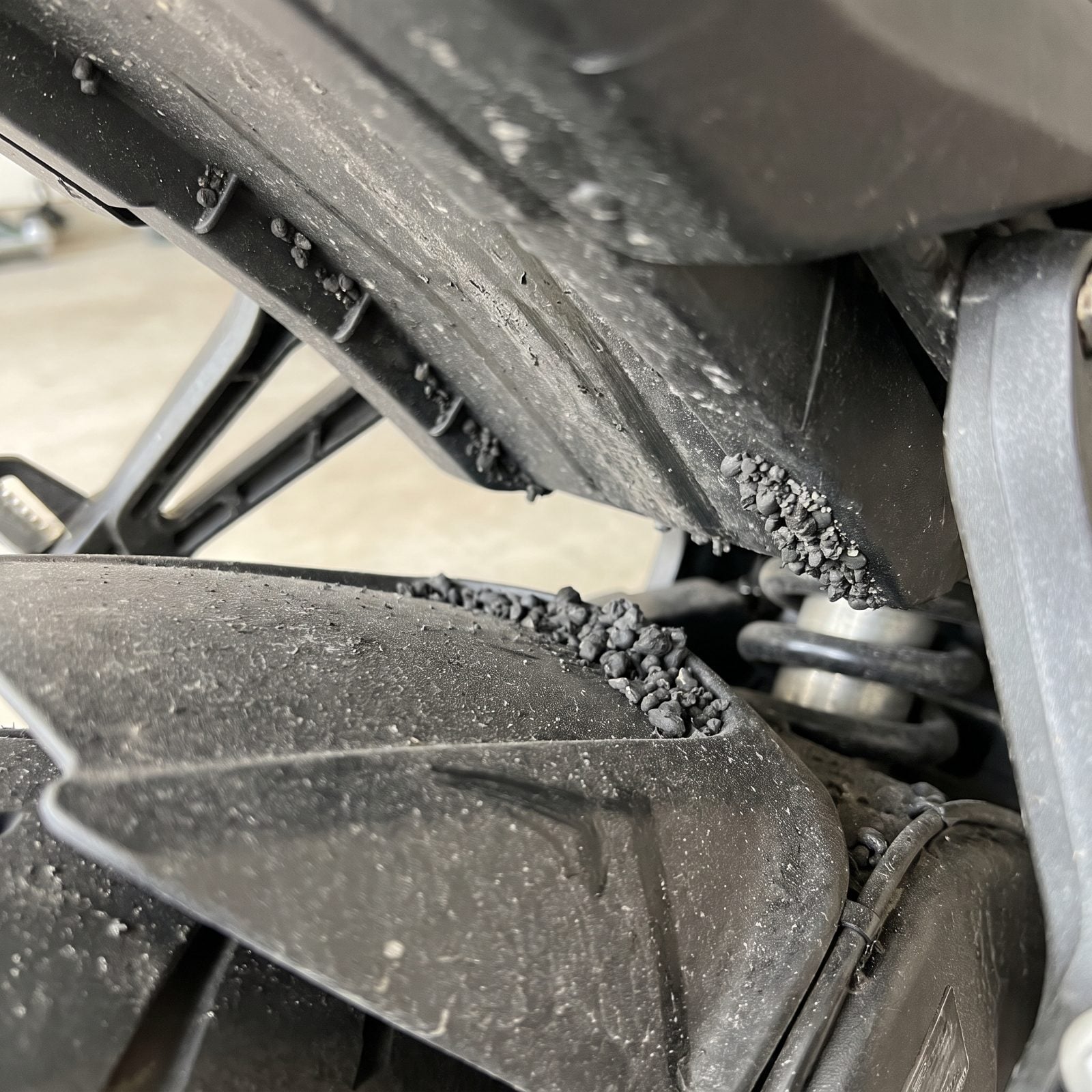
Peek under the rear bodywork and the tail section with a flashlight. Find little dark rubber beads wedged in the crevices and you’re looking at a bike that’s been spun up hard on sticky tires.
Those pellets are shed tire rubber — the same stuff that balls up in the gutters at a track day. A tire getting worked to temperature throws them off, and they lodge where nobody bothers to clean. Commuter tires at legal speeds don’t produce them. A handful tucked behind the shock tells you this machine got ridden somewhere with corner workers and a medical tent.
35. Burnout Residue Inside the Rear Fender
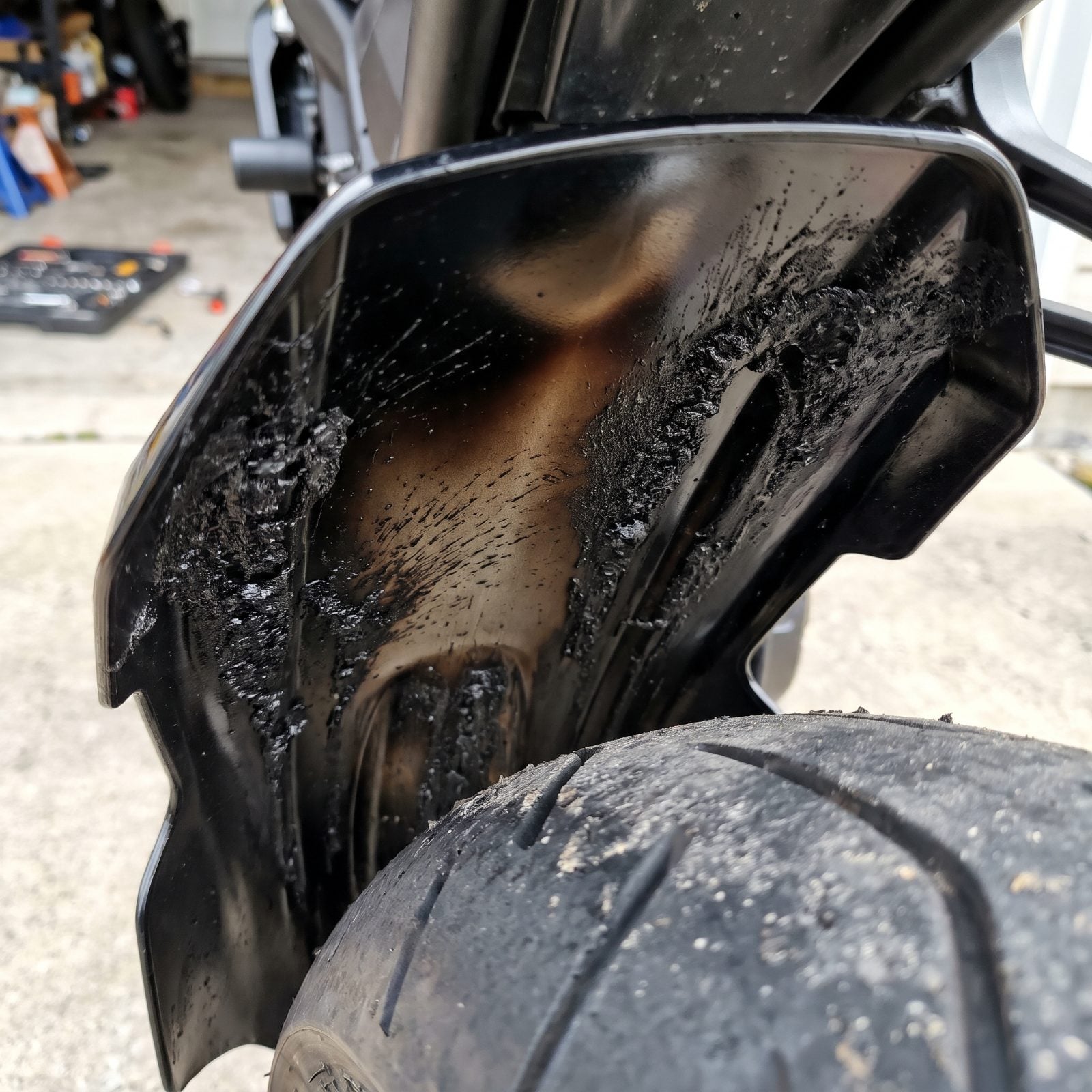
A burnout leaves a signature you can’t scrub off. When somebody holds the front brake and lights up the rear, the tire liquifies and sprays a thick black coat across the inner fender and the swingarm.
Street riding never builds that kind of layer. It’s a baked-on tar crust, often with a brown heat bloom in the center where the rubber got hottest. And a rider who does burnouts for fun is a rider who dumps the clutch, over-revs a cold engine, and treats the driveline like it’s disposable. Clutch, chain, sprockets, rear bearings — they all pay for that habit. Budget accordingly.
34. Ground-Down Footpegs and Feelers
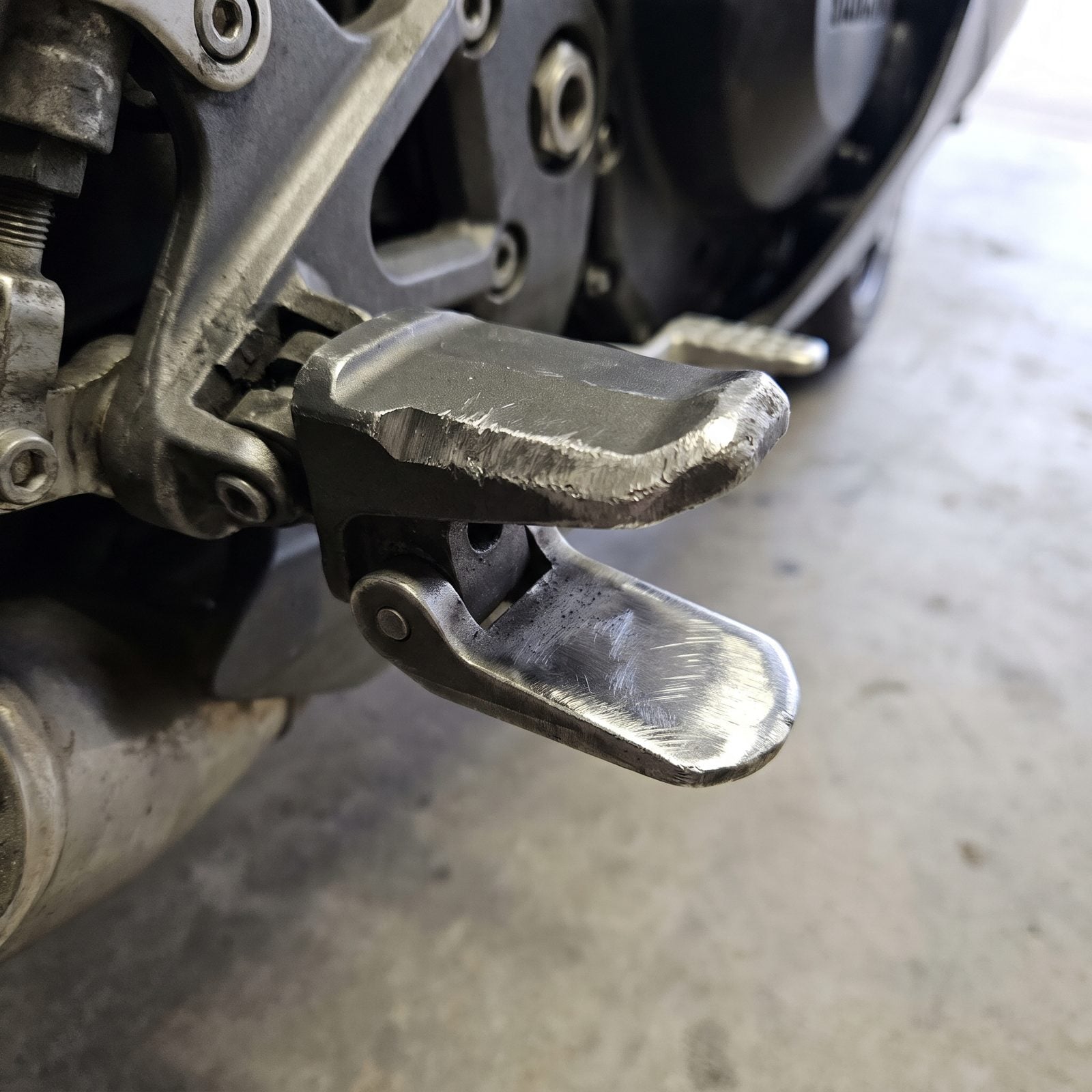
Footpeg feelers are the little folding tabs that hang below the pegs. Call them a built-in lean-angle gauge, and an honest one.
A ground-flat feeler means the rider was dragging hard parts through corners, at lean angles most street riders never reach. One side worn more than the other is common and tells you which direction they pushed hardest. Once the feelers are gone and the pegs themselves start grinding, you’re looking at someone who found the edge on a regular basis.
33. Melted, Pilled Rubber Along the Tire Edges
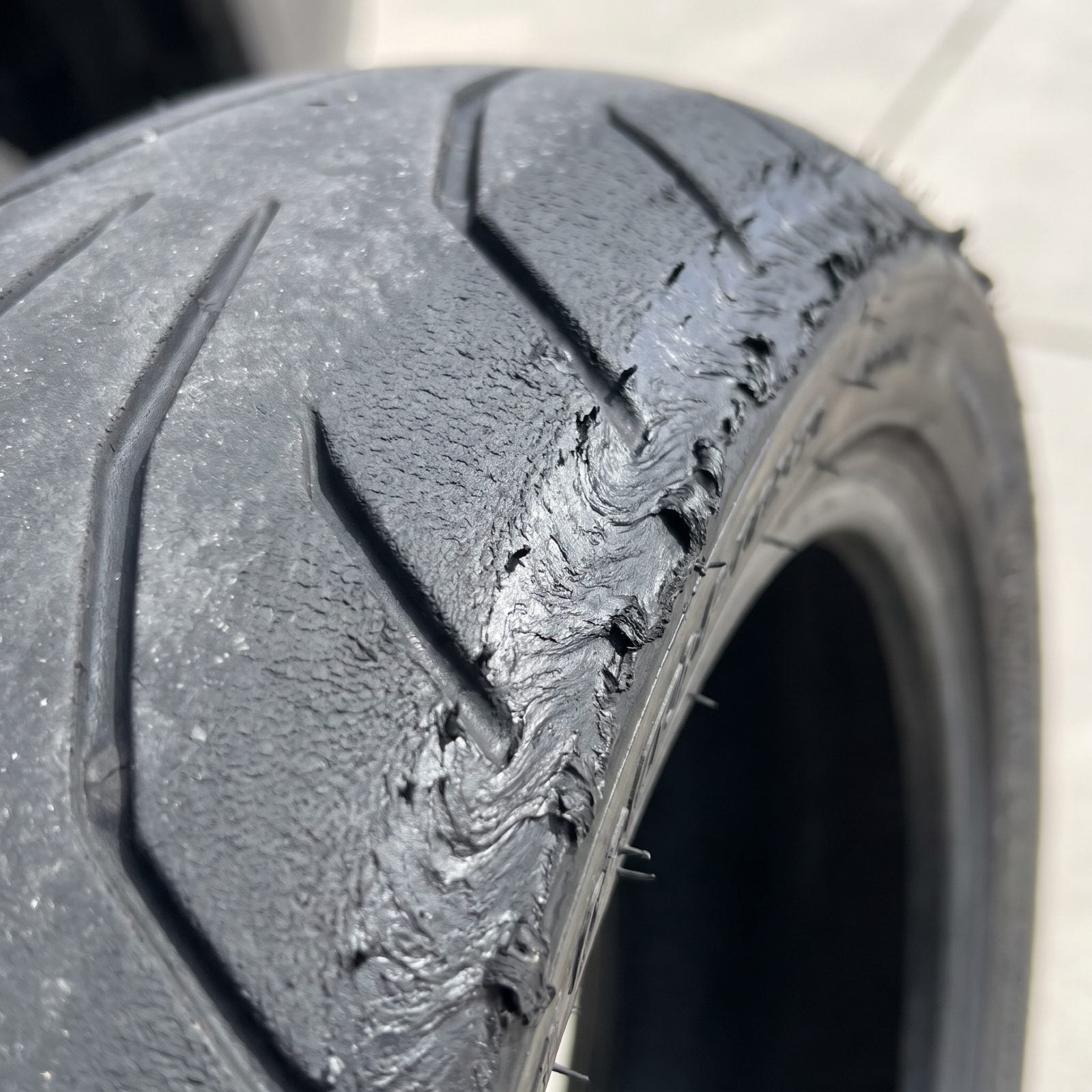
Run your fingers along the outer edge of the tires. If the rubber there is pilled into tiny rolled tags and looks smeared, almost waxy, that tire has been pushed well past its working temperature.
Riders call it rolling or blue-ing the edge. It’s the look of a tire that got hammered through hard, repeated corners until the surface liquified and smeared, and you only see it from aggressive canyon runs or track laps. A gentle commuter wears the center flat and leaves the shoulders looking factory-fresh — the exact opposite of what’s in front of you.
32. A Squared-Off Rear Tire With Torn Shoulders
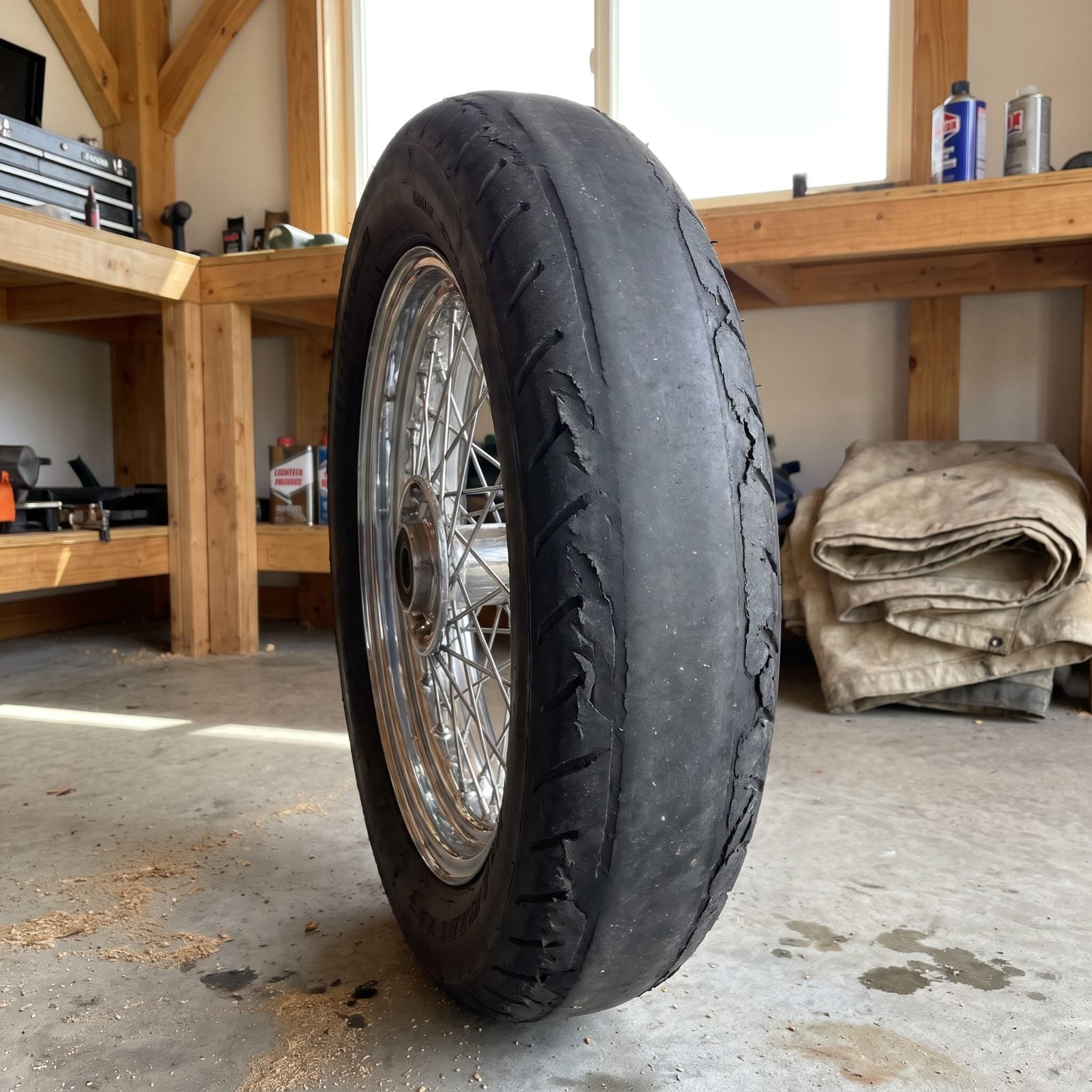
Look at the rear tire’s cross-section shape head-on. A squared-off profile, flat across the center with a sudden drop to the edges, tells a story.
It usually means a lot of hard acceleration and straight-line miles — drag-strip or stoplight launches — combined with aggressive corner edges that got chewed. The feathered, torn shoulders are the tell that it wasn’t just highway cruising. A tire ridden evenly keeps a rounder profile longer. Flat band down the middle, shredded edges? You’re staring at the wear pattern of someone who rode this thing like they stole it.
31. Blued or Purple Exhaust Headers
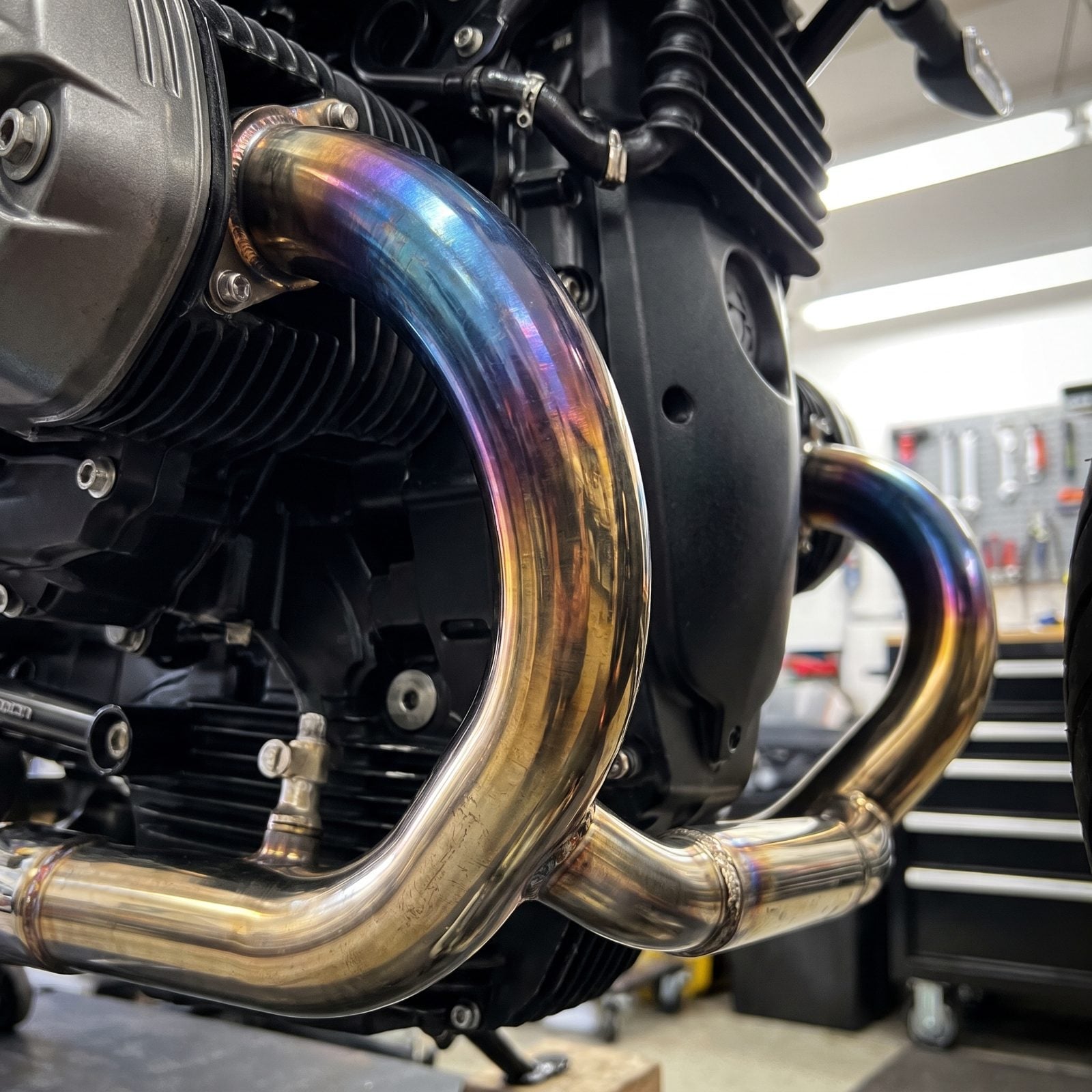
Stainless headers change color with heat, and the color is a thermometer you can read with your eyes.
A light straw or gold tint near the head is normal on hard-working bikes. When the blue and purple creep well down the pipes, that header has seen sustained high RPM and heat loads — wide-open track sessions or long stunt idling. One header bluer than the others can also hint at a cylinder running lean or hot. Not automatically fatal, but a deeply colored set of pipes means this engine spent real time near its limits, not puttering to the grocery store.
30. Blued or Heat-Spotted Brake Rotors
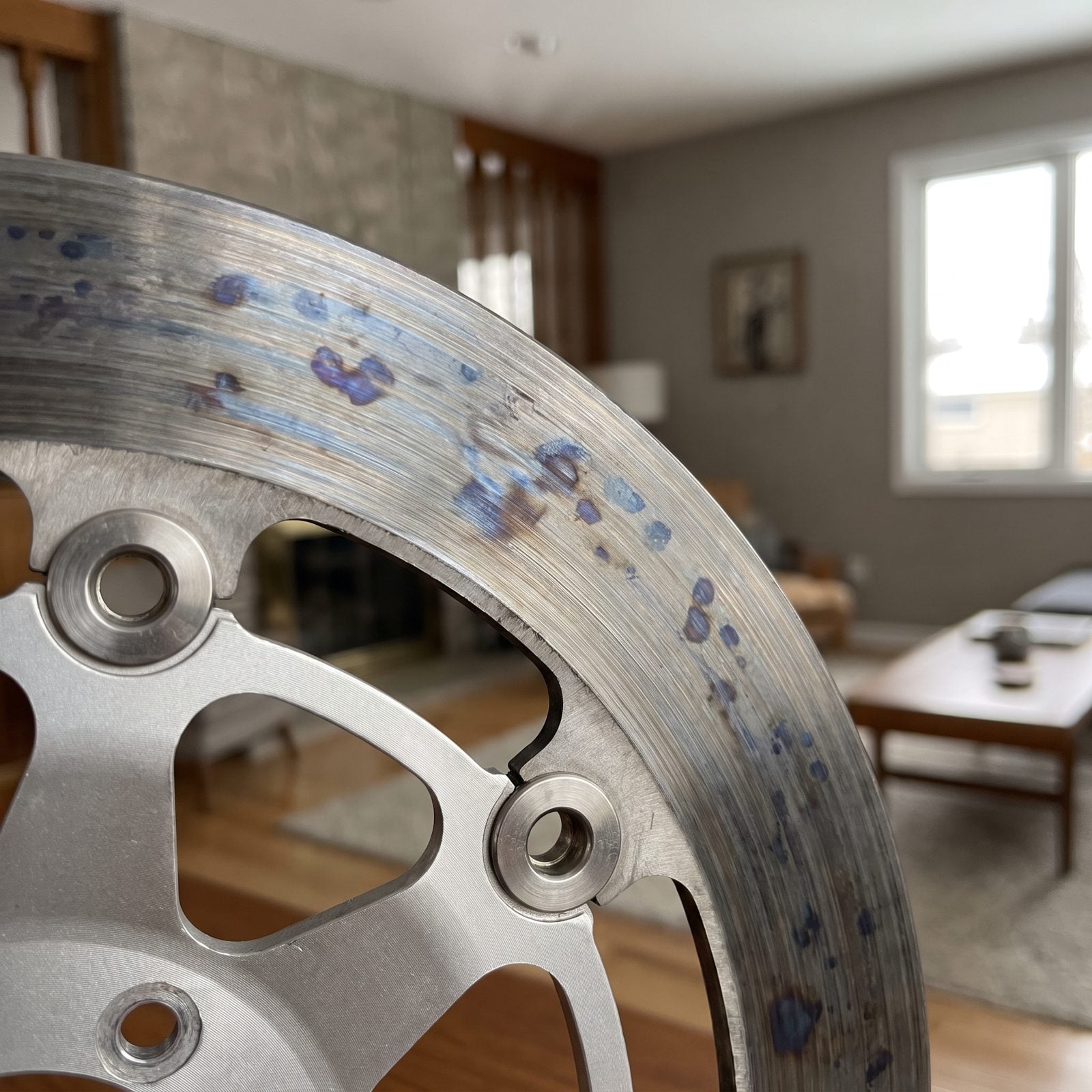
Blue patches on a brake rotor mean the brakes got cooked. That’s trail-braking deep into corners lap after lap, or hard repeated stops from high speed.
Street brakes rarely see enough sustained heat to bruise the steel blue. Spot that discoloration and check the rotor for warping too, because overheated rotors often end up slightly wavy and give you a pulse through the lever. Blued, heat-spotted rotors are track-day evidence and a line item at the same time, since warped rotors are a replacement job, not a clean-up.
29. Battered Steering Stops
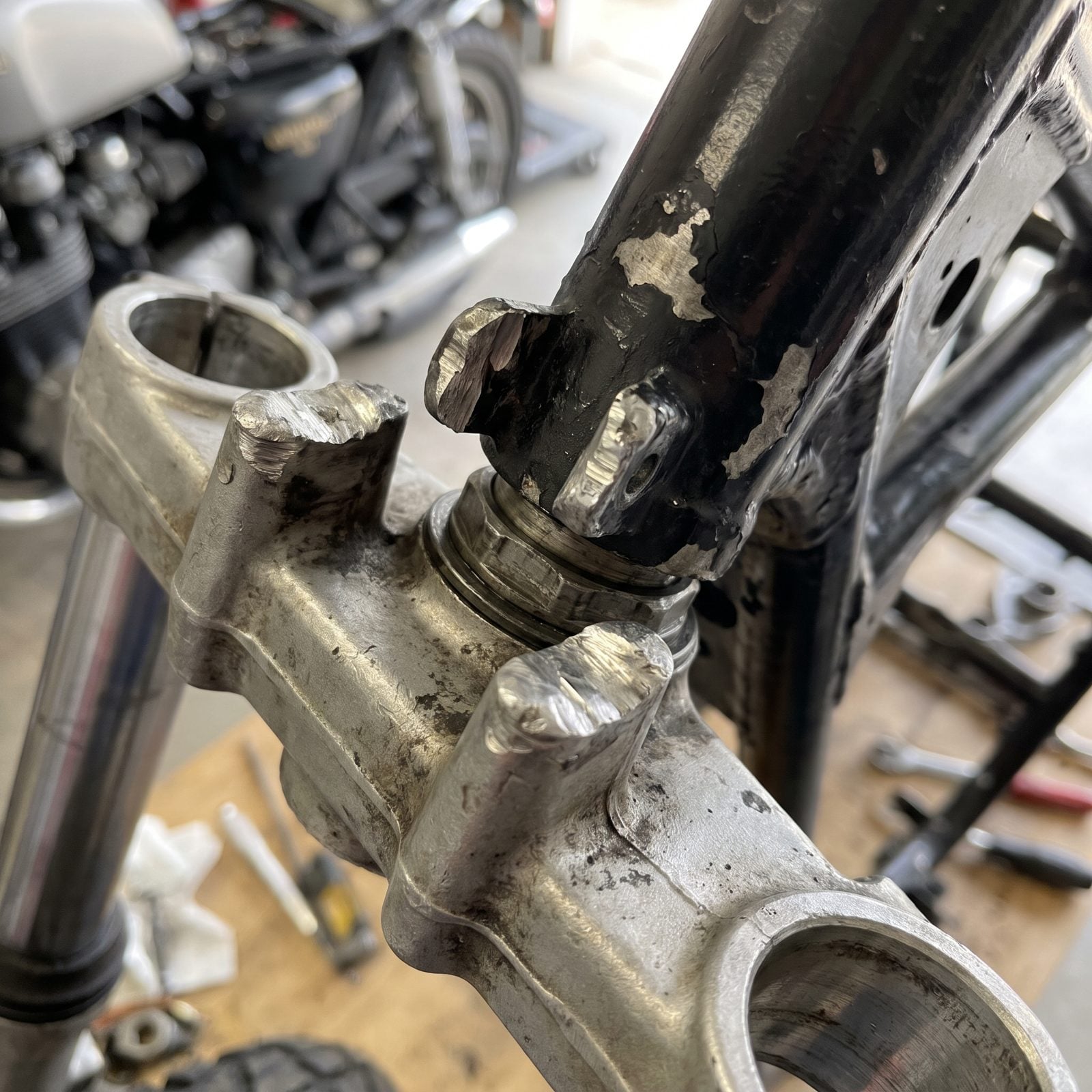
Turn the bars fully left and right and look at the steering stops — the little tabs on the frame and triple clamp that limit how far the bars swing.
Fresh dents, mushroomed metal, and bright gouges where they slam together usually come from hard impacts or tank-slappers, those violent handlebar oscillations that follow a wheelie gone wrong or a crash. A bike that’s been dropped or looped drives the forks past normal travel and hammers these stops. Clean stops with just paint rub are fine. Mangled ones say the front end took a serious hit at some point, and that’s worth a very close look at the forks and frame.
28. Rashed Bar Ends
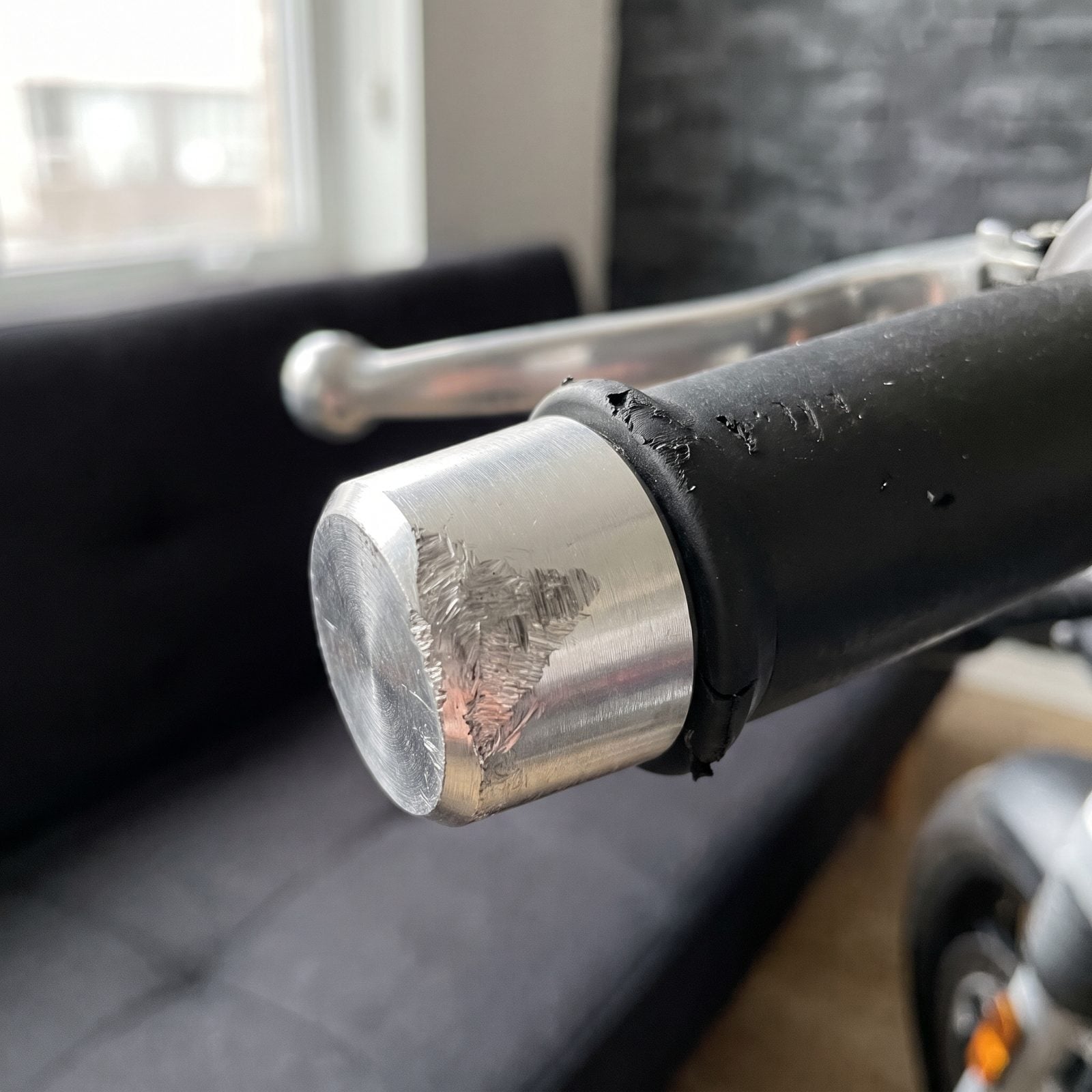
Bar ends tell on a tip-over faster than anything. They’re the first thing to touch pavement when a bike goes down, so a flat ground facet on one means this machine has kissed the ground at least once.
Check both sides. Matching rash on both ends is suspicious, since a bike doesn’t usually fall on both sides in one life unless it’s been down more than once. Pair rashed bar ends with scuffed lever tips, scraped engine covers, or fresh replacement plastics, and you’ve found a crash the seller forgot to mention. One tip-over in a parking lot is forgivable. A bike wearing crash marks on every contact point is telling you how its last owner rode.
27. Scuffed Brake or Clutch Lever Tips
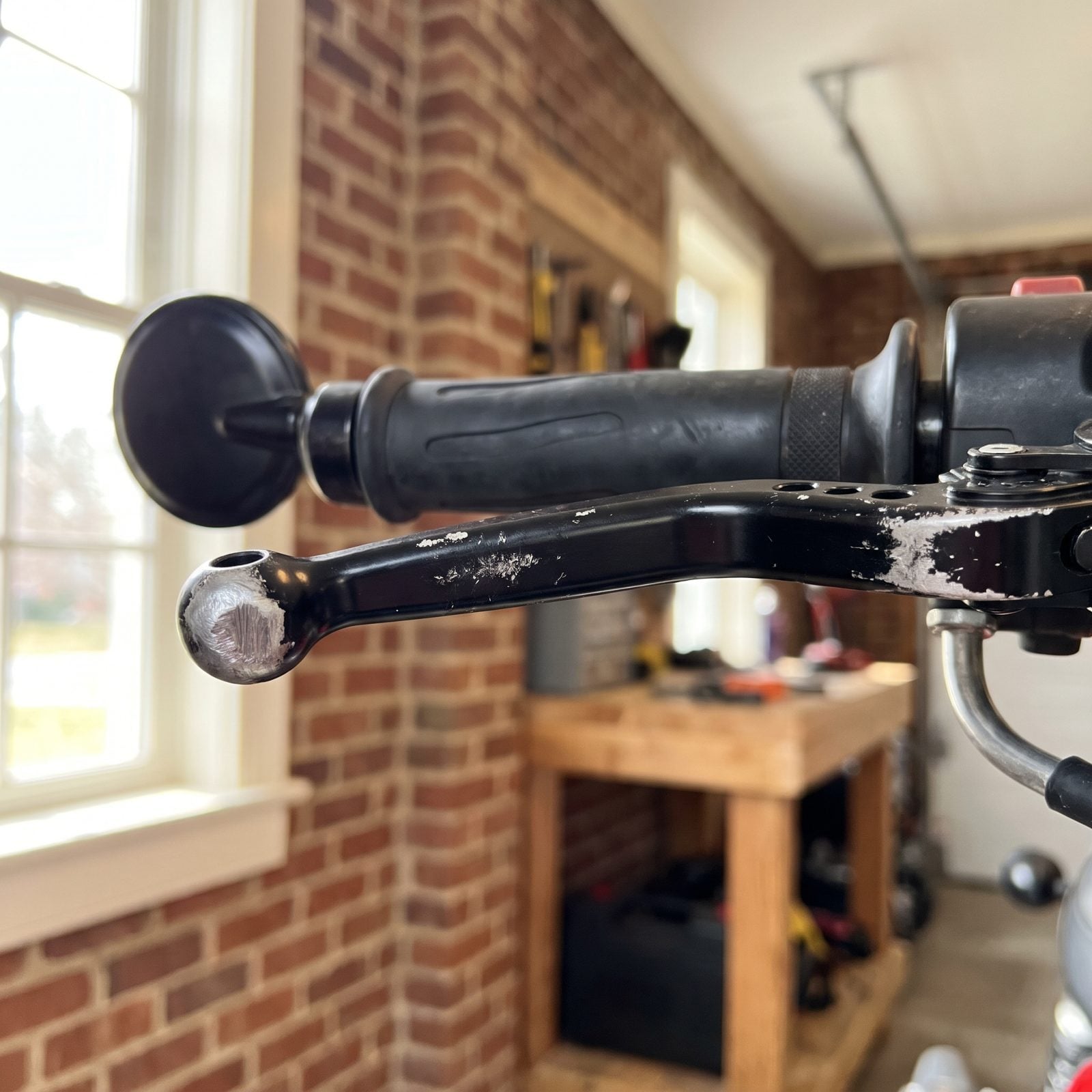
Start at the ends of the levers. Factory lever tips are rounded little balls of alloy, and when a bike goes down those tips hit the ground first and grind flat, leaving a bright scuffed facet that no amount of polishing hides.
One scraped lever can mean a low-speed tip-over in a parking lot. Nothing to panic about. But look for the pattern: a scuffed lever plus a scuffed bar-end plus a ground mirror stalk on the same side tells you the whole bike kissed the asphalt, not just a clumsy moment at a stop sign.
26. Deep Scrapes on the Engine Cases
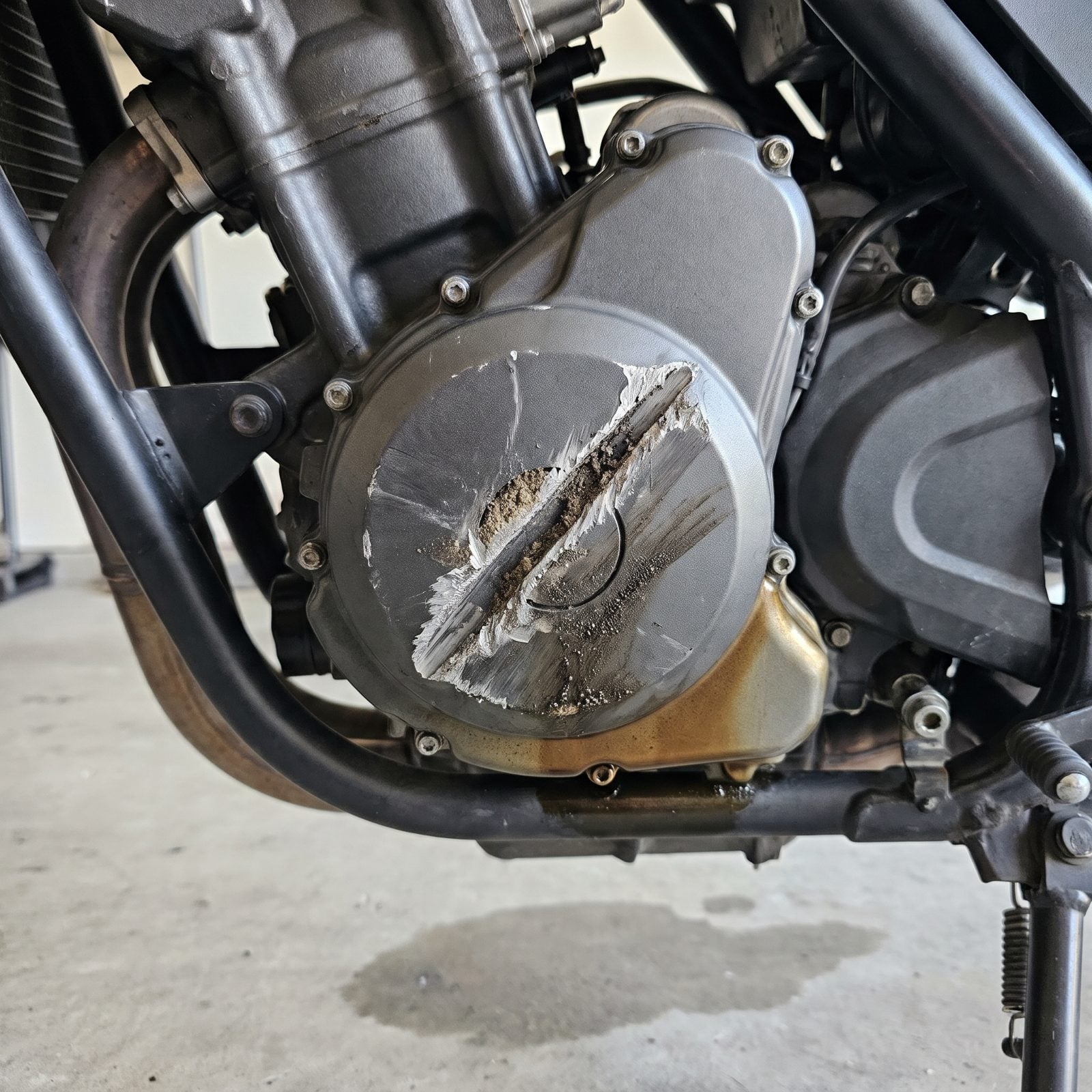
Engine cases don’t lie. They sit low and wide, so when a bike slides, the case grinds down to shiny raw aluminum. A scuff is one thing. A gouge deep enough to feel with your fingernail means the bike slid with weight on it.
Here’s what matters more than the cosmetic damage. A hard enough slide can crack a case or warp a cover’s sealing surface, and you’ll spot it as a weeping line of oil at the mating edge. That drip is the slide telling you it wasn’t gentle.
25. Fresh Case Covers on an Older Motorcycle
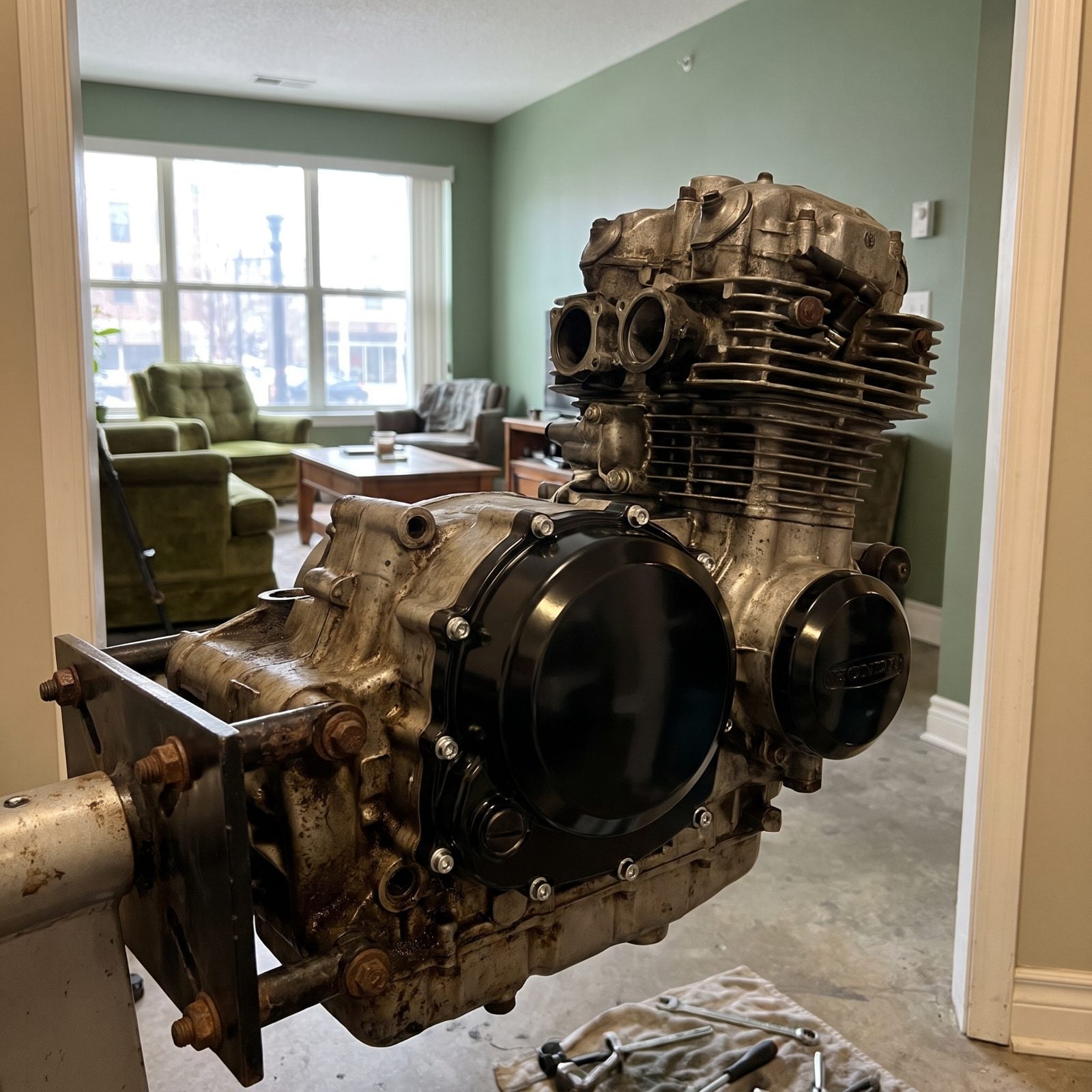
A spotless cover on a grimy engine is a confession.
Covers get replaced for one real reason: the old one broke or ground through in a crash. You’ll see it instantly. The engine wears years of baked-on road film, and then one panel looks like it came off the shelf yesterday, bright unweathered bolt heads and all.
Ask the seller directly. A good answer is “I dropped it in the driveway, cracked the cover, swapped it.” A long pause and a story that keeps changing? That’s your cue to check the frame, forks, and subframe twice as hard.
24. Dented or Flat-Spotted Wheel Rims
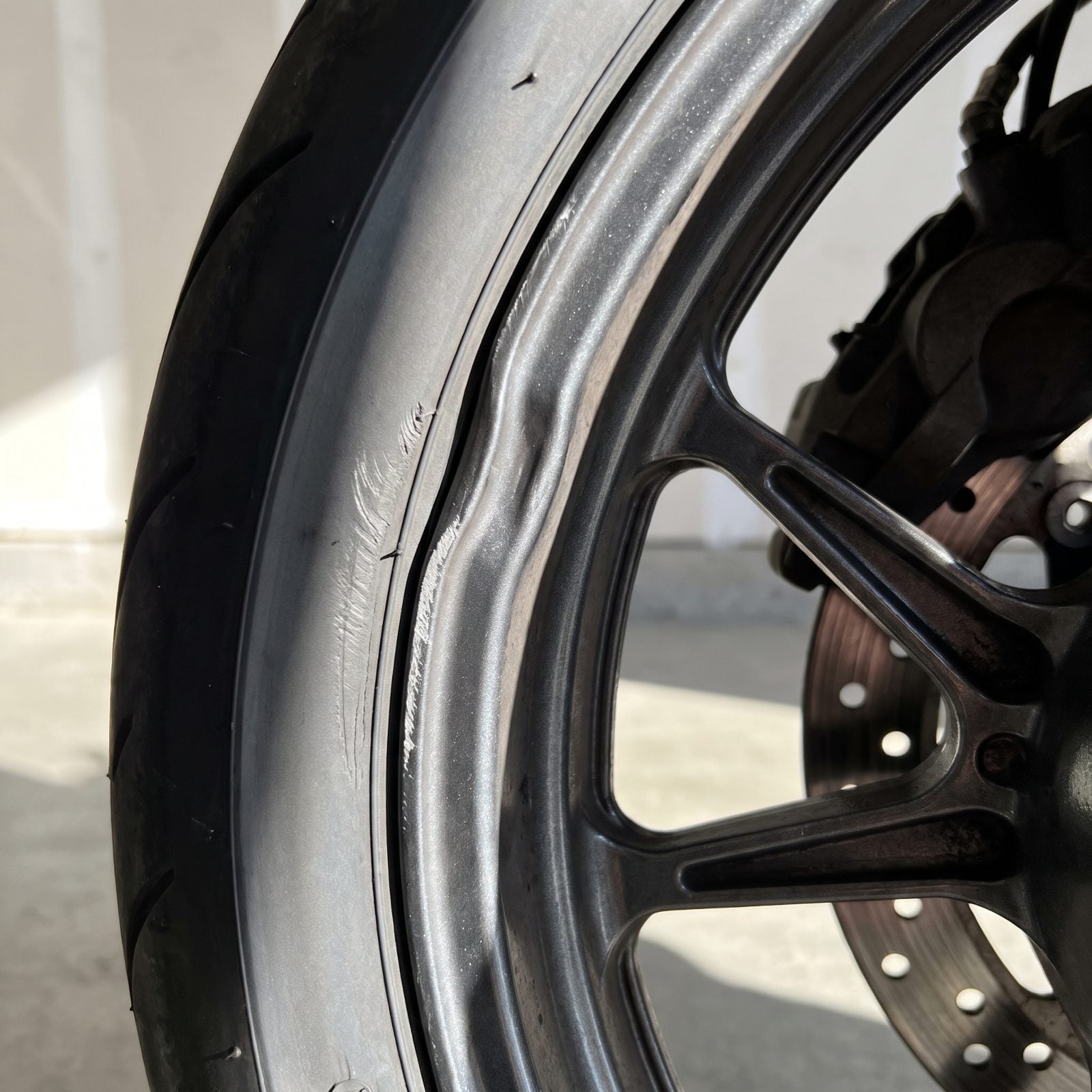
Spin each wheel slowly and watch the rim lip pass a fixed point. A flat spot or a dent will jump out as a wobble or a bright crease in the aluminum. Cast rims dent from potholes and hard landings, and a flat spot often means somebody jumped the bike or cased a curb at speed.
Why you care: a dented rim leaks air at the bead, won’t balance cleanly, and can crack later under load. Replacement is real money once you add a tire remount. Factor it in before you shake hands.
23. Twisted Forks or Misaligned Handlebars
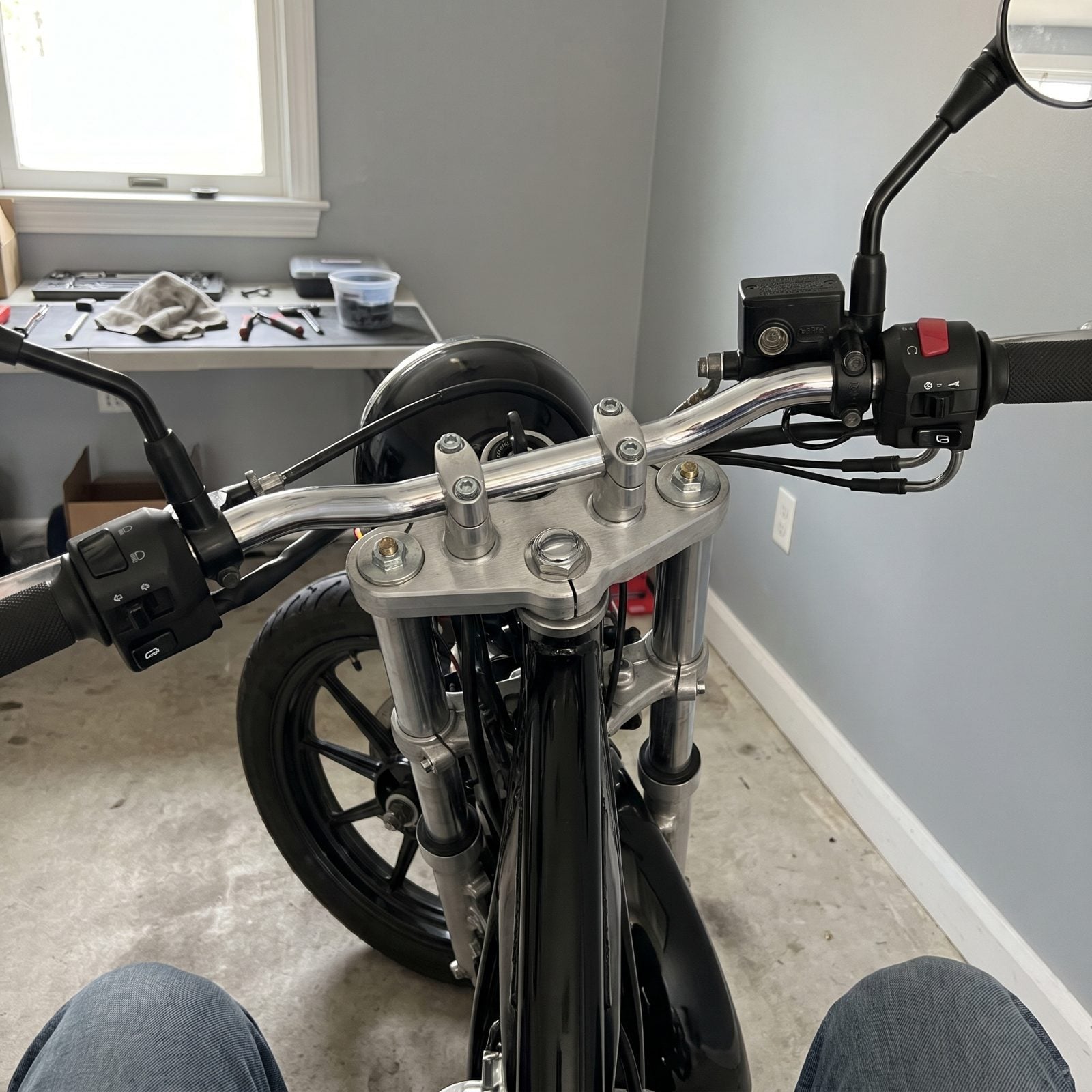
Put the front wheel against a wall or straddle it between your knees and lock it dead straight. Now look at the handlebars. If the wheel points one way and the bars point another, something in the front end got knocked out of line.
Sometimes it’s just loose clamps you can fix in ten minutes. Sometimes it’s bent forks or a tweaked triple clamp from a frontal hit. Sight down the fork tubes from the front too, because they should sit perfectly parallel. And a bike that always pulls to one side on the test ride is telling you the same story.
22. Leaking Fork Seals
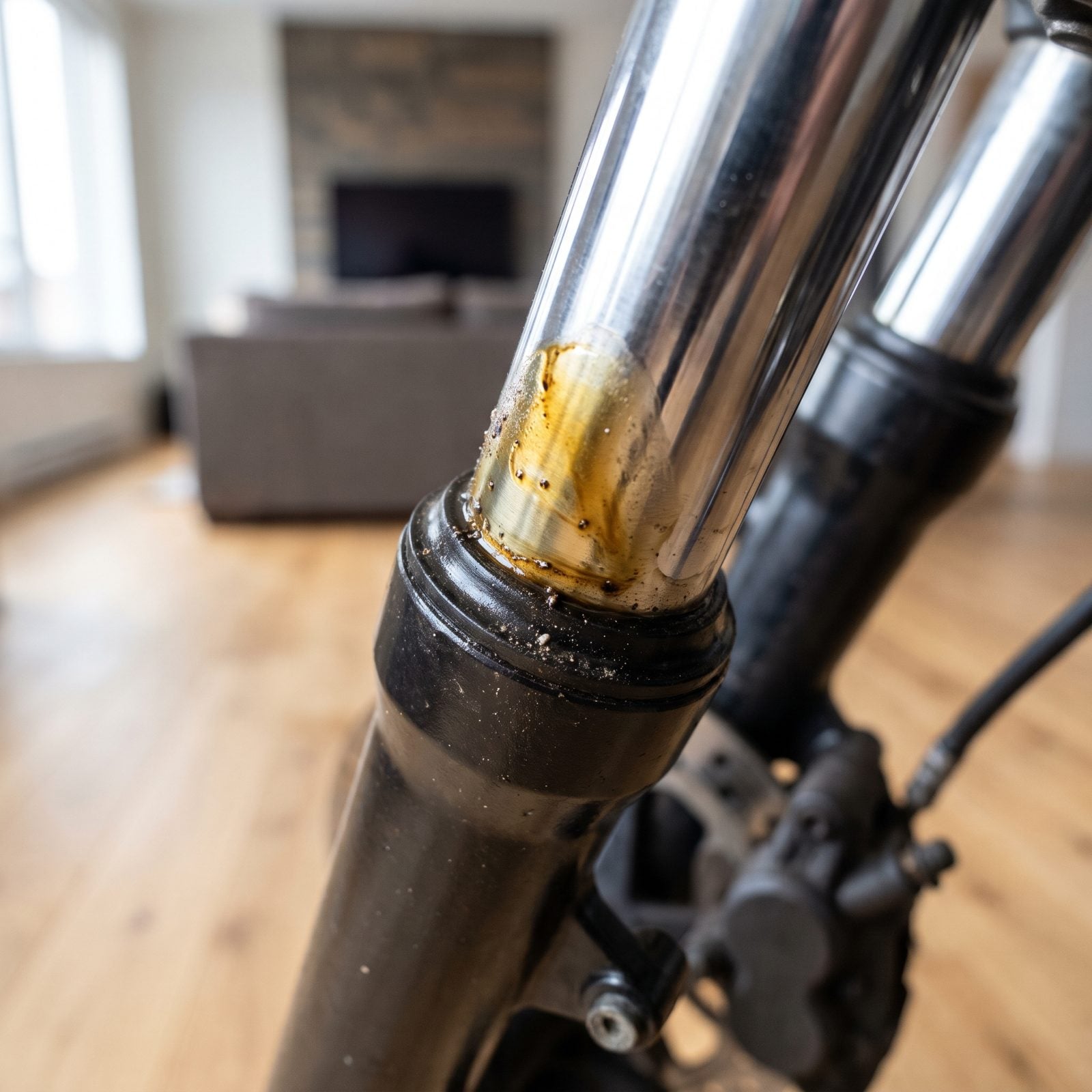
Look where the shiny fork tube slides into the dark lower leg. A wet oily ring with grit stuck in it means the seal is shot and your damping is bleeding away.
On its own, a leaking seal is cheap and common, a wear item nobody should fuss over. But chronic blown seals point to a harder life: lots of hard braking, big landings, or a rider who slammed the front end over and over. Push the forks down firmly and watch. Fresh oil wicking up means it’s leaking right now, not a stain the seller wiped once for the photos.
21. Pitted or Scratched Fork Tubes
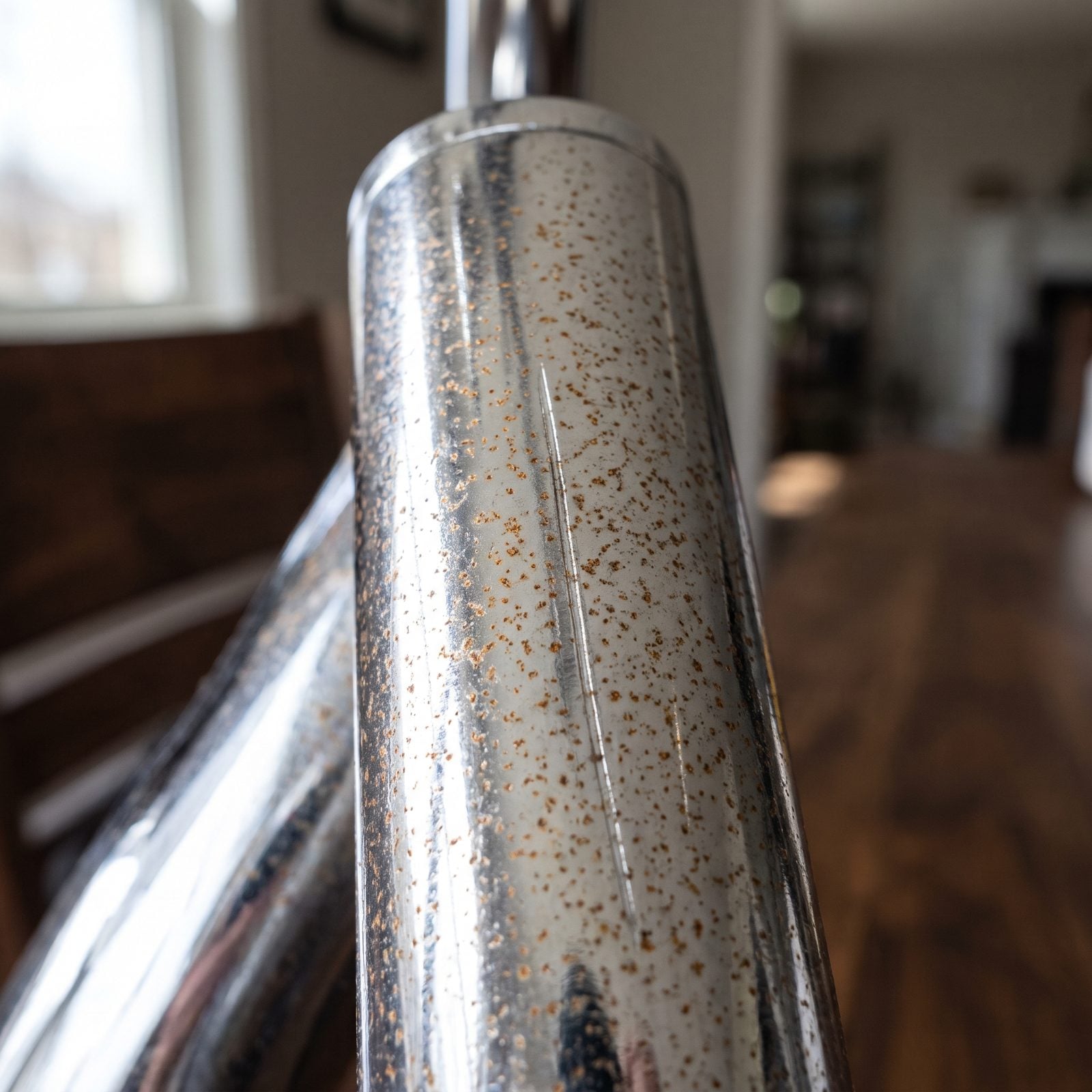
Run a fingertip gently up and down the exposed chrome fork tube. It should feel like glass. Pits, rust freckles, or a scratch line where the seal rides will shred a new seal within weeks and keep that fork leaking forever.
Where does the damage come from? Neglect, a bike left outside through salty winters, or grit driven into the chrome during hard off-road or crash use. Re-chroming or replacing fork tubes is not cheap. This is the hidden cost that quietly turns a bargain into a slow bleed from your wallet.
20. Play in the Swingarm Bearings
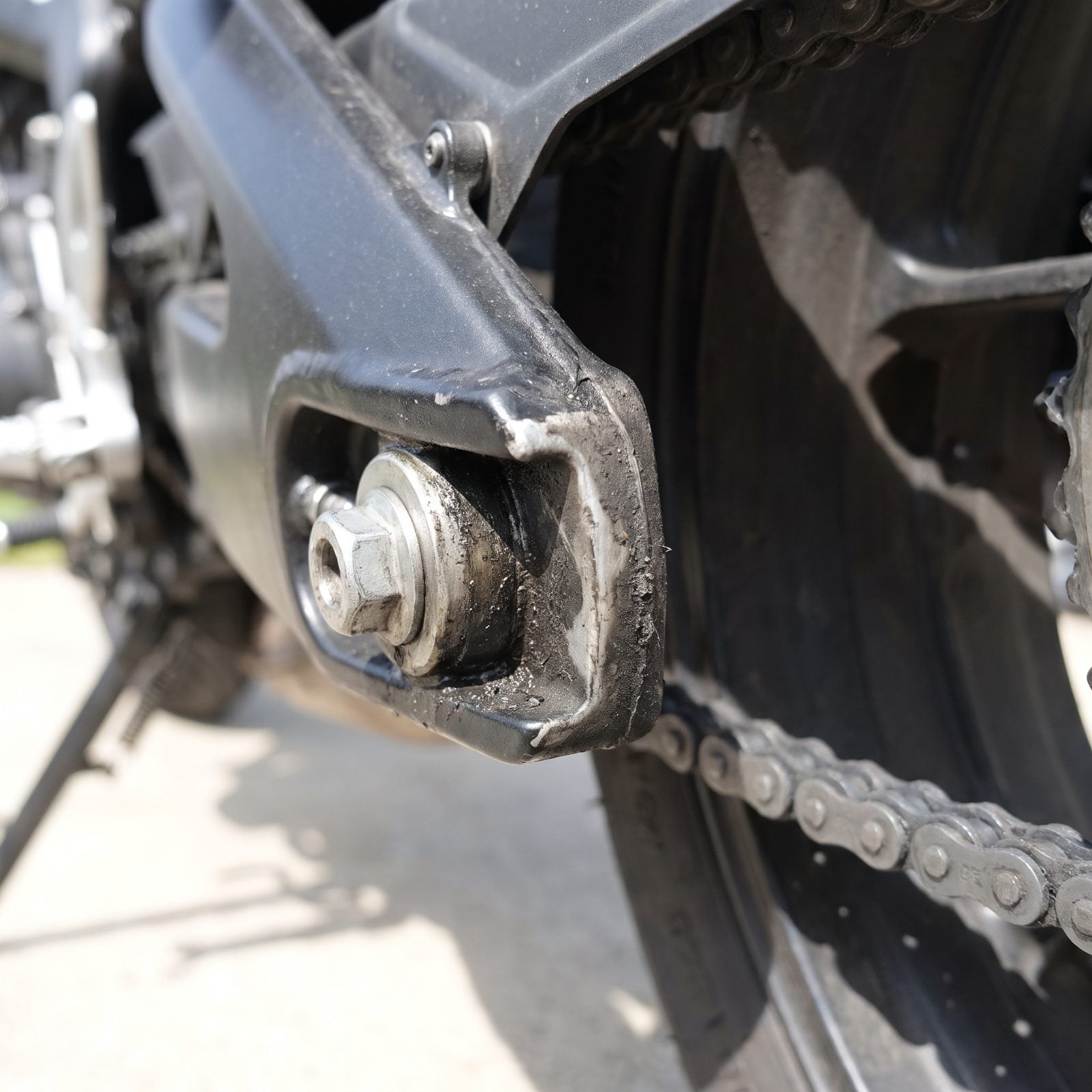
With the rear wheel off the ground, grab the back of the swingarm and push it side to side, not up and down. There should be zero lateral slop. Any wobble or clunk means worn swingarm bearings.
Here’s why that’s a red flag beyond the repair bill. Swingarm bearings wear from hard acceleration, wheelies, and chronic chain abuse, so a bike that’s been ridden like it’s always late to something eats these first. Side-to-side play makes the rear end feel loose and vague in corners, and it points to a hard life you’ll never see from the saddle.
19. Loose or Rough Wheel Bearings
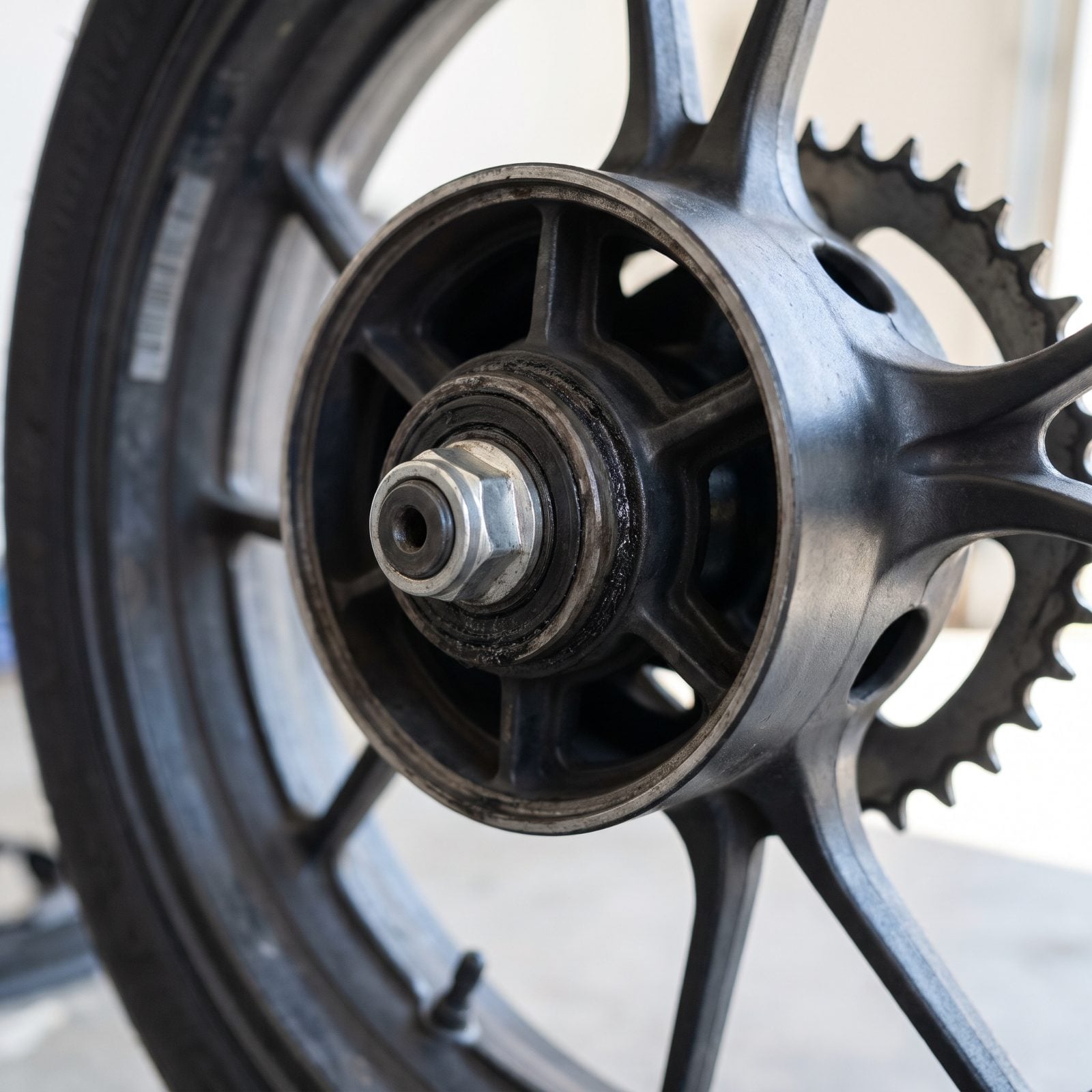
Lift each wheel and spin it. Listen and feel for a dry grinding rumble instead of a smooth quiet whir. Then grab the tire at top and bottom and rock it toward and away from you, and any knock means loose wheel bearings.
Rough bearings come from water intrusion, pressure washing, big loads, and plain hard miles. Cheap parts, but a safety item, so don’t shrug them off. On the test ride, a faint growl that rises and falls with speed is the same bearing talking to you through the frame. Walk the bike, listen, then ride it and listen again.
18. Oil Seeping From the Rear Shock
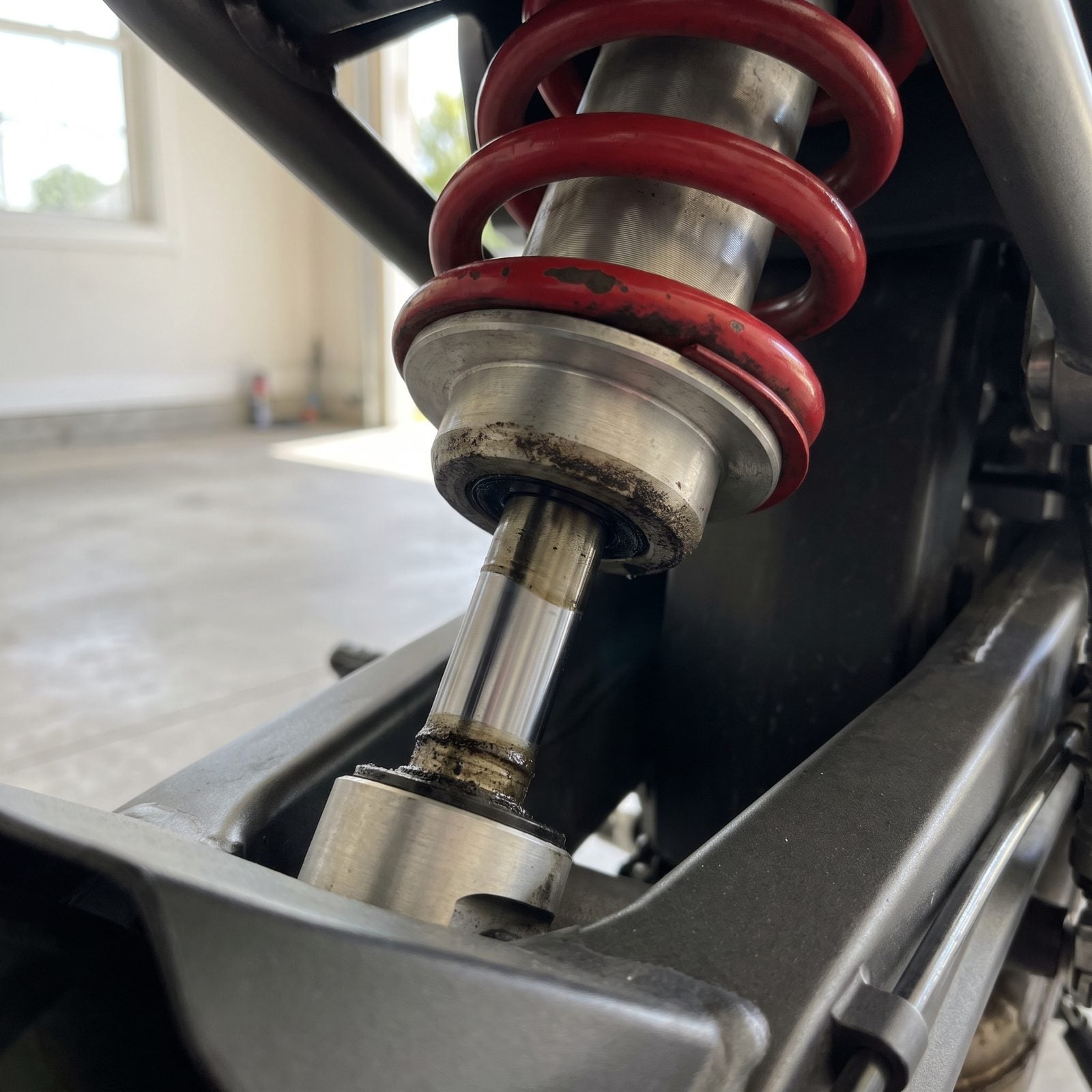
A dry shock shaft is a mirror. A tired one wears a greasy sleeve.
That thin film creeping down the chrome means the seal has let go, and seals give up after a season of hard compression — repeated hard landings, aggressive trail-braking, a rider who treated every on-ramp like a holeshot. The oil itself is cheap. What it tells you is not.
A blown shock makes the back end wallow over bumps and pogo under braking, and a rebuild or replacement runs a few hundred dollars once you add labor. Push down hard on the tail and watch it settle. Keeps bouncing past one return? The damping is already gone.
17. Hooked or Sharpened Sprocket Teeth
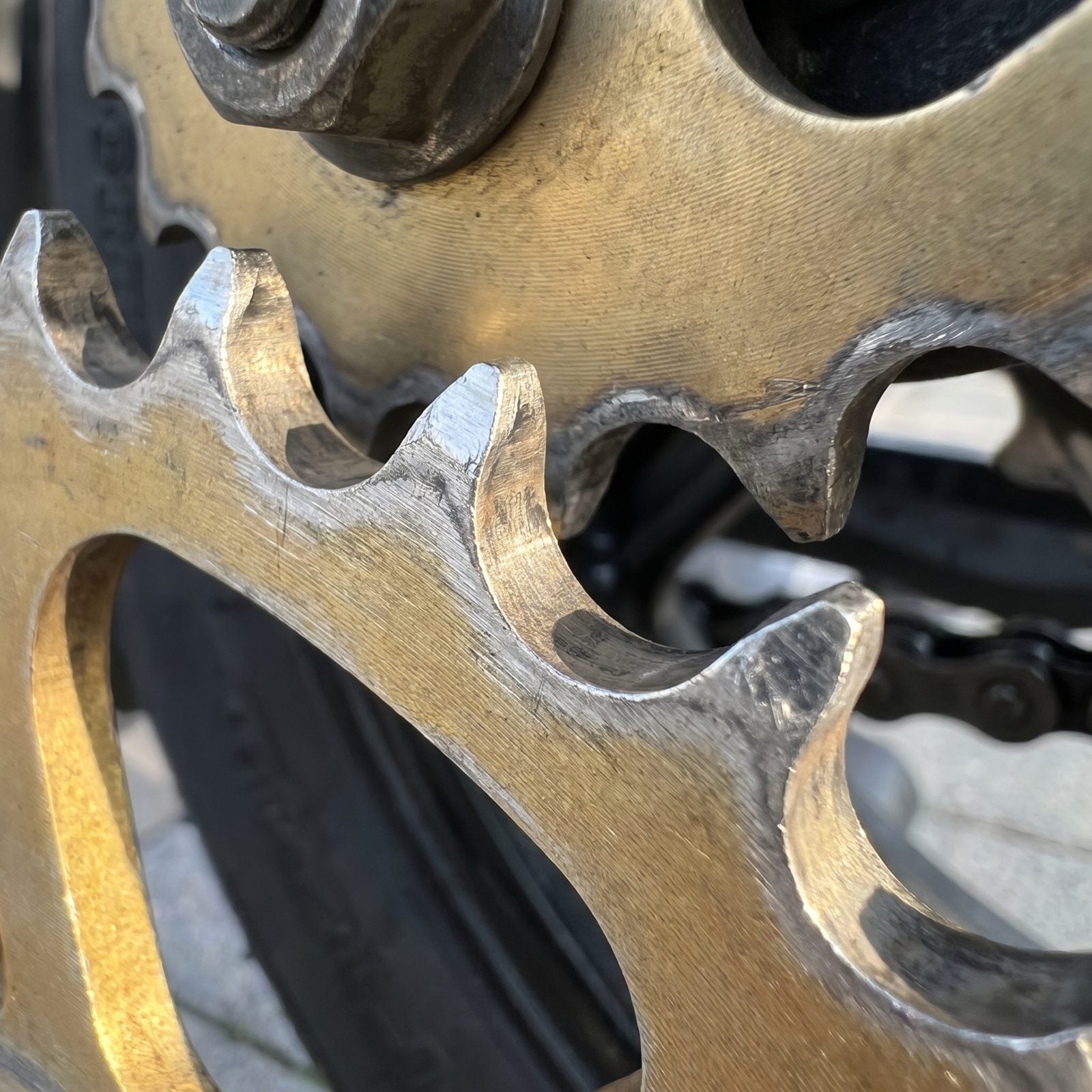
Look at the teeth in profile. New ones stand symmetrical, like little triangles, while worn ones lean over and curl into shark fins pointing the way the wheel turns.
That hook is a mileage odometer that doesn’t lie, and it points at a rider who ran the chain loose, dry, or both, dumping horsepower through it lap after lap. Hard launches grind sprockets faster than anything.
Here’s the part nobody mentions. Bolt a fresh chain onto hooked sprockets and you wreck the new chain in a weekend. It’s a matched set or nothing — front sprocket, rear sprocket, and chain together — which is why a trashed drivetrain quietly knocks a few hundred off what you should pay.
16. A Chain That Has Struck the Swingarm
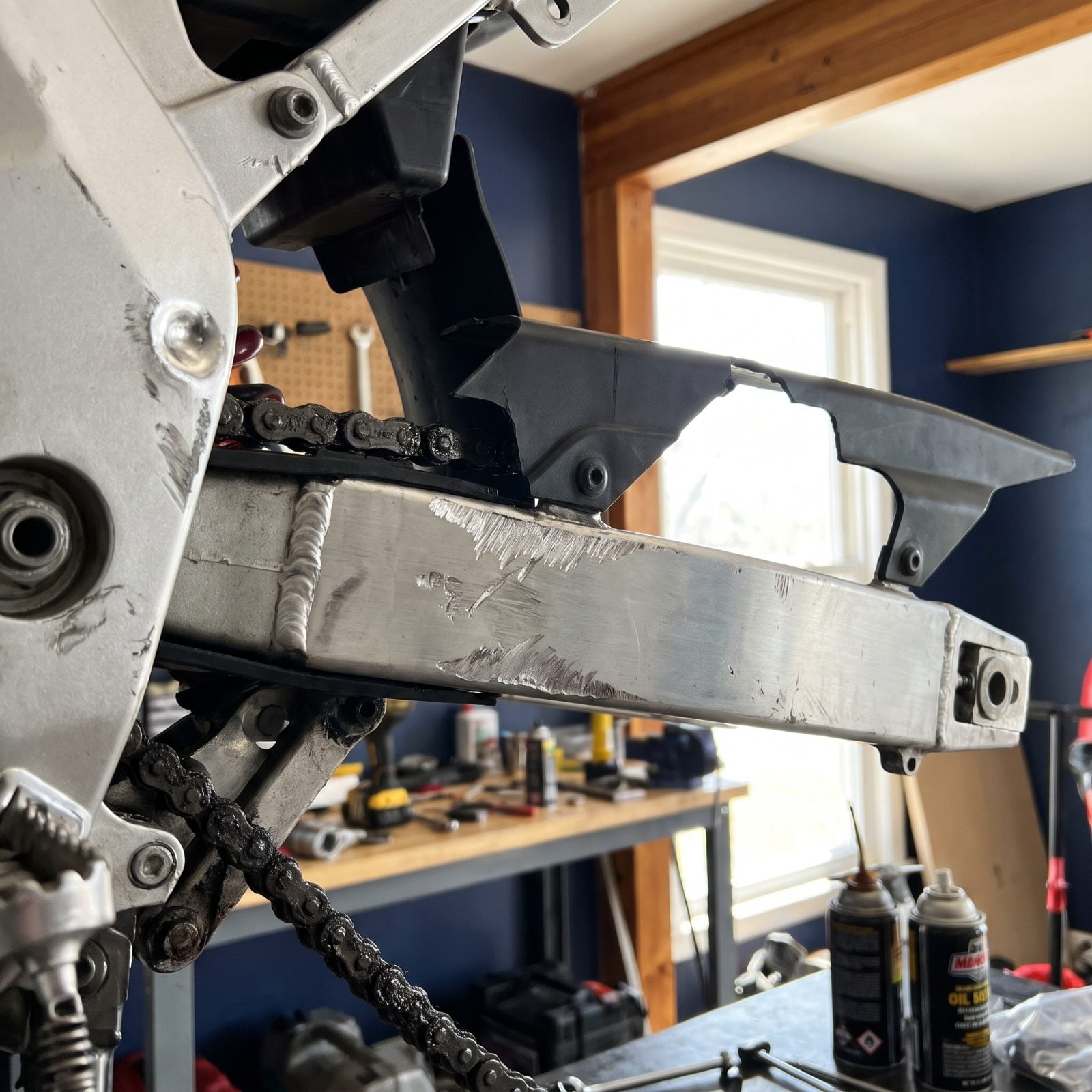
A patch of fresh silver gouges and scratches torn into the outer side of the swingarm is a confession.
A properly tensioned chain never touches the swingarm. Those gouges, ripped into the outer face of the aluminium, are the mark of a violent strike rather than slow chain-slap wear on the top or inner face. A chain left dangerously loose can let go or jump off under hard power and flail into the side of the arm. That happens on a bike launched hard, often, by someone who never once reached for a wrench.
Check the cracked chain guard too. A chain that violent can jump the sprocket entirely and lock the rear wheel at speed. Don’t dismiss these as cosmetic scars. A gouged swingarm needs checking for cracks before you trust it. They’re proof the previous owner rolled dice with a drivetrain and didn’t care.
15. A Deep Wear Lip on the Brake Rotors
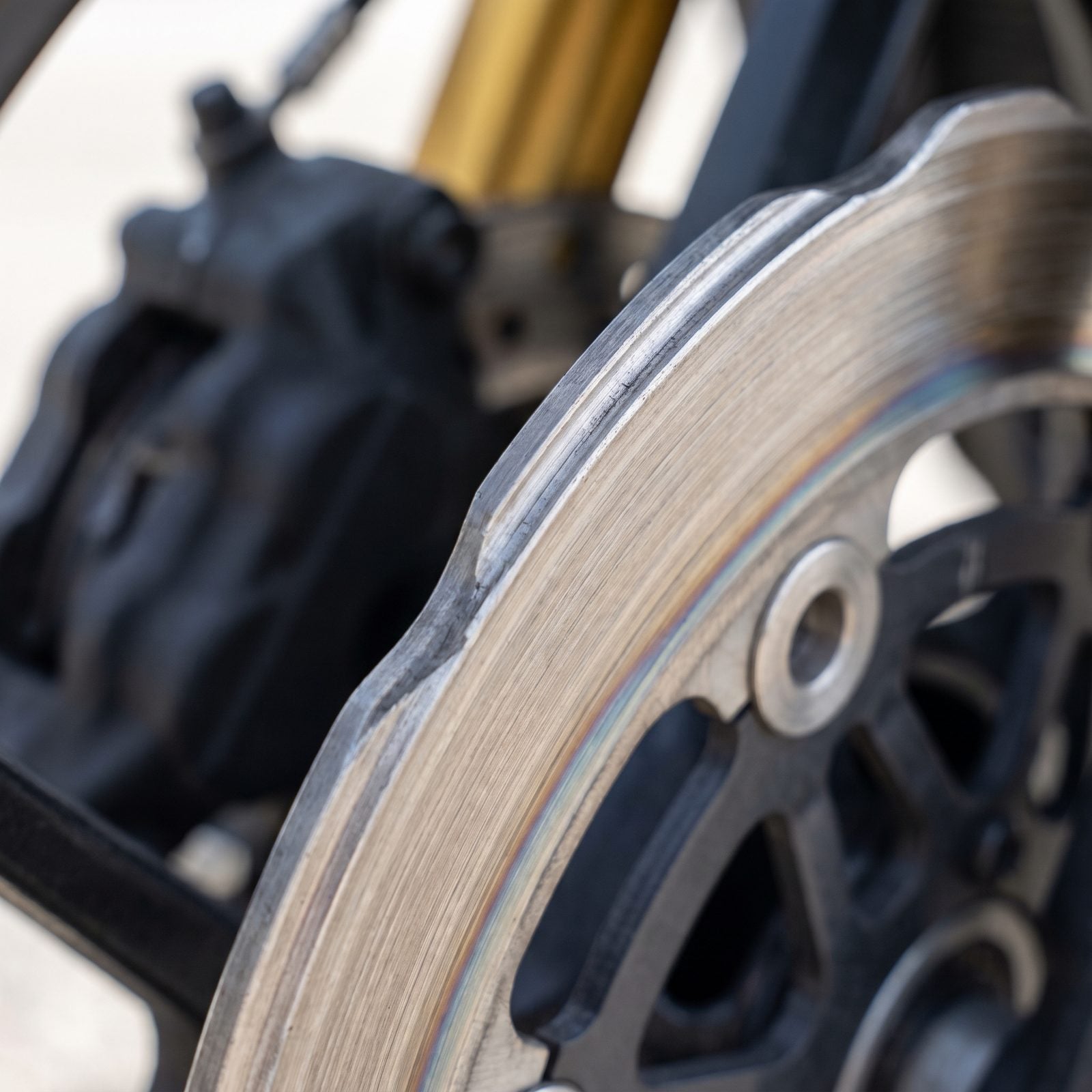
Run a fingernail across the rotor from center to edge. If it catches on a distinct ridge near the outer rim, that lip is worn metal, and it tells a story.
Rotors wear slow under normal riding. A deep lip plus faint blue-gold heat tint near the center means repeated hard braking from speed, the kind you do on a track or chasing canyon corners. The disc has been cooked.
Rotors have a minimum thickness stamped right on them, so measure it. A rotor under spec is not negotiable — it’s a replacement, and a pair of front discs is not cheap. Heat-warped rotors also pulse through the lever under braking, which you’ll feel on the test ride if you grab a firm handful from speed in a safe spot.
14. Unevenly Worn Brake Pads
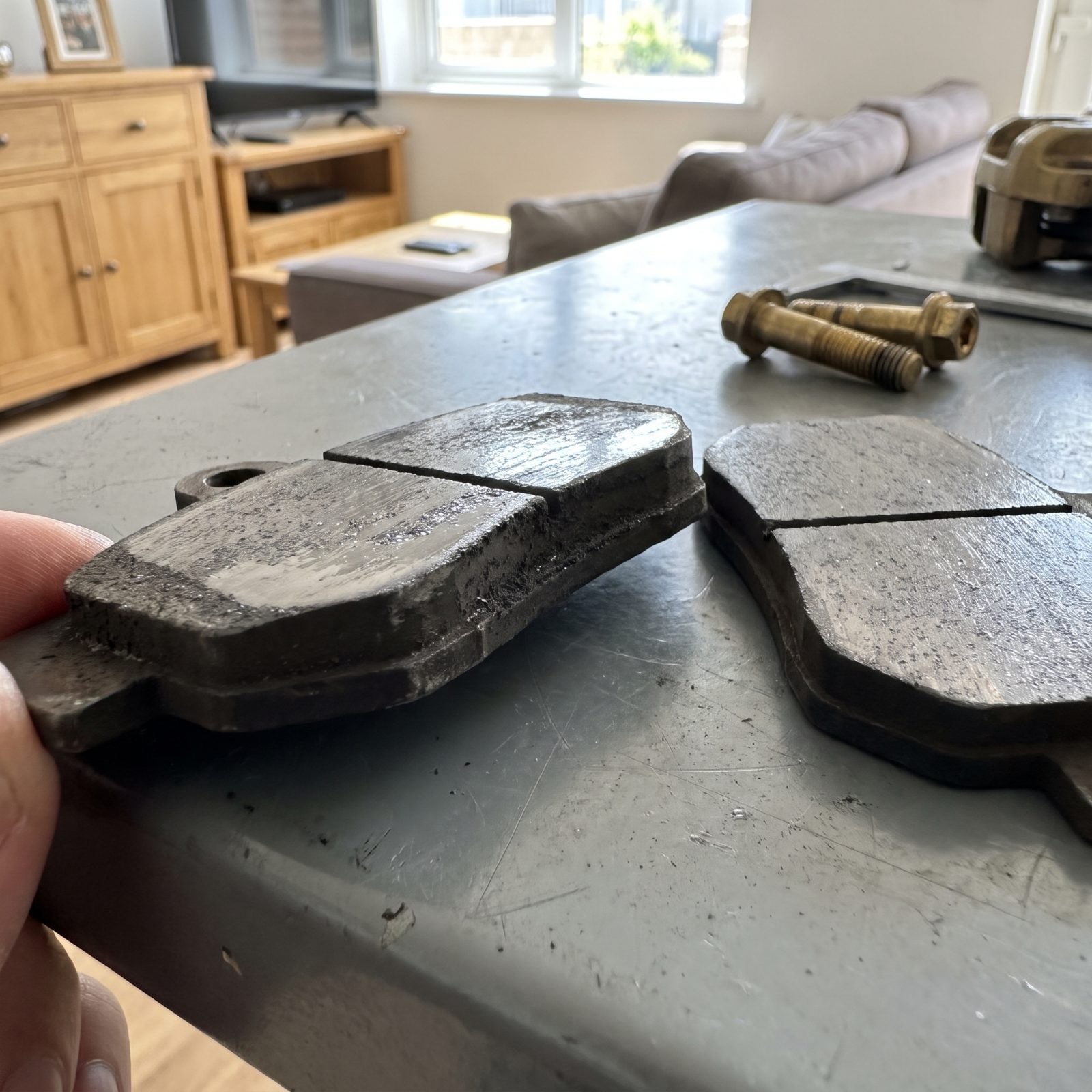
Pull the pads and lay them flat. Even wear reads straight across. A wedge — thick on one end, shaved to the backing plate on the other — points to a stuck or lazy caliper piston.
Sometimes it’s just a dirty caliper that needs cleaning. Sometimes it’s a seized piston from heat abuse, and that means the whole caliper gets rebuilt. On a bike that saw track time or hard street work, bet on the latter.
Glazed, shiny pad faces are their own clue. That slick finish comes from overheating, the pad surface essentially cooked smooth, and glazed pads grab poorly right when you need them most.
13. A Clutch That Bites Near the Lever’s End
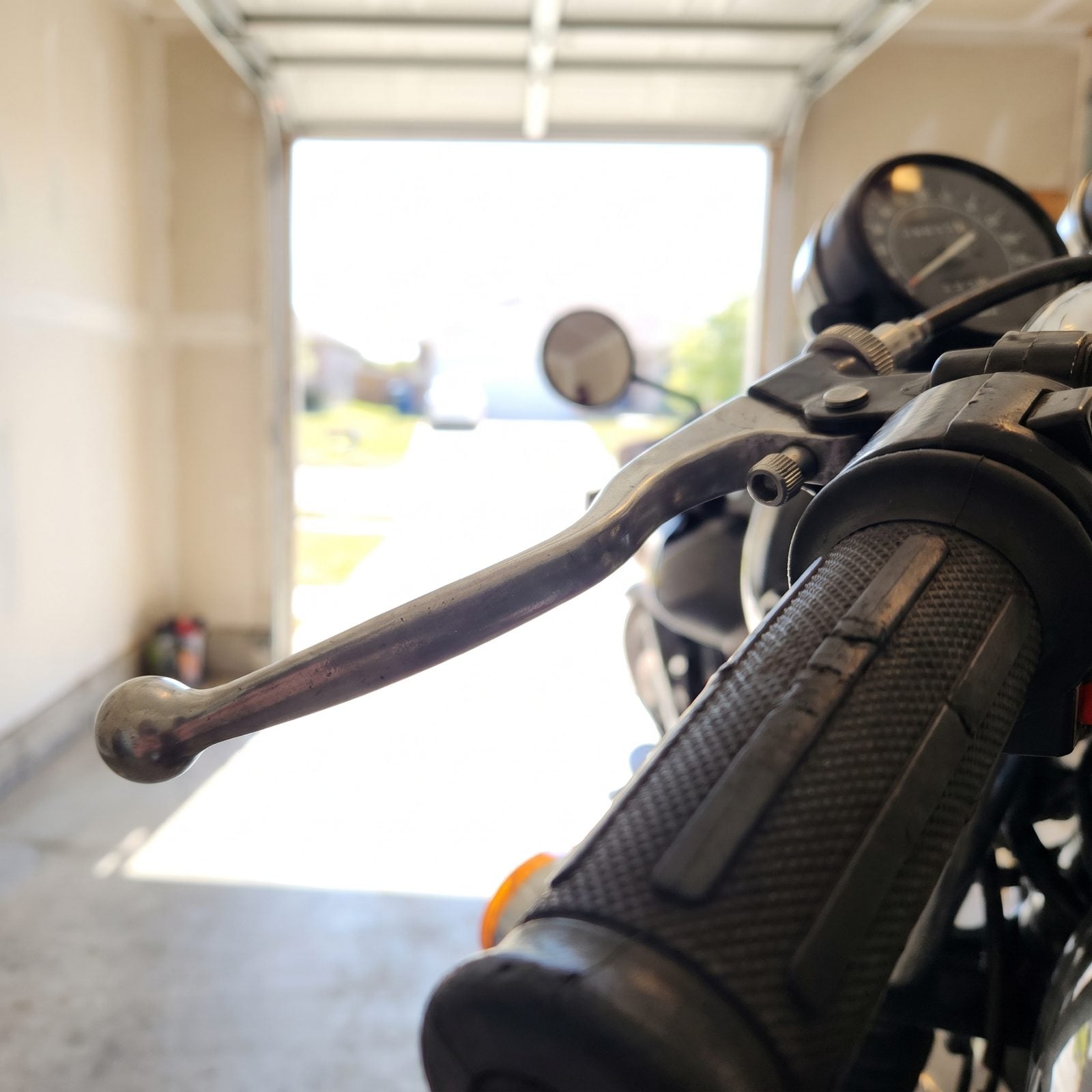
Pull the clutch in slowly and feel for where the bike starts to move. A healthy clutch grabs somewhere around the middle of the lever’s travel.
If it doesn’t bite until the lever is almost back out at full extension, the friction plates are worn thin. A cable clutch you can chase with adjustment. But a hydraulic clutch biting at the very end means the plates are near done.
Worn clutches come from slipping launches, wheelies, and stunt riding. A clutch that lived its life being feathered and fried is a clutch on borrowed time.
12. Clutch Slip Under Hard Acceleration
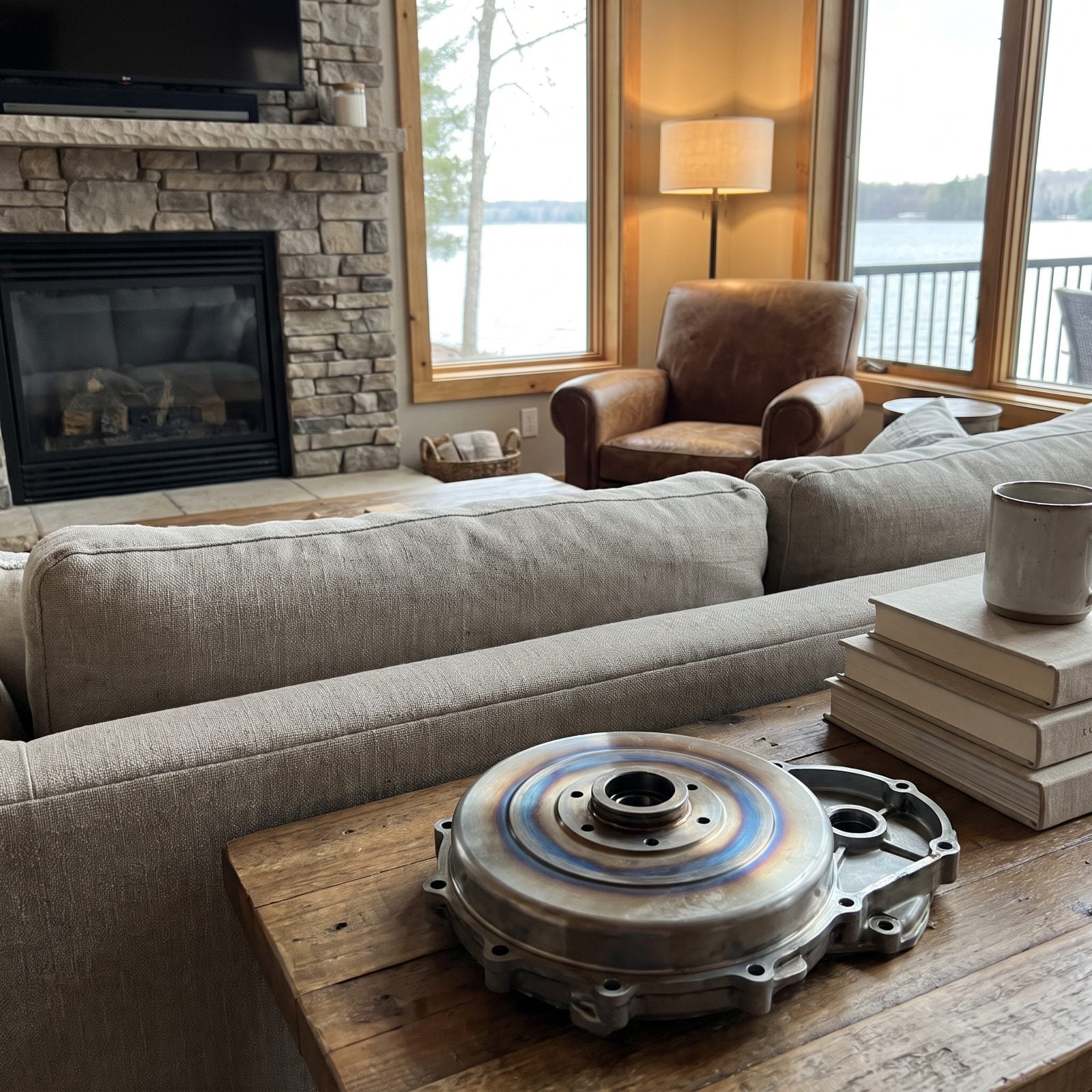
You catch this one on the test ride, in a safe straight stretch where it’s legal to accelerate firmly.
In a tall gear at low rpm, roll the throttle open steadily and watch the tach against your speed. If the revs climb faster than the bike actually gathers speed, the clutch is slipping — engine spinning, rear wheel not keeping up, friction plates losing their grip.
Slip under power is the surest sign a clutch is cooked. It comes straight from abuse: drag-strip launches, burnouts, riding the lever. A worn clutch means new plates plus real labor to pull the clutch cover.
11. Hard or Notchy Gear Changes
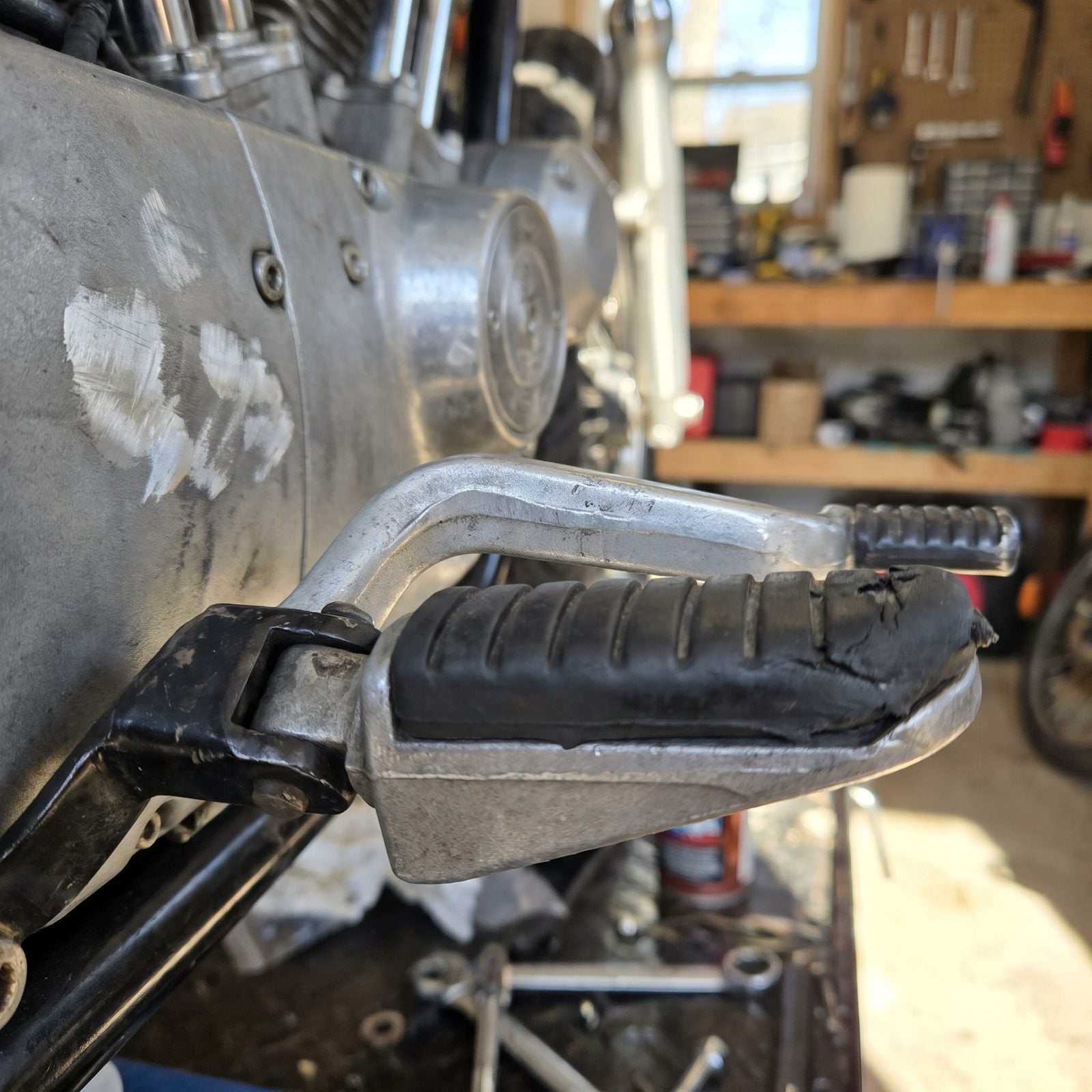
A good gearbox snicks. Each shift is a clean, light click up or down.
If gear changes feel like you’re stirring gravel, if the lever fights you or needs a boot-mashing stomp to find the next cog, the transmission has been abused. Clutchless upshifts done badly, missed shifts at redline, and dumping gears during stunts all beat the shift forks and dogs inside the cases.
Test every gear on the ride, both directions, up and down through the box. A notchy shift from first to second is sometimes just a dry chain or a worn clutch dragging. A whole gearbox that feels agricultural runs deeper, and opening an engine to fix shift forks is the kind of bill that makes a cheap bike expensive.
10. A Transmission That Jumps Out of Gear
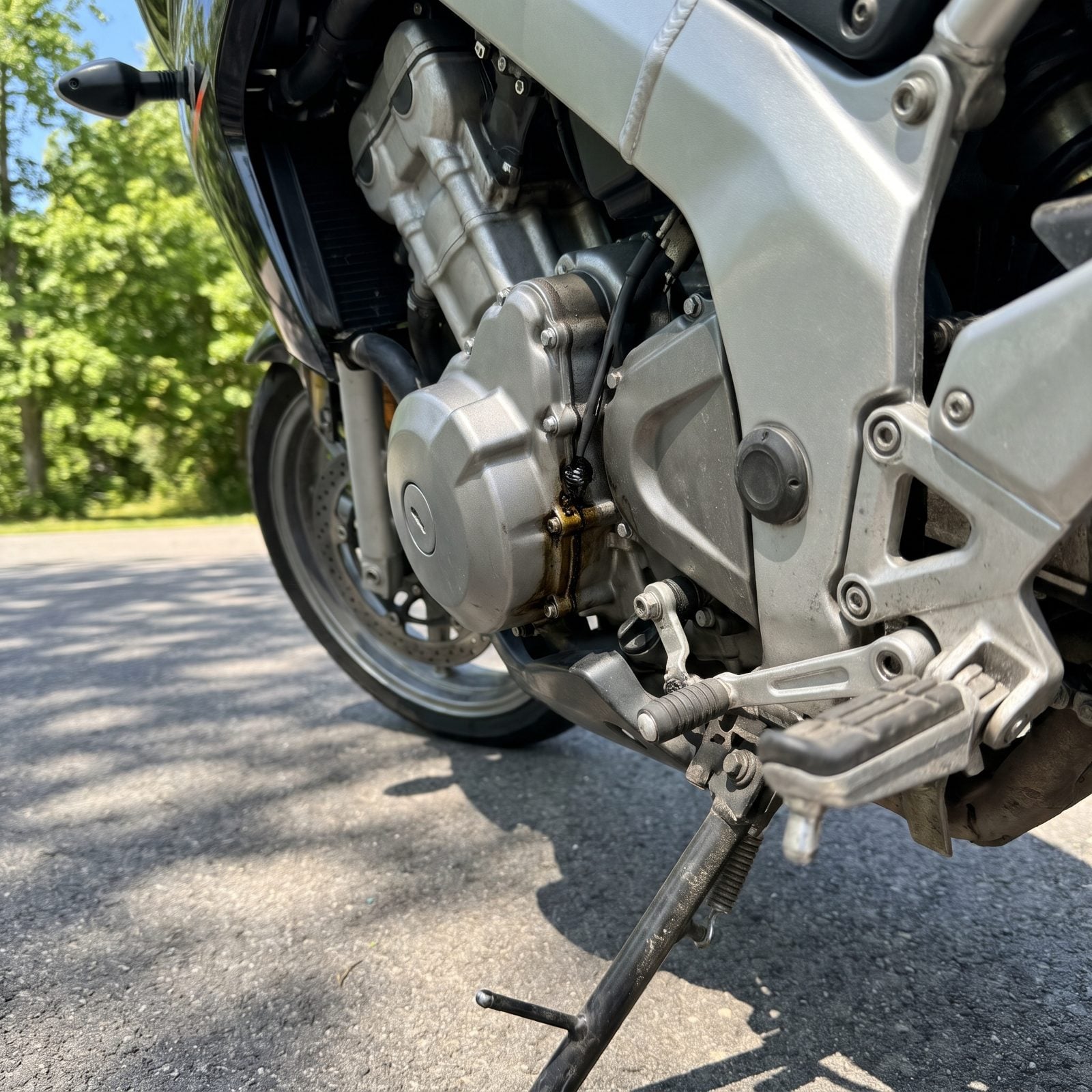
The worst one hides until you’re moving. You snick into a gear, roll on the throttle, and the bike suddenly pops back into neutral or false-neutrals between cogs with a lurch.
That jump means the dogs that lock each gear have rounded off their square edges, worn down by abuse until they no longer hold. Second gear is the classic victim — second is where wheelies and hard launches hammer the box hardest.
Don’t talk yourself out of this one. A transmission that slips out of gear is a full engine teardown to fix, easily four figures in labor. Walk away. There are too many honest bikes out there to buy one that can’t keep its own gears.
9. Cold-Start Knocking or Cam-Chain Rattle
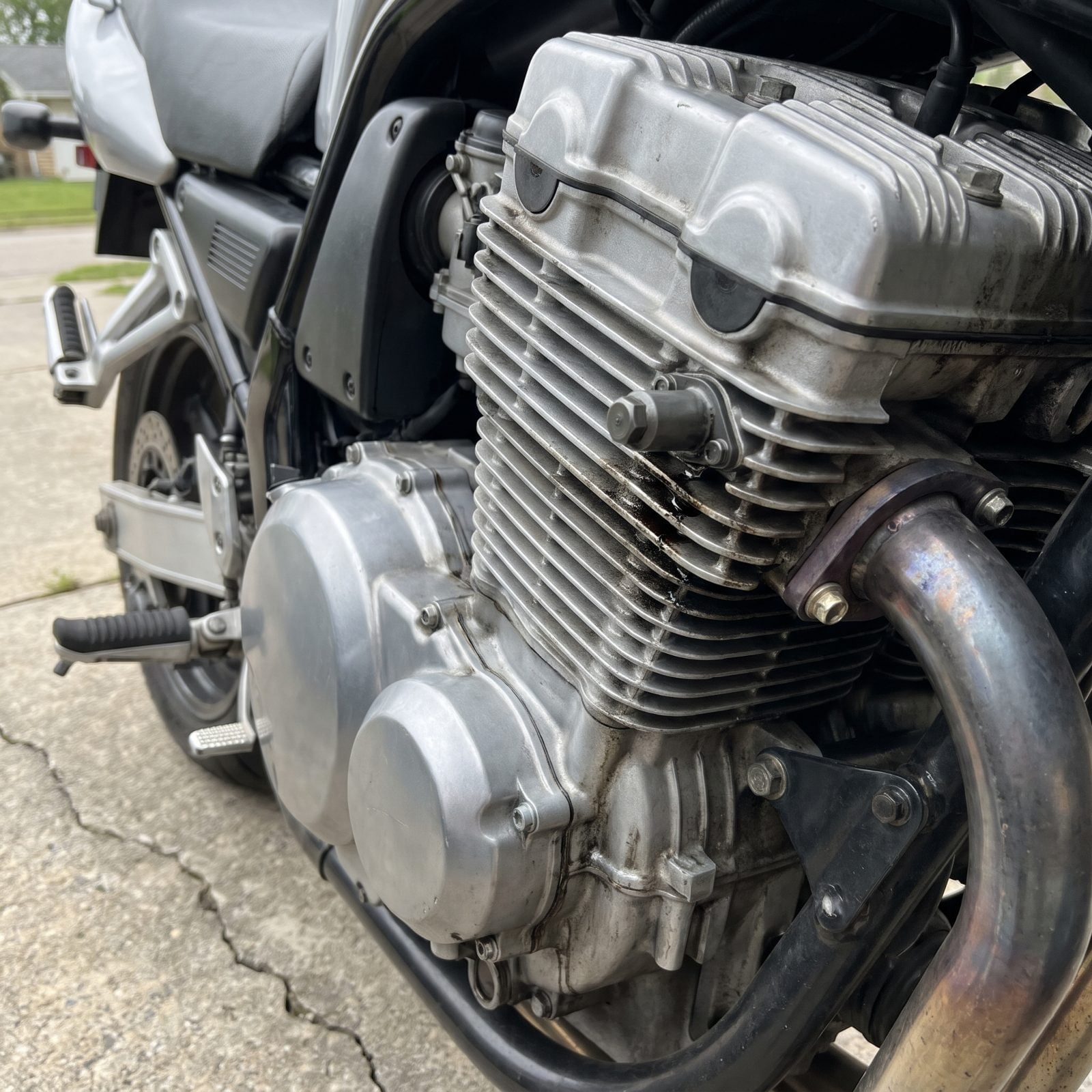
Arrive early and insist on a genuinely cold start. Both dealers and private sellers love to warm a bike up before you show, because a cold engine tells on itself.
Listen in the first ten seconds. A diesel-ish knock that fades once oil pressure builds can be worn main or rod bearings, while a dry marbles-in-a-can rattle from the top end usually points to a stretched cam chain or a failing tensioner — both classic on engines that lived at redline. A little rattle at startup is normal before the tensioner takes up slack. Rattle that won’t quiet down after a few seconds? That’s the one to walk on.
8. Blue Smoke Under Acceleration
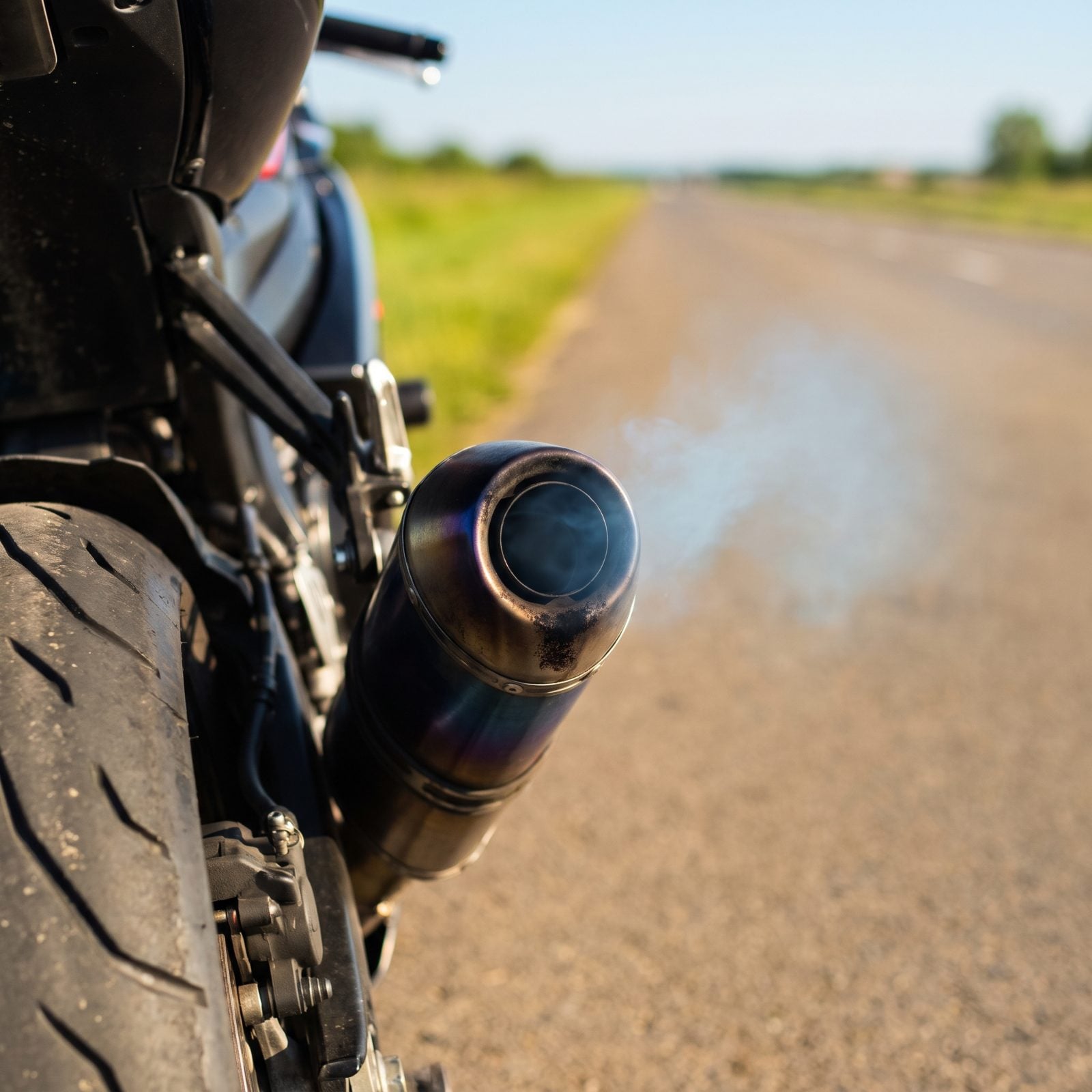
Blue haze when the throttle opens means oil is burning in the combustion chamber. That points at worn piston rings or scored cylinder walls — exactly what you get from an engine held wide open for long stretches.
Have a helper watch your tailpipe during the test ride while you accelerate hard through a gear. A quick blue puff on a big roll-on is the tell. Don’t confuse it with white steam on a cold morning, which is just condensation and clears in a minute. Blue lingers, and it smells like scorched oil.
7. Blue Smoke After Engine Braking
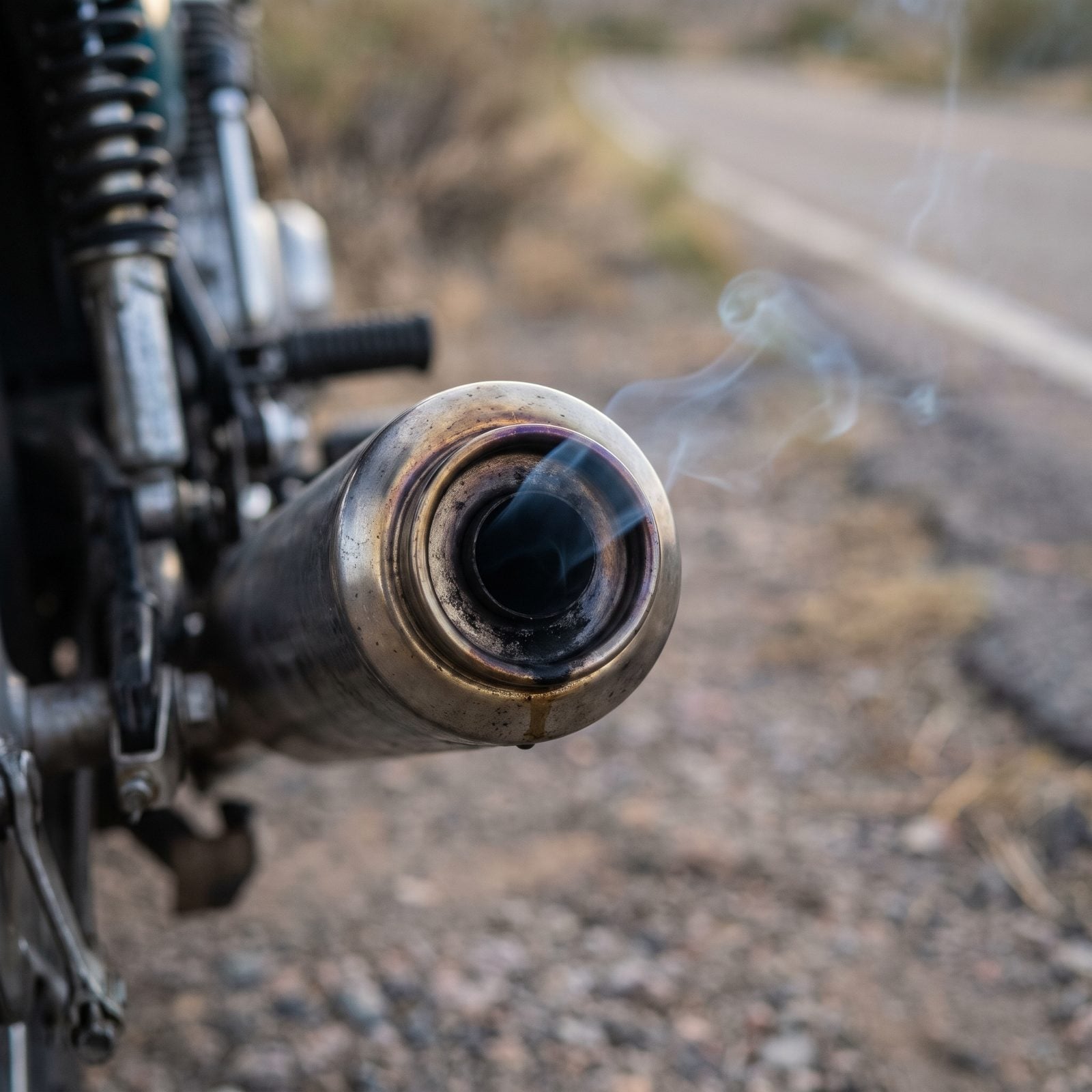
This is the one most buyers miss. A puff of blue smoke when you get back on the gas after a stretch of closed-throttle running points at worn valve guides or seals, not rings.
The mechanism is simple. On a closed throttle the engine pulls hard vacuum that sucks oil past tired valve stem seals. Open the throttle and that pooled oil burns off in one visible cloud. It’s a separate failure from ring wear — cheaper to fix on some engines, brutal on others.
6. Metallic Glitter in the Engine Oil
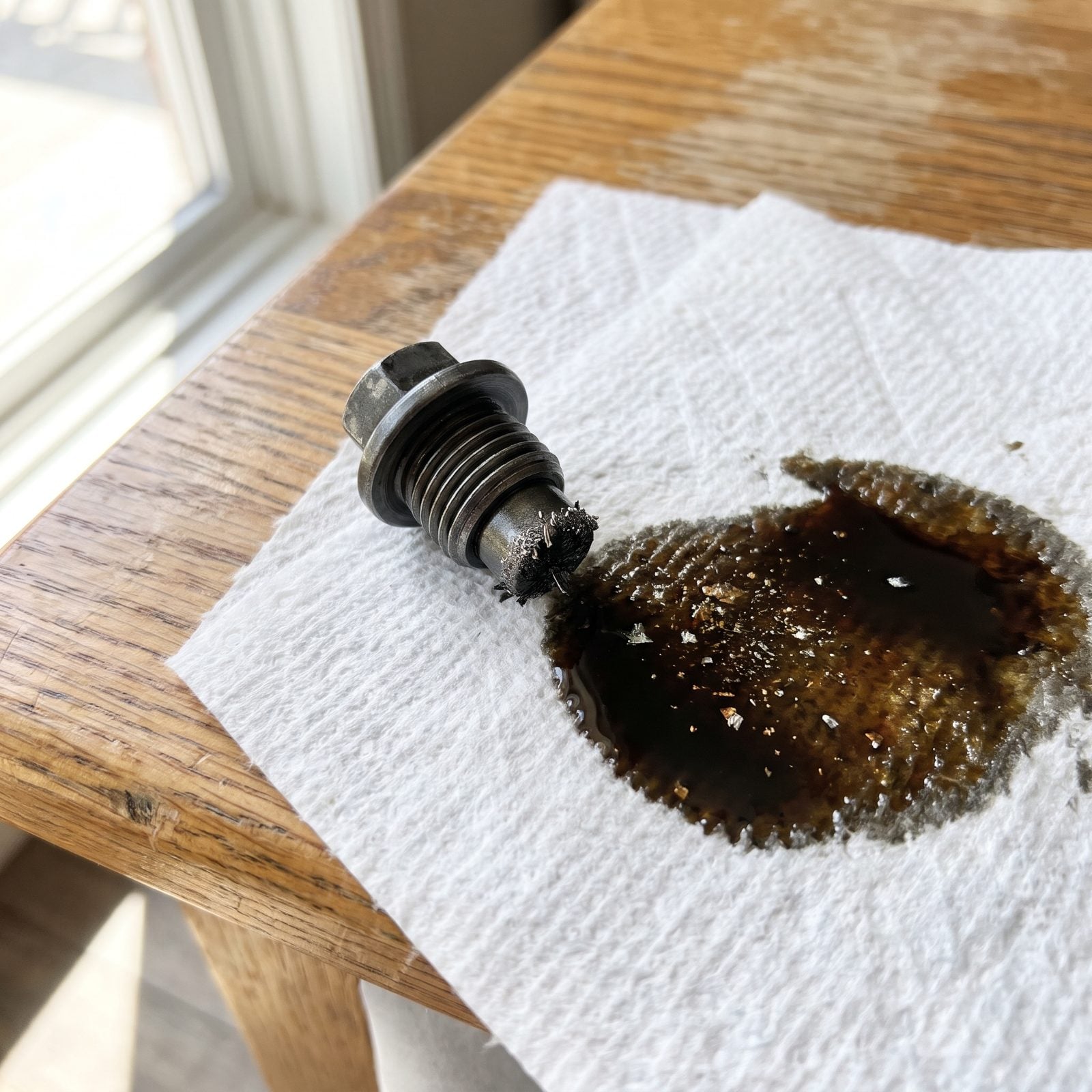
Pull the dipstick or crack the drain plug and wipe a smear onto a white rag. Hold it to the light and tilt it. Fine metallic sparkle in used oil is wear metal, and on a bike that means bearings, gears, or clutch surfaces are shedding themselves.
A magnetic drain plug with a thick gray beard of fuzz? Normal-ish. Bright, loose glitter that doesn’t stick is the scary kind — the oil telling you what the seller won’t.
Oil never lies. People do, oil doesn’t.
Milky coffee-colored oil is a different problem entirely, usually coolant intrusion from a blown head gasket. Either way, walk unless the price already accounts for an engine.
5. Oil Leaks Hidden by Fresh Degreasing
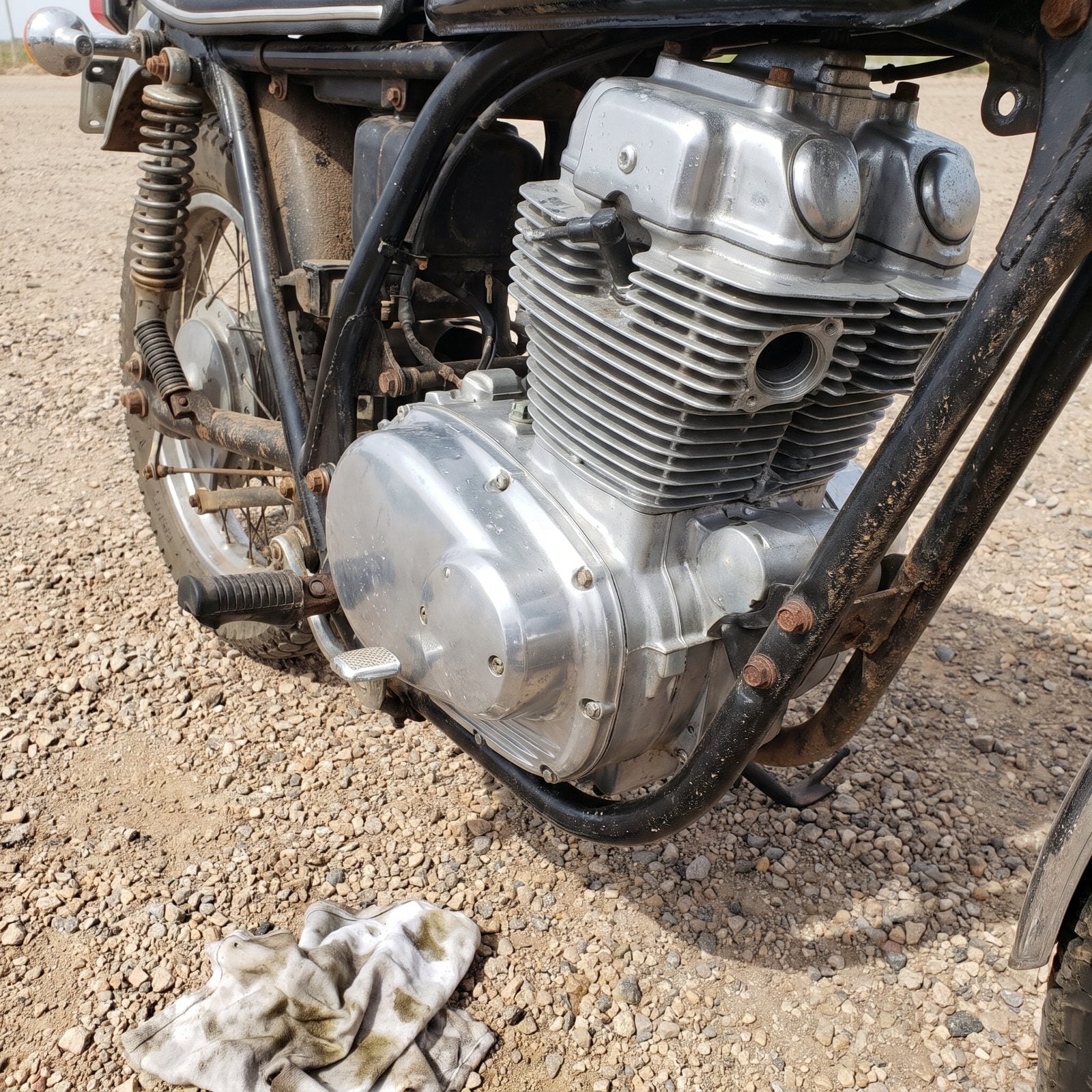
A gleaming engine bottom on an otherwise road-grimy bike should make you suspicious, not impressed. Nobody scrubs just the cases for fun. They scrub them to hide where the oil’s been coming from.
Bring a flashlight and run a clean finger along case seams, the base gasket, the shifter shaft seal, and the front sprocket cover. Then ask to let it idle ten minutes and check again — oil finds its way back out fast, and a seller who degreased this morning is betting you won’t wait around.
4. A Bypassed or Manually Wired Cooling Fan
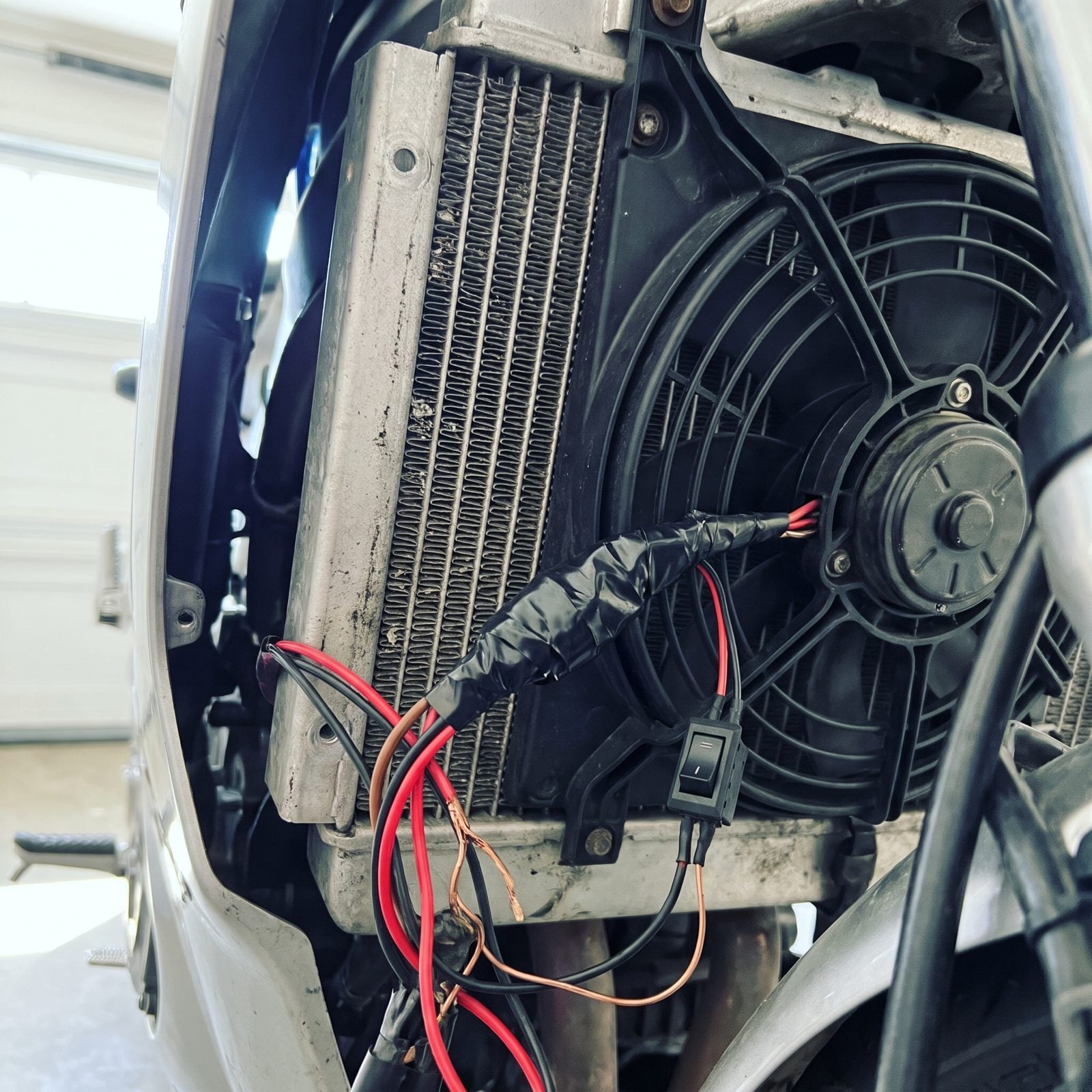
Peek behind the fairing at the cooling fan wiring. A toggle switch zip-tied to the bars, or a crude taped splice into the fan harness, means the automatic thermostat circuit failed and someone rigged a manual override instead of fixing it.
That’s a bike that has cooked itself, or came close, often from being flogged in traffic or on a track with no airflow. An engine overheated repeatedly carries warped and weakened parts you can’t see. The hack wiring is the confession.
3. Crushed or Bent Radiator Fins
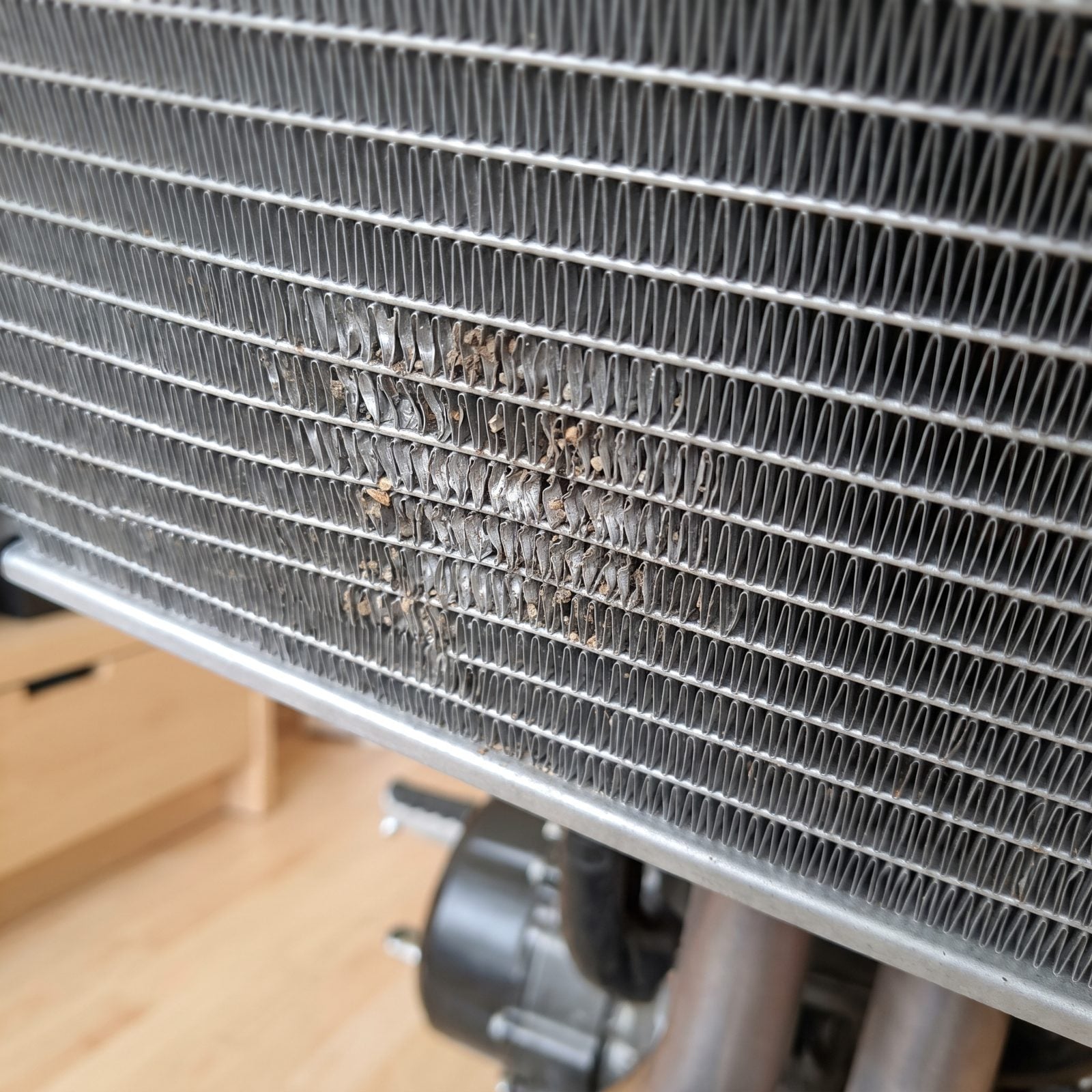
Look straight at the radiator face in good light. Bent, flattened, or folded-over fins across a section aren’t just cosmetic — they choke airflow where it matters, and they’re often a leftover from a tip-over or a crash slide that clipped the front of the bike.
Pair crushed fins with scuffed bar ends, a ground-down peg feeler, or a replaced lever and you’re looking at a bike that’s been down. Once is forgiving. A pattern of fresh plastic and hidden damage is not.
2. Cupped or Scalloped Front-Tire Tread
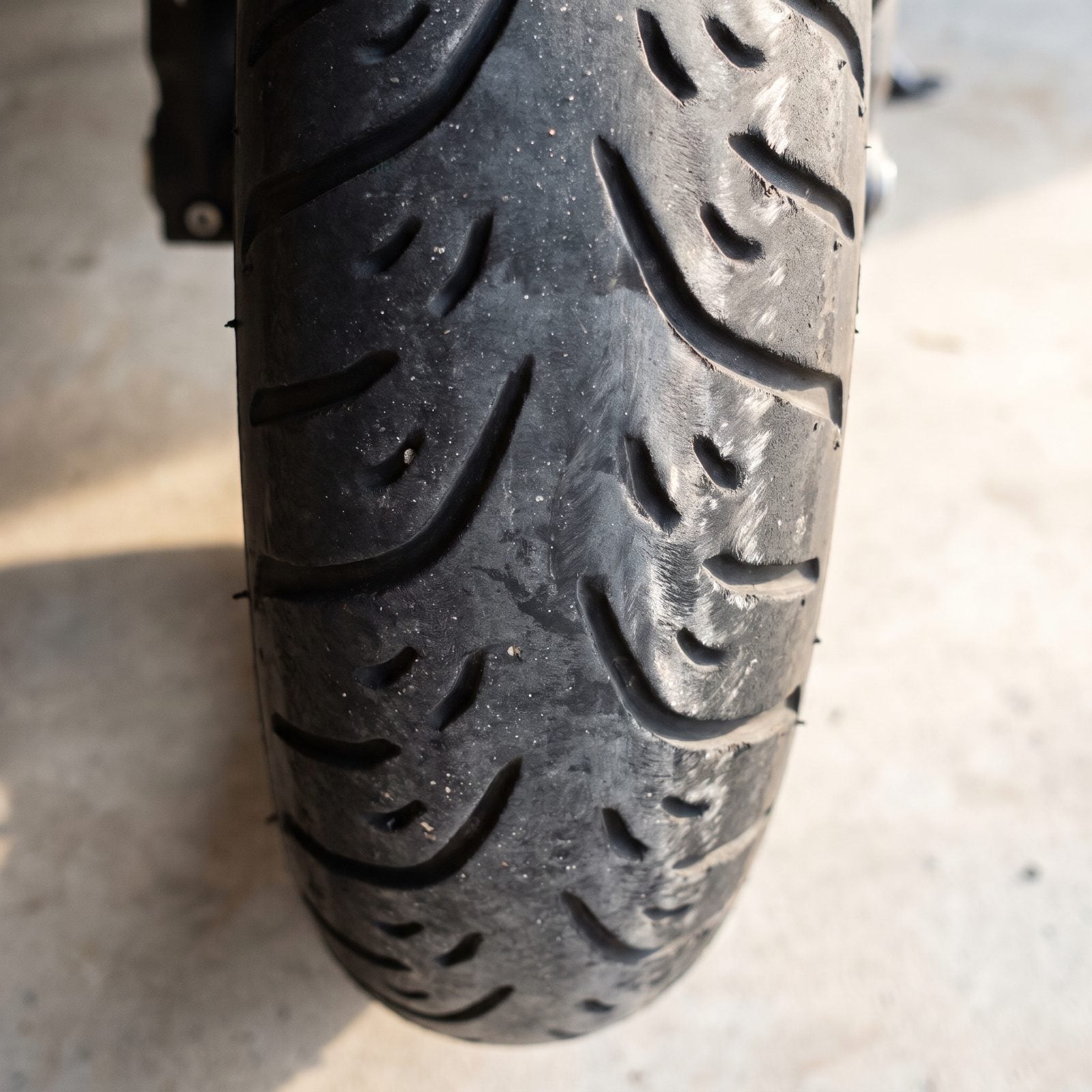
Run your palm front to back across the front tire. Feel for a washboard, scalloped surface where tread blocks rise and dip in waves. That cupping comes from hard, repeated braking, sloppy suspension, or both — a fingerprint of aggressive riding.
A cupped front tire also telegraphs worn fork seals or shot bearings underneath. On the test ride it shows up as a buzzy wobble through the bars at certain speeds. You’ll replace the tire fast, and you should ask what beat it up in the first place.
1. Cracks, Ripples, or Repairs Around the Frame Welds
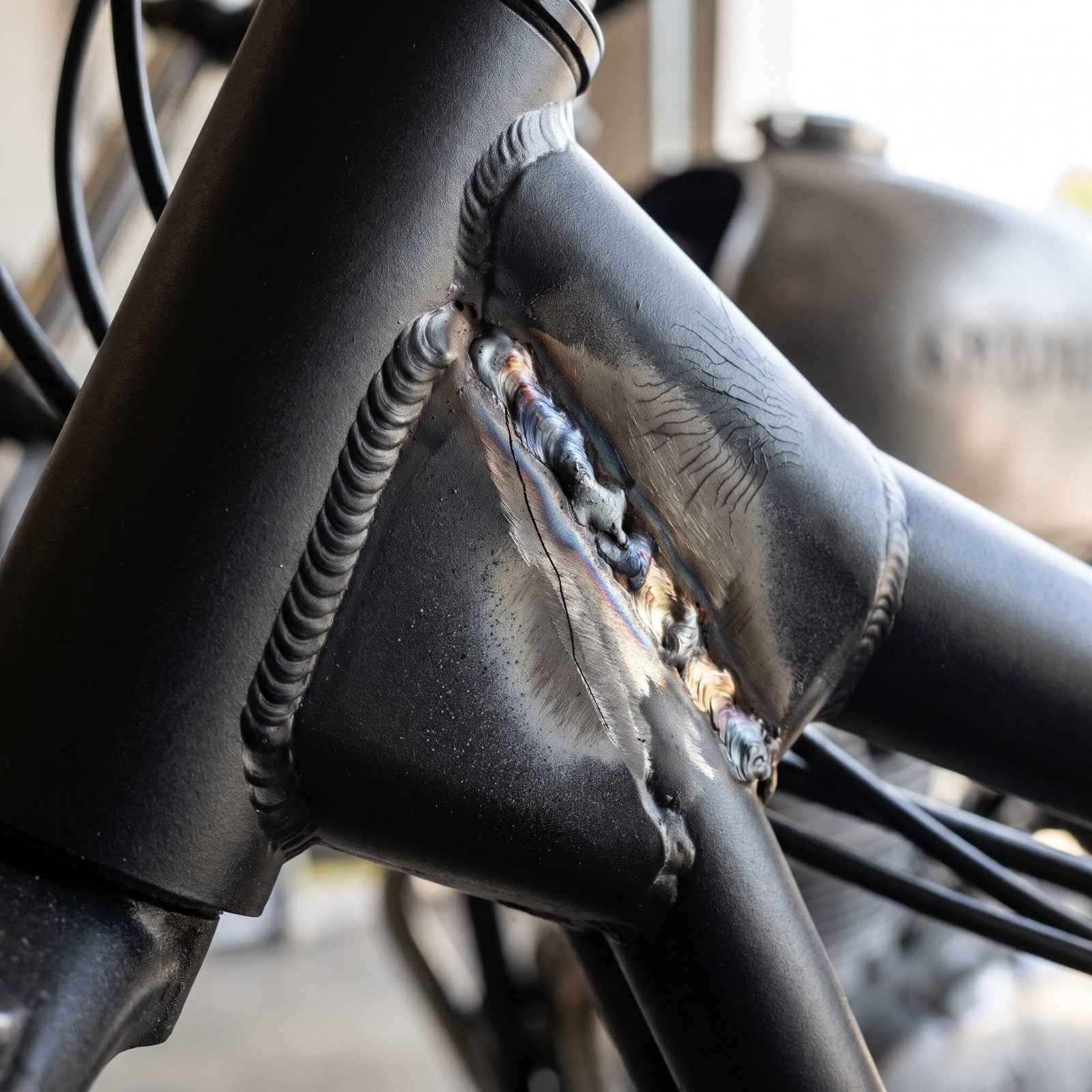
The frame is the one part a bike can’t fake its way through. Everything bolts to it, so when the backbone flinches, the whole machine lies to you afterward.
Look where the tubes meet the steering head and the swingarm pivot. Factory welds are boring — even, repeating, identical from one joint to the next. What you’re hunting for is the weld that doesn’t belong: a lumpy second pass over an old crack, grinder marks, a patch of fresh paint sitting a shade off the rest of the frame. That mismatched satin black is the tell, because nobody repaints a frame section for fun.
Ripples in the metal behind a weld are worse news. That’s the tube itself deforming from a hard hit, and no bead fixes a bent backbone. A bike that tracks straight on paper can still fight you in a corner because somebody rearranged the geometry in a parking lot three owners ago.
If the paperwork says clean title and the frame says otherwise, believe the frame. Walk. There are other bikes out there, but only one of these spines.