
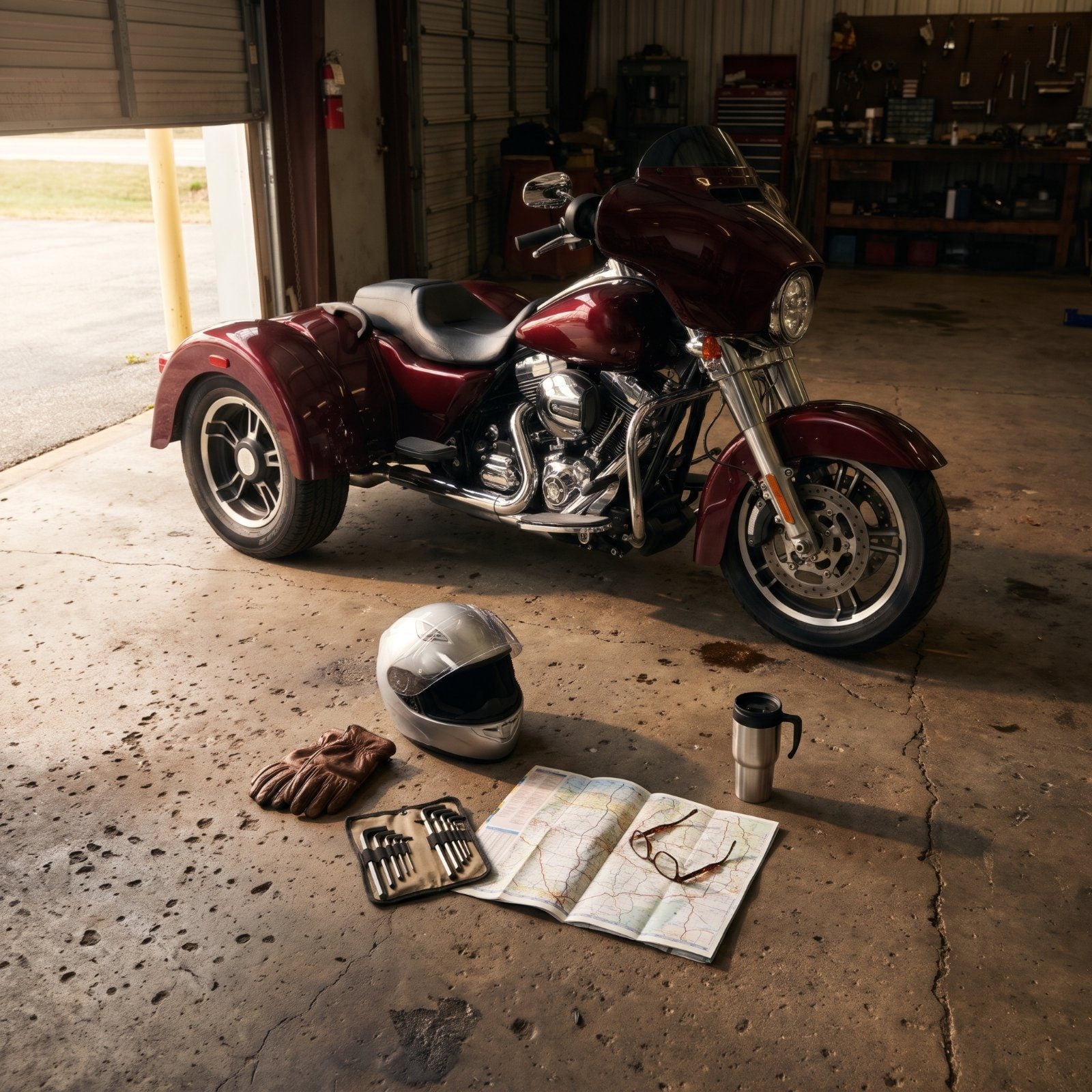
The hardest part of buying a trike isn’t the money. It’s walking into the dealership and feeling like you’re admitting something — that the knees gave out, that holding up 900 pounds at a stoplight stopped being fun, that the balance you trusted for forty years quietly changed on you. Nobody wants that conversation, so most riders put it off a year too long. Here’s the truth laid out plain: what a trike fixes, what it doesn’t, and the physical and social questions that keep good riders parked in the garage second-guessing themselves. No sales pitch. Just straight answers.
Please note that some of the images in this article were created with the assistance of AI.
45. Does Switching to a Trike Mean I Can No Longer Handle a Motorcycle?
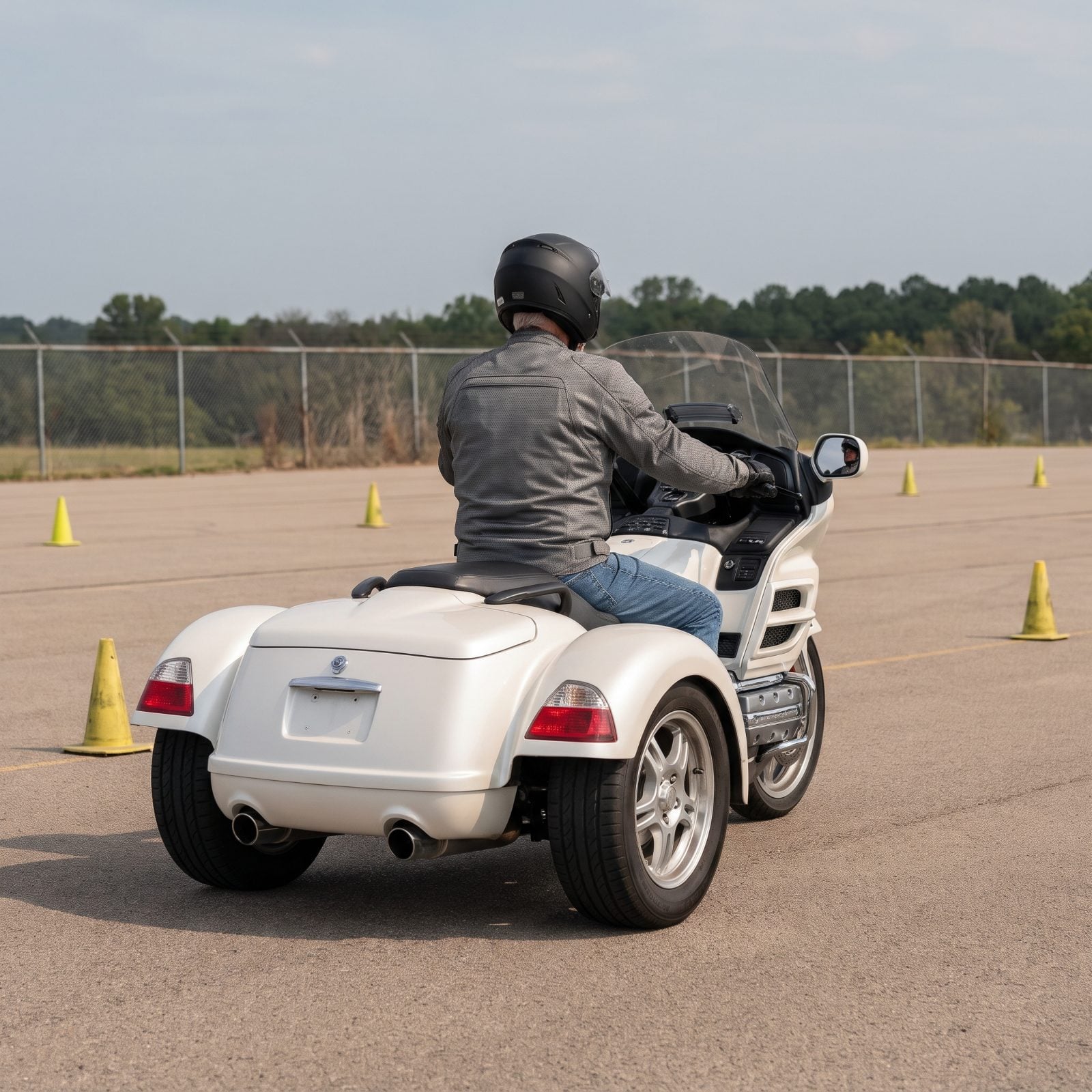
Let’s kill this one first, because it stops more riders than any physical problem. A trike is not a white flag. Racers age into them, Iron Butt veterans ride them cross-country, and the guy who logged 300,000 lifetime miles on two wheels before switching at 68 didn’t suddenly forget how to ride.
What changed is the math. Two wheels demand balance, grip strength, and the ability to muscle a heavy machine at low speed; three wheels trade some of that for stability and buy you another ten years in the saddle. That’s not quitting. That’s staying in the game longer than the riders who stubbornly parked their bikes for good.
44. Will a Trike Eliminate My Balance Problems?
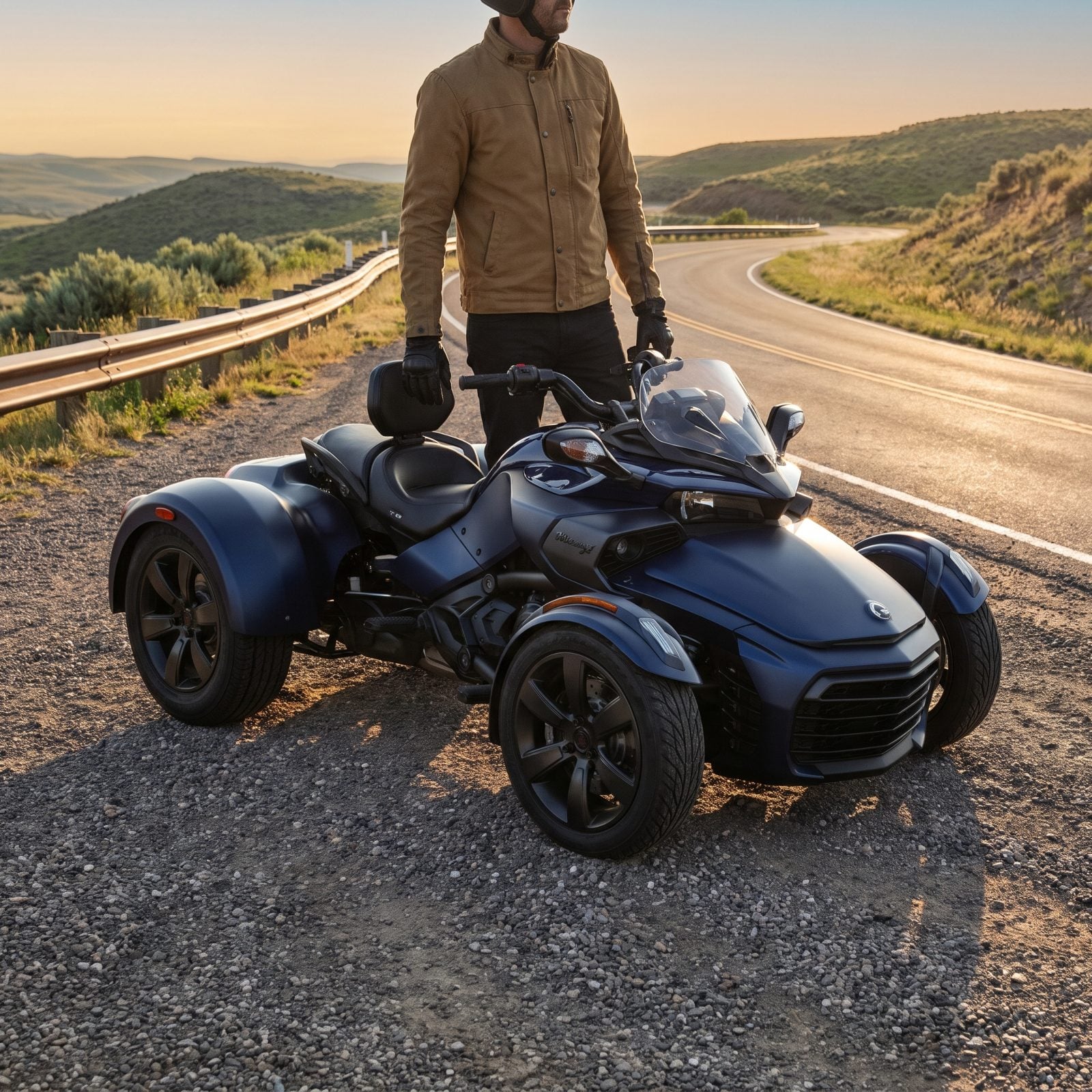
Mostly yes — and here’s the honest fine print. A trike won’t fall over at a stop. It won’t dump you in a parking lot because your foot slipped or your inner ear had a bad day. That’s why riders with vertigo, neuropathy, or an unreliable sense of balance come looking in the first place.
But balance doesn’t vanish. You still lean into the seat, read the road, and shift your weight through corners differently than you would in a car. If your balance trouble comes from a medical condition that also hits your vision or reaction time, a trike handles the tipping-over part and does nothing for the rest. Be honest about which problem you’re actually solving.
43. Can a Trike Help If I Struggle to Hold Up a Heavy Touring Bike?
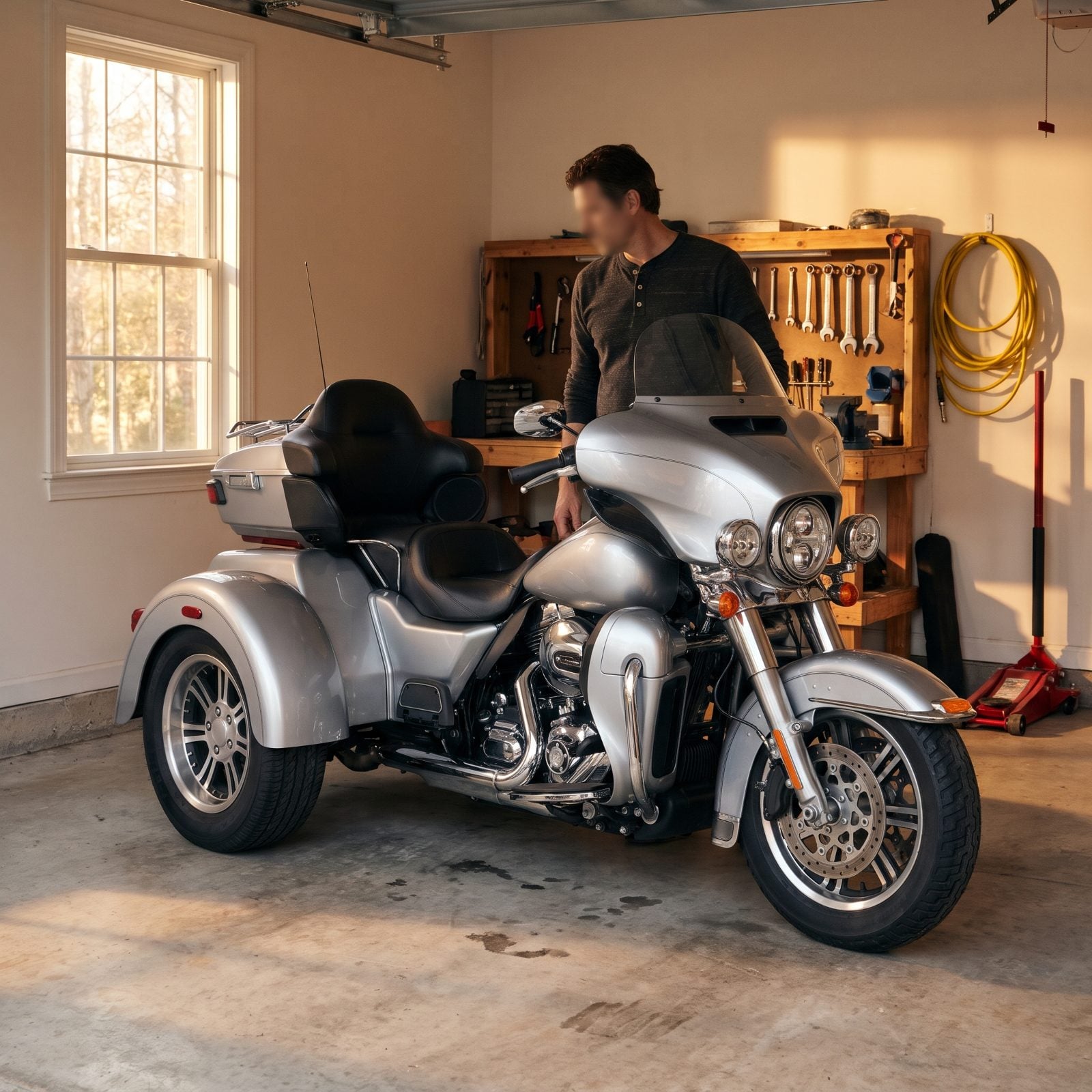
This is the single best reason to switch, full stop. A loaded touring bike runs well over 800 pounds, and the dangerous moment was never highway speed. It was the dead stop, the uneven driveway, the gravel lot where you plant a foot and the whole thing starts going over.
A trike erases that failure point. It stands on its own. Stop on a hill, dismount, load luggage, let a passenger climb off — all without wrestling the weight. The bike still weighs a ton. You just never hold it up anymore. For riders whose shoulders and hips are done fighting that fight, this alone justifies the whole conversion.
42. Can I Ride a Trike Safely With Arthritis in My Hands?
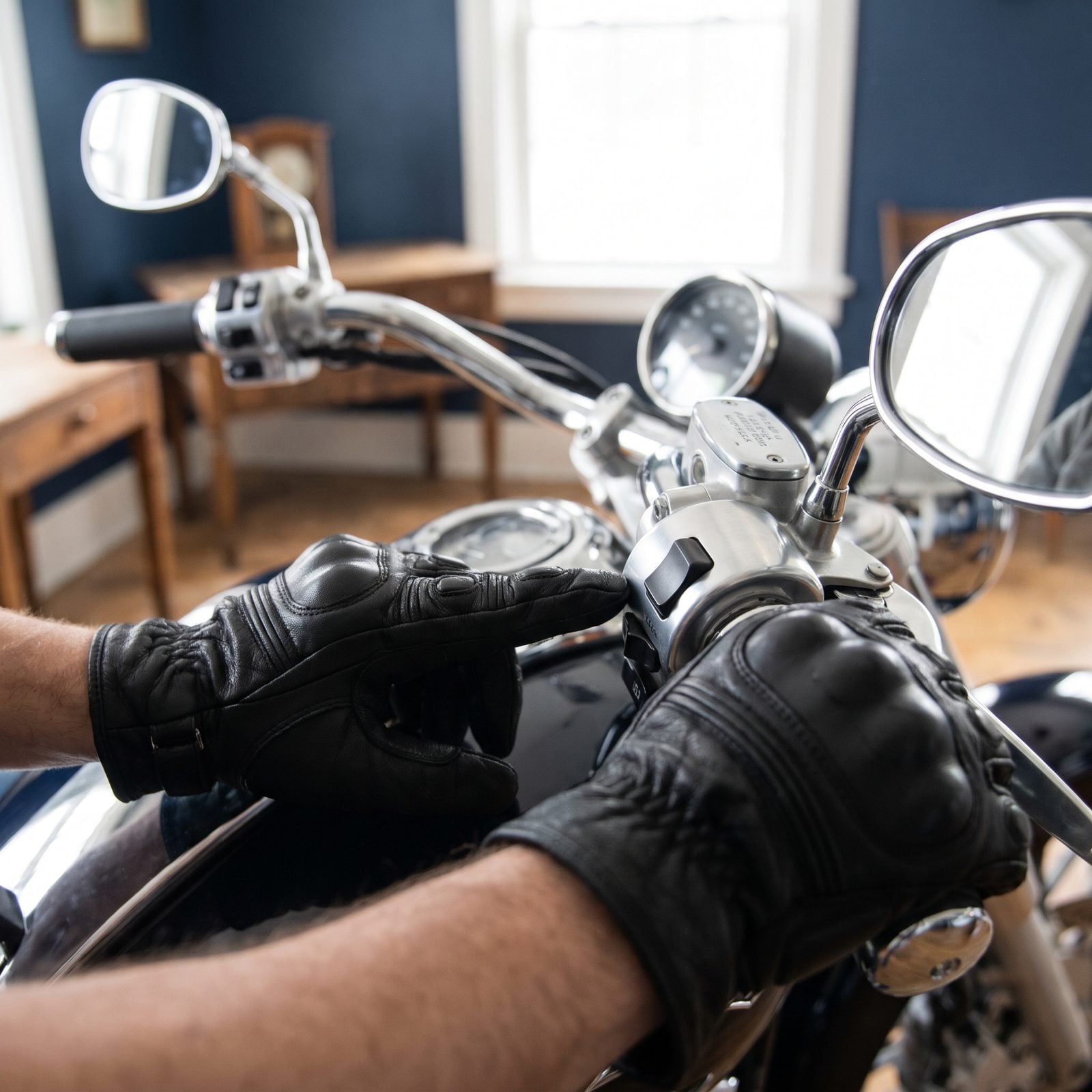
Arthritis changes the equation in ways worth thinking through carefully.
The good news is real. A trike needs no clutch feathering at stops, no death-grip to hold it upright, and most touring models offer electric reverse so you never shove the thing by hand. Cruise control takes the throttle load off a stiff wrist on long stretches.
Here’s the catch, though: grip-dependent controls still exist. Brake levers, throttle, turn signals. If your hands lock up mid-ride, that’s a conversation for your doctor, not a forum thread. Plenty of riders fit hydraulic clutches, lighter brake levers, or thumb-operated controls. Test-ride before you buy — and do it on a bad hand day, not a good one.
41. Are Trikes Comfortable for Riders With Bad Knees?
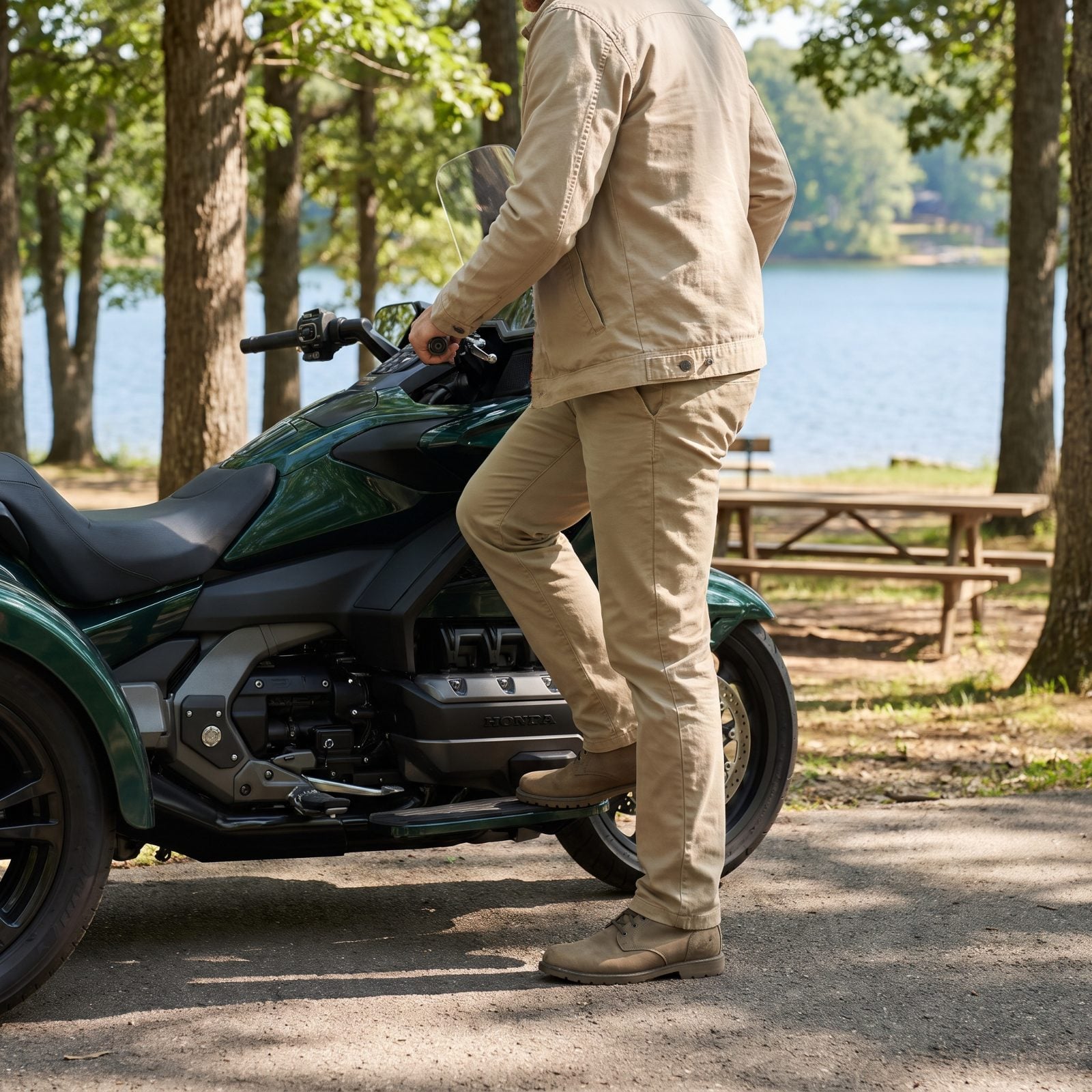
Knees are where trikes quietly win. No balancing at stops means no awkward twist to catch your weight on one leg — which is exactly the motion that lights up a bad knee on a two-wheeler.
Most touring trikes run floorboards instead of pegs, so you can shift your legs around on a long ride instead of locking them in one position for hours. Add highway pegs or a floorboard extension and you’ve got room to stretch. The seat sits you upright rather than folded forward, though mounting and dismounting still take some knee work — you’ll likely end up bending a knee and bracing a foot to swing over the low saddle, so take it slow. Your knees will thank you by hour three.
40. Will My Back Hurt More on a Trike?
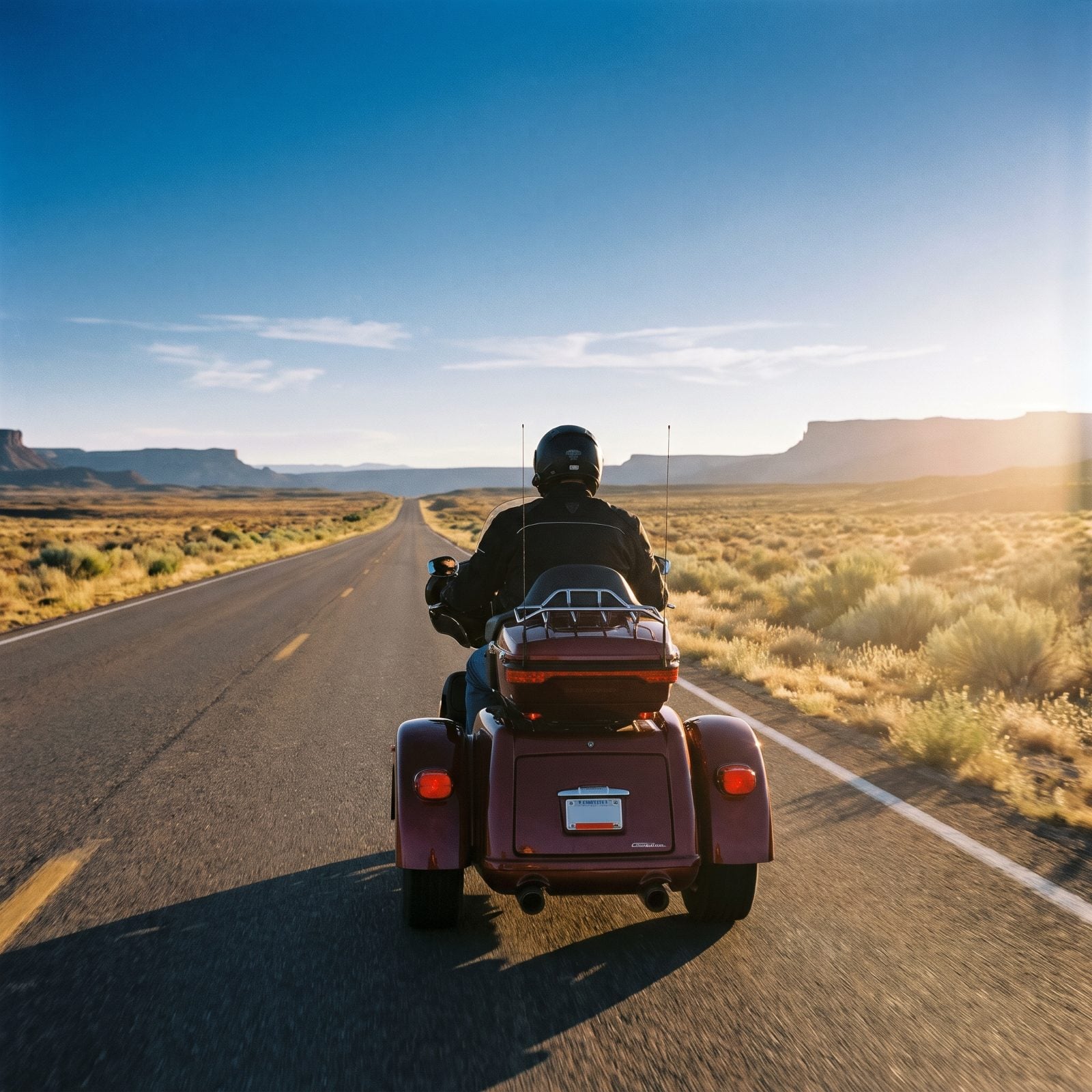
Depends entirely on the ride quality, and nobody tells you this up front.
Two independent rear wheels mean bumps hit you differently than a single rear tire does. A cheap or sloppily set-up conversion can jolt your spine on rough pavement because the rear suspension was never matched to the added weight. A good factory trike, or a quality professional conversion, rides smooth and plush.
The upright seating position actually helps most backs — you sit tall and upright, no forward hunch. Even without a rider backrest, the long days get easier; add one and they get easier still. The problem is never the trike concept. It’s the setup. Ride the exact model on real roads before you commit, and pay attention to how your lower back feels after an hour.
39. How Do I Know Whether I Am Physically Ready for a Trike?
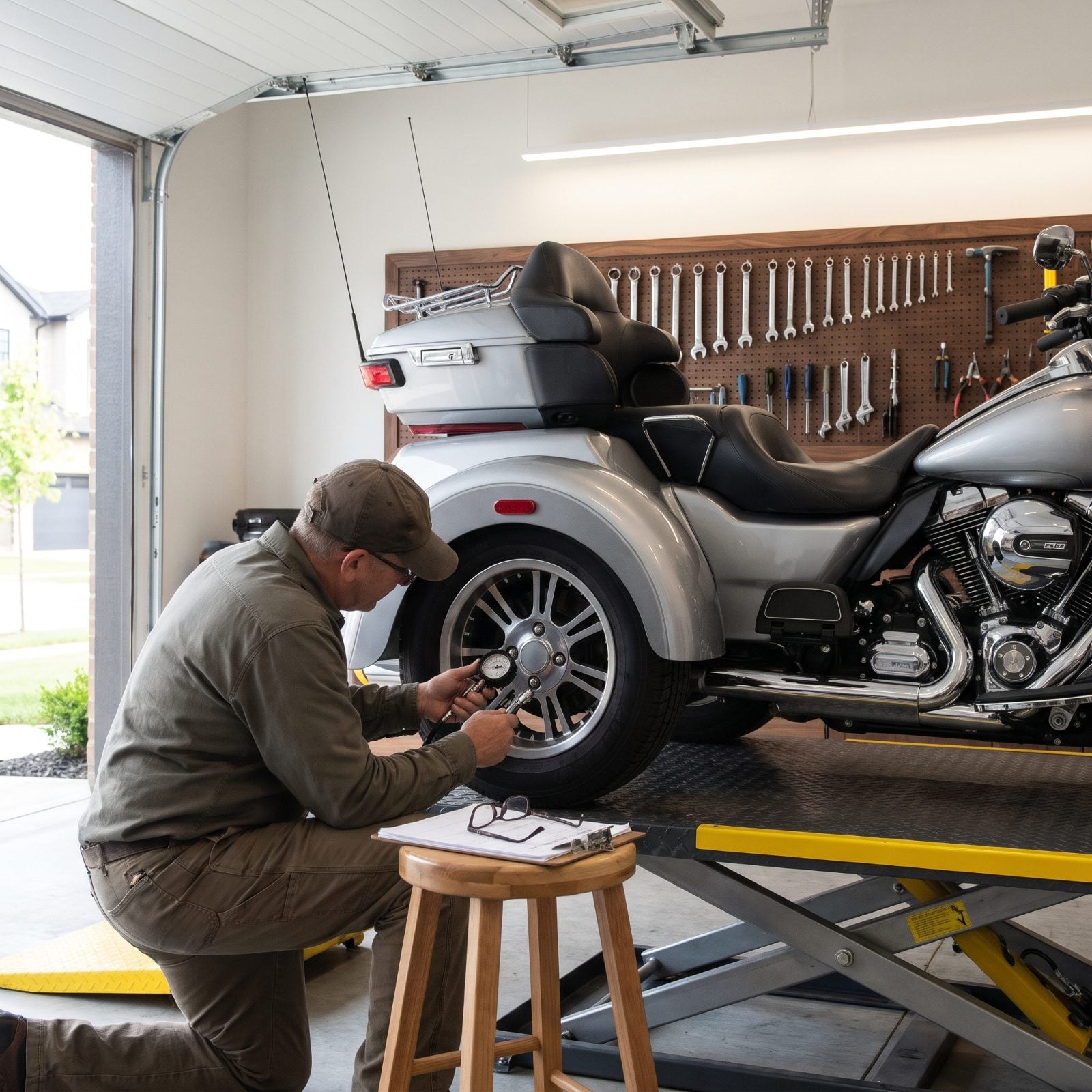
Readiness isn’t a number. It’s an honest checklist you run on yourself.
- Can you turn your head fully over both shoulders to check blind spots? A trike is wider than your old bike, and you need that range of motion.
- Can you work the throttle, brakes, and signals through a two-hour ride without your hands quitting on you?
- Can you stay alert and react quickly, meds and all?
Notice none of those involve holding up weight or balancing. The trike handles that. What’s left is steering, scanning, and judgment — and those you can test honestly on a demo ride. Finish that ride tired but grinning instead of rattled, and you’ve learned more than any spec sheet would tell you.
38. Is Riding a Trike Actually Easier Than Riding on Two Wheels?
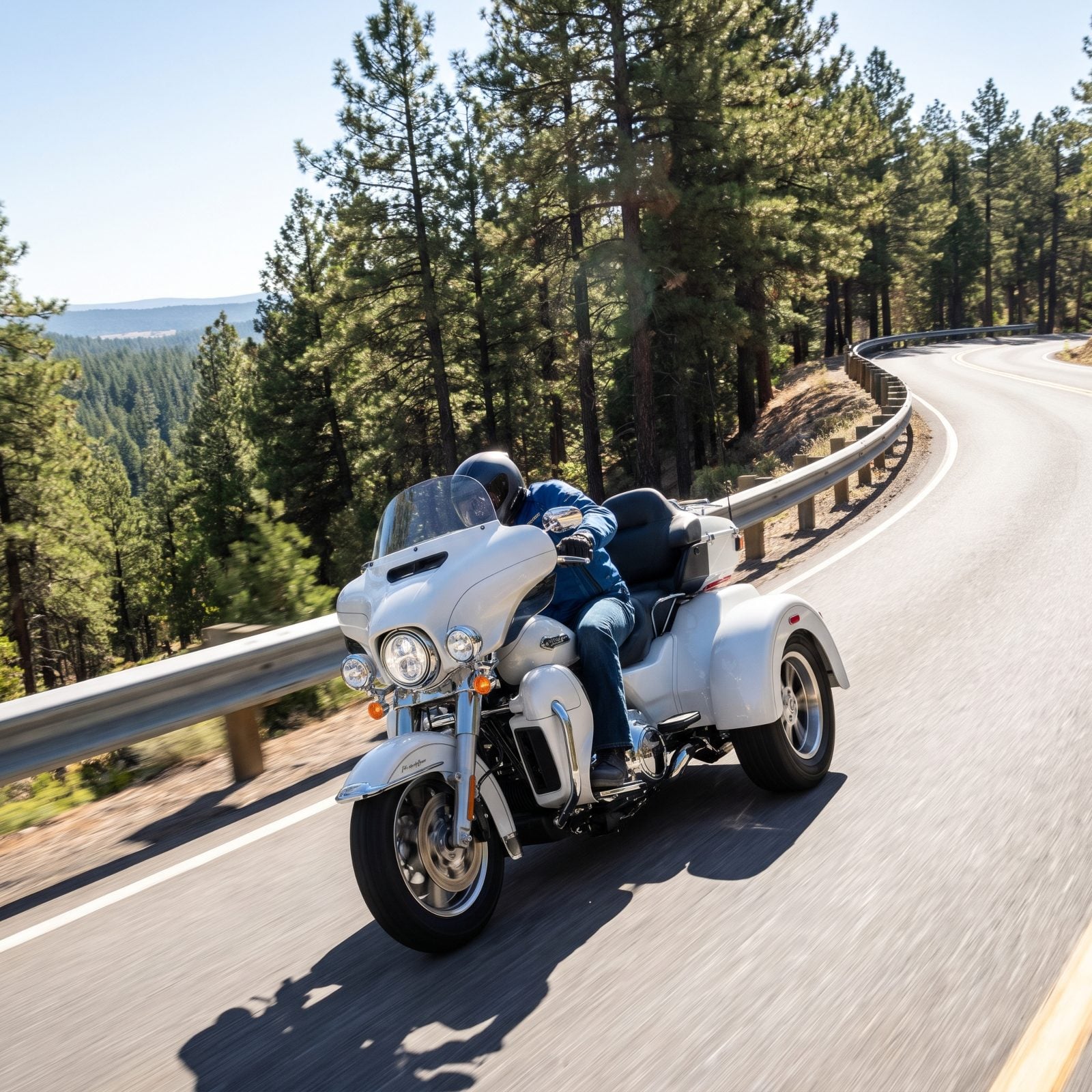
Easier at stops. Not easier everywhere. This is the honest answer most sellers skip right over.
You gain enormous ease at low speed and at a standstill — no balancing, no tip-overs, no clutch juggling. But a trike doesn’t lean into corners. You steer it like a car, actively pushing and pulling the bars, which works different muscles and demands real attention on a twisty road. Take a curve too hot expecting it to carve like a bike, and you’ll feel the back end want to come around.
So it’s not easier. It’s a trade — you swap the balance skill for a steering skill. Riders who respect that difference adapt fast. The ones who assume three wheels means automatic safety get surprised.
37. Should I Take a Three-Wheel Riding Course First?
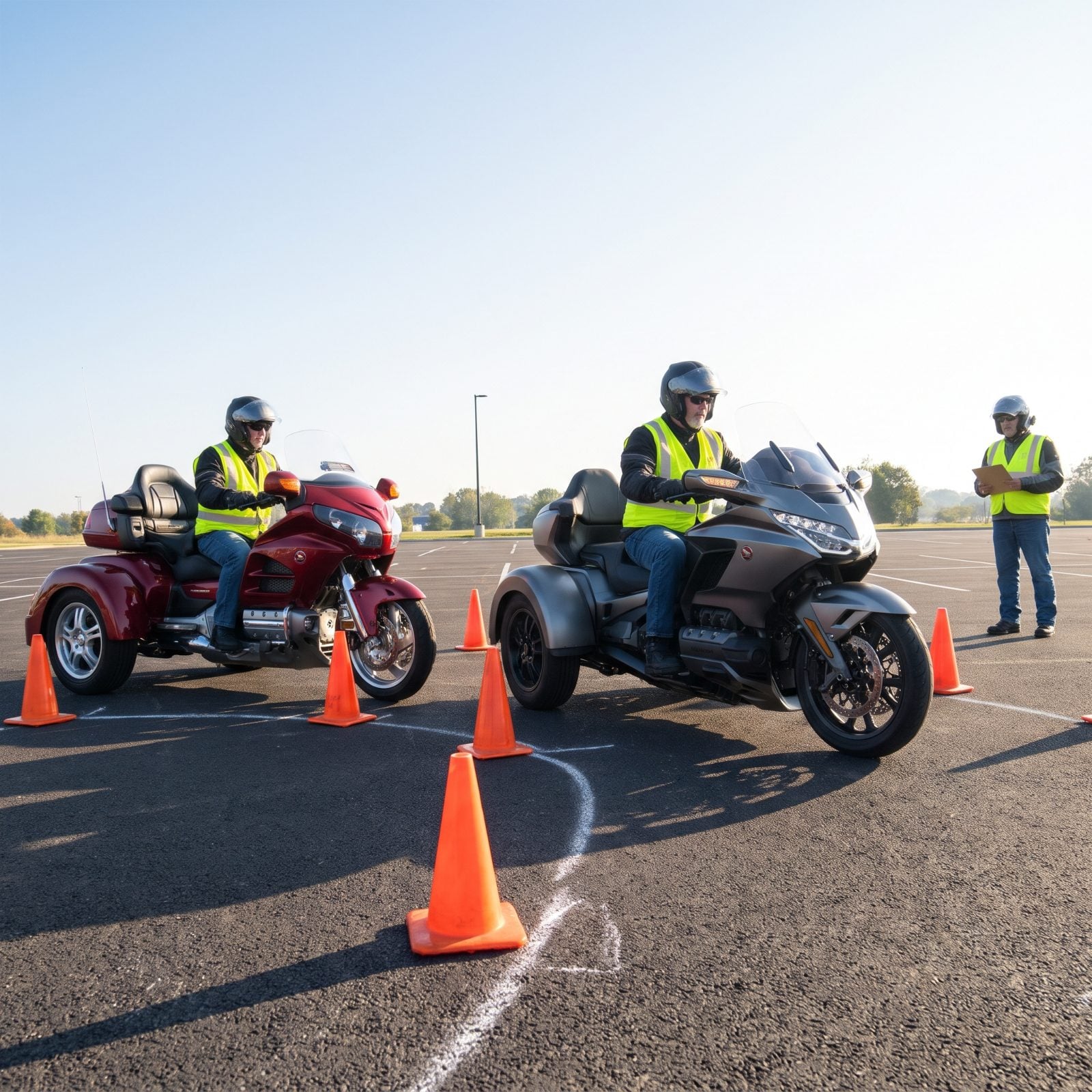
Yes. And I’ll go further — even a 40-year rider should take it.
The Motorcycle Safety Foundation runs a dedicated three-wheel course, and it exists because trikes genuinely ride differently. The counterintuitive steering, the wider track, the way they behave in a hard stop — none of that carries over from two wheels. Your instincts from decades of riding will actively work against you for the first hour.
Some states let you add a three-wheel endorsement by passing that course instead of a road test. The cost is modest, and some dealers reimburse it with a purchase. Skipping it to save a Saturday is the kind of pride that gets expensive.
36. How Long Does It Take to Unlearn Two-Wheel Habits?
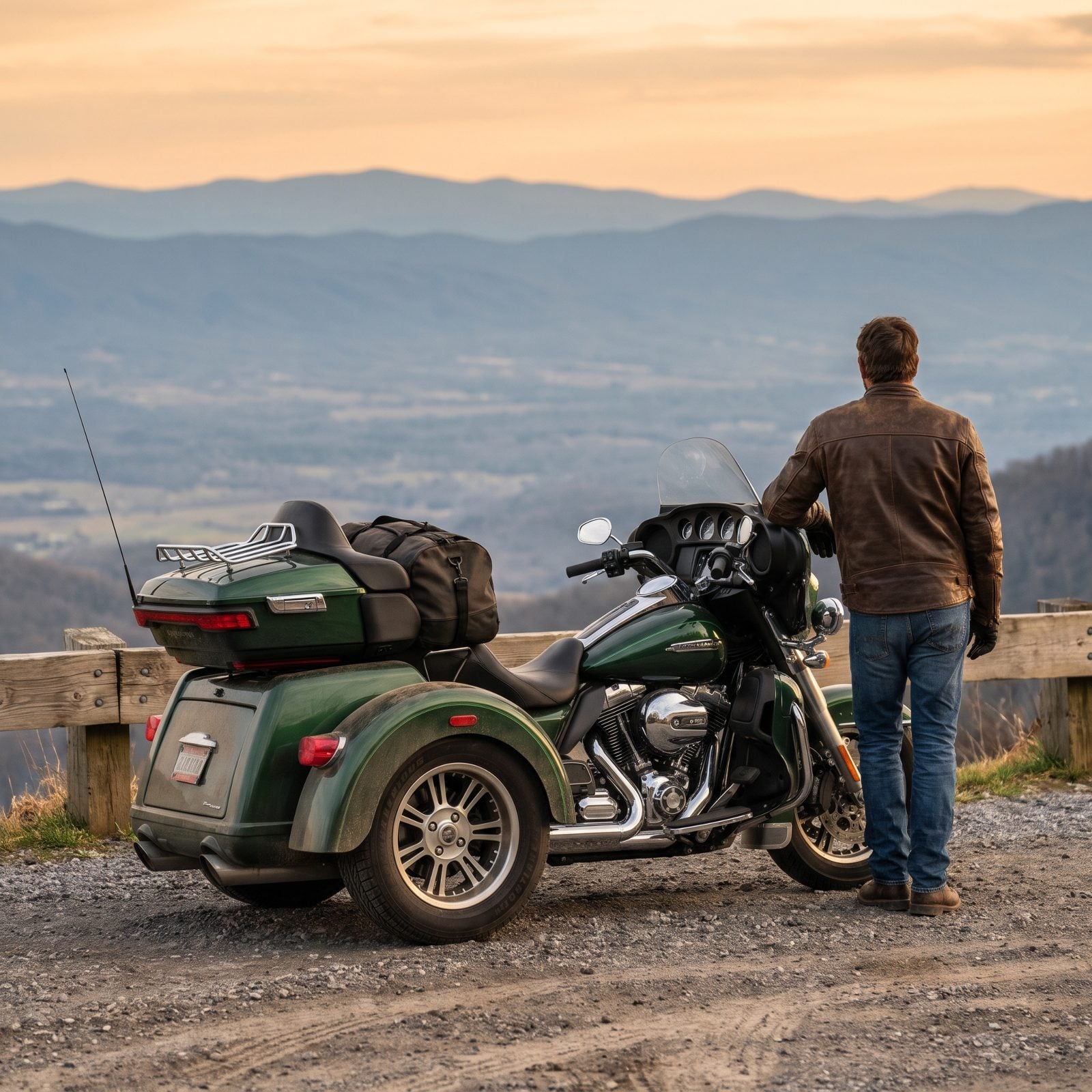
Real talk on the timeline: the instinct to lean fights you hardest in the first few hours, loosens over the first week, and mostly settles within a few hundred miles. Your body spent decades learning to countersteer and drop weight into corners. Three wheels rewire that one turn at a time.
The last habit to go is the panic lean — the reflex where your brain tries to tip the bike into a curve a trike simply won’t take. Slow parking-lot practice beats that out of you faster than highway miles ever will. Give it a month of regular riding before you load it heavy and point it at a mountain pass.
35. Why Can’t I Steer a Trike by Leaning?
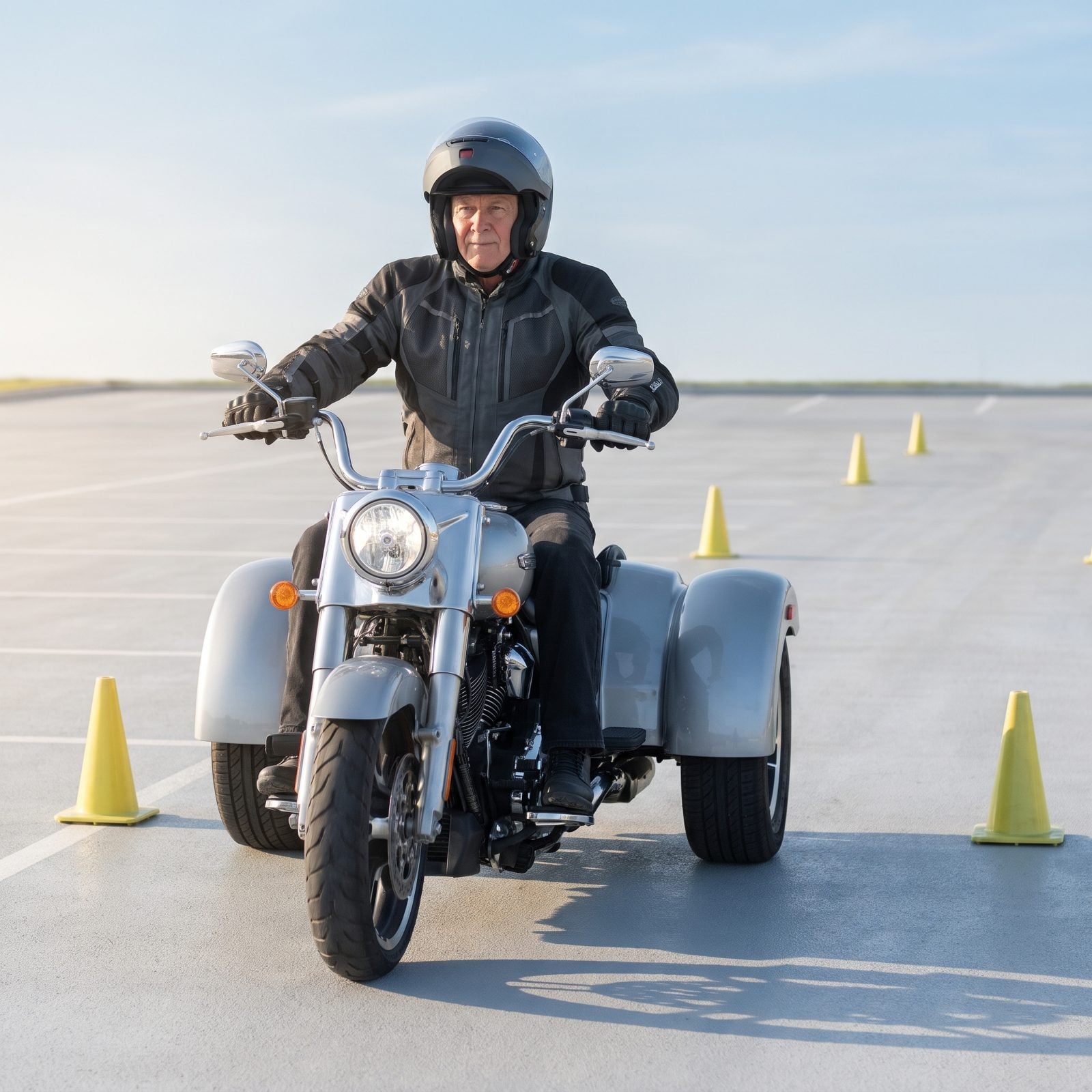
A two-wheeler stays up because you lean it and it carves. A trike skips that trick entirely — the third wheel means it never wants to fall over, so leaning does nothing except make you feel like you forgot how to ride.
You steer a trike the way you steer a car. Turn the bars, the front wheel points, the machine follows while your body stays upright through the whole corner. That feels wrong for the first fifty miles because every instinct you’ve built over decades is screaming at you to drop a shoulder into the turn.
So ignore the instinct and let your hands do the work. Your muscle memory unlearns faster than you’d think.
34. How Much Upper-Body Strength Does Trike Steering Require?
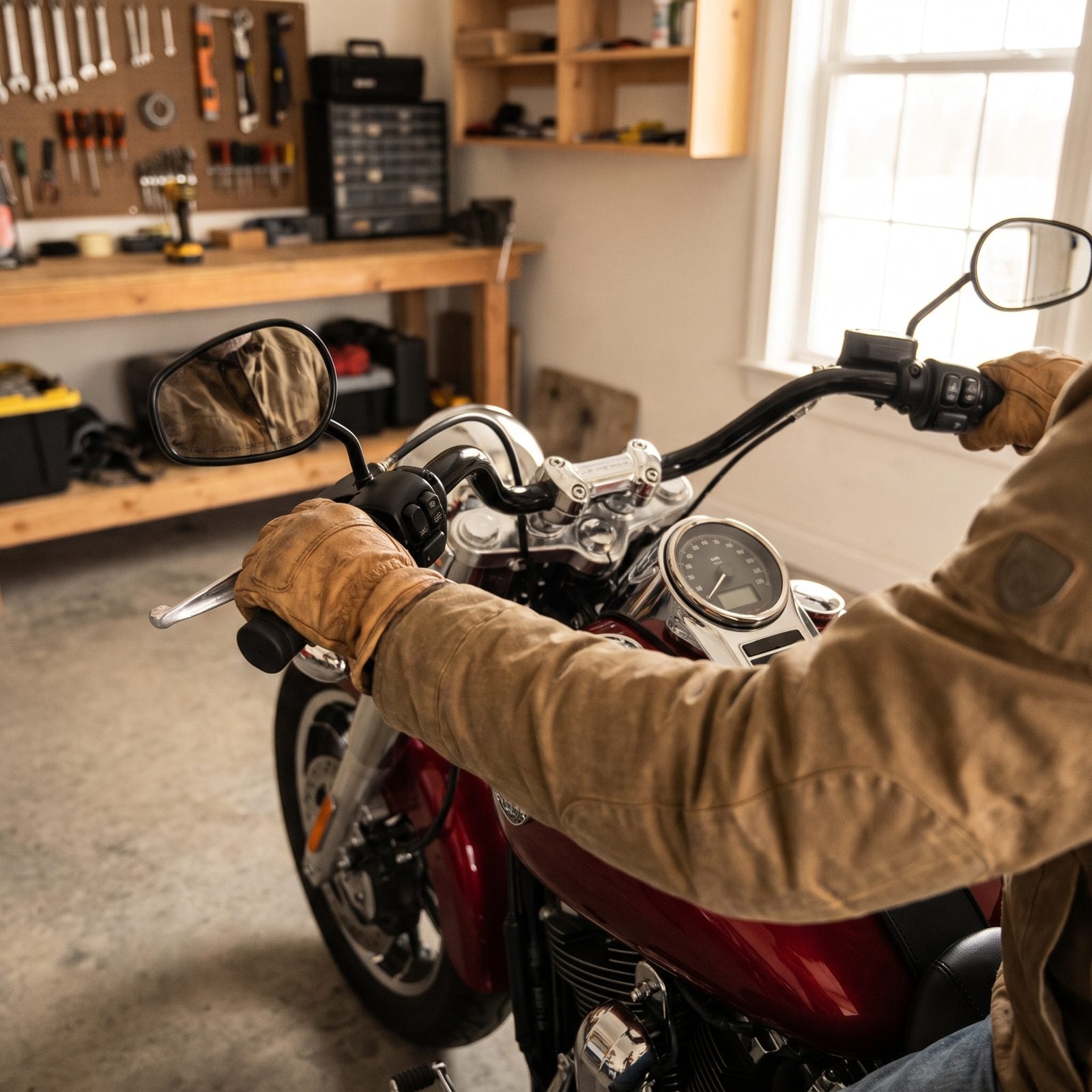
More than a bicycle, less than wrestling. That’s the honest answer, and it surprises people both ways.
At parking-lot speed, a trike asks real effort from your arms and shoulders because you’re physically pointing a loaded front end with no lean to help. Full-lock U-turns are where you’ll feel it most. At road speed the effort drops off and the bars go light in your hands.
If grip strength or shoulder range is a concern, this matters a great deal. Power steering exists on several factory and converted models, and it changes the whole picture. Try a low-speed maneuver before you buy — not a highway test ride where everything feels easy.
33. Why Do New Trike Riders Drift Across the Lane?
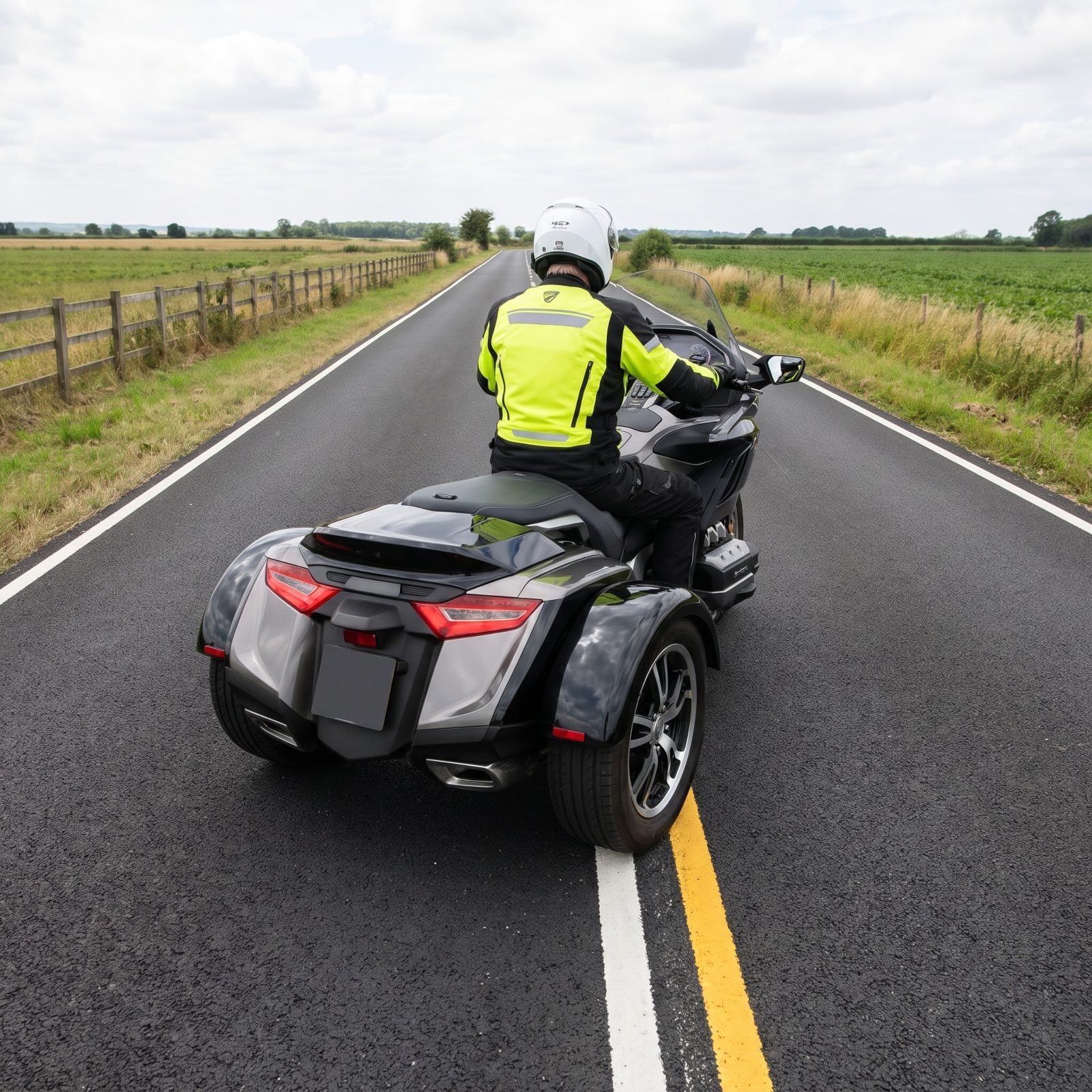
You go where you look. On two wheels that was a slogan. On a trike it becomes a problem you can watch happen in real time.
New trike riders wander because they’re staring at the rear wheels in their heads, worrying about the width, and their hands follow their eyes. Fix your gaze far down the road and the drifting stops almost on its own.
The other culprit is grip tension. White-knuckling the bars feeds every tiny arm twitch straight into the steering. Loosen your hands and let the trike settle — it tracks straighter than you expect once you stop fighting it.
32. Can Countersteering Cause Me to Crash a Trike?
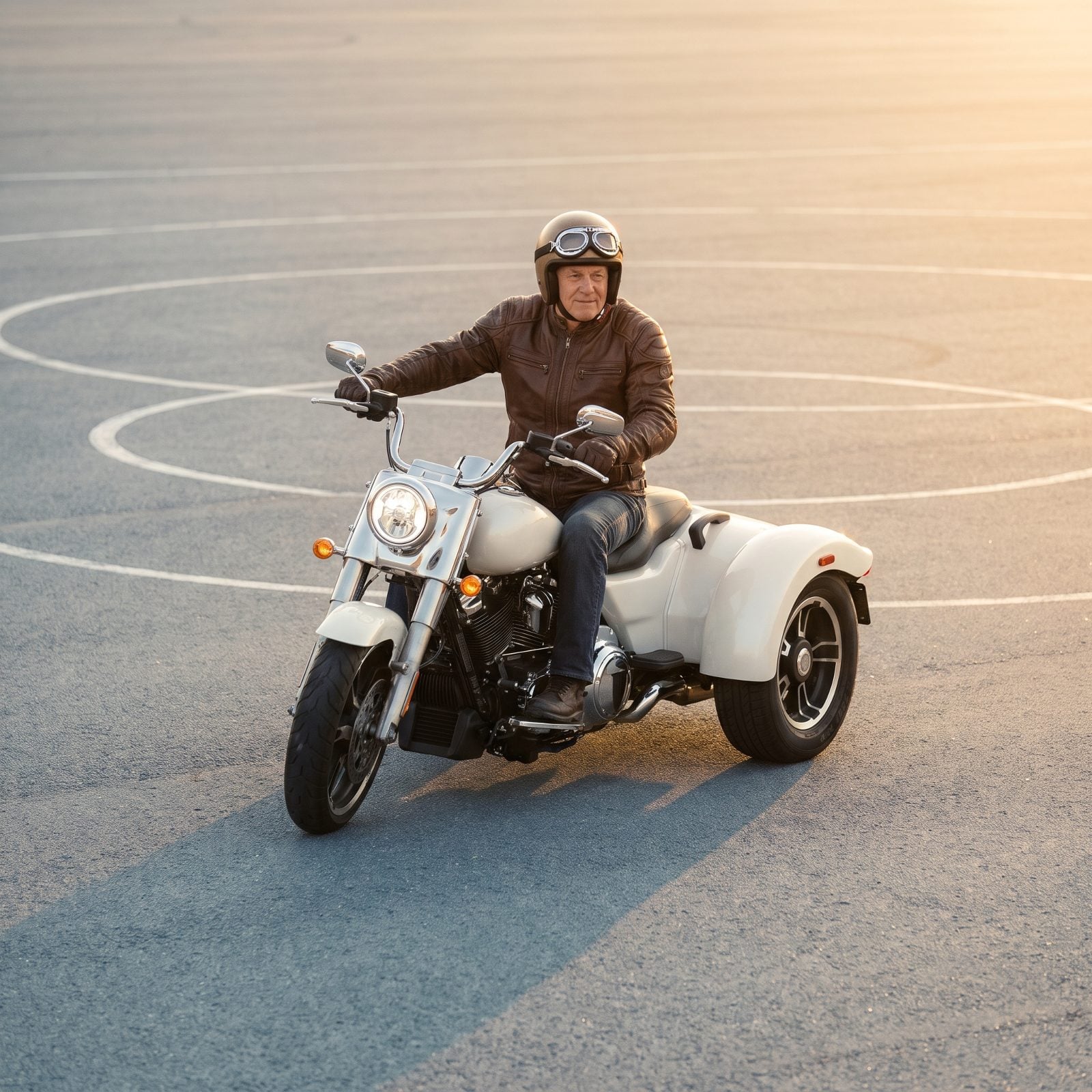
Here’s the trap. Your hands have countersteered for thirty years, pushing the bar away to drop the bike into a lean. On a trike there’s nothing to lean, so that same reflex nudges the front wheel the wrong direction for a split second.
At low speed it’s harmless and you correct it instantly. The danger window is a sudden high-speed swerve, where an old countersteer reflex points you briefly away from where you need to go.
It won’t crash a careful rider. It’ll just feel strange until the reflex fades.
31. How Fast Should I Take My First Trike Corners?
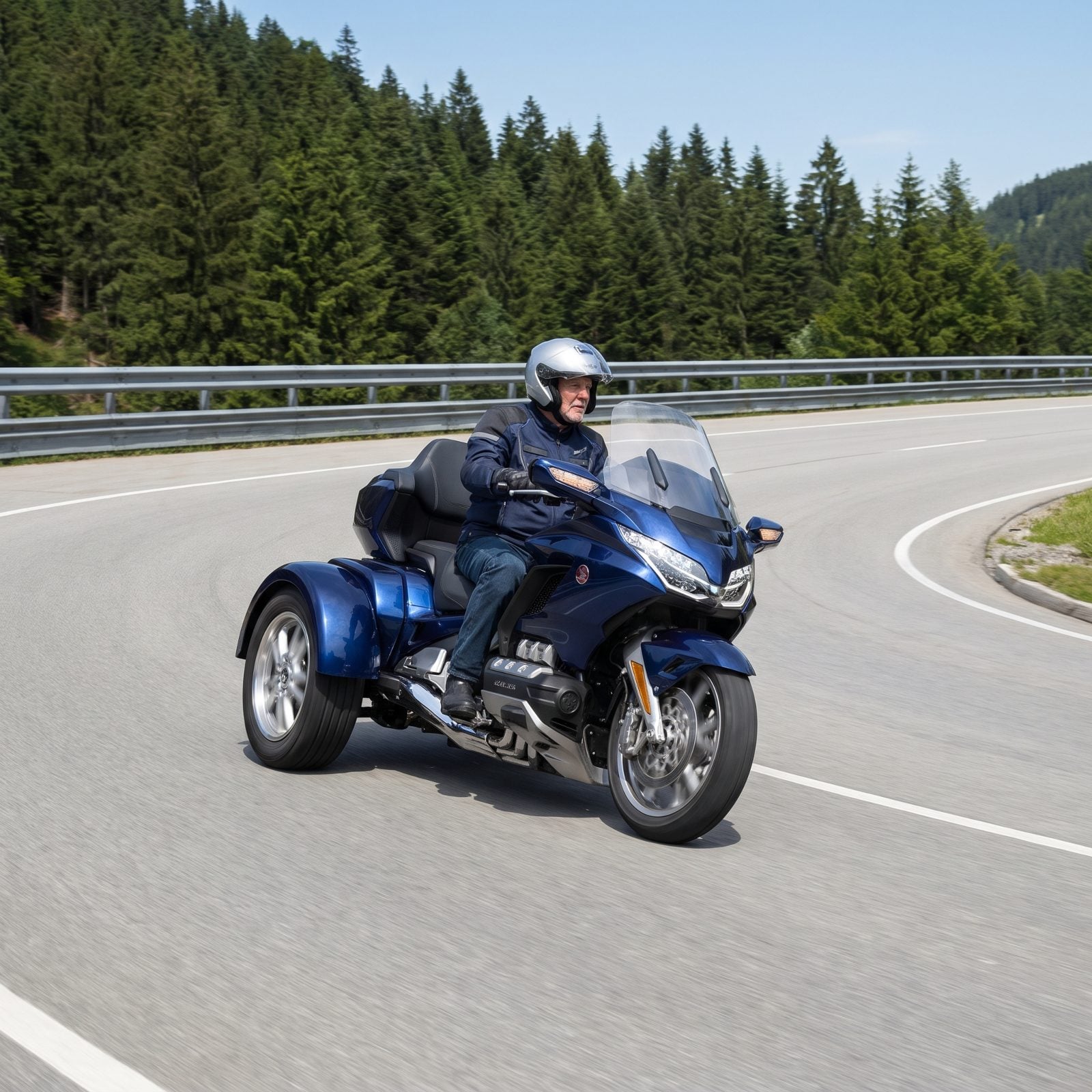
Slower than your gut says, especially for the first week.
A trike carries speed into corners very differently from a leaning bike. It doesn’t tuck and carve — it stays flat and loads up the outside wheels, and if you overcook the entry you feel it push wide instead of leaning deeper. No saving it with body English.
Enter slow, look through the turn, roll on the throttle smoothly as you unwind the bars on the exit. Build pace over weeks, not minutes. The confidence comes back, but you have to earn it on a chassis that plays by its own rules.
30. Why Does a Trike Feel Like It Is Pushing Me Outward in a Turn?
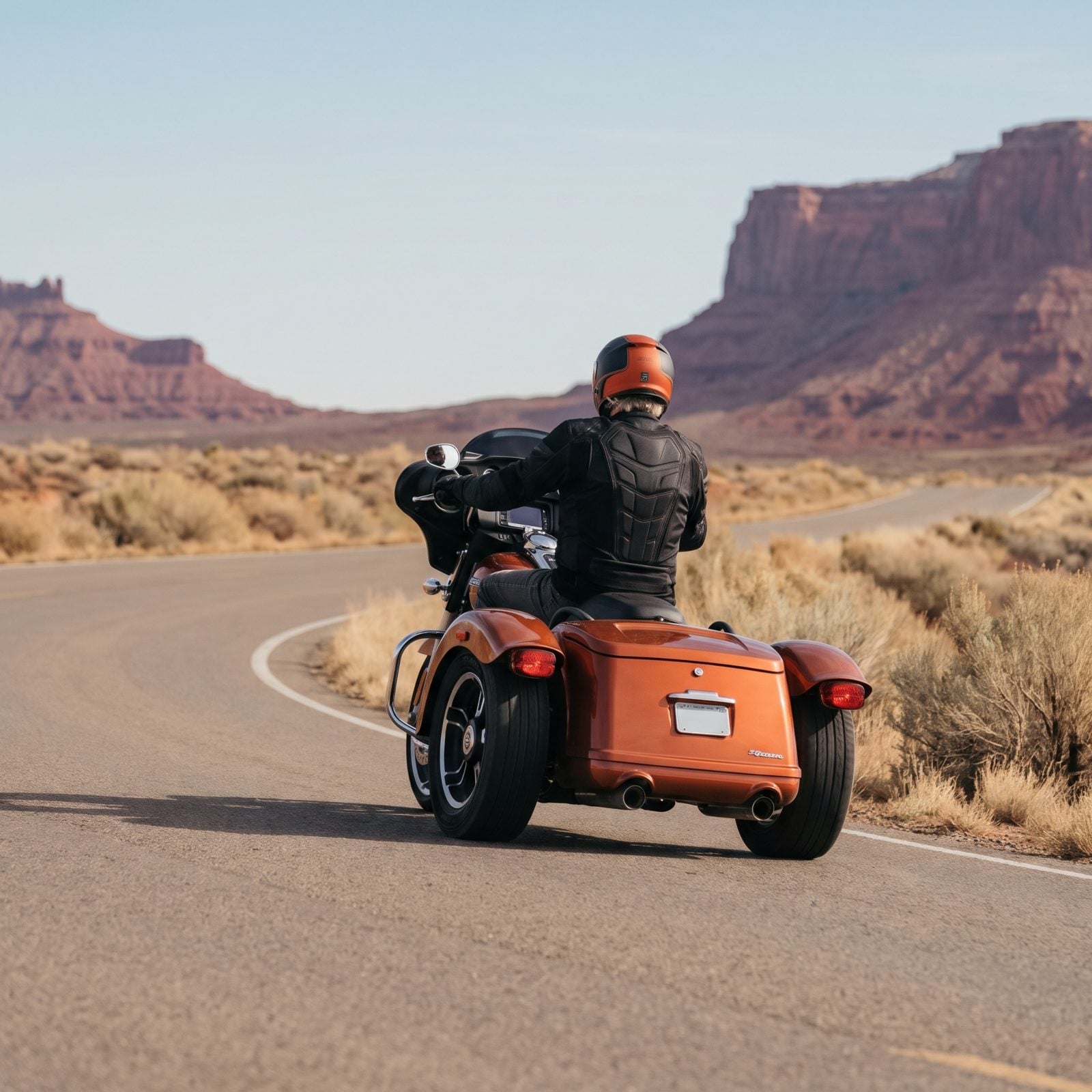
That outward shove is just physics you never felt before. On a two-wheeler you leaned into the corner and your body canceled the sideways force, but a trike stays flat, so that same force throws you toward the outside of the seat.
It’s not the machine misbehaving. It’s lateral load, and you’re finally noticing it because nothing is tipping to absorb it.
Two fixes. Slow your entry so there’s less force to fight, and brace with your legs and core instead of hanging on the bars. Plenty of riders add a backrest and grab handles for passengers, and solo riders find them useful too.
29. Can a Trike Tip Over in a Sharp Corner?
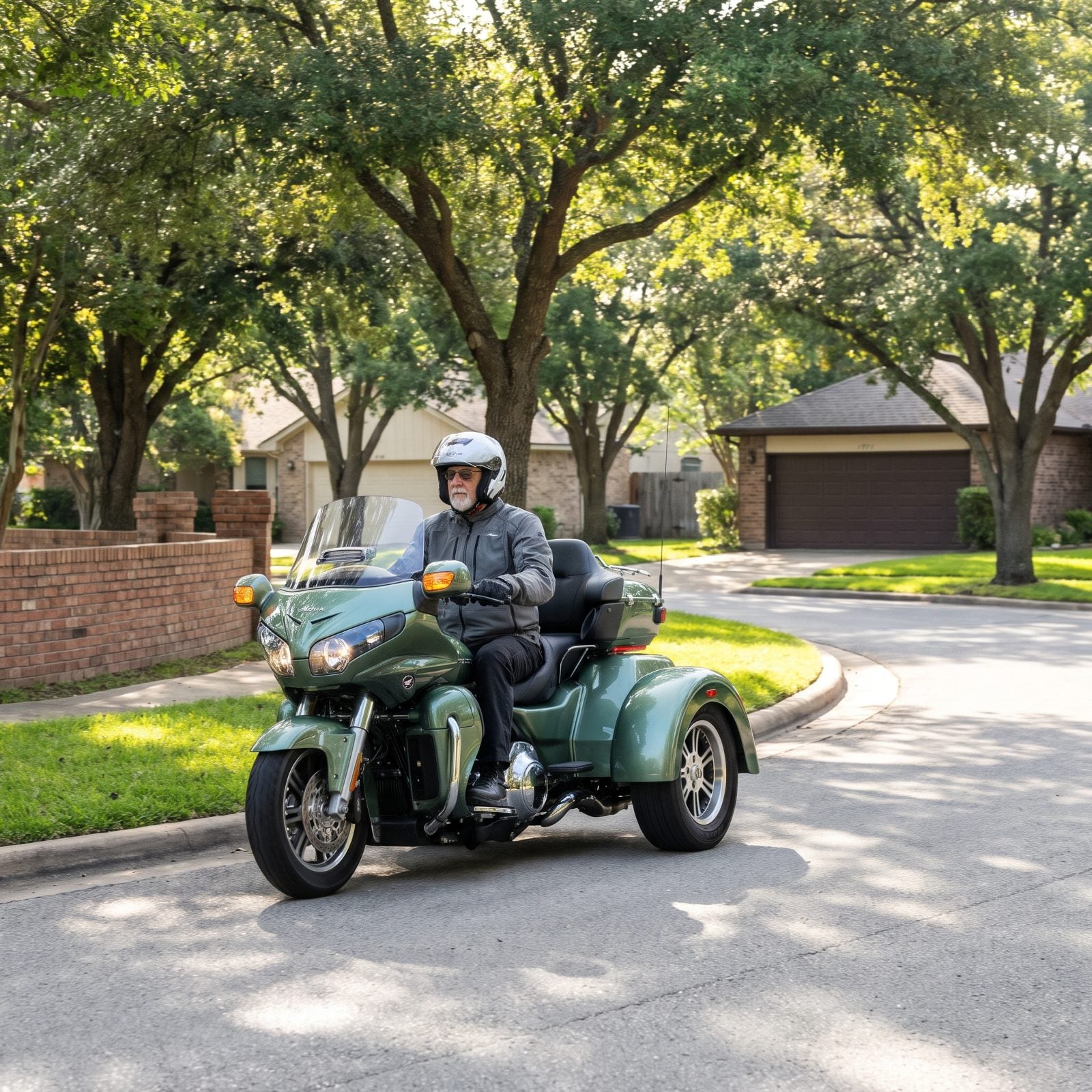
Yes, but it takes real provocation, and it practically never happens to a sensible rider.
A trike’s wide rear track gives it real stability. To actually roll one you’d need aggressive speed into a tight corner, or a steep off-camber surface, or a sudden hard swerve that loads one side violently. Normal road riding doesn’t come close.
The riders who get into trouble are the ones treating a trike like a sports bike that can’t fall over. It can. It just needs more provocation. Respect the corner speed limits and the machine stays flat and friendly under you.
28. What Happens If One Rear Wheel Leaves the Pavement?
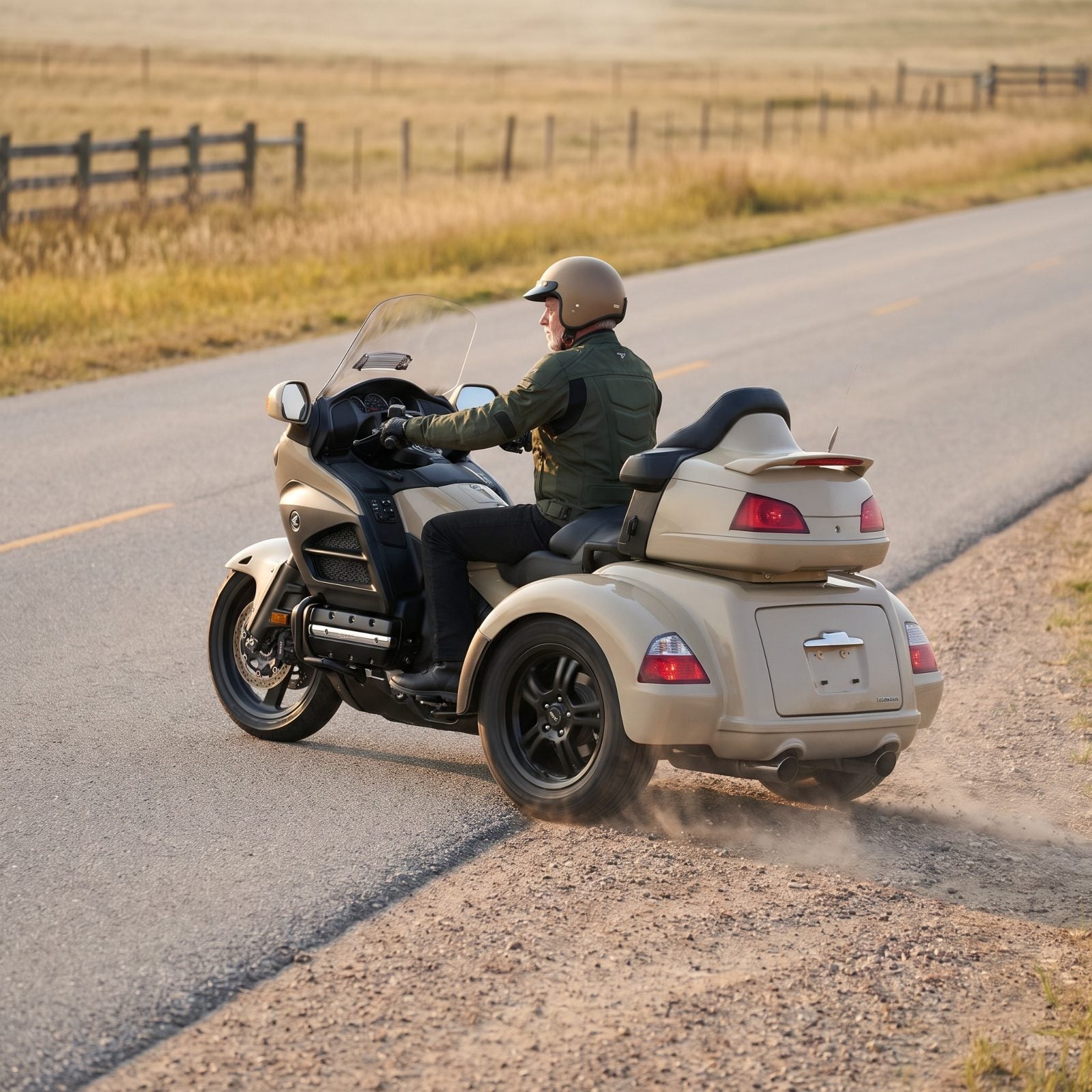
Usually less drama than you’d fear. Let one rear wheel drift onto a gravel shoulder and you’ll feel a tug toward that side, hear the surface change and kick up dust, but the trike stays upright because the wide rear track keeps it planted while the front wheel stays on the pavement.
The mistake is yanking it back. Ease off the throttle, hold your line, and bring the rear wheel back onto the pavement gently when it’s safe. A sharp correction is what turns a non-event into a swerve.
This is actually one of the trike’s quiet advantages. On two wheels, a dropped wheel on loose gravel can mean a low-side. On three, it’s mostly a surprise and a story you tell later.
27. How Do I Avoid Clipping Curbs, Gas Pumps, or Bollards With the Wide Rear End?
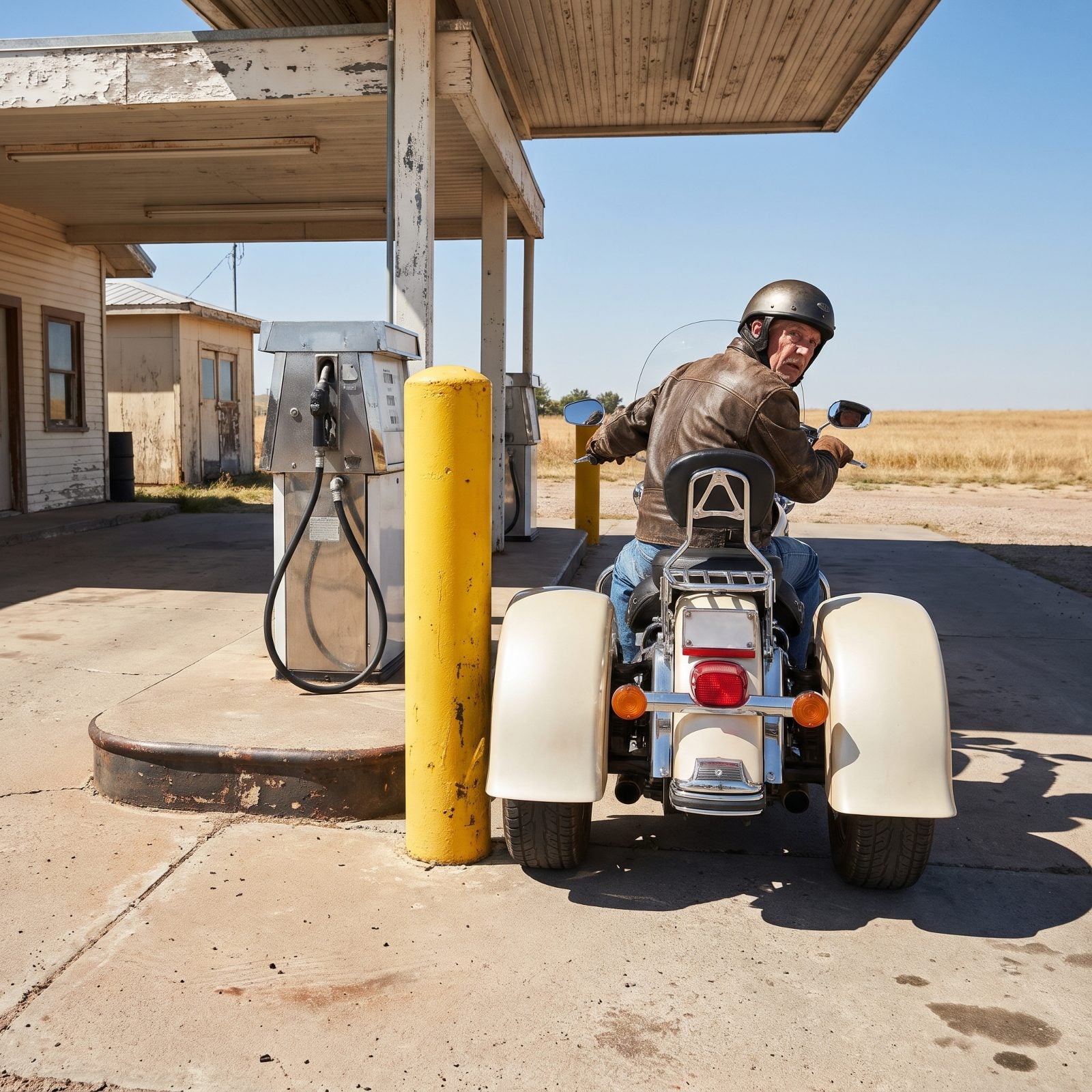
The rear end is wider than your old mirrors ever told you. Your brain still thinks the bike ends where the seat does, and it doesn’t anymore.
The fixes are boring and they work:
- Swing wider on turns than feels necessary. The rear wheels cut inside your front wheel’s path, so a line that clears up front can clip a curb out back.
- Walk your regular gas stations and tight spots once before you ride them, so you know where the pinch points hide.
- Back in or pull through when you can, instead of threading a tight reverse past a bollard you can’t see.
You’ll misjudge it a few times. Everyone does. Low-speed scrapes teach the dimensions faster than any guide ever could.
26. Does a Trike Handle Potholes Differently?
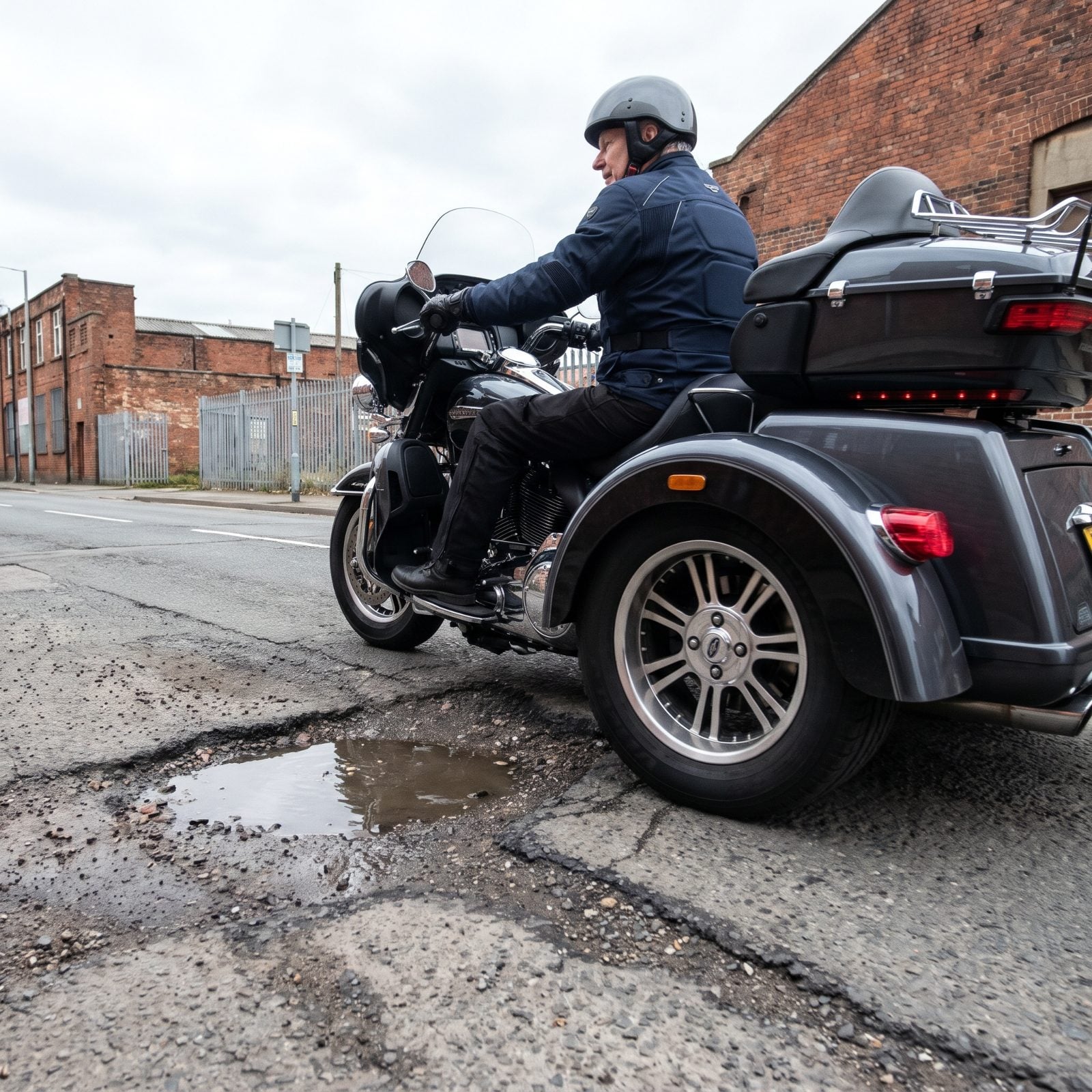
Very differently, and mostly for the better. On two wheels a pothole could deflect your front wheel and threaten your balance, while a trike just absorbs it on one corner and keeps rolling flat.
The new wrinkle is width. With two tracks out back, you’ve got three wheels to keep out of holes instead of two in a single line. A pothole your front wheel dodges might still catch a rear one you can’t see.
You’ll feel a jolt and a thud rather than a loss of control. Slow down over broken pavement, keep your eyes scanning the whole width of your lane, and the trike shrugs off roads that used to make you tense up.
25. How Does a Trike Behave on Gravel?
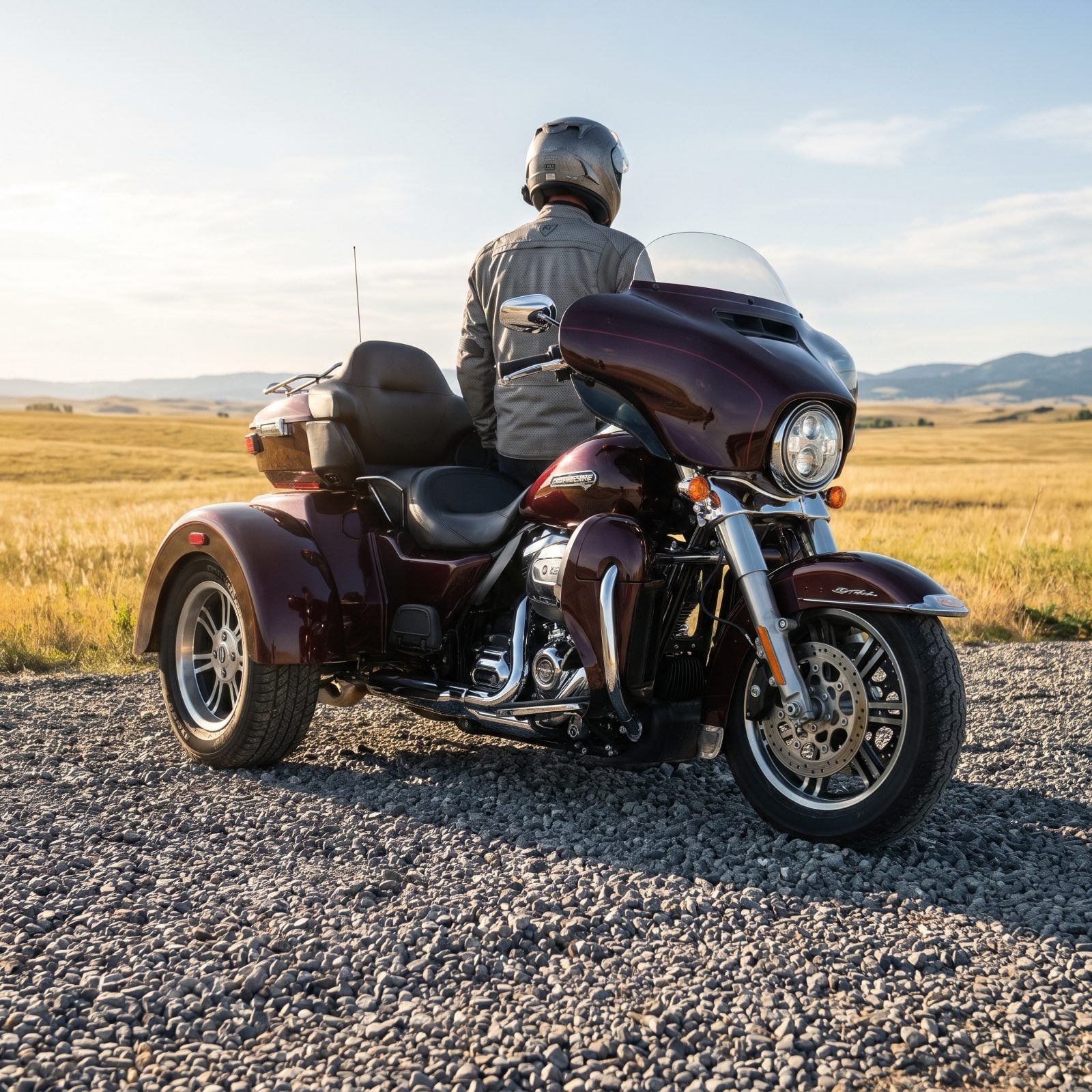
Gravel feels different on three wheels, and that difference works in your favor. You don’t balance a trike, so a front tire wandering across loose stones won’t drop you the way it might on two wheels — the machine stays upright no matter what the surface does under it.
Here’s what nobody mentions. The rear can still slide if you get greedy with the throttle, and the steering goes vague and heavy when the front washes. Slow down before the loose stuff, keep your line steady, and let those two rear contact patches earn their keep. Sudden inputs are the enemy.
24. Are Trikes Safe on Wet Roads?
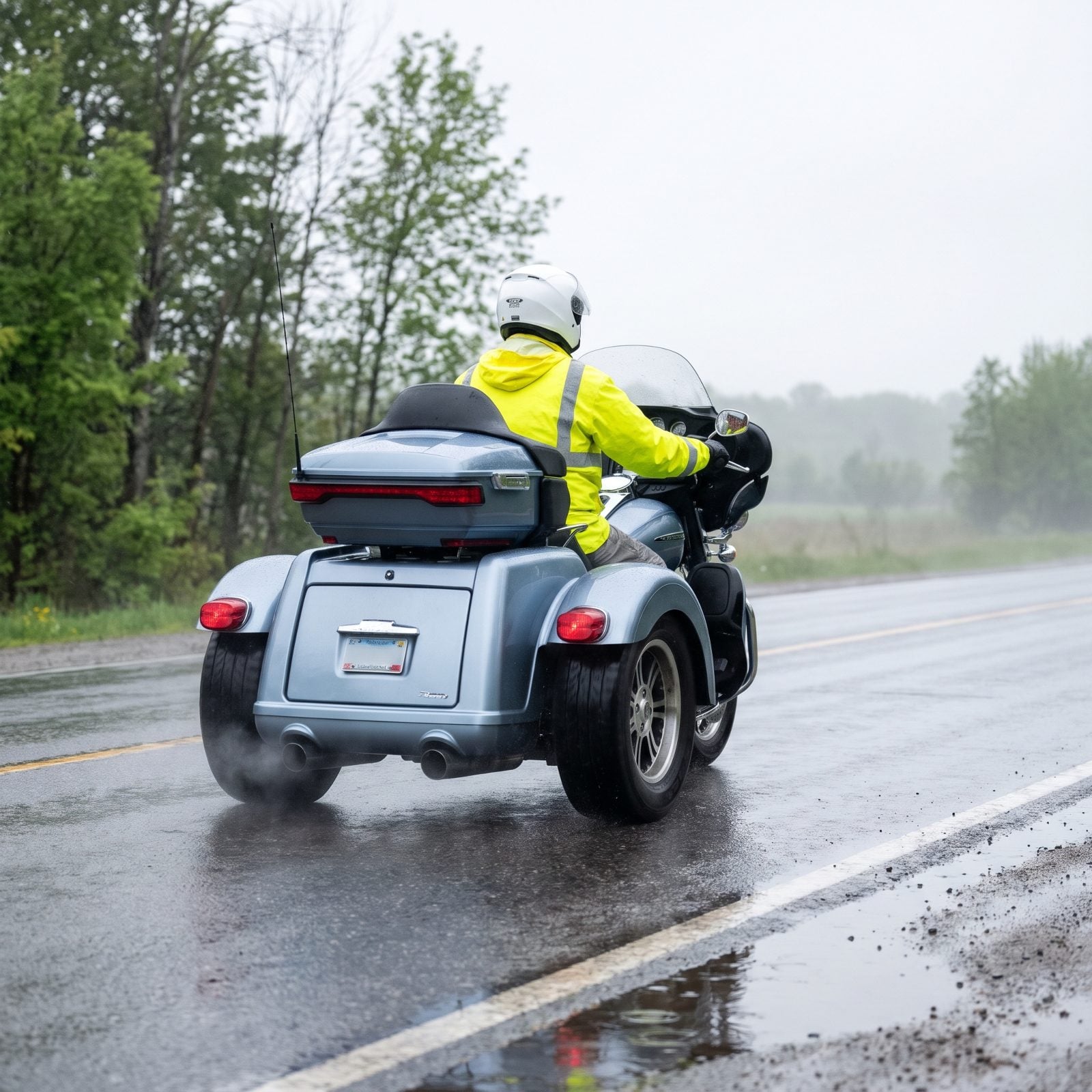
Rain is where a lot of older riders feel better on three wheels than two. No front-end tuck waiting to catch you off guard, and you’ll never put a boot down onto a slick painted line and feel your stomach drop.
But wet roads reward smoothness and punish hard braking. With weight biased to the rear on many trikes, the front can lock up more easily under heavy stops, and hydroplaning is real on standing water. Ease off everything. Give yourself more room, roll on and off the throttle gently, and treat painted lines and metal plates like ice. The layout protects you — your inputs still matter.
23. Can I Ride a Trike in Strong Crosswinds?
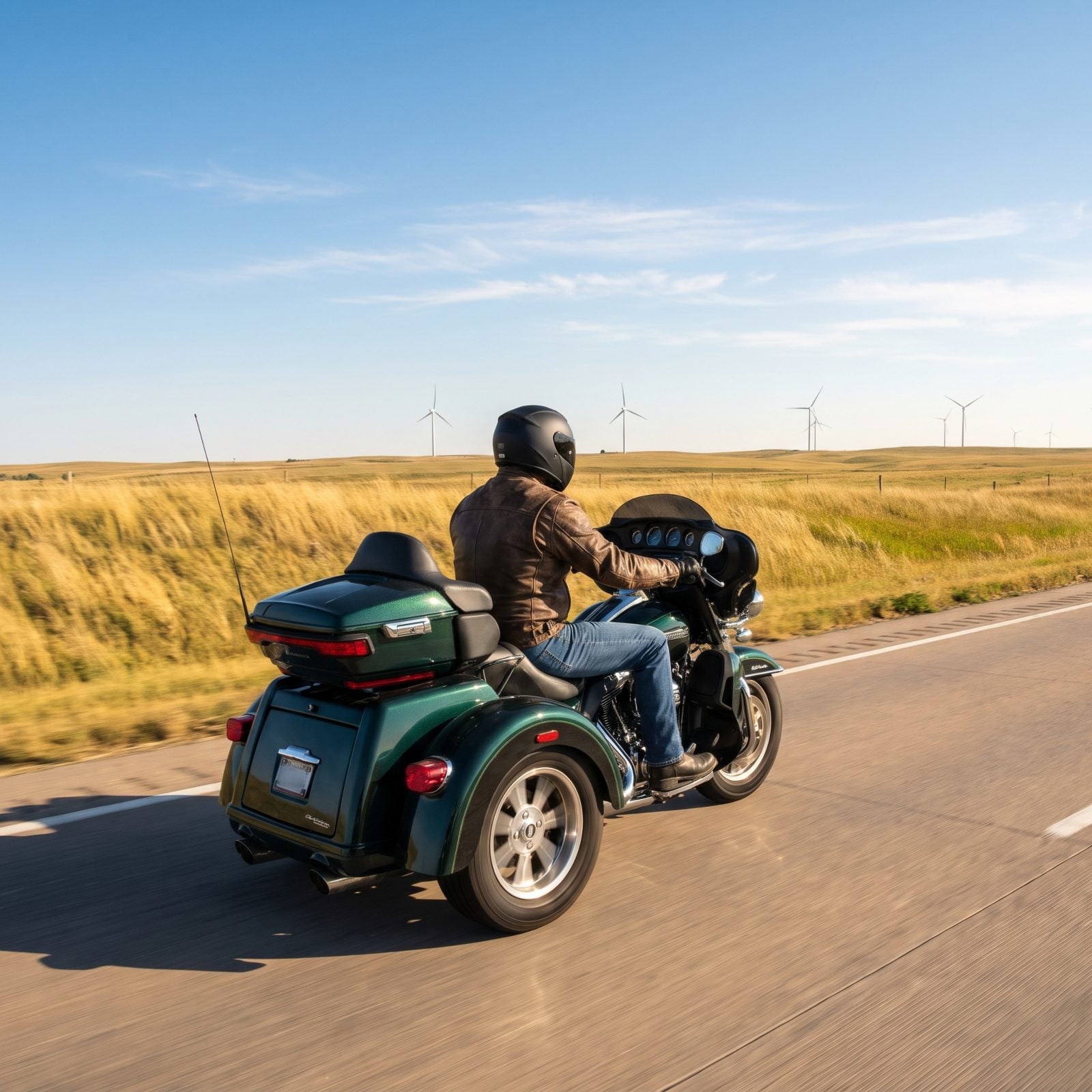
A gust that would shove a two-wheeler toward the shoulder barely moves a trike. The wide track and two rear tires anchor you, so you won’t fight to stay in your lane the way you might on a big touring bike catching a broadside blast on an open bridge.
What you’ll feel instead is the fairing grabbing air and the bars tugging a little. Normal. Keep a relaxed but firm grip, keep your eyes well down the road, and ease off the throttle if a crossing semi is about to blow past. The machine does the heavy lifting. You just hold your line.
22. How Does a Trike Handle Grooved Pavement?
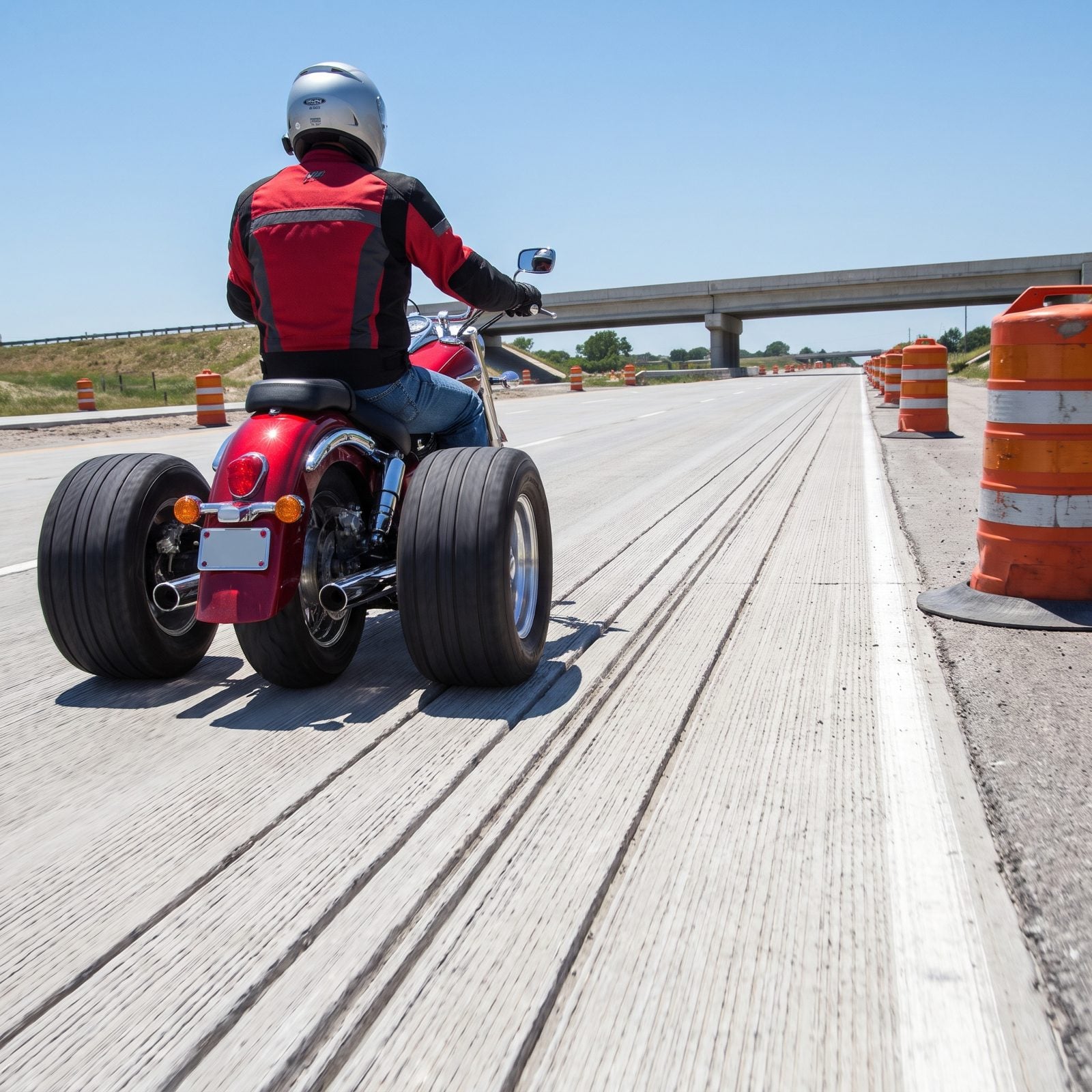
Grooved pavement is the one that rattles two-wheel riders the most. That squirmy, floating feeling as the front tire tracks the grooves can tense your hands up for no good reason.
On a trike, most of that drama vanishes. The front wheel might still hunt a little and buzz through the bars, but the machine won’t dance underneath you — three contact patches (the front tire and the two wide rear tires) don’t follow grooves the way a single leaned-over tire does.
21. Is Riding a Trike at Highway Speed Stable?
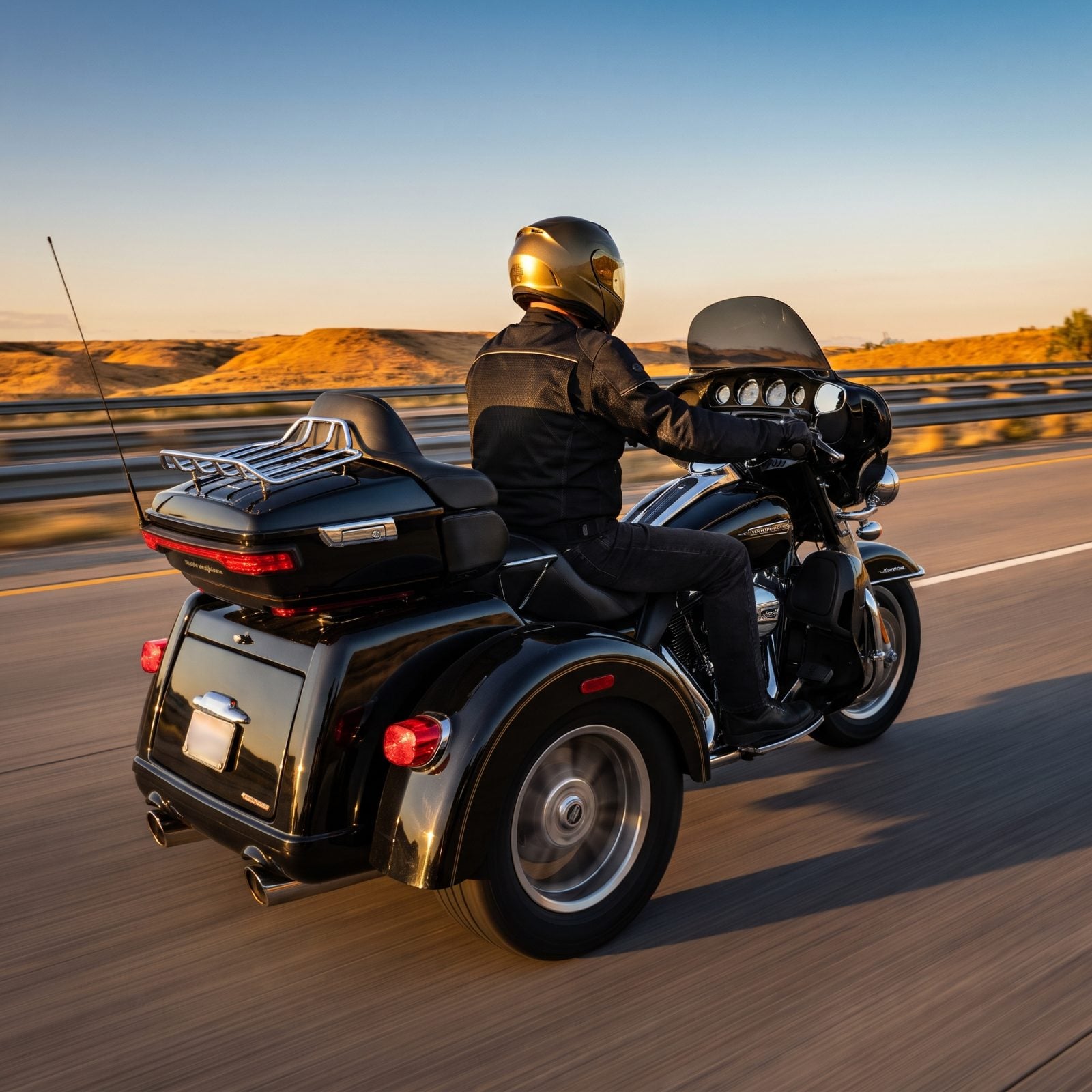
Yes, and honestly this is where many trikes shine. At 70 on an open interstate the thing sits flat and solid — no countersteering, no fatigue from the constant micro-corrections a two-wheeler demands just to stay balanced. You can let your shoulders drop in a way two wheels never quite allow.
The trade-off? Trikes don’t lean, so sweeping highway curves ask for more deliberate steering and a little more muscle. You steer it, you don’t flick it. And at speed the front can feel light on some designs, so a steady grip and smooth throttle keep everything composed. Long days get easier, not harder.
20. Do Trikes Need More Room to Stop?
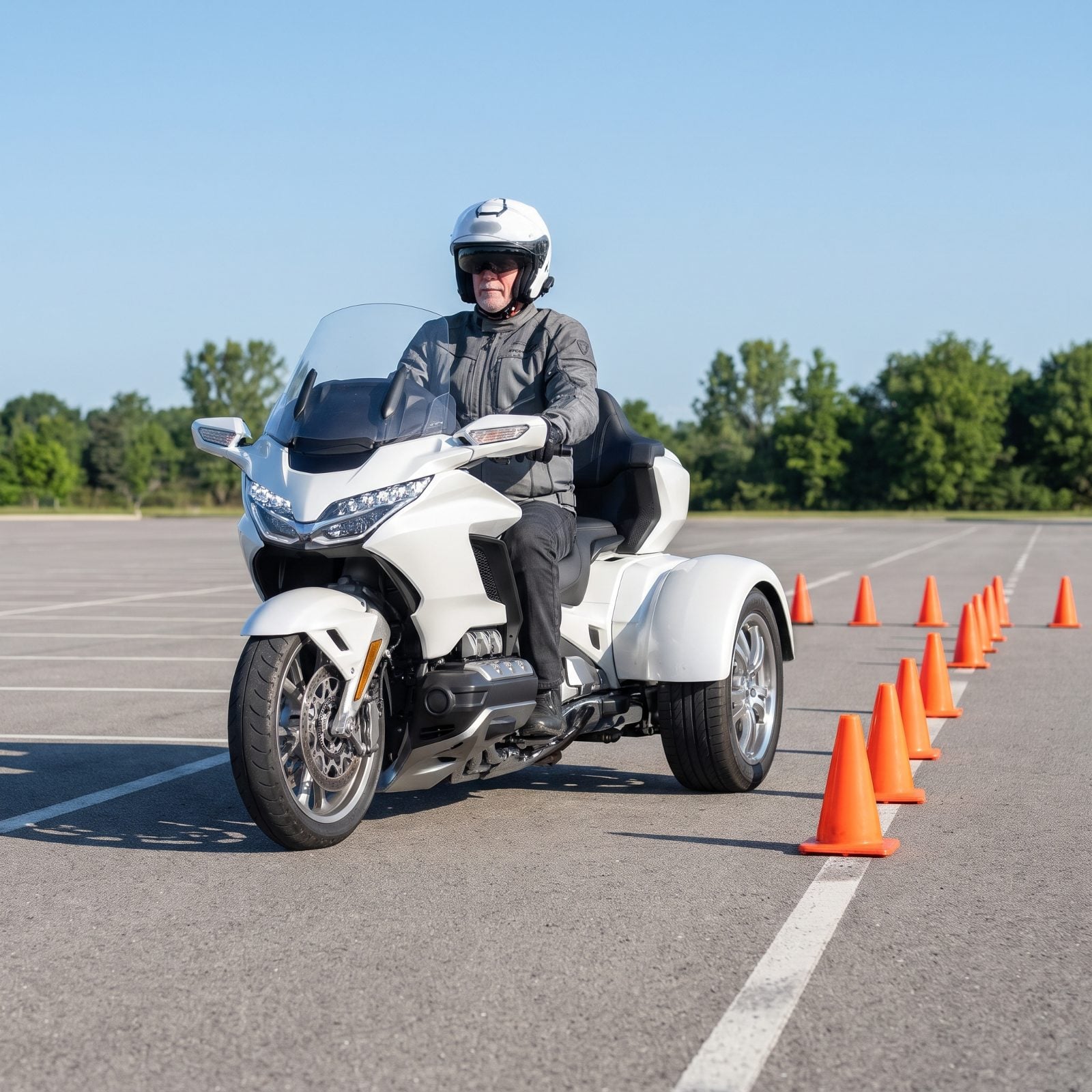
Plan on it. Trikes carry more weight than the two-wheeler you came off of, sometimes a few hundred pounds more once you add the conversion hardware or a factory rear end, and more mass means more distance to shed speed.
You also can’t shift weight forward by standing on the pegs or throwing your body around the way you did on two wheels. Everything runs through the brakes and the extra load sitting over the rear.
Give yourself a bigger cushion to the car ahead for the first few weeks. Your old following distance was calibrated for a lighter machine.
Spend an afternoon in an empty lot learning how hard you can grab before anything gets upset. You want that number in your bones before you need it in traffic.
19. What Happens During an Emergency Swerve?
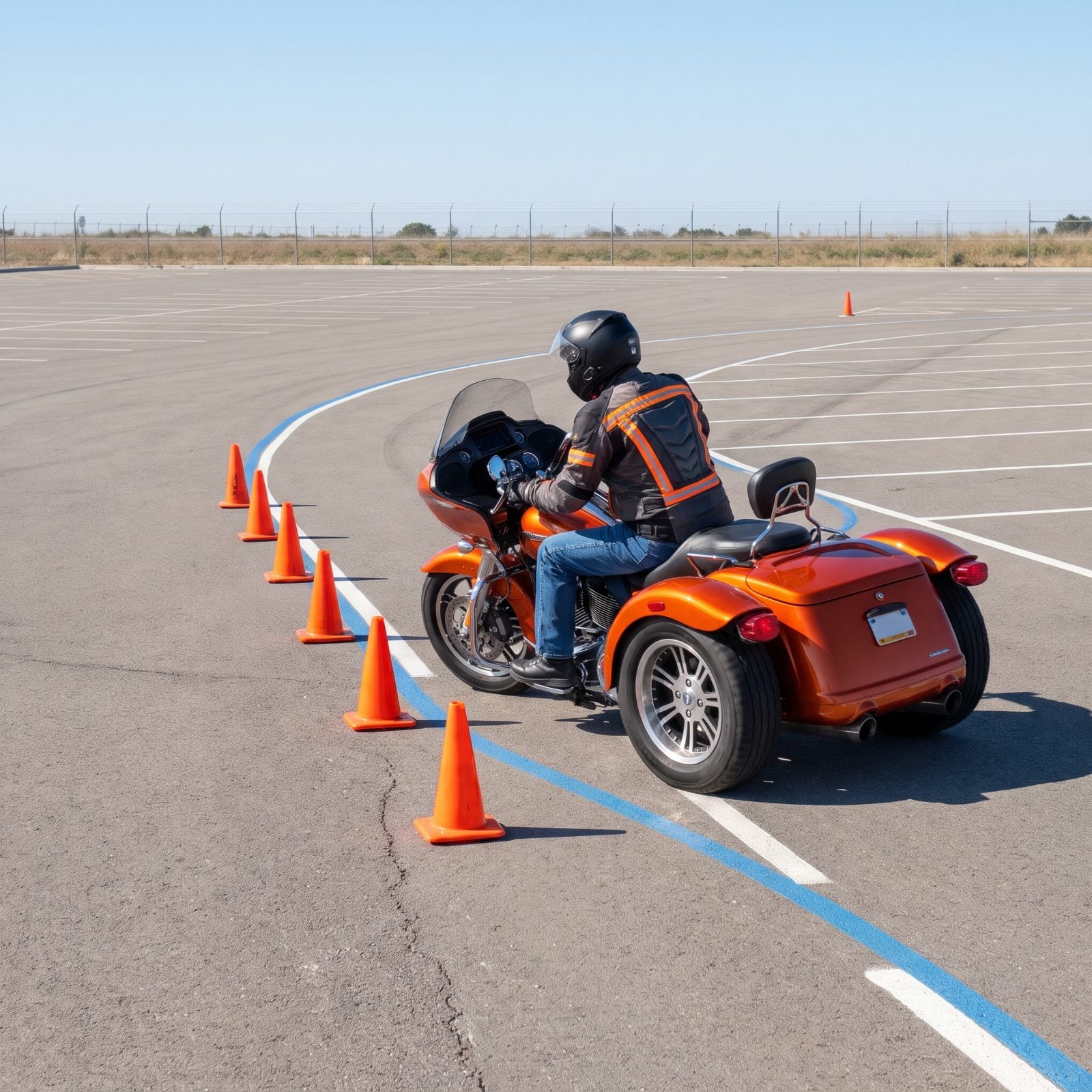
This is the biggest mental rewire coming off two wheels, and it earns real practice. You don’t countersteer and lean out of trouble anymore. You turn the bars and the whole machine changes direction, and that first time it can feel abrupt.
Swerve too hard, too fast, on the wrong design and the inside rear can lighten. Which is exactly why you drill this in a lot, not on the highway. Learn how your specific trike responds, how much input it wants, and how it settles once the danger’s past.
18. Do I Really Need a Reverse Gear?
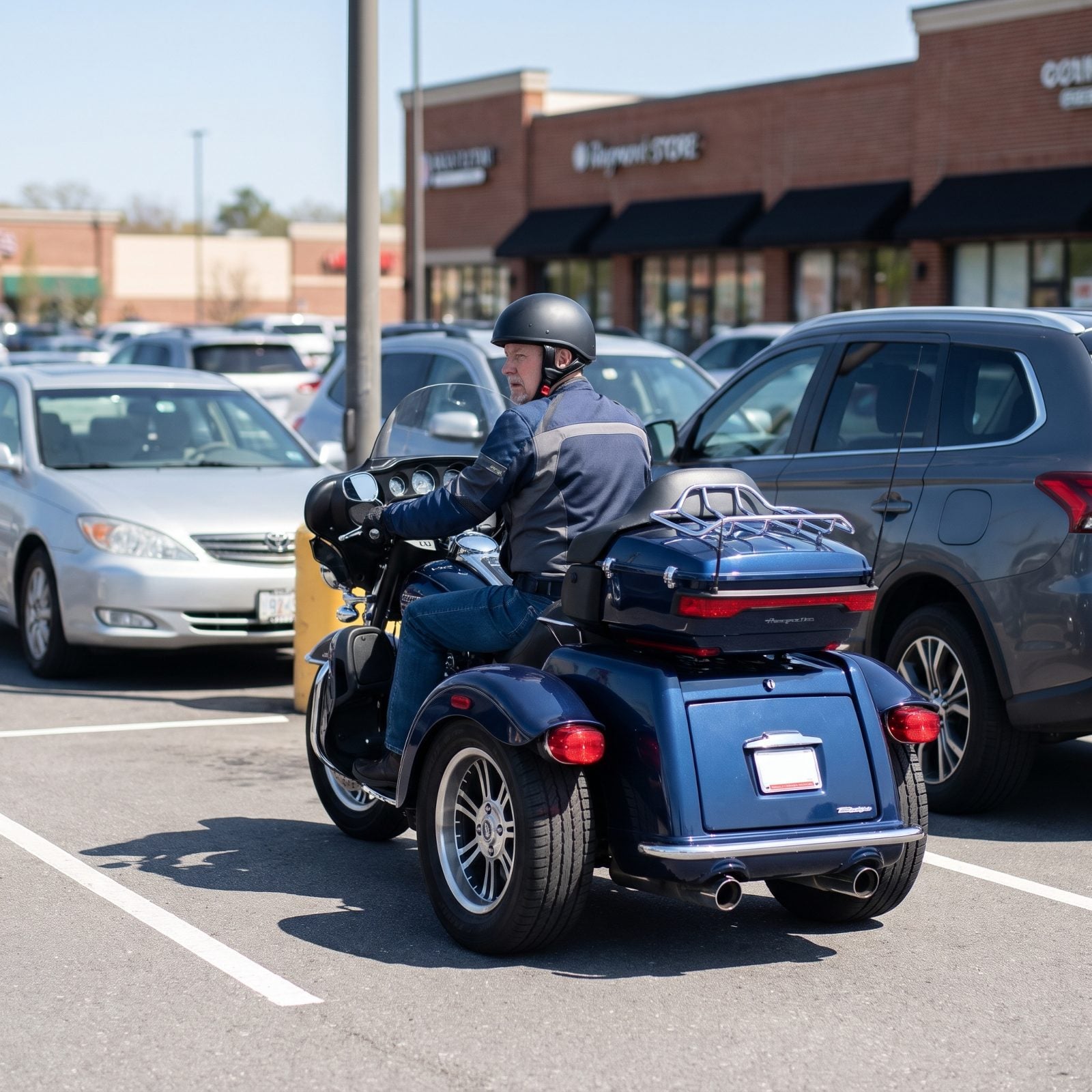
You could skip it. You’d also regret it the first time you nose downhill into a spot and have to muscle 1,200 pounds backward with your legs.
On two wheels you duck-walked the bike wherever you wanted. A trike is simply too heavy to shove around with your boots, especially on any grade, and reverse turns parking from a sweaty ordeal into a non-event.
17. Can I Safely Park a Trike on a Slope Without a Parking Brake?
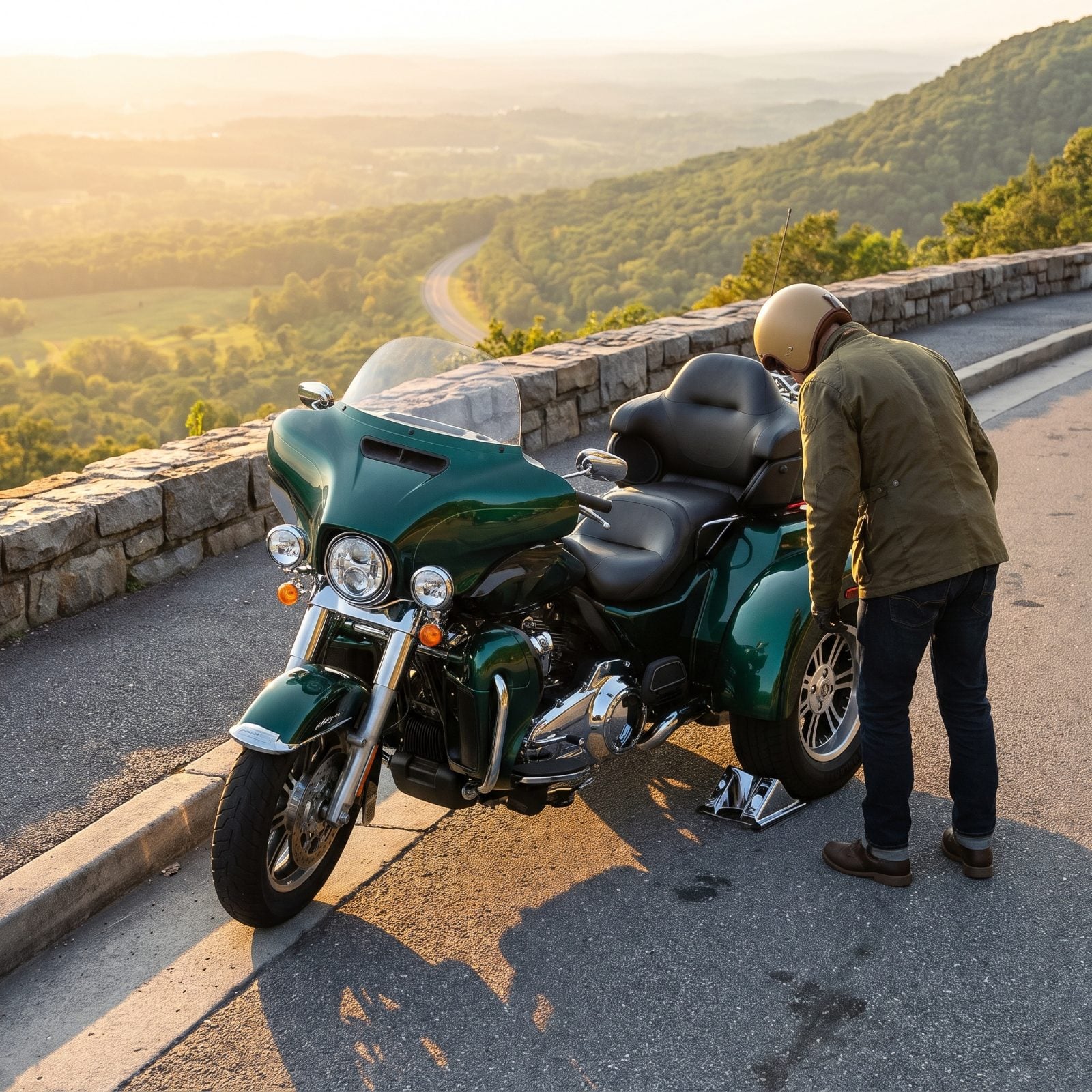
You can, but don’t lean on luck. Most trikes park in first gear with the engine off, and on three wheels that holds better than you’d expect because nothing’s teetering on a sidestand waiting to roll away.
On a real grade, though, first gear alone won’t cut it. Turn the front wheel into the curb or the high side of the slope so the machine can’t creep. And if your trike came with a parking brake, use it every single time, even when you’re sure you don’t need to.
I watched a heavy trike roll out of a spot on a mild incline once. Nobody was hurt. Everybody was embarrassed. Two seconds of caution beats chasing your own motorcycle across a parking lot.
16. What Should I Do With My Feet When Stopping?
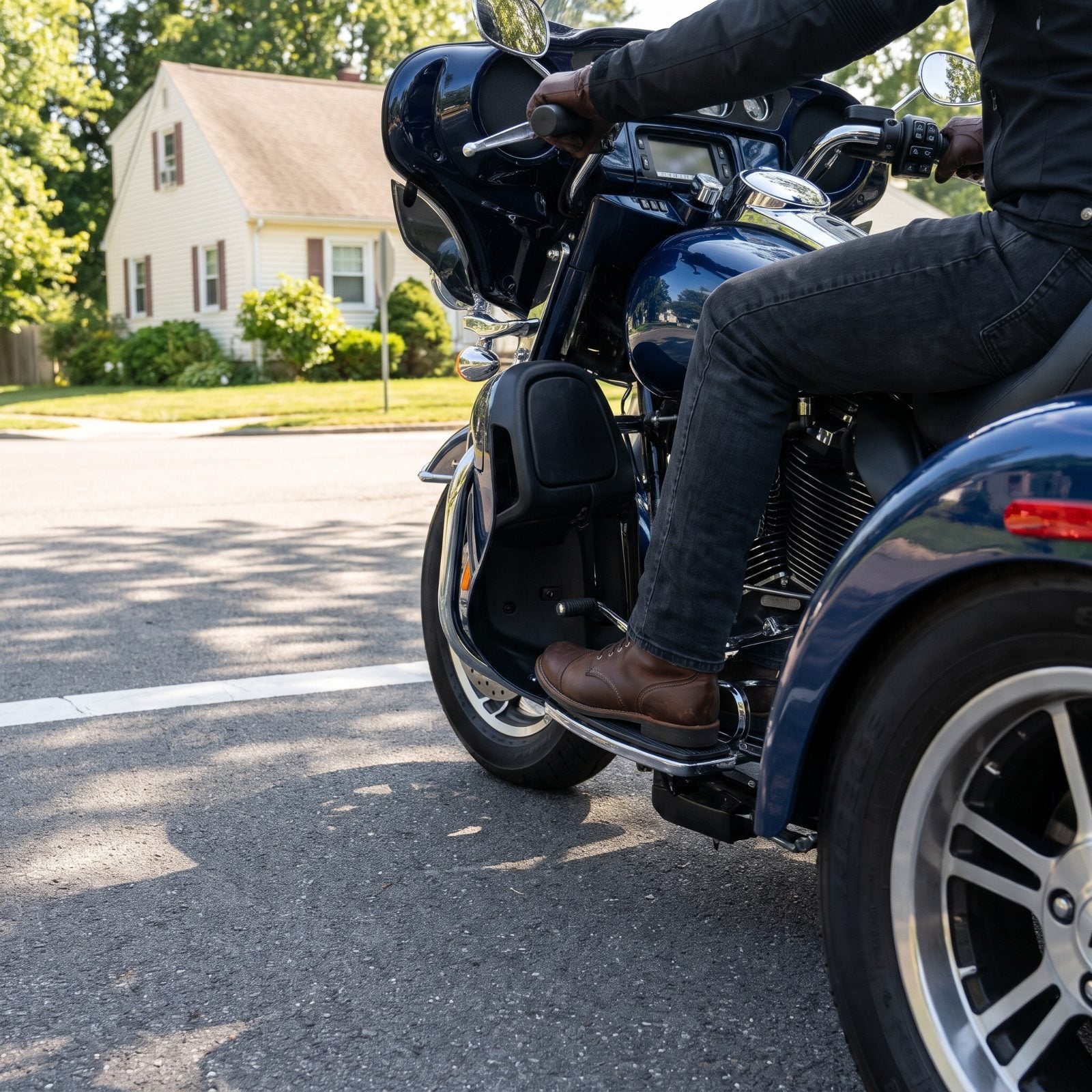
Nobody tells you this part: on a trike, your feet do nothing at a stop. That reflex to drop a boot and catch the lean? Kill it. The machine stands on its own three wheels, so your feet stay on the floorboards and your hands stay on the grips.
New trike riders fight this for the first fifty miles. You feel the bike stop, your leg twitches toward the pavement, and you catch yourself mid-reach — thirty years of muscle memory arguing with you. A day of parking-lot practice usually settles the argument.
15. Is Mounting a Trike Easier Than Mounting a Motorcycle?
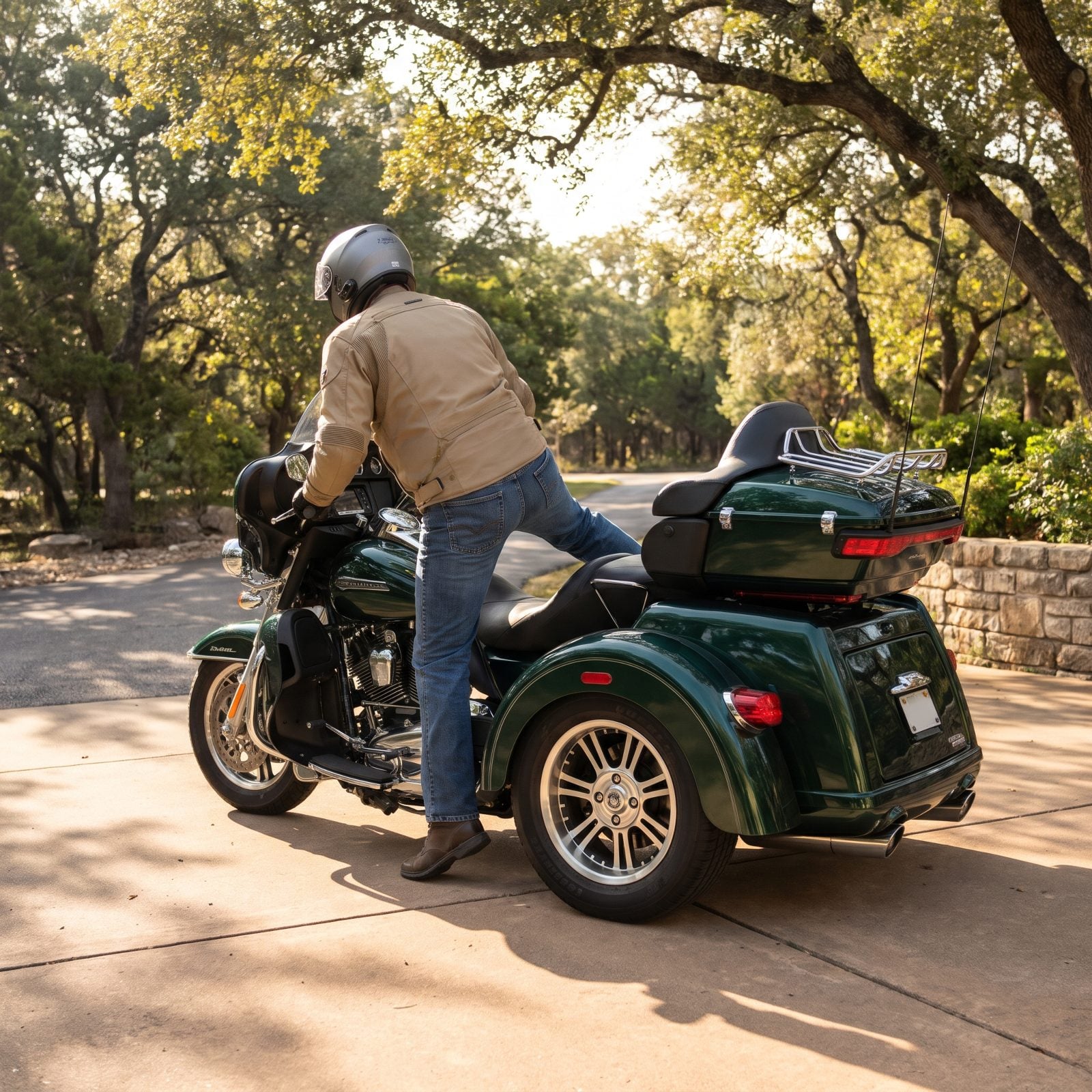
Mostly yes, and here’s why. A two-wheeler has to be held upright while you climb aboard, which means balancing a heavy machine on one leg at the exact moment your hip is least cooperative. A trike just sits there. It won’t fall over while you get settled.
The swing-over itself is the same motion. So if lifting your leg high is the real problem, a trike doesn’t cure that on its own — what it kills is the balancing act. You can take your time, plant yourself, and quit worrying about dropping the thing in your own garage.
14. Can I Add Steps, Grab Handles, or a Lower Seat?
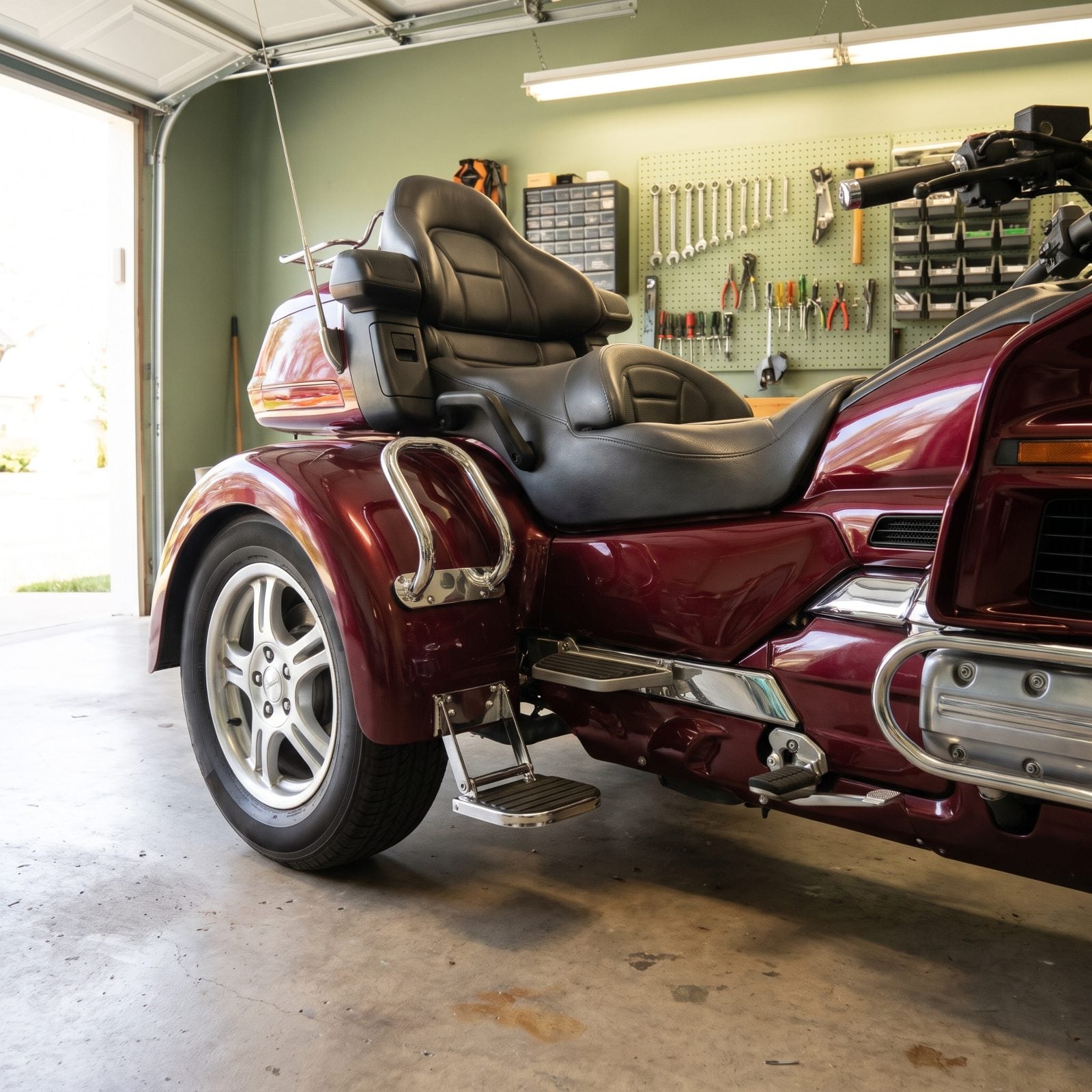
Almost everything on a trike can be adapted to your body. Grab handles bolt onto the rear fender or the frame and give your passenger something real to hold. Fold-out steps exist for both rider and passenger, and they matter more than they sound once your knees start having opinions.
Lower seats and seat-lowering kits are everywhere, and a good shop can shave an inch or two off seat height without wrecking the ergonomics. Here’s what people skip. Get the seat and handles fitted by someone who watches you actually climb on and off. A measurement on paper and a real human mounting the bike are two different animals.
13. How Do I Find a Trike That Fits My Reach?
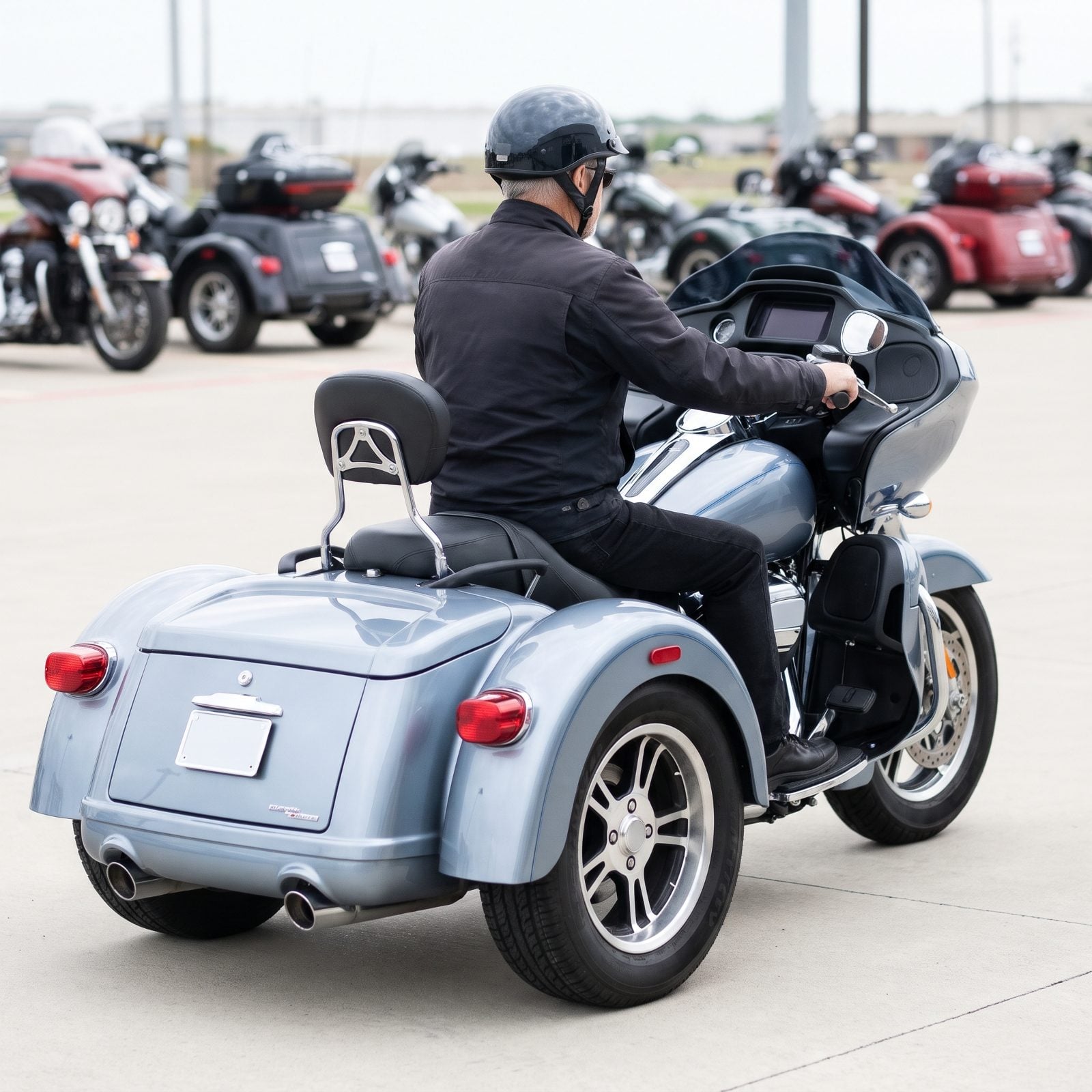
Reach is where a lot of riders get it wrong, and the fix is embarrassingly simple. Sit on the thing before you buy it. Catalog photos lie about ergonomics.
Check three contact points while you sit. Can your back touch the seat while both hands rest easy on the grips without stretching? Do your feet land naturally on the boards or pegs? Can you reach the brake and clutch levers without clawing at them? Pullback risers, handlebar swaps, and forward or rearward floorboard brackets all adjust the fit, so a bike that feels slightly off isn’t a dealbreaker if the shop will tune it for you.
12. Do I Still Need to Wear Full Motorcycle Gear?
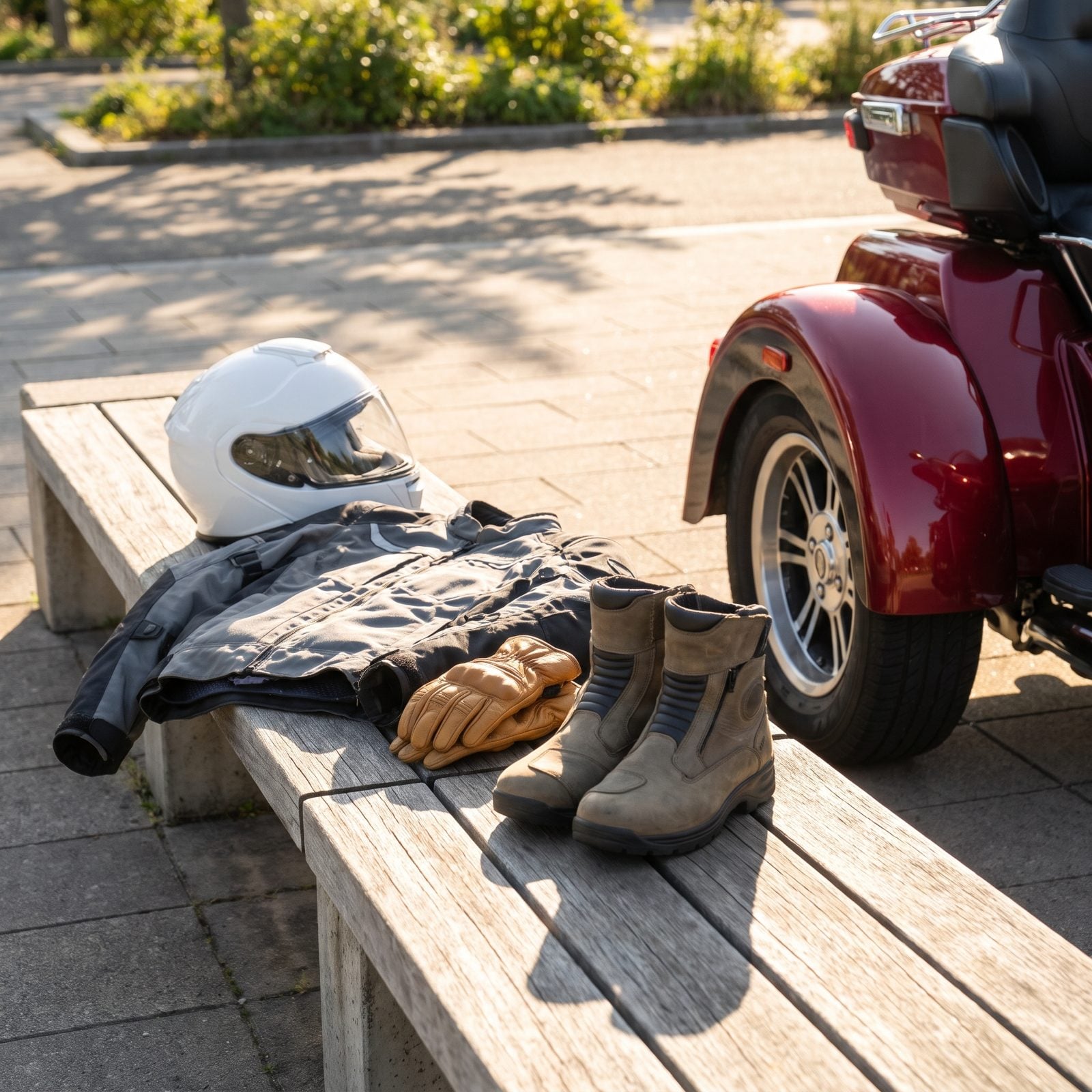
Yes. A trike won’t fall over, but it still runs highway speeds, and pavement doesn’t care how many wheels you’ve got under you. The road-rash physics are identical.
What shifts is the risk profile, not the gear. You lose the low-speed tip-over and you keep every other hazard — the distracted driver, the gravel in the corner, the deer stepping out at dusk. Helmet, armored jacket, gloves, over-the-ankle boots. All of it stays on the list.
11. Does a Passenger Change How a Trike Corners?
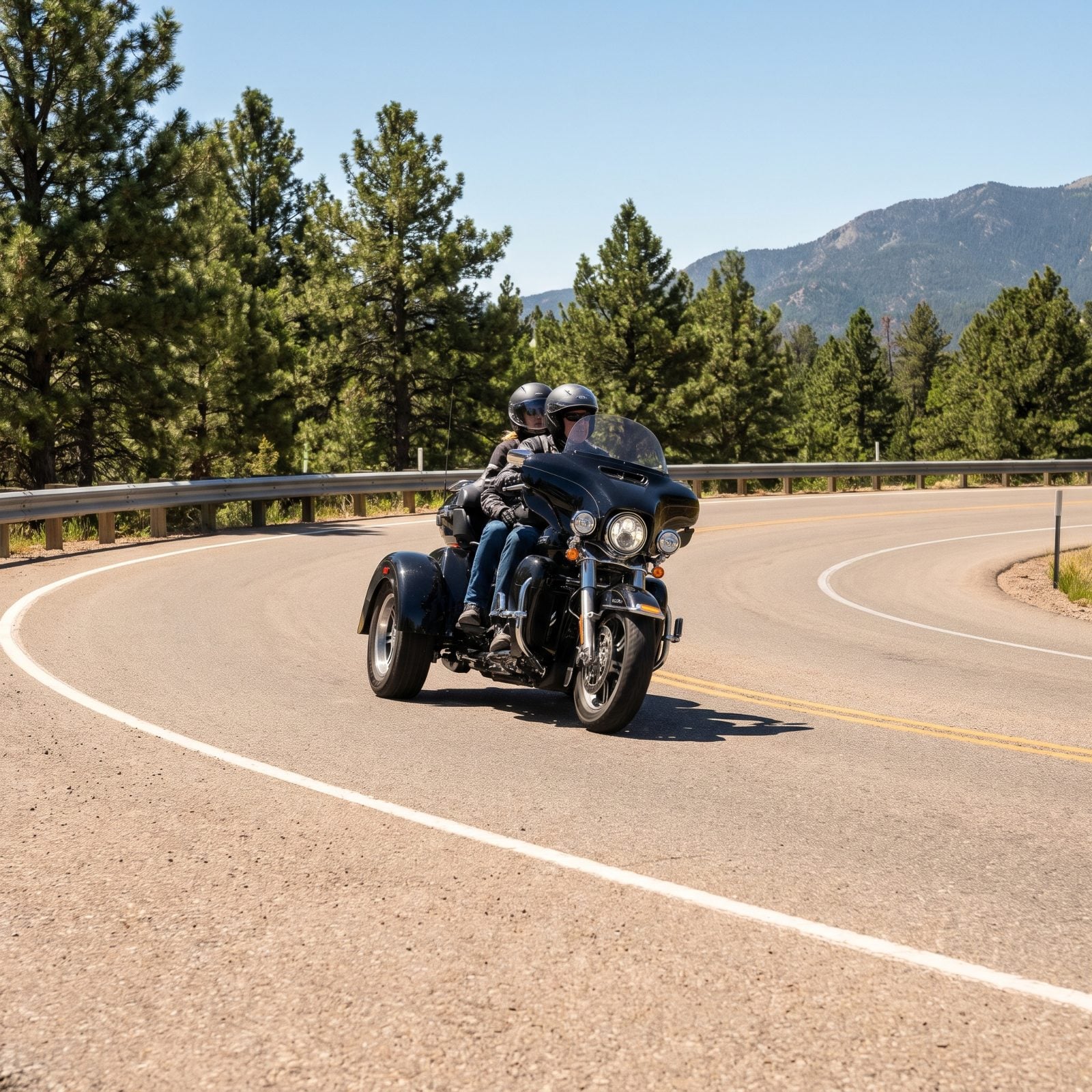
It does, more than new trike riders expect. A trike doesn’t lean into corners like a two-wheeler. You steer it — muscle it, almost — through the bars, and the whole machine stays flat.
Now add a passenger and the weight they bring. That shifts the load rearward and piles more onto the rear tires, so corners want a touch more steering input and the bike feels heavier to turn. Nothing alarming. Still, do a few slow practice runs with your passenger aboard before the first long trip. Smooth inputs beat sudden ones every time.
10. How Do I Pack a Trike Without Overloading the Rear Axle?
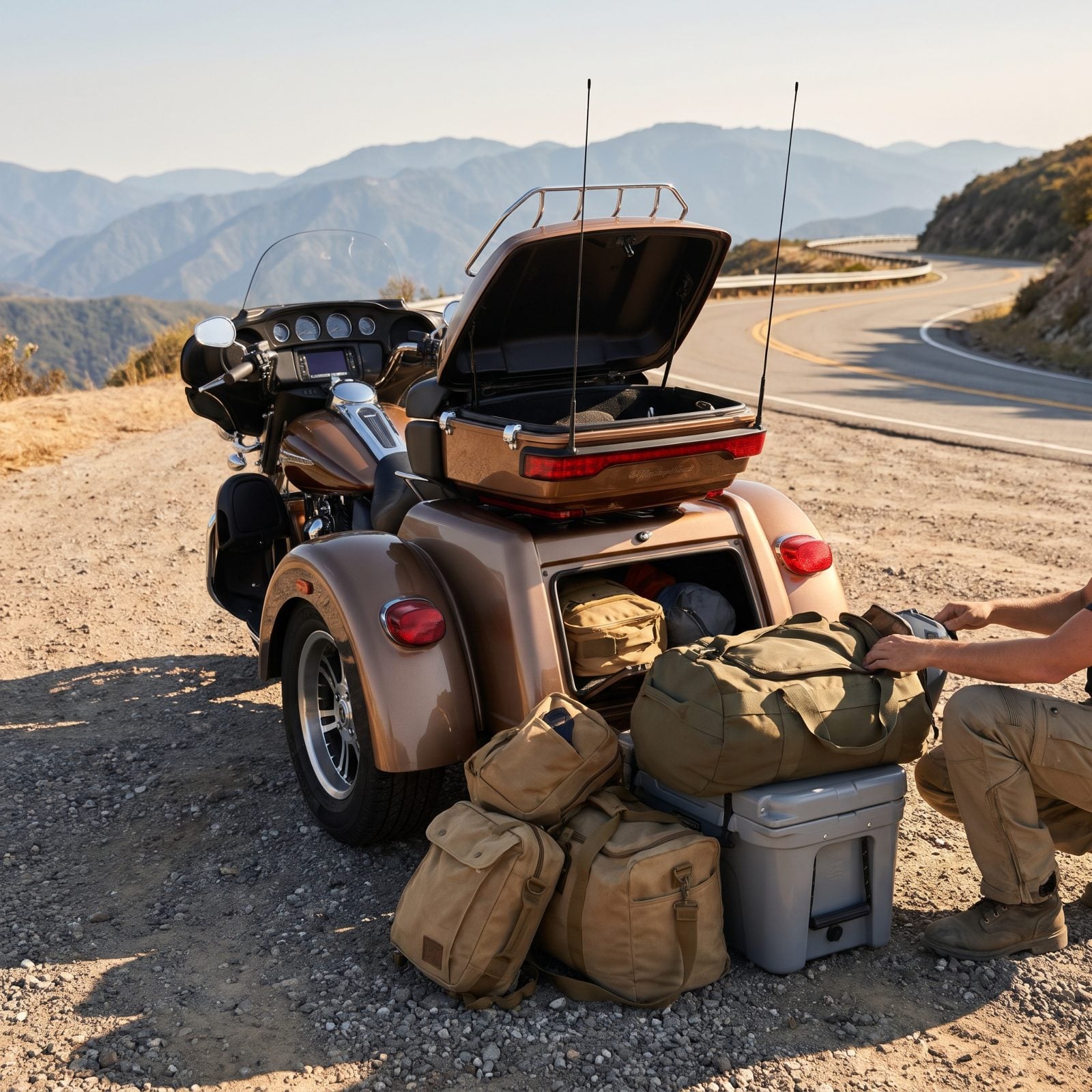
A trike has a real cargo box, which is both a gift and a trap. The gift is the space. The trap is that all that space sits behind the rear axle, and loading it heavy shoves weight exactly where you don’t want it.
Keep heavy items low and as far forward in the trunk as they’ll go. Spread the load across the saddlebags and the trunk instead of piling everything in the back. Check your owner’s manual for the cargo weight limit and the rear axle rating, then respect them. Too much weight behind the axle lightens the front end and makes the steering feel vague — and vague steering on a loaded machine is no fun at all.
9. Can I Tow a Trailer Behind a Trike?
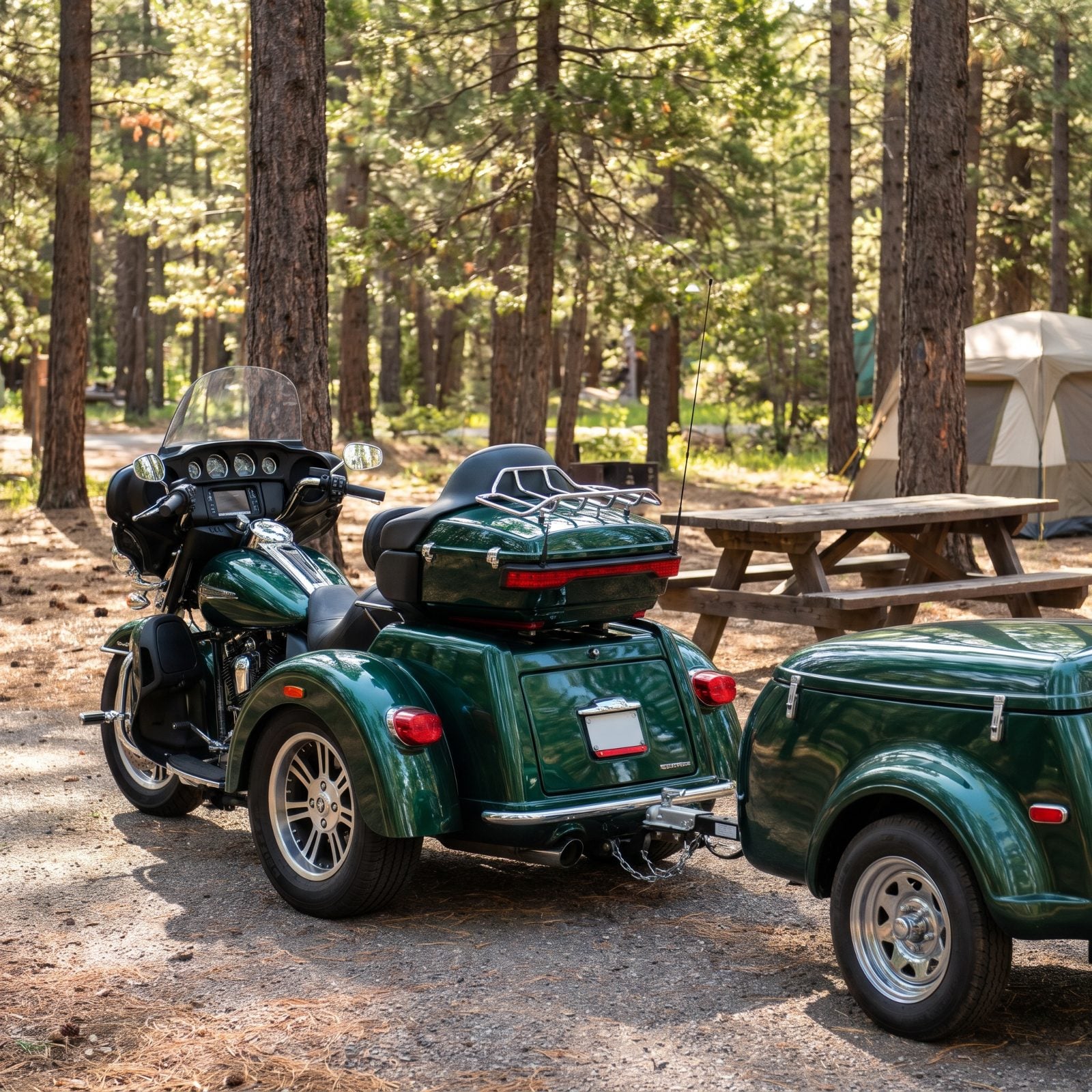
Yes, and plenty of trike owners do it for long hauls. A small single-axle pull-behind carries the camping gear or luggage that won’t fit in the trunk, and the trike’s stability makes towing feel far less nerve-racking than it ever would on two wheels.
The rules are short. Keep the loaded trailer well under the manufacturer’s towing weight limit, keep the tongue weight light, and pack it low so it tracks straight. A wagging trailer behind a trike is a bad afternoon. Factory trikes often come tow-ready or offer approved hitch kits, so start there rather than rigging something homemade in the driveway.
8. Should I Buy a Factory-Built Trike or a Conversion?
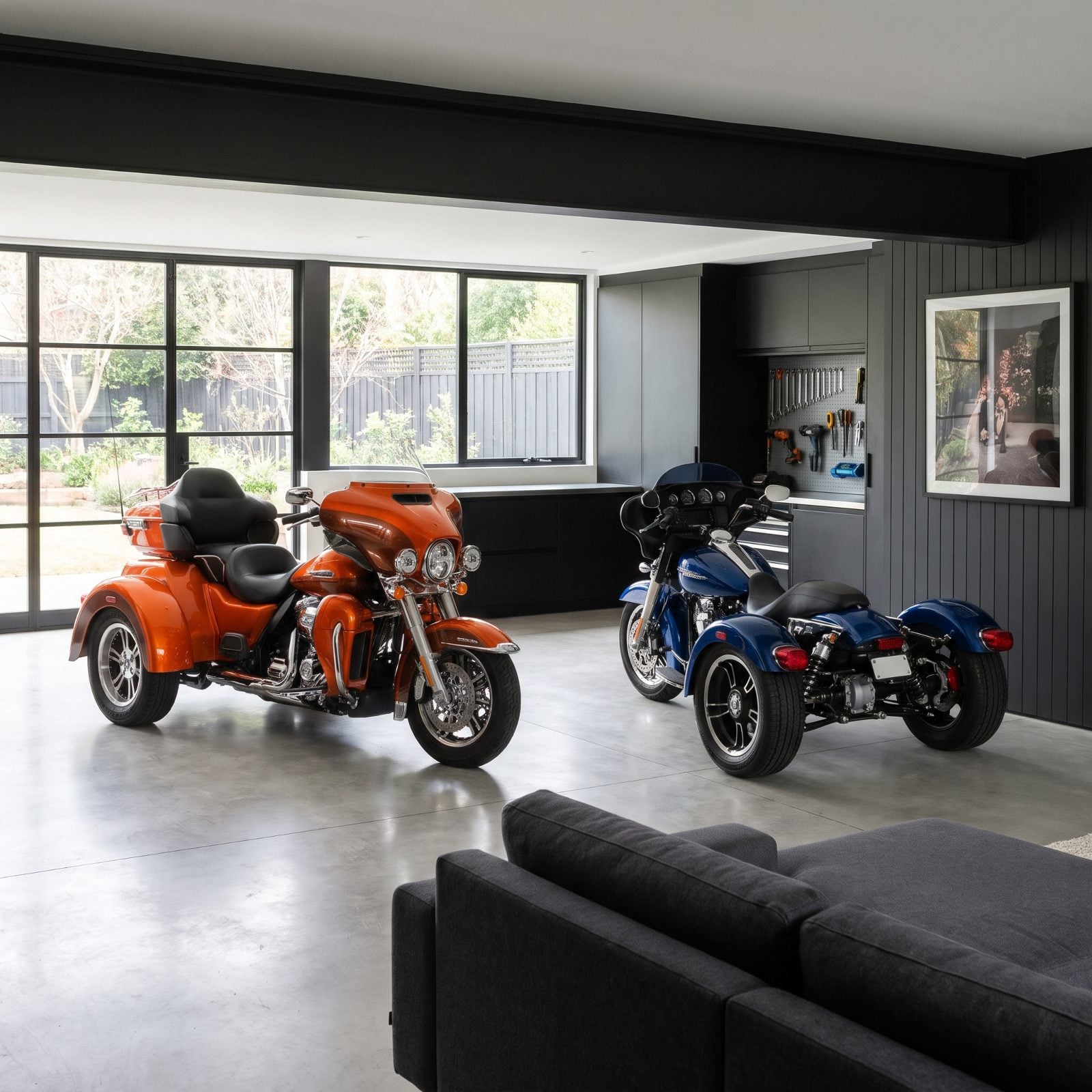
Both work. The question is what you’re starting from.
A factory trike is engineered as a three-wheeler from the ground up — the braking, the rear suspension, the body panels, the cargo, all designed to live together. You pay more and you get a machine that was never a compromise.
A conversion takes a two-wheel bike you already love and adds a rear axle kit. Done by a reputable shop with a proven kit, a good conversion rides beautifully and keeps the bike you’re attached to. Done cheap by someone’s buddy in a barn, it can handle badly and scare the daylights out of you. The brand of the kit and the quality of the install matter far more than the badge on the tank.
The badge on the tank matters less than the shop that did the work.
7. Can My Current Motorcycle Be Converted Without Voiding Its Warranty?
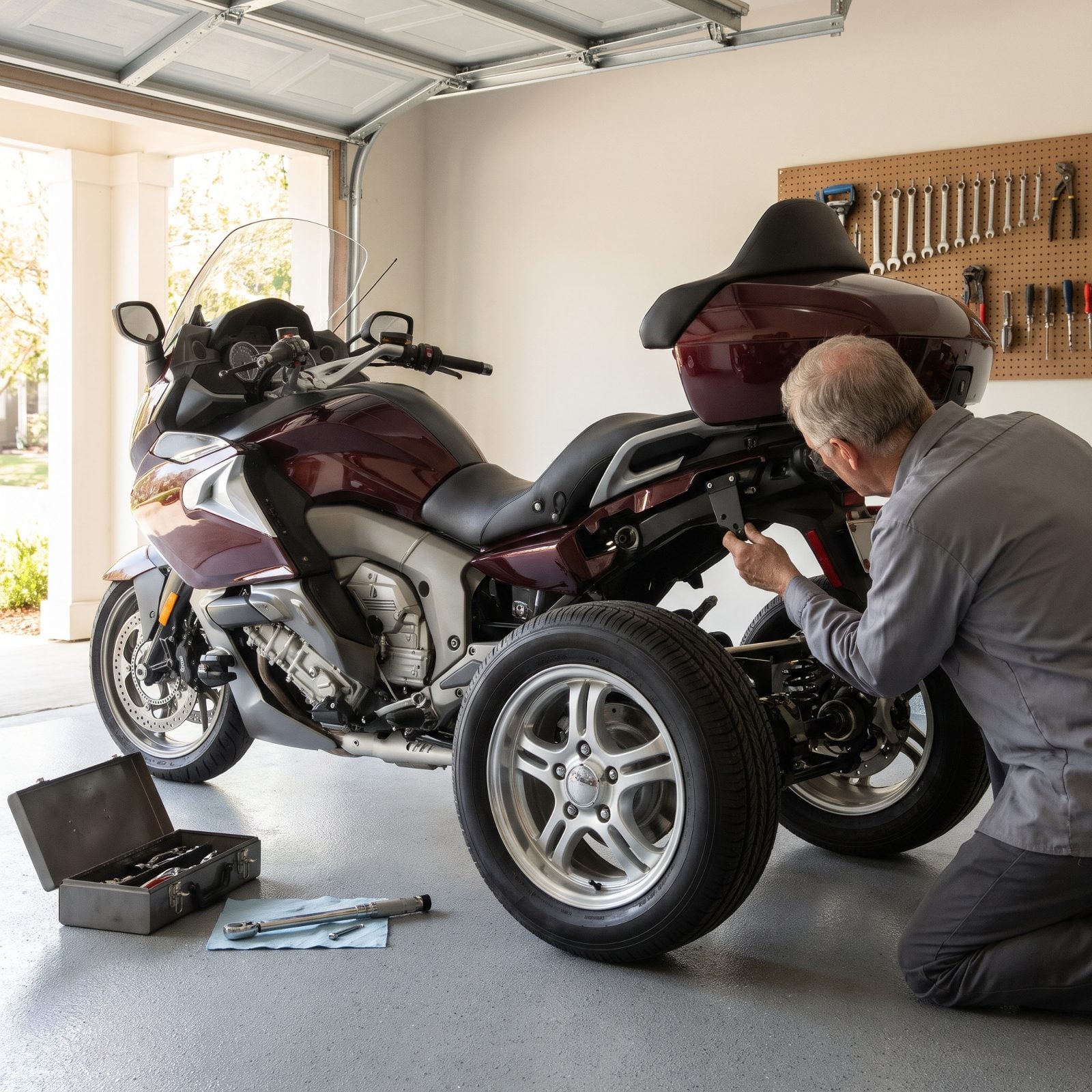
Sometimes, but the answer lives in the fine print, not the sales floor. In the US, federal warranty law generally keeps a manufacturer from voiding your entire warranty just because aftermarket parts were installed. They have to show the modification caused the failure. That protects your engine and electronics in most cases.
The catch is that a conversion replaces the rear end: swingarm, final drive components, sometimes the brakes and suspension. The original manufacturer won’t cover parts that are no longer theirs, and a dispute over whether the kit stressed something downstream is a real possibility. Reputable conversion companies back their own components with their own warranty. Know exactly where one coverage ends and the other begins before anyone picks up a wrench.
6. What Is the Difference Between Two Rear Wheels and Two Front Wheels?
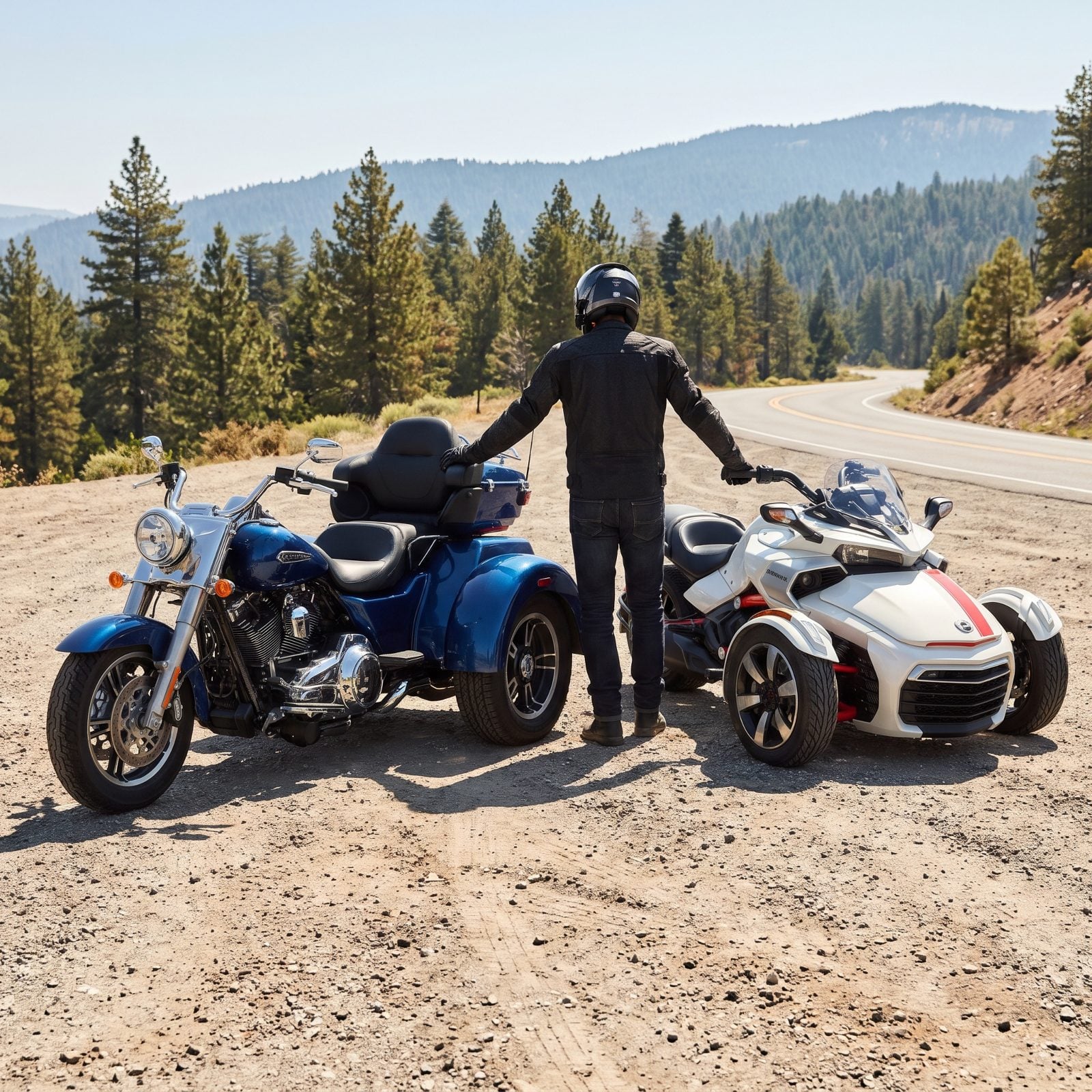
Two rear wheels is the traditional trike: one wheel up front, a motorcycle from the seat forward, a wider axle behind you. From the handlebars it feels most like the bike you already know, and it’s the layout behind factory trikes and most conversions.
Two front wheels flips it. Reverse trikes put the steering wheels up front and a single drive wheel in back, which gives a planted, almost car-like feel under hard braking and in corners. Many come with electronic stability and traction systems. The trade-off is that they feel less like a motorcycle, the steering has its own personality, and some riders find the change bigger than they expected. Demo both before you decide. Most riders know within ten miles which camp they belong in.
5. Why Is Trike Fuel Economy Often Worse?
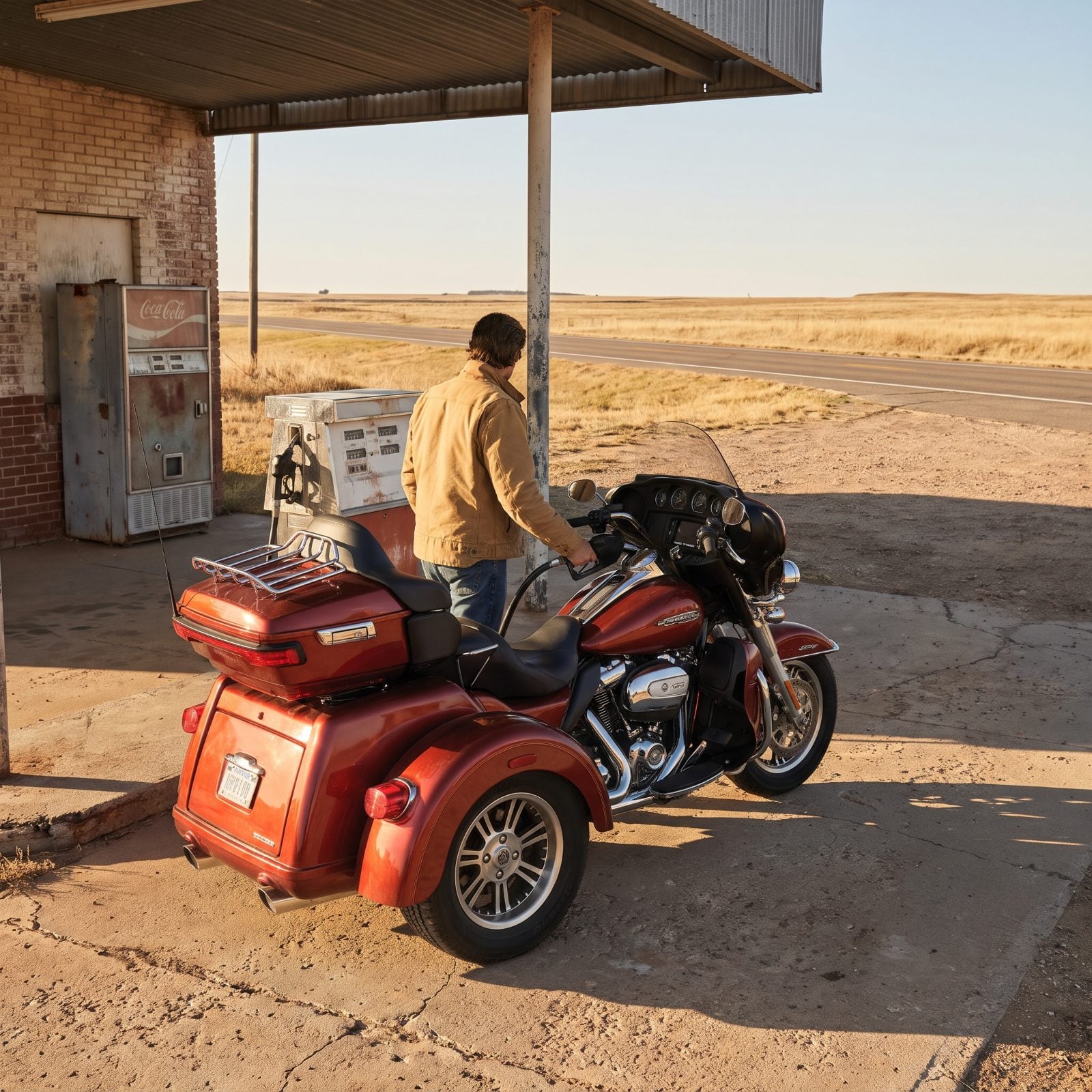
Physics, mostly. A trike carries extra weight from the rear axle, the wider body, and the additional wheel, tire, and brake, and every pound of that takes fuel to get moving and keep moving. Conversions can add a few hundred pounds to a bike that was already heavy.
Then there’s the shape. A wide rear end pushes more air, and an extra tire adds rolling resistance and drivetrain friction you never had on two wheels. Some conversions also change the gearing to help with the added weight, which can raise highway revs. None of it is a defect. Expect to stop for gas a bit more often and plan long-distance legs accordingly, especially if your tank range was already tight.
4. How Much More Does Trike Insurance Cost?
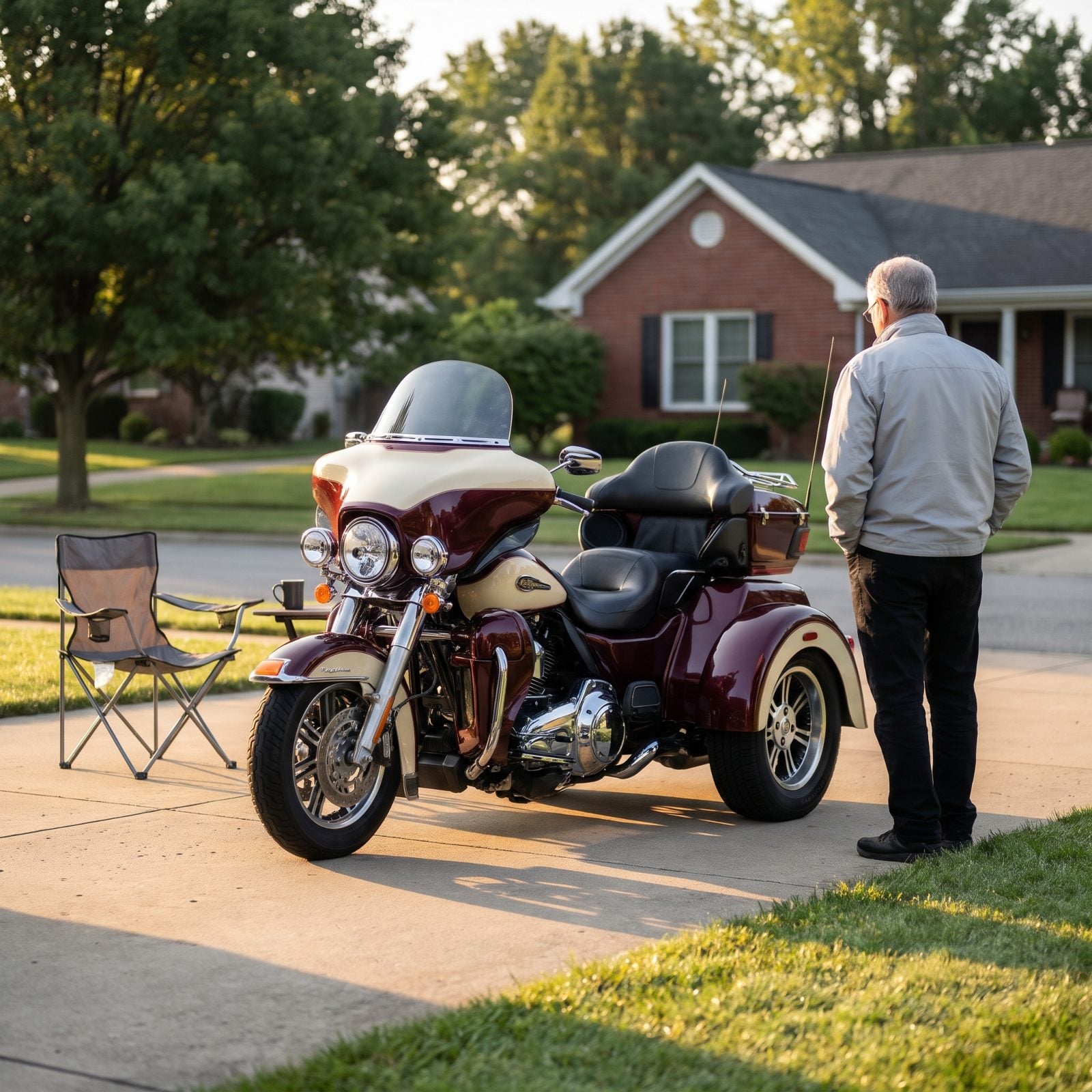
There’s no single answer, and anyone quoting a flat percentage is guessing. Trikes usually cost more to buy and repair than the bikes they’re based on, which can push premiums up. On the other side, insurers often look favorably on experienced riders with clean records, and some rate trikes much like any other motorcycle. Plenty of riders see little change.
The thing that matters more than the premium is the paperwork. Make sure the policy lists the machine as a trike or conversion, not just the original motorcycle. Ask about custom parts and equipment coverage too, because a conversion kit can be worth a big chunk of the trike’s value, and a basic policy may not cover it after a crash or theft. Get quotes from a few carriers that specialize in motorcycles before you sign.
3. Do I Need a Special License or Endorsement to Ride a Trike?
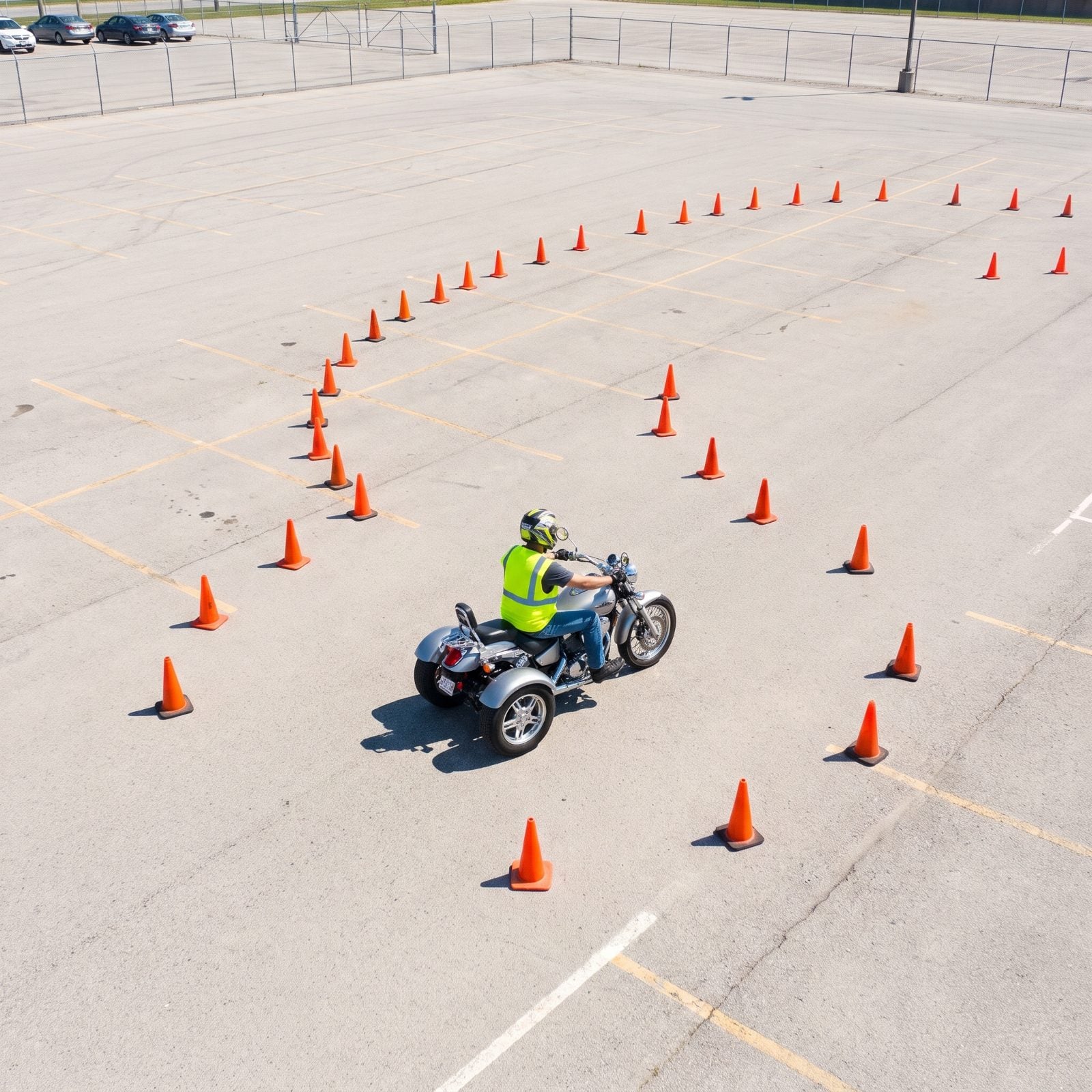
In the US it depends on your state, so check with your licensing office before you ride off the lot. Most states require a motorcycle endorsement for a trike. If you already hold a full motorcycle endorsement, it generally covers three-wheelers too.
Some states also offer a three-wheel-only endorsement, which is handy for riders who never held a motorcycle license or let theirs lapse. In some states, completing a three-wheel rider course can satisfy part of that testing. Vehicles classed as autocycles, the ones with a steering wheel and side-by-side seats, follow different rules in many states. Outside the US the rules vary even more. Confirm the details for where you live, because a lapsed or mismatched license can cause trouble with an insurance claim.
2. Will a Trike Fit in My Garage, Trailer, or Toy Hauler?
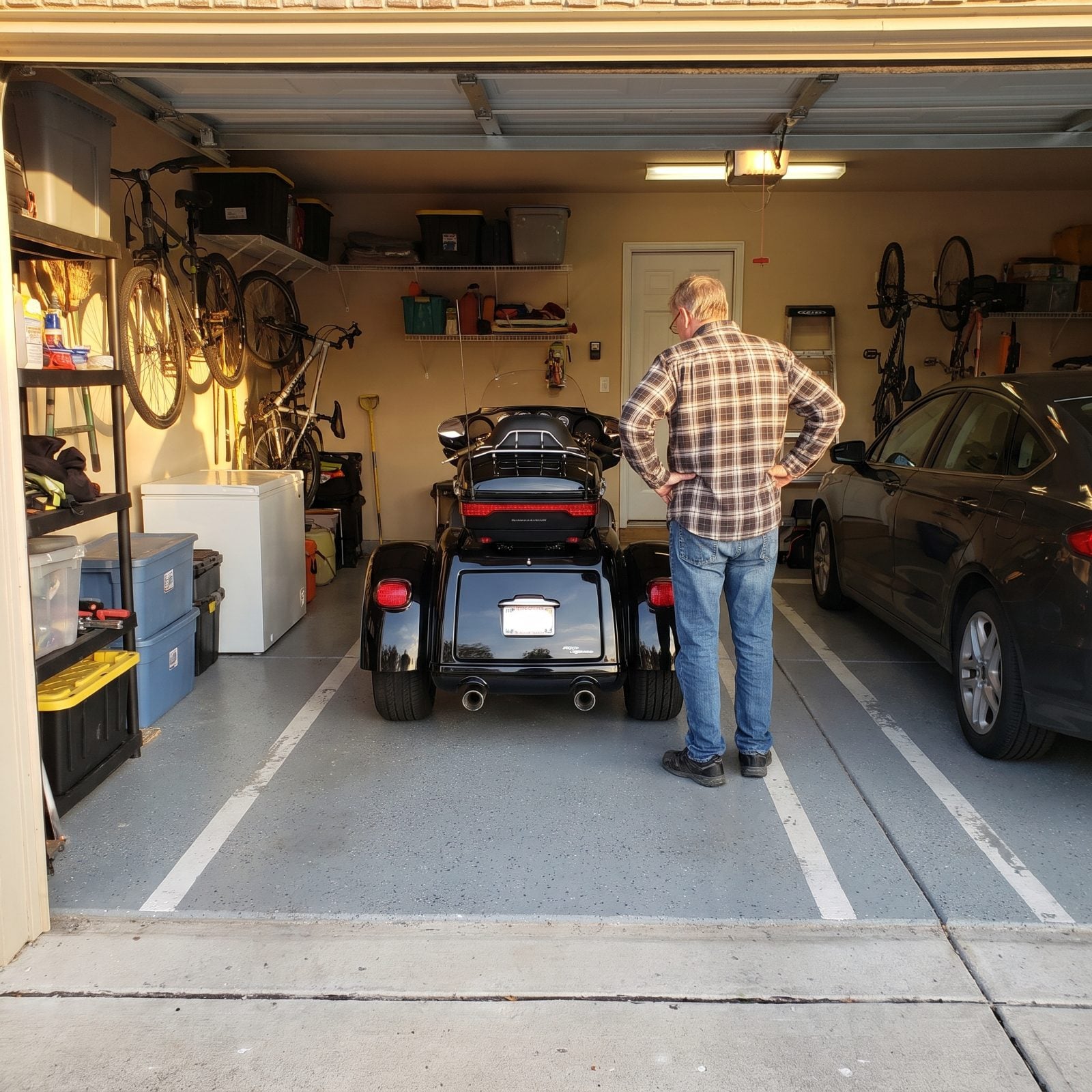
Measure before you buy, not after. A trike’s widest point is usually the rear fenders or body, and it’s a lot wider than any motorcycle you’ve parked. Check your garage door opening, then the space beside the car, then whether you can still walk around both. You can’t tuck a trike against the wall on its kickstand.
Trailers and toy haulers need even more scrutiny. A motorcycle trailer with a single center channel won’t work. You need a flat deck wide enough for the rear track, a ramp that carries all three wheels, and solid tie-down points. Measure the toy hauler’s door width and ceiling height, and check that the floor and anchors are rated for the weight. Tape measure first, checkbook second.
1. Will Other Riders Still Consider Me a Real Biker?
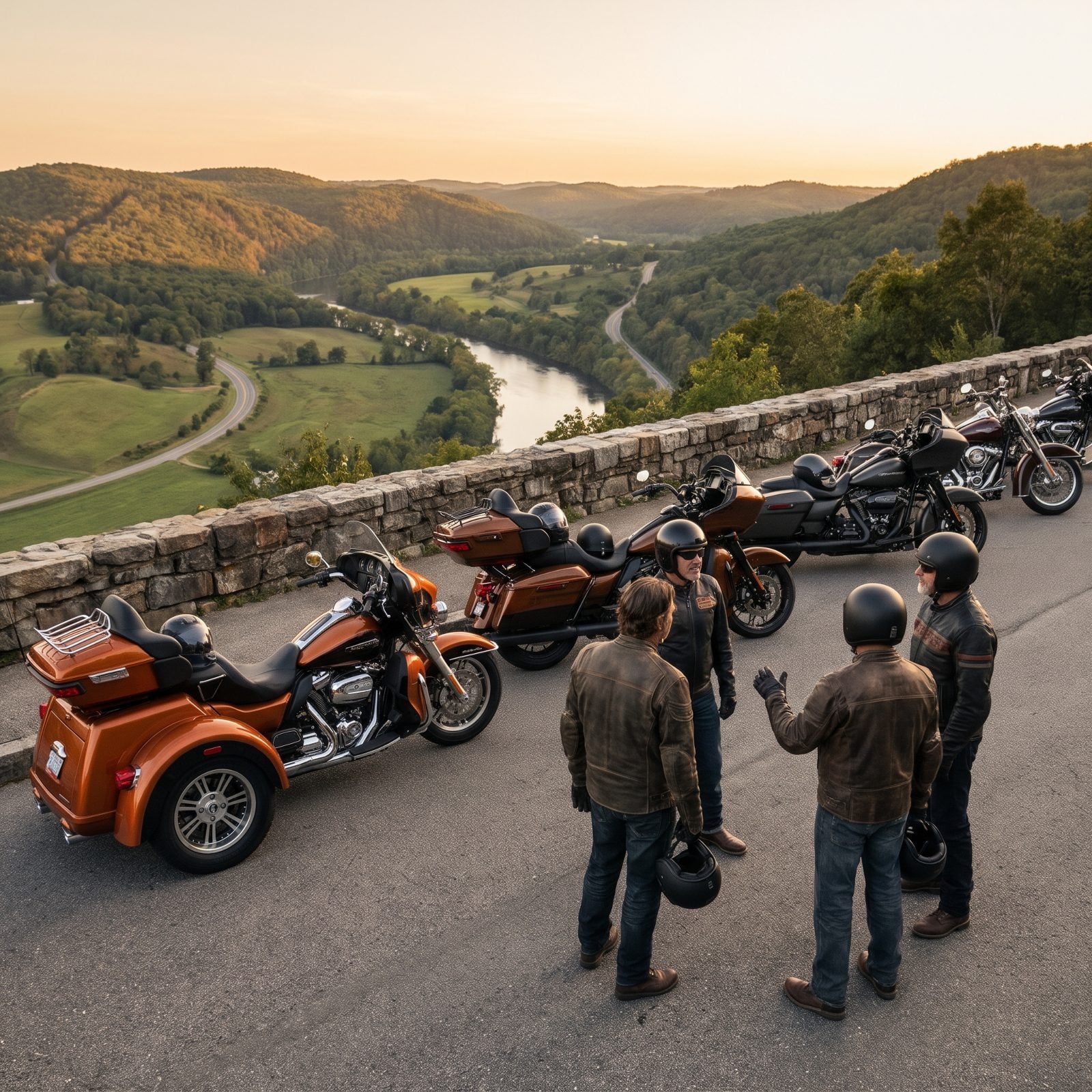
The overwhelming majority will, and the ones who won’t were never worth riding with anyway. Pull into any rally or bike night and you’ll see trikes parked right alongside the touring bikes and choppers, owned by riders with decades of miles behind them. The wave still comes. The conversation at the gas pump still happens, and it’s often about your trike.
Yes, you may hear a crack about training wheels from some kid on a sportbike. Let it roll off. What makes a biker is the miles, the weather you’ve ridden through, and the fact that you still gear up and go when others have hung up the keys. Three wheels doesn’t change any of that. Staying off the road does.