

The pack bolted under your downtube is the most expensive thing on the bike and the least understood. A replacement runs real money, and plenty of riders shave years off theirs by following advice that was true for a nickel-cadmium drill back in 1994. Lithium doesn’t play by the garage wisdom. It has opinions — about heat, about how empty you let it get, about what charger you hang off it overnight. Get those few things right and the same cells that scare people into early replacement will quietly outlast the rest of the bike. Here’s what actually matters.
Please note that some of the images in this article were created with the assistance of AI.
44. Myth: You Must Fully Drain the Battery Before Recharging
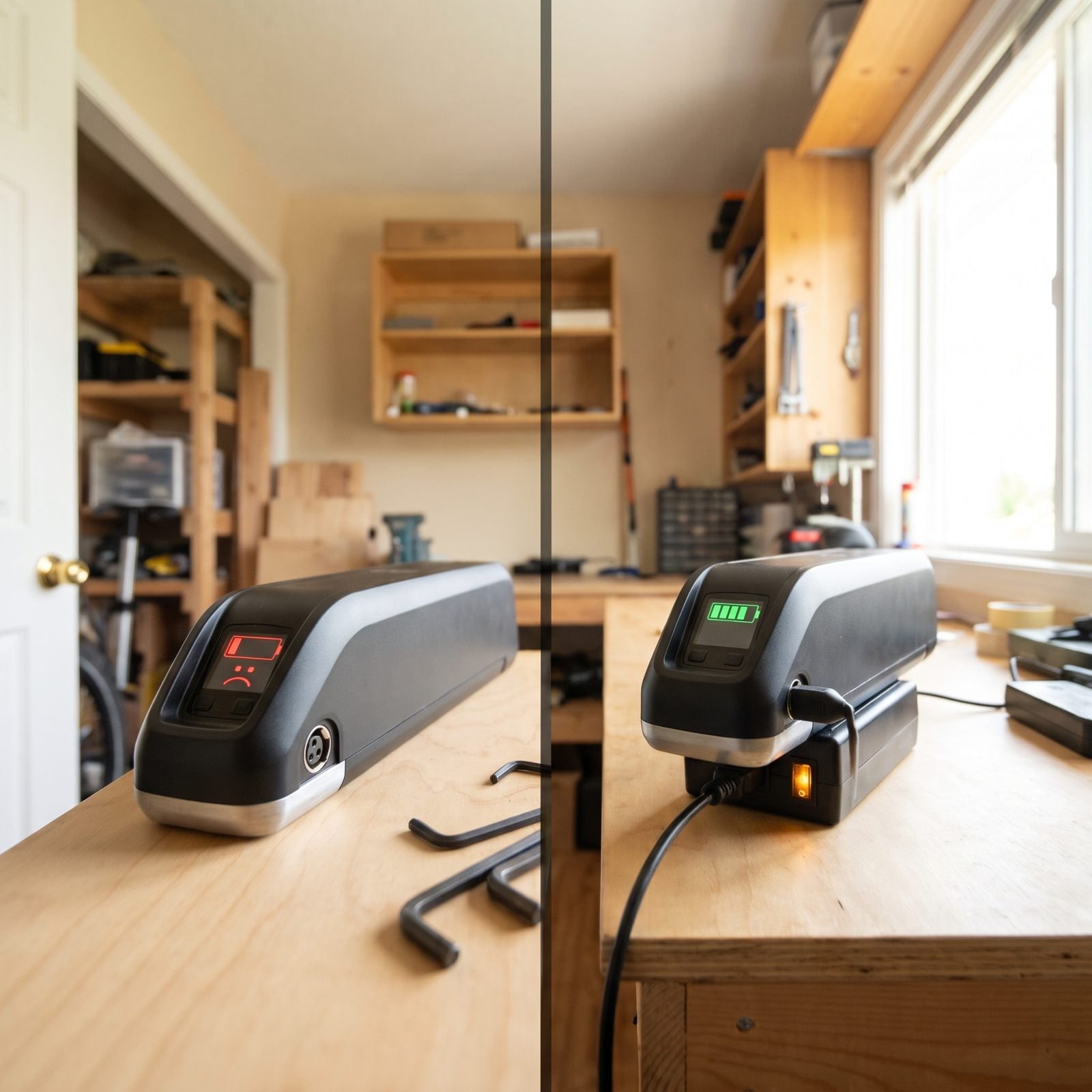
This one is a holdover from old nickel-based batteries that had a memory effect. Lithium cells don’t. Draining your e-bike pack to zero before every charge doesn’t help it — it hurts it. Deep discharges are one of the harder things you can do to lithium, which is why the battery management system usually shuts the bike down well before the cells hit true empty.
Top up whenever it’s convenient. Mid-ride, after a short loop, half-empty in the garage — the battery doesn’t care and it won’t develop a lazy memory. The riders who run theirs flat every time, out of habit, are the ones replacing packs early.
43. Myth: Every Partial Recharge Counts as a Full Charge Cycle
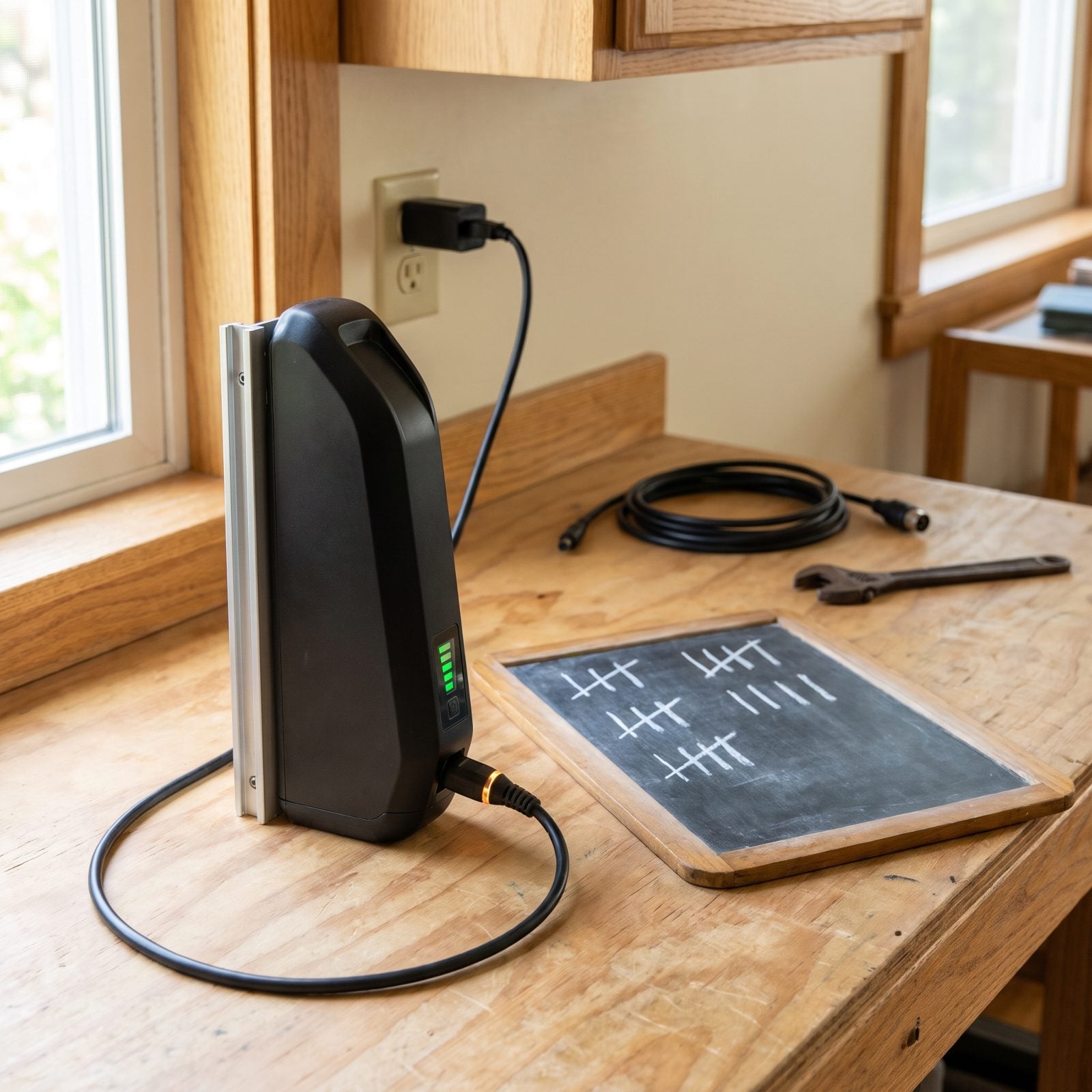
Charge your bike from 70% to 100% and you haven’t used up a whole cycle. You’ve used about a third of one. A charge cycle means a full battery’s worth of energy moved through the pack, and it adds up across partial sessions.
So two half charges equal roughly one cycle, not two. This matters because people obsess over cycle count like it’s a doomsday clock. Most packs are rated for several hundred full cycles — some well past a thousand — before meaningful capacity loss. Top off freely. You’re nibbling at the cycle count, not burning through it.
42. Myth: Charging to 100% Before Every Ride Extends Battery Life

Sitting at a full charge is stressful for lithium. A pack held at 100% for long stretches, especially in a warm, sun-baked garage where the air hangs hazy with heat and dust, ages faster than one kept lower. Charging to full right before a ride is fine. Charging to full and then letting it sit for days is the part that quietly wears it down.
Riding tomorrow morning? Charge tonight. If the bike’s going to sit for a week, leave it somewhere in the middle. I got this wrong for a long time, topping mine off out of some tidy instinct, and it took me too long to realize the battery would rather be left a little hungry.
41. Myth: The 20-to-80% Charging Rule Is Mandatory for Every Rider
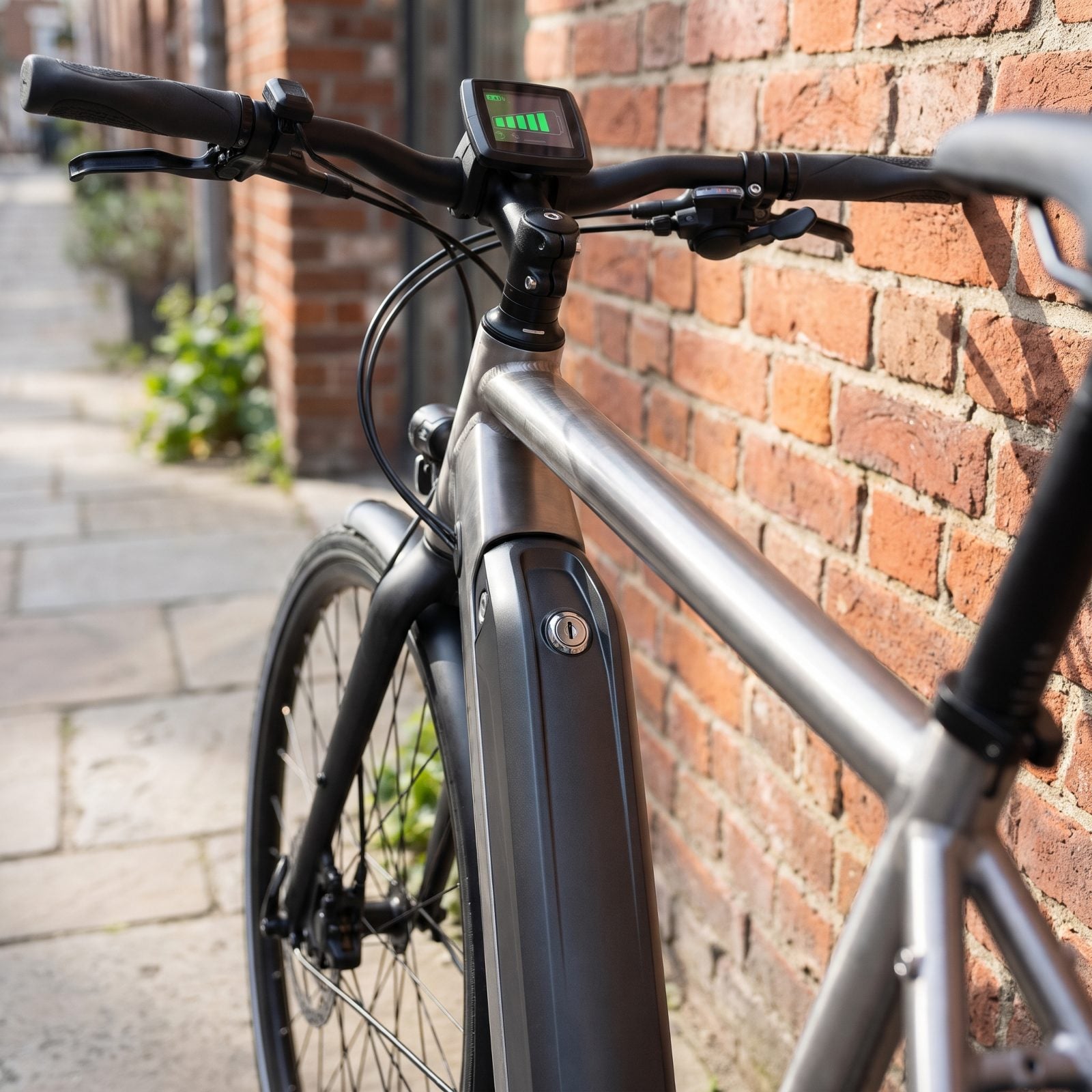
The 20-to-80 rule is good advice dressed up as law. Keeping your charge in that band does reduce long-term stress on the cells. But treat it as a commandment and you leave range on the table every single ride — for a lot of people that trade makes no sense.
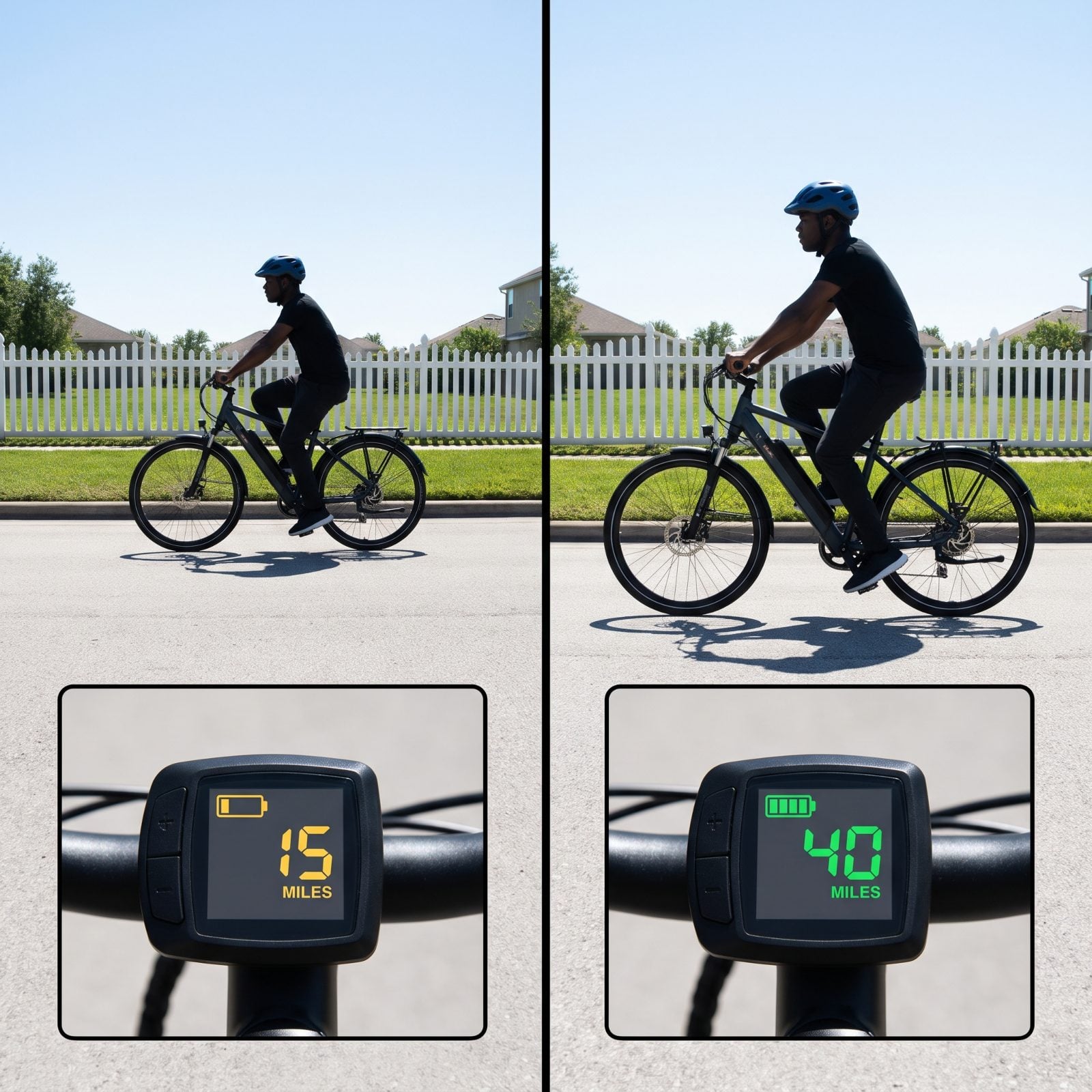
Commute 15 miles on a pack that does 40? Living between 20 and 80 costs you nothing. If you do big weekend loops near the edge of your range, charge to full and use it. The rule is a tool for babying a battery, not a tax you owe on every charge. Use the whole pack when the ride demands it.
40. Myth: A New Battery Needs a 12-Hour First Charge
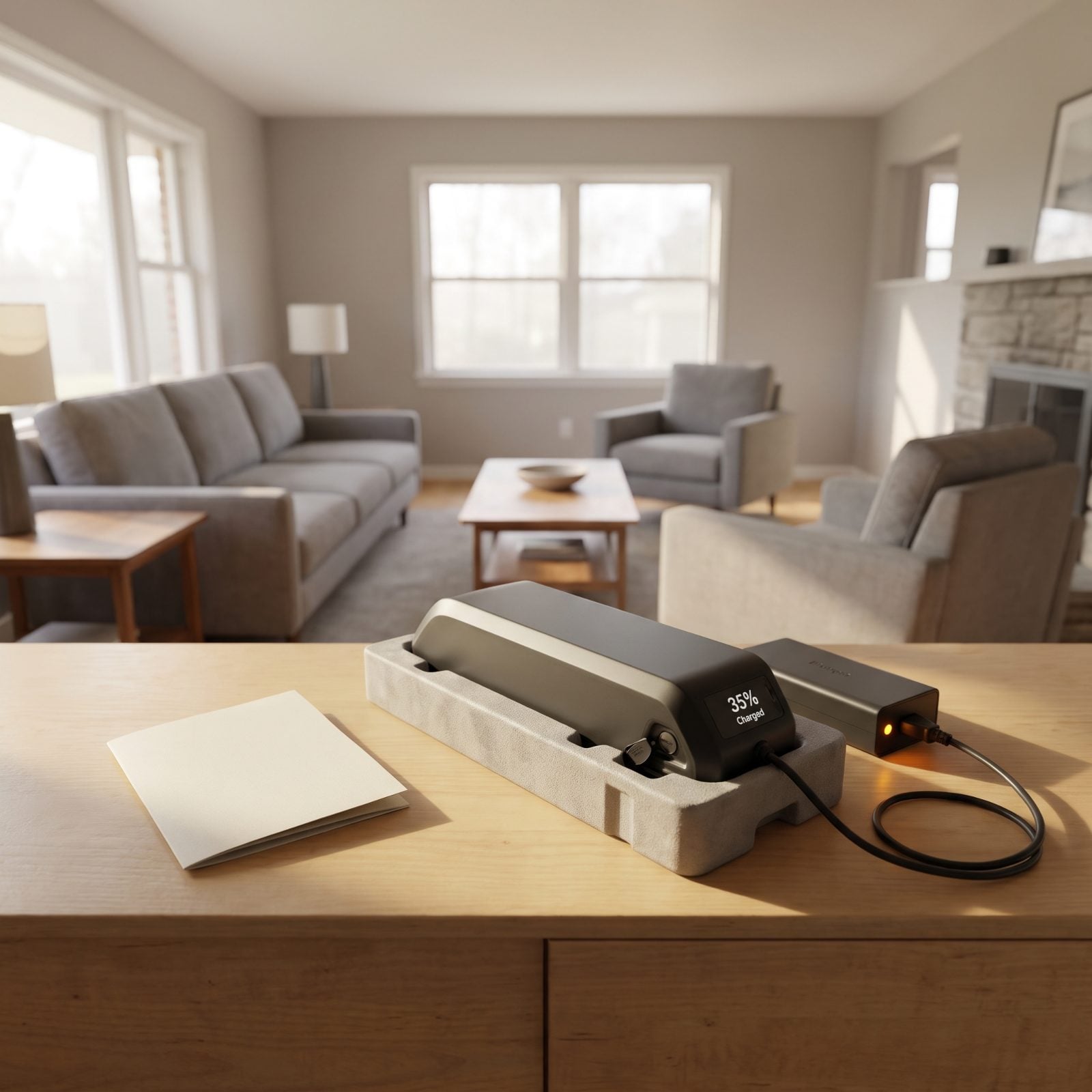
The 12-hour first charge is lead-acid folklore that wandered into the wrong garage. Modern lithium packs ship with a partial charge already in them, and the first charge is no different from the hundredth. Plug it in, let the charger do its thing, unplug it when it’s done. That’s it.
No marathon break-in session. No special ritual. The one real tip for a new battery is to not let it sit bone-dry in a box for months before you use it, because that’s a storage problem, not a charging one.
39. Myth: Overnight Charging Is Always Dangerous
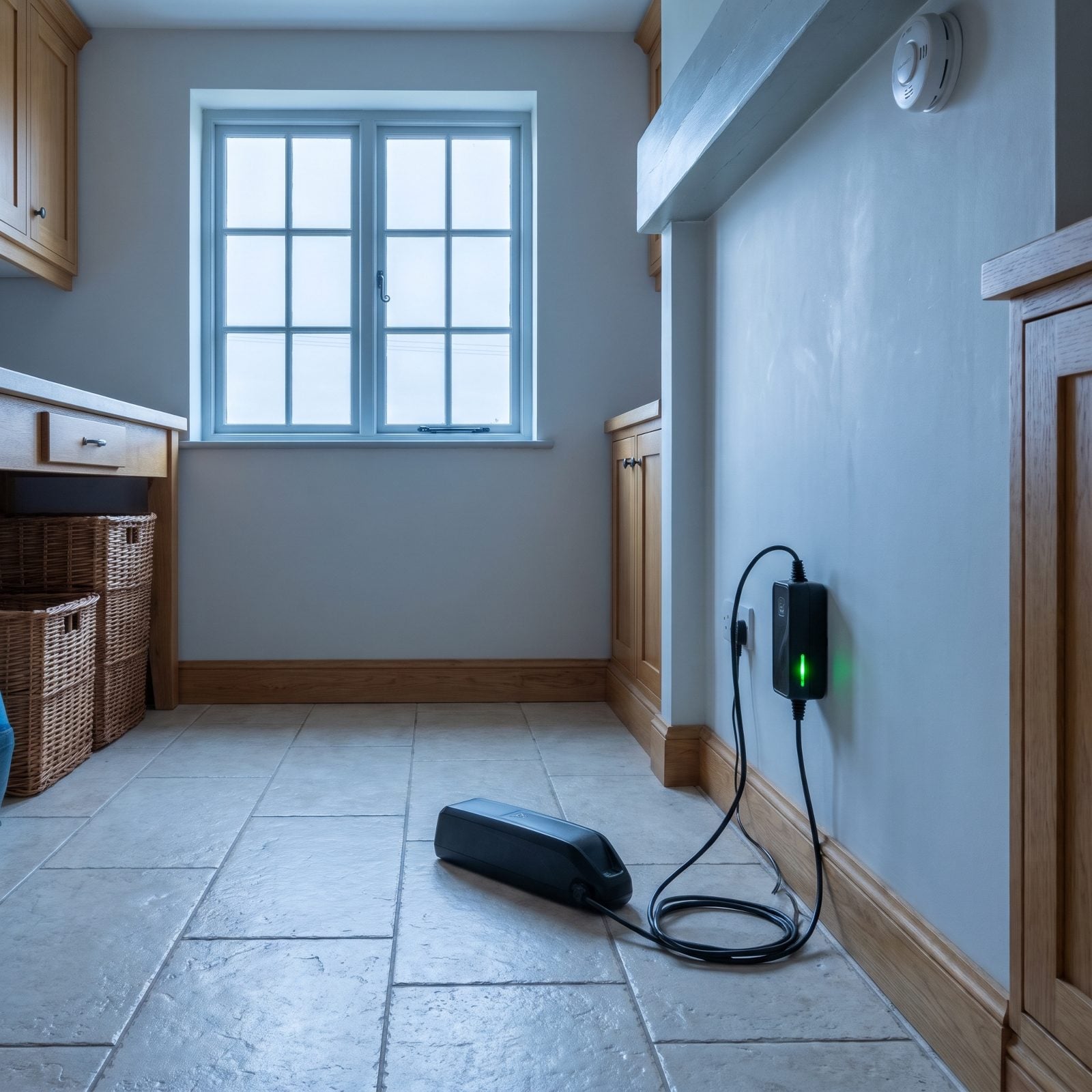
Overnight charging isn’t the hazard. A bad charger, a damaged pack, or a battery stacked on a couch cushion is the hazard. A quality charger with a proper battery management system stops feeding power once the pack is full, so leaving it plugged in while you sleep is not the risk people imagine.
What actually reduces your odds of a problem: charge on a hard, non-flammable surface, keep it clear of anything that burns, and use the charger that came with the bike. Fires almost always trace back to off-brand chargers, abused packs, or counterfeit cells — not to the clock on the wall.
38. Myth: Any Charger With a Matching Plug Will Work Safely
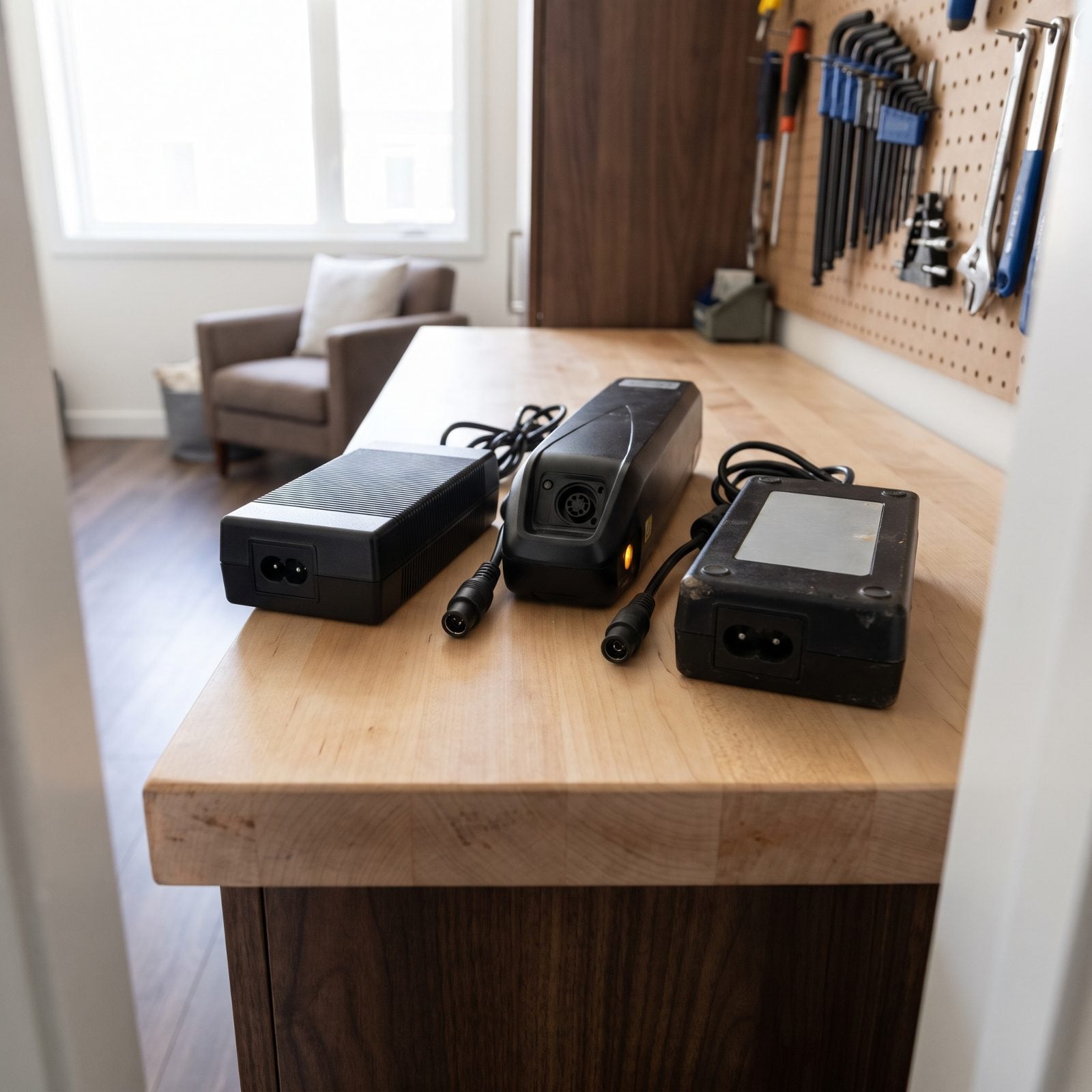
A plug that fits is not a charger that matches. Voltage and amperage have to line up with your specific pack, and a connector sliding home tells you nothing about what’s flowing through it. Feed a battery the wrong voltage and you can cook cells, trip the management system, or worse.
The giveaway is usually the cheap replacement bought online when the original went missing. It fits, it charges, and it slowly abuses the pack. Match the output ratings printed on the charger to what your battery wants, every time. If you can’t confirm it, don’t plug it in.
37. Myth: A Higher-Amperage Charger Is Always a Better Upgrade
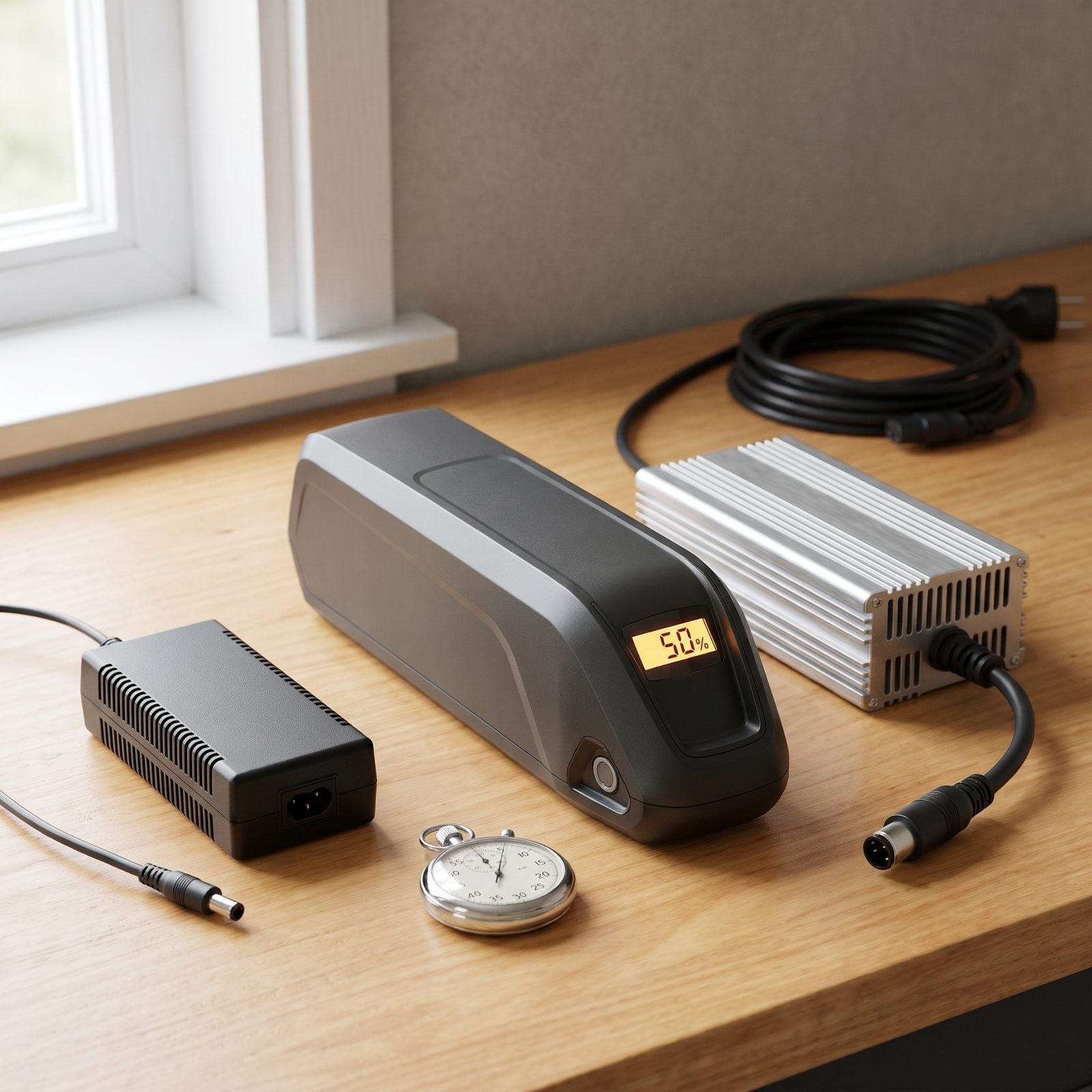
Faster charging feels like free time, and it kind of is — right up until it isn’t. A higher-amperage charger pushes more current, which means more heat, and heat is what quietly ages lithium. Some packs are built for fast charging and handle it fine. Many aren’t, and jamming a bigger charger onto them trades a little convenience now for capacity later.
Check what your battery is rated to accept before you upgrade. If the manufacturer offers a fast charger for your model, that’s a green light. A random high-amp unit that happens to fit is a different story.
36. Myth: Charging Below Freezing Is Harmless
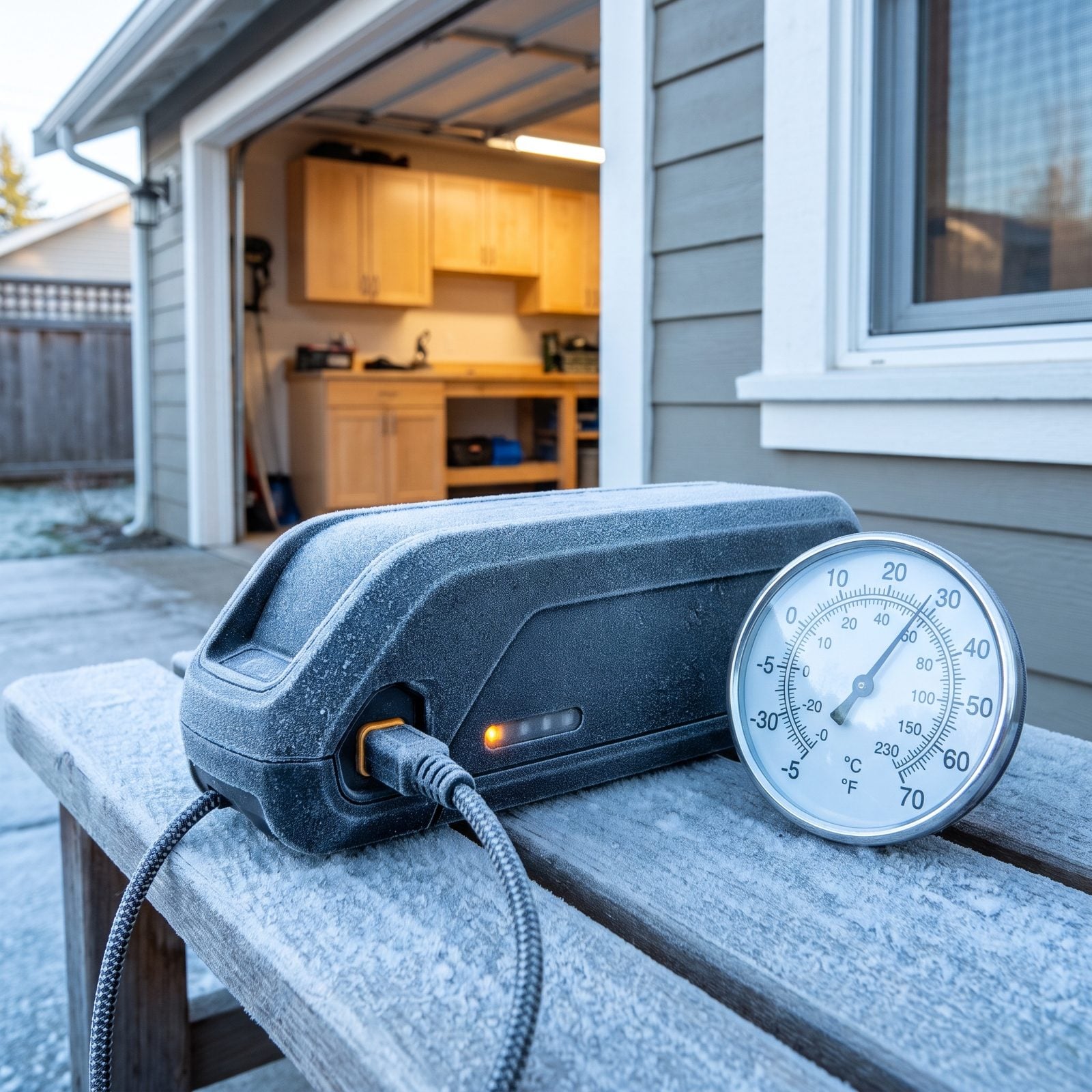
This is the one myth that can actually damage a pack, so take it seriously. Charging lithium below freezing — roughly 32°F — can cause lithium plating inside the cells. That’s permanent. It reduces capacity and, in the worst cases, creates an internal safety risk. Riding the bike in the cold is fine. Charging in the cold is not.
Bring the battery inside and let it warm to room temperature before you plug it in. A garage that dips below freezing overnight is not where winter charging should happen. Warm it first, then charge.
35. Myth: Cold Weather Permanently Destroys the Battery’s Lost Range

Watch your range drop on a freezing morning and it’s easy to assume the cold stole capacity for good. It didn’t. Cold temporarily slows the chemistry, so the pack delivers less on a frigid ride. Warm it back up and most of that range comes right back.
The temporary loss is normal and reversible. The permanent loss only happens if you do the one thing the last myth warned about — charging it while it’s frozen. Keep the battery warm between rides, store it indoors in winter, and the range you thought you lost returns with the thermometer.
Treat your pack like a houseguest in January. Bring it in from the cold, let it settle, and it’ll do its best work.
34. Myth: A Battery Can Sit in Direct Sunlight While the Bike Is Parked
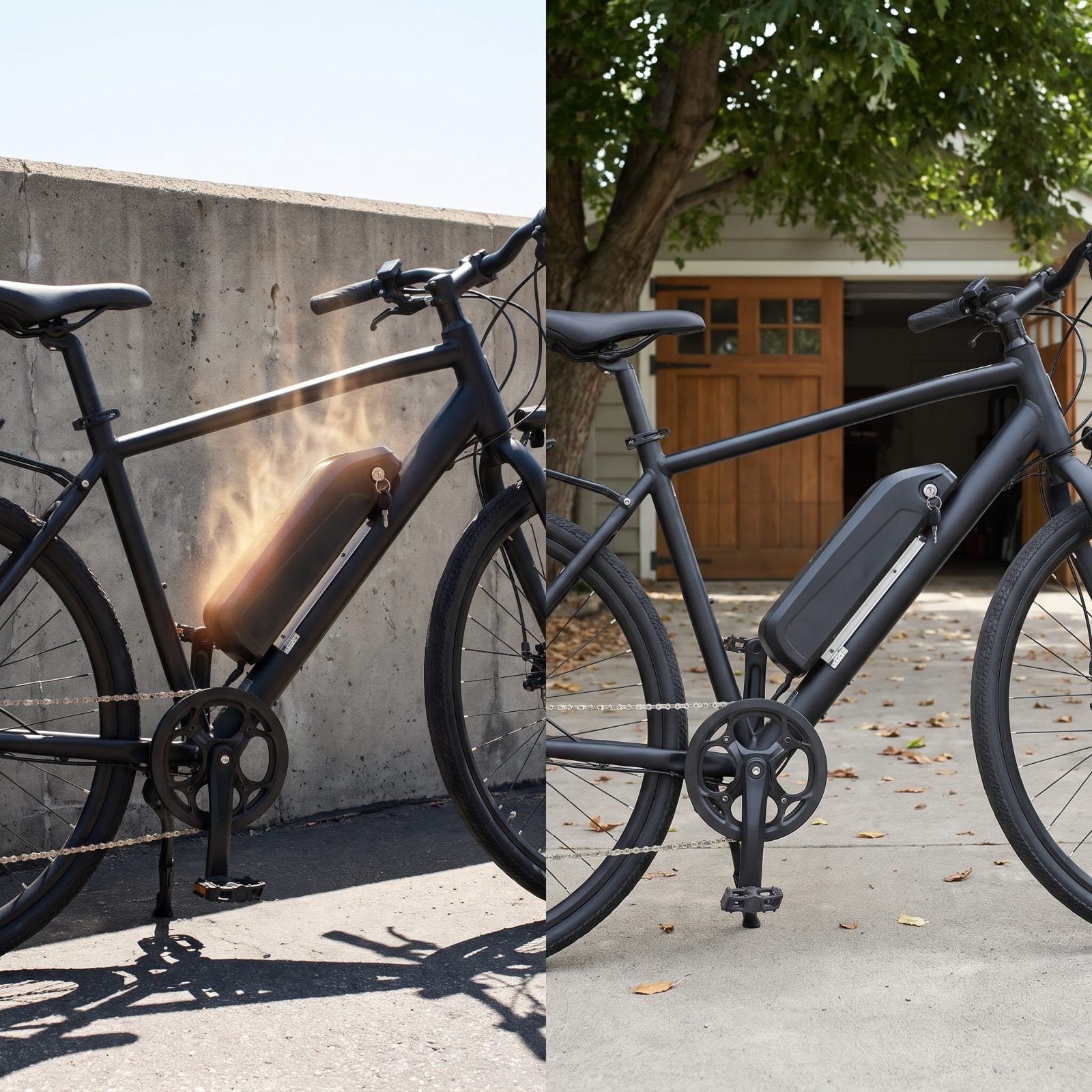
Lithium cells hate heat more than almost anything you’ll do to them. Park the bike in full August sun and that dark case can climb well past what the pack reads idle, cooking quietly even when nothing’s switched on. Push it far enough and an overheated pack can even start venting hot, glowing smoke — and even short of that, the heat ages the cells, shaving away capacity you paid real money for.
Pull the pack and carry it inside. Or drape a jacket over it and find some shade. Five seconds of effort buys you months of range.
33. Myth: Store the Battery Fully Charged, or Dead Empty
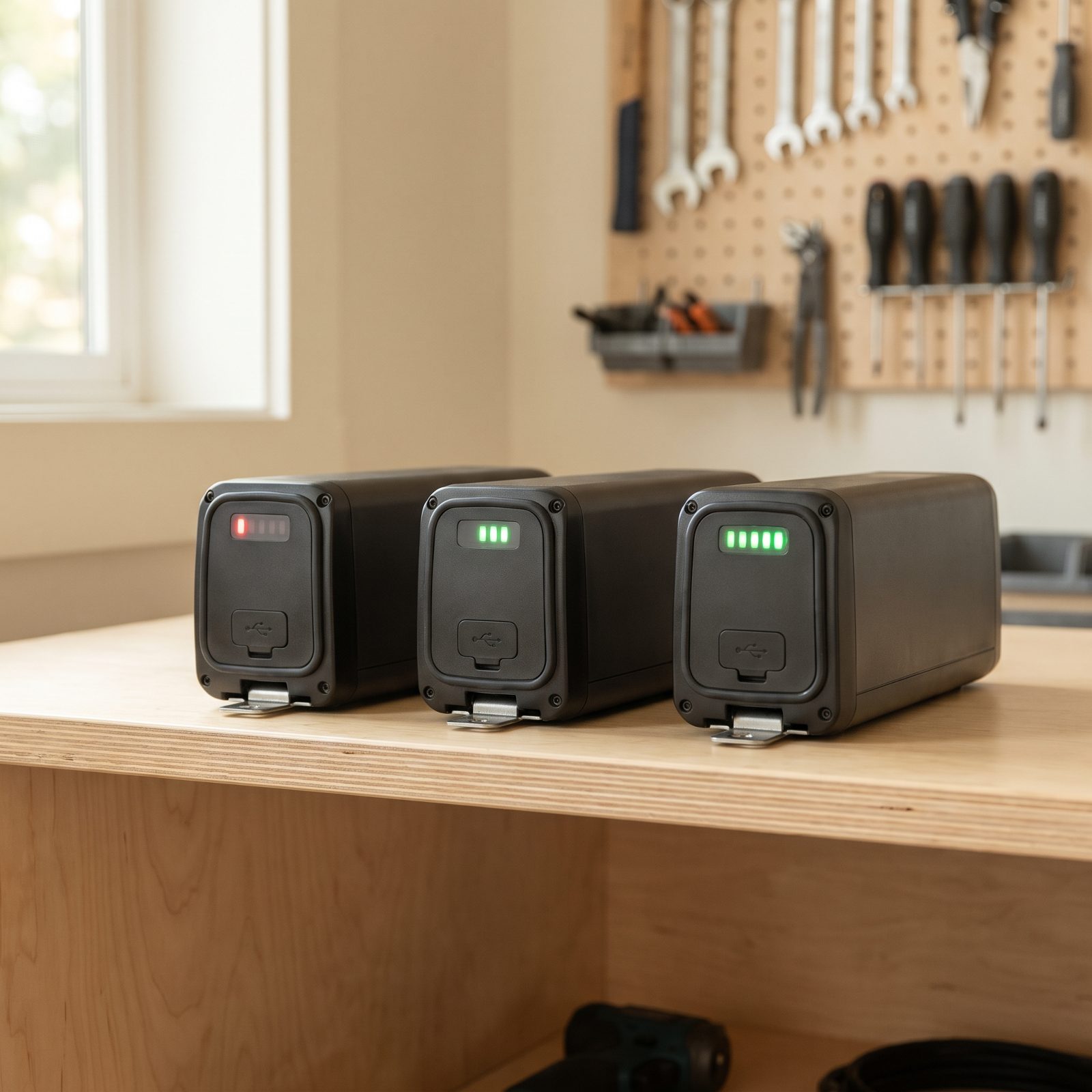
Neither extreme is doing you any favors. A pack sitting at full charge all winter lives under constant voltage stress, and one drained to nothing can slip below the point where its own electronics refuse to wake it back up.
Aim for somewhere around half. Charge it to that mark, tuck it somewhere cool and dry, and glance at it every few weeks. That’s the entire ritual. I ignored this for a full off-season once and watched a two-year-old pack limp back noticeably weaker in spring — lesson learned the expensive way.
32. Myth: A Waterproof Rating Means You Can Dunk It
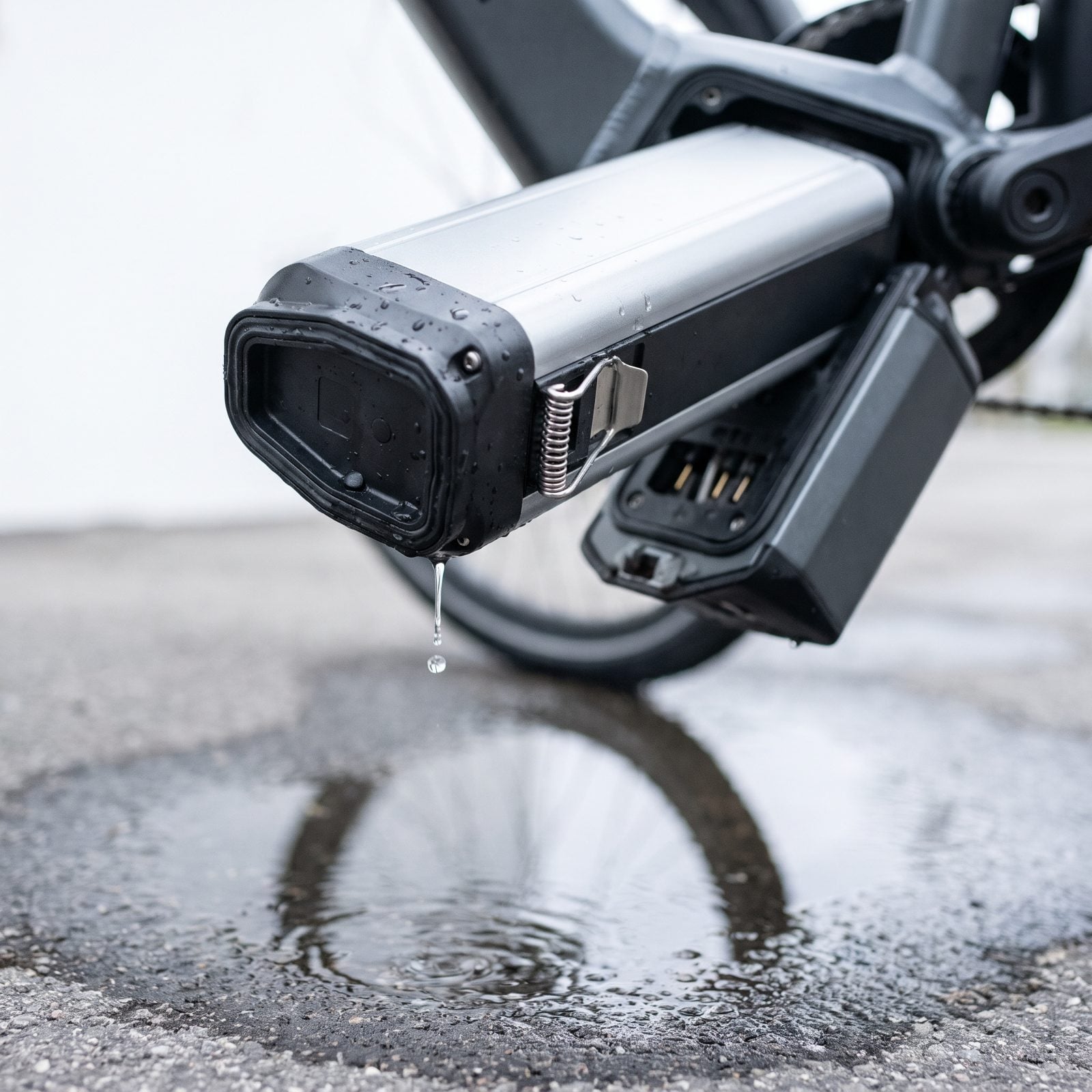
IP ratings cover splashes and rain, not swimming lessons. An IPX4 or IPX6 pack handles a downpour and road spray without complaint. But drop it in a creek crossing, or ride through water deep enough to reach the mount, and you’ve wandered well past what that rating actually promises.
The one failure mode you genuinely want to avoid is water forcing its way past a gasket and into the cells. Deep river crossing? Walk the bike and keep the battery dry.
31. Myth: Ordinary Rain Will Destroy the Battery

These bikes were built to be ridden outdoors. A sealed, properly seated battery shrugs off ordinary rain the same way the rest of the bike does. Plenty of people baby their packs like they’ll dissolve in a drizzle, then wonder why the whole thing felt so limiting.
What matters is the seal and the seat. Check that the port cover is closed, confirm the pack is clicked and locked in, and ride. Wipe it down when you get home. That’s maintenance, not rescue.
30. Myth: Pressure-Washing the Battery Mount Is No Big Deal
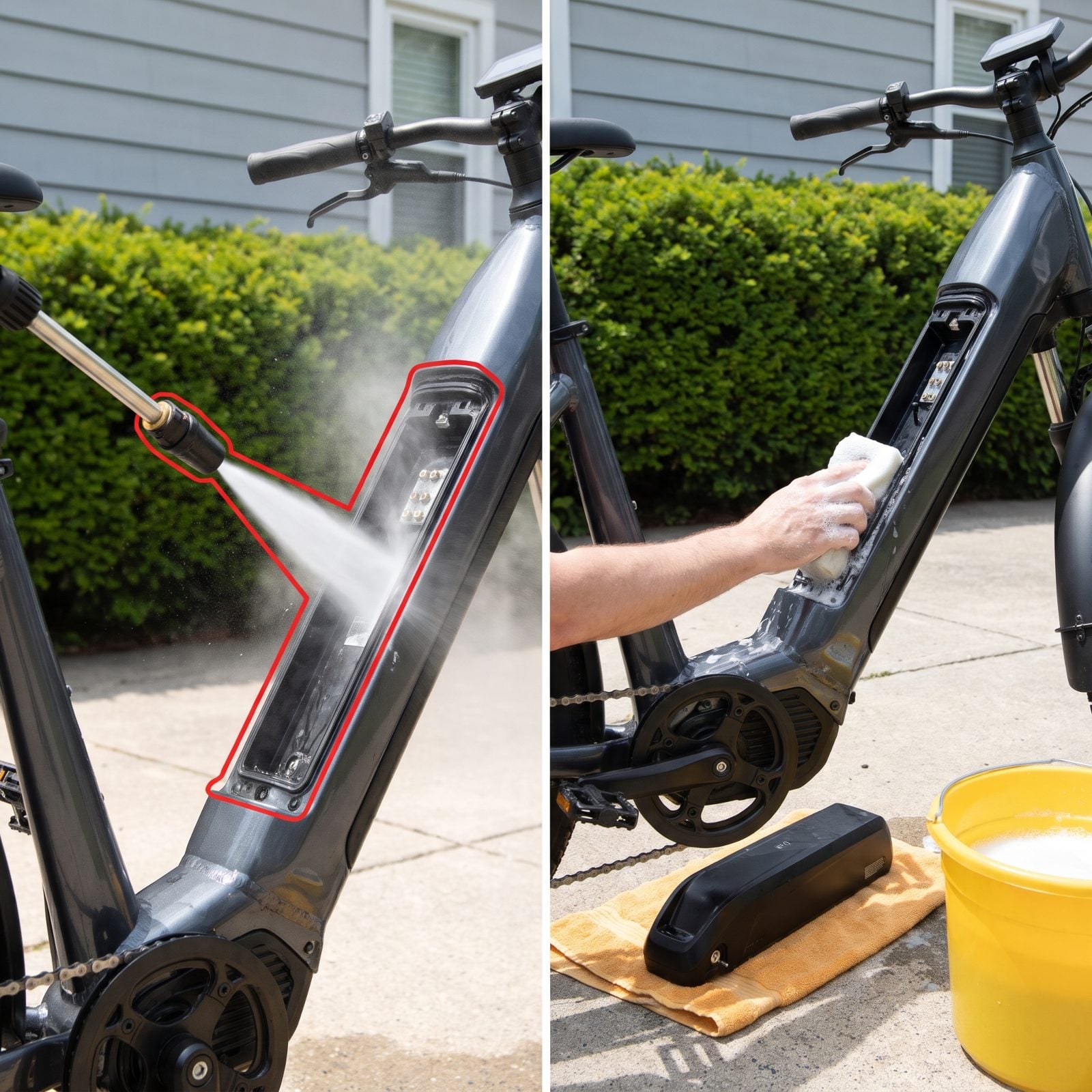
A pressure washer pushes water at pressures a rain gasket was never built to hold back. Aim one at the mount, the connectors, or the charge port and you can drive moisture straight into places it should never reach.
Bucket, sponge, mild soap, a gentle hose at most. Pull the battery first and wipe the contacts dry. It’s slower, sure. But a soaked connector corrodes, and corroded contacts give you a pack that charges erratically or quits on you entirely.
29. Myth: A Heavier Rider Draws the Same Battery as a Light One

Physics doesn’t negotiate. More total weight — rider plus cargo plus the bike itself — means the motor works harder to accelerate and hold speed, so a heavier rider loaded with panniers will see noticeably shorter range than a lighter one on the same bike over the same route.
On flat ground at a steady cruise, it’s barely noticeable. But it stacks up fast on climbs and at every start from a stop. When your real-world range comes up short of the brochure number, total weight is usually the first culprit worth checking.
28. Myth: Steep Hills Barely Touch Your Range
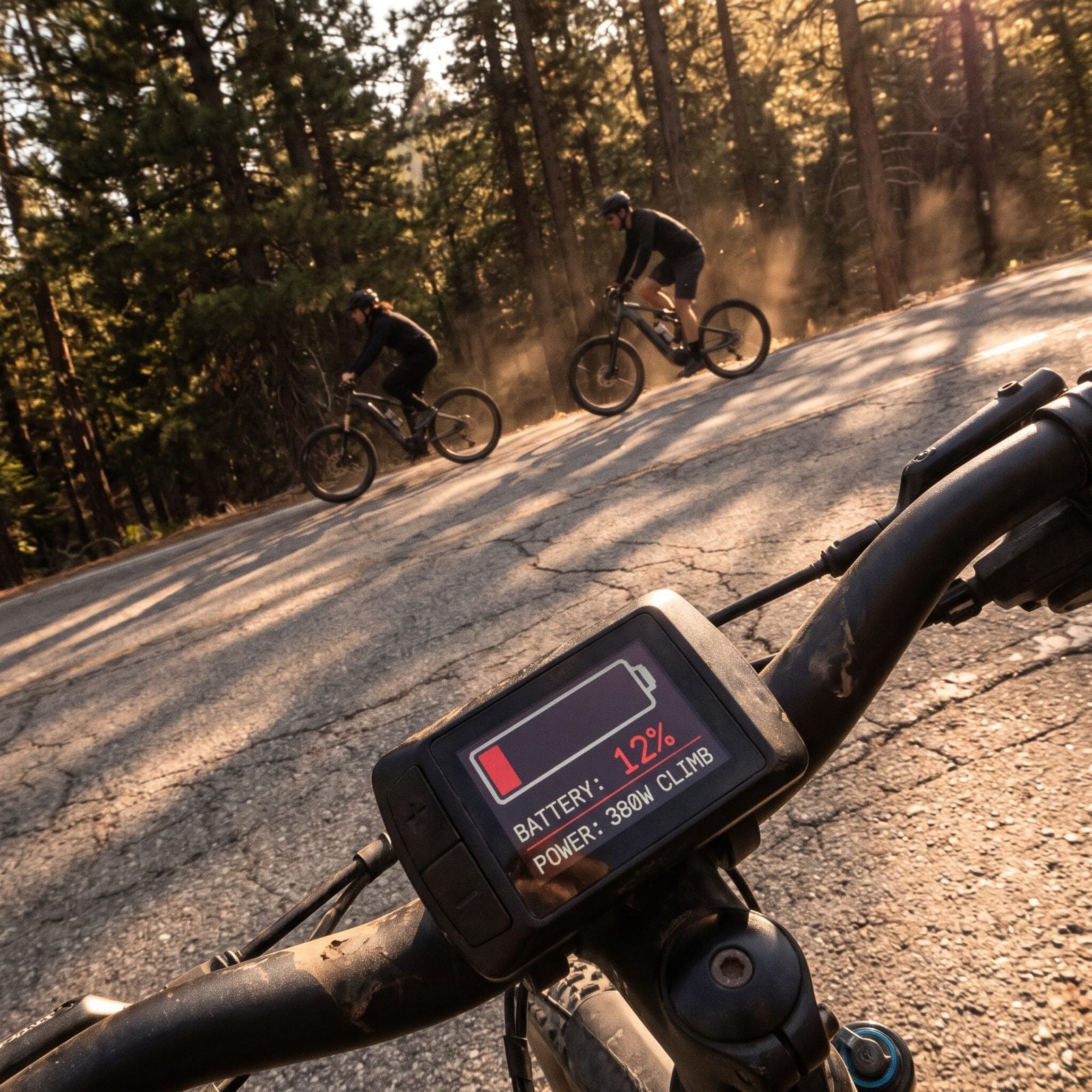
Climbing is where range estimates go to die. Hauling yourself and the bike up a grade takes real energy, and on a sustained steep pitch the motor can pull several times the wattage it sips on the flats.
Plan around the profile, not the mileage. A 20-mile ride with a couple thousand feet of climbing is a different animal than a flat 20-mile cruise, and the gauge will spell that out for you about a third of the way up the first big hill.
27. Myth: Max Assist Costs Barely More Than Eco Mode
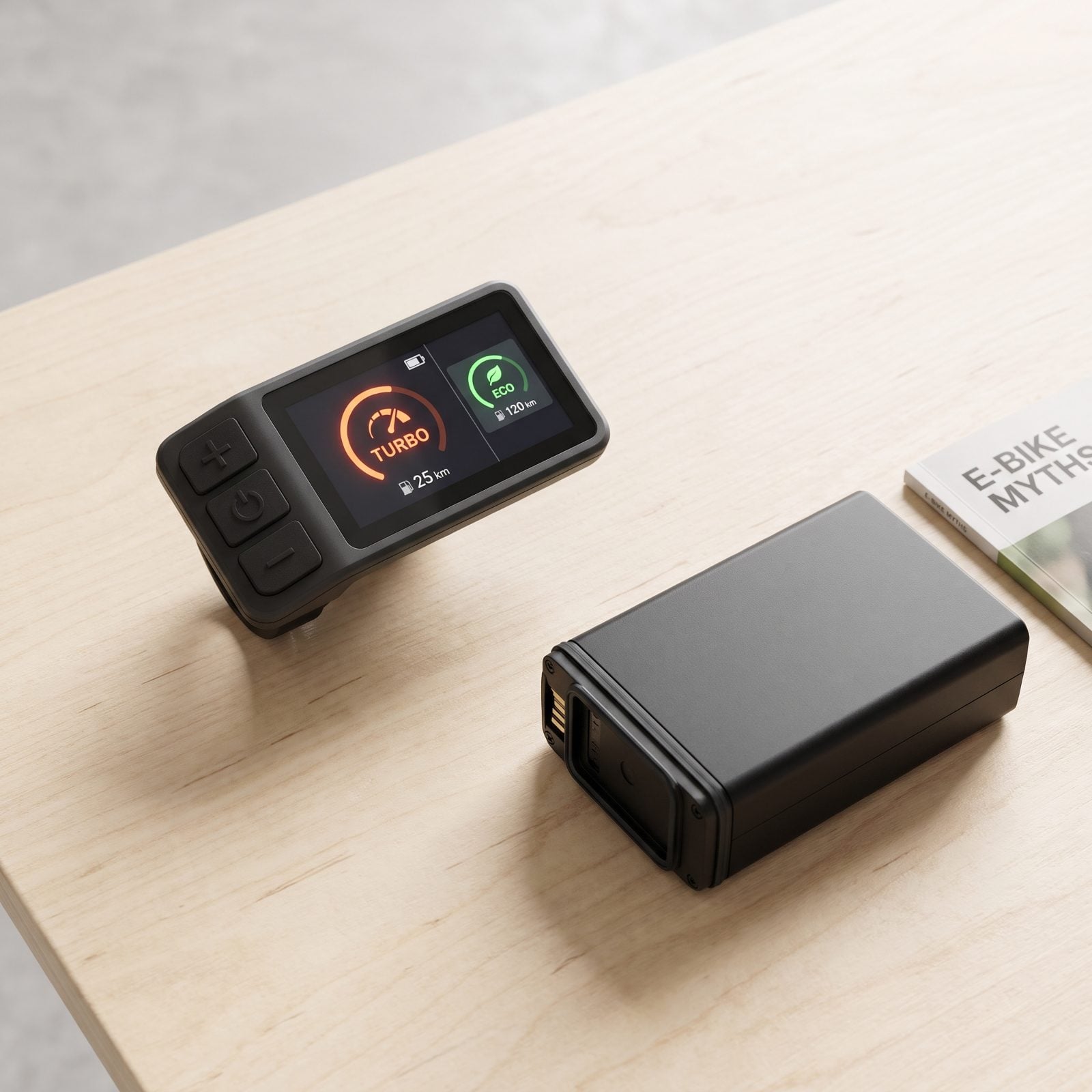
The gap between assist levels is far bigger than those little bars let on. Top assist tells the motor to do most of the work, and a motor working hard drains a pack fast. Riders who live in boost mode then act blindsided when their range comes up half of what eco promised.
Eco isn’t punishment. On flat ground at a casual pace it still gives you plenty of help while stretching the battery dramatically. Save the high levels for headwinds and hills, drop down when you don’t need the shove, and your effective range nearly doubles.
26. Myth: The Throttle Is Just as Efficient as Pedaling Along
Pure throttle means the motor moves you and the whole bike by itself, with zero help from your legs — the most energy-hungry way to ride one of these. Pedal assist blends your effort with the motor’s, so the battery covers less of the total work and lasts much longer.
Nothing wrong with a throttle twist to clear an intersection or rest a sore knee. But lean on it the whole ride and watch the gauge sink. Kick in a few watts of your own and the pack pays you back in miles.
25. Myth: Constant Stop-and-Go Doesn’t Cost You Range

Every launch from a dead stop is the motor’s hardest moment. Getting rider and bike moving again takes a big burst of power, and a ride full of lights, signs and cross-traffic strings those bursts back to back with no rest in between.
That’s why city commutes drain faster than open-road cruises of the same distance. You can’t fix the traffic. But easing off max assist at launches, and letting your legs do more of the pickup, takes a real bite out of the penalty. Honestly, that first pedal stroke matters more than most people think.
24. Myth: Soft Tires Don’t Touch Your Battery
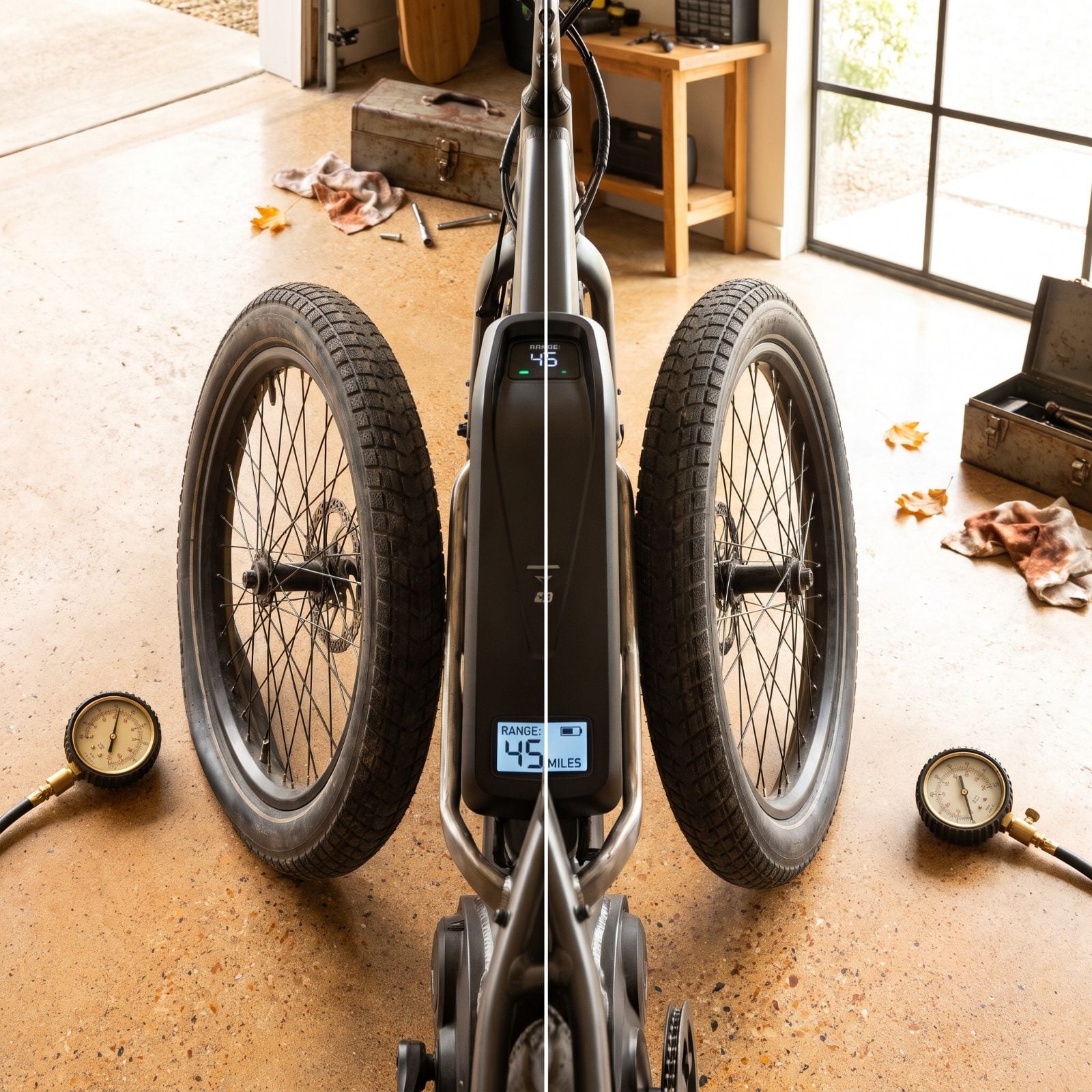
Run your tires low on pressure and you’ve quietly turned your e-bike into a sponge. The flatter contact patch digs into the road, rolling resistance climbs, and the motor works harder just to hold the same speed. That extra effort comes straight out of the pack.
Nobody feels it happening. The bike still rolls, the pedals still turn, and the display can show the same 45-mile range estimate on soft tires as on firm ones, so the soft tire gets a pass while the battery takes the heat when range drops. A thirty-second check with a gauge is the cheapest range upgrade there is.
23. Myth: A Headwind Barely Costs You Anything

Air resistance isn’t linear, and that’s the part people miss. The drag you fight climbs with the square of your speed relative to the wind. Push into a 15 mph headwind at 15 mph, and the bike behaves like you’re doing double that through still air.
That’s why a flat, easy route can gut your pack on a blustery day when the same miles felt effortless last week. The battery didn’t age overnight. The air just got thicker.
22. Myth: Grinding in the Wrong Gear Wastes Nothing
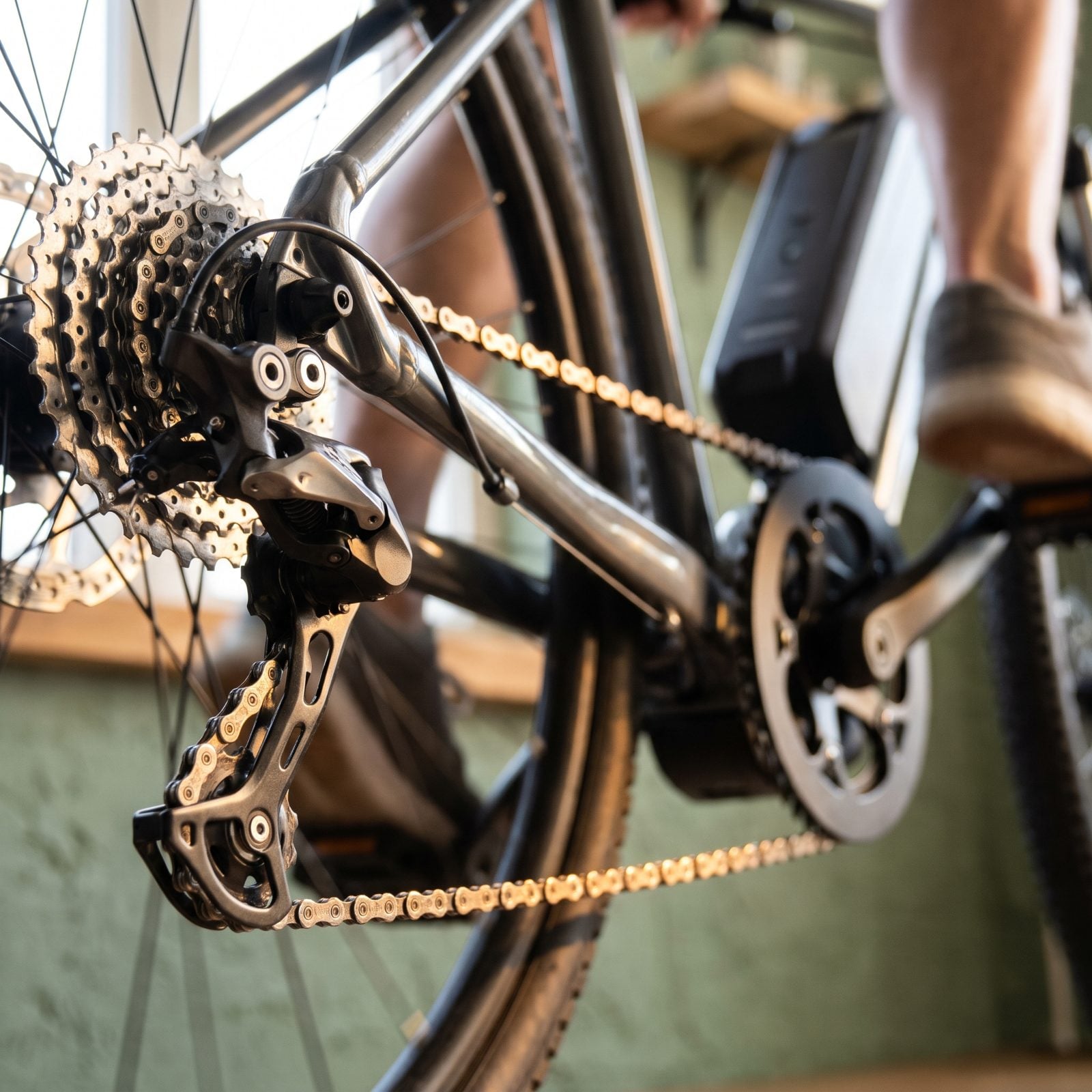
Your motor has a happy place, and lugging it in a tall gear isn’t it.
Mash a hard gear up a hill at low cadence and the motor pulls big current to cover for your legs. Drop to an easier gear, spin faster, and both you and the motor settle into a more efficient band. Same hill, less draw.
Riders treat the shifter like it’s only there for comfort. It’s also a range dial. Keep your cadence up and let the gears carry the load instead of the battery.
21. Myth: You’ll Get the Range on the Box

That big range number on the spec sheet came from a light rider on flat ground, in the lowest assist, at a modest speed, with fresh tires and probably a tailwind. It’s a ceiling, not a promise.
Real riding has hills, stop signs, headwinds, cargo, and your actual body weight. For mixed terrain in a middle assist level, expect something well under the advertised figure.
20. Myth: Every Battery Bar Means the Same Miles
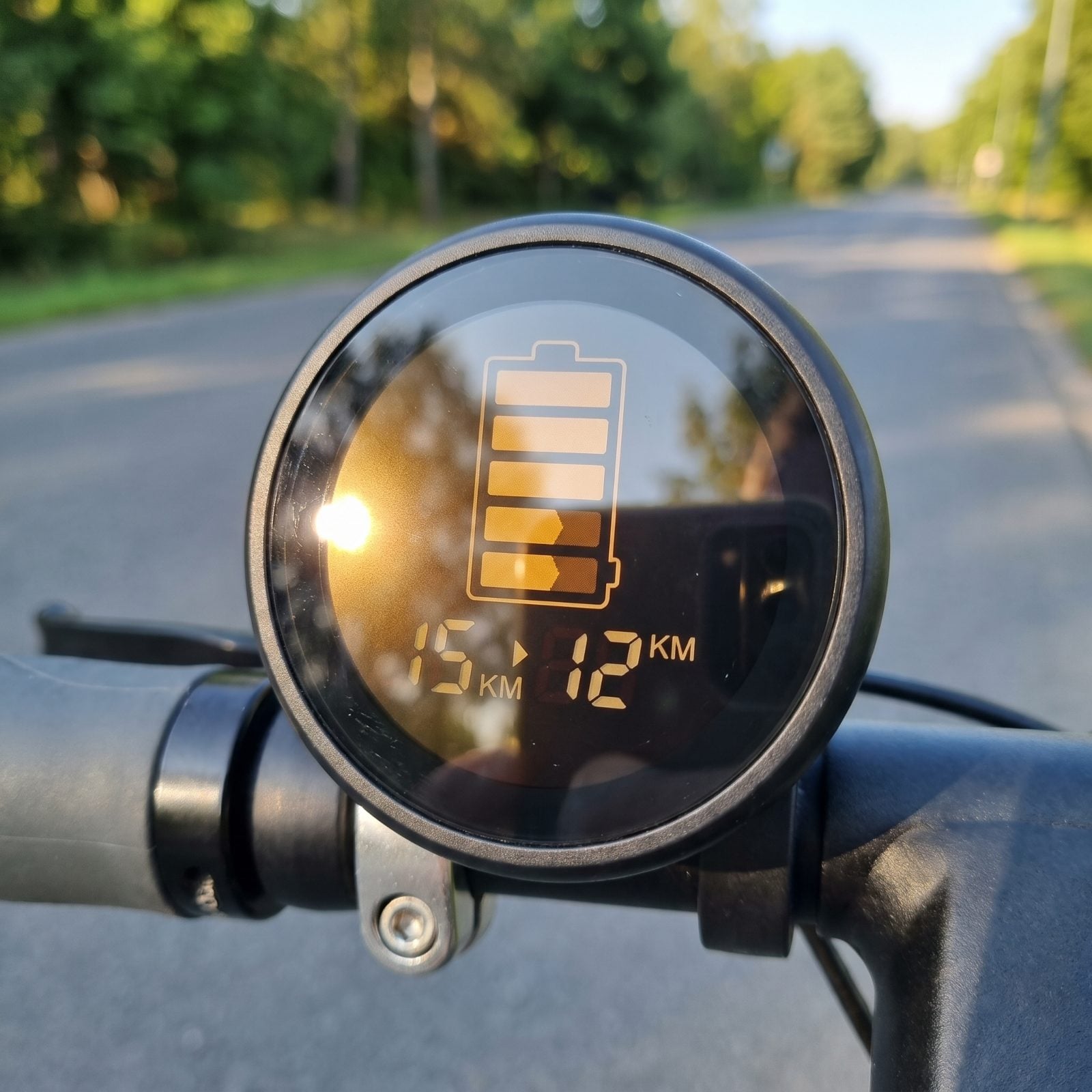
The bars lie, politely. Most displays track voltage, and a lithium pack’s voltage doesn’t fall in a straight line — it holds steady through the middle of the charge, then drops off a cliff near the bottom.
So the top bar lasts forever and the last bar vanishes in a couple of miles. Nothing’s broken. The gauge just can’t draw you a curve with five little blocks. Plan your turnaround on the first half of the charge, not the last.
19. Myth: More Watt-Hours Always Means More Miles
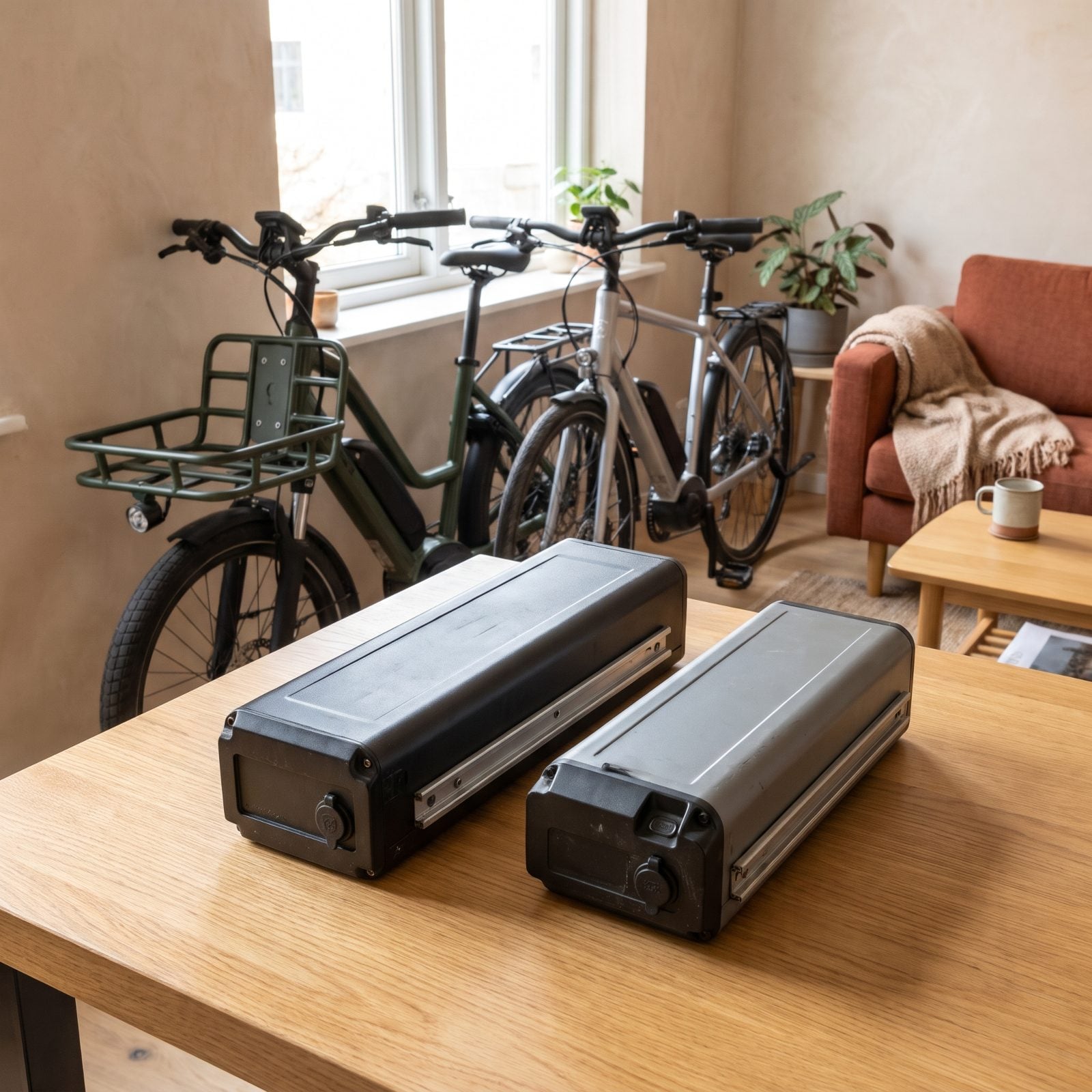
Watt-hours are the size of the fuel tank. They don’t tell you how thirsty the engine is.
Bolt a big 700Wh pack to a heavy cargo bike with a powerful motor, fat tires, and a rider who loves full assist, and it’ll run dry faster than a smaller pack on an efficient lightweight commuter. Capacity is only half the equation — motor draw, weight, tires, and your right thumb finish the math.
Shop the whole bike, not the biggest number.
18. Myth: Regen Braking Fills the Tank Back Up

Regenerative braking sounds like free energy. On most e-bikes it recovers almost nothing worth counting.
Only hub-drive bikes can even do it — mid-drives physically can’t — and what you capture is tiny, a sliver at best on a long steep descent. On flat commutes it’s a rounding error. The real payoff is a little brake pad savings, not more miles.
17. Myth: Charging Your Phone Kills the Pack
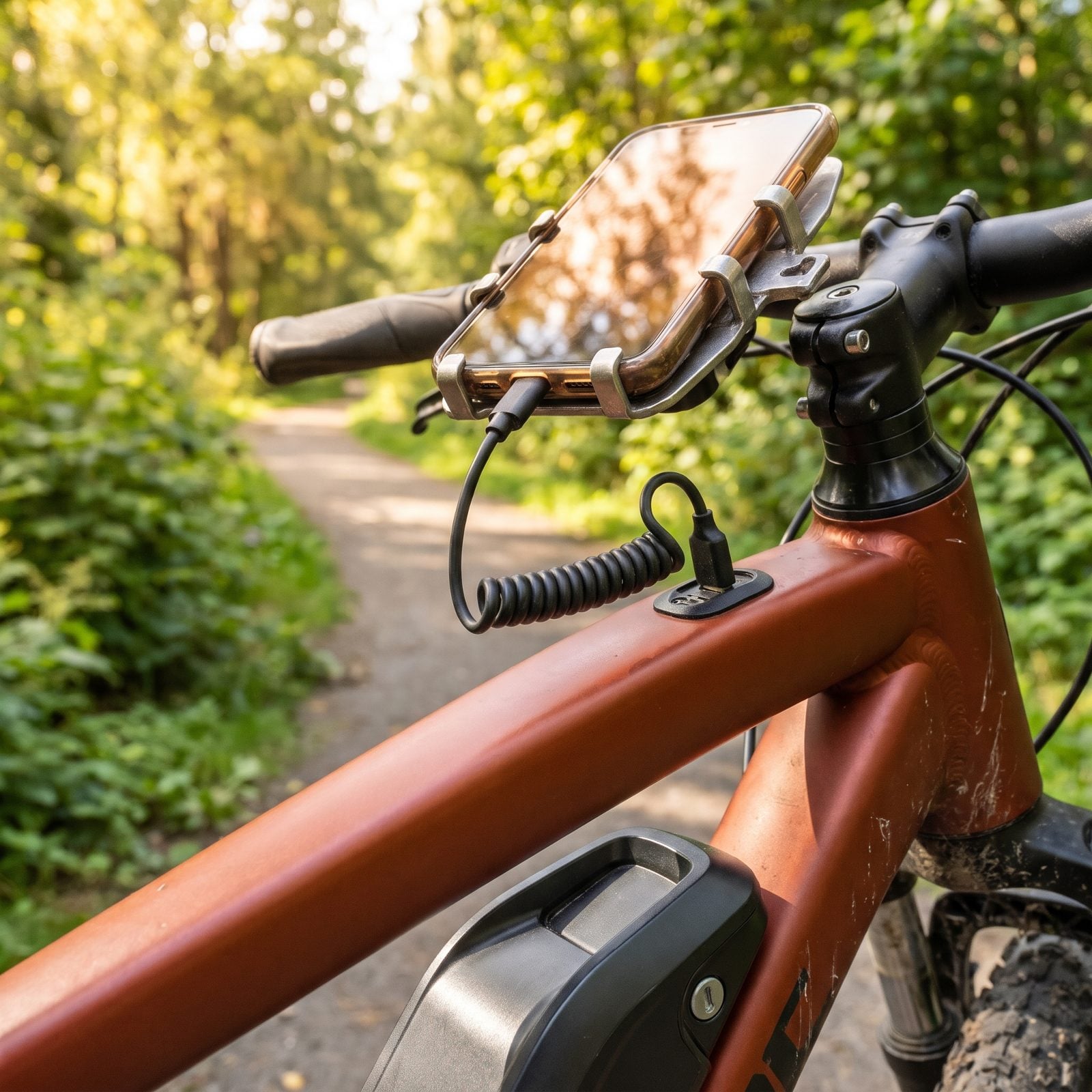
Topping off your phone from the bike’s USB port draws a trickle. A phone charge is a handful of watt-hours; your pack holds hundreds. The dent barely registers against your range.
What actually drains you is the GPS app running your screen at full brightness — and that’s a problem on the phone, not the bike. So charge away. Just don’t blame the lost feet on the USB cable.
16. Myth: Recalibrating the Display Brings Capacity Back
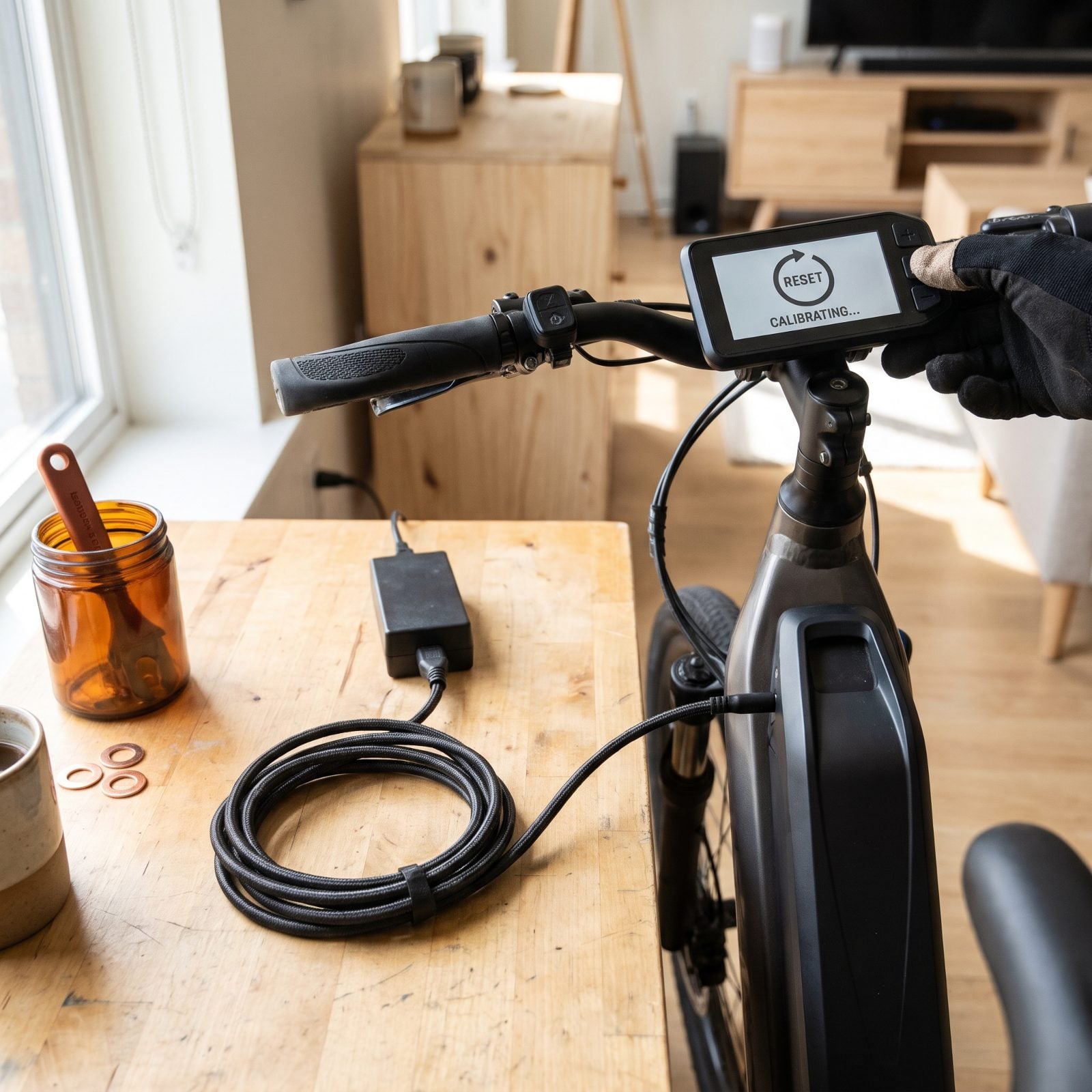
Calibration fixes the gauge, not the cells. When the bars read wrong, a full charge-and-drain cycle can resync the meter to what the pack actually holds. That’s genuinely useful — it makes the display honest again.
But if your battery truly lost capacity to age and cycles, recalibrating just shows you the smaller real number more accurately. No reset puts lost chemistry back. Anyone promising a software trick that restores range is selling you a feeling, not energy.
15. Myth: Lost Range Is Always Dying Cells

Range drops suddenly and the mind jumps straight to a dead battery. Usually it’s something cheaper and fixable.
Before you spend hundreds on a new pack, rule out the suspects that mimic battery failure:
- Soft tires adding rolling drag
- A brake pad lightly rubbing the rotor every rotation
- Dry or worn bearings fighting the wheel
- A gummed-up, stretched chain eating your watts
Spin each wheel off the ground. It should turn freely and coast. If it stops short or drags, you’ve found your range thief — and it wasn’t the cells.
14. Myth: A Spark at the Connector Is Just Part of Plugging In
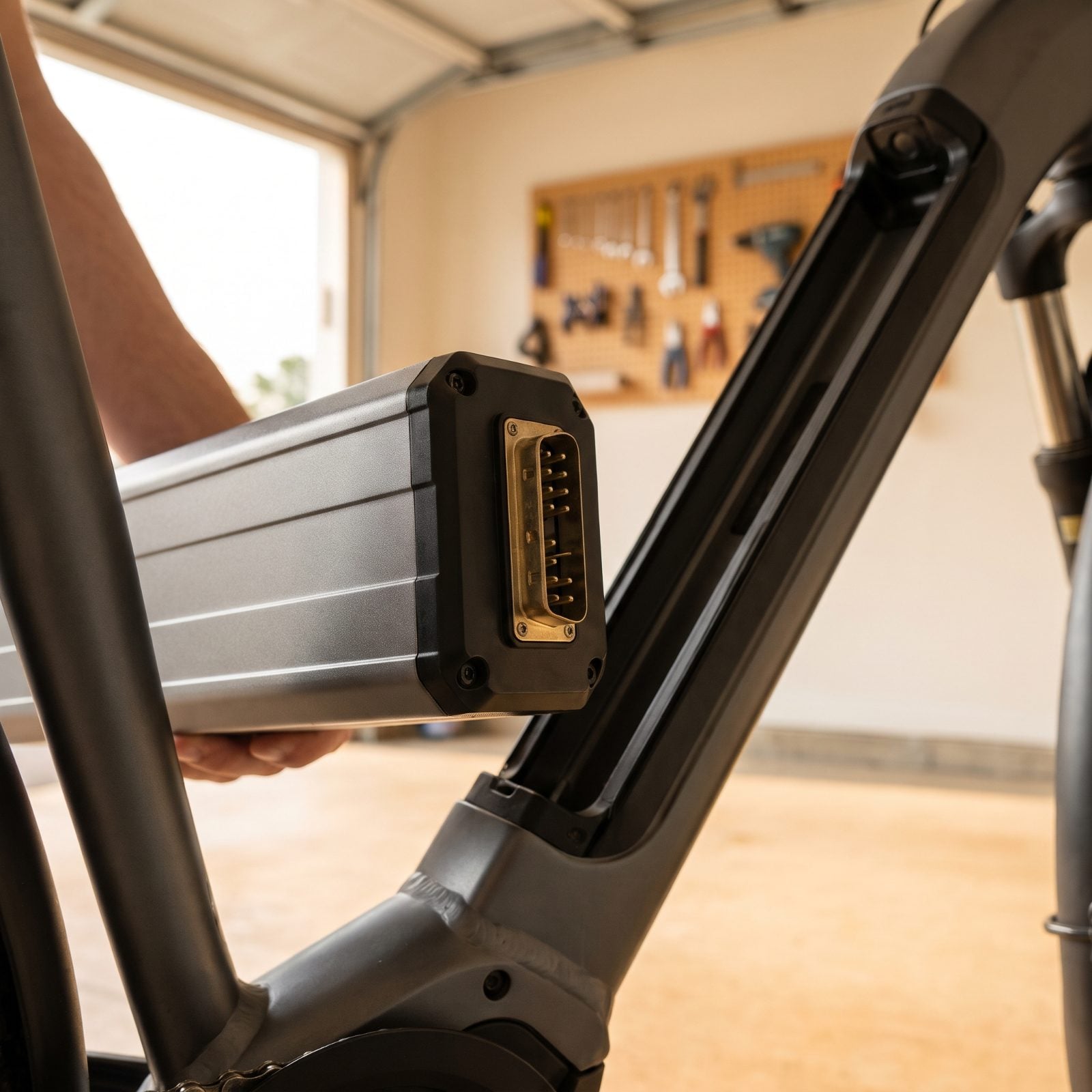
A small blue flash the first time you seat a fresh pack? That’s capacitors charging, usually nothing to sweat. But a spark every time, or one that leaves a black scorch mark on the pins, is a different animal entirely.
Repeated arcing pits the contacts, and pitted contacts raise resistance, which makes heat, and heat is how the whole mess starts. If the connector feels warm after a ride, or the pins look dull and burned instead of bright metal, stop seating it and get it looked at.
13. Myth: A Swollen Pack Can Be Squeezed Back Into Shape and Used

Swelling means gas built up inside the cells. That gas comes from chemistry going wrong, and there is no clamp, no vise, no roll of tape on earth that undoes it. Pressing the case flat again just hides the warning you were handed.
A swollen pack is retired, full stop. Move it somewhere non-flammable, away from the house if you can, and arrange proper disposal through a battery recycler or hazardous-waste drop-off. And don’t charge it one last time to “finish the trip.” I’ve heard that reasoning before. It ends badly.
12. Myth: If the Case Survived the Drop, So Did the Battery
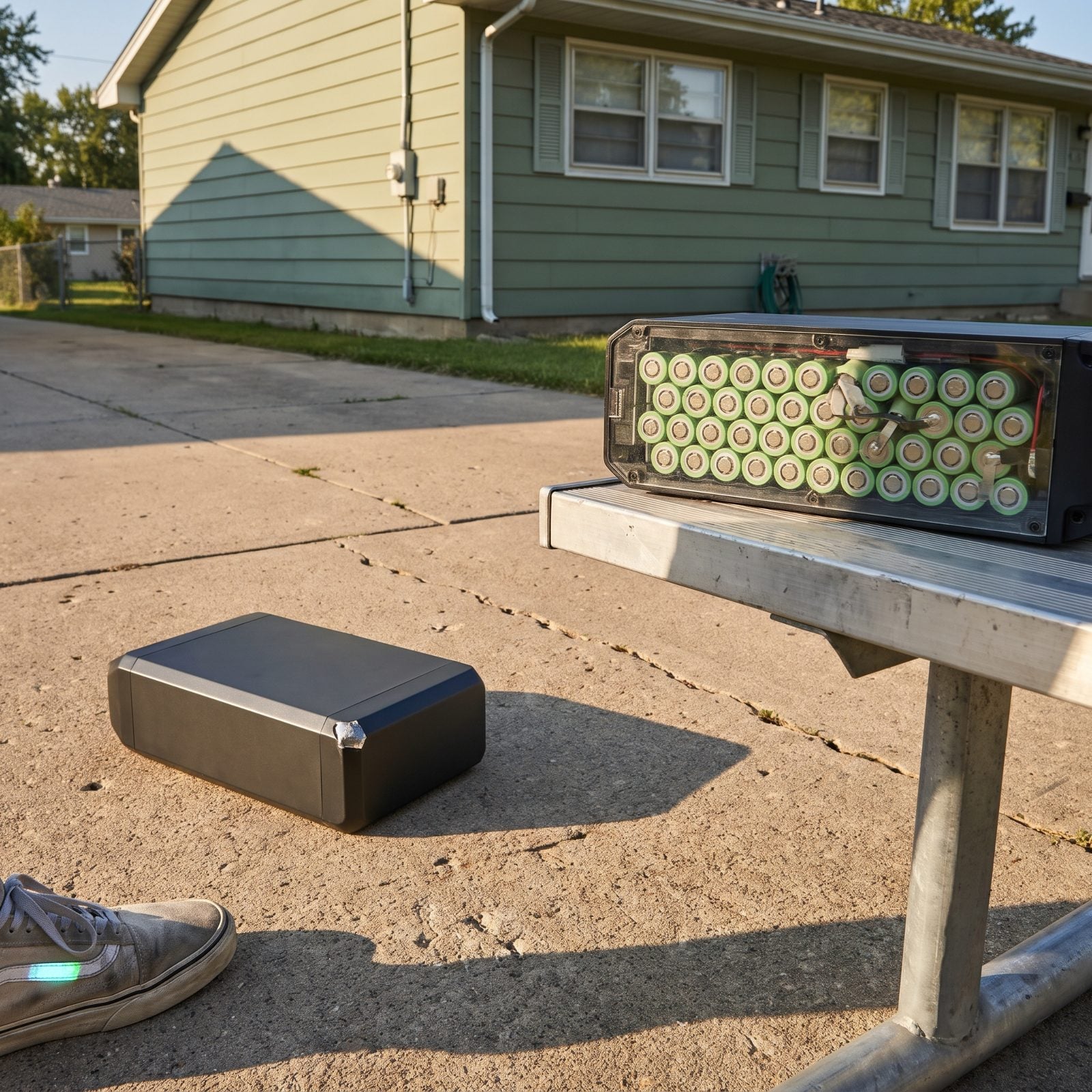
The case is armor. The cells behind it are not. A pack can hit the pavement, look perfectly fine on the outside, and still carry a bent tab, a cracked weld, or a nicked separator you’ll never lay eyes on.
Internal damage surfaces later — faster self-discharge, a cell that runs hot, a range figure that drops for no reason you can name. After a hard fall, charge the pack where you can keep an eye on it, watch for heat or odor over the next few cycles, and treat any new weirdness as reason enough to get it tested.
11. Myth: A Whiff of Burnt Smell Can Wait Until the Next Tune-Up

That sharp, plasticky, slightly chemical smell is not dust burning off. It usually means something inside got hot enough to start cooking insulation or electrolyte, and that process doesn’t pause politely while you wait for your service appointment.
Stop charging it right now. Unplug, move the pack away from anything flammable if it’s safe to do so, and make sure there’s a fire extinguisher somewhere in the room. A burnt odor is the clearest cheap warning you’ll ever get, and if you ignore it the next sign tends to cost a lot more. Get the battery inspected before it goes anywhere near a charger again.
10. Myth: Swapping Lithium Cells Is a Weekend Home Repair
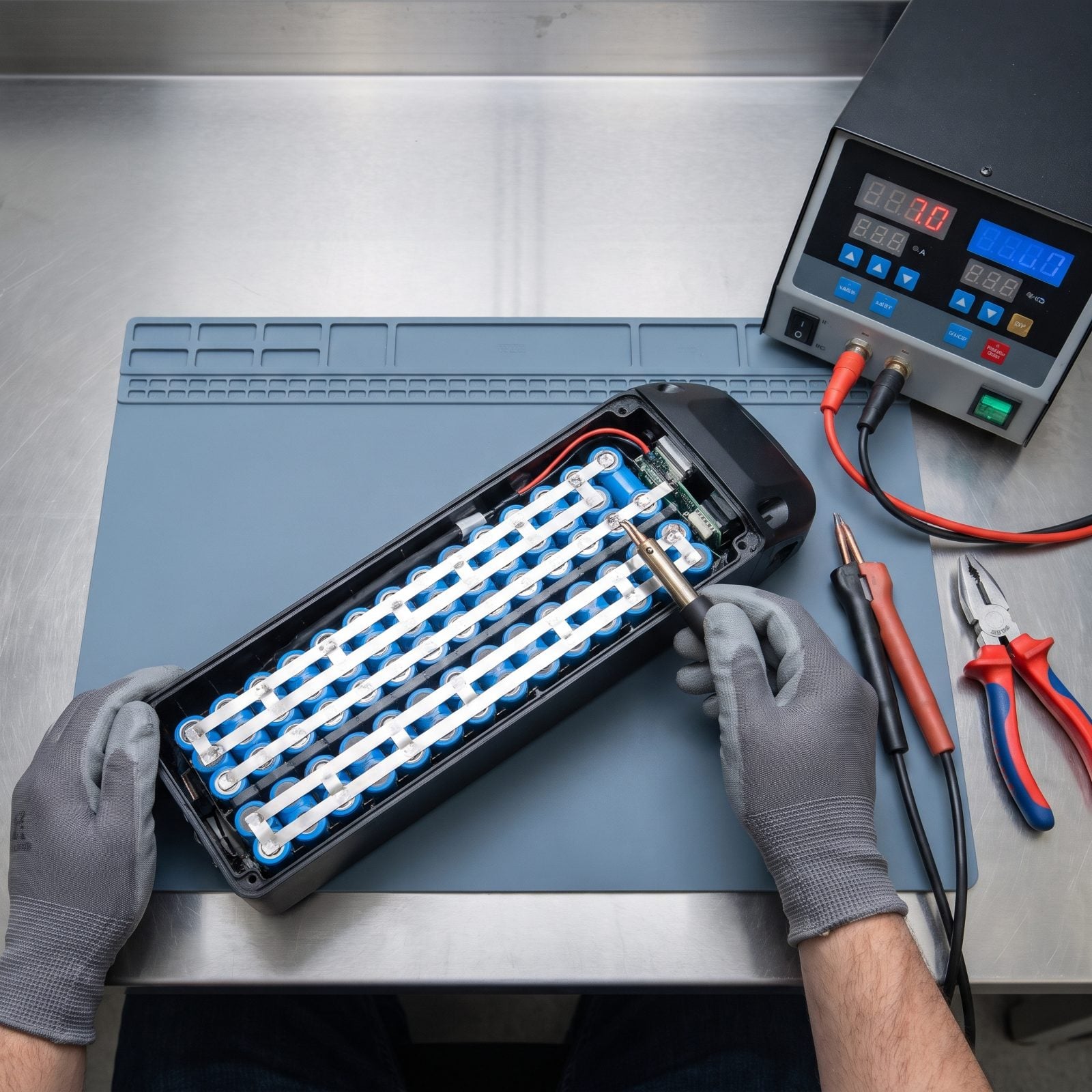
It looks approachable. Open the case, pop out the tired cells, drop in new ones. Folks watch one video and talk themselves right into it.
Now here’s what that video quietly skips over. The cells are joined by nickel strips, and any soldering on that pack takes a temperature-controlled iron and a quick hand, because lingering heat overheats lithium cells and ruins them without so much as a whisper. You have to match cells by brand, capacity, and internal resistance. The battery management system needs to see a balanced pack or it fights you every step. And one slipped tool across two terminals is a dead short at full current.
This is a job for a shop with the right temperature-controlled iron and the right respect for the chemistry. I’m as DIY as they come, and I still send these out.
9. Myth: Any Two Packs Can Be Wired Together for More Range
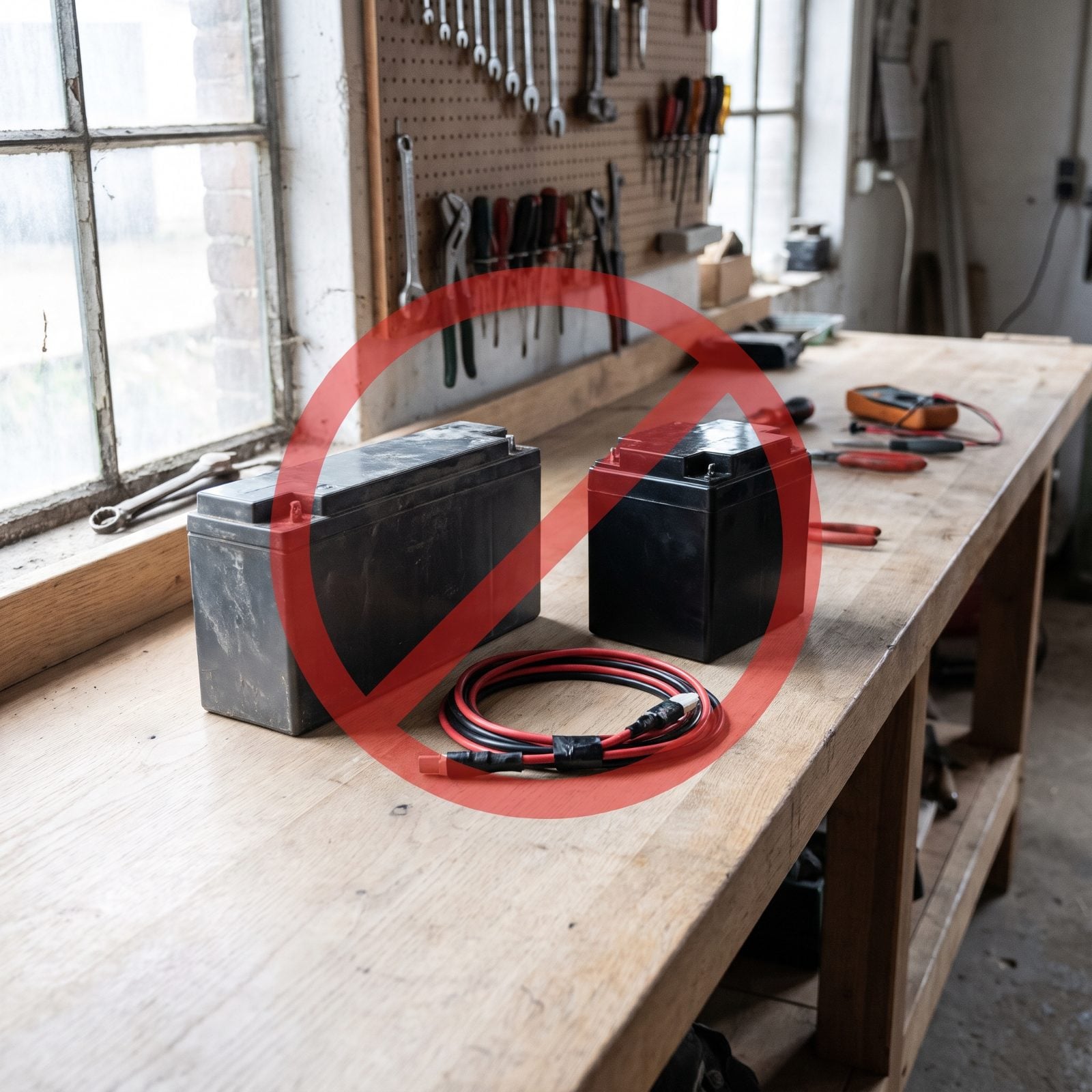
The dream is simple: strap a second pack on, double the miles. Reality? Two batteries at different voltages don’t cooperate. They fight.
Wire a fuller pack to an emptier one and current rushes from one to the other the instant you connect them. Mismatched capacities, chemistries, or ages only make it uglier, and each pack’s management system is busy protecting its own cells, not the stranger bolted beside it.
Systems built for dual batteries use matched packs and a controller designed to juggle both. That’s the only version of this that’s safe. Everything else is a wiring experiment with a short fuse.
8. Myth: A Generic Replacement Pack Will Ride Just Like the Original

Two packs can list the same voltage and the same amp-hours and still ride nothing alike. The spec sheet is the easy part to copy.
What you can’t see on the label is cell quality, the smarts baked into the battery management system, and whether the case actually seals against rain. Cheaper cells sag under load, so your hills feel weaker. A weaker BMS balances cells poorly, so the pack ages faster and dies younger. Some generics flat-out fake their capacity rating.
A solid third-party pack from a reputable maker can be perfectly fine. A no-name bargain that undercuts everyone by half usually tells you exactly why it’s cheap, right about the time you’ve ridden it through a winter.
7. Myth: Every Safety Label on the Case Means the Same Thing
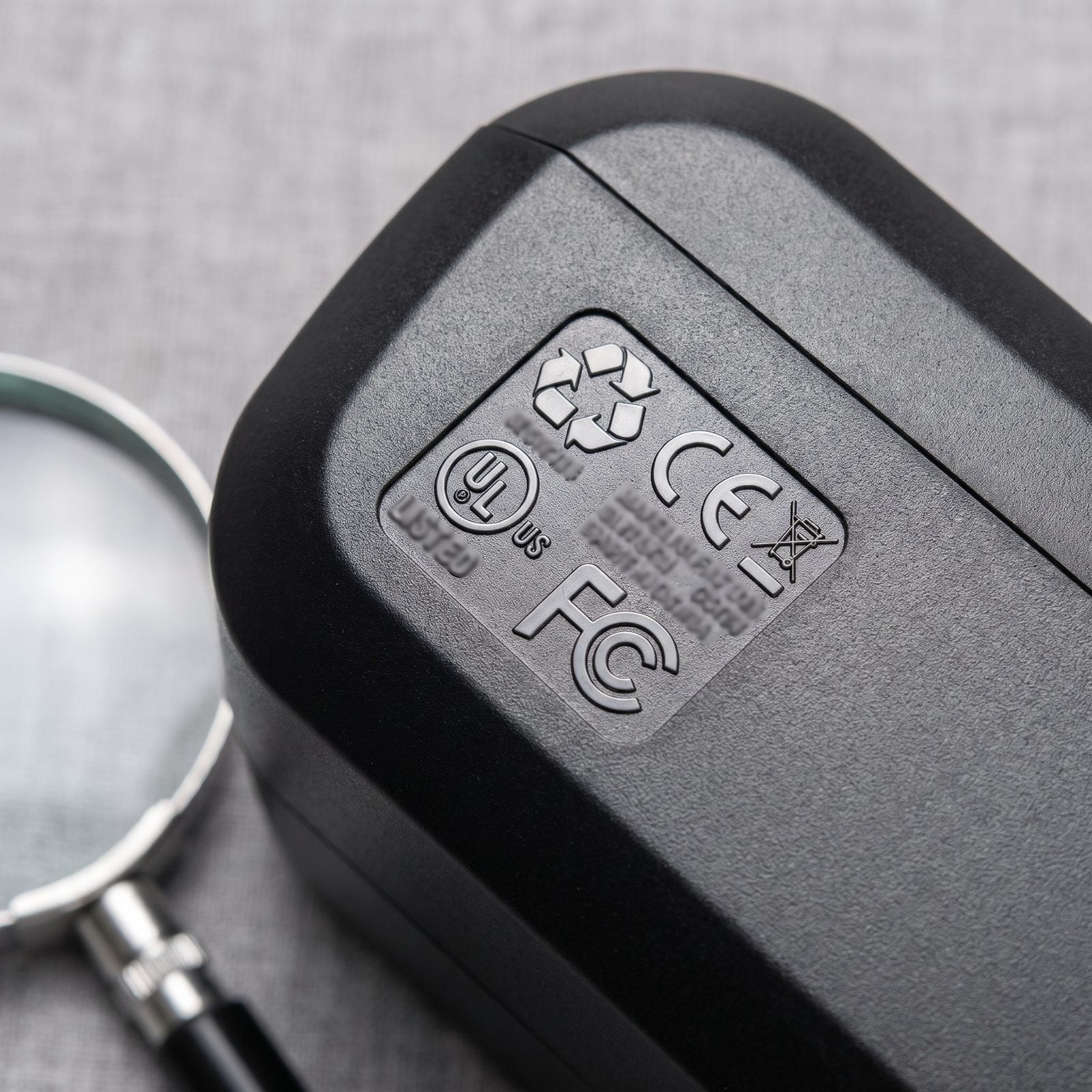
A printed logo and a real certification are not the same thing, and plenty of cheap packs blur that line on purpose.
In the US, the mark worth hunting for is UL 2849 for the whole e-bike electrical system, or UL 2271 for the battery pack by itself. Either one means a listed lab tested the thing to a published standard. A generic “CE” sticker or some invented safety badge? Anyone with a printer can slap that on. New York City now requires certified batteries for sale, and other places are following — which tells you how seriously regulators have started taking the junk packs.
6. Myth: Low Mileage Means a Used Battery Is Basically New
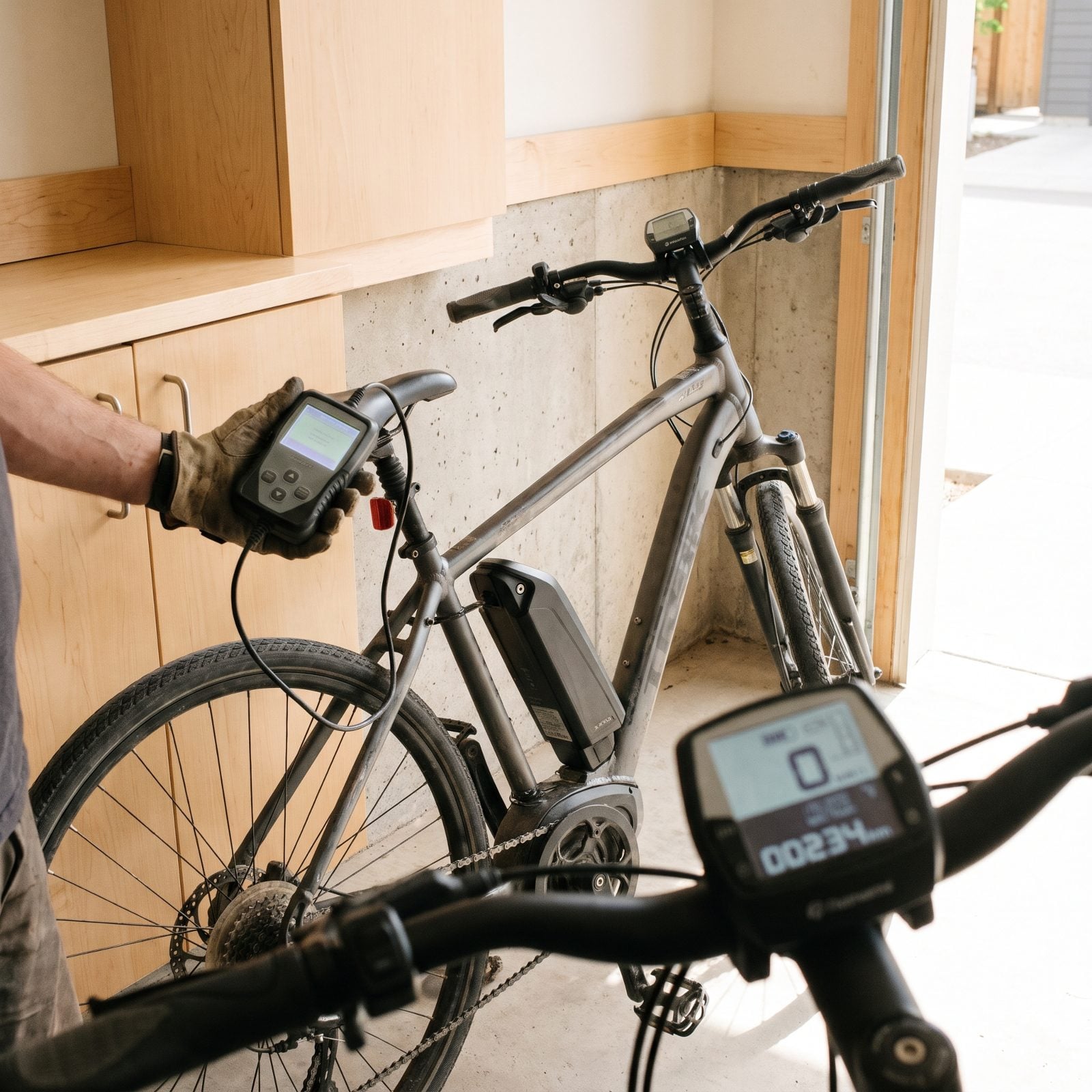
Odometer says 300 miles, so the battery must be fresh. Not so fast.
Lithium packs age two ways at once: cycles and calendar. A bike ridden lightly but left sitting half-charged in a hot shed for three summers can be in rougher shape than one ridden hard and cared for. Mileage tells you about the tires and the motor. It says almost nothing about cell health.
What actually matters is how many charge cycles the pack has seen, how it was stored, and its current measured capacity against its original rating. A proper capacity test is the only honest answer here. Anyone quoting you battery health off the odometer alone is guessing.
5. Myth: A Battery Doesn’t Start Aging Until Its First Ride

The clock starts the day the cells are made, not the day you first twist the throttle. A pack that sat in a warehouse for two years at full charge and warm temperatures already surrendered a chunk of its life before it ever reached you.
Calendar aging bites during storage too. Leaving a battery at 100 percent through a hot summer, or dead-flat through a cold winter, ages it faster than actually riding would. For long storage, most makers suggest parking it around half charge in a cool, dry spot and topping it up now and then.
4. Myth: Every E-Bike Battery Lasts the Same Number of Years
Two riders buy the identical battery on the same day. One gets eight good years out of it while the other is shopping for a replacement by year four. Nobody cheated. They just rode differently.
Battery life runs on how you treat the cells, not on a sticker. It comes down to charge habits, heat, how deep you drain the thing, how much weight you haul, and whether you leave it baking in a hot garage all summer. Store a battery at a sensible charge in a cool room and it ages slowly; cook it in direct sun and run it flat every ride, and it wears out fast.
3. Myth: A Battery Dies the Moment It Hits Its Rated Cycle Count
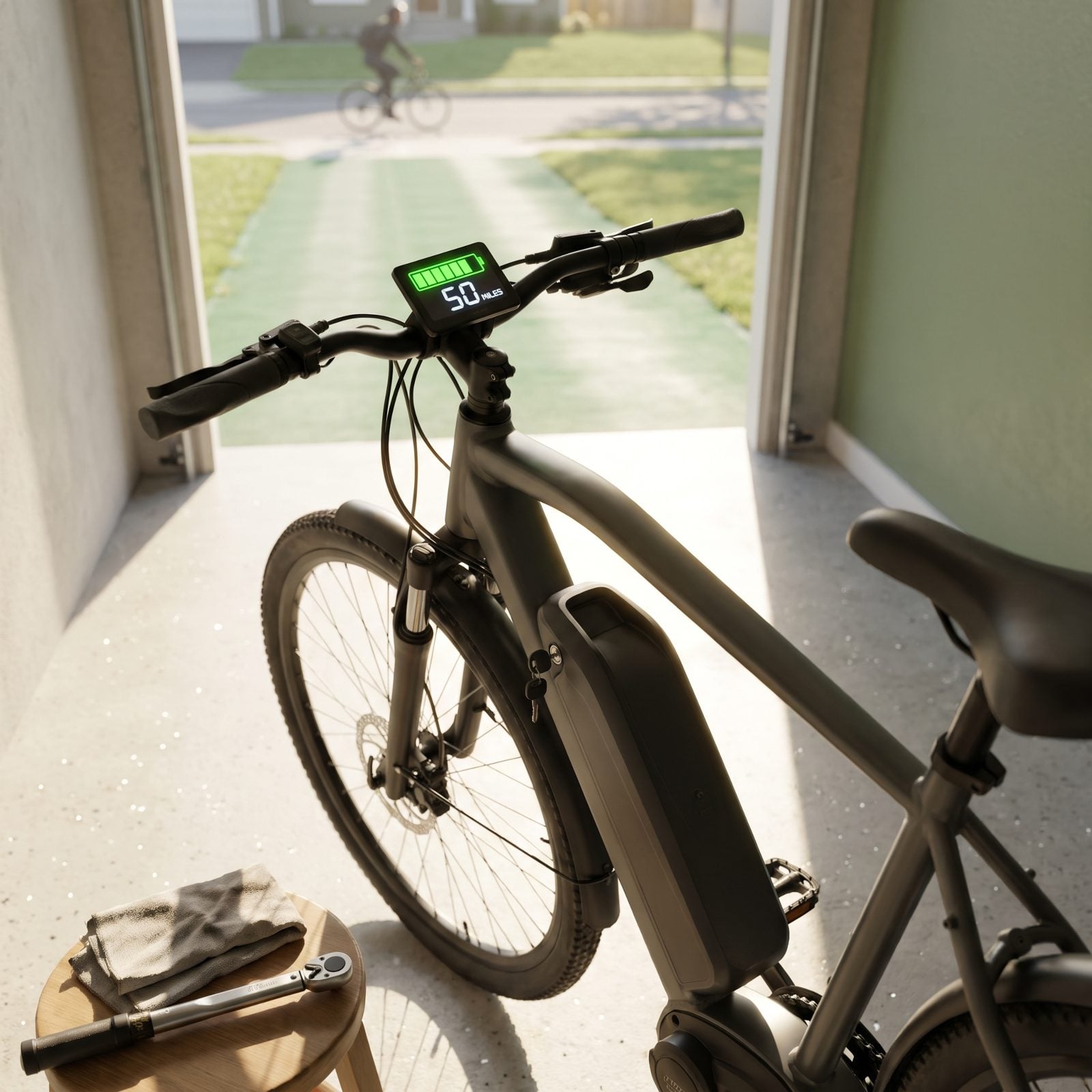
Cycle counts describe a slow fade, not a cliff. That 500 or 800 number usually marks the point where a battery still holds roughly 80 percent of its original capacity. It doesn’t stop working. Your range just shrinks a little.
Say your battery did 40 miles when new. After the rated cycles, maybe you see 32. The bike runs fine — you simply plan shorter rides or charge more often. Plenty of riders keep rolling well past the rated count because they never fully drain the pack, and partial charges only count toward the counter in proportion to the energy used.
A rated cycle count is a warranty line, not a funeral date.
2. Myth: You Can Pack an E-Bike Battery in Checked Airline Luggage

This one can get you fined, your bag pulled, or your whole battery confiscated at the gate. Large lithium e-bike batteries are banned from checked luggage, and most blow past the watt-hour limit airlines allow in a carry-on too. So in plain terms, you usually can’t fly with them at all.
Spare and loose lithium packs stay out of the cargo hold, full stop — a fire down there is in a space nobody can reach mid-flight. Rules shift by carrier and country, so the honest answer is to check the specific airline before you pack.
1. Myth: A Dead E-Bike Battery Can Go in the Household Trash

Toss a lithium battery in the kitchen bin and you’ve started a problem that ends in a truck fire or a landfill blaze. Crushed and punctured cells ignite. It burns garbage haulers more often than people realize, which is exactly why household trash is the wrong answer every single time.
Dead or not, these packs belong at a battery recycler or a hazardous waste drop-off. Lots of bike shops take them back. So do some hardware and electronics stores running collection programs, and it’s usually free.
A worn battery still holds valuable material, and recyclers pull it right back out. The landfill just buries a fire waiting to happen.