
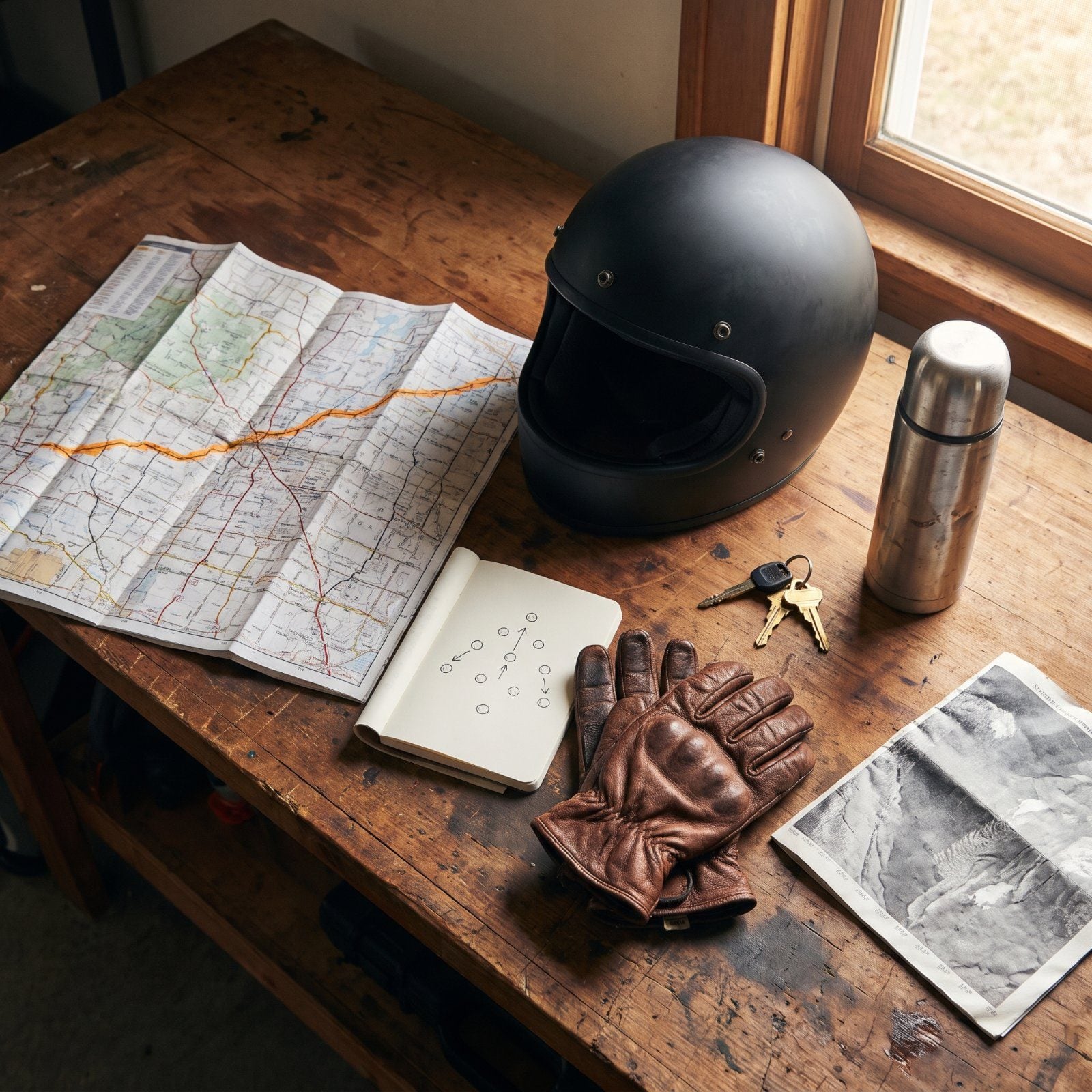
A bad group ride announces itself at the first stoplight. Somebody’s gone, split off into traffic, and now everyone’s craning necks and burning fuel trying to regroup. That ride didn’t fall apart because the roads were tricky. It fell apart because nobody agreed on the rules before the kickstands went up. A dozen bikes moving as one takes planning, not luck. The difference between a ride people talk about for years and one they quietly stop inviting you on comes down to a handful of habits. None are complicated. All get skipped. Here are the ones worth locking in.
Please note that some of the images in this article were created with the assistance of AI.
34. Never Ride Faster Than Your Own Comfort Zone
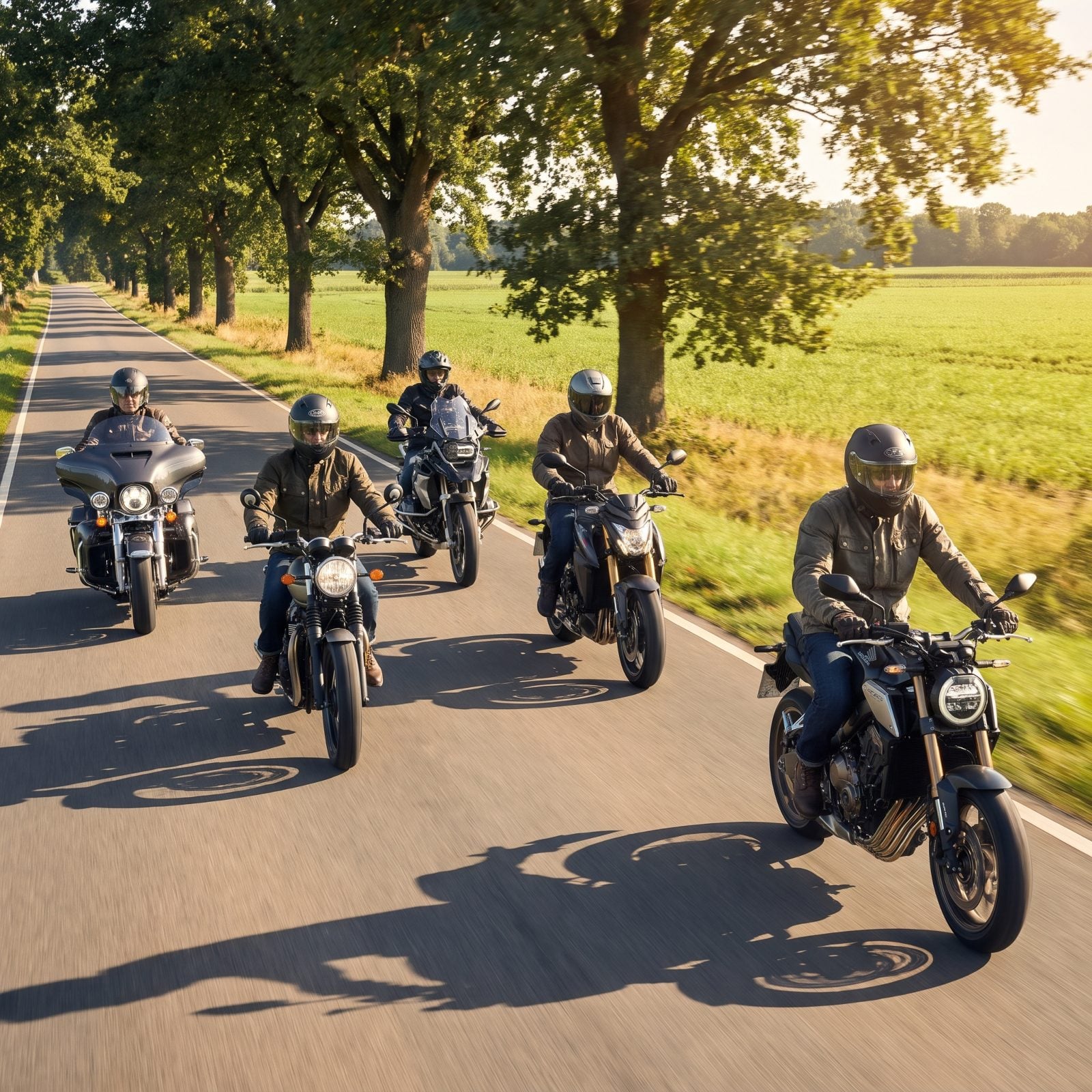
Pride has caused more lowsides than oil slicks. Somebody up front picks a pace that pushes past your limits, and instead of easing off you chase it into a corner you can’t read. That’s the setup for the worst crash on any group ride.
The leader isn’t grading you. Fall behind, let a gap open, catch up at the next stop — a gap is cheap, and hospital time is not. Here’s something worth noticing: the strongest riders in any crew are usually the first to admit when a pace feels wrong, and not one person thinks less of them for it.
33. Show Up Before the Kickstands-Up Time
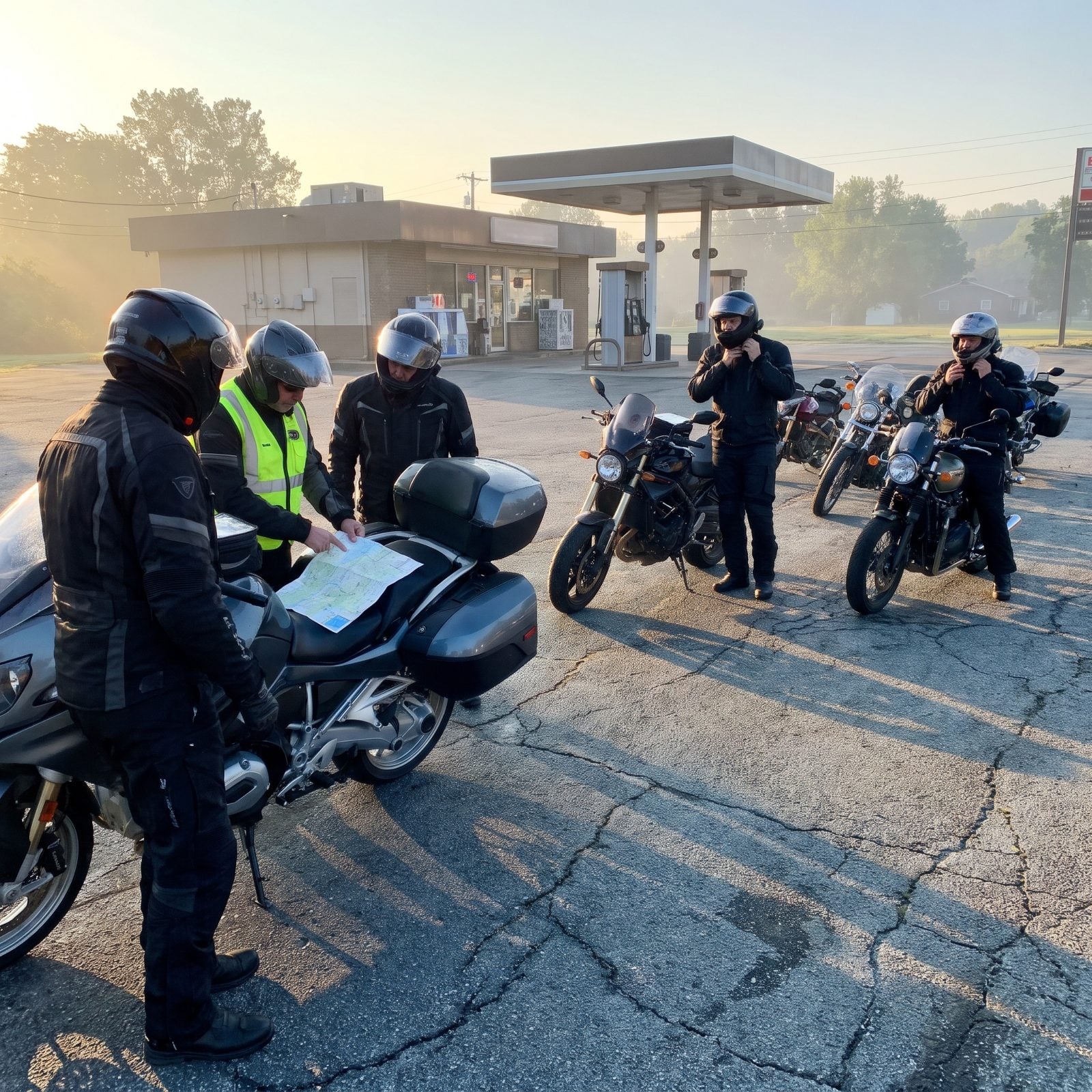
Kickstands up means wheels rolling, not pulling into the lot. Big difference. If the ride leaves at nine, nine is departure — which means you’ve already fueled, hit the restroom, strapped your bag, and heard the briefing.
Ten bikes waiting on one straggler is ten engines idling and ten people quietly deciding how they feel about you. So roll in fifteen or twenty minutes early. Grab a coffee, shoot the breeze. That buffer is where the ride actually gets organized, and it’s the cheapest way in the world to be the rider everyone’s glad showed up.
Putting punctuality first on her list of group-ride rules, one experienced group rider writes “There are few things more annoying than waiting around at a smelly gas station for a straggler.”
32. Start the Day With a Full Tank
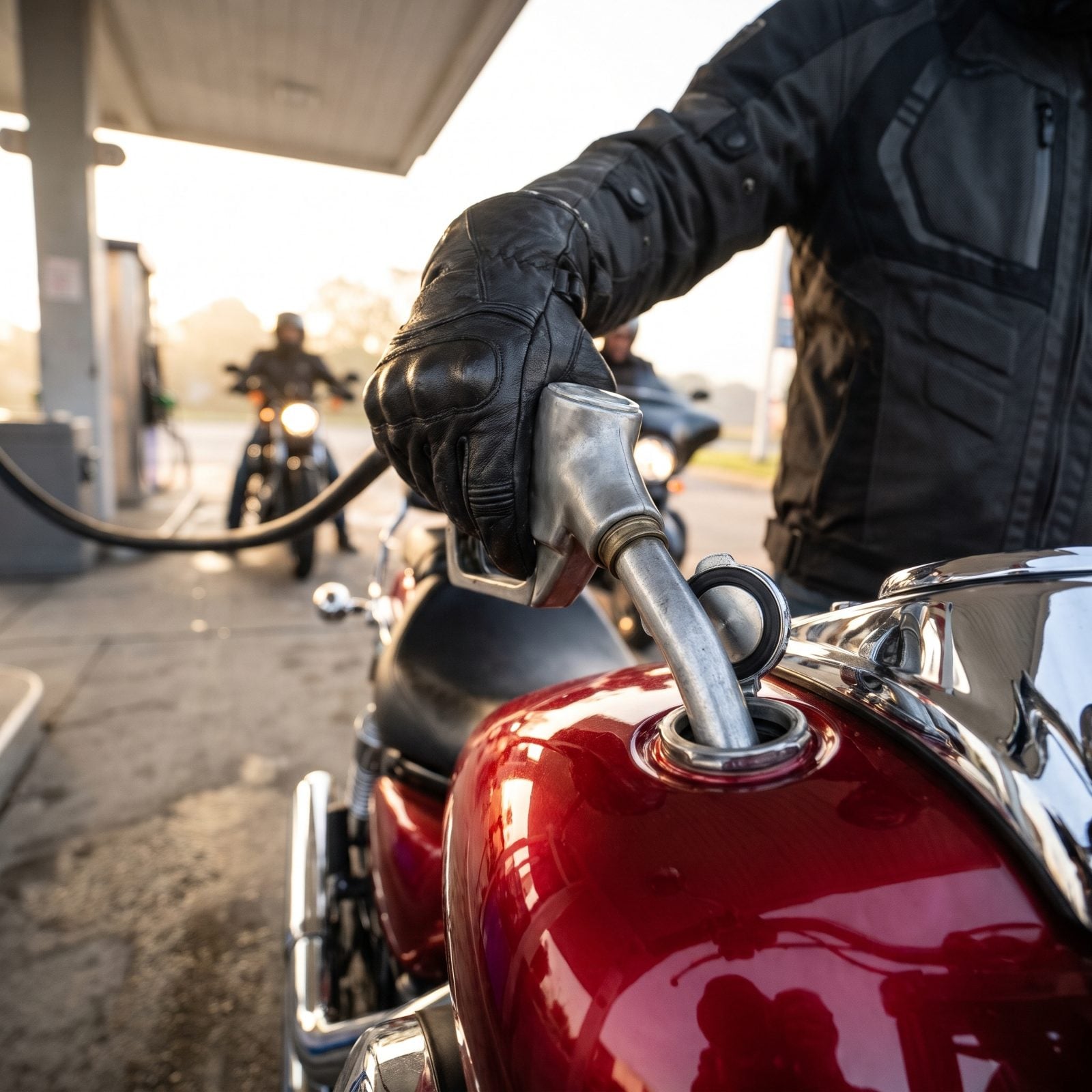
Nothing kills momentum like one half-empty tank.
Fuel ranges vary wildly in a mixed group. A big touring bike might go a couple hundred miles. A small-tank sportbike taps out closer to a hundred. Roll up with a quarter tank and the whole group ends up planning its first stop around you, usually at the worst possible spot.
Fill the night before or on the way to the meetup — not during the group’s first break. Arrive topped off and you’ve just handed everyone an extra hour of actual riding before anybody has to pull over.
31. Finish Your Safety Check Before You Leave Home
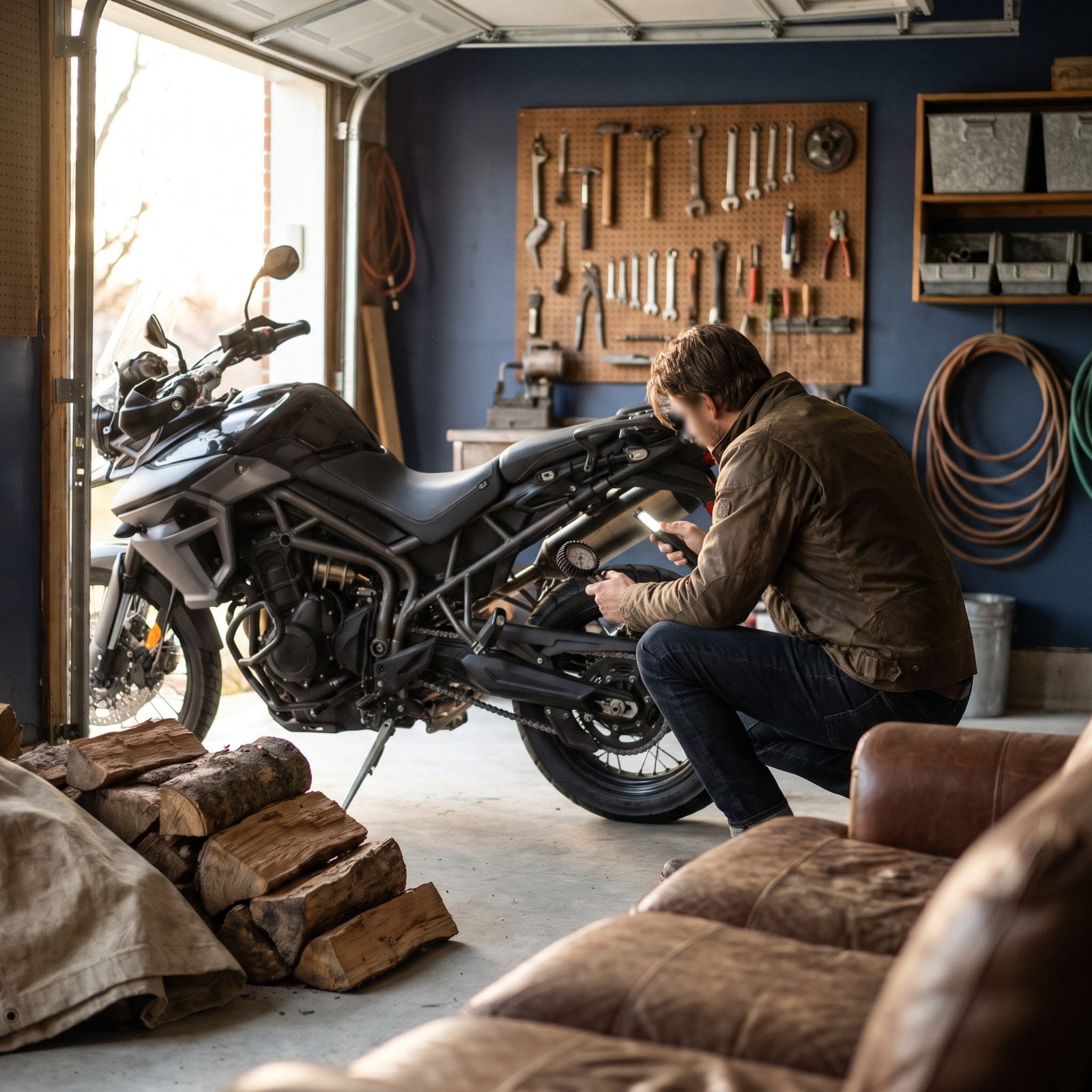
Run through your bike before you point it at the meetup, not in the parking lot while eleven people watch you air up a soft tire. Tires, pressure, chain or belt, brakes, lights, controls, fluid levels. The old T-CLOCS checklist covers all of it if you want the acronym to hang your habit on.
A problem found in your own garage is a delay of one. The same problem found at the meetup is a delay for everyone — and miss it entirely and it becomes a roadside breakdown that strands the whole group on a shoulder. Five quiet minutes at home saves the day.
30. Tell the Leader If Your Skills or Range Are Limited
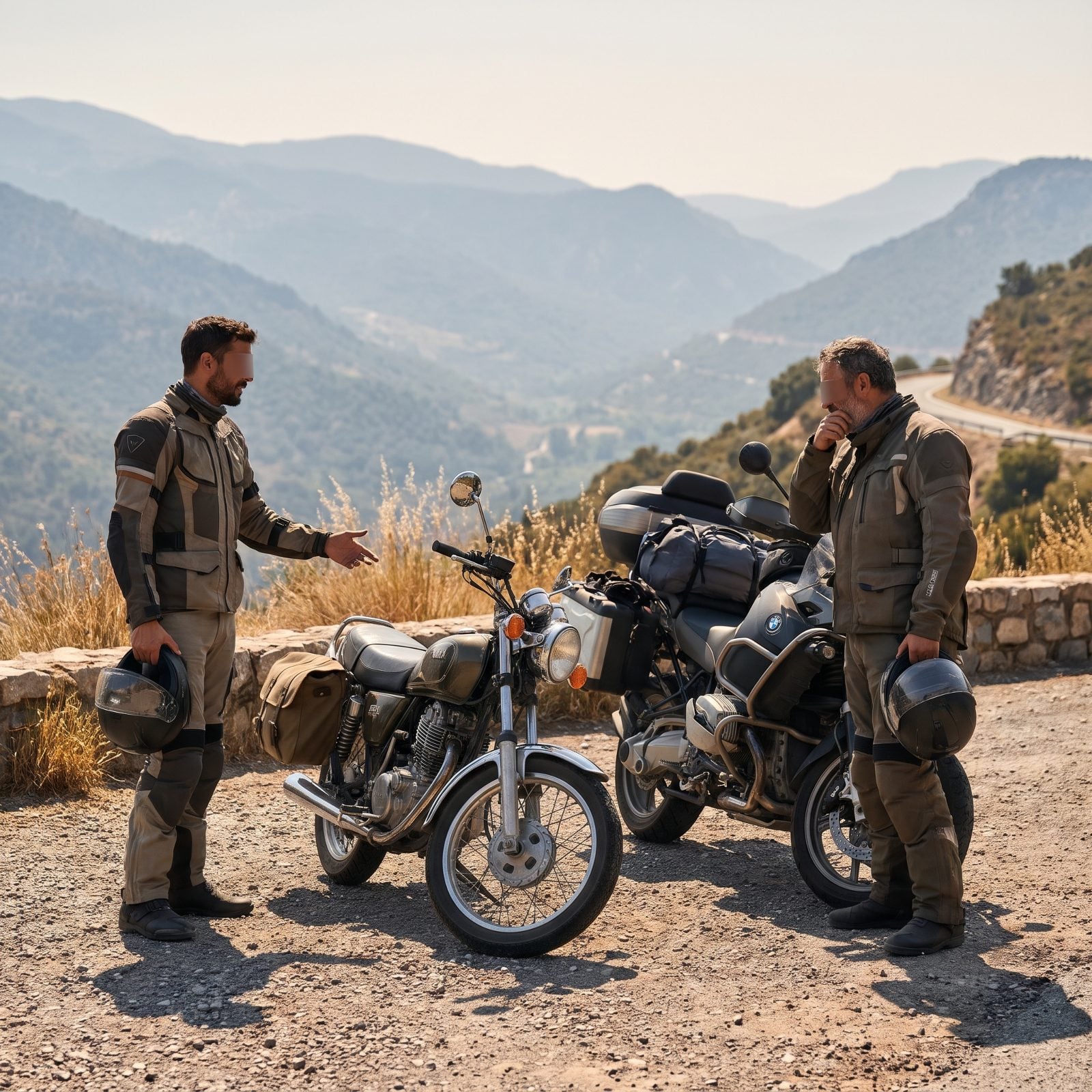
A good leader plans the ride around the group they actually have, not the one they imagine. But they can only do that if you speak up. New to twisties? Say so. Your bike’s only got a short tank? Say that too.
There’s no shame in a limit you name. There’s plenty in one you hide until it causes a problem at 60 mph.
Mention it quietly before the briefing or during it, and the leader might move you up the order, shorten the legs, or pick mellower roads. That isn’t babysitting. That’s a ride planned by someone who knows what they’re working with.
29. Study the Route Before You Roll Out
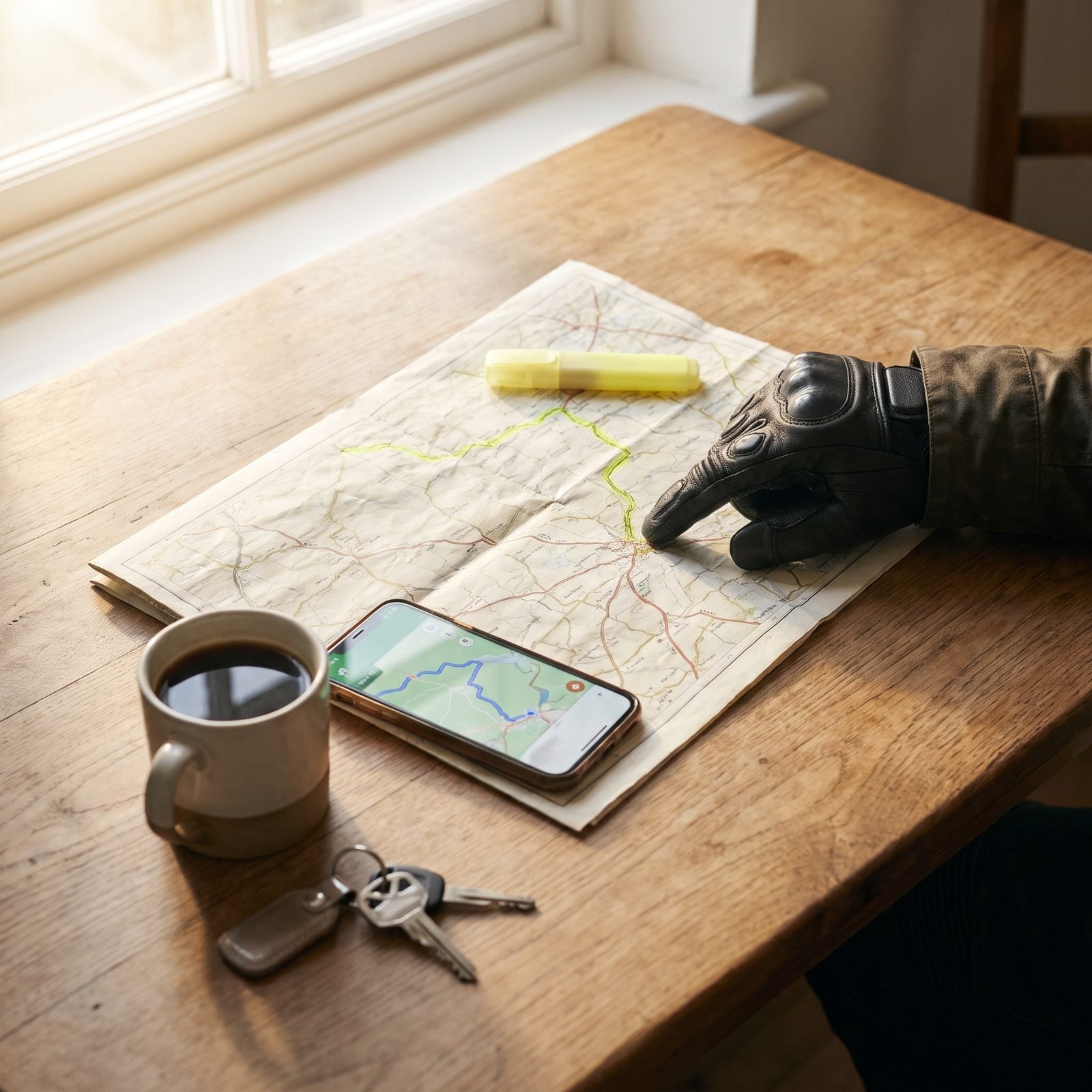
Memorize the big beats: where the route starts, the fuel and food stops, and roughly where it ends. If you get separated — and in traffic you eventually will — you want to know the next regroup point without flagging anyone down.
Most groups handle splits the same way. The lead bike turns, waits at the turn for the next rider to see it, and so on down the line. But that only works if you also know the destination. A rider who’s studied the route stays calm when the group scatters at a yellow light. A rider who hasn’t is lost and stressed. Screenshot the stops before you leave.
28. Know Exactly Who Leads and Who Sweeps
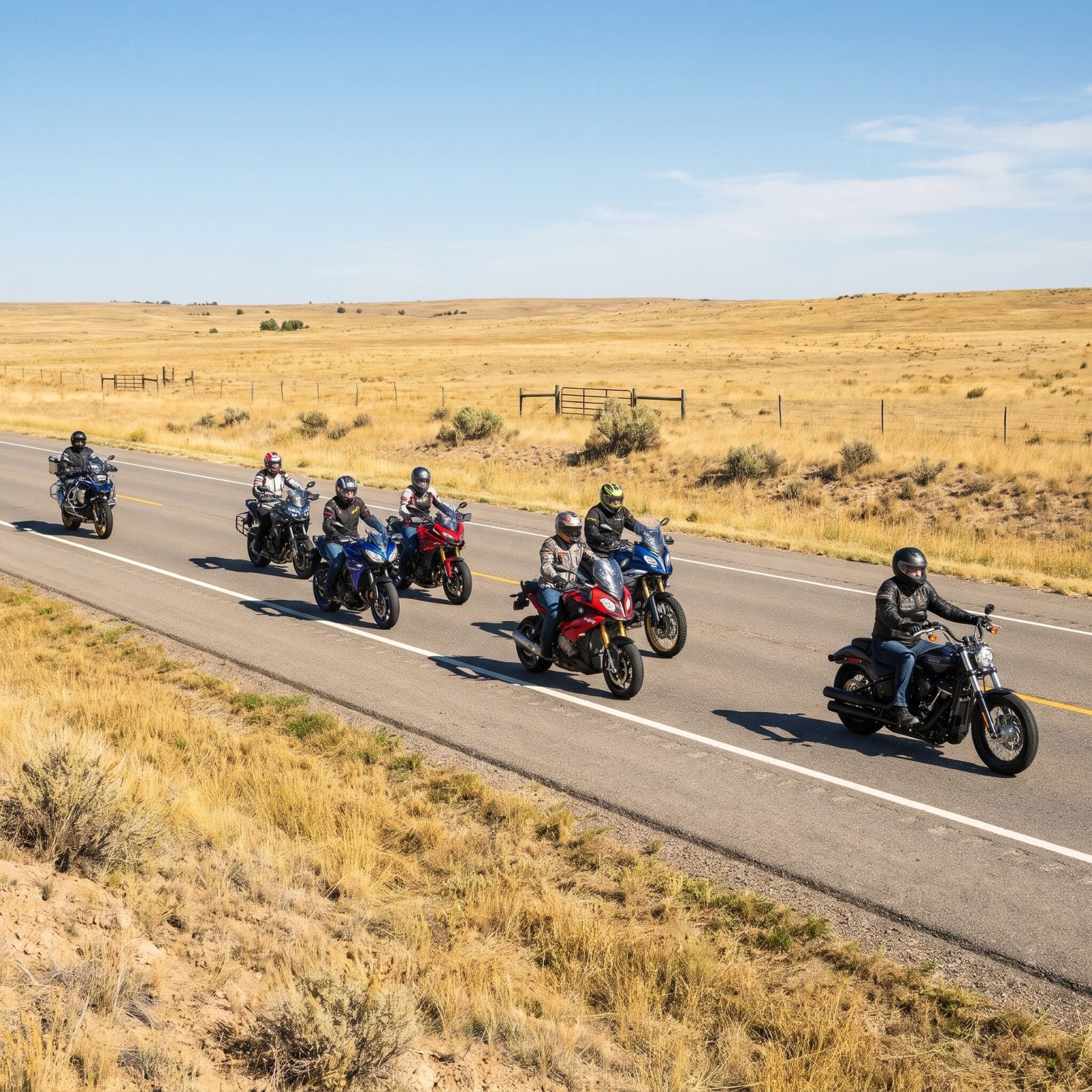
Every real group ride has two jobs that matter more than any other: the leader up front setting pace and route, and the sweep at the very back. The sweep exists so nobody gets left behind. If a bike pulls over, the sweep stops too, and nobody rides past the sweep.
Know who holds both roles and know their bikes on sight. When something goes wrong you look to the leader for the call and trust the sweep has the tail covered. A group without a named sweep isn’t a group. It’s a bunch of people who happen to be on the same road.
27. Put Newer Riders Near the Front, Not the Back
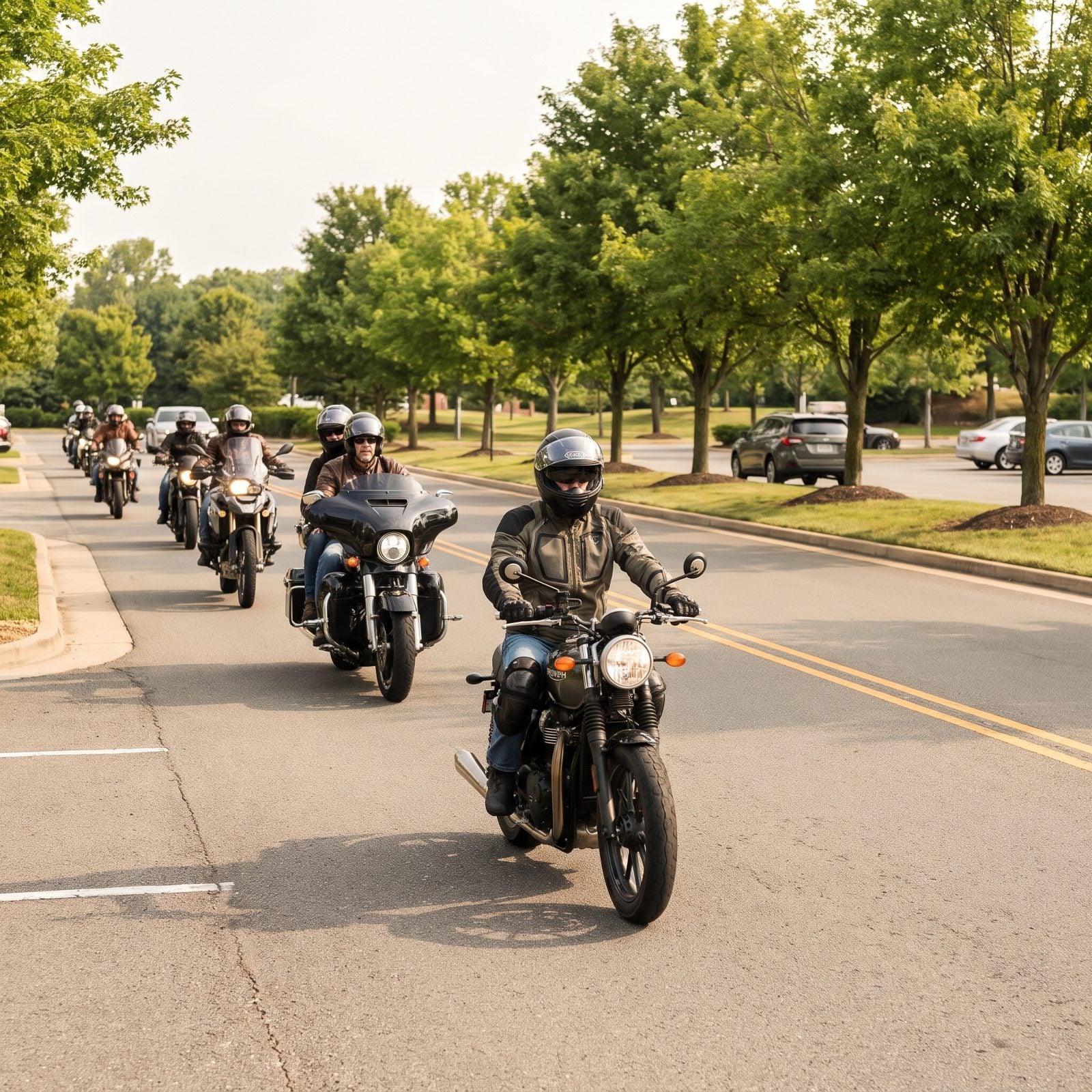
Instinct says bury the beginner at the back where they can’t cause trouble. Instinct is wrong. Stick a nervous rider behind ten bikes and they inherit the accordion effect — every gap and surge amplified down the line until they’re slamming brakes and panicking.
Up near the front, just behind the leader, they get a clean pace to follow and someone steady to watch. They set their own throttle instead of reacting to a chain of taillights. It’s calmer, it’s safer, and it quietly tells the new rider the group’s looking out for them.
Warning against putting beginners at the back of the pack, a motorcycle school chief instructor says doing so results “in this rider “running” at such a pace, completely outside his or her skill level or comfort zone.”
26. Clear Any Unannounced Guest With the Leader First
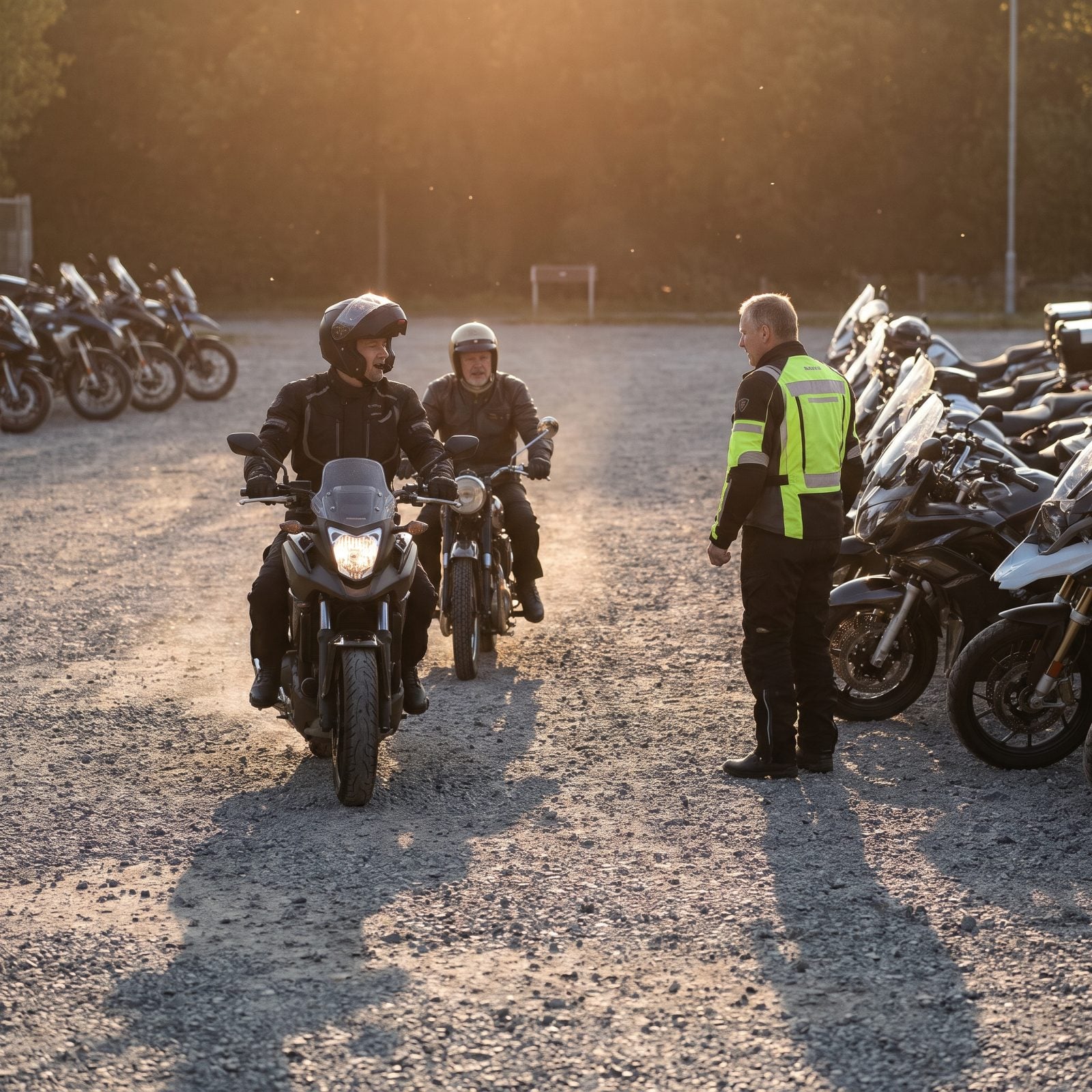
You want to bring a buddy. Great. Ask first. The leader planned fuel stops, pace, and group size around a known number, and a surprise rider throws all of that sideways — especially when nobody knows their skill level.
A ten-bike group and an eleven-bike group handle traffic differently. One more bike means one more gap to manage, one more unknown in the formation. Text the leader a day ahead: who it is, what they ride, roughly how experienced. Nine times out of ten the answer’s yes. The guest is never the problem. The surprise is.
25. Lock In the Hand Signals at the Briefing
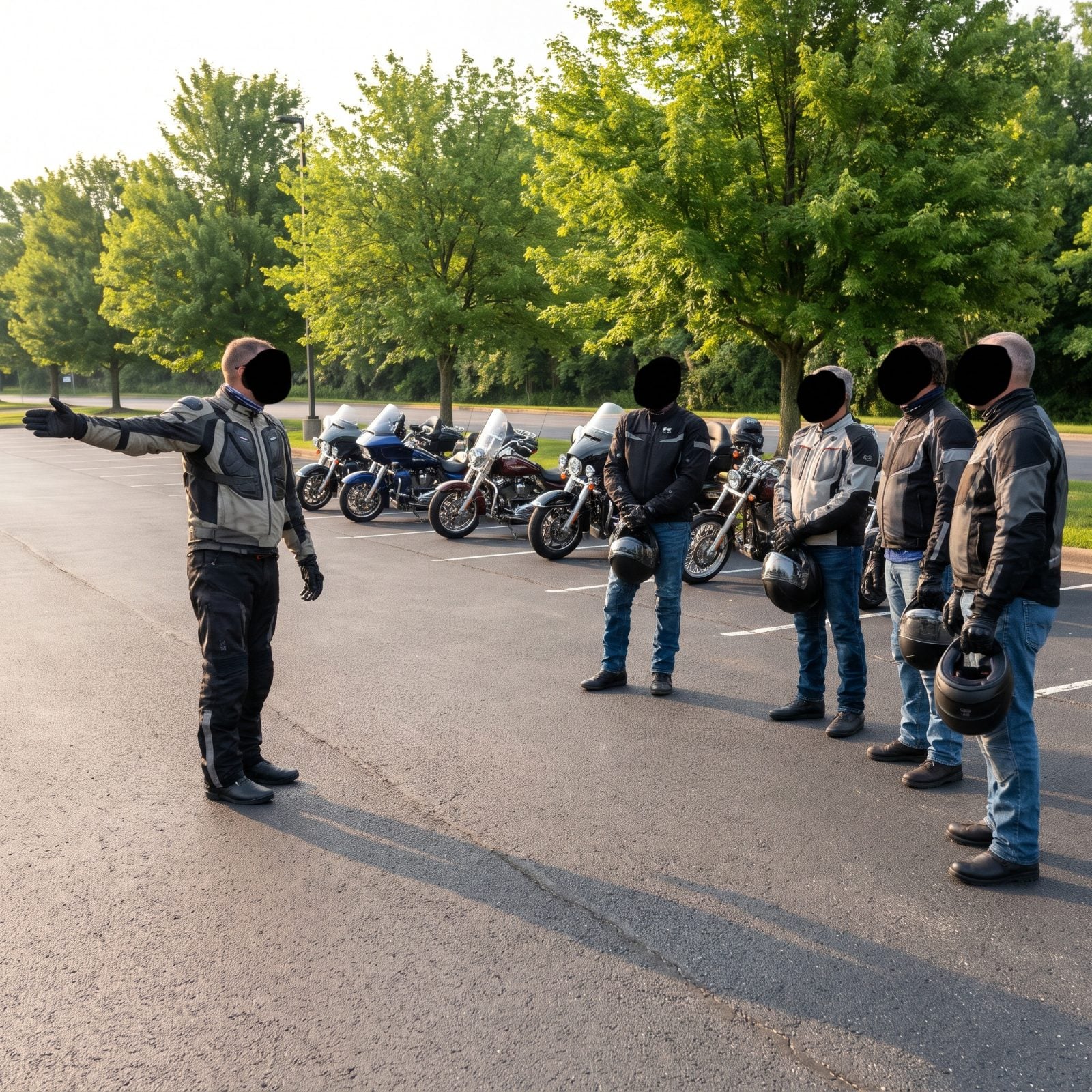
Radios are great until a battery dies or someone forgot to pair. Hand signals never run out of charge. At the briefing, run through the ones the group uses: single file, staggered, hazard in the road, slowing, fuel stop, turn signals left on.
Here’s the catch — none of these are universal. What matters is everyone in this group agrees on this set today. A pointed finger at road debris, a tapped helmet, a flat palm pushed down for slow. Five minutes of pantomime in the lot saves a whole lot of guessing at speed.
Explaining why their group now reviews hand signals before every ride, a motorcycle safety team writer recalls “I’ve been on a ride where bad communication caused an accident. Two riders collided because of a missed hand signal.”
24. Leave a Proper Following Gap
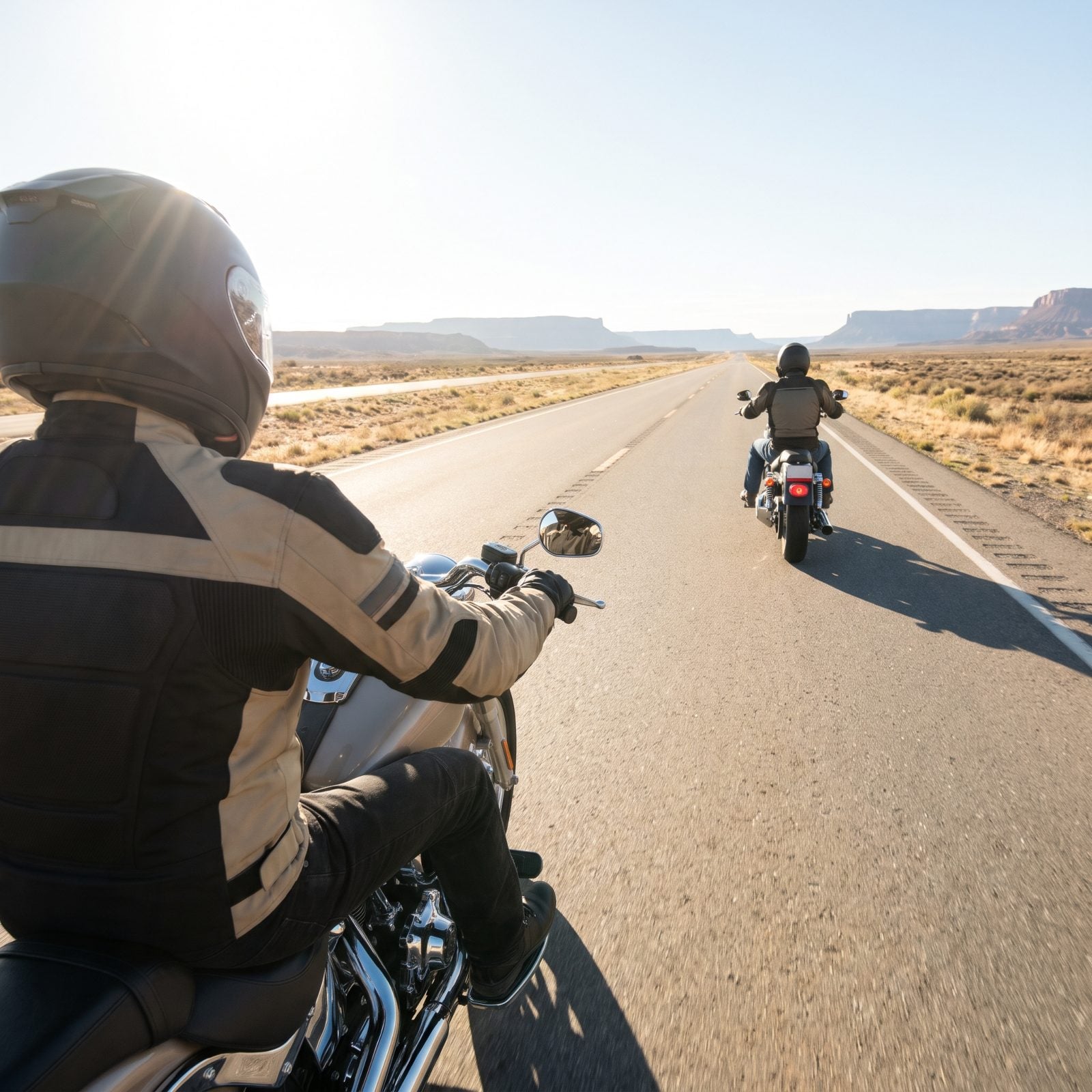
The one-second follower is the group’s weakest link. When the bike ahead grabs the brakes, that rider has no time and no room, and the chain reaction behind them gets ugly fast.
The common guideline is two seconds to the bike directly in front of you in the stagger, and roughly one second to the bike in the adjacent position. Pick a fixed point, watch the bike ahead pass it, count. Reach it too soon? Ease off.
Gaps aren’t rude, and they don’t mean you’ve fallen behind. They mean you’ve got somewhere to go if things get weird up front.
23. Never Cruise Side by Side in One Lane
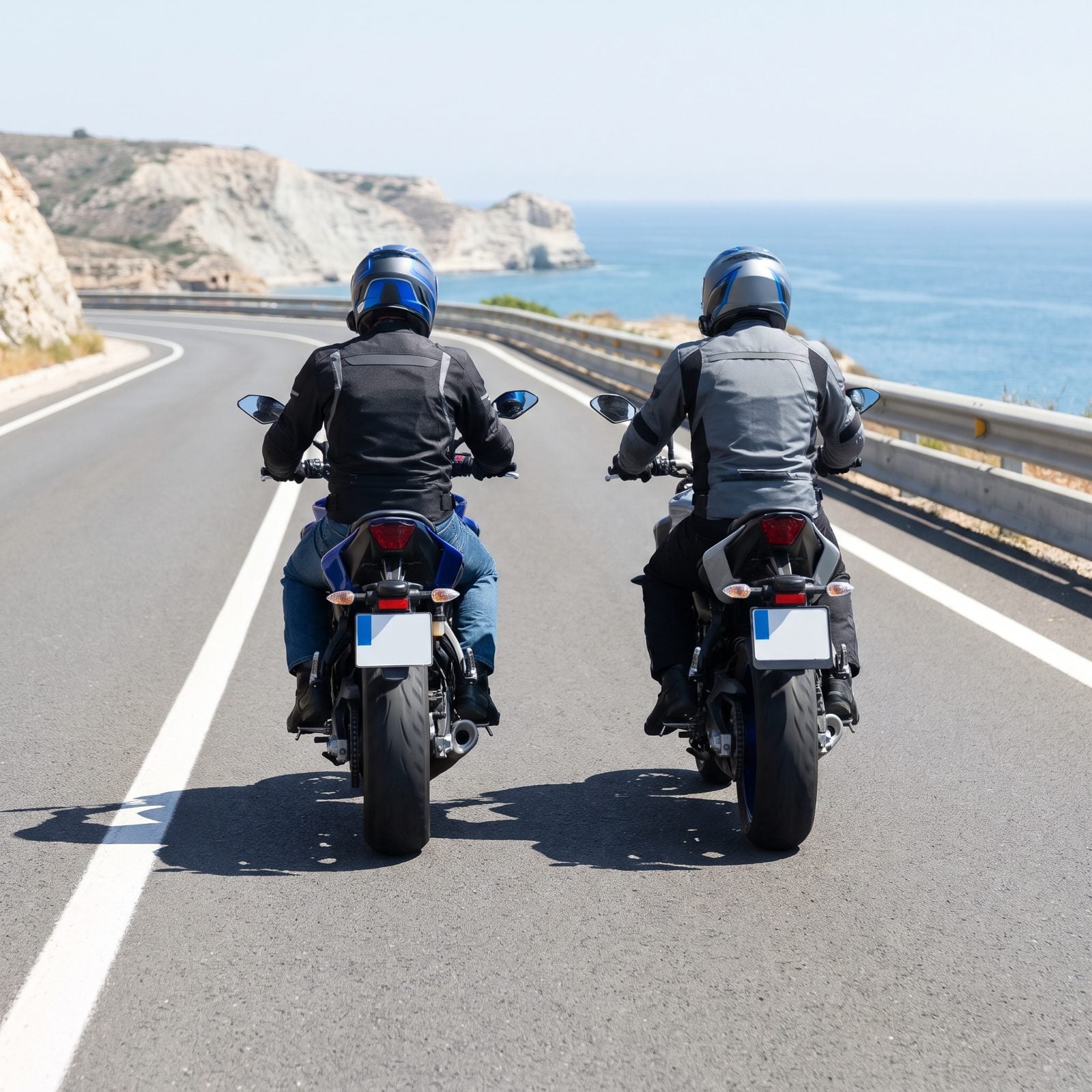
Two bikes rolling handlebar to handlebar in the same lane looks great in movies and almost nowhere else. Out here it’s a single mistake away from a tangle of chrome.
Ride abreast and neither of you has a sideways escape. A pothole, a gust, a wobble, and your bars are inches from a friend’s. You both throw away the stagger’s built-in cushion for exactly nothing.
Side by side belongs in parking lots and photo stops. On the move, keep the offset. Call it overcautious until the day it isn’t.
22. Keep Throttle, Braking, and Steering Inputs Smooth
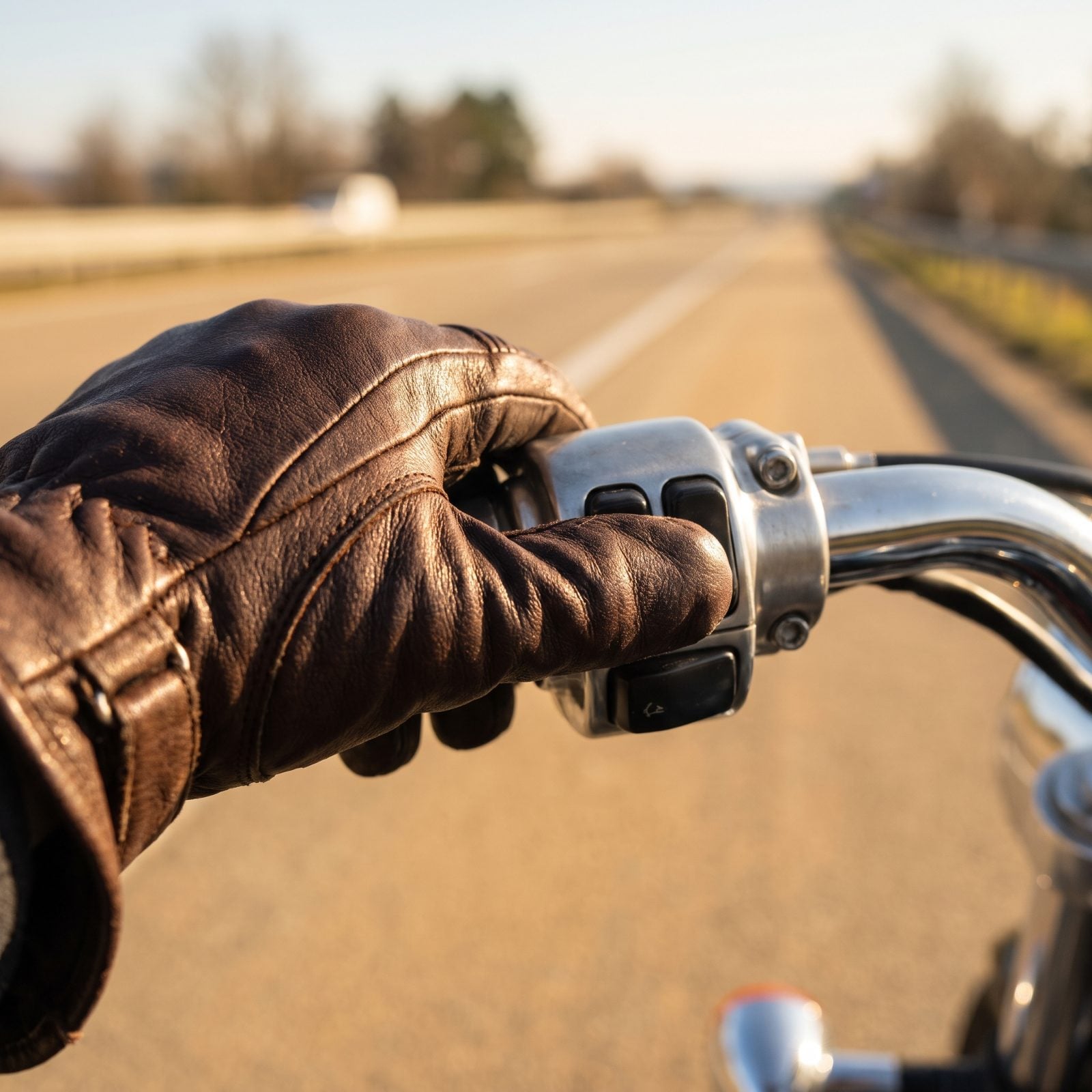
In a pack, your inputs aren’t just yours. Jerk the throttle and the rider behind you accordions. Stab the brakes for no reason and the whole line twitches.
Smooth is the courtesy that holds a group together. Roll the throttle on and off, brake early and gradually, make your lane changes gentle and telegraphed. The person on your tail should never have to guess what you’re about to do.
And this is just better riding, pack or not. Solo, a ragged input only rattles you. In a group it travels backward through ten machines.
21. Save Wheelies and Stunts for Somewhere Else
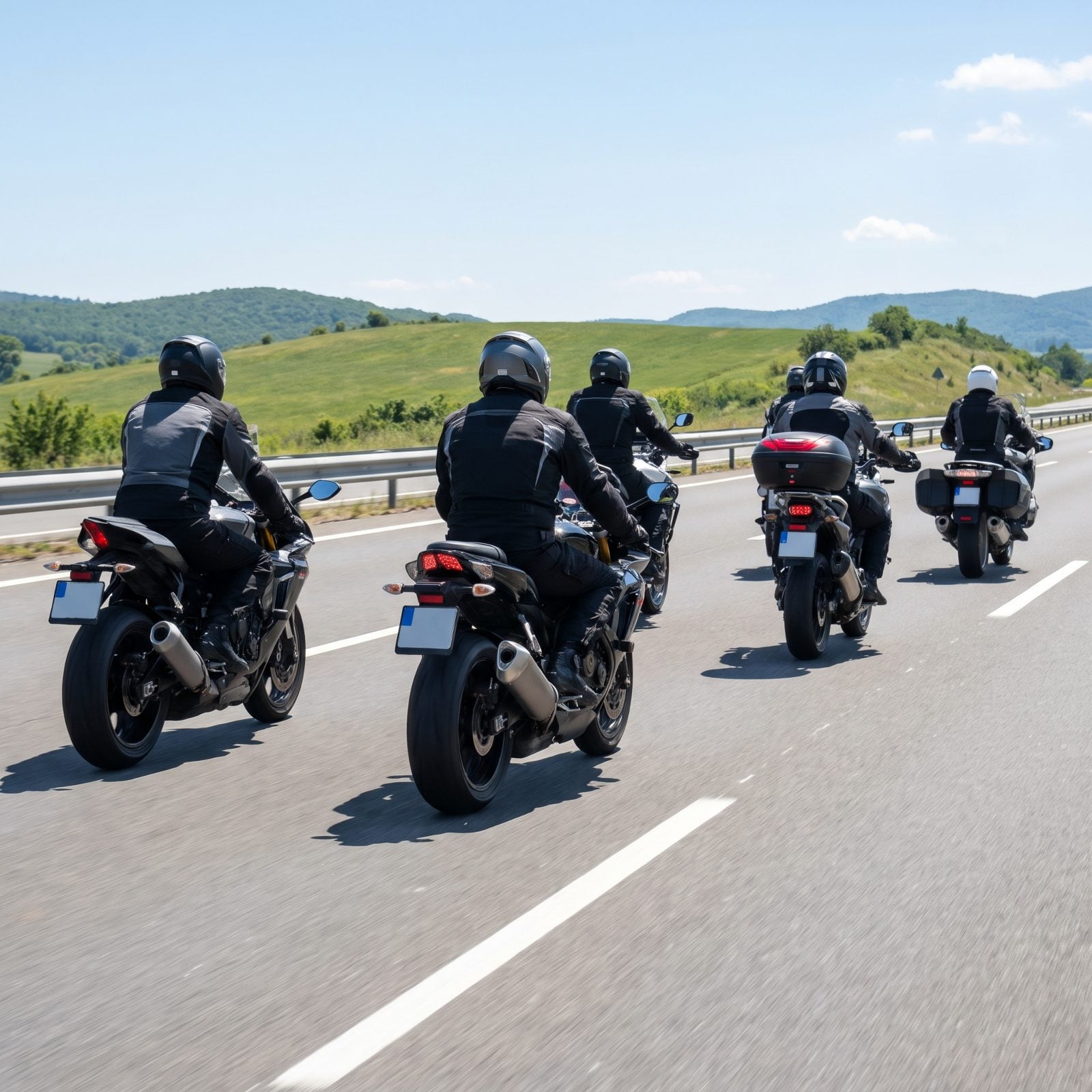
There’s a time and place to test what your bike can do on one wheel. A group ride, surrounded by people who trusted you to stay predictable, isn’t it.
Showing off in formation scares the riders around you and blows apart the spacing and rhythm the whole pack depends on. One stunt and suddenly nobody knows where your bike’s about to be.
Nobody’s telling you to never have fun. Take it to a track day or an empty closed course where it belongs. In the pack, keep both wheels down and your ego in the saddlebag.
20. Point Out Gravel, Debris, and Potholes
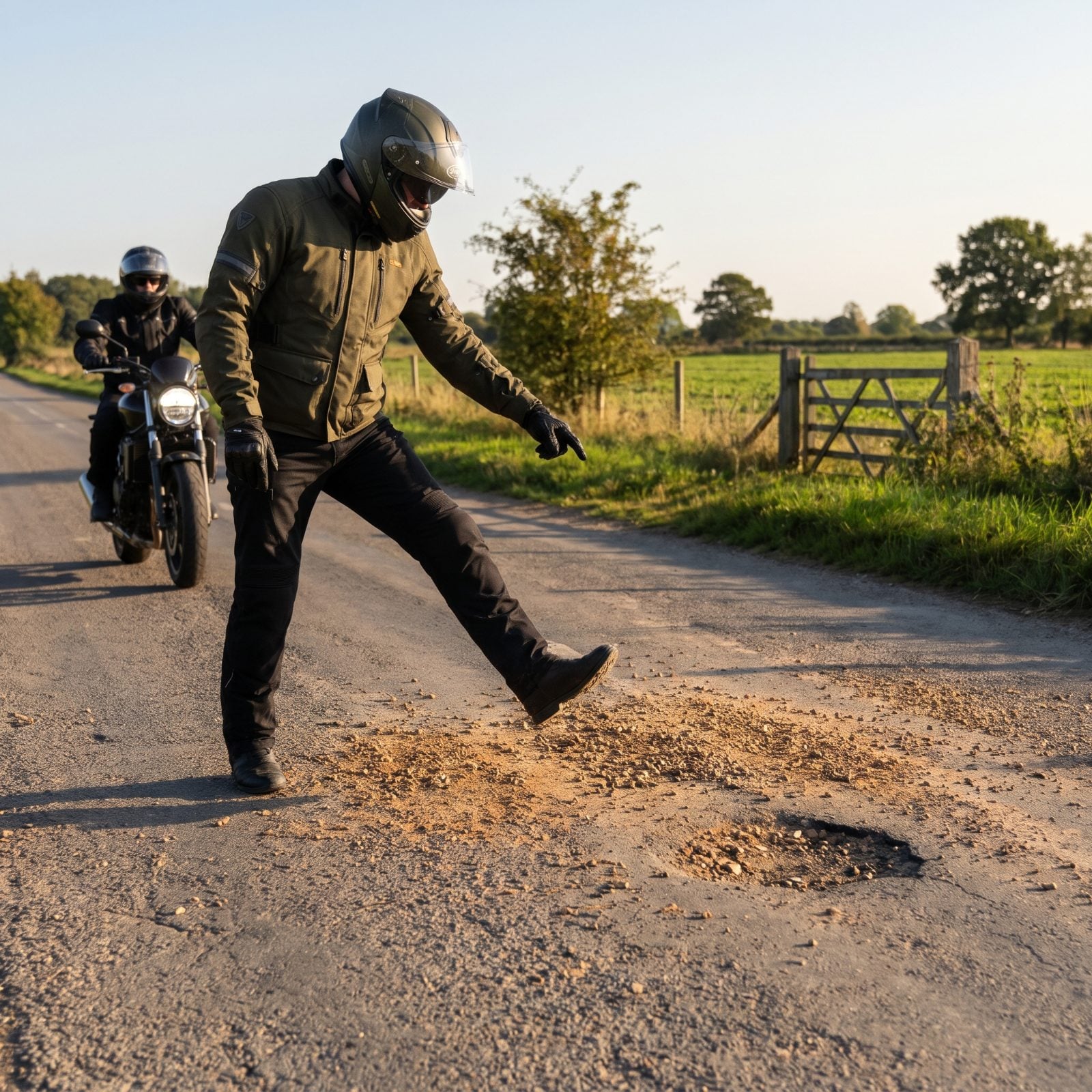
A patch of gravel the lead rider rolls over without a thought becomes a nasty surprise for the rider behind who’s watching the bike in front, not the road surface.
So you point it out. If it’s bad enough, pull over, step off the bike and aim an arm and a boot right at it so the rider coming up behind sees exactly where it is. Quick, clear, and nobody has to guess.
Loose gravel, a dropped exhaust, a dead animal, a seam in the pavement, the pothole that could tuck a front wheel. Call them all out. Takes a second. Saves a crash.
19. Signal Sudden Slowdowns Early
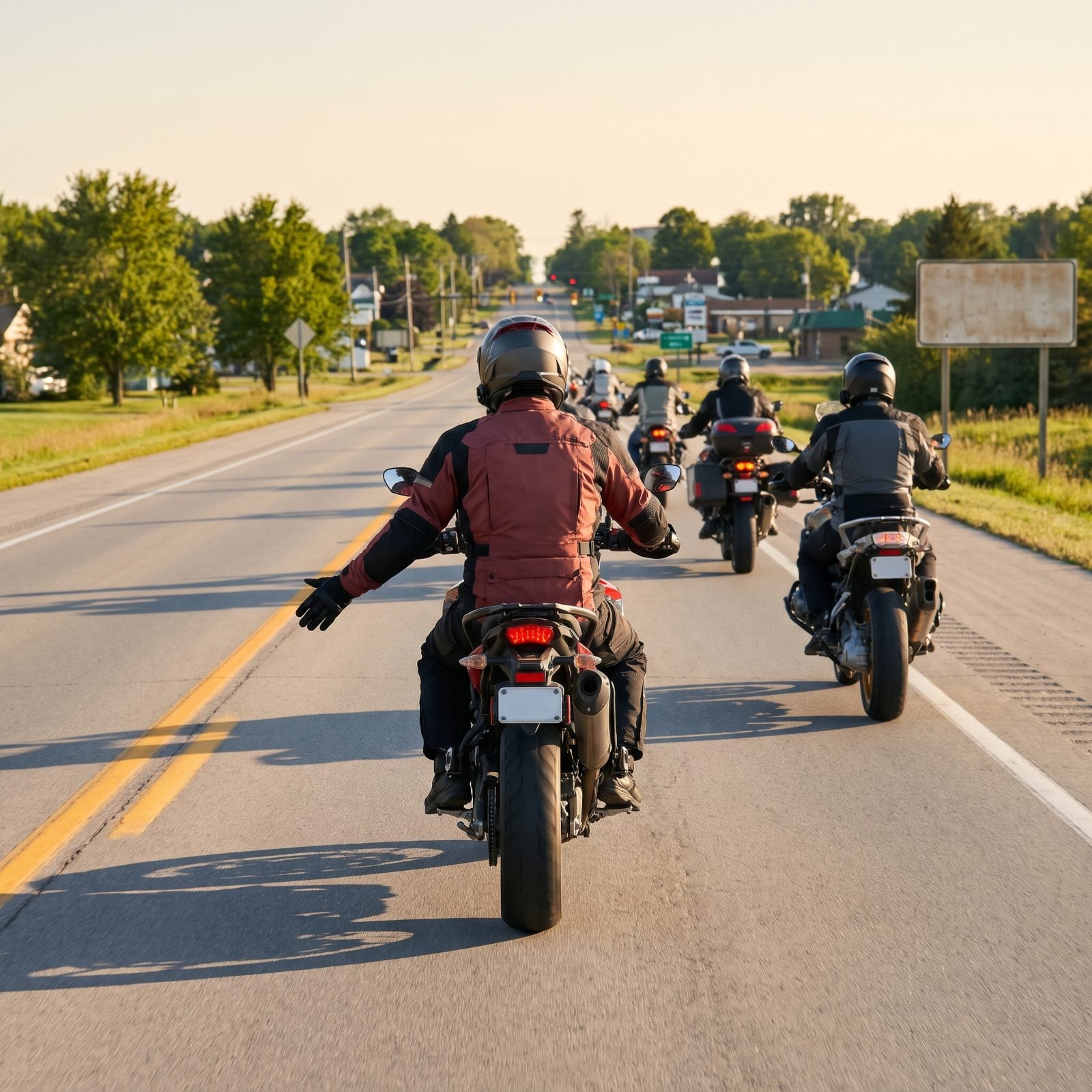
Brake lights are the last thing the pack wants to be surprised by. In a tight group, a sudden slowdown with no warning is how rear wheels meet front fenders.
See a reason to scrub speed coming — a town, a light turning, a turn you need — and give the signal early: left arm extended low and angled down toward the road, palm open and facing back. Then ease off the throttle before you ever touch the brakes, so your deceleration is gradual and the line behind you has time to settle.
Early beats sudden every single time. Give the people behind you the gift of seconds instead of inches.
18. Ride Your Own Sightline Through Every Turn
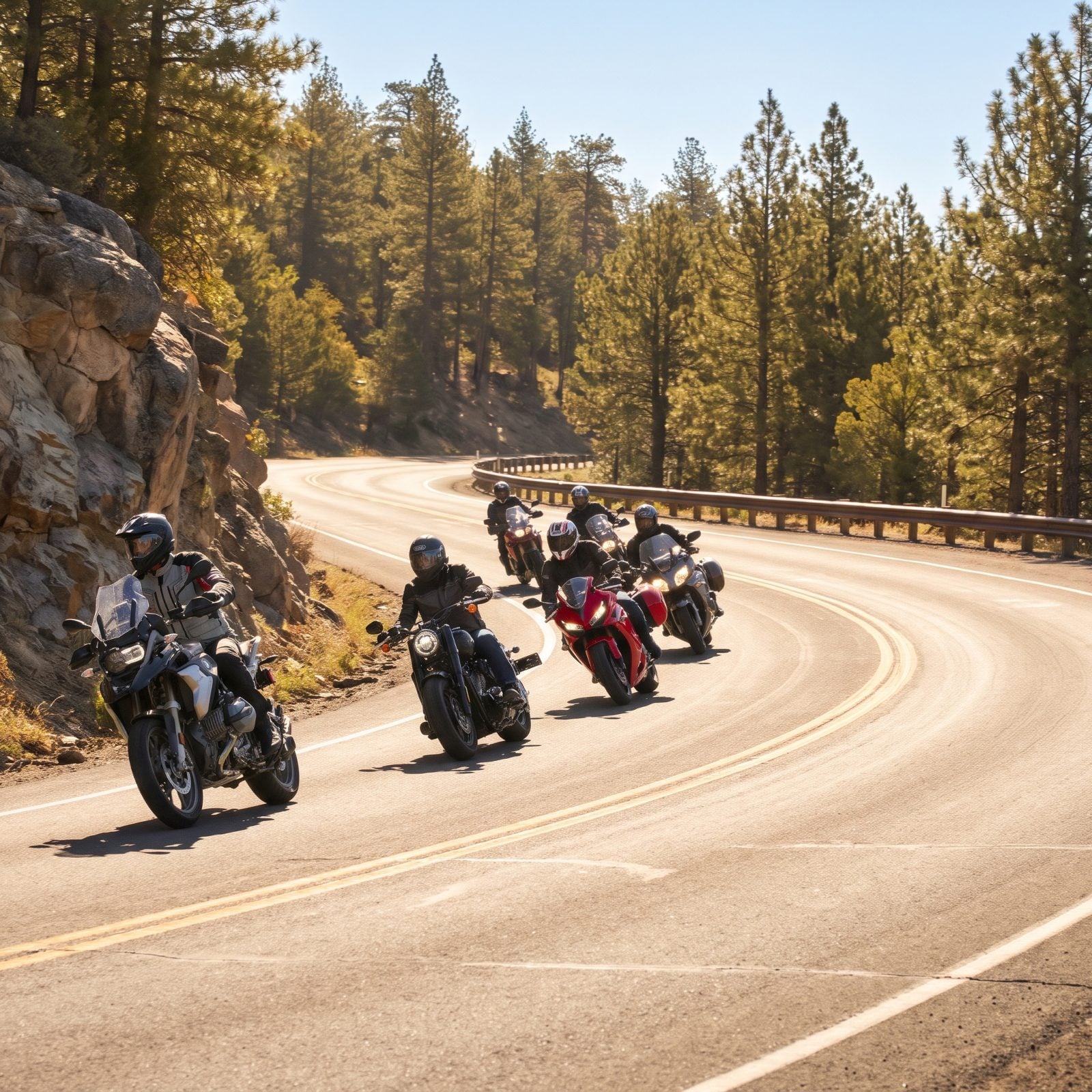
The rider ahead of you is not your steering wheel. New group riders fixate on the taillight in front and copy the exact arc, which puts you too close and too deep in someone else’s mistake. Your eyes belong where the road goes, not where the bike ahead sits.
Every turn is yours to read — entry speed, apex, the gravel patch the leader kicked loose. You own all of it, and riding single file through the bends gives you the room to pick your own path across the lane without crowding anyone.
17. Pass Other Vehicles One Rider at a Time
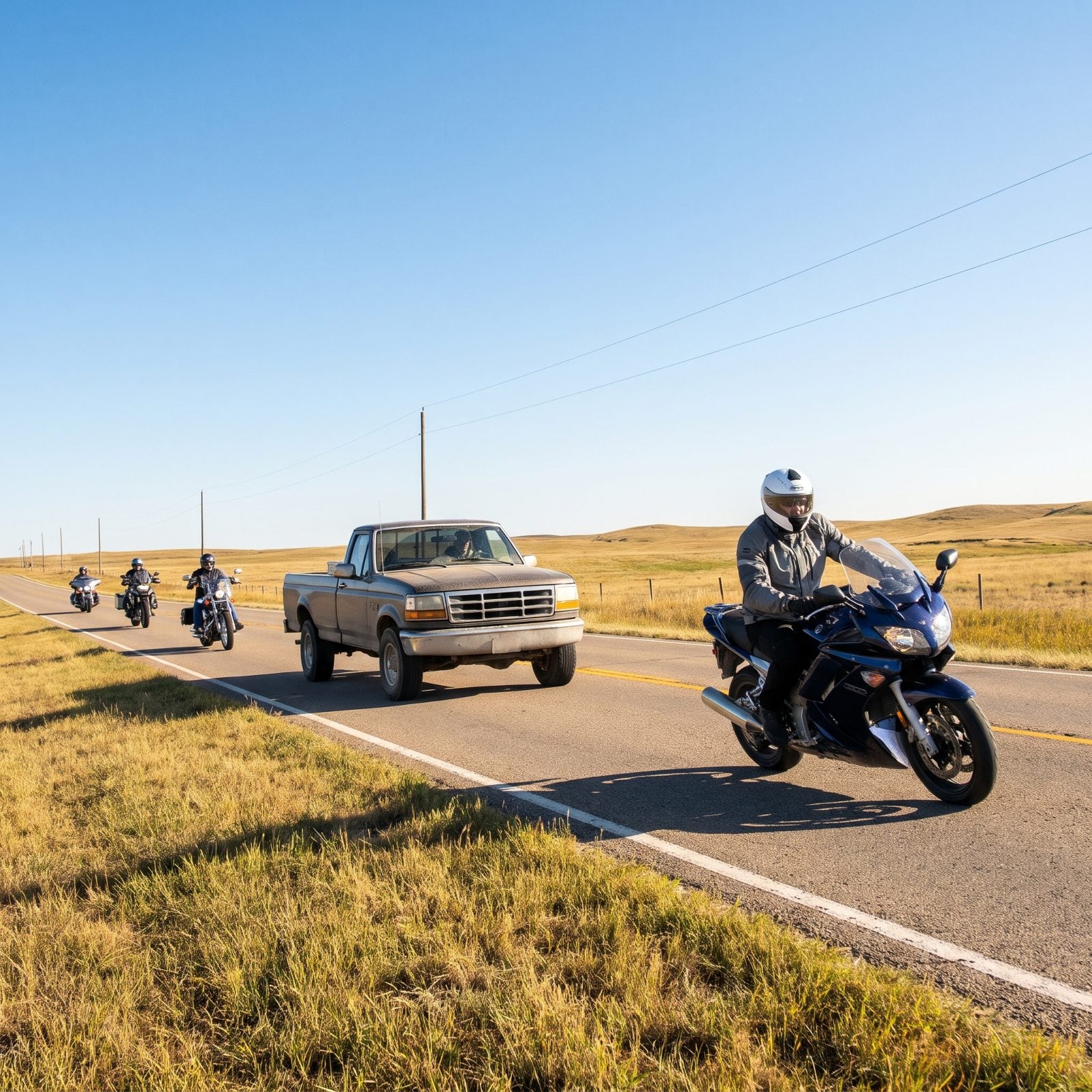
Passing a car as a pack is how good rides turn into near misses. The move is simple and never negotiable: one rider passes, completes the pass, settles in, then the next rider decides for himself whether the gap is still there.
Nobody passes on someone else’s judgment. That oncoming lane you glanced at two seconds ago belonged to the first rider, not you, and by the time it’s your turn the picture has changed. Read it fresh.
16. Stop for Red Lights Even If the Group Splits
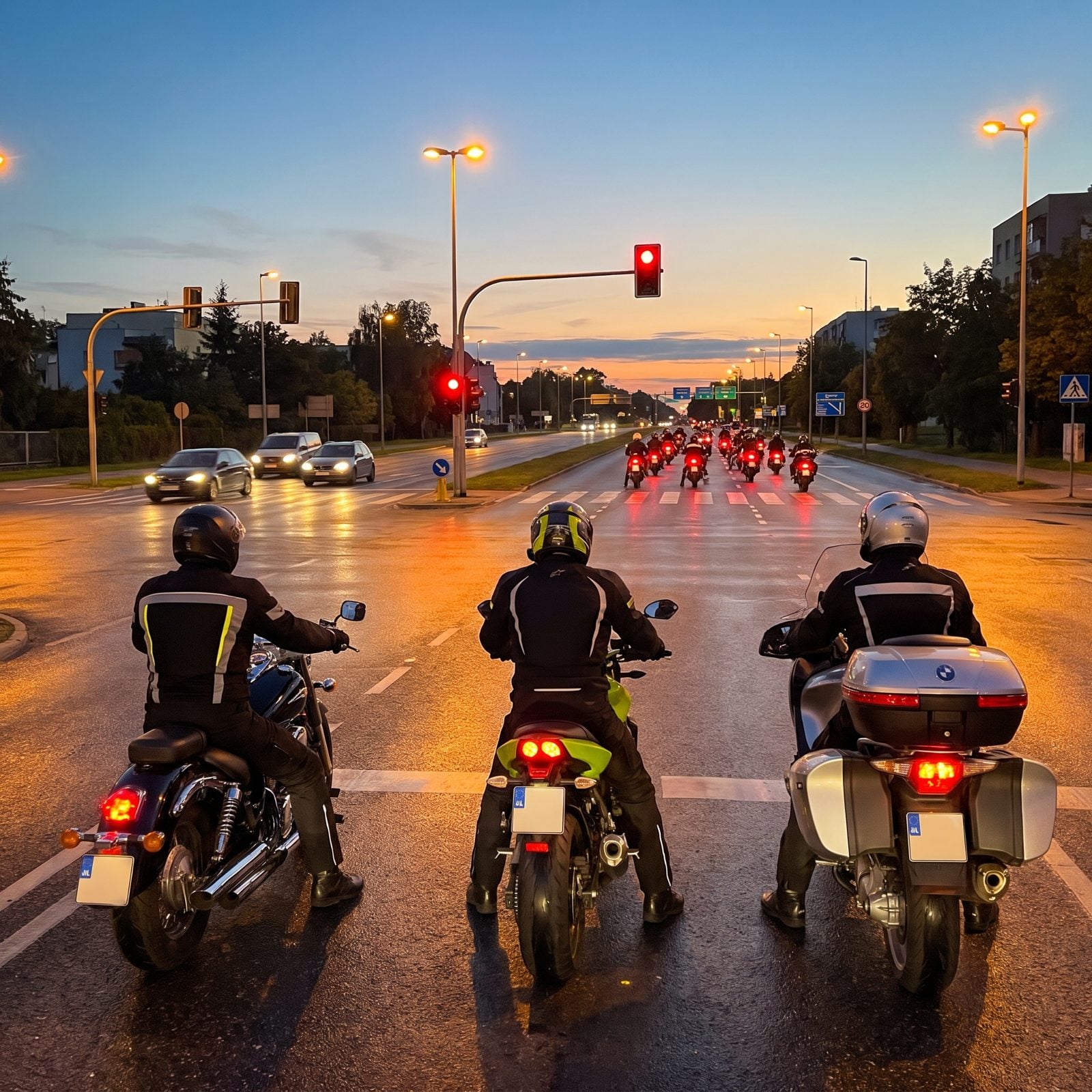
Half the group makes the light. You don’t. Every instinct screams to chase, and that instinct is exactly how riders end up in the side of a van.
Stop. The group will wait at the next safe pull-off, because that’s the deal everyone agreed to before the engines fired. Running a red to keep up is the most common group-ride crash setup there is, and it’s entirely self-inflicted.
15. Let the Leader Initiate Group Lane Changes
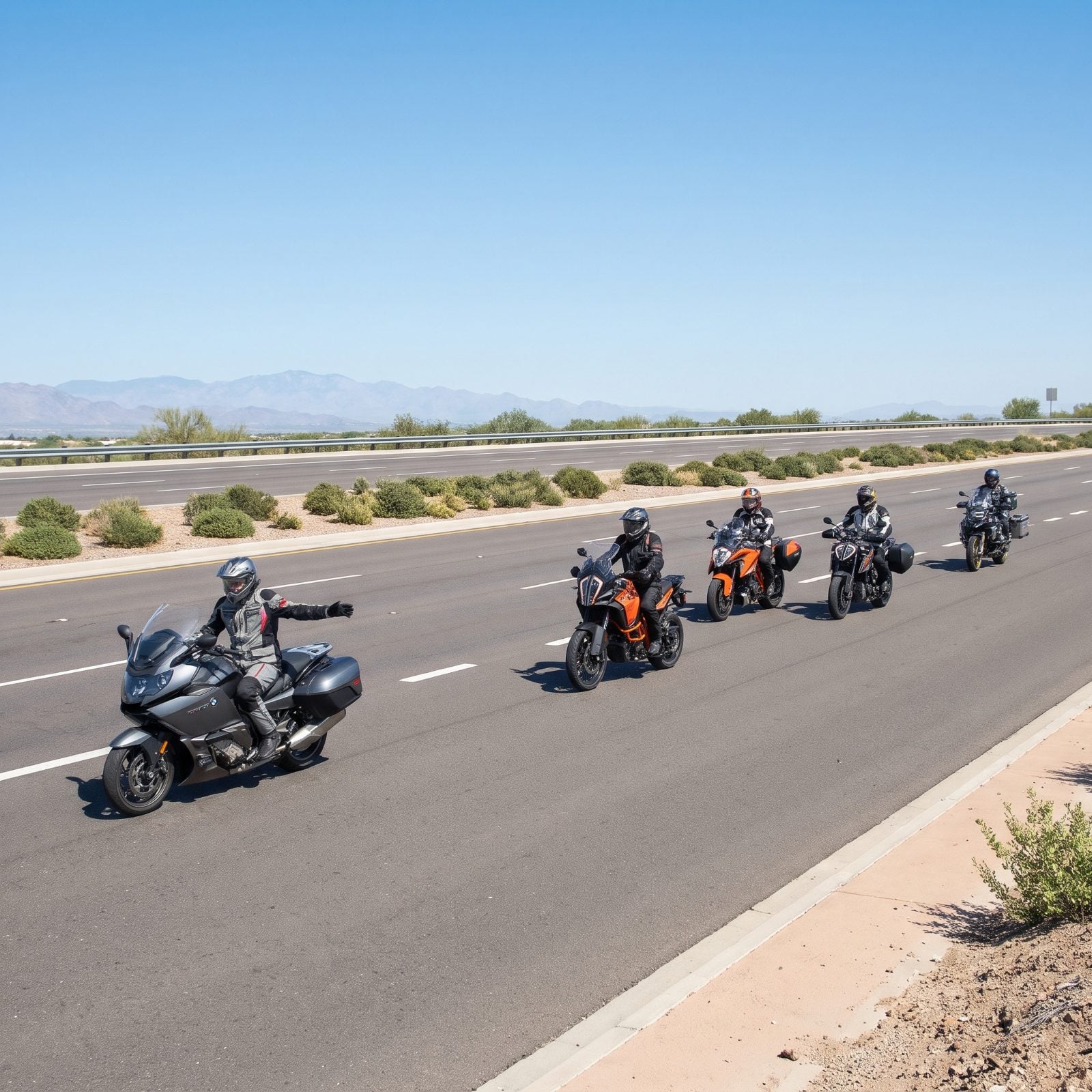
Lane changes belong to the leader first. He checks, signals, and moves, and the formation flows after him in order rather than fifteen riders all diving for the same gap at once.
His hand signal is the starting gun, not a command to teleport. You still check your own mirrors and head-check before you go. The signal means the group is changing lanes soon — your eyes decide the exact moment yours does.
14. Confirm a Lane Is Clear for Yourself
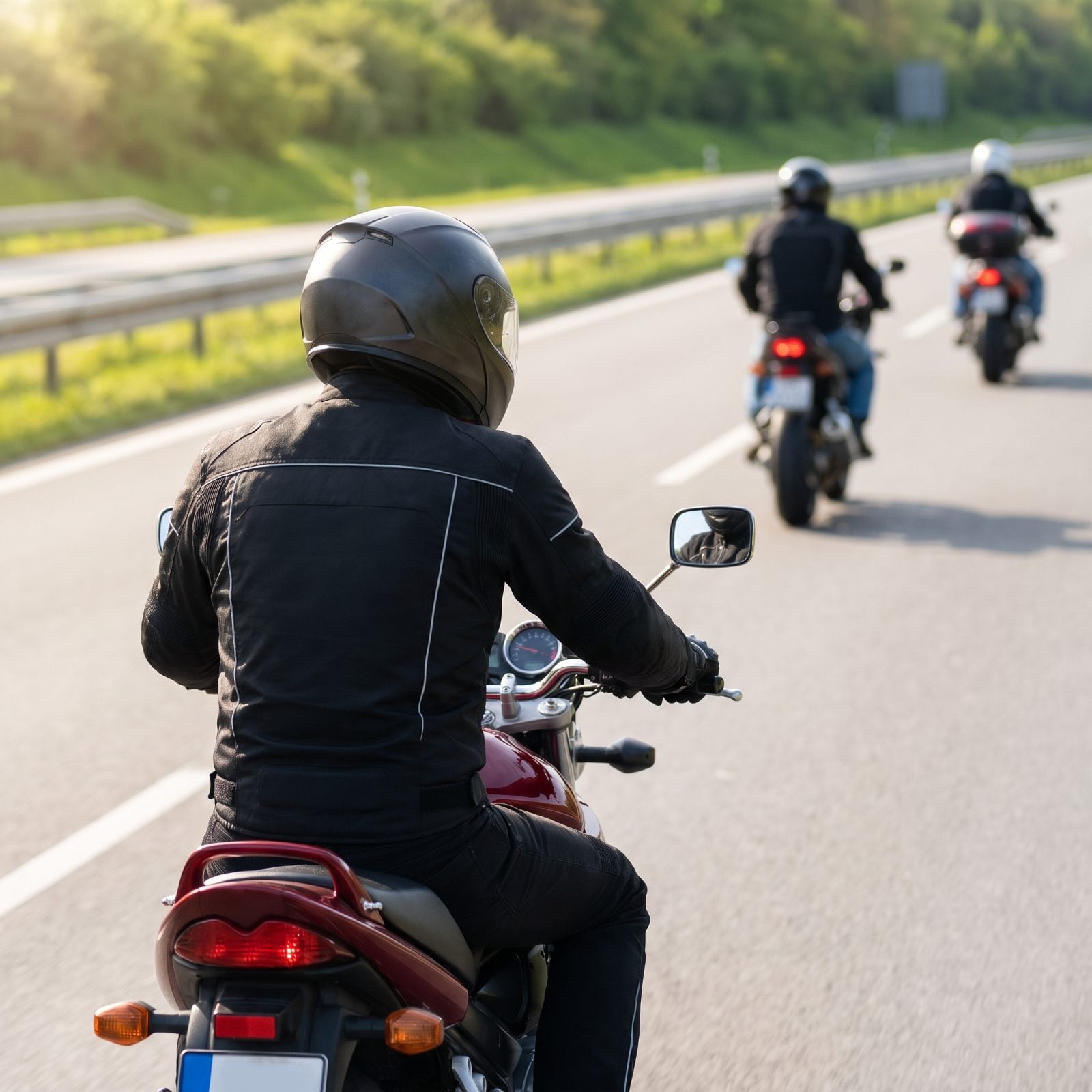
Trusting the rider ahead cleared the lane is how two bikes try to occupy one spot. Mirrors lie. Every bike has a blind spot big enough to swallow a sedan, and formation makes it worse because machines tuck into each other’s gaps.
Turn your head. Every lane change, every time, no matter how clear it looked a second ago. The head-check takes half a second and it’s the cheapest insurance you’ll ever buy. Plenty of riders get lazy about it and get lucky. Don’t count on luck.
13. Keep Track of the Rider Behind You
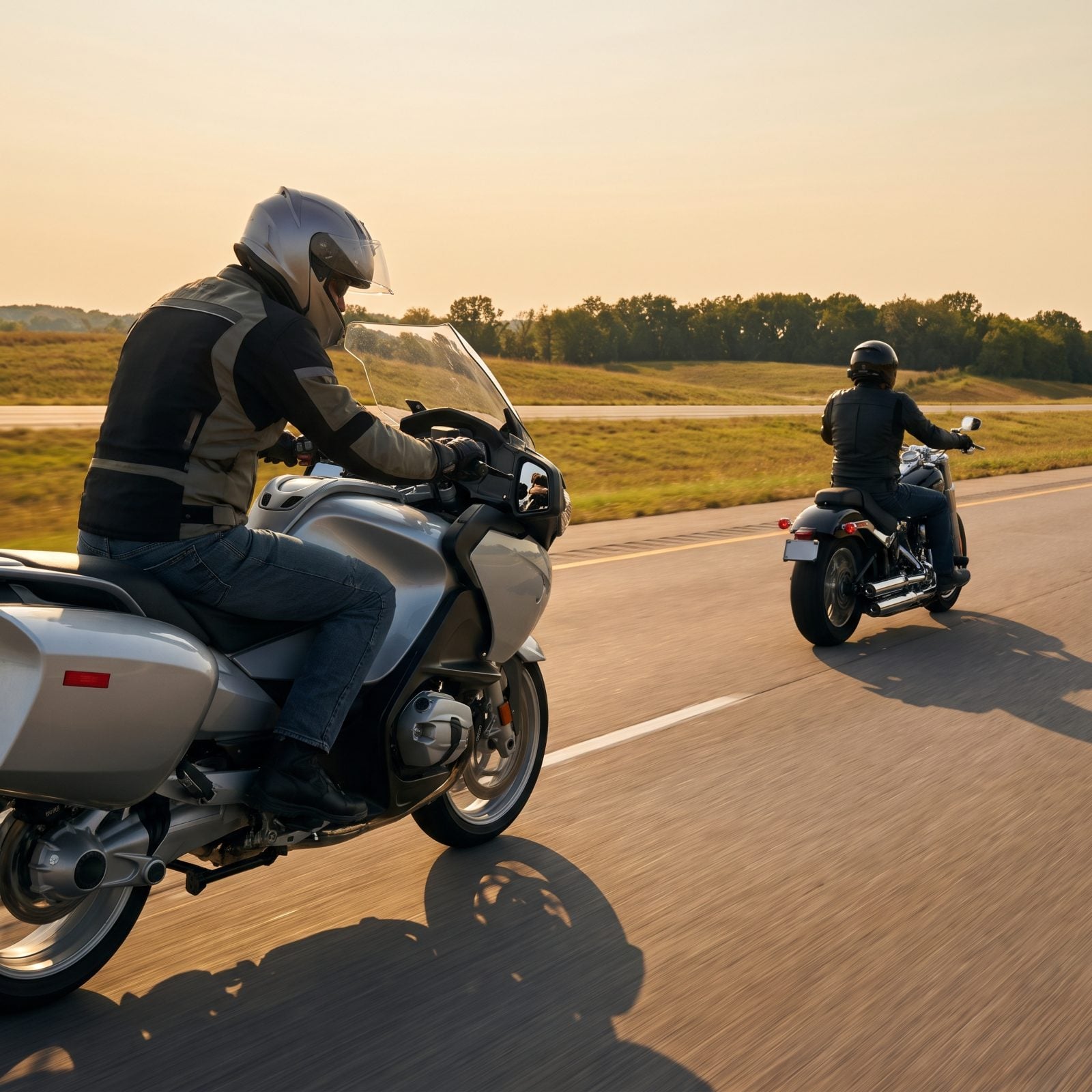
Every rider watches the one behind them. It’s a chain, each link minding the next one down. Lose sight of your follower for too long and you ease off until they reappear in your mirror.
That one habit means a mechanical problem, a missed turn, or a rider in trouble gets noticed in seconds instead of twenty miles later. The leader can’t see the back of the pack. You can see the person directly behind you. That’s your job.
12. Wait at Unmarked Turns for the Next Rider
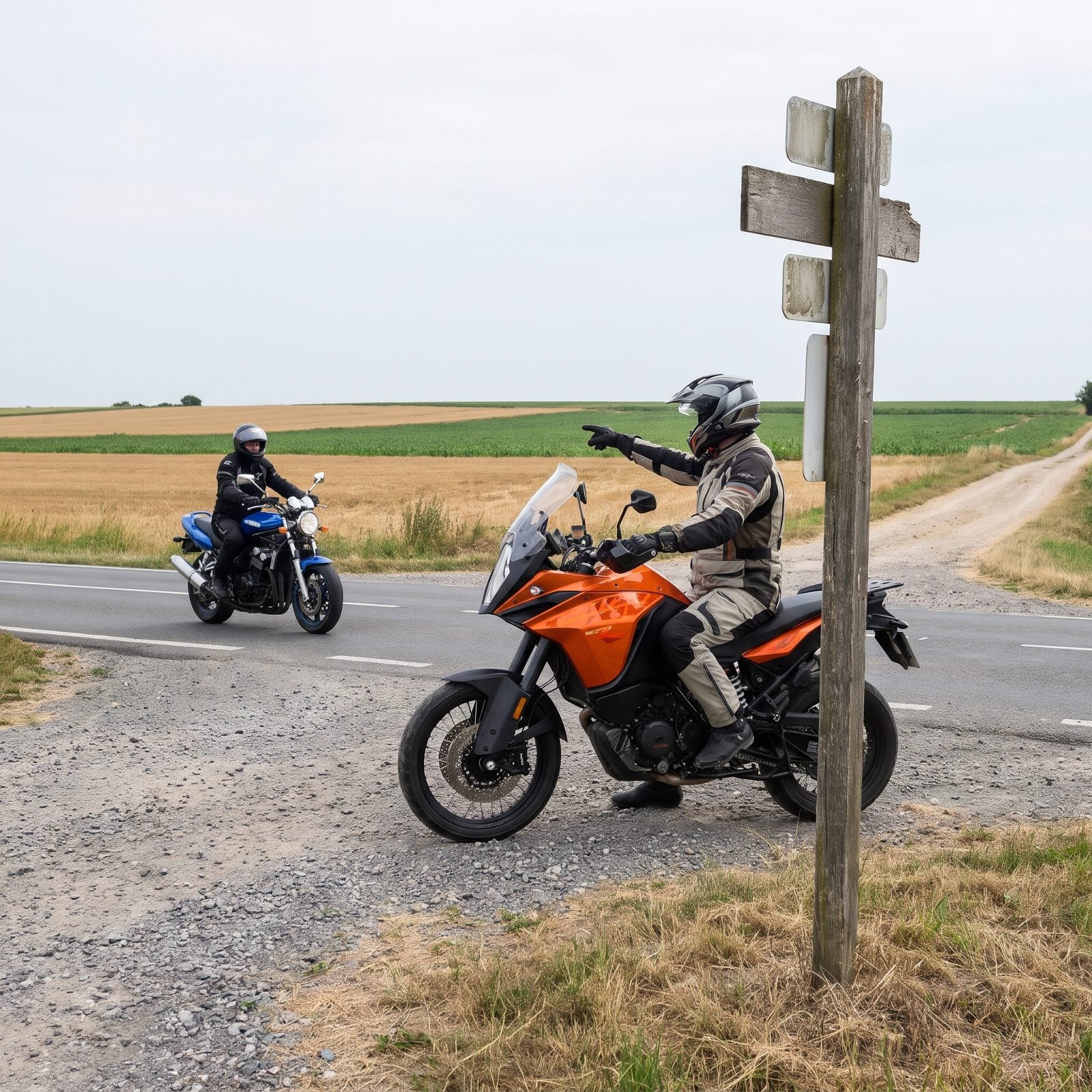
Here’s the trick that keeps a group together without radios, GPS, or anyone stopping to argue over a map. When the route makes a turn that isn’t obvious, the rider at a confusing junction pulls over safely and waits, pointing the direction, until the next rider arrives and sees it.
Then that rider waits for the one behind them, and the marker passes down the line like a relay. Nobody gets left guessing at a fork, and the group never has to backtrack hunting for a lost tail. It works because everyone does their one part.
11. Use a Predetermined Lost-Rider Protocol
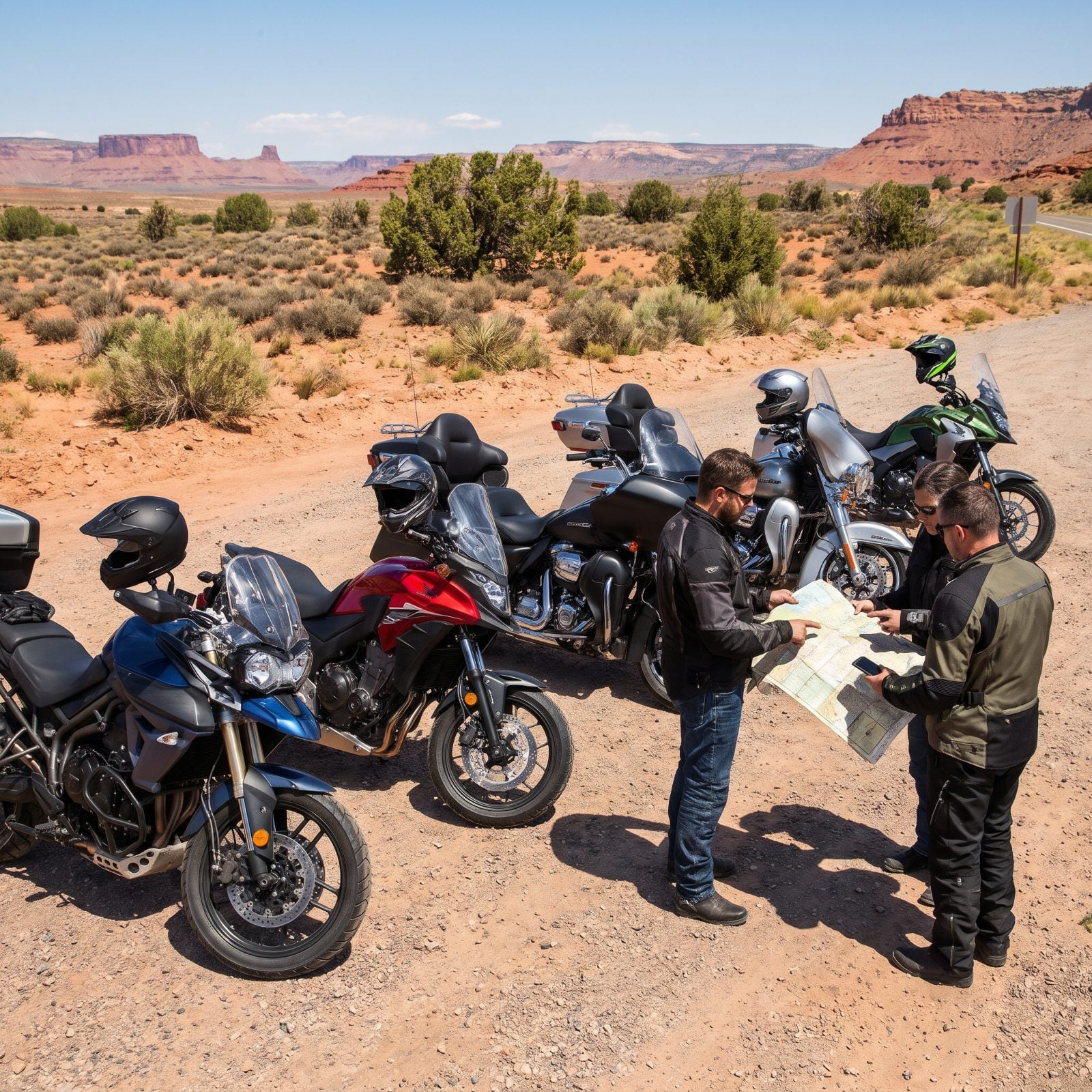
The best groups answer one question before they leave the driveway: what happens when someone gets separated?
No plan, and a lost rider spends an hour circling a town while the group assumes he’s right behind. A good protocol is boring, and that’s the whole value of it. If you lose the group, keep riding to the next planned stop or exit — don’t speed up, don’t do anything stupid, don’t try to recapture the pack. Everyone agrees on the route’s waypoints, trades phone numbers, and names a sweep rider who runs last and accounts for everyone.
Half a minute of talking at the start saves a wrecked afternoon. Have the conversation, then ride.
10. Tell Someone Before You Peel Off and Head Home
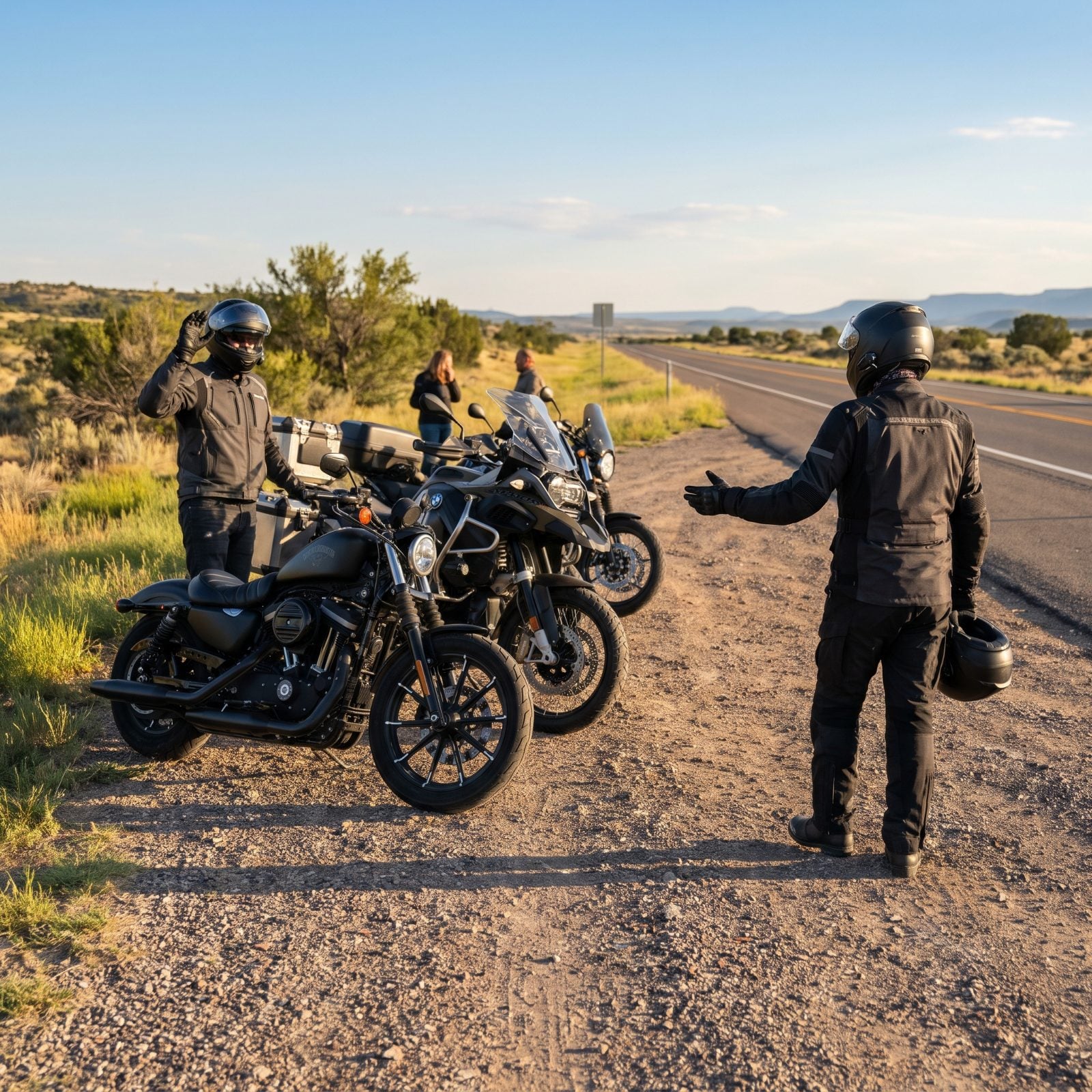
Here’s the quiet terror of a group ride: someone drops off the back, peels toward an exit, and nobody notices for forty miles. Now the pack’s circling back, phones out, hearts in throats, picturing the worst.
Leaving early is fine. Vanishing is not. Find the leader or the sweep rider, say your piece, get a nod, then go. Ten seconds of effort saves everyone an afternoon of panic.
9. Plan Fuel Stops Around the Thirstiest, Shortest-Range Bike
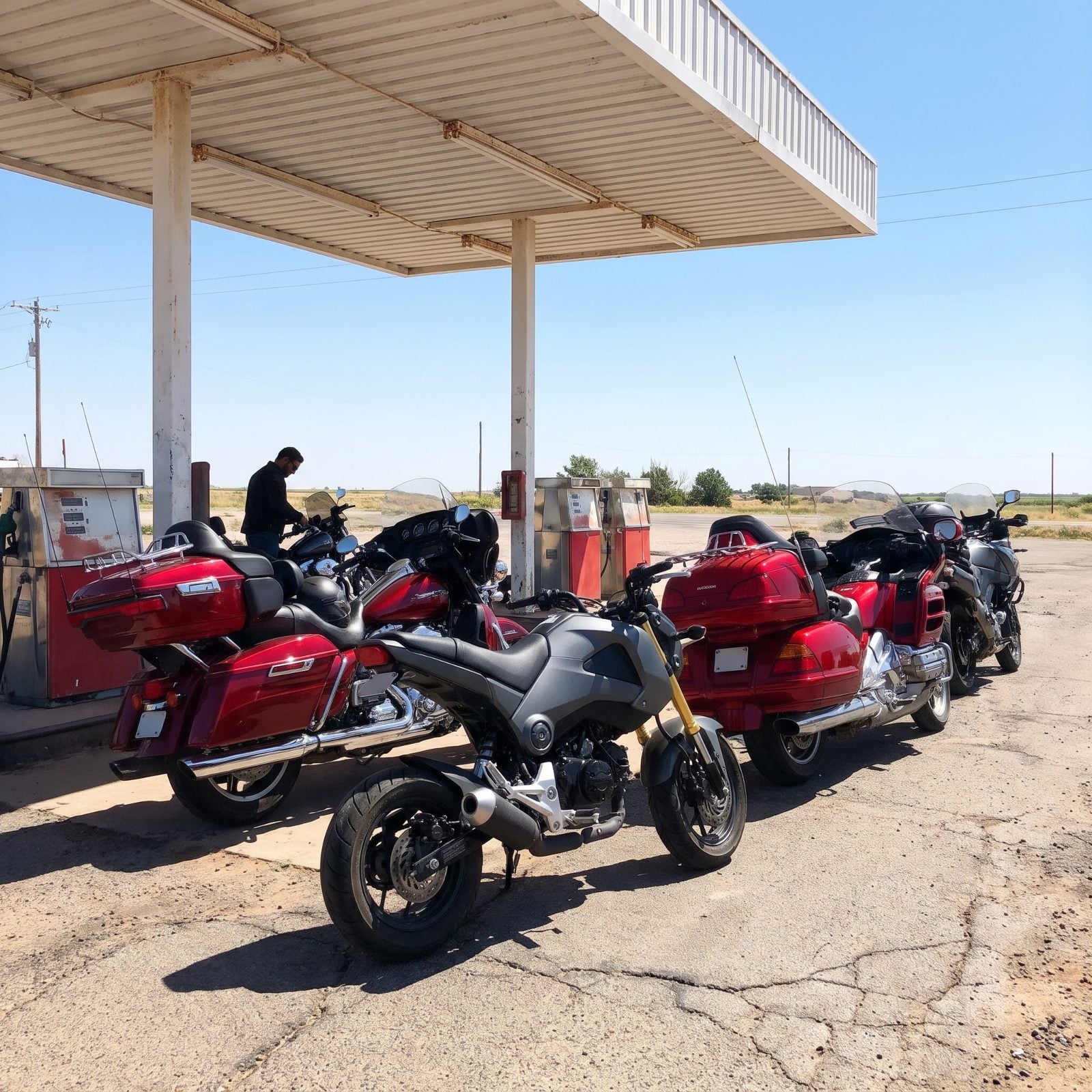
The group runs on the smallest tank, not the biggest. That liter-bike with a two-gallon sipper will be flashing its fuel light while the baggers still have a hundred miles in them. Guess who sets the schedule?
Ask the range question before you roll out, figure out who gets nervous first, then build the stops around that number with a cushion. Nobody wants to coast into a station on fumes. And nobody wants to explain to the group why they’re pushing a dead bike up an on-ramp.
8. Keep Scheduled Stops Long Enough for the Slow Movers
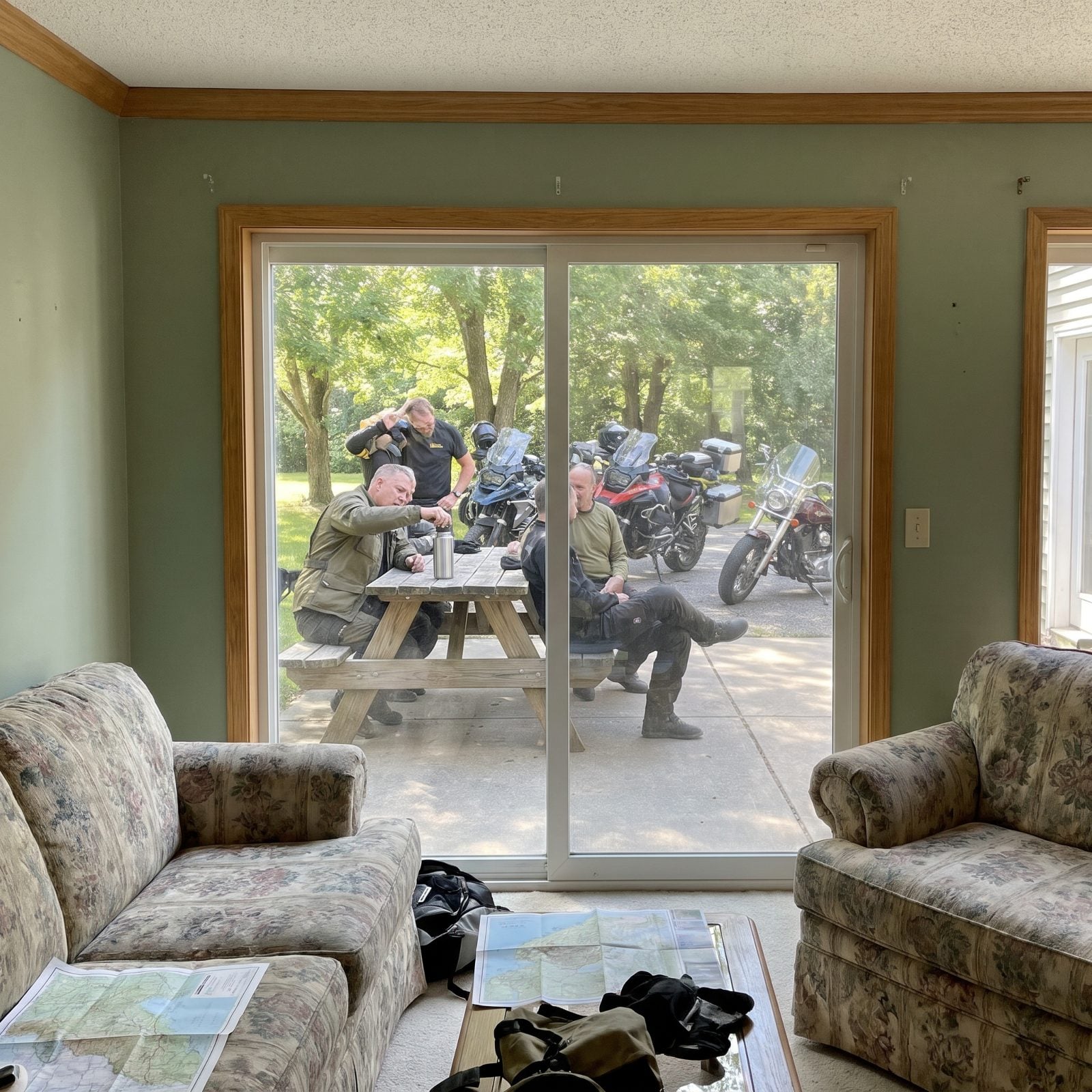
A ten-minute stop is never ten minutes. By the time the last rider parks, pulls off gloves, and gets inside, the fast ones are already gearing back up and looking impatient.
Build real time into every stop. People need water, a bathroom, a stretch for a stiff back, and a minute to actually sit down. Rush the group out the door and you turn a fun ride into a forced march. The guy who always needs five extra minutes isn’t being difficult — he’s just honest about what his knees want.
7. Never Disappear During a Rest Stop Without a Word
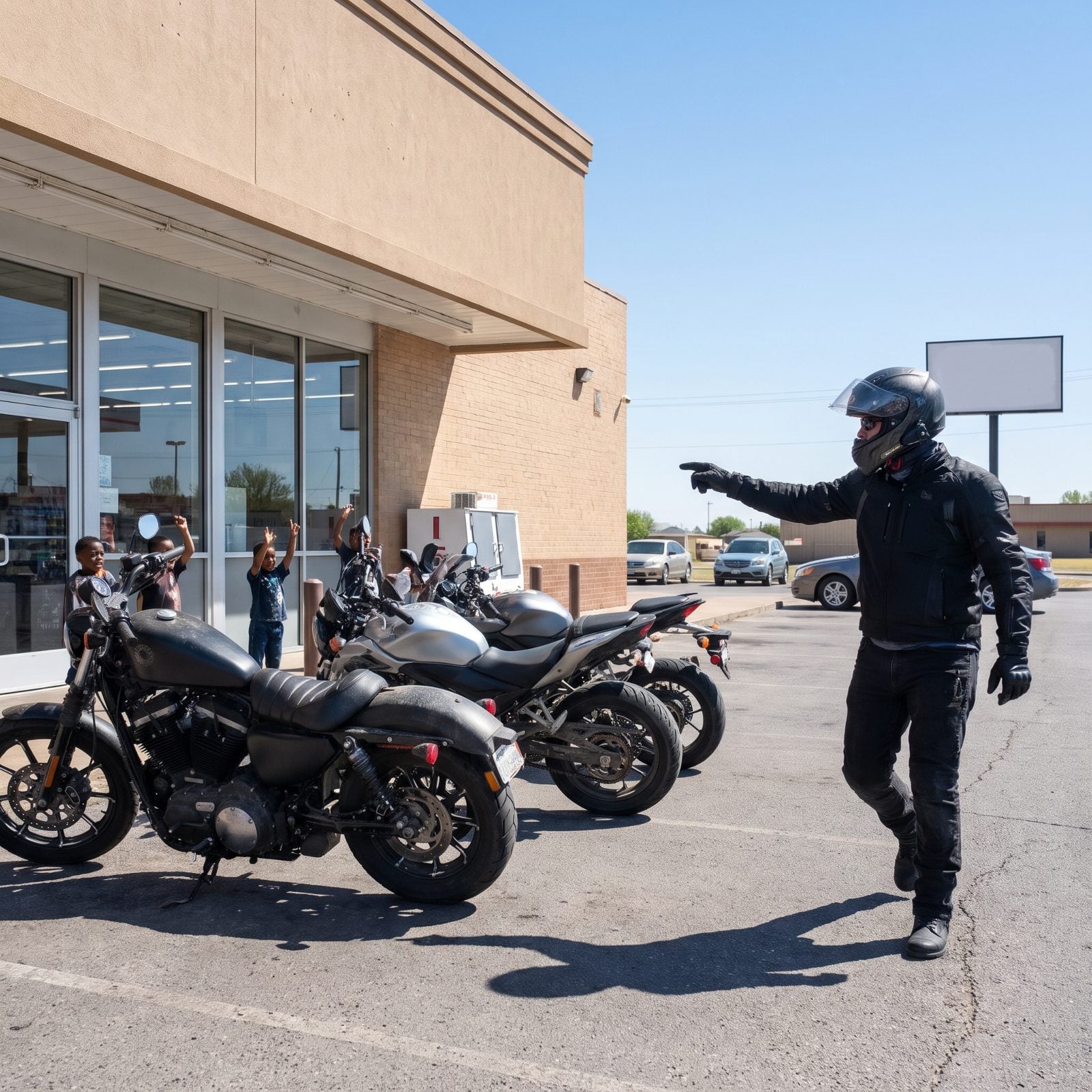
You walked off to find a bathroom in the next building. Perfectly reasonable. Except the group thinks you’re ready to leave, counts helmets, comes up one short, and the whole ride stalls while people wander the lot calling your name.
So tell someone where you’re going. “Bathroom, back in five.” Done. A group that trusts everybody will reappear stays loose and relaxed, while one that keeps losing people starts policing each other, and that sours the whole day faster than rain.
6. Clear the Pump the Second Your Tank Is Full
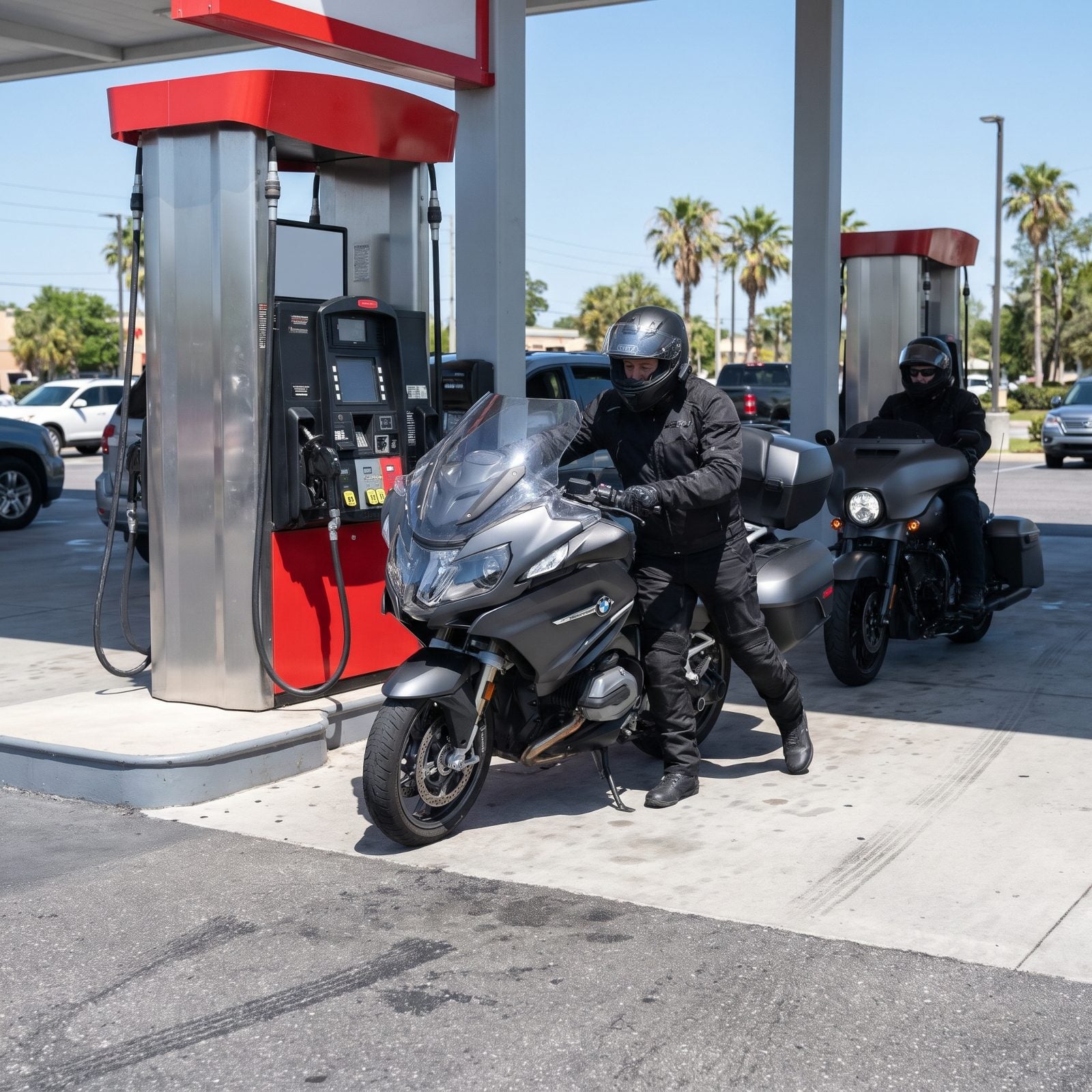
You filled up. Great. Now move. That pump is a bottleneck, and when six bikes are waiting their turn, a rider who parks there to buy snacks, dig for sunscreen, and scroll his phone is holding the whole line hostage.
Roll the bike to a parking spot, then handle your business. The gas island is for gas and everything else happens off to the side. That small courtesy keeps a fuel stop at twelve minutes instead of thirty.
5. Brief Your Passenger on Mounting, Signals, and Stops
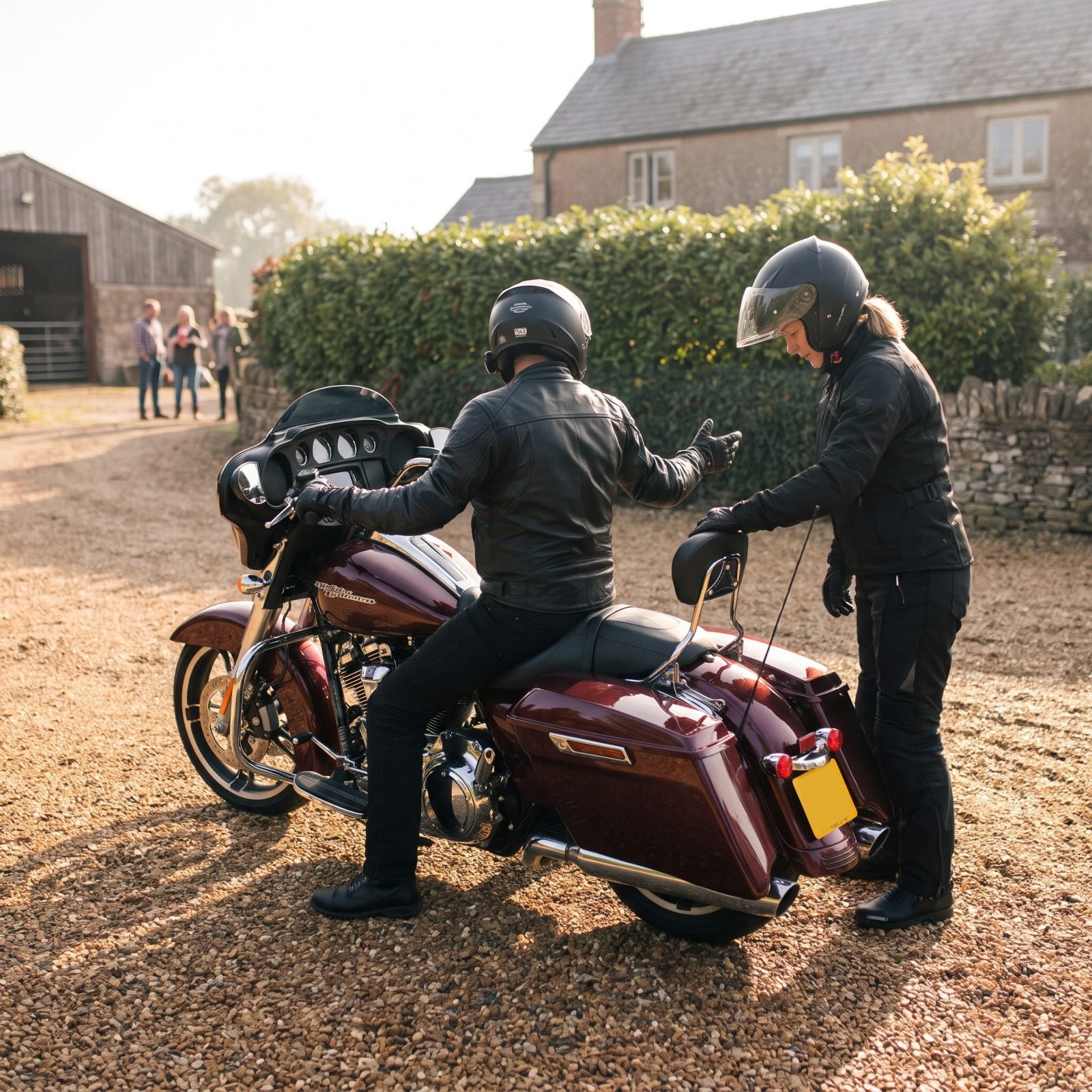
A new passenger is a giant question mark on the back of your bike, and that question gets answered at the worst possible moments if you skip the talk.
Cover it before you move: wait until you say it’s clear to climb on, use the pegs, keep still at stops, lean with the bike rather than fighting it, and settle on a tap signal for “I need to stop.” A passenger who knows the plan rides like part of the machine. One who doesn’t fights you through every corner and shifts their weight at exactly the wrong time.
4. Never Throw a Leg Over Impaired or Hungover
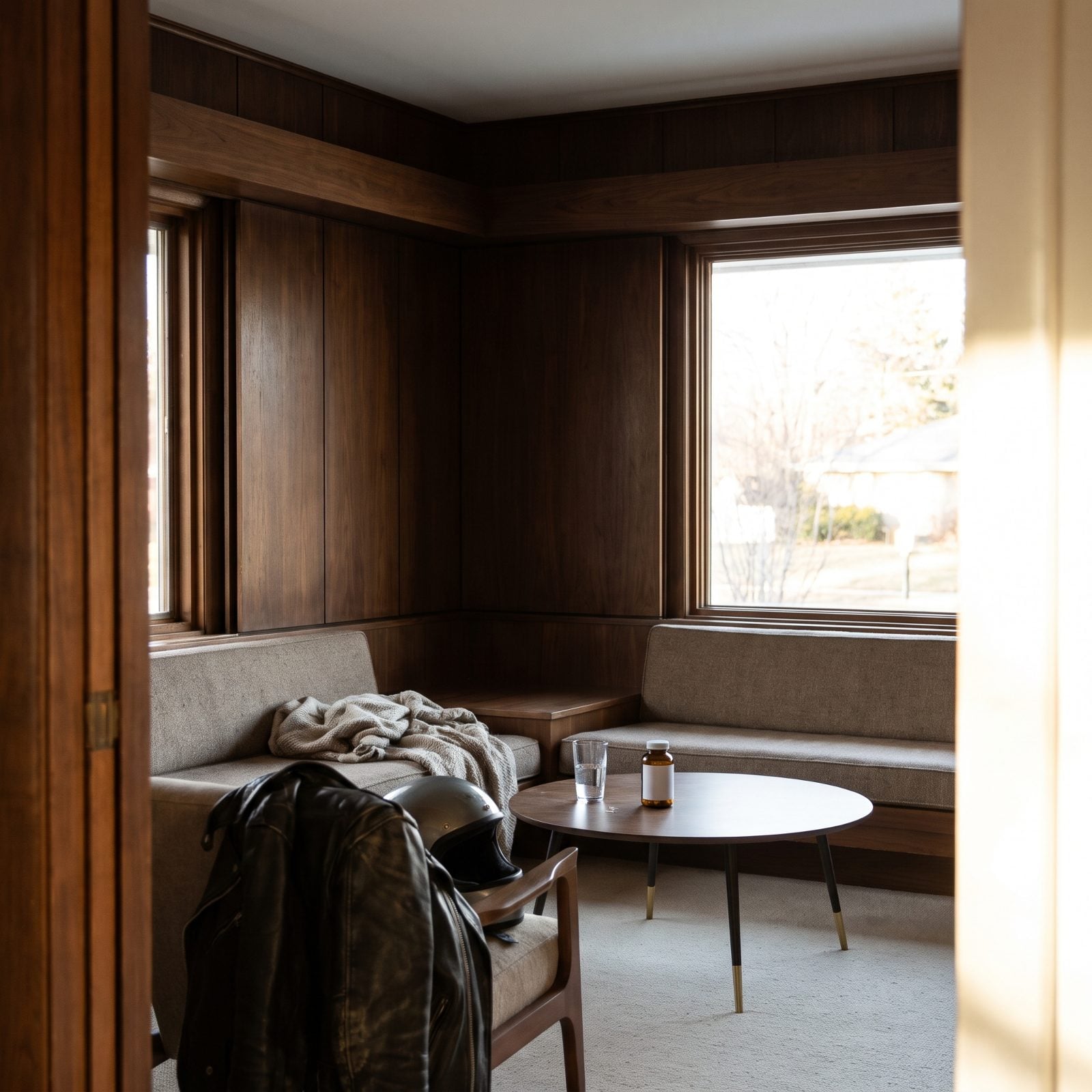
Last night’s beer doesn’t stay in last night. A hangover dulls reaction time, scrambles judgment, and turns a bright morning into a headache you’re trying to ride through. On a bike, dull is dangerous.
If you’re not right, don’t ride. Nobody good thinks less of the person who taps out before a ride they can’t do safely — they think a lot less of the one who wobbles into a group and becomes everyone’s problem. Coffee and a greasy breakfast won’t sober up a bad decision. Only time does that.
3. Be Honest the Moment Fatigue Starts Creeping In
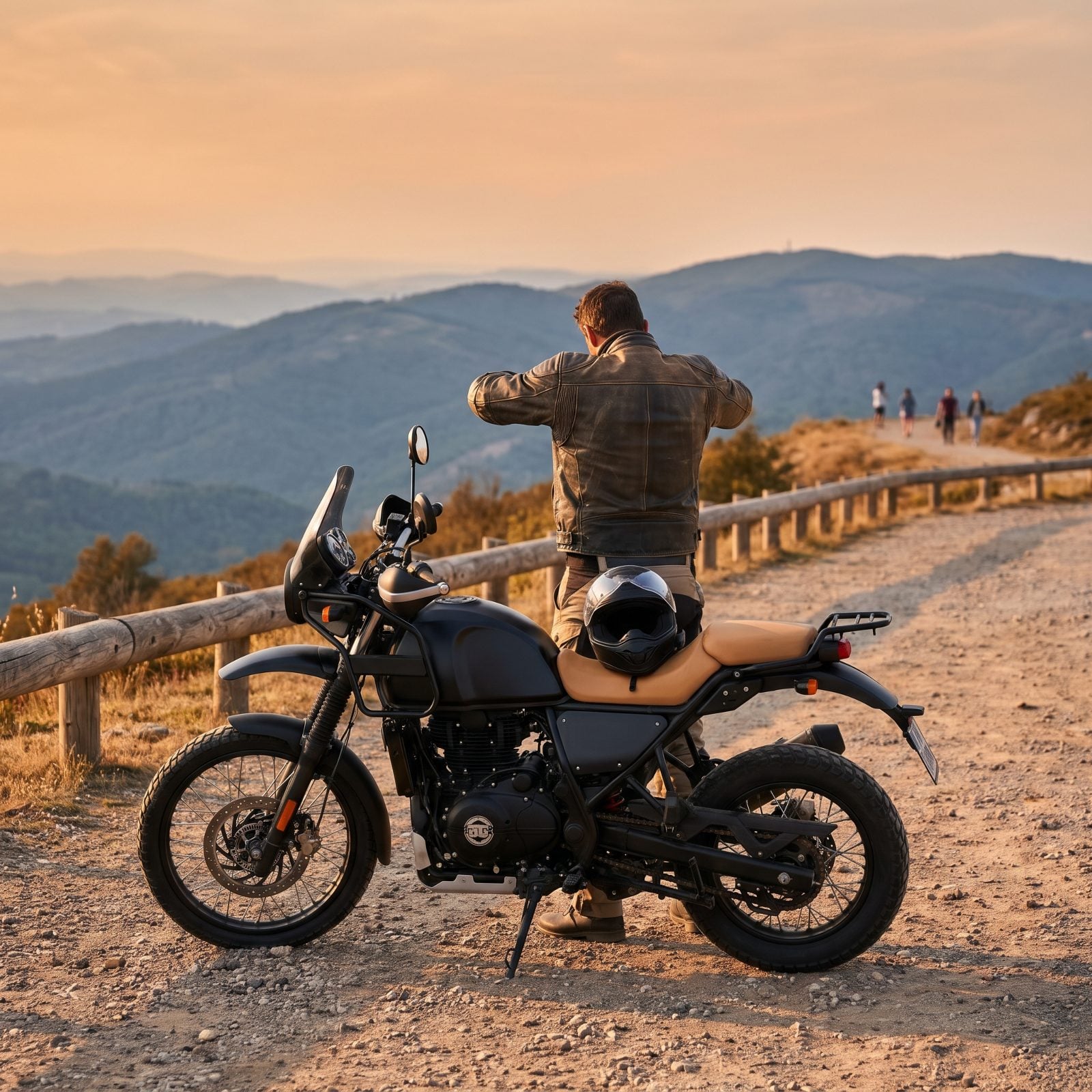
Tired riding looks a lot like drunk riding. Wide on corners, slow to brake, missing turns the mind should’ve caught a mile back. The difference is that fatigue sneaks up quiet, and pride keeps people from admitting it.
Say something. “I need to stop and reset” is a complete sentence. A good group would rather add twenty minutes than scrape a buddy off the shoulder. The last hour of a long day is when the crashes happen — everyone’s cooked, and nobody wants to be the one who calls it. Be that one.
2. Break a Huge Pack Into Pods of Five or Six
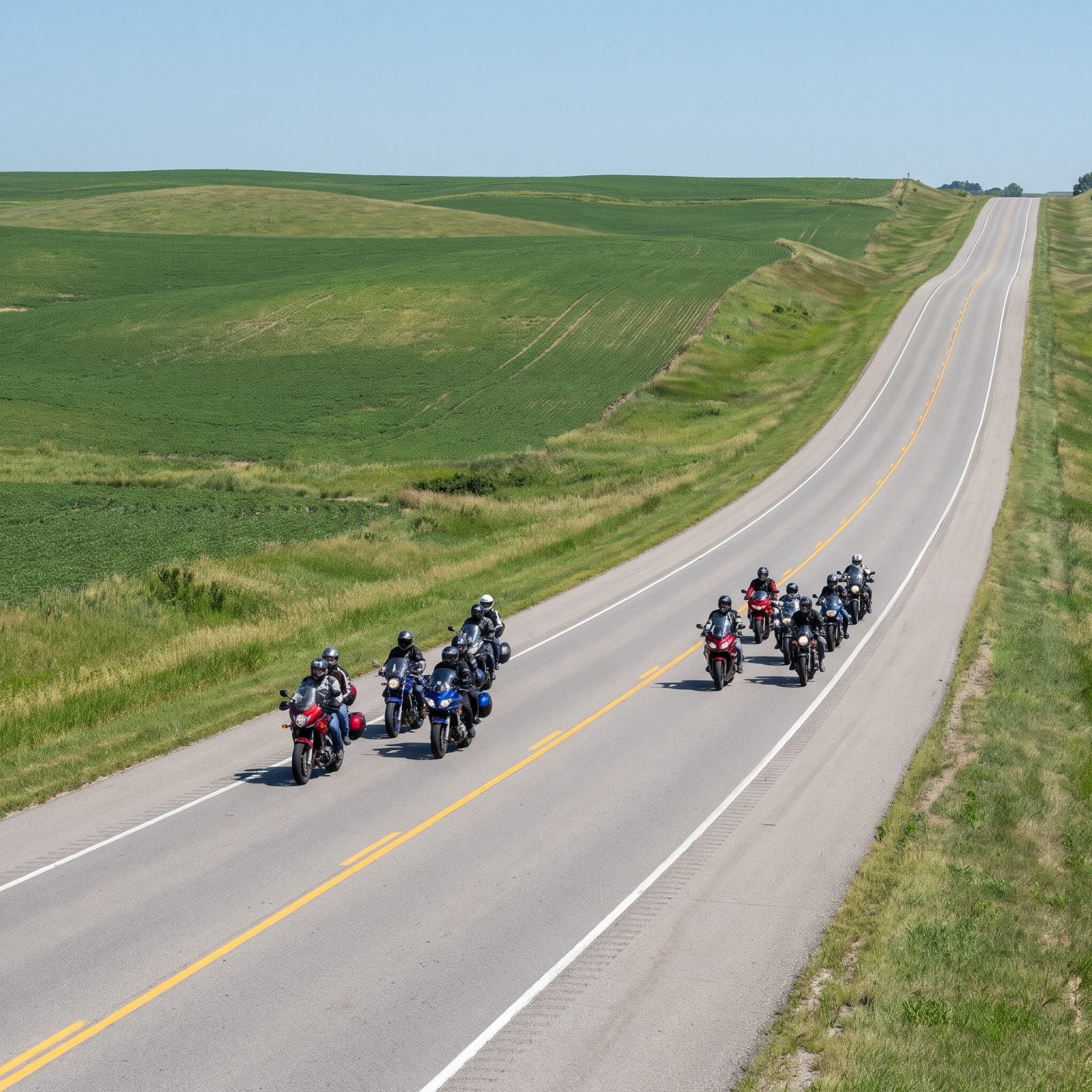
A dozen bikes rolling as one blob is a traffic jam waiting to happen. Lights split the group, nervous cars try to thread through the middle, and the back half spends the whole day catching up.
So split into pods. Five or six bikes each, every pod with its own lead and sweep, each pod kept clearly separate from the next and in its own lane, and a meeting point set in advance. Smaller packs move cleaner through town, merge easier, and don’t terrorize the other drivers. Everyone ends up at the same lunch spot anyway — they just get there without the chaos.
1. The Leader Rides a Pace the Whole Pack Can Hold
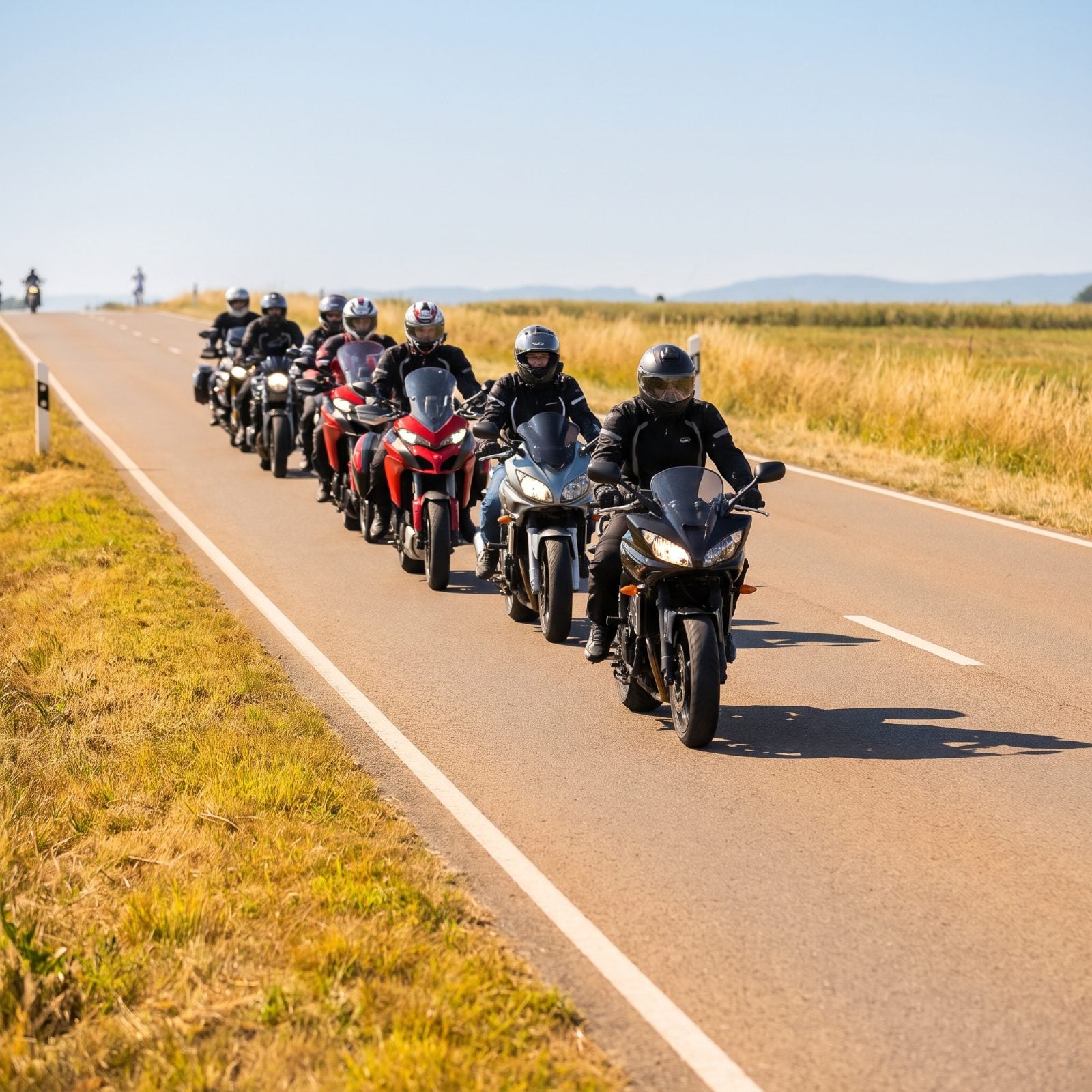
The leader doesn’t ride for himself. He rides for the slowest comfortable rider in the pack, and that’s the whole job.
Hammer a pace that only the front three can match and you’ve turned a group ride into a race the back is losing badly. Newer riders start pushing past their skill to keep up, and that’s exactly when things go wrong. A good leader checks the mirror constantly, holds a speed the entire pod can sustain without stress, and treats that steady rhythm as the point of the whole day. Fast is for solo mornings. Group rides are about everyone coming home.