
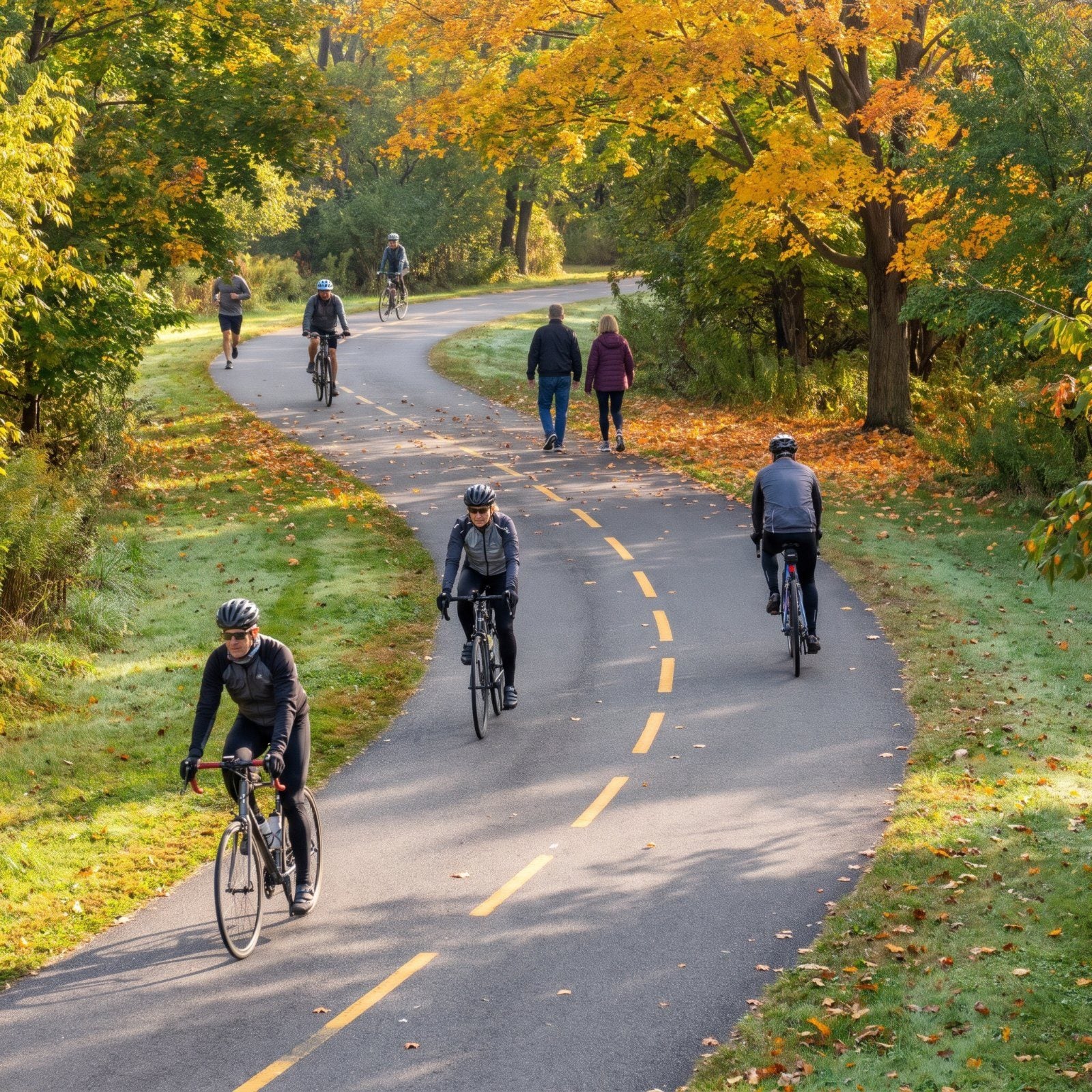
The sign at the trailhead tells you almost nothing. A speed limit, maybe. Keep dogs leashed. But the stuff that actually matters out there — the moves that keep a Saturday ride from ending in a cracked collarbone and an ambulance — none of it is painted on the asphalt. It lives in the heads of people who’ve logged years on greenways and waterfront paths, and they quietly assume you know it too.
Please note that some of the images in this article were created with the assistance of AI.
We’ve ridden enough shared trails to watch the same near-misses play out over and over. So here’s the code nobody hands you. Learn it before someone teaches you the hard way.
42. Keep Right, and Treat the Left as a Passing Lane Only
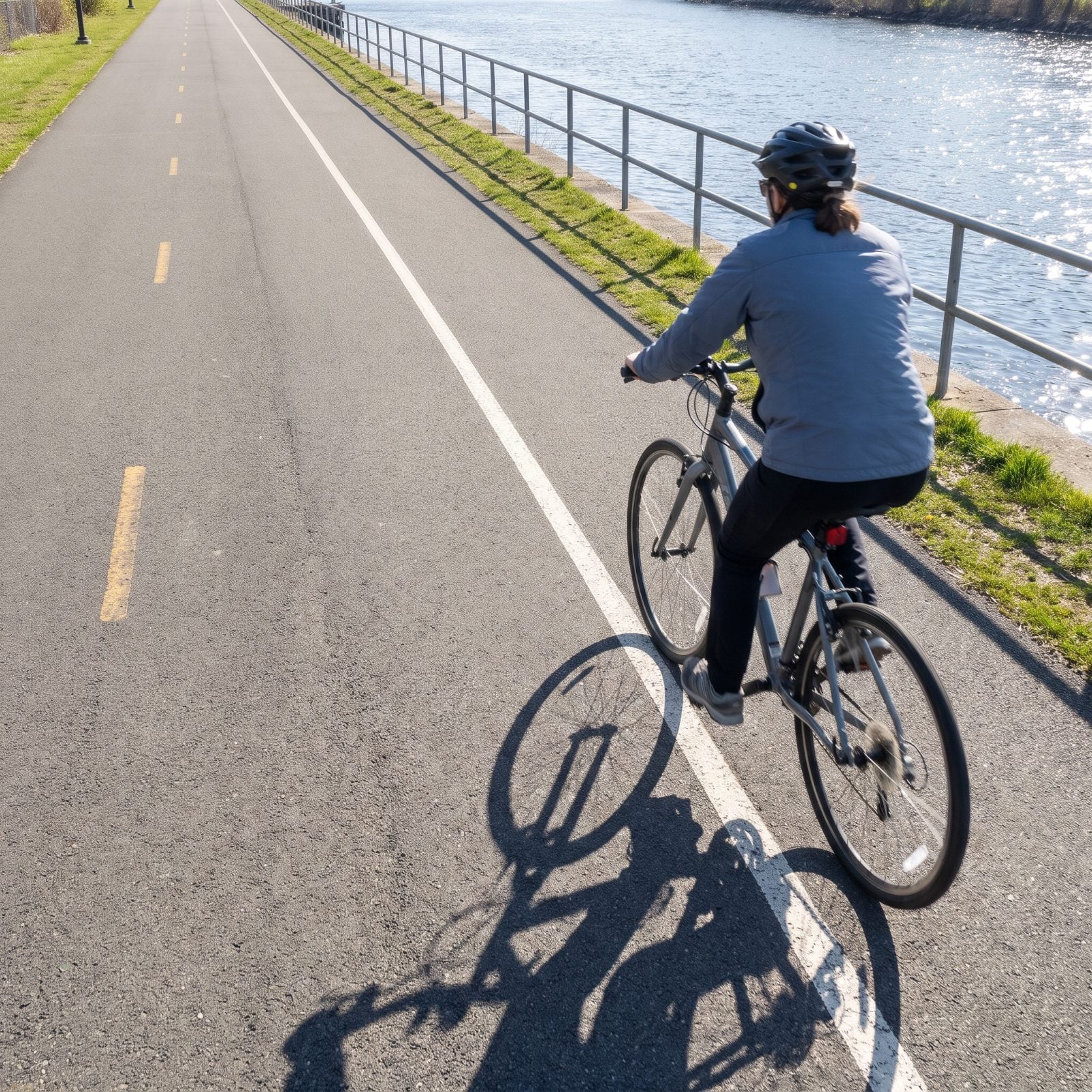
The path works like a road, not a sidewalk. Right side for travel, left side kept clear for whoever’s moving faster than you. Ride three abreast down the middle and you’ve turned a two-way corridor into a slow-moving parade — and everybody stacked up behind you hates it.
The mistake isn’t malice. It’s drifting. You settle into a nice rhythm, stop paying attention to where your front wheel is pointed, and twenty feet later you’re straddling the center line. Pick your lane. Stay in it. The left belongs to whoever’s overtaking, and today that’s not you.
41. Call Your Pass Out Loud Before You’re On Top of Someone
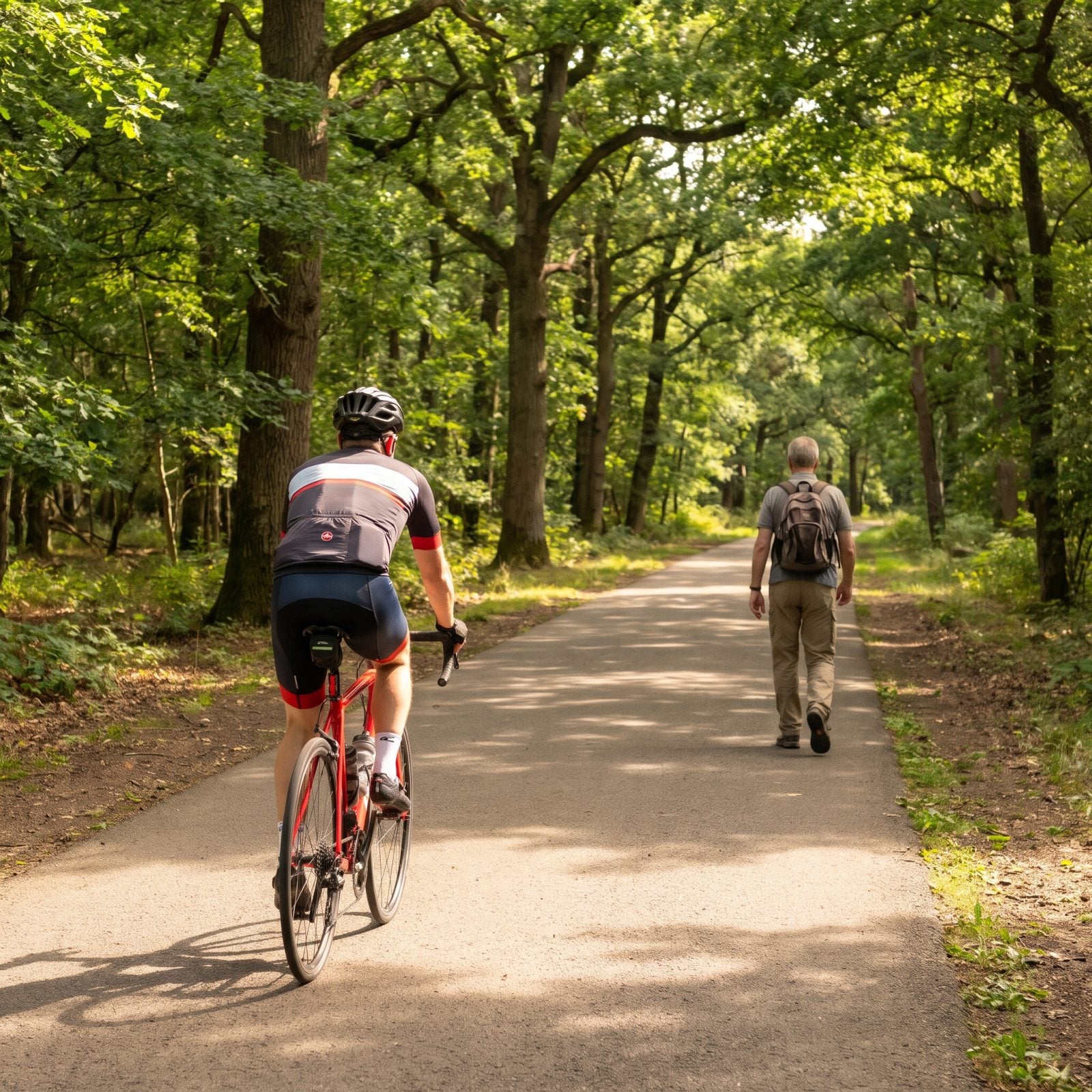
“On your left.” Two words, said early, loud enough to carry over earbuds and wind. Say it while you’re still a good distance back, not when your handlebar is level with their elbow.
Here’s what people get wrong: they whisper it, or they bark it half a second before they blow past, and the walker flinches sideways — the exact direction you’re trying to use. A bell works even better than a voice, because it’s friendlier, it carries, and nobody mistakes it for a shout. Give people a beat to process and react. That beat is everything.
40. Look Over Your Shoulder Before You Change Your Line
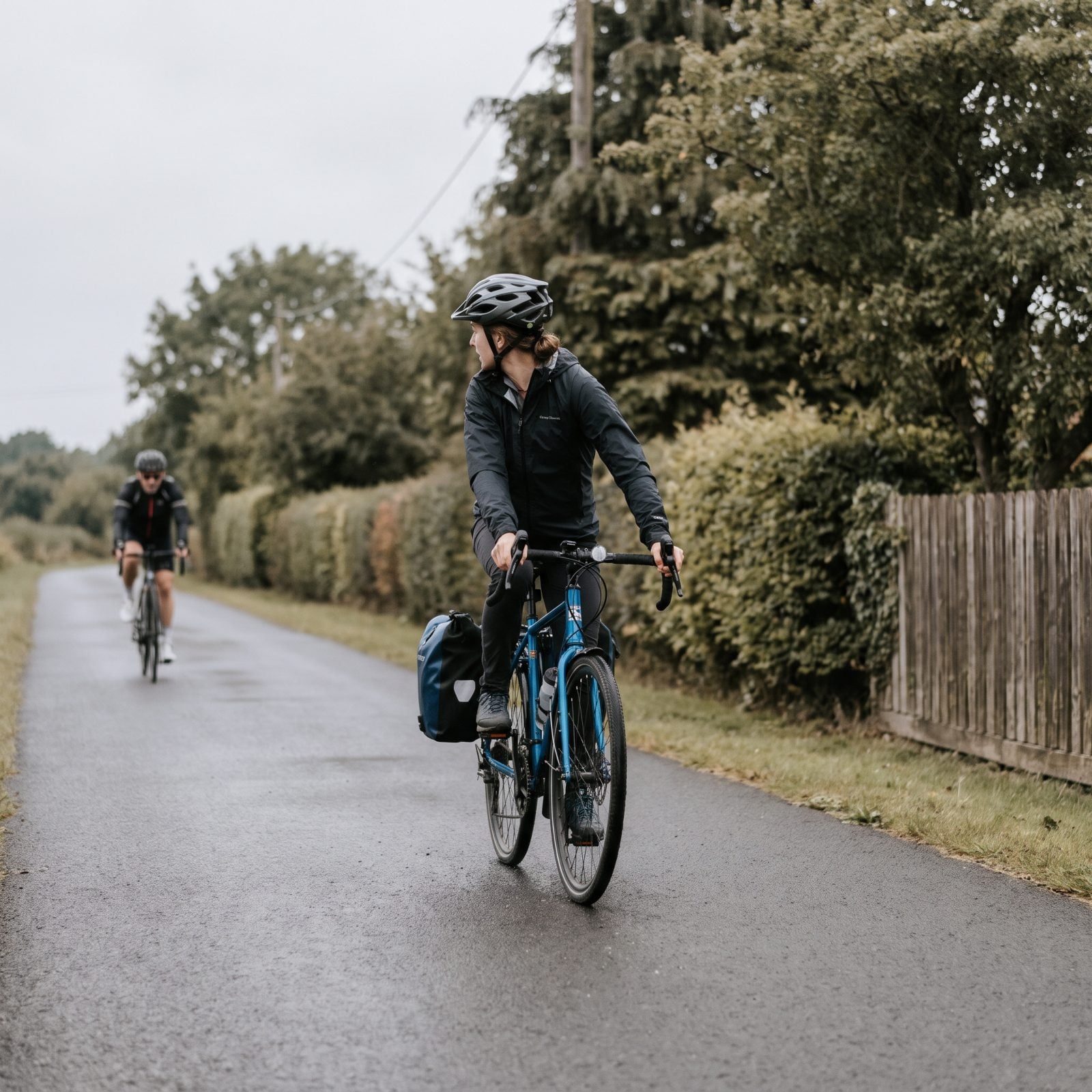
You don’t own the air behind you, and you can’t hear half of what’s back there. Electric bikes are silent. Fast riders coast. Somebody’s always closer than the quiet suggests.
A quick shoulder check before you pull left is the single habit that separates the experienced from the ones who cause pileups. Do it every time, even when you’re sure nobody’s there. Especially then. The pass you don’t hear coming is the one that gets you.
39. Hold One Steady Line and Let People Trust It
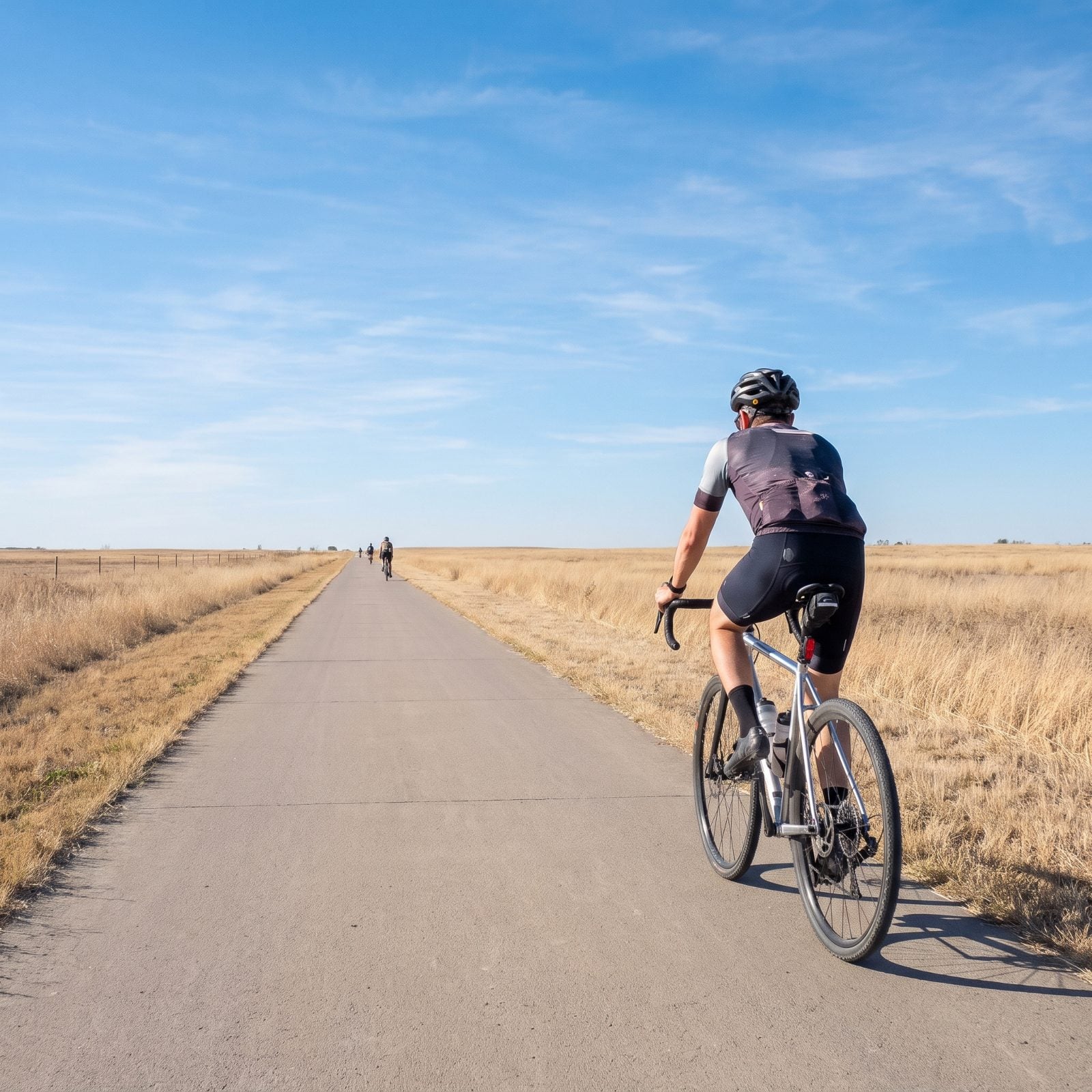
The scariest rider on any path isn’t the fast one. It’s the wobbly one — the person who drifts left for no reason, swerves around a pebble, suddenly decides to admire the view and veers with it. Nobody can plan around that.
Predictability is a gift you hand everyone around you. Hold your line, and if you need to move, move with intent and warn people first. Standing on the pedals, reaching for a bottle, checking your phone (don’t) — all of it tends to pull your front wheel off course. Keep your inputs smooth and your path boring. Boring is safe.
38. Get All the Way Off the Path Before You Stop
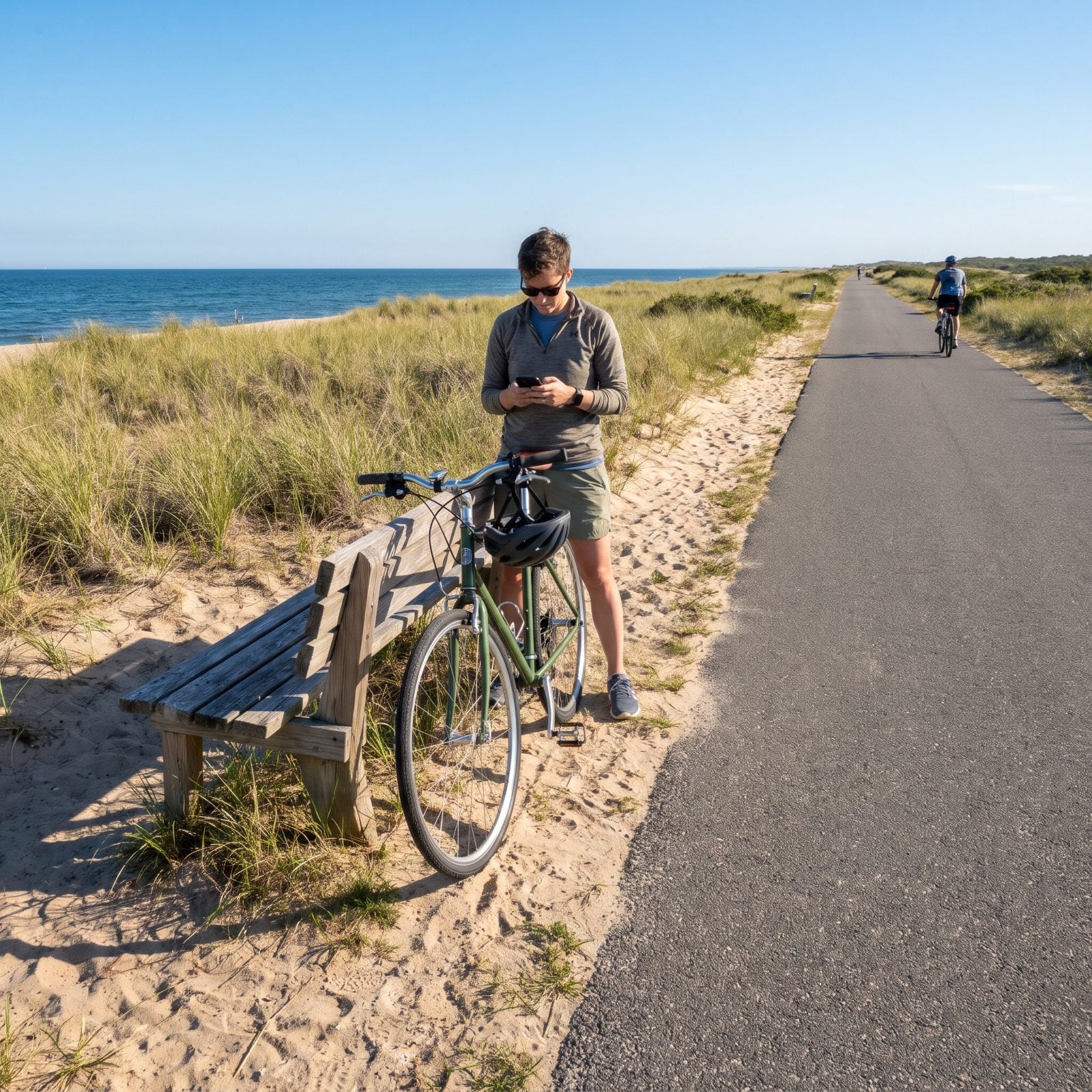
Flat tire, dropped chain, a text you absolutely must answer right now. Doesn’t matter. The one place you never stop is in the middle of the path.
Pull all the way onto the grass or the shoulder, past the painted edge, bike and body both clear of the flow. You know the classic: a cluster of riders bunched at a trail junction, straddling the whole width while they debate where to brunch. Everyone behind them has to brake, swerve, and stew. Don’t be the roadblock. Clear the lane, then sort out your life.
37. Wait Out Oncoming Traffic Before You Commit to a Pass
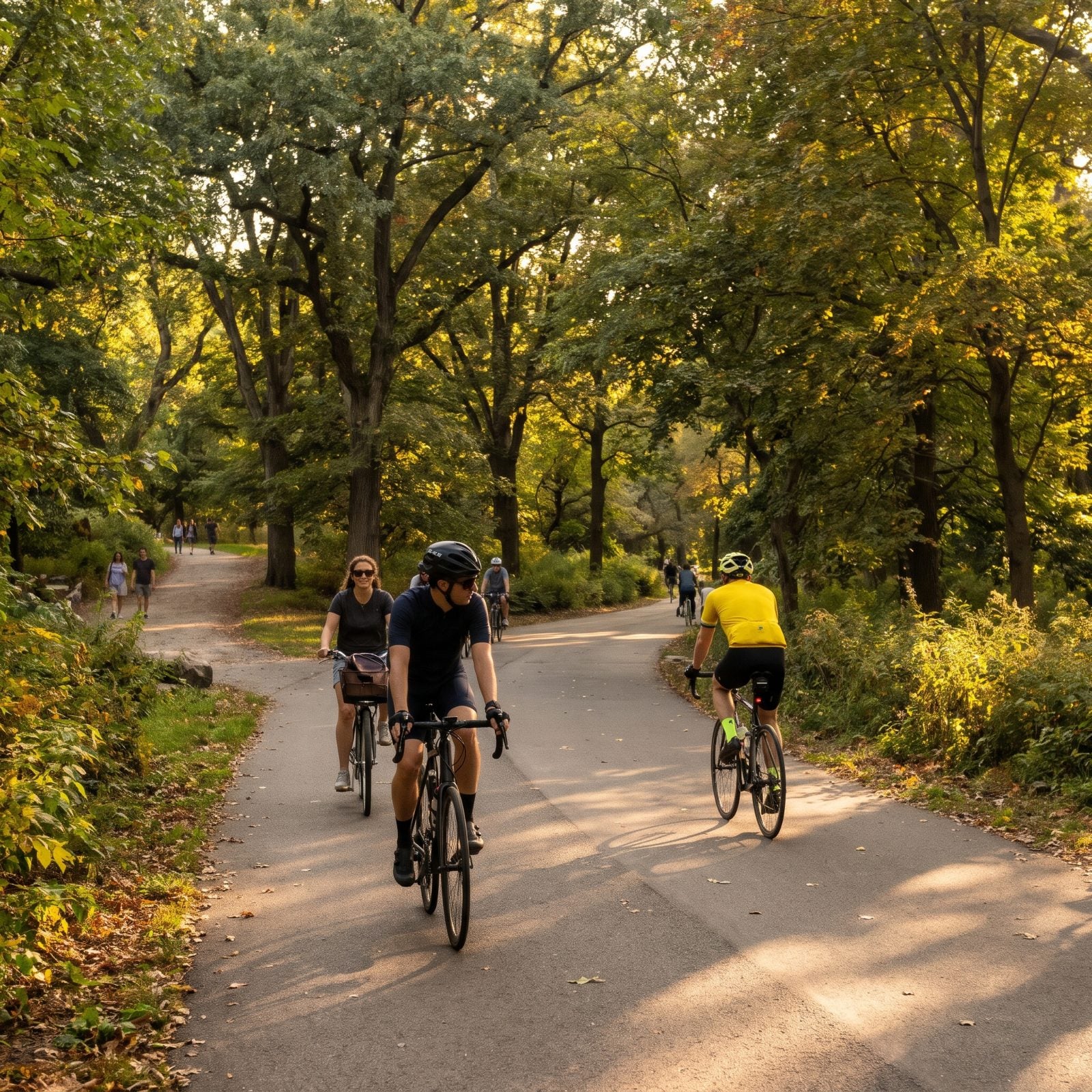
Passing pulls you into the oncoming lane. On a narrow path that lane isn’t yours — it’s shared, and somebody’s probably coming the other way. The math is simple. If there’s traffic ahead in the left lane, you don’t go yet.
Impatience is what gets people hurt here. Picture it: you’re ten feet back from a slow rider, an oncoming cyclist is closing, and you squeeze the pass anyway, hoping it all works out. It mostly does. Until the day it doesn’t. Wait three seconds. The gap always opens.
Writing about crowded shared-use paths, a cycling safety instructor puts it plainly: “When an obstruction is on your side of the path (or road, for that matter), YOU yield — whether it’s a fallen branch or a slower user. If there is oncoming traffic, wait until that traffic has passed.”
36. Give Real Clearance When You Go By, Not a Grazing Inch
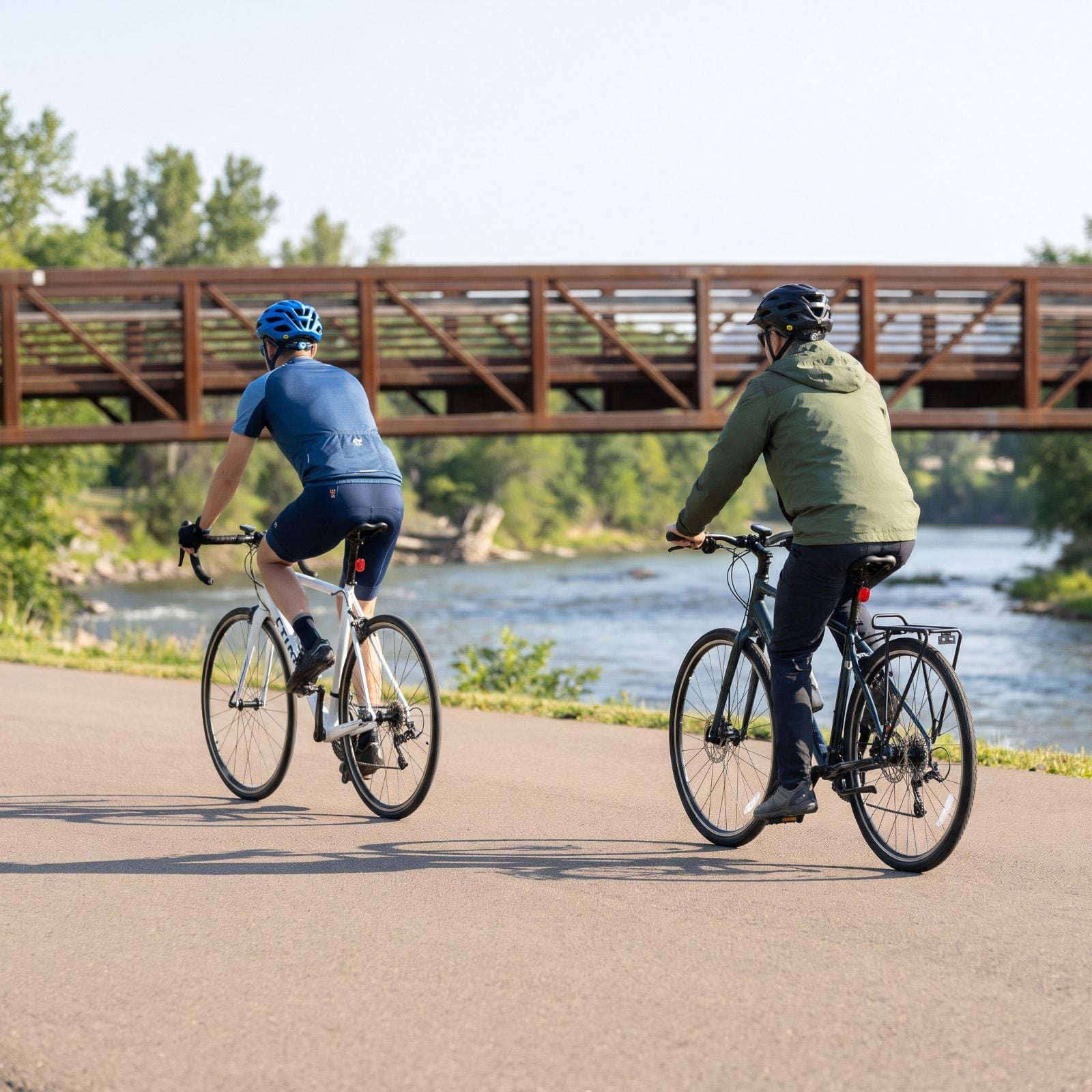
An arm’s length, minimum. More if you’re moving fast, more if it’s windy, more if the rider you’re passing looks unsteady. Buzzing someone by a couple of inches saves you nothing and terrifies them.
You don’t know what they’re about to do. They might swerve around a rock you can’t see, or wobble reaching for a bottle. Your clearance is the buffer that covers their mistakes and yours. Skinny gaps work right up until two lines of travel touch — and at speed that’s not a scrape. That’s both of you on the ground.
35. Finish the Pass Fully Before You Ease Back to the Right
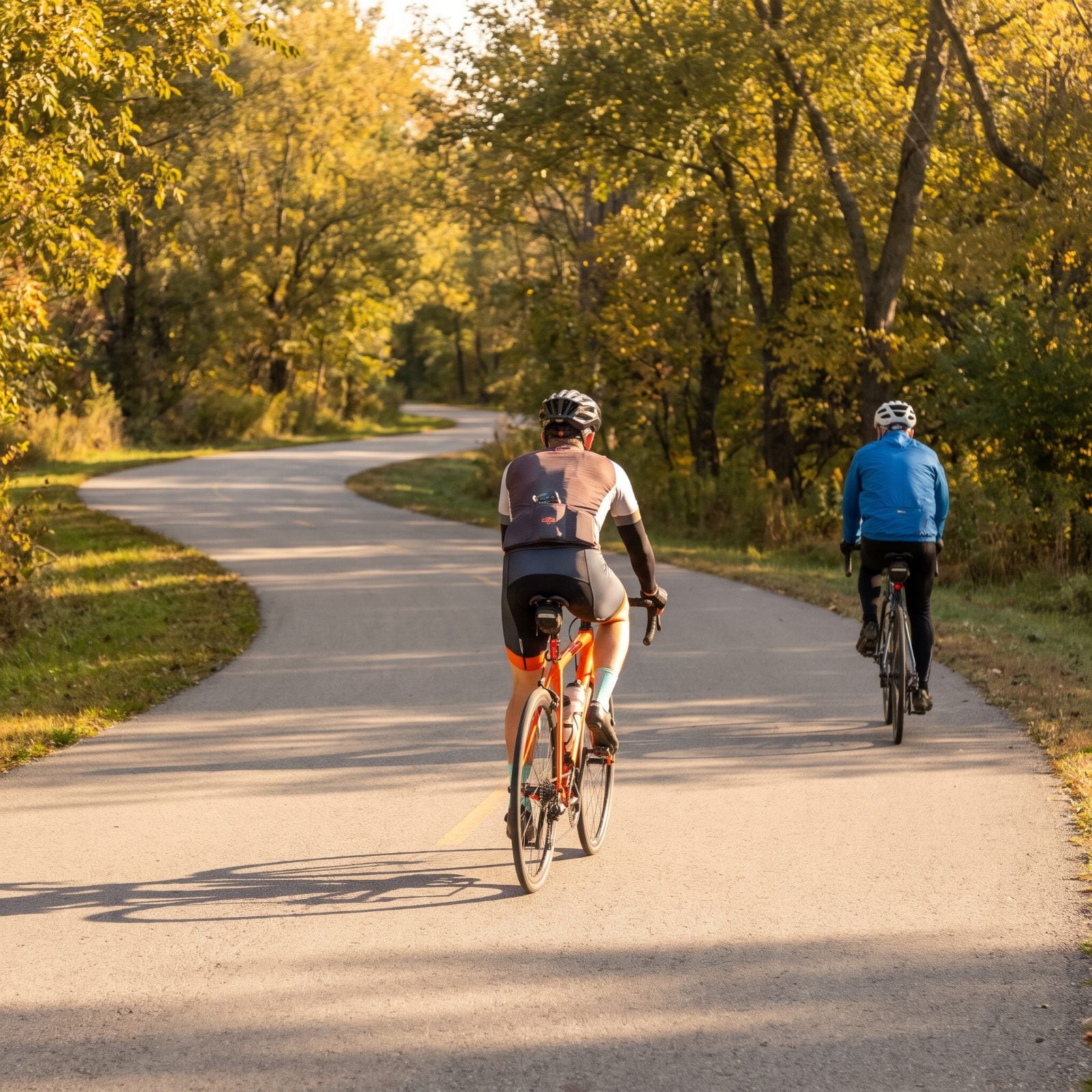
The pass isn’t done when your rear wheel clears their front wheel. It’s done when you’re several bike-lengths ahead with real daylight between you. Only then do you ease back to the right.
Cut in too soon and you force the rider you just passed to grab a handful of brake, which on a crowded path can touch off a chain reaction behind them. Do it like merging a car back after an overtake — wait until the mirror shows the whole vehicle, then signal in. Same courtesy, two wheels.
34. Don’t Pass Someone and Then Immediately Soft-Pedal
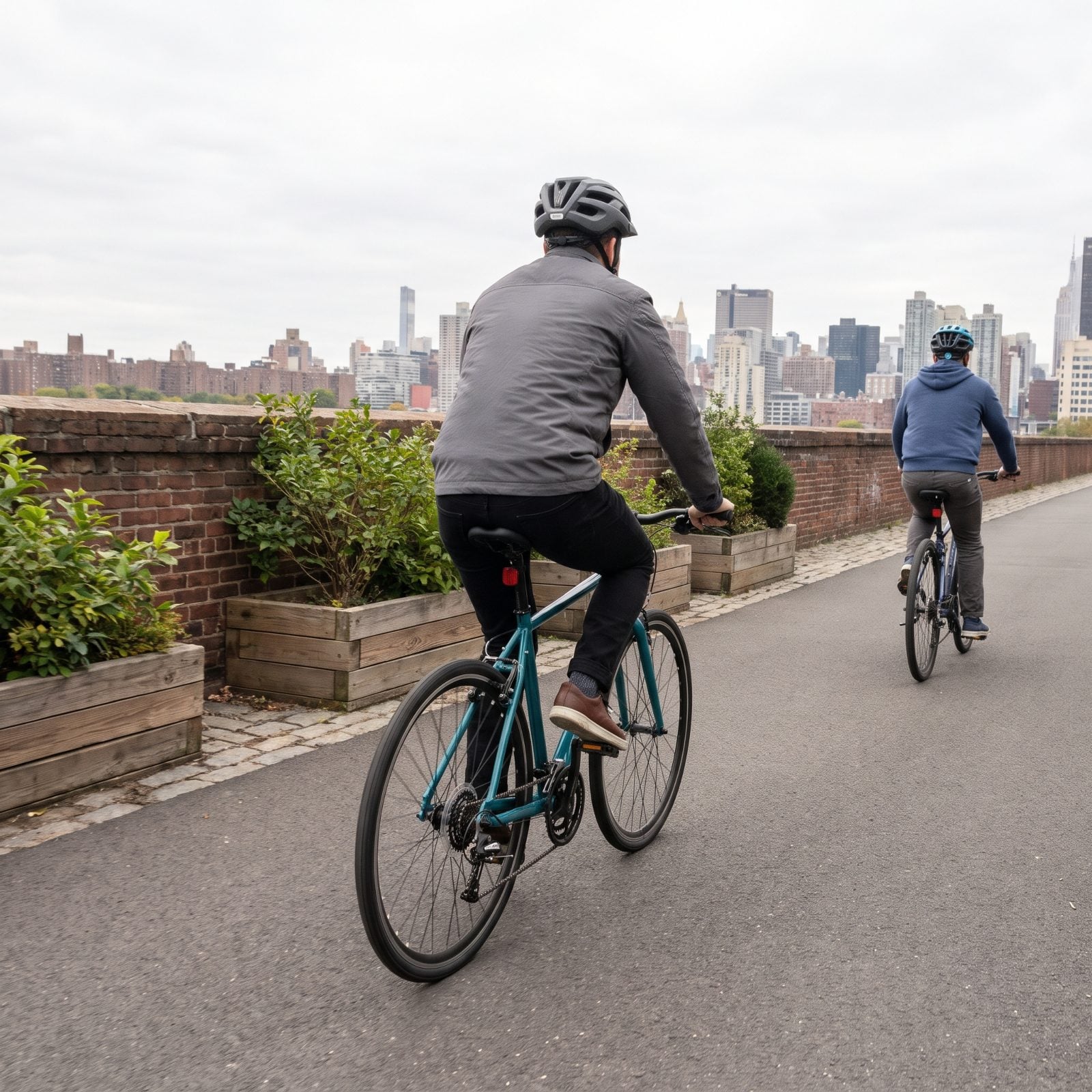
You’ve seen this one. Someone surges past in a burst of effort, then runs out of gas and coasts right in front of you — and now you’re stuck on their wheel going slower than you were before.
If you can’t hold a faster pace, don’t pass. It’s that blunt. The surge-and-fade is pure ego, and it’s genuinely dangerous: the person behind you planned their speed around you vanishing up the trail, not folding back into their lap. Pass to go faster, or don’t pass at all.
33. Never Overtake on a Blind Bend or Over a Hidden Crest
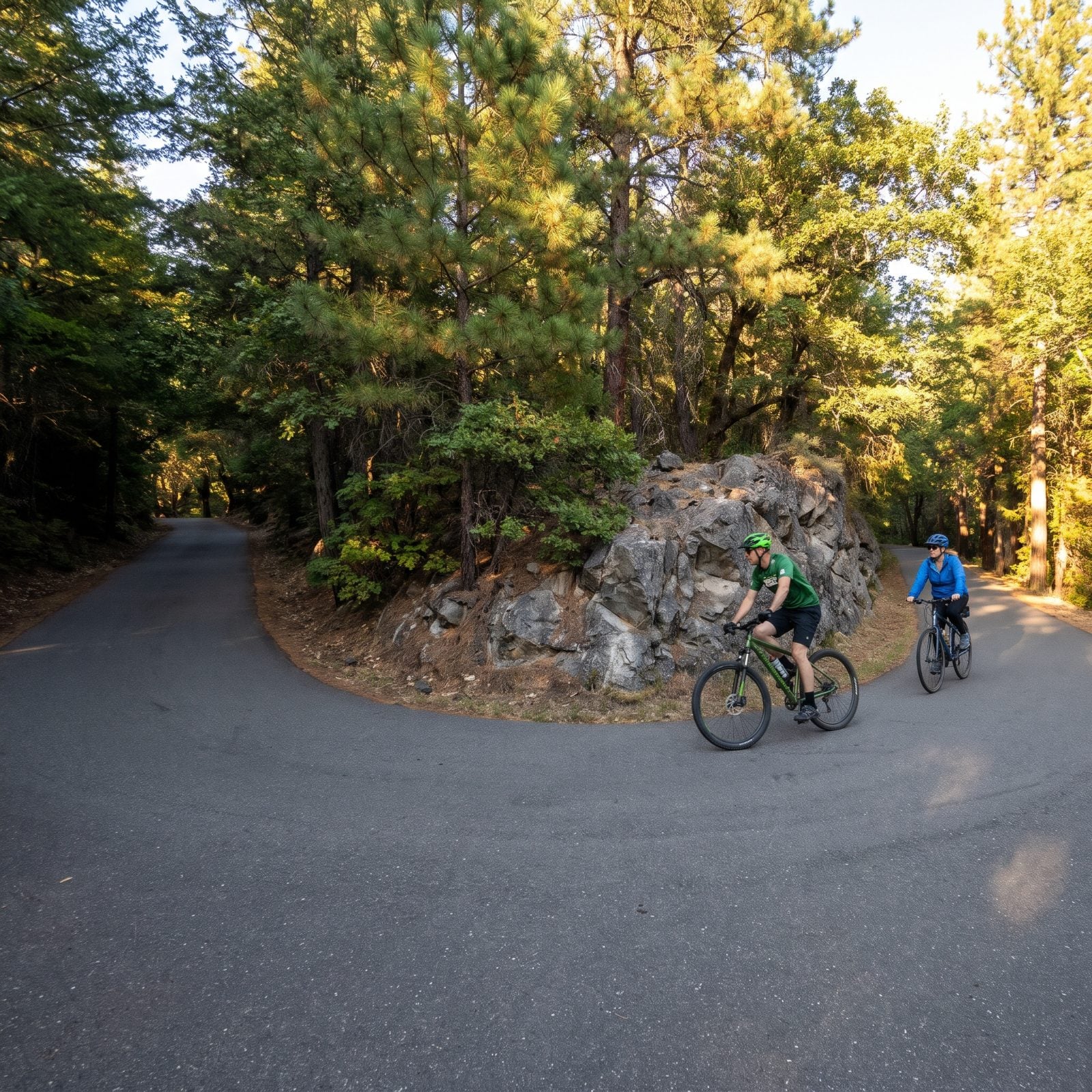
If you can’t see what’s coming, assume something is. Blind bends, the far side of a crest, the spot where the path dips behind a hedge — those are no-pass zones. Every time. No exceptions.
The whole reason passing works is that you can see the lane is clear. Take away the sightline and you’re betting your front teeth that nobody’s rounding the corner toward you. Walkers. A dog leash stretched clean across the path. A kid on a wobbling first bike. Hold your position, stay right, and wait for the straight. The clear line always comes. Rushing it never ends well.
32. Signal Before You Slow or Stop
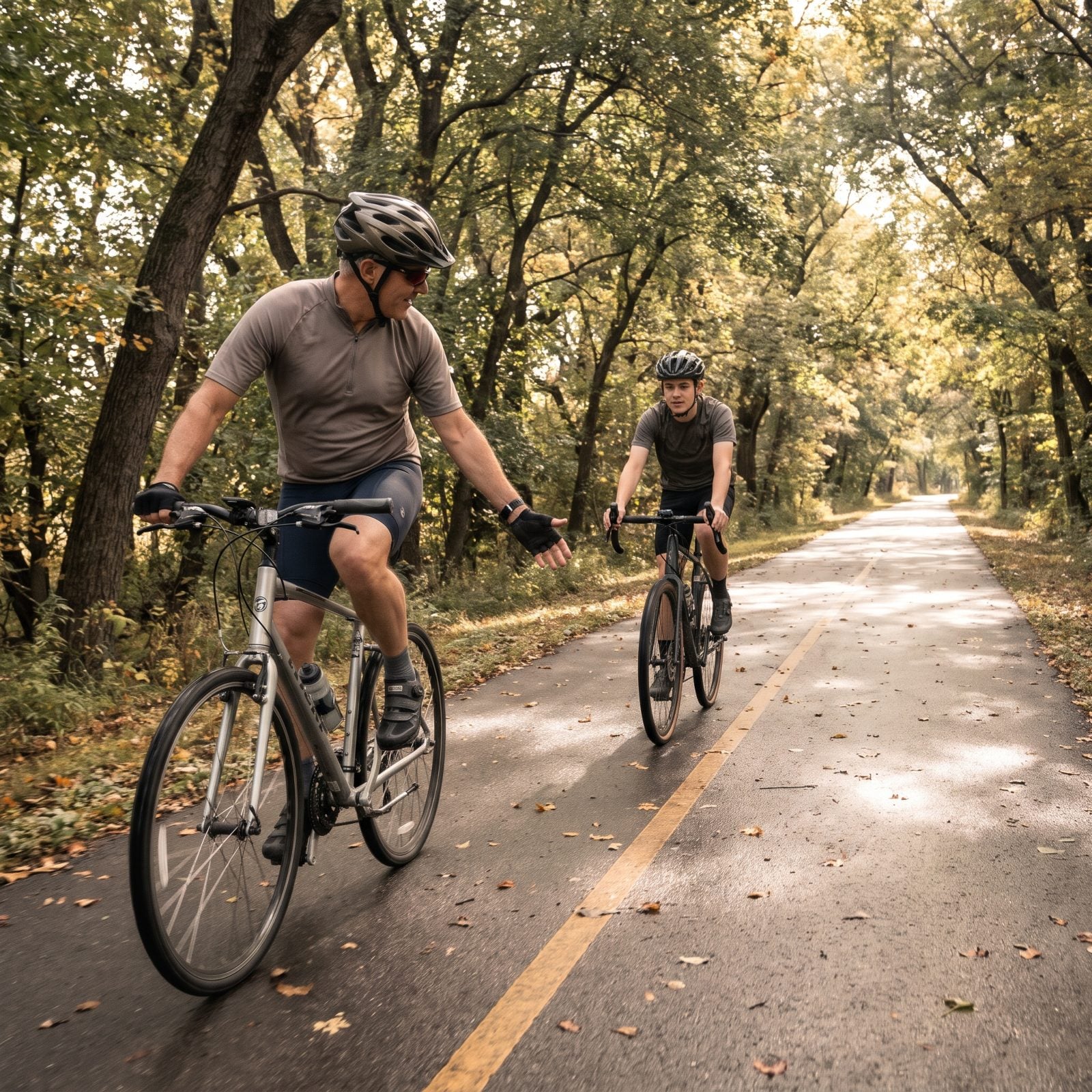
Brakes are silent, and that’s the whole problem. The rider behind you reads your body, not your mind, so if you grab a handful of brake with no warning you turn yourself into a surprise obstacle at speed.
Drop your left arm straight down, palm back, a second or two before you scrub speed. That flat hand says something’s coming. Costs you nothing, and it buys the person on your wheel the half-second they need.
31. Never Swing a Sudden U-Turn Across the Path
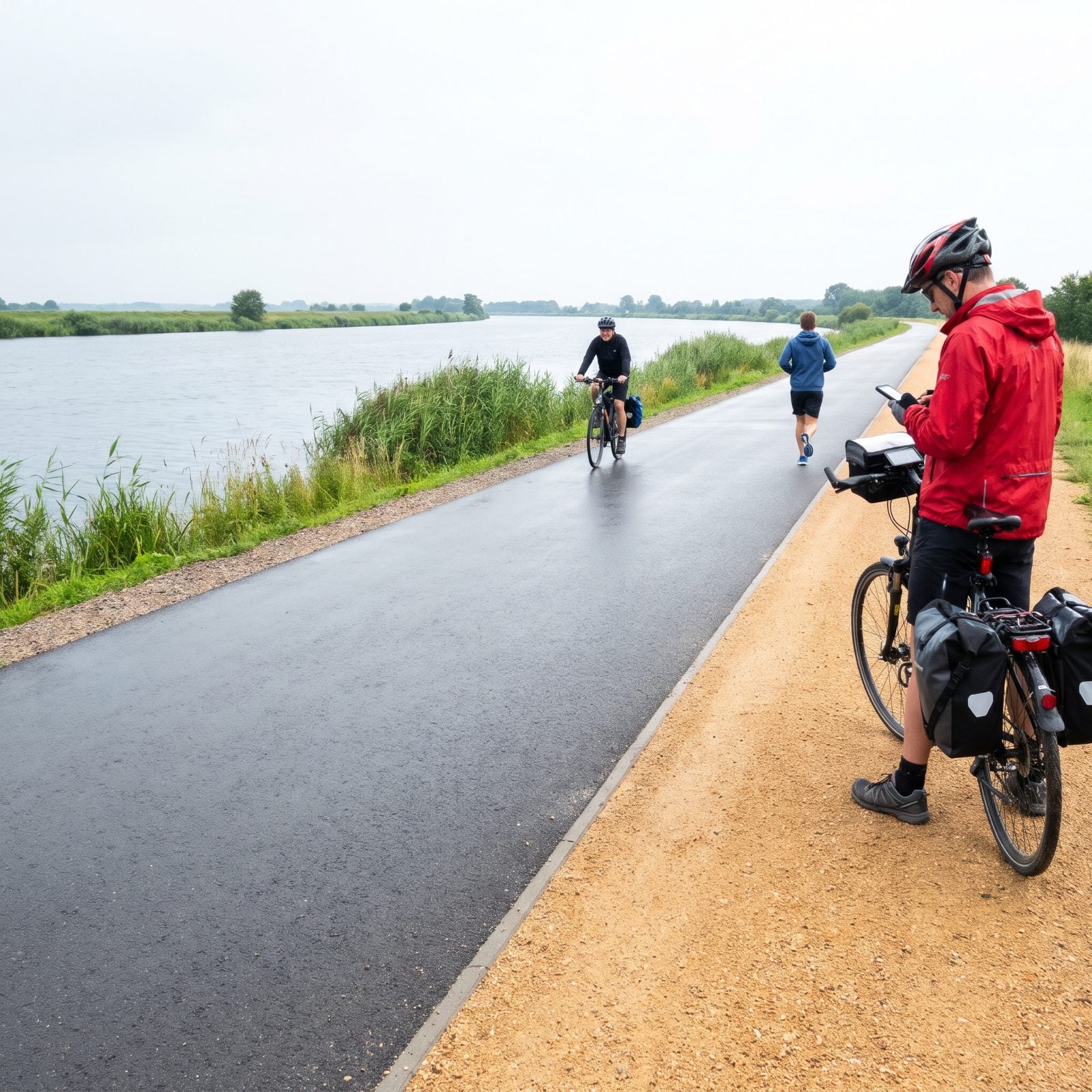
You missed the turn. It happens. The fix is not to carve a lazy arc straight across the centerline while someone is bombing down on you from behind at twenty.
Pull all the way to the right, come to a full stop, let traffic clear both directions, then turn. A U-turn eats the entire width of the path and you’re doing it blind to whatever’s behind your shoulder. We’ve watched this near-miss play out more times than we’d like. Slow, stop, look, swing around.
30. Don’t Cut the Corner Across Grass or Plantings
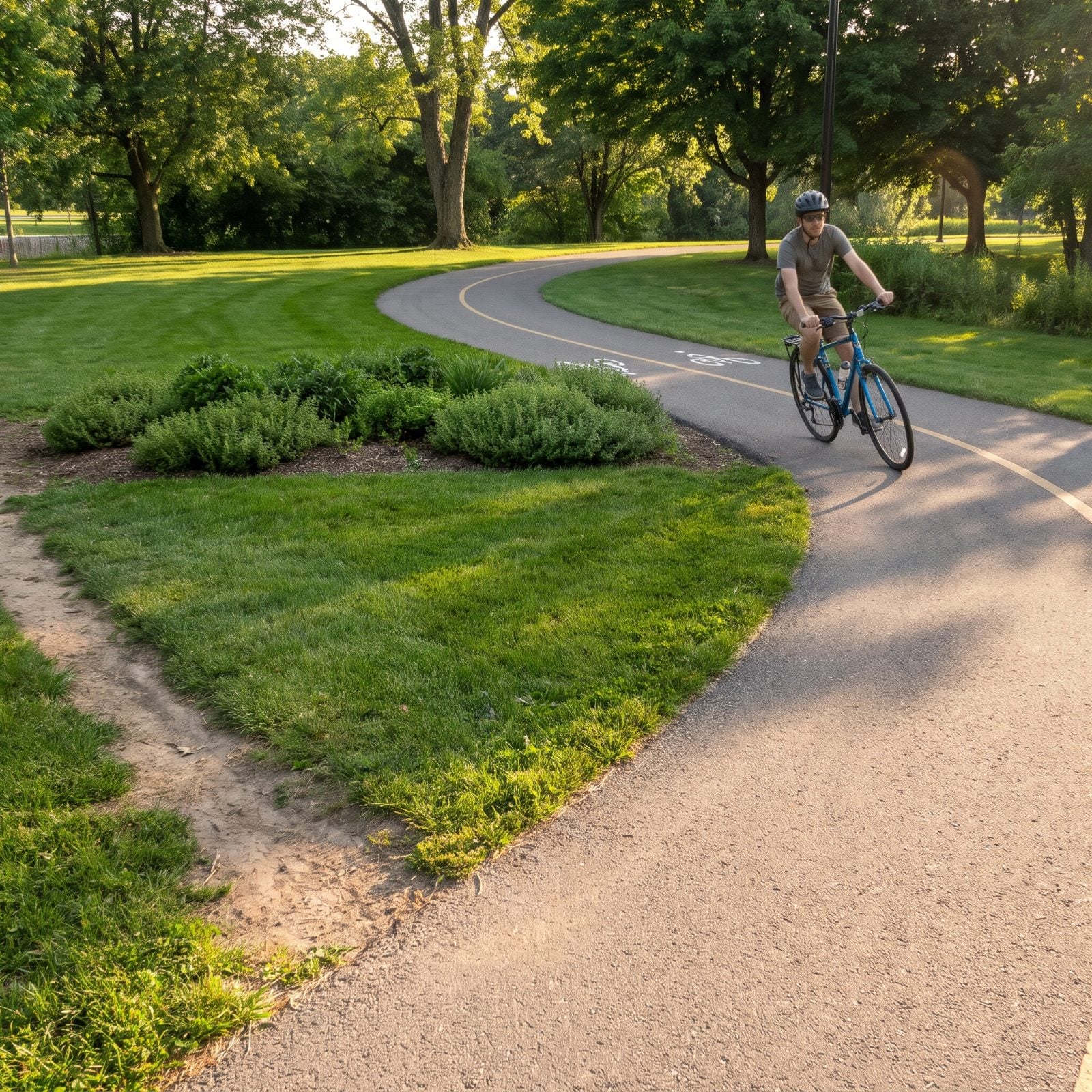
See that bald brown scar worn into the grass at the inside of every path corner? That’s not a trail. That’s a few thousand riders each deciding their two saved seconds mattered more than the landscaping.
Stay on the pavement. Cutting the corner wrecks the turf, kills the roots, and flings mud and grit right back onto the path for everyone behind you. Spring makes it worse — soft ground churns into ruts that never heal.
29. Ease Off Before a Puddle Instead of Soaking the People Beside You
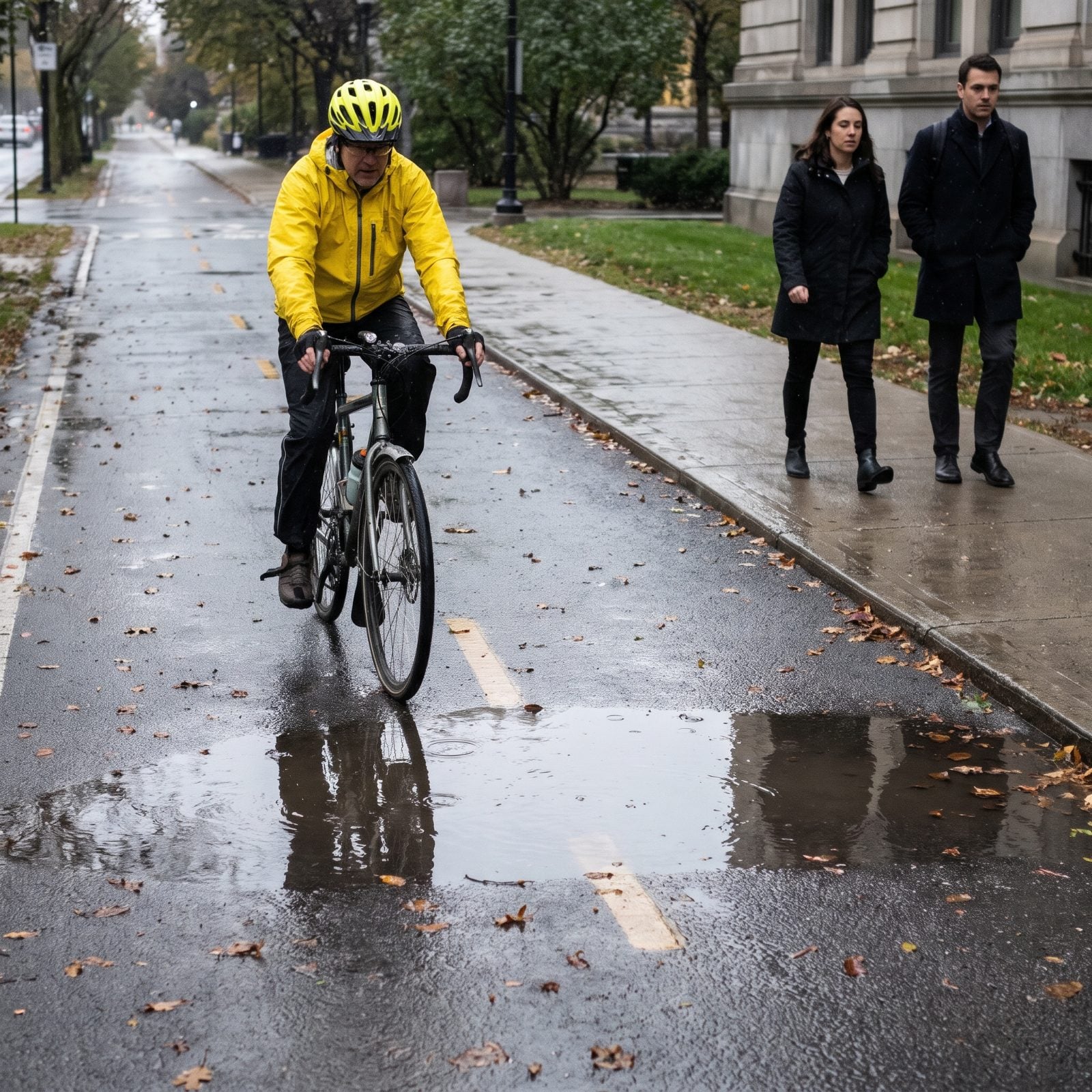
Nobody forgets the person who blasted through a puddle and left them walking the rest of the way with a soaked pant leg. A small cruelty, and entirely avoidable.
When the path’s still wet and someone’s within splash range, back off the pedals and roll through slow. A puddle hit at walking pace barely ripples. The same puddle at speed throws a brown rooster-tail for ten feet. Fenders help you, not them.
28. Yield Fully Before You Join the Path
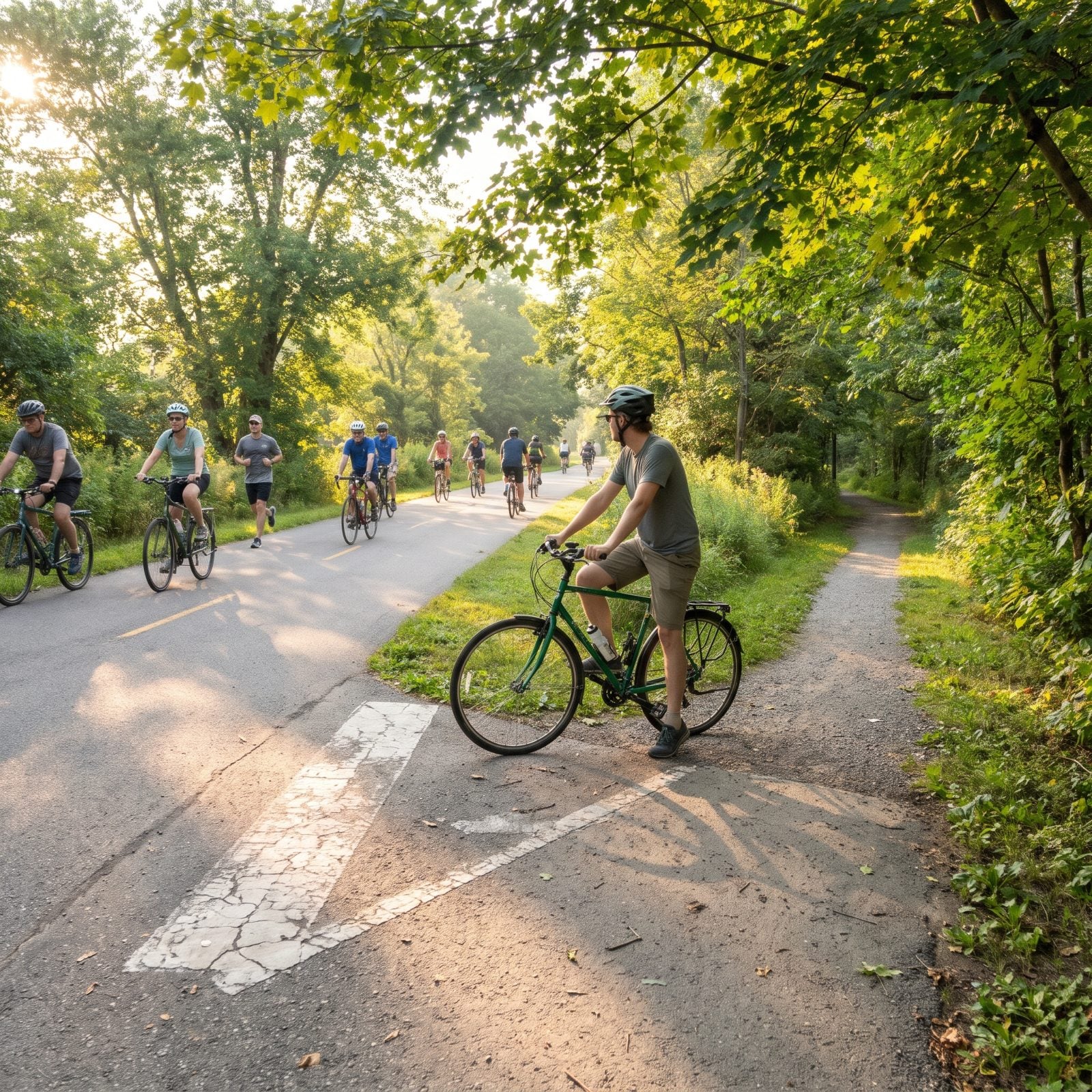
Merging onto a shared path works the same as merging onto a road. The people already rolling have the line, and you’re the one joining their flow — so you’re the one who waits.
Stop at the junction, look both ways properly, and pull out only when there’s real room, not a gap you’re gambling on. A rider mid-sprint can’t dodge someone who shoots out of a side trail without looking.
27. Let the Person Already in the Pinch Point Go First
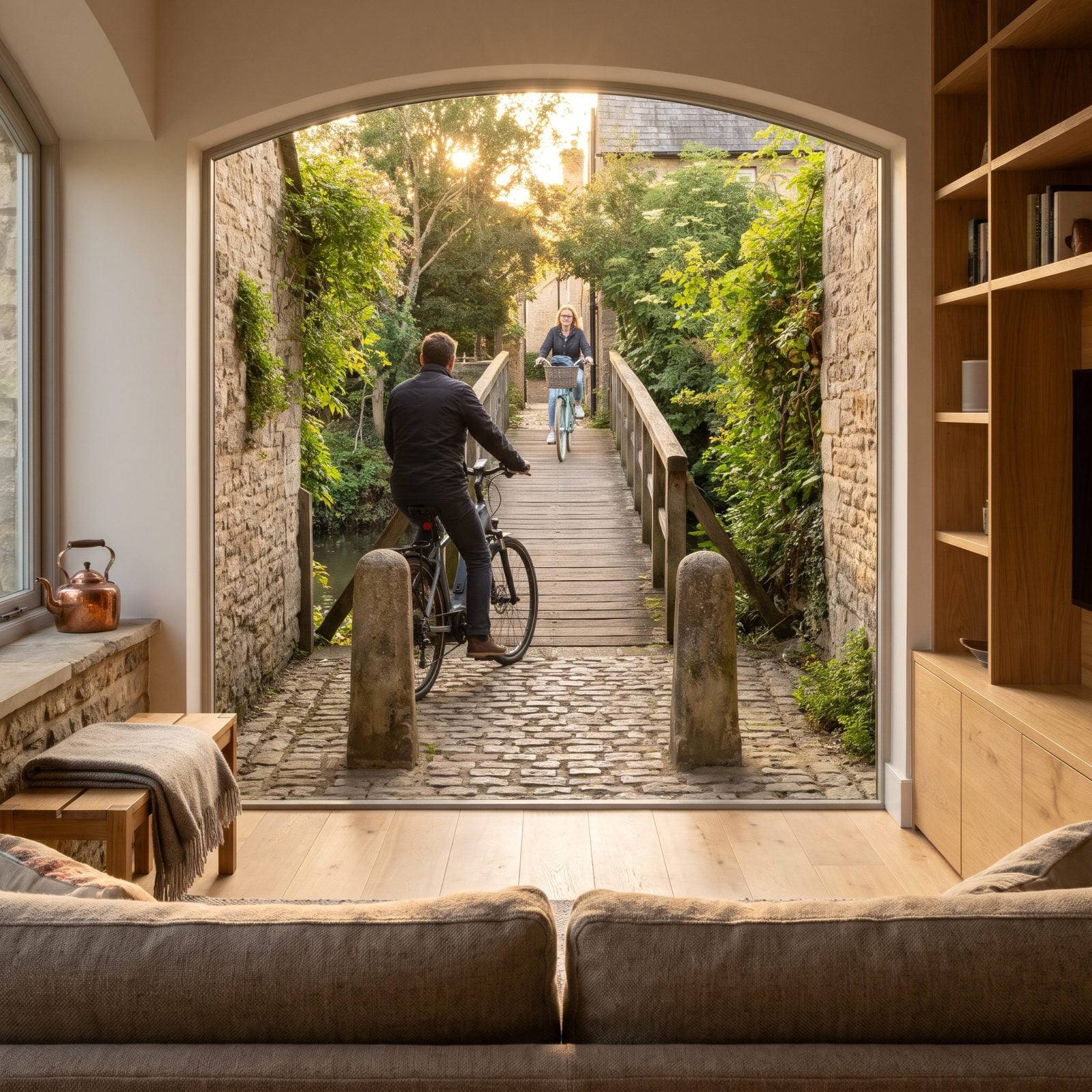
Every path has them. A narrow bridge, a gap between bollards, a spot where the trail chokes down to one rider wide.
Whoever got there first goes through, and you hang back and wait your turn. Trying to squeeze past someone already committed to the gap is how shoulders clip handlebars and somebody ends up in the bushes. Costs you five seconds and a little patience — which, honestly, most of us could use more of out there.
26. Drop to Walking Pace in Heavy Foot Traffic
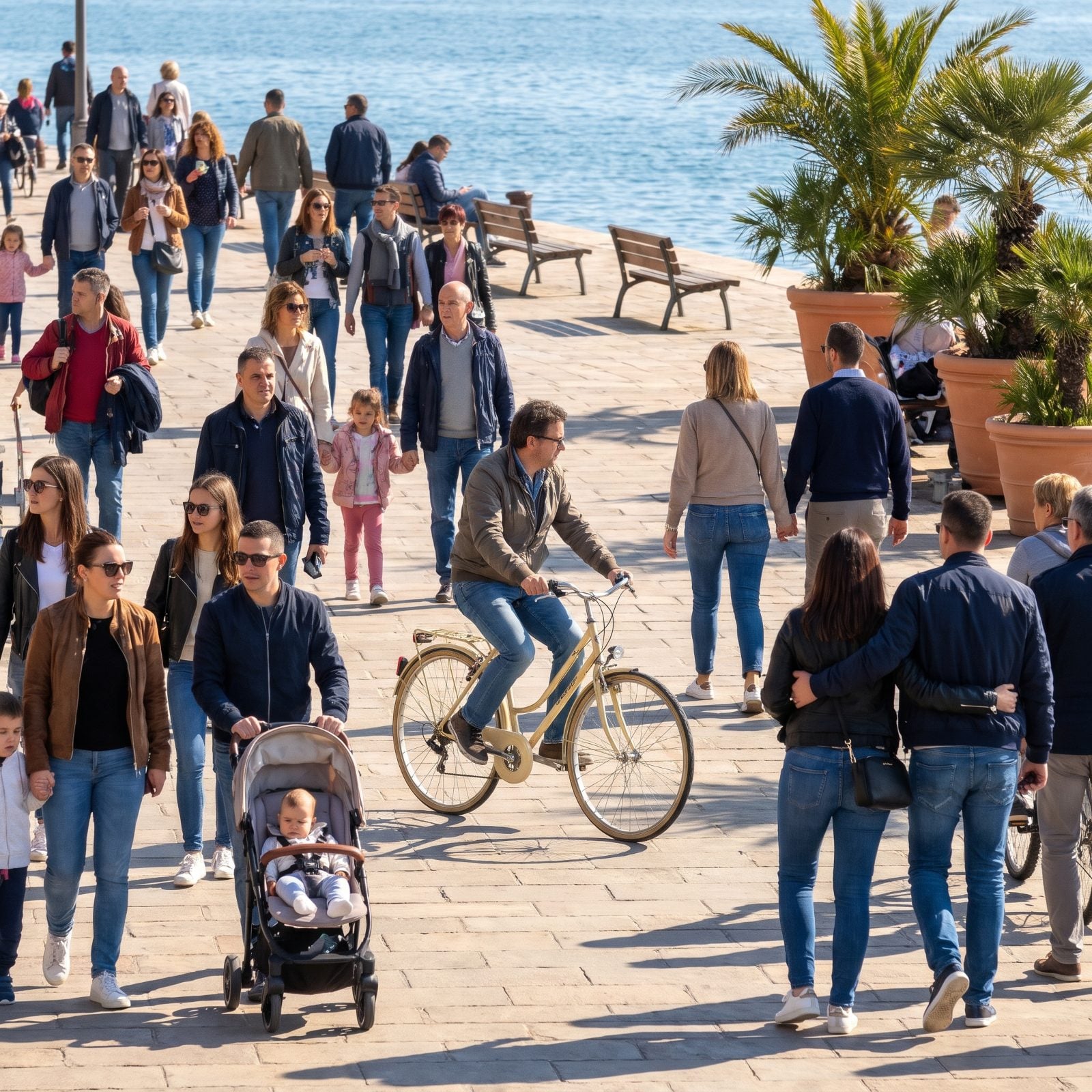
A path packed with walkers isn’t a path anymore. It’s a plaza that happens to have a line painted down it.
When you hit a crowd, drop to a speed you could step off your bike at instantly. Pedestrians stop without warning, change direction mid-stride, step sideways to point at a boat. You can’t predict any of it, so ride like you can’t — slow and ready. Nobody on a bike has the right to make a family flinch.
If you can’t comfortably talk to the person beside you, you’re going too fast for the crowd you’re in.
25. Give Kids a Wide Berth, Because They’ll Zig
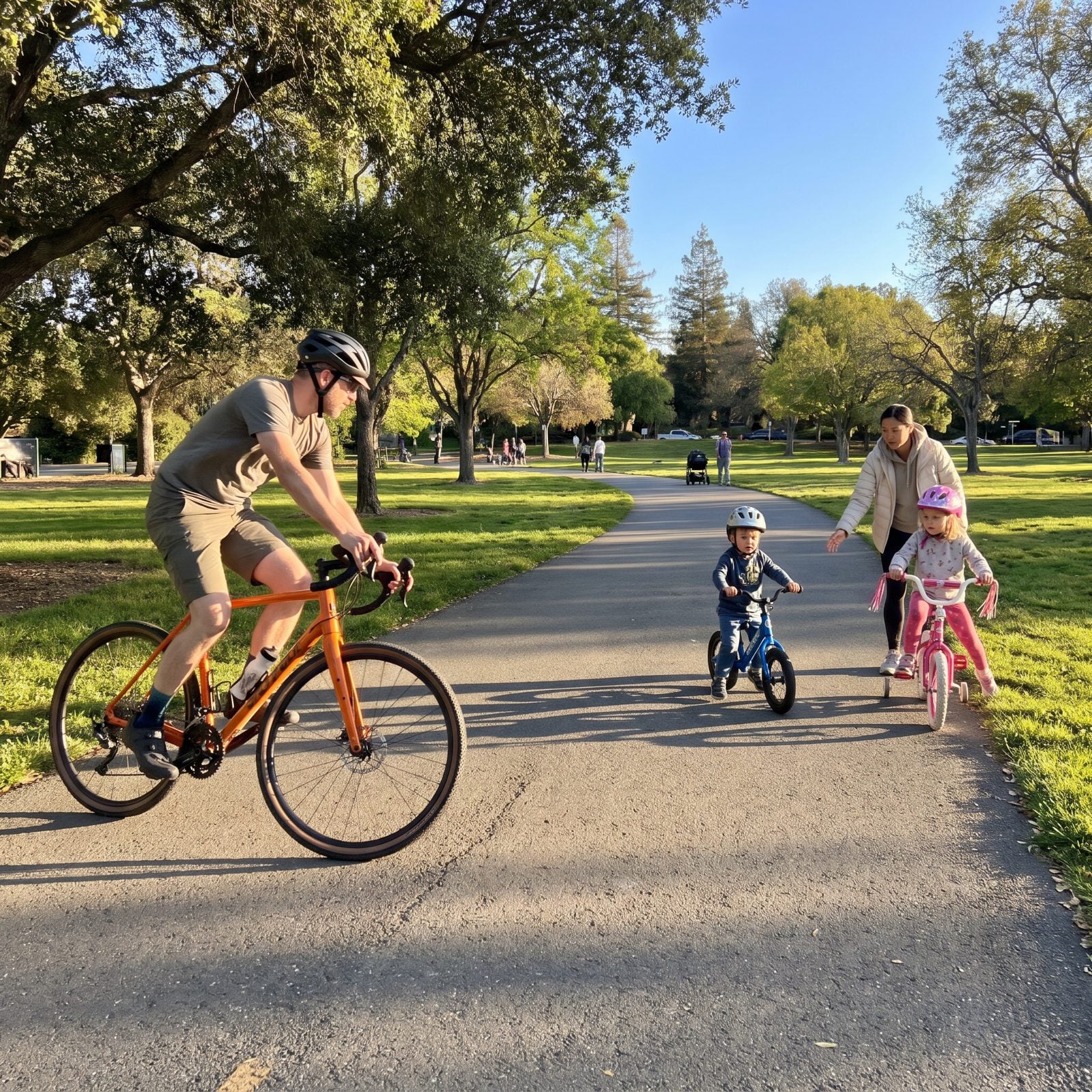
A kid on a bike is a coin flip. They’ll hold a straight line for twenty feet and then, for no reason anyone will ever understand, cut hard left to look at a duck.
Assume exactly that. Give children twice the room you’d give an adult, slow right down as you come up on them, and never thread a close gap. The parent is already nervous. Don’t be the reason.
24. Never Ride Between a Dog and the Hand Holding the Leash
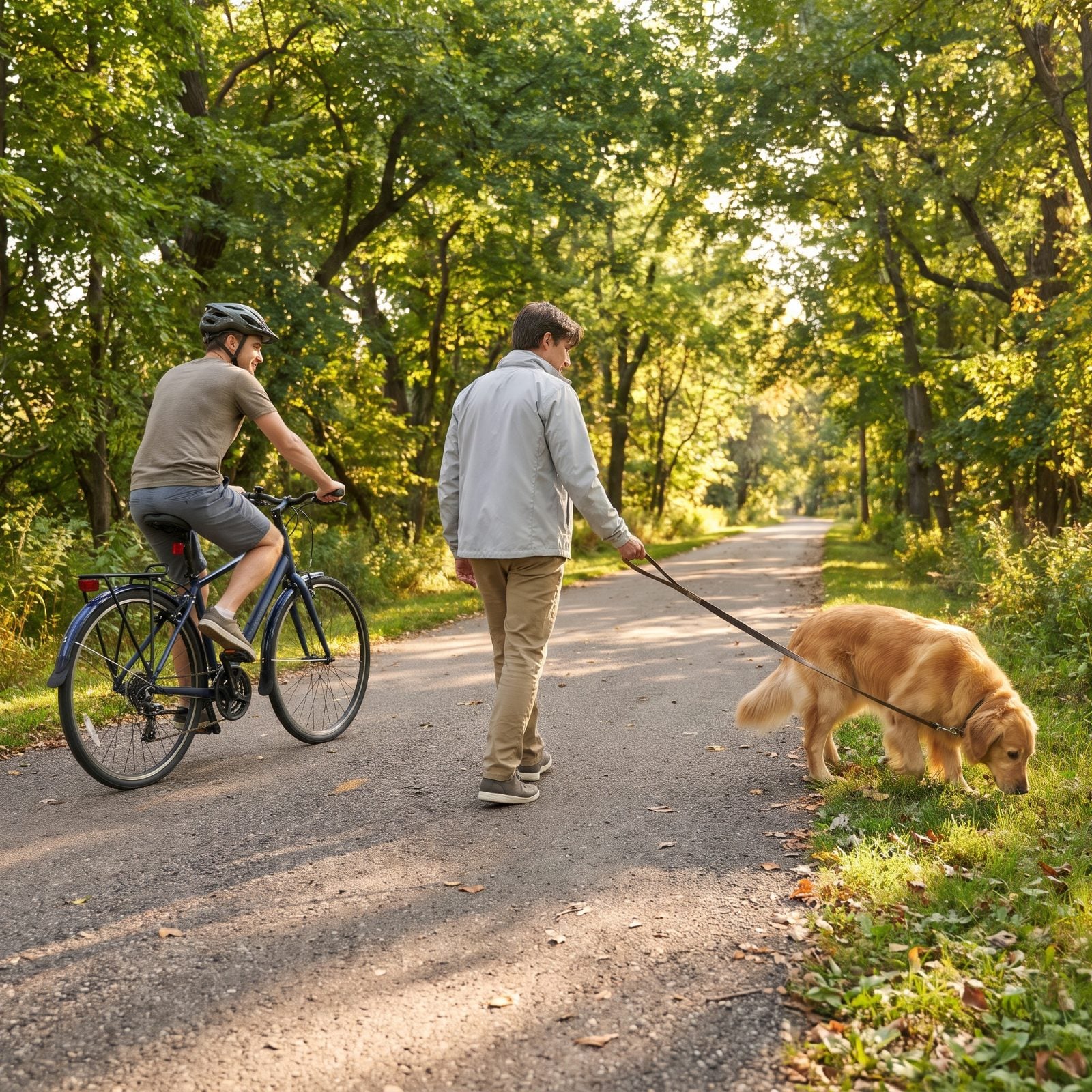
A leash is a tripwire you can’t always see. Ride too close to a leashed dog and the line can snag on your frame, tying the dog to your bike, which ends badly for the rider, the dog, and the handler all at once.
Pick a side. Pass with both of them on the same side of you, usually the far outside, and call out early so the handler can gather the leash in. One clear “on your left” gives them time to reel the slack and keep the dog close.
23. Roll Past Leashed Dogs Slow Enough Not to Spook Them
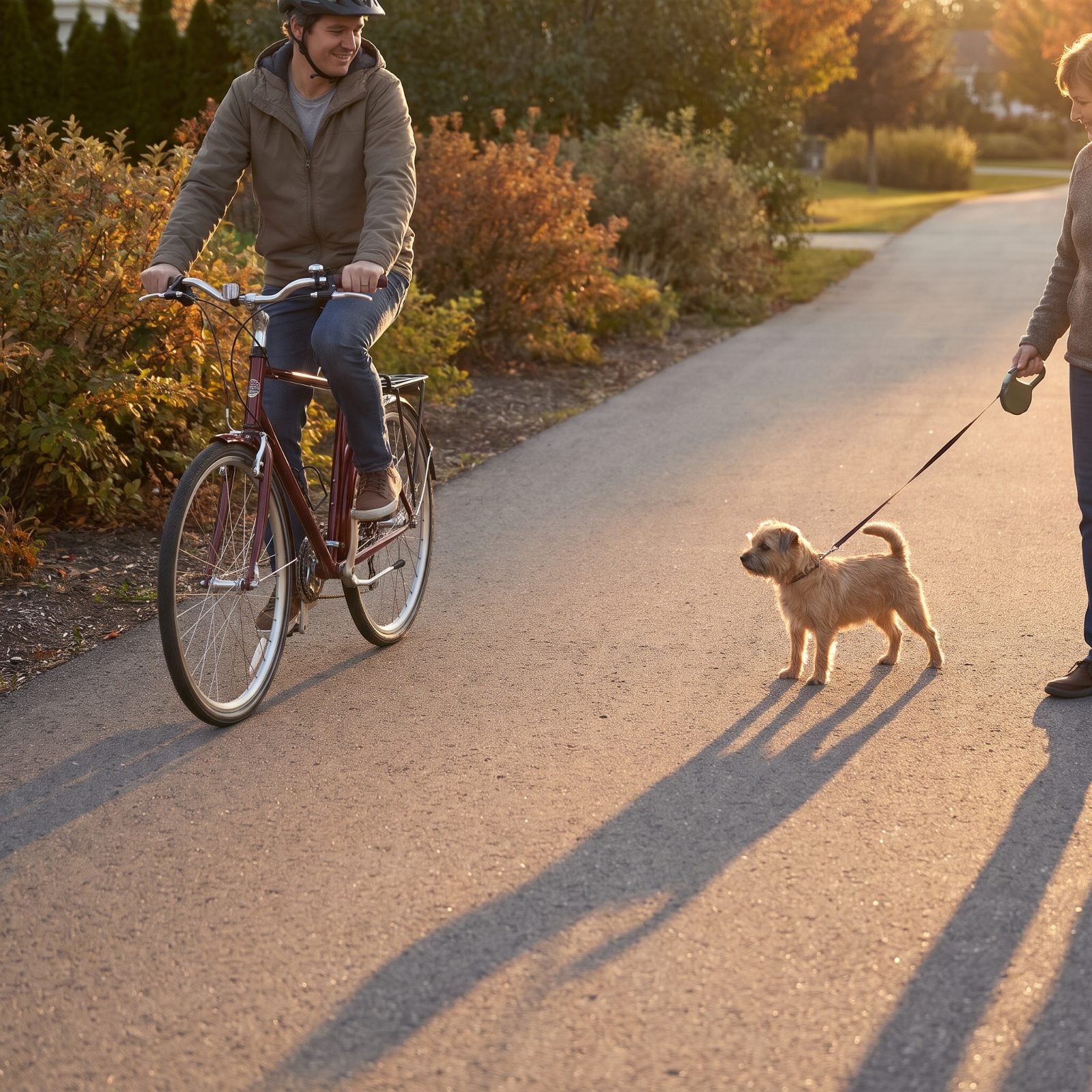
A bike coming up fast and silent from behind reads, to a dog, like a predator. That’s not the dog being bad — that’s instinct, and a startled dog can lunge, spin, or bolt straight into your line.
Back way off the speed before you reach them. A calm, slow pass gives the animal time to clock you as harmless and gives the owner time to shorten the lead. Some dogs are bombproof. Plenty aren’t, and you’ve no way to know which is which until it’s too late to matter. So you treat every one like it might jump.
22. Speak Calmly Before You Pass a Horse
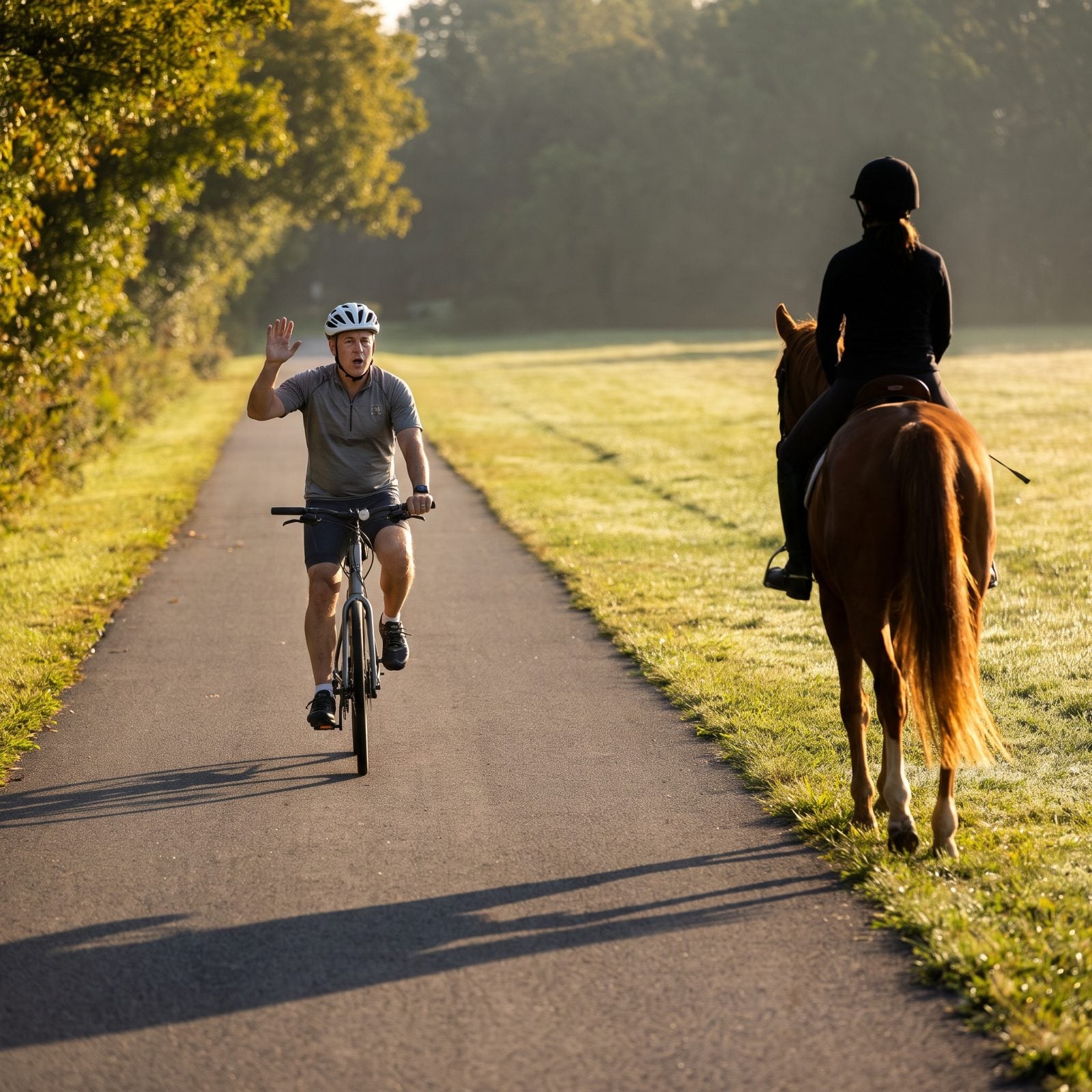
A horse does not care that you have the right of way. It cares that something it can’t identify is bearing down fast and silent from behind — which is exactly the shape of a predator. A thousand pounds of spooked animal is a bad outcome for everyone, you very much included.
Bells make it worse. Thin, sudden sound, the kind that sets an animal off. A human voice does the opposite. Say “hello” or “okay to come past?” while you’re still well up the path, let the rider answer, then pass wide and slow on whichever side they tell you.
After asking equestrian friends how riders should act around horses, a gravel cycling writer who used to ride explains: “Many horses see the rider and bicycle combination as a potential threat. Ideally, you want the horse to identify you as a friendly human, and the bicycle means no harm.”
21. Give Wheelchairs and Mobility Scooters Real Room
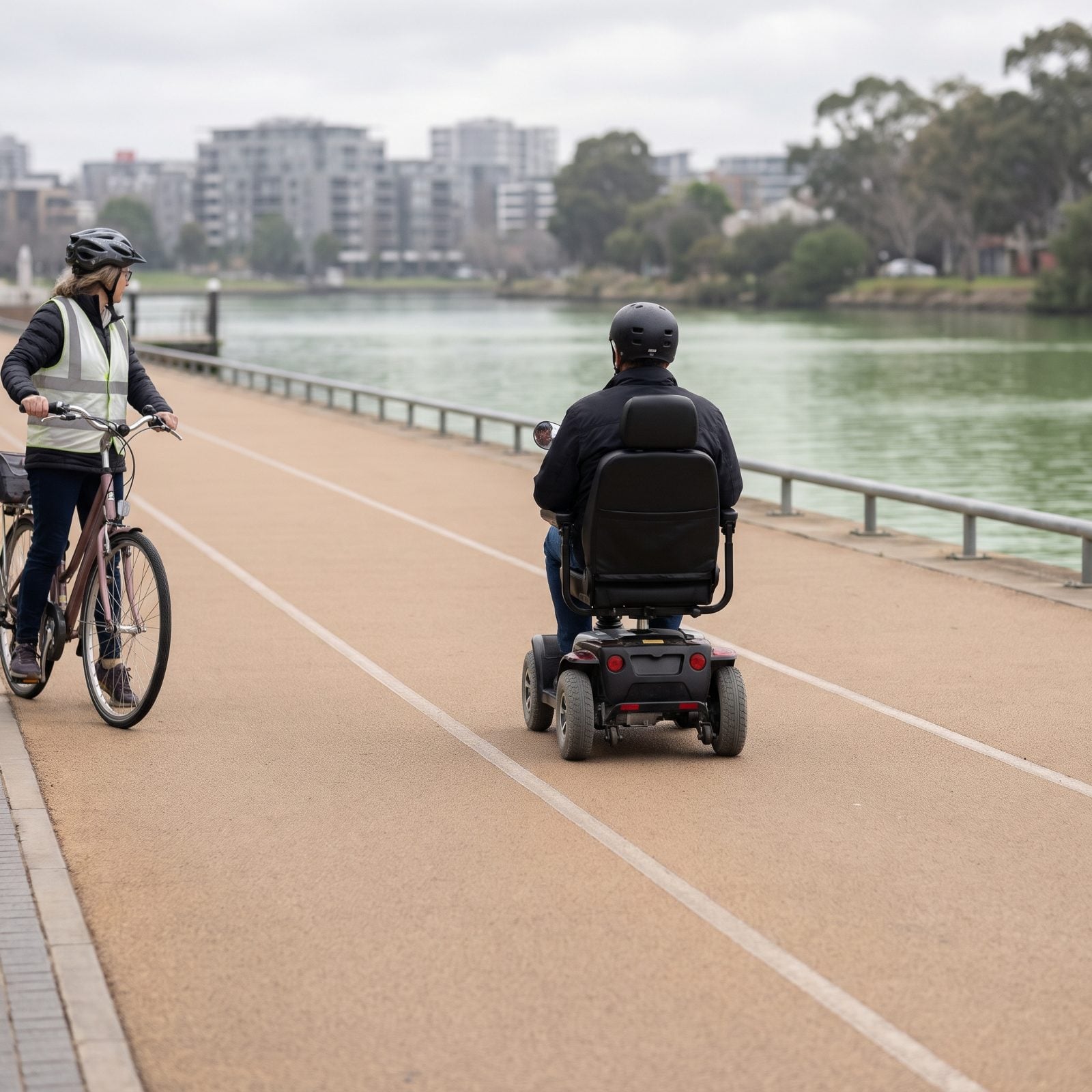
Passing a wheelchair or mobility scooter is nothing like passing another cyclist. The steering is different. A manual chair can drift when the user pushes one wheel, and a scooter can turn sharper than you’d ever expect — or just stop dead. You don’t know their turning radius, so why bet your front wheel on a guess?
Give more space than feels necessary, slow right down, and never pass on a blind bend. If the path is narrow, wait. Thirty seconds costs you nothing.
20. Expect Skaters to Swing Across the Whole Path
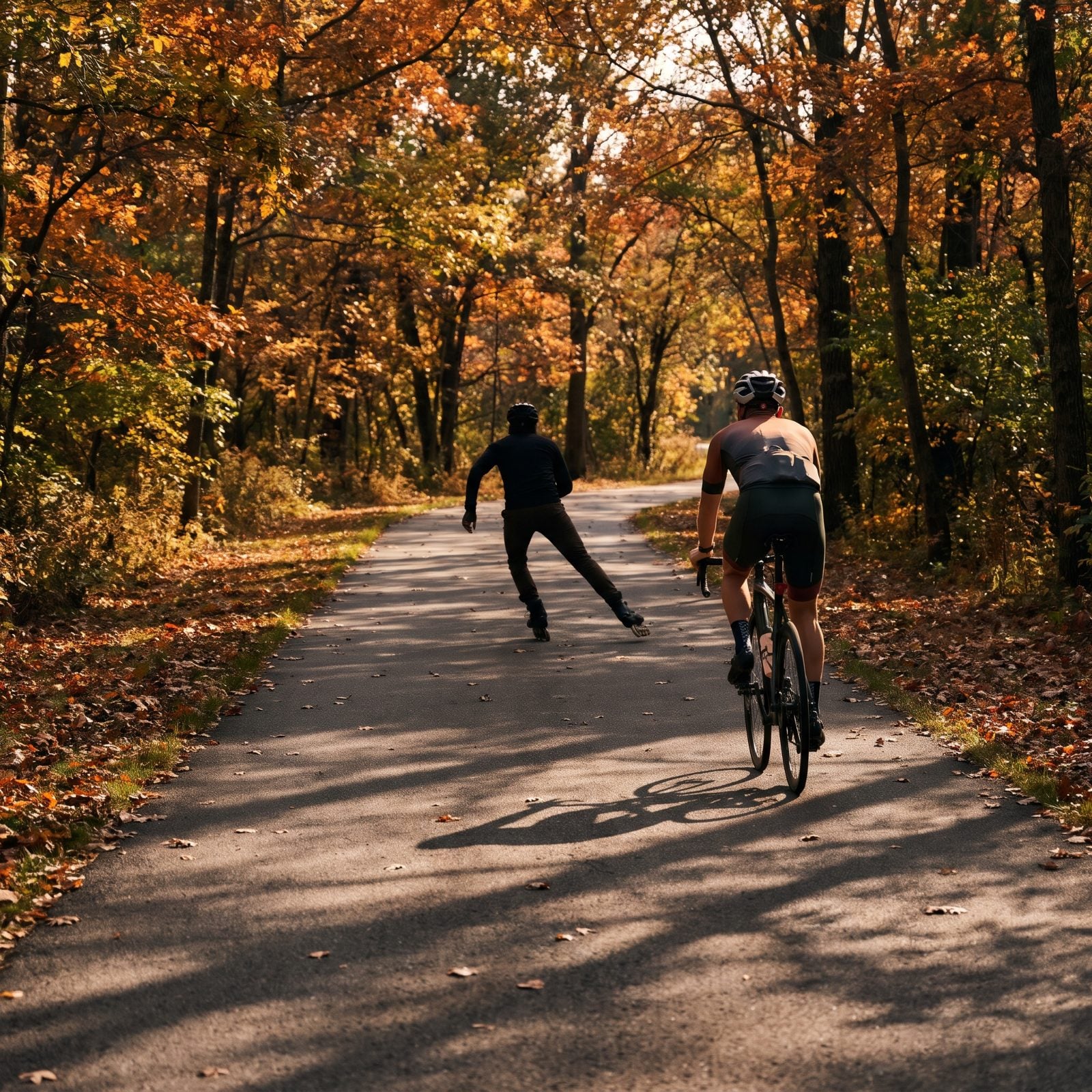
A cyclist rides a line. A skater does not. Every push sends an inline skater or longboarder swinging a couple of feet sideways, and that sweep is how they move — not a mistake you can honk out of them.
So watch the legs before you decide to pass. A skater who just planted a stride left is about to swing right, and if you aim your pass into that swing you both lose. Wait for the rhythm, pick the gap, pass wide. The whole lane is theirs until you’re clear past.
19. Never Assume a Runner Heard Your Bell
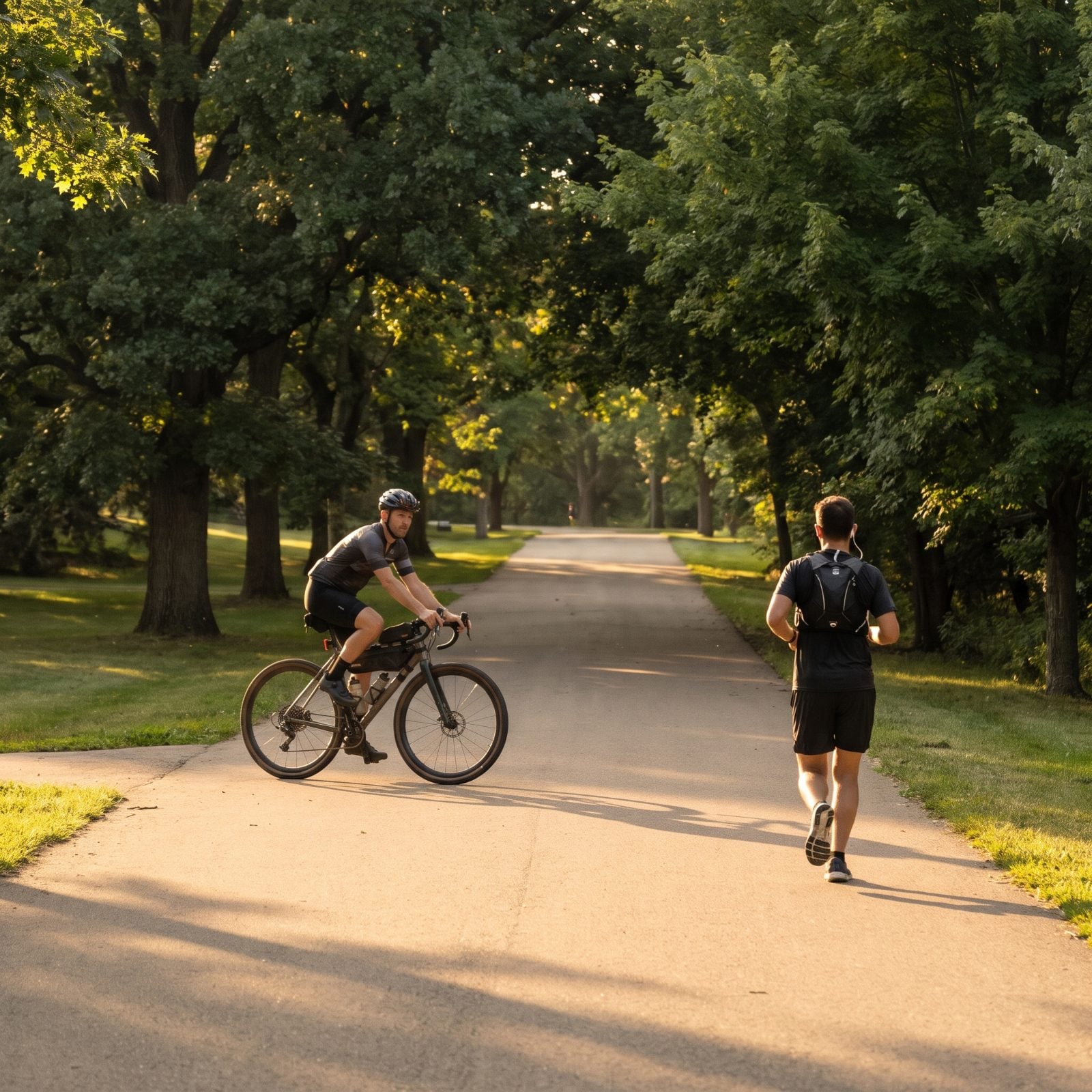
Half the runners on any path have earbuds in. The other half have wind in their ears and their own breathing drowning out everything else. Your bell is a courtesy, not a guarantee.
Ring early, then plan your pass as if they never heard a thing. Swing wide, slow down, and leave them room to drift or glance over a shoulder without clipping you. The classic surprise is a runner who suddenly spins around to check traffic at a crossing. Leave enough margin that their surprise isn’t your crash.
18. Don’t Trust a Driver to Yield Where a Path Crosses a Driveway
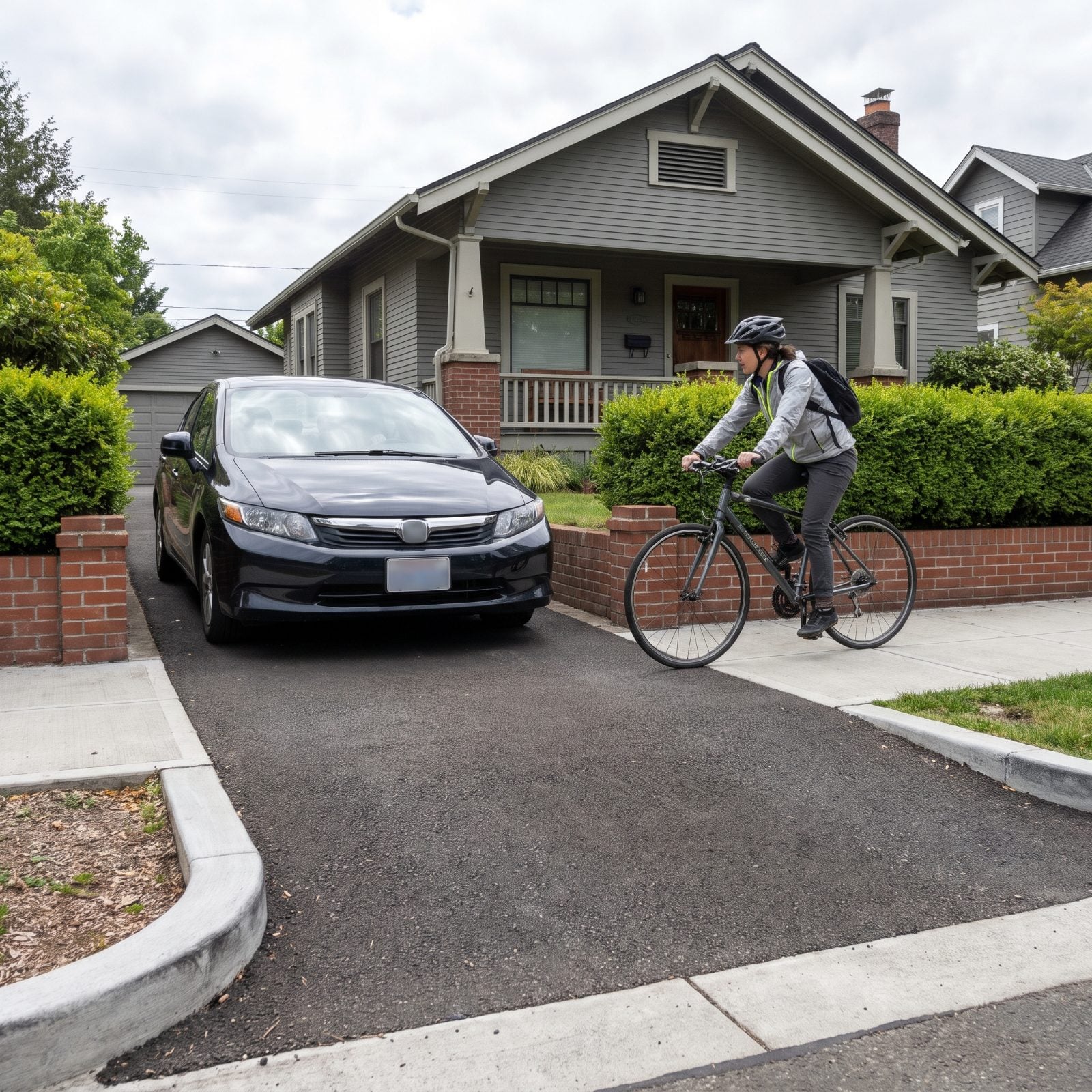
The most dangerous point on many paths is where it crosses a driveway or parking-lot exit. Drivers pulling out are hunting for cars. They look left for a gap in traffic, and they do not look for a cyclist coming along the path at their fender.
You might have the legal right of way. Won’t help you much. Cover your brakes, make eye contact if you can, and be ready to stop even when you shouldn’t have to. Assume you’re invisible until a driver proves otherwise.
17. Keep the Curb Ramp Clear While You Wait
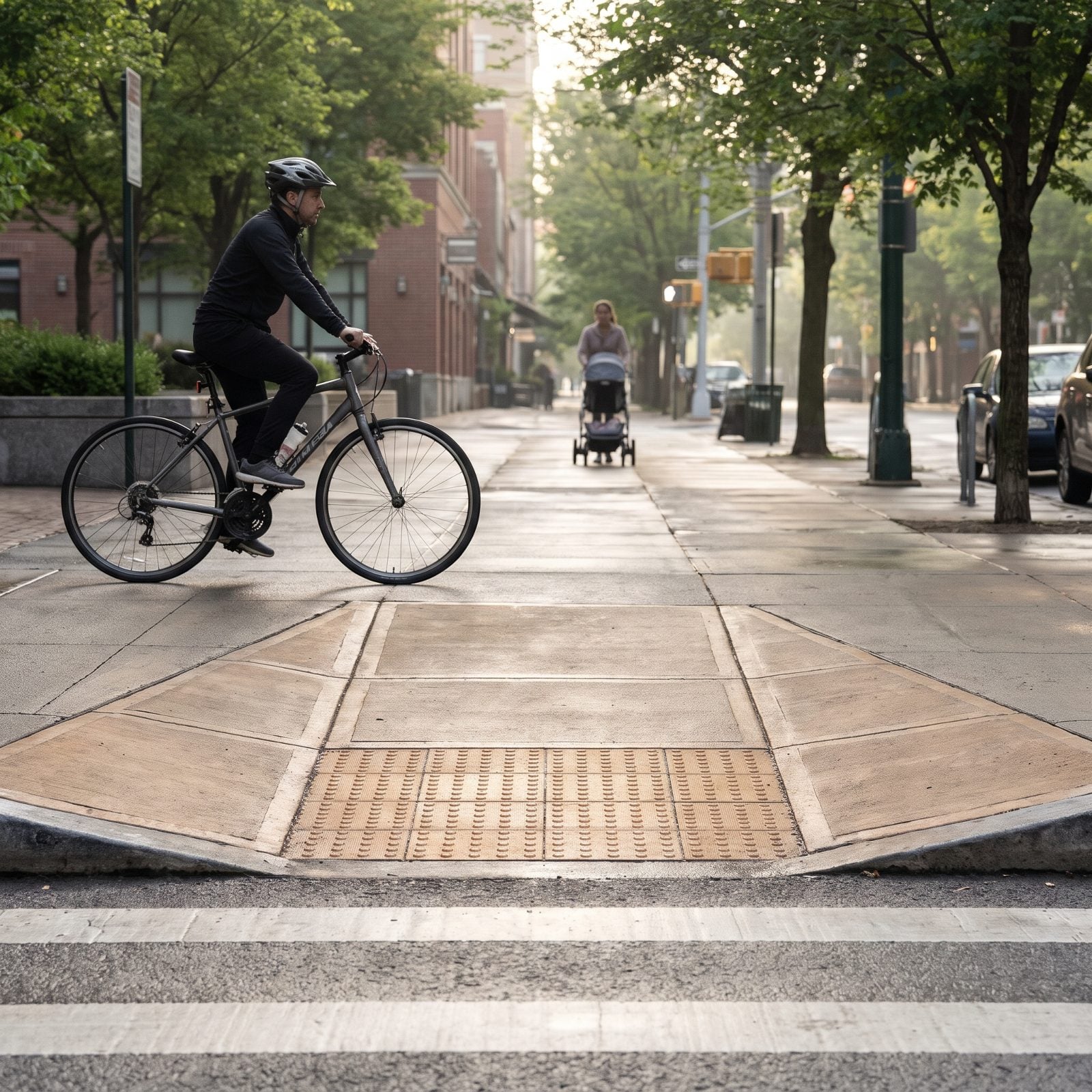
You roll up to a crossing, stop right on the ramp, and wait for the light. Easy mistake. But that ramp is the only way onto the path for a wheelchair, a stroller, or anyone who can’t just hop a curb.
Pull to the side and leave the slope open. Costs you one small shuffle, and it means nobody’s stuck behind you waiting for you to notice them. Nobody posts this rule anywhere. The people who need the ramp clock instantly who gets it and who doesn’t.
16. Point Out the Hazard to the Riders Behind You
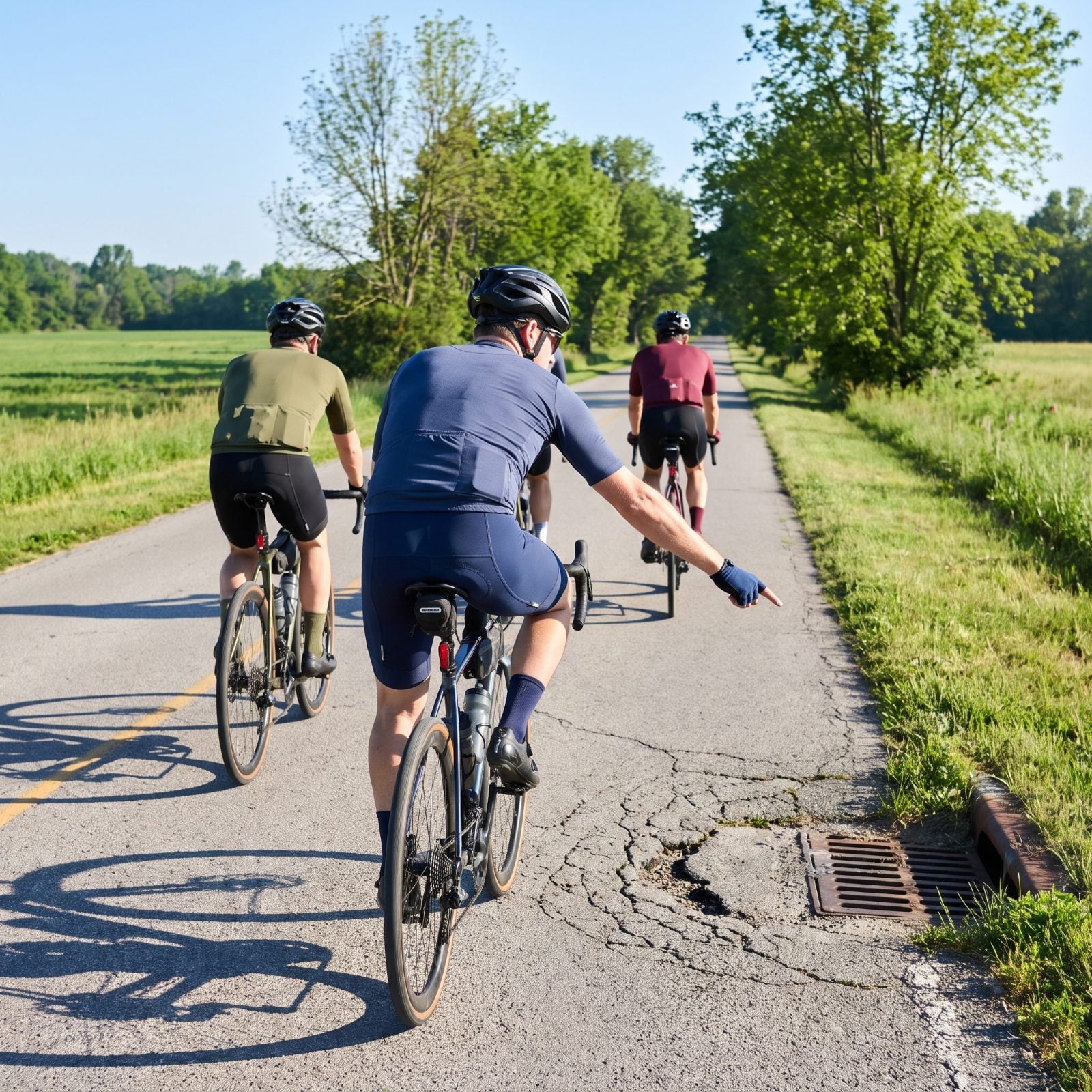
Ride in company and your front wheel sees the pothole, the glass, the storm grate, the wet patch. The rider two bikes back sees your rear wheel and nothing else. A quick point of the hand or a short call saves them a pinch flat — or worse.
It works alone too, on a busy path. Nodding to oncoming riders about a downed branch ahead is the kind of small decency that keeps the whole thing running. You pass it forward because someone once did it for you.
A hand drops toward a crack in the pavement and three riders behind never knew it was there. That’s the whole system.
On riding in company past path obstructions, a cycling safety instructor advises: “When riding with others, the first rider should point and call out bollards. Move as far away from them as possible to ensure the riders behind see them.”
15. Slow Down Before Tunnels and Underpasses
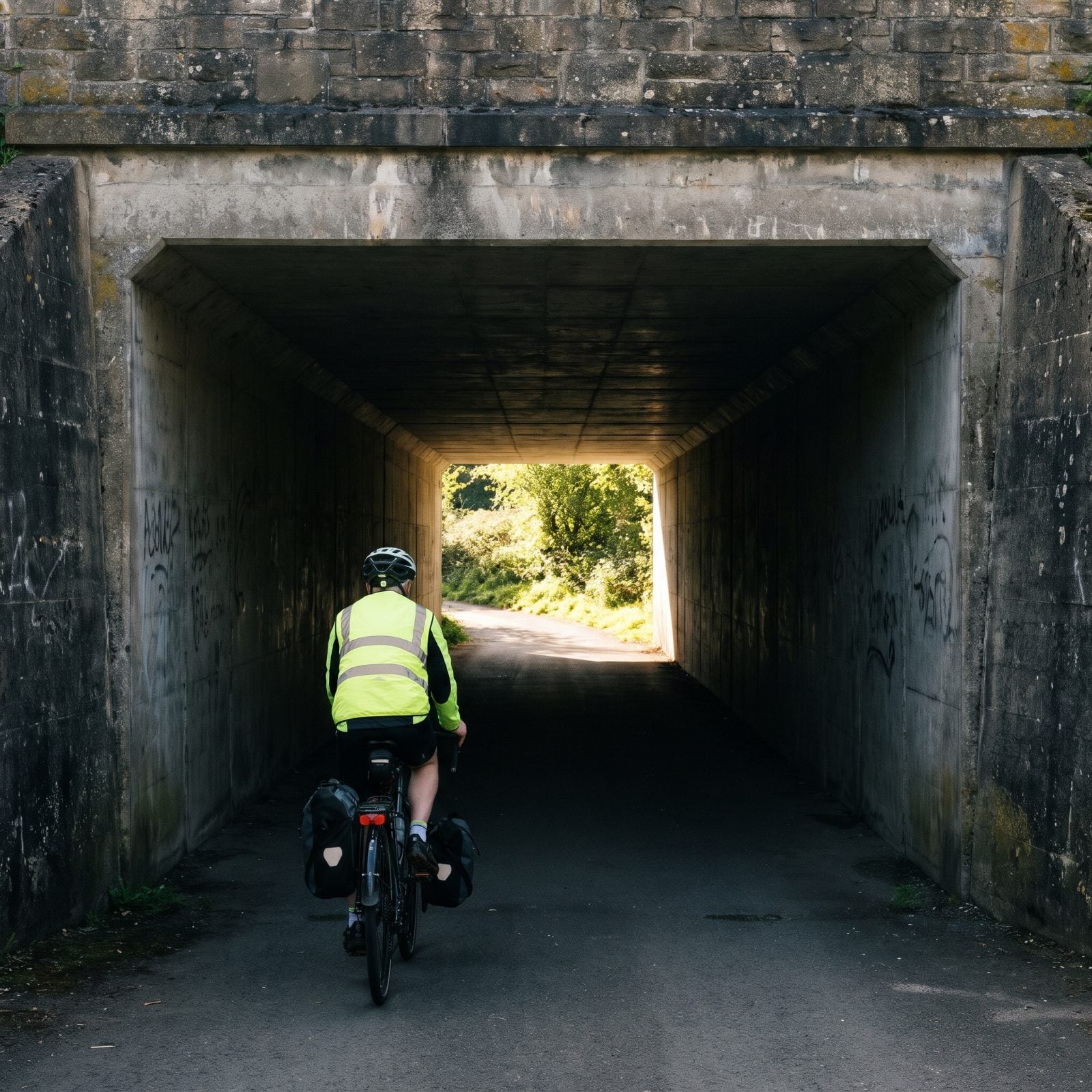
Your eyes need a moment to adjust going into a tunnel, and another coming out. For a few seconds you’re riding half-blind, and so is everyone coming the other way. Underpasses also funnel every user into one tight, often blind space where sound echoes and the sight lines just vanish.
Back off the speed before you enter. Keep right, skip the bell echo chamber, and don’t pass inside. A dog walker and an oncoming rider meeting in the dark at the midpoint — that’s how underpass pile-ups happen.
14. Control Your Speed on the Long Descents
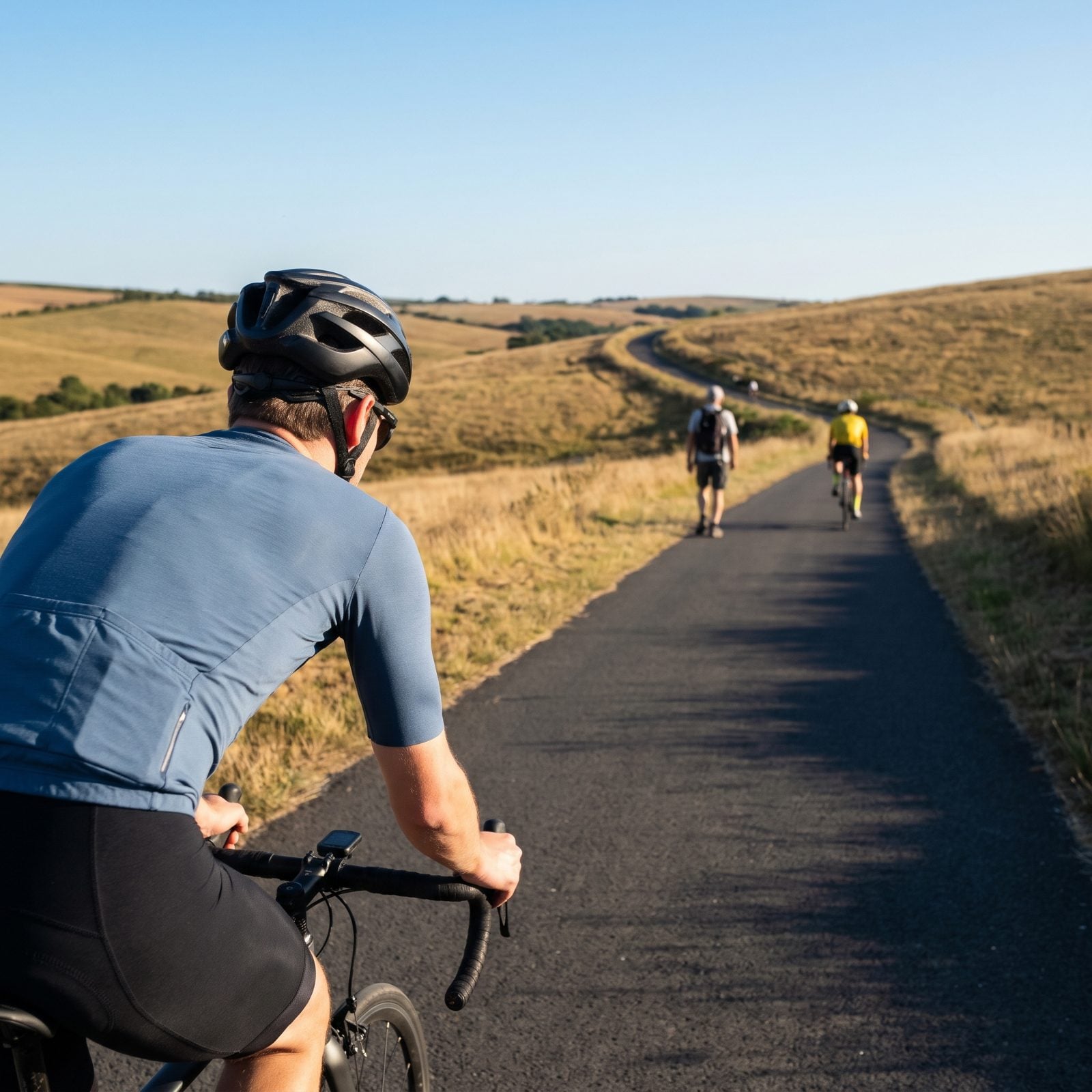
A downhill on an empty road is a reward. A downhill on a shared path is a liability, because gravity does not care that there’s a toddler on a balance bike around the next bend.
The gap between your speed and a walker’s speed is where crashes live. On a descent that closing speed turns brutal, and your stopping distance has already doubled. Ride a pace where you could stop for something you haven’t even seen yet. The view will still be there at twenty instead of thirty-five.
13. Match Your Speed to Visibility and the Crowd
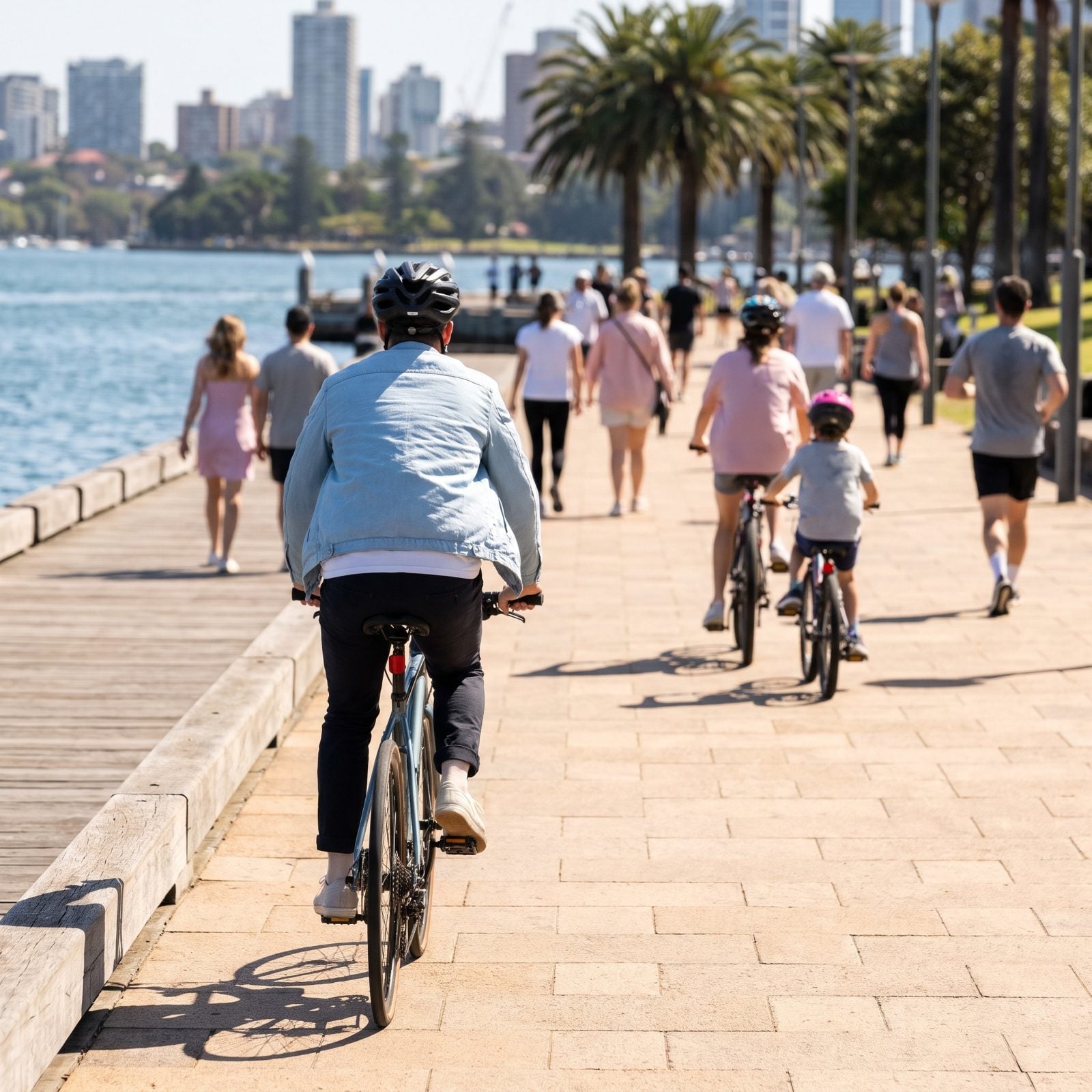
The right speed on a path isn’t a number. It’s a reading of the room. An empty trail on a cold Tuesday morning is a different animal from a packed waterfront on a Saturday in July, and your pace should show you know the difference.
Crowded? Go slow enough to stop for a kid who darts out, a dog that lunges, a group that fans across the whole lane. Short sight lines? Slow enough to handle whatever’s hidden. Fast riding belongs where fast riding is safe. Nobody posts that rule, but everybody around you can tell who follows it.
12. E-Bike Power Doesn’t Buy You a Faster Pass
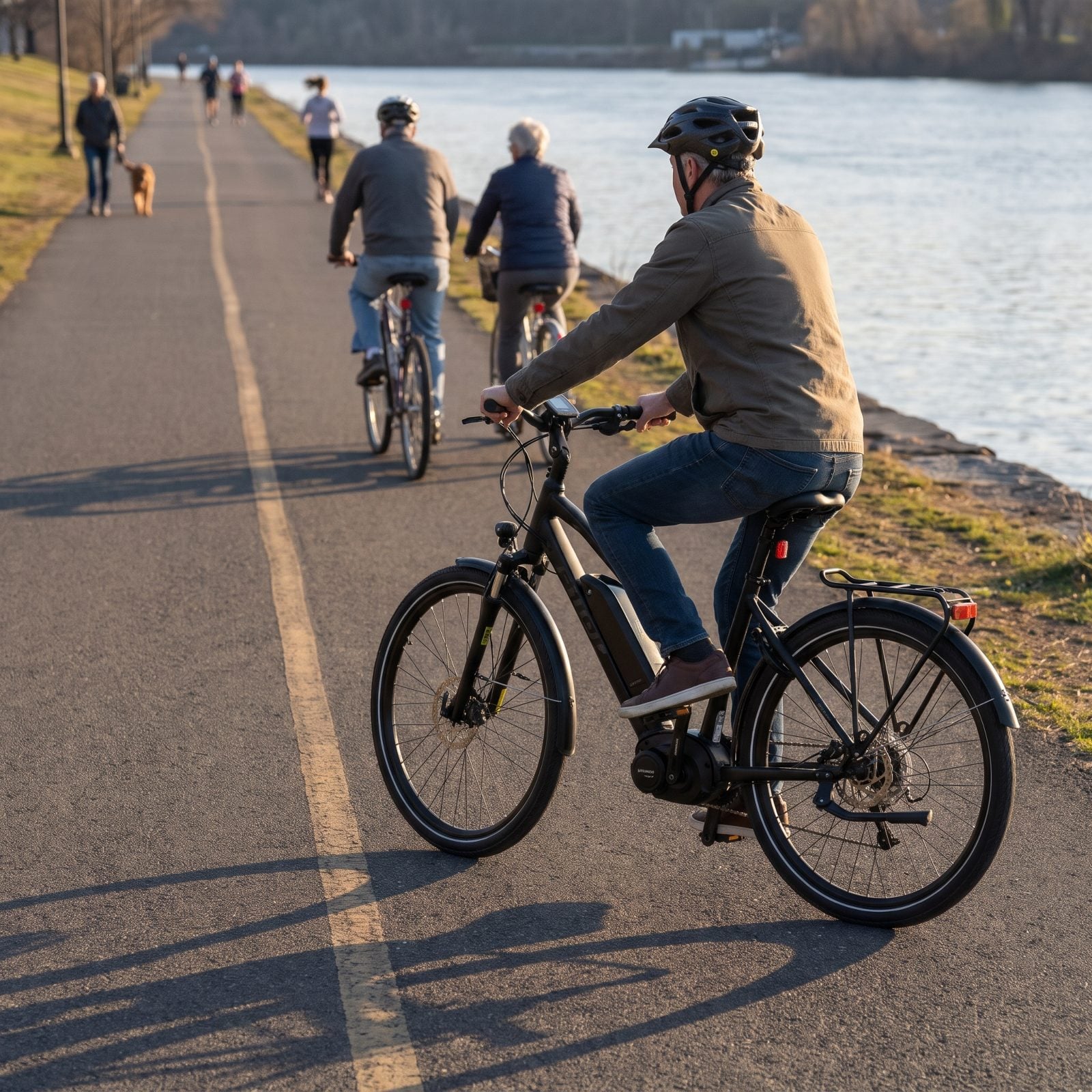
An e-bike hands you 20 miles per hour without the work, and that’s the trap. You roll up on a kid wobbling along at 6, your brain still thinks you’re a plain bicycle, and suddenly you’re squeezing by with a foot of room at triple their speed.
What hurts people is the speed difference, not the motor. A clean overtake looks the same whether you’re assisted or not: slow early, call out, swing wide, and only twist the throttle back once you’re well clear. The assist should buy you more margin on a pass, not less.
11. Give Child Trailers Room for a Track You Can’t See
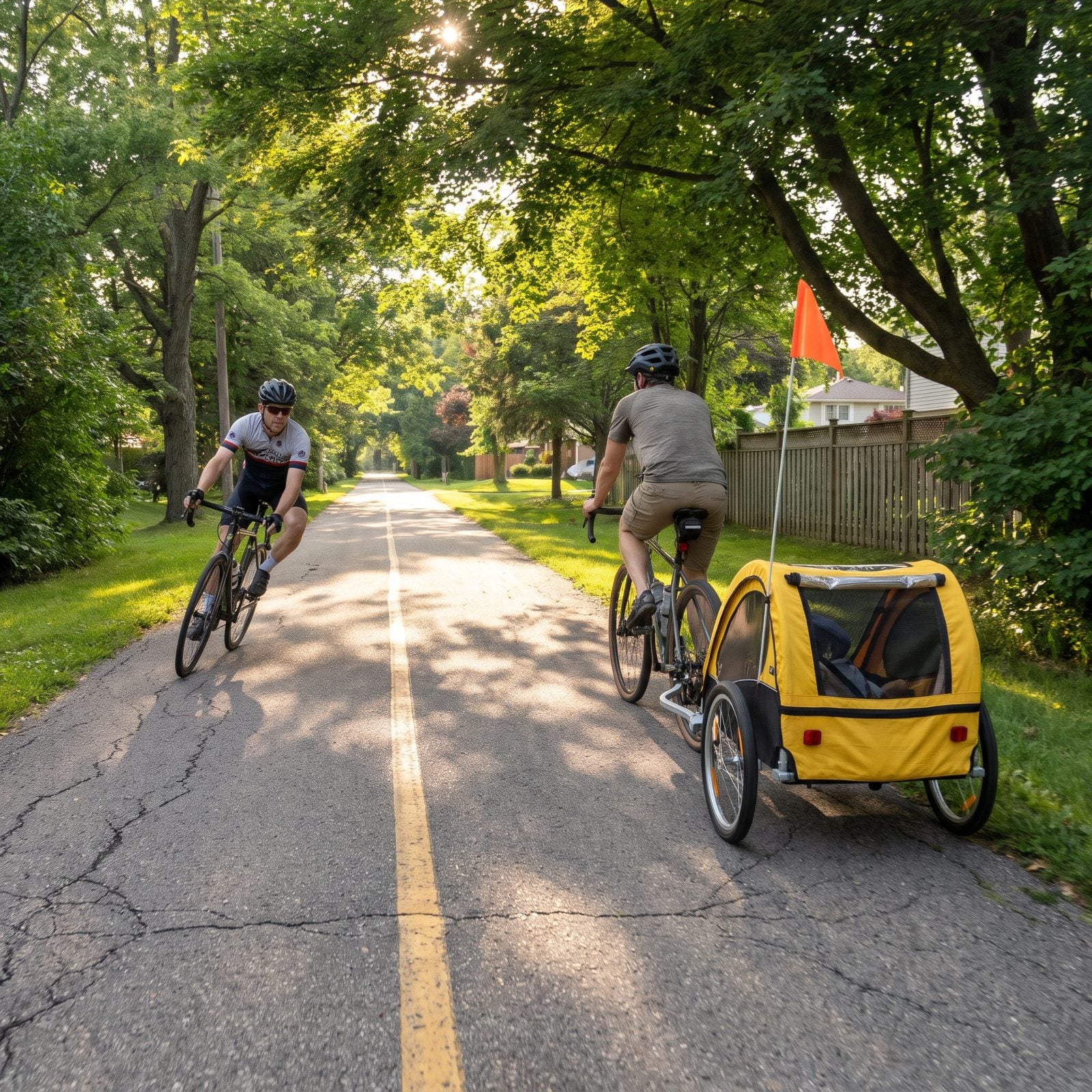
A bike is maybe two feet wide. A child trailer runs three or more, and it carves a slightly different line through corners than the bike dragging it along.
New riders eyeball the gap off the parent’s handlebars and nearly clip the trailer wheel on the far side. Give the whole rig a wide berth, and remember the back end swings out on turns. That flag whipping off the pole? It’s there because the thing is lower and wider than your eye wants to believe.
10. Single Up When Your Group Meets Other Riders
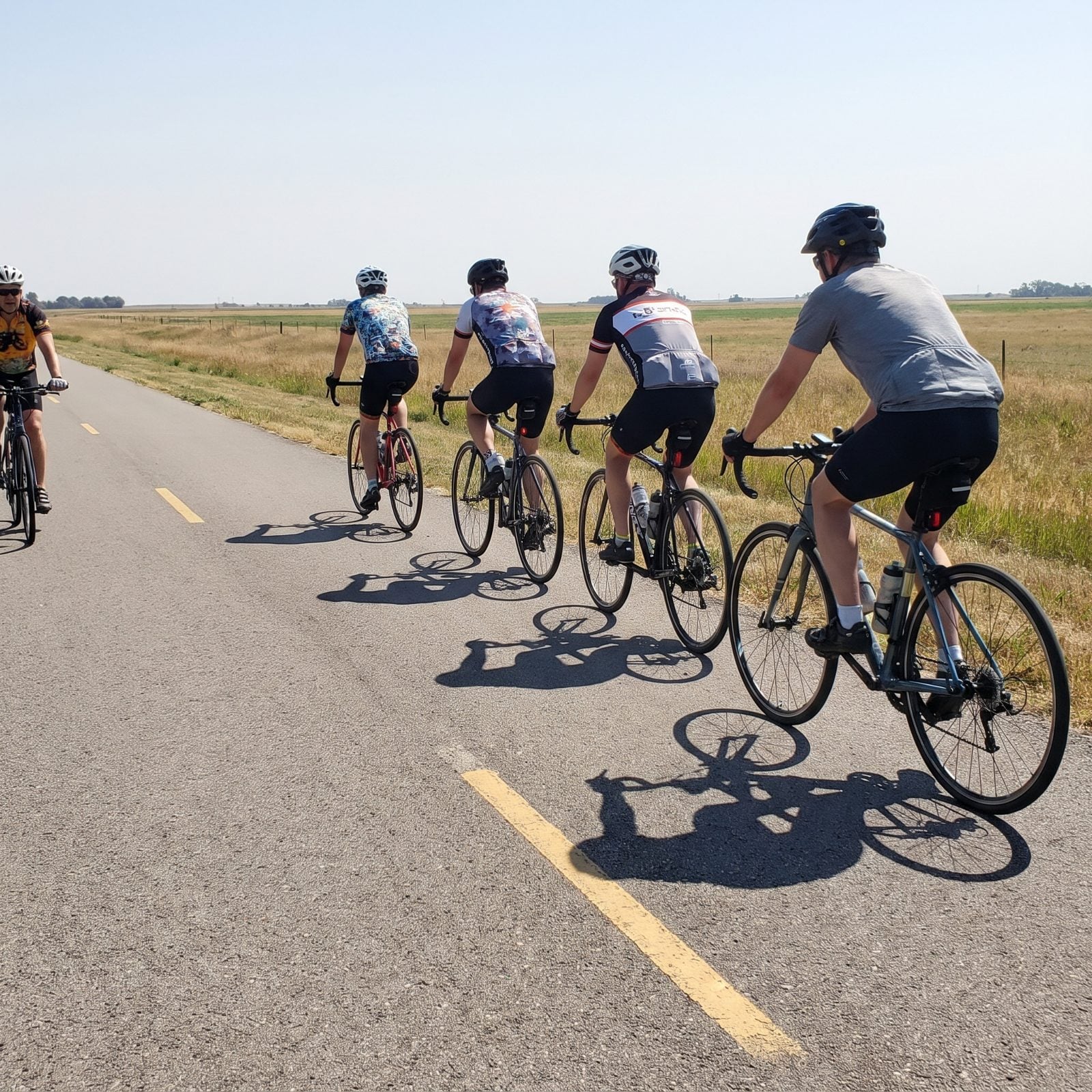
Riding two abreast and chatting is one of the real pleasures of a group ride, and nobody’s asking you to quit it. The second another rider shows up, though — oncoming or overtaking — the group folds to single file and clears the lane. Two seconds and a quick word down the line.
The riders who can’t be bothered are exactly why some towns bolt up “single file only” signs that wreck it for everybody. Call it out early, settle in, open the lane, then spread back out once the coast is clear.
9. Pull All the Way Off Before You Regroup
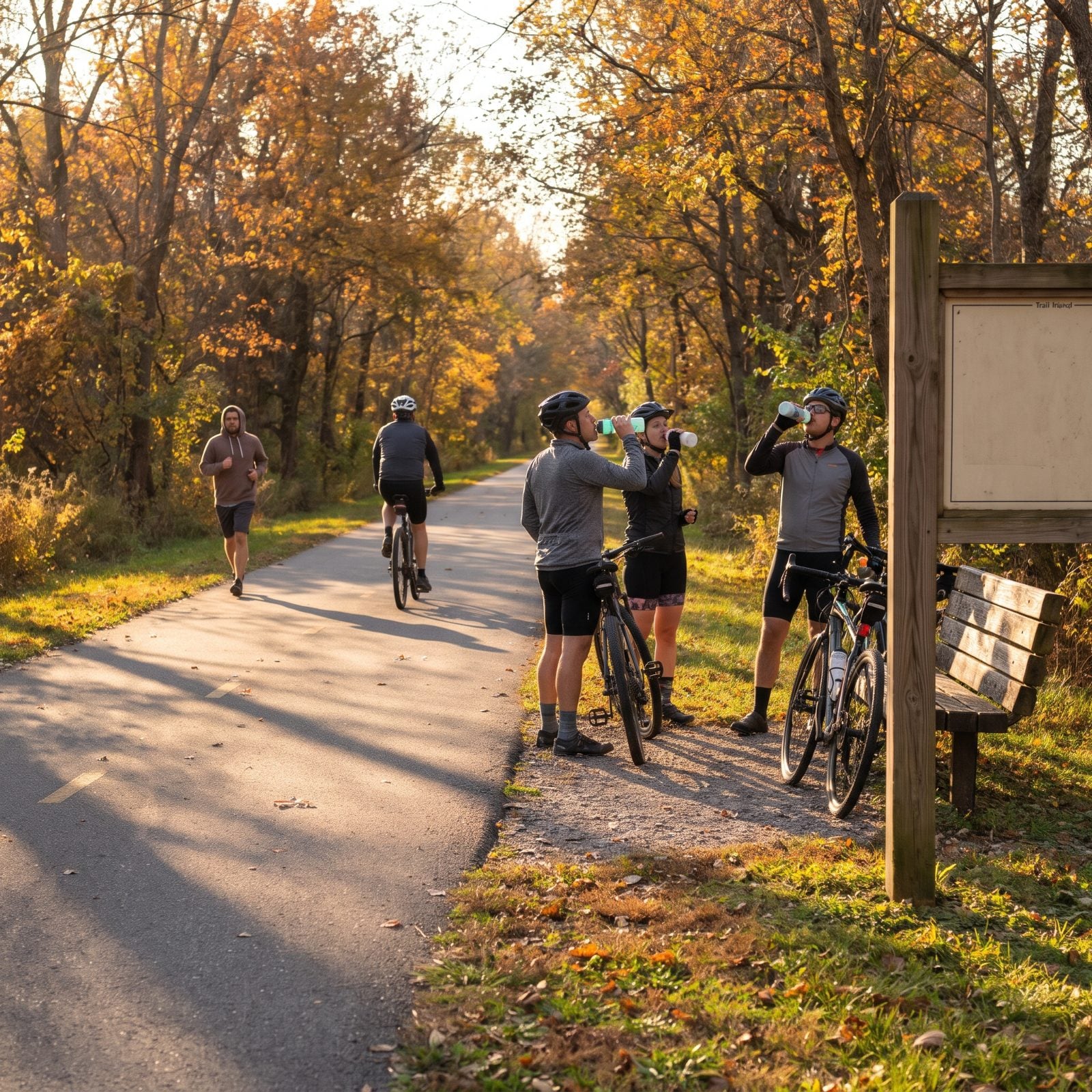
The spot everyone wants to stop is the worst possible spot to stop — a scenic overlook, a trail junction, the top of a grinding climb. That’s precisely where other people are already slowing down or turning off.
So pull the whole group off the pavement. All the way off. A cluster of bikes half in the lane turns a pleasant trail into a slalom course for the next rider coming round the bend. Find the grass, the gravel apron, the bench. Leave the through path open the way you’d want it left for you.
8. Don’t Latch Onto a Stranger’s Wheel Uninvited
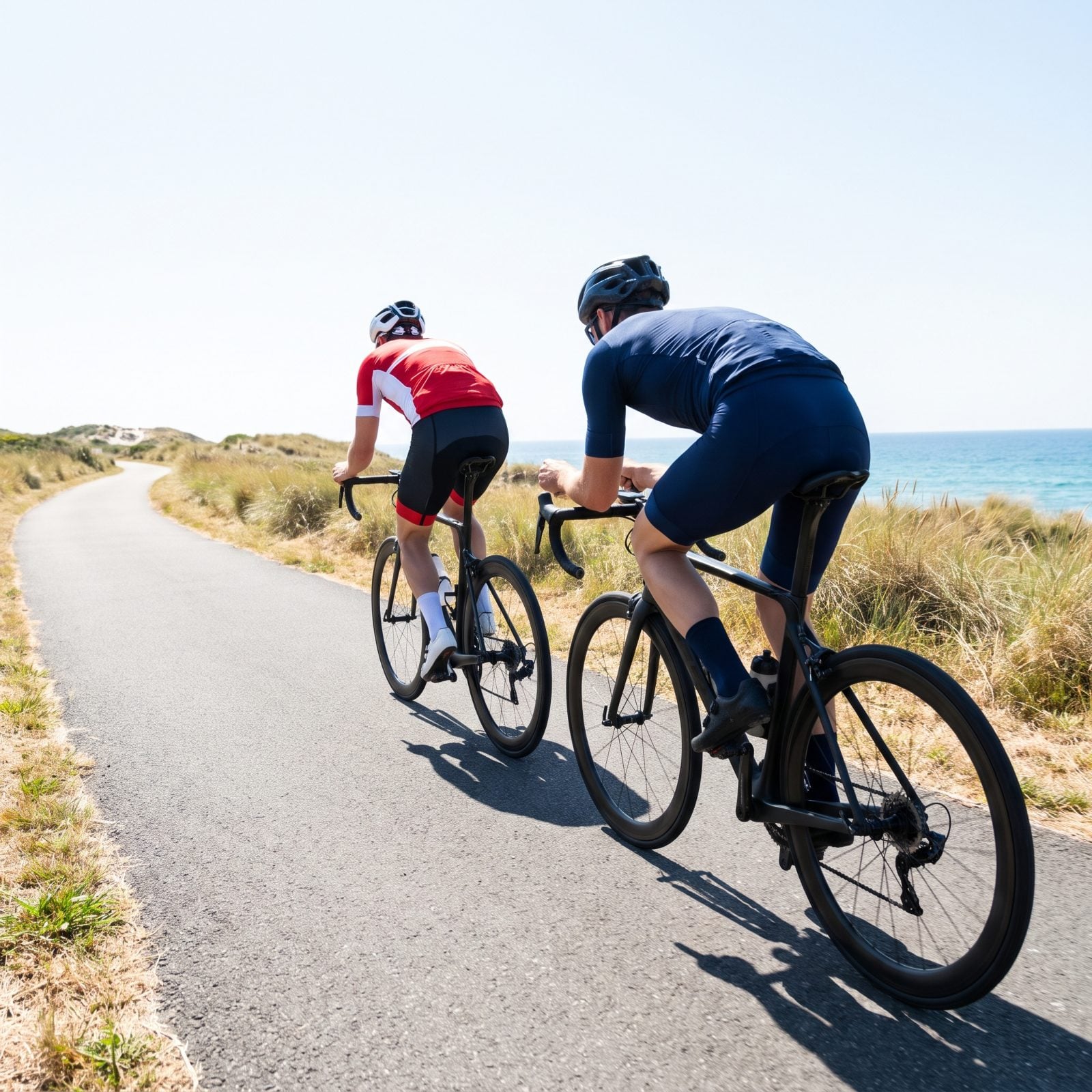
Sitting in someone’s slipstream saves you real effort. It also parks your front wheel inches from a stranger’s rear wheel at speed — a crash waiting on one twitch neither of you signed up for.
Drafting a buddy you ride with all the time is fine. Clamping onto an unknown rider without a word is not. They can’t hear you back there, they’ve no idea you exist, and if they stand up or grab a handful of brake, you’re both down on the deck. So pull alongside, say hello, ask. Most riders are glad to share a wheel once they actually know you’re there.
7. Keep Enough Space to Stop Without Running Up Somebody’s Back
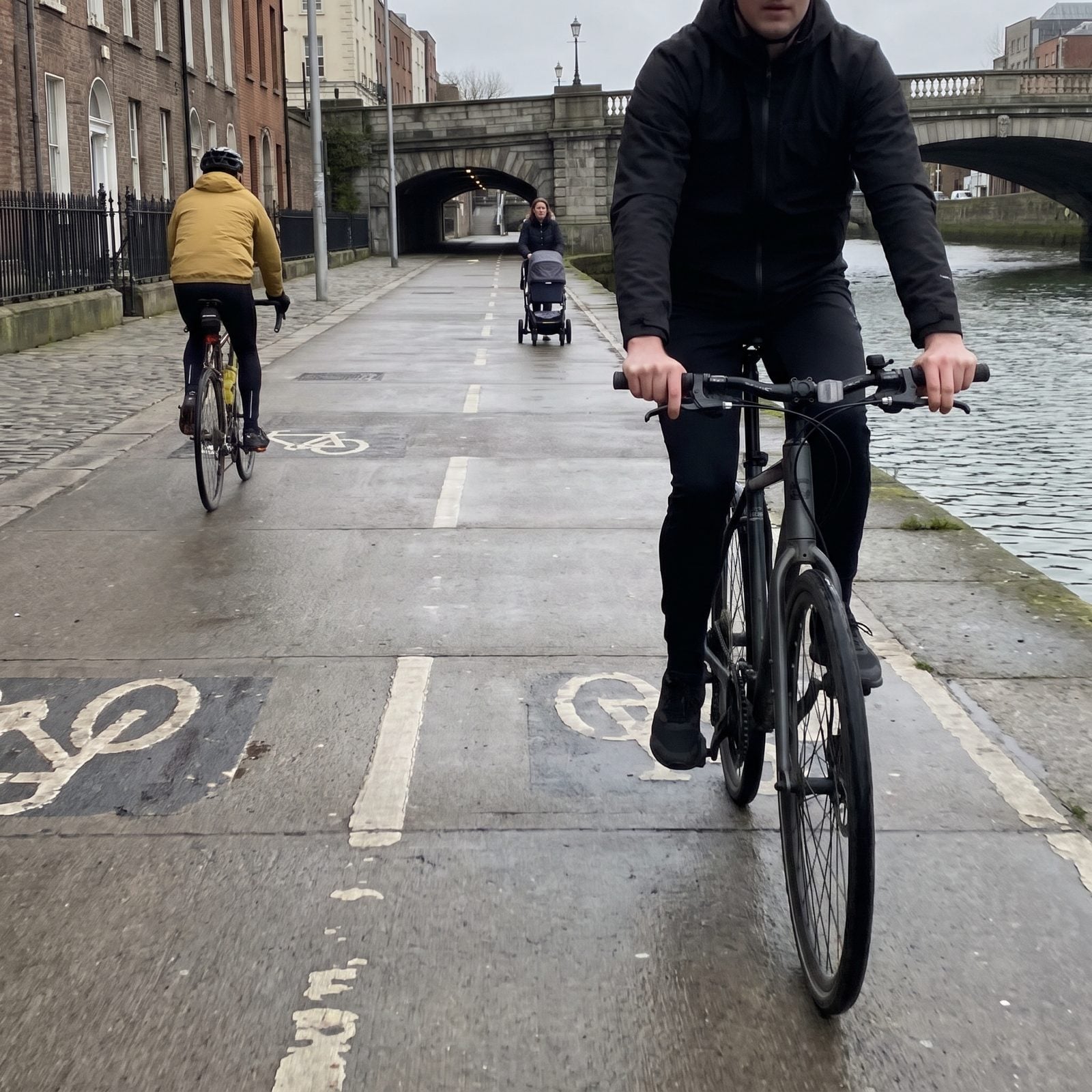
Paths throw surprises that roads mostly don’t. A toddler cuts across. A dog lead stretches wall to wall. The rider ahead stops dead to check a phone.
Tailgate and you’ve left yourself nothing but a swerve, and swerving on a crowded path is how you clobber the exact person you were trying to miss. Leave a gap long enough to haul up from whatever speed you’re actually doing. Rule of thumb: if you can read the water-bottle label on the bike in front, you’re too close.
6. Run Headphones Quiet Enough to Hear a Bell
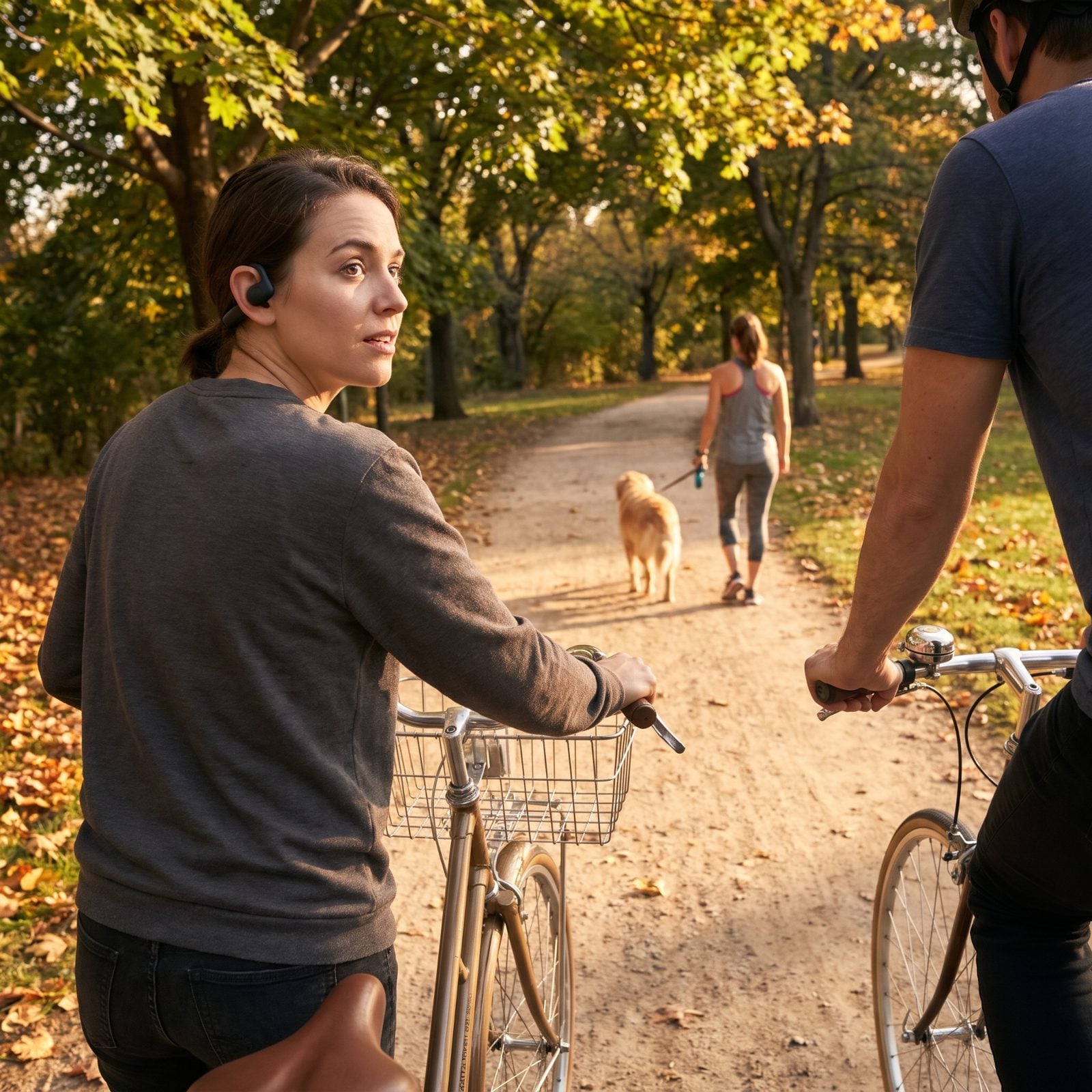
Music on a long ride is a joy, and nobody’s confiscating your earbuds. But a shared path runs on sound — the bell behind you, the “on your left,” the skateboard you never saw coming.
Blast both ears and you’ve gone deaf in a place where hearing is half your safety. Keep the volume low, run one ear open, or grab bone-conduction headphones that leave your ears clear. Simple test: you should still catch someone calling a pass over the chorus.
5. Pull Over to Deal With Your Phone
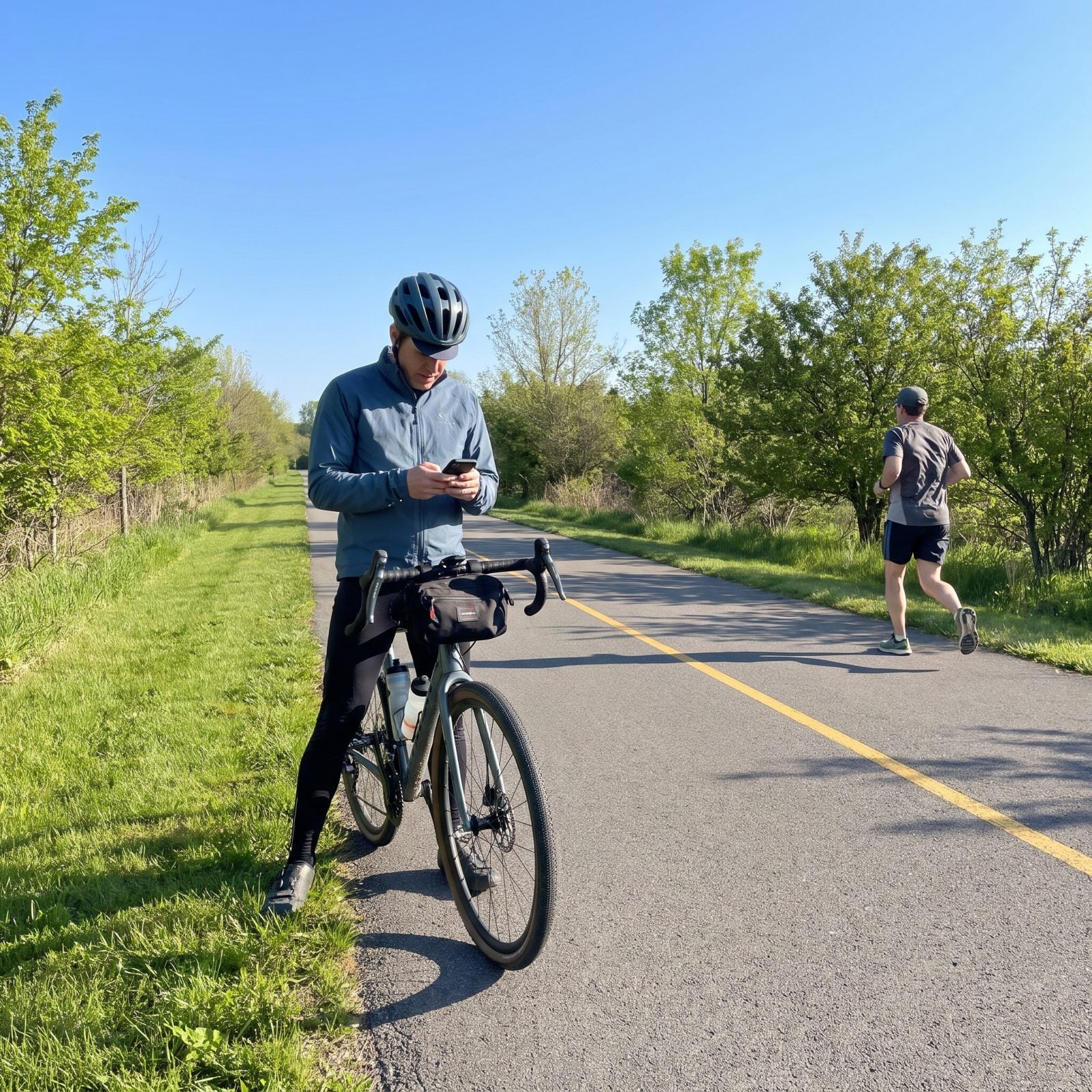
You can’t steer a bike and read a map at once. Your eyes are on glass instead of the trail, your hand’s off the brake, and your line drifts without you even clocking it.
A ringing phone, a wrong turn, a text you swear can’t wait — all of it can wait the ten seconds it takes to roll off and put a foot down. Stop, step clear of the lane, then look. That rider thumbing a screen at walking pace is the one everyone else is busy dodging.
4. Point Your Headlight at the Ground, Not at Oncoming Eyes
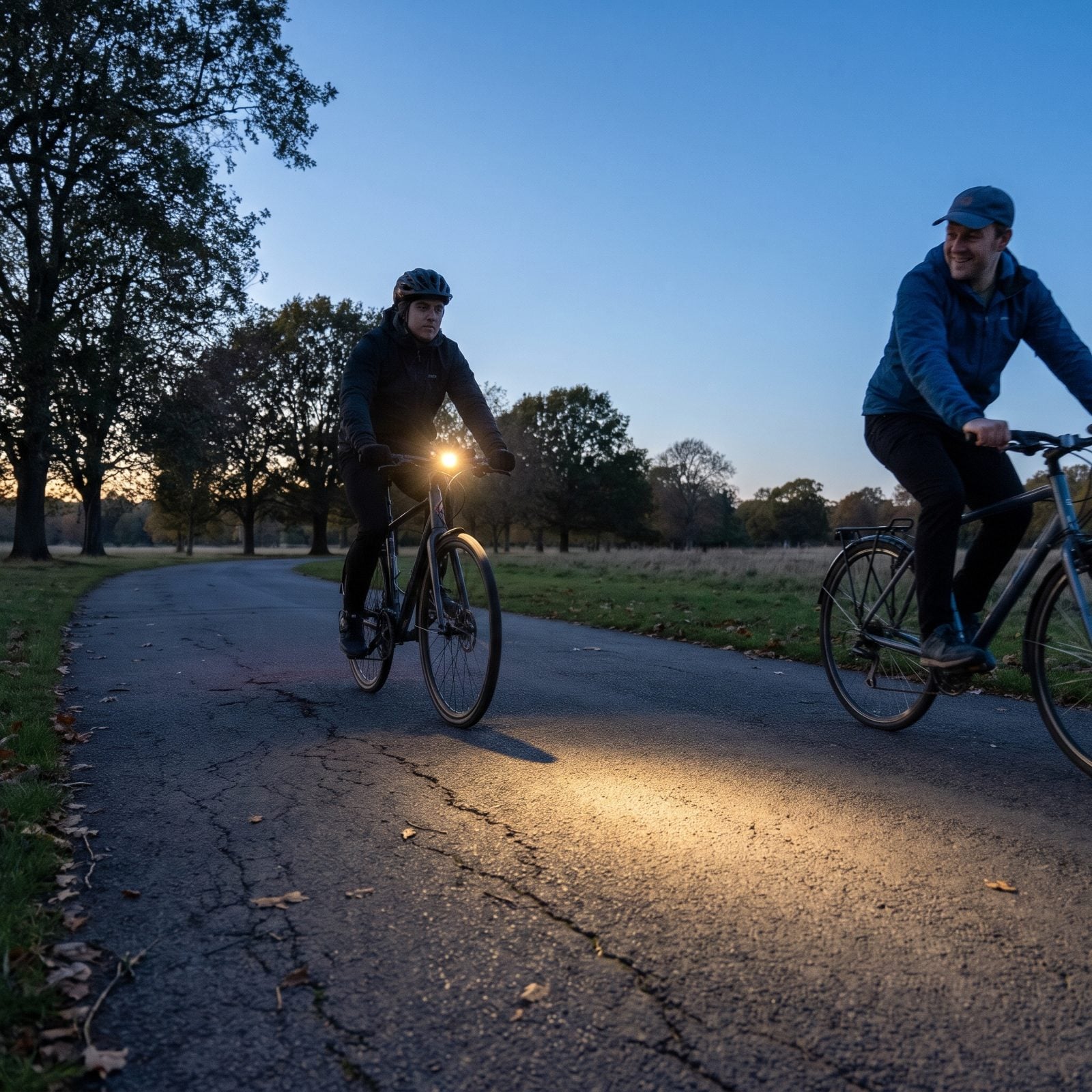
A good light makes you visible. A badly aimed one blinds whoever’s coming the other way.
Tilt the beam down so it washes the ground ahead instead of punching straight into oncoming eyes. And on a shared path after dark, kill the strobe. Flashing modes earn their keep on a busy road full of drivers, but on a narrow trail a strobe wrecks another rider’s night vision and makes your speed impossible to judge. Steady beam, pointed down — courtesy that comes right back to you.
In a winter guide to bike light etiquette, a bike education director writes: “There is absolutely no reason to have your headlight on strobe or flashing mode when riding home at night on a busy bike path.”
3. Tuck in Every Strap and Bungee Before You Roll
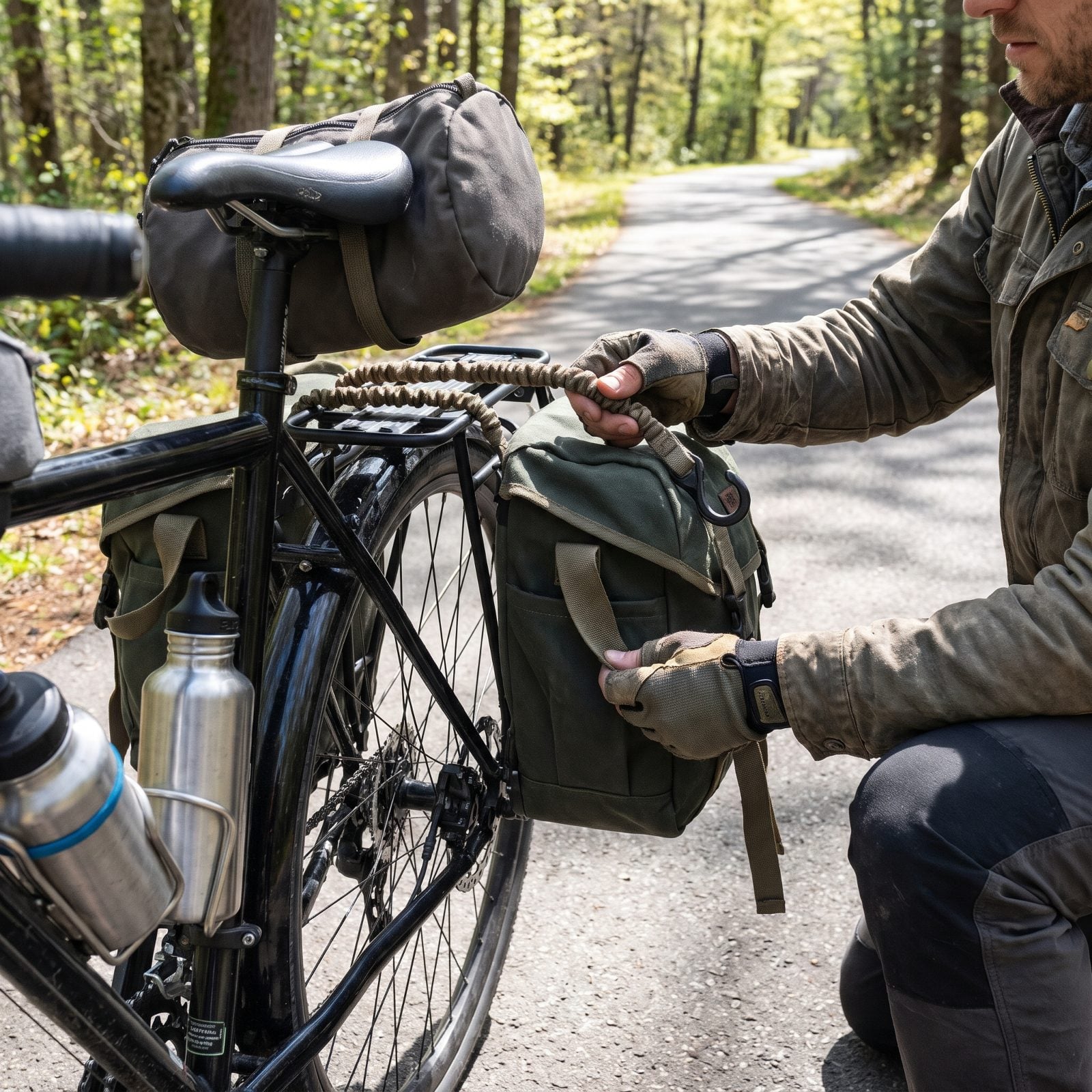
A loose strap finds the spokes. Almost a law of nature, that one. A dangling bungee, a flapping pannier, a backpack cord swinging free — any of it can whip into the wheel and lock you up cold with zero warning.
Thirty seconds at the trailhead saves you a faceplant and spares the rider behind you the cleanup. Cinch the cords, zip the bags, clip the straps short. Then give the whole bike a shake and listen for anything that rattles or drags.
Boring chore. It’s also the one that quietly keeps you upright when everything else is going fine.
2. Keep the Music on Headphones, Not a Bluetooth Speaker
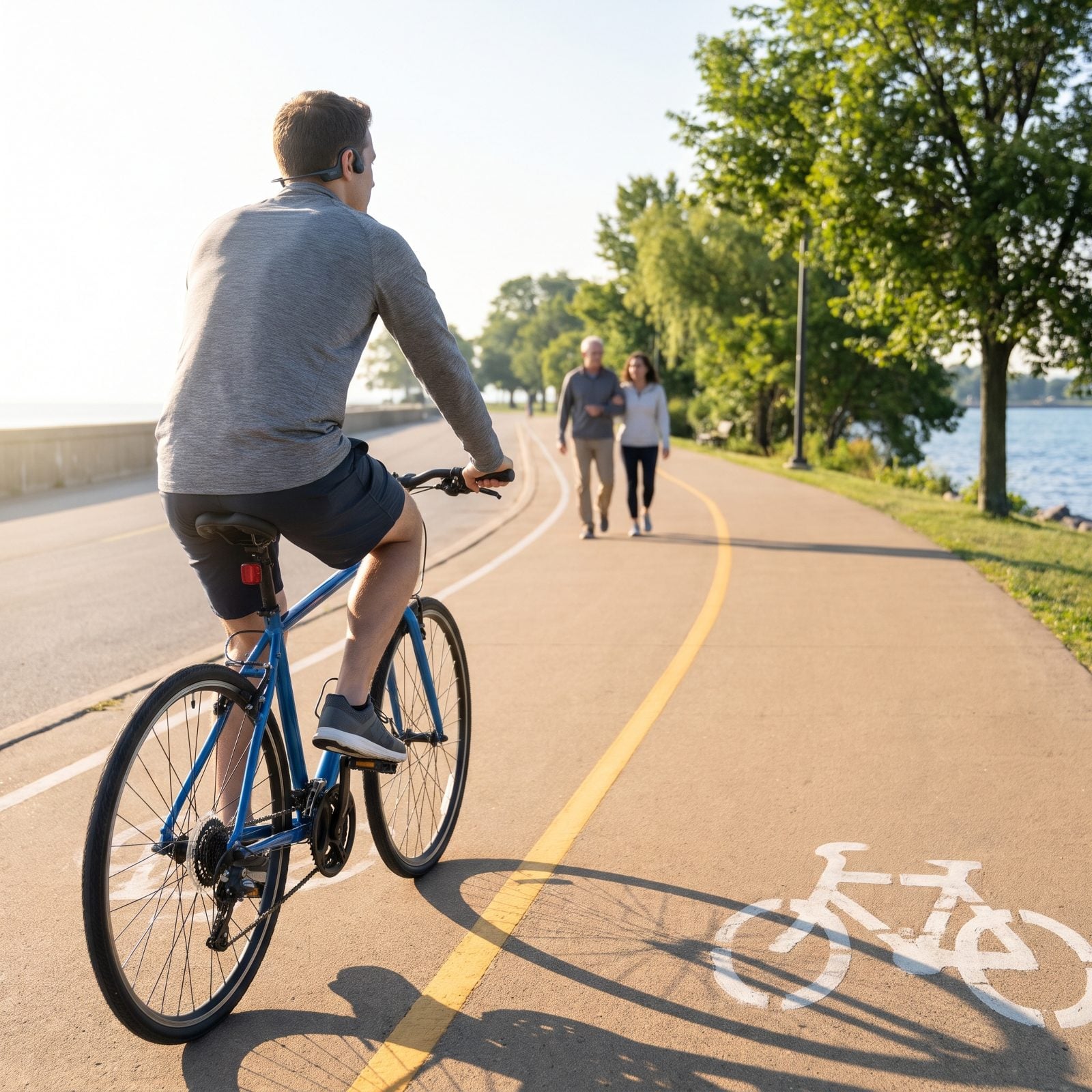
Nobody on that greenway asked for your playlist. A speaker clipped to the handlebars broadcasts your taste to every walker, jogger and birder for fifty yards in each direction, and it drowns out the small sounds a shared path runs on — the jogger’s footsteps behind you, the kid about to dart left, someone calling “on your left.”
Headphones keep the music yours and the path everyone’s, especially one ear or bone-conduction. You still hear traffic, bells and voices. Which is exactly how it should work.
1. Give Wildlife Room to Clear the Path on Its Own
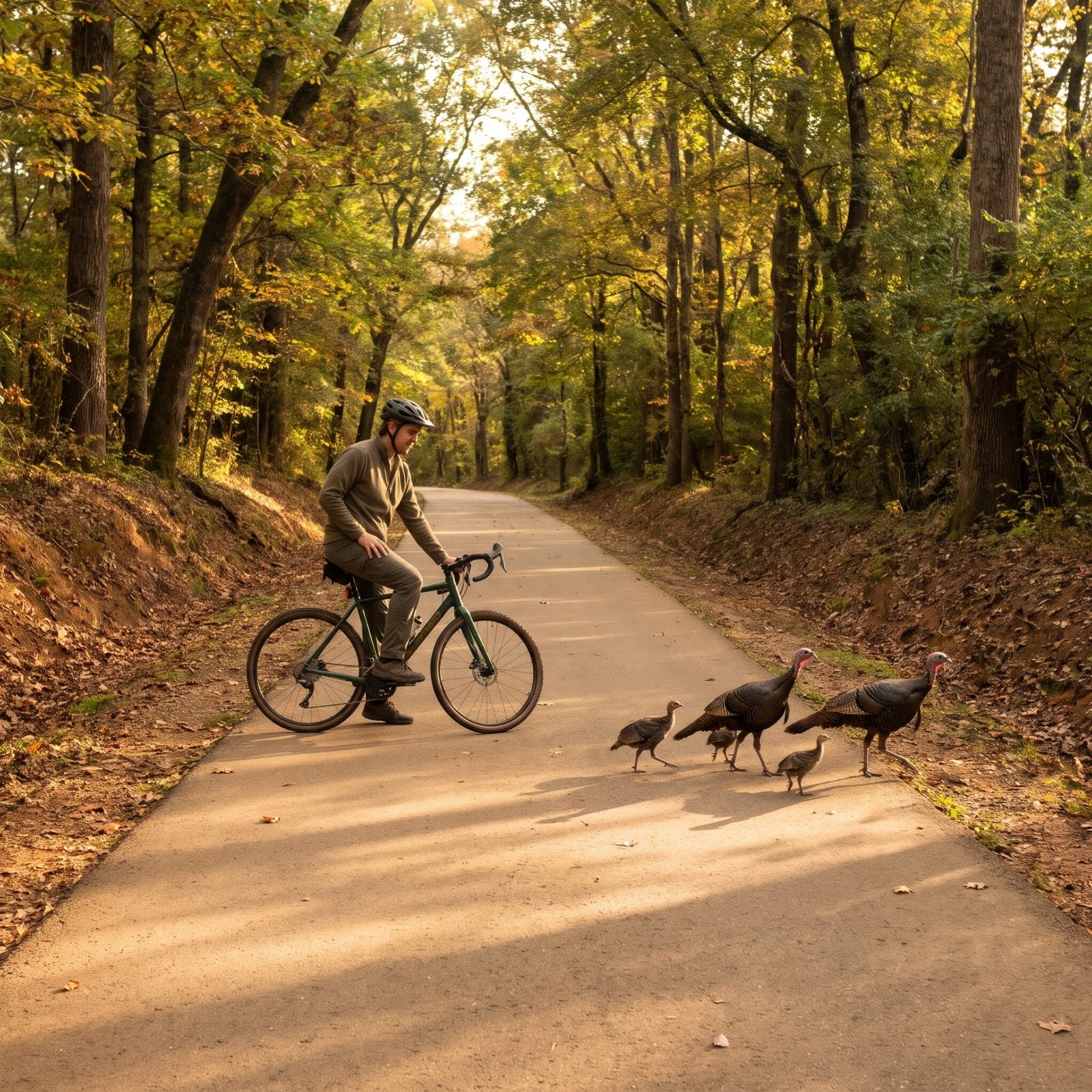
A turtle crossing the asphalt does not understand your average speed. Neither does the deer, the turkey family, or the squirrel pulling that terrible last-second direction change. When a path runs through a preserve or along a river, you’re sharing it with the residents — and they were here first.
Slow down. Come to a full stop if you have to, and let them clear on their own schedule. Don’t swerve around them at speed, and whatever you do, don’t try to shoo them along, because a startled animal bolts in whatever direction surprises you most and that’s how a calm ride turns into a scramble for both of you.
Waiting ten seconds for a goose to finish being a goose costs you nothing. Clipping one costs a lot more.