
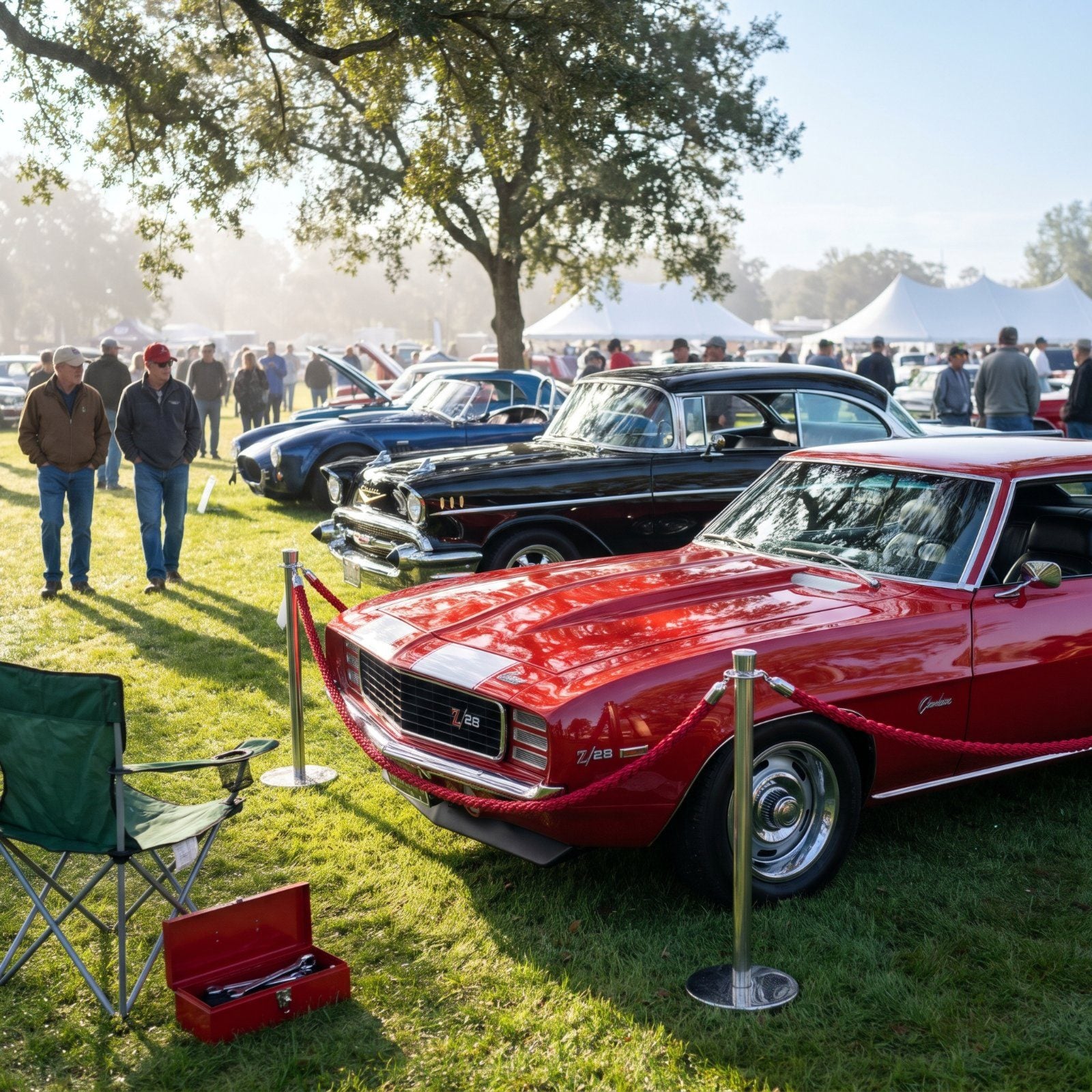
The owner was gone for ninety seconds. Bathroom run. He came back to a kid tracing the hood with a Hot Wheels car, grinding grit into forty hours of wet-sanding, and nobody meant any harm. That’s the thing about car shows: the damage almost never comes from a bad person, it comes from a good one who didn’t know the rules nobody printed on a sign. These machines are rolling bank accounts and weekend obsessions, and in some cases a guy’s entire retirement hobby. The courtesy that keeps a show pleasant for everyone is dead simple. Here’s how to be the visitor owners actually like.
Please note that some of the images in this article were created with the assistance of AI.
33. Never Touch a Display Car Without Permission
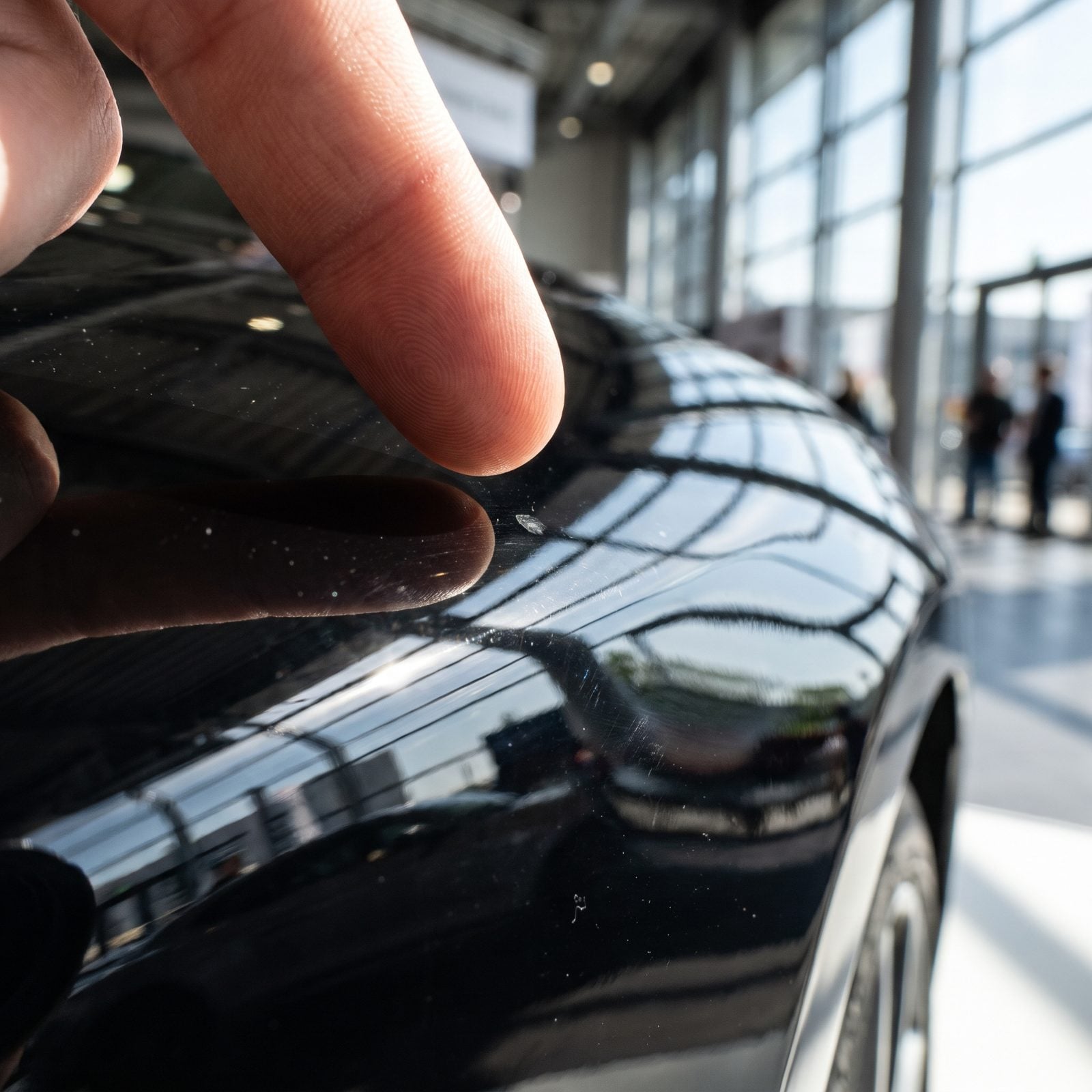
Your fingers carry oil, grit, and whatever you touched last. On a show finish wet-sanded and buffed to a mirror, one careless swipe lays down micro-scratches the owner will catch in the next hard sunlight. He’ll know. He always knows.
So ask first. Most owners light right up when you show interest and will happily walk you around the car themselves, and the ones who say no have usually been burned before. Respect it either way.
32. Don’t Lean on a Car, Even for a Quick Photo
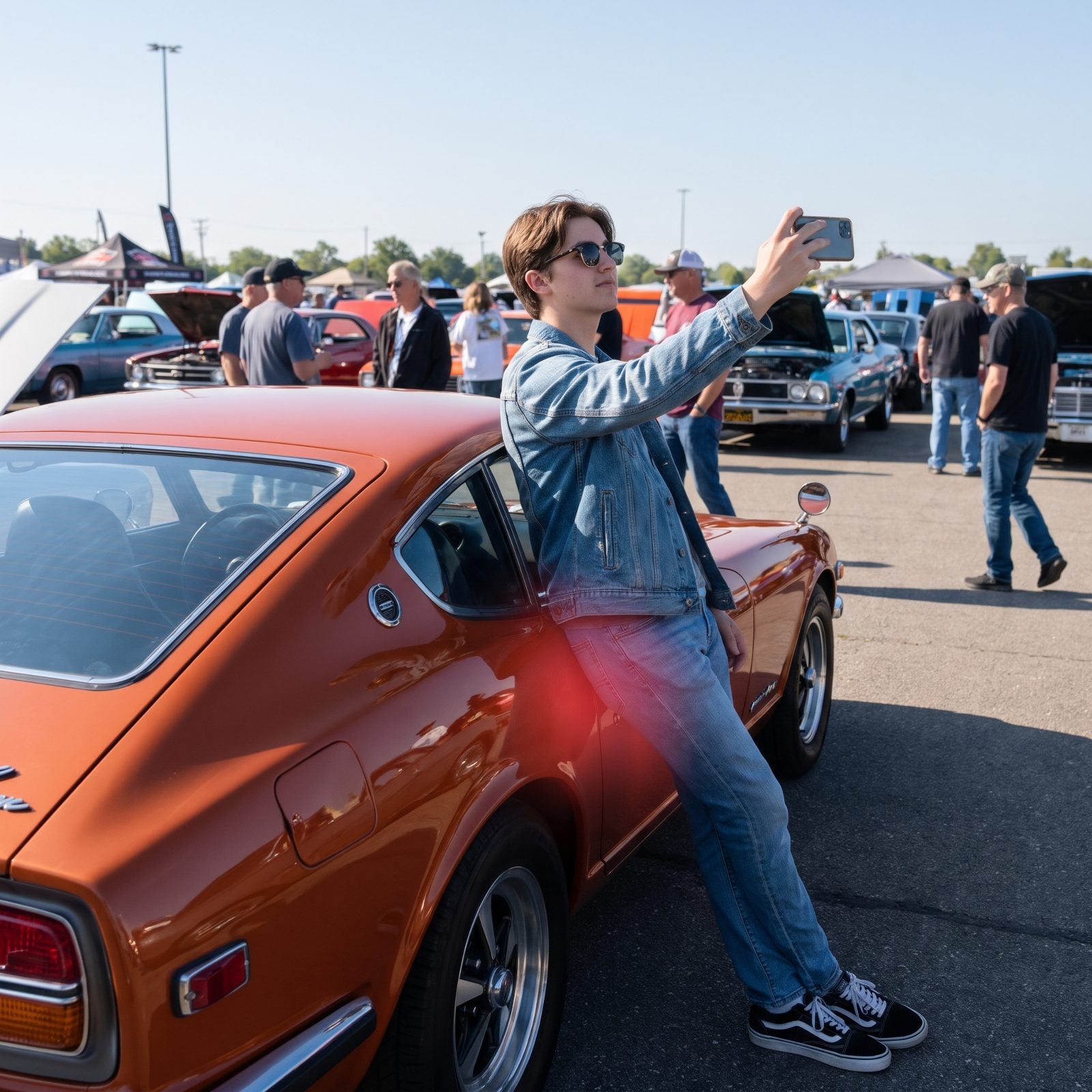
You’ve seen it. Someone backs up to a fender for a selfie and rests their weight against the quarter panel like it’s a kitchen counter. Belt buckle, back pocket rivets, the metal clasp on a crossbody bag — all of it drags across the paint while the shutter clicks.
Stand near the car. Not on it. A good photo of a clean car beats a good photo of you denting one.
31. Watch Children Closely Around the Cars
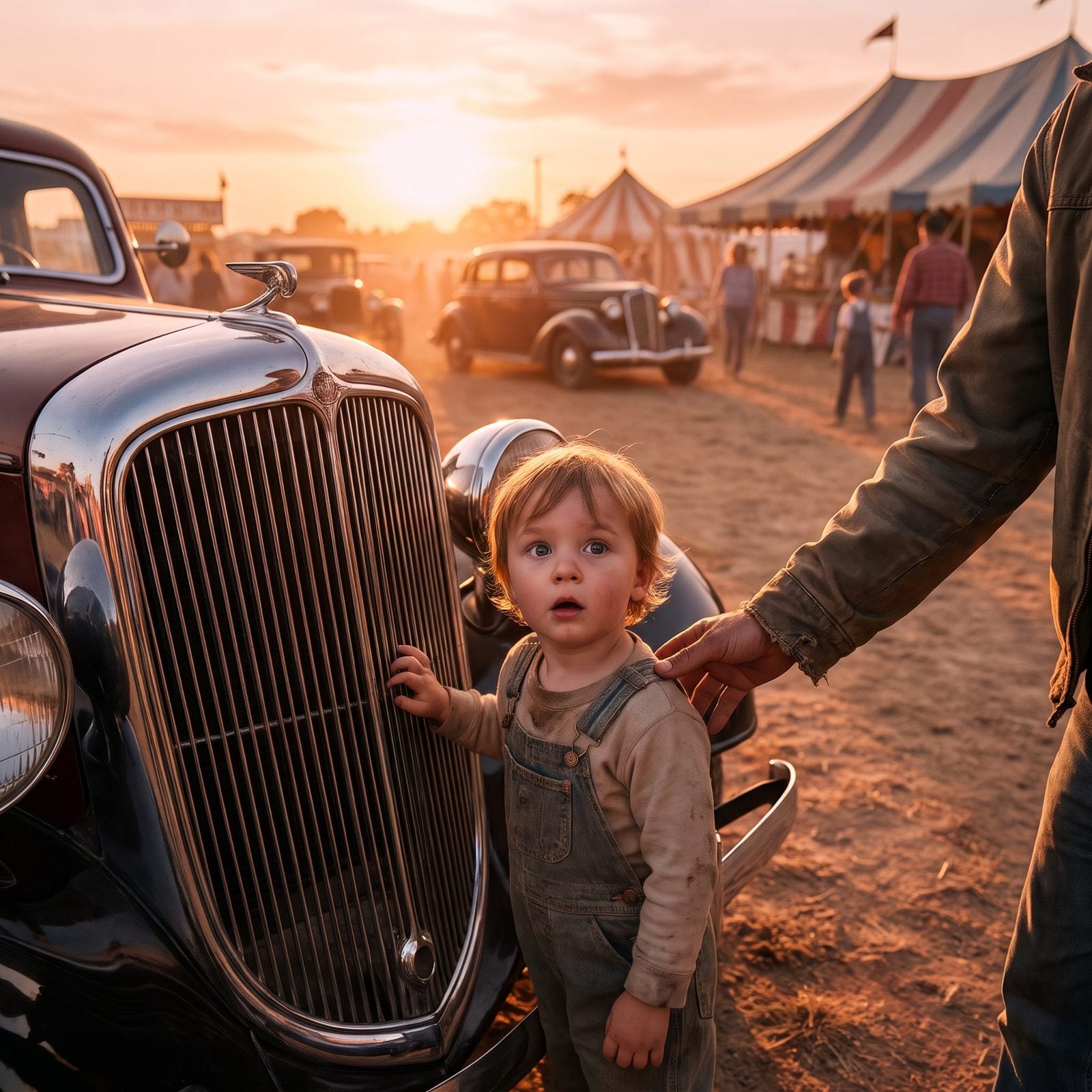
Kids and car shows go together. Half these owners got hooked as eight-year-olds staring at chrome, and nobody wants children banned from the fun.
But a toy car in a small fist, dragged along a fender because that’s what toy cars do, grinds forty hours of work into the finish. A sticky hand on a door. A sudden dart between stanchions. Keep them in arm’s reach and turn it into a teaching moment — the owner who sees you doing that will often wave your kid over for the full tour.
As a longtime old-car magazine editor puts it, “paint-scratching belt buckles and kids throwing things can cause real damage to a car that took thousands of dollars to restore.”
30. Never Sit in a Car Unless the Owner Invites You
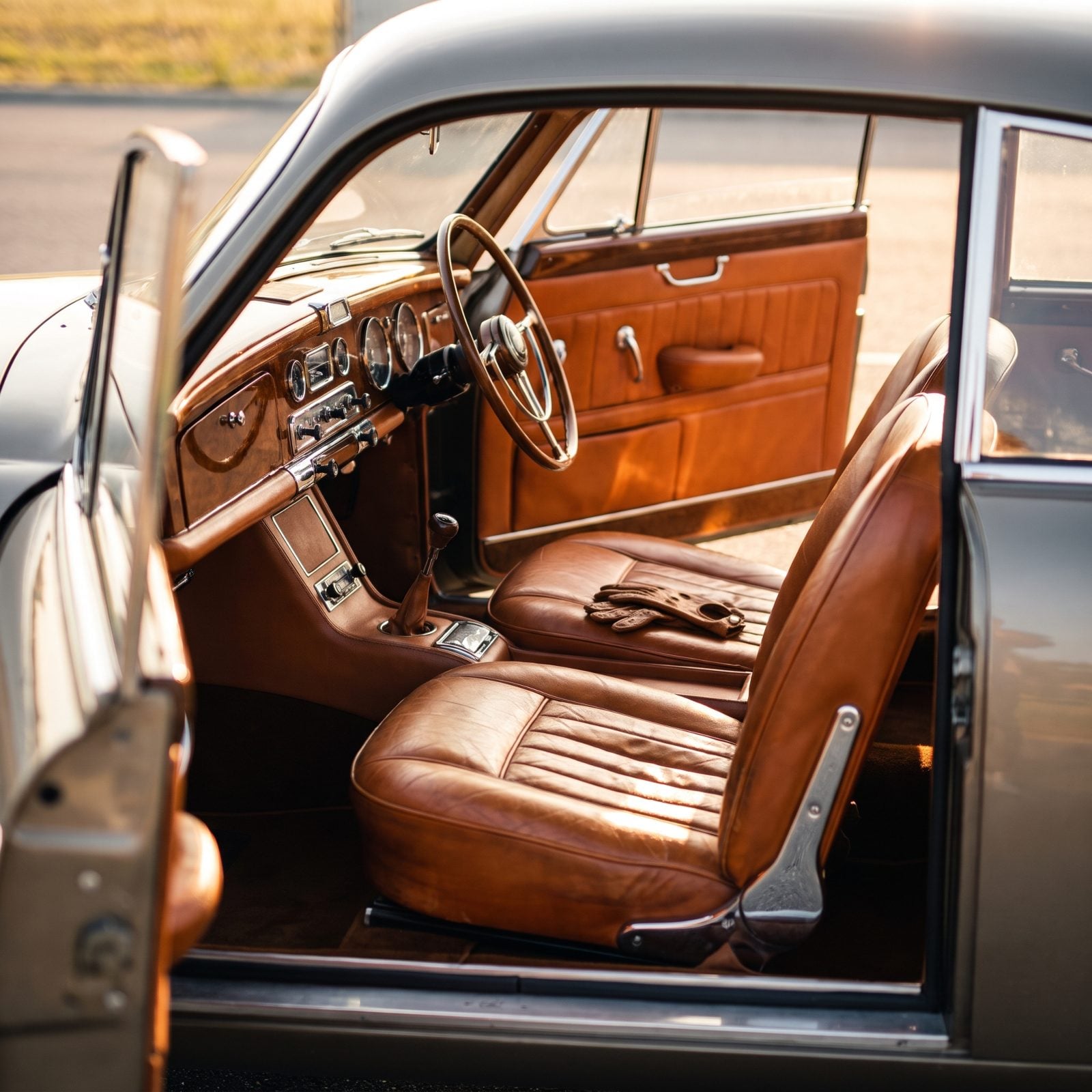
That restored interior cost real money. Seat bolsters crack, original vinyl tears, and a zipper or a back pocket button can gouge upholstery that took months to source and fit. Plenty of owners won’t let anyone in the seats at all, and that’s their right.
If you’re offered, take your bag off first, check your pockets, and go in slow. Treat it like climbing into someone’s pride, because that’s exactly what it is.
29. Respect Ropes, Cones, and “Do Not Touch” Signs
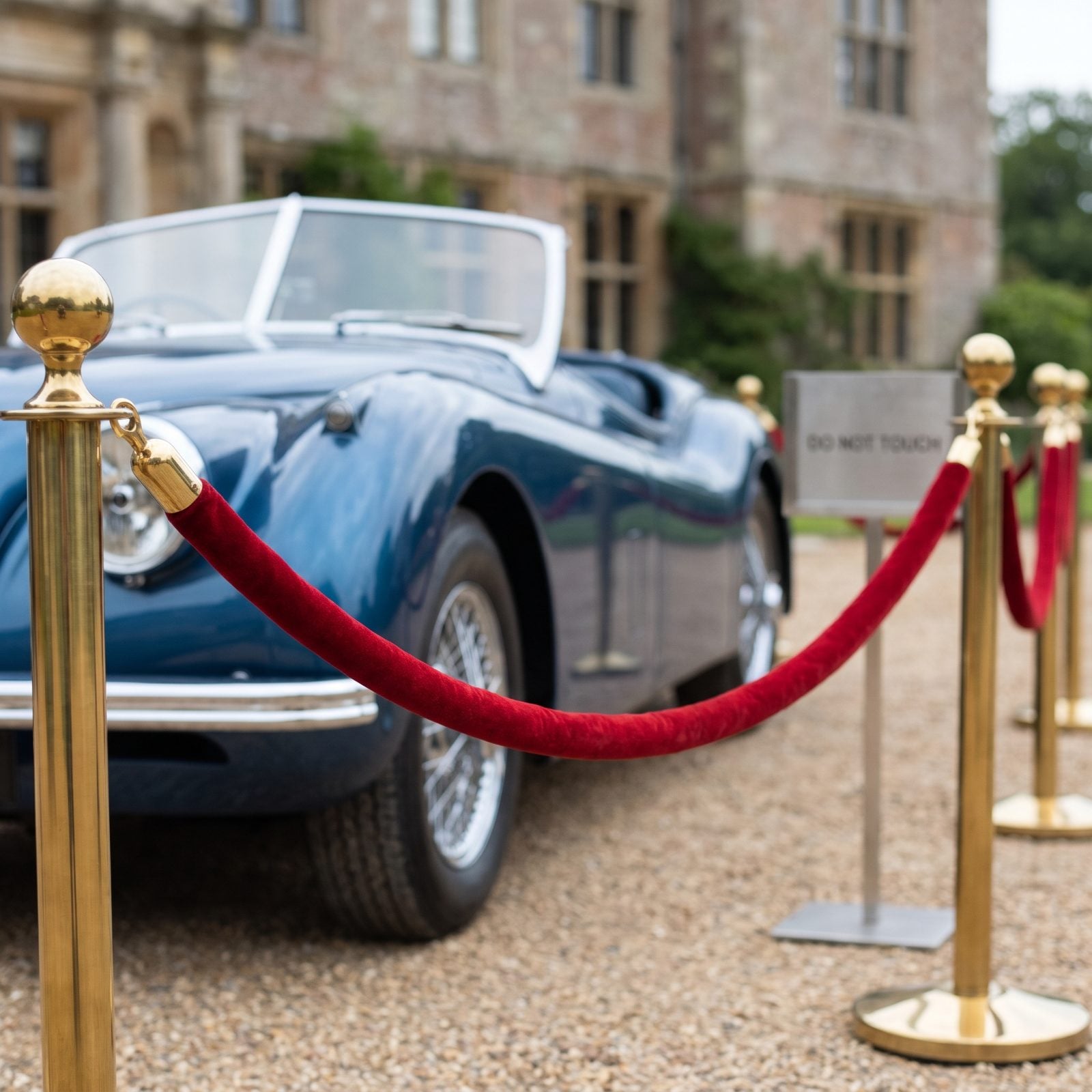
A rope around a car isn’t the owner being precious. It’s the car that gets crowded, the finish that can’t take one more fingerprint, or the concours entry where touching costs points. Cones mark walking lanes so people don’t back into a bumper they can’t see.
The rope is a conversation. It says this one’s special, admire from here. Crossing it says you didn’t read the room.
28. Don’t Crawl Under a Car Without Asking
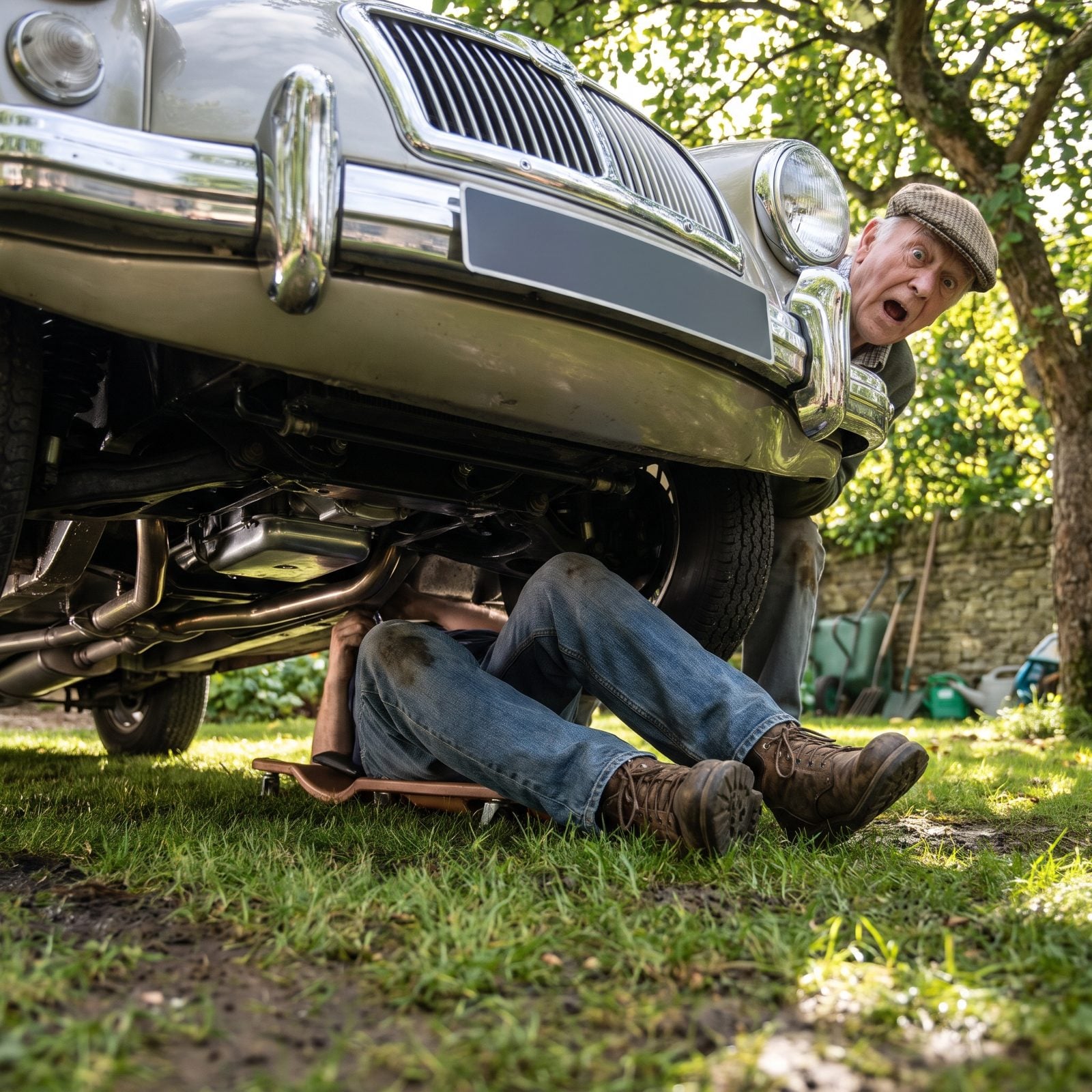
Serious restorers detail the underside too, and they’re proud of it. But sliding under a car uninvited is how you learn a jack stand wasn’t rated for curiosity, or how you smudge a chassis that took a weekend to clean.
Ask, and most owners will gladly crouch down and walk you through the frame work, the fresh undercoating, the exhaust routing they fussed over. You get the full story and nobody ends up with a lift scare.
27. Keep Food and Drinks Away From the Displays
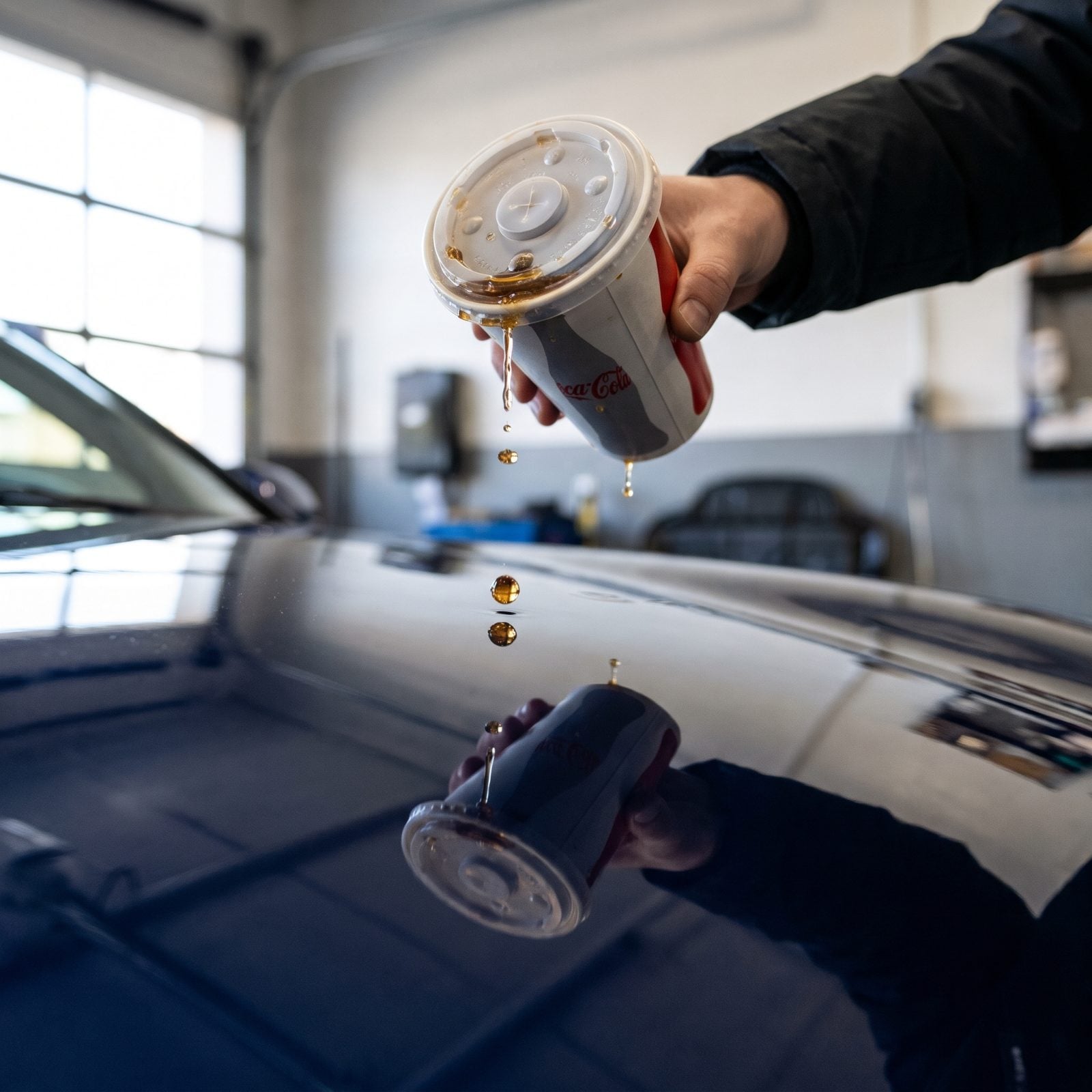
A gust of wind, a wobbly paper plate, a kid with a dripping snow cone. That’s all it takes. Cola eats clear coat if it sits, grease spots stain, and a spilled drink across a hood becomes a water-spot nightmare that may need repolishing.
Finish your burger at the picnic tables. Eat and drink on the far side of the ropes, where a stumble costs you a napkin instead of someone else’s paint job. Nobody drives a hundred miles to spend the afternoon wiping mustard off a fender.
26. Ask Before Photographing a Car’s Interior
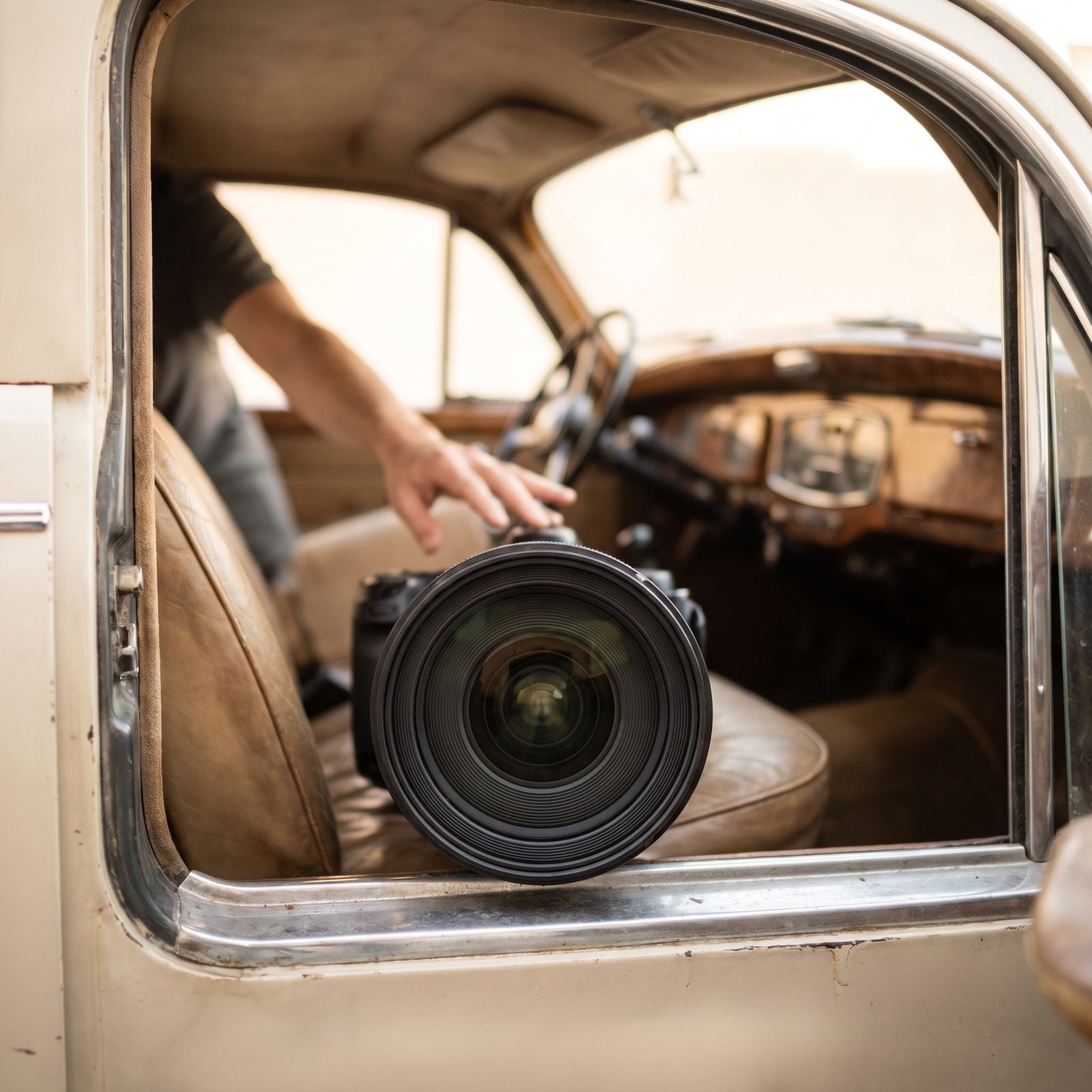
That open door is an invitation to look, not a green light to shove a lens past the sill. Interiors are where owners sink real money and real hours: restitched seat piping, a rebuilt gauge cluster, a dash that took a whole winter to get right. Lean in with a camera and, to the person who did that work, it lands a little like someone rifling through your medicine cabinet.
A two-second question fixes all of it. “Mind if I grab a shot of the dash?” Nine times out of ten you get a yes and a story you never asked for.
25. Don’t Move Placards or Props for a Better Shot
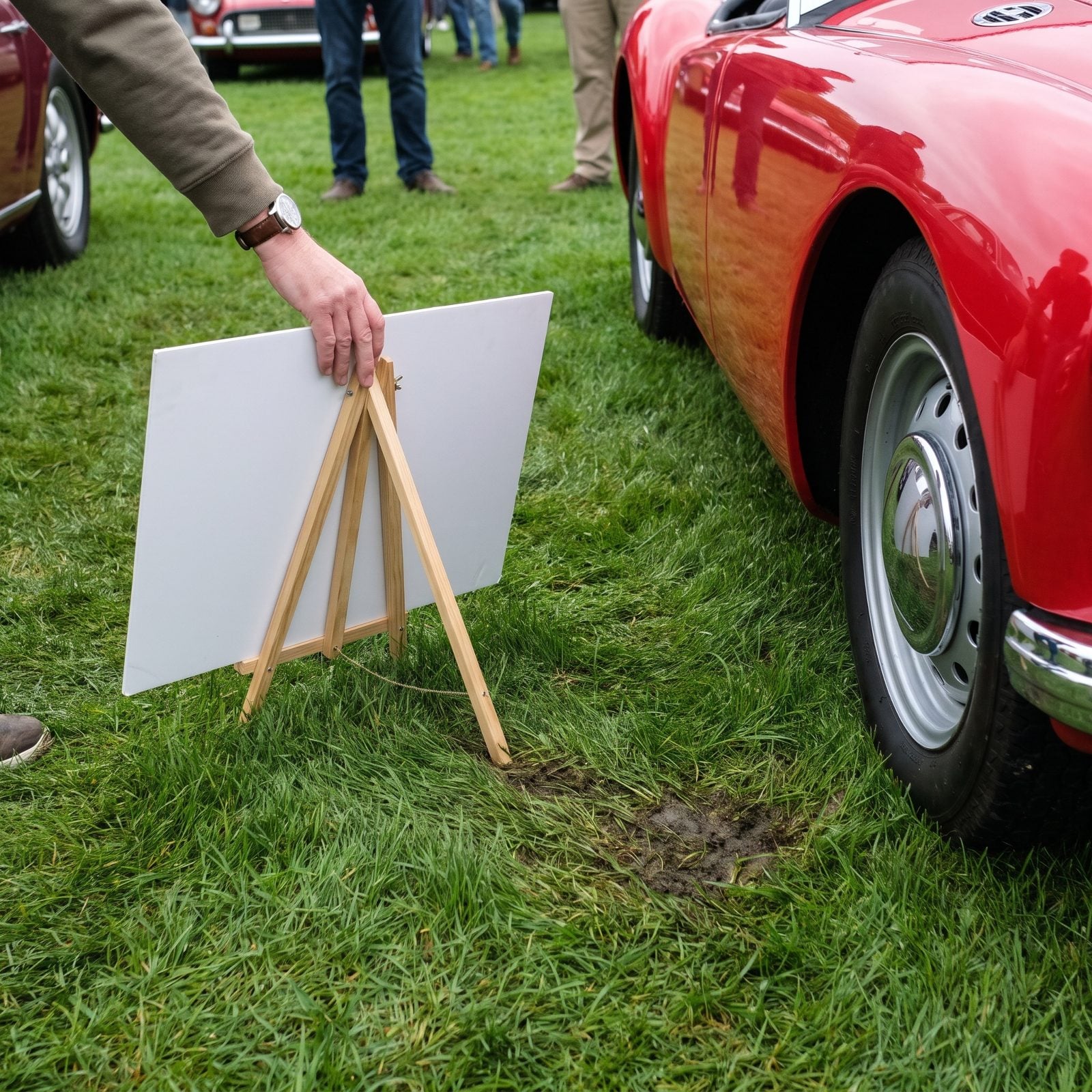
You’ve seen it. Somebody nudges a display card out of frame, snaps the shot, and strolls off without putting it back, and the owner finds it face-down in the grass an hour later.
Those placards aren’t clutter. They’re how the owner tells the car’s story, and at judged shows they’re often required to stay exactly where they’re placed. Same goes for the staging props, the vintage oil tins, the open hood propped to a specific height. Shoot around them. A good photographer makes the frame work with what’s there instead of rearranging another person’s weekend.
24. Step Back After Your Photo So Others Get a Turn
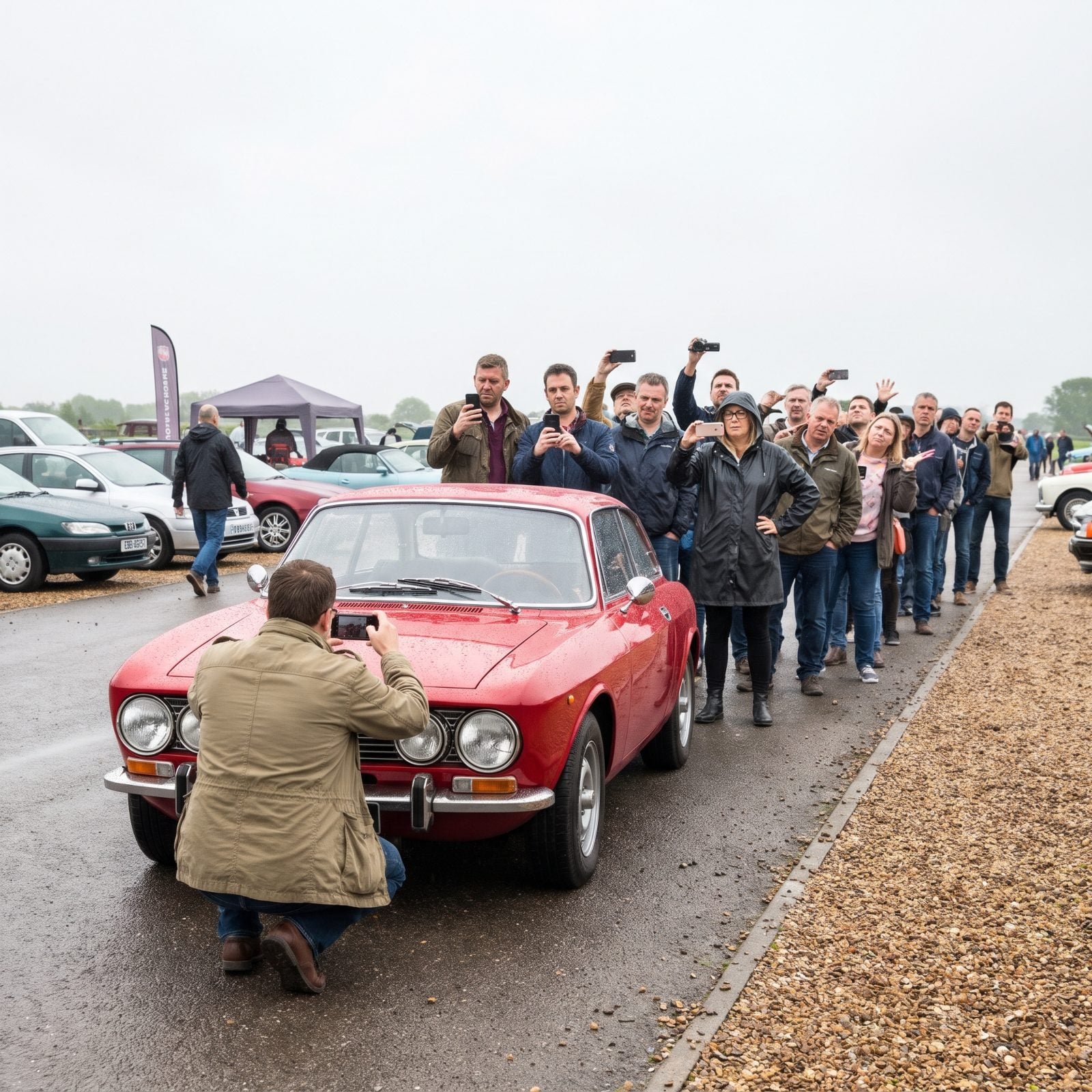
The car isn’t going anywhere. You don’t need fourteen angles and a video while a dozen people hover behind you trying to steal one clean frame.
Grab your shot, then move. The whole field works better when nobody treats a single car like a private studio. Want a long, unhurried look? Come back near closing, when the crowd thins and the light goes golden and the owners finally relax. That’s when the best conversations happen anyway.
23. Greet the Owner Before Launching Into Questions
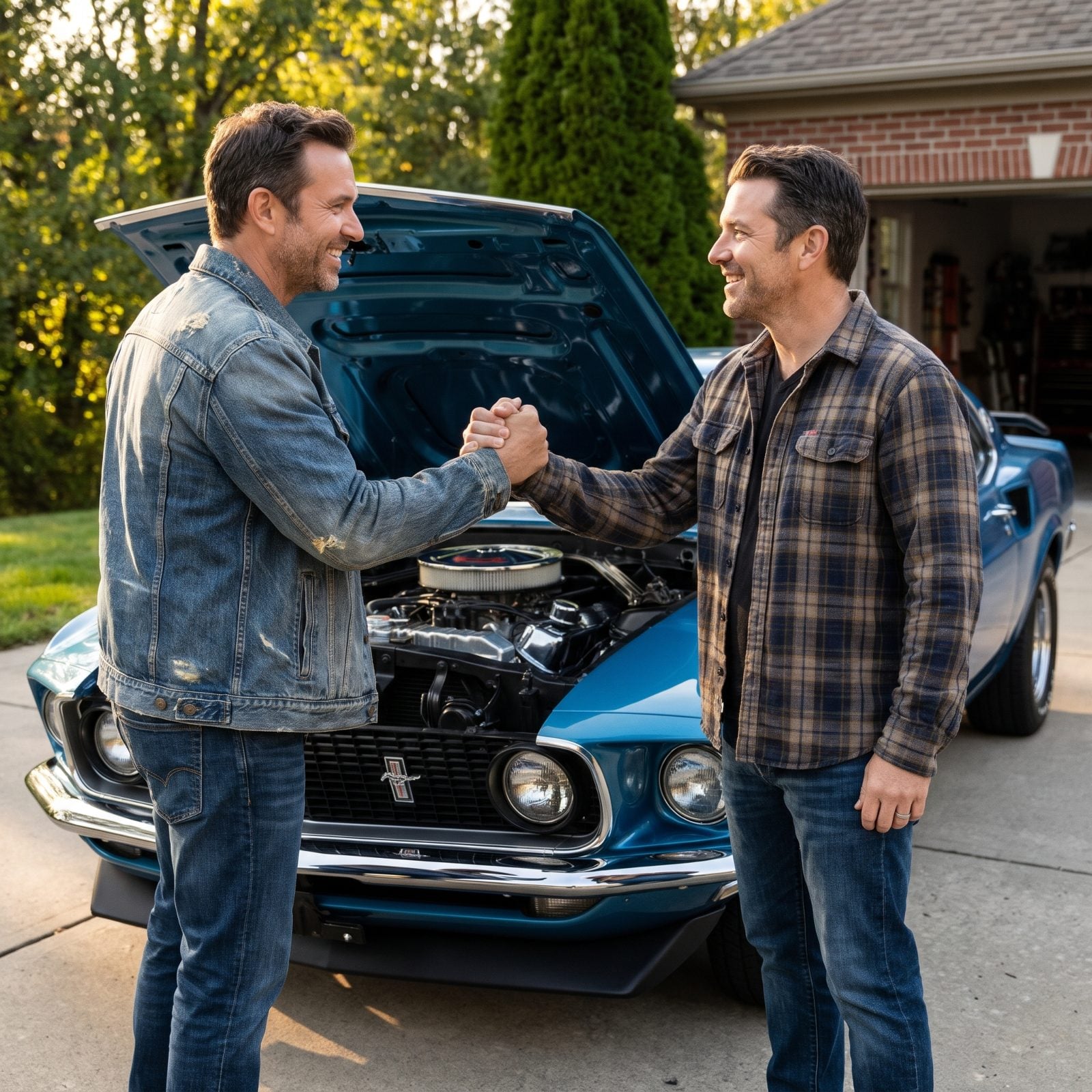
Walking up to a man’s car and firing off “what’s it got in it?” before you’ve said hello is like reaching across the table for someone’s dinner before you’ve told them your name.
A simple “morning, beautiful car” does a lot of heavy lifting. It tells the owner you see him and not just the sheet metal, and it opens a door the rapid-fire questions slam shut. Most of these folks live for the conversation. They’ll pop the hood, walk you through the build, tell you what broke and exactly what it cost to fix. Handshake first.
22. Don’t Insult Modifications You Would Have Chosen Differently
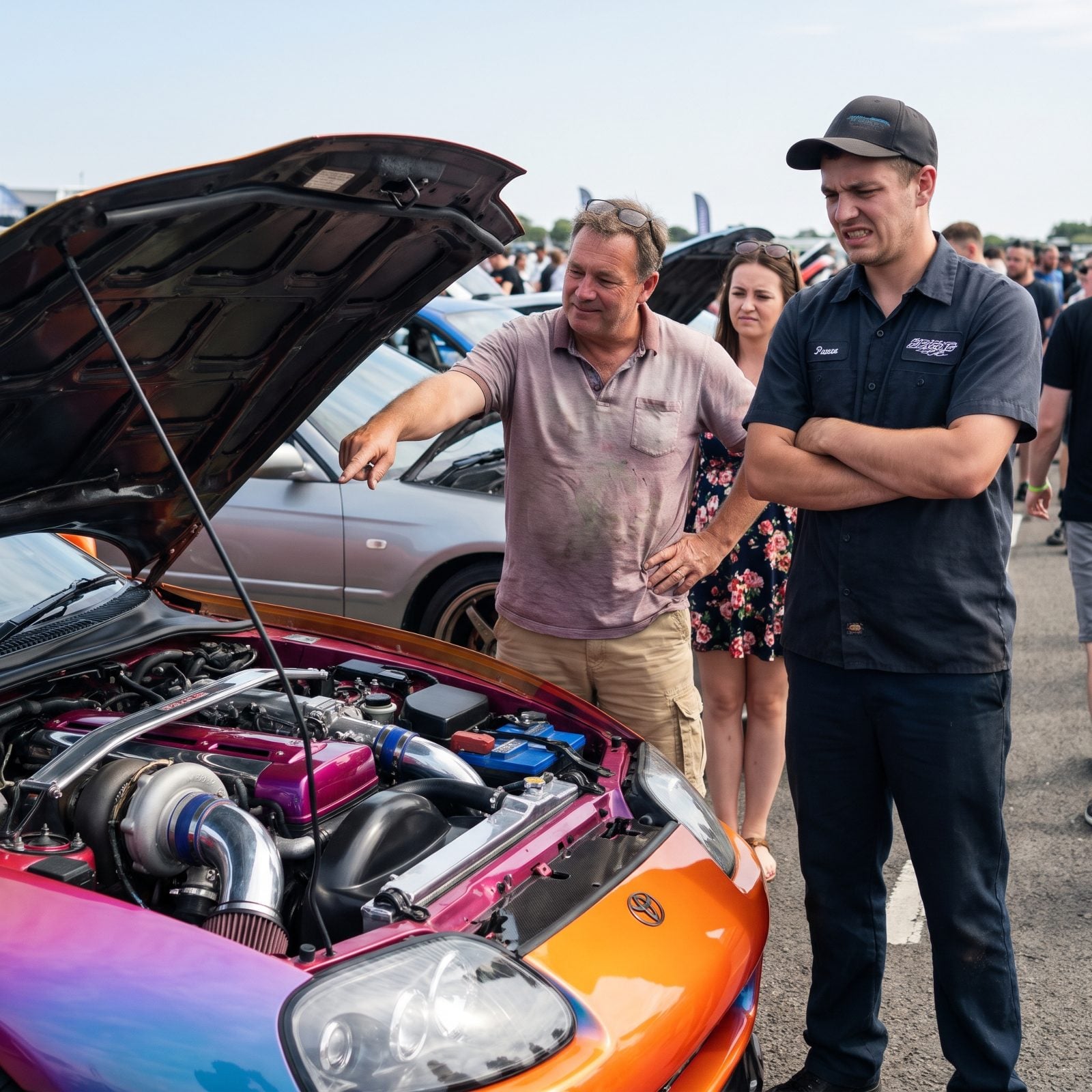
You’d have kept it stock. You’d have run a different wheel. You’d have left the patina. Great. Nobody asked.
That car reflects a thousand decisions somebody made with their own money and their own taste, and telling them you’d have gone another way isn’t a hot take. It’s a small insult wearing a lab coat. If a build isn’t your style, there are forty other cars on the field, so go admire one of those. The owner standing in front of you spent his Saturdays flat on his back under that thing, and he can tell curiosity from a critique in about two words.
21. Don’t Place Flyers on Other People’s Cars
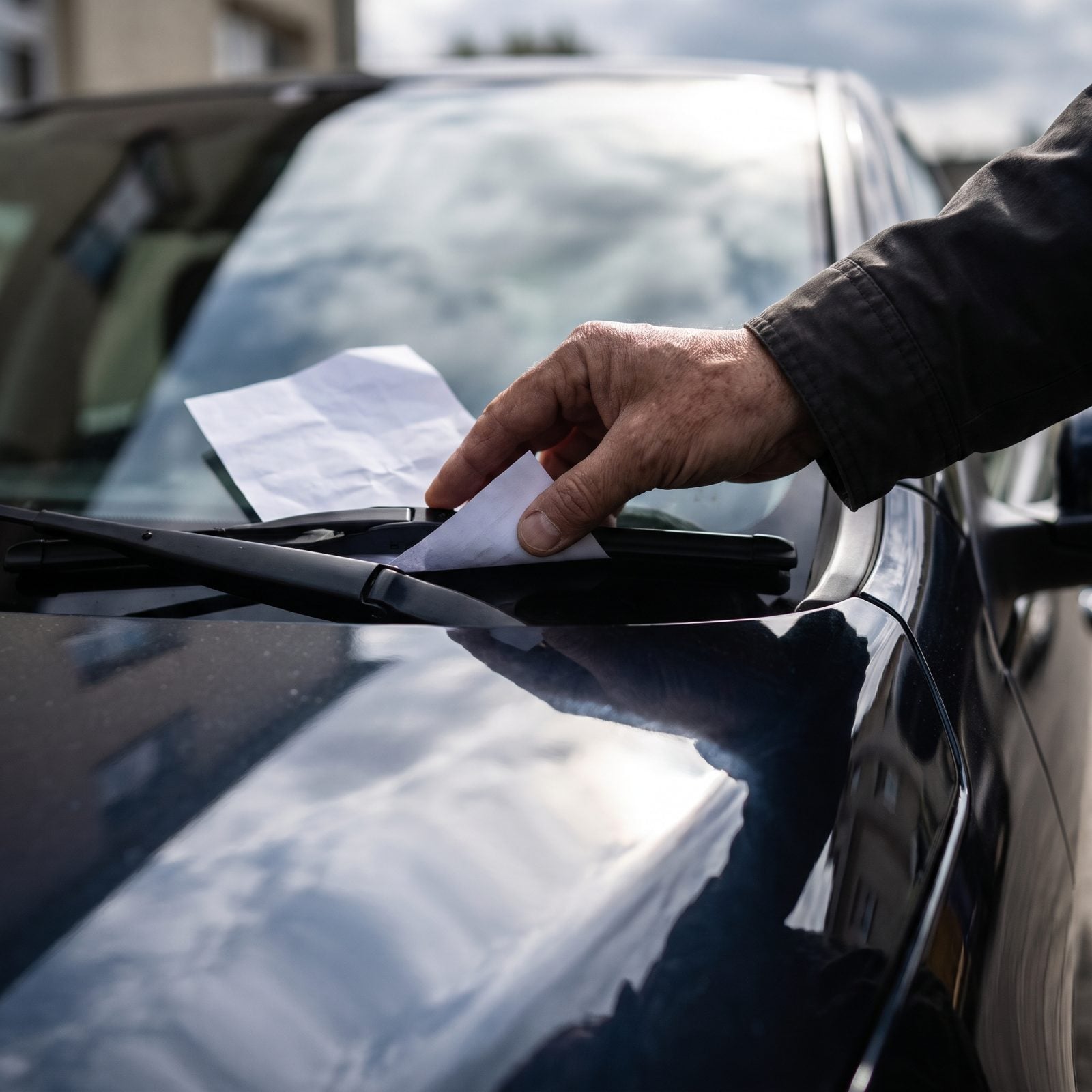
A flyer wedged under a wiper on a freshly detailed car is a small act of vandalism, and owners treat it exactly that way. Paper scratches. Adhesive residue scratches worse. And now the owner who spent an hour on that glass before dawn has to peel your business off it.
Got something to promote? Use the board the organizers set up for that, or hand it to people face to face. A windshield is not a bulletin board. Nobody at a car show wants a lawn-service ad flapping against their chrome.
20. Enter the Class Your Car Actually Belongs In
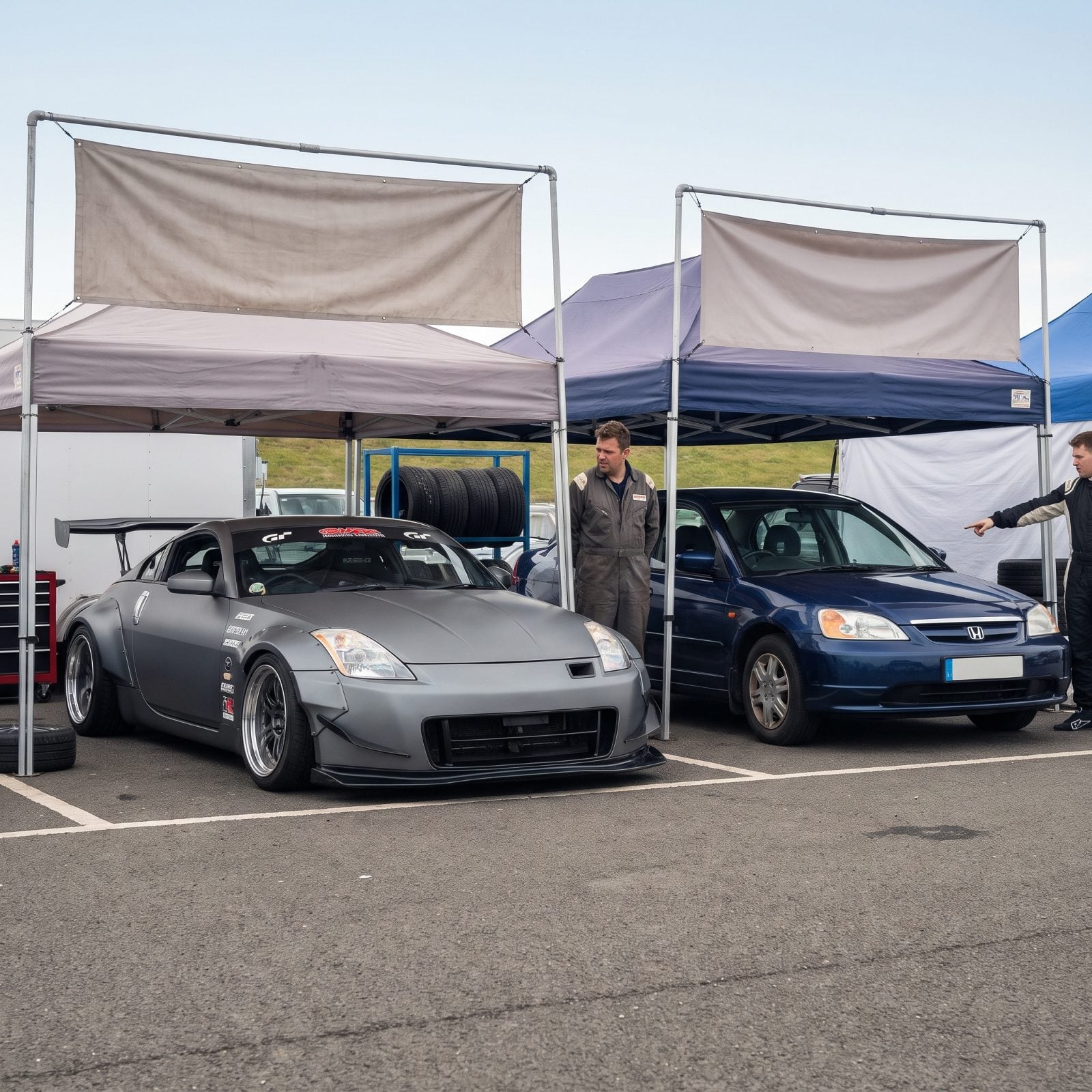
Sandbagging is the quiet cheat of the show world. You roll a heavily modified car into the stock class because you know it’ll smoke the actual stock entries, and you stroll off with a trophy that was never a fair fight.
Everybody sees it. The judges see it, the other owners see it, and the win means nothing because the whole field knows you gamed it. Enter where your car honestly fits, whether that’s stock, modified, custom, or restomod, whatever the show happens to call its categories. Second place in the right class beats a hollow first in the wrong one every single time.
19. Be Honest About Replicas, Tributes, and Reproduction Parts
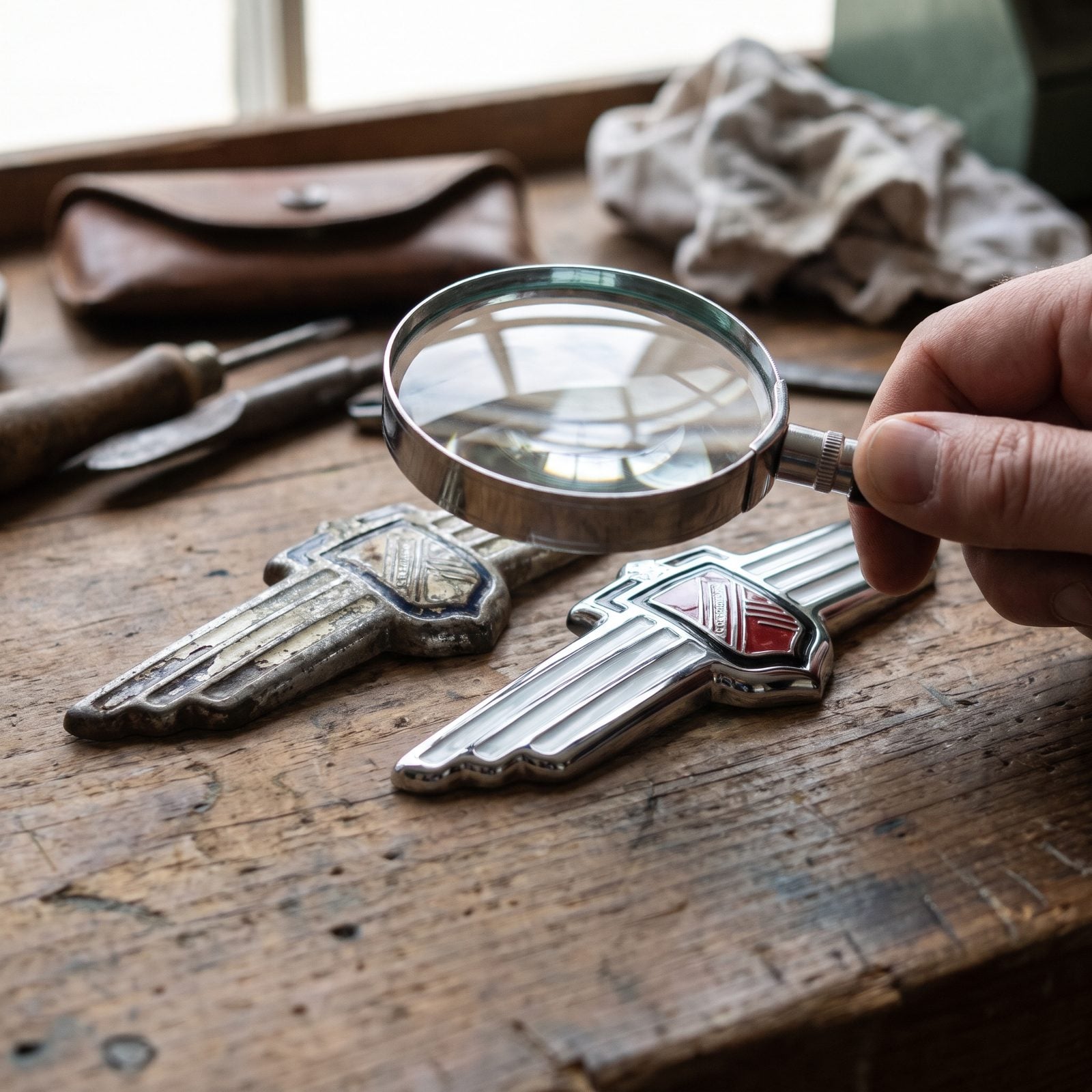
Nobody at a show is fooled by a badge swap for long. The guys who’ve been doing this for decades can read a reproduction fender from across the lawn, and the fastest way to lose their respect is to let them discover it on their own.
Call it what it is. A tribute, a clone, a restomod with modern internals — owning that up front earns more credit than pretending the four-barrel is numbers-matching when it rolled out of a crate last spring. People love a well-built replica. What they hate is being played.
18. Arrive Inside the Published Load-In Window
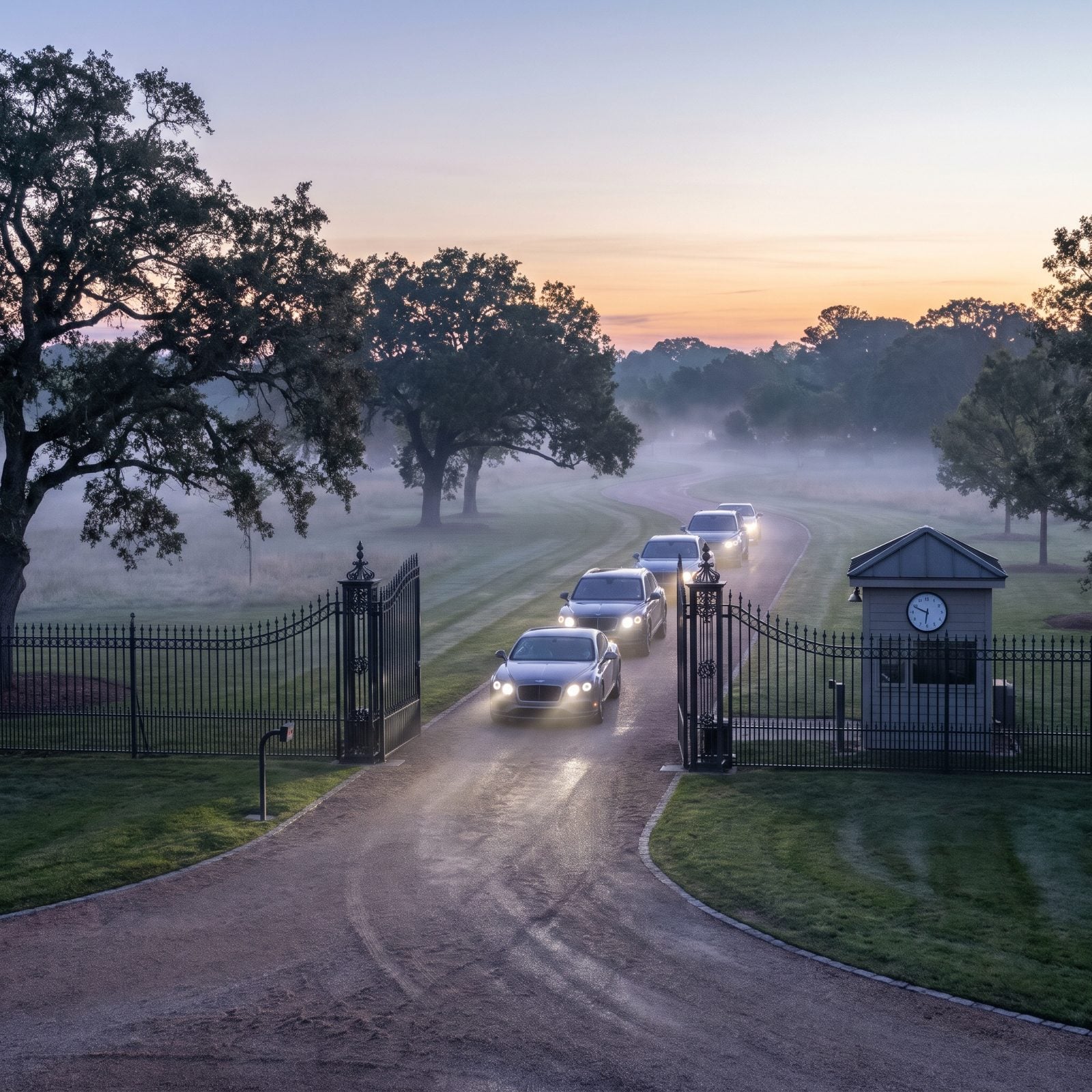
Show up at 6:40 for a 6-to-8 load-in and you’re a hero. Roll in after gates close and you’re the car that makes marshals reshuffle an entire row while spectators sip their coffee and watch the circus.
Organizers build that window around parking logistics, judging schedules, and when the public walks in. Blow through it and you’re not just late — you’re dragging a running engine through a crowd that was never meant to share pavement with you.
Set two alarms. Fuel up the night before. Trust me, you’ll understand the window the first time you miss it.
17. Follow the Marshals’ Directions, Even If You Disagree
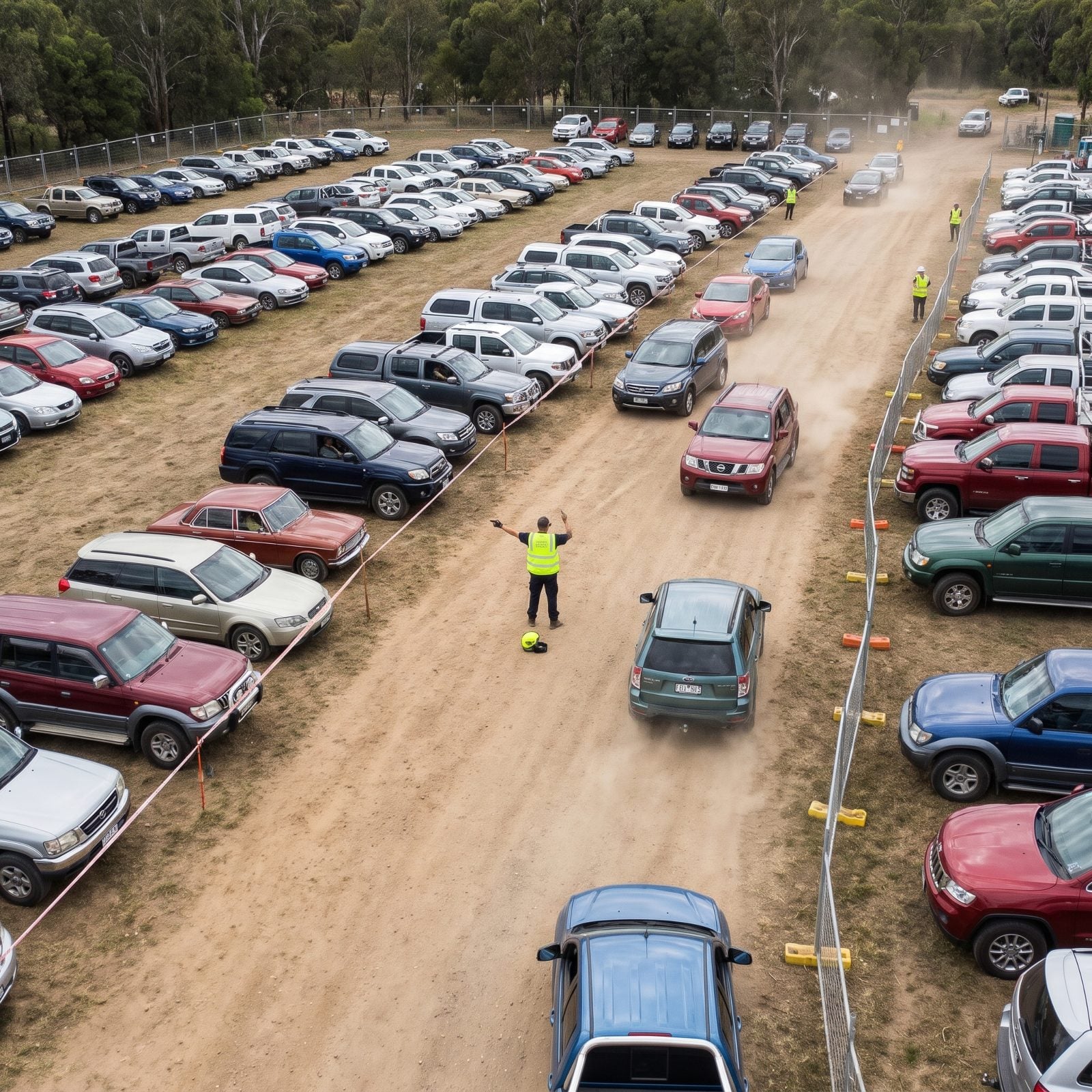
The marshal can see the whole field. You can’t. That gap is the entire argument.
Maybe you figure your car belongs in the muscle row, or the spot they’re pointing to looks too tight, or you’d just rather park near your buddy. The volunteer waving you left is working off a layout you never saw — emergency access, class grouping, the soft patch of ground that swallowed a dually last year.
Argue, and you hold up forty cars behind you. Nod, park where they point, and sort it out later with the organizer if it genuinely matters. These folks gave up their Saturday to stand in a field and point at cars. Give them the easy day.
16. Keep Speed at a Walking Pace on Show Grounds
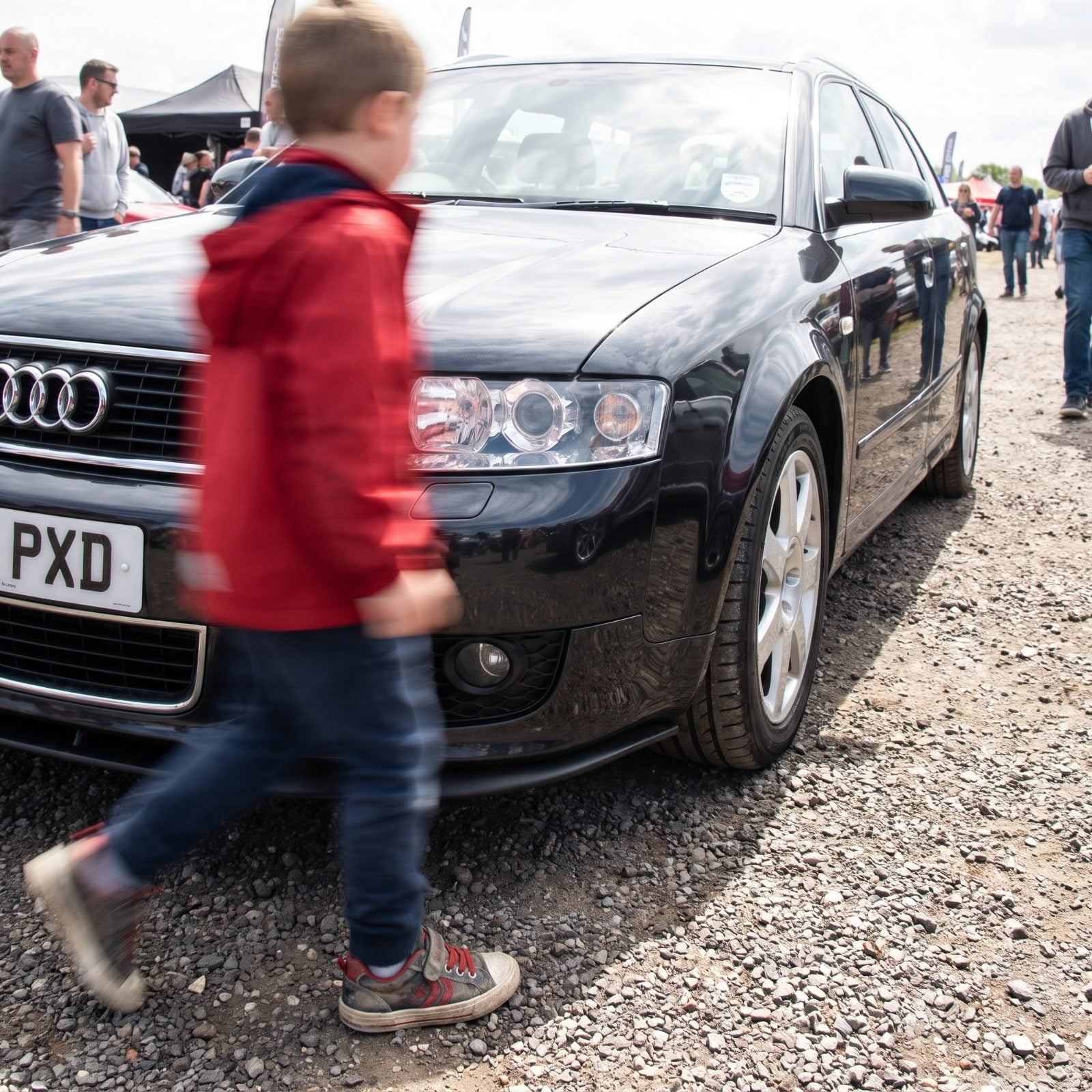
Children dart between bumpers. Someone backs up for a photo without looking. A dropped lens cap sends a grown man lunging into your path — and suddenly the show lot is the most unpredictable patch of pavement you’ll drive all year, where your exhaust note matters a whole lot less than your stopping distance.
Idle speed. No more. Keep a foot hovering over the brake and both hands where they belong.
15. Keep Engine Revs Down During Load-In
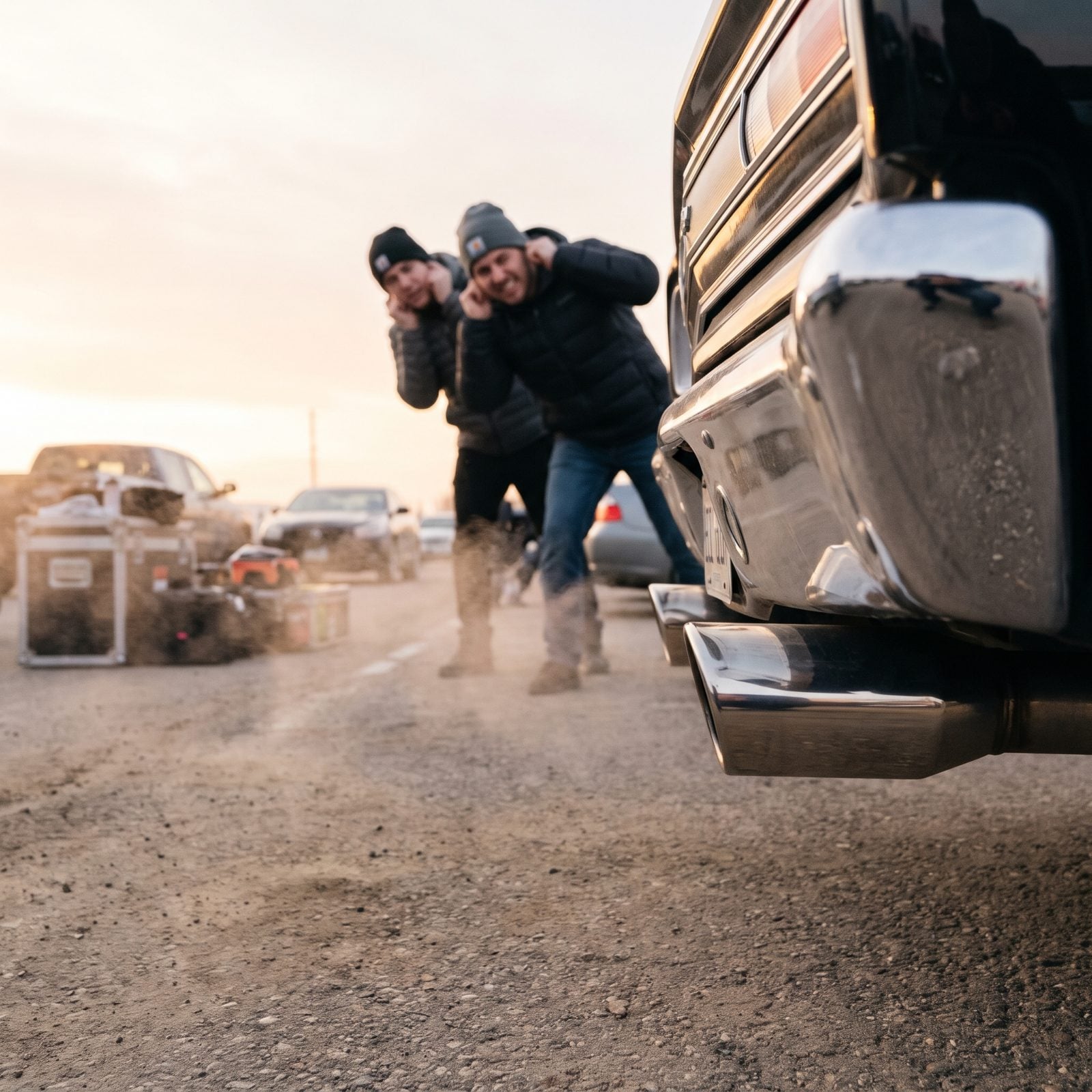
That cammed V8 sounds incredible to you. At 7 a.m. in a staging lane it sounds like a headache to everyone else, and it reads as a cloud of unburned fuel to the folks parked downwind.
Load-in is close quarters. Volunteers are leaning into engine bays, families are walking past, and half the lot hasn’t had coffee yet. Blip the throttle just to hear your own pipes and you’ve announced that you’re showing off — every single time.
Let it idle. Kill it the moment you’re parked. There’ll be plenty of ears for your engine once the public arrives and the hood’s up for a reason.
14. Never Use a Burnout as Your Entrance
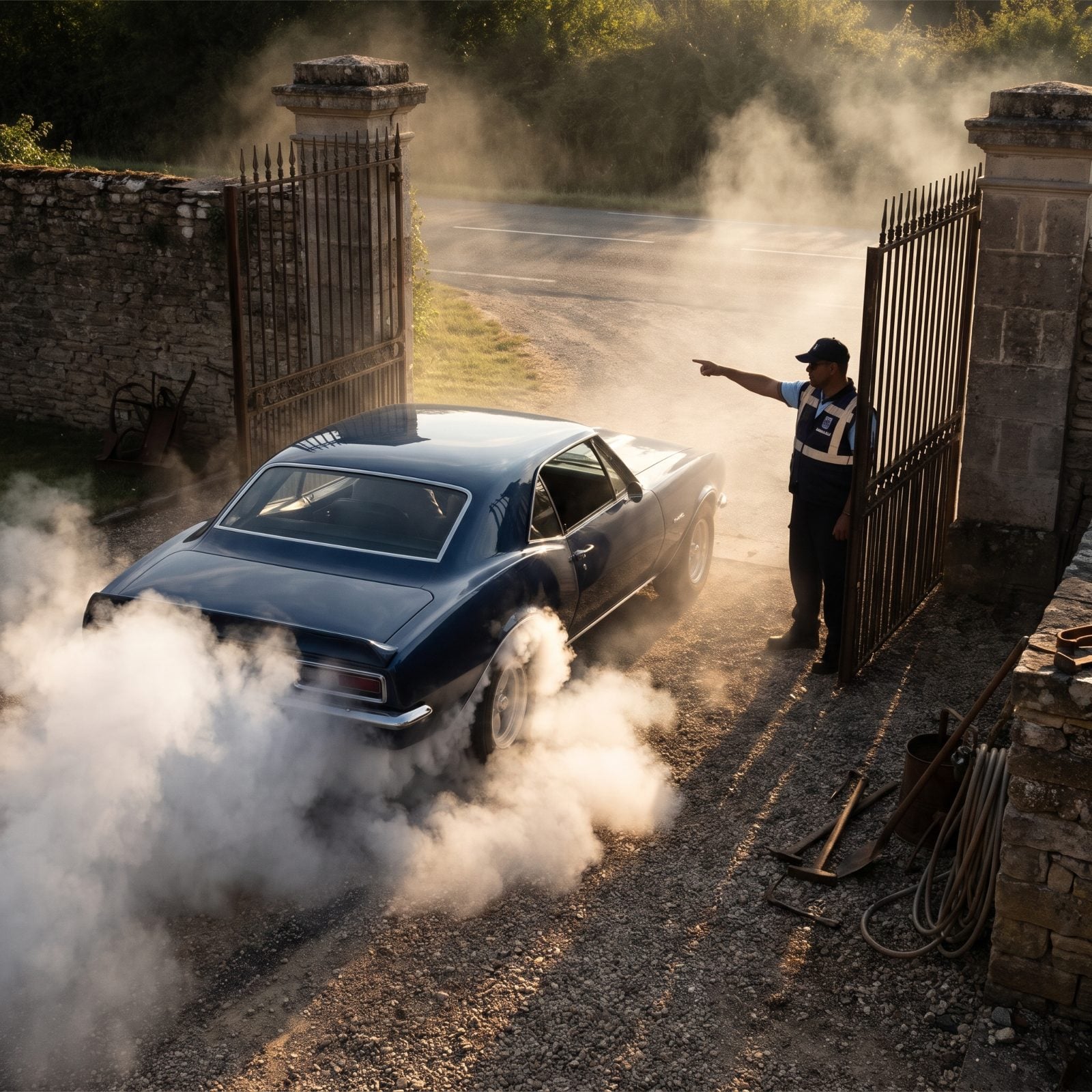
The entrance burnout is the single fastest way to get your car ejected and your name remembered for all the wrong reasons. Hot tires, oily smoke, and a crowd standing on the exact surface you just glazed in rubber. One slick patch, one kid, one very bad day.
Most shows already have a written rule about it. The ones that don’t will write one the morning after somebody tries it.
A show field is not a track. The people who confuse the two don’t get invited back.
Save it for a sanctioned burnout pit if the event runs one. Otherwise roll in under control and let the car do its talking once it’s parked.
13. Don’t Save Spaces Unless the Organizer Allows It
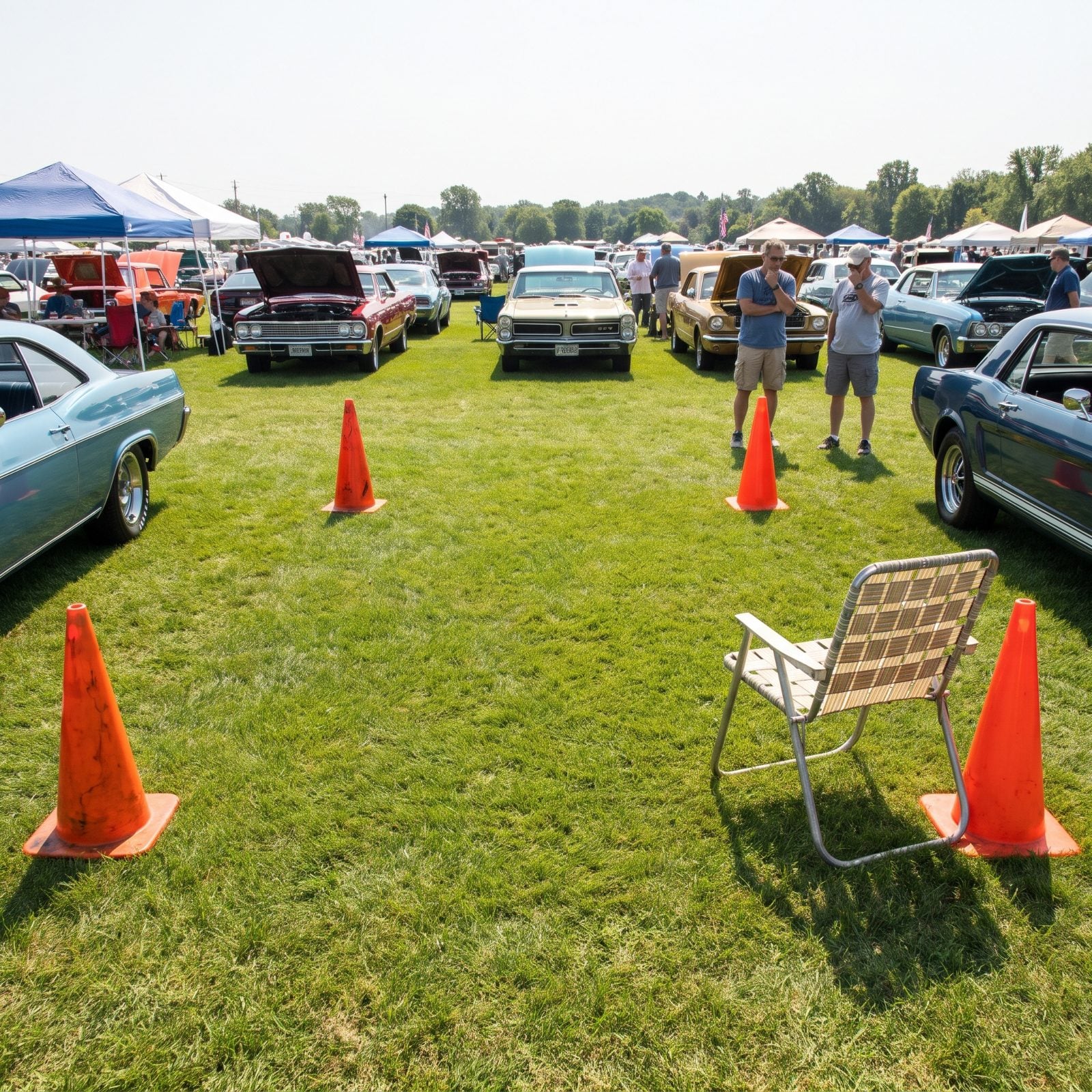
You know the move. Four cones and a lawn chair dumped into the best spot on the field at 7 a.m. so a friend who’s still in his driveway can roll in at nine and claim it. Call it parking-lot squatting, and it quietly poisons the fairness the whole event runs on.
If the organizer will group friends together on request, wonderful — ask them. If they won’t, the field fills in the order cars arrive. That’s the deal.
Want to park beside your buddy? Caravan in together. It’s the only reservation a show actually owes you.
12. Leave Enough Room for Neighboring Doors to Open
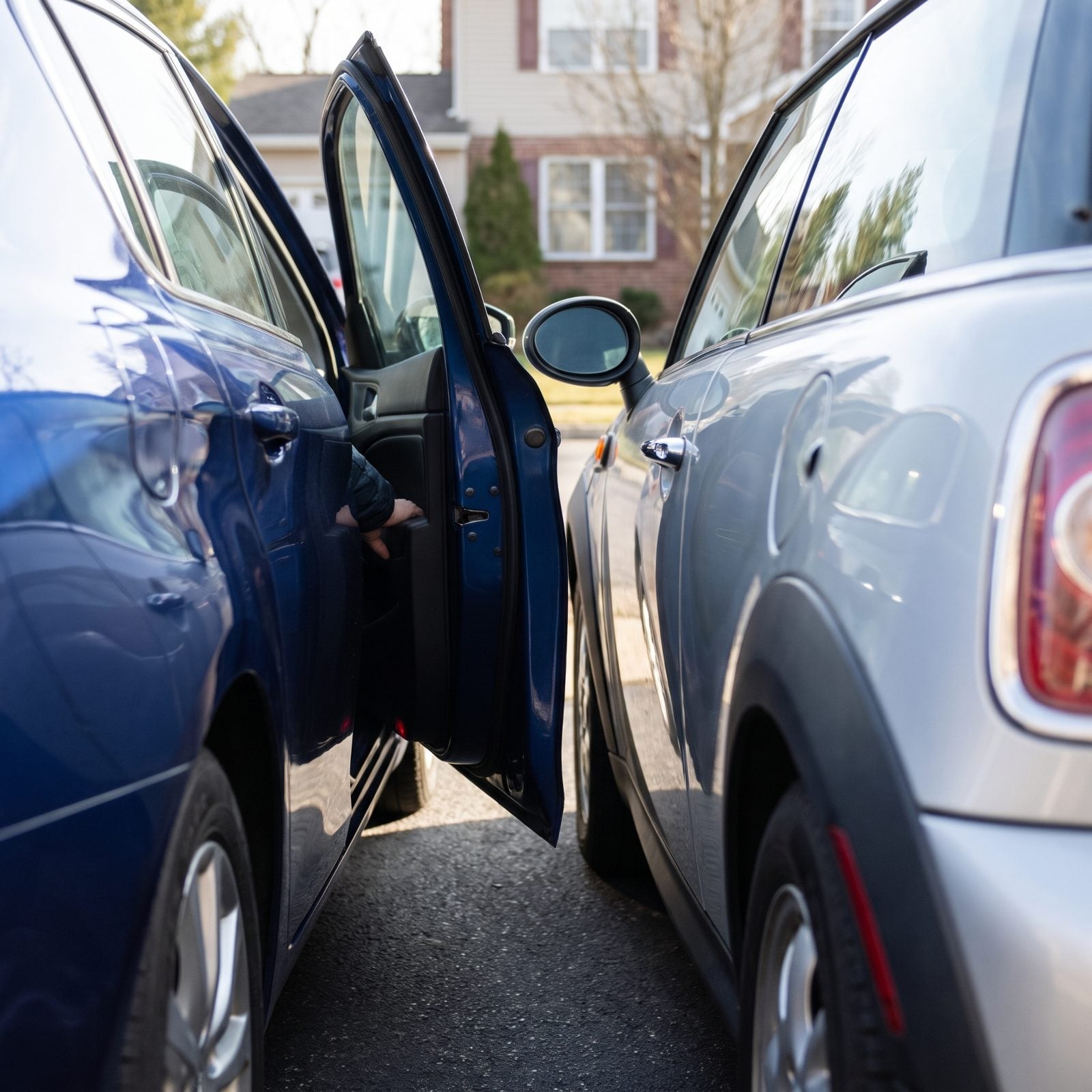
A door ding at a car show is a special kind of heartbreak. The guy next to you babied his paint for two years, and your careless swing just stamped a crescent into his fender while the whole row cringed.
Park with a real gap — enough for both your doors and his to swing open fully, nobody holding their breath.
11. Keep Fire Lanes and Emergency Exits Clear
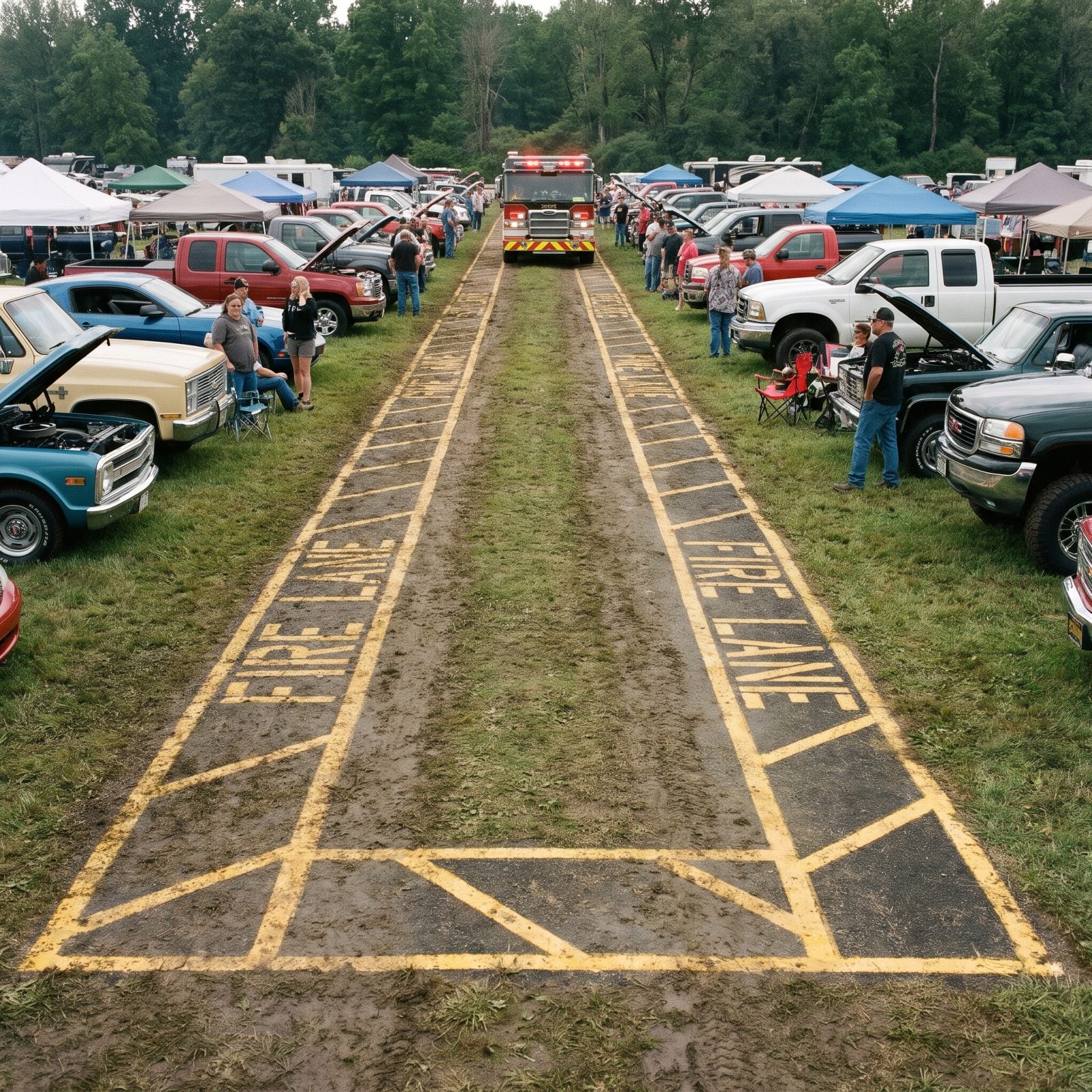
That wide empty aisle isn’t wasted space, and it sure isn’t your overflow parking. It’s the path an ambulance takes when somebody on a baking field goes down, or the route a truck needs if a car cooks off during a photo op.
Don’t park a trailer across it. Don’t pitch your pop-up tent in it. And don’t let your display creep an extra three feet just because the gap looked tempting.
You’ll never notice the fire lane working. You’ll only notice it failing, and by then it’s the worst day the show has ever had.
10. Finish Detailing Before Spectators Arrive
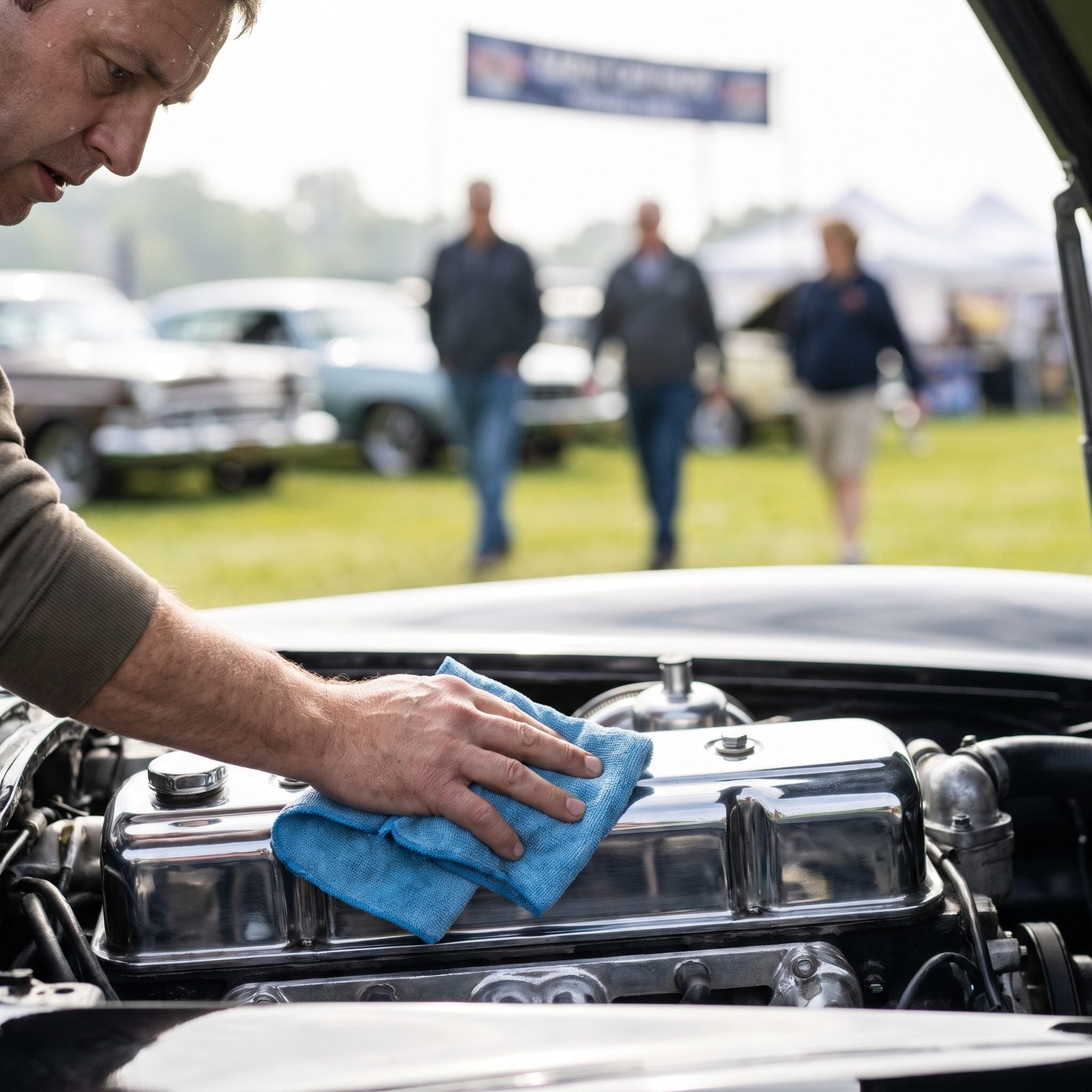
Nobody wants to admire your car while you’re still chasing overspray off the valve covers with a rag draped across the fender. Half-finished detailing makes the whole display read like a work in progress instead of the thing you sweated over all winter.
Knock out the polishing, the tire shine, and the chrome during load-in, before the gates open. Once the public’s walking the rows, your job shifts from buffing to talking.
9. Keep Mirrors, Stands, and Props Inside Your Space
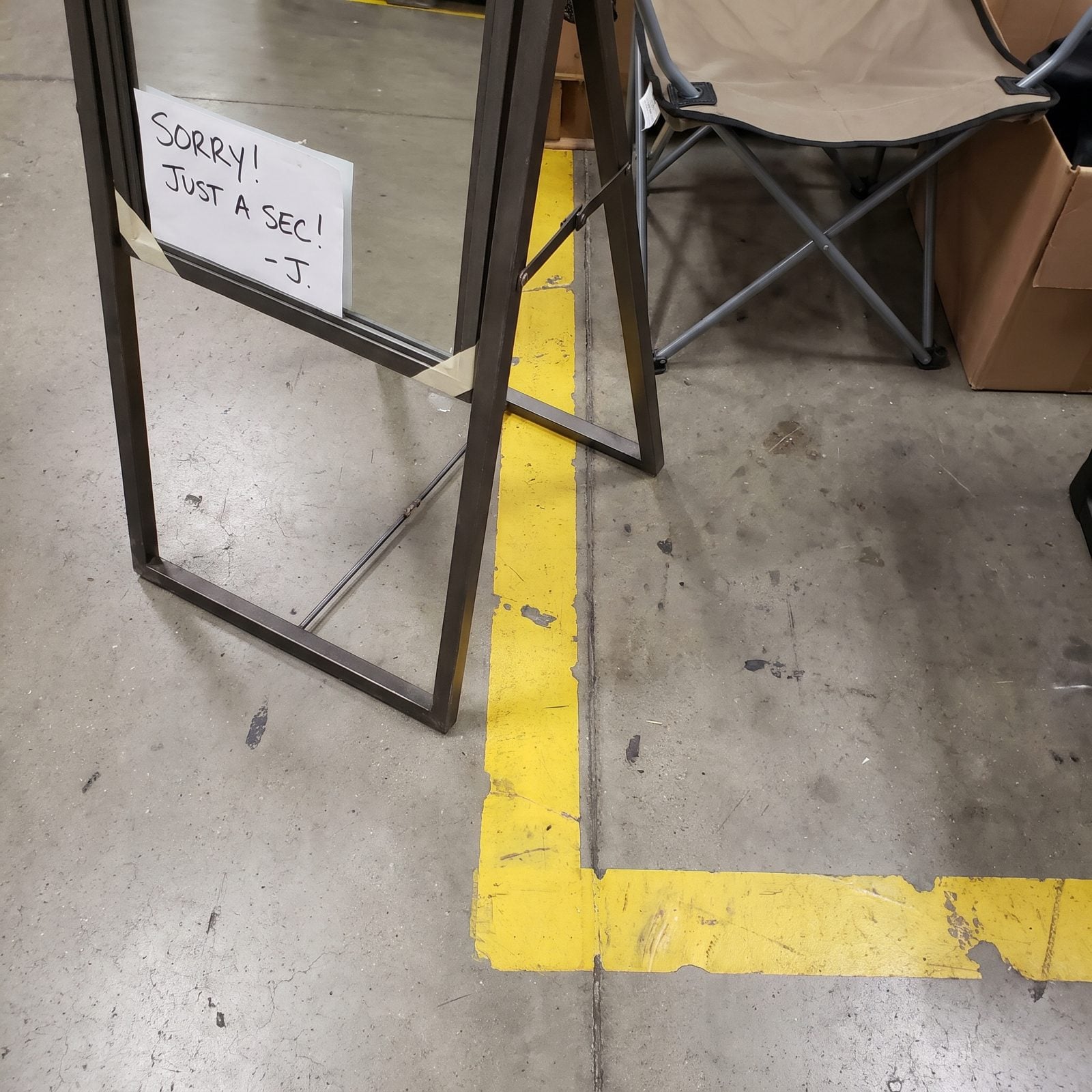
You paid for one space. The underbody mirror angled into the walkway, the folding display stand creeping into your neighbor’s footprint, the toolbox parked in the aisle — all of it borrows room that isn’t yours.
Spectators walk those lanes with strollers and canes and crowds pressing behind them, and a trip hazard in a busy row ruins somebody’s whole afternoon in a second. Keep every prop, mirror, and sign inside your boundary lines. If your display needs more room than your slot allows, it’s too big for this show, and the organizer will say so if you won’t admit it yourself.
8. Anchor Canopies and Use Them Only Where Permitted
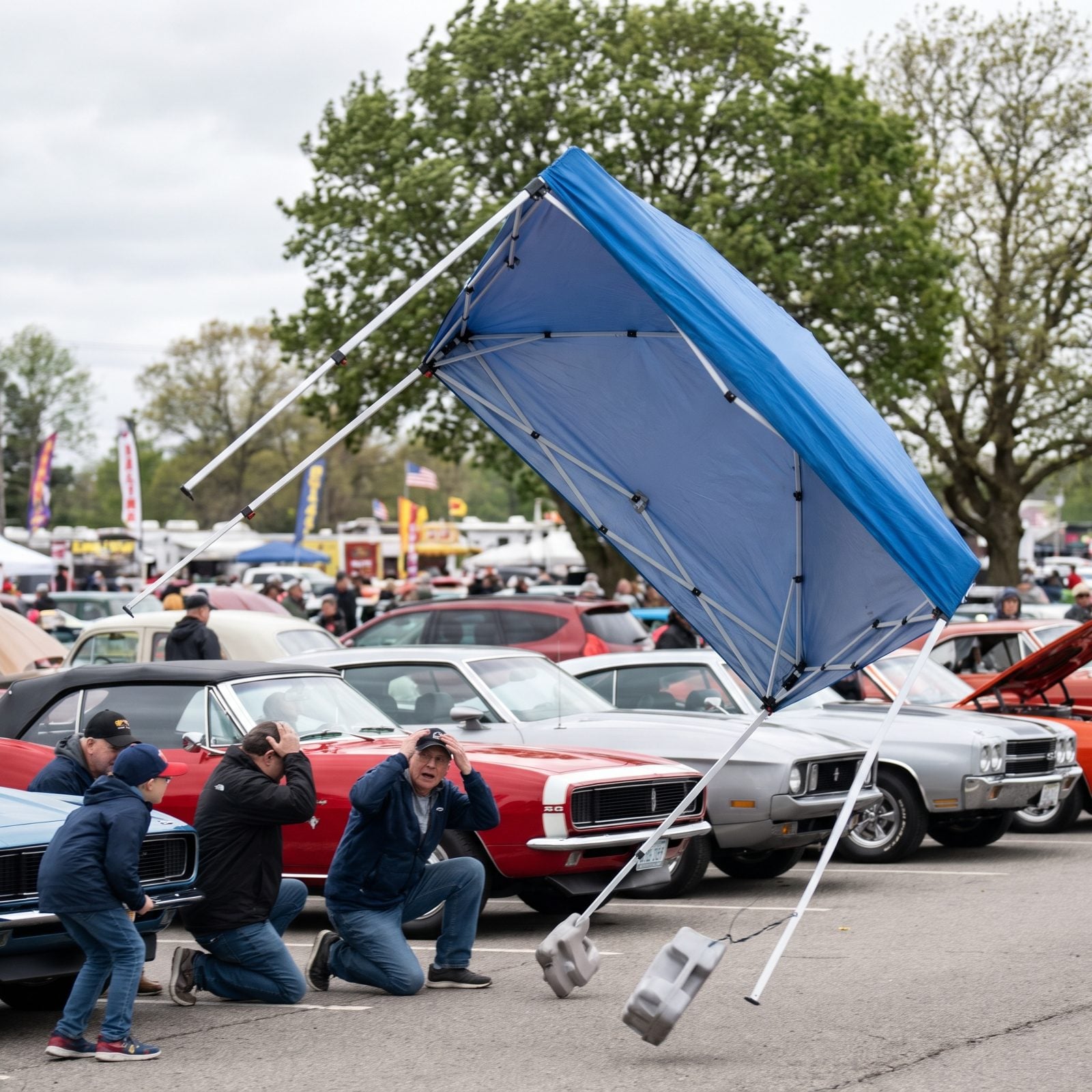
An unweighted pop-up canopy is a kite waiting for its moment. One gust turns it into a flying frame of aluminum and nylon headed for the windshield two cars over. People get hurt this way. Paint gets ruined this way.
So weight every leg. Sandbags, water weights, filled jugs, whatever the host allows. Stakes alone won’t hold grass that’s been baking all summer.
7. Bring Pets Only When Allowed and Keep Them Leashed
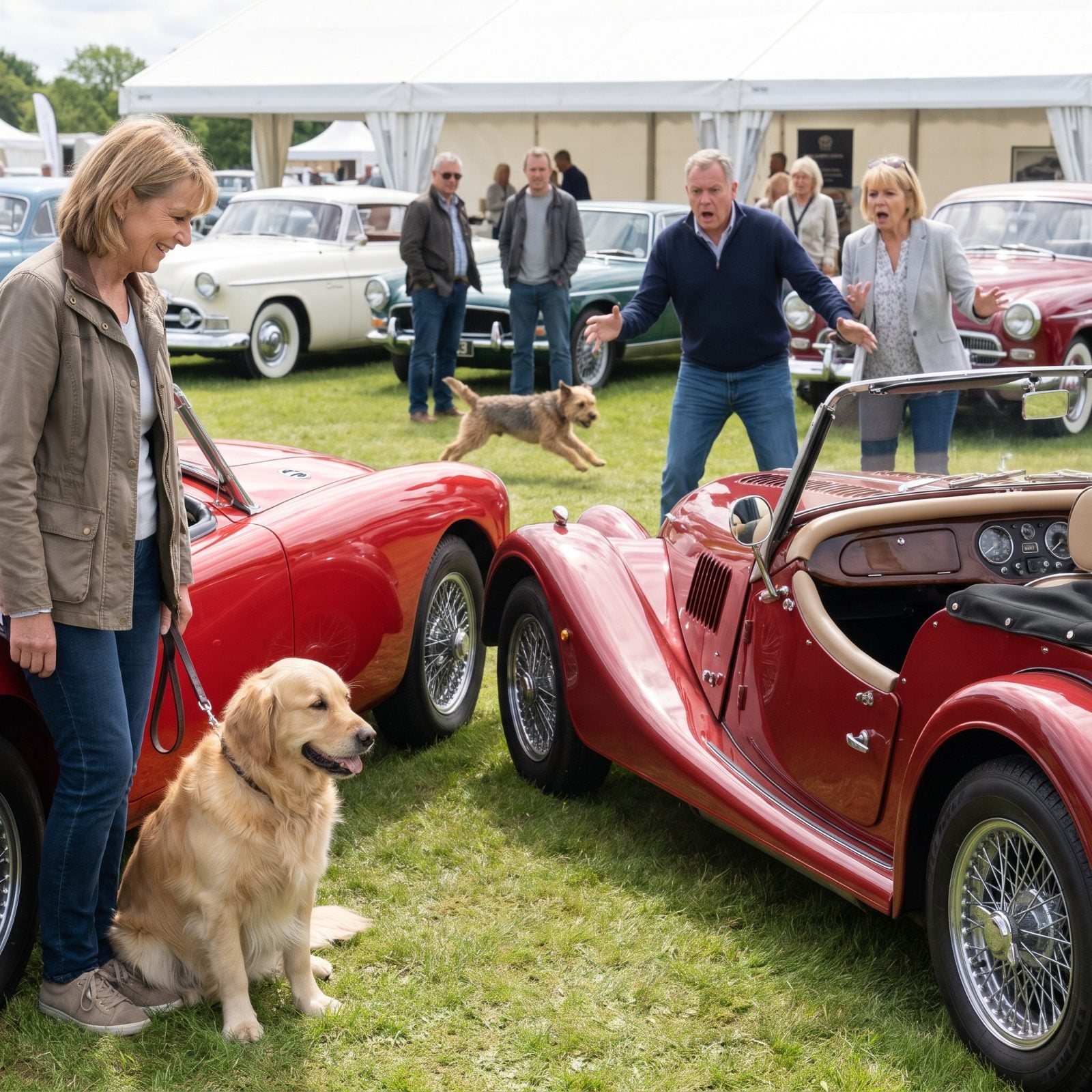
A dog off leash near forty freshly waxed cars is an accident with a tail. One startled bolt, one lifted leg against a whitewall, one scratch down a quarter panel from an excited paw, and a friendly afternoon goes sideways.
Check the show’s pet policy first. Many allow dogs, some don’t, a few only in spectator areas. If yours is welcome, keep the leash short, bring water, and read the heat. A dog panting in a hot parking field isn’t having the day you think he is.
6. Open Required Compartments, Then Give Judges Room to Work
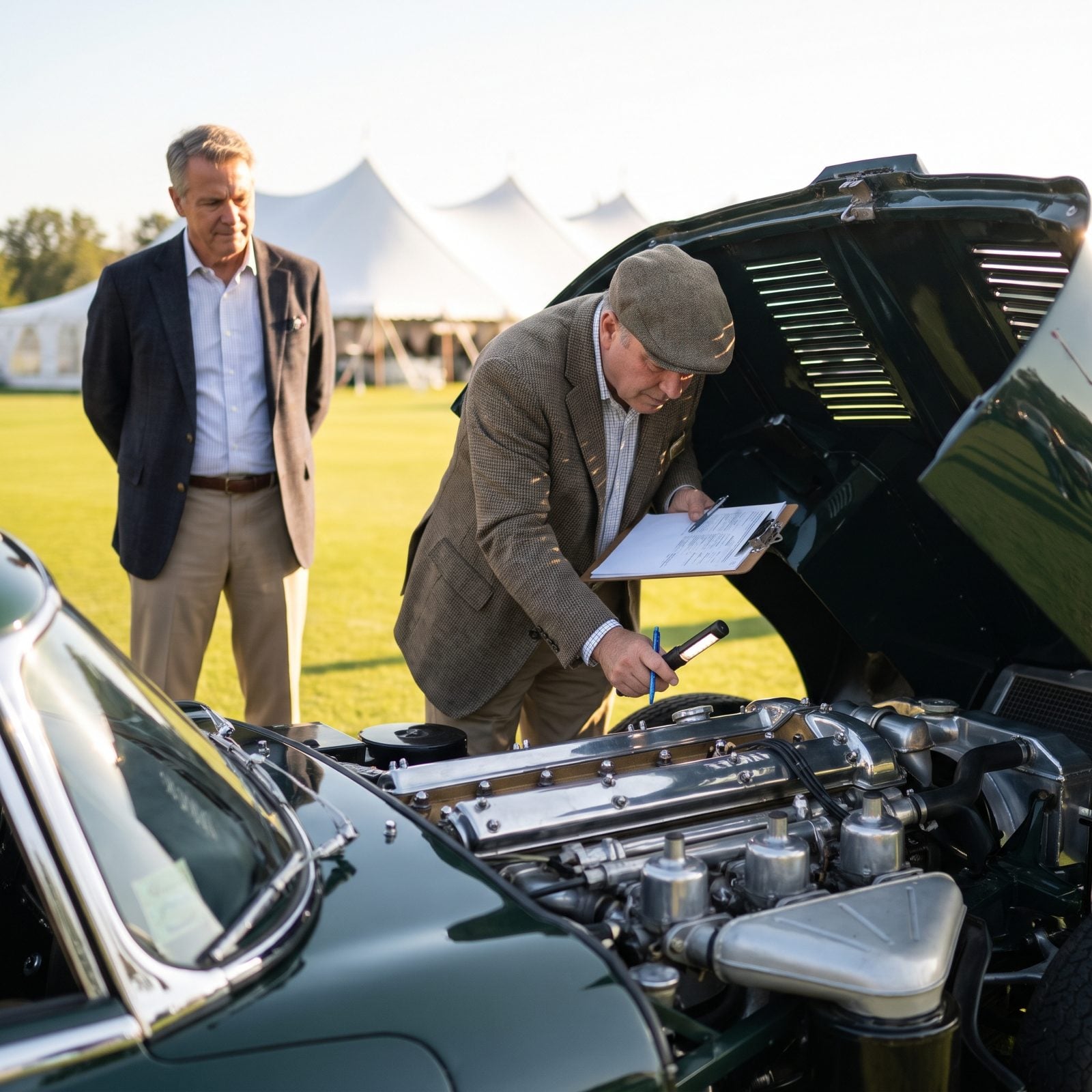
Judging day has a rhythm. Open what the class sheet asks for before the judges arrive — hood, trunk, doors, sometimes the glovebox and spare well. Make it easy for them to see what they came to see.
Then step back. Hovering at a judge’s shoulder, narrating every detail, pointing at the correct cad-plated bolt you want noticed — none of it helps. It reads as nervous at best and pushy at worst. Answer what you’re asked, stay out of the way, and let the car do the talking. That’s why you built it.
5. Don’t Lobby Judges or Confront Them Over Results
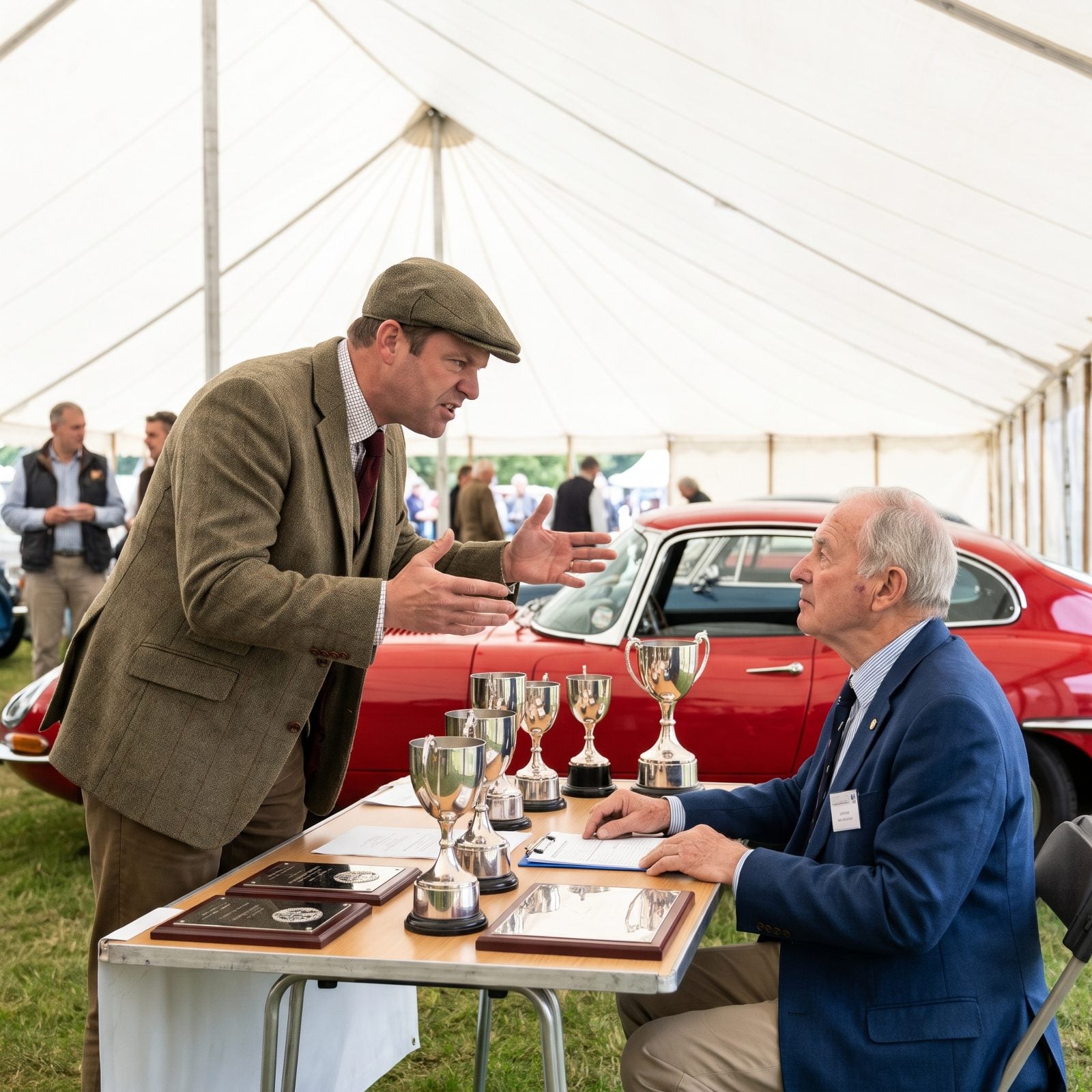
You think you got robbed. Maybe you did. Judging is human — points get missed, and the wrong car walks away with trophies all the time.
But cornering a judge in the parking lot won’t fix it, and neither will a loud scene at the results table while families eat lunch nearby. If a show has an appeals process, use it, quietly and in private. If it doesn’t, you take the result and you take notes for next year.
The owners who argue loudest about one show are the ones nobody saves a spot for at the next.
Win graciously, lose quieter. That’s the whole game.
4. Don’t Pack Up While Spectators Are Still Between Cars
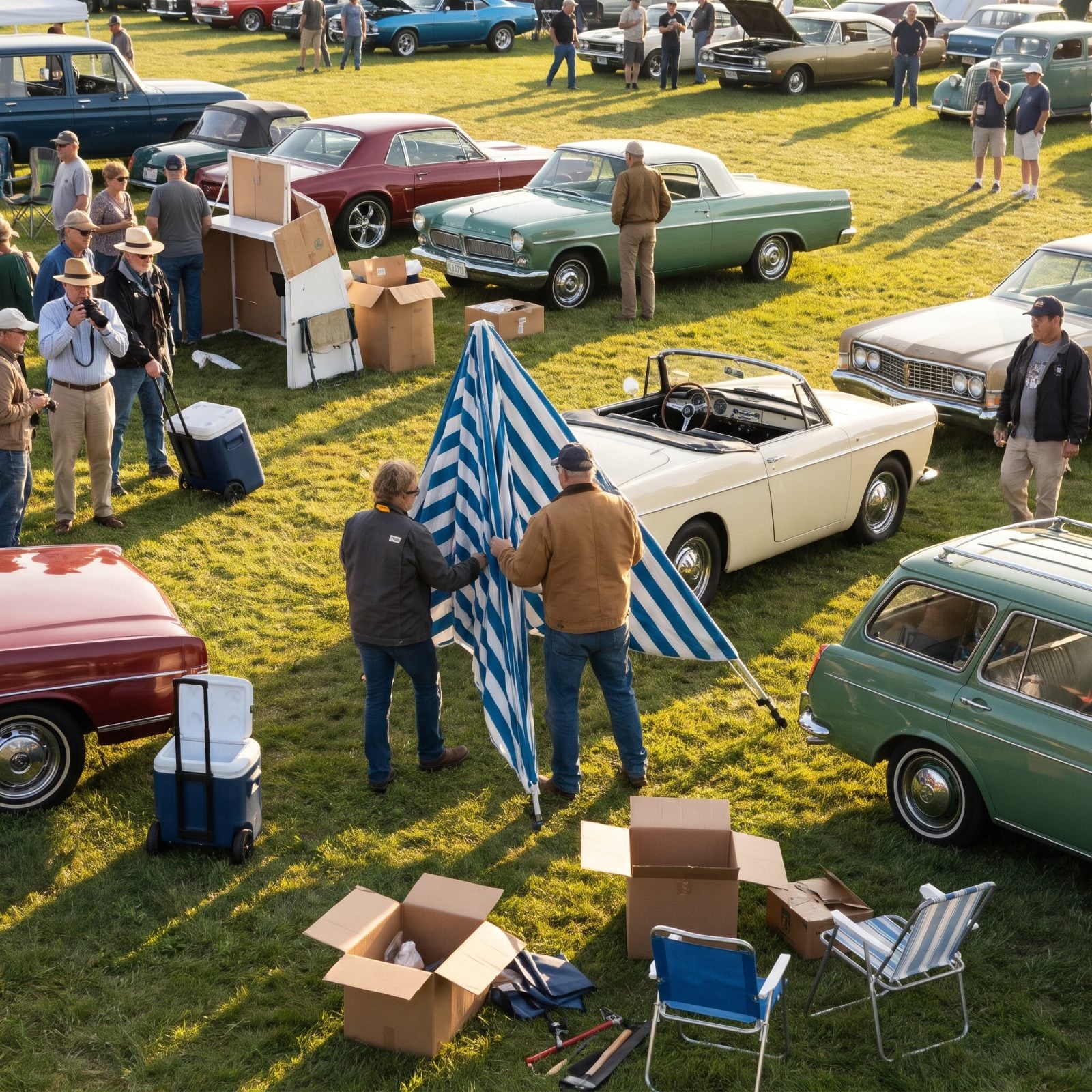
The last hour is the one people forget. Drivers start rolling cars out, folding canopies, dragging ramps around while spectators are still walking the rows. A car backing out of a tight slot into a crowd is the one serious hazard nobody schedules for.
Shows set a release time for a reason, so honor it. If you have to leave early, tell a marshal, and move at a crawl with a spotter watching your corners. The family that drove two hours to see your car deserves to see it before you drive it onto the trailer.
3. Take Every Piece of Trash and Display Material With You
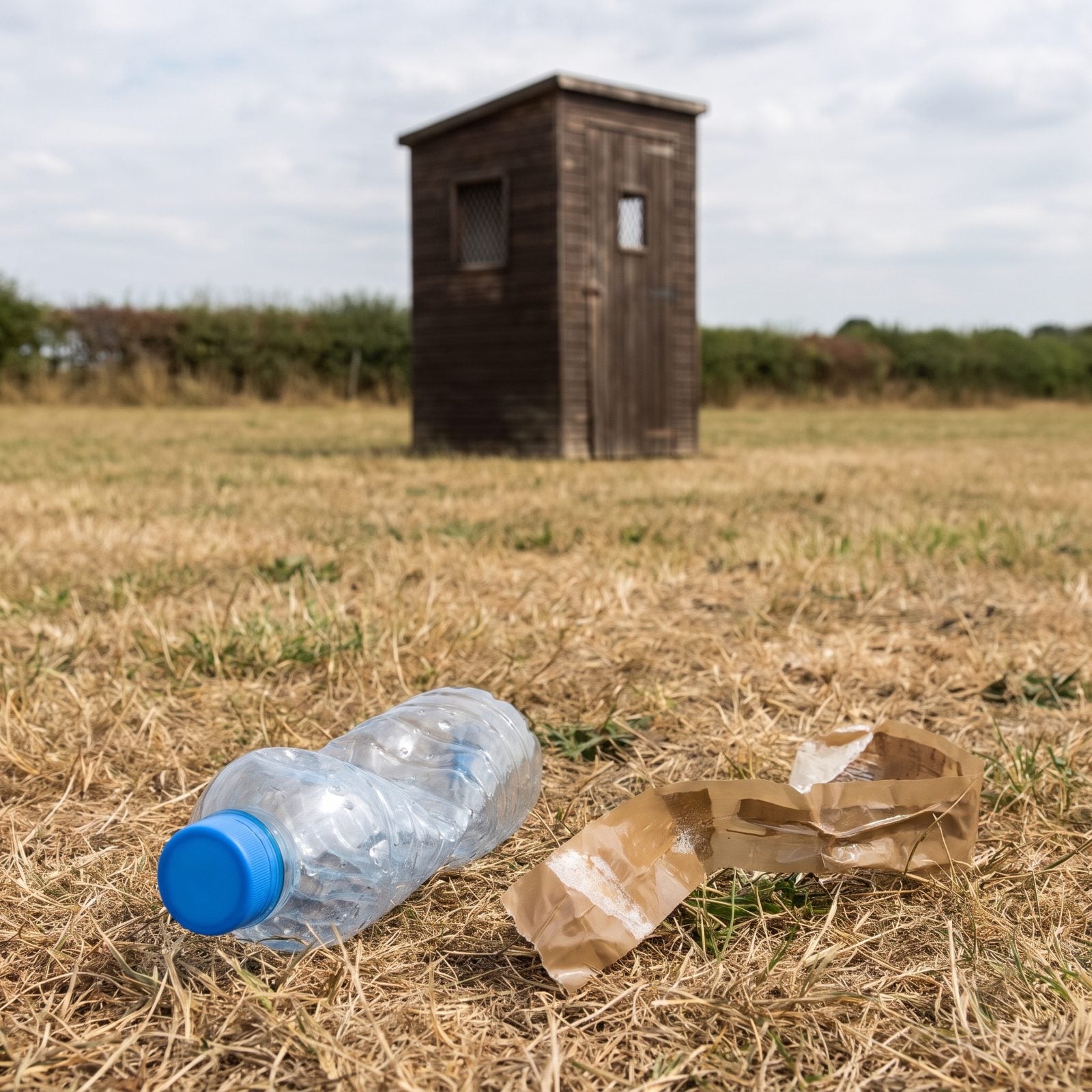
The ground tells on you. Peel out at the end of the day and the spot you leave behind is a confession: a crushed water bottle, a zip tie, the little foam pad that fell off your display board. The grass remembers where you parked, and so does the person running the show.
Bring a trash bag and tie it to your chair before the first visitor shows up. Costs you nothing. At pack-up you drop in the napkins, the tire-shine applicator, the spent microfiber, then pull the whole kit out in one lift.
Shows live and die on whether the venue invites them back next year, and a clean lot is the cheapest insurance that invitation survives.
2. Ask a Spotter to Guide You Out of a Crowded Row
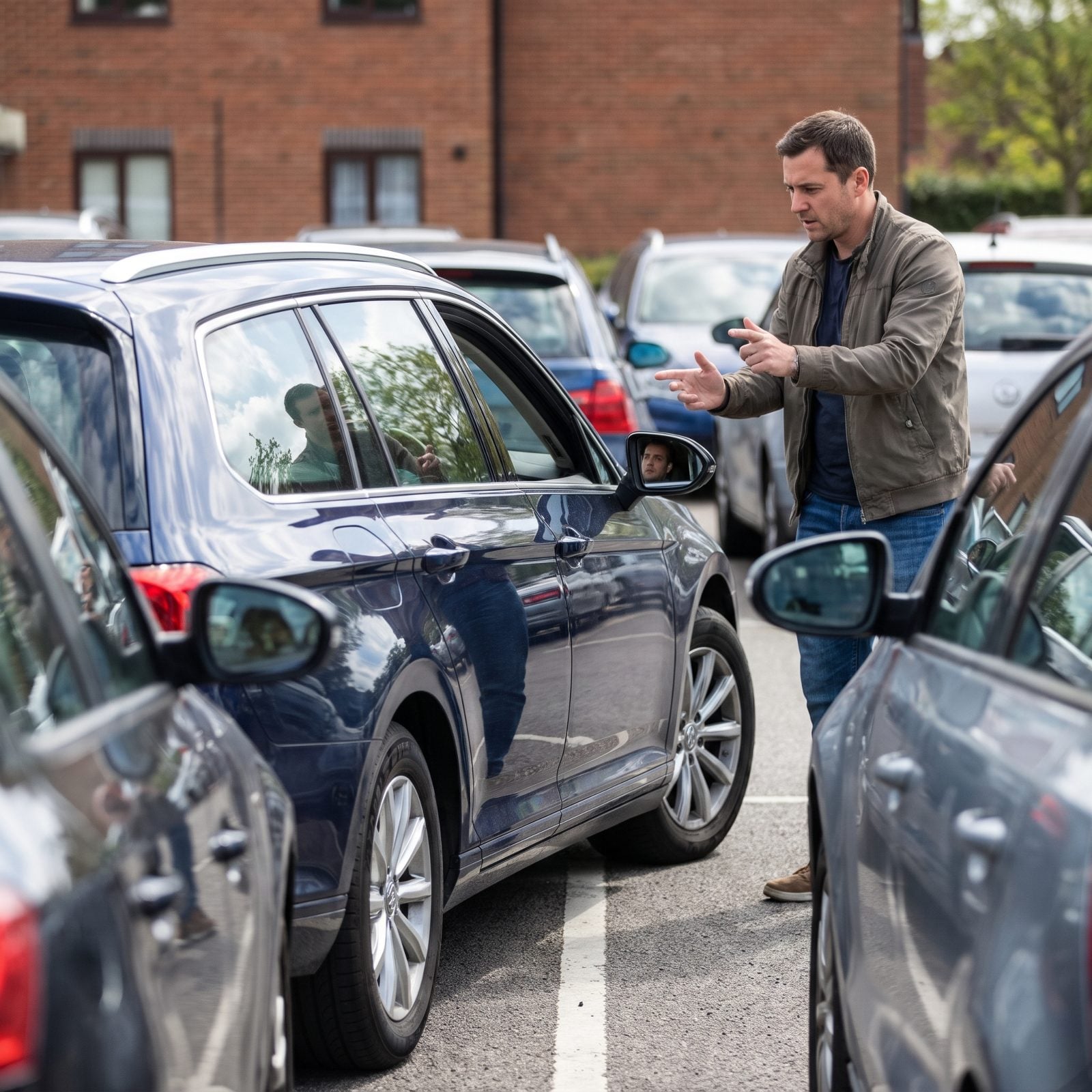
Nobody wins by backing out blind. A crowded row is a maze of mirrors you can’t see, kids who move fast, and the guy two spots down who decided to open all four doors for photos.
So grab a buddy, or flag a marshal. A spotter standing where your eyes can’t reach earns their keep in one saved fender. Palms flat means stop. A slow sweep points you toward the clear direction, a fist means freeze — and you agree on all of it before you shift into reverse.
Then go slow enough that a dropped phone or a wandering toddler never turns into drama. The clock at pack-up is not the enemy. A ten-thousand-dollar paint repair is.
1. Leave the Grounds Slowly and Without Showing Off
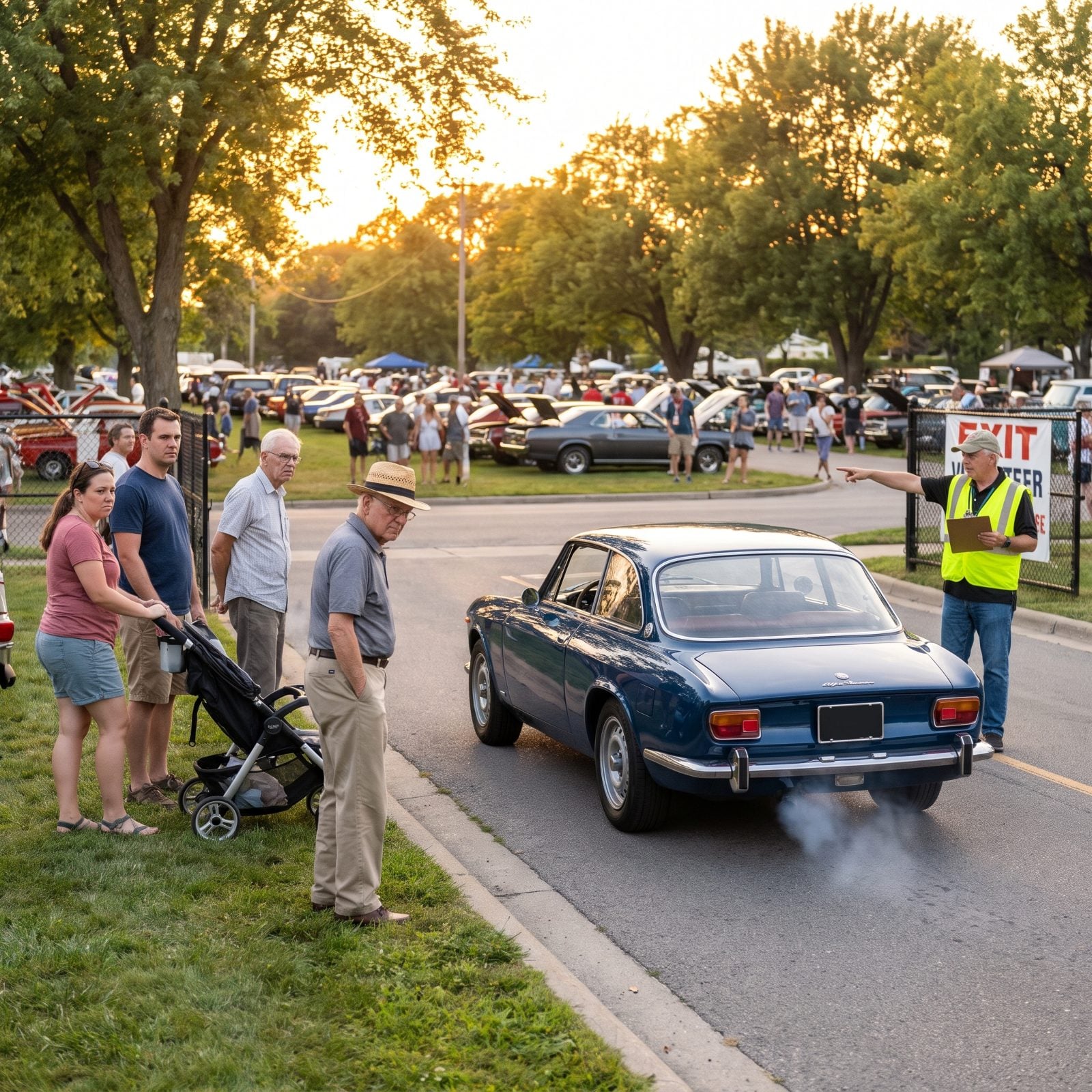
You’ve heard it at every show: one guy near the gate who can’t resist a quick chirp of the tires on his way out, like the whole afternoon was building to that.
Don’t be that guy. The exit lane is where the crowd thins and the spacing gets sloppy — strollers, dogs on long leashes, somebody walking backward to grab one last photo. A burnout or a hot launch right here is exactly how shows end up banned from parks and fairgrounds.
Crawl out, wave at the volunteer on the gate, and save the throttle for an empty road miles away. Your car already made its case sitting still all day. Trust it to.