
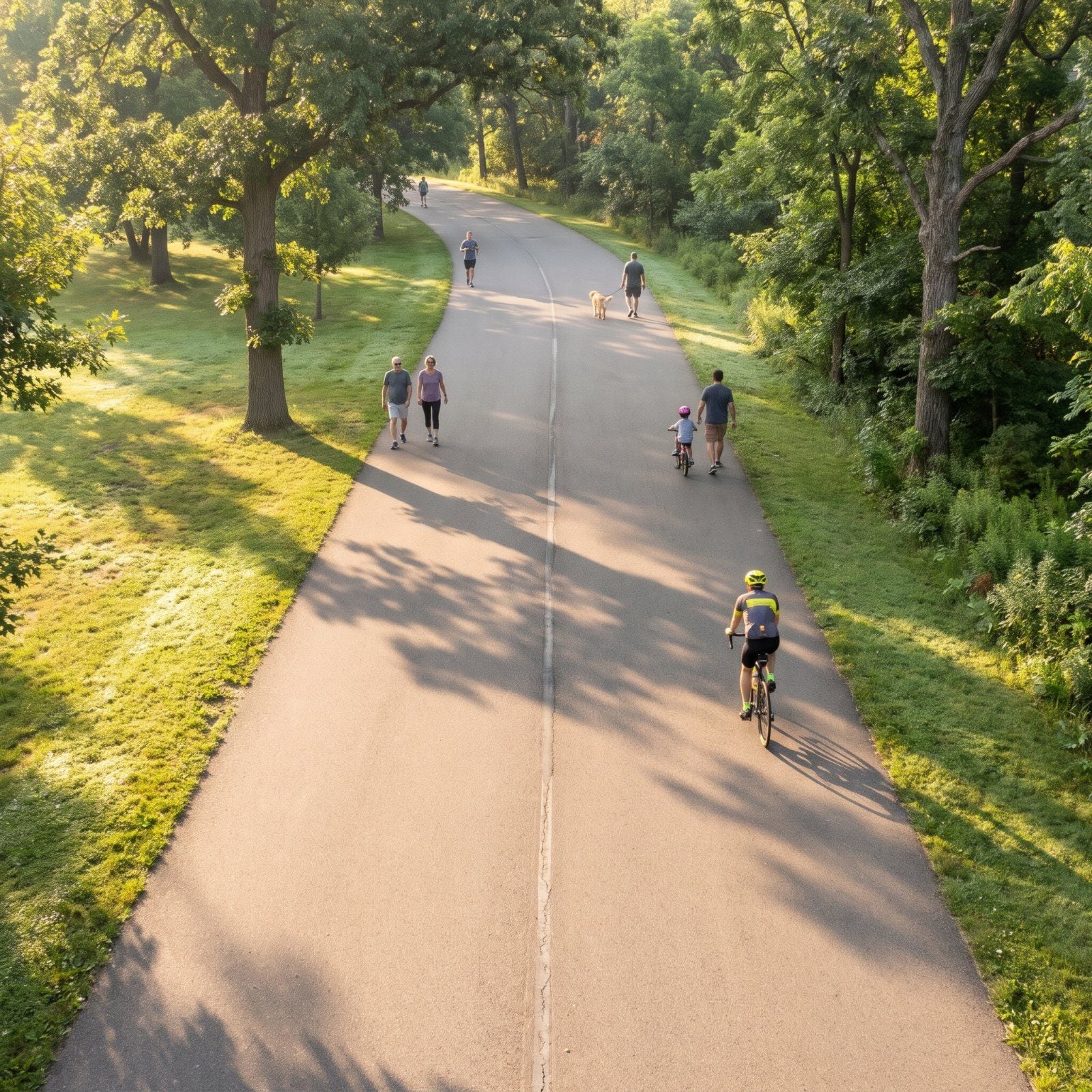
The jogger didn’t hear you coming. Neither did the kid on the scooter or the retriever on the long leash. You sailed past at eighteen miles an hour, inches from someone’s shoulder, and never understood why the glare followed you down the greenway. Shared paths run on manners, not laws. Nobody hands you a rulebook when you clip in, and most of the friction out there comes from riders who treat the path like a velodrome. These are the courtesies that keep everyone moving, upright and unbothered. Learn them and you become the cyclist people actually want to share pavement with.
Please note that some of the images in this article were created with the assistance of AI.
44. Keep Right Except When Passing
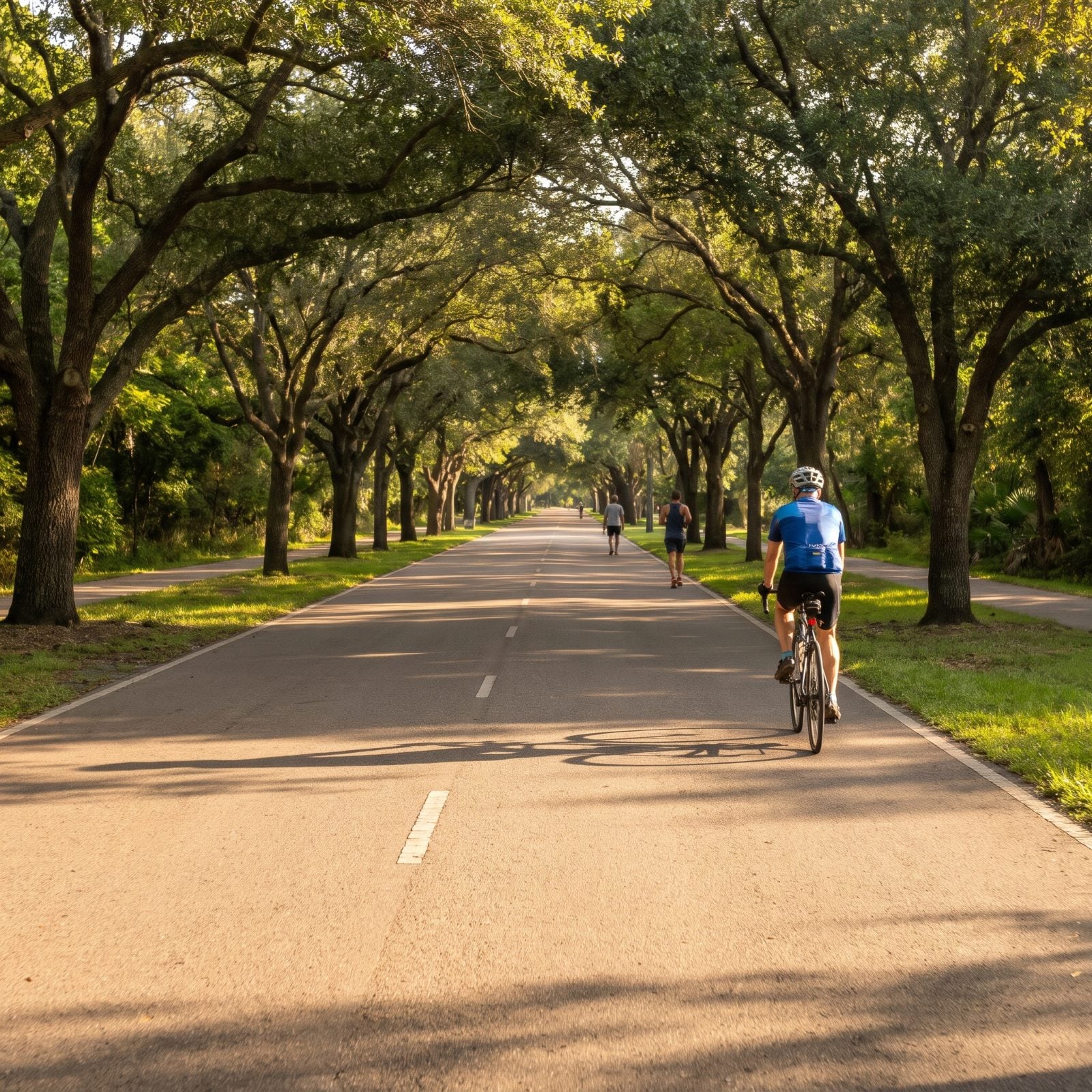
The path has a slow lane and a fast lane, and the slow lane is the right side. Hold it. Riding dead center feels natural when the path is empty, but empty paths fill up fast around the next bend, and suddenly you’re the obstacle everyone has to route around.
Keeping right isn’t about being timid. It’s about being predictable. Walkers read your position and relax, oncoming riders know the left is theirs, and the whole thing works because nobody has to guess what you’ll do next.
43. Ring an Early Bell or Call Out Before You Overtake
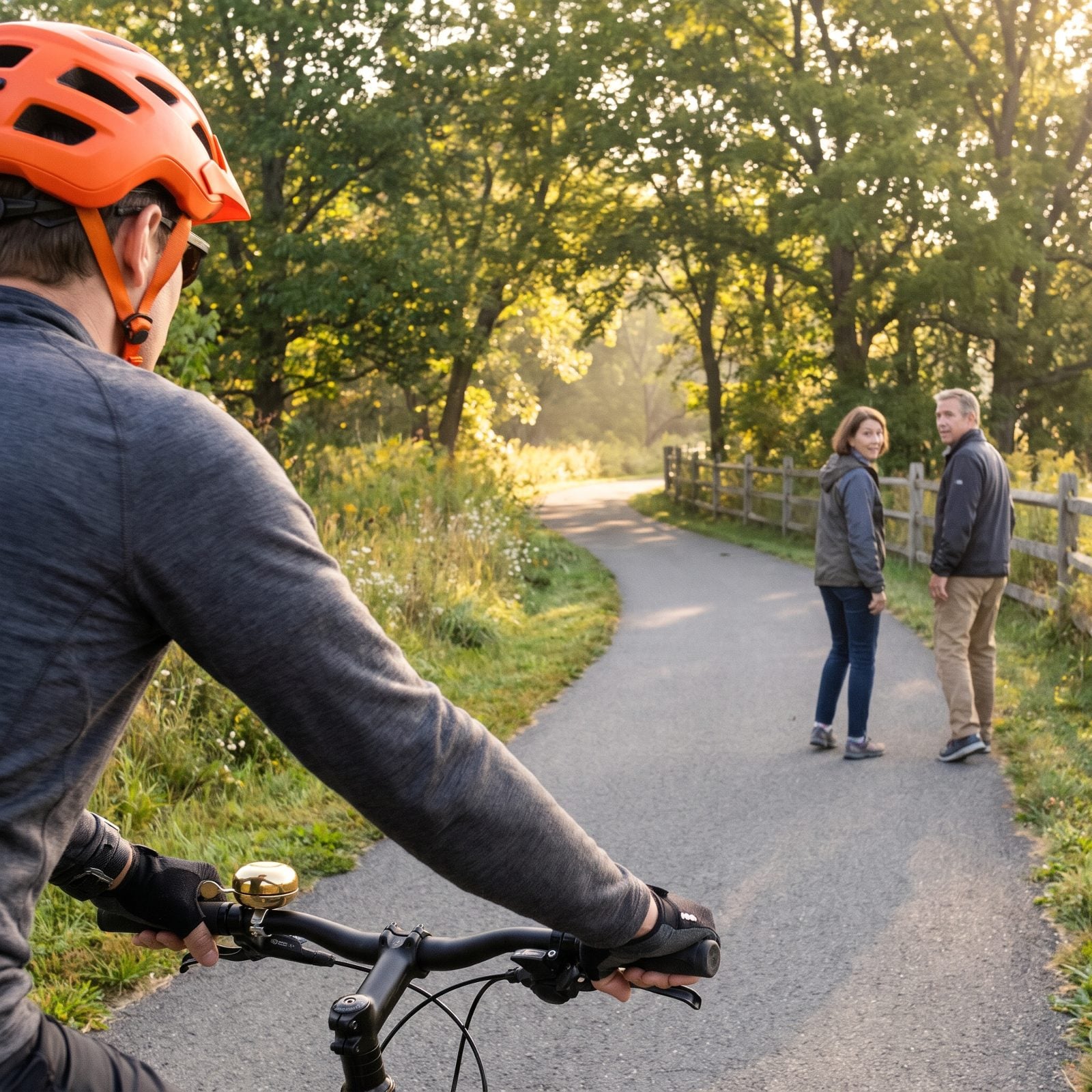
A bell rung three feet behind someone’s head is a heart attack, not a courtesy. Ring it early. Give people time to process the sound, locate you, and decide what to do before you arrive.
No bell? Your voice works. A clear “on your left” from a distance does the same job, as long as you say it soon enough that it registers as information rather than a warning shot fired at point-blank range.
Ring at the last second and people flinch. Startling a stranger isn’t a greeting.
42. Scrub Speed Before Every Pass
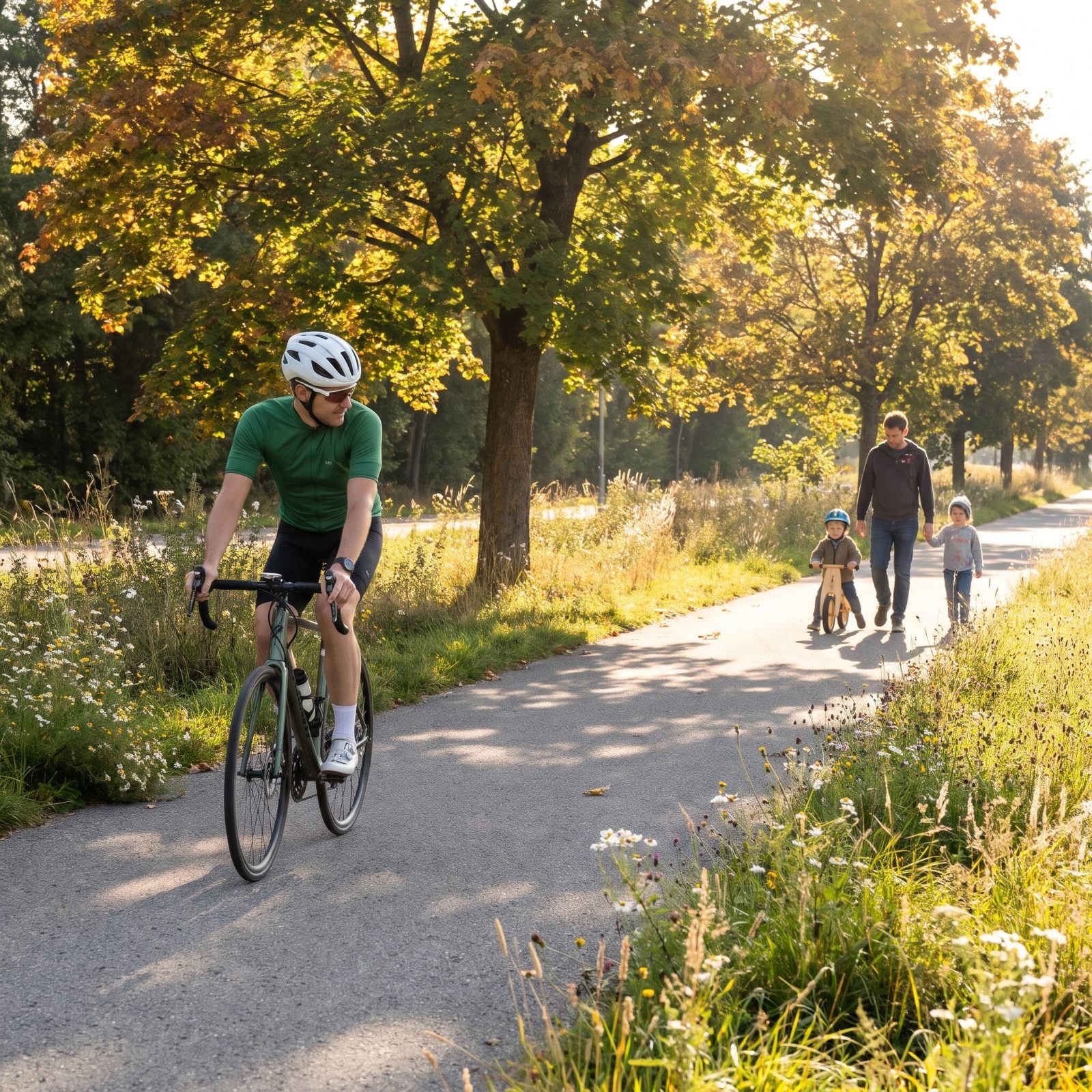
Speed is the variable you control, so control it. A pass at commuting pace leaves you no margin if the walker steps left, the dog lunges, or a kid wobbles. Drop a few gears before you reach anyone and you buy yourself both time and room.
Fast passes feel aggressive even when you mean no harm — the wind off your bike, the sudden blur, the near miss nobody saw coming. Go slow and it becomes a non-event.
41. Leave a Generous Gap When You Go By
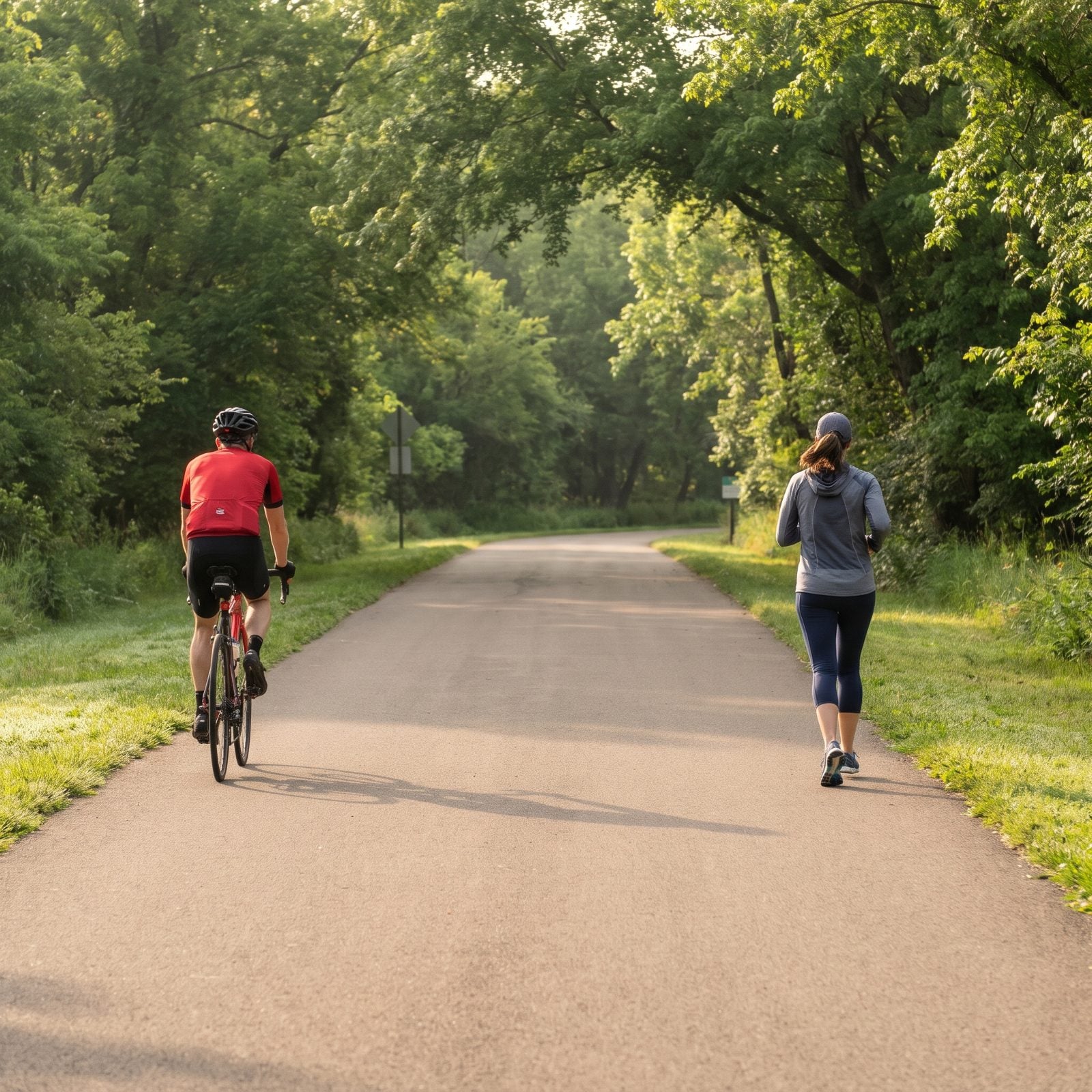
Buzzing someone by six inches is a power move, and nobody appreciates it. Give an arm’s length minimum, more if you can. The person you’re passing shouldn’t feel your handlebar graze the air near their elbow.
Little kids and dogs need even more room. A toddler drifts. A dog pivots on a dime toward a squirrel you never saw. Build the gap for the worst-case wobble, not the calm version you’ve already pictured in your head.
40. Wait When the Path Is Too Narrow to Share
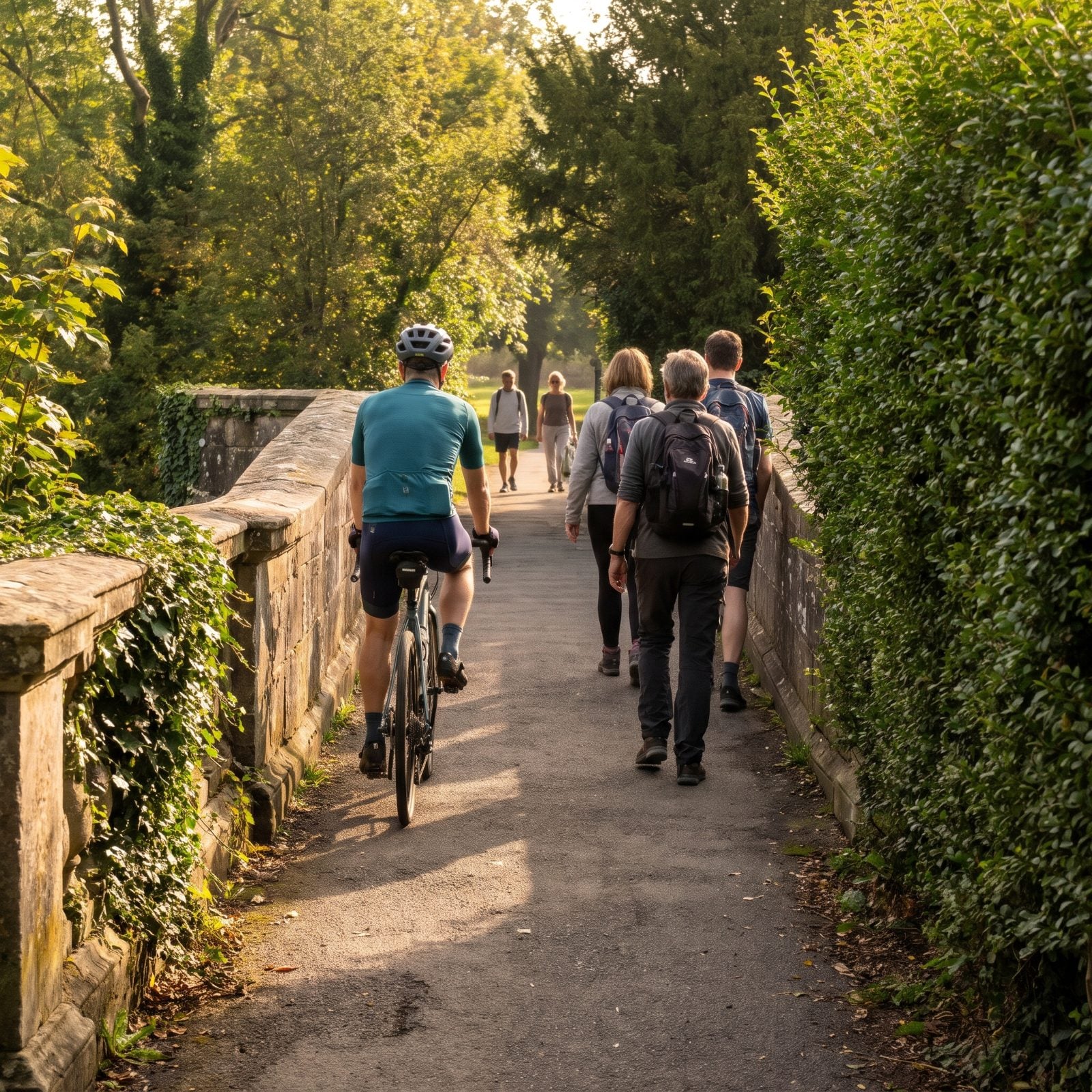
Some gaps don’t exist, so don’t invent one.
Narrow bridges, pinch points, blind corners where two groups meet — these are where a forced pass turns into a tangle. Sit back, coast, and wait the few seconds until the path opens up again.
Those seconds cost you nothing. You came out to ride, not to shave a stoplight off your commute. Patience here is the difference between a smooth path and a bad story.
39. Return Right Promptly After You Clear
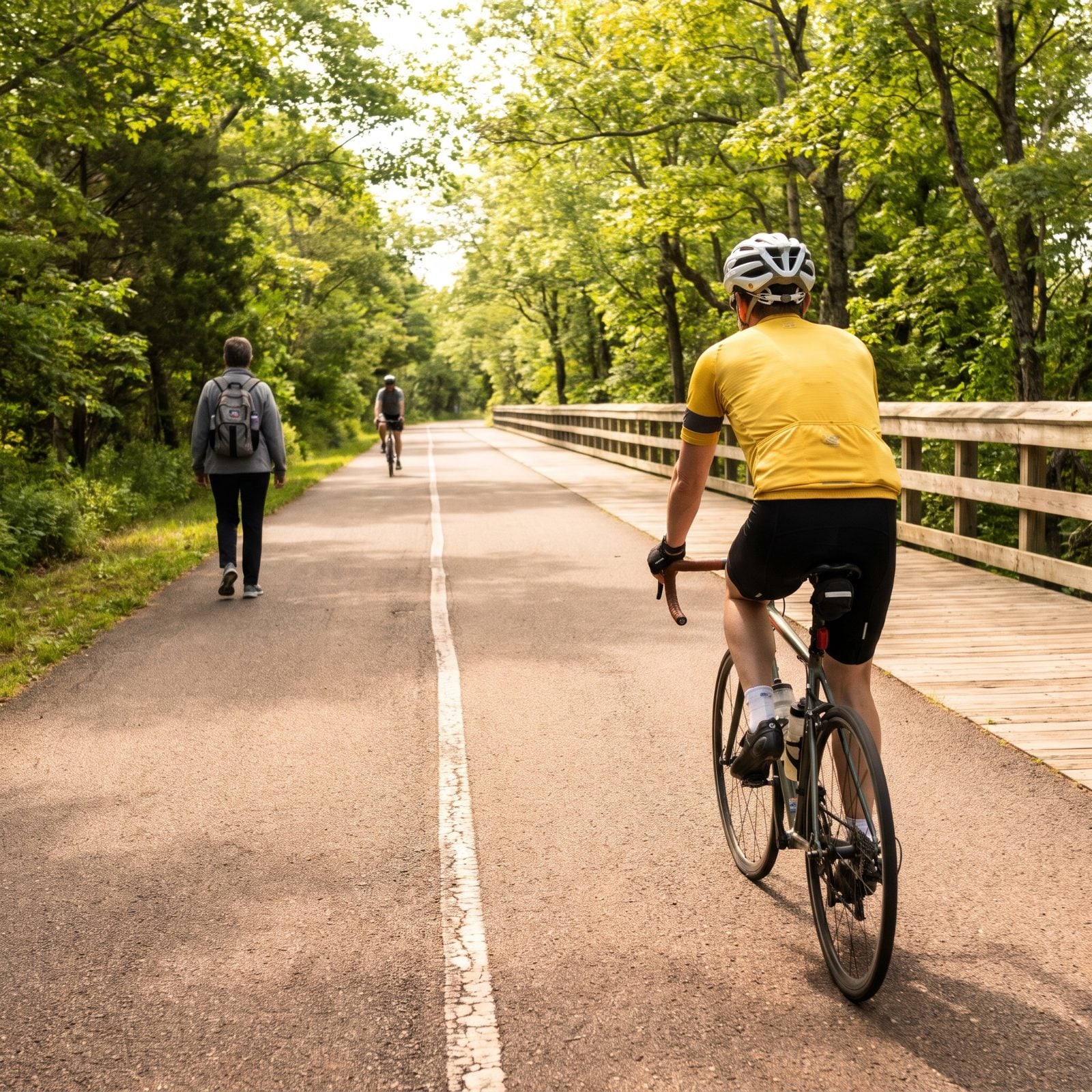
Finish the pass. Loitering in the left lane after you’ve cleared someone blocks oncoming riders and defeats the whole point of keeping right. Ease back over as soon as you have the room.
Just don’t cut it so close you clip the person you overtook. Wait until they’re clearly behind your rear wheel, then drift back. Smooth and unhurried beats sharp and startling every time.
38. Never Thread Between Two People Walking Together
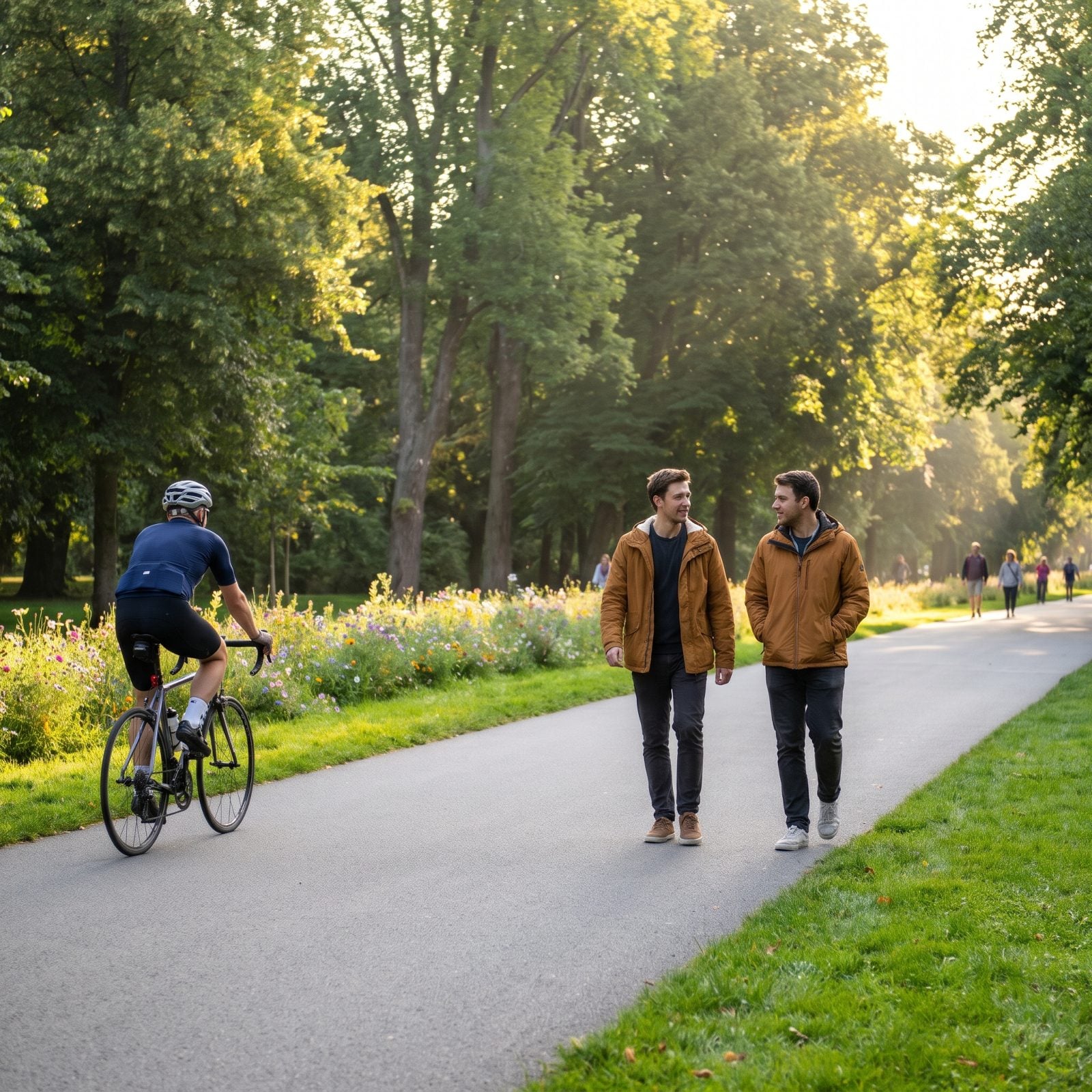
Two people walking together are a unit. Shooting the gap between them is startling, rude, and genuinely dangerous if either one shifts sideways mid-sentence. Pass them as one group, on one side.
Same goes for a parent and child holding hands, or two friends so deep in conversation they’ve forgotten the world exists. Splitting them makes everyone jump. Go around the pair and you keep the peace.
37. Don’t Squeeze Through Oncoming Traffic to Make a Pass
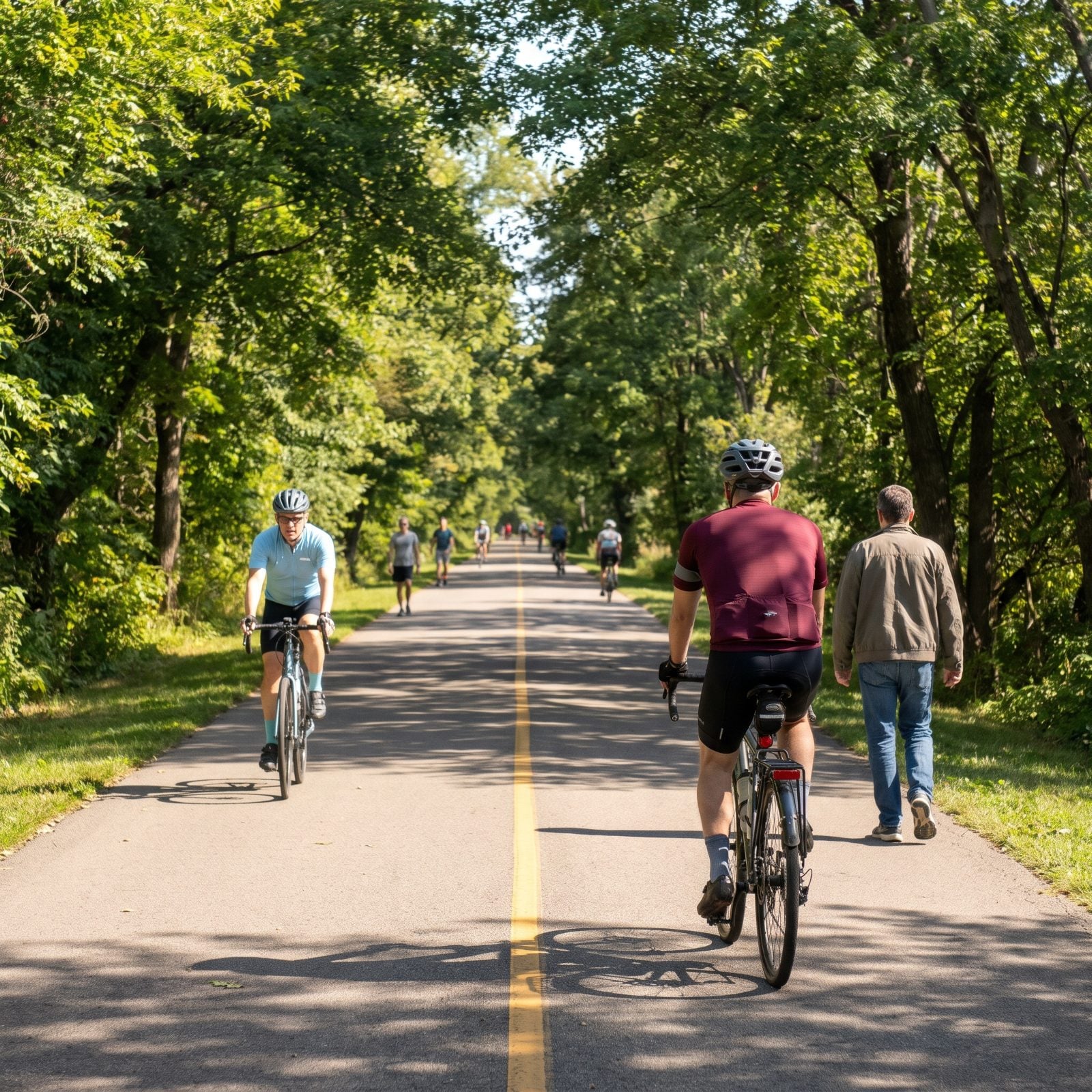
If someone’s coming the other way, the left lane is occupied. That’s not your window. Force a pass into oncoming traffic and you create a three-way pinch with you stuck in the middle, and that math rarely works out in anyone’s favor.
Hold your position behind whoever you’re following. Let the oncoming rider go by, then move into the clear lane. It costs you a couple of seconds and saves everyone a collision they’d remember for years.
36. Match Your Speed to How Crowded the Path Is
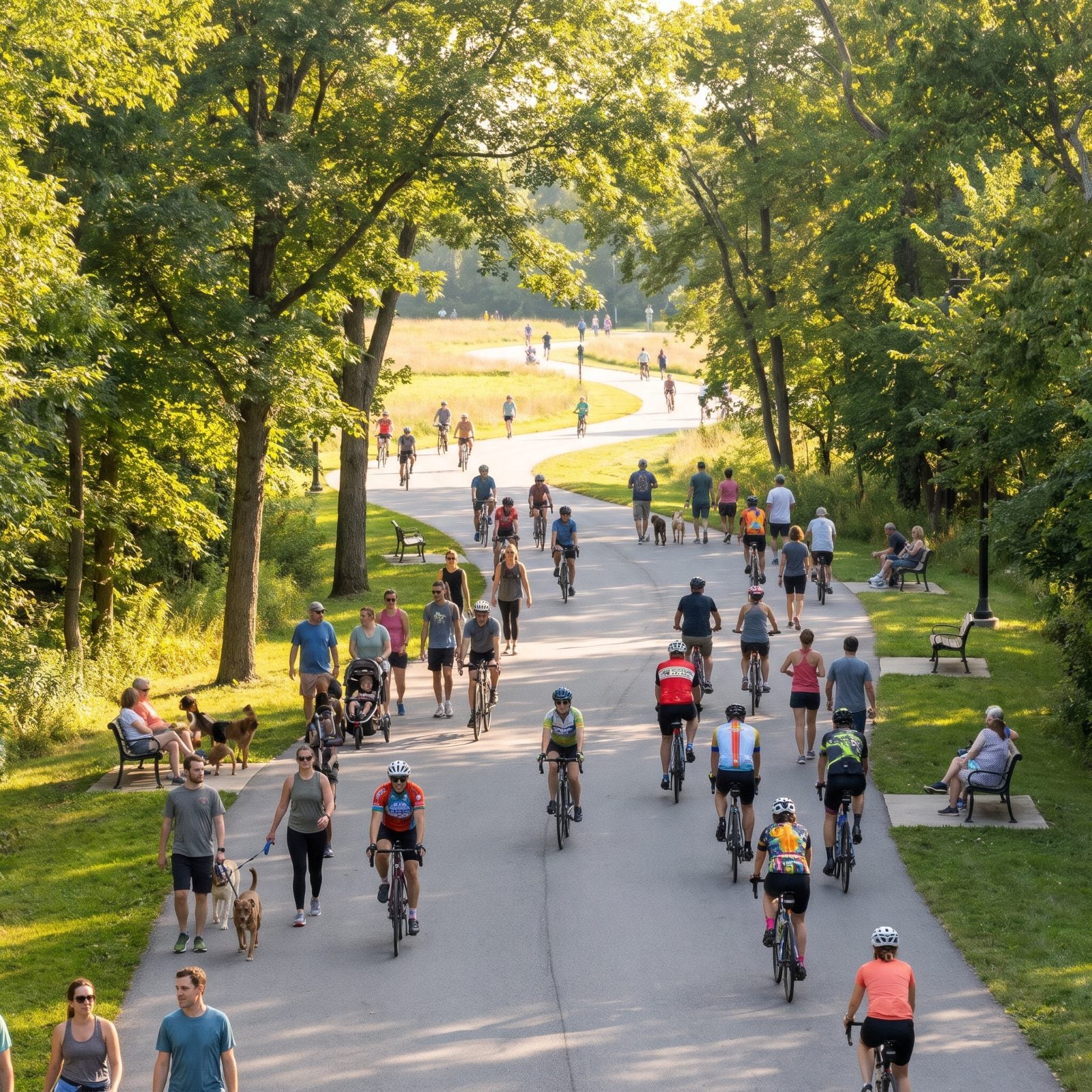
The speed that’s reasonable on an empty path at dawn turns reckless on a packed one at noon. Read the crowd and dial it back. A busy weekend greenway full of toddlers and dogs is no place for interval training.
Want to hammer? Find the stretch or the hour when the path is quiet. When it’s crammed, ride like a guest, because you are one. Everyone shares that pavement, and the fast rider doesn’t get first claim on it.
35. Do Not Draft Strangers
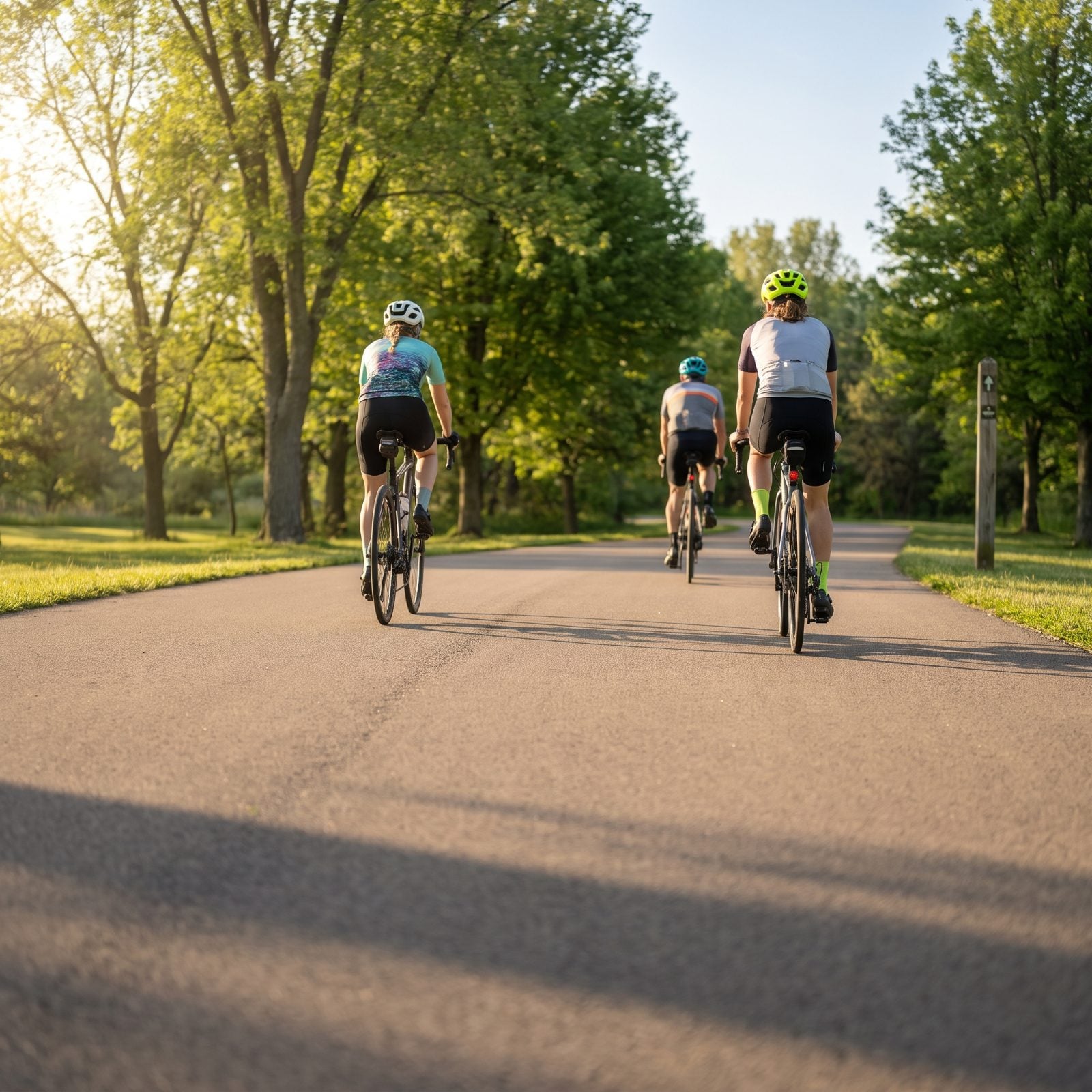
Drafting a stranger on a shared path is a bet you have no right to make with their safety. You don’t know how they brake, whether they’ll swerve for a pothole, or if they even know you’re glued to their wheel. On a closed race course, fine. On a Saturday greenway full of strollers and dogs? It’s just rude physics waiting to go wrong.
Leave a gap you can actually stop in. And if someone latches onto your wheel uninvited, you’re not obligated to carry a stranger — ease off, let them pass, and reset your own space.
34. Never Undertake Another Cyclist
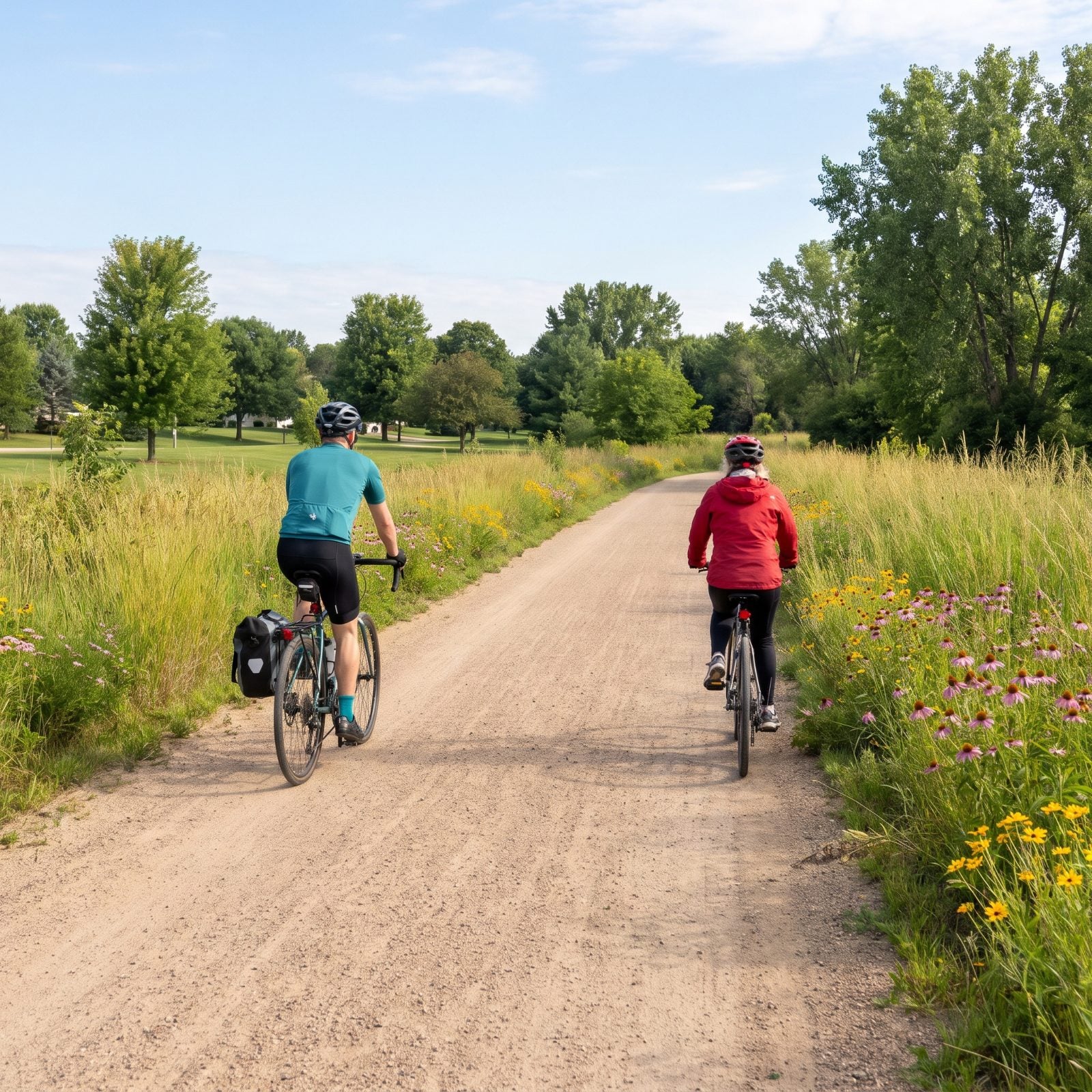
Passing someone on the inside, squeezing through the gap between them and the path edge, is how you end up tangled in a hedge together. The rider ahead expects traffic to come around on the left. When they drift right to dodge a crack or a puddle — and they will — there’s nowhere for either of you to go.
Pass on the open side. Give a voice or bell warning first, and make it a clean, decisive move. No creeping up the gutter.
33. Look Behind Before Changing Your Line
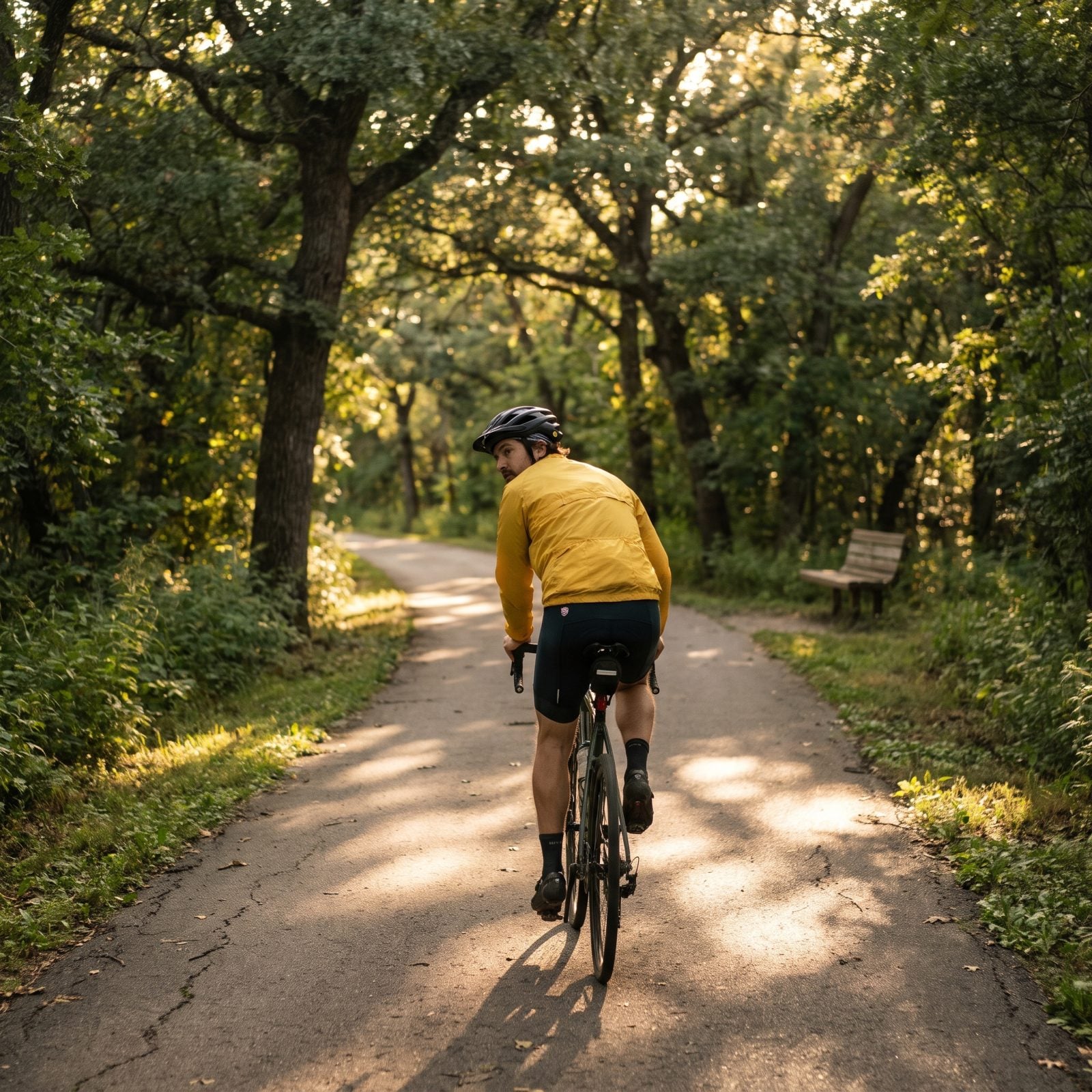
A shoulder check costs you half a second and saves you a crash. Before you swing out to pass, dodge a branch, or move left for any reason, turn your head and actually look. Mirrors help, sure, but they don’t catch the fast rider in your blind spot or the kid who just rolled off a side trail.
What gets people hurt is the lazy drift — easing left without checking because the path felt empty a minute ago. Paths fill up behind you faster than you think. Look first, then move.
32. Signal Before Turning Off the Path
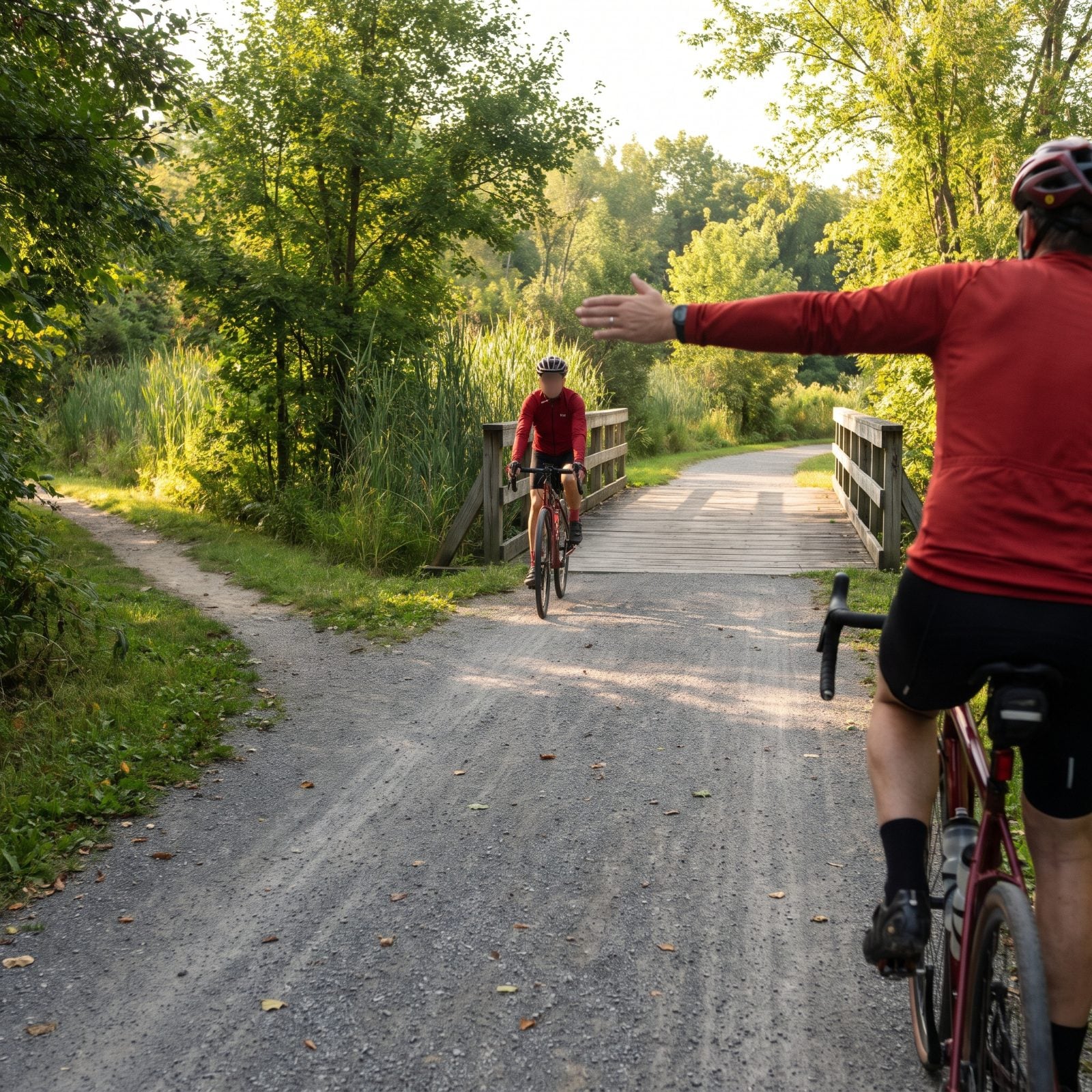
Turning off the path without warning makes you an obstacle that appeared from nowhere. The rider behind you planned their line around a straight-going cyclist, so when you cut across to the car park exit or the side trail, they’ve got no time to react.
Stick an arm out early, point where you’re going, and give people a beat to adjust. A turn signal here isn’t a formality — it’s the only way anyone behind you learns your plan before you execute it.
31. Signal Before Stopping
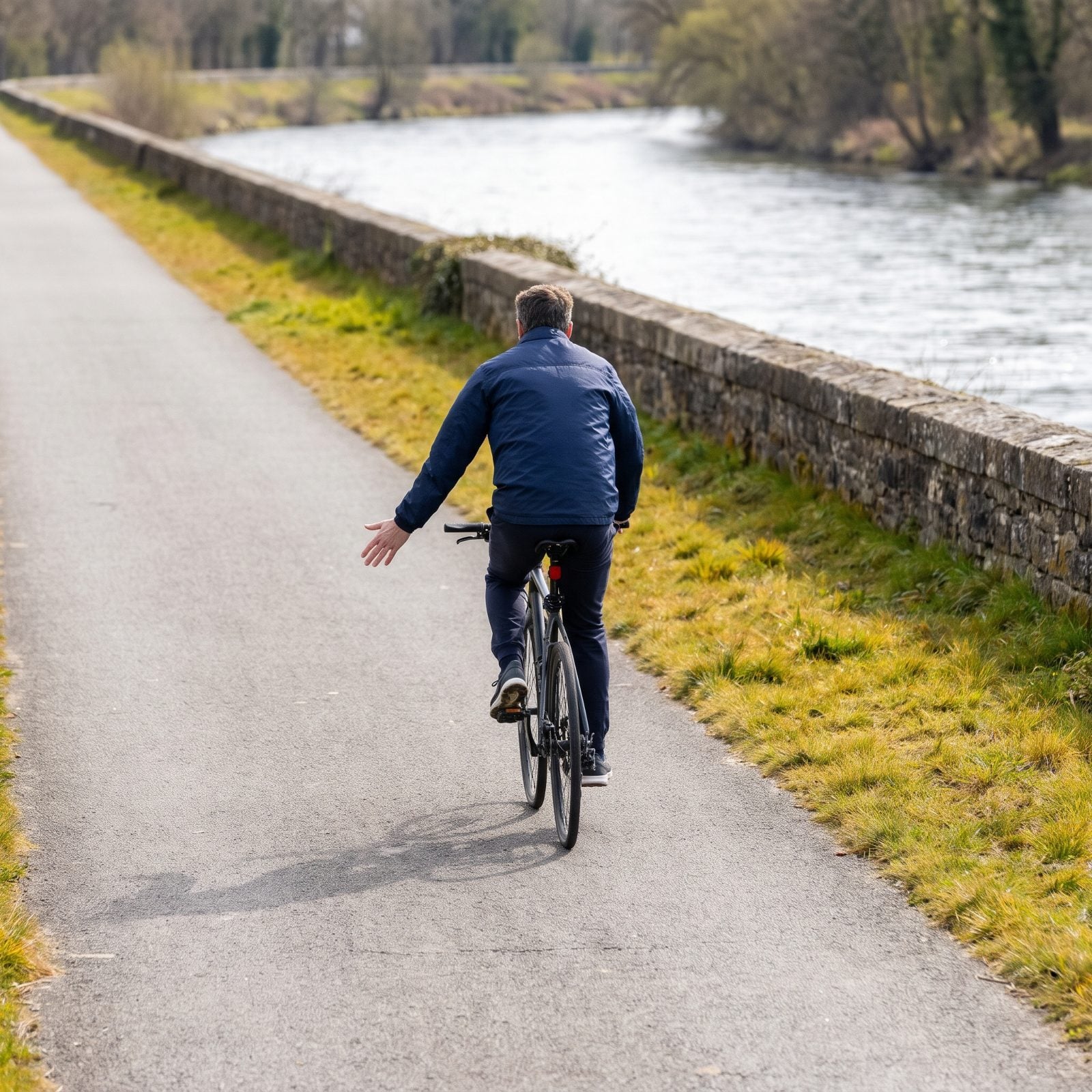
A sudden stop on a shared path is a pileup invitation. People pack in tighter than they realize, and the rider on your wheel reads your speed, not your mind.
Slowing for a gate, a photo, or a water break? Flag it. A raised hand, a drop of the arm palm-back, or just a clear “stopping” called out loud. Then bleed off speed gradually instead of grabbing a fistful of brake. Give the people behind you the same warning you’d want yourself.
30. Move Completely Aside When You Stop
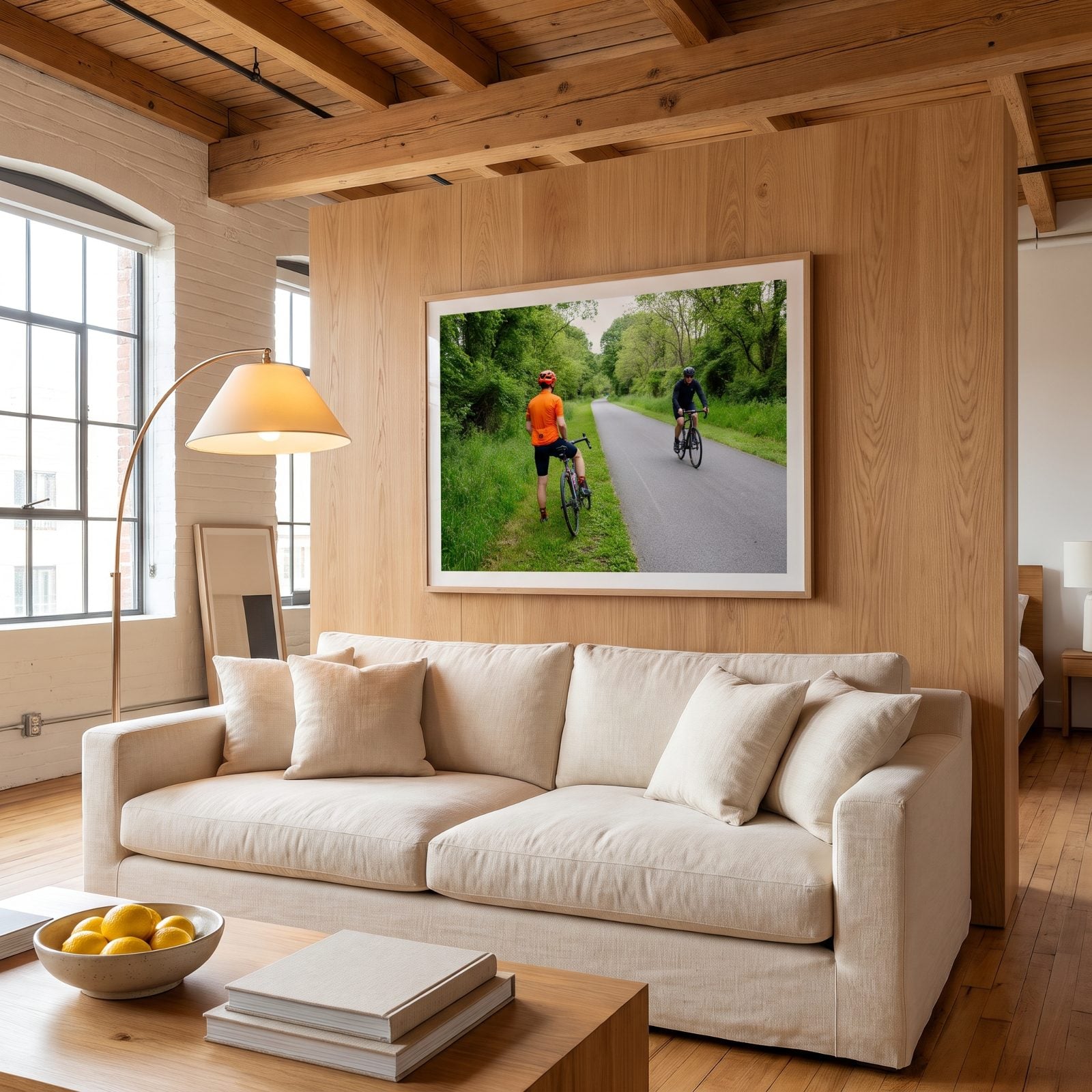
Stopping dead center to check your phone or wait for a friend is the cycling version of parking in a doorway. Half-off isn’t off. A bike and a rider loitering on the edge of the lane still force everyone to swing wide around you — right into oncoming traffic.
Get fully onto the grass, the verge, a bench area, wherever there’s room. Pull your bike with you. Leave the whole path open. The person coming the other way shouldn’t have to brake because you wanted a snack.
29. Keep Path Entrances Clear
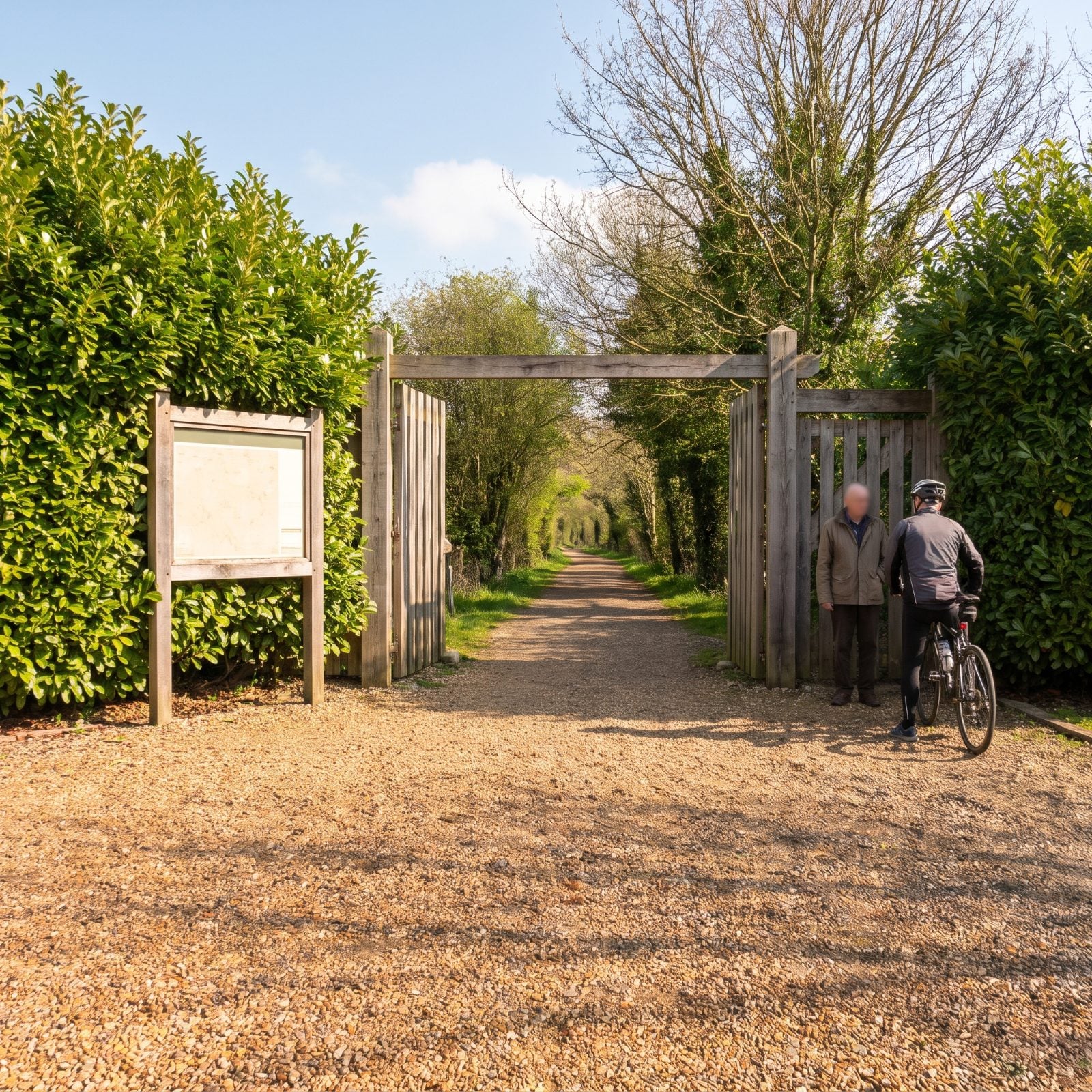
You’ve seen it: the clump of riders standing around the trailhead gate, bikes across the gap, chatting while a family tries to thread through with a stroller and a dog on a leash. Entrances are pinch points — the one spot where everyone, bikes and walkers and runners alike, has to squeeze through the same narrow gap.
Regroup off to the side. Clear the gate, clear the bottleneck, keep the flow moving. Small courtesy. It keeps the single busiest point on the whole path from jamming up.
28. Approach Every Blind Bend Cautiously
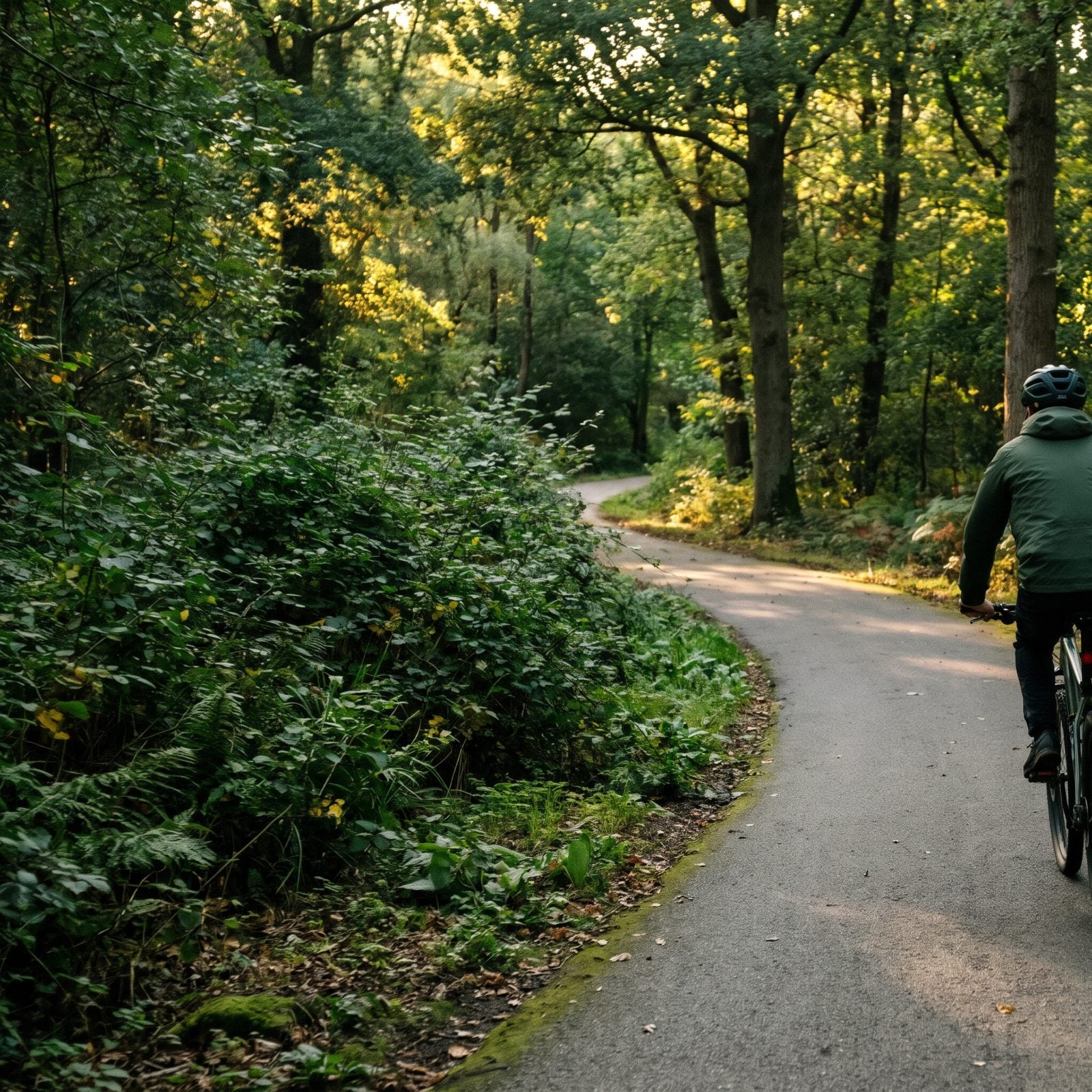
A blind bend is a coin flip you don’t have to take. You can’t see what’s on the other side, and neither can whoever’s coming the opposite way. Hedges, walls, a dip in the trail — they all hide a dog off-leash, a toddler on a balance bike, or a rider cutting the corner wide.
Ease off before you reach the curve, hold your own side of the path, and ride like something’s about to appear. Because sooner or later, something will.
27. Cover the Brakes Near Children
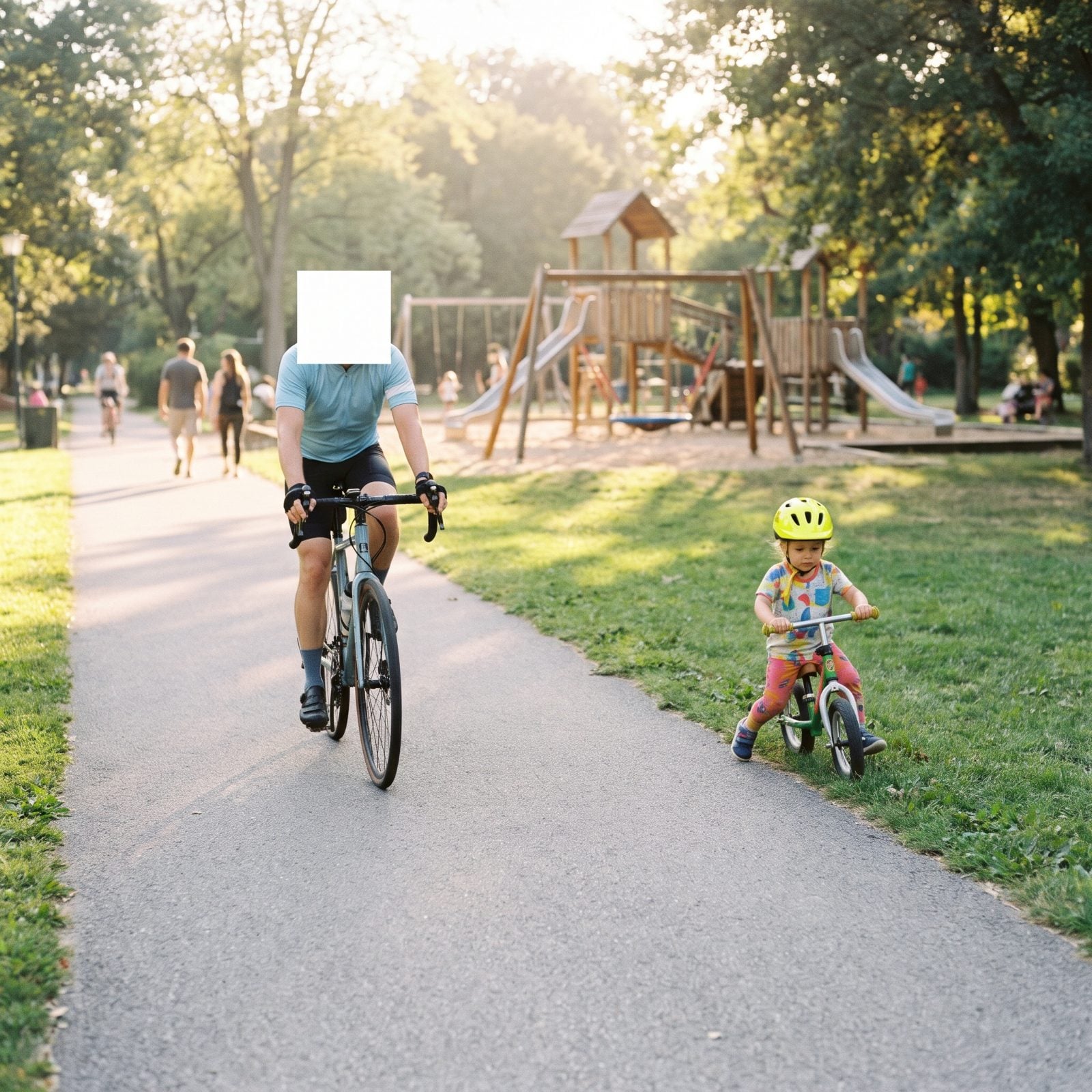
Kids are gloriously unpredictable, and honestly that’s what a park is for. A child can be perfectly still one second and sprinting across your line the next, usually chasing a ball or a dog you never even clocked.
Near little ones, drop your speed and keep your fingers resting on the levers. Covered brakes shave the gap between “oh no” and actually stopping. You’re not expecting a child to behave like traffic. You’re assuming they won’t, and giving yourself the room to be right.
26. Announce Yourself and Follow the Rider’s Lead Around Horses
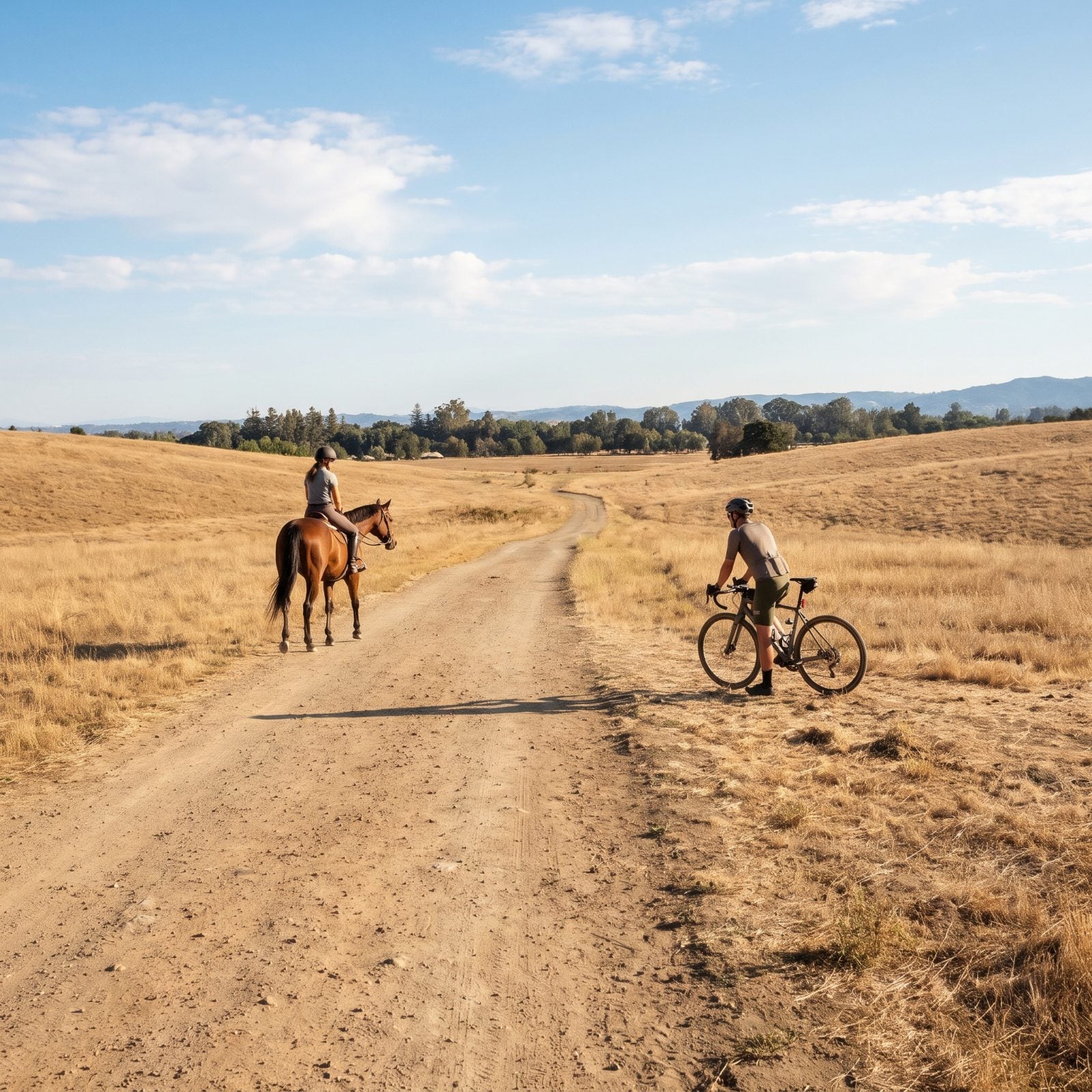
A horse weighs half a ton and spooks at bicycles because a quiet, fast-moving thing reads as a predator closing in. The fix is your voice. Call out a friendly hello well before you reach them so the horse hears a human, not a silent machine sneaking up from behind.
Then do whatever the rider tells you — slow to a crawl, stop, pass on a specific side. They know their animal. On many shared trails horses have the right of way outright, and arguing with that logic ends badly for everyone, mostly you.
25. Yield to Pedestrians at Every Path Crossing
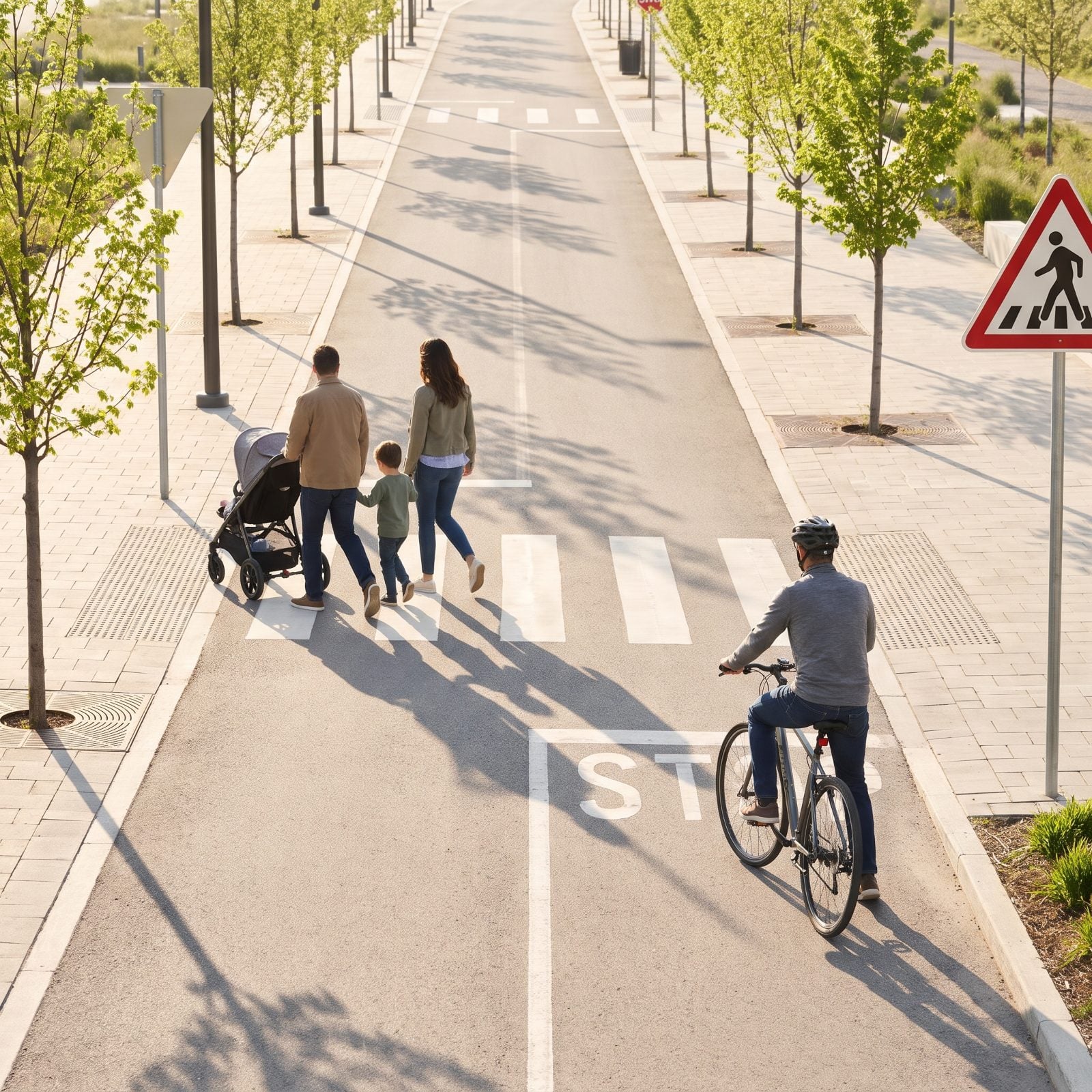
Walkers have the right of way at crossings. Full stop. Not because of some posted rule, but because a person on foot loses every argument with momentum, and you’re the one carrying it.
Cover your brakes as you approach any crossing, make it obvious you’re slowing, and wave people through. The small courtesy buys goodwill for every cyclist who comes after you. Paths get restricted when riders earn a reputation. Don’t be the reason.
24. Yield to Uphill Riders on Steep Shared Paths
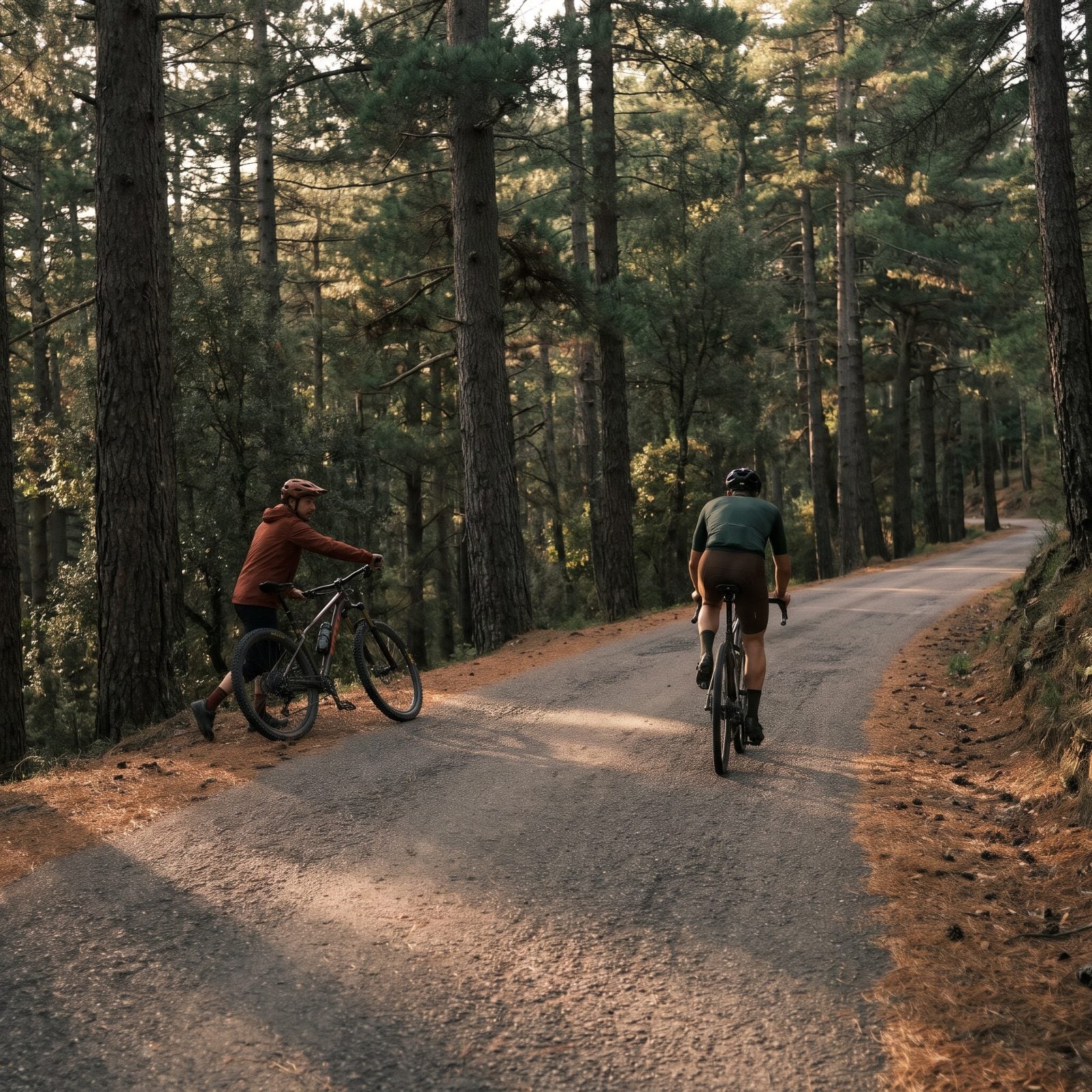
The climber keeps the line. Ask anyone who has lost momentum two-thirds up a grinding hill, then had to clip out and restart on a slope. It’s miserable.
If you’re descending and the path narrows, you’re the one who yields. You’ve got gravity and speed, so easing off and tucking right costs you nothing, while making a struggling rider stop and lose their rhythm costs them the whole climb.
23. Do Not Race Through Trail Intersections
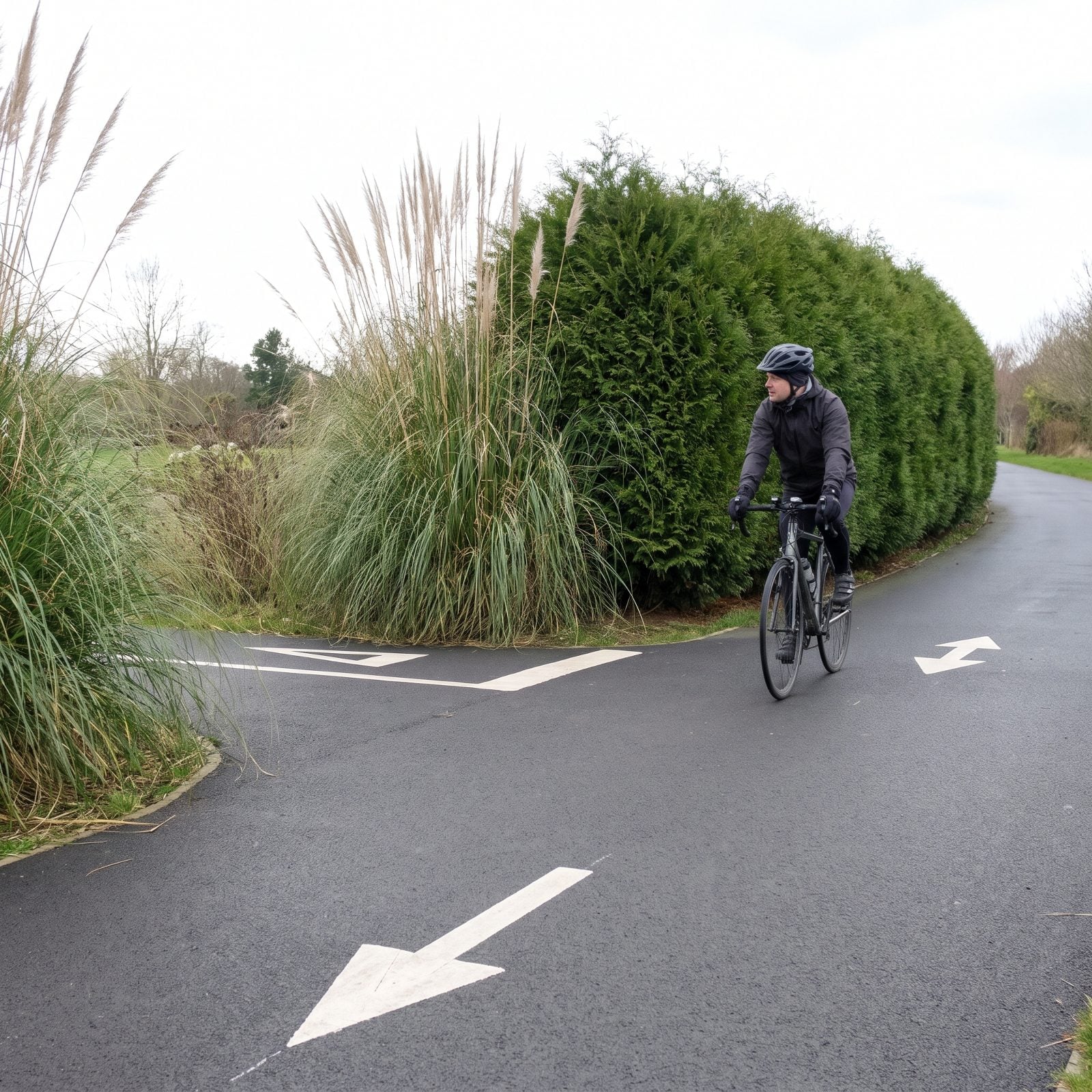
Blind trail junctions are where the collisions happen. A hedge, a fence, a bend in the path, and suddenly a walker or a kid or another rider appears from a side trail with no warning at all.
Sit up, scan, and slow enough that you can stop if something comes out. The riders who carry speed through intersections are the ones who eventually clip a toddler who darted from behind a bush. Nobody plans for that moment. You just have to already be slow when it arrives.
22. Make Eye Contact With Drivers Before You Cross
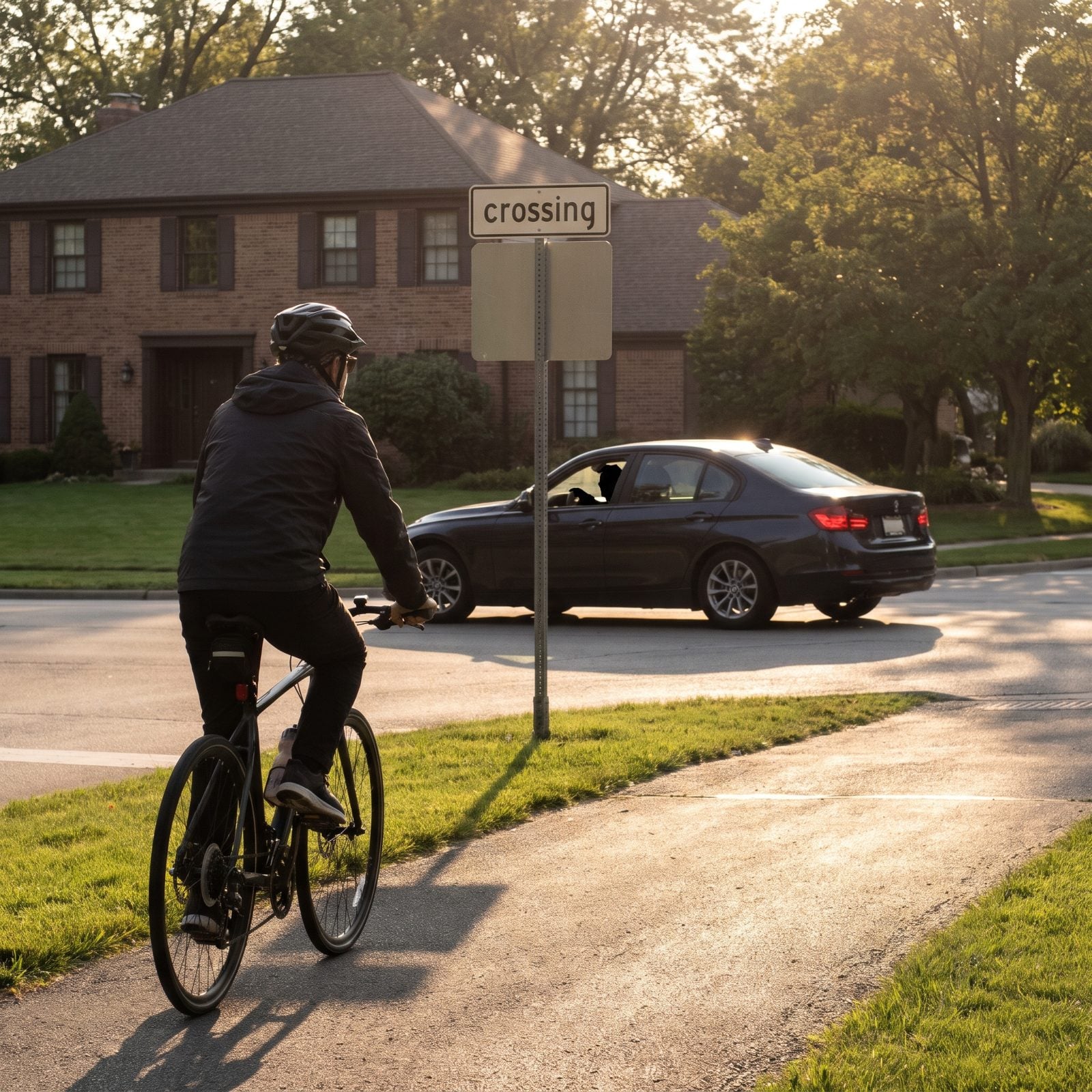
A driver who hasn’t seen you cannot yield to you, no matter what the crosswalk paint says. Right-of-way is a legal idea. Eye contact is a physical confirmation.
Catch the driver’s eyes before you roll off the curb. If they’re on their phone, looking the other way, or creeping forward without registering you, hold your line and wait. The painted lines won’t rebuild your collarbone. A two-second pause will keep it intact.
21. Use Lights in Tunnels and Deep Shade
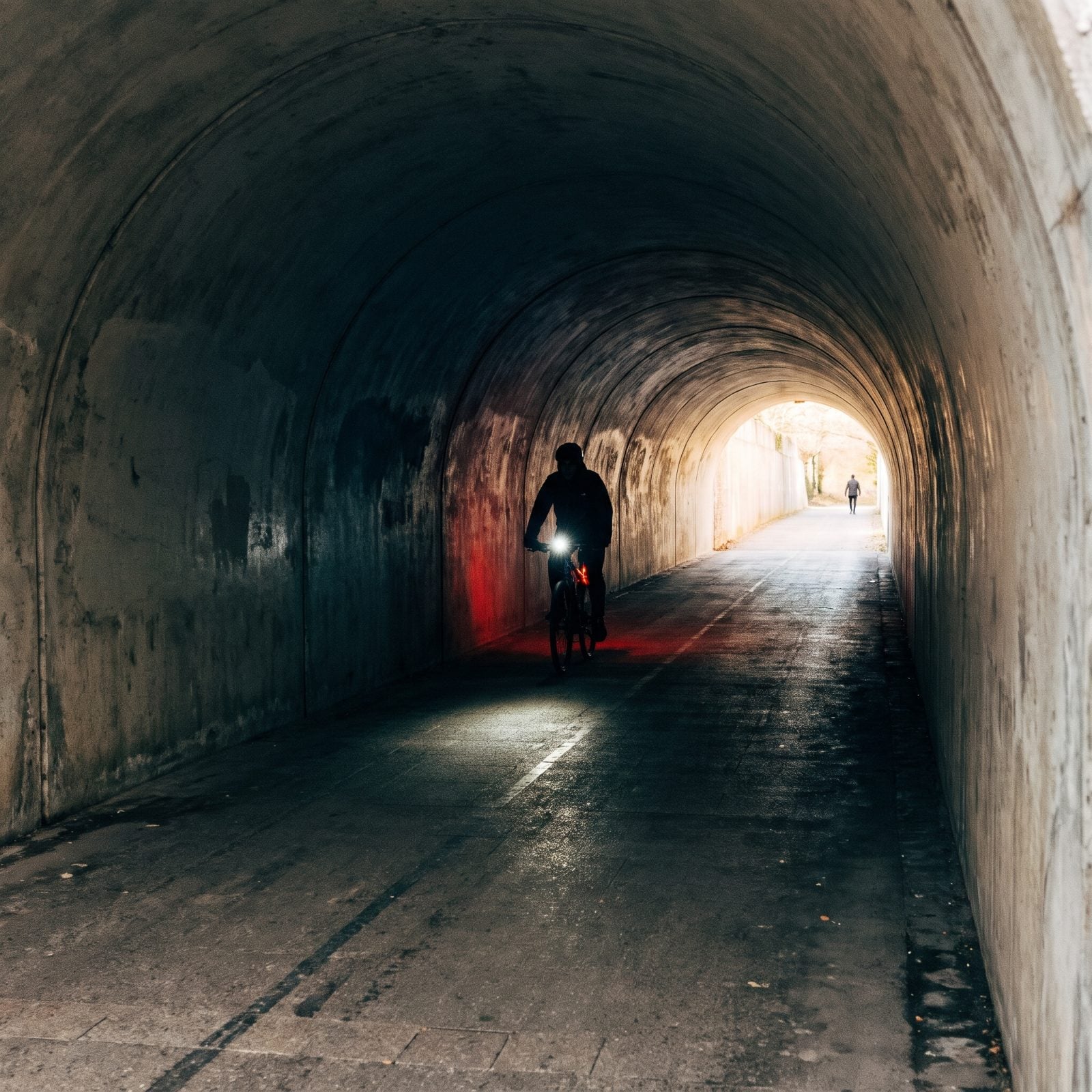
Your eyes take a moment to adjust when you drop from bright sun into a tunnel’s gloom, and so do everyone else’s. For a few seconds nobody can see anybody, and that’s where a walker and a rider meet the hard way.
So flip your lights on before you enter, not after. A front light says you’re coming, a rear light says you’re there. And in deep tree shade on a sunny day, the same trick helps people pick you out of the flicker.
20. Aim Your Headlight Down After Dark
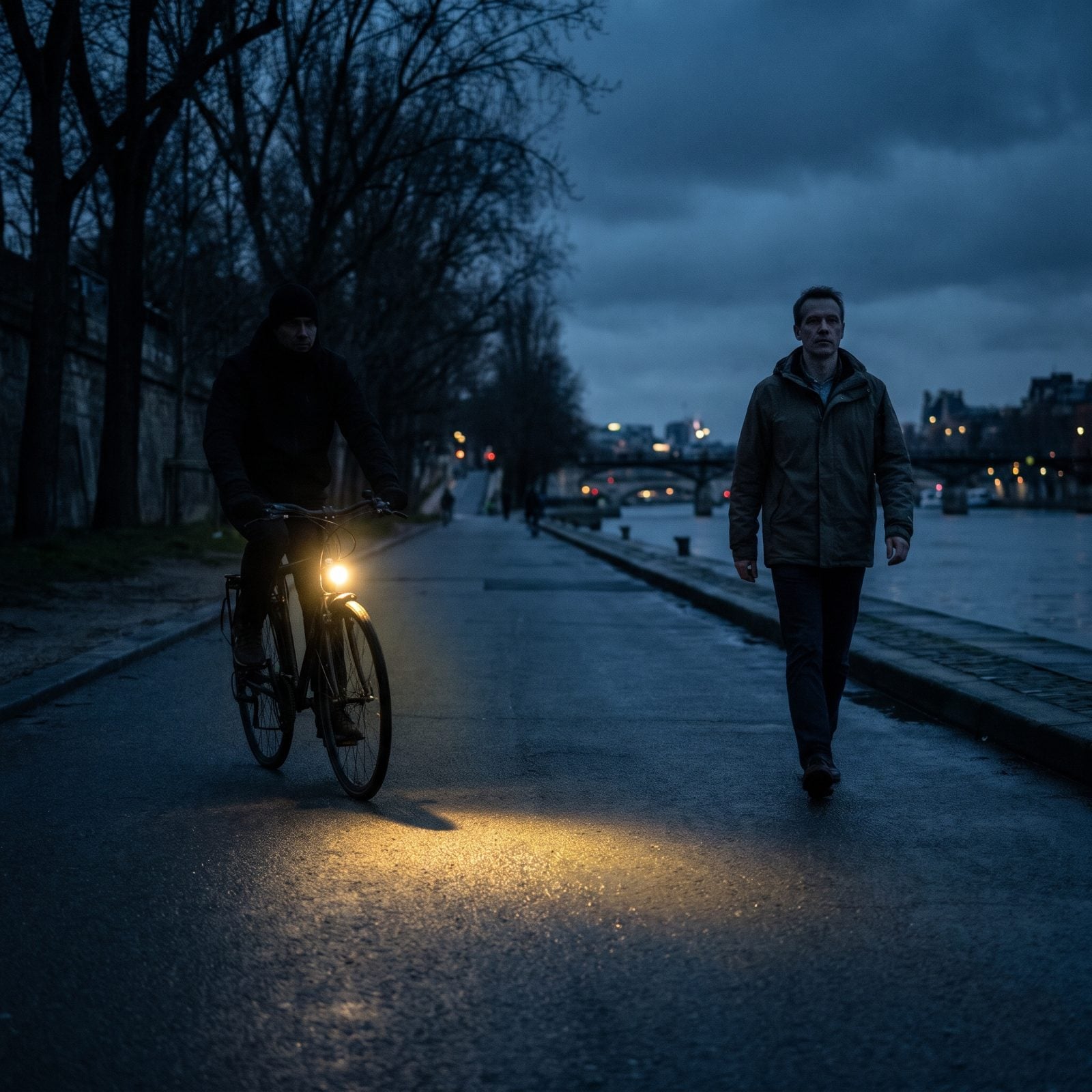
A powerful headlight aimed level is a weapon. Point it straight ahead and you blind the walker coming toward you, the dog, and the rider you’re about to pass — which defeats the whole point of seeing and being seen.
Tilt it down so the beam lands on the path a few bike-lengths out. You still light your way. You just stop torching everyone’s night vision in the process. Those blinding lights built for dark forest trails are overkill on a shared greenway. Turn them down or point them at the ground.
19. Run a Rear Light Without the Dazzling Strobe
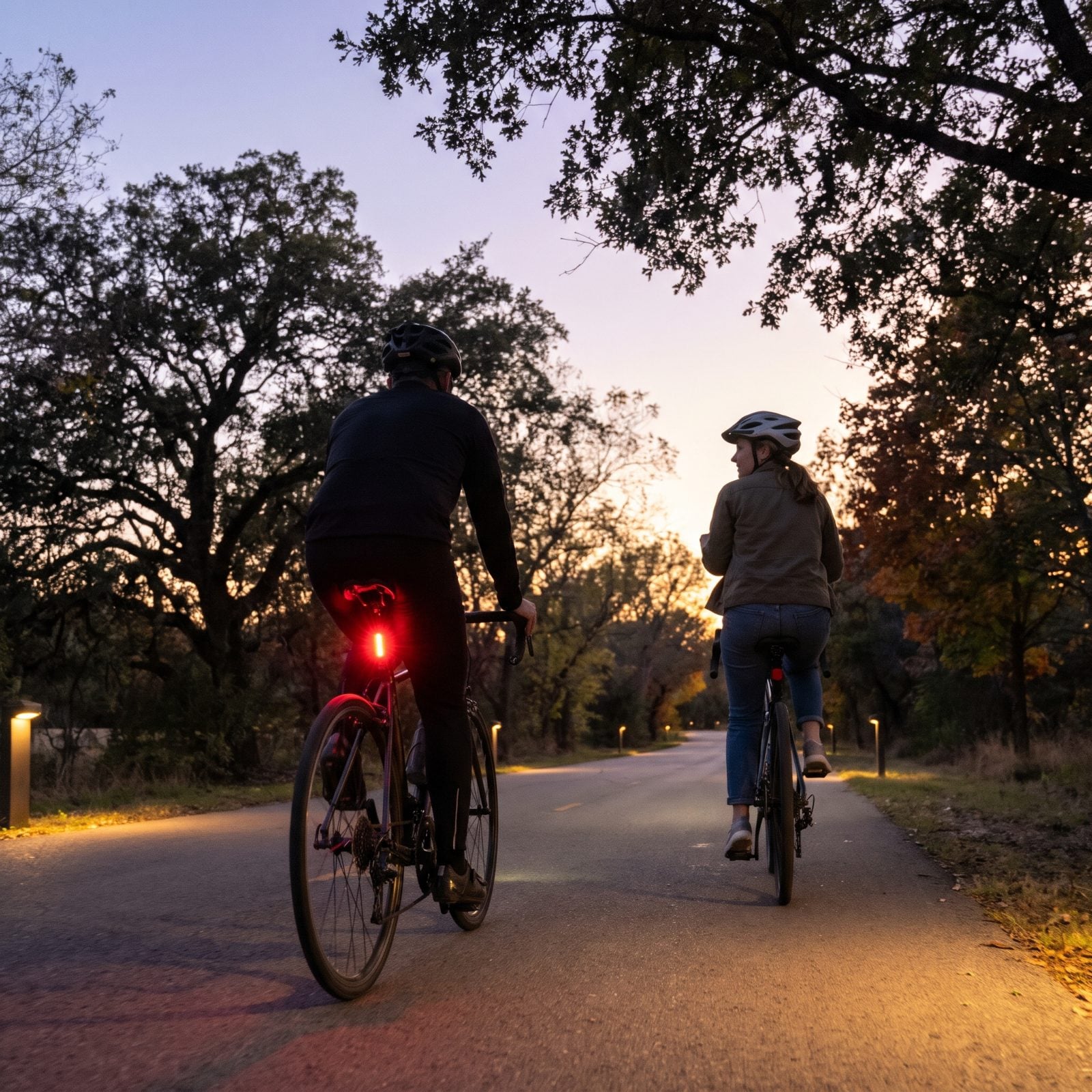
A machine-gun strobe on the back of your bike is great for a busy road and terrible on a dark path. It wrecks the night vision of the rider behind you and makes it genuinely hard to judge how far ahead you actually are.
On a shared trail, a steady red light or a slow, gentle pulse does the job without blinding anyone. Save the aggressive flash for traffic, where you’re competing with headlights and tail lamps. Out here, you’re the brightest thing around. Act like it.
18. Skip the Loud Portable Speaker
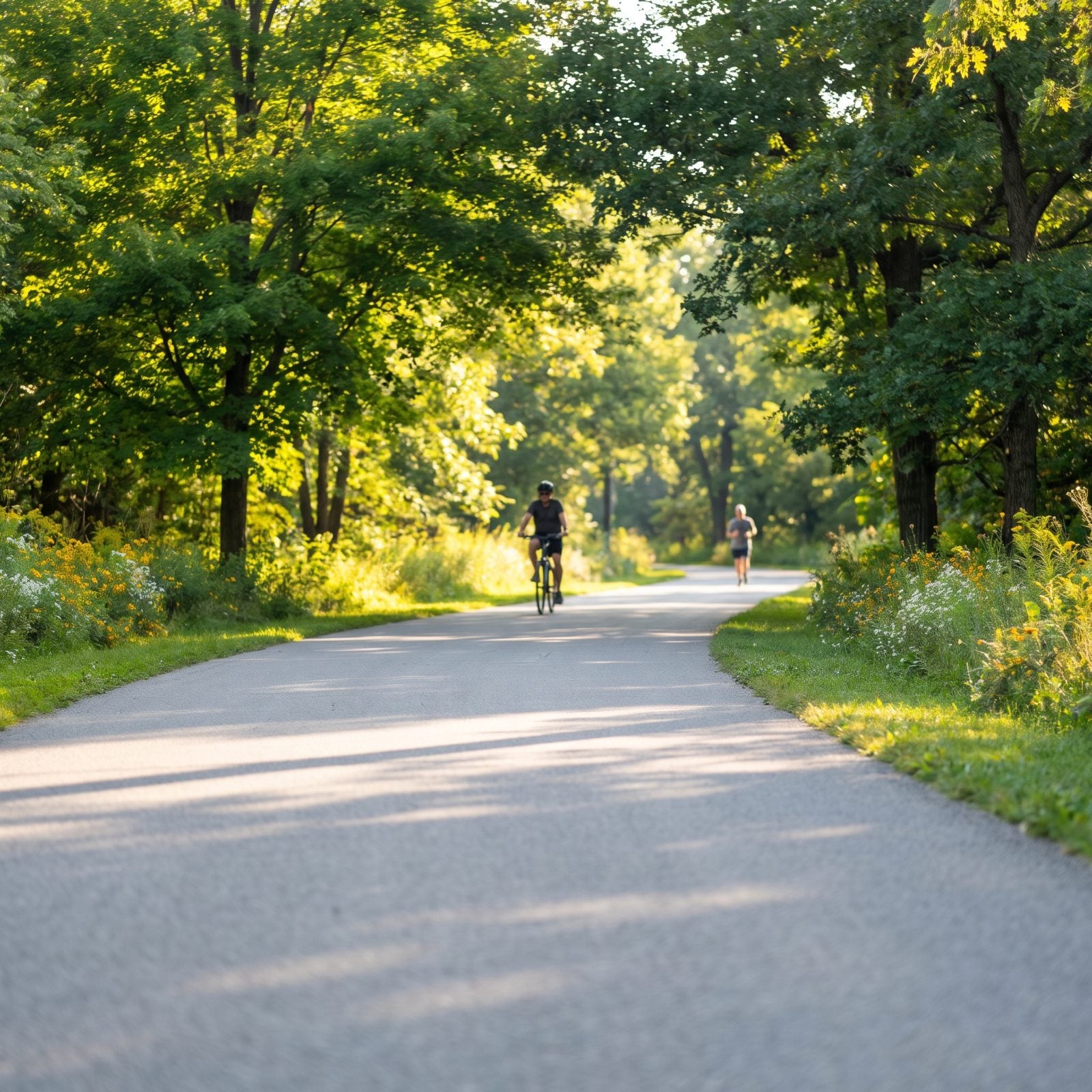
A speaker strapped to your bars broadcasts your playlist to everyone within a hundred yards, and nobody asked for it. The guy fishing by the pond didn’t. The woman reading on a bench didn’t. A greenway is supposed to sound like a greenway — birds, wind, your own tires on the pavement.
There’s a safety cost too, and it’s the one people forget. A speaker masks the exact cues you need: footsteps closing from behind, a dog’s tags jingling, a kid’s bike squealing out of a side path. You can’t hear what you’re drowning out.
Want music? Keep it in your own ears, low. Leave the trail itself for everybody else.
17. Keep Earbud Volume Low Enough to Hear Bells
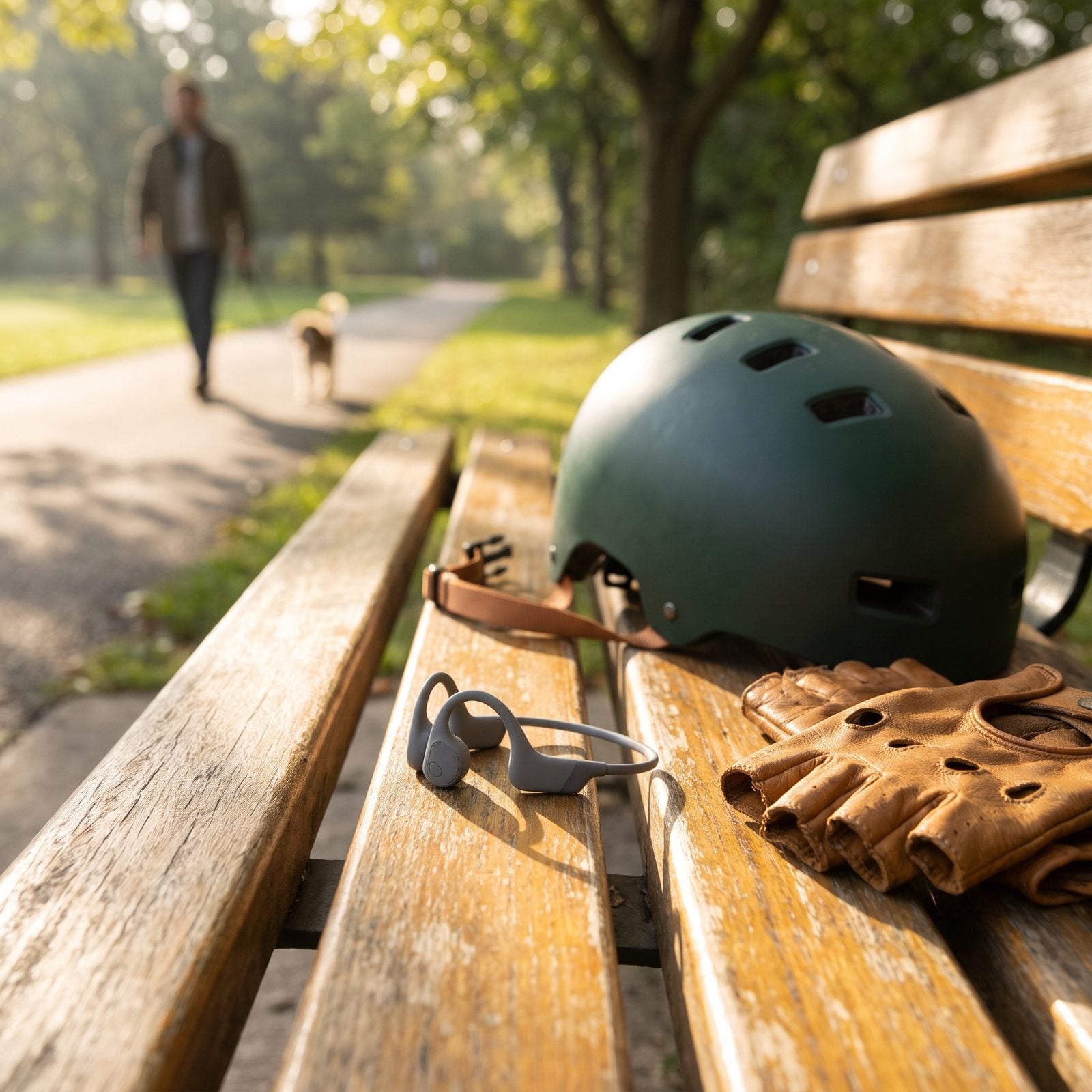
Noise-cancelling earbuds on a shared path are a bad trade. You seal yourself off from the one warning system that actually works out here — another rider’s bell, a shouted “on your left,” the scuff of a runner you’re about to surprise.
16. Warn Others About Glass or Fallen Branches
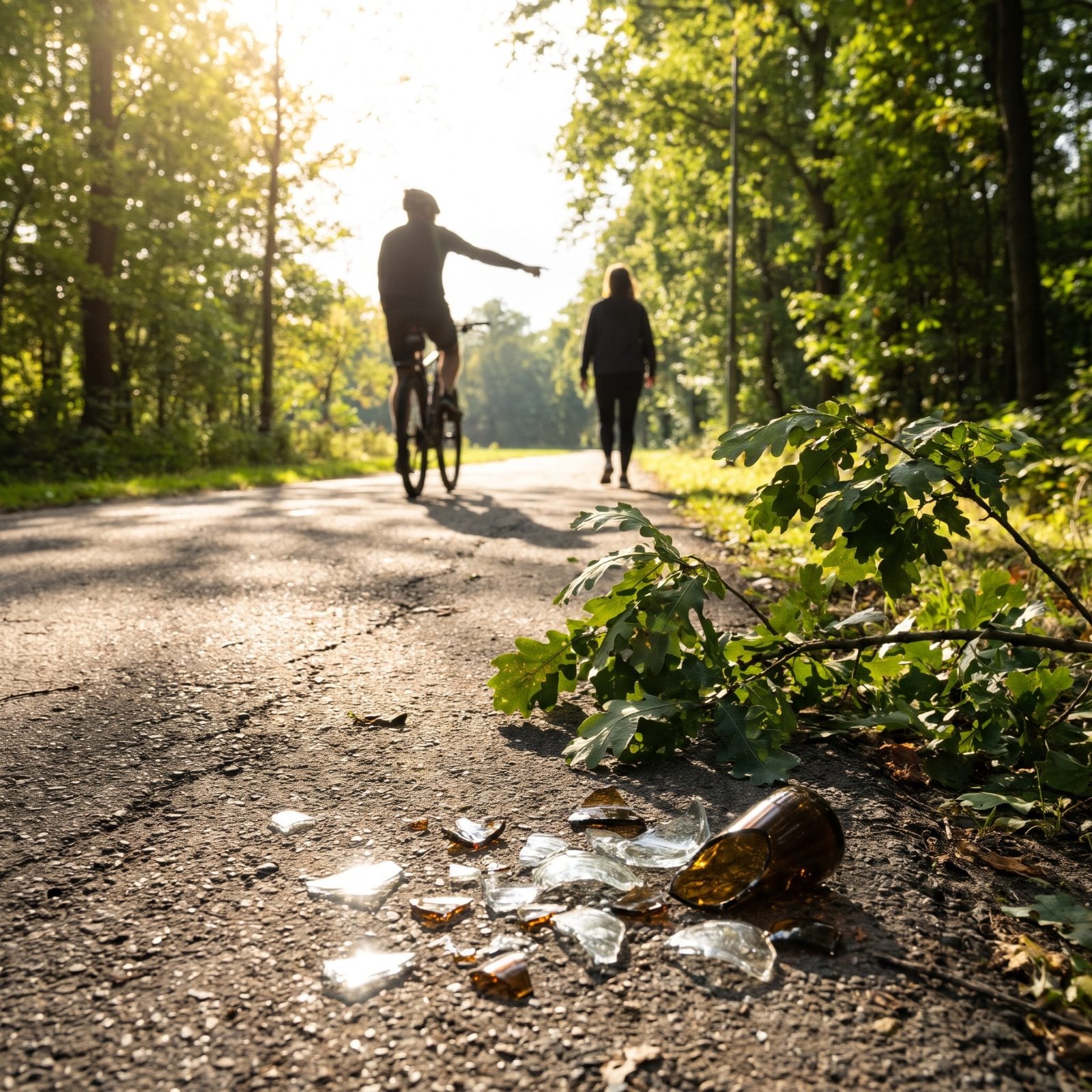
A broken bottle on a greenway can flat a dozen tires before anyone sweeps it up. You see it, you’re already past it, and the next rider is coming in blind.
Signal it. An arm pointed down toward the hazard, held long enough for others on the path to clock it, can save them a pinch flat or a face-plant. Same courtesy group riders use for potholes, and it works just as well between strangers.
A single word helps too. “Glass” or “branch” carries fine on a quiet path.
15. Move Small Hazards When It Is Safe
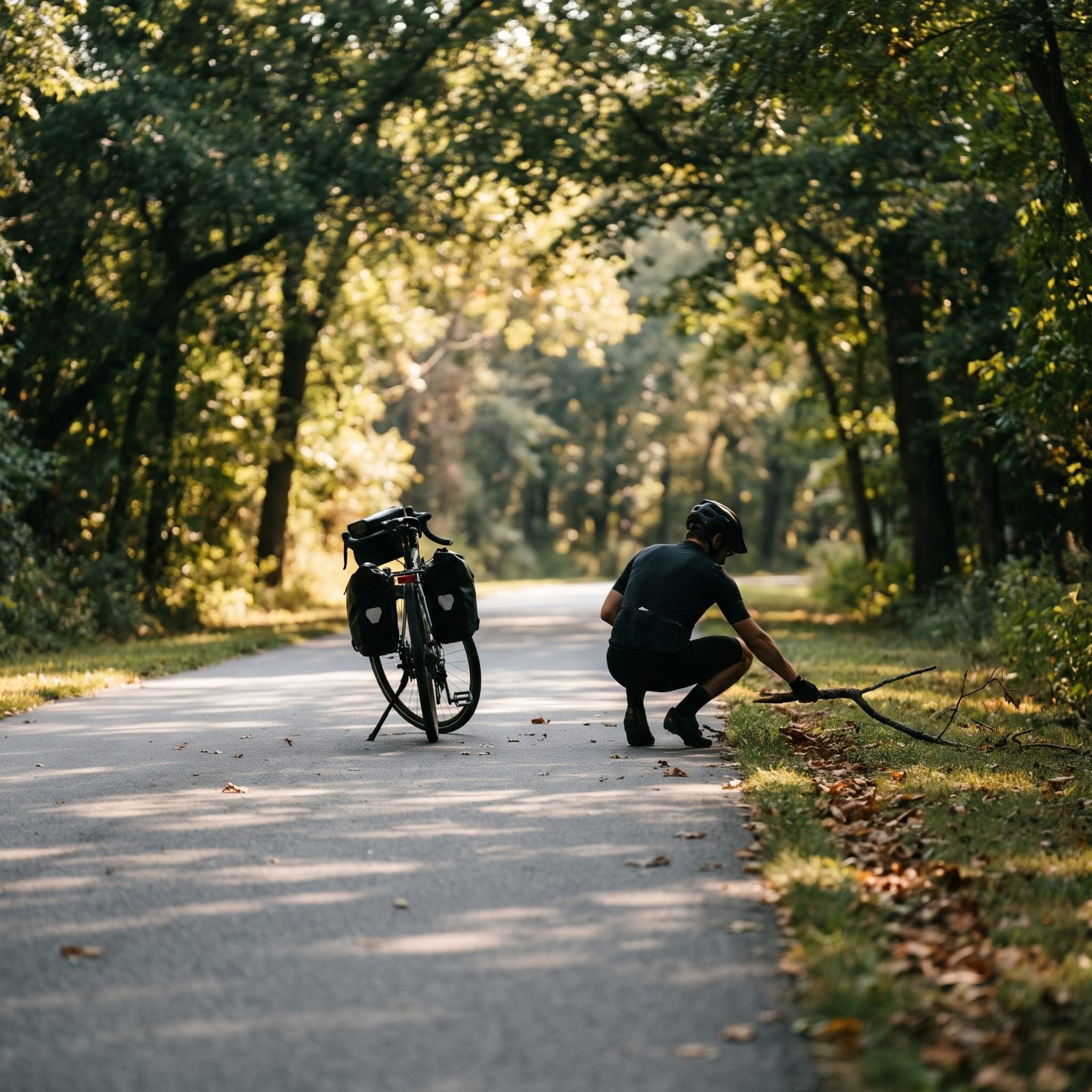
A fallen stick, a dropped water bottle, a palm-sized rock washed onto the pavement. Stop somewhere safe, drop the kickstand, and flick it into the grass. Ten seconds, and you’ve spared everyone behind you.
14. Report Major Hazards Instead of Riding Past
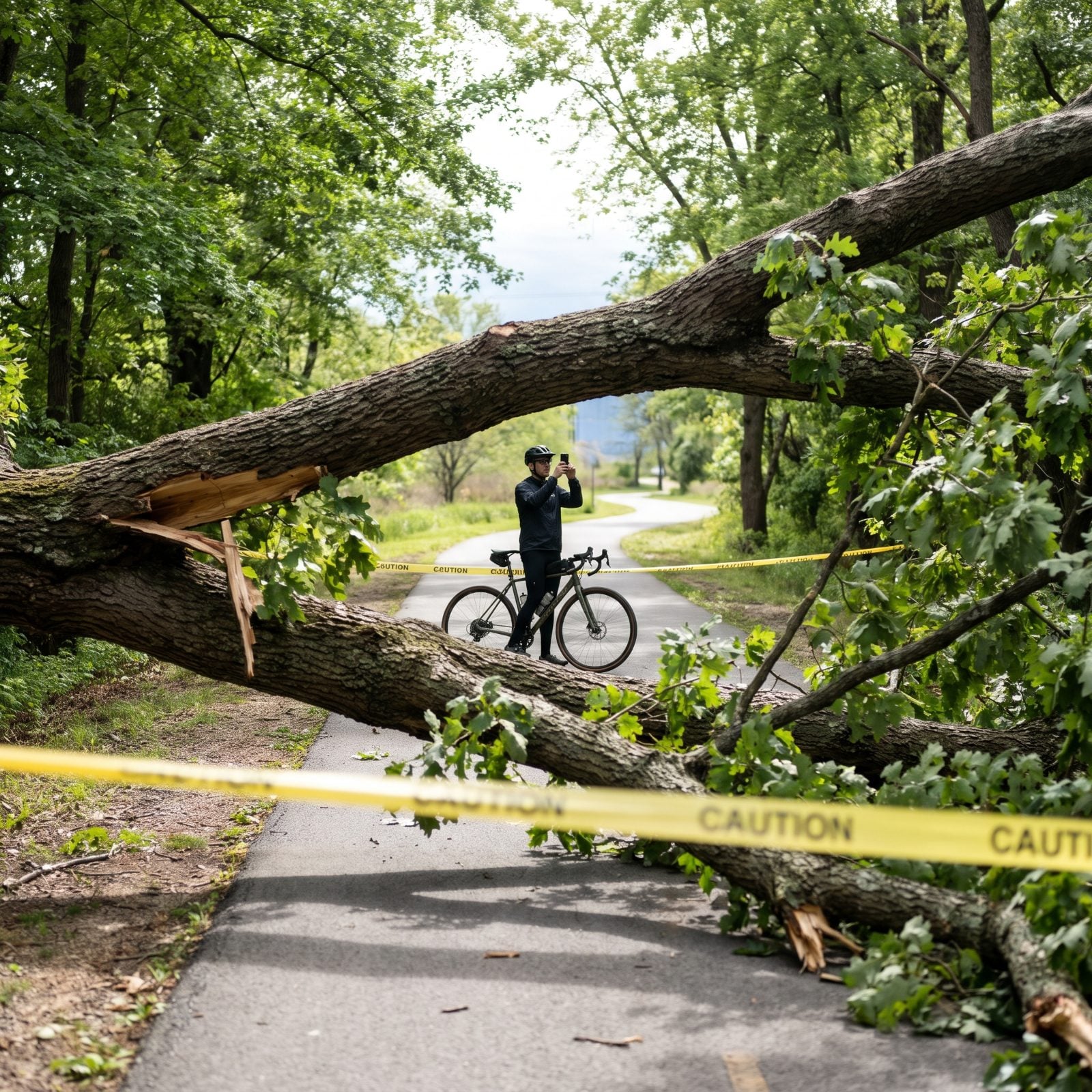
Some things you can’t fix with a flick of the wrist. A downed tree across the whole trail, a washed-out section, a buckled bridge plank, a sinkhole opening at an edge. Ride past and forget it, and you’ve just left it for the next person — probably someone moving faster than you were.
Most park departments and trail groups have a number or an app for exactly this. Snap a photo, note the nearest mile marker or cross street, and send it in. One report can get a crew out before anyone gets hurt. The whole system only works if somebody speaks up, and that somebody is usually whoever notices first.
13. Do Not Drop Gel Wrappers or Tube Caps
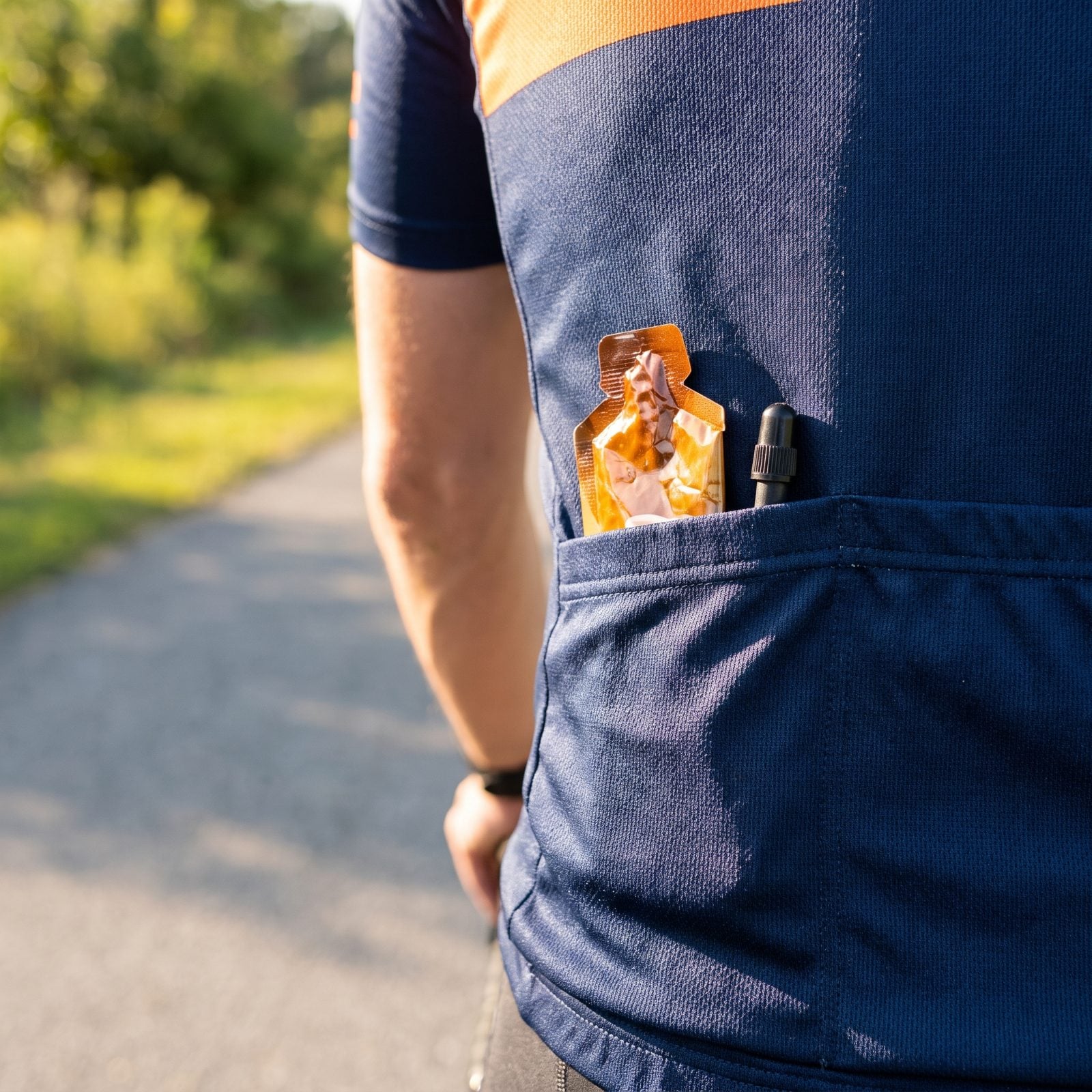
Watch the shoulder of any popular climb and you’ll find them: torn gel tops, foil wrappers, those little black tube caps that pop off when you fumble a repair. Each one looks like nothing on its own. Pile them up and a nice trail turns into a slow garbage drift.
The gel top is the worst offender. It’s tiny, it’s slick, and the instant you tear it, it wants to flutter away. Tuck it back in the pouch it came from, or stash it in a jersey pocket.
Nobody’s impressed by litter that came off a bike. Pack it out, same as a hiker would.
12. Avoid Skidding for Fun
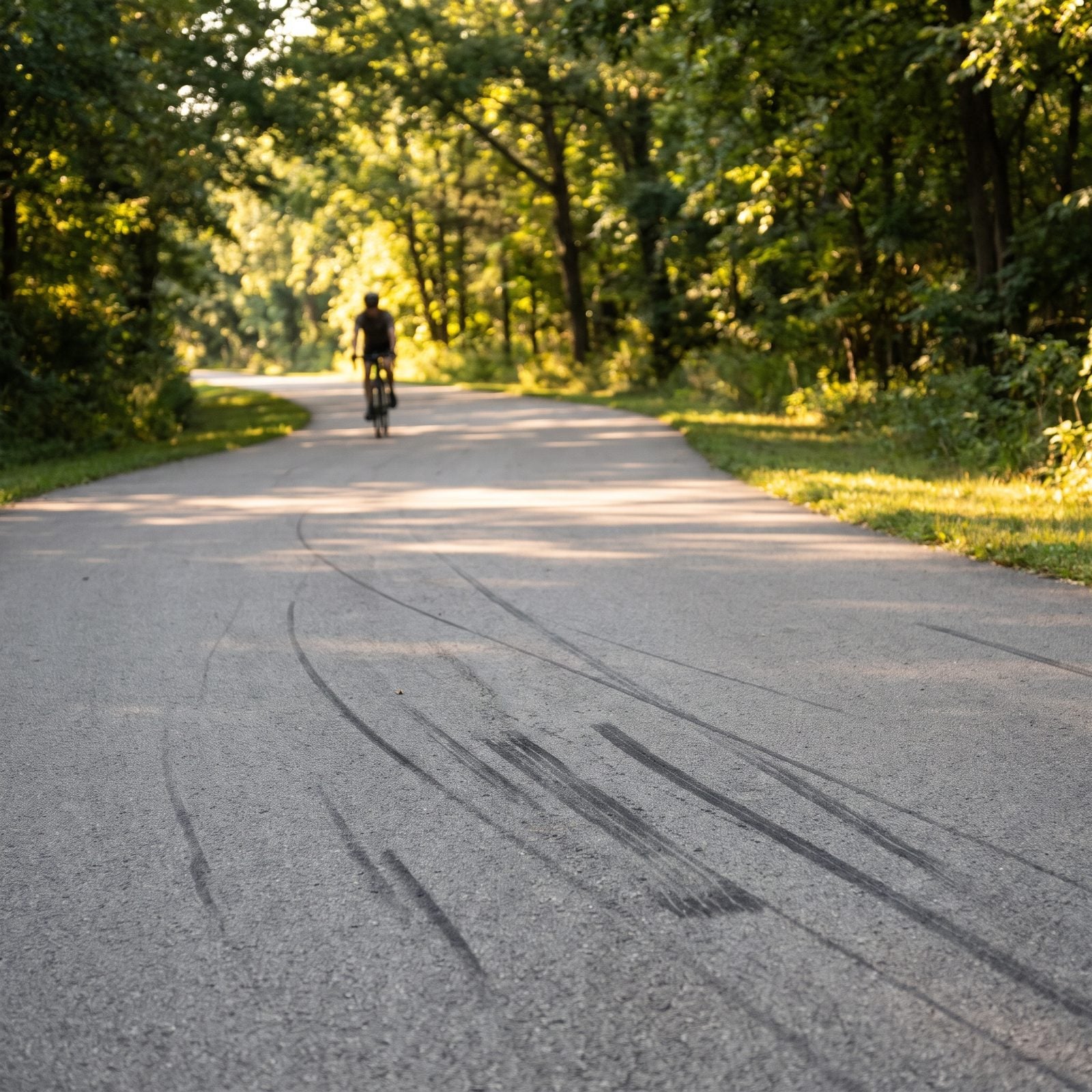
Locking up the back wheel to leave a long black streak feels great when you’re twelve. On a shared path it scares people, chews your tire down to the casing, and scatters loose rubber the next rider slides on.
11. Do Not Cut Across Grass to Bypass Congestion
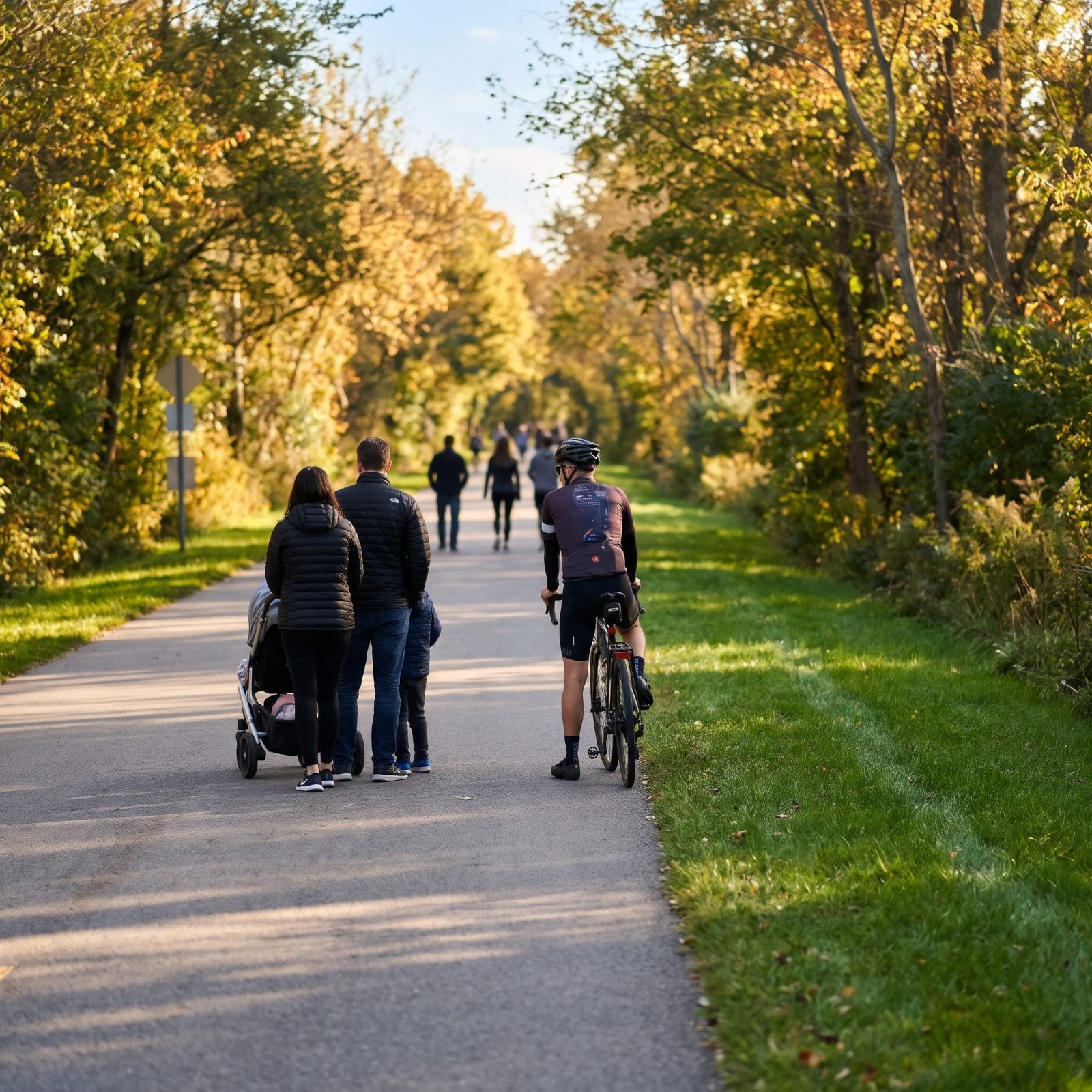
Path’s clogged ahead. A knot of walkers, a dog on a flexi-lead, a stroller taking up the middle. The grass looks like an easy bypass, so you veer onto it and rip past — and plenty of riders do exactly that.
Do it enough times and the whole trail knows. Those ugly brown dirt scars worn into the turf beside every pinch point? Cyclists made most of them, cutting corners that didn’t need cutting. They widen, they puddle, they kill the grass for good.
Slow down instead. Wait a beat, call a friendly “passing when you’re ready,” and roll through on the pavement where you belong. The congestion clears in seconds. The scar you’d leave lasts years.
10. Keep Wheels Out of the Walking Lane
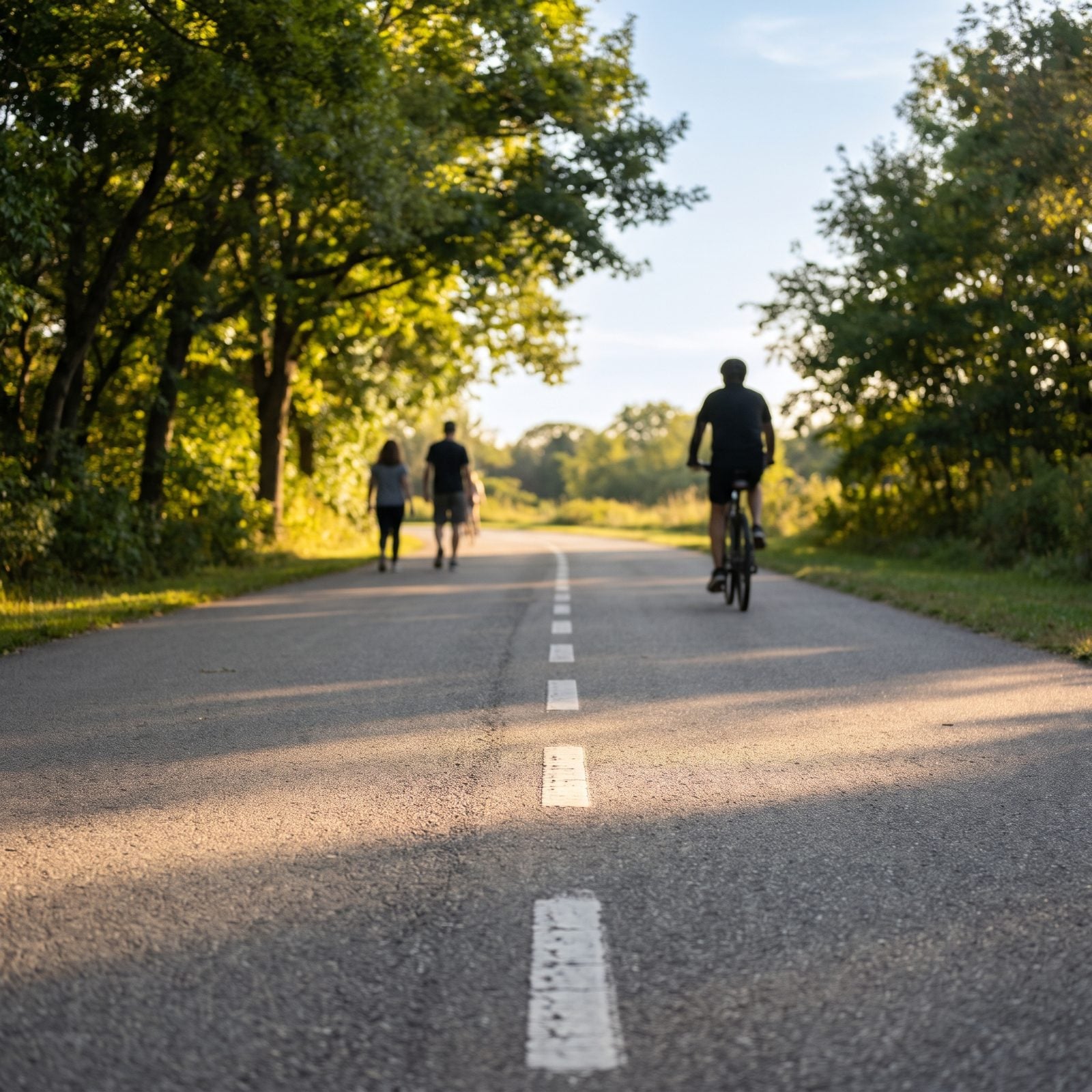
On a shared path, the right side belongs to everyone slower and the pass happens on the left. Where there’s a marked walking lane, your tires stay out of it, full stop. Drift a wheel over the line and you force walkers to flinch — and a flinch near a bike is how collisions start.
Hold a straight, predictable line. Signal before you pass, give wide clearance, then tuck back to your side once you’re clear. Riders who weave and squeeze are the ones who get bikes banned from trails in the first place.
Predictable is the whole game. People trust a rider they can read.
9. Give Maintenance Crews Room to Work
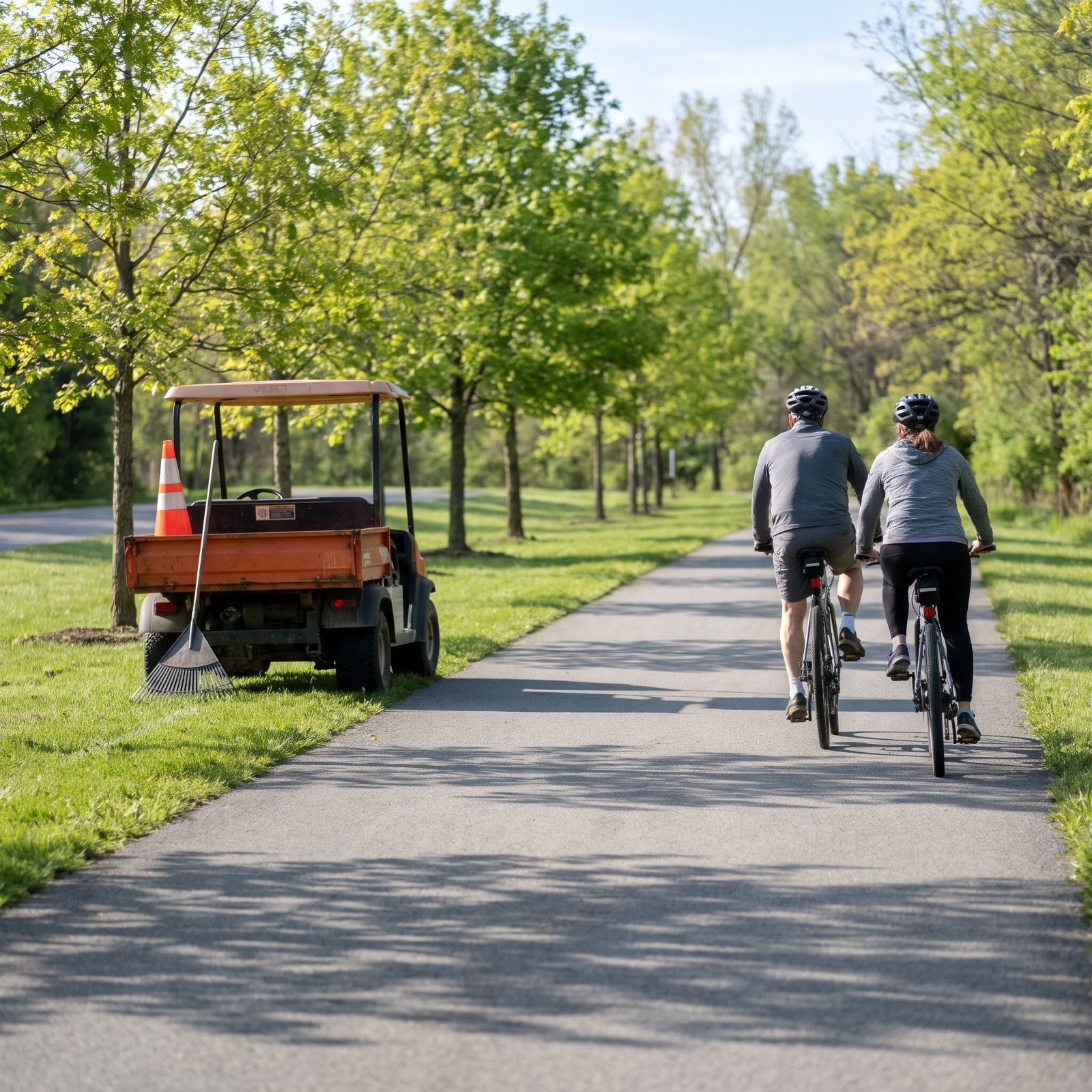
That orange cart parked on the grass beside the trail isn’t in your way — it’s the reason the trail is rideable at all. Crews clearing storm debris, patching cracks, or trimming the verge can’t hear you coming over a leaf blower or a chainsaw.
So slow early, call out before you reach them, and swing wide with real room to spare. If the path is blocked, a foot on the ground beats threading a gap you’ll regret. These folks keep the surface smooth under your tires. Give them an unhurried pass.
8. Keep Group Rides Small on Busy Paths
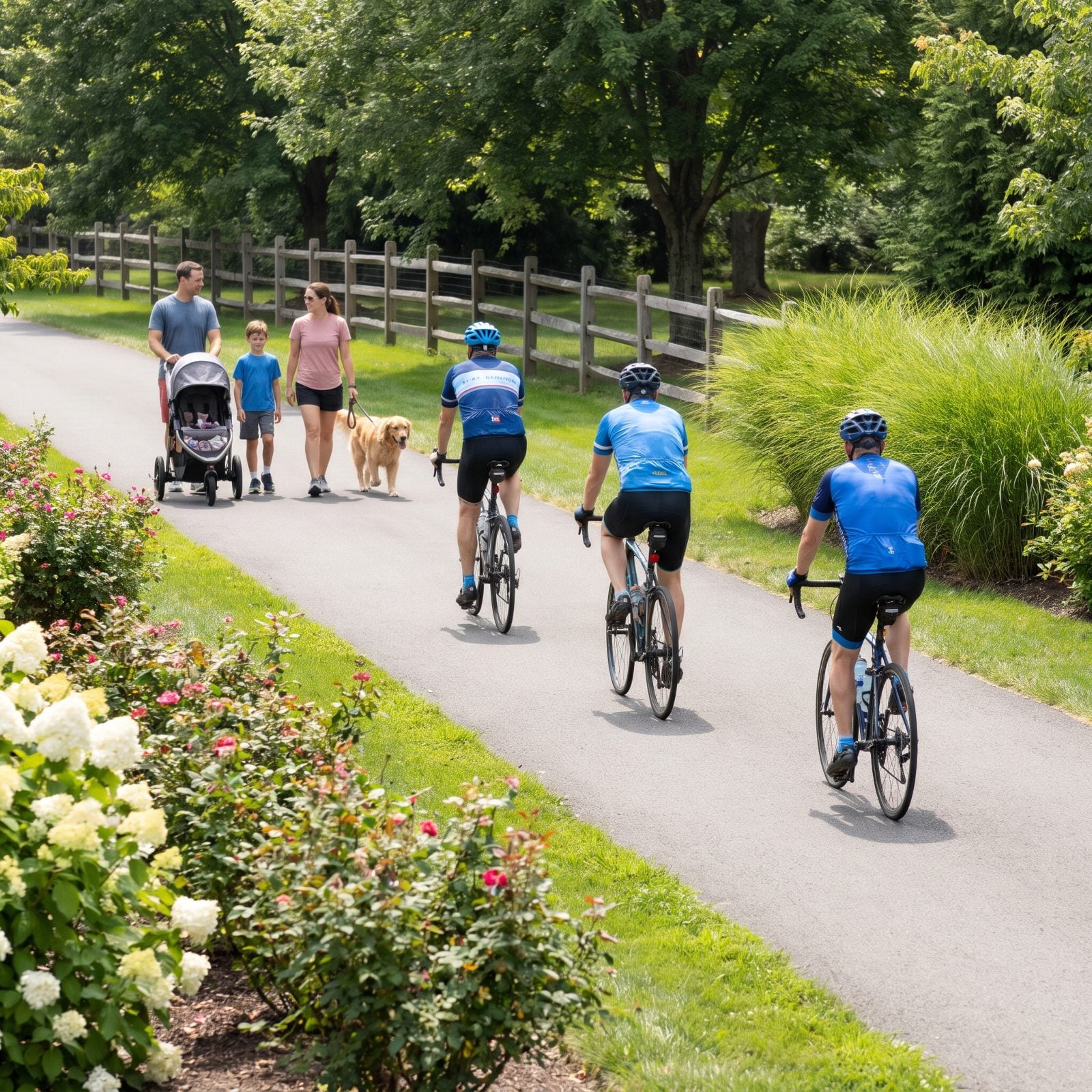
Eight riders rolling three abreast turn a pleasant greenway into a moving wall. Out on a quiet rural road that might be fine. On a Saturday-morning path packed with strollers, dog walkers and kids wobbling on training wheels, it’s the problem everyone feels and nobody says out loud.
Split a big group into pods of three or four, with gaps between them. Then everyone else can read the path, pick a hole, and slip past without doing trigonometry. It’s a simple habit that keeps busy stretches calm for everyone.
7. Leave Gaps So Others Can Pass a Group
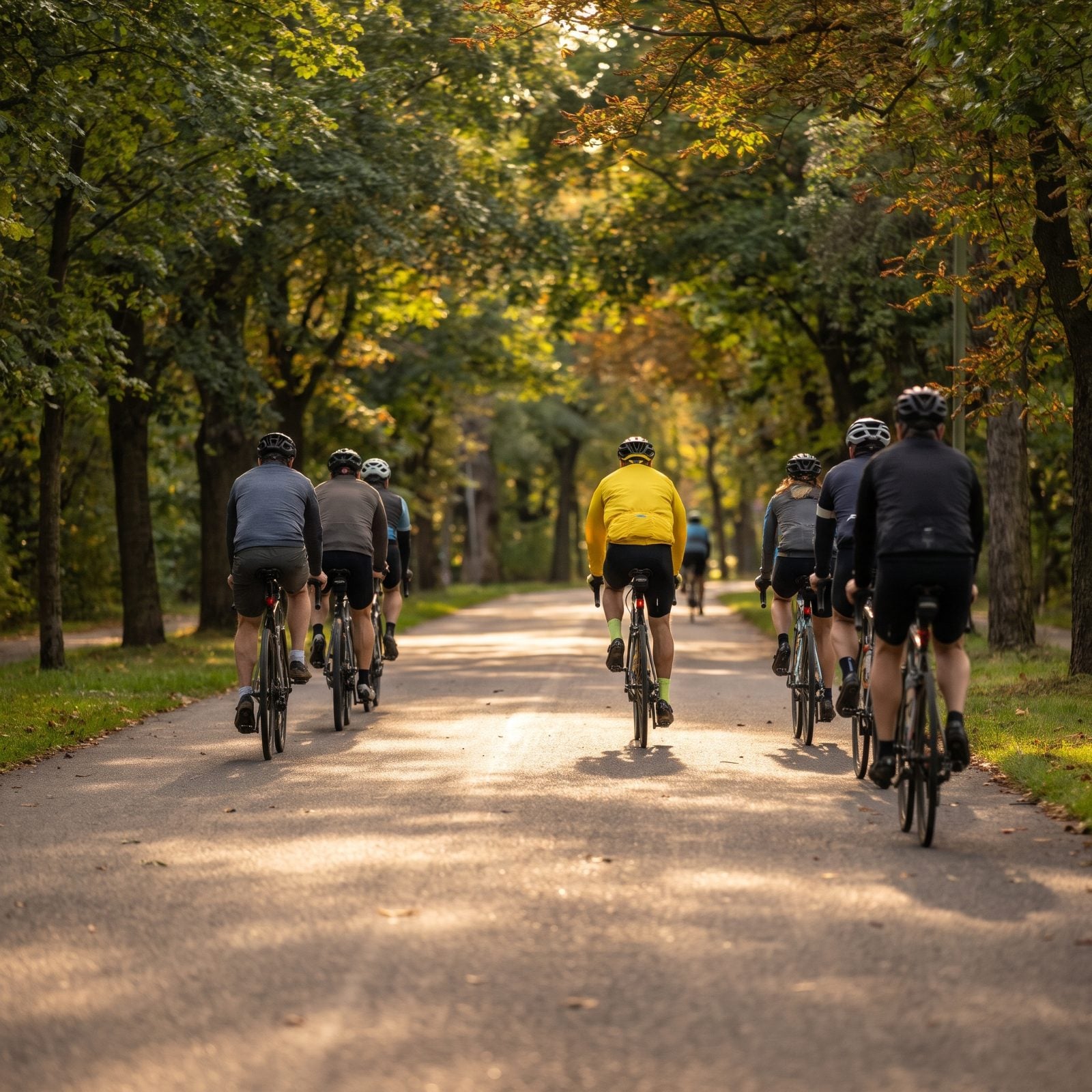
Sooner or later a faster rider, a jogger, or a parent with antsy kids will want past your group. Ride as one solid chain and you force them into a long, nervy move around the whole lot.
Leave a bike length or two between small clusters instead. Those gaps are landing spots. Someone overtaking can tuck in, catch a breath, and finish the pass in stages.
6. Regroup Away From Intersections
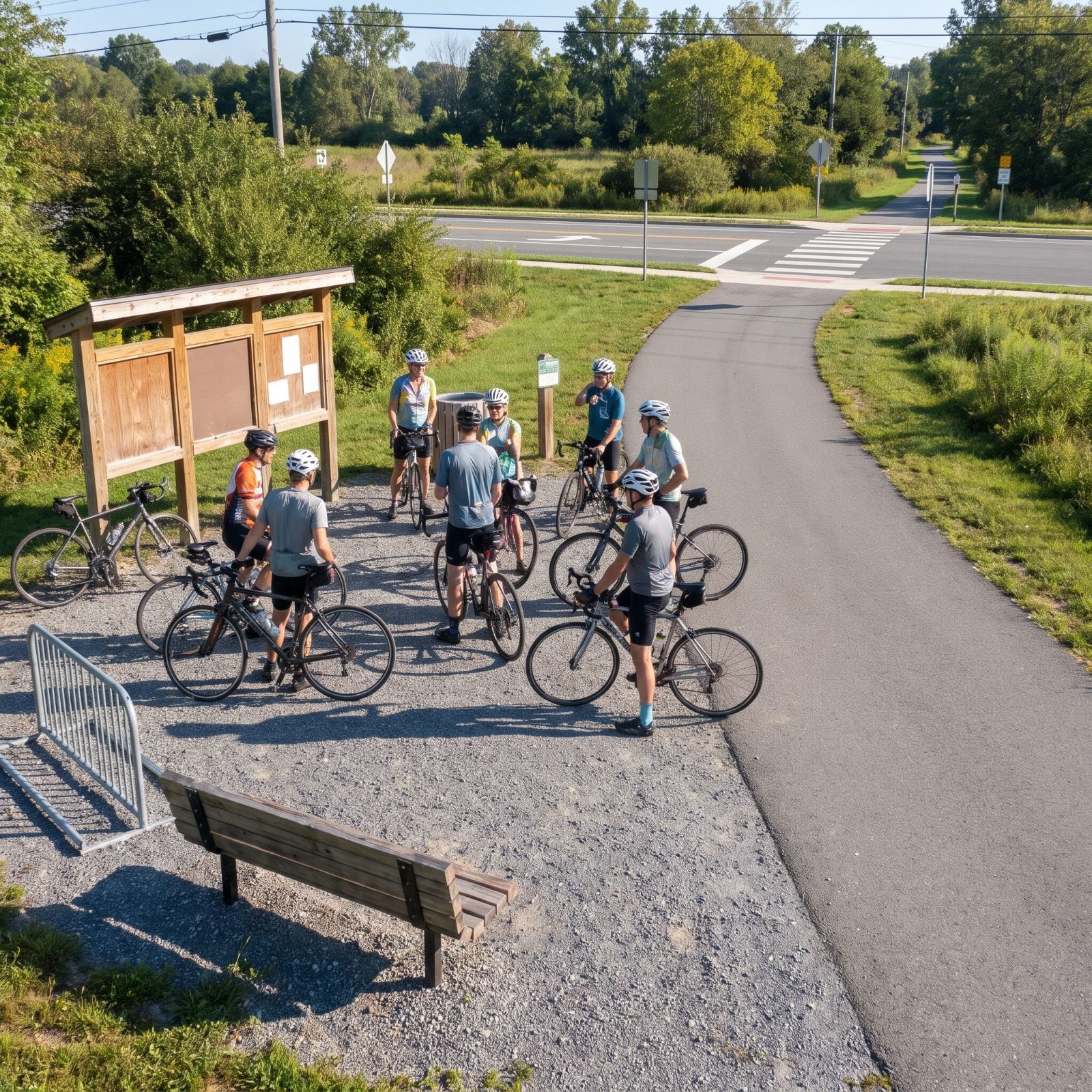
The worst possible place to stop and wait for stragglers is right where two paths cross or a trail spills onto a road. Sightlines are shortest there, and it’s exactly where everyone else needs clear space to make a call.
Roll past the crossing and pull all the way off onto a shoulder or rest area to regroup. A knot of stopped bikes at the junction creates a scrum that walkers and drivers both have to decode in a hurry. Give the crossing back to the people trying to use it.
5. Carry a Tube and Basic Repair Tools
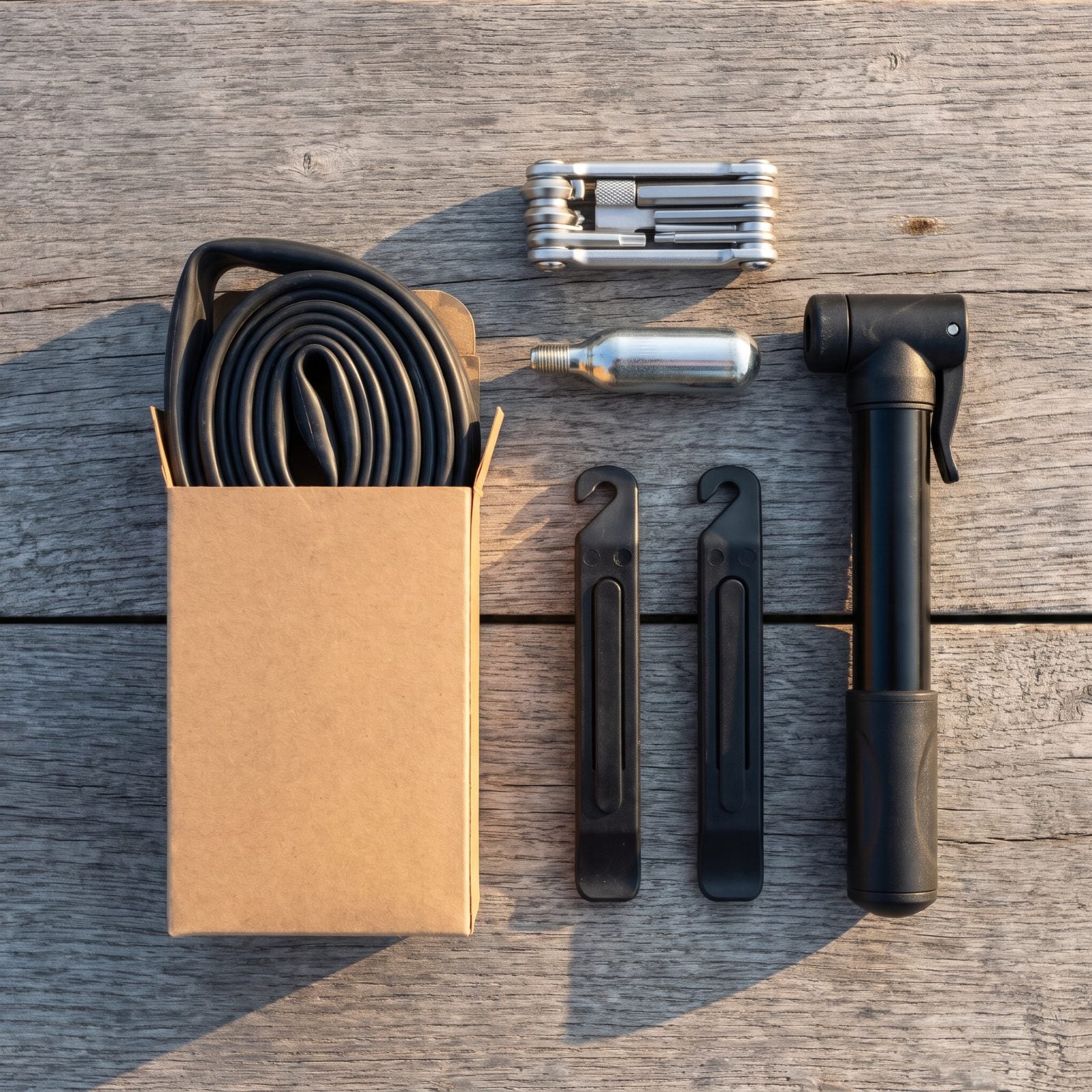
A flat with no tube is a long, sweaty walk — and a path half-blocked by a stranded rider. Nobody plans for the pinch flat three miles from the car.
A spare tube, two tire levers, a mini pump or CO2 inflator, and a small multi-tool fit in a saddle bag and weigh almost nothing. Fix your own flat off to the side and you keep moving instead of becoming the obstacle everyone swerves around.
Plenty of riders swear they’ll never flat again, right up until they do. Carry the kit. Learn the five-minute tube swap at home, where there’s no clock running.
4. Secure Loose Straps and Cargo
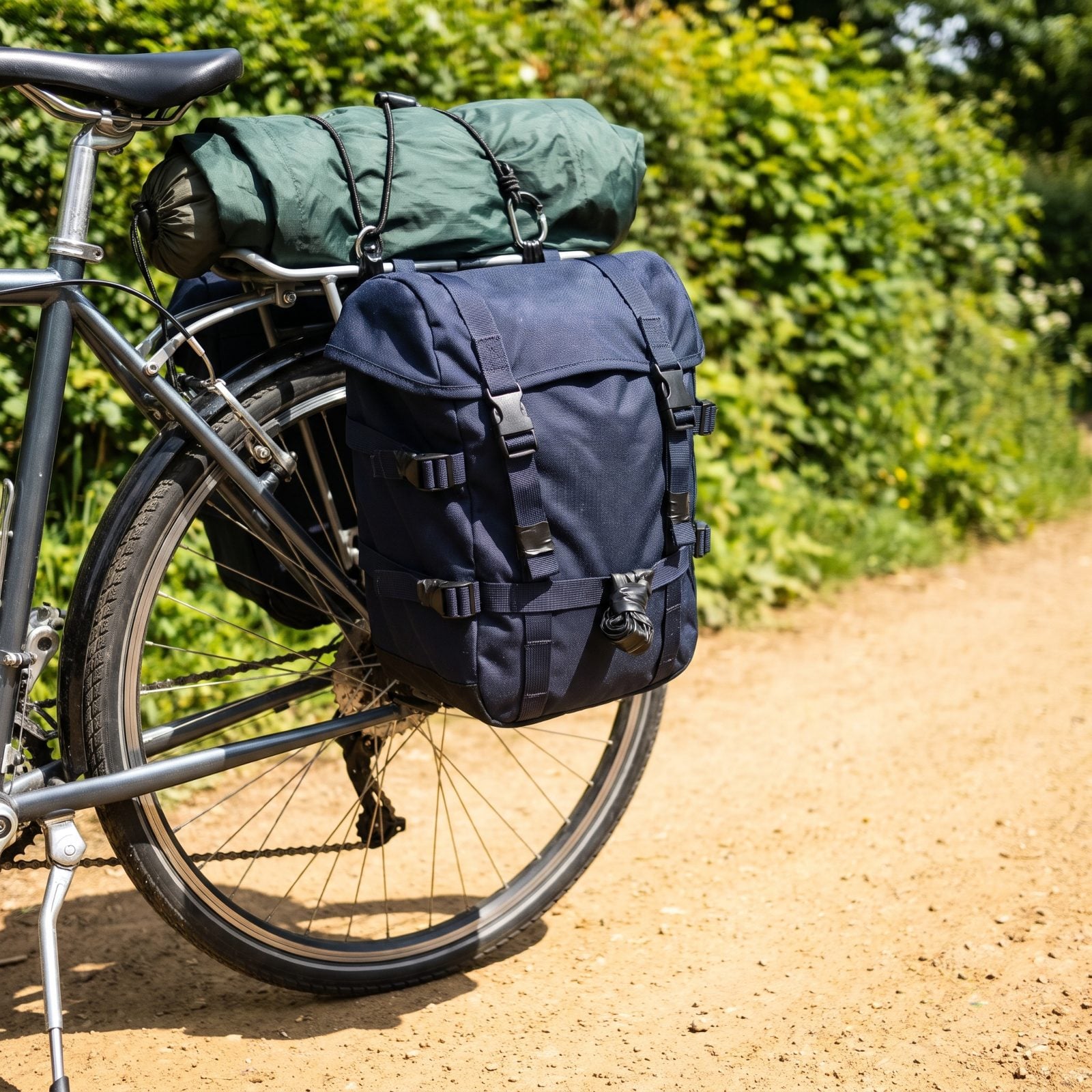
A dangling backpack strap, a loose bungee, or a flapping jacket sleeve can find a spoke at the worst possible moment. On a shared path that doesn’t just end your ride — it can drop you in front of people who had no warning.
Before you roll, check that every strap is tucked, every bungee cinched, and nothing swings near the wheels. Thirty seconds in the parking lot beats a wheel lockup at speed. Loose cargo is a quiet hazard — the kind nobody mentions until it bites someone.
3. Check That Children Can Stop Reliably
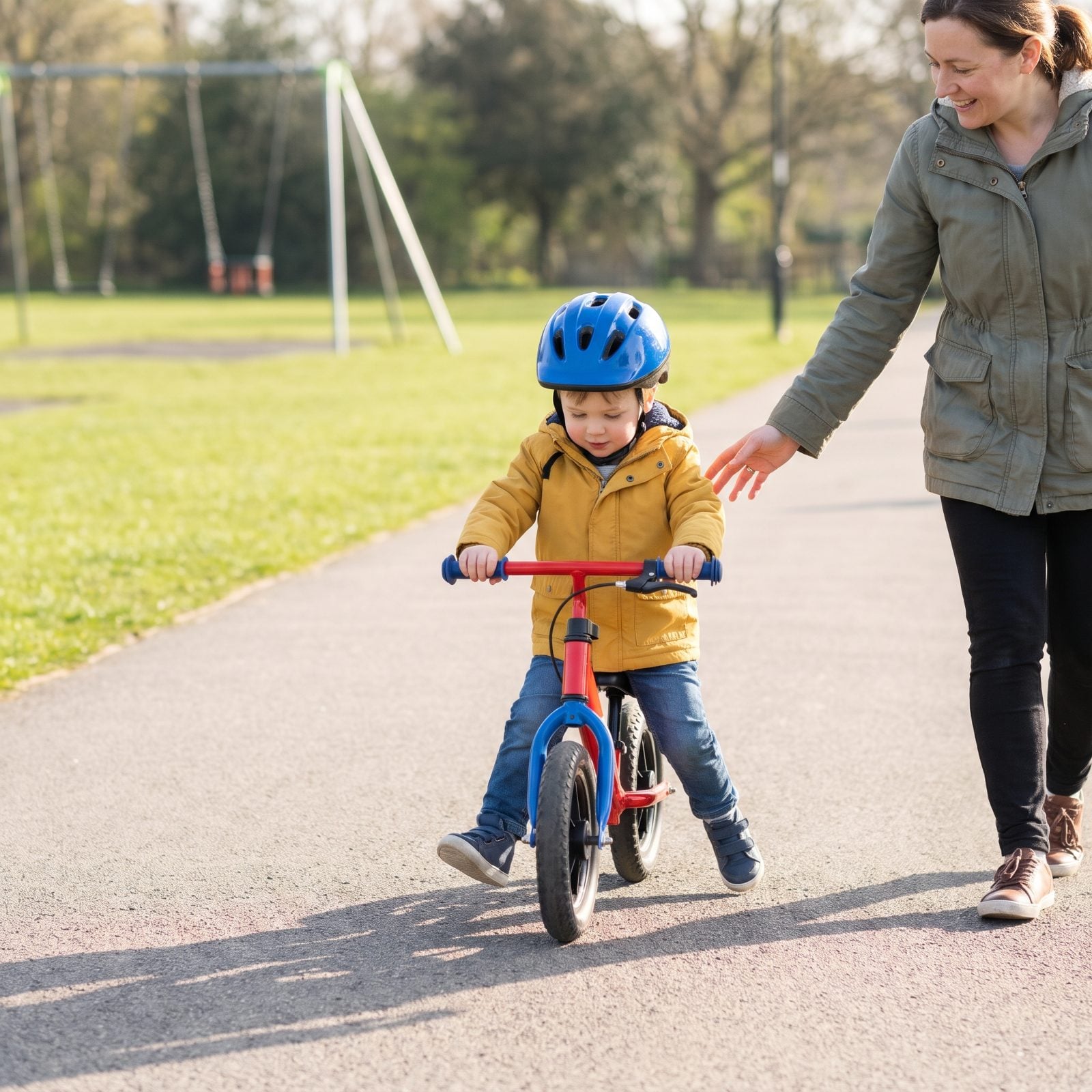
Before a kid rides a shared path, the one skill that matters most isn’t balance — it’s stopping. A child who can pedal but can’t brake on command is a lovely afternoon waiting to go sideways.
So put in the time in an empty lot, where they stop on your word, every time, until it’s automatic. Coaster brakes, hand brakes, dragging a foot — whatever their bike has got. Only then is the greenway, with its walkers and dogs and blind corners, the right place to be.
2. Keep Child Trailers Within Your Lane
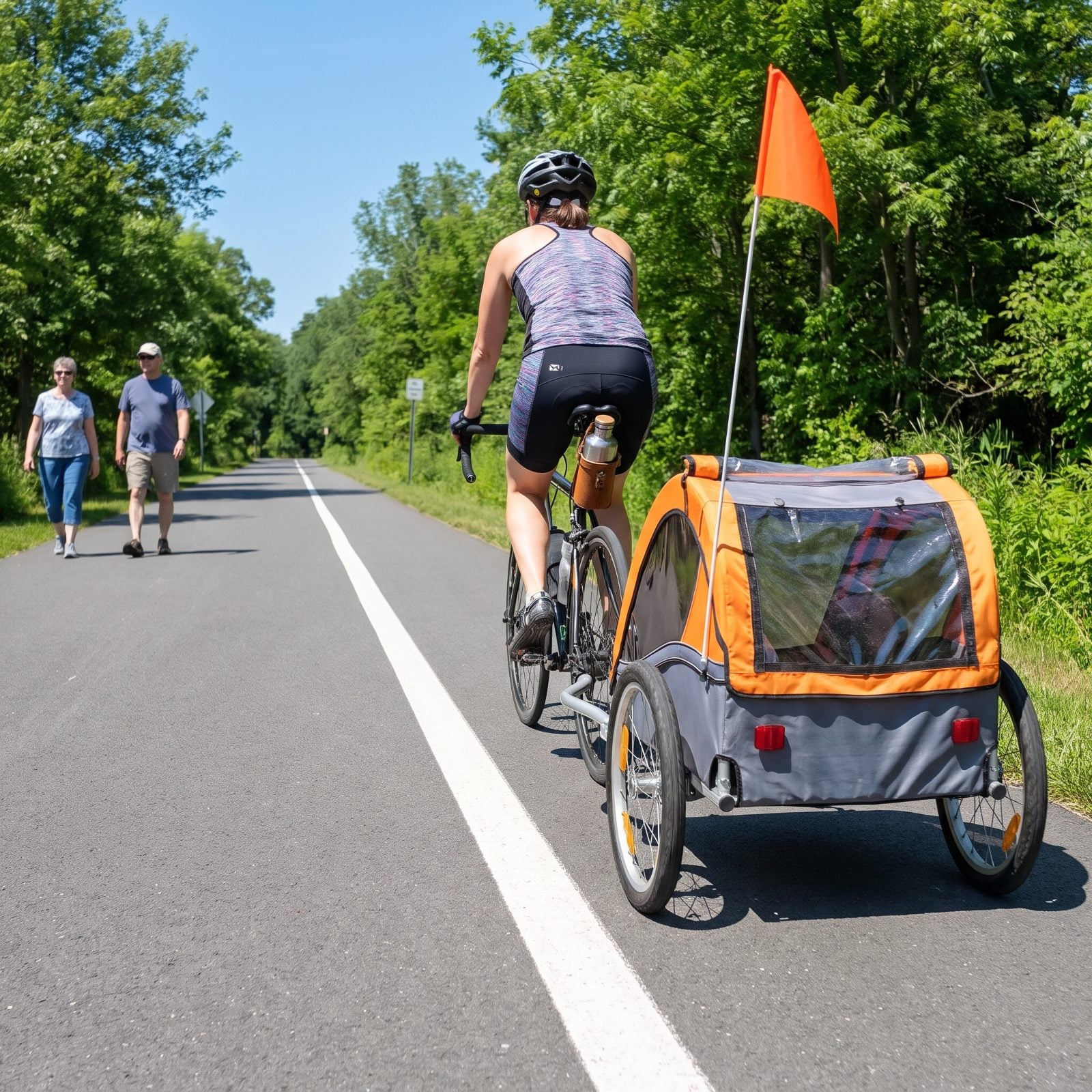
A child trailer is wider than you, and it doesn’t always follow your front wheel exactly. It swings a little on corners, and on a narrow path that swing eats into space other people are counting on.
Hold your line toward your own side, take corners wide and slow, and remember the trailer tracks inside your turn. A tall flag helps others spot it early. People give trailers a lot of grace out there — make it easy for them by keeping that bright box firmly on your half.
1. Give Adaptive Cycles Their Needed Width
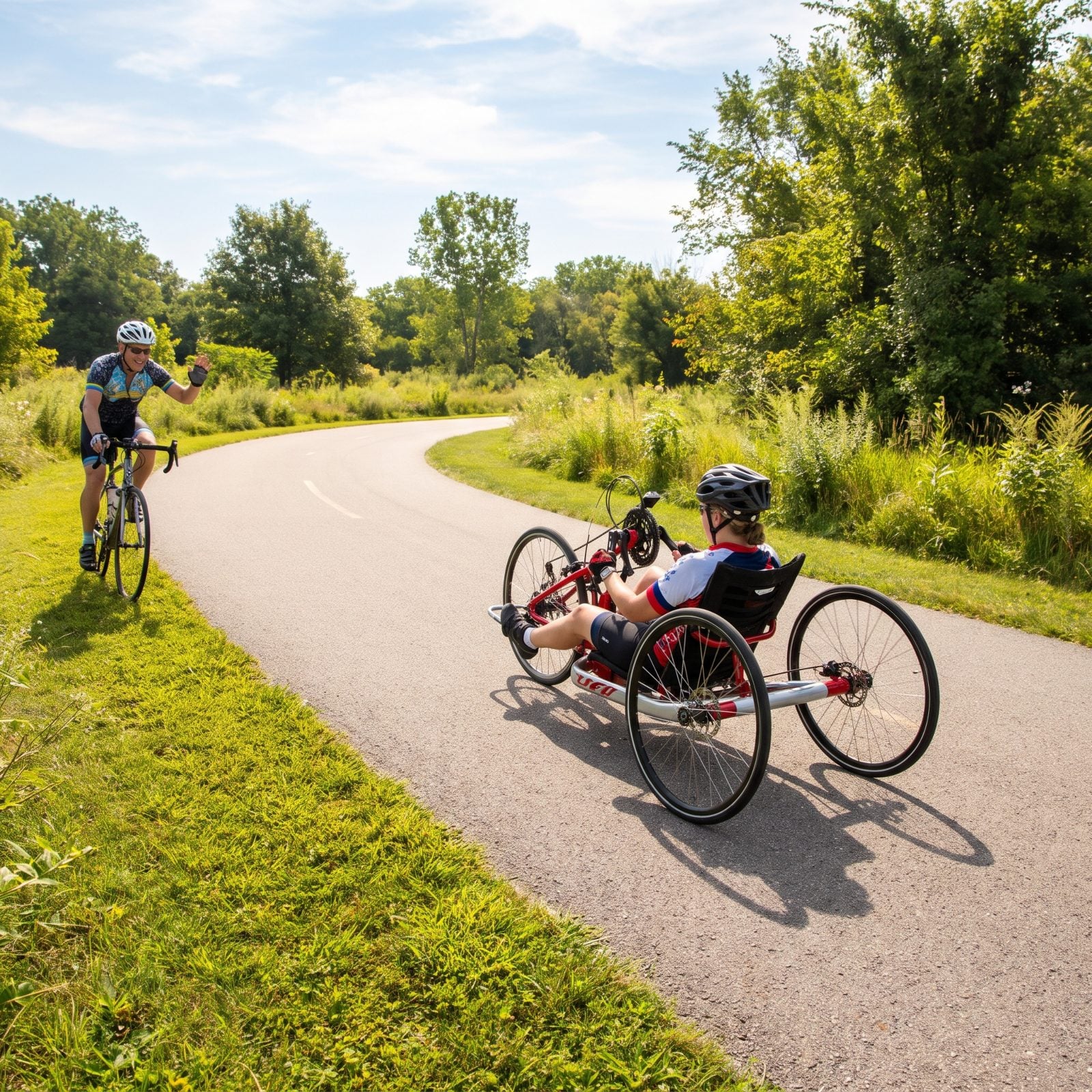
Handcycles, recumbent trikes and other adaptive cycles sit lower and run wider than a standard bike, and they can’t always dart to the edge the way you can. The rider often has a narrower window for quick moves.
When you meet one, slow early and pass with real clearance — the same room you’d want for a car coming at you on a skinny back road. Don’t squeeze. A path that works for every kind of rider is the whole point, and a few extra feet of width is cheap insurance for that.
Give the wider rig the room first and ask questions later. Nobody ever regretted passing too courteously.