
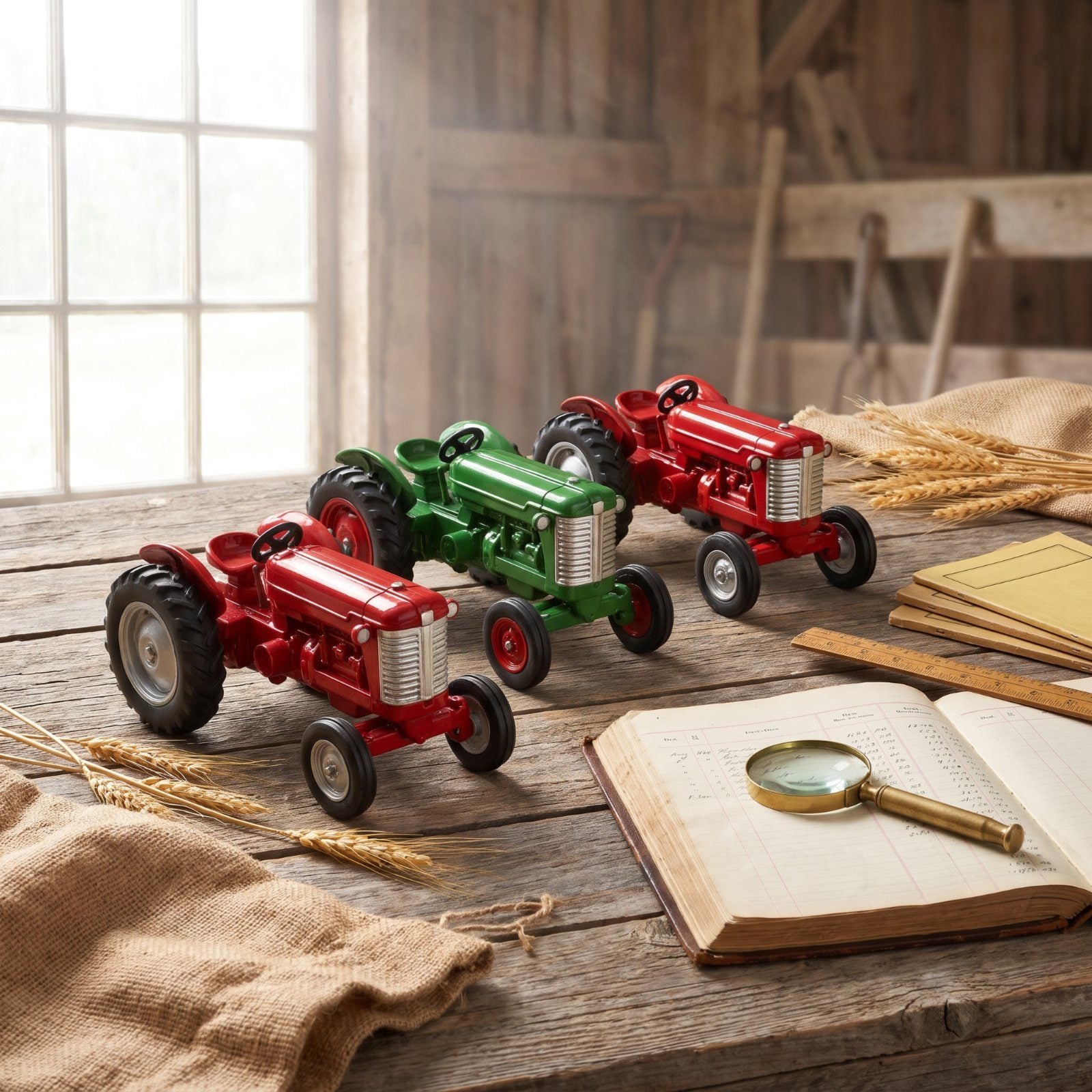
A new tractor once cost less than a used pickup does today. That number looks almost quaint until you run it through an inflation calculator and watch it swell into something that would make a modern farmer wince. The sticker on a 1940 Farmall wasn’t small money back then — it was a year of debt, a mortgage on the back forty, a bet that the crop would come in. We pulled the original new prices for a run of tractors that worked American ground and set them against what that same money buys now. The gap tells a story about farming nobody puts on a brochure.
Please note that some of the images in this article were created with the assistance of AI.
1940 Farmall H: The Row-Crop Workhorse That Cost About $900
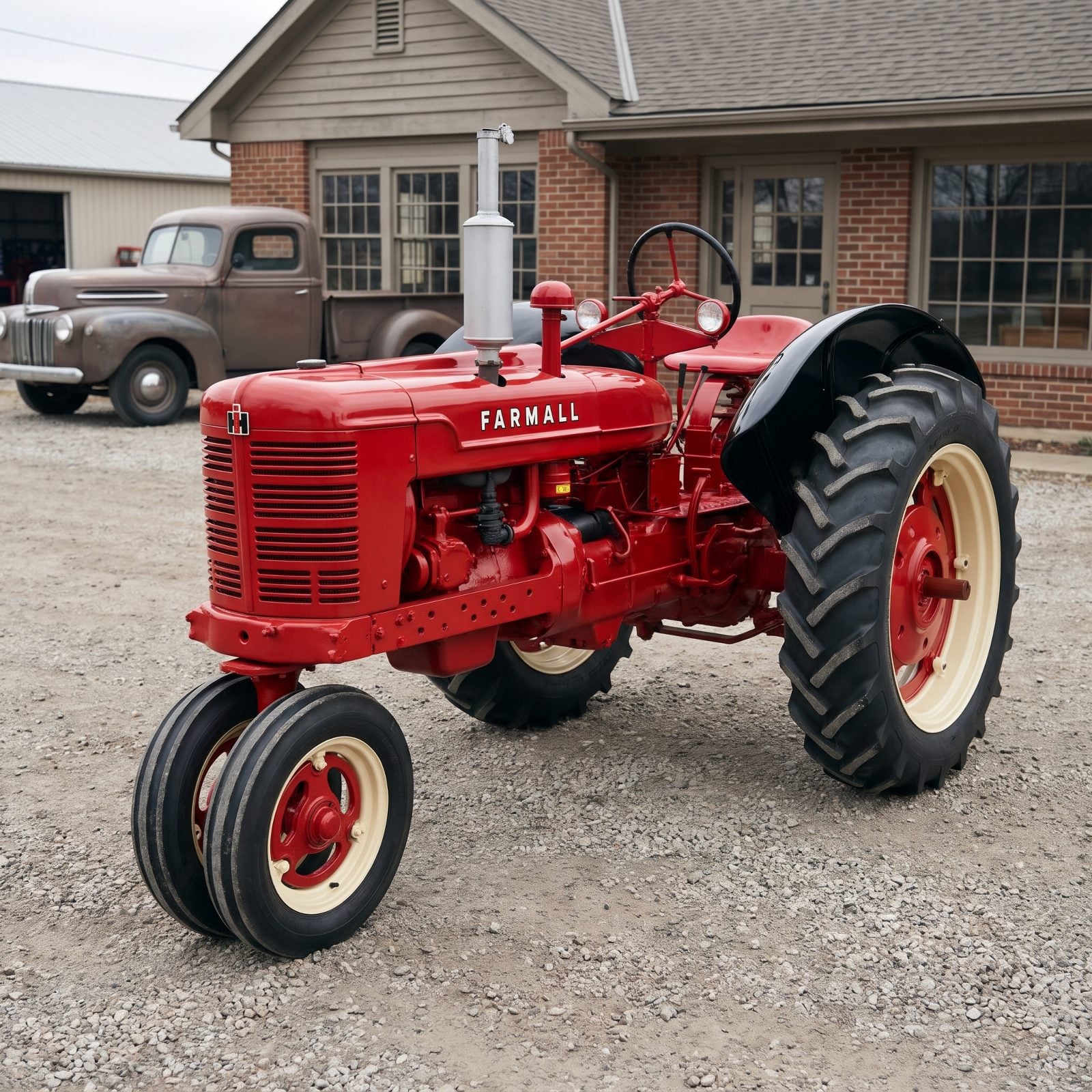
The Farmall H landed around $900 new in 1940. That was serious coin for a family farm working a few hundred acres. Run it through inflation and you land somewhere near $20,000 in today’s money, which sounds almost reasonable until you remember this thing had no cab, no power steering, and a four-cylinder gas engine making about 24 horsepower.
What you got was durability that borders on absurd. Plenty of these are still running at county fairs and in hay fields right now, eighty-some years later. Try getting that out of anything built today.
Listing the quirks of his 1946 H, a historian restoring a Farmall notes that “second gear was typically the heavy “working” gear for pulling plows or other equipment, so having worn down teeth on a gear is to be expected.”
1940 John Deere Model B: Two Cylinders, One Legend, Roughly $875
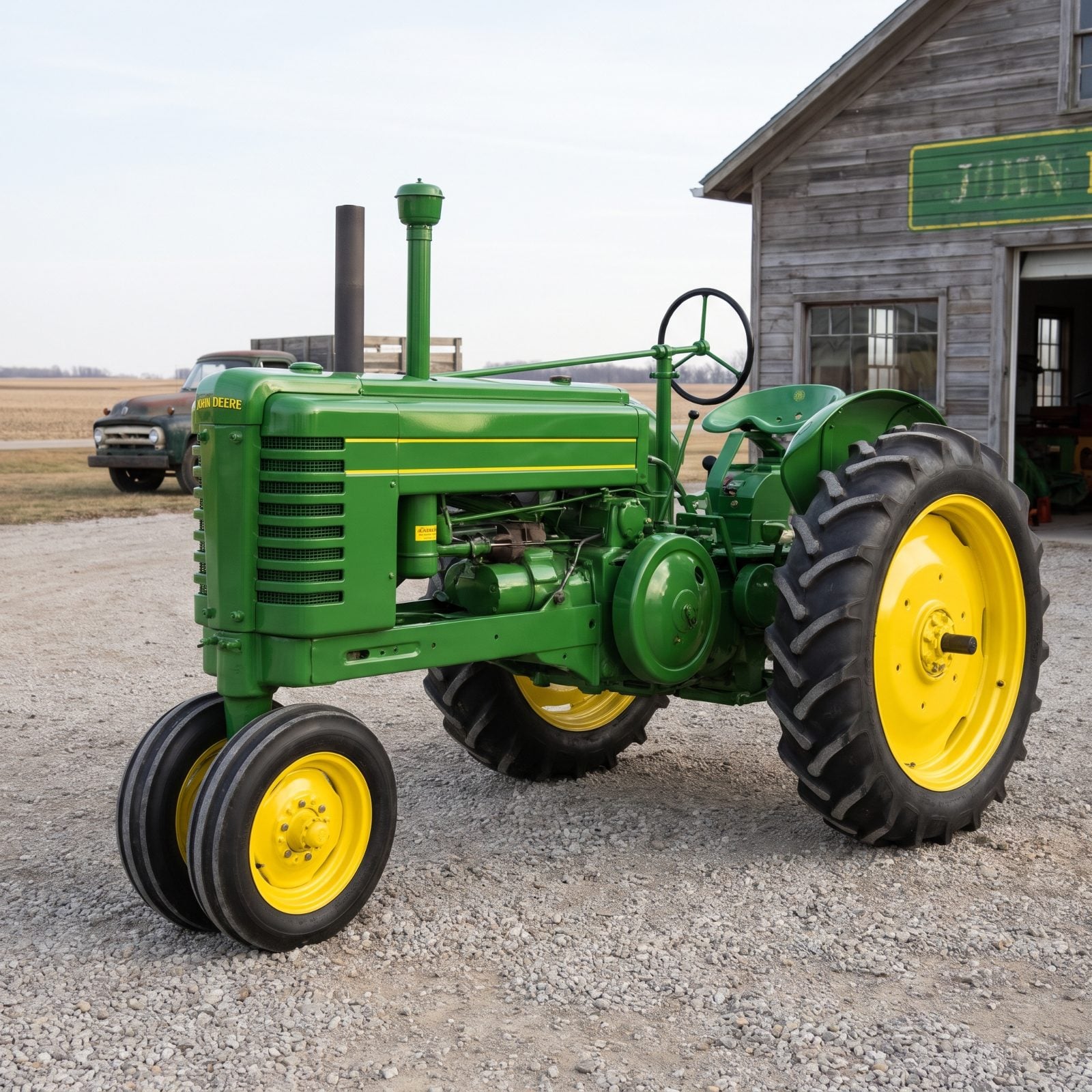
You heard a John Deere B before you saw it. That lazy two-cylinder thump, the ‘Johnny Popper’ sound, carried clear across a field. Priced near $875 in 1940, it was pitched at the smaller operation that didn’t need the muscle of a big row-crop machine.
Adjusted for inflation, that’s roughly $19,000 today. The genius was simplicity. Two cylinders meant fewer parts to break, and a man could fix most of it himself with a wrench and some patience. Collectors now pay restoration money that would’ve bought ten of them new.
1940 Ford 9N: Henry Ford’s $585 Revolution
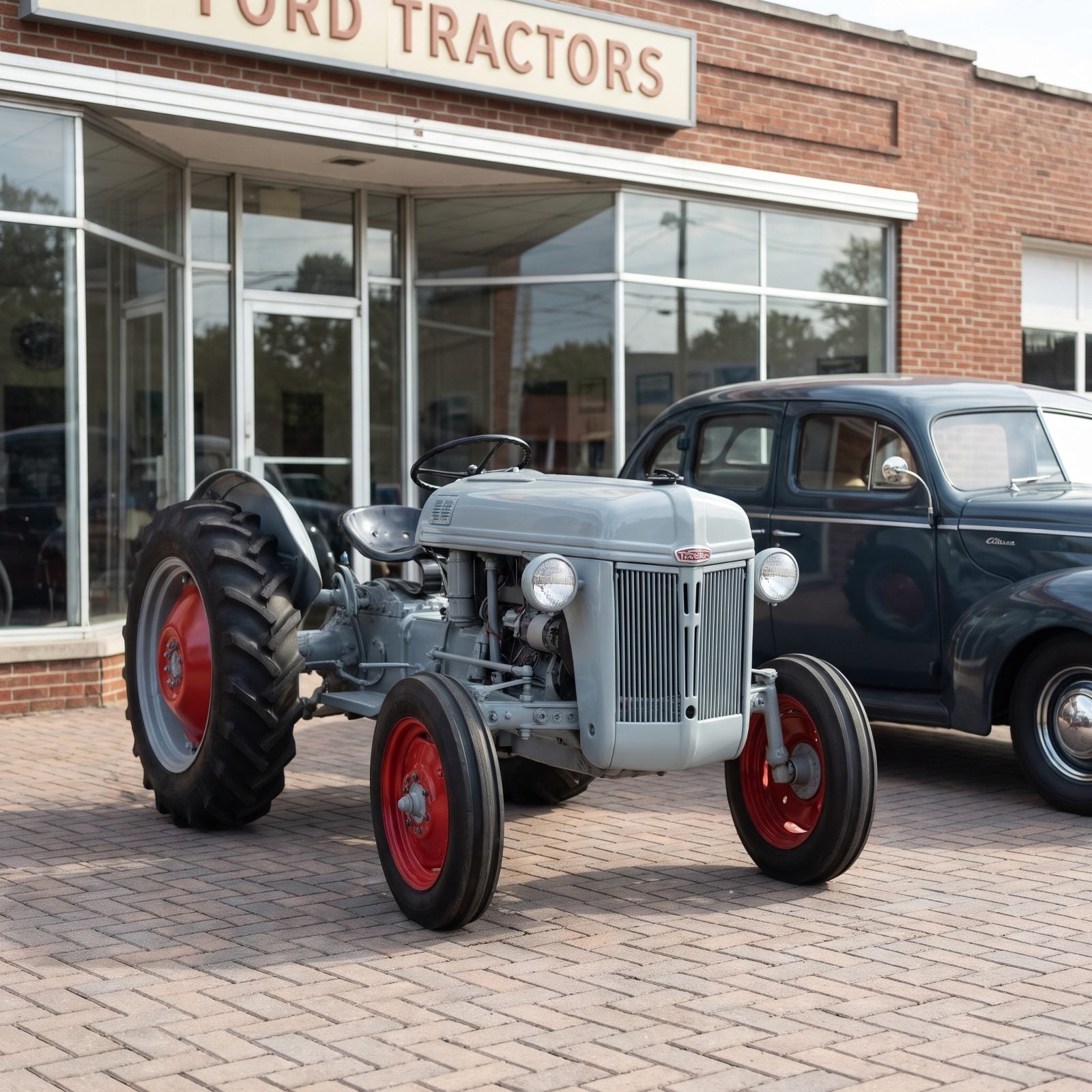
Here’s where the whole game changed. The Ford 9N arrived in 1939 at about $585, undercutting nearly everything on the market by a wide margin. That’s roughly $13,000 today, and it put a tractor within reach of farmers who’d been working behind a mule.
The real magic wasn’t the price — it was the three-point hitch, the Ferguson System, which let implements become part of the tractor instead of something you dragged behind it. That design is still on the back of tractors sold this morning. Henry Ford and Harry Ferguson shook hands on it, and the handshake deal later blew up into one of the ugliest lawsuits in farm equipment history.
Explaining why he stuck with small Fords for odd jobs around his Arkansas town, a longtime custom bush-hog operator said “I preferred Fords because they are more user friendly, especially for small jobs like I was doing. My 9N Ford worked great and I had no reason to believe the 801 wouldn’t be the same.”
1947 Farmall Cub: The Little Red Tractor at About $545
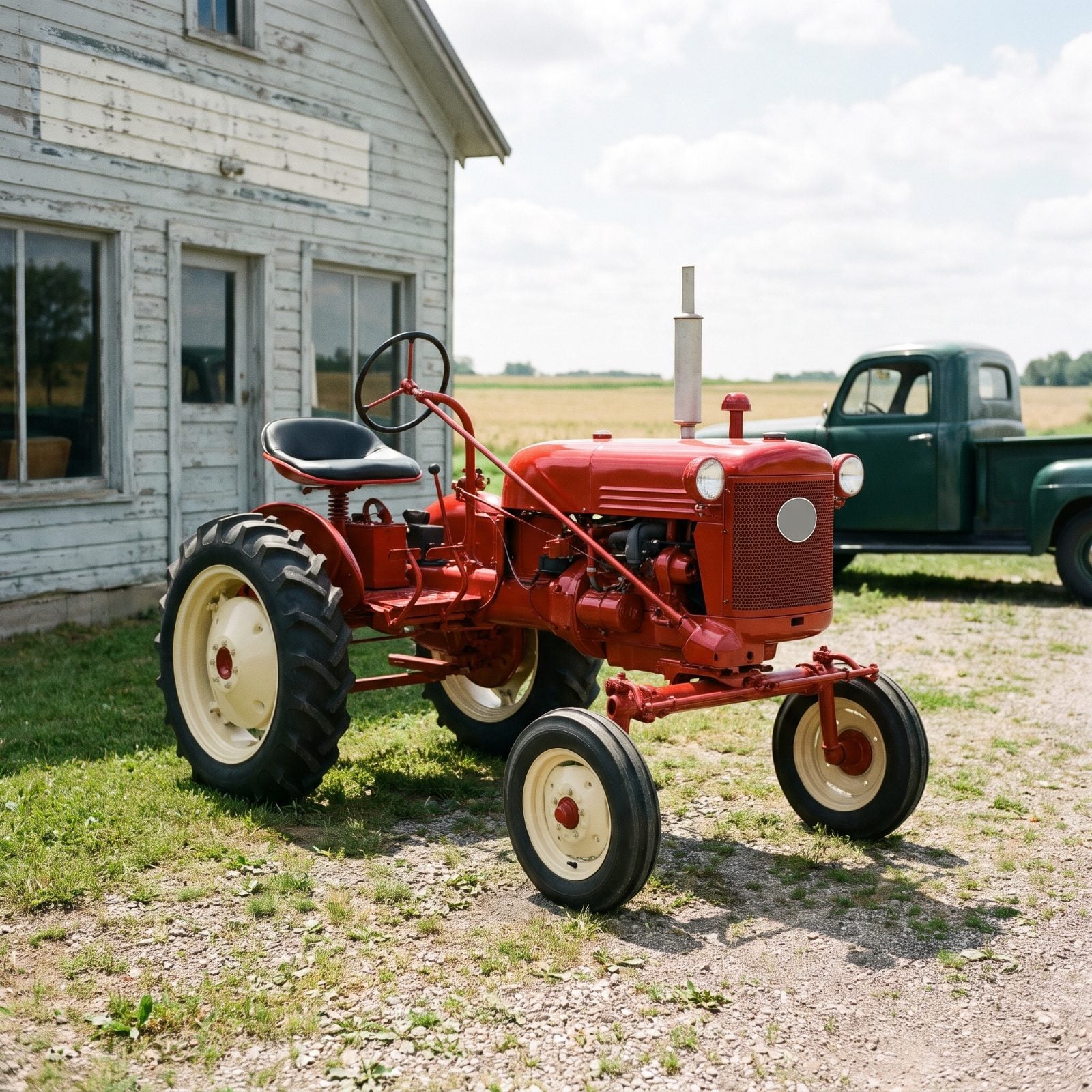
Small farm, small budget, small tractor. The Farmall Cub showed up in 1947 around $545 and was built for truck gardeners, tobacco growers, and anyone with ten acres instead of a thousand.
That price pencils out to maybe $7,500 today. The Cub’s offset engine let you see the row you were cultivating, a clever bit of design that made it a favorite for close work. It stayed in production, in one form or another, into the late 1970s. Thirty years of a single design says the thing was right the first time.
1948 Ford 8N: The Best-Selling Tractor of Its Era at Roughly $1,400
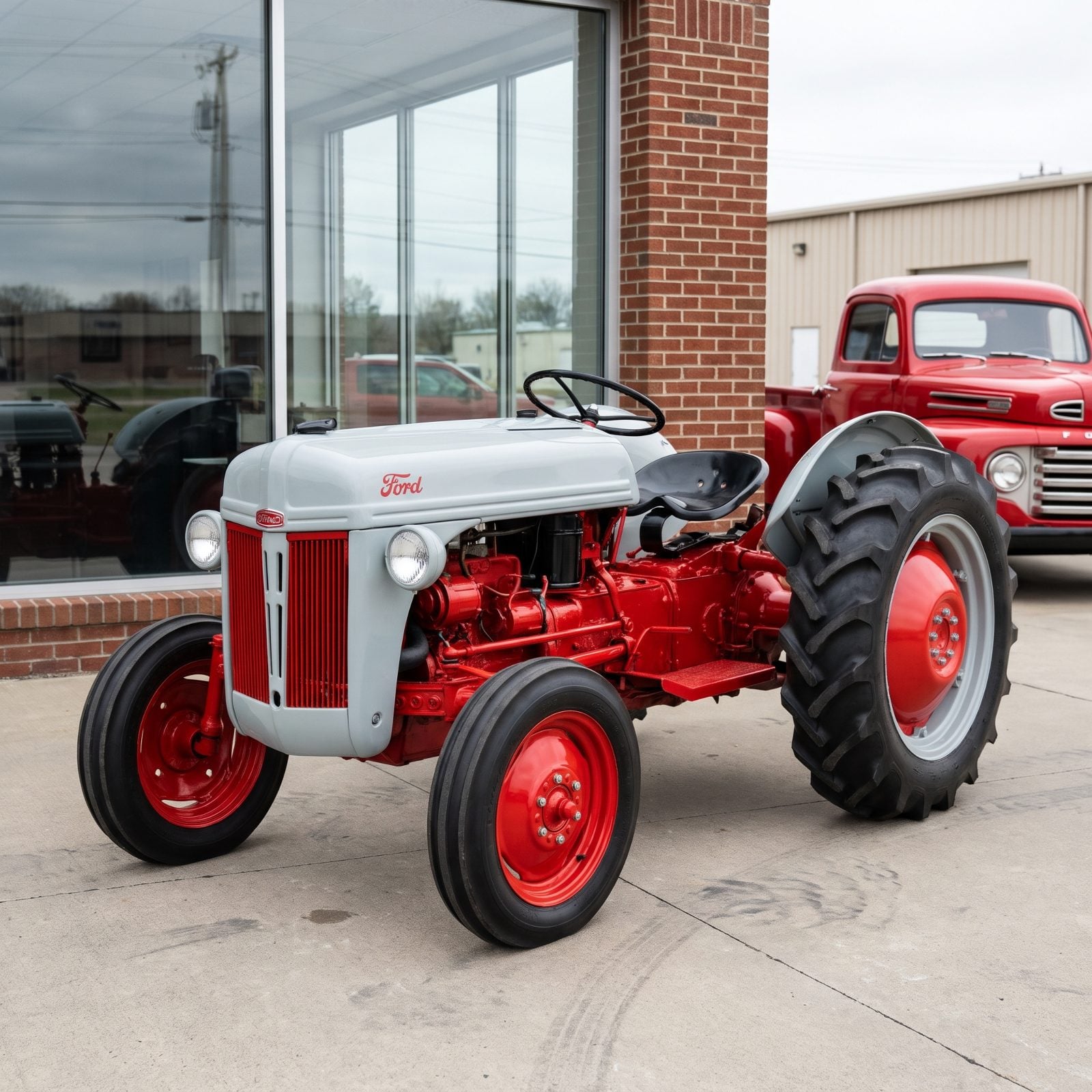
The 8N fixed what the 9N and 2N got wrong and became the best-selling tractor in North America in its day. Price crept up to around $1,400 by 1948, partly because the Ferguson System was now Ford’s own after that partnership imploded.
Roughly $18,000 today. The gray-and-red paint is instantly recognizable, and the four-speed gearbox gave it range the earlier models lacked. A half-million-plus rolled out before production ended in 1952. Walk any farm auction in the Midwest and you’ll still trip over one — usually running, usually cheap, usually worth more to its owner than the gavel price.
Restoring a 1948 8N he found in a mess, a former tractor company employee wrote “I enjoyed the Ford tractor line because it was far advanced over all others.”
1952 Farmall Super M: Big Power for About $2,400
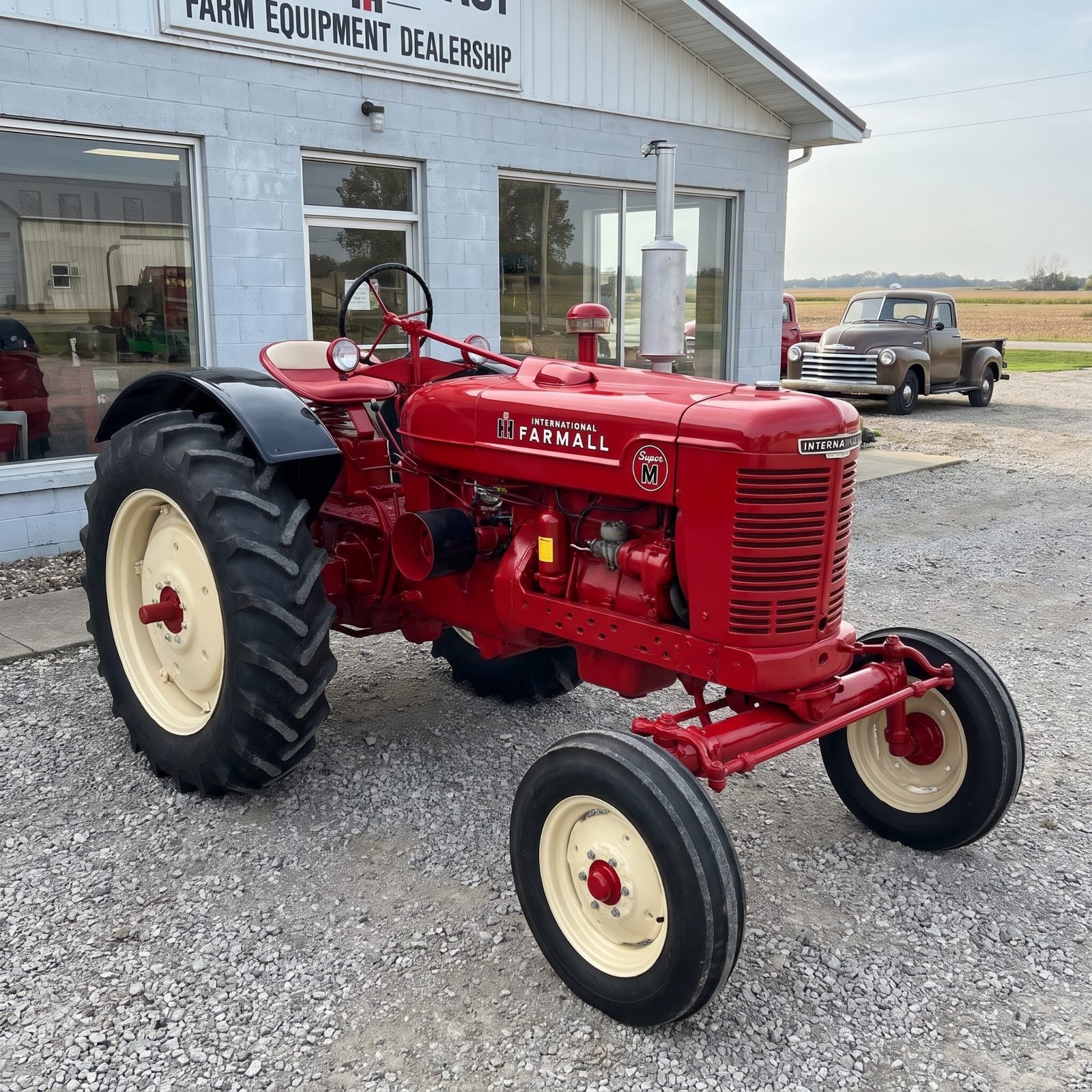
By 1952 the farm was getting bigger, and so was the machinery. The Farmall Super M brought real horsepower, around 45 at the drawbar, and asked about $2,400 for the privilege.
Inflation puts that near $28,000 today. A serious multi-row tractor for operations that had outgrown the H. Some came with a gas engine, some burned distillate or LP gas, and the live hydraulics made implement work far less of a wrestling match. The Super M is where you start to feel farming shift from family-scale toward something industrial.
1953 Ford NAA Golden Jubilee: Ford’s 50th-Anniversary Tractor at Roughly $1,600
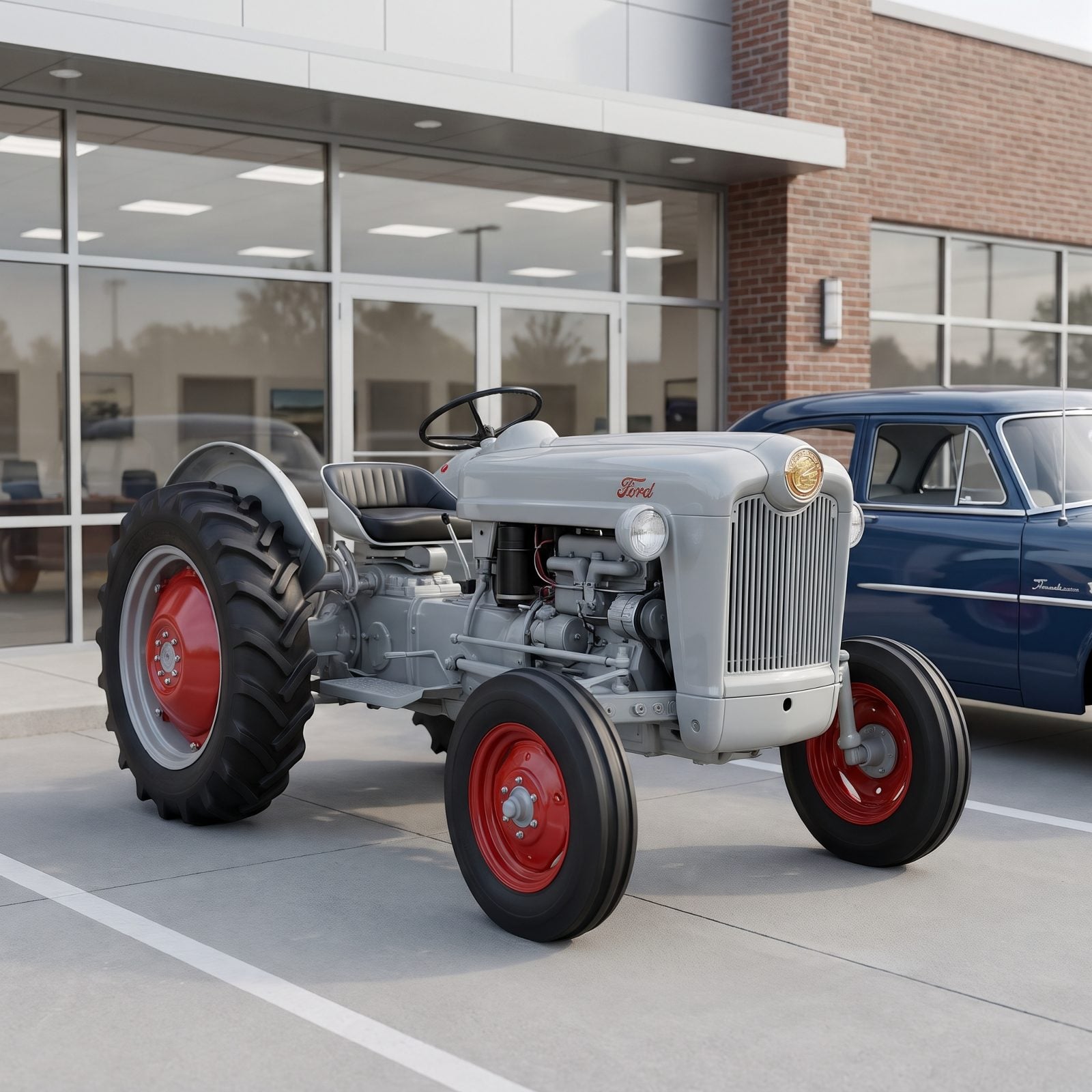
Ford turned fifty in 1953 and marked it with the NAA, nicknamed the Golden Jubilee for the medallion on its nose. New price landed near $1,600.
Call it $19,000 in today’s dollars. This was the first Ford tractor with the new overhead-valve ‘Red Tiger’ engine and Ford’s own live hydraulics, a clean break from the Ferguson-era machinery. The styling got rounder and more modern, and the whole thing felt like a company confident about its next half-century. That Jubilee medallion makes these easy to spot and a touch more collectible than the plain NAA that followed.
1954 John Deere 70: Big Two-Cylinder Muscle at About $2,800
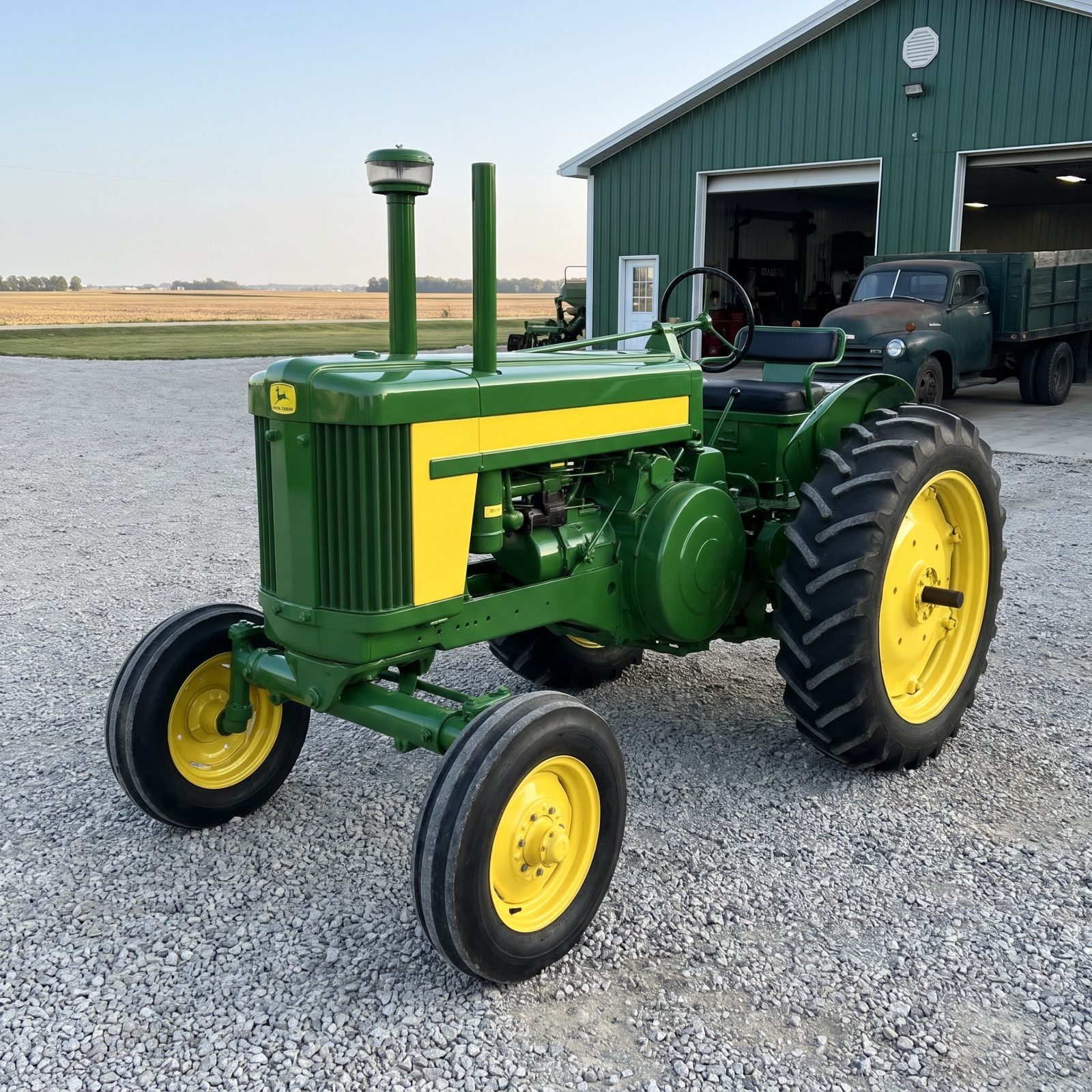
John Deere stuck with two cylinders long after rivals went to four and six, and the 70 proved they could make a big machine out of the formula. Priced around $2,800 in 1954, it was one of the most powerful row-crop tractors of its day.
Roughly $33,000 now. Buyers could get it in gas, all-fuel, LP, or a diesel version that became famous for its pony-start engine — a little gas motor that cranked the big diesel to life. The 70 is the moment Deere’s two-cylinder loyalty stopped looking stubborn and started looking smart.
1955 Ferguson TO-35: The Hitch Master’s Own Tractor at Roughly $2,000
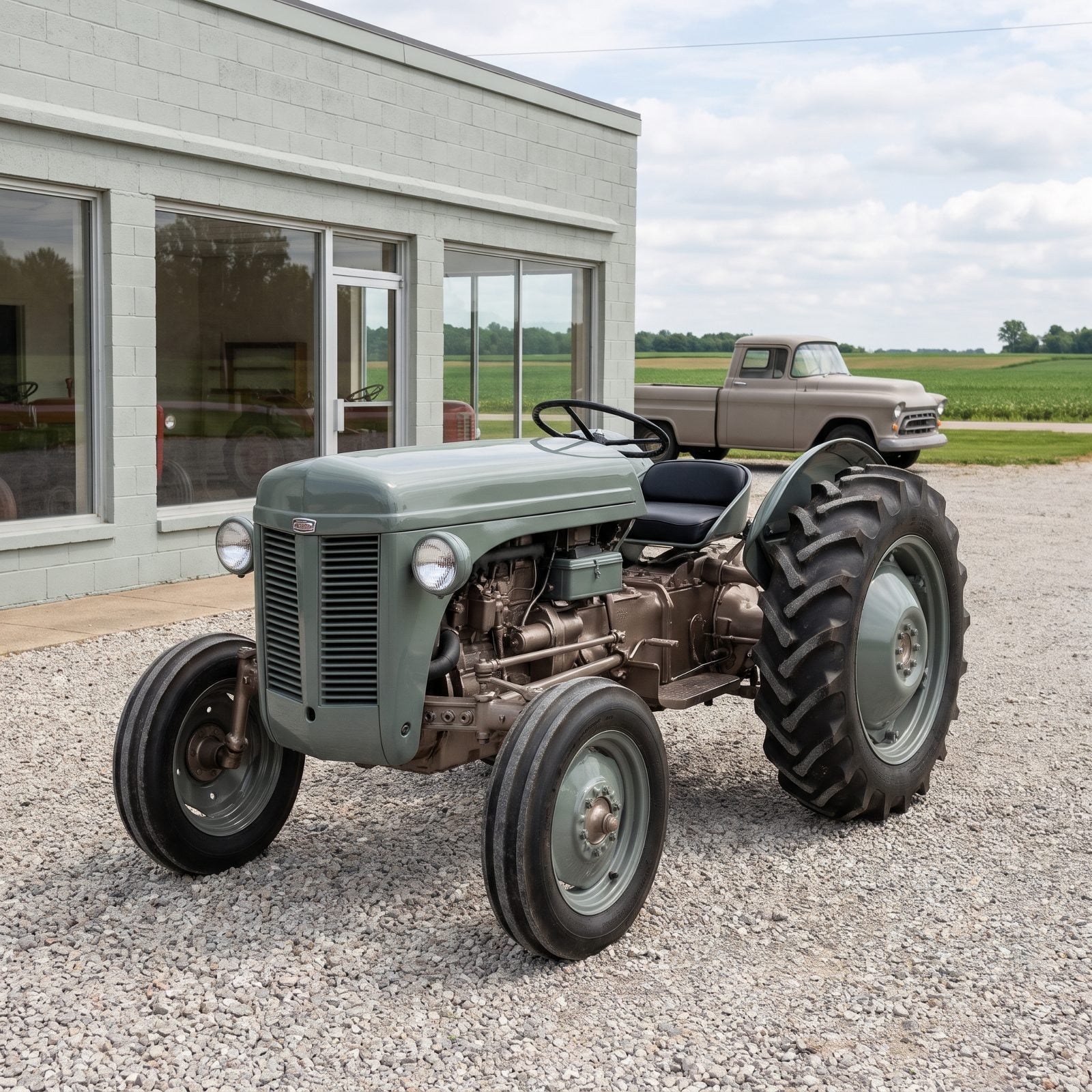
After losing Ford, Harry Ferguson built his own machine, and the TO-35 was the refined result — around $2,000 new in 1955.
Adjusted, that’s close to $23,000 today. This is the tractor that became the bones of the Massey Ferguson line after the two companies merged, so its DNA ran for decades. Live PTO, better hydraulics, and that endlessly copied three-point hitch, now perfected by the man who invented it. There’s a quiet justice in Ferguson outlasting the partnership that wronged him, one gray-green tractor at a time.
1958 Allis-Chalmers D17: Persian Orange Power at About $3,300
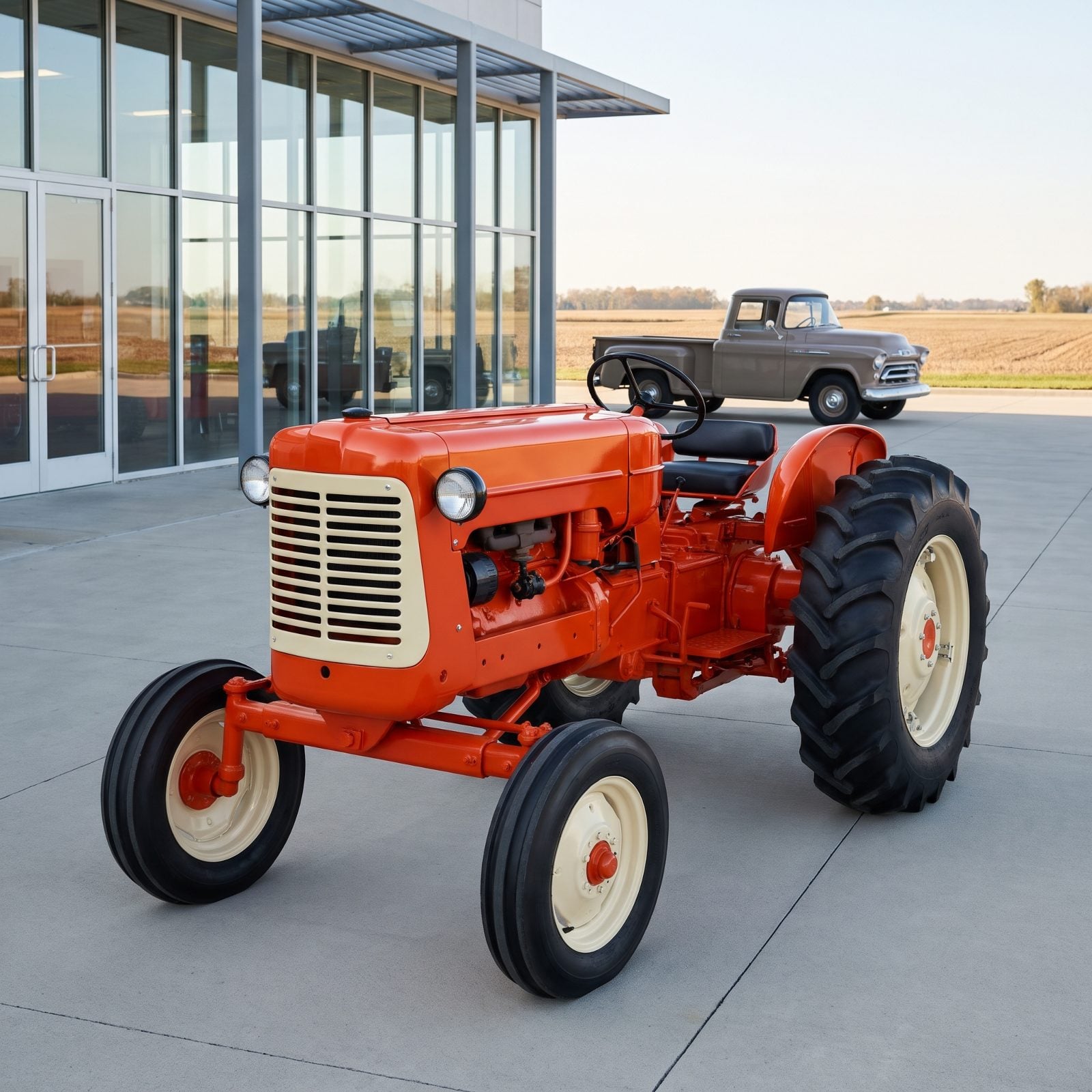
That orange is unmistakable. Persian Orange, Allis-Chalmers called it, and the D17 wore it well. New price in 1958 ran around $3,300, reflecting a tractor with real size and a long options list.
Run that forward and you’re near $37,000 today. The D17 offered a Power Director that let you shift on the fly without clutching, a genuinely useful trick in the field. It stayed in production through four series into the late 1960s, which tells you the market agreed it got the formula right.
Here’s the part that lands. A comparable new tractor today — cab, air conditioning, GPS guidance, a diesel making four times the power — runs well past $100,000 before you hang a single implement on it. The $3,300 D17 did honest work. The farmer buying it just didn’t have a loan payment that looked like a house.
1963 International Harvester 806: Horsepower Finally Got Serious
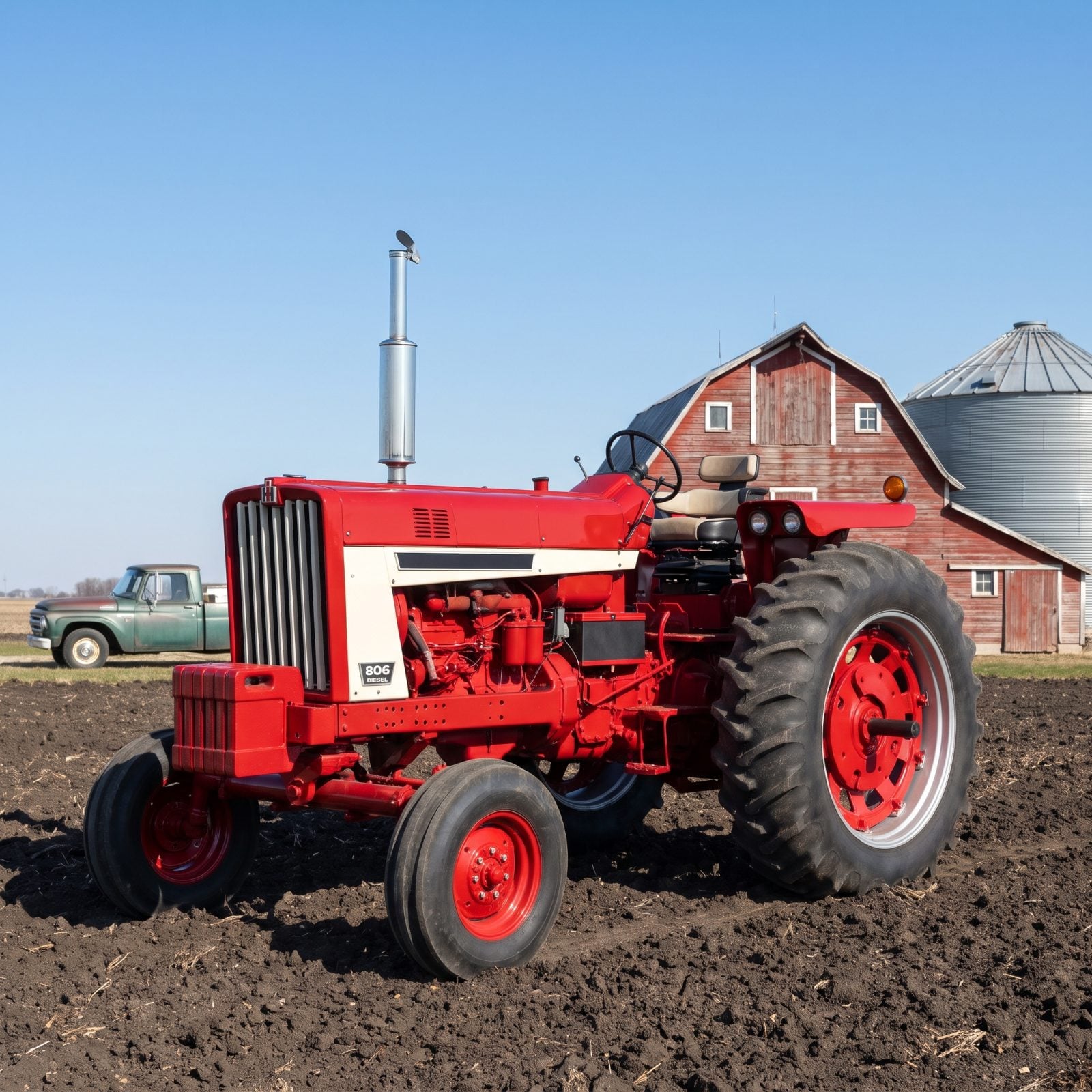
The 806 changed the conversation. Before it came along, big row-crop power meant wheeled articulated monsters or nothing. International dropped real horsepower into a conventional frame and priced it around $7,000 new — somewhere near seventy grand adjusted.
For that, a farmer got a diesel that could pull a bigger plow faster and cover ground a 1950s tractor couldn’t dream of. It kicked off the horsepower race that defined the whole decade.
I’ll say it plainly: the 806 is one of the most important American tractors ever built. Not the prettiest. Not the rarest. The one that moved the needle.
1964 John Deere 4020: The Benchmark Everyone Measured Against
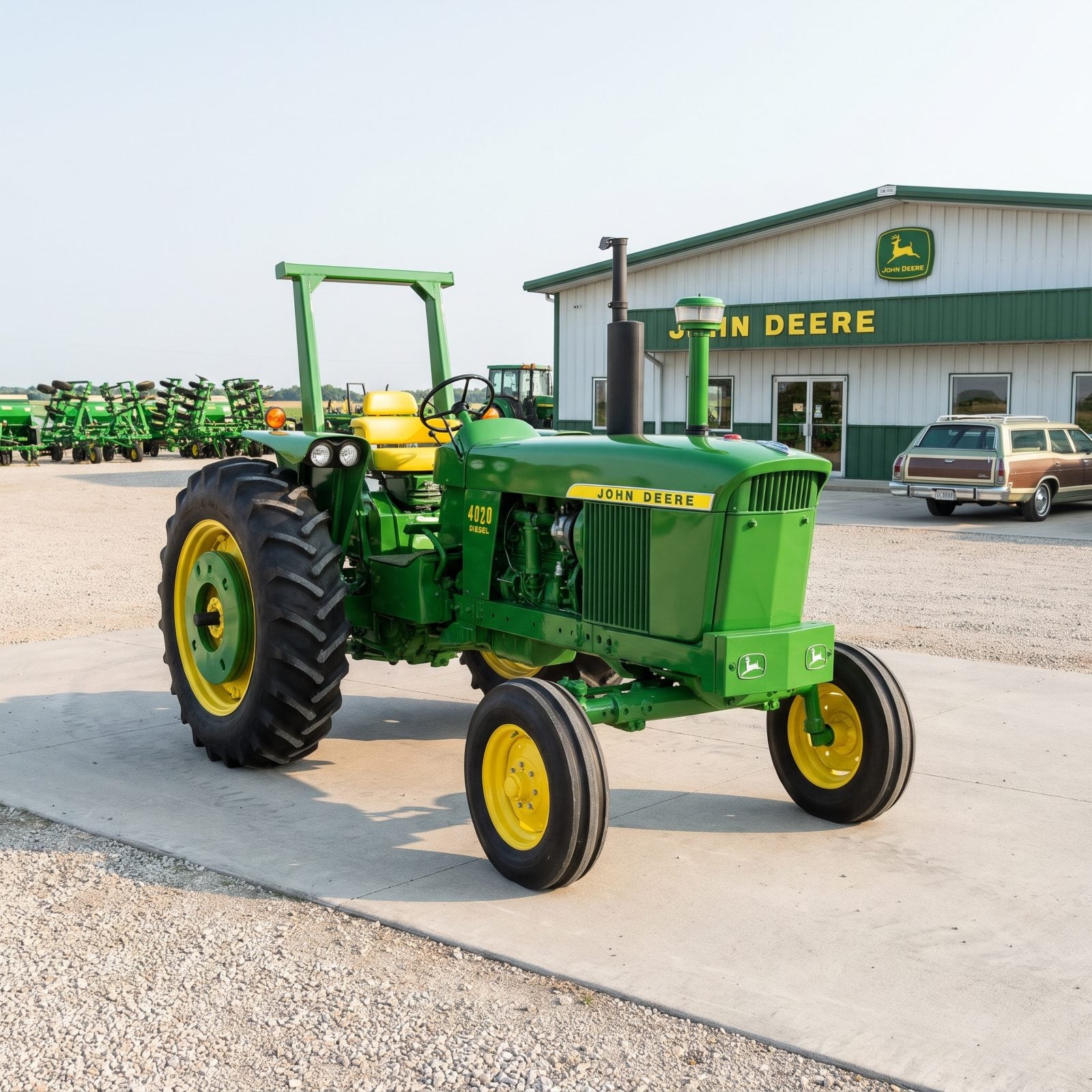
You could argue the 4020 is the most beloved tractor America ever produced, and plenty of people would fight you only on the word “argue.”
New in 1964, a 4020 ran about $7,000 to $8,000 — call it the high seventy-thousands in current dollars. For the money you got a stout mid-range diesel, the Syncro-Range transmission, and the new Power Shift option that let you change gears under load without touching the clutch.
1965 Oliver 1850: The Underdog With Meadow Green Pride
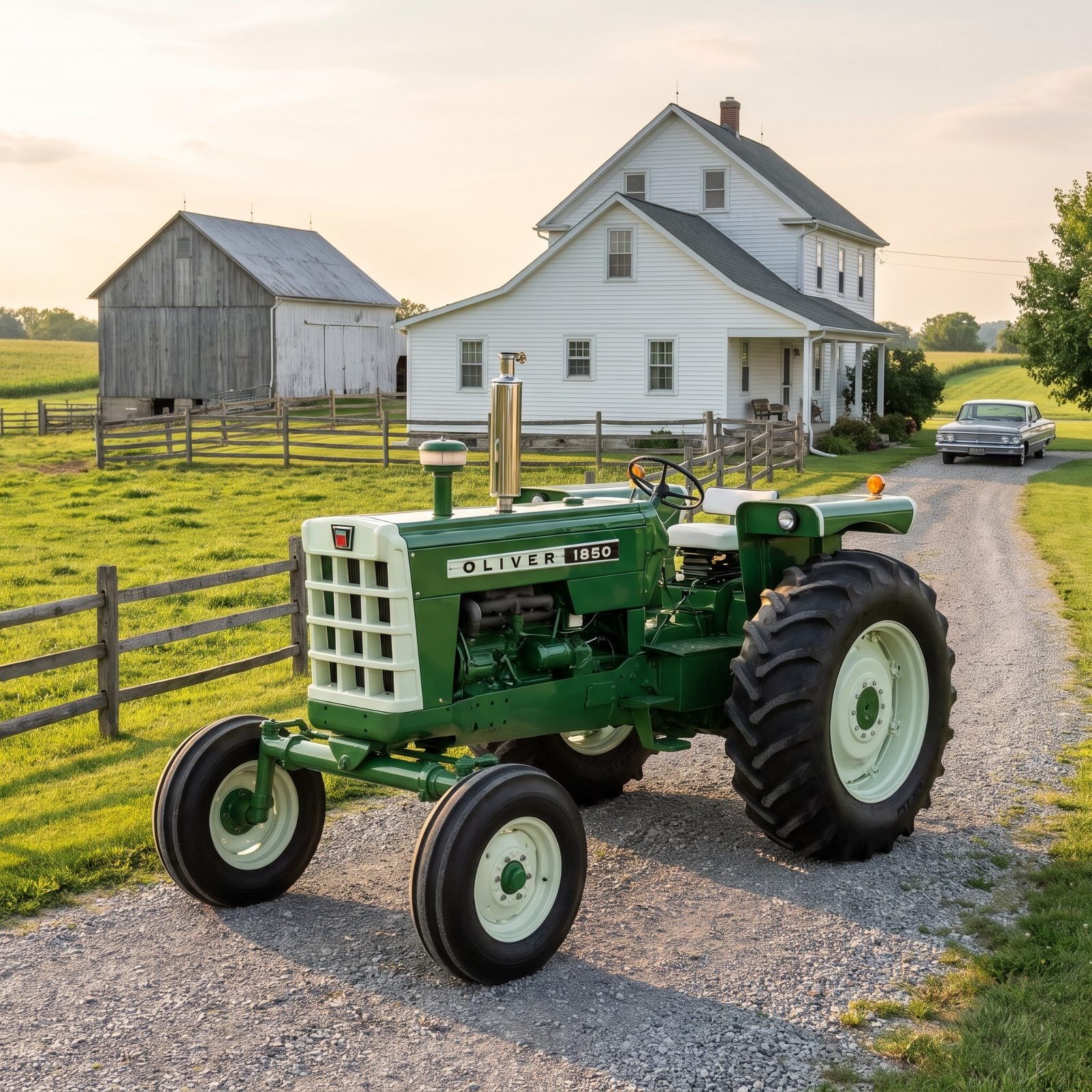
Oliver never had the dealer network of the green and red giants, and that’s exactly why the 1850 has a cult following now. It was the tractor for the farmer who did his own thinking.
Priced around $6,500 when new in 1965 — roughly sixty-five grand adjusted — it offered a healthy mid-range diesel, either Perkins or Oliver depending on build. The Hydra-Power drive gave you an on-the-go gear split that competitors charged extra for.
Meadow green and clover white is still one of the best paint combinations ever put on farm iron. I don’t make the rules.
1968 Massey Ferguson 1100: Red Power From Across the Pond
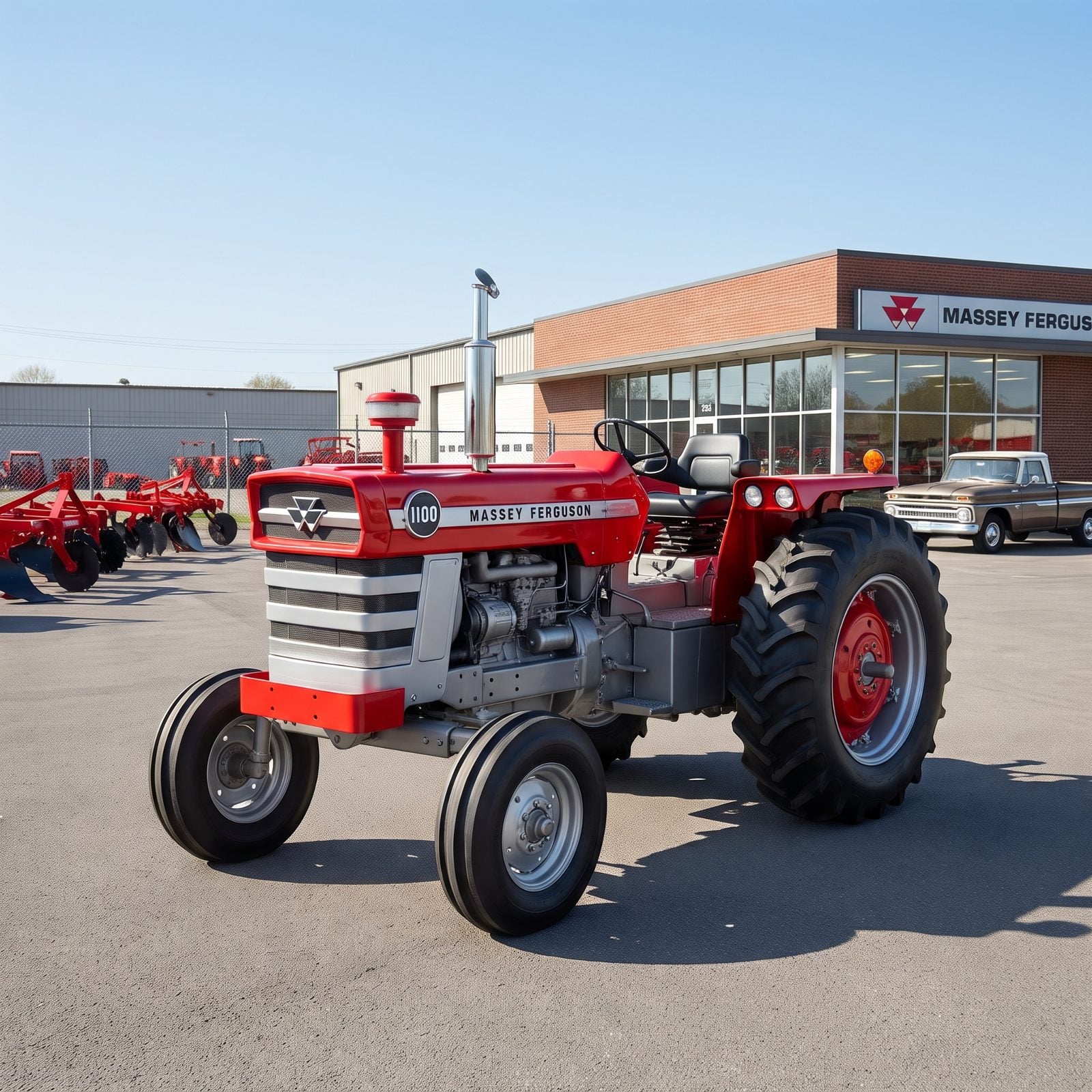
Massey Ferguson built the 1100 to crash the big-horsepower party, and the Perkins diesel under that long red hood meant business.
A new 1100 in 1968 cost somewhere around $7,500 — roughly seventy grand in today’s dollars. You got a stout PTO rating and the Multi-Power transmission, which let you shift between a high and low range in each gear without stopping.
1971 International Harvester 1066: The Turbo That Made a Legend
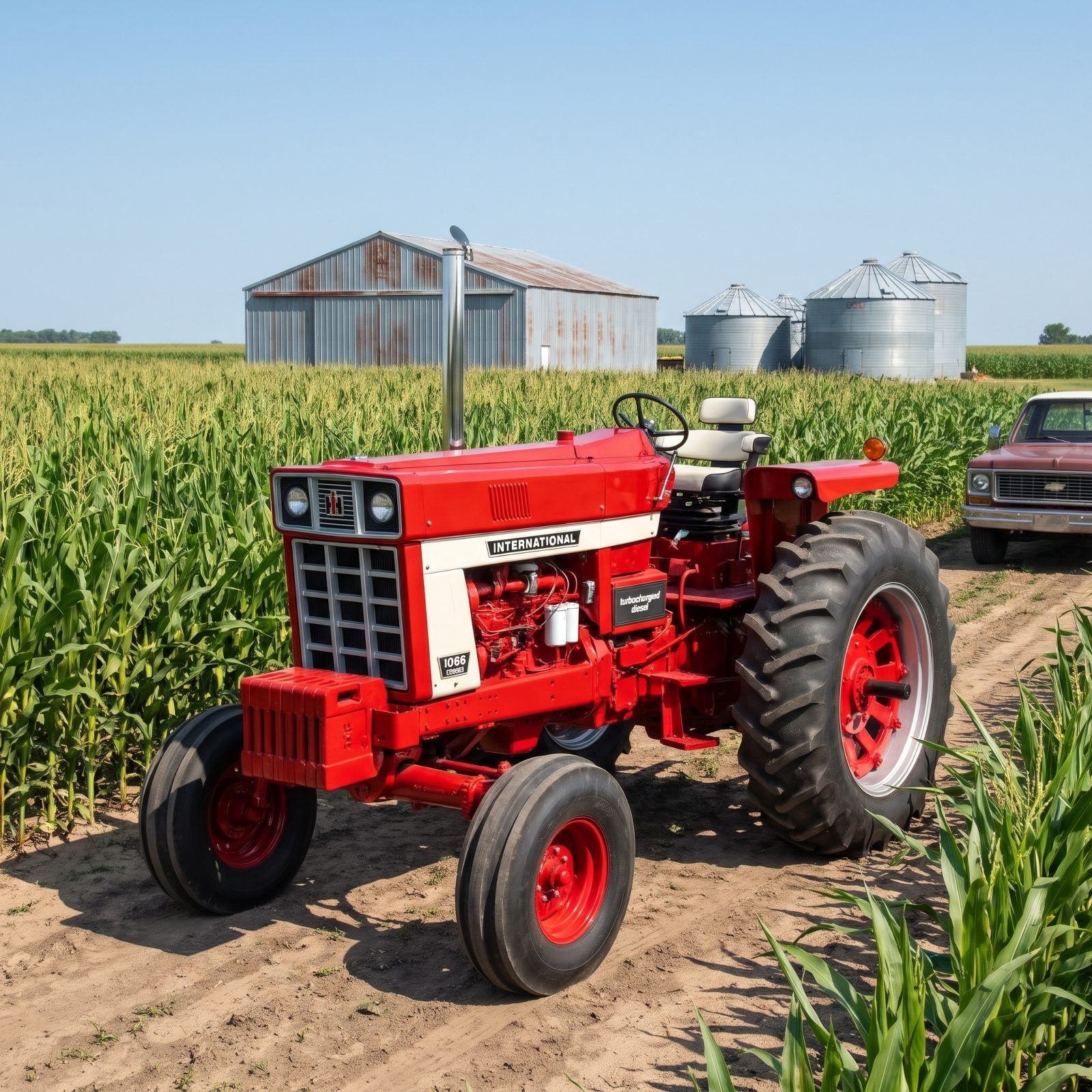
The 1066 earned its nickname. The “corn binder” faithful just call it a 1066, and that’s enough. That turbocharged 414 cubic inch diesel pushed it past the hundred-horsepower mark at the PTO, which was heady territory for the time.
New in 1971, the price sat around $11,000 to $12,000 — roughly the high eighty-thousands today. The 1066 cleaned up at plow-offs and tractor competitions in its day and became the machine every other red tractor got compared to.
Clean originals and faithful restorations still pull crowds at farm shows. There’s a reason the 66 series inspires the loyalty it does.
Reporting on a low-hour 1066 that brought $46,000 at a 2020 Nebraska estate auction, a farm auction price analyst wrote “$46K is a whopping $19K over the previous record high auction sale price I’d seen on an IHC 1066.”
1973 John Deere 4430: When the Cab Changed Everything
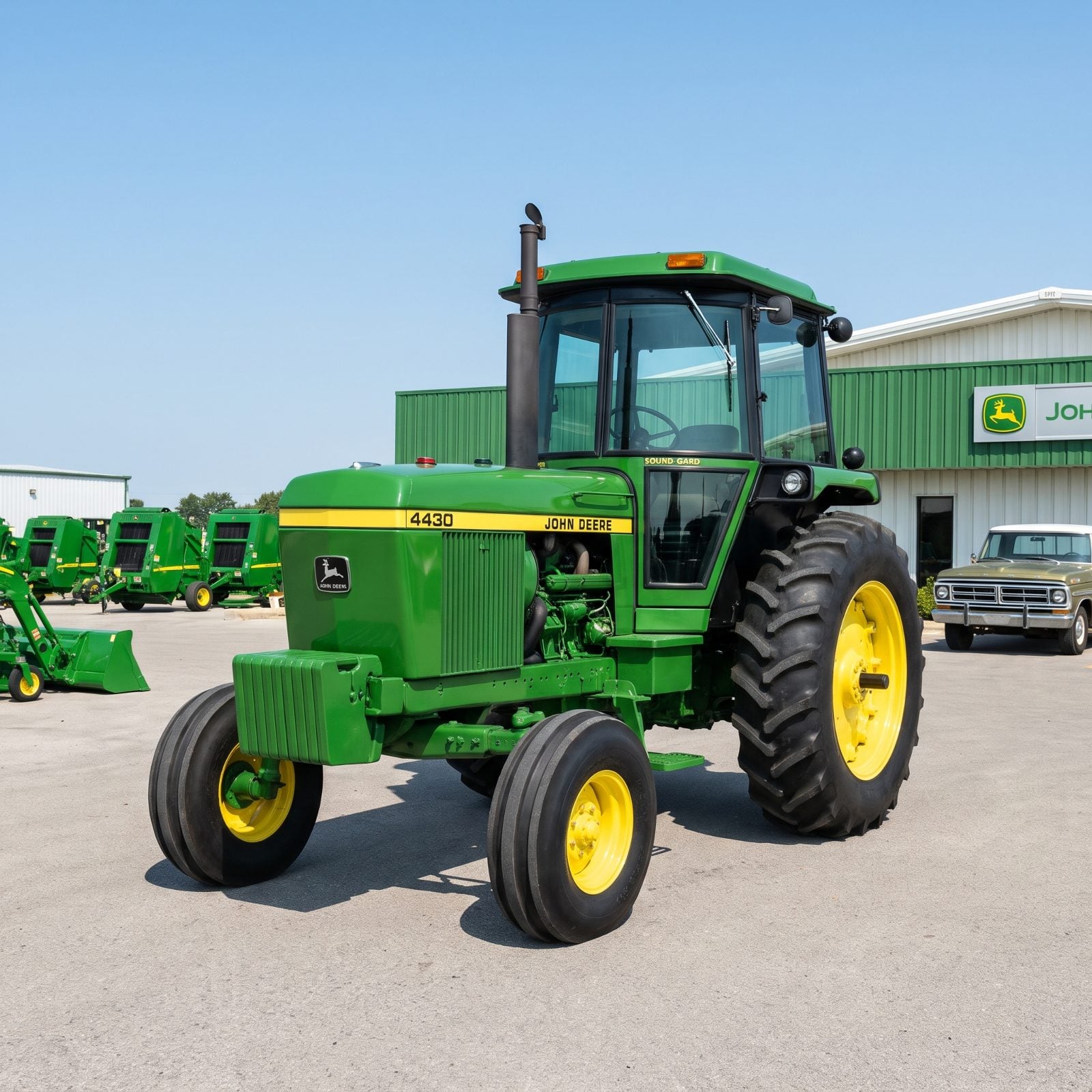
The 4430 is where comfort stopped being a luxury and started being the point. Deere’s Sound-Gard cab arrived with real insulation, better glass, and a quieter, cleaner place to spend a fourteen-hour day.
Priced somewhere in the mid-to-high teens new in 1973 — roughly a hundred-grand-plus adjusted — it packed a serious diesel and the Quad-Range transmission.
The Sound-Gard cab did more to change the farmer’s day than almost any horsepower bump before it.
Spend a season in an open-station tractor eating dust and diesel smoke, then climb into a 4430 cab. You understand immediately why these sold the way they did.
1973 Massey Ferguson 1155: Big Red With a V8 Heart
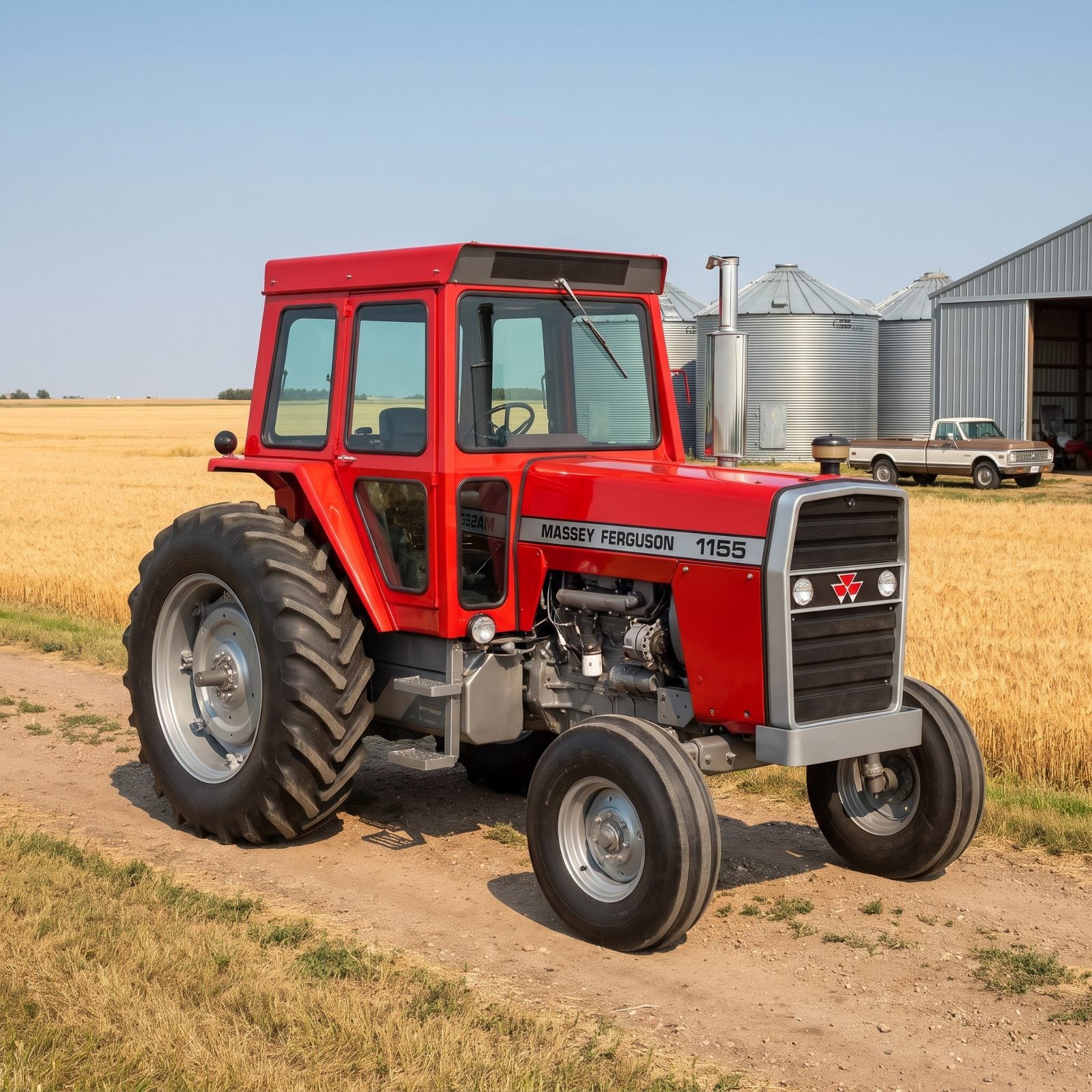
When Massey wanted to hang with the big dogs, they reached for a Perkins V8 diesel. The 1155 made strong power and carried a hood long enough to prove it.
New in 1973, these ran into the high teens — call it well over a hundred grand in current money. The Multi-Power transmission carried over, giving the operator plenty of gear splits to match the load.
The V8 is the whole story here. Most of its rivals used turbocharged inline engines to make big numbers. Massey went displacement. Fire one up at a tractor show and the exhaust note tells you everything.
1974 Case 1370 Agri-King: Power Red and Proud of It
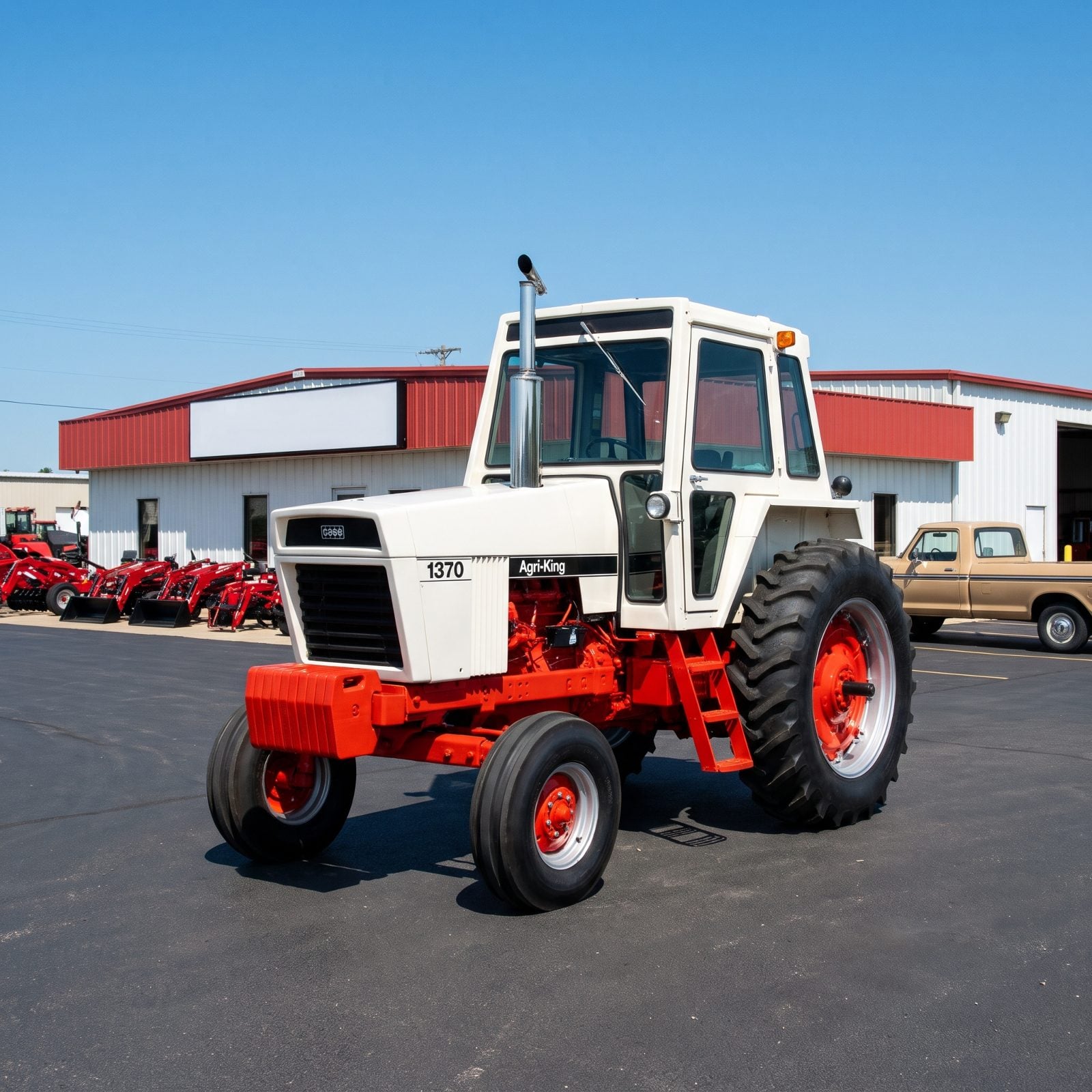
Case built the 1370 Agri-King for farmers who wanted serious tillage power without stepping up to a full articulated four-wheel-drive. The turbocharged diesel delivered the kind of grunt that made a wide plow look lazy.
A new one in 1974 ran into the high teens or low twenties — somewhere north of a hundred and twenty grand today.
1979 Ford TW-20: The Blue Oval Goes Big
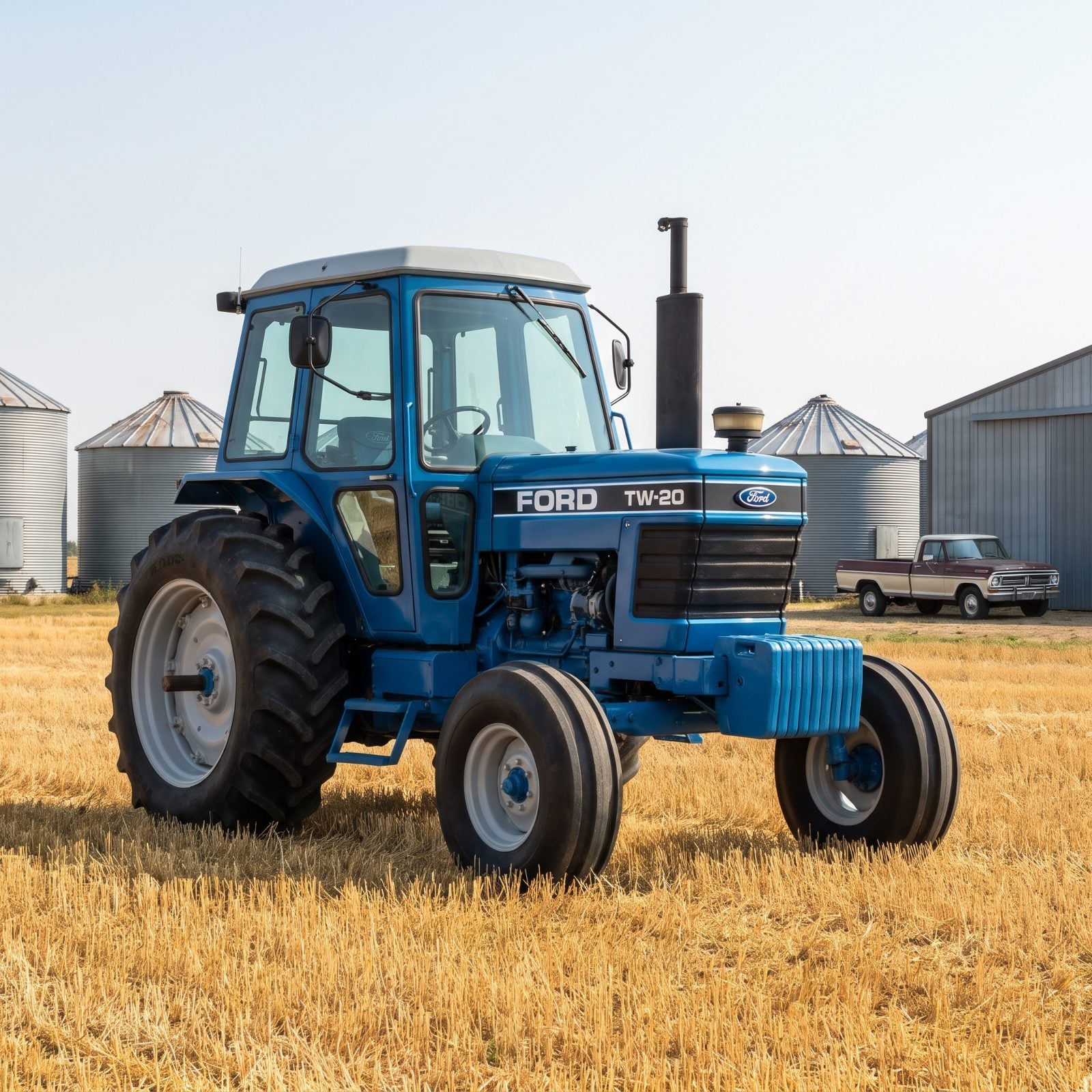
By 1979, Ford had stopped being the small-tractor company. The TW-20 was blue, big, and built to run with anything in its heavyweight class.
New, a TW-20 ran into the mid-to-high thirty-thousands — well into six figures adjusted. And notice how the inflation-adjusted numbers have climbed steadily across this list as horsepower, cabs, and complexity piled on.
That upward march tells the real story. The 1963 Ford 4000 adjusted to the low thirty-thousands; the TW-20 lands several times that. Farmers weren’t just buying bigger tractors. They were buying bigger farms to justify them, and the price tags grew right alongside the acreage.
1981 International Harvester 5088
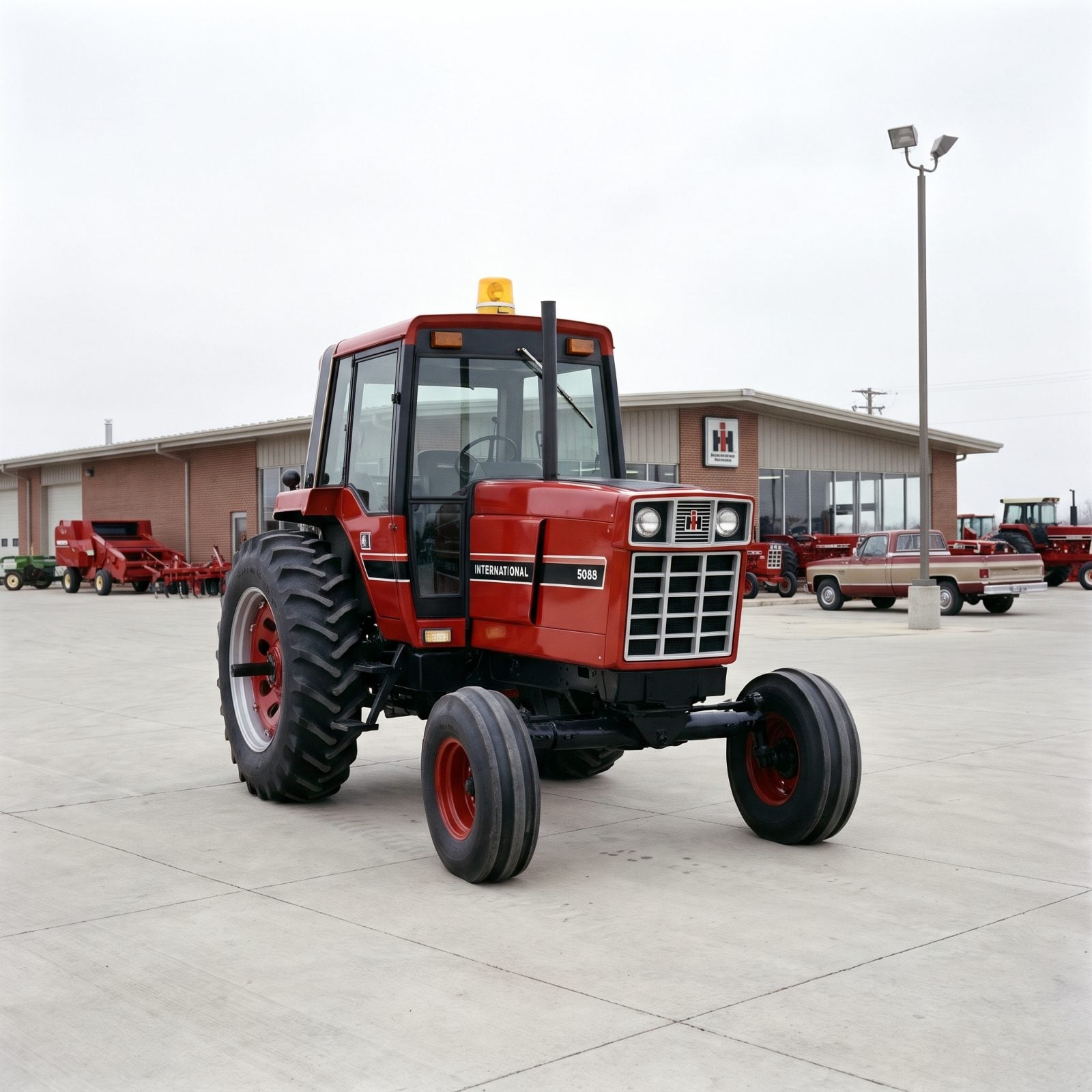
The 5088 landed in the early 1980s wearing International Harvester’s new 50-series clothes, and it carried a turbocharged 466-cubic-inch six putting out around 135 PTO horsepower. New window stickers ran in the mid-forties, more if you loaded up the cab and hydraulics.
Here’s the gut-punch. That was the exact stretch when IH was bleeding cash — a brutal farm recession, high interest rates, and a long strike all piled on at once. The company that built this tractor would be sold off within a few years. You were buying a machine from a dying brand, and most farmers knew it.
Run that price through inflation and a 1981 window sticker lands somewhere north of six figures today. For a 135-horse open-platform-era tractor, that tells you how much iron used to cost.
1985 Allis-Chalmers 8070
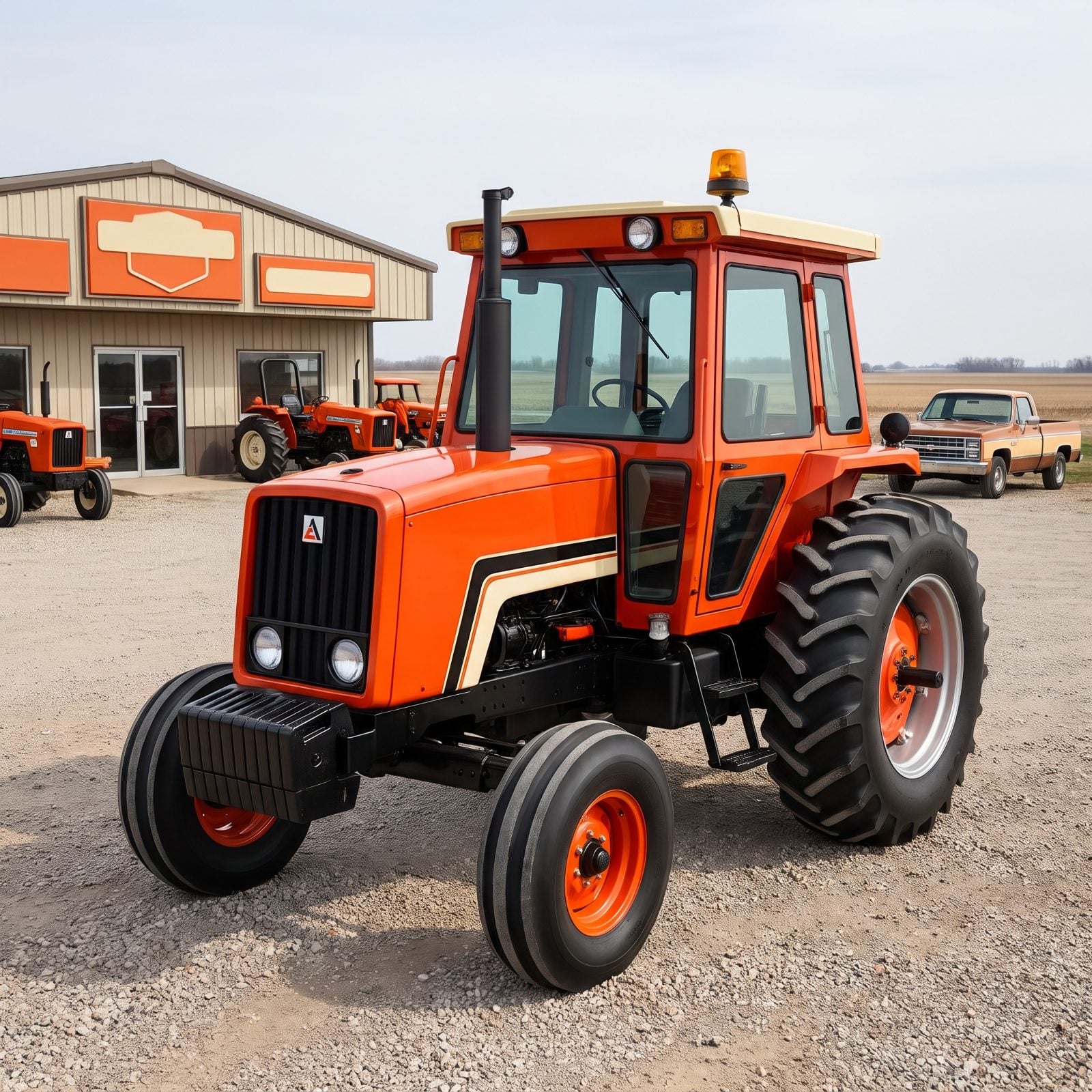
Persian Orange on a flat Nebraska morning. The 8070 was the big dog of Allis-Chalmers’ 70-series, pushing around 170 PTO horsepower out of a 426 turbo diesel with that slick Power Director transmission.
New, it ran in the low-to-mid sixties. Adjust for inflation and you’re well past a hundred and fifty grand.
Real talk: buying orange in 1985 was a bet on a company already circling the drain. Allis-Chalmers sold its ag business to Deutz that same year, and within a few seasons the orange vanished from dealer lots for good. The 8070 is a fine, torquey machine — and it’s also a headstone for an American brand that mattered.
1987 Case IH Magnum 7140
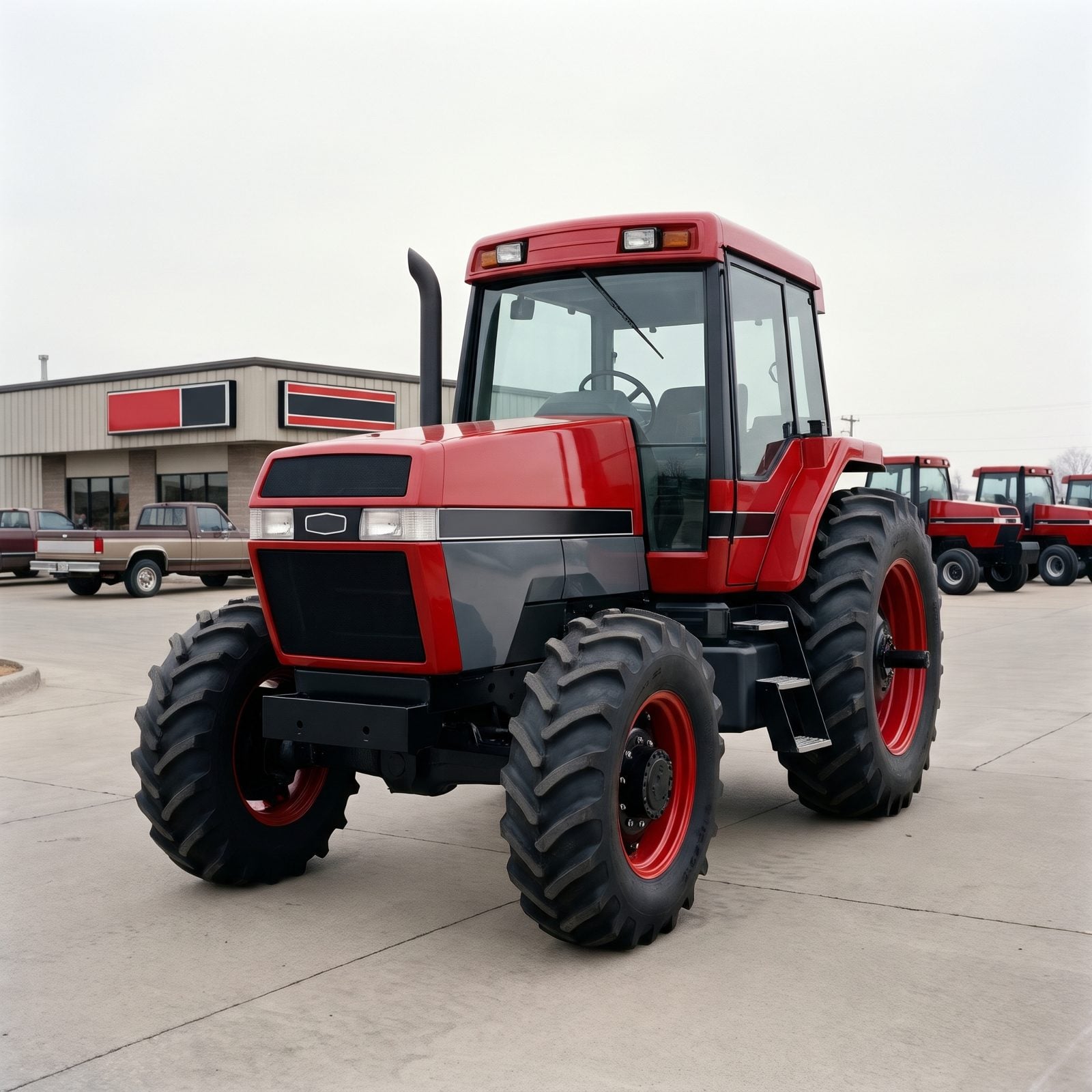
The Magnum arrived in 1987 as the first clean-sheet tractor from the brand-new Case IH, and it rewrote what the row-crop market expected. Around 195 PTO horsepower, an 18-speed powershift, and a cab you could actually live in all day.
Sticker landed in the low-to-mid seventies new. Carry that forward and you’re over two hundred grand in today’s money.
What made the 7140 matter wasn’t the number. It proved that Case IH — born from two struggling companies — could design something nobody wanted to criticize. And the platform is still rolling off the line, under new badges, nearly four decades later. You don’t get that from a fluke.
1988 John Deere 4955
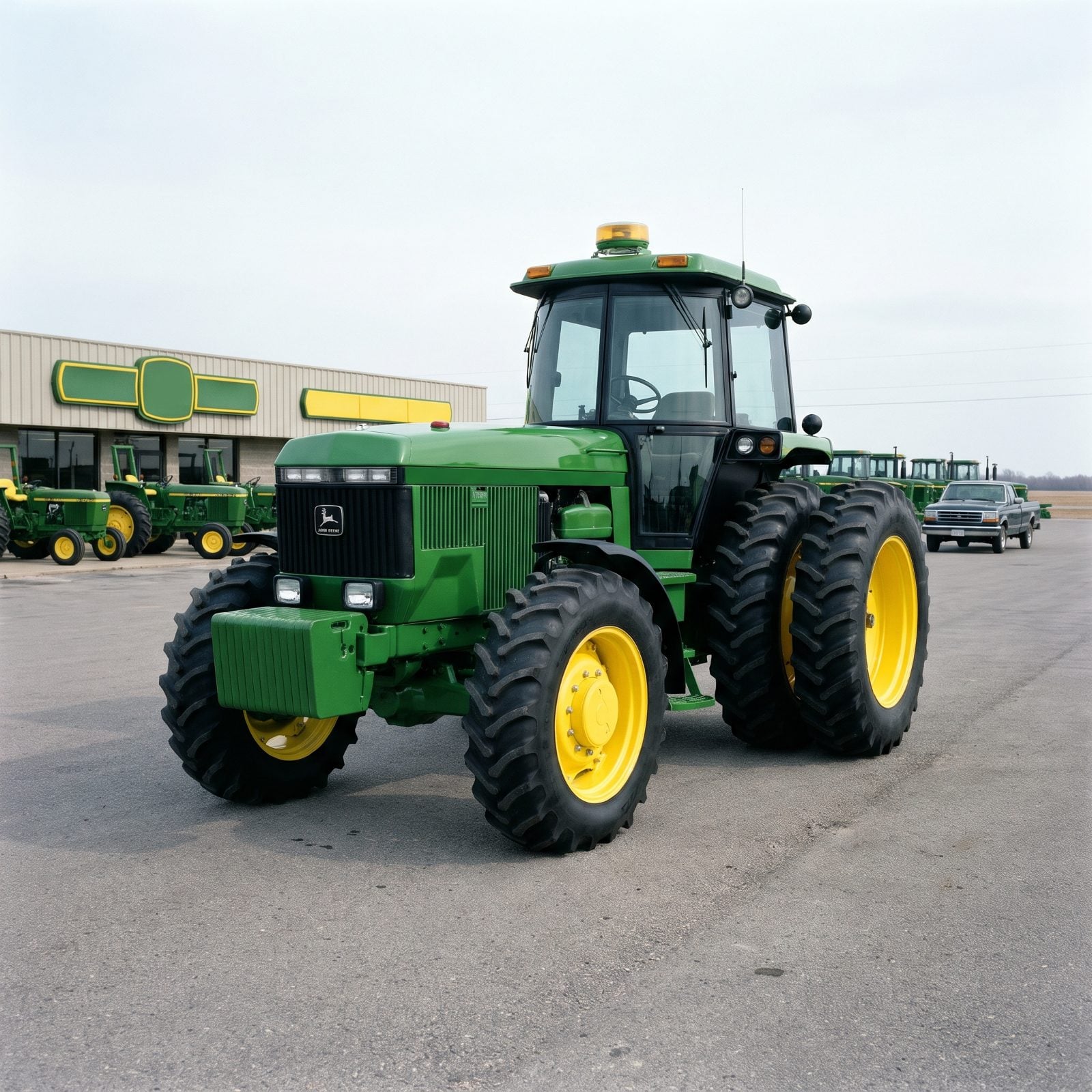
Top of the legendary 55-series, the 4955 made roughly 200 PTO horsepower from a 466 turbocharged, intercooled six. This one wears the mechanical front-wheel-drive axle, making it the biggest MFWD row-crop Deere of its era, and it earned a reputation for being nearly unbreakable.
New in 1988, a well-equipped one sat in the eighties. Inflation-adjusted, that’s north of two hundred grand today.
Here’s what still gets me. Clean 4955s regularly pull strong auction money right now — higher still when the hours are low. A tractor that old appreciating in the real world is a short list, and Deere’s 55-series owns most of the spots on it.
1992 John Deere 7800
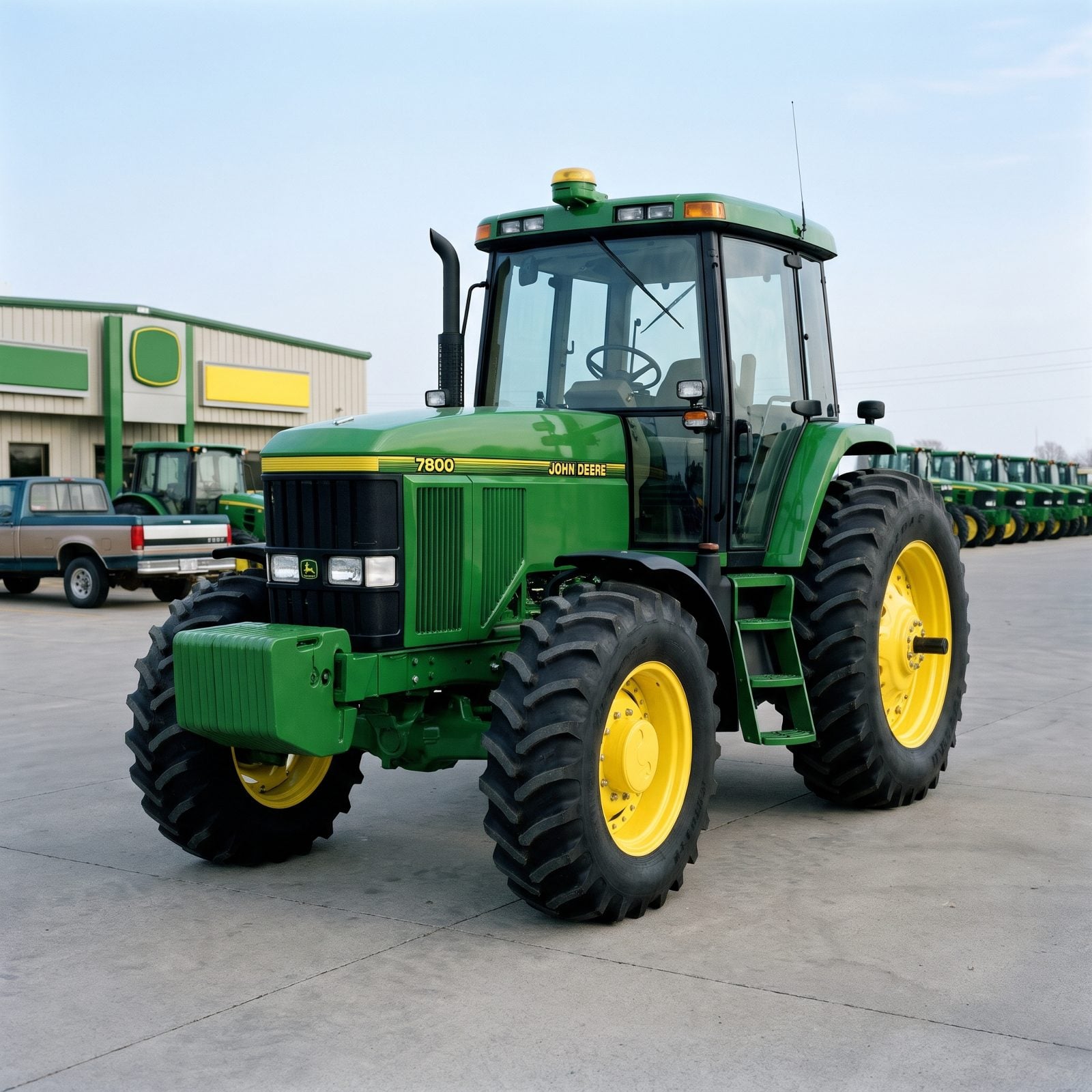
When Deere rolled out the 7000 series in 1992, it felt like the future had quietly shown up in the yard. The 7800 topped the line at around 145 PTO horsepower with the PowrQuad transmission and a cab that made the old SoundGard feel like a toolshed.
New, with options, it ran in the high seventies to mid-eighties. In today’s money, you’re looking at the better part of two hundred grand.
This became the farmer’s sweet-spot tractor. Enough grunt for serious tillage, light enough to run a loader, simple enough to fix in the yard with a socket set and some cussing. You still see them working hard thirty years on, which is the only review that ever counted.
1993 Case IH Magnum 7250
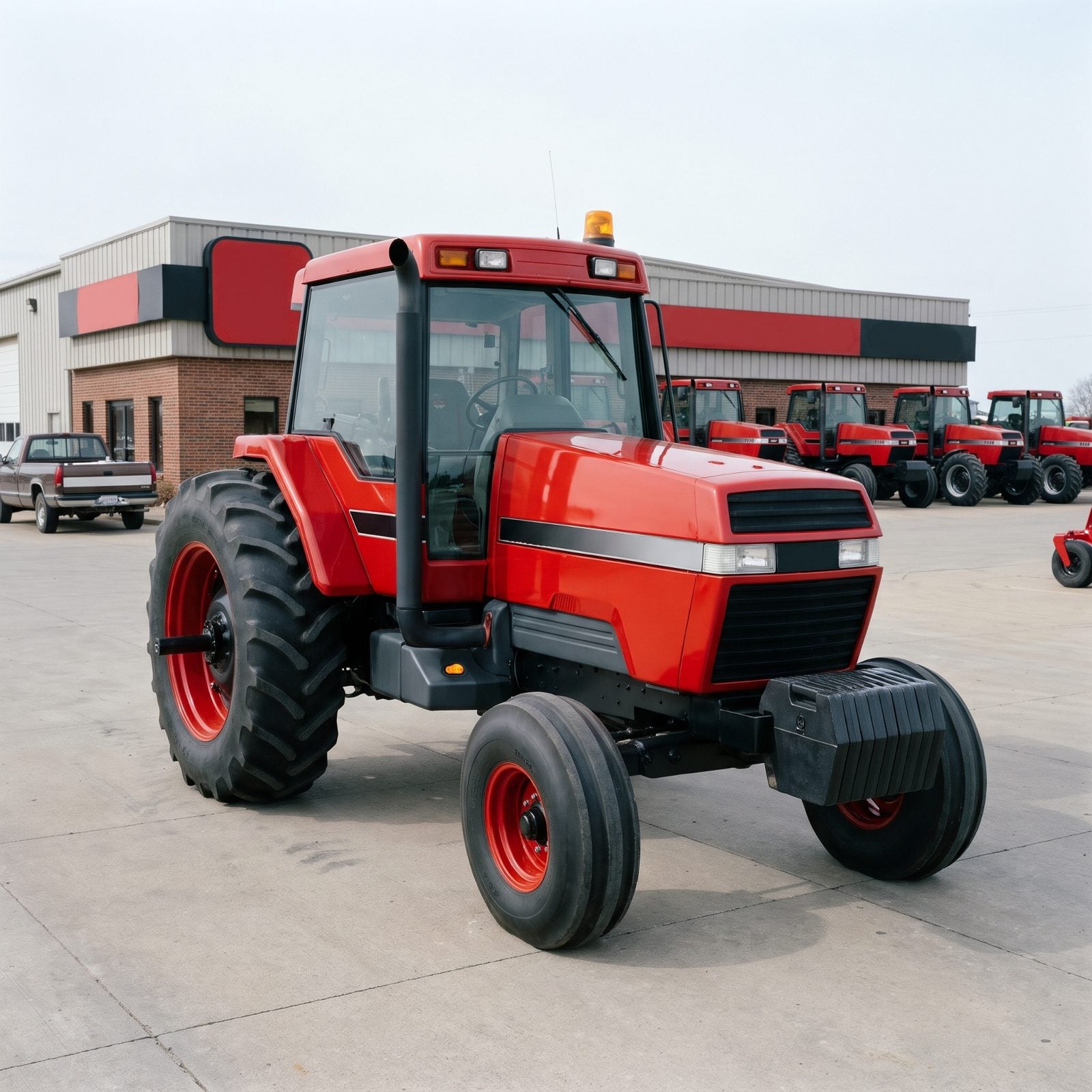
The 7250 sat at the top of the second-wave Magnum lineup, making around 215 to 225 PTO horsepower. This was the tractor you bought when the 7140 wasn’t quite enough iron for your acres.
New, loaded, it carried a sticker in the mid-to-high nineties. Run that forward and you’re over two hundred grand today.
These big Magnums picked up a cult following for a plain reason: they just keep running. High-hour examples still change hands at strong money, and the powershift held up far better than the skeptics predicted back in 1993.
1993 Ford Genesis 8970
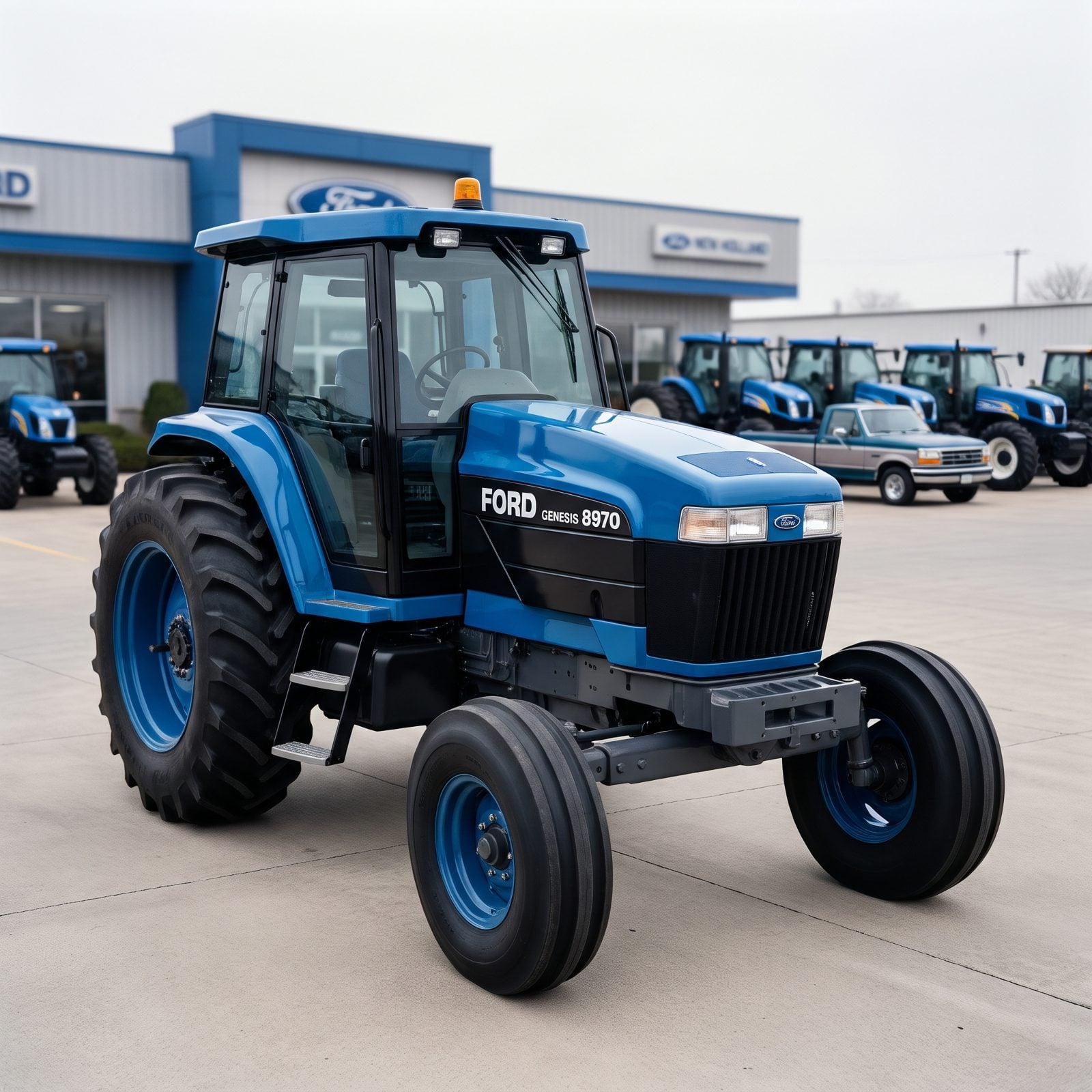
Ford blue, right before the name disappeared. The Genesis 8970 was the flagship of Ford’s last great tractor design — around 210 PTO horsepower from the Powerstar diesel, with a six-cylinder that farmers praised for smoothness and torque.
New in 1993, well-equipped, it ran in the low-to-mid nineties. Adjusted, that’s around two hundred grand today.
Here’s the bittersweet part. Fiat had already grabbed a controlling stake, and by 1994 the Ford name was on borrowed time in the ag world. The blue faded to New Holland. But the Genesis cab and that excellent engine lived on under new colors. You were buying the end of Ford tractors and the start of something else, all wrapped in one machine.
1994 Caterpillar Challenger 45
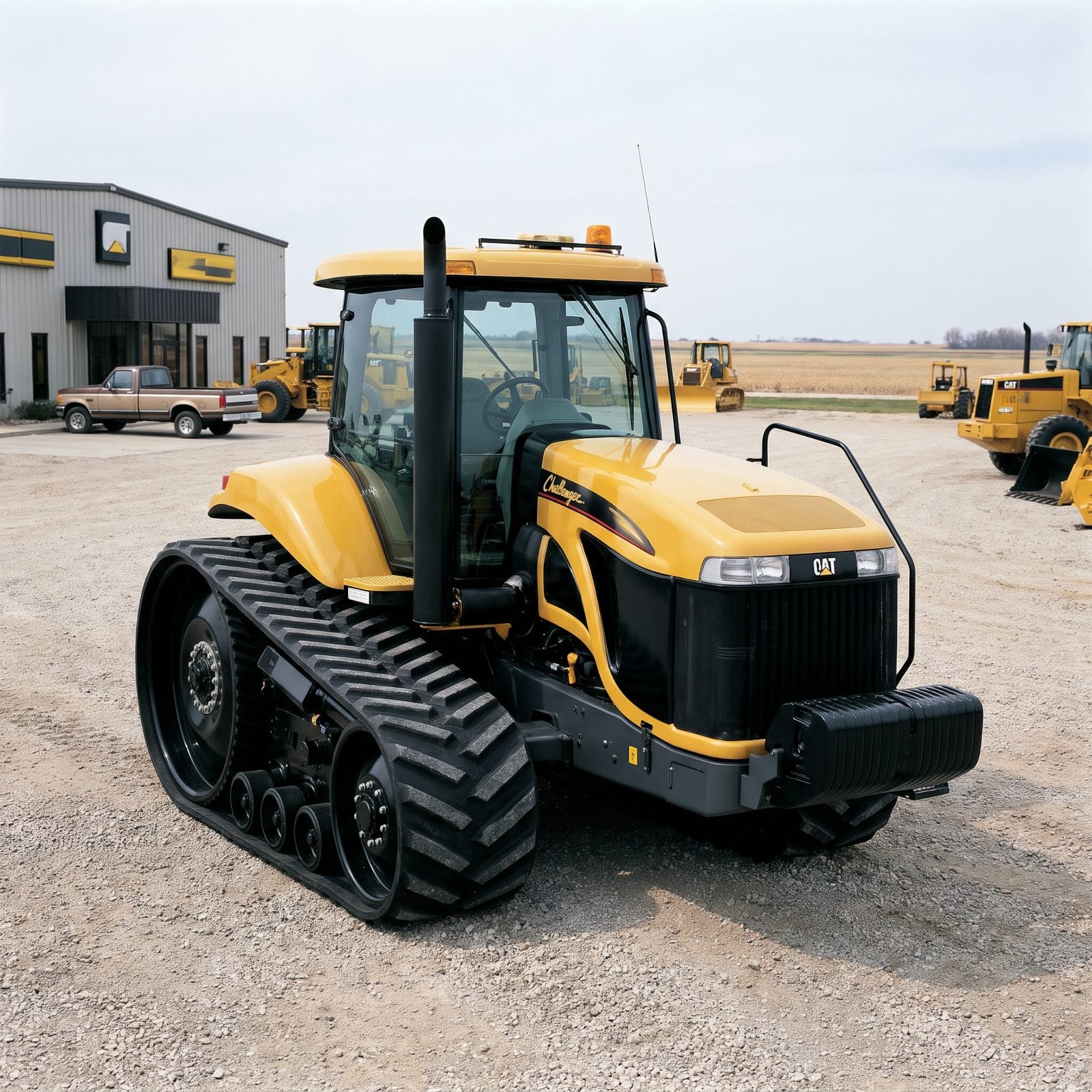
Caterpillar did something nobody else dared. The Challenger 45 put rubber tracks on a row-crop-class farm tractor — around 215 engine horsepower riding on Mobil-trac belts instead of tires. Less compaction, more pull, a completely different idea of what a tractor could be.
Sticker ran high, well into six figures new, because tracks and Cat engineering never came cheap. Adjusted, you’re pushing a third of a million today.
Was it worth it? Depends who you ask. Guys with heavy, wet ground swore by the flotation. Everyone else choked on the price and the belt-replacement bills. Cat eventually sold the ag line to AGCO, and the Challenger name lives on — still yellow, still tracked.
1995 John Deere 8400
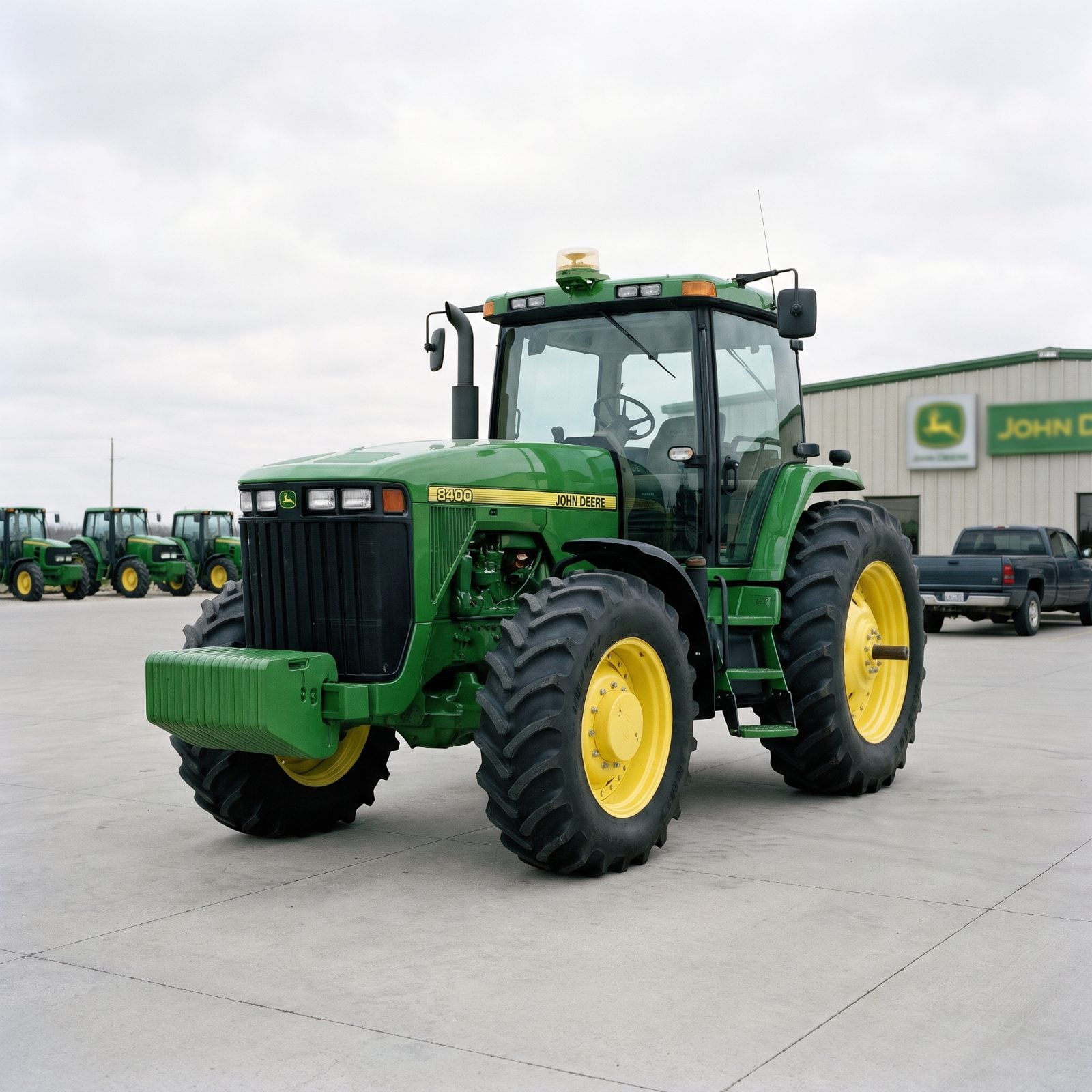
The 8000 series looked like nothing Deere had built before. Tall, narrow, cab shoved forward over the front axle — a profile so different that long-time green loyalists did a double-take at the dealership. The 8400 made around 225 PTO horsepower and completely reset the big-tractor template.
New in 1995, loaded, it ran into the six figures. In today’s dollars, call it a quarter-million.
This is where the modern tractor really starts. Electronic controls, a design that put the operator’s day first, and a silhouette every big Deere since has echoed. The 8400 was the opening line of the next thirty years.
From a 135-horse IH in 1981 to a 225-horse Deere in 1995, the sticker tripled and even the inflation-adjusted price kept climbing. You’ve always paid dearly for horsepower. You just pay it differently now.
2002 Challenger MT765: The Rubber-Track Workhorse That Cost Like a House
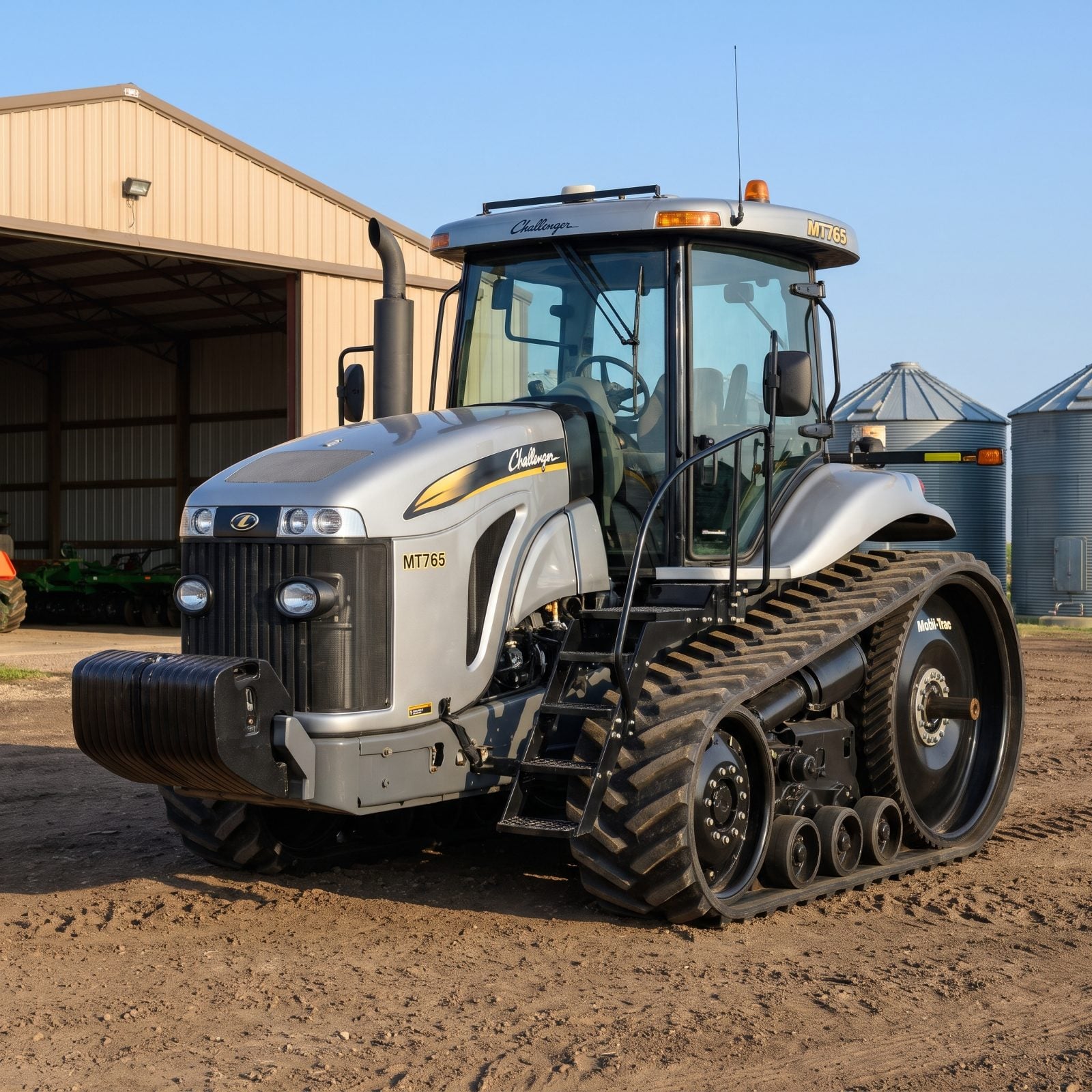
Rubber tracks changed the math on big tillage. The MT765 rode on Mobil-Trac belts instead of steel, so you got the flotation of a crawler without chewing up the road to the back forty.
New, it ran somewhere in the low-to-mid six figures depending on options, and adjusted to today’s dollars you’re looking at a good deal more. Steep. But farmers running thousands of acres did the pencil work and decided the traction paid for itself in a wet spring. A wheeled tractor spins. This one pulled, and that difference showed up every April when the ground wouldn’t dry out and the window to plant kept shrinking.
2006 John Deere 8530: Green Iron at the Top of the Row-Crop Ladder

The 8530 sat at the top of Deere’s 8030 series. A big row-crop machine built for operators who wanted to plant and work ground fast without stepping up to an articulated four-wheel-drive.
Well-equipped, the sticker landed in solid six-figure territory, and in current dollars it’s a fair bit higher. What you paid for was the independent link suspension up front and that big Powershift transmission. Ask anyone who logged long days in one, though, and it’s the comfort they remember as much as the pull.
2007 Kubota M108X: The Mid-Size Orange That Punched Above Its Price
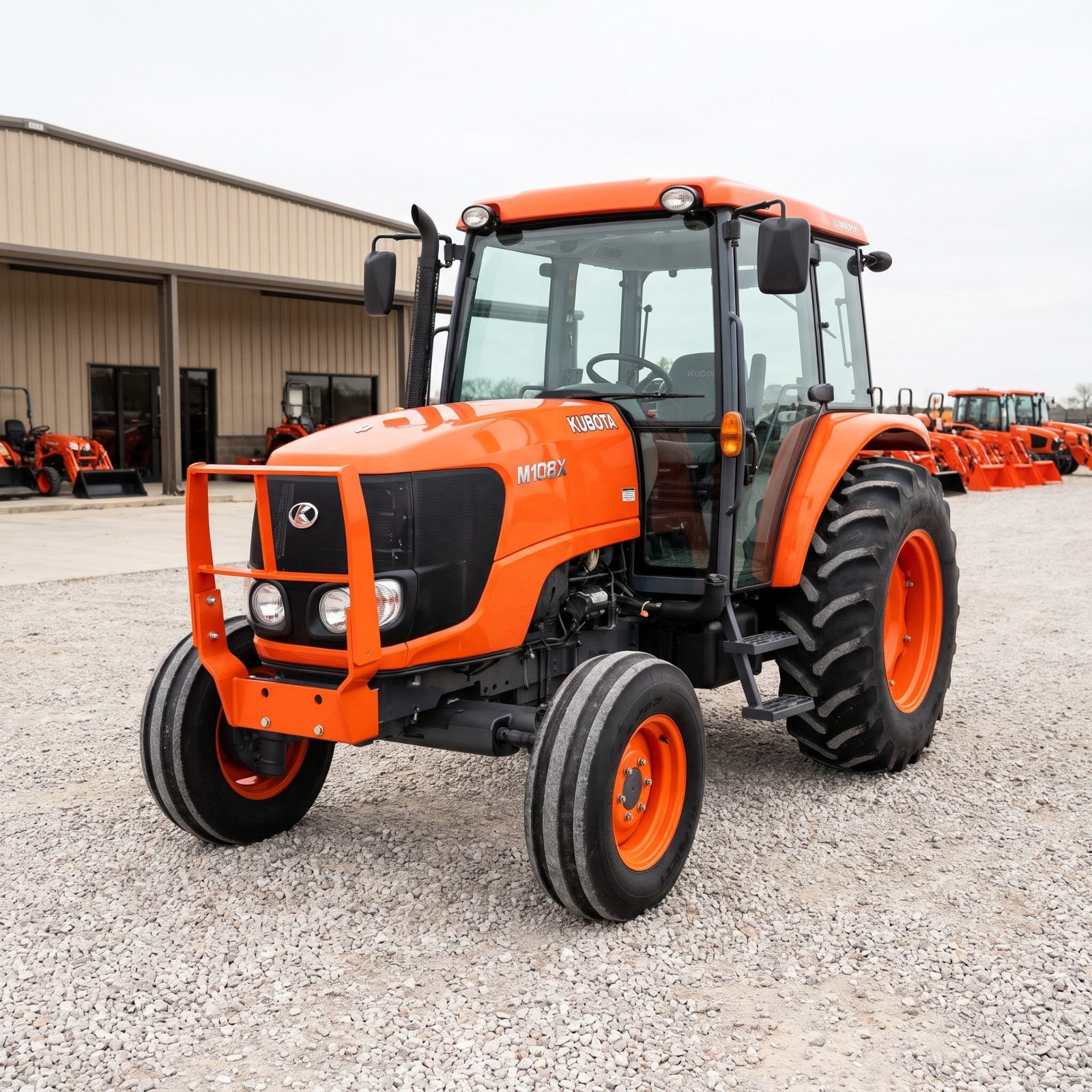
Not every farm needs 300 horsepower. The M108X gave you roughly 108 engine horses in a tidy, dependable package that handled loader work, hay, and livestock chores without the price tag of the big boys.
New, it carried a mid-five-figure sticker depending on cab and loader, which works out to a modest bump today. Kubota built its reputation on exactly this slice of the market: diesel engines that start cold and run forever, sized for the operation that measures ground in hundreds of acres, not thousands.
2007 Fendt 930 Vario: German Engineering With a Price to Match
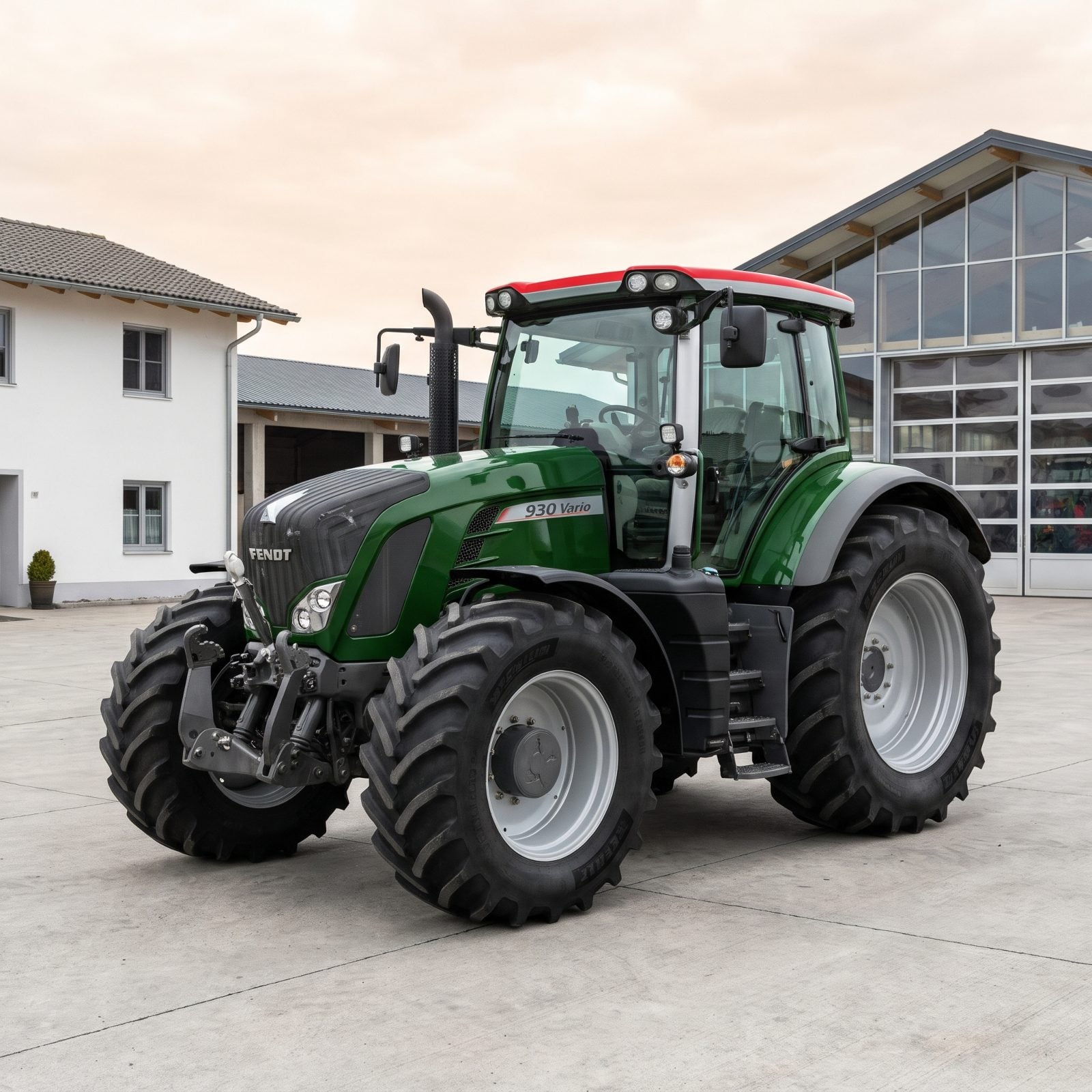
Fendt sold the 930 Vario on one word: efficiency. The continuously variable Vario transmission had no gears to shift, just infinite speed between zero and road pace, and European operators swore by the fuel savings.
Here’s the catch. German precision costs German money. A new 930 Vario in the US ran well into six figures, sometimes a lot further with full spec, and that figure only grows once you drag it into today’s dollars. You paid a premium for the engineering, and the people who bought them tended to run the numbers and buy another one.
No gears to hunt through, no clutch to feather. Just a pedal and a horizon.
2011 John Deere 8360R: The R-Series That Set the Modern Standard
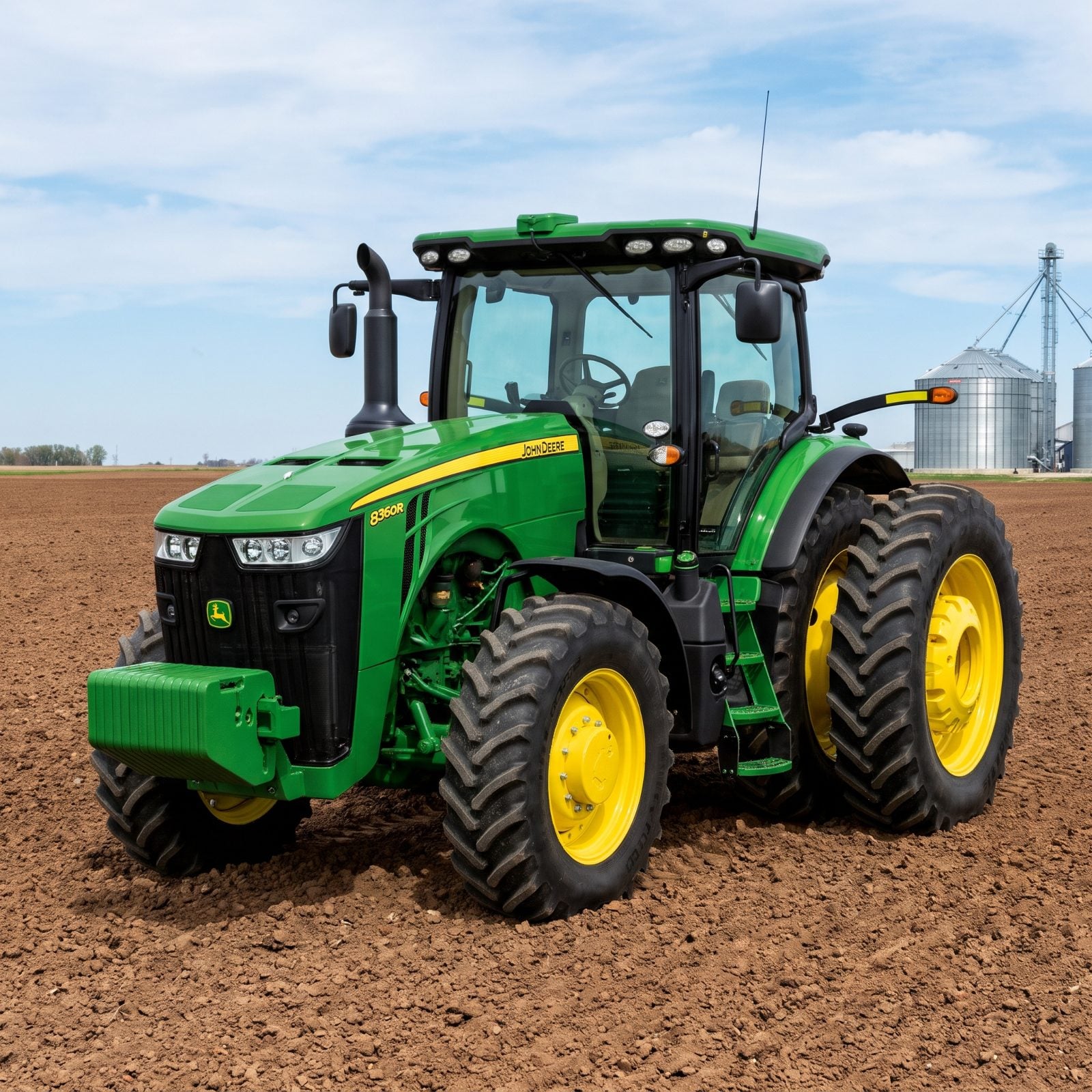
The R-series launched the modern Deere look: the quiet cab, the e23 and Infinitely Variable transmission options, and that clean sculpted hood you still spot on lots today.
The 8360R delivered 360 horses and sold new in the upper reaches of six figures loaded, more again now. A lot of that money went into the cab. Sound-deadened, air-sprung seat, a screen that ran guidance so you could hold arrow-straight all day. More than a decade on, these still command strong money at auction, which tells you something.
2014 Challenger MT875E: 570 Horsepower on Tracks
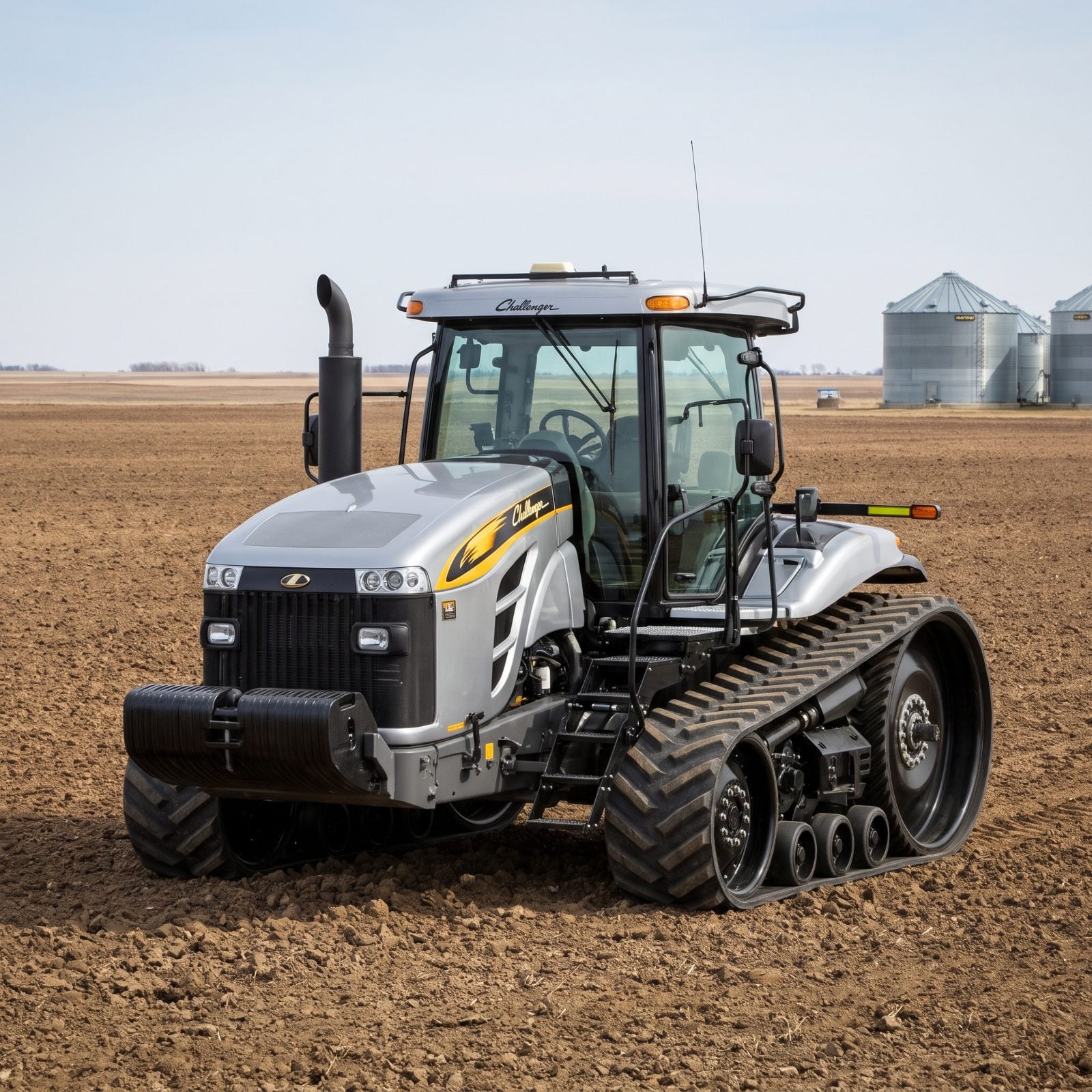
This is where the numbers get big in every direction. The MT875E rode on two rubber tracks, cranked out around 570 horsepower, and was built to drag primary tillage tools across thousands of acres without complaint.
New, it carried a sticker deep into the high six figures depending on spec, and well past that once you convert to today. Only the largest grain operations and custom tillage outfits could justify one. At that scale, idle time costs more than the diesel, so you buy capacity. The track flotation meant you kept moving while wheeled rigs sat stuck at the field gate.
2015 Kubota M7-171: Orange Steps Into the Big-Tractor Game
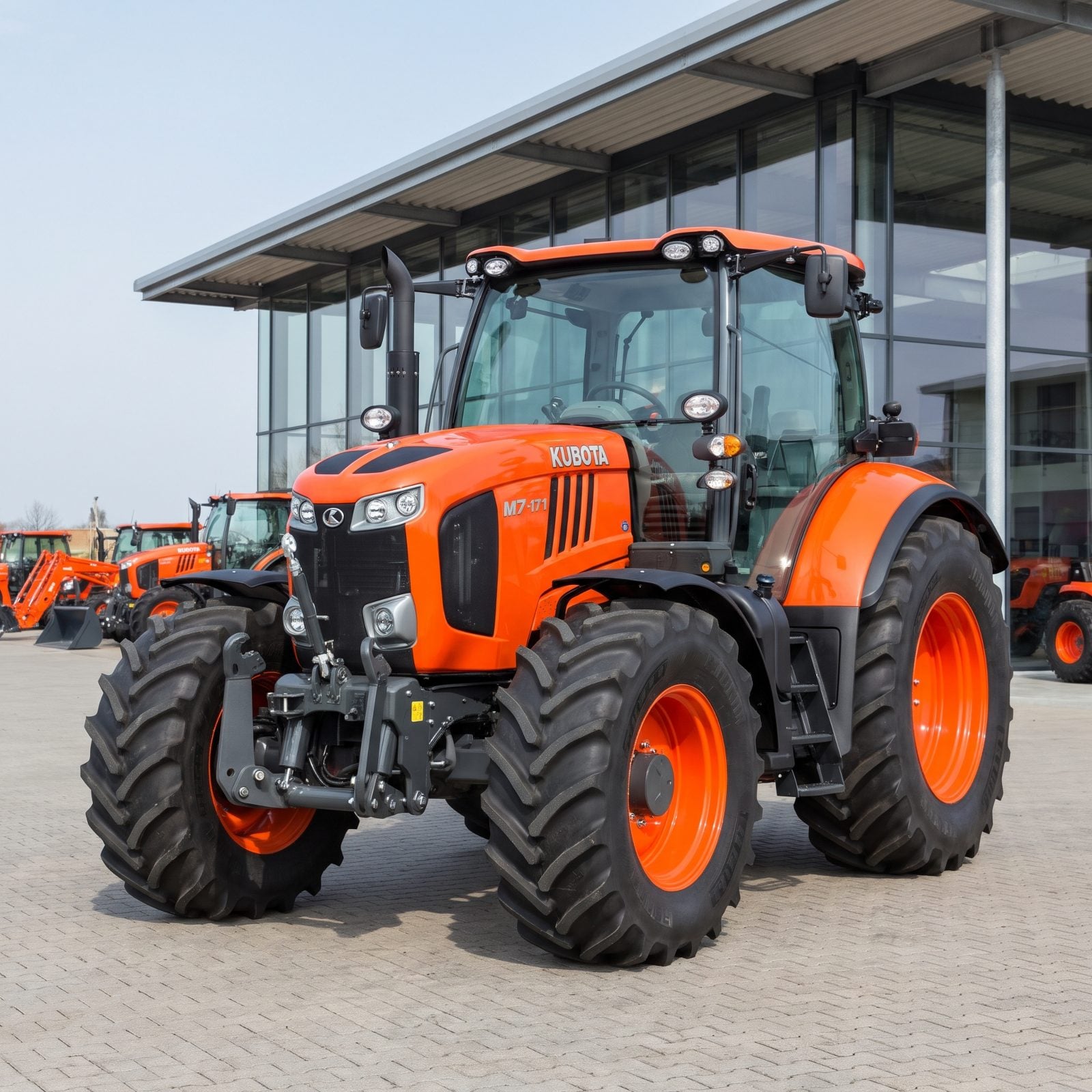
The M7 line was Kubota planting a flag in bigger country. At 170-ish horsepower with a European-built frame and a full suspension cab, it aimed squarely at mid-size Deere and Case IH buyers who never used to shop orange.
A new M7-171 carried a six-figure sticker with a cab and loader, which lands a touch higher today. Call it a declaration as much as a working machine, proof that the outfit known for compacts could build a genuine row-crop and hay tractor and sell it on value.
2016 John Deere 9620RX: Four Tracks and a Price That Stops You Cold
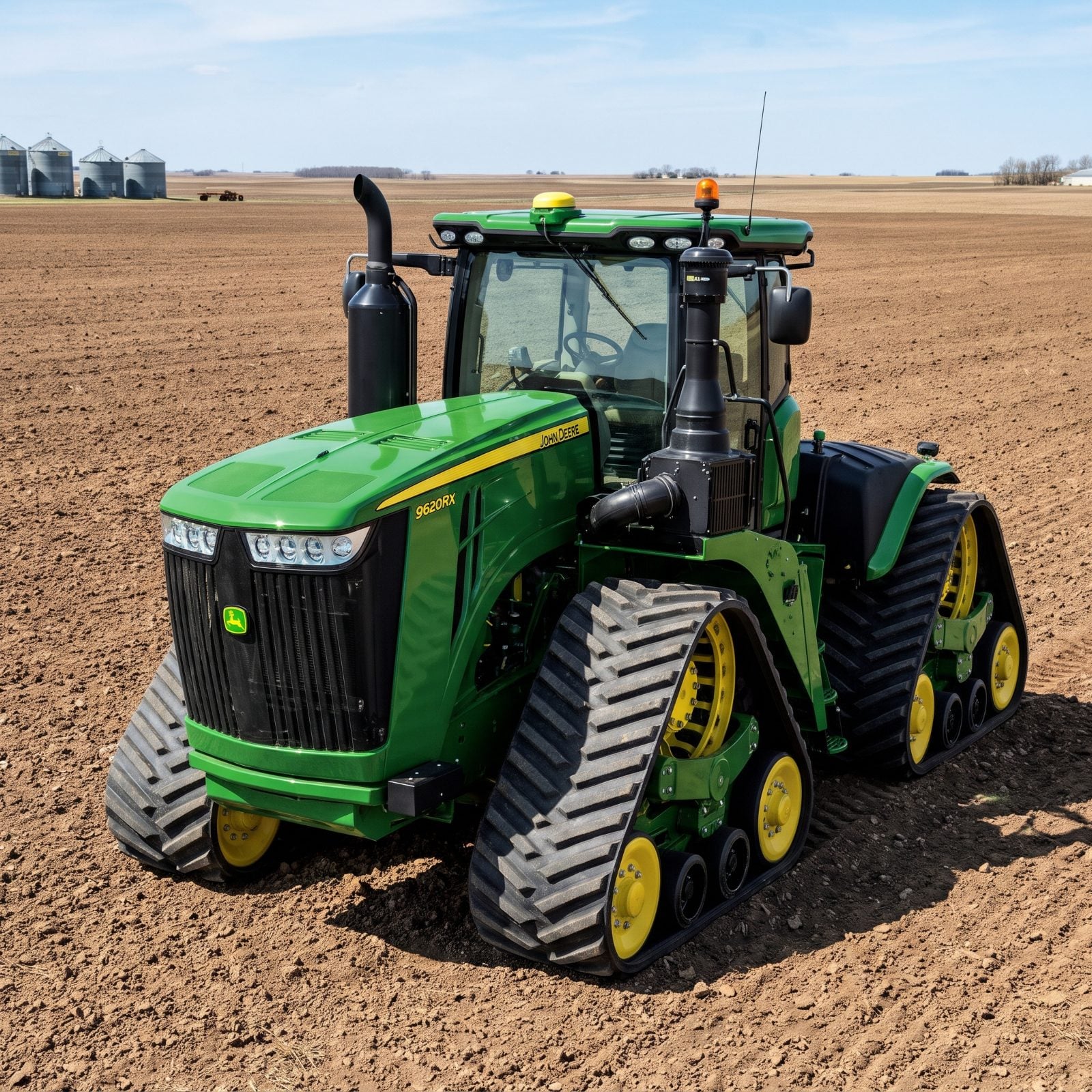
Deere’s quad-track flagship. The 9620RX put down 620 horsepower across four rubber tracks, built for the operations that measure land in square miles and pull implements wide enough to need a permit on the road.
New, these ran into the high six figures, and well past that with every option checked, with more again now. At this level you’re not really buying a tractor. You’re buying a productivity machine with guidance, telematics, and a cab that logs everything. The spring window is short on the big farms, so you pay to never miss it.
2020 John Deere 8R 410: Where Modern Row-Crop Pricing Lands
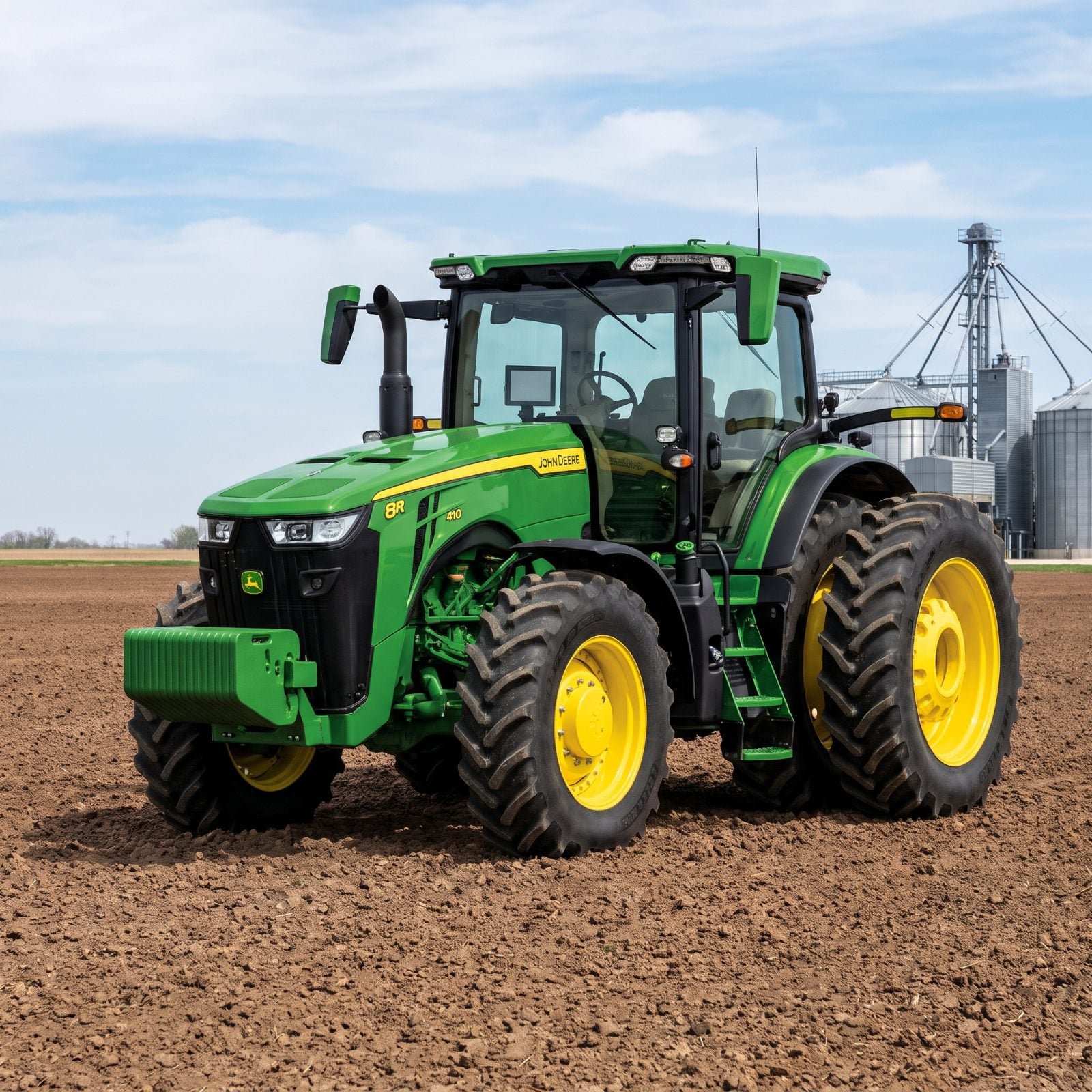
Here’s the present day, and it’s humbling. The 8R 410 gives you 410 horsepower, a cab that feels like a quiet office, and factory-ready precision ag, guidance, section control, data that flows straight to your phone.
New pricing lands well into six figures, pushing toward the half-million well-equipped. Stack that against the 8530 from fifteen years earlier, which cost a fraction, and you see how fast this market has climbed even after you account for inflation.
Part of what you’re buying now is software and connectivity, not just steel and diesel. The tractor got smarter. The invoice noticed.
2020 Kubota M8-211: The Orange Dark Horse
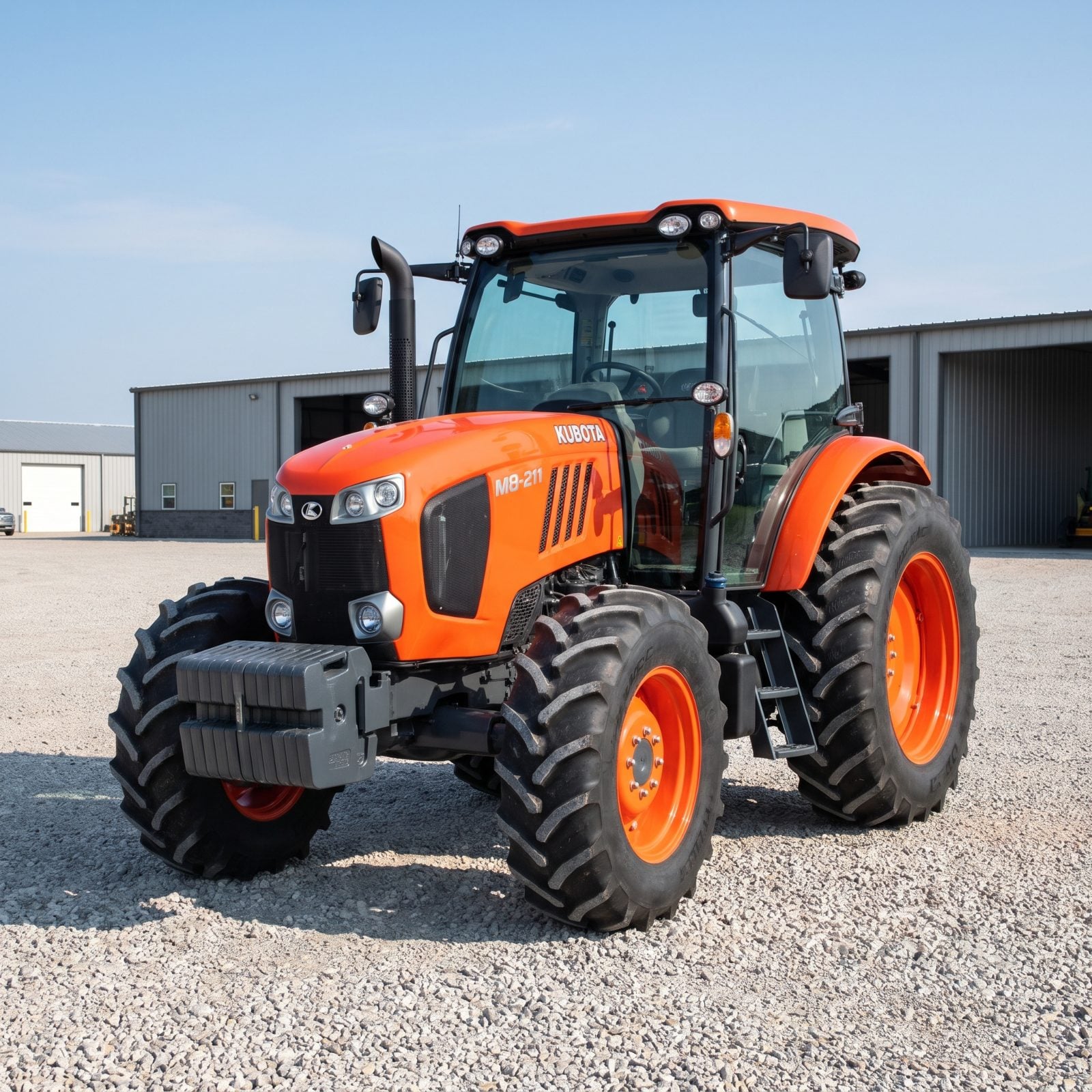
Kubota built its name on compact machines small enough to mow a suburban acre, so the M8-211 was the company planting a flag in big-tractor country. Roughly 210 horsepower, full-size cab, a tractor meant to pull real tillage rather than grade a driveway.
New sticker landed somewhere around $150,000 to $180,000 depending on how you spec it. That was the headline. A serious row-crop-adjacent machine from the orange brand, priced to undercut the green and red establishment, and cross-shoppers noticed in a hurry.
2021 Fendt 1167 Vario MT: German Engineering on Tracks
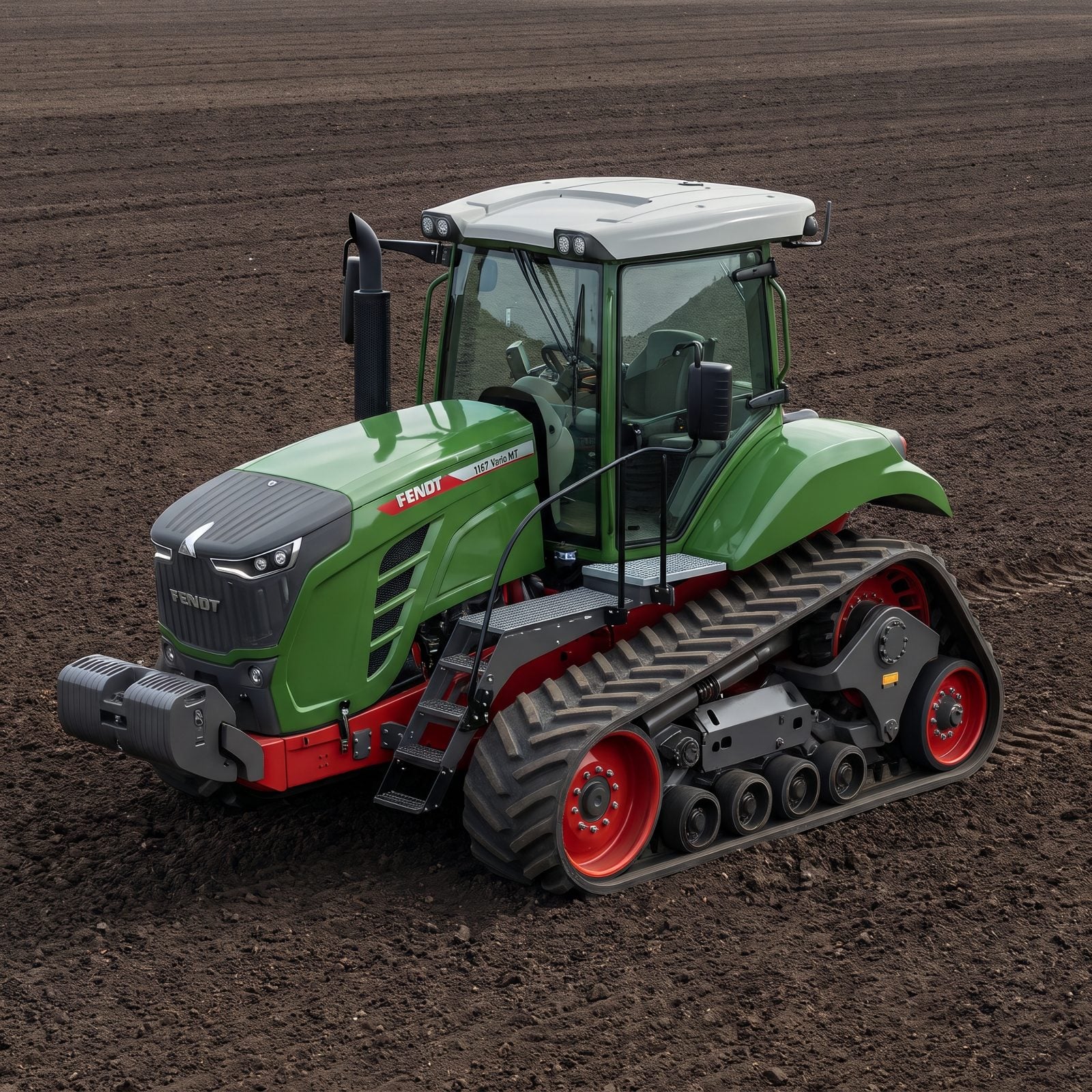
Two rubber tracks. Around 650 engine horsepower. A continuously variable Vario transmission that European growers swear by. The Fendt 1167 Vario MT is what happens when German precision goes chasing the biggest fields on Earth.
These don’t trade cheap. A new 1167 MT runs well over $700,000, and a loaded one brushes close to a million before you even hitch a cart to it. What you’re paying for is fuel efficiency and ride quality the spec sheet can’t really capture — owners talk about the thing the way other people talk about a good watch.
At this tier you’re not buying horsepower. You’re buying hours in the seat without your back filing a complaint.
2023 Case IH Steiger 715 Quadtrac: Red Muscle for the Big Acres
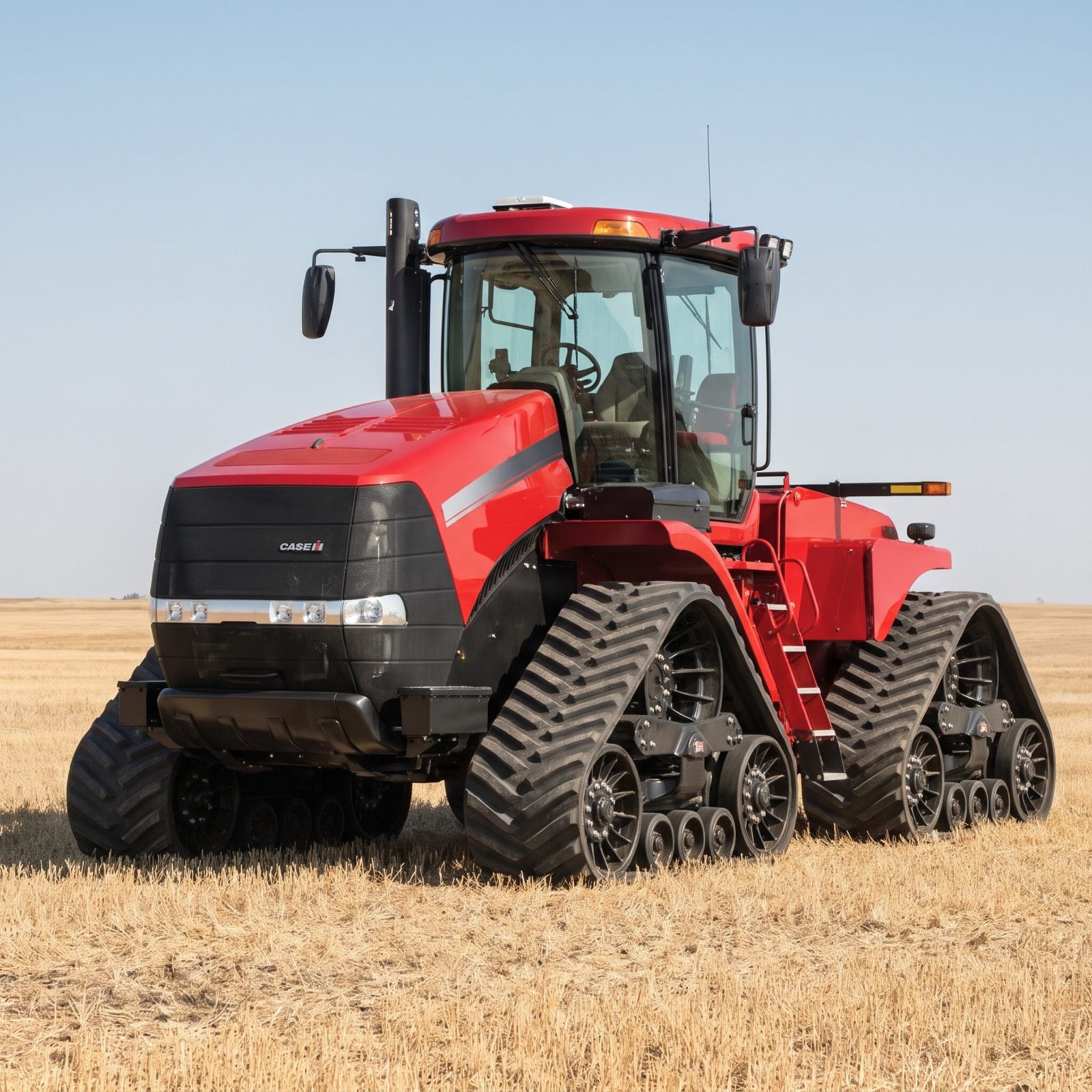
The Steiger name goes back to a Minnesota farm shop in the 1950s, where a family welded together tractors big enough for their own ground. Case IH kept the badge and kept making them enormous.
The 715 Quadtrac tops that line. Around 715 engine horsepower, four tracks spreading the weight so you don’t pack the soil into concrete, and new pricing that sits in the $650,000 to $850,000 range once it’s well configured.
Put the inflation lens on it and the number gets loud. What a top-tier four-wheel-drive cost in the 1970s — maybe $40,000 — is a sliver of this even adjusted. The machines outgrew inflation faster than inflation could keep up.
2025 John Deere 9RX 830: The Green Flagship
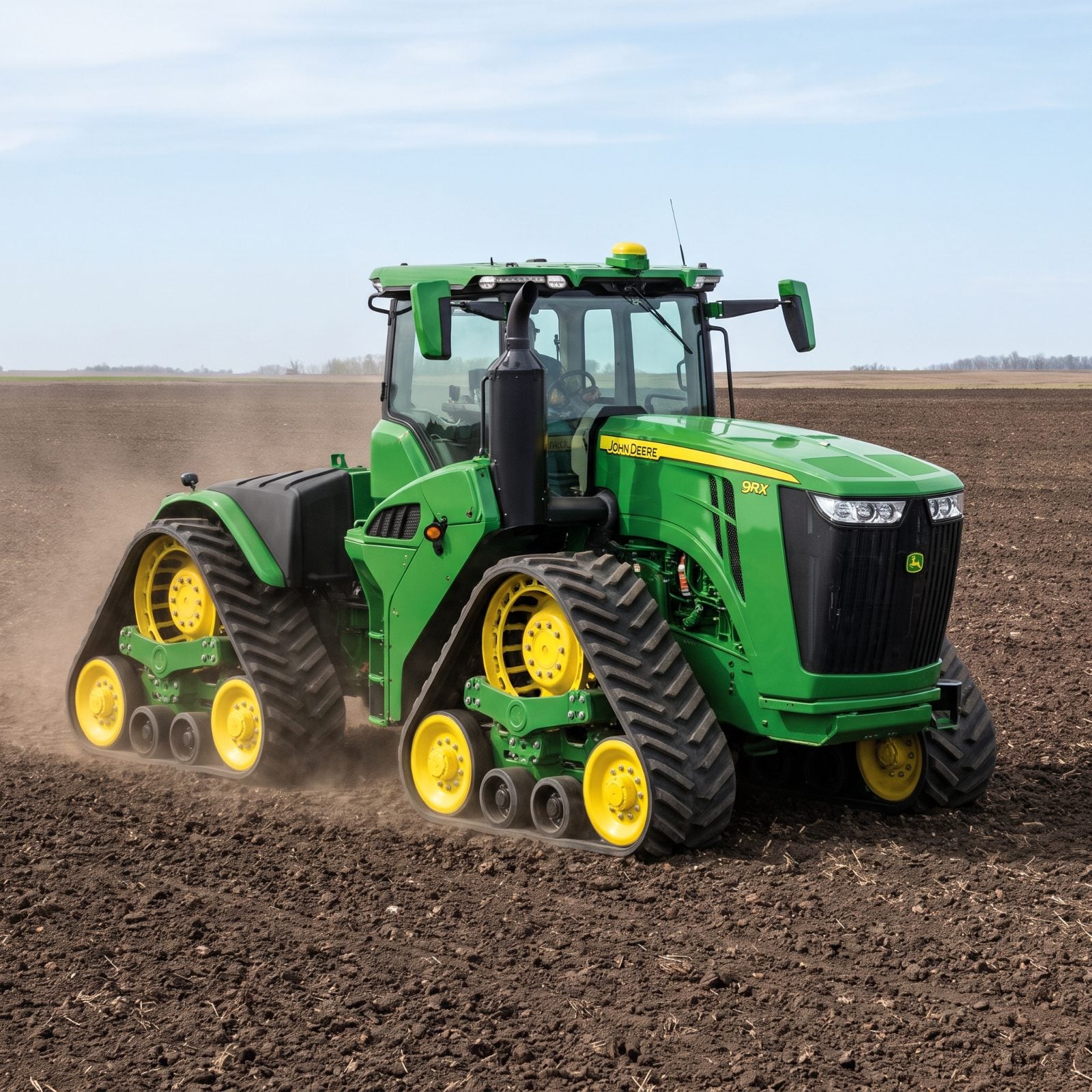
830 horsepower. Let that settle. The John Deere 9RX 830 sits at the top of the biggest tractor family the company has ever built — a four-tracked giant that makes a 1950s Deere Model 60 look like garden furniture.
New, a 9RX 830 clears $900,000, and a fully loaded one with precision guidance and the right ballast pushes past a million. A tractor that costs more than most farmhouses.
Here’s the context that stops you cold. A new two-cylinder John Deere in the late 1940s sold for around $2,000. Run that forward with inflation and you land somewhere near $25,000 in today’s money. This machine costs roughly forty times that even adjusted. Tractors didn’t just get more expensive, they became a different category of object entirely.
But the real story in these prices isn’t inflation at all. One person farming thousands of acres replaced what used to be a whole crew. Sticker went up, headcount in the field went down. Make of that what you will.