
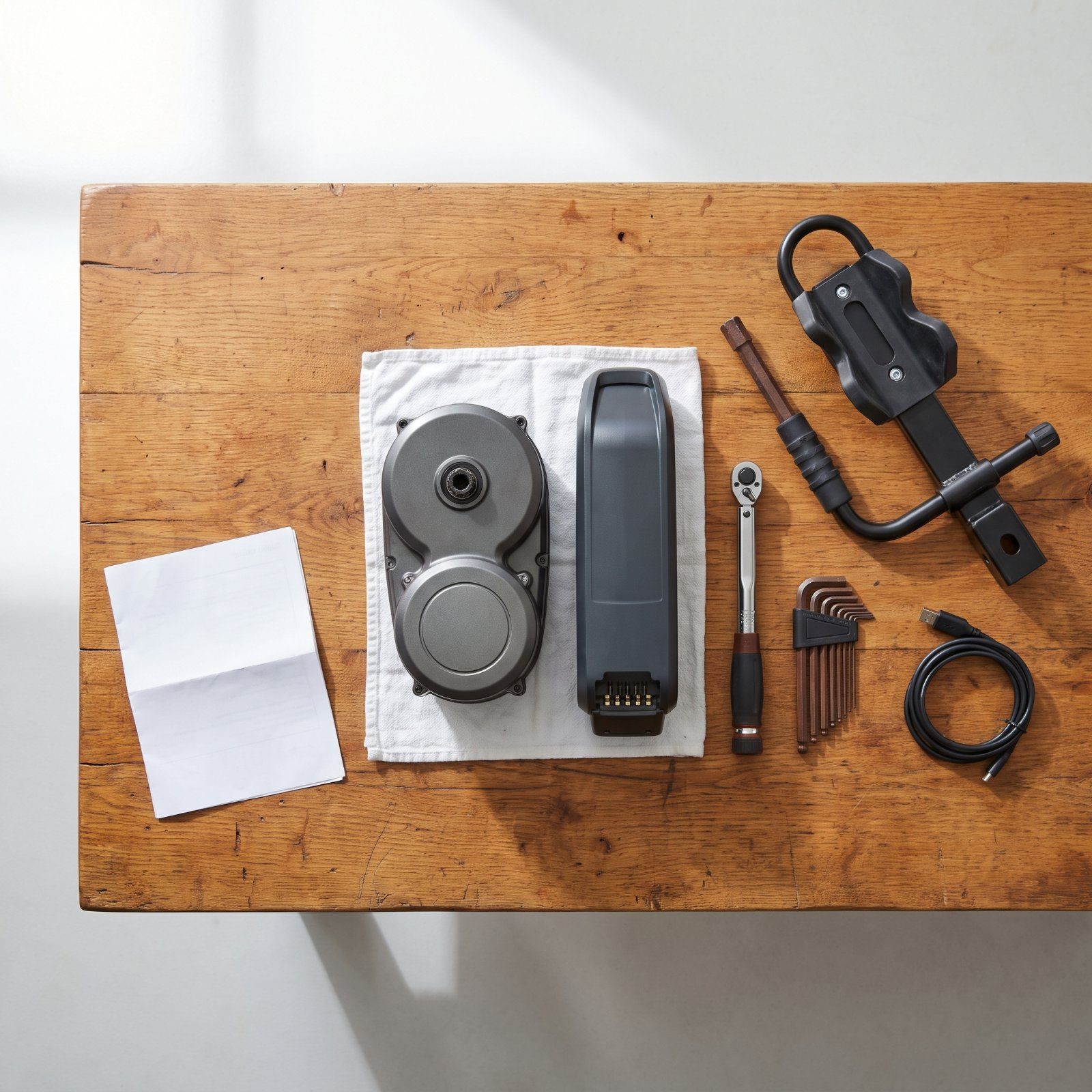
The guy at the shop will sell you on torque and range. What he won’t mention is that the battery powering all of it might vanish from the catalog in three years, turning your $3,000 ride into a very heavy regular bicycle. That gap between the pitch and what actually matters over years of ownership is where most buyers get burned. The good news? The pitfalls are knowable, and most have nothing to do with top speed. What follows is the stuff that decides whether you still love the bike at year five, or whether it’s gathering dust in the corner because nobody will touch it.
Please note that some of the images in this article were created with the assistance of AI.
41. A Replacement Battery Must Be Available Years After Purchase
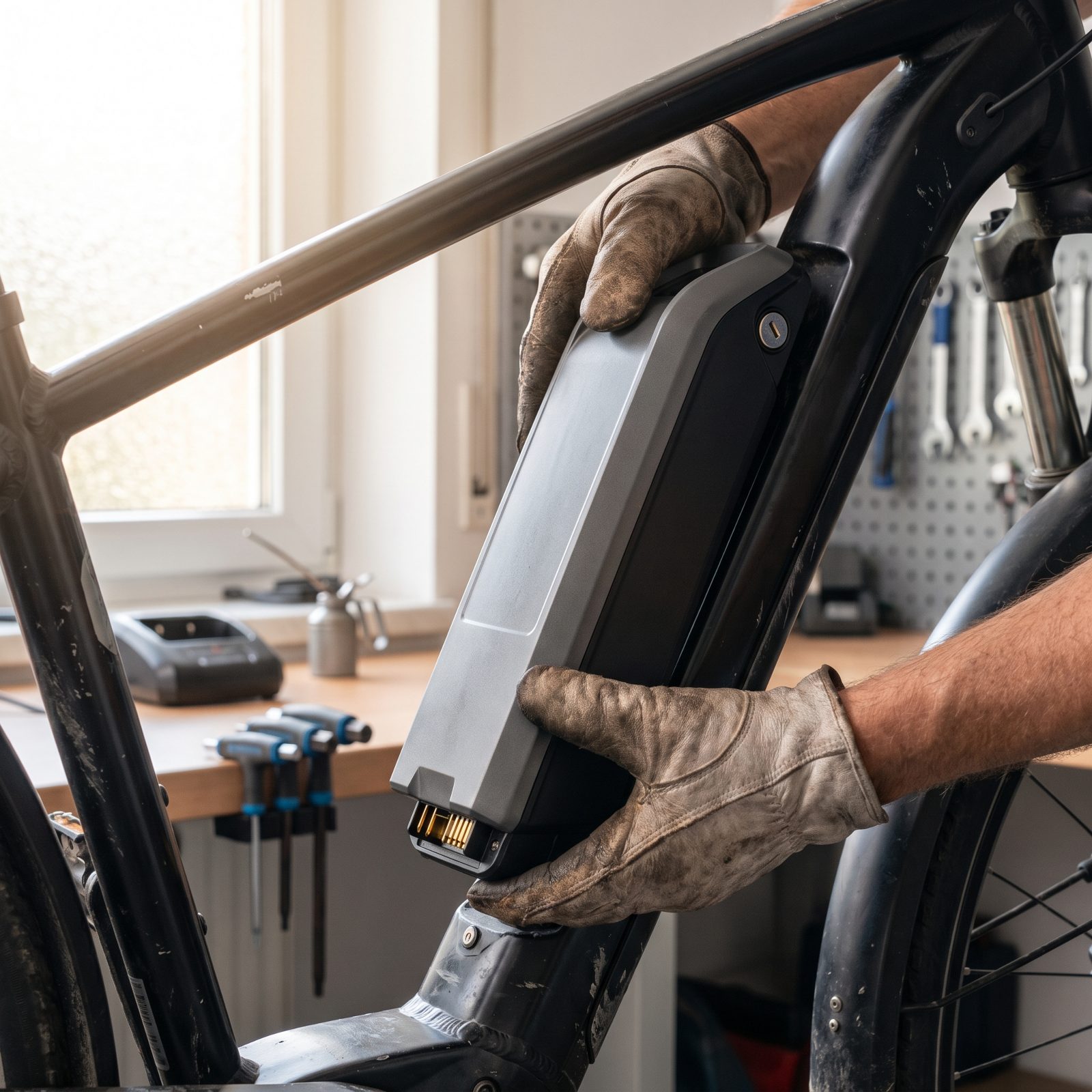
The motor will outlive the battery, and the battery will outlive the brand’s willingness to stock it. This is the single most expensive mistake buyers make. A proprietary pack that disappears from the catalog in a few years leaves you holding a frame you can’t power.
Before buying, ask one blunt question: can you buy this exact battery new, today, from real inventory? Then ask what happens when the cells degrade in five or six years. Vague answer? Walk. Packs built on standardized formats stand a far better chance of surviving a company’s product cycle than a sealed, one-off design does.
40. Local Shops May Decline Service on Unsupported Direct-Sale Brands
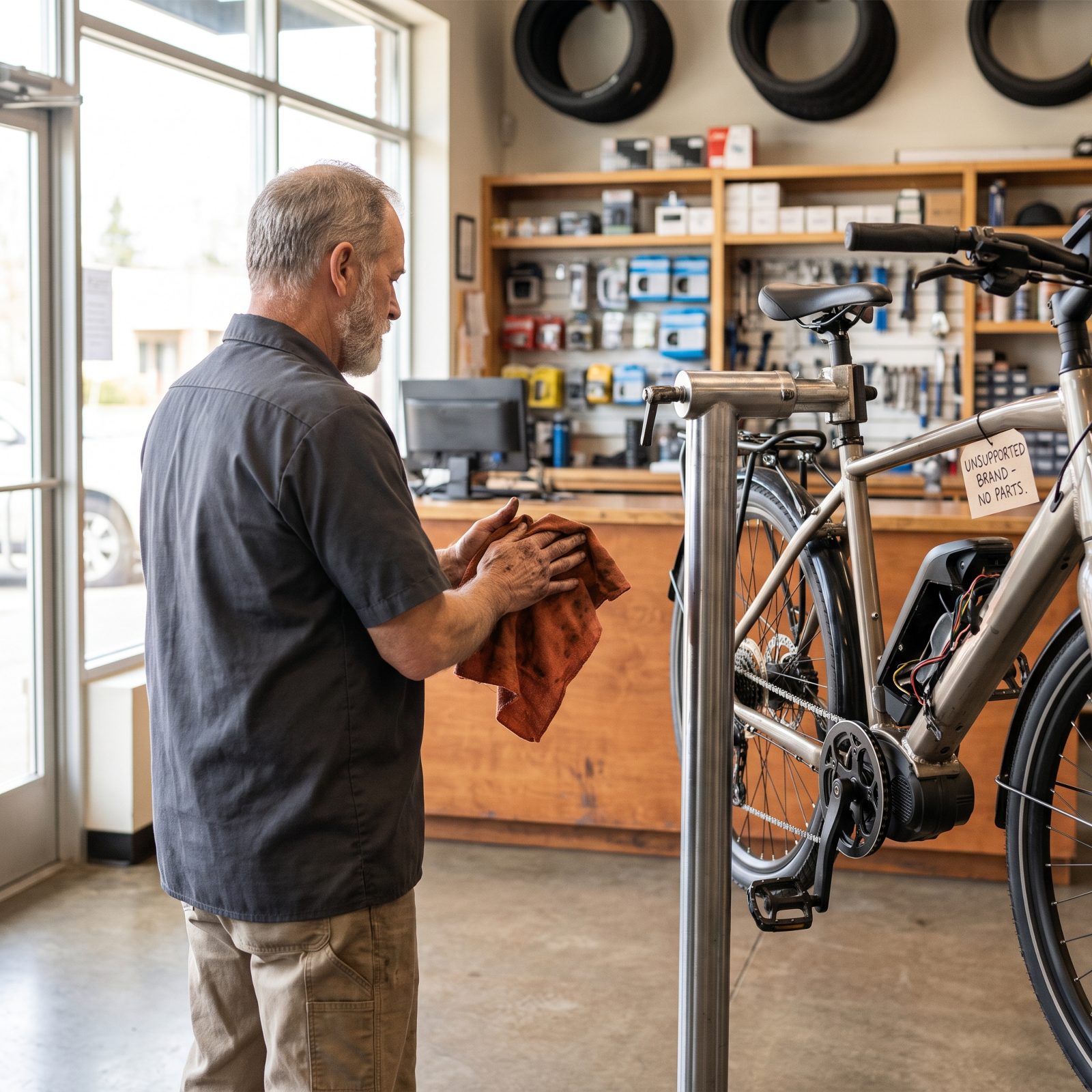
Buy a cheap direct-to-door e-bike and you save a few hundred dollars up front. Then the motor controller acts up, you roll into the local shop, and the mechanic tells you he can’t get parts and won’t take the liability. Now you’re shipping a 60-pound bike back across the country or figuring it out yourself on the garage floor.
Shops aren’t being snobs about it. They can’t warranty work on a system they can’t source components for, and nobody wants the blame when a mystery battery misbehaves. So call two local shops before you buy and ask flat out whether they’ll service the brand you’re eyeing. Their answer is worth more than any online review.
39. Published Weight Often Excludes Accessories Added at the Shop
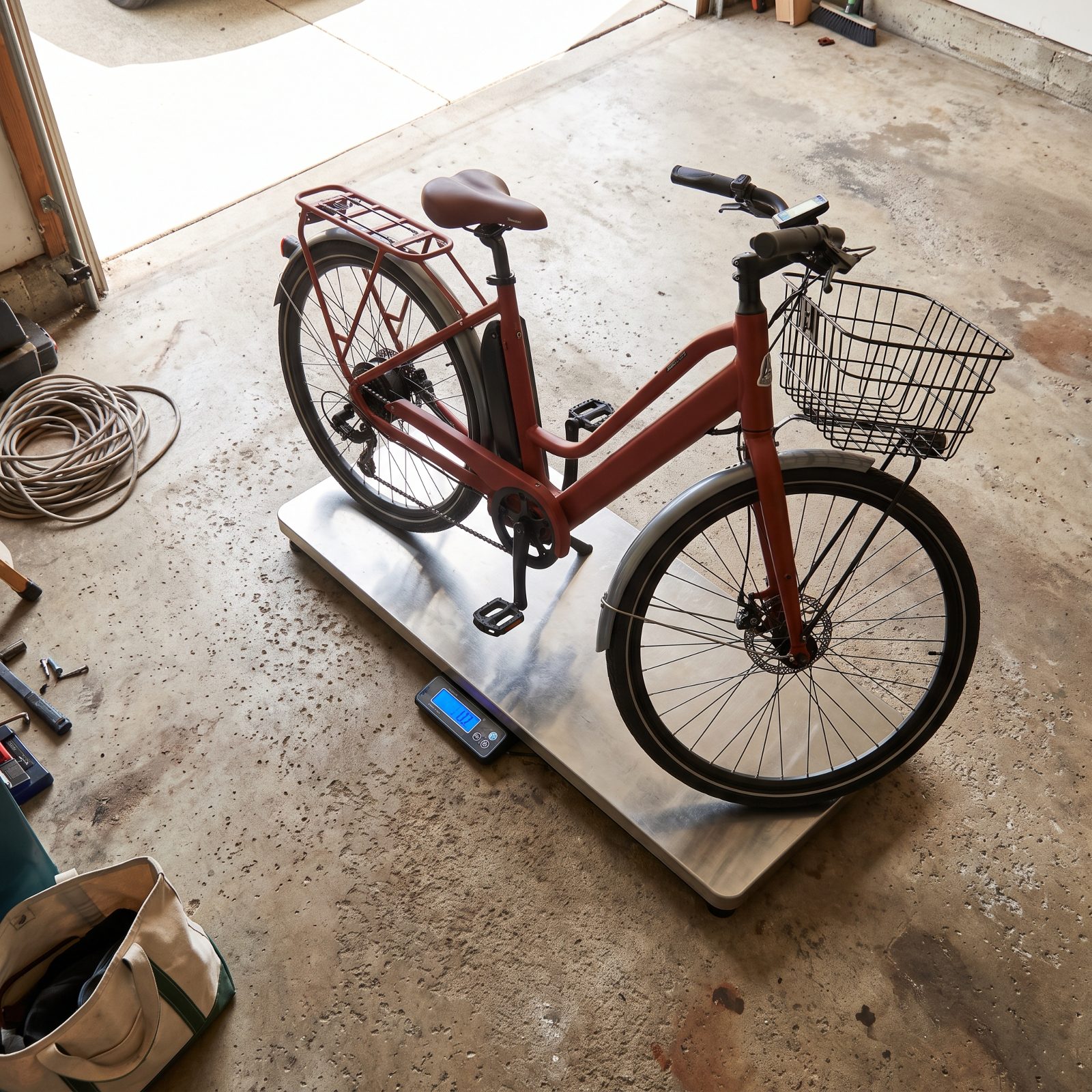
The spec sheet lists a weight that sounds nice and manageable. Then the shop bolts on fenders, a rear rack, a sturdier saddle, maybe a basket, and suddenly you’re hoisting something noticeably heavier onto a rack in your driveway. Those extra pounds decide whether you actually ride the thing or leave it parked.
Weigh the complete bike as it’ll leave the shop, with every accessory attached and the battery installed. That’s the number that matters when your shoulder is involved.
38. Many Standard Hitch Racks Cannot Carry Two E-Bikes
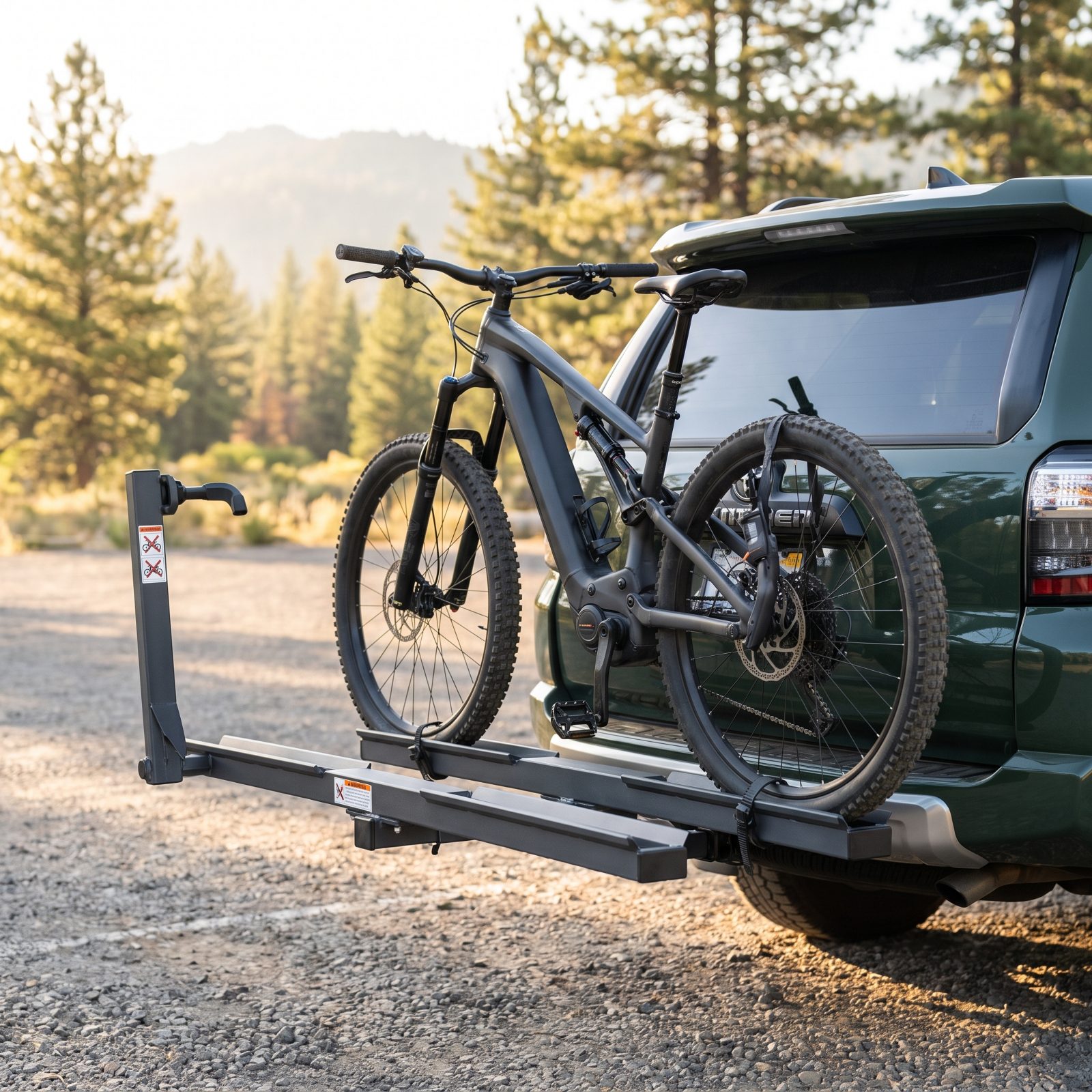
Here’s the trap. Your old rack happily carried two regular bikes for years, so you assume it’ll handle the new ones. Two e-bikes in the 55-to-65-pound range can blow right past its weight rating, and you won’t know until something cracks at highway speed.
Check two numbers: the rack’s total capacity and its per-bike limit. A lot of general-purpose racks top out around 60 pounds per tray, which barely covers one heavy e-bike, never mind two. E-bike-rated racks exist for exactly this reason, and they cost more because they’re built heavier. Confirm your hitch itself is a Class 2 or higher with enough tongue weight to handle the loaded rack too.
37. Rack Wheel Trays Must Match the Bike’s Wheelbase and Tire Width
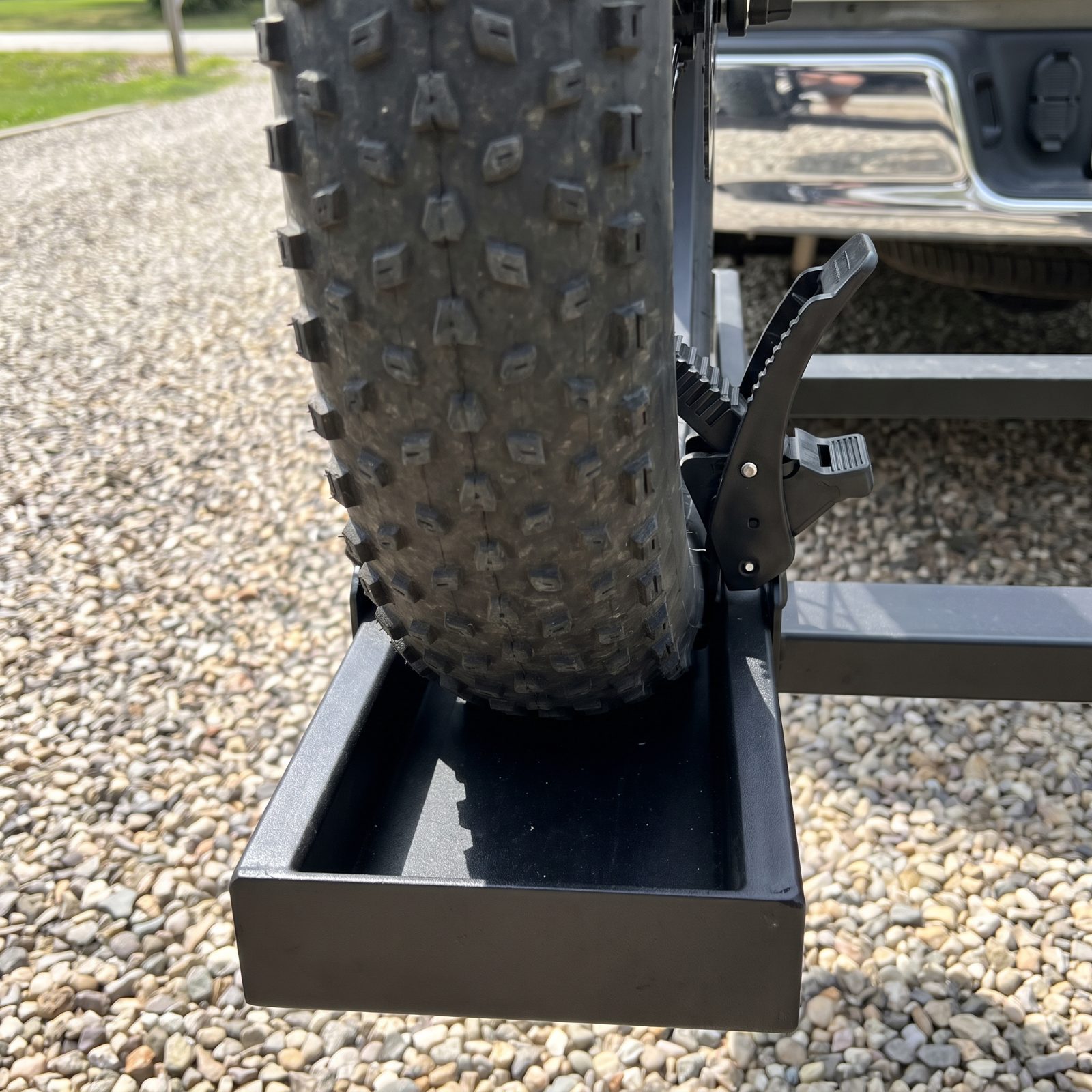
Fat tires and long wheelbases are everywhere on modern e-bikes, and plenty of racks simply won’t hold them. A 4-inch fat tire can be too wide for the tray channel. A cargo bike’s stretched wheelbase can overshoot the tray spacing entirely.
Measure your tire width and the distance between your axles, then check those against the rack’s stated maximums. Some racks sell wider fat-tire trays as add-ons. Buying the rack blind and discovering the tire won’t drop into the cradle? That’s a frustrating afternoon nobody deserves.
36. Battery Warranty Terms Often Differ From the Bike Warranty

The bike might carry a two-year warranty on the frame and motor. The battery, the single priciest component, is often covered for less, and under stricter terms. Some warranties prorate the battery, so after a year or two they cover only a fraction of a replacement. Others void coverage the moment you use a non-original charger or leave it fully discharged over winter.
Read the battery clause separately from the rest. A pricey pack losing capacity in year two is the kind of surprise that sours the whole purchase, and the fine print usually told you it was coming.
35. The Best Test Ride Includes Several Minutes With the Motor Off
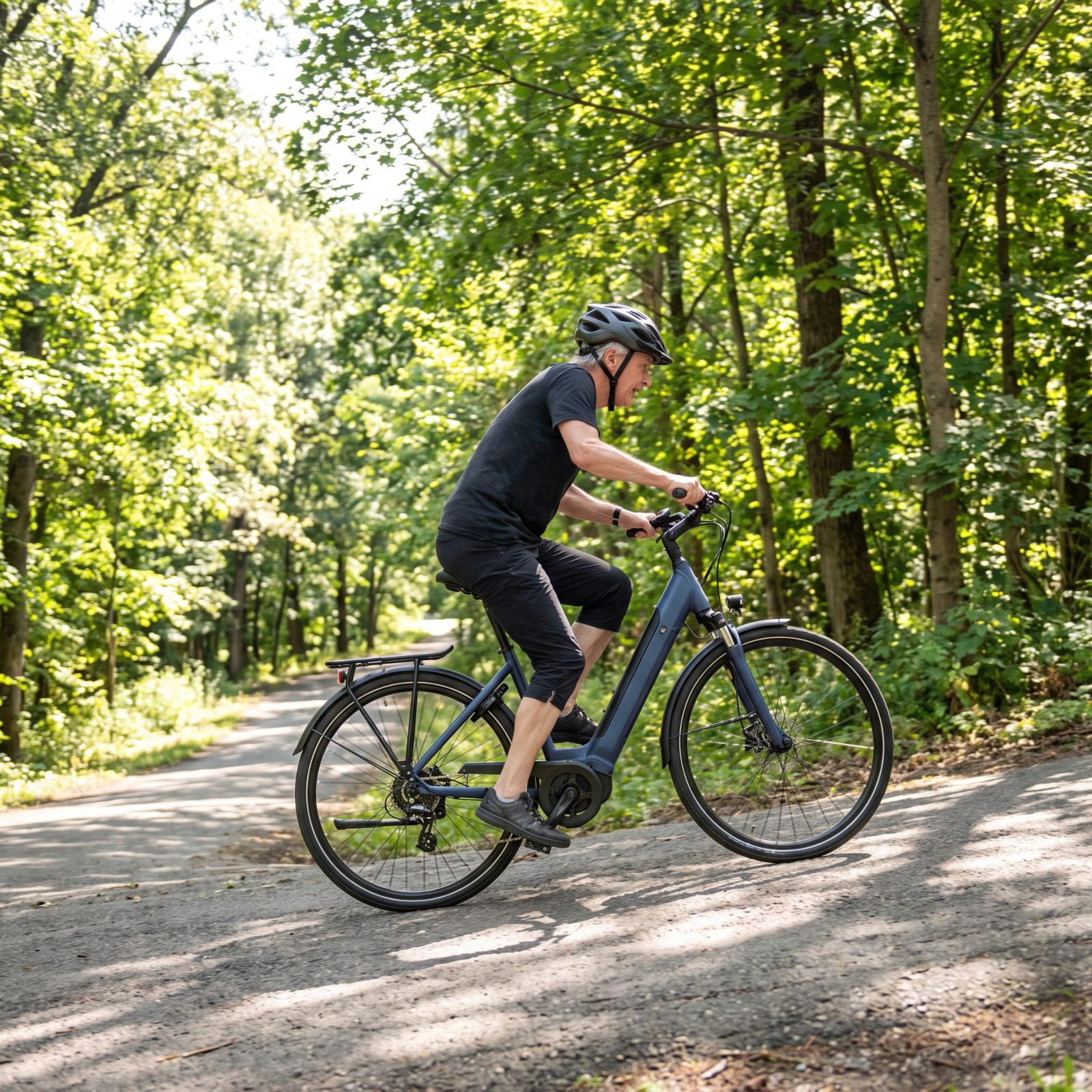
Every test ride feels great with the motor humming. That’s the point of the motor. But a dead battery happens, and when it does, you’re pushing the bike home with your own legs. A heavy, poorly-geared e-bike with the assist off can feel like dragging an anchor uphill.
Turn the motor off for a few minutes mid-ride. Climb a gentle rise under your own power. Notice whether the gearing lets you spin comfortably or whether you’re mashing the pedals and going nowhere. The bike you can still ride home with a flat battery is the one worth buying.
34. A Hill Test Reveals More Than a Flat Parking-Lot Demo
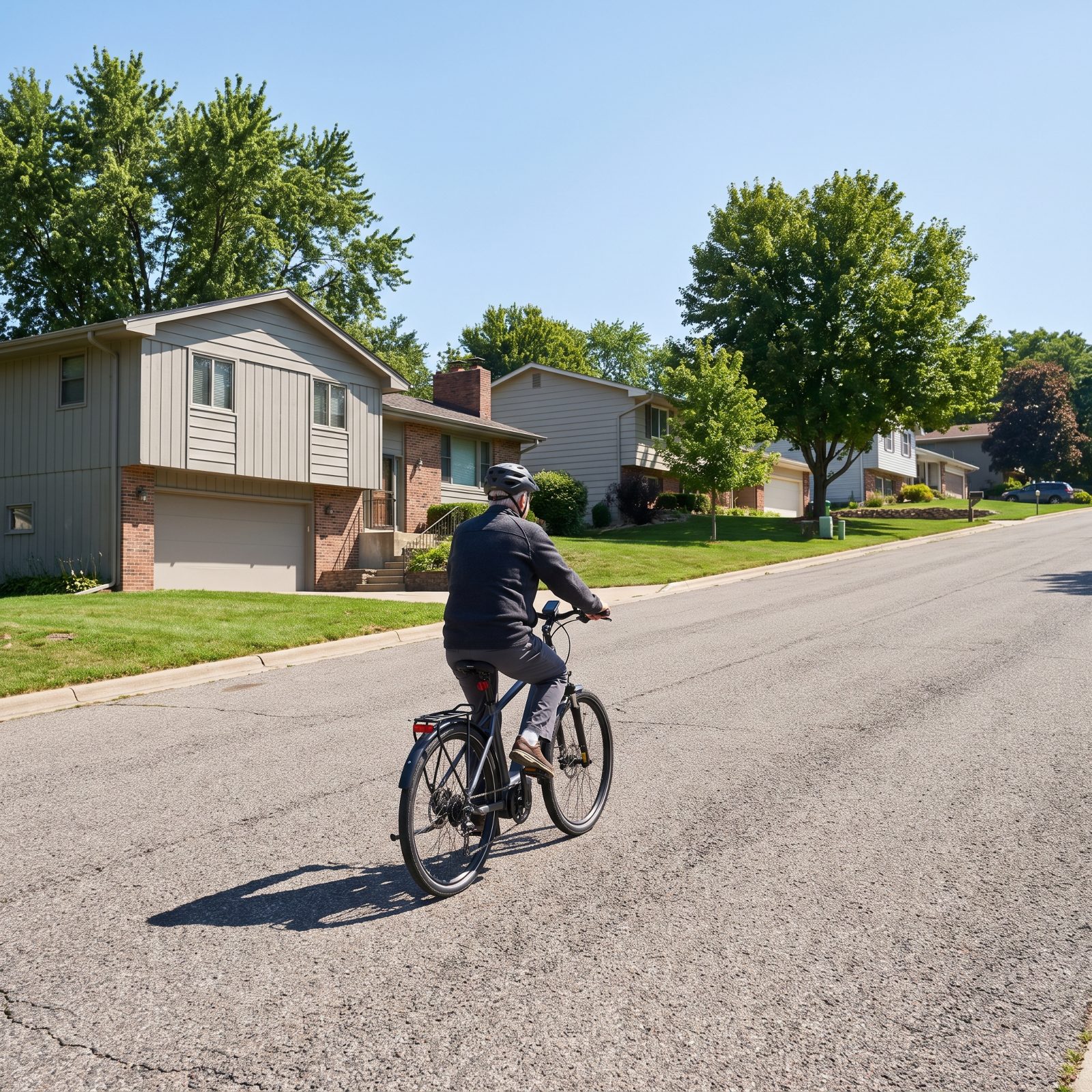
A parking lot tells you nothing. Flat ground hides weak motors, laggy sensors, and gearing that can’t cope with a real grade. Most riders over 50 want an e-bike precisely so hills stop ending the ride early, so test the thing on an actual hill.
Find a steady climb near the shop and ride up it. Watch for whether the assist kicks in smoothly or surges, whether the motor holds power to the top or fades near the crest, and whether you can drop into a low enough gear to keep your cadence relaxed. A bike that shrugs off the climb is a bike you’ll ride far more often.
33. A Torque Sensor Feels More Natural Than a Cadence Sensor
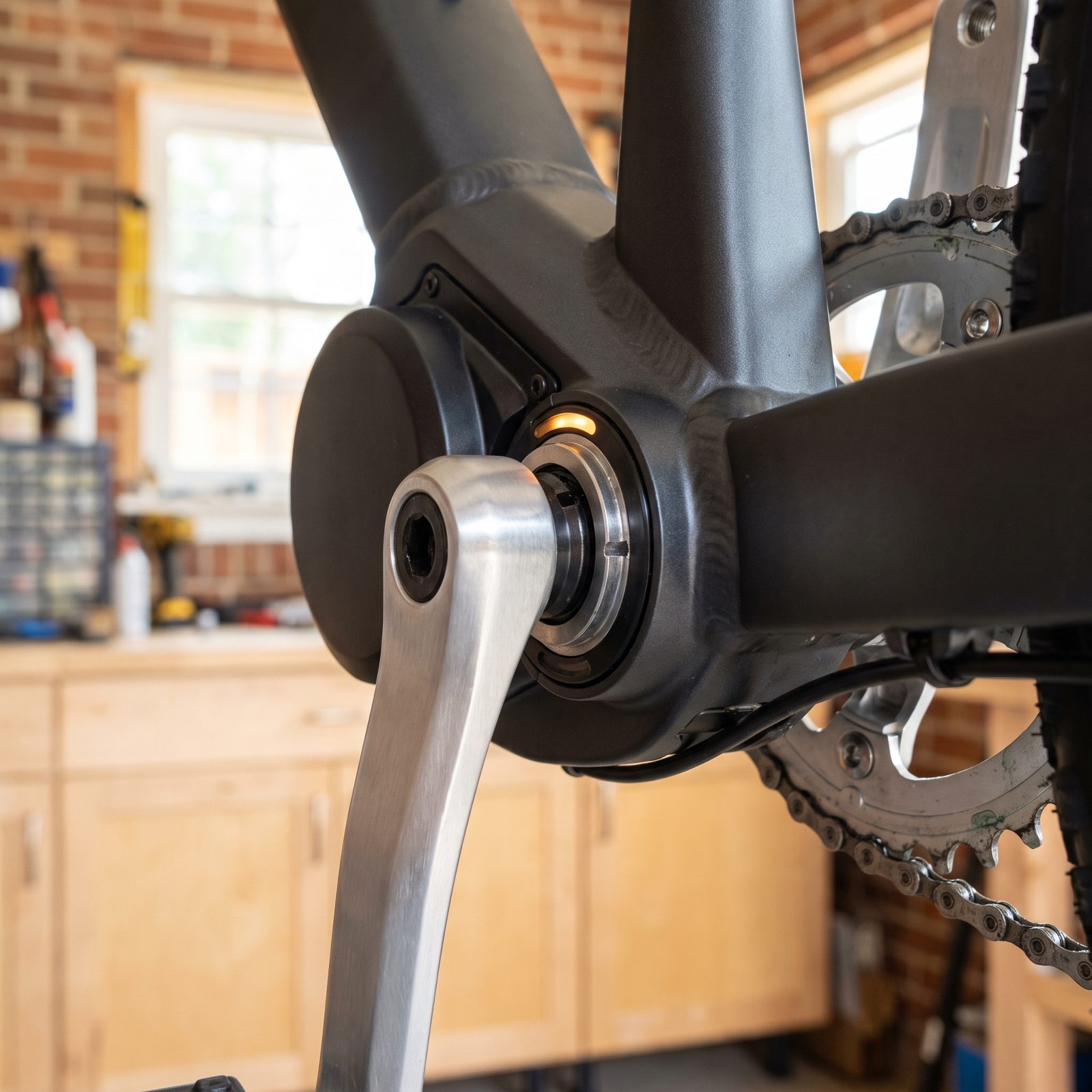
Here’s the difference most buyers never hear about, and it changes everything about how the bike feels. A cadence sensor just detects that the pedals are spinning and dumps in power, which can feel like a sudden shove. That shove is especially jarring at low speeds or in tight turns.
A torque sensor measures how hard you’re actually pushing and matches the assist to your effort. The result feels like your own legs got stronger, not like something launching you forward off the line. For riders who value smooth, predictable control, it’s worth the premium. Ask which one the bike uses. Plenty of budget models quietly run cadence and never advertise it.
A torque sensor doesn’t push you. It helps you push.
32. Walk Assist Can Be Essential on Ramps and Steep Driveways
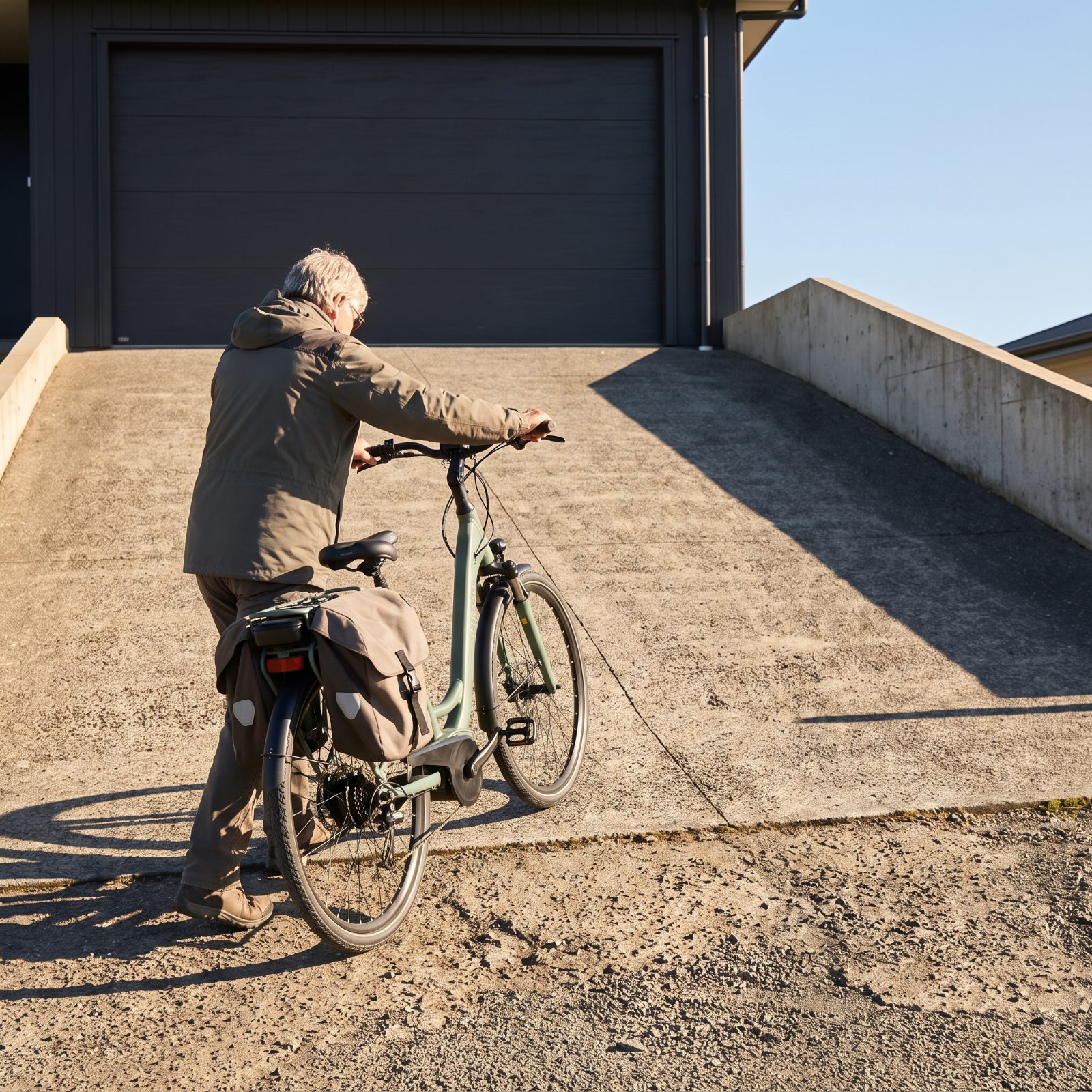
Nobody rides every inch of every trip. You’ll walk the bike up a parking ramp, through a doorway, or up the pitched driveway to your own garage. And a fully loaded e-bike with groceries in the panniers is a lot to muscle by hand.
Walk assist runs the motor at a slow crawl while you steer alongside, taking the weight off your arms. Small feature, easy to skip right past on the showroom floor, genuinely missed the first time you’re hauling the bike up an incline on foot. Confirm the bike has it, and try it before you buy.
31. A Rear Hub Motor Makes Roadside Wheel Removal More Complicated
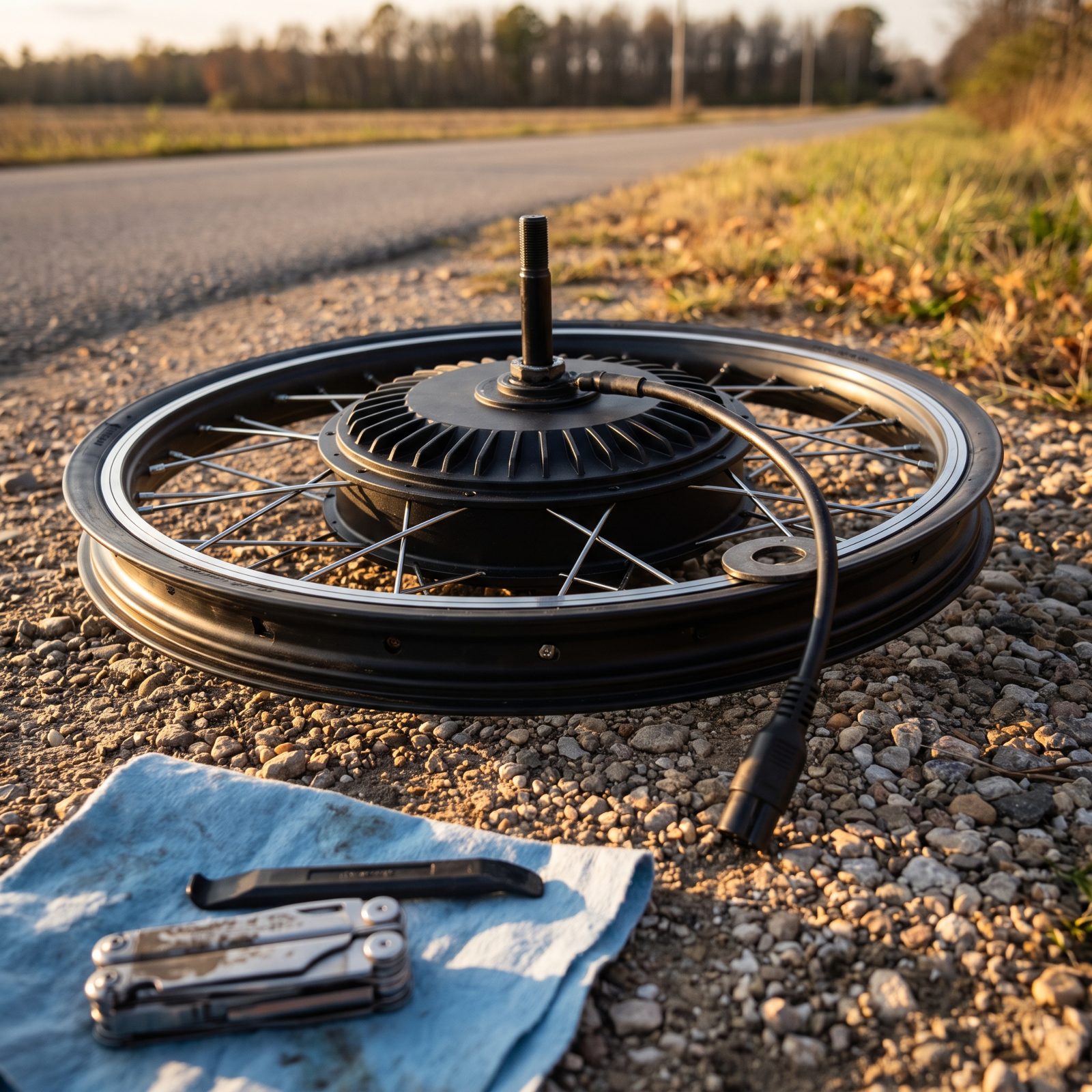
Flip a standard bike and the rear wheel drops out in a minute. Flip a rear hub-drive e-bike and you meet the torque arm, the motor cable, and a connector that hates being yanked. The flat you could’ve fixed in the driveway becomes a knuckle-scraping puzzle on the shoulder, and your fingers end up black with grease for the trouble.
Mid-drive motors keep everything at the cranks, so the rear wheel comes out like any ordinary bike. Ride far from home and plan to handle your own flats? That one difference outweighs anything a spec sheet brags about.
30. Suspension Seatposts Need Enough Exposed Seatpost to Fit
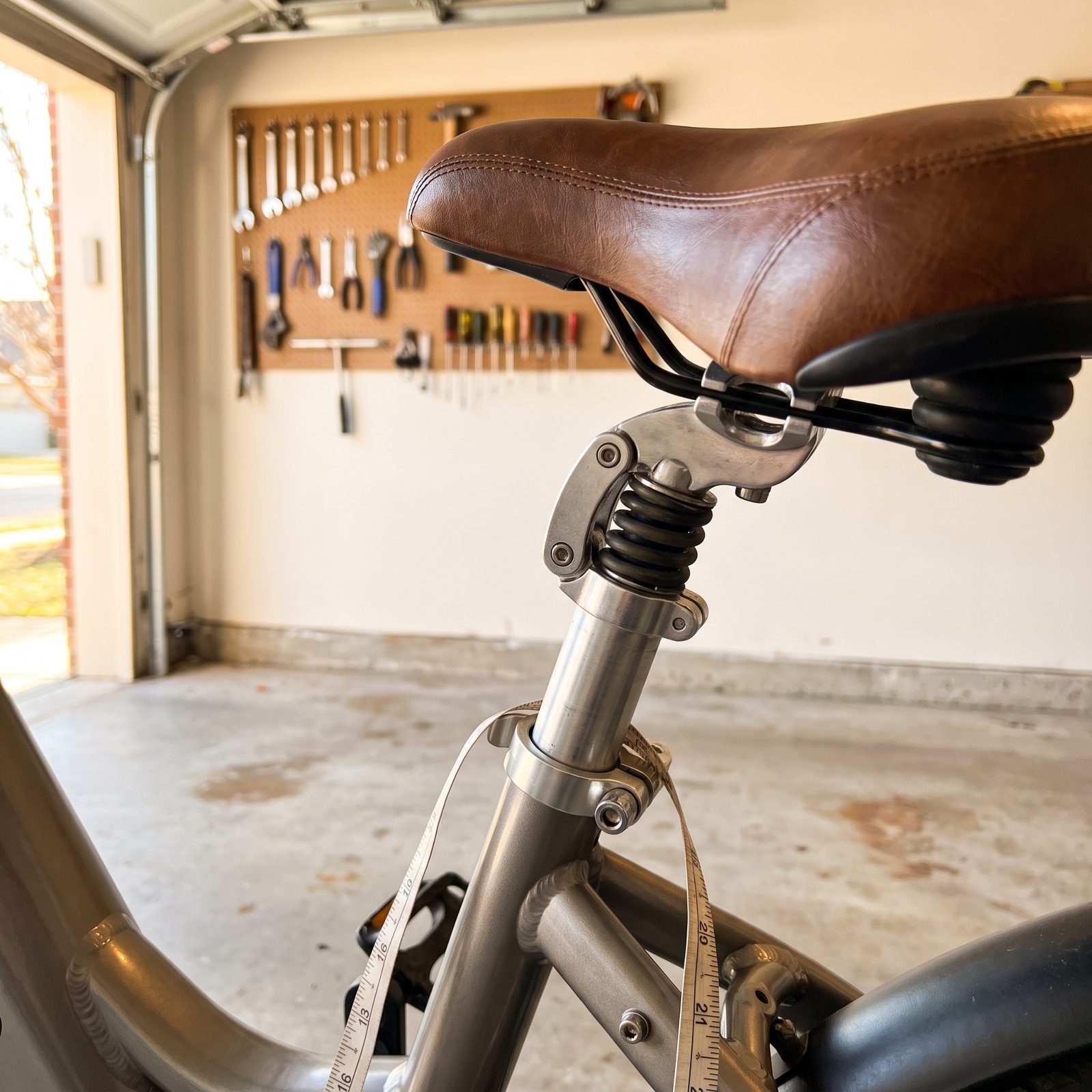
Suspension seatposts soak up the jolts that aging backs and tailbones feel first. But they need room to work — usually a few inches of exposed post below the saddle. Set a low step-through frame for a shorter rider and there may not be enough post sticking out to mount one at all.
Measure before you fall in love with the idea. If your saddle already sits near the minimum insertion line, a bulky parallelogram post won’t fit, and you’re right back to feeling every seam in the pavement.
29. Payload Ratings Include the Rider, Cargo and Accessories
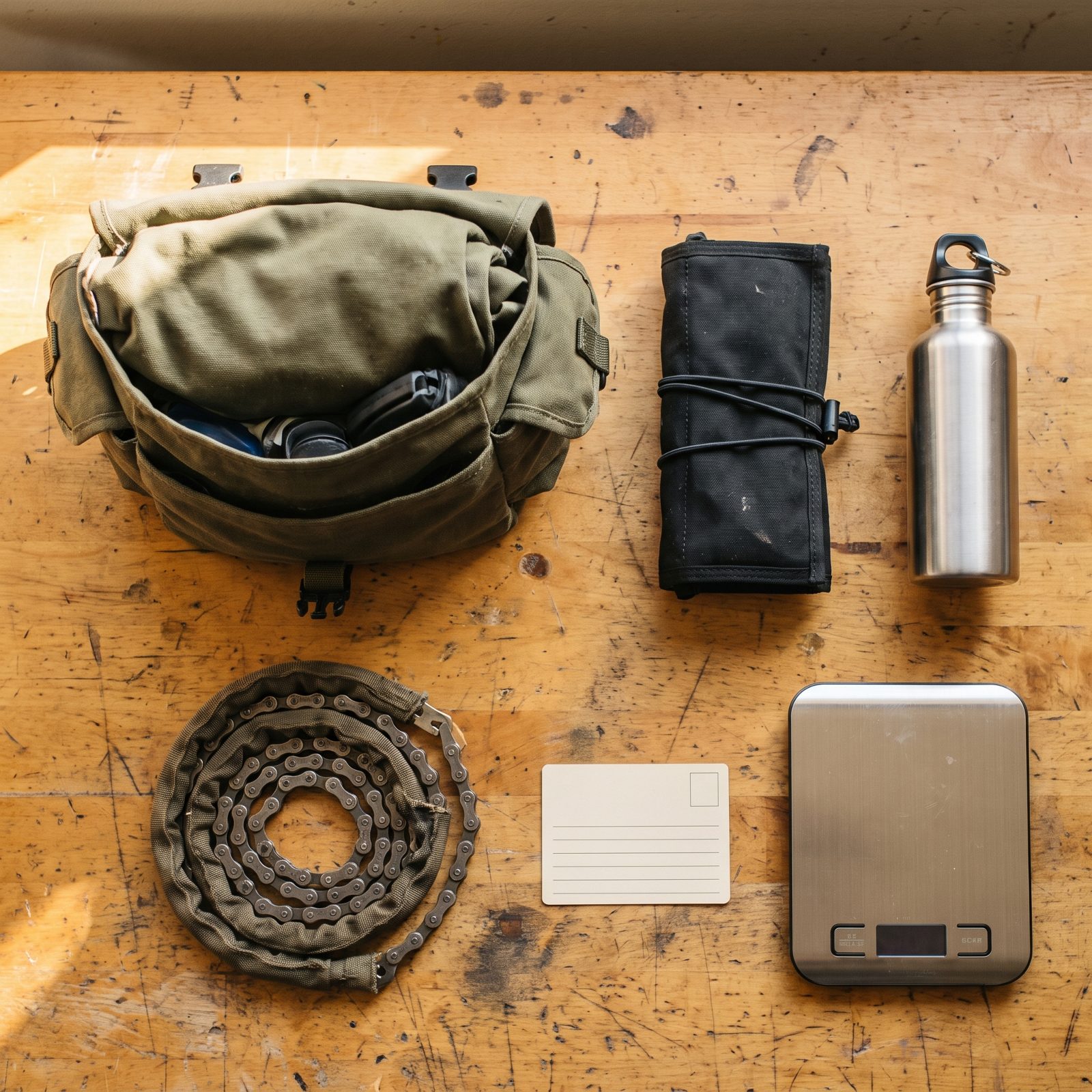
That 300-pound payload number is not your weight limit. It’s everything the bike carries at once — you, the groceries, the pannier, the lock, the water, that rack you bolted on last spring. People read it as a rider spec and quietly blow past it by Saturday afternoon.
Overloading stresses the frame, the spokes and the brakes, and it chews through range faster than any headwind. Hauling cargo or a grandkid on the back? Buy for the loaded weight, not the empty one. Headroom is cheap. Rebuilding a wheel is not.
28. UL-Certified Batteries and Chargers Deserve Priority
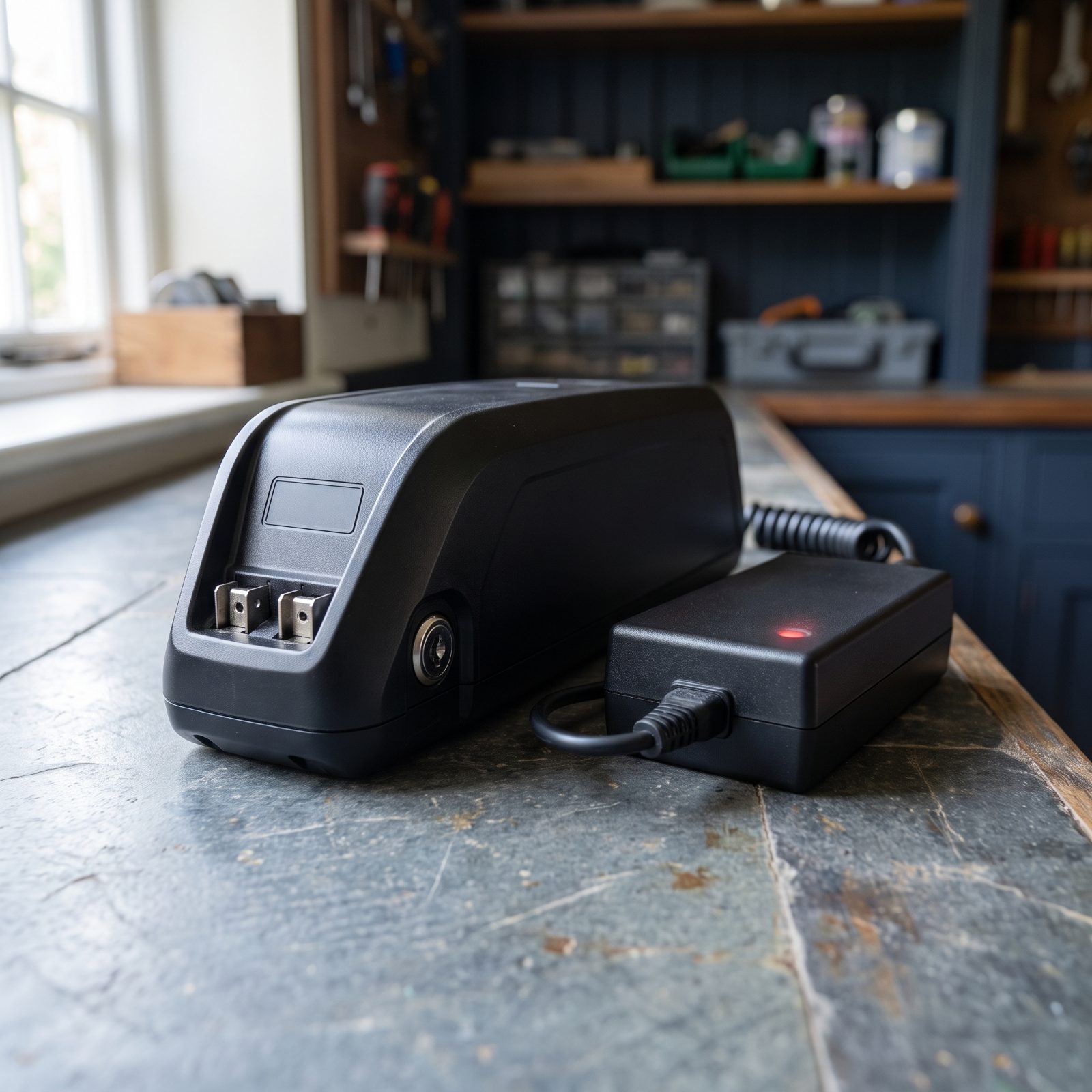
Not all cells are built the same, and the cheap ones are where fires start. A battery and charger tested to UL 2271 and UL 2849 have been run through abuse testing that bargain imports skip entirely. This is the one spec worth paying up for without blinking.
Use the charger that came with the pack, too. Mismatched chargers cause a lot of trouble, and the few dollars saved on a generic replacement is a terrible bet to make inside your own house.
27. Charging a Freezing Battery Can Cause Permanent Damage

Lithium cells hate being charged below freezing. Push current into a sub-32-degree pack and you plate lithium inside the cells — invisible, permanent, years off the battery’s life. And the battery won’t warn you. It just quietly loses capacity until one day the range is gone and you can’t say why.
Bring a cold pack indoors and let it reach room temperature before plugging in. Twenty minutes on the counter beats a replacement battery that runs several hundred dollars. The habit is dead simple once it sticks: ride comes in, battery warms up, then it charges.
26. A Battery Should Not Be Left Baking in a Parked Vehicle
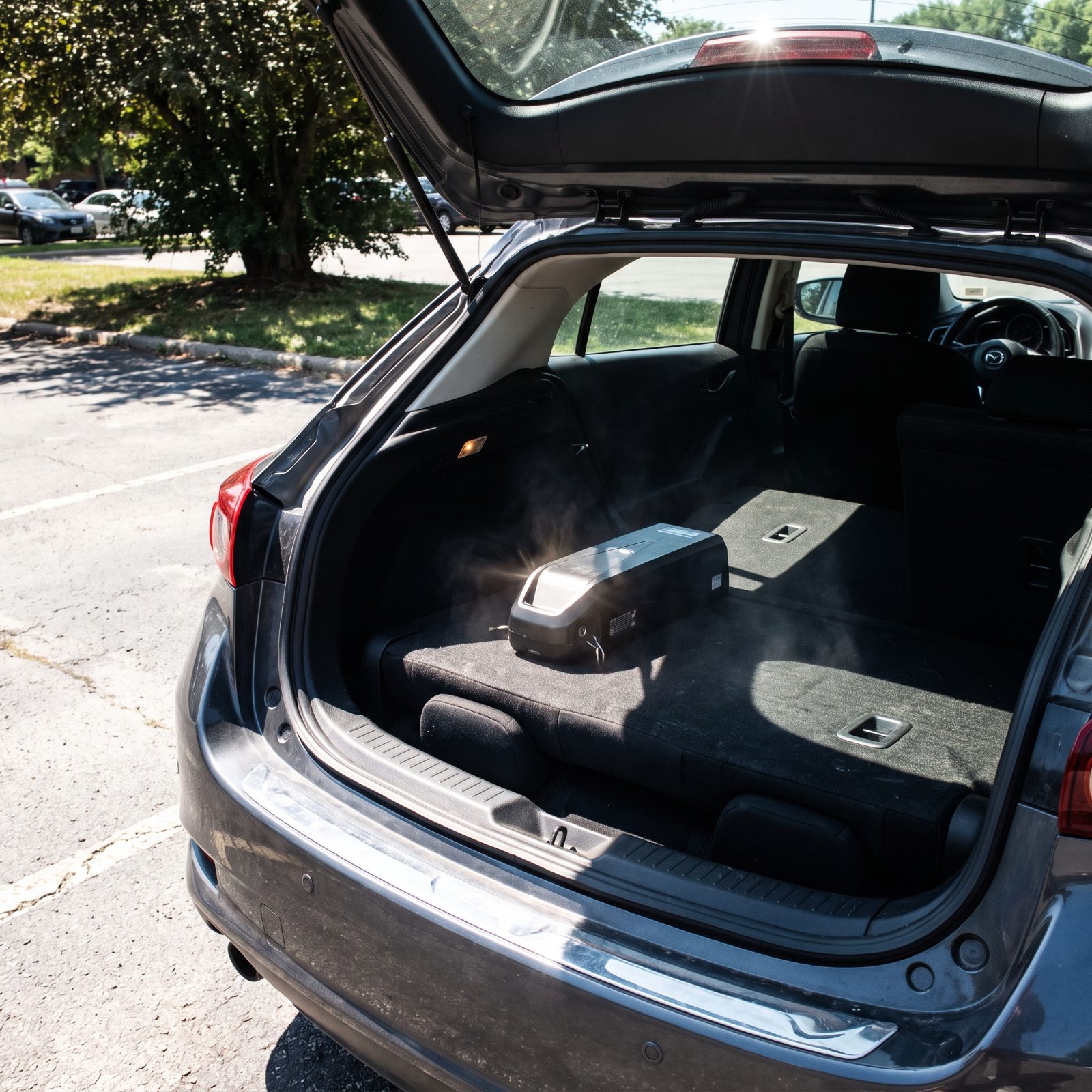
A car interior on a warm day climbs past 130 degrees fast, and a lithium battery cooked in that heat degrades quicker — worst case, it becomes a safety risk. The trunk? No better. Often hotter.
Hauling your e-bike by car and stopping for lunch? Pull the battery and bring it with you, or stash it in a cooler out of the sun. Heat is the slow killer of range, and parking lots are where a surprising amount of that damage happens with nobody watching.
25. Long-Term Storage Calls for a Partial Charge, Not a Full One
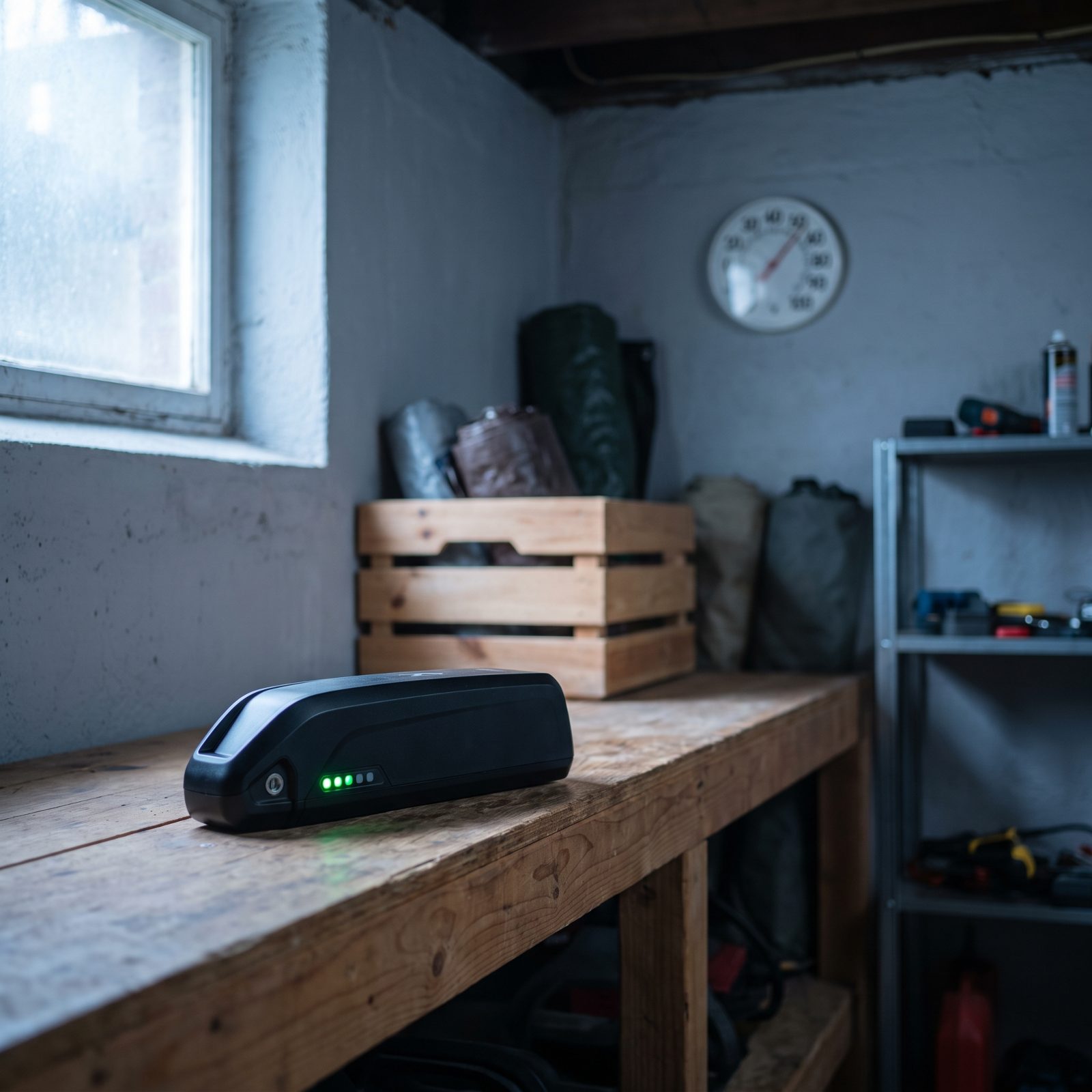
Storing a battery dead flat or topped to 100 percent all winter wears it out faster. A middle charge — somewhere around half to two-thirds — keeps the cells happy while the bike sits in the corner collecting dust.
Keep it cool and dry. Not a freezing shed, not a baking attic. Check it every month or so, and if it has drifted low, top it back to the middle. Do that and the pack you parked in October comes back in spring with its capacity mostly intact.
24. Cold Weather Temporarily Reduces Available Battery Range
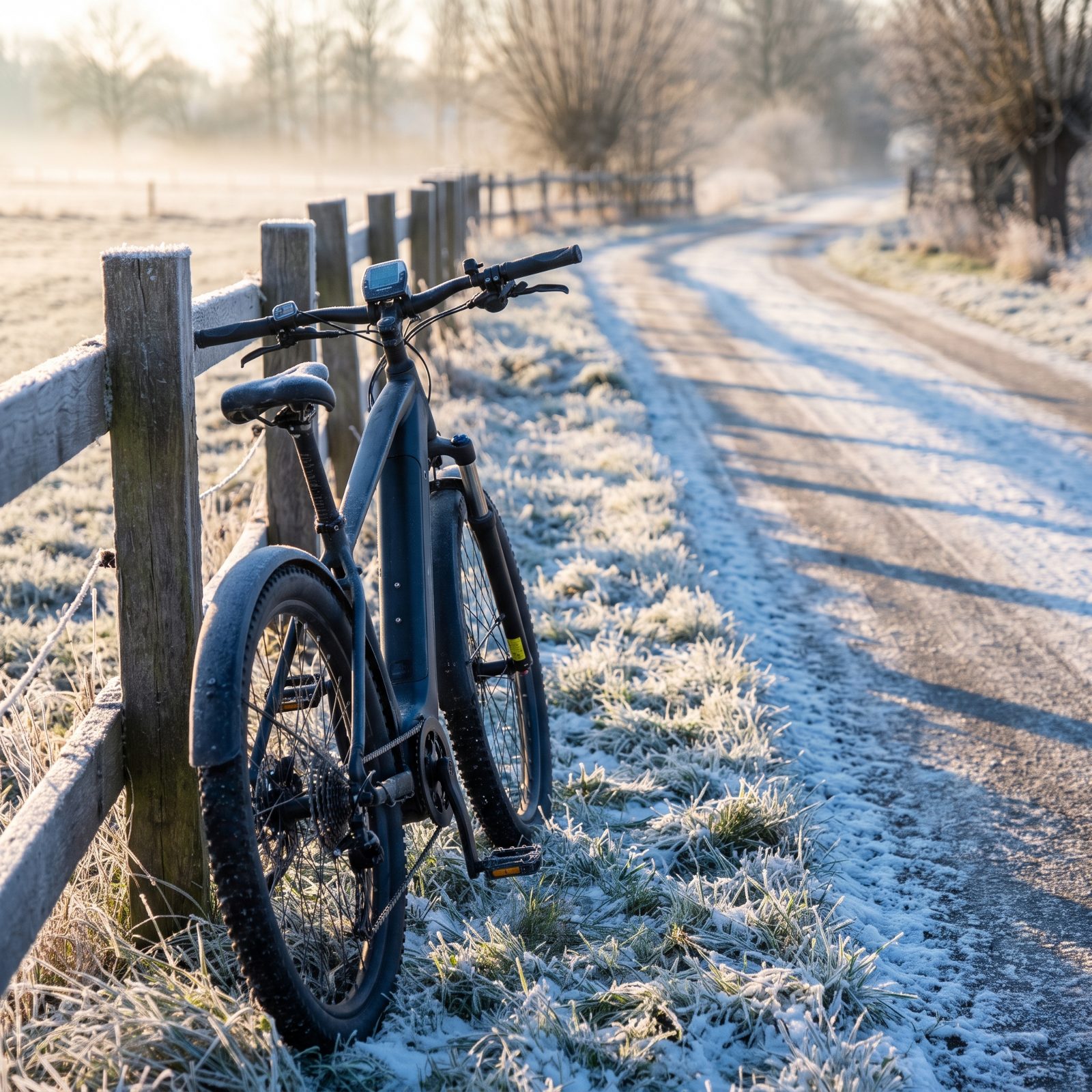
Cold slows the chemistry inside the pack, so a battery that gives you a full day’s range in summer might read a third shorter on a frigid morning. Here’s the good news, though — it’s temporary. Warm the battery back up and the range comes right back.
Plan rides shorter in winter, and don’t panic when the gauge dives early. The capacity isn’t gone. It’s hibernating. Keep the battery warm indoors until you leave and you’ll claw back a good chunk of that range for the opening miles.
23. Real Range Shrinks With Hills, Headwinds, Cargo and High Assist

That range number on the box is a best-case fantasy — flat ground, light rider, lowest assist, mild day. Reality stacks the deck against you. Hills, a stiff headwind, a loaded rack, and your thumb parked on turbo will cut it roughly in half.
Planning a long route? Work from the real-world figure, not the marketing one. A decent rule of thumb is to assume you’ll see maybe two-thirds of the advertised range in normal riding, and less if the road climbs. Run out of juice ten miles from home and that 50-pound bike turns into a very unpleasant workout.
22. Battery Gauges Can Drop Faster Near the End of a Ride
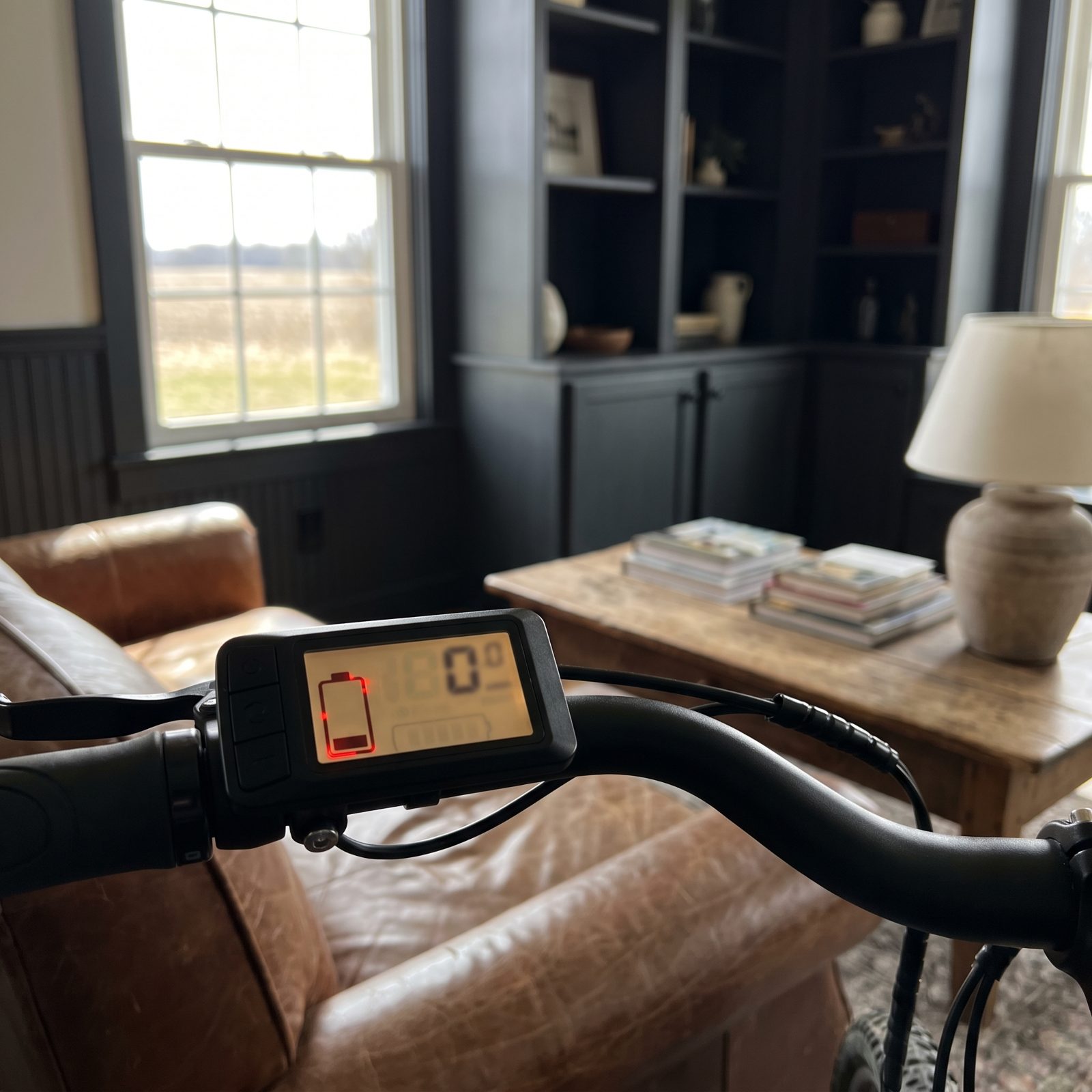
Battery gauges lie a little, and they lie most at the bottom. Voltage doesn’t drop in a straight line, so the needle can loaf along at half for ages, then sprint toward empty over the last few bars. The gauge reads voltage, not a true fuel level, and voltage falls off a cliff near the end.
So don’t trust the last quarter the way you trust the first. When the gauge hits 25 percent, start thinking about the route home, not the detour. Those final bars are a reserve, not a plan.
21. Proprietary Charger Connectors Complicate Replacement and Travel
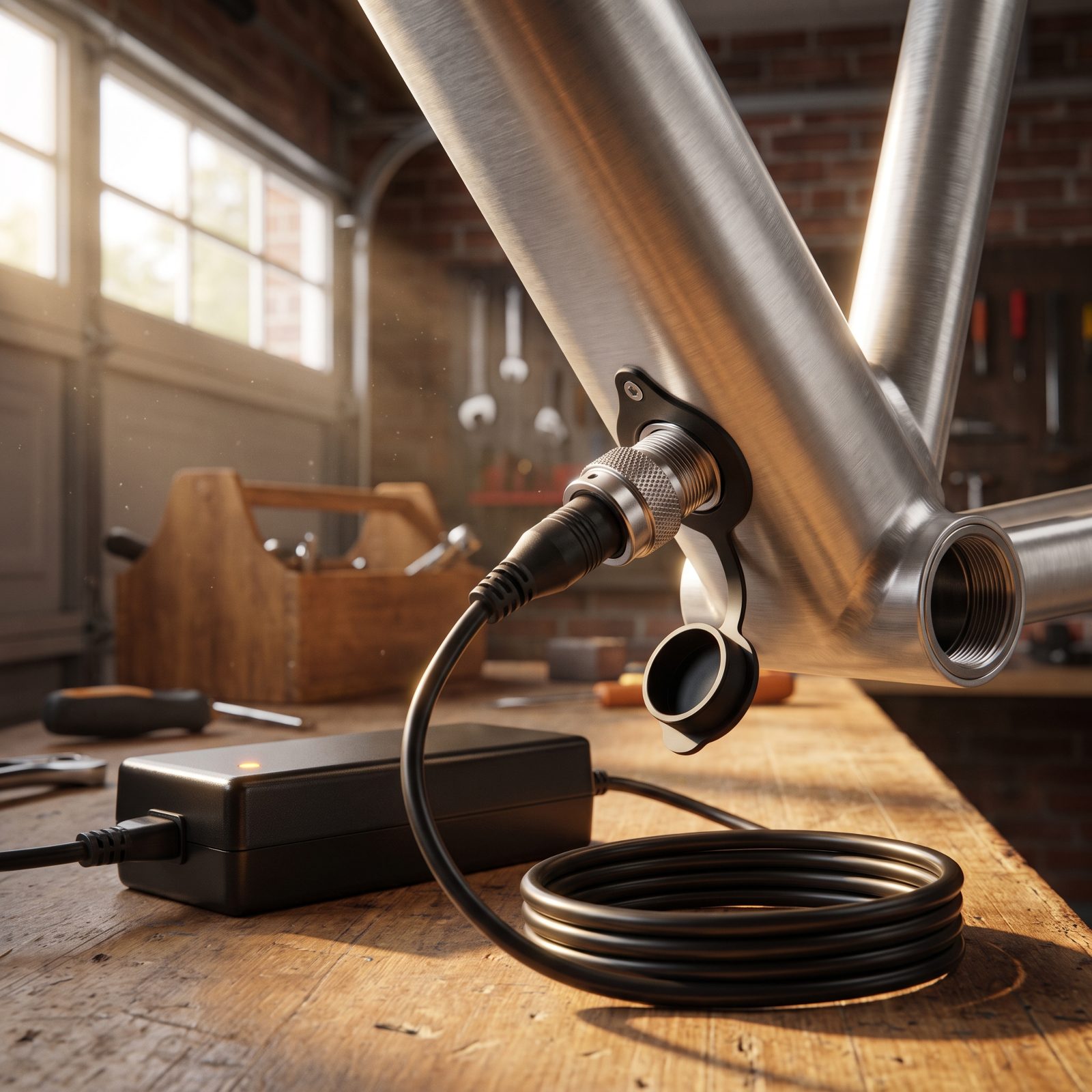
Nobody at the dealer mentions this one. Plenty of e-bikes use a charging plug that only that one brand makes, so lose the charger on a road trip or watch the company fold, and finding a replacement turns into a parts hunt.
Ask what the connector is before you buy, and whether a generic version exists anywhere. A standard barrel plug or XLR is your friend. An oddball locking proprietary plug means you haul the original everywhere and quietly pray the importer stays in business.
20. App-Dependent Controls May Require a Phone and Account
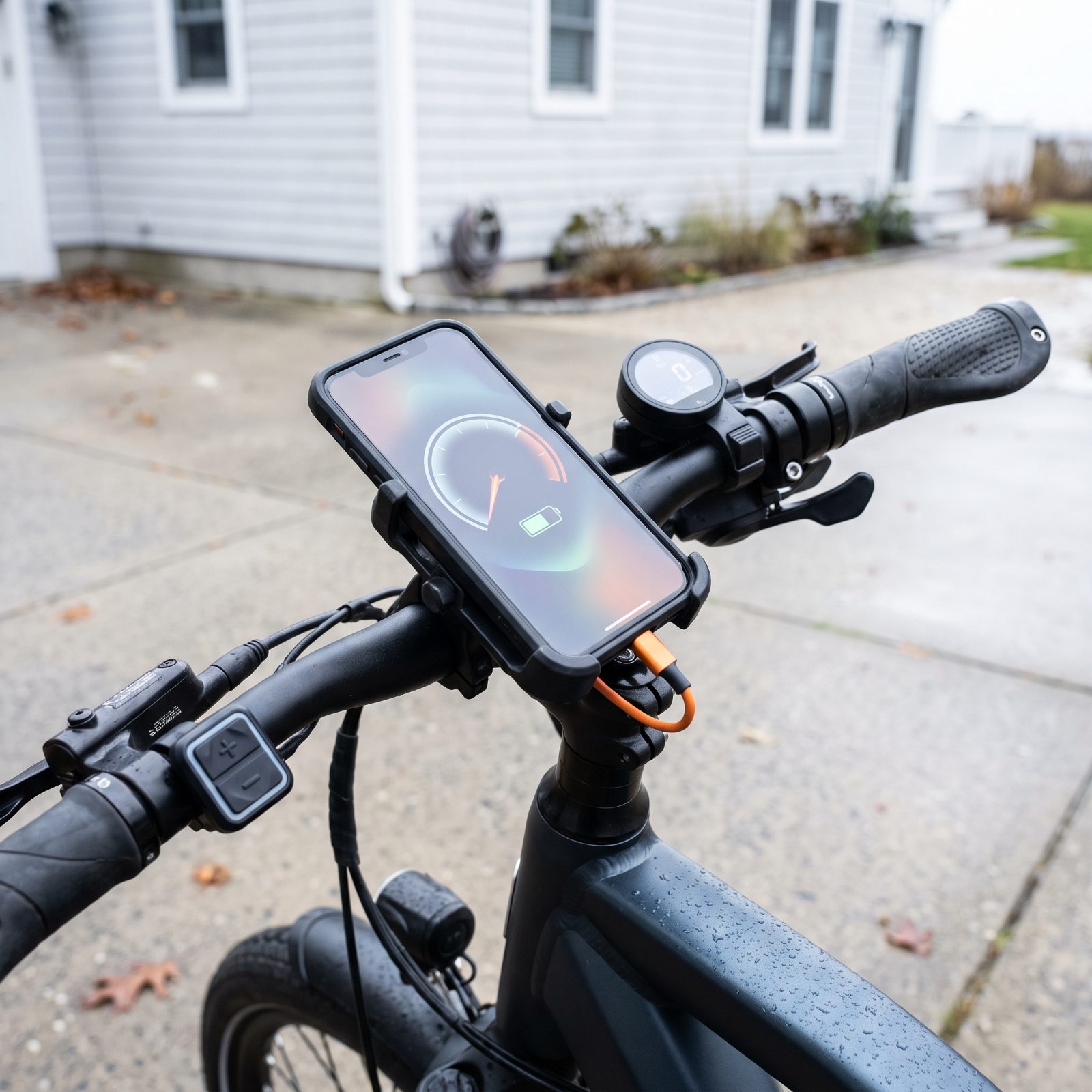
Some newer e-bikes bury the real functions in a phone app. Assist levels, speed limits, even unlocking the motor can live behind a login, which is fine right up until your phone dies at mile forty or the company sunsets the app two years in.
Test the bike with the phone off. If it still rides properly and lets you change assist from a bar button, good. If it goes dumb without a connected account, congratulations — you are renting software on wheels.
19. Trail Access Depends on the E-Bike’s Legal Class, Not Just Its Speed
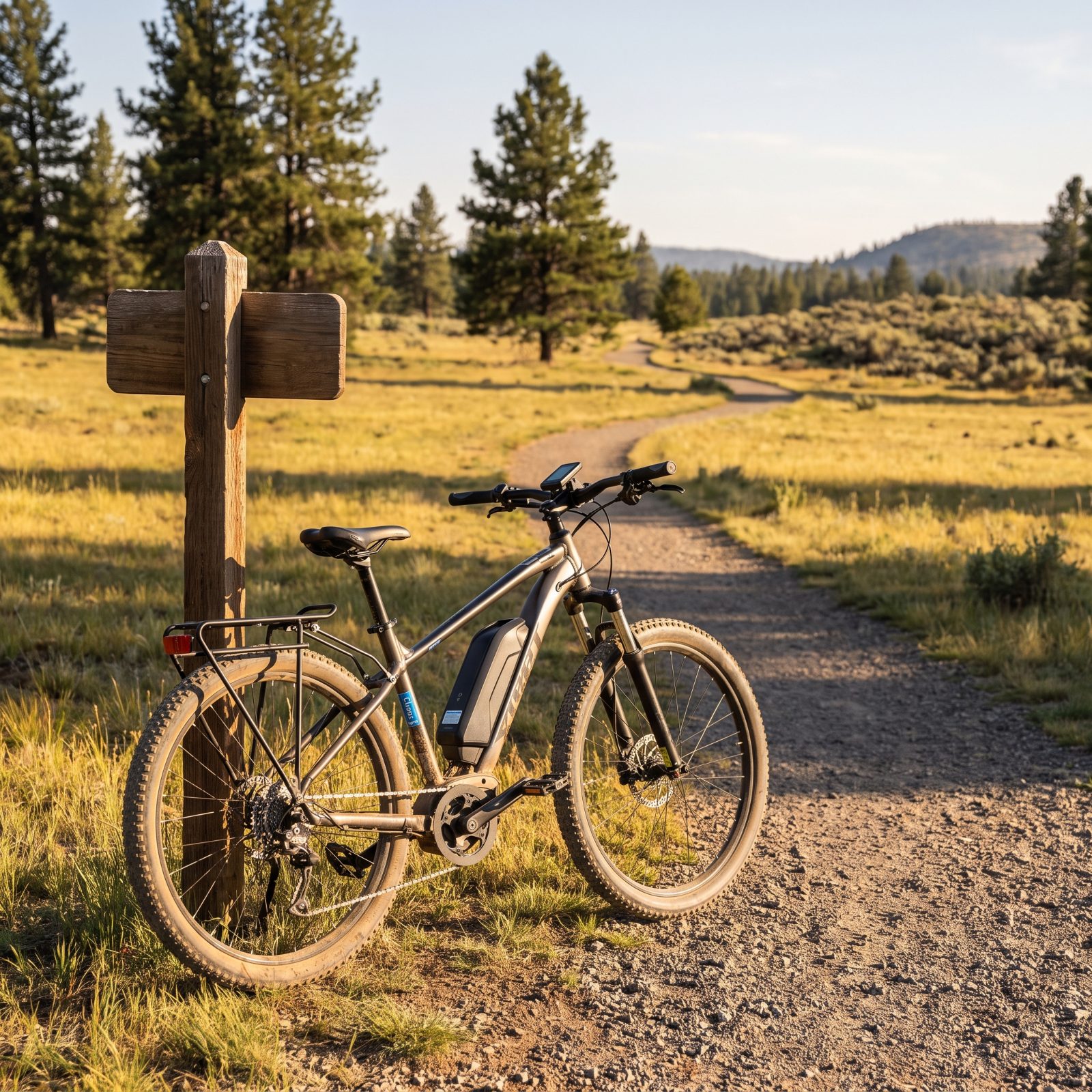
Riders assume a slower bike buys more trail access. It doesn’t work that way. Most land managers sort e-bikes into Class 1, 2 and 3, and those labels decide where you can legally ride, often regardless of how fast you actually go.
Class 1 covers pedal-assist bikes with no throttle that cut out around 20 mph, and they get the widest access on mixed-use paths and many soft-surface trails. Class 3 bikes and anything with a throttle get banned from a lot of them. So know your bike’s class before you load it onto the rack, because rules shift by state, by county, and sometimes by the individual park at the end of the road.
18. Large E-Bike Batteries Are Generally Prohibited on Passenger Flights

Big e-bike batteries don’t fly. Airlines cap lithium-ion capacity, and a typical e-bike pack runs well past the watt-hour limit allowed in checked or carry-on luggage. That dream of flying to a mountain town and renting your own bike at the gate? Not happening with the battery along for the ride.
People plan whole trips around shipping a bike ahead, then discover the pack has to travel by ground freight under hazmat rules — slow, and not cheap. Want to fly and ride? Rent an e-bike at the destination, or pick a route that puts the bike in the vehicle, not the overhead bin.
17. Train, Bus and Ferry Operators May Restrict E-Bike Size or Weight
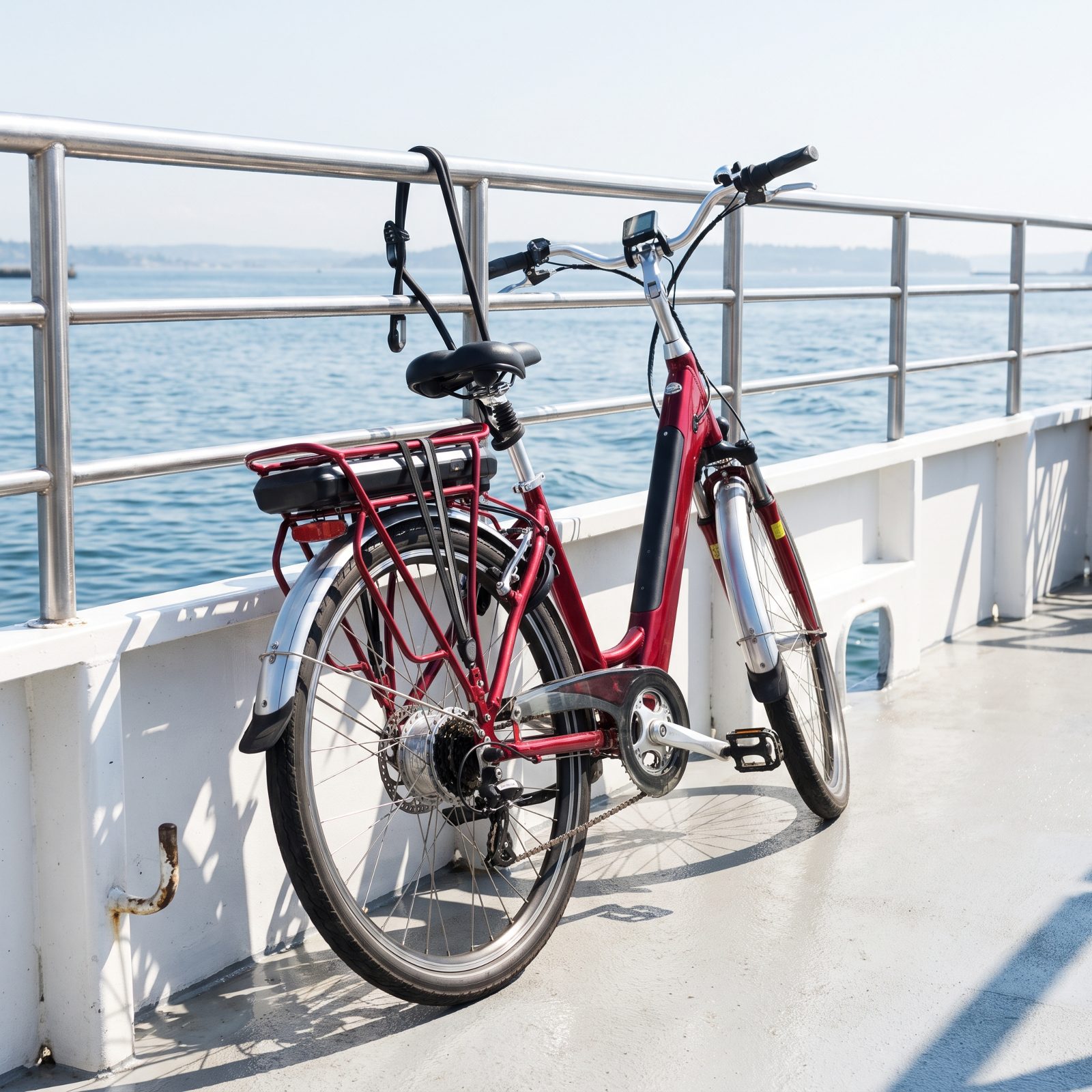
Commuter rail, intercity buses and ferries will happily take a regular bike and then quietly draw a line at e-bikes. Blame weight limits on the hooks, battery fire worries, and racks that were never built for a 60-pound machine.
Amtrak and many transit agencies run specific e-bike policies, and some ban them outright or demand you pull the battery. Check the exact operator before you plan a bike-and-rail trip. Showing up at the platform and getting turned away with a bike too heavy to hoist onto the hook is a rough way to learn the rule.
16. Folding E-Bikes Can Still Be Too Heavy to Lift Comfortably
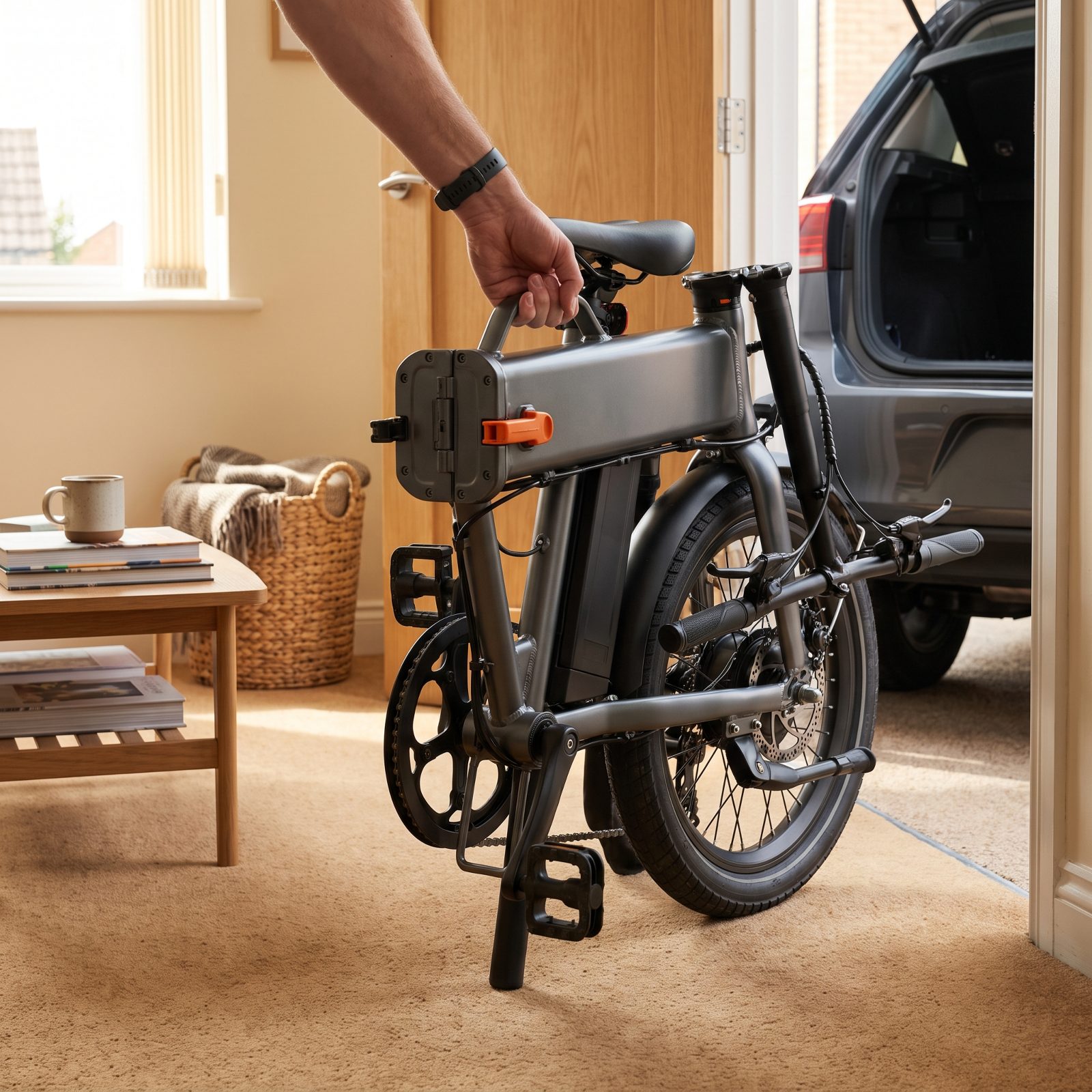
Folding doesn’t mean light. A folding e-bike collapses smaller, sure, but the motor and battery pile 15 to 25 pounds onto a plain acoustic folder, and plenty tip the scale past 50 pounds.
The pitch is “toss it in the trunk.” The reality is hoisting an awkward, oily lump over a bumper at hip height. If your lower back already files complaints, that daily lift matters more than any folded dimension on the box. So test the actual lift in the shop — pick it up, carry it ten feet, set it down. That one minute tells you more than the whole spec sheet.
15. Mid-Drive Motors Accelerate Drivetrain Wear, Especially When Shifting Under Full Load
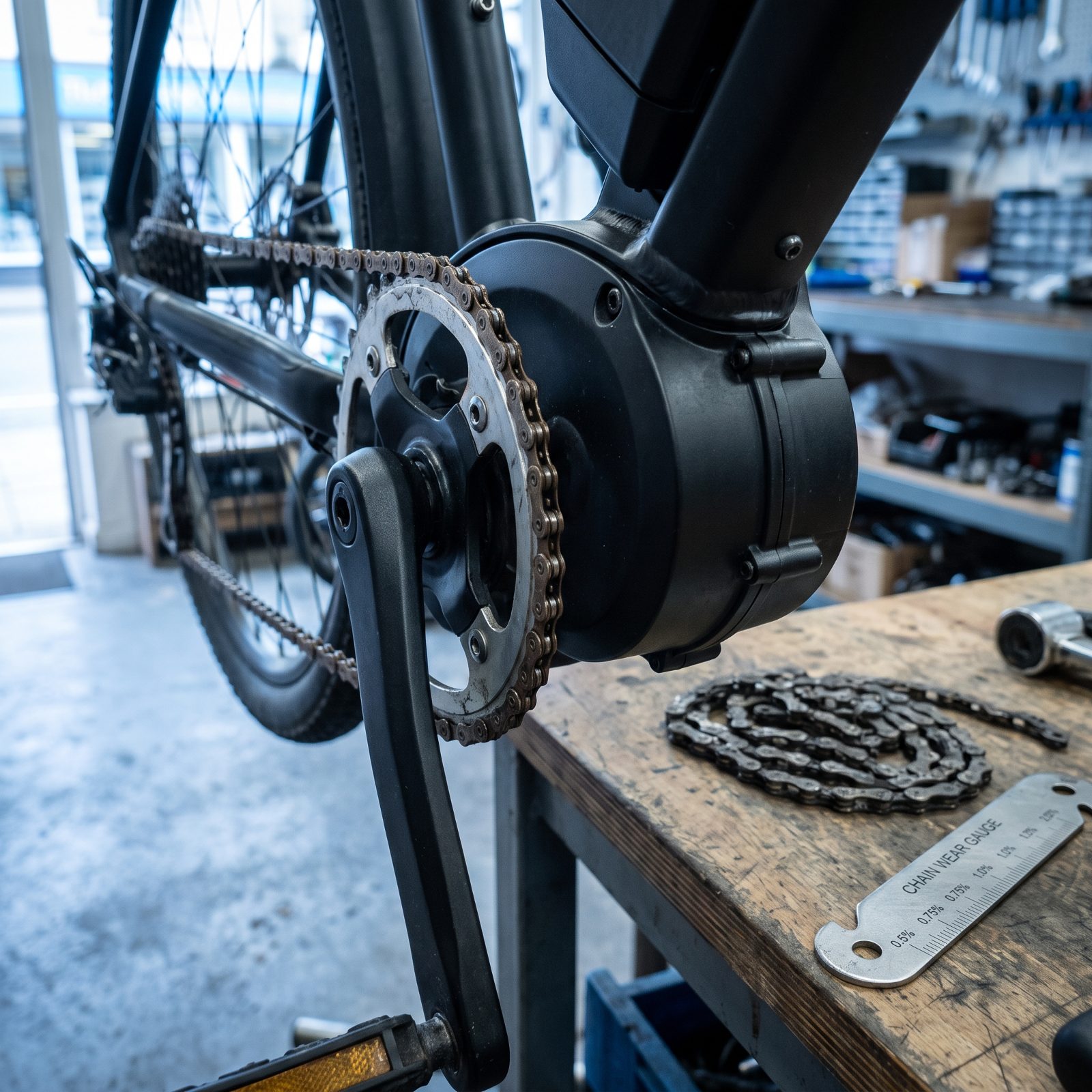
Mid-drive motors feel wonderful. They route the power through your chain and gears, which is exactly why the bike climbs like a mule and balances so well. The catch: your chain, cassette and chainring take motor-level torque, so they wear faster than they ever would on a human-only bike.
The worst habit is shifting while the motor is pushing hard, because that grinds teeth and snaps chains. Ease off the pedals for half a second as you shift, the way you’d lift off the gas in a manual car. Budget for chains more often than you’re used to and watch for stretch — a cheap chain swapped early saves an expensive cassette down the road.
14. Rotor Size and Brake Type Matter More on a Heavy E-Bike
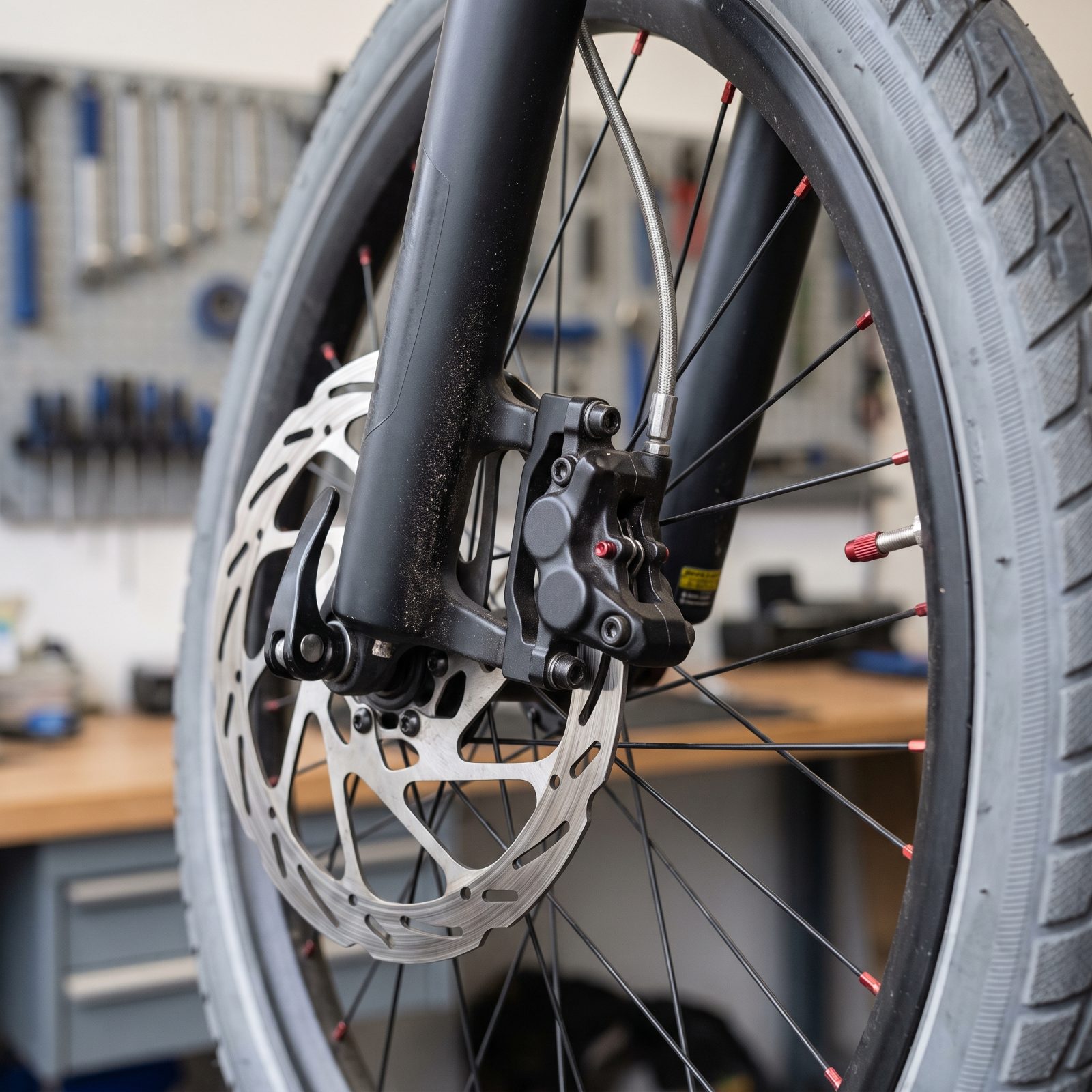
An e-bike carries more weight and usually more speed than the rim-brake bikes most of us grew up on, and stopping that mass takes real hardware. Mechanical disc brakes paired with small 160mm rotors fade and go wooden on a long descent — not a feeling you want halfway down.
Look for hydraulic discs and bigger rotors, 180mm or 203mm, especially up front and especially if you ride hills or haul cargo. The larger rotors shed heat better and deliver more stopping power for less hand effort, which matters plenty when your grip strength isn’t what it was at thirty. On a heavy bike, brakes are not the place to pinch pennies.
13. Low-Speed Starts and Tight Turns Require Dedicated Practice
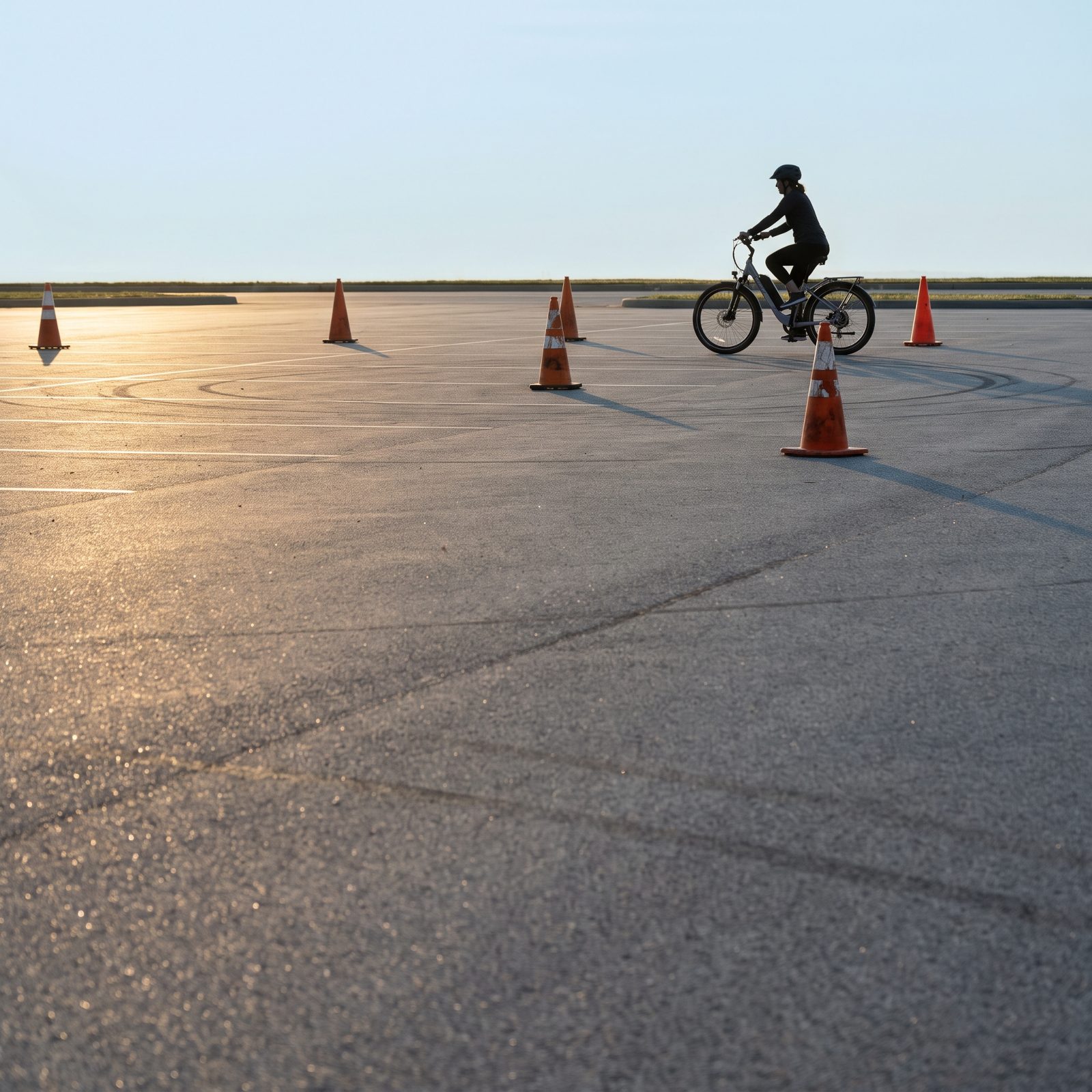
The jolt catches people off guard. Throttle and pedal-assist deliver power fast, and a heavy bike leaping forward at a stop sign — or wobbling through a tight U-turn — is how a lot of low-speed spills happen. More riders drop e-bikes in parking lots than out on open roads.
Spend an hour in an empty lot before you ride anywhere real. Practice gentle starts, slow figure-eights, stopping without putting a foot down. Learn exactly how your assist behaves from a dead stop, because a bike set to high can launch harder than you expect. The weight that helps you cruise turns against you at walking pace.
12. Mounting and Dismounting Are Safer With Assist Switched Off
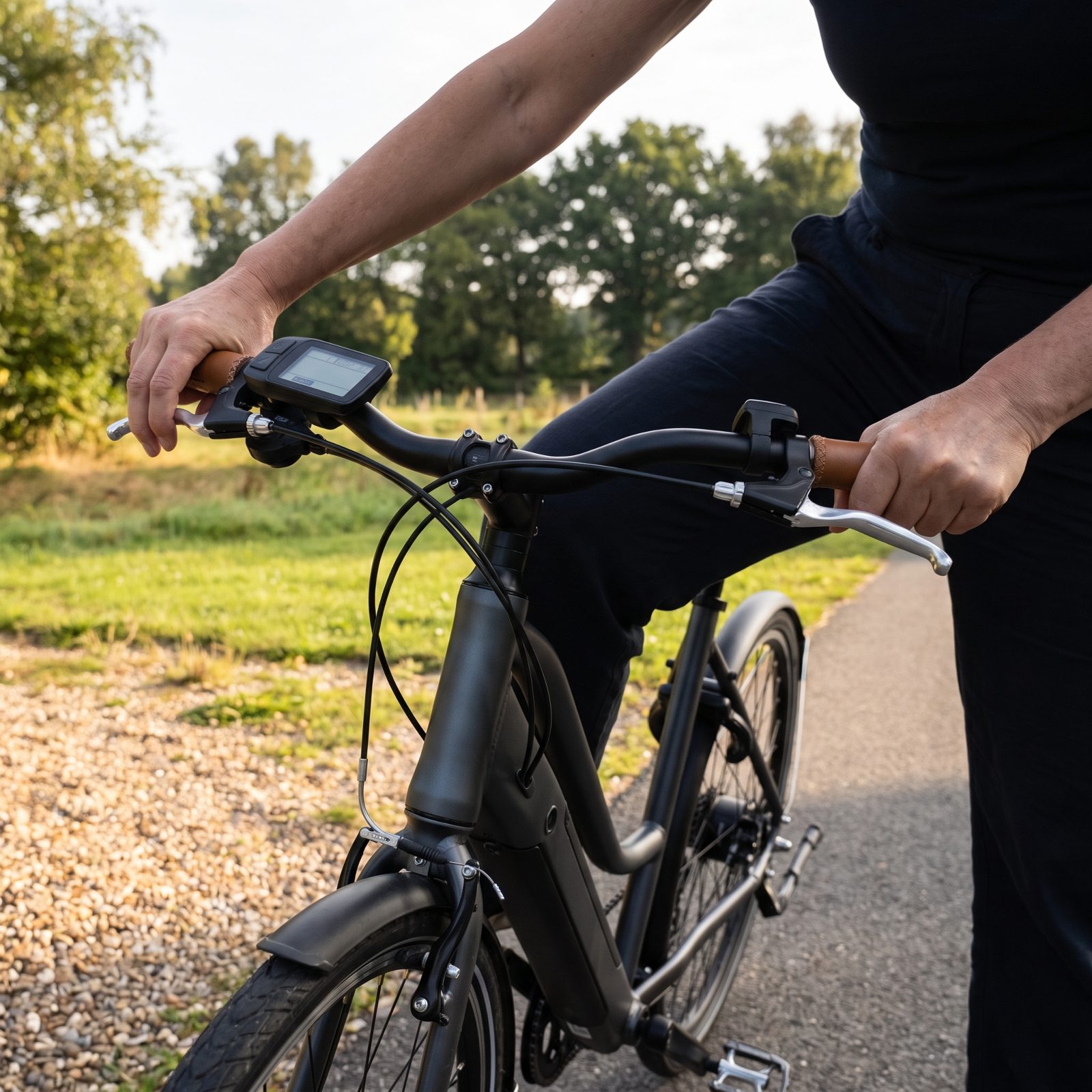
The first time an e-bike lurches forward because your foot nudged the pedal at full assist, you learn this one for good. Pedal-assist motors fire the moment the crank turns — even half a rotation while you’re still getting a leg over.
So power down before you get on. Cover both brakes, keep the bike flat and still until you’re settled and your hands are where they belong, then switch it on. Shut it off again before stepping off.
11. A Step-Through Frame Still Needs Enough Stand-Over Clearance
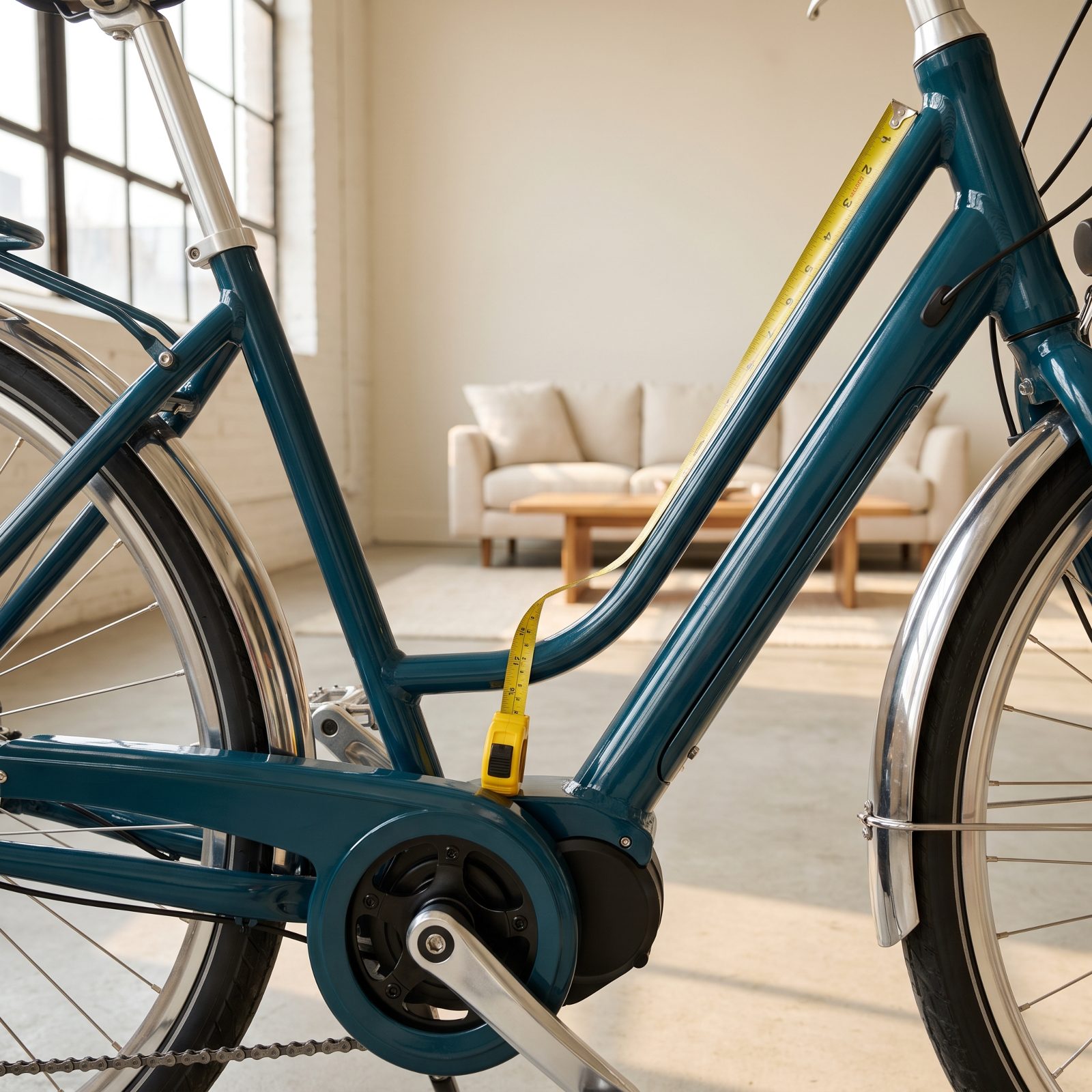
Step-through doesn’t automatically mean low enough. Battery placement, fender clearance, and the slope of that dropped tube all change where your inseam actually meets metal.
Stand over the frame flat-footed, in the shoes you ride in. You want room, not a bar pressing against you. A frame that clears easily is the one you’ll still hop on when your hip is stiff on a cold day — and honestly, that ease is half the reason people keep riding at all.
10. An Upright Position Can Put More Pressure on the Sit Bones
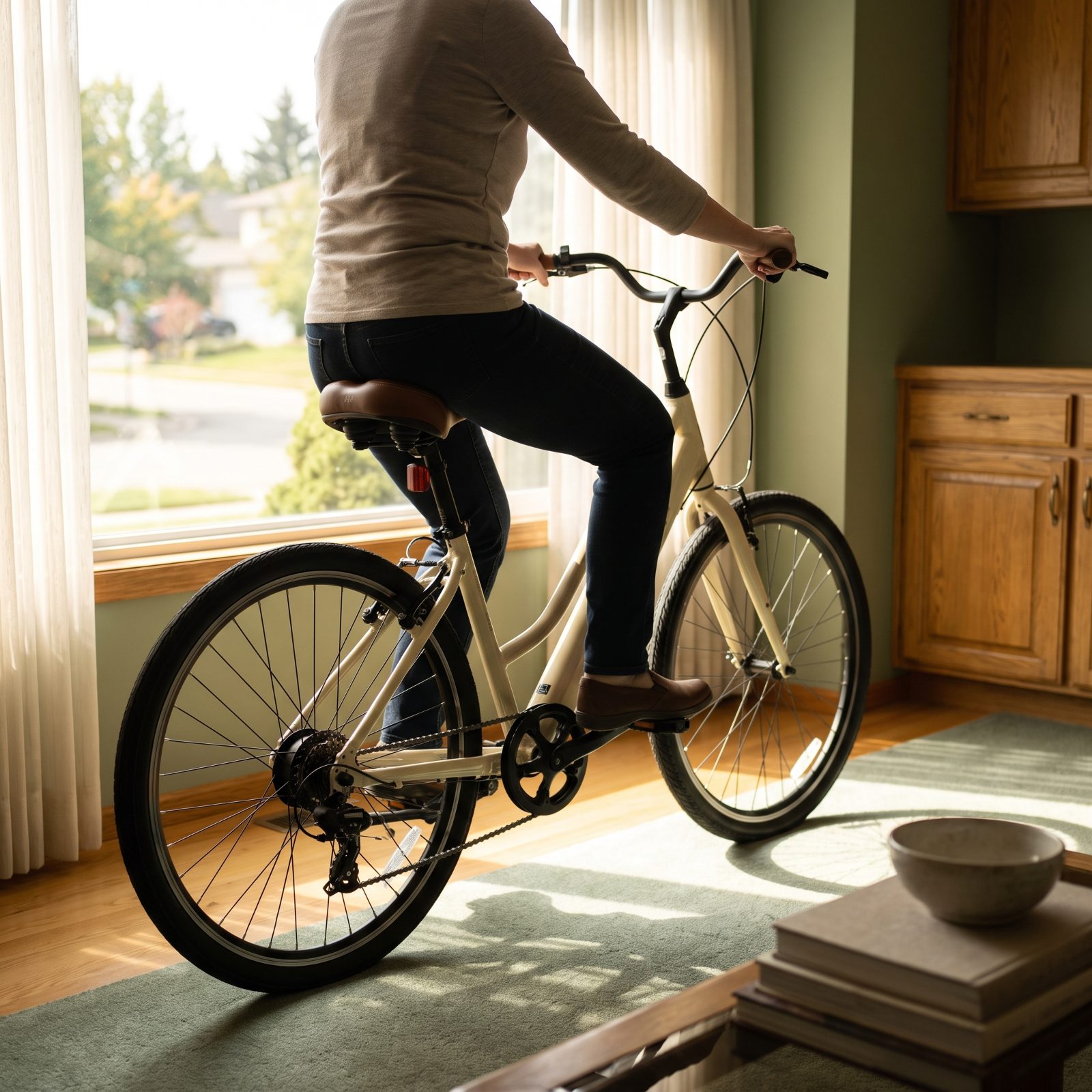
The upright riding position feels friendly in the showroom. Back straight, head up, no reaching forward — people love it on the first lap around the parking lot.
Here’s the trade. Sitting bolt upright dumps most of your weight straight down onto your sit bones instead of spreading it between hands, feet, and seat, and on a longer ride that pressure adds up fast.
The fix isn’t giving up the comfortable posture. Match a wider, firmer saddle to those more widely spaced sit bones, and let the pedals carry a bit more of you.
9. A Deeply Padded Saddle Is Not Always the Most Comfortable Choice
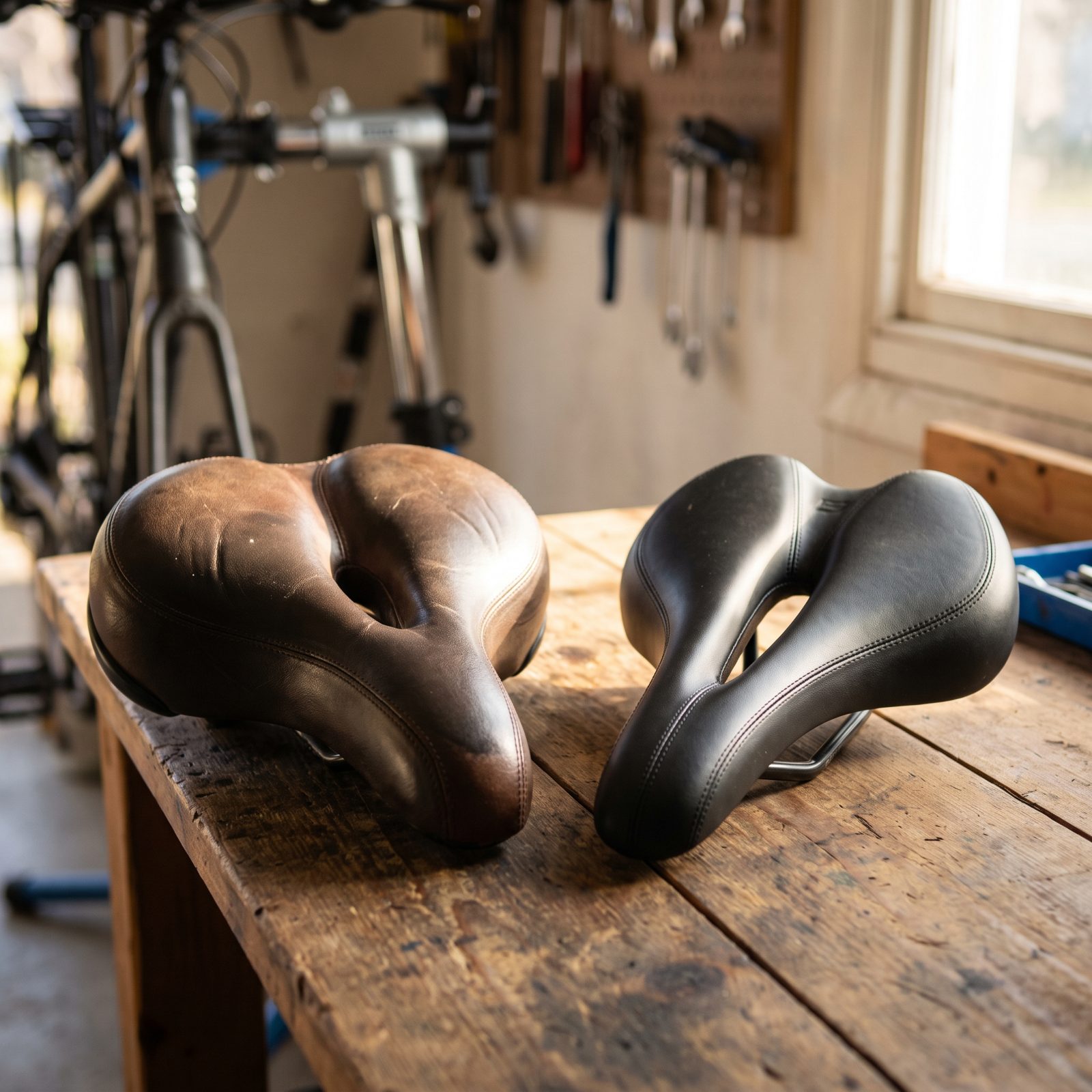
That pillowy saddle looks like mercy and feels like it for about fifteen minutes. Then the trouble starts.
Soft foam compresses under your sit bones and bulges up into the soft tissue between them — exactly where you don’t want pressure. A firmer saddle with a relief channel supports the bones and leaves the middle alone.
8. Handlebar Sweep and Grip Shape Can Reduce Hand Numbness
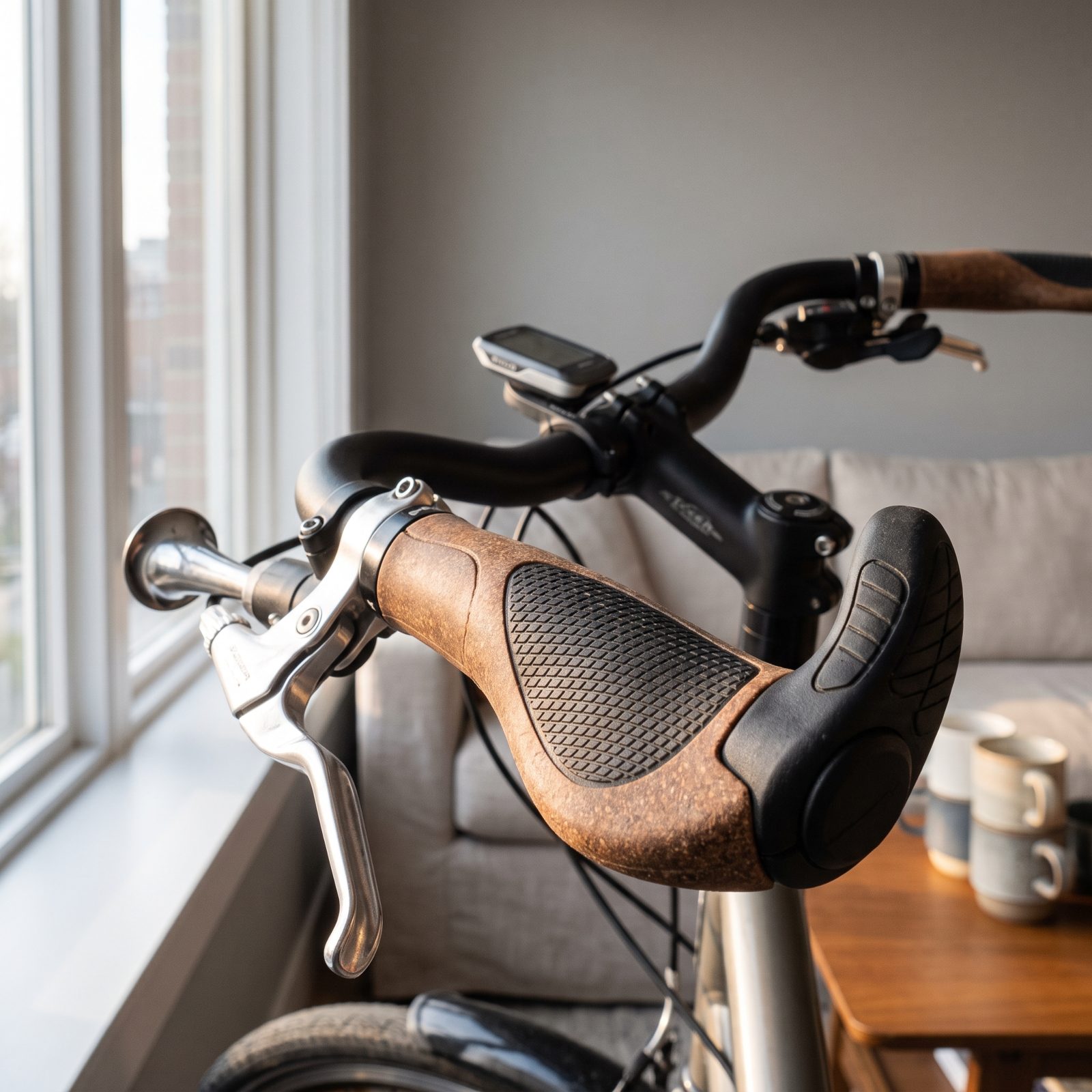
Pins and needles in the ring and little finger after a ride isn’t just fatigue. It’s pressure on the ulnar nerve, right where your palm meets the grip.
Two things help. Grips with a wide, wing-shaped palm rest spread the load off that nerve, and bars with a backward sweep let your wrists sit in a natural handshake angle instead of cranked flat. Small changes. Big difference on anything past half an hour.
7. Crank Length and Saddle Height Both Affect Knee Comfort
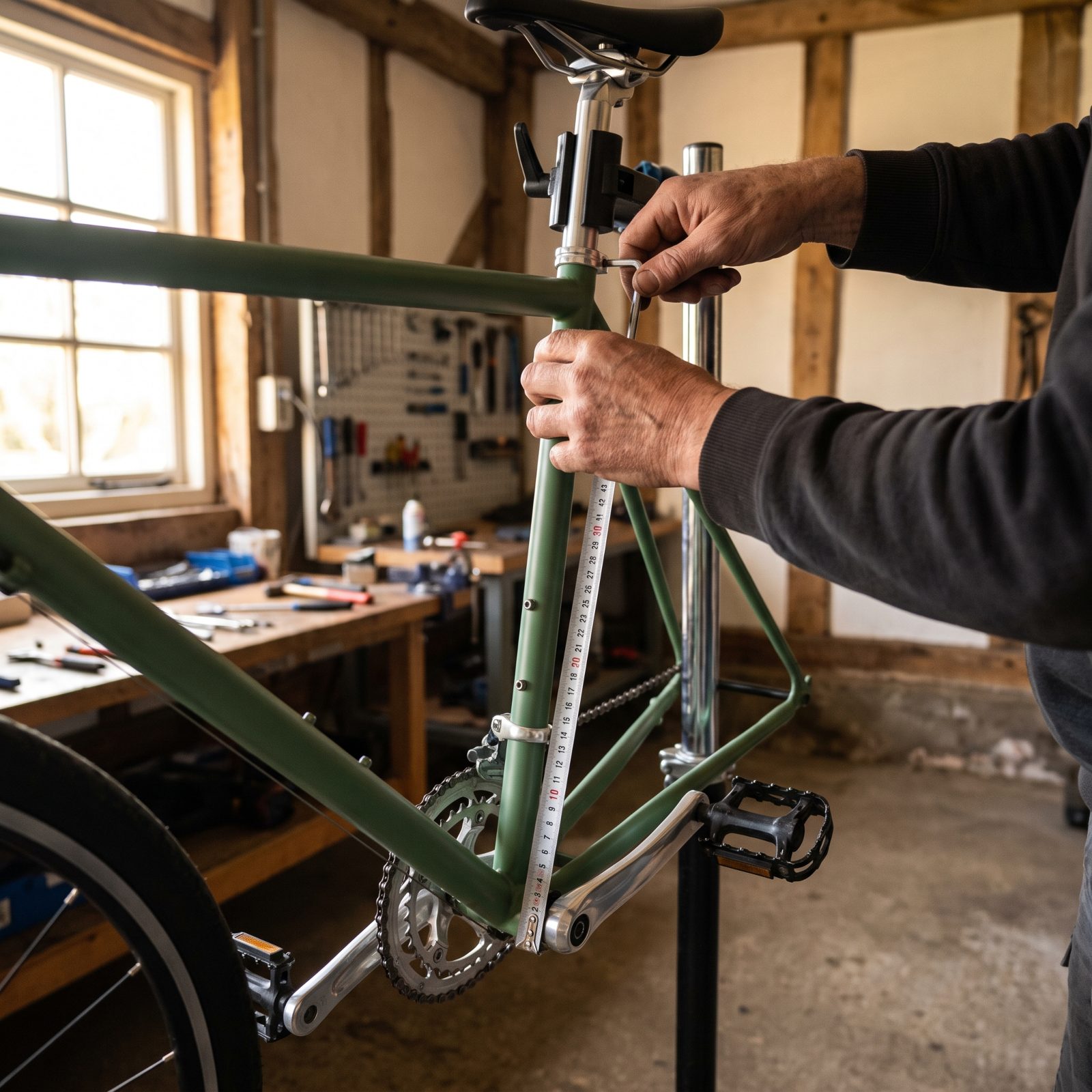
Knee pain on an e-bike usually traces back to two numbers almost nobody checks.
A saddle set too low forces your knee into a deep bend at the top of every stroke, which stresses the front of the joint. Set it so your leg is nearly straight at the bottom, with just a slight bend. Then there’s crank length. Shorter cranks reduce how far the knee has to flex at the top, and plenty of comfort riders feel better on them — especially anyone nursing a cranky knee or a replacement.
6. Tire Pressure Should Reflect Rider Weight and Cargo
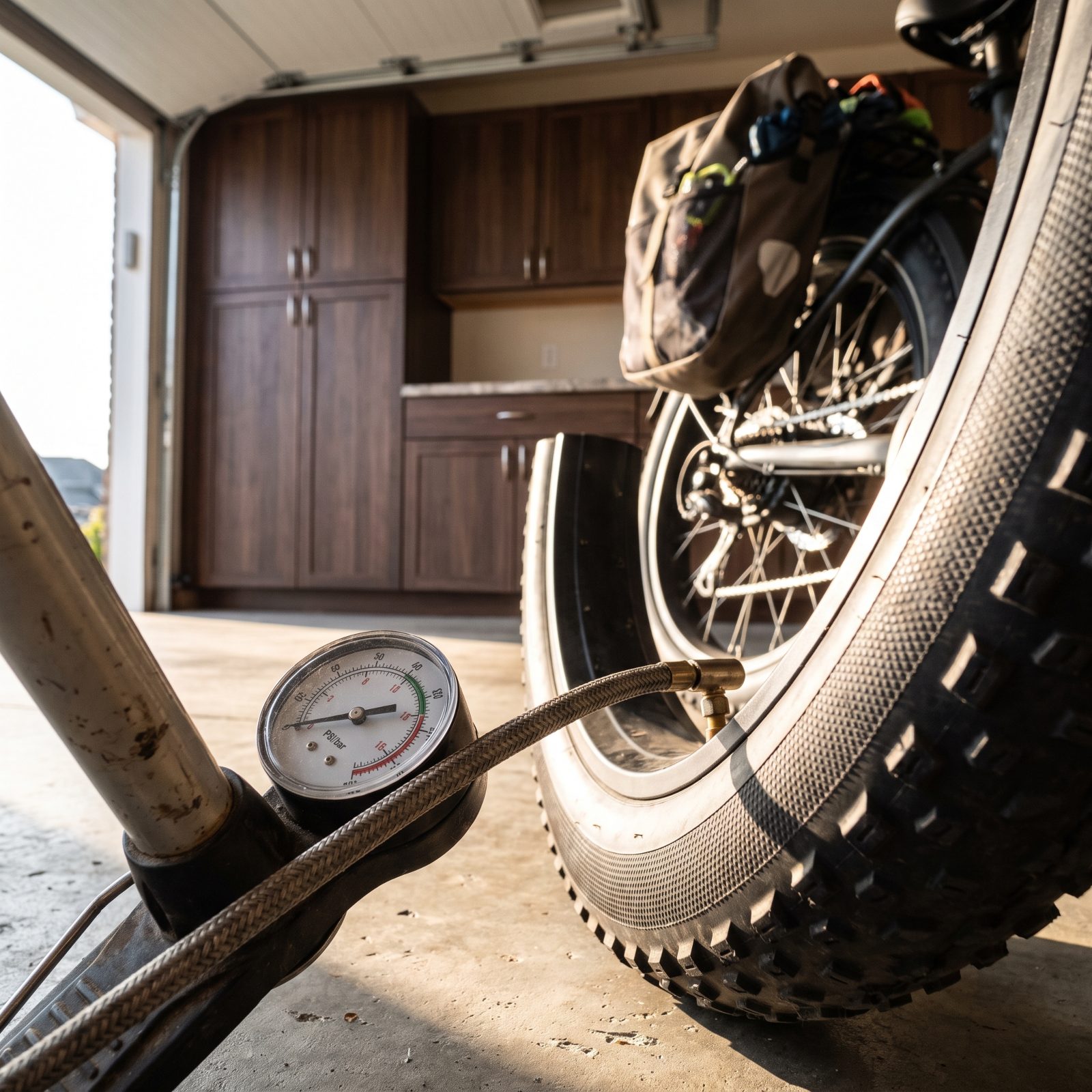
The number molded into the sidewall is a range, not an order. Heavier riders and loaded panniers belong near the top of it; lighter loads and rough pavement want the lower end.
Run too soft and the ride feels sluggish, the tire squirms in corners, and you invite pinch flats. Run too hard and every seam in the road rattles up through your wrists and spine. E-bikes weigh more and carry more, so their tires need checking more often than you’d guess — give them a squeeze about once a week.
5. Puncture-Resistant Tires Can Prevent Difficult Roadside Repairs
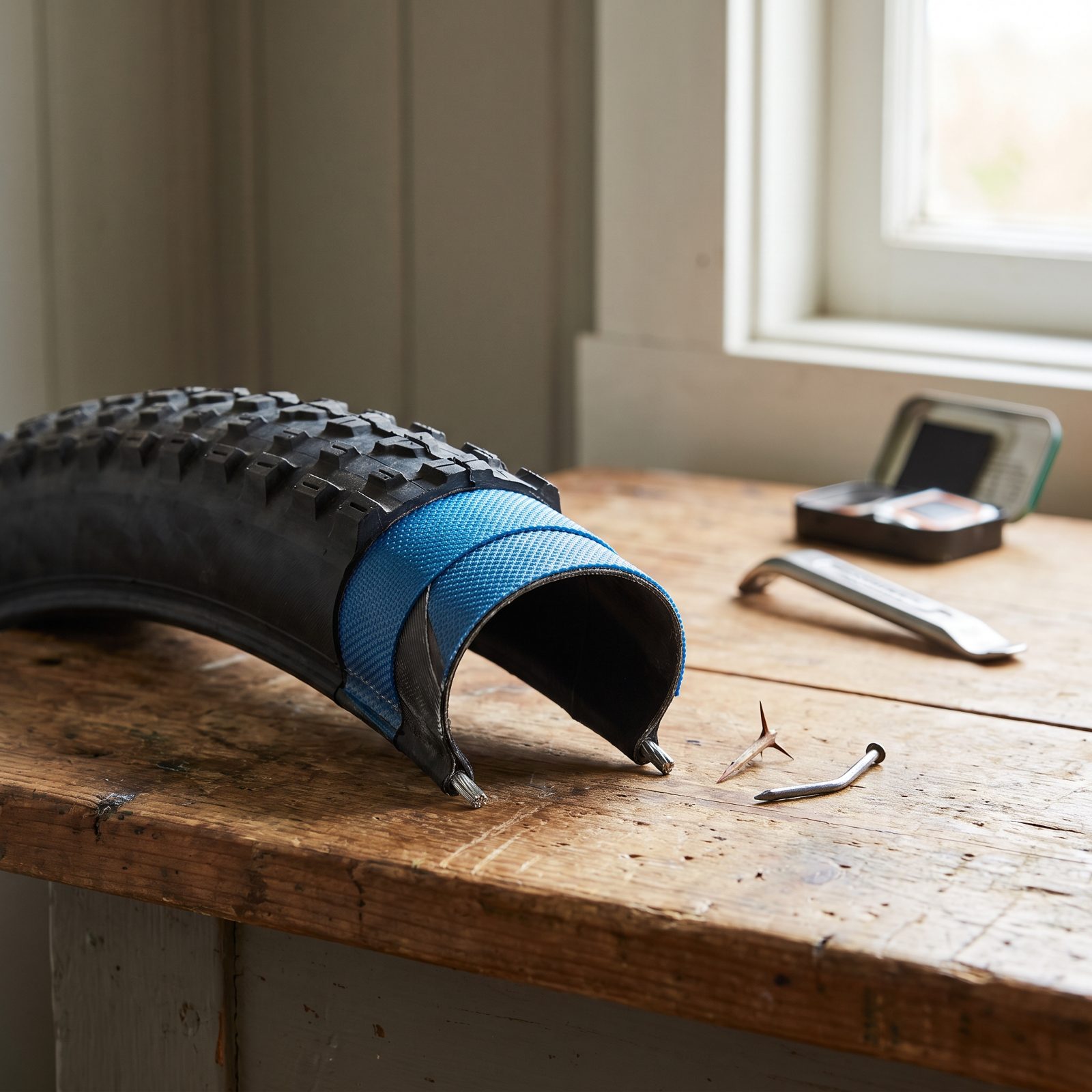
Changing a flat on an e-bike isn’t the quick job it was on your old ten-speed. Hub motors, torque arms, thru-axles, and heavier wheels turn a roadside fix into a wrestling match — usually on the shoulder of a road you’d rather not be stopped on.
Tires wrapped in a tough fabric protection belt head off most of that trouble before it starts. They roll a touch slower and cost a little more. On an assisted bike you’ll never feel the difference, and the first thorn you shrug off pays for them.
4. The First Service Should Include Fasteners, Brakes and Spokes
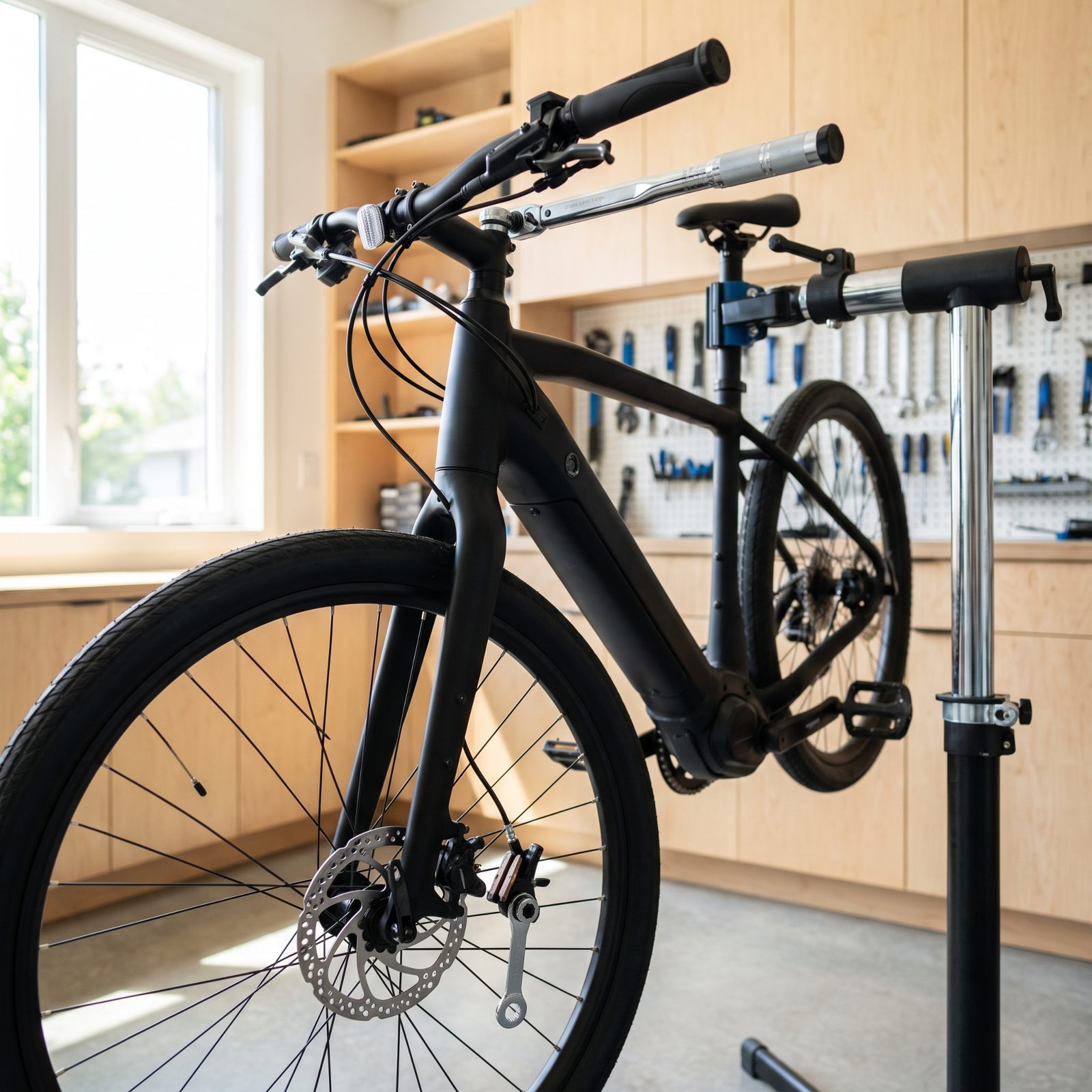
New bikes settle in. That’s normal, and it’s exactly why the first checkup matters.
Spokes bed into fresh wheels and lose tension, cables stretch, and bolts that were snug at the factory work slightly loose over the first few hundred miles. On a bike this heavy and this quick, a loose stem or a soft brake is no small thing.
3. Not Every Frame Accepts Standard Racks and Panniers
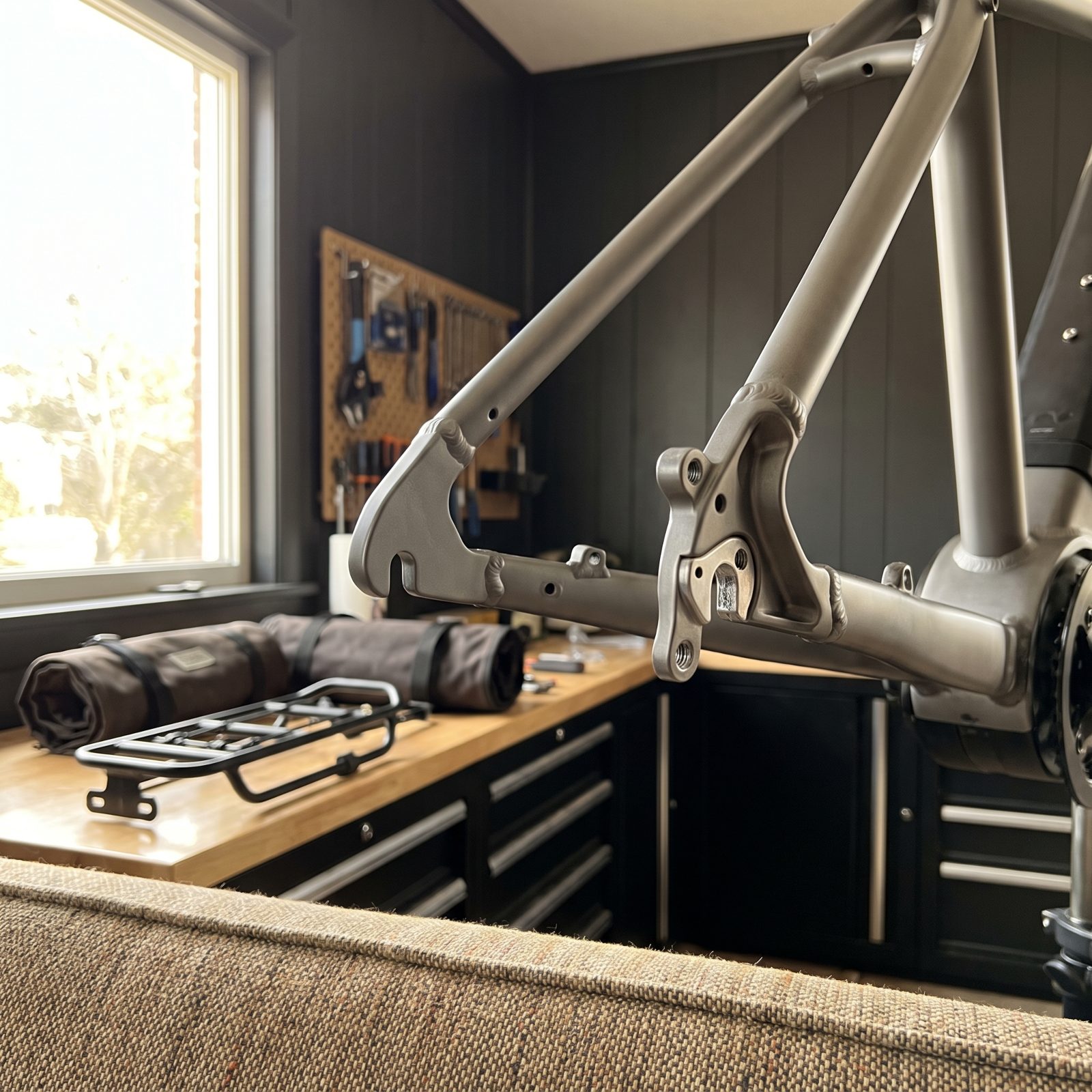
You picture the panniers full of groceries before you picture whether the frame can hold them. Then the bags arrive and there’s nowhere to bolt the rack.
Integrated batteries, dropper posts, and sleek seatstays often skip the threaded eyelets that racks need. Some bikes solve it with a frame-specific rack sold separately. Others leave you fighting with seatpost-clamp racks that wobble under load.
If hauling things is the whole point of your bike, confirm the mounts and the rated weight limit before you buy. A rack rated for 55 pounds on paper means little if the frame has nowhere proper to attach it.
2. Rear Cargo Changes Steering and Low-Speed Balance
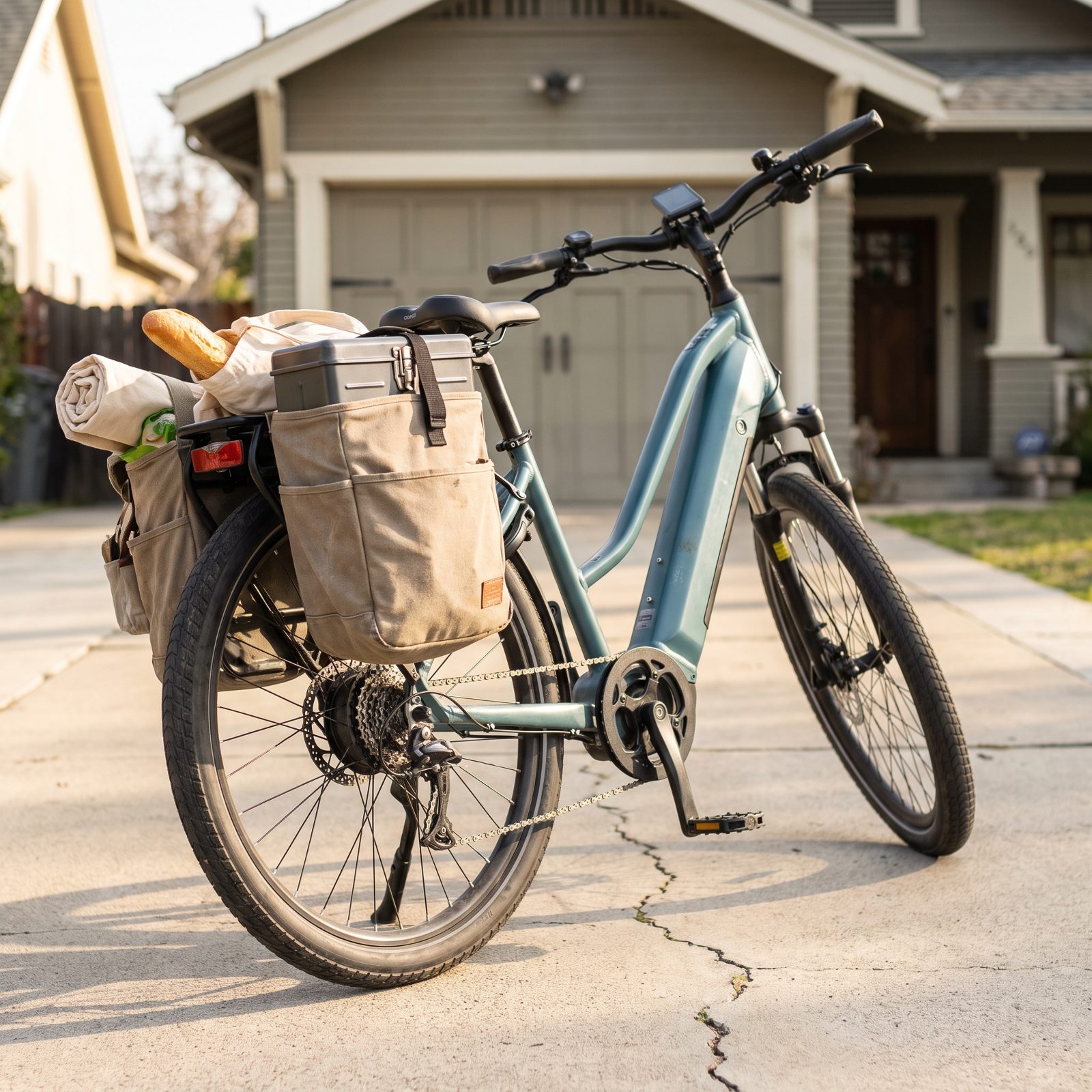
Strap a load of groceries over the back wheel and your bike turns into a different animal, especially below walking pace. The weight sits high and far back, so the front end goes light and the steering gets vague. That wobble you feel pulling out of the driveway? It gets worse before it gets better.
Load low and forward when you can. Panniers hanging beside the wheel beat a milk crate bungeed on top, every single time. A front basket helps too, spreading the weight instead of dumping it all behind you.
1. Homeowners or Renters Insurance May Limit E-Bike Coverage
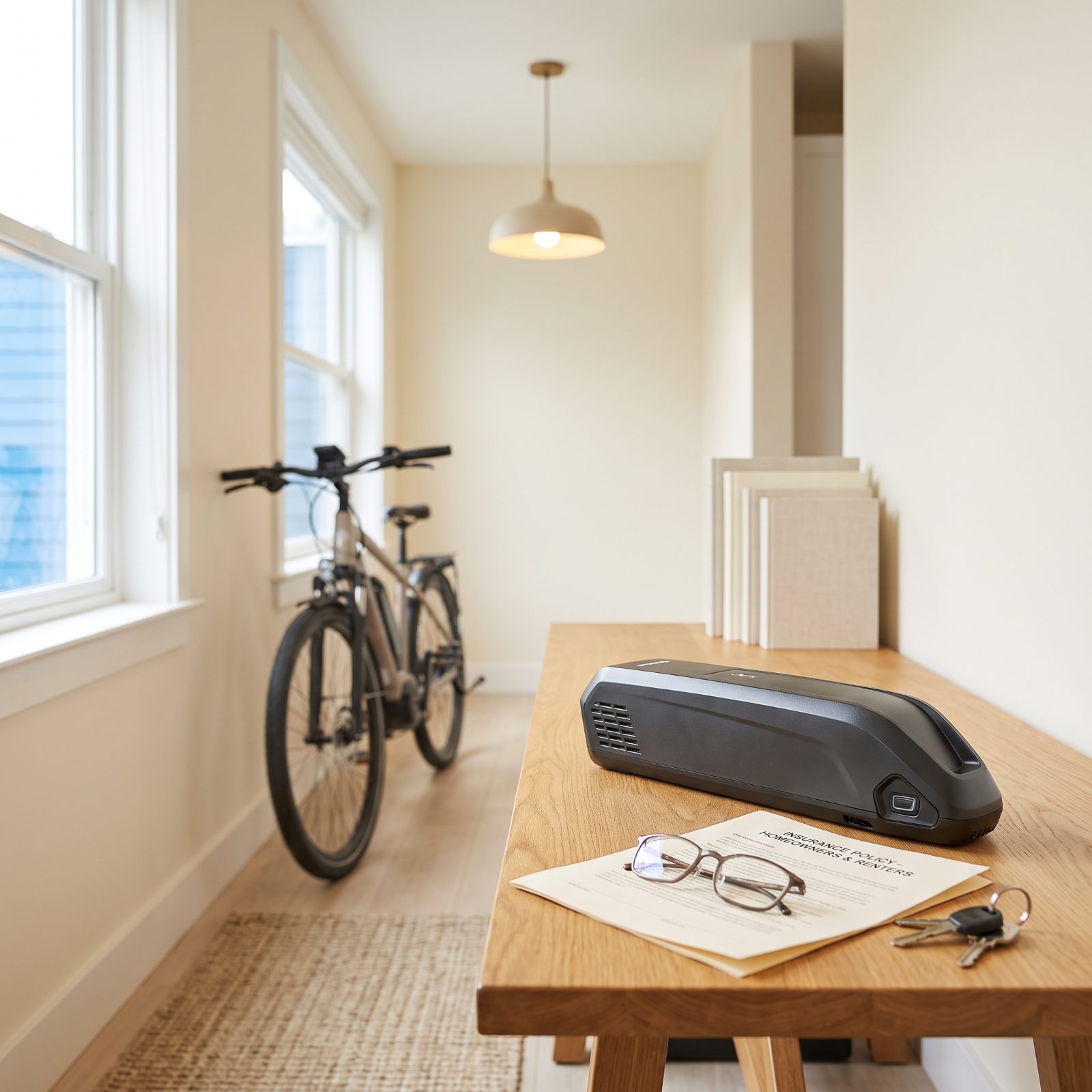
Most people assume the bike rides along under the house policy. Sometimes it does. Often it doesn’t, or only up to a sublimit that’s a fraction of what you paid, and theft away from home may not count at all.
E-bikes carry a specific wrinkle. Once there’s a motor and a throttle in the mix, some insurers start treating the thing more like a scooter than a bicycle, and that shoves your coverage into a gray zone or straight out the door. Picture a pricey e-bike lifted off a rack in a trailhead lot. That’s a very expensive lesson in reading the fine print.
Call the carrier before anything goes sideways. Three plain questions do the job: Is it covered at all? For how much? And does that still hold once it’s away from the house? When the answers come back fuzzy, a standalone bicycle or e-bike policy usually runs a few bucks a month.