
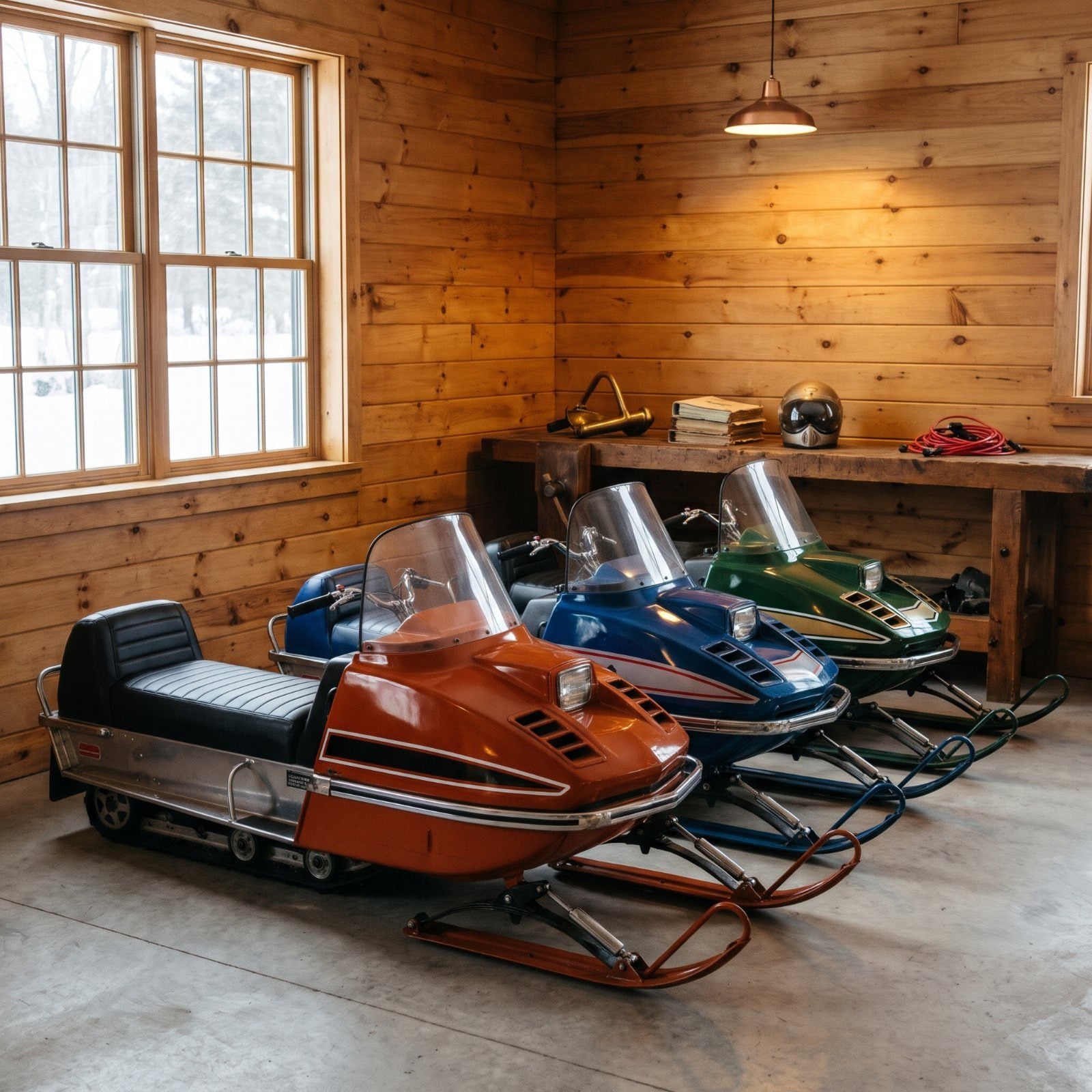
A ratty old sled sitting under a tarp in somebody’s pole barn is worth more than the pickup parked next to it. Nobody believes that until they watch the hammer fall. These machines got ridden hard, crashed, parted out, and left to rot through fifty-plus winters — which is exactly why the survivors climb. Racing pedigree. Oddball engineering. Tiny production runs, and that dumb ache of remembering the first pull cord you ever yanked. That’s the currency now. The ones below built the sport, broke records, or broke the mold, and some fetch what a decent used car costs. Here’s what the money follows.
Please note that some of the images in this article were created with the assistance of AI.
1970 Arctic Cat King Kat 800
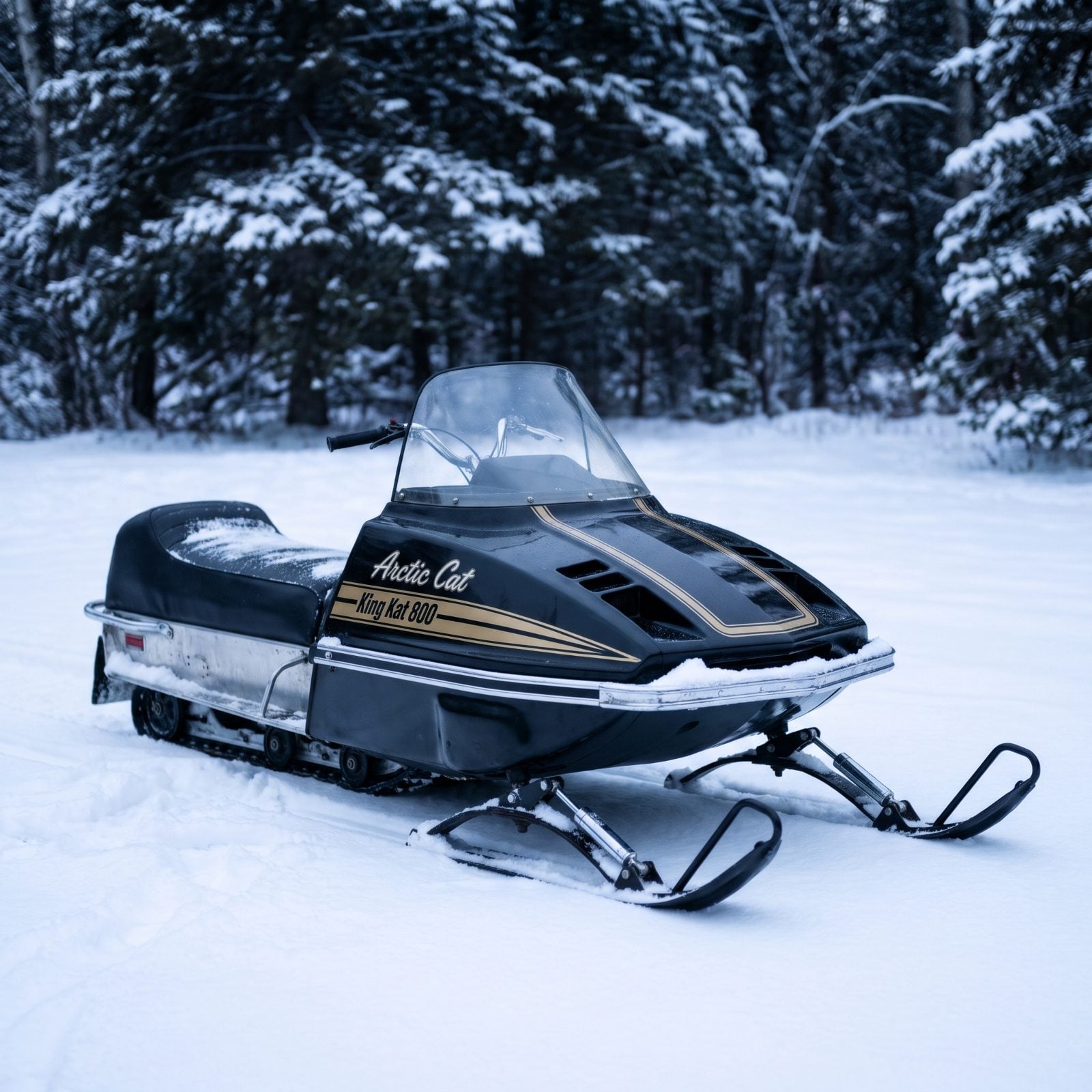
The King Kat was Arctic Cat swinging for the fence before most folks could even hold the bat. An 800cc twin bolted into a chassis that didn’t quite know what to do with all that power, and that mismatch is half the reason collectors want one now.
Production was small, and plenty got raced straight into oblivion. A clean, numbers-honest example surfaces at auction maybe once a season — then the bidding goes quiet and serious. These are the sleds that built Cat’s reputation for going too far on purpose.
1971 Ski-Doo Blizzard 797
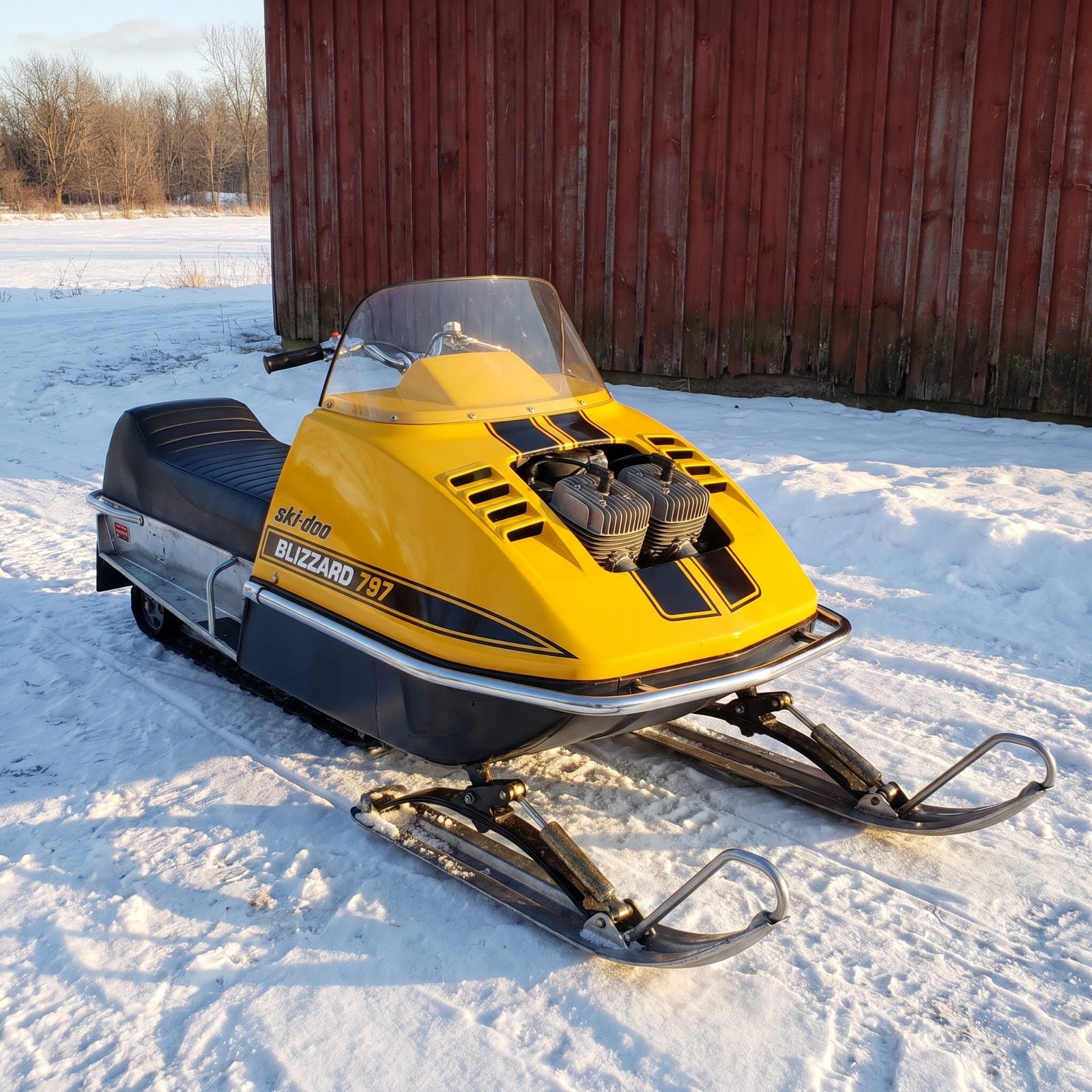
Ski-Doo basically wrote the rulebook, then handed the Blizzard to the people trying to break it. The 797 was a cross-country weapon — free-air twin screaming, built lean for racers who’d trade comfort to shave weight.
That racing DNA is the whole value story. Survivors with documented event history jump a tier above the ones that just look pretty, and buyers chase provenance here far more than paint.
The yellow Ski-Doo isn’t nostalgia for a brand. It’s nostalgia for the sound.
1972 Polaris Starfire 650
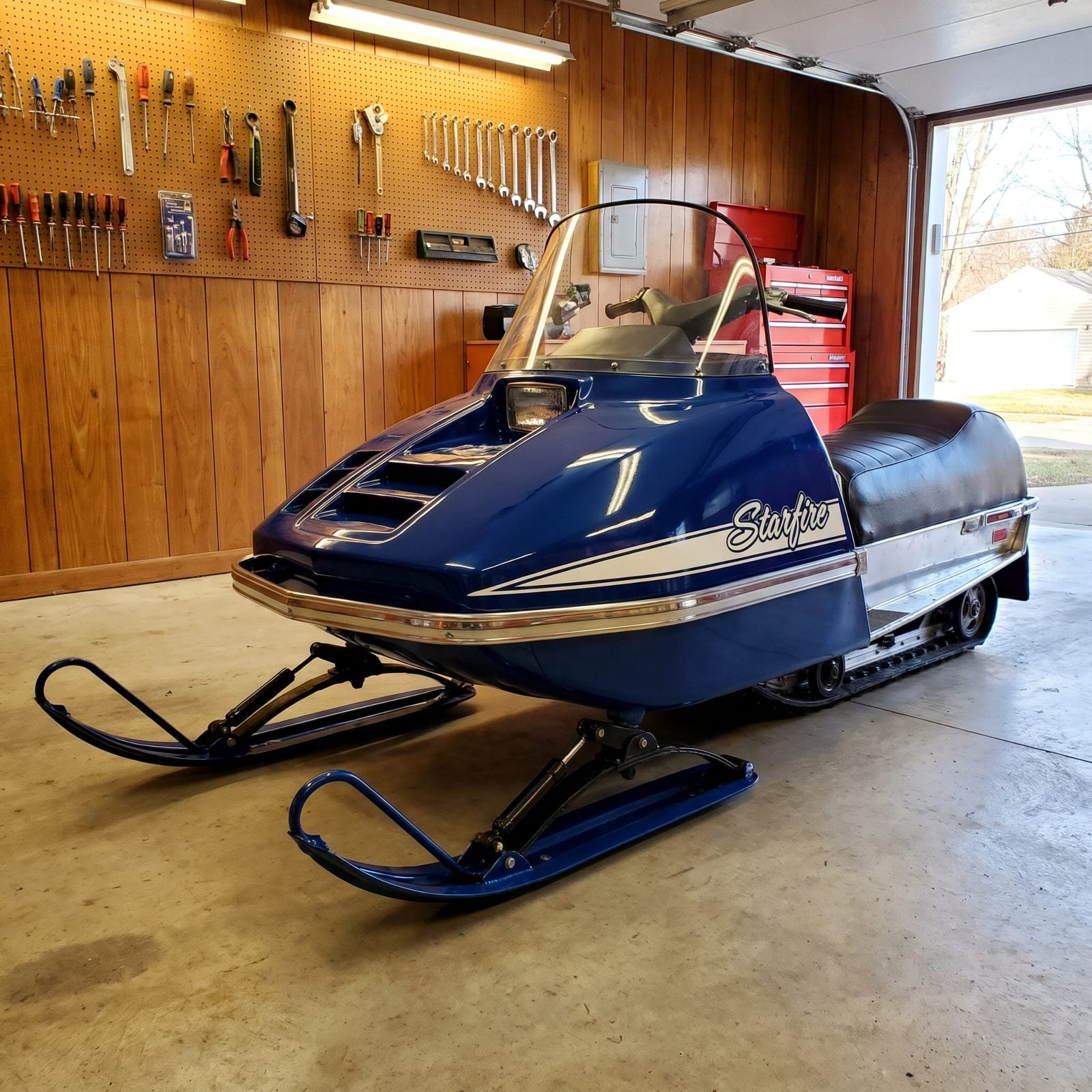
The Starfire name carries weight with Polaris people. The 650 version had the kind of midrange punch that made Saturday trail riders feel like they’d gotten away with something.
Condition rarity drives the money. Plenty of Starfires still exist, but ones that haven’t been repainted, re-tracked, and bodged back together are getting scarce. An original-paint survivor with a clean hood pulls a premium that catches off guard the people who still think of these as cheap old iron.
1971 Polaris TX 795
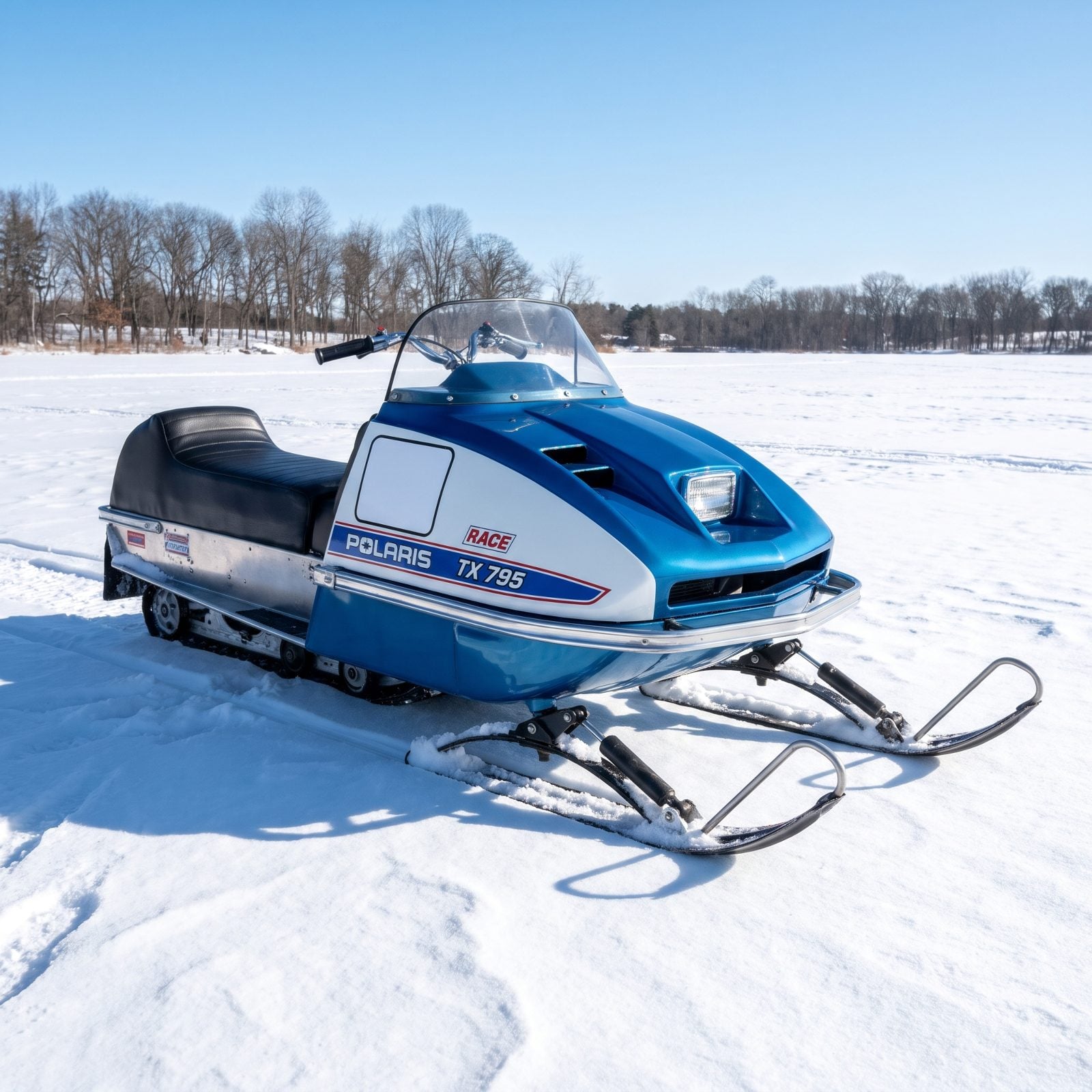
TX meant business. The 795 was Polaris building a race sled that happened to be street-ish legal for the trail, and the ergonomics show it — minimal, light, no apologies.
Race-bred Polaris sleds from this window have a cult around them. The ones with oval or cross-country history bring the most, but even a clean recreation moves well, because so few originals survived the abuse they were designed for.
1971 Sno-Jet Thunder Jet
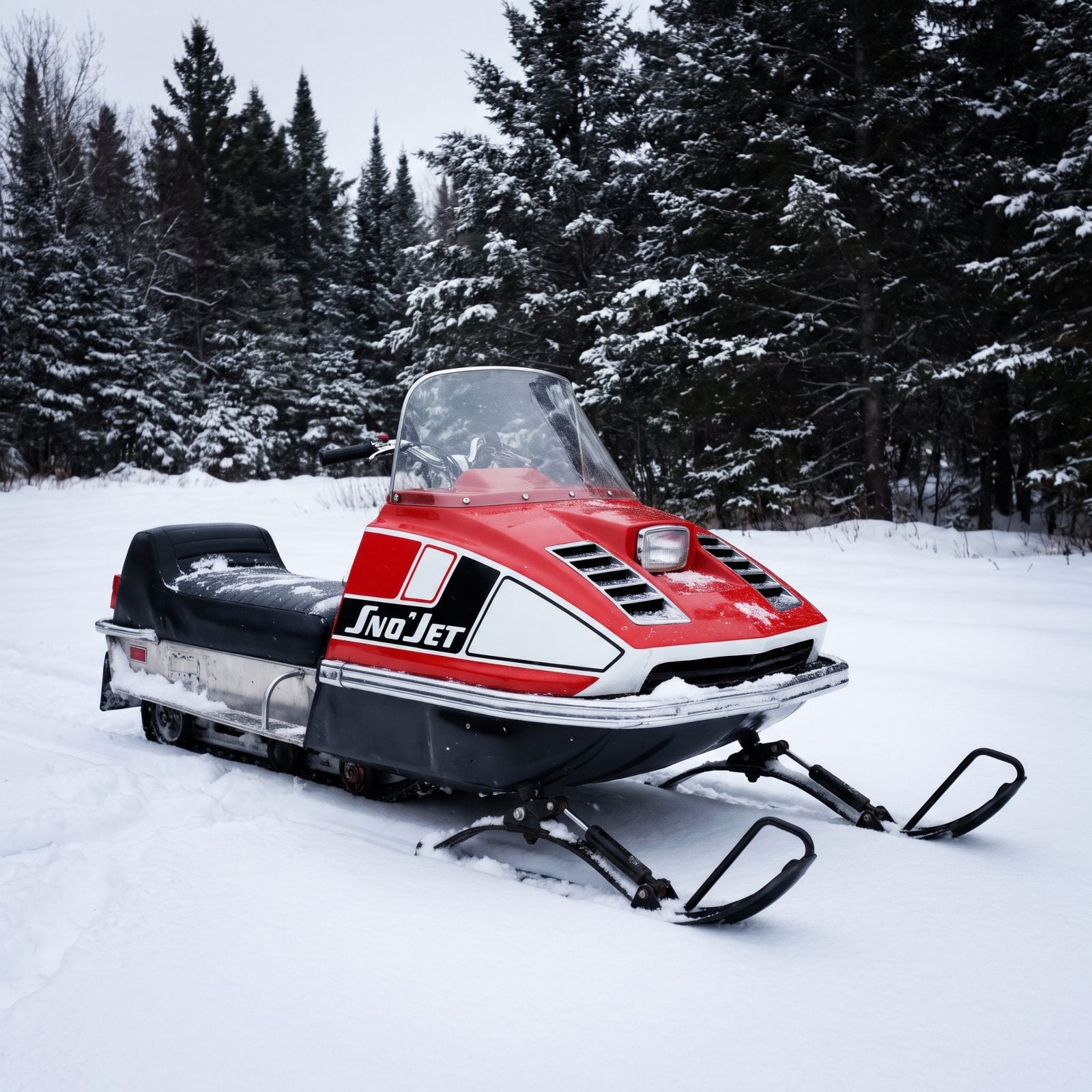
Sno-Jet is the brand nobody remembers until they see one, and then they can’t stop thinking about it. The Thunder Jet was aggressive, loud, and built by a company that eventually got swallowed whole — which is exactly where the orphan-brand appeal kicks in.
Dead marques do strange things to value. No factory support, no reproduction parts stream, every surviving Thunder Jet a finite object. That scarcity, plus the oddball styling, keeps a dedicated crowd bidding whenever one claws its way out of a barn.
1974 Mercury Sno-Twister 400
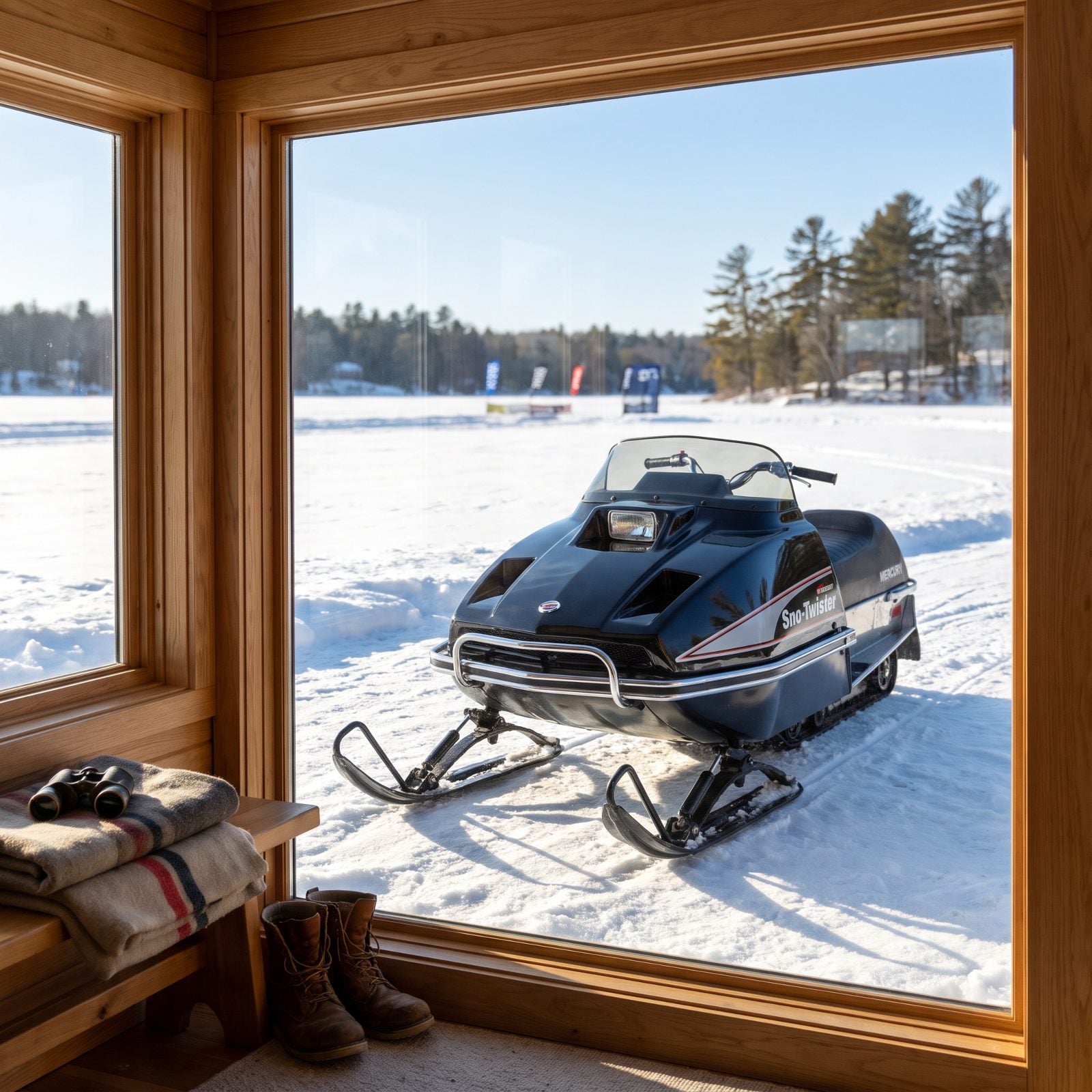
Yes, the same Mercury that made outboard motors built snowmobiles, and the Sno-Twister was the one that mattered. It was a factory race sled, dominant in its class, and it looked like it knew it.
This is a trophy piece for the serious money. An unexpected marque, genuine competition success, and a short production life all stack up fast. Documented race history can send a clean Sno-Twister soaring past its trail-sled cousins.
Looking back on the 1974 race season, a snowmobile tech writer argues “When the history of snowmobile racing is written there will be a select few sleds that will be recognized for totally dominating the competition. The 1974 Sno-Twister was just such a sled.”
1970 Arctic Cat EXT Special
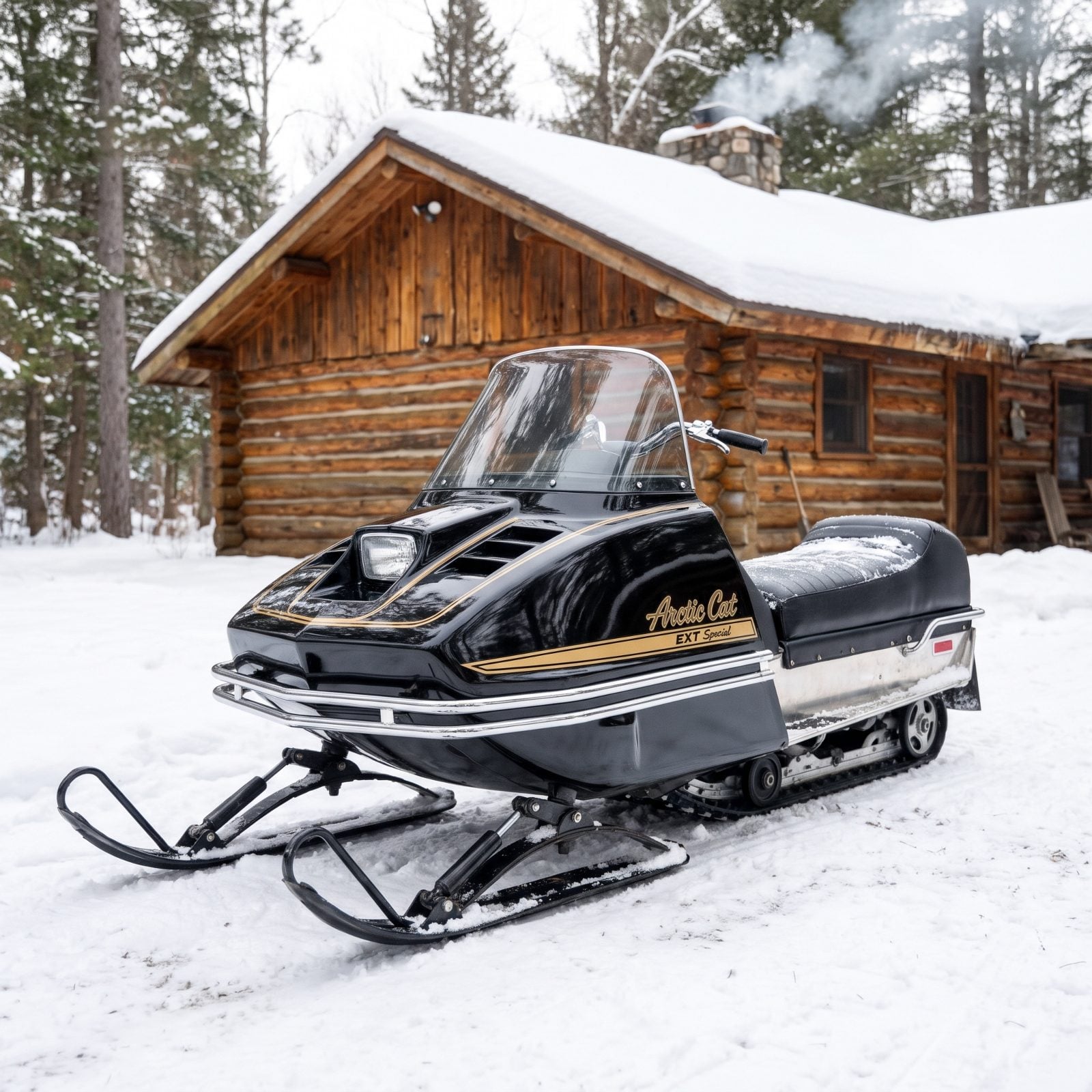
The EXT badge means something to Cat faithful, and the early Special versions are the ones they whisper about. Limited runs, performance intent, and that unmistakable black-and-gold look collectors can spot across a snowy field from a hundred yards out.
Low production does the heavy lifting here. When only a handful left the factory and fewer survived, scarcity sets the floor and nostalgia sets the ceiling. These rarely sit unsold.
1970 Polaris ATX
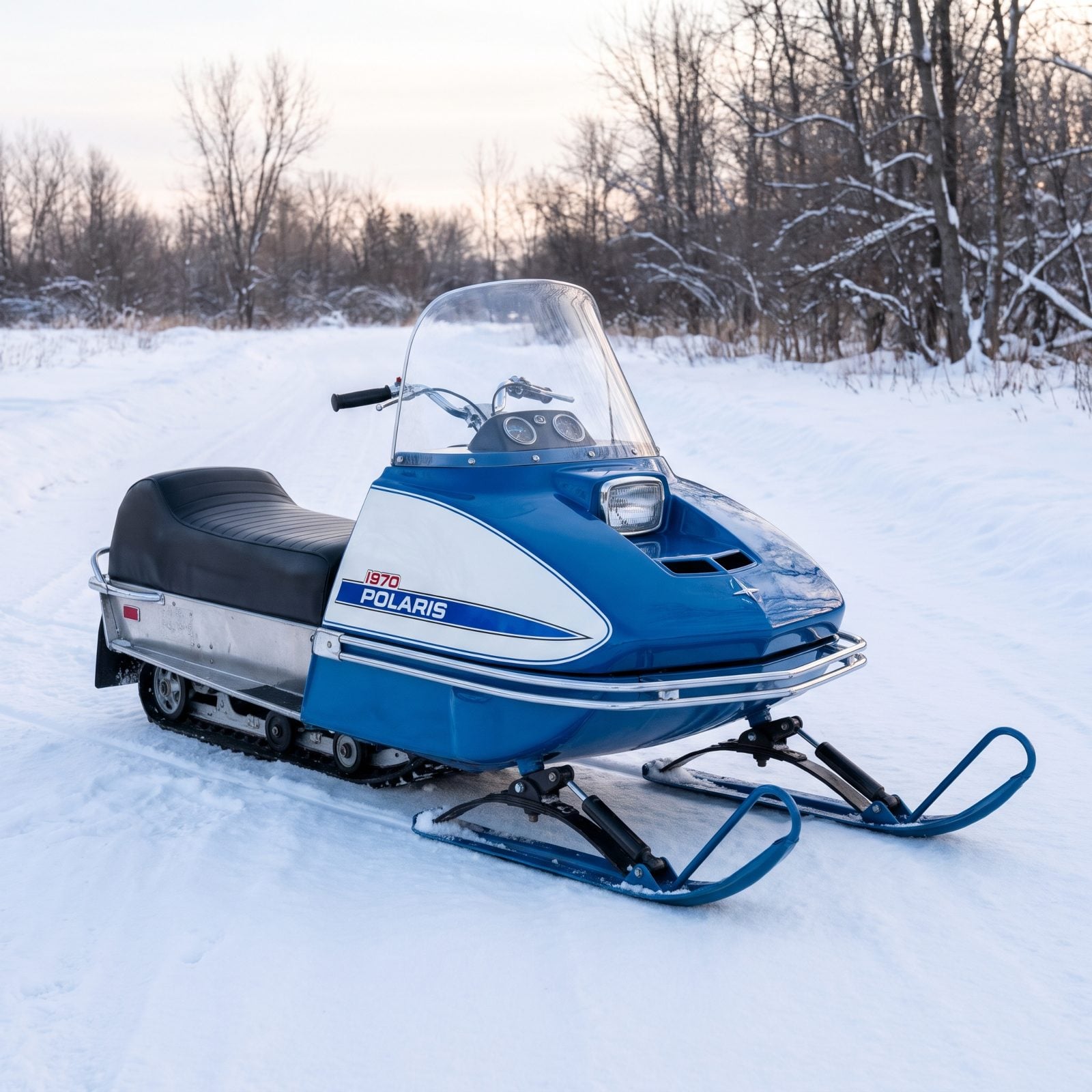
The ATX is a deep-cut Polaris piece, not the name casual fans reach for first, which is exactly why the sharp buyers keep their ears up. It marks a specific moment in Polaris’s early engineering, back before the lineup settled into familiar patterns.
Obscurity cuts both ways. Fewer buyers know to want one — but the ones who do want it badly, and parts turn into a flat-out scavenger hunt. A complete, correct ATX with its original hood is a genuinely tough find, and the price reflects the chase.
1974 Ski-Doo Blizzard 5500
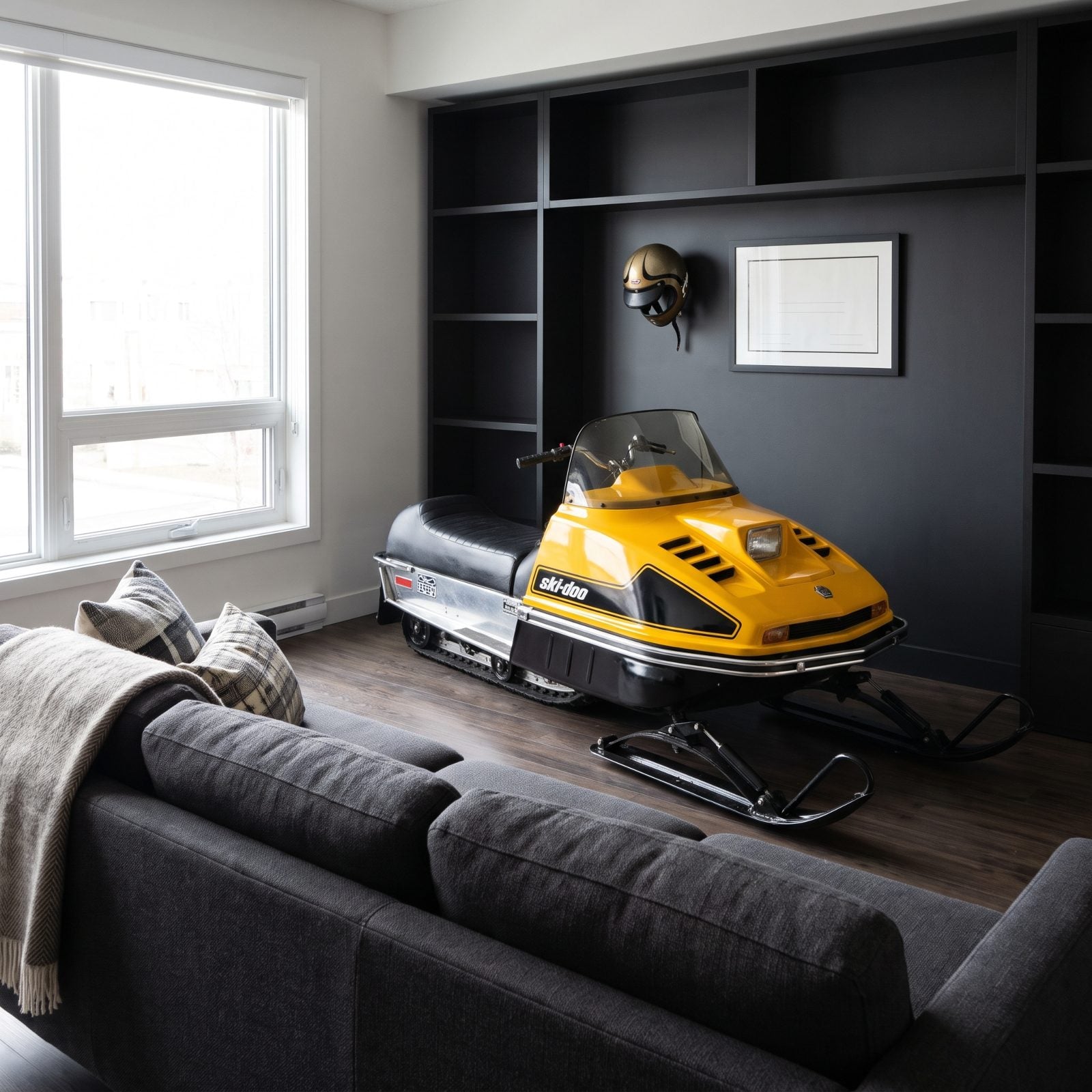
By 1974 the Blizzard name was legend, and the 5500 carried it hard. Built to win, and the lineage behind that yellow hood is a big part of why these command respect when the gavel comes up.
Race-spec Blizzards from the mid-’70s are blue-chip for the hobby. Correct, period-documented examples pull the strong numbers, and the brand recognition runs deep enough that even non-collectors nod along. That broad appeal is rare in vintage sleds, and it keeps the market deep.
1972 Rupp Nitro 440: The Snowmobile That Looked Like It Was Already Losing
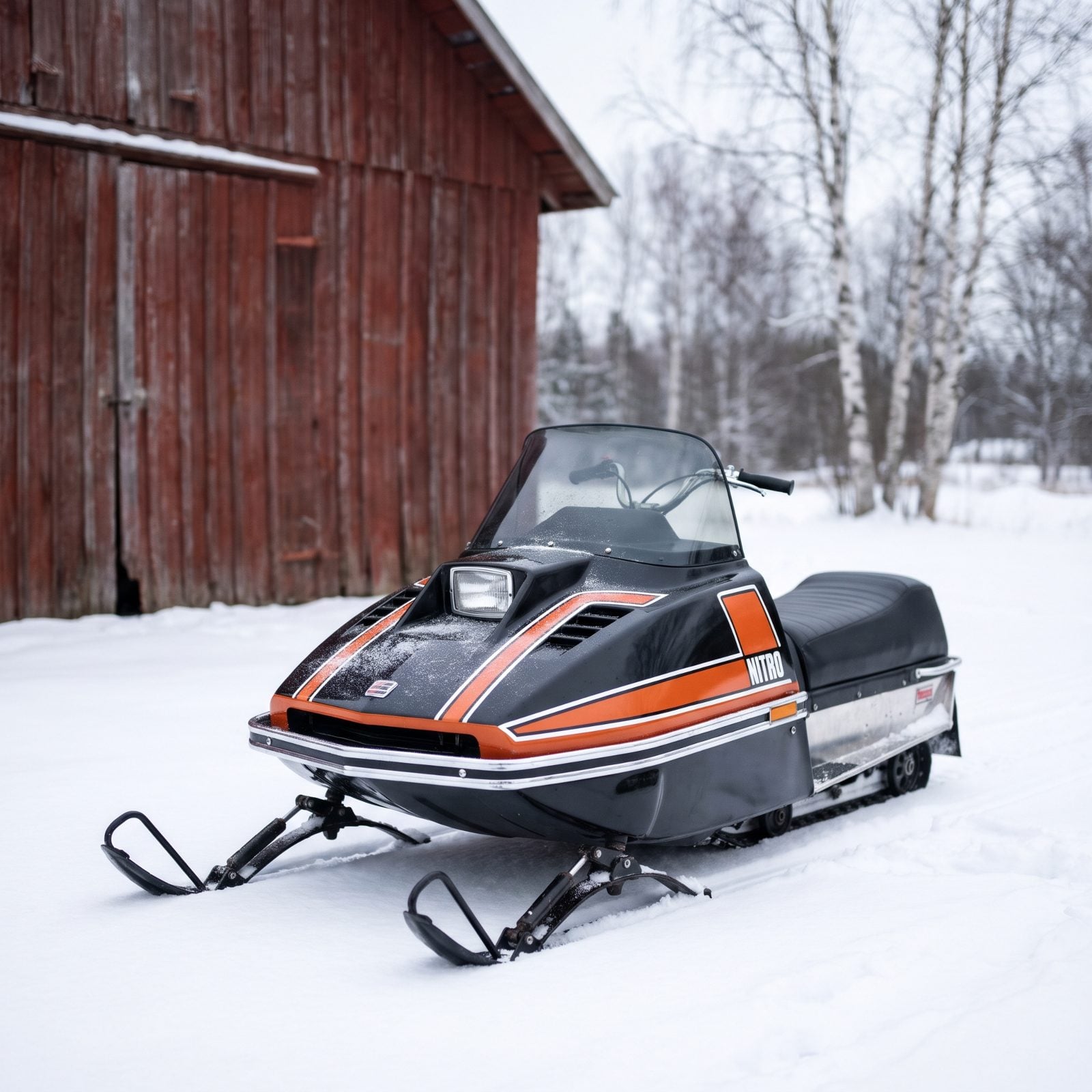
Mansfield, Ohio built these, and the Rupp name carried go-karts and minibikes long before it carried sleds. That heritage is half the reason collectors chase the Nitro now. It was never the fastest thing on the lake, but parked still it looked mean as a junkyard dog, and when Rupp folded in the late 1970s the supply stopped cold.
Clean running examples trade in the several-thousand-dollar range, more if the original hood graphics survived without fading. And the hoods are the weak point every time. Sun and decades of garage heat cook the decals, so a repop rarely fools anyone who actually knows the sled.
1974 Polaris TX 440: The Race Sled That Taught a Generation to Go Fast
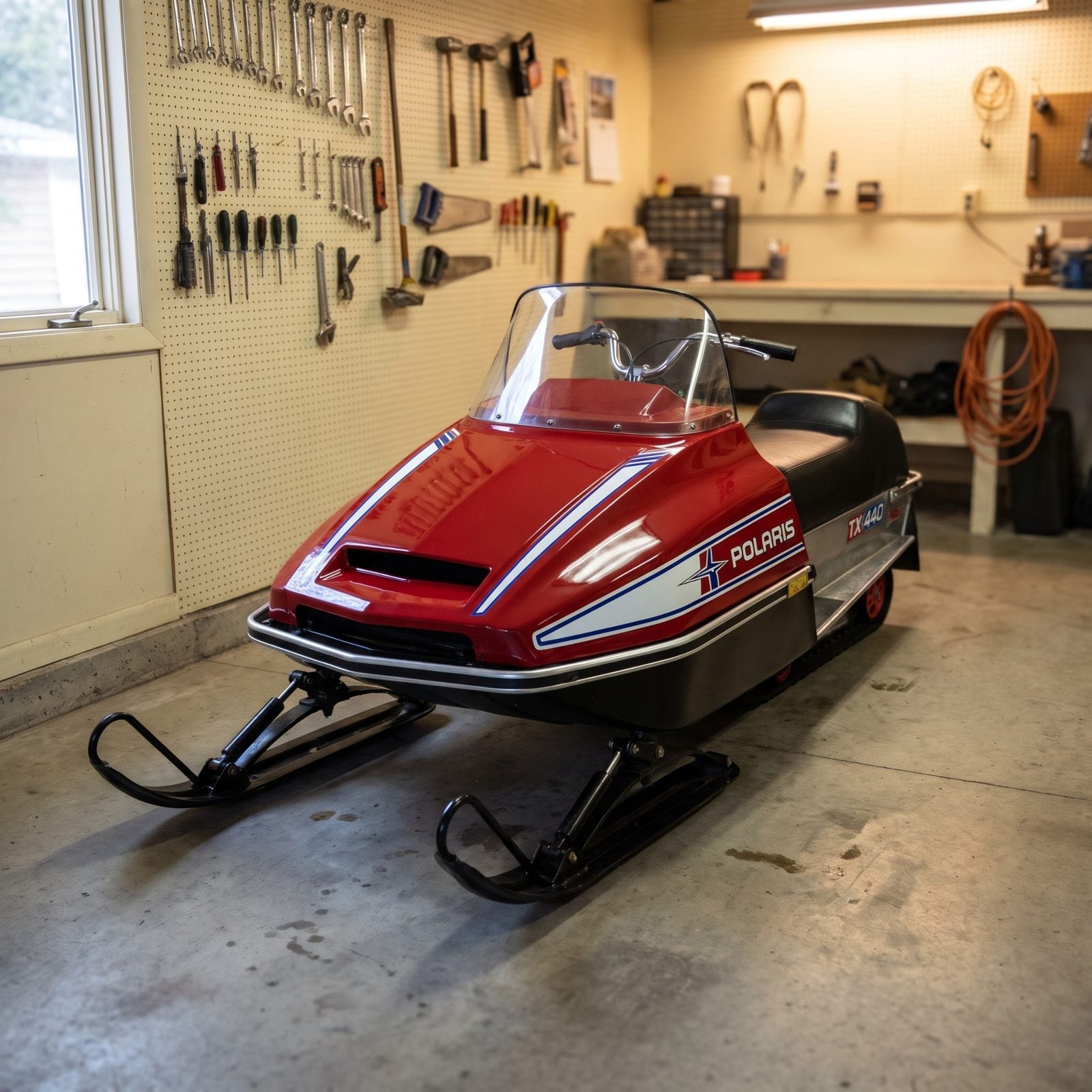
The TX was Polaris at its racing peak. Lightweight tunnel, free-air twin, and enough factory backing that the oval circuit got crowded with them every weekend. If you grew up near a frozen lake in the Upper Midwest, you heard one of these before you ever saw it.
Documented race history is what separates a four-figure TX from a ten-thousand-dollar one. A sled with a verifiable podium record, original numbers, and matching tin pulls serious money, while one that got a garage repaint and a fresh seat is a nice rider and nothing more. Buyers who know the difference check the engine stamps first, then ask about the paint.
1975 John Deere 340/S: Green, Overbuilt, and Quietly Climbing
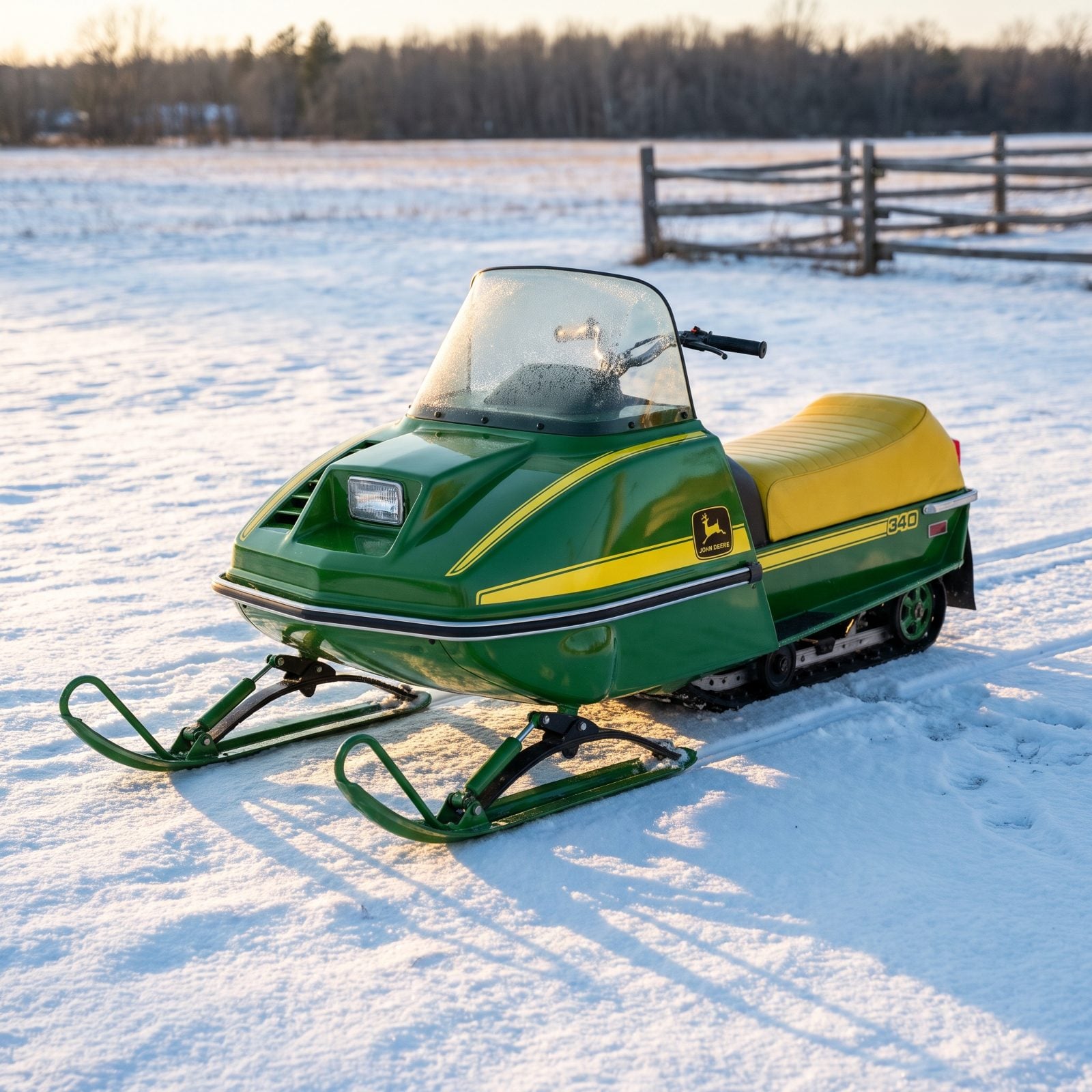
Deere only built snowmobiles for about a decade, and that short run is the whole story. The company brought its farm-equipment stubbornness to the project, so these things came out heavier and tighter than most of the competition. The 340/S has a following that overlaps hard with tractor collectors, which means two groups bid against each other at auction.
Green sells. The same brand loyalty that moves a Deere lawn tractor off a lot moves these, and a sharp restoration in the right paint pulls strong numbers from folks who just want one sitting in the shed next to the mower.
1973 Ski-Doo Elite: The Two-Up Oddball Nobody Expected to Love
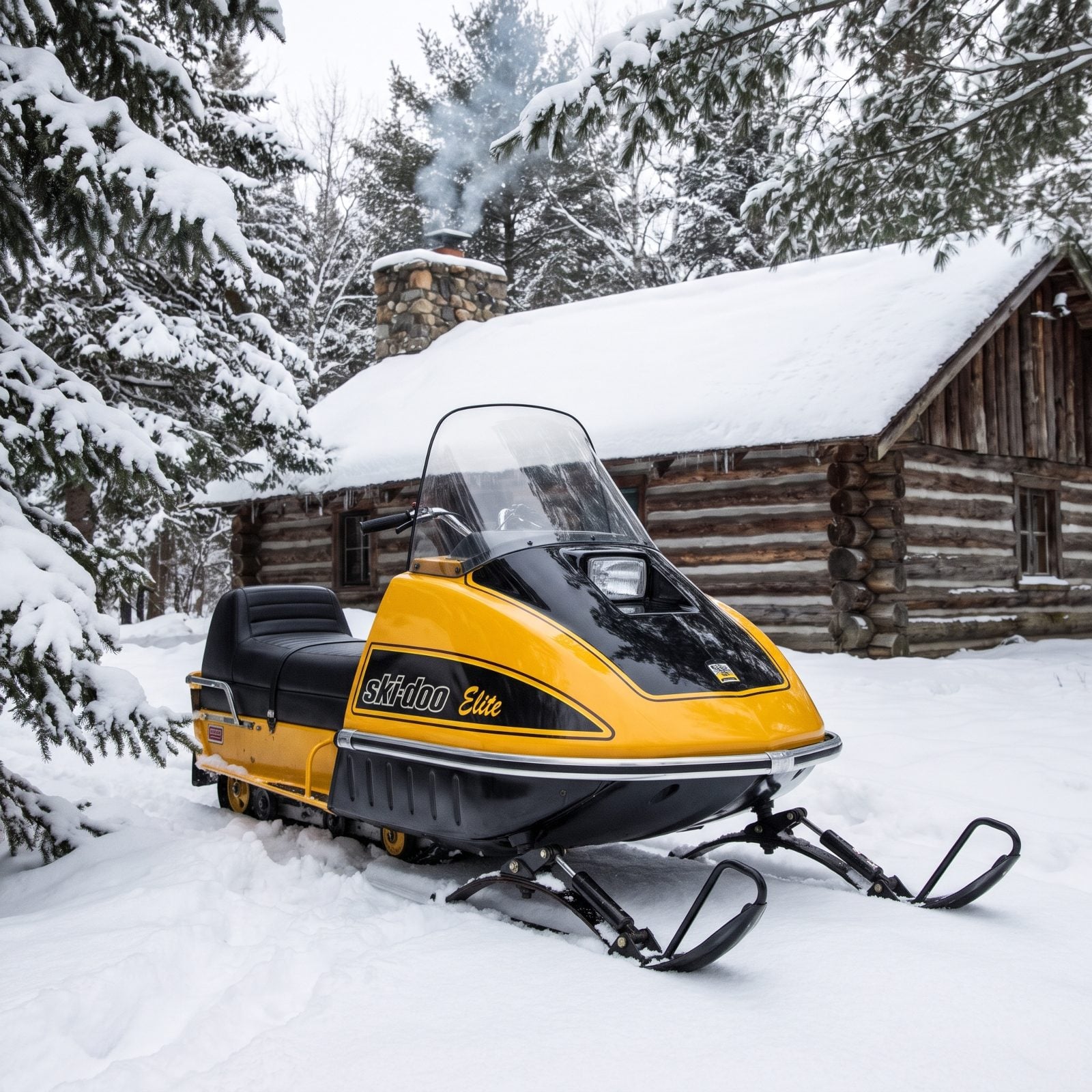
Ski-Doo tried to build a snowmobile for couples, and the Elite is what came out: a wide-bodied sled with side-by-side seating for two. It sold poorly. People wanted solo performance sleds, not two-seat tourers. That commercial flop is exactly why it’s collectible now.
Oddity drives this corner of the market, and the Elite earns it. Roll one up at a show and heads turn, because most folks have never laid eyes on the thing. Values are all over the place since so few trade hands, but a complete, running example with intact bodywork commands attention just for being strange. Parts, though — that’s the headache. The unique panels are nearly impossible to source, so buy one whole or walk away.
1973 Harley-Davidson Y-400: The Snowmobile With the Wrong Badge
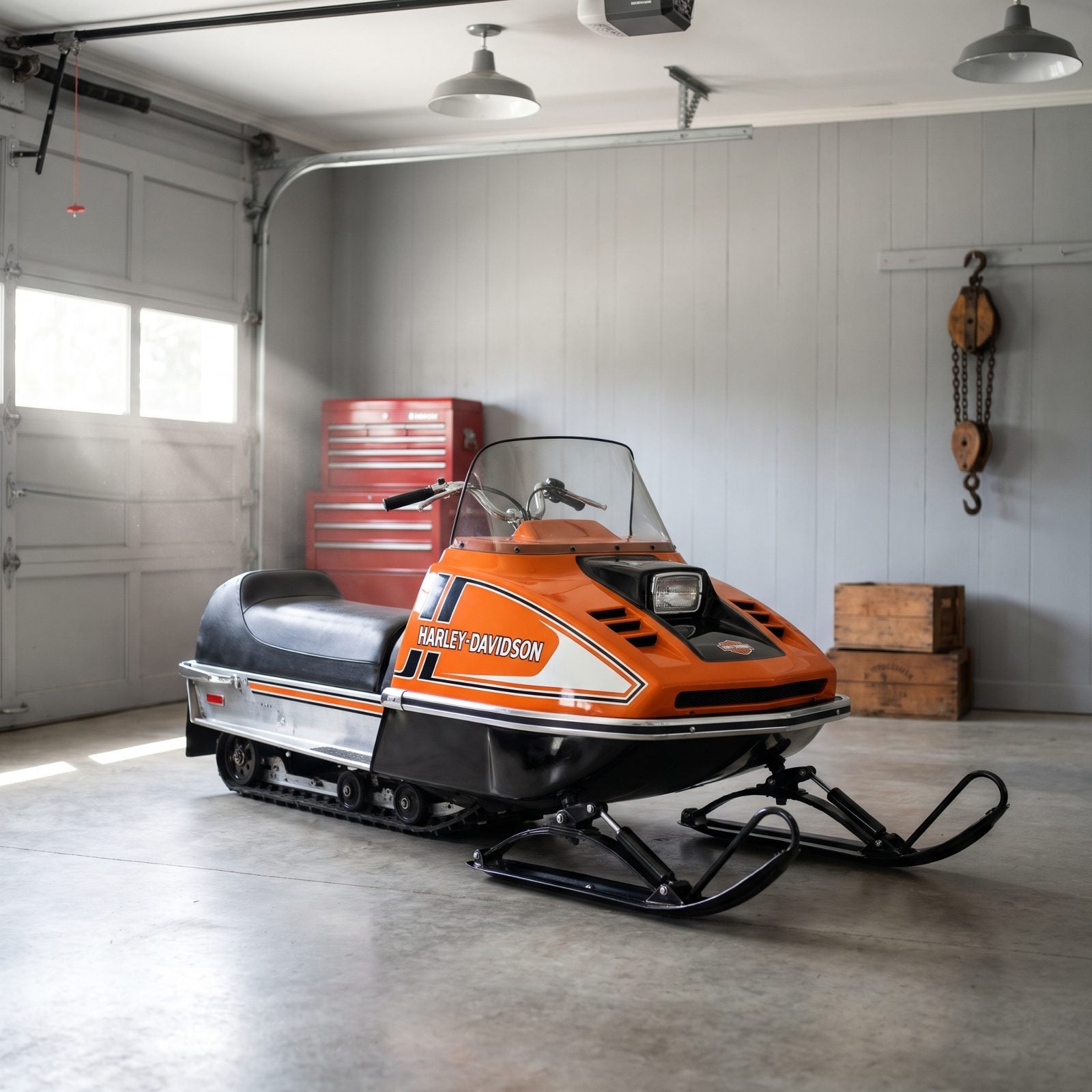
Harley-Davidson built snowmobiles for a handful of years in the early 1970s, and most people have no clue it ever happened. That disbelief is the hook. Pull one into a Harley crowd and watch the arguments start about whether it’s even real.
The badge does the heavy lifting on price. Motorcycle collectors who want one of everything the Motor Company ever made will pay well above what the sled’s actual performance justifies. Paperwork matters more here than almost anywhere, because the story is so far-fetched that buyers want proof. Original paint, correct engine, and documentation tracing it back push these toward the top of the vintage-sled heap.
1969 Ski-Doo TNT 669: The Big-Bore Brute From the Golden Era
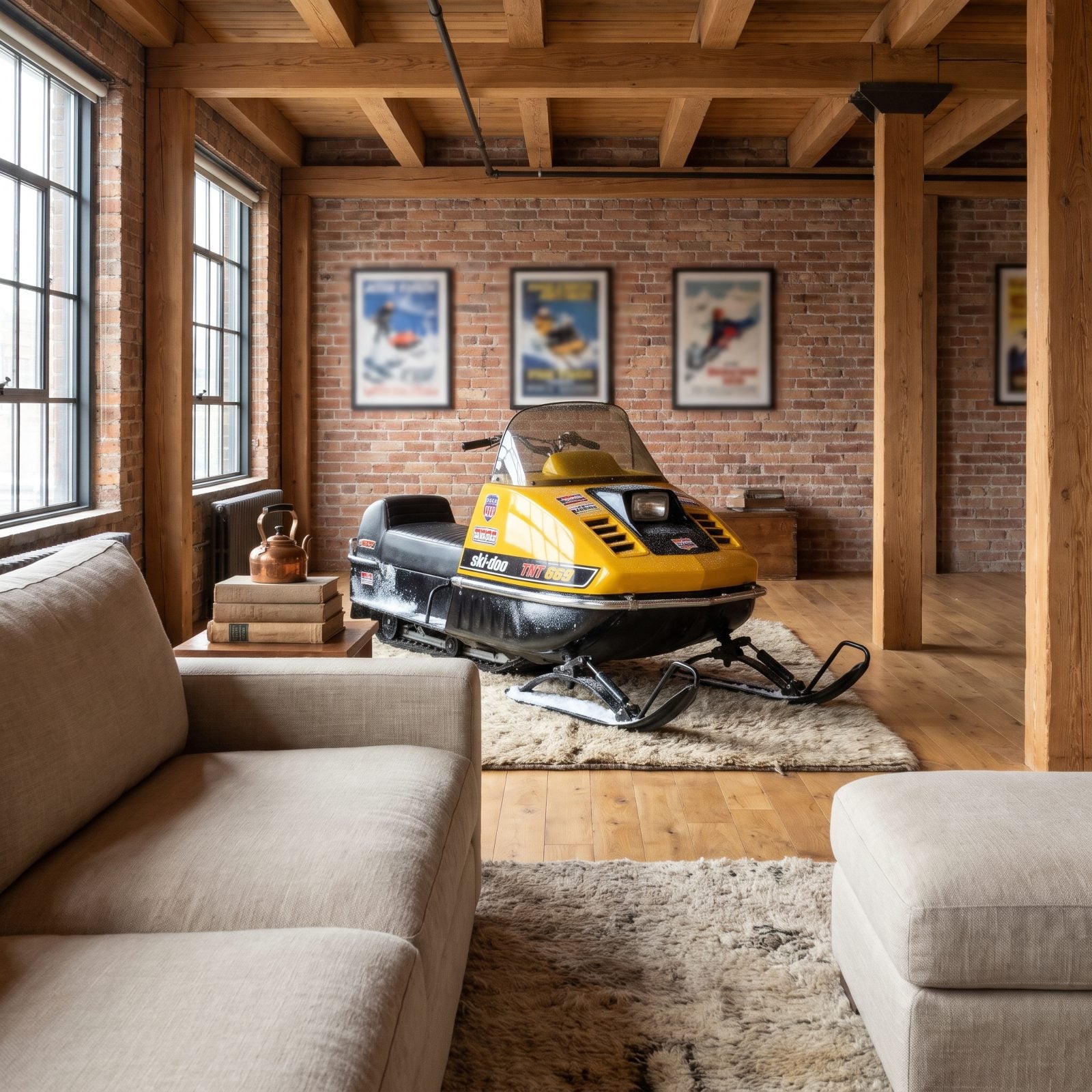
Big-bore and brutal for its day. The 669 was one of the larger-displacement sleds of the late 1960s, and that raw muscle gives it standing among collectors who care about the era when snowmobiling got serious.
Early TNTs are getting genuinely hard to find in good shape. A lot of them got ridden straight into the ground, and the survivors tend to be tired. A clean, correct 669 is the reward for patient searching, and prices reflect just how thin the supply has gotten.
1972 Ski-Doo TNT 775: Rotary-Valve Fury on a Short Track
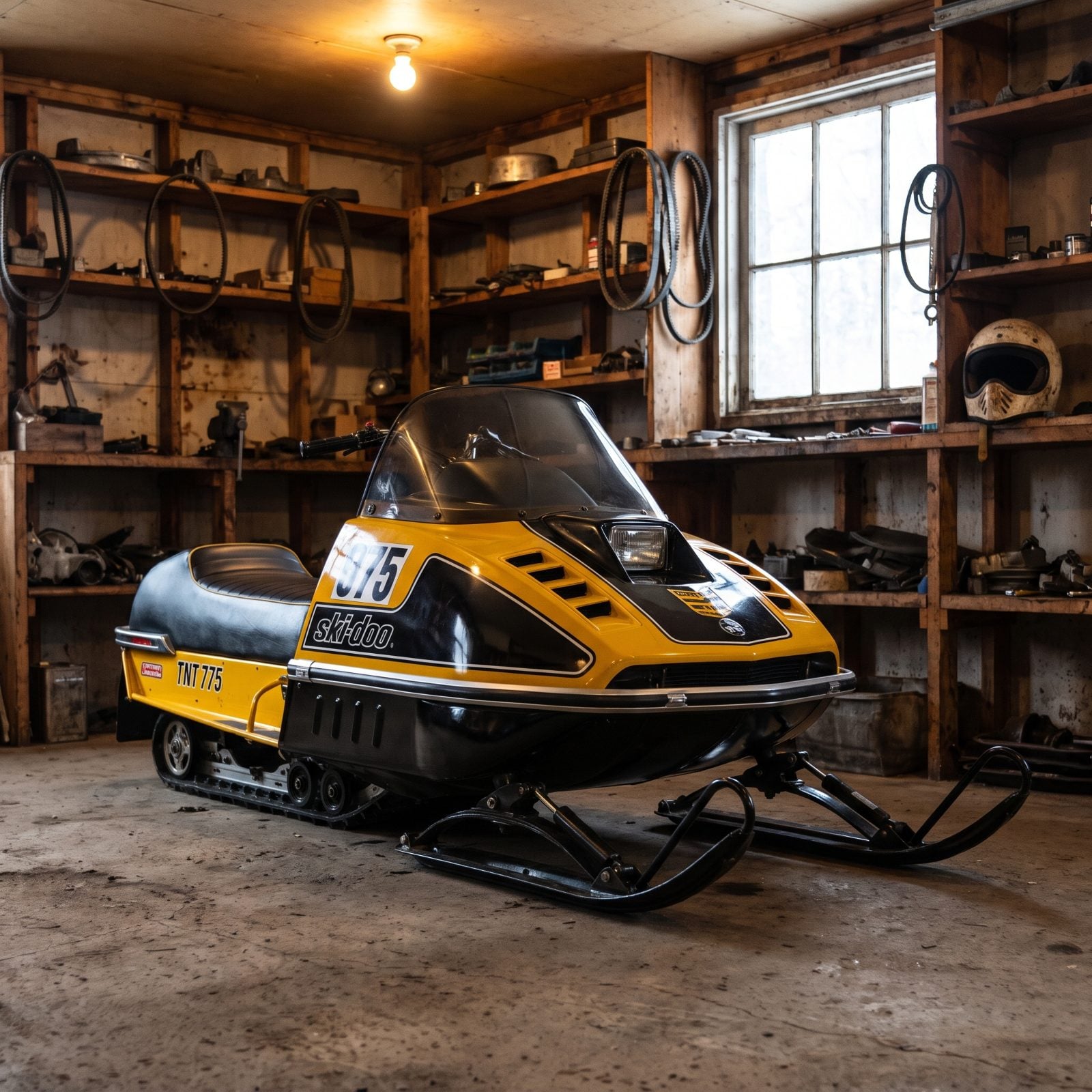
The 775 was built to win, and it did. Rotary-valve engine, oval-racing bias, and enough displacement to intimidate anything lined up next to it on the straights. For anyone chasing the heyday of Ski-Doo factory racing, this is a cornerstone.
Race-provenance examples are the ones that move for real money. A 775 with documented competition history and original tin sits at the serious end of vintage collecting. The engines are the catch. Rotary-valve rebuilds take a specialist, and a bad one hides inside a pretty restoration where you’d never spot it. Have someone who knows these motors listen before you write the check.
1973 Arctic Cat El Tigre 440: The Name That Still Sells
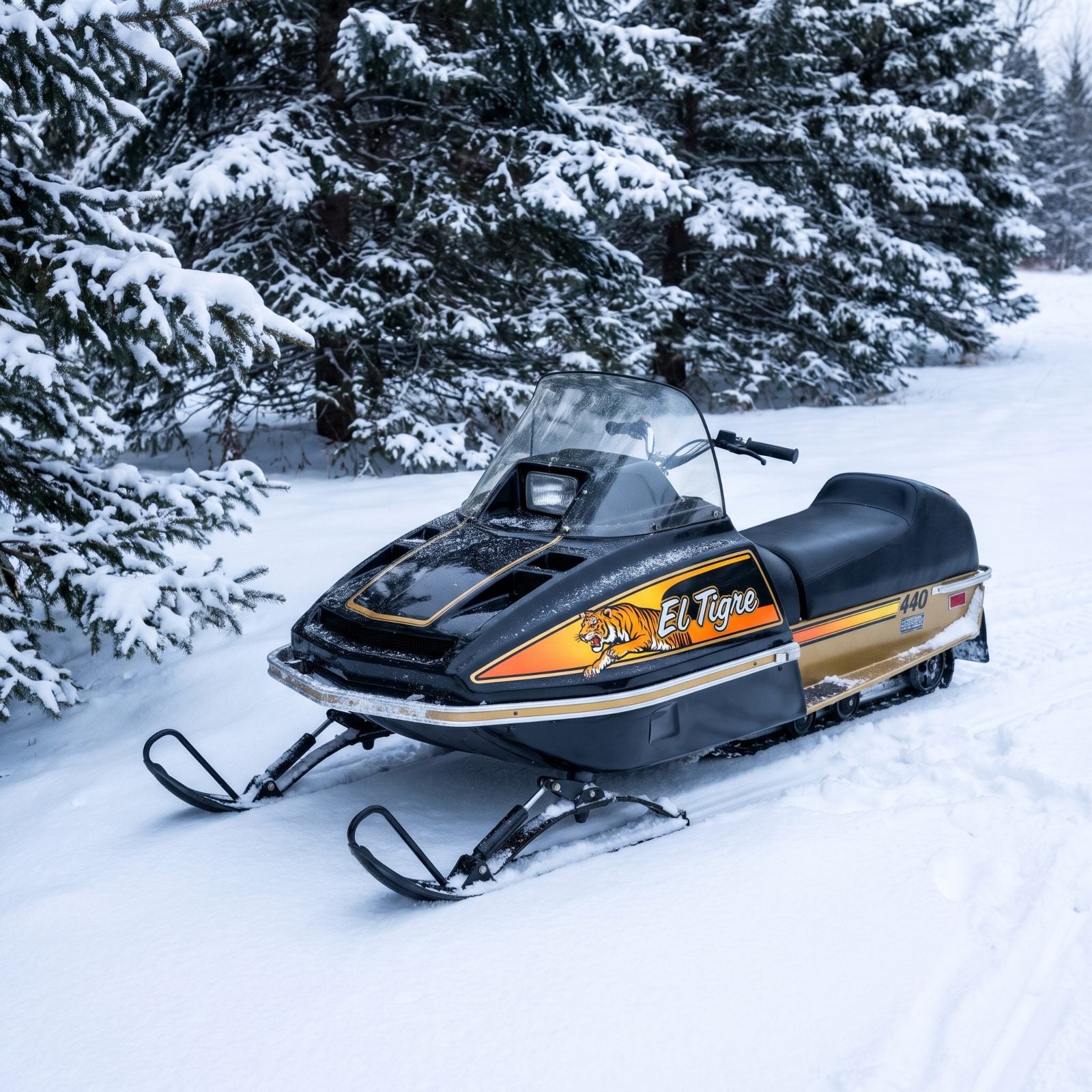
The El Tigre name carried weight then and it still does. Arctic Cat hung that badge on its performance sleds for years, and the early 440s are where the legend took hold. The collectors who grew up wanting one are now the people with money to buy one, and that simple demographic math is driving prices.
Tiger graphics are everything on these. A sled wearing sharp, original El Tigre decals photographs well and sells fast. Faded or botched graphics drag the value down hard, because the look is what people are buying. Grab the best cosmetics you can afford, since nobody reproduces that era’s exact artwork quite right.
1972 Arctic Cat EXT 440: The Sleeper That Collectors Finally Noticed
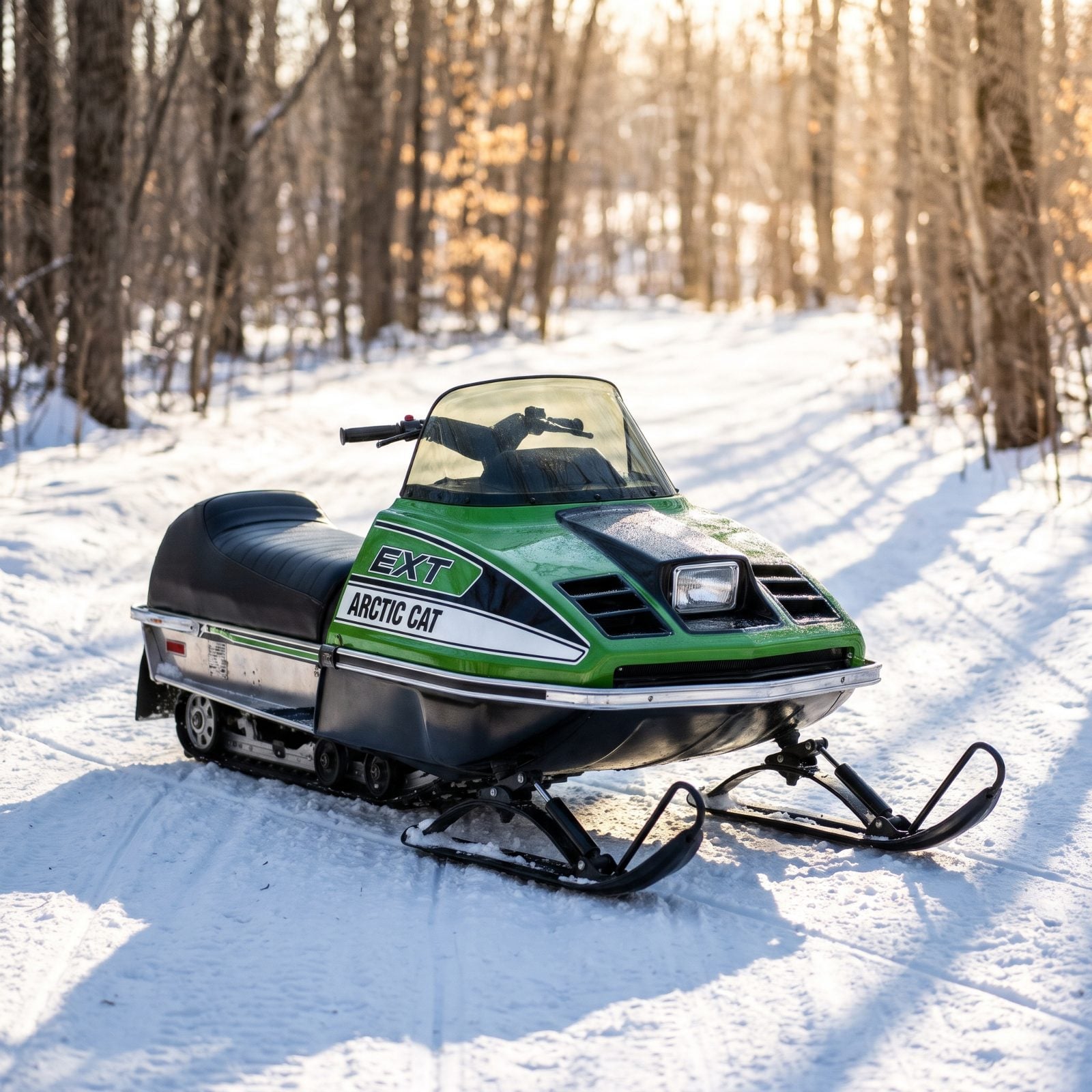
For years the EXT flew under the radar while the El Tigre soaked up all the attention. That’s shifting now. Buyers priced out of the headline sleds started looking sideways and found the EXT offered a lot of the same early-Cat character for less money, which is how a sleeper quietly turns into a climber.
It still represents value today, but the window narrows every season. A clean, original EXT 440 bought now looks smart in five years. The ones worth grabbing wear honest paint and carry a documented history — not a cosmetic refresh papering over tired mechanicals.
1968 Polaris TX: The One That Started the Dynasty
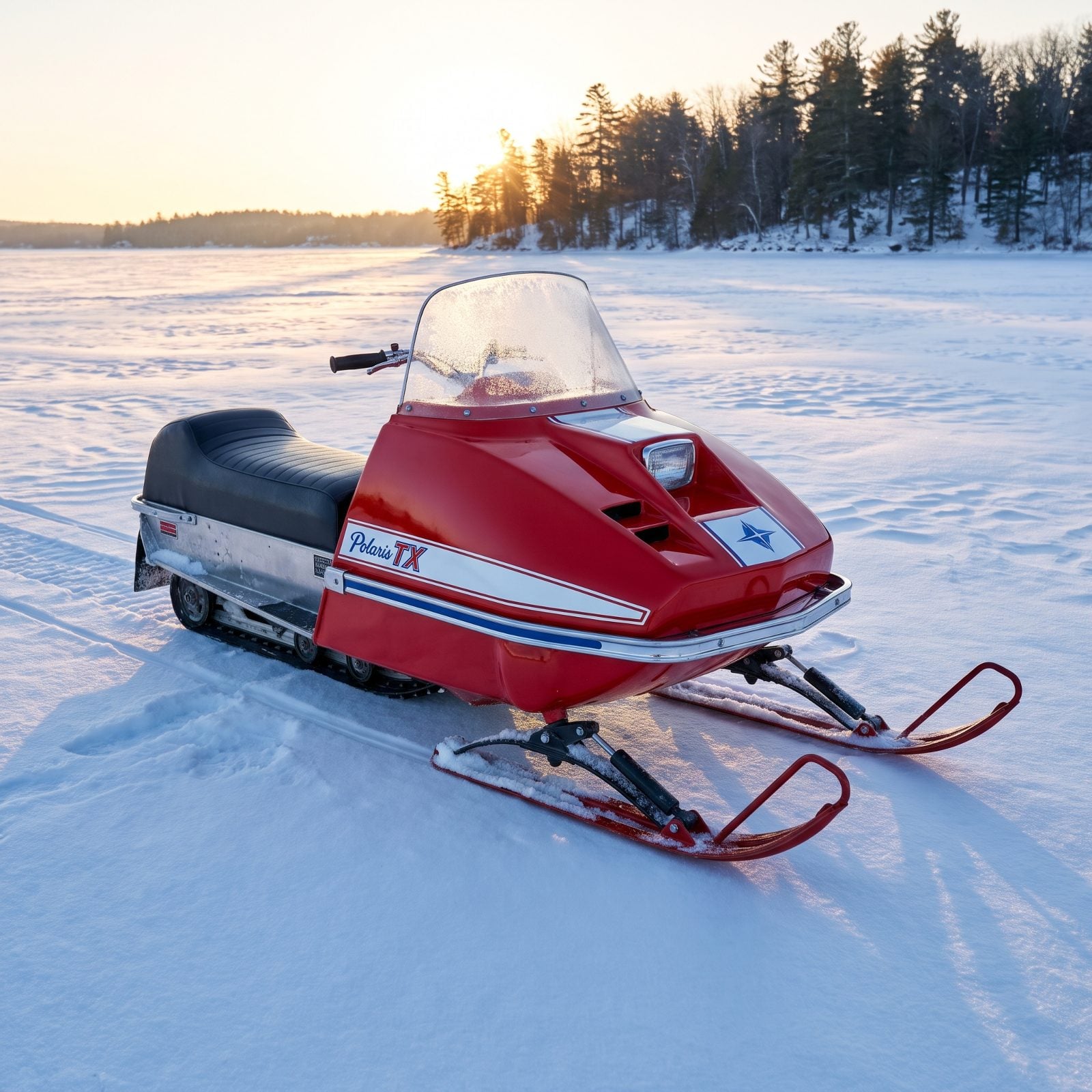
Before the TX was a racing name everybody knew, there was this. A 1968 TX is early-chapter Polaris, back when the company was still figuring out what a fast sled should even be. Own one and you own the ground floor.
Finding a solid example takes patience and usually a plane ticket. The good ones rarely leave the families and shops that have kept them for decades, and when one does surface, the people who understand what it represents move fast. Originality beats a flashy restoration every time here. A survivor with honest wear and correct parts tells the real story, and that story is worth more than fresh paint.
1968 Ski-Doo TNT: The Rotax That Started a Racing Dynasty
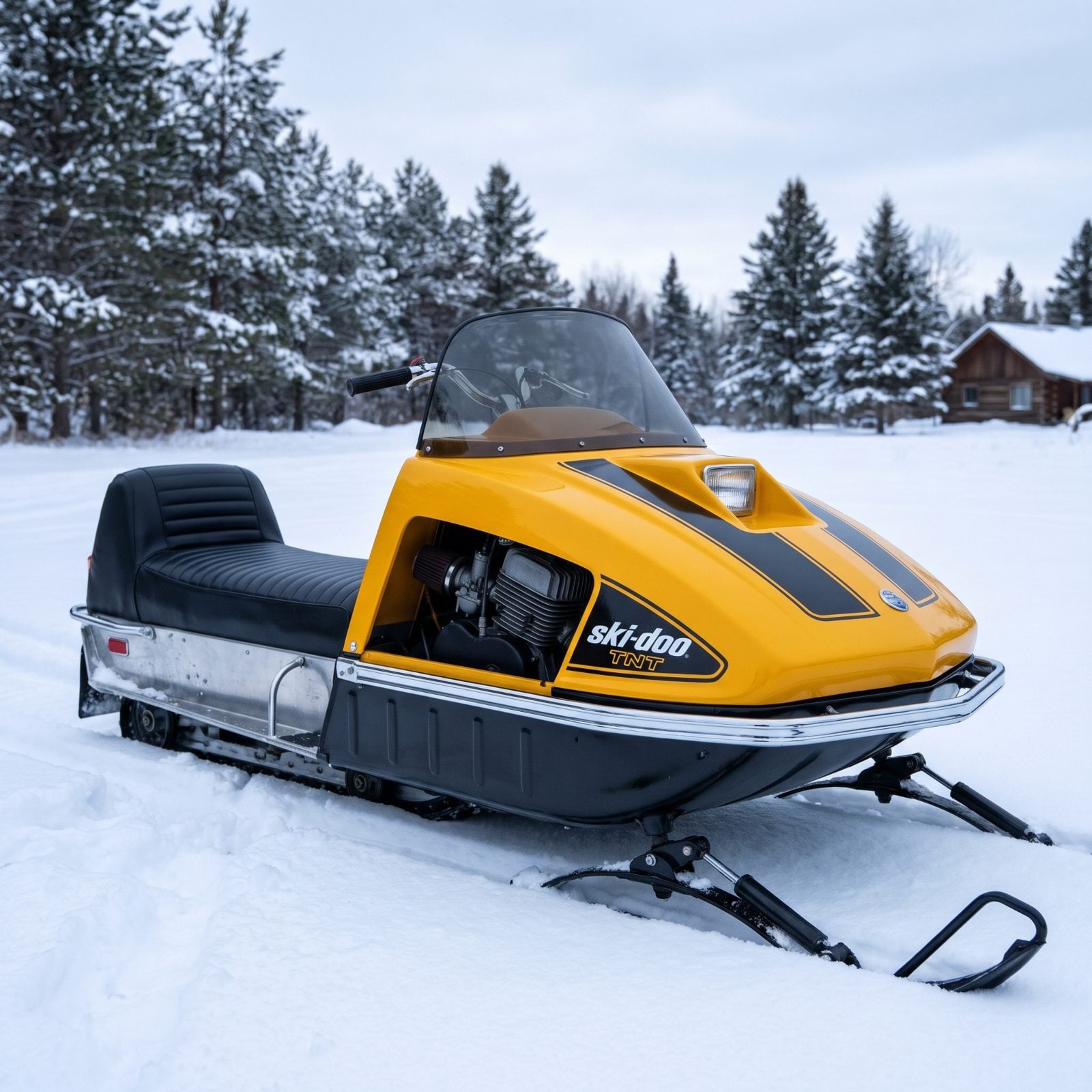
The TNT badge meant something on a startline. Bombardier dropped it on the 1968 Ski-Doo to tell everyone this was no longer the family runabout — Rotax power, a tighter chassis, and that yellow-and-black livery that still reads as fast fifty-some winters later.
Collectors chase the early TNTs because they bridge the backyard sled and the genuine race machine, and a clean running original with correct graphics pulls real money at vintage auctions. Watch the track and slide rails. Original rubber is where honesty lives, and a swapped-out track quietly tells you the rest of the restoration.
1970 Moto-Ski Grand Prix: Quebec’s Answer to the Big Three
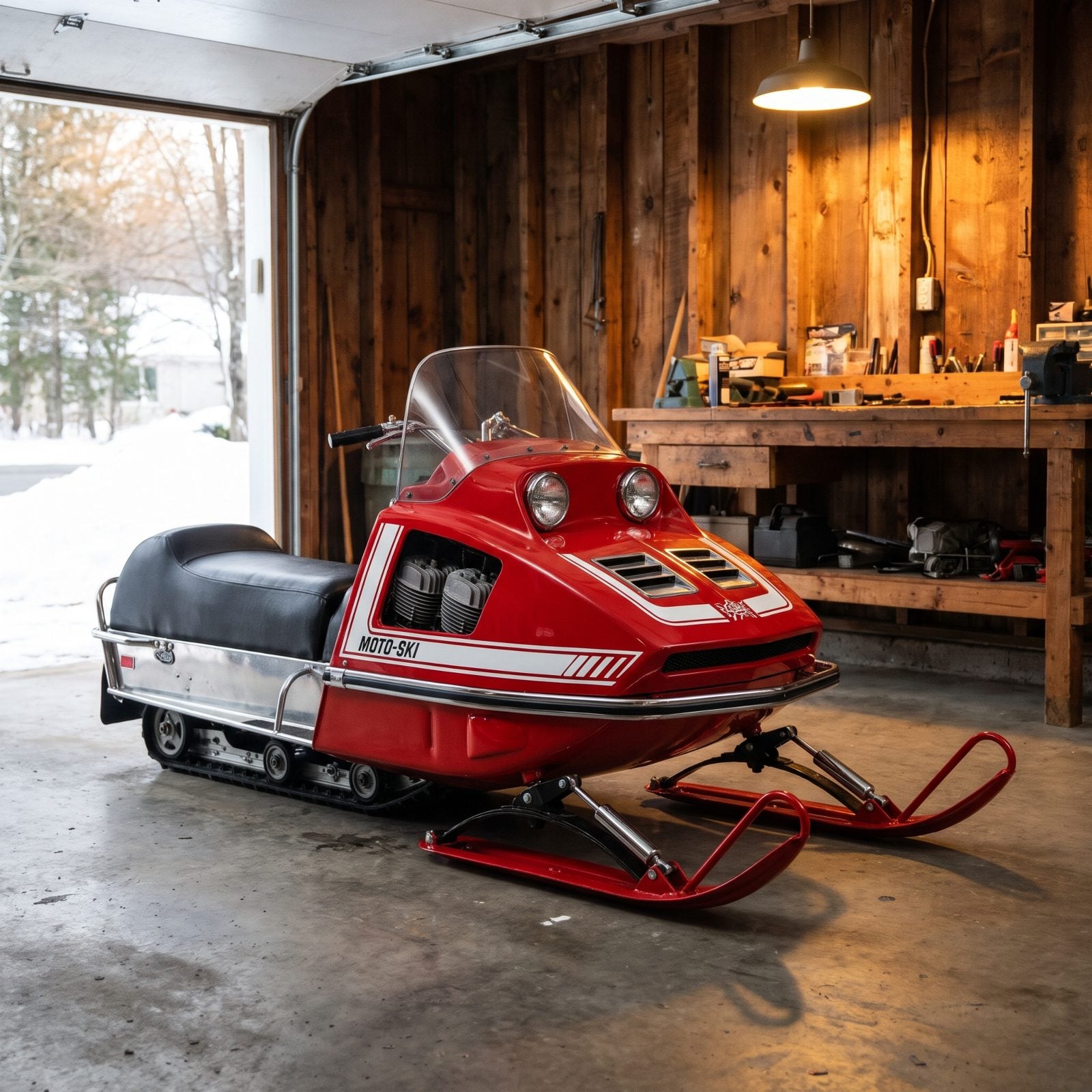
Moto-Ski built sleds with a chip on its shoulder, and the Grand Prix wore it loud. Red, white, aggressive, and genuinely quick for 1970.
What makes these collectible now is how few survived in good shape. Moto-Ski got folded into Bombardier a few years later, so parts dried up and plenty of these got raced hard then abandoned in barns. Find one with straight bodywork and correct decals and you’ve got a sled that turns heads at any vintage show, mostly because nobody else bothered to bring one.
1972 Chaparral Firebird: The Sled Built by a Guitar Company
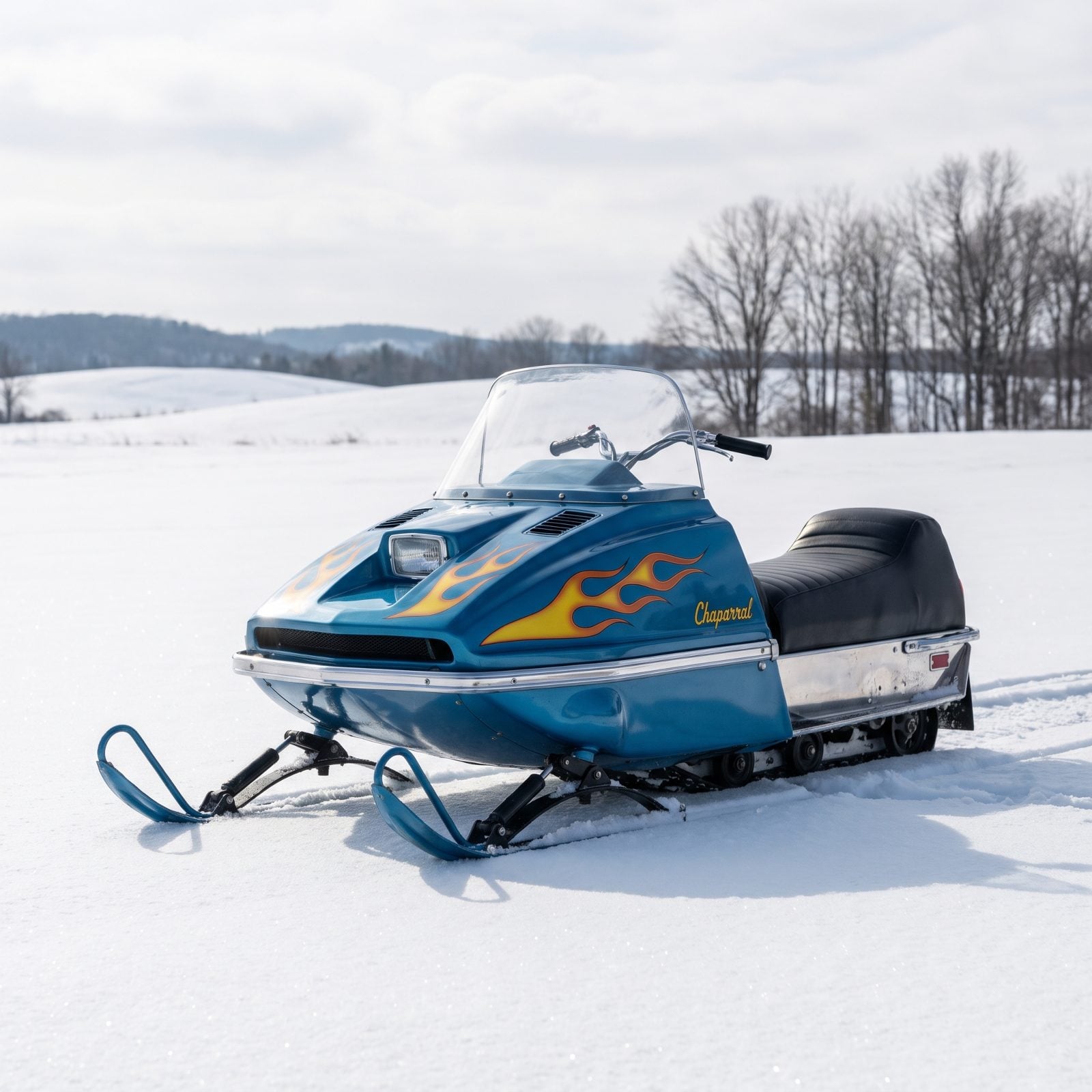
Here’s the trivia that makes people lean in: Chaparral snowmobiles came from the same corporate family that owned Ovation guitars. Odd pairing, great story, and it helps the Firebird punch above its weight at auction.
Backstory aside, the Firebird earned a reputation for flashy styling and solid handling. Its graphics ran wilder than anything the competition fielded, which is exactly why a well-preserved one photographs and sells so well. Originality on those hood graphics matters here more than almost anywhere.
Recalling his own time on them, a veteran vintage sled columnist writes “Easily the best handling mid-engine sleds that I ever rode, Chaparrals had a wide handlebar for good leverage, a wide ski stance and a low center of gravity”
1973 Mercury Hurricane: When the Outboard People Went Racing on Snow
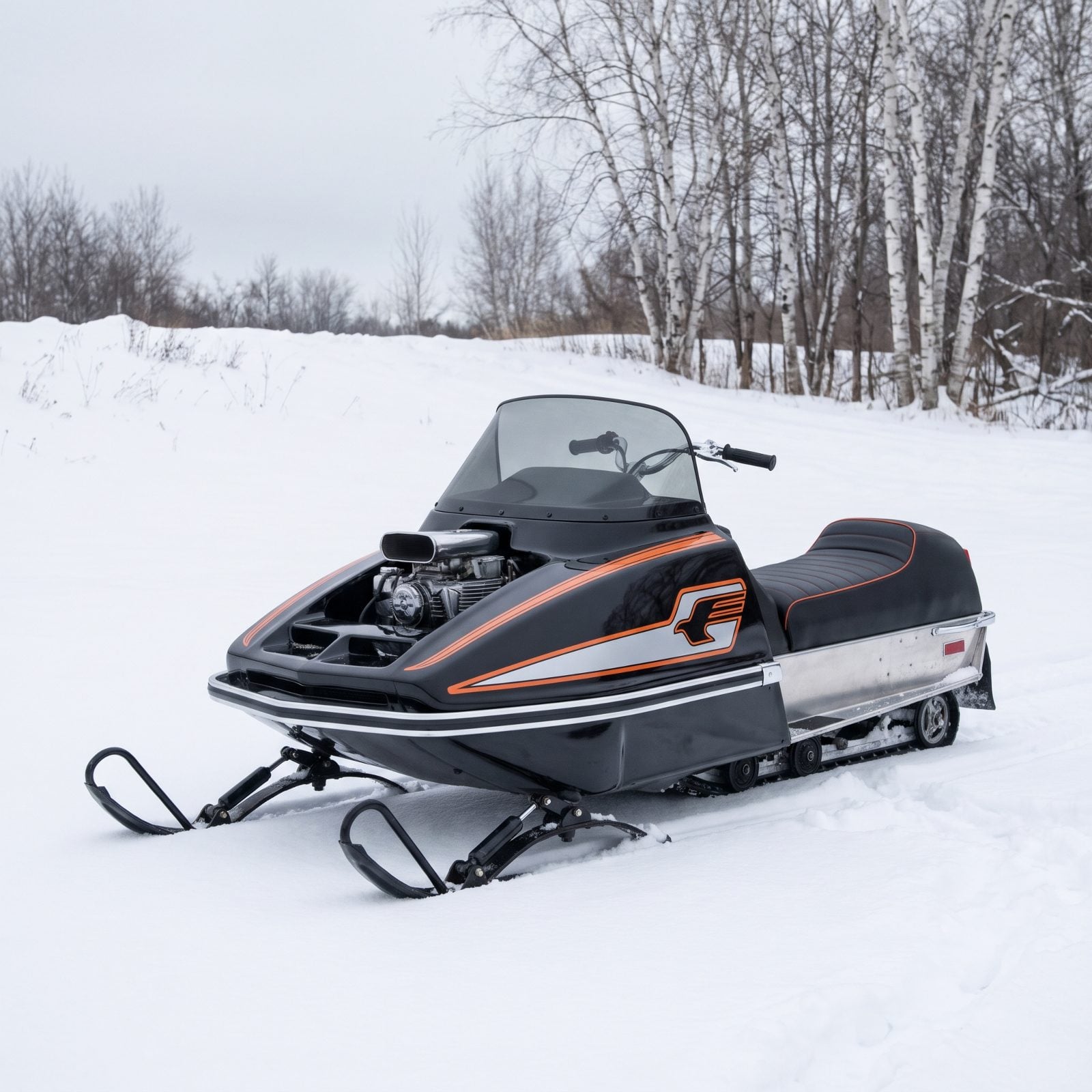
Mercury knew engines. The marine side had been building outboards for decades, and the Hurricane brought that obsession to the snow.
These were serious race sleds, and serious race sleds get used up. A surviving Hurricane with its free-air engine intact and the correct black-and-silver livery is a genuinely scarce find. Vintage racers covet them for class eligibility, and that competition demand props up prices in a way pure nostalgia never quite does. Check compression and the clutch. A Mercury that still pulls clean is worth the premium.
1971 Alouette Super Brute: The Sled That Lives Up to the Name
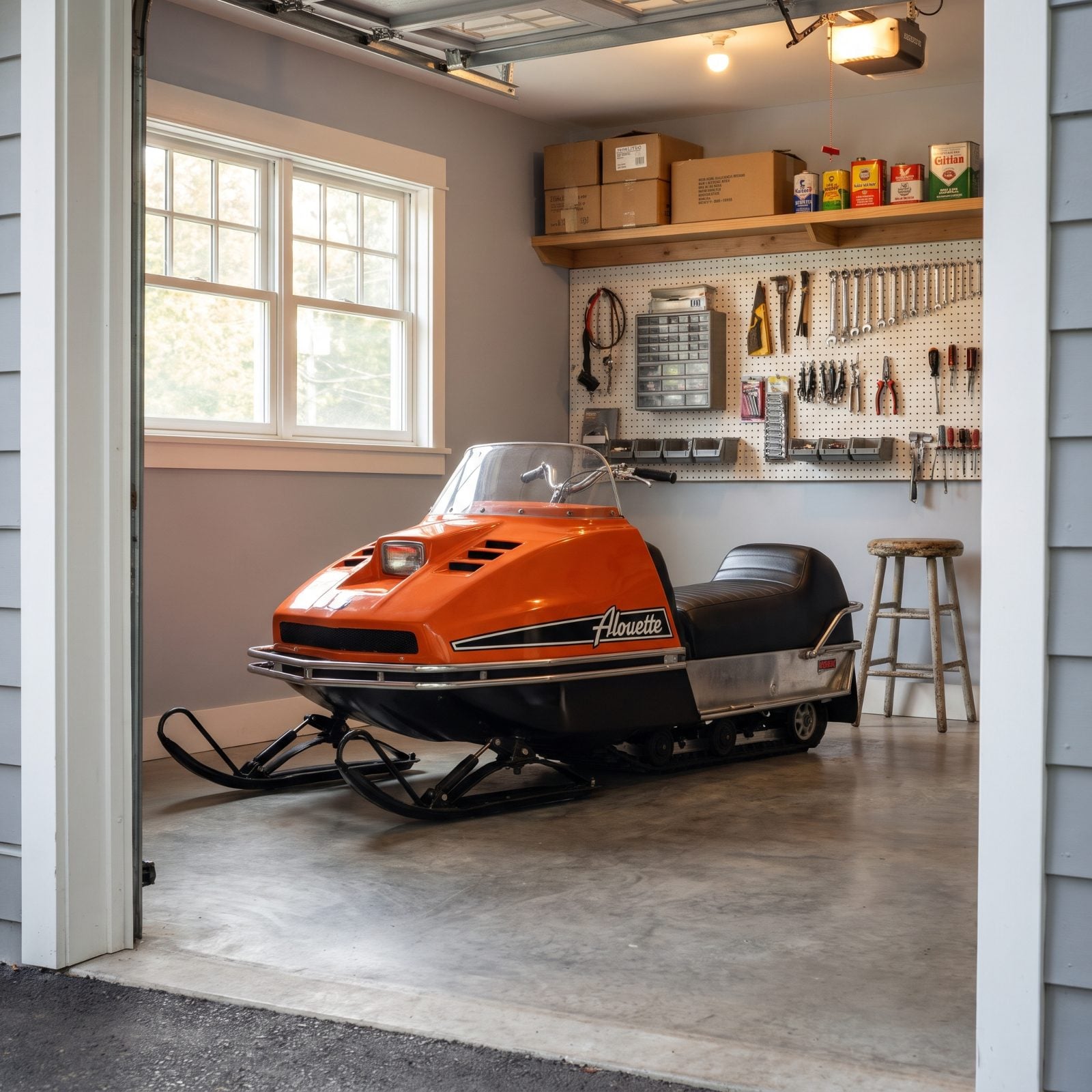
Alouette is one of those names that makes vintage guys nod knowingly and everyone else say “who?” The Super Brute is why the nodders nod.
Big, loud, and orange in a way that fit 1971 perfectly. The brand didn’t make it far into the decade, so attrition did its work and the survivors climbed in value. Correct graphics are tricky to source, which means an untouched original commands a premium over a nice-but-reproduced restoration. If the decals look too crisp, ask questions.
1972 Scorpion Brut: Minnesota Muscle With a Cult Following
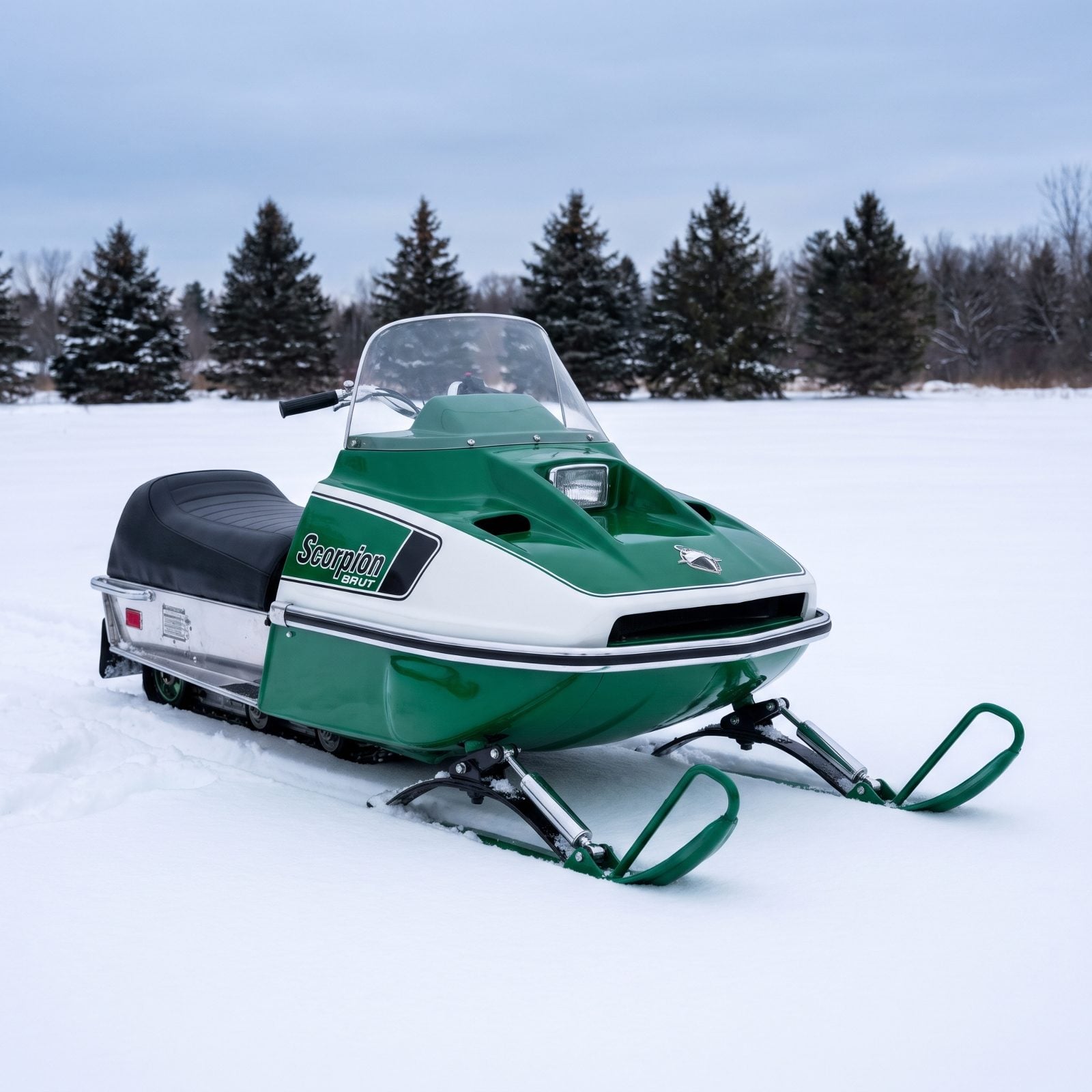
Scorpion built its reputation in Crosby, Minnesota, and the Brut carried it well. Green, white, and purposeful.
The brand has a devoted following today — the kind where owners know each other by name and trade parts at swap meets, and that community is what keeps values healthy. A clean Brut sells because somebody’s been hunting for exactly that one. Buyers scrutinize the engine bay and the correct green hardest, since faded or repainted green reads instantly to anyone who knows the marque.
1972 Sno-Jet Star Jet: Space-Age Styling in a Snowbank
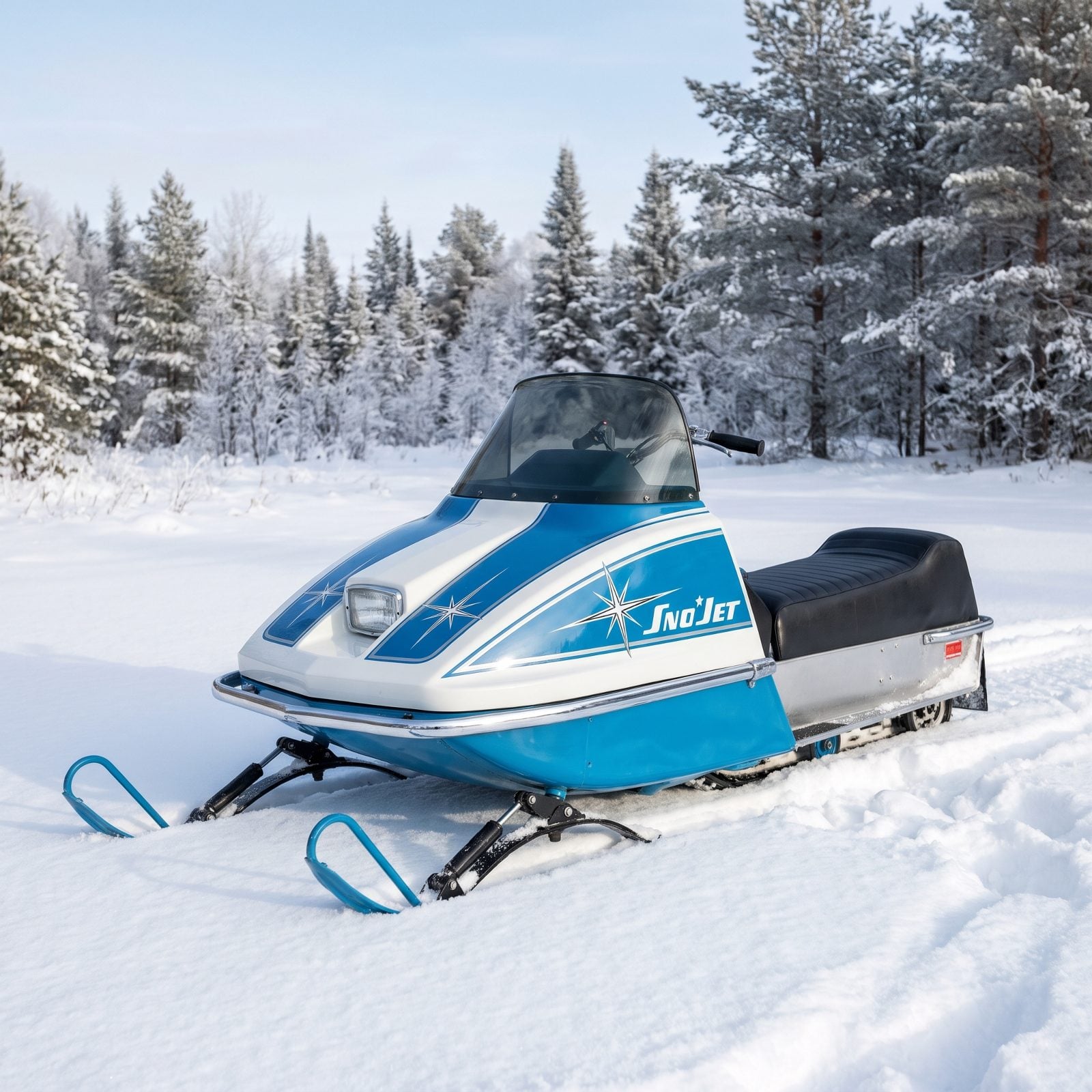
Everything about the Star Jet name was 1972. Sno-Jet leaned hard into the space-age look, and that styling is exactly why these get snapped up for display as much as for riding.
The swoopy cowl and starburst graphics photograph beautifully, which matters more than people admit when a sled is bought as garage art. Collectors who want something that looks fast standing still gravitate here. Find one with uncracked bodywork, because that distinctive cowl is murder to source and a split one tanks the value.
1971 Scorpion Super Stinger: The Rarity That Scorpion Fans Whisper About
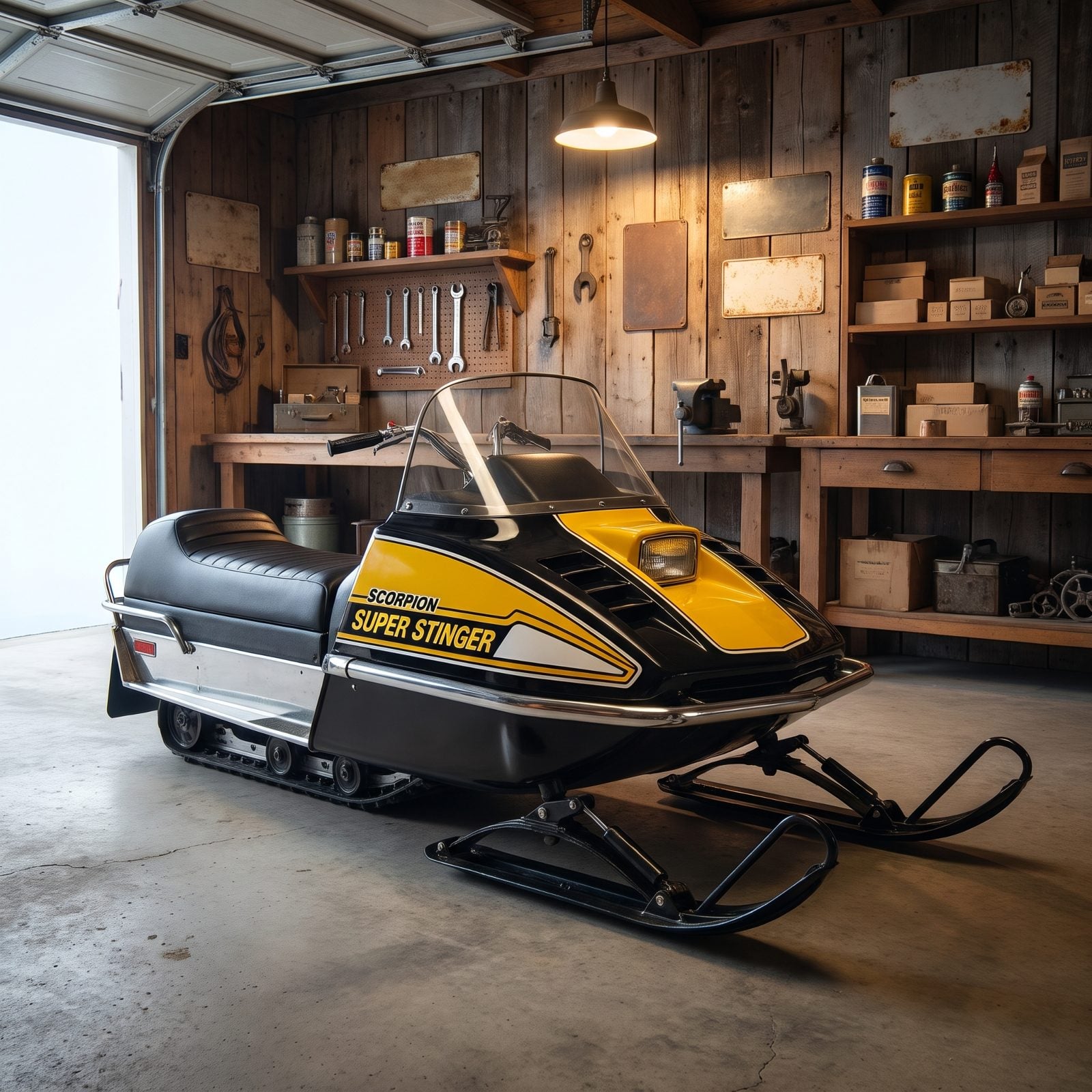
If the Brut is the Scorpion everyone knows, the Super Stinger is the one collectors actually chase. Lower production, a harder race lean, genuine scarcity.
Rarity is the whole story. These don’t surface often, and when a clean one does, the Scorpion faithful come out of the woodwork — thin supply pushing prices well past what the name alone would suggest. Verify the model designation carefully. The Stinger and Super Stinger are not the same sled, and that difference shows up squarely in the sale price.
1971 Mercury Rocket: The Consumer Sled With a Racing Heart
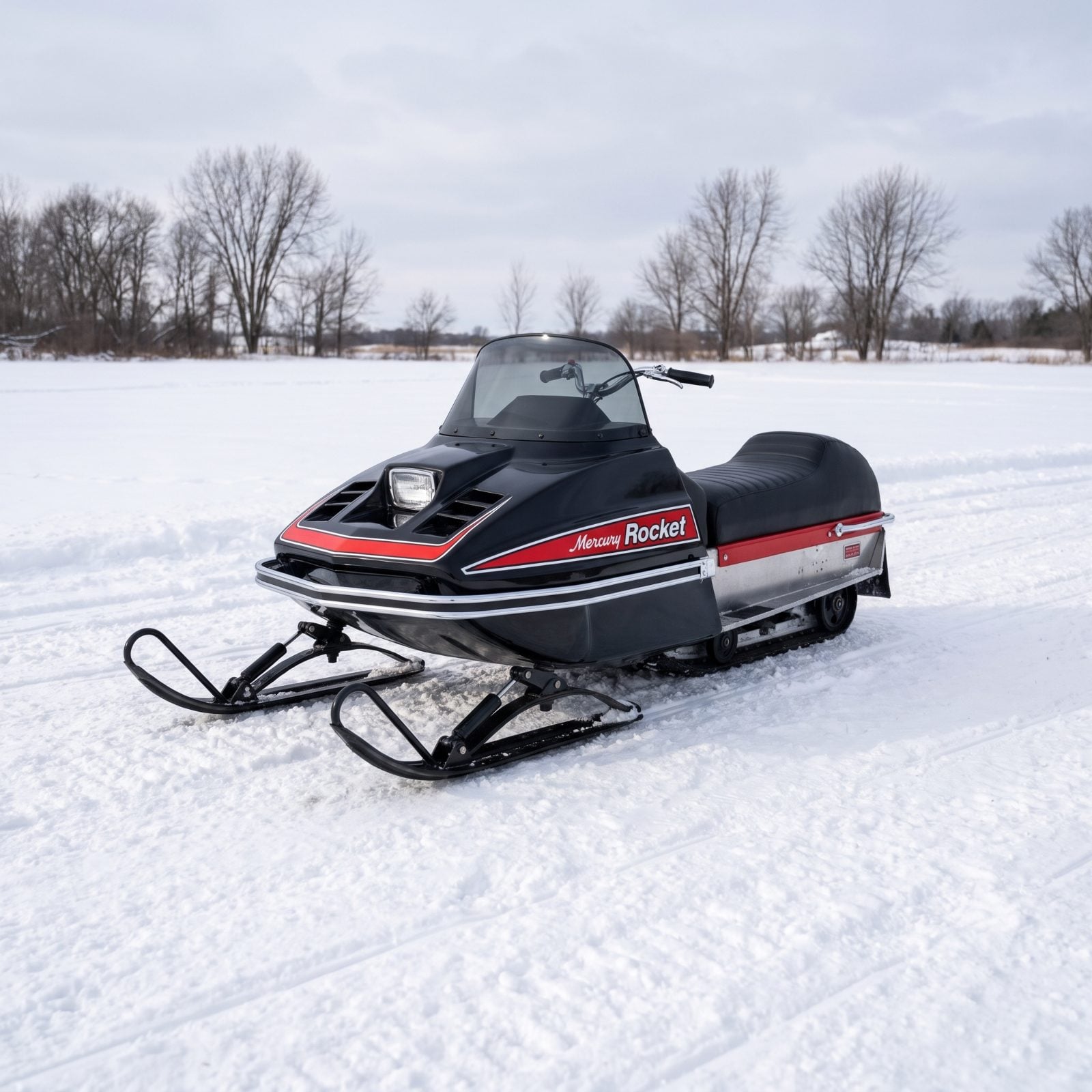
The Rocket was Mercury’s accessible model, the one more people could actually afford. That’s both why it was everywhere then and why clean ones are prized now.
Common production plus decades of hard winters equals a survivor-bias problem. Most got ridden to death. A Rocket that kept its original red-and-black bodywork and still runs well lands in that sweet spot where nostalgia and condition meet, and these are often where new collectors start. That steady entry-level demand keeps good examples moving.
1969 Rupp Sno-Sport GTO: The Mini-Bike Maker’s Fastest Winter Trick
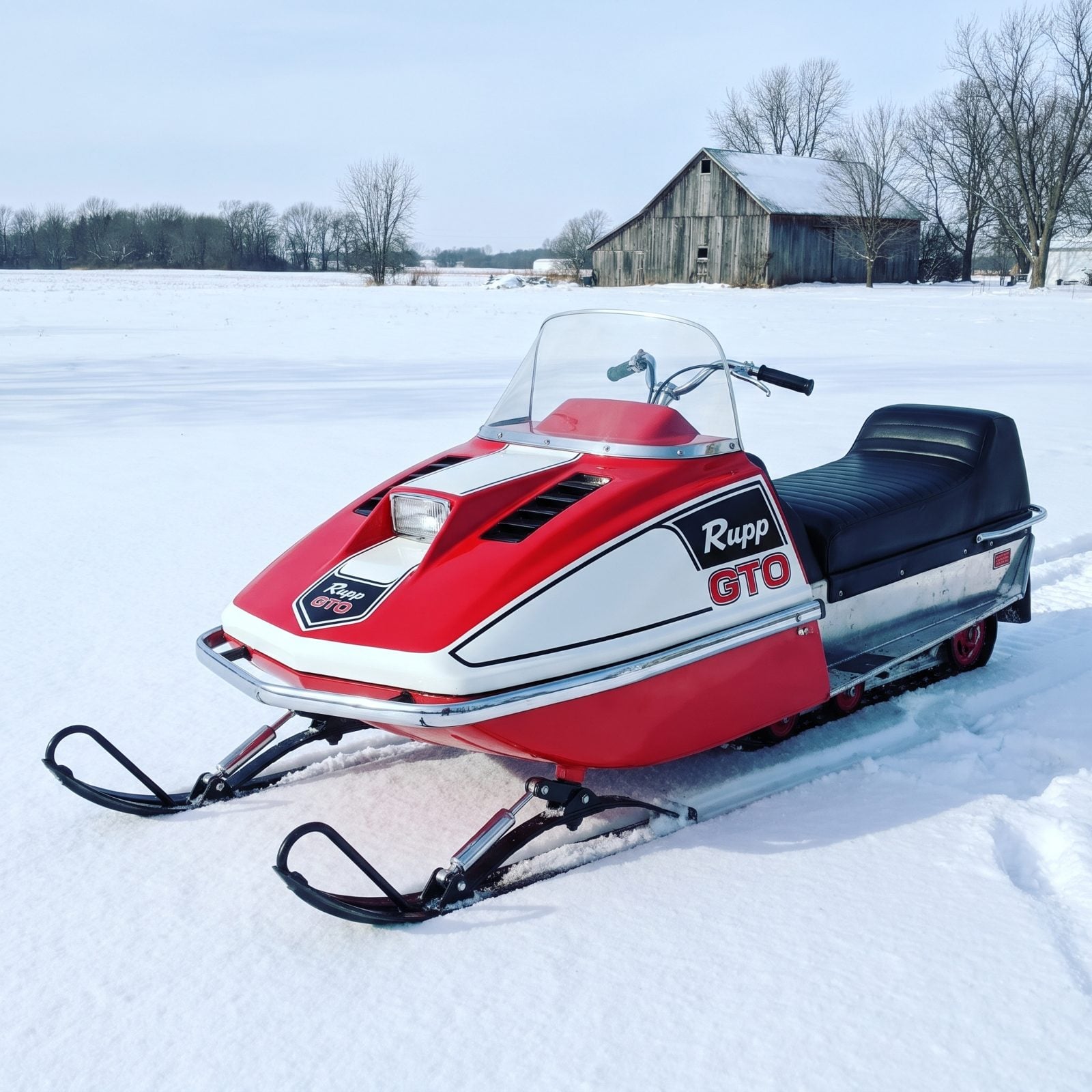
Rupp made its name on mini-bikes and go-karts, so the brand already had a following before it ever touched snow. The Sno-Sport GTO borrowed its name from Detroit’s muscle-car era and didn’t apologize for it.
That crossover appeal is gold at auction. Rupp collectors come from the mini-bike world, the kart world, and the snowmobile world, and they all want the same clean GTO. A late-sixties survivor with correct red-and-white graphics and that chrome-heavy cowl brings strong money precisely because three hobbies are bidding against each other. Check the chassis for the rust that kills these, then check the graphics twice.
1969 Alouette GT: The Quebec Underdog Collectors Chase Now
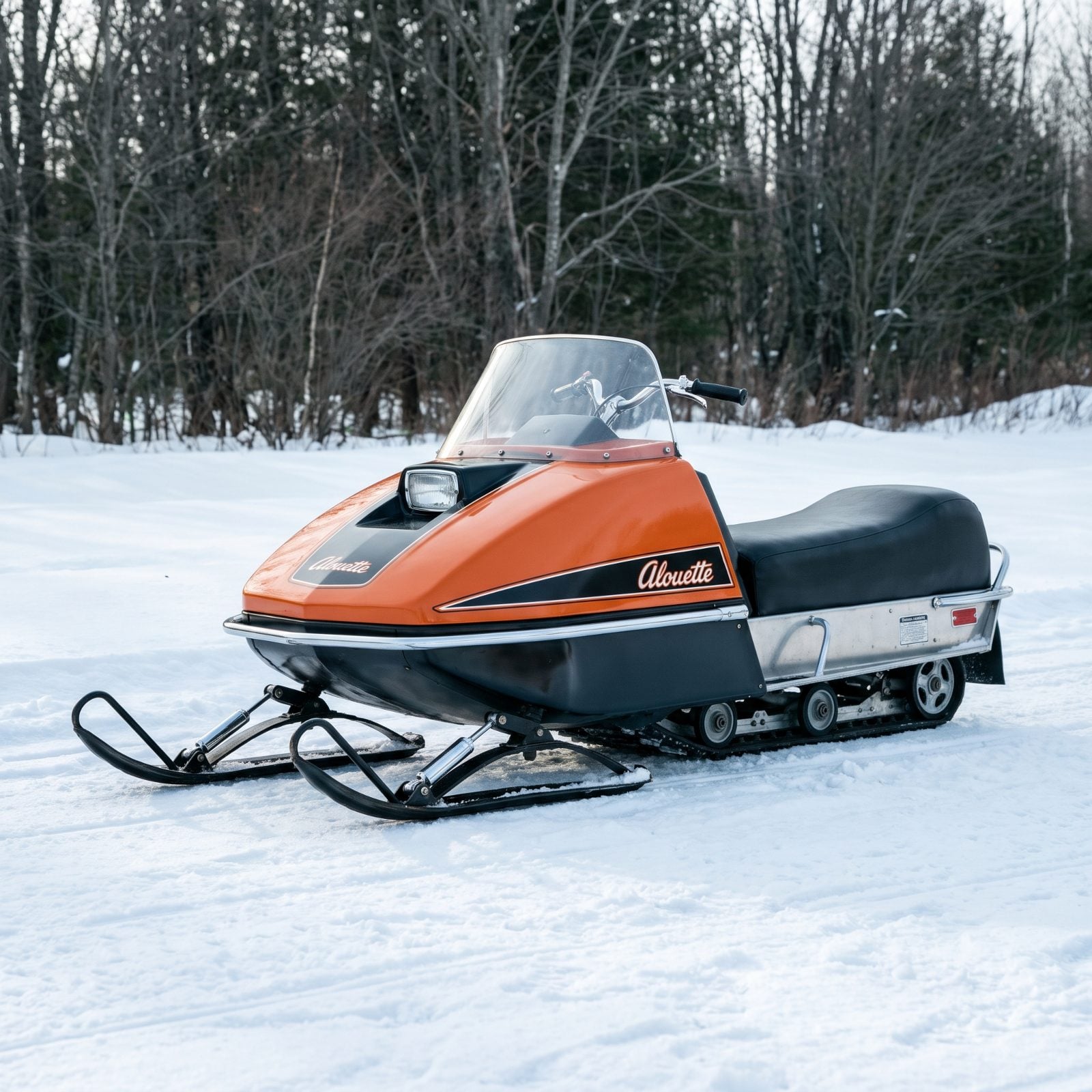
Alouette never had the dealer network of Ski-Doo, which is exactly why the GT moves money today. Built in Quebec in small numbers, plenty got worked hard and junked, so a clean running example is genuinely tough to find.
Condition is everything. The hoods crack, the decals fade, and reproduction parts barely exist — find one with original graphics intact and you’ve cleared the hard part. Expect strong interest from Canadian collectors who grew up watching these at local races.
1969 Arctic Cat Cheetah: Speed in the Name, Value in the Nameplate
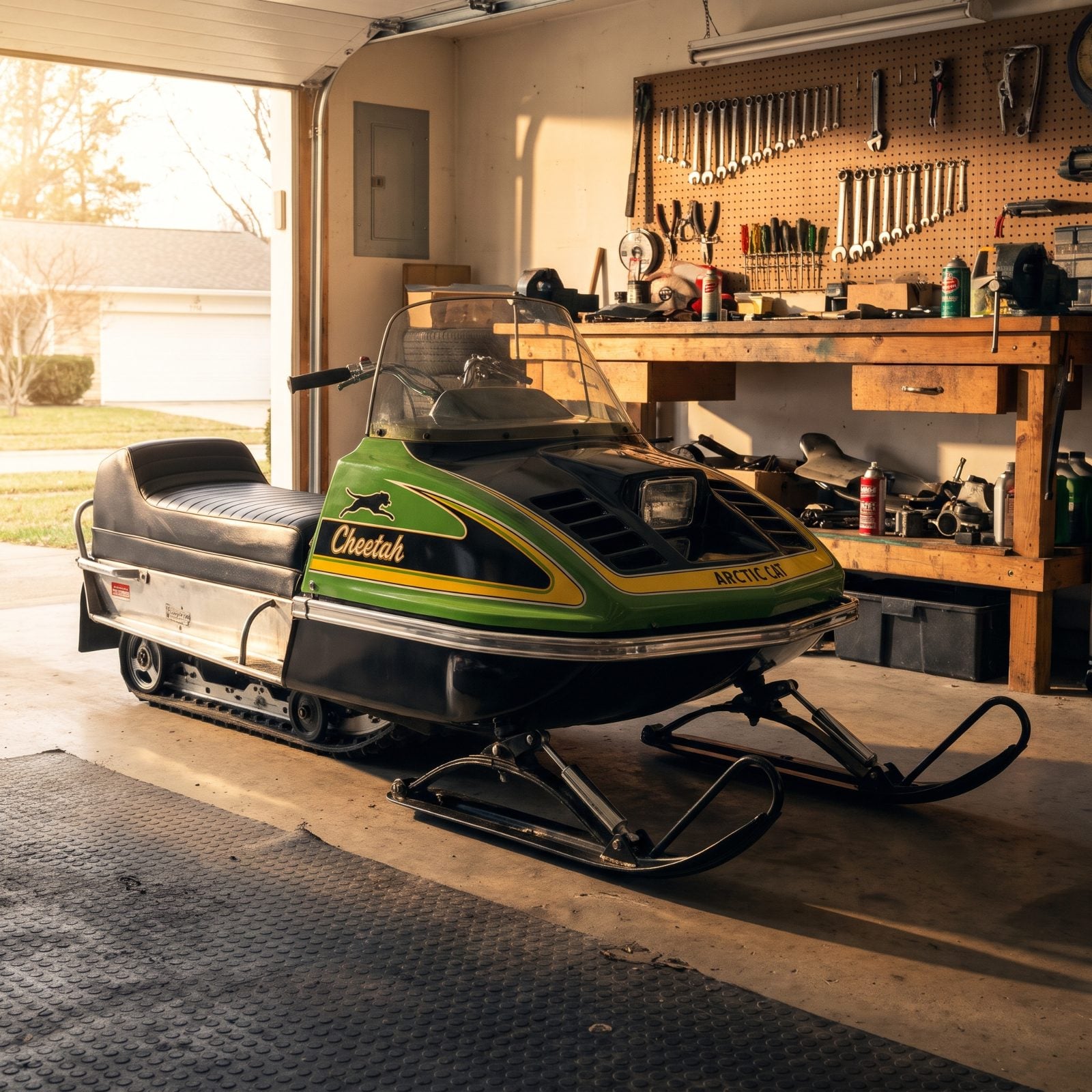
The Cheetah name carries weight because Arctic Cat built its brand on racing, and buyers remember it. This model sits in that sweet spot where collectors recognize the badge instantly and originality still commands a premium.
Watch the engine. Correct period powerplants matter to serious buyers, and a swapped motor knocks real dollars off. A matching, documented sled with service records tells a story — and a story is what turns a casual bidder into a determined one.
1967 Arctic Cat Puma: The Sled That Put Arctic Cat on the Map
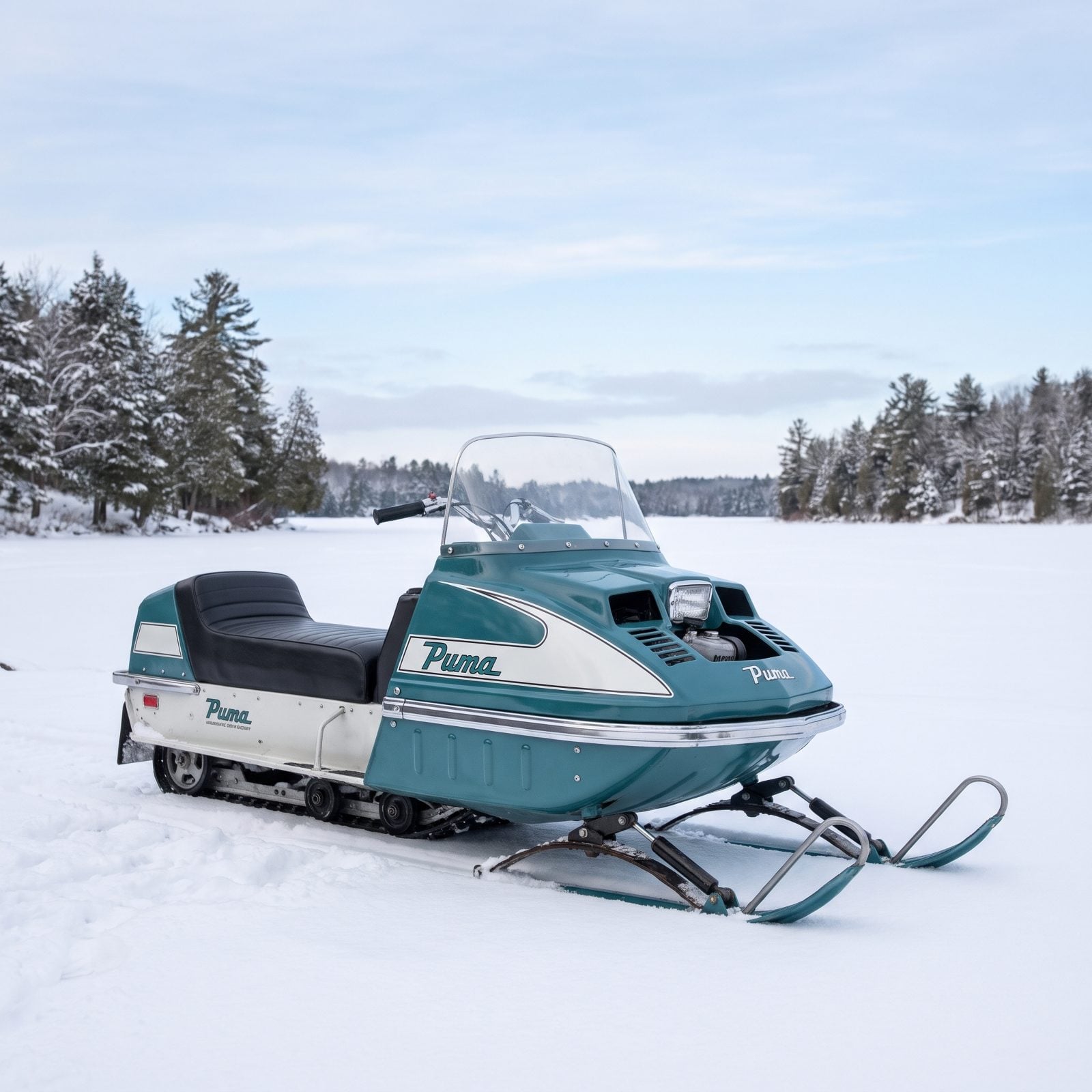
This one has history on its side. The Puma helped establish Arctic Cat as a serious player in the 1960s, and early-run sleds from a brand that went on to dominate always draw attention.
Honestly, a 1967 anything that still runs is a small miracle. Rubber perishes, points corrode, fuel systems gum solid. A Puma that fires on the first few pulls and shows honest original paint is worth hunting for, because collectors pay for the first chapter of a long story.
1967 Rupp Sno Sport: Ohio Muscle on a Narrow Track
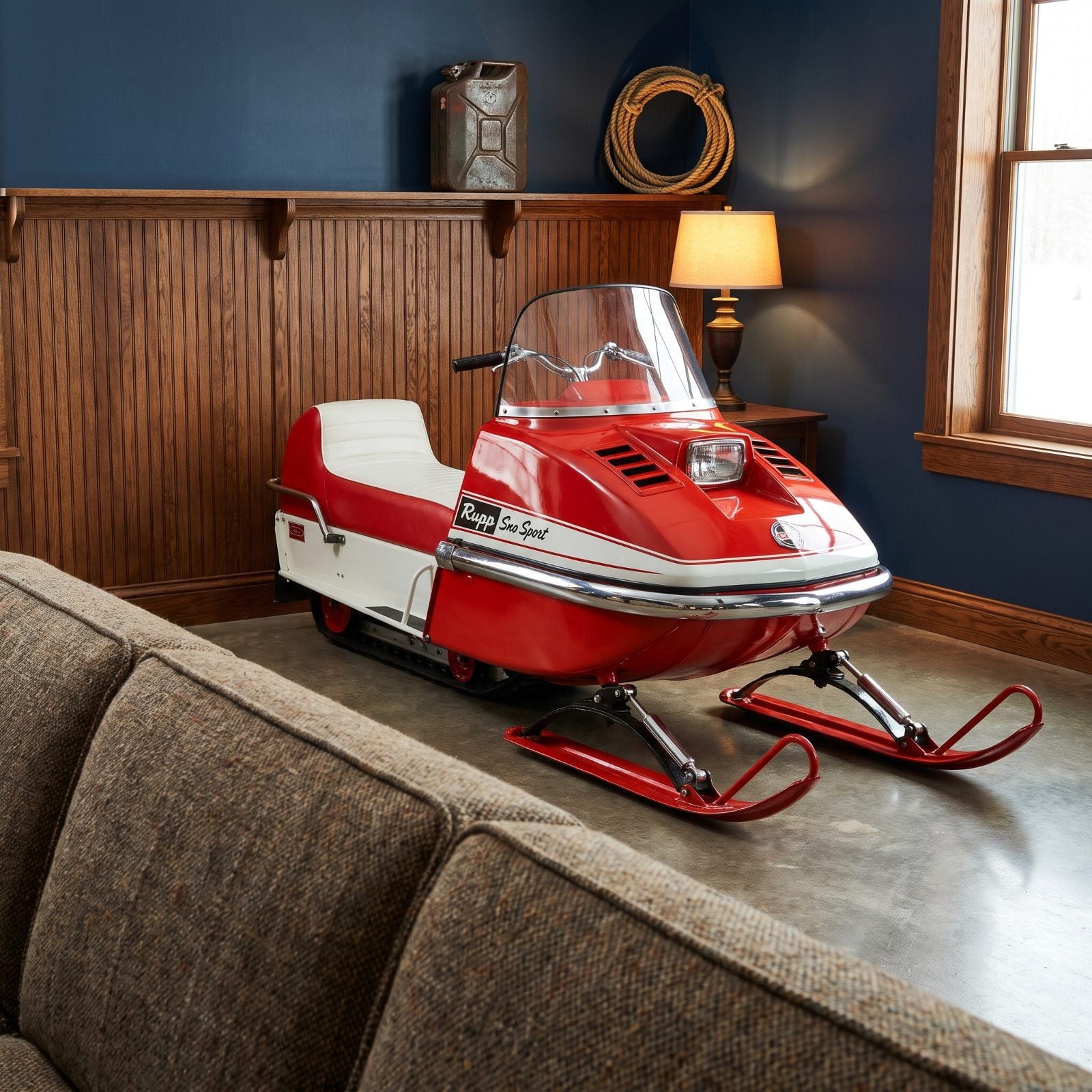
Rupp made its name on minibikes and go-karts, and that same scrappy Ohio-performance attitude carried into the Sno Sport. Folks who love Rupp love the whole catalog, which means these sleds pull in crossover buyers from the minibike world.
That dual-passion crowd lifts prices. Someone restoring a Rupp garage wants the matching sled, and they’ll pay to complete the set.
1967 Scorpion Mark II: The Minnesota Sting Worth Collecting
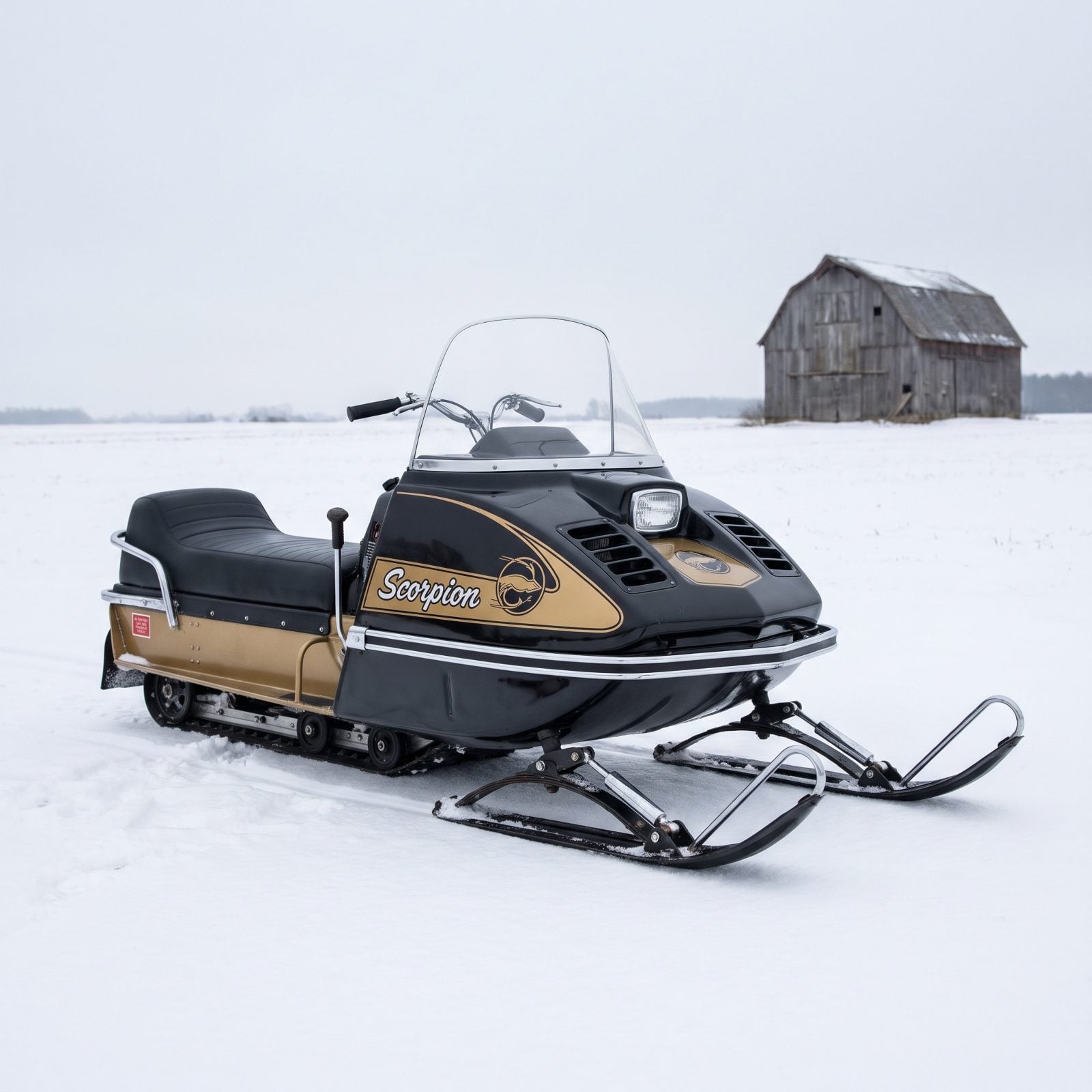
Scorpion built sleds in Crosby, Minnesota, and the brand has a devoted following among collectors who prize underdog marques. The Mark II is early, which matters.
Early production from any defunct manufacturer carries a premium because fewer survived the decades. The sting-themed graphics also photograph beautifully, and in a world where sales happen online, a sled that looks great in pictures sells faster and higher. Never underestimate how much good paint drives a bidding war.
1968 Arctic Cat Panther P-12: The Workhorse That Became a Trophy
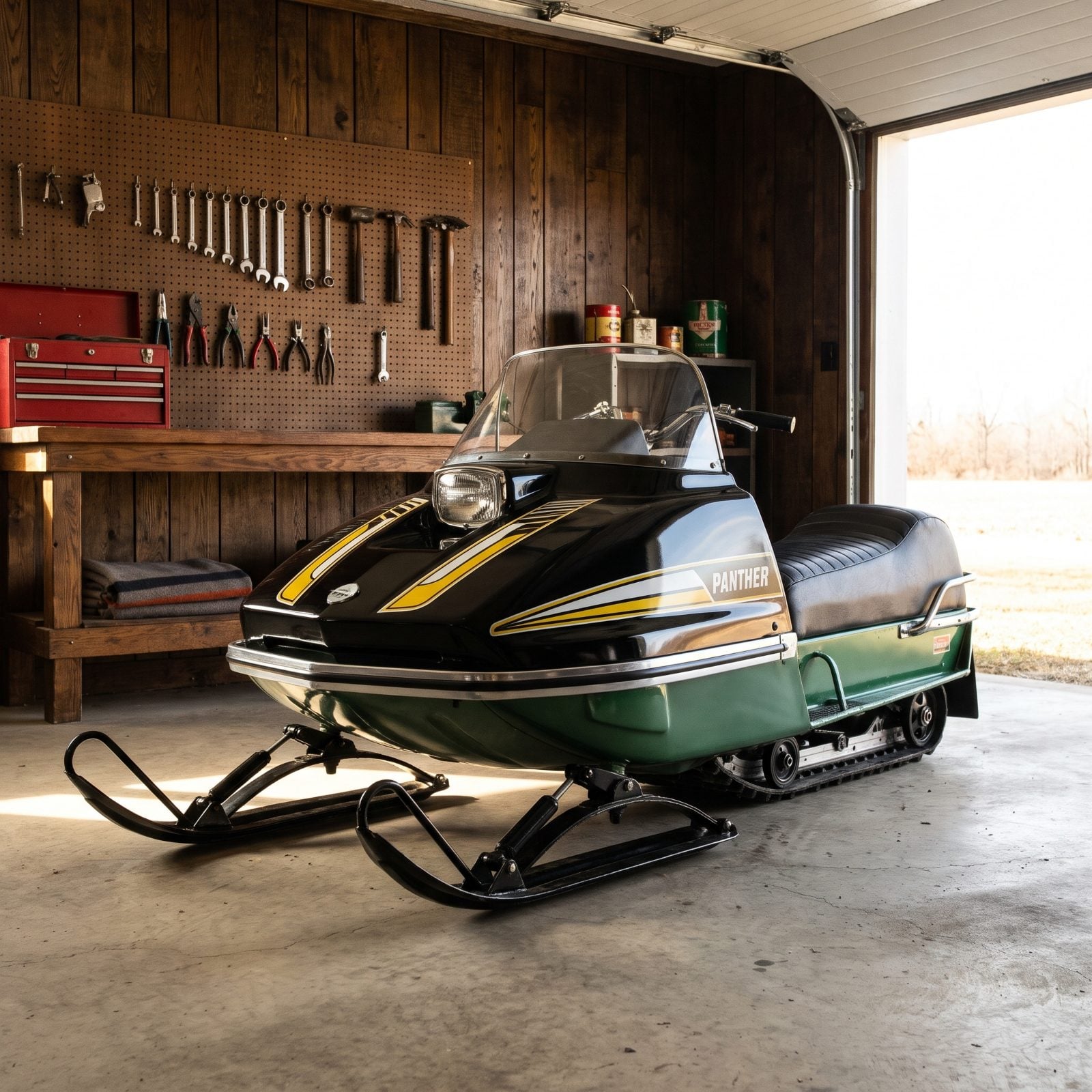
The Panther was built to work — hauling trappers and ice fishermen across country that chewed up lesser machines. That reputation for toughness is exactly what collectors romanticize now.
A well-kept P-12 with original paint and a correct engine pulls solid numbers, especially from buyers who owned one back in the day. Nostalgia does the heavy lifting. People aren’t buying a sled; they’re buying back a winter from fifty years ago.
1968 Ski-Roule S-340: The Quiet Collectible With a Loyal Cult
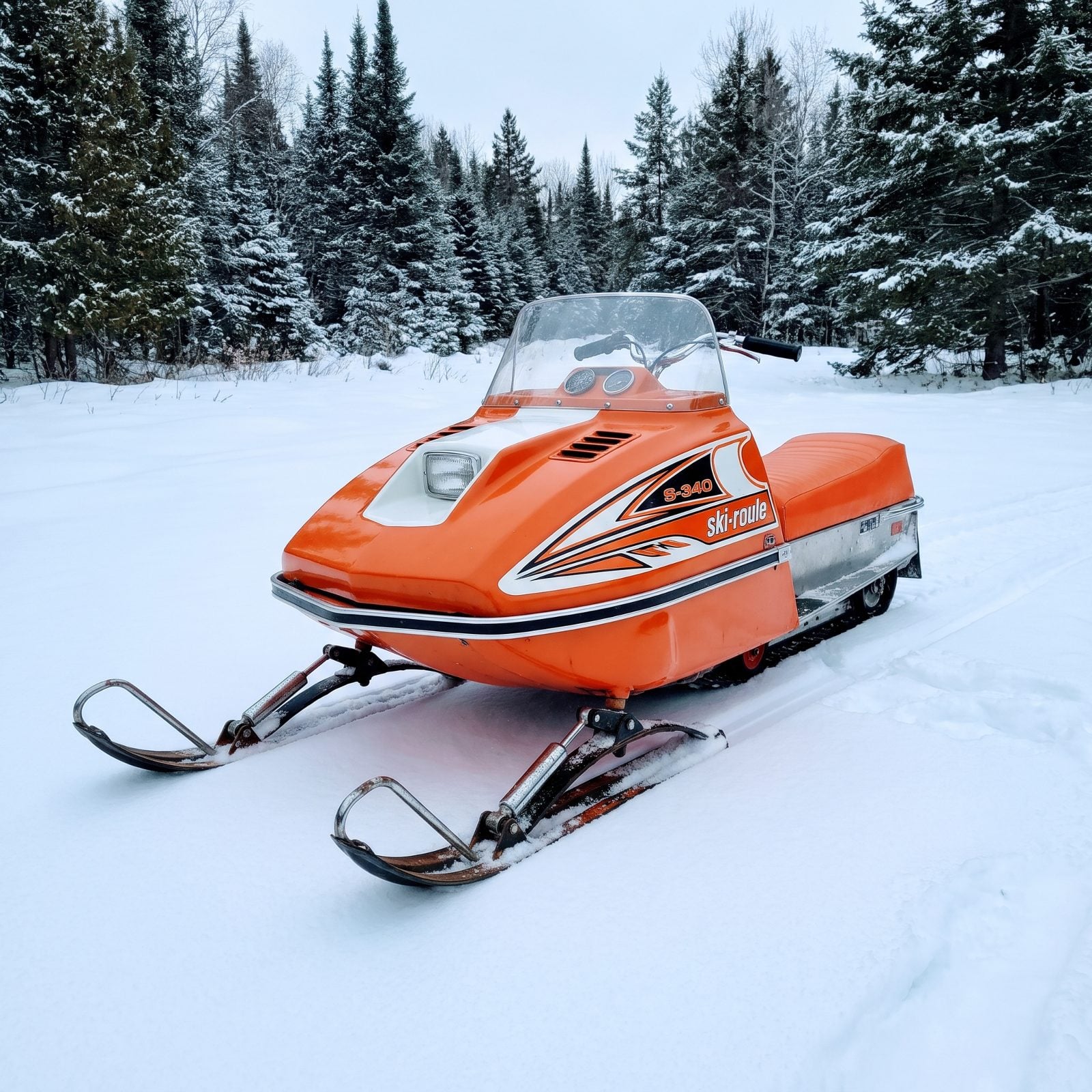
Ski-Roule flies under the radar, and that’s the opportunity. Lesser-known marques sit quiet until the right two bidders show up who both grew up on one.
The S-340 rewards patience. Values climb slowly, then spike when a clean example surfaces because nobody’s seen one in years. If you like buying before the crowd does, this is the kind of sled that pays off down the road.
1970 AMF Ski-Daddler Mark IV: The Bowling-Company Sled Collectors Love Ironically and Seriously
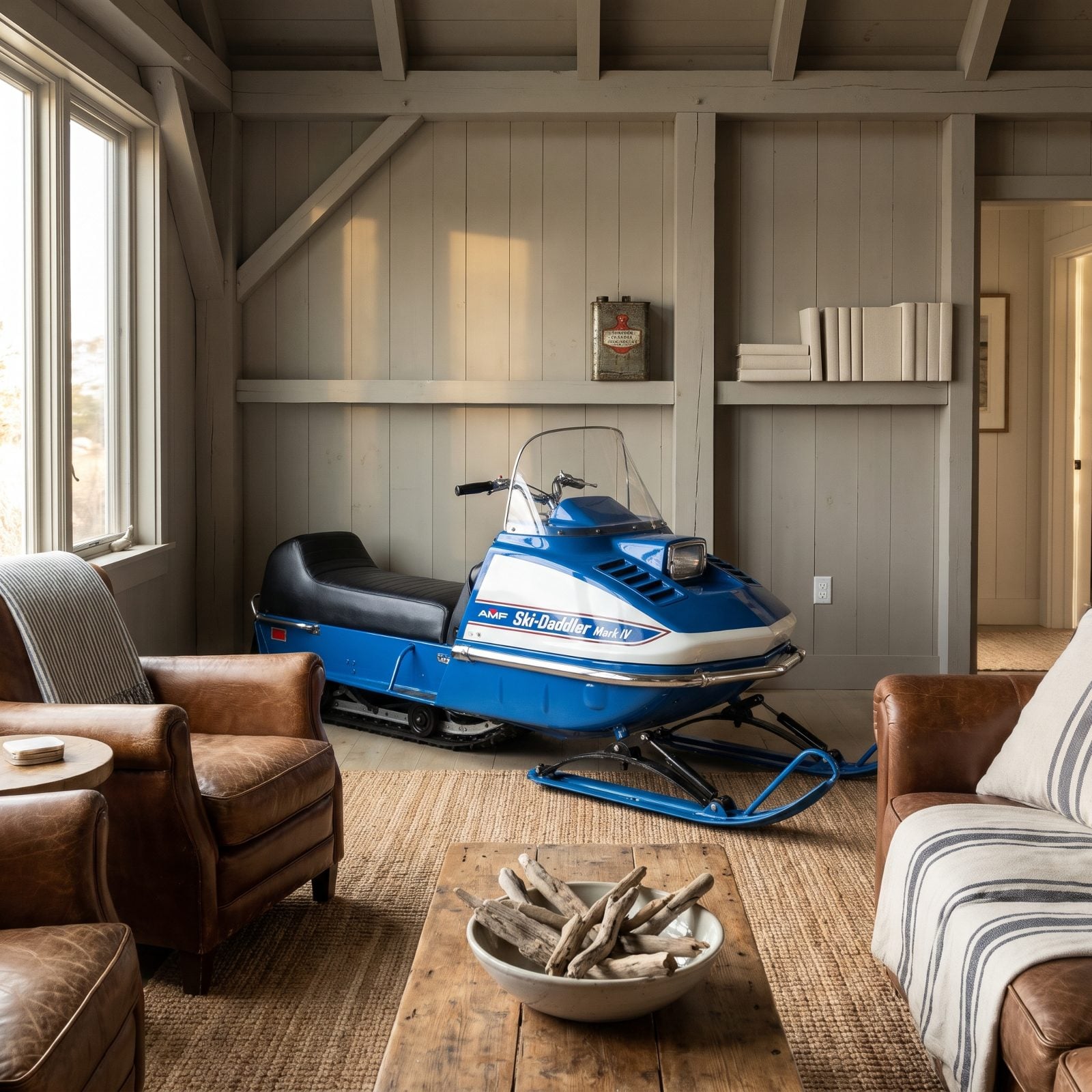
AMF is the company most people know from bowling gear. And yes, they built snowmobiles too. That oddball backstory is half the appeal.
The Ski-Daddler draws two kinds of buyers: collectors who want the full history of American recreation companies, and folks who just find the name delightful. A fun story sells. When a sled makes someone grin at the auction, the hand goes up.
1971 Rupp Yankee: The Rotary-Engine Oddball That Thrills Engineers
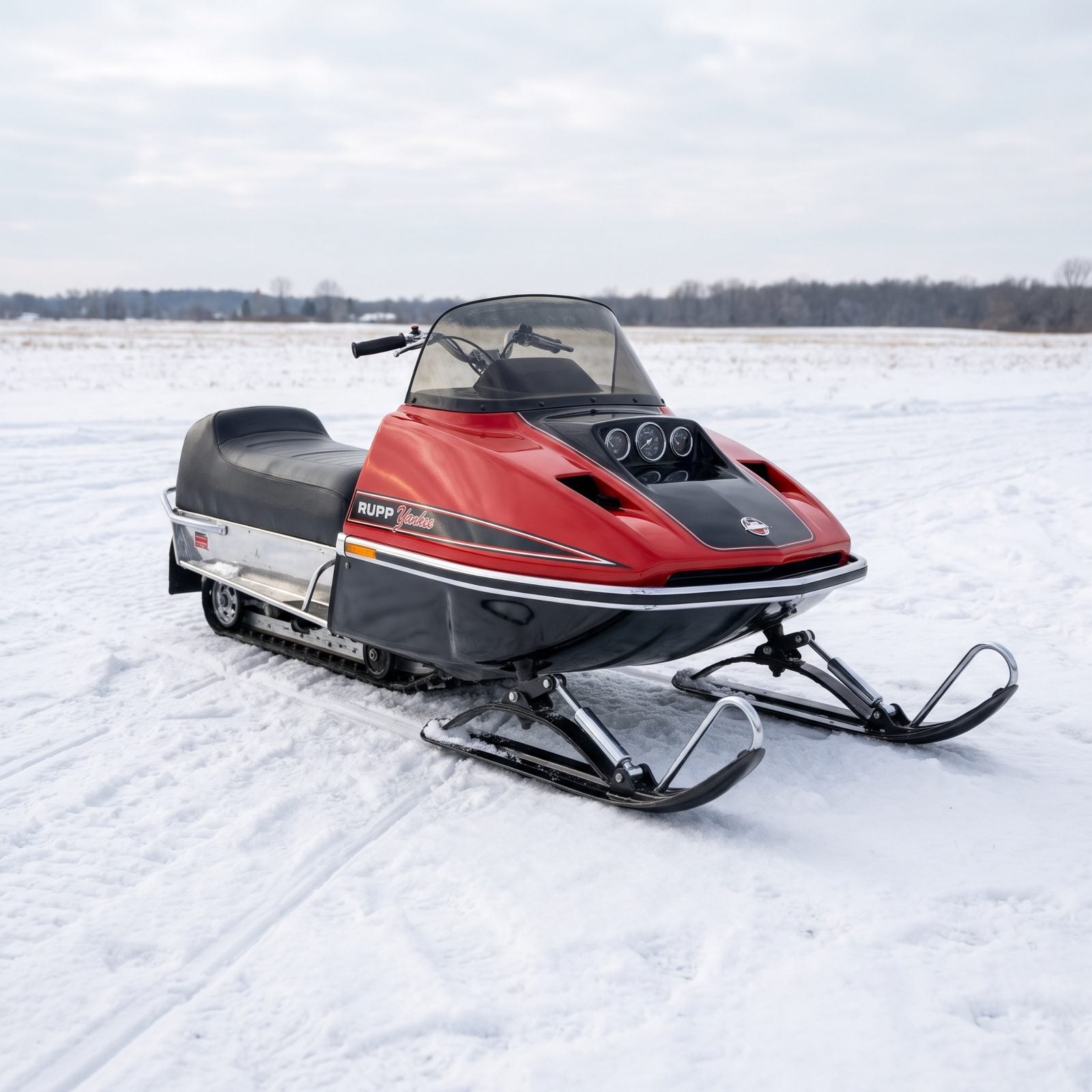
Here’s where engineering history drives the price. The Yankee is remembered among enthusiasts for Rupp’s experimentation during the brand’s performance push, and weird mechanicals always find a technical crowd willing to pay.
Documentation matters enormously with a sled like this. A Yankee with its correct original powerplant, period paperwork and clean compression is a different animal from a tired project with mismatched parts.
1960 Ski-Doo K60: The One That Started the Whole Hobby
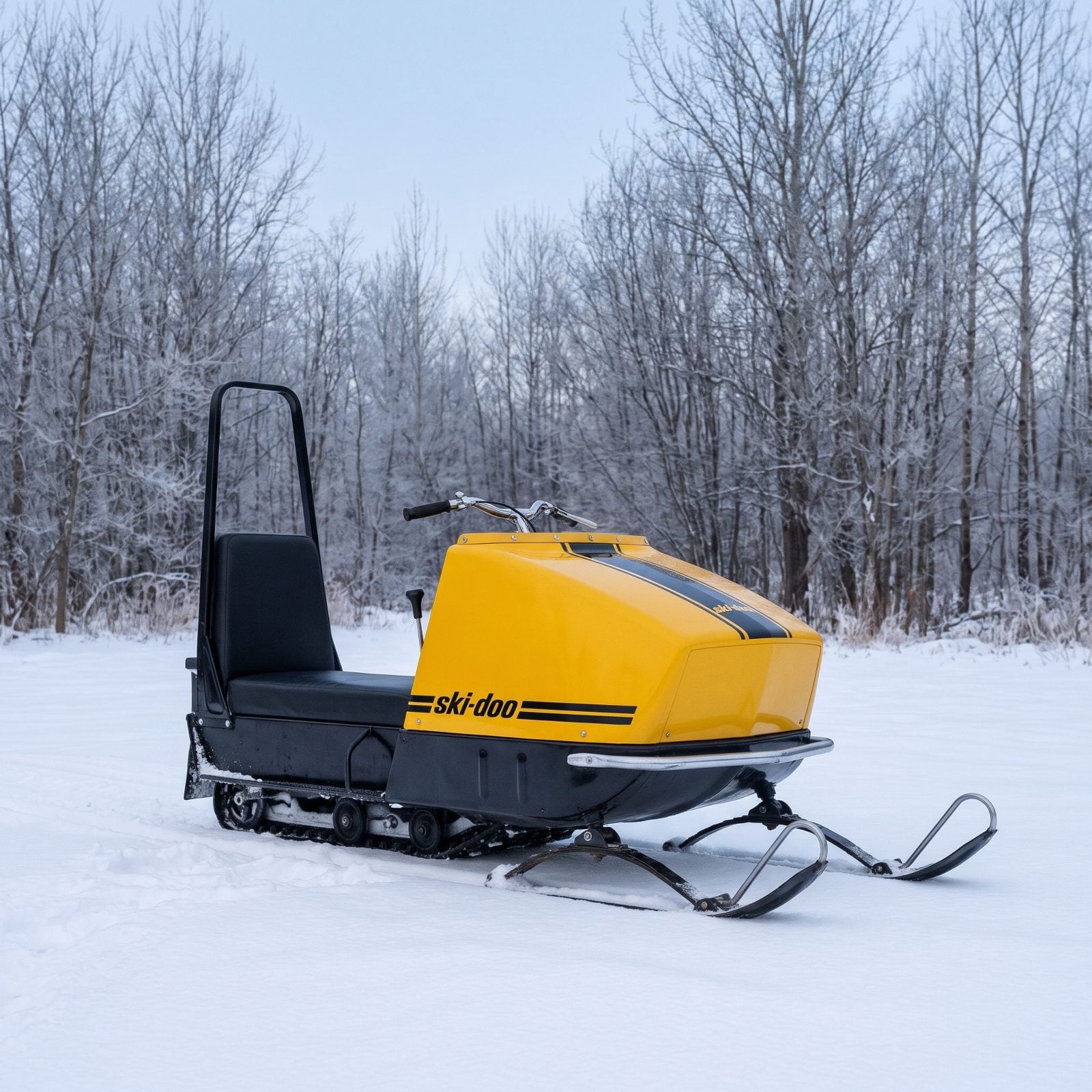
This is the holy grail, and it earns its place here because nothing else carries the same weight. The earliest Ski-Doo production is the birth of the recreational snowmobile as we know it, and genuine examples from the very start are vanishingly rare.
Authenticated early Ski-Doos run well beyond what any other sled here commands, and verification is serious business — provenance, correct components and expert authentication separate a museum piece from an expensive disappointment.
Every recreational sled in this list owes something to this machine. That lineage is what collectors are really buying.
1961 Polaris Sno-Traveler K95: The Rear-Engine Workhorse Collectors Chase
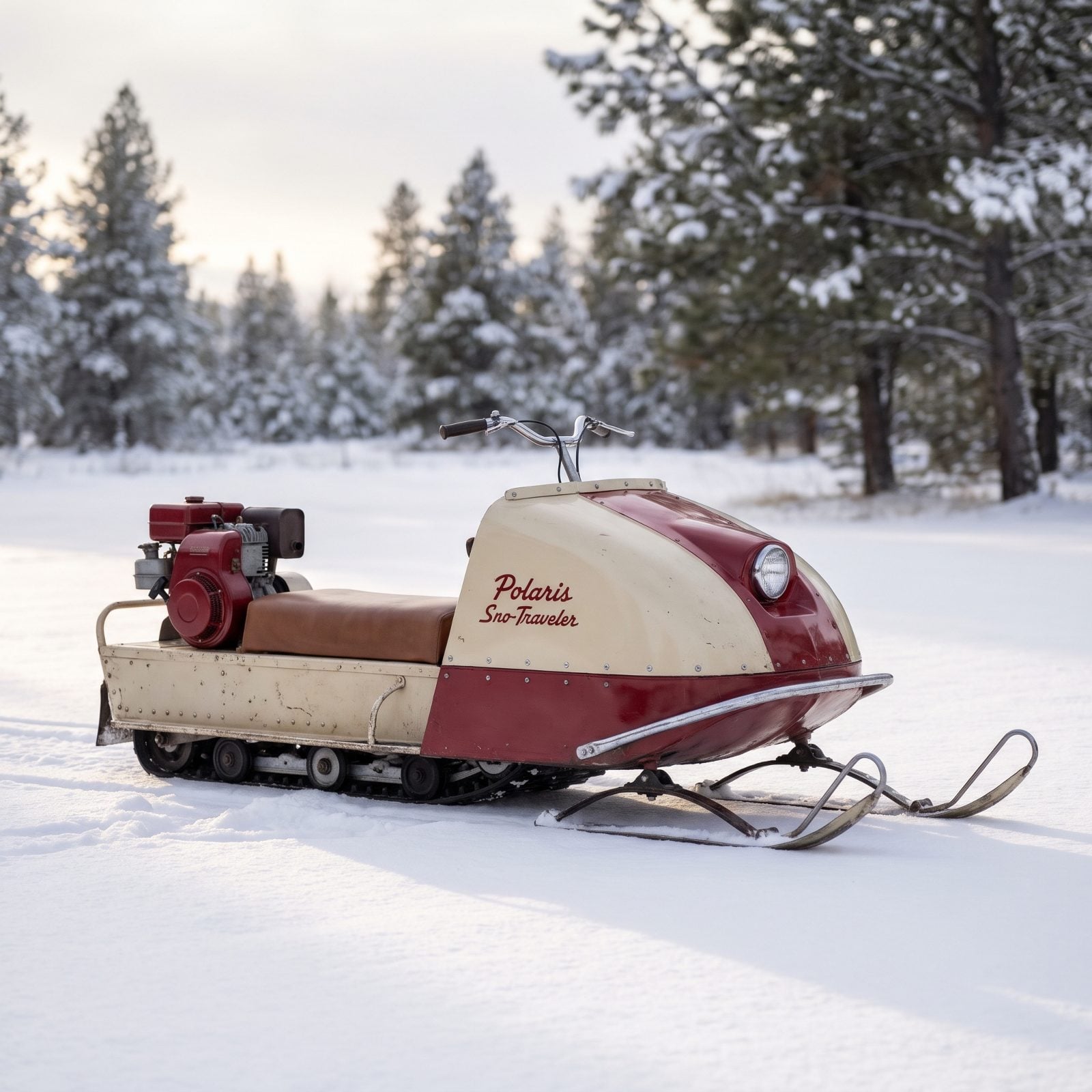
Before Polaris made anything pretty, it made this. The K95 was a rear-engine, drive-it-like-a-tractor machine built back when nobody had settled on what a snowmobile was supposed to look like, and that awkwardness is exactly why collectors chase one now.
Early Polaris survivors are thin on the ground because most got worked to death hauling trap lines and firewood across northern Minnesota. A clean, running K95 with correct paint and original track can command strong money at Midwest vintage sled auctions — the kind of number that makes people who think snowmobiles are cheap toys do a double-take.
1962 Arctic Cat Model 500: The One That Started the Cat Legend
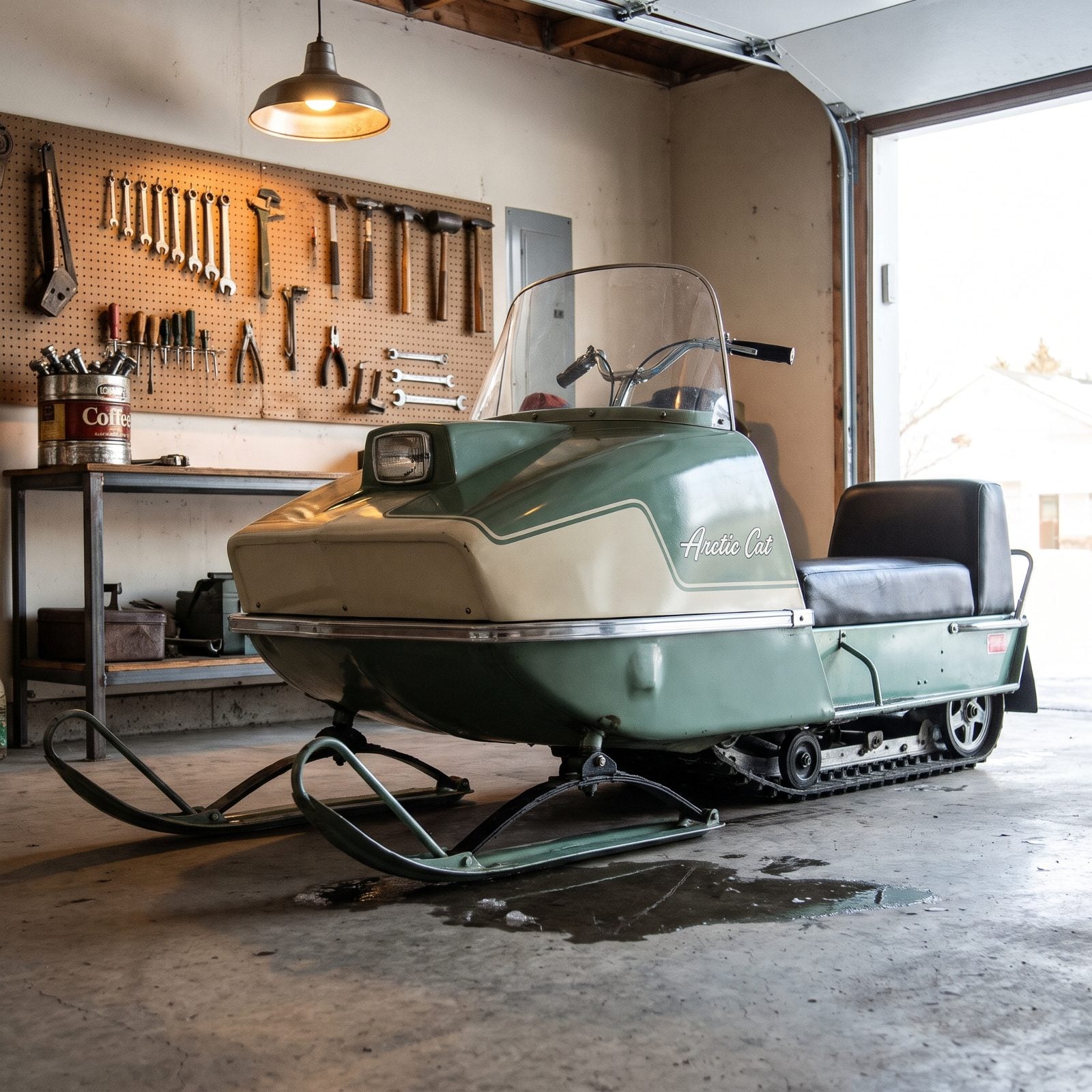
The Model 500 is where the whole Arctic Cat story begins, and provenance like that carries weight when the gavel comes down. Early production, a low survivor count, and a brand that went on to clean up in racing all push a correct example well past what the plain styling would ever suggest.
Here’s where people get it wrong. They assume any old Cat is worth big money. It isn’t. The premium lives in originality — correct hood graphics, untouched serial tags, a drivetrain that still turns over. A butchered restoration with the wrong paint tanks the price fast.
1964 Arctic Cat Model 100: Small Machine, Serious Scarcity
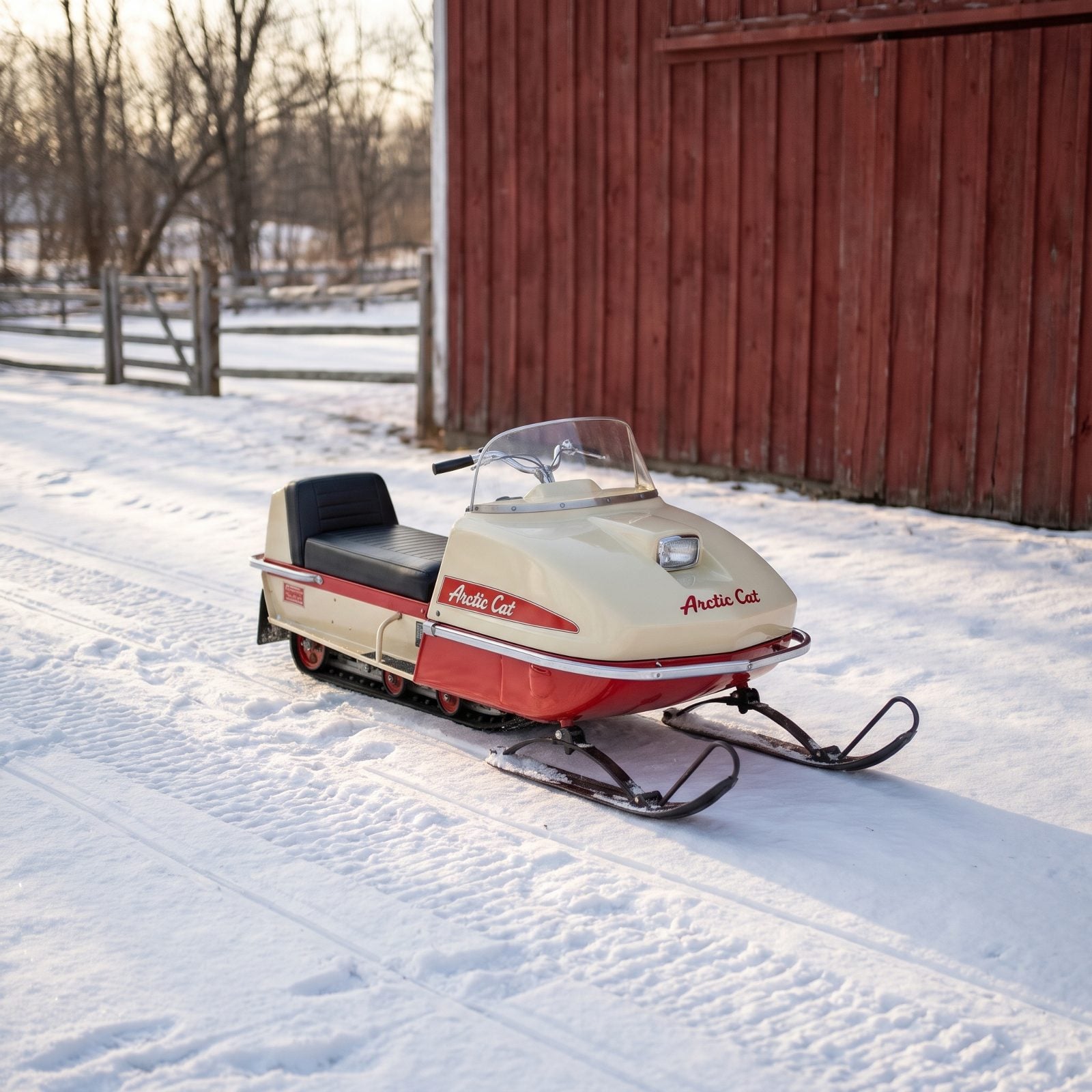
Tiny, early, and rare. The Model 100 never sold in big numbers, and little early sleds get scrapped or forgotten rather than tucked away and preserved. Decades later, that math quietly works in a collector’s favor.
Find one with its original track still on it and you’ve got something most Cat enthusiasts have only ever seen in photos.
1964 Fox Trac: The Fiberglass Oddball Worth a Second Look
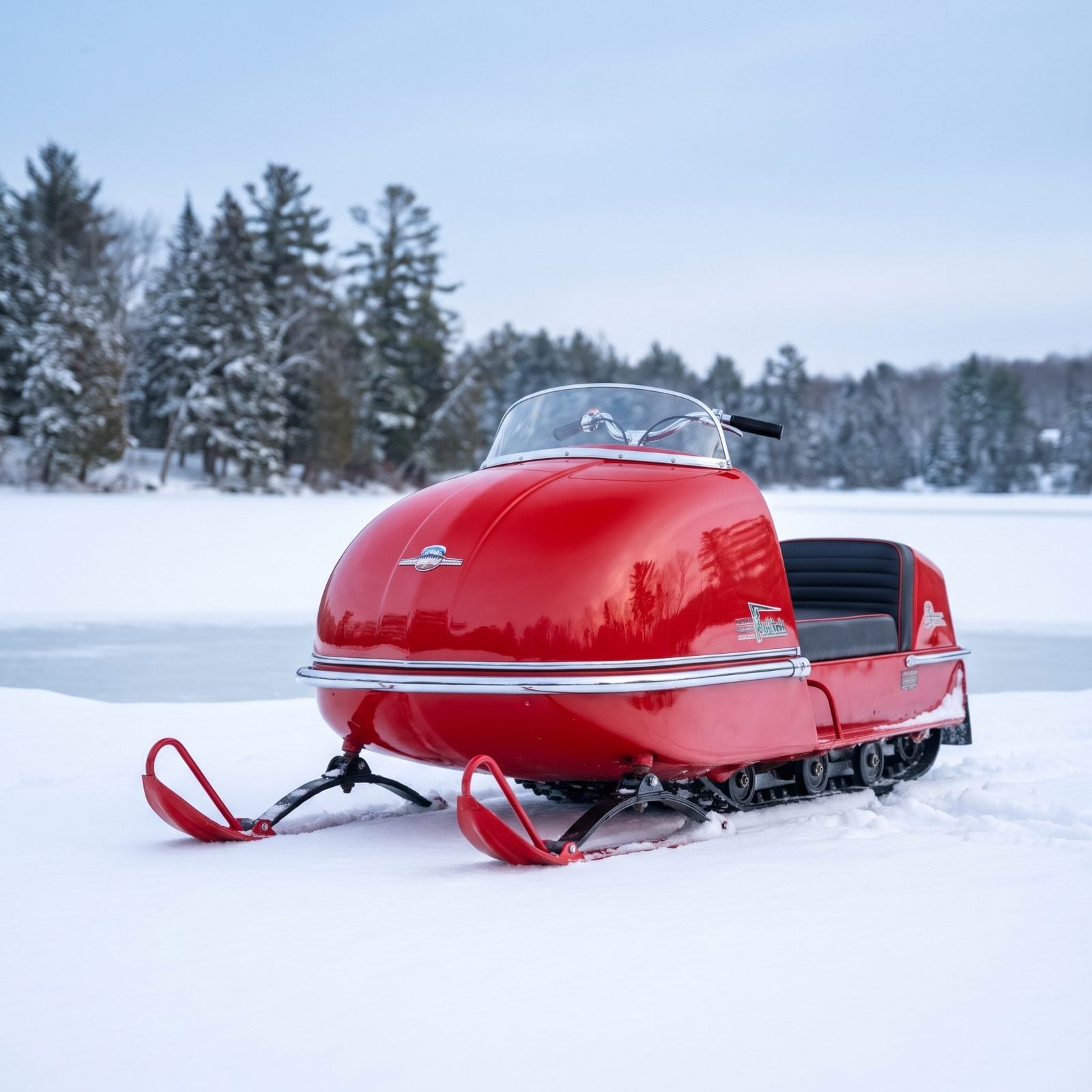
The Fox Trac is the sled collectors drop into conversation to see if you actually know your stuff. That molded fiberglass body was weird engineering for its day, and weird is catnip to the people who hunt these machines down.
Rarity does the heavy lifting. Fox never built at the scale of the big names, so examples surface so rarely that each one turns into its own little event. Condition matters, sure. But with a Fox Trac, honestly, finding a complete one is half the battle.
1965 Ski-Doo Olympique: The Model Every Vintage Rider Knows
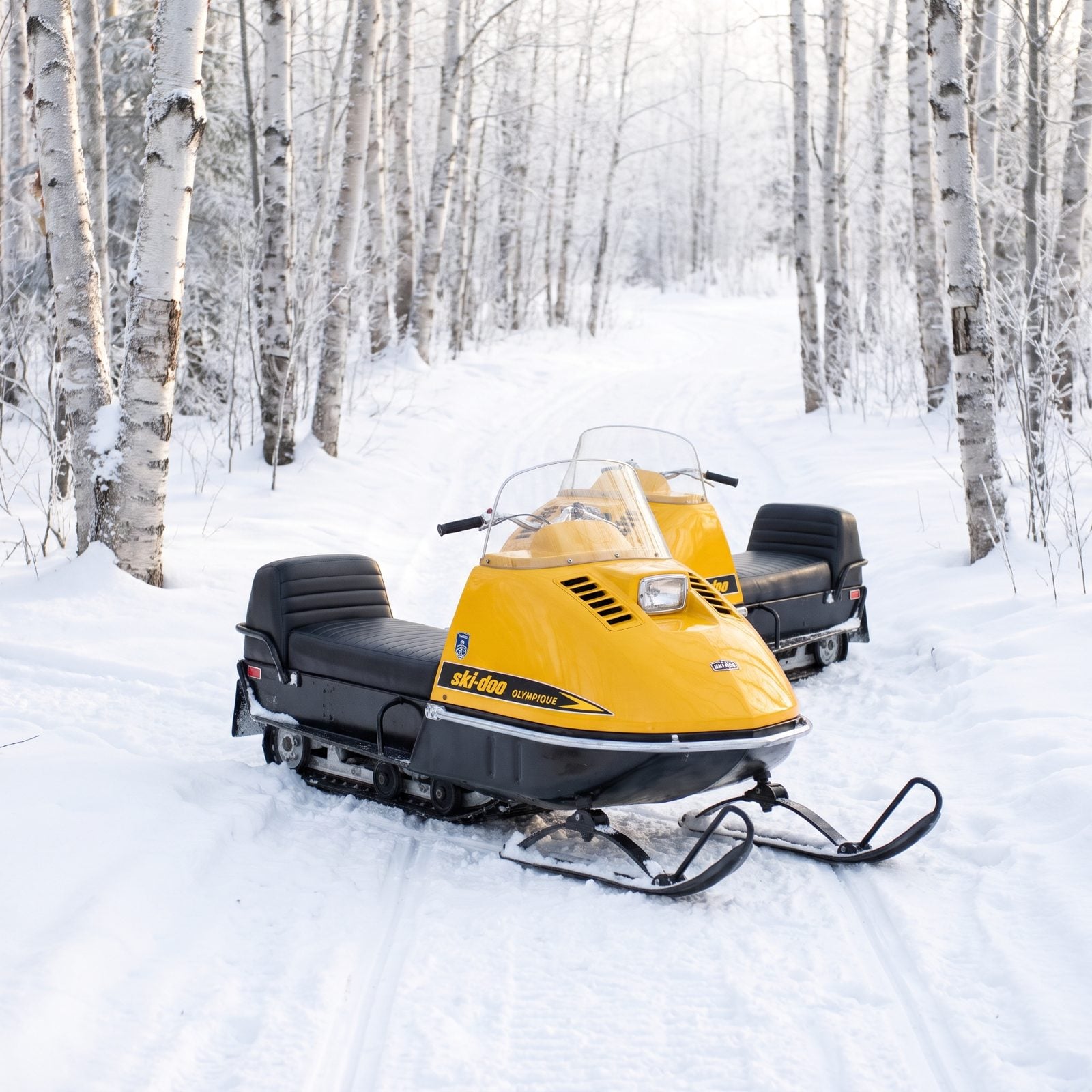
Yellow and black, instantly recognizable. The Olympique is the sled that lodged Ski-Doo into the memory of anyone who grew up anywhere near snow, and that nostalgic pull turns into real money when the bidding starts.
So many got built and ridden hard that a genuinely clean, unmodified early Olympique stands out from the crowd. Nostalgia drives the bidding here more than rarity does — buyers are paying for the memory as much as the machine.
Describing his own 1966 Olympique project, a vintage sled restorer wrote that “It was missing a few things, and I knew it was going to be a search to find the parts as there aren’t many of these sleds out there anymore.”
1965 Polaris Mustang: The Sporty Sled That Changed the Brand
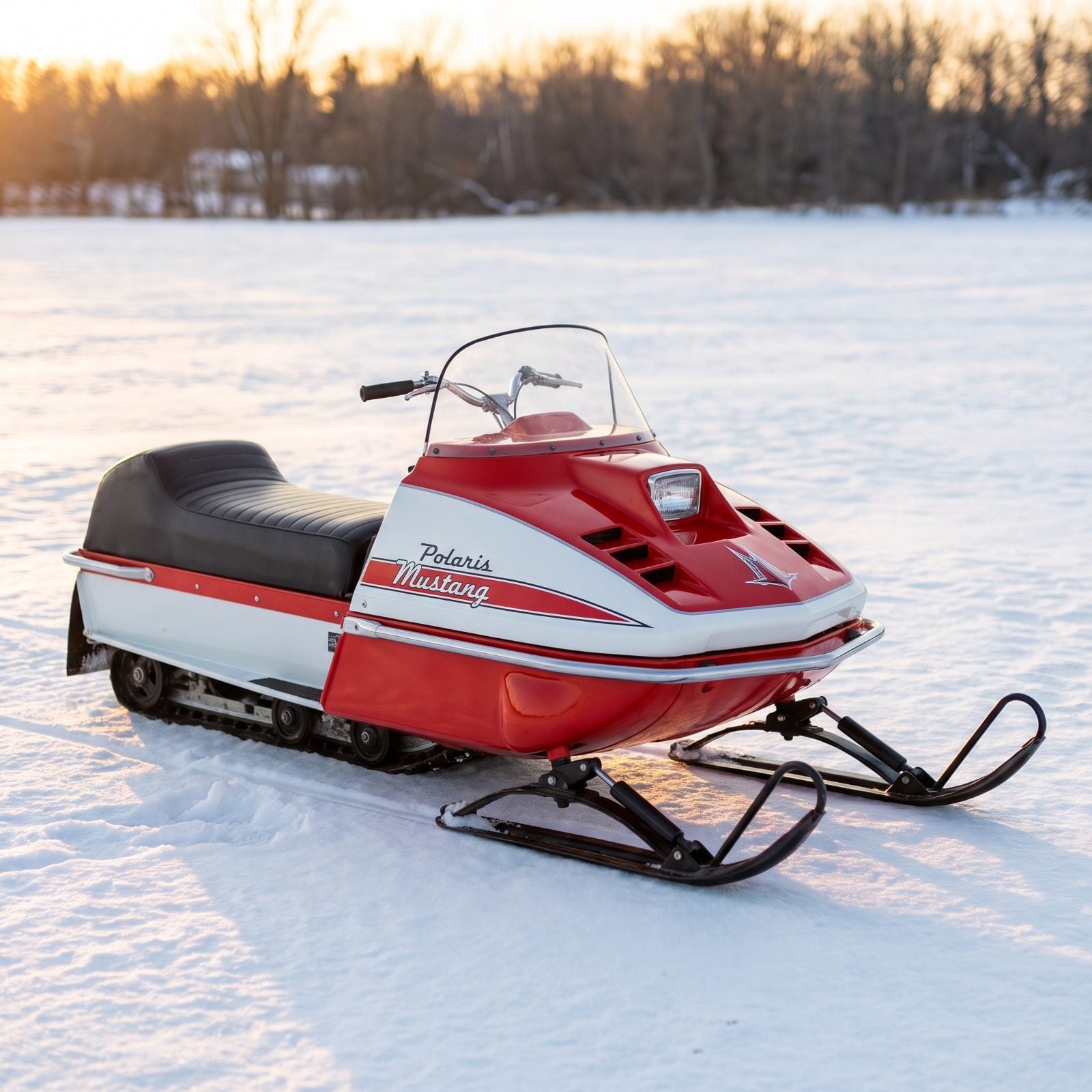
The Mustang gave Polaris something it badly needed — a sled that looked like it actually wanted to go fast. It dragged the company away from pure utility and toward the sport market, and that pivotal spot in the brand’s story shows up right on the bid sheets.
Collectors who live and breathe Polaris history treat a correct Mustang as a cornerstone piece. Get the windshield, the graphics, and the seat covering right and the value holds. Swap in reproduction parts carelessly and purists catch it instantly.
1966 Johnson Skee-Horse: The Outboard Company’s Snow Gamble
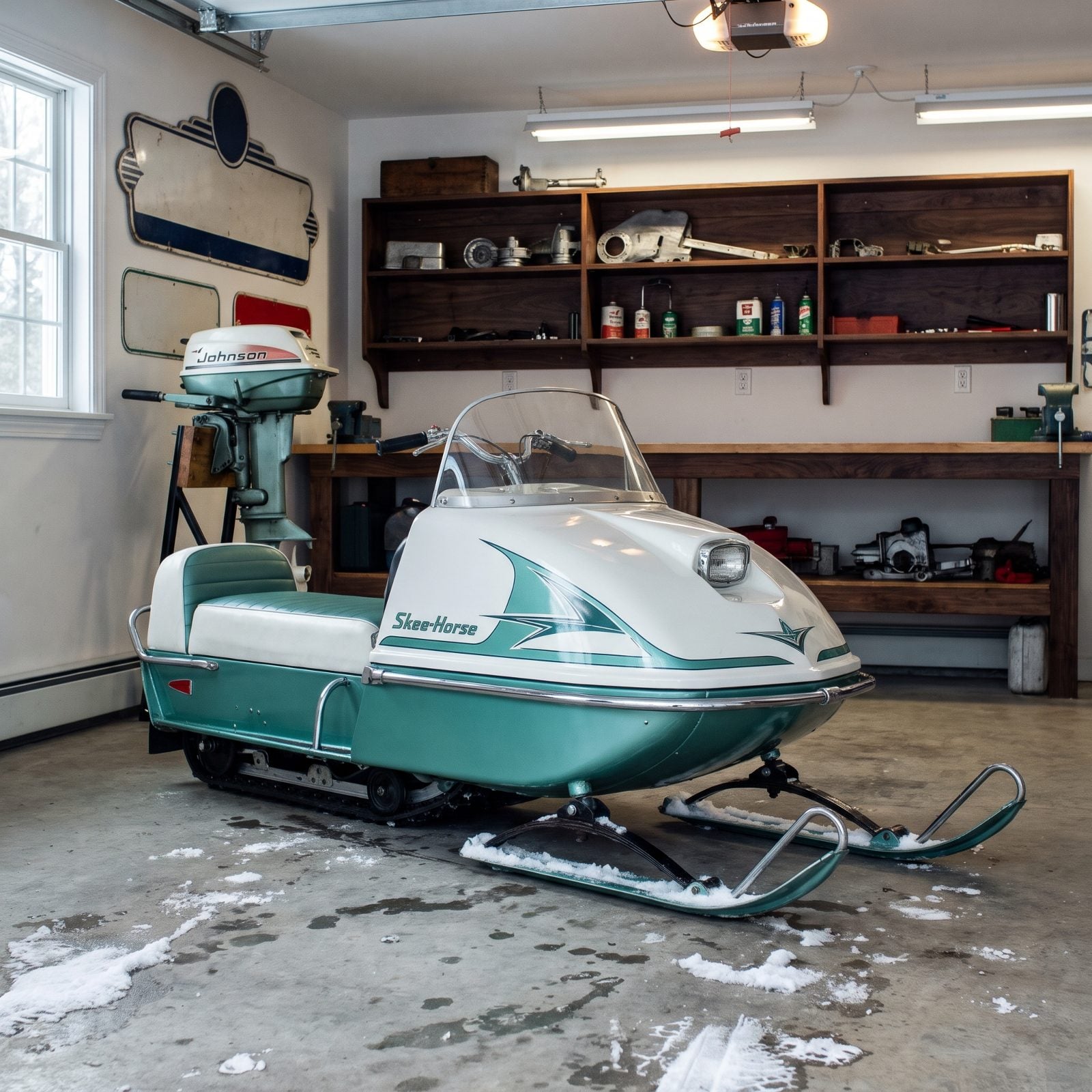
Johnson built outboard motors, then looked out at all that snow and figured, why not. The Skee-Horse is what came of that, and the crossover heritage makes it a genuine conversation piece among collectors who like a machine that comes with a backstory.
These share DNA with Evinrude’s version, both rolling out of the same corporate family, which adds a nice layer of intrigue to spotting the little differences.
1966 Evinrude Skeeter: The Marine Cousin That Shares the Bloodline
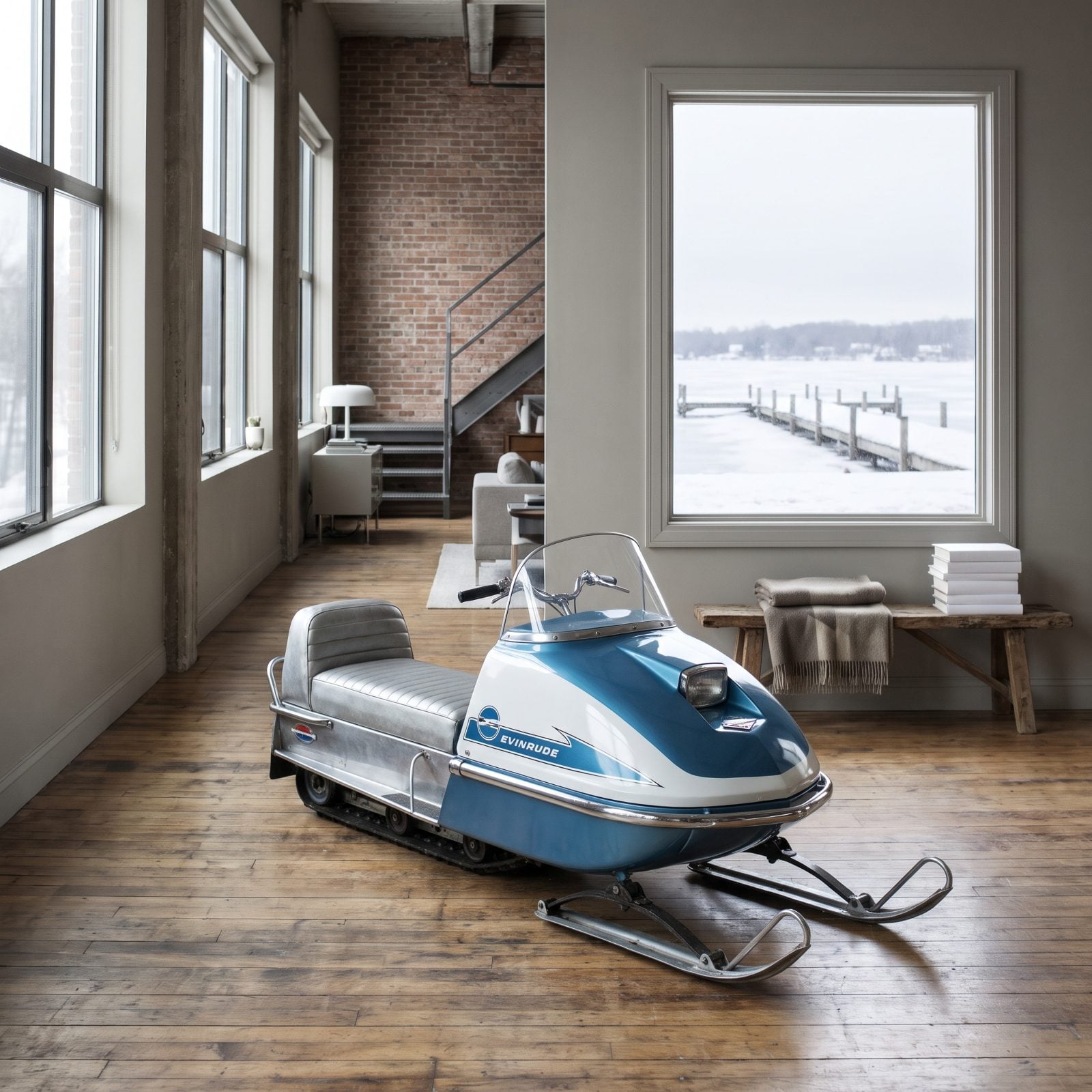
The Skeeter is the Evinrude side of the same family coin, and collectors love a matched set. Buy one and you’ll find yourself hunting the Johnson twin almost before the snow melts.
Value tracks condition and completeness more than raw rarity here. The marine-brand styling cues are the real draw, so a correct, unmolested Skeeter wearing its original paint and graphics pulls the stronger bids.