
The interstate gets you there. It just doesn’t show you anything. Somewhere off exit 47, past the gas station cluster and the chain motel, there’s a main street with brick that’s been underfoot since before your grandparents were born. Park the car and walk it. That’s where a road trip stops being a drive. We’ve pulled over in a lot of these places over the years, killed the engine, and lost whole afternoons we hadn’t planned to lose. These are the ones that earned the stop. Coast to coast, each rewards the driver willing to leave the fast lane behind.
Please note that some of the images in this article were created with the assistance of AI.
44. Galena, Illinois, Main Street’s Brick Storefronts and Steep Hills
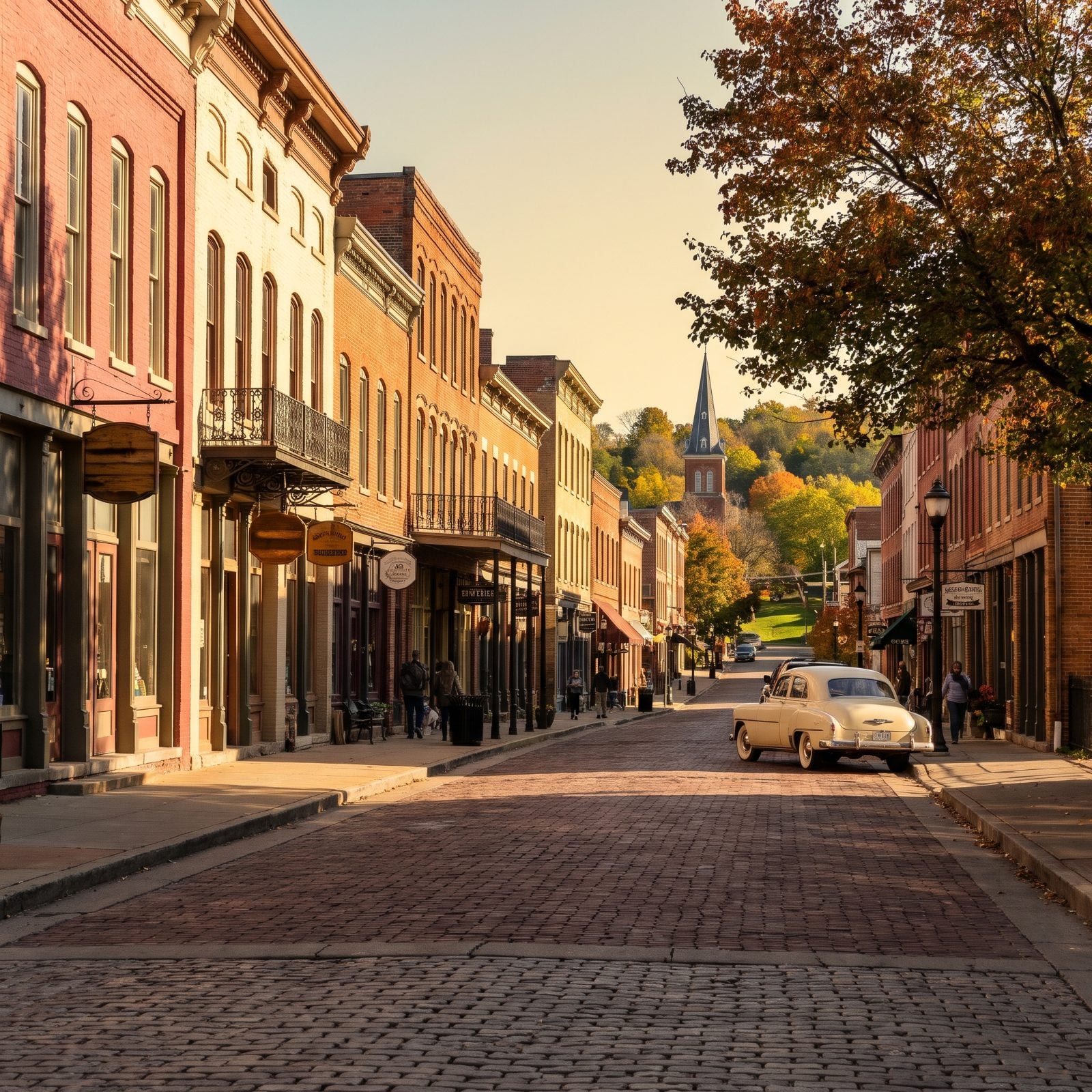
Galena packs most of its downtown into one tilted mile, and the hills are the whole point. The brick buildings climb three stories because the lots were narrow and the merchants were ambitious, back when steamboats on the Galena River made this a boomtown. Then the river silted up and the boom left. The buildings stayed, which is the only reason you get to walk them now.
Wear real shoes. People roll in expecting flat and get a grade that’ll remind your calves you drove six hours to get here. Ulysses S. Grant lived here before the Civil War, and the town has never once let you forget it.
43. Telluride, Colorado, Colorado Avenue Beneath the San Juan Mountains
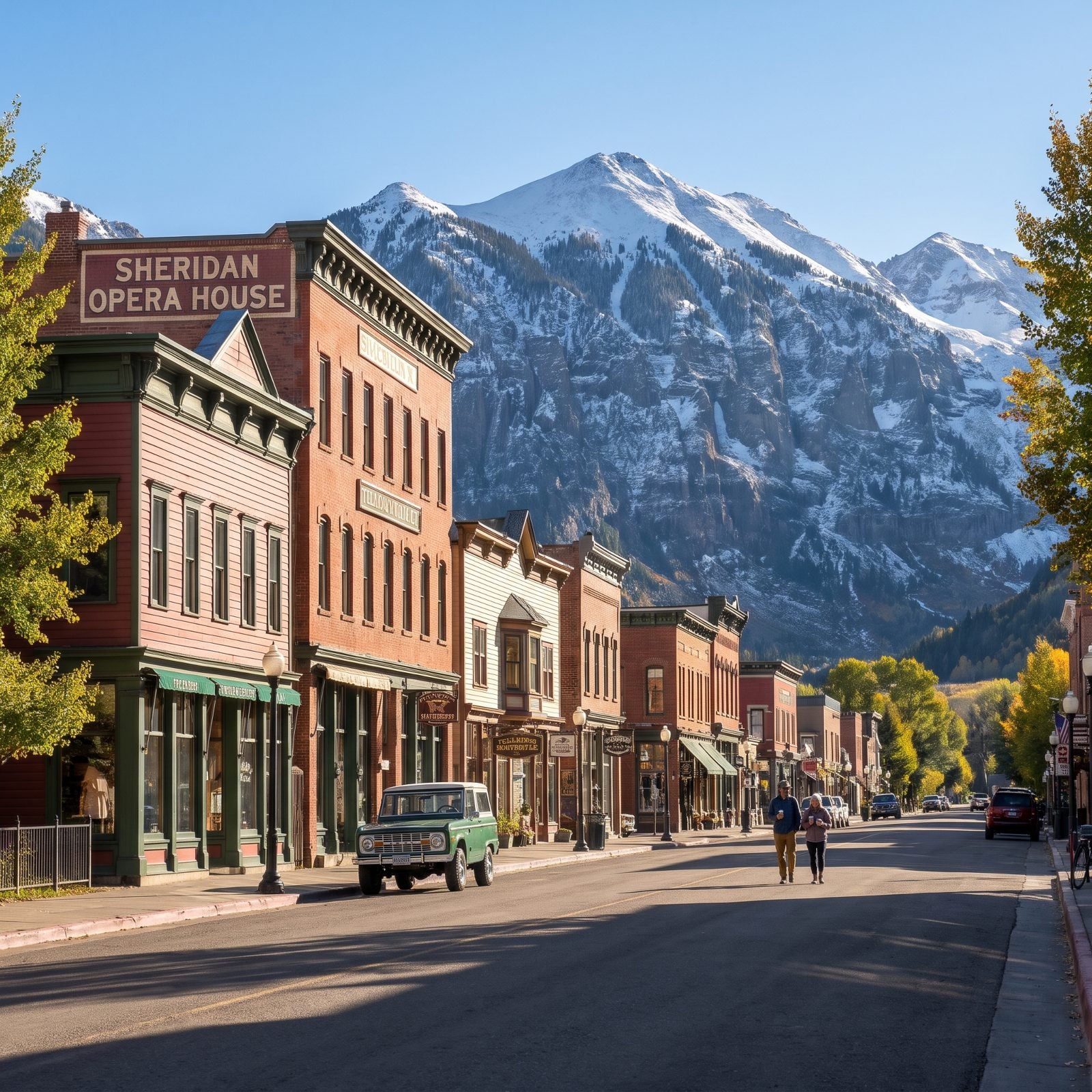
You walk Colorado Avenue and the mountains do something strange. A snow-dusted peak rises right behind the brick storefronts on your left, so close it looks like part of the block, while the far end of the street runs out into an open, tree-lined valley and low forested hills. It’ll make you forget the shop you were walking toward.
The town was silver money once, rough and loud. Now the Victorian storefronts hold restaurants and galleries, and the free gondola runs up the mountain if your legs give out.
42. Eureka Springs, Arkansas, Winding Spring Street Through a Victorian Hillside
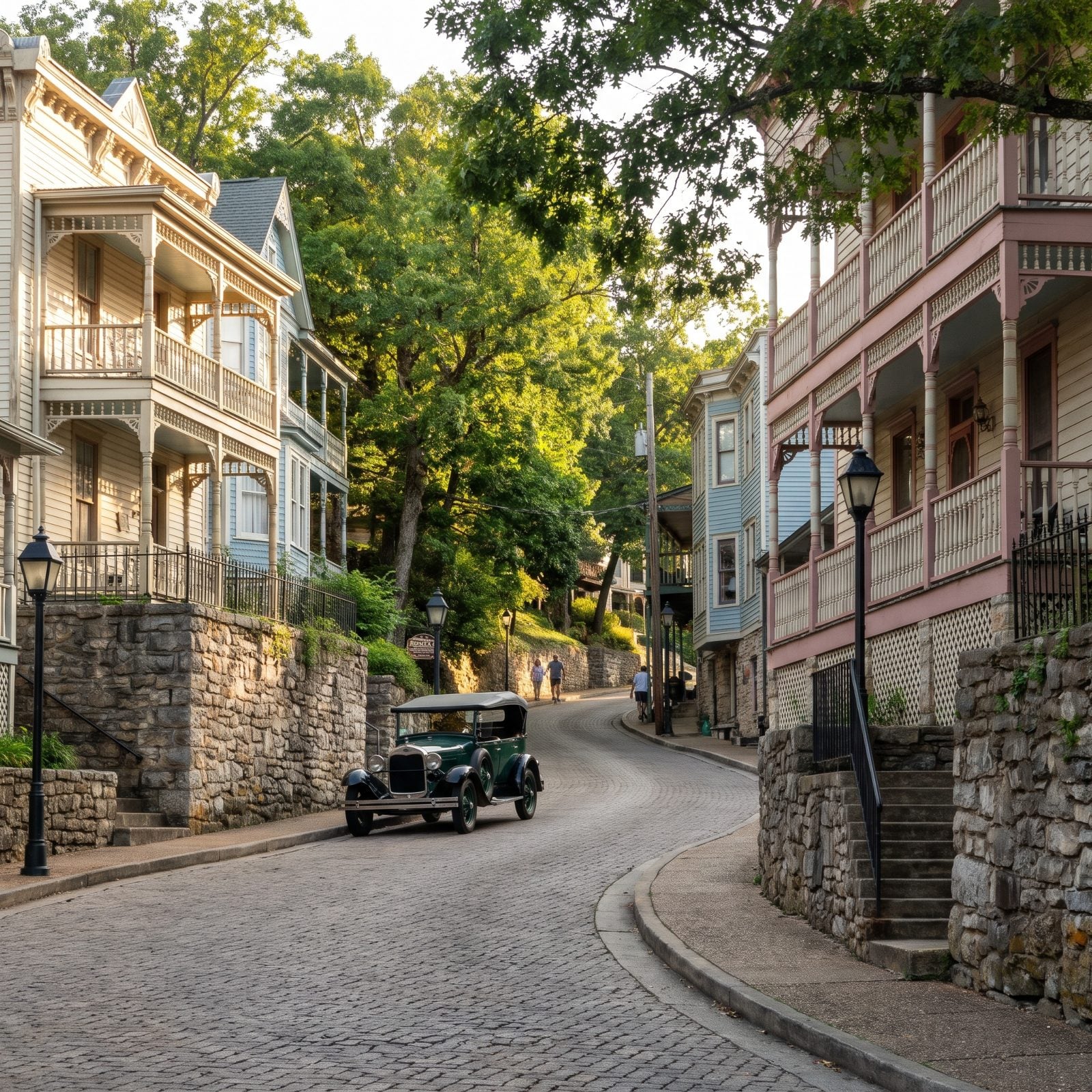
No two buildings sit at the same elevation here. The whole downtown is dug into an Ozark hillside, so Spring Street coils around the slope and nothing lines up on a grid. Entrances on one side are at ground level while the backs drop two stories into the hollow.
The Victorians came for spring water they swore could cure anything. It couldn’t. But they built this town trying, and the limestone and gingerbread held up a lot better than the medicine did. Give yourself more time than you think you’ll need. The hills slow you down, and so does the view around every bend.
41. Carmel-by-the-Sea, California, Ocean Avenue’s Storybook Shops and Courtyards
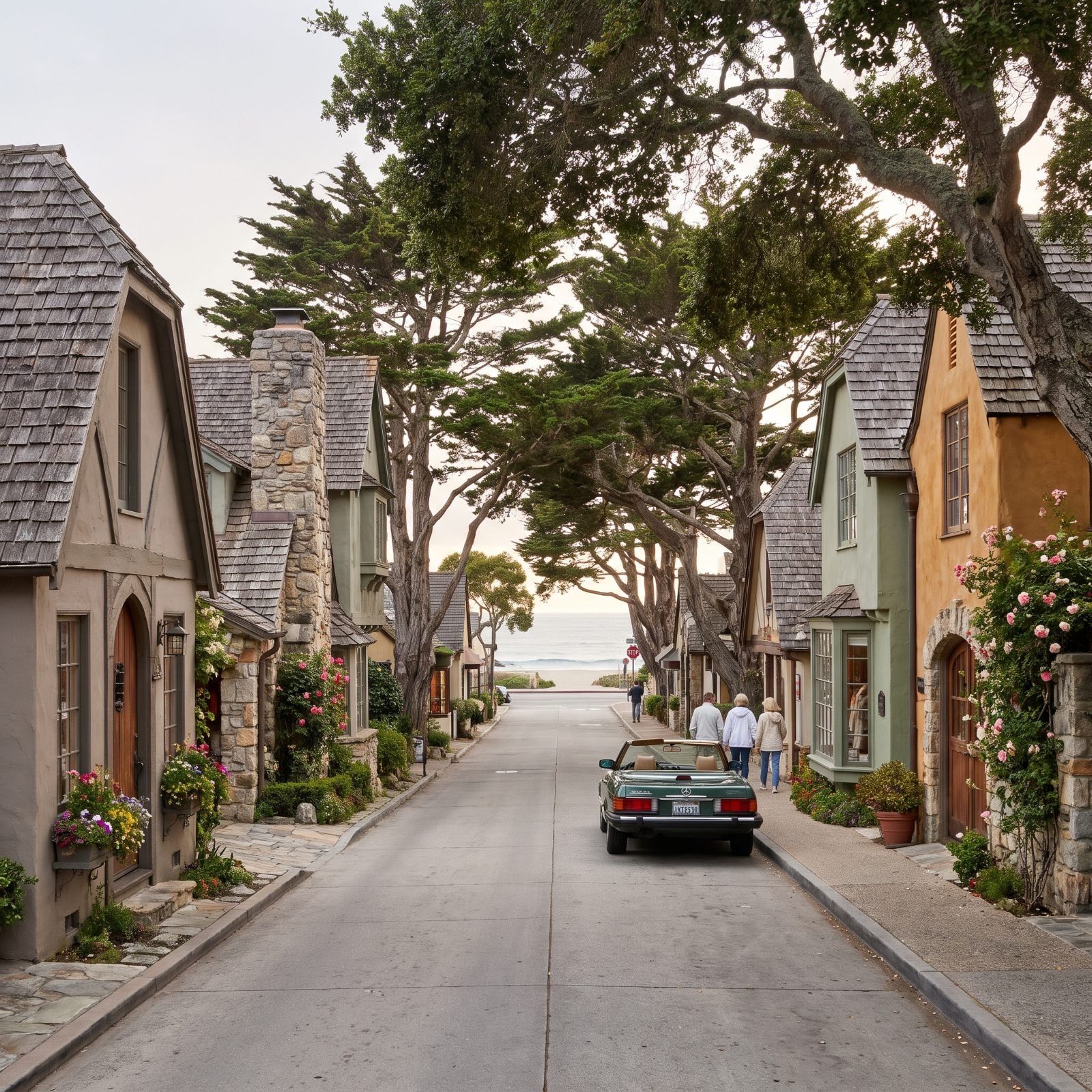
Carmel has no street addresses. None. Buildings have names, mail goes to the post office, and the town has fought for a century to keep it that way. That tells you what kind of place you’ve walked into.
Ocean Avenue slopes down toward the Pacific through shops tucked into courtyards you’ll pass twice before you find them. The cottages look like they fell out of a children’s book because an architect named Hugh Comstock built them that way in the 1920s, and nobody stopped him. High heels technically require a permit. It sounds like a joke, but it’s on the books.
40. Bisbee, Arizona, Main Street Curving Through a Copper-Mining Canyon
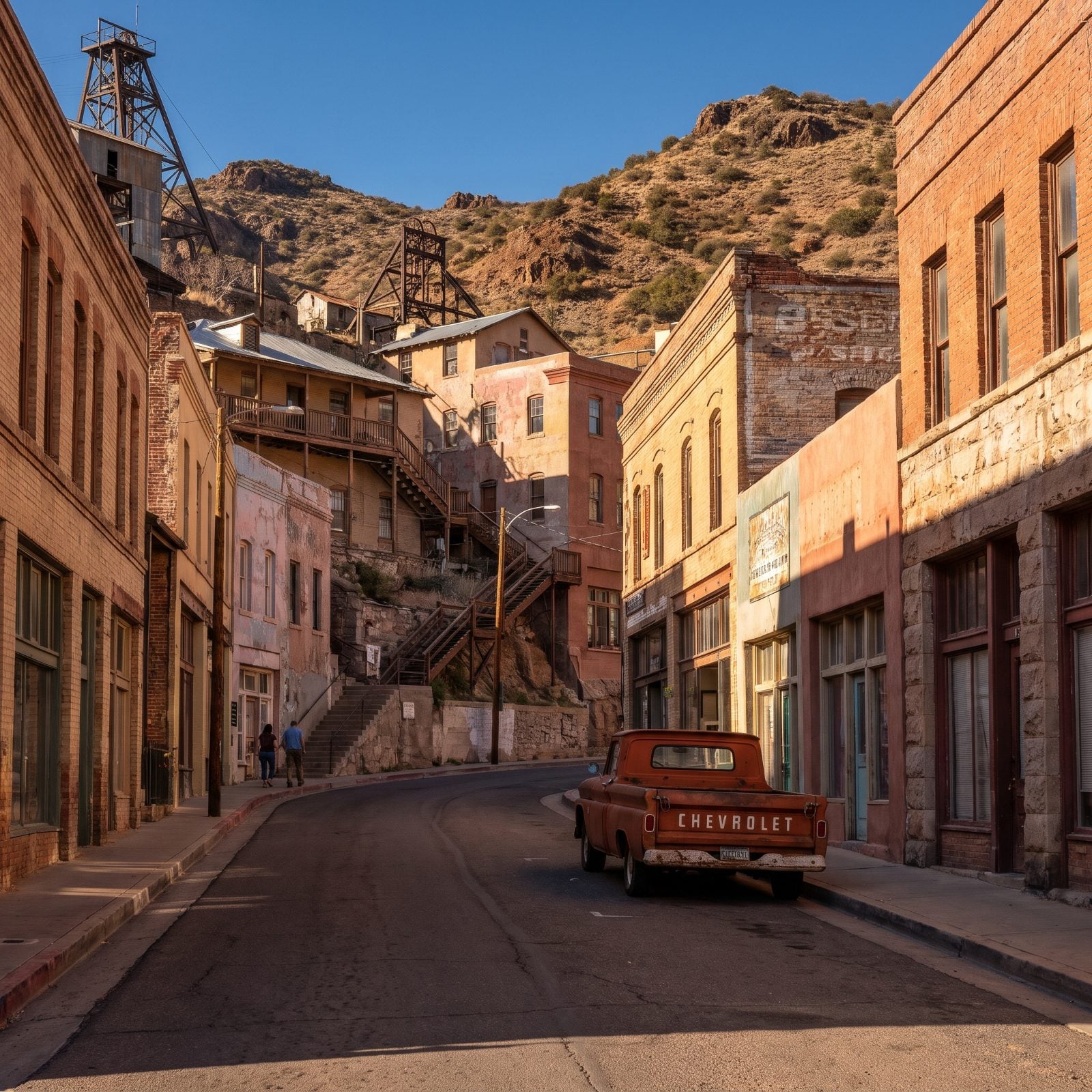
Bisbee was built sideways. The copper sat in the canyon walls, so the town climbed them, and now hundreds of outdoor public staircases connect houses that have no road to their front doors. Main Street curls along the canyon floor because there was nowhere flatter to put it.
The mine closed in the 1970s. Artists and holdouts moved into the leftover buildings, and the whole place settled into a scruffy, friendly weirdness that mining-town bones seem to wear well. At the end of the day the light turns the brick the color of old pennies, which feels about right.
39. Franklin, Tennessee, Victorian Main Street and Its Landmark Theater
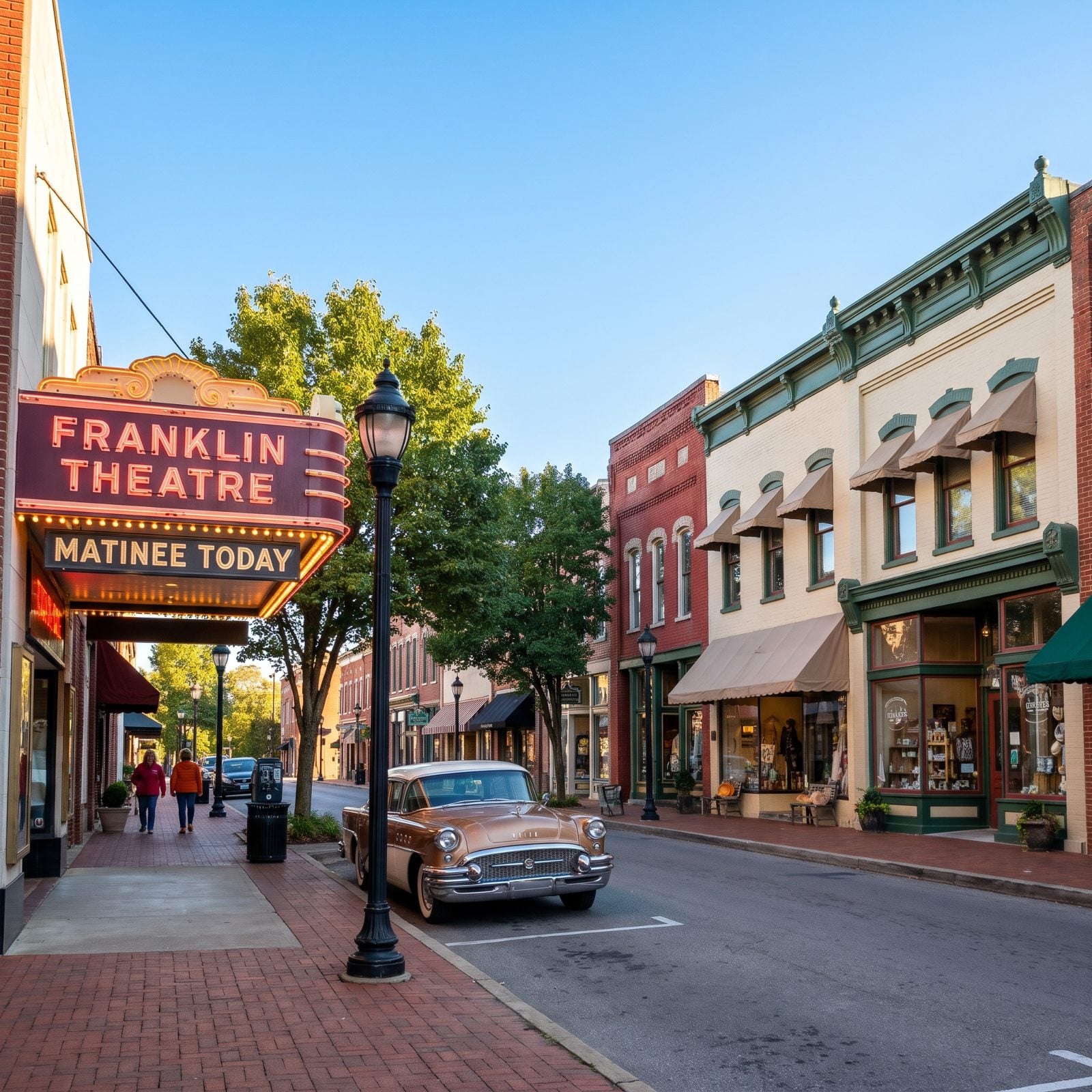
The marquee is the thing you’ll remember. The Franklin Theatre opened in 1937, went dark for years, then got rebuilt down to the last bulb in the sign. So now Main Street has a working movie house and concert hall glowing at its center the way it did before television took the town’s evenings.
The downtown around it is fifteen blocks of restored Victorian brick, walkable and flat, which after some of these hill towns will feel like a gift. A Civil War battle was fought in these streets in 1864. You’d never know it standing on them now, which is the point and also a little strange.
38. Jim Thorpe, Pennsylvania, Broadway’s Stone Buildings and Mountain Backdrop
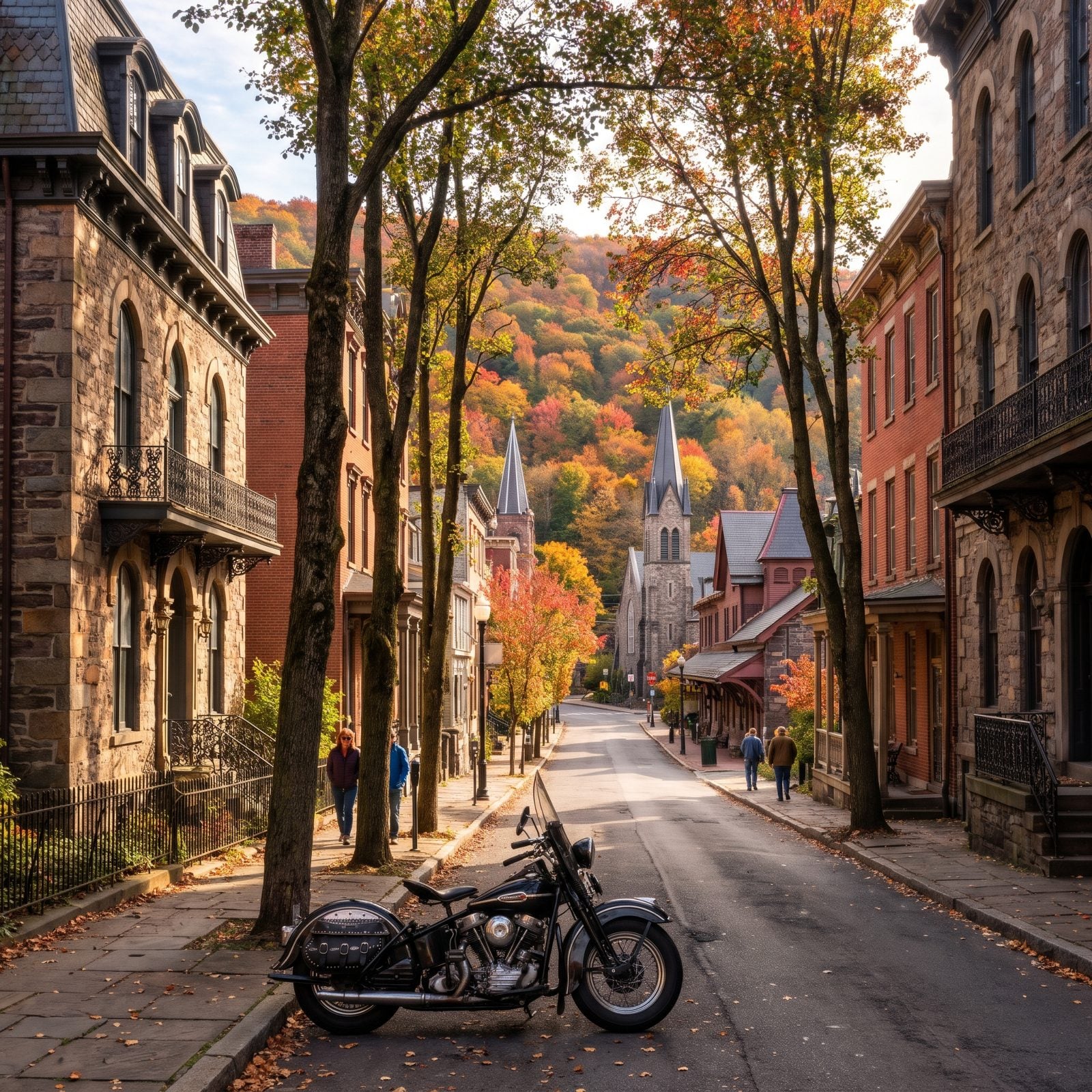
They called it the Switzerland of America once, and the mountains crowding Broadway make the pitch for themselves. The buildings here are heavy, dark stone, raised when coal and railroad money ran through this gorge, and they sit in a notch so tight the forest climbs the ridge right behind the rooftops.
Come in October. The Poconos turn and the whole town sits inside a bowl of red and gold. The old rail station still runs scenic trains up the gorge, which is the best way to see why the robber barons bothered building something this grand in a hole in the mountains.
37. Port Townsend, Washington, Water Street’s Ornate Seaport Buildings
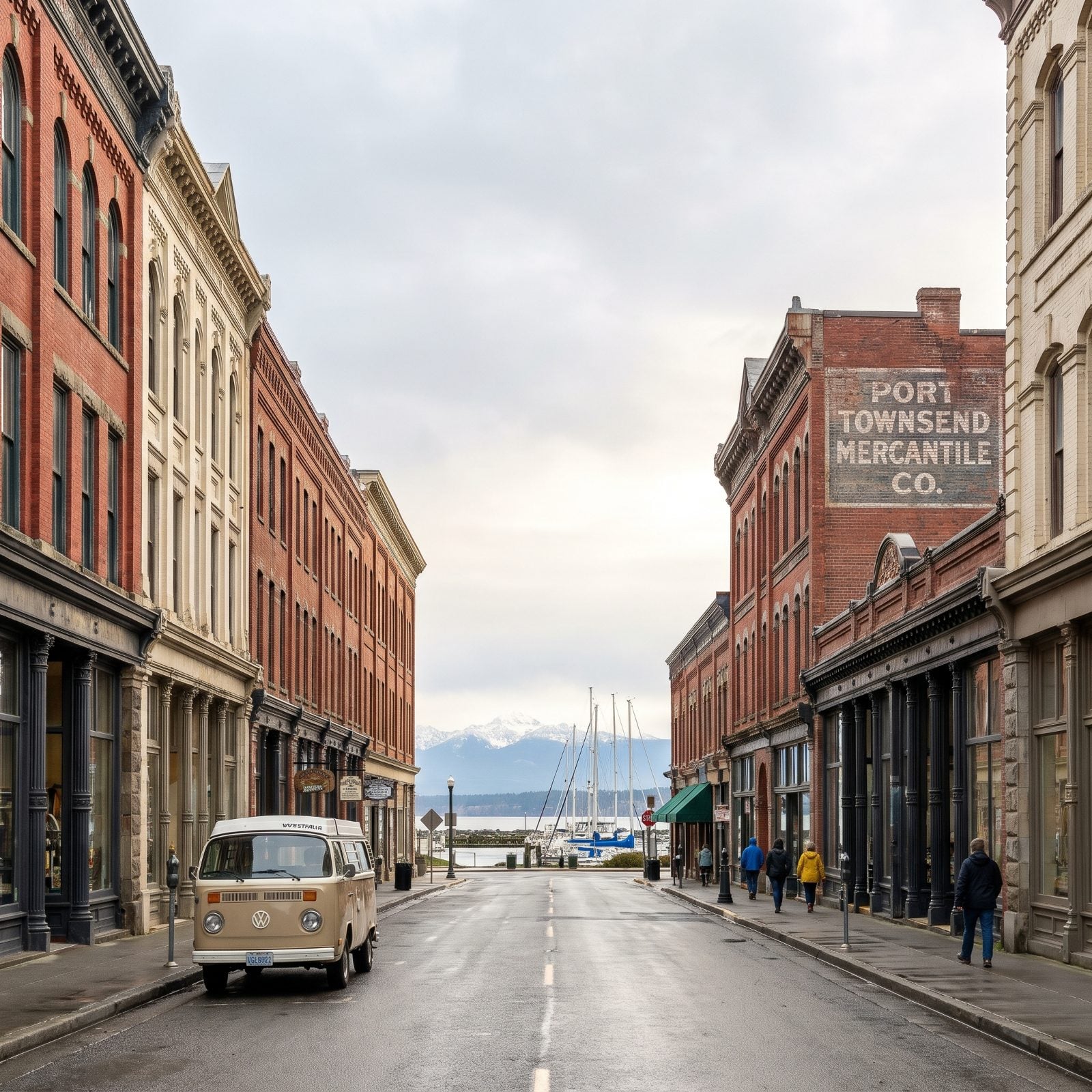
Port Townsend bet big and lost, which is exactly why it looks the way it does. In the 1880s the town was dead certain it would become the great seaport of the Pacific Northwest, so they built Water Street in grand Victorian brick to match the ambition. Then the railroad went to Seattle instead and the money dried up overnight.
Nobody could afford to tear anything down, so the whole boomtown just froze. Now you walk a nearly intact 19th-century seaport with the Olympic Mountains across the water and sailboat masts at the end of the street. Funny how failure preserved it better than success ever would have.
36. Woodstock, Vermont, Central Street Beside the Village Green
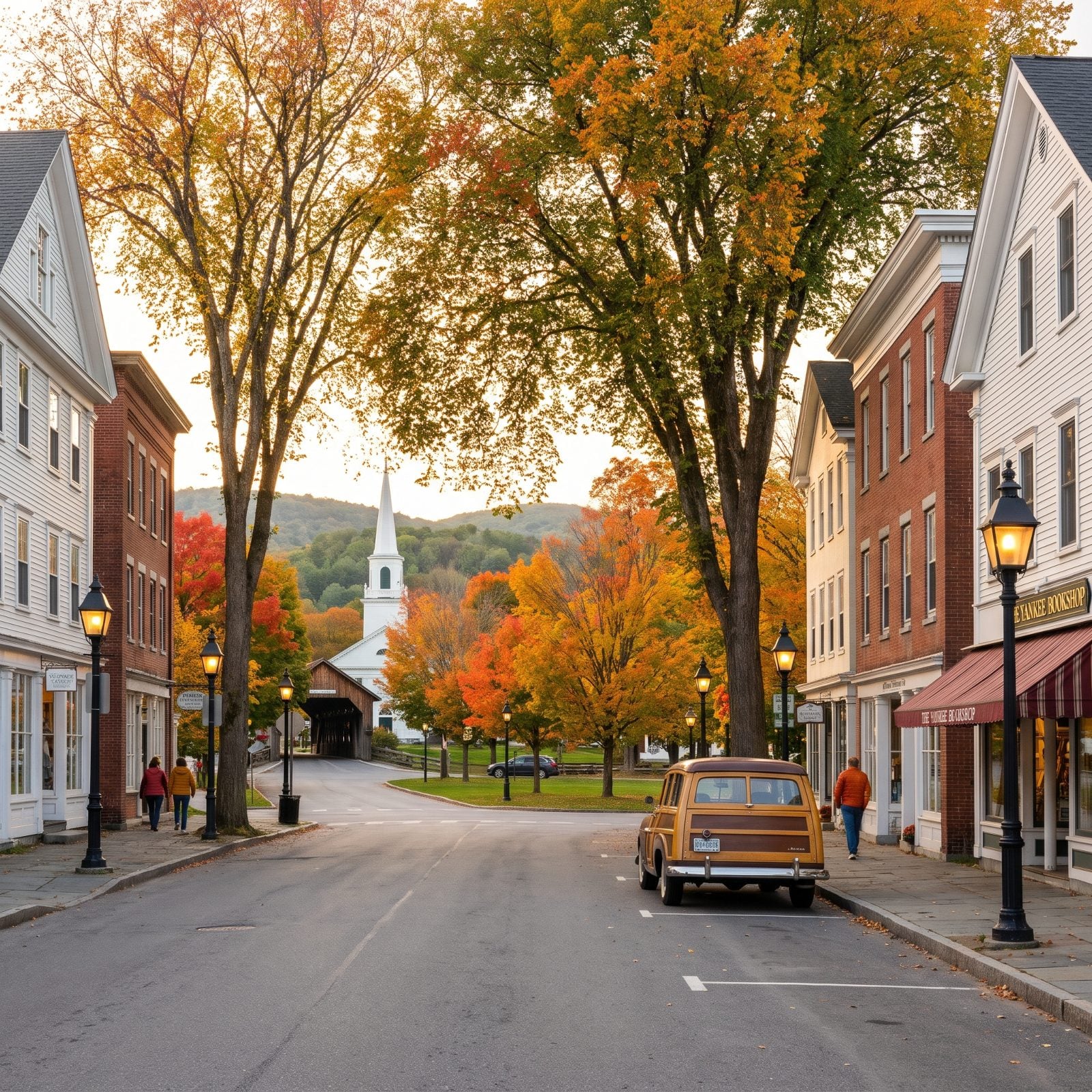
Woodstock is the New England postcard made real, and it knows it. The oval village green anchors the town, ringed by Federal-era homes, and Central Street runs off it with brick storefronts that have aged into something close to perfect.
There’s a covered bridge right in the village, a white-steepled church, and elms and maples that go up like torches the first week of October. It can feel almost too composed, like the town is posing for you. Then you duck into a shop that’s been family-run since before you were born and the pose drops away. Go midweek if you can. The leaf-peeper traffic on a fall weekend is no joke.
35. Ferndale, California, Victorian Main Street in Redwood Country
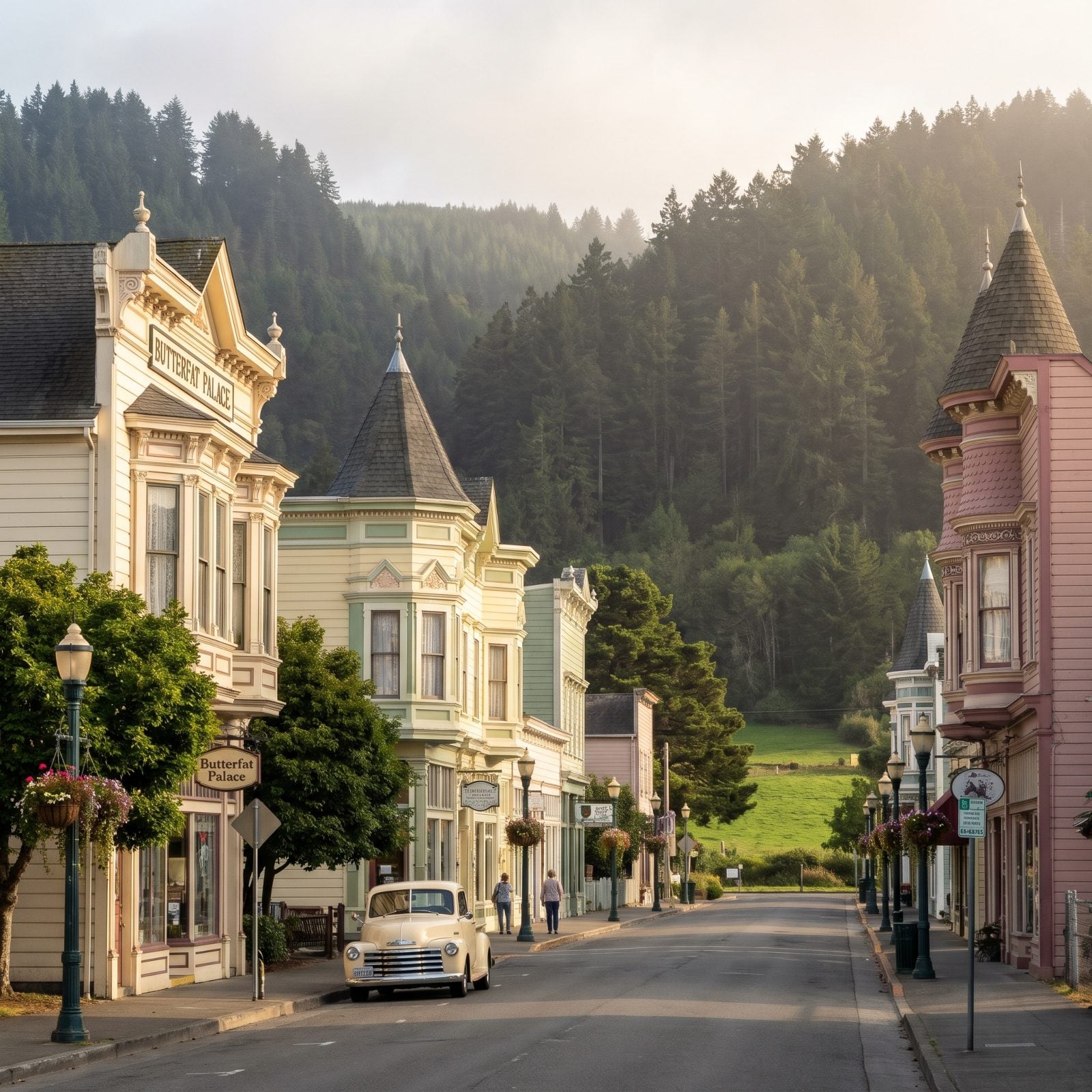
Dairy money built Ferndale, and dairy money, it turns out, loved frosting. The Victorians here are so dense with carved trim, turrets, and bay windows that locals call them Butterfat Palaces, because the butterfat from the cows is what paid for all of it.
The whole Main Street is a state historic landmark, tucked into a green bottomland with redwood hills rising right behind the rooftops. It sits far enough off Highway 101 that most travelers blow past the turnoff. Their loss. A few miles of detour buys you one of the most intact Victorian towns on the West Coast. And the road out to Cape Mendocino, the westernmost point in California, starts right here if you’ve got the afternoon.
34. Deadwood, South Dakota, Main Street’s Gold Rush Architecture
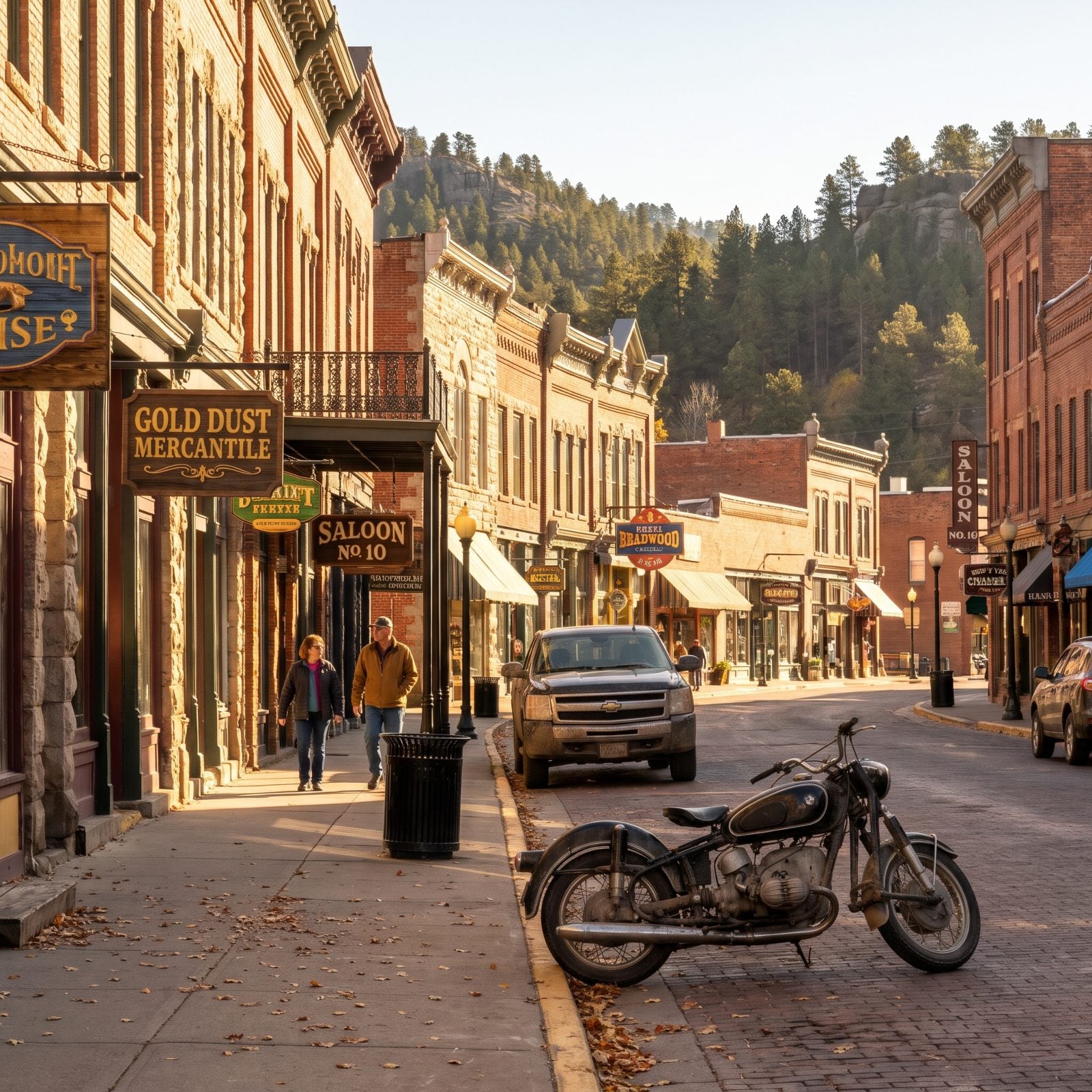
Most people roll into Deadwood for the casinos and miss the better show, which is just looking up. The whole of Main Street is a National Historic Landmark, rebuilt in brick after fire burned the timber town flat in 1879.
Park at the top of the hill and walk down — the grade does the work, and the cornices and arched windows read far better on foot than through a windshield. Wild Bill Hickok was shot here in 1876, a fact the town will never let you forget.
33. Beaufort, South Carolina, Bay Street Above the Waterfront
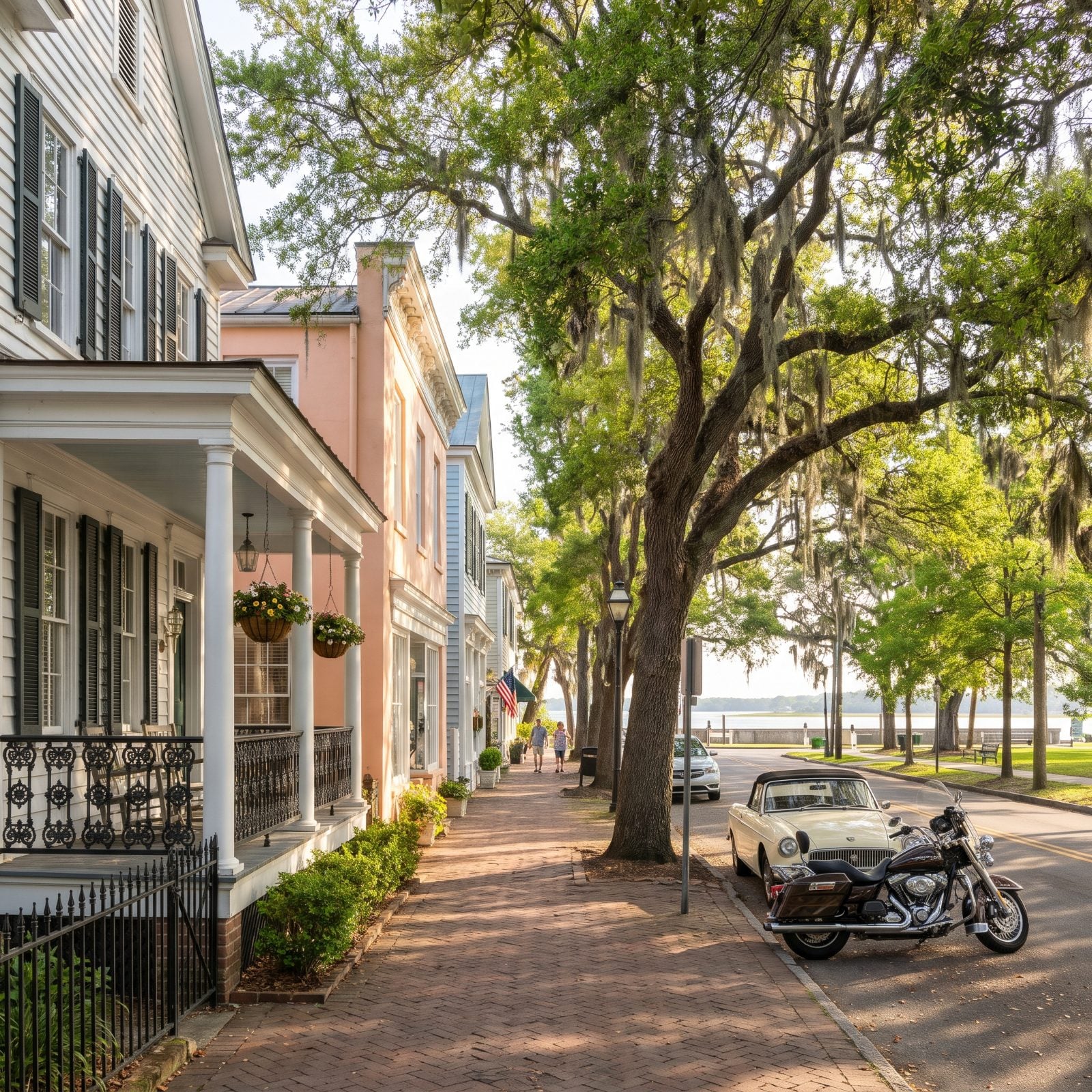
Bay Street is one of the few main streets where the water is part of the architecture. The town sits on a bluff over the Beaufort River, and the storefronts on the south side back right up to a waterfront park with swings that look out over the marsh.
The live oaks are the reason to come. Some of them are older than the country. Walk the street in the morning before the heat settles, grab coffee, and head down to the seawall. The whole detour costs you an hour and a parking space.
32. Natchitoches, Louisiana, Front Street on the Cane River
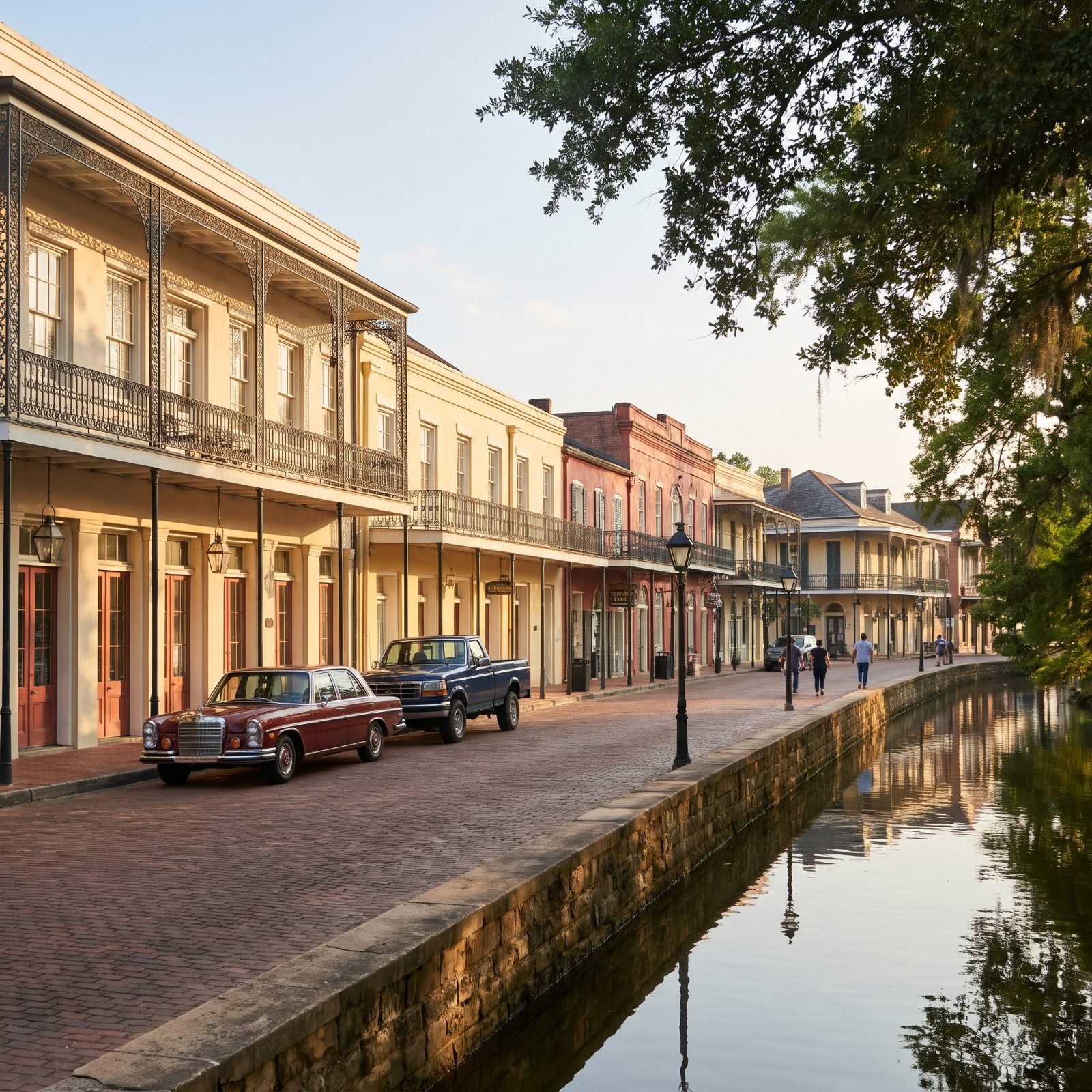
You’ve seen this street even if you’ve never been. Steel Magnolias was filmed here, and the iron-railed balconies along Front Street are the oldest in the old Louisiana Purchase territory. Natchitoches predates New Orleans by four years, and it will argue the point with you.
The Cane River runs right alongside the storefronts, so the whole walk has water on one side and cast iron on the other. Time it for Christmas if you can, when the riverbank lights pull in crowds the way they have for close to a century. Any other day, you’ll have the brick mostly to yourself.
31. Fredericksburg, Texas, Wide Main Street, German-Texan Bones
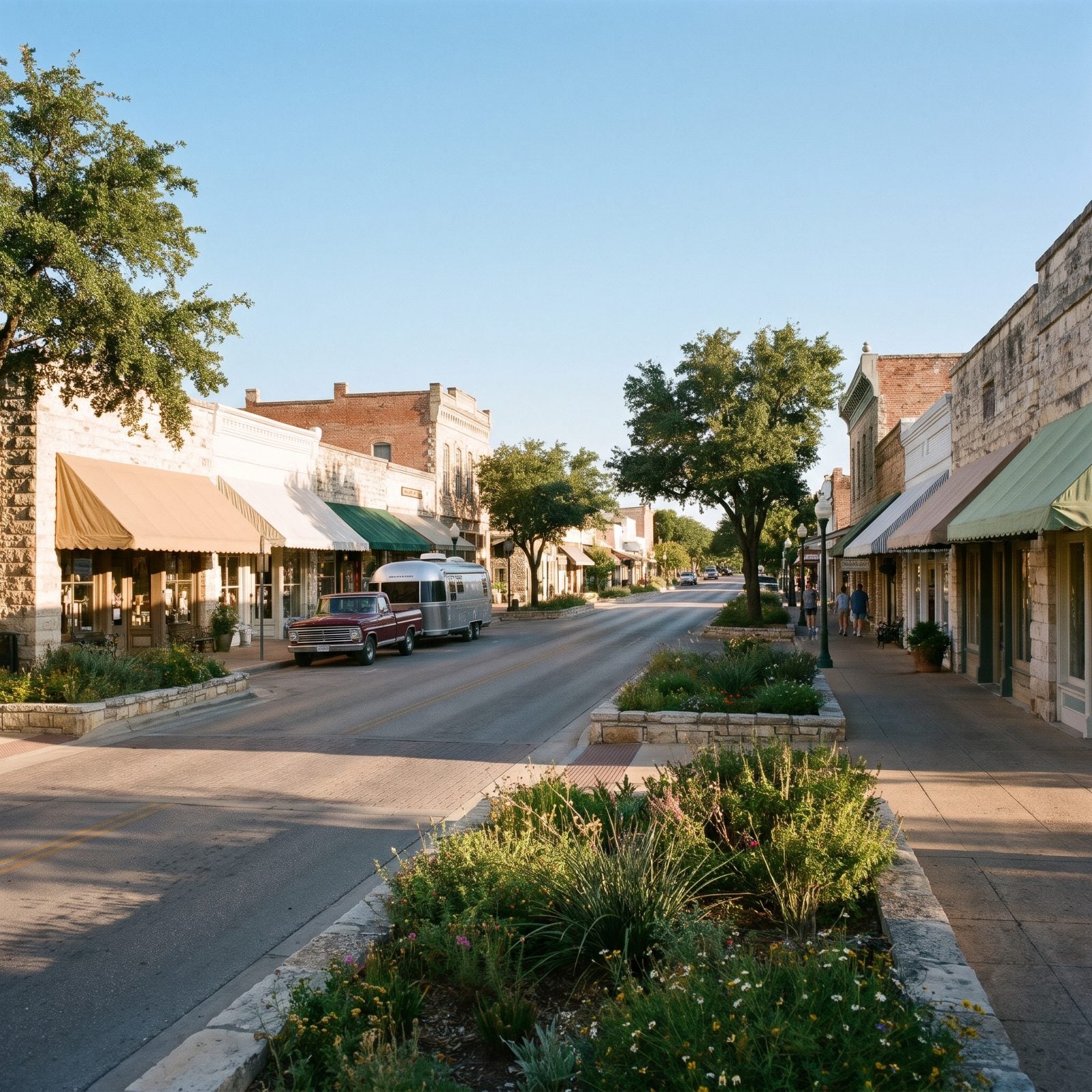
The first thing you notice is how wide the street is. German settlers platted Main Street broad enough to turn an ox team and wagon around, and nobody ever narrowed it. That width is why the limestone buildings feel like they’re breathing.
Fredericksburg sits in the middle of Texas wine country now, so the detour pairs well with a drive out to the tasting rooms on 290. Up the street, the Nimitz Hotel and its steamboat-shaped facade anchor the whole block. Then walk the Sunday-house cottages behind it — those tiny limestone homes were weekend crash pads for ranch families coming to town for church.
30. Breckenridge, Colorado, Western Facades Under the Ski Slopes
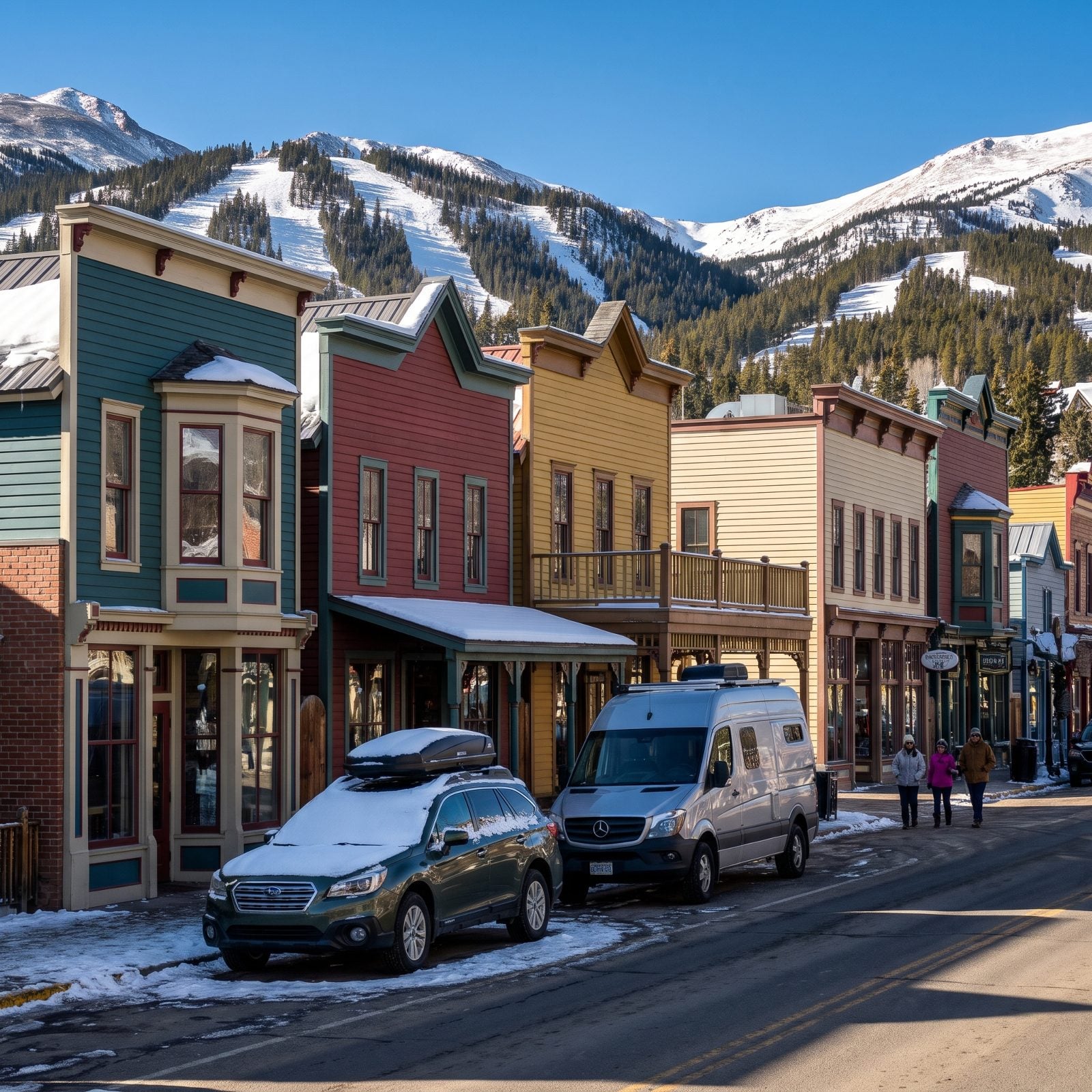
The painted Victorians along Main Street are the real draw, not the lift tickets. Breckenridge was a gold camp before it was a ski town, and the false-front buildings in teal and mustard are originals — not themed reproductions. That matters once you’ve seen enough fake mining towns.
What nobody mentions is the altitude. The street sits above 9,600 feet, and if you drove up from Denver that morning, walking a few blocks uphill will remind you fast. Take it slow, drink water, and don’t plan to do much after.
29. Bar Harbor, Maine, Main Street at the Door to Acadia
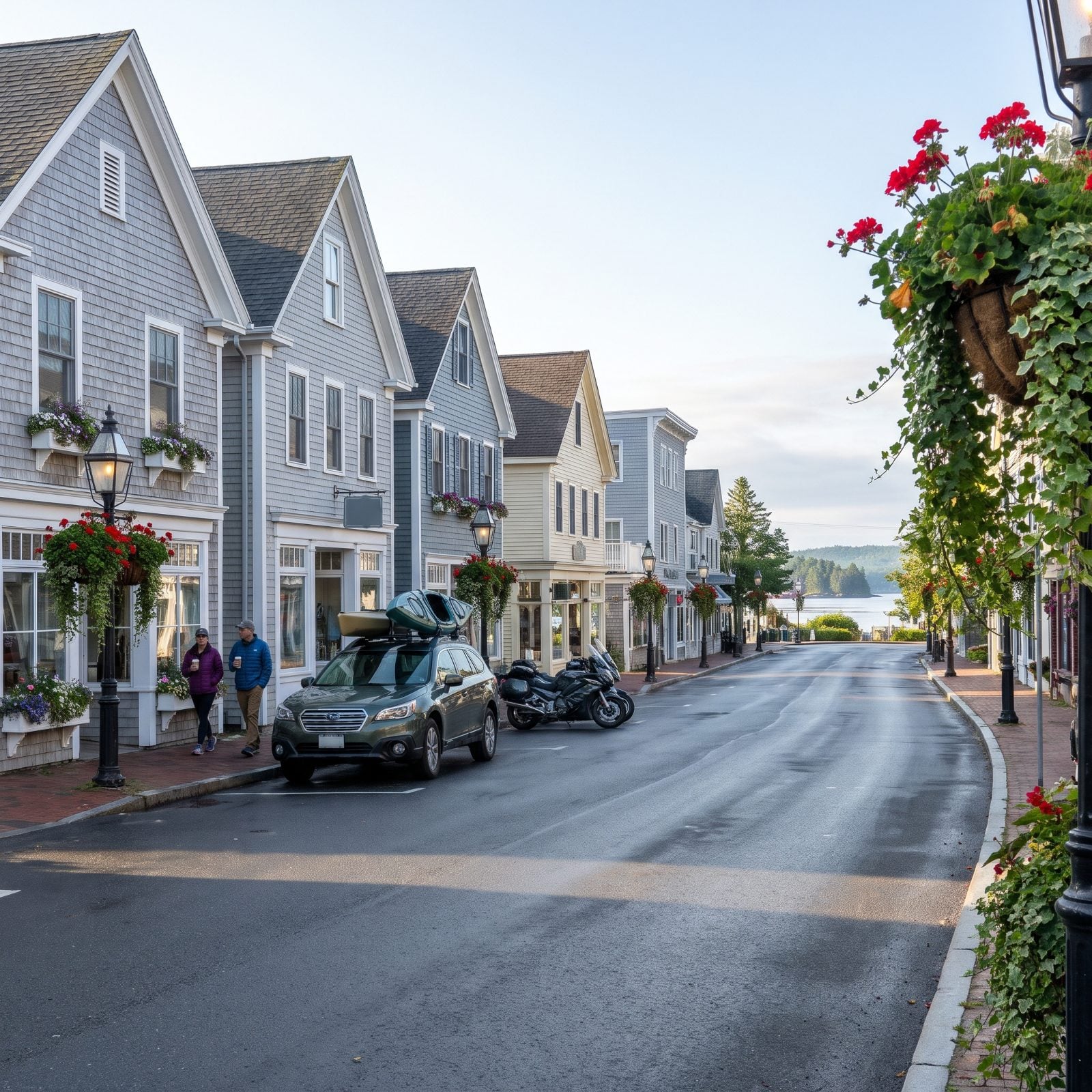
Bar Harbor is the staging ground for Acadia, which means most people treat Main Street as a place to grab a lobster roll before the park gates. Slow down. The shingled storefronts and gabled roofs are classic coastal Maine, and the shore path at the edge of town walks you right out along Frenchman Bay.
Go early or go in September. July and August turn this into a cruise-ship parking lot, and the charm drains out fast when you’re shuffling shoulder to shoulder. The park is the main event; the town is the pleasant overture.
28. Leavenworth, Washington, Front Street’s Full Bavarian Commitment
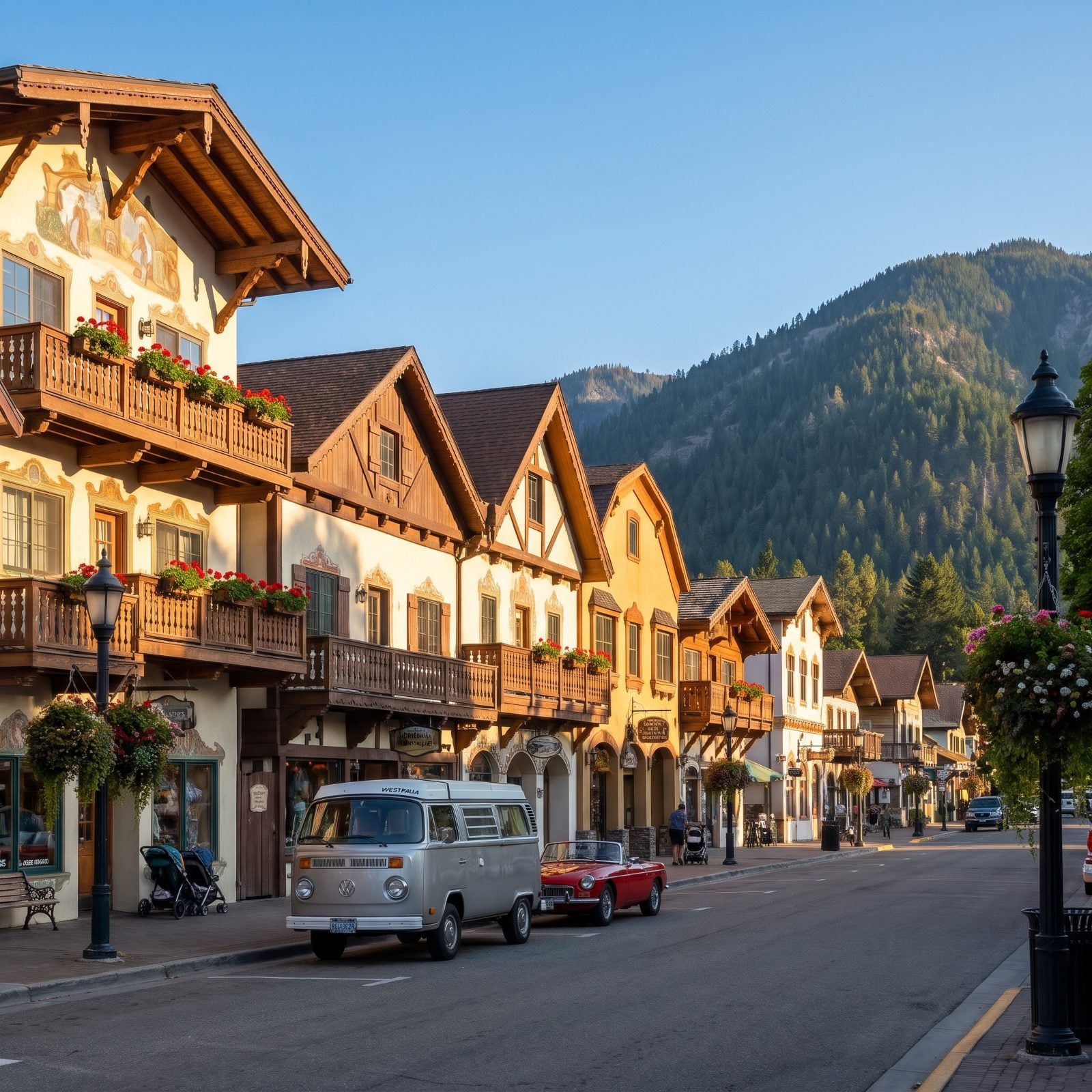
None of Leavenworth is old. The town was a dying railroad stop in the 1960s until somebody decided to go all in on a Bavarian theme and pull tourists off the pass. It worked. Front Street is now committed to the bit, right down to the font on the Starbucks sign.
You can be cynical about it or you can lean in. The Cascade backdrop actually sells the Alps illusion, and in fall the surrounding hills go gold. Oktoberfest and the Christmas lighting weekends draw real crowds, so weekday mornings are your friend.
27. Taos, New Mexico, Paseo del Pueblo and the Adobe Streetscape
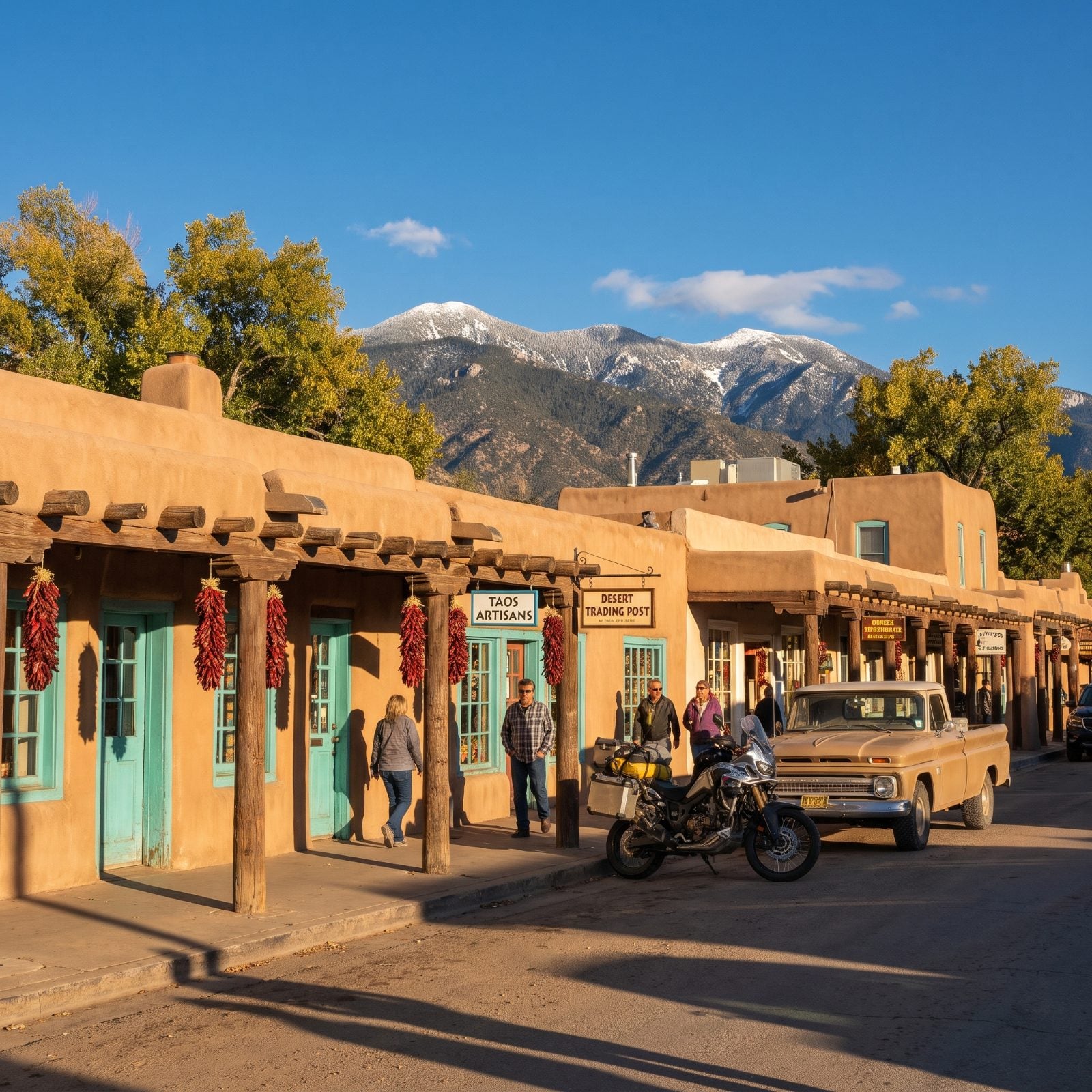
Taos doesn’t have one grand main street so much as a spine — Paseo del Pueblo — that threads past the historic plaza and out toward the ancient pueblo. The adobe is the point: rounded earthen walls, turquoise door frames against brown clay, strings of dried red chiles hanging in the dry air.
The light here has pulled painters for over a century, and you’ll understand why around five o’clock when the Sangre de Cristo peaks go pink. Park near the plaza and wander the side streets off the paseo. The galleries are good. The walls themselves are the show.
26. Georgetown, Colorado, Sixth Street in the Silver Valley
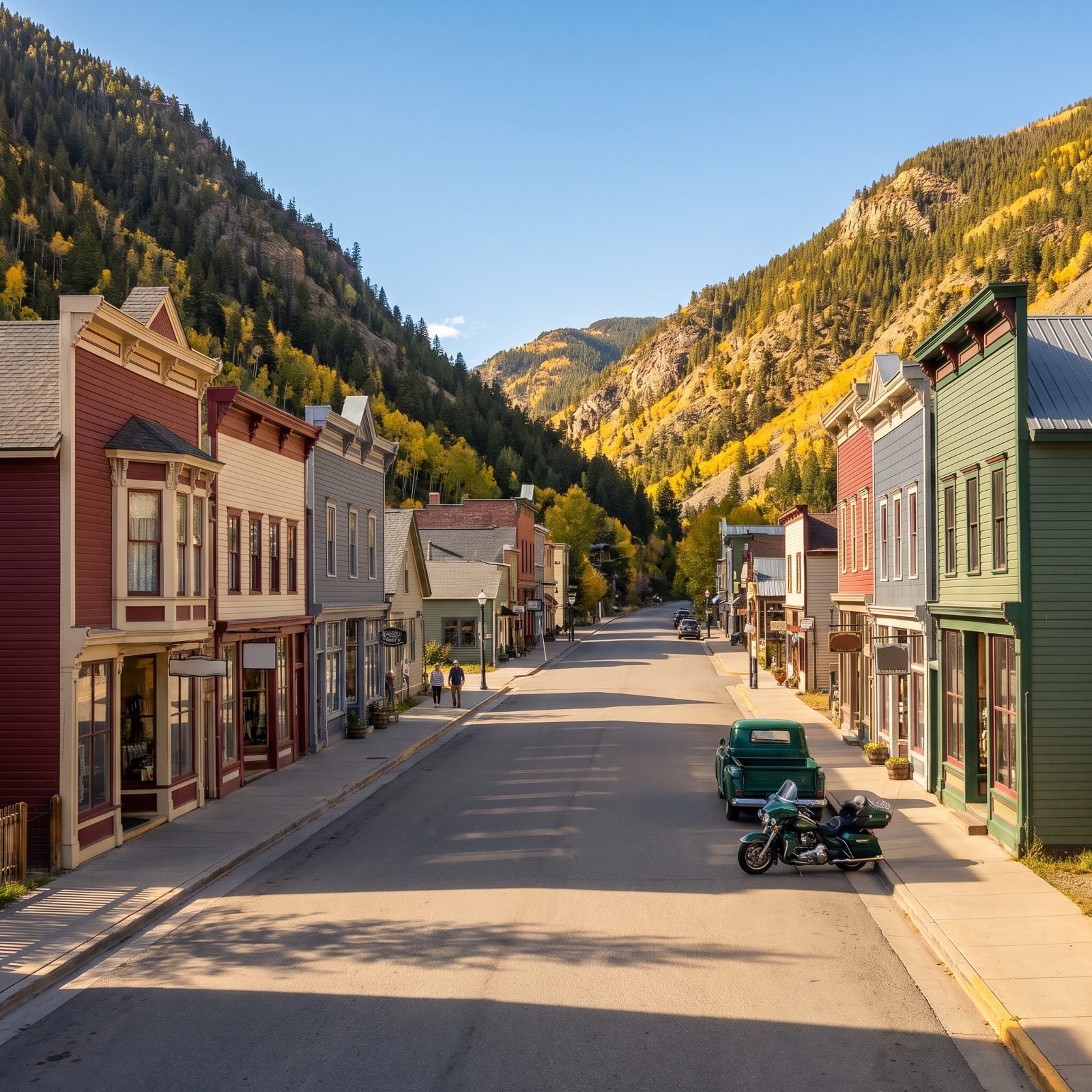
Most people blow past Georgetown on I-70 doing 75 toward the ski resorts. Their loss. Take the exit. This silver-mining town never burned and never got torn down, so the Victorian commercial buildings on Sixth Street are the real thing — a couple hundred preserved structures tucked into a tight mountain valley.
It feels frozen, in the good way: no crowds, no theme, just an actual 1880s town that got lucky. The Georgetown Loop Railroad still runs steam up the canyon in season. A short detour off the interstate buys you the quiet that Breckenridge lost decades ago.
25. Jackson, Wyoming, The Town Square and Its Antler Arches
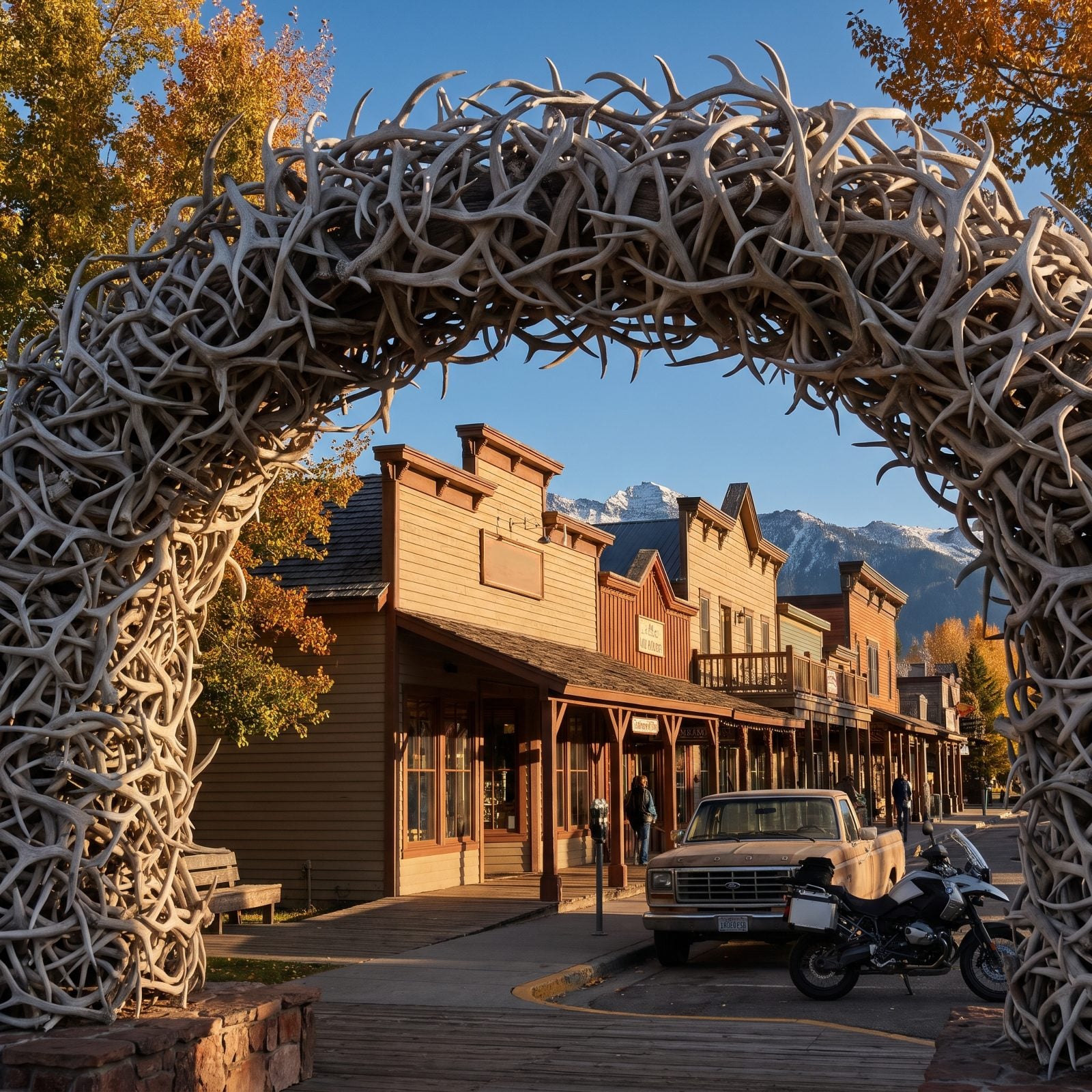
The four corners of Jackson’s Town Square each hold an arch woven from thousands of shed elk antlers. People assume the elk were killed for them. They weren’t. Boy Scouts collect the naturally dropped antlers off the nearby National Elk Refuge every spring and auction most of them to fund the refuge itself.
It’s the obvious photo stop, and it earns it. But the square is also the gateway to Grand Teton and Yellowstone, so Jackson runs expensive and crowded in summer. Walk the wooden boardwalks early, before the day-trippers arrive from the park, and the whole place feels like the frontier town it still half is.
24. New Hope, Pennsylvania, Main Street Along the Delaware River
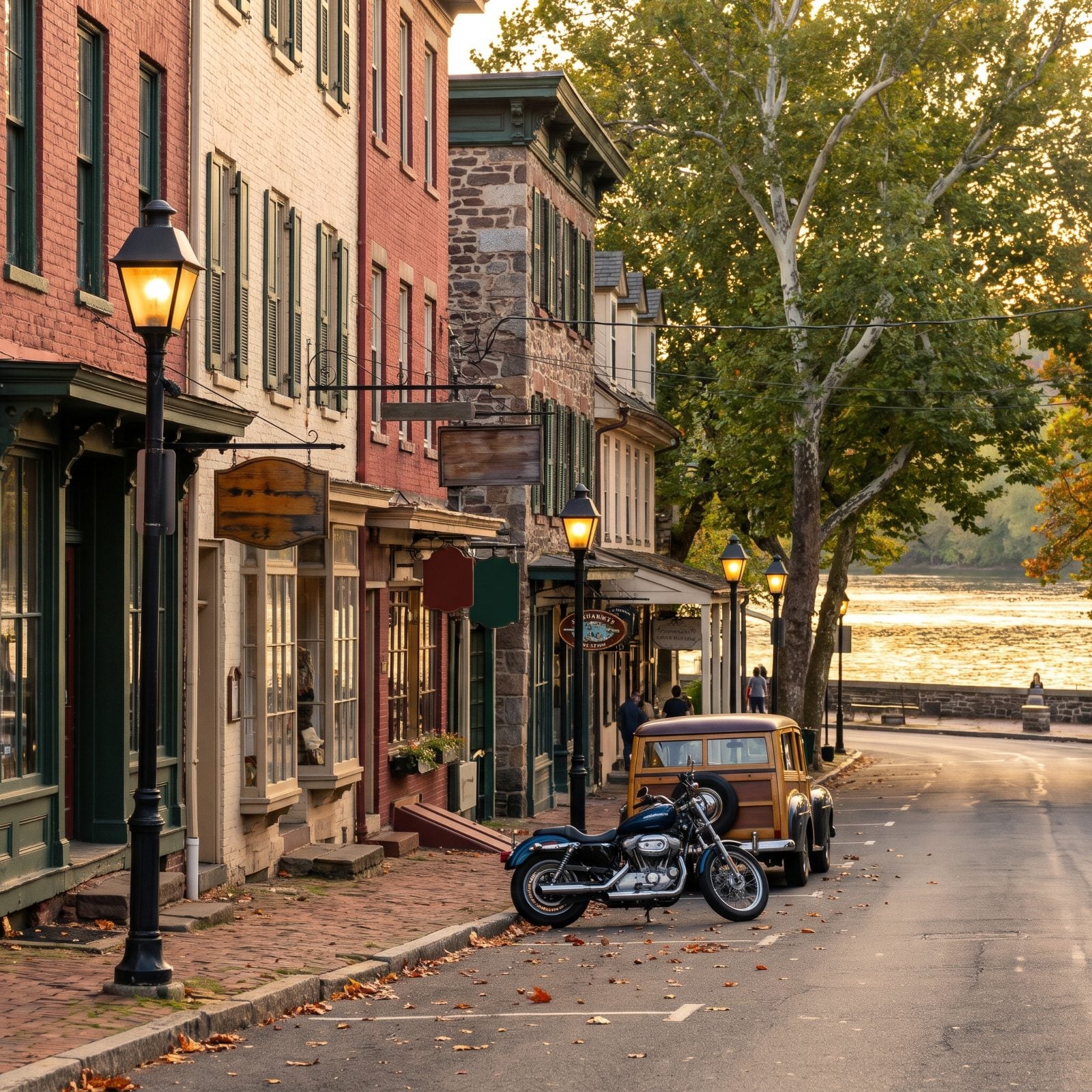
Park on the Pennsylvania side and cross the bridge on foot if you can. New Hope is small enough to walk end to end in twenty minutes, which is exactly the problem: you’ll want three hours instead. The old Bucks County stone buildings run right down to the river, and the canal towpath behind Main Street gives you a flat, shaded walk away from the galleries and the fudge shops.
Weekends get busy. Really busy. Come on a Tuesday morning and the town belongs to you and the ducks.
23. Mystic, Connecticut, West Main Street Beside the Bascule Bridge
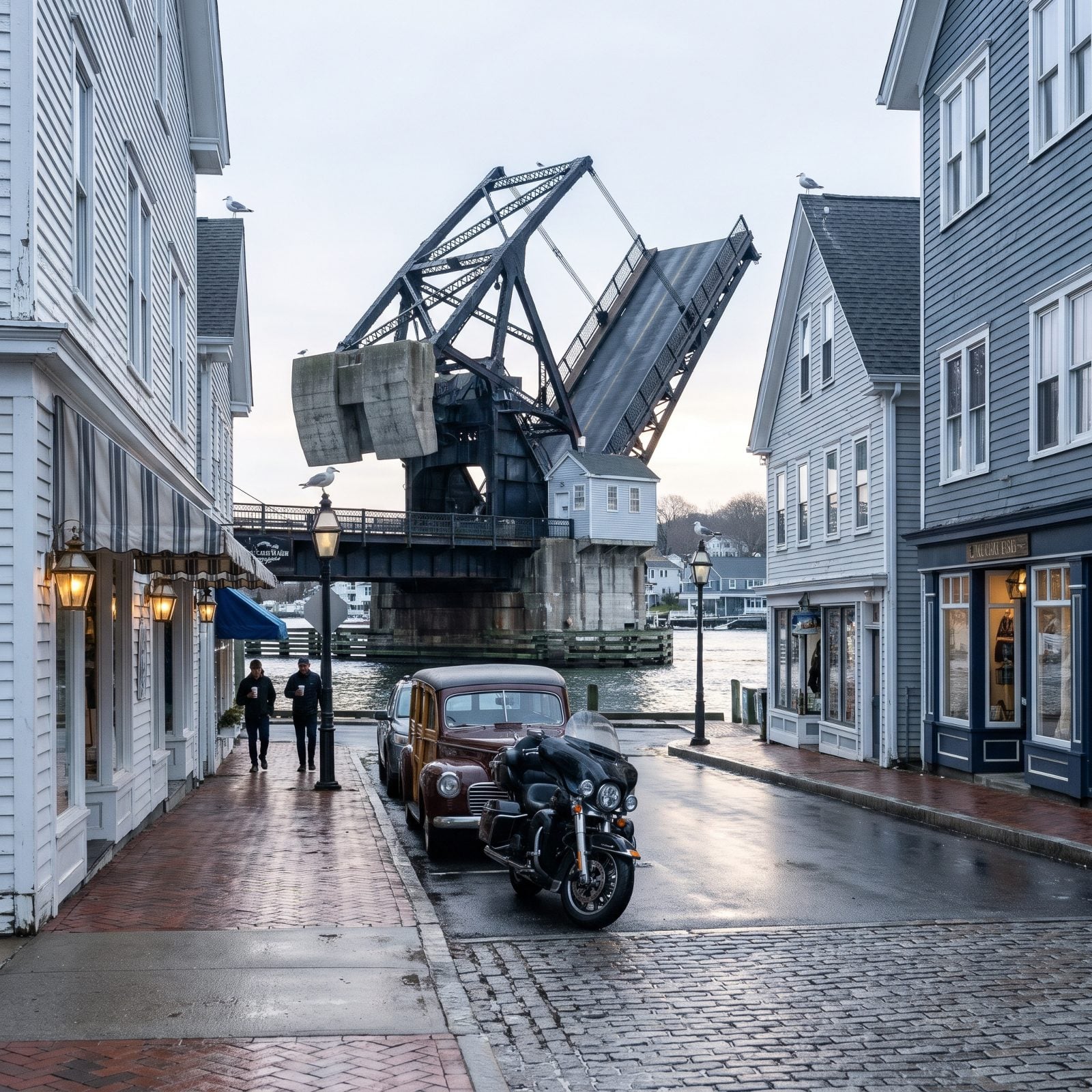
The bridge is the whole show, and it’s worth timing. The Mystic River bascule bridge lifts on a schedule through the warmer months, usually at twenty minutes before each hour, and traffic stops cold while boats pass. Stand on the sidewalk, watch the counterweights drop, and you’ve seen the thing the town is named for in half the postcards.
Here’s what people get wrong: they park at the seaport museum, blow their whole afternoon there, and never actually walk West Main. Do the street first. The seaport is a mile off and a separate ticket.
22. Nevada City, California, Broad Street’s Gold Country Storefronts
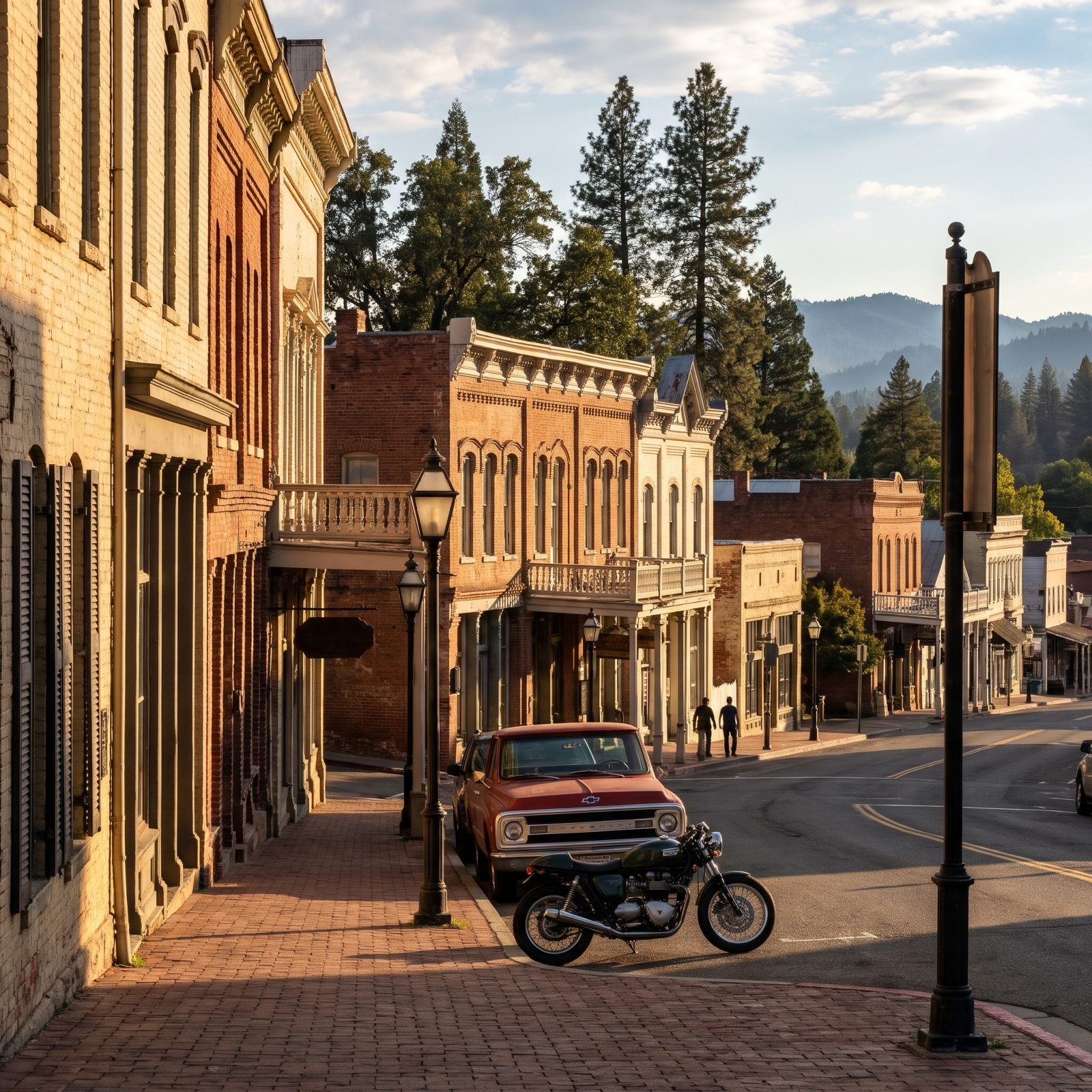
Nevada City kept its gold-rush bones better than almost anywhere in the Sierra foothills. Broad Street climbs at a real grade, lined with 1860s brick buildings wearing their iron shutters and gaslight fixtures like they never got the memo about the twentieth century.
It’s a steep walk. Wear something with a sole. Slick-bottomed boots will have you braking with your calves all afternoon.
21. Camden, Maine, Main Street Descending Toward the Harbor
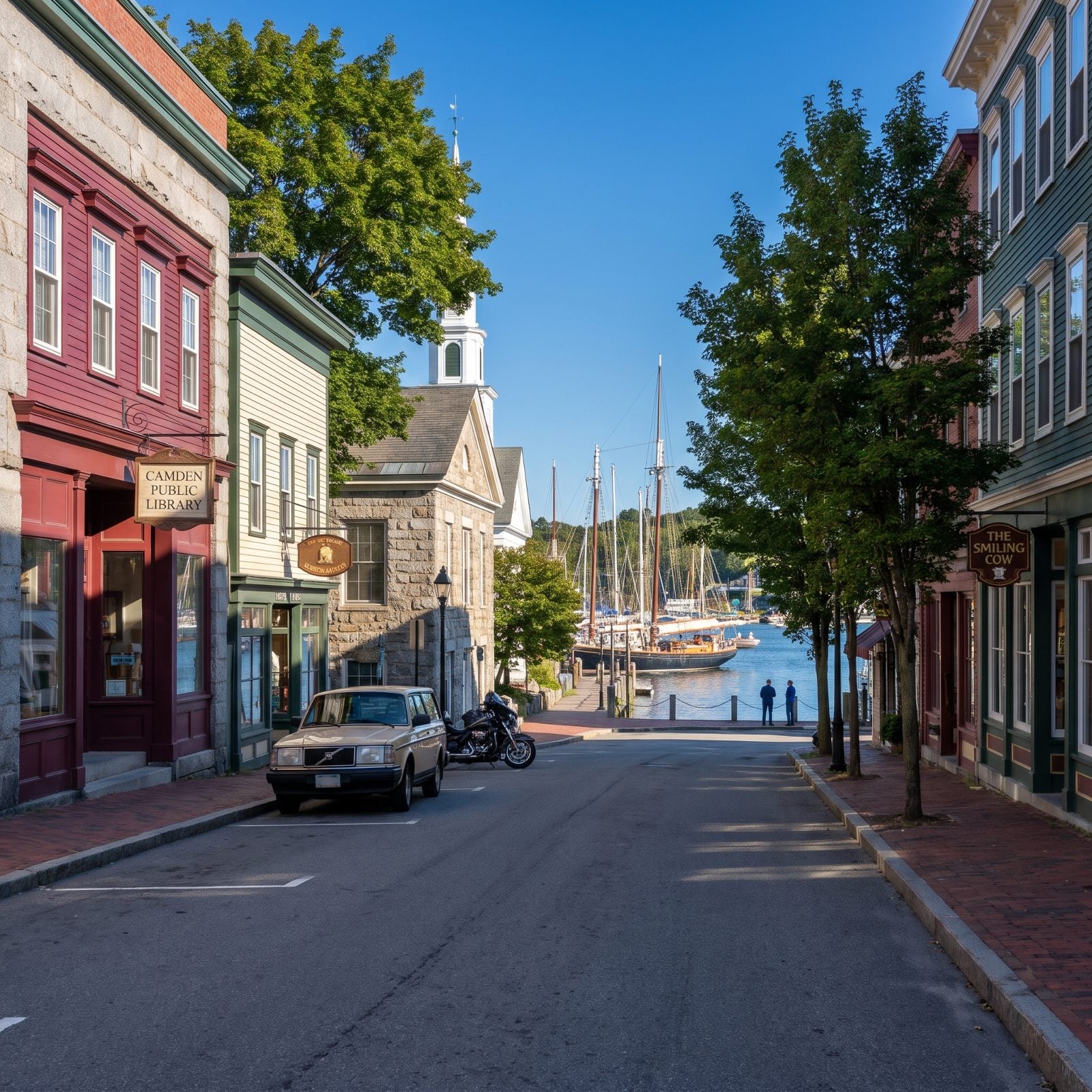
Few main streets give you a payoff like Camden’s. You walk downhill past the brick and granite shopfronts and the harbor just opens up in front of you, schooner masts and all. The town where the mountains meet the sea, they call it, and for once the slogan’s honest.
Start at the library right on Main Street, where the view down to the water is the one nobody stops for. Then walk down. Camden rewards the descent.
20. Skaneateles, New York, Genesee Street Beside a Finger Lake
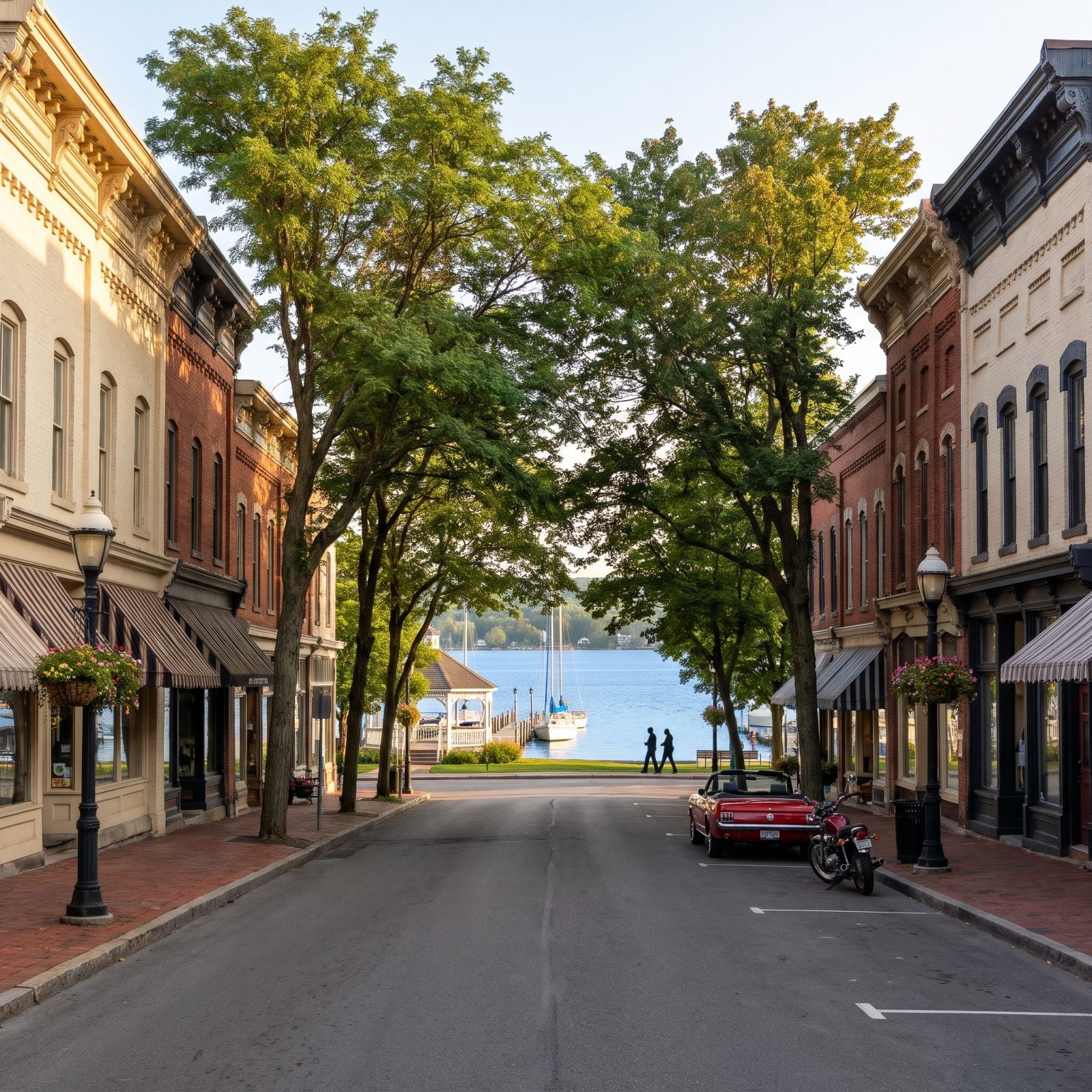
Skaneateles sits at the north tip of one of the clearest Finger Lakes, and Genesee Street runs right up to the water’s edge. The village green and little pier are a half-block off Main, so you can shop, eat, and stare at a lake you could drink from without ever moving your car.
This is the quiet one on the list. No gold-rush drama, no bascule bridge. Just a tidy nineteenth-century village beside very blue water, and sometimes that’s reason enough to pull off the highway.
19. Madison, Indiana, Main Street’s Federal-Era Buildings Near the Ohio River
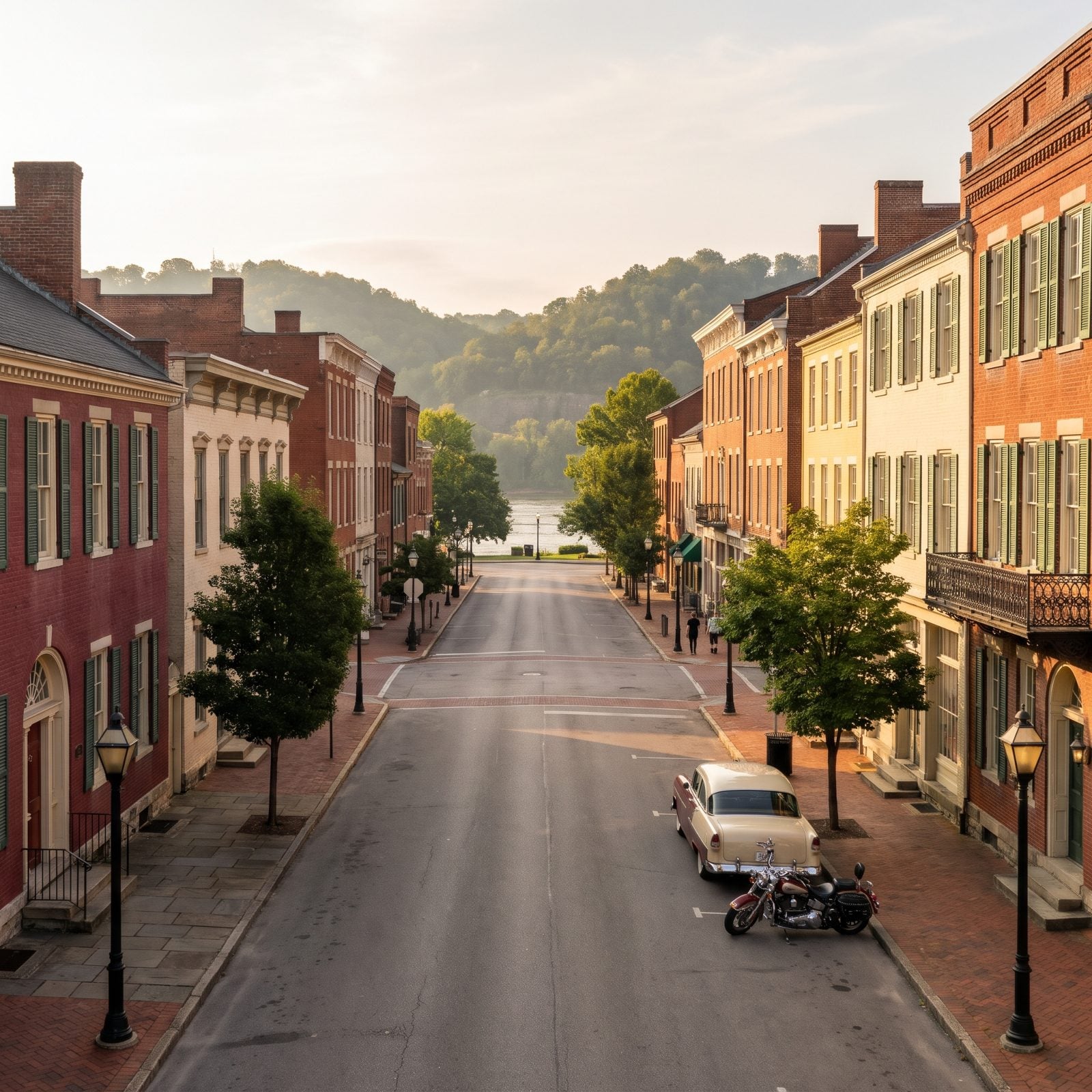
Madison is the one most road-trippers have never heard of, and that’s a crime. It sits in a bend of the Ohio River with one of the largest intact historic districts in the country, block after block of Federal and Greek Revival buildings that never got torn down because the railroad passed it by.
Flat, walkable, honest. The river bluffs box the town in on three sides, so Main Street has nowhere to sprawl. You get the whole thing in a leisurely afternoon, and you’ll wonder why nobody told you sooner.
18. Oxford, Mississippi, The Square and Its Independent Bookstore Culture
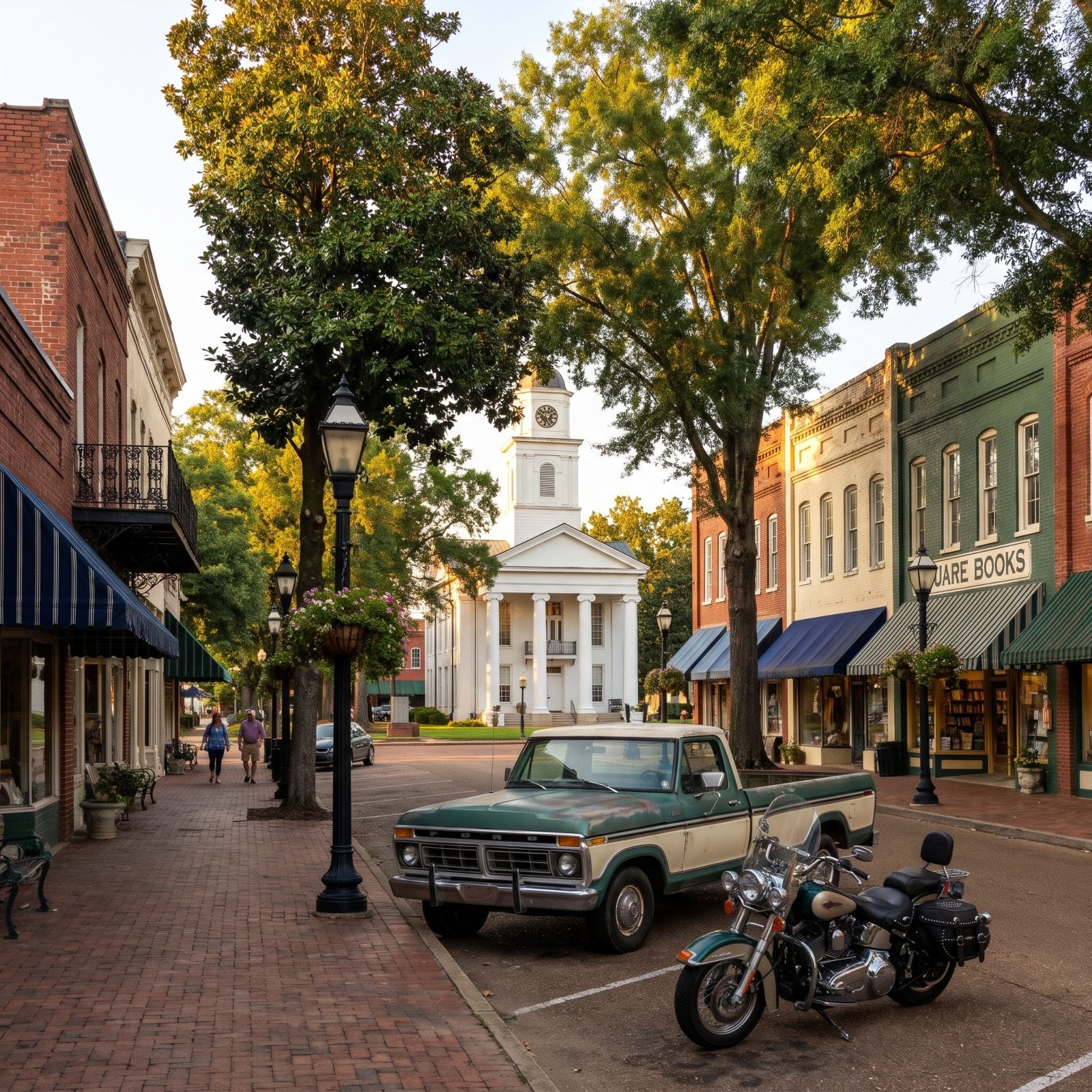
Oxford’s square is built around a courthouse and a bookstore habit that runs deep. This is Faulkner’s town, and it still takes its reading seriously. The square loops a white-columned courthouse, and the independent bookshop on the corner has hosted more author readings than most cities ten times the size.
Park once, walk the four sides, and you’ve seen it. The genius of a square is that you can’t get lost. Loop it slow, duck into a shop, loop it again with a coffee.
A courthouse square is the oldest road-trip trick in America: everything faces in, so the town never shows you its back.
17. Dahlonega, Georgia, Main Street Around the Gold Museum Square
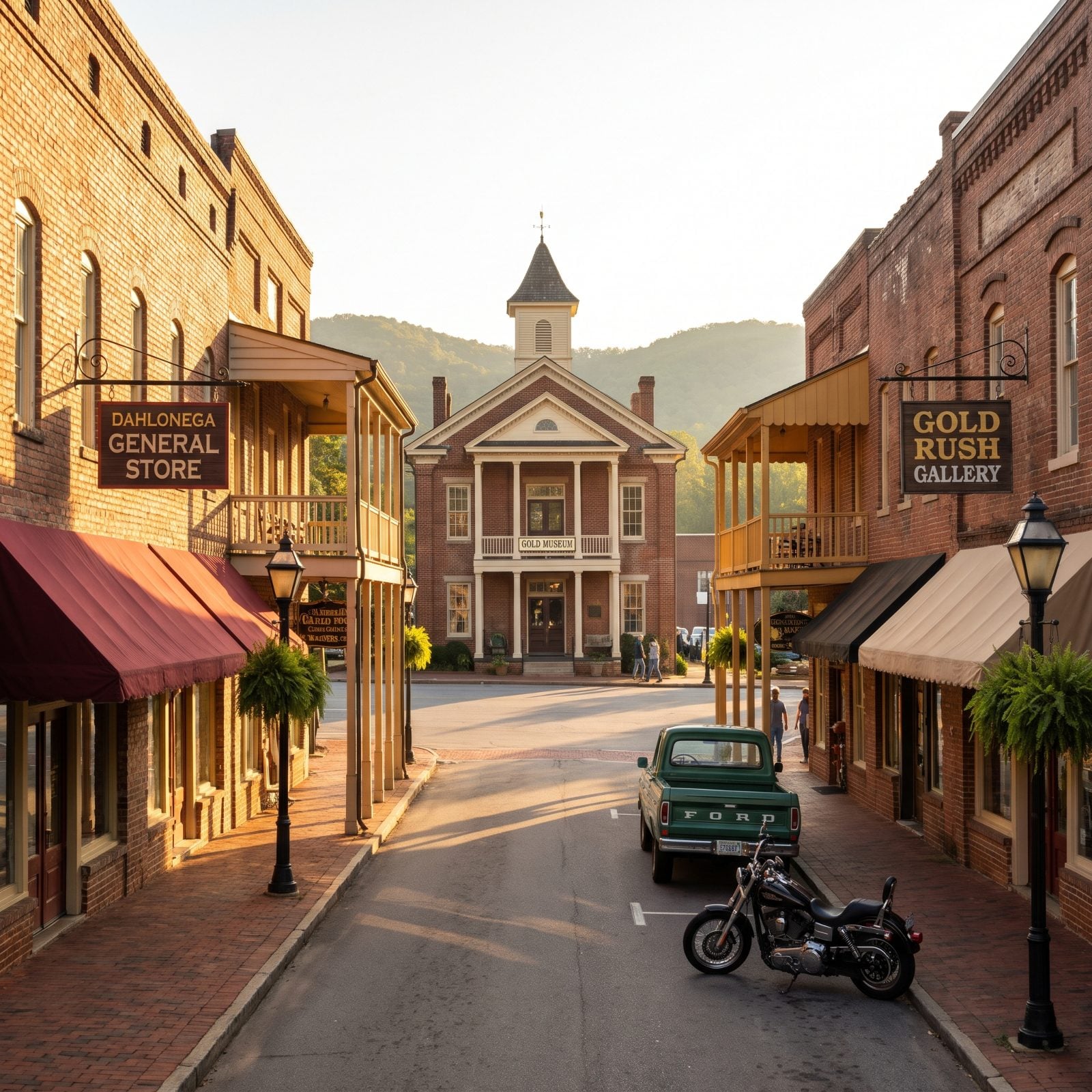
Dahlonega had a gold rush two decades before California did, and the square still circles the old courthouse that now holds the gold museum. Up in the Georgia Blue Ridge, it’s the sort of detour that makes a mountain drive worth every switchback.
The square is compact and full of wine tasting rooms now, because the foothills around here turned out to grow decent grapes. Walk the brick, sip if you’re not driving, and let someone else take the wheel for the afternoon.
16. Hermann, Missouri, Market Street in Missouri Wine Country
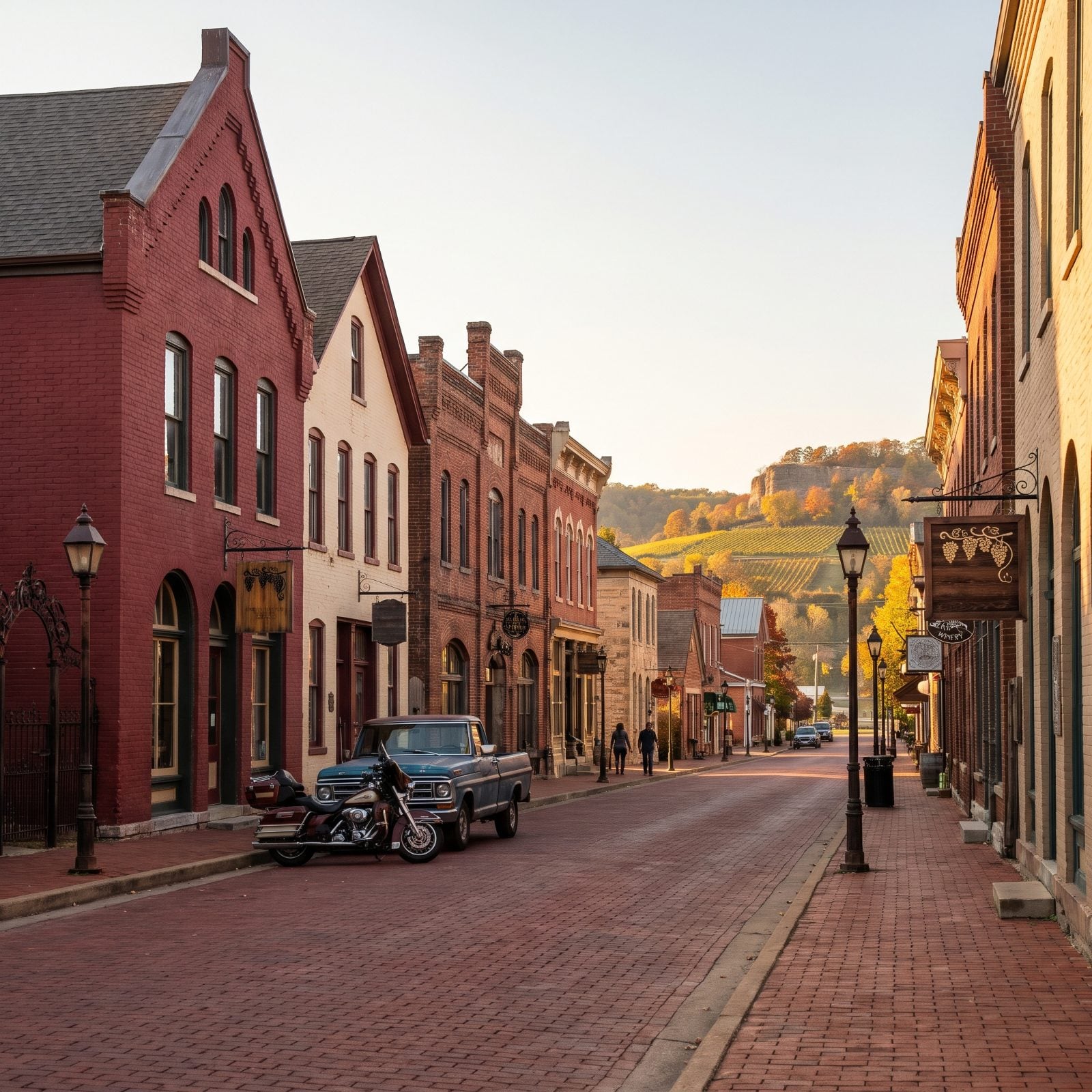
Hermann was settled by Germans who looked at the Missouri River bluffs and decided they’d found the Rhine. The brick buildings on Market Street still carry that heritage: steep gables, old brewery stone, wineries that have been pressing grapes here since before Prohibition-era law ever shut them down.
The hills around town grow grapes, and the tasting rooms line the street. If you’re the one driving, that’s a tough town to visit, honestly. Plan an overnight. A B-and-B in a 150-year-old brick house is the right call, and then Market Street opens up properly.
15. Staunton, Virginia, Beverley Street’s Preserved Downtown Blocks
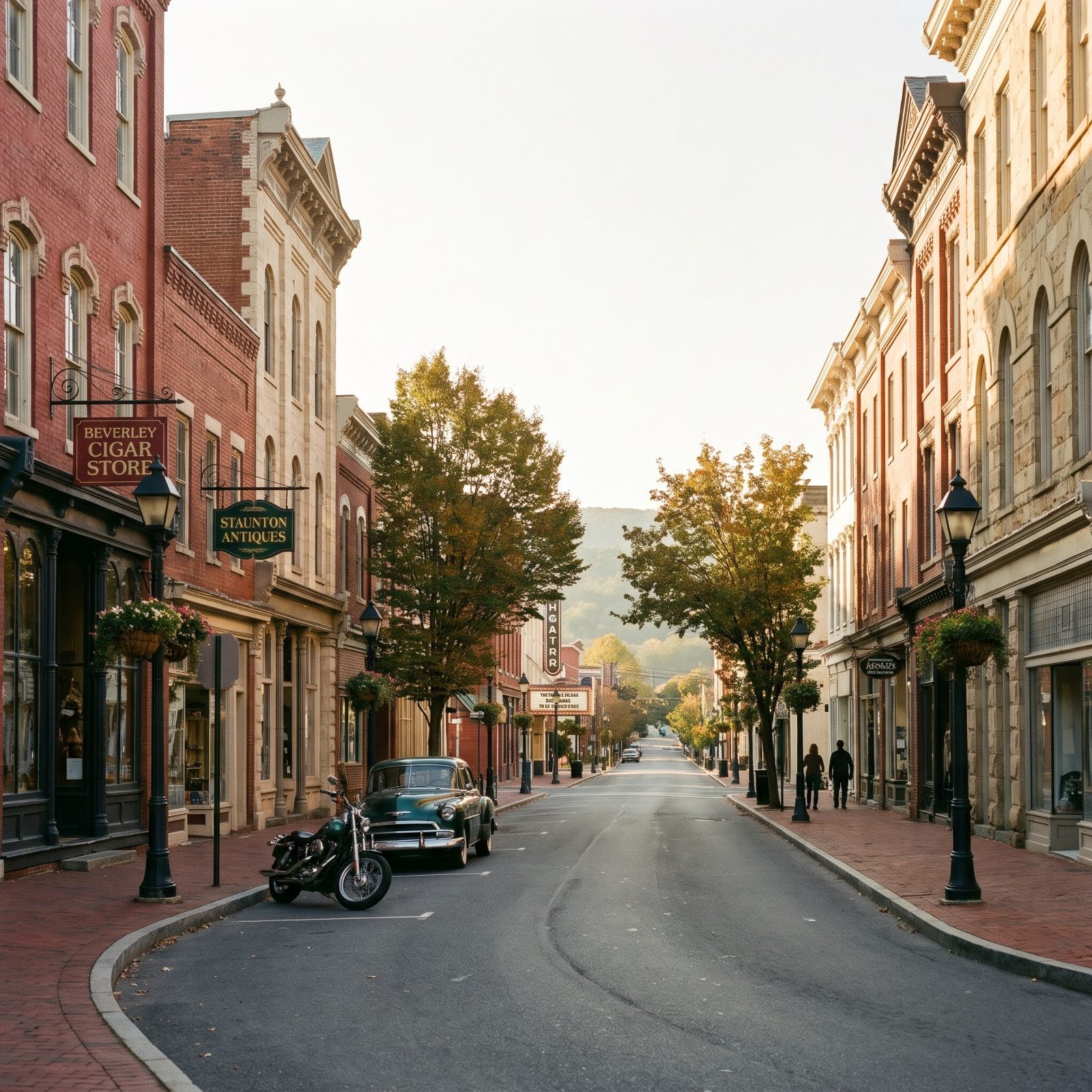
Staunton sits in the Shenandoah Valley with a downtown that dodged the wrecking ball when so many didn’t. Beverley Street curves through blocks of Victorian commercial buildings, and a good chunk of them came from a single local architect working in the late 1800s, which gives the whole stretch a coherence you rarely find.
Easy on, easy off I-81, which makes it a genuine detour rather than an expedition. Park, walk Beverley end to end, catch the restored theater if the timing’s right, and you’re back on the interstate inside two hours having actually seen something. That’s the whole art of the main-street stop. Get off the highway before the highway becomes the trip.
14. Truckee, California, Donner Pass Road Through the Old Railroad District
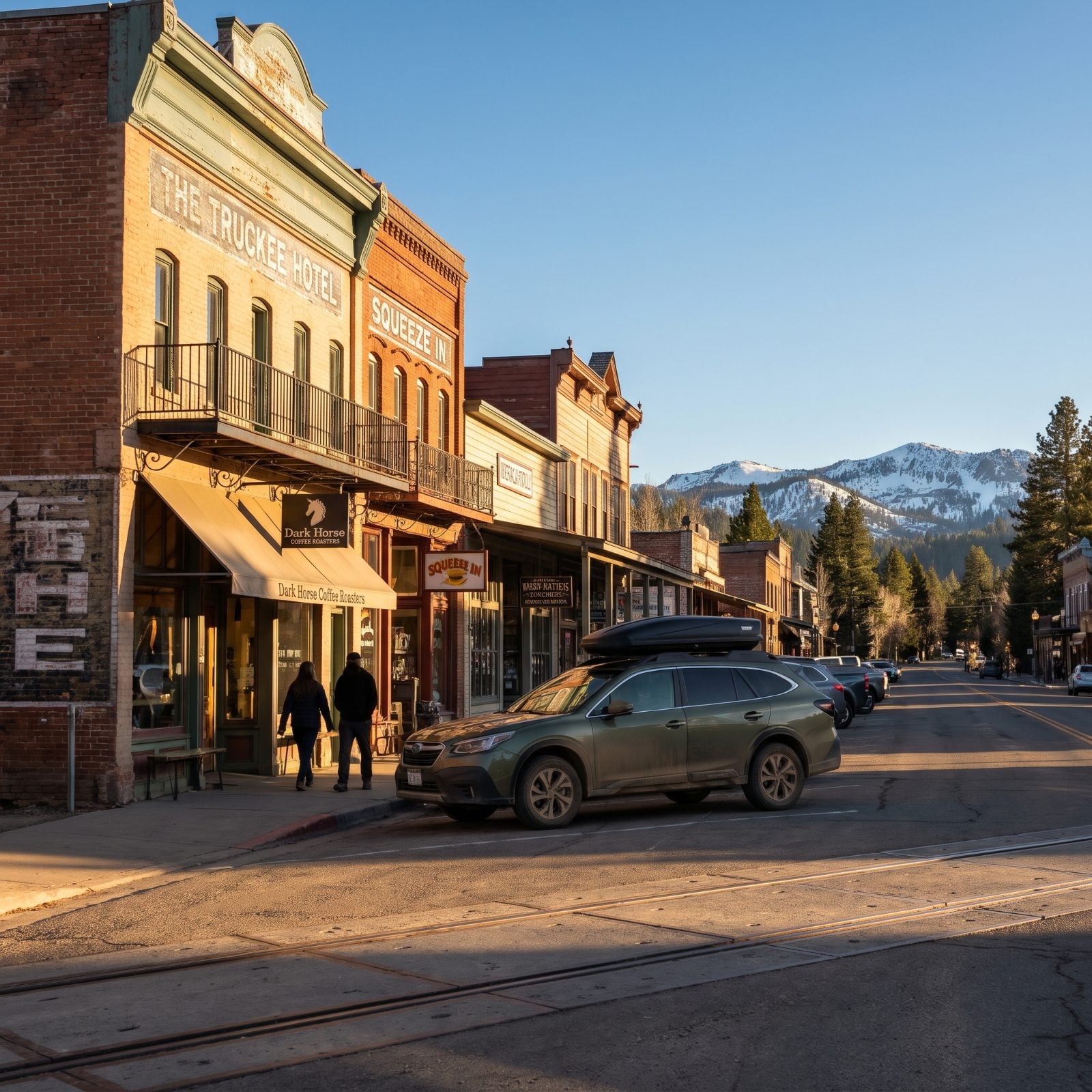
Truckee sits above 5,800 feet, and you feel it the second you step out of the car — thin air, pine-sharp. Commercial Row runs right alongside the old transcontinental railroad line, so you get freight trains rumbling past while you drink your coffee, which never stops being a little thrilling.
The buildings go back to the 1860s and 70s, when this was a rough logging and ice-harvesting town. Now it’s restaurants and outfitters, but the bones are honest. Park once and walk — downtown’s tight.
13. Wallace, Idaho, Bank Street in a Preserved Silver-Mining Downtown
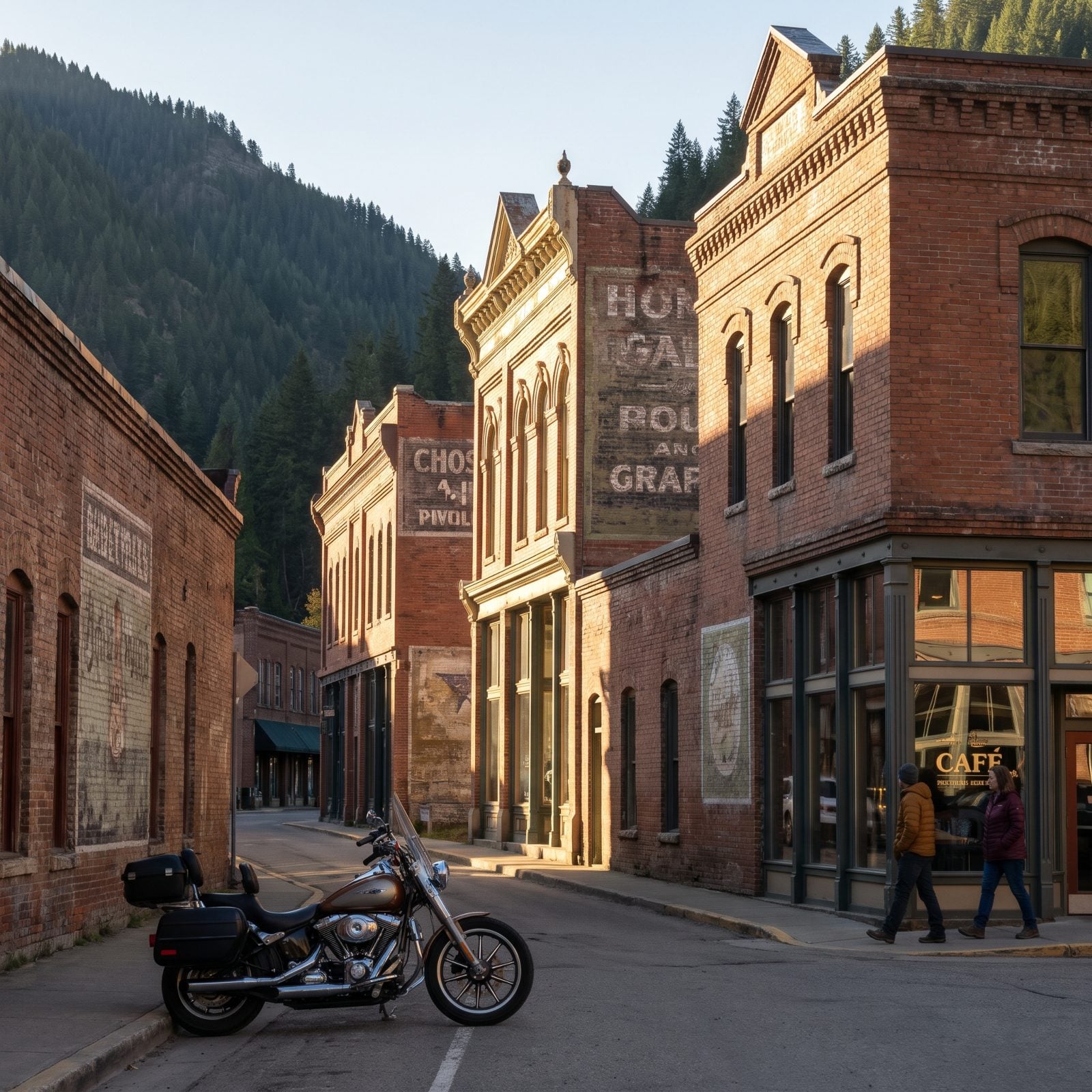
The whole downtown of Wallace is on the National Register. Not a building here and there. The entire thing. That happened because locals fought a federal highway that was going to plow straight through the middle of town — and they won.
Bank Street and the few blocks around it are red brick, pressed tin, and arched windows from the silver boom, and you can tour a real underground mine right off Main. The valley walls come up so steep the sun arrives late and leaves early, which gives the light here a gold-hour quality most of the day.
12. Guthrie, Oklahoma, Oklahoma Avenue’s Territorial-Era Architecture
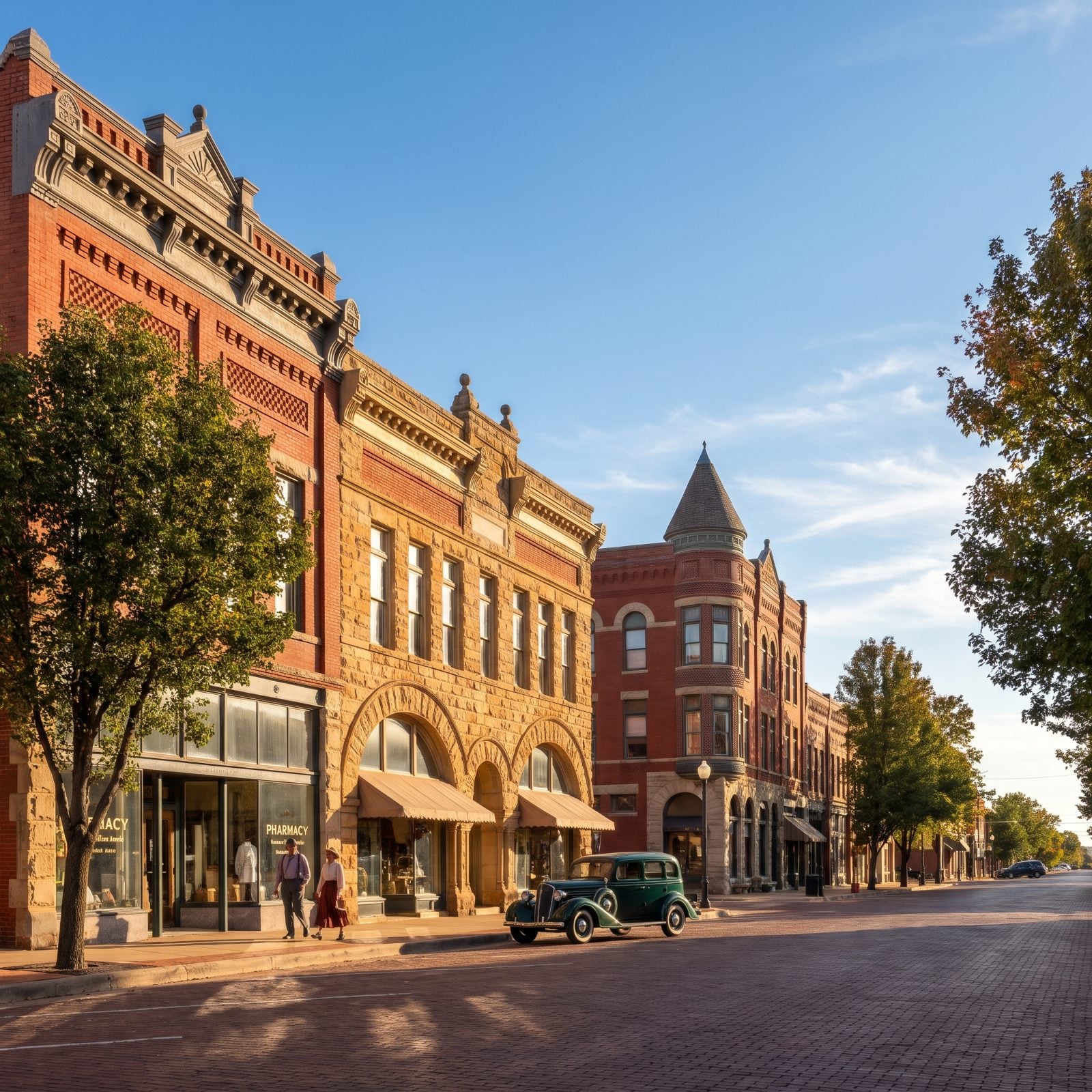
Guthrie was Oklahoma’s first state capital, and for a few years it was the most important city in the territory. Then the capital moved to Oklahoma City in 1910, the money left, and the town basically froze.
That turned out to be a gift. Oklahoma Avenue holds one of the largest intact collections of Victorian commercial architecture in the country — all red brick and sandstone turrets. Nobody tore it down to put up something uglier because nobody had the money to try. Walk it slow. Look up.
11. Saugatuck, Michigan, Butler Street’s Galleries Near the Kalamazoo River
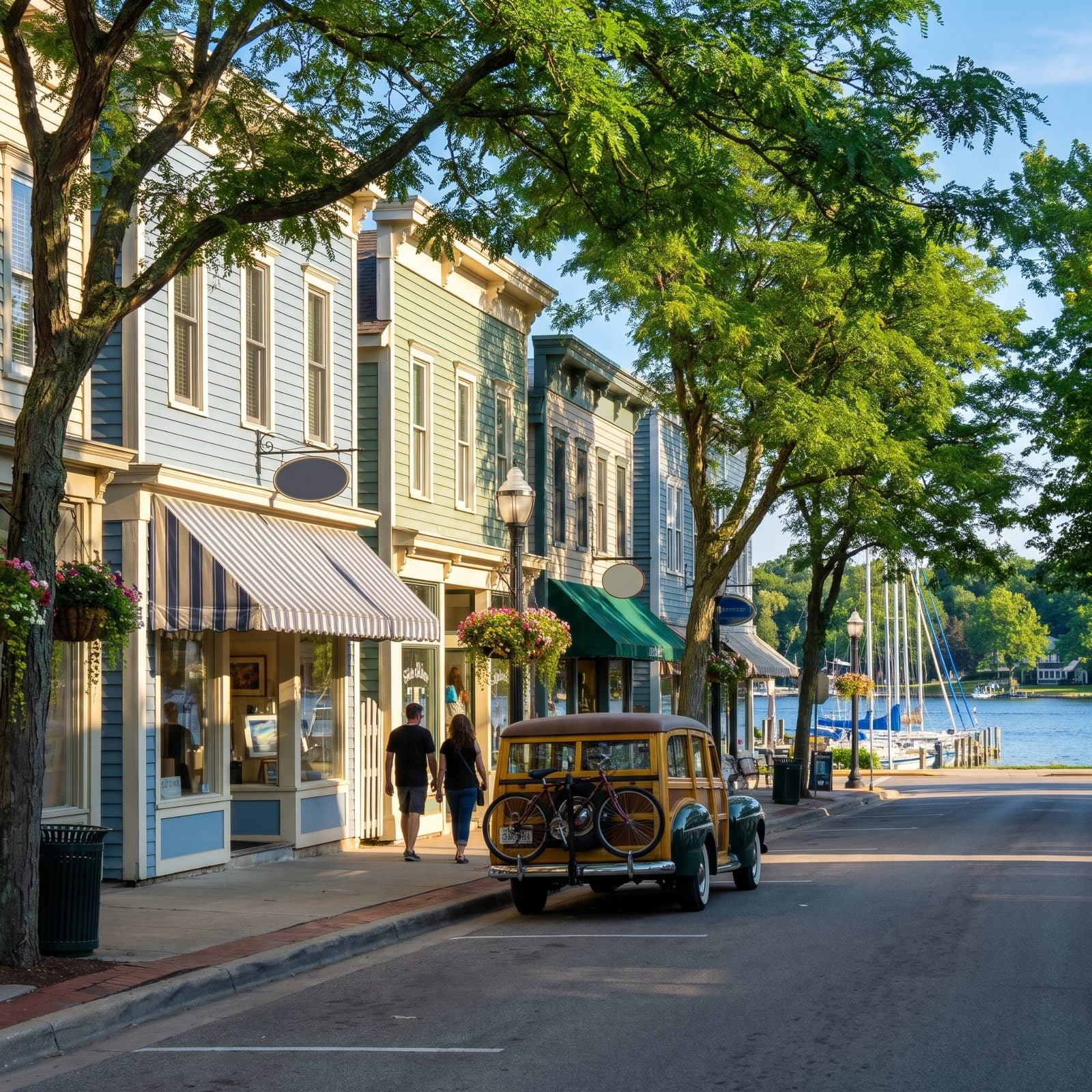
Saugatuck has called itself an art colony for more than a century, and Butler Street earns the title — gallery after gallery, painted storefronts, flower baskets, the whole run of it a few blocks from where the Kalamazoo River meets Lake Michigan.
Summer gets busy. Really busy. Come on a weekday or in the shoulder season, September especially, when the light goes soft and the crowds thin and you can actually find parking. And take the little chain ferry across the river while you’re here — it’s hand-cranked, and it’s been running since the 1830s.
10. Stillwater, Minnesota, Main Street Along the St. Croix River
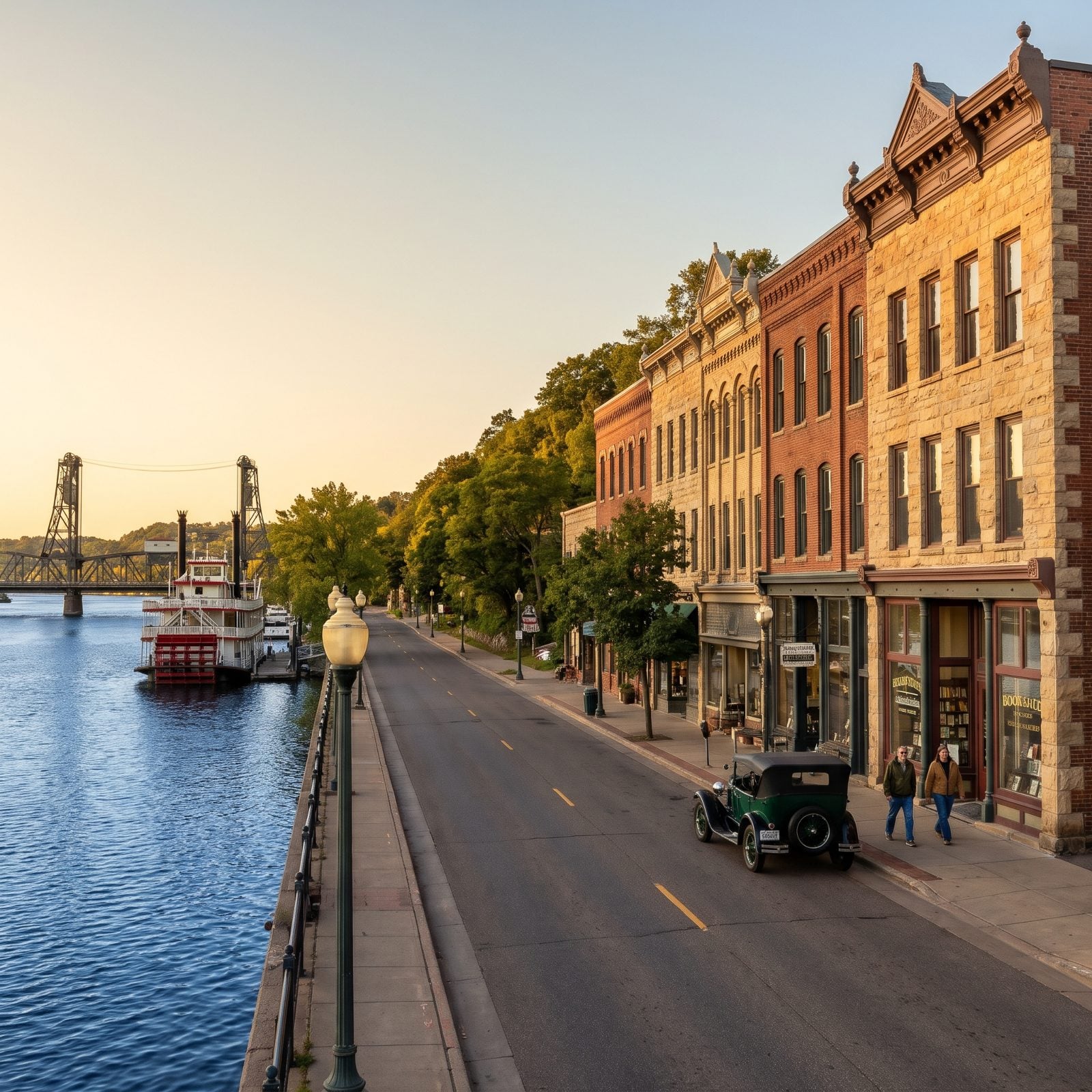
They call Stillwater the birthplace of Minnesota, and the river made it. In the lumber days the St. Croix was packed solid with logs floating down to the mills, and the money from all that built the limestone and brick buildings that still line Main Street, stacked up against a steep bluff.
It’s a town for browsing now, its old storefronts full of shops, and you could lose an afternoon easy. End the day on the riverfront watching the old lift bridge rise for a passing boat — a slow mechanical ballet that stops traffic in the best way.
9. Lititz, Pennsylvania, Broad Street and Its Moravian-Era Buildings
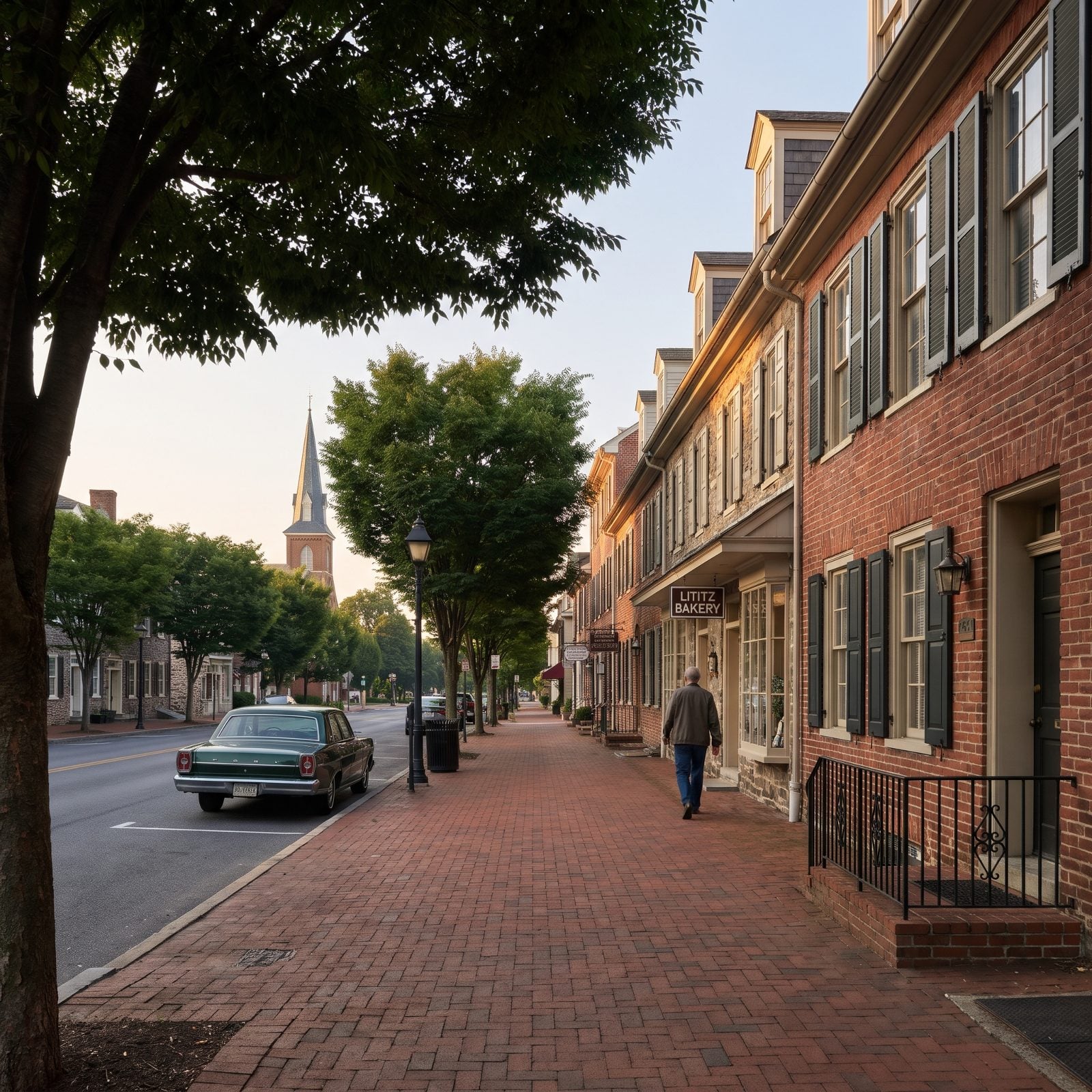
Lititz was founded by Moravians in the 1750s, and for its first hundred years you couldn’t even live there unless you belonged to the church. That history is still standing on Broad Street in sober stone buildings that have outlasted everything around them.
And here’s the hook: this is where the pretzel went professional. The Julius Sturgis Bakery, opened 1861, claims to be the first commercial pretzel bakery in America, and it’s still right there on Main. You can twist your own.
8. Lanesboro, Minnesota, Parkway Avenue in the Root River Valley
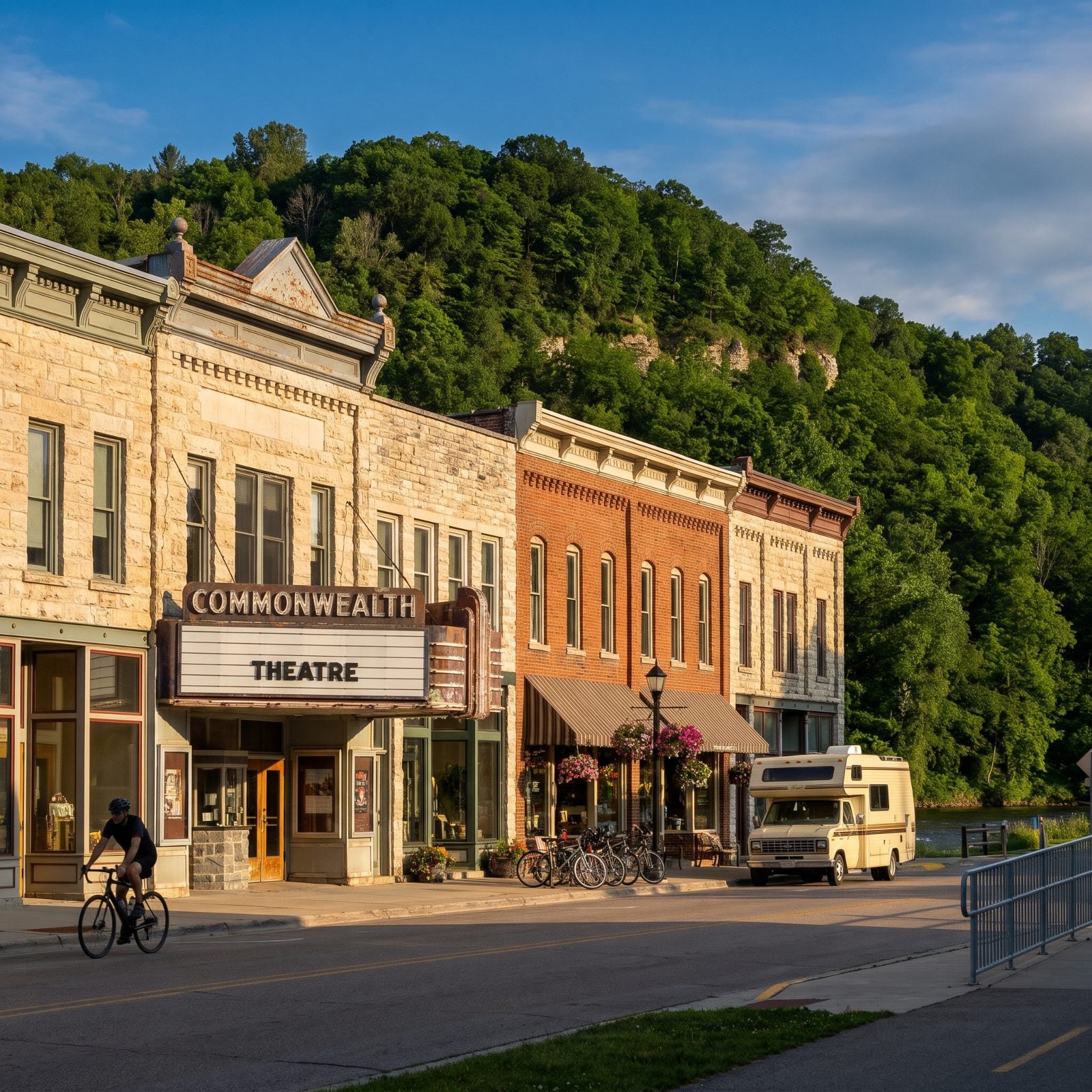
Lanesboro has fewer than 800 people, and it punches way above that. The town sits in a gorge carved by the Root River, limestone bluffs rising right behind the storefronts, and the whole downtown is small enough to walk end to end in ten minutes.
It’s a bike town, plain and simple. The Root River State Trail runs right through it, a flat paved rail-trail following the water for miles. Got bikes on the car? This is the place to pull them off. If you don’t, there’s a shop that’ll rent you one. A rare detour that rewards you for getting out of the vehicle entirely.
7. Bell Buckle, Tennessee, Railroad Square’s Colorful Shops and Cafes
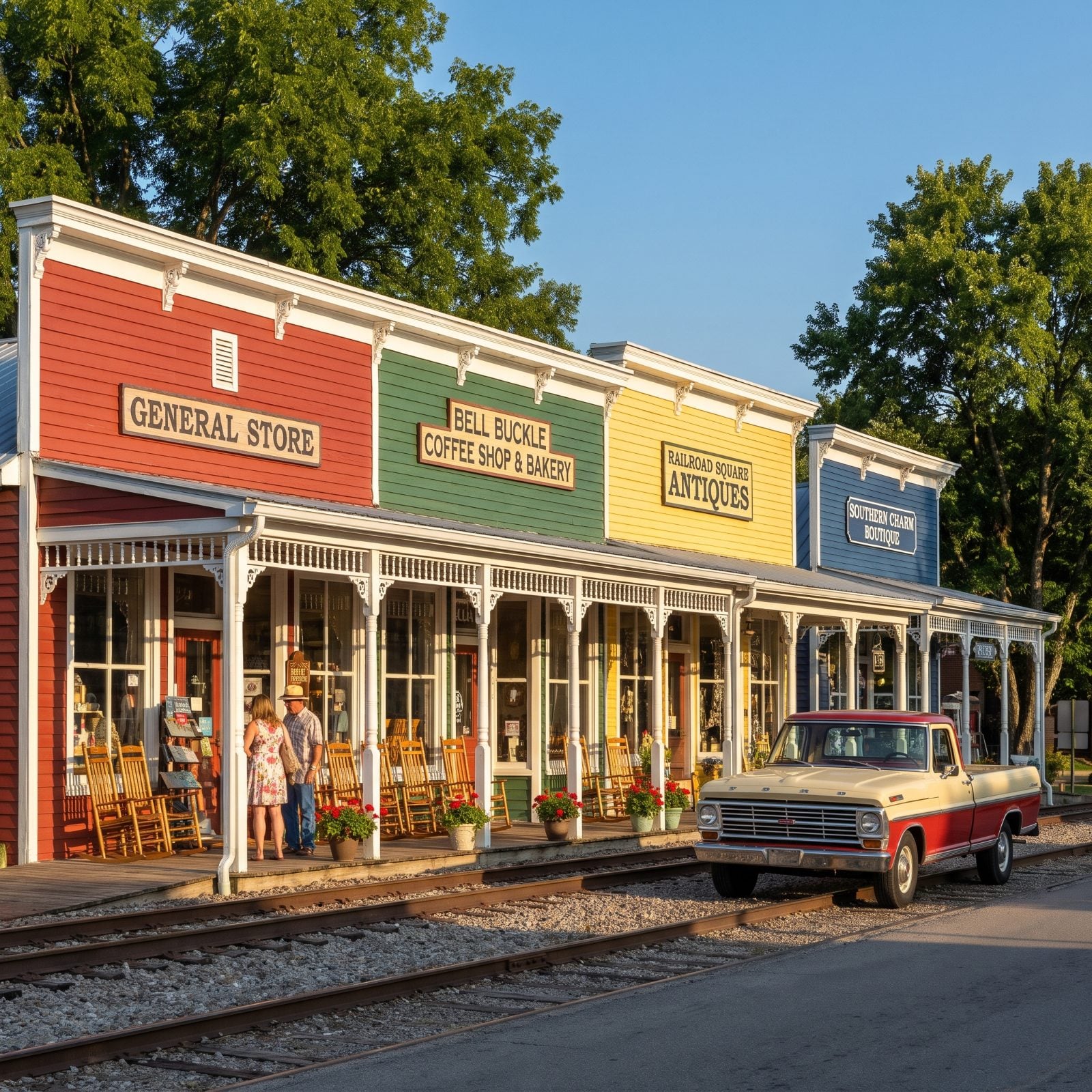
Blink and you’ll miss Bell Buckle. The whole downtown is one short block facing the railroad tracks, a row of candy-colored wooden storefronts with deep porches and rocking chairs sitting out like an invitation.
The town got its start as a railroad depot and never grew much past it, which is exactly why it’s charming. Antique shops, a tea room, and the famous RC Cola and MoonPie festival every June. It’s the kind of place where you plan to stop for twenty minutes and the afternoon just gets away from you.
6. El Dorado, Arkansas, Union Square’s Art Deco Landmarks
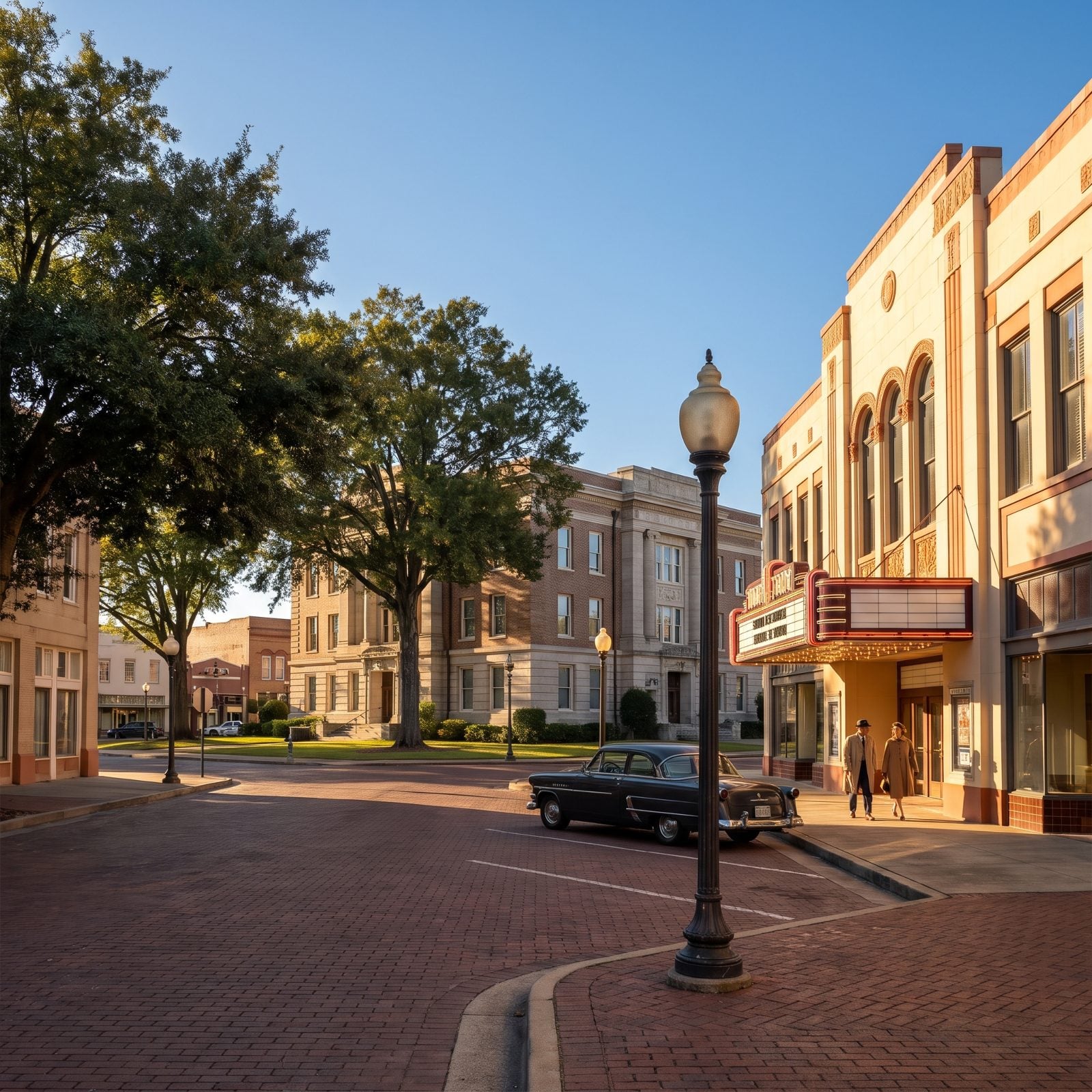
Oil built El Dorado. A gusher came in nearby in 1921 and the money poured into downtown so fast that Union Square went up in grand 1920s style, Deco and classical facades on what had been a sleepy county seat.
What surprises you is how good it still looks. The square’s been carefully kept, the old movie palace restored, and it anchors a genuine arts scene that most people driving through south Arkansas have no idea is sitting right there.
5. Whitefish, Montana, Central Avenue Beneath Big Mountain
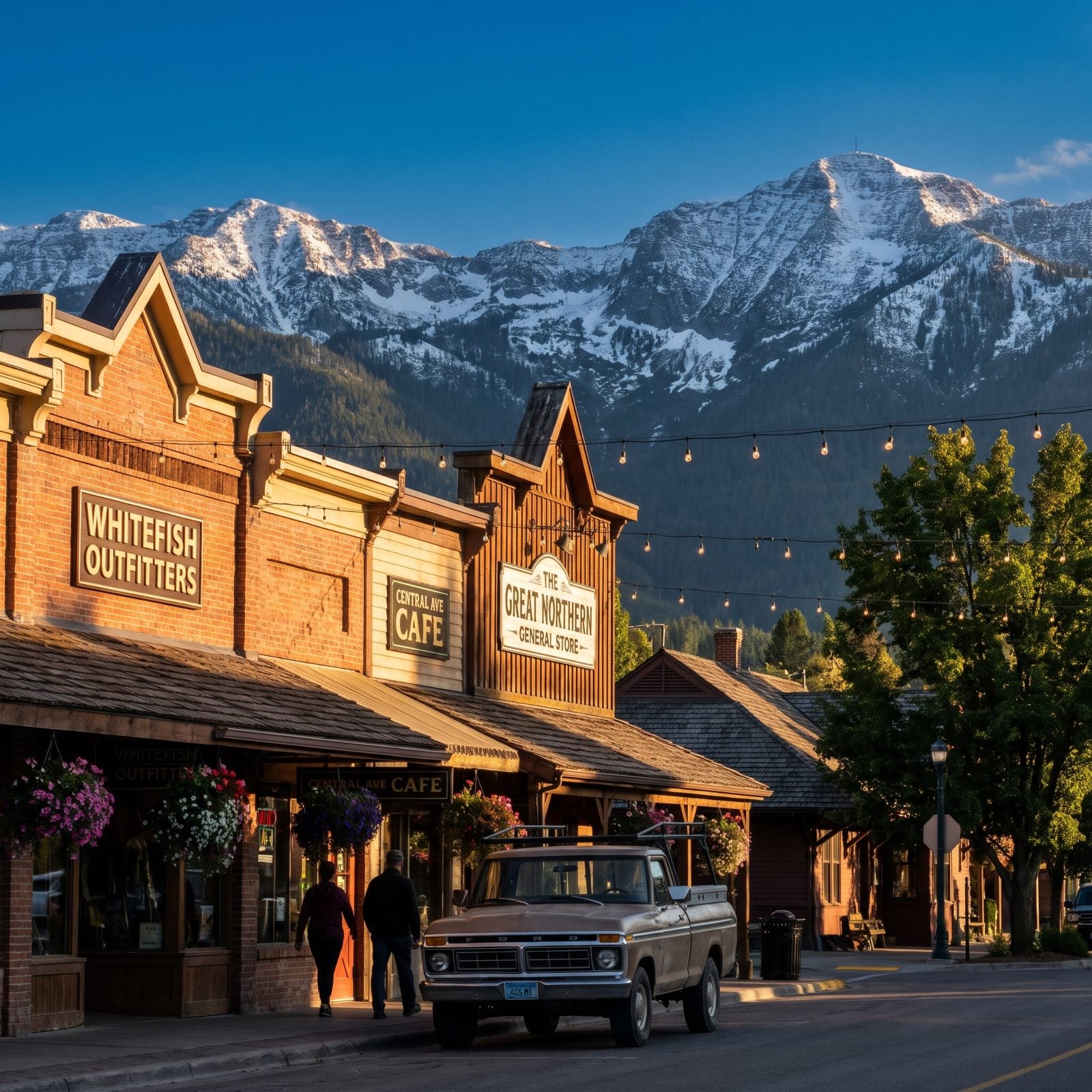
Whitefish is a railroad town that got lucky with its setting. The Great Northern came through in 1904, and the depot still stands — a timbered chalet that looks like it wandered over from the Alps.
Central Avenue is a few walkable blocks of brick storefronts, outfitters, and good food, with the ski runs of Big Mountain rising right behind town and Glacier National Park an hour east. This is a working main street, not a theme park. People actually live and shop here. Come in fall, when the larches turn gold on the slopes and the summer crowds have cleared out. That’s the version of Whitefish you’ll want to remember.
4. Petoskey, Michigan, Lake Street and Its Little Traverse Bay Views
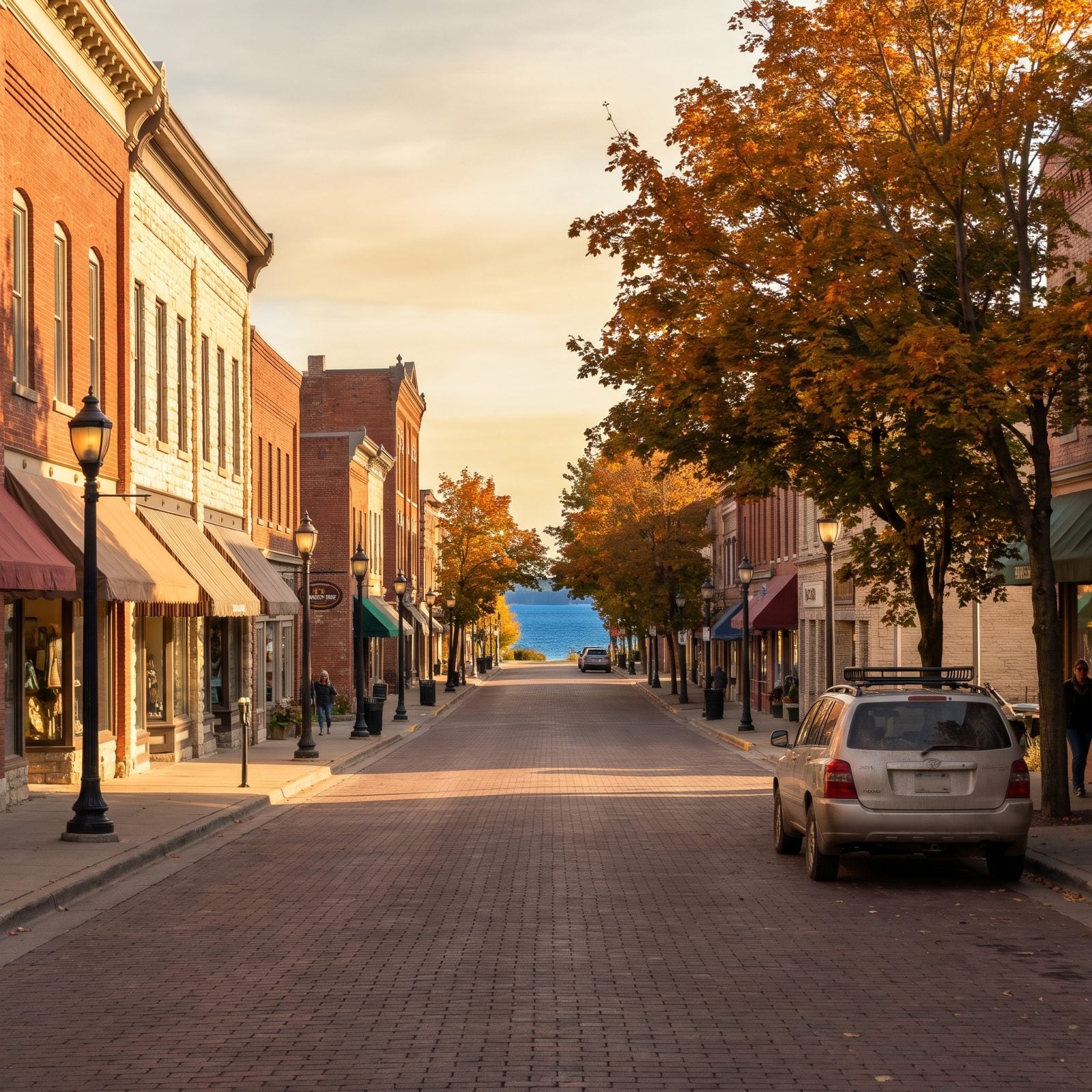
Park on Lake Street and walk downhill. You can smell Lake Michigan before you see it, that cold clean water smell that tells you summer in the Midwest actually meant something. The Gaslight District packs its brick storefronts into a few tight blocks, and that’s the whole trick — everything worth seeing sits within a short stroll.
Hunt the sidewalks and the shoreline gravel for Petoskey stones, the fossilized coral named for the town. Dry, they look like plain gray rocks. Wet, the honeycomb pattern lights up like somebody flipped a switch. Half the people you see crouched along the bay aren’t stretching. They’re looking.
3. Astoria, Oregon, Commercial Street Beneath the Columbia River Hills
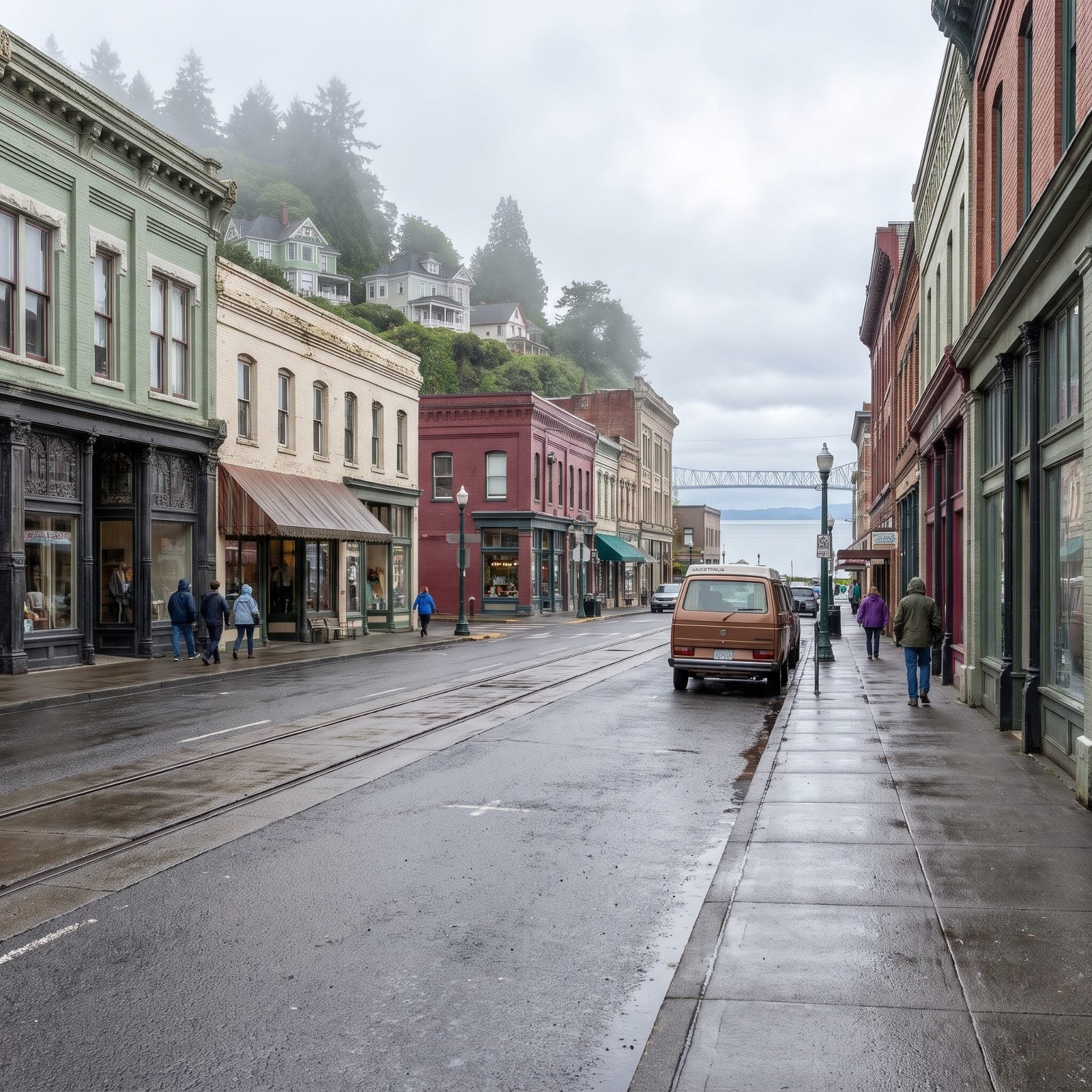
Astoria looks like a town that has seen things. It’s the oldest American settlement west of the Rockies, and Commercial Street wears every decade of it in painted clapboard, brick and big display windows. The hills shoot straight up behind the storefronts, stacked with Victorian houses, and the Columbia River is so wide at the mouth it reads like the open sea.
Ride the Riverfront Trolley if it’s running — slow, cheap, rolling along the old rail line past the working waterfront with sea lions barking off the piers. Fog is the default morning weather here. Don’t fight it. The town looks better half-hidden, and anyone who tells you otherwise hasn’t stood on that street at seven in the morning.
2. Silver City, New Mexico, Bullard Street’s Murals and Southwestern Storefronts
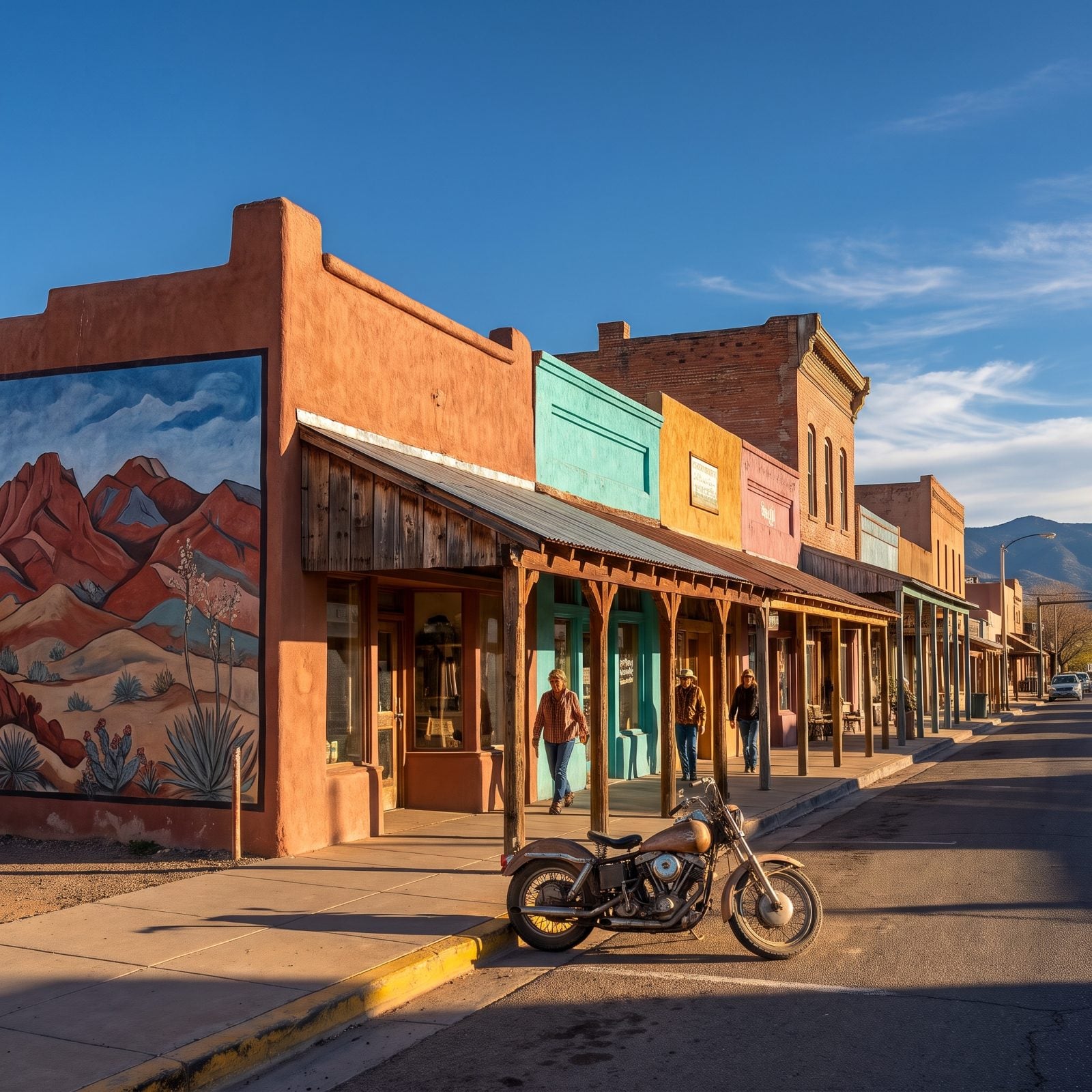
Silver City sits up around 5,900 feet, which throws people who expect New Mexico to be flat and hot. The air is thin and dry, and the light does something to the adobe that a camera never quite catches. Bullard Street is the spine of the place — a run of old mining-town storefronts repainted by a town full of artists who clearly never agreed on a color scheme.
The murals are the draw. They turn blank walls into something worth killing the engine for. This is also your jumping-off point for the Gila, the first designated wilderness in the country, so the town pulls gallery browsers and dusty hikers into the same coffee line.
1. Mackinac Island, Michigan, The Car-Free Main Street of Bicycles and Carriages
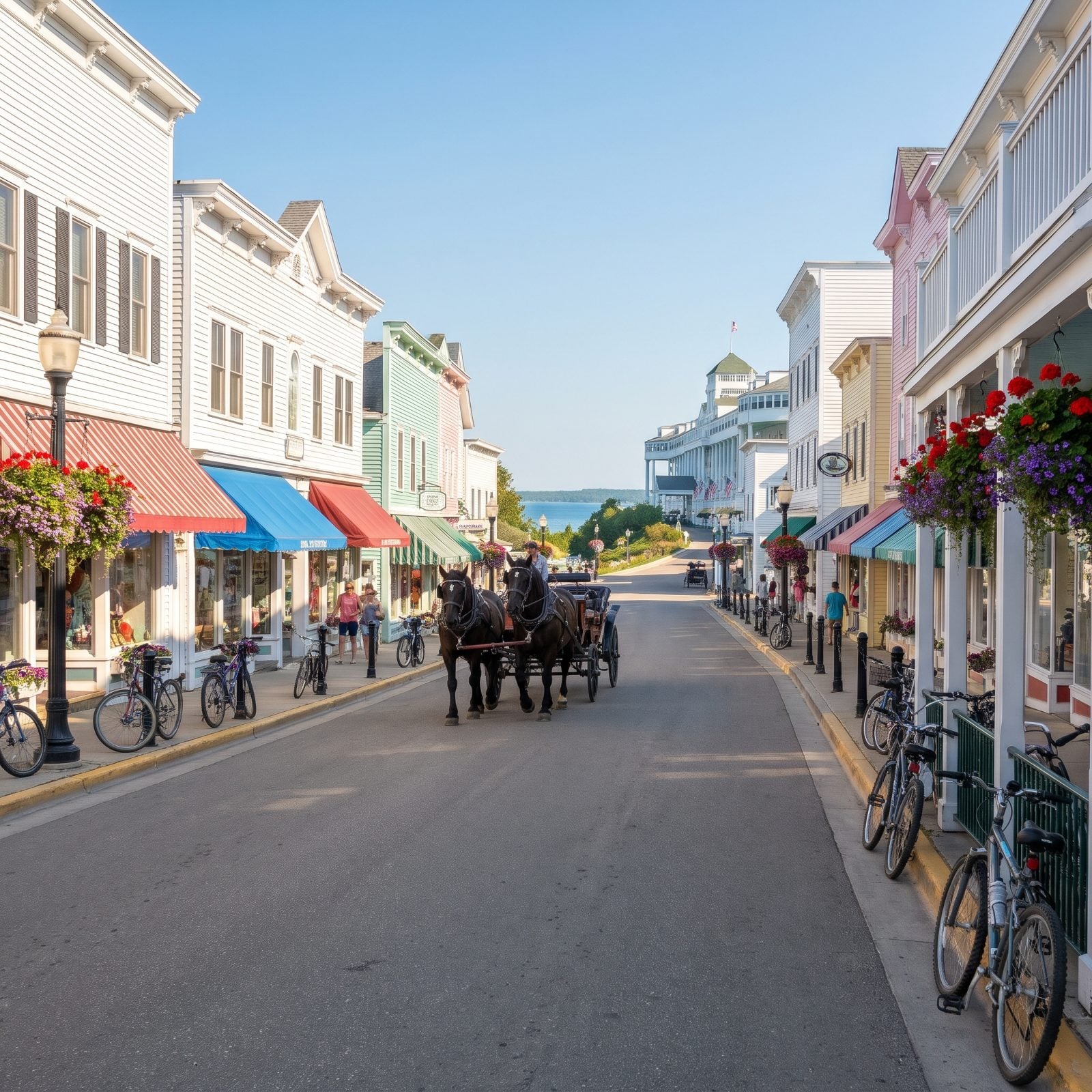
No cars. None. Mackinac Island banned them back in 1898 and never looked back, so the only traffic on Main Street is bicycles, horses, and your own two feet. You leave your vehicle on the mainland and take a ferry across the Straits, which resets your pace before you’ve even set foot on the dock.
Nobody warns you until you arrive: it smells like horses. A lot of them. That’s not a complaint, just a fact, and after an hour you stop noticing. Rent a bike and ride the eight-mile loop around the shoreline — flat, hugging the water the whole way, about as quiet as a main street ever gets in this country.