
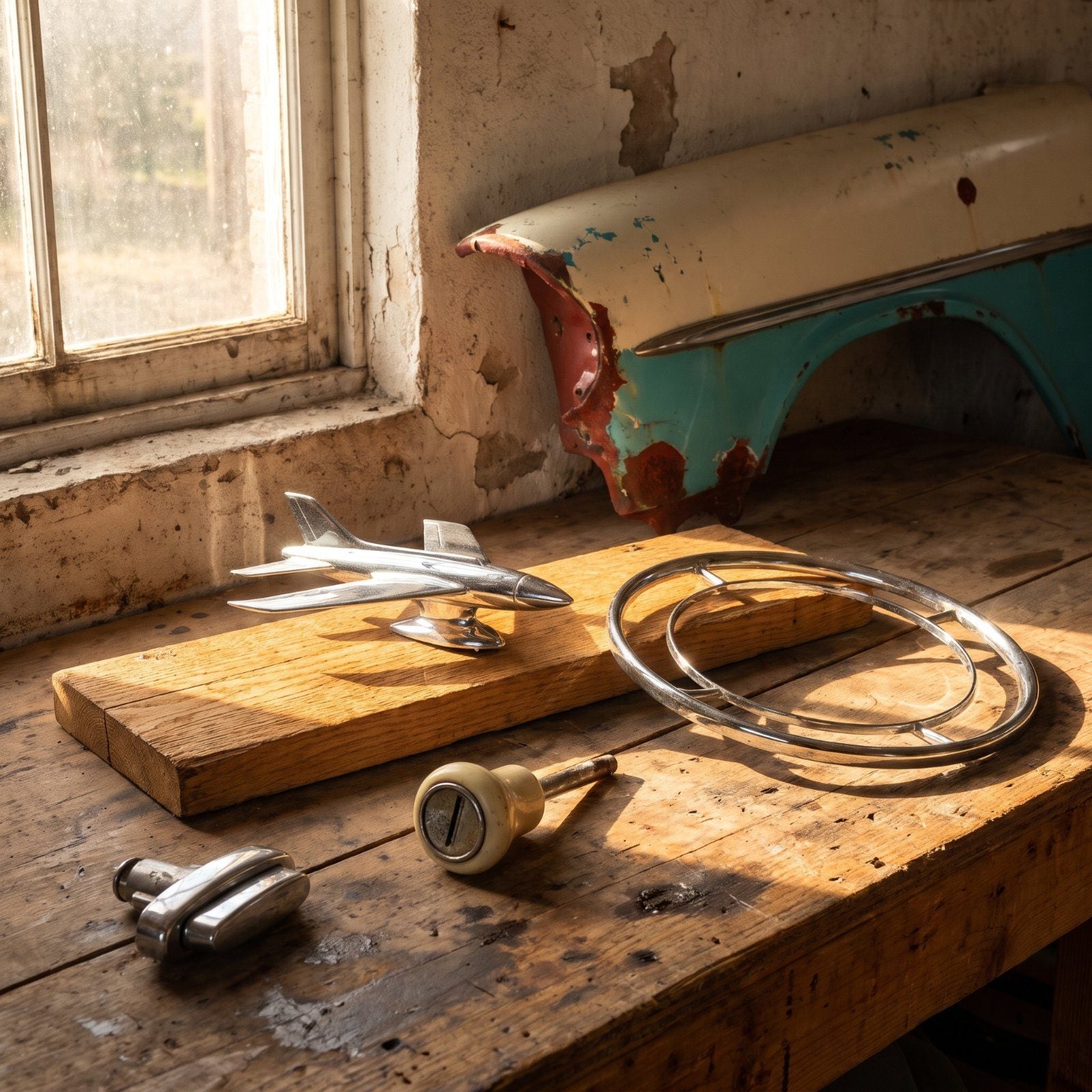
Slide across a vinyl bench seat on a July afternoon and your legs stick to it. That’s a memory most people under forty will never have. Somewhere between the muscle-car era and the airbag era, the industry quietly deleted a whole vocabulary of car features. Some went for good reasons — safety rules, cost, crash standards. Others just got designed out because they weren’t fashionable anymore. We spent time walking the showroom floor that used to be, and a few of these are worth mourning. A few you’ll be glad are gone. Here’s what the old iron had that your crossover never will.
Please note that some of the images in this article were created with the assistance of AI.
36. Front Bench Seats That Fit Three Across
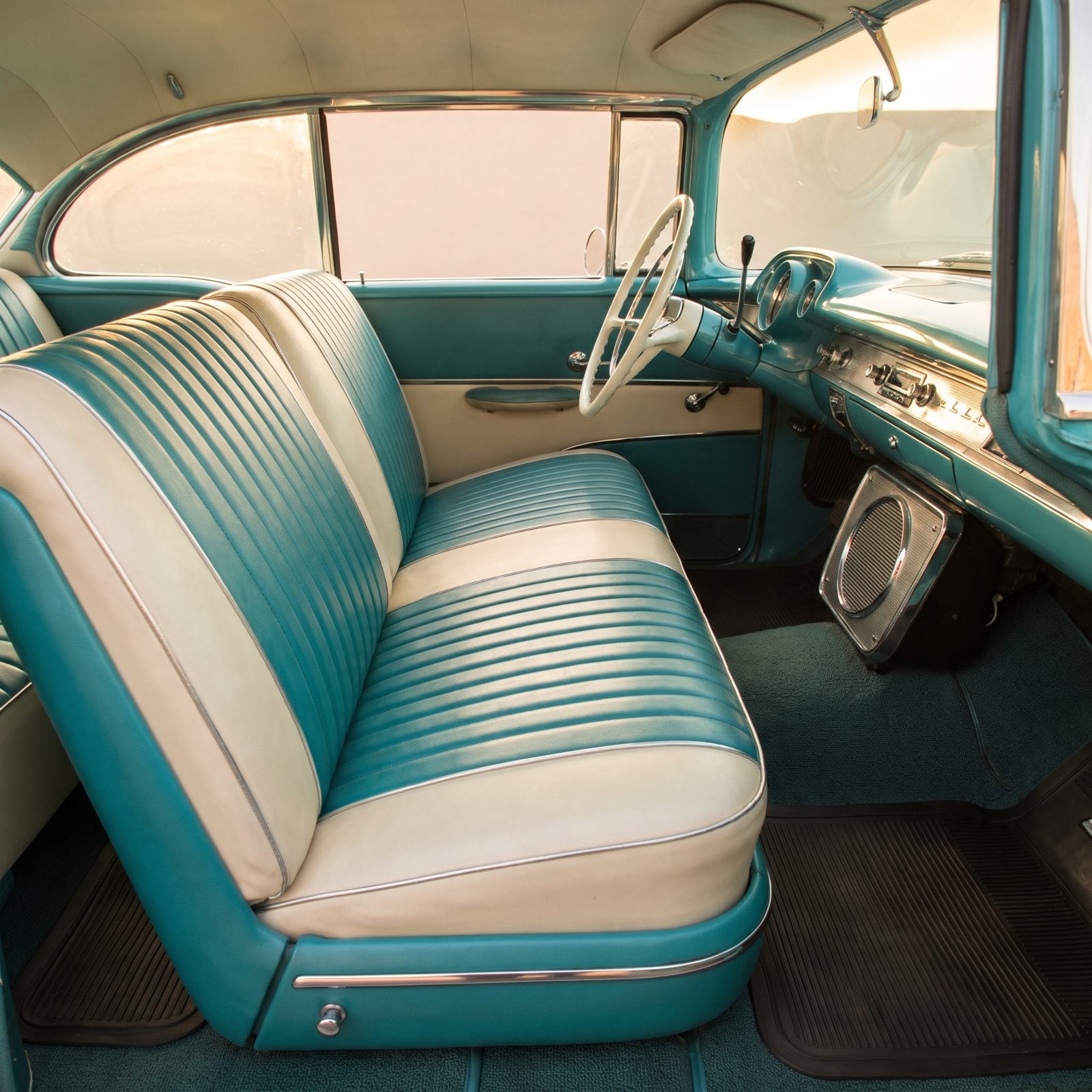
Three across the front. No console, no cupholders, no gearshift tower splitting the cabin in half — just one long cushion you could stretch out on at a drive-in. The bench seat was the most democratic thing Detroit ever built. Six people in a sedan, nobody drawing straws for the hump.
It died for good reasons, mostly. Bucket seats hold you in a corner, seatbelts need anchor points, and center consoles sell as premium. But something got lost in the deal. Sliding across to let your sweetheart sit close is a thing the modern car actively prevents.
35. Steering-Column Gear Shifters
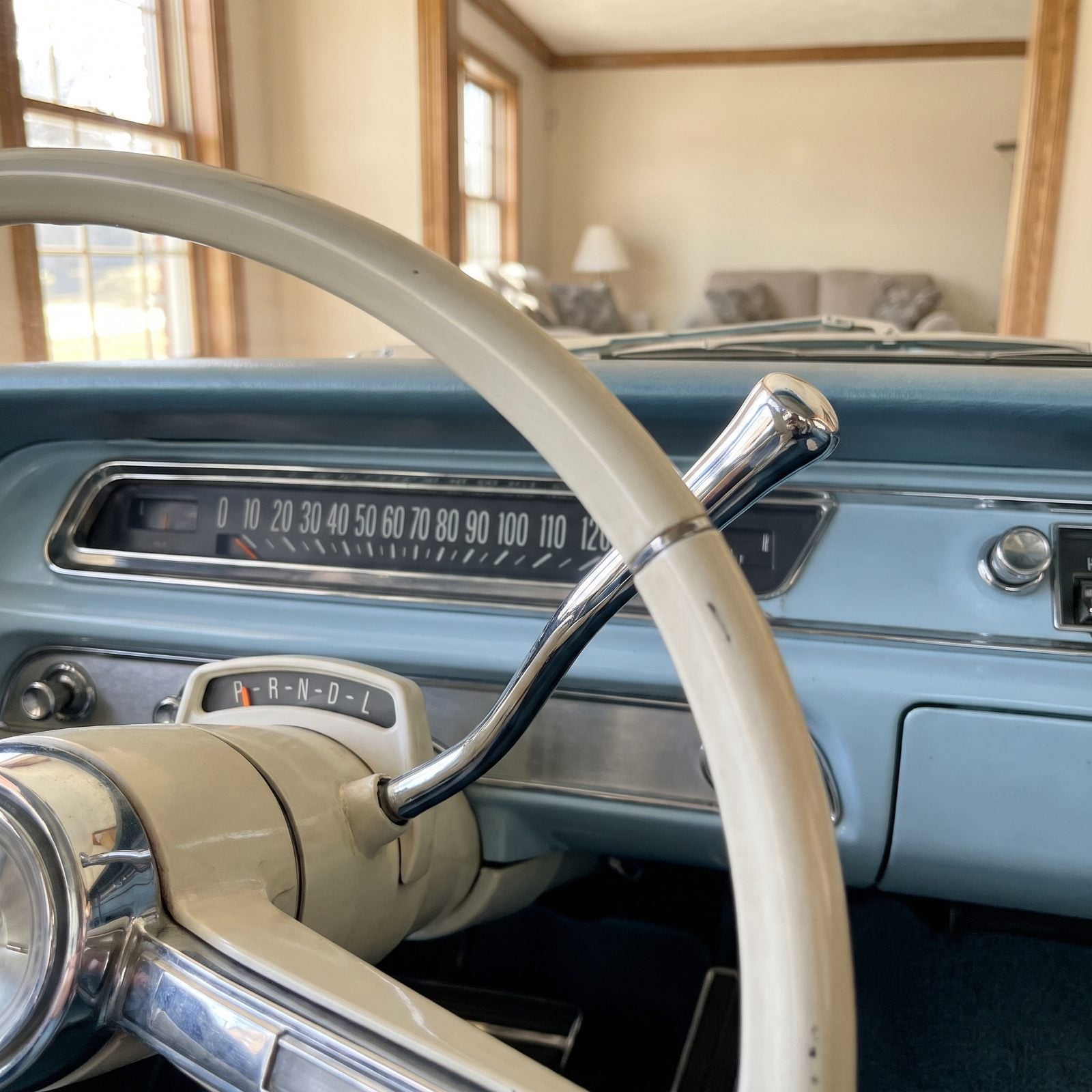
Reach up, not down. A column-mounted automatic put the shift lever right on the steering column — a long chrome wand you flicked with two fingers. It kept the floor clear and freed up that whole bench seat for passengers.
The pattern was printed right there on the column: P-R-N-D-L. You pulled the lever toward you and swung it down through the gears, and if your linkage got sloppy the indicator wouldn’t quite line up with the gear you’d picked. It always suited the big cruisers best, honestly. Felt natural once your hand learned the geography. Then the floor-mounted console shifter came along and killed it off, and the clean cabin went with it.
34. Full-Circle Chrome Horn Rings
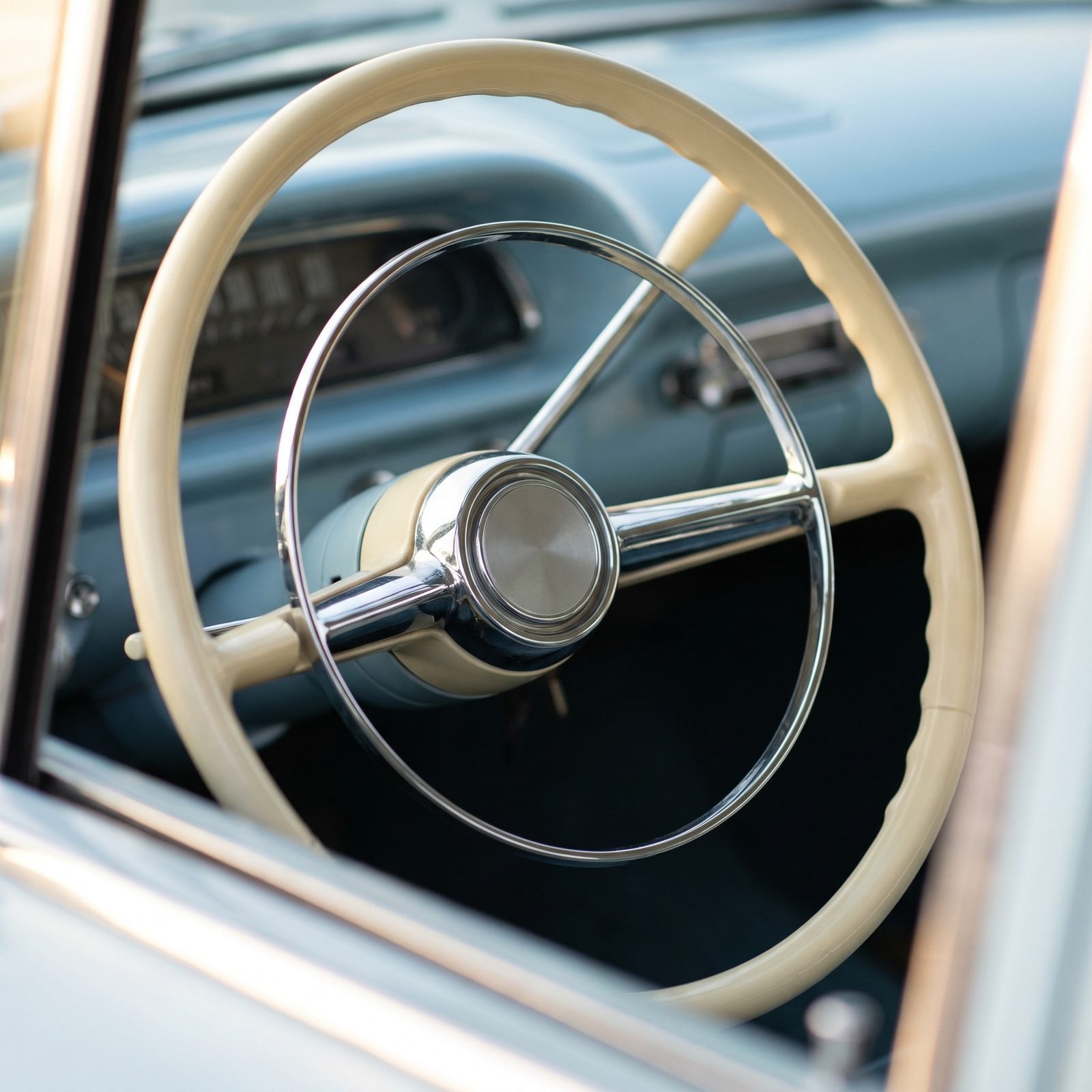
You never hunted for the horn button, because the whole inner ring was the horn. A thin chrome halo sitting just inside the wheel rim, and a squeeze with either thumb set it off. No fumbling, no taking your eyes off the road to find a little pad.
Airbags ended it. The moment the wheel center became a place to pack an inflating cushion, the ring had nowhere to live. Fair trade. But the old setup was genuinely better ergonomics, and nobody who used one would argue the point.
33. Floor-Mounted Headlight Dimmer Switches
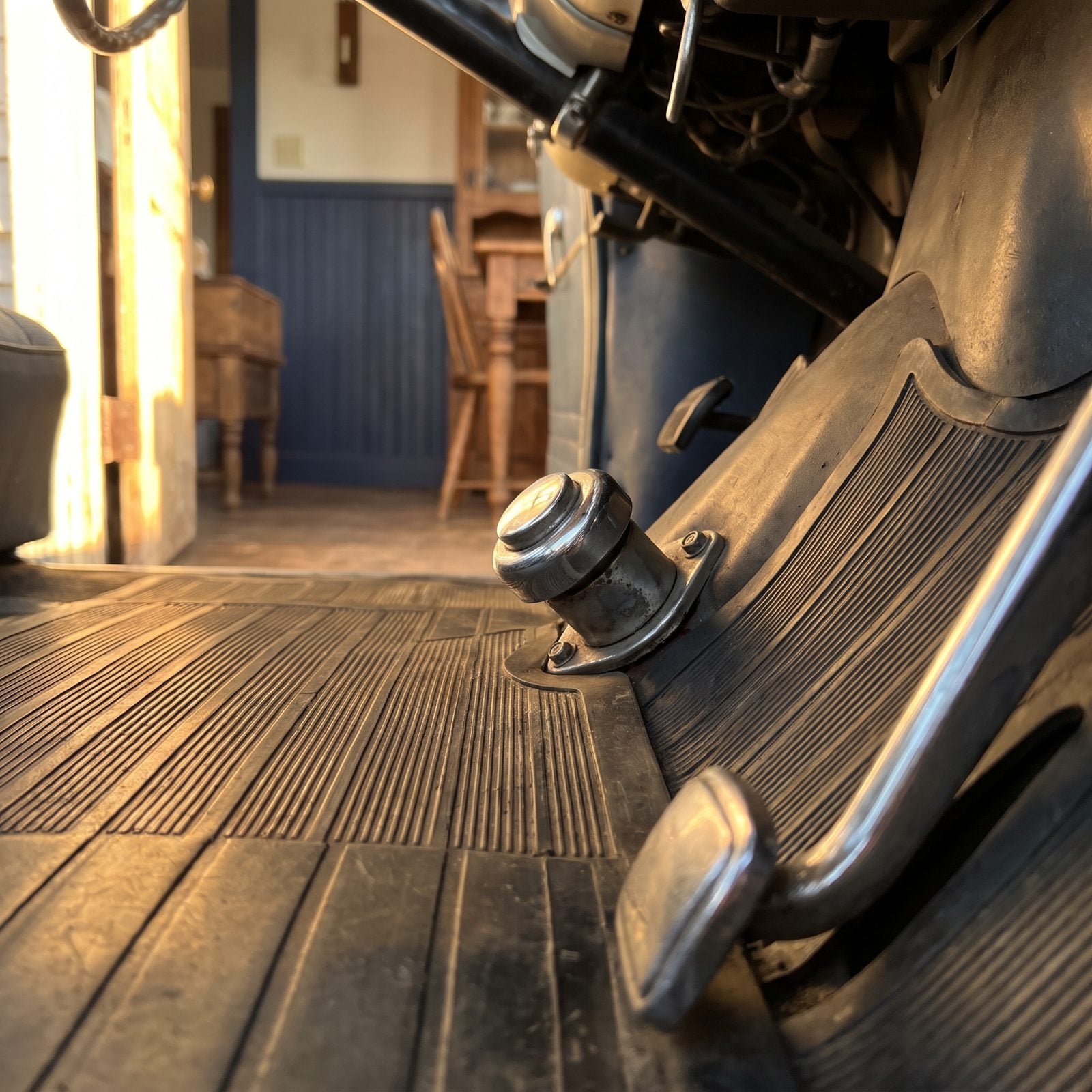
A chrome button on the floor, up near the firewall by your left foot. Tap it with your toe and the high beams dropped. Both hands stayed on the wheel the entire time, which is exactly the part everyone forgets.
Nobody misses hunting for it in the dark with a cold boot. But the logic was sound. Dimming for oncoming traffic is a foot’s job, same as braking. Carmakers moved it to a stalk, then automated it entirely, and the floor switch quietly left the building sometime in the 1980s. Nobody held a service.
32. Hand-Operated Cowl and Kick-Panel Air Vents
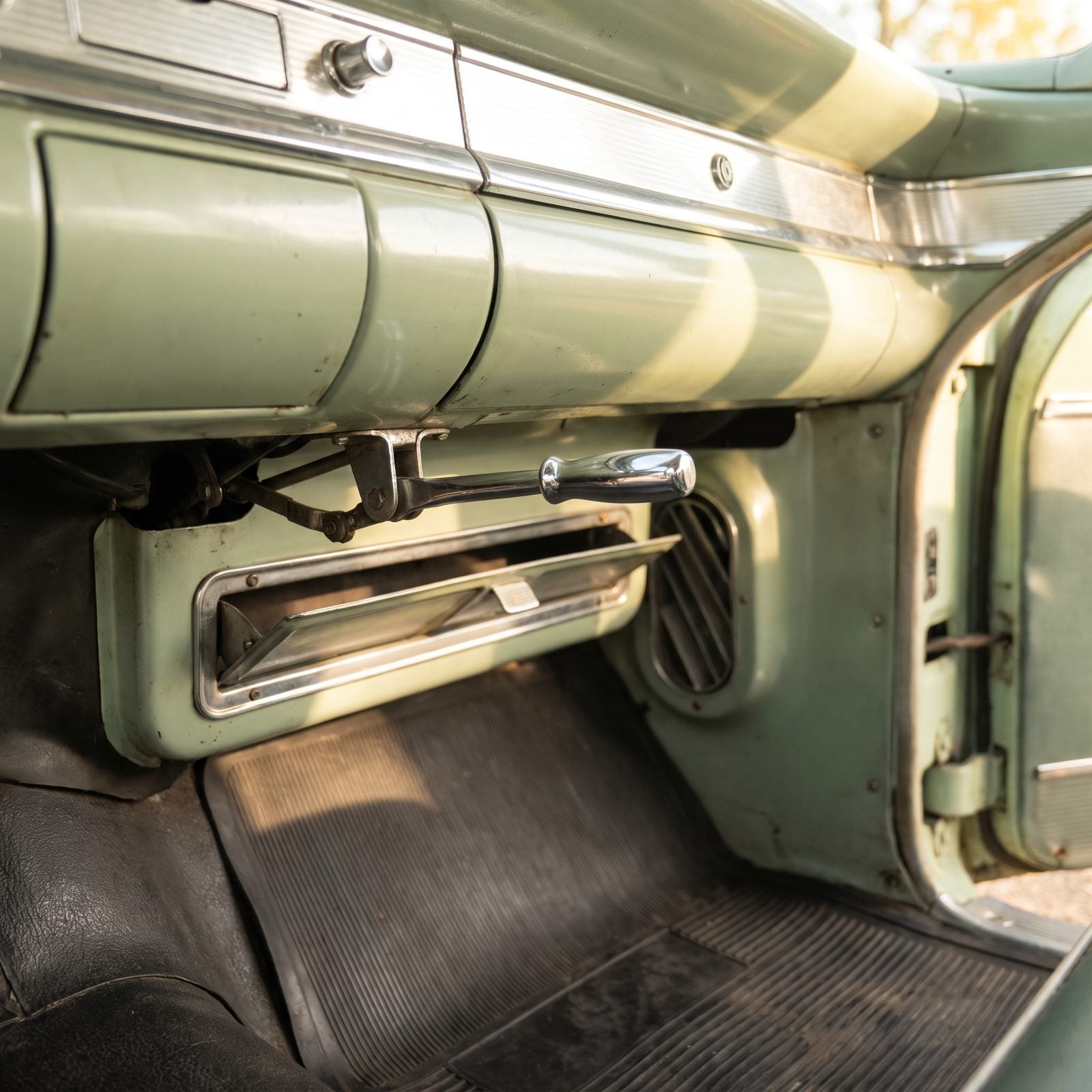
Before air conditioning was standard, cars breathed through flaps you worked by hand. Pull a lever and a vent in the cowl, down by the base of the windshield, scooped outside air straight into the cabin. Kick-panel vents by your ankles did the same for your feet.
Free cooling at speed, and no compressor robbing horsepower. The catch? Rain and road dust came in with the breeze. Modern cabins are sealed climate boxes now, which is nicer most days. But on a back road in October, a cowl vent full of cold pine air beats any recirculating fan ever built.
31. Pillarless Hardtop Rooflines
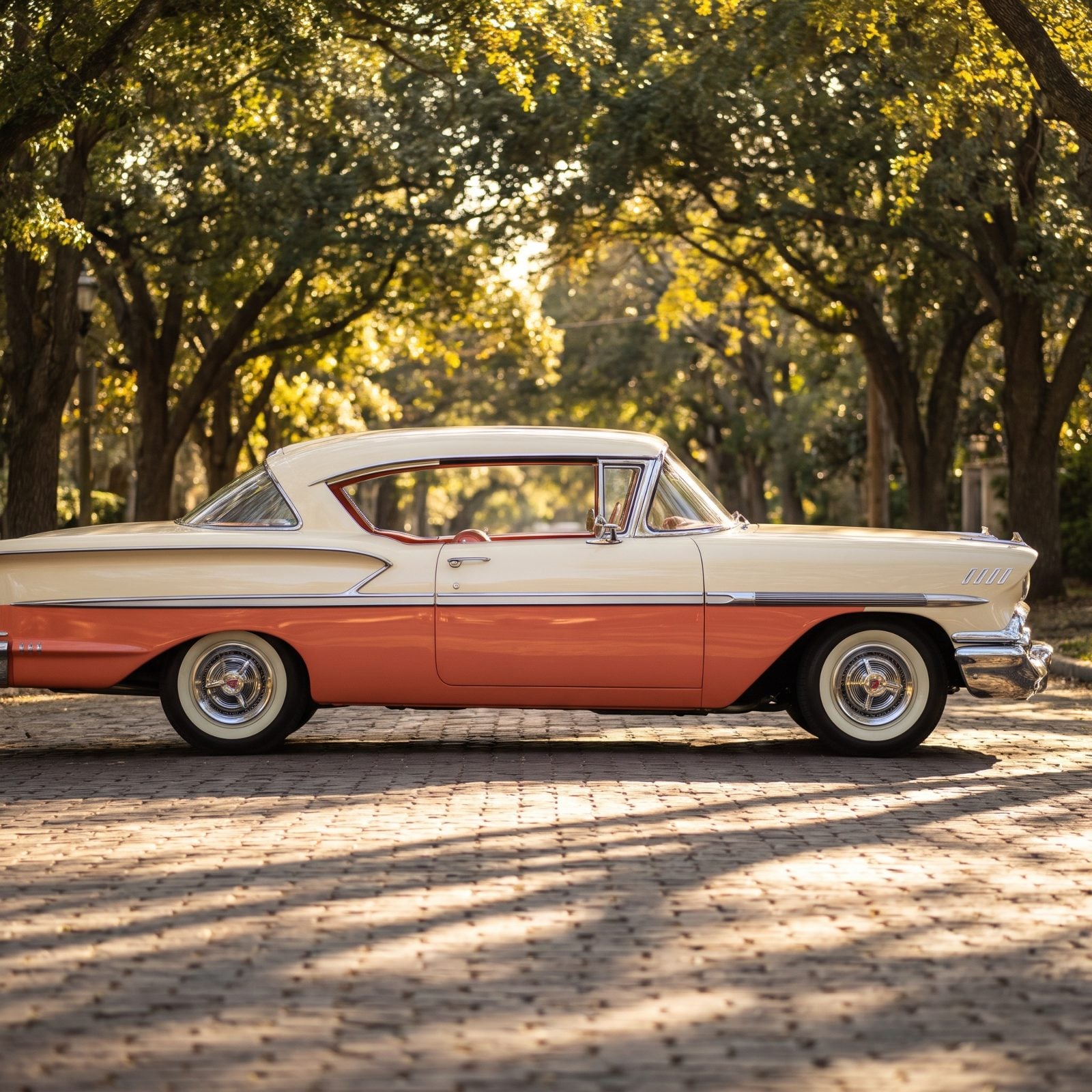
Roll both side windows down on a hardtop and the entire side of the car opened up. No B-pillar, no frame around the glass, just a long clean gap of air running from the front edge of the door to the back of the rear window. It looked like a convertible with the top up.
Most elegant roofline ever drawn, and crash standards killed it dead. Roll a car with no center pillar and the roof has nothing holding it up. Roof-crush rules in the 1970s turned the true pillarless hardtop into a liability, and that was that.
Nothing on a modern lot looks as open and light as a hardtop with all four windows down.
30. Chrome Push-Button Door Handles
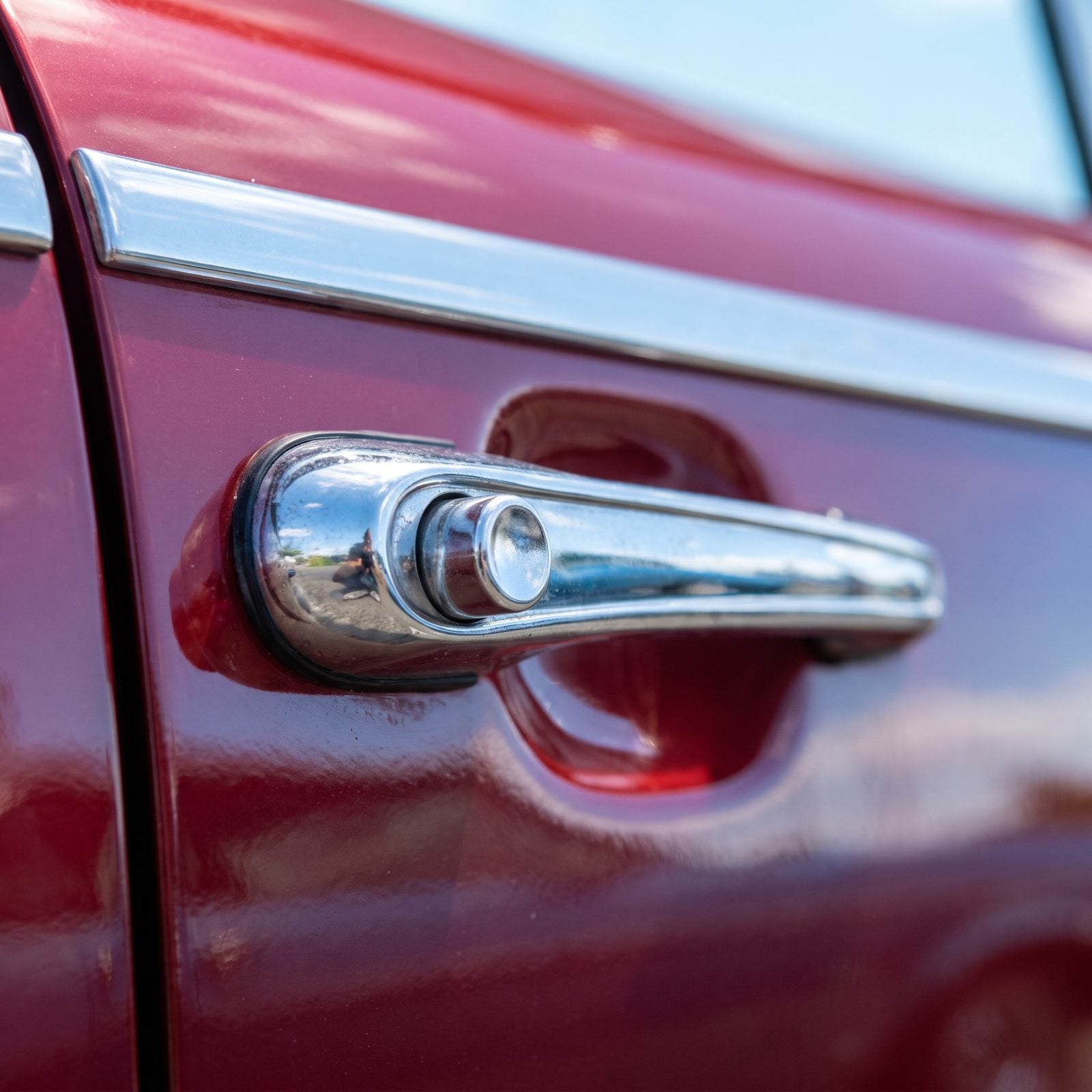
Thumb the button, lift the handle, open the door. The chrome push-button handle had a satisfying mechanical click to it — a bright jewel of metal that caught the light against the paint.
Modern handles hide, pull flush, or disappear into the body for aerodynamics. Some electronic ones don’t even work when the battery dies. The old button never had a bad day. It wasn’t trying to shave a fraction off the drag coefficient. It just opened the door, every single time, for forty years.
29. Two-Tone Paint Divided by a Chrome Spear
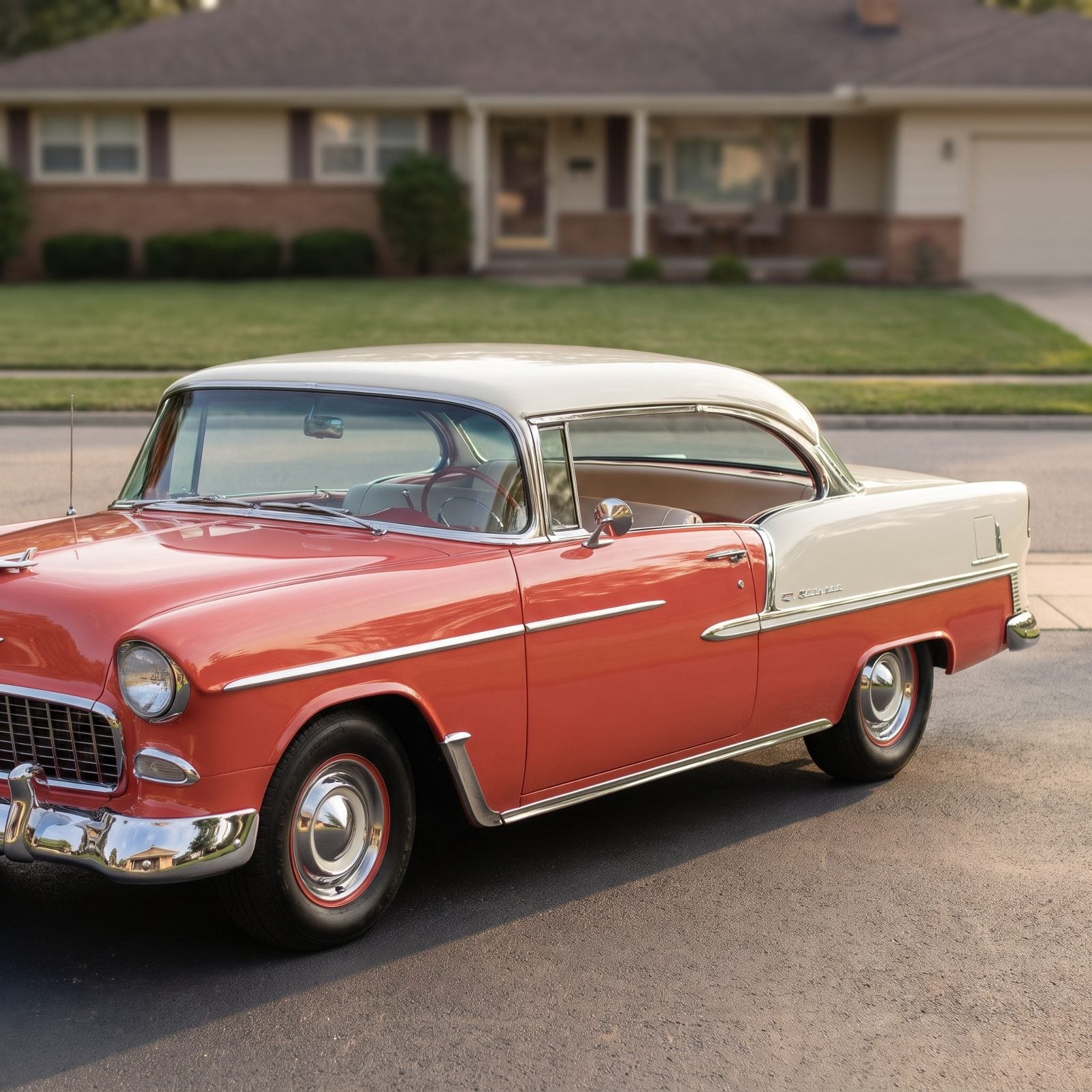
Two colors on one car, split clean down the side by a bright chrome spear. Ivory over coral, white over turquoise, black over gold. That divider wasn’t just decoration — it gave the painters a crisp line to work against and hid the seam where one color met the next.
It let a buyer make the car theirs right from the factory. You picked your combination like picking a tie. Modern cars come in grayscale, mostly — silver, white, black, and the occasional brave red. A two-tone with a chrome spear says someone had fun, and meant it.
28. Sculpted Tailfins
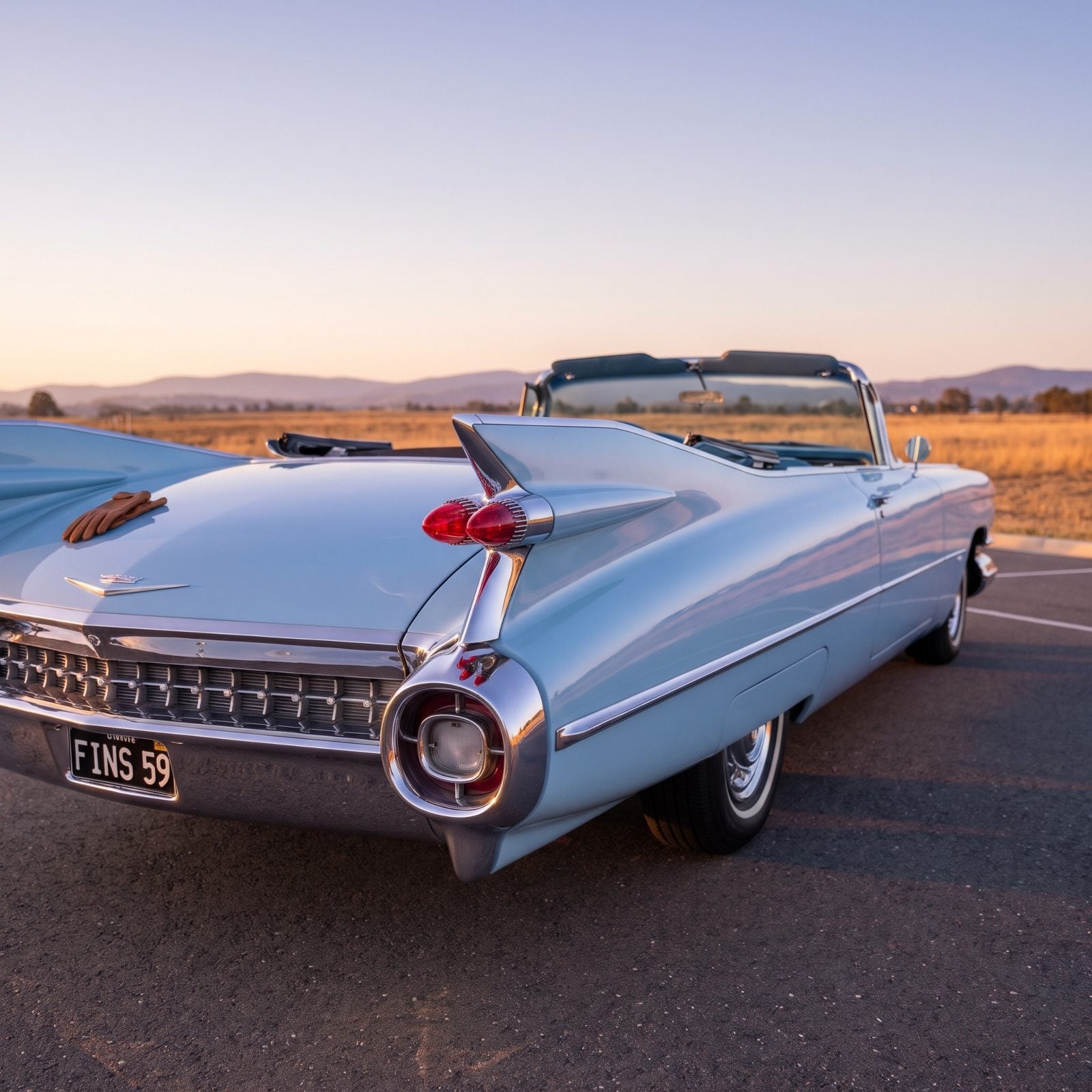
The fin served almost no purpose, and that’s exactly why we love it. A soaring blade of steel off the back fender, capped with bullet taillights, pointing at the jet age like the car might take off any second.
Cadillac ran the fin up to the roofline in 1959, the high-water mark of the whole idea. Then the space race got serious, tastes cooled, and by the mid-1960s the fins shrank and vanished. Aerodynamics never asked for them. They were pure optimism pressed into metal. Nothing on the road today has the nerve to be that frivolous, and we’re poorer for it.
27. Real Hood Ornaments
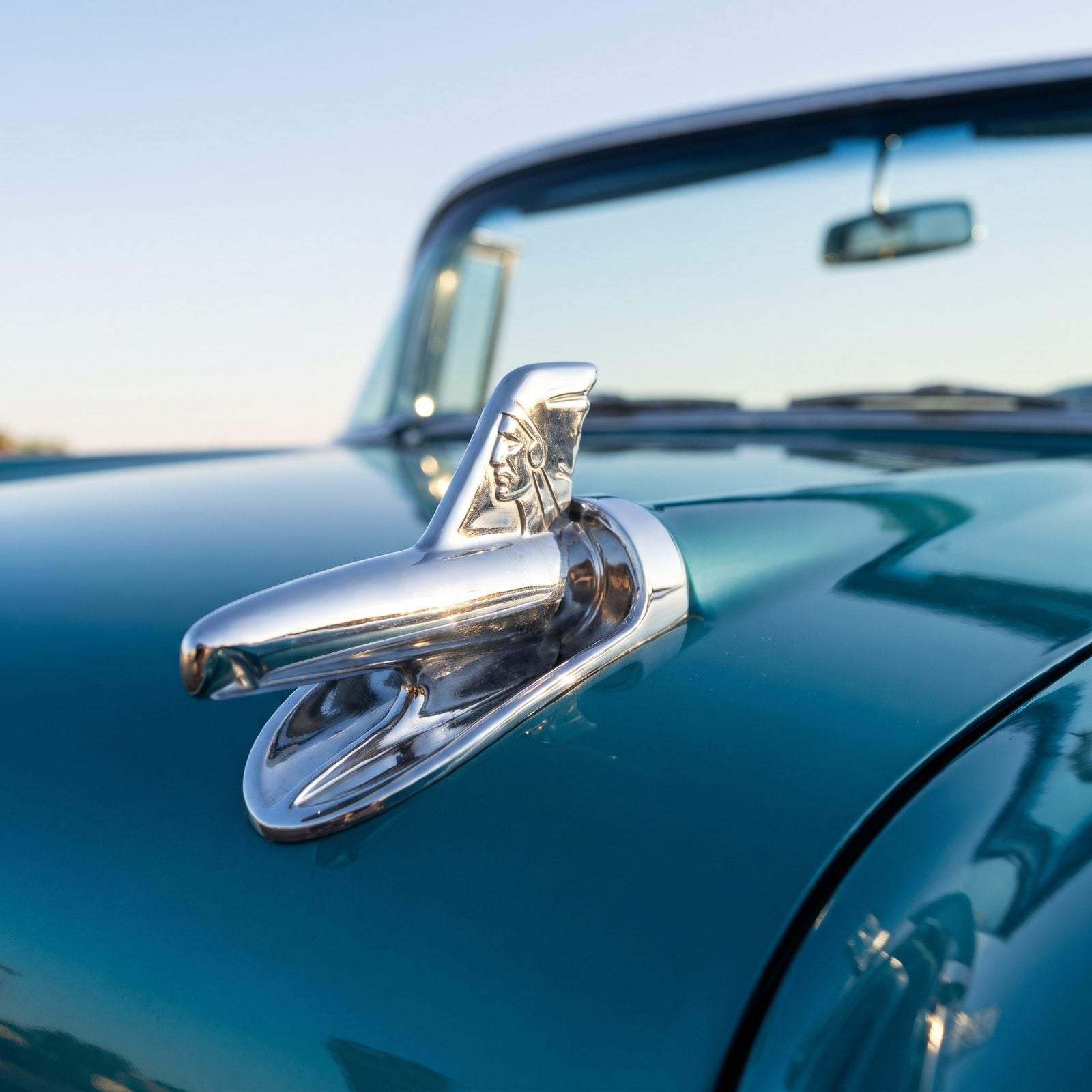
A sculpture on the nose. Jets, greyhounds, goddesses, rockets. The hood ornament sat up front like a figurehead on a ship, a little piece of art you looked at every time you walked up to the car.
Pedestrian safety rules finished them off. A rigid chrome spear at bumper height is bad news for anyone you hit, so most markets banned the fixed kind, and spring-loaded designs followed them out the door. A few luxury brands still cling to retractable versions. But the proud, permanent ornament — the one that said this machine is somebody’s pride — you only find at the swap meet now. Go look at one. They don’t make that kind of confidence anymore.
26. Wide Whitewall Tires
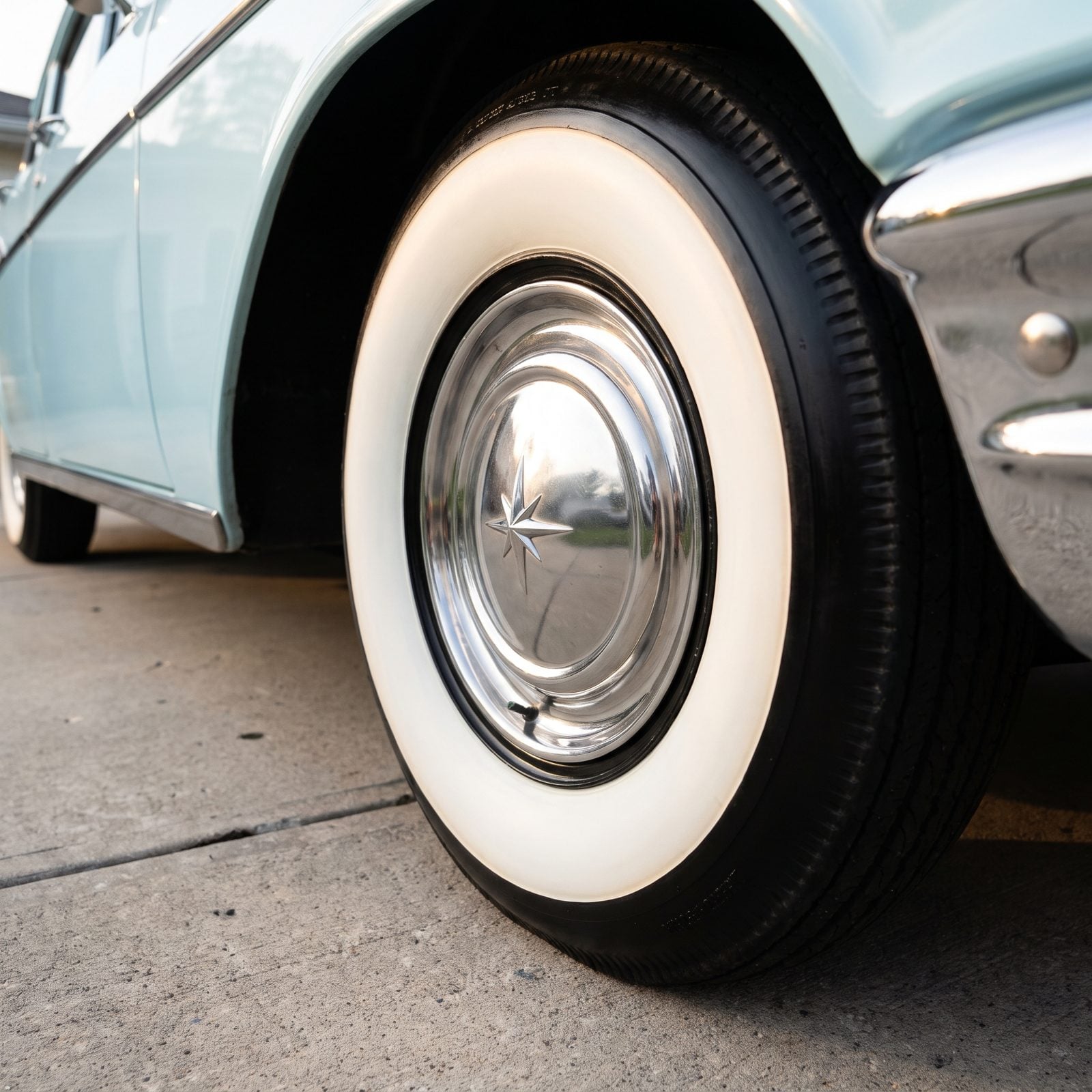
Four inches of white rubber used to say more about a man than his suit did. The wide whitewall was the default dress code of the 1950s, and keeping it clean was a Saturday ritual of a stiff brush and a lot of elbow grease.
Then the bands got skinnier through the ’60s, and by the oil-crisis ’70s they’d shrunk to a pinstripe or vanished entirely. Blame two things. Taller wheels with lower-profile tires left less sidewall to paint, and whitewall rubber was softer, scuffed easily, and nobody wanted a second job scrubbing it every weekend.
25. Rear Fender Skirts
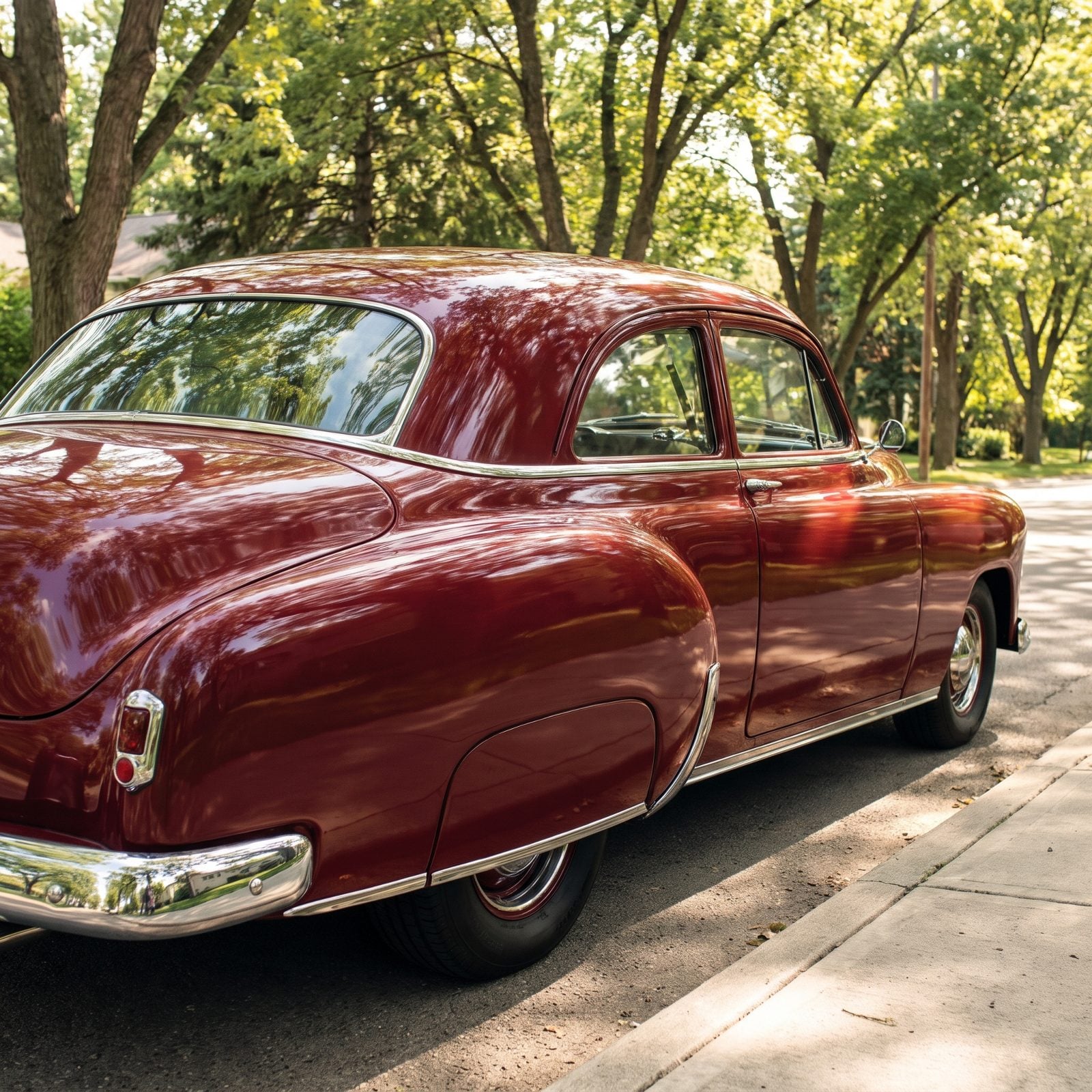
Cover the rear wheel and a car instantly looks longer, lower, and more expensive. That was the whole trick. Fender skirts smoothed the back half of a car into one continuous line, and the eye reads continuous lines as luxury.
They weren’t pure vanity either. Skirts cut a little aerodynamic drag around the wheel well. But they were a nuisance at tire-change time, they trapped road salt and rust underneath, and they got in the way as wheels grew wider. Eventually aero engineers learned to manage airflow without them. Still, nothing modern replaces that clean, unbroken flank.
24. Heavy Chrome Bumpers
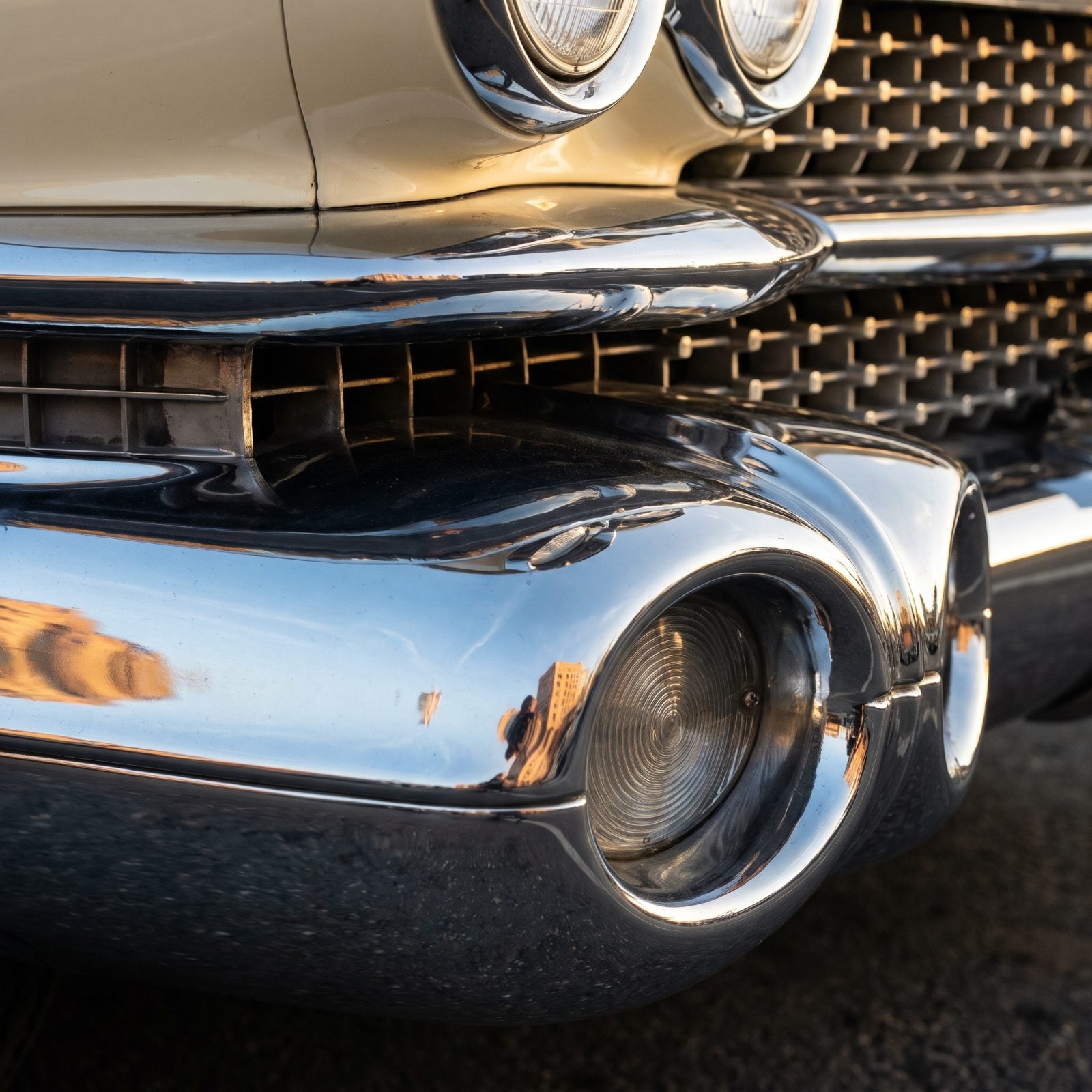
You could sit on an old bumper. People did. Real steel, chrome-plated, heavy enough to shrug off a parking-lot tap and still shine.
Modern bumpers are plastic fascias painted to match the body, hiding foam and crush structures underneath. That’s not cheapness, it’s physics. A rigid chrome beam transfers crash energy straight into the people inside, while a deforming plastic-and-foam bumper absorbs it instead. Pedestrian-impact rules sealed the deal. The old chrome looked indestructible and partly was. The new stuff saves lives by falling apart on purpose.
23. Fuel Fillers Hidden Behind Taillights or Trim Panels
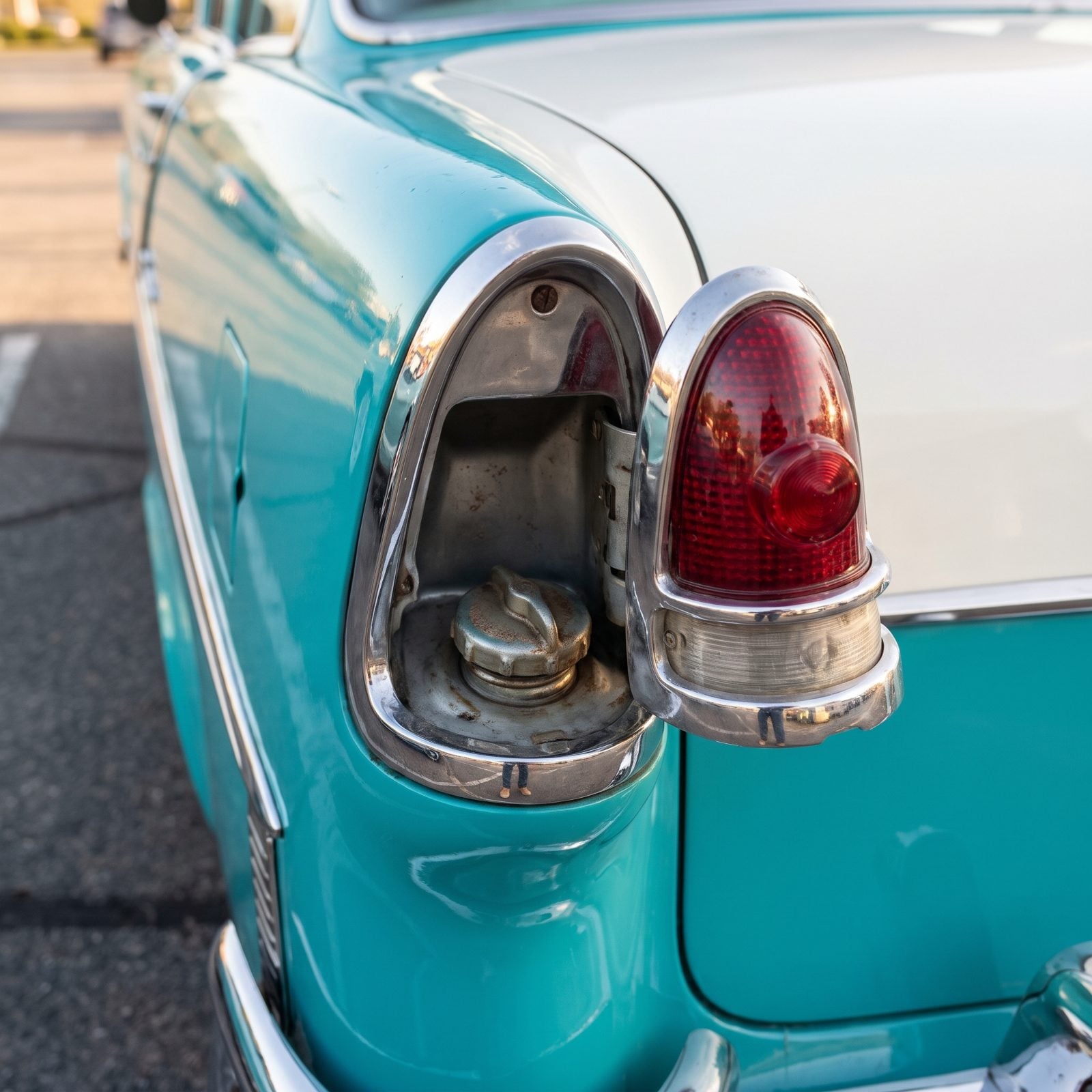
Designers of the era hated clutter on a flank of flowing sheet metal, so they hid the gas cap. Some tucked it behind a flip-down license plate. Others built it behind a swing-away taillight, so you fueled up through what looked like a brake light.
It kept the body lines pure and gave attendants a little magic trick at the full-service pump. Then fire-safety rules killed it. Putting fuel vapors next to electrical connections and a rear-impact zone turned out to be exactly as bad an idea as it sounds. Now the filler lives in a plain door on the rear quarter, and nobody wonders where it is.
22. Power-Retracting Radio Antennas
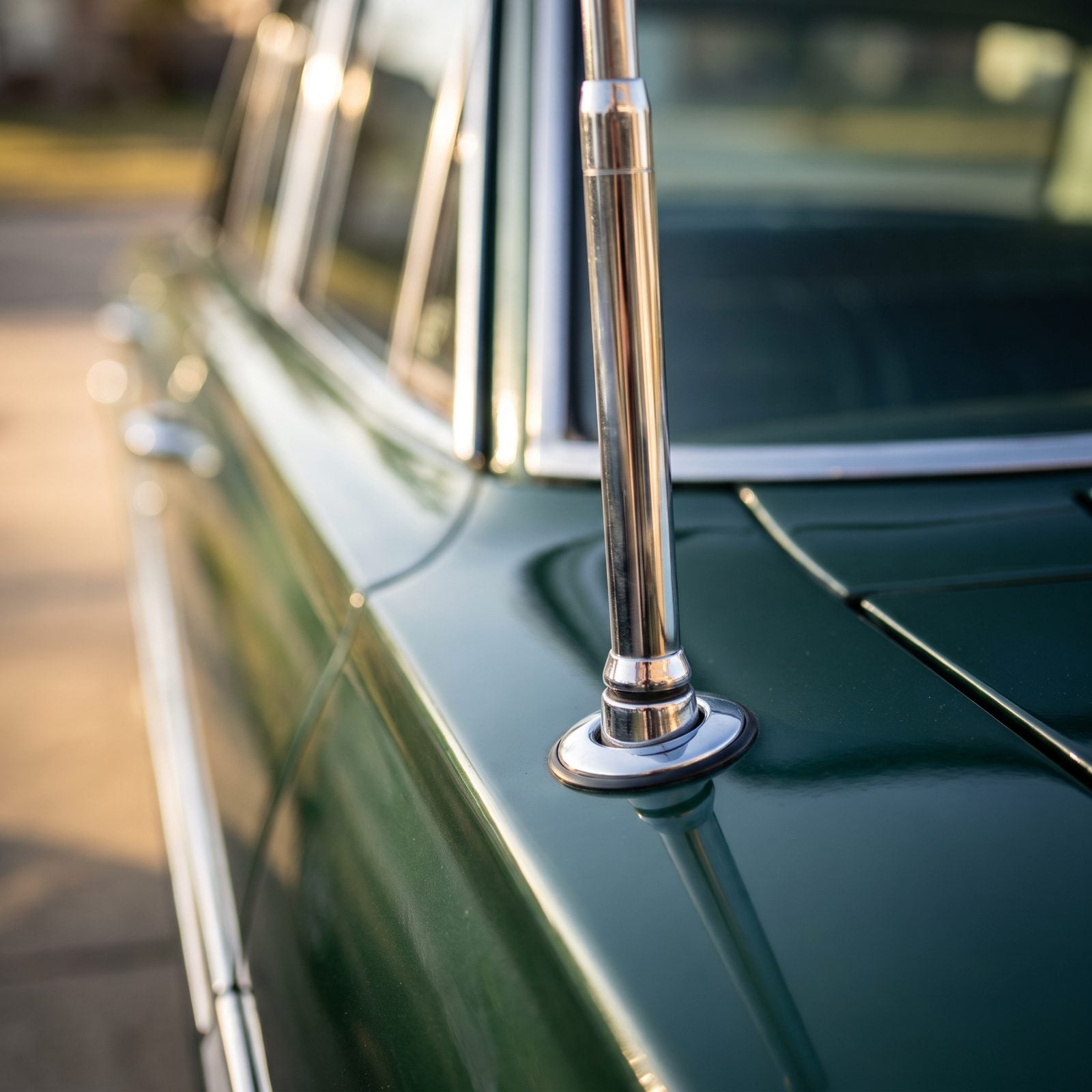
Turn the key, and the antenna rose out of the fender with a satisfying whir. Shut the car off and it slid back down to hide. For a kid in the back seat, that was the best part of the whole trip.
The power mast was an electric-motor-and-nylon-cord affair, and that was its downfall. The cord stripped, the motor seized, and the mast froze halfway up more often than owners liked. Shark-fin antennas and wires printed right into the glass do the same job with nothing to break. Convenient, sure. Also completely without ceremony.
21. Dashboard Traffic-Light Viewer Prisms
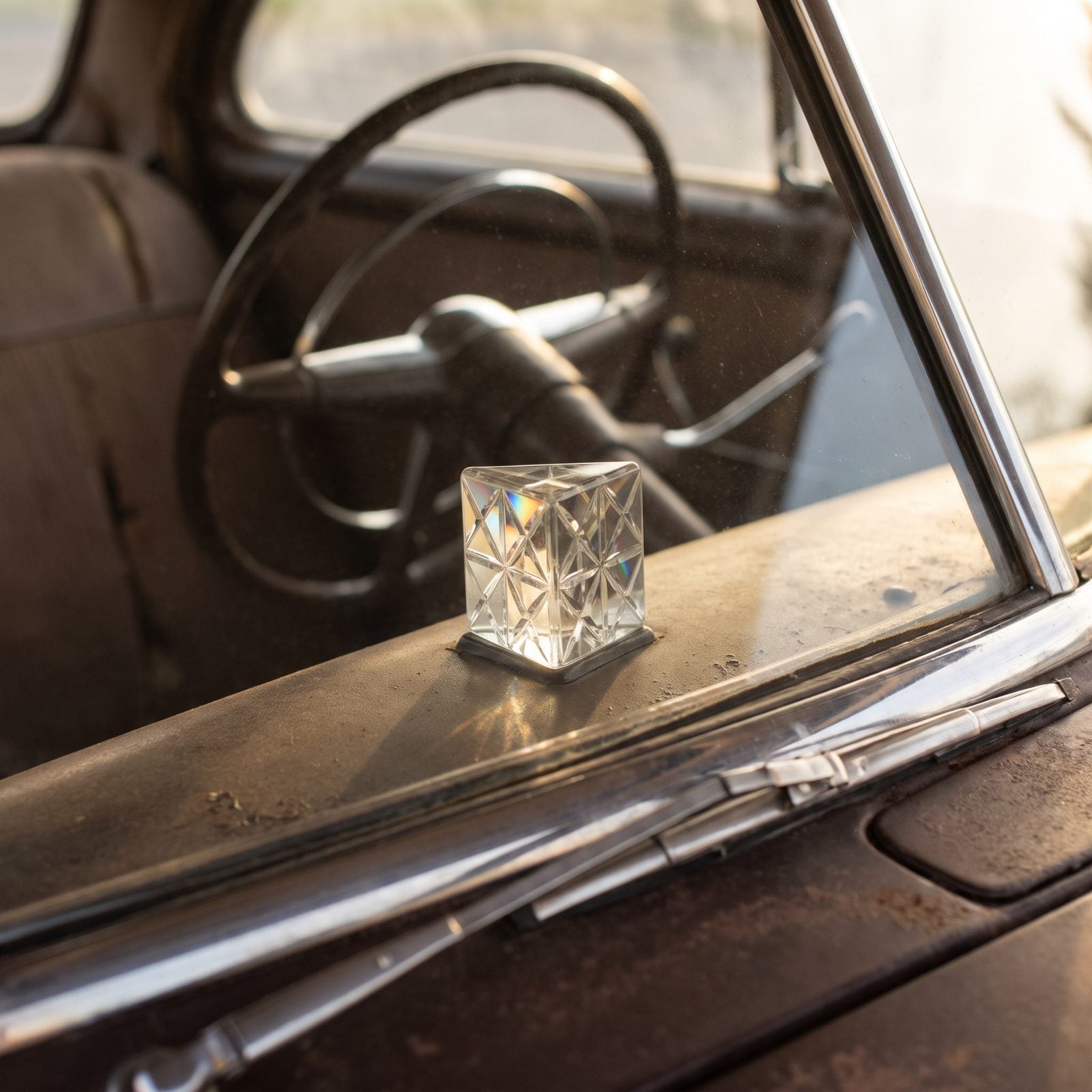
This one almost nobody remembers. Cars of the era had low rooflines, and overhead traffic signals vanished from view the moment you pulled up tight to the line. So an aftermarket cottage industry sold little prism devices that clipped to the dash and bent the light down into your sightline.
Cheap, clever, and they solved a genuine problem. Then taller glass, a better seating position, and signal placement standards made them pointless. A footnote now. But also a reminder that drivers used to rig their own fixes for things carmakers hadn’t gotten around to solving.
20. Driver-Side Spotlight and Mirror Combos
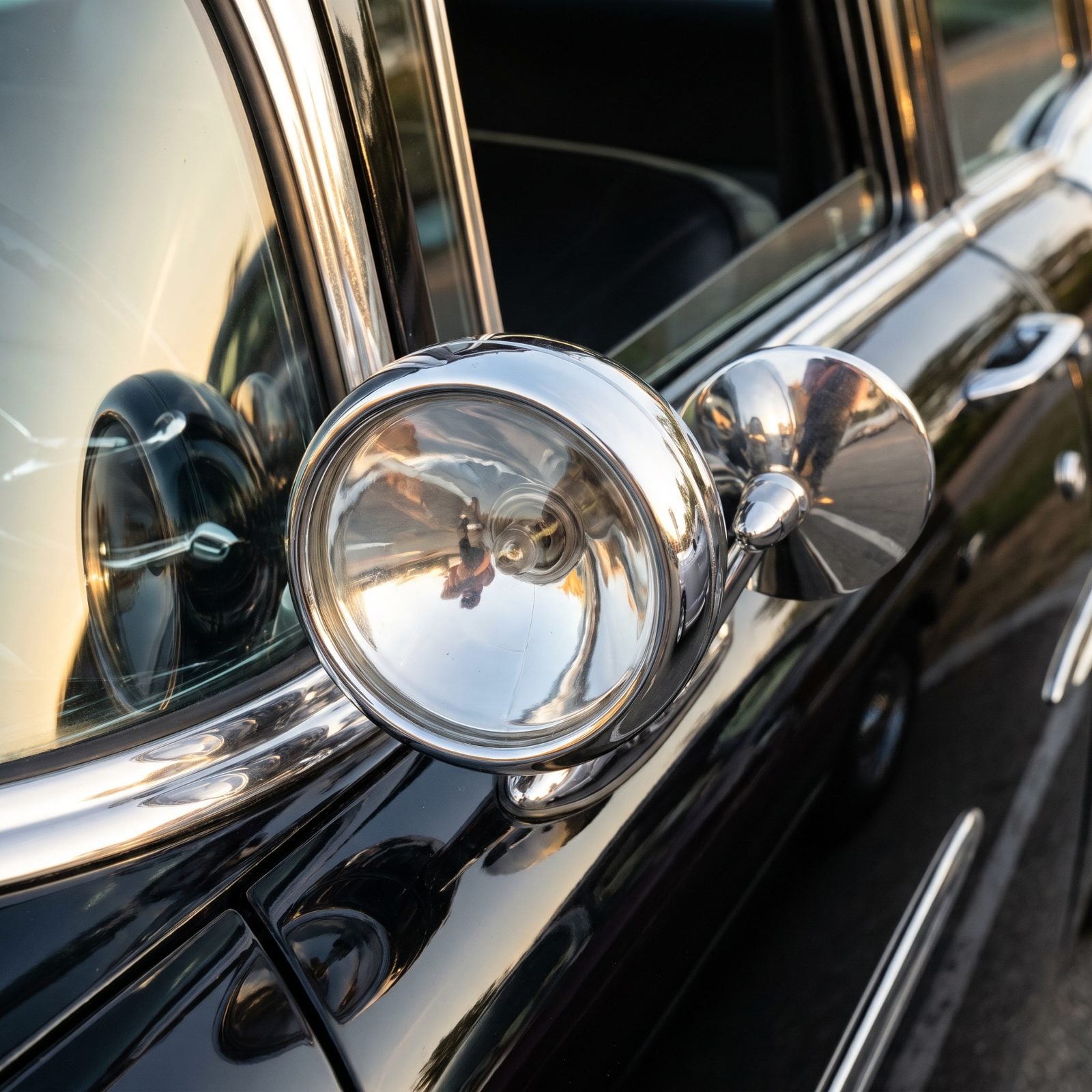
A pistol-grip handle inside the door swung a big chrome spotlight on the A-pillar, and the back of that same housing often carried a mirror. Farmers used them to find gates at night. Cops used them to light up a license plate. Everybody used them to read mailbox numbers on a dark county road.
Then sealed headlights got brighter, auxiliary lighting got regulated, and the pillar-mounted spotlight faded to a police-and-fire-truck item. See one on a civilian car today and somebody put it there on purpose, and we respect that choice completely.
19. Roof Drip Rails and Rain Gutters
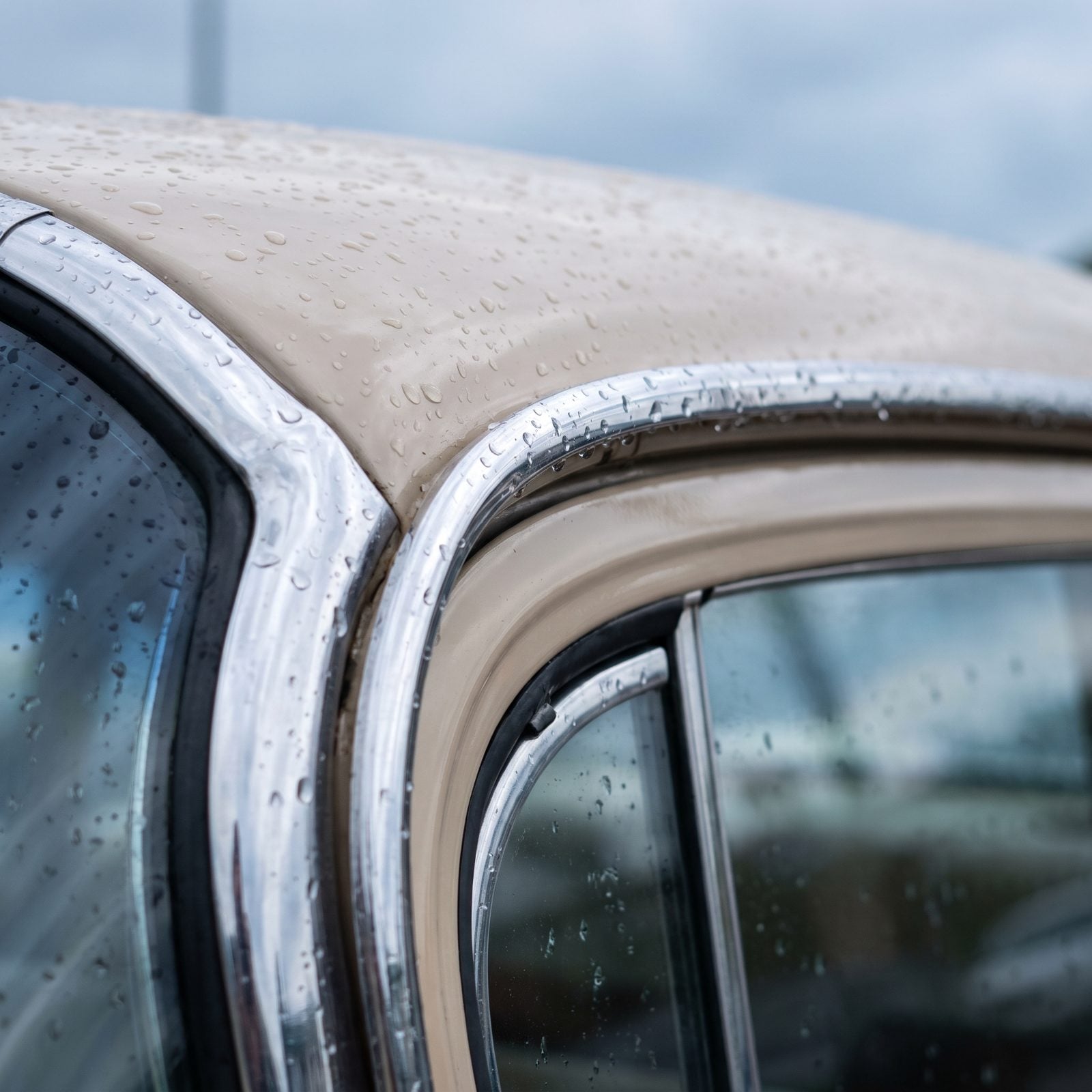
That little lip running along the edge of the roof wasn’t trim. It was a rain gutter, and it did exactly what a gutter does: funneled water off the roof so it didn’t pour down your neck when you opened the door in a storm.
It also gave roof racks and canoe mounts something honest to clamp onto. Then aerodynamics killed it. A raised rail creates wind noise and drag, so designers flush-mounted the roof and moved water management into concealed channels. Now opening the door in the rain gets you a wet shoulder, and roof racks need expensive proprietary attachment points. Progress, apparently.
18. Horizontal Ribbon Speedometers
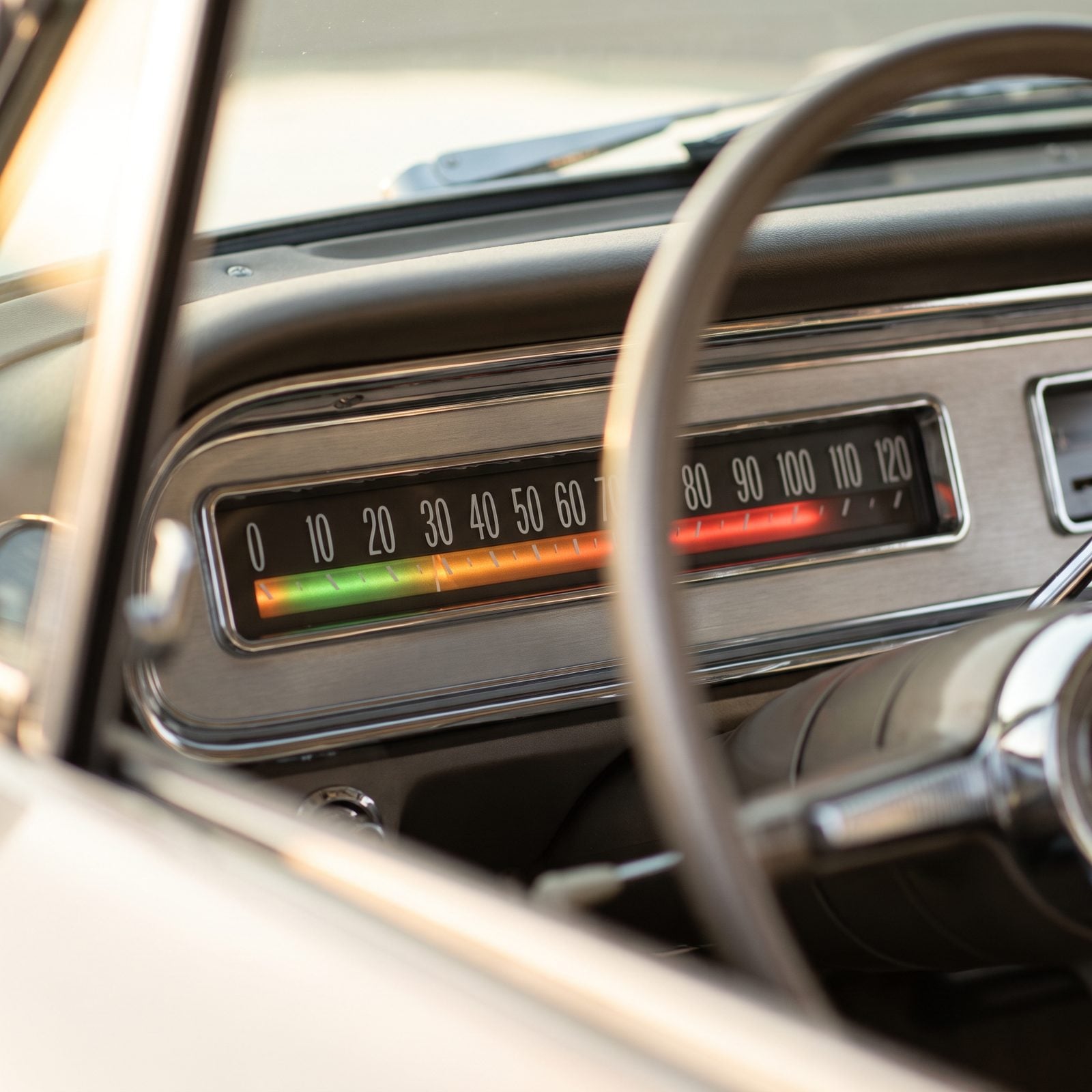
Instead of a round dial with a swinging needle, some cars ran a horizontal strip, a colored band that ran the full width of the dash, from 0 all the way to 120. Green at the bottom, often shading to orange and red up high.
Easy to read at a glance, and it gave the dashboard a space-age width that round gauges couldn’t touch. The mechanism was fussy though, and the color-coding nagged at you to slow down. Round dials won out for durability and clarity, and then digital displays made the whole debate moot. The ribbon remains one of the great lost dashboard shapes.
17. Electroluminescent Instrument Panels
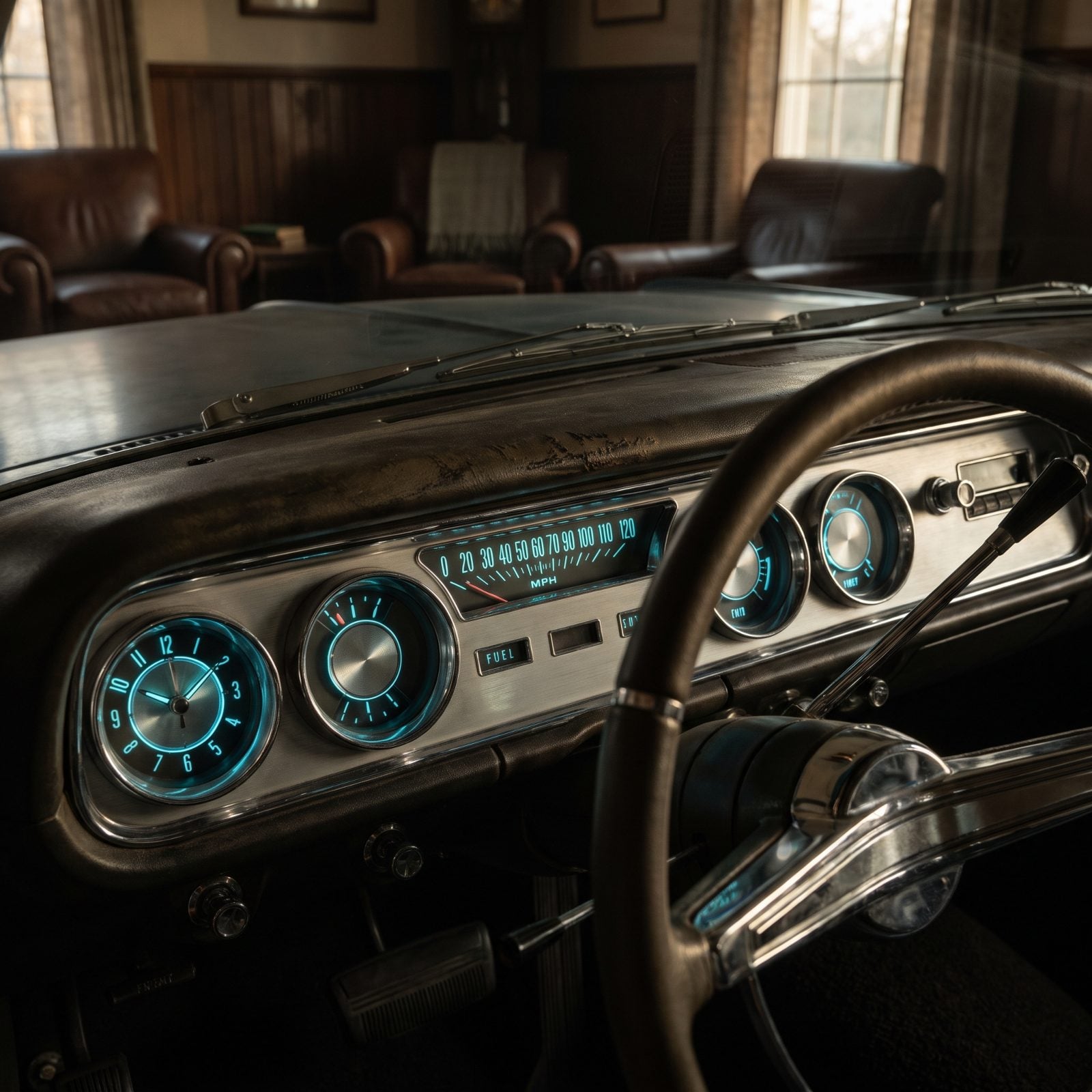
A handful of early-’60s cars lit their gauges with electroluminescent panels, a thin layer of phosphor that glowed evenly across the whole face when you ran current through it. No bulbs, no hot spots, no shadows. Just a soft, uniform green-blue glow that looked like the future had arrived early.
It was expensive, the phosphor dimmed over years of use, and cheaper backlighting did close enough. Funny thing: the technology came roaring back decades later in aftermarket gauges and watch dials. A good idea that showed up too early, cost too much, and quietly bowed out before its time.
16. Adjustable Speed-Warning Needles and Buzzers
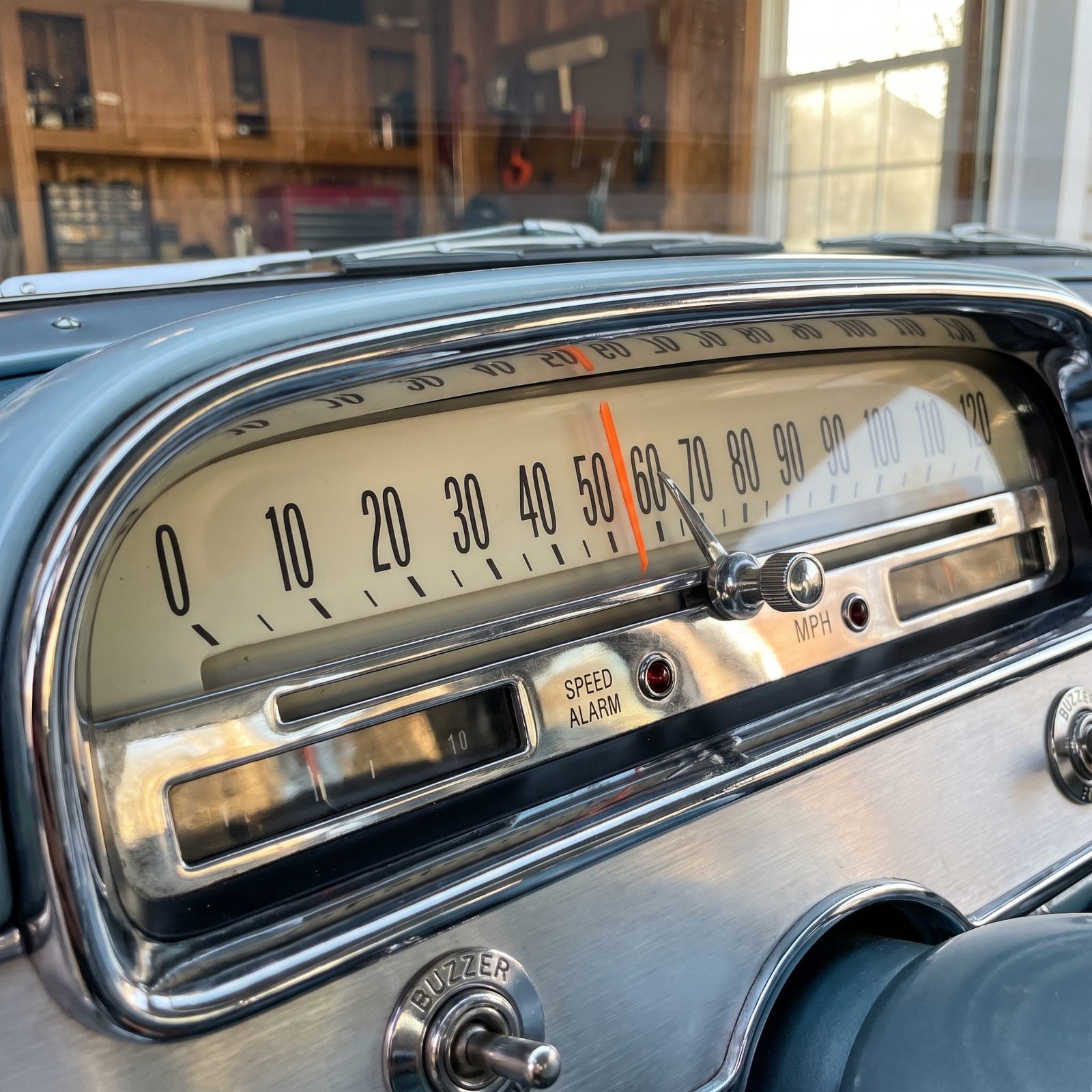
Before lane-departure chimes and driver-assist nags, a few cars let you set your own limit. You’d dial a little pointer to, say, 65, and when the needle crept past it a buzzer under the dash let you know. No GPS, no subscription, just a mechanical conscience you could silence by lifting your foot.
Chrysler offered versions of this, and so did a handful of others. The genius? You picked the number — not a satellite, not a committee in some conference room.
15. Fender-Top Turn-Signal Indicators
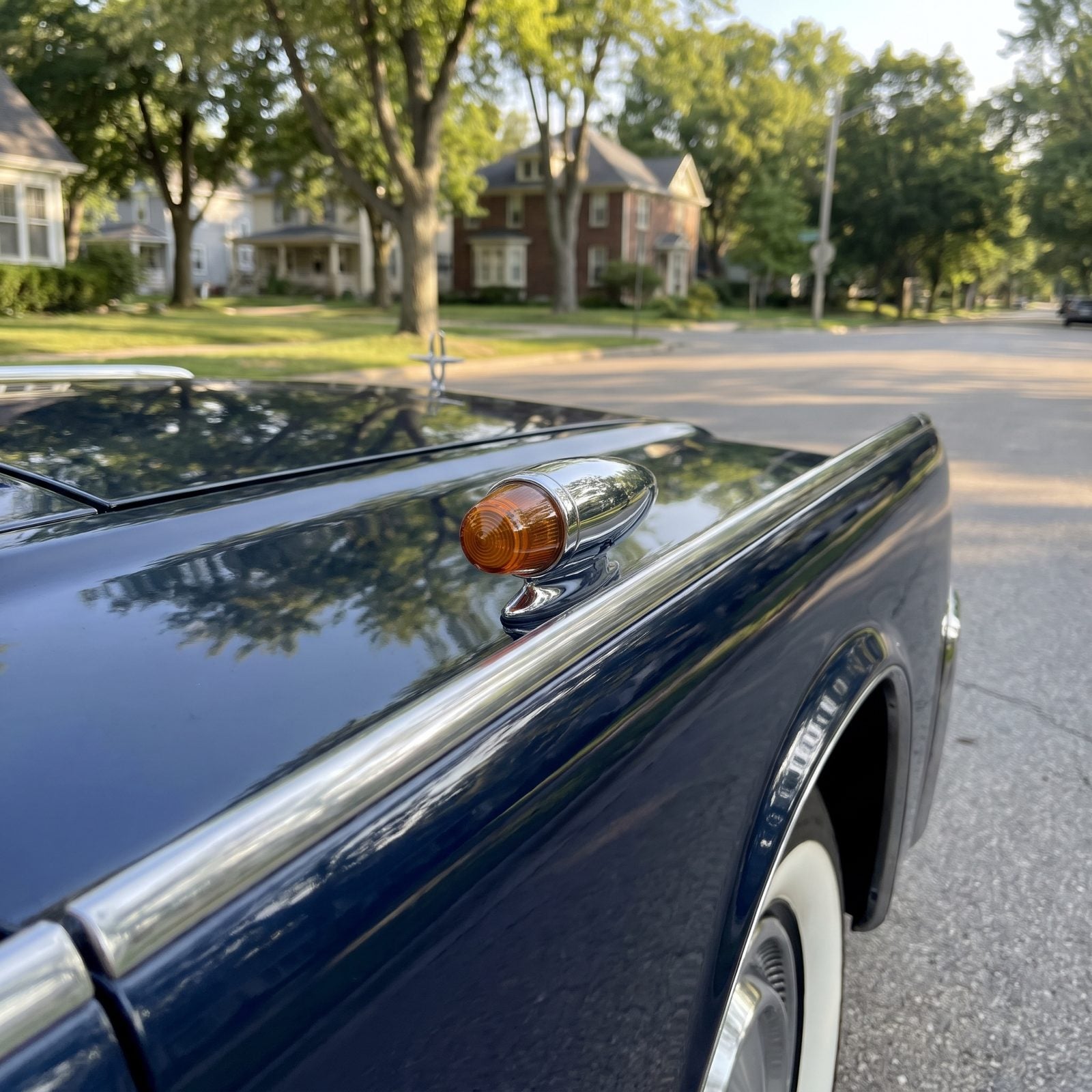
Little chrome nubs on the fender tips, right where your eyes already go when you’re placing a wide car. Flick the stalk and they’d light up or flip up, telling you the signal was live without dropping your gaze to the dash.
Luxury makes loved them because they doubled as fender markers, handy when you’re parking two tons of Lincoln between a curb and somebody’s Buick. They vanished as cars got narrower and mirrors got better. A shame. There was something honest about a signal you could watch working from the driver’s seat.
14. Vacuum-Operated Hidden Headlights
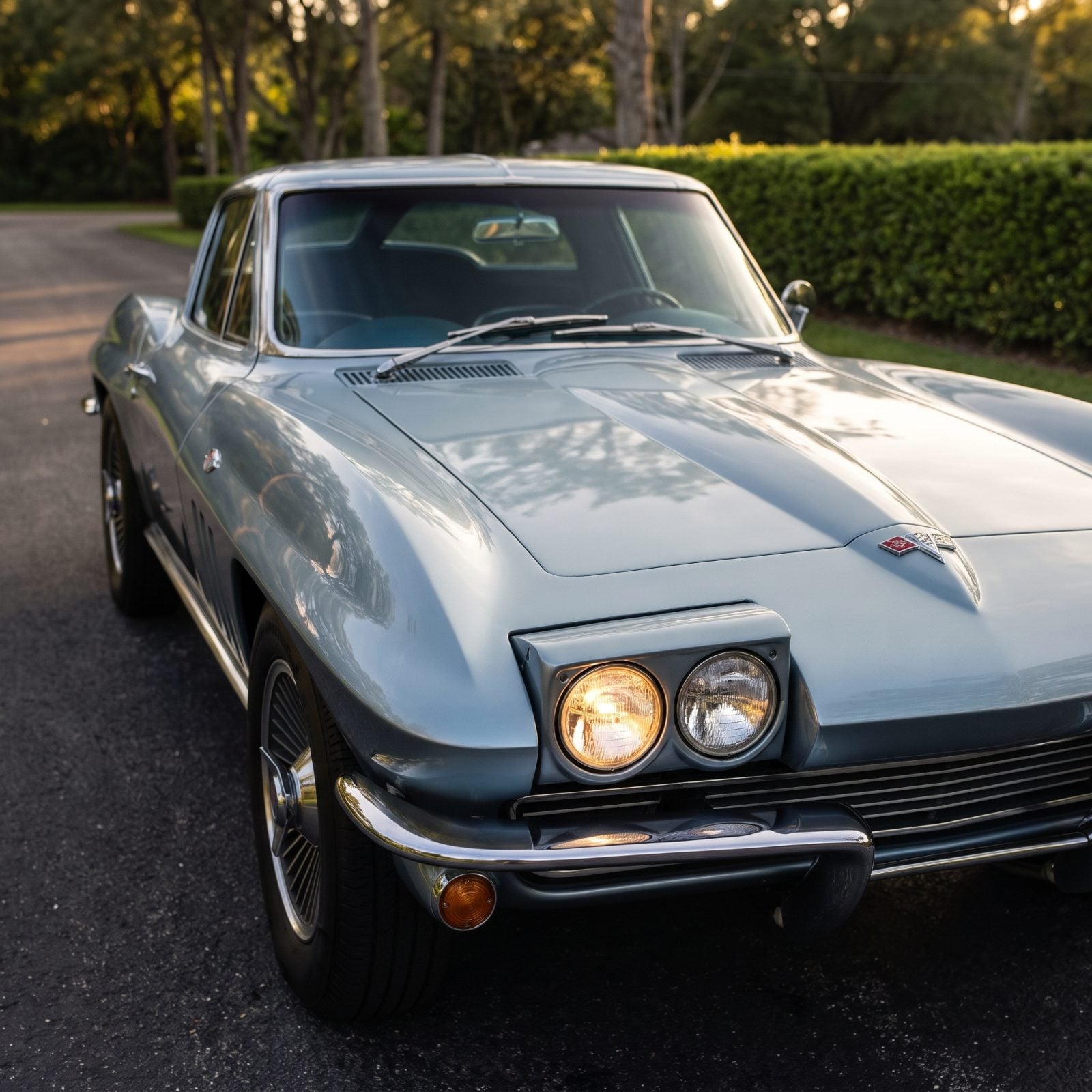
Nothing said occasion like headlights that woke up. You’d pull the knob, engine vacuum would swing the covers open, and the lamps rolled up into place with a slow, deliberate motion — like the car opening its eyes.
The Corvette Sting Ray made the trick famous. Downside? Vacuum systems leaked, and a tired one would leave you with one eye open and one eye winking shut at a stoplight. Pop-ups hung on into the 1990s before pedestrian-safety rules and sealed aerodynamics killed them off. Headlights today are brilliant and bored. These had drama.
13. Four Matching Round Headlights
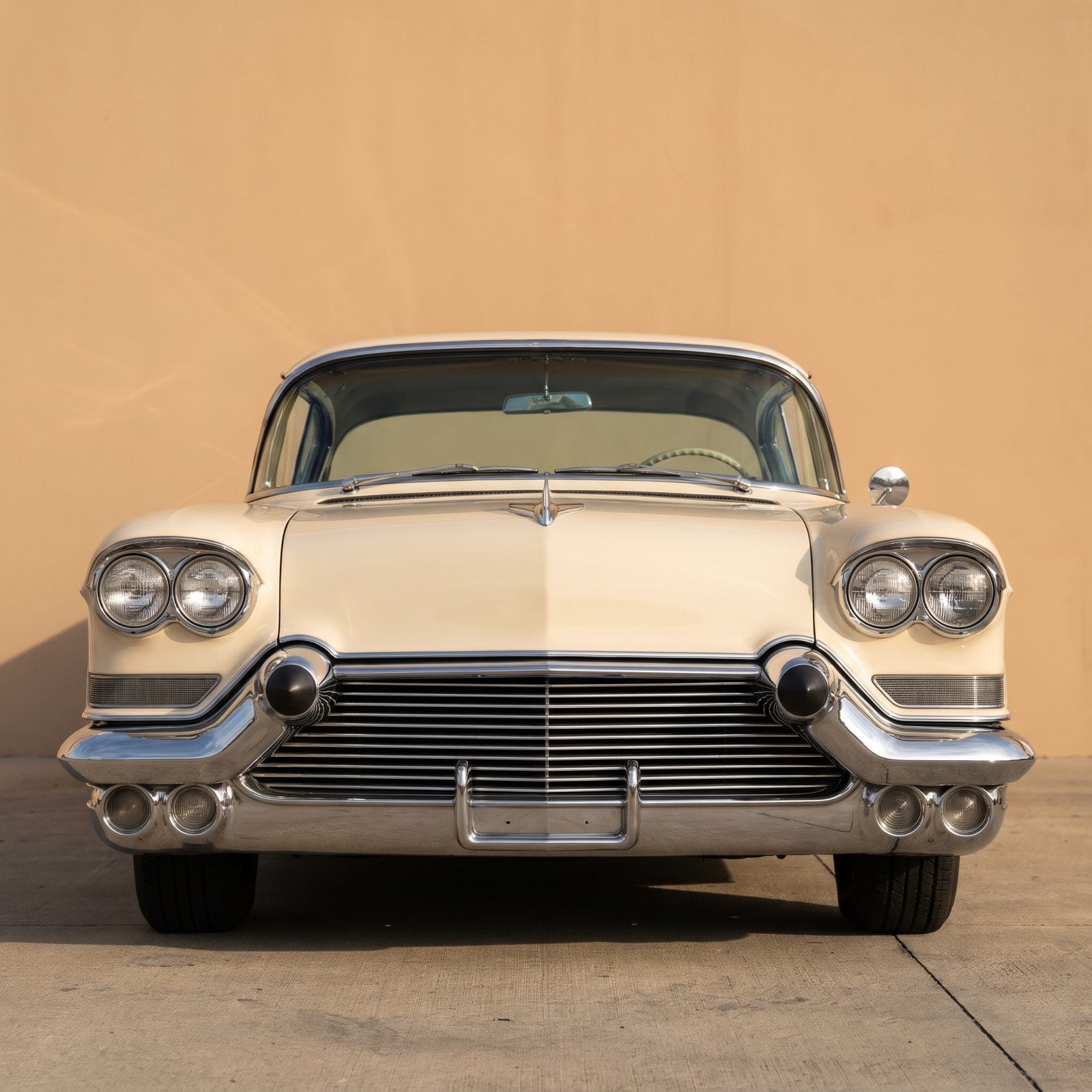
Four round sealed-beams, two per side, gave a car a face. High beams on the inside, low on the outside, all of it glowing like a pair of friendly eyes with headlamps for pupils.
Round lamps went away for a dull reason: they’re a pain to package into a sleek, aero-shaped nose. Rectangular units came next, then composite plastic clusters, then thin LED slashes. Modern lighting is sharper and reaches farther. But bolt four round lamps onto an old sedan and the whole car softens, like it’s glad to see you.
12. Push-Button Automatic Transmission Selectors
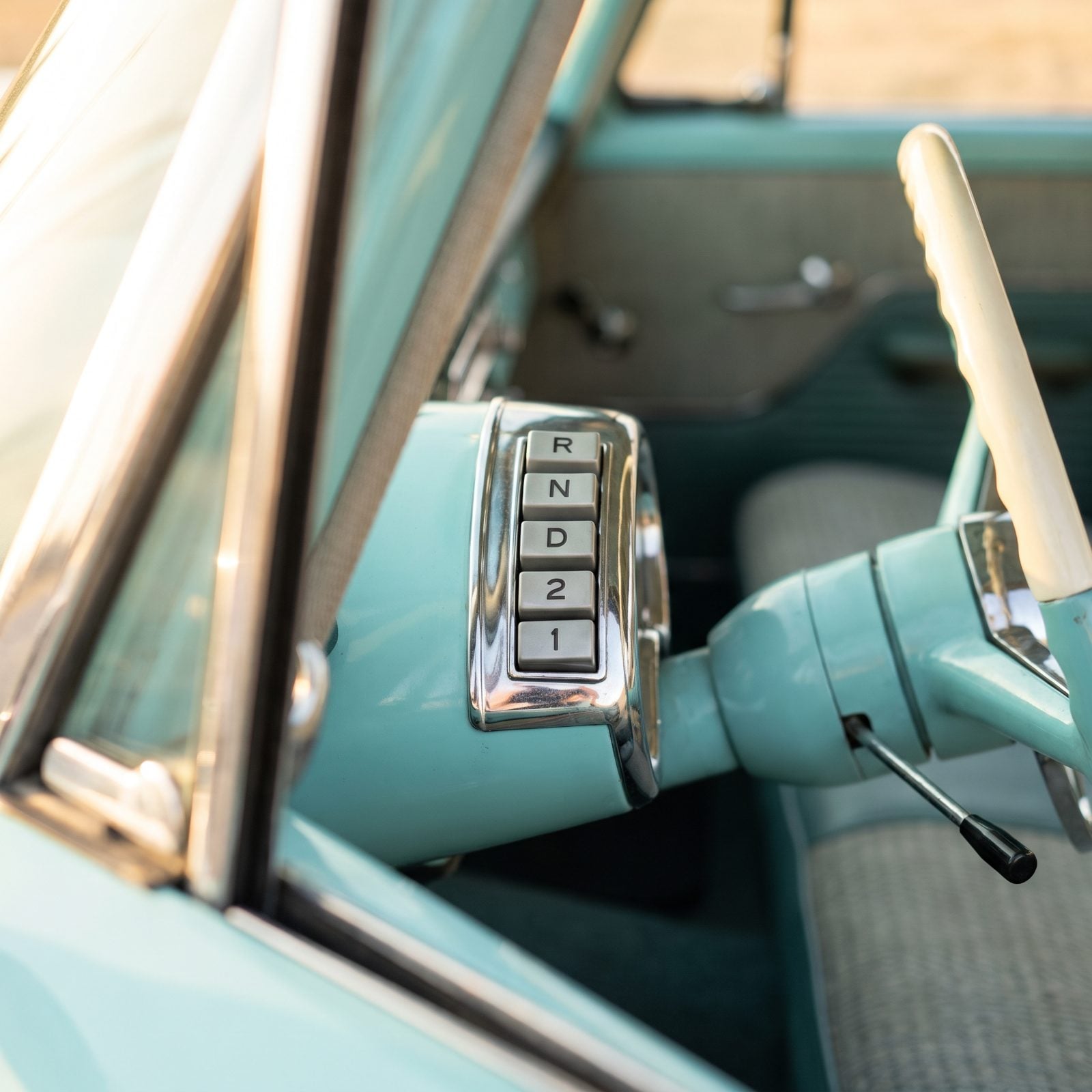
No lever, no stalk, no console shifter — just a row of chrome buttons off to the side of the dash, one press per gear. Chrysler’s TorqueFlite setup leaned hard into this in the late 1950s, and for a few years the push-button car felt like the future had arrived early.
What killed it, partly, was federal standardization that wanted shift patterns predictable across every car. Funny thing. Dial and button selectors crept back decades later on modern automatics, only now they do it with electronics instead of a clever cable. The old ones felt more like you were in on the trick.
11. Umbrella-Handle Parking Brakes
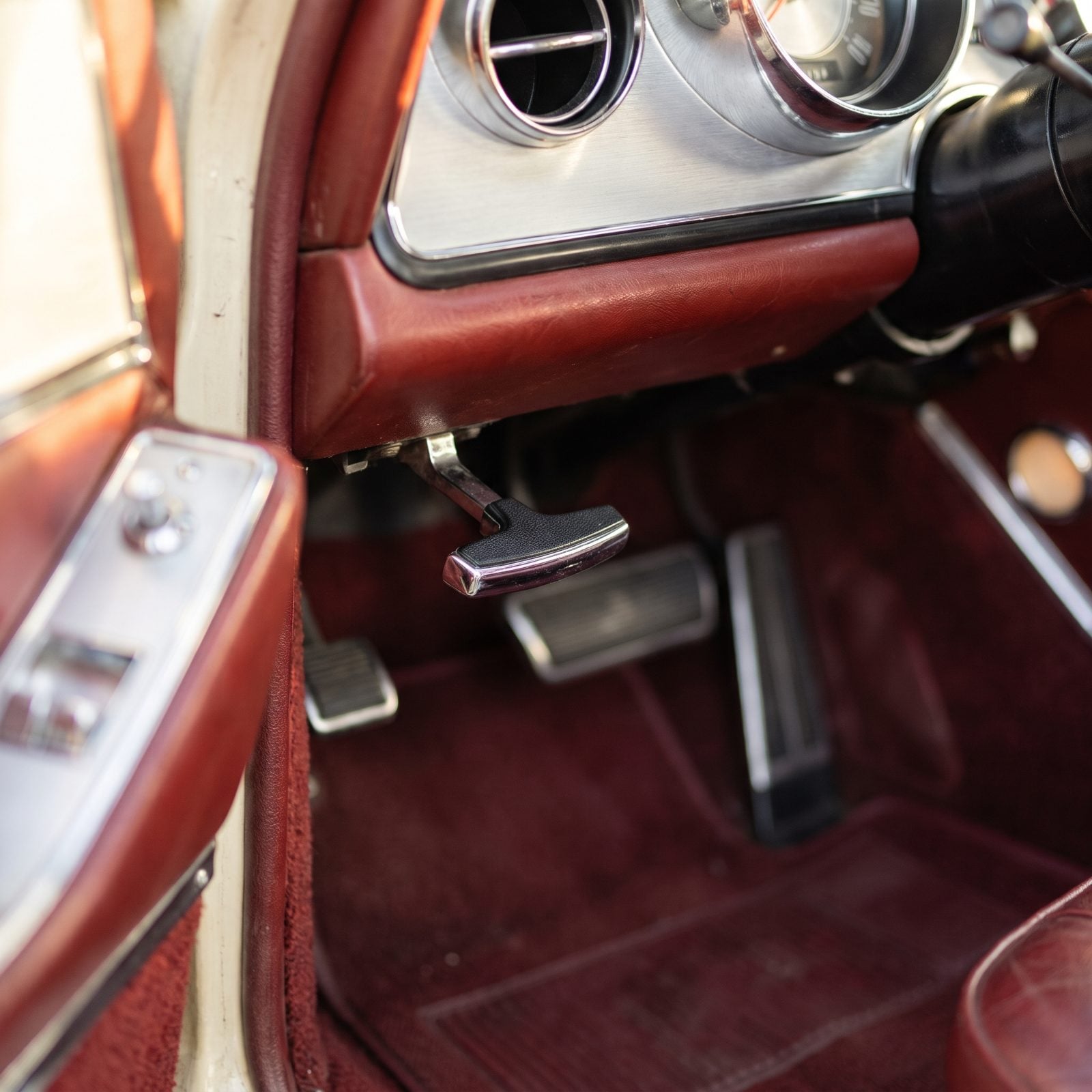
Tucked under the left side of the dash sat a chrome T-handle you pulled straight out to set the brake, then twisted or punched to release. Hence the nickname — umbrella handle.
It kept the floor and the bench seat clear, which mattered when three people rode up front. The trade-off was leverage. You had to really haul on it. Foot-operated parking brakes came next, then hand levers, and now most new cars just have an electronic button. Convenient, sure. But pulling an umbrella handle felt like you’d actually done something.
10. Color-Matched Steering Wheels
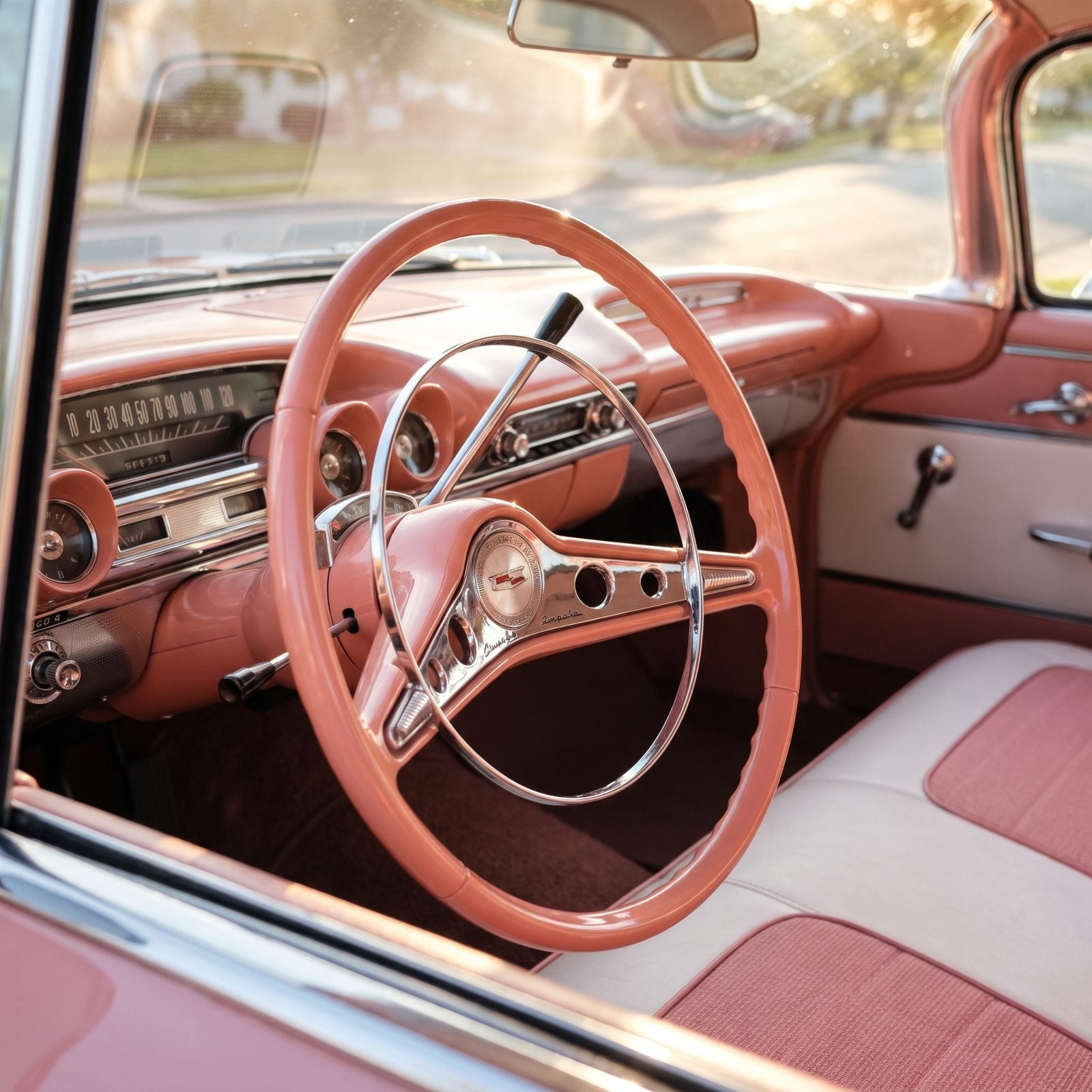
Pink interior, pink steering wheel. Turquoise dash, turquoise wheel. Carmakers once treated the wheel as part of the color story, molding it in pastels that answered the paint and the upholstery.
Thin rims, big diameters, a chrome horn ring you could honk with the heel of your hand — and then came the airbag, which turned the center of the wheel into a hard black box nobody can paint around. Now every wheel is charcoal or beige leather. The old ones made getting in feel like sitting down inside a color.
9. Swiveling Front Seats
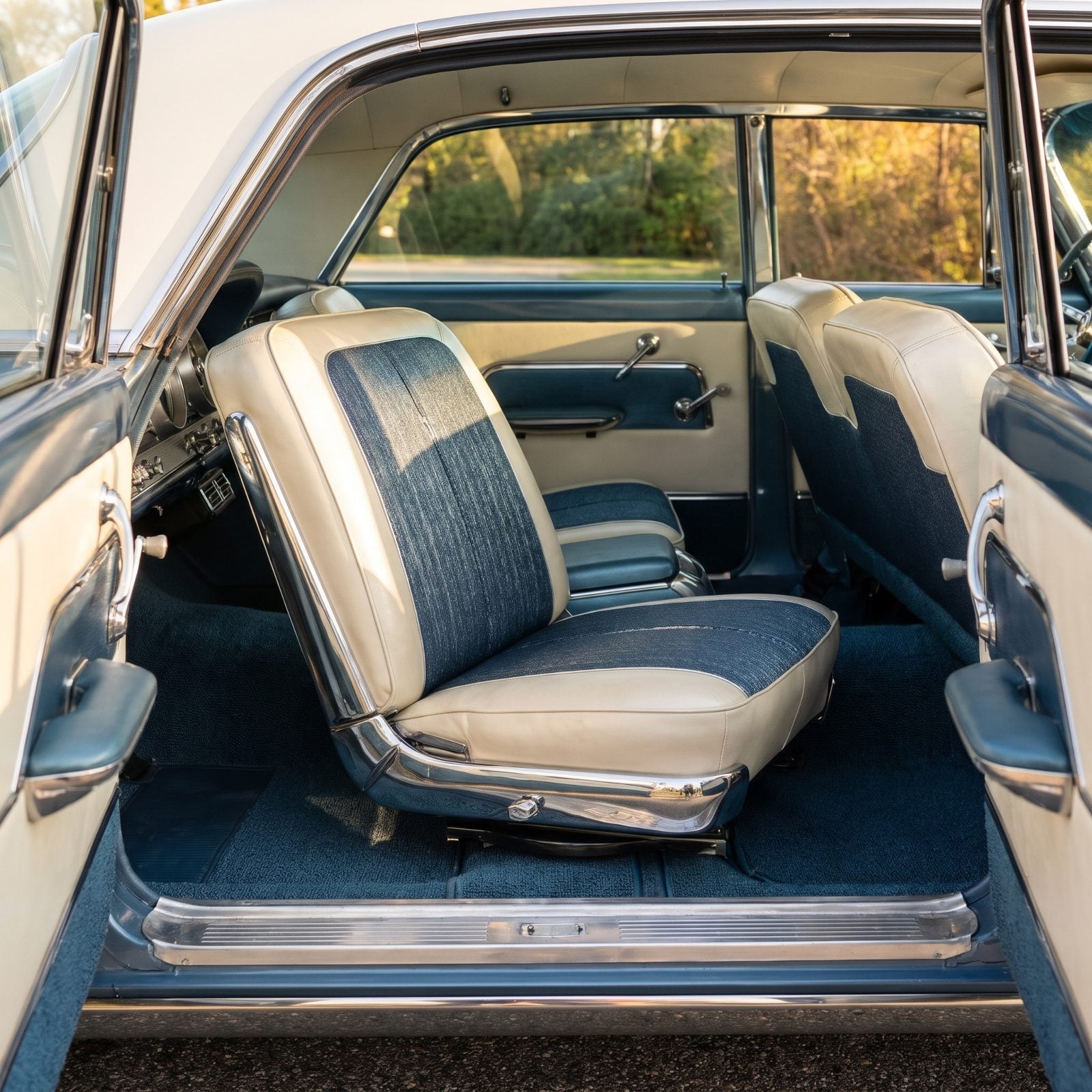
Open the door and the front seat turned to greet you. Chrysler’s Swivel Seats pivoted outward so you could sit down facing the curb, then swing your legs in and face forward. Getting out, same trick in reverse.
It was aimed at anyone wearing a skirt or nursing a bad knee, and it worked. The mechanism added weight, cost and one more thing to break, so it faded fast. Nobody’s bringing it back, which is odd, because an aging buying public could genuinely use a seat that meets them halfway. Look how long we’ve been figuring this out.
8. Seats That Folded Flat Into a Bed
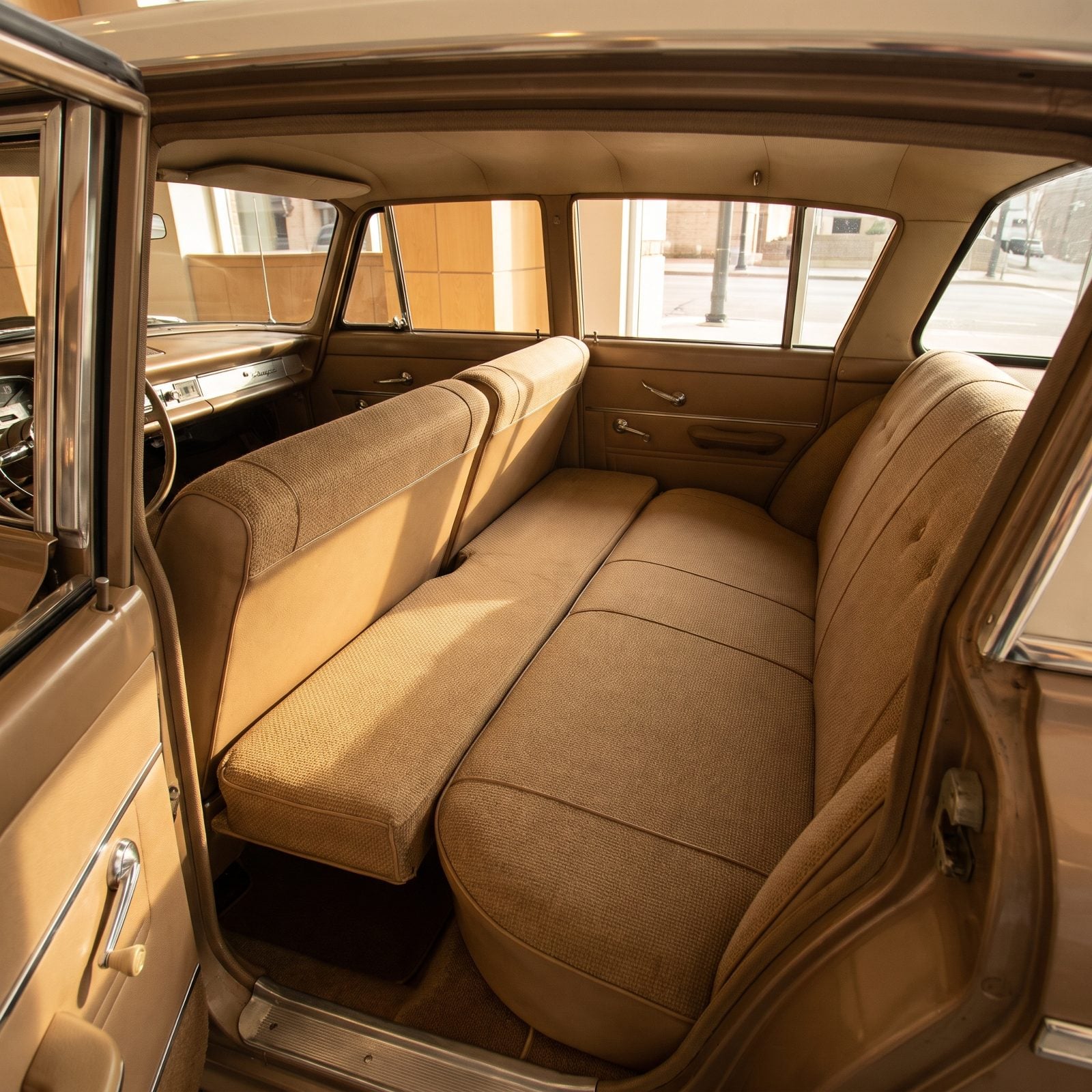
Rambler built part of its reputation on a party trick for the budget-minded traveler: fold the seats and the whole interior became a bed. No tent, no motel, no reservation. Pull over at a quiet spot and sleep in the car you were already driving.
Practical, too, in an era when cross-country trips meant long empty stretches and few places to stop. Modern crossovers fold flat for cargo, but the dedicated car-as-bed idea mostly lives on in camper vans now. The Rambler pulled it off in a plain family sedan, which is kind of the whole charm.
7. Rear-Facing Station-Wagon Seats
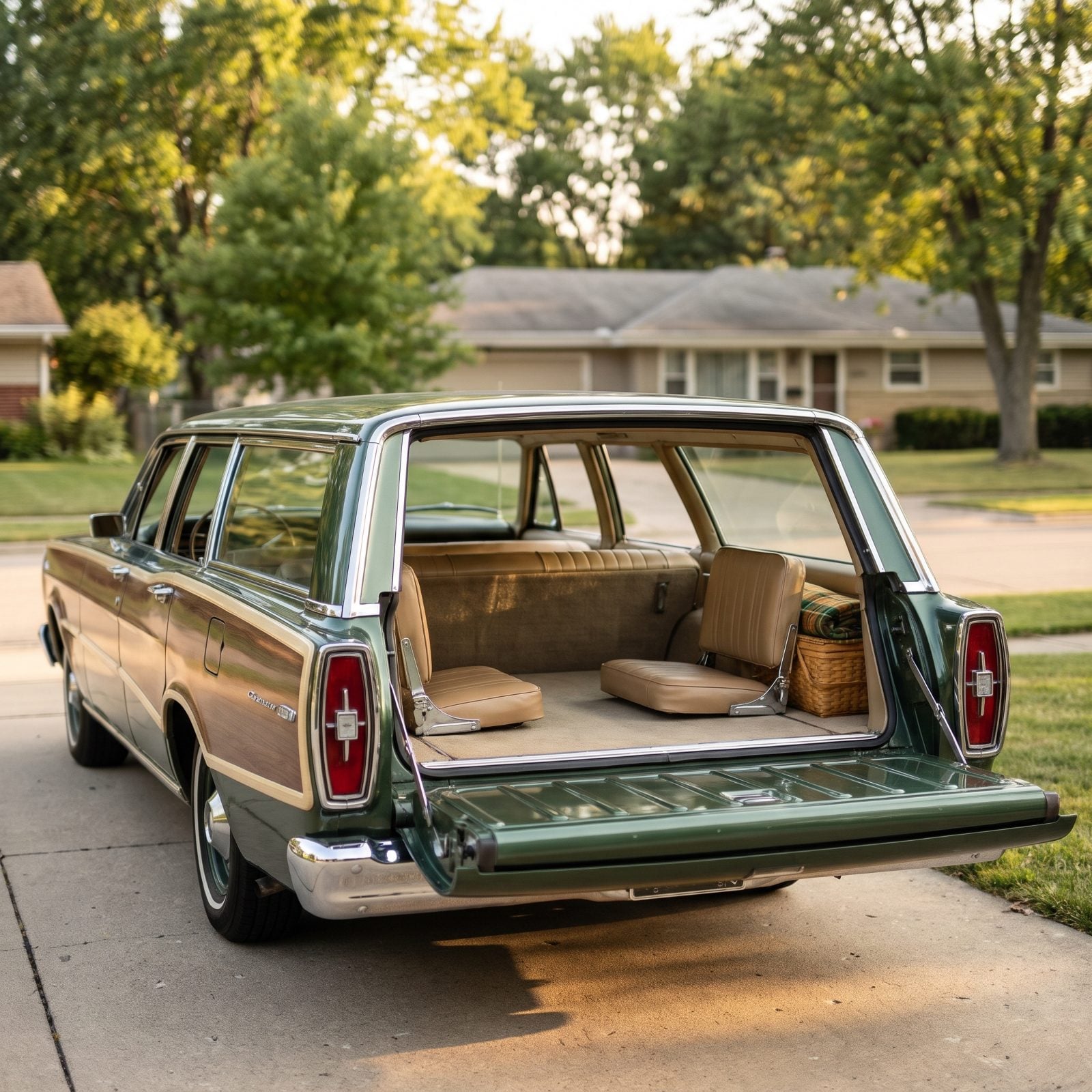
The way-back seat. A fold-down bench in the cargo floor facing out the tailgate, so the kids rode backward, watching the road unspool behind the car.
You waved at the car behind you. You played the license-plate game backwards. There were no seatbelts worth mentioning and definitely no airbags, which is exactly why they’re gone now. Crash standards ended the rear-facing wagon seat for good reasons, and we’re not here to argue with physics. Still, ask anyone who grew up back there. It was the best seat in the car, and every one of them will tell you so.
6. Power-Operated Tailgate Windows
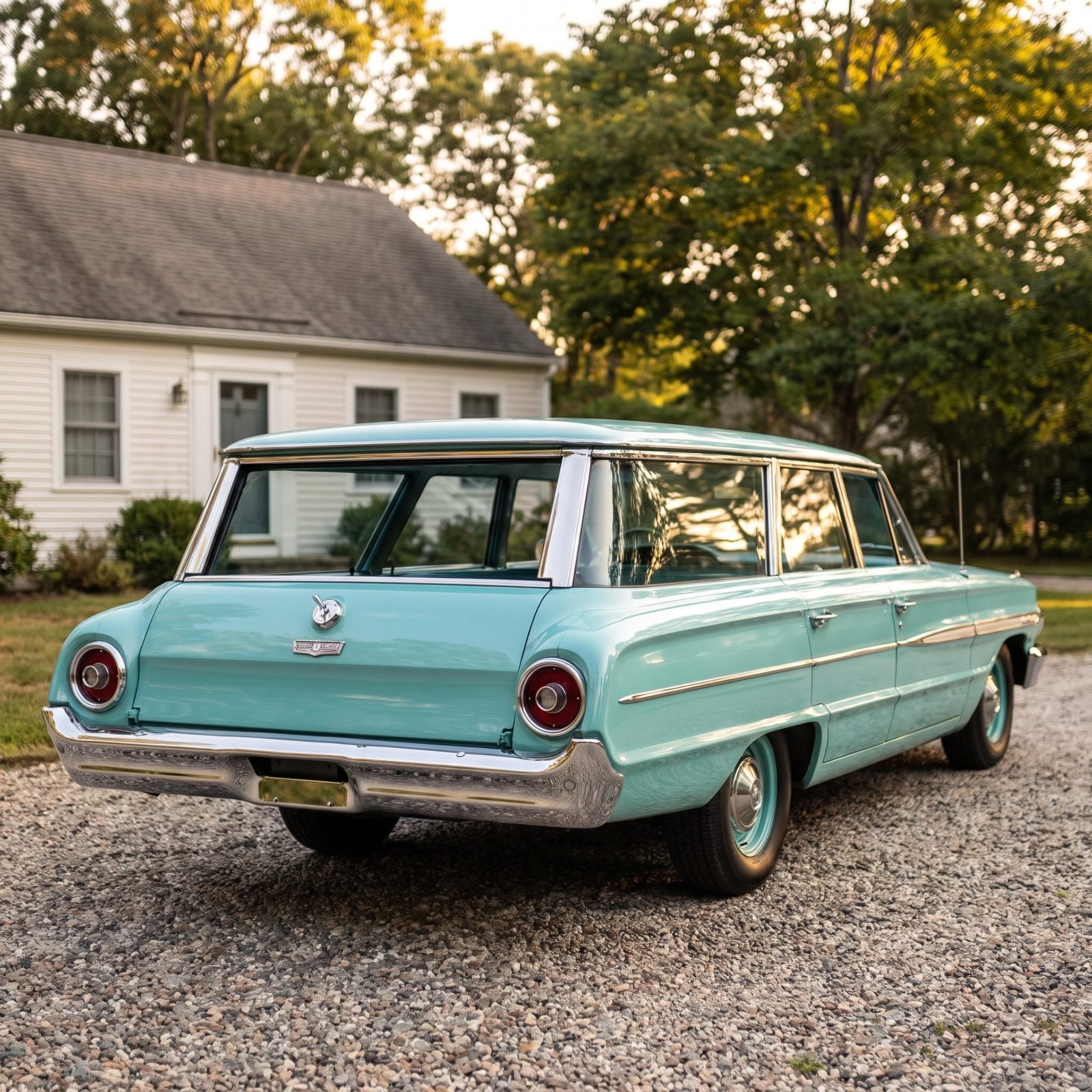
Twist a switch and the back glass drops into the tailgate, and suddenly the whole rear of a wagon breathes. No lifting a heavy pane. No fighting a stiff latch. A motor does the work while you load groceries, haul lumber, or wrestle in a dog that flat refuses to climb.
Power rear windows turned up on the big wagons through the late fifties and sixties, and they earned their keep. Vent the cargo hold on a scorcher. Pass a snack back to the kid riding in the way-back without ever cracking the gate open.
5. Dual-Action Station-Wagon Tailgates
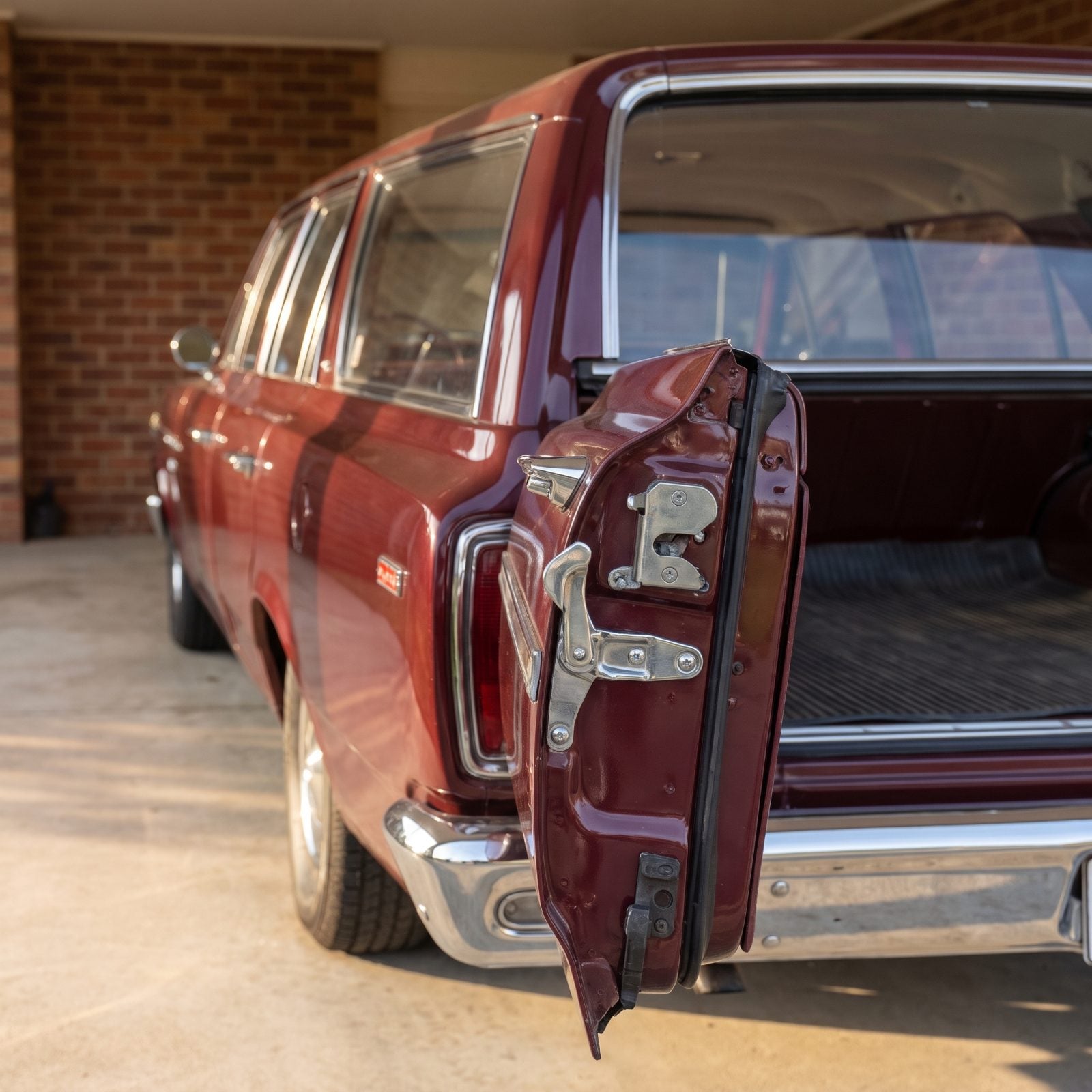
One gate, two ways to open it. Drop it flat like a shelf for sliding plywood, or swing it sideways like a door when you just need to step up and grab something off the floor.
Ford called its version the Magic Doorgate. Everyone else had their own badge for it. The guts were fussy — two sets of hinges and latches choreographed to work together — and that complexity is exactly why it went extinct. The industry handed us the single liftgate instead: cleaner, cheaper, less to break. Something got lost in the trade, though.
Here’s what the dual gate gave you. You picked your opening based on the job in front of you. Low drop for cargo. Side swing when the parking space is too tight to fold the gate down. That kind of practical cleverness got budgeted straight out of existence.
4. Patterned Brocade Cloth Upholstery
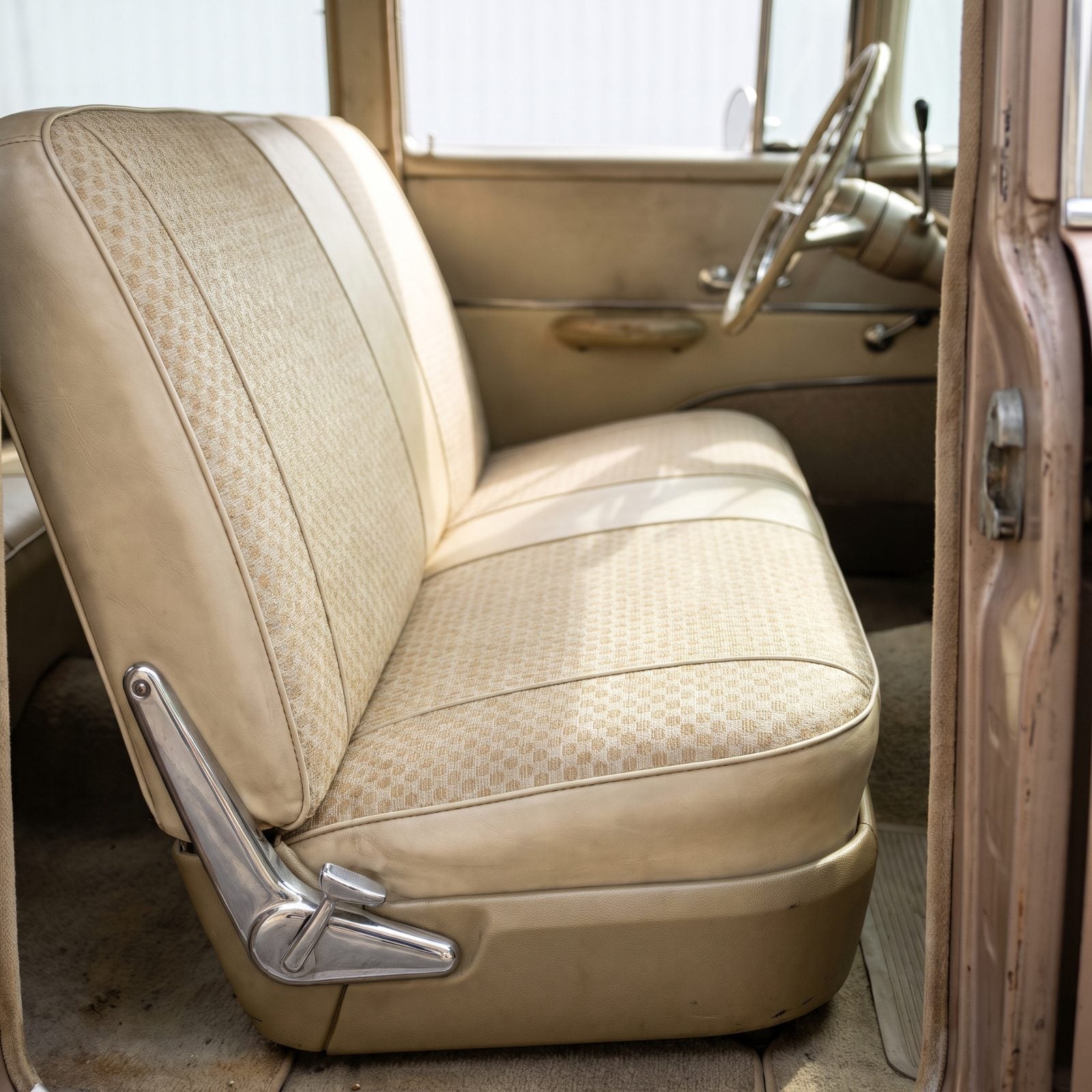
Run your hand across a sixties brocade seat and you feel something modern cars forgot: texture that was supposed to look expensive.
Automakers wove patterned cloth with raised motifs, metallic threads, little diamond and floral repeats, because interiors sold as parlors on wheels. The fabric told the world you’d sprung for the nicer trim. Today’s cabins ran the opposite way — flat gray weave and perforated leatherette chosen for durability and not one thing more.
Brocade got hot and it showed wear, sure. Fair complaints. But nobody ever walked out to a brocade bench and felt like they were climbing into an appliance.
3. Molded Drink Recesses in Glovebox Doors
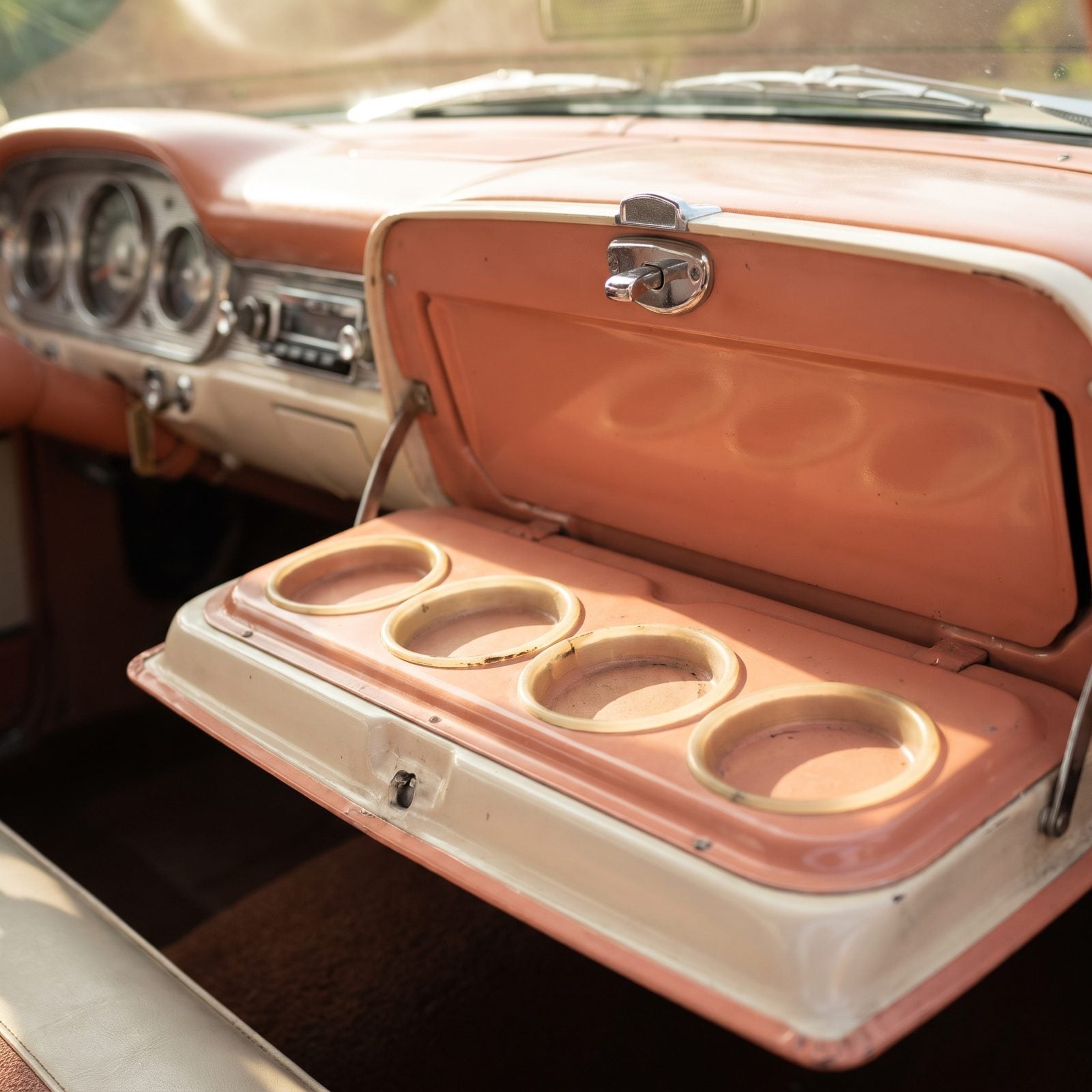
Before anyone bothered engineering a dedicated cupholder, carmakers improvised. Drop the glovebox door on certain late-fifties and early-sixties cars and its flat inner face held shallow molded wells — just deep enough to steady a couple of bottles or a thermos cap while you sat parked.
Quiet common sense, really. The glovebox was already there, so why not make it earn its keep?
The real cupholder arms race didn’t kick off until decades later, and it overcorrected hard. Now cars carry more drink positions than seats. But that old glovebox dodge had a charm the plastic clamshell never caught — simple, bolted to nothing, hardly any extra parts.
2. Built-In Lights Under the Hood and Inside the Trunk
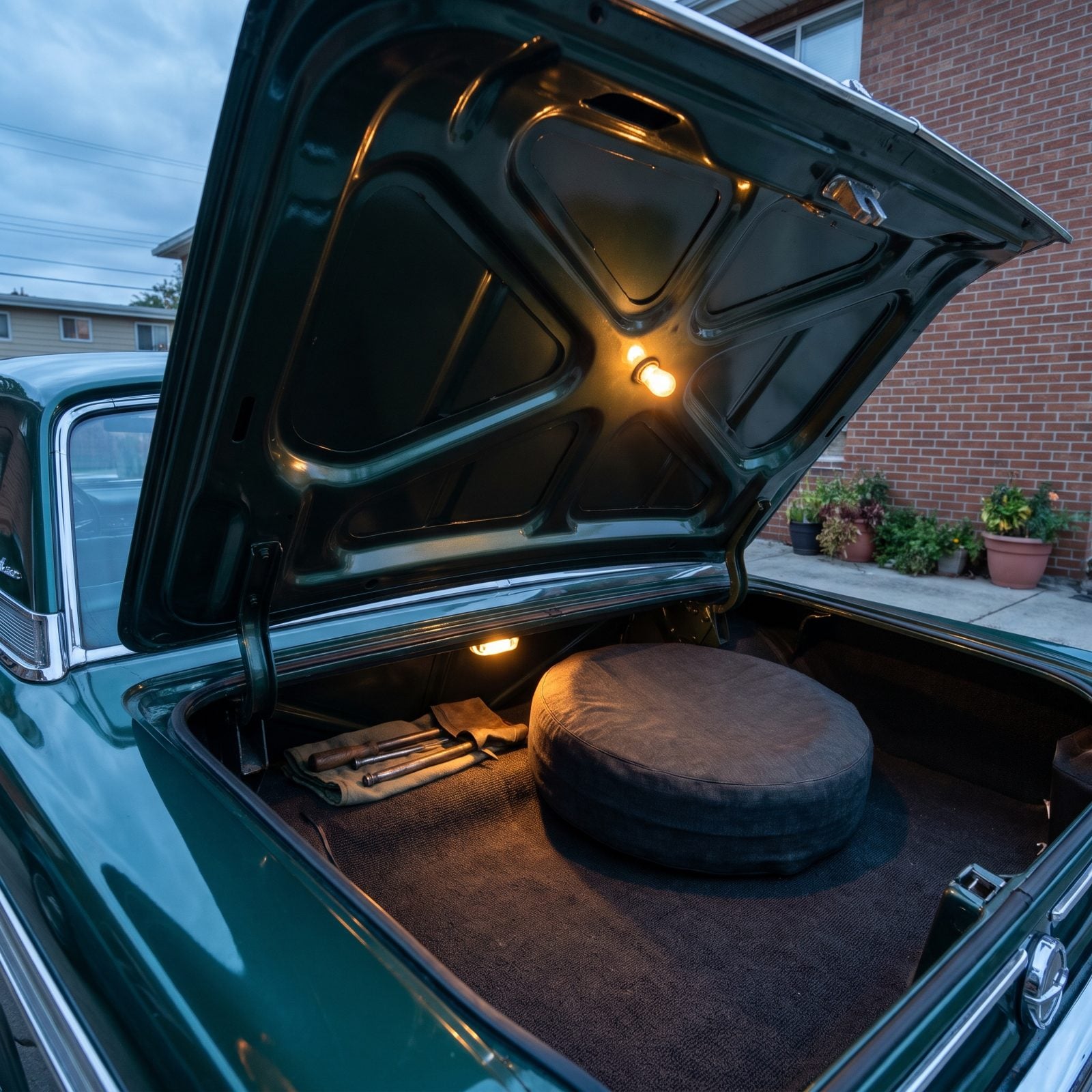
Pop the hood on an old car after dark and a little bulb clicked on, throwing light exactly where you needed it. Same deal in the trunk. No fumbling, no clamping a flashlight in your teeth while you check the oil or dig around for the jack.
Cheap insurance against the dark. Plenty of sixties cars carried these as standard or a low-cost box to tick.
A roadside breakdown feels a lot less lonely when the engine bay lights itself.
Then carmakers quietly deleted the under-hood bulb to save a few dollars, betting you’ve got a phone flashlight. You probably do. But a phone ties up a hand and the beam points wherever you aren’t. That old mounted bulb lit the whole bay and asked nothing of you in return.
1. Triangular Front Vent Windows
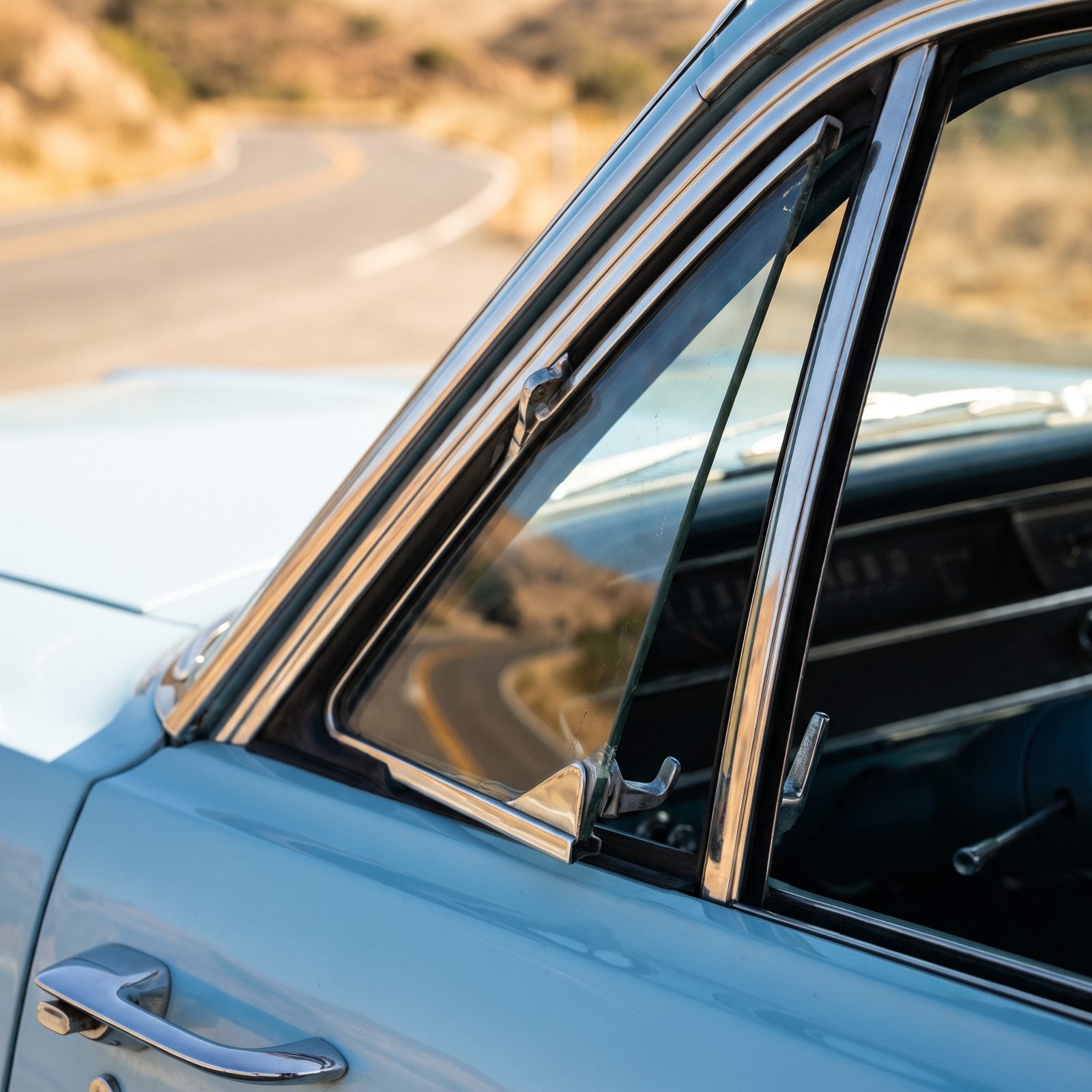
That little triangle of glass up front, the one you pivoted open on a chrome latch, did one job better than any vent since. It scooped air and aimed it straight at your face at any speed — no fan, no noise, no gas burned.
Crack it on a summer highway and you’d get a steady breeze without a full window buffeting your ears into submission. Smokers swore by it for pulling ash out the gap. Everyone else swore by it for ventilation that cost nothing and arrived instantly.
Honestly? We miss these more than almost anything else here. Sealed modern doors look tidier. They also sealed away one of the best free features a car ever had.