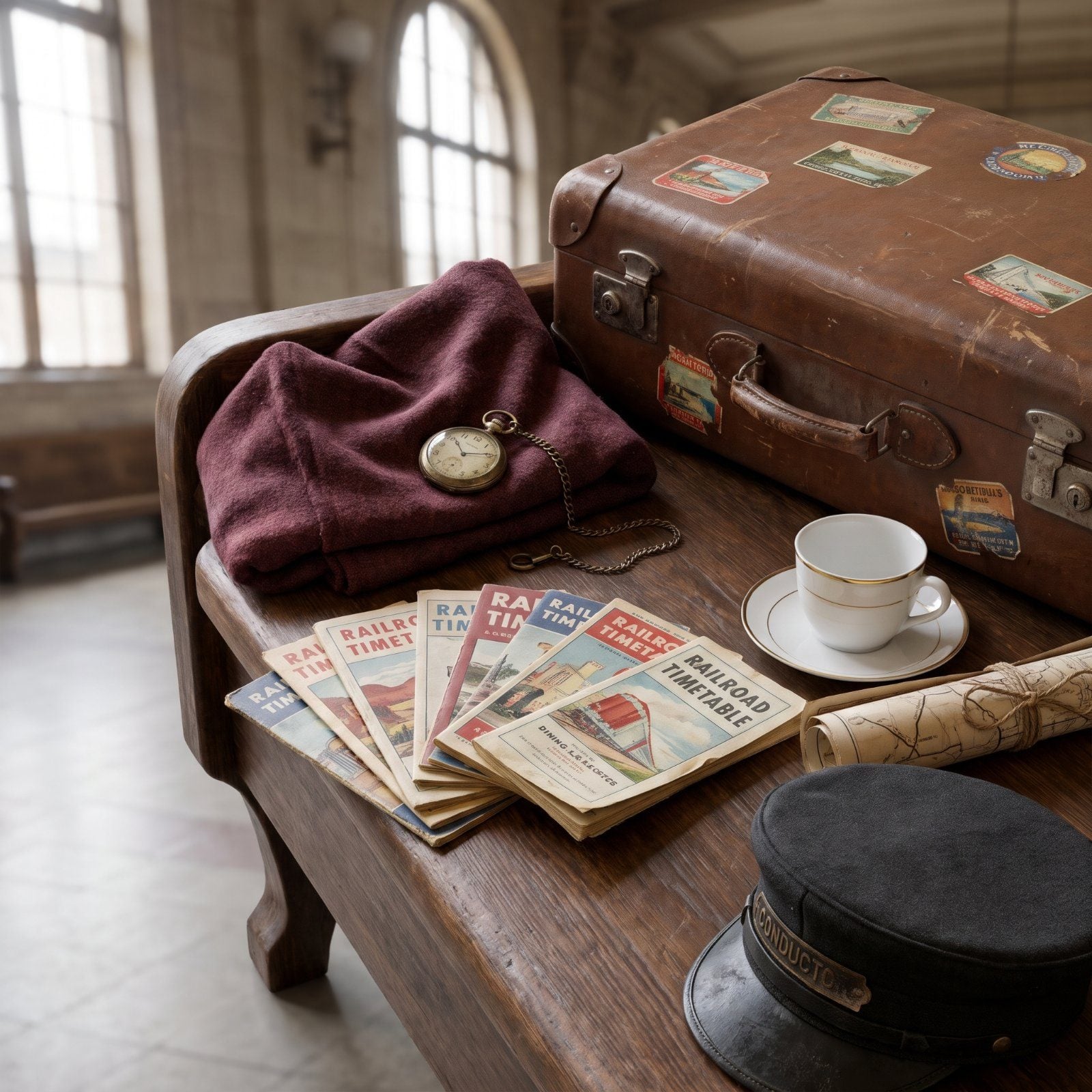
A red carpet rolled out along a platform in Grand Central so a stranger could walk twenty feet feeling like somebody. That happened every evening, for decades. These trains had names, and the names meant something — you knew which one took the water-level route and which one cut through the mountains, which diner served the best steak east of Chicago. Then the airlines came, the interstate came, and one by one the timetables went quiet. What follows is a look back at the great named passenger trains that moved Americans coast to coast, border to border, back when the train was simply how you went.
Please note that some of the images in this article were created with the assistance of AI.
20th Century Limited, New York Central’s Red-Carpet Express
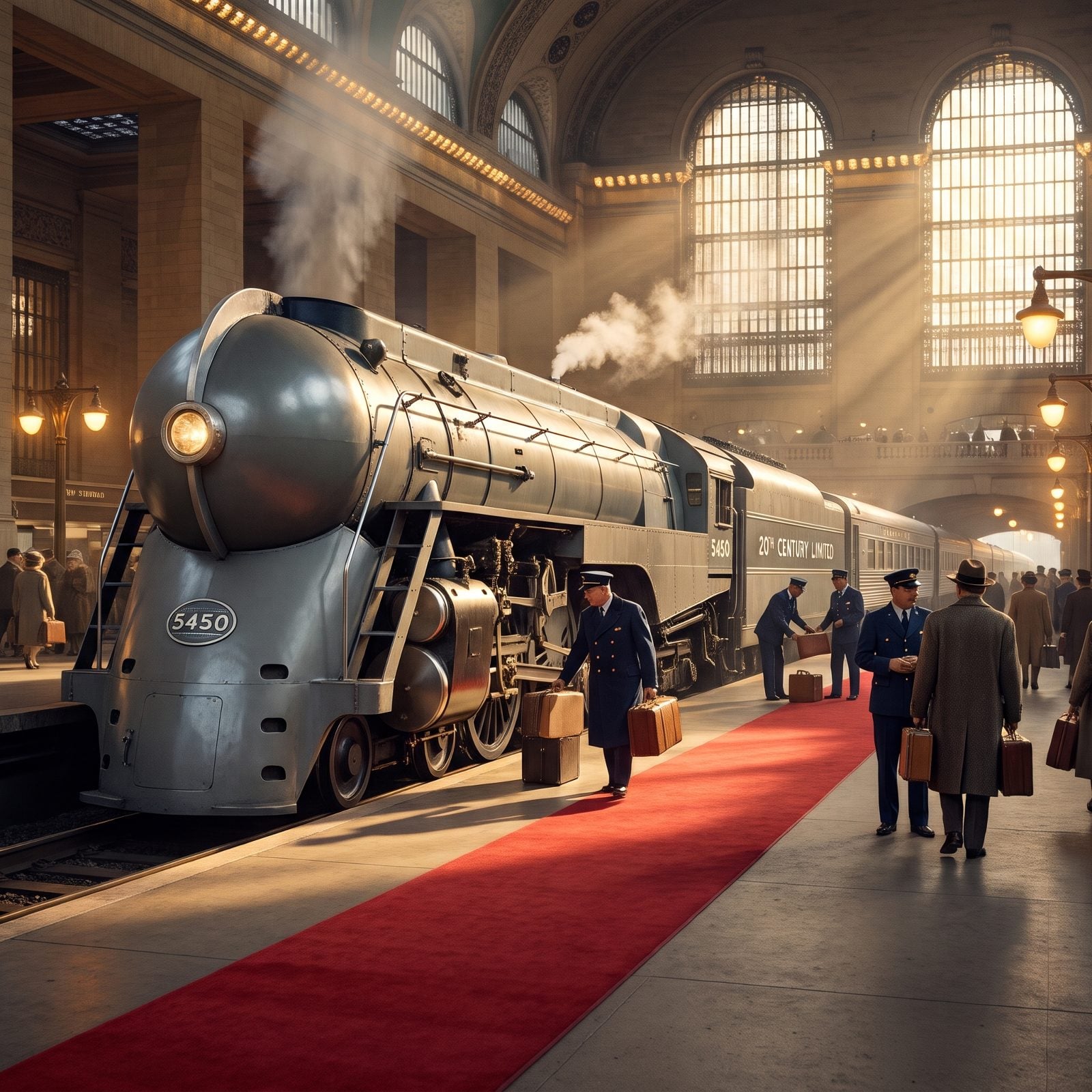
The red carpet was real, and it was the point. New York Central laid down a crimson runner every evening at Grand Central so passengers could walk to the train like royalty. That’s where the phrase came from.
This was the overnight run to Chicago, the one businessmen chose over the rival Broadway Limited for the smoother water-level route along the Hudson. The streamlined locomotive up front wore a great rounded dome of a nose, ringed by a curved band with ladders climbing its face, and nothing on rails looked faster standing still.
Broadway Limited, Pennsylvania Railroad’s New York-Chicago Flagship
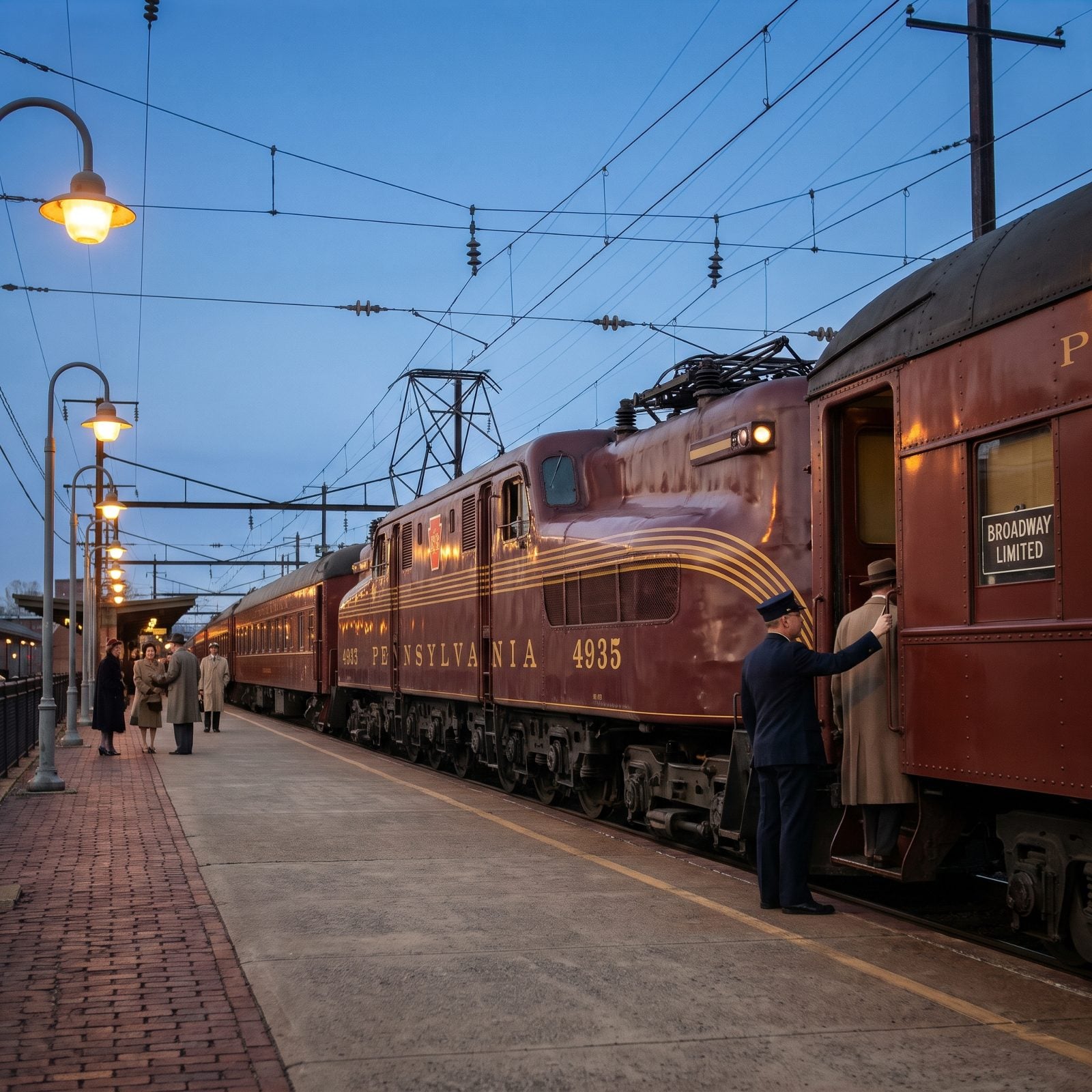
The Century got the glamour. The Broadway got the respect of people who actually knew railroads.
Pennsylvania Railroad named it for its multi-track “broad way” of mainline — not the theater district — and it ran New York to Chicago head-to-head against the Century for decades. Loewy’s GG1 electric out of Penn Station was a shape so right they kept running it for forty years.
It outlasted its rival by a long stretch, soldiering on under Penn Central and then Amtrak until 1995. The last named survivor of that great overnight duel finally went dark in the mid-nineties, which feels more recent than it should.
Olympian Hiawatha, Milwaukee Road’s Electric Mountain Streamliner
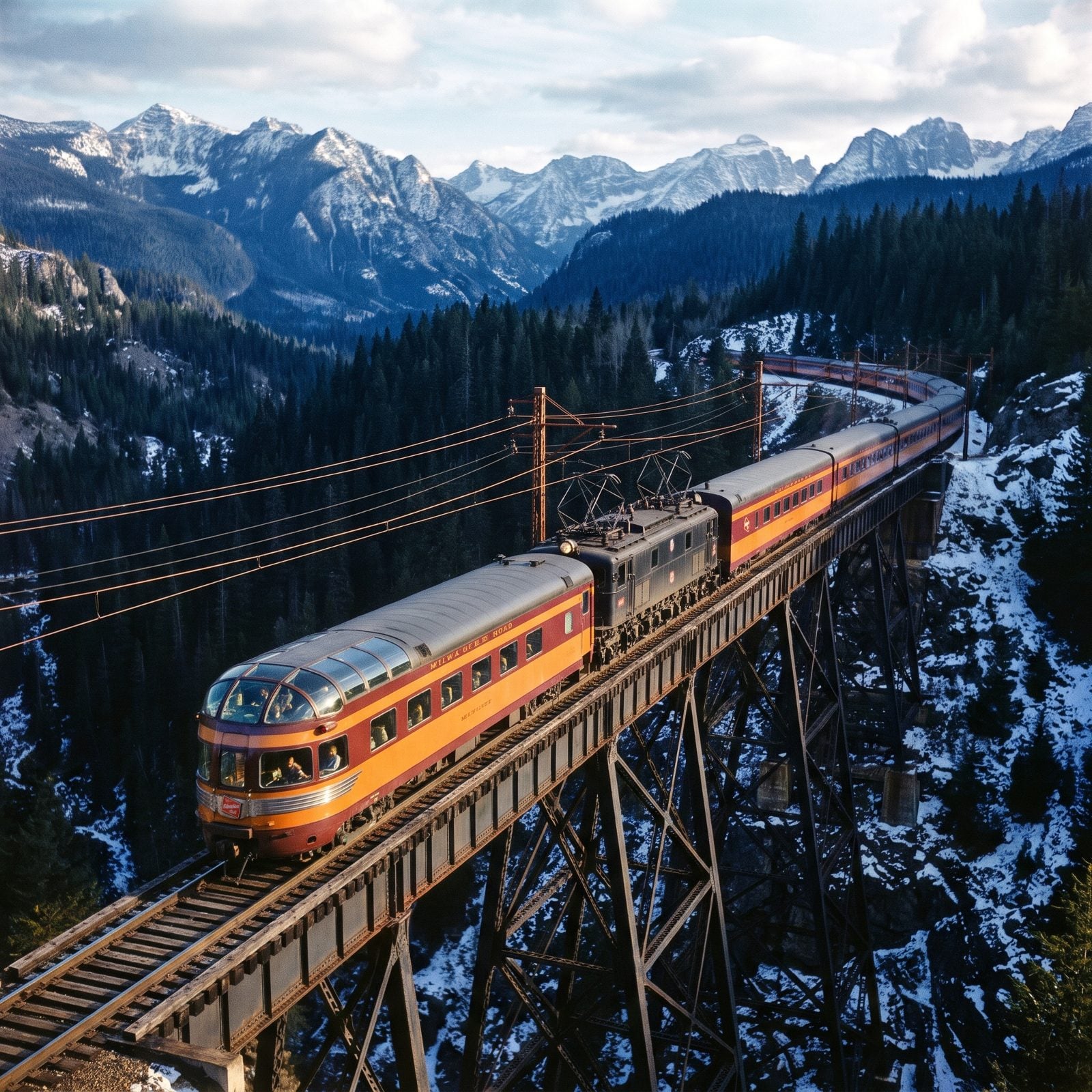
Brooks Stevens gave this train a lounge car you could not forget. The Skytop lounge ended in a sweep of curved glass, a solarium on wheels, and sitting back there at the tail of the train, as the Milwaukee Road climbed the Rockies under electric wire was something people saved up for.
The Olympian Hiawatha ran Chicago to Tacoma and Seattle, and the mountain stretch was electrified, so you’d roll through the Bitterroots silent and smooth with no smoke. Decades ahead of its time.
North Coast Limited, Northern Pacific’s Scenic Transcontinental
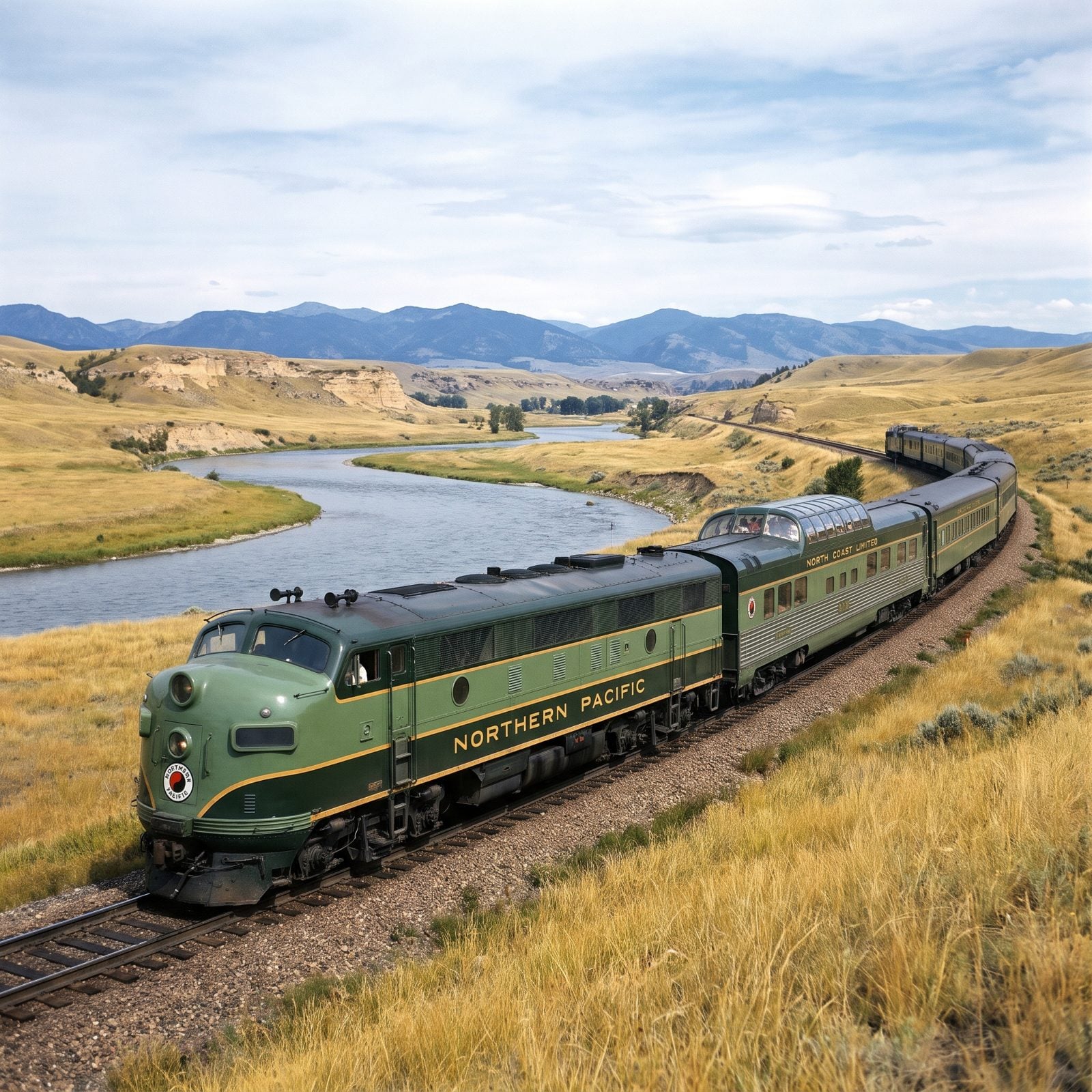
You rode this one for the windows. Northern Pacific ran the North Coast Limited across the top of the country — Chicago to Seattle through the Dakotas, Montana and the Cascades — and they put Vista-Dome cars on it so you could sit up in a glass bubble and watch the whole thing go by.
The paint was a soft two-tone green worked out by Loewy’s team, dignified without being stuffy, and the train survived into the Amtrak era under a different name. Of the northern transcontinentals, this was the one people picked when the scenery was the reason for the trip.
El Capitan, Santa Fe’s All-Coach Chicago-Los Angeles Streamliner
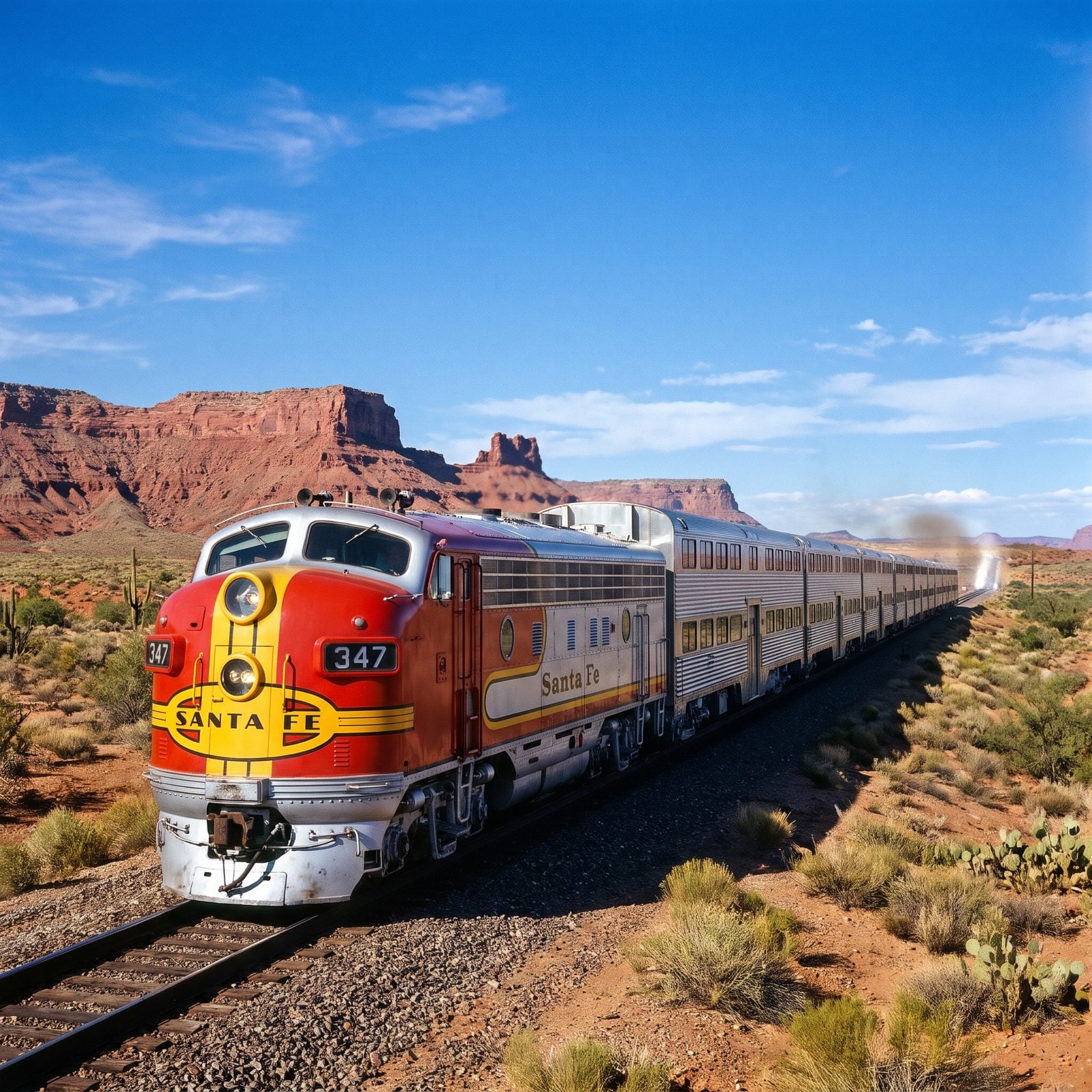
Coach class, and proud of it. The El Capitan was Santa Fe’s all-coach answer to the extra-fare Super Chief, Chicago to Los Angeles, built for travelers who couldn’t swing a Pullman berth but still wanted something fast.
Then Santa Fe did something clever. They put double-deck Hi-Level cars on it, so you sat up top with luggage and machinery stashed down below, and suddenly the view from a coach seat beat first class on half the railroads in the country.
Panama Limited, Illinois Central’s Luxury Chicago-New Orleans Train
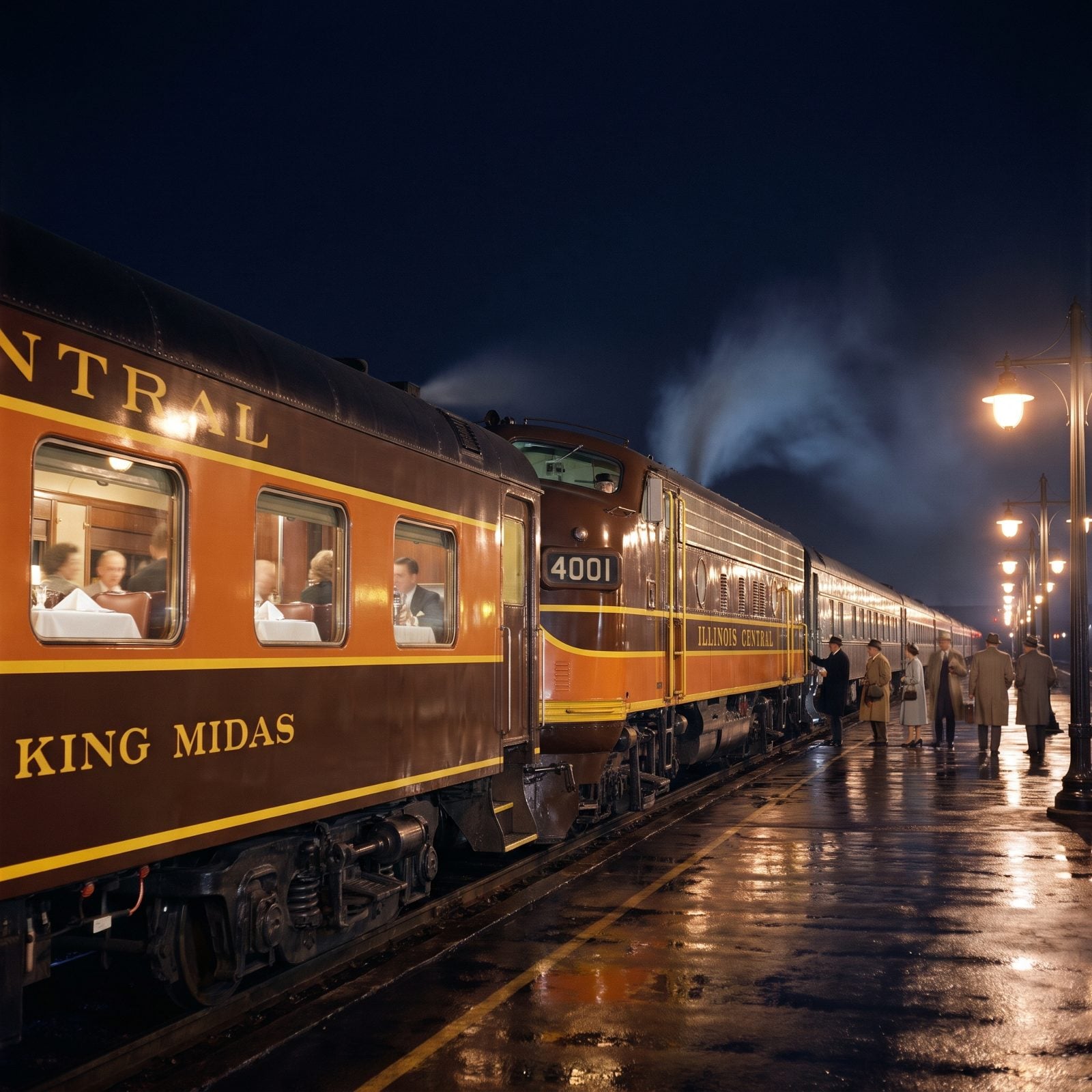
The overnight run down the Mississippi valley, Chicago to New Orleans, done up in Illinois Central’s chocolate and orange. The Panama Limited was all-Pullman for most of its life, an extra-fare train for people who wanted to wake up in the South with a real breakfast in front of them.
And the breakfast mattered. The King’s Dinner in the diner was something of a legend, and the train’s steaks had a following of their own.
It hung on under Amtrak into the early eighties before the name faded for good. The route itself still runs. The Panama name, though, belongs to another era.
Orange Blossom Special, The Celebrated Winter Express to Florida
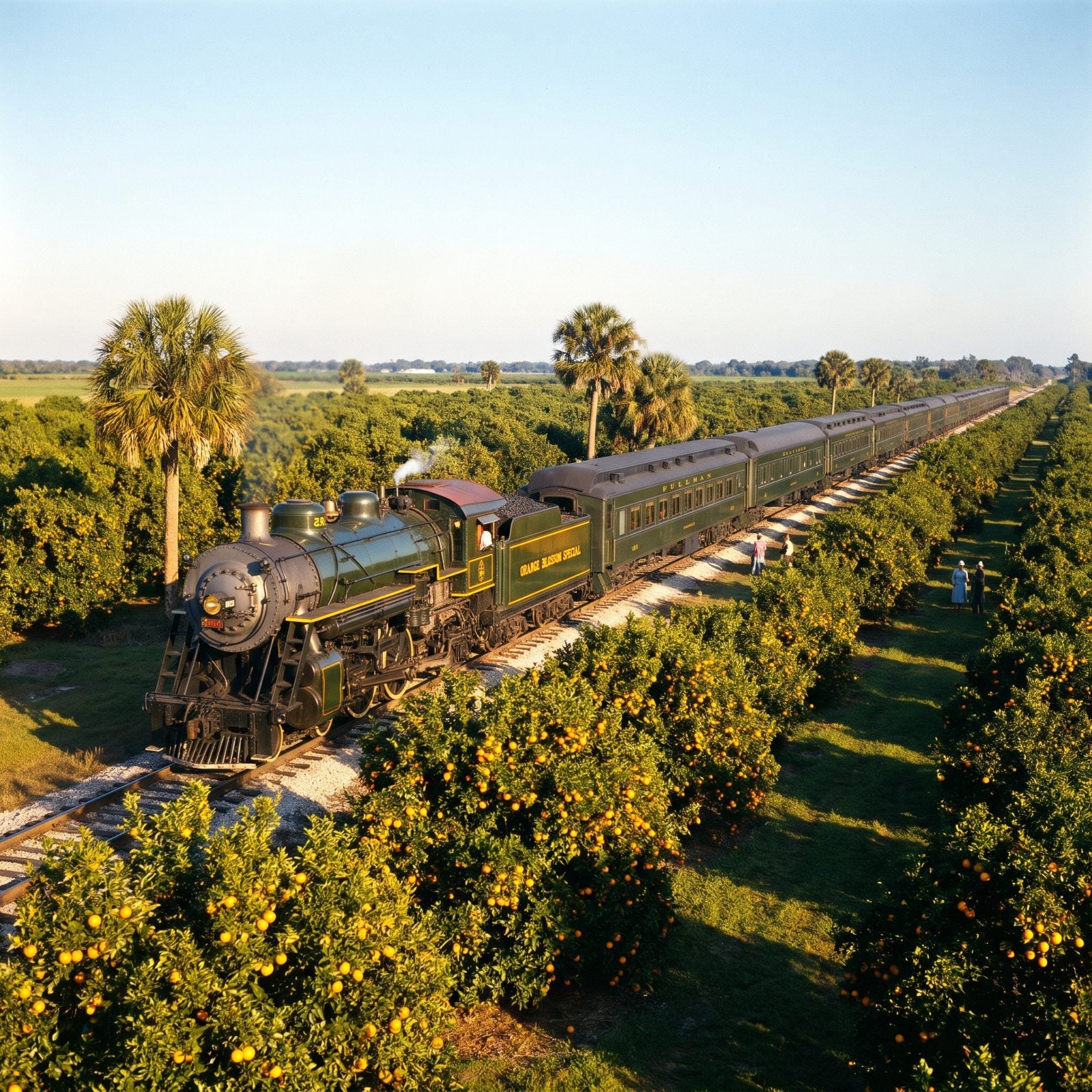
You probably know the fiddle tune before you know the train. The Orange Blossom Special carried wealthy Northerners down to the Florida sun every winter, a seasonal luxury run on the Seaboard Air Line that practically defined the snowbird migration before anyone had a name for it.
It ran in winter only at first, because that’s when the money went south. The fiddle standard written about it became one of the most famous railroad songs ever recorded.
Phoebe Snow, Lackawanna’s Train Through the Pocono Mountains
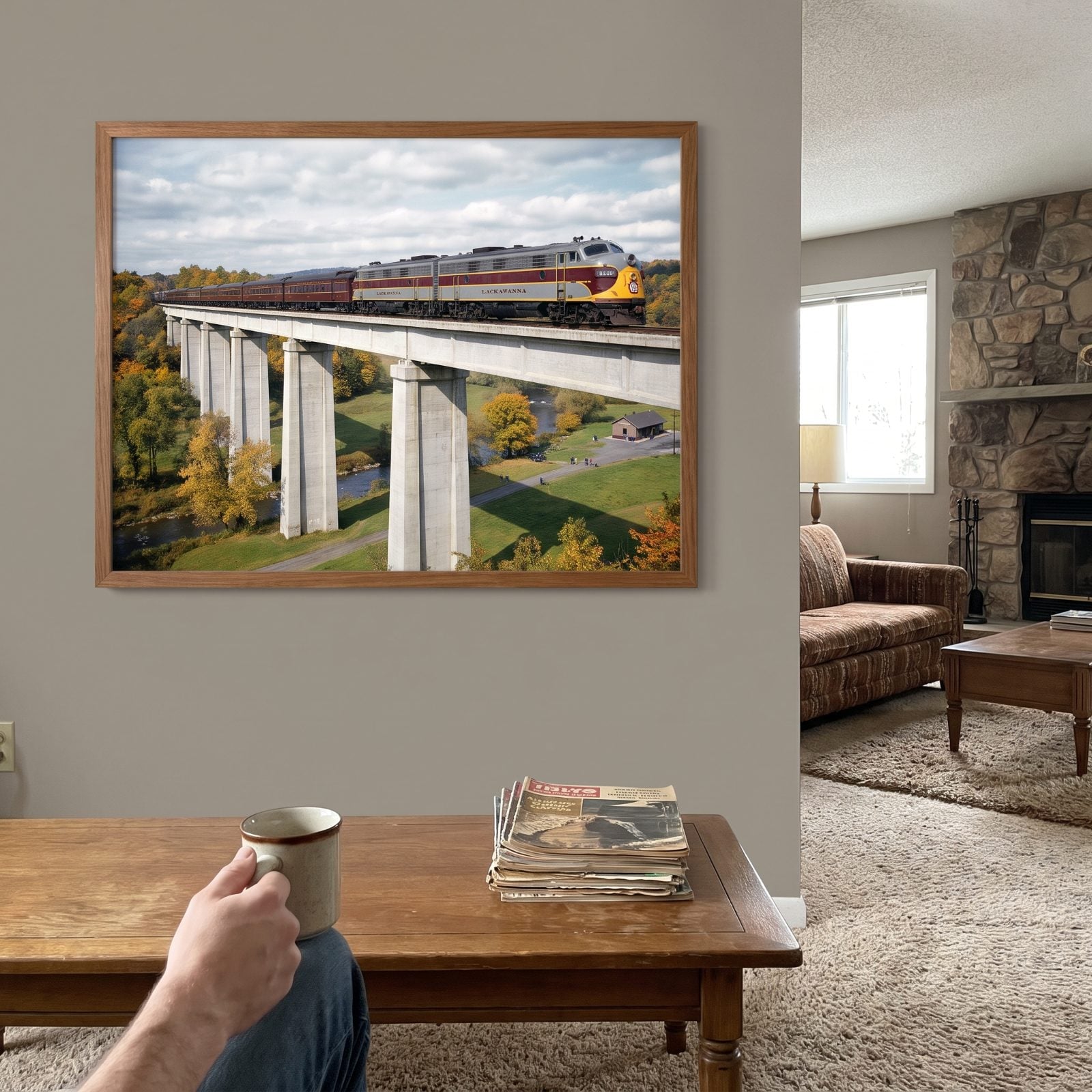
Named for an advertising character, which tells you how deep the marketing ran. Phoebe Snow was a fictional lady dressed all in white, dreamed up to sell the fact that the Lackawanna burned clean anthracite coal so your clothes stayed spotless. The slogan rhymed. Decades later they named a real streamliner after her.
The run crossed the Poconos and swept over a tall concrete viaduct, its flat deck carried high above the river on plain rectangular piers.
The train lasted until the mid-sixties. Bridges like this one were built to outlast everything — including the railroad that named a train after a woman in white.
City of Los Angeles, Union Pacific’s Streamliner to Southern California
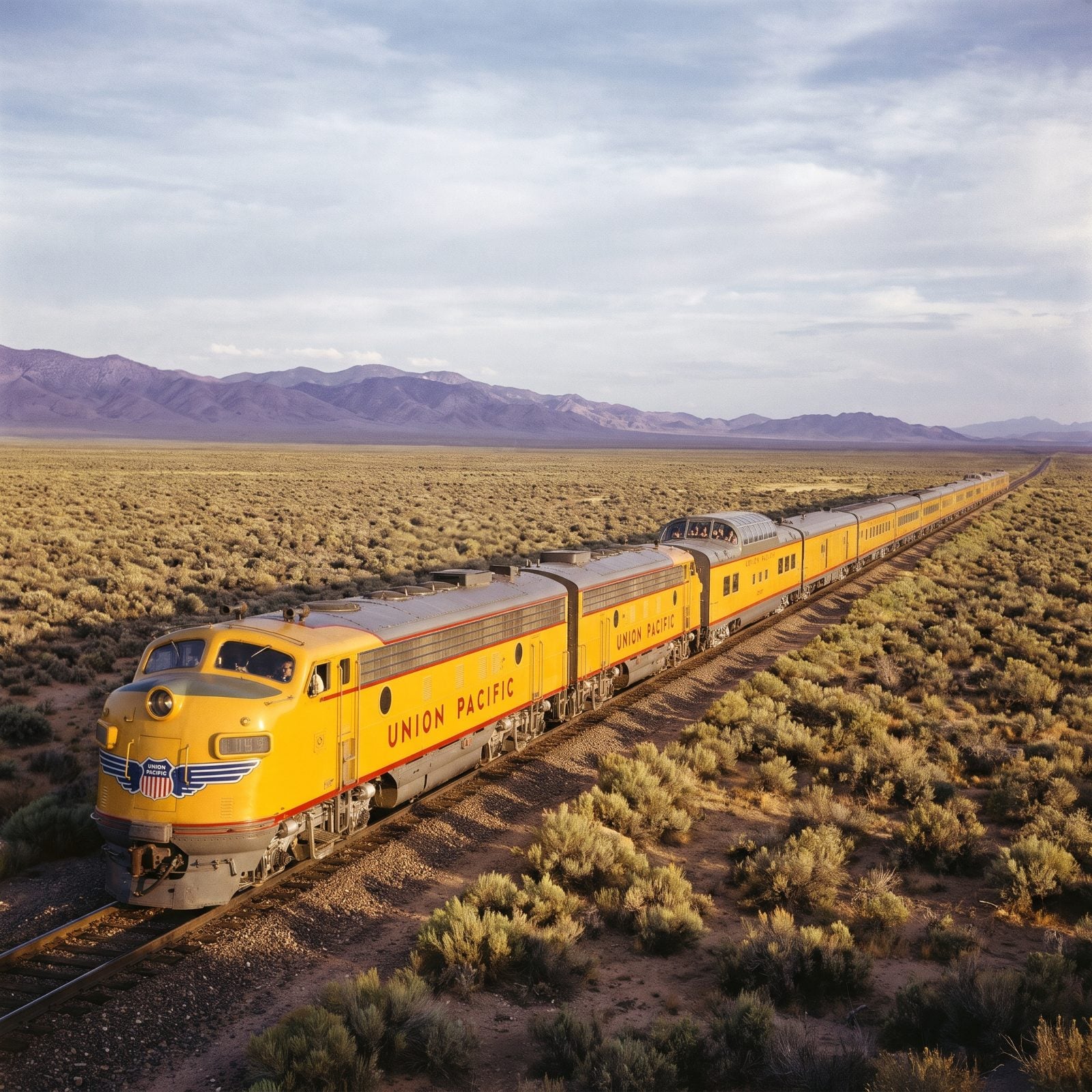
Union Pacific yellow could be seen a mile off, and that was the idea. The City of Los Angeles ran Chicago to LA on the Overland Route, a bright Armour-yellow streamliner that went toe to toe with Santa Fe’s Super Chief for the Hollywood crowd.
Dome lounges, a good diner, and the kind of speed that made the desert crossing feel short. It drew its share of movie stars heading east and west.
Union Pacific pooled its various “City of” trains and ran them hard right up until Amtrak took over in 1971. After that the name went into the history books, bright yellow and all.
City of San Francisco, The Overland Streamliner to the Bay Area
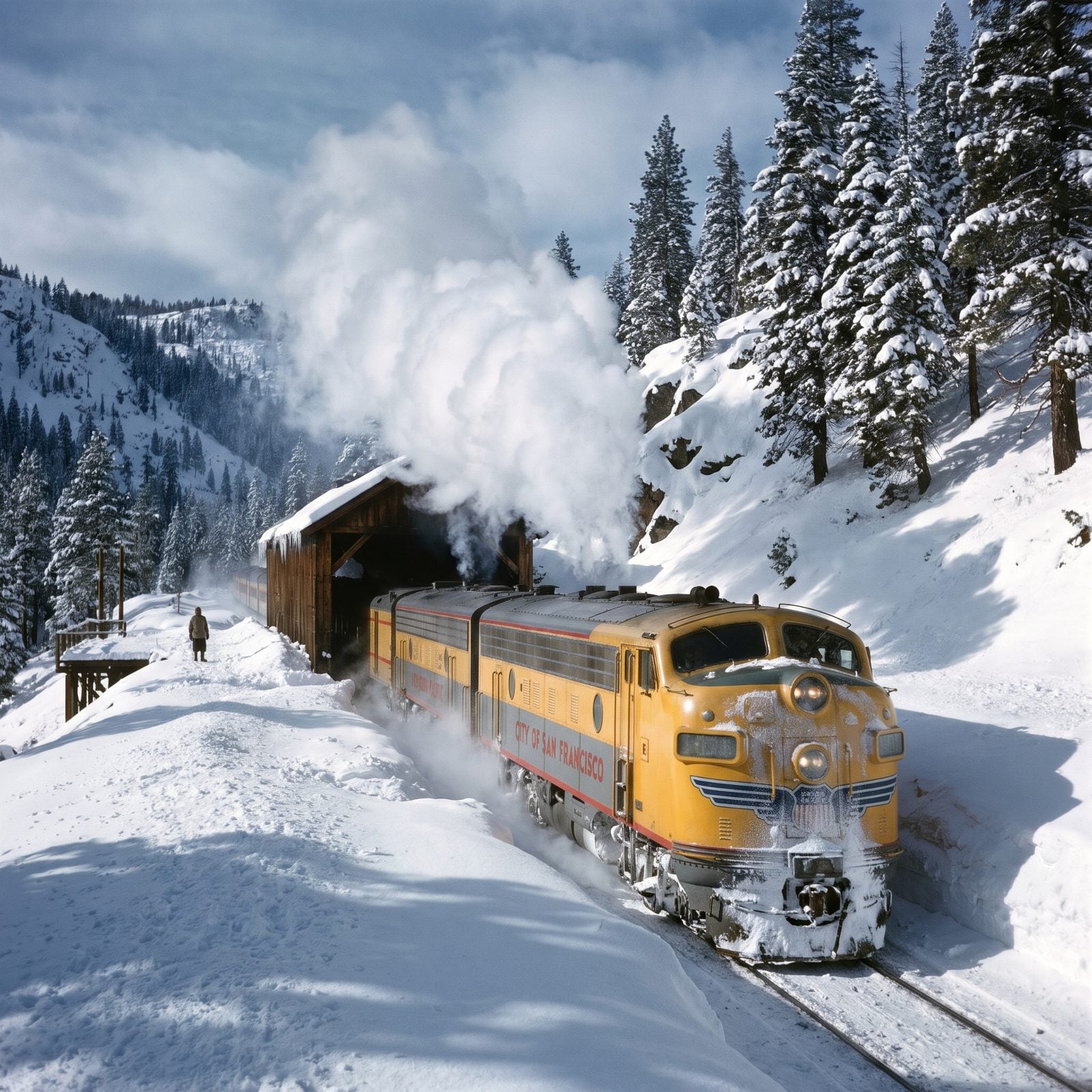
This was the one that got stuck. In January 1952 the City of San Francisco was trapped in a Sierra blizzard near Donner Pass for days, passengers rationing food while rotary plows fought the drifts. It made national news, and it made the train famous for all the wrong reasons.
Normally it was a fine ride — a joint Union Pacific and Southern Pacific streamliner on the historic Overland Route, Chicago to the Bay Area through the mountains the Donner Party never cleared.
City of Portland, Union Pacific’s Chicago-to-Pacific Northwest Streamliner
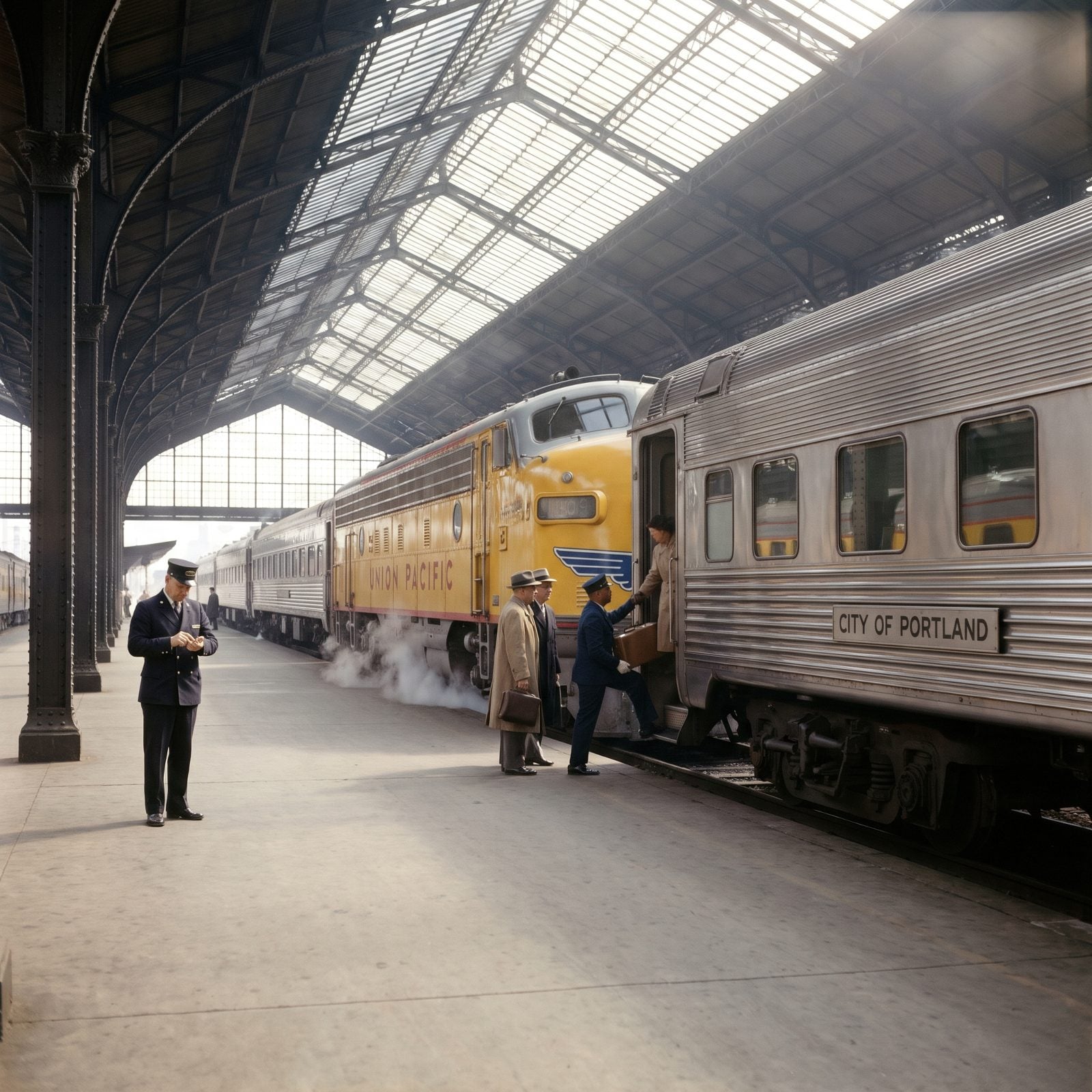
This was the train that stitched Chicago to Portland back when flying still felt exotic and priced accordingly. The City of Portland rolled in gleaming fluted stainless steel behind a Union Pacific locomotive in armour yellow, a color so loud it looked like somebody poured sunshine straight into the paint can.
You’d cross Nebraska and Wyoming overnight, then drop into the Columbia River Gorge at daybreak and wake up to canyon walls and water. The schedule treated the ride as the point, never the delay before the destination.
Denver Zephyr, Burlington’s Stainless-Steel Run to the Rockies
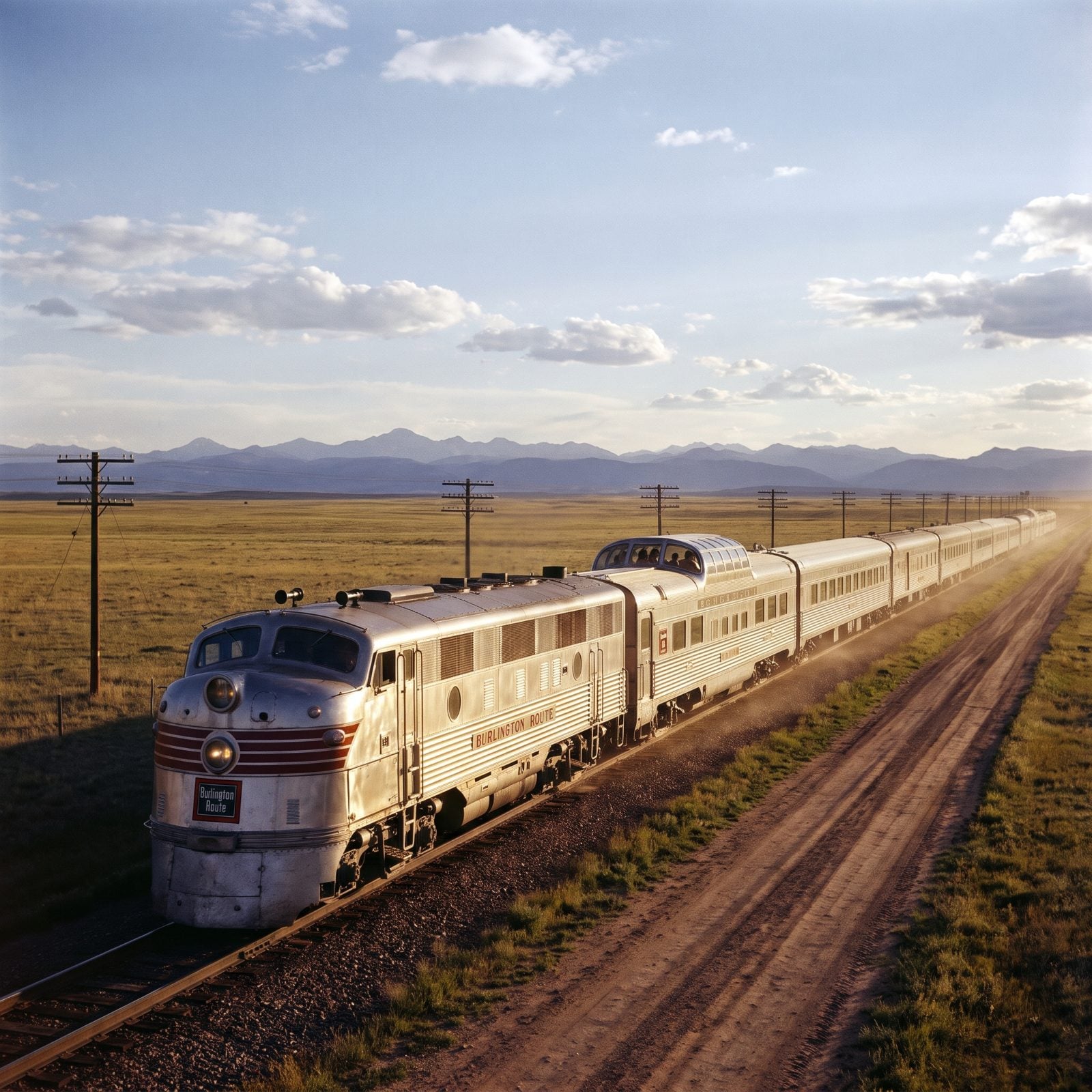
Never painted. Just polished stainless, buffed until it threw the sunrise right back at the prairie. The Denver Zephyr ran Chicago to Denver overnight, a comfortable sleep between two cities with the whole of Illinois, Iowa and Nebraska rolling past somewhere out there in the dark where you couldn’t see it anyway.
The vista-dome cars were the real draw, though. You climbed a few steps, dropped into a seat under a bubble of glass, and watched the Front Range swell up out of nothing.
Golden State, Rock Island and Southern Pacific’s Chicago-to-LA Flyer
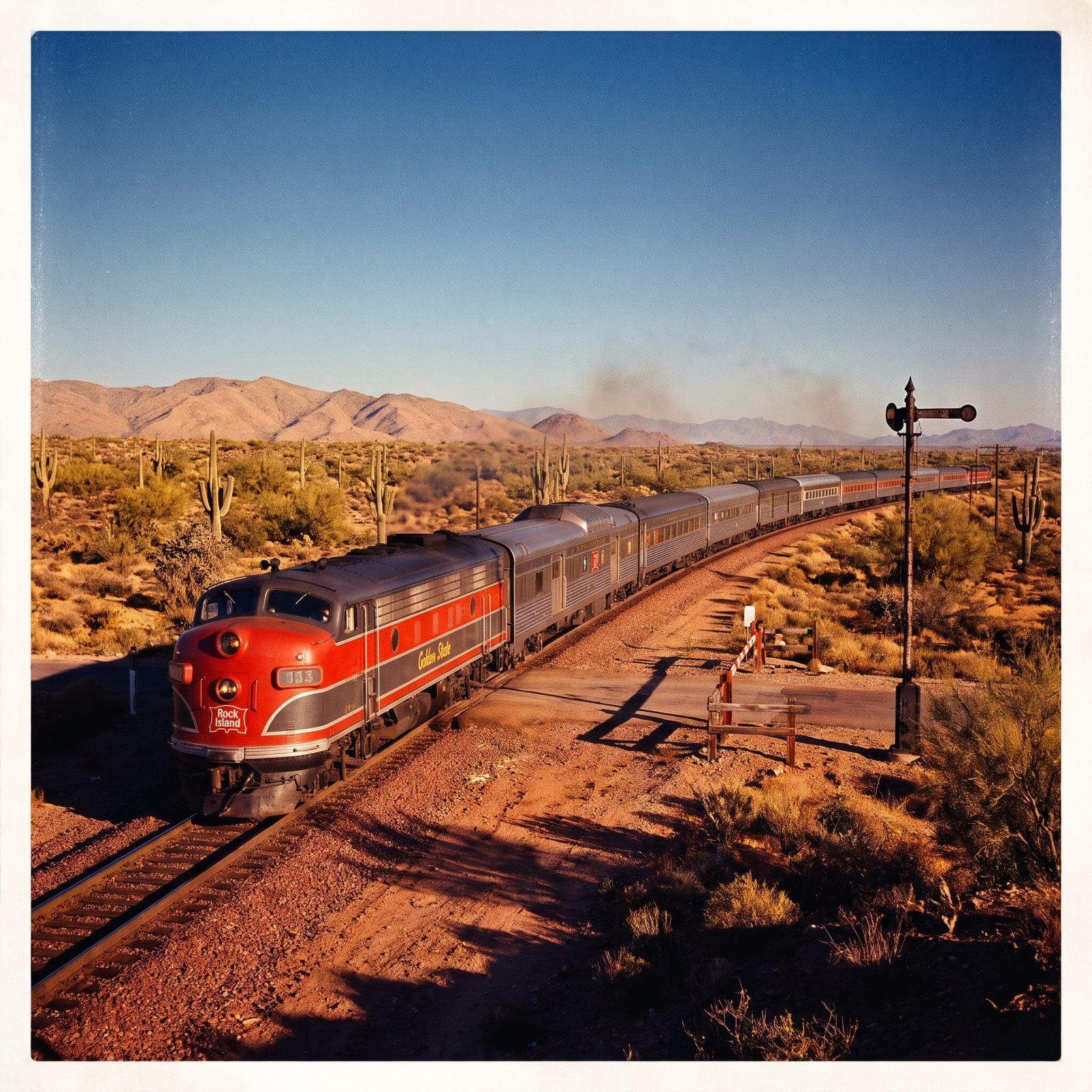
The Golden State was the other way to Los Angeles, taking the route through Tucumcari and El Paso instead of Santa Fe’s northern line. Two railroads shared the job, Rock Island east of the Rockies and Southern Pacific west, so the train quietly changed hands somewhere out in the desert and most passengers never caught it happening.
It fought the Super Chief hard and never quite won the glamour contest. Still a fine way to cross the Southwest, the saguaro gliding past your window while dinner came to you on white linen.
Texas Chief, Santa Fe’s Streamliner Down to the Lone Star State
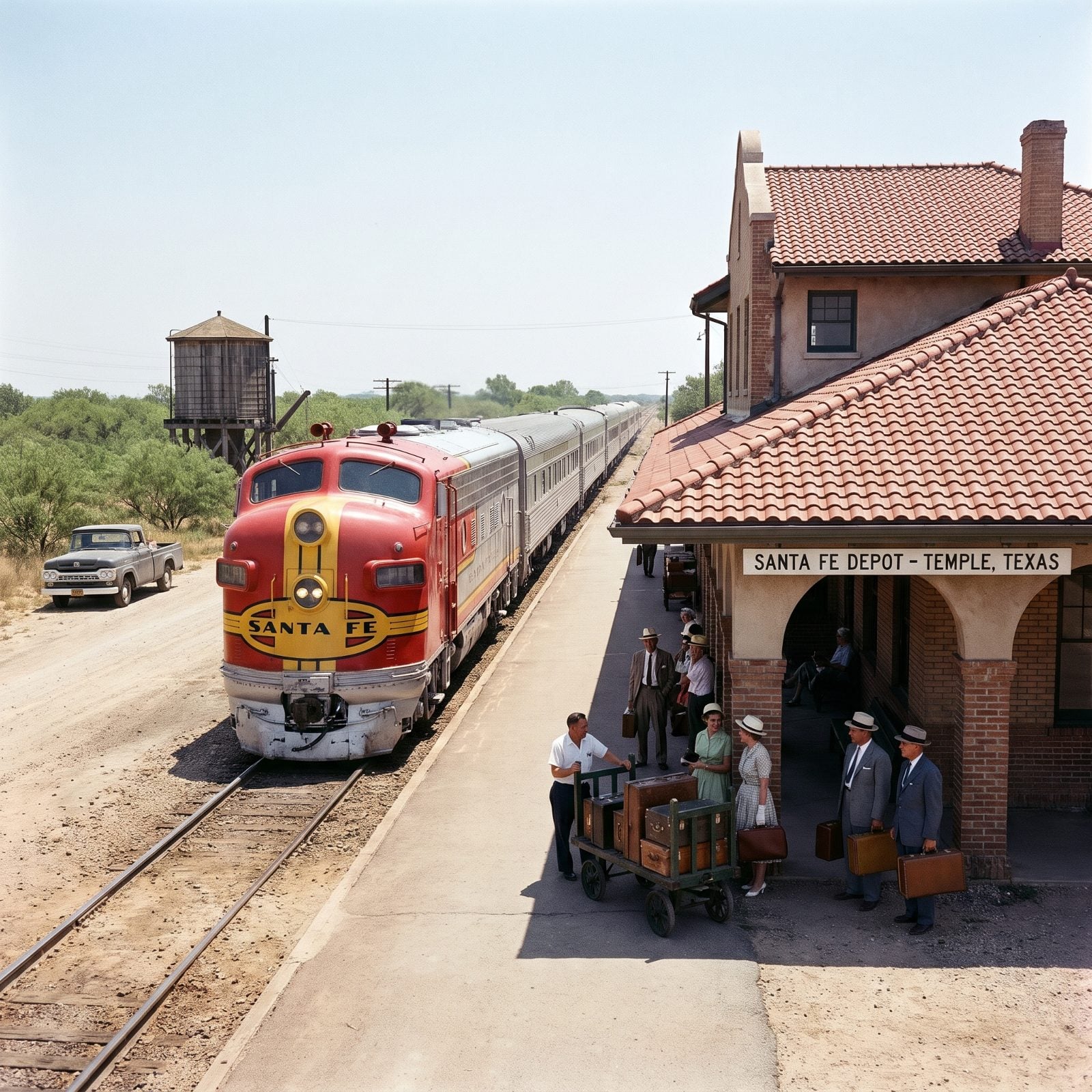
Santa Fe gave Texas its own Chief, and it wore the same Warbonnet war paint that made the railroad’s whole roster instantly knowable from a half mile off. Silver body, red nose, that bold yellow and black trim curving back over the cab.
Chicago to Galveston, later Houston, running through Oklahoma and down into the heart of Texas where small depots lined the route and whole towns turned out to watch it pass. The Texas Chief outlived most of its stablemates and soldiered on under Amtrak as the Lone Star before that name, too, went dark.
National Limited, Amtrak’s New York-to-Kansas City Overnight
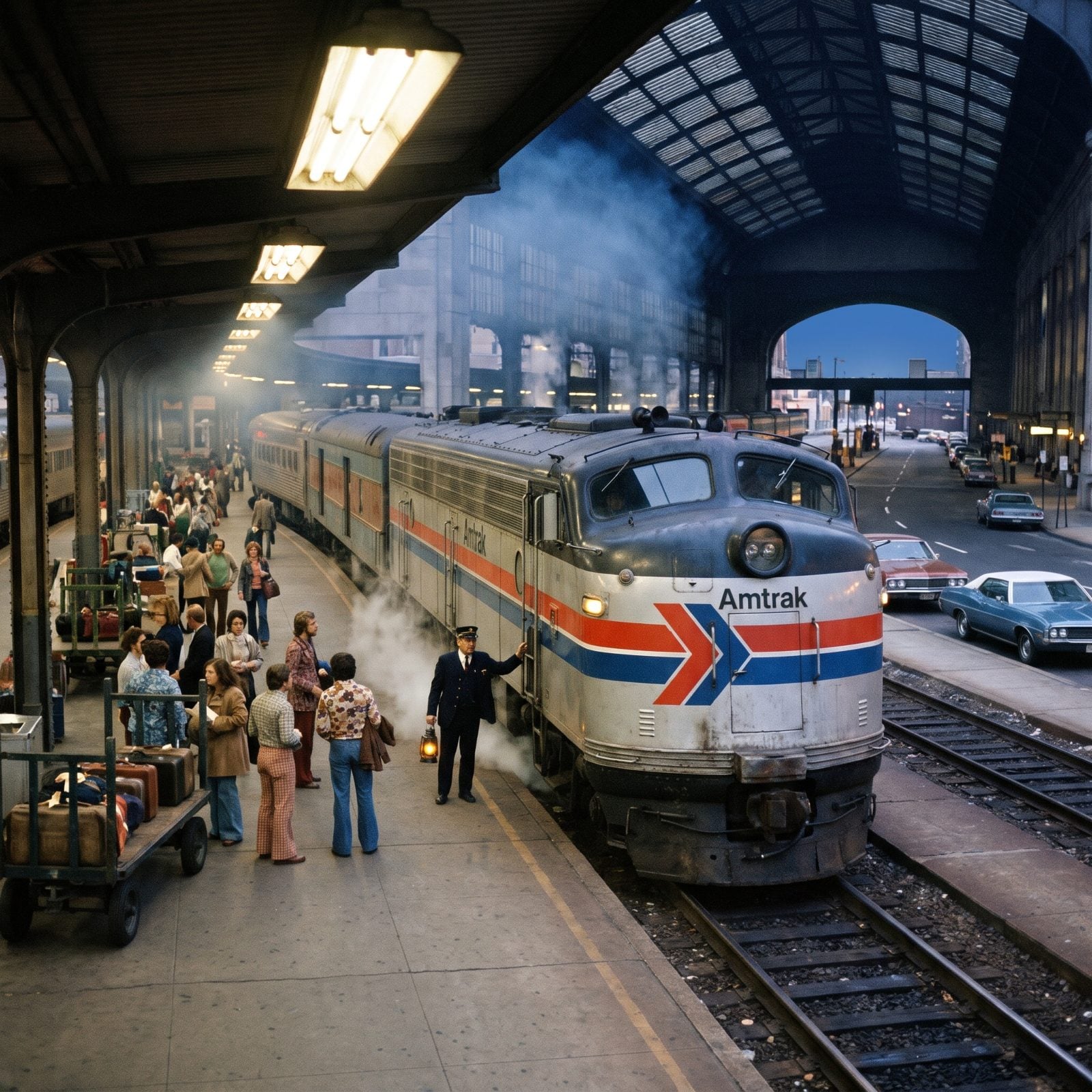
The National Limited belonged to the scrappy early Amtrak era, those years when the new national railroad was still trying to make sense of the mess of routes it inherited. New York to Kansas City, overnight, through Pittsburgh, Columbus, Indianapolis and St. Louis.
It ran on former Pennsylvania and B&O lines and never had an easy time of it. The track was rough, the schedule slipped, and Amtrak cut the train in 1979 when it trimmed the map. A lot of mid-America lost its one-seat ride east that fall, and nothing ever replaced it.
Desert Wind, Amtrak’s Los Angeles-to-Salt Lake Run Across the Mojave
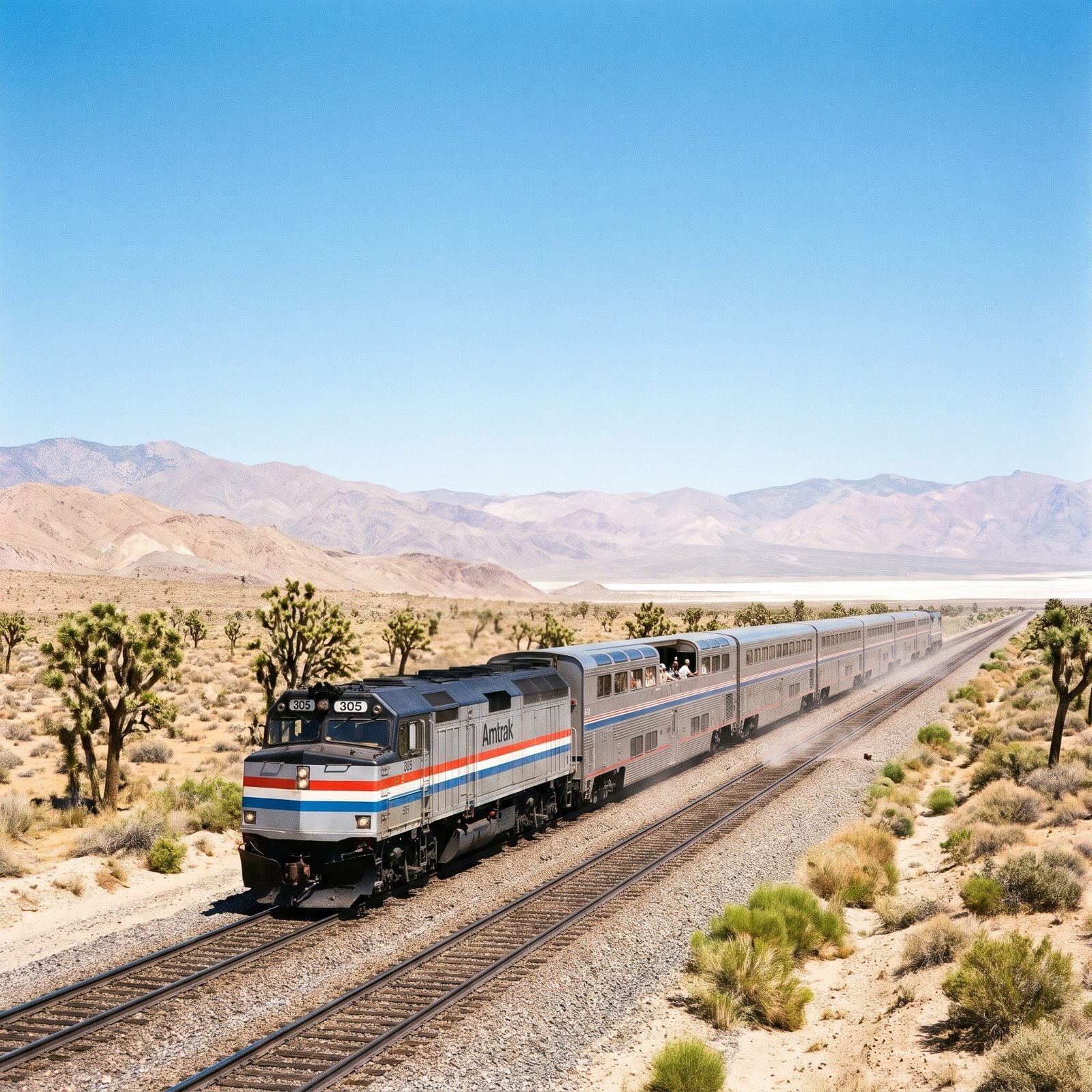
Here was a train named exactly right. The Desert Wind ran Los Angeles to Salt Lake City by way of Las Vegas, slicing across the Mojave on old Union Pacific iron.
Tall Superliner cars handed you a second-story view of some genuinely empty country. Dawn over the salt flats, the Wasatch Range rising ahead, a landscape most Americans only ever glimpsed from an airplane window somewhere up near cruising altitude. Amtrak pulled it in 1997, another budget casualty, and Las Vegas has been wanting a train back ever since. Still waiting.
Pioneer, Amtrak’s Lonesome Haul Through Idaho and Eastern Oregon
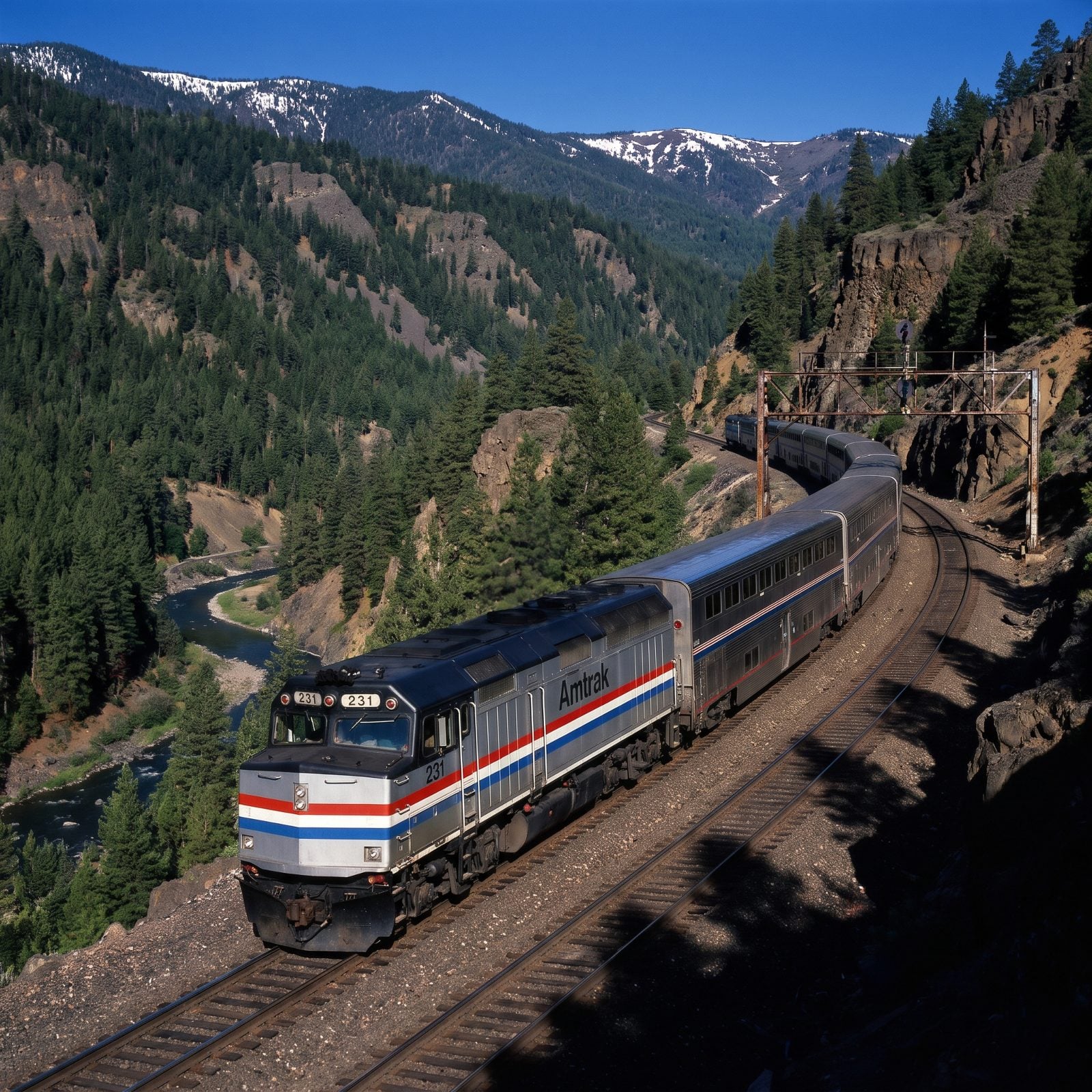
The Pioneer served country almost nobody else bothered with. Boise, Pocatello, the long empty miles of eastern Oregon and southern Idaho where the next town might sit an hour of highway down the road.
It split off the California Zephyr at Salt Lake City and climbed up through Pocatello to Boise, Portland and Seattle. For a lot of small Idaho cities, it was the only public transportation that left the state at all.
Gone in 1997. There are people in Boise still writing letters about bringing it back, and honestly, we don’t blame them.
Montrealer, Amtrak’s Overnight Sleeper from Washington to Canada
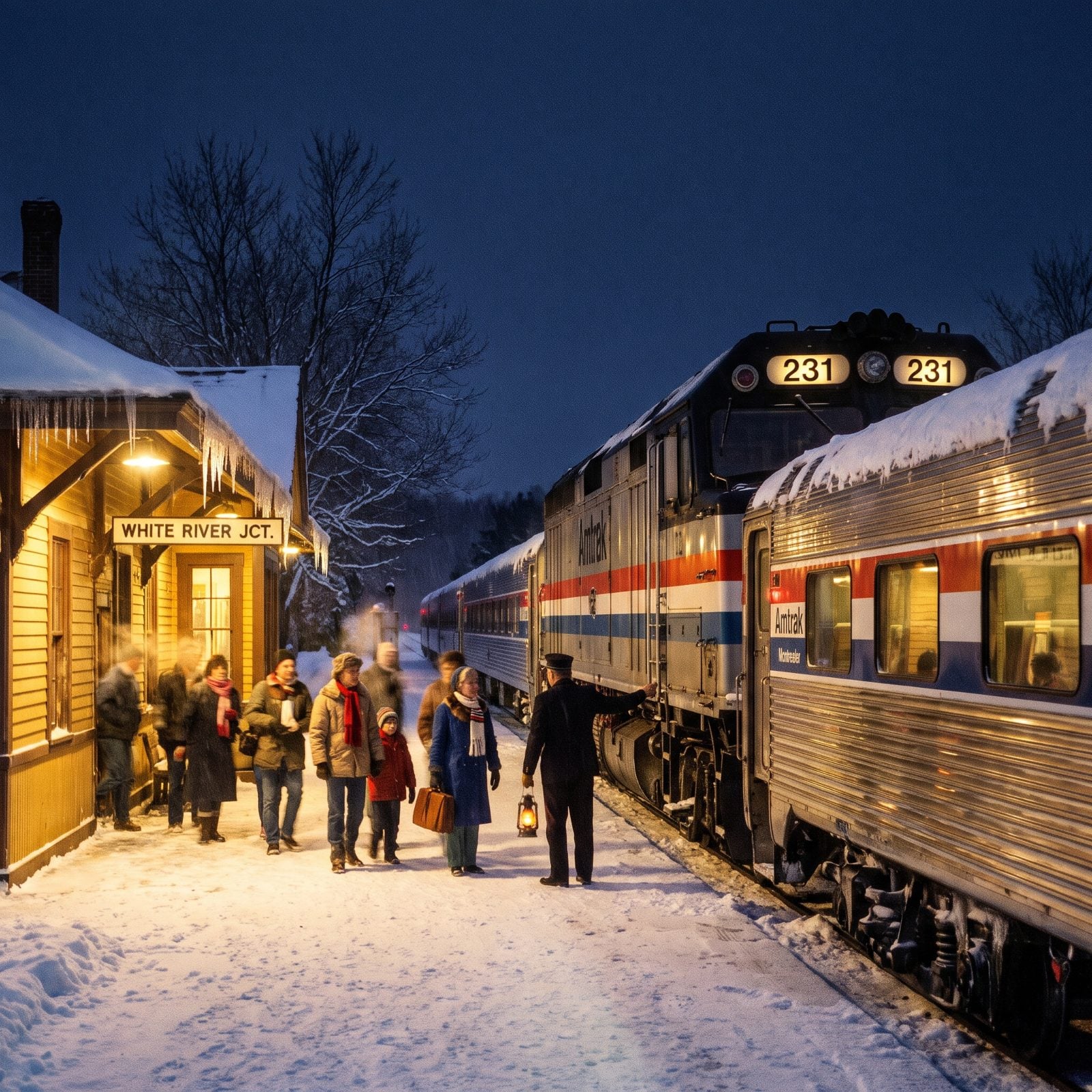
An overnight train built for sleeping through New England and waking up in Canada. The Montrealer ran Washington to Montreal, climbing up through Vermont on tracks that wound past snow-covered villages you’d never see any other way than from behind a windshield.
Winter was its best season. You boarded in the dark at some little depot with snow coming down past the platform lights, settled into a sleeper, and morning brought the border and a whole different country out the window.
International Limited, Amtrak and VIA Rail’s Chicago-to-Toronto Crossing
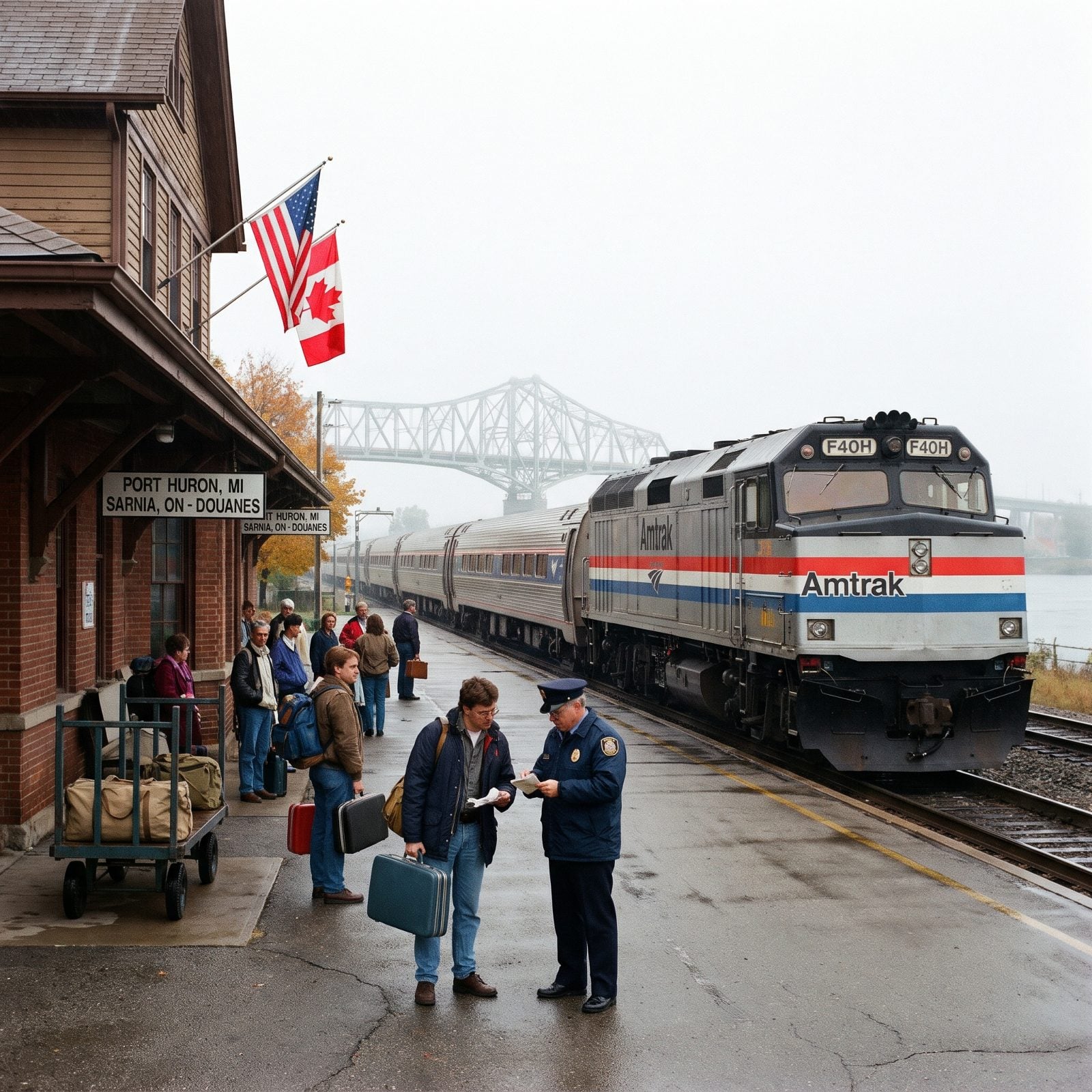
Two countries, two railroads, one train. The International Limited ran Chicago to Toronto, getting handed off between Amtrak and Canada’s VIA Rail somewhere around the border at Port Huron and Sarnia.
Customs stopped the train and walked the aisles. That added time, sure, but it gave the whole trip the feel of real international travel, the kind nobody waves you through at an airport jet bridge. Border hassles and funding squabbles finally did it in around 2004, and the through service came apart. You can still get most of the way by train. You just can’t do it on one anymore.
Metroliner, America’s Original High-Speed Northeast Corridor Service
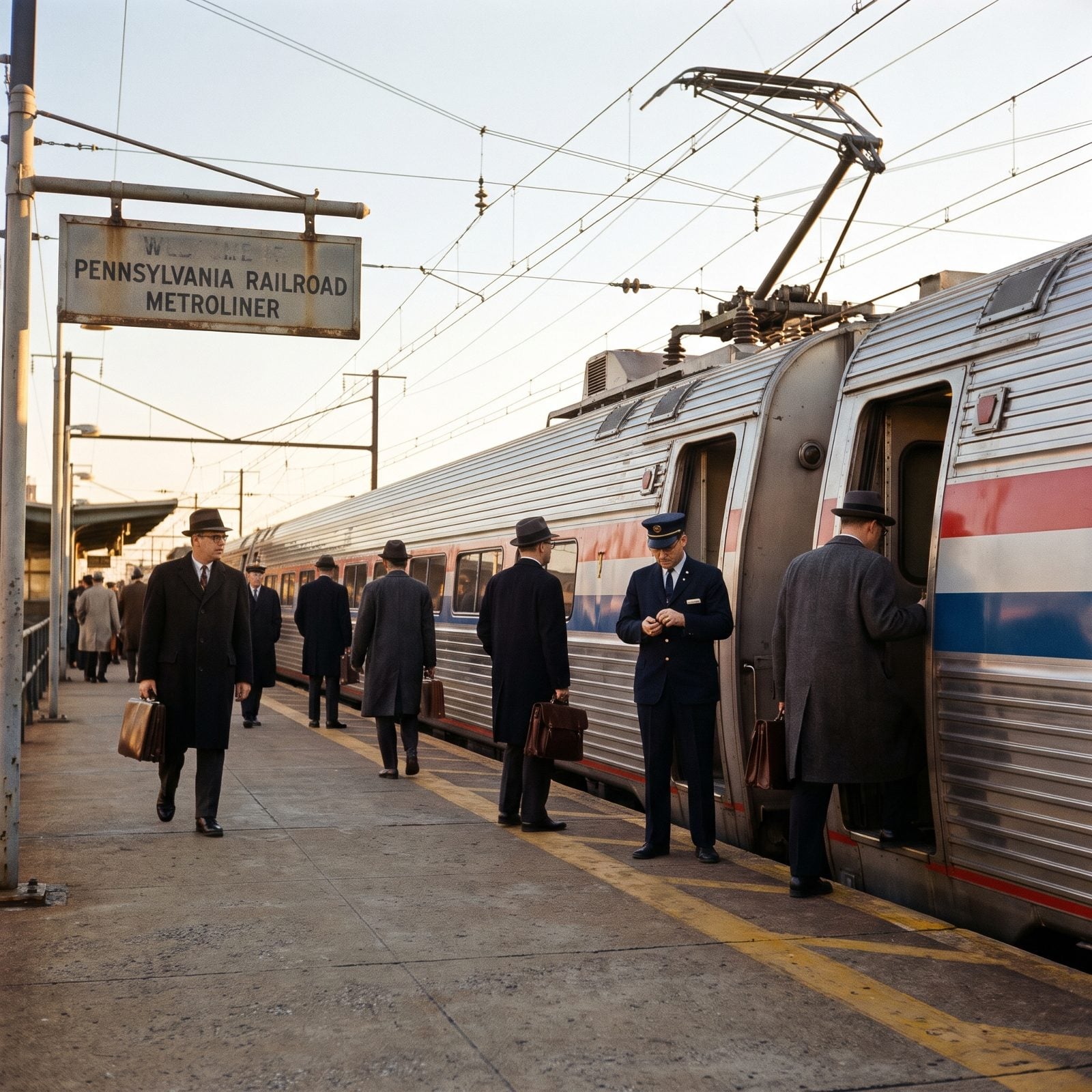
Fastest thing on American rails when it launched in 1969, and it wore the title proudly. The Metroliner ran New York to Washington at speeds touching 120 mph, a self-propelled electric answer to the jet age before anyone used the word corridor as a brand.
The pitch was simple: beat the shuttle flight, city center to city center. For a while it did exactly that, and businessmen traded the LaGuardia scramble for a reserved seat, a phone in the car, and a cocktail that stayed level the whole way.
Champion, Atlantic Coast Line’s New York, Florida Streamliner
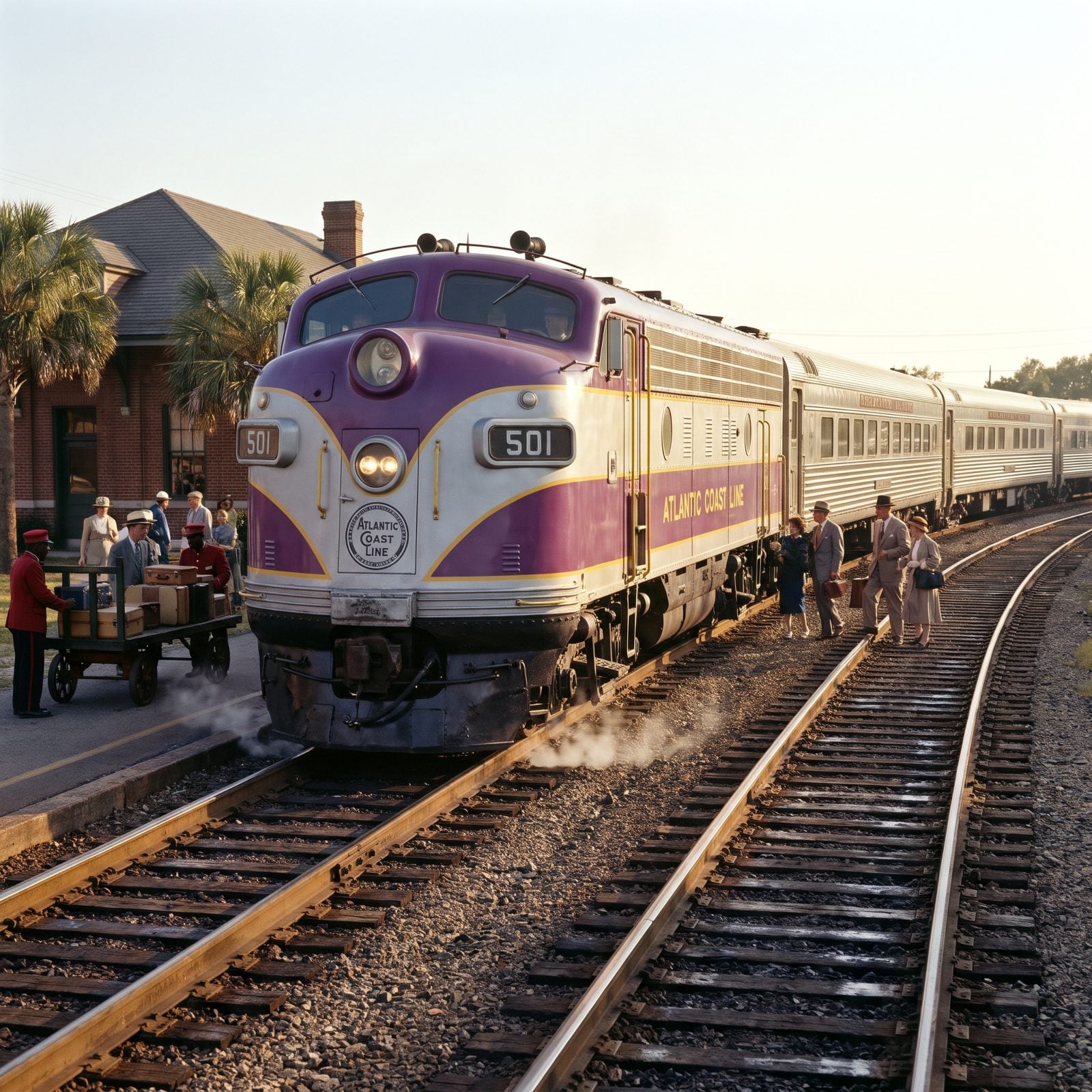
Florida on a budget, basically. The Champion debuted in 1939 as the coach-fare counterpart to the fancier Florida specials, proving a working family could reach Miami in streamlined comfort without springing for a Pullman berth.
Purple and silver, running down the Atlantic Coast Line, it hauled snowbirds south every winter for decades. The East Coast and West Coast Champions split traffic between the two Florida shorelines. Then Amtrak took over in 1971, and by the end of the decade the name had quietly vanished, folded into something less romantic.
South Wind, Pennsylvania Railroad’s Streamliner to Miami
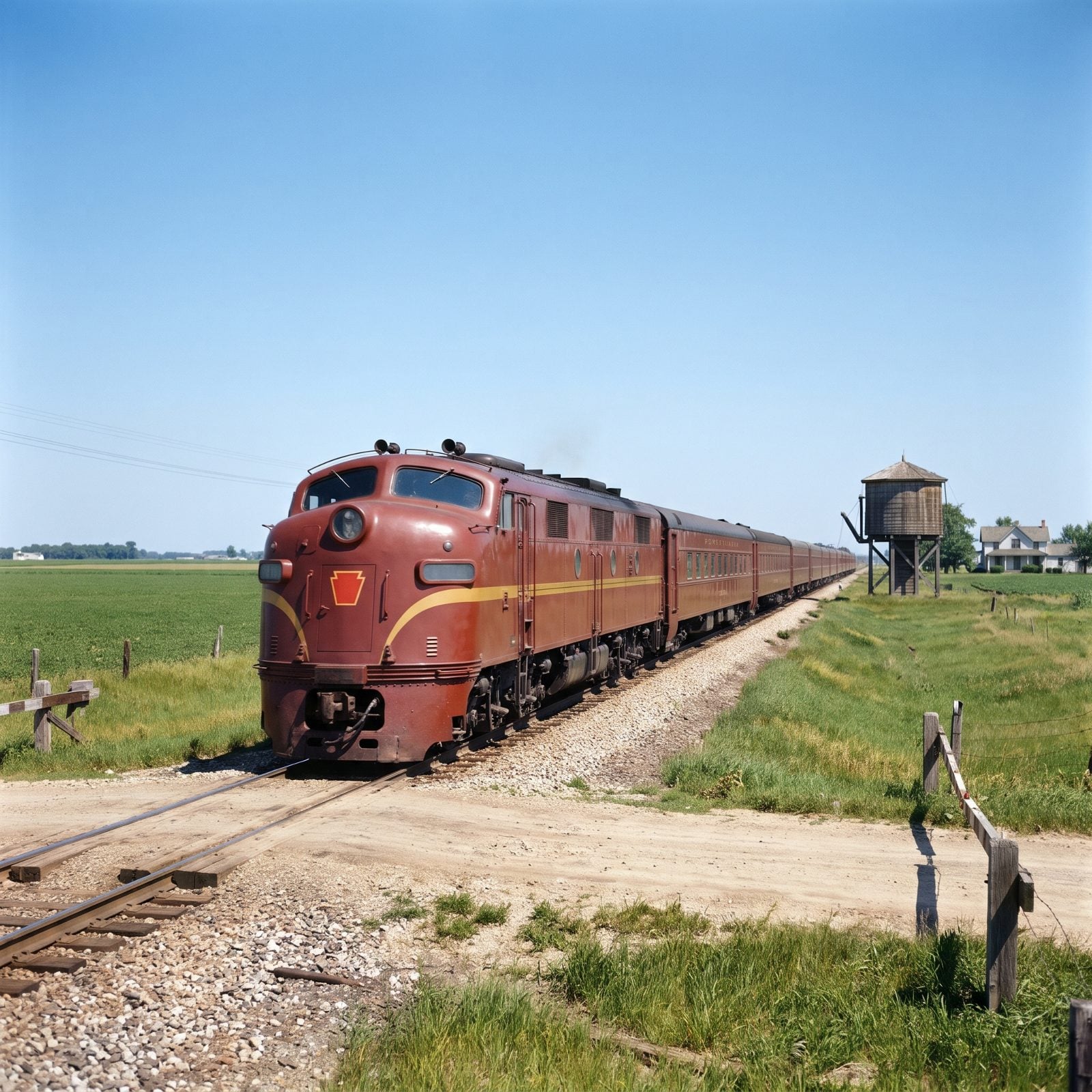
A three-railroad handshake dressed up as one train. The South Wind started in 1940, running Chicago to Miami over Pennsylvania, Louisville & Nashville, and Atlantic Coast Line tracks, every road taking its turn at the throttle.
That cooperation is the detail nobody mentions. Named trains often rode rails owned by three or four companies, each one kicking in crews and equipment, the paint schemes changing as the miles rolled on. The South Wind eventually became the Floridian under Amtrak before that service too got the axe in 1979.
Royal Palm, Southern Railway’s Cincinnati, Florida Train
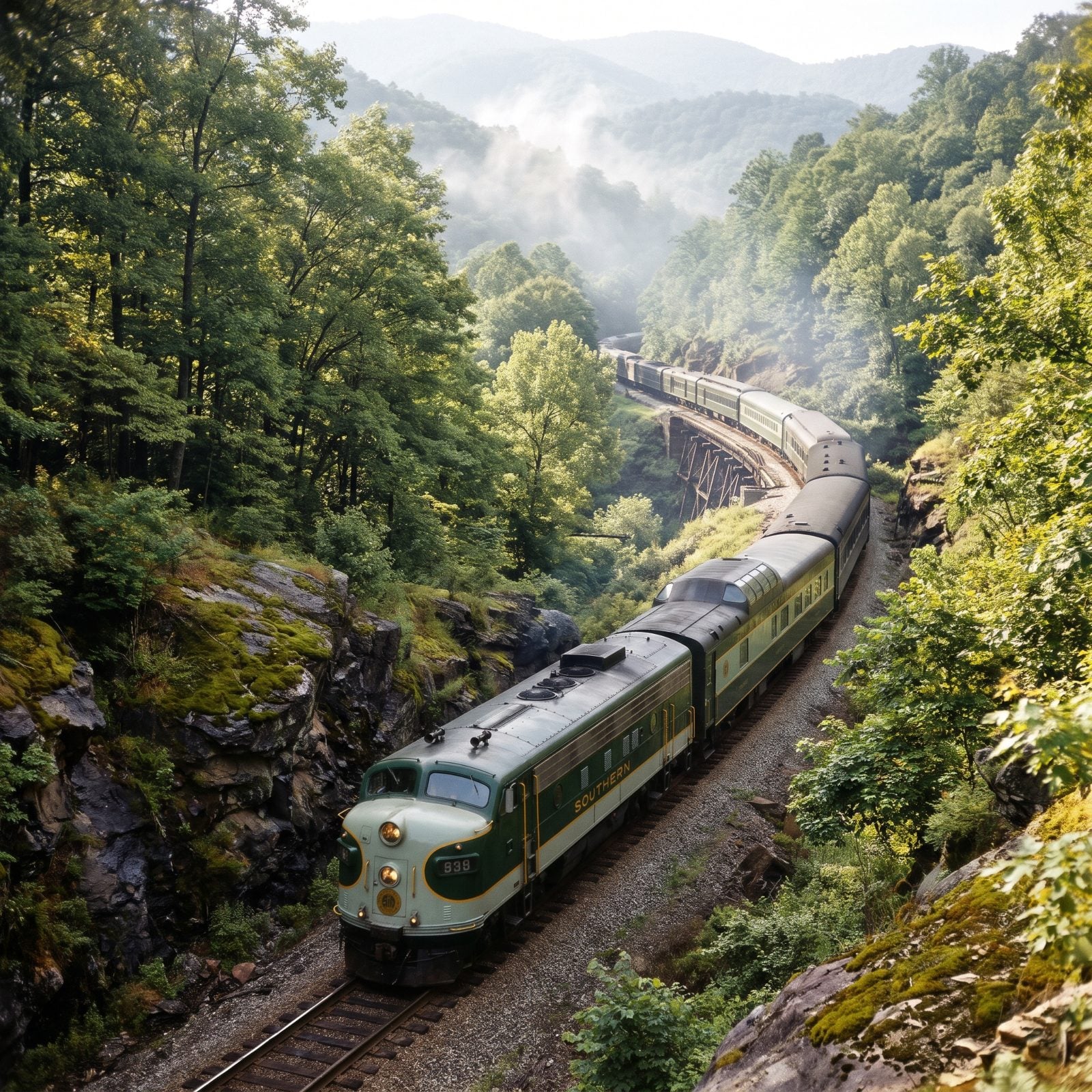
The Royal Palm carried Midwesterners south through the mountains, Cincinnati down to Jacksonville and on into Florida. Southern Railway green and gold, winding through Kentucky and Tennessee hill country that made for slow, scenic miles.
It was never the flashiest name on the roster, and that was part of its charm. A solid, dependable train for people heading to warm weather who cared more about arriving than about being seen doing it. The name faded in the late 1960s as ridership thinned.
Dixie Flagler, Florida East Coast’s Chicago, Miami Streamliner
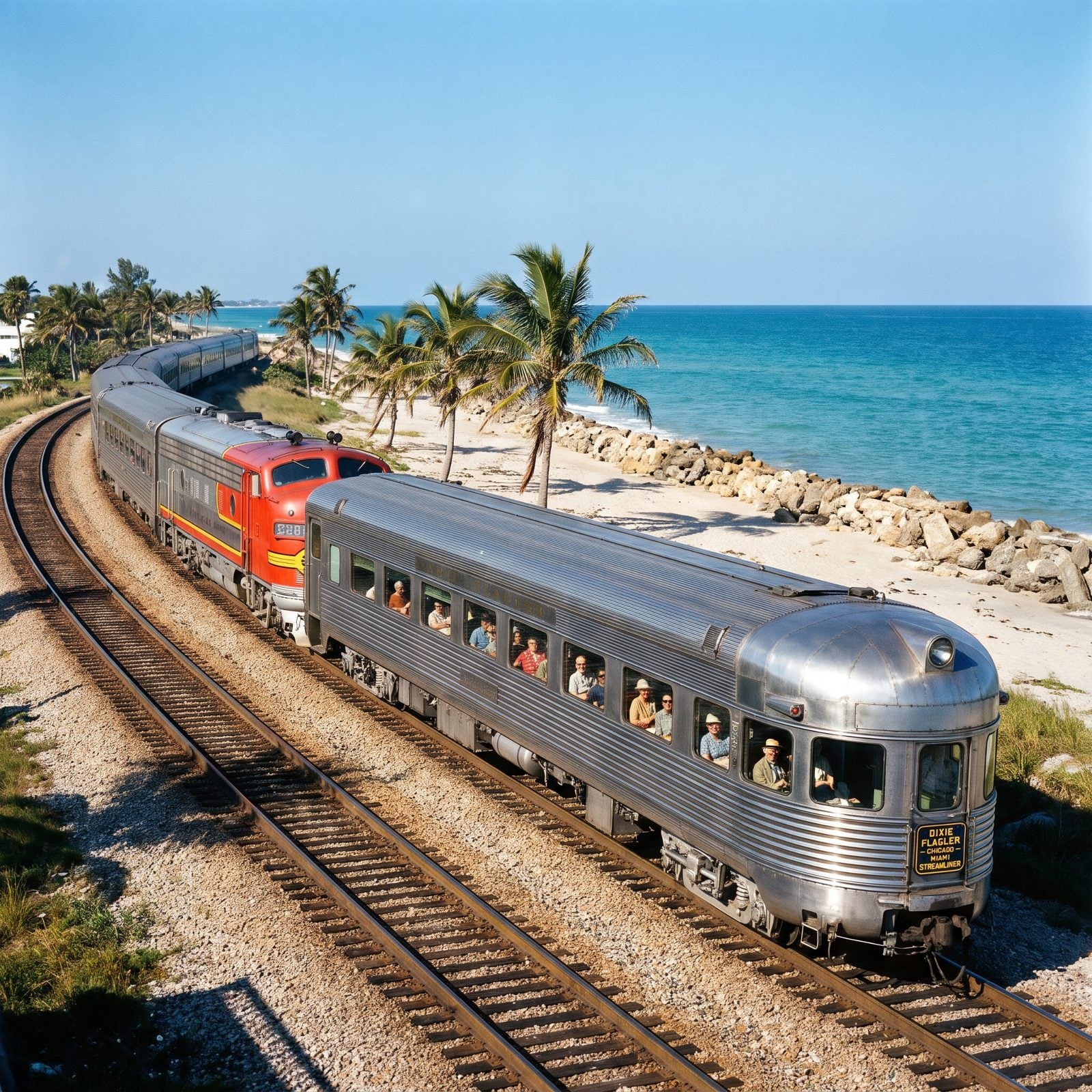
Named for Henry Flagler, the man who dragged the railroad down Florida’s east coast in the first place. It carried Chicago travelers straight to Miami, running as part of that rotating Chicago-Florida trio and sharing days of the week with the South Wind and the City of Miami.
Here is the odd bit. The three competing routes coordinated so tightly that passengers often had no idea which named train they were riding. They just knew they were going to Florida, and that was enough.
Humming Bird, Louisville & Nashville’s Cincinnati, New Orleans Streamliner
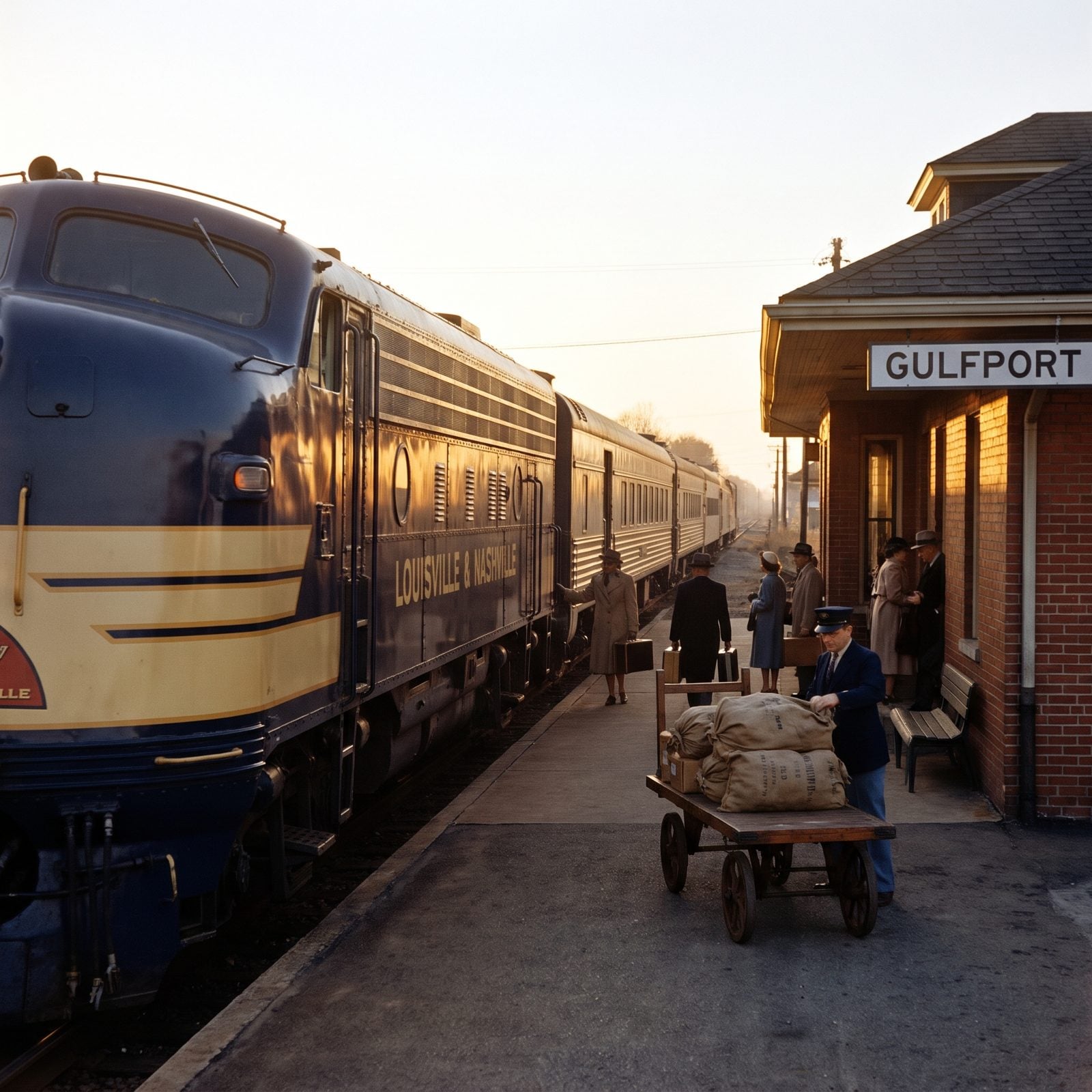
Dark blue and cream, one of the prettiest paint jobs the South ever put on rails. The Humming Bird launched in 1946, connecting Cincinnati to New Orleans through Nashville and Montgomery, a fast run through the heart of Dixie.
The L&N took pride in this one. Reclining seats, a diner turning out real Southern cooking, a tavern-lounge for the long evening stretch. It ran into the early 1970s, one of the last holdouts before Amtrak thinned the timetable.
Nancy Hanks II, Central of Georgia’s Atlanta, Savannah Streamliner
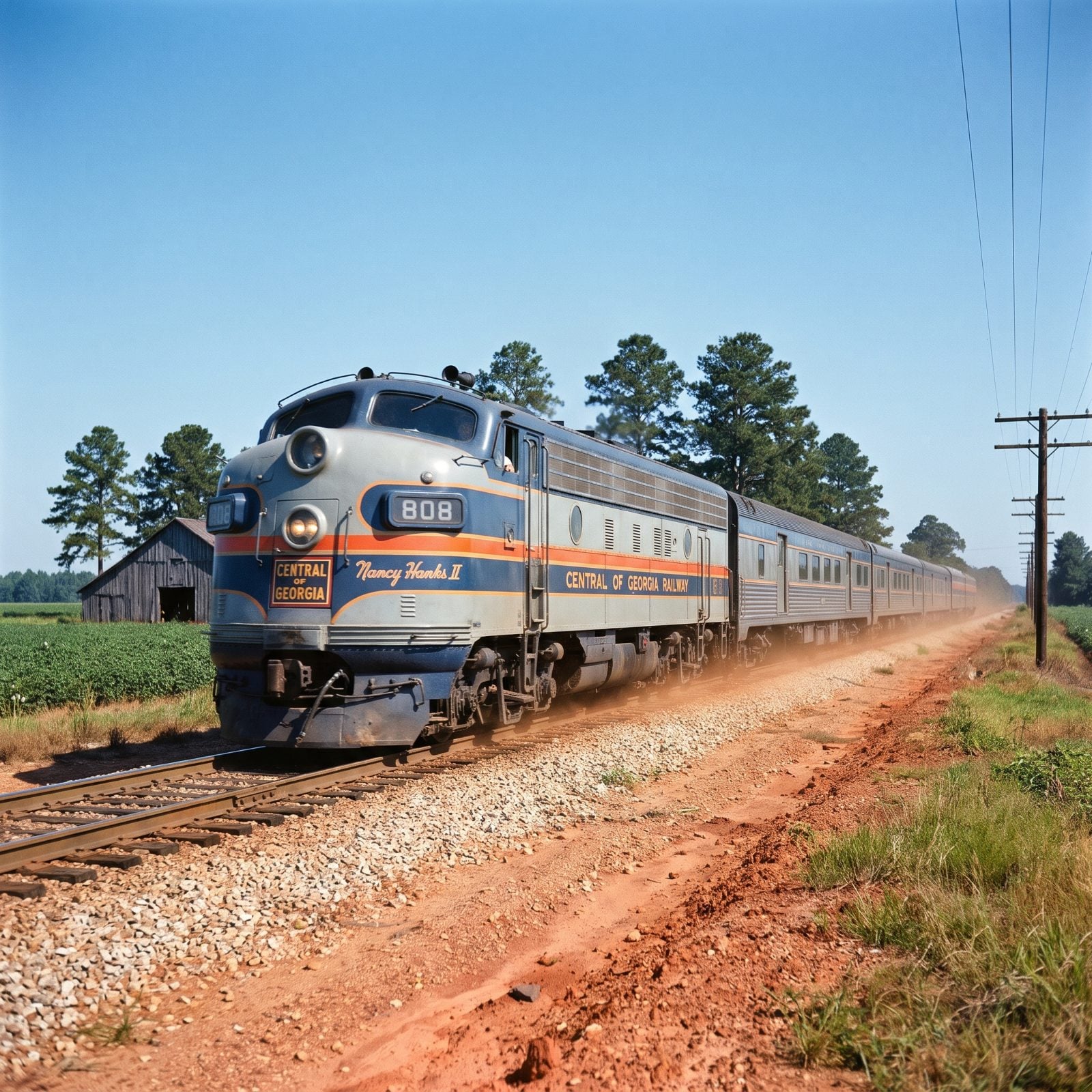
Named after a racehorse, and it ran like one. The Nancy Hanks II started in 1947, Atlanta to Savannah in about five and a half hours, a lightweight streamliner that locals loved out of all proportion to its short route.
A regional train, not a transcontinental headline-grabber. And yet Georgians still talk about it. A single blue and gray flyer, running back and forth across the state, became a point of pride for towns it barely slowed down for. It lasted until 1971.
Tennessean, Southern Railway’s Washington, Memphis Streamliner
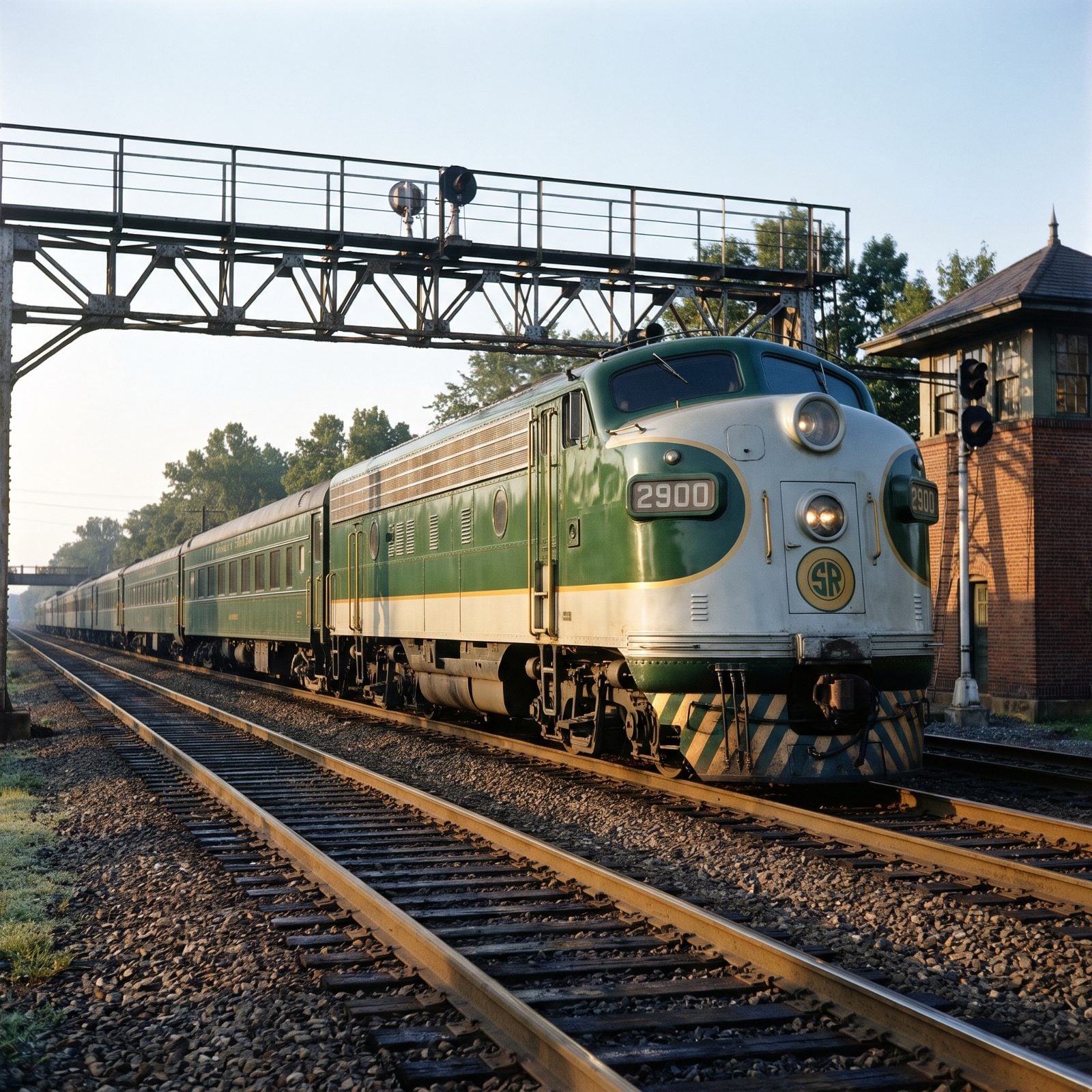
A long diagonal across the map. The Tennessean ran Washington to Memphis starting in 1941, linking the capital to the Mississippi through Bristol, Knoxville, and Chattanooga, green the whole way.
What most folks forget is how much work it took to keep a name like this running. Different railroads, crew changes in the dead of night, equipment pooled and swapped. The train carried a name and a schedule, but behind it stood a small army of people most passengers never laid eyes on. The service ended in 1968.
City of Miami, Illinois Central’s Streamliner to South Florida
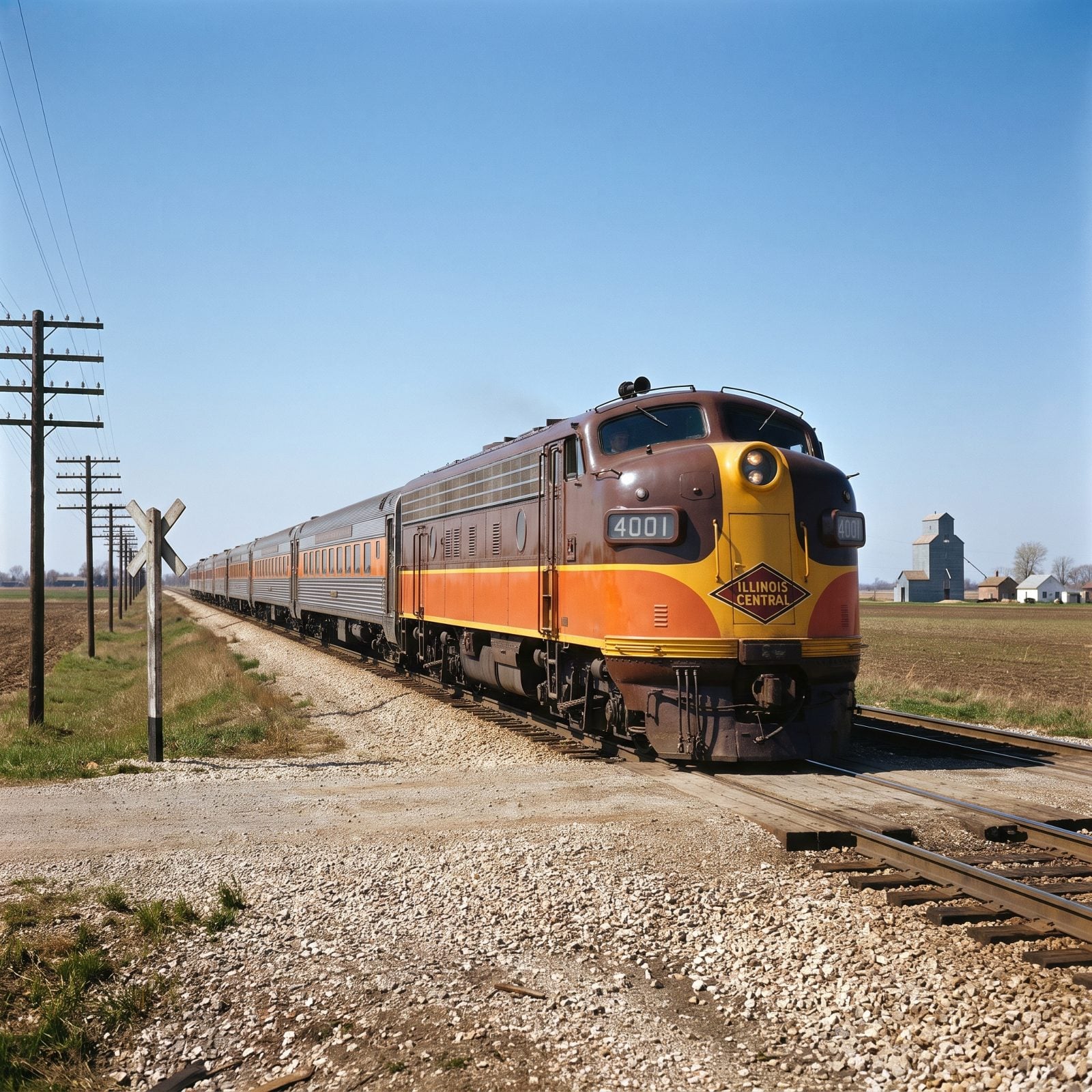
The Illinois Central’s entry in the great Chicago-to-Florida race. The City of Miami debuted in 1940 with a tropical color scheme that looked like it belonged on a postcard, bands of orange and yellow against brown.
It ran every third day as part of the rotating pool, handing off to the L&N and FEC on its way south. When the Florida East Coast stopped handling passenger trains in the 1960s, the route was rejiggered, and the name eventually disappeared into Amtrak’s early timetable.
Silver Comet, Seaboard Air Line’s New York, Birmingham Streamliner
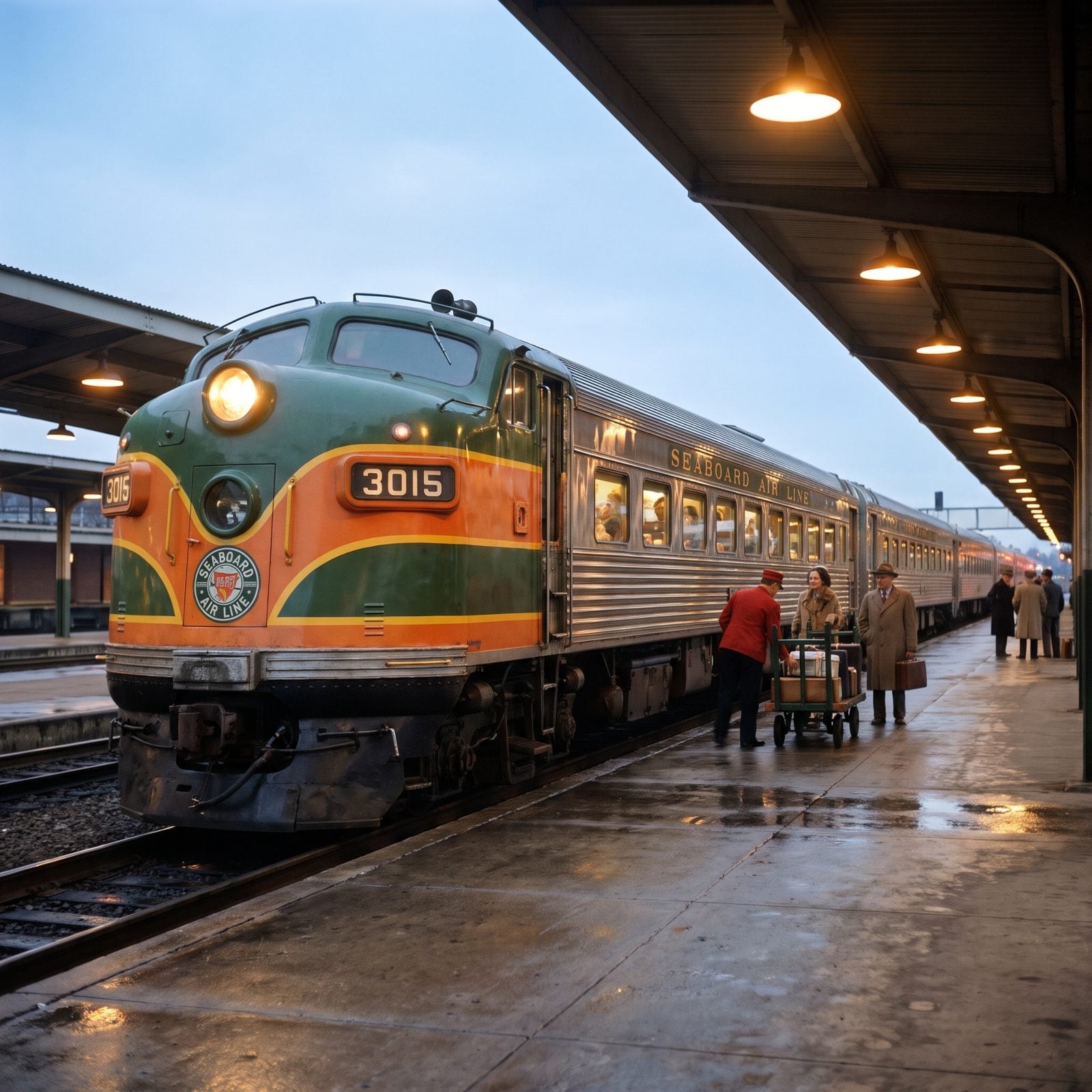
Seaboard Air Line’s long reach northward. The Silver Comet launched in 1947, running New York down to Birmingham through Washington, Richmond, and the Carolinas, stainless cars gleaming under every station light.
The Air Line in the name never meant aircraft. It was old railroad language for the shortest, straightest route between two points, a marketing flourish from the days before airplanes even existed. The Comet ran until 1969, when Seaboard’s merger and declining travel put the name to rest.
Rebel, Gulf, Mobile & Northern’s Art Deco Streamliner
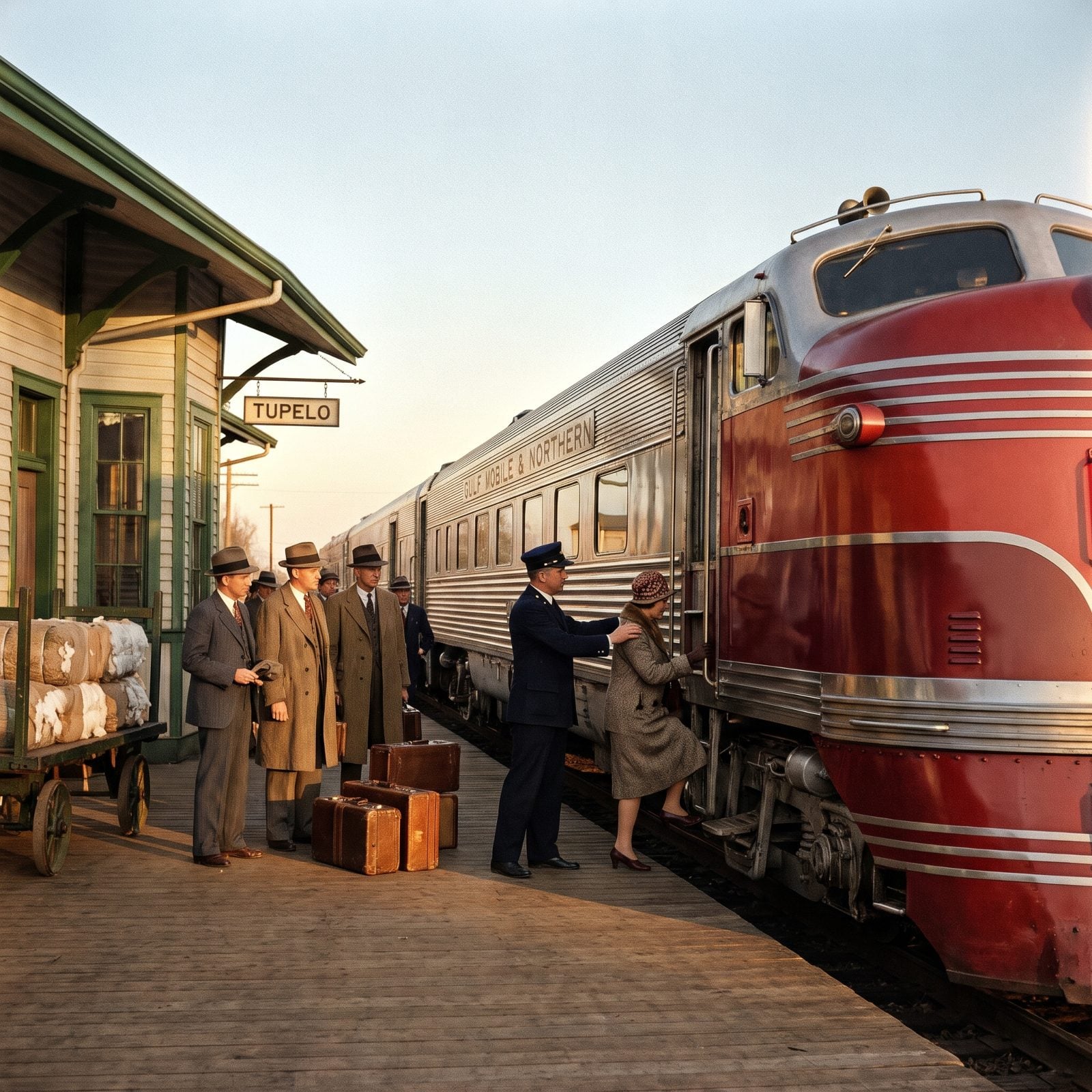
The Rebel was the first streamliner to run in the Deep South, and it pulled off something nobody saw coming: a stewardess-nurse aboard a train back in 1935. Gulf, Mobile & Northern wanted the thing to feel like flying before most folks had ever set foot in an airplane.
A fire-truck-red diesel locomotive pulling a long string of fluted stainless-steel coaches. It ran between Jackson and New Orleans, later up toward St. Louis. The coaches gleamed with polished steel and glowed with indirect lighting, which was quietly radical for a railroad serving towns with one traffic light.
Powhatan Arrow, Norfolk & Western’s Cincinnati, Norfolk Streamliner
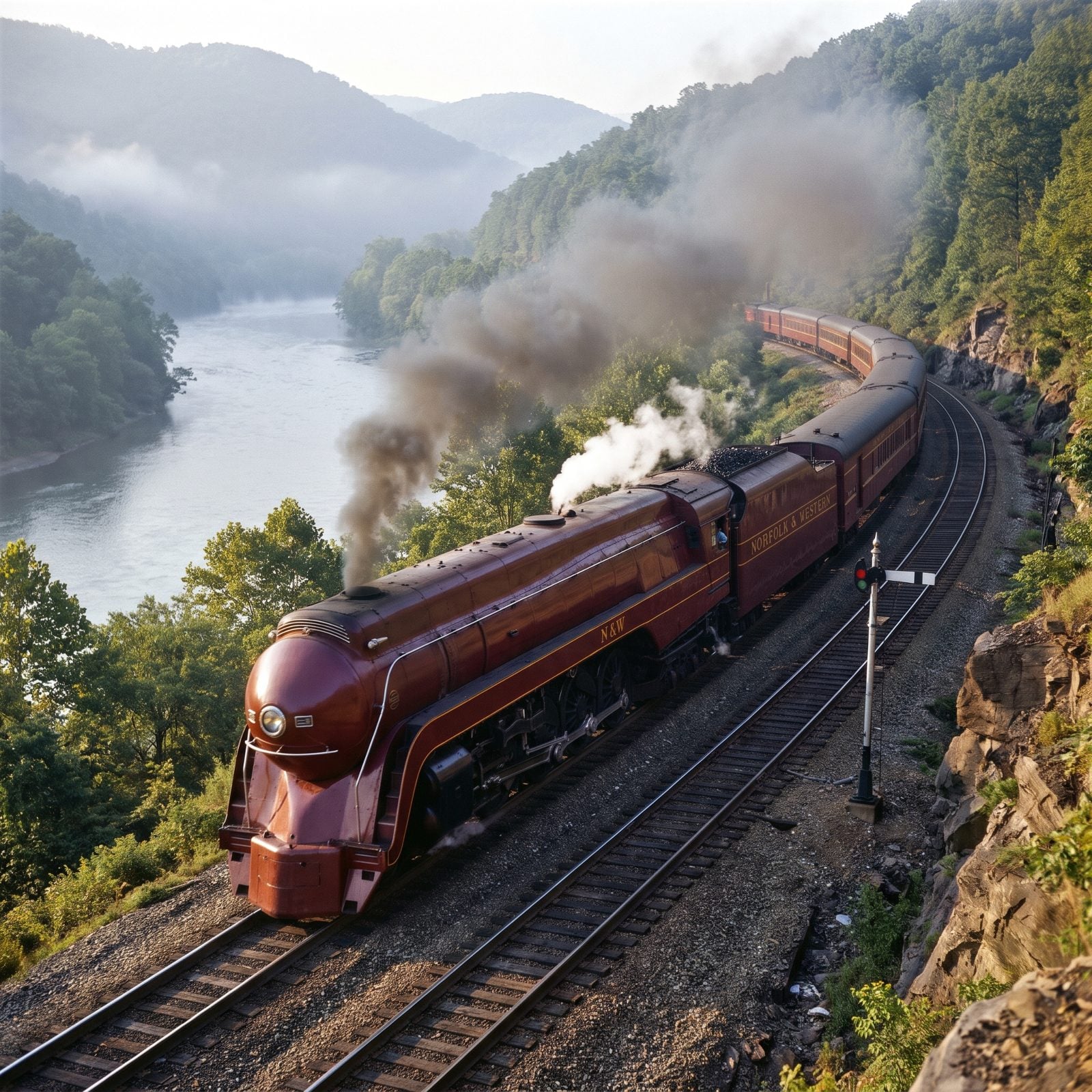
Ask anyone who loved steam about the prettiest train America ever ran, and the Powhatan Arrow comes up fast. The class J pulling its Tuscan red cars was a streamlined 4-8-4 that could hold 70 mph through terrain that had no business allowing it.
Launched in 1946, it ran Norfolk to Cincinnati across the coalfields the railroad was built to serve. The J engines rank among the finest steam locomotives ever constructed, and the N&W kept running them long after other roads surrendered to diesel. That stubbornness is why this one still breaks hearts.
Pocahontas, Norfolk & Western’s Overnight Appalachian Train
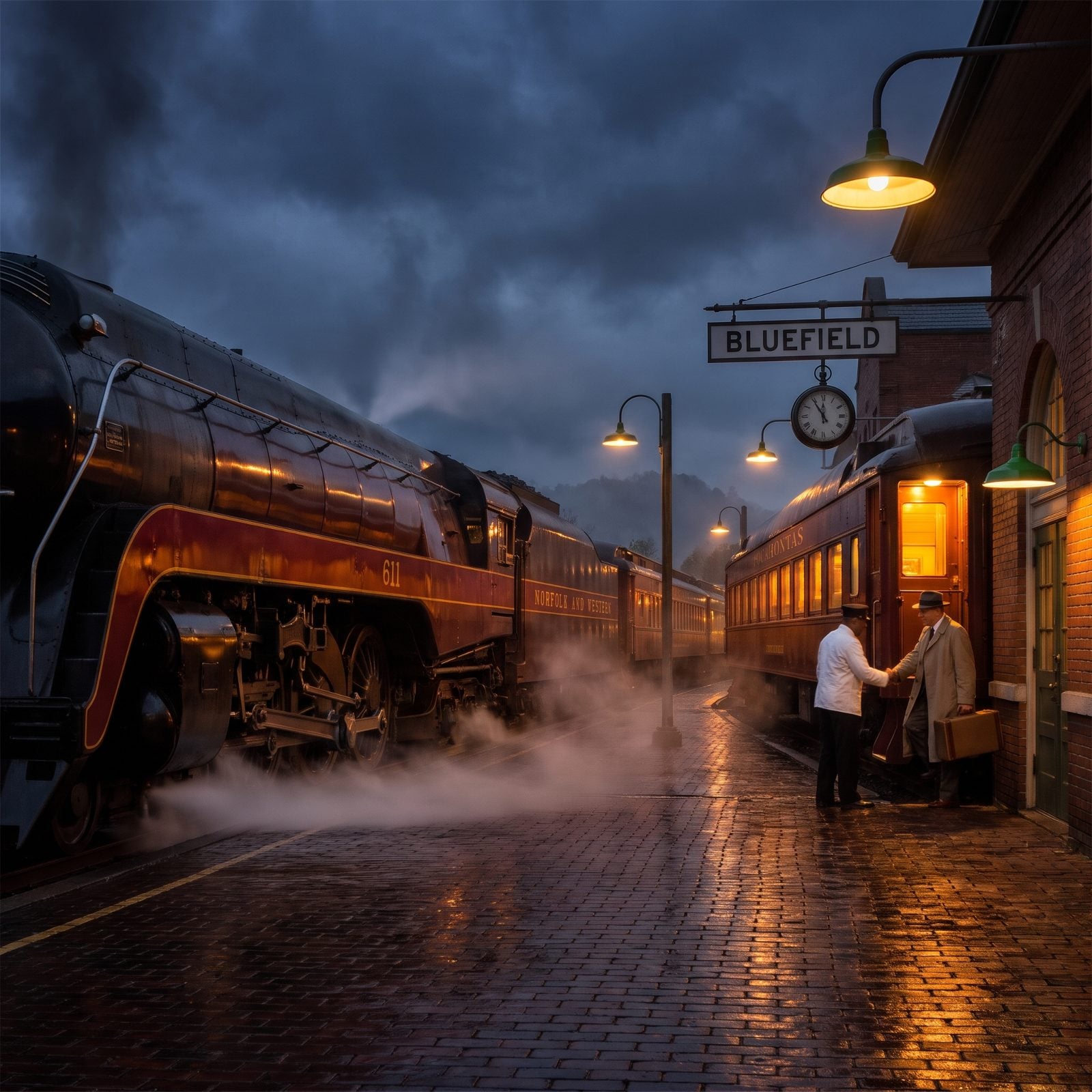
While the Powhatan Arrow got the daylight glory, the Pocahontas did the honest work. It ran the same Norfolk-to-Cincinnati route overnight, carrying sleepers for people who needed to wake up where they were going instead of watching the scenery crawl past.
You boarded in the dark, the porter turned down your berth, and the coalfields rolled by your window as sound more than sight. The train survived into the Amtrak transition era, one of the last reminders that the N&W took passengers as seriously as it took tonnage.
Mercury, New York Central’s Henry Dreyfuss-Designed Streamliner
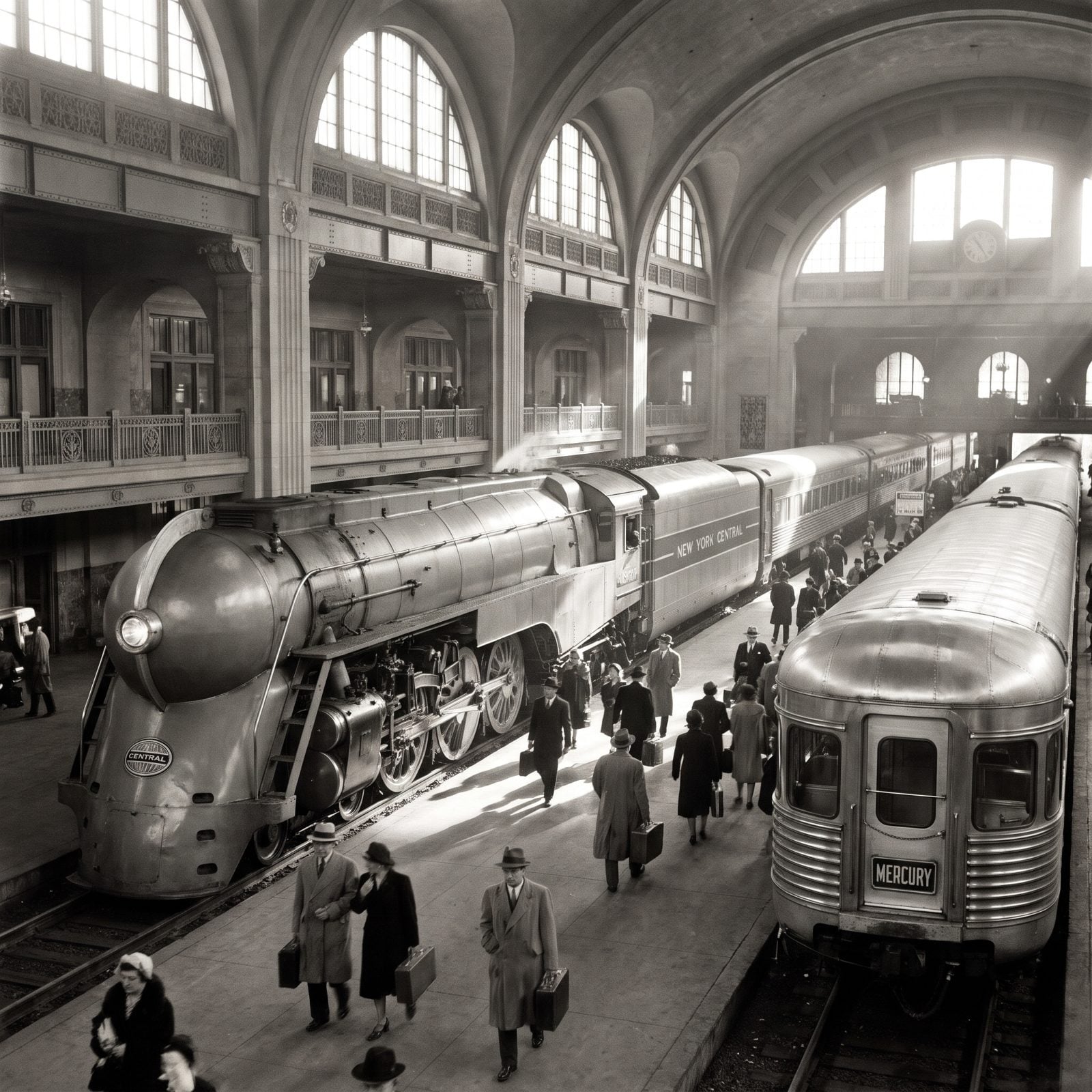
The Mercury was industrial design’s victory lap. Henry Dreyfuss wrapped a New York Central steam locomotive in a sleek shroud that left its driving wheels exposed and lit, and finished the train with a rounded observation end that looked like it fell out of a science-fiction magazine.
It ran Cleveland to Detroit and Cleveland to Cincinnati starting in 1936, and it mattered because it proved streamlined equipment could be something people lined up to ride. Dreyfuss later gave the same treatment to the legendary 20th Century Limited. The Mercury came first. The rough draft of greatness.
New England States, New York Central’s Boston, Chicago Streamliner
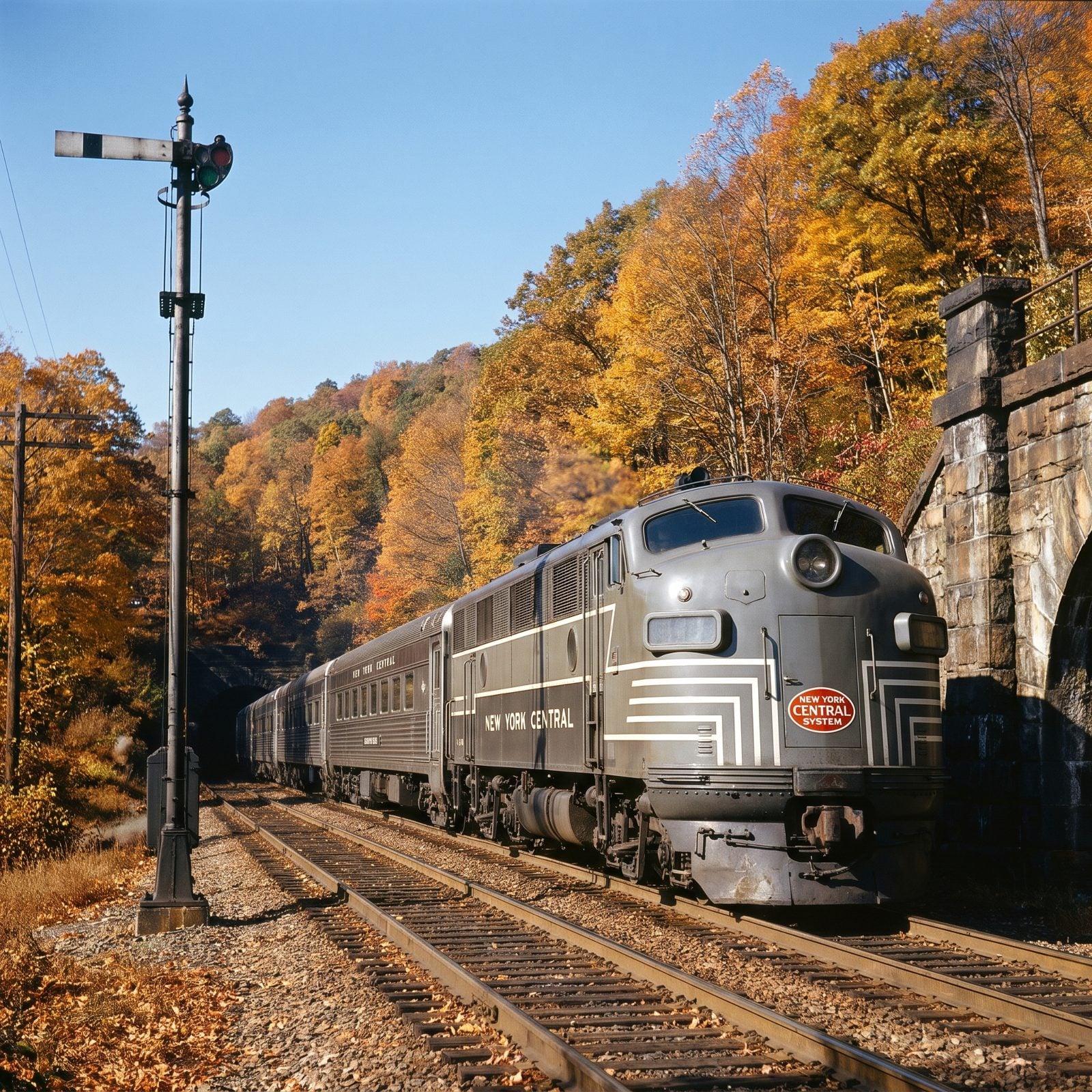
Boston never had a direct line to Chicago until the New England States tied them together across the Berkshires and the Mohawk Valley. It ran as the Boston section of the 20th Century Limited family, which meant it carried the Central’s full sleeper-and-dining treatment.
The route climbed through the Berkshire hills, past Albany, and out along the old Water Level Route. Mountains in the morning, the Great Lakes industrial corridor by afternoon. That’s about as much of America as one night’s sleep could show you.
James Whitcomb Riley, The Cincinnati, Chicago Streamliner
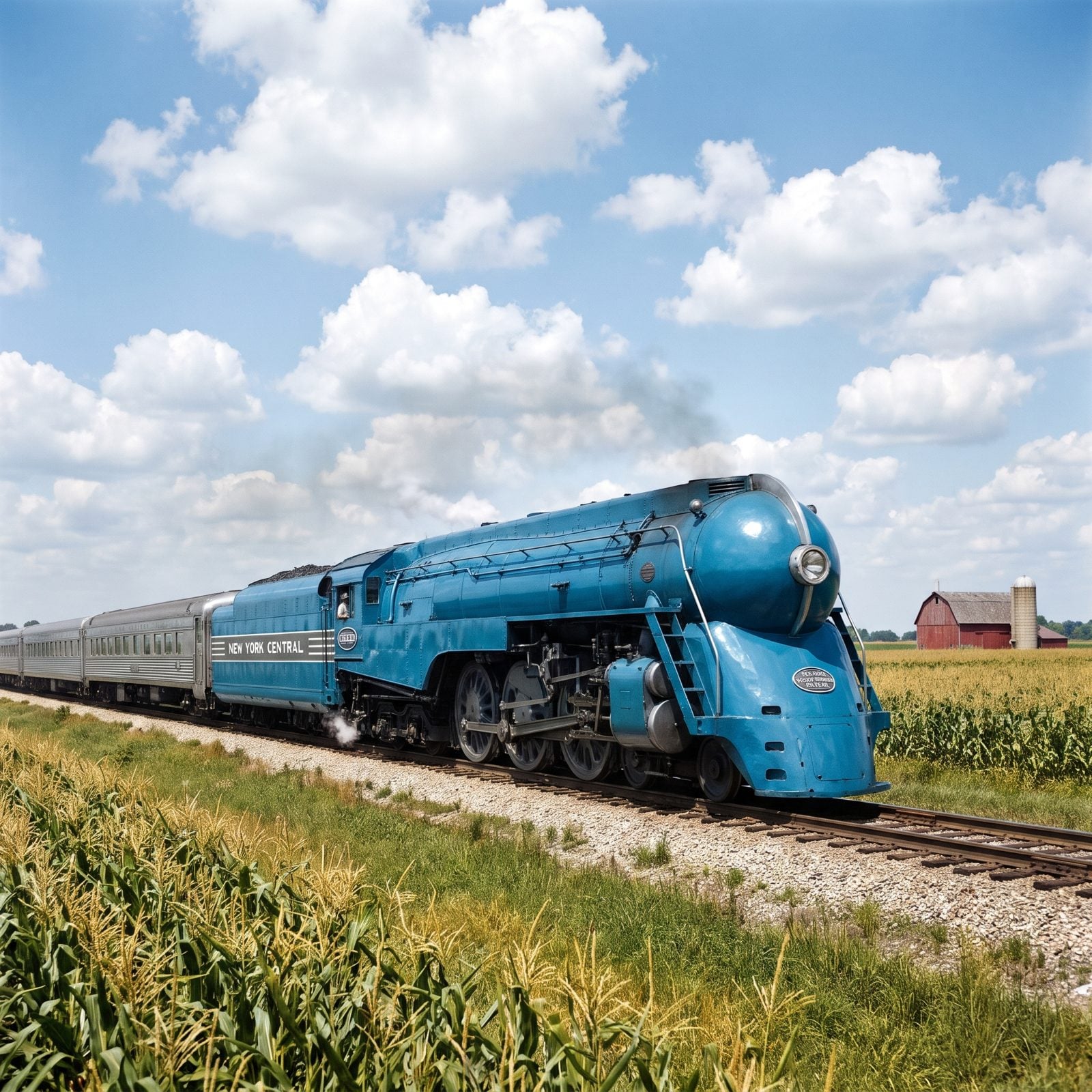
Named for the Hoosier poet who wrote about barefoot childhood summers, the James Whitcomb Riley linked Cincinnati and Chicago in a scheme so blue it looked painted by somebody in a good mood. It debuted in 1941 with lightweight cars and streamlined styling.
The name outlived the fancy equipment. It hung on through the lean years and into the early Amtrak schedule, one of those train names that refused to die even as the service around it withered. Fitting, somehow, that a train named for a sentimental poet was the one everybody remembered.
George Washington, Chesapeake & Ohio’s Washington, Cincinnati Train
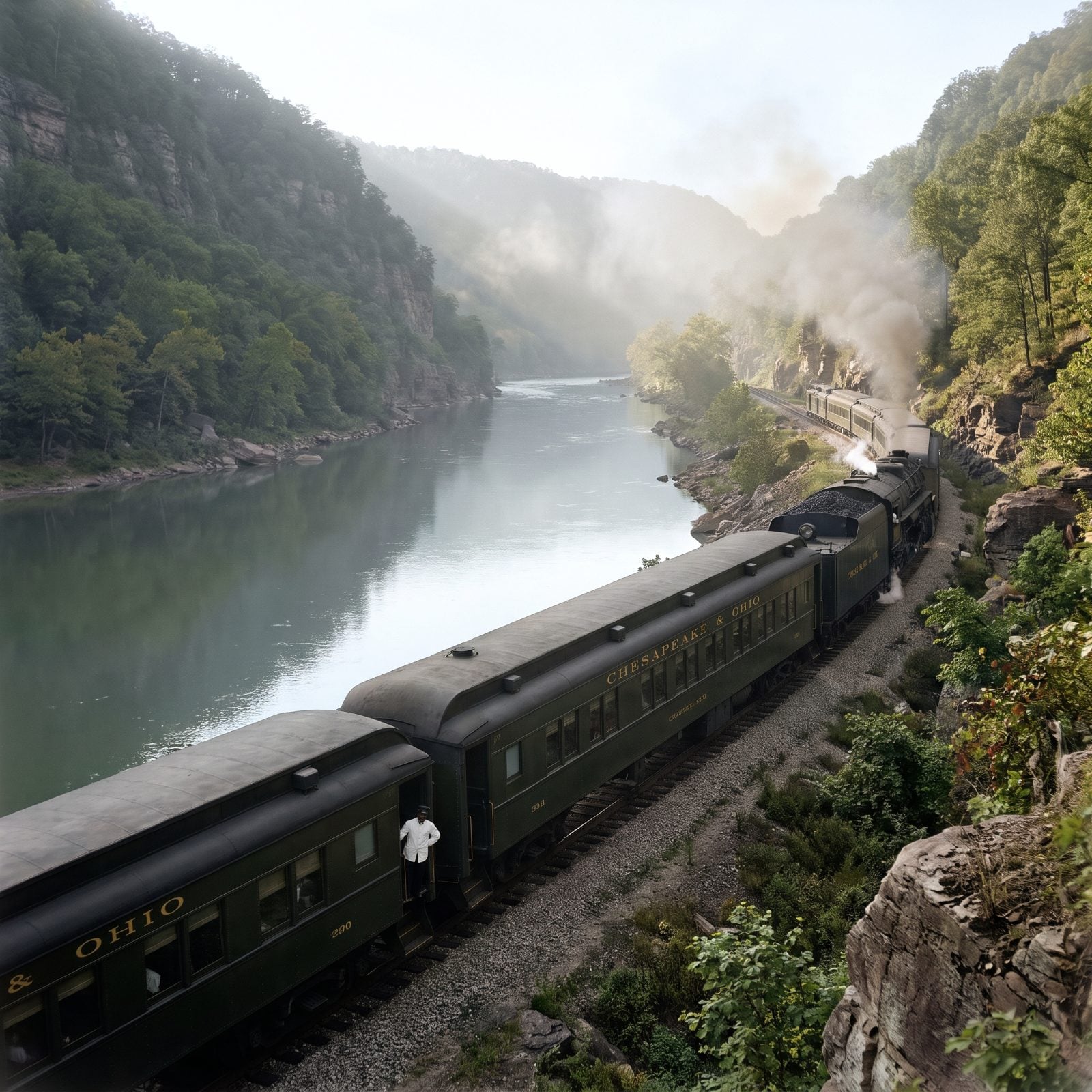
The C&O named this one for the founding father and dressed it to match the ambition. Introduced in 1932, the George Washington ran Washington to Cincinnati and Louisville through the New River Gorge, still one of the great scenic rail runs in the East.
This was the railroad’s flagship, the train the C&O put in front of the public with its “Chessie” cat mascot and a promise of a restful ride. The gorge did most of the selling. Sit in the dining car with coffee and watch cliffs go vertical outside the window for an hour straight, and you were sold.
Spirit of St. Louis, Pennsylvania Railroad’s New York, St. Louis Train
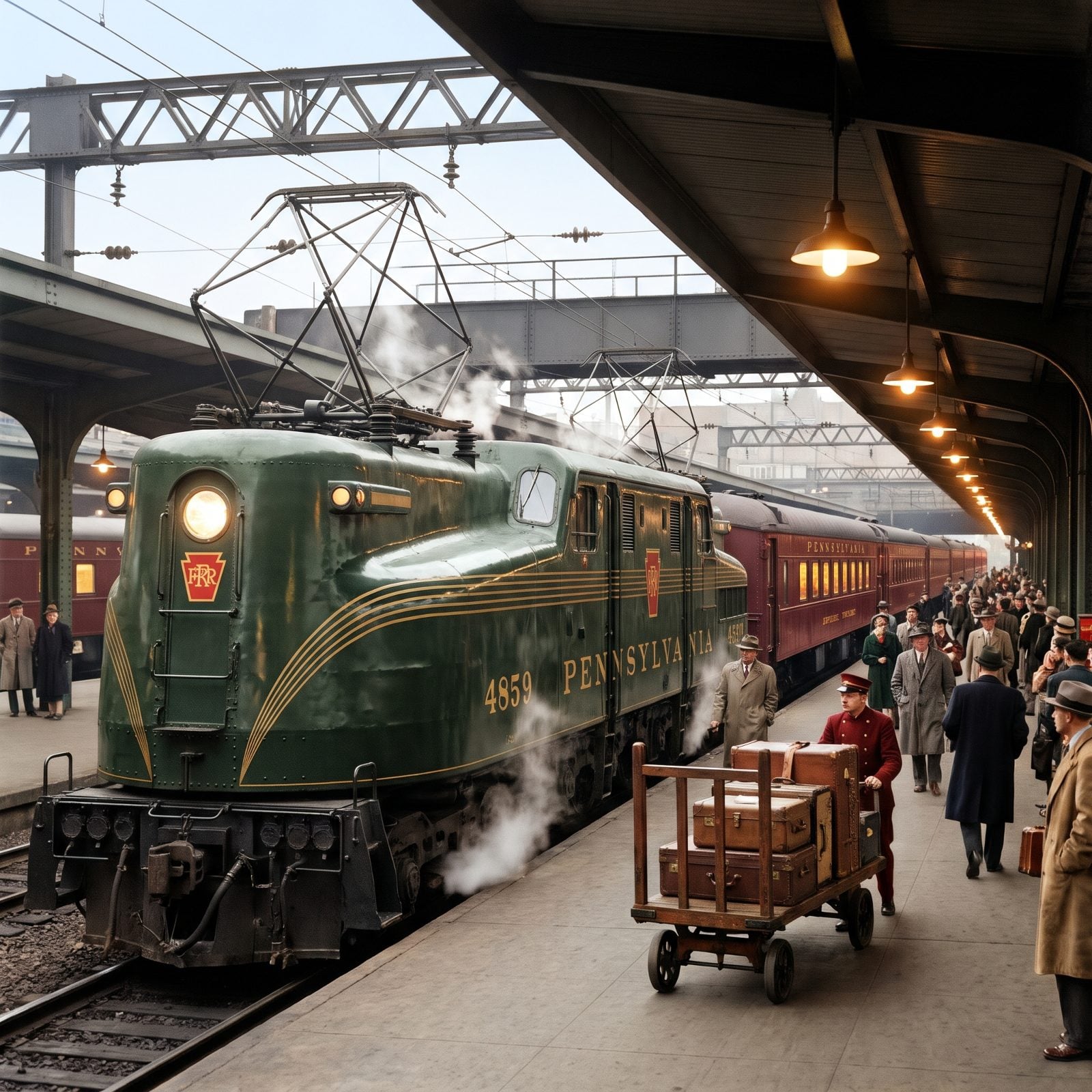
Named to ride the fame of Lindbergh’s airplane, the Spirit of St. Louis was the Pennsylvania Railroad’s overnight run between New York and St. Louis. It debuted in 1927, days after the flight, which tells you everything about how fast the railroad pounced on a marketing opportunity.
Out of Penn Station it ran behind a pantograph-topped electric, a tall, boxy single-ended powerhouse with a big headlight door on its nose and gold pinstripes that still looks fast standing still. West of Harrisburg, steam and later diesel took over. All-Pullman for much of its life, it was a businessman’s train, dignified by the quiet of men who’d rather sleep than talk.
Congressional, The Premier Washington, New York Day Train
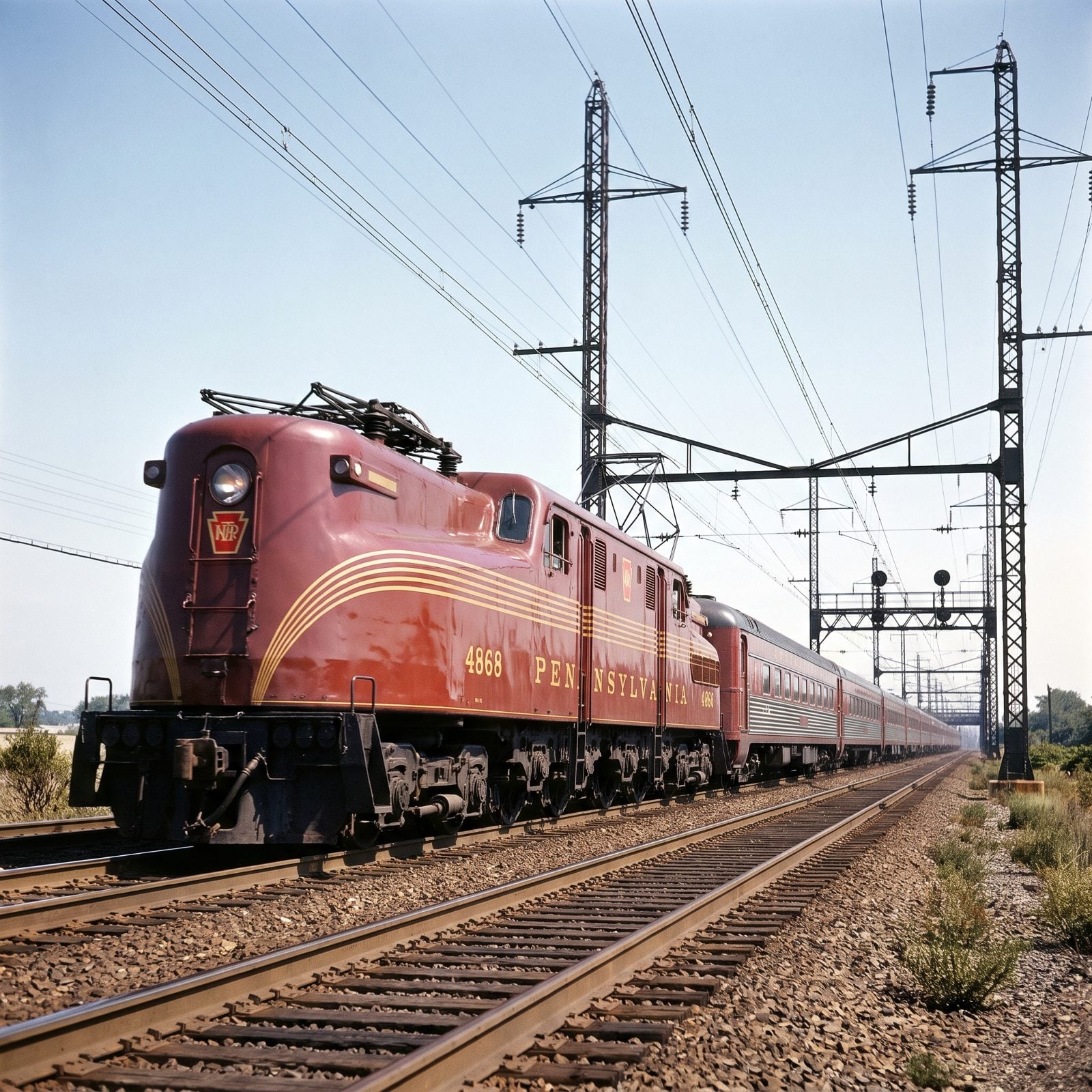
This was the train senators actually rode. The Congressional ran the Washington-to-New York day route on the Pennsylvania’s electrified corridor, and by the 1950s it was all GG1 power in Tuscan red, five gold stripes, cruising the fastest long-distance electric run in the country.
Parlor cars, a tavern-lounge, meals served at your seat. It was built for people who treated the four-hour trip as an extension of the office. Fast, frequent, dignified. When people say America used to have great trains, this is close to what they mean.
Merchants Limited, New Haven’s Elite Boston, New York Express
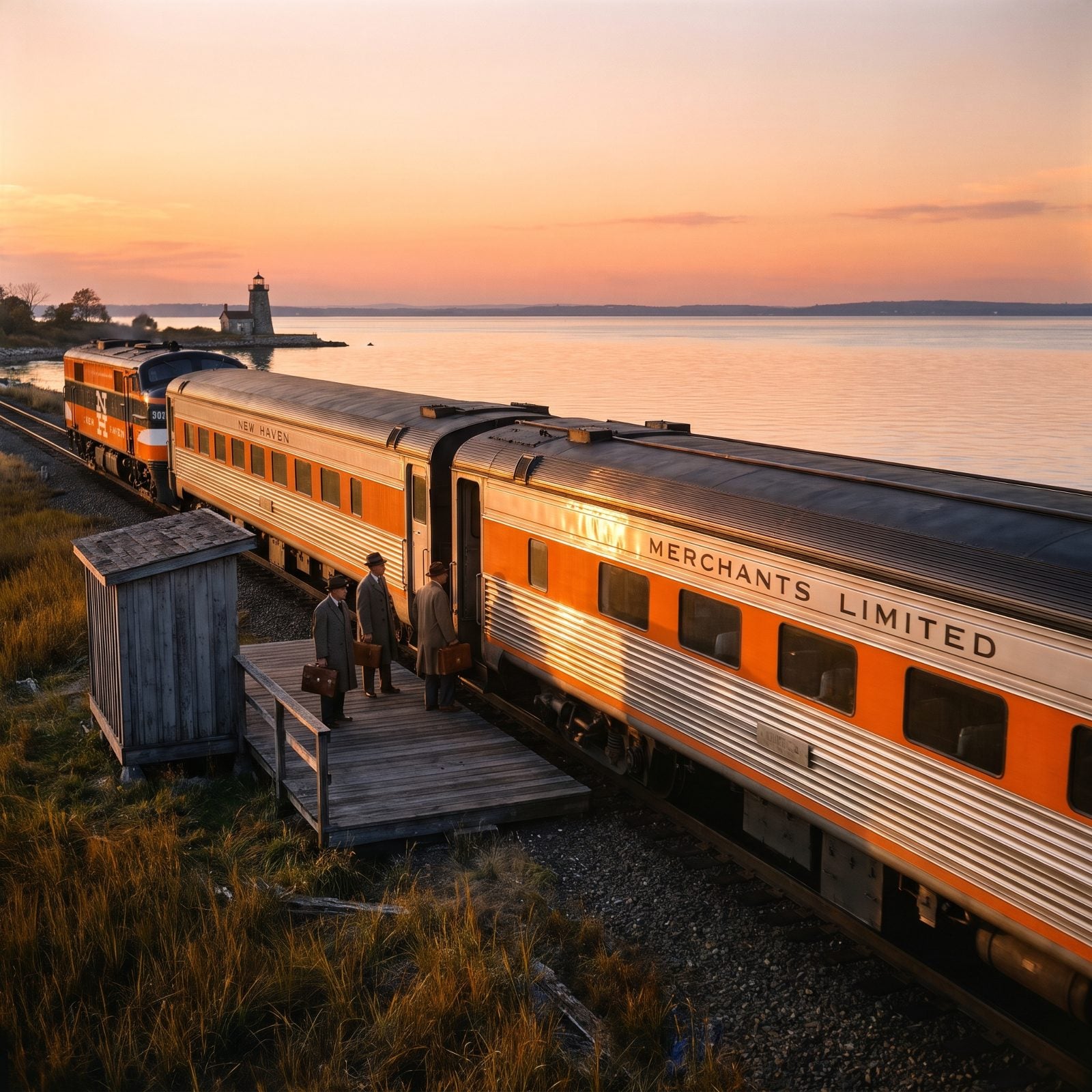
The Merchants Limited was the New Haven’s crack evening express, the train the Boston money crowd took home after a day in New York. It ran the shoreline route along Long Island Sound, dinner served as the water went gold outside the window.
All-parlor and dining for much of its run, it was less transportation than a moving club car for people who all seemed to know each other. The New Haven was a small railroad with big-city clientele, and this train was how it proved it could run with the giants. Dignity at speed, with a decent martini.
Yankee Clipper, New Haven’s Stylish New York, Boston Run
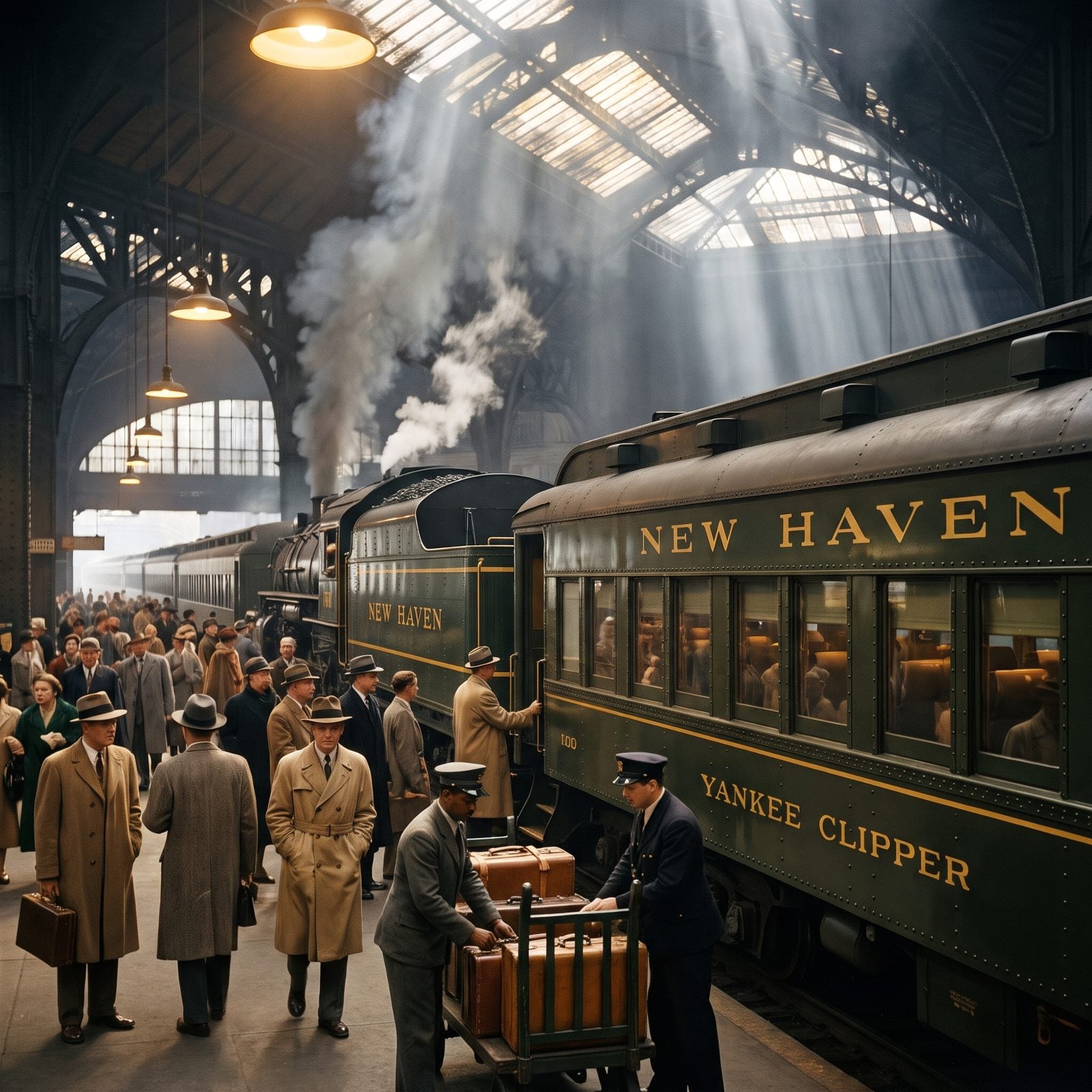
The Clipper was the train you took when the trip itself was the point. New Haven ran it as a parlor-car flyer between Grand Central and Boston’s South Station, and for decades it was the dignified way to cover that corridor. Deep green cars, white tablecloths in the diner, a seat you reserved rather than scrambled for.
What people forget is how good New Haven was at service on a short run. You weren’t crossing a continent. You were going four hours up the coast, and the railroad still handed you a proper meal and a reclining parlor chair for the privilege. That same corridor still carries more passengers than almost any in the country — the name just didn’t survive the shift.
Flying Yankee, Boston & Maine’s Articulated Silver Streamliner
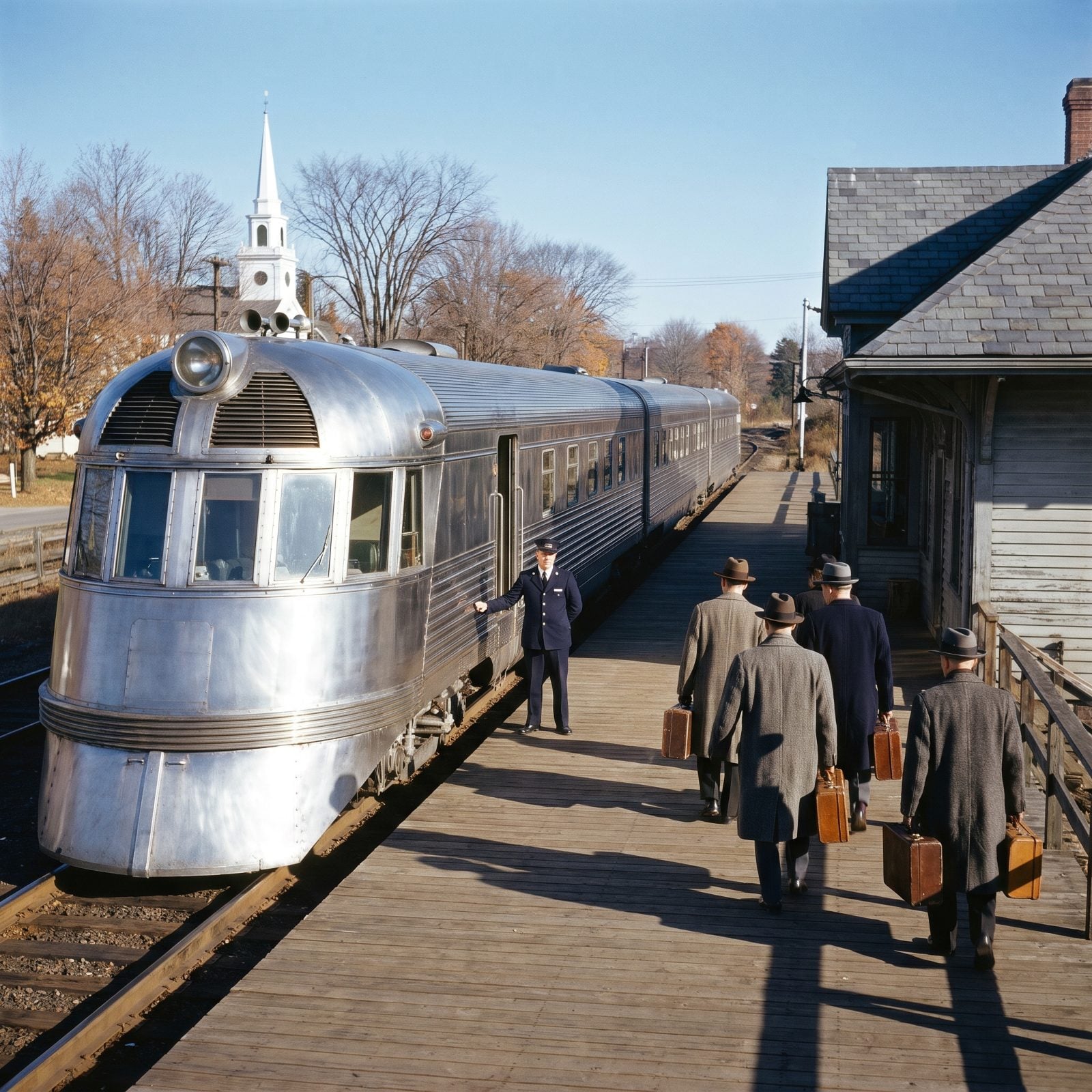
This was New England’s answer to the Zephyr, and it arrived barely a year later. Budd built it in 1935 as a fixed three-car articulated streamliner, stainless steel end to end, shared by the Boston & Maine and the Maine Central. It ran Boston to Bangor and later all over the northern reaches of New England.
Articulated meant the cars shared trucks, so you couldn’t just hang a coach on the back when the crowd grew. That rigidity eventually did it in. But the thing was a genuine piece of American industrial design, and here’s the part that still gets me — unlike most of its contemporaries, it survives. Volunteers have spent years trying to coax it back under its own power.
Gull, The Boston, Halifax Run Along the New England Coast
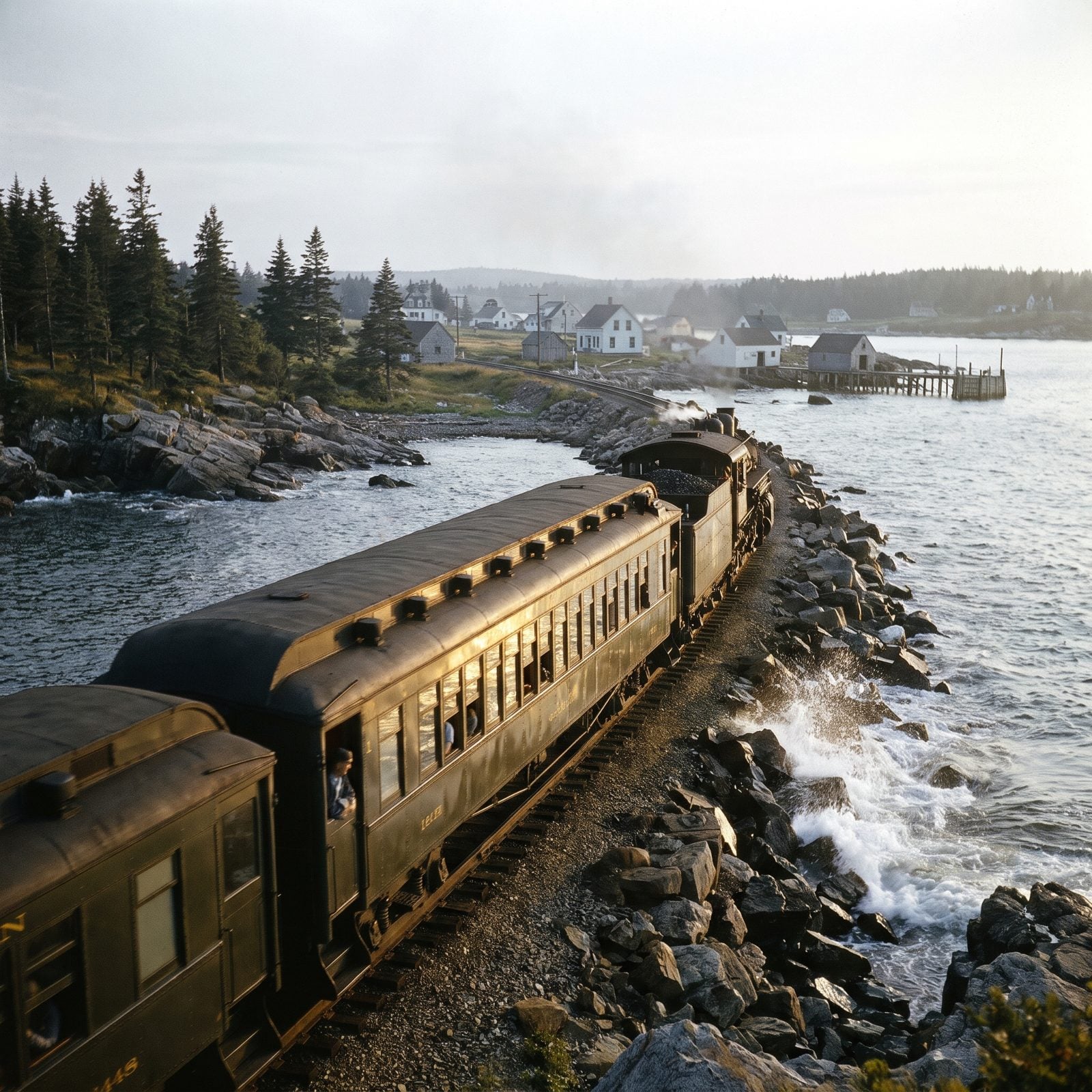
You can’t name a train for a seabird unless the scenery earns it. The Gull ran from Boston clear up to Halifax, Nova Scotia — a cross-border haul handed off between American and Canadian railroads along the ragged edge of the continent.
Long trips like this were a different animal. Multiple railroads, a border crossing, timetables that had to mesh across two countries. When it all clicked, you watched the North Atlantic slide past your window for hundreds of miles. When it didn’t, you learned patience. Today the route survives only in pieces, and no single train stitches it together anymore.
Twin Cities 400, Chicago & North Western’s 400-Mile Sprint
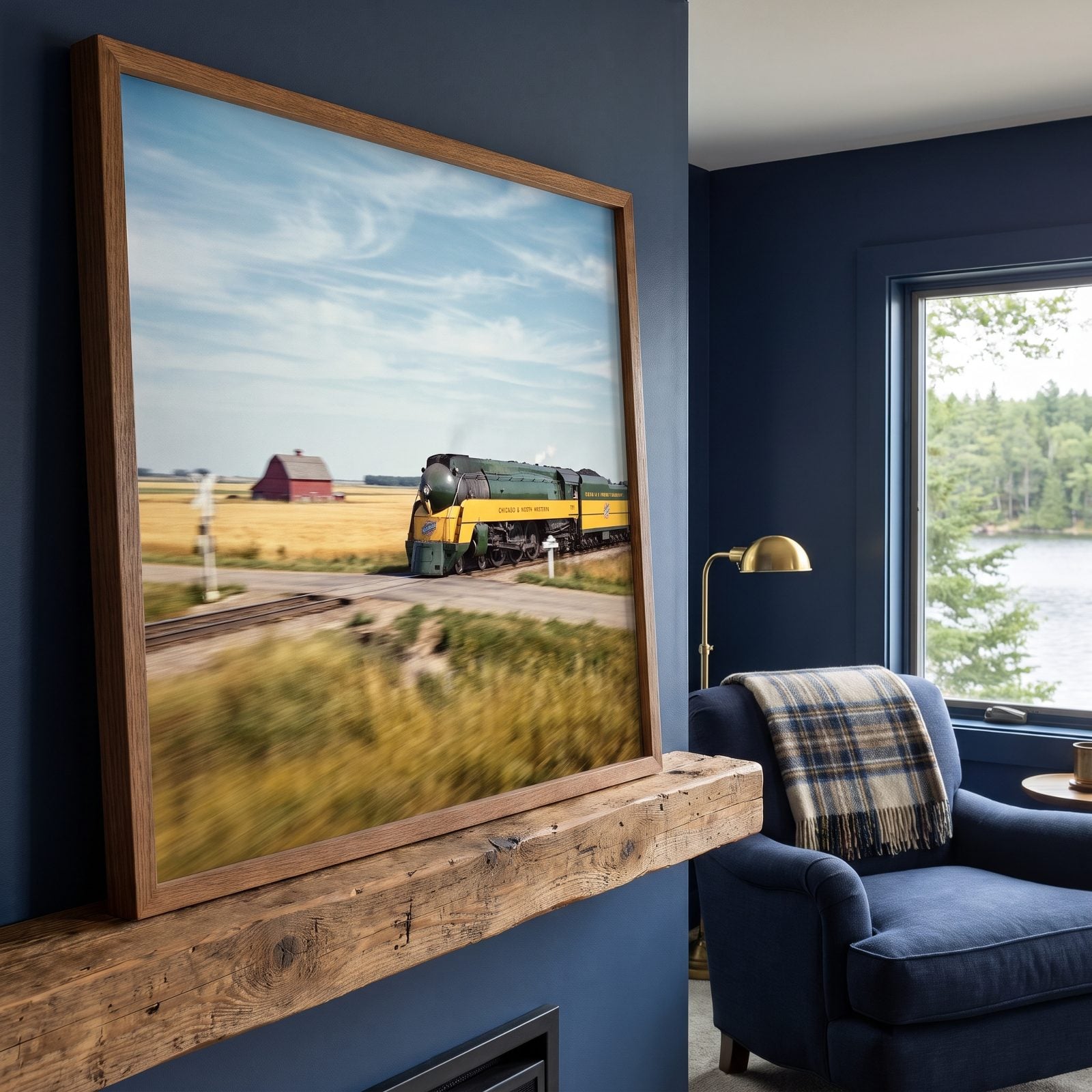
The name was the pitch. The 400 covered roughly 400 miles between Chicago and the Twin Cities in about 400 minutes, and Chicago & North Western wanted you doing that math every time you glanced at the timetable. For 1935, averaging a mile a minute over that distance was a serious claim.
Here’s the wrinkle nobody mentions. The first 400 wasn’t even a new train — C&NW slapped the name and the speed schedule on existing heavyweight equipment to beat Milwaukee Road and Burlington to market, then streamlined it later. Sometimes winning the race is just being first to say you’re running.
Twin Cities Hiawathas, Milwaukee Road’s Morning and Afternoon Flyers
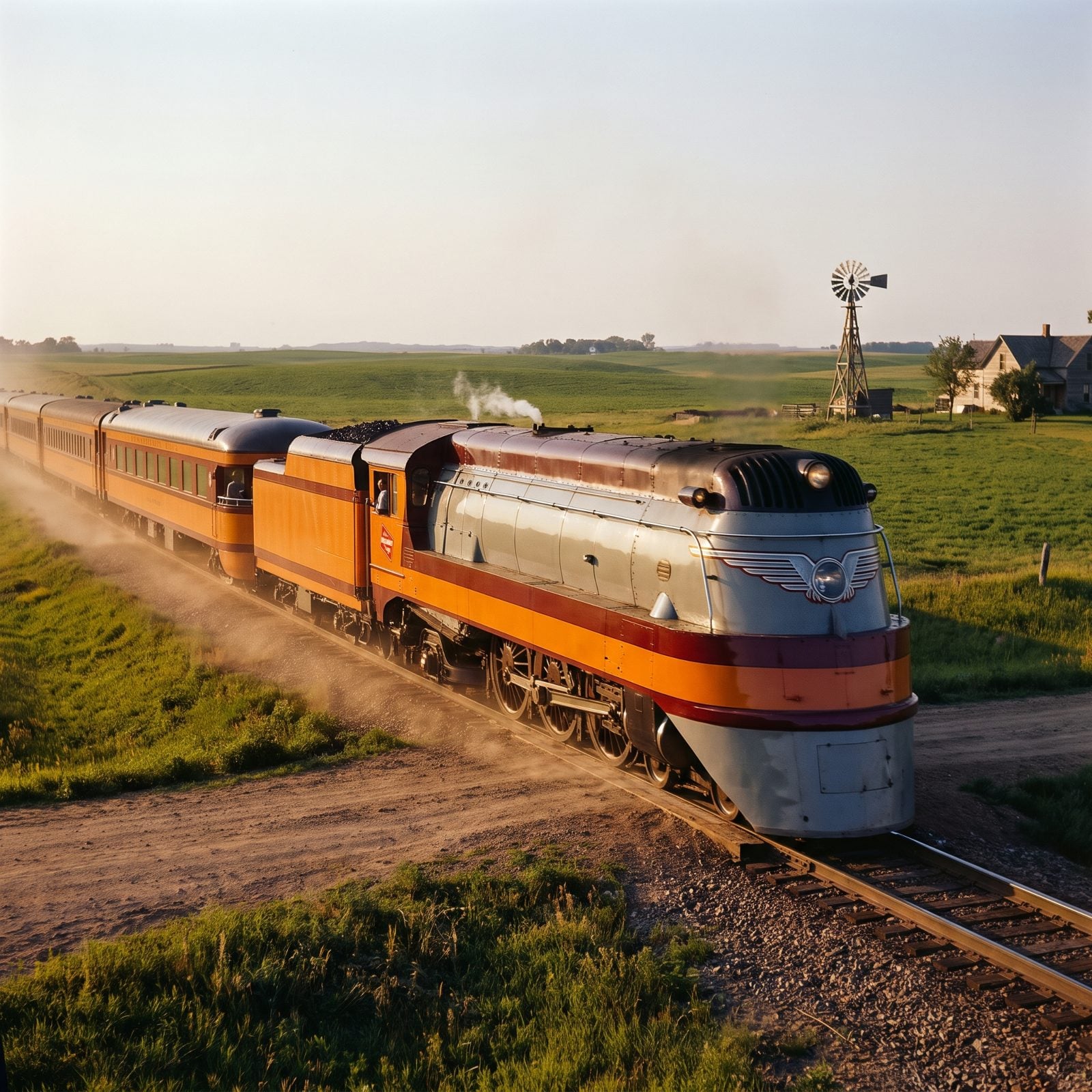
Milwaukee Road ran the Hiawatha behind steam that could legitimately hit 100 miles per hour, and it did so routinely on the flat run to the Twin Cities. The streamlined Atlantics and later Hudsons up front were among the fastest steam locomotives this country ever built. Not fast for the era. Fast, period.
The signature piece lived at the back. Those Beaver Tail observation cars gave the train a rounded, finned rear end you could spot from a county road, and the later Skytop lounges wrapped glass around wherever the last passenger happened to sit. Morning and afternoon pairings meant you could ride up and come back the same day — no small luxury on a route that long.
Few steam trains in the world ran a mile a minute as a scheduled average. The Hiawatha did it for breakfast.
Rocky Mountain Rocket, Rock Island’s Streamliner to Denver and Colorado Springs
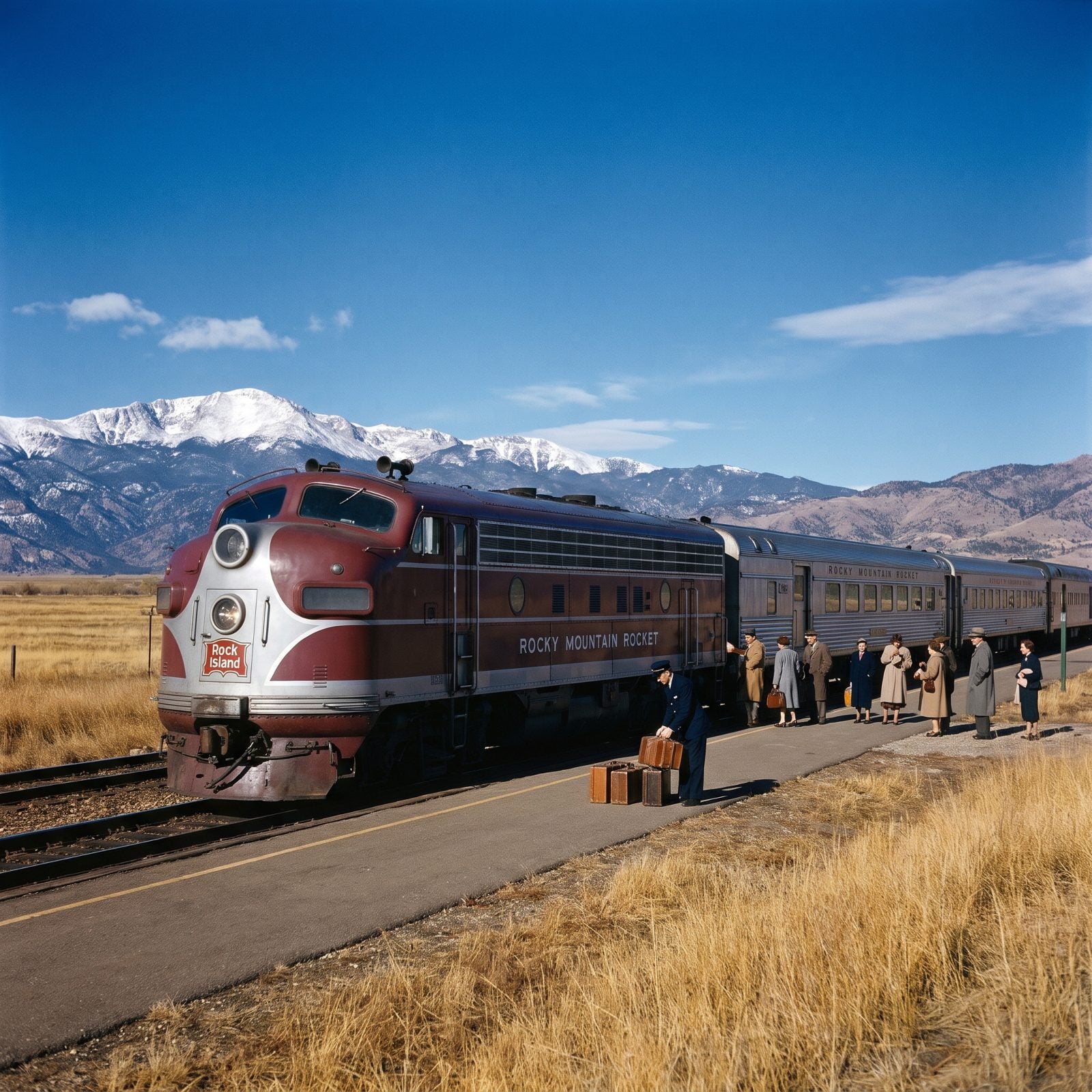
Rock Island pulled a clever trick here. The Rocky Mountain Rocket left Chicago as a single train, then split in two out west — half peeling off for Colorado Springs, half carrying on to Denver. One train, two destinations, no change required.
That kind of choreography by timetable was how railroads wrung more market out of expensive equipment. For a while the Rocket fleet was Rock Island’s entire identity, a dozen different streamliners all wearing the name. Riding into the Front Range with the mountains filling the windows? That was what sold the ticket. When the passenger business collapsed the Rockets went quietly, and Rock Island itself didn’t outlast them by much.
Super Chief, Santa Fe’s Streamliner to Hollywood
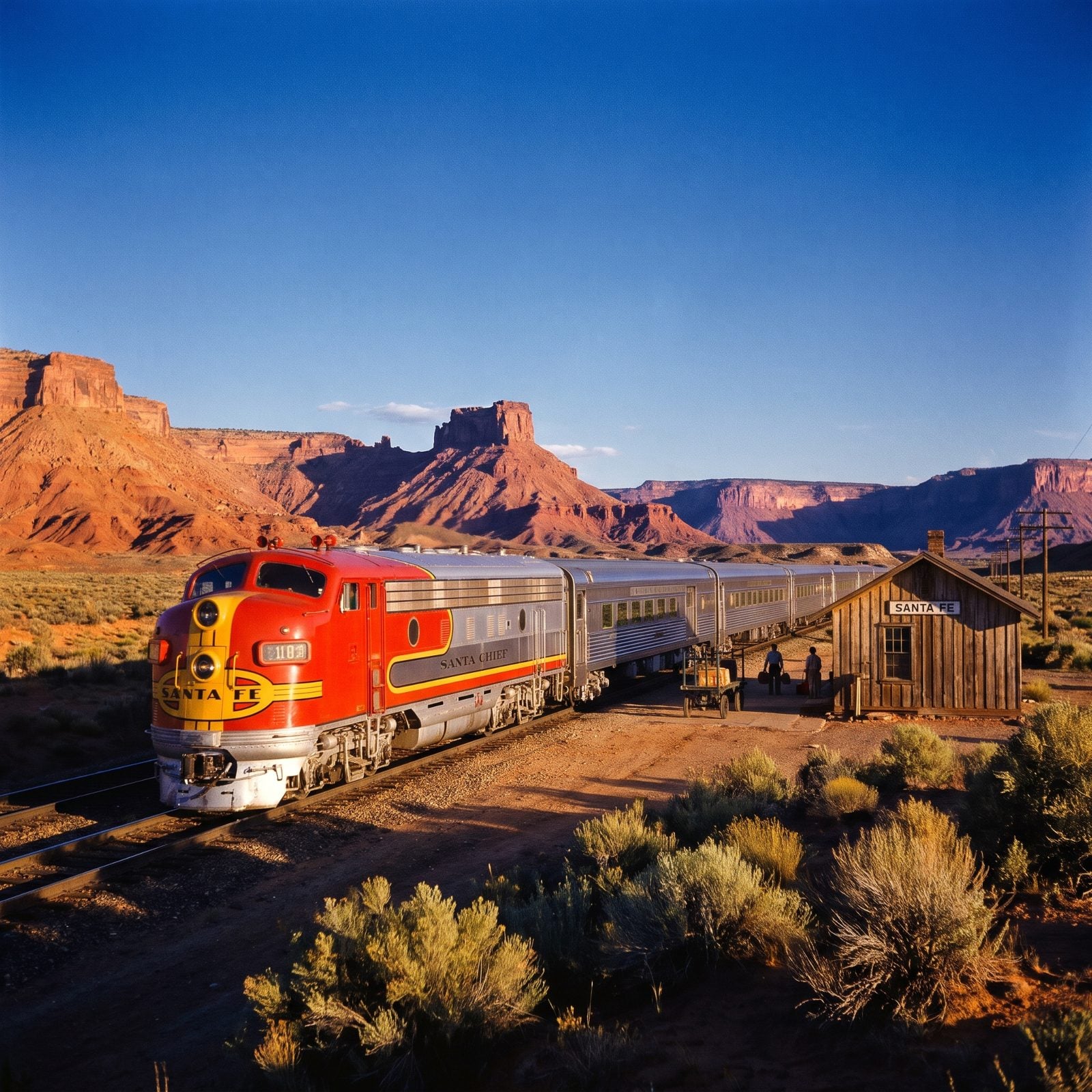
If you wanted to see what American rail travel could be at the absolute top, you booked the Super Chief. Chicago to Los Angeles, all first class, all reservation, the train the movie stars actually rode. Santa Fe called it the Train of the Stars and meant it literally.
That Warbonnet paint scheme — the red and silver nose — became the most recognizable face in American railroading. Inside, the diner served meals that embarrassed most restaurants, and the Turquoise Room was a private dining space you could reserve for a party rolling across the desert at 90 miles an hour.
It lasted. The Super Chief ran right up to Amtrak, and when the new operator kept the route but let the old standards slip, Santa Fe yanked the name in protest. That tells you how much it meant to them.