
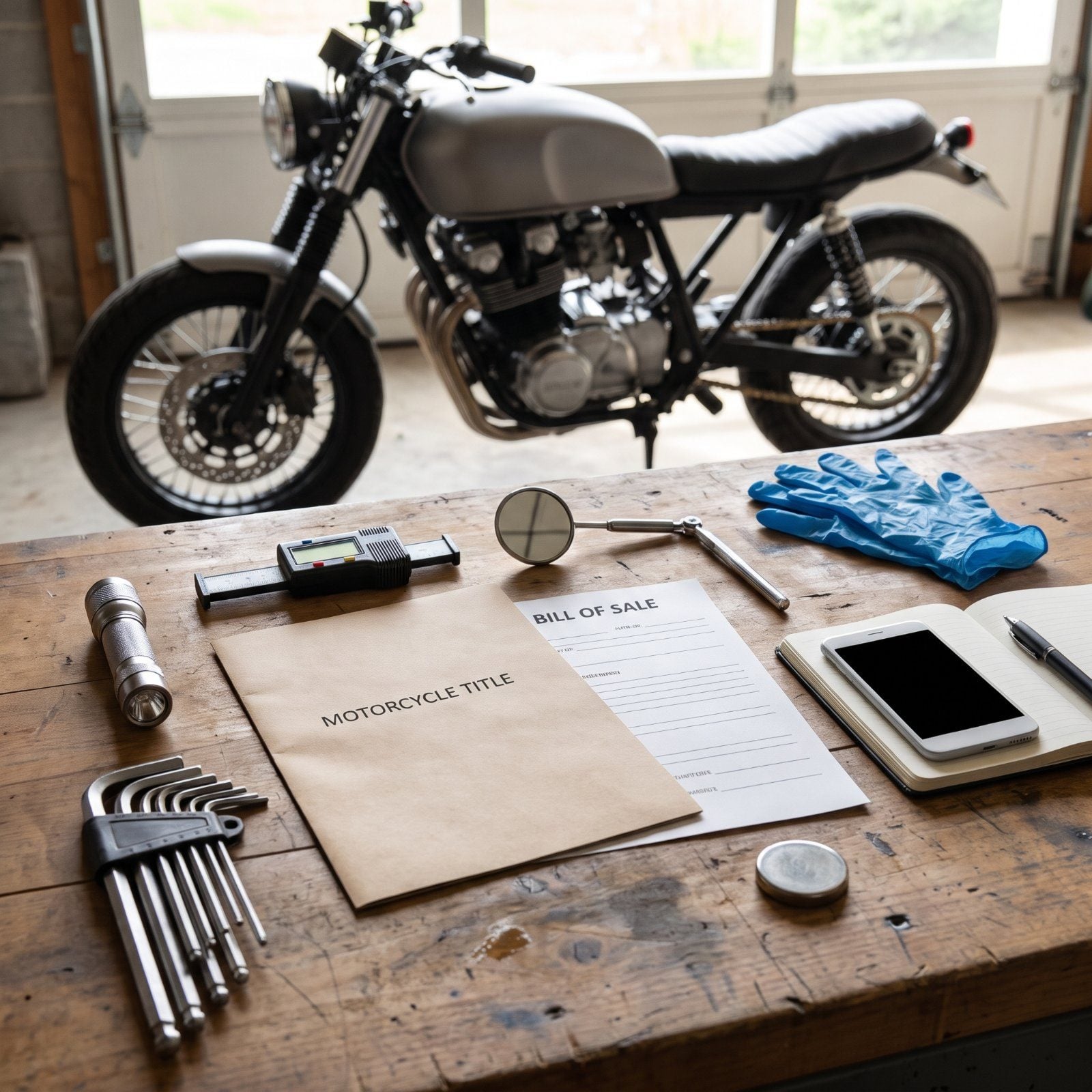
A used bike can hide more trouble in its paperwork than in its engine. The worst mistakes happen before you ever twist the throttle — in the budget you set, the VIN you skip, the deposit you wire to a stranger. None of it is complicated. Most of it just gets skipped because the bike looks clean and the price feels right. We’ve chased down the quiet errors that turn a good deal into a garage full of regret, and every one of them is dodgeable.
Please note that some of the images in this article were created with the assistance of AI.
39. Shopping Before You’ve Decided What the Bike Is Actually For
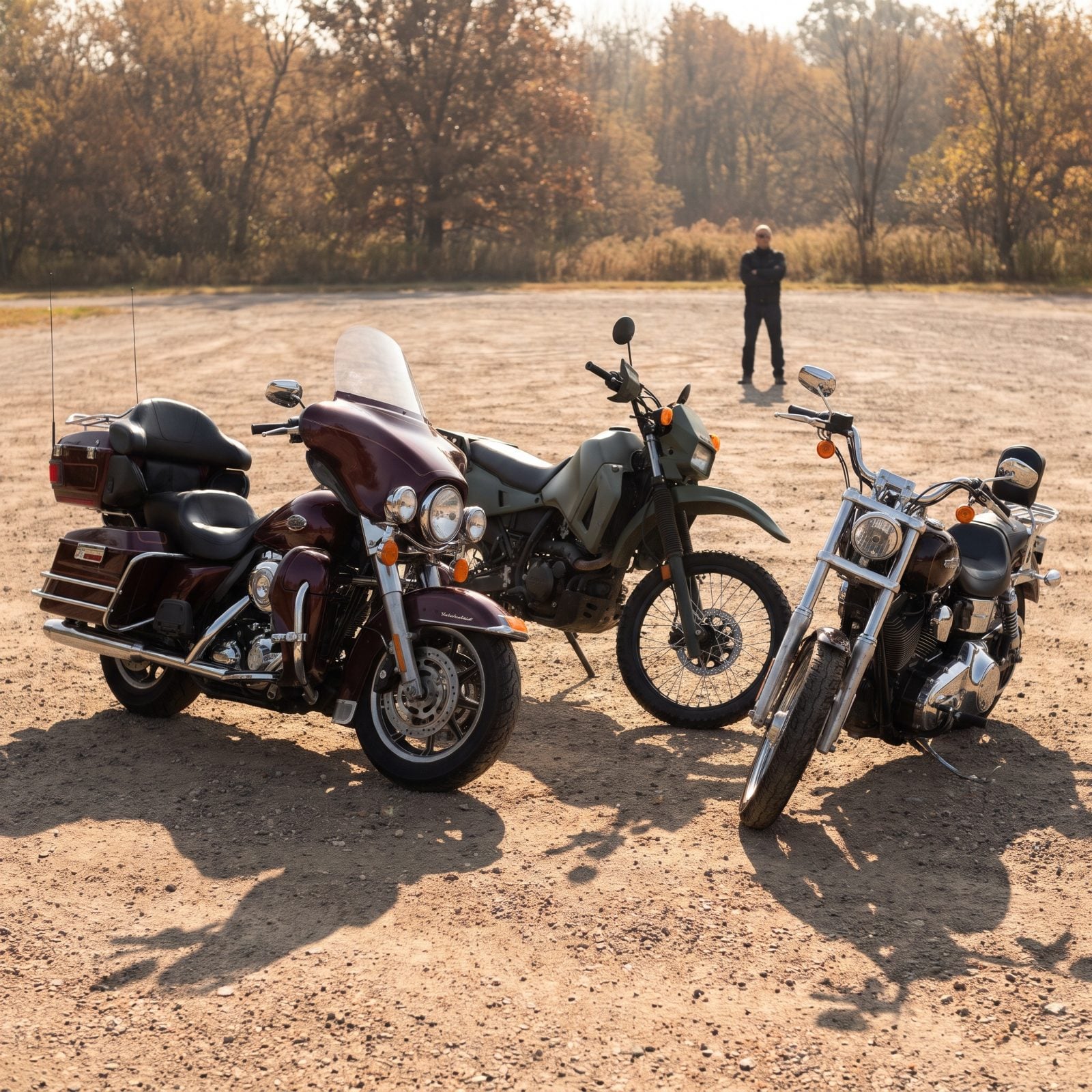
You fall for the paint, not the purpose. A sportbike looks like freedom in the driveway and feels like a wrist cramp forty minutes into a highway commute. That mismatch costs you twice — once in the wrong purchase, and again when you sell it cheap to buy what you needed all along.
So decide the job first. Daily commute, weekend canyon runs, two-up touring, dirt roads up to the cabin. Write it down before you open a single listing, and the right category picks itself. No more test-riding bikes that were never going to survive the miles you actually ride.
38. Setting a Budget That Leaves Nothing for the Repairs You Know Are Coming
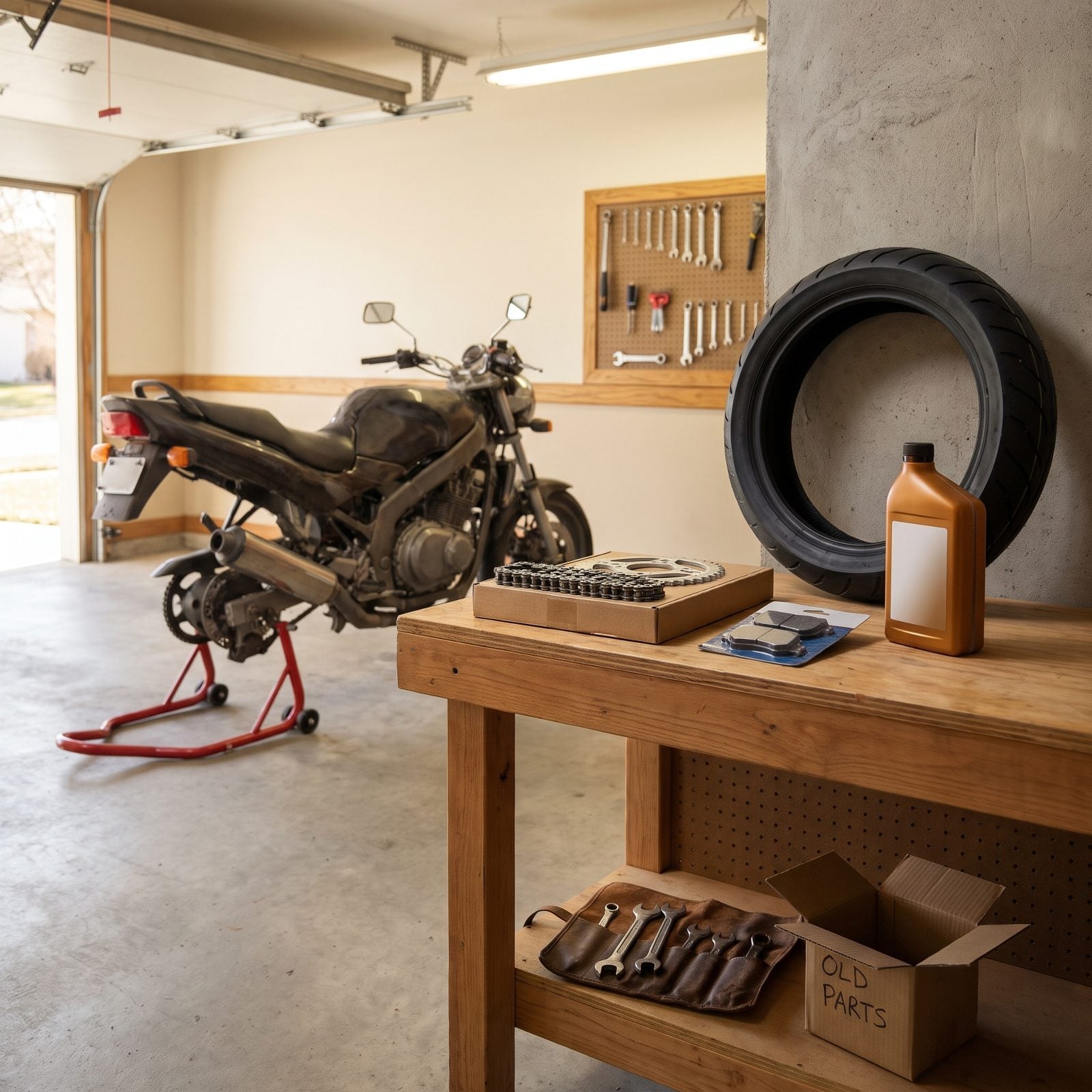
A used motorcycle almost never shows up ready to ride hard. Tires dry-rotted, chain stretched, fork seals weeping, a battery that’s seen three winters. Spend your entire budget on the purchase and the bike just sits there, because now you can’t afford to make it safe.
Hold back a cushion before you shop. Fresh rubber, a chain and sprocket set, brake pads, fluids, a battery — those alone can run real money on a neglected bike. Budget for them as part of the buy, not as a surprise that lands the week after.
37. Skipping the Research on What That Exact Model Is Known to Break
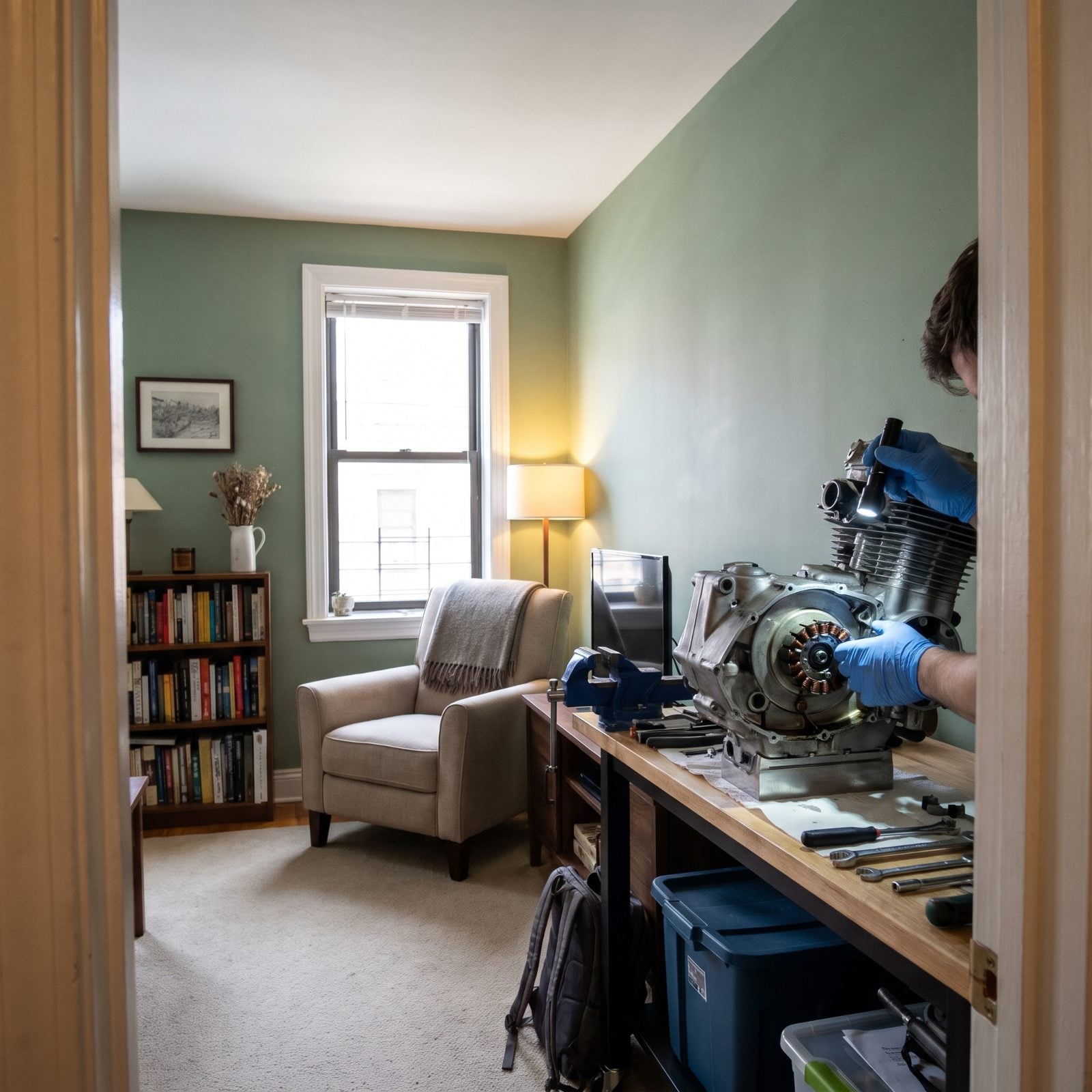
Every model has a weak spot that owners already catalogued for you. Regulator-rectifiers that cook themselves. Cam chain tensioners that rattle. A final drive that eats itself at a known mileage. Buy blind and you inherit the exact failure the forums have been warning about for a decade.
Spend an evening in the owner’s forums and a service group before you look at a single bike. Learn where these machines fail and roughly when it tends to happen. Then you inspect for it specifically — and a seller’s blank stare when you mention the issue tells you plenty.
36. Ignoring Whether You Can Still Get Parts for a Discontinued Model
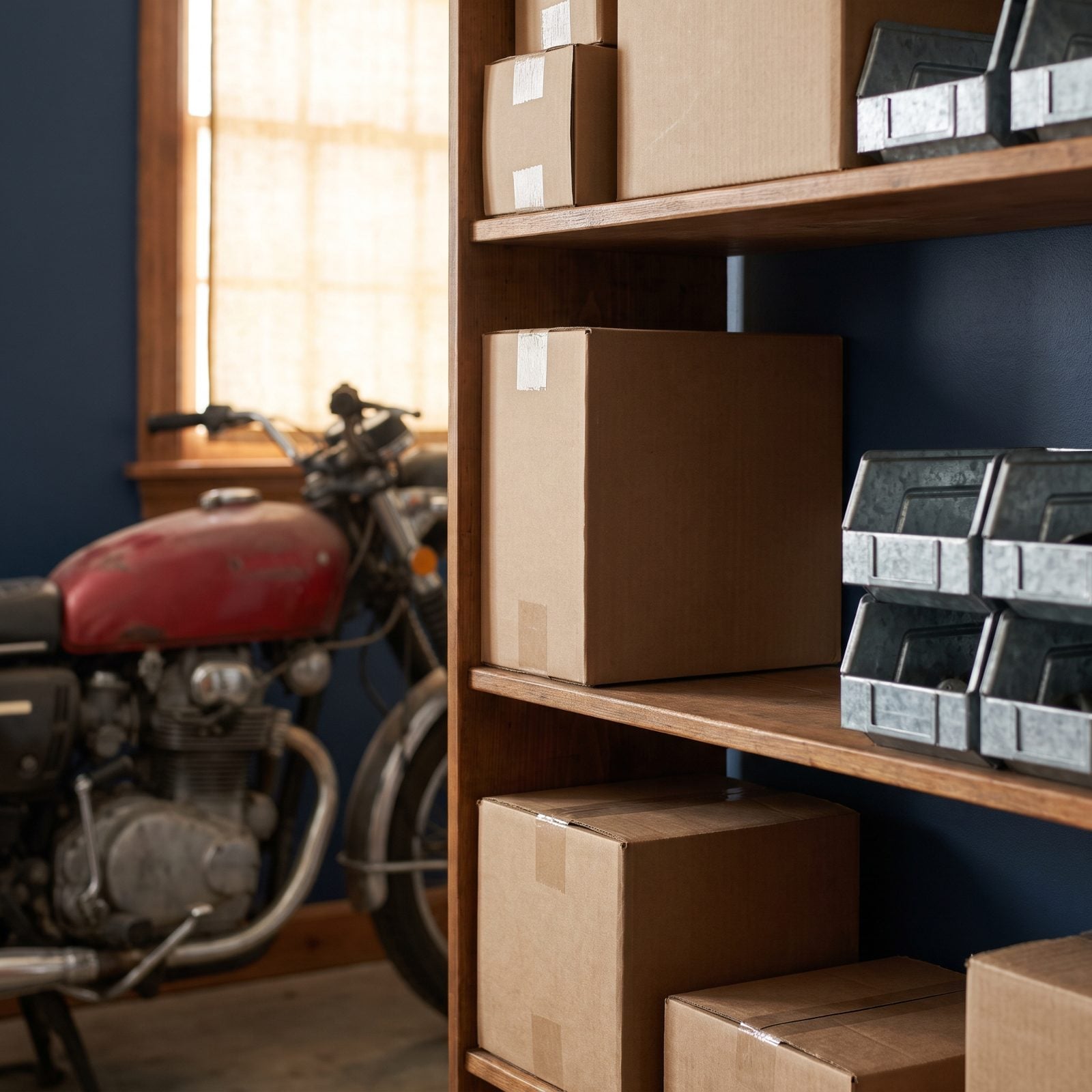
The bike runs great until a plastic fairing panel cracks and you find out it hasn’t been made since 2009. Orphaned models can be a joy to own, or a slow-motion scavenger hunt. One unavailable part can sideline a perfectly healthy motorcycle for months.
Before you commit, go hunting for the tank, fairings, a clutch kit, a regulator, the common gaskets. If the only hits are picked-over salvage listings and a wait-list from one specialist overseas, price that risk in — or walk. A deep aftermarket is worth more than you’d guess.
35. Assuming the Previous Owner’s Expensive Mods Are Money in Your Pocket
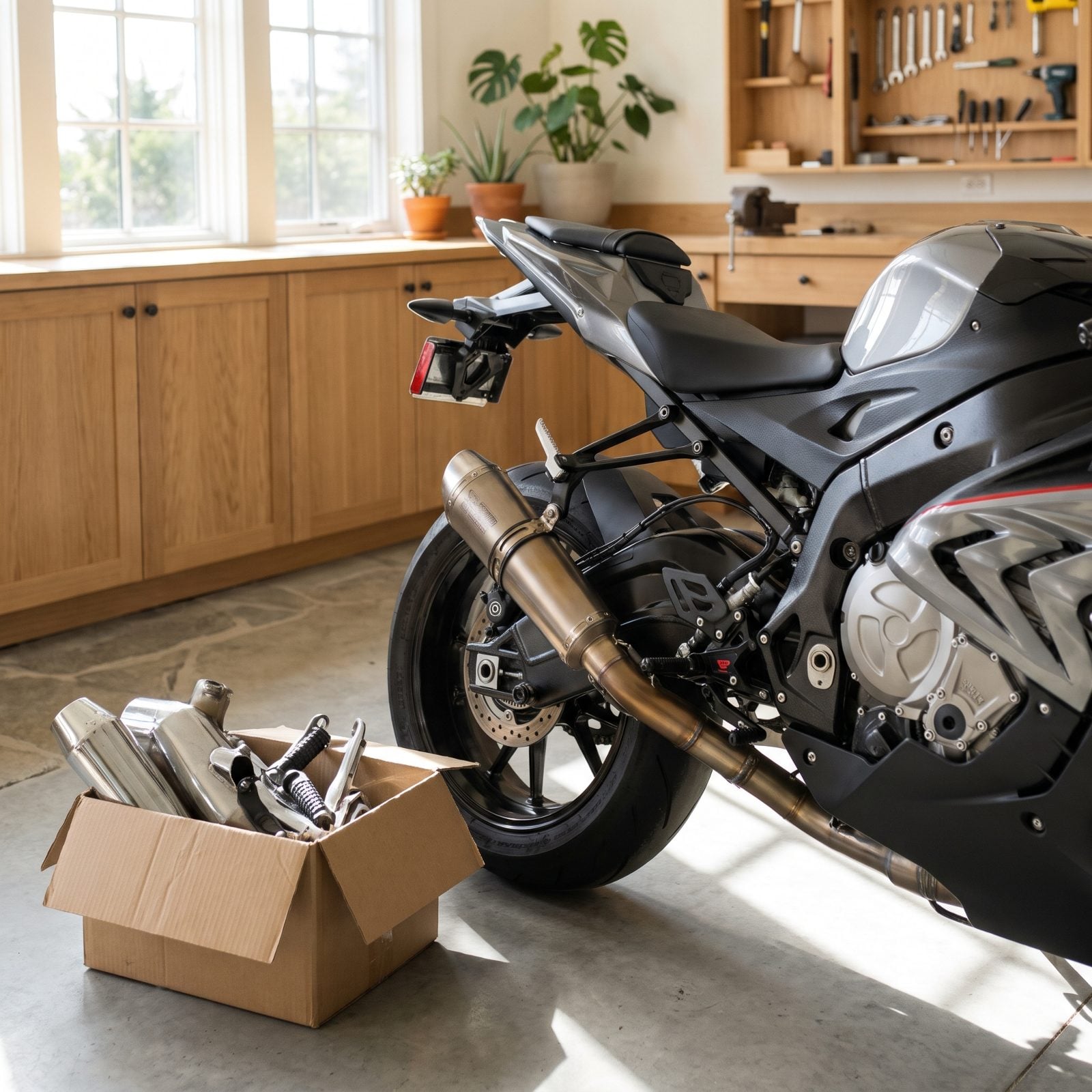
A seller lists the bike high and reads you the receipt — three grand in exhaust, suspension, levers, lights. Here’s the hard truth most riders learn the expensive way: modifications rarely add resale value, and plenty of them actively subtract it.
A loud aftermarket exhaust can fail emissions and spook an inspection. Lowered suspension and hacked-up wiring scare off buyers. You’re paying for someone else’s taste. Value the bike on the clean stock example it should be, ask whether the original parts come in the deal, and treat the mods as a tiebreaker at best — never a premium.
Receipts prove money was spent. They don’t prove it was spent on anything you’ll ever get back.
In a guide to used-bike pricing, one powersports dealer cautions “Aftermarket upgrades can improve a motorcycle, but they rarely return dollar-for-dollar at resale.”
34. Buying the Bike Before You Get the Insurance Quote
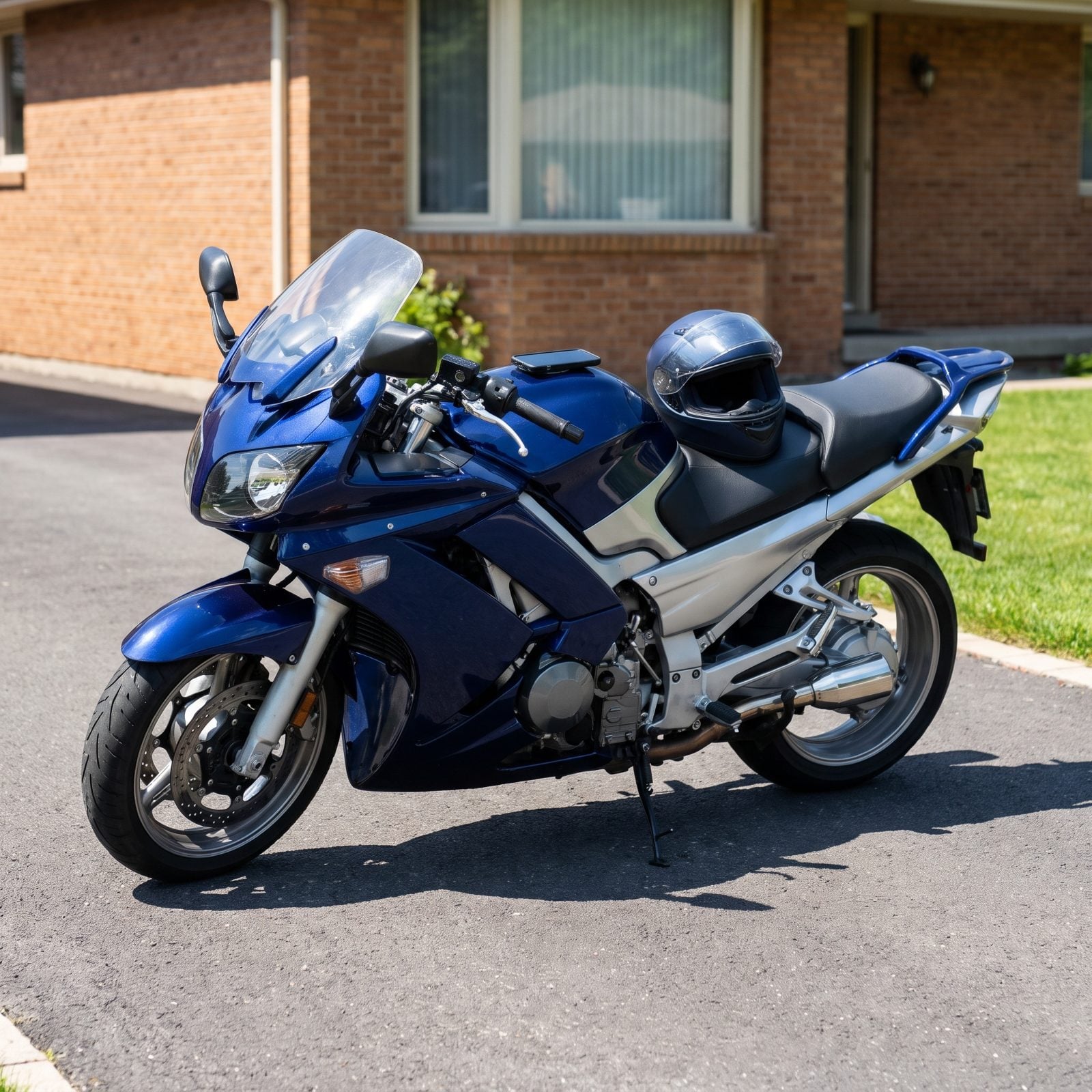
You sign, you ride home, you call the insurer, and the premium lands like a cinder block. Certain supersports and liter bikes carry wildly higher rates, especially in some states and at some ages. And people keep finding this out after the money’s already gone.
Run the quote before you buy. Ten minutes online with the VIN, or even just the year and model. Two bikes that look like twins in the driveway can differ by hundreds a year to insure. That number is part of the real price — so find it out while you can still walk away.
33. Not Matching the VIN on the Frame to the One on the Title
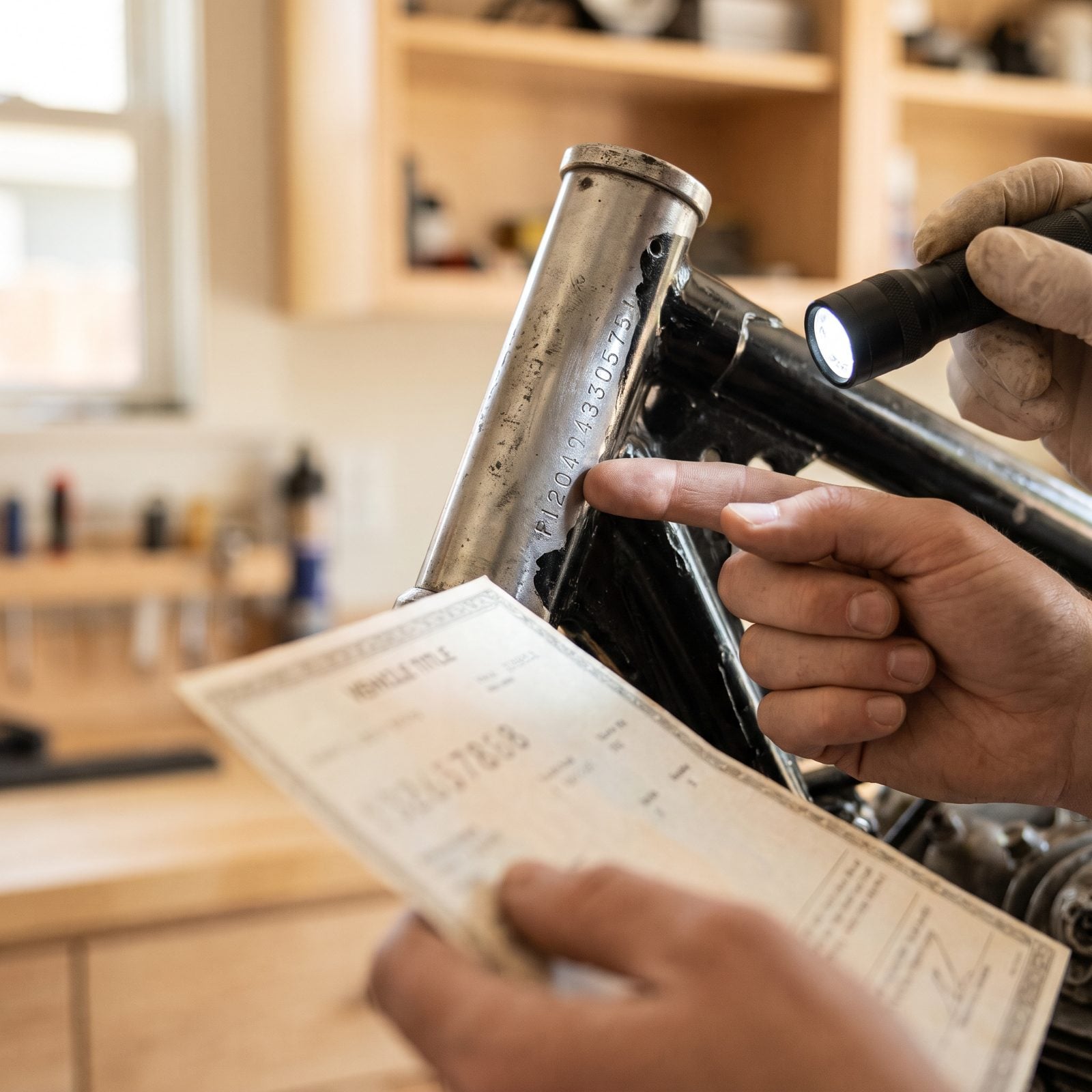
People check that a VIN exists and stop right there. But the number on the frame has to match the number on the title, digit for digit, and you have to actually look at the stamping. Re-stamped or ground frames, mismatched engines, swapped plates — a mismatch can mean a wrecked bike rebuilt from scavenged parts. Or worse.
Find the frame VIN on the steering head, read it slowly, and compare it to the title in your hand. Check that the stamping looks factory-clean, not filed down or filled. If the engine number is called out on the title too, verify that as well. One wrong character is reason enough to leave.
32. Skipping the Stolen-Motorcycle Check on the VIN
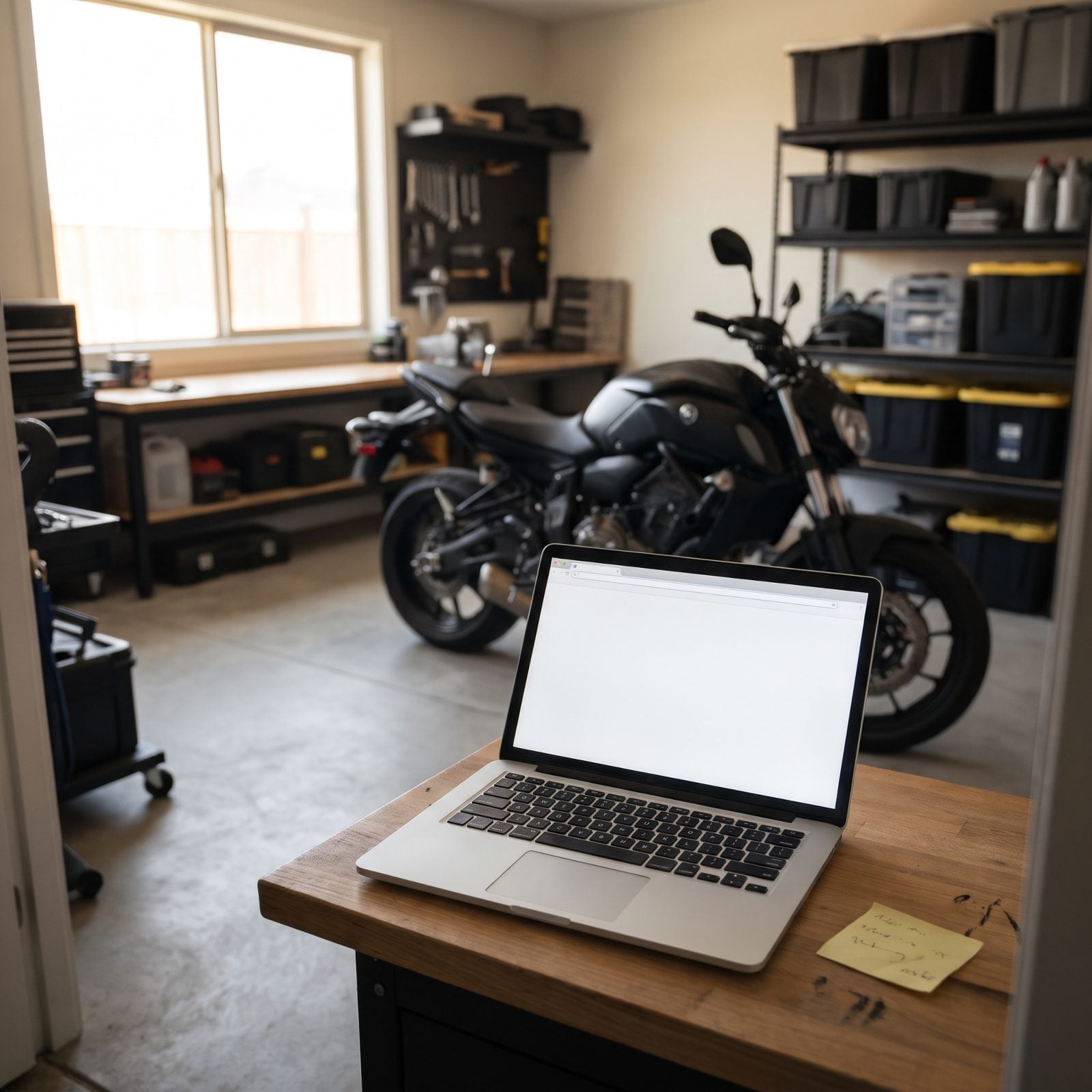
A clean-looking bike at a clean-looking price can still be hot. Buy a stolen motorcycle in good faith and you can lose both the bike and the money when it’s recovered — no matter how honest the handshake felt on your end.
Run the VIN through a stolen-vehicle database and a title-history check before any cash moves. Costs little to nothing, takes minutes. Cross that with a lien check so no bank still has a claim on it. Two or three clean reports, plus a seller whose ID matches the title, and you’ve covered yourself against buying someone else’s crime.
31. Failing to Check for an Outstanding Lien
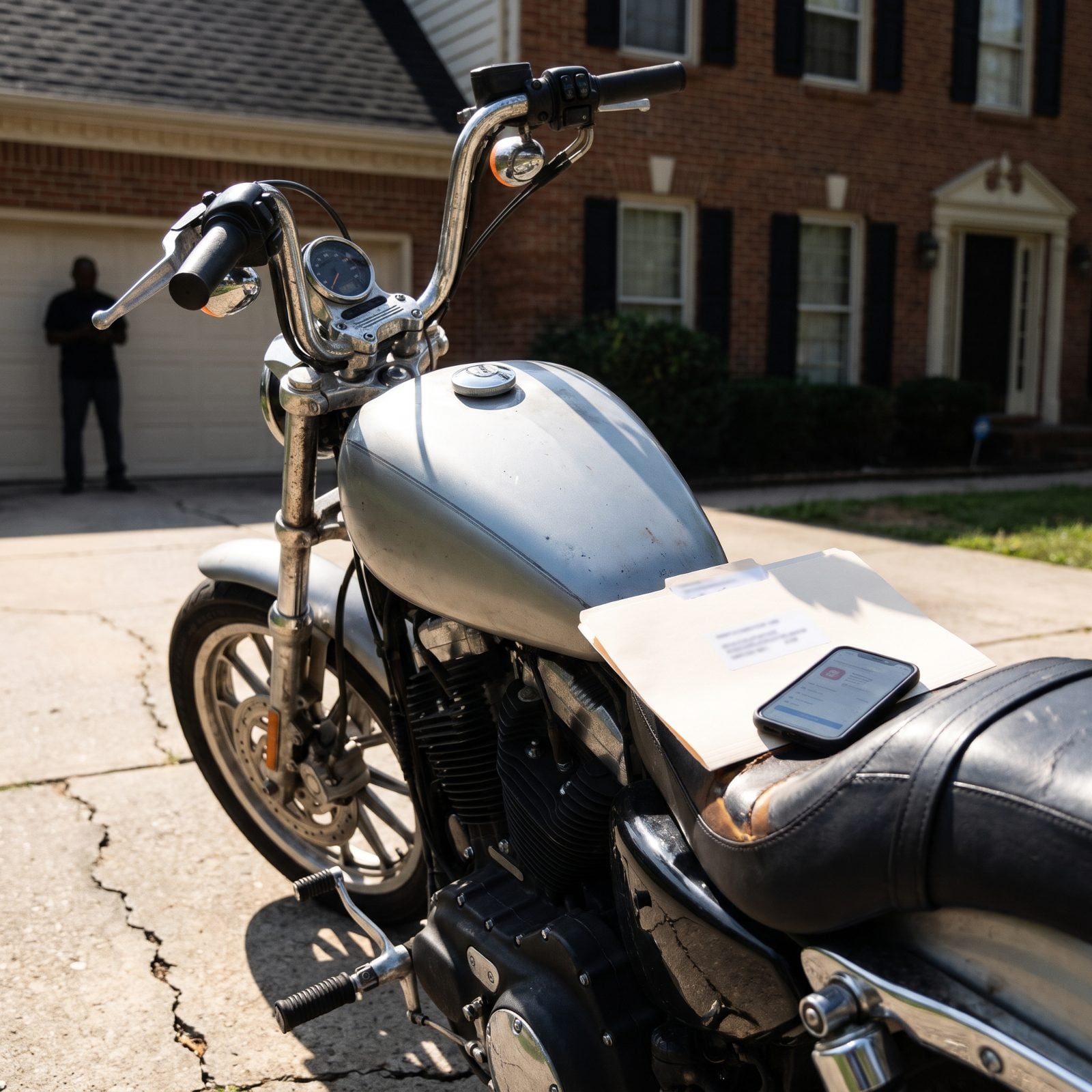
You hand over cash, get a bill of sale, and ride home happy — then three weeks later a bank calls looking for the loan still attached to the bike. That loan doesn’t follow the seller. It follows the machine.
A lien means someone else holds a legal claim on the title, and until it’s cleared you don’t truly own what you paid for. Repossession stays on the table even after your money changes hands.
Run the VIN through your state’s DMV lien check or a paid history service before you commit. If there’s a loan, insist the payoff happen in front of you at the lender, or at a bank where the lien release gets issued on the spot. No release, no deal.
30. Ignoring a Salvage, Rebuilt or Flood-Damage Title Brand
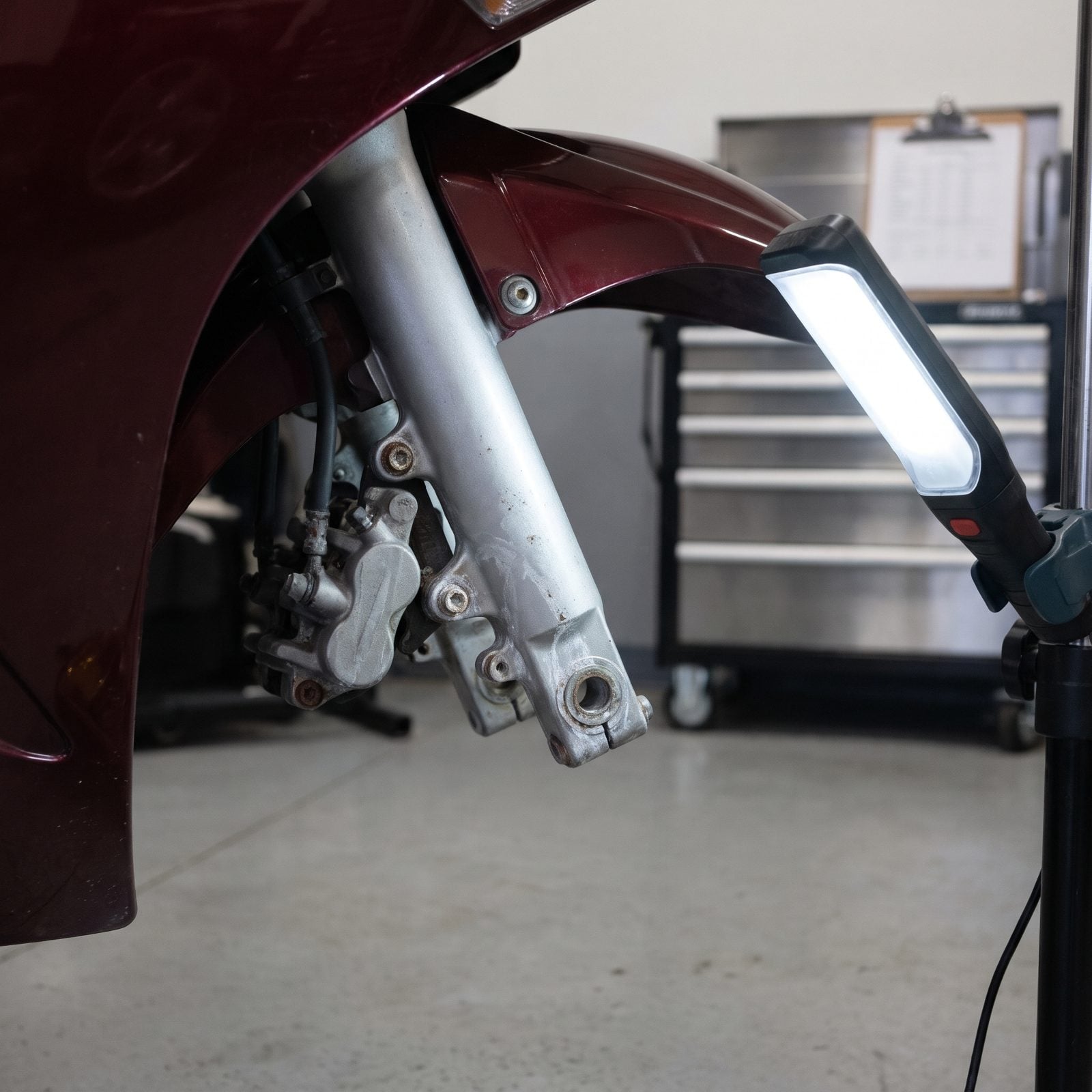
A branded title is the paperwork telling you the truth the glossy photos won’t. Salvage means an insurer once declared the bike a total loss. Rebuilt means someone patched it back together. And flood damage? Water sat in places water should never touch.
These brands tank resale value and can turn insurance into a headache. Flood bikes especially rot from the inside — corroded connectors, seized bearings, electrical gremlins that don’t surface until a year down the road.
Read the title brand before anything else, then run the VIN through the NMVTIS database. A clean-looking rebuild can be a bargain in the right hands, but only if you know going in and price it accordingly.
29. Accepting a Title Outside the Verified Seller’s Name
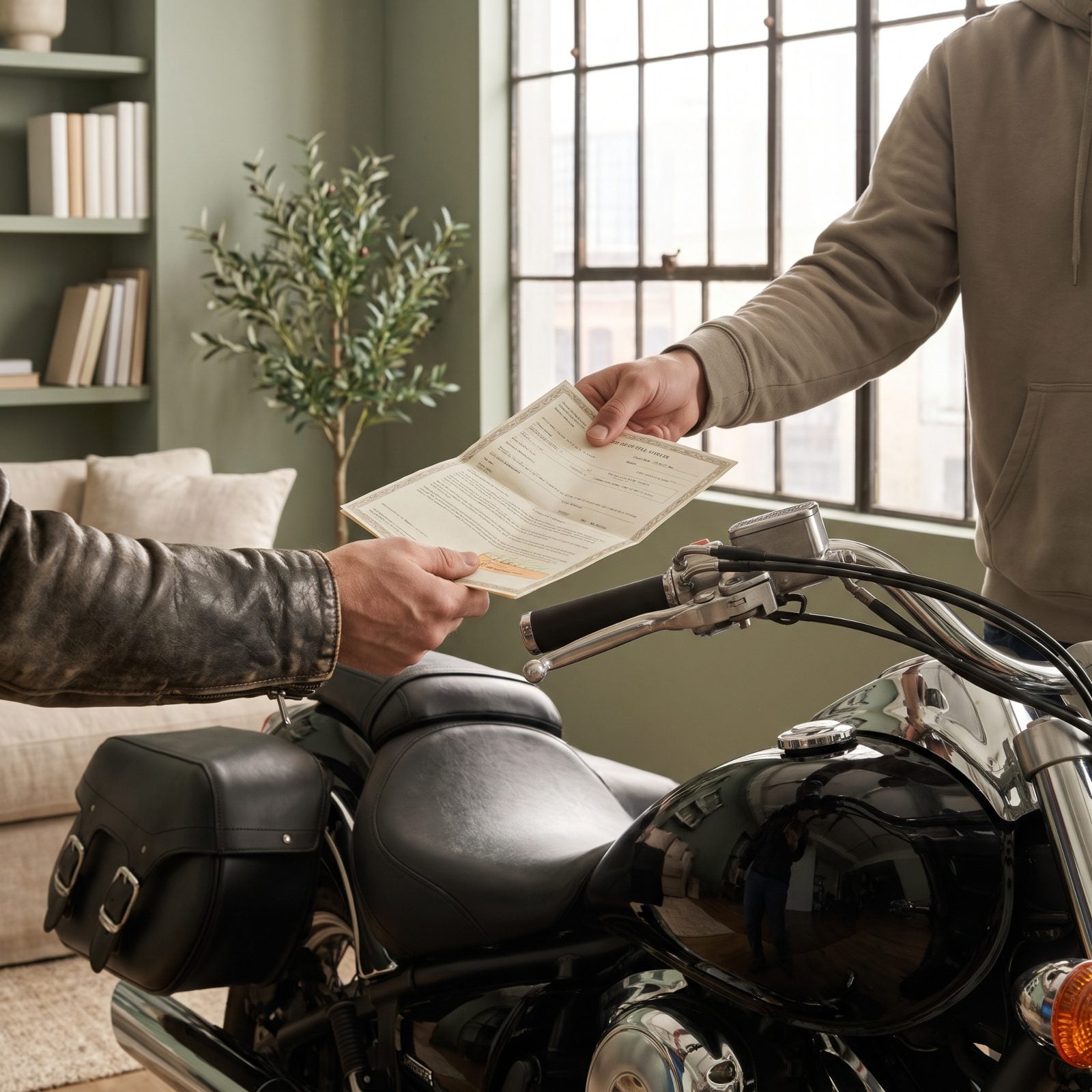
The seller’s name on the ID doesn’t match the name on the title. “It’s my brother’s, I’m just selling it for him.” Maybe. Or maybe you’re buying a stolen bike, or an illegal title-jump dressed up as a favor.
If the person signing isn’t the registered owner, your registration can stall out at the DMV — and curbstoners flip problem bikes this exact way on purpose, dodging the paper trail every step.
Match the title name to a government photo ID. Every time. If it genuinely belongs to a family member, the actual owner needs to be present to sign, or you need a notarized power of attorney. Anything less, walk.
28. Treating Missing Service Records as No Big Deal
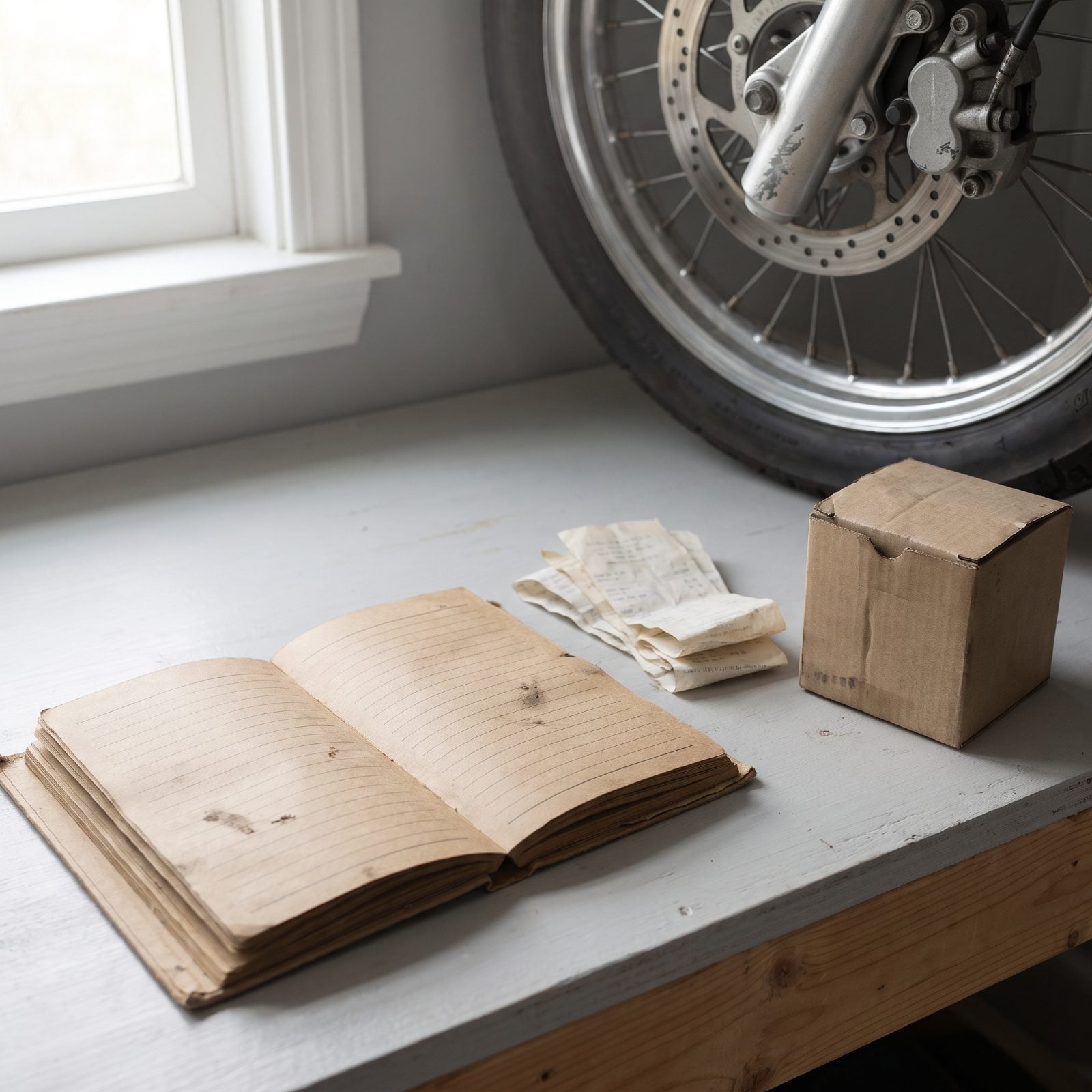
“I did all the work myself, never kept receipts.” Common line. Sometimes true. More often it means the valve adjustments, fork oil changes, and coolant flushes simply never happened.
On bikes with interference engines or tight valve-check intervals, skipped maintenance hides a four-figure repair one bad cold start away. No records means no proof the expensive stuff ever got done.
Ask for a maintenance history and favor the bikes that have one. If there’s nothing, budget right now for a full service — valve clearance check, fluids, filters, chain and sprockets. Treat the missing paper as a price negotiation, not a shrug.
Drawing on the used bikes they inspect every week, a motorcycle shop’s mechanics warn “Another issue buyers frequently miss is maintenance that was never completed. Items like valve checks, fluid replacements, or suspension servicing are easy for sellers to overlook or avoid mentioning.”
27. Arriving After the Seller Has Warmed the Engine
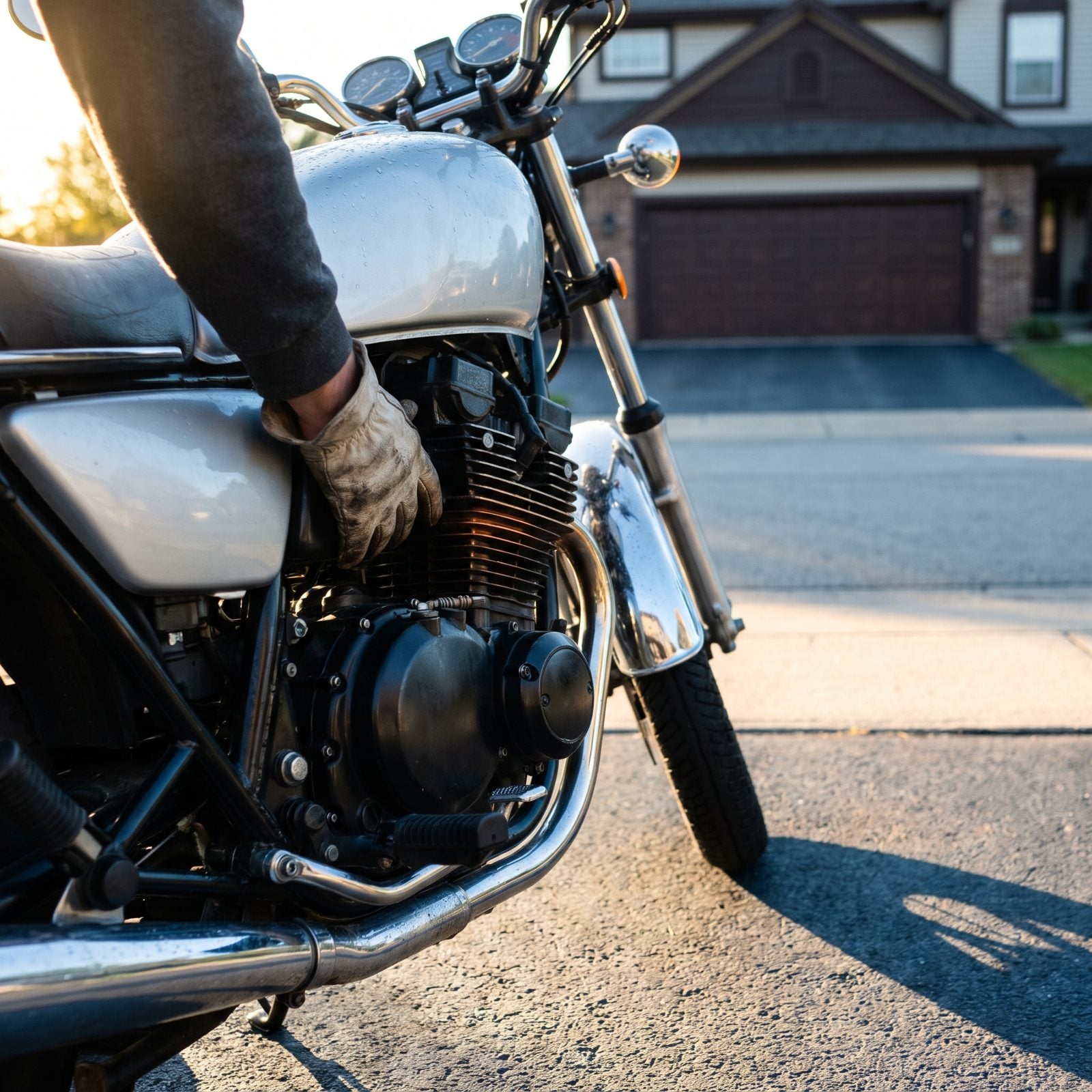
You pull up and the engine’s already ticking over, nice and smooth. The seller swears it “just needed a warmup.” What it needed was to hide a rough cold start.
A pre-warmed engine masks hard starting, smoky first-fire, cold-blooded idle, and the knock of worn bearings that quiets down once oil’s circulating. A cold start tells you more about engine health than any hot lap around the block ever will.
So insist the bike be stone cold when you arrive. Put your hand on the cases and head before anything fires. Warm? Reschedule or walk. A seller with nothing to hide won’t mind.
Drawing on years of used bikes rolling into the shop, a motorcycle workshop mechanic warns “A warm engine hides hard-starting issues, oil consumption, and compression problems.”
26. Failing to Confirm Every Dashboard Light Self-Tests
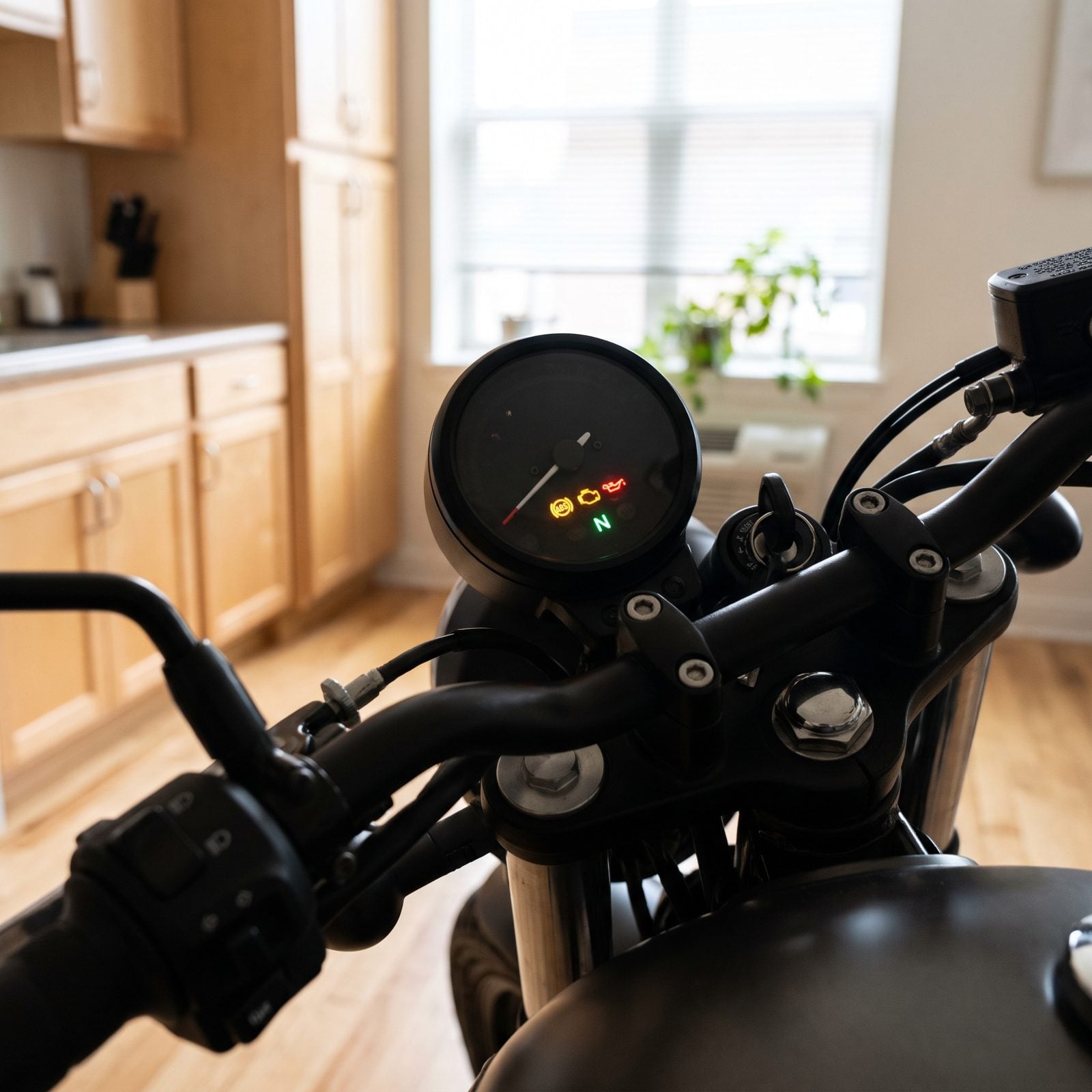
Here’s a trick as old as warning lights: pop the bulb or splice the wire on the check-engine lamp so a fault never shows. Turn the key and watch the dash. Every light should flash on during the self-test, then settle.
A missing ABS light or a dead engine lamp isn’t a convenience. It’s a fault being hidden from you, and you’ll inherit it the day after the sale.
Key-on, don’t start it yet. Confirm the full bank of lights illuminates, then watch which ones go out and which stay lit. A light that never comes on at all is the one to worry about most.
25. Checking the Oil Level but Ignoring Its Condition or Contamination
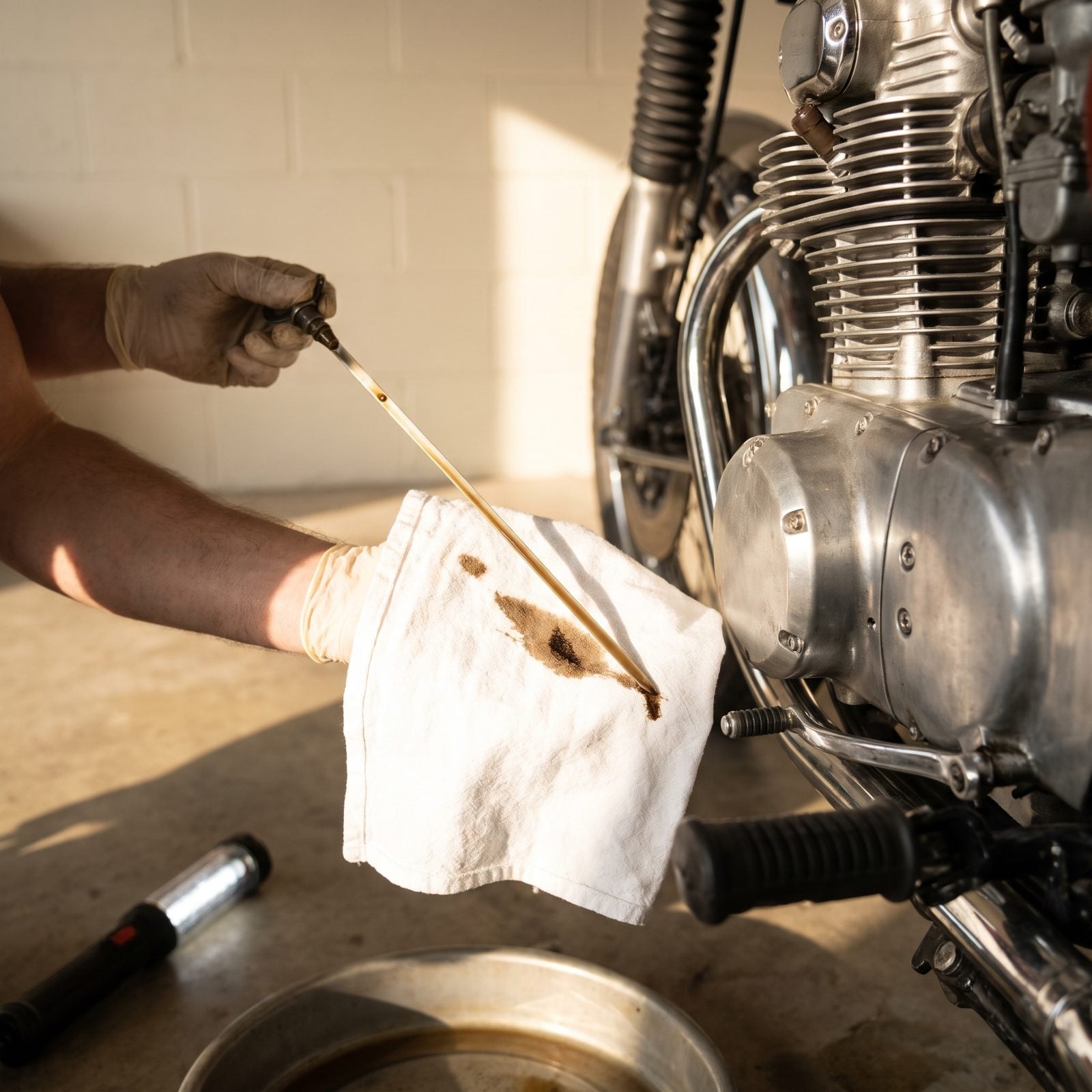
A full oil level tells you almost nothing. Plenty of bikes sitting in driveways have exactly the right amount of the wrong oil, and you pull the dipstick, see the line, nod, and miss the whole story.
Milky, coffee-colored oil means coolant or water got in. A gritty gray shimmer means metal is shedding somewhere expensive. Either one can cost you a rebuild you never budgeted for, and neither shows up on a glance at the level alone.
So wipe the dipstick on a white rag and read it in daylight. Smell it. Fresh oil smells like oil; burnt oil smells like a campfire. Rub a drop between two fingers and feel for grit. And if the seller changed the oil the morning you arrived, ask why right now — not last month.
24. Ignoring Oil or Coolant Seeping From Gaskets and Seals
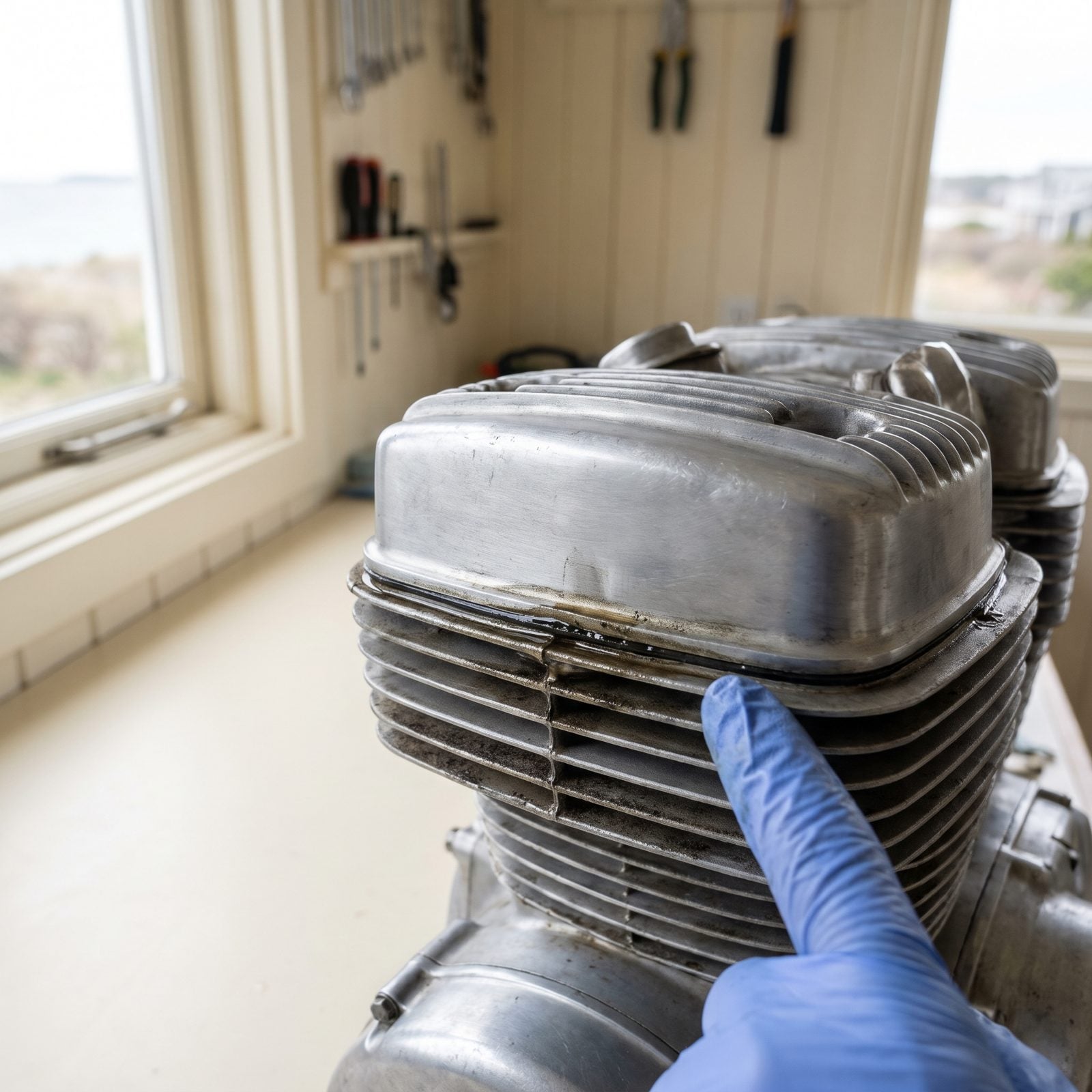
Every used engine wears a little character around the seals. The trap is telling yourself every wet spot is just a bit of seepage. Some of it is. Some of it is a head gasket halfway out the door.
Grime cakes where oil leaks, so follow the dirt uphill to the source. A weep at the valve cover is a cheap gasket. A wet trail from the base of the cylinder, or pink crust around a coolant hose, points at pressure escaping where it shouldn’t — and that gap in logic is how people buy a slow bleed and call it a bargain.
Wipe the suspect area clean, run the bike up to temperature, and look again. Fresh wet on clean metal tells you it’s active, not a decade-old stain. Chase the leak to a seam you can name and price before you decide it’s nothing.
23. Skipping a Compression or Leak-Down Test When Trouble Is Suspected
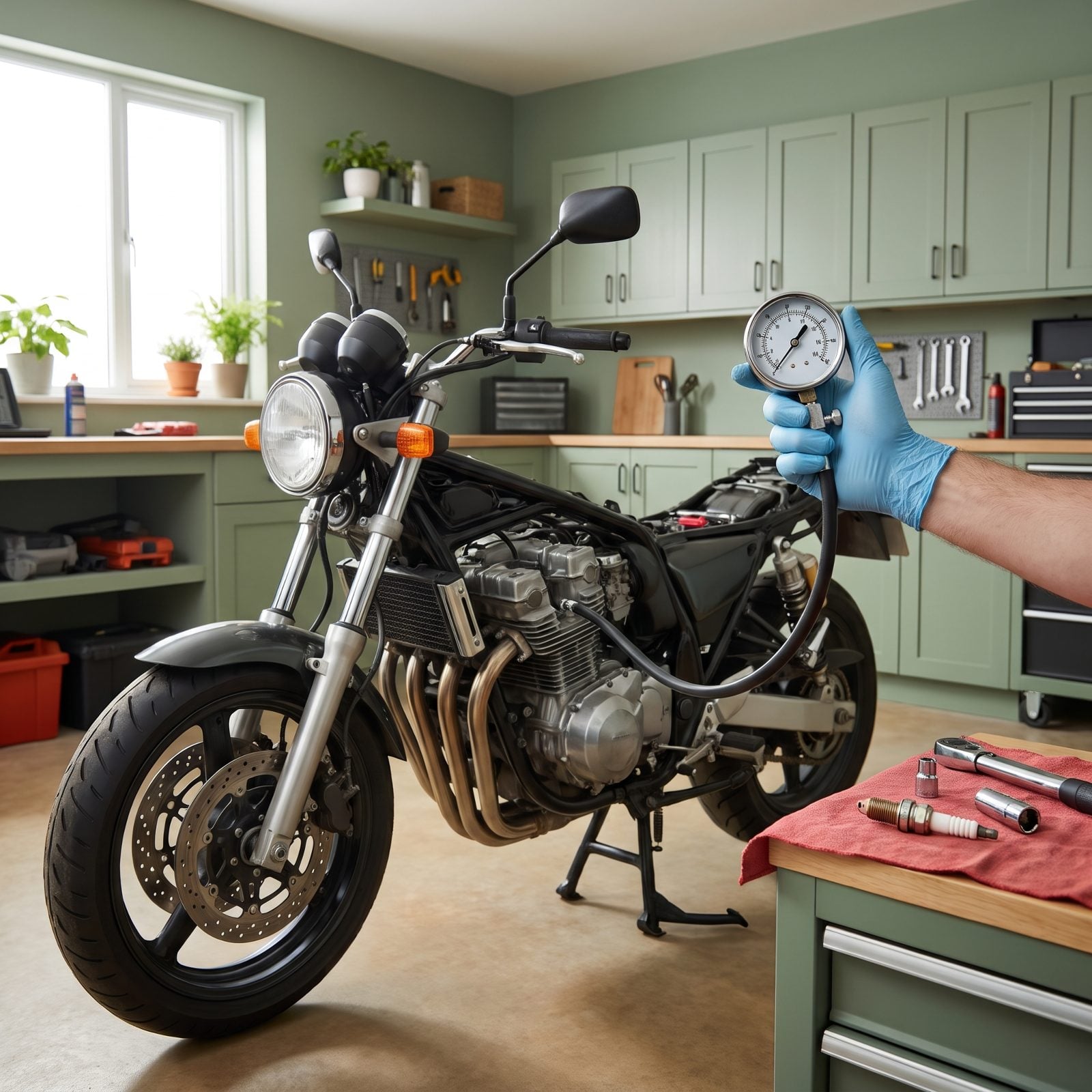
You hear a soft rattle, the seller shrugs, and you both decide it’s probably fine. Probably fine has emptied more bank accounts than any other phrase in motorcycling.
A compression test takes ten minutes and tells you whether the rings and valves are still sealing. A leak-down test goes further — it tells you where the air escapes: past the rings, past a valve, or out a head gasket. Skip either when something already sounds off, and you’re buying a guess.
If the price is high or the noise is real, run the test or make the sale conditional on one. A shop will do a leak-down for less than a tank of gas. Walking in blind on a top-end rattle is how a cheap bike becomes an expensive one in your own garage.
Probably fine has emptied more bank accounts than any other phrase in motorcycling.
22. Dismissing Blue, White or Black Exhaust Smoke
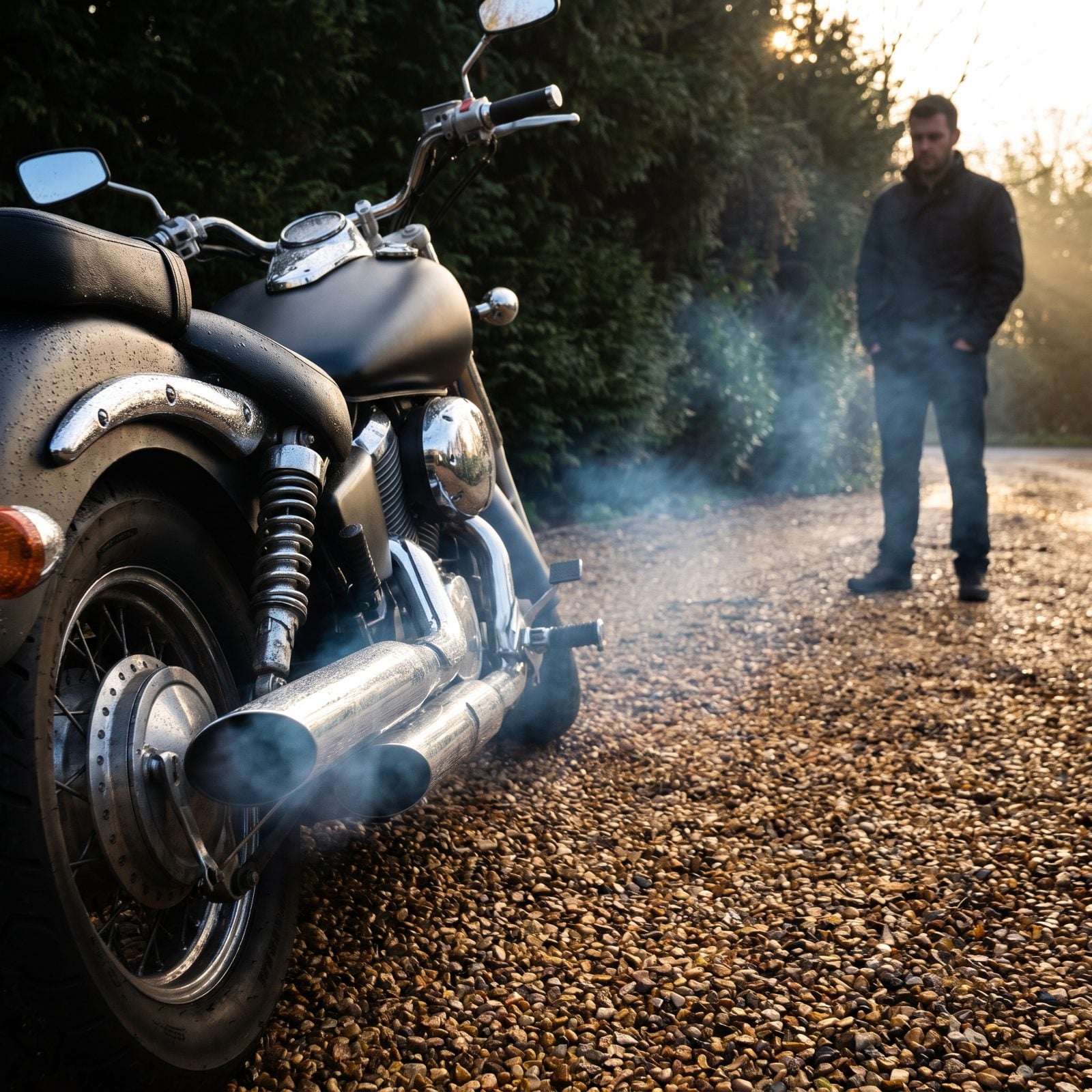
Cold-morning condensation puffs out white and clears in seconds. Harmless. Trouble is, people who’ve seen that once start waving off every color of smoke, and that’s where it gets expensive.
Blue haze that lingers means oil is burning past the rings or valve guides. White smoke that won’t quit and smells sweet means coolant in the combustion chamber. Black means it’s dumping fuel and running rich. Each one points somewhere different, and each one changes what the bike is worth.
Watch the pipe during a cold start, then again when you blip the throttle after a warm idle. A fresh stab of blue on a quick rev is the classic worn-guide tell. One rule though: don’t inspect a running engine in a closed garage. Push it outside, stand clear, and read the color in daylight.
21. Writing Off Knocking, Ticking or Cam-Chain Noise as Normal
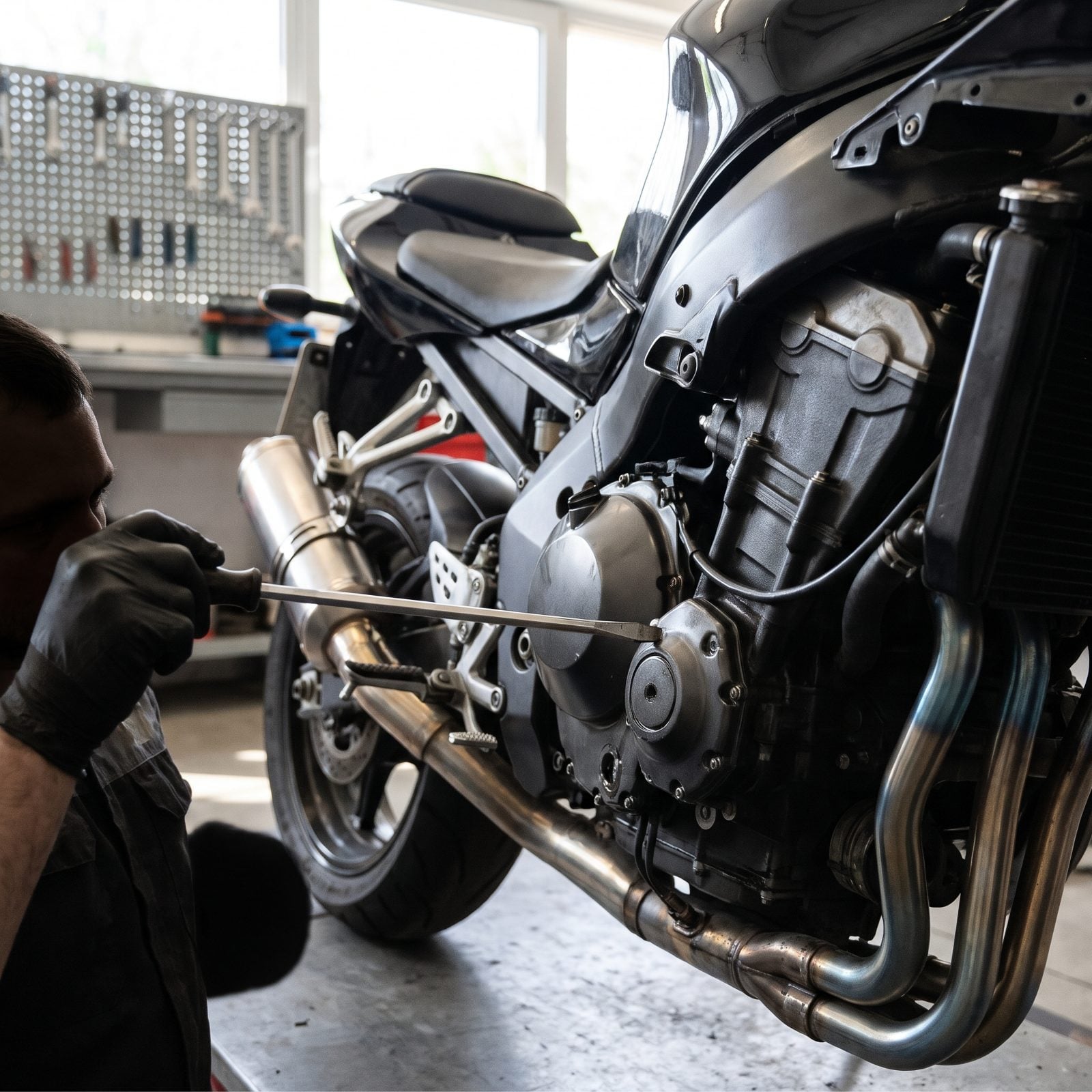
Air-cooled twins tick. Some fours clatter a bit when cold. A seller leans on that truth to talk you past a noise that isn’t normal at all.
A deep knock under load, a metallic rattle that climbs with the revs, or a top-end tick that won’t settle after warm-up can mean a stretched cam chain, a tired tensioner, or a bottom end going hollow. Confuse those with the engine’s regular voice and you’re buying someone else’s deferred maintenance.
Learn what that specific model sounds like healthy. A few minutes of forum reading before you go tells you the bike’s known quirks. Then take a long screwdriver in a gloved hand, rest its tip against the engine cover, and press the handle to your ear so the shaft can carry the sound. Work it around the top end to help pinpoint the noise. If the noise changes under throttle, treat it as real until proven otherwise.
20. Overlooking Twisted Accessory Wiring and Household Connectors
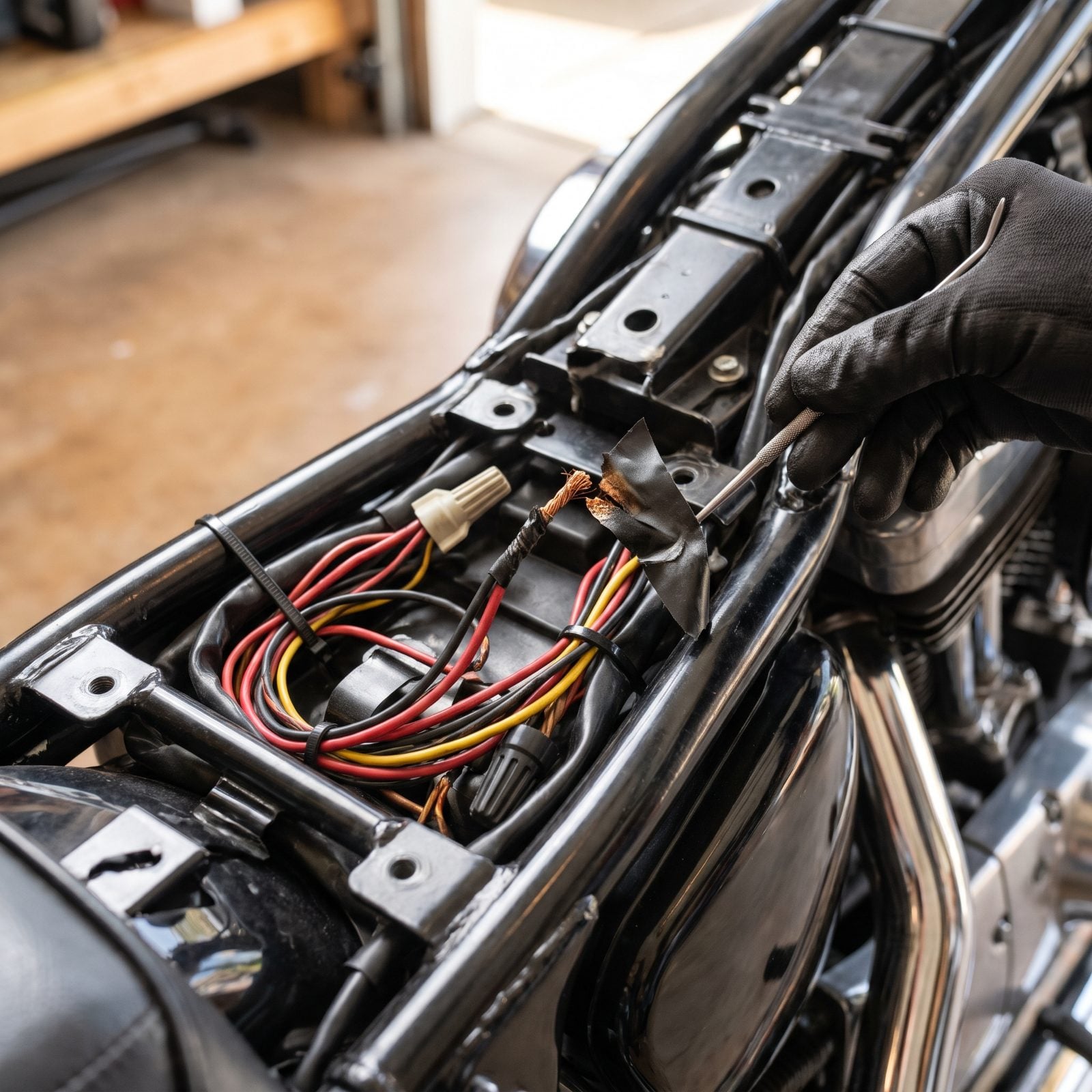
Lift the seat and there it is: a knot of wires twisted together, wrapped in tape, with a hardware-store wire nut thrown in for good measure. Somebody added heated grips or a phone charger and did it the fast way.
Bad splices don’t just blow fuses. Loose copper under vibration arcs, heats, and melts insulation, and on a machine that shakes every mile, a household connector is a slow fuse waiting its turn. Electrical gremlins are also the hardest faults to chase down once the bike is yours.
So trace the wiring you can reach. Look for soldered or properly crimped-and-sealed joints, not twist-and-tape. Any browning, any melted insulation, any wire nut means someone cut corners — and where you can see one shortcut there are usually three you can’t. Factor a wiring cleanup into your offer, or walk.
19. Missing Bent, Cracked or Poorly Repaired Frame Sections
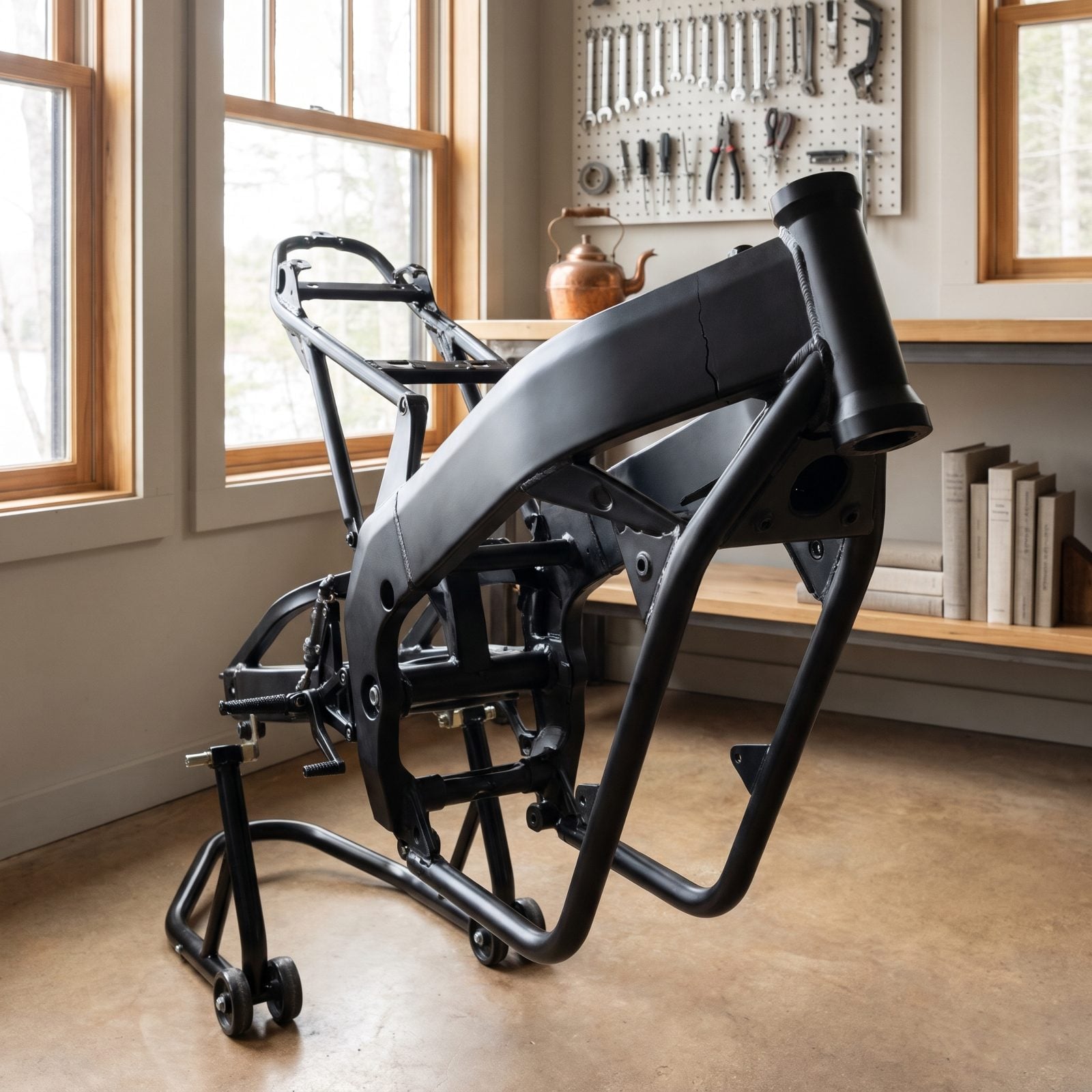
People inspect the engine for an hour and give the frame a four-second glance. Which is backwards, because the frame is the one part you can’t swap on a Sunday afternoon.
A bent spar, a cracked weld at a gusset, or a quick backyard patch over crash damage will never let that bike track straight, and a compromised frame can fail exactly where you least want it to. Sellers paint over the evidence because they know precisely what it drops the value to.
Crouch and sight down both frame tubes from the front and rear, hunting for ripples, kinks, or paint that cracked along a bend. Shine a light low and raking across the surface to catch deformation your eye skips in flat light. Check the steering head and swingarm pivot for weld marks that don’t match the factory finish. Original paint should flow unbroken over every tube.
18. Ignoring Damaged Steering Stops That Reveal a Hard Crash
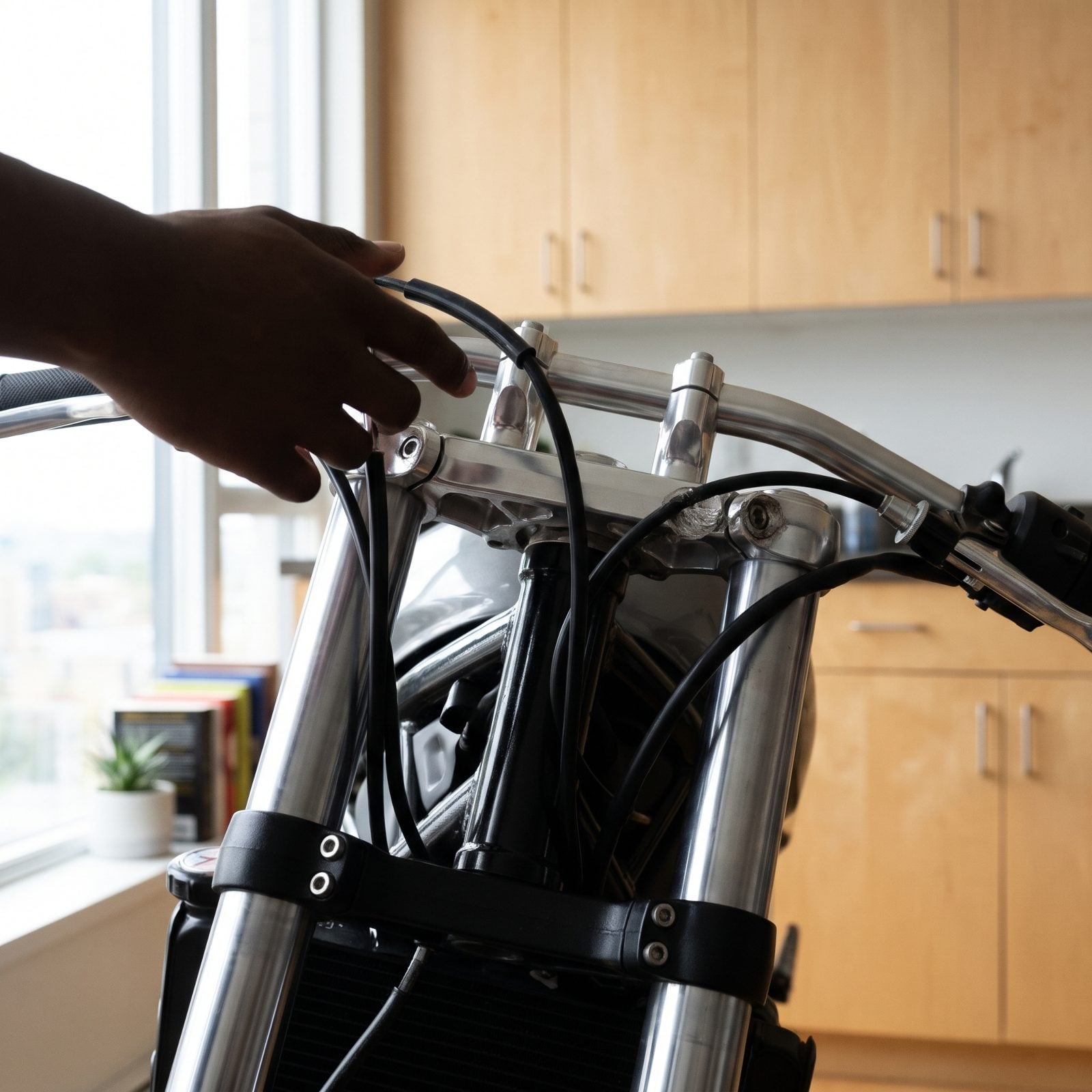
The steering stops are two little tabs most buyers never look at. They’re also one of the clearest fingerprints of a serious get-off.
In a hard crash the bars slam to full lock and the stops take the hit. A mushroomed, smeared, or bent stop says this bike went down hard enough to matter — even if the plastics got replaced and the story got cleaned up. Miss it and you’ve paid clean-bike money for a crashed one.
Turn the bars fully left, then fully right, and inspect where the frame tab meets its contact point. Factory stops look machined and even. Impact leaves gouges, flattened metal, or fresh file marks where someone dressed the damage down. Pair a chewed-up stop with any frame ripple and you have your answer.
On the steering stops at the front of the frame, a longtime motorcycle gear reviewer puts it bluntly “If these are at all bent or tweaked, then the bike has been crashed.”
17. Missing Bent or Pitted Fork Tubes and Leaking Fork Seals
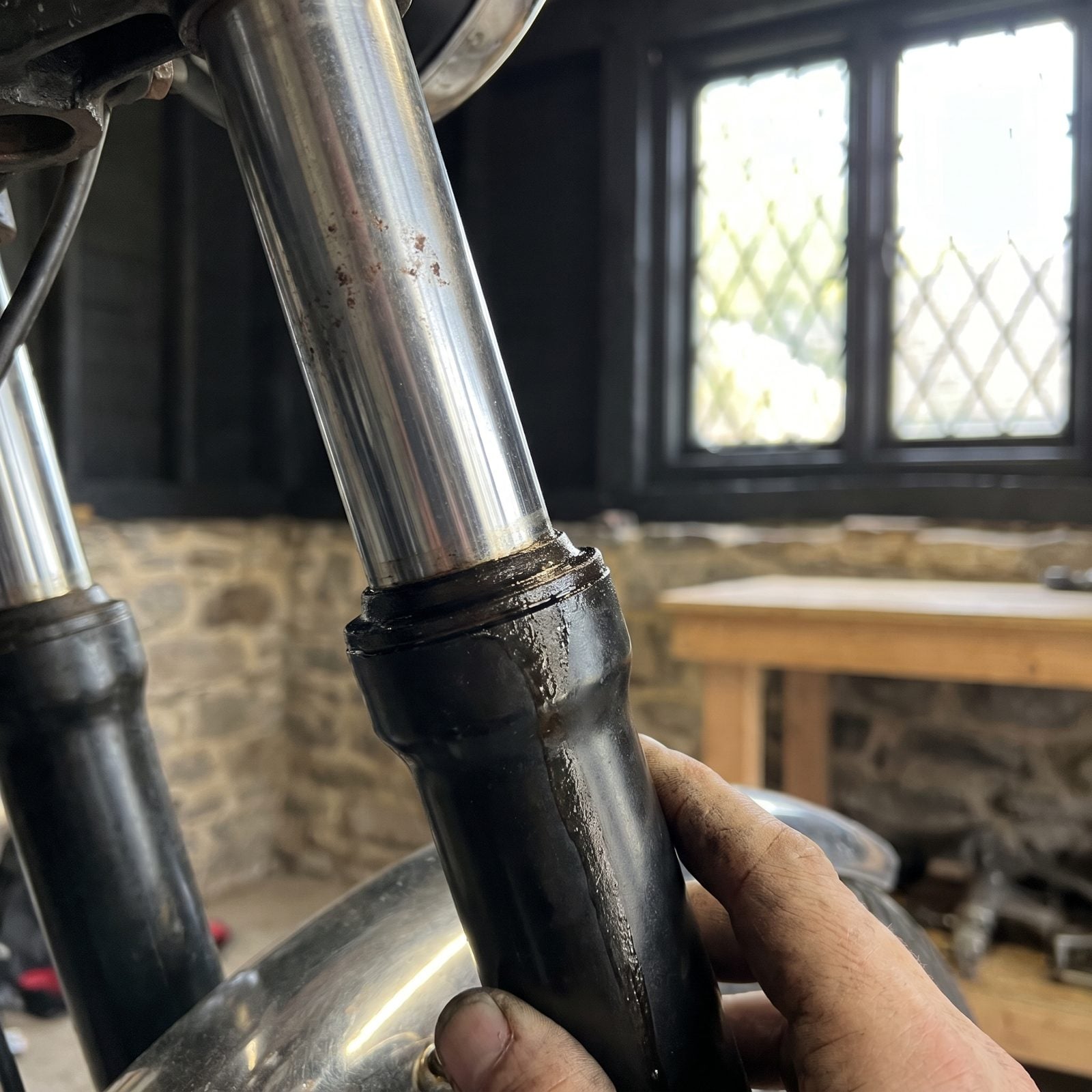
Shiny fork tubes read as healthy, so most buyers nod and move on. The real trouble lives in the details chrome hides until you look straight at it.
A weeping seal dumps oil onto your front brake and turns the front end vague and bouncy. Pitting on the tube shreds a new seal the moment you fit one, so a cheap seal job quietly becomes a tube replacement. And a bent tube, usually from an impact, binds the fork and never lets the front track true.
Run a finger around the base of each seal, feeling for oil film and grit. Scan the exposed chrome for rust freckles and nicks, especially where the tube disappears into the lower leg at rest. Then stand over the front wheel, grab the bars, and push the forks down hard a few times. They should drop and return smoothly and evenly — no stiction, no clunk, no wet ring left behind on the chrome.
16. Skipping the Steering-Head Bearing Check
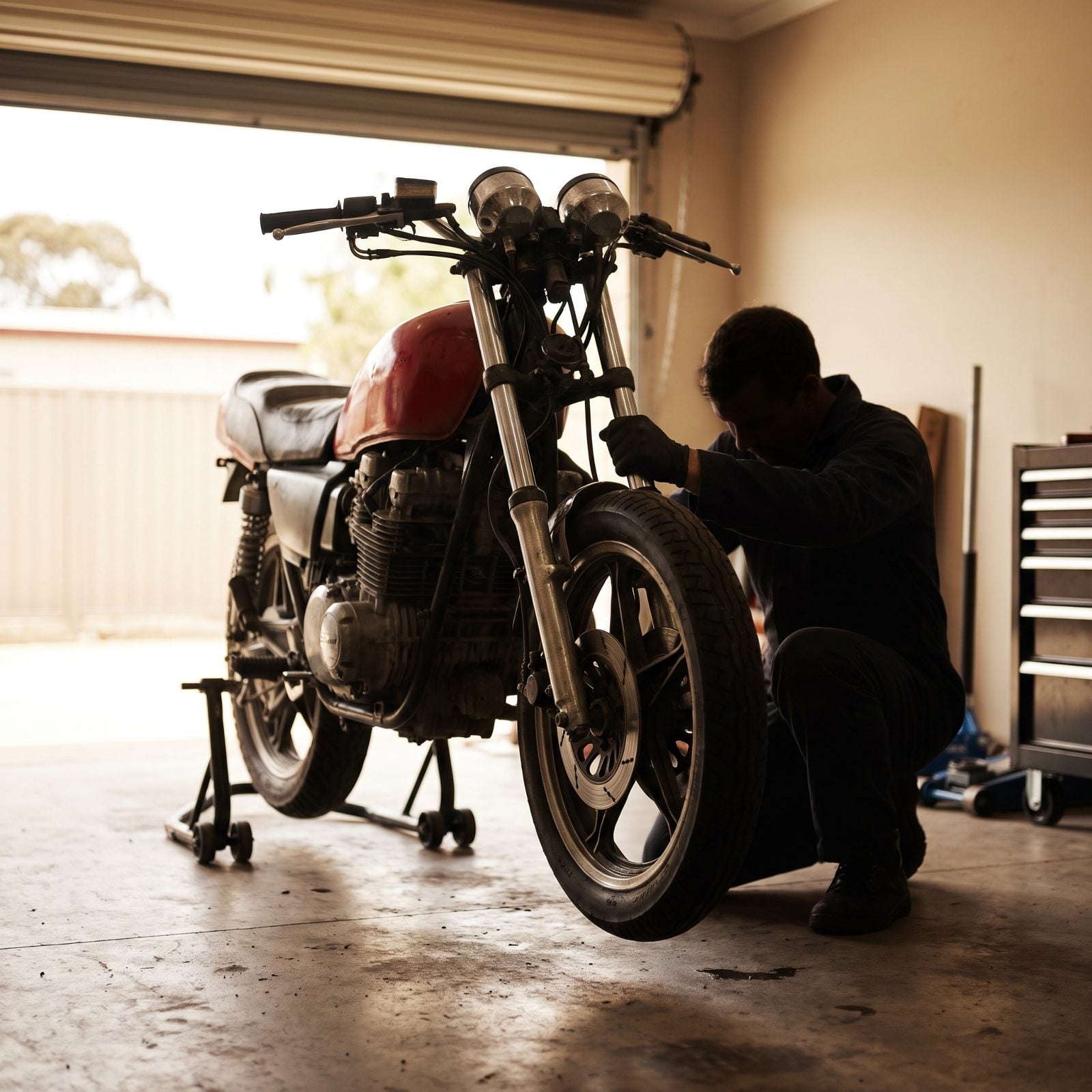
You grab the bars, swing them lock to lock, and they glide. That smooth sweep is exactly what fools people. A notchy steering head hides until the wheel is off the ground and the bars sit at dead center, where the bearing has worn a tiny flat spot from thousands of straight-line miles.
Miss it and you inherit a bike that wants to tuck into corners on its own, plus a rebuild that means pulling the front end apart. Not cheap, not fun.
Put the front wheel on a stand or lift, sweep the bars slowly, and feel for a detent at center. Then grab the fork legs and rock them front to back. Any clunk means loose or shot bearings. Factor the fix into your offer before you shake hands.
In a hands-on guide to replacing the bearings, a motorcycle maintenance writer explains “Common symptoms of bad steering head bearings include poor steering feel, strange resistance, clunking from the front end, or a notchy feeling, particularly when pointing the front wheel straight ahead.”
15. Missing Bent Rims, Cracks or Excessive Wheel Runout
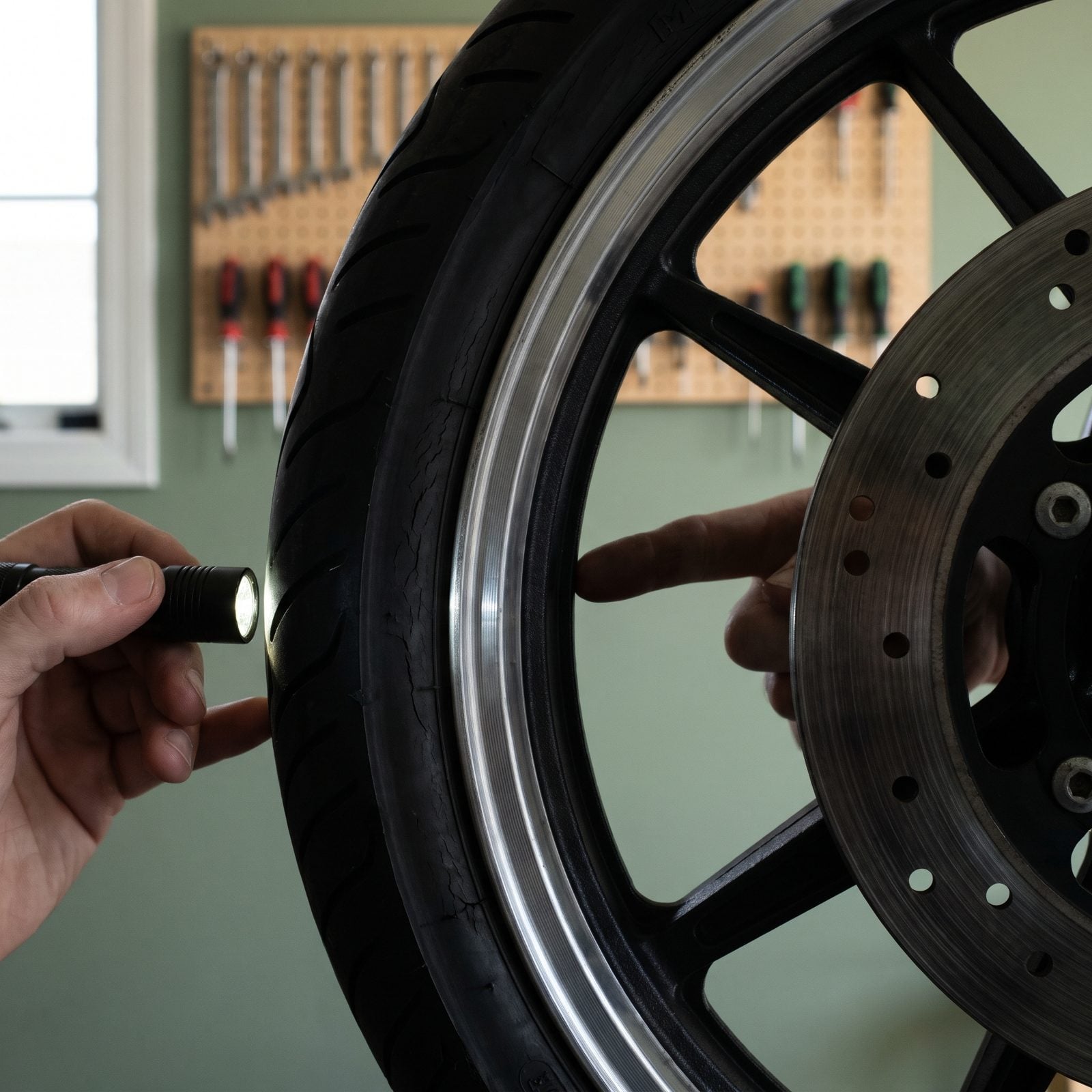
A bent rim doesn’t always announce itself. On an alloy wheel a dent can hide behind the tire bead, and on spoked wheels a single loose or broken spoke throws the whole wheel out of true — nobody notices until the handlebars start hunting at 60.
Why it matters: a cracked cast wheel can’t be welded safely, and a warped rim chews tires and unsettles the chassis. Replacement wheels for anything uncommon get expensive fast.
Spin each wheel slowly and watch the rim edge against a fixed point, like a brake caliper or your thumb braced on the fork. Look for side-to-side wobble and up-and-down hop. Ping the spokes with a screwdriver on wire wheels. A loose one sounds dead compared to the others.
14. Checking Tire Tread but Ignoring Age and Uneven Wear
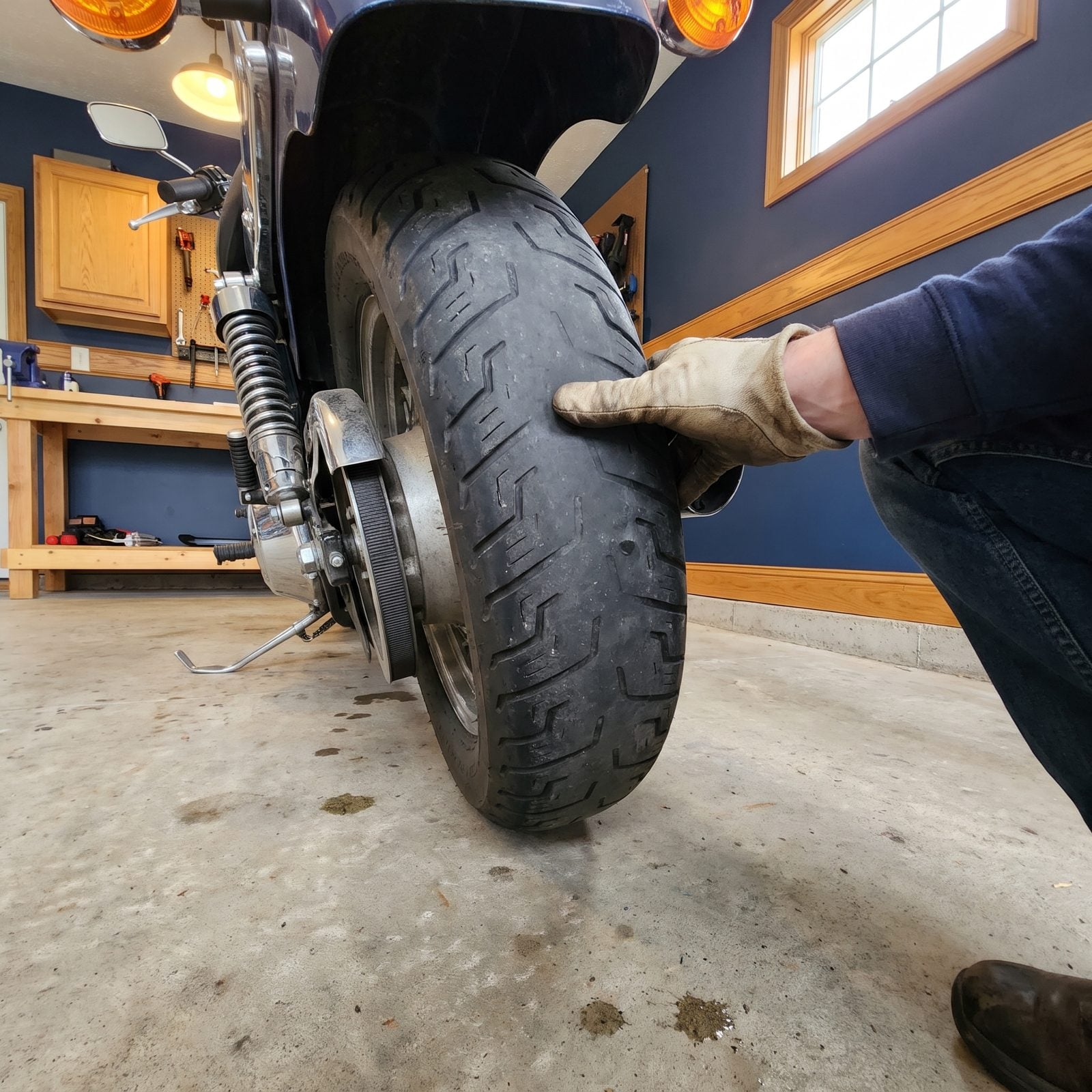
Plenty of tread left, so the tires pass. Then you flip to the sidewall and find a date code reading 2016. Old rubber goes hard and cracks whether it’s been ridden or parked, and a tire can look nearly new while being years past its prime.
Read the four-digit DOT code on the sidewall — the last two numbers are the year. Anything more than about six years old is suspect no matter the tread depth. While you’re down there, look at the wear pattern. A squared-off center with sharp edges means a lot of highway and barely any corners. Cupping or a flat spot points to suspension or alignment trouble worth chasing before you buy.
Urging riders to read the date code instead of just the tread, a team of riding instructors explains “Rubber is an organic compound and it decomposes.”
13. Assuming the ABS Works Because Its Warning Light Turns Off
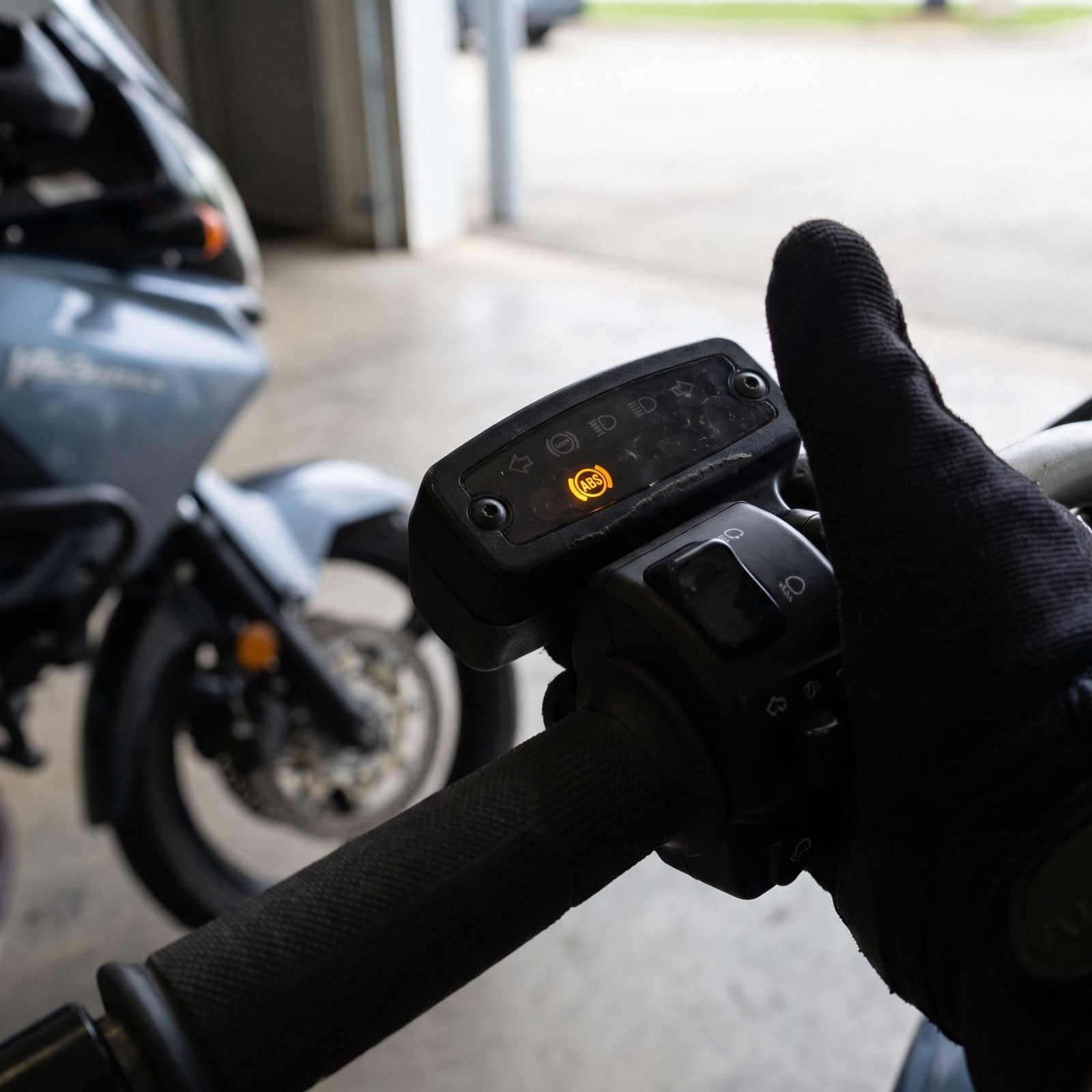
Turn the key, the ABS light blinks and goes out, so the system’s fine. Not quite. On most bikes that light only extinguishes once you roll above a few miles per hour and the wheel sensors confirm a signal. Sitting still, it may clear anyway even with a dead sensor or a hacked wiring fix.
Watch the light through a test ride. It should illuminate at key-on, then go dark once you’re moving. If it stays lit past walking pace, the system is faulted and you’re riding on regular brakes with a dash warning. On a safe, empty stretch at low speed, a firm brake application should let you feel the ABS pulse at the lever. No pulse under hard braking means dig deeper. ABS modules are a brutal expense to replace.
12. Skipping the Final-Drive Inspection: Chain, Belt or Shaft
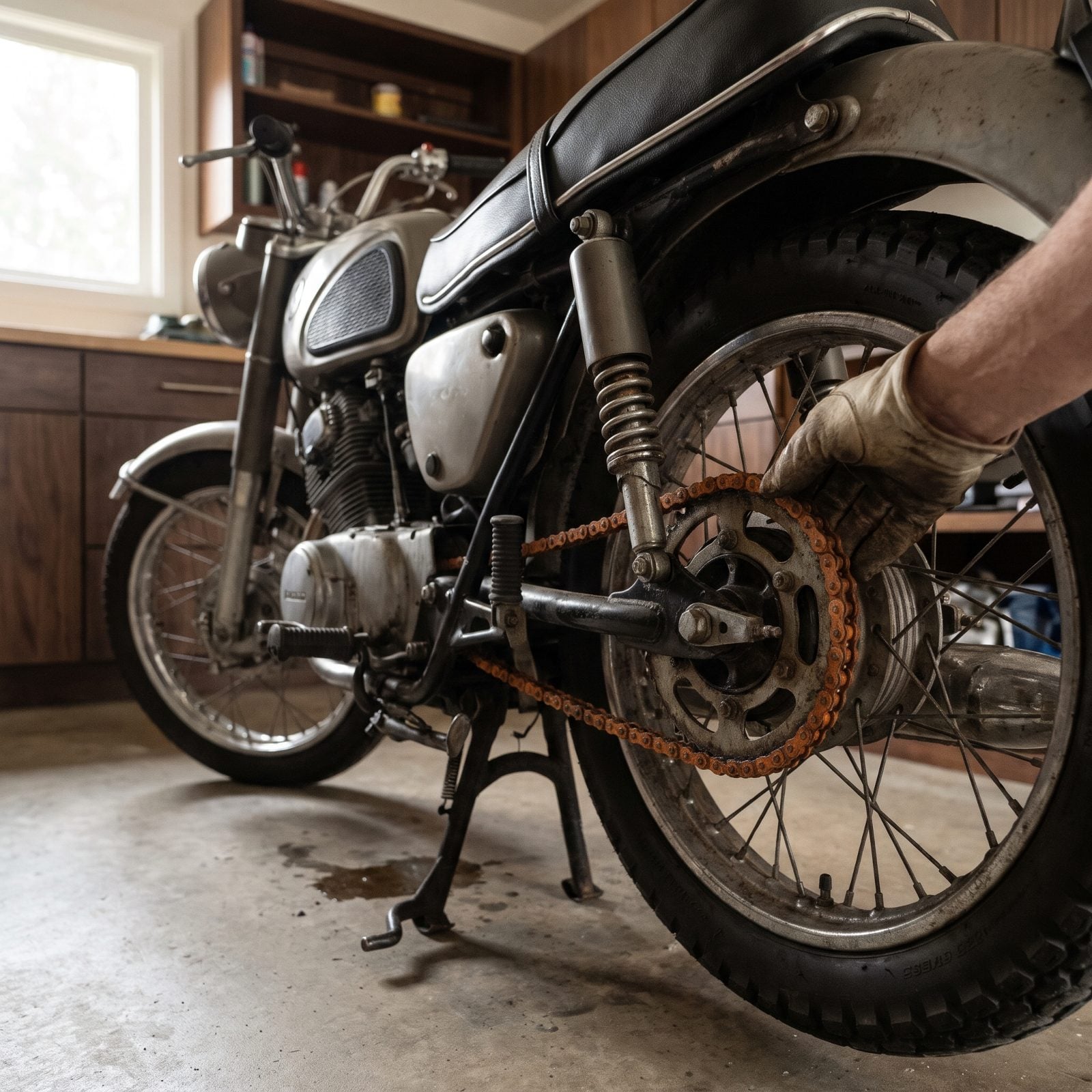
The final drive is where neglect shows plainest, and it’s the first thing people walk past. Chain, belt, or shaft, each has a tell.
On a chain bike, grab the lower run of the chain and work it up and down to check the slack. If it flops well past the spec in your manual, or feels tight in one spot and loose in another, the chain’s stretched. Look at the sprocket teeth themselves. Hooked or shark-finned teeth mean the whole set is due, and you replace chain and sprockets together.
Belt drives want no cracks between the teeth and no missing chunks — run your fingers along the inside. For shaft drives, nose around the rear hub for dark weeping and ask when the final-drive oil was last changed. People forget shaft bikes even have fluid back there, and a bone-dry pinion is a very expensive surprise.
11. Missing Clutch Slip Under Hard Acceleration

A slipping clutch is sneaky because the bike still moves. It just lies to you about how hard it’s pulling. The trick that exposes it: in a higher gear at moderate speed, roll the throttle open firmly. If the engine revs climb faster than the bike actually speeds up, the clutch is slipping. The RPM and the road pace have come unglued.
Why care? A worn clutch at best means plates and a half-day of labor. At worst it’s been limping along, masking bigger engine wear. Test this on a safe, open stretch with room ahead, never in traffic. A healthy clutch grabs instantly and the revs track the speed like they’re bolted together.
10. Failing to Test Every Gear Under Load
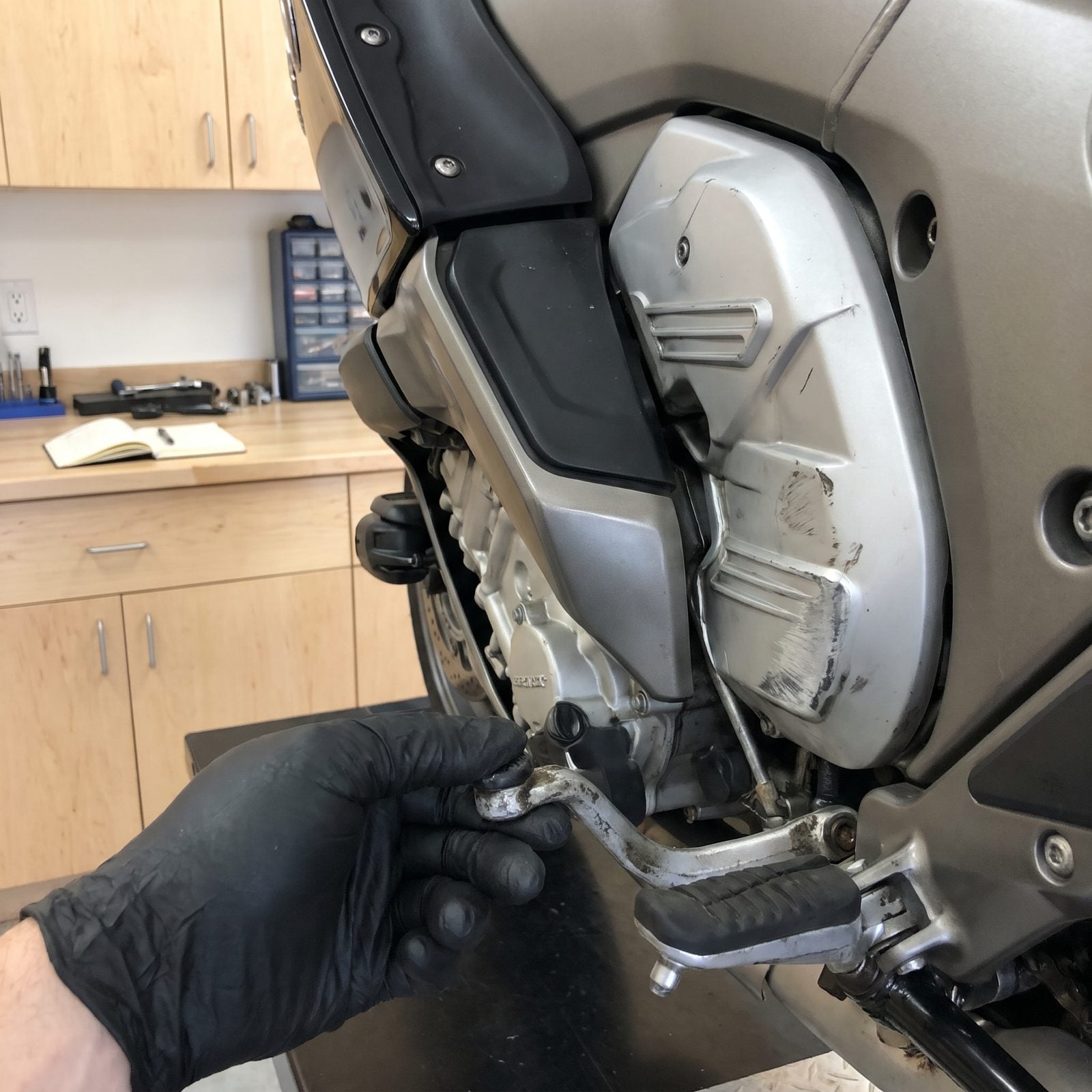
Two gears feel fine, so the transmission’s fine. That’s how a worn second gear or a weak shift fork slides past a buyer. Gearboxes don’t fail evenly. One gear jumps out under load while the rest shift clean.
Ride long enough to work through every gear, and push a little power through each one rather than feathering along. A gear that pops back to neutral under acceleration, or a shift that needs two stabs to catch, is telling you about internal wear. False neutrals between gears are a warning too.
Also feel the clunk. A heavy bang into first is normal on some bikes, but grinding, missed engagements, or a lever that won’t come up to the next gear are not. Transmission work means splitting cases. Price accordingly or walk.
9. Ignoring a Sticky Throttle or Unstable Idle
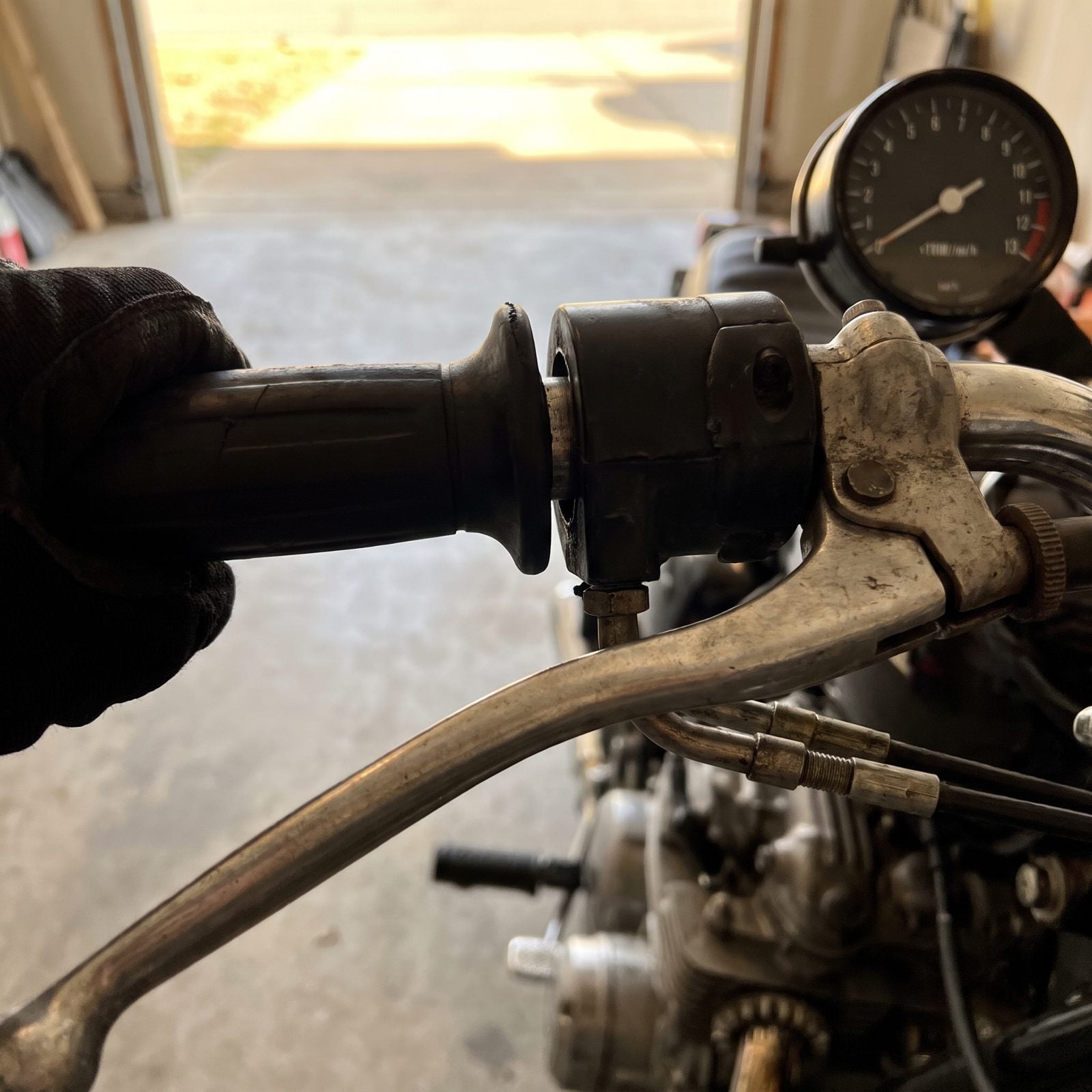
Start it cold and let it idle. A bike that hunts up and down, dies at stops, or needs the throttle blipped to stay alive is talking to you. Could be a vacuum leak, gummed-up carbs from sitting, dirty fuel injectors, or a throttle body nobody ever cleaned. None of it is the end of the world, but it’s leverage.
Test the throttle itself too. Twist it fully open and let go — it should snap shut on its own, crisply. A throttle that stays part-open or returns slow is a sticky cable or a binding tube, and a throttle that won’t close when you want it to is the kind of problem you fix before you ride, not after.
Let it fully warm up before you judge the idle. Cold-start roughness is normal. Rough idle at operating temp is the tell.
8. Overlooking Tank Rust, Cracked Fuel Lines or Injector Leaks
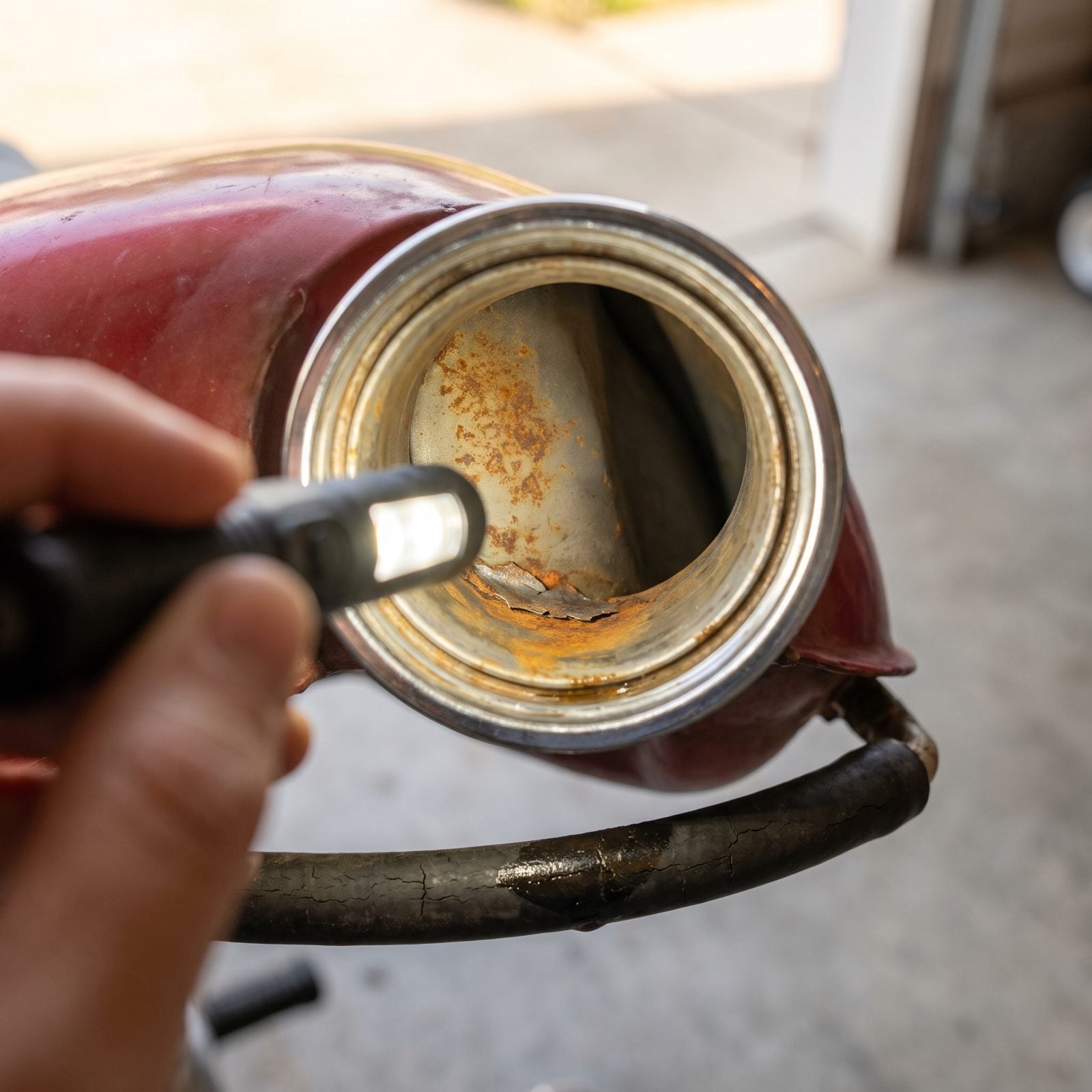
Pop the cap, shine a light, and actually look inside. A tank crusted with orange scale isn’t cosmetic — that rust breaks loose in flakes, clogs the petcock, gums the injectors, and strands you forty miles from anywhere. We’ve walked away from a clean-looking bike the second we saw the inside of the tank.
Then trace the fuel lines with your fingers. Cracked rubber weeps at the ends and under clamps. On a fuel-injected machine, look for dried fuel film around the rail and injector seats.
Run the bike, let it warm, and sniff for raw gas. A weeping injector or soft line is cheap to fix if you knew about it going in, and a reason to knock serious money off if the seller didn’t.
7. Failing to Check the Radiator, Coolant Stains and Fan Operation
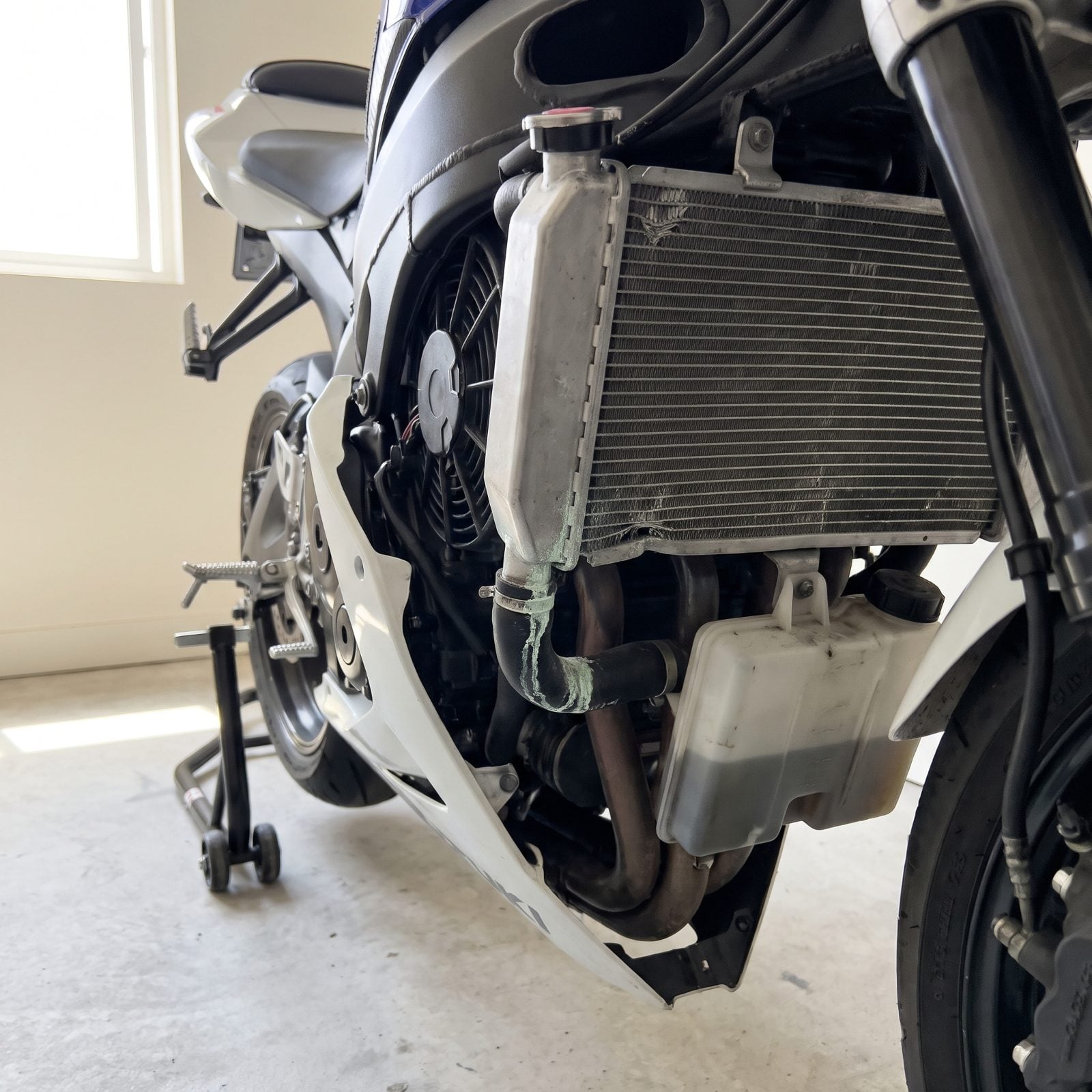
On a liquid-cooled bike, the radiator tells you how the thing was treated. Crushed fins mean it went down or lived behind a tailgating truck, and chalky green or white crust around a hose joint is dried coolant — a leak that was never fixed, only wiped.
Check the reservoir. Murky, rust-tinted, or low fluid is a bad sign. Then let the engine idle until the fan kicks on. A fan that never spins up is a cooked engine waiting to happen the first time you hit stop-and-go traffic.
Overheating warps heads and blows gaskets, and those repairs cost more than most used bikes are worth. Five minutes of idling at the curb saves you from buying someone else’s problem.
6. Missing Bent Handlebars, Misaligned Triple Clamps or Crooked Tracking
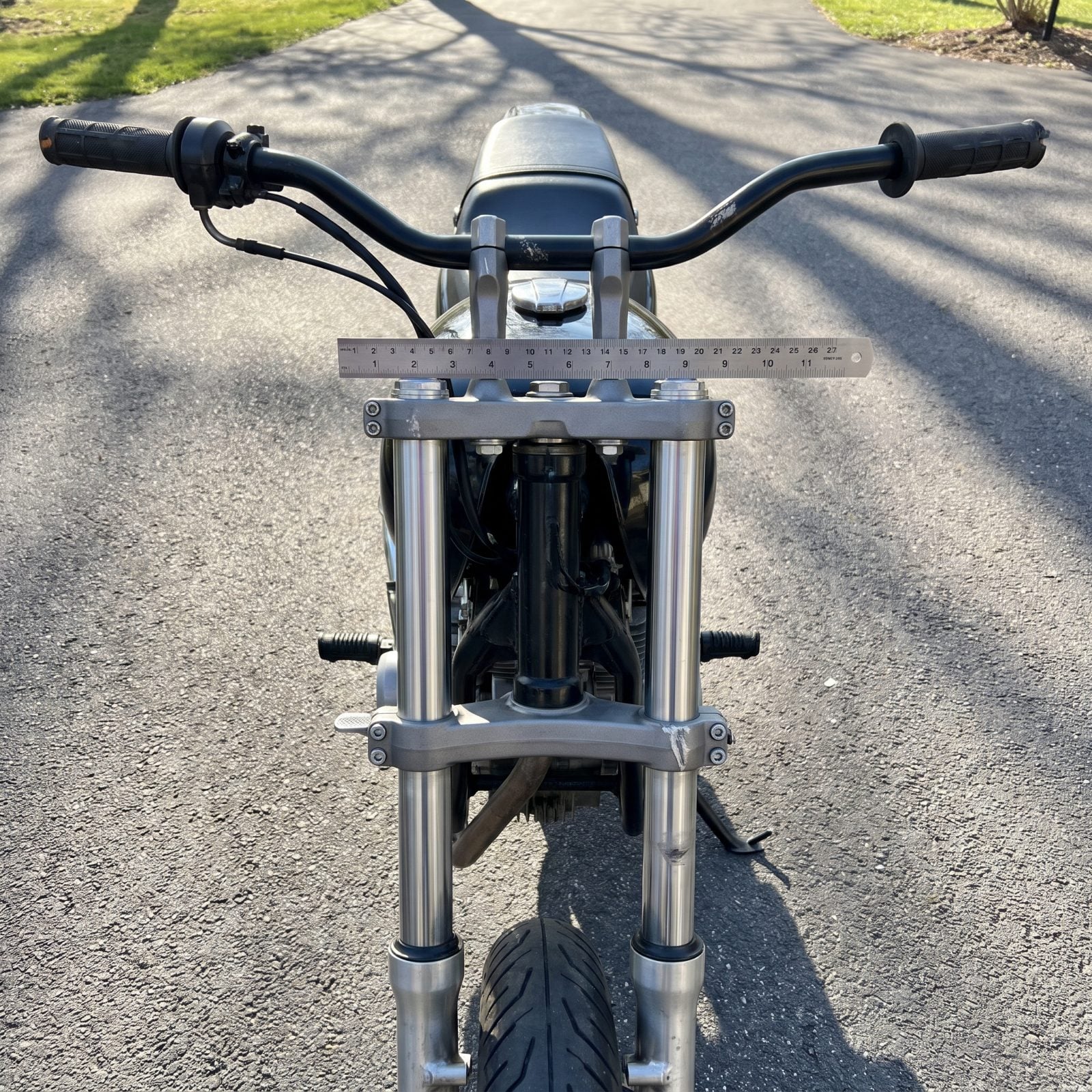
Stand directly behind the bike and look down the spine of it. The front wheel should line up with the rear. If the bars sit cocked while the wheel points straight, something got knocked out of true in a crash.
Straddle the front wheel between your knees and try to turn the bars. A tweaked triple clamp or bent fork makes steering feel heavy or notchy. On the road, that reads as a bike that wants to wander or won’t hold a line.
Crash damage hides here more than anywhere. Fresh paint on the tank and scuffed, replaced bar-ends tell the same story from two directions.
5. Skipping a Full Check of Lights, Horn and Safety Interlocks
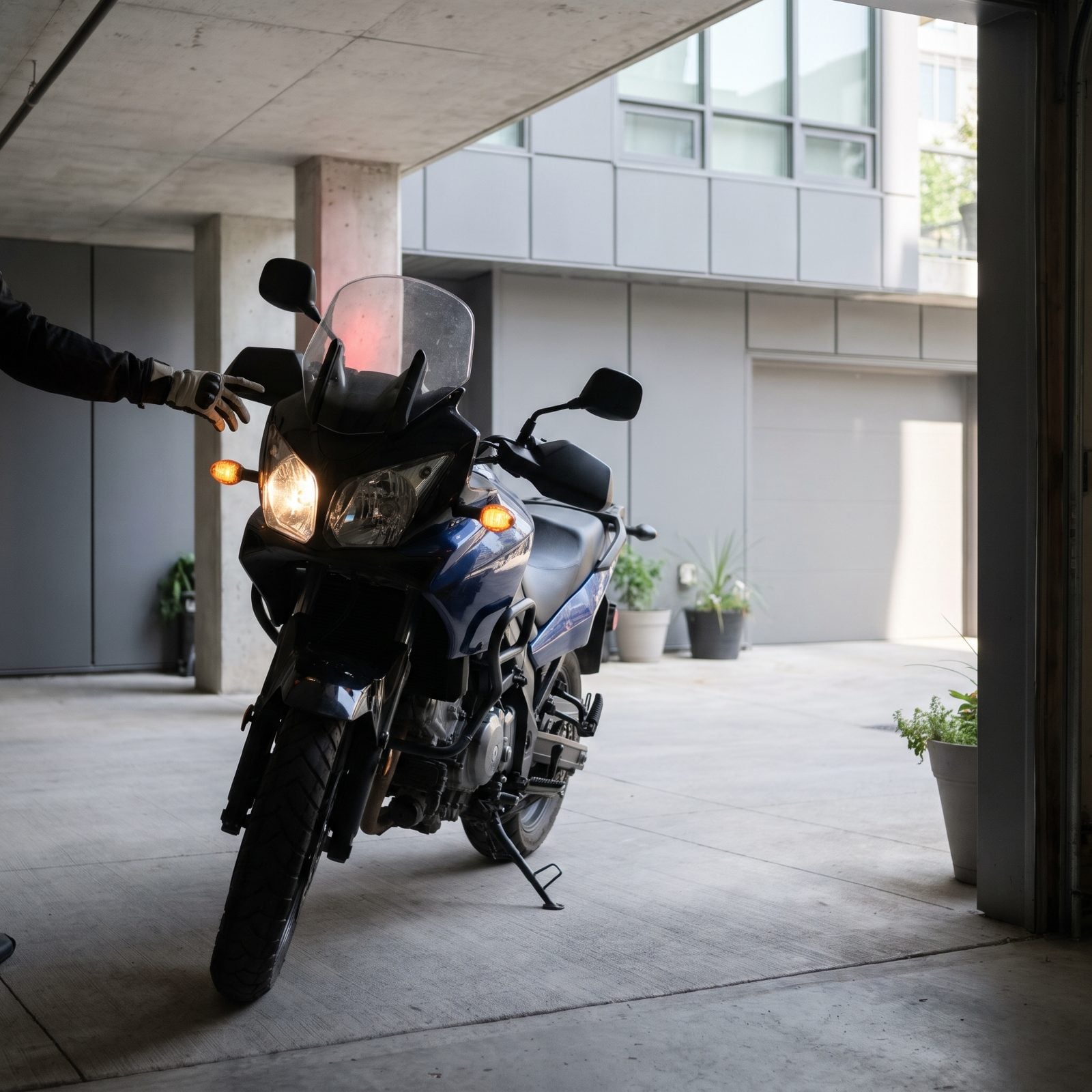
Run through every single light before you ride. High beam, low beam, both turn signals, brake light on the hand lever and the foot pedal, tail light, horn. A dead bulb is nothing. A dead circuit with corroded connectors or a melted harness is a whole weekend of chasing gremlins.
Check the safety interlocks too. The engine should cut when you pull the clutch and drop it into gear with the sidestand down. If the kill switch, clutch lockout or stand sensor has been bypassed, ask why.
4. Buying With One Unverified Key or an Untested Immobilizer
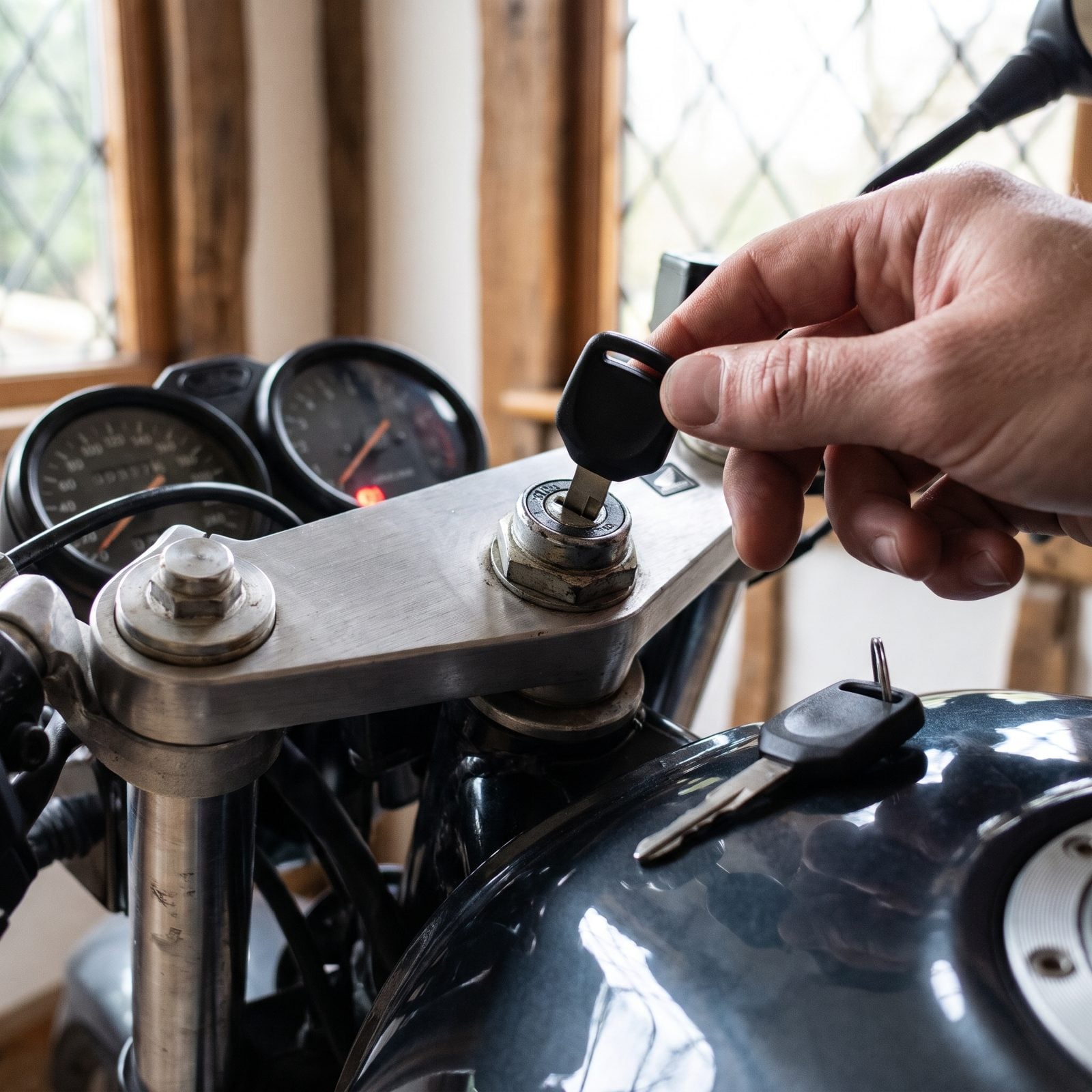
Ask for every key. A seller who hands you one worn ignition key and shrugs about the spare is handing you a future bill. On a modern bike with a chipped immobilizer key, a replacement can cost a few hundred dollars and a dealer visit, because the ECU has to be reprogrammed.
Test the spare on the spot — start the bike with it. If the immobilizer light stays on or the bike won’t fire, that key is dead weight.
One key also raises a quieter question. Where did the others go, and was this bike ever reported stolen? A missing set is worth a few minutes of thought before cash changes hands.
3. Limiting the Test Ride to a Smooth, Low-Speed Parking Lot
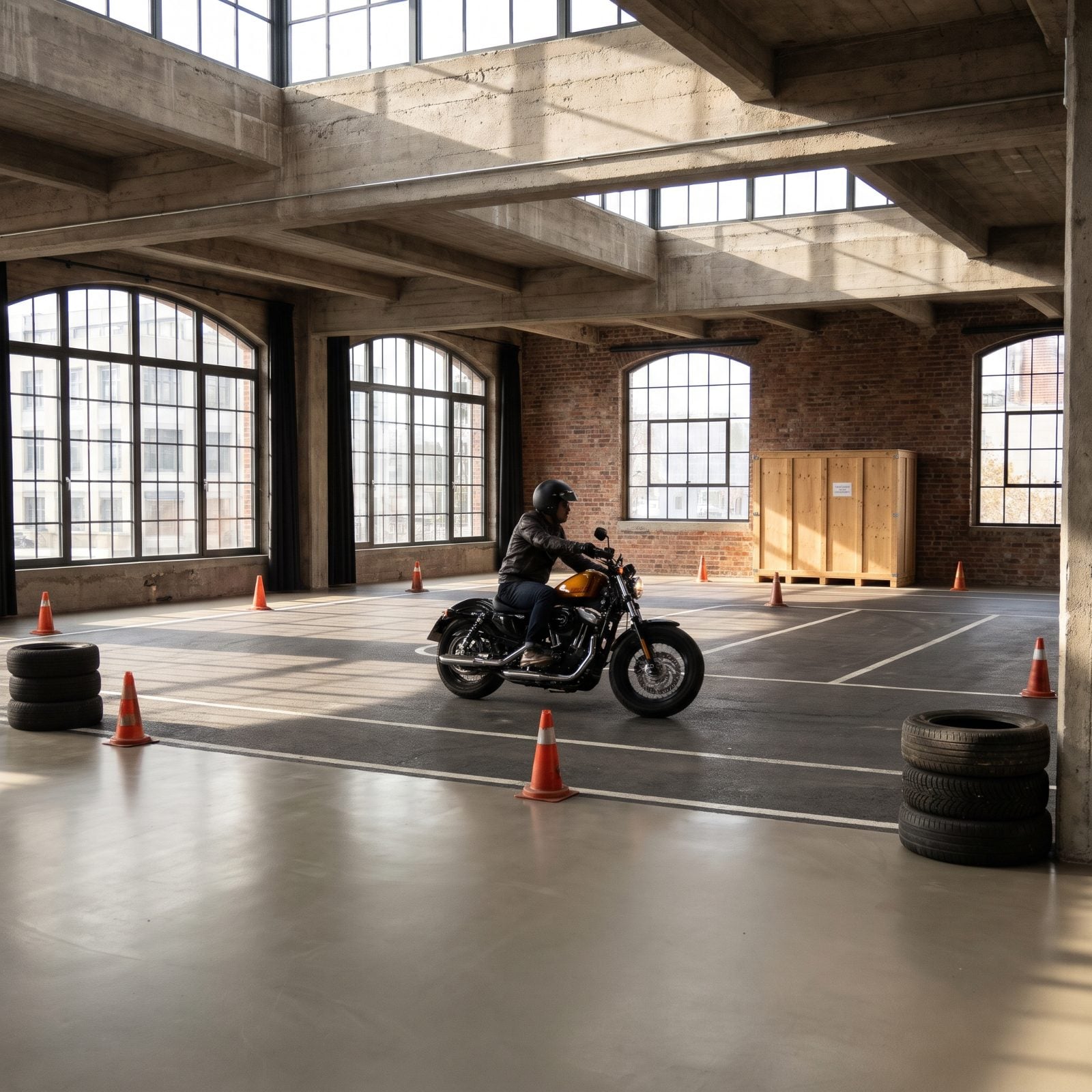
Crawling around a parking lot proves almost nothing. A bike can idle and roll fine at ten miles an hour and still be a disaster above forty.
Get it up to real speed where it’s safe and legal. Listen for a wobble in the front end at highway pace, which points to worn steering bearings or a bent rim. Brake hard from speed and feel for pulsing — warped rotors. Accelerate firmly to check for a clutch that slips when it’s actually loaded.
Then run it through all the gears. A transmission that pops out of second or grinds into third only shows itself under power. The low-speed loop is where sellers hope you’ll stop. Don’t.
2. Skipping a Hot Restart After the Test Ride
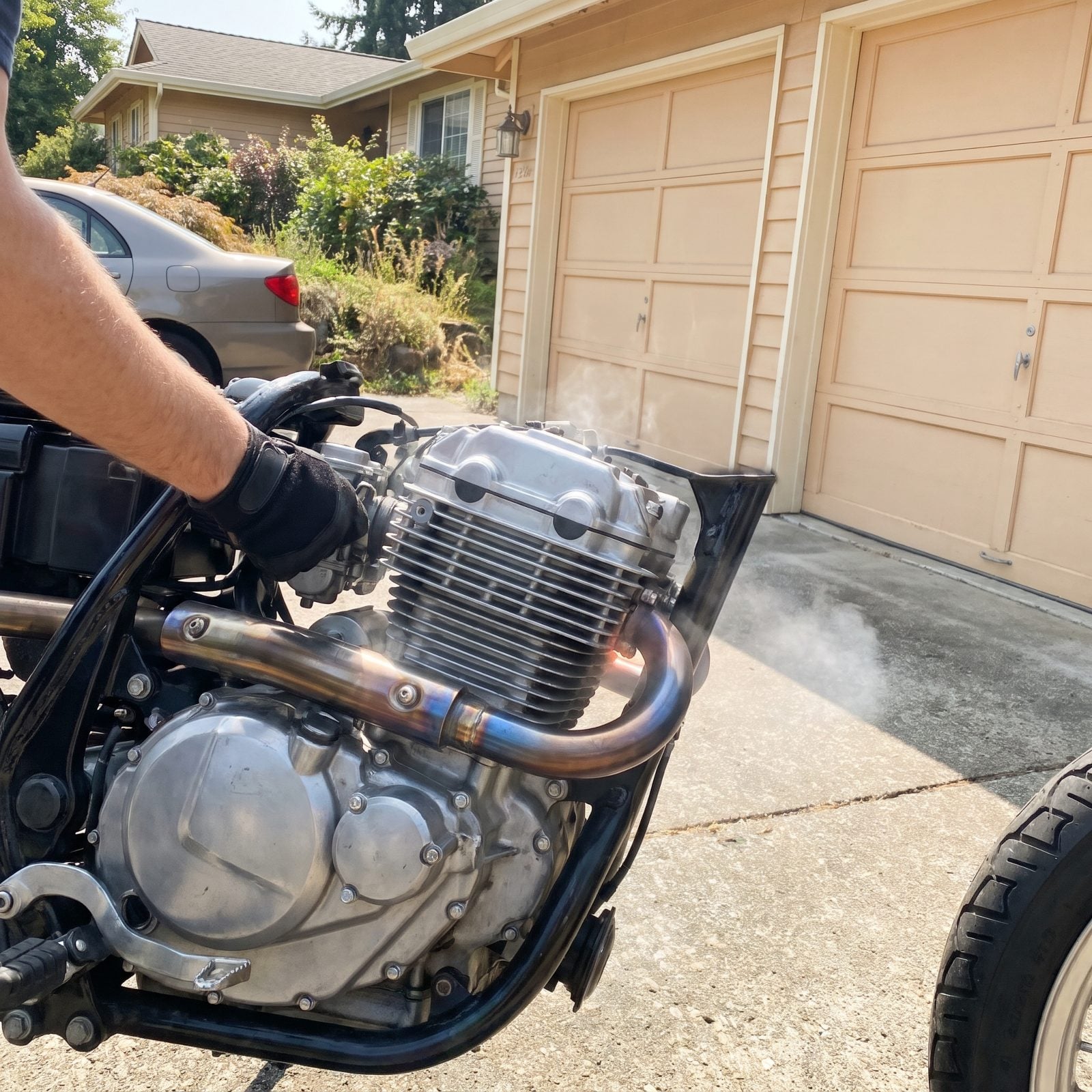
Most buyers miss this one. Shut the engine off hot, right after the test ride, then try to start it again.
A cold start exposes some faults; a hot restart exposes others. Weak batteries, dying starter motors, failing stators and fuel-delivery gremlins all tend to surface when the engine is up to temperature. If it cranks slow, hesitates, or needs a fistful of throttle to catch when hot, you’ve found something the seller may not even know about.
Pair it with the cold start you insisted on earlier. Make it earn its start twice, and you learn far more than either start would tell you alone.
1. Handing Over Money Before the Title and Detailed Bill of Sale Are Complete
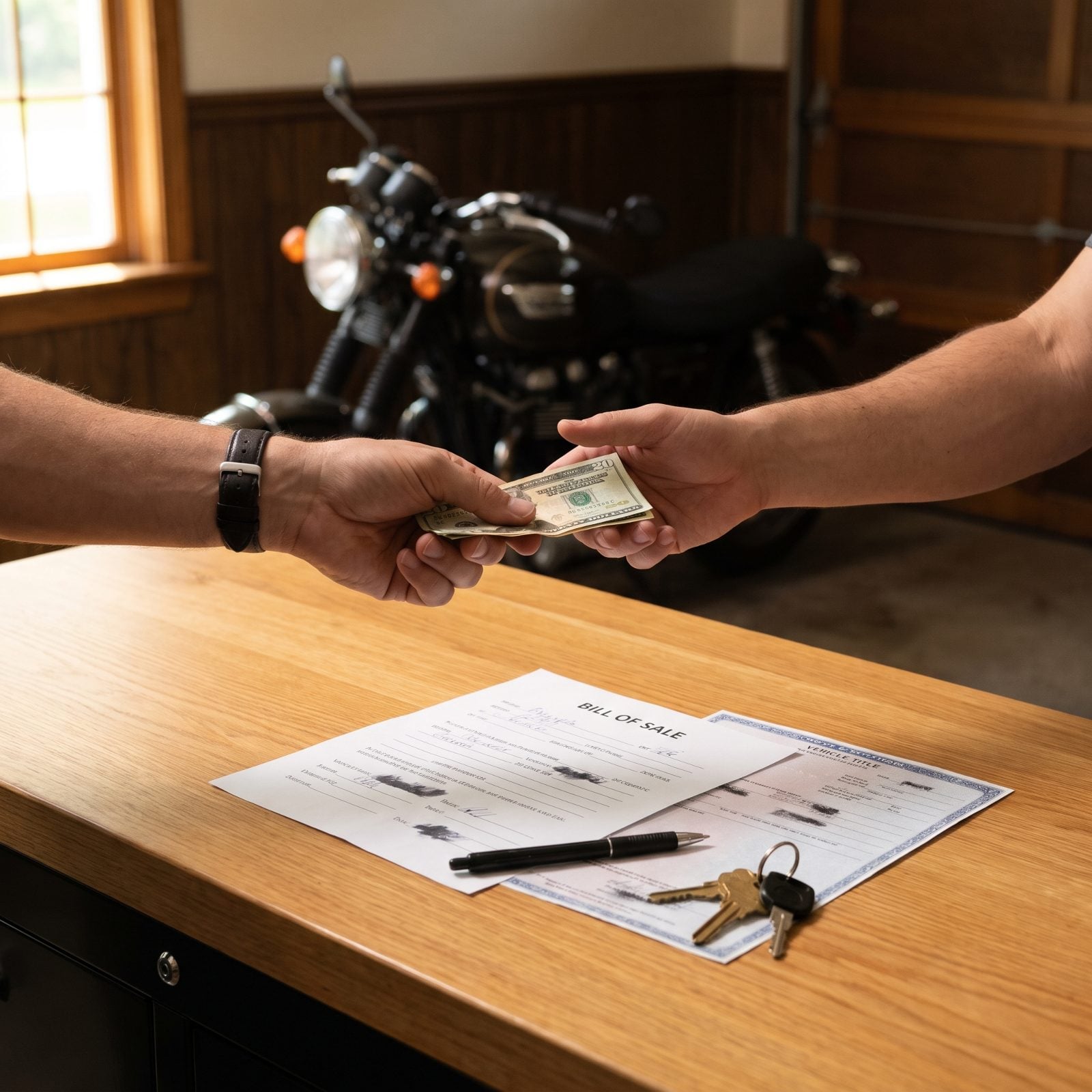
Cash first, paperwork later is how good deals turn into nightmares. Before a dollar moves, the title has to be in the seller’s name, signed, and free of liens. Match the VIN on the title to the VIN stamped on the frame and the plate on the steering neck. If they don’t match, stop right there.
Write a real bill of sale. Both names, both addresses, the date, the agreed price, the year, make, model and VIN, odometer reading, and the words “sold as-is” if that’s the deal. Both parties sign, and each keeps a copy.
And a seller who “lost the title” and promises to mail it? You’ve heard that story before, and you don’t want the sequel. No clean title, no cash. Walk, and let the next buyer inherit the headache.