
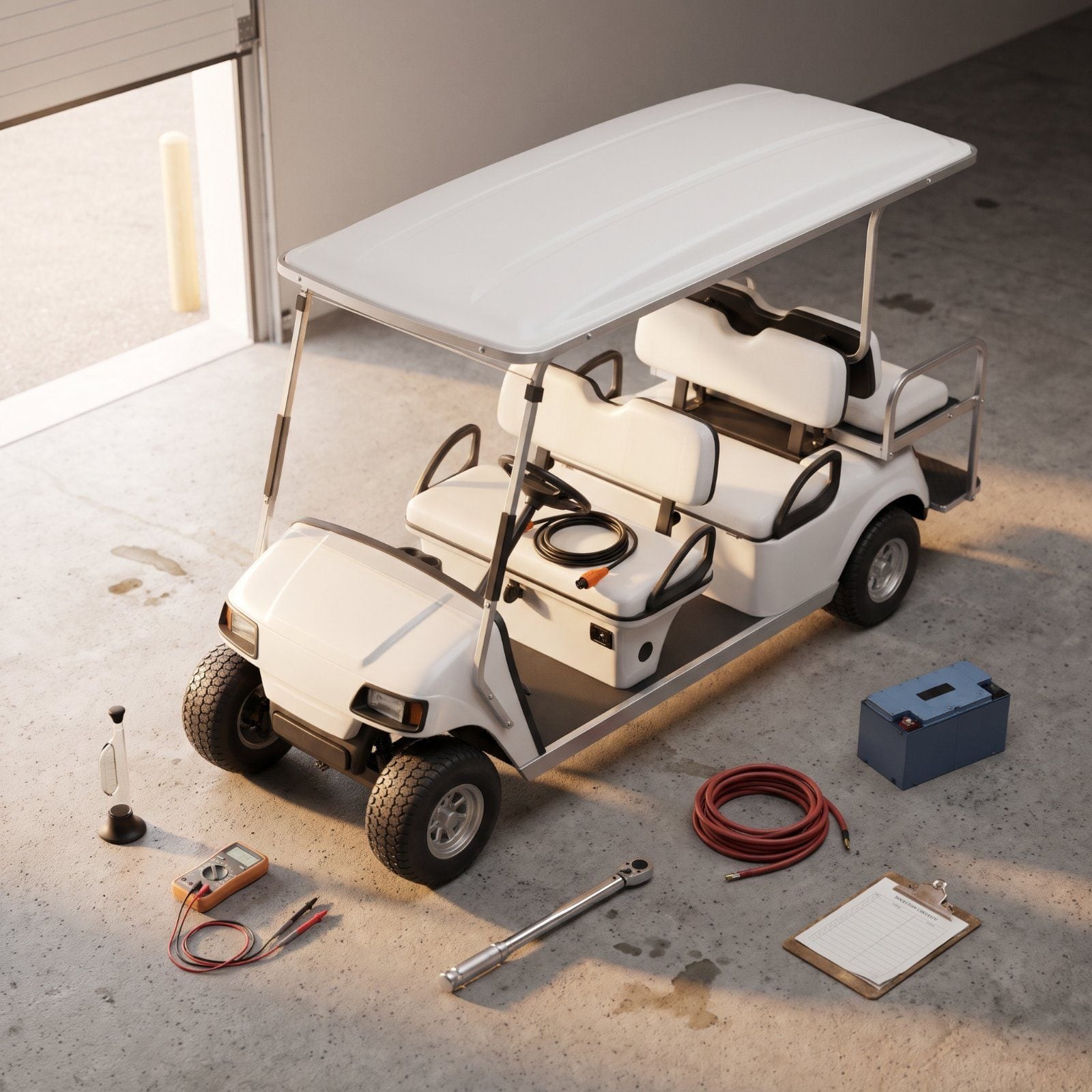
A golf cart looks simple. Four wheels, a seat, a pedal, maybe a cooler bolted to the back. Then you plug it in and nothing charges, the police pull you over two blocks from home, or the battery pack that was supposed to last a decade quits in eighteen months. The sticker price is rarely the real price. Most of the expensive surprises can be dodged, though, and spotting them takes an afternoon and a handful of blunt questions. Here are the ones that cost people the most.
Please note that some of the images in this article were created with the assistance of AI.
37. Assuming Every Golf Cart Is Street-Legal Without Checking Local Registration Rules
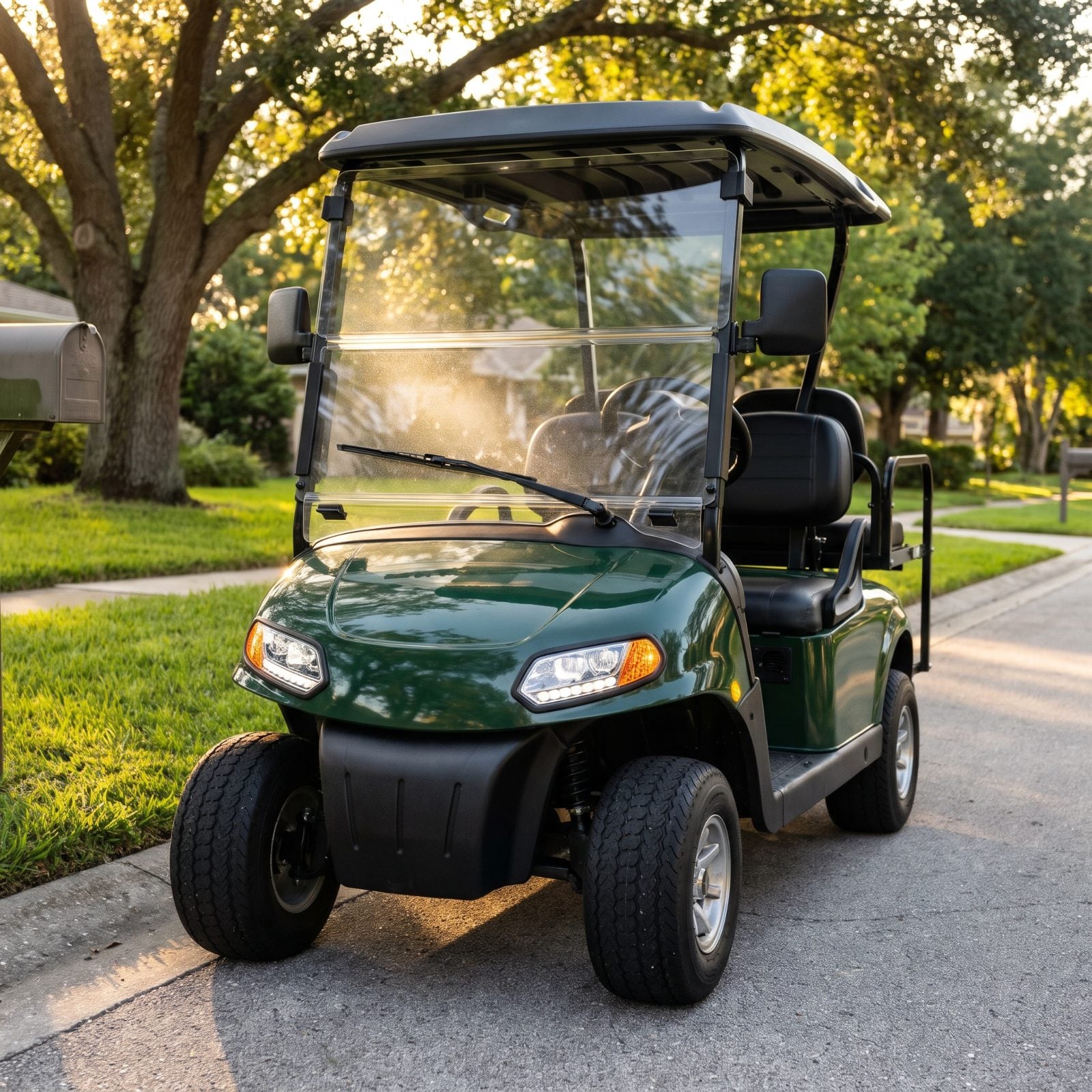
You buy the cart, drive it to the mailbox, and a patrol car lights you up. A stock cart rolling off the lot is almost never legal on a public road out of the box.
That gap costs real money. A vehicle that isn’t registered or equipped as a Low-Speed Vehicle can mean fines, impound fees, and an insurance claim denied after an accident. Rules change by state, by county, sometimes by HOA.
So call your DMV before you pay. Ask whether your cart needs an LSV title, a 17-digit VIN, headlights, turn signals, seat belts, and a windshield to touch pavement legally. Get the answer in writing, then buy the cart that fits where you actually plan to drive.
36. Choosing Gas or Electric Without Considering Daily Use
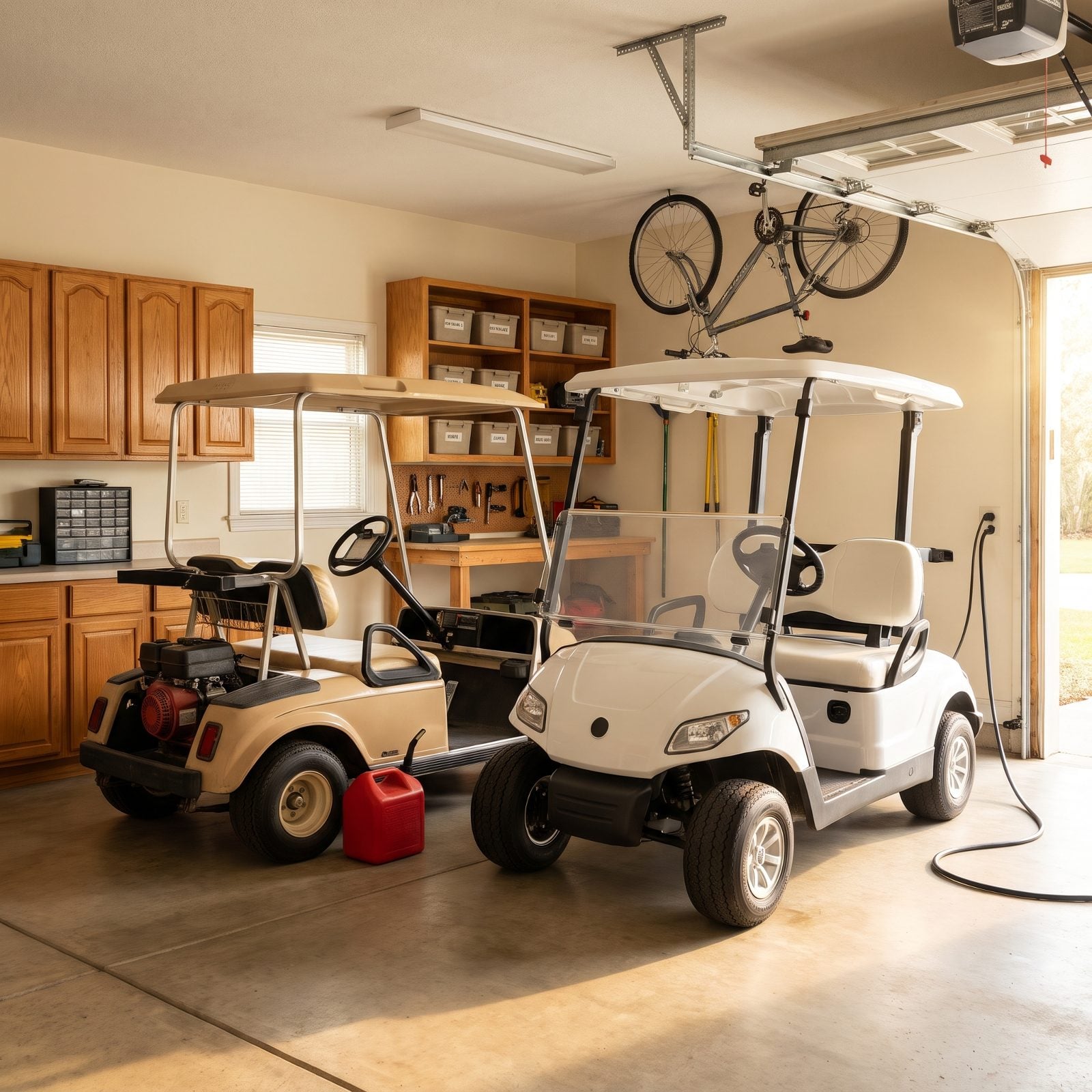
People fall for the idea of one type and ignore how they’ll really use it. A gas cart on a tiny flat neighborhood loop is overkill and noise for nothing. An electric cart hauling hunting gear up muddy ridges all day, miles from an outlet, is a dead battery by lunch.
Guess wrong and you’ve spent thousands on the wrong tool. Match the machine to the miles. Short, frequent trips near power favor electric, which is quiet, cheap to run, and asks for nothing but a healthy pack. Long days, heavy loads, no outlet anywhere, or wanting to keep rolling by just pouring in fuel all point to gas. Count your typical day honestly, then choose.
35. Ignoring the True Cost of Replacement Batteries
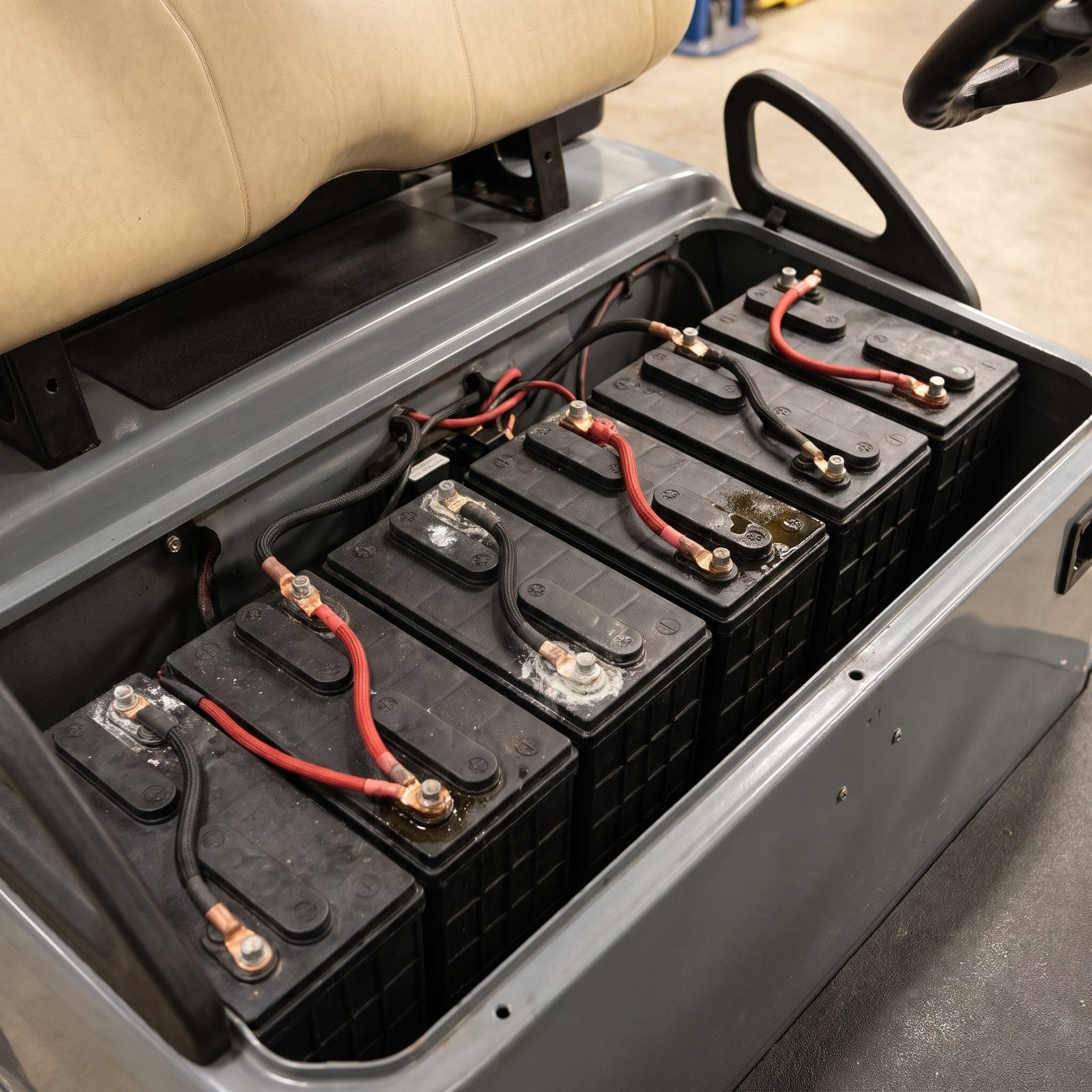
A used cart at a great price can hide a bill the size of the cart itself. When the pack dies, you’re often staring at hundreds to well over a thousand dollars for a full set of deep-cycle batteries, plus labor if you don’t swing the wrenches yourself.
That turns a cheap buy into an expensive one overnight. Before you sign, find out what pack the cart uses, how many batteries, and what a replacement set runs today at a local shop.
Build that number into your offer. A cart with tired batteries is worth the price minus a new pack. Negotiate like it.
34. Trusting the Seller’s Range Claim Without a Battery Load Test
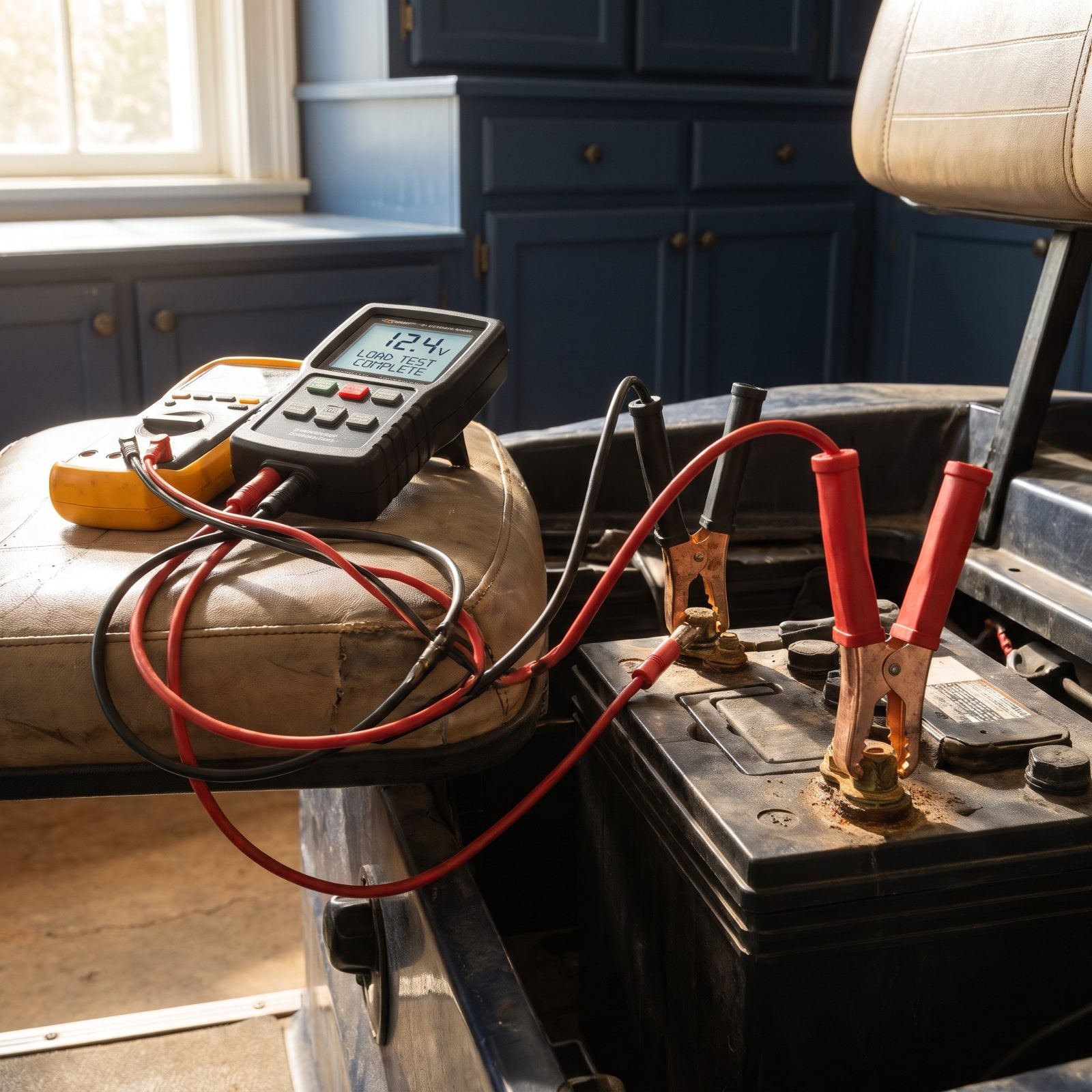
“It goes forty miles on a charge, easy.” Maybe it did in 2019. A resting voltage reading tells you almost nothing, because a worn battery can show a healthy number sitting still and then collapse the second it’s asked to work.
Believe the pitch and you’ll discover the real range on your way home, stranded. Insist on a load test. A proper test pulls current and watches how the voltage holds. A good pack stays steady under that load. A dying one sags fast.
If the seller won’t allow it, drive the cart hard for ten or fifteen minutes and watch whether power fades. Either way, verify before you buy.
33. Missing the Date Codes on Lead-Acid Batteries
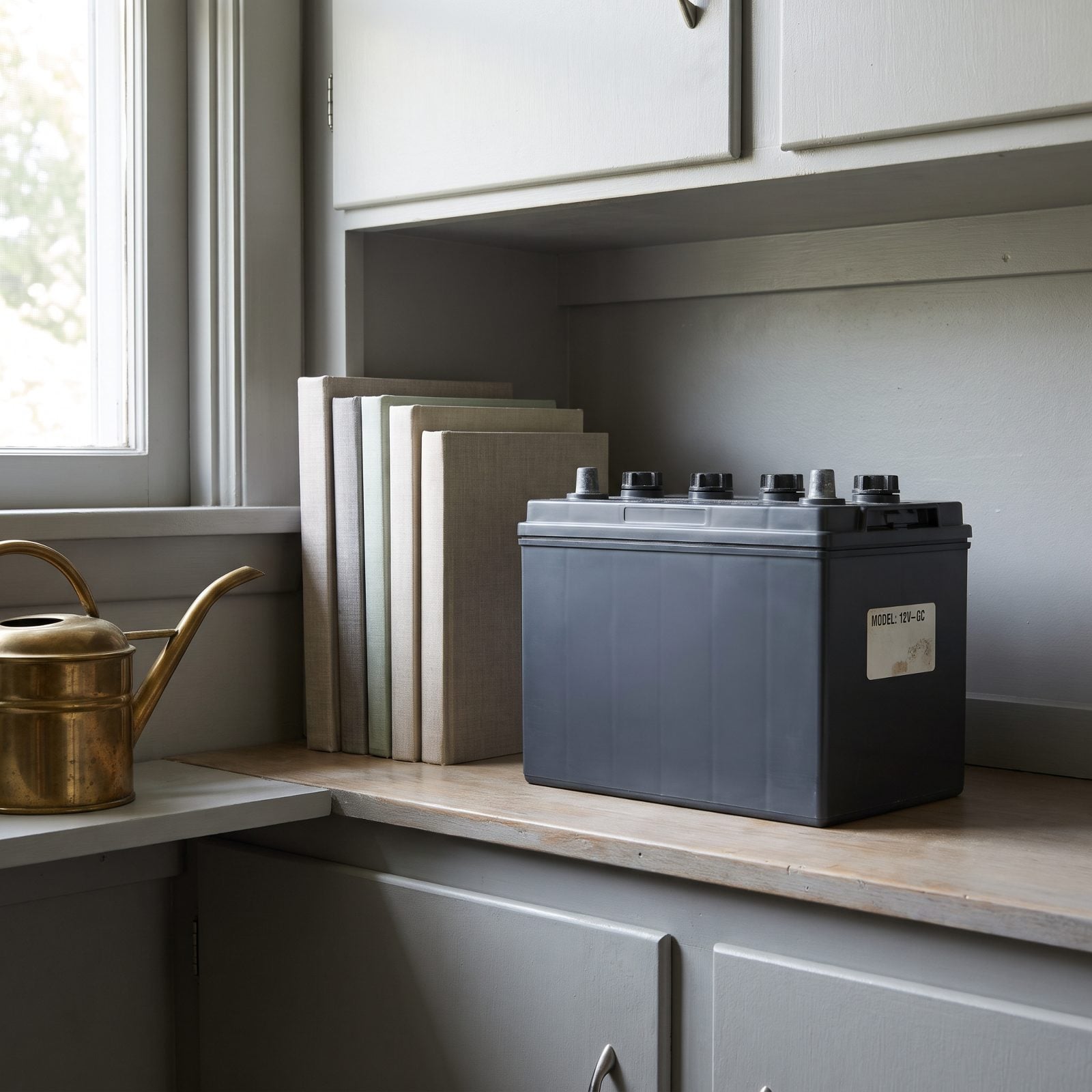
Sellers will swear the batteries are “only a year old.” Flip one over. Most lead-acid batteries carry a stamped date code, a letter-and-number combo or a punched month and year, right on the case or a sticker.
That little stamp has saved buyers a world of grief. A pack sold as fresh that’s actually four years old is living on borrowed time, and you’ll pay for the lie within a season.
Learn the code format for whatever brand sits in the cart, then read every battery, not just one. Mismatched dates across a pack are their own red flag. Somebody replaced a failed battery and left five tired ones sitting right beside it.
32. Buying the Wrong Voltage for Your Terrain

A 36-volt cart is perfectly happy humming around a flat subdivision. Put it on a hilly lot or a job site, though, and it crawls, overheats the controller, and cooks its batteries trying to do work it was never built for.
Voltage is torque. The 48-volt systems, and higher on bigger rigs, pull harder up grades and run cooler doing it. Buy too little power for your land and you’ll replace parts early and curse the cart every time it bogs down.
Walk your terrain before you shop. Steep driveways, loose ground, heavy hauling, or towing all push you toward 48 volts or more. Flat and light? 36 volts will save you money. Match the system to the slope.
31. Choosing Lithium Without Checking BMS Quality
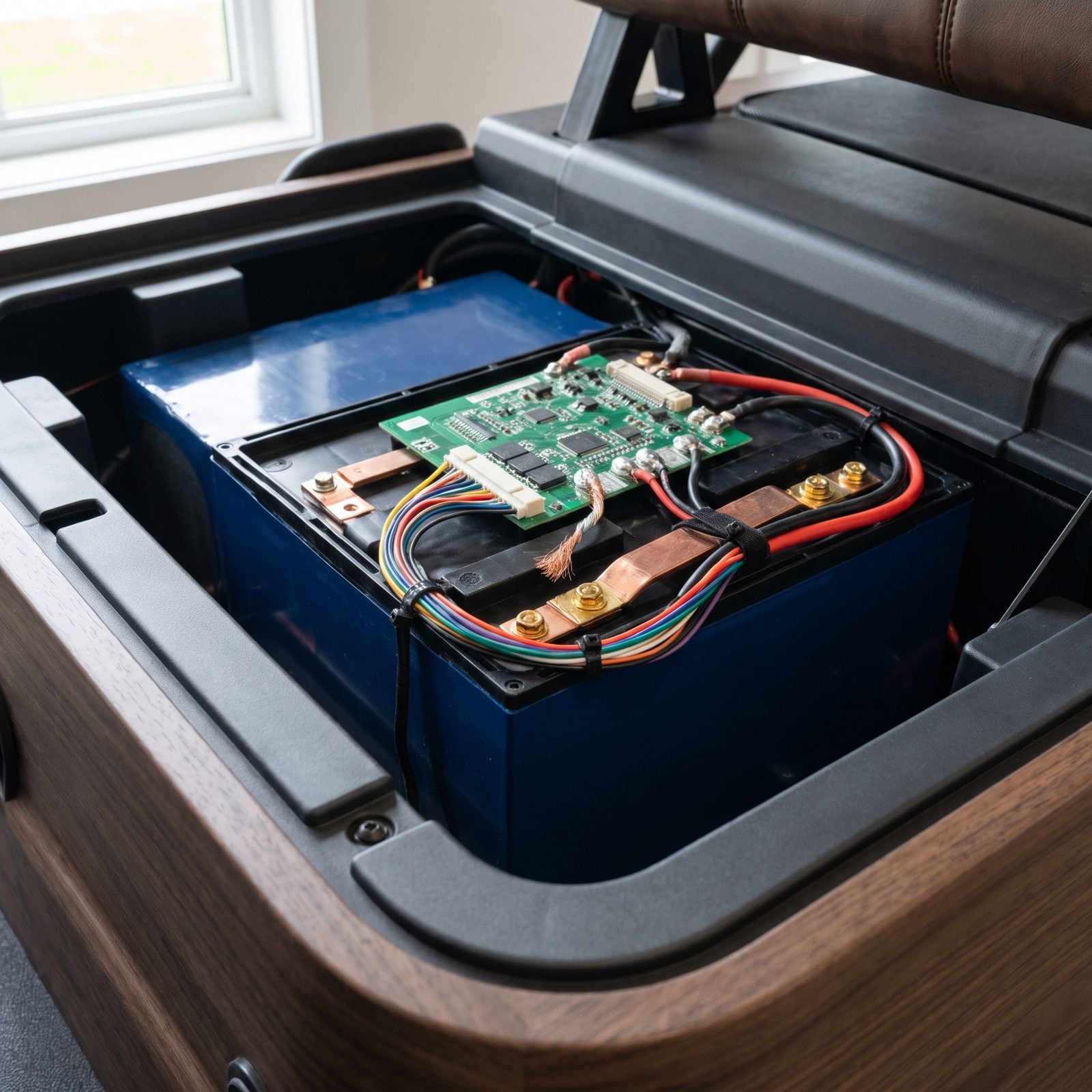
Lithium is the upgrade everyone wants: lighter, faster-charging, far longer life. But the magic isn’t the cells. It’s the battery management system, the little brain that keeps every cell balanced and safe.
A cheap import pack with a weak or no-name BMS can shut off in the cold, fail to balance, and in the worst cases turn into a genuine fire risk. Spend big on lithium and get burned by the one part you couldn’t see.
Ask who makes the BMS, what the warranty actually covers, and whether the cells use a known chemistry like LiFePO4. A reputable brand with real US support and a transferable warranty is worth paying for. A mystery pack off a marketplace listing is not.
30. Overlooking Cold-Weather Lithium Charging Limits
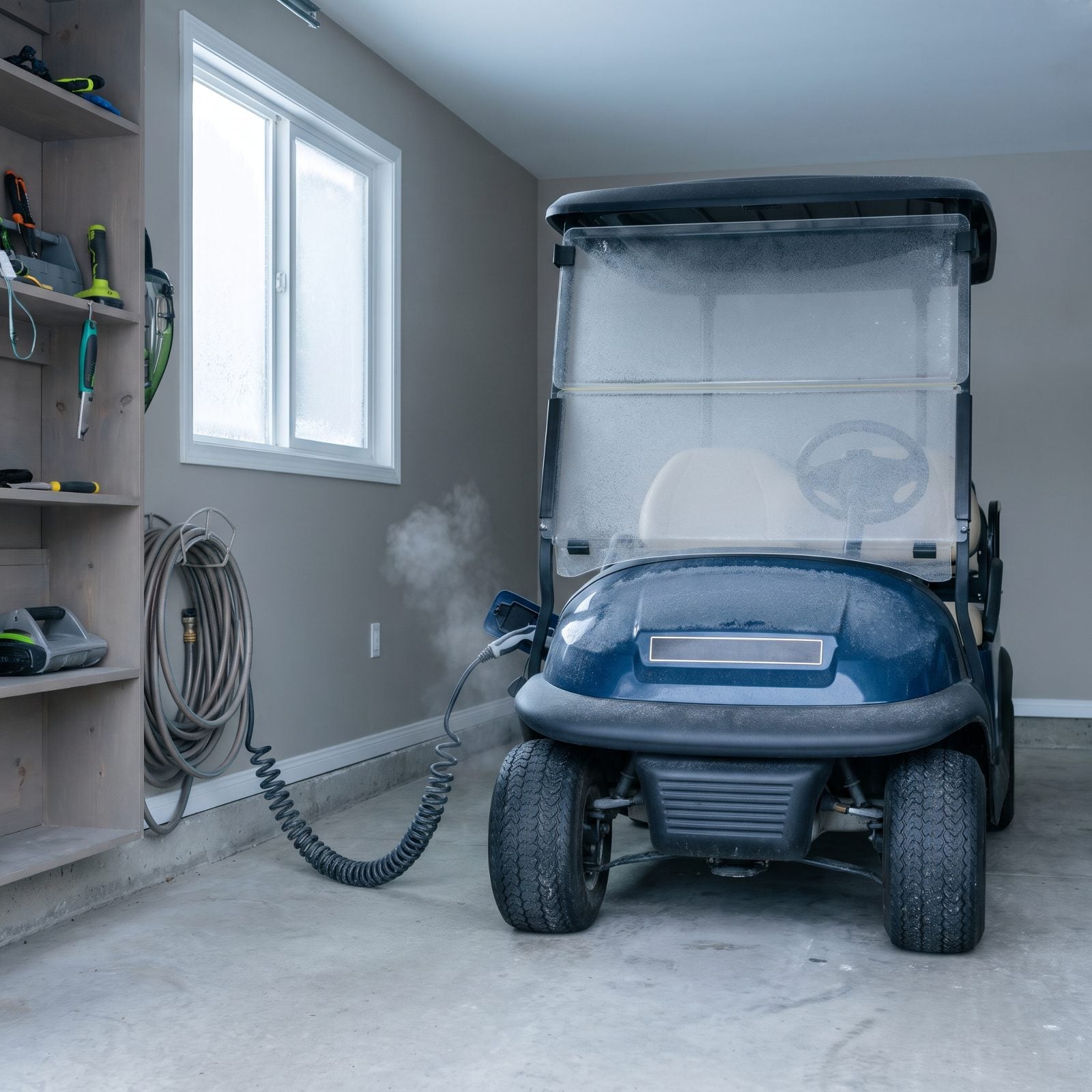
This is the one that ambushes new lithium owners every winter. You can usually discharge a lithium pack in the cold just fine, but charging it below freezing can permanently wreck the cells.
Plug a frosty cart into the wall on a January night with no protection and you may be quietly killing the expensive battery you just bought. Any wisp of vapor you see in a freezing garage is just condensation, not a sign of trouble. The real damage happens silently inside the cells, with no smoke and no warning. A good BMS blocks charging when the cells are too cold. A bad one lets it happen.
Storing a cart in an unheated garage? Confirm the pack has low-temp charge protection or a built-in heater, and let a frozen battery warm up before charging. Lead-acid shrugs this off. Lithium does not.
29. Underestimating Lead-Acid Battery Watering Chores
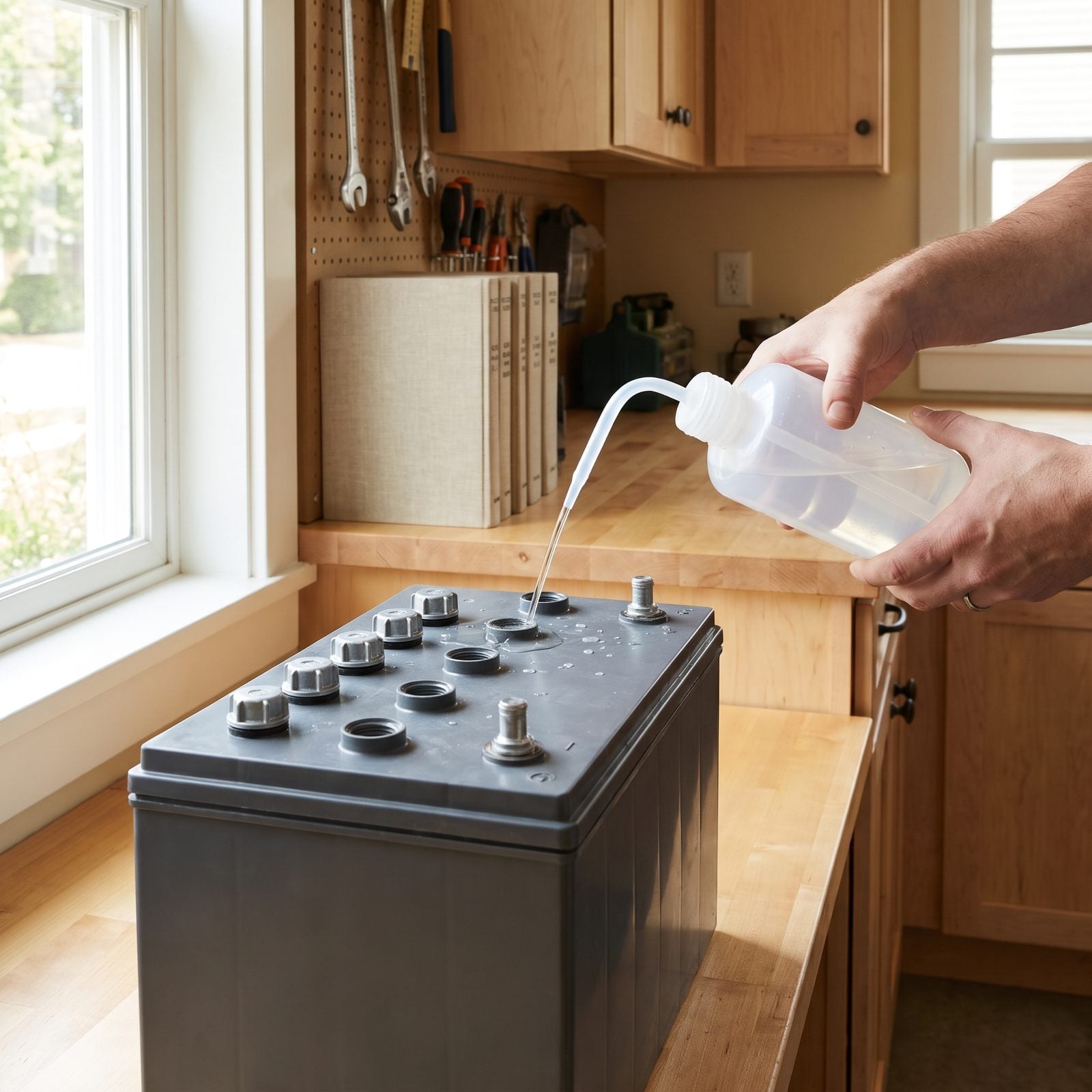
Flooded lead-acid batteries are thirsty. They want distilled water topped off on a schedule, every few weeks in heavy use, or the plates dry out and the pack dies young.
Skip the chore and you’ve knocked years off a 500-dollar pack. People forget, or they never knew the job existed when they signed for the cart.
Don’t want the maintenance? Buy sealed AGM or lithium instead. If you keep flooded batteries, grab a watering bottle and set a reminder on your phone, use only distilled water, and never overfill. Ten minutes a month is the whole deal. Ignore it and the batteries will make you pay.
28. Failing to Confirm a Compatible Charger Is Included
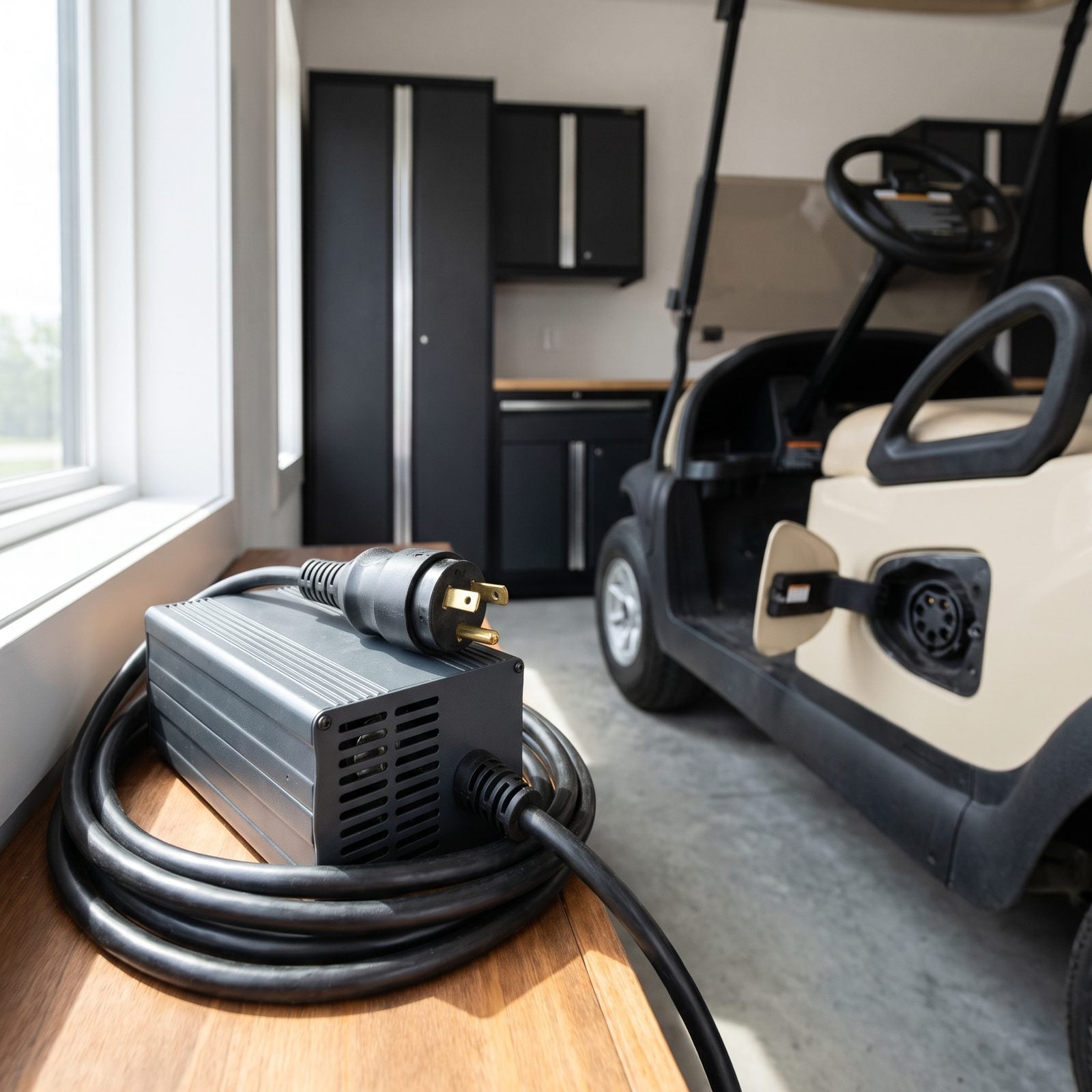
You get the cart home, go to charge it, and there’s no charger. Or there’s a charger, but it’s a 48-volt unit mated to a 36-volt cart, or a lead-acid charger plugged into a lithium pack.
A mismatched or missing charger is a few hundred dollars you didn’t budget for, and the wrong one can damage the battery or simply refuse to work. Lithium especially needs a charger built for its chemistry and voltage.
Confirm the exact charger comes with the cart, that it matches the pack’s voltage and chemistry, and plug it in during the test drive so you watch it actually start a charge. No charger on hand is a bargaining chip. Use it, or walk.
27. Assuming Any Garage Outlet Can Handle Charging
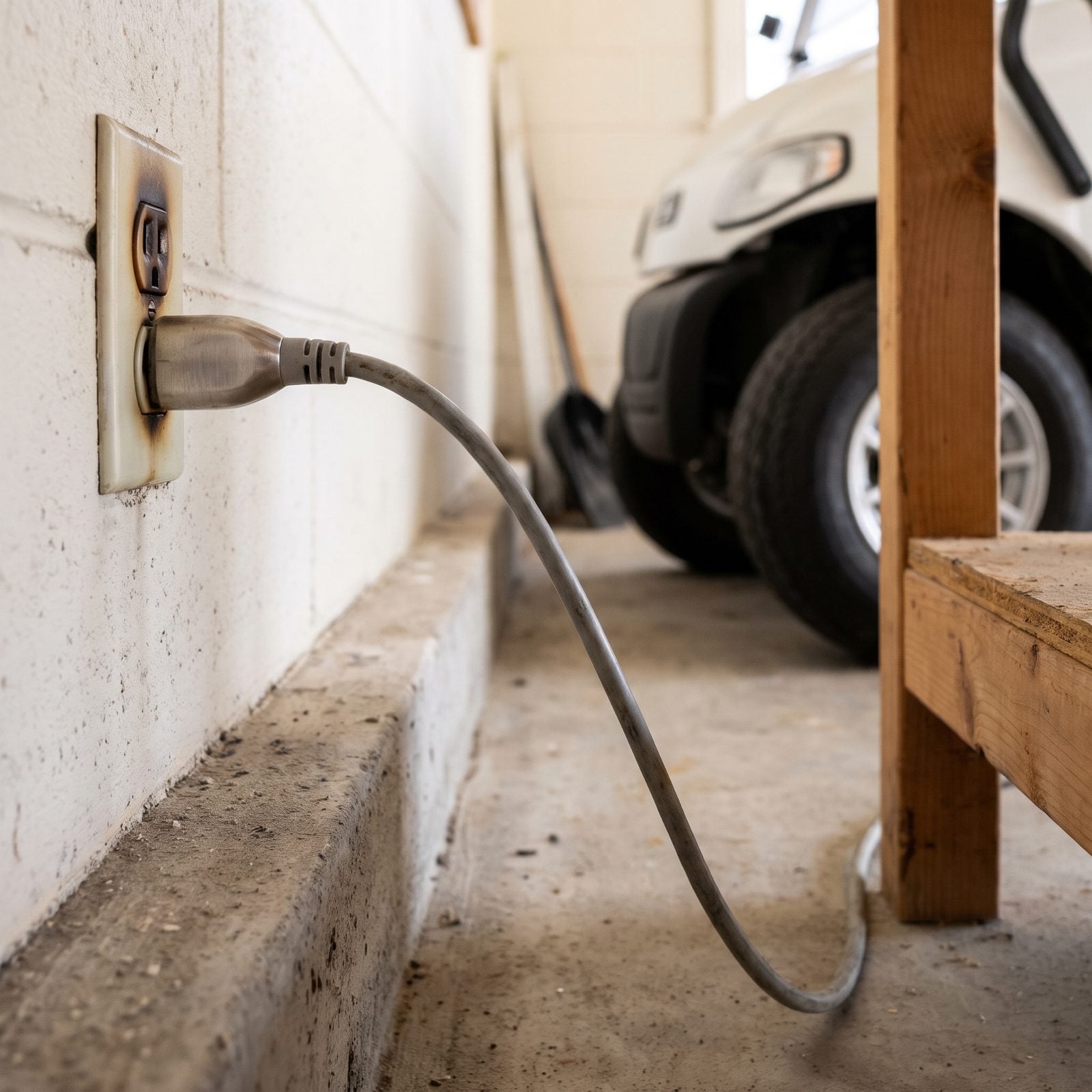
You bring the cart home, back it into the garage, run the cord to the nearest outlet, and call it done. Except that outlet is sharing a circuit with the freezer, the garage fridge, and a space heater. Many carts pull real current for hours, and an old, loose, or overloaded 15-amp receptacle can heat up overnight. A warm plug is the first warning most people ignore.
Charge from a dedicated circuit instead. Check the charger’s amperage against the breaker, look for a scorched or loose outlet before you plug in, and have an electrician run a proper line if the cart is going to live in the garage long-term.
26. Overlooking Ventilation for Lead-Acid Charging
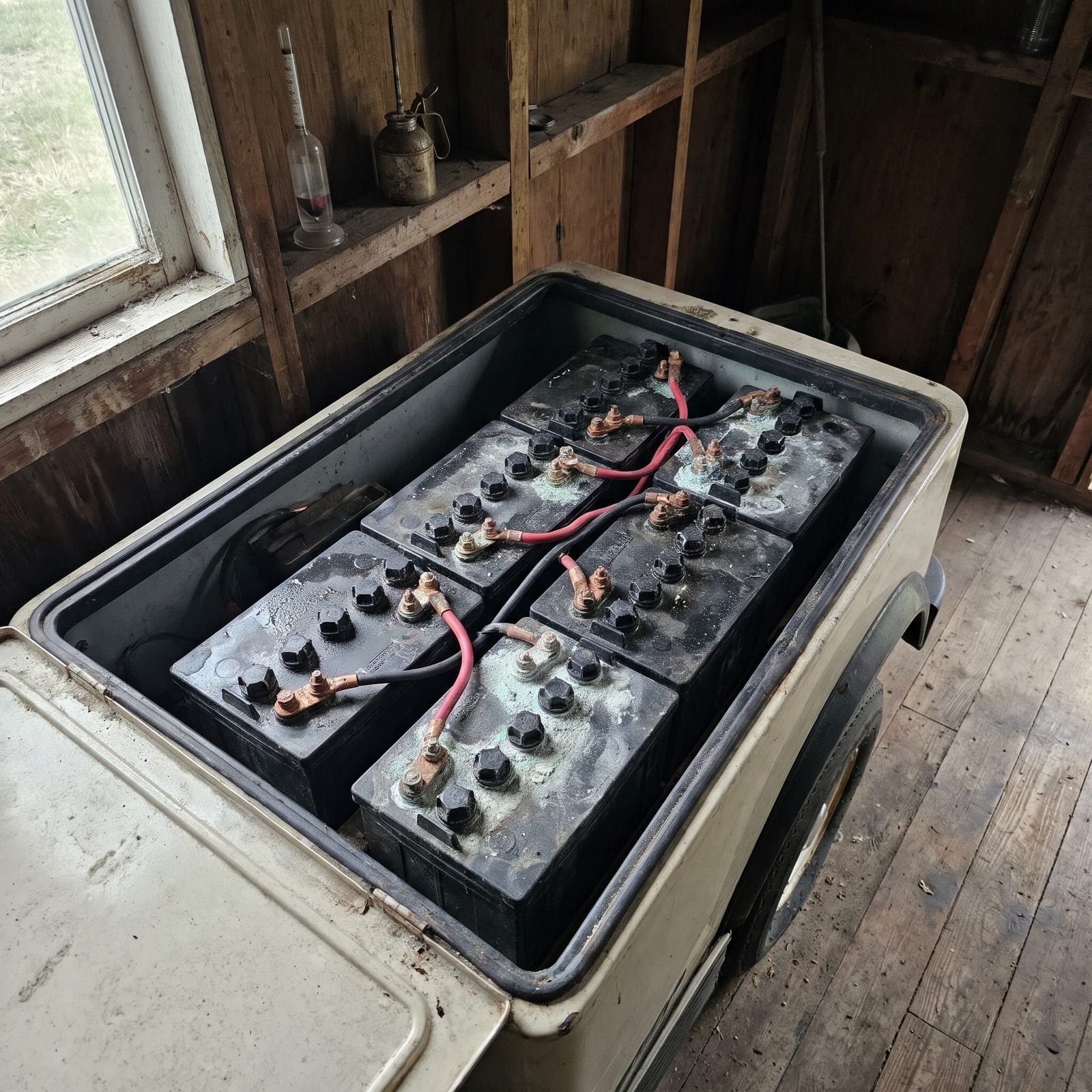
Flooded lead-acid batteries give off hydrogen gas while they charge. That’s not some theoretical risk buried on page forty of a manual. It’s real gas, lighter than air, pooling up at the ceiling of a closed shed or a garage with the door down.
A spark from a light switch or a water heater pilot in a sealed space is all it takes. So charge where air moves. Crack the garage door, run a low exhaust fan, and never park a flooded-cell cart on charge in a tight closet or under a stairwell.
25. Adding Speed Without Upgrading the Brakes
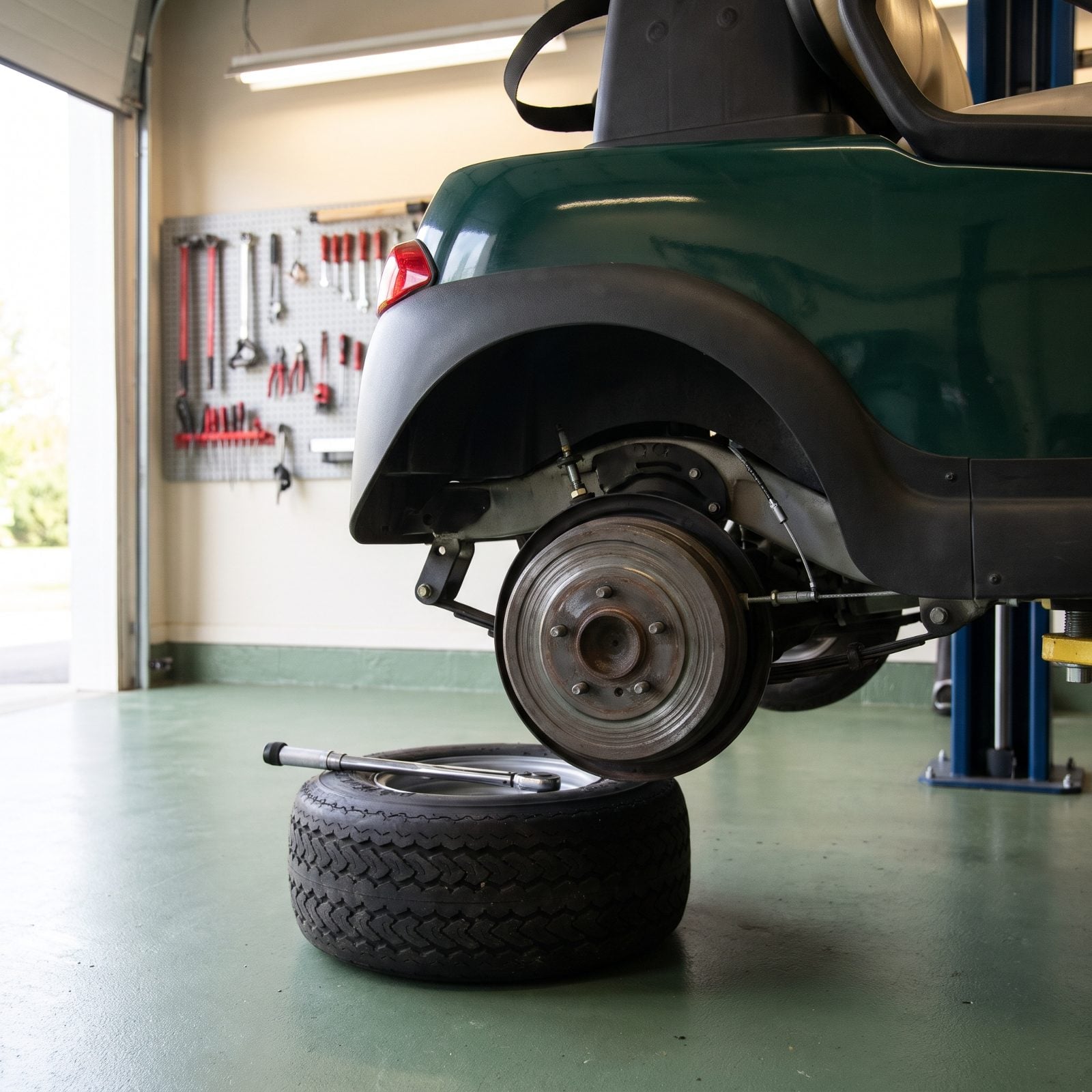
A speed chip or a bigger motor is the cheap, fun part. The brakes are the part nobody budgets for.
Plenty of carts leave the factory with modest mechanical drum brakes sized for a lazy 15 miles an hour. Push that same cart to 25 or 30 on a quick controller swap and the stopping distance stretches out fast — loaded with passengers, heading downhill, suddenly feeling a lot less toy-like.
Add speed, upgrade the brakes in the same breath. Disc conversions, fresh shoes, a properly adjusted cable — none of it is optional once the cart moves like a small car. I’d rather roll slow with good brakes than fast with mushy ones. Every time.
24. Installing a Lift Kit Without Considering Stability
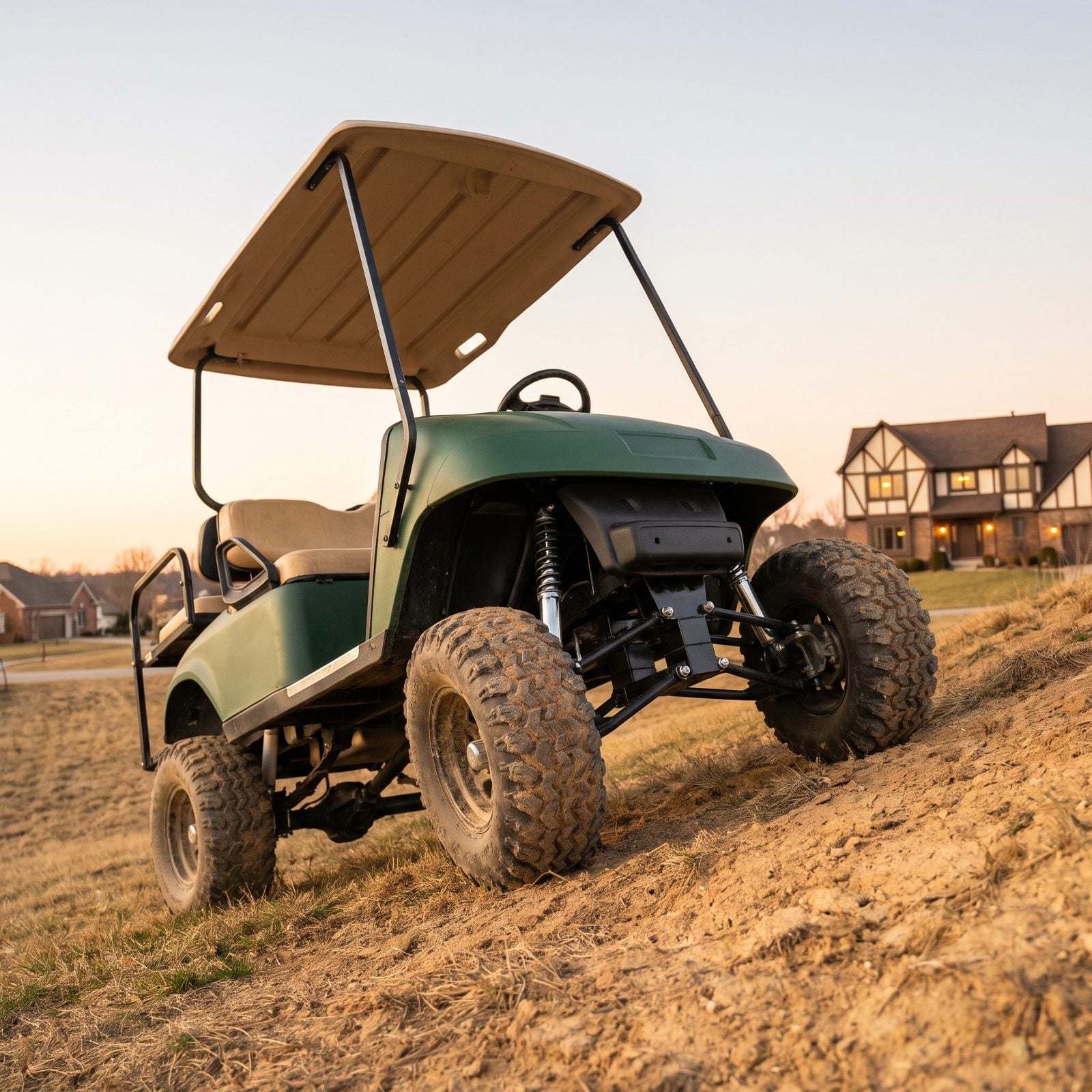
Lift kits look terrific in the driveway. Six inches up, big tires, tough stance. Then you take a corner at the clubhouse a little too confidently and the thing feels tippy in a way it never did stock.
Raising the cart raises its center of gravity, and that’s the whole problem in one sentence. Same turn, same speed, more lean, less margin before two wheels want to leave the ground. If you lift, keep it modest, widen the track where you can, and relearn your cornering speeds from scratch.
23. Choosing Tires That Fight the Intended Terrain
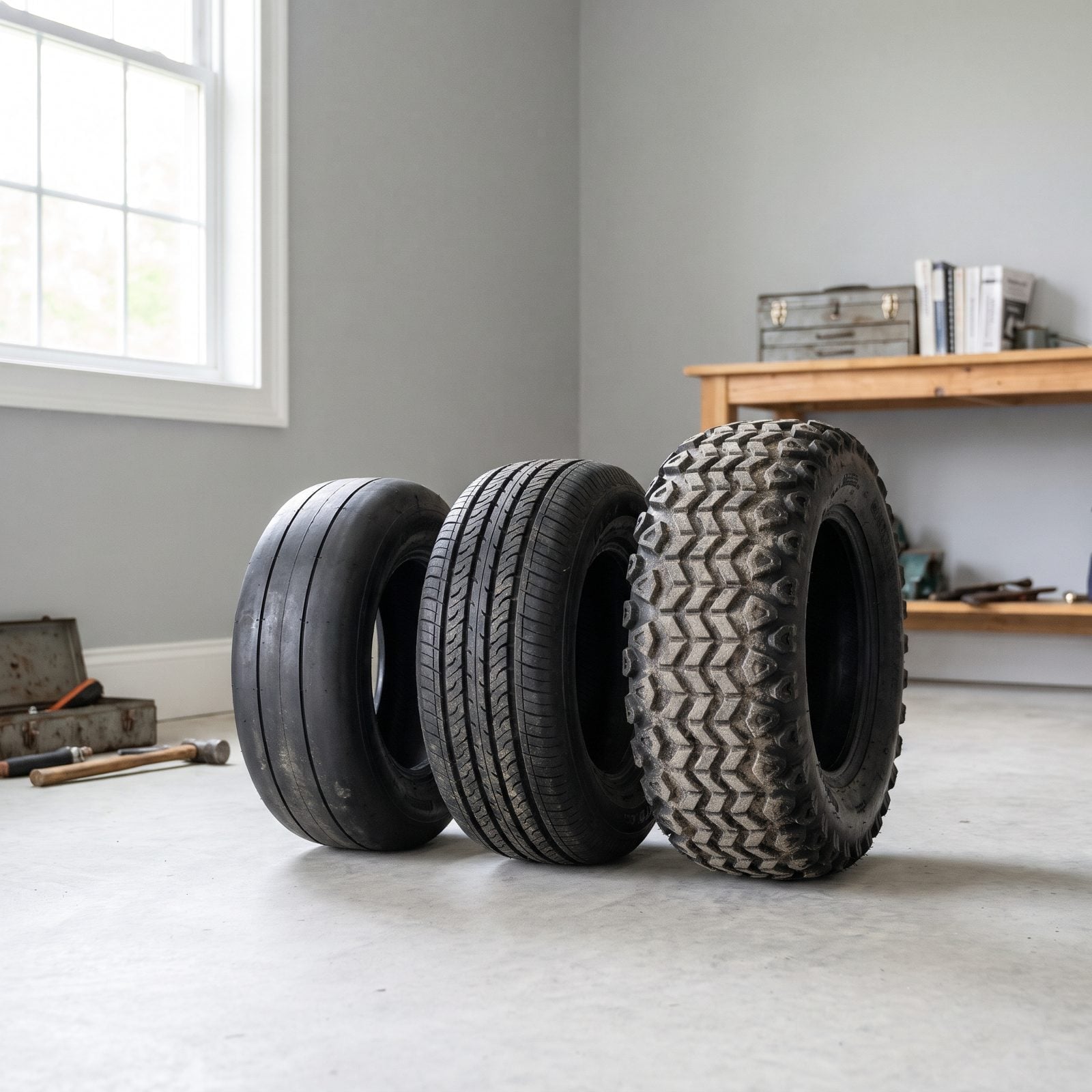
Turf tires and off-road tires are not interchangeable, and picking the wrong pair quietly ruins how the cart behaves.
Run knobby off-road tires on a manicured community and you’ll tear the grass, wear the tread flat on pavement, and buzz over every seam like a cheap wheelbarrow. Run smooth turf tires up a dirt trail and you’ll spin, slide, and bog down in the first soft patch. Match the tread to where the cart actually lives: street-legal neighborhoods want ribbed street tires, courses want turf, real trails want the knobbies.
22. Adding Rear Seats Without Checking Payload and Frame Capacity
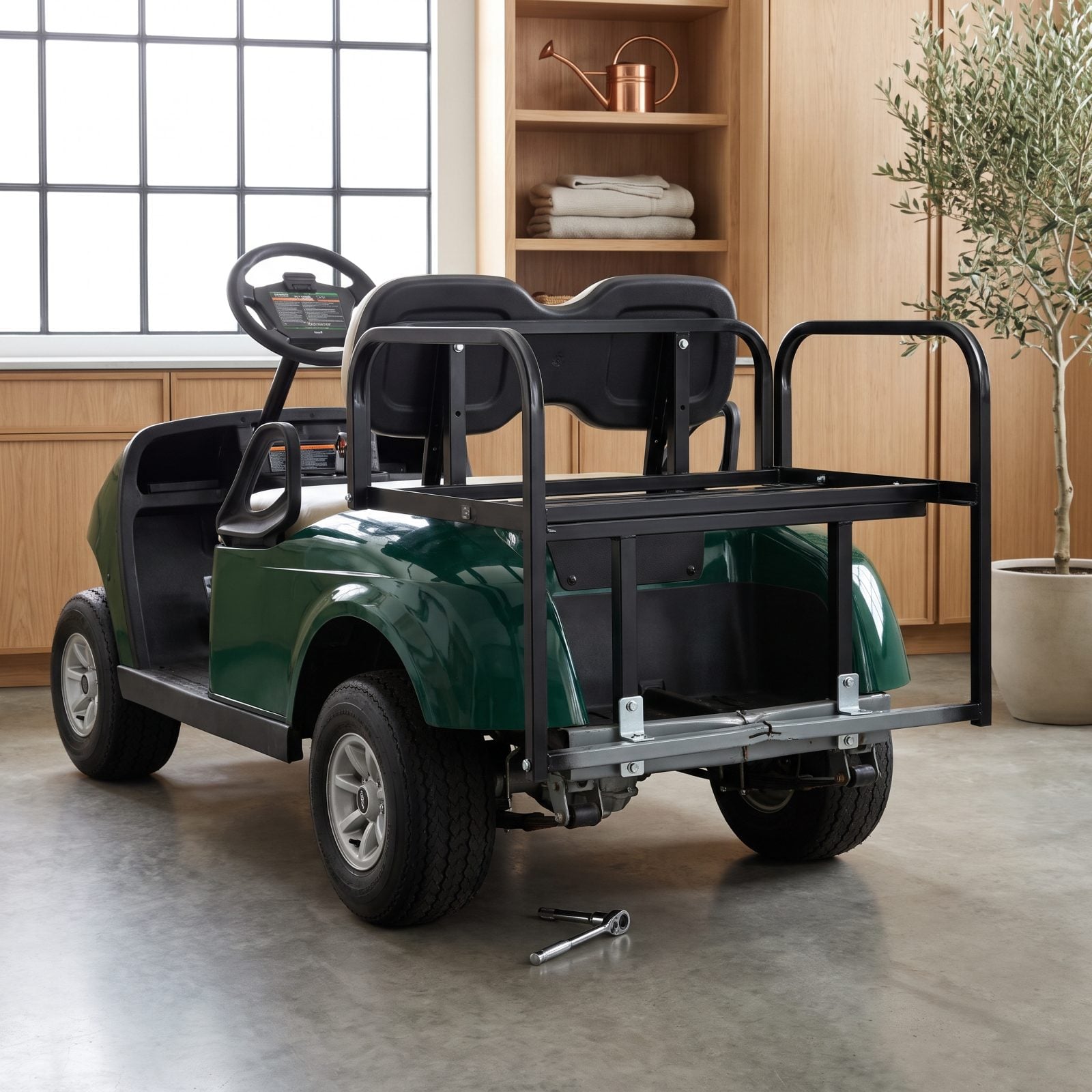
Two more seats means two more adults, a cooler, and whatever else piles on back there. All of that weight lands on frame rails and suspension sized for the cart as it left the factory, not for the party you’ve bolted onto it.
Overload a cart built for two and you get sagging springs, bottoming suspension, a strained motor, and brakes that suddenly have more mass fighting them. So before you bolt on a rear seat, find the cart’s rated payload and the kit’s mounting requirements. Reinforce the frame if the manufacturer calls for it. And count the real weight you’ll actually haul — the loaded cooler, the kids who outgrew small — not the best-case brochure number.
21. Treating Rear-Facing Seats Like Child-Safe Seating
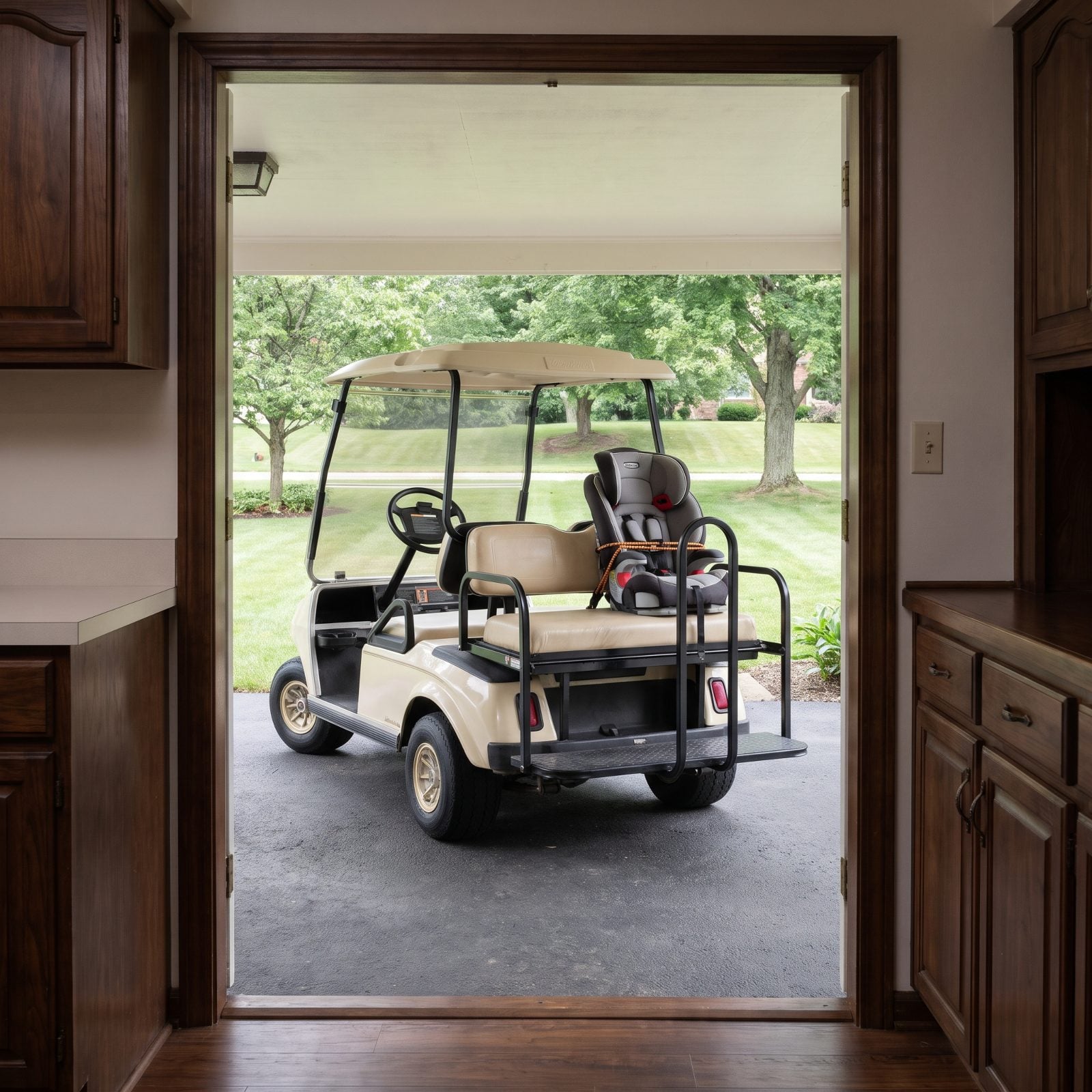
A rear-facing bench is one of the great small joys of cart ownership. It’s also where buyers make a quiet, serious assumption: that it’s safe for kids back there the way a car seat would be.
It isn’t. Most rear seats have a grab bar and nothing else — no belts, no seat back to catch anyone, and a sideways jolt or a hard stop can pitch a rider right off the back. Insist that passengers hold the bar. Keep speeds low with anyone riding rear-facing, and treat that seat as an adults-paying-attention zone rather than a kids’ perch.
20. Overlooking Seat Belts and Proper Mounting Points
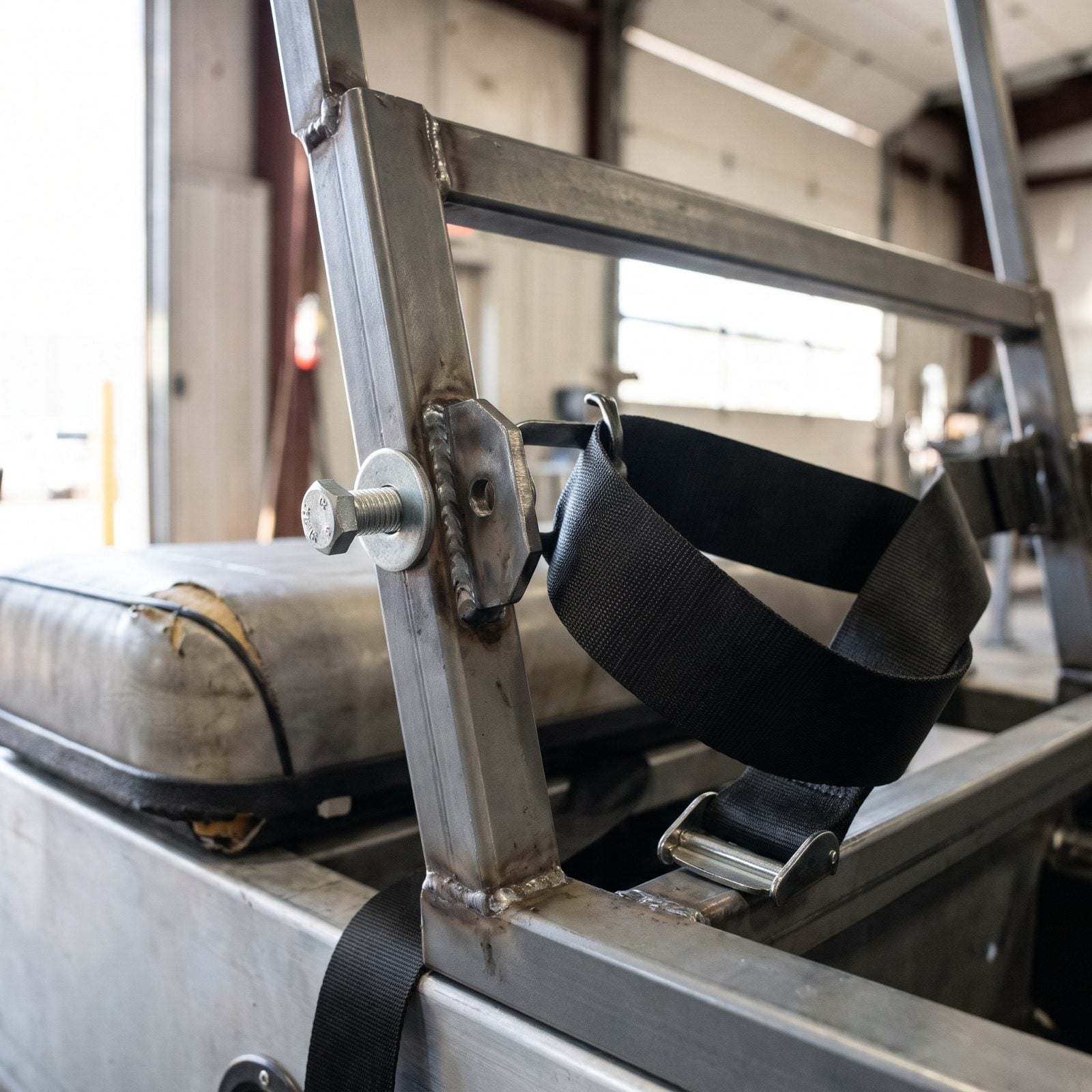
People add belts to a cart and feel instantly safer. The belt matters far less than what it’s bolted to.
Thread a lap belt into a thin plastic seat base or a flimsy sheet-metal tab and it’ll tear clean free under the one load that ever counts. A belt is only as strong as its anchor. Mount belts into the steel frame or a manufacturer-specified reinforced bracket, use proper grade hardware with backing washers, and if the cart carries a real rollover risk, pair the belts with a rated cage. Half a safety system can be worse than none — it sells you confidence you never actually earned.
19. Ignoring Rollover Risk on Slopes and Sharp Turns
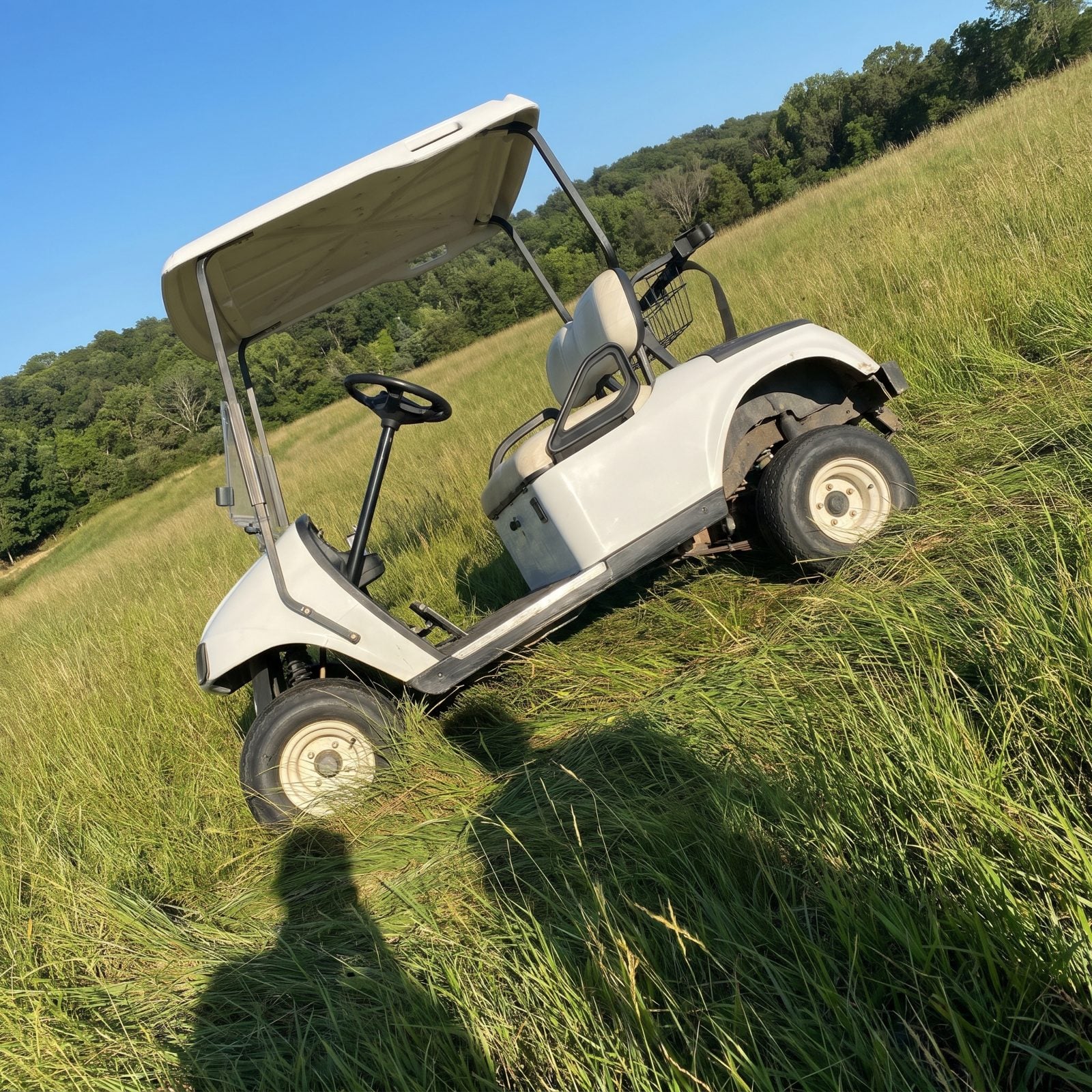
Carts feel planted on flat pavement, which lulls you right into trouble the first time the ground tilts.
Take a slope at an angle, add a sharp turn and a little speed, and a cart’s short wheelbase and high seats make it roll far more easily than most drivers expect. Climb and descend hills straight on, nose pointed directly up or down the fall line, not angled sideways across the slope. Never cut across a steep grade sideways, and slow way down before any turn on uneven ground. Passengers up top, especially rear-facing ones, stack the odds against you further.
18. Buying Without Testing the Parking Brake
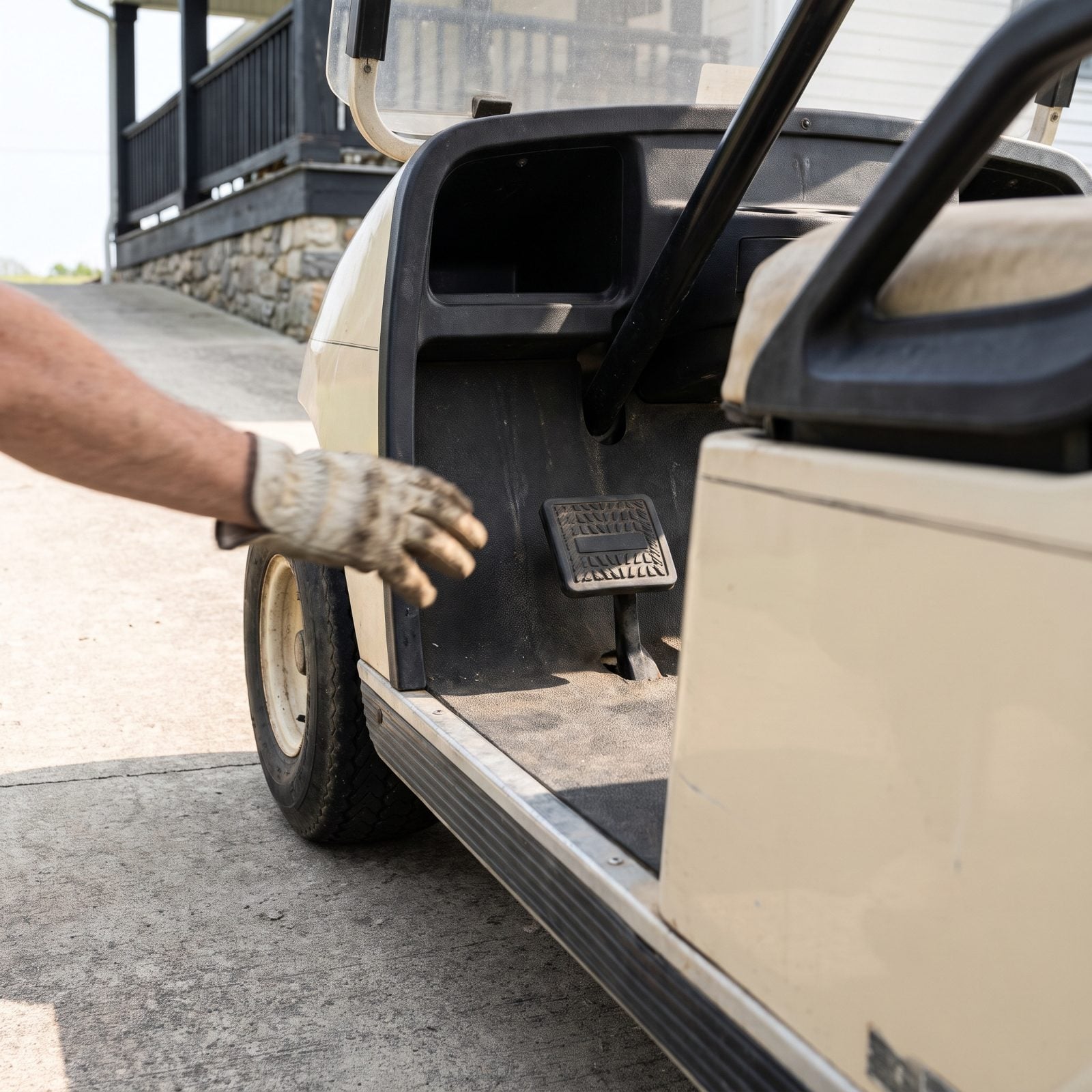
You check the lights, the horn, maybe the charge. You almost never check the one thing that keeps the cart from rolling into the neighbor’s fence while it sits parked.
A worn or misadjusted parking brake turns up constantly on used carts, and a cart that won’t hold on a slope is a runaway waiting for a quiet afternoon. Test it on an incline before any money changes hands. Set the brake, step off, and watch. If it creeps, that’s a repair to price in, not a quirk to live with.
Walk away from any seller who shrugs at that creep. The brake is the cheapest fix on this whole list and the most dangerous one to skip.
17. Missing Excessive Play in the Steering
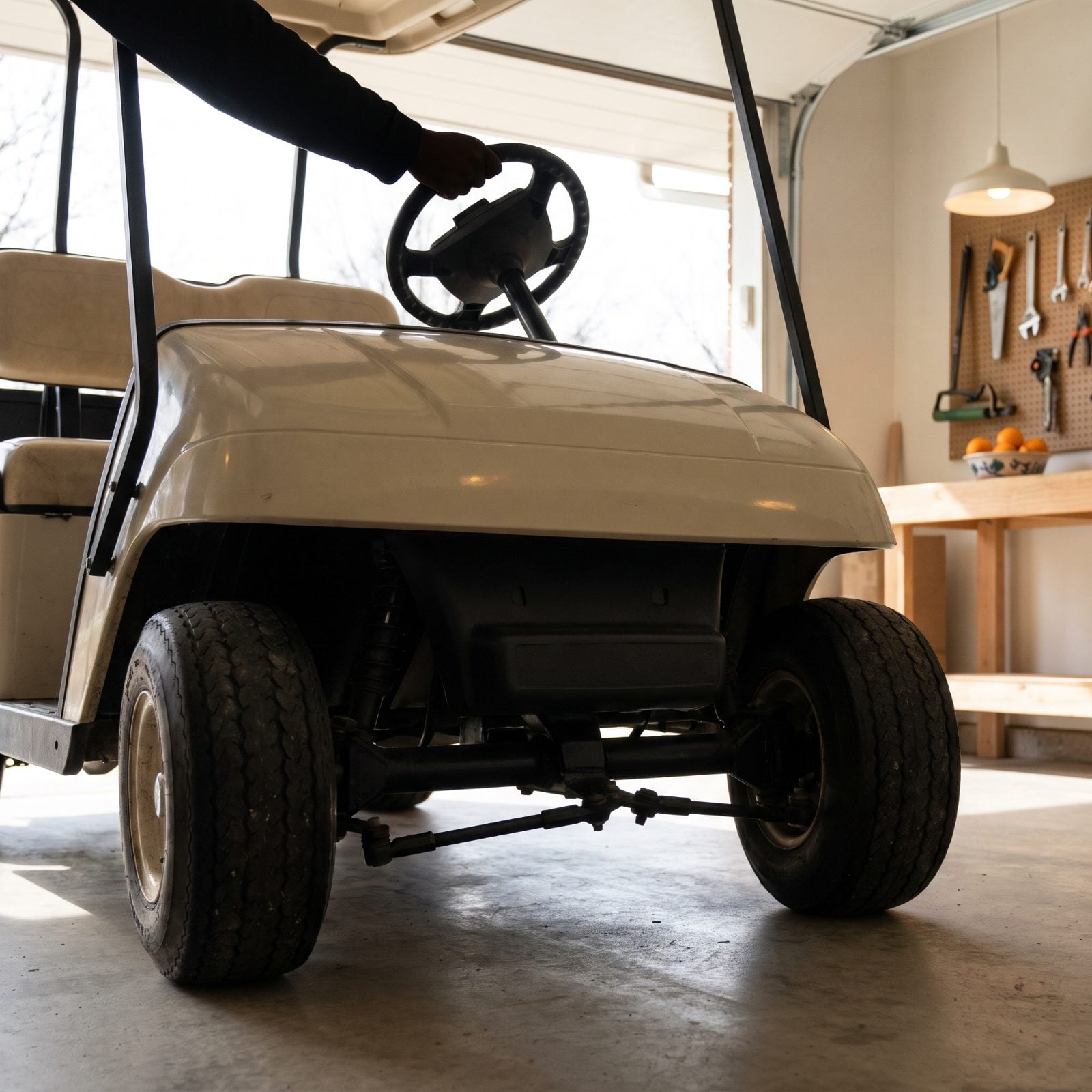
Grab the wheel and turn it a couple of inches each way. If the front tires sit there doing nothing while your hands move, that slop is telling you something. Worn tie rod ends, a loose steering box, or a tired rack all show up as this dead zone, and on a cart that barely cracks highway-shoulder speeds it feels minor until a downhill driveway turns it into a guessing game.
Loose steering wanders, and worse, it hides a part that’s close to letting go. Fixes run from a cheap adjustment to a full rack swap, so you want to know before you pay. Jack the front, rock each wheel at ten and two, and watch the joints. Movement there is parts, not air.
16. Failing to Inspect Brake Drums and Cables
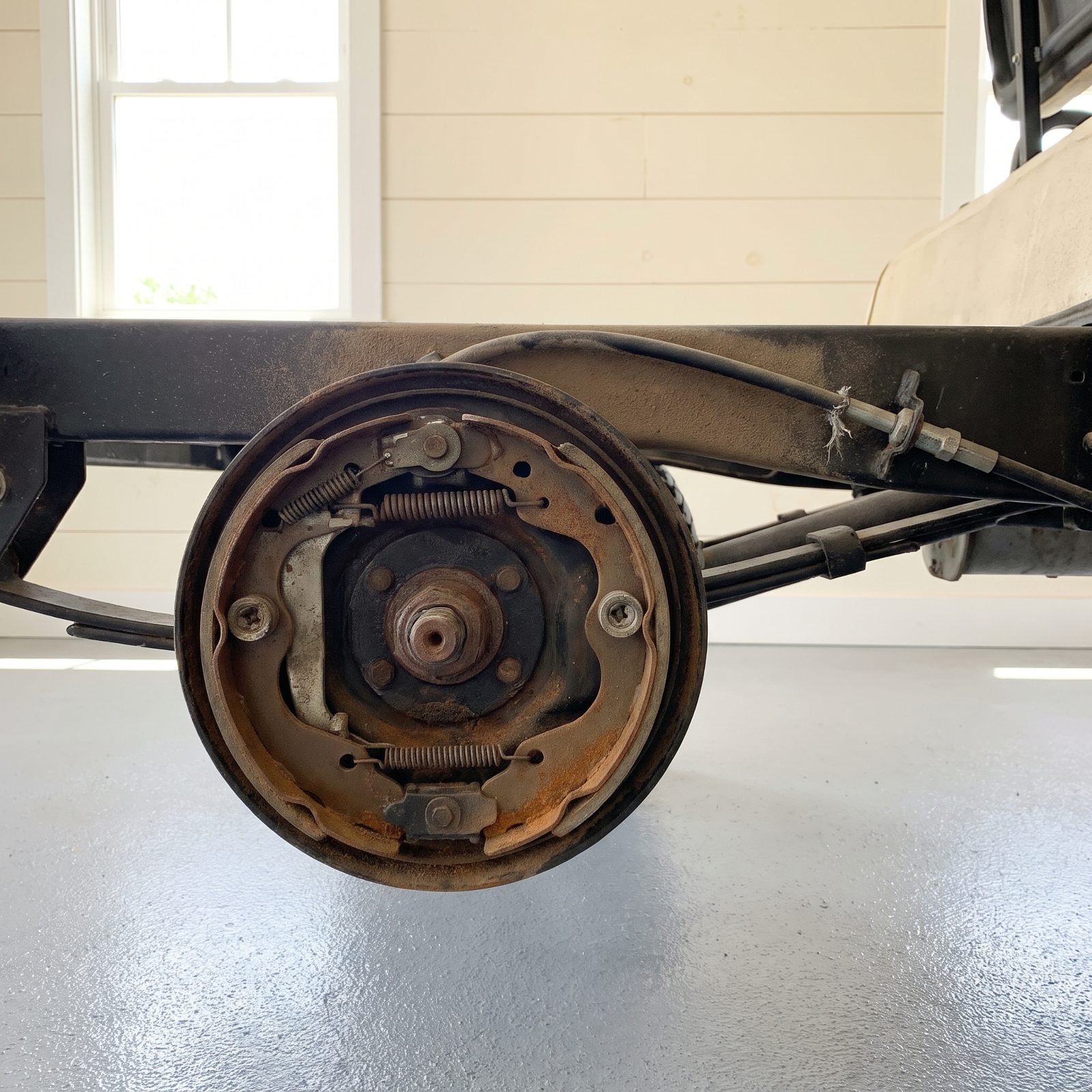
Most golf carts still run mechanical drum brakes, and they rot quietly. Pop a rear wheel if the seller lets you, or at least crawl under and look at the cables. Frayed strands, a seized adjuster, or a cable sheath packed with corrosion means the pedal feels fine in the driveway and feels like nothing on a hill.
Brakes that drag chew tires and sap range on an electric cart, and brakes that don’t grab send you rolling into a parked truck. Press the pedal hard with the cart stopped. It should feel firm, not spongy, and it shouldn’t sink to the floor. Then roll it and stop it a few times on a slope. Soft pedal plus a surprised seller is your answer.
15. Dismissing Clicking From the Rear Differential
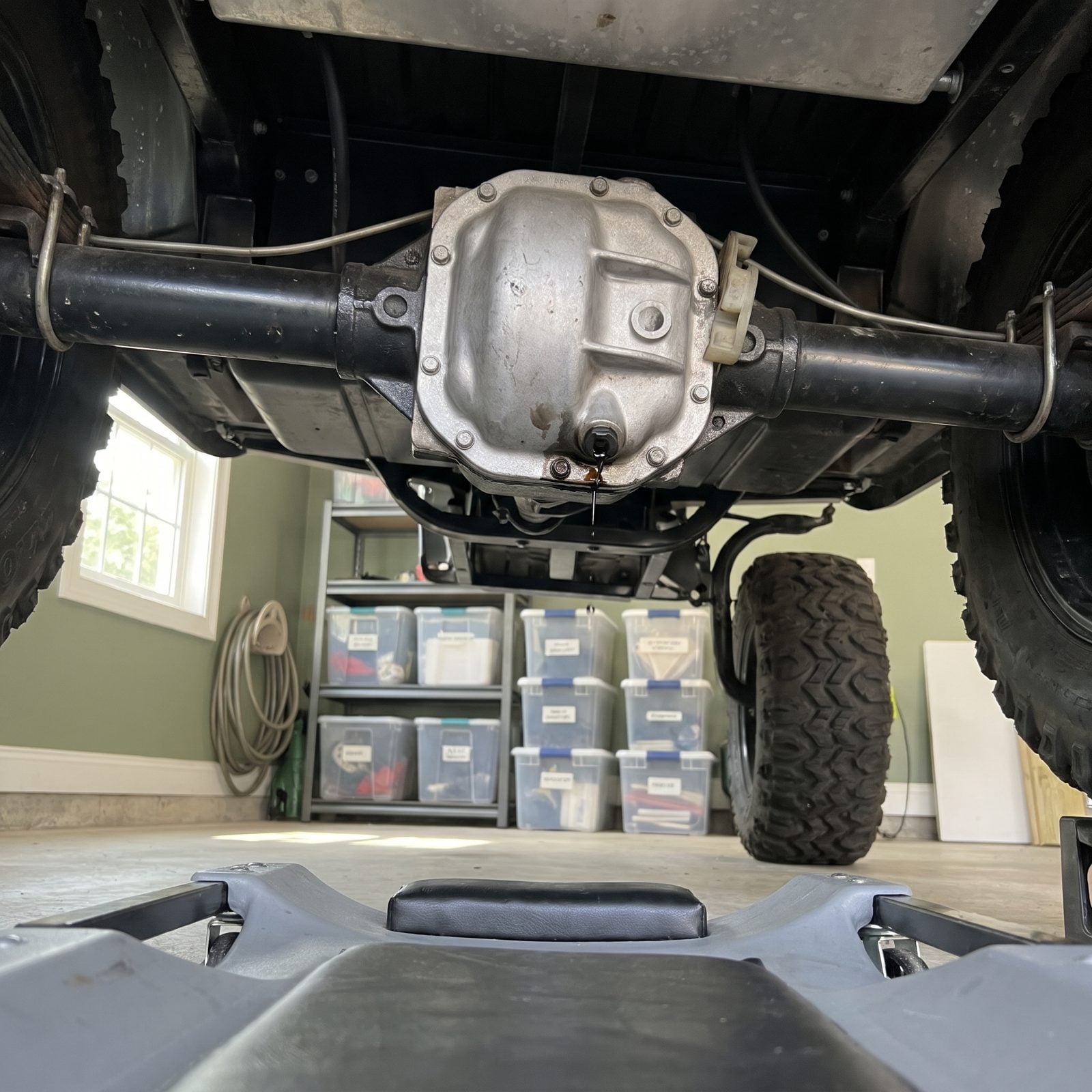
Roll a cart slow and quiet across a driveway and listen at the back. A rhythmic click or clunk that speeds up with the wheels is the rear differential telling on itself: worn gears, a chipped tooth, or oil that drained out through a bad seal years ago.
A diff rebuild or swap isn’t a weekend trim job. It’s the single most expensive mechanical surprise on a used cart, and sellers love to call it “just a little noise.” It isn’t. Drive it in reverse too, since bad gears often knock louder backing up, and check the fill plug for oil while you’re down there. Dry housing, loud gears, walk away or price it like the project it is.
14. Skipping a Cold-Start Test on a Gas Cart That Sat in Storage
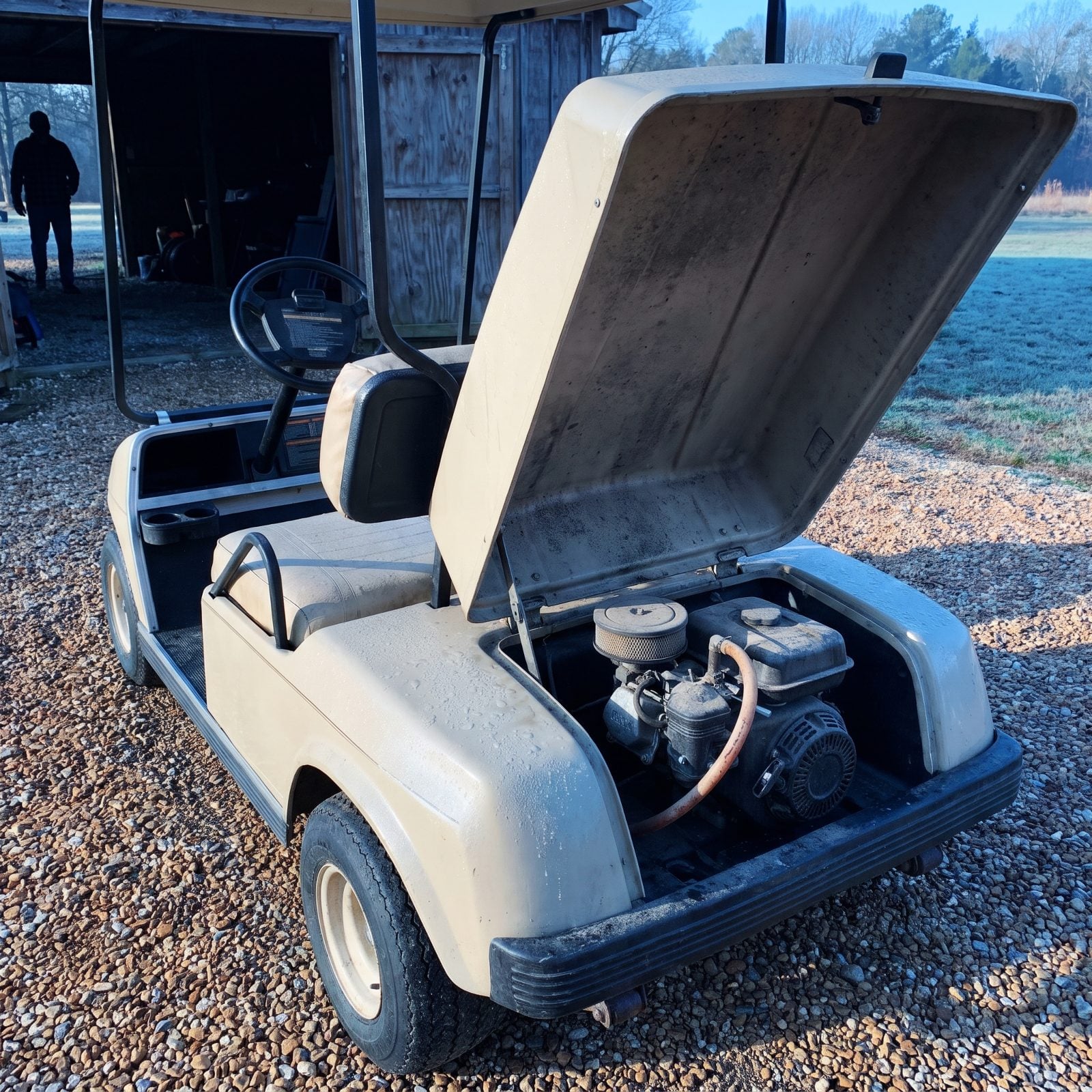
Sellers warm up a gas cart before you arrive so it fires on the first pull. Ask them not to. A genuinely cold engine that’s been parked all winter is where the truth lives.
Stale fuel gums carburetors, varnishes jets, and turns a healthy motor into a hard-starting, surging mess. If it cranks forever, floods, or won’t idle without the choke, you’re looking at a carb clean at minimum and valve or ring trouble if it smokes. Show up early, feel the cylinder head for heat before they touch it, and insist on the first start of the day. Cold and cranky tells you more than warm and happy ever will.
13. Underestimating Gas-Cart Noise and Exhaust Smell
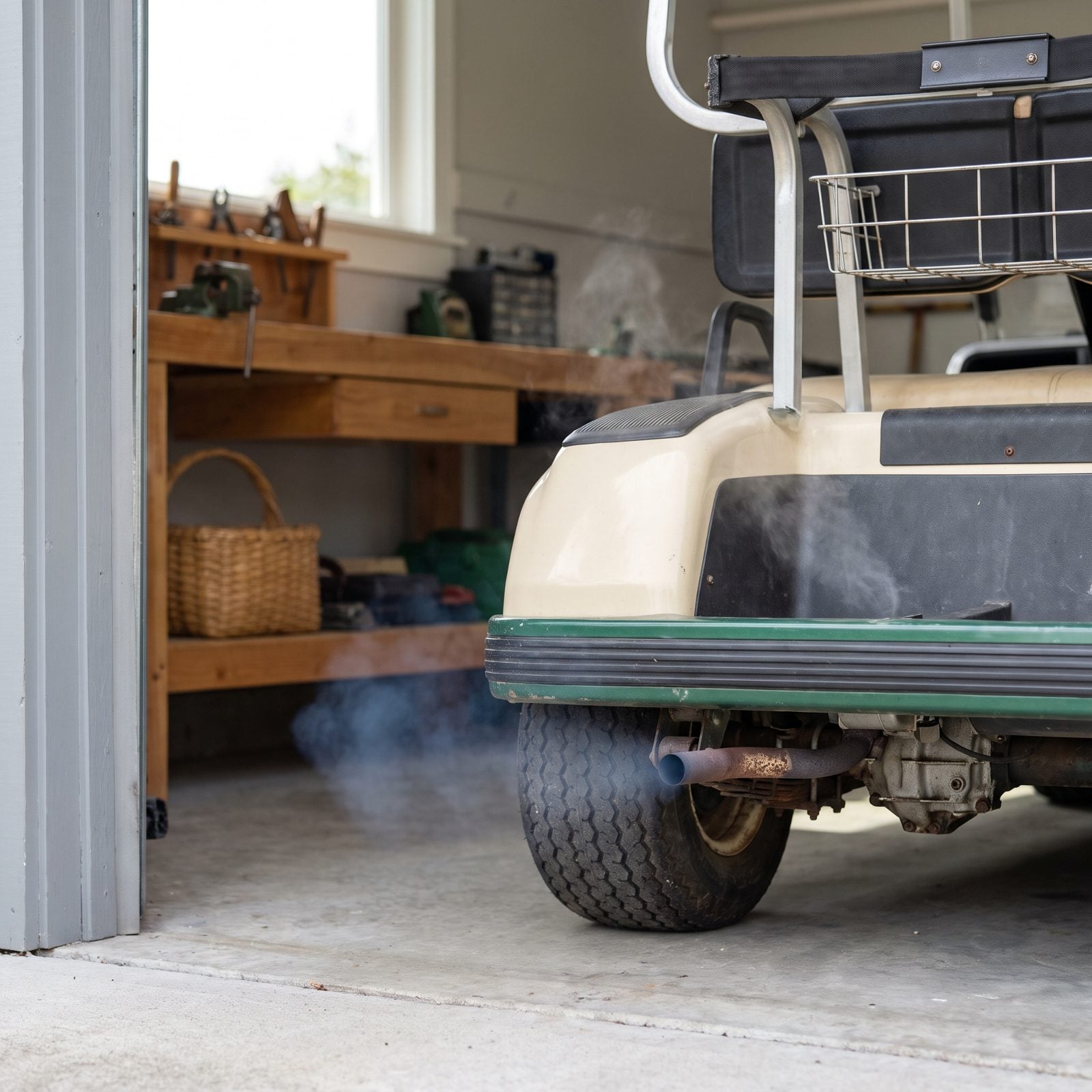
Folks coming off an electric cart expect a gas one to be quiet. It isn’t. A single-cylinder engine at full throttle sounds like a lawnmower that skipped breakfast, and the exhaust drifts right into your seat on a tailwind.
That matters more than you’d think in a tight neighborhood where sound carries and neighbors keep score. A worn muffler or a cracked exhaust gasket cranks the volume and pipes raw fumes toward your knees. Stand behind it while it idles and revs. Sharp blue smoke means burning oil. A rotten-egg stink means a failing catalytic bit or rich running. Your nose is a diagnostic tool. Use it.
12. Missing Cracks, Rust and Impact Damage on the Frame
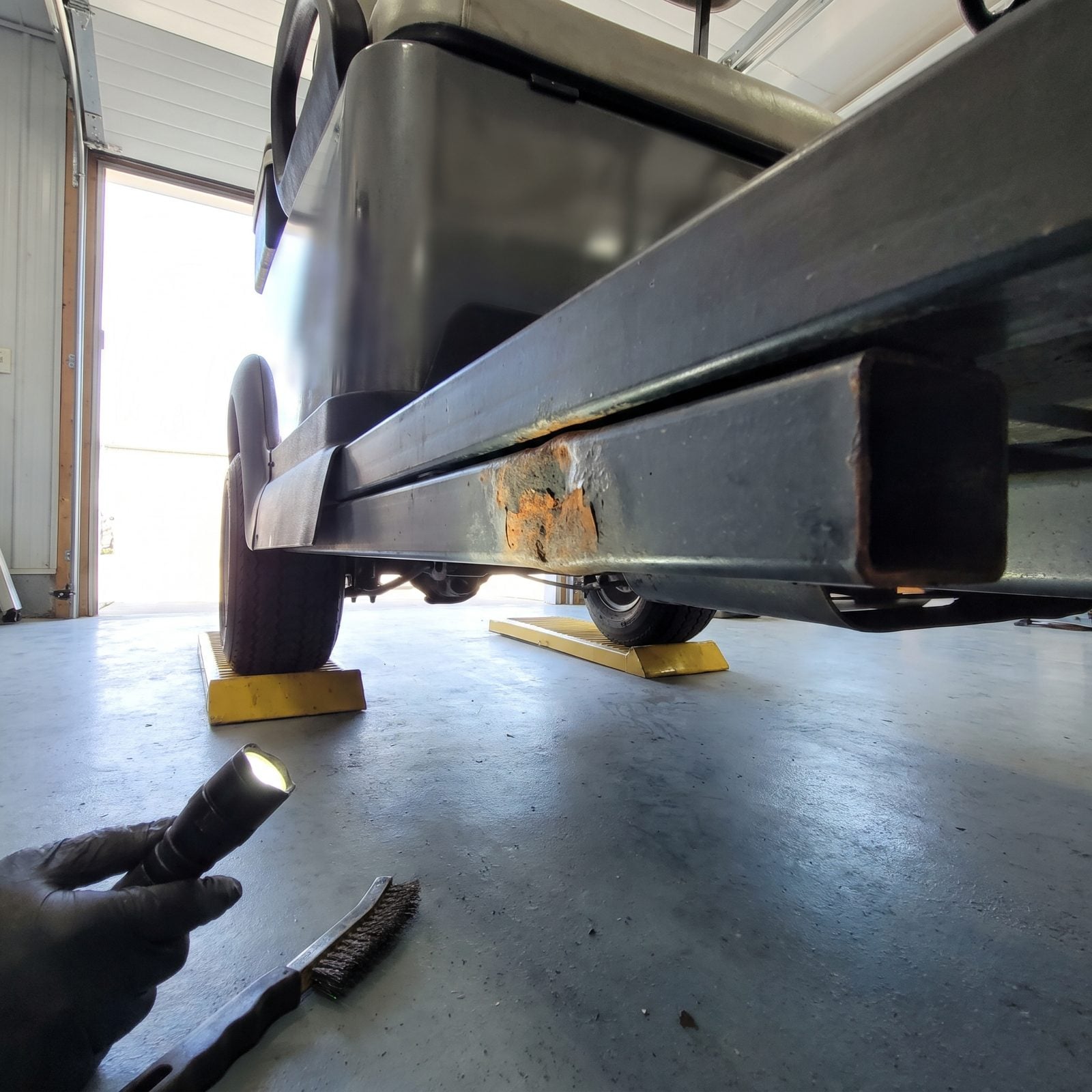
The fiberglass body hides the bones. Get under the cart with a flashlight and run your eyes along the frame rails, the cross members, and every weld. Surface rust is cosmetic, but scaly, flaking, bubbling rust that you can push a screwdriver through is structural, and a cracked weld near a suspension mount is a cart that was hit or overloaded.
A bent or rotted frame throws off alignment, cracks body panels over time, and in a lifted cart turns a hard stop into a folding accident. Tap suspicious spots. Solid steel rings. Rot thuds and crumbles. Pay attention where mud and road salt collect, because that’s where frames die first.
11. Buying a Cart With Questionable Wiring Modifications
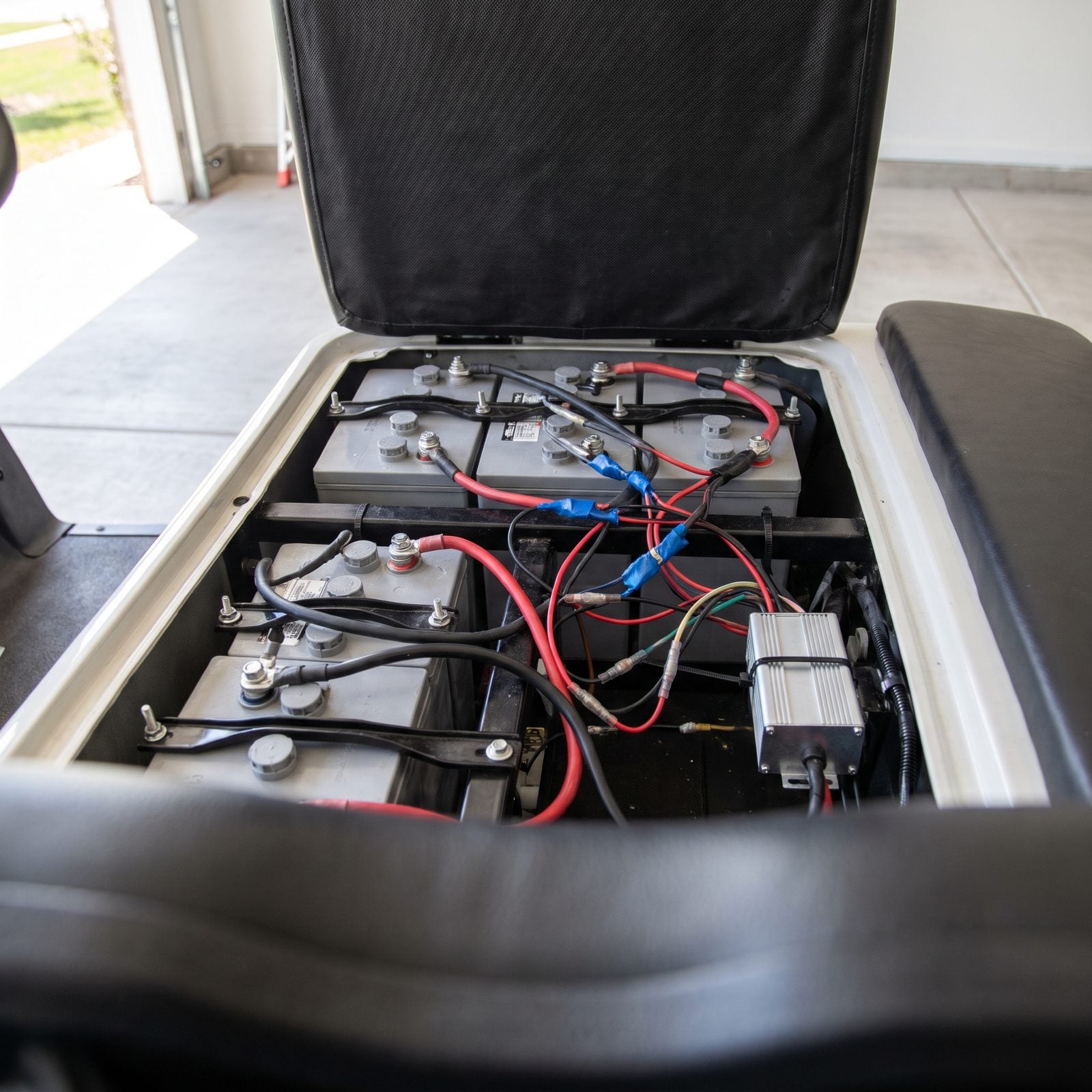
Lift the seat and read the wiring like you’re reading someone’s handwriting. Factory looms are tidy, color-coded, and routed clean. A rat’s nest of taped splices, mismatched wire, auto-parts-store switches, and a controller zip-tied in free air? That’s a cart somebody hacked on while chasing speed or stereo volume.
Bad splices overheat, melt insulation, and on a lithium pack that’s a genuine fire risk, not a nuisance. Modified controllers and lift kits can also void whatever warranty remains and overdraw motors they were never matched to. Trace the big cables back to the battery. Look for scorch marks, green corrosion, and connectors warm to the touch after a drive. Ugly wiring is cheap to walk away from and expensive to inherit.
10. Overlooking Water or Flood Damage

Flooded homes get cleaned up and sold fast, often before anyone notices what the water left behind. The tells hide in corners: a wavy tide line staining the drywall just above the baseboard, where water wicked up the wall and dried.
Water in a house is a slow death sentence. It soaks into wall cavities you can’t easily reach, rots framing from inside, and breeds mold behind drywall that looks fine on the surface. Smell the interior. A musty, swampy note means it sat in standing water. And fresh paint with air freshener in an old house? That’s a seller covering a stink, and the stink is the whole story.
9. Buying Without a Clear Serial Number and Theft Check
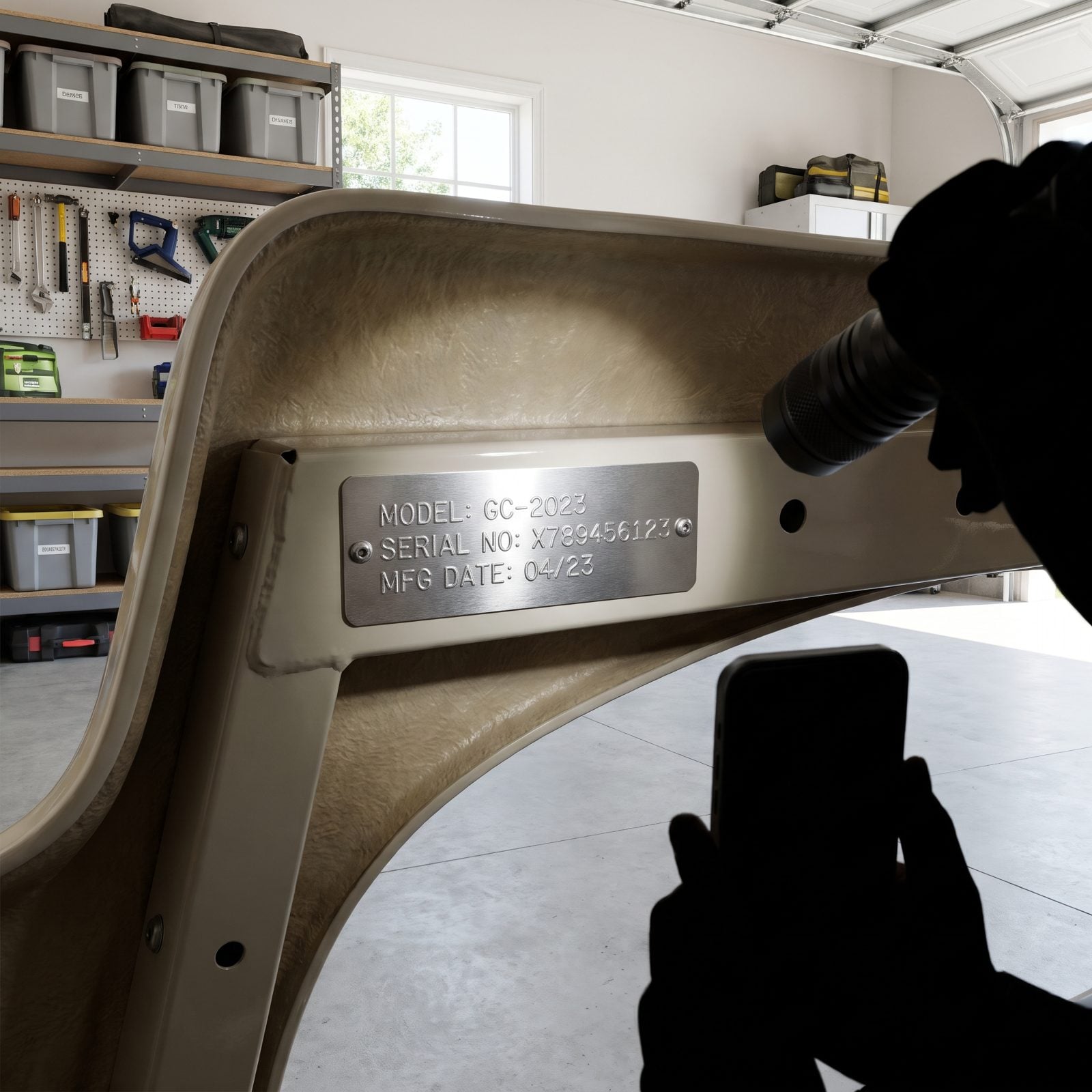
No serial number, no deal. Every legitimate cart carries one, usually stamped on a plate on the frame or under the dash, and a seller who can’t or won’t show it is a seller sitting on a story they’d rather you didn’t hear.
Carts get stolen constantly, off golf courses and out of driveways, and a hot one becomes your problem the day a deputy traces it. A filed-off, painted-over, or missing plate kills resale and can get the cart impounded out from under you. Photograph the number, run it with the manufacturer or local police if you can, and get a signed bill of sale with that number on it. A clean title or clear provenance is the cheapest insurance you’ll buy all day.
8. Buying a Former Fleet Cart Without Reviewing Its Service History
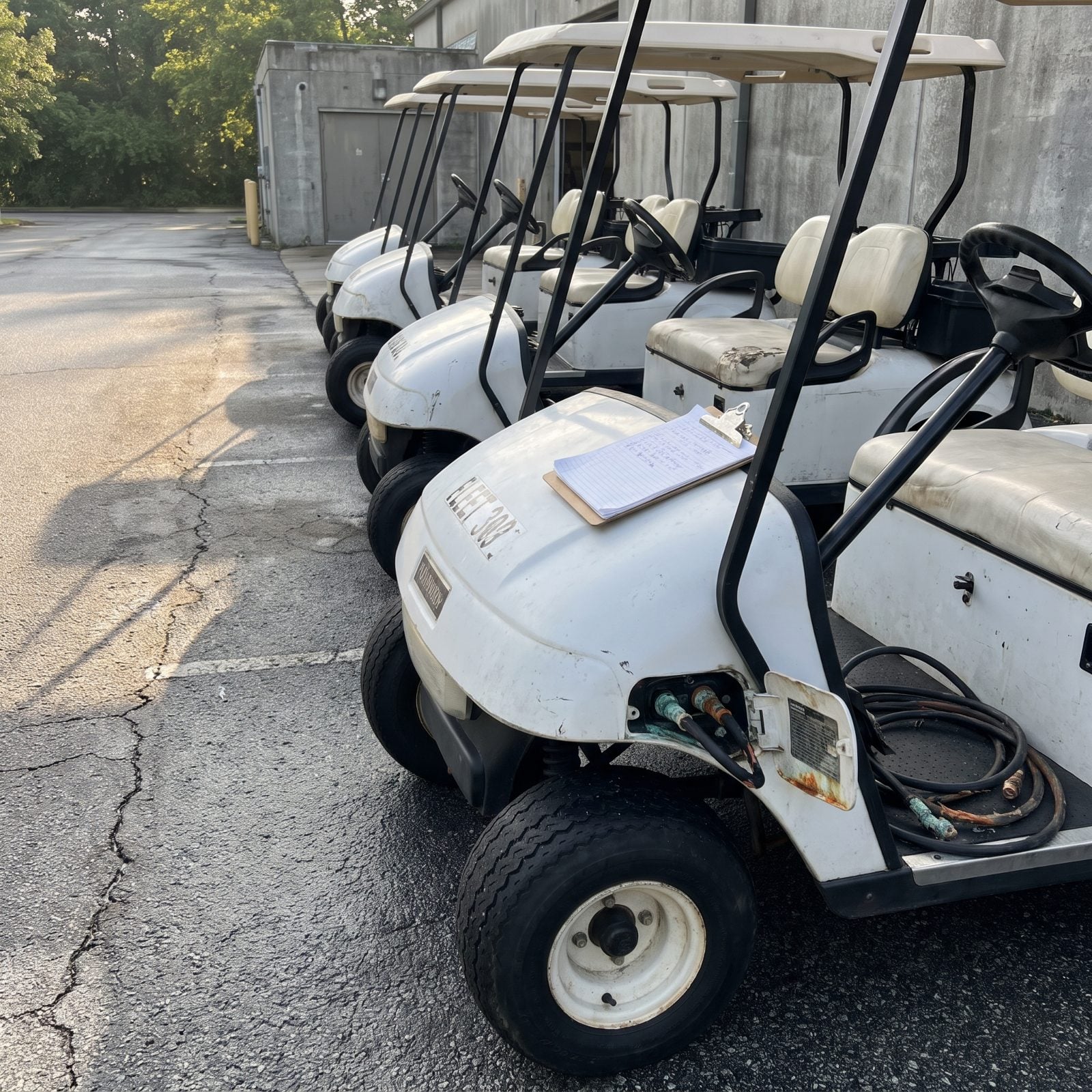
Fleet carts live hard lives. They run dawn to dusk through a full season, get charged on timers by whoever’s closest, and nobody babies them. None of that is automatically a dealbreaker, because a fleet cart serviced on a strict schedule beats a backyard cart that sat on a trickle charger for three summers.
Buying one blind is the mistake. No service log means no idea how many deep discharges those batteries took, whether the controller was ever replaced, or if the motor’s been run flat-out on hills for years. You could be inheriting a pack that’s six months from dead.
So ask for the maintenance records. A reputable course or reseller keeps them. If nobody can tell you when the batteries went in or the last time the brakes were touched, price the cart like it needs everything — because it probably does.
7. Failing to Verify Warranty Transferability
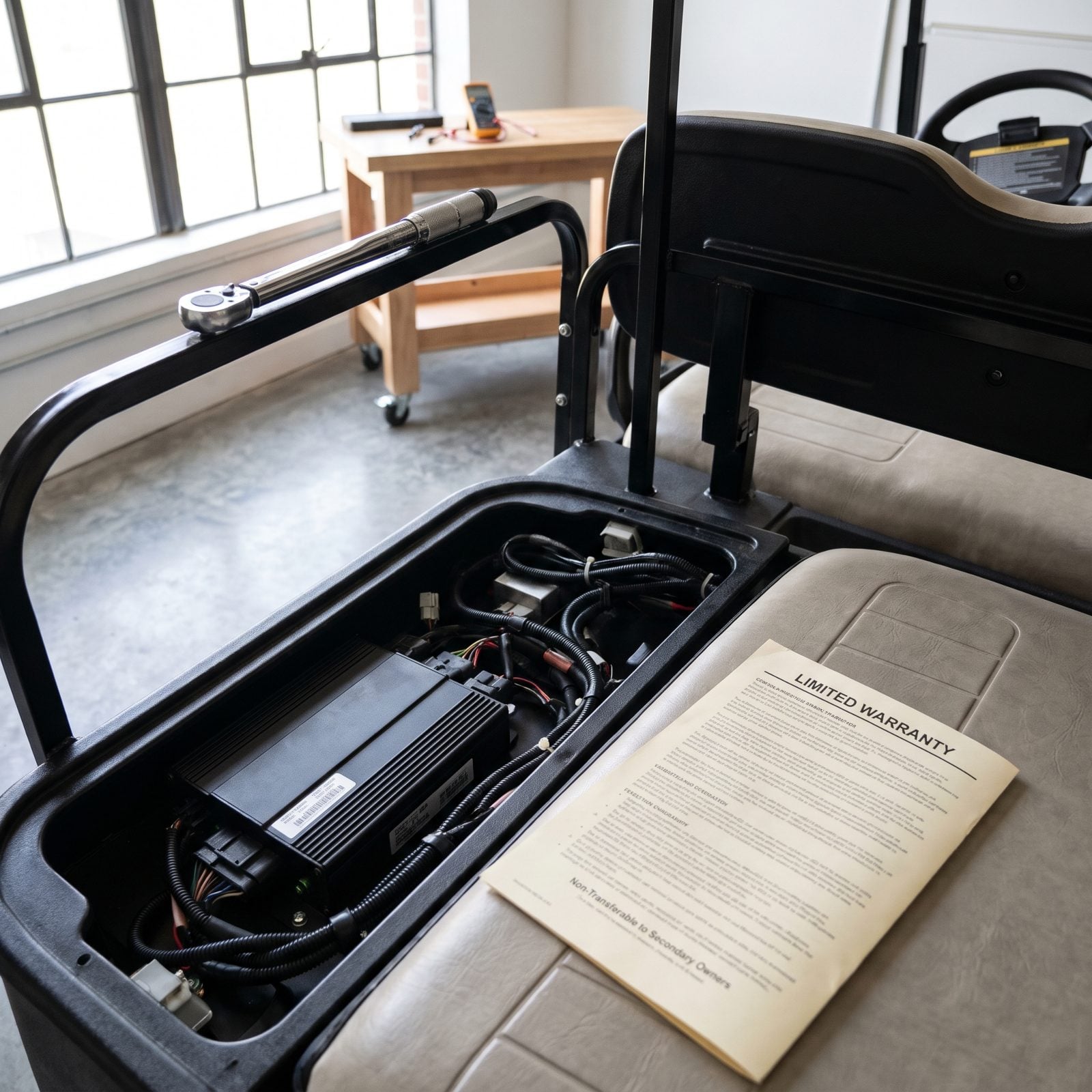
That remaining warranty you’re counting on? It might die the second the cart changes hands.
Plenty of manufacturers write their coverage to the original purchaser only. Batteries, controllers and motors are the expensive bits, and those are exactly the components a lithium warranty protects. When it doesn’t transfer, a used cart that looks like a steal can hand you a four-figure repair the first winter.
Call the manufacturer before you pay — not the seller. Ask specifically whether the battery and drivetrain coverage follows the cart or the person, and get the terms in writing. Some brands allow a transfer for a small fee, and that fee is the cheapest insurance you’ll ever buy on a used machine.
6. Choosing a Brand With Poor Local Parts and Dealer Support

A great cart with no local support is a paperweight that moves.
Some boutique and direct-to-consumer brands sell online, ship nationwide, and have zero service presence within three hundred miles of you. When the controller throws a fault code or a wheel bearing goes, you’re mailing parts back and forth for weeks while the cart sits dead in the driveway.
Find out who services it near you before you commit to a name. Call the dealer and ask how long a common part takes to arrive. Established brands win here almost every time — not because they’re better engineered, but because the guy twenty minutes away stocks the fuses, the solenoids and the tires.
5. Forgetting Sales Tax, Registration and Delivery Fees
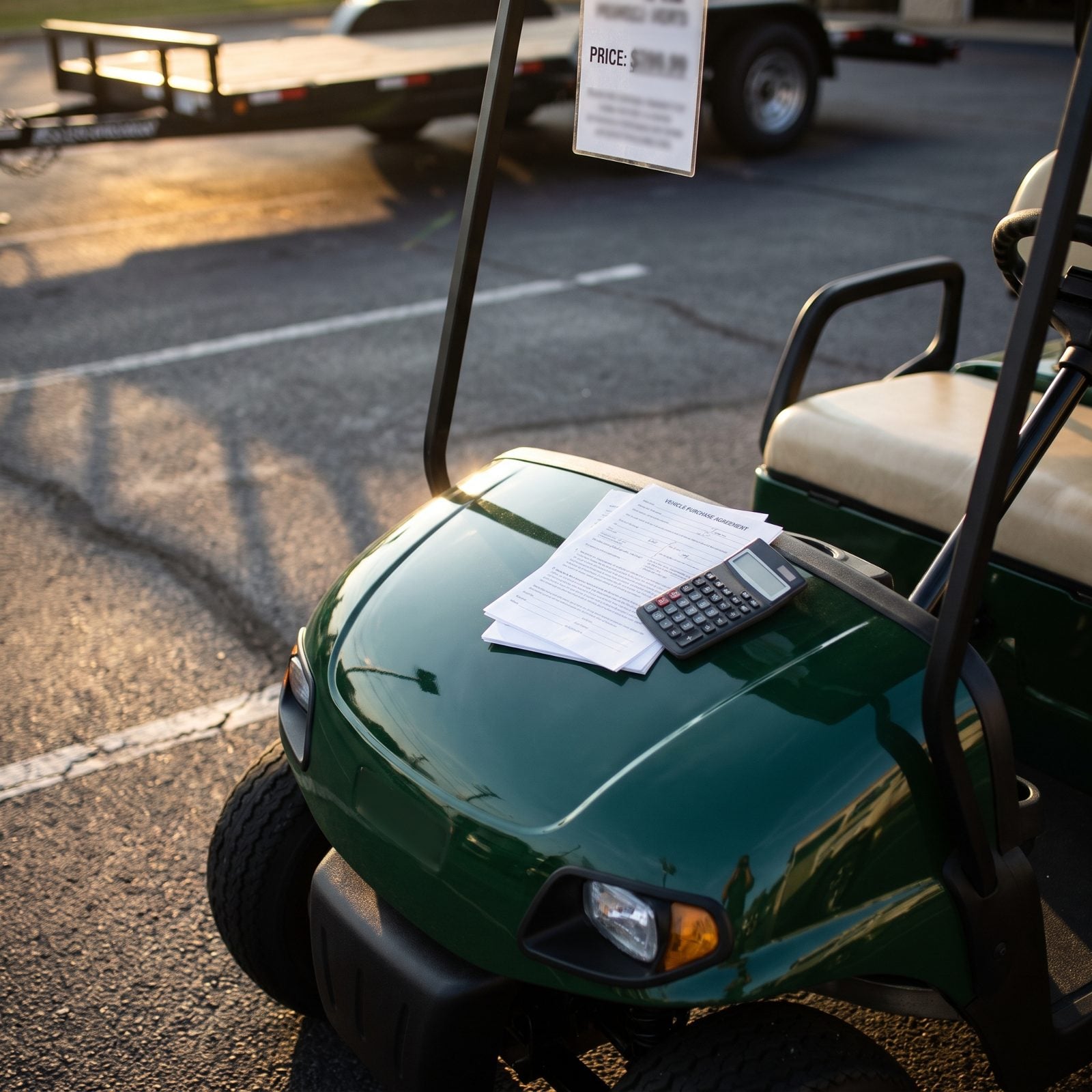
The sticker price is the opening number, not the final one.
Depending on your state, a golf cart can get hit with sales tax, title and registration fees, and in plenty of counties a street-legal cart needs a tag and insurance just like anything else wearing a VIN. Add delivery if you can’t haul it yourself. Suddenly that $9,500 total on the purchase agreement, which excludes tax and fees, isn’t the real total, and it catches you flat-footed at the counter.
Price the whole thing before you fall in love with a model. Ask the dealer for an out-the-door figure in writing. Buying private-party? Call your DMV and find out what registering it actually costs where you live. The number is rarely zero.
4. Forgetting to Measure Garages, Gates and Parking Spaces
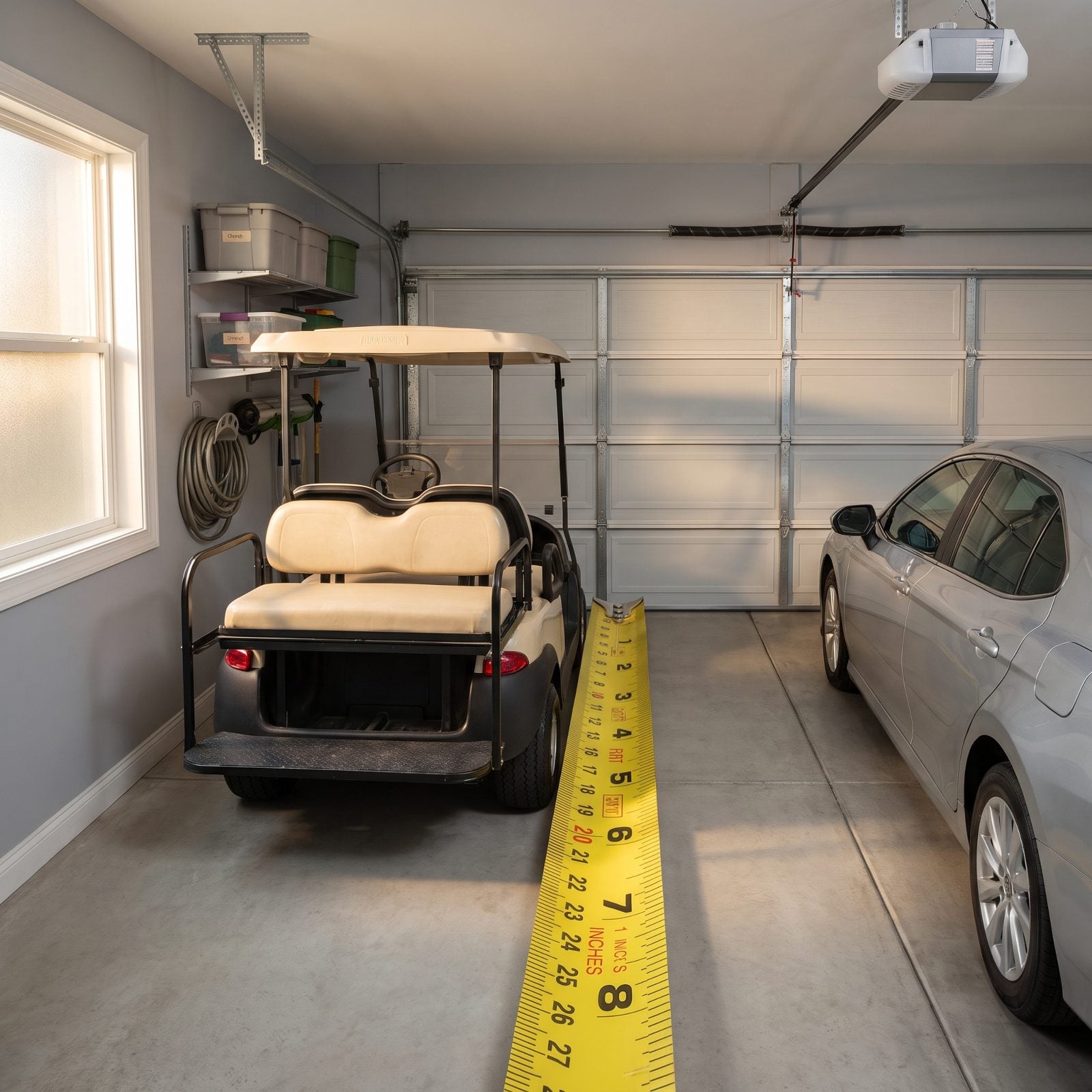
Even a standard four-seat cart with a rear flip seat is longer than people picture.
Folks fall for a cart online, factor in nothing, and then discover the thing won’t clear the garage door or won’t make the turn into the side gate. Now it lives outside in the weather, which chews through batteries, seats and electronics faster than any amount of driving ever would.
Measure first — garage depth, door width, gate opening, and the swing path to get there. Carts don’t pivot like a car does. Then hold that against the cart’s published length including the rear bumper and roof overhang, not just the wheelbase. A tape measure costs eight bucks and saves you from storing a four-grand mistake in the rain.
3. Underestimating Trailer Capacity, Ramp Strength and Tie-Down Needs
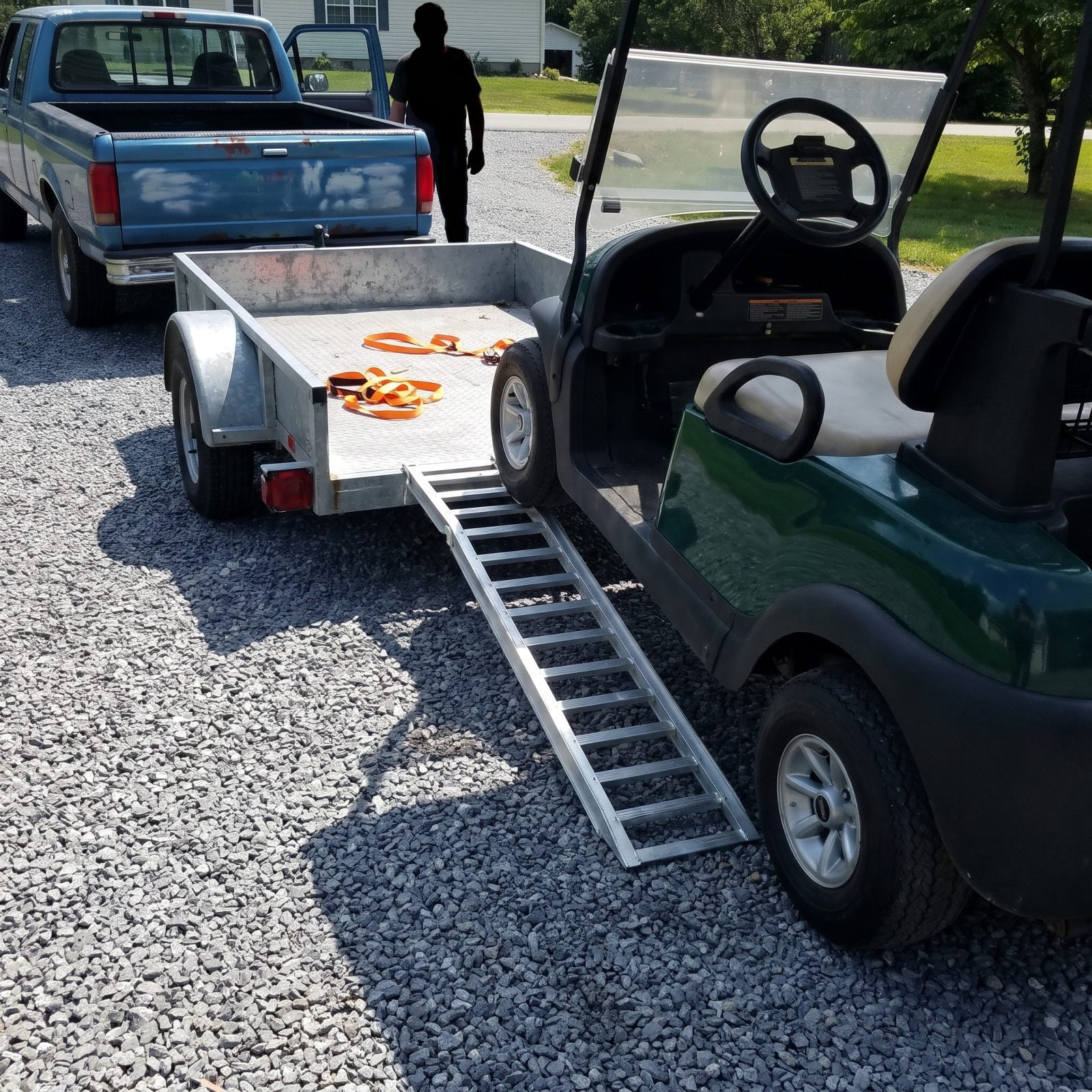
A lithium six-seater can push well past fifteen hundred pounds. Your old 5×8 utility trailer rated for a lawn mower is not the tool for that job.
Overload a light trailer and you’re bending the deck, overworking the bearings, and asking the hitch to do something it was never spec’d for. Flimsy ramps fold under the weight as the cart crests the top — which is how carts end up lying on their sides in parking lots.
Match the trailer’s rating to the cart’s loaded weight with margin to spare. Use ramps rated for the full load, not a pair of two-by-tens. And strap it down at all four corners through the frame, never the axle or the roof supports.
2. Assuming the Cart Can Safely Tow Any Small Trailer
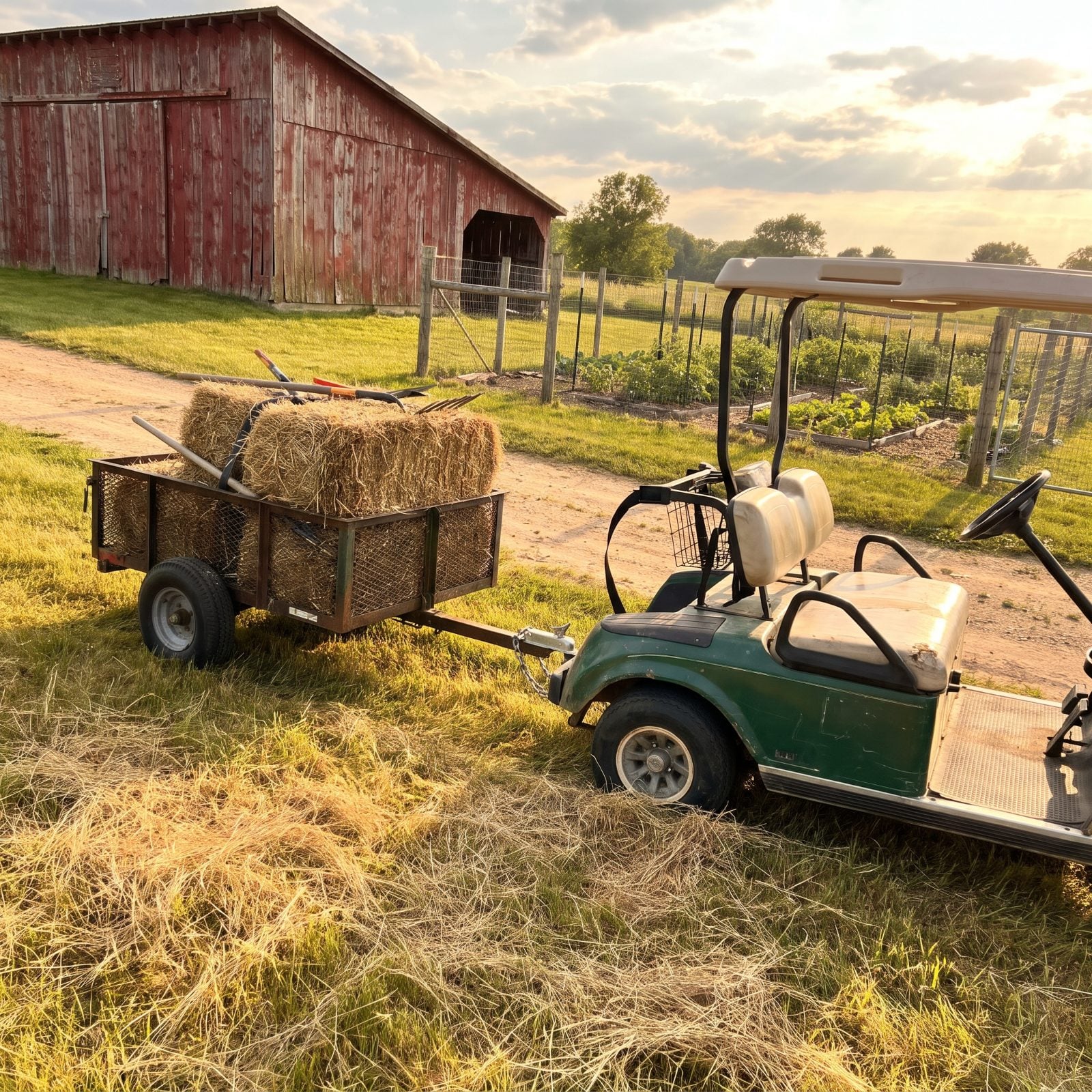
A golf cart is not a tractor, even when it’s wearing knobby tires and a cargo bed.
The motor, controller and brakes are sized for carrying people on relatively flat ground. Hitch a loaded trailer behind it, ask it to climb, and you’ll overheat the controller, cook the motor, and learn the hard way that cart brakes were never built to stop a trailer on a downgrade.
Check what the manufacturer actually rates for towing, if anything. Many consumer carts rate for nothing at all. Utility models have real numbers. Respect them, keep the loads light, and stay off steep ground with anything behind you. The cart will tell you it’s unhappy right before it quits.
1. Skipping a Full-Passenger Hill-Climb Test Before Purchase

An empty cart on a flat lot will climb anything. Load it with four adults, point it up your actual street, and you learn the truth.
Tired batteries and undersized motors give themselves away on a grade under load. A cart that crawls, bogs, or throws a heat fault halfway up the hill will do that every single day you own it — assuming it doesn’t roll back on you the moment you stop.
So test it loaded. Bring friends or sandbags, find the steepest hill on your regular route, and run it up and down a few times. Watch the speed, listen for strain, check whether the brakes hold on the way down. The driveway demo tells you nothing. The hill tells you everything.