
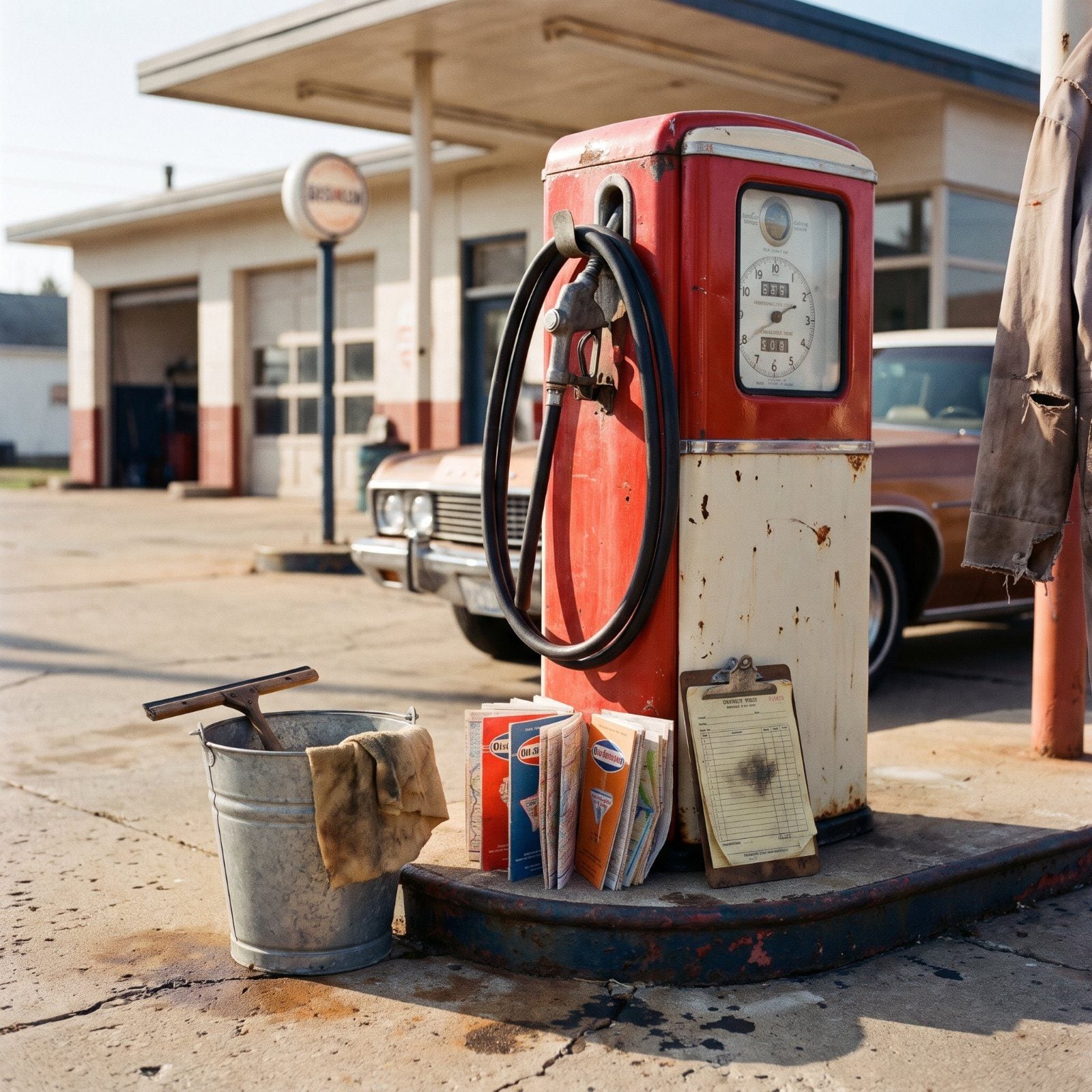
The smell gets you first. Gasoline, warm asphalt, a whiff of rubber off a stack of tires by the bay door. A bell dings twice as your front wheels cross a rubber hose, and somebody in a bow tie walks out before you’ve even cut the engine. That was a fill-up in 1974, and almost none of it survives at the corner station today. We pump our own, pay at a screen, and drive off without a word said to another human being. Here’s what we traded away, one small courtesy at a time.
Please note that some of the images in this article were created with the assistance of AI.
32. Fuel Pumped While You Stayed Behind the Wheel
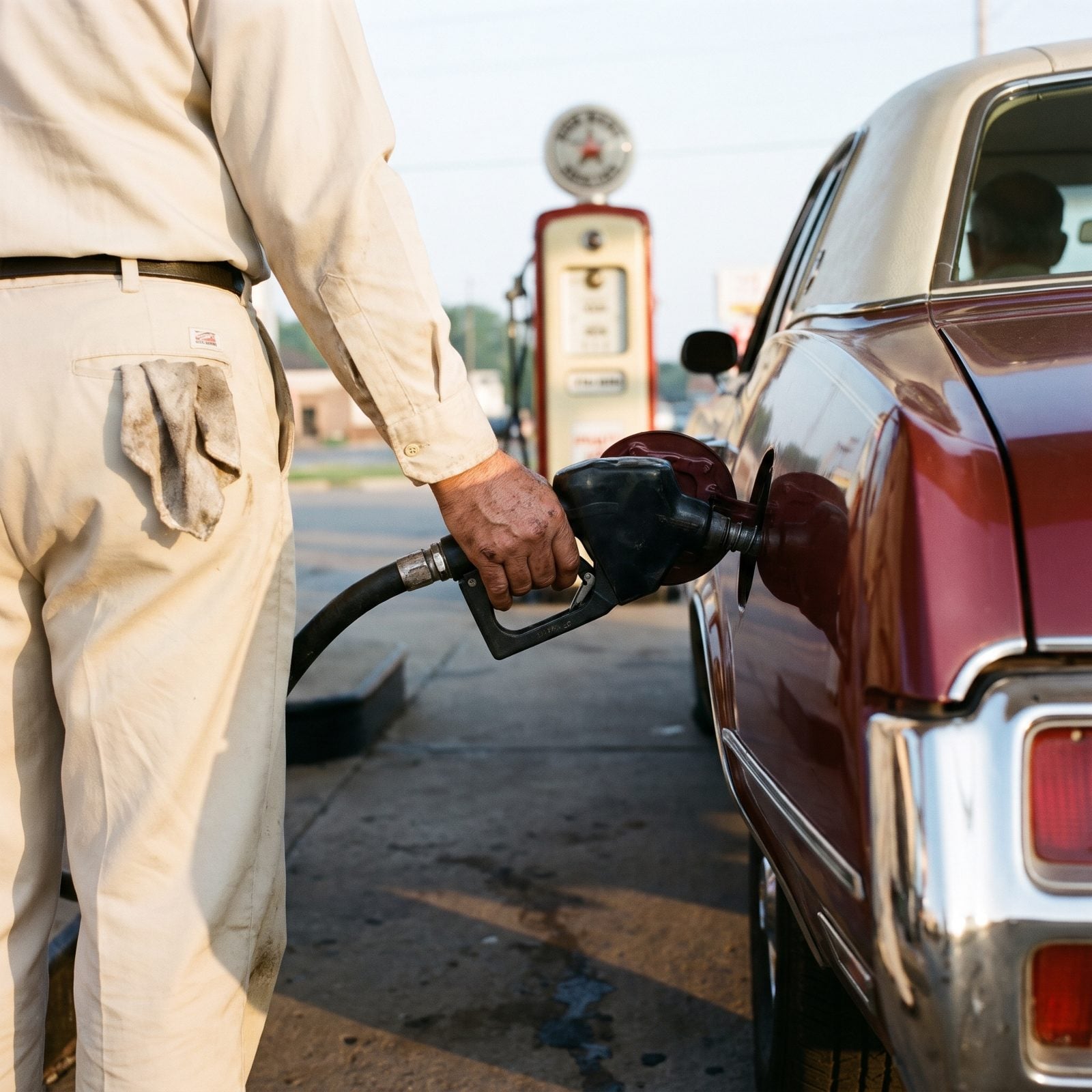
You never touched the pump. You rolled down the window, said “fill it, regular,” and that was your whole contribution to the transaction.
Full service was the default, not a luxury, and nobody thought twice about it. The attendant worked the nozzle while you kept your shoes clean and your hands off the grip.
Oregon loosened its self-serve ban in 2023, so New Jersey stands mostly alone now. Everywhere else, the courtesy died quietly in the 1980s once stations figured out they could pay one cashier instead of a crew of pump jockeys. Cheaper for them. A little colder for the rest of us.
31. The Driveway Bell That Announced Every Customer
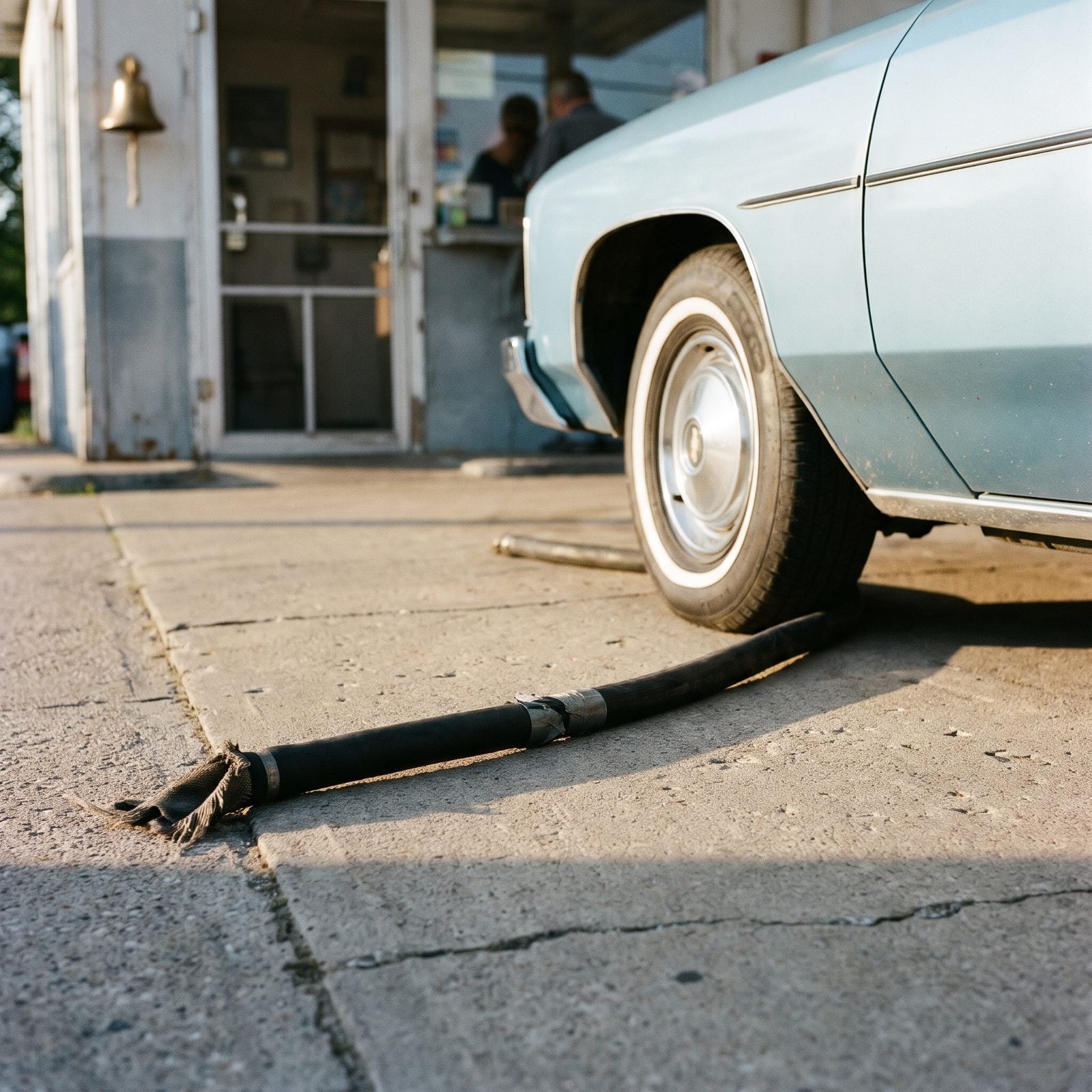
Ding-ding. Two chimes, and somebody inside knew a car had arrived.
The mechanism was dumb and brilliant: a rubber hose stretched across the drive, air pressure inside, a bell on the office wall. Roll a tire over it and the bell rang. No electronics, nothing to update, nothing a roll of friction tape couldn’t fix.
So an attendant looked up and started walking before you’d even stopped. You were expected. Today you can stand at a pump for ten minutes and the only thing that notices you is a camera.
30. Attendants in Crisp Branded Uniforms
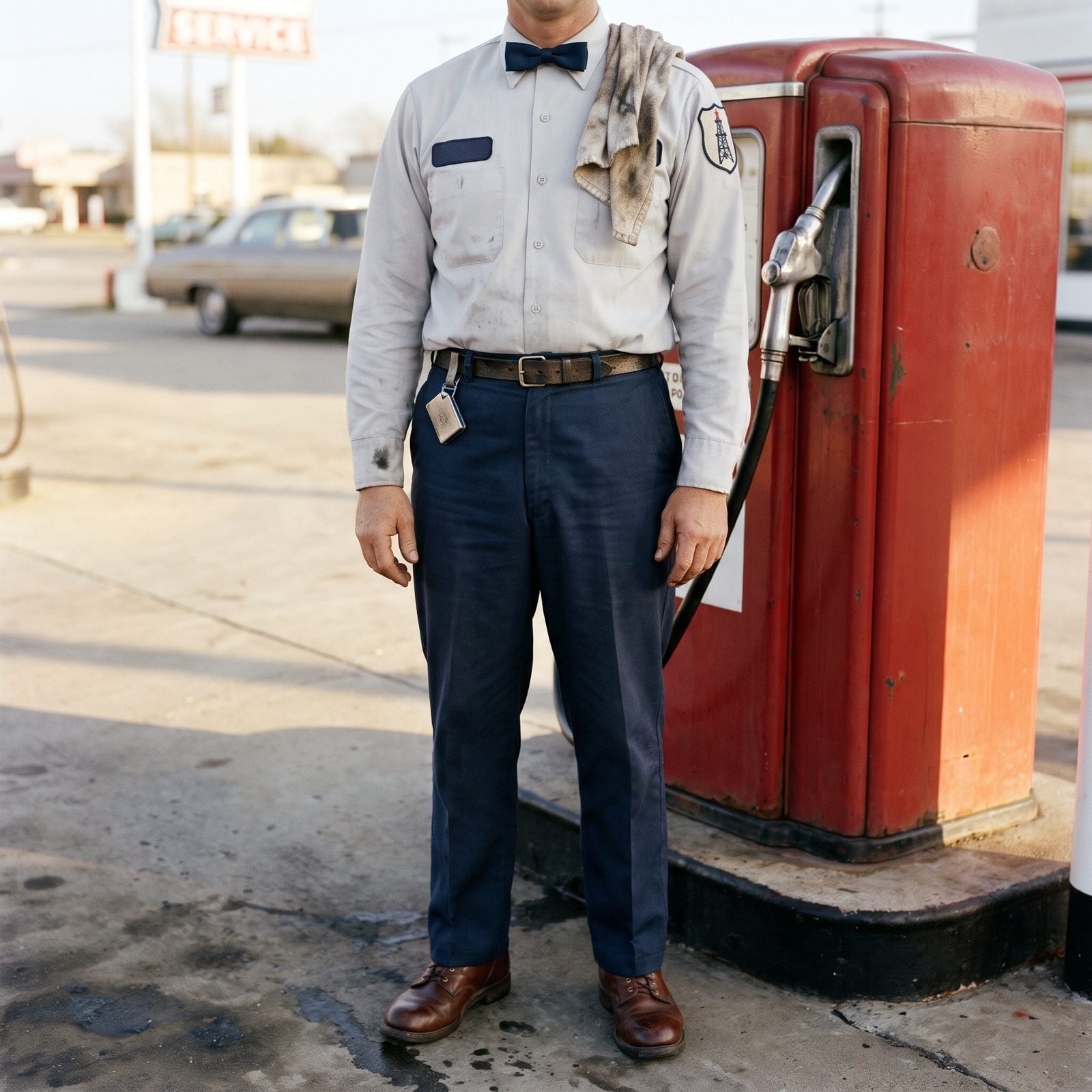
Pressed shirt. Bow tie. A name patch stitched over the chest and a company shield on the shoulder. Working a gas pump used to come with a dress code.
It sounds fussy now, but there was a reason behind it. The uniform told you this was a real business with standards, and the man walking toward your car represented the brand on the sign. He had skin in it.
A polished chrome clip rode on his belt, embossed and shining, so even the hardware looked squared away. Compare that to the plastic poncho and the “we are not responsible” sticker you get now. Alright, the bow tie was a bit much. But it meant something.
29. A Windshield Cleaned With Every Fill-Up
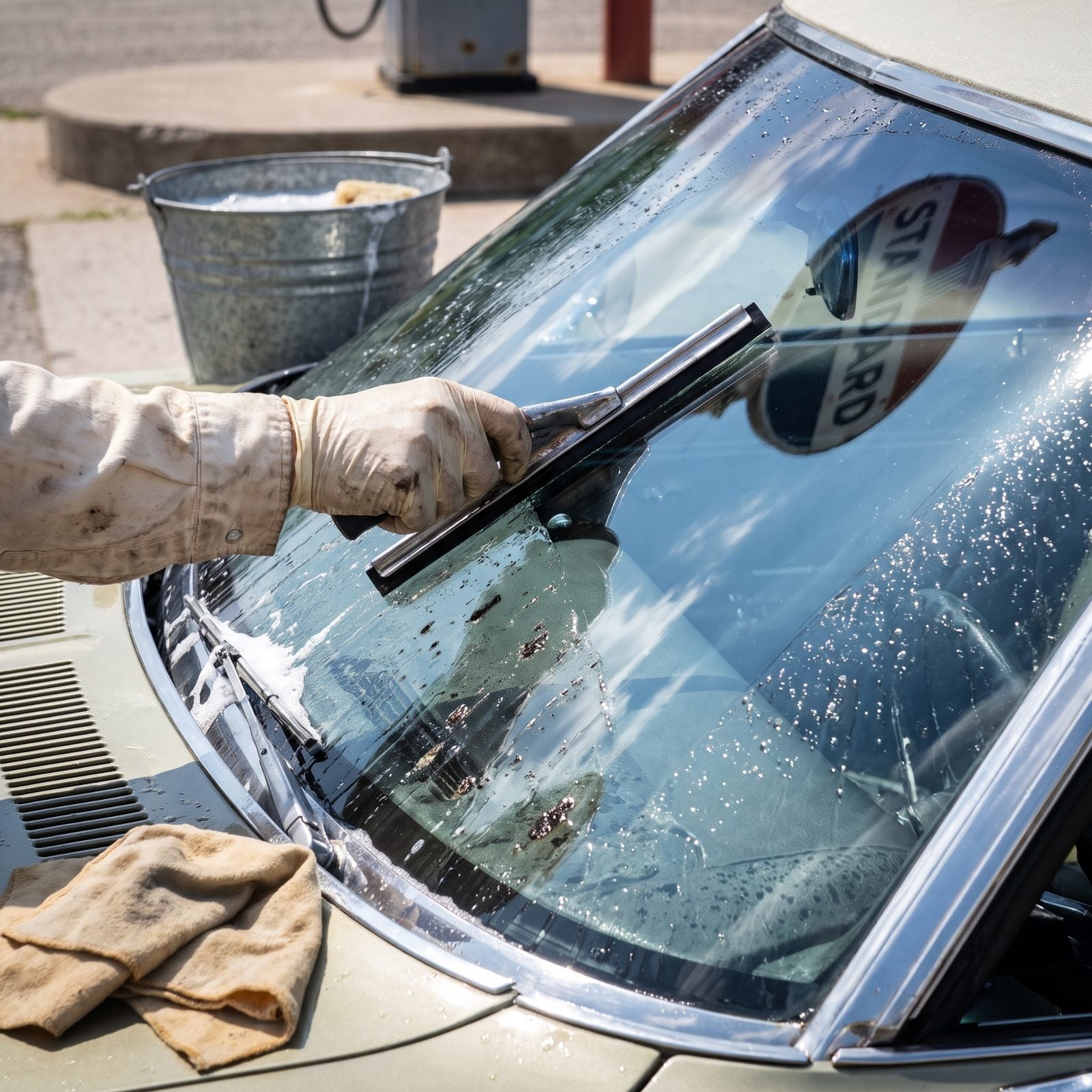
Nobody asked for it. It just happened. While the tank filled, the attendant grabbed the squeegee and went to work on your windshield, front and back, bugs and all.
Then out came the chamois to streak-free the glass. On a good day he’d hit your headlights too.
This is the one people miss most. A clean windshield is a safety thing, and plenty of folks never clean theirs between inspections. Those squeegee buckets still bolted to the pump island are the ghost of this habit. Half of them hold black water and a squeegee with no rubber left.
28. An Attendant Checking the Oil Dipstick
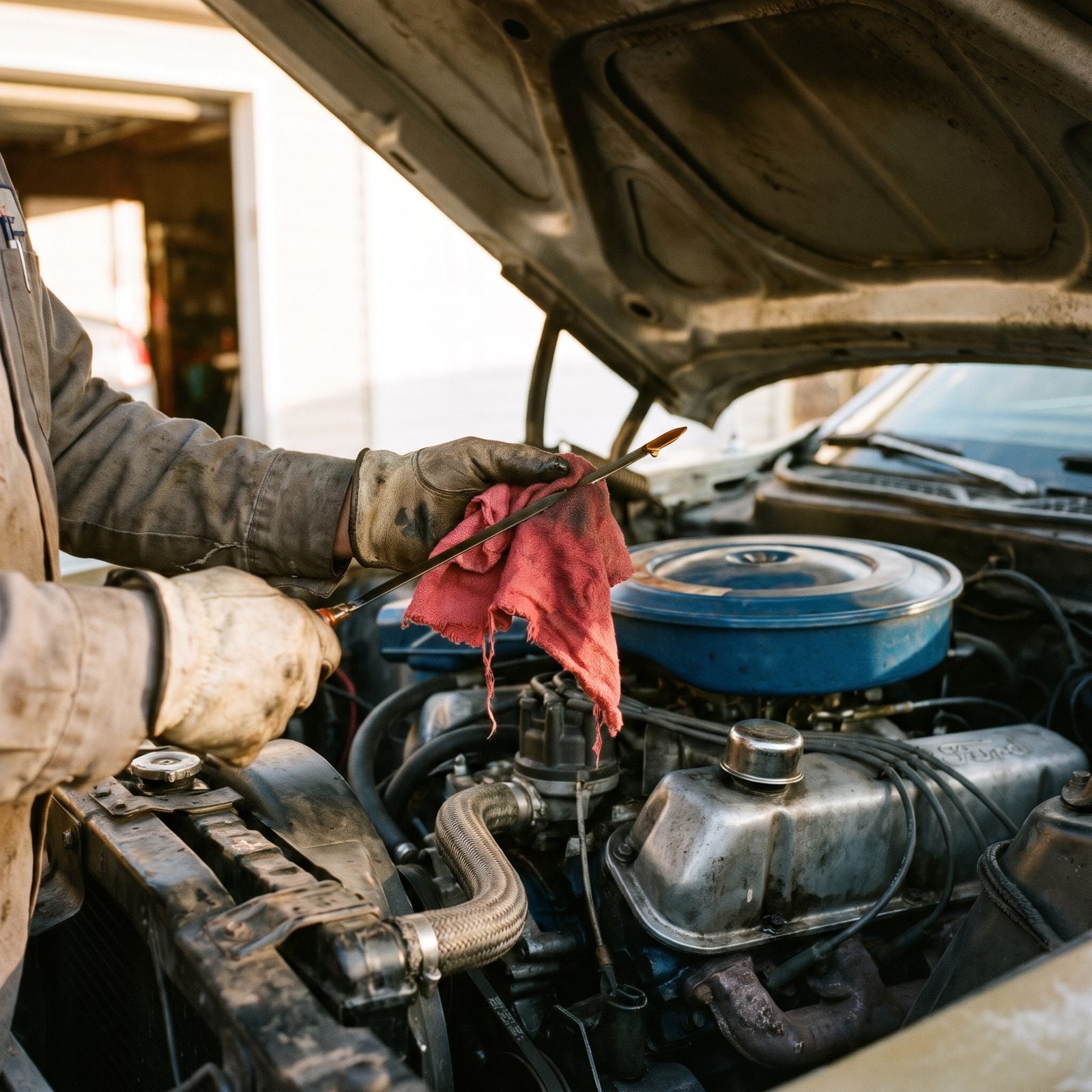
“Check your oil?” He asked, you nodded, and the hood went up.
Dipstick out, wiped on the rag, dipped back in, read against the light. Thirty seconds. Low by a quart? He’d tell you, sell you one, and pour it right there.
That one small ritual caught problems before they became tow trucks: a slow leak, a worn gasket, a car quietly burning oil between changes. These days most people never open the hood until a warning light comes on, and by then the damage is usually done. The cheapest repair is the one you catch early, and nobody checks for you anymore.
27. Tire Pressure Checked at the Pump
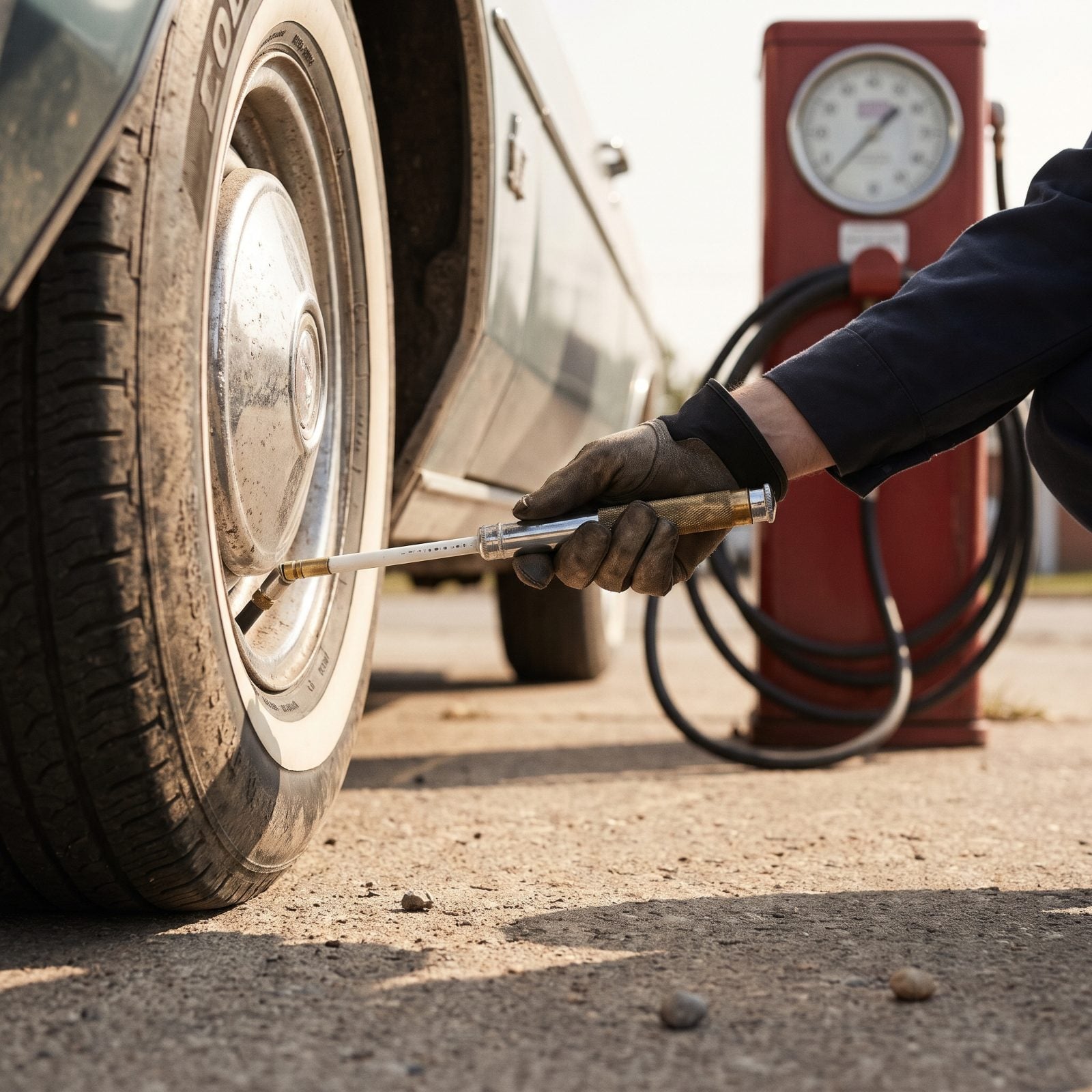
The pencil gauge lived in his shirt pocket, worn to bare metal where his thumb rubbed it. Four tires, four quick checks, air topped off from the island hose if you were low.
Underinflated tires wear fast, waste gas, and handle worse. Everyone knew it then because somebody was checking for you.
Now? You get a dashboard light that comes on in the cold and goes off when the sun warms the rubber, and most people ignore it entirely. The free air that used to be standard is three dollars in quarters at a wheezing machine behind the building. Progress, they call it.
26. Directions From Someone Who Knew Every Local Road
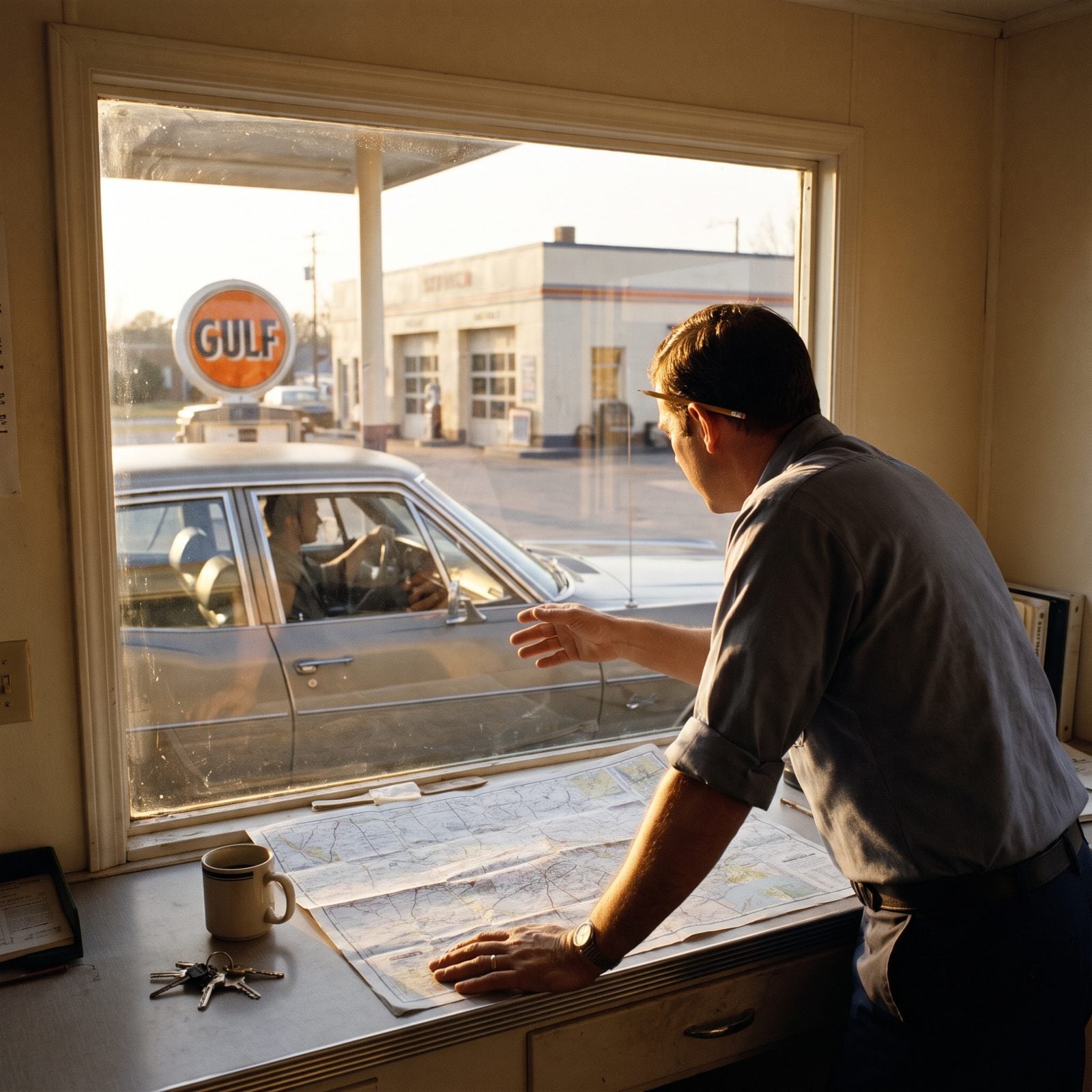
Lost? You pulled in and asked, and the answer came from someone who’d lived three miles away his whole life.
He didn’t recite a route. He gave you landmarks. “Past the white church, left where the old mill used to be, you’ll smell the river before you see the bridge.” Directions that actually stuck, because they were tied to things, not street names.
GPS wins the straight-line distance. It loses on whether the shortcut floods in spring, or that the left turn at the diner is a nightmare at five o’clock. Local knowledge died with the attendant. We got turn-by-turn and lost the guy who knew the roads with his eyes closed.
25. Free Foldout Road Maps From the Oil Company
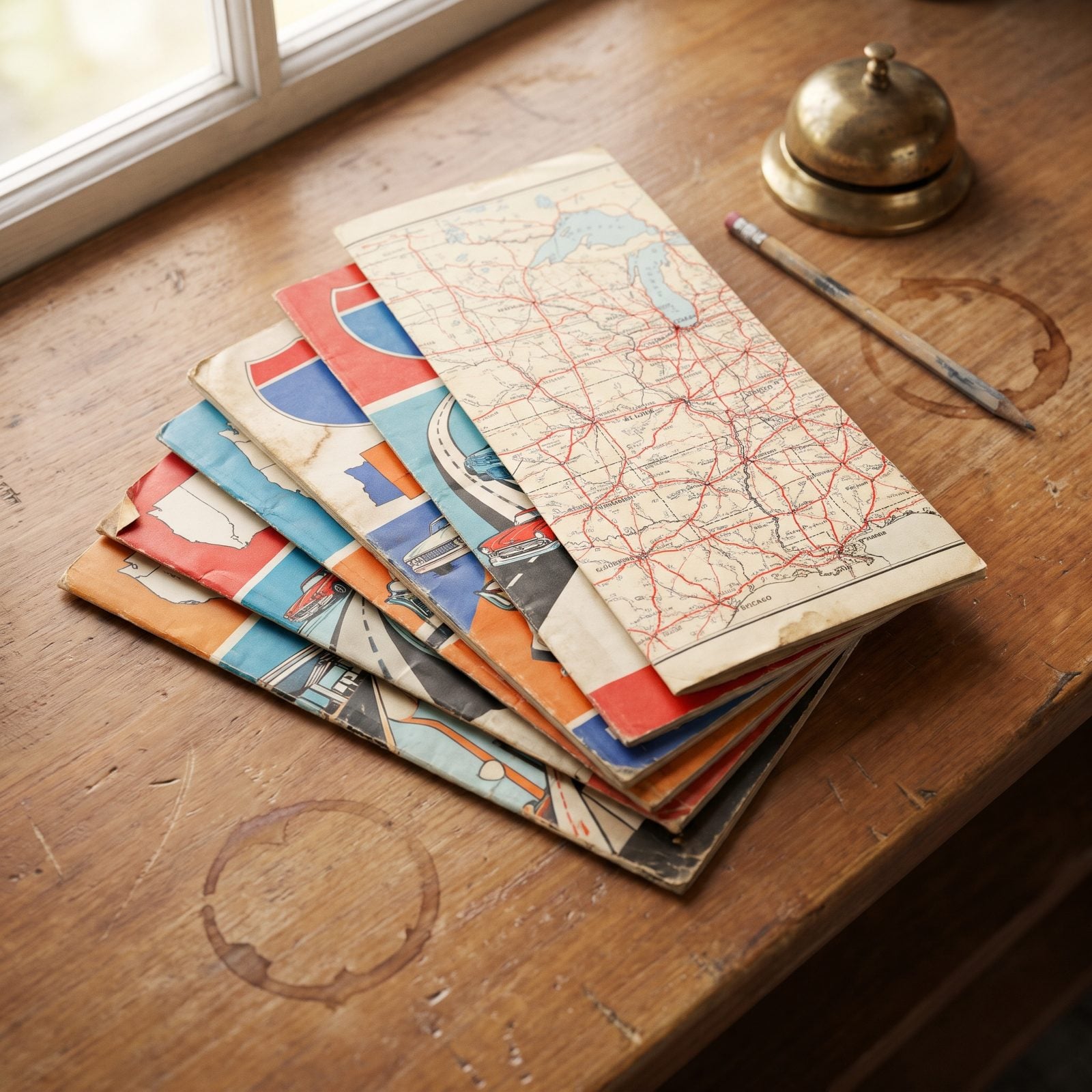
Take all you want. They were free, racked by the door, a new state every time you crossed a line.
The oil companies printed millions of them. It was advertising, sure, but it was also genuinely useful, and there’s a reason people hoarded them in glove boxes and door pockets until the folds wore through.
A paper map never lost signal, never died, and never rerouted you onto a gravel goat path at midnight.
The folding was its own dark art. Nobody ever got it back the way it came. You’d wrestle it into something close, jam it in the door, and it would bloom open again like it had a grudge. I miss them anyway.
24. A Working Payphone or Enclosed Phone Booth
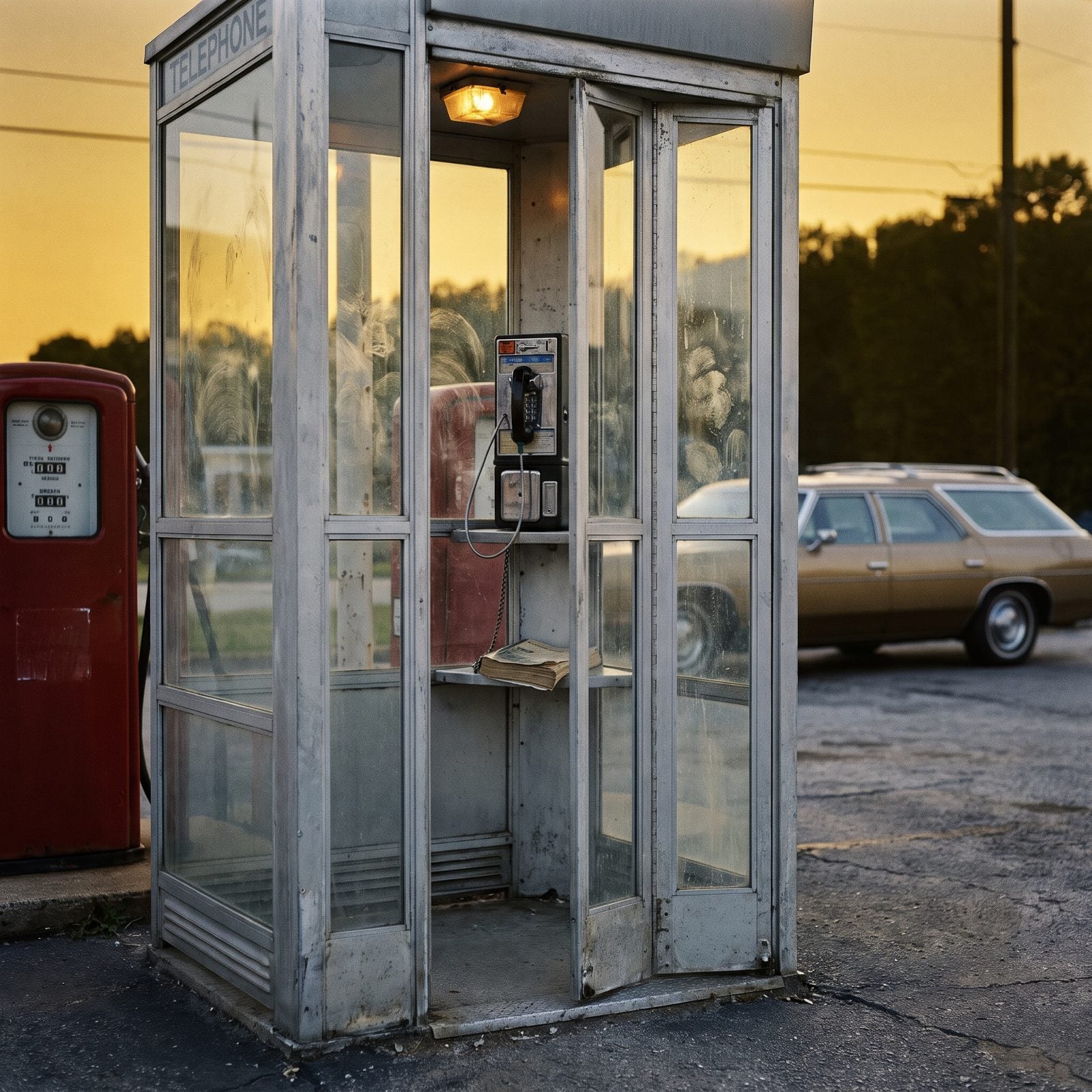
A dime, later a quarter, and a glass door that folded shut behind you. The phone booth on the station corner was how you told somebody you’d be late.
Break down out of town and you walked to the nearest station, where the phone was right there, often with a tattered directory chained to a shelf.
Cell phones made it obsolete, and the booths got ripped out by the thousands through the 2000s. Fair enough. But there’s something to be said for a phone you didn’t have to charge, didn’t track you, and couldn’t be snatched out of your hand at a light. The folding door sealing out the traffic noise was half the appeal.
23. A Mechanic on Duty Who Knew Your Car
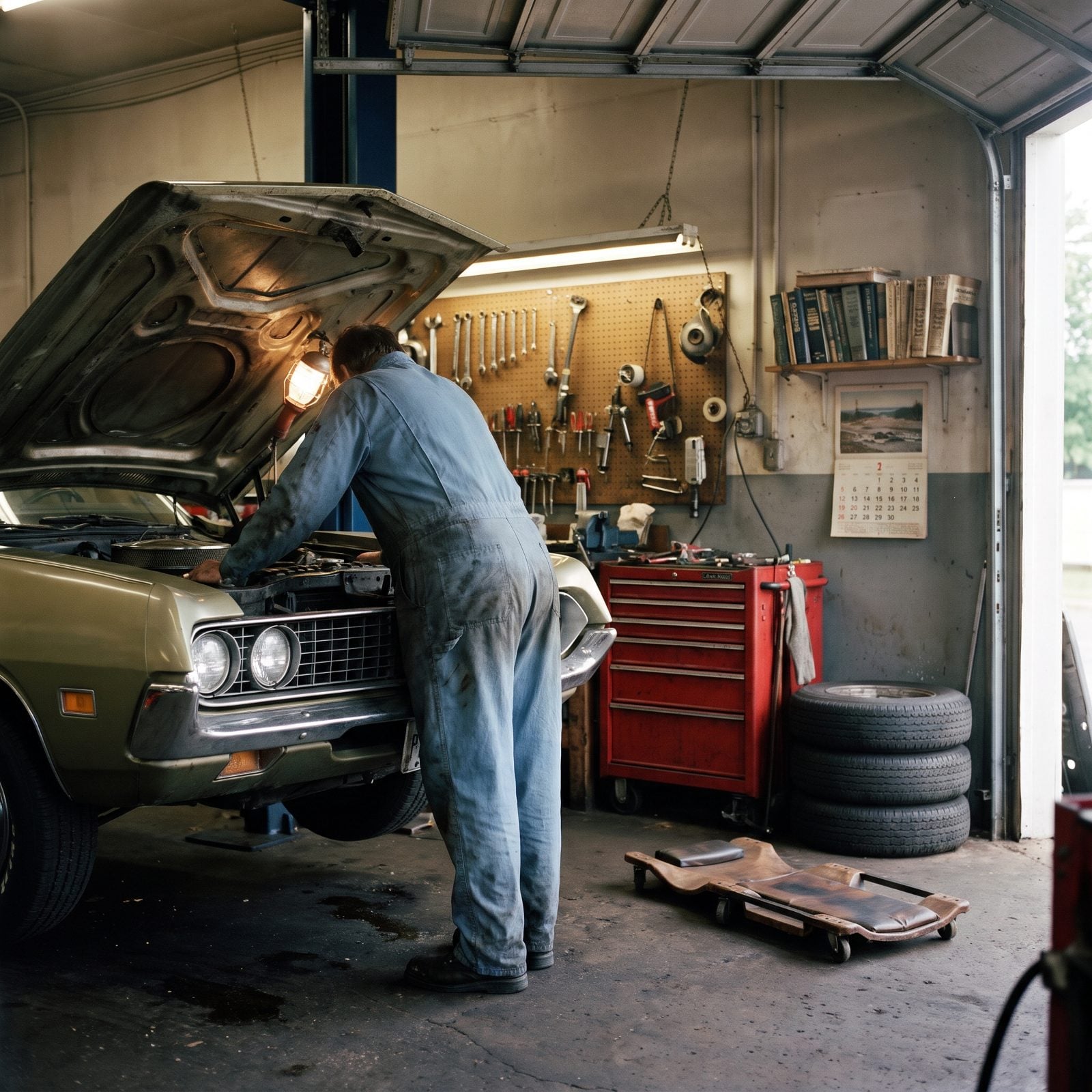
Two bays out back, a lift, a pegboard of tools, and a man who recognized your car by the sound of it pulling in.
The station fixed cars. Not everything, but brakes, belts, hoses, a water pump, a tune-up. The same guy who pumped your gas on Tuesday rebuilt your carburetor on Thursday, and he knew your car’s whole history because he’d been under it a dozen times.
That relationship is the real loss. The corner station became a convenience store with pumps, and real repair moved to specialty shops and dealers who’ve never seen your car before and charge by the diagnostic scan. Trust used to come standard, built up one honest fix at a time. Now you’re a VIN number to most places, and the guy who knew your car is long retired.
22. Flat-Tire Patching Done While You Waited
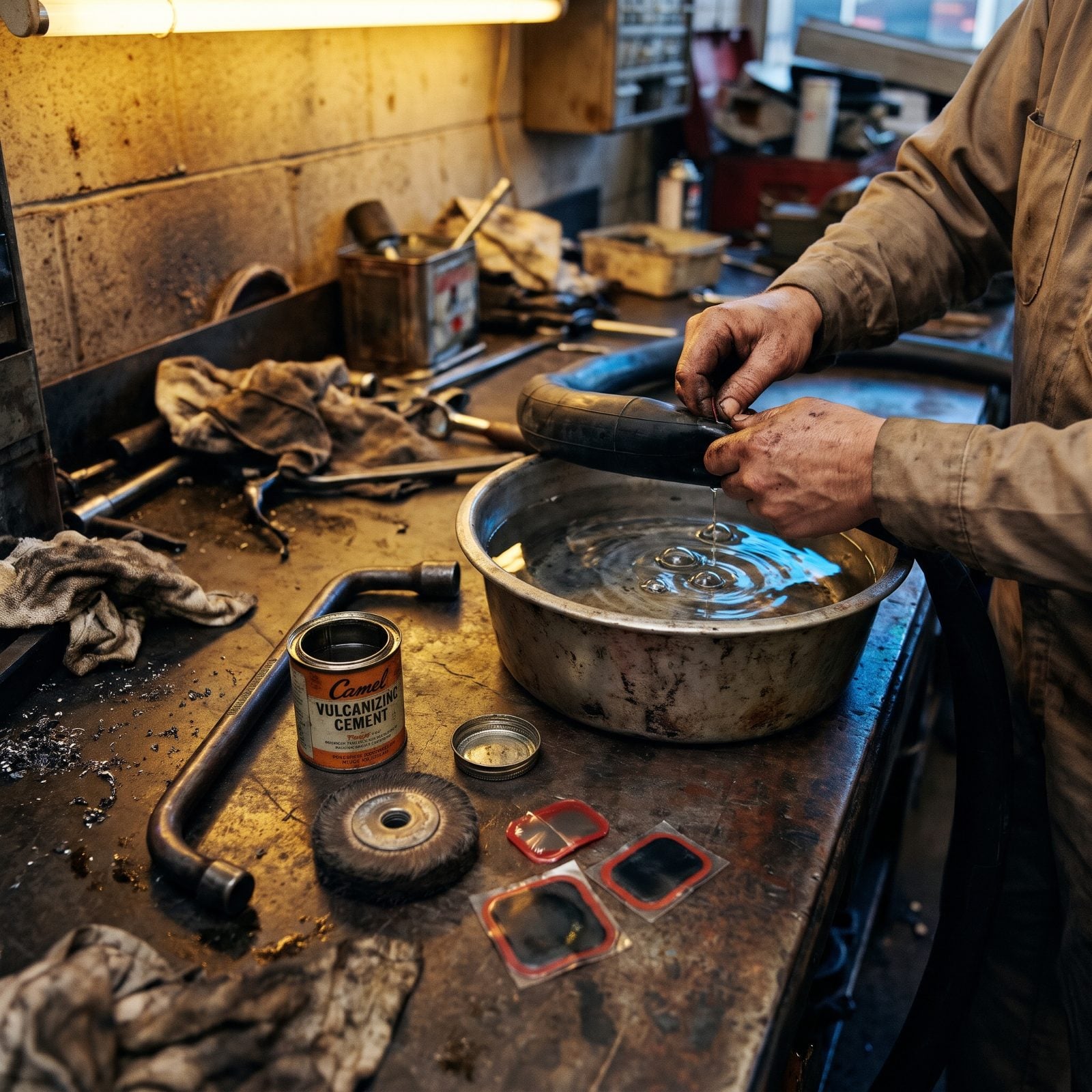
A nail in your tire didn’t mean a new tire. It meant twenty minutes and a couple of bucks.
The attendant dunked the tube in a tub of water, watched for the stream of bubbles, buffed the spot, brushed on cement and pressed a patch while you stood there and watched the whole thing happen. Now a nail means they try to sell you four tires and tell you yours are “too worn to safely plug.” Sometimes true. Often not. The skill of fixing the small problem instead of selling the big one went out the door right alongside the water tub.
21. The Station’s Own Tow Truck Parked Outside
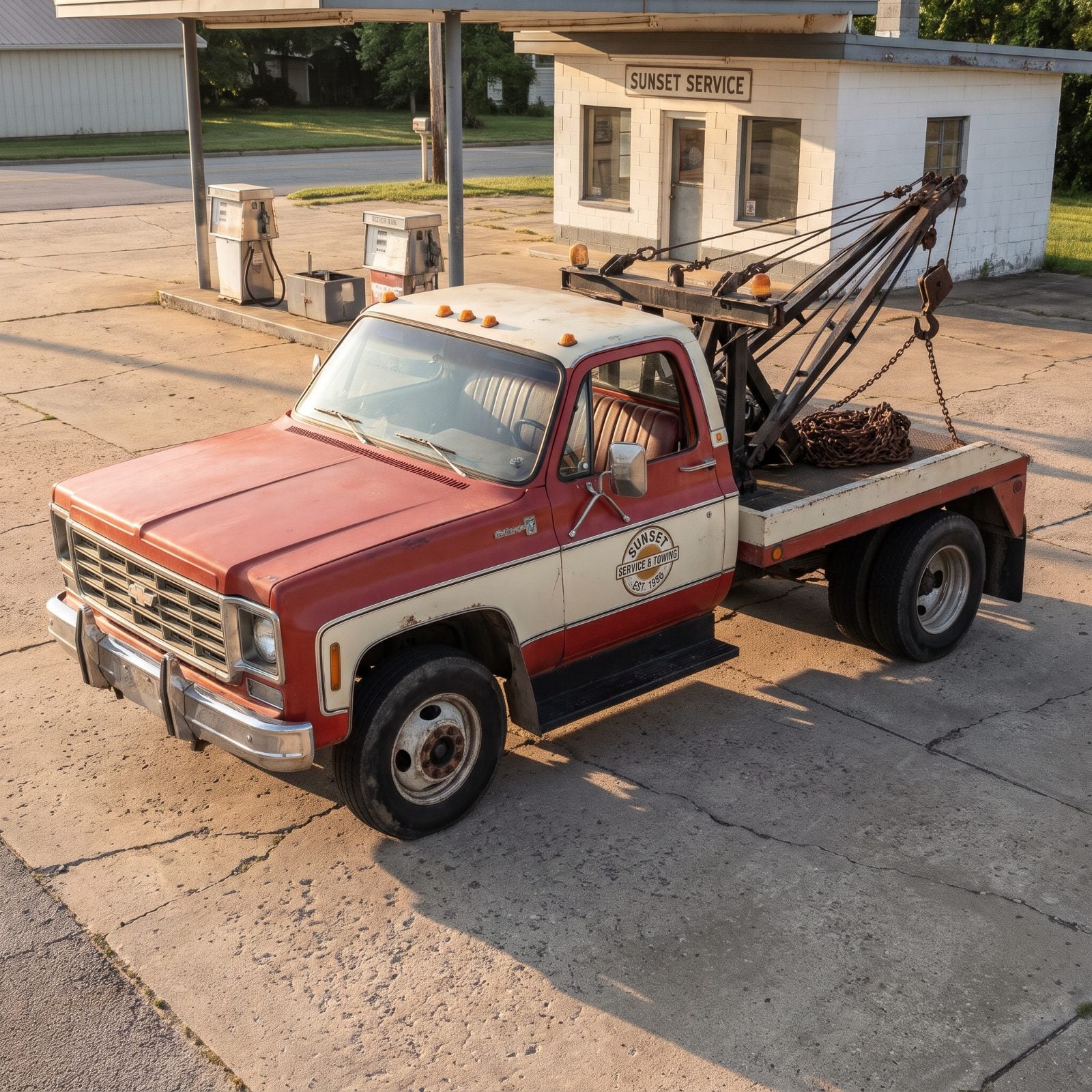
The station was also the tow service. One truck, one number, and it was the number on the matchbook in your glovebox.
Break down on the highway and you called the station you knew. The same mechanic who fixed your car came out to fetch it, which meant the person towing you had a reason to not wreck your bumper. Today a breakdown kicks off a roulette wheel of third-party apps and dispatchers who’ve never seen your car and never will. The relationship is gone. What’s left is a transaction with a stranger in a truck.
20. A Free Air Hose With an Accurate Gauge
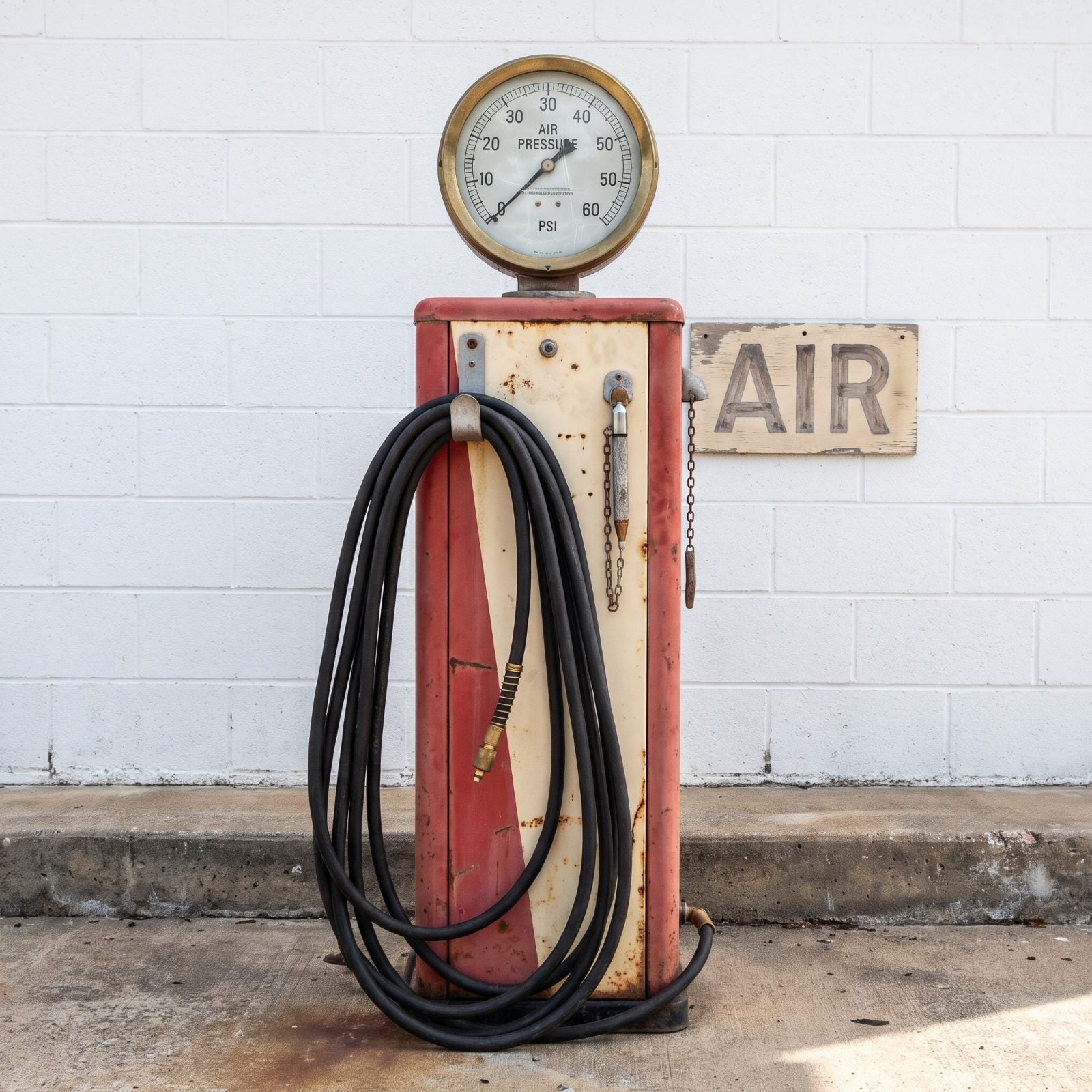
Air was free, and the gauge on the hose was one you could trust.
You’d roll up, grab the hose off its hook, and the big dial gave you an honest reading. No quarters, no app, no coin machine that shuts off after ninety seconds while you’re still on your second tire. The station gave away air because keeping your tires right kept you alive and kept you coming back. That math made sense to everybody involved.
19. A Water Hose and Metal Radiator Can
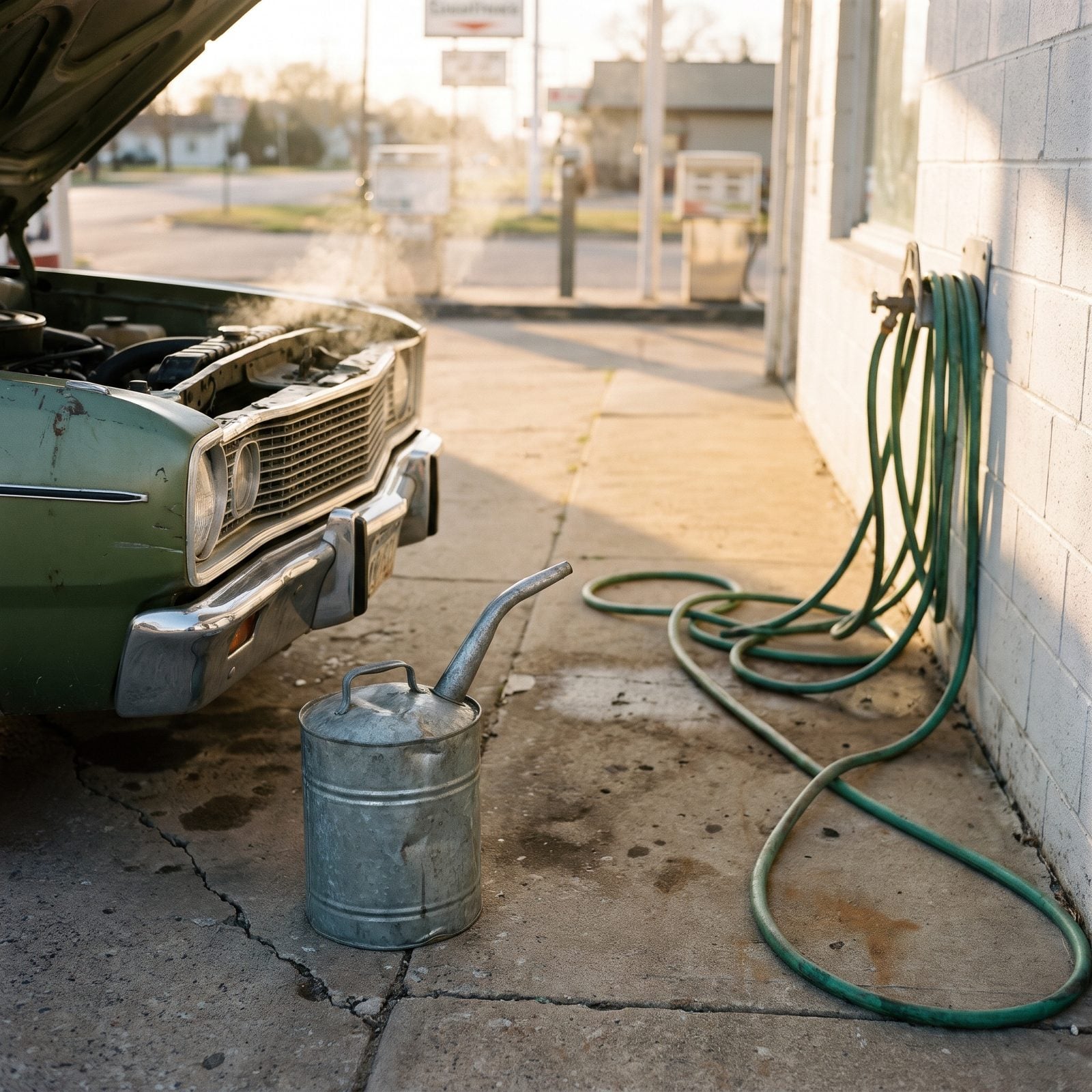
Cars overheated constantly in the summer, and every station knew it.
There was a hose and a battered metal can for exactly this moment — steam curling out from under the hood on a July afternoon, a line of cars on the highway shoulder waiting to limp into the shade. The attendant would wait for the engine to cool, top off the radiator, maybe sell you a thermostat. Modern cooling systems rarely boil over, and that’s genuine progress. But the quiet readiness, the assumption that a stranger might roll in cooking and need help right now, got left behind with the carburetor.
18. A Loaner Gas Can for Stranded Drivers
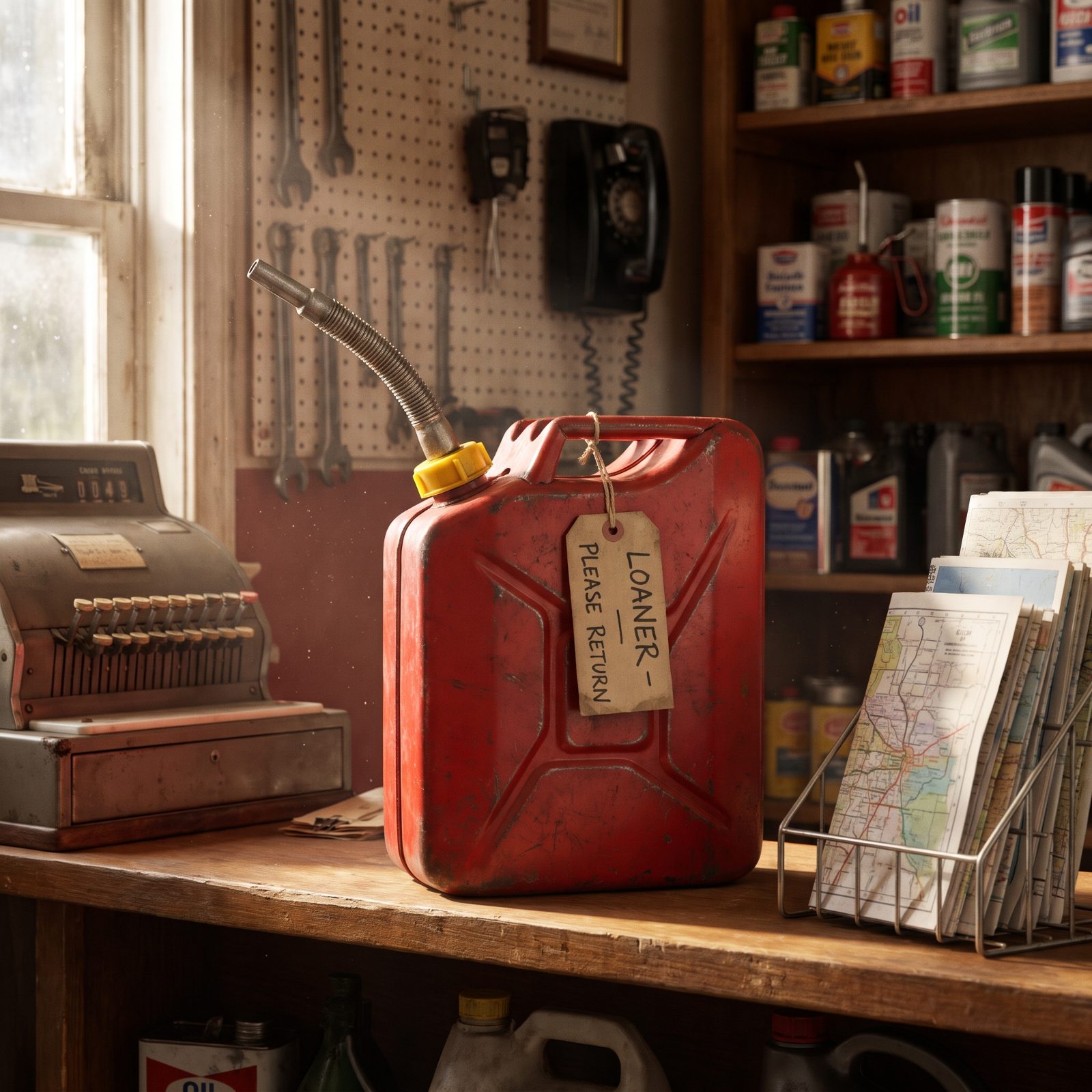
Run dry a mile from the pumps? The station handed you a can.
You walked back to your car, poured in enough to get moving, drove in, filled up and returned the can. On trust. The whole thing ran on the assumption that you’d come back, and you did, because the station knew your face and you knew theirs. Try asking for a loaner anything today. The liability lawyer living in everyone’s head says no before the question’s even finished.
17. Replacement Wiper Blades Installed on the Spot
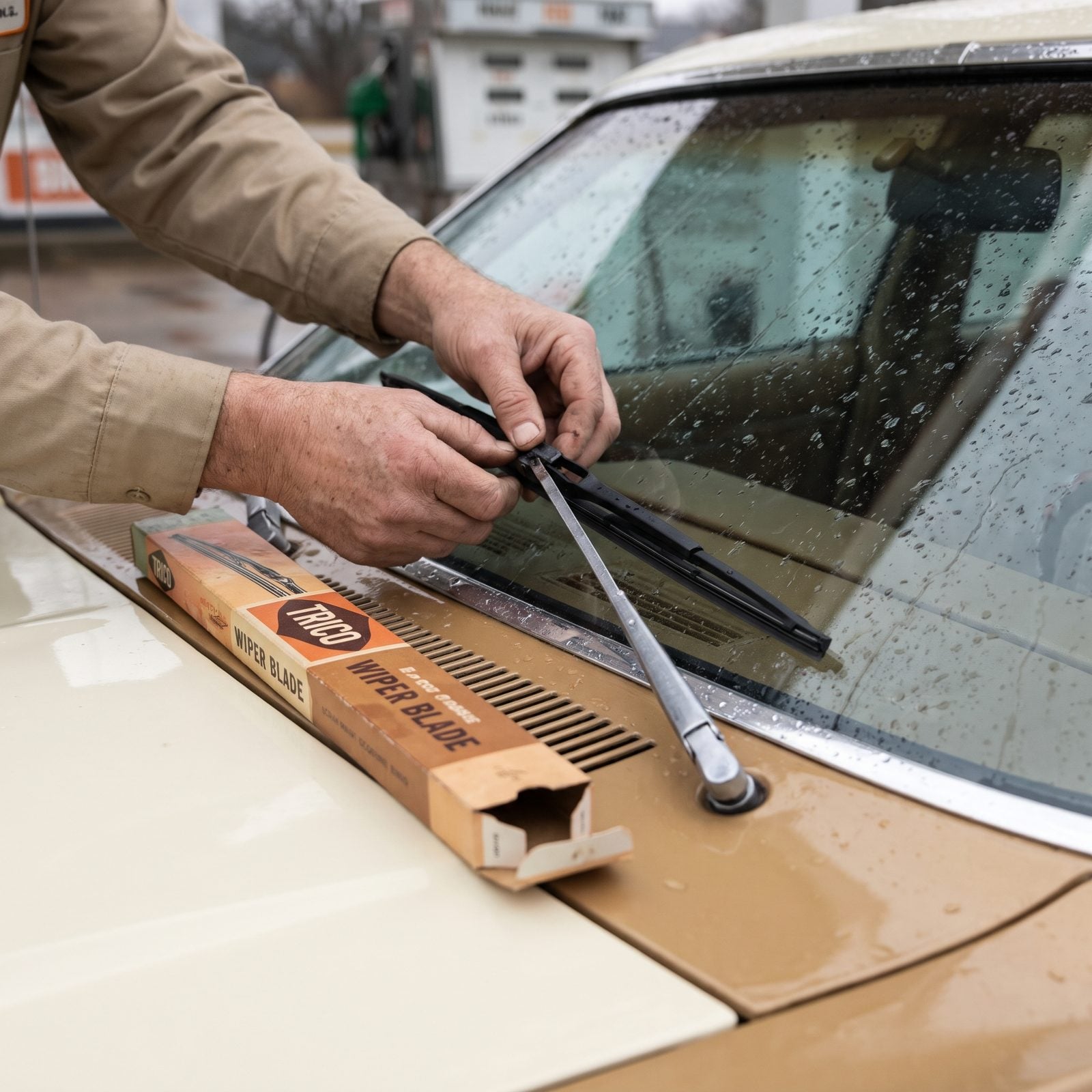
You didn’t buy wipers and figure out the clip yourself in the parking lot.
The attendant checked your blades when they washed your windshield, pulled a matching set off the rack, and swapped them right there while you paid for gas. Three minutes, done. Now you stand in an auto-parts aisle squinting at a sizing chart, buy the wrong length twice, and watch a video in your driveway trying to crack the hook-slot adapter. The convenience didn’t disappear — it got transferred, unpaid, to you.
16. Cardboard Motor-Oil Cans With Metal Tops
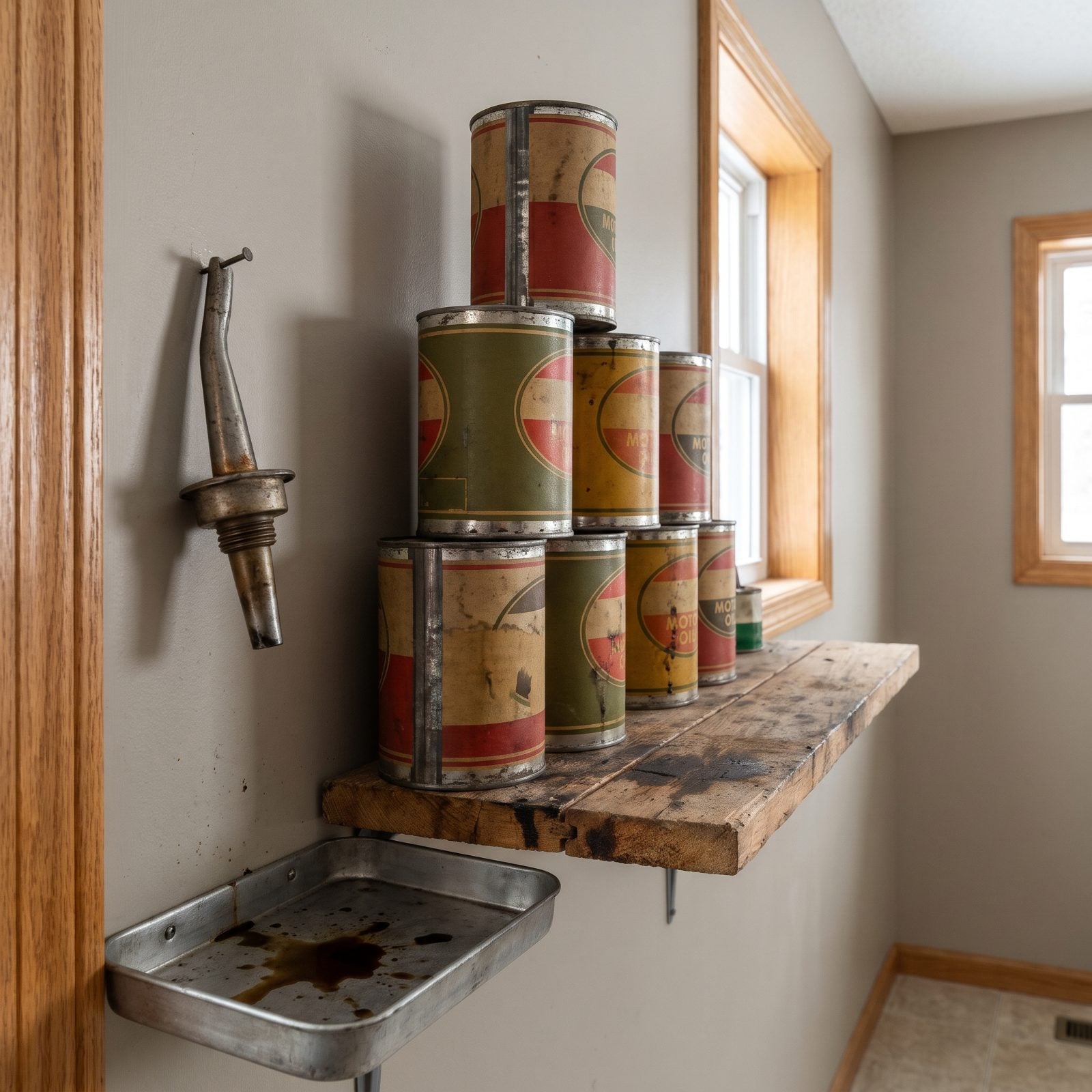
Motor oil came in cardboard, not plastic, and you opened it with a spout that stabbed through the metal top.
That pour spout was a small ritual all by itself. The cans felt good in the hand — cool and a little waxy. Plastic quarts and sealed jugs are cleaner and they don’t leave oily rings in a drip tray under the shelf, fair enough. But nobody ever got sentimental about a plastic bottle. You could feel the character of a cardboard can right through your fingers.
15. Mechanical Pump Numerals Clicking Into Place
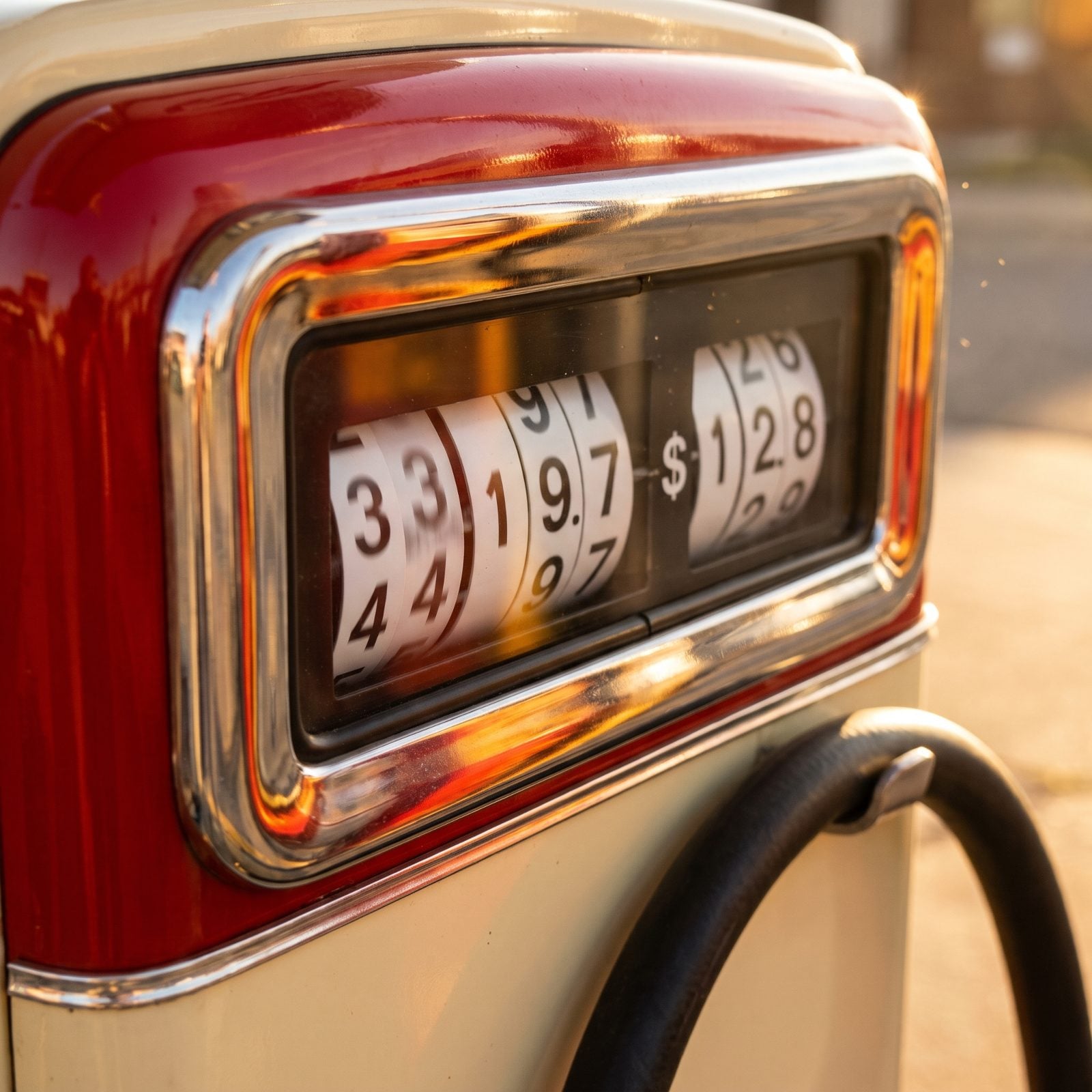
The sound is what people miss. That mechanical tick-tick-tick of the numbers rolling over as the gallons climbed.
Physical wheels spun behind a little glass window, dollars on one dial and gallons on the other, and the faster the fuel flowed the faster they clicked. You could hear your money moving. Digital displays are more accurate, and nobody’s going to argue for sloppier fuel metering. But a backlit LCD doesn’t make a sound, and there was something honest about a pump that let you hear the cost add up in real time.
14. A Towering Illuminated Oil-Company Sign
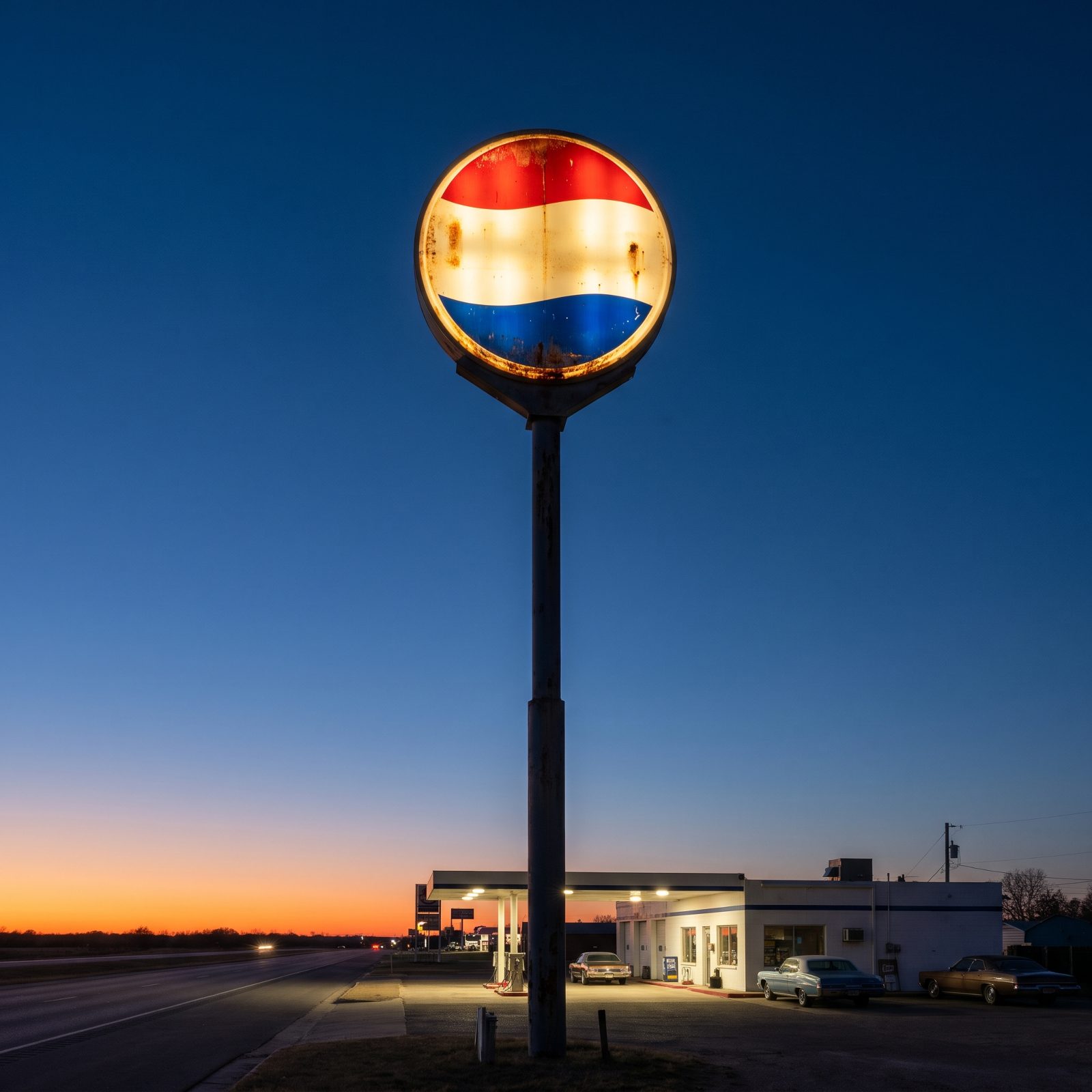
You navigated by these. The sign on the pole you could see from a couple of miles off, floating above the trees like a small moon.
Before every phone had a map, the glowing oil-company sign told you where fuel was and which brand. They stood tall on purpose, built to be read at highway speed from a long way out. Zoning rules and height limits cut most of them down to shin level, and the great lit pylons that once marked the American roadside are mostly memory now. Spot an original still standing and you slow down. You can’t help it.
13. Fuel Prices Changed One Number at a Time
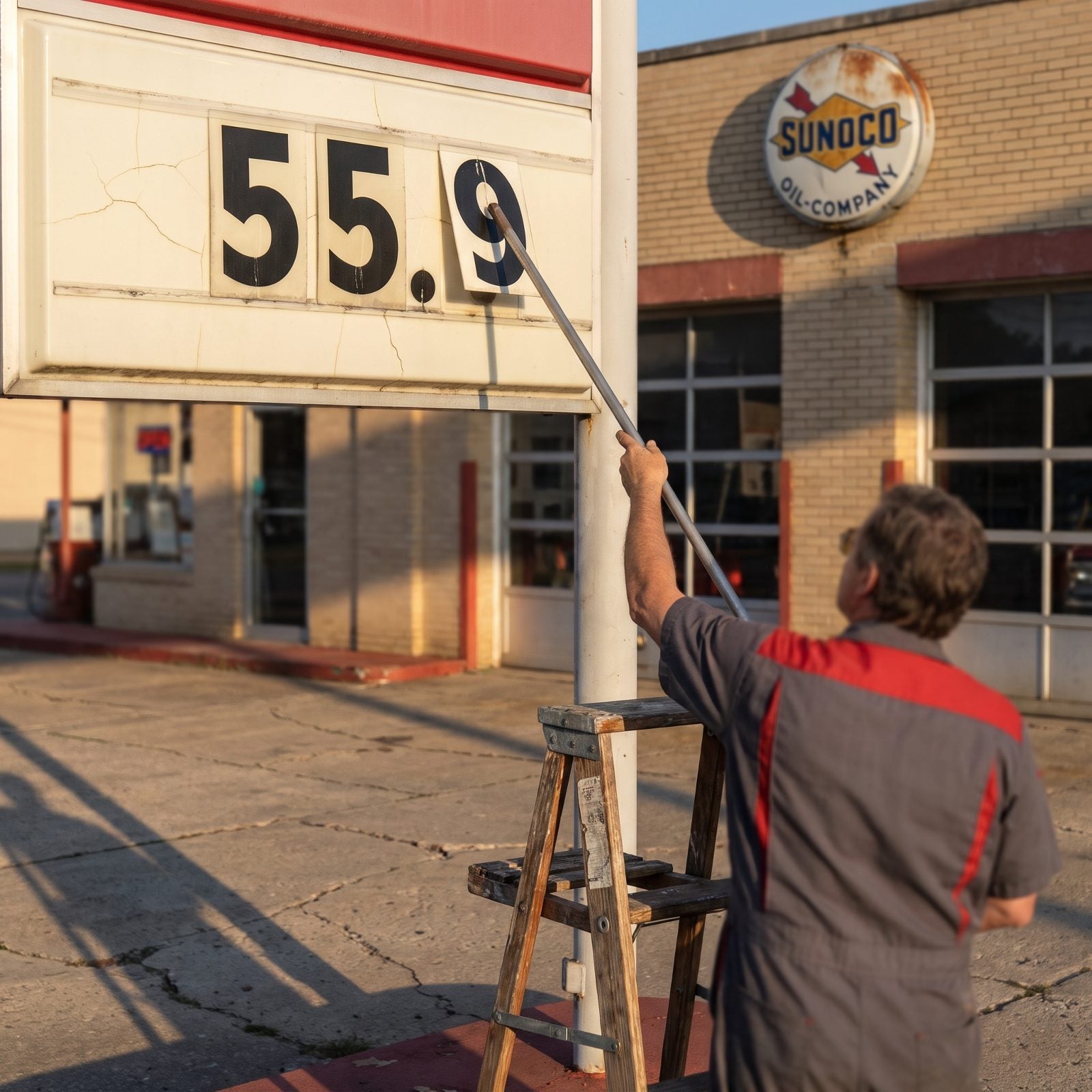
Gas used to cost whatever the little cards said, and somebody climbed a ladder to change them. A nickel bump was news. A dime bump started arguments at the counter.
What’s gone isn’t just the manual sign — it’s the pace. Prices moved slow enough that you noticed and grumbled about them over coffee. Now the number flickers on an LED board and nobody blinks. I miss the ladder, honestly. There was something honest about watching a man physically slide a 9 into place while you stood there.
12. A Glowing Neon Open Sign in the Office Window
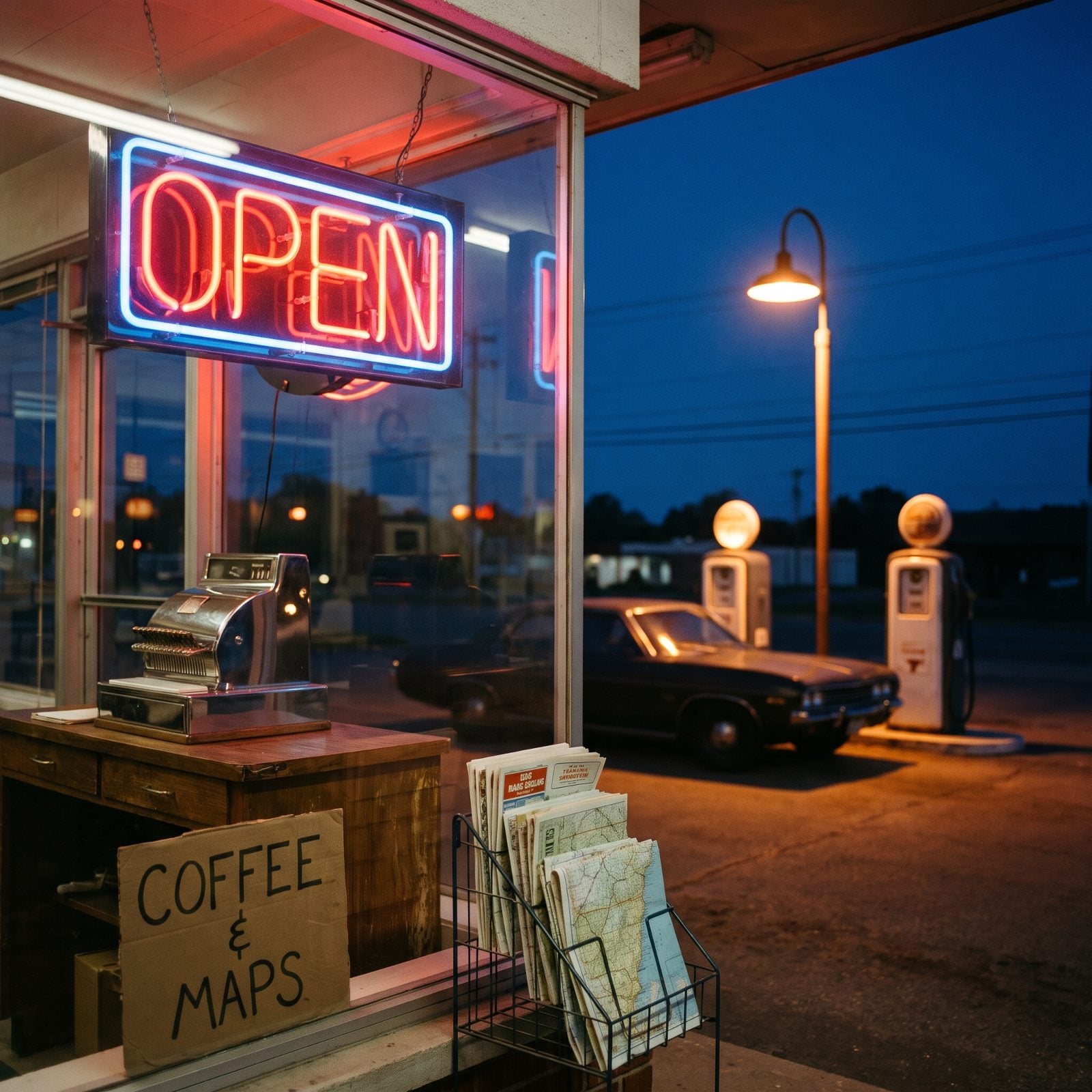
You knew a station was open from a quarter mile out. The neon in the window did the talking — that steady red hum against the dark.
Hand-bent glass tubes, filled with gas, buzzing softly in the cold. They burned out, they flickered, they needed a guy who knew how to coax them back to life. Cheaper plastic and LEDs killed most of them off. But a real neon sign glows in a way no backlit panel manages, with a slight imperfection that tells you a human bent that glass. Pull up to one of the survivors late at night and you’ll feel it.
11. Porcelain Advertising Signs Covering the Walls
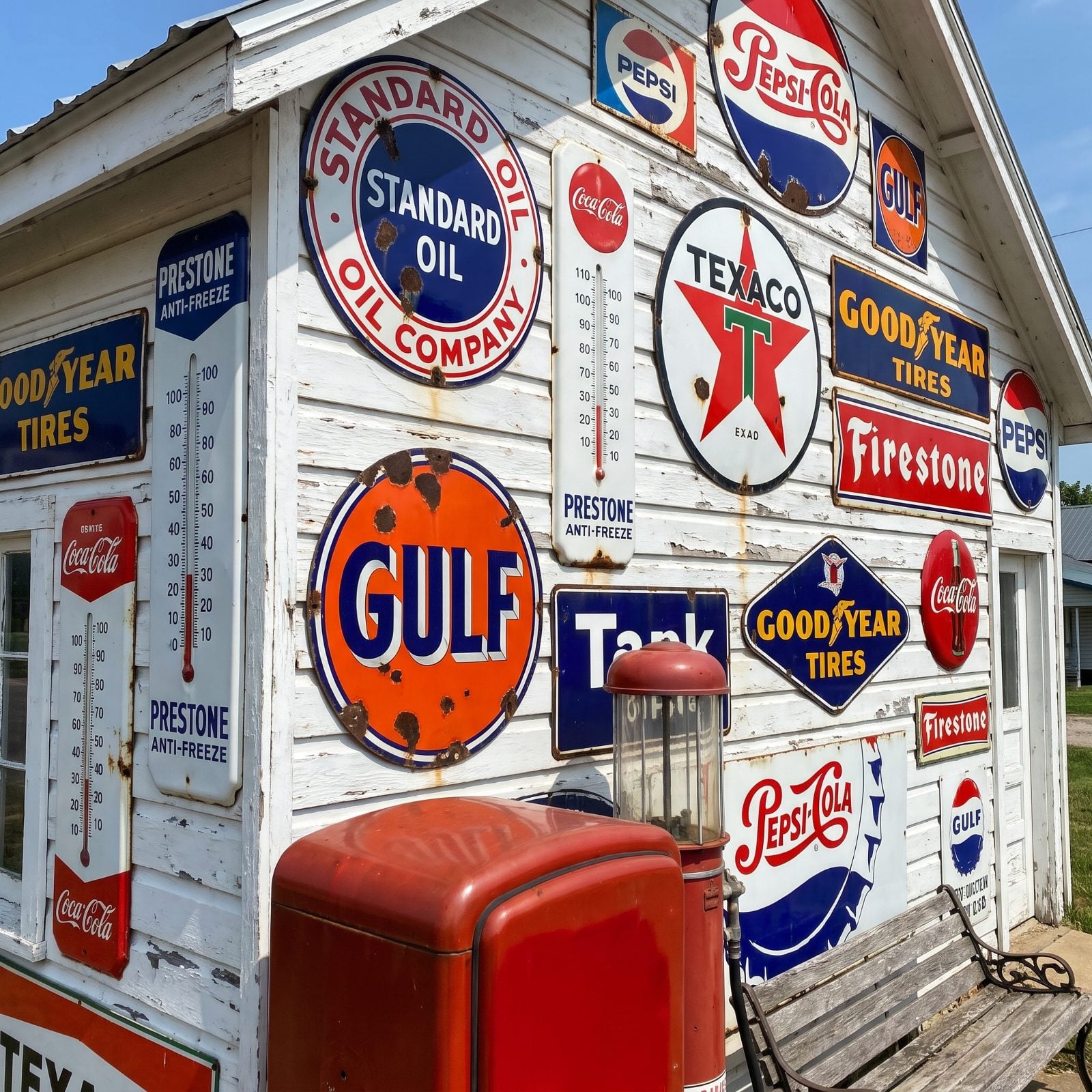
Before vinyl banners and backlit plastic, a sign was a slab of steel coated in baked-on glass. Porcelain enamel. Heavy, glossy, built to hang outdoors for decades and still read clean.
They chipped at the edges where the iron showed through and rusted, and that wear is exactly why collectors chase the good ones today. A station used to be wallpapered in them — oil shields, tire ads, a thermometer from the soda company. Now they hang in somebody’s garage over a workbench, and the stations get stick-on graphics instead.
10. A Manual Credit-Card Imprinter With Carbon Slips
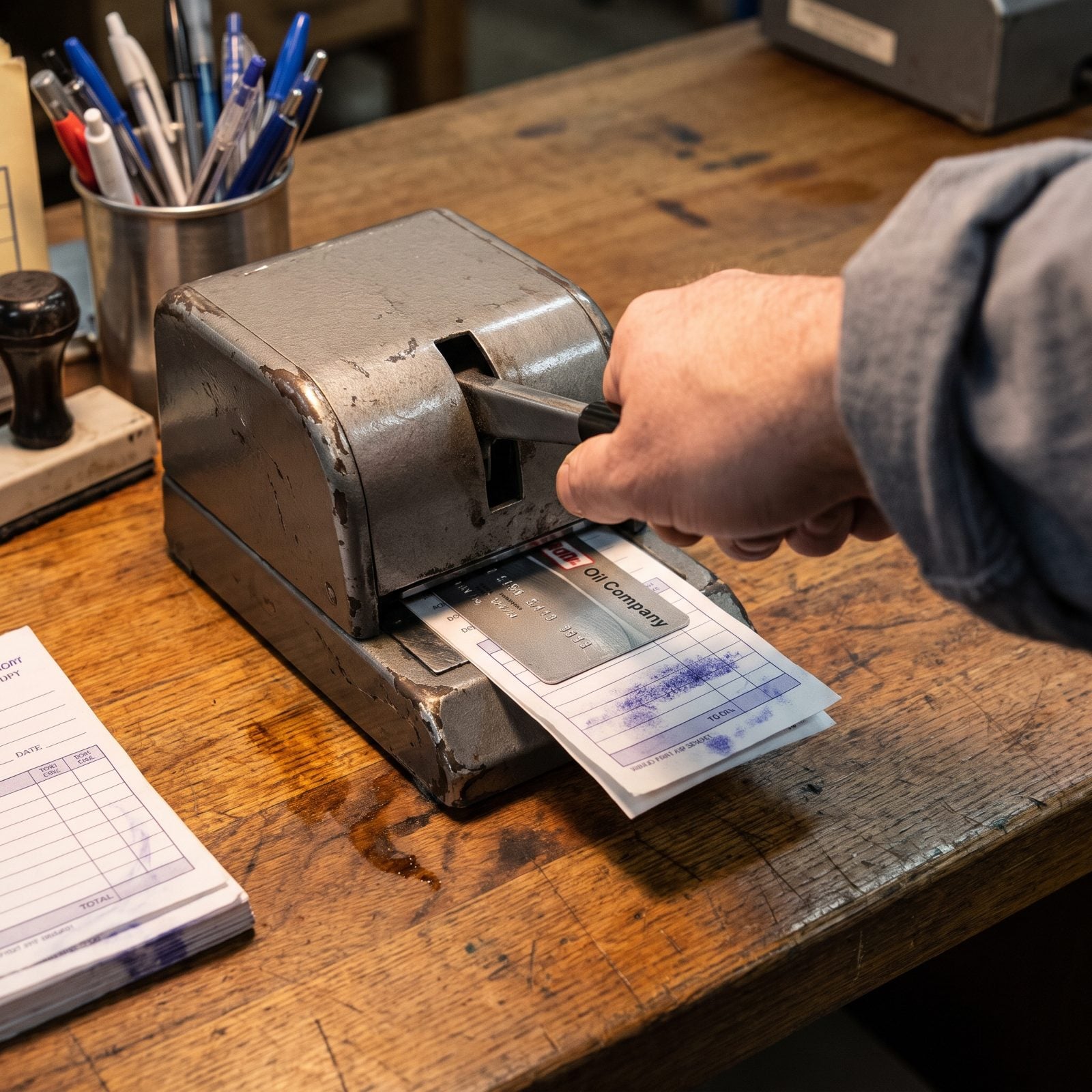
Chunk-chunk. That was the sound of paying. The attendant laid your card on top of a carbon slip, slid both into a boxy steel machine, and yanked the lever poking out of its slot to stamp the raised numbers through.
No phone line, no approval, no little machine beeping — just an impression in carbon and a signature. That lever could pinch your fingers if you got sloppy. The whole thing ran on trust and a monthly bill in the mail. Fast, dumb, and oddly dignified compared to tapping a screen.
9. A House-Charge Ledger for Trusted Regulars
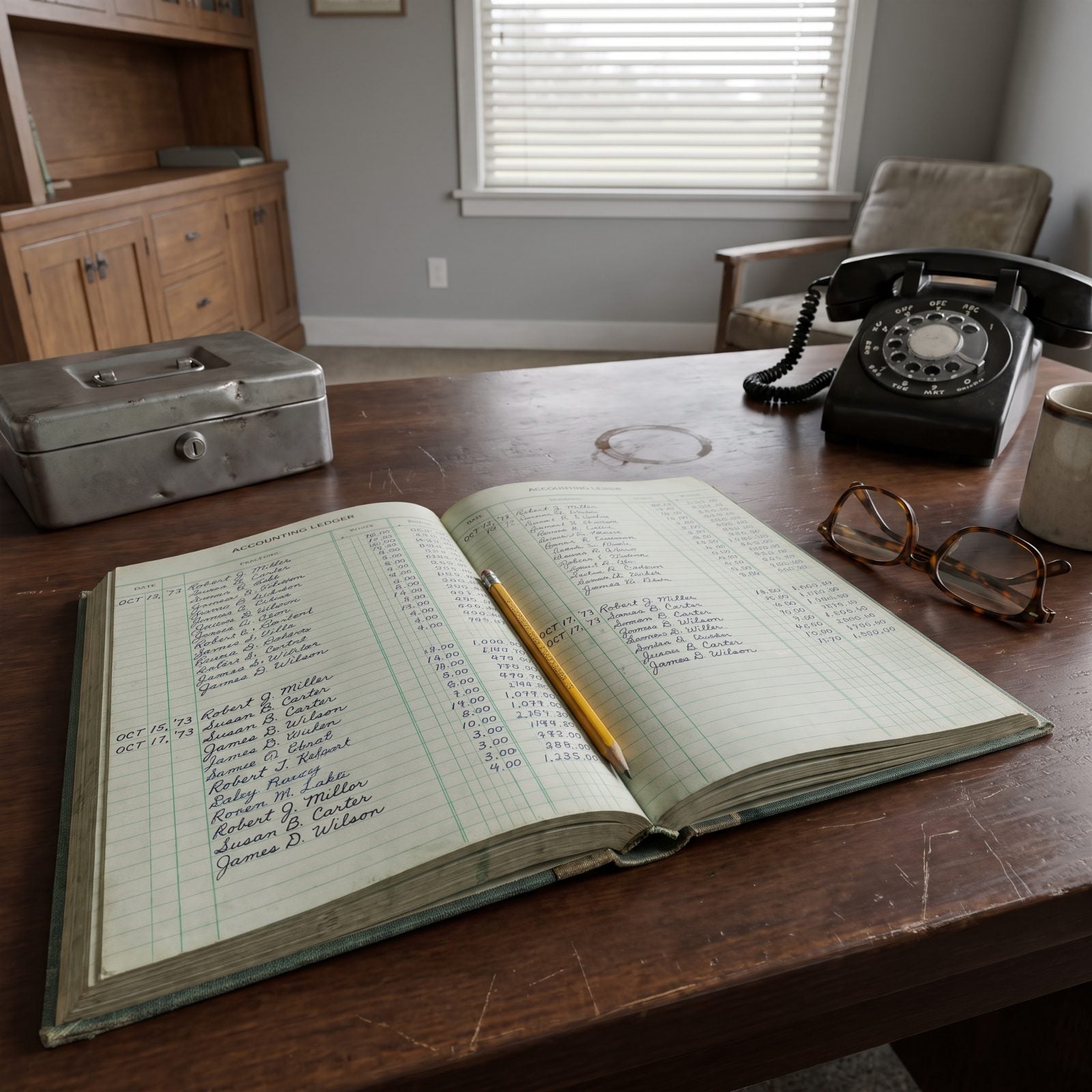
Your name was in the book. If the owner knew you, you pumped your gas, said put it on my tab, and drove off. Settled up on payday.
That ledger ran on something no app can replicate: a man’s word and a handshake. The owner knew your truck, knew your kids, knew you’d be back Friday. Default on it and you weren’t just broke — you were the guy who stiffed the station. In a small town that cost more than money.
8. Trading Stamps Handed Out With a Fill-Up
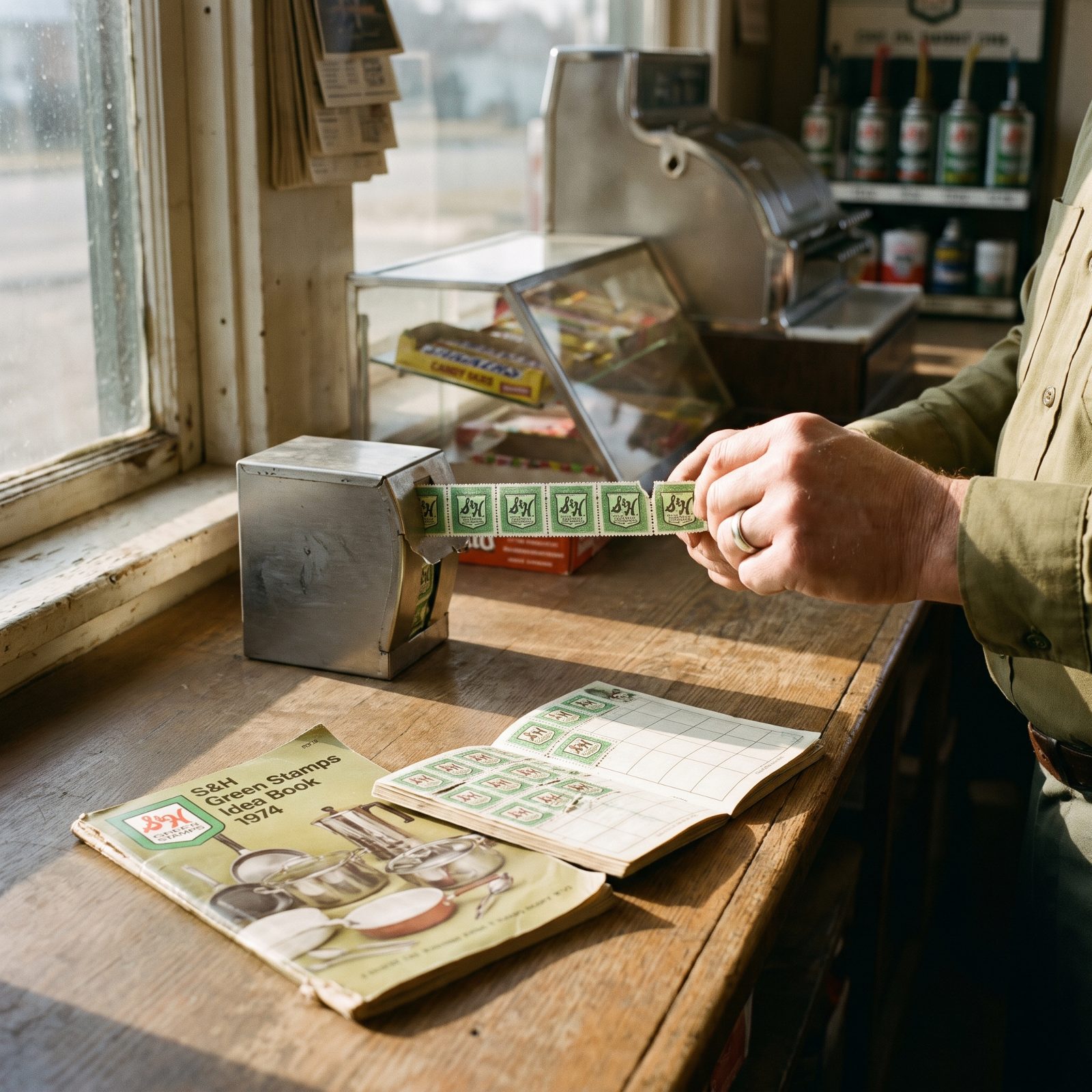
Fill the tank, get a strip of stamps. Lick them, stick them in a little booklet, and when you’d filled enough books you traded them for a toaster or a lamp from a catalog.
S&H Green Stamps were the big one, but gas stations and grocers ran dozens of programs. A whole kitchen’s worth of appliances came out of saved stamps and a lot of licking. Call it loyalty points before anybody had the phrase — except you could hold these in your hand. The giveaways faded as price competition got vicious in the back half of the decade and stations trimmed every freebie they could.
7. Promotional Drinking Glasses Given to Customers
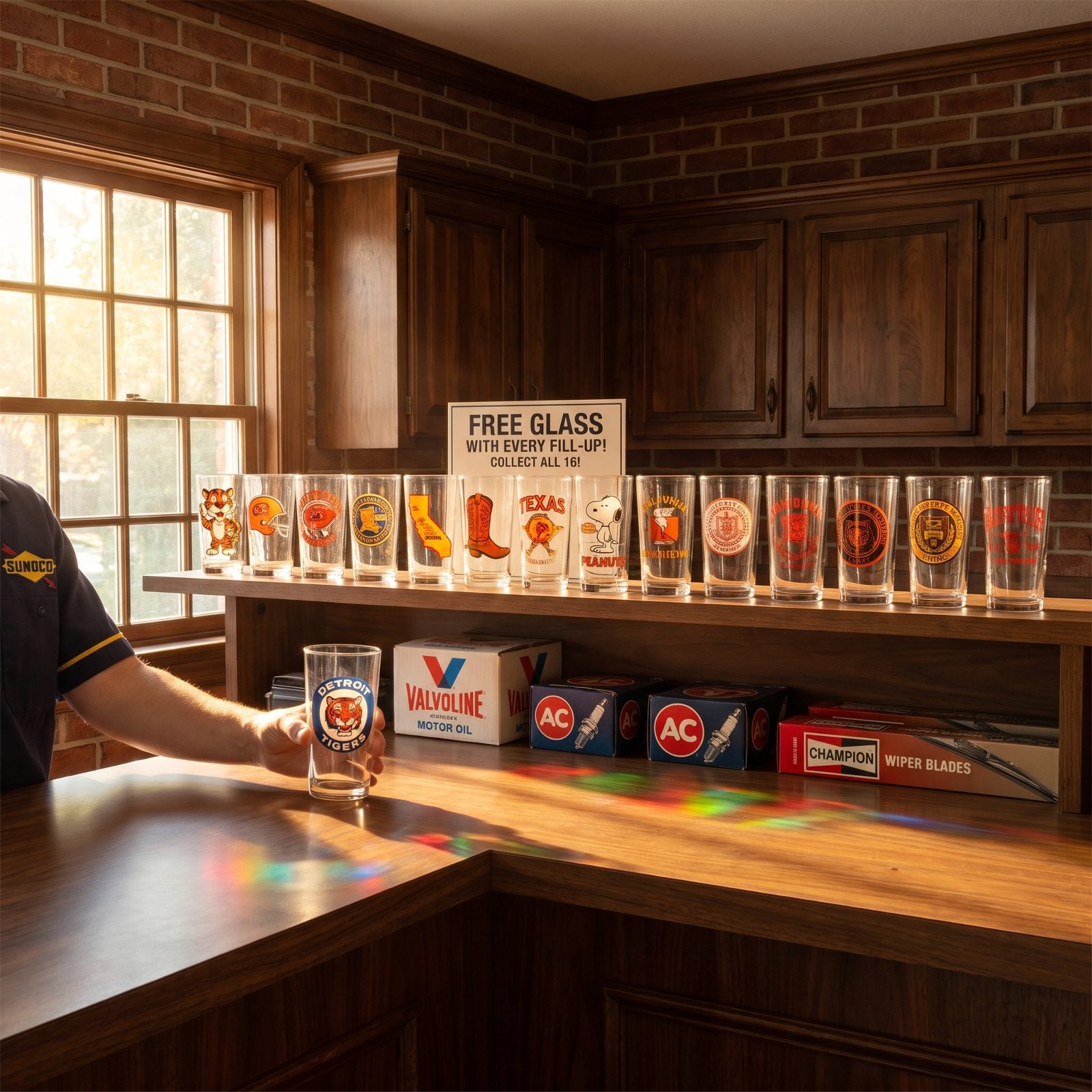
Free glass with every fill-up. Then another the next week with a different cartoon on it, until your cupboard held a full set and Mom wouldn’t let anyone break one.
Diner-style tumblers printed with everything — cartoon characters, football teams, state birds, movie promos. Stations gave them away to keep you loyal to the same pump. Some of those printed glasses fetch real money now, assuming the set is complete and the ink hasn’t scratched off. Odds are good one is still in your parents’ kitchen holding orange juice.
6. Cold Soda in Returnable Glass Bottles
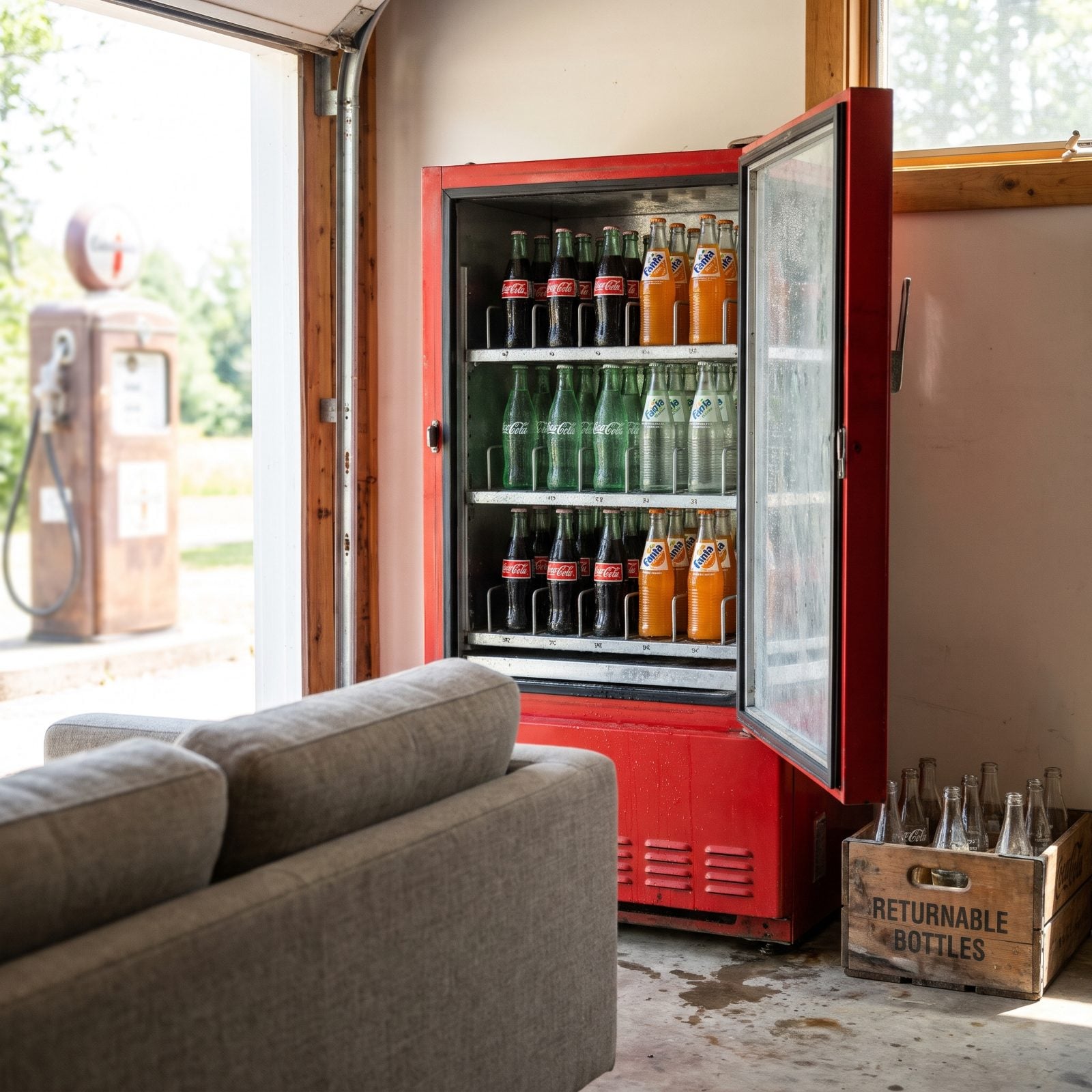
You dropped a dime, yanked a heavy glass bottle out of an ice-cold machine, and that first swallow out of thick glass just tasted colder. It did. Argue if you want.
The bottles carried a deposit, so you brought the empties back for a few cents and the station stacked them in wooden crates out back. Nothing got thrown away — the soda companies washed and refilled them again and again. Plastic and cans killed the deposit-return habit in most states, and we traded a better-tasting pop for convenience. Not a great trade, if you ask me.
5. A Wall-Mounted Bottle Opener With a Cap Catcher
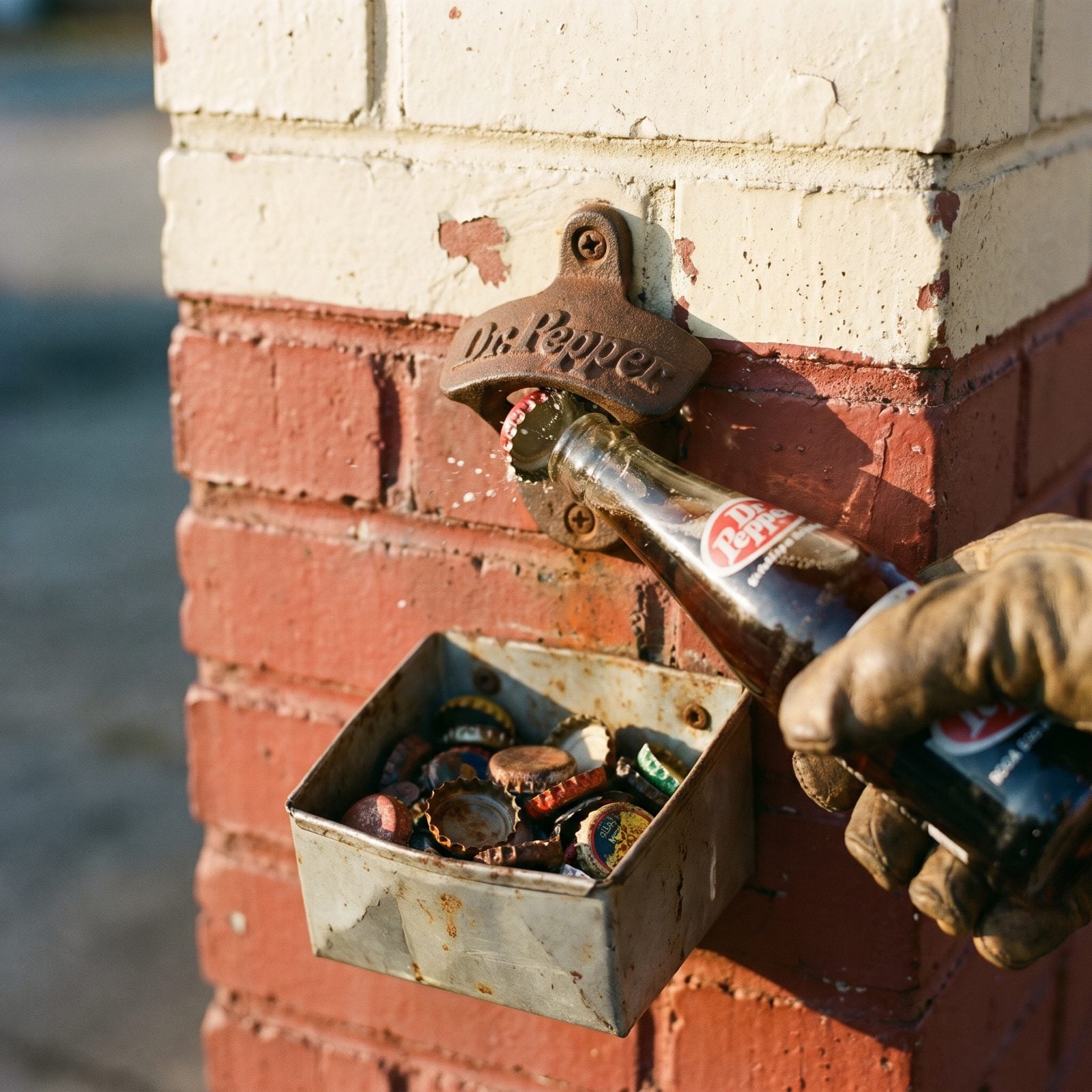
Bolted to the wall by the soda machine, worn smooth where a thousand hands had steadied their bottles. Hook the cap, flick your wrist, pop, and it dropped into the little box underneath.
Twist-off caps and cans made it pointless, so the openers vanished. But the wall-mount showed a little care: the station figured you’d want a cold one on the spot, gave you the tool to open it, and gave the cap somewhere to land so it didn’t end up in the gravel.
4. Fresh Coffee From a Glass Percolator
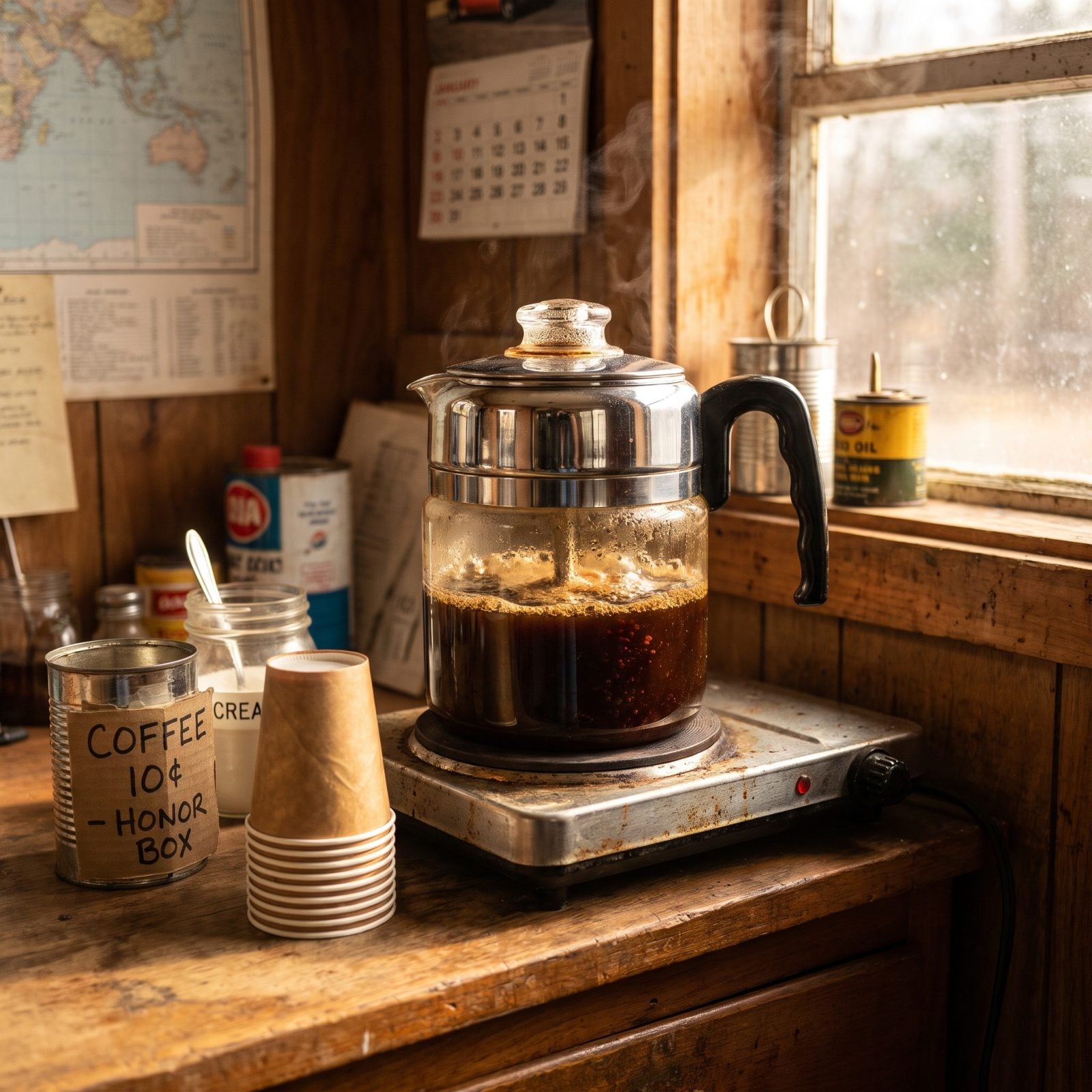
It wasn’t good coffee. It had been percolating since six and tasted like the pot. Didn’t matter. It was hot, it was a dime, and it came with a reason to stand around and talk.
The percolator burbled all morning on a hot plate in the corner, next to a stack of paper cups and a coffee can where you dropped your change on the honor system. No barista. No menu, no twenty-ounce anything — just a pot, a hot plate, and the understanding that a station was a place people gathered, not somewhere you bought gas and fled.
3. The Restroom Key Chained to a Hubcap
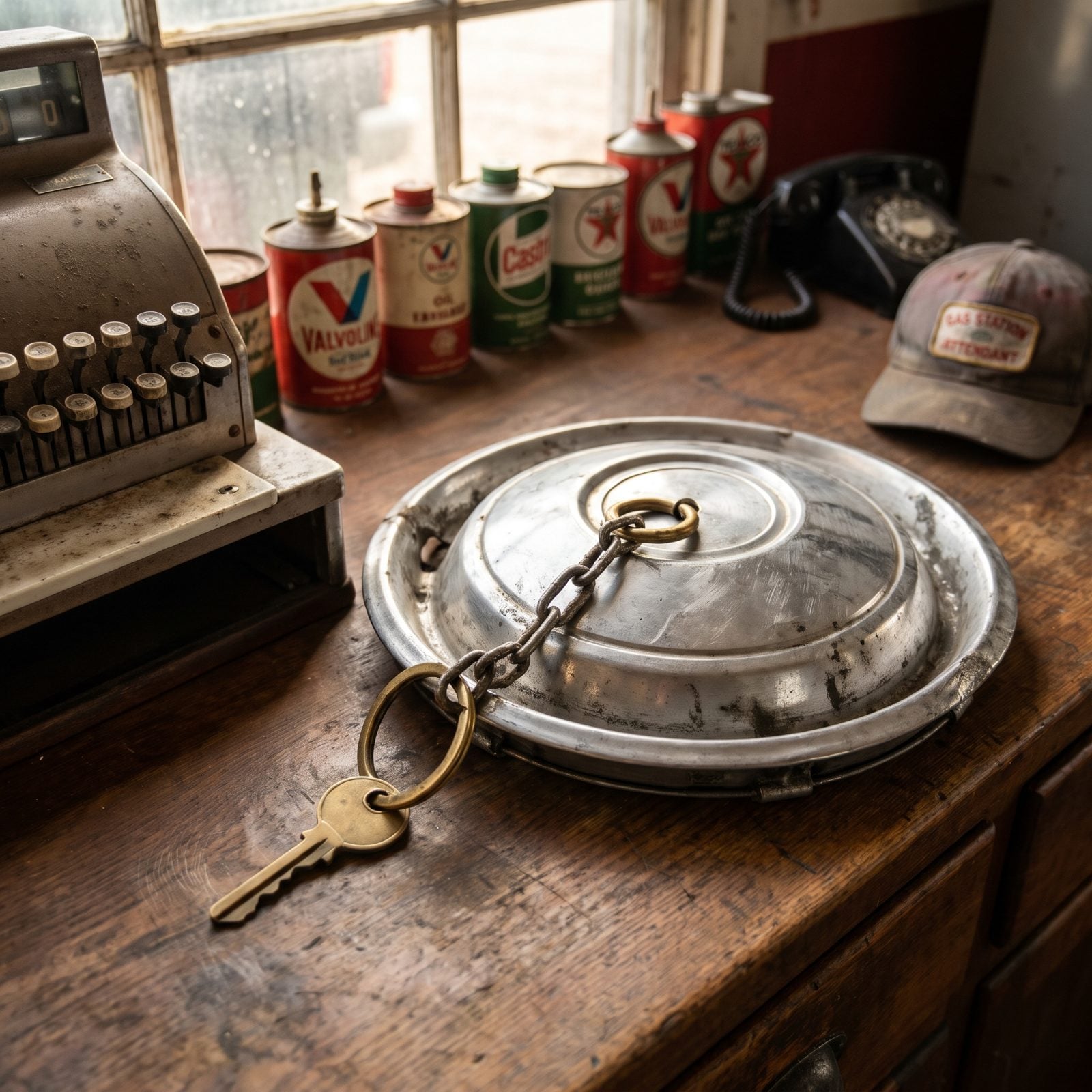
You remember the drill. You asked for the restroom, and what came back wasn’t a key — it was a key bolted to a block of wood roughly the size of a canoe paddle, or a dented hubcap off some long-gone car, the key hanging off it on a ring stamped RESTROOM.
The logic was dumb and perfect. Nobody walks off with a key the size of a dinner plate. You couldn’t pocket it or lose it in a jacket for three weeks, which meant the fob was the whole security system — and it worked better than anything with a chip in it.
The restroom itself was usually around the back, lit by one bulb, smelling of pink powdered soap. But you got in. Now you’re lucky to find a station with a bathroom at all, let alone one the attendant trusts you with.
2. The Cork Bulletin Board Papered With Local Notices
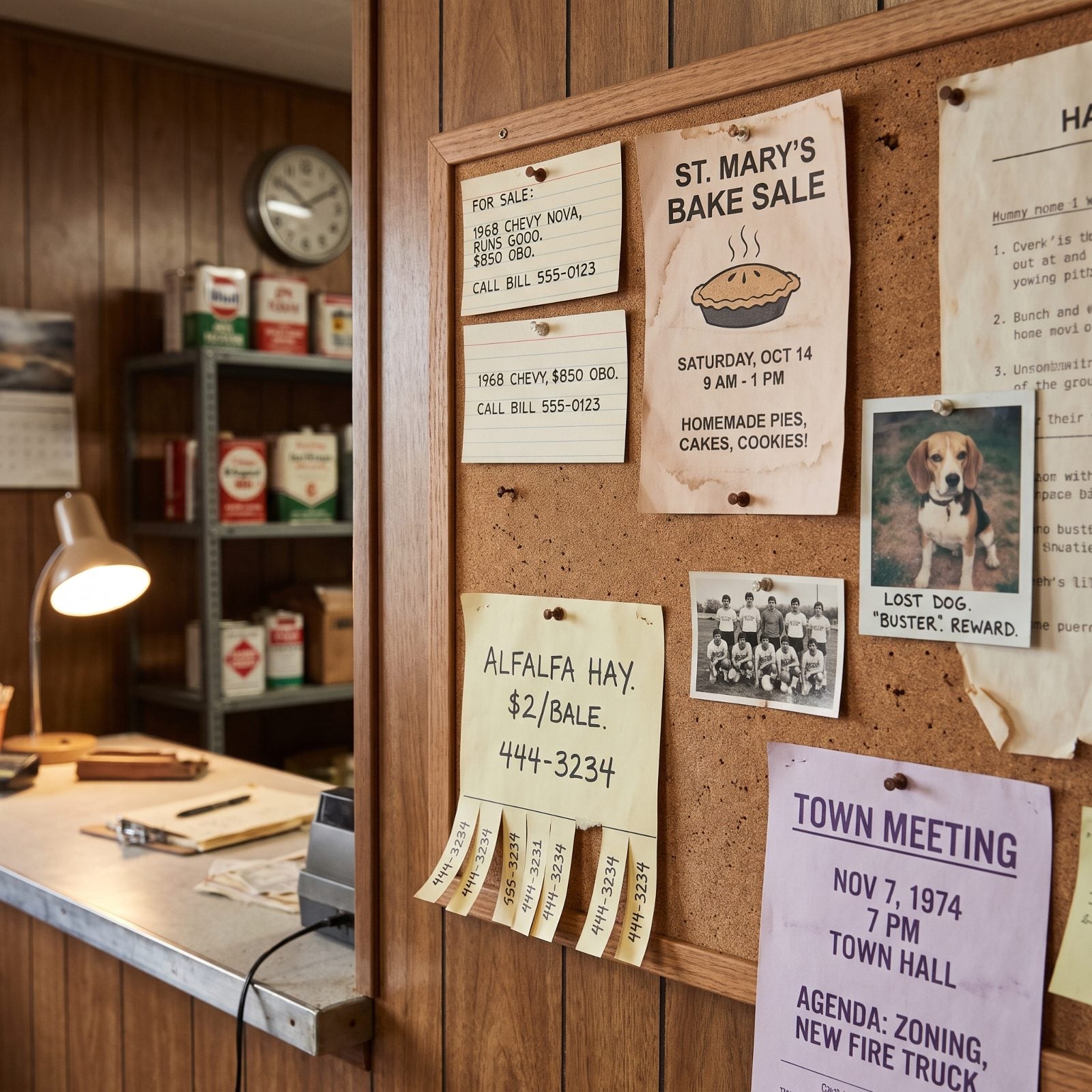
Before the town had a feed, it had a corkboard.
Hang near the counter of any 1970s station long enough and you’d read the whole community off that board. A tractor for sale. A litter of pups free to good homes. The Methodist rummage sale, a lost dog with a Polaroid stapled crooked, a babysitter’s number on a card with little fringe tabs you tore off the bottom.
Nobody curated it. People just pinned things, and since the station was where everyone passed through, it became the bulletin board by default. Local, unpaid, and nobody profiled you for reading it.
You’ll still find a version of this at a diner or a farm co-op if you look. Most gas stations handed their wall space to lottery signs and cigarette ads years ago — and good riddance, honestly, nobody ever tore a phone tab off a scratch-ticket sign.
The station became the place everyone passed through, so the station became the bulletin board by default.
1. The Owner Who Knew Your Name and Your Car
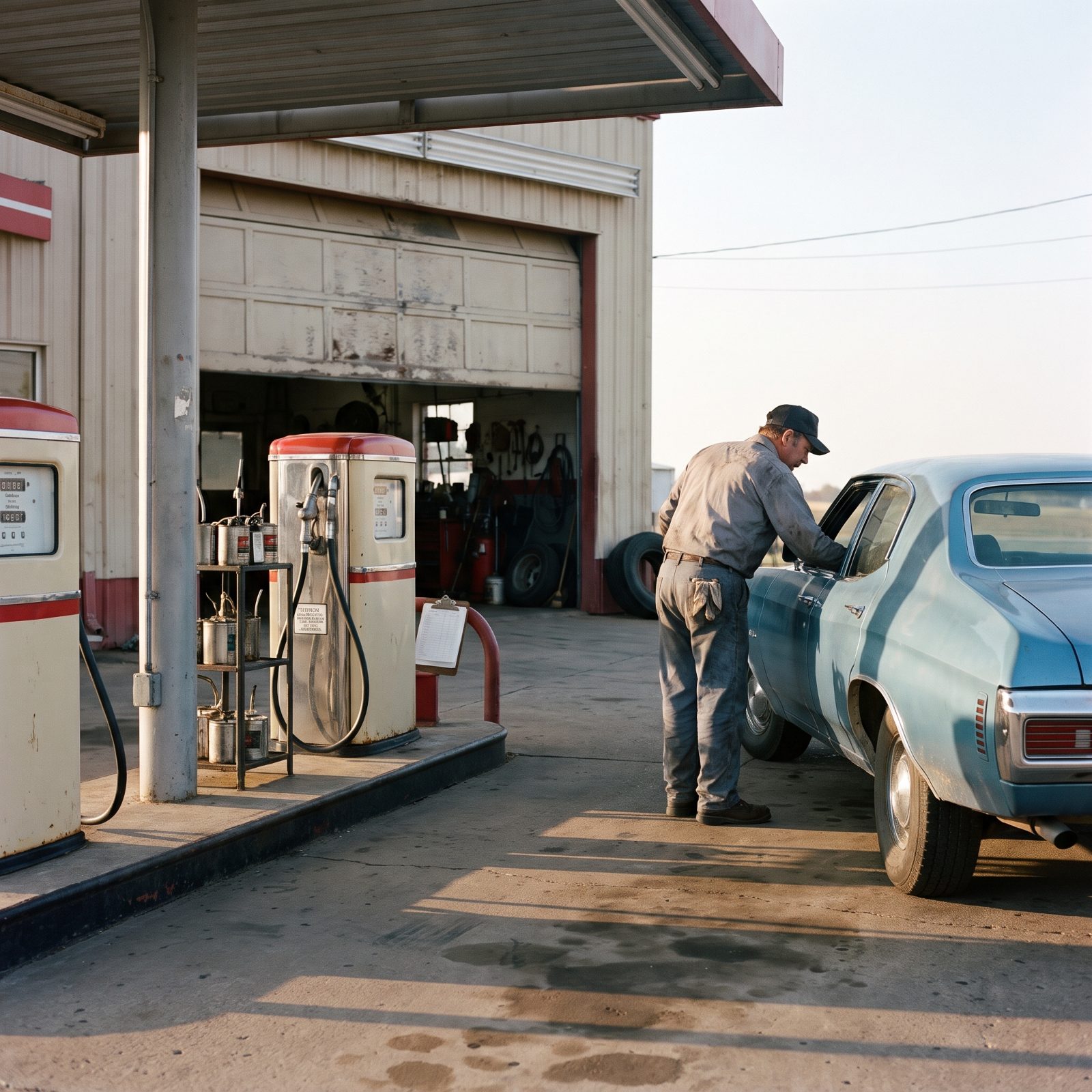
You pulled up, and before the bell cable under your tires finished ringing, the owner was already walking out saying your name.
He knew the car too. Knew it burned a little oil, knew the left wiper streaked, knew you were due for a belt because he’d told you so last month. That wasn’t customer service — that was a man who’d pumped your gas two hundred times and paid attention.
Pay-at-the-pump is faster and cheaper, and nobody misses the wait. But something walked out the door with it. You can drive a hundred miles now without saying a word to a soul who knows you. The guy who called you by name was also the guy who’d float you five bucks of gas on a Friday and trust you to square it Monday.
That kind of trust doesn’t scale. It only ever worked because he saw the same faces every week and decided they were worth remembering.